


Abstract
Antimicrobial resistance continues to threaten global public health and necessitates the discovery of novel antibacterial agents. This study employed an integrated computational and experimental approach for the design, synthesis and evaluation of phenylhydrazone derivatives as potential antibacterial agents targeting bacterial DNA gyrase and dihydrofolate reductase (DHFR). A library of twelve hydrazone and phenylhydrazone derivatives was designed and screened for drug-likeness and toxicity using SwissADME and ProTox-II. Molecular docking studies were carried out using AutoDock Vina against DNA gyrase (PDB ID: 5MMN) and DHFR (PDB ID: 1RA2). All compounds satisfied Lipinski’s rule of five and demonstrated high predicted gastrointestinal absorption. Docking scores ranged from −5.4 to −7.3 kcal/mol against DNA gyrase and −4.8 to −7.0 kcal/mol against DHFR. Based on docking performance, favorable ADMET properties and synthetic feasibility, cinnamaldehyde phenylhydrazone (CMPD1) was selected for synthesis and biological evaluation. The compound was synthesized via condensation of cinnamaldehyde and phenylhydrazine and obtained as a yellow crystalline solid with a yield of 68.2%. Antibacterial evaluation against Staphylococcus aureus and Escherichia coli revealed zones of inhibition of 26 mm and 17.5 mm, respectively, at 50 µg/mL. The minimum inhibitory concentration was 50 µg/mL against both organisms. These findings suggest that phenylhydrazone derivatives constitute promising scaffolds for the development of new antibacterial agents.
1. Introduction
Antimicrobial resistance (AMR) has emerged as one of the most serious global health challenges of the twenty-first century, reducing the effectiveness of existing antibiotics and increasing morbidity and mortality associated with infectious diseases [1,2]. The rapid emergence of multidrug-resistant bacterial strains has intensified the search for novel antibacterial agents possessing new mechanisms of action. Hydrazone and phenylhydrazone derivatives have attracted considerable interest because of their broad spectrum of biological activities, including antibacterial, antifungal, anticancer and anti-inflammatory properties [3,4,5,6,7]. Their biological activities are largely attributed to the azomethine linkage (–C=N–NH–), which facilitates interactions with various biological targets, such as DNA gyrase and dihydrofolate reductase (DHFR) which are attractive targets for antibacterial drug discovery due to their critical roles in DNA replication and folate metabolism. However, inhibition of these enzymes disrupts essential bacterial processes and can lead to bacterial cell death [8,9]. Furthermore, in antimicrobial drug discovery, molecular docking has become an important tool for investigating the interactions of the newly synthesized compounds with essential bacterial proteins involved in critical cellular processes including cell wall biosynthesis, DNA replication and folate metabolism. [10]. The present study aimed to design, synthesize and evaluate phenylhydrazone derivatives as potential antibacterial agents through molecular docking, in silico ADMET prediction and experimental antibacterial evaluation.
2. Materials and Methods
2.1. Design of Ligand Library
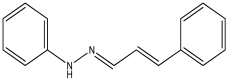
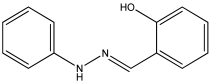
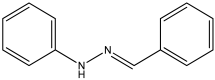
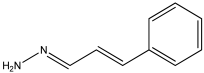
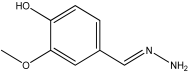
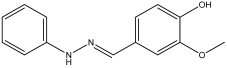
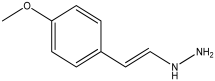
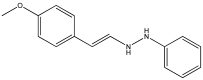
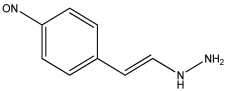
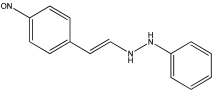
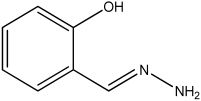
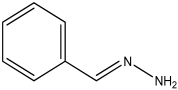
A library of twelve hydrazone and phenylhydrazone derivatives was designed through structural modifications of cinnamaldehyde and related aromatic aldehydes. The structures and IUPAC names of previously reported compounds selected for this study are presented in Table 1.
Table 1.
List of compounds from the previous work.
2.2. ADMET Prediction
Drug-likeness and pharmacokinetic properties were evaluated using SwissADME [11], while toxicity prediction was performed using ProTox-II [12]. The predicted ADMET properties of the designed compounds are summarized in Table 2. All compounds showed high predicted GIT absorption and zero Lipinski violation.
Table 2.
Predicted ADMET profiles of the designed compounds.
2.3. Molecular Docking
The crystal structures of bacterial DNA gyrase (PDB ID: 5MMN) and DHFR (PDB ID: 1RA2) were obtained from the Protein Data Bank. Molecular docking studies were carried out using AutoDock Vina tool version 1.5.6 [13].
2.4. Synthesis and Characterization of CMPD1
2.4.1. Reagents and Equipment Used for Synthesis
All reagents were purchased from Sigma-Aldrich, Darmstadt, Germany. All the starting reagents and solvents used for the experiments were of analytical grade and were used without further purification. IR spectra were recorded on a 400 MHz Agilent FT-IR spectrometer (Santa Clara, CA, USA).
2.4.2. The General Procedure for the Synthesis of Hydrazone Derivatives (CMPD1)
Cinnamaldehyde and phenylhydrazine were refluxed in ethanol to afford cinnamaldehyde phenylhydrazone (CMPD1), which was isolated as a yellow crystalline solid.
Figure 1 below shows the elaborate schemes for the synthesis of Target Molecules.
Figure 1.
Scheme for the synthesis of cinnamaldehydephenylhydrazone (CMPD 1).
2.5. Spectroscopic Analysis
Detailed structural analysis of the synthesized compound was performed using Fourier transform infrared spectroscopy (FT-IR), FT-IR data were reported as frequency of absorption cm−1.
2.6. Antibacterial Evaluation
Antibacterial activity was evaluated against Staphylococcus aureus and Escherichia coli using the agar well diffusion method. Minimum inhibitory concentration (MIC) was determined using the broth dilution method.
3. Results and Discussion
3.1. In Silico ADMET Prediction
All designed compounds complied with Lipinski’s rule of five [14] and demonstrated high predicted gastrointestinal absorption, indicating favorable oral bioavailability. The predicted ADMET properties of the 12 compounds are summarized in Table 2.
3.2. Molecular Docking Studies
The Molecular docking scores of the designed compounds ranged from −5.4 to −7.3 kcal/mol against DNA gyrase and the value ranged from −4.8 to −7.0 kcal/mol against DHFR are presented in Table 3.
Table 3.
Molecular docking scores (kcal/mol).
CMPD10 exhibited the strongest binding affinity against both targets. However, CMPD1 was selected for synthesis because of its favorable ADMET profile and synthetic accessibility.
3.3. Antibacterial Activity
The synthesized compound demonstrated concentration-dependent antibacterial activity against both test organisms, with greater activity against S. aureus than E. coli. The activity was lower than that of ciprofloxacin but indicates promising antibacterial potential. The zone of inhibition and minimum inhibitory concentration are presented in Table 4 and Table 5, respectively.
Table 4.
Zone of inhibition (mm).
Table 5.
Minimum inhibitory concentration (MIC).
4. Conclusions
The integrated computational and experimental approach employed in this study identified phenylhydrazone derivatives as promising antibacterial scaffolds. All designed compounds exhibited acceptable drug-likeness and toxicity profiles, while molecular docking suggested favorable interactions with bacterial DNA gyrase and DHFR. The synthesized compound, cinnamaldehyde phenylhydrazone, demonstrated promising antibacterial activity against both Gram-positive and Gram-negative bacteria. Further structural optimization and broader biological evaluation are warranted to improve potency and establish structure–activity relationships.
Author Contributions
Conceptualization, methodology, writing—review and editing, software, validation and formal analysis and investigation, S.A. and I.A.; resources, I.A. and S.A.; data curation, F.D.; writing—original draft preparation, S.A.; writing—review and editing, I.A.; visualization, I.A. and F.D.; supervision, R.B. and I.A.; project administration S.A. and F.D. All authors have read and agreed to the published version of the manuscript.
Funding
This research received no external funding.
Institutional Review Board Statement
Not applicable.
Informed Consent Statement
Not applicable.
Data Availability Statement
The raw data supporting the reported results in this article will be made available by the Authors on request.
Acknowledgments
Our heartfelt appreciation goes to the staff of the Pharmaceutical and Medicinal Chemistry department KASU, especially Safiyya of the pharmaceutical microbiology laboratory for assisting in antibacterial screening. ChatGPT (Open AI, GPT-6) was used for language paraphrasing and grammatical improvement. The authors, reviewed and approved the final manuscript and take full responsibility for it content.
Conflicts of Interest
The authors declare that there is no conflict of interest.
References
- World Health Organization. Global Antimicrobial Resistance and Use Surveillance System (GLASS) Report 2023; World Health Organization: Geneva, Switzerland, 2023. [Google Scholar]
- Bertiz, R. Defense and immunity: Infection and antimicrobials-bacteria and antibacterials. In Pathophysiology and Pharmacology Basics for Nurses; Montgomery College: Montgomery County, MD, USA, 2022. [Google Scholar]
- Popiołek, Ł. Updated Information on Antimicrobial Activity of Hydrazide-Hydrazones. Int. J. Mol. Sci. 2021, 22, 9389. [Google Scholar] [CrossRef] [Scilit] [PubMed]
- Apaydın, Ç.B.; Kara, E.M. Synthesis and evaluation of the antibacterial and antifungal activity of new ibuprofen hydrazone derivatives. Istanb. J. Pharm. 2024, 54, 122–127. [Google Scholar] [CrossRef] [Scilit]
- Badawy, S.A.; Rewish, N.M.; Fadda, A.A.; Elmorsy, M.R. Novel triazole-carbohydrazide hydrazones with dual antioxidant and antibacterial potential. Sci. Rep. 2025, 15, 41456. [Google Scholar] [CrossRef] [Scilit] [PubMed]
- Teneva, Y.; Simeonova, R.; Valcheva, V.; Angelova, V.T. Recent advances in anti-tuberculosis drug discovery based on hydrazide-hydrazone derivatives targeting InhA. Pharmaceuticals 2023, 16, 484. [Google Scholar] [CrossRef] [Scilit] [PubMed]
- Tawfeeq, M.F. Synthesis and evaluation of new hydrazone derivatives as antibacterial agents. Iraqi J. Pharm. Sci. 2025, 34, 168–174. [Google Scholar] [CrossRef] [Scilit]
- Collin, F.; Karkare, S.; Maxwell, A. Exploiting bacterial DNA gyrase as a drug target: Current state and perspectives. Appl. Microbiol. Biotechnol. 2011, 92, 479–497. [Google Scholar] [CrossRef] [Scilit] [PubMed]
- Hawser, S.; Lociuro, S.; Islam, K. Dihydrofolate reductase inhibitors as antibacterial agents. Biochem. Pharmacol. 2006, 71, 941–948. [Google Scholar] [CrossRef] [Scilit] [PubMed]
- Meng, X.Y.; Zhang, H.X.; Mezei, M.; Cui, M. Molecular docking: A powerful approach for structure-based drug discovery. Curr. Comput.-Aided Drug Des. 2011, 7, 146–157. [Google Scholar] [CrossRef] [Scilit] [PubMed]
- Daina, A.; Michielin, O.; Zoete, V. SwissADME: A free web tool to evaluate pharmacokinetics, drug-likeness and medicinal chemistry friendliness of small molecules. Sci. Rep. 2017, 7, 42717. [Google Scholar] [CrossRef] [Scilit] [PubMed]
- Banerjee, P.; Eckert, A.O.; Schrey, A.K.; Preissner, R. ProTox-II: A webserver for the prediction of toxicity of chemicals. Nucleic Acids Res. 2018, 46, W257–W263. [Google Scholar] [CrossRef] [Scilit] [PubMed]
- Trott, O.; Olson, A.J. AutoDock Vina: Improving the speed and accuracy of docking with a new scoring function, efficient optimization, and multithreading. J. Comput. Chem. 2010, 31, 455–461. [Google Scholar] [CrossRef] [Scilit] [PubMed]
- Lipinski, C.A.; Lombardo, F.; Dominy, B.W.; Feeney, P.J. Experimental and computational approaches to estimate solubility and permeability in drug discovery and development settings. Adv. Drug Deliv. Rev. 2001, 46, 3–26. [Google Scholar] [CrossRef] [Scilit] [PubMed]



Disclaimer/Publisher’s Note: The statements, opinions and data contained in all publications are solely those of the individual author(s) and contributor(s) and not of MDPI and/or the editor(s). MDPI and/or the editor(s) disclaim responsibility for any injury to people or property resulting from any ideas, methods, instructions or products referred to in the content. |
© 2026 by the authors. Licensee MDPI, Basel, Switzerland. This article is an open access article distributed under the terms and conditions of the Creative Commons Attribution (CC BY) license.