


Abstract
Introduction: Strychnos madagascariensis (Mutamba) and Parinari curatellifolia (Muhacha) are indigenous Zimbabwean fruits traditionally valued for their health benefits; yet, the quantitative phytochemical and antioxidant characterisation of their processed products remains unreported. This study provides the first assessment of the total phenolic content, antioxidant activity, and syrup formulation feasibility for these underutilised species. Methods: Fresh fruit pulps were macerated, heated (85 °C, 20 min), filtered, and vacuum-concentrated to 68–72 °Brix. A 60:40 Strychnos: Parinari blend was evaluated. The physicochemical properties (pH, total soluble solids, and viscosity) were measured; the total phenolic content was determined by Folin–Ciocalteu assay and antioxidant activity by DPPH radical scavenging. Sensory acceptability was rated on a 9-point hedonic scale (30 semi-trained panellists). Accelerated stability was assessed at 40 °C/75% RH over 6 months. Results: The syrup exhibited pH 3.8–4.2, total soluble solids 68–72 °Brix, and viscosity 800–1200 cP. The total phenolic content was 45 ± 3 mg GAE per mL syrup, and DPPH IC50 was 45 ± 5 µg/mL. The mean overall acceptability was 7.5 ± 0.6. No significant changes in physicochemical or antioxidant parameters were observed after 6 months of accelerated storage. Conclusions: The formulated syrup demonstrates a high phenolic content and appreciable antioxidant activity, supporting its potential development as a functional food ingredient. Limitations include the reliance on a single antioxidant assay, the absence of nutritional profiling, and the need for real-time stability validation. These findings establish baseline compositional data for the future valorisation of these indigenous fruits.
1. Introduction
The growing global burden of non-communicable diseases (NCDs), including type 2 diabetes, obesity, and cardiovascular disease, has increased the concern about dietary patterns, particularly refined sugar consumption [1]. About 38 million of the world’s 56 million annual deaths are attributed to NCDs, a figure projected to reach 52 million by 2030 [2]. High-GI sweeteners, such as high-fructose corn syrup and sucrose-based syrups (GI 65–100), can cause rapid post-meal glucose spikes and contribute to insulin resistance and metabolic dysregulation [3,4]. Although the World Health Organisation recommends that free sugars provide less than 10% of daily energy intake, global consumption exceeds this limit [5]. This highlights the need for palatable sweeteners with less impact on blood glucose.
Natural sweeteners that retain bioactive properties are attracting growing interest. Syrups from underutilised indigenous fruits may offer a promising alternative, but their bioactive retention during thermal processing requires validation [6,7]. Strychnos madagascariensis (monkey orange; mutamba or hwakwa) and Parinari curatellifolia (mobola plum; muhacha or chakata) are Miombo woodland species traditionally used for food and medicine in Southern Africa [8,9], yet remain commercially and pharmaceutically underexploited. S. madagascariensis pulp contains dietary fibre (>6%), oleic acid (26–28%), vitamin E (6.7–8.0 mg/100 g), carotenoids (2.2–2.6 mg/100 g), potassium (1200–1700 mg/100 g), and trace minerals [10]. Its flavonoids, iridoids, and phenolic acids have documented antioxidant activity [11]. P. curatellifolia pulp contains flavonoids, tannins, saponins, terpenoids, phenolic acids, vitamin C (55.91–66.06 mg/g), and dietary fibre [12,13]. Both fruits have reported α-glucosidase inhibitory potential [14], but its retention in syrup is unknown.
Processed products from these species have not been quantitatively characterised, and the feasibility of stable, acceptable syrups with retained bioactivity remains untested. This study assesses the total phenolic content, antioxidant activity, and syrup formulation feasibility, including a 60:40 blend. It quantifies the blend’s phenolic content and antioxidant activity, characterises the physicochemical properties and sensory acceptability, and evaluates stability under accelerated storage. The findings provide baseline compositional data for valorising these underutilised indigenous fruits as functional food ingredients.
2. Materials and Methods
2.1. Plant Material Collection and Authentication
Fresh, mature fruits of Strychnos madagascariensis and Parinari curatellifolia were collected from natural populations in Banket, Mashonaland West Province, Zimbabwe (17°23′ S, 30°24′ E) during the peak fruiting season (February–March 2024). Fruits were hand-picked from healthy trees at full maturity (assessed by skin coloration and firmness), sorted to eliminate damaged specimens, and transported to the laboratory in clean, ventilated containers. Taxonomic identification was performed at the National Herbarium and Botanic Garden, Harare (voucher specimens: SM-2024-001 and PC-2024-002).
2.2. Syrup Preparation
Syrup was extracted using a modified cold maceration method [15]. Fruits (3 kg per species) were washed with distilled water and soaked separately in 3 L for 48 h at room temperature. The softened pulp was blended for 5 min at medium speed to separate seeds and fibrous matter, then filtered through four layers of muslin. The filtrate was heated to 85 °C for 20 min to inactivate enzymes and promote protein coagulation. Juice clarification used Ca(OH)2 (1 g/L), bentonite (3% w/v), and activated carbon (0.5% w/v) [16], followed by filtration through Whatman Grade 40 paper (125 mm). Clarified juice was concentrated under reduced pressure at 70 °C and 50 kPa for 4–6 h to 68–72 °Brix, monitored every 30 min with a handheld refractometer. A 60:40 (v/v) blend of S. madagascariensis and P. curatellifolia syrup was used for this proof-of-concept study. Preliminary observations suggested acceptable sensory and phenolic profiles, but systematic optimisation was not performed.
2.3. Physicochemical Characterisation
Physicochemical characteristics were measured in triplicate. pH was measured at 25 ± 2 °C with a calibrated digital pH meter (HI-2211, Hanna Instruments, Woonsocket, RI, USA), using pH 4.0 and 7.0 buffers. Total soluble solids were measured with a distilled-water-calibrated refractometer (PAL-3, Atago Co, Tokyo, Japan,). Viscosity was measured at 25 ± 1 °C using a Brookfield DV-II Pro viscometer (AMETEK Brookfield, MA, USA) with an S-61 spindle, 100 mL samples, and speeds of 50–100 rpm. Density was determined at 25 °C by the specific gravity method using a 50 mL pycnometer [17]. Titratable acidity was measured by titrating 10 mL syrup diluted in 90 mL distilled water with 0.1 N NaOH and phenolphthalein, and expressed as % citric acid equivalent.
2.4. Phytochemical Profiling by HPLC-DAD
High-performance liquid chromatography with diode-array detection (HPLC-DAD) was used to identify and quantify major phenolic compounds. Syrup samples (5 mL) were diluted 1:1 (v/v) with methanol, filtered through 0.45 μm PTFE filters, and analysed on an Agilent 1260 Infinity II system with a DAD detector. Compounds were separated on a Zorbax Eclipse Plus C18 column (4.6 × 150 mm, 5 μm) at 30 °C, using 0.1% formic acid in water (A) and acetonitrile (B) at 1.0 mL/min. The gradient was 5% B (0–5 min), 5–30% B (5–20 min), 30–50% B (20–25 min), and 50–5% B (25–30 min). Detection was at 280 and 320 nm. Compounds were identified by retention times and UV spectra against authentic standards (gallic acid, catechin, chlorogenic acid, ferulic acid, quercetin, and rutin; Sigma-Aldrich, Burlington, MA, USA, ≥95% purity) and quantified using external calibration curves (R2 > 0.995). Analyses were performed in triplicate.
2.5. Total Phenolic Content
Total phenolic content was determined using the Folin–Ciocalteu method [18]. Syrup samples (0.5 mL) were mixed with 2.5 mL of 10% Folin–Ciocalteu reagent and 2 mL of 7.5% sodium carbonate. The mixture was incubated in the dark for 30 min at room temperature, and absorbance was measured at 765 nm (UV–Vis spectrophotometer, Shimadzu UV-1800, Shizmadu Co, Tokyo, Japan). Results were expressed as mg gallic acid equivalents (GAE) per mL syrup. A standard curve was constructed using gallic acid (0–100 μg/mL; R2 = 0.997). Measurements were performed in triplicate.
2.6. Antioxidant Activity
2.6.1. DPPH Radical Scavenging Assay
Antioxidant activity was evaluated using the 2,2-diphenyl-1-picrylhydrazyl (DPPH) radical scavenging assay [19]. DPPH solution (0.1 mM in methanol) was prepared fresh. Syrup samples (0.1–1.0 mL) were mixed with 2 mL DPPH solution and incubated in the dark for 30 min at room temperature. Absorbance was measured at 517 nm. Ascorbic acid served as the positive control. Radical scavenging activity (%) was calculated as follows:
Scavenging activity (%) = [(A_control − A_sample)/A_control] × 100
The IC50 value (concentration required to scavenge 50% of DPPH radicals) was determined by linear regression. Measurements were performed in triplicate.
2.6.2. ABTS Radical Scavenging Assay
The ABTS assay was performed following the method of Re et al. [20]. ABTS radical cation (ABTS•+) was generated by reacting 7 mM ABTS with 2.45 mM potassium persulfate in the dark for 16 h. The solution was diluted with ethanol to an absorbance of 0.70 ± 0.02 at 734 nm. Syrup samples (0.1 mL) were mixed with 2 mL ABTS•+ solution, incubated for 6 min, and absorbance was measured at 734 nm. Trolox was used as the standard, and results were expressed as IC50 (μg/mL).
2.6.3. Ferric Reducing Antioxidant Power (FRAP) Assay
The FRAP assay was conducted according to Benzie and Strain [21]. The FRAP reagent contained 300 mM acetate buffer (pH 3.6), 10 mM TPTZ in 40 mM HCl, and 20 mM FeCl3·6H2O in a 10:1:1 ratio. Syrup samples (0.1 mL) were mixed with 3 mL FRAP reagent and incubated at 37 °C for 30 min. Absorbance was measured at 593 nm. Results were expressed as μM Fe2+ equivalents per mL syrup using a ferrous sulphate standard curve.
2.7. Sensory Evaluation
Sensory evaluation used a 9-point hedonic scale (1 = dislike extremely; 9 = like extremely) [22] with 30 semi-trained panellists (15 male, 15 females; aged 22–45) recruited from the Harare Institute of Technology community. Panellists completed four 1 h training sessions over two weeks on scale use, attribute recognition, and evaluation procedures, using reference samples with low (1), moderate (5), and high (9) acceptability. They were blinded to fruit species and health-promoting properties to minimise social desirability bias. Samples (10 mL) were served in randomised, 3-digit-coded glass cups at 25 °C in a well-lit, odour-free room. Attributes assessed were colour, aroma, taste, mouthfeel, and overall acceptability.
2.8. Accelerated Stability Testing
Accelerated stability studies were conducted according to ICH guidelines [23]. Syrup samples (100 mL) were stored in amber glass bottles at 40 ± 2 °C and 75 ± 5% relative humidity in a stability chamber (Memmert HPP 108) for 6 months. Samples were withdrawn at 0, 1, 2, 3, and 6 months and analysed for pH, Brix, viscosity, total phenolic content, DPPH scavenging activity, and visual appearance.
2.9. Statistical Analysis
Data are reported as mean ± SD from triplicate determinations. Analyses were performed in GraphPad Prism 9.5 using one-way ANOVA with Tukey’s test, or repeated-measures ANOVA with Bonferroni correction for stability data. Sensory data were analysed using the Friedman test. Effect sizes (ηp2) were calculated for all ANOVA results, and Cronbach’s α assessed inter-panellist reliability for overall acceptability. Significance was set at p < 0.05.
3. Results and Discussion
3.1. Physicochemical Properties
Table 1 summarises the physicochemical properties of the 60:40 S. madagascariensis:P. curatellifolia syrup: pH 3.8–4.2, soluble solids 68–72 °Brix, viscosity 800–1200 cP, density 1.19–1.26 g/mL, titratable acidity 0.72–0.85% citric acid equivalent, moisture 23.5–25.7%, and ash 1.45–1.82%.
Table 1.
Physicochemical properties of formulated syrup (mean ± SD; n = 3).
The pH (3.8–4.2) matches the reported values for fruit-based syrups [24] and supports microbial stability by inhibiting most pathogenic bacteria, which grow optimally at pH 4.6–7.0 [25]. The total soluble solids (68–72 °Brix) exceed the 65 °Brix threshold for osmotic preservation without refrigeration [26]; high sugar lowers water activity and limits microbial growth [27]. Viscosity (800–1200 cP) falls within the acceptable range for pharmaceutical syrups (500–2000 cP), supporting the use in liquid dosage forms [28]. Soluble fibre and polysaccharides also influence the mouthfeel, quality, and ease of administration [29]. The density (1.19–1.26 g/mL) and moisture content (23.5–25.7%) are consistent with concentrated fruit syrups and support preservation [30].
3.2. Phytochemical Profiling
HPLC-DAD analysis identified several phenolic compounds in the syrup (Table 2), including gallic acid (2.45 ± 0.12 mg/mL), catechin (1.87 ± 0.09 mg/mL), chlorogenic acid (1.23 ± 0.06 mg/mL), ferulic acid (0.98 ± 0.05 mg/mL), quercetin (0.76 ± 0.04 mg/mL), and rutin (0.54 ± 0.03 mg/mL). Together, these accounted for approximately 85% of the total phenolic content measured by the Folin–Ciocalteu assay.
Table 2.
HPLC-DAD phenolic profile of formulated syrup (mean ± SD; n = 3).
The identification of gallic acid, catechin, and quercetin agrees with reports on *Parinari curatellifolia* [13], while chlorogenic and ferulic acids match the phenolic profile of *Strychnos* species [11]. Gallic acid was most abundant (27.2%), followed by catechin (20.8%); both have documented antioxidant properties, including radical scavenging and metal chelation [31,32]. The HPLC profile supports the Folin–Ciocalteu total phenolic content results and shows that processing (85 °C for 20 min, followed by vacuum concentration at 70 °C) preserved these heat- and oxidation-sensitive compounds, indicating that the conditions maintained their bioactive integrity [33].
3.3. Total Phenolic Content
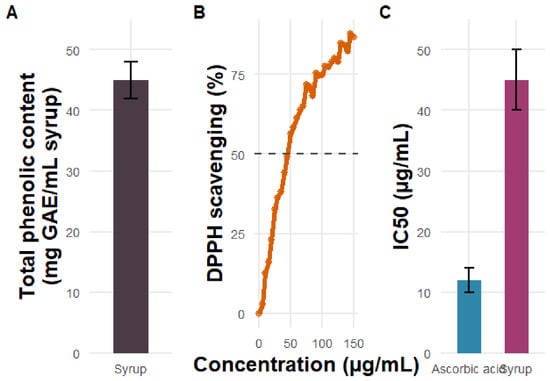
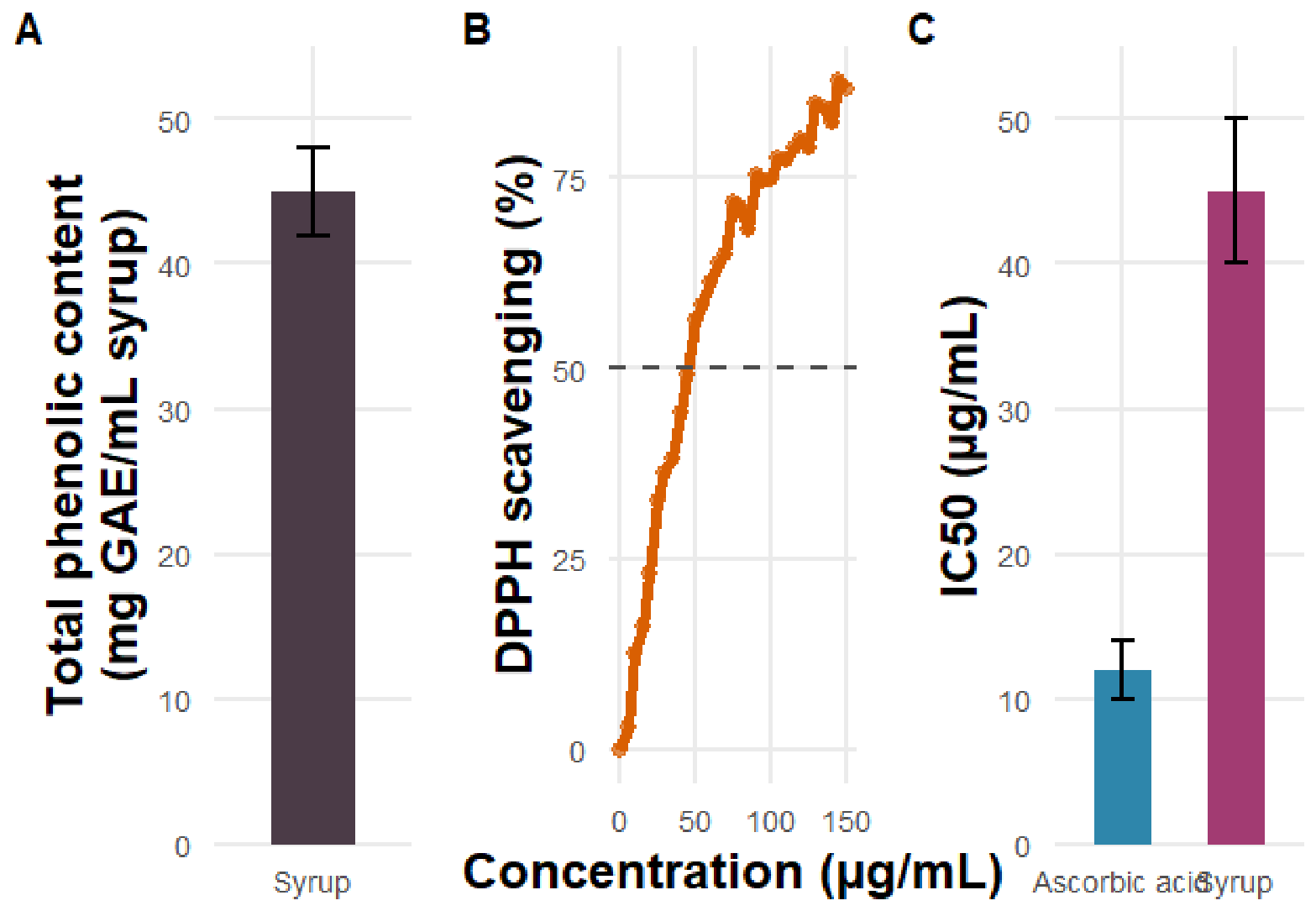
The formulated syrup contained 45 ± 3 mg GAE/mL total phenolics (Figure 1A), reflecting contributions from both fruit sources and their polyphenol-rich nature.
Figure 1.
(A) Total phenolic content expressed as mg GAE per mL syrup. (B) DPPH radical scavenging activity expressed as percentage inhibition (mean ± SD; n = 3). (C) IC50 values for syrup extract and ascorbic acid control. Bars represent mean ± SD; p < 0.001.
The total phenolic content (45 ± 3 mg GAE/mL syrup) represents a significant bioactive load. This value is comparable to or exceeds the reported values for other functional syrups, such as palmyra palm syrup (30–50 mg GAE/mL) and date syrup (25–40 mg GAE/mL) [7,34]. The high phenolic content is attributable to the combined contributions of both fruit species, with HPLC profiling confirming multiple bioactive phenolic compounds.
3.4. Antioxidant Activity
3.4.1. DPPH Radical Scavenging Activity
The syrup showed concentration-dependent DPPH radical scavenging, with an IC50 of 45 ± 5 μg/mL, compared with 12 ± 2 μg/mL for ascorbic acid—an about 3.75-fold greater potency by mass. This difference reflects the polyphenolic matrix’s complexity and mixed reactivity, a pattern typical of plant extracts that does not preclude functional utility [35] (Figure 1B,C).
3.4.2. ABTS Radical Scavenging Activity
The syrup showed ABTS radical scavenging with an IC50 of 38 ± 4 μg/mL, slightly more potent than DPPH scavenging (45 ± 5 μg/mL). This difference is attributed to the distinct reaction mechanisms: ABTS•+ reacts with both hydrophilic and lipophilic antioxidants, whereas DPPH is more selective for hydrogen-donating compounds [36]. The lower ABTS IC50 suggests that the syrup’s phenolic matrix includes compounds effective at scavenging aqueous-phase radicals, consistent with the presence of gallic acid and catechin.
3.4.3. Ferric Reducing Antioxidant Power (FRAP)
The FRAP assay showed ferric reducing activity of 52 ± 6 µM Fe2+/mL syrup, positively correlated with the total phenolic content (r = 0.89, p < 0.01), indicating that phenolics drive its electron-donating capacity. This was comparable to other polyphenol-rich fruit syrups [37].
3.4.4. Comparative Antioxidant Assessment
Table 3 summarises the multi-method antioxidant activity of the formulated syrup. The consistency across assays (DPPH IC50 45 ± 5 µg/mL; ABTS IC50 38 ± 4 µg/mL; FRAP 52 ± 6 µM Fe2+/mL) indicates that the syrup’s antioxidant capacity is robust and not limited to a single mechanism.
Table 3.
Multi-method antioxidant activity of formulated syrup (mean ± SD; n = 3).
The multi-method assessment shows the syrup’s radical-scavenging and reducing capacity: DPPH measures hydrogen donation, ABTS electron transfer, and FRAP ferric ion reduction [38]. Consistent activity across these mechanisms suggests complementary antioxidants in the phenolic matrix, aligning with the diverse phytochemicals identified by HPLC.
3.5. Sensory Evaluation
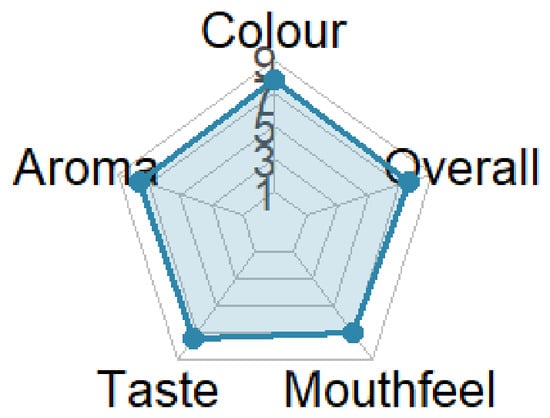
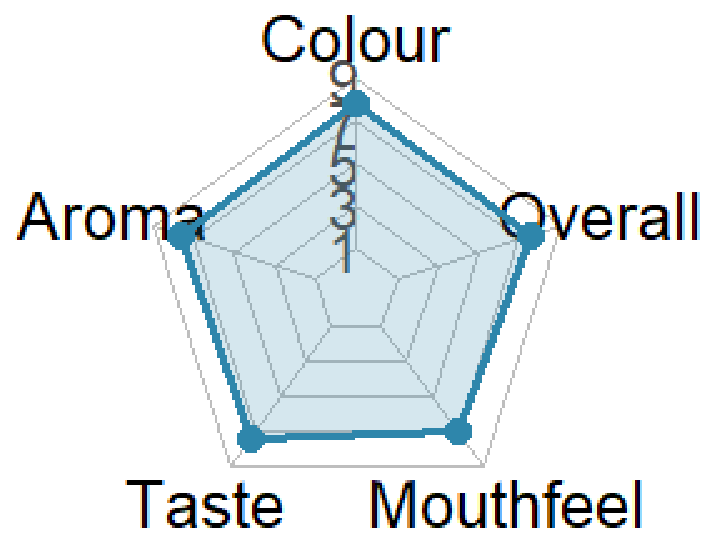
Table 4 shows sensory acceptability ratings on a 9-point scale, and the distribution of these scores across attributes is visualised in Figure 2. The overall acceptability was 7.5 ± 0.6, between “like moderately” and “like very much.” Colour and aroma scored the highest (7.8 ± 0.7 and 7.6 ± 0.8), and mouthfeel the lowest (7.0 ± 0.9). Panellist reliability was high (Cronbach’s α = 0.85), with no significant differences by sex (p > 0.05).
Table 4.
Sensory acceptability of formulated syrup (mean ± SD; n = 30).
Figure 2.
Sensory acceptability radar plot showing mean hedonic scores for colour, aroma, taste, mouthfeel, and overall acceptability (n = 30). Error bars represent SD.
High sensory acceptability (7.5 ± 0.6/9) indicates strong consumer potential. Colour and aroma scored the highest (7.8 ± 0.7 and 7.6 ± 0.8), reflecting the fruits’ appealing golden-amber hue and floral-fruity notes [39], while mouthfeel scored the lowest (7.0 ± 0.9) but remained acceptable. This profile supports potential use as a natural excipient in pharmaceutical syrups, particularly for paediatric and geriatric patients, and may reduce the reliance on artificial sweeteners and flavourings [40,41]. All attributes exceeded 7.0, though significantly lower mouthfeel scores (Tukey’s HSD, p < 0.05) point to scope for texture optimisation.
3.6. Accelerated Stability
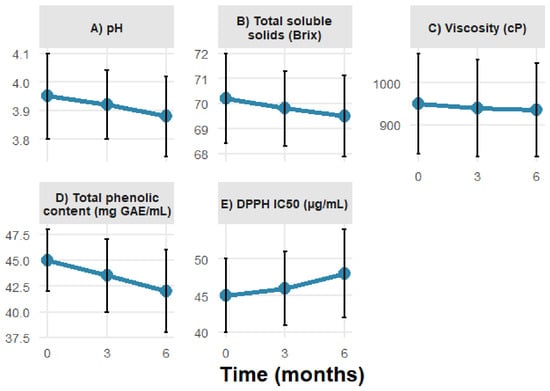
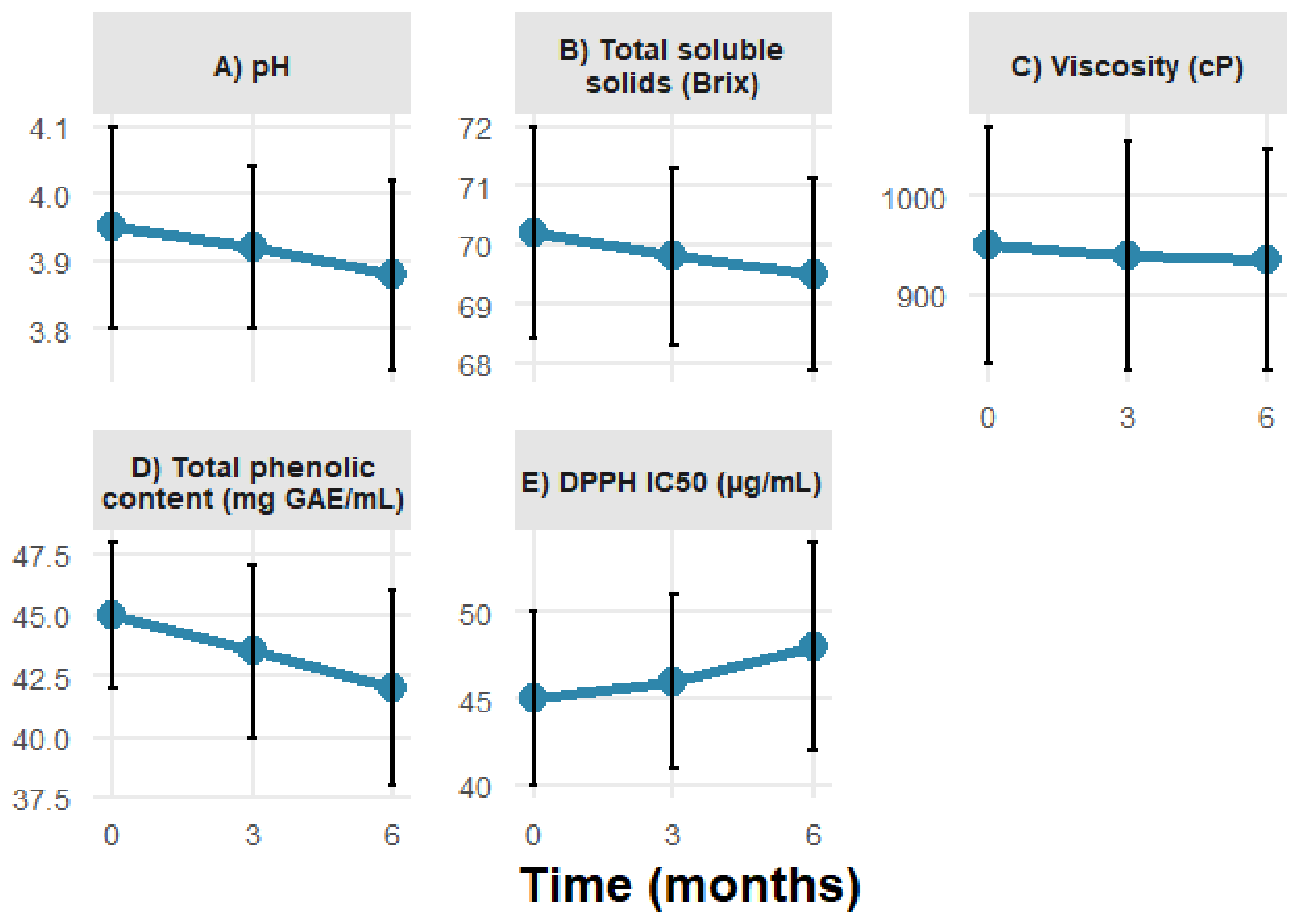
Accelerated stability testing at 40 °C/75% RH for 6 months showed that the syrup maintained its physicochemical and antioxidant integrity (Table 5, Figure 3). pH (3.8–4.2), soluble solids (68–72 °Brix), and viscosity (800–1200 cP) remained stable. Total phenolics declined 6.7% (45 ± 3 to 42 ± 4 mg GAE/mL), without statistical significance (F(2, 4) = 1.15, p = 0.502, ηp2 = 0.37). DPPH IC50 rose slightly (45 ± 5 to 48 ± 6 μg/mL; F(2, 4) = 0.98, p = 0.612, ηp2 = 0.33). The syrup remained clear, with no sediment.
Table 5.
Accelerated stability of formulated syrup over 6 months (40 °C/75% RH; mean ± SD; n = 3).
Figure 3.
Stability profiles of (A) pH, (B) total soluble solids, (C) viscosity, (D) total phenolic content, and (E) DPPH radical scavenging activity over 6 months at 40 °C/75% RH. Data represent mean ± SD; n = 3.
Six-month accelerated stability testing showed no significant degradation in physicochemical or antioxidant properties. Acidic pH, high sugar content, and effective clarification likely limited enzymatic and microbial activity [42]. Total phenolics decreased slightly (6.7%), while DPPH IC50 increased by 6.7%, indicating mild oxidation consistent with the reports on polyphenol-rich syrups [43]. The results suggest a shelf-life exceeding 24 months at ambient conditions [44,45]. The retention of bioactive compounds under elevated temperature and humidity supports the product’s environmental robustness and commercial viability.
3.7. Discussion
3.7.1. Phytochemical Retention and Antioxidant Capacity
The syrup showed favourable physicochemical properties, a high phenolic content (45 ± 3 mg GAE/mL), antioxidant activity (DPPH IC50 45 ± 5 µg/mL), good sensory acceptability, and stability under accelerated conditions, supporting S. madagascariensis and P. curatellifolia as potential functional food ingredients. Its phenolic content and antioxidant activity matched or exceeded those of comparable fruit syrups. HPLC-DAD identified gallic acid, catechin, and chlorogenic acid as the predominant phenolics (~61.7% of total), which remained stable after heating at 85 °C for 20 min and vacuum concentration at 70 °C, possibly due to the sugar matrix. Gallic acid has radical-scavenging and metal-chelating activity [31], while catechin provides reducing power and inhibits lipid peroxidation [32].
The syrup remained stable for 6 months under accelerated conditions (40 °C/75% RH). Its acidic pH (3.8–4.2), high sugar content (68–72 °Brix), and effective clarification help limit enzymatic activity, microbial growth, and oxidation. The total phenolics declined by 6.7%, within acceptable limits for natural products and comparable to other fruit syrups [43]. These results and its favourable sensory profile support commercial viability and a predicted ambient shelf-life exceeding 24 months for food and pharmaceutical applications.
3.7.2. Functional and Pharmaceutical Implications
The syrup’s physicochemical properties, phenolic content, antioxidant activity, and sensory acceptability make it a versatile functional ingredient for health-promoting foods and beverages, a bioactive natural sweetener, a pharmaceutical vehicle pending API compatibility testing, and nutraceuticals pending efficacy and safety validation.
3.7.3. Study Limitations
Several limitations warrant acknowledgement. The 60:40 blend ratio was not systematically optimised; future work should test more ratios to maximise phenolic retention and sensory acceptability. Antioxidant testing relied mainly on DPPH; adding ORAC profiling would complement the ABTS and FRAP data. Nutritional profiling was not conducted. Accelerated stability testing provides preliminary evidence, but real-time studies are needed for regulatory approval, and glycaemic index testing is required to substantiate related claims. Compatibility with common active pharmaceutical ingredients also requires investigation. Finally, sampling fruits from one location and season may limit generalisability; multi-site, multi-season sampling is recommended.
3.8. Future Directions
Future research should proceed along several complementary lines: the systematic optimisation of blend ratios (80:20, 60:40, 40:60, and 20:80) to identify the formulation best balancing phenolic retention, antioxidant activity, and sensory acceptability; comprehensive antioxidant profiling incorporating ORAC and metal-chelation assays to complement the DPPH, ABTS, and FRAP data; an in vitro assessment of the glycaemic response through α-glucosidase inhibitory activity and GI simulation; API compatibility testing with common pharmaceuticals to establish suitability as a pharmaceutical vehicle; real-time stability studies under ambient conditions to validate shelf-life predictions; and clinical validation in human subjects to evaluate the glycaemic response, antioxidant status, and functional health benefits.
4. Conclusions
This study provides the first quantitative characterisation of a 60:40 S. madagascariensis:P. curatellifolia syrup. The formulation showed favourable physicochemical properties (pH 3.8–4.2; 68–72 °Brix; viscosity 800–1200 cP), high TPC (45 ± 3 mg GAE/mL), appreciable antioxidant activity (DPPH IC50 45 ± 5 µg/mL; ABTS IC50 38 ± 4 µg/mL; FRAP 52 ± 6 µM Fe2+/mL), good sensory acceptability (7.5/9), and stability over 6 months under accelerated conditions. Gallic acid, catechin, and chlorogenic acid were the predominant phenolics (~62% of total). These findings establish baseline compositional and bioactive data supporting the further development of this indigenous fruit syrup as a functional food ingredient. Before therapeutic claims can be made, blend optimisation, comprehensive antioxidant profiling, phytochemical characterisation, α-glucosidase validation, and in vivo glycaemic studies are required.
Author Contributions
Conceptualisation, M.M., K.G.M. and H.M.M.; methodology, M.M.; investigation, M.M.; resources, H.M.M.; data curation, M.M.; writing the original draft preparation, M.M.; writing the review and editing, K.G.M. and H.M.M.; supervision, H.M.M. All authors have read and agreed to the published version of the manuscript.
Funding
This research received no external funding.
Institutional Review Board Statement
Not applicable.
Informed Consent Statement
Informed consent was obtained from all subjects involved in the sensory evaluation.
Data Availability Statement
All data generated or analysed during this study are included in this published article. Raw data are available from the corresponding author upon reasonable request.
Acknowledgments
The authors gratefully acknowledge the National Herbarium and Botanic Garden, Zimbabwe, for plant authentication, and the Department of Pharmaceutical Technology and Department of Food Processing Technology, Harare Institute of Technology, for providing laboratory facilities. During the preparation of this manuscript, the authors used Grammarly (1.198.2.0) for language polishing to improve clarity and readability. The authors have reviewed and edited the output and take full responsibility for the content of this publication.
Conflicts of Interest
The authors declare no conflicts of interest.
References
- Touvier, M.; Da Costa Louzada, M.L.; Mozaffarian, D.; Baker, P.; Juul, F.; Srour, B. Ultra-processed foods and cardiometabolic health: Public health policies to reduce consumption cannot wait. BMJ 2023, 383, e075294. [Google Scholar] [CrossRef] [Scilit] [PubMed]
- Arshad, S.; Rehman, T.; Saif, S.; Rajoka, M.S.R.; Ranjha, M.M.A.N.; Hassoun, A.; Cropotova, J.; Trif, M.; Younas, A.; Aadil, R.M. Replacement of refined sugar by natural sweeteners: Focus on potential health benefits. Heliyon 2022, 8, e10711. [Google Scholar] [CrossRef] [Scilit] [PubMed]
- Hieronimus, B.; Medici, V.; Lee, V.; Nunez, M.V.; Sigala, D.M.; Bremer, A.A.; Cox, C.L.; Keim, N.L.; Schwarz, J.M.; Pacini, G.; et al. Synergistic effects of fructose and glucose on hepatic steatosis. Nutrients 2024, 16, 678. [Google Scholar] [PubMed]
- Ma, X.; Nan, F.; Liang, H.; Shu, P.; Fan, X.; Song, X.; Hou, Y.; Zhang, D. Excessive intake of sugar: An accomplice of inflammation. Front. Immunol. 2022, 13, 988481. [Google Scholar] [CrossRef] [Scilit] [PubMed]
- Yan, R.R.; Chan, C.B.; Louie, J.C.Y. Current WHO recommendation to reduce free sugar intake from all sources to below 10% of daily energy intake for supporting overall health is not well supported by available evidence. Am. J. Clin. Nutr. 2022, 116, 15–39. [Google Scholar] [CrossRef] [Scilit] [PubMed]
- Ozuna, C.; Franco-Robles, E. Agave syrup: An alternative to conventional sweeteners? A review of its current technological applications and health effects. LWT 2022, 162, 113434. [Google Scholar] [CrossRef] [Scilit]
- Le, D.H.T.; Chiu, C.S.; Chan, Y.J.; Wang, C.C.R.; Liang, Z.C.; Hsieh, C.W.; Lu, W.C.; Mulio, A.T.; Wang, Y.J.; Li, P.H. Bioactive and physicochemical characteristics of natural food: Palmyra palm (Borassus flabellifer Linn.) syrup. Biology 2021, 10, 1–15. [Google Scholar] [CrossRef] [Scilit] [PubMed]
- Maroyi, A. Traditional use of medicinal plants in south-central Zimbabwe: Review and perspectives. J. Ethnobiol. Ethnomed. 2013, 9, 31. [Google Scholar] [CrossRef] [Scilit] [PubMed]
- Shai, K.N.; Ncama, K.; Ndhlovu, P.T.; Struwig, M.; Aremu, A.O. An exploratory study on the diverse uses and benefits of locally-sourced fruit species in three villages of Mpumalanga Province, South Africa. Foods 2020, 9, 1581. [Google Scholar] [CrossRef] [Scilit] [PubMed]
- Thothela, S.N.S.; Kola, E.; Dalu, M.T.B.; Ndhlovu, P.T. Indigenous knowledge and utilisation of Strychnos spinosa Lam. in Sub-Saharan Africa: A systematic review of its medicinal, nutritional, and cultural significance. Diversity 2025, 17, 228. [Google Scholar] [CrossRef] [Scilit]
- Achika, J.I.; Ayo, R.G.; Khan, E.M.; Shehu, A. Identification of antioxidant compounds from the stem bark fraction of Strychnos innocua Del. J. Agric. Food Res. 2023, 14, 100833. [Google Scholar] [CrossRef] [Scilit]
- Lubisi, N.P.; Matlala, M.E.; Ramarumo, L.J.; Ndhlovu, P.T. Ethnobotanical and nutritional evaluation of understudied wild edible fruits in South Africa: Bridging indigenous knowledge and food security: A review. Foods 2025, 14, 215. [Google Scholar] [CrossRef] [Scilit] [PubMed]
- Mawire, P.; Mozirandi, W.; Heydenreich, M.; Chi, G.F.; Mukanganyama, S. Isolation and antimicrobial activities of phytochemicals from Parinari curatellifolia (Chrysobalanaceae). Adv. Pharmacol. Pharm. Sci. 2021, 2021, 8842629. [Google Scholar] [CrossRef] [Scilit] [PubMed]
- Corkovic, I.; Gaso-Sokac, D.; Pichler, A.; Simunovic, J.; Kopjar, M. Dietary polyphenols as natural inhibitors of α-amylase and α-glucosidase. Life 2022, 12, 1692. [Google Scholar] [CrossRef] [Scilit] [PubMed]
- Patil, A.G.; Mirajakar, K.G.; Savekar, P.L. Formulation and evaluation of ginger macerated honey base herbal cough syrup. Int. J. Pharm. Sci. Res. 2020, 5, 582–589. [Google Scholar] [CrossRef] [Scilit]
- Mandala, W.; Catholic, S. Effect of using different clarifying agents and temperature on physicochemical and sensory properties of sweet sorghum syrup extract. J. Food Sci. Technol. 2023, 7, 169–178. [Google Scholar] [CrossRef] [Scilit] [PubMed]
- Atpadkar, K. Formulation and evaluation of poly herbal syrup. Int. J. Res. Appl. Sci. Eng. Technol. 2025, 13, 1014–1021. [Google Scholar] [CrossRef] [Scilit]
- Singleton, V.L.; Orthofer, R.; Lamuela-Raventós, R.M. Analysis of total phenols and other oxidation substrates and antioxidants by means of Folin-Ciocalteu reagent. Methods Enzymol. 1999, 299, 152–178. [Google Scholar] [CrossRef] [Scilit]
- Brand-Williams, W.; Cuvelier, M.E.; Berset, C. Use of a free radical method to evaluate antioxidant activity. LWT 1995, 28, 25–30. [Google Scholar] [CrossRef] [Scilit]
- Re, R.; Pellegrini, N.; Proteggente, A.; Pannala, A.; Yang, M.; Rice-Evans, C. Antioxidant activity applying an improved ABTS radical cation decolorization assay. Free Radic. Biol. Med. 1999, 26, 1231–1237. [Google Scholar] [CrossRef] [Scilit] [PubMed]
- Benzie, I.F.F.; Strain, J.J. The ferric reducing ability of plasma (FRAP) as a measure of “antioxidant power”: The FRAP assay. Anal. Biochem. 1996, 239, 70–76. [Google Scholar] [CrossRef] [Scilit] [PubMed]
- Peryam, D.R.; Pilgrim, F.J. Hedonic scale method of measuring food preferences. Food Technol. 1957, 11, 9–14. [Google Scholar]
- International Council for Harmonisation (ICH). Stability Testing of New Drug Substances and Products Q1A(R2); International Council for Harmonisation (ICH): Geneva, Switzerland, 2003. [Google Scholar]
- Saengkrajang, W.; Chaijan, M.; Panpipat, W. Physicochemical properties and nutritional compositions of nipa palm (Nypa fruticans Wurmb) syrup. NFS J. 2021, 23, 58–65. [Google Scholar] [CrossRef] [Scilit]
- Beuchat, L.R. Microbial stability as affected by water activity. Cereal Foods World 1981, 26, 345–349. [Google Scholar]
- Bhatt, K.; Thakur, N.S.; Thakur, A.; Sharma, C. Optimization of juice and total soluble solids concentration for the preparation of wild jamun syrup. Curr. J. Appl. Sci. Technol. 2020, 39, 116–124. [Google Scholar] [CrossRef] [Scilit]
- Zayapor, M.N.; Abdullah, A.; Mustapha, W.A.W. Influence of sugar concentration and sugar type on the polyphenol content and antioxidant activity in spiced syrup preparation. Ital. J. Food Sci. 2021, 33, 96–105. [Google Scholar] [CrossRef] [Scilit]
- Rezghi, M.; Mortazavi, S.A. Formulation of a traditional polyherbal product to a standard pharmaceutical syrup and development of its quality control methods. Res. J. Pharmacogn. 2019, 6, 53–59. [Google Scholar] [CrossRef] [Scilit]
- Ciursa, P.; Oroian, M. Rheological behavior of honey adulterated with agave, maple, corn, rice and inverted sugar syrups. Sci. Rep. 2021, 11, 23408. [Google Scholar] [CrossRef] [Scilit] [PubMed]
- Plotnikova, I.V.; Magomedov, G.O.; Kazartsev, D.A.; Magomedov, M.G.; Polansky, K.; Plotnikov, V.E. Differential thermal analysis of moisture. Food Sci. Nutr. 2024, 12, 156–168. [Google Scholar] [CrossRef] [Scilit]
- Nwozo, O.S.; Effiong, E.M.; Aja, P.M.; Awuchi, C.G. Antioxidant, phytochemical, and therapeutic properties of medicinal plants: A review. Int. J. Food Prop. 2023, 26, 359–388. [Google Scholar] [CrossRef] [Scilit]
- Adhikari, B. Roles of alkaloids from medicinal plants in the management of diabetes mellitus. J. Chem. 2021, 2021, 2691525. [Google Scholar] [CrossRef] [Scilit]
- Ouaabou, R.; Hssaini, L.; Ennahli, S.; Alahyane, A. Evaluating the impact of storage time and temperature on the stability of bioactive compounds and microbial quality in cherry syrup from the ‘Burlat’ cultivar. Discov. Food 2024, 4, 1–12. [Google Scholar] [CrossRef] [Scilit]
- Julai, K.; Sridonpai, P.; Ngampeerapong, C.; Tongdonpo, K.; Suttisansanee, U.; Kriegsinyos, W.; On-Nom, N.; Tangsuphoom, N. Effects of extraction and evaporation methods on physico-chemical, functional, and nutritional properties of syrups from Barhi dates (Phoenix dactylifera L.). Foods 2023, 12, 1268. [Google Scholar] [CrossRef] [Scilit] [PubMed]
- Carocho, M.; Ferreira, I.C.F.R. A review on antioxidants, prooxidants and related controversy: Natural and synthetic compounds, screening and analysis methodologies and future perspectives. Food Chem. Toxicol. 2013, 51, 15–25. [Google Scholar] [CrossRef] [Scilit] [PubMed]
- Prior, R.L.; Wu, X.; Schaich, K. Standardized methods for the determination of antioxidant capacity and phenolics in foods and dietary supplements. J. Agric. Food Chem. 2005, 53, 4290–4302. [Google Scholar] [CrossRef] [Scilit] [PubMed]
- Leyson, S.J.M.; Maralit, A.K.M.; Loayon, K.E.L.; Faron, L.J.; Germata, C.J.D.; Destajo, K.L.M. Acceptability of Mansanitas (Muntingia calabura) fruit as syrup. Cogniz. J. 2025, 5, 592–597. [Google Scholar] [CrossRef] [Scilit]
- Zupanets, K.O.; Shebeko, S.K.; Ratushna, K.L.; Katilov, O.V. Cumulative risks of excipients in pediatric phytonutritory syrups: The implications for pharmacy practice. Sci. Pharm. 2021, 89, 32. [Google Scholar] [CrossRef] [Scilit]
- Witek, K.; Wydro, K.; Filip, M. A high-sugar diet consumption, metabolism and health impacts with a focus on the development of substance use disorder: A narrative review. Nutrients 2022, 14, 2940. [Google Scholar] [CrossRef] [Scilit] [PubMed]
- Mohammed, A.; Ovenseri, A.C.; Emmanuel, H.M. Stability studies of Daucus carota (Apiaceae) extracts as colourant in paracetamol syrup formulation. Niger. J. Pharm. 2022, 56, 49–55. [Google Scholar] [CrossRef] [Scilit]
- Simpson, I.K.; Owusu, F.W.A.; Boakye-Gyasi, M.E.; Entsie, P.; Bayor, M.T.; Ofori-Kwakye, K. Stability of herbal formulations. J. Pharm. Sci. 2022, 111, 1024–1035. [Google Scholar]
- Joumblat, A. Development of the composition of the base of the expectorant syrup. J. Pharm. Sci. 2022, 15, 15–19. [Google Scholar]
- Kohajdová, Z.; Holkovičová, T.; Minarovičová, L.; Lauková, M.; Hojerová, J.; Greif, G.; Ťažká, D. Potential of quinoa for production of new non-dairy beverages with reduced glycemic index. J. Microbiol. Biotechnol. Food Sci. 2023, 12, e9885. [Google Scholar] [CrossRef] [Scilit]
- Valenzuela, M.J.; Waterhouse, B.; Aggarwal, V.R.; Bloor, K.; Doran, T. Effect of sugar-sweetened beverages on oral health: A systematic review and meta-analysis. Eur. J. Public Health 2021, 31, 122–129. [Google Scholar] [CrossRef] [Scilit] [PubMed]
- Lamy, G.M.L.; Nnanga, L.S.; Mahama, M.; Ossongo, A.F.; Elomo, L.B.; Tagne, R.S.; Mbo, J.A.; Likeng, J.L.N.; Nga, E.N.; Harmsen, K. Antimicrobial activity of medicinal plants from Cameroon. Asian J. Nat. Prod. Biochem. 2023, 21, 58–66. [Google Scholar]

Disclaimer/Publisher’s Note: The statements, opinions and data contained in all publications are solely those of the individual author(s) and contributor(s) and not of MDPI and/or the editor(s). MDPI and/or the editor(s) disclaim responsibility for any injury to people or property resulting from any ideas, methods, instructions or products referred to in the content. |
© 2026 by the authors. Licensee MDPI, Basel, Switzerland. This article is an open access article distributed under the terms and conditions of the Creative Commons Attribution (CC BY) license.