


Abstract
A novel synthetic methodology has been developed for the efficient preparation of Quinoxalin-2(1H)-one derivatives through a strategically designed combination of Ugi four-component reaction (4CR) followed by metal-catalyzed cross-coupling reactions. This innovative approach demonstrates exceptional versatility in generating molecular diversity by systematically modulating the reactivity profiles of the initially formed Ugi adducts, thereby enabling access to a broad library of structurally diverse quinoxalinone compounds. The synthetic protocol consistently delivered the desired final products in good to moderate yields, demonstrating the reliability and practicality of this methodology for preparative applications. Comprehensive structural characterization of all synthesized derivatives was accomplished through a combination of advanced spectroscopic techniques, including proton nuclear magnetic resonance (1H NMR), carbon-13 nuclear magnetic resonance (13C NMR), and high-resolution mass spectrometry, ensuring unambiguous confirmation of product identities and purities. The methodological framework employs 2-iodoaniline and 2-chloroacetic acid as the fixed amine and carboxylic acid components, respectively, in the multicomponent Ugi reaction, providing a consistent synthetic foundation. Subsequently, the resulting Ugi adducts undergo palladium-catalyzed cross-coupling transformations under optimized reaction conditions, facilitating the crucial cyclization and functionalization steps necessary for the formation of the target Quinoxalin-2(1H)-one derivatives. This sequential approach represents a significant advancement in heterocyclic synthesis methodology.
1. Introduction
In recent years, the swift synthesis of intricate molecular architectures has been facilitated by the implementation of diversity-oriented synthetic methodologies alongside so-called complexity-generating reactions. Multicomponent reactions (MCRs) [1,2], which amalgamate a minimum of three fundamental building blocks within a single reaction vessel, constitute an exceptionally potent framework for achieving both diversity and complexity while minimizing the number of reaction steps required. In this discourse, we delineate innovative modular reaction sequences predicated upon our earlier reported MCR chemistry in conjunction with cycloaddition reactions and transition-metal catalyzed cross-coupling processes [1]. Transformations catalyzed by palladium rank among the most robust and adaptable techniques in organic synthesis for the construction of C–C and C-heteroatom bonds [3], frequently providing unparalleled access to molecular frameworks that are otherwise challenging to synthesize.
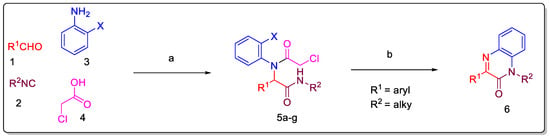
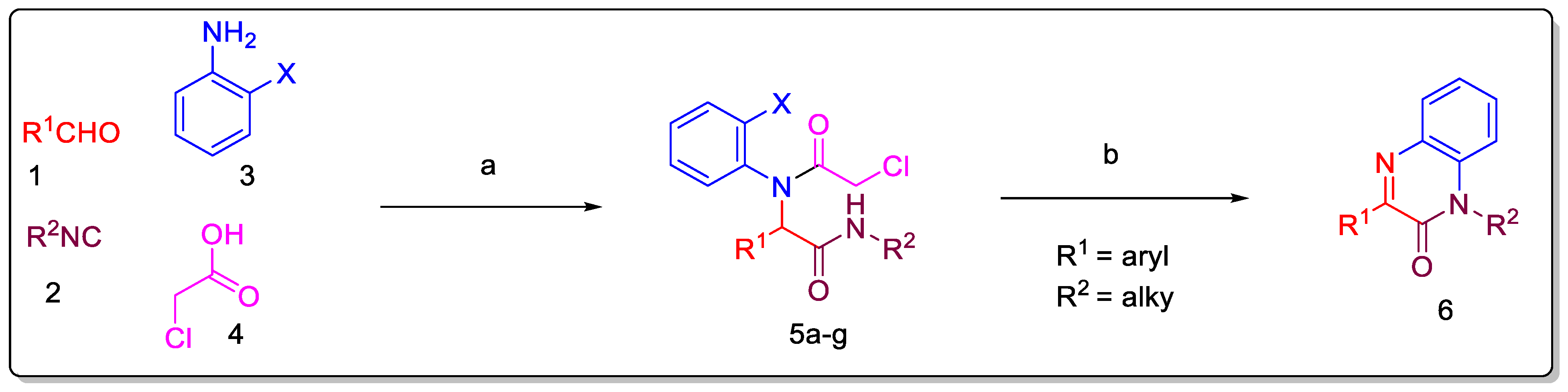
In the context of our ongoing research initiative aimed at the identification of novel post-modifications [4,5] for compounds synthesized via multicomponent reactions (MCRs) [5], we sought to explore the potential of utilizing this cyclization with adducts generated through an Ugi reaction. From this perspective, we proposed a synthetic approach based on the Ugi reaction, which is subsequently followed by a sequential palladium-catalyzed cross-coupling reaction (Scheme 1) to yield Quinoxalin-2(1H)-one [6,7,8,9] derivatives.
Scheme 1.
Reagents and conditions: (a) MeOH, rt, 24 h (b) 6 mol%PdCl2(CH3CN)2, 12 mol% C20H27P, Cs2CO3, DMA, 120 °C.
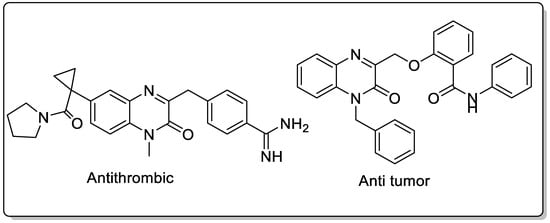
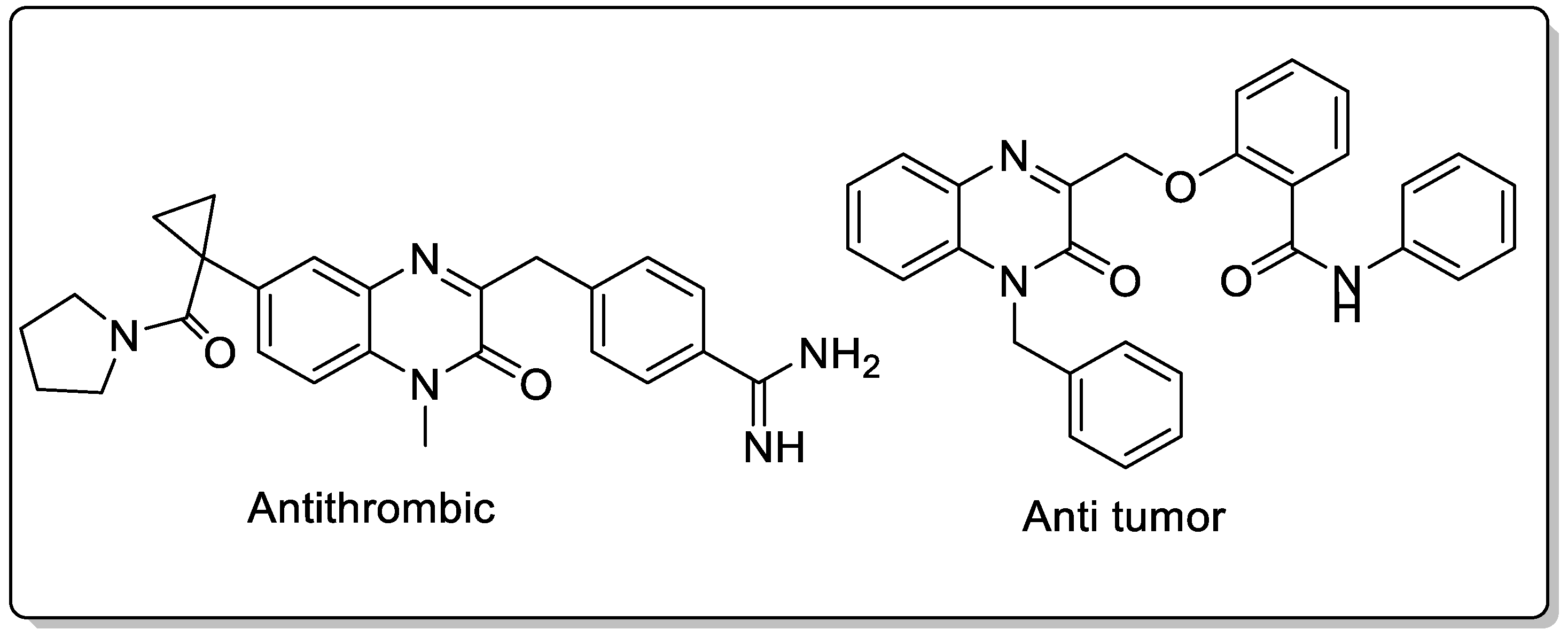
Quinoxalinones represent a category of nitrogen-containing fused heterocyclic compounds that have garnered significant interest owing to their multifunctional scaffolds pertinent to pharmacological agents [10,11], (Figure 1). These compounds manifest a multitude of biological activities, including antimicrobial [12], antifungal [13], antidiabetic [14], antiviral [15], anticancer [16], and anti-inflammatory properties [17]. The exploration of quinoxalinone scaffolds constitutes an exceptionally compelling endeavor within the realm of drug discovery initiatives.
Figure 1.
Structures of some pharmaceutically relevant quinoxalin-2(1H)-one derivatives.
To advance our research focus [18,19,20] on the establishment of resilient methodologies with substantial user adoption in the pharmaceutical industry, we herein elucidate our synthetic protocol to produce quinoxalin-2(1H)-ones through the Ugi four-component reaction coupled with metal-catalyzed cross-coupling processes.
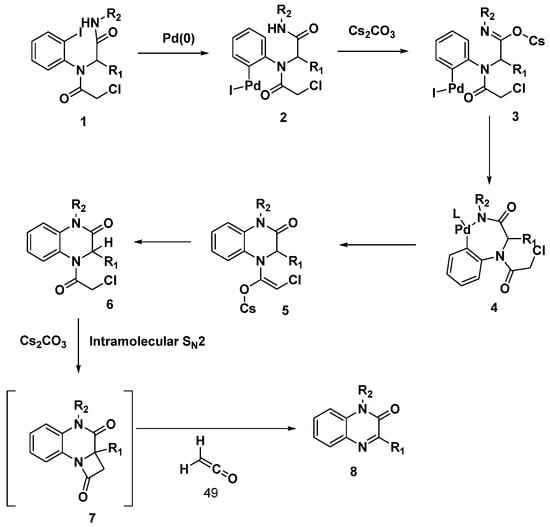
In this synthesis, the classical Ugi 4-component reaction is employed, wherein the constituent elements are meticulously adjusted to achieve diverse structural points, specifically incorporating aldehyde (1), 2-halo aniline (2), 2-chloroacetic acid (4), and isocyanide (3). The compounds 2-chloroacetic acid and 2-halo aniline serve as critical agents for modulating the diversity points during the subsequent modification reaction. The Ugi multicomponent reaction was executed under conventional conditions, wherein equimolar amounts of aldehyde (1), 2-halo aniline (2), 2-chloroacetic acid (4), and isocyanide (3) were solubilized in 1 M methanol and agitated at ambient temperature for 24 h, yielding Ugi adduct 5a–b in satisfactory to moderate yields. (Figure 2: 5a–b). The products obtained are characterized by 1H-NMR, 13C-NMR. The synthesized derivatives are mentioned below with their respective yields (Figure 2).
Figure 2.
Ugi adducts (5a–b).
Following the synthesis of Ugi adducts 5a–b, we advance to palladium-mediated cyclization as a subsequent modification of the Ugi adduct, specifically selecting Ugi adduct 5a for the purpose of optimizing reaction conditions. The objective is to generate a diversity of products and modulate the reactivity of the Ugi adduct through the simultaneous formation of C-C and C-N bonds in a one-step process. Prior to initiating experimental procedures, we employed classical palladium catalysts and conducted a systematic screening of various catalysts and ligands. The efficacy of palladium-catalyzed reactions is largely contingent upon the judicious selection of appropriate ligands and catalysts, as well as the base utilized, which plays a crucial role in the overall reaction dynamics. The evaluation of various catalysts delineated in Table 1 substantiates the structural integrity through the application of 2D spectroscopic methodologies such as HMBC and HSQC, further corroborated by High-Resolution Mass Spectrometry (HRMS). The fundamental moiety of the resultant compound is identified as quinoxalin-2(1H)-one [1], which represents a significant category of heterocycles, holding substantial relevance in both biological and pharmaceutical contexts.
Table 1.
Screening of catalysts and conditions for the Pd-catalyzed cyclization.
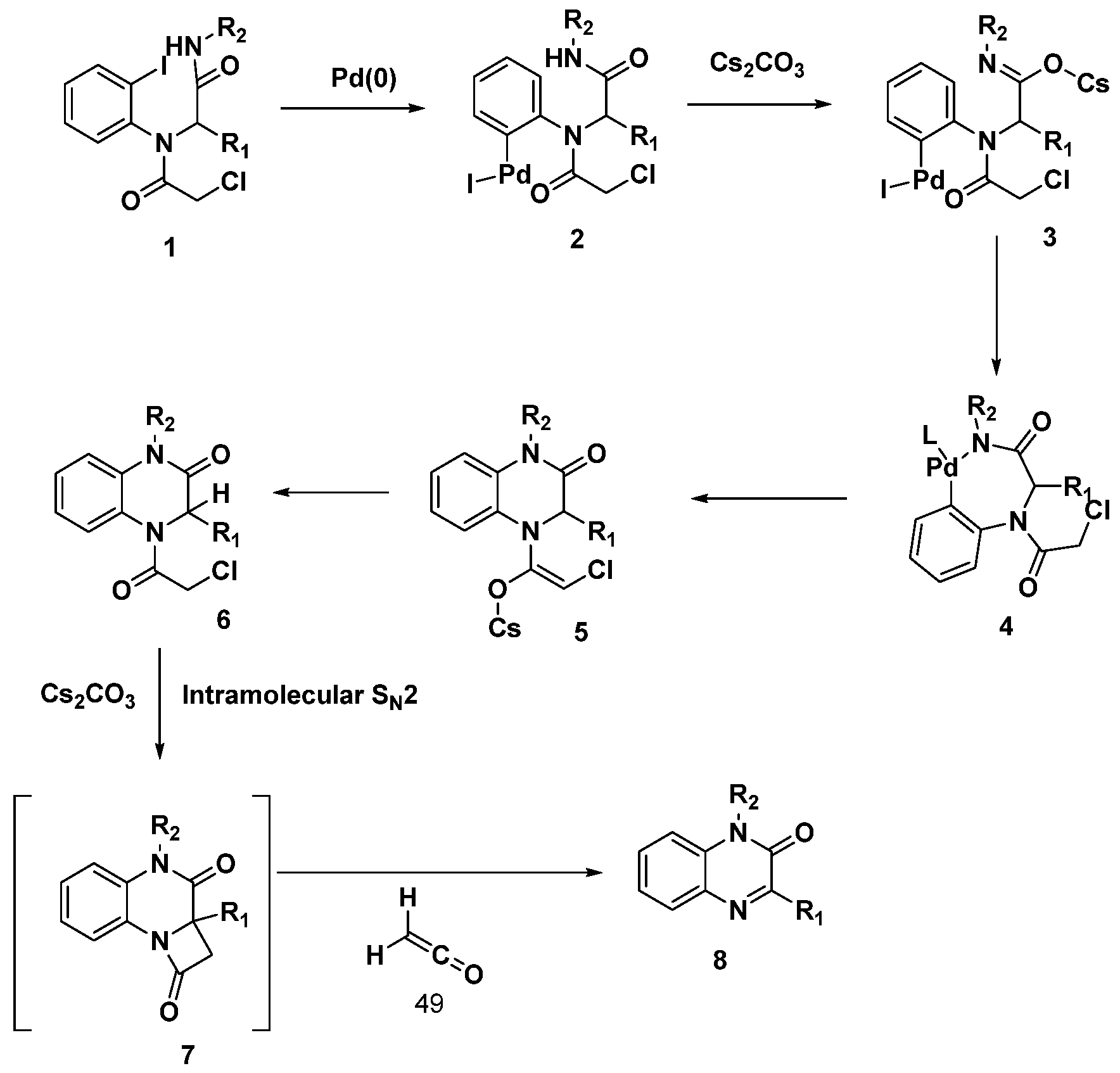
The product formed is confirmed by NMR. The proposed mechanism is mentioned in (Scheme 2). By this reaction, we observed the whole process of the first formation of diketopiperazine, which leads to product. The following mechanism explains the product formation. The reaction mechanism followed by the formation of Buchwald hartwig product 6, which is not isolable, undergoes base catalyzed intramolecular substitution and the nucleophilic reaction results in the formation of beta-lactam intermediate 7, which is unstable where retro cycloaddition reaction occurs, and elimination of ketene 8 leads to the formation of substituted quinoxalin-2(1H)-ones.
Scheme 2.
The proposed palladium-catalyzed cyclization mechanism.
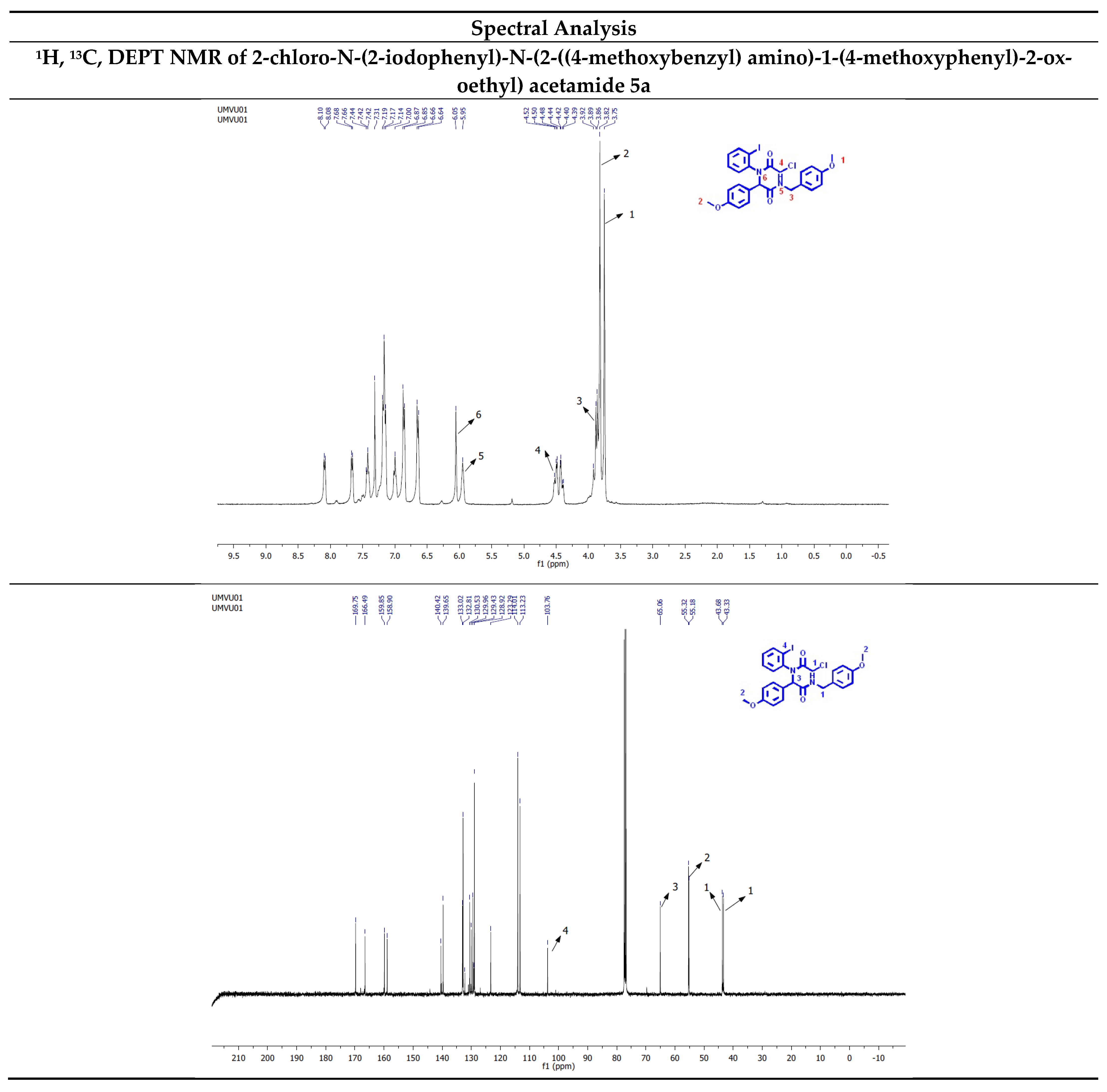
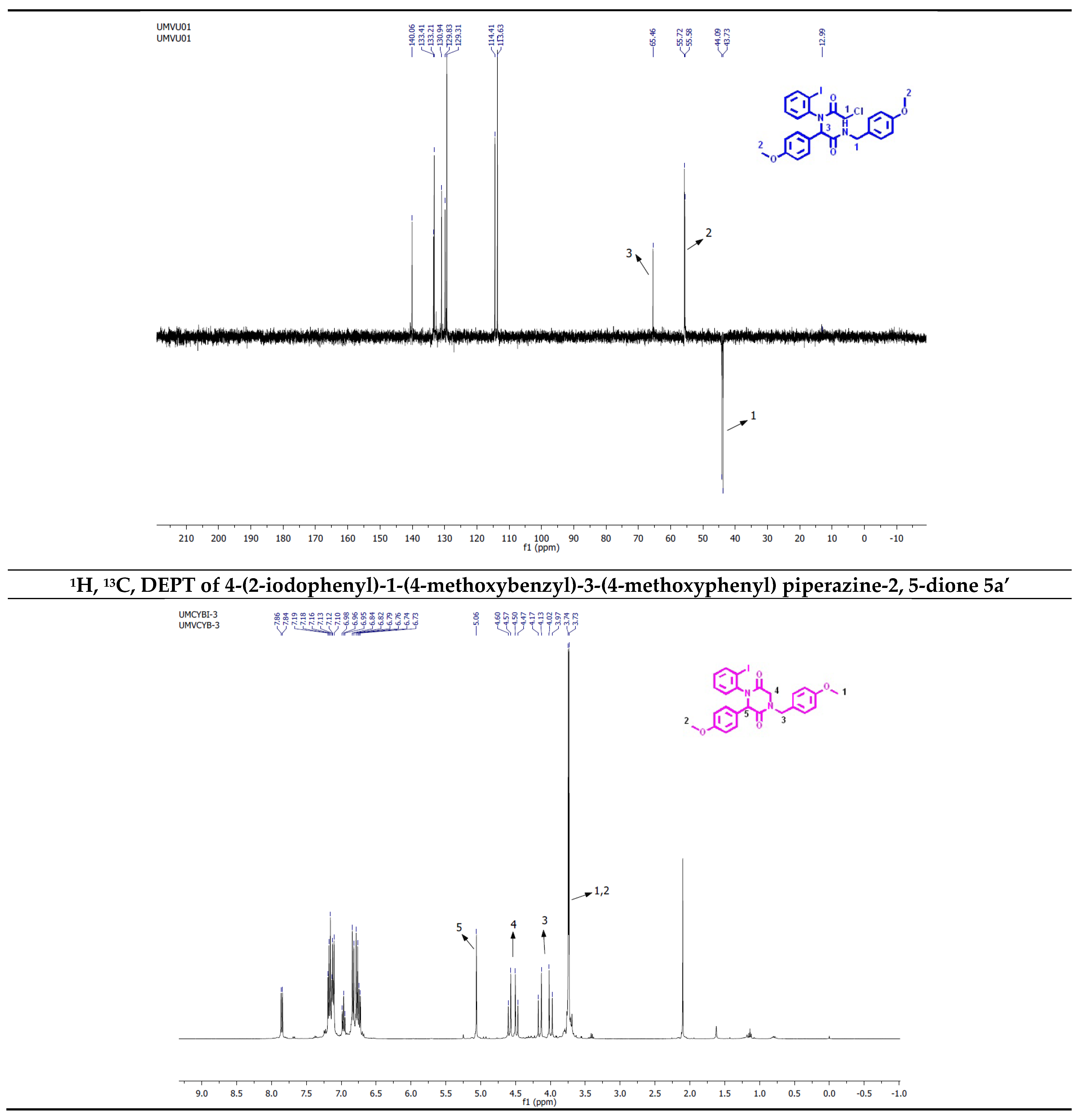
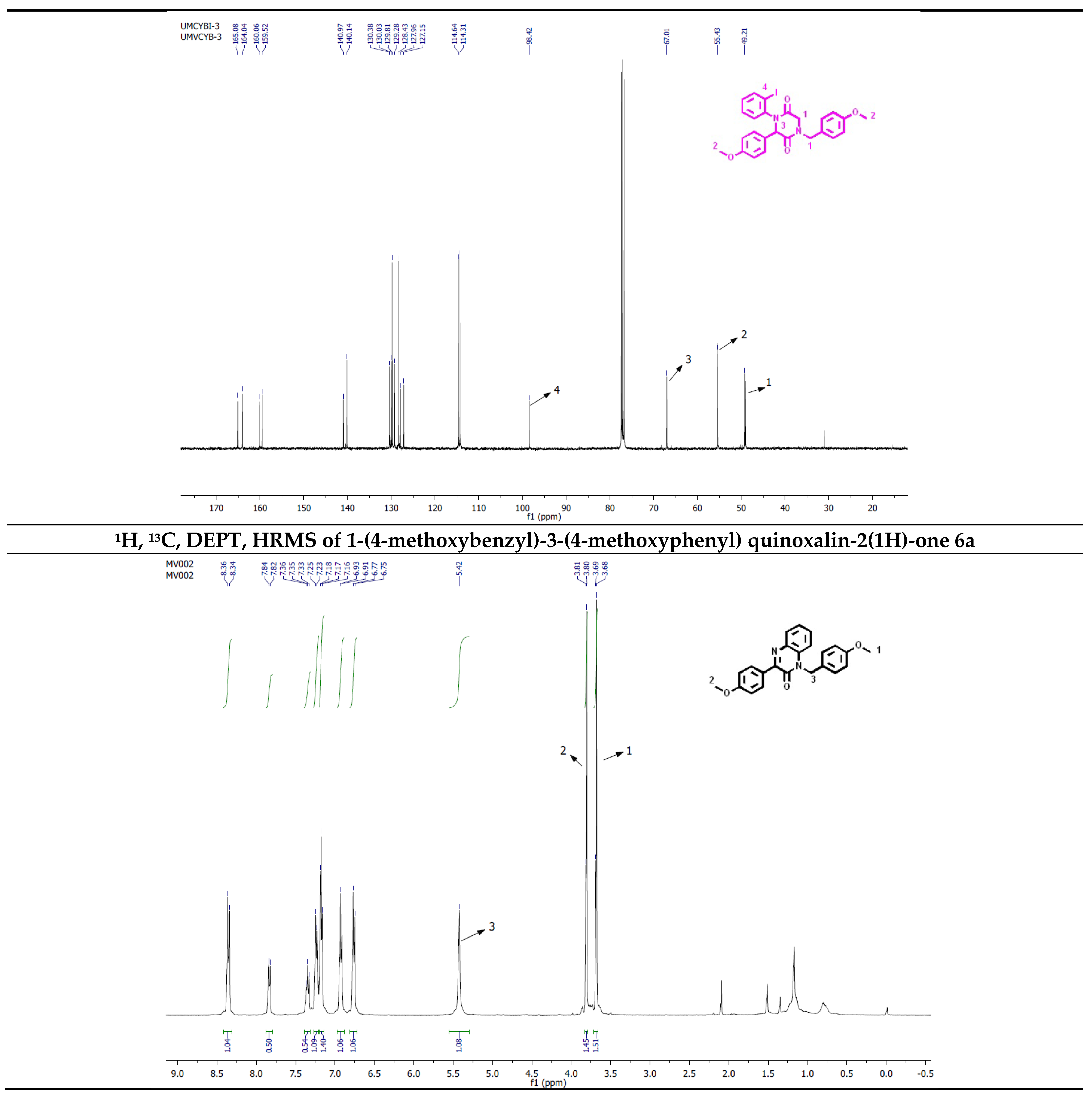
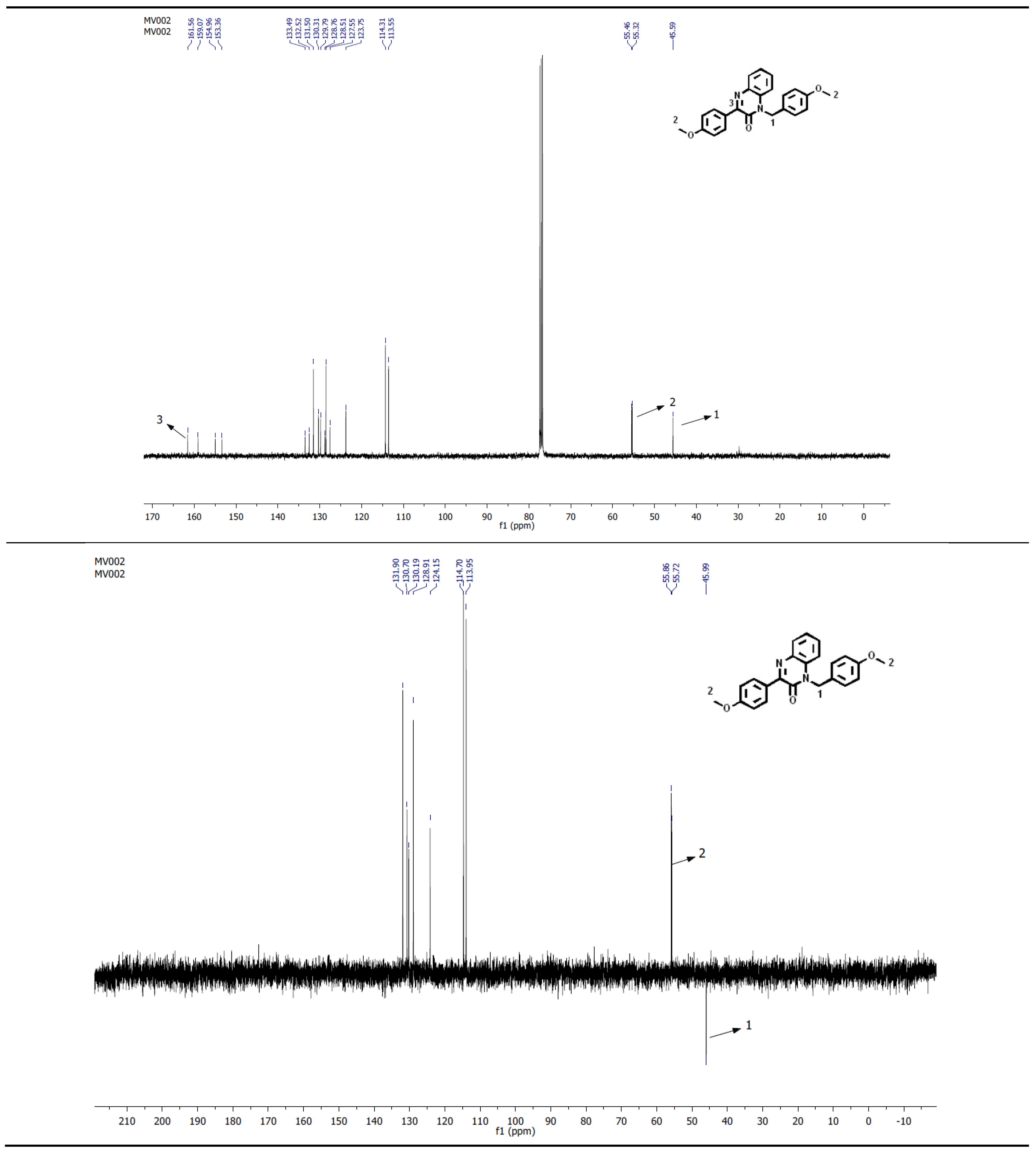
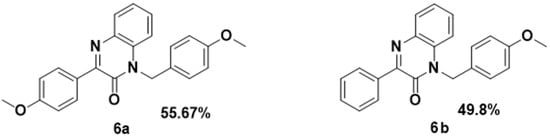
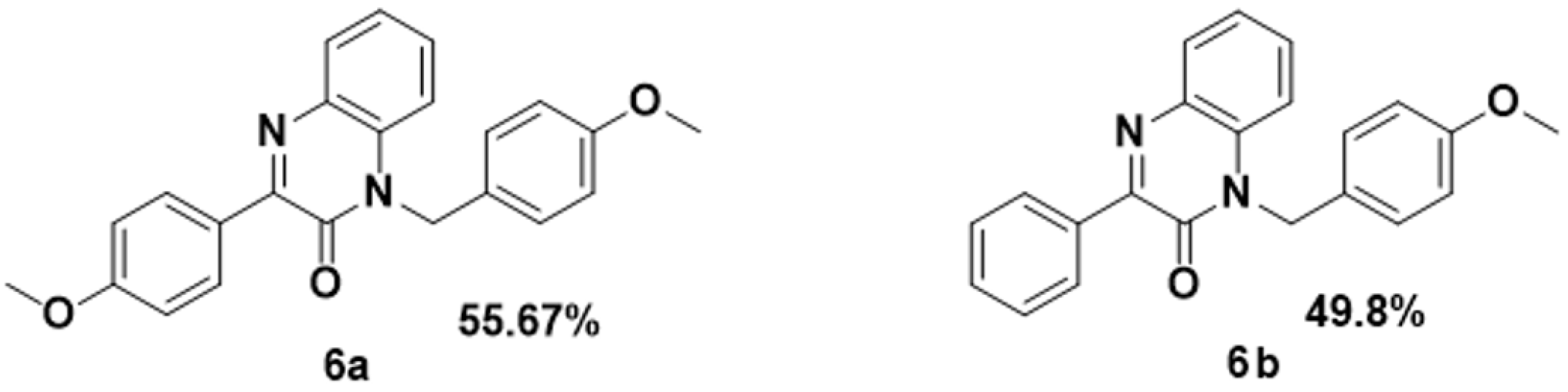
The compounds obtained (Figure 3), including intermediates characterized by 1H-NMR, 13C-NMR, and final product 6a, 6b were confirmed and described by HRMS, in which we found the mass of 6a to be 373. The observations were based on 1H -NMR and 13C-NMR, where characteristic signals of Ugi adduct 5a of 3.75 ppm and 3.82 ppm represent methoxy groups substituted on phenyl rings, 3.82–3.92 ppm represents the multiplet methylene group of benzyl of isocyanide, and 4.39–4.52 ppm represents the methylene protons of the acid component in the adduct. Meanwhile, the 5.95 ppm singlet is the amide proton and the 6.05 singlet represents the quaternary proton. These are the characteristic signals that confirm the formation of Ugi Adduct 5a, as well as the product. For 13C-NMR, the particular signs of adduct are aliphatic carbons which correspond to methylene carbons at 43.33 ppm and 43.68 ppm and methoxymethyl carbons at 55.18 ppm and 55.32 ppm and quaternary carbon at 65.06 ppm and aromatic halogenated carbon at 103.76 ppm. Their presence in the final product mainly confirms the absence of methylene carbon at 45.5 ppm and the absence of the quaternary proton. This changes the chemical shift in the carbon in response to 169.9 ppm palladium-mediated cyclization, which is confirmed by the absence of aromatic carbon at 103.76 ppm. These observations, as well as the HRMS analysis, provides us with brief confirmation of the final product containing substituted quinoxalin-2(1H)-ones.
Figure 3.
The obtained derivatives.
2. Conclusions
In summary, we have developed an alternative synthetic route for quinoxalin-2(1H)-one derivatives in two steps of the reaction using Ugi 4CR followed by palladium-mediated cyclization as a post-condensation process in moderate yields. We have studied the tuning of the points of diversity in Ugi adduct. The quinoxalin-2(1H)-one derivatives are well characterized by NMR.
Author Contributions
Conceptualization, L.E.K. and R.G.M.; methodology, M.V.B.U.; software, M.V.B.U.; validation, R.G.M., M.V.B.U. and L.E.K.; formal analysis, M.V.B.U.; investigation, M.V.B.U.; resources, L.E.K. and R.G.M.; data curation, M.V.B.U., L.E.K. and R.G.M.; writing—original draft preparation, M.V.B.U., L.E.K. and R.G.M.; writing—review and editing, M.V.B.U., L.E.K. and R.G.M.; visualization, L.E.K. and R.G.M.; supervision, L.E.K. and R.G.M.; project administration, L.E.K. and R.G.M.; funding acquisition, L.E.K. and R.G.M. All authors have read and agreed to the published version of the manuscript.
Funding
This investigation received financial support from SECIHTI, Mexico, under the funding number 378051 (M.V.B.U.).
Institutional Review Board Statement
Not applicable.
Informed Consent Statement
Not applicable.
Data Availability Statement
The raw data supporting the conclusions of this article will be made available by the authors on request.
Acknowledgments
M.V.B.U. thanks SECIHTI, Mexico, for the financial support provided through Scholarship 378051.
Conflicts of Interest
The authors declare no conflicts of interest.
References
- Dömling, A.; Wang, W.; Wang, K. Chemistry and Biology of Multicomponent Reactions. Chem. Rev. 2012, 112, 3083–3135. [Google Scholar] [CrossRef] [Scilit] [PubMed]
- Roszak, R.; Gadina, L.; Wołos, A.; Makkawi, A.; Mikulak-Klucznik, B.; Bilgi, Y.; Molga, K.; Gołębiowska, P.; Popik, O.; Klucznik, T.; et al. Systematic, Computational Discovery of Multicomponent and One-Pot Reactions. Nat. Commun. 2024, 15, 10285. [Google Scholar] [CrossRef] [Scilit] [PubMed]
- Liao, J.-Y. Catalytic Asymmetric Reactions of Isocyanides for Constructing Non-Central Chirality. Beilstein J. Org. Chem. 2025, 21, 1648–1660. [Google Scholar] [CrossRef] [Scilit] [PubMed]
- Kumar, A.; Vachhani, D.D.; Modha, S.G.; Sharma, S.K.; Parmar, V.S.; Van der Eycken, E. V Post-Ugi Gold-Catalyzed Diastereoselective Domino Cyclization for the Synthesis of Diversely Substituted Spiroindolines. Beilstein J. Org. Chem. 2013, 9, 2097–2102. [Google Scholar] [CrossRef] [Scilit] [PubMed]
- Harshini, S.; Reddy, S.R. Sustainable Stereoselectivity Through Ugi/Post-Ugi Modifications: Insights from Recent Literature (2019–2025). ChemistrySelect 2025, 10, e02673. [Google Scholar] [CrossRef] [Scilit]
- Renault, K.; Renard, P.-Y.; Sabot, C. Quinoxalin-2(1H)-Ones: Chemical Synthesis, Fluorescence Properties and Applications. Eur. J. Org. Chem. 2022, 2022, 129–149. [Google Scholar] [CrossRef] [Scilit]
- Goswami, D.; Borbhuyan, T.F.; Dam, B.; Sahu, D.; Borah, B. Photochemical Direct Mono/Di/Trifluoro-Functionalization of Quinoxalin-2(1H)-Ones. ChemistrySelect 2025, 10, e02830. [Google Scholar] [CrossRef] [Scilit]
- Ying, C.; Lei, Z.; Dian-Yong, T.; Jin, Z.; Xu Zhi-Gang, Z.-Z.T. Facile One-Pot Synthesis of Benzimidazole and Quinoxalin-2(1H)-One Scaffolds via Two-Component Coupling Reaction, Deprotection, and Intermolecular Cyclization. Synlett 2014, 25, 2518–2520. [Google Scholar] [CrossRef] [Scilit]
- Jiao, H.; Jing, Y.; Niu, K.; Song, H.; Liu, Y.; Wang, Q. Photoinduced Dehydrogenative Amination of Quinoxalin-2(1H)-Ones with Air as an Oxidant. J. Org. Chem. 2024, 89, 5371–5381. [Google Scholar] [CrossRef] [Scilit] [PubMed]
- Carta, A.; Piras, S.; Loriga, G.; Paglietti, G. Chemistry, Biological Properties and SAR Analysis of Quinoxalinones. Mini Rev. Med. Chem. 2006, 6, 1179–1200. [Google Scholar] [CrossRef] [Scilit] [PubMed]
- Jiang, X.; Wu, K.; Bai, R.; Zhang, P.; Zhang, Y. Functionalized Quinoxalinones as Privileged Structures with Broad-Ranging Pharmacological Activities. Eur. J. Med. Chem. 2022, 229, 114085. [Google Scholar] [CrossRef] [Scilit] [PubMed]
- Singh, D.P.; Deivedi, S.K.; Hashim, S.R.; Singhal, R.G. Synthesis and Antimicrobial Activity of Some New Quinoxaline Derivatives. Pharmaceuticals 2010, 3, 2416–2425. [Google Scholar] [CrossRef] [Scilit] [PubMed]
- Tang, X.; Zhou, Q.; Zhan, W.; Hu, D.; Zhou, R.; Sun, N.; Chen, S.; Wu, W.; Xue, W. Synthesis of Novel Antibacterial and Antifungal Quinoxaline Derivatives. RSC Adv. 2022, 12, 2399–2407. [Google Scholar] [CrossRef] [Scilit] [PubMed]
- Syam, Y.M.; Anwar, M.M.; Abd El-Karim, S.S.; Elseginy, S.A.; Essa, B.M.; Sakr, T.M. New Quinoxaline Compounds as DPP-4 Inhibitors and Hypoglycemics: Design, Synthesis, Computational and Bio-Distribution Studies. RSC Adv. 2021, 11, 36989–37010. [Google Scholar] [CrossRef] [Scilit] [PubMed]
- Montana, M.; Montero, V.; Khoumeri, O.; Vanelle, P. Quinoxaline Derivatives as Antiviral Agents: A Systematic Review. Molecules 2020, 25, 2784. [Google Scholar] [CrossRef] [Scilit] [PubMed]
- Montero, V.; Montana, M.; Carré, M.; Vanelle, P. Quinoxaline Derivatives: Recent Discoveries and Development Strategies towards Anticancer Agents. Eur. J. Med. Chem. 2024, 271, 116360. [Google Scholar] [CrossRef] [Scilit] [PubMed]
- Meka, G.; Chintakunta, R. Analgesic and Anti-Inflammatory Activity of Quinoxaline Derivatives: Design Synthesis and Characterization. Results Chem. 2023, 5, 100783. [Google Scholar] [CrossRef] [Scilit]
- Alvarez-Rodríguez, N.V.; Islas-Jácome, A.; Rentería-Gómez, A.; Cárdenas-Galindo, L.E.; Unnamatla, M.V.B.; Gámez-Montaño, R. Synthesis of 1′-Tetrazolylmethyl-Spiro[Pyrrolidine-3,3′-Oxindoles]: Via Two Coupled One-Pot Processes Ugi-Azide/Pictet-Spengler and Oxidative Spiro-Rearrangement. New J. Chem. 2018, 42, 1600–1603. [Google Scholar] [CrossRef] [Scilit]
- Basavanag, U.M.V.; Islas-Jácome, A.; Rentería-Gómez, A.; Conejo, A.S.; Kurva, M.; Jiménez-Halla, J.O.C.; Velusamy, J.; Ramos-Ortíz, G.; Gámez-Montaño, R. Synthesis of 2-Julolidin-Imidazo[1,2-a]Pyridines via Groebke–Blackburn–Bienaymé Reaction and Studies of Optical Properties. New J. Chem. 2017, 41, 3450–3459. [Google Scholar] [CrossRef] [Scilit]
- Unnamatla, M.V.B.; Islas-Jácome, A.; Quezada-Soto, A.; Ramírez-López, S.C.; Flores-Álamo, M.; Gámez-Montaño, R. Multicomponent One-Pot Synthesis of 3-Tetrazolyl and 3-Imidazo[1,2-a]Pyridin Tetrazolo[1,5-a ]Quinolines. J. Org. Chem. 2016, 81, 10576–10583. [Google Scholar] [CrossRef] [Scilit] [PubMed]

Disclaimer/Publisher’s Note: The statements, opinions and data contained in all publications are solely those of the individual author(s) and contributor(s) and not of MDPI and/or the editor(s). MDPI and/or the editor(s) disclaim responsibility for any injury to people or property resulting from any ideas, methods, instructions or products referred to in the content. |
© 2025 by the authors. Licensee MDPI, Basel, Switzerland. This article is an open access article distributed under the terms and conditions of the Creative Commons Attribution (CC BY) license (https://creativecommons.org/licenses/by/4.0/).