


Abstract
Background: In the Australian Capital Territory (ACT) during the Coronavirus disease 2019 (COVID-19) pandemic, gestational diabetes mellitus (GDM) testing using the World Health Organization’s (WHO) oral glucose tolerance test (OGTT) was replaced with temporary guidelines comprising two phases: the red phase, with fasting glucose ≥5.1 mmol/L (diagnosed) and <5.1 mmol/L (excluded); and the subsequent amber phase of screening with fasting ≥5.1 mmol/L (diagnosed), <4.7 mmol/L (excluded) and 4.7–5.0 mmol/L, requiring completion of an OGTT. Aims: Our aim was to determine whether there were differences in GDM prevalence, maternal characteristics or infant outcomes during the COVID-19 pandemic period, in association with implementation of the temporary guidelines. Methods: We performed a before–during observational analysis of 9686 singleton births between April 2018 and December 2019 (pre-COVID-19, group 1, n = 4879) or April 2020 and December 2021 (COVID-19, group 2, n = 4807). Group 2 comprised subgroups 2a (1 April–2 November 2020, n = 1845) and 2b (3 November 2020–31 December 2021, n = 2962). The GDM testing date was estimated at 26 weeks of gestation and used for group assignment. For GDM diagnosis, group 1 applied the WHO OGTT, and group 2 applied the temporary guidelines (2a the red phase; 2b the amber phase). Associations were tested using chi-square tests, pairwise z-tests and logistic regression. Results: Compared to group 1, GDM prevalence significantly decreased in subgroup 2a (26.7% vs. 21.7%) and significantly increased in subgroup 2b (26.7% vs. 31.7%) (all: p < 0.001). For non-GDM pregnancies, there were no significant associations nor significant differences for infant outcomes when group 1 was compared to subgroups 2a and 2b. Subgroup 2a pregnancies with insulin-requiring GDM, compared to Group 1 counterparts, had significantly higher odds of infants with LGA (aOR = 1.73, 98.75% CI of 1.04–2.89, p = 0.008) and macrosomia (aOR = 2.05, 98.75% CI of 1.09–3.86, p = 0.004). Conclusions: The COVID-19 period and the temporary guidelines were associated with changes in GDM prevalence, which differed by phase. No increase was observed in adverse infant outcomes in non-GDM pregnancies. GDM pregnancies in the red phase had worse infant outcomes, which may have been due to enrichment of this group with elevated fasting GDM.
Keywords:
GDM; COVID-19; hyperglycemia; OGTT; fasting; post-load; adverse pregnancy outcomes; maternal; infant; pregnancy 1. Introduction
Gestational diabetes mellitus (GDM) is a metabolic disorder in pregnancy with increasing global prevalence [1]. GDM is defined as glucose intolerance that begins, or is first diagnosed, during pregnancy and is below the diagnostic threshold for diabetes diagnosed outside of pregnancy [2]. GDM increases the risk of adverse pregnancy outcomes from maternal hyperglycemia when it is undiagnosed and/or untreated [3,4,5]. The aim of testing for GDM is to identify pregnancies in which hyperglycemia has developed to enable implementation of treatment to lessen adverse-outcome occurrence [6]. In pathology centers, the Oral Glucose Tolerance Test (OGTT) is commonly used to diagnose GDM based on plasma glucose thresholds [7].
Revised criteria for GDM diagnosis, issued by the World Health Organization (WHO) in 2013, were implemented from January 2015 in the Australian Capital Territory (ACT) by ACT Pathology, which provides pathology services to the region’s public hospitals [2,8]. Universal one-step testing using a 2 h fasting 75 g OGTT with WHO diagnostic criteria (WHO OGTT) became the standard of care for GDM diagnosis [8]. A recommendation of the revised criteria was that, unless diagnosed earlier, GDM testing should be undertaken at 24–28 weeks of pregnancy using the WHO OGTT [2,9]. GDM diagnosis required at least one positive OGTT result: plasma glucose fasting ≥ 5.1 mmol/L, 1 h ≥ 10.0 mmol/L and/or 2 h ≥ 8.5 mmol/L [9]. In 2017, a change in preanalytical processing was introduced such that all samples were centrifuged immediately after collection to limit glycolysis [8]. We have previously shown that GDM prevalence significantly increased with these changes, and prevalence of LGA infants decreased in the ACT [10].
In March 2020, a public health emergency was declared in the ACT due to the novel coronavirus disease 2019 (COVID-19) pandemic [11]. Changes in healthcare-service delivery and community restrictions were progressively implemented by the ACT Government, with one measure being the replacement of the WHO OGTT protocol with temporary guidelines for GDM testing and diagnosis [12].
The temporary guidelines had been developed by the Australasian Diabetes in Pregnancy Society (ADIPS), the Australian Diabetes Society, the Australian Diabetes Educators Association and Diabetes Australia [12]. The guidelines suggested that Australian healthcare institutions implement a three-phase system during the pandemic [12]. The phase implemented was to be determined at the local level by considering contagion risk and capacity of pathology collection centers to provide social distancing [12]. While women at high risk of GDM were recommended to be tested early in pregnancy using HbA1c or random blood glucose testing, all women not yet diagnosed with GDM were recommended to be tested between 24 and 28 weeks of gestation with protocols according to the phase implemented [12]. The phases and protocols were as follows [12]:
- Green (implemented when the collection site could adopt social distancing for women attending for testing and contagion risk was low):
- -
- Usual practice applied using WHO OGTT.
- Amber (implemented when the collection site had limited ability to adopt social distancing and/or contagion risk was moderate–high), options included one of the following:
- (a)
- WHO OGTT.
- (b)
- Two-stage testing of an initial fasting plasma glucose level:
- (i)
- Diagnostic of GDM if ≥5.1 mmol/L;
- (ii)
- If 4.7–5.0 mmol/L, a subsequent WHO OGTT was recommended.
- (c)
- If GDM has been diagnosed in a previous pregnancy, then immediate commencement of Home Blood Glucose Monitoring.
- Red (implemented when the collection site was unable to adopt social distancing and/or contagion risk was high):
- -
- Fasting plasma glucose only; diagnostic of GDM if ≥5.1 mmol/L.
ACT Pathology adopted the red protocol from 31 March 2020, followed by the amber two-stage protocol, from the 3 November 2020, which remained until September 2022 (email, 5 November 2025 from Clinical Director Chemical Pathology, ACT Pathology to J Hutchinson).
During the pandemic, public health measures were implemented quickly during a time of significant uncertainty [13]. To improve responses in similar future circumstances, post-pandemic evaluation is essential and “requires real-time evidence relevant to the Australian context” [13] (p. 28). Measures which perform well under normal conditions may not perform well under crisis conditions, and unintended consequences may occur [13]. The purpose of our study was to undertake an observational before–during analysis to investigate the real-world impact of the change in GDM testing protocol on ACT pregnancy outcomes in the setting of COVID-19. We compared maternal and infant outcomes of singleton births in the ACT which occurred during the pre-COVID-19 period from 1 April 2018 to 31 December 2019, during which GDM was tested using the WHO OGTT protocol with those of the COVID-19 period from 1 April 2020 to 31 December 2021, during which GDM was tested using the temporary guidelines. Using the OGTT for GDM diagnosis is considered best practice, as it assesses fasting, as well as post-load glucose [14], thereby providing an ideal standard for comparison. We believe that our study is the first to have undertaken a before–during comparison using both the red phase and the two-stage amber phase.
The temporary guidelines acknowledged that some women who would normally be diagnosed with GDM using the WHO OGTT test may be missed using the COVID-19 protocols [12]. Therefore, we hypothesized that using the temporary guidelines would be associated with a decrease in GDM prevalence and a consequent increase in adverse pregnancy outcomes in pregnancies with undiagnosed and untreated GDM. Our research question was, were there differences in GDM prevalence, maternal characteristics and infant outcomes associated with implementation of the temporary guidelines during the COVID-19 pandemic from April 2020 to December 2021? Our primary objective was to determine whether there were differences in GDM prevalence between the pre-COVID-19 period and the COVID-19 period, including for each of the red and amber phases, and also between the phases. The secondary objectives were to determine if there were differences between these periods in, firstly, maternal characteristics; and, secondly, infant outcomes.
2. Materials and Methods
2.1. Ethics Approval
The ACT Health Human Research Ethics Committee provided ethical approval (Canberra, ACT, Australia no.: 2022.LRE.00194).
2.2. Study Design and Population
The methodology of our previous study was used [10], covering, in the current study, the period from 2018 to 2021. Modifications include the dates and methods used to stratify the study sample into groups and subgroups, additional maternal characteristics and infant outcomes, and logistic regression analyses.
Our study was an observational retrospective analysis. We used de-identified data for a single public hospital obtained from the ACT Health’s Birthing Outcomes System (BOS). The BOS contains information on births which occurred in ACT public hospitals. The hospital receives pregnancies which are usual care, as well as higher-risk pregnancies from the ACT and regional hospitals, including from New South Wales (NSW).
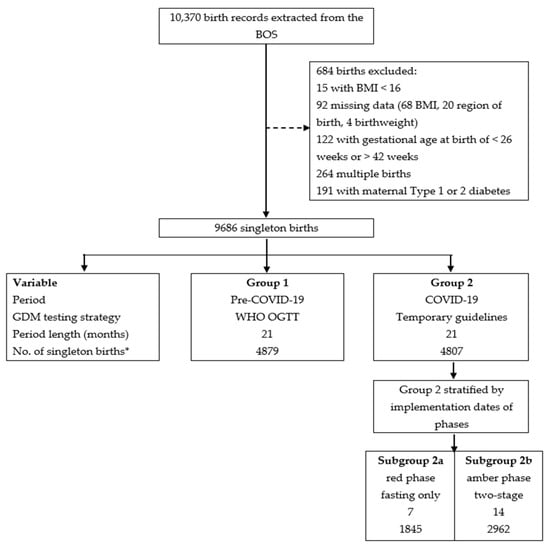
We extracted data from the BOS for the period from 1 April 2018 to 31 December 2019 (the pre-COVID-19 period), represented as group 1, and from 1 April 2020 to 31 December 2021 (the COVID-19 period), represented as group 2. The 21-month period of group 2 included subgroups tested for GDM in the 7-month red phase (1 April to 2 November 2020), represented as group 2a, and the 14-month period of the amber phase (3 November 2020 to 31 December 2021), represented as group 2b. Allocation to groups and subgroups was based on the estimated GDM testing date (assumed to be at 26 weeks of gestation, on average, in the ACT) using the infant date of birth and gestational week of birthing for each pregnancy. We excluded from our analyses women with pre-existing diabetes. Within the groups and subgroups, women were classified into those without and with GDM diagnosis, and in those with GDM, into those treated by diet only and those requiring insulin.
2.3. Outcomes
- (i)
- Primary outcome
The primary outcome, in accordance with our primary objective, was defined as the differences in GDM prevalence between the pre-COVID-19 period and the COVID-19 period, including for each of the red and amber phases, and also between the phases. GDM prevalence was defined as the frequency of GDM pregnancies for the period divided by the total frequency of pregnancies in the same period.
- (ii)
- Secondary outcomes
There were two secondary outcomes in accordance with our secondary objectives. The first secondary outcome was defined as the differences in each of the six maternal characteristics between the pre-COVID-19 period and the COVID-19 period, including for each of the red and amber phases, and also between the phases. The six maternal characteristics were early body mass index (early BMI), region of birth, parity, whether aged ≥ 35 years, in vitro fertilization (IVF) and hypertension (HTN).
Although BMI is normally determined by dividing weight in kilograms by the height in meters squared, the BOS does not record weight and height. Instead, BMI is recorded rounded to the nearest whole number and is collected at the first “booking in visit” during the first trimester [15] (early BMI). Following the method used in published studies [10,16], we stratified the BMI values into six categories: underweight (≤18 kg/m2); healthy weight (19–24 kg/m2); overweight (25–29 kg/m2); obese class I (30–34 kg/m2); obese class II (35–39 kg/m2); and obese class III (≥40 kg/m2). Pregnancies with a maternal early BMI < 16 kg/m2 were excluded in this study. The WHO states that a BMI < 16 is associated with malnutrition in women and adverse pregnancy outcomes and considers this cut-off point to be a valid extreme limit [17].
For the maternal region of birth, we followed the method used in published studies [10,15]. Women were stratified into three broad categories using a standard Australian classification of countries [18]. The categories were “Australian-born”, “Asian-born” and “other”, the latter comprising women who were neither of the other two categories.
The maternal characteristics identified in the BOS were pregnancies which had resulted from in vitro fertilization (IVF), and women with hypertension (HTN) and preeclampsia. HTN is identified in the BOS as either essential (EHTN) or gestational (GHTN). If women were identified as having both, they were considered, in this study, to have EHTN. Although both preeclampsia and eclampsia were identified in the BOS, due to the low frequencies of women with either, these conditions were combined. As some women were identified as having both preeclampsia/eclampsia (Pre/E) and EHTN or Pre/E and GHTN, they were considered in this study to have Pre/E.
The second of the secondary outcomes was defined as the differences in each of the eight infant outcomes between the pre-COVID-19 period and the COVID-19 period, including for each of the red and amber phases, and also between the phases. The eight infant outcomes were large for gestational age (LGA), small for gestational age (SGA), macrosomia, low birth weight, preterm birth, fetal deaths in utero (FDIU), hypoglycemia and respiratory distress.
The infant information identified in the BOS included gestational age of birth and birth weight. LGA infants were defined as a birth weight greater than the 90th centile for their gestational age [19]; SGA infants were defined as a birth weight less than the 10th centile for their gestational age [19]; macrosomia was defined as a birth weight greater than 4000 g, irrespective of gestational age; low birth weight was defined as a birth weight less than 2500 g [19]; and preterm birth was defined as birth prior to 37 weeks of gestation [19]. The infant outcomes identified in the BOS were FDIU from 26 weeks of gestation, hypoglycemia and respiratory distress. LGA and SGA infants were identified using published data by Joseph et al. (2020) [20] on Australian birth-weight centiles and gestational age.
Records with missing data for any variable were excluded from the analysis. The inclusion criteria were singleton births; an estimated date of GDM testing and infant birth date within the periods of either 1 April 2018–31 December 2019 or 1 April 2020–31 December 2021; an estimated gestation at birth of between 26 and 42 weeks; and complete data. The exclusion criteria were BMI < 16, multiple births, missing data, an estimated gestation at birth of less than 26 weeks or greater than 42 weeks, Type 1 or Type 2 diabetes and incomplete data.
2.4. Statistical Analysis
The unit of analysis was the pregnancy; therefore, women with more than one pregnancy during the periods of analyses were potentially included more than once [21]. Categorical variables were presented using frequencies and percentages. Associations were assessed using Pearson’s chi-squared independence test, or when expected frequencies were <5, Fisher’s Exact Test (for 2 × 2 contingency tables) or the Fisher–Freeman–Halton Exact Test (for larger contingency tables) [22]. Comparisons between the groups and subgroups were undertaken using the post hoc pairwise z-test for independent proportions. The Bonferroni method was used to adjust the p-values for multiple comparisons (see Supplementary Materials Tables S1–S3 for between-group comparisons for groups 1 and 2).
Each infant outcome was an outcome of interest categorized as a dichotomous dependent variable. For each group and subgroup, binary logistic regression was performed. Due to the potential for unobserved heterogeneity [23], we used the categorical predictor variable “group”, with levels 1 and 2 representing groups 1 and 2, respectively, and “subgroup”, with levels 2a and 2b representing subgroups 2a and 2b, respectively. For each outcome of interest, the odds of the COVID-19 level 2, 2a or 2b were compared to the corresponding pre-COVID-19 level 1 as the reference, and the odds of the COVID-19 level 2b were compared to the corresponding COVID-19 level 2a as the reference. Using the forced-entry method, we then performed multivariate binary logistic regression. The categorical maternal characteristics entered as adjustments were the early BMI group, region of birth, parity group, maternal age ≥ 35 years, IVF and HTN [10,15,24,25]. We ensured an adequate number of outcome events per predictor variables [26].
We undertook sensitivity analyses to test our assumption that GDM testing occurred, on average, at an estimated 26 weeks of gestation. We applied GDM testing estimated at both 24 weeks and 28 weeks of gestation to the logistic regression analyses. We also determined the number of repeat pregnancies and modeled Generalized Estimating Equations (GEEs) to test key findings adjusted for repeat pregnancies using estimated GDM testing at 24, 26 and 28 weeks of gestation (see Supplementary Materials Table S4A–E).
Statistical assumptions were verified and included DFbetas, Cook’s Distances, multicollinearity, leverage and standardized residuals. Statistical significance for associations using Pearson’s chi-squared independence test, Fisher’s Exact Test or the Fisher–Freeman–Halton Exact Test, and pairwise z-tests was set at p < 0.05. Adjustments for multiplicity were made for the subgroup analyses in the logistic regression. As there were four subgroup analyses for each infant outcome, statistical significance was set at p < 0.0125. We considered odds ratios to be significant if the corresponding 98.75% confidence intervals did not contain the value 1 [27]. Microsoft Excel version 2605 and SPSS version 31 were used for data preparation and the analyses, respectively.
3. Results
3.1. Groups and Subgroups
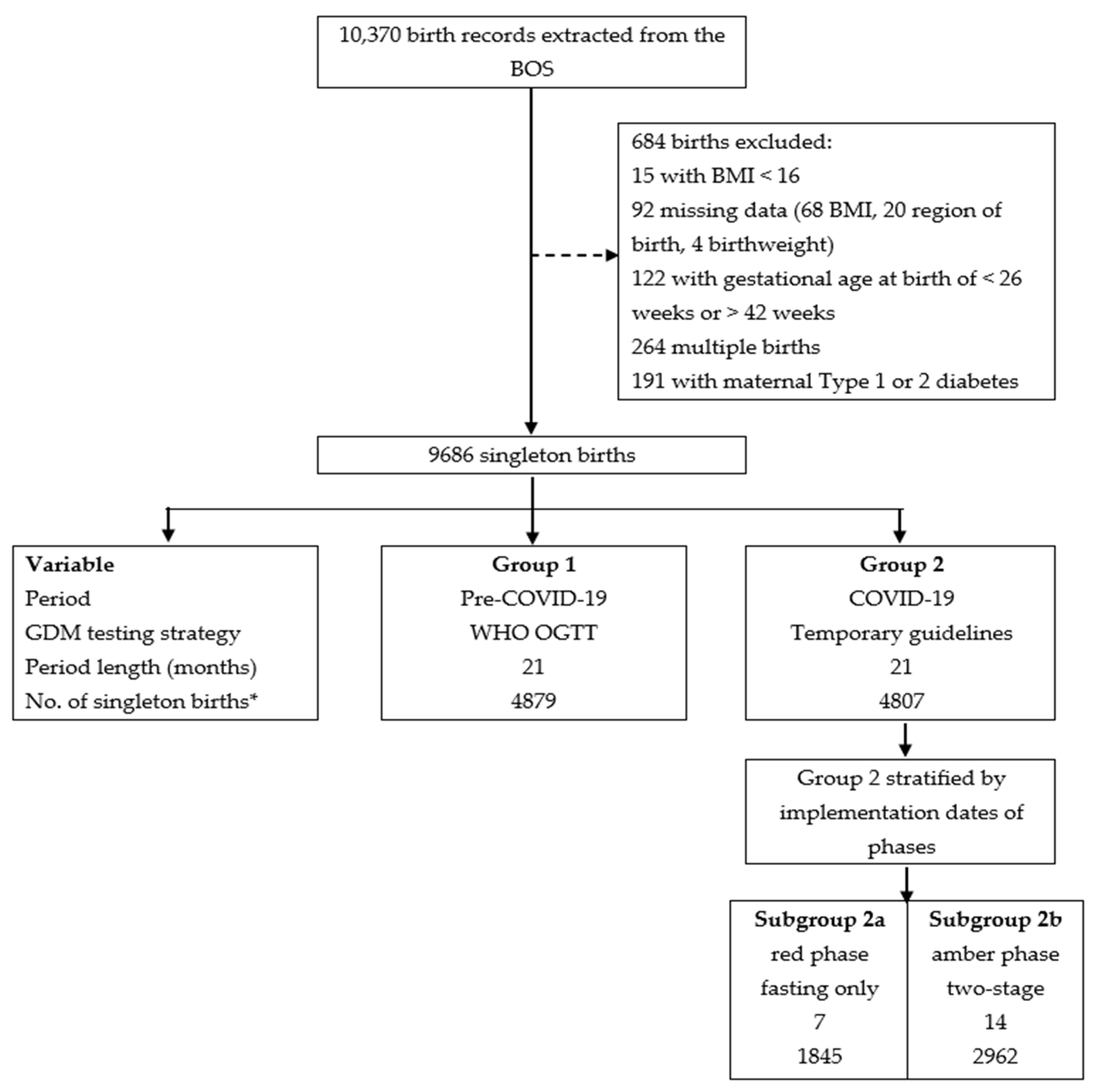
Figure 1 shows that there were 10,370 birth records with estimated GDM testing date and infant birth date from 1 April 2018 to 31 December 2019 and from 1 April 2020 to 31 December 2021. After excluding records with maternal BMI < 16, missing data, a gestational age at birth of <26 weeks or >42 weeks, multiple births, and women with Type 1 or Type 2 diabetes, there remained 9686 singleton births. Group 1 comprised 4879 singleton births, and group 2 comprised 4807 singleton births. Subgroups 2a and 2b comprised 1845 and 2962 singleton births, respectively.
Figure 1.
Flowchart of exclusions and inclusions and group and subgroup selection. * Group selection was based on estimated GDM testing date at 26 weeks of gestation. BOS, Birthing Outcomes System; GDM, gestational diabetes mellitus; BMI, body mass index; WHO, World Health Organization; OGTT, Oral Glucose Tolerance Test; No., number.
Table 1 and Table S1 show the total study sample, with the maternal characteristics and infant outcomes stratified by the groups and subgroups. Sample sizes during the pre-COVID-19 and COVID-19 periods were similar, with group 1 comprising 50.4% (n = 4879) and group 2 comprising 49.6% (n = 4807) of the total sample. Subgroups 2a and 2b comprised 38.4% (n = 1845) and 61.6% (n = 2962), respectively, of group 2.
Table 1.
Total study sample, with estimated GDM testing at 26 weeks of gestation categorized by maternal characteristics and infant outcomes and stratified by pre-COVID-19 and COVID-19 groups and subgroups. Group 1 = pre-COVID-19 period, from 1 April 2018 to 31 December 2019; subgroup 2a = COVID-19 red phase, from 1 April to 2 November 2020; and subgroup 2b = COVID-19 two-stage amber phase, from 3 November 2020 to 31 December 2021. Significance is p < 0.05.
The women without GDM are shown in Table 2 and Table S2, with the maternal characteristics and infant outcomes stratified by the groups and subgroups.
Table 2.
Pregnancies without GDM with estimated GDM testing at 26 weeks of gestation categorized by maternal characteristics and infant outcomes and stratified by pre-COVID19 and COVID-19 groups and subgroups. Group 1 = pre-COVID-19 period, from 1 April 2018 to 31 December 2019; subgroup 2a = COVID-19 red phase, from 1 April to 2 November 2020; and subgroup 2b = COVID19 two-stage amber phase, from 3 November 2020 to 31 December 2021. Significance is p < 0.05.
The women with GDM are shown in Table 3 and Table S3, with the maternal characteristics and infant outcomes stratified by the groups and subgroups.
Table 3.
Pregnancies with GDM, with estimated GDM testing at 26 weeks of gestation, categorized by maternal characteristics and infant outcomes and stratified by pre-COVID-19 and COVID-19 groups and subgroups. Group 1 = pre-COVID-19 period, from 1 April 2018 to 31 December 2019; subgroup 2a = COVID-19 red phase, from 1 April to 2 November 2020; and subgroup 2b = COVID-19 two-stage amber phase, from 3 November 2020 to 31 December 2021. Significance is p < 0.05.
3.2. Primary Outcome: Were There Differences in GDM Prevalence Associated with Implementation of the Temporary Guidelines?
Although there was a nonsignificant increase in GDM prevalence from group 1 to 2 of 1.2% (Supplementary Table S1, 26.7% vs. 27.9%), pairwise z-tests in Table 1 show that there was a significant decrease of 5.0% in the proportion of women with GDM from group 1 to subgroup 2a (26.7% vs. 21.7%), and a significant increase by 5.0% from group 1 to subgroup 2b (26.7% vs. 31.7%) and by 10.0% from subgroup 2a to 2b (21.7% to 31.7%).
Supplementary Table S4A shows results of sensitivity analyses of GDM prevalence using estimated GDM testing at 24 weeks and 28 weeks of gestation. Results for both show significant differences between group 1, subgroup 2a and subgroup 2b (24 weeks of gestation, 26.9% vs. 22.4% vs. 31.9%, respectively; and 28 weeks of gestation, 26.7% vs. 21.5% vs. 31.4%, respectively).
Supplementary Table S4B shows results of sensitivity analyses for repeat pregnancies and GDM prevalence using Generalized Estimating Equations (GEEs), adjusting for repeat pregnancies, with estimated GDM testing at 24, 26 and 28 weeks of gestation. There were 8171 women with one pregnancy, 747 women with two pregnancies and seven women with three pregnancies. GEE models adjusting for repeat pregnancies showed that all differences in GDM prevalence between the group and subgroups remained significant.
3.3. Secondary Outcome 1: Were There Differences in Maternal Characteristics Associated with Implementation of the Temporary Guidelines?
Table 1 and Table S1 show the maternal characteristics of the total study sample. For BMI, pairwise z-tests show that there were significant reductions in the proportions of women with BMI ≤ 18 from group 1 to subgroups 2a (4.9% vs. 3.3%) and to 2b (4.9% vs. 3.1%), and with BMI 19–24 from group 1 to subgroup 2b (47.2% vs. 42.5%). From group 1 to subgroup 2b, there were significant increased proportions of women with BMI 30–34 (11.3% vs. 13.8%) and BMI 35–39 (5.7% vs. 7.2%). Women were older in group 2, with a significant increase from groups 1 to 2 in the proportion who were aged ≥ 35 years (24.9% vs. 26.8%).
Generally, the BMI groups for overweight and obesity comprised 47.9% of women in group 1, while in group 2, this increased to 53.7%. The proportion of women who were overweight or obese increased from group 1 to subgroup 2a (47.9% to 52.4%) and to 2b (54.5%). Approximately 64% of women were Australian-born, 24% were Asian-born and 12% were other-born. From group 1 to group 2, the highest percentage of pregnancies had a parity of 0, of which there was a nonsignificant increase (40.8%vs 43.5%). Approximately 4% of pregnancies resulted from IVF, 2.5% of women experienced GHTN, 2% experienced EHTN and 1.5% experienced preeclampsia.
Table 2 and Table S2 show the maternal characteristics of pregnancies without GDM. For BMI, pairwise z-tests showed that, from group 1 to subgroup 2a, there was a significant reduction in the proportion of women with BMI ≤ 18 (5.8% vs. 3.8%) and a significant increase in those with BMI 25–29 (24.0% vs. 28.0%). From group 1 to subgroup 2b, there were significant reductions in the proportions of women with BMI ≤ 18 (5.8% vs. 3.8%) and with BMI 19–24 (53.3% vs. 48.7%), and a significant increase in those with BMI 30–34 (9.3% vs. 11.8%). There was also a significant increase in the proportion of women aged ≥ 35 years from group 1 to subgroup 2b (22.3% vs. 25.7%).
For non-GDM pregnancies, approximately 67% of women were Australian-born, 20% were Asian-born and 13% were other-born. In group 1, 40.8% were overweight or obese, while in group 2, this increased to 47.2%. In subgroups 2a and 2b, the proportions of overweight or obese women were 46.6% and 47.6%, respectively. Approximately 2% of women experienced GHTN, 1.5% experienced EHTN and 1.5% experienced preeclampsia.
Table 3 and Table S3 show the maternal characteristics of pregnancies with GDM. Pairwise z-tests showed that the proportion of women with diet-controlled GDM significantly increased from subgroup 2a to subgroup 2b (42.6% vs. 49.8%) and between group 1 and subgroup 2b (43.3% vs. 49.8%) and, conversely, significantly decreased in pregnancies with insulin-requiring GDM from subgroup 2a to 2b (57.4% vs. 50.2%) and from group 1 to subgroup 2b (56.7% vs. 50.2%). There was also a significant increase in the proportion of women with BMI 30–34 from group 1 to subgroup 2a (16.8% vs. 23.7%) and a significant reduction in the proportion of women with a parity of ≥4 from subgroup 2a to subgroup 2b (5.2% vs. 2.6%).
For pregnancies with GDM, approximately 54% of women were Australian-born, 36% were Asian-born and 10% were other-born. In group 1, 67.1% were overweight or obese, while in group 2, this increased to 70.4%. In subgroups 2a and 2b, the proportions of women who were overweight or obese were 73.0% and 69.2%, respectively. Approximately 31% of women were aged ≥ 35 years, 5% of pregnancies resulted from IVF, 2.5% of women experienced GHTN, 3% experienced EHTN and 1.5% experienced preeclampsia.
3.4. Secondary Outcome 2: Were There Differences in Infant Outcomes Associated with Implementation of the Temporary Guidelines?
For the total study sample, infant outcomes are shown in Table 1 and Table S1. Pairwise z-tests showed that there were significant increases from group 1 to subgroup 2a in the proportions of infants born with LGA (10.7% vs. 13.2%) and with macrosomia (9.6% vs. 12.2%). Generally, approximately 11% of infants were born SGA, 7% were born with low birth weight, 7% were preterm, 0.2% were FDIU, 3% were hypoglycemic and 2% had respiratory distress.
For non-GDM pregnancies, infant outcomes are shown in Table 2 and Table S2. There were no significant associations for any infant outcome (all: p > 0.05). The pairwise z-tests showed that all between-group comparisons were nonsignificant (all: p > 0.05). Generally, approximately 11% of infants were born LGA, 11% were born SGA, 11% were born with macrosomia, 7% were born with low birth weight, 7.5% were preterm, 0.2% were FDIU, 2.5% were hypoglycemic and 1.5% had respiratory distress. Table 4a shows that there were no significant differences in the odds of any infant outcome for non-GDM pregnancies in group 2 and subgroups 2a and 2b when compared to group 1, or for subgroup 2b when compared to subgroup 2a (all: p > 0.05).
Table 4.
Bivariate and multivariate analysis of association between GDM status and treatment type (insulin-requiring and diet-controlled) and infant outcomes (SGA, LGA, macrosomia, low birth weight, preterm birth, FDIU, hypoglycemia and respiratory distress) comparing COVID-19 group and subgroups (group 2 and subgroups 2a and 2b) to the pre-COVID-19 group (group 1) as the reference and comparing COVID-19 subgroup 2b to subgroup 2a as the reference. GDM testing is estimated at 26 weeks of gestation. For each, unadjusted odds ratio (OR), adjusted OR and 98.75% confidence intervals (CIs) are provided. Significance was set at p < 0.0125.
For GDM pregnancies, infant outcomes are shown in Table 3 and Table S3. Pairwise z-tests showed that the proportion of LGA infants significantly increased from group 1 to subgroup 2a (11.0% vs. 18.7%) and significantly decreased from subgroup 2a to subgroup 2b (18.7% vs. 12.3%). The proportion of infants born with macrosomia significantly increased from group 1 to subgroup 2a (7.1% vs. 11.7%). Generally, approximately 10% of infants were born SGA, 6% were born with low birth weight, 6% were preterm, 0.2% were FDIU, 6% were hypoglycemic and 2% had respiratory distress.
Table 4b shows that, when compared to GDM pregnancies in group 1, GDM pregnancies in subgroup 2a had significantly higher odds of birthing an LGA infant. When compared to subgroup 2a, those in subgroup 2b had significantly lower odds of birthing an infant with LGA. Table 4d shows that, stratifying by GDM treatment type, when compared to pregnancies with insulin-requiring GDM in group 1, those in subgroup 2a had significantly higher odds of infants having LGA (aOR 1.73, 98.75% CI 1.04–2.89, p = 0.008) and macrosomia (aOR 2.05, 98.75% of 1.09–3.86, p = 0.004). When compared to pregnancies with insulin-requiring GDM in subgroup 2a, those in subgroup 2b had significantly lower unadjusted odds of an LGA infant which became nonsignificant following adjustment.
Supplementary Table S4C,D show results of sensitivity analyses for infant outcomes using estimated GDM testing at 24 weeks of gestation (Table S4C) and 28 weeks of gestation (Table S4D). Both show that, when compared to pregnancies in group 1, pregnancies with insulin-requiring GDM in subgroup 2a had significantly higher odds of infants having LGA (24 weeks of gestation: aOR 1.80, 98.75% CI of 1.08–3.01, p = 0.004; 28 weeks of gestation: aOR 1.78, 98.75% CI of 1.06–3.00, p = 0.006) and macrosomia (24 weeks of gestation: aOR 2.07, 98.75% CI of 1.11–3.88, p = 0.004; 28 weeks of gestation: aOR 2.11, 98.75%CI of 1.11–4.00, p = 0.004).
Supplementary Table S4E shows results of sensitivity analyses for the infant outcomes of LGA and macrosomia in insulin-requiring pregnancies using GEE, adjusting for repeat pregnancies and for estimated GDM testing at 24, 26 and 28 weeks of gestation. Results show that, when compared to insulin-requiring pregnancies in group 1, pregnancies with insulin-requiring GDM in subgroup 2a had significantly higher odds of infants having LGA and macrosomia at all estimated GDM testing dates.
4. Discussion
4.1. Summary of Findings
In this observational before–during study, the main finding in accordance with our primary objective was that, when compared to the pre-COVID-19 period, GDM prevalence significantly decreased in the red phase and significantly increased in the amber phase. Our main findings, in accordance with our secondary objectives, were that, when compared to the pre-COVID-19 period counterparts, in the amber phase, pregnancies with diet-controlled GDM significantly increased, and those with insulin-requiring GDM significantly decreased, and in the red phase, there were significantly higher odds of LGA and macrosomia infant outcomes in pregnancies with insulin-requiring GDM. We found that there were no significant differences in infant outcomes in non-GDM pregnancies.
We showed that there was a nonsignificant increase of 1.2% in GDM prevalence in the combined COVID-19 period when compared to the pre-COVID-19 period. When stratified and when compared to the pre-COVID-19 period, GDM prevalence in the red phase showed a significant 5.0% decrease to 21.7%, while the two-stage amber phase showed a significant 5.0% increase to 31.7% and a significant 10% increase when compared to the red phase. However, in an Australian retrospective comparative cohort study of 12,035 pregnancies in Melbourne, Victoria, Deitch et al. (2024) found that there was a lower GDM prevalence using the two-stage COVID-19 protocol compared to using the WHO OGTT (18.7% vs. 21.7%, p < 0.001) [28]. It was estimated by d’Emden et al. (2020), after analyzing the pregnancy OGTTs of 26,242 women in Queensland, Australia, that using the two-stage COVID-19 protocol would result in a reduction in GDM prevalence of approximately 4% due to missed cases [29].
When the temporary guidelines were issued, it was anticipated that the modified testing strategies used in the COVID-19 phases may miss diagnosing some women with mild hyperglycemia who would otherwise have been diagnosed using the WHO OGTT, but that women with the highest risk GDM would be diagnosed [12]. During the red phase, a fasting glucose threshold alone of ≥5.1 mmol/L was diagnostic of GDM, while <5.1 mmol/L excluded GDM. However, not all women who test positive for GDM do so on a fasting result. In an Australian retrospective cohort study of 654 singleton pregnancies in Sydney, New South Wales, Rodrigo et al. (2023) found that most women were diagnosed with GDM on a single elevated result at either the 0, 1 or 2 h timepoint, of which 13.9%, 11.9% and 45.1%, respectively, were diagnosed in that study [30]. An additional 11.8% had both elevated fasting and 1 h or 2 h levels, and 17.3% had both elevated 1 h and 2 h levels [30]. Therefore, as some women have post-load hyperglycemia only, they are excluded from a GDM diagnosis based only on a fasting result which is below threshold.
Similarly, the first stage of the amber phase’s two-stage testing used the fasting threshold of ≥5.1 mmol/L as diagnostic of GDM. However, a lower fasting threshold of <4.7 mmol/L excluded GDM. McIntyre et al. (2020) undertook a secondary analysis of 5974 singleton pregnancies from the HAPO study in which the authors applied the COVID-19 guidelines of the United Kingdom, Canada and Australia [31,32]. They reported that, by applying the Australian two-stage approach, 253 (25%) of the 1014 (17%) women diagnosed with GDM during HAPO would be missed with a consequent reduction of 4.3% in GDM frequency to 12.7% [31,32].
Results of these studies suggest that missed GDM cases due to women having elevated post-load glucose only may have been at least 50% in the red phase and 25% in the two-stage amber phase. However, as GDM prevalence will vary between population groups due to different underlying prevalences of fasting hyperglycemia versus post-load hyperglycemia, the percentage of missed cases in our study may vary for these estimates [33]. It is established that women with untreated mild hyperglycemia are at risk of adverse infant outcomes [31] and that treatment reduces risk of these outcomes [3,4,5]. Therefore, if there were missed cases in our study, we would have expected adverse pregnancy outcomes to have increased in non-GDM pregnancies due to undiagnosed and untreated mild GDM. However, we did not observe this in our results. Studies analyzing the impact of the temporary two-stage protocol in Australia have reported that the missed cases were at low risk of adverse pregnancy outcomes [28,29,32,34]. Cases missed in the red phase would have elevated 1 h and 2 h glucose levels only, which have fewer adverse pregnancy outcomes than those with elevated fasting glucose [21,35]. In addition, any adverse outcomes of the missed cases would be diluted within the larger non-GDM group.
The potential for missed cases may explain the reduction in GDM prevalence in the red phase but does not explain the increase in GDM prevalence in the amber phase. We considered possible reasons for this increase. Deitch et al. (2024) proposed that background rates of GDM increased in the pandemic, as evidenced by increasing rates in regions that did not implement modified screening [28]. For example, in a retrospective cohort study of 28,207 singleton pregnancies in Sydney, Australia, in which the WHO OGTT had remained diagnostic of GDM during most of the pandemic, Rhou et al. (2023) found that GDM significantly increased as the pandemic progressed and when compared to the pre-COVID-19 period (21.2% in 2018–2020 vs. 22.9% in 2020–2021 vs. 24.8% in 2021–2022; p < 0.001) [36]. GDM risk factors include overweight and obesity; increased maternal age; ethnicity, with women born in Southern, Central and Southeast Asia at higher risk of GDM compared to Australian-born women [37]; multiparity [38]; and excessive gestational weight gain (eGWG) [39]. Rhou et al. (2023) found that the rate of GWG and the proportion of women with eGWG increased with pandemic exposure (64.3% vs. 66.0% vs. 66.6%; p = 0.009) [36]. Although data on GWG in our study were unavailable, we did not find any significant differences in maternal characteristics in women with GDM between the amber phase and either group 1 or the red phase which might have explained the increase in GDM prevalence. However, we found significant differences according to type of treatment.
In the combined COVID-19 period, when compared to the pre-COVID-19 period, there was a significant increase in the proportion of pregnancies with diet-controlled GDM (43.3% to 47.6%) and a significant reduction in those with insulin-requiring GDM (56.7% to 52.4%). When stratified, these significant differences were found to relate to the two-stage amber phase. This pattern of change in GDM treatment was also a finding in the study by Deitch et al. (2024), in which diet-controlled GDM increased from 47.8% to 53.2% and insulin-requiring GDM decreased from 52.2% to 46.8% [28]. The authors suggested that reduced insulin use may have been due to the transition to telehealth during the pandemic, resulting in reduced on-site insulin education or increased metformin use [28]. Telehealth (telephone and videoconferencing) was introduced by the Australian Government in March 2020 to reduce face-to-face delivery of antenatal services [40]. In the ACT, face-to-face services in 2020 reduced by only 0.3% compared to the same period in 2019 [40], with 5.4% and 6.5% of antenatal services being delivered by telehealth in 2020 and 2021, respectively, compared to 7.8% and 7.9% nationally, respectively [41]. In addition, the use of metformin is only after evaluation on an individual basis [42]. Therefore, in our study, it is likely that there were additional reasons for the proportional differences in treatment modality during the amber phase.
In contrast, in the red phase, there was a nonsignificant reduction in the proportion of pregnancies with diet-controlled GDM and a nonsignificant increase in pregnancies with insulin-requiring GDM. In the study by Rodrigo et al. (2023), the authors reported that women with a fasting glucose ≥ 5.1mmol/L were more likely to need pharmacotherapy intervention (p < 0.0001; HR 4.02, 95% CI 2.88–5.61), whereas women with a GDM diagnosis based on elevated post-load glucose were more likely to maintain diet intervention alone [30]. In addition, women with a higher BMI are more likely to require insulin for glycemic control [43], particularly those with a BMI ≥ 30 [44]. We observed that the proportion of women with GDM having an early BMI ≥ 30 increased from a pre-COVID-19 37.1% to 47.6% in the red phase, with the increase in BMI 30–34 being significant when compared to the pre-COVID-19 period. Therefore, the higher proportion of GDM pregnancies in which mothers were obese in the red phase may also have contributed to the increase in pregnancies with insulin-requiring GDM in that phase.
Regarding infant outcomes, we found that GDM pregnancies in the red phase, specifically those with insulin-requiring GDM and when compared to their pre-COVID-19 counterparts, had significantly higher odds of LGA and macrosomia. Pregnancies in the amber phase, when compared to their red-phase counterparts, had significantly lower odds of LGA, with significantly lower unadjusted odds in those with insulin-requiring GDM. The terms LGA and macrosomia are often used interchangeably [45], as both are a consequence of excessive fetal growth. Excessive fetal growth is strongly associated with maternal hyperglycemia [31], which Pedersen hypothesized leads to fetal hyperinsulinemia and the excessive accumulation of fetal adipose tissue and increased body weight [15,46]. It has been found that, despite treatment intervention, elevated fasting glucose is a risk factor for LGA infants [47], irrespective of pharmacological intervention [21].
Fasting hyperglycemia and post-load hyperglycemia are physiologic subtypes of GDM with distinct metabolic phenotypes and pregnancy outcomes [35]. Athanasiadou et al. (2025) explain that “Fasting hyperglycemia indicates primarily hepatic insulin resistance (impaired insulin sensitivity), while post-load hyperglycemia indicates defective insulin secretion” [35]. This highlights that GDM pregnancies from the red phase, comprising pregnancies with elevated fasting glucose, and those of the amber phase and pre-COVID-19 period, comprising pregnancies with elevated fasting and/or postprandial glucose, were not clinically equivalent. As the former were at a higher risk of requiring insulin and of LGA and macrosomia infant outcomes [21,35], this may explain our findings. However, as GDM management must consider the psychosocial and behavioral determinants [48], it is pertinent to also take into account the potential effect of the pandemic on pregnant women.
GDM imposes significant psychological stress on the mother, in addition to the stress of pregnancy itself, with concerns of dietary modifications, frequent glucose monitoring, pharmacologic interventions and the increased risk of adverse pregnancy outcomes [48]. The pandemic added additional lifestyle and psychological burdens on pregnant women which may have also contributed to adverse pregnancy outcomes [49]. In Australia, it was found that the mental health and well-being of pregnant women were impacted during the pandemic with increased anxiety, stress and depression being reported [50]. Disruptions to the provision of maternity services and changes in maternal lifestyle were found to have measurable impacts on pregnancy outcomes with significant increased rates of LGA, macrosomia and maternal overweight and obesity [51]. Consequently, the pandemic environment may have contributed to our findings, although we were unable to adjust for its effect.
4.2. Strengths and Limitations
The strengths and limitations of our previous study [10] are reproduced here, with modifications for the current study.
A strength of this study is that it was undertaken using data routinely collected during clinical practice in one large regional health system. Another strength of this study is that it separately assessed the associations for the combined COVID-19 period, as well as for each of the two phases. As the impact of the temporary guidelines was assessed by comparing to the pre-COVID-19 period, which used the WHO OGTT, another strength of our study is that the comparison was made against results obtained using an ideal standard.
However, there are a few limitations. Approximately 15% of the women giving birth in the ACT public hospital system were non-ACT residents [41]. In addition, the ACT public hospital accepts high-risk referrals. These women may have resided in regions which applied different GDM testing strategies, and the BOS data may have comprised a higher percentage of complex GDM pregnancies compared to all the pregnancies in the region. This limits the generalizability of our findings, particularly because the composition and referral characteristics of the population may also have changed throughout the study period. While we applied the birth-weight centiles of Joseph et al. [20] to determine LGA and SGA infants, applying other published centiles may provide different results. We assumed an estimated GDM testing date on average at 26 weeks of gestation to stratify by group and subgroups. We tested this assumption by applying sensitivity analyses, including GEE, adjusting for repeat pregnancies, using testing dates estimated at 24 weeks and 28 weeks of gestation (see Supplementary Materials Table S4A–E). The sensitivity analyses confirmed our key findings. However, group and subgroup allocation may have differed if we had known actual testing dates. We were unable to determine whether there were any women whose GDM testing date varied from the 24–28-week period. This includes those women with risk factors and who may have been tested using the temporary guidelines’ alternative strategy for high-risk women in the first trimester using a HbA1c ≥ 5.9%. However, Zhu et al. (2021), in an Australian retrospective audit of 237 women diagnosed with GDM, found that there were no women diagnosed with GDM in the first trimester, and only five in the second trimester, using this strategy [52]. As BMI data were rounded in the BOS, there may have been some women who would have been included in a different category in this study if we had accurate BMI data. Australian BMI categories were used which are not ethnic-specific, although the region of birth was included as a confounder in the adjusted analysis. Several important potential confounders, such as gestational weight gain, socioeconomic factors, smoking, glycemic control and, potentially, differences in treatment related to the COVID-19 pandemic, were unavailable to include in regression models. In addition, dates of implementation of the temporary guidelines were only relevant to ACT Pathology, and other pathology providers may have used different arrangements. The GDM testing strategy in the red phase diagnosed GDM only in women with elevated fasting glucose. As outcomes were compared to cohorts which comprised all women diagnosed with GDM, Simpson’s paradox bias may have influenced the significance of our results.
5. Conclusions
The purpose of our study was to observe the differences in GDM prevalence, maternal characteristics and infant outcomes during the COVID-19 pandemic, when temporary guidelines for GDM testing were implemented, compared to the pre-COVID-19 period, which used the WHO OGTT. We were unable to determine the causes of those differences. In addition, we were unable to isolate and adjust for the confounding effect of the COVID-19 pandemic on lifestyles in our analysis and acknowledge that this may have impacted GDM prevalence and pregnancy outcomes.
In summary, the results of our study showed that the GDM prevalence differed significantly during the pandemic. This may have been related to the testing strategy used in each phase of the temporary guidelines; however, this does not explain the significant increase in the amber phase. The potential for missed cases from undiagnosed post-load hyperglycemia suggests that GDM diagnoses during the pandemic may have been understated. Despite this, we did not observe any significant differences in adverse infant outcomes in non-GDM pregnancies associated with implementation of the temporary guidelines. The testing strategy of each phase of the temporary guidelines may have influenced differences in the proportions of GDM pregnancies in each treatment modality, with the amber phase showing a significant increase in those with diet-controlled GDM and a significant reduction in those with insulin-requiring GDM. For infant outcomes, during the red phase, pregnancies with insulin-requiring GDM had higher odds of LGA and macrosomia.
While we were unable to test whether pandemic-related reasons influenced pregnancy outcomes, we consider that the GDM testing method used during the red phase may have influenced the significance of results for that phase. This is because we compared the outcomes of GDM pregnancies in the red phase, diagnosed on elevated fasting glucose, which is associated with a higher risk of adverse outcomes, to the outcomes of all GDM pregnancies diagnosed using the OGTT, which includes those diagnosed with either or both elevated fasting glucose and elevated post-load glucose, in the pre-COVID-19 period and the COVID-19 amber phase. Nevertheless, our study presents real-world findings associated with implementing the temporary protocols in the ACT in response to the COVID-19 pandemic. Our findings will be most relevant to future circumstances in which usual GDM screening practices are interrupted.
Supplementary Materials
The following supporting information can be downloaded at https://www.mdpi.com/article/10.3390/diabetology7100205/s1, Table S1. Total study sample, with estimated GDM testing at 26 weeks of gestation, categorized by maternal characteristics and infant outcomes and stratified by pre-COVID-19 and COVID-19 groups. Table S2. Pregnancies without GDM, with estimated GDM testing at 26 weeks of gestation, categorized by maternal characteristics and infant outcomes and stratified by pre-COVID19 and COVID-19 groups. Table S3. Pregnancies with GDM, with estimated GDM testing at 26 weeks of gestation, categorized by maternal characteristics and infant outcomes and stratified by pre-COVID-19 and COVID-19 groups. Table S4A. Sensitivity analyses of GDM prevalence, with estimated GDM testing date at (a) 24 weeks of gestation and (b) 28 weeks of gestation. Table S4B. Sensitivity analyses of (a) repeat pregnancies and (b) GDM prevalence using Generalized Estimating Equations, adjusting for repeat pregnancies with estimated GDM testing at 24, 26 and 28 weeks of gestation. Table S4C. Sensitivity analyses of bivariate and multivariate analysis of association with GDM testing estimated at 24 weeks of gestation. Table S4D. Sensitivity analyses of bivariate and multivariate analysis of association with GDM testing estimated at 28 weeks of gestation. Table S4E. Sensitivity analyses of key findings of LGA and macrosomia in insulin-requiring pregnancies using Generalized Estimating Equations, adjusting for repeat pregnancies for estimated GDM testing at 24, 26 and 28 weeks of gestation.
Author Contributions
C.R.K.-A., J.H., D.D., C.J.N., M.H. and R.A. contributed to the design of this study, and performed the interpretation of the data and critical revision of the article. J.H. performed the analysis, drafted the manuscript and coordinated revisions. All authors have read and agreed to the published version of the manuscript.
Funding
This research received no external funding.
Institutional Review Board Statement
This study was conducted in accordance with the Declaration of Helsinki and approved by the ACT Health Human Research Ethics Committee (Canberra, ACT, Australia, no. 2022.LRE.00194, approval date 21 November 2022).
Informed Consent Statement
Due to the retrospective nature of this study and the fact that all the data were de-identified prior to being downloaded, obtaining informed consent was deemed to be unnecessary according to the ACT Human Research Ethics Committee and, as a result, was not applicable to this research.
Data Availability Statement
The data presented in this study are available upon request from the corresponding author due to ethical approval requirements, and the data are not publicly available.
Acknowledgments
The authors gratefully acknowledge Marie Salib for providing information on the implementation of the COVID-19 temporary guidelines by ACT Pathology and Kerry Hampton for contributing her expertise on the subject matter.
Conflicts of Interest
The authors declare no conflicts of interest.
Abbreviations
The following abbreviations are used in this manuscript:
| ACT | Australian Capital Territory |
| ADIPS | Australasian Diabetes in Pregnancy Society |
| BGL | Blood glucose level |
| BMI | Body mass index |
| BOS | Birthing Outcomes System |
| COVID-19 | Coronavirus disease 2019 |
| eGWG | Excessive gestational weight gain |
| FDIU | Fetal deaths in utero |
| GDM | Gestational diabetes mellitus |
| HAPO | Hyperglycemia and Adverse Pregnancy Outcomes |
| HTN | Hypertension |
| IVF | In vitro fertilization |
| LGA | Large for gestational age |
| OGTT | Oral Glucose Tolerance Test |
| Pre/E | Preeclamspia/eclampsia |
| SGA | Small for gestational age |
| WHO | World Health Organization |
References
- Francis, E.C.; Powe, C.E.; Lowe, W.L.; White, S.L.; Scholtens, D.M.; Yang, J.; Zhu, Y.; Zhang, C.; Hivert, M.-F.; Kwak, S.H.; et al. Refining the diagnosis of gestational diabetes mellitus: A systematic review and meta-analysis. Commun. Med. 2023, 3, 185. [Google Scholar] [CrossRef] [Scilit] [PubMed]
- World Health Organization. Diagnostic criteria and classification of hyperglycaemia first detected in pregnancy: A World Health Organization guideline. Diabetes Res. Clin. Pract. 2014, 103, 341–363. [Google Scholar] [CrossRef] [Scilit] [PubMed]
- Crowther, C.A.; Hiller, J.E.; Moss, J.; McPhee, A.J.; Jeffries, W.S.; Robinson, J.S. Effect of treatment of gestational diabetes mellitus on pregnancy outcomes. N. Engl. J. Med. 2005, 352, 2477–2486. [Google Scholar] [CrossRef] [Scilit] [PubMed]
- Landon, M.B.; Spong, C.Y.; Thom, E.; Carpenter, M.W.; Ramin, S.M.; Casey, B.; Wapner, R.J.; Varner, M.W.; Rouse, D.J.; Thorp, J.M., Jr.; et al. A multicenter, randomized trial of treatment for mild gestational diabetes. N. Engl. J. Med. 2009, 361, 1339–1348. [Google Scholar] [CrossRef] [Scilit] [PubMed]
- Langer, O.; Yogev, Y.; Most, O.; Xenakis, E.M.J. Gestational diabetes: The consequences of not treating. Am. J. Obstet. Gynecol. 2005, 192, 989–997. [Google Scholar] [CrossRef] [Scilit] [PubMed]
- Sweeting, A.; Wong, J.; Murphy, H.R.; Ross, G.P. A clinical update on gestational diabetes mellitus. Endocr. Rev. 2022, 43, 763–793. [Google Scholar] [CrossRef] [Scilit] [PubMed]
- Berger, H.; Sermer, M. Counterpoint: Selective screening for gestational diabetes mellitus. Diabetes Care 2009, 32, 1352–1354. [Google Scholar] [CrossRef] [Scilit] [PubMed]
- Potter, J.M.; Hickman, P.E.; Oakman, C.; Woods, C.; Nolan, C.J. Strict preanalytical oral glucose tolerance test blood sample handling is essential for diagnosing gestational diabetes mellitus. Diabetes Care 2020, 43, 1438–1441. [Google Scholar] [CrossRef] [Scilit] [PubMed]
- Nankervis, A.; McIntyre, H.; Moses, R.; Ross, G.; Callaway, L.; Porter, C.; Jeffries, W.; Boorman, C.; De Vries, B.; McElduff, A.; et al. ADIPS Consensus Guidelines for the Testing and Diagnosis of Hyperglycaemia in Pregnancy in Australia and New Zealand (Modified November 2014). Available online: https://www.adips.org/downloads/2014ADIPSGDMGuidelinesV18.11.2014_000.pdf (accessed on 22 November 2025).
- Hutchinson, J.; Knight-Agarwal, C.R.; Nolan, C.J.; Davis, D. Changes to gestational diabetes mellitus (GDM) testing and associations with the GDM prevalence and large-and small-for-gestational-age infants—An observational study in an Australian jurisdiction, 2012–2019. Diabetology 2025, 6, 54. [Google Scholar] [CrossRef] [Scilit]
- ACT Government. Public Health Emergency Declared for ACT. 2020. Available online: https://web.archive.org/web/20200330074901/https://www.cmtedd.act.gov.au/open_government/inform/act_government_media_releases/rachel-stephen-smith-mla-media-releases/2020/public-health-emergency-declared-for-act (accessed on 20 January 2026).
- Australasian Diabetes in Pregnancy Society. Diagnostic Testing for Gestational Diabetes Mellitus (GDM) During the COVID-19 Pandemic: Antenatal and Postnatal Testing Advice Australia. 2020. Available online: https://www.adips.org/documents/RevisedGDMCOVID-19GuidelineFINAL30April2020pdf_000.pdf (accessed on 30 November 2025).
- Commonwealth of Australia, Department of Prime Minister and Cabinet. COVID-19 Response Inquiry Summary: Lessons for the Next Crisis. 2024. Available online: https://www.pmc.gov.au/sites/default/files/resource/download/covid-response-inquiry-summary.pdf (accessed on 16 September 2026).
- Simmons, D.; Rudland, V.L.; Wong, V.; Flack, J.; Mackie, A.; Ross, G.P.; Coat, S.; Dalal, R.; Hague, B.M.; Cheung, N.W. Options for screening for gestational diabetes mellitus during the SARS-CoV-2 pandemic. Aust. N. Z. J. Obstet. Gynaecol. 2020, 60, 660–666. [Google Scholar] [CrossRef] [Scilit] [PubMed]
- Knight-Agarwal, C.R.; Jani, R.; Al Foraih, M.; Eckley, D.; Lui, C.K.W.; Somerset, S.; Davis, D.; Takito, M.Y. Maternal body mass index and country of birth in relation to the adverse outcomes of large for gestational age and gestational diabetes mellitus in a retrospective cohort of Australian pregnant women. BMC Pregnancy Childbirth 2021, 21, 649. [Google Scholar] [CrossRef] [Scilit] [PubMed]
- Knight-Agarwal, C.R.; Williams, L.T.; Davis, D.; Davey, R.; Cochrane, T.; Zhang, H.; Rickwood, P. Association of BMI and interpregnancy BMI change with birth outcomes in an Australian obstetric population: A retrospective cohort study. BMJ Open 2016, 6, e010667. [Google Scholar] [CrossRef] [Scilit] [PubMed]
- World Health Organization. Malnutrition in Women. 2026. Available online: https://www.who.int/data/nutrition/nlis/info/malnutrition-in-women (accessed on 20 February 2026).
- Australian Bureau of Statistics. Standard Australian Classification of Countries; ABS: Canberra, Australia, 2016. Available online: https://www.abs.gov.au/statistics/classifications/standard-australian-classification-countries-sacc/latest-release#data-downloads (accessed on 10 December 2025).
- Australian Institute of Health and Welfare. Australia’s Mothers and Babies; AIHW: Canberra, Australia, 2026. Available online: https://www.aihw.gov.au/reports/mothers-babies/australias-mothers-babies (accessed on 31 January 2026).
- Joseph, F.A.; Hyett, J.A.; Schluter, P.J.; McLennan, A.; Gordon, A.; Chambers, G.M.; Hilder, L.; Choi, S.K.; De Vries, B. New Australian birthweight centiles. Med. J. Aust. 2020, 213, 79–85. [Google Scholar] [CrossRef] [Scilit] [PubMed]
- Ryan, E.; Savu, A.; Yeung, R.; Moore, L.; Bowker, S.; Kaul, P. Elevated fasting vs post-load glucose levels and pregnancy outcomes in gestational diabetes: A population-based study. Diabetes Med. 2020, 37, 114–122. [Google Scholar] [CrossRef] [Scilit] [PubMed]
- Ruxton, G.D.; Neuhäuser, M. Good practice in testing for an association in contingency tables. Behav. Ecol. Sociobiol. 2010, 64, 1505–1513. [Google Scholar] [CrossRef] [Scilit]
- Mood, C. Logistic regression: Why we cannot do what we think we can do, and what we can do about it. Eur. Sociol. Rev. 2010, 26, 67–82. [Google Scholar] [CrossRef] [Scilit]
- Yu, P.; Li, Q.; Han, D.; Chen, Y.; Gu, Y.; Yue, C. Association between in vitro fertilization and gestational diabetes mellitus: A multicenter cohort study. Front. Endocrinol. 2026, 17, 1754140. [Google Scholar] [CrossRef] [Scilit] [PubMed]
- Shao, J.; Li, X.; Wang, L.; Dong, B. Impact of gestational diabetes mellitus and hypertensive disorders of pregnancy on adverse pregnancy outcomes: A retrospective cohort study. Front. Endocrinol. 2026, 17, 1805525. [Google Scholar] [CrossRef] [Scilit] [PubMed]
- Vittinghoff, E.; McCulloch, C.E. Relaxing the rule of ten events per variable in logistic and Cox regression. Am. J. Epidemiol. 2007, 165, 710–718. [Google Scholar] [CrossRef] [Scilit] [PubMed]
- Tan, S.H.; Tan, S.B. The correct interpretation of confidence intervals. Proc. Singap. Healthc. 2010, 19, 276–278. [Google Scholar] [CrossRef] [Scilit]
- Deitch, J.M.; Lee, I.-L.; Yates, C.J.; Kathpal, E.; Lawton, P.; Shahid, I.; Hamblin, P.S.; Dutta, D.; Krishnamurthy, B.; Said, J.M.; et al. Simplified gestational diabetes screening with a triaging fasting plasma glucose reduces the burden of oral glucose tolerance tests during pregnancy—A large tertiary comparative cohort study. Diabetes Res. Clin. Pract. 2024, 209, 111120. [Google Scholar] [CrossRef] [Scilit] [PubMed]
- d’Emden, M.; McLeod, D.; Ungerer, J.; Appleton, C.; Kanowski, D. Development of a fasting blood glucose-based strategy to diagnose women with gestational diabetes mellitus at increased risk of adverse outcomes in a COVID-19 environment. PLoS ONE 2020, 15, e0243192. [Google Scholar] [CrossRef] [Scilit] [PubMed]
- Rodrigo, N.; Randall, D.; Al-Hial, F.A.; Pak, K.L.M.; Kim, A.J.; Glastras, S.J. Fasting glucose level on the oral glucose tolerance test is associated with the need for pharmacotherapy in gestational diabetes mellitus. Nutrients 2023, 15, 1226. [Google Scholar] [CrossRef] [Scilit] [PubMed]
- HAPO Study Cooperative Research Group; Metzger, B.E.; Lowe, L.P.; Dyer, A.R.; Trimble, E.R.; Chaovarindr, U.; Coustan, D.R.; Hadden, D.R.; McCance, D.R.; Hod, M.; et al. Hyperglycemia and adverse pregnancy outcomes. N. Engl. J. Med. 2008, 358, 1991–2002. [Google Scholar] [CrossRef] [Scilit] [PubMed]
- McIntyre, H.D.; Gibbons, K.S.; Ma, R.C.; Tam, W.H.; Sacks, D.A.; Lowe, J.; Madsen, L.R.; Catalano, P.M. Testing for gestational diabetes during the COVID-19 pandemic. An evaluation of proposed protocols for the United Kingdom, Canada and Australia. Diabetes Res. Clin. Pract. 2020, 167, 108353. [Google Scholar] [CrossRef] [Scilit] [PubMed]
- McIntyre, H.D.; Dyer, A.R.; Metzger, B.E. Odds, risks and appropriate diagnosis of gestational diabetes. Med. J. Aust. 2015, 202, 309–311. [Google Scholar] [CrossRef] [Scilit] [PubMed]
- Meloncelli, N.J.; Barnett, A.G.; Cameron, C.M.; McIntyre, D.; Callaway, L.K.; d’Emden, M.C.; de Jersey, S.J. Gestational diabetes mellitus screening and diagnosis criteria before and during the COVID-19 pandemic: A retrospective pre–post study. Med. J. Aust. 2023, 219, 467–474. [Google Scholar] [CrossRef] [Scilit] [PubMed]
- Athanasiadou, K.I.; Paschou, S.A.; Markozannes, G.; Vasileiou, V.; Kanouta, F.; Mitropoulou, M.; Antsaklis, P.; Theodora, M.; Psaltopoulou, T.; Daskalakis, G.; et al. Gestational diabetes mellitus subtypes according to oral glucose tolerance test and pregnancy outcomes. Endocrine 2025, 90, 95–103. [Google Scholar] [CrossRef] [Scilit] [PubMed]
- Rhou, Y.J.J.; Elhindi, J.; Melov, S.J.; Cheung, N.W.; Pasupathy, D.; Western Sydney COVID-19 Pregnancy Study Group. Indirect effects of the COVID-19 pandemic on risk of gestational diabetes and factors contributing to increased risk in a multiethnic population: A retrospective cohort study. BMC Pregnancy Childbirth 2023, 23, 341. [Google Scholar] [CrossRef] [Scilit] [PubMed]
- Australian Institute of Health and Welfare. Incidence of Gestational Diabetes in Australia; AIHW: Canberra, Australia, 2019. Available online: https://www.aihw.gov.au/reports/diabetes/incidence-of-gestational-diabetes-in-australia/contents/changing-trends (accessed on 15 January 2026).
- Sweeting, A.; Hare, M.J.; de Jersey, S.J.; Shub, A.L.; Zinga, J.; Foged, C.; Hall, R.M.; Wong, T.; Simmons, D. Australasian Diabetes in Pregnancy Society (ADIPS) 2025 consensus recommendations for the screening, diagnosis and classification of gestational diabetes. Med. J. Aust. 2025, 223, 161–167. [Google Scholar] [CrossRef] [Scilit] [PubMed]
- Lautredou, M.; Pan-Petesch, B.; Dupré, P.-F.; Drugmanne, G.; Nowak, E.; Anouilh, F.; Briend, D.; Salomon, C.; Gourhant, L.; Le Moigne, E.; et al. Excessive gestational weight gain is an independent risk factor for gestational diabetes mellitus in singleton pregnancies: Results from a French cohort study. Eur. J. Obstet. Gynecol. Reprod. Biol. 2022, 275, 31–36. [Google Scholar] [CrossRef] [Scilit] [PubMed]
- Australian Institute of Health and Welfare. Antenatal Care During COVID-19; AIHW: Canberra, Australia, 2020. Available online: https://pp.aihw.gov.au/reports/mothers-babies/antenatal-care-during-covid-19/contents/antenatal-care-and-covid-19 (accessed on 10 February 2026).
- Australian Institute of Health and Welfare. Maternal and Perinatal Outcomes During the 2020 and 2021 COVID-19 Pandemic; AIHW: Canberra, Australia, 2024. Available online: https://www.aihw.gov.au/reports/mothers-babies/maternal-and-perinatal-outcomes-during-covid-19 (accessed on 10 February 2026).
- Baddock, S.; Petersons, C.; Nolan, C.J. Gestational diabetes: Update on screening, diagnosis and maternal management. Aust. Prescr. 2025, 48, 167–172. [Google Scholar] [CrossRef] [Scilit] [PubMed]
- Wong, V.W.; Jalaludin, B. Gestational diabetes mellitus: Who requires insulin therapy? Aust. N. Z. J. Obstet. Gynaecol. 2011, 51, 432–436. [Google Scholar] [CrossRef] [Scilit] [PubMed]
- Alvarez-Silvares, E.; Bermúdez-González, M.; Vilouta-Romero, M.; García-Lavandeira, S.; Seoane-Pillado, T. Prediction of insulin therapy in women with gestational diabetes: A systematic review and meta-analysis of observational studies. J. Perinat. Med. 2022, 50, 608–619. [Google Scholar] [CrossRef] [Scilit] [PubMed]
- Kamana, K.; Shakya, S.; Zhang, H. Gestational diabetes mellitus and macrosomia: A literature review. Ann. Nutr. Metab. 2015, 66, 14–20. [Google Scholar] [CrossRef] [Scilit] [PubMed]
- Pedersen, J.; Osler, M. Hyperglycemia as the cause of characteristic features of the foetus and newborn of diabetic mothers. Dan. Med. Bull. 1961, 8, 78–83. [Google Scholar] [PubMed]
- Cosson, E.; Tatulashvili, S.; Vicaut, E.; Pinto, S.; Sal, M.; Nachtergaele, C.; Berkane, N.; Benbara, A.; Fermaut, M.; Portal, J.J.; et al. Glycemic status during pregnancy according to fasting and post-load glucose values: The association with adverse pregnancy outcomes. An observational study. Diabetes Metab. 2023, 49, 101469. [Google Scholar] [CrossRef] [Scilit] [PubMed]
- Mittal, R.; Prasad, K.; Lemos, J.R.N.; Arevalo, G.; Hirani, K. Unveiling gestational diabetes: An overview of pathophysiology and management. Int. J. Mol. Sci. 2025, 26, 2320. [Google Scholar] [CrossRef] [Scilit] [PubMed]
- Hawco, S.; Rolnik, D.L.; Woolner, A.; Cameron, N.J.; Wyness, V.; Mol, B.W.; Black, M. The impact of mitigation measures on perinatal outcomes during the first nine months of the COVID-19 pandemic: A systematic review with meta-analysis. Eur. J. Obs. Gynecol. Reprod. Biol. 2022, 274, 117–127. [Google Scholar] [CrossRef] [Scilit] [PubMed]
- Davis, D.; Sheehy, A.; Nightingale, H.; de Vitry-Smith, S.; Taylor, J.; Cummins, A. Anxiety, stress, and depression in Australian pregnant women during the COVID-19 pandemic: A cross sectional study. Midwifery 2023, 119, 103619. [Google Scholar] [CrossRef] [Scilit] [PubMed]
- Hui, L.; Marzan, M.; Potenza, S.; Said, J.; Palmer, K.; Whitehead, C.; Rolnik, D.; Sheehan, P.; Ford, J.; Mol, B.; et al. Increased macrosomia and maternal obesity during COVID-19 lockdown in Melbourne, Australia. In Proceedings of the Royal College of Obstetricians and Gynaecologists World Congress Conference, RCOG 2021, Virtual, 6 June 2021. BJOG 2021, 128, 204–205. [Google Scholar]
- Zhu, S.; Meehan, T.; Veerasingham, M.; Sivanesan, K. COVID-19 pandemic gestational diabetes screening guidelines: A retrospective study in Australian women. Diabetes Metab. Syndr. Clin. Res. Rev. 2021, 15, 391–395. [Google Scholar] [CrossRef] [Scilit] [PubMed]

Disclaimer/Publisher’s Note: The statements, opinions and data contained in all publications are solely those of the individual author(s) and contributor(s) and not of MDPI and/or the editor(s). MDPI and/or the editor(s) disclaim responsibility for any injury to people or property resulting from any ideas, methods, instructions or products referred to in the content. |
© 2026 by the authors. Licensee MDPI, Basel, Switzerland. This article is an open access article distributed under the terms and conditions of the Creative Commons Attribution (CC BY) license.