

Direct Quantification of Oxalic Acid at Moderate-to-High Concentrations by Micro-Raman Spectroscopy: Analytical Performance and Electronic Structure Insights from NBO–AIM Analysis




Abstract
1. Introduction
2. Materials and Methods
2.1. Reagents and Sample Preparation
2.2. Micro-Raman Spectra Acquisition
2.3. Evaluation of Laser Power Conditions
2.4. Statistical Analysis
2.4.1. Linearity Assessment
2.4.2. Limits of Detection and Quantification
2.4.3. Precision and Accuracy
2.4.4. Partial Least Squares (PLS) Regression Model
2.4.5. Principal Component Analysis
2.5. Green Assessment of the Analytical Procedure
2.5.1. Analytical Eco-Scale
2.5.2. Green Analytical Procedure Index (GAPI)
2.5.3. AGREE Metric
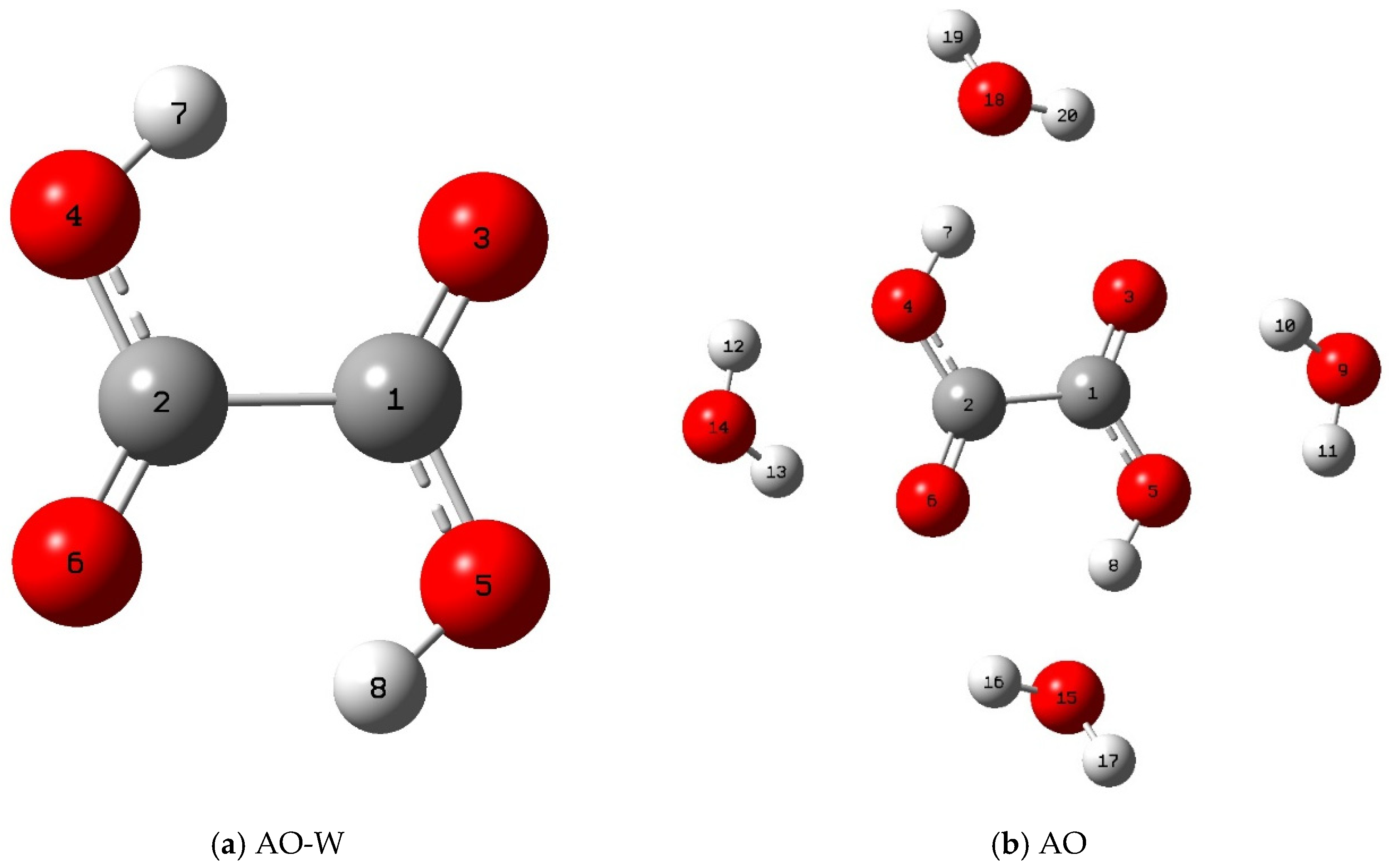
2.6. Computational Study
2.7. Evaluation of Raman Response Under Variable Operational Conditions
2.7.1. Preparation of Matrix-Matched Standards
2.7.2. PCA and PLS Modeling Under Simulated Operational Conditions
3. Results and Discussion
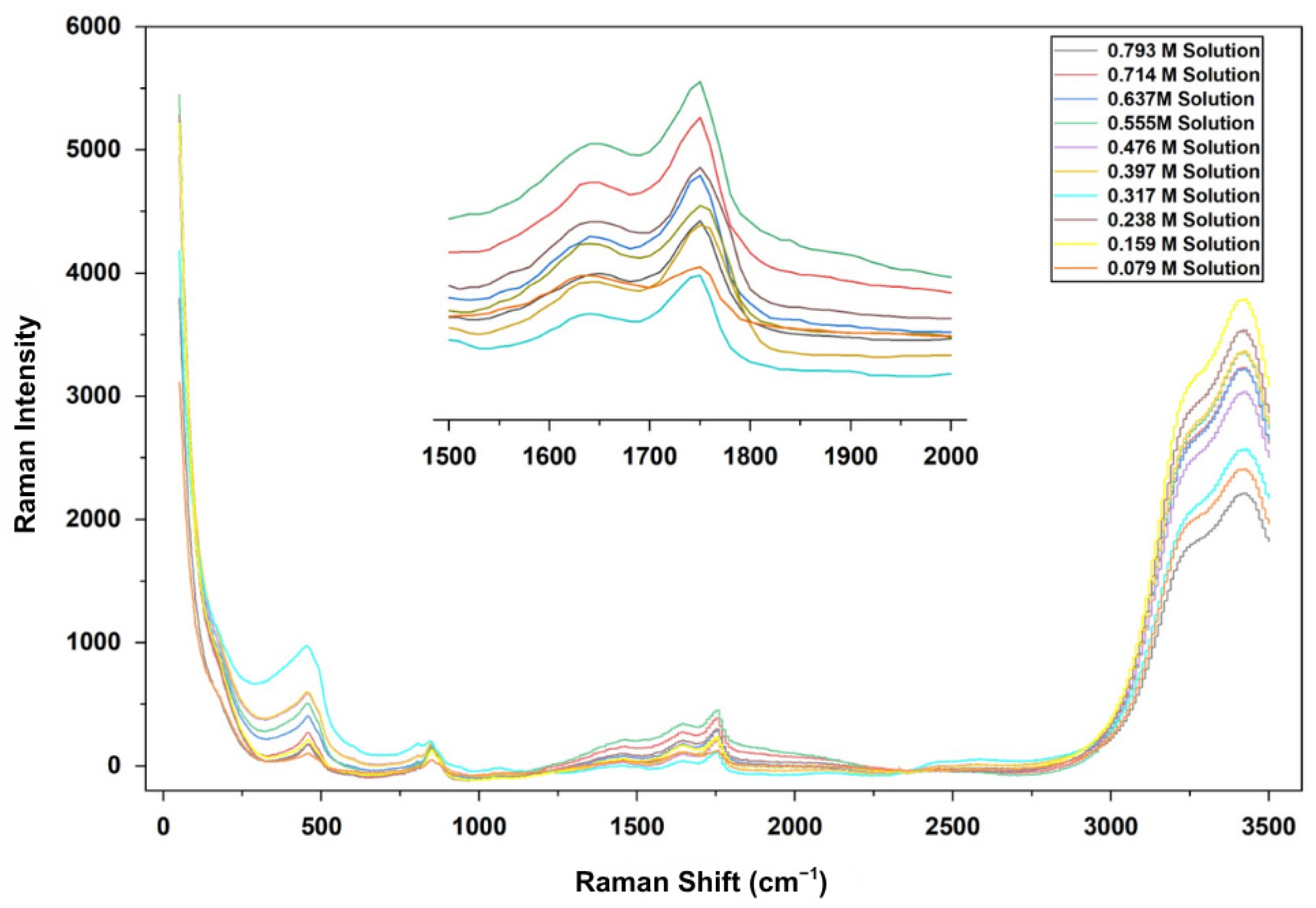
3.1. Spectral Behavior of Oxalic Acid Solutions

| Raman Region (cm−1) | Vibrational Assignment | Physical Description | Behavior with Concentration |
|---|---|---|---|
| 3200–3500 | ν(O–H) stretching (H2O/H-bonded COOH) | Very broad and intense band dominated by a hydrogen-bonded water network | Poor sensitivity to oxalic acid concentration; signal largely controlled by solvent [27] |
| 1600–1660 | δ(H–O–H) bending of water with overlapping C=O contributions | Broad band from water bending vibration; partially overlaps with acid modes | Weak or moderate changes due to dominant water contribution [28] |
| 1700–1750 | ν(C=O) stretching of COOH | Carbonyl stretching of protonated carboxylic groups | Strong monotonic increase with concentration; excellent analytical band [29] |
| 1435–1475 | ν(C–O)/νs(COO−) stretching | Carboxylate/carboxylic group vibration of the oxalate framework | Moderate increase; may depend on protonation/speciation [30] |
| 850–905 | ν(C–C) stretching | Skeletal vibration of the oxalate backbone | Clear concentration dependence; useful secondary band [31] |
| 540–600 | δ(O–C–O) bending | In-plane deformation of carboxyl groups | Moderate increase but lower intensity than the main bands [32] |
| 200–500 | Low-frequency skeletal modes | Collective and intermolecular vibrations | Weak and noisy in solution; limited quantitative utility [33] |
3.2. Influence of Laser Power on Raman Signal Stability
3.3. Linearity, Limits of Detection and Quantification
3.4. Intra-And Inter-Day Accuracy
3.5. Green Assessment and Operational Advantages of the Raman Method
3.6. Computational Details as a Tool to Support Raman
3.6.1. Natural Bond Orbital (NBO) Analysis
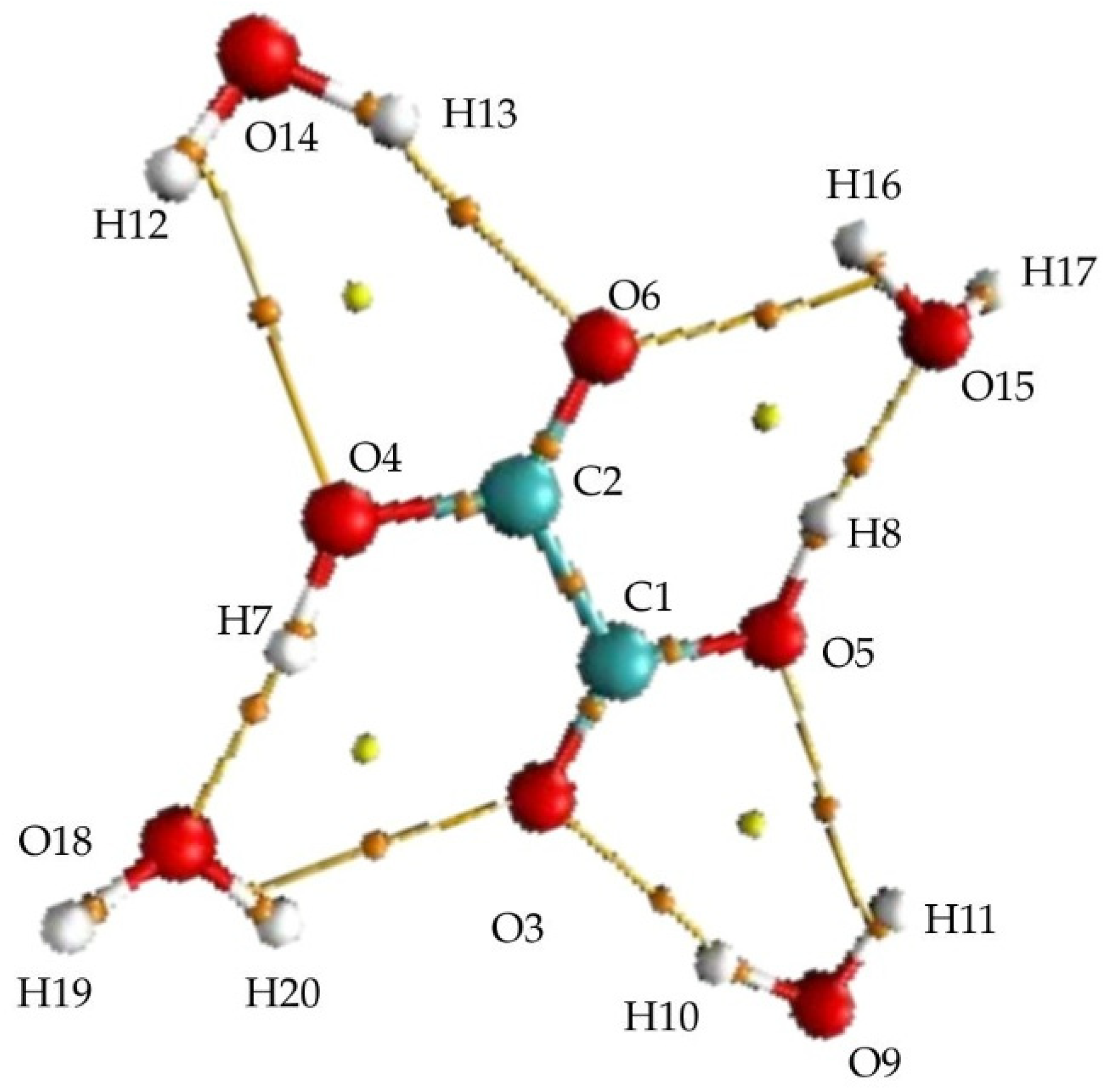
3.6.2. Atomic-in-Molecular Analysis (AIM)
3.6.3. NBO-AIM-Raman Spectrum Relationship
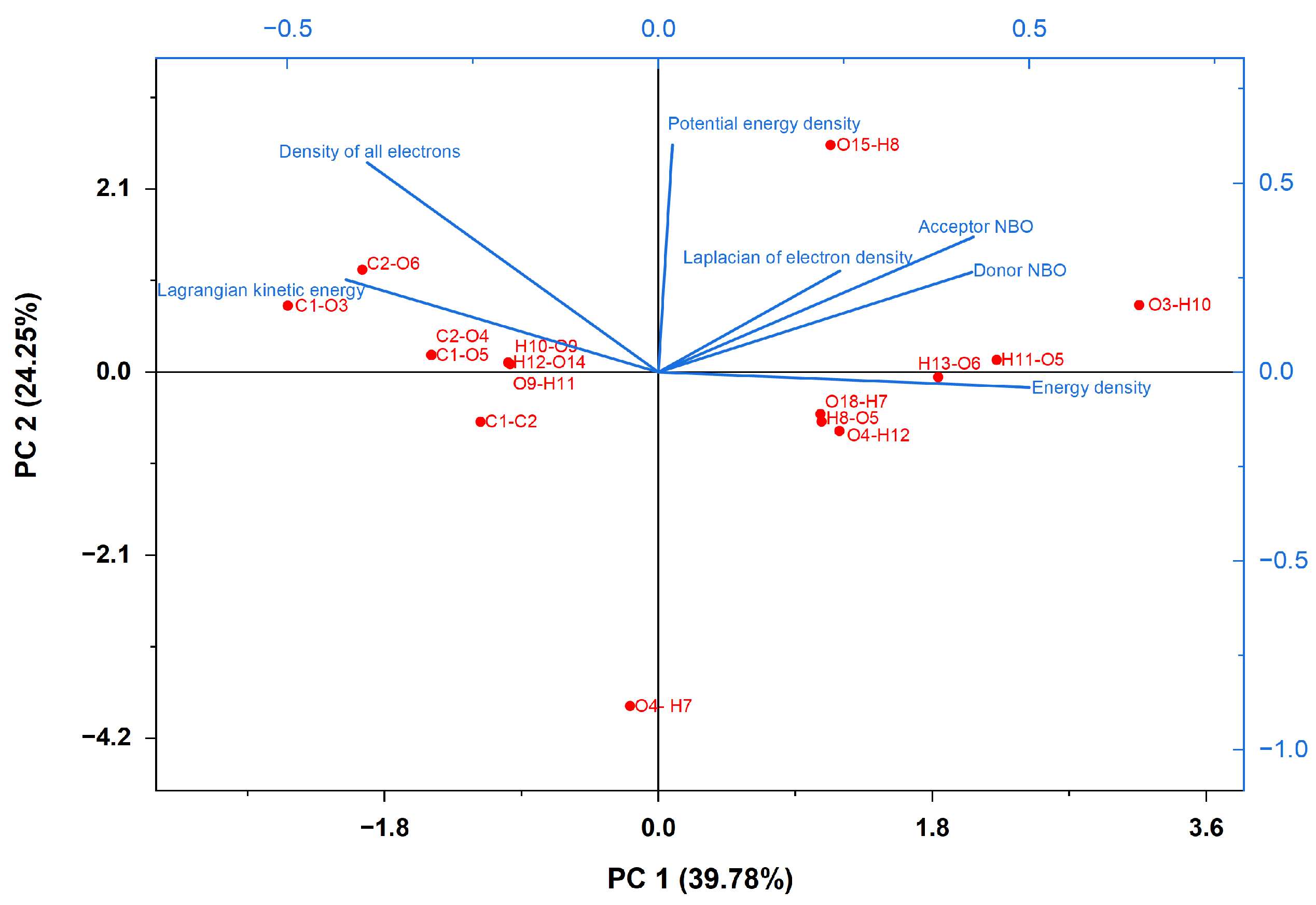
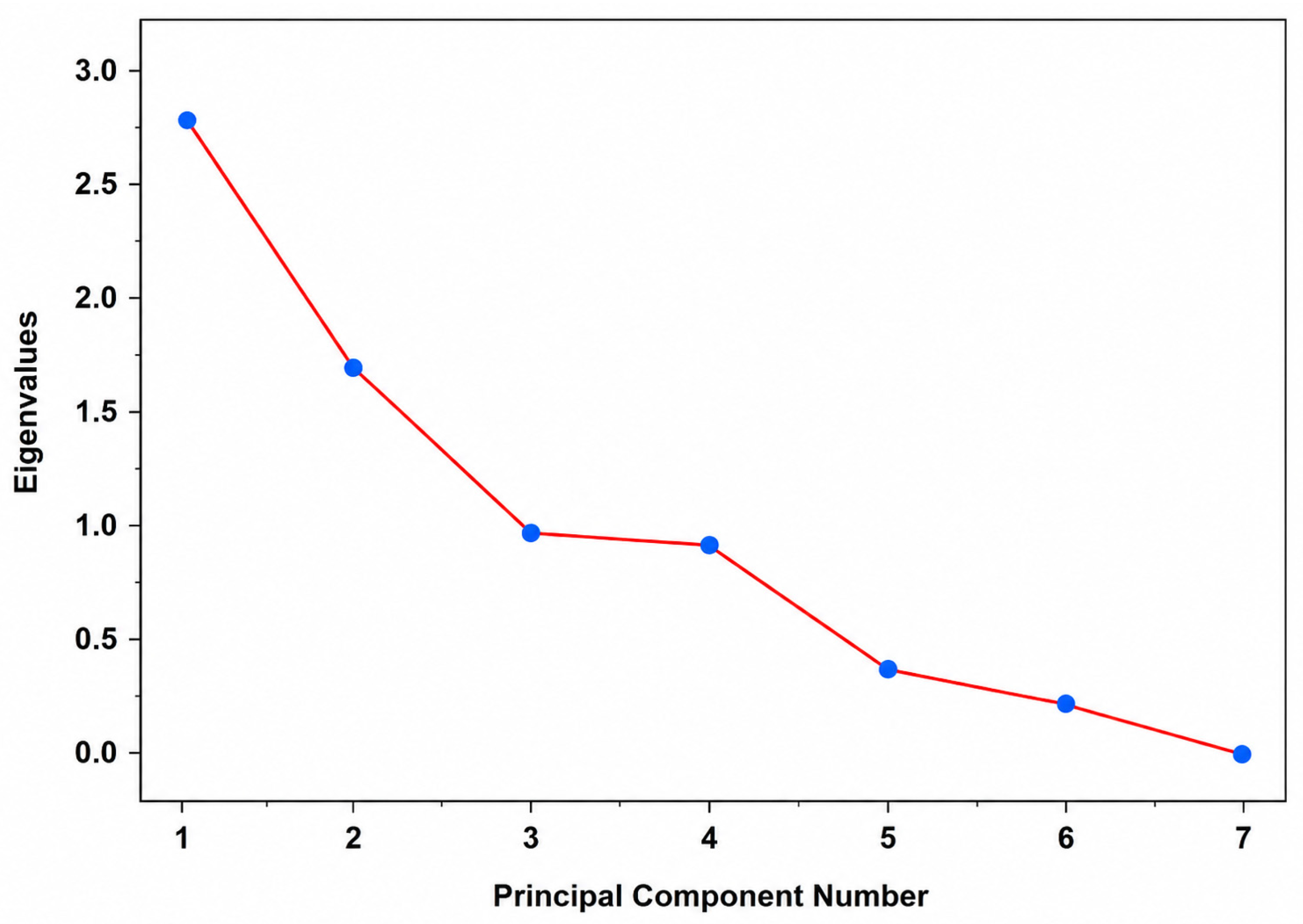
3.6.4. Principal Component Analysis of AIM Descriptors for Topological and Energetic Differentiation of Carbonyl Bonds
4. Effect of Variable Operational Conditions on the Raman Response
4.1. Chemometric Evaluation of Matrix-Matched Standards
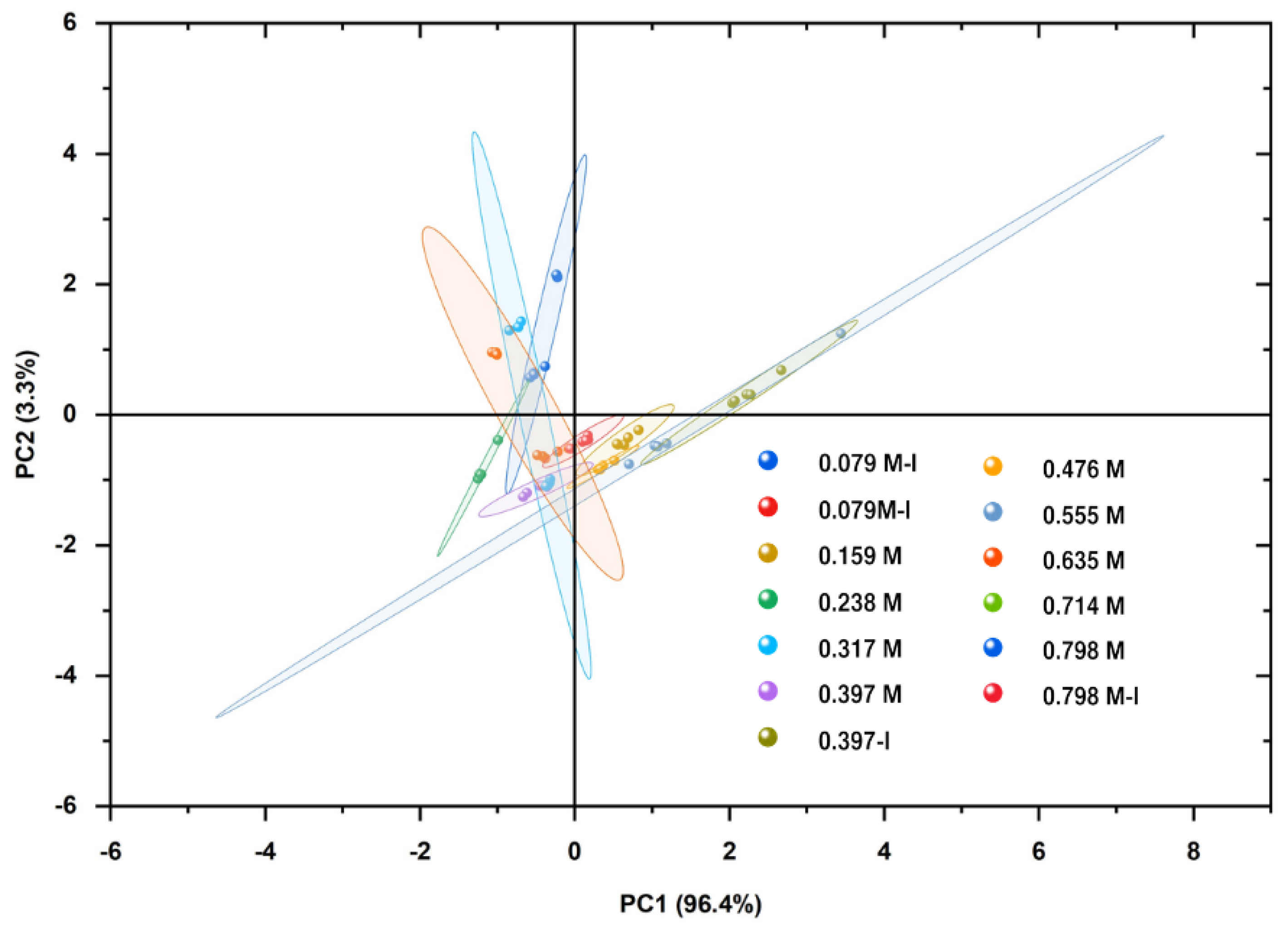
4.2. PCA Analysis of Matrix-Matched Standards
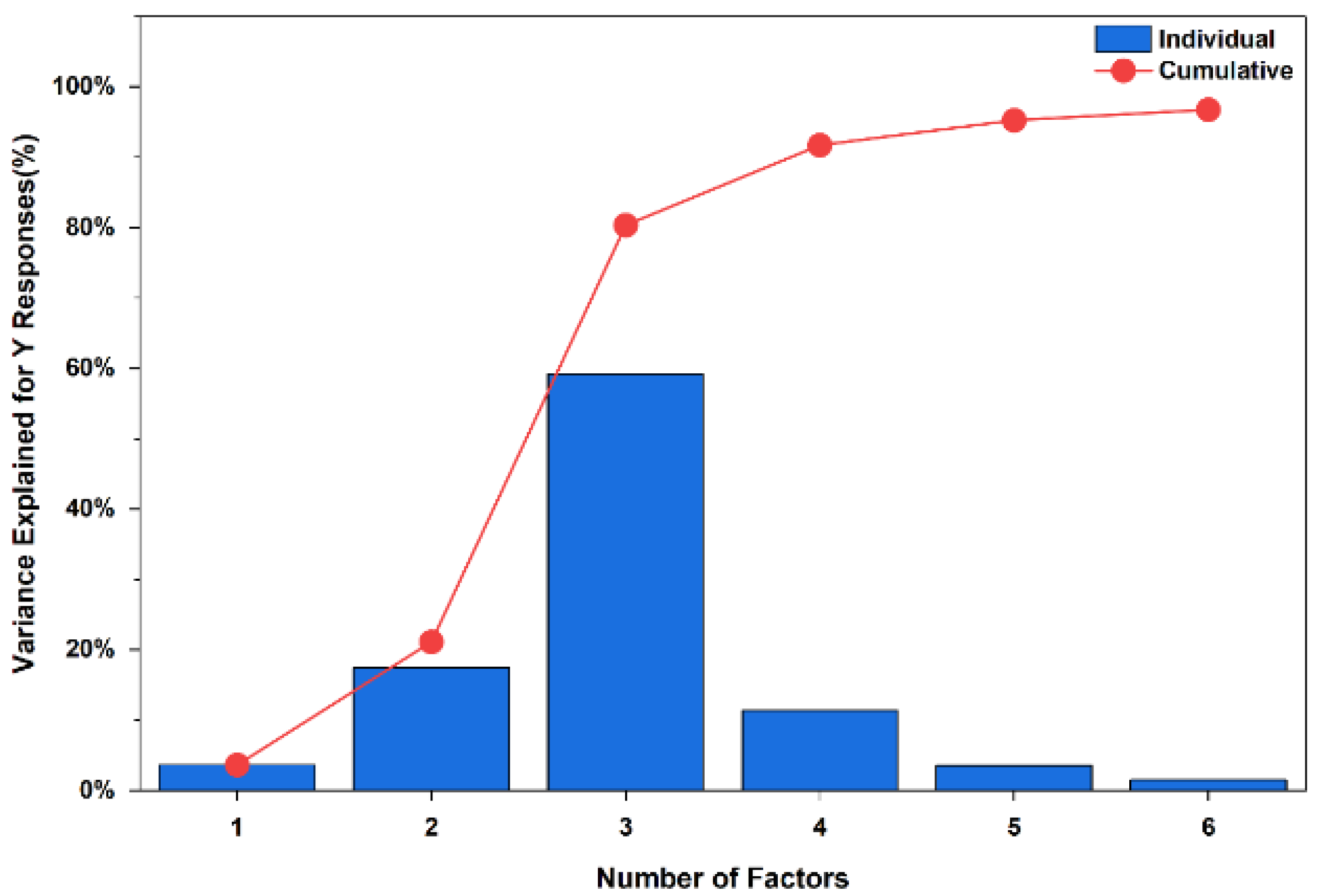
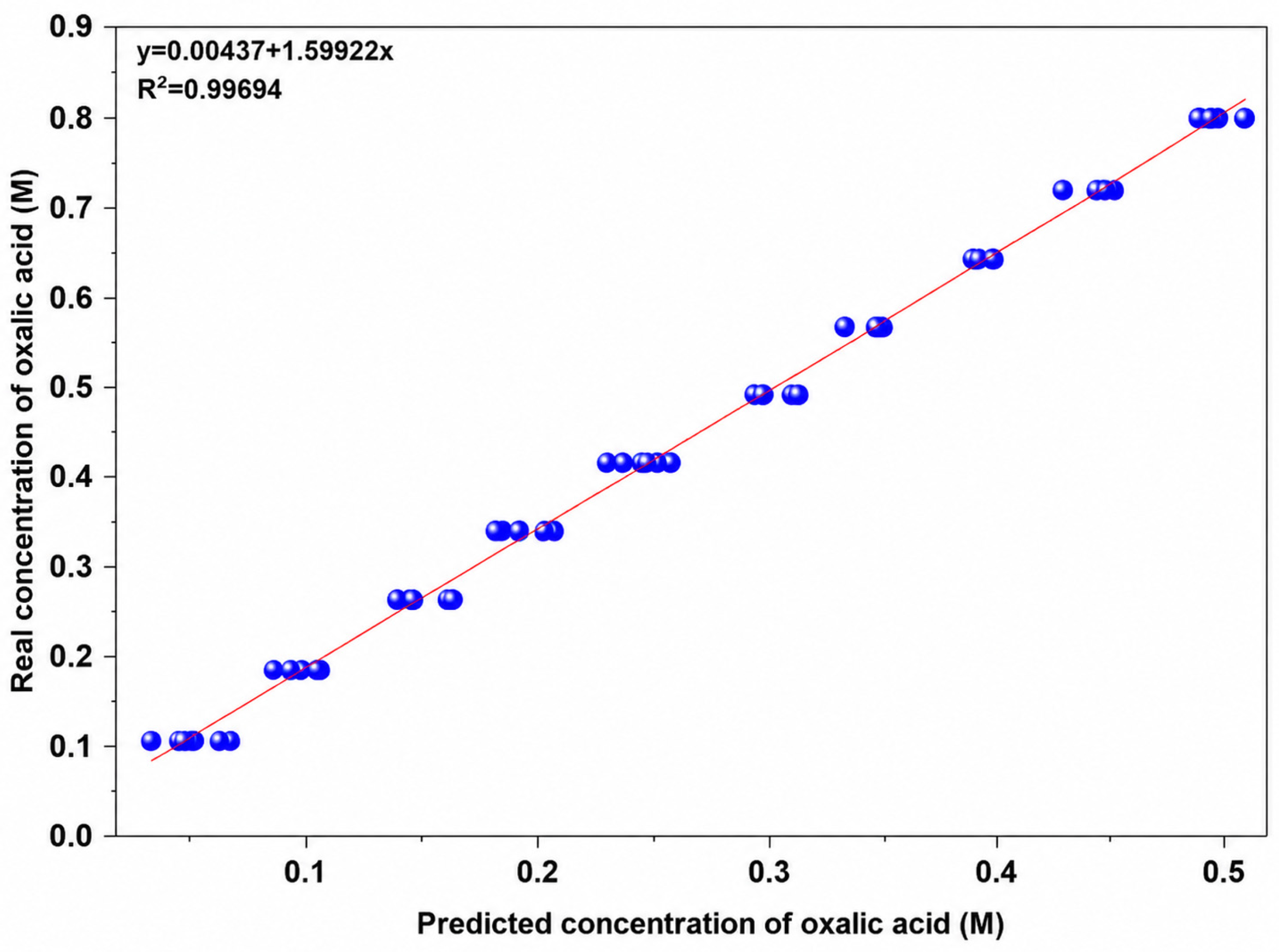
4.3. PLS Predictive Performance Under Simulated Operational Conditions
4.4. Preliminary Prediction of Process-Related Samples
5. Conclusions
Supplementary Materials
Author Contributions
Funding
Data Availability Statement
Conflicts of Interest
References
- Martínez-Huitle, C.A.; Brillas, E. Decontamination of wastewaters containing synthetic organic dyes by electrochemical methods: A general review. Appl. Catal. B Environ. 2008, 87, 105–145. [Google Scholar] [CrossRef]
- Beltrán-Flores, E.; Sarrà, M.; Blánquez, P. Pesticide bioremediation by Trametes versicolor: Application in a fixed-bed reactor, sorption contribution and bioregeneration. Sci. Total Environ. 2021, 794, 148386. [Google Scholar] [CrossRef] [PubMed]
- Zarehshi, A.; Aghajani, M. A review of plant fibers and their sorption property for wastewater treatment and water filter production. Discov. Environ. 2025, 3, 243. [Google Scholar] [CrossRef]
- Ali, A.A.-K.F.; Danielson, N.D. Liquid chromatography of short-chain carboxylic acids using a glutamic acid surfactant-coated C18 stationary phase. Talanta 2020, 213, 120807. [Google Scholar] [CrossRef]
- Wang, Y.; Zou, B.; Chai, L.; Lin, Z.; Feng, H.; Tang, Y.; Tian, R.; Tu, Y.; Zhang, B.; Zou, H. Monitoring of soil heavy metals based on hyperspectral remote sensing: A review. Earth-Sci. Rev. 2024, 254, 104814. [Google Scholar] [CrossRef]
- Quinson, J.; Jensen, K.M.Ø. From platinum atoms in molecules to colloidal nanoparticles: A review on reduction, nucleation, and growth mechanisms. Adv. Colloid Interface Sci. 2020, 286, 102300. [Google Scholar] [CrossRef]
- Verma, P.; Srivastava, A.; Srivastava, K.; Tandon, P.; Shimpi, M.R. Molecular structure, spectral investigations, hydrogen bonding interactions, and Reactivity-Property relationship of Caffeine-Citric acid Cocrystal by experimental and DFT approach. Front. Chem. 2021, 9, 708538. [Google Scholar] [CrossRef]
- Yamakita, Y.; Tasumi, M. Vibrational analyses of p-benzoquinodimethane and p-benzoquinone based on ab initio Hartree-Fock and second-order Moller-Plesset calculations. J. Phys. Chem. 1995, 99, 8524–8534. [Google Scholar] [CrossRef]
- Brizuela, A.B.; Bichara, L.C.; Romano, E.; Yurquina, A.; Locatelli, S.; Brandán, S.A. A complete characterization of the vibrational spectra of sucrose. Carbohydr. Res. 2012, 361, 212–218. [Google Scholar] [CrossRef] [PubMed]
- Kurul, F.; Doruk, B.; Topkaya, S.N. Principles of green chemistry: Building a sustainable future. Discov. Chem. 2025, 2, 68. [Google Scholar] [CrossRef]
- Amenaghawon, A.N.; Igemhokhai, S.; Eshiemogie, S.A.; Ugbodu, F.; Evbarunegbe, N.I. Data-driven intelligent modeling, optimization, and global sensitivity analysis of a xanthan gum biosynthesis process. Heliyon 2024, 10, e25432. [Google Scholar] [CrossRef]
- Nicolau, S.T.; Jiang, K.H.; Matzger, A.J. Selecting a laser excitation source and sampling strategy for Raman spectroscopy. Spectrochim. Acta Part A Mol. Biomol. Spectrosc. 2025, 343, 126588. [Google Scholar] [CrossRef]
- Holtstam, D.; Casey, P.; Bindi, L.; Förster, H.-J.; Karlsson, A.; Appelt, O. Fluorbritholite-(Nd), Ca2Nd3(SiO4)3F, a new and key mineral for neodymium sequestration in REE skarns. Mineral. Mag. 2023, 87, 731–737. [Google Scholar] [CrossRef]
- Liu, F.; Peng, C.; Wilson, B.P.; Lundström, M. Oxalic Acid Recovery from High Iron Oxalate Waste Solution by a Combination of Ultrasound-Assisted Conversion and Cooling Crystallization. ACS Sustain. Chem. Eng. 2019, 7, 17372–17378. [Google Scholar] [CrossRef]
- Cerqueira, L.B.; De Francisco, T.M.G.; Gasparetto, J.C.; Campos, F.R.; Pontarolo, R. Development and validation of an HPLC-MS/MS method for the early diagnosis of aspergillosis. PLoS ONE 2014, 9, e92851. [Google Scholar] [CrossRef] [PubMed]
- Iqbal, M.; Wani, T.A.; Khalil, N.Y.; Darwish, I.A. Development and validation of ultra-performance liquid chromatographic method with tandem mass spectrometry for determination of lenalidomide in rabbit and human plasma. Chem. Cent. J. 2013, 7, 7. [Google Scholar] [CrossRef] [PubMed]
- Tobiszewski, M. Metrics for green analytical chemistry. Anal. Methods 2018, 10, 2993–2998. [Google Scholar] [CrossRef]
- Yin, L.; Yu, L.; Guo, Y.; Wang, C.; Ge, Y.; Zheng, X.; Zhang, N.; You, J.; Zhang, Y.; Shi, M. Green analytical chemistry metrics for evaluating the greenness of analytical procedures. J. Pharm. Anal. 2024, 14, 101013. [Google Scholar] [CrossRef]
- Płotka-Wasylka, J. A new tool for the evaluation of the analytical procedure: Green Analytical Procedure Index. Talanta 2018, 181, 204–209. [Google Scholar] [CrossRef]
- Moros, J.; Garrigues, S.; De La Guardia, M. Vibrational spectroscopy provides a green tool for multi-component analysis. TrAC Trends Anal. Chem. 2010, 29, 578–591. [Google Scholar] [CrossRef]
- Pena-Pereira, F.; Wojnowski, W.; Tobiszewski, M. AGREE—Analytical Greenness Metric Approach and Software. Anal. Chem. 2020, 92, 10076–10082. [Google Scholar] [CrossRef]
- Stephens, P.J.; Devlin, F.J.; Chabalowski, C.F.; Frisch, M.J. Ab initio calculation of vibrational absorption and circular dichroism spectra using density functional force fields. J. Phys. Chem. 1994, 98, 11623–11627. [Google Scholar] [CrossRef]
- Ghosh, N.; Roy, S.; Bandyopadhyay, A.; Mondal, J.A. Vibrational Raman spectroscopy of the hydration shell of ions. Liquids 2022, 3, 19–39. [Google Scholar] [CrossRef]
- Hibben, J.H. The Raman spectra of oxalic acid. J. Chem. Phys. 1935, 3, 675–679. [Google Scholar] [CrossRef]
- Edsall, J.T. Raman Spectra of amino acids and related compounds IV. Ionization of di- and tricarboxylic acids. J. Chem. Phys. 1937, 5, 508–517. [Google Scholar] [CrossRef]
- Begun, G.M.; Fletcher, W.H. Vibrational spectra of aqueous oxalate ion. Spectrochim. Acta 1963, 19, 1343–1349. [Google Scholar] [CrossRef]
- Hadjiivanov, K.I.; Panayotov, D.A.; Mihaylov, M.Y.; Ivanova, E.Z.; Chakarova, K.K.; Andonova, S.M.; Drenchev, N.L. Power of Infrared and Raman Spectroscopies to Characterize Metal-Organic Frameworks and Investigate Their Interaction with Guest Molecules. Chem. Rev. 2020, 121, 1286–1424. [Google Scholar] [CrossRef]
- Auer, B.M.; Skinner, J.L. IR and Raman spectra of liquid water: Theory and interpretation. J. Chem. Phys. 2008, 128, 224511. [Google Scholar] [CrossRef]
- Carey, D.M.; Korenowski, G.M. Measurement of the Raman spectrum of liquid water. J. Chem. Phys. 1998, 108, 2669–2675. [Google Scholar] [CrossRef]
- Olbert-Majkut, A.; Ahokas, J.; Pettersson, M.; Lundell, J. Visible light-driven chemistry of oxalic acid in solid argon, probed by Raman spectroscopy. J. Phys. Chem. A 2013, 117, 1492–1502. [Google Scholar] [CrossRef]
- Frost, R. Raman spectroscopy of natural oxalates. Anal. Chim. Acta 2004, 517, 207–214. [Google Scholar] [CrossRef]
- Jensen, J.O. Vibrational frequencies and structural determination of digermylcarbodiimide. Spectrochim. Acta Part A Mol. Biomol. Spectrosc. 2004, 60, 2493–2498. [Google Scholar] [CrossRef]
- Verma, P.; Srivastava, A.; Tandon, P.; Shimpi, M.R. Insights into structural, spectroscopic, and hydrogen bonding interaction patterns of nicotinamide–oxalic acid (form I) salt by using experimental and theoretical approaches. Front. Chem. 2023, 11, 1203278. [Google Scholar] [CrossRef] [PubMed]
- Bro, R.; Smilde, A.K. Principal component analysis. Anal. Methods 2014, 6, 2812–2831. [Google Scholar] [CrossRef]
- Jolliffe, I.T.; Cadima, J. Principal component analysis: A review and recent developments. Philos. Trans. R. Soc. A Math. Phys. Eng. Sci. 2016, 374, 20150202. [Google Scholar] [CrossRef]
- Wold, S.; Esbensen, K.; Geladi, P. Principal component analysis. Chemom. Intell. Lab. Syst. 1987, 2, 37–52. [Google Scholar] [CrossRef]
- Rinnan, Å.; Van den Berg, F.; Engelsen, S.B. Review of the most common pre-processing techniques for near-infrared spectra. TrAC Trends Anal. Chem. 2009, 28, 1201–1222. [Google Scholar] [CrossRef]
- Weinhold, F. Natural bond orbital analysis: A critical overview of relationships to alternative bonding perspectives. J. Comput. Chem. 2012, 33, 2363–2379. [Google Scholar] [CrossRef] [PubMed]
- Weinhold, F.; Landis, C.R. Natural bond orbitals and extensions of localized bonding concepts. Chem. Educ. Res. Pract. 2001, 2, 91–104. [Google Scholar] [CrossRef]
- Barton, B.; Thomson, J.; Diz, E.L.; Portela, R. Chemometrics for Raman Spectroscopy harmonization. Appl. Spectrosc. 2022, 76, 1021–1041. [Google Scholar] [CrossRef]
- Shen, Y.; Luo, X.; Li, H.; Guan, Q.; Cheng, L. Evaluation of a high-performance liquid chromatography method for urinary oxalate determination and investigation regarding the pediatric reference interval of spot urinary oxalate to creatinine ratio for screening of primary hyperoxaluria. J. Clin. Lab. Anal. 2021, 35, e23870. [Google Scholar] [CrossRef]
- Gałuszka, A.; Migaszewski, Z.M.; Konieczka, P.; Namieśnik, J. Analytical Eco-Scale for assessing the greenness of analytical procedures. TrAC Trends Anal. Chem. 2012, 37, 61–72. [Google Scholar] [CrossRef]
- Mehta, M.; Mehta, D.; Mashru, R. Recent application of green analytical chemistry: Eco-friendly approaches for pharmaceutical analysis. Future J. Pharm. Sci. 2024, 10, 83. [Google Scholar] [CrossRef]
- Płotka-Wasylka, J. Green analytical chemistry: Past, present, and perspectives. Curr. Opin. Green Sustain. Chem. 2022, 36, 100643. [Google Scholar] [CrossRef]
- Verma, P.; Srivastava, A.; Tandon, P.; Shimpi, M.R. Experimental and quantum chemical studies of Nicotinamide-Oxalic acid salt: Hydrogen bonding, AIM and NBO analysis. Front. Chem. 2022, 10, 855132. [Google Scholar] [CrossRef]
- Glendening, E.D.; Landis, C.R.; Weinhold, F. NBO 6.0: Natural bond orbital analysis program. J. Comput. Chem. 2013, 34, 1429–1437. [Google Scholar] [CrossRef]
- Hu, Y.; Zhang, X.; Li, Q.; Zhang, Y.; Li, Z. Effect of water on the structure and stability of Hydrogen-Bonded Oxalic Acid dimer. ChemPhysChem 2017, 18, 3375–3383. [Google Scholar] [CrossRef]
- Da Silva Carvalho, E.; Ghosh, A.; Chaudhuri, P. Intermolecular Hydrogen-Bonded Interactions of Oxalic Acid Conformers with Sulfuric Acid and Ammonia. ACS Omega 2024, 9, 42470–42487. [Google Scholar] [CrossRef]
- Steffy, A.D.; Dhas, D.A.; Joe, I.H.; Balachandran, S. Theoretical investigations on structural, spectral, NBO, NLO and topology exploration (AIM, ELF, LOL, RDG) of piperazine-2,5-dione oxalic acid monohydrate. J. Mol. Struct. 2023, 1295, 136653. [Google Scholar] [CrossRef]
- Alwi, M.A.M.; Normaya, E.; Ismail, H.; Iqbal, A.; Piah, B.M.; Samah, M.A.A.; Ahmad, M.N. Two-Dimensional infrared correlation spectroscopy, conductor-like screening model for real solvents, and density functional Theory Study on the adsorption mechanism of polyvinylpolypyrrolidone for effective phenol removal in an aqueous medium. ACS Omega 2021, 6, 25179–25192. [Google Scholar] [CrossRef]
- Grabowski, S.J. A new measure of hydrogen bonding strength—Ab initio and atoms in molecules studies. Chem. Phys. Lett. 2001, 338, 361–366. [Google Scholar] [CrossRef]
- Rozas, I.; Alkorta, I.; Elguero, J. Behavior of ylides containing N, O, and C atoms as hydrogen bond acceptors. J. Am. Chem. Soc. 2000, 122, 11154–11161. [Google Scholar] [CrossRef]
- Lewell, X.Q.; Hillier, I.H.; Field, M.J.; Morris, J.J.; Taylor, P.J. Theoretical studies of vibrational frequency shifts upon hydrogen bonding. The carbonyl stretching mode in complexes of formaldehyde. J. Chem. Soc. Faraday Trans. 2 Mol. Chem. Phys. 1988, 84, 893–900. [Google Scholar] [CrossRef]
- Smith, E.; Dent, G. Modern Raman Spectroscopy: A Practical Approach; Wiley: Hoboken, NJ, USA, 2005. [Google Scholar] [CrossRef]
- Espinosa, E.; Molins, E.; Lecomte, C. Hydrogen bond strengths revealed by topological analyses of experimentally observed electron densities. Chem. Phys. Lett. 1998, 285, 170–173. [Google Scholar] [CrossRef]
- Bader, R.F.W. Atoms in Molecules: A Quantum Theory; Oxford University Press: Oxford, UK, 1990. [Google Scholar] [CrossRef]
- Matta, C.F.; Boyd, R.J. The Quantum Theory of Atoms in Molecules: From Solid State to DNA and Drug Design; Wiley-VCH: Weinheim, Germany, 2007. [Google Scholar] [CrossRef]
- Reed, A.E.; Curtiss, L.A.; Weinhold, F. Intermolecular interactions from a natural bond orbital, donor-acceptor viewpoint. Chem. Rev. 1988, 88, 899–926. [Google Scholar] [CrossRef]
- Weinhold, F.; Landis, C.R. Valency and Bonding: A Natural Bond Orbital Donor-Acceptor Perspective; Cambridge University Press: Cambridge, UK, 2005. [Google Scholar] [CrossRef]
- Foster, J.P.; Weinhold, F. Natural hybrid orbitals. J. Am. Chem. Soc. 1980, 102, 7211–7218. [Google Scholar] [CrossRef]
- Weinhold, F. Natural bond critical point analysis: Quantitative relationships between natural bond orbital-based and QTAIM-based topological descriptors of chemical bonding. J. Comput. Chem. 2012, 33, 2440–2449. [Google Scholar] [CrossRef]
- Klemettinen, A.; Adamski, Z.; Chojnacka, I.; Leśniewicz, A.; Rycerz, L. Recovery of Rare Earth Elements from the Leaching Solutions of Spent NdFeB Permanent Magnets by Selective Precipitation of Rare Earth Oxalates. Minerals 2023, 13, 846. [Google Scholar] [CrossRef]
- Nawab, A.; Yang, X.; Honaker, R. Parametric study and speciation analysis of rare earth precipitation using oxalic acid in a chloride solution system. Miner. Eng. 2022, 178, 107352. [Google Scholar] [CrossRef]
- Zhu, Z.; Pranolo, Y.; Cheng, C.Y. Separation of uranium and thorium from rare earths for rare earth production—A review. Miner. Eng. 2015, 77, 185–196. [Google Scholar] [CrossRef]
- Amenaghawon, A.N.; Aisosa, O.A.; Aisosa, U.G. A comprehensive review of recent advances in the biological synthesis of oxalic acid. Environ. Res. 2024, 247, 118267. [Google Scholar] [CrossRef]
- Li, H.; Zheng, Y.; Benum, L.W.; Oballa, M.; Chen, W. Carburization behaviour of Mn–Cr–O spinel in high temperature hydrocarbon cracking environment. Corros. Sci. 2009, 51, 2336–2341. [Google Scholar] [CrossRef]
- Fonteyne, M.; De Plecker, S.; Vercruysse, J.; De Beer, T.; Vervaet, C. Process analytical technology for continuous manufacturing of solid-dosage forms. TrAC Trends Anal. Chem. 2015, 67, 159–166. [Google Scholar] [CrossRef]
- Blenkinsop, J.; Sim, M.; Laws, D.; Tinsley, O.; Knight, K.; Soulsby, M.; Sharrad, C.; Sarsfield, M.; Stennett, M.; Hand, R.J. Methods for the destruction of oxalic acid decontamination effluents. Front. Nucl. Eng. 2024, 3, 1347322. [Google Scholar] [CrossRef]
- Vargas, L.M.T.; Salazar, Y.H.V.; Carmona, M.E.R. Determination of citric and oxalic acid in fungi fermentation broth through HPLC-DAD and solid-phase extraction. DYNA 2020, 87, 26–30. [Google Scholar] [CrossRef]
- Priyadarshini, M.; Das, S.; Gopinath, K.P.; Naushad, M. Advanced oxidation processes: Performance, advantages, limitations, and trends for wastewater treatment. J. Environ. Manag. 2022, 324, 116240. [Google Scholar] [CrossRef]



| Compound | M | Raman Band (cm−1) | r2 | LOD (M) | LOQ (M) |
|---|---|---|---|---|---|
| 0.793 | |||||
| 0.714 | |||||
| 0.635 | |||||
| 0.556 | |||||
| Oxalic acid | 0.476 | 1700–1750 | 0.9986 | 0.026 | 0.087 |
| 0.397 | |||||
| 0.317 | |||||
| 0.238 | |||||
| 0.159 | |||||
| 0.079 |
| Parameter | Raman | Penalty | HPLC | Penalty |
|---|---|---|---|---|
| Hazardous reagents | None | 0 | Organic solvents (ACN/MeOH) | 6 |
| Quantity of reagents | None | 0 | Moderate | 4 |
| Use of organic solvents | No | 0 | Yes | 6 |
| Waste generation | Very low | 0 | Moderate–high | 5 |
| Waste treatment | Not required | 0 | Required | 3 |
| Energy consumption | Low | 1 | Medium | 2 |
| Risk to the operator | Very low | 0 | Moderate | 2 |
| Instrumentation | Moderate | 1 | Complex | 2 |
| Analysis time | Very short | 0 | Moderate | 1 |
| Stage of the Method | Raman | HPLC |
|---|---|---|
| Sample type | 1.0 (Green) | 0.5 (Yellow) |
| Sample preservation | 1.0 (Green) | 0.5 (Yellow) |
| Sample preparation | 1.0 (Green) | 0.5 (Yellow) |
| Reagent use | 1.0 (Green) | 0.0 (Red) |
| Reagent toxicity | 1.0 (Green) | 0.5 (Yellow) |
| Solvent consumption | 1.0 (Green) | 0.0 (Red) |
| Waste generation | 1.0 (Green) | 0.0 (Red) |
| Waste treatment | 1.0 (Green) | 0.0 (Red) |
| Energy consumption | 0.8 (Green) | 0.5 (Yellow) |
| Operator safety | 1.0 (Green) | 0.6 (Yellow) |
| Analysis time | 1.0 (Green) | 0.6 (Yellow) |
| Overall environmental impact | 1.0 (Green) | 0.4 (Yellow) |
| Hydrogen Bonds | Laplacian of Electron Density | Density of All Electrons | Lagrangian Kinetic Energy G(r) | Potential Energy Density V(r) | Energy Density H(r) |
|---|---|---|---|---|---|
| O18–H7 | 0.1631 | 0.04624 | 0.04483 | −0.0489 | −0.0040 |
| H7–O4 | −0.2347 | −0.23478 | 0.23478 | −0.688 | −0.6378 |
| O4–H12 | 0.0315 | 0.00781 | 0.00686 | −0.00585 | 0.0010 |
| H12–O14 | −0.2679 | 0.37046 | 0.06793 | −0.80582 | −0.7378 |
| O3–H10 | 0.0691 | 0.0167 | 0.01487 | −0.01248 | 0.0023 |
| H10–O9 | −0.2688 | 0.3658 | 0.06434 | −0.80081 | −0.7364 |
| H13–O6 | 0.0690 | 0.0167 | 0.01486 | −0.01246 | 0.0023 |
| O9–H11 | −0.2679 | 0.3704 | 0.06793 | −0.80583 | −0.7378 |
| H8–O5 | 0.1630 | 0.04625 | 0.00448 | −0.04891 | −0.0040 |
| H11–O5 | 0.0315 | 0.0077 | 0.00685 | −0.00583 | 0.0010 |
| Process Sample | Process Condition | Production Line | Theoretical Concentration of Oxalic Acid (M) | Temperature (°C) | Turbidity (mg/L) | Ca2+ (mg/L) | Fe3+ (mg/L) | Integrated Area (1700–1750 cm−1) | SD | RSD |
|---|---|---|---|---|---|---|---|---|---|---|
| 1 | Initial Condition | Line A | 0.793 | 25 | 5 | 2 | 3 | 11,399.97 | 58.99 | 0.52 |
| 2 | Initial Condition | Line B | 0.397 | 25 | 7 | 3 | 4 | 7378.01 | 577.94 | 7.83 |
| 3 | Initial Condition | Line C | 0.079 | 25 | 4 | 2 | 2 | 3430.83 | 328.63 | 9.50 |
| 4 | Final Condition | Line A | 0.793 | 40 | 3 | 5 | 3 | 11,590.03 | 952.01 | 8.21 |
| 5 | Final Condition | Line B | 0.397 | 40 | 5 | 3 | 5 | 7627.23 | 288.12 | 3.78 |
| 6 | Final Condition | Line C | 0.079 | 40 | 6 | 4 | 4 | 2389.81 | 288.12 | 5.85 |
| 7 | Final Condition | Line A | 0.793 | 25 | 52 | 49 | 7 | 4282.58 | 220.52 | 5.15 |
| 8 | Final Condition | Line B | 0.397 | 25 | 55 | 56 | 5 | 2210.38 | 57.98 | 2.62 |
| 9 | Final Condition | Line C | 0.079 | 25 | 57 | 51 | 4 | 631.88 | 17.95 | 2.84 |
| 10 | Final Condition | Line A | 0.793 | 40 | 56 | 57 | 6 | 3983.25 | 139.03 | 3.49 |
| 11 | Final Condition | Line B | 0.397 | 40 | 52 | 58 | 7 | 2226.55 | 71.01 | 3.19 |
| 12 | Final Condition | Line C | 0.079 | 40 | 51 | 52 | 6 | 728.55 | 61.46 | 8.44 |
| Production Line | Initial Condition Integrated Area (1700–1750 cm−1) | Final Condition Integrated Area (1700–1750 cm−1) | Mean Final Area ± SD | Mean Difference | Relative Area Change (%) | Significance (p < 0.05) |
|---|---|---|---|---|---|---|
| Line A | 11,399.97 ± 58.99 | 6618.62 | 6618.62 ± 3979.47 | −4781.35 | −41.94 | Significant |
| Line B | 7378.01 ± 577.94 | 4021.39 | 4021.39 ± 3829.45 | −3356.62 | −45.49 | Significant |
| Line C | 3430.83 ± 328.63 | 1250.08 | 1250.08 ± 1242.55 | −2180.75 | −63.56 | Significant |
| Number of Factors | Variance Explained for X Effects (%) | Cumulative X Variance (%) | Variance Explained for Y Responses (%) | Cumulative Y Variance (%) |
|---|---|---|---|---|
| 1 | 96.13351 | 96.13351 | 3.67599 | 3.67599 |
| 2 | 3.36462 | 99.49813 | 17.47451 | 21.1505 |
| 3 | 0.347 | 99.84513 | 59.21191 | 80.36241 |
| 4 | 0.00903 | 99.85416 | 11.36241 | 91.72482 |
| 5 | 0.00985 | 99.86401 | 3.56078 | 95.2856 |
| 6 | 0.01381 | 99.87783 | 1.49577 | 96.78136 |
Disclaimer/Publisher’s Note: The statements, opinions and data contained in all publications are solely those of the individual author(s) and contributor(s) and not of MDPI and/or the editor(s). MDPI and/or the editor(s) disclaim responsibility for any injury to people or property resulting from any ideas, methods, instructions or products referred to in the content. |
© 2026 by the authors. Licensee MDPI, Basel, Switzerland. This article is an open access article distributed under the terms and conditions of the Creative Commons Attribution (CC BY) license.
Share and Cite
Peralta, P.; Ortega-Toro, R.; Hernández-Fernández, J. Direct Quantification of Oxalic Acid at Moderate-to-High Concentrations by Micro-Raman Spectroscopy: Analytical Performance and Electronic Structure Insights from NBO–AIM Analysis. Analytica 2026, 7, 41. https://doi.org/10.3390/analytica7020041
Peralta P, Ortega-Toro R, Hernández-Fernández J. Direct Quantification of Oxalic Acid at Moderate-to-High Concentrations by Micro-Raman Spectroscopy: Analytical Performance and Electronic Structure Insights from NBO–AIM Analysis. Analytica. 2026; 7(2):41. https://doi.org/10.3390/analytica7020041
Chicago/Turabian StylePeralta, Paola, Rodrigo Ortega-Toro, and Joaquín Hernández-Fernández. 2026. "Direct Quantification of Oxalic Acid at Moderate-to-High Concentrations by Micro-Raman Spectroscopy: Analytical Performance and Electronic Structure Insights from NBO–AIM Analysis" Analytica 7, no. 2: 41. https://doi.org/10.3390/analytica7020041
APA StylePeralta, P., Ortega-Toro, R., & Hernández-Fernández, J. (2026). Direct Quantification of Oxalic Acid at Moderate-to-High Concentrations by Micro-Raman Spectroscopy: Analytical Performance and Electronic Structure Insights from NBO–AIM Analysis. Analytica, 7(2), 41. https://doi.org/10.3390/analytica7020041