


Abstract
The separation of chiral compounds is a challenging issue in various fields, e.g., biochemistry, the pharmaceutical industry, food chemistry, forensics, agriculture, etc. Very often, one of the two enantiomers can exhibit different activity. Therefore, the separation and analysis of enantiomers requires analytical methods for, e.g., quality control, pharmacokinetic studies, etc. Their separation is usually performed by high-performance liquid chromatography (HPLC), gas chromatography, supercritical fluid chromatography and microfluidic techniques such as capillary electrophoresis (CE), nano-liquid chromatography, and capillary electrochromatography (CEC). CEC is a modern analytical technique that combines the features of HPLC and CE (high selectivity and high chromatographic efficiency, respectively). The enantiomers are moved to the detector by an electroosmotic flow generated by the application of high voltage. In this review, the main features of CEC, and the basic principles of enantiomer separation are briefly summarized. Selected applications (appearing 2023–2026 February) employing packed capillaries, and monolithic and open tubular columns, are presented and discussed.
1. Introduction
Capillary electrochromatography (CEC) is a miniaturized analytical technique where analytes are separated in a capillary (10–100 μm I.D.) containing a mobile phase (MP) and a stationary phase (SP). The compounds and the MP are moved to the detector by an electroosmotic flow (EOF) generated by the application of a high voltage (10–25 kV). CEC combines the best features of high-performance liquid chromatography (HPLC, high selectivity) and capillary electrophoresis (CE, high efficiency). The SP can be included into the capillary by (i) packing modified silica particles (packed-capillary electrochromatography, p-CEC) or (ii) polymerization reaction (monolithic material, monolithic capillary electrochromatography, M-CEC) or (ii) bonding/adsorbing on the inner wall polymeric material or nanoparticles (open tubular electrochromatography, OT-CEC) [1].
Due to its features (high mass sensitivity, high efficiency and resolution, and use of minute volumes of both MPs and sample volumes), CEC has been used for the separation and analysis of different compounds, e.g., amino acids, peptides, proteins, herbicides, fungicides, pharmaceuticals, drugs, and chiral compounds [1,2,3,4,5,6,7].
Enantiomer separation has been widely studied due to the important role of these compounds in various fields, such as human and animal health, biochemistry, the pharmaceutical industry, agriculture, forensics, and food. Most of the drugs contain one or more asymmetric centers and therefore they exhibit two or more optical isomers. Two enantiomers of a drug could exhibit a different pharmacological activity (one of them could be more active or even dangerous). Therefore, analytical methods are requested for enantiomer separation and analysis for, e.g., quality control, pharmacokinetic study, etc. [8].
The separation and quantitation of chiral compounds is a challenging issue in research because two enantiomers, possessing quite similar physical–chemical properties, are difficult to separate in conventional SP unless they are modified with a chiral selector (indirect resolution method). Enantiomers can be separated utilizing a chiral stationary phase (CSP) (direct resolution method) where the two compounds interact during the analysis, with the CSP forming complexes with different stability responsible for their separation [8,9].
In this review, the best features of CEC, the enantiomer resolution methods, and the application fields for chiral analysis are briefly presented. Selected applications published in the period 2023–2026 (February) are reported and discussed.
2. Features of Capillary Electrochromatography and Enantiomer Separation
2.1. Features of Capillary Electrochromatography
CEC is an electrochromatographic technique used to separate uncharged and charged compounds, where analytes are moved to the detector by the EOF; however, in the case of charged compounds, this is in addition to their electrophoretic migration. Therefore, CEC can be considered a combination of liquid chromatography (LC) and CE. The capillary column (10–100 μm I.D.) contains a CSP or other SP interacting with analytes and MPs, forming temporary complexes with analyzed compounds to obtain their separation [6].
The CSP used in CEC is usually the one studied and employed in HPLC, but containing charged and/or chargeable groups. They are positioned into the capillary column, offering three CEC types: packed particles (p-CEC), polymers (monolithic, M-CEC), and coated/adsorbed CSP (OT-CEC). However, in some cases, the CS can be added to the MP [10].
The EOF has a plug-like flat profile, in contrast to nano liquid chromatography (nano-LC), and therefore it is responsible for the high efficiency that can be achieved. It is influenced by some experimental parameters, such as type of CSP, capillary inner column surface, separation voltage, type of the MP and its ionic strength, organic modifier, etc. Charged or chargeable groups on the system can increase or decrease the EOF, and they are mandatory for CEC experiments [11].
As reported by Pretorius et al. [12], Equation (1) shows the value of the linear velocity in a chromatographic system:
where , , , and E are the linear velocity, the permittivity, the zeta potential of the liquid–solid interface, the viscosity of the solvent, and the applied electric field strength, respectively. From Equation (1), the velocity is not influenced by channel (and thus particle) size and by inhomogeneities in the packing. Therefore, packed capillaries with particles of small diameter can be easily employed, also allowing the use of longer packed columns for improving resolution. To increase the linear velocity of the EOF, some parameters could be changed, e.g., increasing the electric field strength, increasing the zeta potential, decreasing the viscosity, or using solvents with a higher permittivity. Additional detailed data can be found in [6].
Due to the use of thin capillaries and the application of high voltages, high chromatographic efficiencies can be achieved in CEC. Considering the plate height (H), the following Van Deemter equation can be used in p-CEC and M-CEC:
with A, Dm, u, and C, which are the contribution from flow inhomogeneity, a diffusive term, the linear velocity, and the contribution of mass transfer in the mobile and stationary phases, respectively [6].
In OT-CEC, where packed particles are not present, the A term is not considered. Therefore, Equation (2) can be modified as follows:
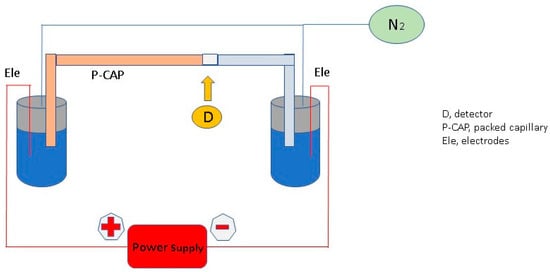
In p-CEC, the CSP is packed into the capillary mainly using the slurry packing method. The particles are retained, preparing frits (600–700 °C for a few seconds) on the same CSP or other silica particles where free silanol groups are present. When using a UV or fluorescence detector, the window is realized just after the end frit where only the MP is present. However, the presence of frits on the capillary column can generate bubbles during the CEC run due to the inhomogeneities in the packed material. This can influence the band broadening, reducing efficiency and resolution, and, in addition, the reduction/absence of the current will compromise the experiments. Therefore, the frit preparation requires special attention and experience by the operator. The origin of bubbles could also be ascribed to the Joule heat generated during the run. However, the instrumentation currently used can pressurize both compartments (with nitrogen), avoiding bubble formation [6].
In the case of M-CEC and OT-CEC, frits are not necessary; therefore, bubble formation is not an issue. Figure 1 shows a scheme of an instrumentation used for p-CEC where UV detector is used.
Figure 1.
Scheme of a CEC instrument where a packed capillary column is used.
In addition to UV or FL detectors, CEC can be coupled with other detectors such as mass spectrometry (MS). The use of MS can offer some advantages over other ones, e.g., the characterization of the analyzed compounds and an increase in method sensitivity. For coupling CEC with MS, the capillary column is connected through an interface (usually electrospray) [13]. The most used interface for CE-MS is the coaxial sheath liquid interface [14] where an electric conducting liquid (a buffer or mixture of alcohol–acetic acid or ammonia) is pumped at a few μL/min (2–6 μL/min), while the CEC flow is in the range 200–800 nL/min. The sheath liquid (SL) is necessary for (i) analyte ionization and (ii) electrical connection for the CEC run. Although some commercial instrumentation offers this possibility, the relatively high SL flow in comparison with the flow in the column can cause some turbulence disturbing the spray, causing band broadening, and disturbing the CEC run. Alternatively to SL, a liquid junction interface (LJ) has been proposed. The capillary column joins the tip into a compartment (1–1.5 mL) where an ionization liquid is pumped at a low flow rate. This interface offered good spray, good conductivity for the CEC run, minimized turbulence, and high sensitivity [15].
2.2. Separation of Enantiomers: Methods and Recently Used Stationary Phases
As mentioned before, two enantiomers exhibit quite similar physical–chemical properties, and therefore their separation utilizing conventional SPs (e.g., C18) is not successful. A chiral compound is necessary to promote the formation of diastereoisomeric compounds, permanent or temporary. In the first case, the compound is chemically modified, and the resolution method is called indirect, while in the second case, the direct resolution is performed. The indirect method offers some advantages, e.g., an increased molecular mass, raising the MS sensitivity, the introduction of additional groups to interact with the SP, and a higher sensitivity with UV or fluorescence detectors. However, it also has some problems, e.g., (i) in finding an appropriate CS, (ii) in the time spent for the derivatization, (iii) in the enantiomeric purity of the CS [16].
In the direct resolution method, the CSP is contained on the column used for the enantiomer separation as packed particles or polymeric material or bonded/adsorbed on the internal capillary wall. The chiral separation mechanism is based on the interaction between the enantiomers and the CSP. The bond type (hydrophobic, hydrogen, π-π, dipole–dipole, van der Waals, etc.) is influenced by the structure of both analytes and CSP and the composition of the MP. As proposed in chromatography, the “three-point” interaction [17] can also be considered in CEC. Three sites of the two enantiomers bind differently with the CSP, forming diastereoisomeric complexes with diverse stability. One of the two enantiomers joins the CSP with three substituents, while the other (the mirror image) joins with only two. This interpretation was based only on interactions. Later, this theory was revised also considering repulsion [18].
Several CSPs have been used in CEC for the chiral separations; some are silica- or zirconia-based and modified with proteins [19], while others are glycopeptide antibiotics [20,21], polysaccharides [4,22,23], chiral crown-ethers [24], or quinine [25,26]. Interesting studies about the use of OT-CEC for the separation of enantiomers of amino acids and drugs have been reported [24]. Considering the limitations of these techniques mainly related to the low quantity of the CSP and the low surface area on the capillary wall, nanoparticles have been studied to increase the sample loading and consequently increase the sensitivity and analyte resolution. Among them are covalent organic framework (COFs) modified with cyclodextrins [27], COFs modified with (1S)-(+)-10-camphorsulfonyl chloride [28], COFs modified with chiral crown-ether [29], metal–organic frameworks (MOFs) modified with L-tryptophan and Co3+ [30], and MOFs modified with 6-methoxyl-(8S,9R)-cinchonan-9-ol-3-carboxylic acid/Zn ions [31].
The synthesis of COF material and its use in the environmental field has been recently reviewed [32]. COFs can be synthesized as two- dimensional or three-dimensional structure offering complex structures with many functional groups, a larger number of chiral centers, a larger surface area, great stability, etc. The difference between COFs and MOFs stands on the nodes, which are a non-metal such as boron or nitrogen, and a metal ion, respectively. In both materials, there is an organic linker. COFs and MOFs can be modified with a CS to produce CSPs.
Other types of MOFs include: (i) Zeolitic imidazolate framework-93 (ZIF-93), which is a subclass of MOFs. It is formed by the reaction of Zn2+ and 4-methylimidazole-5-carbaldehyde (almeIm) as the organic ligand. (ii) MIL-100(Me) with Me = Cr, Fe, Sc, Al, V ions, and MIL: Materials of Institut Lavoisier. This material exhibited a large surface area (2831 m2g−1) [33]. MIL100 (Fe) was derivatized with L-cysteine and applied in OT-CEC for the separation of drug enantiomers [34]. Another subclass of MOF includes (iii) Zr-based UiO (University of Oslo). UiO-NH2 material in combination with L-tryptophan molecular imprinted polymer (MIP) was used for the separation of tryptophan enantiomers by OT-CEC [35].
2.3. Chiral Analysis: Application Fields
It is known that when enantiomers are present in a chiral environment, e.g., in a human/animal body, soil, water, etc., they can interact differently. Several drugs are currently administered either as a racemic mixture or as a single enantiomer. Very often, one of the enantiomers is pharmacologically more active than the other, and in some cases it is even dangerous; e.g., S-fluoxetine is four times more active than its antipode, (−)-epinephrine is 10 times more active than (+)-epinephrine [36], etc.
In agriculture, over the years, to increase production, many pesticides and fungicides have been used. It has been reported that the enantiomers of a certain pesticide or fungicide can exhibit a different biological activity, ecotoxicity, and environmental impact. Therefore, most of them are now applied as a single enantiomer, reducing the use of pesticides and their environmental risks, e.g., S-(+)-metalaxyl, a chiral fungicide, degrades faster than R-(−)-metalaxyl when used in grape and tomato plants [37].
The analysis of contaminants in the environment and foods is needed to protect both human and animal health. Because of the widespread and intensive use of contaminants such as pesticides, fungicides, heavy metals, drugs, etc., they can be found in wastewater, soil, and foods [38].
Dietary supplements (DSs) or food supplements (FSs) are products widely consumed to support the diet. They can contain amino acids, peptides, proteins, vitamins, minerals, herbs, and compounds of botanical origin. In some cases, the analysis of enantiomers could be helpful to determine the quality and counterfeit products, e.g., in energy drinks, the presence of D-amino acid enantiomer is prohibited, therefore its presence infers adulteration [39].
Another field where the analysis of enantiomers could be of wider interest is the food industry.
Enantiomers can play a crucial role in flavor, health functions, and the overall quality of fermented foods (including fermented cereal, fermented vegetables, fermented fruit, and fermented tea). Chiral compounds involved in this field include amino acids, organic acids, alcohols, esters, terpenes, ketones, aldehydes, and chiral pesticides [40].
3. Selected Application of CEC for the Chiral Separations
As previously reported, CEC has been applied to the separation and analysis of a wide number of compounds, including enantiomers employing different CSPs. Three types of CEC modes have been studied and applied (p-CEC, M-CEC, and OT-CEC). Table 1 summarizes the results reported in the period considered in this publication focusing on the analyte type, applications, capillary, and type of CSP, detection, and experimental conditions. Additional information will be reported in the following Section 3.1 and Section 3.2.
Table 1.
Selected applications of capillary electrochromatography for enantiomer separation.
3.1. Enantioseparation by p-CEC and M-CEC
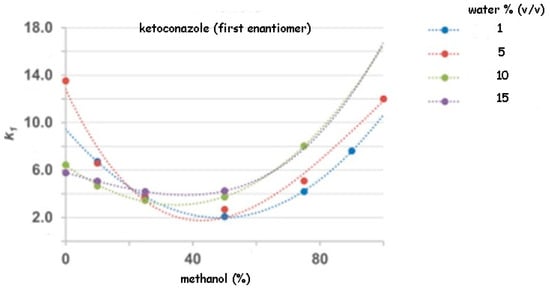
The effect of mobile phase composition based on protic and non-protic organic solvent on the enantiomer resolution of some selected fungicides was studied on p-CEC, where a silica modified with cellulose tris(3-chloro-4-methylphenylcarbamate CSP was used [41]. The MP contained a constant concentration of buffer, while methanol (MeOH), acetonitrile (ACN), and water concentrations were modified. In this study, a ternary mobile buffer concentration (5 mM ammonium acetate pH 6.5), water (1–15%, v/v), and changing the ACN/MeOH ratio (0–75% v/v MeOH, at the expense of ACN) was employed for the CEC enantiomer separation of bifonazole, fenticonazole, ketoconazole, ketoconazole, penconazole, and tebuconazole. At this pH, analytes and CSP were uncharged. The plot of k1 (retention factor of the first enantiomer) vs. MeOH content in the MP shows that a typical U-shaped behavior can be observed for bifonazole, fenticonazole, and ketoconazole with a minimum when ACN/MeOH was 1:1 (v/v), suggesting a mixed-mode interaction.
Figure 2 shows the typical mixed interaction mechanism between the enantiomer of ketoconazole (first eluted) in p-CEC separation.
Figure 2.
The effect of MeOH content (in ACN/MeOH ratio) content on retention factor (k1) of the first eluted ketoconazole enantiomer. For experimental conditions, see Table 1. Modified from [41].
The behavior of k1 for penconazole and tebuconazole was different when compared to other analytes. The increase in water and MeOH content in the MP caused a slight decrease in k1, suggesting that the chiral recognition mechanism is mainly based on hydrogen bonding and other secondary interactions, such as dipole–dipole. Concerning enantioresolution, the increase in ACN (decreasing the MeOH content) influences notably the Rs for ketoconazole and bifonazole and less for fenticonazole, penconazole, and tebuconazole [41]. The same CSP was used for the CEC enantioseparation of twelve fungicides studying some parameters that could affect their enantioresolution, e.g., buffer pH, organic solvent composition. The pH of the buffer was studied in the range 3–10 in an MP composed of 5 mM buffer (pH 3.0–10.0) in ACN/water (95:5, v/v). A general increase in both k1 and Rs was observed with the highest values at pH 9. The buffer concentration in the MP also influenced the enantioresolution. This parameter was studied changing the concentration in the range 2.5–7.5 mM, finding that increasing the buffer concentration caused an increase in retention factor and enantioresolution for all analyzed compounds; the highest values were observed at 5 mM [4].
M-CEC was employed for the chiral separation of different compounds such as herbicides [42,43], amino acids [35,44,45,46], drugs [30,44,46,47].
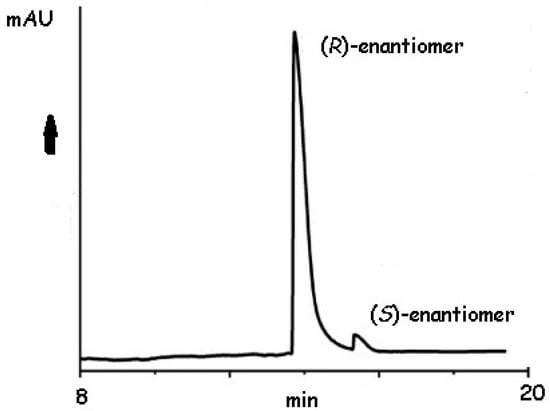
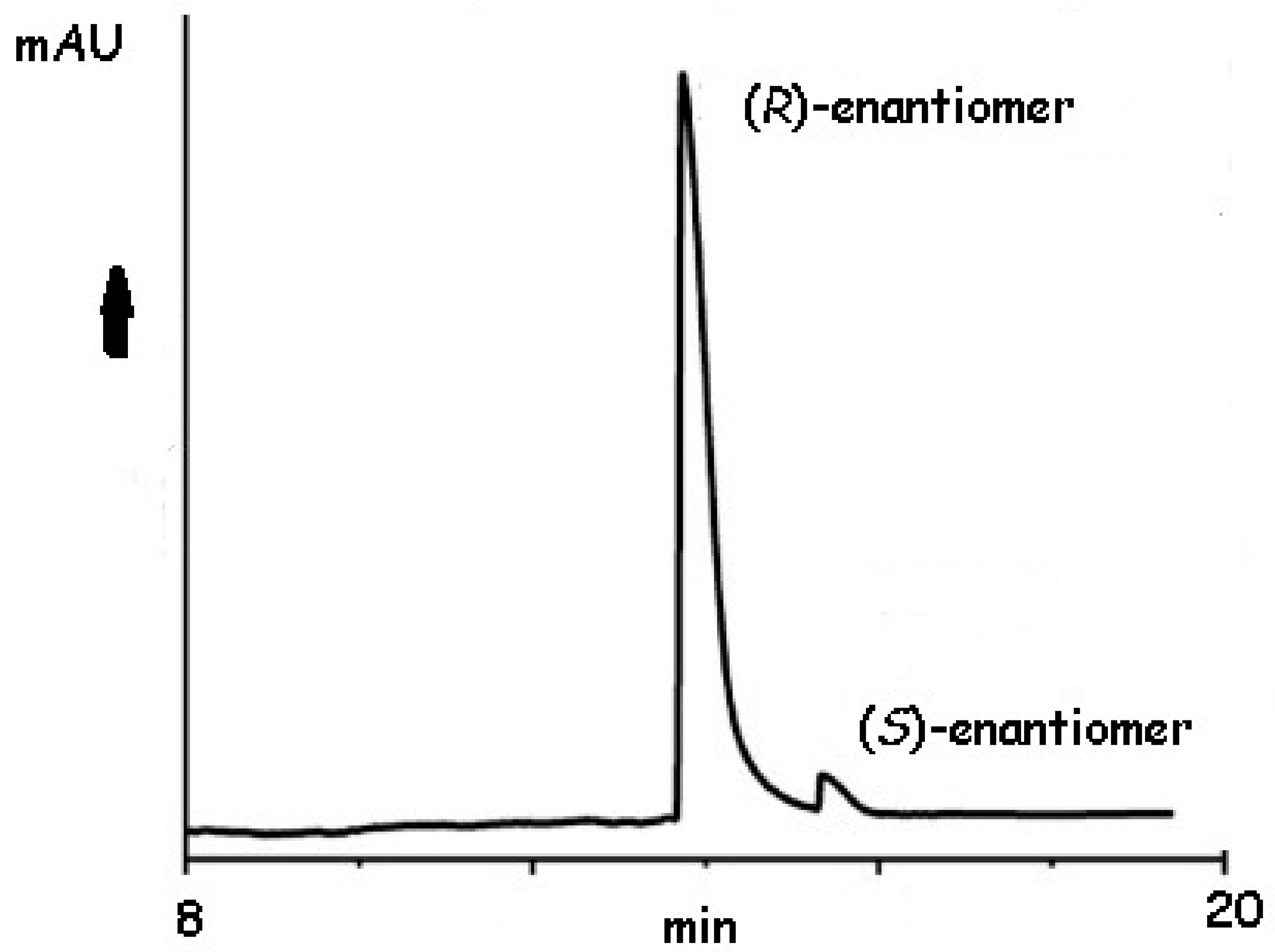
Miao et al. [42] proposed a new CSP for the M-CEC separation of dichlorprop (DCPP), an herbicide used in agriculture, where the R-DCPP has a significant herbicidal effect, while the S-DCPP has minimal activity and could be toxic. Therefore, appropriate analytical methods are desirable to determine the concentration of these enantiomers to reduce the presence of even dangerous compounds. The monolithic stationary phase was a combination of a chiral metal–organic frameworks (CMOF), L-His-ZIF-8 and a MIP obtained with the inclusion of racemic-DCPP. The synthesized polymer showed a nanoparticle morphology with a well-defined porous structure offering a high surface area useful for chiral separation. The authors confirmed the presence of the chiral compound (L-histidine) by using circular dichroism methodology. To find the best enantiomer separation conditions, experimental parameters have been changed, modifying, e.g., the concentration of the monomers, the molar ratio of template to cross-linker, the buffer, and its pH in the MP. The measured EOF was in the direction of the cathode, which the authors attributed to the unreacted charged silanol on the inner wall and the hydroxyl and carboxylic groups on the stationary phase. The optimized CEC method was applied to the analysis of the herbicide in a commercial formulation, where the found concentrations of R-DCPP and S-DCPP were 0.6051 ± 0.0007 mg/mL and 0.01221 ± 0.0012 mg/mL, respectively.
Figure 3 shows the electrochromatogram of the enantiomer separation of DCPP employing, as the CSP, L-His-ZIF-8 and a MIP obtained with the inclusion of racemic-DCPP. The concentration of the (R)-enantiomer was found to be 98.02%.
Figure 3.
Analysis of dichlorprop enantiomers in a commercial formulation. Modified from [42].
Another herbicide (metolachlor) was separated into its enantiomers by M-CEC using a MP obtained by the polymerization of NH2Au nanoparticles, chitosan, glutaraldehyde, and S-metolachlor (as a template) [43]. The measured EOF was to the cathode at pH > 4 due to the presence of hydroxyl groups on the chitosan molecule. The method was optimized by studying the composition of the compounds used for the polymerization, buffer pH, buffer concentration, ACN content in the MP, and separation voltage. Enantioresolution factors as high as 9.83 were reported. In addition to the separation of metolachlor (MET) enantiomers, the synthesized capillary column was also effective for analog compound enantiomers, e.g., acetochlor, pretilachlor, butachlor, propisochlor (Rs = 1.58). The method was validated by studying some parameters such as LOD and LOQ, linearity, and recovery, obtaining good results. LOD and LOQ were found to be 0.0030 mg/mL and 0.01 mg/mL (S-MET), and 0.0025 mg/mL and 0.01 mg/mL (R-MET), respectively. Relative standard deviation (RSD%) of retention time was in the range 3.35–3.88, while recoveries were 97.01–105.3%. The method was applied to the analysis of metolachlor enantiomers in water and serum samples. However, the compounds were not found [43].
A silica monolithic capillary column was prepared, including graphene oxide (GO) modified with DNA. The obtained polymer was characterized, and the experimental parameters were optimized verifying the EOF, the separation voltage, the sample volume injected, and the buffer concentration. The column was applied for the separation of atenolol, tyrosine, histidine, and nefopam, propranolol, phenylalanine, tyrosine, and chlorpheniramine enantiomers by M-CEC. Enantioresolution as high as 1.78 was observed; RSD% of retention time and enantioresolution were lower than 8.28%. The interaction between DNA sequences and enantiomers were studied by molecular docking simulation, remarking the main interactions involved in the enantioseparation process (mainly based on hydrogen-bonding interactions and π-π [44].
A hybrid monolithic column containing the zeolitic imidazolate framework-8 (ZIF-8) and silica was prepared using the sol–gel method [45]. The synthesized material exhibited several functional groups, good crystallinity, a large specific surface area, and good thermal stability. For chiral enantioseparation of various racemic compounds (natural amino acids and drugs) by M-CEC, the sulphobutylated-β-cyclodextrin (SBE-β-CD) was added to the MP. The analytes’ enantioresolution was influenced by the concentration of the cyclodextrin (also affecting the EOF). Comparing the effect of other cyclodextrins, e.g., with carboxymethyl- or hydroxypropyl-β-cyclodextrin, higher enantioresolutions were achieved utilizing SBE-β-CD. The CEC method was optimized by studying parameters such as SBE concentration, buffer pH on the MP, and separation voltage. CEC was successfully applied for the enantiomer separation of thirteen natural amino acids (Phe, Val, Leu, Trp, Tyr, Met, Thr, Ser, Glu, Asp, Arg, His, and Lys) and five pesticides.
A capillary column containing a chiral monolithic material was synthesized by Zhou et al. [46]. The CSP contained a MOF (Cu2+ ions with L-tryptophan and L-camphoric acid). The material was characterized employing spectroscopic methods, elemental analysis, FT-IR, thermogravimetry, etc., confirming the presence of the chiral selectors, the structure, and Cu2+. M-CEC was performed to find optimum conditions for the enantiomeric separation of some drugs (amlodipine and naproxen) and amino acids (proline, histidine, tryptophan, and phenylalanine). The EOF was measured at a pH range of 8.5–10.5, exhibiting a cathodic direction, and although lower than the EOF measured in a bare silica capillary, it allowed us to achieve chiral resolution of the studied compounds in a reasonable time (8–15 min). The number of in situ growths on the monolith, the buffer pH and concentration, the ACN concentration, and the separation voltage influenced the enantioresolution. The increase in the mentioned parameters caused an increase in the Rs of all analytes, reaching a maximum at: 2 cycles, 10 mM pH 9 buffer, 20% (v/v) ACN, and 15 kV. Good RSDs of intra-day, inter-day, and inter-column repeatability and good stability was reported by the authors. The authors compared the results analyzing the same compound with the proposed monolithic material and a coated capillary with the same polymer, finding that the monolithic column offered a higher enantioresolution (80–500%). These results could be argued considering that a monolithic capillary allows a larger number of interaction sites, a higher surface, and larger sample loading.
As summarized in Table 1, only a few applications utilized p-CEC and M-CEC for chiral separation, while several considered OT-CEC.
3.2. Enantiomer Separation by Using OT-CEC
OT-CEC was used for the enantiomer separation of drugs such as amlodipine [30] and ofloxacin [47]. The polymers modified the inner wall of the capillary.
In these works, chiral metal–organic frameworks (L-tryptophan and cyclodextrin, respectively were used) combined with MIP (amlodipine or S-ofloxcin template, respectively) allowed the chiral resolution of only two compounds. In the first work, Co2+ ions were bonded to L-tryptophan and isonicotinic acid (INT) (CMOF, Co2(L-Trp)(INT)2(H2O)2(ClO4)), exhibiting a three-dimensional structure. The data on stability and repeatability were satisfactory. It is worth mentioning that in this work, the enantioseparation of only one compound for each column has been demonstrated. A similar approach has been used by Yan et al. [35] for the tryptophan enantiomer separation. The capillary was modified with a MIP (containing tryptophan) and a MOF (zirconium-based nanoparticles, UiO-66-NH2). The L-tryptophan was retained longer than its enantiomer due to the specific interactions with the cavity of the imprinted polymer.
Tryptophan enantiomers were also resolved by Adamova et al. [48] by OT-CEC, modifying the capillary wall with pAUMPAQ-quinine based in the CSP, and also adding β-cyclodextrin to the MP. An anodic EOF was observed due to the presence of positively charged groups on the CSP. In this work, only one compound’s enantiomers were separated. In addition, the chiral resolution was achieved by only adding the cyclodextrin on the MP; therefore, the role of the CSP in the enantioresolution process is not clear.
Physically adsorbed multi-layer coatings, and polyl-lysine or poly(diallyldimethylammonium chloride) and gold nanoparticles modified with bovine serum albumin, were also used for the chiral separation of tryptophan by OT-CEC. Two to five cycles of coating were studied, finding that using three cycles, the analytes were resolved only in the presence of albumin in the MP, while with five cycles, albumin was not necessary [7].
The enantiomers of dansylated amino acids (Dns-D,L-AAs) have been separated by OT-CEC, e.g., Ali et al. [49] achieved baseline separation for 16 compounds by coating the capillary wall with poly(styrene-maleic anhydride-N,N-dimethylacrylamide (PSMDMA) and adding to the MP Zn2+ L-arginine. The enantioresolution was influenced by the ratio of metal ion/chiral selector and by the capillary temperature. The best results were obtained at a metal ion/chiral selector ratio of 1:3 at 40 °C. The different results were explained by the authors considering that the polymer exhibited a higher hydrophobic interaction at 40 °C than at 20 °C, promoting a stronger coordination.
Five Dns-D,L-AAs were resolved in their enantiomers by modifying the capillary inner wall with a triazole-amine metal–organic framework (TAMOF) containing Cu2+ and L-histidine. The CSP was characterized and used for the OT-CEC experiments. The measured EOF was cathodic but lower than the one measured in the bare silica due to the masking by the polymer of the silanol group on the wall. Good repeatability of retention time and enantioresolution was reported, and the prepared column exhibited good stability (>100 runs) [50].
Dns-D,L-AAs enantiomers were also analyzed by Zhu et al. [51] by OT-CEC, employing a capillary modified with a triazole MOF (NLMOF) obtained by reaction of L-lysine and N-dimethylhydrazine amide (NE) and Cu2+. The CSP was characterized and used in CEC for the separation of some Dns-D,L-AAs (proline, tryptophan, threonine, asparagine, leucine, histidine, phenylalanine, valine, serine, and alanine). The study to find the optimum experimental condition revealed the influence of the buffer concentration and separation voltage on the enantioresolution of analyzed AAs. Rs in the range 2–7 were reported. Experiments carried out in the absence of the MOF were not successful for the AA enantiomer separation. The authors reported that the NLMOF exhibits three-dimensional crossed helical channels with many chiral sites, and a variety of polar sites responsible for hydrogen bonding, π-π stacking, electrostatic interactions, and dipole–dipole interactions.
A COF was synthesized by reacting phloroglucinol (Tp) and benzidine (BD) and, additionally, modified with the chiral selector (1S)-(+)-10-camphorsulfonyl chloride. Different reaction conditions (reaction temperature, reaction time, and number of coatings) were studied and verified for the separation of phenylalanine enantiomers. The coating was stable for at least 150 runs. Good repeatability for the retention time of phenylalanine enantiomers was reported (RSD, 0.58–4.17%). The capillary wall was modified by bonding this material; 12 natural amino acids including acidic, neutral, and basic, and 9 pesticides including herbicides, insecticides, and fungicides, were separated in their enantiomers by OT-CEC [28]. Rs in the range 1.67–25.93 were achieved in less than 8 min. The EOF studied at pH range 6–9 was cathodic, increasing with raising the pH. However, it was lower than the one observed for experiments carried out in bare capillaries.
A MOF prepared by reacting 1-Ethyl-3-(3-dimethylaminopropyl) carbodiimidehydrochloride, N-hydroxysuccinimide (NHS), and Al3+, and this material carboxymetyl-β-cyclodextrin, was included, obtaining a CD-NH-MIL-53 (where MIL stands for Material of Institute Lavoiser) [52]. The authors reported that due to the presence of cyclodextrin in the material, inclusion-complexation can take place. However, the role of the MIL was also important, promoting hydrogen bonding with the compounds, and, due to the presence of several aromatic groups, π-π interactions are also important for the enantioresolution.
Two zeolitic imidazolate frameworks, His-ZIF-93 and His/aImeIm@Zn, containing 4-methylimidazole-5-carbaldehyde (aImeIm), D-histidine (His), and Zn2+ were bonded to the silica capillary wall. The ratio of aImeIm/D-histidine was studied, observing that the ratio of 3:1 offered a good product considering the crystallinity. Good enantiomeric resolution was achieved for three β-blockers and three cephalosporins using OT-CEC employing the CSP His/aImeIm/Zn material. The thickness of the particles on the capillary wall was 0.5 μm. A cathodic EOF was observed at pH 7–9, which, as expected, was lower than the one measured when using bare silica capillaries. The mechanism of enantioseparation, considering adsorption experiments and binding constants analysis, was attributed to the difference in adsorption and selectivity between the CSP and the two enantiomers. The authors concluded the higher enantioresolution achieved with His/aImeIm/Zn was due to a larger number of chiral sites [55].
Some drugs were resolved in their enantiomers, modifying the capillary with a COF (TpPa-1) with pepsin. The COF was obtained by reacting 1,3,5-triformylphloroglucinol (Tp) and para-phenylenediamine (Pa) [56]. COFs are reticular materials offering high porosity and tailorable surfaces without the use of a metal structural support, as in MOFs. In addition, in the COF material, the presence of covalent bonds makes it more stable than MOF. The immobilization of pepsin was influenced by various parameters such as amount of pepsin, temperature, and number of cycles. The stability of the new material was tested at high temperature (70 °C × 30 min), observing no release of pepsin. The prepared capillary was tested for the chiral separation of metoprolol, clenbuterol, propranolol, and nefopam, reporting Rs in the range 2.7–4.4. The EOF was studied in the range 4–6 observing a cathodic direction, which was not high, but was sufficient to achieve chiral separation in a reasonable time (10–15 min).
MIL-100(Fe) is a MOF obtained by reacting Fe3+ with trimesic acid, where MIL stands for a Materials of Institute Lavoisier framework. L-cysteine, the chiral selector, was included in the MOF and adsorbed on the capillary column. OT-CEC experiments were conducted by adding to the MP lactobionic acid (LA) as a chiral additive. Using a bare silica capillary without the MOF-L-cysteine, analyzed compounds were poorly resolved in their enantiomers, while in the presence of the synthesized MIL-100(Fe)-L-cysteine, baseline chiral resolution was achieved by OT-CEC for propranolol, atenolol, bisoprolol, sotalol, metoprolol, and esmolol. The EOF was studied in the pH range 7–9, observing a cathodic direction (4.5–7 × 10⁻⁴ cm2V−1 s−1). The authors characterized the CSP and optimized the method by varying LA concentration, the pH of the buffer, and MeOH concentration in the MP. Reasonable repeatability for retention time was reported to be in the range 2.27–6.03% [34].
A MOF containing 6-methoxyl-(8S,9R)-cinchonan-9-ol-3-carboxylic acid (HQA) and Zn2+ was synthesized by Zheng et al. [31]. The material was characterized using a series of analytical techniques, including scanning electron microscopy (SEM), X-ray diffraction, Fourier transform infrared spectroscopy, circular dichroism, X-ray photoelectron spectroscopy, thermogravimetric analysis, and Brunauer–Emmett–Teller surface area measurements. The capillary wall was modified with the prepared CSP and 19 dansyl amino acids and some selected drugs were separated in their enantiomers by OT-CEC. 20 mM phosphate buffer containing 10% MeOH at pH 6.75 was the best MP to obtain the highest enantioresolution (Rs in the range 2.71–15.78). The authors proposed a resolution mechanism considering the charge of the chiral selector (fully protonated tert-amine of the cinchona) at the used pH buffer, enabling ion-pair interaction with analytes. However, H-bonding, dipole–dipole forces, π-π interactions, and steric attraction or repulsion were also considered.
β-cyclodextrin COF (β-CD COF) conjugated gold-poly glycidyl methacrylate nanoparticles (Au-PGMA NPs) were used as a CSP for the separation of omeprazole, lanspromazole, gatifloxacin, sparfloxacin, tryptophan, tyrosine, and phenylalanine by OT-CEC [53]. The capillary was firstly coated with polydopamine and then with Au nanoparticles, finally, the β-CD COF was bonded. To study the effect of the two nanoparticles on the capillary, the authors separated the enantiomers of seven analytes (omeprazole, lanspromazole, gatifloxacin, sparfloxacin, tryptophan, tyrosine, and phenylalanine), finding that in the absence of β-CD nano particles, no enantiomer resolution was observed for all compounds, while the use of only β-CD nano particles caused baseline resolution for only two analytes. Successful enantioresolution was obtained when the capillary contained both nano particles (β-CD COF and Au-PGMA NPs, coating time 5 and 10 h, respectively) (Rs in the range 3.03–5.25). These results demonstrated the synergistic effect of the two nanoparticles on the enantioresolution separation.
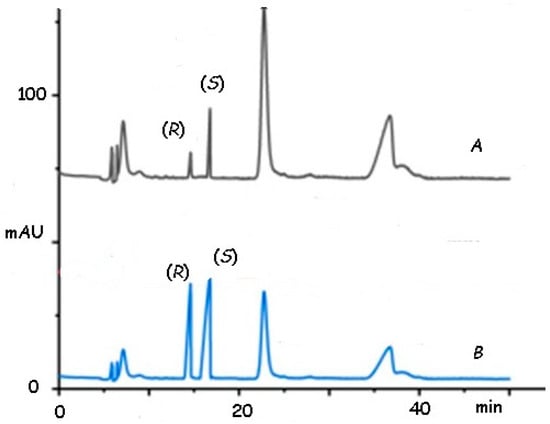
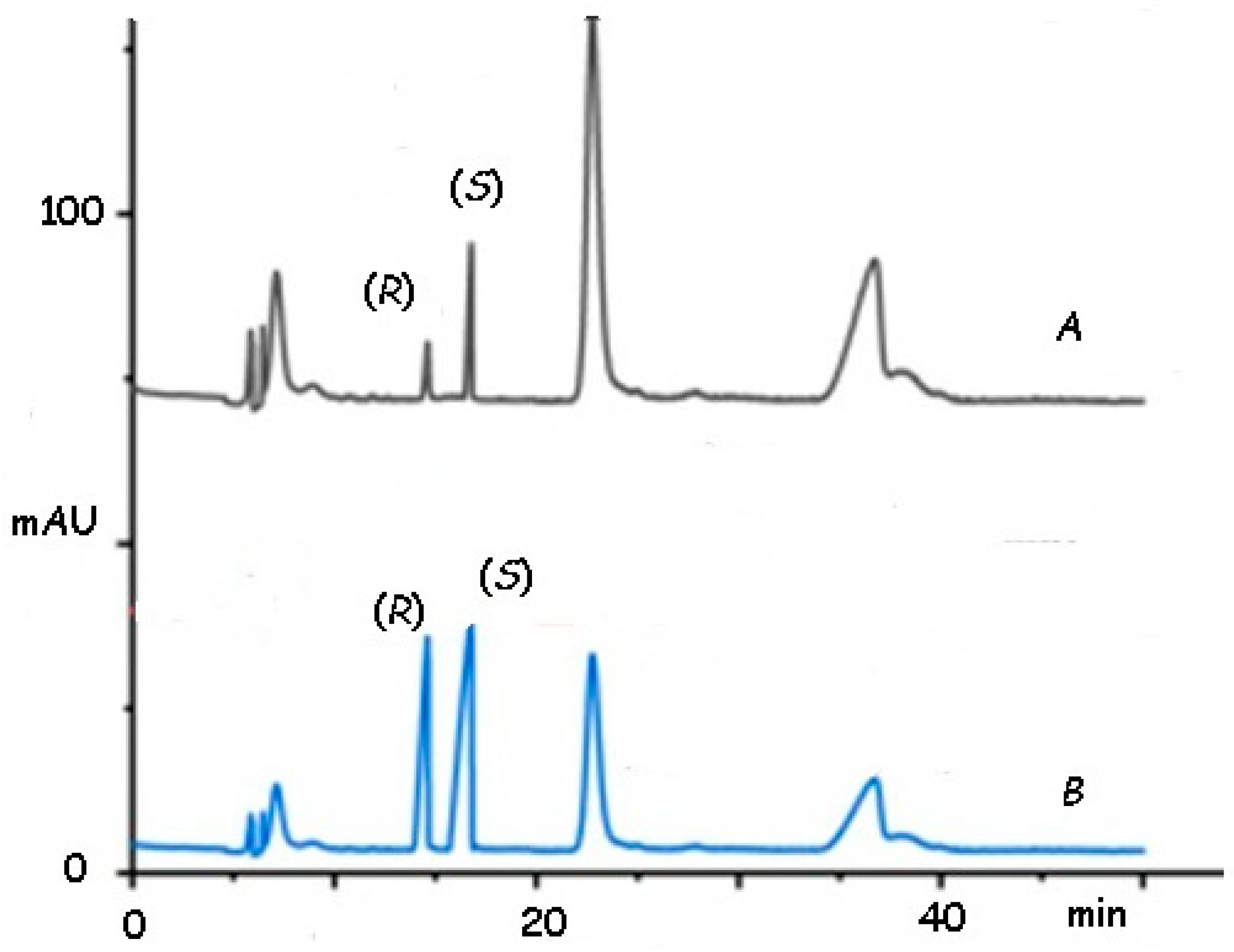
Two different MOFs were synthesized by Miao et al. [54] and used to modify the capillary wall for OT-CEC separation of some amino acids’ and acidic compounds’ enantiomers. For this purpose, NH2-MIL-101(Fe) and CMOM-3S (obtained by reacting S- mandelic acid, 4,4-bipyridine and Co2+) were synthesized. Three different capillary columns were prepared coating the capillary with the first MOF, with the second, and combining the two MOF. In all cases, the EOF was cathodic (at pH 6–8). However, the combination of the two MOFs exhibited the highest EOF, due to the higher amount of CSP on the capillary wall. Concerning the chiral separation of studied compounds, with the use of the capillary containing NH2-MIL-101(Fe), as expected, no enantioresolution was obtained. With the second MOF (CMOM-3S), most of the asnalytes exhibited poor enantioresolution, apart from phenylglycinol (Rs, 10.48). The use of the capillary coated with MOF-on-MOF CSP was effective for the enantioresolution of all analytes using a mobile phase composed of 10 mM phosphate buffer pH 7.5 and 30% (v/v) MeOH. The optimized method was validated and applied for the quantification of R- and S-mandelic acid in apricot.
Figure 4 reports the electrochromatograms of the analysis of mandelic acid enantiomers in (A) a sample of apricot leaf and (B) the same sample spiked with 0.4 mg/mL of racemic mandelic acid.
Figure 4.
Electrochromatograms of the analysis of apricot leaf (A) and the same sample spiked with racemic mandelic acid (B). Experimental condition, see Table 1. Modified from [54].
The synergistic effect of a chiral synthesized MOF (Cu2+/D-(+)-camphoric acid/1,4-diazabicyclo [2.2.2] octane) and a MIP (L-malic acid-polydopamine) was studied by Miao et al. [57] for the separation of D,L-malic acid in its enantiomers by using OT-CEC in a capillary coated with the synthesized material. The mobile phase contained boric acid/phosphate buffer at pH 7 and cetyltrimethylammonium bromide (CTAB), generating an anodic EOF. The authors compared the experiments achieved with a capillary modified with only MIP, Cu-MOF, Cu-MOF-MIP, and Cu-MOF-NIP (NIP is the imprinted polymer without template), finding Rs of 4.22 when the MOF was combined with the MIP. Molecular docking was used to study the enantioseparation mechanism, and the authors concluded that D-camphoric acid can form one hydrogen bond with D-malic acid (ΔG = −3.1 kJ mol−1) and tends to form three hydrogen bonds with L-malic acid (ΔG = −8.9 kJ mol−1). The optimized method was validated, finding good results for repeatability, and applied to the analysis of apple juice samples, where only L-malic acid was detected.
A covalent organic framework (COF (Λ)-TpPa-1, where Tp and Pa stand for 1,3,5-triformylphloroglucino and 1,4-phenylenediamine, respectively) was synthesized and reacted with (S)-(+)− 2-methylpyrrolidine as the chiral selector. The reticular material was coated on the capillary wall, and the column was used in CEC for the enantioseparation of some selected drugs (terbutaline, verapamil, carvedilol, propranolol, phenylephrine, and clenbuterol). The COF concentration, pH and buffer concentration of the MP, and ACN content were studied to optimize the enantiomer separation. RSDs for retention time were in the range 0.2–5.8% and Rs 1.86–6.75, while very good efficiency was reported (45,000–328.950 N/m) [58].
A different COF was synthesized by reacting 1,1′-binaphyl-20-crown-6-derived dialdehyde and tetraamines with diisopropyl substituent [29]. The synthesized material was characterized using spectroscopic methods, circular dichroism, NMR, SEM, and transition electron microscopy (TEM), reporting the structure. Compounds such as chlorphenamine, zopiclone, benzoin, trans-stilbene, and Tröger’s base were resolved in their enantiomers by OT-CEC after optimum experimental conditions were applied, including pH and buffer concentration, and separation voltage. The EOF increased by increasing the pH from 3.5 to 8.5, but was slightly smaller than the one observed in the bare capillary. Rs values in the range 1.60–20.90 were reported. Simulation studies for R,S-zoplicone found a host–guest mechanism demonstrating a good agreement with the CEC experiments. S-zoplicone exhibits a stronger host–guest binding than its enantiomer.
Zeolite beta nanomaterials (particle sizes, 25, 50, and 200 nm) were synthesized [59]. The bare fused silica capillary was modified with polydopamine (PDA) as the adhesive and the nanomaterial was bonded on the modified surface. The material was characterized, and the column was used for OT-CEC experiments. In this work, to achieve high sensitivity, an amperometric detector was used. After optimization, validation experiments were performed selecting nor-epinephrine (Nor) enantiomers considering LOD and LOQ, RSD % of retention time, peak area, enantioresolution factor, and recovery, finding quite interesting results, e.g., the LOD was 0.18 μg/mL, and the RSD % values for retention time were 0.9–8.7. The method was applied to the analysis of real samples, where (−)-Nor in (+)-Nor injection sample was 0.64 μg/mL (accounting for 3.2%).
In another work, the capillary inner surface was modified with PDA and doped with graphene oxide. The column was used for OT-CEC enantiomer separation of some selected drugs (propranolol, metoprolol, amlodipine, and chlorpheniramine). A chiral selector, carboxymethylated-β-cyclodextrin was added to the mobile phase. The analyzed compounds were also separated on a bare silica capillary, eluting with the same MP achieving lower Rs than when the modified column was used [10].
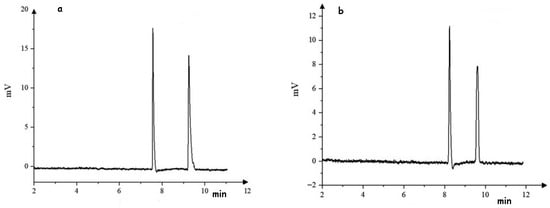
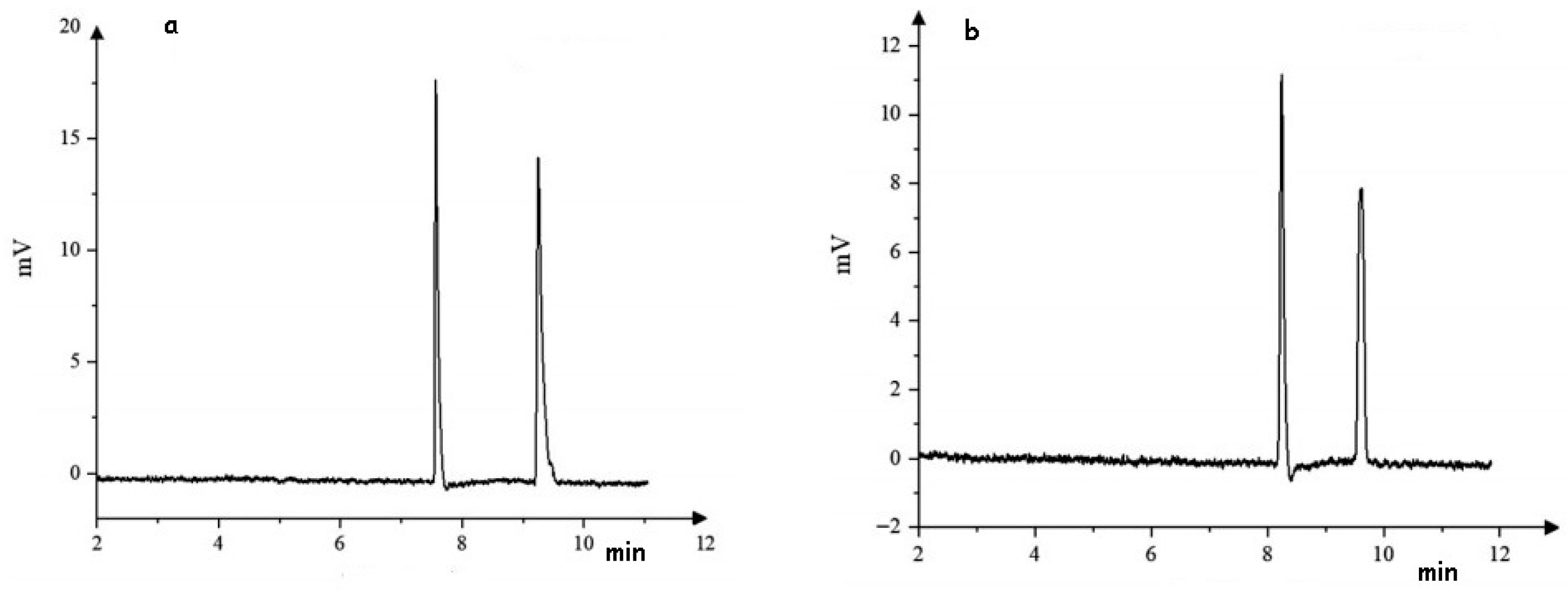
Drugs such as lansoprazole, pantoprazole, tenatoprazole, and omeprazole enantiomers were separated by OT-CEC employing a capillary column; the inner wall was modified with poly(glycidyl methacrylate) nanoparticles/β-cyclodextrin COF (heptakis (6-amino-6-deoxy)-β-CD-Am7CD). When increasing the β-CD-Am7CD (0–1.5 mg/mL), the enantioresolution increased almost linearly for all analytes. The buffer concentration, the pH, and the capillary temperature also influenced the Rs. The maximum value was observed at 50 mM buffer (phosphate buffer), pH 7, and 40 °C. Very good repeatability for retention time was reported (RSD %, 1.07–3.52) [60]. Figure 5 reports the chiral separation of pantoprazole (a) and lansoprazole (b) where a COF modified with β-CD was used as a CSP.
Figure 5.
Electrochromatogram of the separation of pantoprazole (a) and lansoprazole (b) in their enantiomers. CSP, poly(glycidyl methacrylate) nanoparticles/β-cyclodextrin-COF; mobile phase, 50 mM TRIS/phosphoric acid pH 7. Modified from [60].
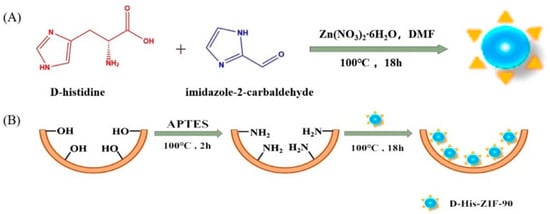
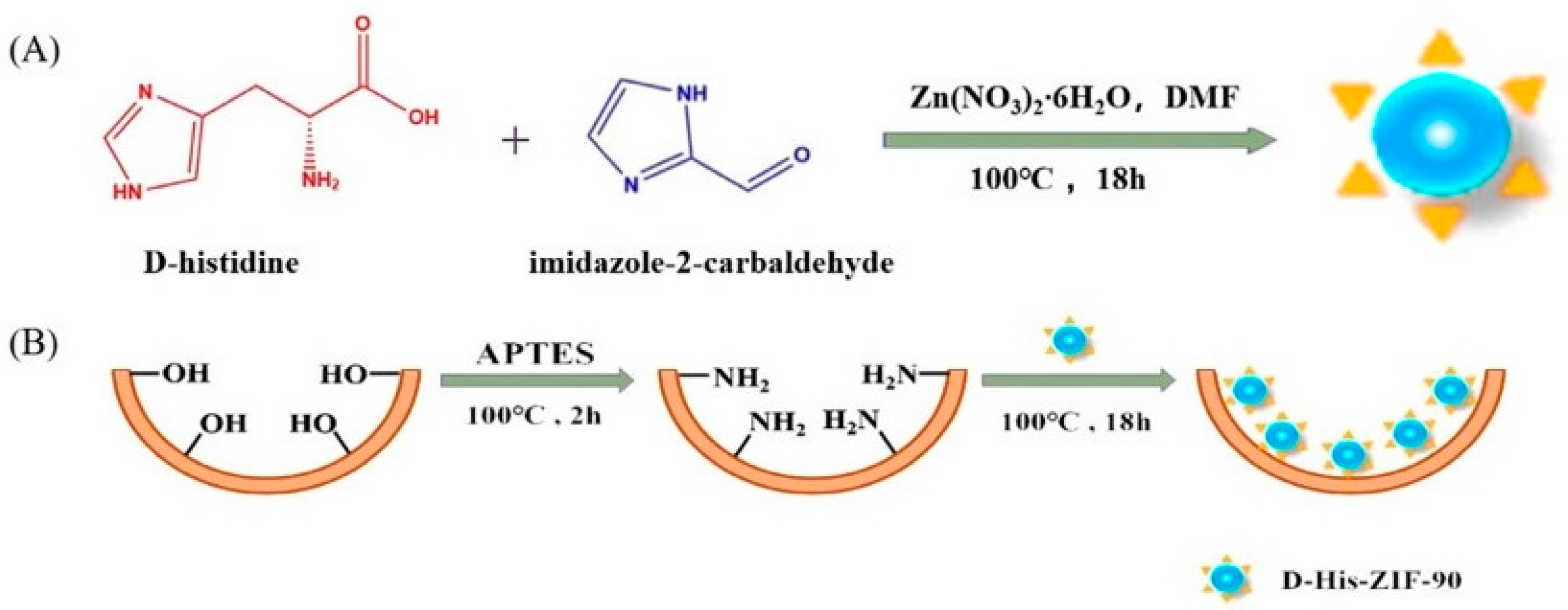
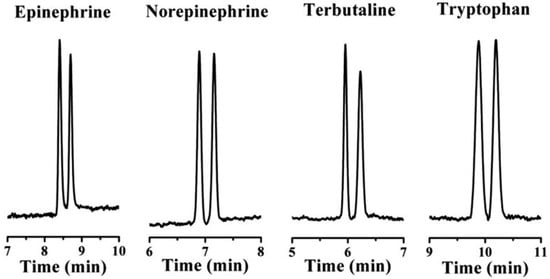
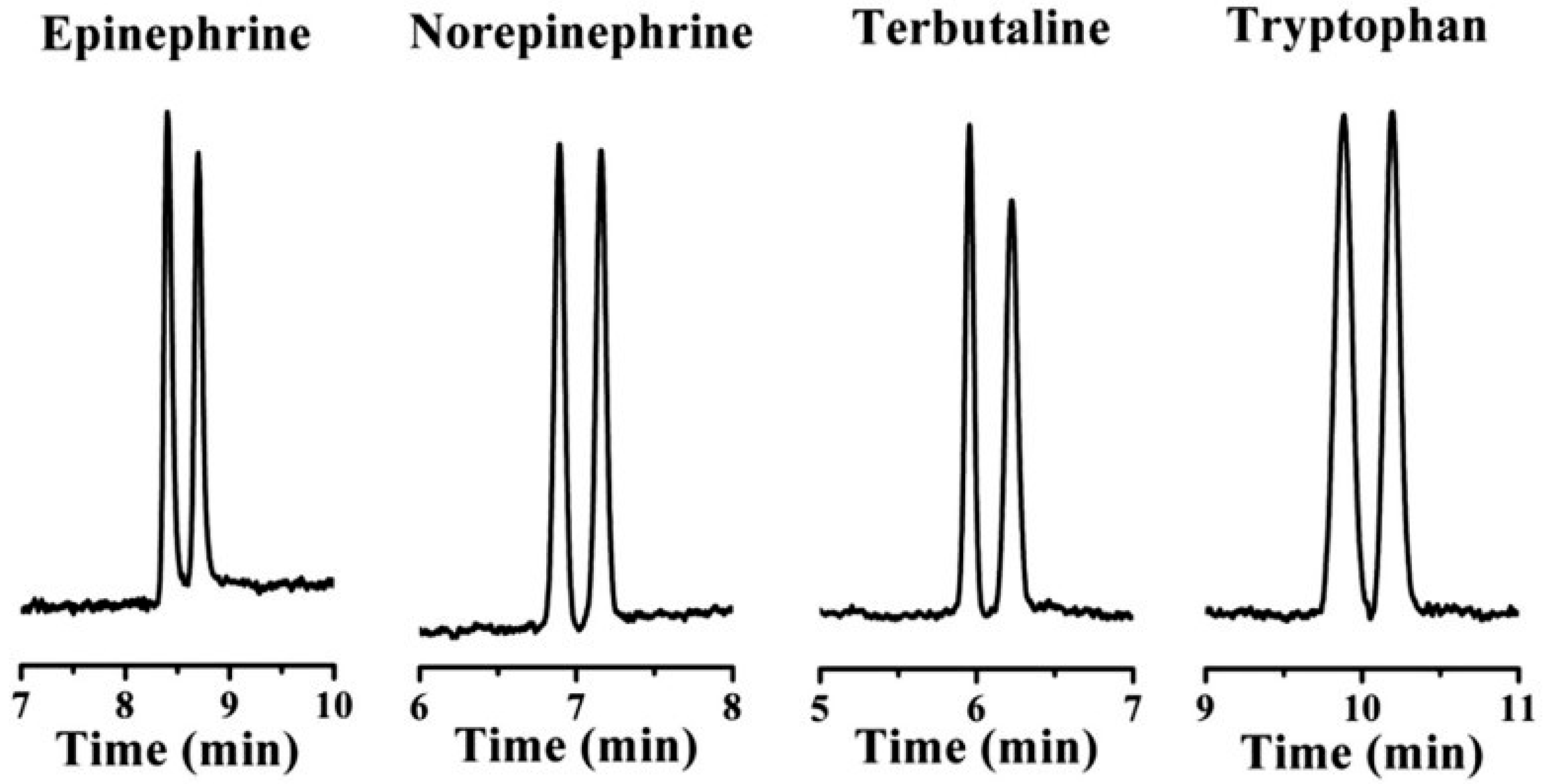
D-histidine modified ZIF-90 (with Zn2+) was coated on the surface inner wall of the capillary, and, after characterization of the material, the capillary was used for the enantiomer separation of some drugs (epinephrine, norepinephrine, and terbutaline) and tryptophan. Figure 6 shows the scheme of the synthesis (A) and the coating (B) of the new CSP.
Figure 6.
Scheme of the synthesis (A) and capillary coating (B) of the new CSP. From Qi et al. [61].
A cathodic EOF was observed at a pH range 8–10, lower than the one observed in bare silica capillaries. Optimum conditions were obtained using 10 mM borate buffer at pH 8.5 or 9.5 and 5 or 25% MeOH. The enantioseparation, at baseline resolution, was obtained in less than 10 min [61]. Figure 7 shows the enantioseparation of epinephrine, norepinephrine, terbutaline, and tryptophan by OT-CEC.
Figure 7.
Electrochromatograms of the chiral separation of epinephrine, norepinephrine, terbutaline, and tryptophan. MP, 10 mM borate buffer pH 8.5–9.5 and MeOH 5–25% (v/v), from Qi et al. [61].
Zhang et al. [62] synthesized a different ZIF (ZIF 67 containing Co2+ and 2-methylimidazole). The ZIF-67 was modified with L-histidine, and the material was characterized. Measurements of EOF using either the column containing L-histidine-ZIF-67 or the bare silica capillary at pH 7.5–9.5 revealed that when increasing the pH, EOF increases, and the EOF using the coated capillary was higher. This was due to the negative charge of histidine at that pH. The OT-CEC method was optimized for the chiral separation of the studied compounds, and the optimum condition was 20 mM phosphate buffer pH 9/50% (v/v) ACN. Esmolol, nefopam, and salbutamol were baseline-resolved in their enantiomers in less than 4 min, while scopolamine and sotalol were only partly resolved. Thermodynamic and molecular docking studies were also performed considering salbutamol, and the authors concluded that the R enantiomer is stronger interacting with the CSP than its antipode.
Using 6-deoxy-6-mercapto-β-cyclodextrin (SH-β-CD) and 2,5-dihydroxy-1,4-benzenedicarboxaldehyde (DVA) and reacting them with 1,3,5-tris(4-aminophenyl)benzene (TAPB), Wu et al. [63] synthesized the COF and coated a silica capillary. Some drugs (ephedrine, gatifloxacin, and ketoprofen) and flavanone were resolved in their enantiomers by OT-CEC. The results showed that, among the analyzed compounds, only ephedrine was baseline-resolved in its enantiomers. Therefore, considering that the authors investigated selected standard compounds, this is a limitation of this CSP.
4. Conclusions
This review summarizes the main features of CEC that offer some advantages over conventional techniques; among them are high mass sensitivity, high efficiency and high resolution, and due to the minute volumes of MPs, this technique is a green methodological approach for the analysis of chiral and non-chiral compounds. It is worth noting that its correct use requires a great deal of experience; e.g., (i) to modify capillary columns (OT-CEC), and (ii) to prepare frits (p-CEC). Despite these problems, several groups have studied CEC for the separation of enantiomers mainly using OT-CEC. The internal capillary wall was modified with new materials proposed for other applications with the aim of increasing the particle area, and the amount of CSP (bonded/adsorbed) to increase the loading of the analyzed compounds.
Author Contributions
Conceptualization, M.C.F. and C.F.; methodology, S.F.; data curation, C.F.; writing—original draft preparation, M.C.F.; writing—review and editing, N.F. and S.F.; supervision, C.F.; and project administration, S.F. All authors have read and agreed to the published version of the manuscript.
Funding
This research received no external funding.
Data Availability Statement
No new data were created or analyzed in this study.
Conflicts of Interest
The authors declare no conflicts of interest.
Abbreviations
The following abbreviations are used in this manuscript:
| ACN | Acetonitrile |
| AuNPs@CMIP(poly-Chitosan) | Au nanoparticles–chiral imprinted polymer (poly chitosan) |
| Au-PGMA NPs | Gold-poly glycidyl methacrylate nanoparticles |
| CMIPs | Chiral molecularly imprinted polymers |
| CMOFs | Chiral organic framework |
| COFs | Covalent organic frameworks |
| COF (Λ)-TpPa-1 | Chiral organic framework (S)-(+)−2-methylpyrrolidine–1,4-phenylenediamine |
| CTpBD-CF3 | 2,2′-bis(trifluoromethyl)-4,4′-biphenyldiamine (BD-CF3) and CTp |
| Cu-TC | Copper ions-L-tryptophan-L-camphoric acid |
| DCPP | Dichlorprop |
| His-ZIF-93 | Histidine-zeolite imidazolate framework |
| L-TRP@MIP(APTES-TEOS)@UiO-66-NH2 | L-tryptophan-molecular imprinted polymer (3-aminopropyltriethoxysilane+ tetraethyl silicate)–metal–organic framework Zr4+ |
| MeOH | Methanol |
| M-CEC | Monolitic capillary electrochromatography |
| NLMOF | Triazole amino acid ligand metal–organic framework |
| NR | Not reported |
| Pa | Para-phenylenediamine |
| p-CEC | Packed capillary electrochromatography |
| pAUMPAQ | N-(11-acryloyloxyundecyl)-N-methylpiperidinium bromide-acylated quinine |
| POPs | Porous organic polymers |
| PSMDMA | Poly(styrene-maleic anhydride-N,N-dimethylacrylamide) |
| OT-CEC | Open-tubular capillary electrochromatography |
| Tp | Phloroglucinol |
| BD | Benzidine |
| TAMOF | Triazole-amine metal–organic framework |
| Tp | 1,3,5-triformylphloroglucino |
| SNS | Silica nanospheres |
| β-CD-COF | β-cyclodextrin-chiral organic framework |
References
- Fanali, C.; D’Orazio, G. Capillary Electrochromatography Applied to the Separation of Enantiomers Utilizing Packed Capillary Columns with Silica-Vancomycin. A Tutorial. J. Chromatogr. Open 2024, 6, 100171. [Google Scholar] [CrossRef] [Scilit]
- Chankvetadze, B. Application of Enantioselective Separation Techniques to Bioanalysis of Chiral Drugs and Their Metabolites. TrAC Trends Anal. Chem. 2021, 143, 116332. [Google Scholar] [CrossRef] [Scilit]
- Fanali, C.; D’Orazio, G.; Gentili, A.; Fanali, S. Potentiality of Miniaturized Techniques for the Analysis of Drugs of Abuse. Electrophoresis 2022, 43, 190–200. [Google Scholar] [CrossRef] [Scilit]
- De Cesaris, M.G.; D’Orazio, G.; Fanali, C.; Gentili, A.; Fanali, S. Exploring the Performance of Cellulose Tris-3,5-Dichlorophenylcarbamate as a Stationary Phase for the Chiral Electro-Chromatographic Separation of Azole Antifungals. J. Chromatogr. Open 2024, 5, 100126. [Google Scholar] [CrossRef] [Scilit]
- Ahmed, M.A.; Felisilda, B.M.B.; Quirino, J.P. Recent Advancements in Open-Tubular Liquid Chromatography and Capillary Electrochromatography During 2014–2018. Anal. Chim. Acta 2019, 1088, 20–34. [Google Scholar] [CrossRef] [Scilit]
- Fanali, S.; Chankvetadze, B. History, Advancement, Bottlenecks, and Future of Chiral Capillary Electrochromatography. J. Chromatogr. A 2021, 1637, 461832. [Google Scholar] [CrossRef] [Scilit]
- Makeeva, D.; Morgacheva, V.; Kolobova, E.; Solovyeva, E.; Kartsova, L. Multilayer Coatings Based on Gold Nanoparticles and Polymers with Bovine Serum Albumin as a Functional Layer for the Chiral Separation in Capillary Electrochromatography. J. Sep. Sci. 2024, 47, 2300864. [Google Scholar] [CrossRef] [Scilit]
- Fanali, C. Enantiomers Separation by Capillary Electrochromatography. TrAC Trends Anal. Chem. 2019, 120, 115640. [Google Scholar] [CrossRef] [Scilit]
- Fanali, S.; Chankvetadze, B. Some Thoughts about Enantioseparations in Capillary Electrophoresis. Electrophoresis 2019, 40, 2420–2437. [Google Scholar] [CrossRef] [Scilit] [PubMed]
- Zhao, S.; Miao, P.; Zhang, J.; Gan, J.; Du, Y.; Chen, C.; Sun, X.; Feng, Z.; Ma, X.; Ma, M.; et al. Polydopamine Coating Doped with Graphene Oxide Enhances Enantioseparation of Capillary Column. J. Chromatogr. Sci. 2023, 61, 699–704. [Google Scholar] [CrossRef] [Scilit] [PubMed]
- Fanali, C.; Della Posta, S.; Fanali, S. Capillary Electrochromatography Applied to Drug Analysis. J. Chromatogr. Open 2021, 1, 100015. [Google Scholar] [CrossRef] [Scilit]
- Pretorius, V.; Hopkins, B.J.; Schieke, J.D. Electro-Osmosis: A New Concept for High-Speed Liquid Chromatography. J. Chromatogr. A 1974, 99, 23–30. [Google Scholar] [CrossRef] [Scilit]
- Della Posta, S.; Fanali, C.; Gallo, V.; Fanali, S. Recent Advances in the Hyphenation of Electromigration Techniques with Mass Spectrometry. TrAC Trends Anal. Chem. 2022, 157, 116800. [Google Scholar] [CrossRef] [Scilit]
- Smith, R.D.; Olivares, J.A.; Nguyen, N.T.; Udseth, H.R. Capillary Zone Electrophoresis-Mass Spectrometry Using an Electrospray Ionization Interface. Anal. Chem. 1988, 60, 436–441. [Google Scholar] [CrossRef] [Scilit]
- D’Orazio, G.; Fanali, S. Coupling Capillary Electrochromatography with Mass Spectrometry by Using a Liquid-Junction Nano-Spray Interface. J. Chromatogr. A 2010, 1217, 4079–4086. [Google Scholar] [CrossRef] [Scilit]
- D’Orazio, G.; Fanali, C.; Asensio-Ramos, M.; Fanali, S. Chiral Separations in Food Analysis. TrAC Trends Anal. Chem. 2017, 96, 151–171. [Google Scholar] [CrossRef] [Scilit]
- Dalgliesh, C.E. The Optical Resolution of Aromatic Amino Acids on Paper Chromatograms. J. Chem. Soc. 1952, 137, 3940–3952. [Google Scholar] [CrossRef] [Scilit]
- Davankov, V.A. The Nature of Chiral Recognition:Is It a Three-Point Interaction? Chirality 1997, 9, 99–102. [Google Scholar] [CrossRef] [Scilit]
- Xu, S.; Mo, R.; Jin, C.; Cui, X.; Bai, R.; Ji, Y. Mesoporous Silica Nanoparticles Incorporated Hybrid Monolithic Stationary Phase Immobilized with Pepsin for Enantioseparation by Capillary Electrochromatography. J. Pharm. Biomed. Anal. 2017, 140, 190–198. [Google Scholar] [CrossRef] [Scilit] [PubMed]
- Bragg, W.; Norton, D.; Shamsi, S.A. Optimized Separation of β-Blockers with Multiple Chiral Centers Using Capillary Electrochromatography-Mass Spectrometry. J. Chromatogr. B 2008, 875, 304–316. [Google Scholar] [CrossRef] [Scilit]
- Dermaux, A.; Sandra, P.; Ksir, M.; Zarrouck, K.F.F. Analysis of the Triglycerides and the Free and Derivatized Fatty Acids in Fish Oil by Capillary Electrochromatography. J. High Resolut. Chromatogr. 1998, 21, 545–548. [Google Scholar] [CrossRef]
- D’Orazio, G.; Kakava, R.; Volonterio, A.; Fanali, S.; Chankvetadze, B. An Attempt for Fast Separation of Enantiomers in Nano-Liquid Chromatography and Capillary Electrochromatography. Electrophoresis 2017, 38, 1932–1938. [Google Scholar] [CrossRef] [Scilit]
- Girod, M.; Chankvetadze, B.; Okamoto, Y.; Blaschke, G. Highly Efficient Enantioseparations in Non-Aqueous Capillary Electrochromatography Using Cellulose Tris(3,5-Dichlorophenylcarbamate) as Chiral Stationary Phase. J. Sep. Sci. 2001, 24, 27–34. [Google Scholar] [CrossRef] [Scilit]
- Machida, Y.; Nishi, H.; Nakamura, K. Separation of the Enantiomers of Amino and Amide Compounds on Novel Chiral Stationary Phases Derived from a Crown Ether. Chromatographia 1999, 49, 621–627. [Google Scholar] [CrossRef] [Scilit]
- Tran, L.N.; Park, J.H. Enantiomer Separation of Acidic Chiral Compounds on a Quinine-Silica/Zirconia Hybrid Monolith by Capillary Electrochromatography. J. Chromatogr. A 2015, 1396, 140–147. [Google Scholar] [CrossRef] [Scilit] [PubMed]
- Tobler, E.; Lammerhofer, M.; Lindner, W. Investigation of an Enantioselective Non-Aqueous Capillary Electrochromatography System Applied to the Separation of Chiral Acids. J.Chromatogr. A 2000, 875, 341–352. [Google Scholar] [CrossRef] [Scilit]
- Li, Y.; Lin, X.; Qin, S.; Gao, L.; Tang, Y.; Liu, S.; Wang, Y. β-Cyclodextrin-Modified Covalent Organic Framework as Chiral Stationary Phase for the Separation of Amino Acids and β-Blockers by Capillary Electrochromatography. Chirality 2020, 32, 1008–1019. [Google Scholar] [CrossRef] [Scilit]
- Dong, Q.; Guo, X.; Qu, X.; Bai, S.; You, X.; Cui, H.; Qin, S.; Gao, L. Chiral Covalent Organic Framework-Based Open Tubular Capillary Electrochromatography Column for Enantioseparation of Selected Amino Acids and Pesticides. Talanta 2023, 258, 124415. [Google Scholar] [CrossRef] [Scilit] [PubMed]
- Fu, S.; Qin, G.; Dong, J.; Yuan, C.; Liu, Y.; Yuan, L.-M.; Cui, Y. Construction of Chiral Crown Ethers in Robust Covalent Organic Frameworks for Electrochromatographic Enantioseparation. Natl. Sci. Rev. 2024, 11, 256. [Google Scholar] [CrossRef] [Scilit]
- Guo, C.; Miao, P.; Yan, Y.; Li, X.; Du, S.; Du, Y. Synergistic Enantioseparation System for Racemate Amlodipine Based on a Novel Nanomaterial Synthesized by Chiral Molecularly Imprinted Polymer and Chiral Metal–Organic Framework in Capillary Electrochromatography. Microchim. Acta 2025, 192, 463. [Google Scholar] [CrossRef] [Scilit]
- Zheng, X.; Zhang, Q.; Ma, Q.; Li, X.; Zhao, L.; Sun, X. A Chiral Metal-Organic Framework {(HQA)(ZnCl2)(2.5H2O)}n for the Enantioseparation of Chiral Amino Acids and Drugs. J. Pharm. Anal. 2023, 13, 421–429. [Google Scholar] [CrossRef] [Scilit]
- Ge, S.; Wei, K.; Peng, W.; Huang, R.; Akinlabi, E.; Xia, H.; Shahzad, M.W.; Zhang, X.; Bin Xu, B.; Jiang, J. A Comprehensive Review of Covalent Organic Frameworks (COFs) and Their Derivatives in Environmental Pollution Control. Chem. Soc. Rev. 2024, 53, 11259–11302. [Google Scholar] [CrossRef] [Scilit]
- Zhong, G.; Liu, D.; Zhang, J. Applications of Porous Metal-Organic Framework MIL-100(M) (M = Cr, Fe, Sc, Al, V). Cryst. Growth Des. 2018, 18, 7730–7744. [Google Scholar] [CrossRef] [Scilit]
- Shao, X.; Xu, G.; Chen, J.; Miao, P.; Yang, K.; Du, Y.; Yu, T. Enantioseparations of the Six Basic Drugs by MIL-100(Fe)-Modified Open-Tubular Columns in Capillary Electrochromatography. Chromatographia 2025, 88, 117–125. [Google Scholar] [CrossRef] [Scilit]
- Yan, Y.; Miao, P.; Du, S.; Du, Y. Enantioseparation System Based on a Novel Nanomaterial Synthesized from Chiral Molecularly Imprinted Polymers and Achiral Metal–Organic Frameworks by Capillary Electrochromatography. Microchim. Acta 2025, 192, 170. [Google Scholar] [CrossRef] [Scilit]
- Wei, S.; Song, G.; Lin, J.M. Separation and Determination of Norepinephrine, Epinephrine and Isoprinaline Enantiomers by Capillary Electrophoresis in Pharmaceutical Formulation and Human Serum. J. Chromatogr. A 2005, 1098, 166–171. [Google Scholar] [CrossRef] [Scilit] [PubMed]
- Meng, Z.; Cui, J.; Li, R.; Sun, W.; Bao, X.; Wang, J.; Zhou, Z.; Zhu, W.; Chen, X. Systematic Evaluation of Chiral Pesticides at the Enantiomeric Level: A New Strategy for the Development of Highly Effective and Less Harmful Pesticides. Sci. Total Environ. 2022, 846, 157294. [Google Scholar] [CrossRef] [Scilit]
- Abad-Gil, L.; Marina, M.L. Analysis of Contaminants of Environment and Foods by Capillary Electromigration Techniques. TrAC Trends Anal. Chem. 2026, 195, 118611. [Google Scholar] [CrossRef] [Scilit]
- Fanali, C.; Cutè, E.; Gentili, A.; Guarino, M.P.L.; Fanali, S. Nano-Liquid Chromatography and Electromigration Techniques Applied to the Analysis of Dietary Supplements. A Review. J. Pharm. Biomed. Anal. Open 2025, 6, 100093. [Google Scholar] [CrossRef] [Scilit]
- Liu, Z.; Zhou, X.; Chen, B.; Xia, L.; Li, G. Research Progress on Enantiomers Detection in Fermented Foods. Food Res. Int. 2026, 229, 118349. [Google Scholar] [CrossRef] [Scilit] [PubMed]
- D’Orazio, G.; Fanali, S. Water and Organic Content Tuning of Mobile Phase for Enantioseparation of Fungicides by Capillary Electrochromatography Using Cellulose Tris(3-chloro-4-Methylphenylcarbamate) Based Stationary Phase. J. Chromatogr. Open 2026, 9, 100289. [Google Scholar] [CrossRef] [Scilit]
- Miao, P.; Zhai, Z.; Guo, C.; Du, S.; Du, Y. Monolithic Capillary Electrochromatographic Enantioseparation System for Dichlorprop Based on a Novel Nanomaterial Synthesized by Chiral Metal Organic Frameworks and Racemic-Templated Chiral Molecular Imprinted Polymers. Talanta 2025, 294, 128115. [Google Scholar] [CrossRef] [Scilit]
- Bu, Z.; Si, Q.; Lu, X.; Wang, P.; Wu, D.; Mei, Y. Monolithic Capillary Electrochromatographic System Based on Gold Nanoparticles and Chitosan Chiral Molecularly Imprinted Polymers for Enantioseparation of Metolachlor and Separation of Structural Analogs. Microchim. Acta 2025, 192, 291. [Google Scholar] [CrossRef] [Scilit]
- Hong, T.; Zhou, Q.; Liu, Y.; Ji, Y.; Tan, S.; Zhou, W.; Cai, Z. Preparation of DNA Nanoflower-Modified Capillary Silica Monoliths for Chiral Separation. Microchim. Acta 2024, 191, 584. [Google Scholar] [CrossRef] [Scilit]
- Gao, L.; Cui, H.; Guo, X.; Dong, Q.; You, X.; Guo, X.; Qin, S.; Jia, L. Enantioseparation by Zeolitic Imidazolate Framework-8-Silica Hybrid Monolithic Column with Sulfobutylether-β-Cyclodextrin as a Chiral Additive in Capillary Electrochromatography. Microchim. Acta 2023, 190, 315. [Google Scholar] [CrossRef] [Scilit] [PubMed]
- Zhou, M.; Hao, J.; Wu, Y.; Lu, X.; Song, J.; Ren, L.; Han, J. Chiral Metal-Organic Frameworks Grown in Situ for Monolithic Capillary Electrochromatographic Enantioseparation. Anal. Methods 2024, 16, 5545–5554. [Google Scholar] [CrossRef] [Scilit]
- Miao, P.; Zhu, D.; Du, S.; Du, Y. Synergistic Enantioseparation System Based on a Novel Nanomaterial Synthesized by Chiral Metal–Organic Framework and Chiral Molecularly Imprinted Polymer in Capillary Electrochromatography. Microchim. Acta 2024, 191, 686. [Google Scholar] [CrossRef] [Scilit]
- Adamova, A.A.; Potapenko, D.A.; Fetin, P.A.; Kartsova, L.A. New Micellar Polymers as Polyfunctional Modifiers of Electrophoretic Systems. J. Anal. Chem. 2025, 80, 1292–1300. [Google Scholar] [CrossRef] [Scilit]
- Ali, N.; Liu, Y.; Wang, F.; Qi, L. Chiral Ligand-Exchange Capillary Electrochromatography with Thermo-Responsive Poly(N,N-Dimethylacrylamide) as Coating for Efficient Separation of D,L-Amino Acids. Talanta 2025, 293, 128090. [Google Scholar] [CrossRef] [Scilit] [PubMed]
- Ge, L.; Zhu, G.; Li, X.; Chen, Q.; Niu, B.; Qi, L.; Zhong, D.; Sun, X. Triazole-Amine Metal-Organic Framework Chiral Stationary Phases: A Novel Chiral Separation Approach for Amino Acids in Capillary Electrochromatography. Anal. Chim. Acta 2025, 1368, 344340. [Google Scholar] [CrossRef] [Scilit] [PubMed]
- Zhu, G.; Wu, D.; Li, X.; Ge, L.; Qi, L.; Chen, Q.; Niu, B.; Zhong, D.; Sun, X. Construction of a Chiral Metal-Organic Framework Material with Triazole Amino Acid Ligands and Its Application in Capillary Electrochromatography for Enantioseparation. J. Chromatogr. A 2025, 1758, 466177. [Google Scholar] [CrossRef] [Scilit] [PubMed]
- Zheng, X.; Wu, G.; Yang, Z.; Guo, N.; Niu, B.; Chen, Q.; Sun, X. Cyclodextrin-NH-MIL-53 Open Tubular Stationary Phase for Capillary Electrochromatography Enantioseparation. J. Sep. Sci. 2023, 46, 2200969. [Google Scholar] [CrossRef] [Scilit]
- Long, K.; Guan, J.; Yu, J.; Zhang, D.; Shi, S. Preparation and Study of a Capillary Electrochromatographic Column Prepared by Conjugating β-CD COFs and Gold-Poly Glycidyl Methacrylate Nanoparticles. Microchim. Acta 2024, 191, 457. [Google Scholar] [CrossRef] [Scilit]
- Miao, P.; Chen, J.; Xu, G.; Yu, T.; Du, Y. Enantiomeric Analysis of Chiral Phenyl Aromatic Compounds by Coated Capillary Electrochromatography Based on a MOF-on-MOF Stationary Phase. Microchim. Acta 2024, 191, 160. [Google Scholar] [CrossRef] [Scilit]
- Chen, M.; Hou, Y.; Liang, X.; Zhao, F.; Bai, L.; Chu, H.; Qin, S.; Zhao, M.; Gao, L.; Liu, S. Fabrication and Evaluation of Stationary Phases with Different Morphology from Two Imidazole-Based Ligands for Nonchiral and Chiral Electrochromatographic Separation. Talanta 2025, 291, 127894. [Google Scholar] [CrossRef] [Scilit] [PubMed]
- Zhang, J.; Mu, Q.; Li, X.; Liao, Y.; Li, R.; Ji, Y. Facile Fabrication of Tailored Pepsin@COF Nanobiohybrid Platform for High-Performance Chiral Separation. Anal. Chim. Acta 2025, 1369, 344351. [Google Scholar] [CrossRef] [Scilit]
- Miao, P.; Yan, Y.; Du, S.; Du, Y. Capillary Electrochromatography Synergistic Enantioseparation System for Racemate Malic Acid Based on a Novel Nanomaterial Synthesized by Chiral Molecularly Imprinted Polymer and Chiral Metal-Organic Framework. Anal. Chim. Acta 2024, 1330, 343303. [Google Scholar] [CrossRef] [Scilit]
- Yang, M.; Lv, W.; Chen, Y.; Wu, X.; Gao, J.; Xiao, J.; Chen, H.; Chen, X. Chiral-Induced Covalent Organic Framework as Novel Chiral Stationary Phase for Chiral Separation Using Open-Tubular Capillary Electrochromatography. J. Chromatogr. A 2024, 1736, 465334. [Google Scholar] [CrossRef] [Scilit]
- Yang, L.; Liu, R.; Li, C.; Gu, B.; Ye, J.; Chen, L.; Chu, Q. Chiral Zeolite Beta Used as Stationary Phase for Enantioseparation in Miniaturized Open Tubular Capillary Electrochromatography with Amperometric Detection. Anal. Chim. Acta 2024, 1292, 342242. [Google Scholar] [CrossRef] [Scilit]
- Huo, H.; Guan, J.; Huang, Z.; Long, K.; Zhang, D.; Shi, S.; Yan, F. Preparation of Β-cyclodextrin Covalent Organic Framework-immobilized Poly(Glycidyl Methacrylate) Nanoparticle-coated Open Tubular Capillary Electrochromatography Column for Chiral Separation. J. Sep. Sci. 2023, 46, 2300117. [Google Scholar] [CrossRef] [Scilit] [PubMed]
- Qi, S.; Niu, X.; Zhang, H.; Chen, H.; Chen, X. Preparation of D-histidine Modified Zeolitic Imidazolate Framework-90 Coated Capillary Column and Its Application in Open-tube Capillary Electrochromatography Enantioseparation. J. Sep. Sci. 2023, 46, 2200836. [Google Scholar] [CrossRef] [Scilit] [PubMed]
- Zhang, M.; Chen, J.; Xu, G.; Yu, T.; Du, Y. A Chiral Metal-Organic Framework Synthesized by the Mixture of Chiral and Non-Chiral Organic Ligands for Enantioseparation of Drugs by Open-Tubular Capillary Electrochromatography. J. Chromatogr. A 2023, 1699, 464029. [Google Scholar] [CrossRef] [Scilit] [PubMed]
- Wu, J.; Li, L.; Cao, L.; Liu, X.; Li, R.; Ji, Y. Chirality-Controlled Mercapto-β-Cyclodextrin Covalent Organic Frameworks for Selective Adsorption and Chromatographic Enantioseparation. ACS Appl. Mater. Interfaces 2023, 15, 27214–27222. [Google Scholar] [CrossRef] [Scilit] [PubMed]

Disclaimer/Publisher’s Note: The statements, opinions and data contained in all publications are solely those of the individual author(s) and contributor(s) and not of MDPI and/or the editor(s). MDPI and/or the editor(s) disclaim responsibility for any injury to people or property resulting from any ideas, methods, instructions or products referred to in the content. |
© 2026 by the authors. Licensee MDPI, Basel, Switzerland. This article is an open access article distributed under the terms and conditions of the Creative Commons Attribution (CC BY) license.