


Abstract
Background/Objectives: As indications of liver transplantation evolve and the burden of obesity rises in the general population, a clear understanding of weight trends among liver transplant (LT) recipients is needed to inform evidence-based guidance for obesity prevention and management across the transplant continuum. The objective of this study was to characterize national trends in body mass index (BMI) among adult liver transplant recipients and to project future trajectories, with attention to key demographic and disease-related subgroups. Methods: Using national-level data on 176,891 LT recipients from the United Network for Organ Sharing (UNOS)/Organ Procurement and Transplantation Network (OPTN) database between 1988 and 2022, we analyzed trends in BMI among adult LT recipients, applying linear regression to evaluate temporal trends and identify changes in trajectories. We stratified results by sex, race/ethnicity, age, and liver disease etiology, and derived BMI projections until 2050. Results: We observed that from 1988 to 2022, the mean BMI increased from 24.7 kg/m2 (representing normal weight) to 28.9 kg/m2 (representing overweight) (p < 0.001). There was a significant decline in the number of LT recipients classified as underweight or normal weight, with a reciprocal increase in overweight and all obesity categories. Based on current trends, the mean BMI of LT recipients is projected to reach 30.1 kg/m2 (representing class I obesity) by 2050. Conclusions: Overall, overweight and obesity rates among adult LT recipients have risen dramatically over three decades. Effective prevention and treatment strategies for excess weight are much needed before and after LT.
1. Introduction
The prevalence of overweight and obesity in the general US population continues to rise [1], and in 2021 accounted for 335,000 deaths and 11.6 million disability-adjusted life-years [2,3]. Increasing weight trends have also been noted in patients undergoing solid organ transplant, including kidney, heart, and lung [4,5,6,7]. Longitudinal weight trends among individuals undergoing liver transplantation (LT) have not been studied. Postoperatively, higher BMI is associated with higher rates of cardiopulmonary and biliary complications, graft nonfunction, increased admission rates to the intensive care unit (ICU), longer hospital length of stays, and increased mortality [8,9,10,11,12,13,14,15,16,17,18]. Thus, the 2013 guidelines for evaluation of the adult liver transplant patient developed by the American Association for the Study of Liver Diseases (AASLD) and the American Society of Transplantation (AST) list class III obesity as a relative contraindication to liver transplant, while the 2016 practice guidelines for liver transplantation developed by the European Association for the Study of the Liver (EASL) recommend a multidisciplinary discussion for each patient with obesity who is being considered for listing [19,20].
At present, there are no comprehensive guidance strategies or recommendations for weight management in pre- and post-liver transplant settings. In the general population, advances in pharmacologic therapies for obesity, including GLP-1 receptor agonists and dual incretin agents, have demonstrated substantial and sustained weight reduction as well as improvements in cardiometabolic outcomes [21,22]. However, despite their efficacy, the use of these agents in the transplant setting remains limited. This underuse is largely attributable to the paucity of data on their safety, efficacy, and potential drug–drug interactions in the context of immunosuppression [23,24]. Consequently, obesity often remains underdiagnosed and undertreated in LT recipients, even as BMI trends continue to rise.
A comprehensive understanding of BMI trajectories in LT recipients over the past several decades is critical for placing current challenges in context and anticipating future needs. Examining these long-term trends can help clarify how shifts in underlying liver disease etiology, transplant candidate selection, and post-transplant management may have influenced obesity patterns. Such insights are essential for informing strategies to mitigate post-transplant metabolic complications and guiding evaluation of anti-obesity interventions in this unique patient group. We analyzed obesity trends among adult LT recipients over the past three decades, examining overall BMI as well as sex-, age-, and etiology-specific trends. We compared these trends to the general US population and derived projections for LT recipients until 2050.
2. Methods
2.1. Data Source and Study Population
This study is a nationwide retrospective observational analysis of adult liver transplant recipients in the United States. The United Network for Organ Sharing (UNOS)/Organ Procurement and Transplantation Network (OPTN) database was queried for data on LT recipients aged ≥18 years at the time of transplant from 1988 to 2022. BMI was calculated from height and weight measurements at the time of liver transplantation, and categorized by age, sex, race, and primary liver diagnoses. The UNOS/OPTN dataset captures BMI at the time of transplant only and does not provide longitudinal BMI measurements before or after transplantation. Institutional Review Board approval was not required because the data collected from UNOS consisted of publicly available de-identified patient information. BMI estimates for the general US population from 1987 to 2020 were obtained from the National Health and Nutrition Examination Survey (NHANES) [25]. We used this national registry and validated survey data to minimize sampling bias. Ethical review and approval were waived because this study involved secondary analysis of fully anonymous, publicly available data.
Individuals with missing BMI values were excluded from the analysis: Approximately 85% of transplant recipients had complete BMI information; therefore, no imputation methods were performed.
2.2. Outcomes
BMI was categorized based on the standard World Health Organization classifications into underweight (<18.5 kg/m2); normal weight (18.5–24.9 kg/m2); overweight (25–29.9 kg/m2); obesity class I (30–34.99 kg/m2); obesity class II (35–39.99 kg/m2); and obesity class III (≥40 kg/m2). [26] Further, we stratified data by recipient race and ethnicity (White, Black or African American, Hispanic or Latino, American Indian or Alaska Native, Native Hawaiian or Other Pacific Islander, Asian, and multiracial [27]); age at the time of transplant (18–34 years; 35–49 years; 50–64 years; and 65+ years), and etiology of liver disease (metabolic dysfunction associated steatotic liver disease/metabolic dysfunction associated steatohepatitis [MASLD/MASH]; alcohol-associated liver disease [ALD]; autoimmune hepatitis [AIH]; cryptogenic [idiopathic] cirrhosis; chronic hepatitis B virus infection [HBV]; chronic hepatitis C virus infection [HCV]; hepatocellular carcinoma [HCC]; Wilson’s disease; Alpha-1 antitrypsin deficiency [A1AT]; primary biliary cholangitis [PBC] and primary sclerosing cholangitis [PSC]).
2.3. BMI Trends from 2022 to 2050
Forecasts of BMI trends among LT recipients from 2022 to 2050 were based on the assumption of continuation of past trends. This method has been previously applied in similar studies of population health projections to maximize predictive accuracy through ensemble modeling approaches [28,29]. Using BMI estimates from 1988 to 2022, a generalized ensemble modeling approach was employed to generate projections through 2050, integrating nine submodels to combine predictive strengths and account for temporal and nonlinear variations to view projections under different scenarios and serve as a sensitivity analysis. Six of these were Annualized Rate of Change (ARC) models, which leveraged historical BMI data by applying varying recency-weighting parameters to emphasize more recent trends while reducing the influence of older data. By assigning more weight to recent years, these models captured contemporary trends and evolving BMI trajectories. The remaining three submodels employed a time-based spline approach, including a two-stage process that fitted residuals on time. This method allowed for the detection of nonlinear patterns and addressed temporal dependencies in BMI trends. To quantify uncertainty in the forecasts, Monte Carlo simulations were conducted, with 500 draws to produce 95% uncertainty interval (UI) for mean BMI values [30].
2.4. Statistical Analysis
Data were expressed as means and standard deviations for continuous variables, and as medians and ranges where appropriate. Categorical variables were presented as numbers and percentages. Continuous variables were analyzed using one-way ANOVA to assess statistically significant differences across multiple groups. For categorical variables, Pearson’s chi-squared (χ2) tests were employed to examine the relationships between different categories. BMI trends for LT candidates were analyzed using linear regression models, considering ‘Year’ as a continuous variable. To detect dynamic changes in BMI rates over time, joinpoint regression—a form of piecewise linear regression—was applied specifically to identify periods with distinct linear trends [31]. This method segmented the study period (1988–2022) into subsets, estimating annual percentage changes (APCs) within each segment and identifying inflection points where significant changes in trends occurred. p-values were extracted from the linear models to assess the significance of the temporal trends in BMI. A p-value of <0.05 was considered statistically significant. Analyses were performed using R Statistical Software (version 3.6.1; R Foundation for Statistical Computing, Vienna, Austria). Because the primary objective of this study was to evaluate the temporal trends in BMI rather than identify predictors of BMI or clinical outcomes, analyses focused on descriptive trend evaluation and joinpoint regression. Multivariable adjustment for confounding variables was therefore not performed.
3. Results
3.1. Changes in Mean BMI for LT Recipients and the General US Population
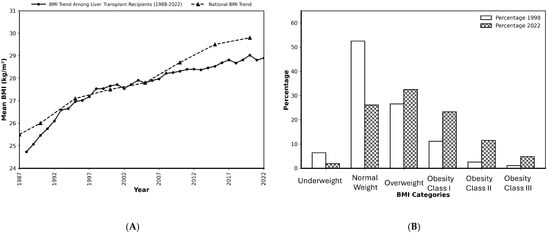
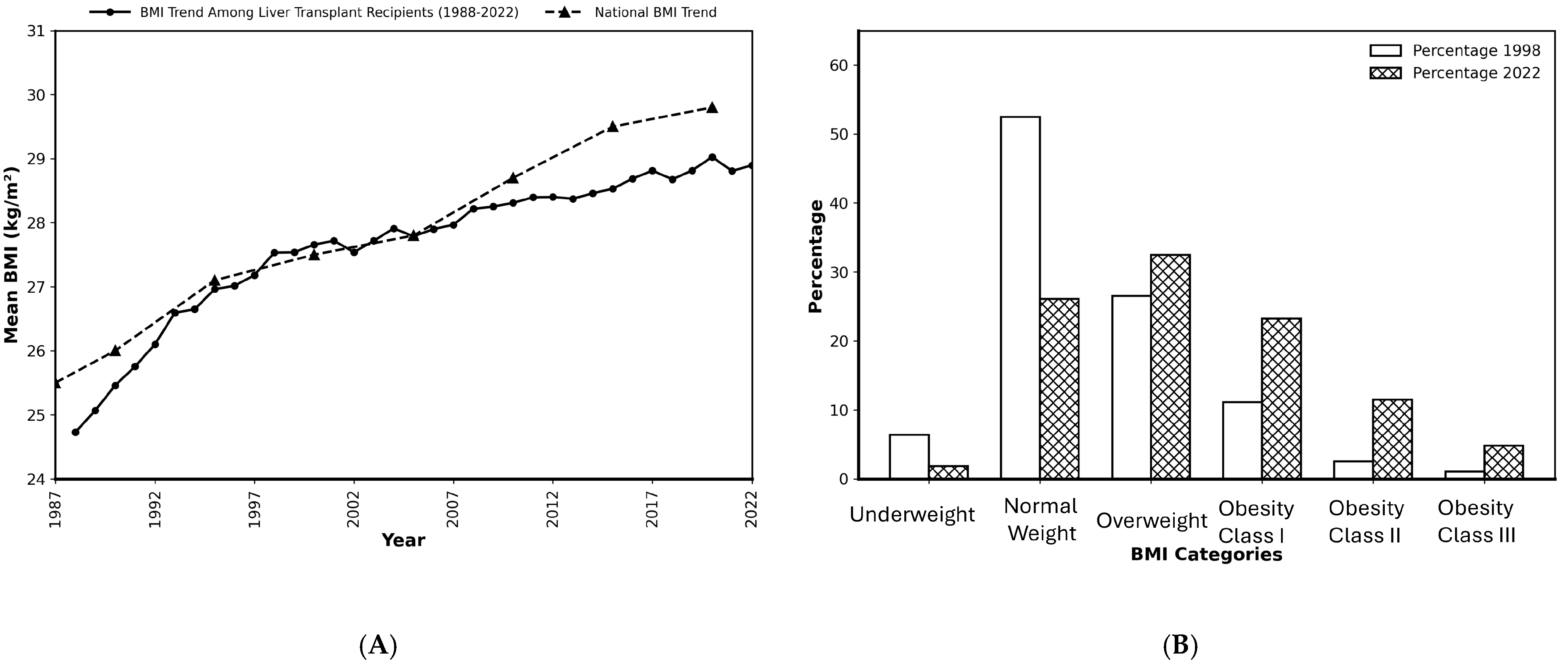
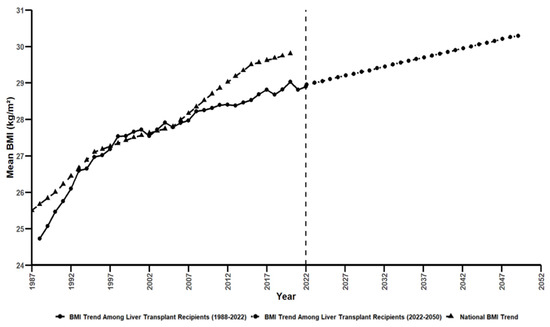
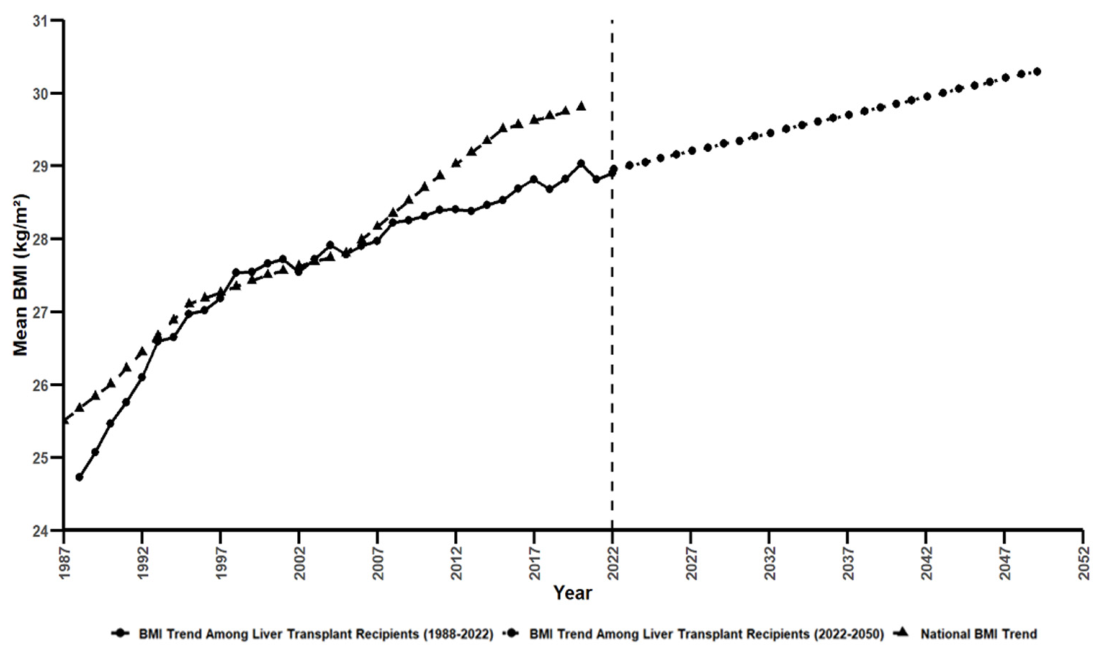
A total of 176,891 LT recipients from 1988 to 2022 were analyzed. The mean BMI of LT recipients increased from a normal BMI value of 24.70 kg/m2 in 1988 to an overweight value of 28.90 kg/m2 in 2022 (0.102/year, 95%CI: 0.089–0.120, p < 0.001) (Figure 1A). Joinpoint regression analysis showed that from 1988 to 1993, BMI increased significantly (APC 0.36%), followed by a slower but significant rate of increase from 1993 to 1998 (APC 0.19%), and subsequently an even slower but still significant rate of increase from 1988 to 2022 (APC 0.07%) (Supplementary Figure S1A).
Figure 1.
BMI trends among liver transplant recipients and in the general United States population over three decades. (A). Mean BMI for liver transplant recipients, 1988–2022, compared to the mean BMI of the general United States adult population from 1987 to 2020. (B). Comparison of BMI categories in liver transplant recipients in 1988 and 2022.
Analysis of BMI trends in the general US population over the past three decades revealed an upward trajectory that almost paralleled that seen in LT recipients. The mean BMI of the general US population increased from 25.5 kg/m2 in 1987 to 29.8 kg/m2 in 2020, closely aligning with trends seen in the LT population (Figure 1A).
3.2. Shift in Distribution of BMI Categories for LT Recipients from 1988 to 2022
Overall for all years, individuals categorized as underweight, normal weight, overwight, obesity class I, obesity class II, and obesity class III constituted 2.14%, 30.10%, 34.40%, 20.6%, 9.11%, and 3.59%, respectively. From 1988 to 2022, the percentage of LT recipients classified as underweight and normal weight declined (p < 0.001 for all; Figure 1B). In contrast, there were significant increases in the percentage of individuals categorized as overweight, or obesity classes I, II, and III (p < 0.001 for all; Figure 1B).
3.3. Sex-Specific Trends
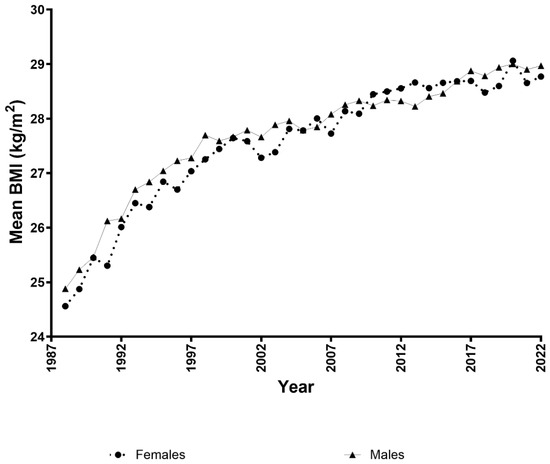
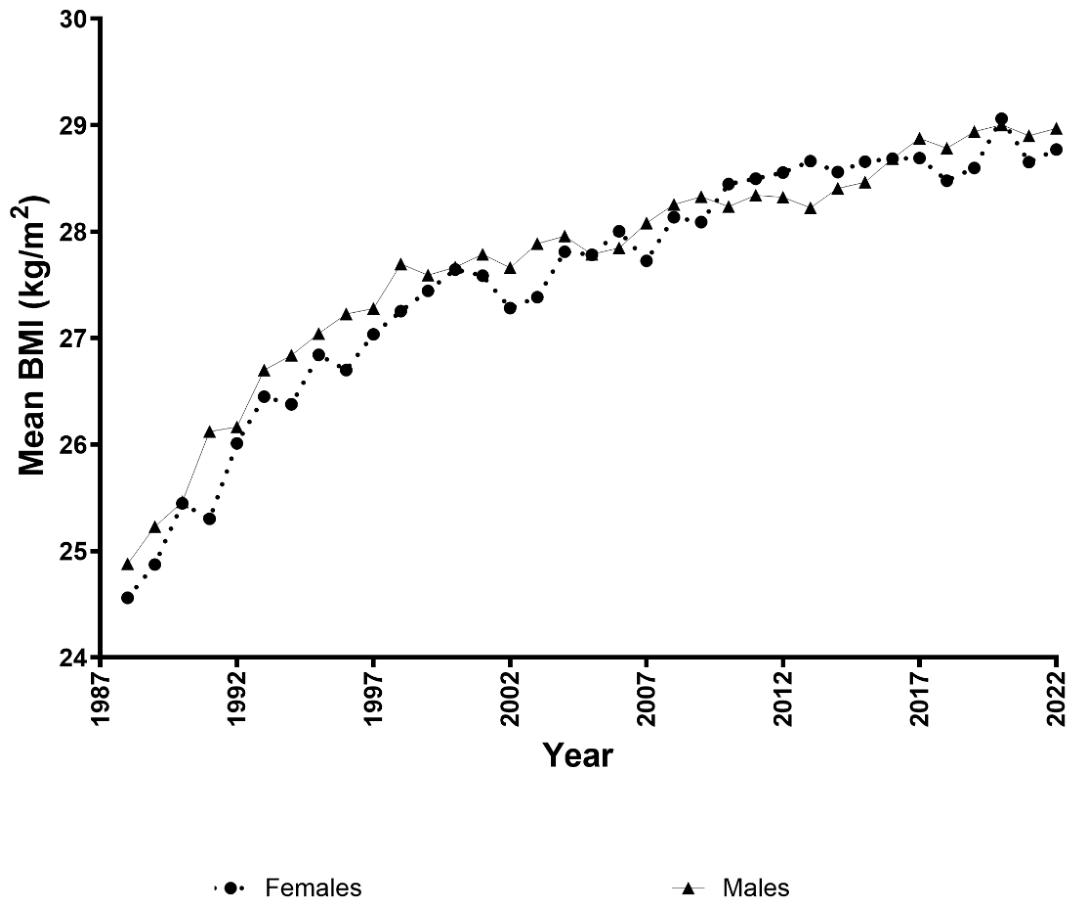
BMI trends varied slightly by sex but overall appeared similar. Male LT recipients showed a significant, albeit less steep, increase in BMI from 1988 through 2022 (0.0850/year, 95%CI: 0.0849–0.0851, p < 0.001), while female LT recipients exhibited a more pronounced rise in BMI over the same period (0.0888/year, 95%CI: 0.0885–0.0890, p < 0.001) (Figure 2). Joinpoint regression analysis showed that females exhibited a rapid increase in BMI between 1988 and 1995 (APC 1.26%), followed by more gradual increases from 1995 to 2013 and from 2013 to 2022 (APC 0.35% and 0.06%, respectively) (Supplementary Figure S1B). Males also showed an initial rapid increase in BMI from 1988 to 1993 (APC 1.41%), followed by a more gradual increase from 1993 to 1998 and from 1988 to 2022 (APC 0.64% and 0.22%, respectively).
Figure 2.
Mean BMI in liver transplant recipients, 1988–2022, stratified by sex.
3.4. Race- and Ethnicity-Specific Trends
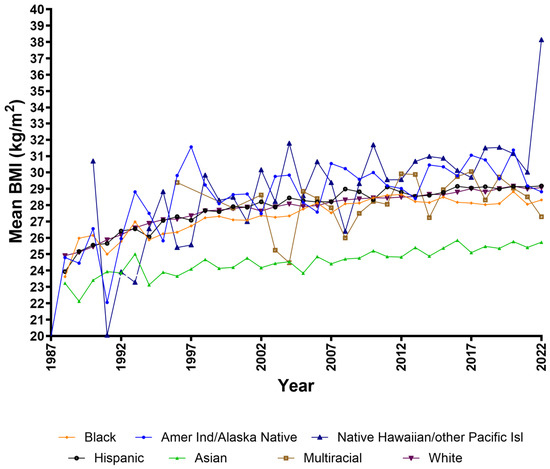
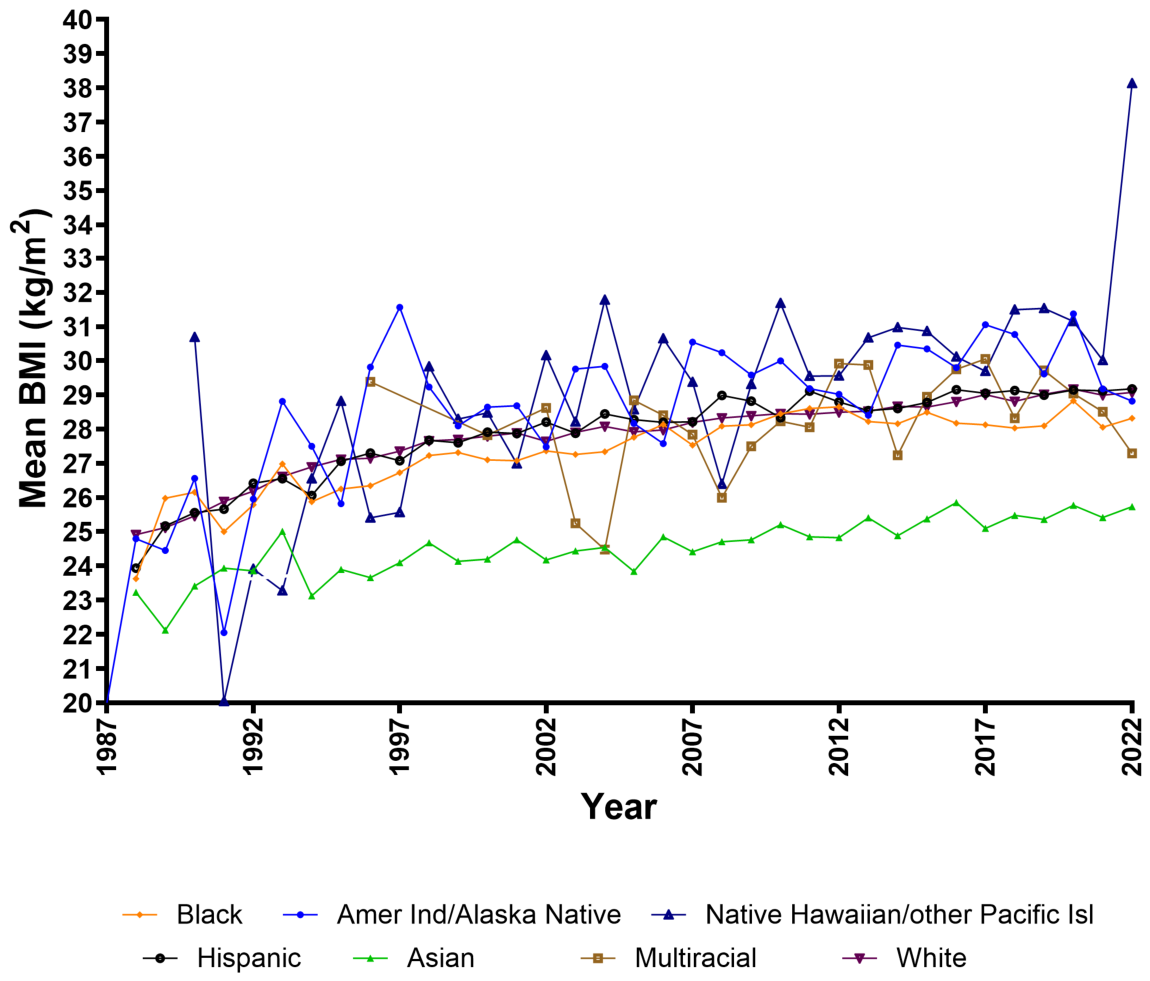
Significant uptrend in mean BMI was noted for all race and ethnicity categories over the study period, including Hispanic (0.0798/year, 95%CI: 0.0794–0.0801, p < 0.001); Asian (0.0833/year, 95%CI: 0.0827–0.0841, p < 0.001); Black (0.0846/year, 95%CI: 0.0841–0.0850, p < 0.001) and White (0.0879/year, 95%CI: 0.0877–0.0880, p < 0.001) populations (Figure 3). Joinpoint regression analysis demonstrated an increase over the entire period for Asians (APC 0.29%) and Native Hawaiian/Other Pacific Islanders (APC 0.82%), while Black and White populations showed a steep rise in BMI followed by a subsequent slowing (Supplementary Figure S1C).
Figure 3.
Mean BMI of liver transplant recipients, 1988–2022, stratified by race and ethnicity.
3.5. Age-Specific Trends
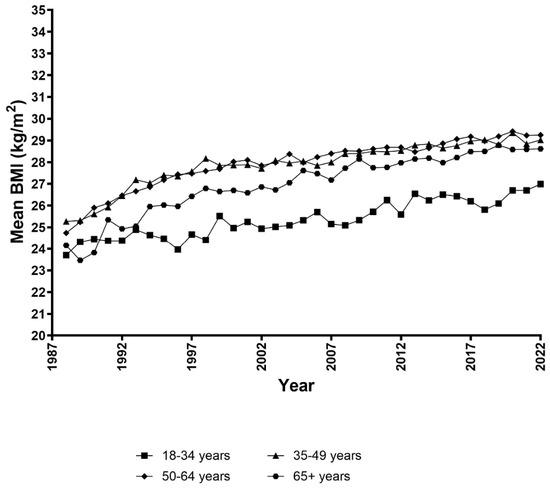
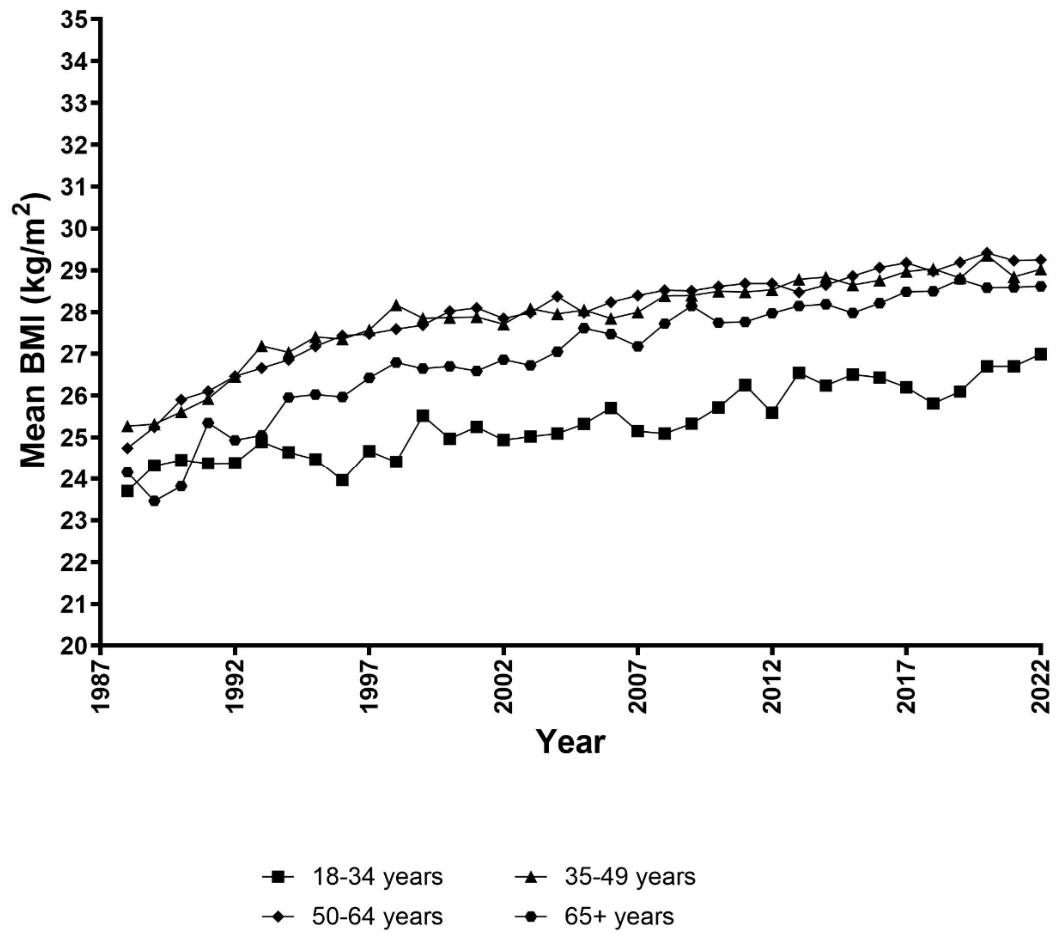
All age subgroups exhibited significant increases in BMI over time (Figure 4). The 18–34-year group showed a consistent increase in BMI with an APC of 0.31% (Supplementary Figure S1D). LT recipients aged 35–49 years had an initial APC of 1.32%, which slowed to 0.22% after 1995. Recipients aged 65+ years displayed an APC of 1.24% until 1997, followed by a steady increase of 0.34% thereafter (Supplementary Figure S1D).
Figure 4.
Mean BMI of liver transplant recipients, 1988–2022, stratified by age group.
3.6. Liver Disease Etiology-Specific Trends
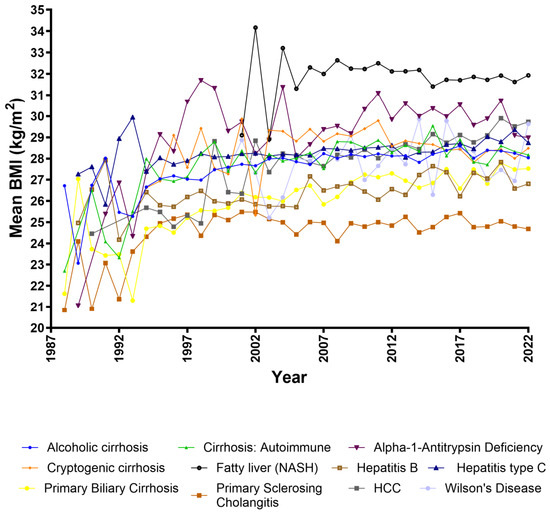
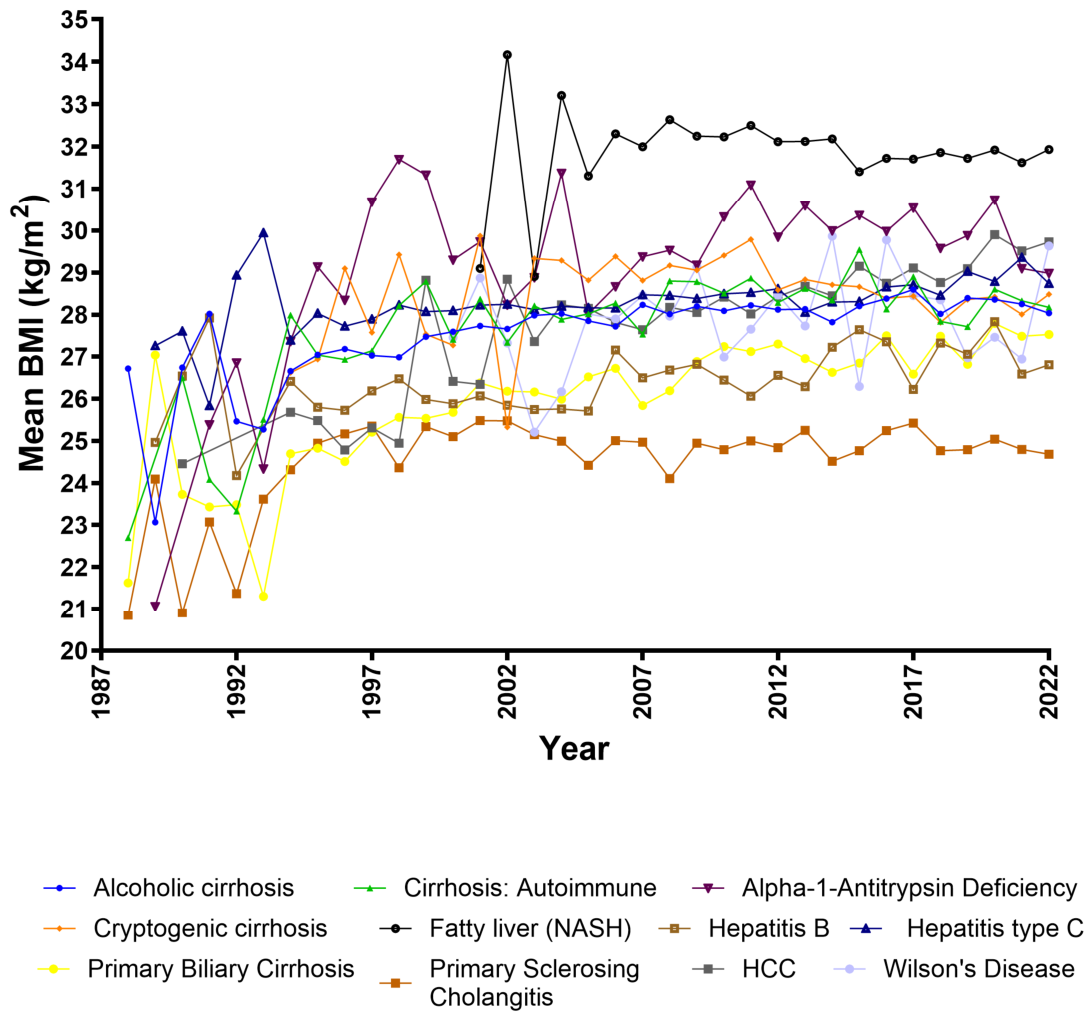
Distinct patterns emerged when analyzing BMI trends by the etiology of liver disease (Figure 5, Supplementary Figure S2). There were significant increases in the mean BMI for individuals with ALD (0.0851/year, 95%CI: 0.0848–0.0853, p < 0.001), AIH (0.0907/year, 95%CI: 0.0901–0.0914, p < 0.001), HBV (0.0926/year, 95%CI: 0.0919–0.0933, p < 0.001), HCV, (0.0927/year, 95%CI: 0.0925–0.0930, p < 0.001), Wilson’s disease (0.0926/year, 95%CI: 0.0908–0.0944, p < 0.001), HCC (0.0741/year, 95%CI: 0.0734–0.0748, p < 0.001) and PBC (0.0966/year, 95%CI: 0.0958–0.0974, p < 0.001). Notably, LT recipients with MASH showed a persistent and substantially higher mean BMI compared to other conditions, but with overall downtrending BMI (0.0612/year, 95%CI: 0.0608–0.0616, p = 0.002), along with LT recipients with cryptogenic liver disease (0.0747/year, 95%CI: 0.0740–0.0754, p = 0.001). Joinpoint regression analysis showed that since 2015, BMI for LT recipients with MASH has been uptrending, albeit not significantly (Supplementary Figure S2).
Figure 5.
Mean BMI of liver transplant recipients,1988–2022, stratified by liver disease etiology.
3.7. BMI Projections to 2050 for LT Recipients
Based on extrapolations of BMI changes from 1988 to 2022, we demonstrate a steady and sustained upward BMI trajectory among LT recipients to the year 2050. Under a reference scenario assuming the continuation of past trends, the mean BMI among LT recipients is forecasted to rise from 28.90 kg/m2 (95% UI: 28.75–29.04) in 2022 to 30.14 kg/m2 (95% UI: 29.88–30.55) by 2050 (Figure 6).
Figure 6.
Mean BMI of liver transplant recipients,1988–2022, with projection to 2050.
To capture variations in temporal patterns, we analyzed three distinct projection scenarios, each defined by the number of internal spline knots. Scenario 1 emphasizes broader historical trends and general temporal patterns in BMI trajectories. Scenario 2 reflects moderate temporal inflections. Finally, Scenario 3 accommodates finer temporal changes and more complex fluctuations in BMI trajectories. The three scenarios forecasted mean BMI among LT recipients in 2050 as follows: 30.13 kg/m2 (95% UI: 29.62–30.55), 30.12 kg/m2 (95% UI: 30.12–30.55), and 30.14 kg/m2 (95% UI: 29.88–30.55), reflecting consistent long-term patterns across the models (Supplementary Figure S3).
4. Discussion
Analysis of LT recipient data in the UNOS/OPTN database over the past three decades demonstrated a significant increase in BMI among LT recipients, with mean BMI shifting from normal weight to overweight, and with forecasts indicating an uptrend to obesity by 2050. The upward trend in BMI was also reflected in ethnicity-, sex-, and age-stratified data. When stratified by etiology of liver disease, BMI uptrends were noted across all categories except for cryptogenic cirrhosis and MASLD. Overall, the shifts reflect a growing challenge of overweight and obesity among LT recipients, likely in association with increased cardiometabolic risk and paralleling the BMI uptrend in the general US population.
Prior studies have examined the relationship between BMI and transplant outcomes. Candidates with severe obesity experience greater comorbidity burden, prolonged wait times, higher waitlist dropout, and increased perioperative risk [32]. In contrast, a single-center retrospective cohort study of liver transplant patients suggested that post-transplant patient and graft survival were independent of recipient BMI [33]. Studies evaluating the impact of evolving BMI trends on long-term transplant outcomes will be important.
The projections presented in this study assume that historical trends in BMI among liver transplant recipients will continue over time. As with any forecasting model, these projections are subject to uncertainty and may be influenced by future changes in clinical practice and population health trends. For example, evolving transplant selection criteria, increasing recognition of MASLD/MASH as a leading indication for liver transplantation, and the implementation of obesity prevention or treatment strategies may alter future BMI trajectories.
Despite advancements in surgical technique and postoperative care, survival gains over the past decades have been limited, in part due to the increasing burden of metabolic comorbidities such as obesity [16,17]. Obesity is linked to an elevated risk of de novo malignancies, various infections, respiratory and cardiovascular complications [18,34,35]. Diaz-Nieto et al. demonstrated an increased risk of postoperative infections with a predominance of wound infections in liver transplant recipients with high BMI [36]. Subgroup analysis revealed a positive correlation between infectious complications and BMI class [36], likely as a result of increased technical difficulties and lengthened operative times in patients with higher BMI, impaired micro/macro-circulation and subcutaneous tissue oxygenation, immune dysregulation, and altered macrophage differentiation, among other factors [35,37,38]. Obesity has been consistently associated with increased cardiopulmonary and biliary complications, graft nonfunction, higher rates of admission to the ICU, and longer hospital stays, all of which contribute to worse short-term and long-term prognoses [14,15].
Notably, BMI trends in LT recipients have continued to rise despite the availability of effective pharmacologic options for obesity management. This likely reflects underuse of these agents in the transplant population, owing to the limited data on their safety and efficacy in this setting, an important area for future research. As the prevalence of obesity continues to rise among LT candidates, these data highlight the urgent need for research and guidelines on tailored weight management strategies in this population.
These findings highlight the need for proactive strategies to address excess weight across the transplant continuum. Potential interventions include structured pre-transplant weight optimization programs, integration of metabolic and obesity medicine specialists into transplant care teams, and individualized lifestyle and pharmacologic management. In selected patients, bariatric approaches before, during, or after liver transplantation have also been explored as potential strategies to address severe obesity [39]. A multidisciplinary approach incorporating transplant hepatologists, surgeons, nutritionists, and metabolic specialists may be necessary to effectively manage obesity and its metabolic complications in this complex patient population.
The evolution of bariatric surgery may also influence BMI trends among liver transplant candidates and recipients. Laparoscopic Roux-en-Y gastric bypass was reported in 1994 [40] and was followed by a broader expansion of bariatric procedures in the early 2000s. More recently, bariatric surgery has been used for weight reduction pre- or post-organ transplant in select centers [41]. Consequently, bariatric interventions likely had minimal impact on BMI trends during much of the study period but may influence future trends as anti-obesity management strategies continue to evolve.
Our data indicating an overall decrease in BMI among patients with MASLD and cryptogenic cirrhosis was surprising. With MASLD having become the fastest-growing etiology for liver transplantation, and with the rising rates of obesity noted among LT recipients, we expected that those with MASLD would demonstrate increasing BMI trends over the past three decades. Instead, we found the opposite when the data was viewed longitudinally from 1988 through 2022, although data for the last seven years (2015–2022) showed a non-significant uptrend. The overall downtrend in BMI for LT recipients with MASLD could be due to several reasons. Firstly, increased recognition of lean MASLD as an etiology of chronic liver disease leading to end-stage liver disease has led to the proper classification of these patients into the MASLD category, consequently decreasing the overall mean BMI of patients with MASLD. Secondly, care teams are recognizing the importance of pre-operative weight management in reducing post-transplant complications and recurrence rates for fatty liver disease in the allograft. This may have led to targeted and more aggressive measures to lower the BMI before transplant. Thirdly, with obesity and its associated cardiovascular complications potentially affecting post-transplant outcomes, the selection of MASLD patients for transplant listing has likely become more streamlined and stringent over the years. Additional studies would be helpful in further examining the MASLD- and cryptogenic disease-specific trends seen.
Our study also highlights the importance of the evaluation of body composition, especially in an era when growing numbers of patients are classified as having obesity. BMI alone does not distinguish between fat and lean mass, nor does it capture fat distribution, which is a key determinant of metabolic risk. Also, fluid overload in the setting of decompensated cirrhosis may lead to falsely elevated BMI. Furthermore, BMI does not capture visceral adiposity, which may be particularly relevant in metabolic liver disease. Because the UNOS/OPTN registry does not capture standardized body composition metrics, BMI remains the most consistently available anthropometric measure for large-scale analyses in this setting. Future studies incorporating imaging-based or functional measures of body composition may provide additional insight. In the LT population, this limitation is particularly relevant, as sarcopenia and sarcopenic obesity are common and strongly associated with adverse outcomes, including frailty, infections, graft dysfunction, and mortality. Incorporating more precise assessments of body composition through modalities such as CT, MRI, DEXA, or bioelectrical impedance may provide a more accurate evaluation of risk and better guide both pre- and post-transplant management. As obesity prevalence continues to rise, understanding the interplay between adiposity, muscle mass, and transplant outcomes will be critical to optimizing long-term patient care.
Our study has several limitations. Firstly, BMI is an imperfect surrogate for body composition, given the reasons previously mentioned. However, it is expected that the effects of such confounders are minimal since they occur across all years. Secondly, different transplant centers have different upper BMI cut-offs for transplants in recent years [42], which may influence the actual BMI among individuals listed as requiring transplants and limit the generalization of our results. Thirdly, the BMI classifications used in this study were not race-adjusted, given the relatively low percentage of LT recipients of Asian race. Fourthly, liver transplantation was introduced in the 1980s, and early UNOS data may reflect a more stringent recipient selection, favoring those with lower BMI. As surgical expertise improved and transplant centers gained experience, eligibility criteria may have broadened, allowing transplantation of patients with higher BMI. Thus, the observed rise in BMI over time may partly reflect evolving transplant selection practices. Fifthly, we were unable to examine variations by transplant center volume because the publicly available UNOS dataset does not include center-level identifiers. Differences in institutional practices and transplant center experience may influence BMI thresholds and patient selection, which could contribute to variations in observed BMI trends. Sixthly, exclusion of cases with missing BMI may introduce a small degree of selection bias. These limitations may result in our BMI trends being either higher or lower than the true values.
In conclusion, we performed a longitudinal analysis of BMI trends in the LT population for the first time using a comprehensive US database of all LT cases over the past three decades. The findings provide strong evidence of the overall uptrend in BMI among LT recipients, with a shift in BMI categories from predominantly normal BMI in the 1980s to being predominantly overweight or having obesity in the 2020s. Based on current trends, we project that the mean BMI among LT recipients will reach class I obesity by 2050. Our study has implications for patient and provider education and highlights important gaps in research evidence needed to guide clinical care, including the safety and efficacy of emerging anti-obesity medications in LT recipients, optimal approaches to integrating weight management into post-transplant care, and the role of body composition in refining risk stratification. Addressing these gaps will be essential to developing evidence-based guidance that can improve long-term outcomes in this high-risk group.
Supplementary Materials
The following supporting information can be downloaded at https://www.mdpi.com/article/10.3390/livers6040081/s1, Figure S1: Joinpoint regression analysis of overall and demographic-specific BMI trends among liver transplant recipients, 1988–2022; Figure S2: Joinpoint regression analysis of mean BMI for liver transplant recipients, 1988–2022, stratified by liver disease etiology; Figure S3: Mean BMI of liver transplant recipients,1988–2022, with projection to 2050 across three different scenarios.
Author Contributions
Conceptualization, B.A.B.; Methodology, S.B., F.Z., V.K. and B.A.B.; Formal analysis, S.B. and P.A.; Investigation, S.B. and B.A.B.; Resources, F.Z., P.A., M.J.Z. and M.-J.K.; Data curation, S.B. and F.Z.; Writing—original draft, S.B., F.Z., P.A. and B.A.B.; Writing—review and editing, S.B., F.Z., P.A., M.J.Z., M.-J.K., V.K. and B.A.B.; Visualization, S.B.; Supervision, B.A.B. All authors have read and agreed to the published version of the manuscript.
Funding
This work was supported in part by Health Resources and Services Administration contract HHSH250-2019-00001C. The content is the responsibility of the authors alone and does not necessarily reflect the views or policies of the Department of Health and Human Services, nor does mention of trade names, commercial products, or organizations imply endorsement by the U.S. Government.
Institutional Review Board Statement
The study was reviewed by the Institutional Review Board and determined not to involve human subjects research, as the investigator was not engaged in research with human subjects and the study consisted of secondary analysis of publicly available, fully de-identified data (Yale IRB #2000041281, approval date 26 September 2025).
Informed Consent Statement
The study consisted of secondary analysis of publicly available, fully de-identified data (Yale IRB #2000041281, approval date 26 September 2025); accordingly, informed consent was not required.
Data Availability Statement
The analysis was based on publicly available data from the Organ Procurement and Transplantation Network (OPTN) database, administered by the United Network for Organ Sharing (UNOS).
Conflicts of Interest
The authors declare no conflicts of interest.
Abbreviations
| APC | Annual percentage change |
| BMI | Body mass index |
| LT | Liver Transplant |
| MASLD | Metabolic Dysfunction-Associated Steatotic Liver Disease |
| MASH | Metabolic Dysfunction-Associated Steatohepatitis |
| NAFLD | Nonalcoholic Fatty Liver Disease |
| NASH | Nonalcoholic steatohepatitis |
| OPTN | Organ Procurement and Transplantation Network |
| UI | Uncertainty interval |
| UNOS | United Network for Organ Sharing |
| WHO | World Health Organization |
References
- Ogden, C.L.; Fryar, C.D.; Martin, C.B.; Freedman, D.S.; Carroll, M.D.; Gu, Q.; Hales, C.M. Trends in Obesity Prevalence by Race and Hispanic Origin-1999–2000 to 2017–2018. Jama 2020, 324, 1208–1210. [Google Scholar] [CrossRef] [Scilit] [PubMed]
- GBD 2021 Risk Factors Collaborators. Global burden and strength of evidence for 88 risk factors in 204 countries and 811 subnational locations, 1990–2021: A systematic analysis for the Global Burden of Disease Study 2021. Lancet 2024, 403, 2162–2203. [Google Scholar] [CrossRef] [Scilit] [PubMed]
- GBD 2021 US Burden of Disease Collaborators. The burden of diseases, injuries, and risk factors by state in the USA, 1990–2021: A systematic analysis for the Global Burden of Disease Study 2021. Lancet 2024, 404, 2314–2340. [Google Scholar] [CrossRef] [Scilit] [PubMed]
- Wakam, G.K.; Sheetz, K.H.; Gerhardinger, L.; Montgomery, J.R.; Waits, S.A. Population-based Trends in Obesity and Kidney Transplantation Among Patients with End-stage Kidney Disease. Transplant. Direct 2021, 7, e787. [Google Scholar] [CrossRef] [Scilit] [PubMed]
- Friedman, A.N.; Miskulin, D.C.; Rosenberg, I.H.; Levey, A.S. Demographics and trends in overweight and obesity in patients at time of kidney transplantation. Am. J. Kidney Dis. 2003, 41, 480–487. [Google Scholar] [CrossRef] [Scilit] [PubMed]
- Akintoye, E.; Alvarez, P.; Shin, D.; Egbe, A.; Panos, A.; Sellke, F.; Briasoulis, A. Changing Demographics, Temporal Trends in Waitlist, and Posttransplant Outcomes After Heart Transplantation in the United States: Analysis of the UNOS Database 1991–2019. Circ. Heart Fail. 2021, 14, e008764. [Google Scholar] [CrossRef] [Scilit] [PubMed]
- Chambers, D.C.; Perch, M.; Zuckermann, A.; Cherikh, W.S.; Harhay, M.O.; Hayes, D., Jr.; Hsich, E.; Khush, K.K.; Potena, L.; Sadavarte, A.; et al. The International Thoracic Organ Transplant Registry of the International Society for Heart and Lung Transplantation: Thirty-eighth adult lung transplantation report—2021; Focus on recipient characteristics. J. Heart Lung Transplant. 2021, 40, 1060–1072. [Google Scholar] [CrossRef] [Scilit] [PubMed]
- Ludwig, J.; Viggiano, T.R.; McGill, D.B.; Oh, B.J. Nonalcoholic steatohepatitis: Mayo Clinic experiences with a hitherto unnamed disease. Mayo Clin. Proc. 1980, 55, 434–438. [Google Scholar] [CrossRef] [Scilit] [PubMed]
- Powell, E.E.; Cooksley, W.G.; Hanson, R.; Searle, J.; Halliday, J.W.; Powell, L.W. The natural history of nonalcoholic steatohepatitis: A follow-up study of forty-two patients for up to 21 years. Hepatology 1990, 11, 74–80. [Google Scholar] [CrossRef] [Scilit] [PubMed]
- Larsson, S.C.; Wolk, A. Overweight, obesity and risk of liver cancer: A meta-analysis of cohort studies. Br. J. Cancer 2007, 97, 1005–1008. [Google Scholar] [CrossRef] [Scilit] [PubMed]
- van Son, J.; Stam, S.P.; Gomes-Neto, A.W.; Oste, M.C.J.; Blokzijl, H.; van den Berg, A.P.; Porte, R.J.; Bakker, S.J.L.; de Meijer, V.E. Post-transplant obesity impacts long-term survival after liver transplantation. Metabolism 2020, 106, 154204. [Google Scholar] [CrossRef] [Scilit] [PubMed]
- Montano-Loza, A.J.; Angulo, P.; Meza-Junco, J.; Prado, C.M.; Sawyer, M.B.; Beaumont, C.; Esfandiari, N.; Ma, M.; Baracos, V.E. Sarcopenic obesity and myosteatosis are associated with higher mortality in patients with cirrhosis. J. Cachexia Sarcopenia Muscle 2016, 7, 126–135. [Google Scholar] [CrossRef] [Scilit] [PubMed]
- Duffy, J.P.; Kao, K.; Ko, C.Y.; Farmer, D.G.; McDiarmid, S.V.; Hong, J.C.; Venick, R.S.; Feist, S.; Goldstein, L.; Saab, S.; et al. Long-term patient outcome and quality of life after liver transplantation: Analysis of 20-year survivors. Ann. Surg. 2010, 252, 652–661. [Google Scholar] [CrossRef] [Scilit] [PubMed]
- Barone, M.; Viggiani, M.T.; Losurdo, G.; Principi, M.; Leandro, G.; Di Leo, A. Systematic review with meta-analysis: Post-operative complications and mortality risk in liver transplant candidates with obesity. Aliment. Pharmacol. Ther. 2017, 46, 236–245. [Google Scholar] [CrossRef] [Scilit] [PubMed]
- Tejedor-Tejada, J.; Garcia-Pajares, F.; Safadi, R.; Mauriz-Barreiro, V.; Molina, E.; Juan-Casamayor, L.; Fernandez-Prada, S.; Helal, A.; Fuentes-Valenzuela, E.; Alonso-Martin, C.; et al. The impact of obesity on postoperative complications and short-term survival after liver transplantation. Eur. J. Gastroenterol. Hepatol. 2023, 35, 782–789. [Google Scholar] [CrossRef] [Scilit] [PubMed]
- Rana, A.; Ackah, R.L.; Webb, G.J.; Halazun, K.J.; Vierling, J.M.; Liu, H.; Wu, M.F.; Yoeli, D.; Kueht, M.; Mindikoglu, A.L.; et al. No Gains in Long-term Survival After Liver Transplantation Over the Past Three Decades. Ann. Surg. 2019, 269, 20–27. [Google Scholar] [CrossRef] [Scilit] [PubMed]
- Fuochi, E.; Anastasio, L.; Lynch, E.N.; Campani, C.; Dragoni, G.; Milani, S.; Galli, A.; Innocenti, T. Main factors influencing long-term outcomes of liver transplantation in 2022. World J. Hepatol. 2023, 15, 321–352. [Google Scholar] [CrossRef] [Scilit] [PubMed]
- Harris, B.H.L.; Macaulay, V.M.; Harris, D.A.; Klenerman, P.; Karpe, F.; Lord, S.R.; Harris, A.L.; Buffa, F.M. Obesity: A perfect storm for carcinogenesis. Cancer Metastasis Rev. 2022, 41, 491–515. [Google Scholar] [CrossRef] [Scilit] [PubMed]
- Martin, P.; DiMartini, A.; Feng, S.; Brown, R., Jr.; Fallon, M. Evaluation for liver transplantation in adults: 2013 practice guideline by the American Association for the Study of Liver Diseases and the American Society of Transplantation. Hepatology 2014, 59, 1144–1165. [Google Scholar] [CrossRef] [Scilit] [PubMed]
- European Association for the Study of the Liver. Electronic address, e.e.e. EASL Clinical Practice Guidelines: Liver transplantation. J. Hepatol. 2016, 64, 433–485. [Google Scholar] [CrossRef] [Scilit] [PubMed]
- Wilding, J.P.H.; Batterham, R.L.; Calanna, S.; Davies, M.; Van Gaal, L.F.; Lingvay, I.; McGowan, B.M.; Rosenstock, J.; Tran, M.T.D.; Wadden, T.A.; et al. Once-Weekly Semaglutide in Adults with Overweight or Obesity. N. Engl. J. Med. 2021, 384, 989. [Google Scholar] [CrossRef] [Scilit] [PubMed]
- Jastreboff, A.M.; Aronne, L.J.; Ahmad, N.N.; Wharton, S.; Connery, L.; Alves, B.; Kiyosue, A.; Zhang, S.; Liu, B.; Bunck, M.C.; et al. Tirzepatide Once Weekly for the Treatment of Obesity. N. Engl. J. Med. 2022, 387, 205–216. [Google Scholar] [CrossRef] [Scilit] [PubMed]
- Zahrawi, F.; Fathma, S.; Mehal, W.Z.; Banini, B.A. Pharmacologic Management of Obesity after Liver Transplantation: A Critical Review. Ann. Gastroenterol. Dig. Disord. 2023, 6, 17–25. [Google Scholar] [PubMed]
- Davis, J.P.E.; Reticker, A.; Han, H.; Orandi, B.J.; Henry, Z.; Tsunoda, S.M.; Heimbach, J.K.; Schulman, A.R.; Tincopa, M.A.; AST LICOP Controversies Conference Working Group. Management of obesity in liver transplant candidates and recipients: Rethinking the false dichotomy between pharmacotherapy and surgical intervention. Liver. Transpl. 2025, 31, 1286–1297. [Google Scholar] [CrossRef] [Scilit] [PubMed]
- Centers for Disease Control and Prevention (CDC). National Center for Health Statistics (NCHS). National Health and Nutrition Examination Survey. Available online: https://www.cdc.gov/nchs/nhanes/index.html (accessed on 29 June 2024).
- World Health Organization. Nutrition for a Healthy Life—WHO Recommendations. Available online: https://www.who.int/europe/news-room/fact-sheets/item/nutrition---maintaining-a-healthy-lifestyle (accessed on 7 June 2024).
- Jensen, E.; Jones, N.; Orozco, K.; Medina, L.; Perry, M.; Bolender, B.; Battle, K. Measuring Racial and Ethnic Diversity for the 2020 Census. Available online: https://www.census.gov/newsroom/blogs/random-samplings/2021/08/measuring-racial-ethnic-diversity-2020-census.html (accessed on 6 September 2024).
- GBD 2021 Forecasting Collaborators. Burden of disease scenarios for 204 countries and territories, 2022–2050: A forecasting analysis for the Global Burden of Disease Study 2021. Lancet 2024, 403, 2204–2256. [Google Scholar] [CrossRef] [Scilit] [PubMed]
- GBD 2021 US Obesity Forecasting Collaborators. National-level and state-level prevalence of overweight and obesity among children, adolescents, and adults in the USA, 1990–2021, and forecasts up to 2050. Lancet 2024, 404, 2278–2298. [Google Scholar] [CrossRef] [Scilit] [PubMed]
- Banack, H.R.; Hayes-Larson, E.; Mayeda, E.R. Monte Carlo Simulation Approaches for Quantitative Bias Analysis: A Tutorial. Epidemiol. Rev. 2022, 43, 106–117. [Google Scholar] [CrossRef] [Scilit] [PubMed]
- Gillis, D.; Edwards, B.P.M. The utility of joinpoint regression for estimating population parameters given changes in population structure. Heliyon 2019, 5, e02515. [Google Scholar] [CrossRef] [Scilit] [PubMed]
- Muthukrishnan, S.; Zhou, J.; Wang, R.; Bohlen, J.; Meier, R.; Shetty, K.; Bhati, C. Challenges and strategies for optimizing liver transplantation outcomes in morbidly obese cirrhotic patients: A narrative review. BMC Surg. 2025, 25, 267. [Google Scholar] [CrossRef] [Scilit] [PubMed]
- Giorgakis, E.; Tedeschi, M.; Bonaccorsi-Riani, E.; Khorsandi, S.E.; Menon, K.; Vilca-Melendez, H.; Jassem, W.; Srinivasan, P.; Prachalias, A.; Heaton, N. The Effect of Recipient Body Mass Index and Its Extremes on Survival and Graft Vascular and Biliary Complications After Liver Transplantation: A Single Center Retrospective Study. Ann. Transplant. 2017, 22, 611–621. [Google Scholar] [CrossRef] [Scilit] [PubMed]
- Wolk, R.; Berger, P.; Lennon, R.J.; Brilakis, E.S.; Somers, V.K. Body mass index: A risk factor for unstable angina and myocardial infarction in patients with angiographically confirmed coronary artery disease. Circulation 2003, 108, 2206–2211. [Google Scholar] [CrossRef] [Scilit] [PubMed]
- Falagas, M.E.; Kompoti, M. Obesity and infection. Lancet Infect. Dis. 2006, 6, 438–446. [Google Scholar] [CrossRef] [Scilit] [PubMed]
- Diaz-Nieto, R.; Lykoudis, P.M.; Davidson, B.R. Recipient body mass index and infectious complications following liver transplantation. HPB 2019, 21, 1032–1038. [Google Scholar] [CrossRef] [Scilit] [PubMed]
- Diwan, T.S.; Lee, T.C.; Nagai, S.; Benedetti, E.; Posselt, A.; Bumgardner, G.; Noria, S.; Whitson, B.A.; Ratner, L.; Mason, D.; et al. Obesity, transplantation, and bariatric surgery: An evolving solution for a growing epidemic. Am. J. Transplant. 2020, 20, 2143–2155. [Google Scholar] [CrossRef] [Scilit] [PubMed]
- Pugliese, G.; Liccardi, A.; Graziadio, C.; Barrea, L.; Muscogiuri, G.; Colao, A. Obesity and infectious diseases: Pathophysiology and epidemiology of a double pandemic condition. Int. J. Obes. 2022, 46, 449–465. [Google Scholar] [CrossRef] [Scilit] [PubMed]
- Ghanem, O.M.; Pita, A.; Nazzal, M.; Johnson, S.; Diwan, T.; Obeid, N.R.; Croome, K.P.; Lim, R.; Quintini, C.; Whitson, B.A.; et al. Obesity, organ failure, and transplantation: A review of the role of metabolic and bariatric surgery in transplant candidates and recipients. Am. J. Transplant. 2024, 24, 1534–1546. [Google Scholar] [CrossRef] [Scilit] [PubMed]
- Wittgrove, A.C.; Clark, G.W.; Tremblay, L.J. Laparoscopic Gastric Bypass, Roux-en-Y: Preliminary Report of Five Cases. Obes. Surg. 1994, 4, 353–357. [Google Scholar] [CrossRef] [Scilit] [PubMed]
- Heimbach, J.K.; Watt, K.D.; Poterucha, J.J.; Ziller, N.F.; Cecco, S.D.; Charlton, M.R.; Hay, J.E.; Wiesner, R.H.; Sanchez, W.; Rosen, C.B.; et al. Combined liver transplantation and gastric sleeve resection for patients with medically complicated obesity and end-stage liver disease. Am. J. Transplant. 2013, 13, 363–368. [Google Scholar] [CrossRef] [Scilit] [PubMed]
- Soma, D.; Park, Y.; Mihaylov, P.; Ekser, B.; Ghabril, M.; Lacerda, M.; Chalasani, N.; Mangus, R.S.; Kubal, C.A. Liver Transplantation in Recipients with Class III Obesity: Posttransplant Outcomes and Weight Gain. Transplant. Direct. 2022, 8, e1242. [Google Scholar] [CrossRef] [Scilit] [PubMed]
Disclaimer/Publisher’s Note: The statements, opinions and data contained in all publications are solely those of the individual author(s) and contributor(s) and not of MDPI and/or the editor(s). MDPI and/or the editor(s) disclaim responsibility for any injury to people or property resulting from any ideas, methods, instructions or products referred to in the content. |
© 2026 by the authors. Licensee MDPI, Basel, Switzerland. This article is an open access article distributed under the terms and conditions of the Creative Commons Attribution (CC BY) license.