


Abstract
Respiratory Syncytial Virus infection is a significant cause of morbidity and mortality in infants. Maternal vaccination with the bivalent vaccine Abrysvo® in the third trimester (24–36 weeks) is an effective strategy to prevent severe respiratory illnesses in newborns. However, the introduction of this new technology faces structural obstacles that amplify inequalities. This rapid literature review sought to map and synthesize evidence on inequalities and inequities in adherence and accessibility to maternal vaccination among Black pregnant women. A rapid literature review was conducted using a mixed-methods approach (narrative synthesis and thematic analysis), following guidelines adapted from the Preferred Reporting Items for Systematic Reviews and Meta-Analyses and the Cochrane Handbook. The research question was structured using the acronym Population/Problem, Exposure, Comparison, and Outcome, focusing on Black pregnant women, maternal vaccination, comparison with other groups, and barriers/determinants. The search was conducted in databases such as PubMed (via Medical Literature Analysis and Retrieval System Online), Scopus and Literatura Latino-Americana e do Caribe em Ciências da Saúde, covering studies published between 2022 and 2025 that presented disaggregated analysis by race. The analysis and interpretation of the findings were guided by Critical Race Theory. The analysis of the twelve included studies (mainly from the United States, the United Kingdom, and Brazil) revealed systematic and robust disparities. Black pregnant women had lower vaccination coverage and were less likely to receive timely recommendations compared to White pregnant women. The barriers identified include: institutional distrust (resulting from structural racism), poor access to prenatal care, inadequate communication, and socioeconomic factors. Inequities are structural and multifactorial phenomena. To ensure that the benefits of the vaccine are distributed equitably, strategies such as anti-racist training for healthcare teams, active vaccination outreach, and continuous monitoring of data disaggregated by race are essential.
1. Introduction
Respiratory Syncytial Virus (RSV) infection is a leading cause of hospitalization, morbidity and mortality in infants in the first six months of life, accounting for a significant burden of severe respiratory illness and public health costs [1]. The Abrysvo® formulation (Pfizer’s bivalent RSVpreF vaccine) uses F protein (human respiratory syncytial virus fusion glycoprotein) antigens in pre-fusion conformation, inducing a potent neutralizing antibody response against both RSV subgroups A and B. Randomized clinical trials have demonstrated high efficacy in preventing RSV-confirmed severe respiratory illness in the first months of infant life when maternal vaccination is performed in the third trimester, with efficacy values reported close to 82% for the first 90 days and a gradual decrease to approximately 69% at 180 days in some analyses [1,2].
Regarding the safety profile, some signs of a higher frequency of preterm births were observed in secondary analyses, requiring continuous monitoring and post-registration studies to clarify causality and the magnitude of this risk. Regulatory agencies have issued approvals and recommendations for weighted use, defining gestational windows (e.g., United States of America: 32–36 weeks; Europe: 24–36 weeks) based on evidence of efficacy and the logistics of placental transfer of antibodies [3].
Respiratory syncytial virus is one of the leading causes of acute lower respiratory tract infections, hospitalization, and mortality in infants worldwide, particularly during the first six months of life, representing a major global public health concern [1,2]. In recent years, important advances have been made in prevention strategies, including maternal vaccination, passive immunization of infants using long-acting monoclonal antibodies, and vaccines developed for older adults [2,3,4]. These strategies aim to reduce severe disease, hospitalizations, and mortality across different age groups. Among these approaches, maternal immunization represents a particularly effective intervention, as it allows the transplacental transfer of protective antibodies to the fetus, providing protection during the first months of life, when infants are most vulnerable to severe infection [1,4,5].
From an epidemiological point of view, maternal vaccination with Abrysvo® alters population risk by reducing hospitalizations and severe cases of RSV in infants throughout the epidemic season, with demonstrable impact in real-world efficacy studies and population models. Effectiveness analyses in initial implementations confirmed a reduction in severe in utero events in cohorts born to pregnant women vaccinated during the recommended window, reinforcing the potential for reducing pediatric hospital burden, especially during periods of seasonal overload [4,5].
However, the implementation of maternal vaccination against respiratory syncytial virus has revealed significant and measurable racial disparities in vaccination uptake. Evidence from population-based studies and surveillance reports indicates that vaccination coverage during pregnancy remains consistently lower among Black and Hispanic women compared to White women, particularly during the initial phases of vaccine introduction. For example, surveillance analyses conducted during the first respiratory syncytial virus vaccination seasons demonstrated that maternal vaccination coverage was substantially lower among Black pregnant women, with differences ranging from approximately 10 to 20 percentage points compared to White pregnant women, even in settings with overall high vaccine availability [4,5,6,7]. These disparities persist after adjusting for socioeconomic status, access to health services, and educational level, suggesting that structural and institutional factors play a major role in shaping unequal access to vaccination [6,7,8,9,10]. In addition, qualitative and mixed-methods studies highlight that Black pregnant women are less likely to receive timely recommendations and adequate counseling regarding vaccination, which contributes to lower uptake and delayed protection of newborns [7,8,9]. These inequalities are particularly concerning given the high effectiveness of maternal vaccination in preventing severe respiratory syncytial virus outcomes in infants and its potential to reduce hospitalizations and infant morbidity and mortality [1,2,4,5]. Therefore, understanding and addressing racial disparities in maternal vaccination is essential to ensure equitable distribution of the benefits of this important public health intervention and to align immunization programs with principles of equity and universal access [11,12].
Pregnant women constitute a relevant risk group for respiratory syncytial virus infection due to physiological, immunological, and cardiopulmonary changes that occur during pregnancy, which may increase susceptibility to respiratory complications and severe disease [1,3]. Infection during pregnancy has been associated with adverse maternal and perinatal outcomes, including increased risk of hospitalization, respiratory complications, and adverse birth outcomes such as prematurity and low birth weight [3,4]. In addition, maternal infection may compromise fetal well-being through inflammatory and hypoxic mechanisms, reinforcing the importance of preventive strategies during pregnancy to protect both maternal and infant health [1,4,9].
Despite the demonstrated efficacy and safety of maternal vaccination, its implementation has revealed important inequalities in access and uptake. Population-based studies and surveillance data have shown that vaccination coverage among pregnant women varies substantially according to social, economic, and racial factors, with consistently lower uptake observed among racially minoritized populations compared to White pregnant women [5,6,7,8]. These disparities persist even after adjustment for socioeconomic status, education, and access to healthcare, suggesting that structural and institutional factors, including systemic inequities and barriers in healthcare delivery, play a central role in shaping unequal access to vaccination [6,7,8,9,10]. Furthermore, studies indicate that racially minoritized pregnant women are less likely to receive adequate counseling and timely vaccination recommendations, which directly affects vaccine uptake and infant protection [7,8,9].
To mitigate these inequities, implementation policies are needed that go beyond regulatory approval: integration of vaccination into the routine prenatal flow (identifying opportunities between 24 and 36 weeks), training of professionals for empathetic and anti-racist communication, active outreach strategies in the most affected communities, subsidies and removal of financial barriers, and post-implementation surveillance disaggregated by race to monitor coverage, effects, and safety signals. Interventions that consider social determinants and involve community leaders are crucial to increase confidence and equity in protecting infants against RSV [9,10].
Expanding vaccination coverage for pregnant women with the RSV vaccine, such as Abrysvo®, is justified by the need to strengthen maternal and child protection within the National Immunization Program (NIP) [11], which is founded on the principles of universality, equity, comprehensiveness, and the guarantee of access to immunization actions as a right of citizenship. Expanding vaccination coverage among pregnant women is justified by the need to strengthen maternal and infant protection within national immunization programs, which are guided by principles of universality, equity, and comprehensive care [11]. Maternal vaccination represents an important strategy to reduce infant morbidity and mortality associated with respiratory infections and contributes to improving maternal and child health indicators [1,4]. Furthermore, promoting equitable access to maternal immunization is aligned with global public health priorities, including the reduction in health inequalities and the strengthening of preventive health strategies, particularly among socially and structurally vulnerable populations [9,10,12].
Furthermore, this initiative is structurally aligned with the Sustainable Development Goals (SDGs), particularly SDG 3—Good Health and Well-being, by contributing to the reduction of neonatal and infant mortality (target 3.2) and to the strengthening of universal health coverage, including safe and effective vaccination (target 3.8) [12]. Given this context, understanding the social and structural determinants influencing maternal vaccination uptake is essential to ensure equitable protection. Racially minoritized pregnant women were selected as the focus of this review because consistent evidence demonstrates that these populations experience lower vaccination coverage, greater barriers to healthcare access, and worse maternal and infant health outcomes, reflecting persistent structural inequities. Despite the increasing availability of maternal vaccination strategies against respiratory syncytial virus, there is still limited consolidated evidence examining how racial and structural inequalities influence vaccine uptake during pregnancy. Most studies focus primarily on vaccine efficacy and safety, while fewer investigations address social determinants and structural barriers affecting access among racially minoritized populations. This gap in the literature limits the understanding of how new preventive technologies may reproduce or amplify existing health inequities. Therefore, synthesizing the available evidence on racial disparities in maternal RSV vaccination is essential to support equitable immunization strategies, inform public health policies, and guide health systems in addressing structural determinants that influence access to maternal preventive care. Therefore, this study aimed to synthesize scientific evidence on inequalities and inequities in access to and uptake of maternal vaccination against respiratory syncytial virus among racially minorityized pregnant women, contributing to the development of more equitable immunization strategies and policies.
2. Results
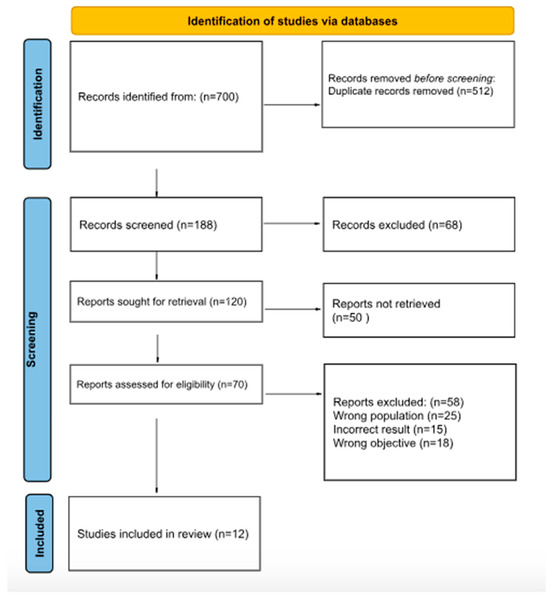
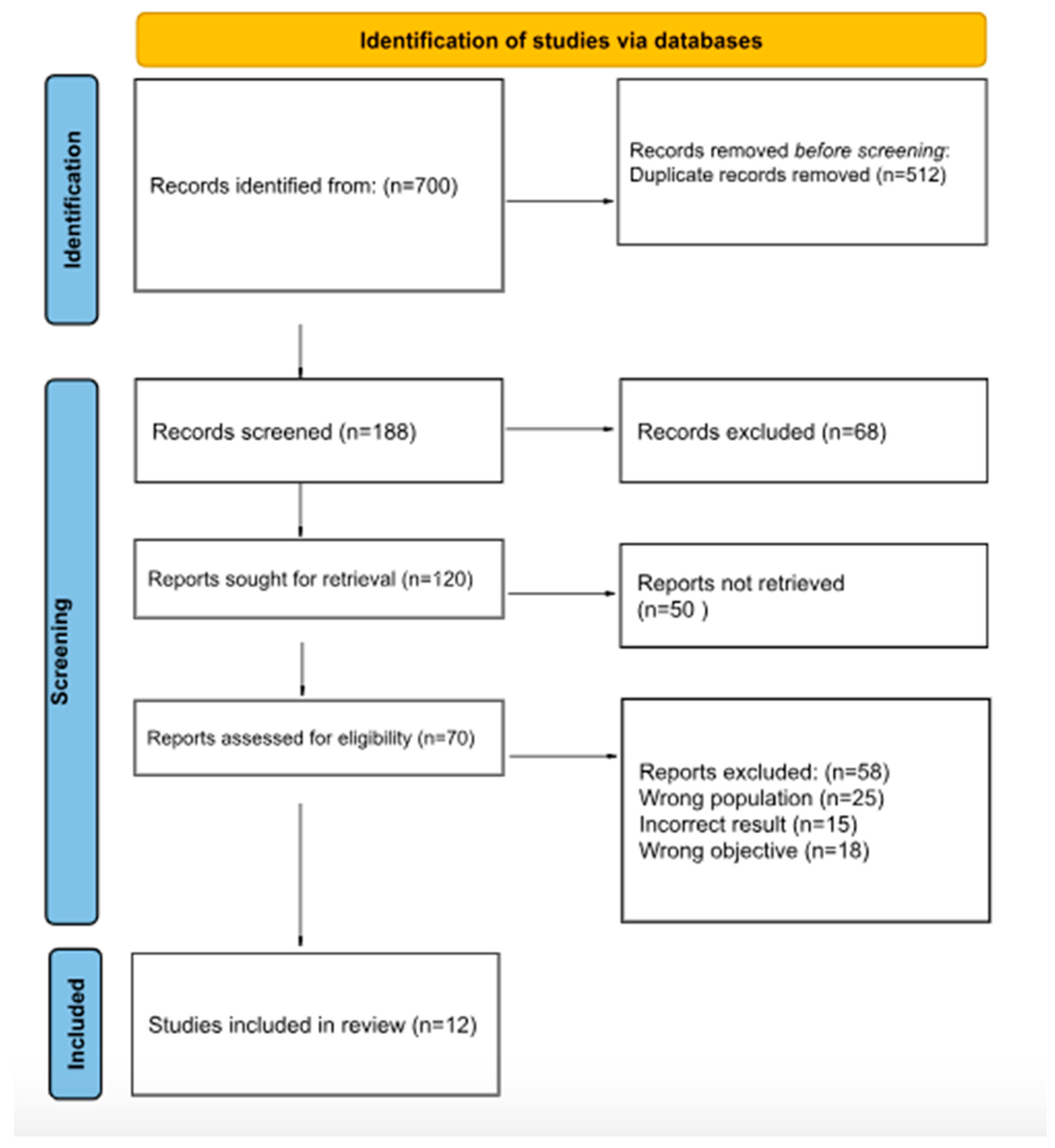
The process of identification, screening, and inclusion of studies followed the PRISMA 2020 guidelines. Initially, 700 records were identified through database searches. Before the screening stage, 512 duplicate records were removed, resulting in 188 unique records for title and abstract screening. At this stage, 68 records were excluded for not meeting the predefined eligibility criteria, leaving 120 reports sought for full-text retrieval. Of the 120 reports sought, 70 full-text articles were assessed for eligibility. After detailed evaluation, 58 studies were excluded for specific reasons: 25 due to an inappropriate study population, 15 because of incorrect or non-relevant results, and 18 due to objectives that did not align with the scope of the review. Ultimately, 12 studies met all inclusion criteria and were included in the final sample of this review (Figure 1).
Figure 1.
PRISMA flowchart for selecting and including studies in the review.
After full-text reading, 58 studies were excluded for specific reasons related to eligibility criteria. Among these, 25 studies were excluded because they did not present data disaggregated by race or ethnicity, which made it impossible to assess racial inequalities in maternal vaccination. Fifteen studies were excluded because their outcomes were not relevant to the objective of this review, as they did not evaluate maternal vaccination uptake, access, coverage, hesitancy, or disparities. These studies primarily addressed clinical aspects of respiratory syncytial virus infection, infant-only immunization strategies, laboratory findings, or vaccine development without reporting maternal vaccination indicators. Additionally, 10 studies were excluded because they focused exclusively on infant immunization using monoclonal antibodies, and 8 studies were excluded because they did not include pregnant women in their study population.
The analysis of the twelve included studies reveals a broad and consistent panorama of racial inequalities affecting maternal RSV vaccination. Most publications focus on the USA, UK and Brazil, employing varied methodological designs, particularly cohort studies, cross-sectional analyses of population-based data, ecological studies, and qualitative investigations focused on the experiences of Black pregnant women with health services. In general, sample sizes ranged from qualitative studies with 20 to 40 participants to large surveillance surveys or administrative databases with over 50,000 pregnant women. The sample profiles varied, including pregnant women assisted by public services, users of health insurance plans, women in situations of socioeconomic vulnerability, and historically marginalized racial groups, with an emphasis on the categories Black, African American, Hispanic/Latina, Mixed/Multiple Ethnic Groups, and Black/Brown women in the Brazilian context.
The racial classification adopted by the studies also shows significant heterogeneity: in Anglo-Saxon countries, self-declaration according to standardized census categories (U.S. Census or UK Office for National Statistics) prevails, while in Brazil the stratification by skin color from the Brazilian Institute of Geography and Statistics (Black, Brown, and White) predominates, or, to a lesser extent, aggregated categories such as black. Some studies use secondary data subject to underreporting or incomplete filling of the race variable, which reinforces structural limitations in the surveillance and monitoring of inequalities.
The main findings converge on robust evidence of systemic disparities. In different contexts, Black pregnant women were less likely to receive timely recommendations on maternal vaccination, faced greater geographical and financial barriers to access, and had lower vaccination coverage compared to White pregnant women. Observational studies indicate that inequalities persist even after adjusting for income, education, maternal age, and type of health service, suggesting the presence of structural mechanisms of institutional racism. Barriers such as historical distrust in health systems, previous experiences of discrimination, unwelcoming care, and deficient communication about the risks and benefits of immunization emerge prominently, especially in qualitative studies.
Furthermore, multicenter analyses show that Black pregnant women tend to start prenatal care later, have fewer consultations, receive incomplete information about the RSV vaccine, and experience higher staff turnover, hindering the establishment of a bond, a factor identified as a critical determinant for vaccine acceptance. Studies conducted in Brazil reinforce the impact of socio-spatial inequalities: municipalities with a higher concentration of Black population exhibit lower maternal vaccination coverage and higher rates of severe RSV-related outcomes in infants, highlighting intersections between race, poverty, territorial inequality, and organizational fragility of services. In summary, the body of evidence analyzed indicates that racial disparities in RSV vaccination among pregnant women are not limited to individual differences in behavior but reflect social and organizational structures that reproduce historical inequalities. The findings reinforce the need for targeted strategies, racially disaggregated surveillance, anti-racist public policies, and culturally sensitive interventions that strengthen prenatal care and health communication in order to reduce inequities and promote greater equity in maternal and child protection.
Due to the heterogeneity of the methodological designs of the included studies, the sample data were presented in different ways, including the number of participants, description of the populations studied, data from surveillance systems, registry-based cohorts, and qualitative samples. Below is a summary table with the main findings of this study, as shown in Table 1.
Table 1.
General characteristics of the studies (title, country, design and sample).
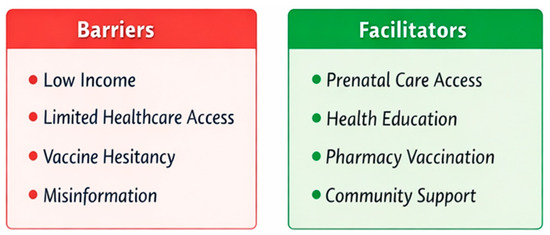
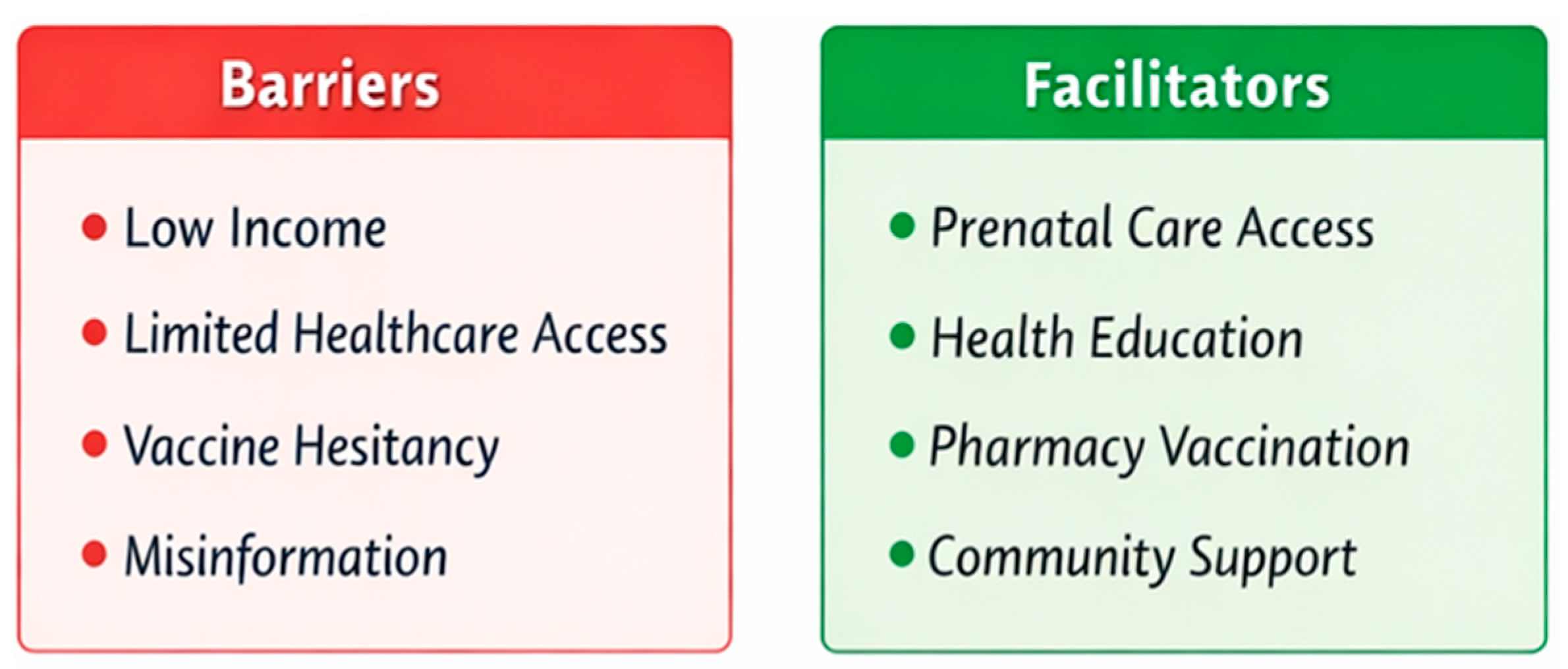
Figure 2 summarizes the main barriers and facilitators influencing maternal respiratory syncytial virus vaccination identified in the included studies. Barriers include limited access to healthcare, low socioeconomic status, and lack of information, while facilitators include access to prenatal care, healthcare provider recommendation, and availability of vaccination services.
Figure 2.
Barriers and facilitators influencing maternal respiratory syncytial virus vaccination uptake.
Qualitative literature with non-Hispanic Black pregnant women in the United States highlights communication barriers, experiences of institutional distrust, and a lack of clear and culturally sensitive recommendations, factors that contribute to lower acceptance of vaccination and reinforce the importance of trust relationships in prenatal care [13]. Retrospective analysis shows differences in initial vaccination coverage, with lower rates among racialized groups and variation according to type of insurance and socioeconomic indicators, highlighting how social inequalities structure opportunities for access to immunological interventions [14].
It is estimated that initial coverage of maternal vaccination and nirsevimab administration will remain low to moderate, with clear variations by race and barriers related to recommendation, availability, and risk perception, reinforcing the importance of disaggregated monitoring and specific strategies for vulnerable groups [15].
In the United Kingdom, combining cohort analyses and interviews with women of different ethnic backgrounds, it is found that, despite the gradual increase in coverage over the weeks, disparities persist according to ethnicity and socioeconomic level, influenced by barriers to access to prenatal care, communication difficulties, and different perceptions about the risk and safety of vaccination [16]. Similar results emerge from North American hospital cohorts, in which, although some centers show high coverage, it is observed that sociodemographic factors continue to shape adherence, which reinforces the need for strategies that reach historically marginalized groups [17].
In Wisconsin, it was found that coverage of both maternal vaccination and nirsevimab shows significant variations according to demographic characteristics, with lower rates among racialized groups and populations affected by local social determinants, indicating how socioeconomic conditions shape access to and adherence to immunization strategies [18]. When this perspective is broadened to the national level, encompassing 33 US states and the District of Columbia, it reinforces the finding that disparities persist between different population groups and between states, reflecting structural inequalities that persistently affect the coverage and effectiveness of immunization programs. The lack of uniformity between jurisdictions and the reliance on different collection and recording methods hinder coordinated interventions, reinforcing the need for disaggregated monitoring and specific strategies for vulnerable groups [19].
In New York, further analyses suggest that, although maternal vaccination is not associated with an increase in adverse events such as premature birth, differences in vaccine access persist according to type of insurance, hospital of care, and other structural indicators that are frequently correlated with race/ethnicity. These findings connect to evidence that social and institutional factors impact the likelihood of uptake, demonstrated by studies that identify lower intention and adherence in racialized groups as a function of trust, professional recommendation, and availability of immunobiologicals, highlighting the influence of communication and access to health services [20,21]
Globally, a narrative review reinforces the effectiveness of RSV vaccination but denounces the systematic lack of analyses disaggregated by race/ethnicity, which limits the identification of inequalities and hinders the construction of equitable evidence-based policies [22,23,24]. This concern becomes even more relevant in light of multicenter studies of real-world effectiveness, such as the one conducted in Argentina and European centers, which demonstrated a robust reduction in hospitalizations in immunized infants, but whose population impact depends on equity in supply and guaranteed access for more vulnerable groups; otherwise, the collective benefit will be significantly reduced [25,26], as shown in Table 2.
Table 2.
Definition/registration of race and main findings on inequalities and inequities.
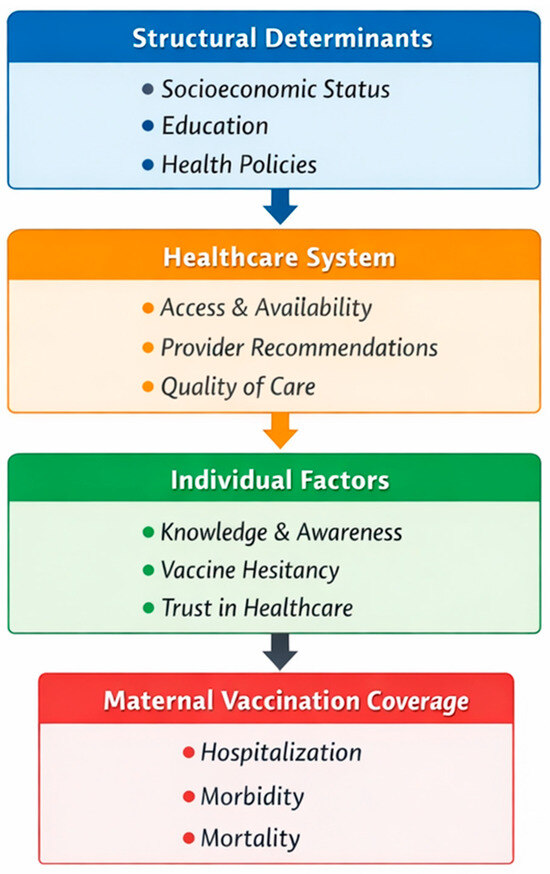
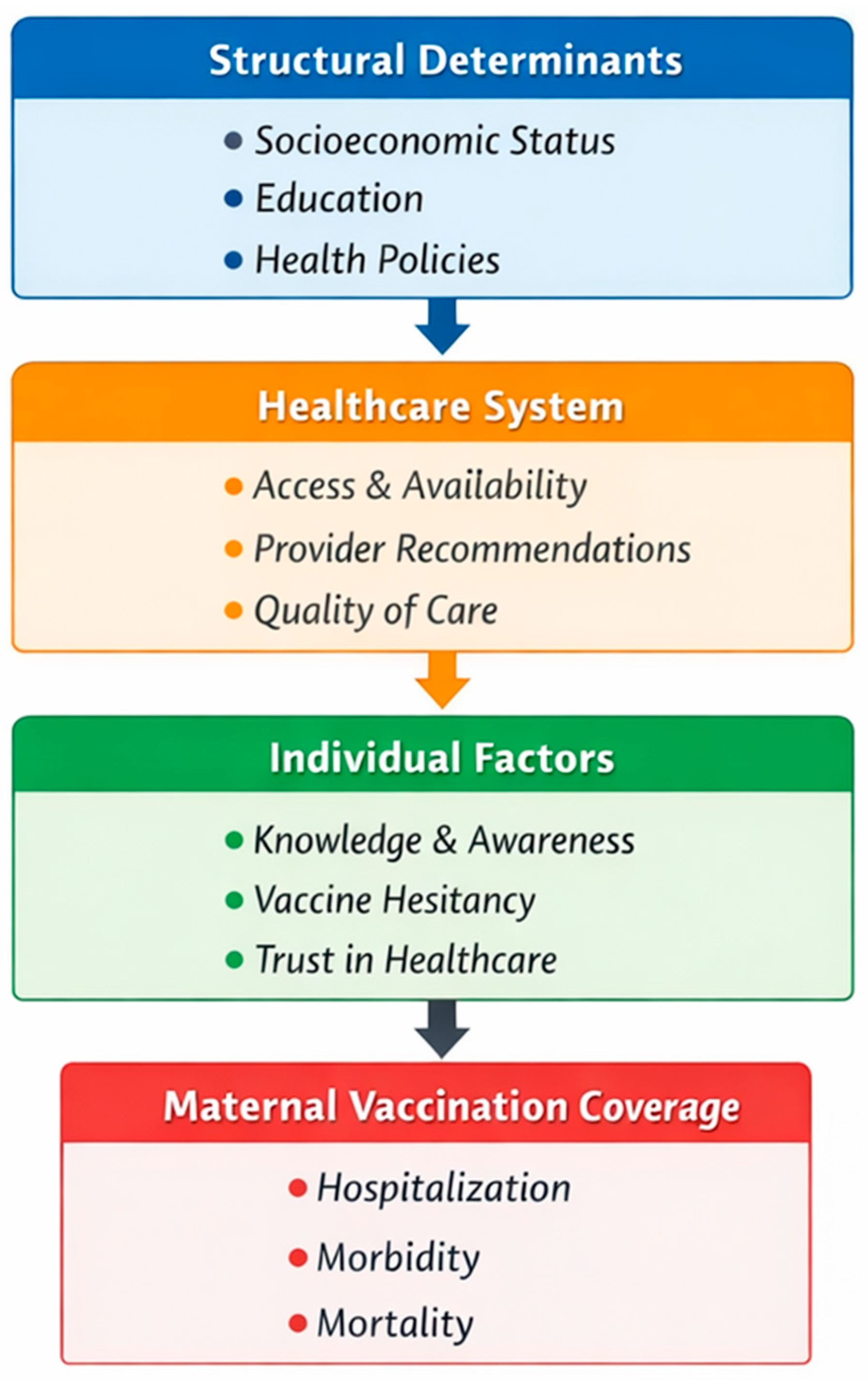
Figure 3 presents a conceptual framework illustrating how structural determinants, health system factors, and individual-level factors interact to influence maternal respiratory syncytial virus vaccination uptake. The model highlights the role of social inequalities, access to healthcare, and provider recommendations in shaping vaccination coverage and subsequent infant health outcomes.
Figure 3.
Conceptual framework of determinants influencing inequalities in maternal respiratory syncytial virus vaccination.
3. Discussion
The present review was developed in response to the growing need to understand how structural and racial inequalities influence the implementation of maternal RSV vaccination. While the clinical effectiveness of the vaccine has been widely documented, fewer studies have examined how social determinants and institutional dynamics shape unequal access to this preventive intervention. By synthesizing evidence from different methodological approaches and geographical contexts, this study contributes to filling an important gap in the literature and highlights the need for equity-oriented implementation strategies in maternal immunization programs.
3.1. Logistical Barriers and Access to Prenatal Services
The clinical efficacy of the bivalent RSVpreF vaccine is unquestionable, but the transition from research to routine practice has exposed significant flaws in the health infrastructure that translate into logistical barriers to access, which disproportionately affect pregnant Black women. Analyzing the initial phase of implementation of maternal RSV vaccination in various contexts revealed that, in many locations, the vaccine was not homogeneously integrated into the obstetric care flow. Instead of being offered on-site during prenatal visits, patients were frequently referred to pharmacies or other external services. This fragmentation of the offer imposes an unnecessary cognitive and logistical burden on pregnant women, requiring additional time, transportation, and coordination, factors that become insurmountable limitations for low-income women or those with multiple social and family responsibilities, where prioritizing other needs takes precedence over seeking the immunizing agent [5,25].
In contrast, a study by Ford et al. (2025) [9], analyzing maternal vaccination opportunities in multiple countries, emphasized that maximizing coverage requires optimizing all contact opportunities, which implies that the vaccine must be available at all prenatal care points, not just central or referral locations. When this principle of universality in supply fails, the exclusion of peripheral and racially marginalized populations becomes an inevitable and measurable consequence [9].
Therefore, overcoming racial disparities in maternal RSV vaccination requires more than educational campaigns, demanding a radical intervention in the organization of health services. The failure to treat vaccination as an essential and integrated component of primary and prenatal care reflects an institutional prioritization that penalizes pregnant women, particularly the most vulnerable. The focus should shift from individual “vaccine hesitancy” to systemic “implementation failure,” recognizing that non-adherence in Black groups is, to a large extent, a rational response to a health system that imposes practical and financial obstacles incompatible with their socioeconomic realities, demonstrating that logistics is fundamentally a matter of equity [10].
3.2. Inconsistent Offerings in Areas of Focus and Organizational Gaps
The heterogeneity in vaccination coverage among different health systems and units, as observed in the results of this review, points to organizational and institutional gaps that compromise equity in the delivery of the RSVpreF vaccine. These failures are not random; they are concentrated in primary care units and public hospitals that predominantly serve Black and low-income populations, establishing an inconsistent supply pattern that is a symptom of structural underinvestment. The study by Joseph and Swamy (2025) [10] highlighted that variability in uptake rates is often attributed to the lack of standardized protocols for receiving, storing, and administering the vaccine, which translates into inopportune moments of stock shortages or lack of trained personnel for application, especially outside large referral centers [10].
The introduction of a new vaccine into the gestational schedule requires robust training and coordination of the multidisciplinary team, from obstetricians and nurses to administrative staff. The reliance on team coordination to overcome logistical challenges, such as managing the specific cold chain for modern vaccines and maintaining stock within the expiration window, imposes an excessive burden on units with high employee turnover or low staffing. Implementation literature suggests that disorganization of these processes leads to erratic vaccination rates. When compared to private clinics with abundant resources, public units serving Black populations demonstrate greater vulnerability to these operational failures, resulting in missed vaccination opportunities for pregnant women who already face multiple access barriers [5].
Access to vaccination may also be influenced by the organization of healthcare systems, including the role of community pharmacies. In several countries, particularly in Europe and North America, pharmacies play an important role in improving vaccine access, increasing awareness, and administering vaccines, contributing to higher vaccination coverage and reduced inequalities. Pharmacist-led vaccination programs have been associated with improved accessibility, especially among underserved populations, due to extended hours, geographic proximity, and reduced structural barriers [1,2].
In addition to internal operational weaknesses, the lack of a clear compensation policy or incentives for health providers working in more vulnerable areas can discourage the prioritization of maternal vaccination. In many contexts, compensation for vaccine administration is more complex or less advantageous in low-paying public or social security systems, leading to organizational inertia in the full adoption of the program. This economic disparity in compensation indirectly creates a system where the quality and convenience of vaccine provision vary according to the patient’s purchasing power, and, in a racially stratified system, this translates into racial disparity in access [6].
Ultimately, organizational gaps demonstrate that vaccine equity cannot be achieved without conscious and redistributive investment in health units that have historically received fewer resources. The study by Ford et al. (2025) [9] concludes that, in order to optimize maternal vaccination opportunities and ensure that benefits reach all groups, a re-engineering of health systems is essential to ensure that vaccination protocols are universal, simplified and rigorously monitored with regard to race and ethnicity. Inconsistency in supply is a reflection of institutional racism that manifests itself in the under-optimization of care at health points serving Black populations, failing to ensure that a vital health innovation is distributed equitably [9].
3.3. Institutional Distrust and a History of Discrimination (Structural Racism)
Institutional distrust among pregnant Black women should not be simplified as mere “vaccine hesitancy” but rather understood as a rational and protective response to a documented history of discrimination and neglect in the health system, being a central pillar of structural racism. The perception of being treated differently, disregarded, or subject to implicit biases by health professionals is omnipresent and undermines the credibility of medical recommendations. This distrust is deeply rooted in historical narratives of exploitation and medical malpractice directed at Black bodies, leading pregnant women to question the safety of the new vaccine and to actively seek validation outside the health institution [13].
This distrust is directed not only at the vaccine itself but also at the sender of the message, that is, the professionals and the health system. The perception that primary care and prenatal care are not safe or empathetic spaces, often due to the experience of microaggressions or the suppression of symptoms, affects the acceptance of all recommended interventions, including the RSV vaccine. The literature on equity argues that it is insufficient to present efficacy data alone if the context of the professional-patient interaction is permeated by mutual suspicion. The experience of racism in the clinical setting, which can manifest as a lack of active listening or underestimation of pain, creates an emotional and social barrier that prevents pregnant Black women from fully internalizing and accepting the vaccination recommendation as a genuine act of care [8].
The collection of race and ethnicity data in health systems remains an important tool for identifying health disparities and evaluating the effectiveness and equity of public health interventions. These data allow the identification of vulnerable populations and support targeted strategies to reduce inequalities. However, the use of such information requires strict ethical safeguards, confidentiality protections, and clear public health justification to prevent misuse and discrimination. The ethical use of ethnicity data should be guided by principles of equity, transparency, and protection of individual rights [6].
Overcoming institutional distrust cannot be achieved with informational leaflets alone. It requires a profound reform in the organizational culture of health services, including mandatory anti-racist training for professionals, focused on recognizing and dismantling implicit bias. It is crucial that healthcare providers demonstrate cultural humility and vulnerability by acknowledging the history of harm caused by the system, creating an environment for dialogue that validates the concerns of pregnant Black women. Joseph & Swamy (2025) [10] emphasize that filling the “implementation gap” requires strengthening the health infrastructure based on trust and mutual respect, recognizing that trust is the precursor to vaccine adherence, not its consequence, especially in marginalized populations [10].
3.4. Inadequate Communication and Lack of Culturally Competent Advice
The way information about RSV vaccination is conveyed acts as a powerful mediator of racial inequity in adherence. Inadequate communication, which manifests as generic, technocratic messages or fails to address the specific concerns of minority groups, directly contributes to vaccine hesitancy, as evidenced in the results of this review. The study by Razai et al. (2025) [8], in conducting a qualitative investigation with pregnant women of various ethnicities, including those from Black communities, identified that many felt that the information provided by health professionals was insufficient to alleviate their anxieties about the safety of the immunizing agent for the fetus and the ideal timing of administration. This failure to personalize the message and anticipate legitimate doubts, especially those related to previous experiences of discrimination or cultural myths, creates a critical gap in knowledge transfer [8].
The concept of cultural competence is central to mitigating this disparity. Effective counseling transcends the mere recitation of efficacy data; it requires that healthcare professionals acknowledge the history, social context, and unique concerns of Black pregnant women. In many cases, communication fails because it focuses only on why to vaccinate (the benefit) and not on how or by whom (the safety and reliability of the provider). Mendez et al. (2025) [13] documented that Black pregnant women value interactions where the provider demonstrates active listening and validates their fears of being used as “guinea pigs” or of neglect. The absence of two-way dialogue and the use of command language instead of collaboration undermine autonomy and trust, especially in a scenario of already established institutional distrust [7].
Furthermore, the literature emphasizes the need for culturally adapted messages that use trusted communication channels within the community. Relying solely on leaflets or standardized information in hospitals does not reach pregnant women who may be more likely to seek advice from community leaders, religious groups, or family members due to distrust of the formal system. Ineffective communication perpetuates a vicious cycle: lack of quality information leads to hesitancy, which is then diagnosed by the system as “irrational hesitancy,” reinforcing bias and a lack of investment in culturally sensitive communication strategies. A review study on vaccine introduction demonstrated that the most successful strategies involve the use of peer narratives and community ambassadors to legitimize the message [25].
Therefore, transforming health communication should be a pillar of equity interventions. This includes training all prenatal professionals to become more empathetic and informed communicators about racial inequities, able to translate vaccine science in an accessible way, and to respond transparently to safety concerns and the history of discrimination. Successful implementation of RSV vaccination requires a bridge of trust built through counseling that is respectful, relevant, and culturally responsive, ensuring that the benefit of immunization is communicated in a way that is acceptable to Black pregnant women [10].
3.5. Socioeconomic and Social Security Determinants (Insurance, Income, Work)
Economic factors represent one of the most consistent determinants of vaccination uptake across populations. Lower income has been associated with reduced access to healthcare services, lower vaccination coverage, and increased barriers to preventive care, regardless of race or ethnicity. These findings highlight the importance of addressing socioeconomic inequalities as part of strategies to improve equitable access to maternal vaccination [5,8].
The clinical efficacy of the bivalent RSVpreF vaccine is unquestionable, but the transition from research to routine practice has exposed significant flaws in the health infrastructure that translate into logistical barriers to access, which disproportionately affect Black pregnant women. The study by Quincer et al. (2024) [5], when analyzing the initial phase of implementation of maternal vaccination against RSV in various contexts, revealed that, in many locations, the vaccine was not homogeneously integrated into the obstetric care flow. Instead of being offered on-site during prenatal visits, patients were frequently referred to pharmacies or other external services [5].
The logistical problem is aggravated by the restricted and crucial time window for administering the vaccine, ideally between the 24th and 36th week of gestation. The difficulty in scheduling or attending a second visit dedicated solely to vaccination, coupled with factors such as the geographical distance from the health service and the lack of reliable public transport, transforms a public health recommendation into a privilege of access. The inconsistency of scheduling systems and the lack of flexibility in the operating hours of vaccination units thus become structural obstacles. For pregnant Black women who frequently have precarious jobs without paid leave for medical appointments, the need to miss work to obtain the vaccine represents a direct economic cost that impacts the decision to adhere to the vaccine, highlighting how the patient’s socioeconomic structure is inseparable from the logistics of access [6].
Religious beliefs may also influence vaccination decisions, although their impact varies widely across individuals and communities. Some studies have shown that religious beliefs can affect perceptions of disease risk, trust in healthcare systems, and acceptance of preventive interventions, including vaccination. However, vaccine hesitancy is a complex and multifactorial phenomenon influenced by social, cultural, economic, and informational factors and should not be attributed to specific ethnic or cultural groups in a generalized manner [7].
3.6. Lack of Disaggregated Data and Statistical Obfuscation
One of the biggest methodological obstacles to effectively combating racial disparities in maternal RSV vaccination is the growing gap in race-disaggregated data in much of the biomedical literature and health surveillance systems. This lack of systematic and standardized recording of the race or color variable, as pointed out by several reviews, prevents accurate monitoring of equity in coverage and, consequently, frustrates the ability of health managers to design targeted interventions. The lack of disaggregated data leads to the statistical invisibility of inequities. When coverage data are presented only at the general population level, higher vaccination rates in majority groups (such as higher-income White pregnant women) can mask the low rates found in minority groups, such as Black pregnant women. This masking prevents the identification of low-coverage “clusters” and the understanding of the specific contextual factors that drive them. Incomplete or absent collection of race/color information reflects an institutional negligence that prioritizes general clinical information to the detriment of the social dimension of health, a bias that is, in itself, a manifestation of structural racism within research and surveillance [9].
In addition to the problem of data collection, there is the issue of data analysis and dissemination. Even when race information is collected, it is not always used to stratify the analysis or included in final reports in a transparent manner. The omission of stratified analyses is an ethical and methodological flaw that prevents the scientific community and policymakers from quantifying the impact of inequality. The literature on equity in public health calls for stratification by race to be a mandatory standard in all vaccine implementation studies, allowing interventions to be evaluated not only for clinical effectiveness but also for their ability to reduce (or at least not amplify) pre-existing disparities [10].
Therefore, for public health efforts to be genuinely equitable, it is imperative to implement surveillance systems that prioritize standardized collection and disaggregated analysis of vaccination data by race, ethnicity, and socioeconomic determinants. The active inclusion of race as a variable in databases is not merely a bureaucratic matter but an essential anti-racist tool for decision-making. Only by making disparities visible through robust data is it possible to effectively direct resources to communities of Black pregnant women who most need the vaccine, transforming statistical invisibility into targeted action for equity [6].
3.7. Impacts on Vaccination Coverage and Child Outcomes
Racial disparities in maternal RSV vaccination coverage have a direct and alarming consequence on health outcomes in infants from Black communities, translating inequity in maternal access into inequity in child protection. Real-world effectiveness literature confirms that low maternal vaccination rates in a given community correlate with a higher rate of hospitalization for severe RSV disease in newborns and infants from that same area, demonstrating that failure to reach Black pregnant women results in suboptimal protection for their children [7,13].
RSV is one of the leading causes of infant mortality and morbidity globally, and the benefit of maternal vaccination is to passively transfer protective antibodies to the fetus, ensuring immunity in the first and most vulnerable months of life. When uptake is low in Black populations due to structural barriers, the relative risk of RSV hospitalization in Black infants increases disproportionately, amplifying existing disparities in maternal and child health indicators. This situation not only denies the benefits of technological innovation to a group that could be doubly benefited (by protection against prematurity and by reducing infection) but also overburdens health systems with avoidable hospitalizations that are concentrated in public or referral hospitals [5].
Inequality in access to maternal vaccines, therefore, compromises intergenerational health equity. The failure to address logistical, socioeconomic, and trust barriers during pregnancy manifests as increased and avoidable vulnerability in childhood. The maternal and child public health literature has emphasized the need for an equity framework that evaluates interventions not only by their average population effectiveness but by their impact on reducing the gap between groups. If a new vaccine, when introduced, is primarily accessed by more privileged groups (White pregnant women with higher incomes), it may, paradoxically, widen disparities in child health outcomes, an unethical and unacceptable result [10].
In essence, the fight against inequities in maternal RSV vaccination is a fight for equal opportunities in early childhood. Evidence challenges the idea that the problem is merely one of individual acceptance, demonstrating that structural failures in implementation result in an unequally distributed clinical benefit. Continuous monitoring of uptake rates by race and assessment of corresponding child health outcomes are crucial measures to ensure that the RSVpreF vaccine fulfills its promise of being a powerful tool for universal public health and not a factor in perpetuating pre-existing racial disparities in maternal and child care [6].
3.8. Facilitating Strategies Identified (Active Outreach, Community Involvement, Anti-Racist Training)
In contrast to the documented barriers and inequities, the scientific literature consistently points to a set of facilitating strategies whose implementation is crucial to ensure equity in maternal RSV vaccination, focusing on restructuring the service and rebuilding trust. One of the most effective interventions lies in the active and integrated offering of the vaccine: the immunizing agent should be administered at the site and time of the routine prenatal consultation, eliminating the need for referrals to pharmacies or separate visits. Joseph & Swamy (2025) [10] emphasize that this simplification of access, or the elimination of the “implementation gap,” is the single most important organizational factor for increasing uptake, especially in systems that serve populations with fewer resources and a higher burden of commitments [10].
In addition to logistical integration, community engagement and the use of patient browsers are essential tools to overcome barriers of mistrust and information. Successful strategies involve collaboration with community leaders, pregnancy support groups, and health ambassadors who are trusted members of the Black community itself, capable of conveying information about vaccine safety and efficacy in a context of mutual validation. Mendez et al. (2025) highlight that counseling by peers or providers who share the same ethnic or cultural identity is significantly more effective in dismantling institutional distrust than just formal medical information, as it validates the pregnant woman’s experience and humanizes the decision-making process [13].
The pillar of professional development and anti-racist training is indispensable. Recognizing that institutional racism manifests itself in a lack of active listening, underestimation of pain, and inadequate communication requires that health providers be trained to recognize and mitigate their own implicit biases. The health equity literature points out that improving the quality of care and increasing institutional trust are prerequisites for vaccine adherence. Training should empower professionals to address vaccine hesitancy not as ignorance but as a justified response to historical discrimination, transforming clinical interaction into a space of dialogue and mutual respect, which is a key factor for the successful introduction of new technologies in minority populations [8].
Finally, rigorous and disaggregated surveillance and monitoring by race and socioeconomic status must be institutionalized to ensure the sustainability of equity. Ford et al. (2025) [9] state that active surveillance of disparities allows health managers to dynamically allocate resources to areas of low coverage, implementing targeted interventions instead of generalized and ineffective solutions. Enabling strategies, therefore, should be designed as a package of interventions: simplified logistics (active offering), trust-based communication (community engagement), and institutional accountability (disaggregated monitoring and anti-racist training). This multifaceted approach is the only way to ensure that the RSVpreF vaccine becomes a tool for reducing inequities and no longer an element of exclusion [9].
The studies analyzed demonstrate that Black pregnant women tend to be less likely to receive recommended prenatal vaccines, including recent immunizations such as the RSV vaccine, when compared to White pregnant women or those from other racial groups. This difference is explained by multiple interrelated factors, such as difficulties in physical access to health services, structural precariousness of the territories in which they live, lower active vaccination availability during prenatal care, institutional discrimination, and previous experiences of racism that weaken trust in the health system. In addition, the racial definition used in the studies, often self-reported, highlights the need for standardization and the expansion of stratified analyses to better capture intersectional nuances.
Not all studies published in 2023–2025 perform robust analysis disaggregated by race; in some contexts (European countries), the recording of race/ethnicity is limited by data collection policies; this restricts the international generalization of the inequalities found. Many studies are observational and based on administrative records and therefore subject to information bias (completeness of the “race” field) and confounding. Conclusions about determinants should therefore be interpreted with caution and triangulated with qualitative evidence.
3.9. Limitations and Contributions
This study has some limitations that should be considered when interpreting the findings. First, the included studies showed substantial heterogeneity in terms of study design, population characteristics, outcome definitions, and measures of vaccination uptake, which limited direct comparability between studies. Second, most of the included studies were conducted in high-income countries, particularly the United States, which may limit the generalizability of the findings to low- and middle-income settings, where structural barriers and health system organization may differ. Additionally, several studies relied on secondary data sources, such as surveillance systems, administrative databases, and electronic health records, which may be subject to incomplete data recording, misclassification, and underreporting, particularly regarding race and ethnicity variables. The use of secondary data may also limit the ability to explore contextual, social, and behavioral factors influencing vaccination uptake. As this was a rapid review, methodological shortcuts inherent to this type of review may have increased the risk of publication bias and the omission of relevant studies, particularly unpublished data or studies published in languages other than those included in the search strategy. Furthermore, the recent introduction of maternal vaccination against respiratory syncytial virus means that the number of available studies remains limited, and the evidence base is still evolving.
This study provides important contributions to the current scientific literature and public health practice. First, it synthesizes recent evidence on inequalities in maternal vaccination against respiratory syncytial virus, an emerging immunization strategy that remains underexplored, particularly from an equity perspective. By focusing on disparities affecting racially minoritized pregnant women, this review highlights structural and systemic barriers that may compromise equitable access to maternal immunization. Second, this study contributes to advancing knowledge on social determinants influencing maternal vaccination uptake, reinforcing the importance of incorporating equity-oriented approaches into immunization programs. The findings help to identify gaps in access, barriers related to healthcare delivery, and populations at greater vulnerability, supporting the development of targeted and inclusive public health strategies. Third, this review provides relevant evidence to inform decision-making by policymakers, healthcare managers, and professionals involved in maternal and child health, particularly in the context of implementing and expanding maternal vaccination within national immunization programs. Finally, this study identifies important gaps in the literature, including the limited availability of data from low- and middle-income countries and the need for further research exploring structural, social, and healthcare-related determinants of maternal vaccination. These findings may guide future research and contribute to strengthening equitable maternal and child health policies.
4. Materials and Methods
4.1. Type of Study
This is a rapid literature review with a mixed approach (narrative synthesis and thematic analysis), intended to synthesize evidence [27] on inequalities and inequities in adherence to and accessibility to maternal vaccination against RSV in pregnant women from the Black population. The choice of the rapid review format is due to the need to produce actionable evidence in a short time [27], while maintaining systematic procedures and methodological transparency adapted from the Preferred Reporting Items for Systematic Reviews and Meta-Analyses (PRISMA) guidelines (as per attached Supplementary Material) and the Cochrane Handbook for rapid reviews [28,29], protocol to the Open Science Framework (OSF) (https://doi.org/10.17605/OSF.IO/S3YBX).
The choice of a rapid literature review was justified by the recent introduction of maternal RSV vaccination and the urgent need to synthesize emerging evidence to support decision-making in maternal and child health policies. Rapid reviews allow the timely identification of patterns, gaps, and structural determinants influencing vaccination uptake, while maintaining methodological transparency and rigor. This approach is particularly useful in contexts where scientific evidence is rapidly evolving and where timely synthesis can contribute to guiding equitable implementation strategies in healthcare systems.
4.2. Research Question
The research question was structured using the acronym PECO (Population—Exposure—Comparator—Outcome): P (Population): Black pregnant women; E (Exposure): Availability/receipt of RSV vaccination (Abrysvo®) during pregnancy; C (Comparator): Pregnant women of other races or unvaccinated; contexts with different service availability; and O (Outcomes): Inequalities/inequities in vaccination coverage, access barriers, and sociocultural and institutional determinants affecting vaccination. Thus, the question was: In Black pregnant women (P), what are the main inequalities and inequities associated with the availability and uptake of RSV vaccination during pregnancy (E), compared to pregnant women of other races or unvaccinated women (C), and what determinants (social, structural, institutional) explain the observed disparities (O)?
4.3. Inclusion and Exclusion Criteria
The inclusion criteria encompassed original studies of a qualitative, quantitative, or mixed nature; literature reviews, reflection studies; technical documents; and institutional reports related to maternal vaccination that presented analysis or disaggregation of results by race. Studies addressing pregnant women or maternal immunization policies and dealing with inequalities or structural barriers related to the Black population were eligible. Studies published between 2022 and 2025, in English, Portuguese, or Spanish, were included, a period chosen to reflect the current relevance of the discussion and in line with the recent availability and incorporation of maternal vaccines against RSV. Studies without racial discussion, laboratory studies, preclinical trials, and any documents that did not address the relationship between race and vaccination, as well as publications outside the delimited period or in ineligible languages, were excluded.
4.4. Search Strategy and Information Sources
The search strategy was developed using controlled (MeSH and DeCS) and uncontrolled terms, combining descriptors related to RSV, maternal vaccination, pregnancy, race, inequalities, and inequities, using Boolean operators to ensure sensitivity and specificity. Specifically: (“Respiratory Syncytial Virus” OR “RSV” OR “respiratory syncytial virus*”) AND (vaccin* OR “maternal immuni*” OR “maternal vaccin*” OR Abrysvo OR RSVpreF) AND (pregnant* OR gestant* OR “pregnancy” OR “gravidez”) AND (“health disparit*” OR inequality* OR inequit* OR access* OR barrier* OR race OR ethnic* OR black OR african* OR afrodesc* OR “racial disparity”). The search was conducted in the PubMed via Medical Literature Analysis and Retrievel System Online (Medline), Embase, Scopus, Web of Science, Cumulative Index to Nursing and Allied Health Literature (CINAHL), Literatura Latino-Americana e do Caribe em Ciências da Saúde (LILACS) and SciELO databases.
4.5. Procedure for Screening, Extracting and Managing Records
All records were imported into a bibliographic manager for initial deduplication and then loaded into Rayyan for blind screening; two independent reviewers (R1 and R2) performed blind screening by title/abstract in Rayyan. Records marked as “include” by both advanced reviewers; disagreements were resolved by discussion and, if necessary, by a third reviewer (R3); articles selected in the initial screening were obtained in Portable Document Format (PDF) and evaluated in full text by R1 and R2; again, disagreements were resolved by consensus with R3. All steps were documented and presented in a PRISMA flowchart adapted for rapid review; a standardized form (Excel/RedCap spreadsheet) was used with the following minimum fields: author, year, country, study design, population and sample size, main findings, limitations, and conclusions. Extraction was performed by one reviewer and verified by another. All records, inclusion/exclusion decisions, and notes were maintained in Rayyan (tags and comments), and the extraction form was versioned.
The screening and management process of the studies was carried out using the Rayyan software [30]. Initially, the records were imported into a bibliographic manager for duplicate removal and subsequently loaded into Rayyan, which allowed independent and blind screening by two reviewers. Disagreements were resolved by consensus or with the assistance of a third reviewer. The selection occurred in two stages: screening by title and abstract, followed by full reading of eligible texts. Rayyan was also used for categorizing studies, documenting reasons for exclusion, and recording eligibility decisions.
4.6. Synthesis and Interpretation of the Data
Screening and some of the organization were performed in Rayyan (labels for study type and results by race, country, and design). Methodological quality assessments were performed independently by two reviewers using standardized tools according to the design: Qualitative Studies Checklist (CASP) [31] for qualitative studies, Newcastle–Ottawa Scale (NOS) [32] for observational studies, and Joanna Briggs Institute (JBI) critical appraisal tools [33] for diverse studies. Assessments (scores, comments on risk of bias) were recorded in the extraction spreadsheet and also noted as comments in the Rayyan records for traceability.
The interpretation of the findings was conducted in light of Critical Race Theory (CRT), which guides the understanding of health inequalities as a consequence of social structures, institutional practices, and historical dynamics of racism that shape access to services. This approach allowed us to interpret the data beyond numerical differences, emphasizing structural processes that reinforce inequalities in the reproductive health of the Black population [34].
The analysis of the extracted content followed the principles of thematic analysis proposed by Bardin. The pre-analysis involved exploratory reading of the studies, delimitation of the corpus, and identification of relevant recording units [35]. Subsequently, systematic coding and thematic categorization were carried out, allowing the grouping of findings into central themes indicative of racial inequalities in maternal vaccination. The emerging categories were refined by triangulation among reviewers and integrated into an interpretative synthesis that articulated qualitative and quantitative evidence. The presentation of the results followed the PRISMA model, with a narrative description of the findings, a table of study characteristics, a critical appraisal framework, and a thematic discussion articulated with the adopted theoretical framework.
4.7. Presentation of the Review
The presentation of the rapid review results was structured in an integrated and continuous manner, encompassing both methodological transparency and a critical synthesis of the findings. Initially, a PRISMA flowchart adapted for rapid reviews was developed, describing in text the path of the identification, screening, eligibility, and inclusion stages of the studies, specifying the number of records found in the consulted databases, the reasons for exclusion after reading titles, abstracts, and full texts, as well as the final number of publications included in the synthesis.
Next, the essential characteristics of the selected studies were described, presented in a narrative manner using a table constructed for analytical purposes, containing information on the author, year of publication, country of study, methodological design, sample size and profile, and form of racial definition or classification adopted, in addition to the main results related to inequalities and inequities in RSV vaccination among Black pregnant women.
The qualitative analysis phase was presented through the construction of a thematic map derived from the content analysis proposed by Bardin [35], integrating emerging categories related to structural barriers, systemic racial inequalities, social determinants of health, institutional discrimination, and impacts on maternal vaccination coverage for RSV. This map was described with the presentation of illustrative excerpts from the included qualitative studies, without compromising ethical integrity, but ensuring transparency and interpretative depth. In parallel, a narrative synthesis was developed that articulates quantitative and qualitative findings, highlighting convergences, divergences, and complementarities. In this synthesis, a specific section was dedicated to the interpretation of the results in light of Critical Race Theory, emphasizing how social structures, historical processes, and mechanisms of institutional racism shape unequal access to vaccination among Black pregnant women, influencing both the risk of illness and maternal-infant outcomes related to RSV.
4.8. Ethical Aspects
Since this literature review was based exclusively on previously published and publicly accessible materials, there was no need to submit it to the Research Ethics Committee. Nevertheless, ethical principles related to the responsible use of information, proper attribution of authorship, careful treatment of racial categories in an anti-racist and non-stigmatizing manner, and transparency regarding the methodological limitations of the review were observed.
5. Conclusions
This rapid review identified evidence of inequalities in the uptake of and access to maternal vaccination against respiratory syncytial virus, particularly affecting racially minoritized pregnant women. The findings suggest that these disparities are influenced by multiple factors, including differences in access to healthcare services, availability of information, and structural barriers within health systems. However, the magnitude and determinants of these inequalities varied across studies and contexts. Given the recent implementation of maternal respiratory syncytial virus vaccination programs, the available evidence remains limited and concentrated in specific settings. Therefore, further research is needed to better understand the underlying mechanisms of these disparities and to evaluate strategies aimed at promoting equitable access. These findings highlight the importance of incorporating equity considerations into maternal immunization policies and programs to ensure that the benefits of this preventive strategy are accessible to all population groups.
Supplementary Materials
The following supporting information can be downloaded at: https://www.mdpi.com/article/10.3390/women6020023/s1, PRISMA 2020 checklist.
Author Contributions
Conceptualization, G.G.d.S.; methodology, G.G.d.S. and T.M.E.d.A.; software, G.G.d.S.; validation, G.G.d.S.; formal analysis, G.G.d.S., D.d.S.S., R.R.M., C.F.d.O.S., W.S.M.N., T.M.E.d.A., C.H.R.R. and C.R.d.F.I.; investigation, G.G.d.S., D.d.S.S., R.R.M., C.F.d.O.S., J.S.M., K.F.Z., R.J.O.M., C.F.L. and P.W.P.; writing—original draft preparation, G.G.d.S., D.d.S.S., R.R.M., C.F.d.O.S., J.S.M., K.F.Z., R.J.O.M., C.F.L., P.W.P., J.G.d.O.N., W.S.M.N., T.M.E.d.A., C.H.R.R., C.R.d.F.I., J.M.d.N.C., A.C.R.d.F.D., M.L.S.B. and M.J.J.G.; writing—review and editing, G.G.d.S., D.d.S.S., R.R.M., C.F.d.O.S., J.S.M., K.F.Z., R.J.O.M., C.F.L., P.W.P., J.G.d.O.N., W.S.M.N., T.M.E.d.A., C.H.R.R., C.R.d.F.I., J.M.d.N.C., A.C.R.d.F.D., M.L.S.B. and M.J.J.G. All authors have read and agreed to the published version of the manuscript.
Funding
This research received no external funding.
Institutional Review Board Statement
Not applicable.
Informed Consent Statement
Not applicable.
Data Availability Statement
All data generated or analysed during this study are included in this published article and available in the Open Science Framework (OSF) repository (https://doi.org/10.17605/OSF.IO/S3YBX).
Conflicts of Interest
The authors declare no conflicts of interest.
Abbreviations
| CASP | Qualitative Studies Checklist |
| JBI | Joanna Briggs Institute |
| NIP | National Immunization Program |
| NOS | Newcastle–Ottawa Scale |
| Portable Document Format | |
| PECO | Population, Exposure, Comparator, Outcome |
| PRISMA | Preferred Reporting Items for Systematic Reviews and Meta-Analyses |
| RSV | Respiratory Syncytial Virus |
| SDGs | Sustainable Development Goals |
References
- Kampmann, B.; Madhi, S.A.; Munjal, I.; Simões, E.A.F.; Pahud, B.A.; Llapur, C.; Baker, J.; Marc, G.P.; Radley, D.; Shittu, E.; et al. Bivalent Prefusion F Vaccine in Pregnancy to Prevent RSV Illness in Infants. N. Engl. J. Med. 2023, 388, 1451–1464. [Google Scholar] [CrossRef] [Scilit]
- Papazisis, G.; Topalidou, X. Maternal Vaccination for the Prevention of Infantile RSV Disease: An Overview of the Authorized, In-Progress, and Rejected Vaccine Candidates. Vaccines 2024, 12, 980. [Google Scholar] [CrossRef] [Scilit]
- MotherToBaby|Fact Sheets [Internet]. Respiratory Syncytial Virus (RSV) Vaccine (Abrysvo®); Organization of Teratology Information Specialists (OTIS): Brentwood, UK, 1994. [Google Scholar]
- Pérez Marc, G.; Vizzotti, C.; Fell, D.B.; Di Nunzio, L.; Olszevicki, S.; Mankiewicz, S.W.; Braem, V.; Rearte, R.; Atwell, J.E.; Bianchi, A.; et al. Real-world effectiveness of RSVpreF vaccination during pregnancy against RSV-associated lower respiratory tract disease leading to hospitalisation in infants during the 2024 RSV season in Argentina (BERNI study): A multicentre, retrospective, test-negative, case-control study. Lancet Infect Dis. 2025, 25, 1044–1054. [Google Scholar] [CrossRef] [Scilit]
- Quincer, E.M.; Cranmer, L.M.; Kamidani, S. Prenatal Maternal Immunization for Infant Protection: A Review of the Vaccines Recommended, Infant Immunity and Future Research Directions. Pathogens 2024, 13, 200. [Google Scholar] [CrossRef] [Scilit]
- Murphy, A.; Liu, Z.; De Souza, H.G.; Chilson, E.L.; Moucka, R.; Kardel, P.; Sheetz, C.; Sato, R. Disparities in Respiratory Syncytial Virus Vaccine Uptake in the Medicare Fee-for-Service Population During 2023–2024 Season. J. Am. Geriatr. Soc. 2025, 73, 3196–3202. [Google Scholar] [CrossRef] [Scilit] [PubMed]
- Dudley, M.Z.; Limaye, R.J.; Salmon, D.A.; Omer, S.B.; O’Leary, S.T.; Ellingson, M.K.; Spina, C.I.; Brewer, S.E.; Bednarczyk, R.A.; Malik, F.; et al. Racial/Ethnic Disparities in Maternal Vaccine Knowledge, Attitudes, and Intentions. Public Health Rep. 2021, 136, 699–709. [Google Scholar] [CrossRef] [Scilit] [PubMed]
- Razai, M.S.; Ussher, M.; Goldsmith, L.; Hargreaves, S.; Oakeshott, P. Navigating vaccination in pregnancy: Qualitative study in 21 ethnically diverse pregnant women. PLoS ONE 2025, 20, e0310823. [Google Scholar] [CrossRef] [Scilit] [PubMed]
- Ford, R.; Nkereuwem, O.; Madubueze, U.; Agbo, U.; Bhattarai, S.; Thami, R.; Kajungu, D.; Nambasa, V.; Msoka, A.; Hossain, M.M.; et al. Quantifying maternal vaccination opportunities across gestational age windows: A real-world multi-country, longitudinal study. AJOG Glob. Rep. 2025, 5, 100579. [Google Scholar] [CrossRef] [Scilit]
- Joseph, N.T.; Swamy, G.K. Maternal Immunization and the Implementation Gap-Strengthening Respiratory Syncytial Virus Infrastructure and Preparing for the Future. JAMA Netw. Open 2025, 8, e2460743. [Google Scholar] [CrossRef] [Scilit]
- Brasil. Ministério da Saúde. Secretaria de Vigilância em Saúde. Departamento de Vigilância Epidemiológica. Programa Nacional de Imunizações (PNI): 40 Anos/Ministério da Saúde, Secretaria de Vigilância em Saúde, Departamento de Vigilância Epidemiológica—Brasília: Ministério da Saúde, 2013. 236 p.: Il. Acesso em 9 de Dezembro. Available online: https://bvsms.saude.gov.br/bvs/publicacoes/programa_nacional_imunizacoes_pni40.pdf (accessed on 12 October 2025).
- Instituto de Pesquisa Econômica Aplicada Publicações ODS [Internet] Brasília: I.P.E.A. Acesso em 9 de Dezembro. Available online: https://www.ipea.gov.br/ods/publicacoes.html (accessed on 12 October 2025).
- Mendez, I.; Gilliard, V.G.; Randall, L.A.; Robertson, A. Attitudes and Experiences Regarding Communication About Maternal Vaccination: Qualitative Findings from Non-Hispanic Black Pregnant People. J. Womens Health 2025, 34, 1–7. [Google Scholar] [CrossRef] [Scilit]
- Jacobson, K.B.; Watson, A.J.; Merchant, M.; Fireman, B.; Zerbo, O.; Klein, N.P. Uptake of Maternal RSV Vaccination and Infant Nirsevimab Among Infants Born October 2023 to March 2024. JAMA Netw. Open 2025, 8, e2453696. [Google Scholar] [CrossRef] [Scilit]
- Razzaghi, H.; Garacci, E.; Kahn, K.E.; Lindley, M.C.; Jones, J.M.; Stokley, S.; Calhoun, K.; Black, C.L. Maternal Respiratory Syncytial Virus Vaccination and Receipt of Respiratory Syncytial Virus Antibody (Nirsevimab) by Infants Aged < 8 Months—United States, April 2024. MMWR Morb. Mortal. Wkly. Rep. 2024, 73, 837–843. [Google Scholar] [CrossRef] [Scilit]
- Razai, M.S.; Kalafat, E.; Prasad, S.; Lee-Wo, C.; Heath, P.T.; Khalil, A. Perinatal outcomes and uptake of RSV vaccine during pregnancy in South London: A cross-sectional study. BMJ Open 2025, 15, e101592. [Google Scholar] [CrossRef] [Scilit]
- Blauvelt, C.A.; Zeme, M.; Natarajan, A.; Epstein, A.; Roh, M.E.; Morales, A.; Bourdoud, N.; Flaherman, V.J.; Prahl, M.K.; Gaw, S.L. Respiratory Syncytial Virus Vaccine and Nirsevimab Uptake Among Pregnant People and Their Neonates. JAMA Netw. Open 2025, 8, e2460735. [Google Scholar] [CrossRef] [Scilit]
- Kemp, M.; Capriola, A.; Schauer, S. RSV immunization uptake among infants and pregnant persons—Wisconsin, October 1, 2023-March 31, 2024. Vaccine 2025, 47, 126674. [Google Scholar] [CrossRef] [Scilit]
- Boundy, E.O.; Fast, H.; Jatlaoui, T.C.; Razzaghi, H.; Harris, L.; Nguyen, K.; Mells, J.; Peacock, G.; Black, C.L. Respiratory Syncytial Virus Immunization Coverage Among Infants Through Receipt of Nirsevimab Monoclonal Antibody or Maternal Vaccination—United States, October 2023-March 2024. MMWR Morb. Mortal. Wkly. Rep. 2025, 74, 484–489. [Google Scholar] [CrossRef] [Scilit] [PubMed]
- Son, M.; Riley, L.E.; Staniczenko, A.P.; Cron, J.; Yen, S.; Thomas, C.; Sholle, E.; Osborne, L.M.; Lipkind, H.S. Nonadjuvanted Bivalent Respiratory Syncytial Virus Vaccination and Perinatal Outcomes. JAMA Netw. Open 2024, 7, e2419268. [Google Scholar] [CrossRef] [Scilit] [PubMed]
- Litman, E.A.; Hsieh, T.Y.J.; Modest, A.M.; Clarke, K.; Dzinoreva, M.; Perrinez, V.; Apraku Bondzie, E.; Gallup, L.; Schonberg, E.; Rowe, M.; et al. Maternal RSVpreF and Infant Nirsevimab Immunizations Uptake During Respiratory Syncytial Virus Season. JAMA Netw. Open 2025, 8, e2460729. [Google Scholar] [CrossRef] [Scilit]
- Lipsett, B.J.; Fogel, B.N.; Shedlock, K.E.; Paul, I.M.; Schaefer, E.W.; Gardner, R.E.; Kaye, L.D.; Hicks, S.D. Sociodemographic Factors, Intent-Uptake Disparities, and Nirsevimab Availability in Infant RSV Immunoprophylaxis. Pediatr. Rep. 2025, 17, 109. [Google Scholar] [CrossRef] [Scilit]
- Cobucci, R.N. Protecting the next generation: How maternal Respiratory Syncytial Virus (RSV) vaccination during pregnancy safeguards child health. Rev. Bras. Saúde Matern. Infant. 2025, 25, e20250088. [Google Scholar] [CrossRef] [Scilit]
- Borges, S.A.M.; Polli, E.O.; Nonato, A.C.; Cerchiari, N.; Verguet, S.; Sartori, A.C.; Soárez, P.C. Maternal RSV vaccination to protect infants in Brazil: A model-based cost-effectiveness analysis for incorporation into the National Immunisation Program. Lancet Reg. Health Am. 2025, 53, 101356. [Google Scholar] [CrossRef] [Scilit]
- Parker, J.; O’Brien, C.L.; Yeoh, C.; Gersh, F.L.; Brennecke, S. Reducing the Risk of Pre-Eclampsia in Women with Polycystic Ovary Syndrome Using a Combination of Pregnancy Screening, Lifestyle, and Medical Management Strategies. J. Clin. Med. 2024, 13, 1774. [Google Scholar] [CrossRef] [Scilit]
- Gorman, J.; Hart, S.M.; John, T.; Castellanos, M.A.; Harris, D.; Parsons, M.F.; Banal, J.L.; Willard, A.P.; Schlau-Cohen, G.S.; Bathe, M. Sculpting photoproducts with DNA origami. Chem 2024, 10, 1553–1575. [Google Scholar] [CrossRef] [Scilit]
- Galvão, T.F.; Pereira, M.G. Systematic reviews and other types of synthesis: Commentary on the methodological series published in Epidemiology and Health Services Epidemiologia e Serviços de Saúde. Epidemiol. Serv. Saúde 2022, 31, E2022422. [Google Scholar] [CrossRef] [Scilit]
- Page, M.J.; McKenzie, J.E.; Bossuyt, P.M.; Boutron, I.; Hoffmann, T.C.; Mulrow, C.D.; Shamseer, L.; Tetzlaff, J.M.; Akl, E.A.; Brennan, S.E.; et al. The PRISMA 2020 statement: An updated guideline for reporting systematic reviews. BMJ 2021, 372, n71. [Google Scholar] [CrossRef] [Scilit]
- Garritty, C.; Hamel, C.; Trivella, M.; Gartlehner, G.; Nussbaumer-Streit, B.; Devane, D.; Kamel, C.; Griebler, U.; King, V.J.; Cochrane Rapid Reviews Methods Group. Updated recommendations for the Cochrane rapid review methods guidance for rapid reviews of effectiveness. BMJ 2024, 384, e076335. [Google Scholar] [CrossRef] [Scilit]
- Ouzzani, M.; Hammady, H.; Fedorowicz, Z.; Elmagarmid, A. Rayyan—A web and mobile app for systematic reviews. Syst. Rev. 2016, 5, 210. [Google Scholar] [CrossRef] [Scilit]
- Sekhon, M.; de Thurah, A.; Fragoulis, G.E.; Schoones, J.; Stamm, T.A.; Vliet Vlieland, T.P.M.; Esbensen, B.A.; Lempp, H.; Bearne, L.; Kouloumas, M.; et al. Synthesis of guidance available for assessing methodological quality and grading of evidence from qualitative research to inform clinical recommendations: A systematic literature review. RMD Open 2024, 10, e004032. [Google Scholar] [CrossRef] [Scilit] [PubMed]
- Stang, A. Critical evaluation of the Newcastle-Ottawa scale for the assessment of the quality of nonrandomized studies in meta-analyses. Eur. J. Epidemiol. 2010, 25, 603–605. [Google Scholar] [CrossRef] [Scilit] [PubMed]
- Munn, Z.; Barker, T.H.; Moola, S.; Tufanaru, C.; Stern, C.; McArthur, A.; Stephenson, M.; Aromataris, E. Methodological quality of case series studies: An introduction to the JBI critical appraisal tool. JBI Evid. Synth. 2020, 18, 2127–2133. [Google Scholar] [CrossRef] [Scilit] [PubMed]
- Ford, C.L.; Airhihenbuwa, C.O. Critical Race Theory, race equity, and public health: Toward antiracism praxis. Am. J. Public Health 2010, 100, S30–S35. [Google Scholar] [CrossRef] [Scilit] [PubMed]
- Sampaio, R.C.; Sanchez, C.S.; Marioto, D.J.F.; dos Santos Araujo, B.C.; Herédia, L.H.O.; Paz, F.S.; Tigrinho, C.S.; de Souza, J.R. Muita Bardin, pouca qualidade: Uma avaliação sobre as análises de conteúdo qualitativas no Brasil. Rev. Pesq. Qual. 2022, 10, 464–469. [Google Scholar] [CrossRef] [Scilit]

Disclaimer/Publisher’s Note: The statements, opinions and data contained in all publications are solely those of the individual author(s) and contributor(s) and not of MDPI and/or the editor(s). MDPI and/or the editor(s) disclaim responsibility for any injury to people or property resulting from any ideas, methods, instructions or products referred to in the content. |
© 2026 by the authors. Licensee MDPI, Basel, Switzerland. This article is an open access article distributed under the terms and conditions of the Creative Commons Attribution (CC BY) license.