Article

Web-Based Psycho-Emotional Support Platform for Women Affected by the COVID-19 Pandemic: A Pilot Study


by
Ana Leticia Becerra-Gálvez
1,*,
Erick Alberto Medina Jiménez
2,
Alejandro Pérez-Ortiz
3,*,
América Genevra Franco Moreno
4,
Sandra Angélica Anguiano Serrano
4,
César Augusto de León Ricardi
1 and
Gabriela Ordaz Villegas
1
1
Facultad de Estudios Superiores Zaragoza, Universidad Nacional Autónoma de México, Ciudad de México 09230, Ciudad de México, Mexico
2
Facultad de Psicología, Universidad Nacional Autónoma de México, Circuito Ciudad Universitaria Avenida, C.U., Coyoacán 04510, Ciudad de México, Mexico
3
División de Investigación y Posgrado, Facultad de Estudios Superiores Iztacala, Universidad Nacional Autónoma de México, Av. de los Barrios 1, Hab Los Reyes Ixtacala Barrio de los Árboles/Barrio de los Héroes, Tlalnepantla de Baz 54090, Estado de México, Mexico
4
Facultad de Estudios Superiores Iztacala, Universidad Nacional Autónoma de México, Av. de los Barrios 1, Hab Los Reyes Ixtacala Barrio de los Árboles/Barrio de los Héroes, Tlalnepantla de Baz 54090, Estado de México, Mexico
*
Authors to whom correspondence should be addressed.
Women 2026, 6(1), 22; https://doi.org/10.3390/women6010022
Submission received: 8 December 2025 / Revised: 5 January 2026 / Accepted: 13 March 2026 / Published: 20 March 2026

Abstract

During the COVID-19 pandemic, women have had to face different psychosocial problems. For this reason, psychoeducational interventions based on web-based resources have been developed to address their mental health. This study aimed to evaluate the pilot of a psycho-emotional support web platform based on elements of cognitive-behavioural therapy in Mexican women during the COVID-19 pandemic. Through a pre-experimental design with pre-test and post-test evaluations, 73 women between 18 and 68 years old (M = 43.42 years, SD = 12.40) had access to this platform for one month, which contained four thematic modules (stress, anxiety, depression and violence). They also received two complementary three-hour synchronous sessions. All participants reported similar levels of emotional symptoms (p > 0.05), as well as perceiving violence exerted by their partners (p > 0.05). The web platform and its psychoeducational content turned out to be quality informative resources; however, no statistically significant changes were observed in the psychological variables in question. Web platforms and emotional support applications should be developed according to the needs and characteristics of the population for which they are designed; this will promote greater satisfaction and reduce therapeutic abandonment.

1. Introduction

The COVID-19 pandemic generated a series of adverse psycho-emotional conditions worldwide and among people of all ages; these include symptoms of stress, anxiety, depression, and poor sleep quality [1,2,3,4]. However, studies that were conducted during this health emergency reported that women were from social groups with the greatest vulnerability to the contagion of this disease and presented greater severity of psychological and psychiatric problems, compared to men [5,6,7,8,9]. Additionally, financial and housing concerns, the fear of contagion in relatives, and the lack of access to physical and mental health services had increased [7,10].
Early studies on women’s public mental health indicated that, globally, domestic, emotional, and sexual violence against women doubled, as did symptoms of stress, anxiety, and depression [11,12,13,14,15].
Mexico experienced a similar situation, with 9934 users reporting violence because of cohabitation and stress, 4690 consuming addictive substances and alcohol, and 1739 exhibiting acute stress responses. In addition, there were cases of depression (4832), self-harm and suicide (2817), and generalized anxiety (3336) [16].
In addition to psychosocial alterations in the general population and the consideration of remote care as the safest and most viable alternative during the COVID-19 pandemic, psychological treatments based on telehealth began to be designed [17,18,19]. Evidence of this can be found in the meta-analysis conducted by Ye et al. [20], who noted that interventions based on cognitive-behavioural therapy decreased the severity of the symptoms of anxiety, depression, and insomnia in the experimental group.
Research conducted among the female population has revealed that treatments involving a cognitive-behavioural approach and the use of video-based platforms significantly reduce depressive symptoms in women with polycystic ovaries [21] and symptoms of stress, anxiety, and depression during and after pregnancy [22,23]. Similarly, when treatment is designed solely with Mindfulness and delivered through synchronous videoconferences, women’s levels of prenatal distress, anxiety, and fear of childbirth decrease [24].
Regarding the design and use of websites, Duan et al. [25] conducted a randomized controlled trial evaluating a website aimed at reducing depressive, anxious, and stress symptoms while improving the quality of sleep and the perception of social support in pregnant women. Therefore, the effects of this digital resource on psychological problems in the general population and in women who are not pregnant are unknown.
In the case of Mexico, only three studies conducted during the pandemic have been reported, two administered through videoconferencing platforms [26,27], and one on a web page [28]. First, German-Ponciano et al. [26] conducted eight online mindfulness sessions to evaluate their effects on symptoms of stress, anxiety, and depression, as well as alcohol consumption and mindfulness levels in 237 medical students. Contrary to expectations, the intervention did not reduce the symptoms associated with mental disorders or alcohol consumption or improve mindfulness levels (p > 0.05).
Second, Bautista-Díaz et al. [27] evaluated the effects of a single four-hour online cognitive-behavioural therapy session on symptoms of stress, anxiety, and depression in 44 university students. Intergroup comparisons did not reveal significant differences between the experimental group and the control group (p > 0.05); however, the within-subject analyses showed that 11 participants experienced a substantial decrease in the symptoms in at least one domain (clinical change objective > −0.20).
Finally, Dominguez-Rodriguez et al. [28] reported an ongoing randomized controlled trial in which they developed 15 thematic modules based on positive psychology, cognitive-behavioural therapy, and behavioural activation to reduce symptoms of anxiety and depression, increase positive affect, and improve sleep quality in adults aged 18 years and older. However, the intervention was described as a protocol and had not yet been implemented in a study sample at the time of publication. Although attempts to conduct interventions via the web have been made, the research published thus far does not include a preliminary study to validate its content and has not considered the resources and preferences of the study population, as well as aspects related to effectiveness, efficiency, satisfaction, and the profile of the participants who will receive the intervention. This approach reduces the probability of abandonment and improves therapeutic success [29,30,31,32,33].
Mental health care for women during and after the COVID-19 pandemic has become a global necessity. This need is compounded by several predisposing factors associated with poorer mental health outcomes, including gender-based violence, exposure to violent environments (inside and outside the home), and a disproportionate burden of unpaid domestic work. Telehealth represents a feasible alternative for delivering psychoeducational and mental health resources during the health emergency and beyond [34,35]. It is also conceived that the design of web platforms or any other educational resource used synchronously should be submitted to the approval of the population for which it is intended to improve it and, by virtue of it, produce a greater effect on those who use it [29]. For all the above, the objective of this research was to evaluate a pilot test of a psycho-emotional support web platform based on elements of cognitive-behavioural therapy in Mexican women during the COVID-19 pandemic.

2. Materials and Methods

2.1. Study Design

A quantitative study with a pre-experimental design that included a pre-test and posttest evaluation was conducted [36]. To meet the stated objective, the study was conducted in two phases: I. Designing and validating the website and II. Pilot evaluation of the intervention.

2.2. Study Phases

  • Phase 1. Validation of the website.
This phase consisted of designing and validating a website aimed at addressing the main psychosocial problems caused by COVID-19 in Mexican women via the cognitive-behavioural model. This digital resource was named Healthy and was composed of four thematic modules: I. Stress, II. Anxiety, III. Depression and IV. Gender violence. It was developed by four psychologists; three held postgraduate degrees, and two had received training in UN Women Mexico guidelines and principles, including gender equality, the elimination of violence against women and girls, and women’s economic empowerment and support in crises.
The platform was built under the criteria established by the International Organization for Standardization for the Development of Software (ISO 9241-11) in terms of effectiveness, efficiency, and satisfaction for the evaluation of usability. Efficiency refers to how a task is completed, that is, in terms of completeness and accuracy, and is related to the time it takes for the user to complete a problem (punctuality). It involves timing an inexperienced user to determine the time it takes to perform each activity or task; to later be contrasted with the time it took an expert user. Finally, satisfaction reflected the participants’ experiences when using the software. Additionally, aspects such as specificity, the objectives of the web platform, and the type of users were considered [30,31].
Eleven Mexican women who were of legal age (≥18 years) and had devices with stable internet access participated in this phase; nine of them were nonexpert judges, and two were expert judges (a psychologist and a graphic designer). Their collaboration consisted of evaluating the content and format of the website, as well as other psychoeducational resources, such as user manuals, videos, and infographics. Each judge (expert and non-expert) received financial compensation (in Mexican pesos) for participating in this first phase. They had one week to complete the two evaluations, the four thematic modules, and the evaluation rubrics.
To achieve the objective, homogeneous evaluation and obtain evidence of content validity [32], eight rubrics were used, which in turn contained between nine and 16 criteria. Each item had 12 response options on a Likert-type scale (where 0 represented “I completely dislike” and 10 represented “I completely like” and where another option called “Does not apply” was added). Additionally, an open response section was considered to provide additional comments on the material examined.
On average, the nonexpert judges took four hours and 20 min to complete the two evaluations and the four thematic modules. They reported that the platform was intuitive to navigate and that only one participant had difficulty moving from one module to another. In the case of the expert judges, the psychologist took four hours, and the graphic designer took two and a half hours, both carrying out the evaluations and taking the modules.
The Osterlind index ( I i k ) was used to obtain evidence of content validity; if the result of this parameter was ≥0.50, the judges were considered to have reached an agreement [37]. The results derived from the judgements indicated that the web platform and the other psychoeducational materials have satisfactory content validity since all of them exceeded the desired parameters ( I i k 0.87 ). The changes suggested by both types of judges were also made in terms of format, such as color palette, which highlights the content more towards women because it was not entirely clear to whom the material was directed.
  • Phase 2. Piloting the intervention.
Participants
An intentional non-probabilistic sample was used for this study. An initial sample of 251 Mexican women met the inclusion criteria (being at least 18 years old; having a heterosexual relationship [considering that violence is primarily perpetrated by men] equal to or greater than six months; having a device with stable access to the internet [for example, smartphones, tablets, laptops or desktop computers]; and being able to read and write), of which 29.08% (n = 73) completed the psychological care program.
The participants were between 18 and 68 years old (M = 43.42 years, SD = 12.40, Mdn = 45), 37% were married, 83.6% had a bachelor’s degree or higher, 37% worked as professionals, and 83.6% lived in the metropolitan area of the country. The elimination criteria were not completing the posttest evaluation, and they were under psychological and/or psychiatric treatment at the time of the intervention. Table 1 presents the sociodemographic characteristics of the participants in terms of frequency and percentage.

2.3. Measurements

General data card. The expressly prepared questionnaire consists of two sections: (1) sociodemographic data, and (2) psychosocial needs perceived during the pandemic, which include information about situations that the participants consider causing stress, anxiety, and/or depression.
For all psychological instruments, psychometric properties were obtained in a previous study [38], which were satisfactory for measuring the constructs of interest.
Depression Anxiety Stress Scales (DASS-21). The self-applied psychological instrument uses a Likert-type scale that consists of 21 items with four response options ranging from 0 (it does not apply at all to me) to 3 (it applies a lot to me most of the time). It has three subscales that measure symptoms of stress, anxiety, and depression [39].
Questionnaire of violence suffered and exercised as a partner (CVP, in Spanish). This questionnaire was used to evaluate the violence suffered and exerted in a couple’s situation in terms of frequency and damage. Only the factor of violence suffered by a partner (also called partner violence) was considered. The instrument is composed of 27 items on a Likert-type scale with five response options (from 1 “never” to 5 “always”). It has four factors: psychological/social violence, physical violence/intimidation/aggression, sexual violence and economic violence [40].

2.4. Procedures

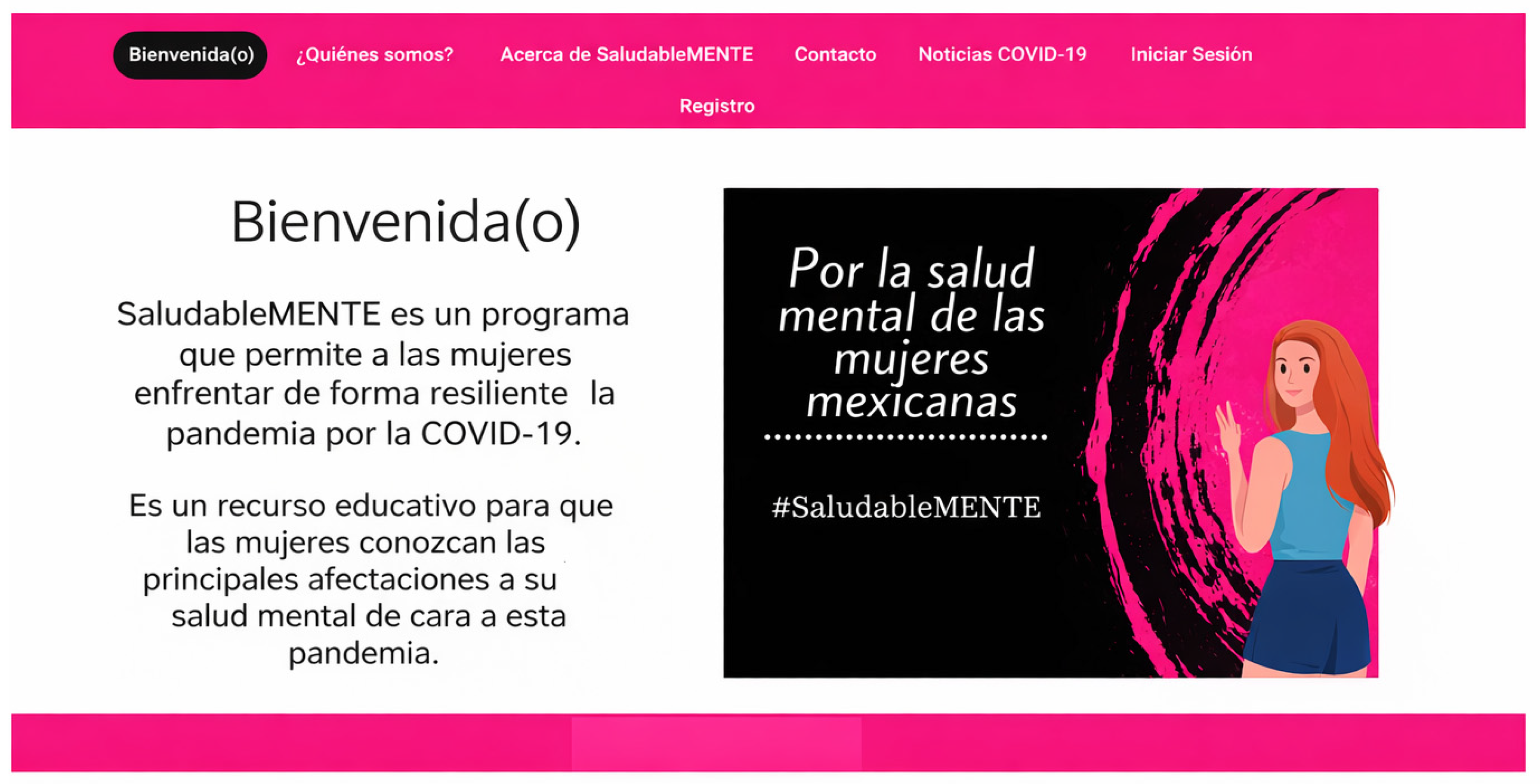
Flyers were designed with information from the website and synchronous sessions, which were disseminated through social networks Facebook® and WhatsApp® between 2 July and 2 September 2021. The link available on the flyer or in the publication of the social network directed them to the website (see Figure 1), which requested registration by creating a username and password. After registering and starting the session, the participants completed the pre-test evaluation consisting of the psychological battery. They could subsequently begin with the first thematic module; at the end, they had to answer five questions that evaluated the content of the module. These questions did not affect the conclusions of the program. After completing the four modules, participants completed the posttest evaluation, thereby concluding their participation in the program and the study. All participants had access to the web platform for one month.
Along with the review of the platform, the consultants could take two sessions through the Zoom® platform with three psychologists, at a biweekly frequency and a duration of three hours. The synchronous sessions were held on Saturdays from 10:00 am to 1:00 pm. Doubts about registration and navigation on the platform were resolved, and content such as training in cognitive-behavioural techniques associated with each psychological problem was reinforced. The psychological care program consisted of the four modules evaluated during phase 1 of the study: I. Stress, II. Anxiety, III. Depression and IV. Gender violence. The content of each thematic module is presented in Table 2.

2.5. Statistical Analysis

Statistical analysis was performed using SPSS® for Windows® version 30. The normality of the data was analyzed using the Kolmogorov–Smirnov–Lilliefors test. Results suggest that the distribution of the study variables was not normal (p < 0.05); therefore, non-parametric tests were performed [41]. In addition, screening instruments often yield skewed score distributions and may exhibit floor effects; therefore, a non-parametric approach is appropriate and provides a more robust option for this type of data. Descriptive statistics were obtained for the variables on a numerical scale. For the evaluation of the changes before and after the intervention, the Wilcoxon rank test was performed. Statistical significance was determined at p < 0.05.

2.6. Ethical Considerations

Informed consent was obtained electronically; they clicked on the “Yes, I accept” option. On the website, the processing of personal data was indicated to be confidential, anonymous and for scientific research purposes.
This research was approved by the United Nations Entity for Gender Equality and the Empowerment of Women (UN Women) and was part of a specialized consultancy subject to methodological and ethical review under the number SSA/IC 010-21E.1. The guidelines followed were established by the Code of Ethics for Psychologists [42], and by the Guide for Practice of Telepsychology [43].

3. Results

3.1. Navigation on the Platform

All participants completed the four thematic modules. Regarding the synchronous sessions, 64.4% (n = 47) attended both sessions with the psychologists, 19.2% (n = 14) attended one session, and 16.4% (n = 12) did not attend any sessions. On average, 9.38 h were spent on the platform (Mdn = 9, Minimum = 1, Maximum = 20), and 42.19 days elapsed between the pre-test and post-test evaluations (Mdn = 31, Minimum = 1, Maximum = 226). During the synchronous sessions, only three participants requested advice on entering the thematic modules since they completed the pre-test evaluation; however, they did not identify how to access the first module.

3.2. Situations That the Participants Perceived as Causing Stress, Anxiety and/or Depression

Viewing news in the media related to the health emergency caused by COVID-19 was the main cause reported by the participants—who considered it to cause stress (42.5%) and depression (35.6%), whereas not knowing what would happen in the future was the main cause that they considered to generate anxiety (65.8%; see Table 3).

3.3. Results of the Pilot Intervention

Participants reported experiencing the same severity of symptoms of stress, anxiety and depression after the intervention (p > 0.05), as well as perceiving the same violence exerted by their partners, both in general and in each type of violence (p > 0.05; see Table 4).

4. Discussion

This study aimed to evaluate the pilot of a psycho-emotional support web platform based on elements of cognitive-behavioural therapy in Mexican women during the COVID-19 pandemic. The results suggest that the intervention based on elements of cognitive-behavioural therapy did not benefit psychosocial variables since the participants perceived the same severity of symptoms. This may be because, at the end of the study, the pandemic had not yet ended, which is why all prevention measures were still being maintained, including confinement. This event is considered a dispositional factor for the development and maintenance of mood disorders and an increase in domestic violence [3,4,5,6].
Unlike previous studies [20,21,22,23,24,25,26,27], this research has a main contribution of obtaining satisfactory evidence of content validity from the web platform, as well as from the psychoeducational materials designed (manuals, videos and infographics), through the inclusion of expert and nonexpert judges. According to authors such as Bevan et al. [30], O’Malley et al. [31] and Pérez et al. [32], the participation of users who have characteristics similar to those of the study population represents a set of benefits for the design of the intervention, including reducing the dropout rate; adjusting the content and format of the resource to the preferences, interests and technological abilities of the participants; and increasing therapeutic success.
In addition to the quantitative evaluation of the platform and psychoeducational materials, feedback from both expert and non-expert judges was incorporated, enabling the adaptation of the digital psychoeducational resources to users’ preferences and needs [33]. Regarding the aspects of efficacy and user satisfaction, the results obtained in both phases indicate that they were successfully covered since, in terms of efficacy, 85.7% and 95.9% of the participants, respectively, managed to perform both evaluations in each phase. and take the four thematic modules without the help of someone, which suggests that the platform is intuitive and easy to navigate. Additionally, the participants reported the satisfaction and usefulness of all the digital resources available on platform [30]. Future studies should take these data into account to contribute to therapeutic success [30,31].
Regarding efficiency, non-expert judges in Phase 1 required an average of 4 h 20 min to complete the evaluations and modules, whereas participants in Phase 2 required 9 h 38 min. In this study, it was not possible to formally identify an exposure–response gradient. In addition, adherence to digital interventions is often non-linear, as users may log in, leave the session open while engaging in other activities, and return later without closing the session [30,31]. Therefore, future studies should operationalize intentional use with more detailed metrics (e.g., active time, page-level interactions, and module completion rates). Another valuable methodological characteristic consisted of addressing, based on the literature and a pilot study, the main psychosocial needs (stress, anxiety, depression, and violence) of women, a social group vulnerable to COVID-19 [9,11,13,14,16]. Future research should adopt a similar approach by first identifying the key problems and psychosocial needs of the target population and then involving end users in the design of psychoeducational resources (including web-based materials and in-person and/or online components). This user-centred process can help prevent the delivery of content and techniques that do not align with users’ needs or preferences. It is important to note that web-based psychoeducational platforms do not replace individualized psychological therapy, which typically involves clinical case formulation and the development of tailored treatment plans. Psychoeducational resources and materials are intended to provide information on self-care behaviours and to emphasize the relevance of mental health in the context of adverse events, such as the COVID-19 pandemic in the present study.
On the other hand, future web-based resources could incorporate interactive features such as chatbots or artificial intelligence components to support mental health literacy. These tools may function as just-in-time adaptive supplements and facilitate early identification of psychological risk in vulnerable populations. However, the ethical implications of integrating such resources should be carefully examined, as they are not intended to replace psychological therapy but rather to serve as didactic supports that enhance engagement and comprehension of content tailored to users’ needs.
Contrary to expectations, no changes were observed in the symptoms of psychological discomfort or in the frequency of violence exerted by their partners. Unexpectedly, these findings coincide with those reported in the Mexican population by Bautista-Díaz et al. [27] and German-Ponciano et al. [26], who worked with university health science students (psychologists and doctors) to reduce the symptoms of stress, anxiety, depression, and alcohol consumption; improve the state of mindfulness; and did not obtain significant results. Although in this study and that of Bautista-Díaz et al. [27], a multicomponent intervention was implemented with the synchronous interaction of the therapists, the authors carried out only a four-hour session, whereas in this intervention, two three-hour sessions were used with the users. Additionally, they had access to all psychoeducational digital resources for a month. On the other hand, German-Ponciano et al. [26] conducted eight synchronous sessions solely of Mindfulness. These differences in the construction of psychological treatments call for four points to be analyzed in the following investigations: (1) the effect of the therapeutic modality (synchronous, asynchronous or bimodal), (2) the selected techniques (multicomponent or single), (3) the duration and frequency of the sessions, and (4) the number of psychological variables to be treated. Continuing with your study will help to identify the methodological conditions that promote clinical change in users.
These findings differ from those reported by Güney et al. [24], Jiskoot et al. [21], Puertas et al. [22], and Suchan et al. [23], who reported decreased symptoms of stress, anxiety, depression, anguish and/or fear of childbirth in women with polycystic ovaries and pregnant women during or after delivery. However, in all the studies, psychological care was provided through synchronous videoconferencing platforms, mostly to pregnant women, who regularly experience emotional changes due to their medical condition. These covariates were able to regulate the effects on the psychological variables.
Based on the results obtained, it is pertinent to rethink the design of the web platform; for this purpose, the following study could take up what was indicated by systematic reviews and meta-analyses in terms of the number, duration, and frequency of the sessions, as well as the time of access to psychoeducational materials. Additionally, this type of study shows that most Telehealth-based treatments are asynchronous and are administered through mobile phone applications [20]. The effect of bimodal interventions or those exclusively based on web platforms is uncertain.
At the time of implementation, telemedicine was not a primary modality for psychological care in Mexico and was used infrequently. This context may have limited the platform’s impact due to barriers such as restricted access to internet-enabled devices, skepticism toward online care, and the platform’s inherent constraints. Finally, national and international organizations have reported that the violence experienced by girls and women is one of the factors that contribute to the development of the symptoms of some mental disorders [9,11,13,14,16], both before and during the COVID-19 pandemic. However, to date, no treatments aimed at training psychosocial skills for victims of intimate partner violence have been identified. Although the frequency of intimate partner violence did not decrease, this study represents one of the first attempts to address this problem, which affects women in Mexico and worldwide.
This pilot study has several limitations. First, expert and non-expert judges received financial compensation to evaluate the format and content of the psychoeducational digital resources, which may have influenced their ratings of effectiveness, efficiency, and satisfaction, and reduced comparability with Phase 2 participants. Second, the duration of access to the platform and its materials may have been insufficient to achieve measurable reductions in psychological distress. Third, the platform content may not have been intensive enough for each psychosocial problem, particularly given the breadth of outcomes targeted. Notably, the platform may have functioned primarily as a psychoeducational resource rather than as a multicomponent cognitive-behavioural intervention. Therefore, future research should consider whether developing separate, problem-specific platforms would allow for greater depth and a more robust acquisition of cognitive-behavioural skills.

5. Conclusions

Overall, the web platform and its psychoeducational materials did not effectively address mood-related symptoms or reduce the frequency of violence exerted by their partners. However, they offered valuable, recent, and useful information to the women who participated in evidence-based techniques for reducing symptoms associated with mood disorders. The effect of the COVID-19 pandemic on the mental health of the participants may have been maintained during the study, which is why longitudinal studies are advocated and why changes to the study of needs in the different phases of the pandemic need to be made. Despite the results obtained, there is satisfactory evidence of content validity for all digital resources, in addition to successfully meeting the criteria of effectiveness and satisfaction in the participants.
Future interventions based on telemedicine/telepsychology must consider aspects such as efficacy, efficiency, and, of course, the psychological needs of the population, as well as their proficiency with different mobile devices with internet access. To contribute to therapeutic success, it is recommended to pilot the materials to be used with patients and the intervention and/or platform, thus verifying the content validity of each digital resource.

Author Contributions

Conceptualization, A.L.B.-G.; methodology, A.L.B.-G. and A.P.-O.; software, E.A.M.J. and A.G.F.M.; validation, A.P.-O. and A.G.F.M.; formal analysis, A.L.B.-G., A.P.-O. and A.G.F.M.; investigation, S.A.A.S., C.A.d.L.R. and G.O.V.; resources, A.L.B.-G.; data curation, A.P.-O. and C.A.d.L.R.; writing—original draft preparation, A.L.B.-G., S.A.A.S. and G.O.V.; writing—review and editing, A.L.B.-G., E.A.M.J. and A.P.-O.; visualization, A.L.B.-G. and E.A.M.J.; supervision, A.L.B.-G., A.G.F.M. and A.P.-O.; project administration, A.L.B.-G.; funding acquisition, A.L.B.-G. All authors have read and agreed to the published version of the manuscript.

Funding

This research was funded by United Nations Entity for Gender Equality and the Empowerment of Women (UN Women) and was part of a specialized consultancy subject to methodological and ethical review under the number SSA/IC 010-21E.1.

Institutional Review Board Statement

The study was conducted in accordance with the Declaration of Helsinki and approved by the United Nations Entity for Gender Equality and the Empowerment of Women (UN Women) (protocol code SSA/IC 010-21E.1 and date of approval 20 May 2021).

Informed Consent Statement

Informed consent was obtained from all subjects involved in the study.

Data Availability Statement

The research results are available free of charge at the following public link: https://doi.org/10.6084/m9.figshare.30816593 (accessed on 12 July 2025).

Acknowledgments

The authors thank the women who decided to participate voluntarily in this research. All participants agreed to publish the results of this research, as stated in the informed consent form.

Conflicts of Interest

The authors declare no conflicts of interest.

Abbreviations

The following abbreviations are used in this manuscript:
DASS-21Depression Anxiety Stress Scales
CVPQuestionnaire of violence suffered and exercised as a partner (CVP, in Spanish).

References

  1. Naveed, N.; Ahmad, K.; Majeed, H.; Qureshi, K.; Ahmad, I.; Awan, M.F.; Iftikhar, T.; Ahmad, S.; Noreen, F.; Amin, M.A.; et al. The Global Impact of COVID-19: A Comprehensive Analysis of Its Effects on Various Aspects of Life. Toxicol. Res. 2024, 13, tfae045. [Google Scholar] [CrossRef] [PubMed]
  2. Riobueno-Naylor, A.; Clay, L.; Aubé, S.S.; Lai, B.S. Association Between Social Determinants of Health, COVID-19 Stressors, and Mental Health Among New York Residents Early in the Pandemic. Disaster Med. Public Health Prep. 2024, 18, e223. [Google Scholar] [CrossRef] [PubMed]
  3. Vindegaard, N.; Benros, M.E. COVID-19 pandemic and mental health consequences: Systematic review of the current evidence. Brain Behav. Immun. 2020, 89, 531–542. [Google Scholar] [CrossRef]
  4. Wu, T.; Jia, X.; Shi, H.; Niu, J.; Yin, X.; Xie, J.; Wang, X. Prevalence of mental health problems during the COVID-19 pandemic: A systematic review and meta-analysis. J. Affect. Disord. 2021, 281, 91–98. [Google Scholar] [CrossRef]
  5. Almeida, M.; Shrestha, A.D.; Stojanac, D.; Miller, L.J. The impact of the COVID-19 pandemic on women’s mental health. Arch. Women’s Ment. Health 2020, 23, 741–748. [Google Scholar] [CrossRef]
  6. Connor, J.; Madhavan, S.; Mokashi, M.; Amanuel, H.; Johnson, N.R.; Pace, L.E.; Bartz, D. Health risks and outcomes that disproportionately affect women during the COVID-19 pandemic: A review. Soc. Sci. Med. 2020, 266, 113364. [Google Scholar] [CrossRef]
  7. Eldeirawi, K.M.; Persky, V.W.; Zielke, C.; Goldstein, E.; Bimbi, O.; Saenz, J.; Mustafa, Z.; Jumah, T.A.; Ramirez, X.R.; Aldirawi, A.; et al. Economic, Psychological, and Emotional Well-Being of Pregnant Women During the COVID-19 Pandemic. J. Midwifery Women’s Health 2025, 70, 111–123. [Google Scholar] [CrossRef]
  8. Fondo de Población de las Naciones Unidas [UNFPA]. New UNFPA Projections Predict Calamitous Impact on Women’s Health as COVID-19 Pandemic Continues. 2020. Available online: https://asiapacific.unfpa.org/en/news/new-unfpa-projections-predict-calamitous-impact-womens-health-covid-19-pandemic-continues?utm_source=chatgpt.com (accessed on 4 October 2025).
  9. Sediri, S.; Zgueb, Y.; Ouanes, S.; Ouali, U.; Bourgou, S.; Jomli, R.; Nacef, F. Women’s mental health: Acute impact of COVID-19 pandemic on domestic violence. Arch. Women’s Ment. Health 2020, 23, 749–756. [Google Scholar] [CrossRef]
  10. Xiong, J.; Lipsitz, O.; Nasri, F.; Lui, L.M.W.; Gill, H.; Phan, L.; Chen-Li, D.; Iacobucci, M.; Ho, R.; Majeed, A.; et al. Impact of COVID-19 pandemic on mental health in the general population: A systematic review. J. Affect. Disord. 2020, 277, 55–64. [Google Scholar] [CrossRef]
  11. Naciones Unidas. Informe de Políticas: COVID-19 y la Necesidad de Acción Sobre la Salud Mental. 13 May 2020. Available online: https://www.un.org/sites/un2.un.org/files/policy_brief_-_covid_and_mental_health_spanish.pdf (accessed on 5 October 2025).
  12. Thiel, F.; Büechl, V.C.S.; Rehberg, F.; Mojahed, A.; Daniels, J.K.; Schellong, J.; Garthus-Niegel, S. Changes in Prevalence and Severity of Domestic Violence During the COVID-19 Pandemic: A Systematic Review. Front. Psychiatry 2022, 13, 874183. [Google Scholar] [CrossRef] [PubMed]
  13. United Nations Women. El Impacto de la Pandemia Por COVID-19 en la Violencia Contra las Mujeres. 2020. Available online: https://www.unwomen.org/es/noticias/reportaje/2021/11/la-pandemia-de-covid-19-y-la-violencia-contra-la-mujer-que-nos-revelan-los-datos (accessed on 5 October 2025).
  14. United Nations Women. Violencia Contra las Mujeres: La Pandemia en la Sombra. 2020. Available online: https://www.unwomen.org/es/news/stories/2020/4/statement-ed-phumzile-violence-against-women-during-pandemic (accessed on 5 October 2025).
  15. Wang, C.; Pan, R.; Wan, X.; Tan, Y.; Xu, L.; Ho, C.S.; Ho, R.C. Immediate Psychological Responses and Associated Factors during the Initial Stage of the 2019 Coronavirus Disease (COVID-19) Epidemic among the General Population in China. Int. J. Environ. Res. Public Health 2020, 17, 1729. [Google Scholar] [CrossRef] [PubMed]
  16. Universidad Nacional Autónoma de México [UNAM]. Programa Universitario de Estudios Sobre la Ciudad. Mi Salud También es Mental. 2020. Available online: https://www.puec.unam.mx/index.php/component/content/article/1397-mi-salud-tambien-es-mental-durante-la-pandemia-por-covid-19.html?Itemid=101&catid=178 (accessed on 6 October 2025).
  17. Doraiswamy, S.; Abraham, A.; Mamtani, R.; Cheema, S. Use of Telehealth During the COVID-19 Pandemic: Scoping Review. J. Med. Internet Res. 2020, 22, e24087. [Google Scholar] [CrossRef]
  18. Galluzzi, S.; Lanfredi, M.; Moretti, D.V.; Rossi, R.; Meloni, S.; Tomasoni, E.; Frisoni, G.B.; Chiesa, A.; Pievani, M. Cognitive, psychological, and physiological effects of a web-based mindfulness intervention in older adults during the COVID-19 pandemic: An open study. BMC Geriatr. 2024, 24, 151. [Google Scholar] [CrossRef]
  19. Hatami, H.; Deravi, N.; Danaei, B.; Zangiabadian, M.; Shahidi Bonjar, A.H.; Kheradmand, A.; Nasiri, M.J. Tele-medicine and improvement of mental health problems in COVID-19 pandemic: A systematic review. Int. J. Methods Psychiatr. Res. 2022, 31, e1924. [Google Scholar] [CrossRef] [PubMed]
  20. Ye, Z.; Li, W.; Zhu, R. Online psychosocial interventions for improving mental health in people during the COVID-19 pandemic: A systematic review and meta-analysis. J. Affect. Disord. 2022, 316, 120–131. [Google Scholar] [CrossRef]
  21. Jiskoot, G.; Van der Kooi, A.L.; Busschbach, J.; Laven, J.; Beerthuizen, A. Cognitive behavioural therapy for depression in women with PCOS: Systematic review and meta-analysis. Reprod. Biomed. Online 2022, 45, 599–607. [Google Scholar] [CrossRef]
  22. Puertas, J.; Mariño, C.; Romero, B.; Sanchez, G.; Peralta, M. Online cognitive behavioural therapy as a psychological vaccine against stress during the COVID-19 pandemic in pregnant women: A randomised controlled trial. J. Psychiatr. Res. 2022, 152, 397–405. [Google Scholar] [CrossRef]
  23. Suchan, V.; Peynenburg, V.; Thiessen, D.; Nugent, M.; Dear, B.; Titov, N.; Hadjistavropoulos, H. Transdiagnostic Internet-Delivered Cognitive Behavioral Therapy for Symptoms of Postpartum Anxiety and Depression: Feasibility Randomized Controlled Trial. JMIR Form. Res. 2022, 6, e37216. [Google Scholar] [CrossRef]
  24. Güney, E.; Özlem, S.; Karatas, E.; Bal, Z.; Ucar, T. Effect of the Mindfulness-Based Stress Reduction program on stress, anxiety, and childbirth fear in pregnant women diagnosed with COVID-19. Complement. Ther. Clin. Pract. 2022, 47, 101566. [Google Scholar] [CrossRef]
  25. Duan, C.C.; Yu, J.L.; Tao, J.; Zhang, C.; Zhang, D.; Zeng, X.; Zeng, W.T.; Xu, H.L.; Qiu, J.Y.; Dennis, C.L.; et al. Internet-based cognitive therapy for women with antenatal depressive symptoms during the COVID-19 pandemic: Protocol for a multi-center randomized controlled trial across China. Trials 2022, 23, 797. [Google Scholar] [CrossRef] [PubMed]
  26. German-Ponciano, L.J.; Zapata-de la Rosa, M.F.; Molina-Cadena, B.I.; Velasco-Gómez, Y.S.; Puig-Lagunes, Á.A. Effectiveness evaluation of online Mindfulness in mental health and alcohol consumption in medical students during the COVID-19 pandemic. Salud Ment. 2023, 46, 45–54. [Google Scholar] [CrossRef]
  27. Bautista-Díaz, M.L.; Cueto-López, C.J.; Franco-Paredes, K.; Moreno, D. Intervención para reducir ansiedad, depresión y estrés en universitarios mexicanos durante la pandemia. Rev. Cuba. Med. Mil. 2021, 50, e02101575. [Google Scholar]
  28. Dominguez-Rodriguez, A.; De La Rosa-Gómez, A.; Hernández-Jiménez, M.J.; Arenas-Landgrave, P.; Martínez-Luna, S.C.; Alvarez-Silva, J.; García-Hernández, J.E.; Arzola-Sánchez, C.; Acosta-Guzmán, V. A Self-Administered Multicomponent Web-Based Mental Health Intervention for the Mexican Population During the COVID-19 Pandemic: Protocol for a Randomized Controlled Trial. JMIR Res. Protoc. 2020, 9, e23117. [Google Scholar] [CrossRef] [PubMed]
  29. Becerra, A.L.; Pérez, A.; Lugo, I.V. Diseños de plataformas web como estrategia psicoeducativa en temas de salud. In Las Acciones del Psicólogo Social, Clínico y de la Salud; Reynoso, E.L., Rangel, N.E., Eds.; Universidad de Guadalajara: Guadalajara, Jalisco, Mexico, 2023; pp. 211–232. [Google Scholar]
  30. Bevan, N.; Carter, J.; Earthy, J.; Geis, T.; Harker, S. New ISO standards for usability, usability reports and usability measures. Hum.-Comput. Interaction. Theory Des. Dev. Pract. 2016, 9731, 268–278. [Google Scholar] [CrossRef]
  31. O’Malley, G.; Dowdall, G.; Burls, A.; Perry, I.J.; Curran, N. Exploring the usability of a mobile app for adolescent obesity management. JMIR mHealth uHealth 2014, 2, e29. [Google Scholar] [CrossRef]
  32. Pérez, Y.Y.; Robles, S.S.; Tiburcio, M.A.; Guevara, C.Y. ProTGTlsm: Diseño y evaluación de una aplicación para la educación sexual de jóvenes sordos mexicanos. Rev. Psicol. Educ. 2020, 7, 136–148. [Google Scholar] [CrossRef]
  33. Valenta, S.R.; Glanville, M.; Sederstrom, E. Telehealth development, implementation, and sustainability challenges: An introduction into the Telehealth Service Implementation Model (TSIM™). In Telemedicine Overview and Application in Pulmonary, Critical Care, and Sleep Medicine; Ford, D.W., Valenta, S.R., Eds.; Springer: Berlin/Heidelberg, Germany, 2021; pp. 61–70. [Google Scholar] [CrossRef]
  34. Thibaut, F.; ELNahas, G. Women’s Mental Health and Lessons Learnt from the COVID-19 Pandemic. Psychiatr. Clin. N. Am. 2023, 46, 415–426. [Google Scholar] [CrossRef]
  35. Berg, J.A.; Woods, N.F.; Shaver, J.; Kostas-Polston, E.A. COVID-19 effects on women’s home and work life, family violence and mental health from the Women’s Health Expert Panel of the American Academy of Nursing. Nurs. Outlook 2022, 70, 570–579. [Google Scholar] [CrossRef]
  36. Camacho, E.J.; Escoto, M.C.; López, F.; Mancilla, J.M. Metodología Aplicada a la Psicología y las Ciencias de la Salud; Universidad Nacional Autónoma de México: Mexico City, Mexico, 2023. [Google Scholar]
  37. Sanduvete, S.; Chacón, S.; Sánchez, M.; Pérez-Gil, J. The revised Osterlind index: A comparative analysis in content validity studies. Acción Psicológica 2013, 10, 19–25. [Google Scholar] [CrossRef]
  38. Becerra, A.L.; Pérez, A. Violencia de pareja y sintomatología mixta en mujeres mexicanas durante la pandemia por COVID-19. Entrecienc. Diálogos Soc. Conoc. 2024, 12, 26. [Google Scholar] [CrossRef]
  39. Gurrola, G.M.; Balcázar, P.; Bonilla, M.P.; Virseda, J.A. Estructura factorial y consistencia interna de la escala de depresión, ansiedad y estrés (DASS-21) en una muestra no clínica. Psicol. Cienc. Soc. 2006, 8, 3–7. [Google Scholar]
  40. Moral de la Rubia, J.; Basurto, R. Propiedades Psicométricas del Cuestionario de Violencia Sufrida y Ejercida de Pareja. Int. J. Good Conscienc. 2015, 10, 109–128. [Google Scholar]
  41. Ghasemi, A.; Zahediasl, S. Normality tests for statistical analysis: A guide for non-statisticians. Int. J. Endocrinol. Metab. 2012, 10, 486–489. [Google Scholar] [CrossRef] [PubMed]
  42. Sociedad Mexicana de Psicología. Código Ético del Psicólogo; Trillas: Toulouse, France, 2014. [Google Scholar]
  43. Joint Task Force for the Development of Telepsychology Guidelines for Psychologists. Guidelines for the Practice of Telepsychology. Am. Psychol. 2013, 68, 791–800. [CrossRef]
Figure 1. Main window of the website.
Women 06 00022 g001
Table 1. Sociodemographic characteristics.
Characteristicf%
Residence
Mexico City3750.7
State of Mexico2432.9
Veracruz45.5
Querétaro34.1
Morelos11.4
Hidalgo11.4
Michoacán11.4
Tlaxcala11.4
Sonora11.4
Marital status
Single2838.4
Married2737
Cohabiting68.2
Separated56.8
Widowed45.5
Divorced34.1
Education level
Middle school education45.5
High school education811
Higher education3852.1
Graduate school2331.5
Occupation
Professional2737
Employee1621.9
Student1419.2
Unemployed1115.1
Self-employed56.8
Table 2. Description of the thematic modules available on the website.
Module 1. Stress
1. What is stress?
1.1.1. Biopsychosocial characteristics of stress: How to identify it?
1.2. What causes us stress?
1.3. COVID-19, new normal and stress
1.4. Cognitive-behavioural strategies to cope with stress
1.4.1.1. Deep Diaphragmatic Breathing
1.4.1.2. Self-instructions
1.5. Module evaluation (questionnaire and/or exercises where the content learned is applied)
Module 2. Anxiety
2.1. What is anxiety?
2.1.1. Biopsychosocial characteristics of anxiety: How to identify it?
2.2. What causes us anxiety?
2.3. Difference between stress and anxiety
2.4. COVID-19, new normal and anxiety
2.5. Cognitive-behavioural strategies to face anxiety in the new normal
2.5.1.1. Passive Relaxation
2.5.1.2. Mechanisms of distraction and refocusing of attention
2.6. Module evaluation (questionnaire and/or exercises where the content learned is applied)
Module 3. Depression
3.1. What is depression?
3.1.1. Biopsychosocial characteristics of depression: How to identify it?
3.2. What causes depression?
3.3. COVID-19, new normal and depression
3.4. Cognitive-behavioural strategies to cope with depression in the new normal
3.4.1. Goal-focused activity scheduling
3.4.2. Thought Modification Strategies
3.5. Module evaluation (questionnaire and/or exercises where the content learned is applied)
Module 4. Gender violence
4.1. What is gender violence?
4.1.1. Identification of gender violence in our daily lives and in the new normal
4.2. What to do about gender violence?
4.2.1. Psychological strategies to face gender violence
4.3. Module evaluation (questionnaire and/or exercises where the content learned is applied)
Table 3. Situations that the participants perceived as causing stress, anxiety and/or depression.
Situation or EventPsychological Discomfort
StressSituation or EventAnxietySituation or EventDepression
f %f %f %
See news in the media3142.5Not knowing what will happen in the future4865.8 See news in the media2635.6
Work overload (at home or school)2331.5 Not living with or visiting my family68.2 Unemployment2230.1
Financial problems1013.7 Do not leave home68.2 Thinking about the deceased by COVID-191419.2
Home-related activities68.2 Thinking about the COVID-19 disease68.2 Do not leave home79.6
Caring for a sick family member22.7 Thinking about the deceased by COVID-1934.1 Caring for a person with COVID-1911.4
Unemployment11.4 Thinking about the return of face-to-face activities11.4
Thinking about a family member getting infected11.4
Table 4. Pre-test and post-test evaluation results.
Parameter or DimensionPre-Test
n = 73
Post-Test
n = 73
zp
MeanMedianMeanMedian
DASS-Stress5.8555.8550.0001.0
DASS-Anxiety3.9743.9740.0001.0
DASS-Depression4.9244.9240.0001.0
CVP22.441821.7118145.5000.897
Psychological/social violence5.5145.29437.5000.575
Physical Violence/intimidation/aggression7.9577.69659.0000.638
Sexual violence4.0233.79340.0000.698
Economic violence4.9844.95479.0000.561
Disclaimer/Publisher’s Note: The statements, opinions and data contained in all publications are solely those of the individual author(s) and contributor(s) and not of MDPI and/or the editor(s). MDPI and/or the editor(s) disclaim responsibility for any injury to people or property resulting from any ideas, methods, instructions or products referred to in the content.