


Abstract
Polysaccharide–peptide conjugates are modular biomaterials that combine hydrated carbohydrate frameworks with peptide domains capable of mediating molecular recognition, degradability, antimicrobial activity, and biological signaling. In this review, we discuss how covalent, bioorthogonal, and enzymatic conjugation strategies regulate peptide density, orientation, accessibility, and stability within polysaccharide-based matrices. These chemical choices are analyzed in relation to network architecture, viscoelasticity, ligand presentation, degradation behavior, and cell–material interactions. Representative systems based on hyaluronic acid, alginate, chitosan, dextran, cellulose, and glycosaminoglycans are examined to illustrate how peptide functionalization can transform otherwise passive scaffolds into adhesive, degradable, antimicrobial, or therapeutically responsive platforms. We further highlight dynamic and enzyme-responsive materials, localized drug delivery systems, antimicrobial coatings, and antibiofilm interfaces as key biomedical applications of these conjugates. The review also addresses translational challenges associated with structural heterogeneity, stability, immunogenicity, sterilization, batch-to-batch reproducibility, and clinical feasibility. Taken together, the evidence discussed here indicates that the performance of polysaccharide–peptide conjugates depends on reproducible structure–function relationships linking conjugation chemistry, macromolecular architecture, and biological activity under application-relevant conditions.
1. Introduction
Next-generation biomaterials are moving from empirical designs toward systems governed by measurable and reproducible properties. In hydrated matrices, features such as strength, durability, and stability in aqueous environments determine how hydrogels and soft materials perform in applications such as regenerative medicine, drug delivery, and bioelectronic interfaces [1,2]. A related challenge is the need to reproduce microenvironmental conditions with high precision. This requires control over network structure, formation, and crosslinking so that mechanical effects can be separated from the biochemical signals that influence cell behaviour [3].
Peptides occupy a distinctive position in this design framework because their amino acid sequence, charge distribution, hydrophobicity, and structural propensity can be adjusted to regulate antimicrobial activity, molecular recognition, membrane interactions, and biological signaling [4]. Their direct biomedical use, however, can be limited by enzymatic degradation, reduced bioavailability, insufficient target accumulation, or loss of activity in complex biological environments [5]. Recent work combining computational peptide selection with nanostructured delivery has shown that rationally designed peptide domains can retain biological activity while improving intracellular delivery, local retention, and safety when incorporated into carrier systems [6]. In hybrid biomaterials, peptide function therefore depends on spatial presentation, protection, and retention within the surrounding matrix.
Polysaccharide–peptide conjugates address this requirement by combining the ease of processing and high-water retention of polysaccharides with the chemical flexibility and biological functionality of peptides [7,8]. In these systems, the polysaccharide component provides hydration, conformability, and a tunable mechanical environment, whereas the peptide component introduces molecular recognition, degradability, antimicrobial activity, or biological signaling. This combination allows network structure, degradation, and biological interactions to be regulated within a single material platform, reducing the need for complex multicomponent formulations. It also enables control over biological interfaces, where the spatial arrangement of sugar motifs and peptide domains can influence cell adhesion, signaling, and early stages of pathogen–host interactions [9].
Historically, the development of polysaccharide–peptide conjugates progressed from the use of abundant hydroxyl, carboxyl, aldehyde, and amino groups in broadly applicable reactions such as amidation, reductive amination, disulfide formation, and oxidation-derived coupling. These approaches established the synthetic feasibility of combining both biomolecular components, although they frequently provided limited control over the attachment site, peptide orientation, and distribution of substitution along the polysaccharide chain [10]. A subsequent stage shifted the purpose of conjugation from predominantly structural modification toward the incorporation of defined biological functions, with peptide-engineered polysaccharide scaffolds being developed to regulate cell adhesion, antimicrobial activity, therapeutic delivery, and tissue-specific signaling [11]. More recent scaffold designs integrate conjugation chemistry with crosslink density, mechanical behavior, degradation, cellular components, and biological mediators, reflecting the transition from simple peptide attachment toward application-directed and multifunctional biomaterial engineering [12].
The development of structurally defined polysaccharide–peptide systems depends on conjugation chemistries that provide selectivity, site-specificity, and compatibility with complex biomolecular environments. Contemporary bioconjugation frameworks have established strategies to transform the chemical complexity of functional groups into controllable modification routes, while advances in bioorthogonal chemistry have expanded the feasibility of rapid and selective ligations in biological systems [13,14]. These tools converge with emerging manufacturing strategies, such as hydrogel photoprocessing, and with data-driven materials discovery approaches that accelerate the identification of structure–property relationships in polymers and biomaterials [15,16]. Here, recent advances in polysaccharide–peptide conjugates are analyzed with emphasis on conjugation strategies, structural control, and their impact on the design of hybrid biomaterials for biomedical applications (Figure 1).
Figure 1.
Modular Design and Biomedical Applications of Polysaccharide–Peptide Conjugates in Hydrated Hydrogel Networks. The figure shows the modular components and conjugation strategies used to synthesize polysaccharide–peptide conjugates, highlighting their effects on hydrogel structure, mechanics, and biological function. It also presents essential features including peptide integration, cell adhesion, and biochemical signaling, along with applications in regenerative medicine, drug delivery, bioelectronic interfaces, and wound healing.
2. Polysaccharides and Peptides as Modular Biomaterial Components
The development of precision biomaterials is based on the modular design of macromolecules composed of polysaccharides and peptides. These components can be tuned in their chemical composition, sequence, and structure to control the physical and biological properties of hydrated matrices [8]. Changes in polysaccharide chemistry, peptide motifs, crosslinking density, and ligand presentation regulate key aspects such as stiffness, degradation rate, and cell interactions. This enables the rational design of microenvironments with well-defined structural and functional properties [7,17].
Natural and Semisynthetic Polysaccharides as Bioinstructive Scaffolds
Among polysaccharides utilized in biomedical applications, glycosaminoglycans—particularly heparinoids—are distinguished by their high negative charge density resulting from sulfate groups [18]. This characteristic facilitates electrostatic interactions with proteins and growth factors, supporting their sequestration and stabilization within biomaterial matrices. The binding affinity is determined by the degree and pattern of polysaccharide sulfation, which govern ligand capture and release kinetics, thereby enabling sustained presentation within the cellular microenvironment [19]. Heparin-based architectures further influence innate immune responses by regulating the presentation of bioactive fragments and the density of ligands available for cellular interaction. In these systems, bio-interaction is influenced not only by material chemistry but also by supramolecular organization, which dictates how biomolecules are exposed and recognized by cells [20,21].
Hyaluronic acid serves as a mechanochemical module in which crosslinking chemistry, particularly dynamic bonds and network density, determines matrix viscoelasticity. These mechanical properties control the network’s capacity to relax and reorganize, thereby affecting cellular processes such as adhesion, spreading, and remodeling of the pericellular environment [22]. This mechanistic insight has informed the development of hyaluronan derivatives for tissue repair, where chemical modification enables modulation of inflammation, angiogenesis, and cell migration while preserving biological compatibility [23,24]. The modularity of hyaluronic acid is also advantageous when the material functions as a local reservoir of signals; its printability and ability to retain bioactive cargos facilitate the design of conformable matrices for localized release of therapeutic peptides [25].
In this context, direct functionalization with antimicrobial peptides transforms hyaluronan from a passive carrier into a bioactive component capable of modulating infection and the inflammatory microenvironment [26]. For instance, Ghaffari-Bohlouli et al. [25], developed a printable and photocrosslinkable hyaluronic acid hydrogel that was covalently functionalized with a peptide. This conjugation strategy enabled peptide retention without affecting the viscoelastic properties or microporous architecture of the material, thereby maintaining its suitability for extrusion-based fabrication. Compared with physically loaded systems, the hydrogel demonstrated a sustained release profile driven by matrix degradation, preventing burst release. In fibroblast cultures, the peptide-functionalized matrix enhanced cell viability, indicating that direct peptide incorporation transforms hyaluronan into a bioactive platform that locally modulates the regenerative microenvironment.
On the other hand, chitosan offers amine-rich chemistry and favorable electrostatic interactions with biological surfaces. These characteristics support the formation of injectable hydrogels that respond to pH, reactive species, or ionic fluctuations present in wound environments [27]. Self-healing networks based on chitosan, when integrated with micellar modules, can approximate the elastic properties of target tissues and enable dual release in neuro-regenerative applications [28]. Furthermore, semisynthetic chitosan derivatives include zwitterionic or highly hydrated variants that minimize protein fouling while maintaining gel-forming capacity. Such materials are appropriate for interfaces where nonspecific adhesion and fibrosis must be reduced [29]. Within this context, studies on antimicrobial chitosan demonstrate that combining charge control, degradation, and pore architecture with peptide or ionic modules can enhance functional performance as direct effectors [30,31].
Rezaei et al. [32] developed a thermoresponsive chitosan hydrogel ionically crosslinked with beta-glycerophosphate and incorporating the antimicrobial peptide (AMP) piscidin. This system exhibited in situ gelation at 37 °C, high swelling capacity, and an interconnected porous structure while maintaining a pH close to physiological conditions. The matrix enabled retention and controlled release of the peptide for seven days, characterized by an initial release phase followed by sustained delivery. While unmodified chitosan showed no antibacterial activity, peptide incorporation conferred activity against multidrug-resistant clinical isolates without compromising human fibroblast viability. The study shows how chitosan chemistry and degradation can be used to present bioactive signals within a hydrated scaffold compatible with wound environments.
In the case of alginate, its bioinert nature and the absence of cell-adhesion motifs limit its ability to regulate cell–material interactions. This limitation can be addressed through covalent functionalization with bioactive peptides. One approach uses sequences that combine an adhesive RGD motif with antimicrobial domains derived from lactoferrin. This design introduces integrin ligand recognition sites that support cell adhesion together with domains that disrupt bacterial membranes and reduce microbial colonization of the material [33]. Cellular response also depends on the density and organization of these ligands in the matrix, since small variations in their composition or presentation led to measurable changes in cell adhesion [34]. Because architecture controls function, alginate hydrogels activated via click-type reactions have been developed to incorporate protease-sensitive domains and RGD peptides to generate adhesive, remodelable matrices [35].
Platforms that present the same ligand in different formats within a network allow the decoupling of ligand mobility from mechanical properties. This approach enables causal analysis of how molecular presentation directs adhesion and morphogenesis [36]. Oliver-Cervelló et al. [33] showed that covalent functionalization of alginate hydrogels with a multifunctional peptide that combines the adhesive RGD motif and the antimicrobial peptide LF1 to 11 provides both cell adhesion and antibacterial activity to an originally bioinert material. The modification, carried out through carbodiimide chemistry followed by thiol disulfide exchange, did not alter hydrogel porosity or mechanical properties. However, it improved interaction with human mesenchymal stem cells, increased cell viability and alkaline phosphatase activity, and reduced early adhesion and viability of Gram-positive and Gram-negative bacteria through bacterial membrane damage. These results show that peptide functionalized alginate can act as a modular platform in which molecular signal presentation determines biological function beyond the base polymer.
Dextran highlights how a material that is intrinsically anti-adhesive can become an instructive platform when bioactivity is introduced in a programmed manner. Its lack of adhesion motifs creates an inert baseline environment that minimizes nonspecific cell–material interactions, so cellular responses depend only on incorporated ligands. In macroporous hydrogels functionalized with RGD peptides, this strategy enables control of cell adhesion and supports the organization of vascular structures within defined microenvironments [37]. The use of high affinity peptide pairs as capture modules can also transform dextran matrices into systems for controlled protein sequestration and release without relying on nonspecific interactions [38]. Its value as a module lies in the ability to program degradation, porosity, and biofunctionalization while maintaining a biocompatibility profile suitable for delivery and scaffold applications. Oliverio et al. [37] used macroporous dextran hydrogels as scaffolds whose bioactivity was introduced through peptide functionalization (Figure 2). The matrix was modified with the RGD peptide to enable integrin mediated cell adhesion and with a high affinity coiled coil peptide module for directed growth factor capture. This co-functionalization transformed an otherwise passive network into a bio-instructive system capable of supporting vascular spheroid colonization and sprouting in defined environments. The study demonstrates that controlled peptide presentation, without altering hydrogel architecture or mechanical properties, is sufficient to guide complex three-dimensional cellular organization.
Figure 2.
Production of macroporous dextran hydrogels. (A) Schematic illustrating the production steps. (B) Reaction scheme of dextran cross-linking using STMP as the cross-linking agent. (C,D) Representative μCT scans: (C) a macroporous PLA scaffold and (D) a macroporous dextran hydrogel after swelling in PBS. The PLA and dextran phases (C,D) appear light gray, and the empty macropores, dark gray. (E) A 3D reconstruction of a macroporous dextran hydrogel pore network using a thickness mesh. Reproduced with permission from [37]. Copyright 2024, American Chemical Society.
Bacterial cellulose is also being reconsidered as a high-performance structural module in which nanofibrous architecture and mechanical stability can be combined with surface functionalization to generate scalable bioactive interfaces [39,40,41]. Kim et al. [42] developed bacterial cellulose nanofibrils covalently functionalized with the cell penetrating peptide Bac7, using the mechanical stability and nanofibrous structure of cellulose as a structural support. Surface conjugation achieved through TEMPO oxidation followed by EDC/NHS coupling preserved the fibrillar morphology while introducing electrostatic and hydrophobic interactions with cellular membranes. As a result, the matrices showed significantly improved adhesion to cells and skin tissue under wet conditions while maintaining full biocompatibility.
Taken together, these examples show that polysaccharides mainly act as structural platforms that control physicochemical parameters of the microenvironment such as charge, viscoelasticity, or network architecture. Specific biological signals are typically introduced through bioactive ligands. Functional programming of these materials therefore depends strongly on the deliberate incorporation of peptide domains capable of providing molecular recognition and cellular signaling [43]. In this design framework peptides provide molecular specificity, while the polysaccharide defines hydration, conformability, and the mechanical context of the material [44].
3. Conjugation Chemistries for Polysaccharide–Peptide Systems
In polysaccharide–peptide systems, conjugation chemistry governs bond stability, preservation of peptide structure, material architecture, and scalability for biomedical applications [45]. Neves et al. [35] demonstrated that alginate hydrogels can be transformed into instructive three-dimensional microenvironments by grafting adhesion peptides and protease-sensitive domains using biocompatible click strategies. This finding demonstrates that covalent conjugation can convert initially bioinert polysaccharide matrices into tunable platforms for cell–material interactions. At the molecular level, current design strategies highlight that the density, orientation, and multivalency of peptide ligands on carbohydrate scaffolds modulate recognition and signaling. Consequently, conjugation is increasingly regarded as a tool for spatial control rather than solely a method for molecular anchoring [46]. Accordingly, the choice of conjugation strategy should be guided by the intended biomaterial function, the degree of site selectivity required, and practical criteria such as cytocompatibility, reaction rate, bond stability, and scalability (Figure 3).
Figure 3.
Selection Criteria for Conjugation Chemistries in Polysaccharide–Peptide Biomaterials. The figure summarizes how conjugation strategies can be selected according to the intended biomaterial function and processing requirements. Three major design routes are highlighted: stable peptide immobilization, cell-compatible late-stage functionalization, and site-defined assembly. Representative approaches associated with each route are shown together with their typical outcomes in hydrated biomaterials, including peptide-functionalized scaffolds, bioorthogonal peptide presentation within hydrogel networks, and defined conjugate architectures with controlled peptide orientation. Key selection parameters include selectivity, cytocompatibility, reaction rate, bond stability, and scalability.
3.1. Conventional Covalent Conjugation
Among conventional approaches, amidation remains one of the most prevalent starting points because it utilizes carboxyl groups in polysaccharides such as alginate or hyaluronic acid and primary amines in peptides, resulting in robust amide bonds under mild aqueous conditions with suitable activators [8]. Gürer et al. [47] demonstrated that DMTMM-type activation can generate hyaluronic acid conjugates with glycine peptides and aromatic derivatives, providing detailed characterization of the resulting products. Their results indicated that synthetic efficiency must be evaluated together with substitution levels and residual traces that may influence biological performance. From a structural perspective, recent studies in peptide–polysaccharide hydrogels reveals that minor variations in covalent coupling strategies can reorganize ligand presentation, chain mobility, and cellular response. This underscores the risk of heterogeneity when functionalization depends on broad substitution distributions [48]. Investigations into heparin immobilization further suggest that amide conjugation in highly charged polysaccharides requires careful control of electrostatic interactions and reaction conditions to preserve sulfate-dependent functions. This necessitates balancing bond robustness with the preservation of bioactive motifs [49,50].
Imine reactions offer a distinct approach by rendering conjugation a dynamic process. The equilibrium between aldehydes and amines enables reversibility and mechanical responses such as self-healing. However, this reversibility may also result in instability in aqueous environments if the chemical conditions are not carefully controlled [22]. Typically, controlled oxidation introduces aldehyde groups that form Schiff bases with peptide amines, facilitating gelation or anchoring under mild conditions. Uncontrolled oxidation, however, can alter molar mass and chain distribution [51,52]. Pogostin et al. [53] demonstrated that dynamic imine bonds between oxidized mannan and amine domains of a nanofibrillar peptide hydrogel modulate polysaccharide release and enhance mechanical recovery without affecting supramolecular architecture or secondary structure. Reversible imine formation serves as a kinetic regulator, dynamically crosslinking the network, reinforcing viscoelastic properties, and reducing in vivo clearance mechanisms associated with reactive aldehyde groups. Thus, imine chemistry provides a means to control both cargo transport and bio-interaction.
Thiol–ene reaction is widely used as an efficient method to couple cysteine-rich peptide motifs with double bonds introduced into polysaccharides. Its step-growth kinetics favor the formation of more homogeneous networks compared to carboxyl activation-based methods [54,55]. Radical thiol–ene reactions conducted in biomolecule-compatible media enable ligation of amino acids and peptides in environments where biological compatibility depends on the chemical microenvironment and the nature of the bond formed [56]. In hyaluronic-acid based matrices, thiol–ene variants are used to crosslink or functionalize the network, allowing modulation of bioactive factor release through control of bond density and system diffusivity. These factors influence ligand transport and functional lifetime [57]. Petit et al. [26] reported that acrylated hyaluronic acid hydrogels enable covalent conjugation of a cysteine terminal antimicrobial peptide via thiol-acrylate reaction preserving rapid gelation and providing bactericidal activity. This example demonstrates the benefit of introducing spacers and controlling peptide mobility to prevent loss of function due to steric hindrance. However, when photoactivation or radical initiators are necessary, the selection of wavelength, dose, and initiator chemistry becomes a structural determinant of the final material. These parameters may promote side reactions or oxidation that alter sensitive residues and consequently modify the conformation of the anchored peptide. Consistent with these findings, Primo et al. [58] showed that conjugation of a cysteine-terminal antimicrobial peptide to modified polysaccharides under controlled oxidation conditions and without radical activation preserves peptide structure and biological activity. This underscores the direct influence of bonding method and chemical environment on the final function of the conjugated system.
Classical click chemistry, particularly azide–alkyne cycloaddition, generates highly stable triazoles and offers a modular strategy for peptide bioconjugation. This method simplifies stoichiometric control and is compatible with various functionalization formats in polymer platforms [59,60,61]. Advances in catalysis and ligand design seek to accelerate copper-catalyzed azide–alkyne cycloaddition (CuAAC) reactions in water and reduce copper concentration to minimize cytotoxicity and oxidative damage. These improvements redefine the balance between chemical efficiency and biological tolerance in formulations containing sensitive cells or proteins [62]. Torresan et al. [63] developed injectable niches based on hyaluronic acid crosslinked through click chemistry, where the degree of crosslinking controls gelation time, injectability, and mechanical modulus. Incorporation of adhesive motifs and affinity domains allows maintenance of cell viability and regulation of bioactive factor retention and release through combined control of mesh size and specific interactions. In this context, conjugation extends beyond a simple immobilization step and becomes a determinant of the functional microenvironment by simultaneously defining porosity, degradation behavior, and temporal delivery windows.
3.2. Bioorthogonal Conjugation Strategies
Bioorthogonal conjugation employs highly selective reactions that function in aqueous environments and in the presence of complex biomolecules (Figure 4). This enables the generation of polysaccharide–peptide conjugates without significant modification of native functional groups or interference with cellular processes [64]. This strategy is particularly advantageous when materials must be assembled at late stages, functionalized after processing, or directly incorporate peptide signals in environments with high concentrations of proteins and salts, where conventional chemistries often result in side reactions or low efficiency [65,66,67].
Figure 4.
Schematic representation of the principal bioorthogonal and bioconjugation strategies used for peptide and biomolecule functionalization: (a) azide–alkyne Huisgen cycloaddition, (b) copper-catalyzed azide–alkyne cycloaddition (CuAAC), (c) EDC/NHS-mediated amide coupling between carboxyl and amine groups, (d) strain-promoted azide–alkyne cycloaddition (SPAAC), and (e) thiol–maleimide conjugation for selective cysteine modification. These reactions provide efficient and chemoselective approaches for the synthesis of peptide conjugates, drug-delivery systems, and functional biomaterials.
Recent discussions in bioorthogonal chemistry have focused on practical criteria such as reaction kinetics at low concentrations, reagent stability during storage, compatibility with serum, and reproducibility of yields in heterogeneous biological microenvironments. These factors determine whether a reaction can progress from proof of concept to practical biomedical application [68,69,70]. Among available bioorthogonal reactions, CuAAC reaction forms a stable triazole and represents the historical foundation of click chemistry due to its generality and clean product formation. However, direct application in living systems is constrained by the toxicity of free copper and the need to control redox species and ligand environments [71,72].
The development of improved ligands and milder reaction conditions has reduced the effective copper load, increased reaction rates at low catalytic concentrations, and limited oxidative stress. These advances preserve the versatility of CuAAC while maintaining cell viability and compatibility with soft materials [62]. However, application of this reaction in complex aqueous environments requires careful balancing of reaction kinetics, competitive chelation, and removal of metal traces, especially when the final product is intended as an implantable biomaterial or delivery system [73].
In this context, Barbosa et al. [74] developed an antimicrobial biomaterial by grafting the peptide Dhvar-5 onto chitosan using CuAAC under carefully optimized aqueous conditions. Chitosan was first converted to the azide form using ISA·HCl and potassium carbonate and then conjugated with the peptide Pr-Ahx-Dhvar-5 using copper sulfate and ascorbate. THPTA was used as a stabilizing ligand for Cu(I) and aminoguanidine was added to protect arginine residues. The resulting conjugate showed triazole formation confirmed by FT-IR and XPS, with a peptide loading close to 50 µmol/g. The study demonstrates that control of additives in CuAAC is essential to maintain redox compatibility and reaction efficiency in complex aqueous systems. SPAAC corresponds to strain promoted azide–alkyne cycloaddition, in which an activated cycloalkyne reacts with azides to form a triazole without the need for copper. Its adoption in biomaterials is driven by the possibility of performing ligations in the presence of cells without introducing metal catalysts, avoiding issues related to toxicity and redox control [75]. Advances in the synthesis of hydrophilic cycloalkynes and modular platforms have expanded the range of SPAAC reagents, allowing adjustment of solubility, stability, and reaction rate for specific biomedical contexts, especially in systems based on charged polysaccharides and peptides sensitive to organic solvents [76].
When selecting SPAAC for polysaccharide–peptide systems, it is important to consider that the size of the cycloalkyne can affect material properties through steric effects and local hydration changes. Thus, the choice of reactive pair becomes an element of mechanical design rather than solely a chemical consideration [64,77]. Svatunek et al. [75] demonstrated that fusion of cycloalkanes to the dibenzocyclooctyne core alters alkyne geometry and promotes a frontal attack pathway during cycloaddition. The resulting reduction in distortion energy and Pauli repulsion in the transition state leads to lower activation barriers and higher reaction rates in both SPAAC and inverse electron demand Diels–Alder reactions. These findings indicate that local structural modifications in the reagent can significantly influence effective kinetics, particularly in systems where geometric accessibility limits reactivity.
Building on these principles, Neves et al. demonstrated that SPAAC allows functionalization of alginate with bioactive peptides under cytocompatible conditions, even within highly hydrated networks. By conjugating cyclooctyne modified alginate with MMP sensitive PVGLIG peptides and adhesive RGD peptides, they generated hydrogels that integrate crosslinking, enzymatic degradability, and cell signaling. The click reaction remained efficient despite diffusion restrictions within the polymer network, and peptide domain density allowed tuning of both stiffness and cellular remodeling of the three-dimensional matrix [35]. Similarly, Lagneau et al. developed a hyaluronic acid hydrogel platform based on SPAAC that decouples mechanical and biochemical properties. Bioorthogonal crosslinking between HA–BCN and HA–azide produced gels that form within minutes, show minimal swelling, and cover a wide stiffness range while maintaining high cytocompatibility. The one pot procedure also enabled controlled immobilization of RGD peptides and co-incorporation of other glycosaminoglycans, supporting studies of cell–material interactions in three dimensional environments [77]. In these studies, SPAAC serves as a structural element of the material design rather than merely a functionalization method. The reaction allows separation of biochemical signal incorporation from network formation, so the choice of reactive pair determines the extent of control over mechanical properties, degradability, and spatial presentation of ligands.
In systems where ligation speed is a limiting factor, inverse electron demand Diels–Alder cycloaddition between tetrazines and strained dienophiles such as trans-cyclooctenes offers some of the fastest reaction rates available in bioorthogonal chemistry. The high reaction rate reduces both the required reaction time and the amount of reagents needed in dilute biological environments [78].
An illustrative example (Figure 5) is the work of Letko Khait et al. [79], who developed an injectable carboxymethylcellulose hydrogel crosslinked through inverse electron demand Diels Alder reactions between tetrazine and norbornene groups. The gel forms rapidly under cytocompatible conditions in situ. The polysaccharide network was functionalized with SH3 binding peptides to regulate sustained release of the enzyme ChASE37 while preserving enzymatic activity. In a mouse stroke model, the system promoted degradation of chondroitin sulfate proteoglycans and axonal regrowth, showing how inverse electron demand Diels–Alder chemistry enables assembly of peptide programmed polysaccharide matrices under physiological conditions.
Figure 5.
CMC Hydrogel Synthesis, Characterization, and ChASE37-AR Release. (A) Schematic of the IEDDA click reaction between CMC-Nb and CMC-Tz to form a covalently crosslinked hydrogel. (B) Gelation curve, (C) injectability through a 26-gauge needle, (D) swelling ratio over 28 days. (E) NPC count, (F) microglial cell number, and (G) nitric oxide secretion in CMC conditioned media. (H) Crosslinked CMC-bp hydrogel for affinity-controlled release. (I) Cumulative release of ChASE37-AR from CMC-bp vs. CMC alone. (J) Effective diffusivity, (K) ChASE37-AR activity in CS-A degradation, and (L) area under the curve (AUC) of ChASE37-AR after release. Statistical significance was determined using one-way and two-way ANOVA with appropriate post hoc tests. ** p-values: * p < 0.05, ** p < 0.01, *** p < 0.001, **** p < 0.0001. Reproduced with permission from [79]. Copyright Elsevier Ltd. 2025.
In summary, for polysaccharide–peptide systems, the choice between SPAAC and inverse electron demand Diels–Alder reactions often depends on balancing tag size, reagent stability, and reaction kinetics at low concentrations in hydrated networks. In these environments, diffusion and accessibility of the reactive site can influence system behaviour more significantly than intrinsic reactivity measured in simple solutions.
3.3. Site-Selective and Enzymatic Conjugation
Site-selective conjugation enables precise control over the location at which a peptide attaches to a polymer chain or a defined sequence. In polysaccharide-based systems, the abundance of reactive groups and the statistical nature of grafting frequently result in heterogeneous structures, complicating the establishment of clear structure–function relationships [80]. In bioconjugation, site selectivity is essential for reproducibility and regulated manufacturing processes, as it limits the formation of complex mixtures, simplifies characterization, and reduces batch-to-batch variability [81].
Peptide ligases and transpeptidases address these challenges by catalyzing the formation of amide bonds under mild conditions through recognition of short sequence motifs. This approach enables polypeptide modules to be connected in a controlled manner without the need for highly reactive chemical activators [80,82]. Among these enzymes, sortase A recognizes the LPXTG motif and transfers the resulting fragment to an amino-terminal nucleophile. Its widespread application is attributed to the robustness of the recognition sequence and compatibility with diverse protein and peptide formats [83]. Structural studies have elucidated the determinants of substrate specificity and key features of the catalytic mechanism of sortases, facilitating the selection of improved variants and optimization of reaction conditions to enhance yields and minimize reaction reversibility [84].
Sortase-mediated ligation has been combined with chemical and biological methods to construct conjugates with precise positional control. In these strategies, a prefunctionalized polysaccharide acts as the scaffold, and enzymatic ligation introduces the bioactive peptide at the final stage. This method enables site-specific and homogeneous conjugation. Unlike conventional chemical strategies that often produce heterogeneous product populations, enzymatic ligation preserves ligand orientation and maintains biological activity [85]. Directed evolution and rational engineering of sortases have broadened the range of accepted substrates and enabled transformations that previously required extensive redesign of protein modules. This enhances the flexibility of the platform for signaling peptides sensitive to multiple modifications [83].
Gao et al. [86] developed a convergent chemoenzymatic strategy to synthesize a syndecan 1 mimetic based on glycopolypeptides. The method integrates enzymatic synthesis of heparan sulfate, sortase mediated ligation, CuAAC chemistry, and solid phase peptide synthesis. Assembly was achieved at the milligram scale under biomolecule compatible conditions. In this process the sortase step allows selective joining of the polysaccharide and the bioactive peptide at a late stage while preserving the integrity of both components. The resulting conjugate exhibited stronger functional affinity for integrins and more pronounced inhibition of cell migration than the polysaccharide or peptide alone. These studies demonstrated that sortase mediated ligation is not limited to connecting peptide fragments. It can also serve as a structural element in molecular design by imposing specific topologies or by separating synthesis of complex modules from the final assembly step.
Ligases derived from asparaginyl endopeptidases, known as peptidyl asparaginyl ligases (PAL), catalyze rapid ligations with minimal sequence scars and low reversibility under suitable conditions. This enables formation of well-defined conjugates with high conversion [81]. Development of optimized recombinant ligases has focused on maintaining catalytic efficiency together with expression and handling properties compatible with manufacturing processes and biomaterials workflows. In this context, Oldenlandia affinis asparaginyl endopeptidase 1 (OaAEP1) has been used as a platform for modular ligation and site-specific immobilization on surfaces, enabling controlled anchoring of peptides onto polysaccharide matrices and coatings with defined orientation and effective ligand density [87]. Additionally, PAL variants capable of functioning in complex environments, including intracellular spaces, have been reported, thereby expanding the range of conditions for enzymatic site-selective ligation [88,89].
In addition to sortases and PAL, other proteases converted into ligases, such as subtilisin-derived variants, serve as ligation tools based on alternative catalytic mechanisms. These platforms broaden the repertoire of recognized motifs and permit enzyme selection according to substrate specificity, tolerated reversibility, and compatibility with complex matrices [80]. Comparative evaluations of enzymatic ligation strategies indicate that practical performance depends on well-defined process parameters. For example, in sortase-mediated ligation, efficiency is limited by formation of the acyl–enzyme intermediate and competition with hydrolysis, often necessitating high substrate concentrations or enzyme variants with enhanced catalytic activity. Additional factors, such as dependence on Ca2+, reaction reversibility, and the presence of nucleophilic by-products, also affect process design and purification. The benefits of site-selective ligation become apparent when these limitations are addressed through enzyme or substrate engineering, enabling production of homogeneous conjugates under conditions suitable for experimental or preparative scale [81,90].
4. Structural Design and Advanced Architectures
The architecture of a polysaccharide–peptide conjugate defines grafting density, chain extension, and the conformational regime of the anchored segments. These parameters govern hydration, ligand accessibility, and multivalency at nano and mesoscale levels [7,8,91]. In biofunctional interfaces and scaffolds, arrangements such as brushes, blocks, or defined functionalization patterns connect bond chemistry with hierarchical organization that influences biomolecular recognition and performance in complex environments [92,93]. Brush-type polymers enable precise control over surface topology, grafted chain length, grafting density, and terminal group identity, creating bioactive microenvironments that mimic the extracellular matrix. This level of structural and chemical control consistently modulates protein adsorption, cell adhesion, proliferation, migration, and tissue remodeling, as well as processes including cell separation and scaffold functionalization in tissue engineering [94,95].
The stability of the anchoring point and the evolution of the coating in the presence of water, salts, proteins, and mechanical cycling determine the functional persistence of the system, because gradual loss of grafted chains reduces the performance of surfaces that were initially well defined [96]. At the same time, grafted materials with responsive or reconfigurable properties can adjust ligand exposure or permeability in space and time without modifying the macromolecular backbone [97]. In these systems, the choice between graft to and graft from routes involves a balance between molecular definition and grafting density, with measurable effects on antifouling behavior, effective hydration, and thickness control in model systems [98,99].
Graft to and Graft from Strategies
In hydrogels and supramolecular networks, system architecture governs the coupling of peptide signals to polysaccharide domains and generates assemblies with tunable mechanical and transport properties. These materials are therefore considered organized systems across multiple length scales rather than additive combinations of individual components [100,101]. Some polysaccharides show a strong tendency to form hierarchical architectures. In β-1,3-glucans, the backbone conformation can act as a template for ordered presentation of peptide motifs or bioactive domains in solution [102,103]. When strict control over sequence and side chain functionalization is required, platforms based on peptoids and polypeptoids are well suited for graft to strategies because they allow precise adjustment of macromolecular architecture, composition, and interfacial properties [104,105].
Complementarily, the synthesis of polysaccharide macroinitiators to produce block copolymers with polypeptide segments allows integration of biodegradability and self-assembly while maintaining a direct relationship between block length and resulting morphology [106]. Baraka et al. [107] used a graft from approach to grow polypeptide-like chains directly from the surface of cellulose nanofibrils by initiating polymerization of N-carboxyanhydrides from hydroxyl groups on the polysaccharide. The reaction was performed in a deep eutectic solvent composed of choline chloride and formic acid, and the grafting degree increased with time, reaching 12.2 percent after three hours. The modified nanofibrils showed changes in surface morphology and, when assembled into nanopapers, the material displayed higher hydrophobicity and improved mechanical properties compared with the ungrafted analogue. This example demonstrates how grafted chain density and anchoring chemistry affect surface hydration and macroscopic material characteristics.
In another example, Petit et al. [26] developed hydrogels based on acrylated-hyaluronic acid in which network architecture and lateral functionalization are controlled independently through thiol-acrylate reaction chemistry. Covalent incorporation of thiolated gelatin introduces peptide adhesion motifs without significantly altering the elastic modulus, swelling behavior, or mesh size of the hydrogel, which remains in the nanometer range and allows comparable molecular diffusion across formulations. In these networks, the density of functional chains influences material stability under hydrolytic and enzymatic conditions, improving water retention and structural persistence under pH variations relevant to physiological environments. Subsequent covalent conjugation of an antimicrobial peptide does not affect the mechanical or transport properties of the system but introduces contact dependent bactericidal activity attributed to immobilization of the peptide within the polysaccharide matrix. This study demonstrates that the regulation of polysaccharide peptide conjugate architecture enables the separation of mechanical properties, transport behavior, and bioactivity, while preserving a structurally stable network in biological setting conditions.
Thus, grafting architecture should be considered a functional variable rather than only a synthetic descriptor. In polysaccharide–peptide conjugates, the position, density, and accessibility of peptide domains determine whether the material behaves mainly as a passive scaffold, an adhesive matrix, a degradable network, or a bioactive interface.
5. Dynamic and Responsive Polysaccharide–Peptide Materials
Dynamic polysaccharide–peptide materials are defined by their capacity to integrate molecular reorganization, solute transport, and biochemical signaling under physiological conditions, enabling the material state to adjust to the surrounding microenvironment while maintaining structural integrity [108]. In this context, dynamic covalent chemistry applied to polysaccharides like hyaluronic acid facilitates bond exchange at the molecular level while maintaining the macroscopic integrity of the network. Modifications in the reactive group or crosslinking conditions result in quantifiable variations in mechanical characteristics and cellular responses [22].
Peptides provide an extra dimension of regulation by converting chemical or physical stimuli into alterations in self-assembly, net charge, and secondary structure. These transitions facilitate the modification of permeability, cohesion, and biointeraction within the identical polysaccharide network [8,109]. Under prolonged physiological conditions, strategies based on boronate–ester linkages enable reversible exchange while maintaining limited swelling and shape stability, addressing a common limitation of dynamic systems in complex aqueous environments [110]. A comparative examination of imine, hydrazone, and oxime crosslinks in aldehyde-functionalized hyaluronic acid hydrogels reveals that variations in equilibrium constants result in distinctly identifiable elastic moduli, stress relaxation profiles, and self-healing kinetics. Importantly, matrices with similar stiffness but different viscoelastic behavior can induce distinct cellular responses [111]. Similarly, phenylboronic acid–catechol interactions in hyaluronic acid hydrogels designed for osteoarthritis integrate ROS capture, lubrication, and MMP-9-responsive drug release within a single injectable network [112].
When the trigger is enzymatic, the material’s remodeling is directly controlled by the proteolytic activity of the surrounding tissue. Baker et al. [113] developed a defined hyaluronan hydrogel crosslinked through oxime bonds with peptides cleavable by Matrix Metalloproteinases (MMPs). The material enables localized degradation while preserving overall network stability. This system supports formation and polarization of epithelial organoids and enables reproducible evaluation of tumor growth and drug response compared with poorly defined extracellular matrix-derived materials in both in vitro and xenograft models, while also avoiding host immune response biases. Decoupling of structure and degradability can also be achieved in hyaluronic acid hydrogels containing controlled ratios of MMP-cleavable peptides and nondegradable crosslinkers, maintaining similar physical properties while selectively modulating proteolytic degradation [114]. Similarly, Wei et al. [115] reported an MMP-degradable conductive hydrogel designed to stabilize HIF-1α and promote functional cardiac recovery, integrating enzymatic responsiveness with electrical signaling and tissue remodeling. In metabolically altered wounds, hyaluronic acid platforms containing reversible boronic linkages provide glucose-responsive antioxidant activity associated with angiogenesis and modulation of inflammation [116].
Conversely, ROS-responsive injectable hydrogels formulated for diabetic wounds work under prolonged oxidative stress while preserving efficacy during both inflammatory and regeneration phases [117]. Lee et al. [118] integrated tyramine-modified photocrosslinkable hyaluronic acid hydrogels with self-assembled Cu-GHK-C16 peptide nanofibers, facilitating temporal regulation by light while maintaining bioactive signaling. Savelyev et al. [119] demonstrated photocrosslinking of hyaluronic acid hydrogels across biological tissue barriers, facilitating in situ scaffold formation with spatial control.
Dynamic polysaccharide–peptide systems should be defined by their capacity to induce controlled changes in network structure, peptide activity, degradation, or therapeutic release in response to biological or external stimuli (Figure 6). The most effective systems incorporate peptides as structural or bioactive elements, although only a limited number of studies establish a direct relationship between polysaccharide composition, peptide presentation, and biological response.
Figure 6.
Dynamic Responses in Polysaccharide–Peptide Hydrogel Networks. The figure summarizes how biological or external stimuli, including enzymes/MMPs, reactive oxygen species, glucose or pH changes, and light, regulate the behavior of polysaccharide–peptide hydrogel networks. These stimuli induce peptide cleavage, network remodeling, controlled degradation, or therapeutic release, leading to biological outcomes such as wound healing, tissue remodeling, and localized therapy.
6. Biomedical Applications and Cross-Sector Applications
The biomedical value of polysaccharide–peptide complexes and conjugates is best understood when they are viewed as hydrophilic biomaterial platforms capable of integrating controlled release, biointeractions, and manufacturability within a single design. This multifunctionality has driven their adoption as technologies for therapeutic delivery and activation across multiple medical indications [120]. In this context, recent progress in selective bioconjugation and site-controlled chemistry provides a chemical foundation for constructing polysaccharide–peptide architectures with reproducible properties, which is essential when translation and batch-to-batch consistency are required [14]. At the same time, modern light-based fabrication strategies and temporally programmable hydrogels help bridge the chemistry of these systems with practical implementation requirements such as geometry control, gelation kinetics, and functionality under physiological conditions [16].
6.1. Drug Delivery and Local Therapeutic Activation
Compared with conventional carriers, the incorporation of hydrophilic polysaccharide chains can improve solubility and behavior in physiological media, while the peptide component preserves bioactivity and enables incorporation of recognition elements or tissue-targeting motifs [7]. As a result, the performance of the system is governed by the architecture of the conjugate, including the type of linkage, the degree of substitution, and the integration of targeting or solubilizing modules, since these design parameters determine stability, biodistribution, and release profiles [121]. On this basis, injectable matrices derived from hyaluronic acid, alginate, or oxidized dextran exploit their functionalization chemistry and dynamic crosslinking capacity to tune permeability, mechanical properties, and in situ gelation, forming adaptable local depots within tissues [122]. Local administration through hydrogels allows therapeutic concentrations to be maintained at the target site while reducing systemic exposure and facilitating co-formulation of agents with different diffusion behaviors within the same soft network [123].
At the same time, the field is moving toward bioresponsive systems, in which endogenous signals such as pH, temperature, redox state, or enzymatic activity, act as triggers coupling therapeutic release to pathological conditions [124]. Within this framework, the strategy of exploiting enzymes overexpressed in diseased tissues to cleave ester bonds or specific peptide sequences has been described as a way to achieve spatial selectivity without relying on external stimuli [125]. This concept extends to enzyme-responsive biomaterials, including matrix MMP-sensitive hydrogels, which remain stable during transport and activate only in environments with elevated enzymatic activity [126].
Yan et al. [127] developed a therapeutic platform based on a polysaccharide–peptide conjugate hydrogel in which hyaluronic acid acts as a biocompatible matrix and an MMP-9 cleavable peptide functions as an environmentally responsive crosslinker. Selective degradation of the peptide in MMP-9-rich pathological microenvironments enabled enzyme-regulated release of anti-inflammatory drugs. The system combined an initial burst release with a sustained phase, adapting to different stages of disease progression. In models of rheumatoid arthritis, the hydrogel showed high intra-articular retention, reduced pro-inflammatory cytokine levels, and suppressed MMP-9 activity in vivo.
Similarly, Chen et al. [128] developed a crosslinked hyaluronic acid microgel in which celecoxib was covalently conjugated through an MMP-2-sensitive peptide (GGPLGLAGGC) and further functionalized with a type II collagen-binding peptide. Local overexpression of MMP-2 in osteoarthritic joints selectively cleaved the peptide linker, activating sustained and on-demand drug release. The system exhibited prolonged intra-articular retention (18 days), reduced inflammation, protection of chondrocytes, and improved joint lubrication, demonstrating localized therapeutic activation dependent on the enzymatic microenvironment. On the other hand, demonstrating the broad biomedical applicability of these systems, Wu et al. [129] designed an injectable hydrogel based on alginate and hyaluronic acid crosslinked with MMP-sensitive peptides for local delivery of a nanodrug that stabilizes hypoxia-inducible factor-1α (HIF-1α). In the post-infarction microenvironment, characterized by high MMP activity, the polymer network degraded selectively, triggering therapeutic release within damaged tissue. The system reduced inflammation, promoted angiogenesis, and improved cardiac function, describing a clear mechanism of damage-dependent local activation. Mechanistically, local activation begins when an active protease reaches the hydrated network and recognizes the amino-acid residues surrounding the scissile bond of the peptide substrate. Proteolysis can activate release through two distinct architectures: cleavage of a peptide tether directly detaches a covalently bound therapeutic, whereas cleavage of peptide crosslinks progressively decreases network connectivity, enlarges the effective mesh, and increases diffusion of an encapsulated cargo from the locally degraded region [130]. The effective activation rate is determined by the local concentration of active enzyme and its catalytic efficiency toward the selected sequence, but also by the steric accessibility of the linker and protease localization; membrane-associated enzymes favor pericellular cleavage, whereas soluble enzymes can penetrate farther into the matrix and promote bulk degradation [131]. Selectivity is further limited by nonspecific proteolysis because terminal chemistry and the mode of peptide conjugation can markedly alter peptide persistence in cell-containing hydrogels [132]. The linker must therefore occupy an intermediate kinetic window: excessive susceptibility permits premature cleavage under basal or off-target protease activity, whereas excessive resistance prevents activation at disease-relevant enzyme levels. Systematic D-amino-acid substitution within an MMP-sensitive sequence generated a controlled range of peptide and hydrogel degradation times, demonstrating that this activation threshold can be tuned through peptide stereochemistry [133].
6.2. Antimicrobial and Biofilm-Resistant Materials
Biofilm-associated infections in implanted devices and chronic wounds should be considered an interfacial failure of the material because bacterial adhesion, matrix maturation, and reduced antimicrobial penetration make eradication difficult once colonization is established [134,135]. Hydrogels are useful platforms for local anti-biofilm therapy because their hydrated polymeric networks can retain antimicrobial agents, regulate diffusion, and respond to infection-associated cues such as pH, enzymes, or reactive oxygen species [136]. In polysaccharide–peptide conjugates, antimicrobial performance depends on whether the peptide remains exposed after immobilization and whether its cationic or amphiphilic domains remain accessible for interaction with bacterial membranes [137,138].
Alginate hydrogels functionalized with a multifunctional RGD–lactoferrin-derived peptide provide a representative example, since the conjugated peptide simultaneously supported mesenchymal stem cell adhesion and reduced bacterial colonization, showing that adhesive and antimicrobial functions can be integrated within a single peptide motif [33]. Hyaluronic acid hydrogels functionalized with gelatin and the antimicrobial peptide PP4-3.1 further demonstrate that antimicrobial peptide incorporation can confer bactericidal activity against Staphylococcus aureus and Escherichia coli while preserving rapid gelation, elastic behavior, and controlled molecular diffusion [26]. Alginate-based hydrogels delivering human β-defensin-2 and PP4-3.1 also showed high storage modulus, low swelling, nanometric porosity, and sustained AMP release for more than three days, indicating that prolonged local peptide availability can complement permanent peptide immobilization in infected wound environments [139].
These studies indicate that antimicrobial polysaccharide–peptide systems should be evaluated by peptide accessibility, charge exposure, release persistence, and activity against adherent bacteria rather than by peptide loading alone [140]. From a design perspective, the key requirement is to match polysaccharide architecture with peptide presentation, because the same antimicrobial sequence may behave differently when it is released from the network, covalently tethered, sterically shielded, or confined within a matrix with restricted diffusion [141]. The principal advantages and disadvantages of polysaccharide–peptide conjugates are summarized in Table 1 as interconnected design trade-offs that must be evaluated according to the intended biological function and processing conditions.
Table 1.
Comparative advantages, disadvantages, and design implications of polysaccharide–peptide conjugates.
6.3. Cross-Sector Applications in Food Systems, Biomaterials Engineering, and Regenerative Design
Polysaccharide–peptide and protein–polysaccharide systems have attracted considerable interest as food delivery materials owing to their ability to form colloidal structures that improve the stability and delivery of bioactive compounds, including micronutrients and peptides [149]. In food formulations, interactions between proteins and polysaccharides regulate the organization of colloids at the interface and in the continuous phase, generating carriers for functional ingredients with tunable stability and release behavior [150]. This organization becomes important when emulsions are exposed to storage, heating, freezing, thawing, acidic pH, high ionic strength, or oxidation, because destabilization of the interfacial layer directly affects protection of the encapsulated compound [151]. Similar principles are used in polysaccharide–protein complexes prepared as encapsulation materials, where biopolymer miscibility and molecular assembly determine the capacity to entrap active compounds in single or composite systems [152].
This food-delivery perspective connects directly with bioactive peptides because many food-derived sequences lose efficacy before reaching the intended biological site. Their use is limited by proteolytic degradation, low absorption, and activity loss during processing or storage [153,154]. Safety, regulatory acceptance, and bioavailability also influence whether a food-derived peptide can move from an experimental ingredient to a functional product [154]. Encapsulation within polysaccharide-containing particles has therefore been explored to protect short-chain bioactive peptides during gastrointestinal transit and to regulate their release after oral administration [155]. In this context, the polysaccharide phase mainly protects the peptide against processing and digestive stress, while the peptide contributes the biological activity expected from the delivered ingredient.
The same relationship between structural protection and biological function appears in biomaterials engineering, although the target is no longer a food bioactive but a cell-contacting microenvironment. Polysaccharide–peptide hydrogels used for soft-tissue wound management combine the hydration and tunable mechanics of polysaccharide networks with peptide functions related to adhesion, antimicrobial action, and tissue repair [156]. Biofabrication studies extend this concept by using hydrogels and related platforms to reproduce extracellular-matrix features such as porosity, stiffness, and spatial distribution of biochemical cues [157]. Peptide-based biomaterials are therefore useful when short sequences are needed to introduce defined biological signals without replacing the entire scaffold with a protein-rich extracellular-matrix extract [158].
Regenerative applications require the peptide signal to remain available while cells remodel the surrounding matrix. In nerve repair, peptide-based bioactive hydrogels have been designed to support neuronal survival, axonal extension, and vascular integration within injured tissue [159]. In bone repair, a biomimetic glycopeptide hydrogel coating on a PCL/nHA scaffold enhanced cranial bone regeneration through macrophage M2 polarization and osteo-immunomodulation, showing how a peptide-containing hydrogel can regulate both matrix interaction and tissue response [160]. The role of the conjugate therefore changes with the application. In food delivery, the material mainly protects and releases functional ingredients. In regenerative design, the material must maintain biological signals at the cell–matrix interface while the tissue is rebuilt.
7. Translational Challenges and Clinical Outlook
Accumulated experience with hydrated biomaterials shows that synthetic sophistication alone does not guarantee clinical performance, as the final behavior results from the interaction between the polymer network, the biological microenvironment, the route of administration, and the requirements of manufacturing under regulatory control [161]. In this context, translational frameworks applied to nanomedicine establish that progress toward clinical application depends on the early identification of dominant risks and the generation of evidence linking physicochemical attributes with reproducible biological outcomes [162]. The main stages and barriers involved in the translation of polysaccharide–peptide biomaterials are summarized in Figure 7.
Figure 7.
Translational Roadmap for Polysaccharide–Peptide Biomaterials. Sequential stages involved in the development and clinical translation of polysaccharide–peptide biomaterials, including material design, structural definition, biological validation, manufacturing readiness, and clinical implementation. Critical parameters comprise polysaccharide and peptide selection, conjugation chemistry, ligand density, site-selectivity, peptide orientation, network architecture, cytocompatibility, immune response, degradation behavior, therapeutic activity, reproducible synthesis, purification, sterilization, storage stability, batch consistency, safety assessment, regulatory evaluation, indication-specific performance, and clinical feasibility. Major translational barriers include heterogeneity, peptide instability, endotoxin risk, sterilization effects, and scalability.
In polysaccharide–peptide conjugates, these requirements become more stringent due to the intrinsic variability of polysaccharides and the susceptibility of peptides to degradation, adsorption, oxidation, and conformational changes. This necessitates defining stricter purity criteria and structural specifications than those typically used during exploratory stages [163].
7.1. Stability in Biological Media
The main mechanisms of stability failure in physiological environments include peptide degradation, network rearrangement, and alterations in release profiles. There is no universal strategy to preserve bioactivity during preparation, storage, and in vivo release; therefore, stability must be treated as an explicit design objective rather than a post hoc verification step [164].
Polymeric conjugations designed for stabilization have shown that improvements in half-life and resistance to denaturation are often accompanied by new risks such as immunogenicity, accumulation, or changes in biodistribution. As a result, the balance between stabilization and maintaining an acceptable safety profile must be quantified using metrics that are comparable across batches [165]. The functional stability of the conjugate also depends on how degradation is evaluated. Apparent kinetics can be distorted by conditions such as agitation, ionic strength, water exchange, sample geometry, and the choice of analytical indicators. Therefore, protocols should capture mass loss, changes in mechanical modulus, and release of relevant fragments simultaneously [166]. Literature on hydrogels for controlled release has emphasized that stability cannot be reduced solely to bond chemistry, because supramolecular architecture and network mobility govern diffusion, enzymatic accessibility, and protein sequestration, directly modulating both degradation and presented bioactivity [167].
Sterilization and final conditioning often receive limited attention in laboratory studies, despite the fact that radiation, heat, ethylene oxide, filtration, and emerging methods can induce chain scission, oxidation of peptide residues, or changes in crosslinking. These effects may appear as drift in mechanical properties, release profiles, and cellular responses [168]. Studies focusing on irradiation show that dose and exposure environment reconfigure network density and degradation behavior. Therefore, method selection should be incorporated into the design space and validated using criteria that include peptide biological activity rather than only initial physical properties [169,170].
7.2. Immune Response and Biocompatibility
Biocompatibility is defined by the sequence of immune interactions that develop within the peri-material microenvironment. In this environment, communication between the endothelium, macrophages, and other cells regulates inflammation, vascularization, and resolution processes that ultimately determine tissue integration or fibrosis [171]. In polysaccharide–peptide conjugates, structural parameters such as charge density, sulfation pattern, and molecular architecture can modulate innate and adaptive immune pathways. This positions these materials as potential platforms for immune engineering, provided that immune activation and safety profiles can be predicted and monitored analytically [172]. Understanding this response requires characterization with both temporal and spatial resolution. The identification of cellular subpopulations and functional states reveals behaviors that do not appear in averaged measurements and helps avoid simplified interpretations of biocompatibility [173]. Additionally, the metabolic dynamics of the microenvironment including energy pathways, oxygen tension, and nutrient availability influence cell polarization and tissue remodeling. Consequently, immunological markers should be analyzed alongside transport properties and the microstructure of the hydrogel [174].
Chemical design decisions also influence immune responses. Antifouling coronas based on polyethylene glycol (PEG) remain widely used; however, the presence of anti-PEG antibodies and the phenomenon of accelerated blood clearance have prompted the consideration of alternative chemistries, macromolecular architecture control, and dosing strategies that account for preexisting patient immunity [175]. In vivo reports of anti-PEG responses to PEG-based hydrogel implants indicate that the material can act as a sustained immunological stimulus, and that patient exposure history—or more precisely, preexisting anti-PEG immunity—contributes to variability in inflammation and implant performance [176,177].
Immunogenicity can also be affected by microbial contamination, particularly endotoxins. Interlaboratory comparisons have shown that complex matrices and nanomaterials may interfere with conventional assays and mask relevant contamination. Therefore, polysaccharide–peptide conjugates require recovery controls and complementary analytical methods when their composition alters colorimetric or enzymatic assay readouts [178]. In this context, combining recombinant factor C assays with Toll-like receptor reporter systems has been proposed to broaden detection and reduce false negatives, especially in materials containing bioactive polysaccharides capable of interacting with the detection systems themselves [179].
7.3. Scaling, Regulation, and Clinical Feasibility
The regulatory pathway for these materials rarely follows a linear scheme because many are classified as combination products or devices with a biological component. The assigned category determines the required evidence package, trial strategy, and batch release criteria [180]. The concept of medical-grade material is linked to raw material control, process traceability, impurity specifications, and biological performance, with particular attention to the justification of equivalence when suppliers or manufacturing methods change [181].
Transitioning to manufacturing requires documenting stability, sterility, and functional consistency in the final product format, since the translational dossier must integrate shelf life, packaging, transport conditions, compatibility with clinical procedures, and risk-mitigation strategies-factors that are rarely addressed in early laboratory stages [182]. The use of enzymatic ligations and site-selective approaches can reduce structural variability and simplify quality control by generating more homogeneous and reproducible conjugates. These strategies limit the formation of subpopulations with different modification sites or degrees of substitution and facilitate analytical characterization through defined anchoring points [90,183]. Sortase-mediated chemistry represents a practical option for site-selective ligation when integrated from the design stage with considerations of reaction yield, reversibility, product purity, enzyme removal, and scalability—factors that determine whether initial molecular selectivity is preserved throughout the production process [83,184].
The growing number of clinical trials and in vivo platforms based on peptide therapeutics suggests that polysaccharide–peptide conjugates may occupy defined niches if they demonstrate advantages in tissue selectivity, safety, and release control compared with established alternatives [185]. Regulatory arguments for biocompatibility must also consider extractables, degradation products, interactions with blood or tissues, and the selection of experimental models consistent with the intended mode of use. This requirement is particularly relevant for conjugates where residual reagents or peptide fragments may dominate the biological response [186].
Experience accumulated with natural hydrogels for hemostasis shows that products that successfully progress clinically typically combine a clearly defined indication, a robust manufacturing process, and a safety profile compatible with real clinical practice. This suggests that polysaccharide–peptide conjugates are more likely to succeed when conceived from the outset as manufacturable systems with explicit clinical criteria [187].
8. Conclusions
Polysaccharide–peptide conjugates demonstrate how hydrated biomaterials can be transformed into structurally and biologically instructive systems through controlled peptide incorporation. In these materials, the polysaccharide framework regulates hydration, mechanics, transport, and network organization, whereas the peptide domain introduces molecular recognition, degradability, antimicrobial activity, or responsiveness to biological signals. As a result, material performance depends strongly on how peptide domains are positioned, exposed, and stabilized within the polymer architecture. Current conjugation strategies have expanded the ability to prepare more structurally defined systems and to regulate peptide presentation under biologically compatible conditions. However, the most informative studies are not necessarily those with the highest synthetic complexity, but those that establish clear relationships between conjugation chemistry, network architecture, and biological response. This distinction is important because peptide incorporation alone does not ensure bioactivity, particularly when ligand accessibility, steric confinement, degradation, or network mobility are not adequately controlled. Despite substantial progress, broader translation of polysaccharide–peptide biomaterials remains limited by challenges associated with structural heterogeneity, batch reproducibility, sterilization, long-term stability, and quantitative characterization of peptide distribution within hydrated matrices. Variability in polysaccharide composition and the susceptibility of peptides to degradation or conformational changes continue to complicate reproducible manufacturing and biological evaluation. Future progress in the field will depend less on increasing architectural complexity and more on establishing reproducible structure–function relationships supported by rigorous physicochemical characterization and biologically relevant testing conditions. Under this perspective, polysaccharide–peptide conjugates are evolving from descriptive peptide-functionalized materials toward more predictable biomaterial platforms with tunable mechanics, controlled bioactivity, and application-specific functionality.
Supplementary Materials
The following supporting information can be downloaded at: https://www.mdpi.com/article/10.3390/polysaccharides7030077/s1.
Author Contributions
C.S.C.C.: Writing—review and editing, Writing—original draft, Validation, Investigation, Conceptualization. J.I.M.C.: Writing—original draft, Investigation, Formal analysis. S.K.V.: Writing—original draft, Investigation, Visualization. C.A.R.-B. and F.R.P.: Writing—review and editing, Visualization, Validation, Supervision, Resources, Project administration, Funding acquisition, Conceptualization. All authors have read and agreed to the published version of the manuscript.
Funding
F. R. Pavan acknowledges financial support from the São Paulo Research Foundation (FAPESP, Brazil) under grant number 2023/01664-1, as well as from the National Council for Scientific and Technological Development (CNPq) through the Productivity Research Fellowship (PQ) grant 303603/2018-6. C. S. Carnero acknowledges the doctoral scholarship from PROCIENCIA (PE501092284-2024). C. A. Roque-Borda acknowledges financial support from FAPESP under grant number 2024/23710-8. S. K. Vishwakarma acknowledges financial support from FAPESP under grant number 2025/27151-6.
Data Availability Statement
No new data were generated or analyzed in this review. All data discussed are available in the cited literature. Ethics approval and consent to participate: not applicable. There are no clinical studies, animal experiments, or human studies.
Conflicts of Interest
All contributing authors declare no conflicts of interest. Declaration of Generative AI and AI-Assisted Technologies in the Writing Process: During the preparation of this work, the authors used ChatGPT 5.5 to improve the readability and language of the manuscript, as well as to assist in the generation of the graphical abstract and figures included in the manuscript. The prompts used for image generation are provided in the Supplementary Materials (Texts S1–S4). After using these tools and services, the authors thoroughly reviewed, edited, and validated the content as needed and take full responsibility for the final version of the published article.
References
- Li, X.; Gong, J.P. Design Principles for Strong and Tough Hydrogels. Nat. Rev. Mater. 2024, 9, 380–398. [Google Scholar] [CrossRef] [Scilit]
- Zhang, W.; Hu, J.; Tang, J.; Wang, Z.; Wang, J.; Lu, T.; Suo, Z. Fracture Toughness and Fatigue Threshold of Tough Hydrogels. ACS Macro Lett. 2019, 8, 17–23. [Google Scholar] [CrossRef] [Scilit] [PubMed]
- Sun, A.R.; Ramli, M.F.H.; Shen, X.; Kannivadi Ramakanth, K.; Chen, D.; Hu, Y.; Vidyasekar, P.; Foo, R.S.; Long, Y.; Zhu, J.; et al. Hybrid Hydrogel–Extracellular Matrix Scaffolds Identify Biochemical and Mechanical Signatures of Cardiac Ageing. Nat. Mater. 2025, 24, 1489–1501. [Google Scholar] [CrossRef] [Scilit] [PubMed]
- Carnero Canales, C.S.; Nunes, L.O.C.; Aragão, A.R.; Santos Filho, N.A.; Pastrana Alta, R.Y.; Pavan, F.R. Comparative Biological and Functional Profiling of Single-Position Cysteine Substitutions in the HNP-1-Derived Peptide Pep-H Against Mycobacterium Tuberculosis. Antibiotics 2026, 15, 618. [Google Scholar] [CrossRef] [Scilit] [PubMed]
- Carnero Canales, C.S.; Marquez Cazorla, J.I.; Marquez Cazorla, R.M.; dos Santos, A.M.; Lobato Duarte, J.; Oliveira Catarin Nunes, L.; Reis, T.C.; Cerazi Salvador, L.; Santos-Filho, N.A.; Sábio, R.M.; et al. Redefining Therapies for Drug-Resistant Tuberculosis: Synergistic Effects of Antimicrobial Peptides, Nanotechnology, and Computational Design. Adv. Healthc. Mater. 2026, 15, e03964. [Google Scholar] [CrossRef] [Scilit] [PubMed]
- Carnero Canales, C.S.; Roque-Borda, C.A.; Negri, A.C.C.; Delgado, O.R.; Catarin Nunes, L.O.; Resende, F.A.; Barud, H.; Santos-Filho, N.A.; Garrido, S.S.; Oliveira, K.C.; et al. Dual-Peptide Nanoplatform: Mesoporous Silica Nanoparticles Functionalized With a Cell-Penetrating Peptide and Loaded With Rationally Designed Antimicrobial Peptides for Tuberculosis Therapy. Adv. Healthc. Mater. 2026, 15, e04285. [Google Scholar] [CrossRef] [Scilit] [PubMed]
- Mohan, T.; Kleinschek, K.S.; Kargl, R. Polysaccharide Peptide Conjugates: Chemistry, Properties and Applications. Carbohydr. Polym. 2022, 280, 118875. [Google Scholar] [CrossRef] [Scilit] [PubMed]
- Song, H.; Fan, Y.; Hu, Y.; Cheng, G.; Xu, F. Polysaccharide–Peptide Conjugates: A Versatile Material Platform for Biomedical Applications. Adv. Funct. Mater. 2021, 31, 2005978. [Google Scholar] [CrossRef] [Scilit]
- Kumar, V.; Turnbull, W.B. Targeted Delivery of Oligonucleotides Using Multivalent Protein–Carbohydrate Interactions. Chem. Soc. Rev. 2023, 52, 1273–1287. [Google Scholar] [CrossRef] [Scilit] [PubMed]
- Zhou, Y.; Petrova, S.P.; Edgar, K.J. Chemical Synthesis of Polysaccharide–Protein and Polysaccharide–Peptide Conjugates: A Review. Carbohydr. Polym. 2021, 274, 118662. [Google Scholar] [CrossRef] [Scilit] [PubMed]
- Kulkarni, N.; Shinde, S.D.; Jadhav, G.S.; Adsare, D.R.; Rao, K.; Kachhia, M.; Maingle, M.; Patil, S.P.; Arya, N.; Sahu, B. Peptide-Chitosan Engineered Scaffolds for Biomedical Applications. Bioconjug. Chem. 2021, 32, 448–465. [Google Scholar] [CrossRef] [Scilit] [PubMed]
- Agnes, C.J.; Karoichan, A.; Tabrizian, M. The Diamond Concept Enigma: Recent Trends of Its Implementation in Cross-Linked Chitosan-Based Scaffolds for Bone Tissue Engineering. ACS Appl. Bio Mater. 2023, 6, 2515–2545. [Google Scholar] [CrossRef] [Scilit] [PubMed]
- de Roode, K.E.; Rossin, R.; Robillard, M.S. Toward Realization of Bioorthogonal Chemistry in the Clinic. Top. Curr. Chem. 2025, 383, 12. [Google Scholar] [CrossRef] [Scilit] [PubMed]
- Chauhan, P.; Ragendu, V.; Kumar, M.; Molla, R.; Mishra, S.D.; Basa, S.; Rai, V. Chemical Technology Principles for Selective Bioconjugation of Proteins and Antibodies. Chem. Soc. Rev. 2024, 53, 380–449. [Google Scholar] [CrossRef] [Scilit] [PubMed]
- McDonald, S.M.; Augustine, E.K.; Lanners, Q.; Rudin, C.; Catherine Brinson, L.; Becker, M.L. Applied Machine Learning as a Driver for Polymeric Biomaterials Design. Nat. Commun. 2023, 14, 4838. [Google Scholar] [CrossRef] [Scilit] [PubMed]
- Kopyeva, I.; Brady, R.P.; DeForest, C.A. Light-Based Fabrication and 4D Customization of Hydrogel Biomaterials. Nat. Rev. Bioeng. 2024, 3, 159–180. [Google Scholar] [CrossRef] [Scilit] [PubMed]
- Su, L.; Feng, Y.; Wei, K.; Xu, X.; Liu, R.; Chen, G. Carbohydrate-Based Macromolecular Biomaterials. Chem. Rev. 2021, 121, 10950–11029. [Google Scholar] [CrossRef] [Scilit] [PubMed]
- Szekeres, G.P.; Pagel, K.; Heiner, Z. Analytical Challenges of Glycosaminoglycans at Biological Interfaces. Anal. Bioanal. Chem. 2022, 414, 85–93. [Google Scholar] [CrossRef] [Scilit] [PubMed]
- Nazarzadeh Zare, E.; Khorsandi, D.; Zarepour, A.; Yilmaz, H.; Agarwal, T.; Hooshmand, S.; Mohammadinejad, R.; Ozdemir, F.; Sahin, O.; Adiguzel, S.; et al. Biomedical Applications of Engineered Heparin-Based Materials. Bioact. Mater. 2024, 31, 87–118. [Google Scholar] [CrossRef] [Scilit] [PubMed]
- Adler, A.; Fritsch, M.; Fromell, K.; Leneweit, G.; Ekdahl, K.N.; Nilsson, B.; Teramura, Y. Regulation of the Innate Immune System by Fragmented Heparin-Conjugated Lipids on Lipid Bilayered Membranes in Vitro. J. Mater. Chem. B 2023, 11, 11121–11134. [Google Scholar] [CrossRef] [Scilit] [PubMed]
- Ogle, M.E.; Krieger, J.R.; Tellier, L.E.; McFaline-Figueroa, J.; Temenoff, J.S.; Botchwey, E.A. Dual Affinity Heparin-Based Hydrogels Achieve Pro-Regenerative Immunomodulation and Microvascular Remodeling. ACS Biomater. Sci. Eng. 2018, 4, 1241–1250. [Google Scholar] [CrossRef] [Scilit] [PubMed]
- Wang, S.; Tavakoli, S.; Parvathaneni, R.P.; Nawale, G.N.; Oommen, O.P.; Hilborn, J.; Varghese, O.P. Dynamic Covalent Crosslinked Hyaluronic Acid Hydrogels and Nanomaterials for Biomedical Applications. Biomater. Sci. 2022, 10, 6399–6412. [Google Scholar] [CrossRef] [Scilit] [PubMed]
- Ding, Y.-W.; Wang, Z.-Y.; Ren, Z.-W.; Zhang, X.-W.; Wei, D.-X. Advances in Modified Hyaluronic Acid-Based Hydrogels for Skin Wound Healing. Biomater. Sci. 2022, 10, 3393–3409. [Google Scholar] [CrossRef] [Scilit] [PubMed]
- Marinho, A.; Nunes, C.; Reis, S. Hyaluronic Acid: A Key Ingredient in the Therapy of Inflammation. Biomolecules 2021, 11, 1518. [Google Scholar] [CrossRef] [Scilit] [PubMed]
- Ghaffari-bohlouli, P.; Simińska-Stanny, J.; Jafari, H.; Mirzaei, M.; Nie, L.; Delporte, C.; Shavandi, A. Printable Hyaluronic Acid Hydrogel Functionalized with Yeast-Derived Peptide for Skin Wound Healing. Int. J. Biol. Macromol. 2023, 232, 123348. [Google Scholar] [CrossRef] [Scilit] [PubMed]
- Petit, N.; Gomes, A.; Chang, Y.J.; Da Silva, J.; Leal, E.C.; Carvalho, E.; Gomes, P.; Browne, S. Development of a Bioactive Hyaluronic Acid Hydrogel Functionalised with Antimicrobial Peptides for the Treatment of Chronic Wounds. Biomater. Sci. 2025, 13, 3561–3575. [Google Scholar] [CrossRef] [Scilit] [PubMed]
- Wang, X.; Johnson, M.; Zhang, N.; Shen, P.; Yang, L.; Milne, C.; Lara-Sáez, I.; Song, R.; A, S.; Wang, W. Stimuli-Responsive Chitosan-Based Injectable Hydrogel for “on-Demand” Drug Release. Mater. Adv. 2023, 4, 6439–6448. [Google Scholar] [CrossRef] [Scilit]
- Lin, S.; Huang, A.P.; Hsu, S. Injectable, Micellar Chitosan Self-Healing Hydrogel for Asynchronous Dual-Drug Delivery to Treat Stroke Rats. Adv. Funct. Mater. 2023, 33, 2303853. [Google Scholar] [CrossRef] [Scilit]
- Kim, J.J.; Kim, M.H.; Seo, H.; Hong, H.; Lee, J.-C. Enhanced Antifouling and Antibacterial Properties of Reverse Osmosis Membranes via Surface Modification Using Zwitterionic Polymer-Grafted Chitosan. ACS Appl. Polym. Mater. 2025, 7, 7180–7190. [Google Scholar] [CrossRef] [Scilit]
- Fasiku, V.O.; Omolo, C.A.; Devnarain, N.; Ibrahim, U.H.; Rambharose, S.; Faya, M.; Mocktar, C.; Singh, S.D.; Govender, T. Chitosan-Based Hydrogel for the Dual Delivery of Antimicrobial Agents Against Bacterial Methicillin-Resistant Staphylococcus Aureus Biofilm-Infected Wounds. ACS Omega 2021, 6, 21994–22010. [Google Scholar] [CrossRef] [Scilit] [PubMed]
- Smułka, A.; Olejnik, A.; Zarzeczańska, D.; Wcisło, A.; Ryl, J.; Zieliński, A.; Ossowski, T. PH-Mediated Charge Tuning of Chitosan Membrane: A Smart Approach to Control Electrochemical Selectivity. Electrochim. Acta 2025, 533, 146541. [Google Scholar] [CrossRef] [Scilit]
- Rezaei, N.; Hamidabadi, H.G.; Khosravimelal, S.; Zahiri, M.; Ahovan, Z.A.; Bojnordi, M.N.; Eftekhari, B.S.; Hashemi, A.; Ganji, F.; Darabi, S.; et al. Antimicrobial Peptides-Loaded Smart Chitosan Hydrogel: Release Behavior and Antibacterial Potential against Antibiotic Resistant Clinical Isolates. Int. J. Biol. Macromol. 2020, 164, 855–862. [Google Scholar] [CrossRef] [Scilit] [PubMed]
- Oliver-Cervelló, L.; López-Gómez, P.; Martin-Gómez, H.; Marion, M.; Ginebra, M.; Mas-Moruno, C. Functionalization of Alginate Hydrogels with a Multifunctional Peptide Supports Mesenchymal Stem Cell Adhesion and Reduces Bacterial Colonization. Chem.—A Eur. J. 2024, 30, e202400855. [Google Scholar] [CrossRef] [Scilit] [PubMed]
- Paglia, E.B.; de Freitas, G.P.; Baldin, E.K.K.; Campos Pacheco, J.E.; Carvalho, H.F.; Beppu, M.M.; G., M.A.S. Innovative Approaches in Alginate Grafting: Amino Acids of RGD Peptide Composition for Biomimetic and Biocompatible Biomaterial. Int. J. Biol. Macromol. 2025, 322, 147080. [Google Scholar] [CrossRef] [Scilit] [PubMed]
- Neves, M.I.; Magalhães, M.V.; Bidarra, S.J.; Moroni, L.; Barrias, C.C. Versatile Click Alginate Hydrogels with Protease-Sensitive Domains as Cell Responsive/Instructive 3D Microenvironments. Carbohydr. Polym. 2023, 320, 121226. [Google Scholar] [CrossRef] [Scilit] [PubMed]
- Moghaddam, A.S.; Dunne, K.; Breyer, W.; Wu, Y.; Pashuck, E.T. Hydrogels with Multiple RGD Presentations Increase Cell Adhesion and Spreading. Acta Biomater. 2025, 199, 142–153. [Google Scholar] [CrossRef] [Scilit] [PubMed]
- Oliverio, R.; Liberelle, B.; Patenaude, V.; Moreau, V.; Thomas, E.; Virgilio, N.; Banquy, X.; De Crescenzo, G. Cofunctionalization of Macroporous Dextran Hydrogels with Adhesive Peptides and Growth Factors Enables Vascular Spheroid Sprouting. ACS Biomater. Sci. Eng. 2024, 10, 5080–5093. [Google Scholar] [CrossRef] [Scilit] [PubMed]
- Oliverio, R.; Patenaude, V.; Liberelle, B.; Virgilio, N.; Banquy, X.; De Crescenzo, G. Macroporous Dextran Hydrogels for Controlled Growth Factor Capture and Delivery Using Coiled-Coil Interactions. Acta Biomater. 2022, 153, 190–203. [Google Scholar] [CrossRef] [Scilit] [PubMed]
- Campano, C.; Rivero-Buceta, V.; Hernandez-Arriaga, A.M.; Manoli, M.T.; Prieto, M.A. Pushing the Limits of Bacterial Cellulose for Biomedicine: A Review. Int. J. Biol. Macromol. 2025, 323, 146701. [Google Scholar] [CrossRef] [Scilit] [PubMed]
- Aditya, T.; Allain, J.P.; Jaramillo, C.; Restrepo, A.M. Surface Modification of Bacterial Cellulose for Biomedical Applications. Int. J. Mol. Sci. 2022, 23, 610. [Google Scholar] [CrossRef] [Scilit] [PubMed]
- Roque-Borda, C.A.; Carnero Canales, C.S.; Primo, L.M.D.G.; Colturato, V.M.M.; Polinário, G.; Di Filippo, L.D.; Duarte, J.L.; Chorilli, M.; da Silva Barud, H.; Pavan, F.R. Cellulose from Bacteria as a Delivery System for Improved Treatment of Infectious Diseases: A Review of Updates and Prospects. Int. J. Biol. Macromol. 2024, 277, 133831. [Google Scholar] [CrossRef] [Scilit] [PubMed]
- Kim, S.; Kang, J.Y.; Balance, W.C.; Sutton, B.P.; Shin, D.H.; Jang, K.H.; Shin, M.; Kong, H.; Kim, J.W. Fabrication of Cell Penetrating Peptide-Conjugated Bacterial Cellulose Nanofibrils with Remarkable Skin Adhesion and Water Retention Performance. Int. J. Pharm. 2021, 600, 120476. [Google Scholar] [CrossRef] [Scilit] [PubMed]
- Hampton, J.T.; Liu, W.R. Diversification of Phage-Displayed Peptide Libraries with Noncanonical Amino Acid Mutagenesis and Chemical Modification. Chem. Rev. 2024, 124, 6051–6077. [Google Scholar] [CrossRef] [Scilit] [PubMed]
- Yang, J.; Zhu, Q.; Wu, Y.; Qu, X.; Liu, H.; Jiang, B.; Ge, D.; Song, X. Utilization of Macrocyclic Peptides to Target Protein-Protein Interactions in Cancer. Front. Oncol. 2022, 12, 992171. [Google Scholar] [CrossRef] [Scilit] [PubMed]
- Samieipour, F.; Dianat-Moghadam, H.; Khanahmad, H. Recent Developments in Bioconjugation: From Strategies to Design and Clinical Applications. Biomed. Pharmacother. 2025, 192, 118593. [Google Scholar] [CrossRef] [Scilit]
- Goyard, D.; Ortiz, A.M.-S.; Boturyn, D.; Renaudet, O. Multivalent Glycocyclopeptides: Conjugation Methods and Biological Applications. Chem. Soc. Rev. 2022, 51, 8756–8783. [Google Scholar] [CrossRef] [Scilit] [PubMed]
- Gürer, F.; Mohan, T.; Bračič, M.; Barlič, A.; Makuc, D.; Plavec, J.; Kleinschek, K.S.; Kargl, R. Hyaluronic Acid Conjugates of Glycine Peptides and L-Tryptophan. Int. J. Biol. Macromol. 2024, 274, 133301. [Google Scholar] [CrossRef] [Scilit] [PubMed]
- Carvalho, E.D.; Morais, M.R.G.; Pêgo, A.P.; Barrias, C.C.; Araújo, M. The Interplay between Chemical Conjugation and Biologic Performance in the Development of Alginate-Based 3D Matrices to Mimic Neural Microenvironments. Carbohydr. Polym. 2024, 323, 121412. [Google Scholar] [CrossRef] [Scilit] [PubMed]
- Navarro, R.S.; Jiang, L.; Ouyang, Y.; Luo, J.; Liu, Z.; Yang, Y.; Qiu, P.; Kuroda, K.; Chen, Y.E.; Ma, P.X.; et al. Biomimetic Tubular Scaffold with Heparin Conjugation for Rapid Degradation in in Situ Regeneration of a Small Diameter Neoartery. Biomaterials 2021, 274, 120874. [Google Scholar] [CrossRef] [Scilit] [PubMed]
- Özgüzar, H.F.; Evren, E.; Meydan, A.E.; Kabay, G.; Göçmen, J.S.; Buyukserin, F.; Erogul, O. Plasma-Assisted Surface Modification and Heparin Immobilization: Dual-Functionalized Blood-Contacting Biomaterials with Improved Hemocompatibility and Antibacterial Features. Adv. Mater. Interfaces 2023, 10, 2202009. [Google Scholar] [CrossRef] [Scilit]
- Hakimi, F.; Maeso, L.; Dehghan, A.; Dolatshahi-Pirouz, A.; Stojanovic, G.M.; Nadimifar, M.; Ahmadian, Z.; Orive, G. Schiff Base Polysaccharide Hydrogels: A Promising Biomaterial for Wound Dressings. ChemistrySelect 2025, 10, e05175. [Google Scholar] [CrossRef] [Scilit]
- Maiti, S.; Maji, B.; Badwaik, H.; Pandey, M.M.; Lakra, P.; Yadav, H. Oxidized Ionic Polysaccharide Hydrogels: Review on Derived Scaffolds Characteristics and Tissue Engineering Applications. Int. J. Biol. Macromol. 2024, 280, 136089. [Google Scholar] [CrossRef] [Scilit] [PubMed]
- Pogostin, B.H.; Saenz, G.; Cole, C.C.; Euliano, E.M.; Hartgerink, J.D.; McHugh, K.J. Dynamic Imine Bonding Facilitates Mannan Release from a Nanofibrous Peptide Hydrogel. Bioconjug. Chem. 2023, 34, 193–203. [Google Scholar] [CrossRef] [Scilit] [PubMed]
- Worch, J.C.; Dove, A.P. Click Step-Growth Polymerization and E/Z Stereochemistry Using Nucleophilic Thiol–Yne/–Ene Reactions: Applying Old Concepts for Practical Sustainable (Bio)Materials. Acc. Chem. Res. 2022, 55, 2355–2369. [Google Scholar] [CrossRef] [Scilit] [PubMed]
- Malafaia, A.P.; Sobreiro-Almeida, R.; Rodrigues, J.M.M.; Mano, J.F. Thiol-Ene Click Chemistry: Enabling 3D Printing of Natural-Based Inks for Biomedical Applications. Biomater. Adv. 2025, 167, 214105. [Google Scholar] [CrossRef] [Scilit] [PubMed]
- Nolan, M.D.; Mezzetta, A.; Guazzelli, L.; Scanlan, E.M. Radical-Mediated Thiol–Ene ‘Click’ Reactions in Deep Eutectic Solvents for Bioconjugation. Green Chem. 2022, 24, 1456–1462. [Google Scholar] [CrossRef] [Scilit]
- Lim, S.; Kim, J.A.; Chun, Y.H.; Lee, H.J. Hyaluronic Acid Hydrogel for Controlled Release of Heterobifunctional Photocleavable Linker-Modified Epidermal Growth Factor in Wound Healing. Int. J. Biol. Macromol. 2023, 253, 126603. [Google Scholar] [CrossRef] [Scilit] [PubMed]
- Primo, L.M.D.G.; Roque-Borda, C.A.; Carnero Canales, C.S.; Caruso, I.P.; de Lourenço, I.O.; Colturato, V.M.M.; Sábio, R.M.; de Melo, F.A.; Vicente, E.F.; Chorilli, M.; et al. Antimicrobial Peptides Grafted onto the Surface of N-Acetylcysteine-Chitosan Nanoparticles Can Revitalize Drugs against Clinical Isolates of Mycobacterium Tuberculosis. Carbohydr. Polym. 2024, 323, 121449. [Google Scholar] [CrossRef] [Scilit] [PubMed]
- Kaur, J.; Saxena, M.; Rishi, N. An Overview of Recent Advances in Biomedical Applications of Click Chemistry. Bioconjug. Chem. 2021, 32, 1455–1471. [Google Scholar] [CrossRef] [Scilit] [PubMed]
- Jain, E.; Neal, S.; Graf, H.; Tan, X.; Balasubramaniam, R.; Huebsch, N. Copper-Free Azide–Alkyne Cycloaddition for Peptide Modification of Alginate Hydrogels. ACS Appl. Bio Mater. 2021, 4, 1229–1237. [Google Scholar] [CrossRef] [Scilit] [PubMed]
- Kandler, R.; Das, S.; Nag, A. Copper–Ligand Clusters Dictate Size of Cyclized Peptide Formed during Alkyne–Azide Cycloaddition on Solid Support. RSC Adv. 2021, 11, 4842–4852. [Google Scholar] [CrossRef] [Scilit] [PubMed]
- Amiri, A.; Abedanzadeh, S.; Khodabandehloo, M.H.; Shaabani, A.; Moosavi-Movahedi, A.A. Ligand Tricks for Faster Clicks: Bioconjugation via the CuAAC Reaction. Chem. Commun. 2025, 61, 19810–19827. [Google Scholar] [CrossRef] [Scilit] [PubMed]
- Torresan, V.; Gandin, A.; Contessotto, P.; Zanconato, F.; Brusatin, G. Injectable Hyaluronic Acid-Based Hydrogel Niches to Create Localized and Time-Controlled Therapy Delivery. Mater. Today Bio 2025, 31, 101510. [Google Scholar] [CrossRef] [Scilit] [PubMed]
- Luu, T.; Gristwood, K.; Knight, J.C.; Jörg, M. Click Chemistry: Reaction Rates and Their Suitability for Biomedical Applications. Bioconjug. Chem. 2024, 35, 715–731. [Google Scholar] [CrossRef] [Scilit] [PubMed]
- Bao, G.; Song, X.; Li, Y.; He, Z.; Zuo, Q.; E, R.; Yu, T.; Li, K.; Xie, J.; Sun, W.; et al. Orthogonal Bioconjugation Targeting Cysteine-Containing Peptides and Proteins Using Alkyl Thianthrenium Salts. Nat. Commun. 2024, 15, 6909. [Google Scholar] [CrossRef] [Scilit] [PubMed]
- Bird, R.E.; Lemmel, S.A.; Yu, X.; Zhou, Q.A. Bioorthogonal Chemistry and Its Applications. Bioconjug. Chem. 2021, 32, 2457–2479. [Google Scholar] [CrossRef] [Scilit] [PubMed]
- Zielke, F.M.; Rutjes, F.P.J.T. Recent Advances in Bioorthogonal Ligation and Bioconjugation. Top. Curr. Chem. 2023, 381, 35. [Google Scholar] [CrossRef] [Scilit] [PubMed]
- Hsu, K.-L.; Schumann, B.; Sletten, E.; Vinogradova, E.; Zou, P. Voices: Challenges and Opportunities for Bioorthogonal Chemistry. Cell Chem. Biol. 2024, 31, 380–382. [Google Scholar] [CrossRef] [Scilit] [PubMed]
- Zhang, Q.; Kuang, G.; Wang, L.; Duan, P.; Sun, W.; Ye, F. Designing Bioorthogonal Reactions for Biomedical Applications. Research 2023, 6, 0251. [Google Scholar] [CrossRef] [Scilit] [PubMed]
- Yang, M.; Wang, S. Bioorthogonal Chemistry in Biomolecule Quantification: A Review of Reactions and Strategies. Chem.—A Eur. J. 2026, 32, e02315. [Google Scholar] [CrossRef] [Scilit] [PubMed]
- Bauer, D.; Sarrett, S.M.; Lewis, J.S.; Zeglis, B.M. Click Chemistry: A Transformative Technology in Nuclear Medicine. Nat. Protoc. 2023, 18, 1659–1668. [Google Scholar] [CrossRef] [Scilit] [PubMed]
- Mitry, M.M.A.; Greco, F.; Osborn, H.M.I. In Vivo Applications of Bioorthogonal Reactions: Chemistry and Targeting Mechanisms. Chem.—A Eur. J. 2023, 29, e202203942. [Google Scholar] [CrossRef] [Scilit] [PubMed]
- Szczęsny, G.; Kopec, M.; Kowalewski, Z.L. Toxicity, Irritation, and Allergy of Metal Implants: Historical Perspective and Modern Solutions. Coatings 2025, 15, 361. [Google Scholar] [CrossRef] [Scilit]
- Barbosa, M.; Vale, N.; Costa, F.M.T.A.; Martins, M.C.L.; Gomes, P. Tethering Antimicrobial Peptides onto Chitosan: Optimization of Azide-Alkyne “Click” Reaction Conditions. Carbohydr. Polym. 2017, 165, 384–393. [Google Scholar] [CrossRef] [Scilit] [PubMed]
- Svatunek, D.; Murnauer, A.; Tan, Z.; Houk, K.N.; Lang, K. How Cycloalkane Fusion Enhances the Cycloaddition Reactivity of Dibenzocyclooctynes. Chem. Sci. 2024, 15, 2229–2235. [Google Scholar] [CrossRef] [Scilit] [PubMed]
- Diana, A.; Truglio, G.I.; Petricci, E.; Lanari, D. Expanding the Bioorthogonal Chemistry Toolbox: Innovative Synthetic Strategies for Cyclooctynes. Org. Biomol. Chem. 2025, 23, 5441–5456. [Google Scholar] [CrossRef] [Scilit] [PubMed]
- Lagneau, N.; Tournier, P.; Halgand, B.; Loll, F.; Maugars, Y.; Guicheux, J.; Le Visage, C.; Delplace, V. Click and Bioorthogonal Hyaluronic Acid Hydrogels as an Ultra-Tunable Platform for the Investigation of Cell-Material Interactions. Bioact. Mater. 2023, 24, 438–449. [Google Scholar] [CrossRef] [Scilit] [PubMed]
- Handula, M.; Chen, K.-T.; Seimbille, Y. IEDDA: An Attractive Bioorthogonal Reaction for Biomedical Applications. Molecules 2021, 26, 4640. [Google Scholar] [CrossRef] [Scilit] [PubMed]
- Letko Khait, N.; Zuccaro, S.; Abdo, D.; Cui, H.; Siu, R.; Ho, E.; Morshead, C.M.; Shoichet, M.S. Redesigned Chondroitinase ABC Degrades Inhibitory Chondroitin Sulfate Proteoglycans in Vitro and in Vivo in the Stroke-Injured Rat Brain. Biomaterials 2025, 314, 122818. [Google Scholar] [CrossRef] [Scilit] [PubMed]
- Pihl, R.; Zheng, Q.; David, Y. Nature-Inspired Protein Ligation and Its Applications. Nat. Rev. Chem. 2023, 7, 234–255. [Google Scholar] [CrossRef] [Scilit] [PubMed]
- Morgan, H.E.; Turnbull, W.B.; Webb, M.E. Challenges in the Use of Sortase and Other Peptide Ligases for Site-Specific Protein Modification. Chem. Soc. Rev. 2022, 51, 4121–4145. [Google Scholar] [CrossRef] [Scilit] [PubMed]
- Frazier, C.L.; Weeks, A.M. Engineered Peptide Ligases for Cell Signaling and Bioconjugation. Biochem. Soc. Trans. 2020, 48, 1153–1165. [Google Scholar] [CrossRef] [Scilit] [PubMed]
- Zou, Z.; Ji, Y.; Schwaneberg, U. Empowering Site-Specific Bioconjugations In Vitro and In Vivo: Advances in Sortase Engineering and Sortase-Mediated Ligation. Angew. Chem. Int. Ed. 2024, 63, e202310910. [Google Scholar] [CrossRef] [Scilit] [PubMed]
- Amacher, J.F.; Antos, J.M. Sortases: Structure, Mechanism, and Implications for Protein Engineering. Trends Biochem. Sci. 2024, 49, 596–610. [Google Scholar] [CrossRef] [Scilit] [PubMed]
- Braga Emidio, N.; Cheloha, R.W. Sortase-Mediated Labeling: Expanding Frontiers in Site-Specific Protein Functionalization Opens New Research Avenues. Curr. Opin. Chem. Biol. 2024, 80, 102443. [Google Scholar] [CrossRef] [Scilit] [PubMed]
- Gao, J.; Xu, Y.; Liu, J.; Huang, X. Convergent Chemoenzymatic Synthesis and Biological Evaluation of a Heparan Sulfate Proteoglycan Syndecan-1 Mimetic. Chem. Commun. 2021, 57, 3407–3410. [Google Scholar] [CrossRef] [Scilit] [PubMed]
- Liu, L.; Zheng, P. OaAEP1-Dependent Enzymatic Protein Ligation and Immobilization for Single-Molecule Force Spectroscopy. Chem. Commun. 2025, 61, 19568–19577. [Google Scholar] [CrossRef] [Scilit] [PubMed]
- Tang, J.; Hao, M.; Liu, J.; Chen, Y.; Wufuer, G.; Zhu, J.; Zhang, X.; Zheng, T.; Fang, M.; Zhang, S.; et al. Design of a Recombinant Asparaginyl Ligase for Site-Specific Modification Using Efficient Recognition and Nucleophile Motifs. Commun. Chem. 2024, 7, 87. [Google Scholar] [CrossRef] [Scilit] [PubMed]
- Tang, T.M.S.; Luk, L.Y.P. Towards Controlling Activity of a Peptide Asparaginyl Ligase (PAL) by Lumazine Synthetase Compartmentalization. Faraday Discuss. 2024, 252, 403–421. [Google Scholar] [CrossRef] [Scilit] [PubMed]
- Debon, A.; Siirola, E.; Snajdrova, R. Enzymatic Bioconjugation: A Perspective from the Pharmaceutical Industry. JACS Au 2023, 3, 1267–1283. [Google Scholar] [CrossRef] [Scilit] [PubMed]
- Murad Bhayo, A.; Yang, Y.; He, X. Polymer Brushes: Synthesis, Characterization, Properties and Applications. Prog. Mater. Sci. 2022, 130, 101000. [Google Scholar] [CrossRef] [Scilit]
- Neri-Cruz, C.E.; Teixeira, F.M.E.; Gautrot, J.E. A Guide to Functionalisation and Bioconjugation Strategies to Surface-Initiated Polymer Brushes. Chem. Commun. 2023, 59, 7534–7558. [Google Scholar] [CrossRef] [Scilit] [PubMed]
- Yu, B.; Chang, B.S.; Loo, W.S.; Dhuey, S.; O’Reilly, P.; Ashby, P.D.; Connolly, M.D.; Tikhomirov, G.; Zuckermann, R.N.; Ruiz, R. Nanopatterned Monolayers of Bioinspired, Sequence-Defined Polypeptoid Brushes for Semiconductor/Bio Interfaces. ACS Nano 2024, 18, 7411–7423. [Google Scholar] [CrossRef] [Scilit] [PubMed]
- Açarı, İ.K.; Sel, E.; Özcan, İ.; Ateş, B.; Köytepe, S.; Thakur, V.K. Chemistry and Engineering of Brush Type Polymers: Perspective towards Tissue Engineering. Adv. Colloid Interface Sci. 2022, 305, 102694. [Google Scholar] [CrossRef] [Scilit] [PubMed]
- Nagase, K.; Watanabe, M.; Kikuchi, A.; Okano, T. Effective Cell Sheet Preparation Using Thermoresponsive Polymer Brushes with Various Graft Densities and Chain Lengths. Biomater. Sci. 2025, 13, 1657–1670. [Google Scholar] [CrossRef] [Scilit] [PubMed]
- Ding, Z.; Chen, C.; Yu, Y.; de Beer, S. Synthetic Strategies to Enhance the Long-Term Stability of Polymer Brush Coatings. J. Mater. Chem. B 2022, 10, 2430–2443. [Google Scholar] [CrossRef] [Scilit] [PubMed]
- Yokoyama, H. New Developments in Polymer Brush Fabrication: Concepts and Physical Properties of Dynamic Polymer Brushes. Polym. J. 2023, 55, 735–742. [Google Scholar] [CrossRef] [Scilit]
- Avdeev, M.M.; Shibaev, A.V.; Maslakov, K.I.; Dvoryak, S.V.; Lokshin, B.V.; Gorshkova, Y.E.; Tropin, T.V.; Philippova, O.E. Polymer Brushes Synthesized by the “Grafting-through” Approach: Characterization and Scaling Analysis. Langmuir 2024, 40, 23918–23929. [Google Scholar] [CrossRef] [Scilit] [PubMed]
- Wang, Y.-M.; Kálosi, A.; Halahovets, Y.; Romanenko, I.; Slabý, J.; Homola, J.; Svoboda, J.; de los Santos Pereira, A.; Pop-Georgievski, O. Grafting Density and Antifouling Properties of Poly[N-(2-Hydroxypropyl) Methacrylamide] Brushes Prepared by “Grafting to” and “Grafting From”. Polym. Chem. 2022, 13, 3815–3826. [Google Scholar] [CrossRef] [Scilit]
- Thomas, J.; Gupta, N.; Joseph, J.P.; Chopra, V.; Pal, A.; Ghosh, D. Mechanical Integrity in a Dynamic Interpenetrating Hydrogel Network of Supramolecular Peptide–Polysaccharide Supports Enhanced Chondrogenesis. ACS Biomater. Sci. Eng. 2021, 7, 5798–5809. [Google Scholar] [CrossRef] [Scilit] [PubMed]
- Zheng, H.; Pochan, D.J. Spiers Memorial Lecture: Recent Advances (and Challenges) in Supramolecular Gels. Faraday Discuss. 2025, 260, 9–34. [Google Scholar] [CrossRef] [Scilit] [PubMed]
- Manabe, N.; Yamaguchi, Y. 3D Structural Insights into β-Glucans and Their Binding Proteins. Int. J. Mol. Sci. 2021, 22, 1578. [Google Scholar] [CrossRef] [Scilit] [PubMed]
- Pylkkänen, R.; Mohammadi, P.; Liljeström, V.; Płaziński, W.; Beaune, G.; Timonen, J.V.I.; Penttilä, M. β-1,3-Glucan Synthesis, Novel Supramolecular Self-Assembly, Characterization and Application. Nanoscale 2022, 14, 15533–15541. [Google Scholar] [CrossRef] [Scilit] [PubMed]
- Montz, B.J.; Emrick, T. Building Structured, Functional Materials Inspired by Nature: Using Peptides, Peptoids, and Polymerizations. J. Polym. Sci. 2024, 62, 3597–3628. [Google Scholar] [CrossRef] [Scilit]
- Clapperton, A.M.; Babi, J.; Tran, H. A Field Guide to Optimizing Peptoid Synthesis. ACS Polym. Au 2022, 2, 417–429. [Google Scholar] [CrossRef] [Scilit] [PubMed]
- Wang, S.; Tang, Y.; Kou, X.; Chen, J.; Edgar, K.J. Dextran Macroinitiator for Synthesis of Polysaccharide- b -Polypeptide Block Copolymers via NCA Ring-Opening Polymerization. Biomacromolecules 2024, 25, 3122–3130. [Google Scholar] [CrossRef] [Scilit] [PubMed]
- Baraka, F.; Santos, J.I.; Langari, M.M.; Rivilla, I.; Labidi, J. Green Procedure for Grafting Polypeptide onto Cellulose Nanofibers. Chem. Eng. J. 2025, 506, 160349. [Google Scholar] [CrossRef] [Scilit]
- Amirthalingam, S.; Rajendran, A.K.; Moon, Y.G.; Hwang, N.S. Stimuli-Responsive Dynamic Hydrogels: Design, Properties and Tissue Engineering Applications. Mater. Horiz. 2023, 10, 3325–3350. [Google Scholar] [CrossRef] [Scilit] [PubMed]
- Zhou, H.; Zhu, Y.; Yang, B.; Huo, Y.; Yin, Y.; Jiang, X.; Ji, W. Stimuli-Responsive Peptide Hydrogels for Biomedical Applications. J. Mater. Chem. B 2024, 12, 1748–1774. [Google Scholar] [CrossRef] [Scilit] [PubMed]
- Lagneau, N.; Terriac, L.; Tournier, P.; Helesbeux, J.-J.; Viault, G.; Séraphin, D.; Halgand, B.; Loll, F.; Garnier, C.; Jonchère, C.; et al. A New Boronate Ester-Based Crosslinking Strategy Allows the Design of Nonswelling and Long-Term Stable Dynamic Covalent Hydrogels. Biomater. Sci. 2023, 11, 2033–2045. [Google Scholar] [CrossRef] [Scilit] [PubMed]
- Behroozi Kohlan, T.; Wen, Y.; Mini, C.; Finne-Wistrand, A. Schiff Base Crosslinked Hyaluronic Acid Hydrogels with Tunable and Cell Instructive Time-Dependent Mechanical Properties. Carbohydr. Polym. 2024, 338, 122173. [Google Scholar] [CrossRef] [Scilit] [PubMed]
- Guo, Q.; Nan, R.; Du, Y.; Wang, R.; Xie, M.; Li, X.; Li, K.; Xiang, T.; Zhou, S. Hyaluronic Acid Composite Hydrogel with Enhanced Lubrication and Controllable Drug Release for the Mitigation of Osteoarthritis. Int. J. Biol. Macromol. 2025, 308, 142677. [Google Scholar] [CrossRef] [Scilit] [PubMed]
- Baker, A.E.G.; Bahlmann, L.C.; Xue, C.; Lu, Y.H.; Chin, A.A.; Cruickshank, J.; Cescon, D.W.; Shoichet, M.S. Chemically and Mechanically Defined Hyaluronan Hydrogels Emulate the Extracellular Matrix for Unbiased in Vivo and in Vitro Organoid Formation and Drug Testing in Cancer. Mater. Today 2022, 56, 96–113. [Google Scholar] [CrossRef] [Scilit]
- Goodarzi, K.; Rao, S.S. Structurally Decoupled Hyaluronic Acid Hydrogels for Studying Matrix Metalloproteinase-Mediated Invasion of Metastatic Breast Cancer Cells. Int. J. Biol. Macromol. 2024, 277, 134493. [Google Scholar] [CrossRef] [Scilit] [PubMed]
- Wei, X.; Chen, S.; Xie, T.; Chen, H.; Jin, X.; Yang, J.; Sahar, S.; Huang, H.; Zhu, S.; Liu, N.; et al. An MMP-Degradable and Conductive Hydrogel to Stabilize HIF-1α for Recovering Cardiac Functions. Theranostics 2022, 12, 127–142. [Google Scholar] [CrossRef] [Scilit] [PubMed]
- Xu, Z.; Liu, G.; Liu, P.; Hu, Y.; Chen, Y.; Fang, Y.; Sun, G.; Huang, H.; Wu, J. Hyaluronic Acid-Based Glucose-Responsive Antioxidant Hydrogel Platform for Enhanced Diabetic Wound Repair. Acta Biomater. 2022, 147, 147–157. [Google Scholar] [CrossRef] [Scilit] [PubMed]
- Shi, C.; Zhang, Y.; Wu, G.; Zhu, Z.; Zheng, H.; Sun, X.; Heng, Y.; Pan, S.; Xiu, H.; Zhang, J.; et al. Hyaluronic Acid-Based Reactive Oxygen Species-Responsive Multifunctional Injectable Hydrogel Platform Accelerating Diabetic Wound Healing. Adv. Healthc. Mater. 2024, 13, e2302626. [Google Scholar] [CrossRef] [Scilit] [PubMed]
- Lee, S.; Lee, S.M.; Lee, S.H.; Choi, W.-K.; Park, S.-J.; Kim, D.Y.; Oh, S.W.; Oh, J.; Cho, J.Y.; Lee, J.; et al. In Situ Photo-Crosslinkable Hyaluronic Acid-Based Hydrogel Embedded with GHK Peptide Nanofibers for Bioactive Wound Healing. Acta Biomater. 2023, 172, 159–174. [Google Scholar] [CrossRef] [Scilit] [PubMed]
- Savelyev, A.G.; Sochilina, A.V.; Babayeva, G.; Nikolaeva, M.E.; Kuziaeva, V.I.; Prostyakova, A.I.; Sergeev, I.S.; Gorin, D.A.; Khaydukov, E.V.; Generalova, A.N.; et al. Photocrosslinking of Hyaluronic Acid-Based Hydrogels through Biotissue Barriers. Biomater. Sci. 2025, 13, 980–992. [Google Scholar] [CrossRef] [Scilit] [PubMed]
- Kopeček, J. Hydrophilic Biomaterials: From Crosslinked and Self-Assembled Hydrogels to Polymer-Drug Conjugates and Drug-Free Macromolecular Therapeutics. J. Control. Release 2024, 373, 1–22. [Google Scholar] [CrossRef] [Scilit] [PubMed]
- Javia, A.; Vanza, J.; Bardoliwala, D.; Ghosh, S.; Misra, L.A.; Patel, M.; Thakkar, H. Polymer-Drug Conjugates: Design Principles, Emerging Synthetic Strategies and Clinical Overview. Int. J. Pharm. 2022, 623, 121863. [Google Scholar] [CrossRef] [Scilit] [PubMed]
- Liao, X.; Lu, J.; Yao, J.; Li, J.; Chen, J.; Liu, J.; Chen, Y. Polysaccharide-Based Injectable Hydrogels for Targeted Drug Delivery: Advances and Challenges. Int. J. Pharm. 2026, 690, 126536. [Google Scholar] [CrossRef] [Scilit] [PubMed]
- Guo, A.; Cao, Q.; Fang, H.; Tian, H. Recent Advances and Challenges of Injectable Hydrogels in Drug Delivery. J. Control. Release 2025, 385, 114021. [Google Scholar] [CrossRef] [Scilit] [PubMed]
- Alavi, S.E.; Alharthi, S.; Alavi, S.Z.; Raza, A.; Ebrahimi Shahmabadi, H. Bioresponsive Drug Delivery Systems. Drug Discov. Today 2024, 29, 103849. [Google Scholar] [CrossRef] [Scilit] [PubMed]
- Wei, Y.; Lv, J.; Zhu, S.; Wang, S.; Su, J.; Xu, C. Enzyme-Responsive Liposomes for Controlled Drug Release. Drug Discov. Today 2024, 29, 104014. [Google Scholar] [CrossRef] [Scilit] [PubMed]
- Pi, Y.; Ganabady, K.; Celiz, A.D. Enzyme-Responsive Biomaterials for Biomedical Applications. Commun. Mater. 2025, 6, 263. [Google Scholar] [CrossRef] [Scilit]
- Yan, X.; Zhao, J.; Yan, M.; Zhu, Y.; Song, H.; Tian, Y.; Gou, J.; He, H.; Yin, T.; Tang, X.; et al. MMP-9 Responsive Hyaluronic Acid Hydrogel for Stage-Specific Treatment of Rheumatoid Arthritis. J. Drug Deliv. Sci. Technol. 2026, 115, 107746. [Google Scholar] [CrossRef] [Scilit]
- Chen, K.; Wang, J.; Cao, J.; Liu, F.; Fang, J.; Zheng, W.; Liu, S.; Zhao, Y.; Shuai, X.; Huang, J.; et al. Enzyme-Responsive Microgel with Controlled Drug Release, Lubrication and Adhesion Capability for Osteoarthritis Attenuation. Acta Biomater. 2024, 190, 191–204. [Google Scholar] [CrossRef] [Scilit] [PubMed]
- Wu, Y.; Yang, J.; Yuan, Y.; Li, F.; Huang, R.; Cheng, Q.; Rong, Y.; Chen, X.; He, C. A Matrix Metalloproteinase-Responsive Hydrogel Delivers Dendritic Cell-Targeting Nanoparticles for Sustained Antitumor Immunity. J. Control. Release 2026, 390, 114501. [Google Scholar] [CrossRef] [Scilit] [PubMed]
- Chen, W.; Zhou, Z.; Chen, D.; Li, Y.; Zhang, Q.; Su, J. Bone Regeneration Using MMP-Cleavable Peptides-Based Hydrogels. Gels 2021, 7, 199. [Google Scholar] [CrossRef] [Scilit] [PubMed]
- Wu, Y.; Rozans, S.J.; Moghaddam, A.S.; Pashuck, E.T. Using High-Throughput Screening to Identify Crosslinking Peptides That Control Cell-Mediated Matrix Degradation. Adv. Healthc. Mater. 2025, 14, e01932. [Google Scholar] [CrossRef] [Scilit] [PubMed]
- Rozans, S.J.; Moghaddam, A.S.; Wu, Y.; Atanasoff, K.; Nino, L.; Dunne, K.; Pashuck, E.T. Quantifying and Controlling the Proteolytic Degradation of Cell Adhesion Peptides. ACS Biomater. Sci. Eng. 2024, 10, 4916–4926. [Google Scholar] [CrossRef] [Scilit] [PubMed]
- Bomb, K.; Zhang, Q.; Ford, E.M.; Fromen, C.A.; Kloxin, A.M. Systematic D-Amino Acid Substitutions to Control Peptide and Hydrogel Degradation in Cellular Microenvironments. ACS Macro Lett. 2023, 12, 725–732. [Google Scholar] [CrossRef] [Scilit] [PubMed]
- Cassa, M.A.; Gentile, P.; Girón-Hernández, J.; Ciardelli, G.; Carmagnola, I. Smart Self-Defensive Coatings with Bacteria-Triggered Antimicrobial Response for Medical Devices. Biomater. Sci. 2024, 12, 5433–5449. [Google Scholar] [CrossRef] [Scilit] [PubMed]
- Carnero Canales, C.S.; D’Agostino dos Santos, M.; Cerqueira Negri, A.C.; Gois, L.R.; Vishwakarma, S.K.; Roque-Borda, C.A.; Pavan, F.R. Antimicrobial Peptides Against ESKAPE Pathogens: Mechanisms, Molecular Optimization, and Current Limitations. Future Pharmacol. 2026, 6, 32. [Google Scholar] [CrossRef] [Scilit]
- Andresen, A.K.; Felding, M.S.; Sacramento, M.M.A.; Nielsen, L.H. Hydrogel-Based Drug Delivery Systems for Localized Eradication of Bacterial Biofilms: Advances, Challenges and Future Directions. J. Control. Release 2026, 390, 114509. [Google Scholar] [CrossRef] [Scilit] [PubMed]
- Guerrero, M.; Filho, D.; Ayala A, N.; Rafael, D.; Andrade, F.; Marican, A.; Vijayakumar, S.; Durán-Lara, E.F. Hydrogel-Antimicrobial Peptide Association: A Novel and Promising Strategy to Combat Resistant Infections. Colloids Surf. B Biointerfaces 2025, 247, 114451. [Google Scholar] [CrossRef] [Scilit] [PubMed]
- Carnero Canales, C.S.; Marquez Cazorla, J.I.; Marquez Cazorla, R.M.; Sábio, R.M.; Santos, H.A.; Pavan, F.R. Combating Gram-Negative Infections: The Role of Antimicrobial Peptides and Nanotechnology in Overcoming Antibiotic Resistance. Mater. Today Bio 2025, 35, 102381. [Google Scholar] [CrossRef] [Scilit] [PubMed]
- Da Silva, J.; Leal, E.C.; Gomes, A.; Gomes, P.; Calheiros, D.; Gonçalves, T.; Carvalho, E.; Silva, E.A. Alginate-Based Hydrogels for Sustained Antimicrobial Peptide Delivery to Enhance Wound Healing in Diabetes. Biomater. Adv. 2025, 175, 214337. [Google Scholar] [CrossRef] [Scilit] [PubMed]
- Xie, Y.; Liu, H.; Teng, Z.; Ma, J.; Liu, G. Nanomaterial-Enabled Anti-Biofilm Strategies: New Opportunities for Treatment of Bacterial Infections. Nanoscale 2025, 17, 5605–5628. [Google Scholar] [CrossRef] [Scilit] [PubMed]
- Campos, J.V.; Pontes, J.T.C.; Canales, C.S.C.; Roque-Borda, C.A.; Pavan, F.R. Advancing Nanotechnology: Targeting Biofilm-Forming Bacteria with Antimicrobial Peptides. BME Front. 2025, 6, 0104. [Google Scholar] [CrossRef] [Scilit] [PubMed]
- Chochola, V.; Spustova, K.; Lavicky, J.; Golunova, A.; Pospisil, J.; Dvořáková, J.; Kotelnikov, I.; Kandra, M.; Streit, L.; Szklanny, A.; et al. TYRAY-Functionalized Alginate Bioinks for 3D Bioprinting Support Stem Cell Culture and Endothelial Network Formation. ACS Biomater. Sci. Eng. 2025, 11, 7368–7383. [Google Scholar] [CrossRef] [Scilit] [PubMed]
- Karakaya, E.; Gleichauf, L.; Schöbel, L.; Hassan, A.; Soufivand, A.A.; Tessmar, J.; Budday, S.; Boccaccini, A.R.; Detsch, R. Engineering Peptide-Modified Alginate-Based Bioinks with Cell-Adhesive Properties for Biofabrication. RSC Adv. 2024, 14, 13769–13786. [Google Scholar] [CrossRef] [Scilit] [PubMed]
- Goldberg, N.; Shmidov, Y.; Kryukov, O.; Aranovich, D.; Cohen, S.; Bitton, R. Effect of Heparin and Peptide Conjugation on Structure and Functional Properties of Alginate in Solutions and Hydrogels. Mater. Adv. 2021, 2, 440–447. [Google Scholar] [CrossRef] [Scilit]
- Golunova, A.; Velychkivska, N.; Mikšovská, Z.; Chochola, V.; Jaroš, J.; Hampl, A.; Pop-Georgievski, O.; Proks, V. Direct and Indirect Biomimetic Peptide Modification of Alginate: Efficiency, Side Reactions, and Cell Response. Int. J. Mol. Sci. 2021, 22, 5731. [Google Scholar] [CrossRef] [Scilit] [PubMed]
- Kolasa, M.; Czerczak, K.; Fraczyk, J.; Szymanski, L.; Lewicki, S.; Bednarowicz, A.; Tarzynska, N.; Sikorski, D.; Szparaga, G.; Draczynski, Z.; et al. Evaluation of Polysaccharide–Peptide Conjugates Containing the RGD Motif for Potential Use in Muscle Tissue Regeneration. Materials 2022, 15, 6432. [Google Scholar] [CrossRef] [Scilit] [PubMed]
- Patrulea, V.; Gan, B.-H.; Perron, K.; Cai, X.; Abdel-Sayed, P.; Sublet, E.; Ducret, V.; Nerhot, N.P.; Applegate, L.A.; Borchard, G.; et al. Synergistic Effects of Antimicrobial Peptide Dendrimer-Chitosan Polymer Conjugates against Pseudomonas Aeruginosa. Carbohydr. Polym. 2022, 280, 119025. [Google Scholar] [CrossRef] [Scilit] [PubMed]
- Roque-Borda, C.A.; Antunes, B.F.; Toledo Borgues, A.B.; Costa de Pontes, J.T.; Meneguin, A.B.; Chorilli, M.; Trovatti, E.; Teixeira, S.R.; Pavan, F.R.; Vicente, E.F. Conjugation of Ctx(Ile 21 )-Ha Antimicrobial Peptides to Chitosan Ultrathin Films by N -Acetylcysteine Improves Peptide Physicochemical Properties and Enhances Biological Activity. ACS Omega 2022, 7, 28238–28247. [Google Scholar] [CrossRef] [Scilit] [PubMed]
- Zhang, Q.; Zhou, Y.; Yue, W.; Qin, W.; Dong, H.; Vasanthan, T. Nanostructures of Protein-Polysaccharide Complexes or Conjugates for Encapsulation of Bioactive Compounds. Trends Food Sci. Technol. 2021, 109, 169–196. [Google Scholar] [CrossRef] [Scilit]
- Li, H.; Wang, T.; Hu, Y.; Wu, J.; Van der Meeren, P. Designing Delivery Systems for Functional Ingredients by Protein/Polysaccharide Interactions. Trends Food Sci. Technol. 2022, 119, 272–287. [Google Scholar] [CrossRef] [Scilit]
- Nooshkam, M.; Varidi, M.; Zareie, Z.; Alkobeisi, F. Behavior of Protein-Polysaccharide Conjugate-Stabilized Food Emulsions under Various Destabilization Conditions. Food Chem. X 2023, 18, 100725. [Google Scholar] [CrossRef] [Scilit] [PubMed]
- Cortés-Morales, E.A.; Mendez-Montealvo, G.; Velazquez, G. Interactions of the Molecular Assembly of Polysaccharide-Protein Systems as Encapsulation Materials. A Review. Adv. Colloid Interface Sci. 2021, 295, 102398. [Google Scholar] [CrossRef] [Scilit] [PubMed]
- Jia, L.; Wang, L.; Liu, C.; Liang, Y.; Lin, Q. Bioactive Peptides from Foods: Production, Function, and Application. Food Funct. 2021, 12, 7108–7125. [Google Scholar] [CrossRef] [Scilit] [PubMed]
- Patil, P.J.; Usman, M.; Zhang, C.; Mehmood, A.; Zhou, M.; Teng, C.; Li, X. An Updated Review on Food-derived Bioactive Peptides: Focus on the Regulatory Requirements, Safety, and Bioavailability. Compr. Rev. Food Sci. Food Saf. 2022, 21, 1732–1776. [Google Scholar] [CrossRef] [Scilit] [PubMed]
- Atma, Y.; Murray, B.S.; Sadeghpour, A.; Goycoolea, F.M. Encapsulation of Short-Chain Bioactive Peptides (BAPs) for Gastrointestinal Delivery: A Review. Food Funct. 2024, 15, 3959–3979. [Google Scholar] [CrossRef] [Scilit] [PubMed]
- Wu, L.; He, Y.; Mao, H.; Gu, Z. Bioactive Hydrogels Based on Polysaccharides and Peptides for Soft Tissue Wound Management. J. Mater. Chem. B 2022, 10, 7148–7160. [Google Scholar] [CrossRef] [Scilit] [PubMed]
- Aazmi, A.; Zhang, D.; Mazzaglia, C.; Yu, M.; Wang, Z.; Yang, H.; Huang, Y.Y.S.; Ma, L. Biofabrication Methods for Reconstructing Extracellular Matrix Mimetics. Bioact. Mater. 2024, 31, 475–496. [Google Scholar] [CrossRef] [Scilit] [PubMed]
- Ross, A.; Sauce-Guevara, M.A.; Alarcon, E.I.; Mendez-Rojas, M.A. Peptide Biomaterials for Tissue Regeneration. Front. Bioeng. Biotechnol. 2022, 10, 893936. [Google Scholar] [CrossRef] [Scilit] [PubMed]
- Sun, Z.; Hu, H.; Zhang, X.; Luan, X.; Xi, Y.; Wei, G.; Zhang, X. Recent Advances in Peptide-Based Bioactive Hydrogels for Nerve Repair and Regeneration: From Material Design to Fabrication, Functional Tailoring and Applications. J. Mater. Chem. B 2024, 12, 2253–2273. [Google Scholar] [CrossRef] [Scilit] [PubMed]
- Wang, Y.; Wang, J.; Gao, R.; Liu, X.; Feng, Z.; Zhang, C.; Huang, P.; Dong, A.; Kong, D.; Wang, W. Biomimetic Glycopeptide Hydrogel Coated PCL/NHA Scaffold for Enhanced Cranial Bone Regeneration via Macrophage M2 Polarization-Induced Osteo-Immunomodulation. Biomaterials 2022, 285, 121538. [Google Scholar] [CrossRef] [Scilit] [PubMed]
- Correa, S.; Grosskopf, A.K.; Lopez Hernandez, H.; Chan, D.; Yu, A.C.; Stapleton, L.M.; Appel, E.A. Translational Applications of Hydrogels. Chem. Rev. 2021, 121, 11385–11457. [Google Scholar] [CrossRef] [Scilit] [PubMed]
- Joyce, P.; Allen, C.J.; Alonso, M.J.; Ashford, M.; Bradbury, M.S.; Germain, M.; Kavallaris, M.; Langer, R.; Lammers, T.; Peracchia, M.T.; et al. A Translational Framework to DELIVER Nanomedicines to the Clinic. Nat. Nanotechnol. 2024, 19, 1597–1611. [Google Scholar] [CrossRef] [Scilit] [PubMed]
- Zhang, X.; Li, L.; Fung, H.; Chen, N.; Shan, P.; Zhou, Y.; Han, Q. Critical Review of the Criterion of Polysaccharide Purity. Carbohydr. Polym. 2025, 352, 123187. [Google Scholar] [CrossRef] [Scilit] [PubMed]
- Shi, M.; McHugh, K.J. Strategies for Overcoming Protein and Peptide Instability in Biodegradable Drug Delivery Systems. Adv. Drug Deliv. Rev. 2023, 199, 114904. [Google Scholar] [CrossRef] [Scilit] [PubMed]
- Sivasankaran, R.P.; Snell, K.; Kunkel, G.; Georgiou, P.G.; Puente, E.G.; Maynard, H.D. Polymer-Mediated Protein/Peptide Therapeutic Stabilization: Current Progress and Future Directions. Prog. Polym. Sci. 2024, 156, 101867. [Google Scholar] [CrossRef] [Scilit]
- Rodriguez-Rivera, G.J.; Green, M.; Shah, V.; Leyendecker, K.; Cosgriff-Hernandez, E. A User’s Guide to Degradation Testing of Polyethylene Glycol-based Hydrogels: From in Vitro to in Vivo Studies. J. Biomed. Mater. Res. A 2024, 112, 1200–1212. [Google Scholar] [CrossRef] [Scilit] [PubMed]
- Bernhard, S.; Tibbitt, M.W. Supramolecular Engineering of Hydrogels for Drug Delivery. Adv. Drug Deliv. Rev. 2021, 171, 240–256. [Google Scholar] [CrossRef] [Scilit] [PubMed]
- Galante, R.; Pinto, T.J.A.; Colaço, R.; Serro, A.P. Sterilization of Hydrogels for Biomedical Applications: A Review. J. Biomed. Mater. Res. B Appl. Biomater. 2018, 106, 2472–2492. [Google Scholar] [CrossRef] [Scilit] [PubMed]
- Zhou, Y.; Ma, Y.; Samad, A.; Wang, Z.; Gu, Z.; Shi, J.; Cui, Y.; He, Y.; Gu, Z. Effects of Irradiation Sterilization on the Physicochemical and Functional Properties of Commercial Biomedical Hydrogels. Biomater. Sci. 2025, 13, 6270–6284. [Google Scholar] [CrossRef] [Scilit] [PubMed]
- Ahmed, M.S.; Islam, M.; Hasan, M.K.; Nam, K.-W. A Comprehensive Review of Radiation-Induced Hydrogels: Synthesis, Properties, and Multidimensional Applications. Gels 2024, 10, 381. [Google Scholar] [CrossRef] [Scilit] [PubMed]
- Guan, Y.; Racioppi, L.; Gerecht, S. Engineering Biomaterials to Tailor the Microenvironment for Macrophage–Endothelium Interactions. Nat. Rev. Mater. 2023, 8, 688–699. [Google Scholar] [CrossRef] [Scilit]
- Nam, J.; Kim, A.; Kim, K.; Moon, J.H.; Baig, J.; Phoo, M.; Moon, J.J.; Son, S. Engineered Polysaccharides for Controlling Innate and Adaptive Immune Responses. Nat. Rev. Bioeng. 2024, 2, 733–751. [Google Scholar] [CrossRef] [Scilit] [PubMed]
- Yang, B.; Rutkowski, N.; Elisseeff, J. The Foreign Body Response: Emerging Cell Types and Considerations for Targeted Therapeutics. Biomater. Sci. 2023, 11, 7730–7747. [Google Scholar] [CrossRef] [Scilit] [PubMed]
- Callaghan, N.I.; Rempe, C.N.; Froom, Z.S.C.S.; Medd, K.T.; Davenport Huyer, L. Cell Dynamics and Metabolism of the Foreign Body Response: Characterizing Host-Biomaterial Interactions for next-Generation Medical Implant Biocompatibility. Mater. Adv. 2024, 5, 6719–6738. [Google Scholar] [CrossRef] [Scilit]
- Fu, J.; Wu, E.; Li, G.; Wang, B.; Zhan, C. Anti-PEG Antibodies: Current Situation and Countermeasures. Nano Today 2024, 55, 102163. [Google Scholar] [CrossRef] [Scilit]
- Isaac, A.H.; Recalde Phillips, S.Y.; Ruben, E.; Estes, M.; Rajavel, V.; Baig, T.; Paleti, C.; Landsgaard, K.; Lee, R.H.; Guda, T.; et al. Impact of PEG Sensitization on the Efficacy of PEG Hydrogel-Mediated Tissue Engineering. Nat. Commun. 2024, 15, 3283. [Google Scholar] [CrossRef] [Scilit] [PubMed]
- Lynn, A.D.; Blakney, A.K.; Kyriakides, T.R.; Bryant, S.J. Temporal Progression of the Host Response to Implanted Poly(Ethylene Glycol)-based Hydrogels. J. Biomed. Mater. Res. A 2011, 96A, 621–631. [Google Scholar] [CrossRef] [Scilit] [PubMed]
- Neun, B.W.; Dobrovolskaia, M.A. Current Considerations and Practical Solutions for Overcoming Nanoparticle Interference with LAL Assays and Minimizing Endotoxin Contamination; In Characterization of Nanoparticles Intended for Drug Delivery; Humana: New York, NY, USA, 2024; pp. 87–99. [Google Scholar]
- Lei, P.; Zegeye, F.D.; Alswady-Hoff, M.; Marcolungo, C.; Danielsen, P.H.; Madsen, A.M.; Wallin, H.; Vogel, U.; Zienolddiny-Narui, S.; Erdem, J.S. Detection of Microbial Contamination in Nanomaterials Using LAL, RFC and Cell-Based Assays: Implications for Nanotoxicological Hazard Assessment. Nanomaterials 2025, 15, 1871. [Google Scholar] [CrossRef] [Scilit] [PubMed]
- Tian, J.; Song, X.; Wang, Y.; Cheng, M.; Lu, S.; Xu, W.; Gao, G.; Sun, L.; Tang, Z.; Wang, M.; et al. Regulatory Perspectives of Combination Products. Bioact. Mater. 2022, 10, 492–503. [Google Scholar] [CrossRef] [Scilit] [PubMed]
- Song, X.; Tang, Z.; Liu, W.; Chen, K.; Liang, J.; Yuan, B.; Lin, H.; Zhu, X.; Fan, Y.; Shi, X.; et al. Biomaterials and Regulatory Science. J. Mater. Sci. Technol. 2022, 128, 221–227. [Google Scholar] [CrossRef] [Scilit]
- Ullah, A.; Kim, D.Y.; Lim, S.I.; Lim, H.-R. Hydrogel-Based Biointerfaces: Recent Advances, Challenges, and Future Directions in Human–Machine Integration. Gels 2025, 11, 232. [Google Scholar] [CrossRef] [Scilit] [PubMed]
- Bolzati, C.; Spolaore, B. Enzymatic Methods for the Site-Specific Radiolabeling of Targeting Proteins. Molecules 2021, 26, 3492. [Google Scholar] [CrossRef] [Scilit] [PubMed]
- Antos, J.M.; Truttmann, M.C.; Ploegh, H.L. Recent Advances in Sortase-Catalyzed Ligation Methodology. Curr. Opin. Struct. Biol. 2016, 38, 111–118. [Google Scholar] [CrossRef] [Scilit] [PubMed]
- Xiao, W.; Jiang, W.; Chen, Z.; Huang, Y.; Mao, J.; Zheng, W.; Hu, Y.; Shi, J. Advance in Peptide-Based Drug Development: Delivery Platforms, Therapeutics and Vaccines. Signal Transduct. Target. Ther. 2025, 10, 74. [Google Scholar] [CrossRef] [Scilit] [PubMed]
- Rosa, V.; Silikas, N.; Yu, B.; Dubey, N.; Sriram, G.; Zinelis, S.; Lima, A.F.; Bottino, M.C.; Ferreira, J.N.; Schmalz, G.; et al. Guidance on the Assessment of Biocompatibility of Biomaterials: Fundamentals and Testing Considerations. Dent. Mater. 2024, 40, 1773–1785. [Google Scholar] [CrossRef] [Scilit] [PubMed]
- Cheng, J.; Liu, J.; Li, M.; Liu, Z.; Wang, X.; Zhang, L.; Wang, Z. Hydrogel-Based Biomaterials Engineered from Natural-Derived Polysaccharides and Proteins for Hemostasis and Wound Healing. Front. Bioeng. Biotechnol. 2021, 9, 780187. [Google Scholar] [CrossRef] [Scilit] [PubMed]
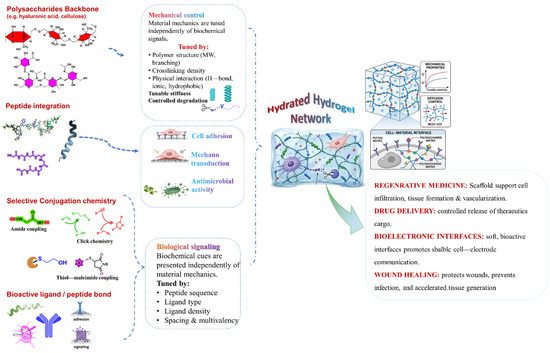
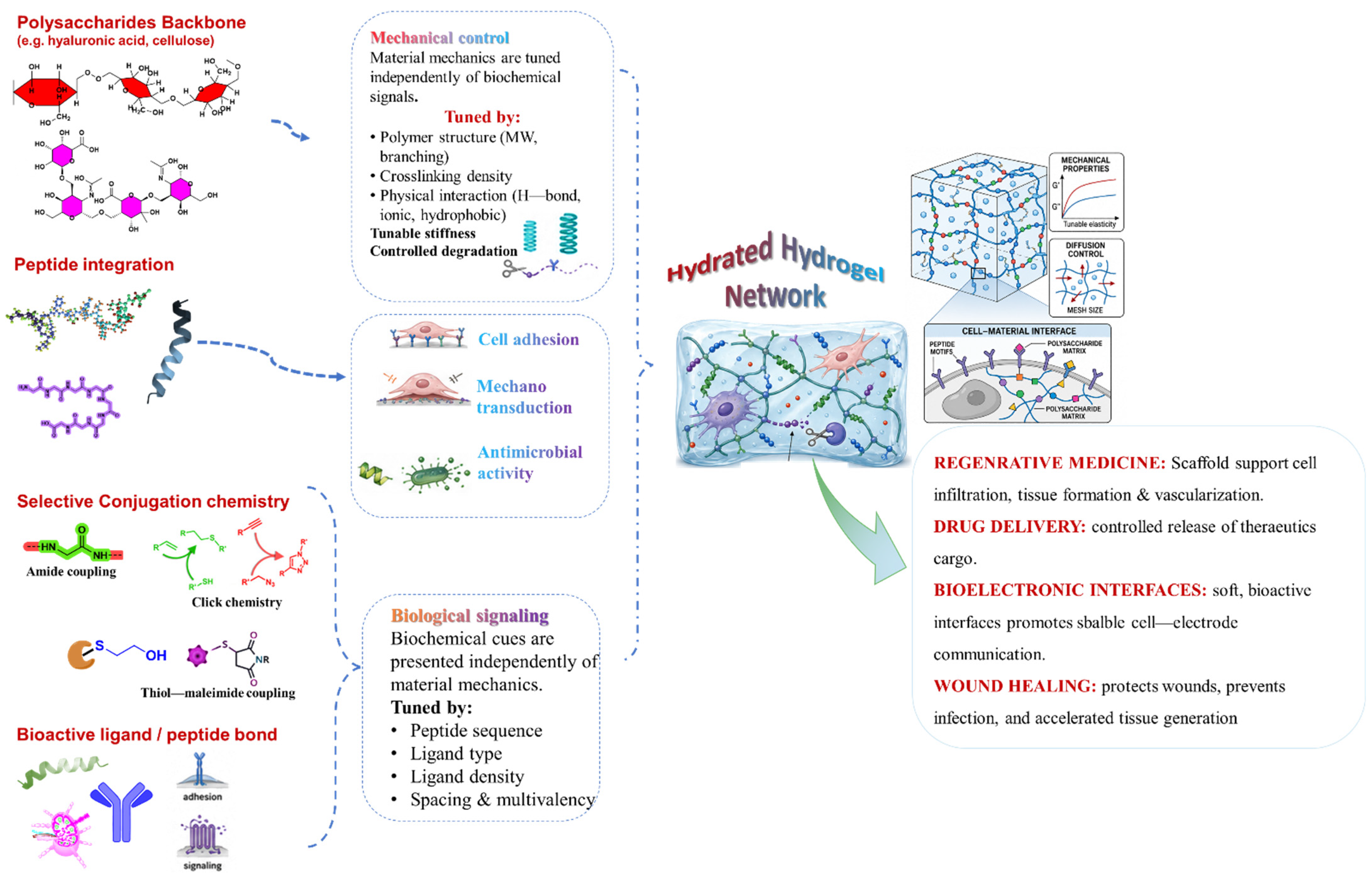
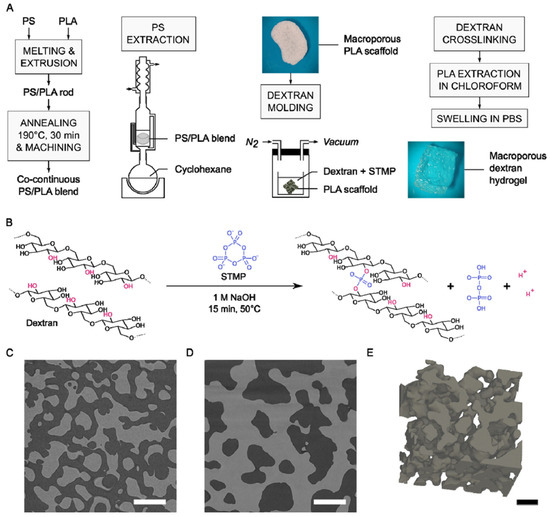
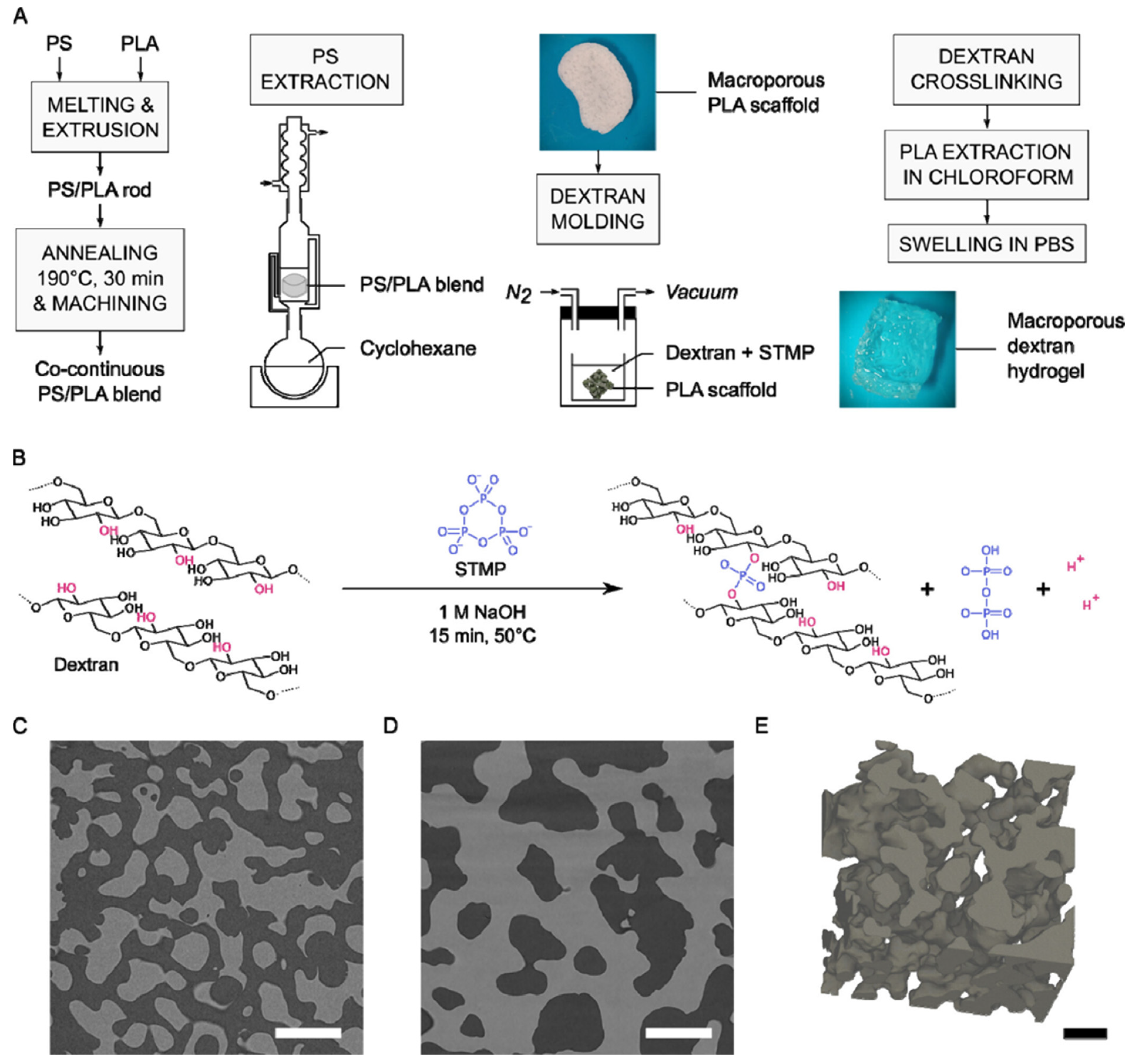
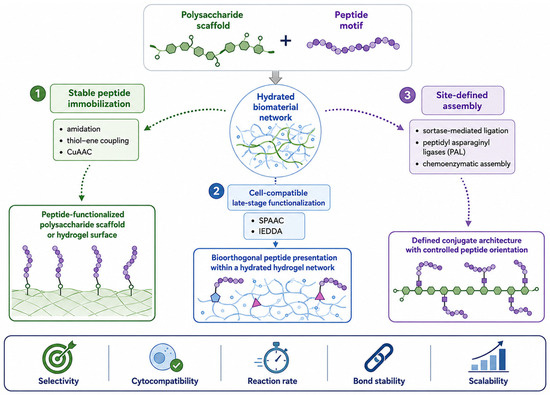
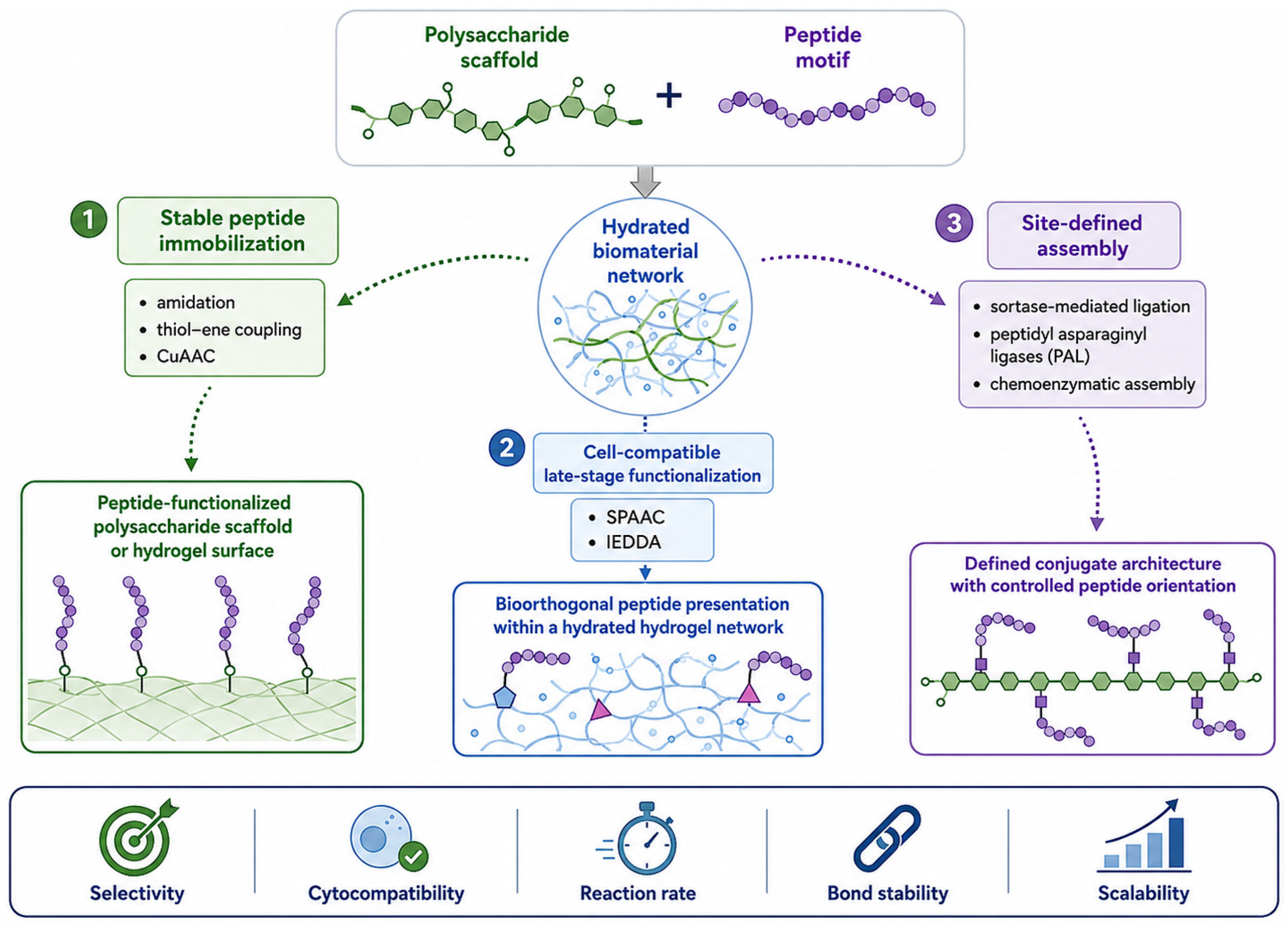
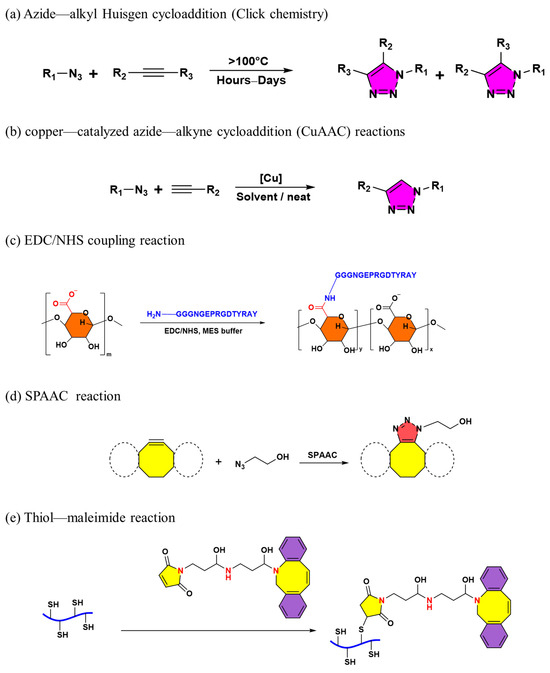
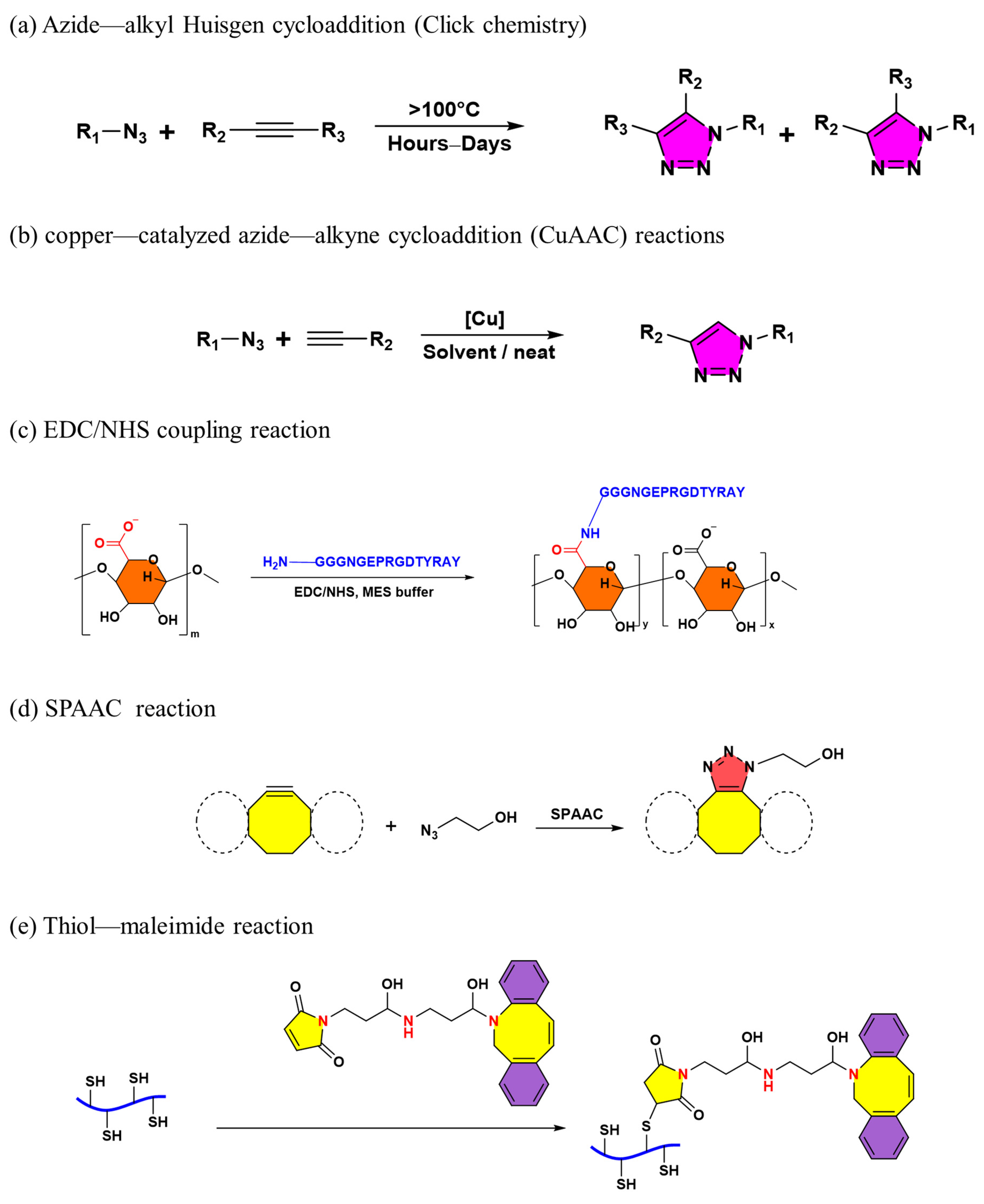
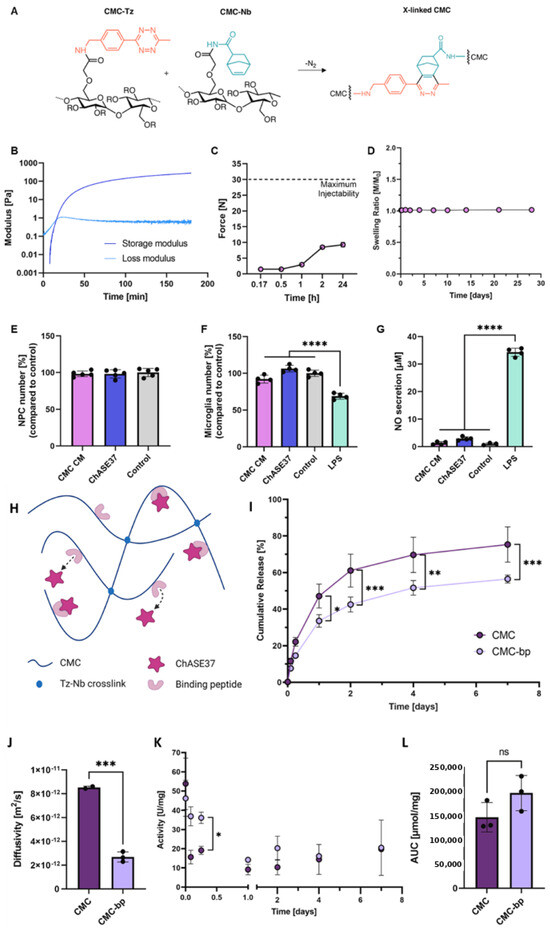
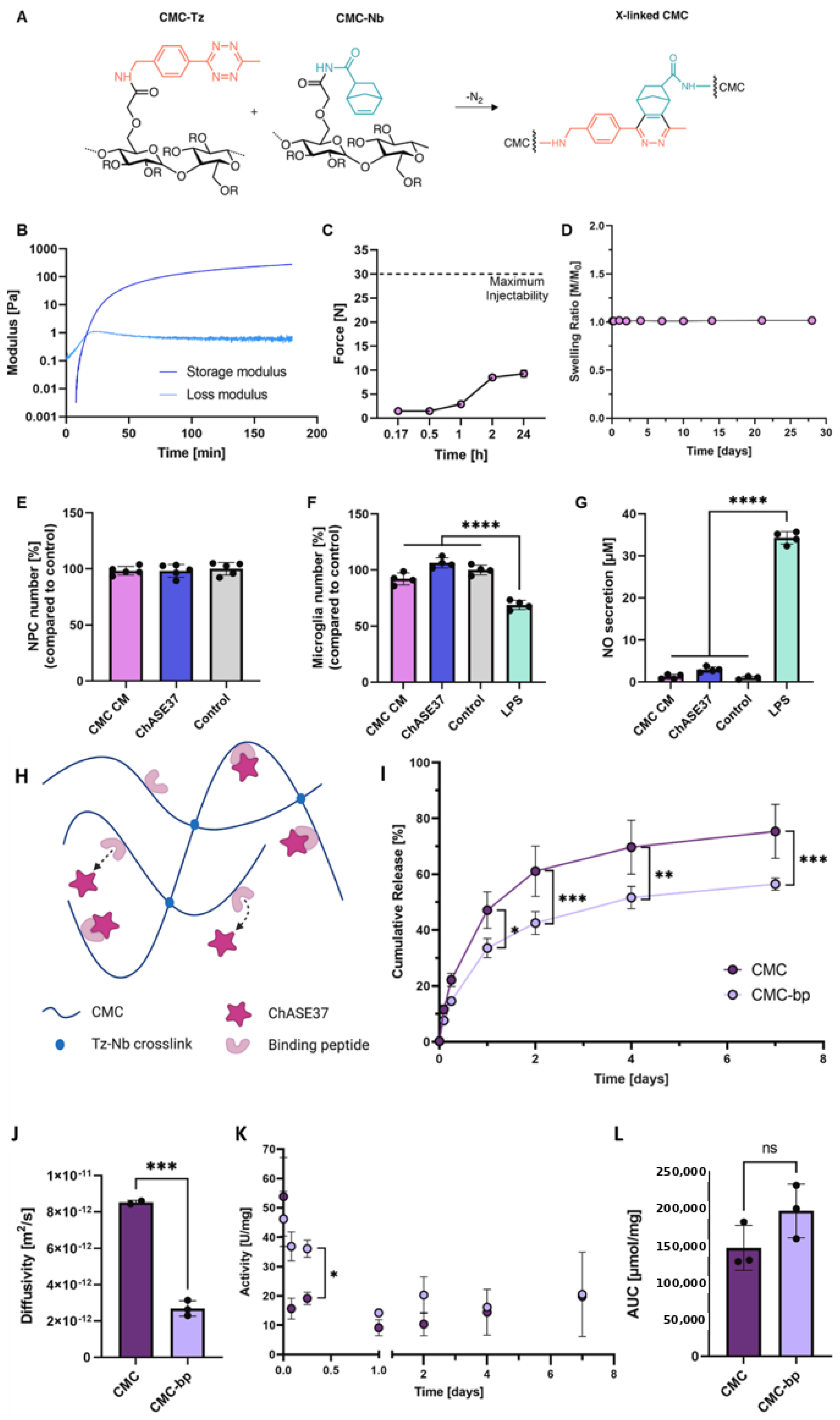
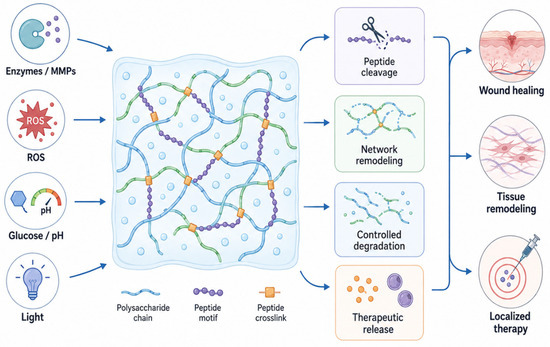
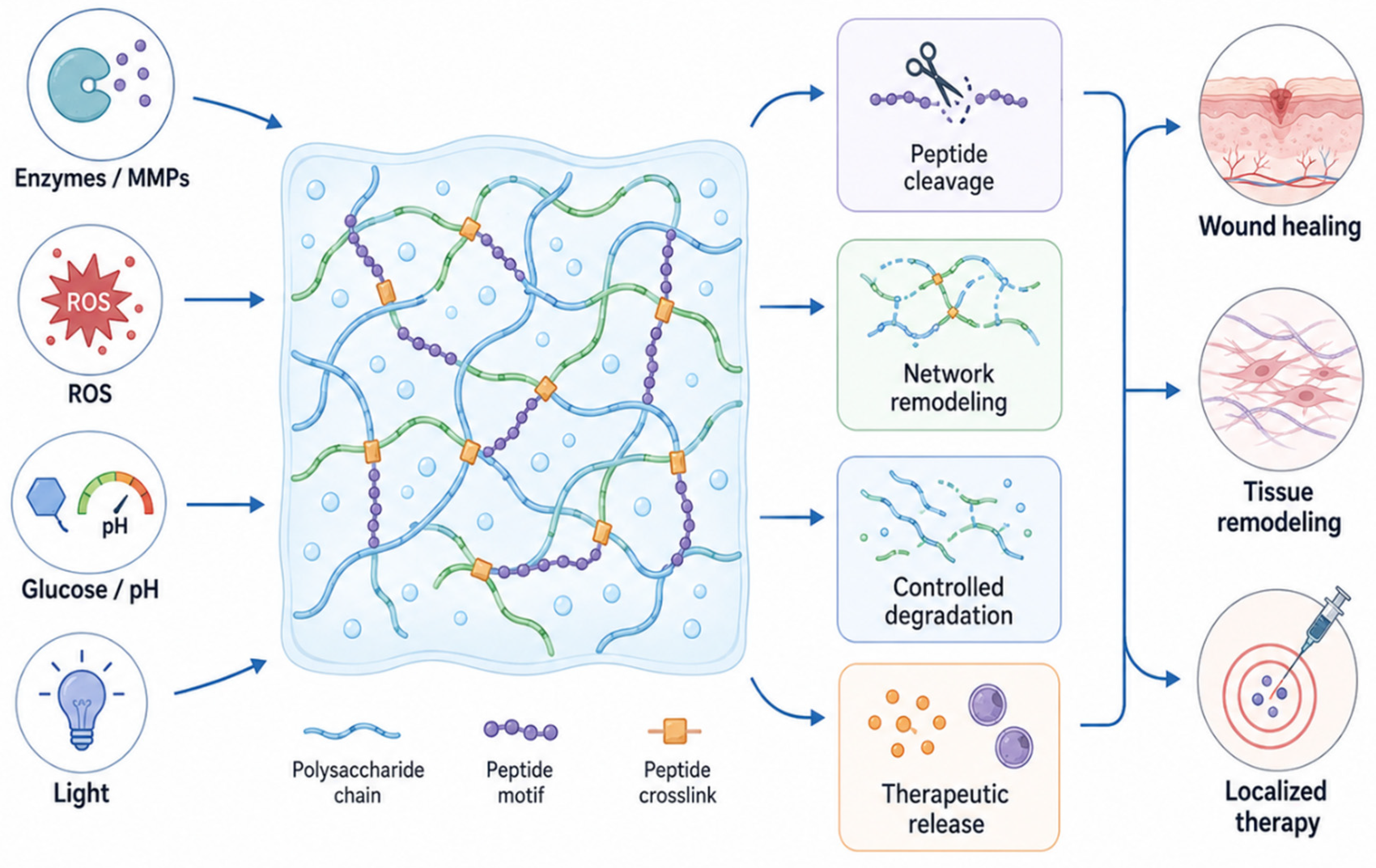
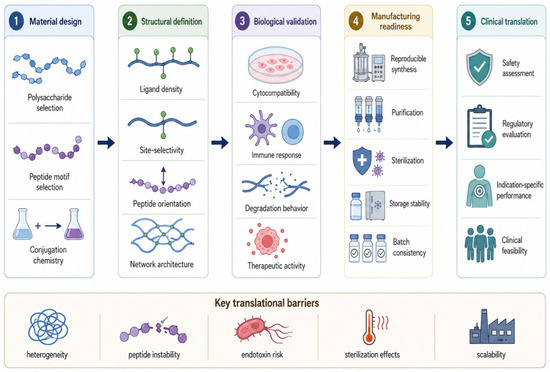
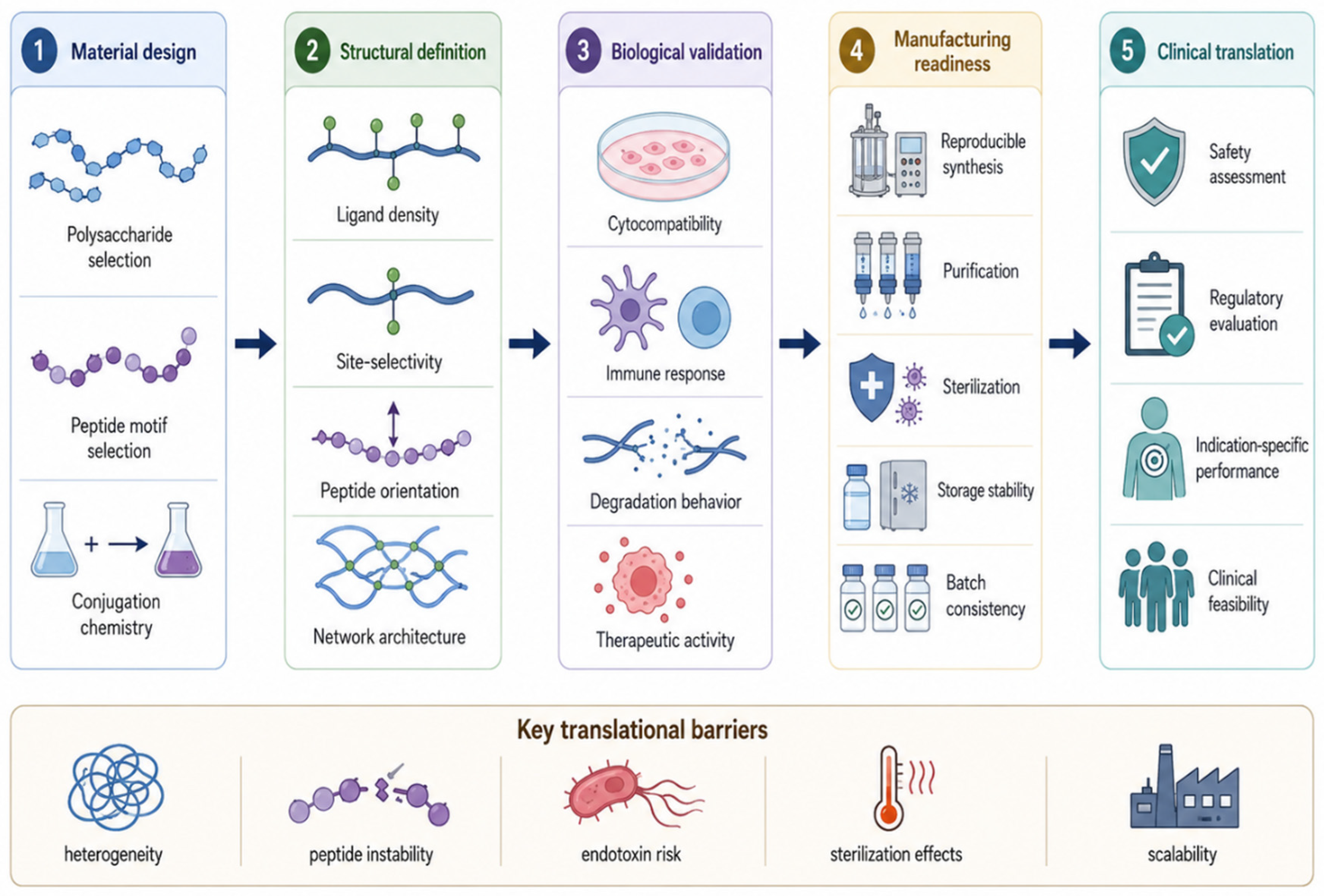

Disclaimer/Publisher’s Note: The statements, opinions and data contained in all publications are solely those of the individual author(s) and contributor(s) and not of MDPI and/or the editor(s). MDPI and/or the editor(s) disclaim responsibility for any injury to people or property resulting from any ideas, methods, instructions or products referred to in the content. |
© 2026 by the authors. Licensee MDPI, Basel, Switzerland. This article is an open access article distributed under the terms and conditions of the Creative Commons Attribution (CC BY) license.