


Abstract
Large-scale green hydrogen production via PEM electrolysis demands control strategies that surpass the limitations of traditional distributed control systems (DCSs). Digital twin (DT) technology has been introduced as a structured design framework for predictive maintenance and operational optimization across hydrogen production pathways, from steam methane reforming and green ammonia to next-generation PEM electrolyzer. A critical constraint exists; passive DT architectures cannot autonomously close the control loop. The resulting prediction–action latency gap introduces delays of 28–120 min precisely when dynamic renewable energy loads require sub-second responses. This review makes three original contributions; it characterizes the prediction–action latency gap as a structural design constraint across SMR, green ammonia, and PEM electrolyzer DT deployments, based on a structured Scopus and Web of Science search; it proposes a three-tier DCS–digital twin–AI architecture as the solution; and it defines five purpose-designed AI algorithm modules—Stack State Estimator, Degradation Trajectory Predictor, Fleet Dispatcher, Anomaly and Fault Classifier, and Maintenance Scheduler—together with an eight-challenge research agenda with technology readiness level assessments. All projections are extrapolated from adjacent domains and require electrolyzer-specific experimental validation.
Keywords:
digital twin; PEM electrolyzer; green hydrogen; steam methane reforming; green ammonia; predictive maintenance; stack degradation; AI control; IoT; research agenda; prediction–action latency gap; three-tier architecture; distributed control system (DCS); reinforcement learning search agenda 1. Introduction
1.1. From Materials-Scale Electrolysis to Gigawatt-Scale Plant Operation
In the past decade, much of the research on electrodes for electrolyzers has aimed to improve materials and cells. Research areas have included catalyst loading, membrane durability, current-density limits, and degradation chemistry. The key papers cited in this review are among the studies that have achieved great progress in improving the efficiency and stability of cells. The electrolyzer deployment pipeline has advanced well beyond demonstration scale at a pace that the operations and control literature has struggled to keep up with. The H2Maasvlakte project at the Port of Rotterdam (Uniper/Plug Power) was originally planned to commission 100 MW of PEM electrolysis capacity by 2026, expanding to 500 MW by 2030 at the latest [1]; the project has since been delayed, with commissioning now targeted no earlier than 2030 [2], but it remains the clearest industrial precedent for the 500 MW/5 × 100 MW configuration analyzed in this review. Siemens Energy’s gigawatt-scale facility in Berlin is based on a modular 100 MW reference-plant unit that can be duplicated to reach gigawatt totals [3]. Nel Hydrogen also offers a standardized 100 MW PEM plant package as a building block for larger arrays [4]. In this context, a 500 MW plant made up of five 100 MW modules is not only a practical example but also stands for a configuration that the industry is moving towards. However, there is little literature available for controlling, monitoring, and integrating AI into plants of this size compared to the huge literature at the cell and stacklevel for an electrolyzer. Moreover, there is little discussion today on how to organize and coordinate the distributed control, digital twin, and AI layers, especially about running multiple individual stacks as a coherent dispatchable asset. This is the gap which the present analysis tries to fill.
1.2. Distributed Control Systems: The Operational Backbone of Hydrogen Plants
Every industrial hydrogen plant rest on a distributed control system (DCS), a hierarchical automation architecture that can be understood as four successive layers, each building on the one below. This is not a future aspiration but an operational reality. This structured automation framework includes a field instrumentation layer that consists of sensors, actuators, and power electronics; a control layer with redundant controllers that implement closed-loop regulatory logic such as PID loops, interlocks, and sequencing; and a supervisory/SCADA layer that provides human–machine interfaces, alarm management, and historical data [5]. Commercial-scale hydrogen plants running on DC systems are already a reality, not a distant ambition. Honeywell’s Experion PKS has been commissioned for the HyNet Northwest hydrogen production hub, linking PEM stacks with carbon-capture skids to meet CO2-removal targets in the context of grid-frequency variations. Symphony Plus uses a blue-hydrogen complex in Port Arthur, and in September 2024, the Hamburg Green Hydrogen Hub (HGHH) consortium comprising Luxcara and Hamburger Energiewerke commissioned Siemens Energy to supply and install six units of its latest PEM electrolyser model to form a 100 MW electrolysis plant at the former Moorburg coal-fired power plant site, with commercial operation scheduled for 2027 [6]. Market studies show that distributed control system (DCS) architectures must become significantly more scalable, embed rigorous cybersecurity measures, and deliver advanced process optimization as green hydrogen deployments transition from pilot facilities to large-scale commercial plants [7,8,9]. This architectural evolution is required to successfully integrate and co-develop electrolyzer technologies, power electronics, and water purification systems at a simultaneous gigawatt scale [10,11].
What traditional DCS architectures lack is the ability to offer predictive insights. A DCS operates by executing the control logic it has been configured with, managing setpoints, and responding to thresholds; it lacks an internal model to assess the degradation of plant components, understand the impact of current dispatch decisions on stack longevity in the upcoming quarter, or re-optimize load distribution across multiple stacks in anticipation of renewable generation forecasts. These are exactly the functionalities that the next sections of the current study address with regard to digital twins and AI components. The distinction between the capabilities of the DCS in real time and the functions of the upper layers that can be executed only with a delay gives rise to the prediction–action latency gap, which serves as the foundation for the primary contribution of this review.
1.3. Digital Twins for Electrolyzer Systems: State of the Art
We define a digital twin (DT) as a virtual representation of a physical asset, which is kept synchronized with the physical asset by real-time data. It is used for state estimation, fault diagnosis, predictive maintenance, and what-if simulation [12]. In the context of PEM electrolyzers, the existing literature on DT shows a significant variation in quality and precision. At one end, there are models grounded in phenomenology and physics, which integrate electrochemical and thermal balance equations to accurately replicate stack-level voltage, temperature, and efficiency behaviors, though this approach comes at a significant computational expense. At the other end are data-driven digital twins, which employ online behavioral matching by constantly adjusting a reduced-order or machine-learning surrogate to incoming sensor streams, to reach near-real-time state estimation for closed-loop application. A recent instance links this method directly to fault detection and diagnosis for PEM water electrolyzer functioning under renewable-driven load variations.
Monopoli et al. [13] presents what appears to be the most applicable method available for developing a PEM-electrolyzer DT. The approach is based on the invariant model that describes key components and the steps for their implementation, with an explicit focus on improving online control and increasing operational life through efficient fault detection, diagnosis, and prediction. The structure of the sensing/state-estimation/decision-support framework they propose is like the three-tier framework described in this paper and the Hydrogen 4.0 cyber-physical model by Yavari et al. [14]. However, their work does not embed the framework into the AI-integrated control loop, which is the focus of this review.
It is worth noting that most of the literature on this topic, including the previously mentioned, treats a single stack or plant as the primary unit of analysis. Alsharif et al. [15] seem to have been the first to explicitly propose a “Fleet Digital Twin” architecture for hydrogen electrolyzer. They argue that the relevant digital twin unit changes from individual stacks to the entire fleet of stacks when plants expand according to the modular numbering-up strategy outlined in Section 1.5. This helps comprehensive knowledge services across the entire fleet, including comparative degradation benchmarking among nominally identical modules, which are not accessible through a single-stack digital twin. This fleet-level framing is directly relevant to the 500 MW/5 × 100 MW configuration examined in this review and is further developed in Section 6.
A commercial market report [16] estimates that approximately 25% of newly commissioned PEM systems have integrated digital-twin oversight and predictive-maintenance algorithms, and that AI-enabled diagnostics are contributing to extended stack-replacement intervals and enhancing uptime by an estimated 14%. While these broad figures serve as an industry-scale indicator only, the baseline engineering mechanisms of physics-informed digital twins [17], real-time machine learning diagnostics [18], and dynamic predictive degradation monitoring [19] have been robustly validated to effectively mitigate membrane thinning and catalyst degradation [20], thereby theoretically extending stack runtime and reducing unplanned system downtime [21]. Technology has advanced significantly beyond mere proof of concept at the industrial level, yet the scholarly work on large-scale, multi-stack DT architectures is still limited; this deficiency further highlights the necessity of this review.
1.4. AI and Machine Learning for Electrolyzer and Plant-Level Control: A Survey
The application of AI and ML in electrolyzer systems can be divided into three broad categories, each of which targets a different level of the control hierarchy. Supervised learning techniques are applied to performance prediction and the surrogate modelling of electrolyzer systems. There is a large body of research that focuses on training neural networks, support-vector machines, and gradient-boosted trees with experimental data or data generated from computational fluid dynamics to predict electrolyzer performance metrics such as current density, hydrogen production rate, and cell voltage. This approach serves as a more cost-effective alternative to comprehensive physics-based or computational fluid dynamics models in the context of design or control-system development. This body of work consistently shows that the operating temperature and the characteristics of the membrane and electrode significantly influence model sensitivity. Furthermore, it shows that two-step architectures, which integrate a rapid forward model with a temporal model like an LSTM for production forecasting, yield superior performance compared to single-stage methods when dealing with dynamic, renewable-driven power inputs.
Reinforcement learning (RL) can be used for control, scheduling, and maintenance. An expanding collection of studies describes the use of RLdeep Q-networks (DQN) and deep deterministic policy gradient variants (DDPG/TD3) along with their constrained or Lagrangian-relaxed adaptations to address electrolyzer decision challenges at increasingly larger scales. At the part level, Abiola et al. [22] integrates DRL-based feature selection with an LSTM network to forecast sensor readings for predictive maintenance in electrolyzers, achieving a correlation coefficient of 0.99 between predicted and actual sensor readings, with an RMSE of 0.1351, as reported in Table 3 of that study. At the system/dispatch level, recent efforts have framed the scheduling of electric–hydrogen integrated stations as a constrained Markov decision process. This is addressed through an enhanced deep Q-network utilizing Lagrangian relaxation, alongside a data-driven electrolyzer model based on deep XGBoost, replacing a mechanistic approach to enhance scheduling precision while adhering to demand and carbon-emission limitations. Chen et al.’s 2026 review [23] combines the rapidly expanding body of work on reinforcement learning for hydrogen-integrated energy systems into a lifecycle-orientated framework that encompasses production, storage, and multi-energy coordination. It observes in alignment with the perspective taken in this analysis that while deep reinforcement learning algorithms advance swiftly, the foundational Markov decision process formulations and lifecycle-stage requirements remain significantly more stable.
One instructive exception is Wang et al. [24], who designed a flexible on/off-grid control strategy for an electric–hydrogen coupled microgrid in which RL/DRL algorithms handle real-time power balance and switching decisions at the second-to-minute timescale, demonstrating that AI agents can, in principle, operate at timescales relevant to DCS control. Notably, however, this work operates at a scale and latency several orders of magnitude faster than the 28–120 min latency characterized for passive DT-based systems in this review, providing a concrete engineering benchmark that contextualizes the magnitude of the gap. What is strikingly missing from the broader body of work, nearly universally, is any systematic discussion regarding the latency at which AI agents are expected to function in relation to the DCS control loops they would oversee. Scheduling uses reinforcement learning functions within timescales ranging from minutes to hours, while distributed control system loops function on much shorter timescales of milliseconds to seconds. The estimation of digital-twin states occupies a position in between these two extremes. There is a discrepancy between the duration required for an AI agent to effectively revise its policy, constrained by inference latency, data availability, and the statistical horizon necessary for an accurate state estimate, and the duration in which the system necessitates a control action; we refer to this discrepancy as the prediction–action latency gap. To the best of our understanding, the literature reviewed does not explicitly find or examine this gap as a design constraint, though it is inherently present in every referenced work. Directly addressing this gap, the primary focus of this review is on a plant-scale, multi-stack PEM system.
1.5. Reference Plant Configuration: A 500 MW/5 × 100 MW PEM Electrolyzer Array and Its Implications
The reference configuration used in this review, a 500 MW PEM electrolyzer consisting of five 100 MW modules (Figure 1), is not a random figure selected for ease of illustration. Instead, it illustrates the arrangement that the electrolyzer sector has naturally gravitated towards as the functional unit for large-scale implementation, and it entails three immediate implications for the three-tier structure suggested in this analysis.
Figure 1.
500 MW/5 × 100 MW PEM electrolyzer reference plant configuration. Five largely independent 100 MW PEM electrolyzer modules share common balance-of-plant infrastructure (water treatment, H2 compression, thermal management, power electronics, and safety systems). Approximately 175 critical sensor channels span five modules. The three-tier control architecture (DCS→fleet digital twin→AI control layer) is shown below the physical plant. The dashed orange line indicates the AI→DCS command path that closes the prediction–action latency gap. Green lines: H2O feed; dashed blue lines: H2 product gas; dashed purple lines: DCS control signals.
- (A)
- Production feasibility and supply chain management
Electrolyzer stacks exceeding a few megawatts present challenges in terms of shipping, installation, and servicing through conventional planning. Once the capacity surpasses approximately 5 MW or 2000 kg, these stacks cannot be accommodated within a standard ISO shipping container, nor can they be managed with typical rigging equipment. Vendors have reacted by setting up a standard of around 100 MW as a “reference plant” unit. Nel’s PEM 100 package and Siemens Energy’s modular 100 MW core system are both explicitly marketed at this scale, with larger plants constructed through replication rather than by increasing the size of individual units. A 500 MW facility is more accurately viewed as five mostly autonomous 100 MW production units, requiring approximately 175 critical sensor channels across the five modules. This figure is an illustrative estimate constructed by the author for planning purposes, not a value drawn from a single published source; it assumes approximately 35 critical process-monitoring channels per 100 MW module (covering per-stack voltage, current density, temperature, pressure, flow rate, and gas-purity measurement points, consistent with the module-level sensor count shown in Figure 1), multiplied across the five modules. This estimate directly informs the digital-twin state-estimation latency discussed in Section 5.1 and should be read as a planning-level assumption rather than a specification. The model uses shared balance-of-plant infrastructures including water treatment, compression, and grid connections instead of being considered a singular, uniform 500 MW electrolyzer. The immediate implication for Section 6 is that the suitable unit for digital-twin replication is the 100 MW module, rather than the entire plant, aligning with the fleet–DT framework proposed by Alsharif et al. [15].
- (B)
- Redundancy and fault isolation
With five independent 100 MW modules, the failure of any one unit due to fault, planned maintenance, or degradation event is a 20% reduction in capacity instead of a complete shutdown of the facility. This fundamentally alters the function of the AI control layer; instead of optimizing the operating point of a single, uniform electrolyzer, the AI layer is needed to address a fleet-dispatch challenge. It must decide, at each control interval, how to distribute a specified total power input or hydrogen-production target among five modules that may be at varying stages of degradation, run at different temperatures, and have different availability statuses. This issue mirrors the one tackled by the RL-based scheduling literature outlined in Section 1.4, yet it runs at the intra-plant, inter-module level instead of the inter-asset, energy-system level. It is now that the prediction–action latency gap becomes critically important; it is anticipated that a fleet-dispatch decision requiring several minutes to compute would be of limited value if a module-level fault demands a rebalancing decision within seconds.
- (C)
- Efficiency at partial loads and dispatch considering degradation
PEM electrolyzer efficiency shows a complex relationship with load fraction, characterized by nonlinearity and non-monotonic behavior. Additionally, the degradation rate is influenced by the load history, which includes factors such as cycling frequency, duration at elevated current density, and the occurrence of cold starts. In a configuration of 5 × 100 MW running under variable renewable input, the typical application of green hydrogen involves the AI layer making dispatch decisions. We hypothesize that these decisions about which modules run, their load fractions, and duration of operation would directly influence both the immediate system efficiency and the long-term degradation path of each module. A digital twin that checks the five modules separately, providing input to a fleet-level AI dispatcher that is aware of its own latest relation to the underlying DCS, constitutes the essential architecture needed to capture this coupling. Section 6 elaborates on this architecture comprehensively and quantifies the latency budget relevant to each of the three tiers for the 500 MW/5 × 100 MW reference configuration.
1.6. Scope, Contribution, and Structure of This Review
Global installed electrolysis capacity must scale from the current megawatt range to tens of gigawatts by mid-century to meet net-zero hydrogen demand targets. Simultaneously, steam methane reforming (SMR) is a fossil-fuel reforming route that accounts for approximately 59% of total global hydrogen production (IEA Global Hydrogen Review 2023 [25]), and over 95% of dedicated industrial hydrogen output in established production facilities [25], based on grey hydrogen production infrastructure. The current mandate is that the application of this method must be kept at high reliability and should be progressively decarbonized. From the decarbonization perspective, proton exchange membrane (PEM) electrolyzers are a leading candidate for green hydrogen scale-up owing to their high-power density, dynamic response to variable renewable energy inputs, and compact footprint [26]. Expert elicitation places current reliable PEM stack lifetimes at approximately seven years, with a 2030 industry target of ten continuous years [27]. The stack lifetime and associated degradation, as compiled from experimental studies reviewed in Maoulida et al., are typically reported at 60–48 μV/h voltage drift rates under dynamic renewable energy loading or intermittent conditions [28]. This translates directly into hydrogen production losses and increased maintenance costs on a large scale.
Traditional distributed control systems (DCSs) provide critical safety measures via a millisecond-level process control backbone for every commercial hydrogen plant today. It is indispensable and fundamentally reactive. DCS controllers execute pre-programmed rule sets and cannot predict degradation, refine across multiple units, or adapt to the statistical structure of renewable energy intermittency in case of electrolyzer plant [29,30,31,32,33]. Digital-twin (DT) technology offers a partial solution by keeping a continuously updated virtual representation of the physical plant, enabling predictive maintenance scheduling, scenario analysis, and early-warning anomaly detection [30]. The DT’s architectural limitation is the prediction–action latency gap, which is the central concept developed in this paper.
Throughout this paper, a 500 MW PEM electrolyzer plant including five 100 MW stacks is used as a conceptual reference scale. This configuration consists of near-term national hydrogen strategy targets [25,34,35] and emerging industrial project announcements; however, no such facility currently exists at the time of writing. All references to this configuration are illustrative of a plausible near-future deployment context and do not describe any specific operating plant. This paper is a review contribution; it does not report new experimental measurements, and all quantitative claims are sourced from and attributed to the cited literature.
Central argument: Digital-twin technology is necessary but not sufficient for next-generation large-scale PEM electrolyzer control. The prediction–action latency gap inherent in passive DT architectures demands a third control tier, which is an AI decision layer that transforms DT predictive intelligence into closed-loop autonomous control actions. All projections for the AI decision layer are extrapolated from adjacent domains and require experimental validation in PEM electrolyzer contexts.
1.7. A Five-Year Technology Landscape: From General Process-Industry DCSs, Digital Twins, and AI to Electrolyzer-Specific Implementations
The three-tier architecture with distributed control, digital twin, and AI/ML, and the prediction–action latency gap connecting these are discussed in Section 1.2, Section 1.3 and Section 1.4. This section explores the development of each tier within general industrial process plants over the past five years (2021–2026) to substantiate the claim that this gap is a core aspect of the field, rather than a result of any single investigation. It then continues with the replication of each thread, at progressively larger scales, within studies focused on electrolyzers. A consistent pattern appears, involving rapid advancement at the individual unit or single-stack level, accompanied by a significant absence of holistic, plant-wide solutions. This gap acts as the empirical motivation for the framework detailed in Section 2 and Section 3.
1.7.1. Distributed Control: Evolving from a Deterministic Framework to an AI-Integrated, Cloud-Enabled Infrastructure
Over the past five years, DCSs have evolved from a purely deterministic regulatory framework to a platform that is driven by AI, integrated with cloud technology, and increasingly fortified to combat cybersecurity threats. Vendor roadmaps and product announcements from 2024–2025 illustrate the pace of this transition. Siemens released CENTUM-class and SIMATIC PCS updates with enhanced cybersecurity features including ISA Secure-aligned security controls and AI-assisted diagnostics targeting energy and chemical plant operators [36]. Emerson expanded its Delta brand into the DeltaV Automation Platform in March 2024, integrating DCSs, SIS, SCADA, MES, and cloud-based analytics under one umbrella for remote monitoring and optimization of industrial plants [37]. ABB presented its “DCS of the future” vision at the 2024 ARC Leadership Forum, describing a modular, standards-based architecture combining DCSs, edge, and cloud applications to enable AI and machine learning to run adjacent to the control core without compromising process reliability [38]. Yokogawa released CENTUM VP R6.11.10 in May 2024 and, in 2025, announced CENTUM VP R7 built with “trust” as its design theme incorporating OPC UA connectivity, ISA Secure SSA Level 1 certification, and predictive monitoring capabilities [39]. Together, these announcements describe a coherent industry trajectory: cloud-based and hybrid DCS architectures for scalability, edge computing for low-latency decision-making, AI/ML embedded in the control layer, and digital-twin connectivity for virtual process optimization, all converging within a two-year window.
The patent literature confirms this trajectory recent USPTO filings (e.g., Patent 12,190,217, 2025 [40]) describe industrial DCS architectures explicitly as plant-wide data centres with API (application programming interface)-exposed information models; the detailed architectural implications are discussed in Section 6. This involves a detailed plant information model, which defines the control architecture, network architecture, physical elements, and interrelationships. APIs make these components more accessible, allowing advanced applications such as AI and analytics modules to analyze the plant’s condition and potentially alter control protocols. The current state of AI logic running on it, however, is not as important as the vendors’ efforts to build the required infrastructure, as shown by the existing literature.
The contrasting element of this connectivity is the possibility of risk. ICS/SCADA systems were originally designed for isolated, real-time, deterministic functions, not for security aspects such as confidentiality or authentication. Yet, when they are embedded into IT networks, cloud services, and AI pipelines, they inevitably inherit the vulnerabilities of IT environments. Yavari et al. [14] explicitly identify cybersecurity as a core design requirement for Hydrogen 4.0 cyber-physical systems, noting that the convergence of IT and OT networks in hydrogen plants inherits IT-sector vulnerabilities that were not present in isolated legacy DCS deployments. This has a direct implication for the three-tier architecture proposed in this paper; the API-level coupling between the DCS and the AI/DT tiers must be designed as a controlled, authenticated, and auditable interface from the outset, which is a requirement addressed further in Section 7.1.
It is ultimately important to emphasize what remains constant. While the nomenclature of AI-integrated systems may suggest otherwise, the deterministic control loops including PID, interlocks, and sequencing running on millisecond-to-second timescales are, by design, the layer least amenable to direct AI intervention. This is mainly because their certification and safety cases depend on predictable, verifiable behavior. A key point that is brought out in a recent review of applications in the field of process systems engineering [41]. The authors point out that even with fast advancements in methodologies such as property prediction, flowsheet modeling, and process intensification, these innovations will take time to be integrated into industrial systems such as DCSs, PLCs, and other higher-level applications. Furthermore, it has been observed that facilities will need a sophisticated infrastructure that can process diverse types of data and interpret operational conditions before substantial integration at this stage. This scenario is a parallel illustration of the gap between prediction and implementation; the AI part can analyze and recommend at the speed of its algorithms, while the DCS part responsible for the later actions runs within its own rigid temporal limits and certification requirements.
1.7.2. Digital Twins: From Definitional Consensus to Fleet-Level Architecture
Over the past five years, the literature on digital twins has developed along a noticeable trajectory. The wave of the early 2020s was taxonomic and definitional. One of the most often cited systematic literature reviews was produced by Semeraro et al. [42], which showed a common vocabulary and classification for digital-twin paradigms across manufacturing and process domains. Later work on DTs in the process industry directly builds on this foundation, including Semeraro’s own later contribution to the PEM-electrolyzer DT method [13], as mentioned in Section 1.3. Perno et al. [43] conducted a systematic review on digital-twin implementation in the process industry to find out whether a DT pilot would survive contact with an operating plant. They found enablers and barriers including data integration, organizational readiness, and interfacing with legacy systems. By 2024–2025, the discussion had shifted from what a DT is and why it is difficult to implement, to systematic reviews of DT-driven predictive maintenance. Abd Wahab et al. [44] and Ismail et al. [45] proposed layered taxonomies of DT architectures for predictive maintenance. The latter explicitly follows the evolution from early DT implementations to AI-enabled digital twins with self-learning models, or DTs whose internal models are continuously retrained by ML.
DT fidelity for chemical and electrochemical processes has been the subject of a parallel, more technical thread. A deep-learning DT framework for chemical processes such as methanol distillation [46] enables high-fidelity soft-sensing within a DT loop using hierarchically organized FNN–CNN–GRU architectures. This means that the DT’s internal state estimate is generated by a trained neural network rather than a first-principles model, blurring the distinction between “digital twin” and “AI model,” which were previously treated as separate layers. This change was reported in a 2025 review of digital twins in the chemical process industry, across case studies, stating that hybrid modeling (first-principles structure with data-driven sub-models), data integration, and real-time analytics are among the critical elements of successful DT frameworks for CPI (chemical process industry) applications [47].
This general path has been closely followed in electrolyzer-specific DT research, but almost exclusively at the single-stack level. At the beginning of the five-year window, Zhao et al. [48] published one of the first data-driven DT models for high-temperature PEM electrolyzer cells, combining multiphysics simulation with nonlinear system identification. This hybrid approach is consistent with the trend across the CPI as described above. Since then, the Spanish research team of Folgado, González, and Calderón has been publishing a steady flow of papers on digital replicas of PEM electrolyzer: an Energy Conversion and Management simulation platform to evaluate PEM electrolyzer models as digital replicas [49]; a Journal of Energy Storage paper from 2023 showing a digital replica based on experimentally determined internal cell resistance for a six-cell PEM stack [50]. The most directly transferable DT-construction method for PEM electrolyzers was then presented by Monopoli and Semeraro et al. [13], explicitly organized around online control, fault detection, and prediction, as described in Section 1.3. Most recently, Alsharif et al. [15] proposed the first explicit fleet digital-twin architecture for a hydrogen electrolyzer, and Liu et al. [12] demonstrated online behavioral matching, following a data-driven, continuously retrained DT pattern previously described for general CPI, specifically for a PEM water electrolyzer under renewable-driven load fluctuation.
There is an obvious pattern that appears across this line of work. In the general chemical process industry, it took until about 2021–2022 to build common definitions and to recognize the main implementation barriers for digital twins. Then, in 2023–2024, the industry moved toward hybrid physics-plus-machine-learning architectures. Only in 2024–2025 did we start tackling designs for fleet-level and predictive maintenance. Around 2022–2023, electrolyzer-specific DT research entered its hybrid-architecture stage, pioneered by Zhao et al. [48] and sustained by the Folgado, González, and Calderón series. However, it was not until 2024 that fleet level thinking was reached, and even then, it was through a single paper by Alsharif et al. [15], and not the substantial body of work currently available for general manufacturing contexts. A fleet of the 500 MW/5 × 100 MW size investigated in Section 1.5 of the present analysis has not yet been the subject of an electrolyzer digital-twin investigation.
1.7.3. AI and Machine Learning for Process Control: From PID Tuning to Constrained Scheduling
The basic reviews make it clear that digital twins have a five-year (or slightly longer) arc with regard to industrial process control reinforcement learning (RL). Nian Liu and Huang [51] published what is considered the seminal review of RL for industrial process control just before the five-year window of this study opened in 2020. Yoo et al. [52] followed in 2021 with a review that focused exclusively on RL for batch process control. The same early bottleneck is found in both reviews; pure end-to-end RL controllers are challenging to certify against the safety situations that DCS-layer control already addresses, and RL agents’ learning in simulation seldom transfer reliably to real plants due to sample-efficiency restrictions.
The 2022 literature addressed this problem by describing how RL augments PID. McClement et al. [53] proposed meta-RL for offline tuning of PI controllers; Lawrence et al. [54] showed deep RL combined with intentionally shallow, PID-structured controllers; Dogru et al. [55] proposed an RL method for autonomous PID tuning and confirmed it using industrial data. In each scenario, the RL agent adds an adaptive layer on top of the certified regulatory controller, while preserving the DCS-layer safety case by tuning its parameters (not replacing it). During the same year, Dutta and Upreti [56] studied actor–critic methods, especially for process control, and Zhu et al. [57] showed benchmark work for assessing RL methods for batch process control and optimization, providing the comparative assessment called for by the 2020–2021 reviews.
In 2024, Lawrence et al. [54] published a survey on machine learning for industrial sensing and control from a practical perspective. The question is no longer whether ML can be used for control processing, but rather which architectures such as RL-augmented PID, learned soft sensors feeding a traditional MPC (model predictive control), or end-to-end learned controllers are best suited to a specific certification and latency budget. A contemporaneous systematic review of RL in process industries (based on a PRISMA-based contextual and taxonomic methodology across the literature from 20 countries) and Devara-konda et al. [58] (2025) both confirm that policy-based and actor–critic methods are currently the dominant RL family in industrial applications, accounting for about one in three studies, reflecting their suitability for the continuous-control tasks that predominate in process plants. This was extended in a 2025 study, published in Industrial & Engineering Chemistry Research, where machine-learning classifiers were used to decide whether centralized or distributed model predictive control was the best solution for a particular control sub-problem [59]. Here, ML was used to orchestrate which MPC architecture should run where rather than to replace MPC; this meta-control pattern is closely related to the fleet-dispatch issue discussed in Section 1.5. This simple pattern has been repeated in research on AI control for electrolyzers, which is on a much smaller scale and about a year or two behind. Abiola et al. [22] (2023) combined DRL-based feature selection and LSTM for predictive maintenance at the “RL-augments-existing-control” level. This approach is the same as the RL-augments-PID pattern mentioned above but used for sensor selection instead of control tuning. Chen et al.’s [23] 2026 review of RL for hydrogen-integrated energy system scheduling outlines for many of the same CMDP-based, constraint-aware scheduling formulations (covering carbon limits, demand satisfaction, and safety margins) that the broader process-control literature had already converged on for batch and continuous processes around 2022–2024 at the “constrained scheduling” stage.
On the MPC side, the use of multiscale model predictive control to exploit electrolyzer flexibility in heterogeneous energy markets formulates the problem as a trade-off between the increased degradation of the PEM membrane from frequent cycling and the savings on electricity costs obtained by dynamic operation. Regarding multi-tier stack PEM systems (Section 1.7.4), Lu et al. [60] and Kuang et al. [61] discussed a similar degradation-versus-economics trade-off, which was recast in the multiscale-MPC formalism that the broader CPI literature had been using since at least 2021.
1.7.4. AI for Maintenance and Fault Diagnosis: From Anomaly Detection to Explainable, Degradation-Aware Monitoring
Predictive maintenance is a field where the general industry and specific applications related to electrolyzers currently show a significant level of development. This is because fault detection and diagnosis are more manageable when approached as supervised or semi-supervised learning challenges, rather than as complete closed-loop control systems. Additionally, the financial justification for predictive maintenance tends to be more straightforward. On the general-industry side, a 2025 systematic literature review of AI-enhanced digital twins for maintenance (using a Scopus-based “all-inclusive” query spanning 60 countries) documents the rapid recent growth in this specific intersection. A similar study published in 2025 quantifies the impact of PdM (predictive maintenance) algorithms on the economic performance of manufacturing firms in the Visegrad Group. It concludes that PdM adoption is a significant predictor of economic performance, controlling for firm size and structure. This is evidence that the technology has moved from being of purely research interest to having measurable operational impact over the last two years.
The most dominant approach that has surfaced within the last two years in the field of electrolyzers is the use of variation/Bayesian latent-variable monitoring for alkaline water electrolysis. In 2024, Zhang et al. [62] published their work proposing a variational Bayesian sparse principal component analysis (PCA) approach and a robust dynamic variational Bayesian dictionary-learning method for fault detection and diagnosis of AWE. These methods were developed in response to the challenges posed by serial correlation and measurement noise in AWE process data, which traditional linear monitoring techniques struggle to address. Furthermore, both approaches are positioned as essential for achieving the model accuracy necessary for effective downstream learning-based MPC. This case is a direct, concrete instance of the DT–AI coupling that this review formalizes: the fault-diagnosis model is positioned not as a standalone monitoring tool but as a prerequisite for reliable MPC.
A second cluster focuses on the operation of multi-stack systems, with an emphasis on degradation awareness closely related to the 5 × 100 MW configuration discussed in Section 1.5. Lu et al. [60] (2023) refined the power allocation of a multi-stack PEM water electrolyzer system working in a wind–hydrogen configuration, with explicit consideration of the effects of stack degradation on the performance of the system. In the same year, Tully [63] (2023) took a complementary approach by considering a variety of heuristic control strategies for multi-electrolyzer wind–hydrogen systems in the presence of degradation and assessing their relative effectiveness in meeting production targets as stack health declines. Kuang et al. [61] (2024) focused on the demand side and improved the operation of a user-side electrolytic hydrogen production system, directly considering the time-varying electrolyzer efficiency degradation constraint in the dispatch decisions. Yan X. et al. [64] (2024) addressed the related problem of state-of-health estimation for industrial H2 electrolyzer through transfer linear regression. This method, a simplified machine learning approach, was chosen because it can be transferred across different electrolyzer units without retraining each individual one, which is a prerequisite for managing a fleet of nominally identical modules. These studies each ran in only a limited range of stacks (usually 2–5), not the large 5 × 100 MW/dozens-to-hundreds-of-stacks range that this review addresses. However, the degradation-aware allocation logic they create can be directly applied to that larger scale and is explicitly referenced in Section 6.3.
The latest cluster emphasizes the importance of clarity and understanding, a need that has arisen as AI models transition from being evaluated offline to making decisions that impact plant operations. Alipour Bonab et al. [65] (2024) developed a machine learning-based system to check the performance of PEM water electrolyzers for green hydrogen production to decarbonize the aviation industries. The monitoring model was a part of a broader sustainability decision framework and was not considered a diagnostic tool as such. In this context, Ahmed et al. [66] (2024) presented an explainable AI deep-learning regression model for green hydrogen production, using SHAP-style attribution to make the model’s operating-condition recommendations auditable by plant operators. In a related study, D’Silva et al. [67] (2025), working on polymer electrolyte fuel cells rather than electrolyzer but using closely related stack hardware and failure modes, demonstrated a black-box diagnostic method using multifrequency perturbation signals that improved the signal-to-noise ratio without requiring destructive testing, reporting a diagnostic pattern directly transferable to PEM electrolyzer stacks within a fleet DT.A novel solar power and battery state of charge (SoC) control technique is proposed through the integration of a hydrogen electrolyser fuel cell system and a battery energy storage system (BESS). To dynamically control the hydrogen output and smooth out intermittent photovoltaic fluctuations, a machine learning-based controller (MLC) is designed and demonstrated to outperform fuzzy logic controls in battery management [68].
1.7.5. Synthesis: The Integration Gap, and Why It Points to the 500 MW/5 × 100 MW Configuration
Upon reviewing Section 1.7.1, Section 1.7.2, Section 1.7.3 and Section 1.7.4 collectively, a coherent narrative unfolds. In the past five years, general industrial process plants have experienced significant advancements. The DCS layer has evolved to become AI-native and cloud-connected, while its core deterministic loops have remained unchanged and increasingly subject to cybersecurity scrutiny. The digital-twin layer has progressed from definitional consensus to implementation-barrier analysis and now to hybrid physics–ML architectures, with recent developments focusing on fleet- and predictive-maintenance-oriented taxonomies; and the AI/ML control layer has transitioned from RL-augments-PID patterns to comparative benchmarking and is now exploring constraint-aware scheduling, meta-control, and centralized/distributed MPC classifier work. Each tier, on its own, has now reached a satisfactory level of maturity.
Each of these three threads has been revisited within the electrolyzer-specific literature: fault diagnosis through variational Bayesian techniques, digital twins through hybrid physics–ML “digital replica” approaches culminating in a single fleet-DT proposal, and AI control through DRL-based maintenance and constrained scheduling reviews. Yet in every case, the work stays anchored to the single-stack or small multi-stack scale, typically forming no more than one to five units. No electrolyzer study to date has brought together all three components, namely, the DCS, fleet digital twin, and AI scheduler, into a single, coherent framework, nor has any addressed the scale at which the modular numbering-up deployment strategy described in Section 1.5 actually operates: 5 × 100 MW, implying tens to low hundreds of individual stacks depending on the unit stack rating. This is the integration gap that the present review addresses.
The degradation-aware, multi-stack power-allocation logic developed by Lu et al. [60], Tully [63], and Kuang et al. [61] at the two-to-five-stack scale is, in principle, the right starting point for the AI tier’s fleet-dispatch problem set out in Section 1.5. It has not, however, been combined with a fleet digital twin in the sense proposed by Alsharif et al. [15], nor has it been placed beneath an AI scheduler whose update latency is explicitly budgeted against the DCS layer’s control-loop timescale, in the manner argued for in Section 1.4. The 500 MW/5 × 100 MW reference configuration is therefore not merely a convenient round number, as Section 1.5 establishes from an industrial-deployment standpoint. From the perspective of this five-year literature landscape, it is also the smallest configuration of all three tiers, namely, AI-native DCS, fleet digital twins, and degradation-aware constrained AI scheduling, must run simultaneously. It is, for this reason, the natural scale at which to define and quantify the prediction–action latency gap that forms the central contribution of this review.
1.8. Digital Twin in Existing Hydrogen Production Plants: Evidence from Grey Hydrogen and Green Ammonia
Before addressing PEM electrolyzers specifically, it is important to examine how DT technology has been applied in the two industrially dominant hydrogen-adjacent production pathways: grey hydrogen via SMR and green ammonia via electrolytic hydrogen coupled with Haber–Bosch (HB) synthesis. These case studies set up the practical foundation for DT deployment in PEM electrolyzer plants, while the latency gap problem found in this paper is cross-sectoral rather than electrolyzer-specific.
1.8.1. Case Study 1—Digital Twin for Grey Hydrogen (SMR Plants)
Steam methane reforming and related natural-gas-based reforming routes account for approximately 76% of total global hydrogen production [69], with SMR specifically accounting for approximately 59% according to the IEA Global Hydrogen Review 2023 [25]; the higher figure includes autothermal reforming and refinery by-product streams. Over 95% of dedicated industrial hydrogen output in established facilities is produced from these fossil-fuel-reforming routes [25,70] generating 9–12 tonnes of CO2 per tonne of H2. The SMR process involves endothermic reactions in catalyst-filled tubes at 800–900 °C and 15–50 bar, presenting severe operational challenges such as non-uniform tube-wall temperature distributions, catalyst deactivation, and furnace tube failure under thermal cycling [70]. These challenges are structurally analogous to the degradation management problem in PEM electrolyzers. Here, both systems suffer from progressive, condition-dependent degradation that reactive DCS cannot predict.
Rajieh E. et al. [71] proved a physics-informed DT for a pilot-scale SMR/WGS/PSA system. The DT integrates real-time sensor data with first-principles MATLAB/LabVIEW simulations and was experimentally confirmed, achieving RMSE values of 12.5 °C for reformer temperatures and 1.9% for hydrogen yield. A. Kumar et al. [70] applied a smart-manufacturing framework to industrial-scale SMR operations, combining advanced temperature sensors and reduced-order CFD models to enable real-time optimization of furnace temperature distribution, reducing tube replacement frequency and thus providing a predictive maintenance outcome that pure DCS cannot deliver. Naanani and Nachtane [72] confirmed through a systematic review that real-time monitoring and predictive maintenance are the two highest-value DT use cases across alkaline and PEM electrolyzer systems.
1.8.2. Case Study 2—Digital Twin for Green Ammonia Plants
Green ammonia is produced by combining electrolytic hydrogen with nitrogen in a Haber–Bosch reactor. This is among the most important near-term applications for large-scale PEM electrolysis. The integrated system presents a uniquely demanding control problem where the HB reactor requires steady hydrogen feed at 150–300 bar and 400–500 °C [73], while the upstream PEM electrolyzer output fluctuates with variable renewable energy availability.
Salmon and Bañares-Alcántara [74] demonstrated that model predictive control (MPC) applied to an islanded green ammonia plant can reduce hydrogen storage requirements by up to 30% compared to steady-state operation assumptions. Theirs was the first published demonstration of how AI-informed control directly improves the economics of green ammonia, and it included the class of algorithms embedded in the renewable integration coordinator (RIC) module proposed in this paper. Tully et al. [75] extended the analysis to show that HB reactor turndown flexibility is the critical design parameter for minimizing hydrogen buffer storage, with a 60% reduction in smallest HB reactor load, thus reducing storage requirements by over 38%. Nadiri et al. [73] confirmed kinetic models for ammonia synthesis across wide operating conditions, confirming that DT-based operability models for flexible HB operation are technically possible. Yavari et al. [14] proposed Hydrogen 4.0: a comprehensive cyber-physical framework for renewable hydrogen plants integrating IoT, DT, and AI in a structure directly analogous to the three-tier architecture proposed in this paper.
1.8.3. Cross-Pathway Synthesis
Figure 2 and Figure 3 summarize the case study evidence across all three production pathways. Figure 2 illustrates the DT architecture overlaid on the SMR process chain and also serves as a conceptual evolution diagram from traditional DCS-only control through passive DT-augmented control to the proposed AI-integrated three-tier architecture) (panel a) and the electrolytic green ammonia chain (panel b), including reported KPI improvements from the published literature (panel c). Figure 3 provides a radar-chart comparison of DT maturity across six operational dimensions (panel a) and a TRL progression roadmap for DT technology in each production context (panel b).
Figure 2.
Digital-twin technology in existing hydrogen production pathways. (a) DT architecture for a grey hydrogen SMR plant with DT components including tube-wall temperature monitoring, catalyst deactivation prediction, and anomaly detection. (b) DT architecture for a green ammonia plant, with DT components including electrolyzer degradation monitoring, HB operability modelling, and LCOA optimization. (c) Reported DT performance gains—RMSE values show model prediction accuracy (lower is better); the fault detection and RUL metrics show improvement compared to reactive DCS baseline. Adapted from [27,44,60,66,71].
Figure 3.
DT maturity and technology readiness across hydrogen production pathways. (a) Radar chart comparing DT maturity (literature-derived scores, 1–10) across six operational dimensions. SMR leads to commercial deployment and process optimization; PEM leads in degradation prediction and renewable integration capability. Adapted from [40,47,71]. (b) TRL progression showing current and target TRL for six specific deployment contexts. TRL assessments are the author’s estimates based on published literature. Adapted from [43,71] and should be treated as indicative; they have not been formally confirmed through expert elicitation.
Three transferable lessons appear from this cross-path analysis. First, the most commercially mature DT deployments (SMR monitoring, TRL 7–8) share a common architecture: physics-based models supplemented by data-driven components, confirmed against real sensor streams [70]. Second, the most impactful DT applications are not passive monitors but active optimizers that inform control decisions [69,72]. Third, in every pathway examined, the latency gap between DT insight and implemented control action represents the binding constraint on value creation. This confirms that the three-tier architecture proposed in this paper addresses a genuine cross-sector challenge.
It is important to be precise about what is and is not generalized here. SMR, green ammonia, and PEM electrolysis have materially different process dynamics, thermal time constants, and failure modes, and the numeric latency figures reported for one pathway should not be read as transferable to another. What is proposed as common across the three pathways is not a shared numeric latency value but a shared architectural pattern. In every pathway examined, the digital twin is deployed as a predictive observer without actuator authority, and the resulting delay before its insight reaches a control action is structural rather than incidental to any one technology choice. That architectural pattern, not the magnitude of the delay, is what motivates a common three-tier resolution across pathways; the magnitude itself must still be re-derived for each pathway from its own physical response times, as illustrated for PEM electrolyzers in Section 5.1.
2. Literature Search Methodology
This review paper is based on a structured search of the literature published in the past decade. The search strategy, databases, and inclusion and exclusion criteria are summarized below and in Table 1 to ensure transparency and reproducibility of the evidence base.
Table 1.
Literature search protocol summary.
Search Protocol
The search was conducted in Scopus and Web of Science (WoS), which together provide comprehensive coverage of peer-reviewed engineering, energy science, and applied chemistry literature. Three primary search strings were used: (1) “digital twin” AND “PEM electrolyzer”; (2) “digital twin” AND “hydrogen production”; and (3) “AI control” AND “electrolyzer”. For the cross-pathway case studies (Section 1.8), three additional strings were applied: (4) “digital twin” AND “steam methane reforming”; (5) “digital twin” AND “green ammonia”; and (6) “Haber–Bosch” AND “flexible operation”.
Publication years for primary sources were restricted to 2013–2025 to capture the emergence of modern DT architectures following Kritzinger et al.’s [76] influential 2018 taxonomy. Foundational references published before 2018 (e.g., Carmo et al. [26] on PEM electrolysis and digital twins) were kept, as they are essential for contextualization. Policy documents and grey literature (IEA reports, national hydrogen strategies) were included selectively via manual identification for contextual framing.
Initial database searches returned approximately 340 records. After de-duplication (approximately 210 records), title and abstract screening reduced this to 100 records; full-text review of 100 remaining records resulted in 55 peer-reviewed publications from the primary search included in the systematic pool (see below for a further 14 publications added via a July 2026 supplementary update, bringing the systematic pool to 69). A further 16 contextual, industry, and additional supporting sources added in the expanded introduction were explicitly distinguished from this systematic pool, giving 85 unique references in total (69 systematic + 16 contextual; duplicates removed during revision). Excluded papers included (a) off-topic studies (DT applied to non-hydrogen systems without transferable lessons); (b) conference abstracts without accessible full text; or (c) those published in journals flagged as potentially predatory by the DOAJ or Beall’s List. Exclusion at the full-text stage was applied to papers relying exclusively on simulation data with no connection to physical validation and to papers whose method was not replicable from the description provided. Additional records were added via citation tracking and expert knowledge (policy documents, industry reports, vendor white papers, and grey literature). A supplementary update search, restricted to the three primary search strings above, was conducted in Scopus, Web of Science, and arXiv in July–August 2026 to identify highly relevant work published after the primary February–March 2025 window and before final submission. Table 1 summarizes the complete search protocol and has been updated accordingly.
Transparency notes: This review paper does not aim to provide a comprehensive systematic review of all DT literature. Its purpose is to synthesize the most relevant evidence bearing on the three-tier control architecture argument. The search protocol above documents how the 69 systematic peer-reviewed references were identified and selected (55 from the primary search, 14 from the July–August 2026 supplementary update), enabling readers to assess the scope and limitations of the evidence base.
3. Background and State of the Art
3.1. Traditional DCS: The Necessary Baseline
Distributed control systems have been the backbone of industrial process control for more than four decades. For PEM electrolyzer plants, DCSs provide real-time PID loop execution at millisecond timescales, safety interlock management, and a reliable fallback for any higher-level failure. Sayed-Ahmed et al. [27] notes that dynamic operation of PEM electrolyzer is essential for renewable energy integration and thus introduces reliability challenges that a DCS alone cannot optimally manage, as DC systems cannot predict or preemptively respond to cumulative degradation imposed by dynamic load cycling. The reactive-only nature of traditional DCSs is not a design flaw but an architectural constraint. DCSs are engineered for determinism and safety, not statistical inference over long-term horizons. DT and AI layers are therefore needed as complements, never replacements, for the DCS baseline.
3.2. Digital Twin Technology: Capabilities and Confirmed Limitations
3.2.1. Demonstrated Capabilities
The DT concept for electrolyzers has moved rapidly from theoretical frameworks to concrete implementations. Monopoli et al. [13] provides a reference method showing that a 1 kW pilot-plant DT can support control strategy validation for a 23-kW payload scale-up confirmed against real operational data. Camacho et al. [77] confirmed a phenomenological DT incorporating electrochemical and thermal dynamics for PEM electrolyzer. Alsharif et al. [15] proposed a fleet-level hierarchical architecture enabling granular per-cell checking and cross-electrolyzer transfer learning.
For degradation prognosis, Meraghni et al. [29] showed a data-driven DT achieving 85–95% RUL prediction accuracy specifically in PEM fuel cells (not electrolyzers) using deep transfer learning; direct validation in PEM electrolyzer contexts has not yet been reported. Xu et al. [30] applied CNN-LSTM architectures to PEM electrolyzer voltage degradation prediction under variable operating conditions, achieving less than 3% RMSE prediction error. Folgado et al. [78] and Paredes-Baños et al. [79] confirmed scalable, low-cost sensing architectures for real-time PEM monitoring.
3.2.2. Confirmed Limitations
Despite these advances, Monopoli et al. [13] explicitly note that actual DT implementations are rare, as most works rely on simulation data rather than live bidirectional integration. Kreuzer et al. [80] confirmed in a systematic review of studies that most DT publications do not show a virtual-to-physical control connection, and only a small proportion are based on real-time data from a running physical system. This pattern is consistent with the SMR and green ammonia evidence in Section 1.8, confirming the latency gap as a structural rather than technology-specific limitation.
The literature consistently shows that DT systems excel at generating recommendations but stop short of implementing them. The human-in-the-loop step between DT insight and DCS action is not a design choice. It is a fundamental architectural gap that this paper proposes to resolve.
3.3. AI-Integrated Control: Evidence from Adjacent Domains
Closed-loop AI control has been confirmed in domains next to electrolyzer operation. Syed et al. [27] showed a machine learning-based hydrogen electrolyzer control strategy, achieving improved efficiency over conventional PID control. Nievas et al. [81] showed reinforcement learning for autonomous process control in industrial environments. In green ammonia, MPC has already delivered operationally meaningful improvements [74,75], setting up the closest existing analogue to the AI decision layer proposed in this paper. It must be emphasized that no published study has shown a fully integrated three-tier DCS + DT + AI control system for a PEM electrolyzer plant at any scale. The performance projections attributed to AI-integrated DCS in this paper are extrapolations from adjacent domains, and their realization in PEM electrolyzer contexts is still an open research challenge, which is addressed in Section 7.
4. The Degradation Challenge: Evidence Base
Table 2 combines key experimentally measured degradation parameters from peer-reviewed literature. These are not modelling estimates, but they are measured phenomena from real PEM electrolyzer and fuel cell systems, independently published in peer-reviewed journals, which define the primary targets for predictive intervention.
Table 2.
Published experimental degradation data for PEM electrolyzers and analogous PEM fuel cell systems.
In response to reviewer feedback, the evidence in Table 2 is classified here into four distinct source types, since not all rows are direct experimental measurements. Directly measured degradation phenomena, namely, ohmic resistance rise, dynamic voltage drift, and membrane lifetime as a function of temperature, are experimental data compiled and reported by the review of Maoulida et al. [28]. Stack lifetime target and cell-degradation-reduction figures are industry targets and achievable ranges reported by review and expert-elicitation sources [13,28,77], not measurements from a single tested unit, and are labelled as such in the table. RUL prediction accuracy is a machine-learning model performance metric, not a physical degradation rate, and it is reported for PEM fuel cells rather than PEM electrolyzers; it has not yet been validated in an electrolyzer context [26]. Voltage-degradation prediction accuracy is likewise a model performance metric, reported directly for PEM electrolyzers [12,27]. Readers should therefore treat the “Rate/Magnitude” column as a mix of measured values, review-reported targets, and model performance figures, distinguished by the “Operating Condition” annotations and citations already present in each row.
Figure 4 visualizes the two most consequential findings from Table 2. Panel (a) shows the 74% reduction in stack lifetime caused by a 20 °C operating temperature increase (from ~60 °C to ~80 °C, i.e., 333 K to 353 K) with a data sourced from Maoulida et al. [28]. Panel (b) shows the voltage drift rate escalation under dynamic versus steady-state operation, also from [28]. Both findings directly motivate the five AI algorithm modules proposed in Section 6.
Figure 4.
Published PEM electrolyzer degradation evidence. (a) Stack lifetime reduction from ~33,000 h to ~8700 h as operating temperature rises from 57 °C (333 K) to 80 °C (353 K). (b) Voltage drift rates (μV/h, mean ± range) for three operating conditions—steady-state, dynamic ON/OFF cycling under renewable intermittency, and high-current-density operation. All data values are experimentally measured and published [28].
The data in Figure 4 and Table 2 quantify the scale of the operational challenge. A voltage drift of 60–48 μV/h under dynamic renewable loading produces a measurable efficiency loss within weeks at commercial scale [28]. More critically, the fourfold reduction in stack lifetime caused by a 20 °C rise in operating temperature (from ~60 °C to ~80 °C) directly undermines project economics at any deployment scale. Sayed-Ahmed et al. [27] proved that the holistic optimization of dynamic operations is a prerequisite for cost-competitive green hydrogen and that current approaches leave substantial gains in both efficiency and longevity unrealized. This is precisely the operational gap that an AI-integrated DCS operating in real time rather than in an advisory capacity is theoretically set to close, subject to the research challenges described in Section 7.
5. The Prediction–Action Latency Gap
5.1. Definition and Quantification
We define the prediction–action latency gap as the temporal interval between the moment a digital twin generates a control-relevant insight and the moment a corresponding corrective action is fully realized in the physical plant. This interval is composed of two categories of delay that should be kept conceptually distinct: decision-and-communication latency, arising from computation, human review, and command transmission; and physical process response latency, arising from the plant’s own thermal, hydraulic, and pressure dynamics, which proceeds largely independently of how quickly a decision is made. In a conventional DT deployment, decision-and-communication latency comprises (i) DT data acquisition, state synchronization, and model inference, 5–30 min; (ii) human operator review and interpretation, 10–45 min; and (iii) operator decision and DCS command entry, 5–30 min. Physical process response latency comprises (iv) thermal equilibration, water-circulation and pump ramp time, and gas/pressure stabilization before the corrective action is fully realized in plant state, 8–15 min, informed by the SMR and catalytic-process thermal dynamics discussed in Section 1.8 [69,71,82]. DCS actuator response itself (v) is millisecond-scale and is not a material contributor to the range. Summing the minimum of components (i)–(iv), 5 + 10 + 5 + 8 = 28 min, and their maximum, 30 + 45 + 30 + 15 = 120 min, yields the 28–120 min range used throughout this paper. This range is consistent with published evidence on human-in-the-loop DT systems across industrial domains [83].
5.2. Operational Impact
For steady-state baseload operation, a 28–120 min latency is manageable. The problem is acute in two scenarios central to green hydrogen economics, as follows:
- Dynamic renewable load-following: When tracking variable solar or wind power, best current density adjustments are needed at timescales of seconds to minutes. A 28-min human response loop means the plant operates sub optimally with an accelerated degradation and hydrogen yield reduction for the entire duration of every transient load [18,65].
- Incipient fault response: Meraghni et al. [29] and Xu et al. [30] show that data-driven models can detect degradation precursors hours to days before failure. However, if the response requires human review and DCS command entry, a significant fraction of that lead time is consumed by the latency gap itself. It reduces the predictive value of early detection.
Figure 5 illustrates the latency gap across three control scenarios on a timeline with a broken horizontal axis. The “alarm/operator response” scenario shows fault detection followed by operator action within approximately 15 min. The “passive DT advisory” scenario shows how, despite early DT prediction, structural latency delays corrective action to 28–120 min after fault onset. The “autonomous/active DT” scenario shows how the AI decision layer can collapse decision-and-communication latency to approximately 1 min by issuing setpoint-level corrective commands within DCS-enforced safety bounds, consistent with the bounded control authority specified in Section 6.2. The 8–15 min physical floor is consistent with the physical process response component defined in Section 5.1, and the residual algorithm response time depends on the nature of the fault (see Figure 5 for module-specific timescales).
Figure 5.
The prediction–action latency gap. Timeline comparison of fault response across three control scenarios. Horizontal axis uses a broken scale: left zone (0–15 min) is expanded for resolution; right zone (15–130 min) is compressed. The orange double-headed arrow marks the 28–120 min structural latency of the passive DT scenario. The AI decision layer (Scenario C) collapses decision-and-communication latency to seconds to minutes, but total time to fully realized action remains bounded below by the physical process response floor of approximately 8–15 min, which cannot be reduced by faster AI decision-making. Sources: Rathore et al. (2021) [84] (latency range); Sayed-Ahmed et al. (2024) [27] (response-time requirements).
5.3. Why Can the Gap Not Be Closed by Improving the DT Alone?
The latency gap is not a software performance problem. Kreuzer et al. [80] confirms that the issue is architectural position; a DT is designed as an observer with no authority to issue actuator commands. Bridging the gap requires a third system part with both predictive capability and the authority to issue setpoint-level corrective commands to the DCS, which retains final actuator authority. Table 3 formalizes the distinction between passive DT and the active control requirements of dynamic electrolyzer operations.
Table 3.
Passive Digital Twin vs. active control requirements for dynamic electrolyzer operation.
The prediction–action latency gap is a structural consequence of designing digital-twin systems as advisory tools rather than control systems. Closing it requires a purpose-built AI decision layer with direct DCS integration authority, running within the safety envelope set by the DCS baseline.
6. A Three-Tier Architecture Integrating DCS, Digital Twin, and AI Control
6.1. Architecture Overview and Three-Paradigm Comparison
The proposed architecture resolves the prediction–action latency gap by inserting an AI decision layer between the digital twin and the DCS, with human supervisory control above all three. Table 4 provides a formal three-way comparison across nine operational dimensions. The AI-Integrated DCS column holds extrapolated projections only. None of these values have been experimentally confirmed in PEM electrolyzer applications. They are presented as directional research targets to frame the opportunity, not as performance guarantees.
Table 4.
Three-paradigm comparative analysis of electrolyzer plant control. Note: values in the AI-Integrated DCS column are extrapolated from adjacent domains [67,68,69] and are research targets, not confirmed specifications. To make this distinction unambiguous at the point of reading, every value in the AI-Integrated DCS column is explicitly labelled “(projected)” or “(extrapolated)” in cell, and bracketed citations within that column identify the adjacent-domain source that inspired the projection, not a direct report of that figure for PEM electrolyzers; citations in the Traditional DCS and Digital Twin columns, by contrast, refer to literature reporting the stated value directly.
The AI-Integrated DCS column in Table 4 holds directional projections extrapolated from analogous industrial AI control deployments [39,81] and from published green ammonia MPC studies [71]. These figures are included to frame the research opportunity, not to claim validated performance. A rigorous techno-economic analysis confirming these projections for PEM electrolyzer is still an important open research need.
6.2. Hierarchical Layer Specification
The three automated tiers (DCS, digital twin, and AI decision layer) are specified below, together with the human supervisory layer that oversees all three; each has clearly defined responsibilities and explicit fallback conditions.
- (i)
- Layer 1—Traditional DCS: PID control loops; safety interlocks; millisecond actuator response; absolute authority over safety-critical setpoints. Provides the fallback baseline for any Layer 2/3 failure. Cannot be overridden by the AI layer.
- (ii)
- Layer 2—Digital Twin: Physics-based simulation; real-time state estimation; long-horizon degradation prognosis; operator decision support; safe training and validation environment for Layer 3 AI models. Passive advisory role only.
- (iii)
- Layer 3—AI Decision Layer: Autonomous optimization within DCS-enforced safety bounds; real-time load balancing; adaptive setpoint adjustment; and anomaly-triggered corrective actions at second-to-minute timescales. The AI layer may only act within bounds explicitly allowed by Layer 1.
- (iv)
- Layer 4—Human Supervisory Control: Strategic decisions; exception handling; regulatory compliance; override capability for all lower layers; final authority on non-routine actions.
This is a deliberate design choice rather than an oversight; descriptions of bidirectional, control-oriented digital twins are indeed available in the literature and are not disputed here. Two considerations motivate keeping the digital twin passive in this architecture. First, the empirical evidence reviewed in Section 3.2.2 shows that the large majority of existing electrolyzer and adjacent-pathway digital-twin deployments are advisory in practice, with few exhibiting a live, bidirectional control connection; passive-DT architecture therefore matches current industrial practice rather than requiring its wholesale reinvention. Second, separating prediction from decision keeps each function independently auditable; a digital twin whose sole responsibility is state estimation and forecasting can be validated and reused as a safe training environment for the AI layer, without also having to certify it as a control system, which is a substantially higher regulatory bar under the HAZOP and AI-specific safety standards discussed in Section 7.1. The AI decision layer, by contrast, is scoped narrowly enough (setpoint-level corrective commands within DCS-enforced bounds) that it can be certified as a bounded addition to the existing DCS safety case rather than requiring the digital twin itself to be re-certified as a controller.
Figure 6 shows the block diagram representation. The orange dashed arrow highlights the AI decision layer’s direct DCS command path with the mechanism that physically closes the prediction–action latency gap characterized in Section 5. This arrow is a proposed control architecture, not a currently deployed system. The bidirectional DT↔AI connection illustrates DT’s critical secondary role as a safe training environment for RL algorithms.
Figure 6.
Proposed three-tier control architecture for large-scale PEM electrolyzer plants. The orange dashed arrow is the proposed direct AI→DCS command path that closes the prediction–action latency gap (Section 5). This is a conceptual architecture; no such integrated system has been deployed in a PEM electrolyzer plant at the time of writing. Bidirectional arrows stand for data flows between layers. The right margin shows the characteristic control timescale for each layer. Original framework proposed in this work; architectural concept informed by Monopoli et al. (2024) [13] and Alsharif et al. (2024) [15].
6.3. Five AI Algorithm Modules for the Decision Layer
Table 5 presents the five algorithm modules proposed for the AI decision layer, each explicitly linked to a degradation driver documented in the literature (Table 2). The module design draws directly on lessons from SMR, and green ammonia DT deployments reviewed in Section 1.8. The PDC mirrors catalyst deactivation predictors confirmed for SMR [66,68]; the RIC mirrors MPC-based renewable coordination confirmed for green ammonia [71,72]; and the ADFI mirrors anomaly detection functions confirmed for PEM IoT monitoring [77,78].
Table 5.
Five AI algorithm modules proposed for the AI Decision Layer. Each module targets a specific degradation driver documented in Table 2. Performance targets are sourced from published studies on analogous systems and are presented as aspirational benchmarks; they have not been confirmed at any scale in PEM electrolyzer AI control applications. Technology readiness level (TRL) for all modules in the electrolyzer context: 2–4. Adapted from Meraghni et al. (2021) [29] (fuel cell—not yet validated in electrolyzer); Xu et al. (2024) [30]; Rathore et al. (2021) [84]; Sayed-Ahmed et al. (2024) [27]; Salmon and Bañares-Alcántara (2023) [74].
These five modules were selected, rather than a larger or smaller set, because they map one-to-one onto the five distinct degradation and operational drivers established as the evidence base in Table 2 and Section 4: cycling-induced stack ageing (addressed by ASLB), membrane and catalyst degradation trajectories (PDC), renewable-driven load variability (DEO), sensor-detectable fault onset (ADFI), and renewable-supply coordination at the fleet level (RIC). No sixth driver with comparable literature support was identified during the review, and no two of the five drivers were judged close enough in mechanism or timescale to be merged into a single module without losing the distinct control action each one requires. The five modules are not intended to operate as independent, competing controllers; they form a nested hierarchy by timescale, consistent with the layer structure in Section 6.2. ASLB and ADFI operate at the fastest, second-to-minute timescale, making local, reversible adjustments within bounds set by the slower modules. DEO operates on a 15 min rolling window, re-optimizing setpoints against the current renewable supply forecast. PDC and RIC operate at the slowest, hours-to-day timescale, setting the degradation-aware and renewable-coordination targets that constrain what the faster modules are allowed to do. In this hierarchy, a faster module’s output is always a bounded adjustment within the envelope set by the next-slower module, so that second-scale corrective actions never contradict the hour-scale degradation or renewable-scheduling targets they operate beneath.
The ASLB and PDC together address core degradation management, with prediction targets grounded in published method [26,27]. The DEO addresses the dynamic operation efficiency challenge documented by Sayed-Ahmed et al. [27]. The ADFI converts sensor streams into actionable fault isolation within seconds to minutes, depending on fault type and sensor configuration [13,60]. RIC directly addresses renewable coupling, with the MPC approach confirmed at pilot scale in the green-ammonia context [72,73].
7. Research Agenda: Eight Priority Challenges
Figure 7 presents the structured research agenda as a Gantt-style roadmap, with TRL assessments organized by time horizons. Table 6 provides detailed specifications. TRL assessments are the author’s estimates based on the maturity of underlying methods in analogous domains. They should be treated as indicative starting points for community discussion, not as definitive assessments. Formal validation through structured expert elicitation would be helpful, using methods such as those employed by Javed et al. [82] for PEM operational lifetime assessment.
Figure 7.
Research agenda: eight priority challenges with TRL assessment. Gantt-style roadmap organised by time horizon. Bar length shows planned research duration; TRL labels show author-estimated current→target readiness. TRL scale (1–9) adapted from EU Horizon framework. TRL assessments are the author’s estimates and should be confirmed through formal expert elicitation. Adapted from: Monopoli et al. (2024) [13]; Kreuzer et al. (2024) [80]; Alsharif et al. (2024) [15].
Table 6.
Structured research agenda for the transition from Digital Twin to AI-Integrated DCS in PEM electrolyzer applications.
A formal expert-elicitation stage is now committed as the first near-term action of this research agenda. A two-round Delphi-style panel of 8–12 independent domain experts, drawn from PEM electrolyzer engineering, digital-twin architecture, and industrial AI control, will be convened within the first year to independently score and, where warranted, revise every estimate of technology readiness level presented in Figure 3 and Figure 7 and Table 6, together with the extrapolated performance projections in Table 4. Until this exercise is completed, all TRL and performance-projection values in this paper should continue to be read as author-constructed indicative estimates rather than expert-validated assessments.
7.1. Near-Term Priorities (1–2 Years)
Transfer learning from DT simulation to real plant operation is the most critical near-term challenge. Physics-grounded warm-up strategies such as initializing AI models with parameters derived from the physics-based DT part offer a promising approach to accelerating convergence and reducing the amount of real operational data needed for fine-tuning. Safety certification is the gating challenge for any real deployment; industrial AI control must pass formal HAZOP analysis and satisfy relevant industrial cybersecurity and AI risk-management standards (e.g., IEC 62443 [86] and ISO/IEC 23894 [87]). Explainable AI is an operational necessity; operators who do not understand AI recommendations will distrust the system, and without trust, the AI layer will remain disengaged, even if technically capable. Lessons from SMR-DT deployments, where operators trust in DT recommendations, have been identified as the primary barrier to adoption [66], directly informing this priority.
7.2. Medium-Term Research (3–5 Years)
Physics-informed neural networks (PINNs) represent the most promising avenue for improving degradation prediction beyond purely data-driven approaches. By embedding electrochemical governing equations, membrane thinning, catalyst dissolution, and ohmic resistance models [28] as loss function constraints, PINNs can extrapolate more reliably to operating conditions not represented in the training data. This is particularly important for PEM electrolyser applications, where training data from novel dynamic operating profiles under high renewable penetration will be scarce in the early years of large-scale deployment. Federated learning across electrolyzer fleets and across production pathways (SMR, alkaline, and PEM) addresses data scarcity by pooling model updates without sharing raw operational data [84], which is directly relevant for an industry with strong data protection incentives.
7.3. Long-Term Vision (5–10 Years)
The long-term vision of self-healing autonomous electrolyzer systems embedded within an end-to-end digital-twin ecosystem spanning green hydrogen production, ammonia synthesis (including waste heat recovery via closed Brayton-cycle thermal integration), energy storage, and end-use delivery will be realized only if standard data models and cross-system digital threads are established before the industry fragments into incompatible proprietary platforms [84]. This is as much a coordination problem as a technical one, and it demands early engagement with the relevant standards bodies, including IEC, ISO, and CEN, along with the technical research programme itself.
8. Discussion
8.1. Implications and Generalisability
The three-tier architecture proposed in this paper has three important implications for the green hydrogen industry. First, it recasts the DT not as a terminal technology but as an essential intermediate step and ongoing enabler. Its role as a safe training environment for AI algorithms may be at least as important as its direct operational value. Second, the architecture is explicitly additive. It does not replace the DCS baseline but layers intelligence above it, preserving the safety and regulatory certifications that commercial hydrogen plants need. Third, while this paper focuses on PEM electrolyzers, the three-tier logic applies in principle to alkaline electrolyzers, solid oxide electrolyzers, SMR plants, and ammonia synthesis facilities, as the case studies in Section 1.8 show.
8.2. Limitations
Several limitations of this review must be acknowledged explicitly.
- (a)
- Quantitative projections: All performance projections for AI-integrated DCS in Table 4 are extrapolated from adjacent industrial domains and should be treated as research hypotheses, not engineering specifications. Experimental validation in PEM electrolyzer applications is essential before these values can be used in plant design or investment decisions.
- (b)
- Conceptual reference plant: The 500 MW PEM configuration used throughout is a conceptual reference scale consistent with near-term hydrogen strategy targets. No such facility currently exists, and the specific architecture choices (five 100 MW stacks, approximately 175 sensor channels as introduced in Section 1.5) are illustrative rather than prescriptive.
- (c)
- Technology scope: The paper focuses exclusively on PEM electrolyzers. Alkaline and solid oxide systems have distinct degradation mechanisms and operating profiles; the relative benefits of DT and AI-DCS architectures for these technologies may differ substantially and constitute important parallel research tracks.
9. Conclusions
This paper makes three contributions to the ongoing debate around advanced control for large-scale PEM electrolyzer plants. The first concerns the established value and structural limitations of digital-twin technology across hydrogen production pathways. Drawing on a structured literature search across Scopus and Web of Science (Section 2, Table 1) and on published experimental evidence from SMR, green ammonia, and PEM electrolyzer DT deployments (Section 1.8, Figure 1, Figure 2 and Figure 4, Table 2), the review demonstrates that, while digital-twin technology has delivered proven value across these pathways, it is consistently constrained by the same structural limitation: a prediction–action latency gap of 28 to 120 min (Figure 5) that prevents autonomous corrective control from being exercised in real time. This gap comprises the four sequential components formally defined in Section 5.1: (i) DT data acquisition, state synchronization, and model inference (5–30 min); (ii) human operator review and interpretation (10–45 min); (iii) operator decision and DCS command entry (5–30 min); and (iv) physical process response, i.e., thermal, hydraulic, and pressure equilibration before the action is fully realized in the plant state (8–15 min). DCS actuator response itself is millisecond-scale and does not materially contribute. Summing the minimum and maximum of components (i)–(iv) yields this 28–120 min structural gap. The second contribution is the formal identification and characterization of this prediction–action latency gap. Confirmed by systematic review evidence as a structural rather than a purely technological limitation, the gap is proposed to be resolved architecturally through the three-tier hierarchy set out in Figure 6, in which an AI decision layer with setpoint-level corrective command authority, exercised within DCS-enforced safety bounds, can reduce effective latency to seconds or minutes. Inter-tier communication is specified as including OPC UA-compliant data channels for DCS-to-DT coupling and a controlled API layer for DT-to-AI and AI-to-DCS coupling, with AI-to-DCS commands constrained to setpoint modification within pre-validated safety envelopes. It should be noted that this architecture remains a conceptual proposal; no such integrated system has yet been deployed in an operating PEM electrolyzer plant. The third contribution is the definition of five purpose-designed AI algorithm modules, each linked to specific, literature-documented degradation drivers (Table 5), together with a structured eight-challenge research agenda accompanied by author-estimated assessments of technology readiness level (Figure 7, Table 6). Readers should bear in mind that all projections relating to AI-integrated DCS are extrapolated from adjacent domains and will require experimental validation in electrolyzer-specific contexts before they can be used with confidence as engineering specifications.
Digital twinning is the essential intelligence layer for the next generation of electrolyzer control. If the research challenges described in Section 7 are resolved, AI-Integrated DCS is the prospective action layer. This combination, built on the traditional DCS safety foundation, defines the control architecture that gigawatt-scale green hydrogen production may require. Realizing this vision requires a research programme, not a product announcement.
Funding
This research was funded by UM6P start grant supported by OCP foundation.
Institutional Review Board Statement
Not applicable. This paper is a review based on published literature and does not involve human participants or animal subjects.
Informed Consent Statement
Not applicable.
Data Availability Statement
This is a review paper based on synthesis of published literature. No new experimental data were generated or analyzed in this study. The literature search protocol (Section 2) provides full transparency on how the reference set was constructed. All cited primary sources are publicly accessible via the DOIs listed in the References section.
Acknowledgments
The author used Claude (Anthropic, San Francisco, CA, USA, Sonnet 5 model) for language editing and structural refinement during manuscript preparation; all scientific content and conclusions remain the sole responsibility of the author.
Conflicts of Interest
The author declares no conflict of interest.
Abbreviations
The following abbreviations are used in this manuscript:
| ADFI | Anomaly detection and fault isolation |
| AI | Artificial intelligence |
| ASLB | Adaptive stack load balancer |
| CNN | Convolutional neural network |
| CNDP | Constrained Markov decision process |
| CPI | Chemical process industry |
| DCS | Distributed control system |
| DEO | Dynamic efficiency optimizer |
| DRL | Deep reinforcement learning |
| DT | Digital twin |
| HB | Haber–Bosch |
| HAZOP | Hazard and operability study |
| IoT | Internet of Things |
| LCOA | Levelized cost of ammonia |
| LSTM | Long short-term memory |
| MARL | Multi-agent reinforcement learning |
| MPC | Model predictive control |
| PDC | Predictive degradation controller |
| PEM | Proton-exchange membrane |
| PHM | Prognostics and health management |
| PINN | Physics-informed neural network |
| PID | Proportional–integral–derivative |
| PRISMA | Preferred Reporting Items for Systematic Reviews and Meta-Analyses |
| PSA | Pressure-swing adsorption |
| RIC | Renewable integration coordinator |
| RL | Reinforcement learning |
| RMSE | Root mean square error |
| RUL | Remaining useful life |
| SMR | Steam methane reforming |
| TRL | Technology readiness level |
| WGS | Water–gas shift |
| XAI | Explainable artificial intelligence |
References
- Port of Rotterdam Authority. Uniper Select Plug to Design 100 MW Electrolyzer Package for Maasvlakte. Port of Rotterdam Press Release, 7 March 2023. Available online: https://www.portofrotterdam.com/en/news-and-press-releases/uniper-select-plug-to-design-100mw-electrolyzer-package-for-maasvlakte (accessed on 16 September 2026).
- Hydrogen Insight/Fuelcellchina. Uniper Delays Major Offshore-Wind Green Hydrogen Project to 2030, Hands Back EU Subsidies. 2024. Available online: https://www.fuelcellchina.com/Industry_information_details/4037.html (accessed on 23 July 2026).
- Siemens Energy. Green Hydrogen Production. Available online: https://www.siemens-energy.com/global/en/home/products-services/product-offerings/hydrogen-solutions.html (accessed on 15 June 2026).
- Nel Hydrogen. PEM 100 MW Standard Plant Solution. Available online: https://nelhydrogen.com/resources/pem-100-proton-exchange-membrane-pem-100-mw-process-design-package/ (accessed on 15 June 2026).
- E-SPIN Group. Distributed Control System (DCS): Architecture and Applications. Available online: https://www.e-spincorp.com/distributed-control-system-dcs/ (accessed on 15 June 2026).
- Hamburg Green Hydrogen Hub (HGHH). Hamburg Green Hydrogen Hub Awards Contract for 100 MW Electrolyzer to Siemens Energy. HGHH Press Release, 9 September 2024. Available online: https://hghh.eu/news/hamburg-green-hydrogen-hub-awards-contract-for-100-mw-electrolyzer-to-siemens-energy (accessed on 23 July 2026).
- Bibih, M.; Choukri, K.; El Khaili, M.; Chakir, H.E. AI-Enabled Integration of Smart Grids and Green Hydrogen: A System-Level Review of Flexibility, Control, and Cyber-Physical Energy Systems. Appl. Sci. 2026, 16, 2504. [Google Scholar] [CrossRef] [Scilit]
- Nassar, A.M.; Mahmoud, M.; Alashkar, A. An Overview of Digitalization Pathways for Green Hydrogen Production: AI, Machine Learning, IoT, Digital Twin, and Blockchain. Renew. Sustain. Energy Technol. 2026, 2, 3. [Google Scholar] [CrossRef] [Scilit]
- Dong, H.; Yan, P.; Liu, S.; Cui, P. Enhancing Cybersecurity in Hydrogen Energy Systems: Integrating Graph Neural Networks and Stochastic Dual Dynamic Programming. IET Renew. Power Gener. 2026, 20, e70044. [Google Scholar] [CrossRef] [Scilit]
- Szabó, G.S.; Coteț, F.-A.; Ferenci, S.; Szabó, L. Advances in Materials and Manufacturing for Scalable and Decentralized Green Hydrogen Production Systems. J. Manuf. Mater. Process. 2026, 10, 28. [Google Scholar] [CrossRef] [Scilit]
- Abudureyimu, A.; Tuluhong, A.; Chang, Q.; Wang, F.; Luo, B. A Comprehensive Review of Green Hydrogen Technology: Electrolysis Methods, Topologies and Control Strategies, Applications. Materials 2025, 18, 4826. [Google Scholar] [CrossRef] [Scilit]
- Liu, S.; Chen, Y.; Wang, Y.; Li, D.; Zhu, M. Online Behavioral Matching for Proton Exchange Membrane Water Electrolyzers: A Digital Twin Approach. Appl. Energy 2025, 384, 125375. [Google Scholar] [CrossRef] [Scilit]
- Monopoli, D.; Semeraro, C.; Abdelkareem, M.A.; Alami, A.H.; Olabi, A.G.; Dassisti, M. How to Build a Digital Twin for Operating PEM-Electrolyser System—A Reference Approach. Annu. Rev. Control 2024, 57, 100943. [Google Scholar] [CrossRef] [Scilit]
- Yavari, A.; Harrison, C.J.; Gorji, S.A.; Shafiei, M. Hydrogen 4.0: A Cyber–Physical System for Renewable Hydrogen Energy Plants. Sensors 2024, 24, 3239. [Google Scholar] [CrossRef] [Scilit]
- Alsharif, S.; Huxoll, N.; Wibbeke, J.; Grimm, T.; Brand, M.; Lehnhoff, S. Digital Twin Concept and Architecture for Fleets of Hydrogen Electrolysers. Front. Energy Effic. 2024, 2, 1437214. [Google Scholar] [CrossRef] [Scilit]
- Future Market Insights. PEM Electrolyzer Market (2025–2035). 2025. Available online: https://www.futuremarketinsights.com/reports/pem-electrolyzer-market (accessed on 15 June 2026).
- Naanani, H.; Kaysouny, M.; Aberhouch, A.; Sair, S.; Faik, A. Digital twin framework with physics-informed neural networks for real-time monitoring of PEM electrolyzers in renewable microgrids. Comput. Chem. Eng. 2026, 187, 109598. [Google Scholar] [CrossRef] [Scilit]
- Papakonstantinou, G.; Algara-Siller, G.; Teschner, D.; Vidaković-Koch, T.; Schlögl, R.; Sundmacher, K. Degradation study of a proton exchange membrane water electrolyzer under dynamic operation conditions. Appl. Energy 2020, 280, 115911. [Google Scholar] [CrossRef] [Scilit]
- Tomić, A.Z.; Pivac, I.; Barbir, F. A review of testing procedures for proton exchange membrane electrolyzer degradation. J. Power Sources 2023, 557, 232569. [Google Scholar] [CrossRef] [Scilit]
- Chandesris, M.; Médeau, V.; Guillet, N.; Chelghoum, S.; Thoby, D.; Fouda-Onana, F. Membrane degradation in PEM water electrolyzer: Numerical modeling and experimental evidence of the influence of temperature and current density. Int. J. Hydrogen Energy 2015, 40, 1353–1366. [Google Scholar] [CrossRef] [Scilit]
- Feng, Q.; Liu, G.; Wei, B.; Zhang, Z.; Li, H.; Wang, H. A review of proton exchange membrane water electrolysis on degradation mechanisms and mitigation strategies. J. Power Sources 2017, 366, 33–55. [Google Scholar] [CrossRef] [Scilit]
- Abiola, A.; Manzano, F.S.; Andújar, J.M. A Novel Deep Reinforcement Learning (DRL) Algorithm to Apply Artificial Intelligence-Based Maintenance in Electrolysers. Algorithms 2023, 16, 541. [Google Scholar] [CrossRef] [Scilit]
- Chen, N.; Zhang, H.; Xie, H.; Song, G.; Zhang, Y.; Yang, W.; Yuan, J.; Chen, Z.; Shi, X. Advances in Reinforcement Learning for Enhancing Scheduling of Hydrogen-Integrated Energy Systems. Adv. Appl. Energy 2026, 21, 100264. [Google Scholar] [CrossRef] [Scilit]
- Wang, Z.; Fan, F.; Zhang, H.; Song, K.; Jiang, J.; Sun, C.; Xue, R.; Zhang, J.; Chen, Z. Flexible On-Grid and Off-Grid Control for Electric–Hydrogen Coupling Microgrids. Energies 2025, 18, 985. [Google Scholar] [CrossRef] [Scilit]
- IEA. Global Hydrogen Review 2023; International Energy Agency: Paris, France, 2023. [Google Scholar]
- Carmo, M.; Fritz, D.L.; Mergel, J.; Stolten, D. A comprehensive review on PEM water electrolysis. Int. J. Hydrogen Energy 2013, 38, 4901–4934. [Google Scholar] [CrossRef] [Scilit]
- Sayed-Ahmed, H.; Toldy, Á.I.; Santasalo-Aarnio, A. Dynamic operation of proton exchange membrane electrolyzers—Critical review. Renew. Sustain. Energy Rev. 2024, 189, 113883. [Google Scholar] [CrossRef] [Scilit]
- Maoulida, F.; Guilbert, D.; Camara, M.-B.; Dakyo, B. Dynamic electrical degradation of PEM electrolyzers under renewable energy intermittency: Mechanisms, diagnostics, and mitigation strategies—A comprehensive review. Renew. Sustain. Energy Rev. 2026, 225, 116170. [Google Scholar] [CrossRef] [Scilit]
- Meraghni, S.; Terrissa, L.S.; Yue, M.; Ma, J.; Jemei, S.; Zerhouni, N. A data-driven digital-twin prognostics method for proton exchange membrane fuel cell remaining useful life prediction. Int. J. Hydrogen Energy 2021, 46, 2555–2564. [Google Scholar] [CrossRef] [Scilit]
- Xu, B.; Ma, W.; Wu, W.; Wang, Y.; Yang, Y.; Li, J.; Zhu, X.; Liao, Q. Degradation prediction of PEM water electrolyzer under constant and start-stop loads based on CNN-LSTM. Energy AI 2024, 18, 100420. [Google Scholar] [CrossRef] [Scilit]
- Poștovei, D.A.; Bulac, C.; Triștiu, I.; Camachi, B. The evolution and challenges of modern Distributed Control Systems. In Proceedings of the 2020 IEEE 14th International Symposium on Applied Computational Intelligence and Informatics (SACI), Timisoara, Romania, 21–23 May 2020; pp. 89–94. [Google Scholar] [CrossRef] [Scilit]
- Schofield, L.; Paren, B.; Macdonald, R.; Shao-Horn, Y.; Mallapragada, D. Dynamic optimization of proton exchange membrane water electrolyzers considering usage-based degradation. AIChE J. 2025, 71, e18635. [Google Scholar] [CrossRef] [Scilit]
- Dong, Z.; Shen, X.; Wei, L.; Iranzo, A.; Leon, J.I. Control strategies for alkaline water electrolysis hydrogen production: A comprehensive review and future perspectives. Glob. Energy Interconnect. 2026, 9, 1–28. [Google Scholar] [CrossRef] [Scilit]
- BMWi. The National Hydrogen Strategy; German Federal Ministry for Economic Affairs and Energy: Berlin, Germany, 2020; Available online: https://www.bundeswirtschaftsministerium.de (accessed on 15 June 2026).
- BMBF. H2Giga—Serial Production of Electrolyzers; German Federal Ministry of Education and Research: Berlin, Germany, 2022. [Google Scholar]
- Siemens. SIMATIC PCS neo: Redefining Cybersecurity. ARC Advisory Group White Paper/Siemens. Available online: https://www.arcweb.com/industry-best-practices/simatic-pcs-neo-redefining-cybersecurity (accessed on 23 July 2026).
- Emerson. Emerson’s New Comprehensive Automation Platform Empowers Decisive Action from Plant to Enterprise. Emerson Press Release, 26 March 2024. Available online: https://www.emerson.com/en/corporate/news/2024/03-new-comprehensive-deltav-automation-platform (accessed on 23 July 2026).
- ABB. DCS of the Future, Cybersecurity Services, Integrated Asset Management. ABB News Center. February 2024. Available online: https://new.abb.com/news/detail/112803/dcs-of-the-future-cyber-security-services-integrated-asset-management (accessed on 23 July 2026).
- Yokogawa Electric Corporation. Yokogawa Announces Release of Next-Generation of the CENTUM VP Integrated Production Control System (Release 7). Business Wire/Yokogawa Press Release, 3 June 2025. Available online: https://www.yokogawa.com/news/press-releases/2025/2025-06-03/ (accessed on 23 July 2026).
- USPTO. Industrial Process Control System as a Data Center of an Industrial Process Plant. U.S. Patent 12,190,217, 7 January 2025. [Google Scholar]
- Lawrence, N.P.; Damarla, S.K.; Kim, J.W.; Tulsyan, A.; Amjad, F.; Wang, K.; Chachuat, B.; Lee, J.M.; Huang, B.; Bhushan Gopaluni, R. Machine Learning for Industrial Sensing and Control: A Survey and Practical Perspective. Control Eng. Pract. 2024, 145, 105841. [Google Scholar] [CrossRef] [Scilit]
- Semeraro, C.; Lezoche, M.; Panetto, H.; Dassisti, M. Digital Twin Paradigm: A Systematic Literature Review. Comput. Ind. 2021, 130, 103469. [Google Scholar] [CrossRef] [Scilit]
- Perno, M.; Hvam, L.; Haug, A. Implementation of Digital Twins in the Process Industry: A Systematic Literature Review of Enablers and Barriers. Comput. Ind. 2022, 134, 103558. [Google Scholar] [CrossRef] [Scilit]
- Abd Wahab, N.H.; Hasikin, K.; Wee Lai, K.; Xia, K.; Bei, L.; Huang, K.; Wu, X. Systematic Review of Predictive Maintenance and Digital Twin Technologies Challenges, Opportunities, and Best Practices. PeerJ Comput. Sci. 2024, 10, e1943. [Google Scholar] [CrossRef] [Scilit]
- Ismail, L.; Abdelmoti, A.; Basu, A.; Berini, A.D.E.; Naouss, M. A Systematic Review of Digital Twin-Driven Predictive Maintenance in Industrial Engineering: Taxonomy, Architectural Elements, and Future Research Directions. arXiv 2025, arXiv:2509.24443. [Google Scholar]
- Li, Y.; Li, Z.; Ren, J.; Du, W.; Shen, W. A high-accuracy deep learning framework for digital twin model development of actual chemical processes. Eng. Appl. Artif. Intell. 2025, 159, 111780. [Google Scholar] [CrossRef] [Scilit]
- Pal, P.K.; Hens, A.; Behera, N.; Lahiri, S.K. Digital twins: Transforming the chemical process industry—A review. Can. J. Chem. Eng. 2025, 103, 3611–3636. [Google Scholar] [CrossRef] [Scilit]
- Zhao, D.; He, Q.; Yu, J.; Guo, M.; Fu, J.; Li, X.; Ni, M. A Data-Driven Digital-Twin Model and Control of High Temperature Proton Exchange Membrane Electrolyzer Cells. Int. J. Hydrogen Energy 2022, 47, 8687–8699. [Google Scholar] [CrossRef] [Scilit]
- Folgado, F.J.; González, I.; Calderón, A.J. Simulation Platform for the Assessment of PEM Electrolyzer Models Oriented to Implement Digital Replicas. Energy Convers. Manag. 2022, 267, 115917. [Google Scholar] [CrossRef] [Scilit]
- Folgado, F.J.; González, I.; Calderón, A.J. PEM Electrolyzer Digital Replica Based on Internal Resistance Determination Applied to Hydrogen Energy Storage. Energy Storage 2024, 75, 109694. [Google Scholar] [CrossRef] [Scilit]
- Nian, R.; Liu, J.; Huang, B. A Review on Reinforcement Learning: Introduction and Applications in Industrial Process Control. Comput. Chem. Eng. 2020, 139, 106886. [Google Scholar] [CrossRef] [Scilit]
- Yoo, H.; Byun, H.E.; Han, D.; Lee, J.H. Reinforcement Learning for Batch Process Control: Review and Perspectives. Annu. Rev. Control 2021, 52, 108–119. [Google Scholar] [CrossRef] [Scilit]
- McClement, D.G.; Lawrence, N.P.; Backström, J.U.; Loewen, P.D.; Forbes, M.G.; Gopaluni, R.B. Meta-Reinforcement Learning for the Tuning of PI Controllers: An Offline Approach. J. Process Control 2022, 118, 139–152. [Google Scholar] [CrossRef] [Scilit]
- Lawrence, N.P.; Forbes, M.G.; Loewen, P.D.; McClement, D.G.; Backström, J.U.; Gopaluni, R.B. Deep Reinforcement Learning with Shallow Controllers: An Experimental Application to PID Tuning. Control Eng. Pract. 2022, 121, 105046. [Google Scholar] [CrossRef] [Scilit]
- Dogru, O.; Velswamy, K.; Ibrahim, F.; Wu, Y.; Sundaramoorthy, A.S.; Huang, B.; Xu, S.; Nixon, M.; Bell, N. Reinforcement Learning Approach to Autonomous PID Tuning. Comput. Chem. Eng. 2022, 161, 107760. [Google Scholar] [CrossRef] [Scilit]
- Dutta, D.; Upreti, S.R. A Survey and Comparative Evaluation of Actor-Critic Methods in Process Control. Can. J. Chem. Eng. 2022, 100, 2028–2056. [Google Scholar] [CrossRef] [Scilit]
- Zhu, W.; Castillo, I.; Wang, Z.; Rendall, R.; Chiang, L.H.; Hayot, P.; Romagnoli, J.A. Benchmark Study of Reinforcement Learning in Controlling and Optimizing Batch Processes. J. Adv. Manuf. Process. 2022, 4, e10113. [Google Scholar] [CrossRef] [Scilit]
- Devarakonda, V.S.; Sun, W.; Tang, X.; Tian, Y. Recent Advances in Reinforcement Learning for Chemical Process Control. Processes 2025, 13, 1791. [Google Scholar] [CrossRef] [Scilit]
- Cooper, E.; Allman, A. Learning to Leverage Centralized and Distributed Strategies in Moving Horizon Model Predictive Control. Ind. Eng. Chem. Res. 2025, 63, 19183–19198. [Google Scholar] [CrossRef] [Scilit]
- Lu, X.; Du, B.; Zhou, S.; Zhu, W.; Li, Y.; Yang, Y.; Xie, C.; Zhao, B.; Zhang, L.; Song, J.; et al. Optimization of Power Allocation for Wind-Hydrogen System Multi-Stack PEM Water Electrolyzer Considering Degradation Conditions. Int. J. Hydrogen Energy 2023, 48, 5850–5872. [Google Scholar] [CrossRef] [Scilit]
- Kuang, T.; Chen, J.; Liu, J.; Zhang, Y.; Bao, H. Optimization of User-Side Electrolytic Hydrogen Production System Considering Electrolyzer Efficiency Degradation. Int. J. Hydrogen Energy 2024, 88, 545–556. [Google Scholar] [CrossRef] [Scilit]
- Zhang, Q.; Xu, W.; Xie, L.; Su, H. Dynamic Fault Detection and Diagnosis for Alkaline Water Electrolyzer with Variational Bayesian Sparse Principal Component Analysis. J. Process Control 2024, 135, 103173. [Google Scholar] [CrossRef] [Scilit]
- Tully, Z. An Investigation of Heuristic Control Strategies for Multi-Electrolyzer Wind-Hydrogen Systems Considering Degradation. In Proceedings of the 2023 IEEE Conference on Control Technology and Applications (CCTA), Bridgetown, Barbados, 16–18 August 2023. [Google Scholar] [CrossRef] [Scilit]
- Yan, X.; Locci, C.; Hiss, F.; Nieße, A. State-of-Health Estimation for Industrial H2 Electrolyzers with Transfer Linear Regression. Energies 2024, 17, 1374. [Google Scholar] [CrossRef] [Scilit]
- Alipour Bonab, S.; Waite, T.; Song, W.; Flynn, D.; Yazdani-Asrami, M. Machine Learning-Powered Performance Monitoring of Proton Exchange Membrane Water Electrolyzers for Enhancing Green Hydrogen Production as a Sustainable Fuel for Aviation Industry. Energy Rep. 2024, 12, 2270–2282. [Google Scholar] [CrossRef] [Scilit]
- Ahmed, R.; Shehab, S.A.; Elzeki, O.M.; Darwish, A.; Hassanein, A.E. An Explainable AI for Green Hydrogen Production: A Deep Learning Regression Model. Int. J. Hydrogen Energy 2024, 83, 1226–1242. [Google Scholar] [CrossRef] [Scilit]
- D’Silva, G.; Mahmood, E.; Jervis, R.; Zhou, S. Generalized Fault Diagnostics of Polymer Electrolyte Fuel Cells Using Machine Learning. iScience 2025, 28, 113350. [Google Scholar] [CrossRef] [Scilit]
- Syed, M.A.; Khalid, M. Machine Learning Based Hydrogen Electrolyzer Control Strategy for Solar Power Output and Battery State of Charge Regulation. In Proceedings of the 2021 IEEE PES Innovative Smart Grid Technologies Europe (ISGT Europe), Espoo, Finland, 18–21 October 2021; pp. 1–5. [Google Scholar] [CrossRef] [Scilit]
- Ganguli, A.; Bhatt, V. Hydrogen production using advanced reactors by steam methane reforming: A review. Front. Therm. Eng. 2023, 3, 1143987. [Google Scholar] [CrossRef] [Scilit]
- Kumar, A.; Baldea, M.; Edgar, T.F.; Ezekoye, O.A. Smart manufacturing approach for efficient operation of industrial steam-methane reformers. Ind. Eng. Chem. Res. 2015, 54, 4360–4370. [Google Scholar] [CrossRef] [Scilit]
- Etezadi, R.; Tsotsis, T.T. Digital Twin approach toward the design, optimization, and control of a catalytic system for high-purity hydrogen production from biogas. Ind. Eng. Chem. Res. 2025, 64, 21588–21598. [Google Scholar] [CrossRef] [Scilit]
- Naanani, H.; Nachtane, M.; Faik, A. Advancing hydrogen safety and reliability through digital twins: Applications, models, and prospects. Int. J. Hydrogen Energy 2025, 115, 344–360. [Google Scholar] [CrossRef] [Scilit]
- Nadiri, S.; Attari Moghaddam, A.; Folke, J.; Ruland, H.; Shu, B.; Fernandes, R.; Schlögl, R.; Krewer, U. Ammonia Synthesis Rate Over a Wide Operating Range: From Experiments to Validated Kinetic Models. ChemCatChem 2024, 16, e202400890. [Google Scholar] [CrossRef] [Scilit]
- Salmon, N.; Bañares-Alcántara, R. Impact of process flexibility and imperfect forecasting on the operation and design of Haber-Bosch green ammonia. RSC Sustain. 2023, 1, 923–937. [Google Scholar] [CrossRef] [Scilit]
- Tully, Z.; King, J.; Johnson, K. Hydrogen storage minimization under industrial flexibility constraints: A techno-economic analysis of off-grid green ammonia production. Int. J. Hydrogen Energy 2025, 111, 12–21. [Google Scholar] [CrossRef] [Scilit]
- Kritzinger, W.; Karner, M.; Traar, G.; Henjes, J.; Sihn, W. Digital Twin in manufacturing: A categorical literature review and classification. IFAC-PapersOnLine 2018, 51, 1016–1022. [Google Scholar] [CrossRef] [Scilit]
- Camacho, P.G.; Chicaiza, W.D.; Monterroso, A.; Ridao, M.A.; Bordons, C.; López, E.M.; Escaño, J.M. Digital Twin of PEM Electrolyzers based on Phenomenological Models. IFAC-PapersOnLine 2025, 59, 140–145. [Google Scholar] [CrossRef] [Scilit]
- Folgado, F.J.; González, I.; Calderón, A.J. Data acquisition and monitoring system framed in Industrial Internet of Things for PEM hydrogen generators. Internet Things 2023, 22, 100795. [Google Scholar] [CrossRef] [Scilit]
- Paredes-Baños, A.B.; Molina-Garcia, A.; Mateo-Aroca, A.; García-Cascales, M.S. Scalable and Multi-Channel Real-Time Low-Cost Monitoring System for PEM Electrolyzers Based on IoT Applications. Electronics 2024, 13, 296. [Google Scholar] [CrossRef] [Scilit]
- Kreuzer, T.; Papapetrou, P.; Zdravkovic, J. Artificial intelligence in digital twins—A systematic literature review. Data Knowl. Eng. 2024, 151, 102304. [Google Scholar] [CrossRef] [Scilit]
- Nievas, N.; Pagès-Bernaus, A.; Bonada, F.; Echeverria, L.; Domingo, X. Reinforcement Learning for Autonomous Process Control in Industry 4.0: Advantages and Challenges. Appl. Artif. Intell. 2024, 38, 2383101. [Google Scholar] [CrossRef] [Scilit]
- Javed, A.; Wolf, N.L.; Meyer, F.; Treutlein, L.; Kungl, H.; Karl, A.; Jodat, E.; Eichel, R.-A. Exploring the state-of-operation of proton exchange membrane electrolyzers. Int. J. Hydrogen Energy 2025, 98, 280–294. [Google Scholar] [CrossRef] [Scilit]
- Webb, L.; Tokhi, M.O.; Alkan, B. Operator-in-the-loop digital twin interaction for adaptive AMR fleet management and incident response decision support. J. Ind. Inf. Integr. 2026, 50, 101133. [Google Scholar] [CrossRef] [Scilit]
- Rathore, M.M.; Shah, S.A.; Shukla, D.; Bentafat, E.; Bakiras, S. The Role of AI, Machine Learning, and Big Data in Digital Twinning: A Systematic Literature Review, Challenges, and Opportunities. IEEE Access 2021, 9, 32030–32052. [Google Scholar] [CrossRef] [Scilit]
- McKinsey & Company. Digital Twins: Capturing Value from Renewable Hydrogen Megaprojects; McKinsey Energy Insights: New York, NY, USA, 2024. [Google Scholar]
- IEC 62443-3-3:2013; Industrial Communication Networks—Network and System Security—Part 3-3: System Security Requirements and Security Levels. International Electrotechnical Commission (IEC): Geneva, Switzerland, 2013.
- ISO/IEC 23894:2023; Information Technology—Artificial Intelligence—Guidance on Risk Management. International Organization for Standardization (ISO): Geneva, Switzerland, 2023.
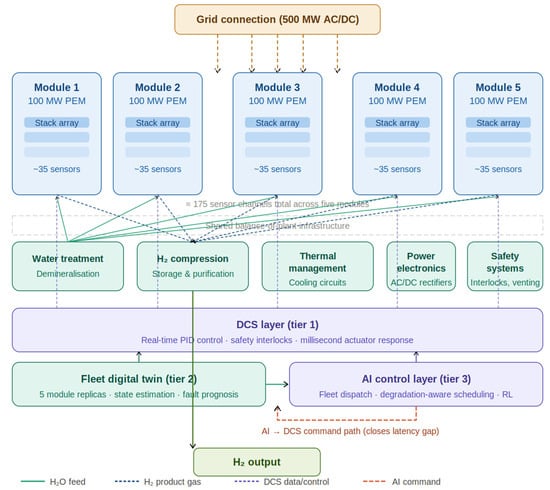
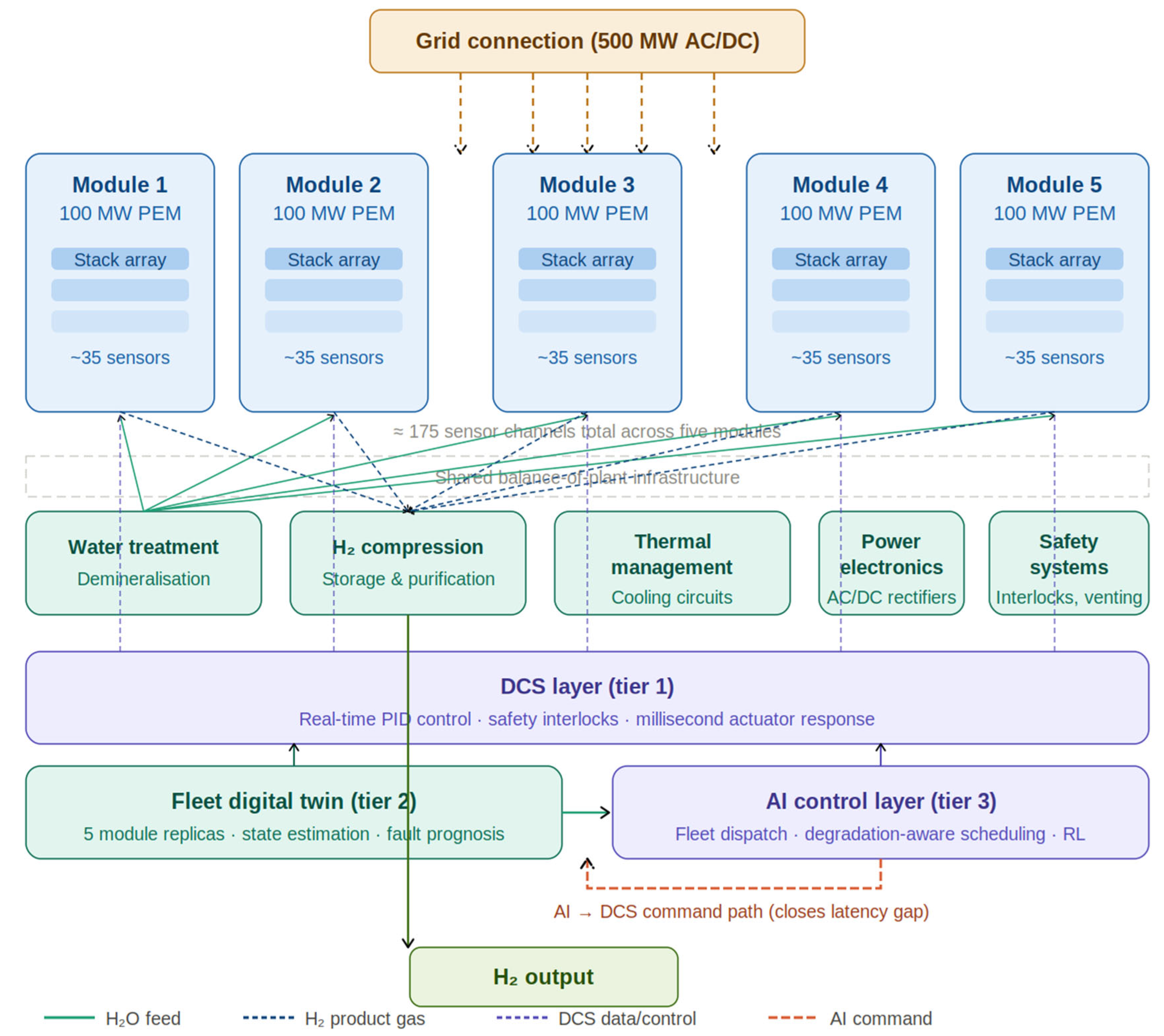
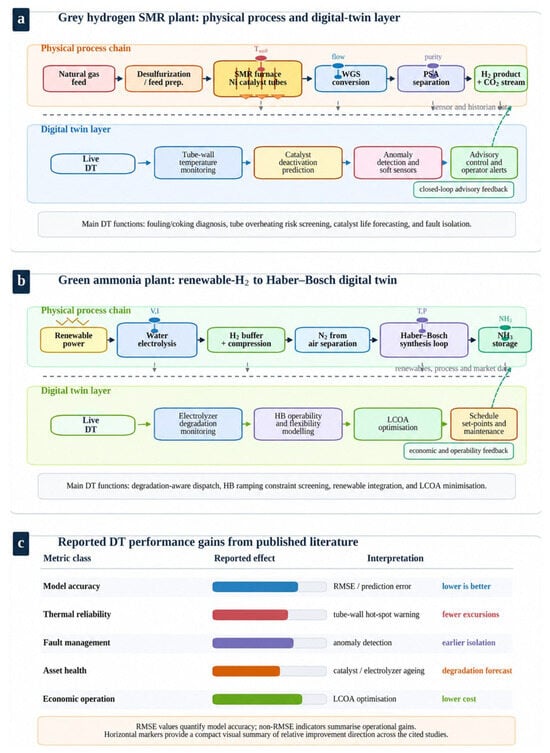
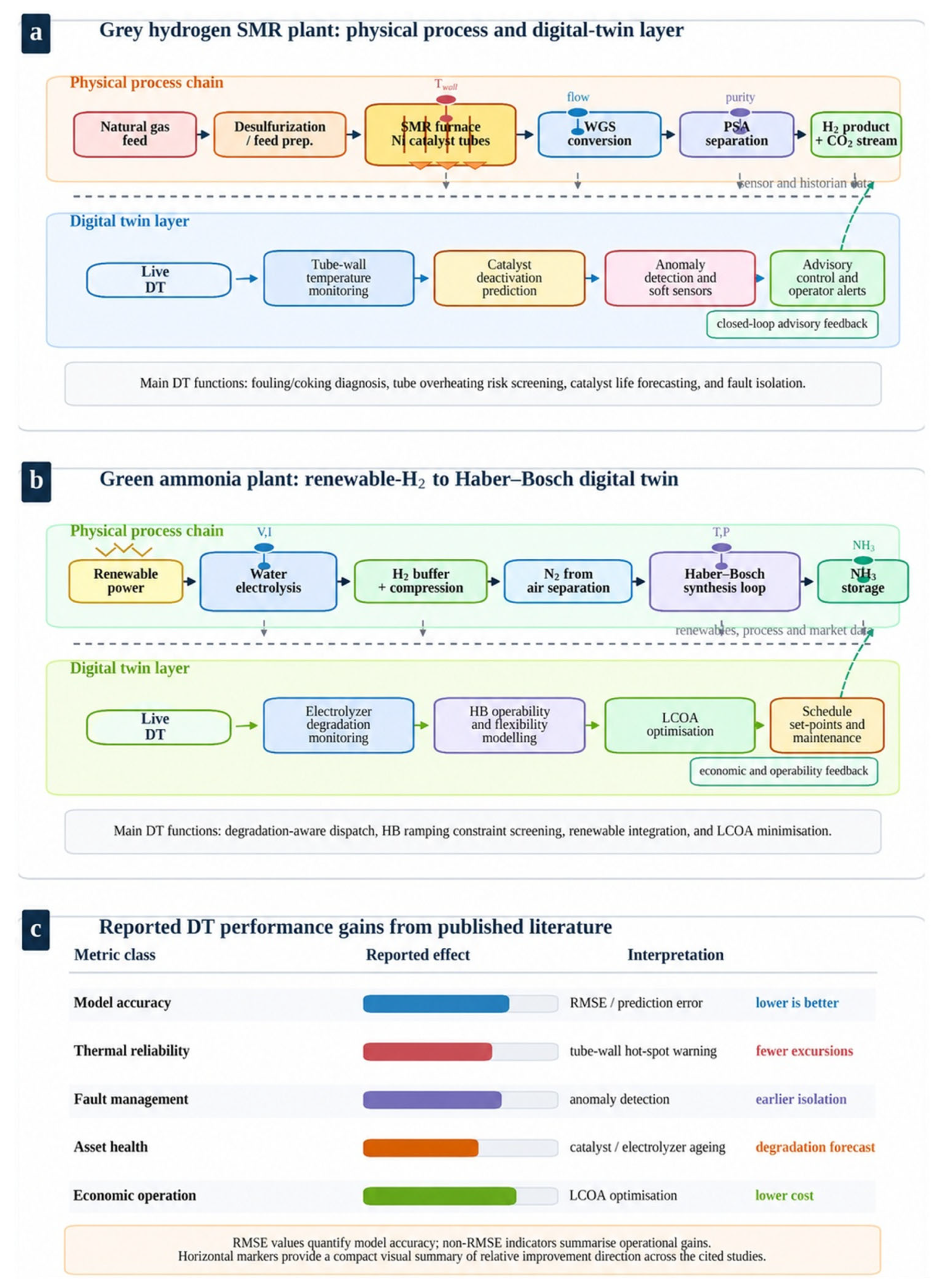
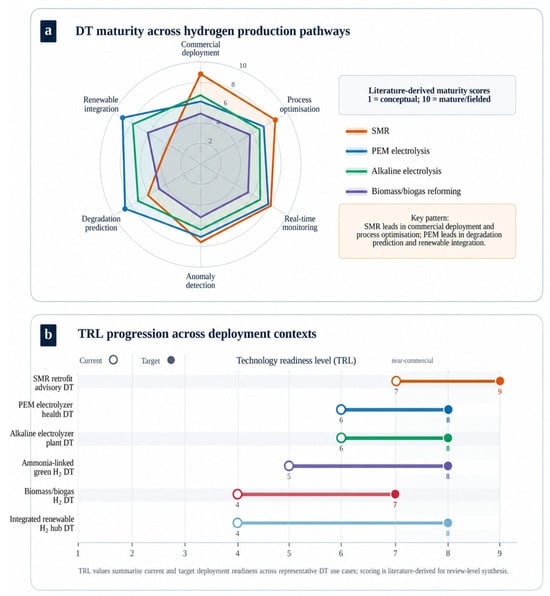
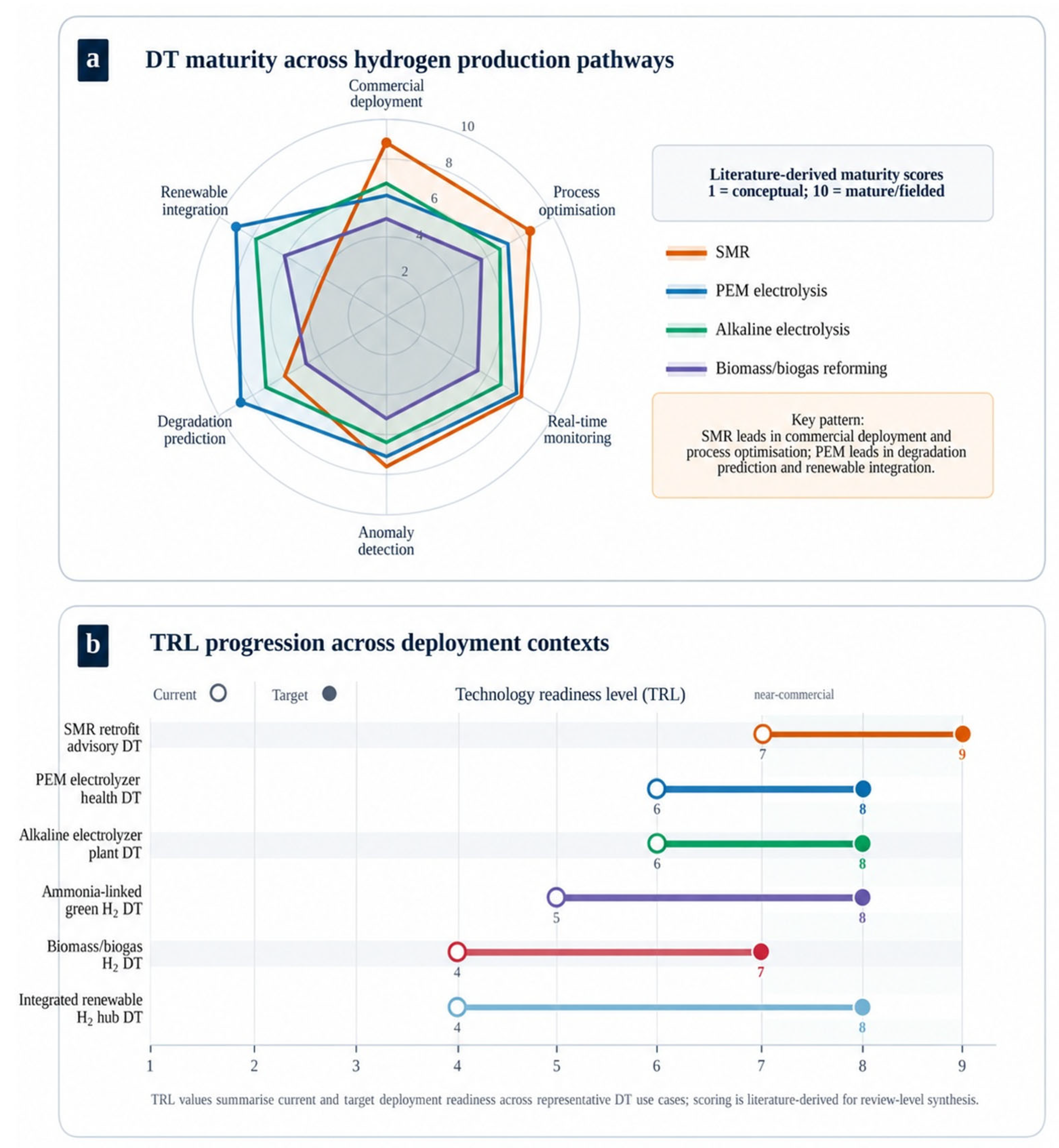
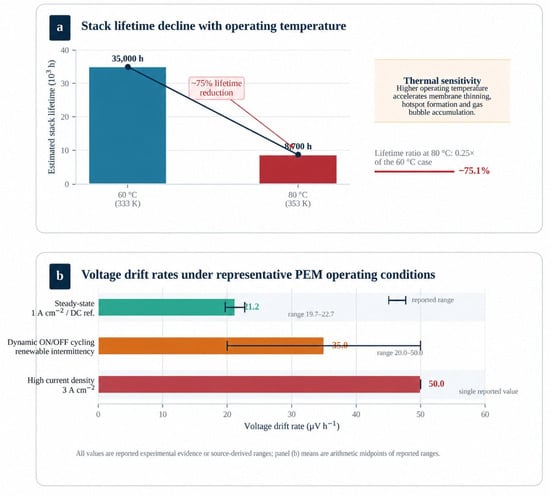
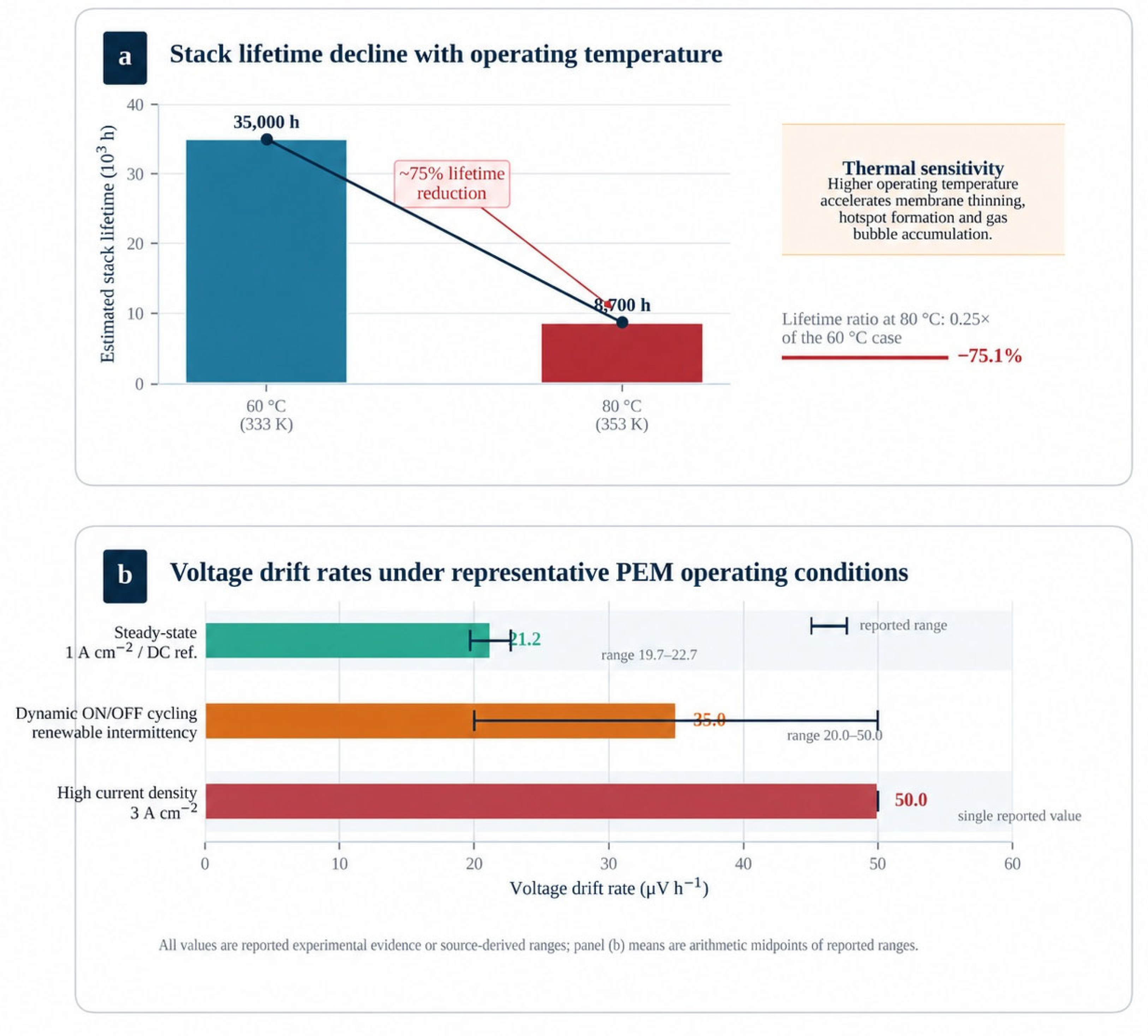
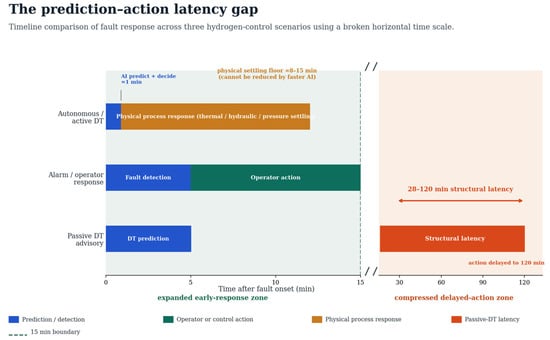
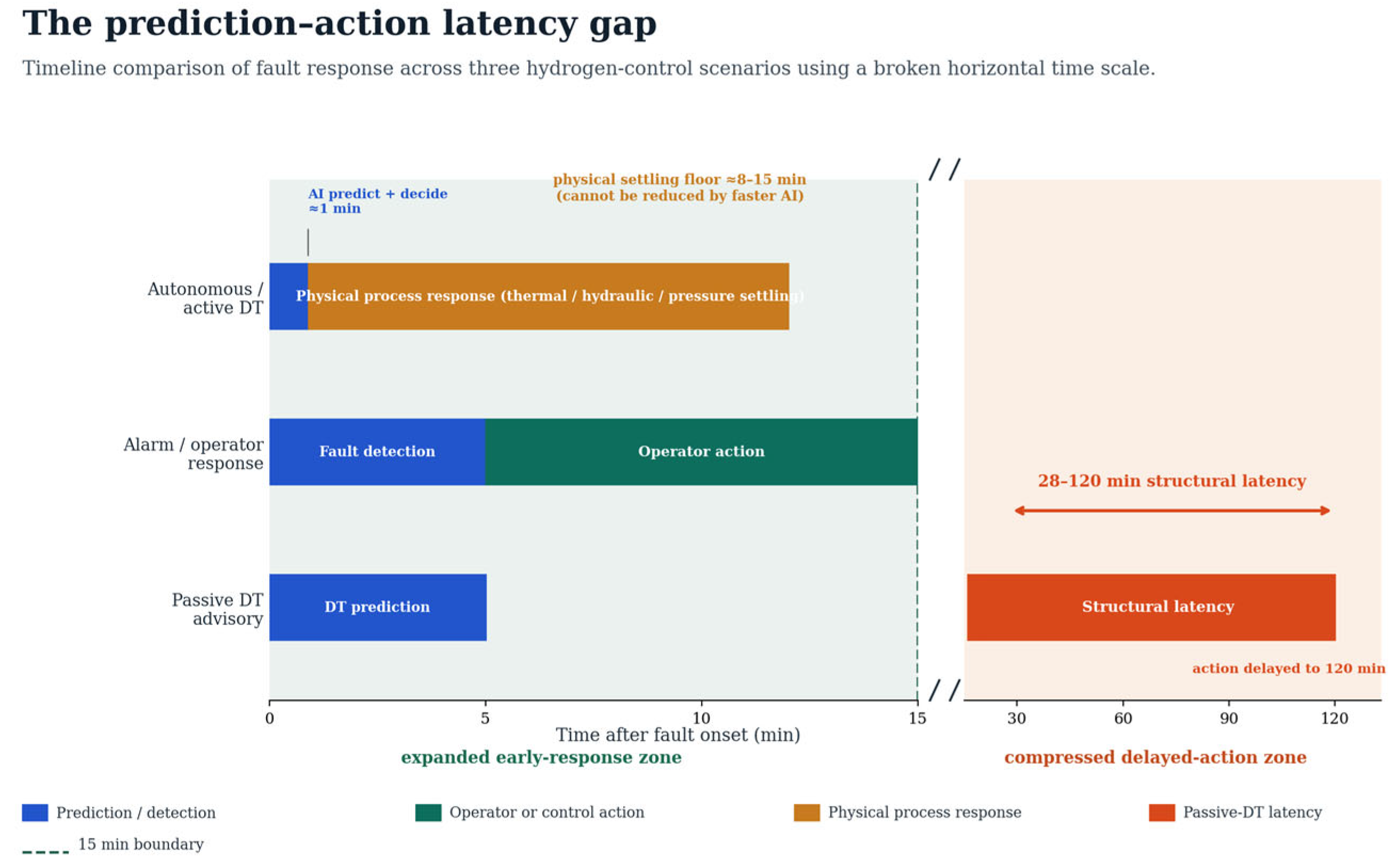
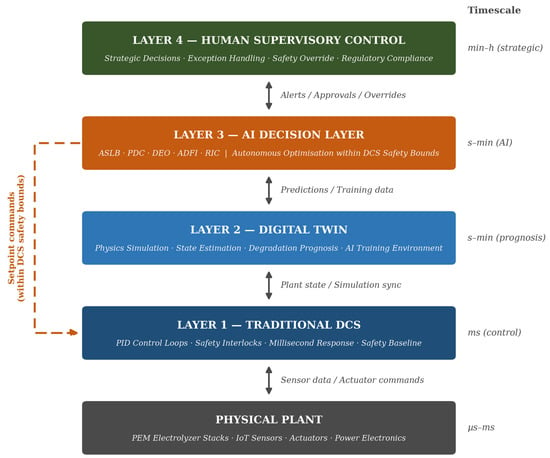
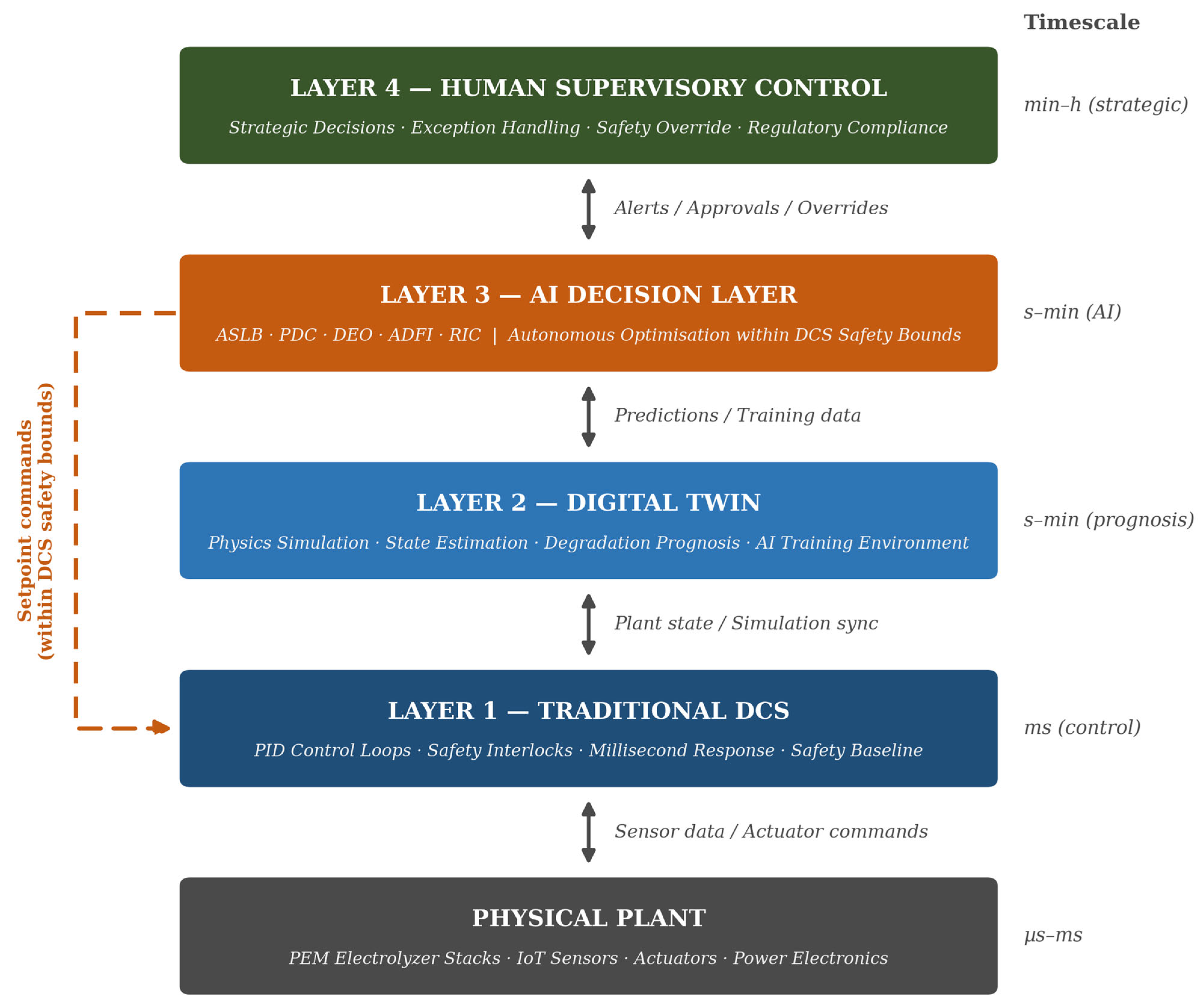
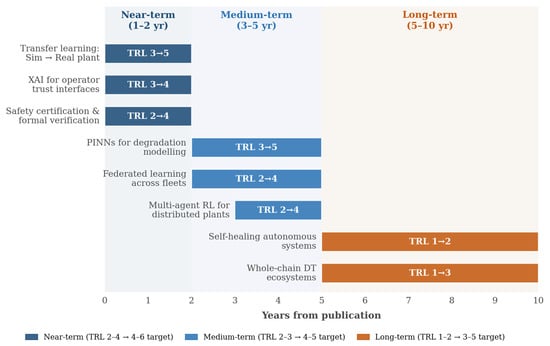
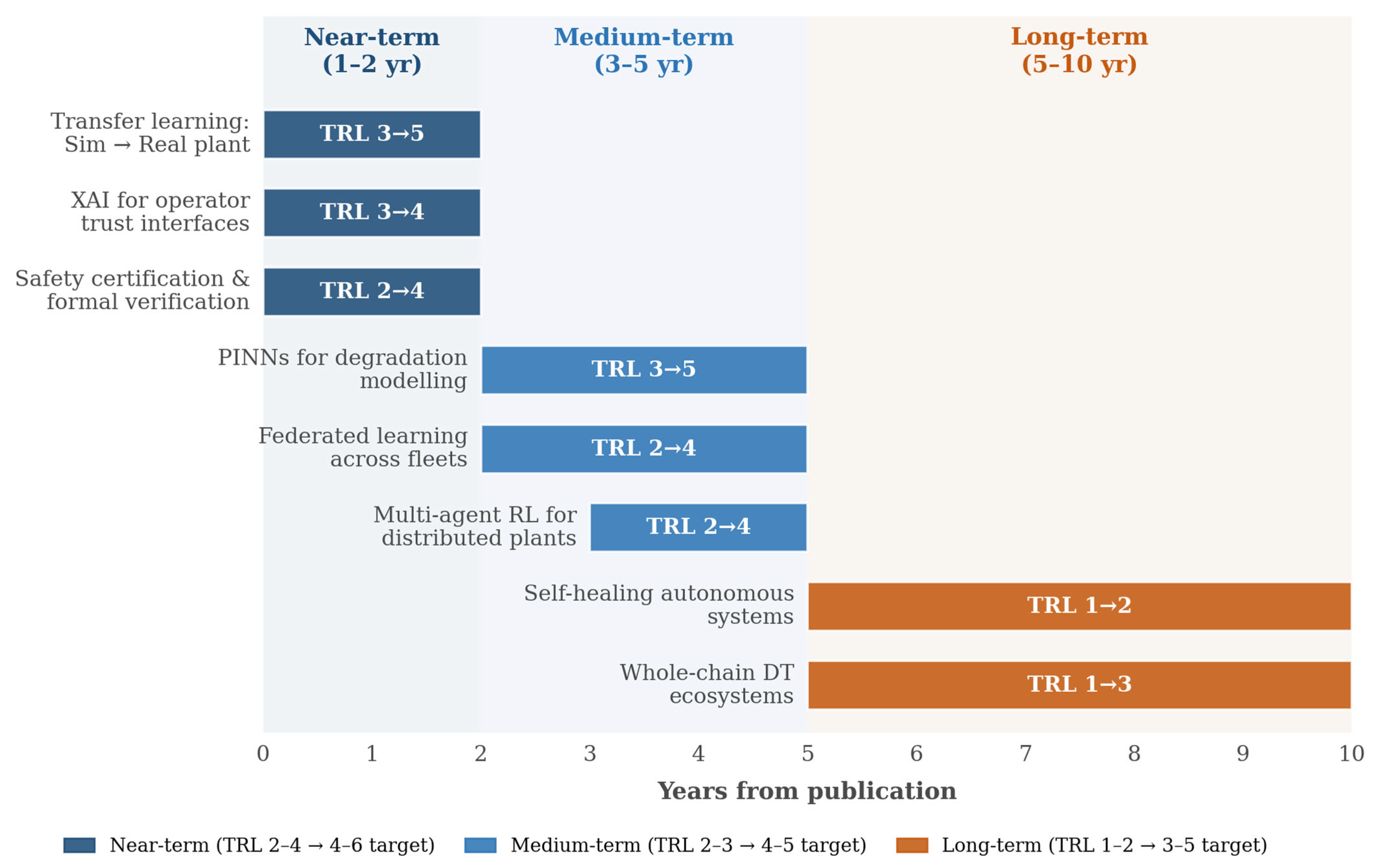

Disclaimer/Publisher’s Note: The statements, opinions and data contained in all publications are solely those of the individual author(s) and contributor(s) and not of MDPI and/or the editor(s). MDPI and/or the editor(s) disclaim responsibility for any injury to people or property resulting from any ideas, methods, instructions or products referred to in the content. |
© 2026 by the author. Licensee MDPI, Basel, Switzerland. This article is an open access article distributed under the terms and conditions of the Creative Commons Attribution (CC BY) license.