


Abstract
A self-supported porous FeCoNiCuMo high-entropy alloy phosphide (HEAP) film electrode was prepared by brush coating followed by CVD phosphidation. XRD analysis identified the crystalline phases of the film electrodes. XPS was used to analyze the surface chemical states. Their surface features were observed by SEM, while EDS mapping resolved the spatial distribution of the constituent elements. Hydrogen evolution measurements on the HEAP electrodes were conducted in a three-electrode configuration. Four electrolytes were used: 1 M KOH, 0.5 M H2SO4, 1 M KOH + 1 M Na2S, and 1 M KOH + 1 M NaCl. Phosphidation temperature had a pronounced effect on catalytic activity. Among the electrodes examined, HEAP-550 showed the best overall performance. It required overpotentials of 63, 59, 60, and 57 mV to deliver 10 mA·cm−2 in the four electrolytes, respectively. Electrochemical impedance spectroscopy distinguished the electrodes in terms of charge-transfer resistance. The Cdl values derived from cyclic voltammetry reflected differences in electrochemically accessible surface area across the three phosphidation temperatures. HEAP-550 exhibited relatively low charge-transfer resistance together with a large ECSA. These characteristics are consistent with its superior HER activity. Furthermore, the HEAP-550 electrode demonstrated excellent long-term stability, maintaining stable operation at a current density of 100 mA cm−2 for 24 h in all four electrolytes. This work provides a novel strategy for designing self-supported porous high-entropy phosphide film electrodes by integrating multicomponent alloy design with CVD phosphidation, offering new insights into the regulation of synergistic catalytic sites for efficient HER. The developed self-supported HEAP electrode holds great potential for practical applications in efficient water electrolysis and sustainable hydrogen production.
1. Introduction
Hydrogen is a clean and efficient energy carrier that supports the global transition toward decarbonized energy systems. Water electrolysis offers an environmentally benign and scalable route to hydrogen production and has attracted sustained research interest [1,2,3,4]. However, its overall energy efficiency remains constrained by the hydrogen evolution reaction (HER). Interfacial charge transfer, together with the reversible adsorption and subsequent desorption of reaction intermediates on the catalyst surface, constitutes an essential component of the hydrogen evolution reaction (HER) process. The associated kinetic barriers and electrode overpotentials lead to additional energy losses. The practical use of platinum-based HER catalysts remains limited by the cost and restricted supply of platinum, despite their superior activity [5].
Developing low-cost transition-metal HER electrodes as alternatives to noble-metal-based electrodes is a major research strategy [6,7]. Among the available candidates, transition-metal phosphides (TMPs) have shown particularly favorable HER activity. Representative examples include Ni2P nanoparticles (130 mV@20 mA·cm−2) [8], electrodeposited CoP films (85 mV@10 mA·cm−2) [9], MoP particles (180 mV@30 mA·cm−2) [10], and ultrathin porous CoP nanosheets (56 mV@10 mA·cm−2) [11]. These results establish TMPs as effective HER catalysts, although their performance can still be improved. Single-metal TMPs lack heterometallic electronic coupling and synergistic effects, limiting control over their electronic structures and local chemical environments. Introducing multiple metals into phosphides has therefore become a common approach to tailoring surface charge distribution and intermediate adsorption [12,13]. Interactions between different metals can induce local charge redistribution, modify the electronic states of active sites, and tune hydrogen-intermediate adsorption. Together, these effects can improve HER kinetics [14,15,16].
Bimetallic and multimetallic phosphides are widely studied for HER electrocatalysis. They exhibit improved electronic structures and faster reaction kinetics. Recent studies on W-doped Ni–B–P microspheres and ternary W3CoB3 further confirm that multicomponent regulation can effectively enhance HER performance [17,18]. However, the limited number of constituent elements restricts control over local chemical environments and active-site structures [19,20]. High-entropy phosphides contain several principal metals. This multicomponent chemistry creates complex local coordination environments and broadens the scope for tuning electronic structures and active sites. Hydrogen-intermediate adsorption and interfacial charge transfer may also be modulated by lattice distortion, local structural disorder, and electronic interactions among the constituent elements [21,22,23]. Existing studies associate multielement synergy with changes in local charge distribution and electronic structure, as well as improved HER performance [24,25,26]. Self-supported and nanoporous high-entropy phosphide electrodes have been reported. However, HER studies on self-supported porous high-entropy phosphide films remain limited.
In this work, a self-supported porous high-entropy alloy film matrix was constructed via brush coating followed by high-temperature vacuum sintering. Chemical vapor deposition (CVD) phosphidation converted the precursor into a self-supported porous high-entropy phosphide film electrode. Compared with previously reported freestanding/high-entropy phosphide electrodes, the HEAP film electrode developed in this work features a self-supported porous architecture fabricated through a combined alloy design and CVD phosphidation strategy. The synergistic interaction among multiple metallic elements and phosphorus incorporation enables effective regulation of the electronic structure and catalytic active sites, contributing to enhanced HER performance. Its HER performance was systematically evaluated under four electrolyte conditions. These included acidic 0.5 M H2SO4, alkaline 1 M KOH, simulated seawater containing 1 M NaCl and 1 M KOH, and a sulfide-containing alkaline medium composed of 1 M Na2S and 1 M KOH. This work provides insights into the role of multielement synergistic interactions and phosphidation-induced structural/electronic regulation in improving HER activity of self-supported high-entropy electrodes.
2. Preparation and Characterization
FeCoNiCuMo high-entropy alloy films were prepared according to the method reported in Ref. [27]. The films were then phosphidated by chemical vapor deposition (CVD). From each film, a 1 cm × 1 cm specimen was cut and immersed in 1 M HCl for 30 min. After acid treatment, the specimen was alternately rinsed with ultrapure water and absolute ethanol and dried under Ar. It was then placed in a quartz boat at the center of the constant-temperature zone of a tube furnace. A 0.2 g portion of phosphorus powder was positioned upstream, and Ar was supplied at 100 mL·min−1. For removal of residual moisture, the furnace underwent a 10 °C·min−1 temperature ramp to 120 °C, followed by a 30 min dwell at that temperature. The temperature was subsequently increased to 450, 500, or 550 °C and maintained for 3 h to complete phosphidation. Once the reaction had ended, the furnace cooled naturally to room temperature. The samples underwent 10 min of sonication in 1 wt% NaOH to remove surface residues. After rinsing with ultrapure water and ethanol, they were dried under Ar at 60 °C for 2 h before use.
Chemical-state information for the constituent elements was obtained from spectra collected with an AMICUS X-ray photoelectron spectrometer (ORTEC, Oak Ridge, TN, USA). A JSM-5600LV scanning electron microscope (JEOL Ltd., Tokyo, Japan) provided images of the surface microstructure. Elemental-distribution data were acquired with an Octane SDD energy-dispersive X-ray spectrometer (EDAX Inc., Mahwah, NJ, USA) coupled to the microscope. Diffraction patterns of the FeCoNiMoCu–P film electrodes were collected on a Dmax 2500VB diffractometer (Rigaku Corporation, Tokyo, Japan) with Cu Kα radiation (λ = 1.541 Å) to determine their phase structure.
All electrochemical data were collected from a conventional three-electrode cell controlled by a CHI660E workstation. The electrode assembly comprised an as-prepared film working electrode and a Pt counter electrode. Reference selection was electrolyte-specific: SCE for 0.5 M H2SO4, Hg/HgO for 1 M KOH, and Ag/AgCl for both 1 M NaCl + 1 M KOH and 1 M Na2S + 1 M KOH. The equations below were applied to express the measured potentials relative to the reversible hydrogen electrode (RHE).
ERHE = ESCE + 0.241 + 0.0592 pH
ERHE = EHg/HgO + 0.098 + 0.0592 pH
ERHE = EAg/AgCl + 0.197 + 0.0592 pH
Here, ESCE, EHg/HgO, and EAg/AgCl denote the measured potentials versus the SCE, Hg/HgO, and Ag/AgCl reference electrodes, respectively, in volts. The pH value refers to the pH of the electrolyte.
3. Results and Discussion
3.1. Structural Features and Constituent-Element Analysis
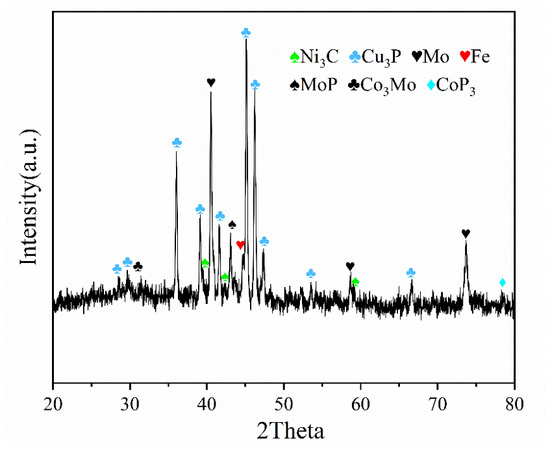
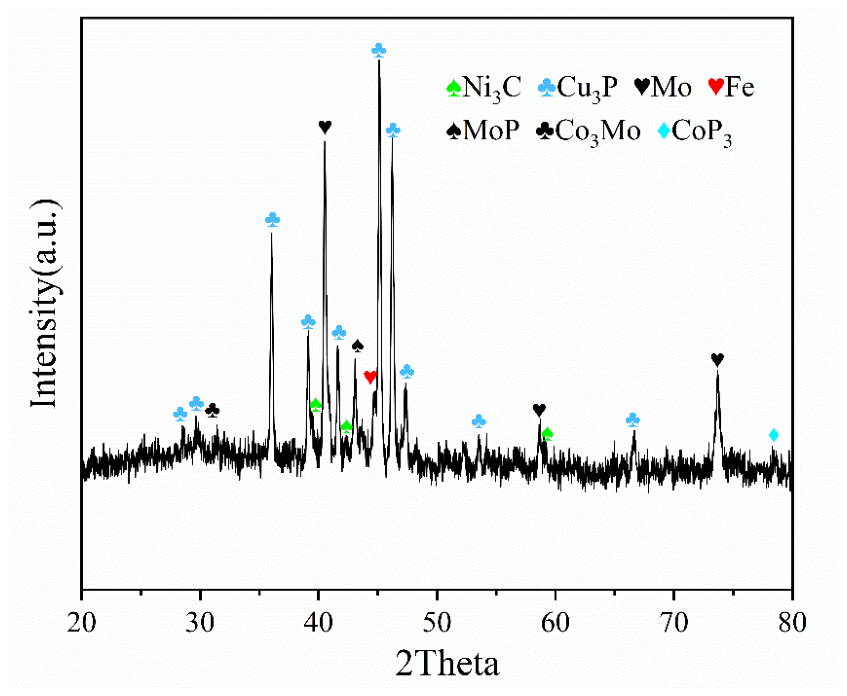
The XRD patterns recorded for the samples appear in Figure 1. Diffraction peaks corresponding to Mo-, Cu-, and Co-based phosphides are clearly observed. The formation of Ni3C is attributed to the reaction between Ni and carbon released from the thermal decomposition of PVB during precursor preparation. Elemental Mo is also detected. This phase may result from the limited solid solubility of Mo in Fe, Ni, and Cu. The presence of metallic Fe indicates incomplete phosphidation, with part of the Fe retained in a crystalline metallic state. Local phase segregation or insufficient phosphidation may account for this residual Fe.
Figure 1.
XRD patterns of the HEAP films.
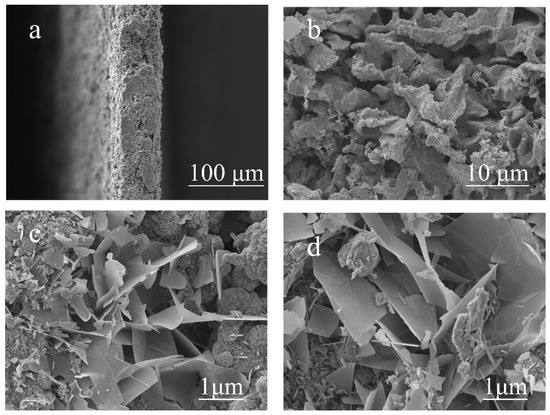
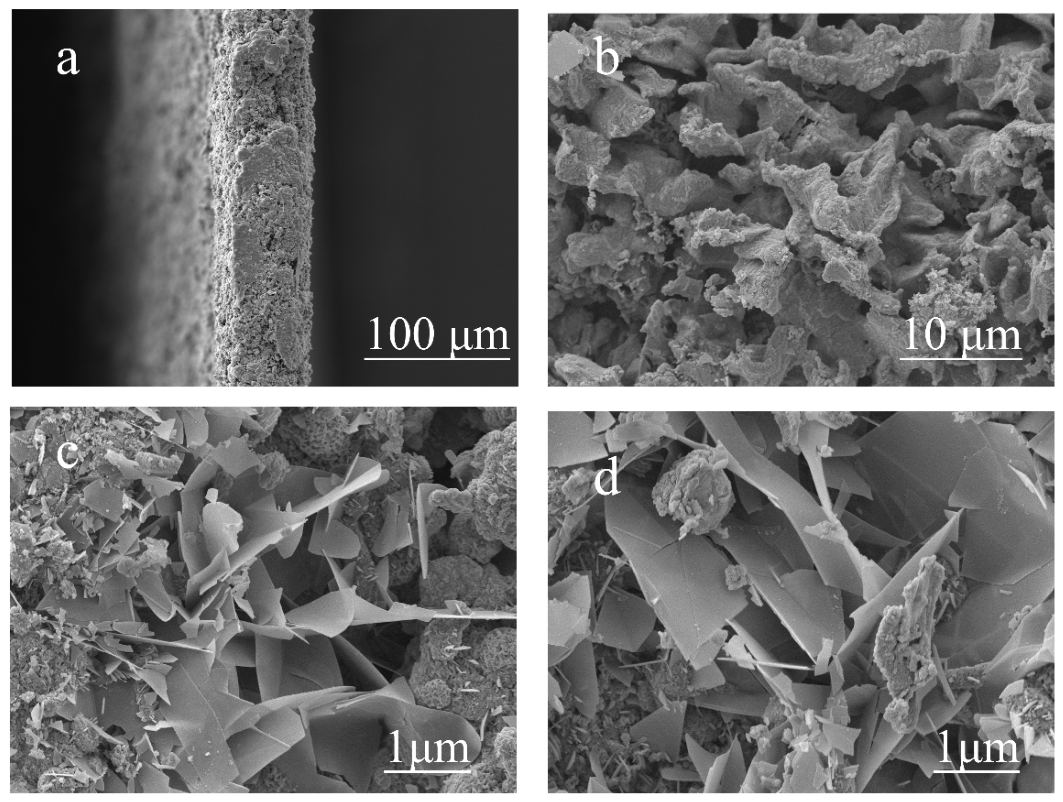
Figure 2 presents SEM images of the sample at different magnifications. The film exhibits a rough surface with an interconnected porous structure at low magnification. Higher-magnification images reveal distinct sheet-like features. This hierarchical morphology may increase the exposed surface area and facilitate electrolyte transport, thereby promoting HER kinetics.
Figure 2.
(a–d) SEM micrographs of the HEAP film recorded at various magnifications.
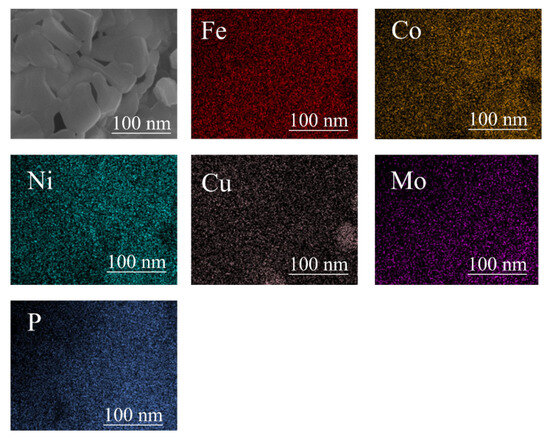
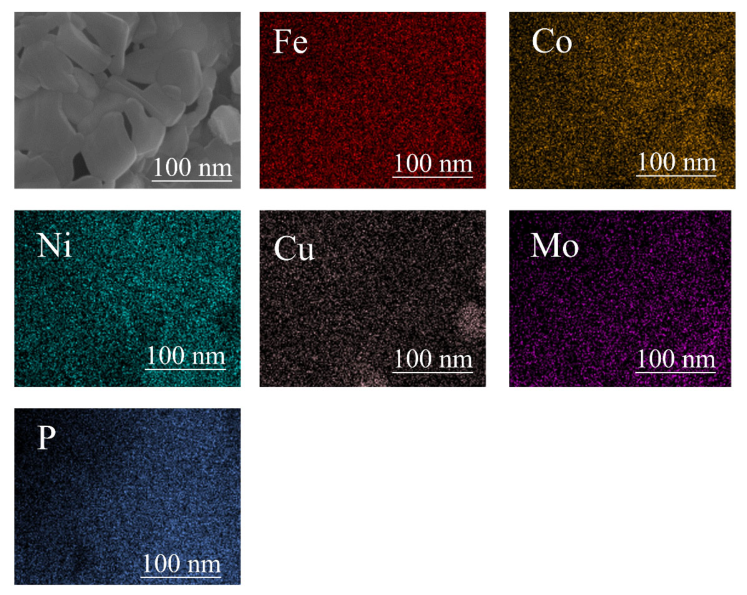
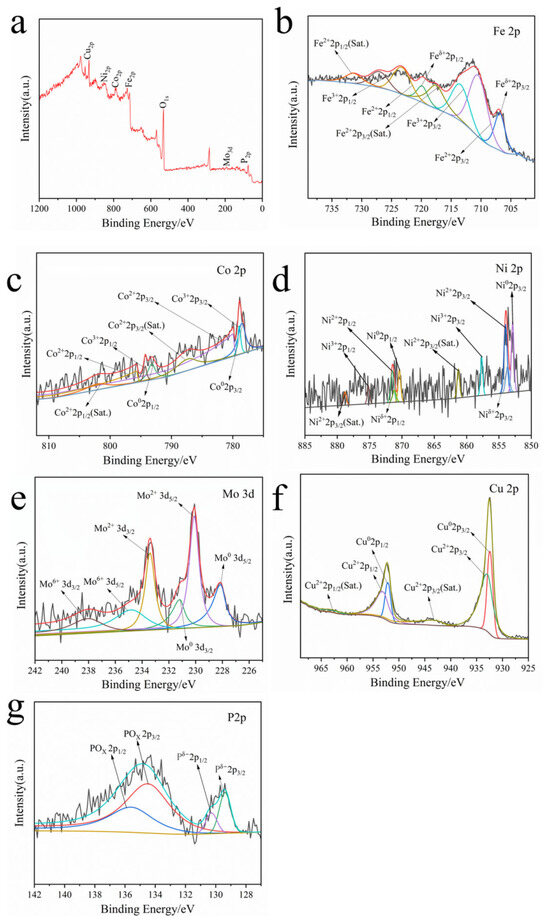
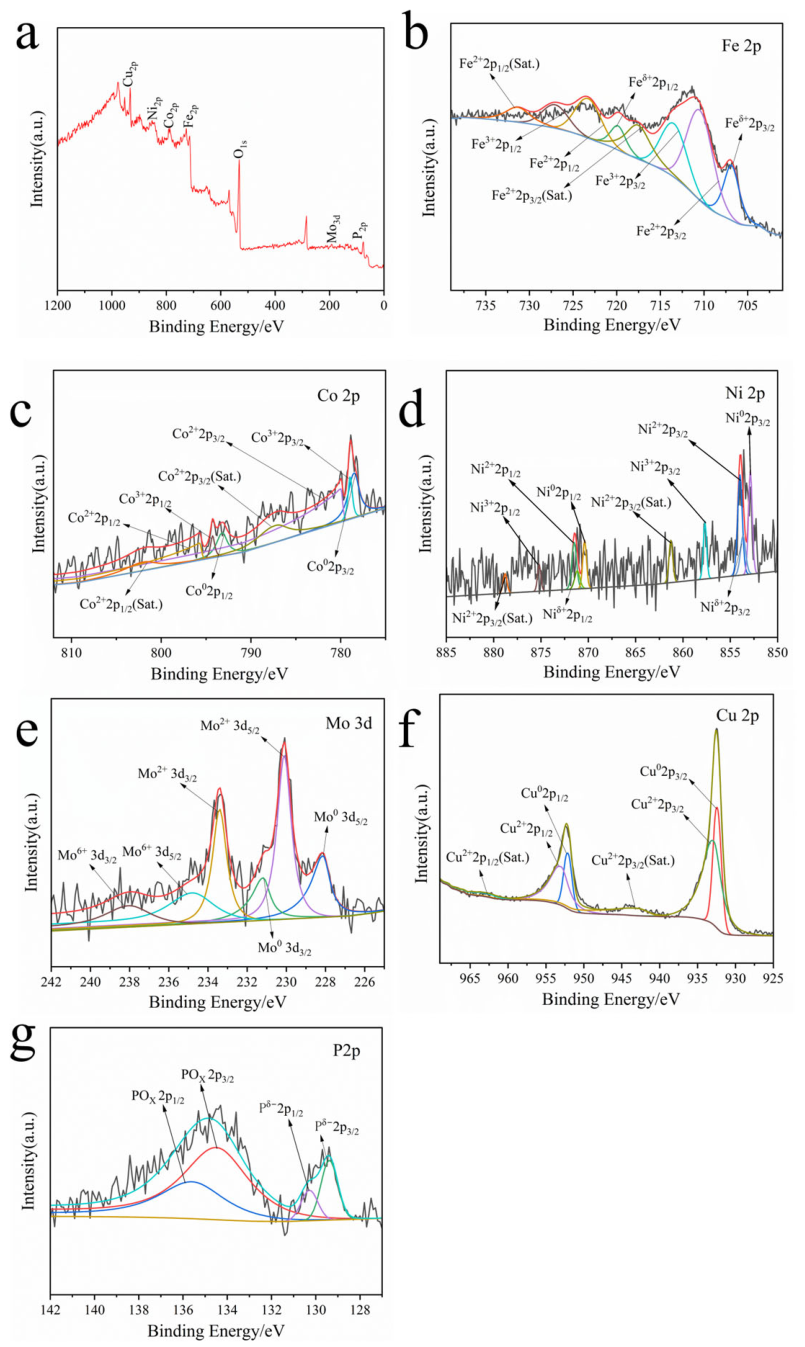
Figure 3 presents the EDS elemental mappings of the sample. Combined SEM and EDS analyses confirm a uniform distribution of all constituent elements throughout the film. The XPS spectra of the sample appear in Figure 4. Three pairs of signals can be distinguished in the Fe 2p spectrum shown in Figure 4b. The components at 706.90 and 720.10 eV are assigned to Feδ+ 2p3/2 and Feδ+ 2p1/2, respectively. Fe2+ is represented by the 2p3/2 feature at 710.59 eV and the 2p1/2 feature at 723.43 eV. The Fe3+ contribution comprises the same two spin–orbit components at 713.67 and 727.19 eV, respectively. The simultaneous presence of these species indicates that iron phosphides and iron oxides coexist on the sample surface. The signals at 717.69 and 731.39 eV are assigned to the satellite peaks of Fe2+ 2p [28,29,30,31]. Deconvolution of the Co 2p spectrum in Figure 4c identified three spin–orbit doublets and two satellite features. The Co0 contribution consists of the 2p3/2 signal at 778.48 eV and the 2p1/2 signal at 793.17 eV. For Co2+, the 2p3/2 and 2p1/2 components are located at 780.38 and 795.58 eV, respectively. The Co3+ species gives rise to the 2p3/2 peak at 778.98 eV and the 2p1/2 peak at 794.26 eV. Additional features at 787.08 and 802.48 eV are assigned to the Co2+ 2p satellite peaks [28,29,30,31]. Three sets of Ni 2p features are identified in Figure 4d. The Ni0 pair consists of a 2p3/2 component at 852.17 eV and a 2p1/2 component at 870.38 eV. A second pair at 853.88 and 871.48 eV is assigned to Ni2+ 2p3/2 and Ni2+ 2p1/2, respectively. The features at 853.66 and 871.15 eV originate from Niδ+ 2p3/2 and Niδ+ 2p1/2 in nickel phosphides. Ni3+ species give rise to the peaks at 857.68 and 875.12 eV. The signals at 861.20 and 878.83 eV are assigned to the satellite peaks of Ni2+ 2p [28,29,30,31]. Analysis of the Cu 2p spectrum in Figure 4e identifies two signals from metallic Cu at 932.20 and 952.10 eV. For Cu2+, the 2p3/2 and 2p1/2 components are located at 933.20 and 953.40 eV, respectively, while the associated satellite features occur at 943.30 and 962.60 eV [31,32]. Figure 4f contains two distinct Mo 3d contributions. Binding energies of 228.08 and 231.60 eV characterize the metallic Mo contribution, whereas those at 230.18 and 233.30 eV are assigned to the Mo2+ 3d5/2 and Mo2+ 3d3/2 components, respectively. The P 2p spectrum in Figure 4g contains two low-binding-energy components at 129.30 and 130.30 eV from phosphorus in metal phosphides. A second pair at 134.60 and 135.70 eV originates from oxidized phosphorus species [28,29,30,31,32,33,34].
Figure 3.
EDS elemental mappings of the HEAP film.
Figure 4.
XPS spectra of the HEAP film: (a) survey; (b) Fe 2p; (c) Co 2p; (d) Ni 2p; (e) Mo 3d; (f) Cu 2p; (g) P 2p.
3.2. Electrochemical Performance
3.2.1. HER Activity in 0.5 M H2SO4
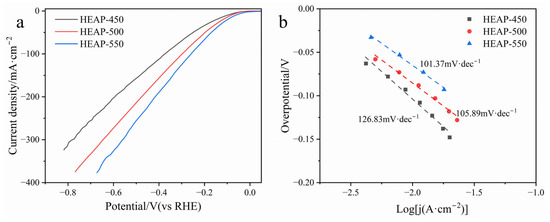
The HER activity of three HEAP film electrodes was first evaluated in 0.5 M H2SO4. The electrodes were phosphidated at 450, 500, and 550 °C and denoted as HEAP-450, HEAP-500, and HEAP-550, respectively. The pH of the 0.5 M H2SO4 electrolyte is approximately 0.27. The LSV curves in Figure 5a show an overall decrease in overpotential with increasing phosphidation temperature, indicating progressively enhanced HER activity. HEAP-550 reached 10 mA·cm−2 at an overpotential of 63 mV, compared with 88 mV for HEAP-500 and 103 mV for HEAP-450. The electrode kinetics toward the HER were subsequently examined through Tafel analysis. As shown in Figure 5b, the Tafel slopes of HEAP-550, HEAP-500, and HEAP-450 were 101.37, 105.89, and 126.83 mV·dec−1, respectively. These values are generally close to the theoretical value of approximately 120 mV·dec−1 for a Volmer-limited process. This result suggests that proton discharge and adsorption may constitute the primary kinetic limitation of the HER.
Figure 5.
(a) LSV polarization curves in 0.5 M H2SO4; (b) the corresponding Tafel plots.
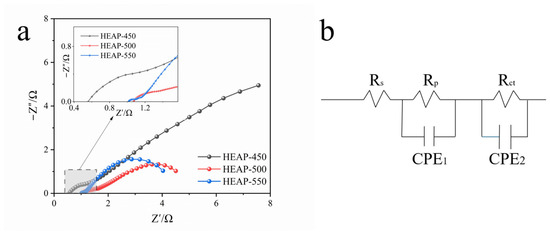
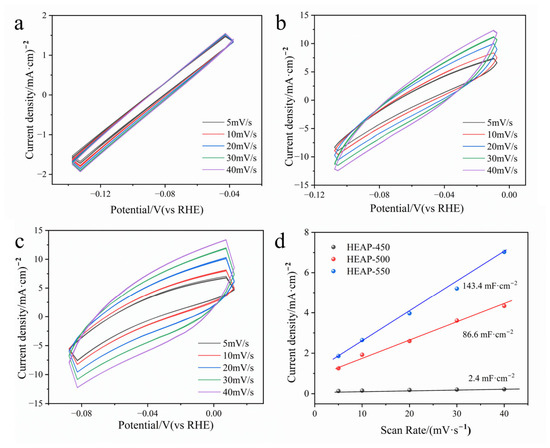
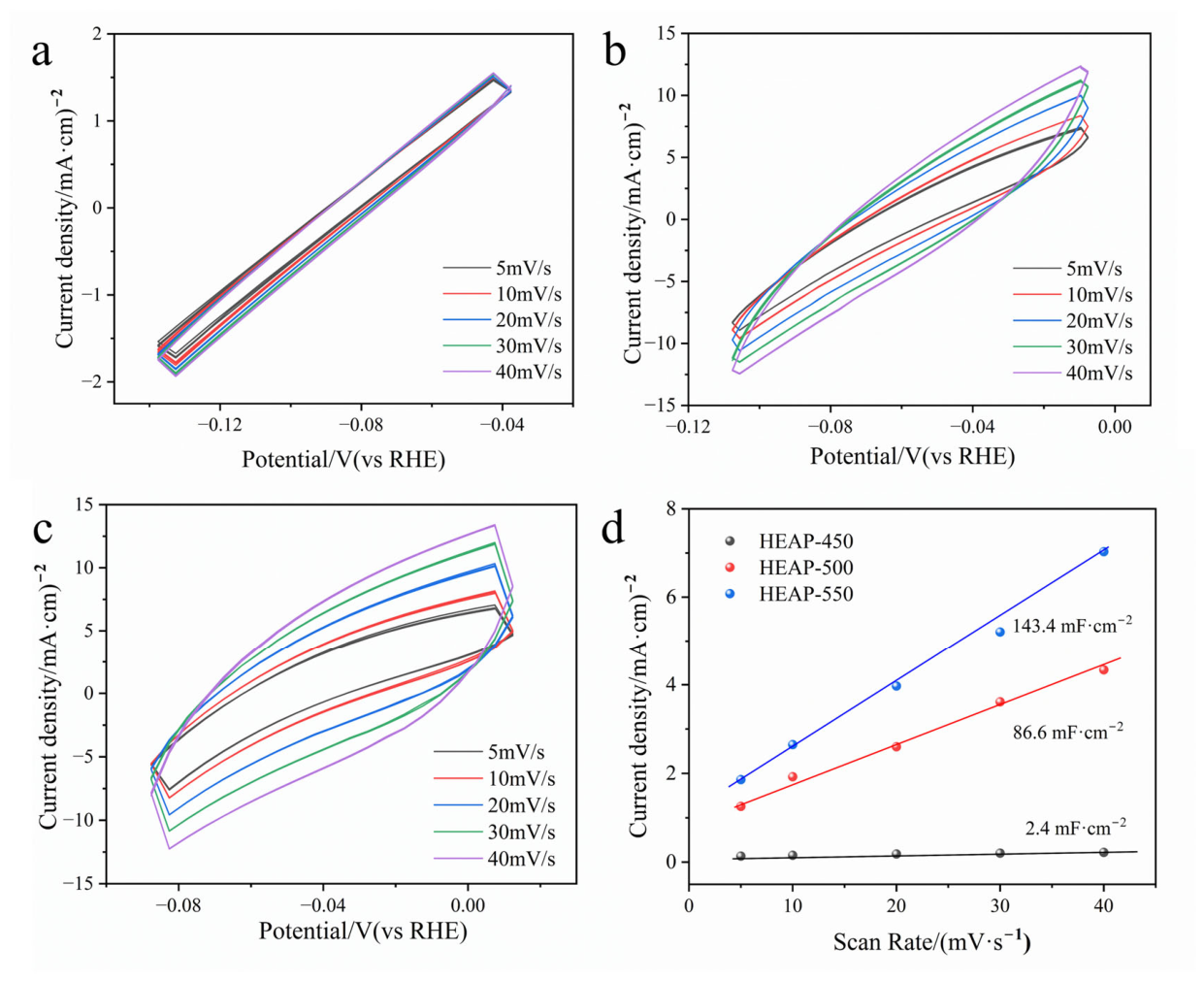
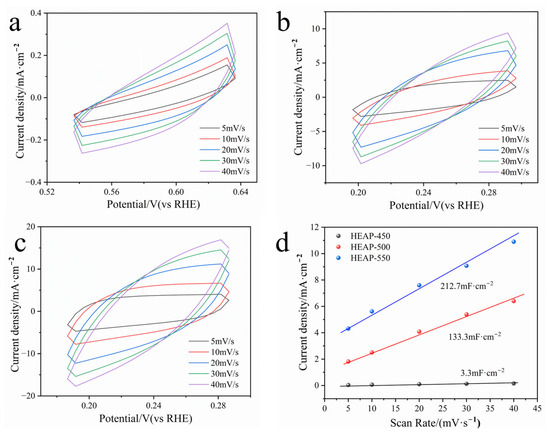
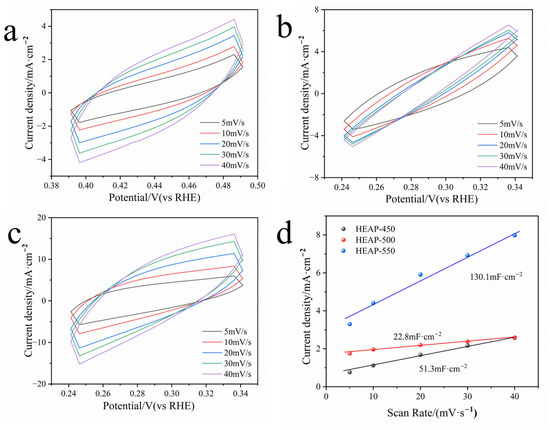
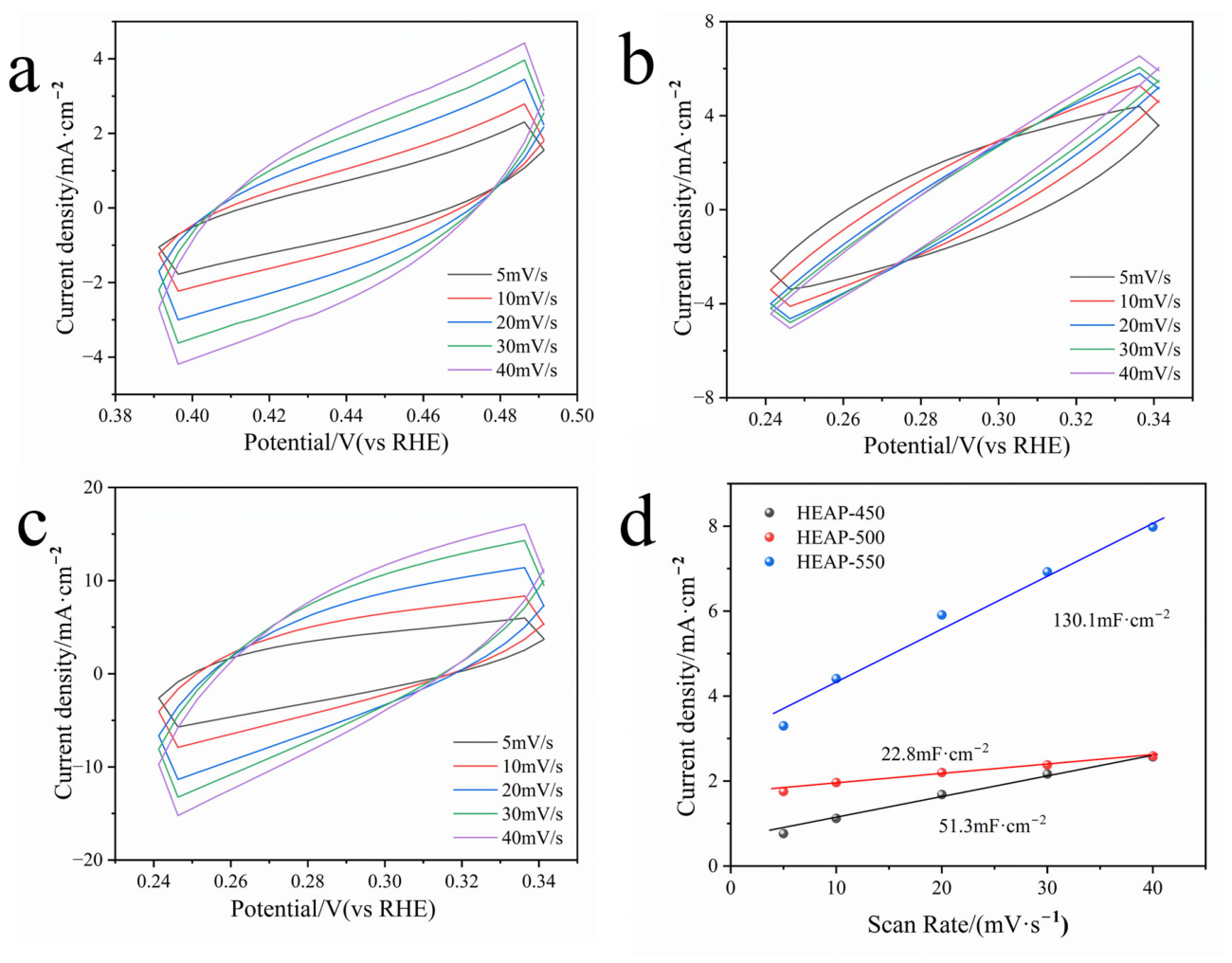
The influence of phosphidation temperature on HER performance was further examined through EIS. Figure 6 pairs the Nyquist plots in panel a with the equivalent circuit in panel b. Each sample exhibits two capacitive arcs of different sizes. The two frequency-dependent arcs are governed by separate resistance terms: Rp accounts for the high-frequency mass-transport response, and Rct accounts for the low-frequency charge-transfer response. Parameter values obtained from the fitting procedure are compiled in Table 1. Both Rp and Rct decrease as the phosphidation temperature increases, indicating reduced interfacial resistance. HEAP-550 exhibits the lowest impedance values among the three samples. Following EIS, cyclic voltammetry (CV) was used to assess the electrochemically active surface area of the electrodes. The scan-rate-dependent CV curves provided the basis for calculating the double-layer capacitance (Cdl). As shown in Figure 7d, HEAP-500 exhibits the lowest Cdl, whereas HEAP-550 shows the highest value. A higher Cdl generally indicates a larger electrochemically accessible surface area. Combined with the LSV and EIS results, HEAP-550 exhibits both a relatively high Cdl and low interfacial resistance. It also requires the lowest overpotential for the HER. These results suggest that the phosphidation temperature affects the electrochemically accessible surface area and interfacial charge-transfer behavior of the electrodes. Of the three samples tested in 0.5 M H2SO4, the electrode obtained by phosphidation at 550 °C delivered the highest HER performance.
Figure 6.
(a) Nyquist plots of the samples in 0.5 M H2SO4; (b) the corresponding equivalent circuit.
Table 1.
Fitted EIS parameters of the HEAP films prepared at different phosphidation temperatures in 0.5 M H2SO4.
Figure 7.
CV curves of (a) HEAP-450, (b) HEAP-500, and (c) HEAP-550 in 0.5 M H2SO4; (d) corresponding Cdl plots.
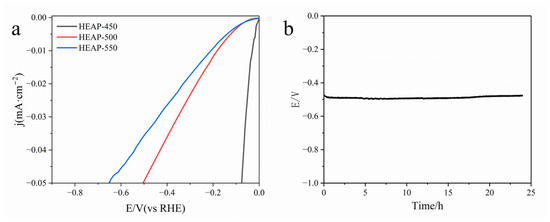
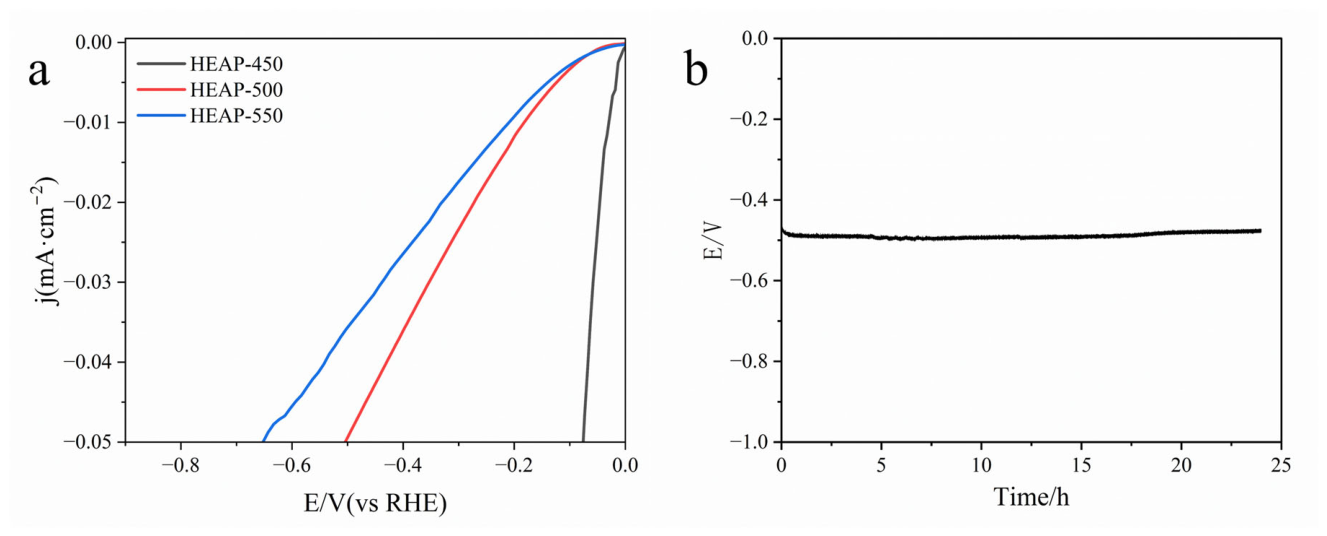
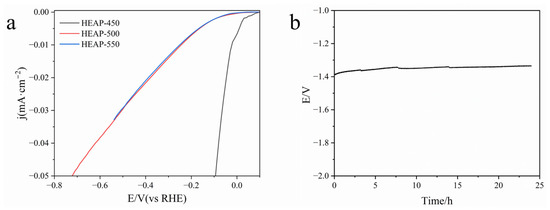
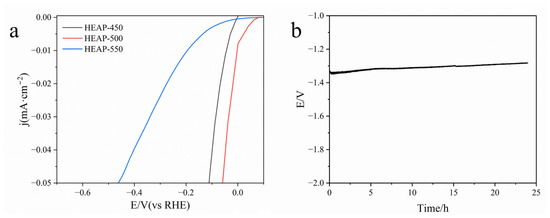
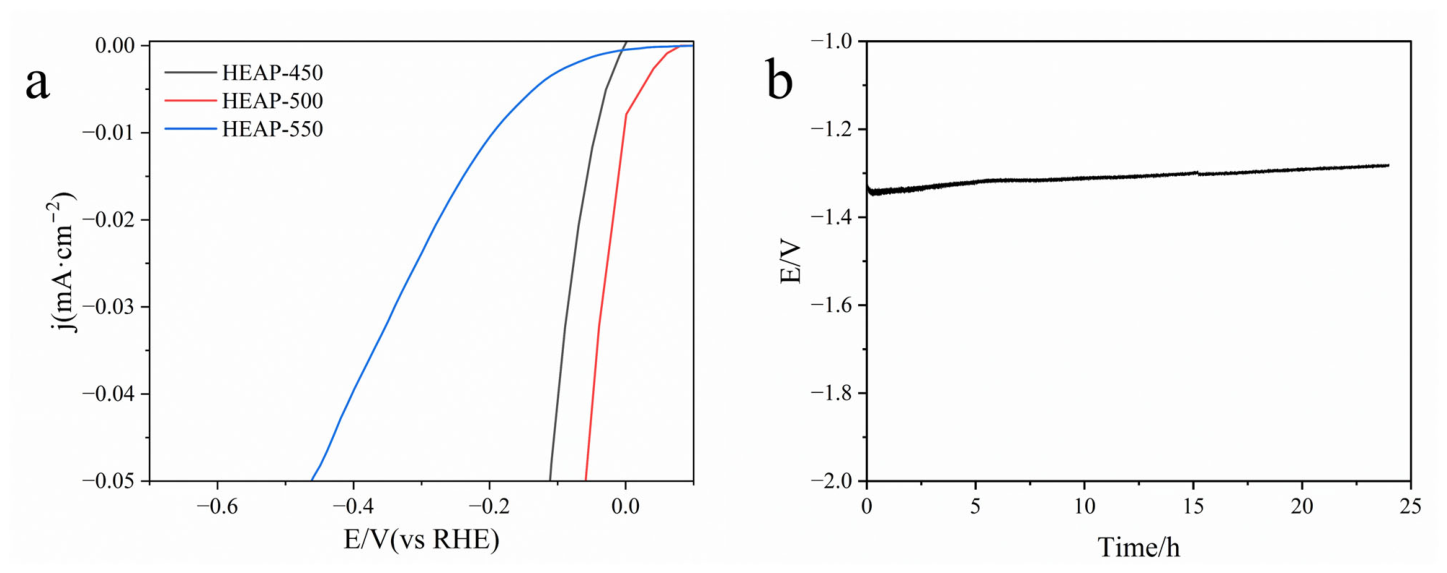
According to the method reported in Ref. [35], the HER polarization curves were normalized by ECSA using (Cs ≈ 20μF·cm−2). The results indicate that the superior geometric HER performance of the optimal sample is mainly associated with its larger electrochemically accessible surface area. In addition, the 24 h chronopotentiometric test (Figure 8b) at 100 mA·cm−2 confirms its good long-term stability.
Figure 8.
(a) ECSA-normalized HER polarization curve of the catalyst in 0.5 M H2SO4. (b) Chronopotentiometric stability curve recorded at a constant current density of 100 mA·cm−2 for 24 h in 0.5 M H2SO4.
3.2.2. HER Activity in 1 M KOH
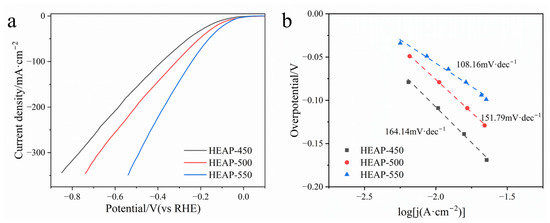
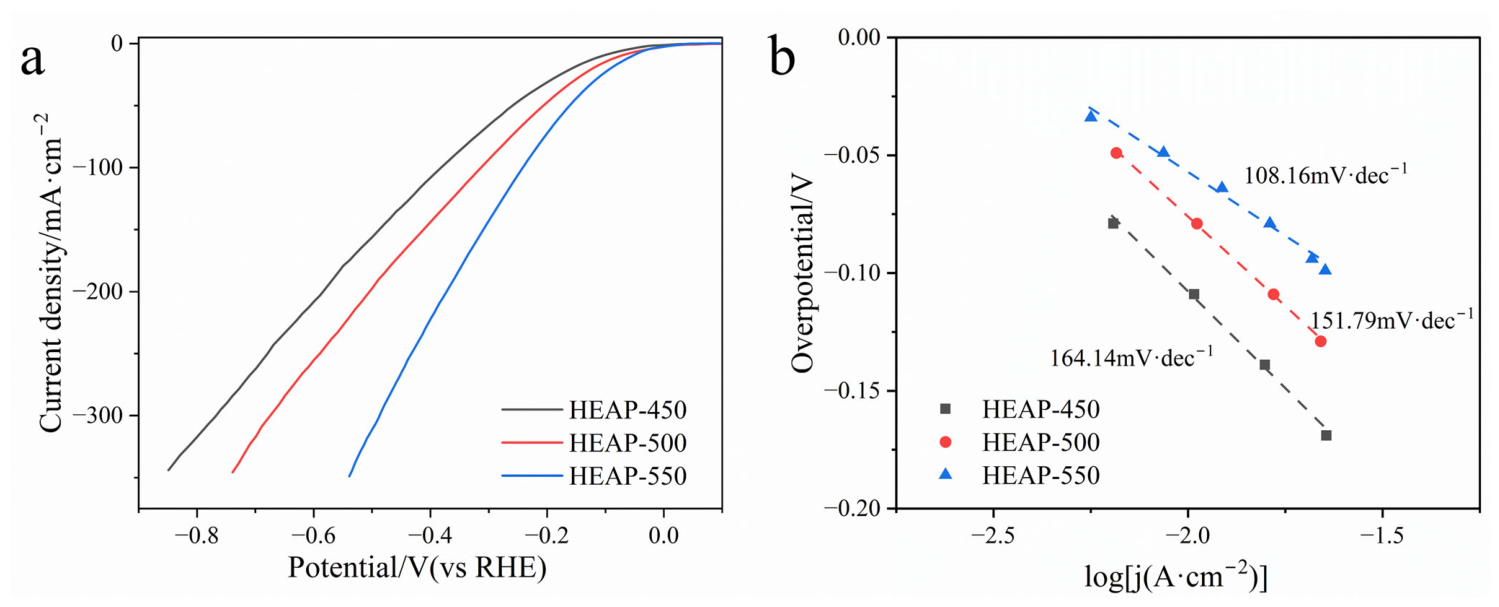
After completion of the acidic measurements, testing was extended to 1 M KOH to examine the HER activity of these phosphide films. The effects of phosphidation temperature were also examined. Figure 9a shows the LSV polarization curves of the three electrodes. The pH of the 1 M KOH electrolyte is approximately 14.0. The overpotentials at 10 mA·cm−2 decreased with increasing phosphidation temperature. HEAP-550 required an overpotential of only 59 mV, compared with 77 mV for HEAP-500 and 109 mV for HEAP-450. No obvious polarization anomalies were observed at higher current densities. Figure 9b shows the corresponding Tafel plots. The Tafel slopes of HEAP-450, HEAP-500, and HEAP-550 were 164.14, 151.79, and 108.16 mV·dec−1, respectively. The Tafel slope decreased with increasing phosphidation temperature, indicating progressively improved HER kinetics. These values are close to or higher than the theoretical value of approximately 120 mV·dec−1 associated with a Volmer-limited process. This suggests that the Volmer step may impose the primary kinetic limitation. In alkaline media, this step involves water dissociation and the formation of adsorbed hydrogen. Among the three electrodes, HEAP-550 had the smallest Tafel slope and the most rapid HER kinetics.
Figure 9.
(a) LSV polarization curves in 1 M KOH. (b) The corresponding Tafel plots.
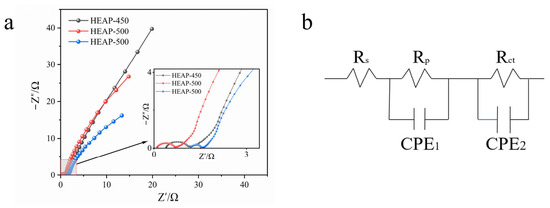
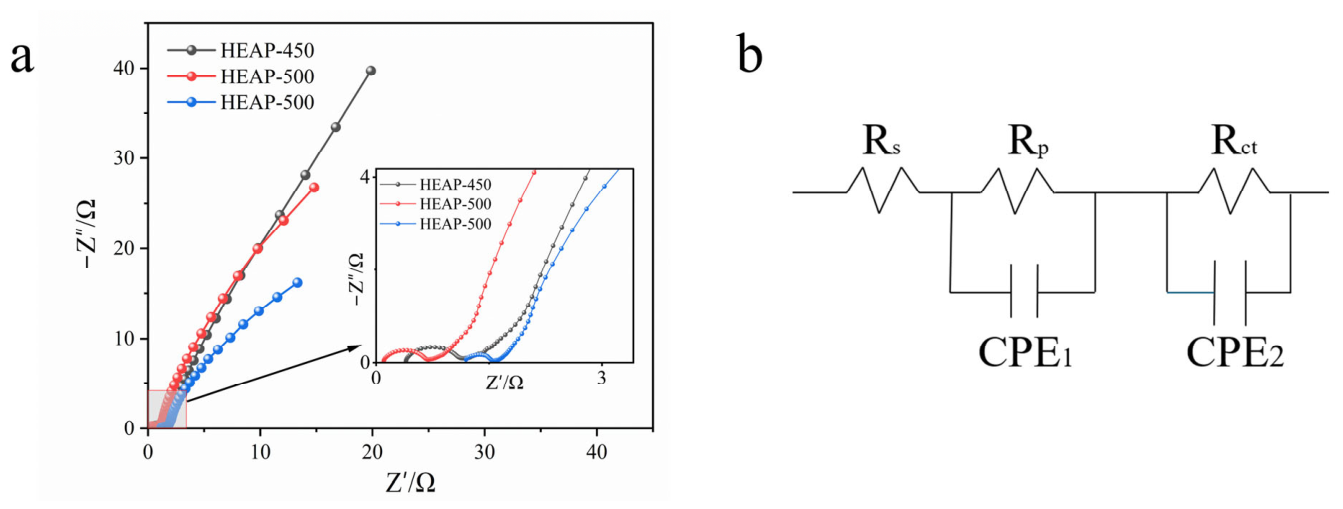
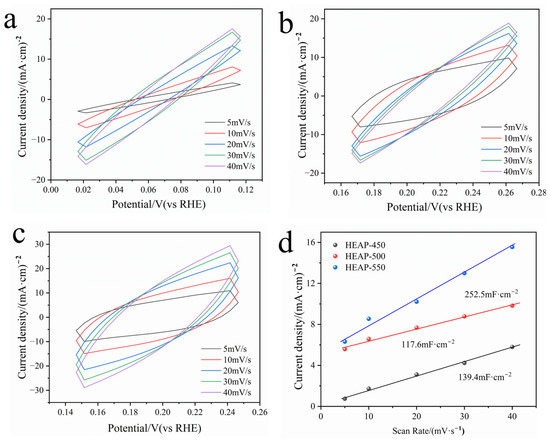
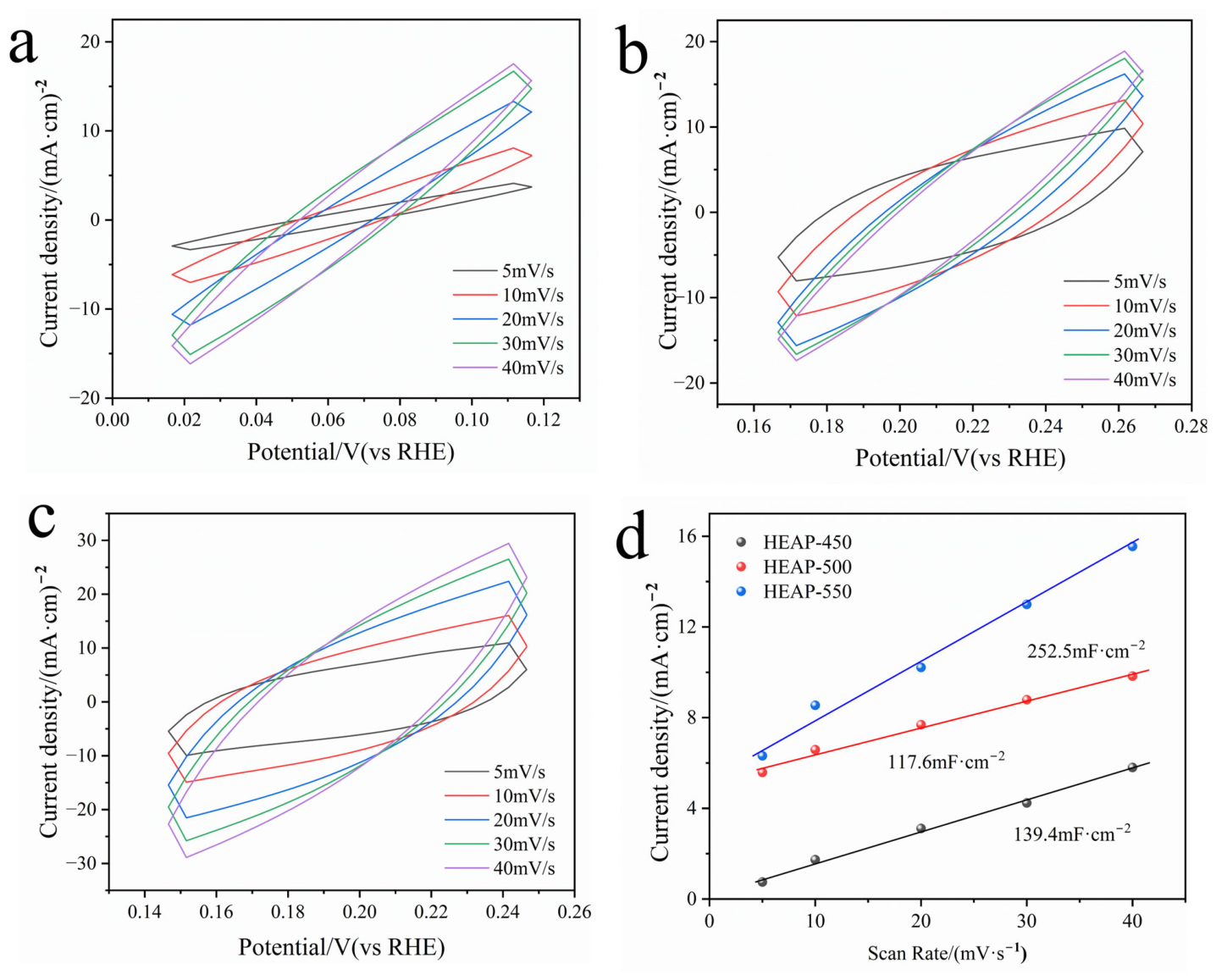
Figure 10 shows the Nyquist plots of the three samples in 1 M KOH together with the equivalent circuit. Table 2 reports the parameter values yielded by the fitting analysis. Both Rp and Rct decrease progressively with increasing phosphidation temperature. The impedance arcs in Figure 10a also become smaller. These results indicate that a higher phosphidation temperature reduces the transport resistance and interfacial charge-transfer resistance of the electrodes. HEAP-550 exhibits the lowest Rp and Rct values among the three samples. Figure 11 compiles the CV curves measured over multiple scan rates and the fits used to determine Cdl. The Cdl increases progressively with phosphidation temperature. HEAP-550 exhibits the highest Cdl and the lowest Rp and Rct. These results suggest that a higher phosphidation temperature is associated with more favorable interfacial charge-transfer characteristics and a larger electrochemically accessible surface area. These features may partly account for the enhanced HER activity of HEAP-550 in alkaline media.
Figure 10.
(a) Nyquist plots of the samples in 1 M KOH; (b) the corresponding equivalent circuit.
Table 2.
Fitted EIS parameters of the HEAP films prepared at different phosphidation temperatures in 1 M KOH.
Figure 11.
CV curves of (a) HEAP-450, (b) HEAP-500, and (c) HEAP-550 in 1 M KOH; (d) corresponding Cdl plots.
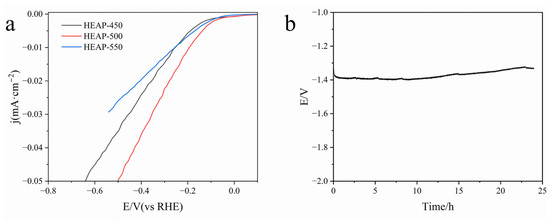
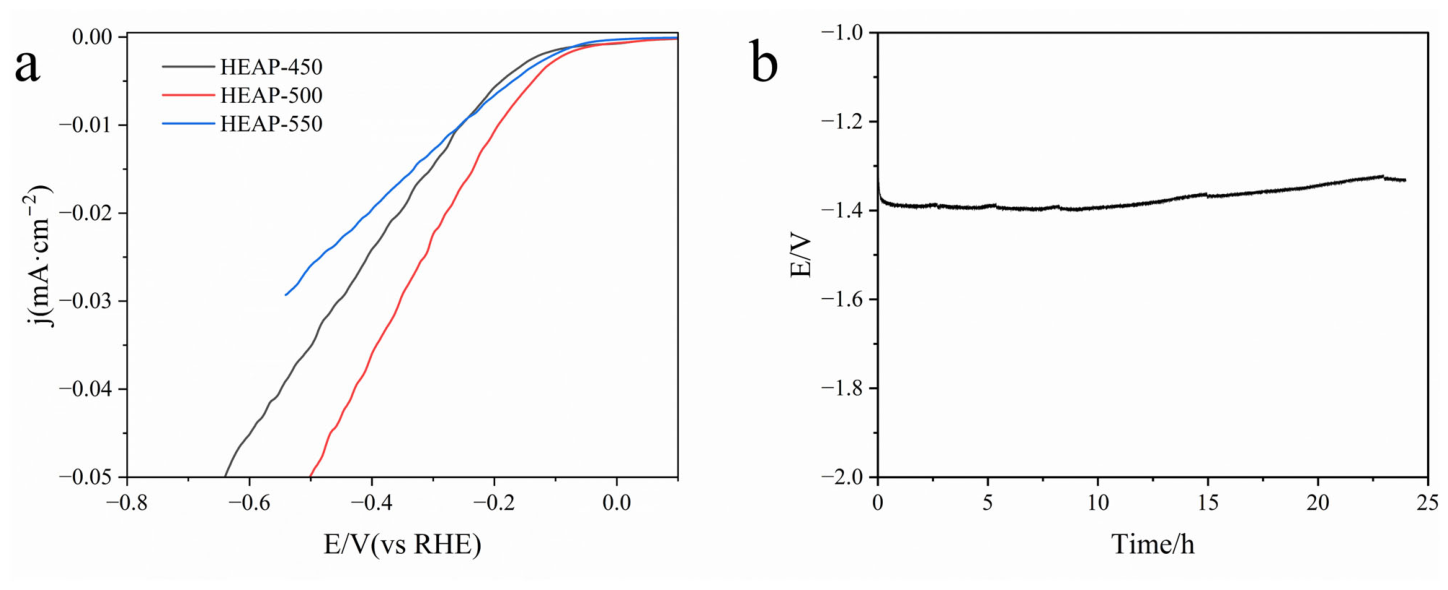
Figure 12 presents the ECSA-normalized LSV curve and the 24 h chronopotentiometric stability test at 100 mA·cm−2 in 1 M KOH. The ECSA-normalized result indicates that the superior geometric HER activity is largely associated with the larger electrochemically accessible surface area, while the long-term test confirms good operational stability under alkaline conditions.
Figure 12.
(a) ECSA-normalized HER polarization curve of the catalyst in 1 M KOH. (b) Chronopotentiometric stability curve recorded at a constant current density of 100 mA·cm−2 for 24 h in 1 M KOH.
3.2.3. HER Activity in 1 M KOH + 1 M NaCl
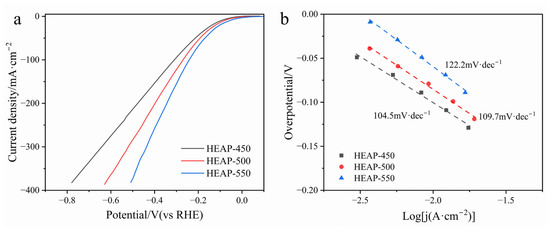
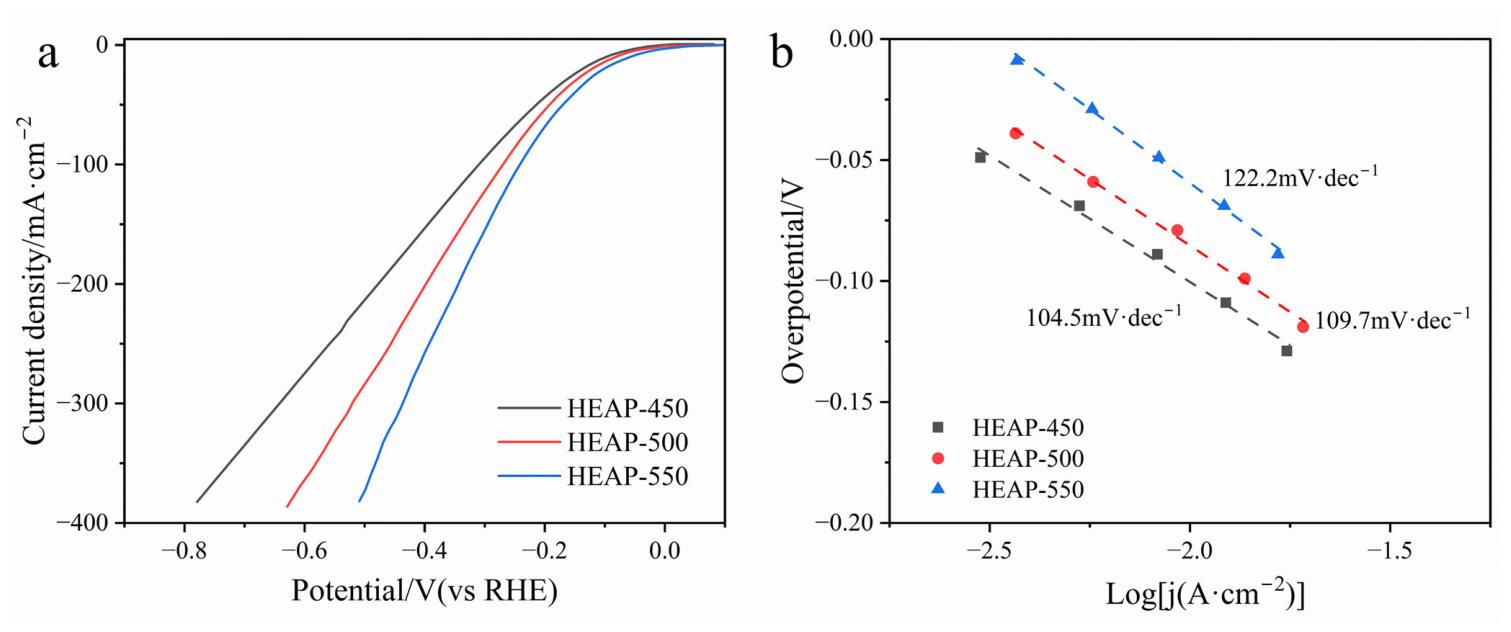
HER testing of the three electrodes was then extended to a mixed electrolyte containing 1 M NaCl + 1 M KOH, following measurements in 1 M KOH. This electrolyte was used to assess their HER performance under alkaline simulated seawater conditions. Figure 13a juxtaposes the LSV polarization curves obtained from the three samples. The pH of the 1 M KOH + 1 M NaCl electrolyte is approximately 14.0. HEAP-550 reached 10 mA·cm−2 at an overpotential of 60 mV, whereas HEAP-500 and HEAP-450 required 82 and 99 mV, respectively. These results indicate that a higher phosphidation temperature favors the HER activity of the electrodes in an alkaline saline electrolyte. Figure 13b presents the corresponding Tafel plots. The Tafel slopes of HEAP-450, HEAP-500, and HEAP-550 are 104.5, 109.7, and 122.1 mV·dec−1, respectively. These values fall within a relatively narrow range, suggesting broadly similar HER kinetic characteristics in this electrolyte. They are also generally close to the theoretical value of approximately 120 mV·dec−1 associated with a Volmer-limited process. Water dissociation and the formation of adsorbed hydrogen may therefore impose the primary kinetic limitation.
Figure 13.
(a) LSV polarization curves in 1 M KOH + 1 M NaCl. (b) The corresponding Tafel plots.
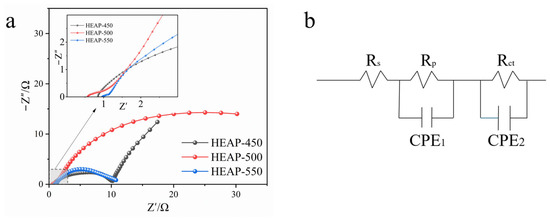
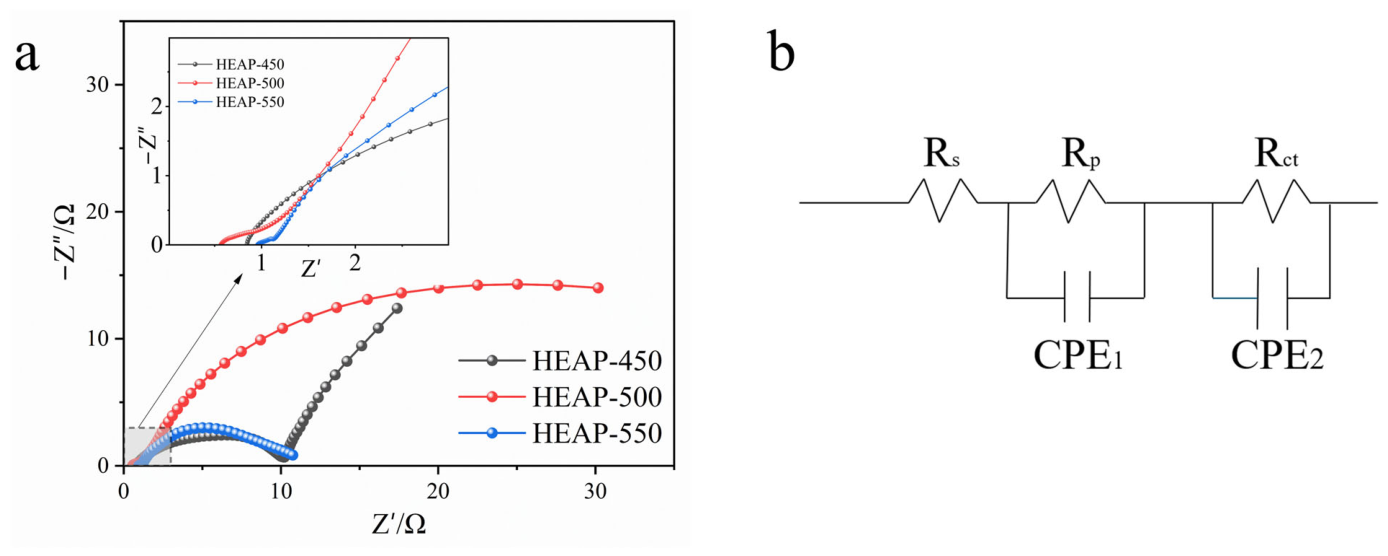
EIS and CV measurements were subsequently conducted in the alkaline simulated seawater electrolyte. The Nyquist plots are presented in Figure 14a. Both impedance arcs become smaller as the phosphidation temperature increases. The EIS fitting yielded the parameter values reported in Table 3. The Rp decreases from 9.834 Ω for HEAP-450 to 0.8833 Ω for HEAP-500 and then to 0.7152 Ω for HEAP-550. A similar trend is observed for Rct, which decreases from 61.89 to 44.40 and 9.202 Ω, respectively. The lower Rp and Rct values suggest reduced transport resistance and interfacial charge-transfer resistance at higher phosphidation temperatures. The CV curves and corresponding Cdl fitting results are also presented in Figure 15. HEAP-550 exhibits the highest Cdl, suggesting a larger electrochemically accessible surface area than the other two electrodes. The larger accessible interface may provide more surface area for electrochemical reactions. Together with the LSV results, HEAP-550 combines the lowest overpotential, the lowest Rp and Rct, and the highest Cdl. Its enhanced HER activity is consistent with improved interfacial charge transport and an increased electrochemically accessible surface area.
Figure 14.
(a) Nyquist plots of the samples in 1 M NaCl + 1 M KOH; (b) the corresponding equivalent circuit.
Table 3.
Fitted EIS parameters of the HEAP films prepared at different phosphidation temperatures in 1 M KOH + 1 M NaCl.
Figure 15.
CV curves of (a) HEAP-450, (b) HEAP-500, and (c) HEAP-550 in 1 M KOH + 1 M NaCl; (d) corresponding Cdl plots.
Figure 16 presents the ECSA-normalized LSV curve and the 24 h chronopotentiometric stability test at 100 mA·cm−2 in 1 M KOH + 1 M NaCl. The normalized result suggests that the enhanced HER performance is strongly related to the enlarged electrochemically accessible surface area, while the stability test confirms good durability in the chloride-containing alkaline electrolyte.
Figure 16.
(a) ECSA-normalized HER polarization curve of the catalyst in 1 M KOH + 1 M NaCl. (b) Chronopotentiometric stability curve recorded at a constant current density of 100 mA·cm−2 for 24 h in 1 M KOH + 1 M NaCl.
3.2.4. HER Activity in 1 M KOH + 1 M Na2S
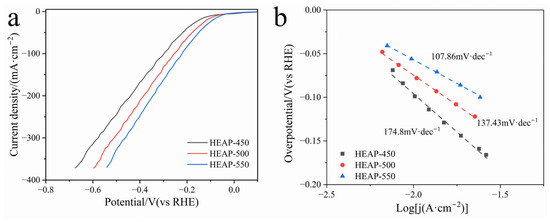
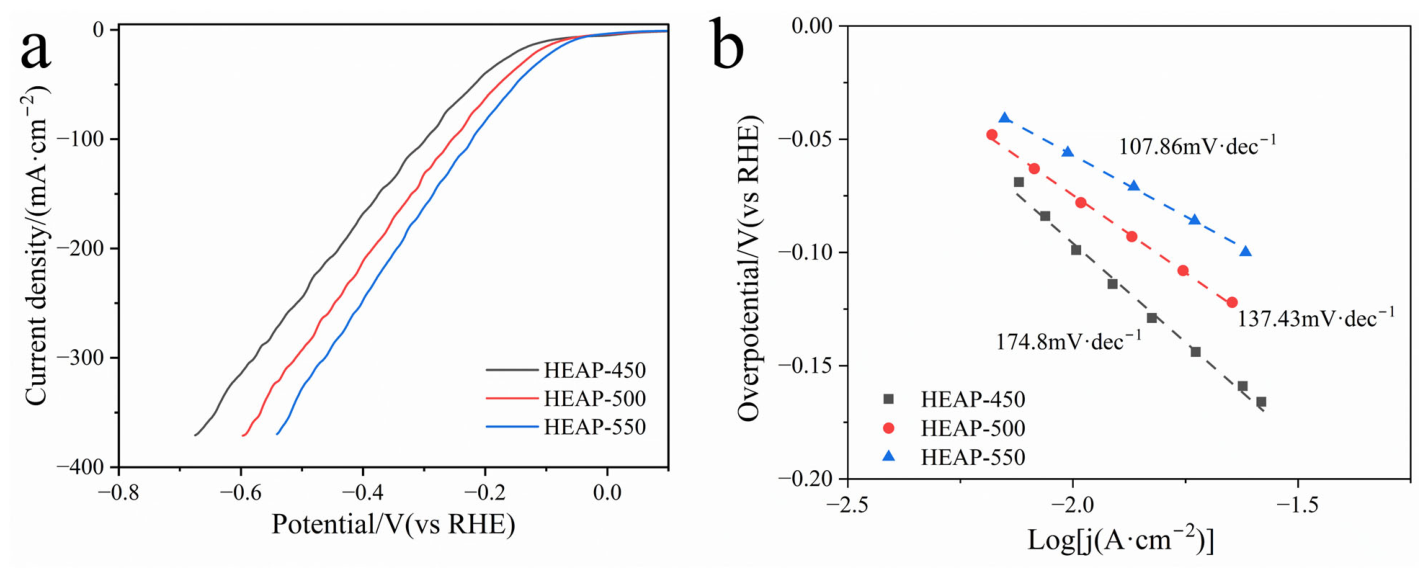
Following the measurements in alkaline simulated seawater, Na2S was introduced into 1 M KOH to prepare a sulfide-containing alkaline electrolyte. The HER performance of the samples was then evaluated under this more complex electrolyte condition. The pH of the 1 M KOH + 1 M Na2S electrolyte is approximately 14.1. Figure 17a presents the LSV polarization curves of the three samples. The η10 values decrease with increasing phosphidation temperature. HEAP-450, HEAP-500, and HEAP-550 require overpotentials of 98, 76, and 57 mV, respectively. HEAP-550 exhibits the lowest overpotential. A higher phosphidation temperature therefore favors the HER activity of the electrodes in the sulfide-containing alkaline electrolyte. Figure 17b presents the corresponding Tafel plots. The Tafel slopes of HEAP-450, HEAP-500, and HEAP-550 are 174.8, 137.43, and 107.86 mV·dec−1, respectively. The gradual decrease in Tafel slope indicates improved HER kinetics at higher phosphidation temperatures. HEAP-550 exhibits the lowest Tafel slope and the fastest reaction kinetics among the three electrodes.
Figure 17.
(a) LSV polarization curves in 1 M KOH + 1 M Na2S. (b) The corresponding Tafel plots.
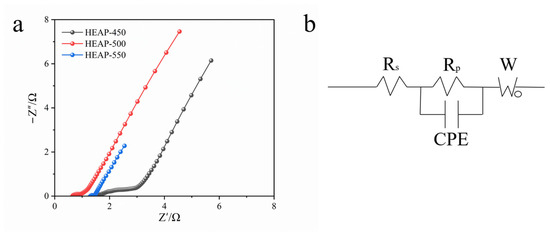
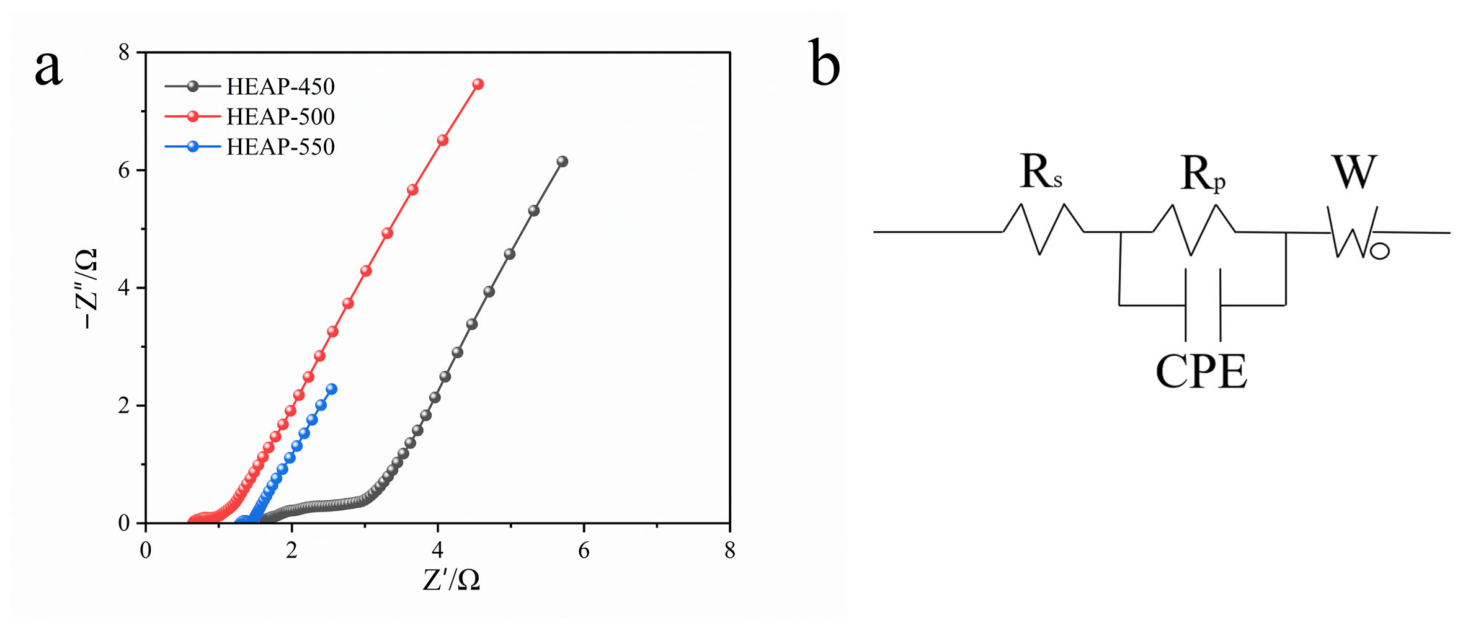
The Nyquist plots of the three samples in 1 M Na2S + 1 M KOH appear in Figure 18. The associated equivalent circuit is included in the same figure. Each sample displays a capacitive arc at high frequencies and a diffusion-related response at low frequencies. The capacitive arc becomes smaller as the phosphidation temperature increases. This change indicates a decrease in the overall electrode impedance. The fitted EIS parameters are listed in Table 4. Rp decreases with increasing phosphidation temperature. It falls from 2.227 Ω for HEAP-450 to 0.1252 Ω for HEAP-550. This trend suggests that higher phosphidation temperatures reduce the resistance associated with electrode transport processes. Figure 19 contains the CV curves measured at different scan rates. The corresponding Cdl fitting results are also included. Both η10 and Rp decrease with increasing phosphidation temperature. HEAP-550 has the lowest η10 and Rp. It also exhibits the highest Cdl. Its higher HER activity is consistent with lower electrode resistance and a larger electrochemically accessible surface area.
Figure 18.
(a) Nyquist plots of the samples in 1 M Na2S + 1 M KOH; (b) the corresponding equivalent circuit.
Table 4.
Fitted EIS parameters of the HEAP films prepared at different phosphidation temperatures in 1 M KOH + 1 M Na2S.
Figure 19.
CV curves of (a) HEAP-450, (b) HEAP-500 and (c) HEAP-550 in 1 M KOH + 1 M Na2S; (d) corresponding Cdl plots.
Figure 20 presents the ECSA-normalized LSV curve and the 24 h chronopotentiometric stability test at 100 mA·cm−2 in 1 M KOH + 1 M Na2S. The normalized result indicates that the enhanced HER performance is largely associated with the increased electrochemically accessible surface area, while the long-term test demonstrates good durability in the sulfide-containing alkaline electrolyte.
Figure 20.
(a) ECSA-normalized HER polarization curve of the catalyst in 1 M KOH + 1 M Na2S. (b) Chronopotentiometric stability curve recorded at a constant current density of 100 mA·cm−2 for 24 h in 1 M KOH + 1 M Na2S.
4. Conclusions
- (1)
- Self-supported porous high-entropy alloy phosphide films were obtained by CVD phosphidation. The films contain interconnected pores and sheet-like surface structures.
- (2)
- HEAP-550 reaches 10 mA·cm−2 in 0.5 M H2SO4 at an overpotential of 63 mV. The corresponding values for HEAP-500 and HEAP-450 are 88 and 103 mV, respectively. The sample phosphidated at 550 °C therefore has the highest acidic HER activity among the three electrodes.
- (3)
- In 1 M KOH, the overpotential decreases as the phosphidation temperature increases. At 10 mA·cm−2, HEAP-450, HEAP-500, and HEAP-550 require overpotentials of 109, 77, and 59 mV, respectively.
- (4)
- A similar trend with respect to phosphidation temperature is also observed in alkaline simulated seawater containing 1 M NaCl +1 M KOH. The overpotentials of HEAP-450, HEAP-500, and HEAP-550 are 99, 82, and 60 mV, respectively, at 10 mA·cm−2.
- (5)
- In 1 M Na2S + 1 M KOH, the overpotentials of HEAP-450, HEAP-500, and HEAP-550 are 98, 76, and 57 mV, respectively, at 10 mA·cm−2. HEAP-550 also has the lowest overpotential in the sulfide-containing electrolyte.
Increasing the phosphidation temperature improves the HER performance of the HEAP film electrodes in each electrolyte. HEAP-550 requires the lowest overpotential under all four conditions. Its HER activity is therefore maintained across acidic, alkaline, saline, and sulfide-containing electrolytes. Future work should focus on further optimizing the composition and phosphidation conditions of HEAP electrodes and elucidating the underlying structure–activity relationships.
Author Contributions
Supervision, J.Y.; formal analysis, S.L. and S.X.; conceptualization, J.Y.; data curation, S.L. and H.C.; funding acquisition, J.Y.; writing—original draft preparation, S.L. and J.Y.; validation, S.L.; project administration, H.T. and J.Y.; visualization, S.L. and J.Y.; methodology, S.L.; writing—review and editing, J.Y. and S.L.; investigation, S.L. and S.X. All authors have read and agreed to the published version of the manuscript.
Funding
This study received financial support from the Guangdong S&T Program (2023B0101200001) and the National Natural Science Foundation of China (51704221 and 52371074).
Institutional Review Board Statement
Not applicable.
Informed Consent Statement
Not applicable.
Data Availability Statement
The original contributions presented in this study are included in the article. Further inquiries can be directed to the corresponding author.
Conflicts of Interest
The authors report no conflicts of interest.
References
- Cassol, G.S.; Shang, C.; An, A.K.; Khanzada, N.K.; Ciucci, F.; Manzotti, A.; Westerhoff, P.; Song, Y.; Ling, L. Ultra-fast green hydrogen production from municipal wastewater by an integrated forward osmosis-alkaline water electrolysis system. Nat. Commun. 2024, 15, 2617. [Google Scholar] [CrossRef] [Scilit]
- Terlouw, T.; Rosa, L.; Bauer, C.; McKenna, R. Future hydrogen economies imply environmental trade-offs and a supply-demand mismatch. Nat. Commun. 2024, 15, 7043. [Google Scholar] [CrossRef] [Scilit]
- Kim, H.J.; Kim, H.Y.; Joo, J.; Joo, S.H.; Lim, J.S.; Lee, J.; Huang, H.; Shao, M.; Hu, J.; Kim, J.Y.; et al. Recent advances in non-precious group metal-based catalysts for water electrolysis and beyond. J. Mater. Chem. A 2022, 10, 50–88. [Google Scholar] [CrossRef] [Scilit]
- Molahalli, V.; Sanjith, C.; Shetty, S.L.; Sharma, A.; Ganesha, H.; Vijeth, H.; Chattham, N. Advanced materials for hydrogen production, storage, and conversion: Mechanistic insights, comparative benchmarks, and sustainability roadmaps. Int. J. Hydrogen Energy 2026, 202, 152904. [Google Scholar] [CrossRef] [Scilit]
- Zhao, Y.; Kumar, P.V.; Tan, X.; Lu, X.; Zhu, X.; Jiang, J.; Pan, J.; Xi, S.; Yang, H.Y.; Ma, Z.; et al. Modulating Pt-O-Pt atomic clusters with isolated cobalt atoms for enhanced hydrogen evolution catalysis. Nat. Commun. 2022, 13, 2430. [Google Scholar] [CrossRef] [Scilit]
- Jamesh, M.-I.; Hu, D.; Wang, J.; Naz, F.; Feng, J.; Yu, L.; Cai, Z.; Colmenares, J.C.; Lee, D.-J.; Chu, P.K.; et al. Recent advances in noble metal-free electrocatalysts to achieve efficient alkaline water splitting. J. Mater. Chem. A 2024, 12, 11771–11820. [Google Scholar] [CrossRef] [Scilit]
- Shahroudi, A.; Habibzadeh, S. Enhanced hydrogen evolution reaction activity through samarium-doped nickel phosphide (Ni2P) electrocatalyst. Sci. Rep. 2024, 14, 16818. [Google Scholar] [CrossRef] [Scilit]
- Popczun, E.J.; McKone, J.R.; Read, C.G.; Biacchi, A.J.; Wiltrout, A.M.; Lewis, N.S.; Schaak, R.E. Nanostructured Nickel Phosphide as an Electrocatalyst for the Hydrogen Evolution Reaction. J. Am. Chem. Soc. 2013, 135, 9267–9270. [Google Scholar] [CrossRef] [Scilit]
- Saadi, F.H.; Carim, A.I.; Verlage, E.; Hemminger, J.C.; Lewis, N.S.; Soriaga, M.P. CoP as an Acid-Stable Active Electrocatalyst for the Hydrogen-Evolution Reaction: Electrochemical Synthesis, Interfacial Characterization and Performance Evaluation. J. Phys. Chem. C 2014, 118, 29294–29300. [Google Scholar] [CrossRef] [Scilit]
- Xiao, P.; Alam Sk, M.; Thia, L.; Ge, X.; Lim, R.J.; Wang, J.-Y.; Lim, K.H.; Wang, X. Molybdenum phosphide as an efficient electrocatalyst for the hydrogen evolution reaction. Energy Environ. Sci. 2014, 7, 2624–2629. [Google Scholar] [CrossRef] [Scilit]
- Zhang, C.; Huang, Y.; Yu, Y.; Zhang, J.; Zhuo, S.; Zhang, B. Sub-1.1 nm ultrathin porous CoP nanosheets with dominant reactive {200} facets: A high mass activity and efficient electrocatalyst for the hydrogen evolution reaction. Chem. Sci. 2017, 8, 2769–2775. [Google Scholar] [CrossRef] [Scilit]
- Zhang, P.; Xu, S.; Li, H.; Cui, C.; Huang, S.; Li, Z.; Song, H.J.; Mao, L.; Chung, C.-H.; Park, H.S.; et al. Multi-metal synergistic integration for electronic structure regulation in schreibersite-type Mo2Fe0.8Ru0.2P electrocatalysts: Exceptional enhancement of activity and stability for alkaline hydrogen evolution reaction. J. Energy Chem. 2025, 108, 665–674. [Google Scholar] [CrossRef] [Scilit]
- Zhou, J.; Huang, C.; Zhou, Q.; Xie, Y.; Yang, L.; Yu, L.; Yu, Y. Electronic Structure Regulation of Nickel Phosphide for Efficient Overall Water Splitting. Inorg. Chem. 2022, 61, 9318–9327. [Google Scholar] [CrossRef] [Scilit]
- Cao, Q.; Hao, S.; Wu, Y.; Pei, K.; You, W.; Che, R. Interfacial charge redistribution in interconnected network of Ni2P–Co2P boosting electrocatalytic hydrogen evolution in both acidic and alkaline conditions. Chem. Eng. J. 2021, 424, 130444. [Google Scholar] [CrossRef] [Scilit]
- Bhunia, K.; Chandra, M.; Sharma, S.K.; Pradhan, D.; Kim, S.-J. A critical review on transition metal phosphide based catalyst for electrochemical hydrogen evolution reaction: Gibbs free energy, composition, stability, and true identity of active site. Coord. Chem. Rev. 2023, 478, 214956. [Google Scholar] [CrossRef] [Scilit]
- Liu, D.; Xu, G.; Yang, H.; Wang, H.; Xia, B.Y. Rational Design of Transition Metal Phosphide-Based Electrocatalysts for Hydrogen Evolution. Adv. Funct. Mater. 2023, 33, 2208358. [Google Scholar] [CrossRef] [Scilit]
- Habib, A.; Dristy, S.A.; Lin, S.; Joni, M.H.; Najibullah, M.; Mandavkar, R.; Lee, J. Electrochemical-Doping of Tungsten on Nickel-Boron-Phosphide Microspheres for Accelerated Industrial-Scale Water Electrolysis at High Current Density. Adv. Mater. Technol. 2025, 10, 70021. [Google Scholar] [CrossRef] [Scilit]
- Habib, A.; Mandavkar, R.; Burse, S.; Lin, S.; Kulkarni, R.; Patil, C.S.; Jeong, J.-H.; Lee, J. Design of boron-based ternary W3CoB3 electrocatalyst for the improved HER and OER performances. Mater. Today Energy 2022, 26, 101021. [Google Scholar] [CrossRef] [Scilit]
- Zhao, H.; Liu, M.; Wang, Q.; Li, Y.; Chen, Y.; Zhu, Y.; Yue, Z.; Li, J.; Wang, G.; Zou, Z.; et al. Strong transboundary electron transfer of high-entropy quantum-dots driving rapid hydrogen evolution kinetics. Energy Environ. Sci. 2024, 17, 6594–6605. [Google Scholar] [CrossRef] [Scilit]
- Yin, H.; Rong, F.; Xie, Y. A review of typical transition metal phosphides electrocatalysts for hydrogen evolution reaction. Int. J. Hydrogen Energy 2024, 52, 350–375. [Google Scholar] [CrossRef] [Scilit]
- Cao, G.; Yang, S.; Ren, J.-C.; Liu, W. Electronic descriptors for designing high-entropy alloy electrocatalysts by leveraging local chemical environments. Nat. Commun. 2025, 16, 1251. [Google Scholar] [CrossRef] [Scilit]
- Huang, K.; Cao, X.; Lu, Y.; Xiu, M.; Cui, K.; Zhang, B.; Shi, W.; Xia, J.; Woods, L.M.; Zhu, S.; et al. Lattice-Disordered High-Entropy Alloy Engineered by Thermal Dezincification for Improved Catalytic Hydrogen Evolution Reaction. Adv. Mater. 2024, 36, 2304867. [Google Scholar] [CrossRef] [Scilit]
- Li, H.; Han, Y.; Zhao, H.; Qi, W.; Zhang, D.; Yu, Y.; Cai, W.; Li, S.; Lai, J.; Huang, B.; et al. Fast site-to-site electron transfer of high-entropy alloy nanocatalyst driving redox electrocatalysis. Nat. Commun. 2020, 11, 5437. [Google Scholar] [CrossRef] [Scilit]
- Li, W.; Cheng, G.; Peng, S.; Sun, M.; Wang, S.; Han, S.; Liu, Y.; Zhai, T.; Yu, L. Tuning hydrogen binding energy by interfacial charge transfer enables pH-universal hydrogen evolution catalysis of metal phosphides. Chem. Eng. J. 2022, 430, 132699. [Google Scholar] [CrossRef] [Scilit]
- Yuan, Q.; Liu, T.; Ma, D.; Liao, Y.; Wang, W.; Meng, H.; You, Q.; Zeng, F.; Xie, M.; Huang, H.; et al. Synergistic high-entropy phosphides with phosphorus vacancies as robust bifunctional catalysts for efficient water splitting. J. Colloid Interface Sci. 2025, 684, 783–791. [Google Scholar] [CrossRef] [Scilit]
- Wang, Y.; Liu, Y.; Sutra, P.; Qin, G.W.; Li, S. Freestanding high-entropy phosphide electrodes for industrial-scale hydrogen evolution via far-from-equilibrium electrosynthesis. J. Mater. Chem. A 2025, 13, 40305–40312. [Google Scholar] [CrossRef] [Scilit]
- Huang, W.; Yang, J.; Jiang, W.; Tan, H. Preparation of FeCoNiMoCu High-Entropy Alloy Thin Film Electrode and Its Water Splitting Performance. Coatings 2025, 15, 1409. [Google Scholar] [CrossRef] [Scilit]
- Lv, S.; Deng, Y.; Liu, Q.; Fu, Z.; Liu, X.; Wang, M.; Xiao, Z.; Li, B.; Wang, L. Carbon-quantum-dots-involved Fe/Co/Ni phosphide open nanotubes for high effective seawater electrocatalytic decomposition. Appl. Catal. B Environ. 2023, 326, 122403. [Google Scholar] [CrossRef] [Scilit]
- Ping, T.; Das, T.K.; Jena, B.K. In-situ construction of porous Fe/Ni/Co-phosphide heterostructures with electron redistribution for the efficient water oxidation reaction. Electrochim. Acta 2023, 459, 142504. [Google Scholar] [CrossRef] [Scilit]
- Dong, S.; Tang, H.; Wang, K.; Zheng, Q.; Huang, T. Modulating the electronic structure of ternary transition metal phosphide for enhanced hydrogen evolution activity. Dalton Trans. 2022, 51, 18722–18733. [Google Scholar] [CrossRef] [Scilit]
- Zhou, Y.; Gao, L.; Chen, H.; Wang, H.; Zhang, J.; Li, X.; Duo, F.; Guan, G. Fabrication of amorphous FeCoNiCuMnPx high-entropy phosphide/carbon composites with a heterostructured fusiform morphology for efficient oxygen evolution reaction. J. Mater. Sci. Technol. 2024, 168, 62–70. [Google Scholar] [CrossRef] [Scilit]
- Shen, H.; Wei, T.; Ding, J.; Liu, X. Copper Phosphide Nanowires as High-Performance Catalysts for Urea-Assisted Hydrogen Evolution in Alkaline Medium. Materials 2023, 16, 4169. [Google Scholar] [CrossRef] [Scilit]
- Li, G.; Sun, Y.; Rao, J.; Wu, J.; Kumar, A.; Xu, Q.N.; Fu, C.; Liu, E.; Blake, G.R.; Werner, P.; et al. Carbon-Tailored Semimetal MoP as an Efficient Hydrogen Evolution Electrocatalyst in Both Alkaline and Acid Media. Adv. Energy Mater. 2018, 8, 1801258. [Google Scholar] [CrossRef] [Scilit]
- McEnaney, J.M.; Crompton, J.C.; Callejas, J.F.; Popczun, E.J.; Biacchi, A.J.; Lewis, N.S.; Schaak, R.E. Amorphous Molybdenum Phosphide Nanoparticles for Electrocatalytic Hydrogen Evolution. Chem. Mater. 2014, 26, 4826–4831. [Google Scholar] [CrossRef] [Scilit]
- Chen, B.; Liu, J.; Wang, S.; Huang, H.; He, Y.; Guo, Z. Preparation and electrochemical properties of a novel porous Ti/Sn–Sb-RuOx/β-PbO2/MnO2 anode for zinc electrowinning. RSC Adv. 2021, 11, 19136–19146. [Google Scholar] [CrossRef] [Scilit]

Disclaimer/Publisher’s Note: The statements, opinions and data contained in all publications are solely those of the individual author(s) and contributor(s) and not of MDPI and/or the editor(s). MDPI and/or the editor(s) disclaim responsibility for any injury to people or property resulting from any ideas, methods, instructions or products referred to in the content. |
© 2026 by the authors. Licensee MDPI, Basel, Switzerland. This article is an open access article distributed under the terms and conditions of the Creative Commons Attribution (CC BY) license.