Article

Positioning Hydrogen in ASEAN’s Energy Transition: Insights from Niche and Regime Dynamics


by
Citra Endah Nur Setyawati
* and
Benjamin C. McLellan
Graduate School of Energy Science, Kyoto University, Kyoto 606-8501, Japan
*
Author to whom correspondence should be addressed.
Hydrogen 2026, 7(3), 98; https://doi.org/10.3390/hydrogen7030098

Submission received: 26 June 2026 / Revised: 13 July 2026 / Accepted: 14 July 2026 / Published: 15 July 2026

Abstract

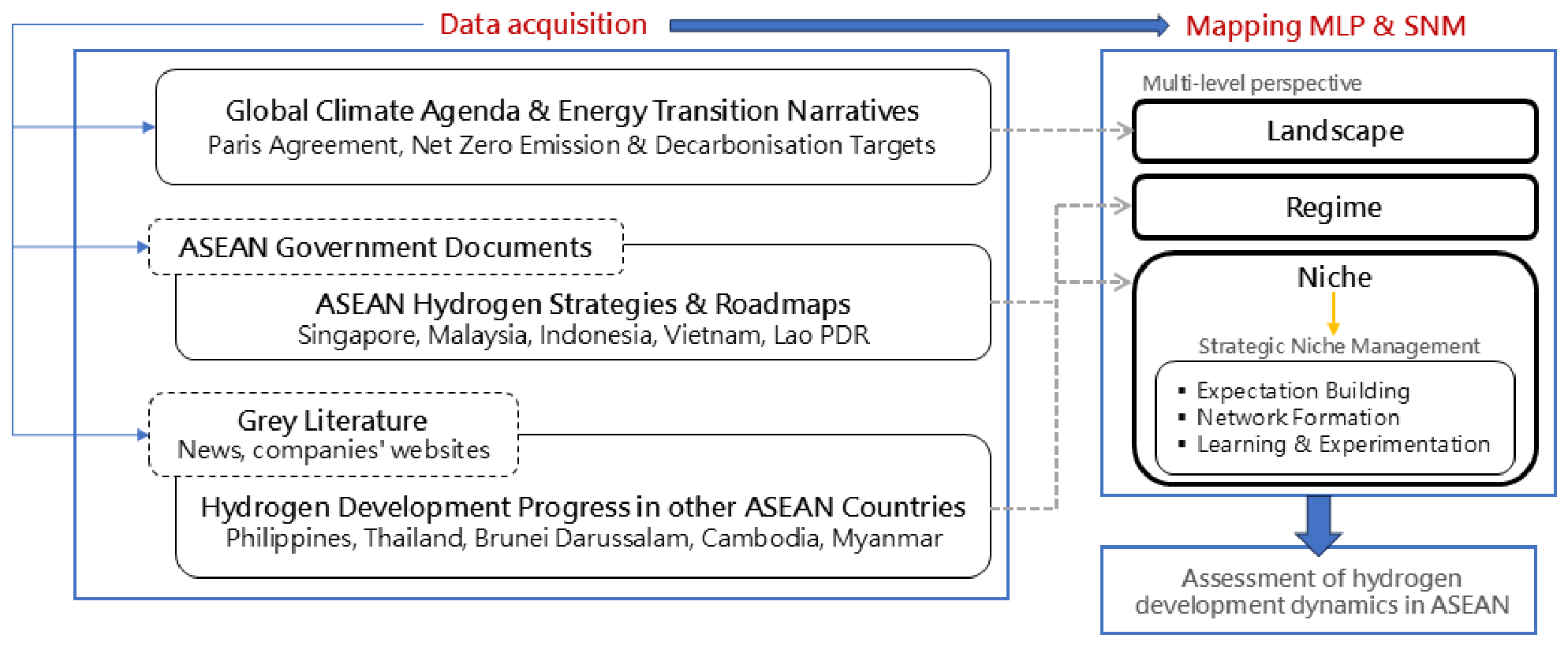
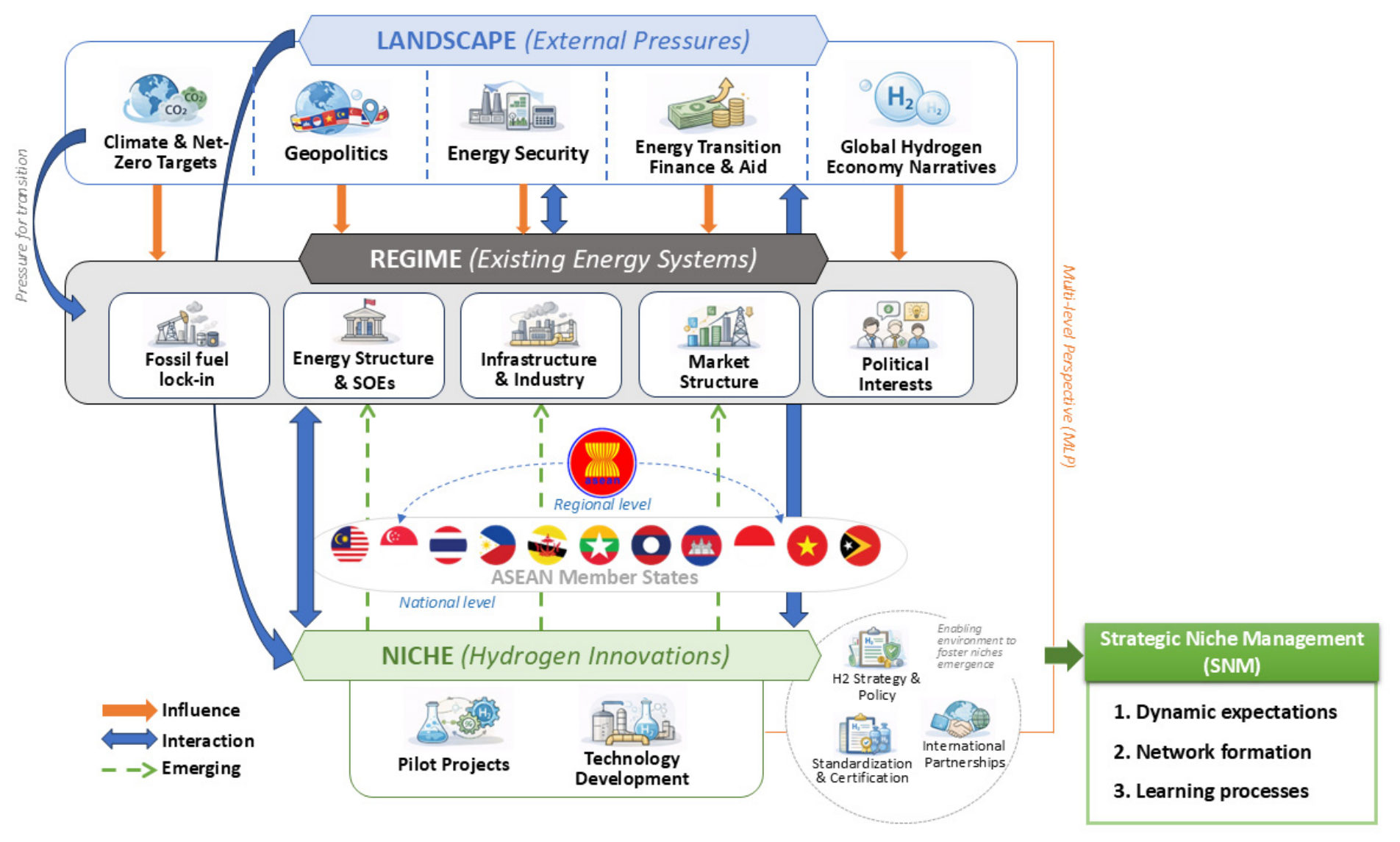
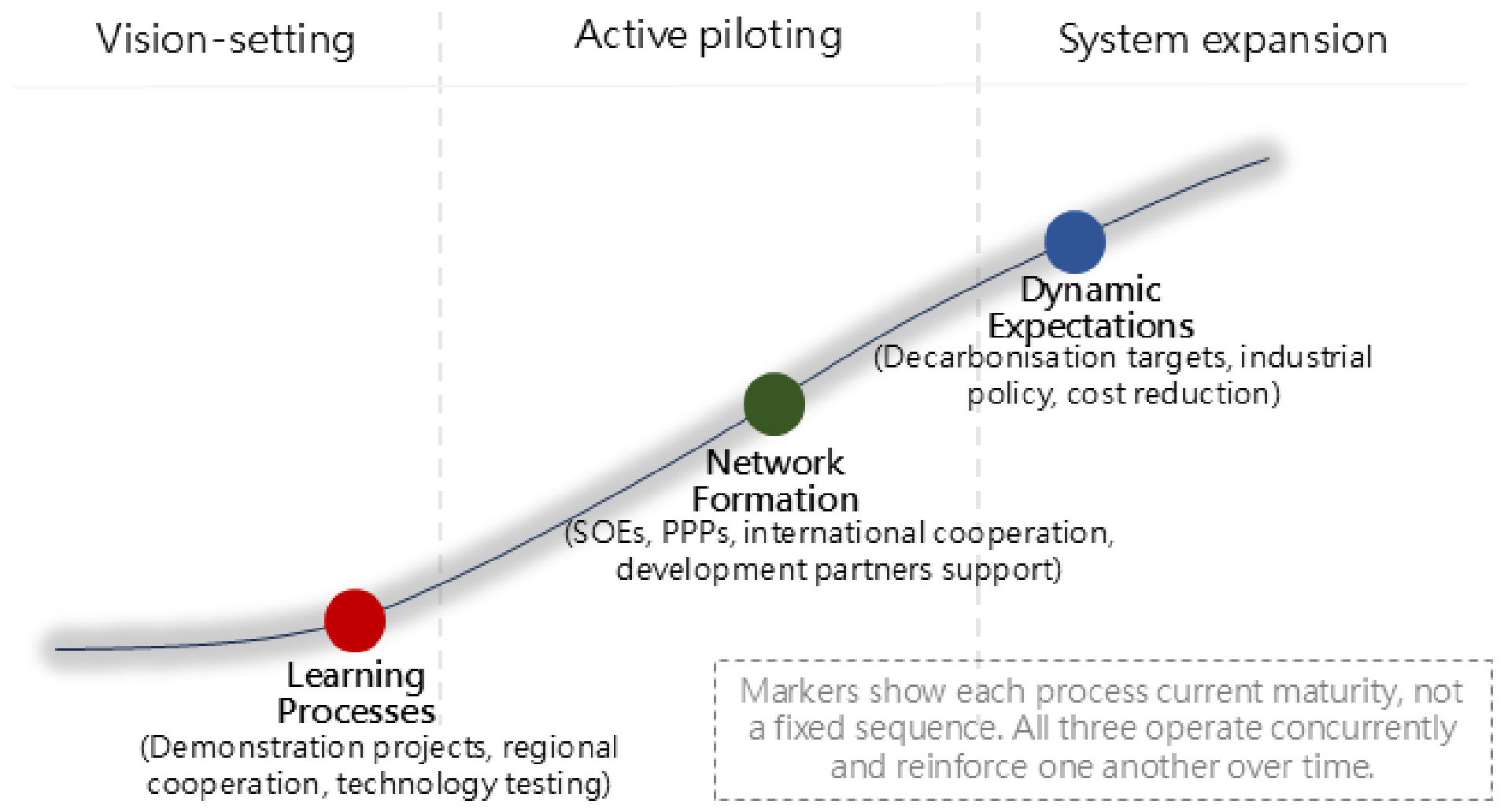
Hydrogen has attracted growing interest across the Association of Southeast Asian Nations (ASEAN) region in recent years, driven by net-zero commitments and national decarbonisation strategies. This study explores the evolving role of hydrogen in the ASEAN energy landscape and its potential to support a just and inclusive transition towards sustainable energy systems. Employing an exploratory research approach, this study integrates two complementary transition management frameworks—Multi-Level Perspective (MLP) and Strategic Niche Management (SNM)—to analyse the dynamics of energy transitions across niche, regime, and landscape levels. The integration of these frameworks supports our understanding of how transitions unfold within complex socio-technical systems. The analysis draws on government documents, the academic literature, and the grey literature on evolving hydrogen development projects across ASEAN. The findings indicate that climate commitments and global hydrogen narratives are placing increasing pressure on fossil-fuel-dominated energy regimes across ASEAN. While hydrogen development remains uneven across the region, several countries have made measurable progress through policy development, pilot projects, and international partnerships. This research contributes to the literature by combining MLP and SNM to provide a multi-level understanding of hydrogen transitions in ASEAN and highlights the importance of nurturing niche innovations to enable long-term systemic transformation.
Keywords: hydrogen; energy transition; multi-level perspective; strategic niche management; sustainability transitions; ASEAN hydrogen; energy transition; multi-level perspective; strategic niche management; sustainability transitions; ASEAN