


Abstract
The accelerating energy transition and growing geopolitical uncertainty have strengthened the strategic importance of hydrogen within future low-carbon energy systems. Green hydrogen is increasingly recognized as a key energy carrier supporting industrial decarbonization, renewable energy integration, long-term energy storage and energy security. However, existing hydrogen market assessment approaches remain fragmented and frequently focus on isolated technological, regulatory, or investment-related dimensions without sufficiently integrating the systemic interactions that shape hydrogen market maturity. To address this research gap, this study proposes the Integrated Green Hydrogen Market Development Index (IGHMDI), a multidimensional composite indicator framework designed to evaluate hydrogen market development through the integration of regulatory, technological, infrastructural, financial and strategic dimensions. This methodological framework is based on established principles of composite indicator construction, including indicator selection, normalization, weighting, and aggregation procedures adapted to the characteristics of emerging hydrogen markets. The proposed framework incorporates six principal dimensions: regulatory and policy development, technological readiness, infrastructure and market integration, investment and financial readiness, market demand and industrial adoption, and international cooperation and strategic positioning. An illustrative pilot application comparing Croatia and Germany is used to demonstrate the operational logic of the framework and its ability to distinguish between hydrogen markets at different stages of development. The illustrative assessment produced composite IGHMDI scores of 65.0 for Croatia and 91.7 for Germany, demonstrating the framework’s capability to distinguish hydrogen markets at different stages of structural development while providing a transparent basis for comparative assessment. The results indicate that hydrogen market development increasingly depends on the interaction between regulatory stability, infrastructure readiness, technological innovation, investment support mechanisms, market demand, and international coordination. The study also acknowledges that broader empirical validation, sensitivity analysis, and longitudinal application across a larger set of countries are required in future research. Overall, the IGHMDI framework contributes to the development of multidimensional hydrogen market assessment methodologies and provides a transparent analytical tool for comparative benchmarking, policy evaluation, infrastructure prioritization, and future hydrogen transition governance.
1. Introduction
The global energy sector is undergoing a profound transformation driven by decarbonization objectives, energy security concerns, and the transition toward low-carbon energy systems. Increasing climate-related pressures, geopolitical instability and volatility in fossil fuel markets have intensified the search for alternative energy solutions capable of supporting long-term decarbonization and improving the resilience of energy systems. In this context, hydrogen is increasingly recognized as an important component of future low-carbon energy systems. Particular attention has been directed toward green hydrogen produced through water electrolysis using electricity generated from renewable energy sources. Unlike conventional hydrogen production pathways based on fossil fuels, green hydrogen has the potential to significantly reduce carbon emissions while contributing to greater flexibility and integration of renewable energy systems. Several studies emphasize that hydrogen could play an important role in decarbonizing hard-to-abate sectors such as heavy industry, transport and energy-intensive industrial processes [1,2,3].
The strategic importance of hydrogen has become even more pronounced following recent geopolitical and energy market disruptions. Within the European Union, hydrogen development has become closely connected with initiatives such as the European Green Deal, the EU Hydrogen Strategy and REPowerEU, which identify renewable and low-carbon hydrogen as important instruments for strengthening energy resilience and reducing dependence on imported fossil fuels [4,5]. At the same time, hydrogen development has stimulated significant investment activity and international cooperation. Several countries, including Germany, Japan, South Korea, Australia, and the United States, have adopted national hydrogen strategies focused on expanding electrolyzer capacity, supporting infrastructure development and stimulating industrial demand [6].
In parallel, international initiatives such as the Hydrogen Council and the Green Hydrogen Catapult seek to accelerate technological innovation, market integration and large-scale deployment of hydrogen systems [6,7].
Despite growing political support and technological progress, the hydrogen market continues to face substantial economic, regulatory and infrastructural challenges. High production costs, insufficient transport and storage infrastructure, uncertain long-term market demand and investment risks remain among the key barriers slowing down the commercialization of green hydrogen technologies. Recent studies additionally indicate that the future competitiveness of hydrogen will strongly depend on technological cost reductions, market integration and coordinated regulatory support [8,9,10]. Existing scientific literature predominantly analyzes hydrogen development through separate technological, economic or regulatory perspectives. Numerous studies focus on hydrogen production technologies, electrolyzer deployment and infrastructure development [2,9,10], while others analyse market competitiveness, investment challenges and climate policy implications [3,8]. However, existing approaches rarely integrate these dimensions into a unified methodological framework capable of simultaneously evaluating policy support, technological readiness, infrastructure development, investment conditions, demand formation, and long-term hydrogen integration into the energy system. This limitation is particularly relevant, because hydrogen market maturity depends on the interaction among these dimensions rather than on isolated indicators alone. In order to address this research gap, this paper proposes the Integrated Green Hydrogen Market Development Index (IGHMDI), a multidimensional composite indicator framework designed to evaluate hydrogen market development through six principal dimensions: regulatory and policy development, technological readiness, infrastructure and market integration, investment and financial readiness, market demand and industrial adoption, and international cooperation and strategic positioning. Unlike approaches focused on individual market indicators or descriptive monitoring, IGHMDI combines hydrogen-specific market variables with established composite indicator methodology to support integrated benchmarking, identification of development gaps, and strategic decision-making. The main contribution of this study is the development of an integrated methodological framework that combines strategic, technological, economic, infrastructural, regulatory, and market-demand dimensions within a single analytical model for monitoring hydrogen market development and maturity. The proposed approach advances existing hydrogen market assessment methods by explicitly linking indicator selection, dimensional structuring, normalization, weighting, and aggregation procedures with hydrogen-specific market development characteristics. In this way, IGHMDI enables a more comprehensive assessment of hydrogen market dynamics while supporting informed decision-making related to hydrogen strategies, infrastructure investments, policy evaluation, and long-term energy transition governance. The remainder of the paper is organized as follows. Section 2 reviews the relevant literature on hydrogen market development, technologies, regulatory frameworks, and existing hydrogen market assessment approaches. Section 3 presents the IGHMDI methodology, including indicator selection, data sources, normalization, weighting, aggregation and methodological limitations. Section 4 discusses analytical application, pilot assessment, strategic implications and future development perspectives of the framework, while Section 5 concludes the study and outlines future research directions.
2. Literature Review
The growing importance of hydrogen within global energy transition strategies has generated substantial scientific, industrial and political interest over the last two decades. The concept of the hydrogen economy has gradually evolved from a primarily technological perspective into a broader strategic framework associated with decarbonization, energy security, industrial transformation and the long-term sustainability of energy systems. This evolution has also increased the need for assessment frameworks capable of evaluating hydrogen market development as a multidimensional process rather than through a set of isolated technological or policy indicators. A significant part of the existing literature examines hydrogen production technologies, infrastructure development, economic feasibility, and the role of hydrogen in achieving climate neutrality targets. Particular emphasis has been placed on green hydrogen produced through water electrolysis powered by renewable electricity, which is increasingly considered one of the key technological solutions for reducing greenhouse gas emissions in sectors where direct electrification remains limited [2,3,4,5,6,7,8,9,10].
Several studies highlight the strategic role of hydrogen within future low-carbon energy systems. Staffell et al. [3] emphasize the potential contribution of hydrogen and fuel cells to industrial decarbonization, transport and energy storage, while Glenk and Reichelstein [8] analyze the economic competitiveness of renewable hydrogen production pathways. Recent review papers additionally underline the growing importance of hydrogen infrastructure development, electrolyzer deployment and sector coupling for accelerating the energy transition process [9,10,11,12].
Recent geopolitical instability and energy market volatility have further intensified scientific and policy discussions regarding hydrogen development and energy security [13,14,15]. International organizations and policy institutions, including the International Energy Agency (IEA), the International Renewable Energy Agency (IRENA), the Hydrogen Council and the European Commission, have published numerous strategic analyses and development scenarios related to hydrogen deployment and market integration [1,4,5,6,13,16]. Existing studies emphasize the importance of coordinated regulatory frameworks, infrastructure investments, technological innovation and market support mechanisms for accelerating the transition toward hydrogen-based energy systems. Despite the growing volume of hydrogen-related research, existing scientific literature still predominantly analyses hydrogen development through separate technological, economic or regulatory perspectives.
Many studies focus on individual aspects such as electrolyzer efficiency, hydrogen storage technologies, investment costs, climate policy measures or infrastructure development. Although these approaches provide valuable insights into specific segments of hydrogen development, most remain focused on isolated dimensions of the hydrogen economy without integrating broader regulatory, market and geopolitical factors. In addition, current hydrogen market assessments are frequently based on isolated indicators such as installed electrolyzer capacity, hydrogen production volumes or investment levels. While such indicators provide useful information regarding market trends, they do not fully capture the complexity and multidimensional nature of hydrogen market development.
The absence of integrated analytical approaches capable of simultaneously evaluating technological progress, regulatory conditions, market demand, investment security and international cooperation therefore remains an important limitation within the existing literature. Consequently, there remains a need for integrated quantitative frameworks capable of providing a more comprehensive assessment of hydrogen market maturity and development dynamics.
In this context, the present study contributes to the existing literature through the development of the IGHMDI, designed as a multidimensional analytical framework for evaluating hydrogen market development across strategic, technological, regulatory, infrastructural, financial, and market-related dimensions. The contribution of the proposed framework lies not only in the selection of hydrogen-specific dimensions but also in their integration into a composite indicator structure that can support comparative assessment, identification of development gaps, and future empirical validation. The following sections provide a more detailed overview of the existing literature related to the hydrogen economy, technological development, regulatory frameworks, and current approaches to hydrogen market assessment.
2.1. Hydrogen Economy and Energy Transition
The transition toward low-carbon and climate-neutral energy systems has significantly increased the strategic importance of hydrogen within global energy policies and long-term decarbonization pathways. Hydrogen is increasingly recognized as a flexible energy carrier capable of supporting the integration of renewable energy sources, reducing greenhouse gas emissions and improving the resilience of future energy systems [1,13]. The concept of the hydrogen economy has evolved considerably over recent decades. Initially focused primarily on technological aspects of hydrogen production and utilization, the hydrogen economy is today increasingly associated with broader economic, environmental and geopolitical dimensions of energy transition. In particular, green hydrogen produced through renewable electricity-based electrolysis is increasingly viewed as a key solution for achieving climate neutrality and accelerating industrial decarbonization [2,8].
The conceptualization of hydrogen as an energy vector dates back to the energy crises of the 1970s, when hydrogen was introduced into scientific debate as a potential alternative fuel and future energy carrier [17,18,19,20]. Since then, hydrogen has evolved from a largely theoretical energy-system concept into a strategically important component of contemporary energy transition policies, particularly in relation to energy security, industrial decarbonization, sector coupling, and the integration of variable renewable energy sources [1,18,21,22]. Several studies emphasize the role of hydrogen in sectors where direct electrification remains technically or economically challenging.
These sectors include heavy industry, chemical production, steel manufacturing, long-distance transport, aviation, and maritime transport [3]. In such sectors, hydrogen may serve either as a low-carbon fuel or as an industrial feedstock capable of replacing fossil fuel-based processes. In addition to its decarbonization potential, hydrogen is increasingly associated with the concept of sector coupling and energy system flexibility. Hydrogen technologies enable the conversion of surplus renewable electricity into hydrogen through electrolysis processes, thereby facilitating large-scale renewable energy integration and long-term energy storage [9]. This role becomes increasingly important as energy systems experience higher shares of intermittent renewable energy sources such as solar and wind power. Recent geopolitical and energy market disruptions have accelerated discussions regarding energy diversification and long-term supply security [13,14,15]. Consequently, hydrogen is increasingly viewed not only as a climate policy instrument but also as a strategic component of future energy security frameworks. International organizations and policy institutions have recognized hydrogen as an important element of future energy transition strategies.
The International Energy Agency (IEA) highlights that hydrogen could contribute significantly to achieving global net-zero emission targets, particularly in hard-to-abate sectors and long-duration energy storage applications [1,16]. Similarly, the International Renewable Energy Agency (IRENA) emphasizes the role of hydrogen in enabling deeper integration of renewable energy sources and supporting the transition toward more flexible and interconnected energy systems [13,23]. Despite growing political support and technological progress, the transition toward a hydrogen-based economy remains associated with substantial economic and infrastructural challenges.
High production costs, infrastructure limitations and uncertain long-term demand continue to constrain large-scale deployment, while future competitiveness will depend on technological innovation, economies of scale and coordinated policy support [8,10,23]. Although the hydrogen economy is increasingly discussed within scientific and policy literature, many existing approaches remain focused on isolated technological or economic dimensions of hydrogen development.
Consequently, there remains a need for broader analytical frameworks capable of simultaneously evaluating technological readiness, market development, regulatory conditions, and strategic energy transition dynamics. This challenge represents one of the central motivations for the development of the IGHMDI proposed in this study.
2.2. Hydrogen Production Technologies and Infrastructure Development
Technological development represents one of the most important factors influencing the future expansion and market integration of hydrogen systems. Over the last decade, significant progress has been achieved in hydrogen production technologies, storage systems, transport infrastructure and sector-coupling applications. At the same time, technological maturity remains closely connected with investment costs, infrastructure readiness and the broader economic competitiveness of hydrogen within the global energy transition [9,10,23].
Among the available hydrogen production pathways, green hydrogen produced through water electrolysis using renewable electricity has attracted the greatest attention within recent scientific and policy discussions. Electrolysis technologies enable the separation of water molecules into hydrogen and oxygen using electrical energy and are increasingly viewed as one of the key technological foundations of future low-carbon energy systems [2,9].
Currently, the most widely discussed electrolysis technologies include alkaline electrolysis, proton exchange membrane (PEM) electrolysis and solid oxide electrolysis (SOEC). Alkaline electrolysis represents the most mature and commercially established technology due to relatively lower investment costs and long operational experience. PEM electrolysis offers greater operational flexibility and faster response times, making it particularly suitable for integration with variable renewable energy sources such as wind and solar power [10,24].
Solid oxide electrolysis (SOEC), although still at an earlier stage of commercialization, is considered promising due to its potentially higher efficiency and lower electricity consumption under high-temperature operating conditions [25].
Recent technological progress has contributed to declining electrolyzer costs and improved system efficiency. Economies of scale, industrial learning effects, technological innovation, expanding electrolyzer manufacturing capacity, and declining renewable electricity costs are expected to further improve the competitiveness of green hydrogen [8,10,23].
In addition to hydrogen production, infrastructure development remains a major challenge for large-scale hydrogen deployment. Hydrogen transport and storage systems require significant investments in pipelines, compression technologies, liquefaction systems and underground storage capacities [7,9]. Existing natural gas infrastructure may partially support hydrogen integration through blending and pipeline conversion, although technical limitations related to material compatibility, leakage risks and system adaptation remain important challenges [18,26].
Hydrogen is also increasingly associated with the concept of sector coupling and energy system flexibility. Through electrolysis processes, surplus renewable electricity can be converted into hydrogen and subsequently utilized for storage, transport or industrial applications.
This capability becomes increasingly important in energy systems characterized by higher shares of intermittent renewable energy sources, where hydrogen may contribute to balancing supply fluctuations and supporting long-duration energy storage [9]. Recent literature additionally highlights the growing importance of hydrogen derivatives such as ammonia, methanol, and synthetic fuels within future international hydrogen trade systems [25,27]. In some cases, hydrogen derivatives may provide more economically viable solutions for long-distance transport and international market integration compared to pure hydrogen transport technologies.
Despite substantial technological progress, hydrogen systems continue to face several important limitations. High capital investment requirements, infrastructure complexity, energy losses during conversion processes, and dependence on critical raw materials remain among the key barriers affecting large-scale commercialization [28,29]. Furthermore, technological readiness differs significantly across hydrogen applications and regions, creating uneven development dynamics within the global hydrogen market.
Existing studies therefore suggest that technological development cannot be analyzed independently from broader market, regulatory and investment conditions. The future expansion of hydrogen systems will largely depend on the interaction between technological innovation, infrastructure development, policy support and long-term market demand. For this reason, technological maturity represents one of the central dimensions incorporated within the IGHMDI proposed in this study.
2.3. Regulatory and Market Perspectives
The development of hydrogen markets is strongly influenced by regulatory frameworks, market design mechanisms and long-term investment conditions. Unlike conventional energy commodities with established infrastructure and mature market structures, the hydrogen sector is still in an early phase of market formation characterized by significant regulatory uncertainty, evolving policy instruments and high investment risks [30,31].
Over the last decade, hydrogen regulation has increasingly become integrated into broader climate and energy transition policies. Within the European Union, the strategic importance of hydrogen was formally strengthened through the European Green Deal and the EU Hydrogen Strategy, which identified renewable and low-carbon hydrogen as key instruments for achieving climate neutrality and improving long-term energy resilience [4]. Additional momentum was generated following the REPowerEU initiative, which accelerated the political prioritization of hydrogen development in response to the European energy crisis and concerns regarding energy security and dependence on imported fossil fuels [5].
Recent European regulatory reforms have sought to establish the foundations of an integrated hydrogen market. The Hydrogen and Decarbonised Gas Market Package introduced new regulatory principles related to hydrogen infrastructure development, third-party access, network regulation and market integration [30,32,33].
At the same time, RED III established updated renewable energy targets and strengthened the regulatory framework supporting renewable hydrogen production and consumption [34]. A comparative overview of the key hydrogen regulatory frameworks and their main market implications is presented in Table 1.
Table 1.
Key Hydrogen Regulatory Frameworks and Their Main Market Implications.
Despite significant regulatory progress, hydrogen market development continues to face several structural challenges. Existing hydrogen markets remain fragmented, infrastructure deployment is uneven across regions, and long-term demand remains uncertain in many industrial sectors [31,35]. In addition, differences between national hydrogen strategies and subsidy mechanisms create varying investment conditions and competitive dynamics across international markets. Several studies indicate that the future expansion of hydrogen markets will depend not only on technological progress but also on the establishment of stable and predictable regulatory frameworks capable of reducing investment uncertainty [6,12,36]. In this context, policy instruments such as carbon pricing mechanisms, contracts for difference (CfD), state aid schemes, guarantees of origin and public financing mechanisms are increasingly viewed as essential tools for accelerating hydrogen market development.
Due to the capital-intensive nature of hydrogen infrastructure and production systems, large-scale projects require long investment cycles, substantial upfront expenditures and stable long-term demand [36]. Consequently, public–private financing models and de-risking mechanisms are increasingly recognized as important instruments for supporting market expansion. At the same time, international competition within the hydrogen sector has intensified considerably. The United States Inflation Reduction Act (IRA), European hydrogen support mechanisms, large-scale investment programmes in China and emerging hydrogen export strategies in the Middle East and North Africa (MENA) region are reshaping global hydrogen market dynamics [6,12,37]. These developments increasingly position hydrogen not only as a climate and energy transition issue, but also as a strategic industrial and geopolitical priority.
The existing literature additionally highlights the growing importance of market monitoring systems and hydrogen market benchmarking tools. Institutions such as ACER and the European Hydrogen Observatory increasingly provide market monitoring frameworks focused on infrastructure readiness, investment trends, regulatory implementation and market maturity indicators [31,35].
Such approaches contribute to improving transparency and supporting long-term market planning, although integrated multidimensional market assessment models remain relatively limited.
This gap is particularly evident when the hydrogen market is observed as an ecosystem shaped simultaneously by regulation, technology, infrastructure, investment conditions, market demand and international cooperation, as illustrated in Figure 1.
Figure 1.
Hydrogen Market Development Ecosystem and IGHMDI Dimensions.
Within this context, the development of comprehensive analytical frameworks capable of simultaneously evaluating regulatory stability, investment conditions, market readiness and technological maturity become increasingly important. The Integrated Green Hydrogen Market Development Index (IGHMDI) proposed in this study seeks to contribute to this area by integrating regulatory, market, technological and investment-related dimensions into a unified analytical framework for hydrogen market assessment.
2.4. Existing Hydrogen Market Assessment Approaches
Existing hydrogen market assessment approaches have gained increasing importance due to the rapid expansion of the global hydrogen economy and the growing need for systematic evaluation of market readiness, regulatory development, infrastructure deployment and investment conditions. As hydrogen evolves from a predominantly industrial feedstock into a strategic energy carrier within the broader energy transition framework, analytical tools capable of monitoring market progress and comparing development levels across regions become increasingly relevant [38,39].
Current hydrogen market assessment models differ considerably in terms of methodological scope, analytical focus and indicator selection. Some approaches primarily emphasize technological readiness and infrastructure deployment, while others focus on policy implementation, investment attractiveness or market competitiveness [6,31,40]. Most existing frameworks have been developed either as regional benchmarking tools or as policy-oriented monitoring systems intended to support strategic planning and regulatory implementation. One of the more recent approaches is the Hydrogen Economy Index proposed by Baumgarten et al. [12], which evaluates political and economic conditions for hydrogen market development in the MENA region.
The model incorporates dimensions related to policy support, economic potential and investment attractiveness, providing a comparative overview of regional hydrogen development conditions. Similarly, the European Hydrogen Index developed by EY and Hyvolution [40] assesses hydrogen market maturity across European countries through indicators associated with industrial readiness, infrastructure development, investment activity and regulatory support.
In parallel, institutional monitoring systems developed by organizations such as the Agency for the Cooperation of Energy Regulators (ACER) and the European Hydrogen Observatory increasingly contribute to market transparency and long-term strategic planning [31,35]. These frameworks primarily monitor infrastructure readiness, regulatory implementation, market integration and investment trends within emerging hydrogen markets. Their analytical value lies particularly in the continuous collection of market indicators and the identification of structural barriers affecting hydrogen market expansion. At the same time, broader methodological approaches based on composite indicators have become increasingly important in sustainability and energy transition research.
Composite indicators enable the integration of multiple quantitative and qualitative variables into unified analytical frameworks capable of evaluating multidimensional phenomena [11,38,41]. Such approaches are widely applied in sustainability assessment, competitiveness benchmarking and energy transition analysis due to their ability to combine technological, economic, regulatory and social dimensions within a single evaluation model. Existing hydrogen market assessment models differ substantially in terms of analytical structure, dimensional coverage and methodological complexity.
Several policy-oriented hydrogen monitoring approaches have also been developed at national and supranational levels, focusing primarily on regulatory implementation, decarbonization targets, infrastructure planning and public support mechanisms [30,31,35]. A comparative overview of selected hydrogen market assessment approaches and their principal methodological characteristics is presented in Table 2.
Table 2.
Comparative Overview of Existing Hydrogen Market Assessment Approaches.
The comparison presented in Table 2 indicates that existing hydrogen market assessment approaches differ not only in their geographical scope but also in their methodological depth and dimensional coverage. While some frameworks provide useful regional benchmarking or market monitoring functions, they generally focus on selected aspects of hydrogen market development, such as regulatory implementation, infrastructure readiness, investment activity, or market transparency. In contrast, the IGHMDI framework is designed to integrate these dimensions into a single composite indicator structure specifically tailored to hydrogen market development. This enables the assessment of hydrogen market maturity as a systemic outcome of interacting regulatory, technological, infrastructural, financial, demand-side, and international factors. Despite the growing number of hydrogen market assessment initiatives, existing approaches continue to exhibit several important methodological limitations. One of the most significant challenges is the fragmented nature of current analytical frameworks, which frequently focus on only a limited number of hydrogen market dimensions while neglecting broader systemic interactions between regulatory, technological, investment and market-related factors. Most existing hydrogen assessment models primarily emphasize either policy implementation and regulatory monitoring or technological and infrastructure readiness [12,31,35,40]. Consequently, important interdependencies between investment risk mitigation, market demand formation, international cooperation and long-term energy transition dynamics often remain insufficiently integrated within existing evaluation frameworks. In addition, many currently available approaches are regionally constrained and designed for specific national or supranational policy environments, limiting their applicability for broader comparative analysis. Another important limitation relates to the methodological structure of existing hydrogen benchmarking tools. Several currently available market monitoring systems primarily operate as descriptive or statistical platforms focused on data collection and market transparency rather than as integrated analytical models capable of evaluating multidimensional market maturity [31,35]. Although such systems provide valuable market intelligence, they often lack standardized weighting procedures, aggregation methodologies, and robustness analysis typically associated with advanced composite indicator frameworks [11,38,39,41].
Hydrogen market development is simultaneously influenced by technological innovation, infrastructure expansion, regulatory harmonization and industrial decarbonization strategies. Consequently, narrowly specialized analytical models may not fully capture the systemic dynamics of hydrogen market evolution. The limitations of existing approaches become particularly evident when attempting to evaluate hydrogen market development through an integrated sustainability and energy transition perspective. In practice, market maturity cannot be assessed solely through infrastructure deployment or policy implementation indicators, but requires simultaneous consideration of investment conditions, technological readiness, regulatory stability, market integration, and long-term decarbonization potential. In this context, the development of integrated multidimensional assessment frameworks becomes increasingly important for both policymakers and market participants. Such approaches may contribute to more comprehensive market evaluation, improved strategic planning and better identification of structural barriers affecting hydrogen market expansion.
Building upon previous research on integrated hydrogen market development assessment models, this study proposes the Integrated Green Hydrogen Market Development Index (IGHMDI) as a multidimensional analytical framework designed to simultaneously evaluate regulatory, technological, market and investment dimensions of hydrogen market development. The proposed model seeks to extend existing approaches by combining composite indicator methodology with hydrogen-specific market and energy transition characteristics. The growing strategic importance of hydrogen within global energy transition policies additionally increases the need for analytical tools capable of monitoring long-term market evolution and identifying development asymmetries across regions and sectors.
As hydrogen increasingly becomes linked to energy security, industrial competitiveness and decarbonization objectives, multidimensional market assessment approaches gain additional relevance for strategic decision-making and investment planning. Recent developments within European and global hydrogen strategies further demonstrate that hydrogen market development cannot be evaluated through isolated indicators alone. Infrastructure deployment, regulatory harmonization, investment support mechanisms, and technological readiness evolve simultaneously and often influence one another through complex market interactions. Consequently, comprehensive analytical models capable of integrating these dimensions into unified assessment frameworks become increasingly necessary. At the same time, the application of composite indicator methodologies within hydrogen market analysis remains relatively limited compared to other areas of sustainability and energy transition research. Existing approaches frequently lack methodological integration between market maturity indicators, regulatory development, investment conditions, and long-term decarbonization pathways.
This creates a significant research gap within the current hydrogen market assessment literature. The Integrated Green Hydrogen Market Development Index (IGHMDI) proposed in this study seeks to address this gap by introducing a multidimensional composite indicator framework specifically adapted to hydrogen market development analysis. Compared with existing approaches, the IGHMDI combines hydrogen-specific market dimensions with a transparent composite indicator methodology, thereby enabling integrated benchmarking, structured identification of development bottlenecks, and future cross-country empirical applications. The proposed approach integrates regulatory, technological, investment, and market-related dimensions into a unified analytical model capable of supporting comparative market assessment and long-term hydrogen market monitoring.
In methodological terms, the proposed framework builds upon established composite indicator methodologies developed by the OECD and the European Commission Joint Research Centre [11,38,39,41], while simultaneously incorporating hydrogen-specific market characteristics identified within recent hydrogen economy research and strategic policy frameworks [1,4,5,6,13,27,30,37,42]. The methodological structure of the proposed index, including indicator selection, weighting procedures and aggregation methodology, is presented in the following chapter.
3. Methodology
This chapter presents the methodological framework used for the construction of the Integrated Green Hydrogen Market Development Index (IGHMDI). The proposed model is designed as a multidimensional composite indicator framework intended to evaluate the development level of hydrogen markets through the integration of regulatory, technological, infrastructural, investment and market-related dimensions.
Given the systemic complexity of hydrogen market development and the strong interdependence between technological progress, regulatory frameworks, infrastructure deployment, financial support mechanisms and industrial demand formation, the methodological structure of the proposed index is based on the principles of multidimensional assessment and composite indicator construction [11,38,39,41].
The development of IGHMDI follows established methodological approaches proposed by the OECD and the European Commission Joint Research Centre for the construction of composite indicators, including indicator selection, normalization procedures, weighting methodologies and aggregation techniques [11,38,39,41].
At the same time, the proposed framework incorporates hydrogen-specific market characteristics identified within recent hydrogen economy research, energy transition studies and strategic hydrogen policy frameworks [1,4,5,6,13,27,30,37,42]. The methodological objective of the proposed framework is to provide a transparent, analytically consistent and reproducible model capable of supporting comparative hydrogen market assessment and long-term monitoring of hydrogen market evolution. Unlike existing hydrogen market assessment approaches, which frequently focus on isolated technological or regulatory dimensions, the IGHMDI framework seeks to integrate multiple dimensions influencing hydrogen market maturity and long-term development potential.
The methodological structure of the proposed framework consists of several interconnected phases, including conceptual framework development, indicator selection, dimensional structuring, data collection, normalization, weighting, and composite index aggregation. In addition, the methodological framework includes consideration of robustness and analytical limitations associated with multidimensional market assessment models. The methodological design of the IGHMDI framework follows the general principles of composite indicator construction while being specifically adapted to the characteristics of emerging hydrogen markets. Rather than introducing a purely statistical index, the objective was to develop a transparent and reproducible analytical framework capable of integrating heterogeneous regulatory, technological, infrastructural, financial, and market-related information into a coherent assessment model. This approach allows hydrogen market development to be evaluated as a systemic process influenced by multiple interacting dimensions rather than by isolated indicators. The following sections present the conceptual structure of the IGHMDI framework, indicator selection, data sources, normalization, weighting, aggregation, and methodological limitations.
3.1. Conceptual Framework of IGHMDI
The increasing complexity of hydrogen market development requires analytical approaches capable of evaluating several mutually dependent dimensions of the emerging hydrogen economy. Unlike mature energy markets, which are generally characterized by established infrastructure, defined regulatory frameworks and relatively stable market mechanisms, hydrogen markets are still evolving through the simultaneous interaction of technological innovation, regulatory design, investment conditions, infrastructure development and demand formation.
From a methodological perspective, the proposed framework assumes that hydrogen market development is a latent multidimensional construct that cannot be directly observed through a single quantitative variable. Instead, market maturity emerges from the interaction of several complementary dimensions reflecting institutional capacity, technological development, infrastructure availability, investment conditions, market uptake, and international integration. This conceptual assumption provides the theoretical basis for applying composite indicator methodology to hydrogen market assessment. For this reason, the assessment of hydrogen market development requires a multidimensional analytical framework rather than a single-indicator approach. Existing hydrogen market assessment approaches often focus on individual aspects of market development, such as infrastructure deployment, policy implementation, technological readiness or investment attractiveness. Although such approaches provide valuable insights into specific segments of hydrogen market evolution, they offer only a partial understanding of the broader systemic conditions shaping hydrogen market maturity. The development of a functional hydrogen market depends not only on technological progress, but also on regulatory stability, financial de-risking mechanisms, market demand, international cooperation and long-term integration into the energy system.
Composite indicator methodologies provide a suitable analytical basis for evaluating such complex multidimensional phenomena. They enable the integration of heterogeneous quantitative and qualitative indicators into a single analytical framework, while supporting benchmarking, monitoring and comparative assessment across different markets or time periods [11,38,39,41]. In energy transition research, composite indicators are particularly useful when the phenomenon under analysis cannot be adequately captured by one variable alone, but requires the synthesis of several interrelated dimensions.
Building upon the conceptual logic of previous work on integrated hydrogen market assessment, the IGHMDI proposed in this study is designed as a composite indicator framework for evaluating the development level and maturity of green hydrogen markets. The index is designed not only to assess technological progress, but also the broader market-development environment in which hydrogen production, infrastructure, investment, demand and international cooperation evolve. The conceptual structure of IGHMDI is based on the assumption that hydrogen market development is a systemic process shaped by institutional, technological, economic and strategic factors. The identification and selection of these six dimensions resulted from a structured synthesis of the reviewed literature, international hydrogen policy frameworks, and established composite indicator methodology. The selected dimensions were retained because, together, they capture the principal structural drivers of market maturity consistently identified across the reviewed scientific literature, international policy frameworks, and observed patterns of hydrogen market development. Each dimension represents a distinct yet complementary component of hydrogen market development. Collectively, they provide systematic coverage of institutional, technological, infrastructural, financial, market, and strategic factors while avoiding unnecessary overlap between dimensions. This dimensional structure was intentionally designed to ensure analytical completeness, practical applicability, and future scalability of the framework.
Accordingly, the proposed framework evaluates hydrogen market development through six interrelated dimensions:
- 1.
- Regulatory and Policy Development;
- 2.
- Technological Readiness;
- 3.
- Infrastructure and Market Integration;
- 4.
- Investment and Financial Readiness;
- 5.
- Market Demand and Industrial Adoption;
- 6.
- International Cooperation and Strategic Positioning.
These six dimensions collectively represent the principal structural components that determine hydrogen market development across different national and regional contexts. Regulatory and Policy Development establishes the institutional and legislative conditions necessary for market formation. Technological Readiness reflects the maturity, scalability, and innovation capacity of hydrogen technologies. Infrastructure and Market Integration evaluates the physical and organizational capabilities required for hydrogen production, transport, storage, and market connectivity. Investment and Financial Readiness captures the capacity to mobilize financial resources and reduce investment risks. Market Demand and Industrial Adoption reflects the extent to which hydrogen is integrated into industrial processes and energy consumption. Finally, International Cooperation and Strategic Positioning recognizes that hydrogen market development increasingly depends on cross-border collaboration, international value chains, and geopolitical positioning within the emerging global hydrogen economy. Taken together, these six dimensions provide a balanced conceptual representation of hydrogen market development while preserving sufficient flexibility for future refinement as hydrogen markets continue to evolve. In methodological terms, the IGHMDI framework follows the general principles of composite indicator construction developed by the OECD and the European Commission Joint Research Centre, including indicator selection, normalization, weighting and aggregation [11,38,39,41]. At the same time, the model is adapted to the specific characteristics of hydrogen markets by incorporating dimensions identified in hydrogen policy frameworks, market monitoring tools and recent hydrogen economy literature [1,4,5,6,13,27,30,37,42]. The dimensional structure therefore reflects a combined top-down and bottom-up logic: a top-down approach through alignment with established composite indicator methodology and strategic hydrogen policy objectives, and a bottom–up approach through the identification of recurring development factors observed in hydrogen market monitoring, infrastructure planning, and industrial deployment. The primary purpose of IGHMDI is to provide a transparent and structured tool for monitoring hydrogen market development and comparing market readiness across different contexts. In addition to its analytical function, the index may support policy evaluation, strategic planning, and investment decision-making by identifying strengths, weaknesses, and development bottlenecks within emerging hydrogen markets. For policymakers, the framework may help identify regulatory or infrastructural gaps that require targeted intervention. For investors and infrastructure planners, it may support the comparison of market readiness, investment conditions, and scalability potential across countries or regions. For transmission system operators and industrial stakeholders, IGHMDI may provide a structured basis for assessing the alignment between infrastructure development, market demand, and long-term hydrogen integration.
In this context, IGHMDI is conceptualized not merely as a statistical aggregation of indicators but as a decision-support framework that connects hydrogen market development with the broader objectives of energy transition, decarbonization, energy security, and industrial competitiveness. Its analytical value lies in its ability to translate complex and heterogeneous hydrogen market conditions into a structured comparative assessment while preserving transparency regarding the dimensions, indicators, and methodological assumptions used in the evaluation process. The conceptual structure of the proposed IGHMDI framework and the relationships between its principal dimensions are presented in Figure 2. The figure emphasizes that the six dimensions are not isolated categories but rather interacting analytical components that jointly shape the final assessment of hydrogen market development.
Figure 2.
Conceptual Structure of the IGHMDI Framework.
As illustrated in Figure 2, the proposed framework integrates regulatory, technological, infrastructural, investment, demand-side, and international dimensions within a unified analytical structure. The interaction between these dimensions reflects the systemic nature of hydrogen market development and its connection with broader energy transition objectives, including decarbonization, energy security, and industrial competitiveness. Within the IGHMDI framework, these dimensions are considered to be interconnected: regulatory stability can reduce investment uncertainty, investment readiness can facilitate infrastructure deployment, technological readiness can support industrial adoption, and international cooperation can enhance cross-border integration and long-term market scalability. To further clarify the analytical role of individual dimensions within the proposed framework, Table 3 presents the principal IGHMDI dimensions together with their corresponding analytical objectives. This structure provides the conceptual basis for subsequent indicator selection and scoring by defining the analytical relationship between each indicator and the specific dimension it is intended to measure.
Table 3.
IGHMDI Dimensions and Analytical Objectives.
The dimensional structure presented in Table 3 provides the conceptual basis for indicator selection and composite index construction. Each dimension captures a specific aspect of hydrogen market development while contributing to the overall assessment of market maturity and long-term development potential. By linking each dimension to a defined analytical objective and assessment focus, the framework enhances transparency and reduces the risk of arbitrary indicator selection. The following section presents the methodological criteria used for indicator selection and dimensional structuring within the IGHMDI framework.
3.2. Indicator Selection and Dimensional Structure
The selection of indicators represents a critical methodological phase in the construction of the Integrated Green Hydrogen Market Development Index (IGHMDI). Since the reliability, interpretability, and policy relevance of a composite indicator depend strongly on the quality of the selected variables, the indicator selection process was based on clearly defined methodological criteria derived from established composite indicator guidelines [11,38,39,41]. The primary objective of the indicator selection process was to identify variables capable of representing the multidimensional nature of hydrogen market development while ensuring analytical consistency, transparency and comparability. Indicators were selected according to six criteria: conceptual relevance, measurability, data availability, comparability, reproducibility and policy significance. These criteria were used not only to select indicators but also to ensure that each indicator could be operationalized through either quantitative data, structured policy evidence, or clearly defined qualitative scoring rules where harmonized numerical datasets are not yet available.
Conceptual relevance refers to the ability of an indicator to reflect a specific aspect of hydrogen market development within the proposed IGHMDI framework. Each indicator must be clearly linked to one of the six dimensions of the index and must contribute to the interpretation of hydrogen market maturity. Measurability was considered essential because the index is intended to function as an operational analytical tool rather than a purely conceptual framework. In this context, measurability includes both directly available quantitative variables and structured qualitative assessments based on transparent scoring criteria. Data availability represents another important criterion, particularly because hydrogen markets are still emerging and harmonized datasets remain limited in many areas. Therefore, preference was given to indicators that can be derived from publicly available sources, including international organizations, regulatory institutions, market monitoring platforms, and national hydrogen strategies. Comparability was considered essential in order to enable cross-country and cross-regional application of the proposed framework, while reproducibility was included as a key methodological requirement. The IGHMDI framework should allow future researchers or policymakers to replicate the index calculation using the same methodological assumptions, data sources, and scoring rules. Policy significance was also considered important, as the selected indicators should provide information relevant for strategic decision-making, regulatory evaluation, and investment planning.
The dimensional structure of IGHMDI follows the conceptual framework presented in the previous section. Within each dimension, indicators were selected to represent the most relevant operational manifestations of hydrogen market development, including regulatory commitment, technological deployment, infrastructure readiness, investment capacity, demand formation, and international integration. This structure is consistent with the systemic nature of hydrogen market formation, where progress in one dimension often depends on the simultaneous development of several others.
The proposed dimensional structure also builds upon previous conceptual work on integrated hydrogen market assessment and extends it by aligning the index construction process with established composite indicator methodology. In this way, IGHMDI combines hydrogen-specific market logic with a transparent methodological framework suitable for comparative assessment and long-term monitoring. The selection of indicators within each dimension was guided by the need to balance analytical comprehensiveness with practical applicability. This approach reduces the risk of over-parameterization while preserving sufficient dimensional coverage of hydrogen market development. An excessively large number of indicators may increase complexity and reduce interpretability, while too narrow a selection may fail to capture the multidimensional nature of hydrogen market development. Therefore, the proposed structure seeks to include a limited yet sufficiently representative set of indicators for each dimension.
In addition, each indicator was required to have a clearly defined interpretation direction, indicating whether higher values contribute positively or negatively to hydrogen market development. This requirement is particularly important for the subsequent normalization and aggregation procedures. Based on the selection criteria described above, individual indicators were assigned to each of the six dimensions. The objective was not to maximize the number of indicators but to ensure that each selected indicator captures a distinct and analytically meaningful aspect of hydrogen market development. Indicator redundancy was intentionally minimized to avoid double-counting similar market characteristics while maintaining sufficient coverage of each dimension. Table 4 summarizes the proposed indicator structure of the IGHMDI framework.
Table 4.
Proposed IGHMDI Indicators and Potential Data Sources.
The proposed indicator structure was designed to ensure that each indicator fulfils a distinct analytical role within the corresponding dimension. Rather than maximizing the number of variables, the framework prioritizes conceptual clarity, methodological transparency, and practical applicability. Consequently, each indicator was selected because it represents a specific structural characteristic of hydrogen market development that cannot be adequately captured by the remaining indicators. This approach reduces redundancy while maintaining sufficient analytical coverage of the multidimensional nature of hydrogen markets. The proposed indicator structure is therefore intended to balance analytical comprehensiveness with practical applicability, ensuring that the framework remains sufficiently robust for comparative assessment while remaining adaptable to future developments in hydrogen markets and data availability. The indicator structure presented in Table 4 provides the operational foundation of the IGHMDI framework. The selected indicators ensure balanced representation of the principal dimensions influencing hydrogen market development while maintaining analytical transparency, international comparability and methodological consistency. In addition to dimensional coverage, the selected indicators support the subsequent normalization, weighting and aggregation procedures required for composite index construction. The combination of regulatory, technological, infrastructural, financial and market-related indicators enables a multidimensional assessment of hydrogen market maturity and long-term development potential. Following the identification of the conceptual dimensions and the selection of representative indicators, the next methodological step involves defining reliable, comparable and traceable data sources for indicator operationalization. The following section therefore presents the data collection procedures and principal data source categories used in the IGHMDI framework.
3.3. Data Collection and Data Sources
While several indicators included in the IGHMDI framework can be directly quantified using internationally comparable statistical data, others represent institutional, regulatory, or strategic characteristics that cannot be adequately captured by a single numerical variable. In order to ensure methodological consistency across all dimensions, these qualitative indicators require a standardized evaluation procedure before they can be incorporated into the subsequent normalization and aggregation procedures of the composite index. For this purpose, the IGHMDI methodology applies a general evidence-based qualitative scoring framework that enables transparent and reproducible assignment of numerical scores while preserving sufficient flexibility for future empirical refinement.
The qualitative scoring framework presented in Table 5 establishes general methodological guidance applicable to qualitative indicators included within the IGHMDI framework. Individual indicator assessments should always be supported by publicly available documentary evidence corresponding to the specific indicator under evaluation. Although the nature of evidence may differ across dimensions, the application of common scoring principles improves methodological consistency, transparency, and reproducibility while allowing future refinement as additional harmonized empirical data become available. The construction of the Integrated Green Hydrogen Market Development Index (IGHMDI) requires a transparent and methodologically consistent approach to data collection. Since hydrogen markets are still in an early phase of development, available data are often fragmented, unevenly reported, and not fully harmonized across countries and regions. For this reason, the data collection process was designed to rely primarily on publicly available, internationally recognized, transparent, and reproducible data sources. This approach was adopted in order to strengthen the reproducibility of the framework and to ensure that future applications of the IGHMDI can be verified, updated, and extended by other researchers or policy institutions using comparable evidence.
Table 5.
General Evidence-Based Qualitative Scoring Framework for IGHMDI Indicators.
The proposed IGHMDI framework uses several categories of data sources. These include international energy organizations, regulatory institutions, hydrogen market monitoring platforms, strategic policy documents, investment reports and national hydrogen strategies. Such a diversified data structure is necessary because hydrogen market development cannot be adequately assessed through a single dataset, but requires the integration of regulatory, technological, infrastructural, financial and market-related information. This multi-source approach also reduces dependence on any single institutional dataset and improves the capacity of the framework to combine quantitative indicators with structured qualitative evidence. International organizations such as the International Energy Agency (IEA), the International Renewable Energy Agency (IRENA), the OECD and the Hydrogen Council provide data and analytical insights related to hydrogen production, technology deployment, investment trends, policy development and long-term market scenarios [1,6,13,23,38,42]. These sources are particularly relevant because they offer internationally comparable information and are widely used in energy transition research. Regulatory and institutional sources, including the European Commission, the Agency for the Cooperation of Energy Regulators (ACER), the European Hydrogen Observatory and ENTSOG, are used to assess regulatory development, market monitoring, infrastructure planning and cross-border integration [4,5,30,31,32,33,34,35]. These sources are especially important for evaluating the institutional and infrastructural dimensions of the IGHMDI framework. In addition, national hydrogen strategies, climate plans and public funding programmes provide information on country-specific policy objectives, investment support mechanisms and hydrogen deployment targets. These documents are relevant for assessing national commitment to hydrogen market development and for identifying differences in policy ambition and implementation readiness.
Market and investment-related sources, including BloombergNEF, Hydrogen Council reports, World Bank documents and Global Infrastructure Facility analyses, are used to evaluate investment activity, financial readiness and de-risking mechanisms [6,36,37]. These sources support the assessment of the financial and investment dimension of hydrogen market development. Given the emerging nature of hydrogen markets, some indicators may rely on proxy variables or structured qualitative assessments where harmonized quantitative data are not yet available. This is particularly relevant for indicators such as regulatory framework maturity, hydrogen trade potential, and international strategic positioning, which may not yet be represented by standardized numerical datasets across all countries. In such cases, qualitative scoring should be based on clearly defined evidence, including official strategies, regulatory documents, market monitoring reports, infrastructure plans, international agreements, and investment programmes. Such an approach remains consistent with composite indicator methodology when assumptions, data sources and interpretation criteria are transparently reported [11,38,39,41]. To ensure methodological consistency, all selected data sources must satisfy three requirements: reliability, comparability and traceability. Reliability refers to the credibility and institutional authority of the data source. Comparability refers to the possibility of applying the same indicator logic across different countries or regions. Traceability refers to the ability to verify the origin, interpretation, and use of each data point or qualitative assessment included in the index construction process. The data collection approach adopted in this study is therefore based on a combination of quantitative indicators, structured policy information, and market-monitoring data. This approach enables the IGHMDI framework to remain operationally feasible while reflecting the multidimensional and still evolving nature of hydrogen market development. By combining numerical indicators with traceable qualitative evidence, the framework can be applied even in contexts where fully harmonized hydrogen market datasets are not yet available. Table 6 presents the principal categories of data sources incorporated into the construction of the IGHMDI framework.
Table 6.
Principal Data Sources Used in IGHMDI Construction.
The data-source structure presented in Table 6 reflects the multidimensional nature of hydrogen market assessment and the need to combine technological, regulatory, infrastructural, financial and strategic information within a unified analytical framework. The use of internationally recognized and methodologically transparent sources contributes to the comparability and reproducibility of the proposed index. At the same time, the integration of multiple categories of data sources reduces the risk of excessive dependence on isolated datasets and improves the analytical robustness of the IGHMDI framework. This data source logic also supports future updates of the index as hydrogen markets evolve and more harmonized datasets become available. The following section presents the normalization and weighting procedures applied within the IGHMDI framework.
3.4. Normalization and Weighting Methodology
Since the indicators included within the IGHMDI framework are expressed in different units, scales, and value ranges, a normalization procedure is required in order to enable their comparability and aggregation within a unified composite index. Without normalization, indicators measured in larger numerical ranges could exert disproportionate influence on the final index value, thereby reducing the analytical consistency of the framework.
In accordance with established composite indicator methodology proposed by the OECD and the European Commission Joint Research Centre [11,38,39,41], the IGHMDI framework applies Min–Max normalization. Min–Max normalization was selected because it preserves the relative distribution of indicator values while transforming heterogeneous variables onto a common scale. This approach facilitates the aggregation of indicators measured in different units without altering their proportional relationships and is widely applied in composite indicator construction. In the IGHMDI framework, normalized values may be expressed either on a 0–1 scale for methodological calculation or transformed into a 0–100 scale for interpretation and presentation. For indicators with a positive interpretation direction, where higher values contribute positively to hydrogen market development, normalization was performed using the following expression:
where
- represents the normalized value of indicator (j) for country or region (i);
- represents the original indicator value;
- and represent the minimum and maximum observed values of indicator (j).
The resulting normalized values are therefore directly comparable across indicators despite differences in their original units of measurement. For indicators with a negative interpretation direction, where lower values indicate better hydrogen market performance, normalization was performed using the following expression:
Although the current IGHMDI framework primarily incorporates indicators with positive interpretation directions, both normalization approaches are retained to support future model extensions and broader indicator integration, including indicators for which lower values may indicate stronger hydrogen market performance. Following normalization, weighting procedures are required in order to determine the relative contribution of each indicator and dimension within the composite index structure. Several weighting approaches are commonly applied in composite indicator construction, including expert-based weighting, statistical weighting methods and equal weighting techniques [11,38,39,41]. Equal weighting was adopted as the baseline aggregation strategy because no sufficiently robust empirical or theoretical evidence currently exists to justify assigning differentiated importance to individual dimensions of hydrogen market development. Under such circumstances, equal weighting represents the most transparent and methodologically neutral approach, particularly during the initial development of composite indicators in emerging markets characterized by limited historical datasets and evolving market conditions.
Accordingly, the present study applies equal weighting across indicators within each dimension of the IGHMDI framework. This approach reduces the risk of excessive methodological subjectivity and avoids disproportionate prioritization of individual indicators in situations where empirical evidence for differentiated weighting remains limited. The equal-weighting assumption should therefore be interpreted as a transparent methodological starting point rather than as a permanent restriction of the proposed framework. Future applications of IGHMDI may examine alternative weighting approaches, including expert elicitation, statistical weighting techniques, or sensitivity analysis, once broader empirical datasets become available. Dimensional aggregation within the IGHMDI framework is based on arithmetic averaging of normalized indicator values. Arithmetic aggregation was selected because it provides a transparent and easily interpretable representation of overall hydrogen market performance while maintaining consistency with established composite indicator methodology. First, normalized indicators are aggregated within each dimension to obtain dimensional scores. Subsequently, the dimensional scores are aggregated into the final composite index value. Such an approach enables balanced representation of the principal dimensions influencing hydrogen market development while maintaining methodological transparency and interpretability. Alternative aggregation methods, including geometric aggregation or non-compensatory approaches, may be examined in future methodological extensions depending on the analytical objectives of subsequent applications. The general aggregation structure of the IGHMDI framework is expressed as follows:
where:
- IGHMDIi represents the final index value for country or region (i);
- Dik represents the normalized score of dimension (k);
- wk represents the weighting coefficient assigned to dimension (k);
- n represents the total number of dimensions included in the framework.
Under the equal-weighting approach adopted in this study, all dimensional weighting coefficients are defined as identical:
Despite its advantages, the proposed approach has several limitations. Min–Max normalization may be sensitive to extreme values, while equal weighting assumes identical importance of all dimensions. In addition, the evolving nature of hydrogen market data may affect the long-term stability and comparability of certain indicators. These limitations do not invalidate the proposed framework but indicate areas in which future empirical applications may further strengthen its robustness. Nevertheless, the proposed methodology provides a transparent, reproducible, and analytically consistent foundation for IGHMDI construction. Future methodological refinements may include sensitivity analysis, alternative weighting approaches, uncertainty assessment techniques, dynamic weighting procedures, and empirical validation using longitudinal market data.
The methodological construction process of the IGHMDI framework, including indicator selection, normalization, weighting, and aggregation procedures, is conceptually summarized in Figure 3.
Figure 3.
Methodological Structure of the IGHMDI Construction Process.
The following section presents the methodological limitations and robustness considerations associated with the proposed composite indicator framework.
3.5. Methodological Limitations and Robustness Considerations
Despite the methodological consistency of the proposed IGHMDI framework, several limitations associated with composite indicator construction and hydrogen market assessment must be acknowledged. Since hydrogen markets are still emerging and rapidly evolving, data availability, methodological harmonization, and market comparability remain important analytical challenges. One of the principal limitations relates to data heterogeneity and uneven reporting standards across countries and regions. While some hydrogen-related indicators are supported by internationally harmonized datasets, other indicators may rely on proxy variables, structured qualitative assessments, or institution-specific methodologies. Consequently, differences in reporting practices and market maturity levels may influence the comparability of certain indicators within the framework.
Additional limitations arise from the normalization, weighting, and aggregation procedures. Min–Max normalization may be sensitive to extreme values, while equal weighting assumes identical importance of all dimensions regardless of structural differences between hydrogen markets. Arithmetic aggregation also allows partial compensation between dimensions, meaning that weaker performance in one dimension may be offset by stronger performance in another. Furthermore, the proposed framework reflects the current stage of hydrogen market development and may require adaptation as new datasets, technologies, regulatory instruments, and market structures emerge. Future empirical applications should therefore include broader cross-country benchmarking, longitudinal datasets, and repeated index calculations in order to evaluate the stability, sensitivity, and explanatory value of the proposed framework under evolving market conditions. Future robustness testing, including sensitivity analysis, uncertainty assessment, and alternative weighting or aggregation approaches, may further improve the analytical reliability of the framework [11,38,39,41]. Despite these limitations, the proposed IGHMDI framework provides a transparent, reproducible, and analytically structured model for the multidimensional assessment of hydrogen market development. By integrating regulatory, technological, infrastructural, financial, market-demand, and strategic dimensions within a unified composite indicator framework, the proposed methodology contributes to a more comprehensive understanding of hydrogen market maturity and long-term development potential.
The following section presents the analytical application and discussion of the proposed IGHMDI framework within the broader context of hydrogen market development and energy transition dynamics.
4. Results and Discussion
The accelerating development of hydrogen technologies and the growing strategic importance of hydrogen in global energy transition policies have increased the need for comprehensive analytical frameworks capable of assessing hydrogen market development across multiple dimensions. Hydrogen is increasingly recognized as a strategic component of future low-carbon energy systems, requiring coordinated technological, infrastructural and regulatory development [42,43,44].
However, the growing complexity of hydrogen market dynamics has revealed the limitations of existing analytical approaches, which often focus on isolated aspects such as production technologies, infrastructure capacity, investment potential, or regulatory development. Although these approaches provide valuable sector-specific insights, they frequently lack an integrated multidimensional perspective capable of capturing the broader structural interactions shaping hydrogen market maturity and long-term development potential. The IGHMDI framework proposed in this study addresses this analytical gap through the integration of regulatory, technological, infrastructural, financial and strategic dimensions within a unified composite indicator structure. Such an approach enables a more comprehensive assessment of hydrogen market readiness while simultaneously improving the analytical comparability of national and regional hydrogen transition pathways. Within the European Union, initiatives such as the European Green Deal, REPowerEU and the EU Hydrogen Strategy have further emphasized the strategic role of hydrogen in decarbonization, energy security and industrial competitiveness. Infrastructure adaptability, including the future use of gas transmission networks, LNG facilities and storage systems, remains an important factor influencing hydrogen market integration and resilience. Hydrogen market expansion also depends on regulatory harmonization, certification systems, and long-term investment support mechanisms that contribute to reducing market uncertainty.
Under such conditions, the analytical value of multidimensional composite indicators extends beyond purely academic evaluation. Integrated assessment frameworks such as IGHMDI may support policymakers, regulatory institutions, transmission system operators, investors and industrial stakeholders in identifying structural strengths, development asymmetries and strategic priorities within evolving hydrogen markets.
Moreover, the proposed framework contributes to a broader understanding of hydrogen transition dynamics by emphasizing that hydrogen market maturity depends not only on technological deployment but also on institutional coordination, infrastructure integration, financial readiness and international strategic positioning. Such a perspective reflects the increasingly systemic nature of the global hydrogen transition and supports the development of more resilient and adaptable energy transition strategies.
The following sections examine the analytical applicability, policy implications and strategic dimensions of the IGHMDI framework through its pilot application and comparative assessment of hydrogen market development.
4.1. Analytical Application of the IGHMDI
Hydrogen market development is shaped by the interaction of technological, regulatory, infrastructural, financial, market-demand, and strategic factors. Unlike conventional energy commodities, hydrogen markets are characterized by strong interdependence between production technologies, infrastructure systems, investment conditions, market demand, and geopolitical dynamics, requiring integrated analytical approaches capable of capturing these relationships. Rather than providing a single descriptive measure, the IGHMDI framework enables multidimensional interpretation of hydrogen market development by identifying structural strengths, development gaps, and priority areas for future policy and investment actions. The IGHMDI framework proposed in this study addresses this challenge through the integration of multiple dimensions influencing hydrogen market development within a unified composite indicator structure. By combining regulatory, technological, infrastructural, financial, market-demand, and strategic indicators, the framework enables a broader assessment of hydrogen market readiness, transition capacity, and long-term development potential. In this sense, IGHMDI serves as an operational bridge between multidimensional market evidence and comparative assessment, translating heterogeneous indicators into interpretable dimension scores and composite index values.
One of the principal analytical advantages of the IGHMDI framework lies in its ability to support comparative assessment across countries and regions. Hydrogen transition pathways differ substantially with respect to infrastructure availability, renewable energy potential, regulatory maturity, industrial structure and financial capacity. As a result, hydrogen market development progresses unevenly across different geographical and political environments. This comparative function is particularly important because hydrogen market maturity may differ not only between countries but also across individual dimensions within the same national market. Accordingly, the analytical application of IGHMDI should be understood not only as a ranking exercise, but also as a diagnostic procedure for identifying dimension-specific strengths, weaknesses, and development priorities. The analytical applicability of the IGHMDI framework extends beyond static market assessment. Due to its multidimensional structure, the framework may support strategic planning, infrastructure prioritization, and long-term transition monitoring. In this context, the framework may assist policymakers, regulatory institutions, transmission system operators, investors, and industrial stakeholders in identifying critical development barriers, investment priorities, and strategic opportunities within evolving hydrogen markets. Table 7 summarizes the principal analytical applications and strategic relevance of the IGHMDI framework.
Table 7.
Analytical Applicability of the IGHMDI Framework.
The analytical applications summarized in Table 7 demonstrate that the strategic importance of integrated hydrogen market assessment extends beyond descriptive market monitoring and becomes particularly relevant within the European Union under conditions of accelerated energy transition and geopolitical uncertainty. In this context, hydrogen is increasingly viewed as a component of long-term energy security and industrial competitiveness [42,43,44]. At the same time, the transformation of existing natural gas infrastructure toward future hydrogen compatibility represents one of the key challenges of the energy transition. Transmission systems, LNG terminals, underground gas storage facilities and cross-border interconnections may significantly influence the pace and economic feasibility of hydrogen market integration. Consequently, analytical frameworks capable of evaluating infrastructural adaptability and market integration potential may provide valuable support for long-term infrastructure planning and investment coordination. The multidimensional nature of the IGHMDI framework additionally enables broader analytical applications in future hydrogen market studies. Potential applications include scenario modelling, policy benchmarking, regional transition analysis, infrastructure resilience assessment and long-term market monitoring. Such analytical flexibility is particularly important under conditions of rapidly evolving regulatory frameworks, technological innovation and dynamic energy transition processes.
Furthermore, the proposed framework contributes to a more systematic understanding of hydrogen transition dynamics by emphasizing the interconnected nature of technological deployment, institutional coordination, infrastructure integration and market development. This perspective supports the creation of more resilient, adaptive, and strategically coordinated hydrogen transition pathways. The following pilot application demonstrates how the proposed framework can be operationally implemented for comparative assessment while simultaneously illustrating its broader analytical and strategic potential for hydrogen market evaluation.
4.2. Pilot Application of the IGHMDI Framework: Comparative Assessment of Croatia and Germany
To illustrate the operational implementation of the proposed Integrated Green Hydrogen Market Development Index (IGHMDI), an indicative pilot application was conducted using Croatia and Germany as two hydrogen markets representing different stages of market development. The primary objective of this pilot application is not to statistically validate the proposed framework or establish a definitive ranking of national hydrogen markets, but to demonstrate how the methodological procedures presented in Section 3 can be consistently applied for structured comparative assessment. Croatia was selected as a representative example of an emerging hydrogen transition market characterized by favourable geographical positioning, strong alignment with European hydrogen policy objectives and significant infrastructure development potential [4,5,18,26,32,33,34]. Germany was selected as a benchmark country due to its advanced hydrogen strategy, substantial investment commitments, large-scale infrastructure deployment and established industrial demand for hydrogen technologies [1,6,30,31,35,37,40]. The selection of these two countries was intentionally designed to illustrate the applicability of the framework across hydrogen markets with substantially different levels of institutional development, technological maturity, infrastructure readiness, and market integration. Consequently, the comparison should be interpreted as a methodological demonstration rather than as a representative statistical sample of European hydrogen markets.
The assessment was conducted using the six principal dimensions incorporated within the IGHMDI framework: Regulatory and Policy Development, Technological Readiness, Infrastructure and Market Integration, Investment and Financial Readiness, Market Demand and Industrial Adoption, and International Cooperation and Strategic Positioning. Each dimension was evaluated independently using the evidence-based qualitative scoring framework presented in Section 3.3, after which the assigned scores were normalized and aggregated according to the methodological procedures described in Section 3.4.
Dimension scores were assigned on a 0–100 scale using source-supported indicative scoring based on publicly available strategic, regulatory, infrastructural and market-related evidence obtained from the European Commission, the European Hydrogen Observatory, ACER, IEA, IRENA, national hydrogen strategies and publicly available hydrogen infrastructure development plans [1,6,27,30,31,35,36,37,40]. Where quantitative statistical indicators were unavailable or insufficiently harmonized across both countries, scoring was based on documented qualitative evidence following the standardized methodological criteria established in Table 5. The scoring approach was designed as an illustrative expert-based assessment intended to demonstrate the operational applicability of the IGHMDI framework. Scores were assigned through a structured evaluation of publicly available evidence and should therefore be interpreted as indicative rather than definitive measurements of hydrogen market performance.
The assessment followed the normalization, weighting and aggregation procedures described in Section 3.4. In the present pilot application, dimension scores are expressed on a harmonized 0–100 scale and are therefore directly comparable prior to aggregation [11,38,39,41]. The resulting dimension scores and composite IGHMDI values are presented in Table 8. These results illustrate the operational workflow of the IGHMDI framework rather than providing definitive measurements of national hydrogen market performance.
Table 8.
Illustrative Dimension Scores and Composite IGHMDI Results for Croatia and Germany.
The comparative assessment presented in Table 8 indicates that the proposed framework is capable of distinguishing different levels of hydrogen market development through simultaneous evaluation of multiple structural dimensions. Rather than relying on a single indicator, the composite results reflect the cumulative contribution of regulatory maturity, technological readiness, infrastructure development, investment capacity, market demand, and international strategic positioning. To ensure methodological transparency and reproducibility, each assigned dimension score was supported by documented qualitative evidence derived from publicly available strategic documents, regulatory frameworks, infrastructure reports, and internationally recognized statistical sources. Consequently, the assigned scores represent a structured interpretation of documented evidence using the standardized qualitative scoring framework presented in Section 3.3 rather than isolated expert judgement. Table 9 summarizes the principal evidence supporting the illustrative assessment of Croatia and Germany across all six IGHMDI dimensions.
Table 9.
Documentary Evidence Supporting the Illustrative Dimension Scores Assigned to Croatia and Germany.
The supporting evidence summarized in Table 9 confirms that the observed differences between Croatia and Germany do not arise from isolated indicators but from consistent variation across several complementary dimensions of hydrogen market development. This multidimensional pattern demonstrates the ability of the IGHMDI framework to distinguish different stages of market development while preserving methodological consistency across heterogeneous indicator types. The comparative assessment demonstrates that hydrogen market development cannot be adequately explained through isolated technological, regulatory, or investment indicators. Instead, the results presented in Table 8 reflect the cumulative interaction of six complementary dimensions that collectively characterize the structural maturity of national hydrogen markets. The supporting documentary evidence summarized in Table 9 further demonstrates that the assigned scores are systematically linked to publicly available regulatory, technological, infrastructural, and market-related information, thereby strengthening the transparency and reproducibility of the proposed assessment framework. The Croatian assessment indicates that the institutional foundations for hydrogen market development have already been established through national strategic planning, alignment with European regulatory initiatives, and participation in regional cooperation mechanisms. At the same time, comparatively lower scores in technological readiness, market demand and investment capacity suggest that large-scale implementation remains in an early phase of market development rather than reflecting deficiencies in strategic orientation. Despite these limitations, the Croatian assessment reflects the existence of a national hydrogen strategy, alignment with European hydrogen policy objectives, participation in European hydrogen initiatives and the strategic importance of existing gas transmission infrastructure and LNG facilities [4,5,18,26,32,33,34]. Croatia additionally benefits from its geographical position within emerging regional energy corridors and from future opportunities associated with the gradual development of hydrogen-compatible infrastructure. However, the current level of technological deployment, industrial hydrogen consumption and large-scale hydrogen investment activity remains relatively limited compared with more mature hydrogen markets [1,31,35]. Germany achieved substantially higher scores across most dimensions because the supporting evidence indicates more advanced implementation of its National Hydrogen Strategy, significant public and private investment programmes, extensive electrolyzer deployment plans and the development of a large-scale hydrogen transport network [1,6,30,31,35,37,40]. The country also benefits from strong industrial demand for hydrogen, particularly within the steel, chemical and manufacturing sectors, as well as from active participation in international hydrogen partnerships and future hydrogen import corridor initiatives [6,7,23,27,42]. For all that, German assessment reflects a hydrogen market in which regulatory commitment has already been translated into technological deployment, infrastructure expansion and industrial implementation. The consistently high scores across all six dimensions therefore indicate a structurally mature market environment characterized by coordinated policy support, substantial investment activity and advanced integration within emerging international hydrogen value chains.
The final IGHMDI values were calculated using the aggregation methodology presented in Section 3.4. Under the equal-weighting approach (wk = 1/6), Croatia achieved an IGHMDI value of 65.0, while Germany achieved a value of 91.7.
The resulting IGHMDI values should be interpreted as illustrative outputs of the proposed methodological framework rather than as definitive rankings of national hydrogen markets. The resulting IGHMDI scores position Germany within the category of a mature hydrogen market, while Croatia may be characterized as an advanced transition market. The difference between the two scores illustrates the capability of the proposed framework to identify structural differences in hydrogen market development while simultaneously highlighting dimensions that may require additional policy support, infrastructure investment or market stimulation measures. The pilot assessment further demonstrates that hydrogen market maturity cannot be adequately evaluated through individual indicators alone. Regulatory stability, technological readiness, infrastructure availability, investment attractiveness and market demand interact simultaneously and collectively determine the long-term development potential of hydrogen markets [11,31,35,38,39,41]. Consequently, multidimensional assessment frameworks such as the IGHMDI can provide valuable support for strategic planning, policy evaluation, infrastructure prioritization and investment decision-making within the evolving hydrogen economy. It should be emphasized that the present assessment is illustrative in nature and serves primarily as a methodological demonstration of the proposed framework. The pilot application confirms that the proposed IGHMDI framework can be operationally implemented using a transparent and methodologically consistent assessment procedure capable of integrating heterogeneous qualitative and quantitative evidence into a unified composite indicator. The observed differences between Croatia and Germany demonstrate that the framework is capable of distinguishing different stages of hydrogen market development by simultaneously evaluating institutional, technological, infrastructural, financial, market, and strategic characteristics. At the same time, the present assessment should be interpreted as an illustrative methodological demonstration rather than as statistical validation of the proposed index, since the comparison intentionally includes only two countries representing different hydrogen market development profiles. Future empirical applications involving a broader set of countries, repeated observations over time, and sensitivity analysis will enable further evaluation of the robustness, stability, and general applicability of the IGHMDI framework under evolving hydrogen market conditions. Nevertheless, the present pilot application demonstrates that the proposed methodology provides a transparent analytical basis for multidimensional hydrogen market assessment and establishes a reproducible foundation for future comparative analyses supporting evidence-based hydrogen policy and strategic energy planning.
Future research should expand the empirical application of the IGHMDI through the use of standardized datasets, sensitivity analysis, and broader international benchmarking involving a larger number of hydrogen markets and development scenarios.
4.3. Strategic Implications of Hydrogen Market Development
The transition toward a hydrogen-based energy system requires strategic decision-making supported by an integrated assessment of the multiple structural factors that simultaneously influence hydrogen market development. As hydrogen markets become increasingly complex, isolated evaluation of individual regulatory, technological, infrastructural, or economic indicators is no longer sufficient to adequately support long-term policy design, investment prioritization, and infrastructure planning. Within this context, the proposed IGHMDI framework extends beyond comparative market assessment by providing an integrated analytical perspective capable of supporting the formulation, evaluation, and prioritization of hydrogen-related policies and long-term development strategies. Rather than functioning solely as a comparative ranking instrument, the framework enables the identification of structural strengths, development gaps, and priority areas requiring coordinated policy and investment interventions. Hydrogen market development does not progress uniformly across all structural dimensions. Instead, regulatory frameworks, technological deployment, infrastructure availability, investment conditions, industrial demand, and international cooperation frequently evolve at different speeds, creating significant structural asymmetries within emerging hydrogen markets. Consequently, evaluation based on a single indicator or a limited group of indicators may provide an incomplete representation of overall market maturity and may overlook important structural constraints affecting long-term hydrogen deployment. The proposed IGHMDI framework addresses this limitation by integrating complementary assessment dimensions into a single analytical structure that enables simultaneous evaluation of institutional readiness, technological capacity, infrastructure development, investment potential, market formation, and strategic positioning. Such an integrated perspective facilitates the identification of structural imbalances that may not be evident when hydrogen markets are assessed through isolated sector-specific indicators, thereby supporting more coherent long-term strategic planning and evidence-based policy evaluation. Hydrogen market maturity should therefore be understood as the outcome of balanced interaction among multiple structural dimensions rather than as the consequence of progress within any individual development domain.
Within the European Union, hydrogen development is increasingly supported through regulatory and policy initiatives aimed at accelerating decarbonization, strengthening energy security and enhancing industrial competitiveness [4,5,30,32,33,34]. The disruption of traditional energy supply structures, combined with decarbonization objectives and industrial transformation requirements, increasingly positions hydrogen as a strategic component of future low-carbon energy systems and broader energy resilience strategies [5,16,43]. The multidimensional structure of the IGHMDI framework enables the evaluation of policy effectiveness across several dimensions simultaneously, including regulatory readiness, infrastructure integration, investment conditions and market development. Regulatory indicators incorporated within the framework may support comparative assessment of hydrogen certification systems, permitting procedures, infrastructure access regulations, state-aid mechanisms and cross-border market coordination policies. Such analyses may assist policymakers in identifying regulatory bottlenecks and institutional asymmetries that could constrain hydrogen market expansion. Beyond regulatory assessment, the integrated structure of the IGHMDI framework enables the simultaneous evaluation of technological readiness, infrastructure development, investment capacity, market formation, and international strategic positioning, thereby providing a more comprehensive analytical basis for coordinated hydrogen market development. Previous research highlights the importance of transparent regulation, institutional consistency, and continuous market monitoring for effective energy market development [43,44,45]. These principles are equally relevant to emerging hydrogen markets. Table 10 summarizes the principal strategic policy dimensions through which the proposed IGHMDI framework may support evidence-informed hydrogen market development.
Table 10.
Strategic Policy Dimensions Supporting Evidence-Based Hydrogen Market Development.
The strategic areas summarized in Table 10 indicate that hydrogen market development requires coordinated action across regulatory, infrastructural, financial and international dimensions. Infrastructure coordination is particularly important because the gradual transformation of existing gas systems toward hydrogen compatibility requires joint planning among transmission system operators, regulatory institutions, industrial stakeholders and financial actors. Existing gas infrastructure and storage assets may significantly influence the pace and economic feasibility of hydrogen market integration The IGHMDI framework may also support strategic investment prioritization by identifying structural gaps between technological readiness, infrastructure development and regulatory maturity. Such analytical capabilities are particularly relevant for financial institutions, infrastructure investors and public funding mechanisms involved in hydrogen-related projects. Because hydrogen markets remain capital-intensive and technologically dynamic, investment efficiency increasingly depends on the ability to identify regions and sectors characterized by higher transition readiness and long-term scalability potential.
At the same time, hydrogen market development increasingly involves international cooperation, cross-border infrastructure integration, certification alignment and the establishment of global hydrogen value chains. Under these conditions, multidimensional analytical frameworks may support policy coordination and improve the comparability of hydrogen transition pathways across different regions and markets.
The policy relevance of the IGHMDI framework is therefore not limited to market monitoring or academic evaluation. Rather, the framework may contribute to the development of more resilient, strategically coordinated and institutionally harmonized hydrogen transition policies capable of supporting long-term decarbonization objectives while simultaneously strengthening energy security, infrastructure resilience and industrial competitiveness.
The following section examines regional differentiation processes and structural characteristics associated with emerging hydrogen markets.
4.4. Geopolitical and Infrastructure Dimensions of Hydrogen Transition
Hydrogen market development is increasingly influenced by geopolitical realignment, energy security considerations, and the uneven distribution of renewable energy resources, industrial capacity, and infrastructure. Consequently, hydrogen transition pathways differ substantially across regions, reflecting not only variations in technological readiness and regulatory maturity but also broader strategic, economic, and geopolitical priorities. Rather than following a uniform development trajectory, emerging hydrogen markets evolve according to region-specific combinations of resource availability, industrial structure, infrastructure capacity, and international policy orientation. Recent studies also emphasize that the practical expansion of green hydrogen depends not only on technological advancement, but also on assessment of infrastructure constraints, policy interventions, market readiness, and regional implementation conditions [21,22]. These regional differences demonstrate the importance of incorporating international cooperation and strategic positioning as distinct dimensions within hydrogen market assessment frameworks, as they influence market accessibility, infrastructure connectivity, investment opportunities and long-term development pathways. Within the European Union, hydrogen development has become closely linked to the strategic objectives of industrial decarbonization, energy security, and long-term reduction of dependence on imported fossil fuels. The geopolitical consequences of recent energy market disruptions, together with the implementation of the European Green Deal and REPowerEU, have contributed to accelerating hydrogen deployment as an important component of future European energy resilience and infrastructure diversification strategies [4,5]. Consequently, European hydrogen strategies increasingly prioritize hydrogen backbone development, cross-border infrastructure integration, regulatory harmonization, and coordinated market design as essential prerequisites for future market expansion.
In contrast to the European approach, hydrogen development across the Middle East and North Africa (MENA) is primarily driven by the availability of abundant renewable energy resources, favourable production conditions, and the strategic objective of becoming potential exporters of low-carbon hydrogen and hydrogen-derived products. Rather than focusing primarily on domestic decarbonization, many MENA countries increasingly position hydrogen as a future export commodity capable of supporting economic diversification and long-term participation in emerging international hydrogen value chains [12,13,15]. Consequently, large-scale production facilities, export infrastructure, and international partnership agreements constitute central elements of regional hydrogen development strategies.
Hydrogen market development in North America follows a different strategic pathway characterized by strong technological innovation, large-scale industrial deployment, and substantial public investment aimed at accelerating commercialization of low-carbon hydrogen technologies. Policy instruments, including long-term investment incentives and production support mechanisms, have stimulated rapid expansion of hydrogen projects while strengthening private-sector participation and technological competitiveness. Accordingly, the North American model places particular emphasis on innovation capacity, industrial scalability, and market-driven technology deployment. Across the Asia-Pacific region, hydrogen development is shaped by diverse national strategies reflecting differences in resource availability, industrial structure, and energy import dependency. Countries such as Japan and the Republic of Korea prioritize hydrogen imports, international supply-chain development, and advanced end-use technologies, whereas Australia increasingly focuses on renewable hydrogen production and export-oriented market development. These contrasting approaches illustrate the diversity of regional hydrogen transition pathways while emphasizing the growing importance of international cooperation, infrastructure connectivity, and long-term strategic partnerships. Table 11 summarizes the principal regional characteristics influencing hydrogen market development across the major global regions.
Table 11.
Regional Characteristics of Emerging Hydrogen Markets.
Beyond differences in resource availability and infrastructure readiness, hydrogen market development is also influenced by industrial structure and sectoral energy demand. Regions characterized by strong heavy-industry sectors, including steel production, chemicals, refining and petrochemicals, increasingly prioritize hydrogen deployment as a decarbonization instrument for hard-to-abate activities.
Consequently, industrial structure significantly influences both hydrogen demand dynamics and infrastructure planning priorities. The emergence of international hydrogen trade corridors further expands the geopolitical dimension of the hydrogen transition by strengthening the importance of strategic partnerships, certification alignment, infrastructure diplomacy, and competition for technological leadership and renewable energy resources [15,21,22,27,44].
Under such conditions, hydrogen markets are becoming progressively integrated into broader geopolitical and geo-economic transition dynamics. From this perspective, geopolitical developments should not be interpreted merely as external drivers of hydrogen transition but as structural factors influencing all six dimensions incorporated within the IGHMDI framework. The regional differences discussed above demonstrate that hydrogen market development cannot be explained by technological progress or regulatory measures alone. Instead, geopolitical priorities, infrastructure availability, industrial capabilities, investment capacity and international cooperation collectively determine the pace and direction of hydrogen market evolution. Consequently, multidimensional assessment provides a more comprehensive analytical basis for understanding regional hydrogen market trajectories than approaches based exclusively on individual technological or economic indicators. These findings further reinforce the analytical value of the proposed IGHMDI framework by demonstrating its capacity to capture the complex interactions that shape hydrogen market development under diverse geopolitical and infrastructure conditions.
4.5. Future Development Perspectives of Composite Hydrogen Market Assessment Frameworks
The accelerating evolution of hydrogen markets requires assessment frameworks capable of adapting to technological change, regulatory development, infrastructure expansion, and evolving international trade patterns. Rather than representing a static composite indicator, the proposed IGHMDI framework should be understood as an evolving analytical platform that can be refined as hydrogen markets mature and more comprehensive data become available. This perspective is particularly important because future hydrogen market assessment will increasingly require not only cross-sectional benchmarking, but also longitudinal monitoring of market development trajectories. One of the principal challenges relates to the growing complexity of hydrogen value chains. Hydrogen market development is increasingly influenced by interactions between renewable electricity systems, electrolyzer technologies, transport infrastructure, storage capacities, industrial demand sectors and international trade networks. Consequently, future analytical models will require higher levels of multidimensional integration capable of simultaneously evaluating technological, infrastructural, regulatory, financial and geopolitical variables. The modular architecture of the IGHMDI framework has been designed to accommodate such methodological evolution without requiring fundamental modification of its underlying conceptual structure.
Technological innovation will continue to play a central role in shaping hydrogen market dynamics. Recent studies emphasize the importance of improving electrolyzer efficiency, reducing hydrogen production costs and scaling industrial hydrogen deployment in order to strengthen long-term hydrogen competitiveness within low-carbon energy systems [2,3,7,8,9,10,17,23,24,25,28,29,46]. At the same time, advances in sector coupling, hydrogen storage technologies, integrated renewable energy systems, and cross-sector infrastructure integration are expected to generate new analytical requirements that future multidimensional assessment frameworks will need to capture.
The long-term development of hydrogen markets will also require more advanced analytical approaches capable of integrating dynamic and real-time datasets. Digitalization of energy systems, advanced analytics, smart infrastructure monitoring and integrated market databases may substantially improve the analytical precision of future hydrogen market assessment models [40,47]. Under such conditions, composite indicator frameworks may evolve from static benchmarking tools toward adaptive analytical platforms capable of continuous transition monitoring and predictive market assessment. The increasing availability of standardized international hydrogen datasets may further improve the transparency, reproducibility, and international comparability of future composite hydrogen market assessments.
Future methodological development may include dynamic weighting methodologies, uncertainty analysis, sensitivity testing, and longitudinal scenario modelling. Such extensions may improve the robustness and adaptability of composite indicators under rapidly changing market conditions and evolving policy environments. Future empirical application of the IGHMDI framework across a broader range of countries and development stages may enable more comprehensive sensitivity analysis, robustness evaluation, and longitudinal validation of the proposed methodology. Such empirical expansion represents a logical continuation of the present framework and will further strengthen its analytical applicability under diverse technological, regulatory, and geopolitical conditions. Table 12 summarizes the principal future development dimensions proposed for the continued evolution of the IGHMDI framework.
Table 12.
Future Development Dimensions of the IGHMDI Framework.
The future methodological evolution of the IGHMDI framework extends beyond the incorporation of additional indicators and encompasses the development of increasingly adaptive analytical capabilities. Figure 4 illustrates the future development of the IGHMDI framework by highlighting the principal directions through which the framework may evolve as hydrogen markets mature, data availability improves, and international market integration progresses.
Figure 4.
Future Development of the IGHMDI Framework.
Infrastructure intelligence and system integration are expected to become increasingly important dimensions of future hydrogen assessment models. The gradual transformation of existing gas transmission systems toward hydrogen compatibility, combined with hydrogen backbone development, underground storage integration and sector-coupling mechanisms, may significantly influence regional hydrogen competitiveness and infrastructure resilience. Consequently, future analytical frameworks may require more sophisticated integration of infrastructure adaptability indicators and network optimization parameters. These developments further illustrate that future composite hydrogen market assessments will increasingly require integrated analytical frameworks capable of simultaneously evaluating technological progress, infrastructure evolution, regulatory adaptation, and geopolitical transformation. Accordingly, the long-term applicability and relevance of the IGHMDI framework will depend not only on expanding data availability but also on its capacity to evolve alongside the structural transformation of hydrogen markets.
At the international level, hydrogen market evolution will increasingly depend on coordinated governance structures. Hydrogen certification systems, carbon-intensity standards, international trade regulations and cross-border infrastructure coordination mechanisms will continue to influence market transparency and interoperability [14,15,27]. As hydrogen trade expands, analytical frameworks capable of evaluating international market compatibility and regulatory convergence may become increasingly important for global hydrogen market integration.
The future analytical applicability of the IGHMDI framework therefore extends beyond its current methodological structure. As hydrogen markets, data availability, and analytical capabilities continue to evolve, the framework may gradually develop toward a broader strategic assessment platform capable of supporting comparative benchmarking, resilience assessment, infrastructure prioritization, policy optimization, and long-term hydrogen transition forecasting under increasingly dynamic global energy conditions.
Furthermore, future hydrogen market assessment models may contribute to the development of more adaptive and resilient energy transition strategies by integrating technological innovation, infrastructure transformation, geopolitical developments, and sustainability objectives within unified analytical structures. Such an approach reflects the increasingly systemic nature of hydrogen transition processes and supports the creation of more coordinated and strategically balanced low-carbon energy systems.
Overall, the proposed IGHMDI framework should be viewed as an evolving methodological platform rather than a fixed composite indicator. Its modular structure, multidimensional architecture, and capacity for future empirical refinement provide a robust analytical foundation for monitoring hydrogen market development under rapidly changing technological, regulatory, and geopolitical conditions. The following chapter presents the concluding observations and final analytical considerations regarding the development and applicability of the IGHMDI framework within the broader context of global hydrogen market transition and sustainable energy system transformation.
5. Conclusions
This study addressed the growing need for comprehensive analytical frameworks capable of evaluating hydrogen market development within the broader context of global energy transition and decarbonization processes. Existing hydrogen market assessments frequently focus on isolated technological, infrastructural, or regulatory dimensions, while the complex interactions shaping hydrogen market maturity and long-term development potential remain insufficiently integrated. To address this gap, the study developed the Integrated Green Hydrogen Market Development Index (IGHMDI), a multidimensional composite indicator framework designed to assess hydrogen market development through the integration of regulatory, technological, infrastructural, financial, and strategic dimensions. The proposed framework therefore contributes to existing approaches by providing a transparent methodology capable of integrating multiple structural determinants of hydrogen market development within a single composite analytical framework.
The proposed framework is based on established composite indicator methodologies and provides a transparent, reproducible, and analytically adaptable structure for comparative hydrogen market assessment. By combining multiple dimensions within a unified analytical model, IGHMDI enables a broader evaluation of hydrogen market readiness, transition capacity and long-term development potential than approaches focused on individual indicators alone. Its modular methodological architecture further enables future refinement through the incorporation of additional indicators, longitudinal datasets, and evolving analytical dimensions while maintaining conceptual consistency of the framework.
The pilot application involving Croatia and Germany demonstrated the operational applicability of the proposed methodology and illustrated how the IGHMDI framework can systematically distinguish between hydrogen markets characterized by different levels of regulatory maturity, technological readiness, infrastructure development, and strategic positioning. This illustrative assessment further indicated that hydrogen market development cannot be adequately explained solely by technological deployment but emerges from the interaction of regulatory stability, infrastructure readiness, investment conditions, market demand, international cooperation, and long-term strategic orientation. Consequently, multidimensional assessment frameworks may provide valuable support for policymakers, regulatory institutions, transmission system operators, investors and industrial stakeholders involved in hydrogen transition planning and implementation. Although illustrative in scope, the pilot application demonstrates the practical feasibility of the proposed framework and establishes a methodological foundation for broader empirical implementation across larger international datasets.
Despite its analytical potential, several limitations should be acknowledged. Hydrogen markets remain characterized by evolving regulatory frameworks, uneven data availability, and rapidly changing technological and market conditions. The pilot assessment presented in this study is intentionally illustrative and was designed primarily to demonstrate the operational applicability of the proposed methodology rather than to provide a definitive comparative assessment of national hydrogen markets. Future development of the IGHMDI framework should therefore emphasize standardized international datasets, broader empirical applications across countries representing different stages of hydrogen market development, sensitivity and robustness analysis, longitudinal assessment, and continued methodological refinement as hydrogen markets mature and new analytical evidence becomes available.
Overall, the proposed IGHMDI framework establishes a systematic and multidimensional methodological foundation for evaluating hydrogen market development as a complex interaction among regulatory, technological, infrastructural, financial, demand-side, and strategic factors. By integrating these dimensions within a transparent composite indicator structure, the framework contributes to a more comprehensive understanding of hydrogen market maturity, transition readiness, and long-term development potential. In this respect, IGHMDI should be viewed not only as a comparative analytical instrument, but also as an evolving methodological platform capable of supporting evidence-based hydrogen policy development, infrastructure planning, strategic investment prioritization, and long-term energy transition governance.
Author Contributions
Conceptualization, methodology, data curation, writing—original draft preparation, supervision and project administration, D.P. (Darko Pavlović); formal analysis, validation, investigation, interpretation of results and writing—review and editing, D.P. (Dalibor Pudić); investigation, resources, visualization, interpretation of results and writing—review and editing, M.S.; validation and writing—review and editing, D.P. (Darko Pavlović), D.P. (Dalibor Pudić) and M.S. All authors have read and agreed to the published version of the manuscript.
Funding
This research received no external funding.
Data Availability Statement
Data supporting the findings of this study were derived from publicly available sources cited throughout the manuscript. No new datasets were generated. The proposed IGHMDI framework is fully described within the article and can be replicated using the methodology and data sources presented.
Acknowledgments
The authors would like to acknowledge the valuable contributions of international organizations, regulatory institutions, and publicly available hydrogen market databases that provided the analytical basis for the development of the IGHMDI framework.
Conflicts of Interest
Darko Pavlović is employed by Plinacro Ltd. The remaining authors declare that the research was conducted in the absence of any commercial or financial relationships that could be construed as a potential conflict of interest.
Abbreviations
The following abbreviations are used in this manuscript:
| ACER | Agency for the Cooperation of Energy Regulators |
| AWE | Alkaline Water Electrolysis |
| CCS | Carbon Capture and Storage |
| ENTSOG | European Network of Transmission System Operators for Gas |
| EU | European Union |
| GHG | Greenhouse Gas |
| H2 | Hydrogen |
| IGHMDI | Integrated Green Hydrogen Market Development Index |
| IEA | International Energy Agency |
| IRENA | International Renewable Energy Agency |
| IPCEI | Important Projects of Common European Interest |
| LNG | Liquefied Natural Gas |
| MENA | Middle East and North Africa |
| OECD | Organization for Economic Co-operation and Development |
| PEM | Proton Exchange Membrane |
| RED III | Renewable Energy Directive III |
| REPowerEU | European Union Plan for Reducing Dependence on Fossil Fuels |
| SMR | Steam Methane Reforming |
| SOEC | Solid Oxide Electrolysis Cell |
| TSO | Transmission System Operator |
References
- International Energy Agency (IEA). Global Hydrogen Review 2025; International Energy Agency: Paris, France, 2025; Available online: https://www.iea.org/reports/global-hydrogen-review-2025 (accessed on 9 June 2026).
- Dawood, F.; Anda, M.; Shafiullah, G.M. Hydrogen production for energy: An overview. Int. J. Hydrogen Energy 2020, 45, 3847–3869. [Google Scholar] [CrossRef] [Scilit]
- Staffell, I.; Scamman, D.; Velazquez Abad, A.; Balcombe, P.; Dodds, P.E.; Ekins, P.; Shah, N.; Ward, K.R. The role of hydrogen and fuel cells in the global energy system. Energy Environ. Sci. 2019, 12, 463–491. [Google Scholar] [CrossRef] [Scilit]
- European Commission. A Hydrogen Strategy for a Climate-Neutral Europe; COM(2020) 301 final; European Commission: Brussels, Belgium, 2020; Available online: https://eur-lex.europa.eu/legal-content/EN/TXT/?uri=CELEX:52020DC0301 (accessed on 9 June 2026).
- European Commission. REPowerEU Plan; COM(2022) 230 final; European Commission: Brussels, Belgium, 2022. Available online: https://eur-lex.europa.eu/legal-content/EN/TXT/?uri=CELEX:52022DC0230 (accessed on 9 June 2026).
- Hydrogen Council. Global Hydrogen Compass 2025; Hydrogen Council: Brussels, Belgium, 2025; Available online: https://hydrogencouncil.com/en/global-hydrogen-compass/ (accessed on 9 June 2026).
- Hydrogen Council. Hydrogen Scaling Up: A Sustainable Pathway for the Global Energy Transition; Hydrogen Council: Brussels, Belgium, 2017; Available online: https://hydrogencouncil.com/en/hydrogen-scaling-up/ (accessed on 9 June 2026).
- Glenk, G.; Reichelstein, S. Economics of converting renewable power to hydrogen. Nat. Energy 2019, 4, 216–222. [Google Scholar] [CrossRef] [Scilit]
- Buttler, A.; Spliethoff, H. Current status of water electrolysis for energy storage, grid balancing and sector coupling via power-to-gas and power-to-liquids: A review. Renew. Sustain. Energy Rev. 2018, 82, 2440–2454. [Google Scholar] [CrossRef] [Scilit]
- Schmidt, O.; Gambhir, A.; Staffell, I.; Hawkes, A.; Nelson, J.; Few, S. Future cost and performance of water electrolysis: An expert elicitation study. Int. J. Hydrogen Energy 2017, 42, 30470–30492. [Google Scholar] [CrossRef] [Scilit]
- Saisana, M.; Saltelli, A.; Tarantola, S. Uncertainty and sensitivity analysis techniques as tools for the quality assessment of composite indicators. J. R. Stat. Soc. Ser. A 2005, 168, 307–323. [Google Scholar] [CrossRef] [Scilit]
- Baumgarten, J.; Möst, D.; Schneider, C.P. Hydrogen economy index: A comparative assessment of the political and economic perspective in the MENA region for a clean hydrogen economy. Int. J. Hydrogen Energy 2025, 101, 1503–1517. [Google Scholar] [CrossRef] [Scilit]
- International Renewable Energy Agency (IRENA). Geopolitics of the Energy Transformation: The Hydrogen Factor; IRENA: Abu Dhabi, United Arab Emirates, 2022; Available online: https://www.irena.org/Publications/2022/Jul/Geopolitics-of-the-Energy-Transformation-The-Hydrogen-Factor (accessed on 9 June 2026).
- Hafner, M.; Tagliapietra, S. The Geopolitics of the Global Energy Transition; Springer: Cham, Switzerland, 2020. [Google Scholar]
- Van de Graaf, T.; Overland, I.; Scholten, D.; Westphal, K. The new oil? The geopolitics and international governance of hydrogen. Energy Res. Soc. Sci. 2020, 70, 101667. [Google Scholar] [CrossRef] [Scilit] [PubMed]
- International Energy Agency (IEA). Net Zero by 2050: A Roadmap for the Global Energy Sector; International Energy Agency: Paris, France, 2021; Available online: https://www.iea.org/reports/net-zero-by-2050 (accessed on 9 June 2026).
- Van Renssen, S. The hydrogen solution? Nat. Clim. Change 2020, 10, 799–801. [Google Scholar] [CrossRef] [Scilit]
- Pavlović, D.; Srpak, M.; Klopotan, I. Energetska tranzicija—Vodikova paradigma; Međimursko veleučilište u Čakovcu: Čakovec, Croatia, 2024. [Google Scholar]
- Bockris, J.O.M. A Hydrogen Economy. Science 1972, 176, 1323. [Google Scholar] [CrossRef] [Scilit] [PubMed]
- Marchetti, C. The Future of Hydrogen-An Analysis at World Level with a Special Look at Air Transport. Int. J. Hydrogen Energy 1987, 12, 61–71. [Google Scholar] [CrossRef] [Scilit]
- Franco, A. Green Hydrogen and the Energy Transition: Hopes, Challenges, and Realistic Opportunities. Hydrogen 2025, 6, 28. [Google Scholar] [CrossRef] [Scilit]
- Salem, M.; Baimbetov, D.; Muralev, Y.; Syrlybekkyzy, S.; Shutari, H.; Swadi, M. The Role of Green Hydrogen in the Transition to Renewable Energy: Production, Marketing Strategies and Future Prospects. J. Pipeline Sci. Eng. 2026, 17, 100535. [Google Scholar] [CrossRef] [Scilit]
- International Renewable Energy Agency (IRENA). Green Hydrogen Cost Reduction: Scaling Up Electrolysers to Meet the 1.5 °C Climate Goal; IRENA: Abu Dhabi, United Arab Emirates, 2020; Available online: https://www.irena.org/Publications/2020/Dec/Green-Hydrogen-Cost-Reduction (accessed on 9 June 2026).
- Araújo, H.F.; Gómez, J.A.; Santos, D.M.F. Proton-exchange membrane electrolysis for green hydrogen production: Fundamentals, cost breakdown, and strategies to minimize platinum-group metal content in hydrogen evolution reaction electrocatalysts. Catalysts 2024, 14, 845. [Google Scholar] [CrossRef] [Scilit]
- Kourougianni, F.; Arsalis, A.; Olympios, A.V.; Yiasoumas, G.; Konstantinou, C.; Papanastasiou, P.; Georghiou, G.E. A comprehensive review of green hydrogen energy systems. Renew. Energy 2024, 231, 120911. [Google Scholar] [CrossRef] [Scilit]
- Pavlović, D.; Srpak, M. Vodik kao energetski vektor—SWOT analiza perspektiva u energetskoj tranziciji. Plin 2023, XXIII, 44–53. [Google Scholar]
- International Renewable Energy Agency (IRENA). Global Hydrogen Trade to Meet the 1.5°C Climate Goal; IRENA: Abu Dhabi, United Arab Emirates, 2022; Available online: https://www.irena.org/Publications/2022/May/Global-Hydrogen-Trade-to-Meet-the-15C-Climate-Goal (accessed on 9 June 2026).
- Angelico, R.; Giametta, F.; Bianchi, B.; Catalano, P. Green hydrogen for energy transition: A critical perspective. Energies 2025, 18, 404. [Google Scholar] [CrossRef] [Scilit]
- Sadeq, A.M.; Homod, R.Z.; Hussein, A.K.; Togun, H.; Mahmoodi, A.; Isleem, H.F.; Patil, A.R.; Moghaddam, A.H. Hydrogen energy systems: Technologies, trends, and future prospects. Sci. Total Environ. 2024, 939, 173622. [Google Scholar] [CrossRef] [Scilit] [PubMed]
- European Commission. Hydrogen and Decarbonised Gas Market Package; European Commission: Brussels, Belgium, 2024; Available online: https://energy.ec.europa.eu/topics/markets-and-consumers/market-legislation/hydrogen-and-decarbonised-gas-market-package_en (accessed on 9 June 2026).
- Agency for the Cooperation of Energy Regulators (ACER). European Hydrogen Markets Monitoring Report 2025; ACER: Ljubljana, Slovenia, 2025; Available online: https://www.acer.europa.eu/european-hydrogen-markets-2025-monitoring-report (accessed on 9 June 2026).
- Directive (EU) 2024/1788 of the European Parliament and of the Council of 13 June 2024 Concerning Common Rules for the Internal Markets for Renewable Gas, Natural Gas and Hydrogen, and Amending Directive (EU) 2023/1791 and Repealing Directive 2009/73/EC. Available online: http://data.europa.eu/eli/dir/2024/1788/oj (accessed on 9 June 2026).
- Regulation (EU) 2024/1789 of the European Parliament and of the Council of 13 June 2024 on the Internal Markets for Renewable Gas, Natural Gas and Hydrogen, Amending Regulations (EU) No 1227/2011, (EU) 2017/1938, (EU) 2019/942 and (EU) 2022/869 and Decision (EU) 2017/684 and Repealing Regulation (EC) No 715/2009. Available online: http://data.europa.eu/eli/reg/2024/1789/oj (accessed on 9 June 2026).
- Corrigendum to Directive (EU) 2023/2413 of the European Parliament and of the Council of 18 October 2023 amending Directive (EU) 2018/2001, Regulation (EU) 2018/1999 and Directive 98/70/EC as Regards the Promotion of Energy from Renewable Sources, and Repealing Council Directive (EU) 2015/652. Available online: https://data.europa.eu/eli/dir/2023/2413/corrigendum/2025-01-10/oj (accessed on 9 June 2026).
- European Commission; Hydrogen Observatory. The European Hydrogen Market Landscape; European Commission: Brussels, Belgium, 2024; Available online: https://observatory.clean-hydrogen.europa.eu/sites/default/files/2024-11/The%20European%20hydrogen%20market%20landscape_November%202024.pdf (accessed on 9 June 2026).
- OECD; World Bank; Global Infrastructure Facility; Hydrogen Council. Scaling Hydrogen Financing for Development: De-Risking Instruments and International Coordination; OECD Publishing: Paris, France, 2024; Available online: https://www.oecd.org/en/publications/scaling-hydrogen-financing-for-development_0287b22e-en.html (accessed on 9 June 2026).
- BloombergNEF. Hydrogen Supply Outlook 2024: A Reality Check; BloombergNEF: New York, NY, USA, 2024; Available online: https://about.bnef.com/insights/clean-energy/hydrogen-supply-outlook-2024-a-reality-check/ (accessed on 9 June 2026).
- OECD. Handbook on Constructing Composite Indicators: Methodology and User Guide; OECD Publishing: Paris, France, 2008; Available online: https://www.oecd.org/en/publications/handbook-on-constructing-composite-indicators-methodology-and-user-guide_9789264043466-en.html (accessed on 9 June 2026).
- Nardo, M.; Saisana, M.; Saltelli, A.; Tarantola, S. Tools for Composite Indicators Building; European Commission Joint Research Centre: Luxembourg, 2005; Available online: https://publications.jrc.ec.europa.eu/repository/handle/JRC31473 (accessed on 9 June 2026).
- EY. Hyvolution. European Hydrogen Index 2025. 2025. Available online: https://www.ey.com/content/dam/ey-unified-site/ey-com/fr-fr/insights/climate-change-sustainability-services/documents/ey-hyvolution-ey-european-hydrogen-20250214.pdf (accessed on 9 June 2026).
- Saisana, M.; Tarantola, S. State-of-the-Art Report on Current Methodologies and Practices for Composite Indicator Development; European Commission Joint Research Centre: Luxembourg, 2002; Available online: https://publications.jrc.ec.europa.eu/repository/handle/JRC23673 (accessed on 9 June 2026).
- International Energy Agency (IEA). The Future of Hydrogen: Seizing Today’s Opportunities; International Energy Agency: Paris, France, 2019; Available online: https://www.iea.org/reports/the-future-of-hydrogen (accessed on 9 June 2026).
- Srpak, M.; Pavlović, D.; Brlek, P.; Kozul, N. The Hydrogen Paradigm and Global Hydrogen Transition—Environmental Challenges and Strategic Steps towards a Sustainable Energy System. Energy Eng. 2026, 123, 1. [Google Scholar] [CrossRef] [Scilit]
- Banovac, E. Measuring concentration in the energy markets. Nafta 2005, 56, 249–256. [Google Scholar]
- Banovac, E.; Pavlović, D.; Pudić, D. Implementing regulation towards the creation of a well-functioning energy market. Proc. Inst. Civ. Eng. Energy 2021, 174, 1–12. [Google Scholar] [CrossRef] [Scilit]
- Wappler, M.; Unguder, D.; Lu, X.; Ohlmeyer, H.; Teschke, H.; Lueke, W. Building the green hydrogen market: Current state and outlook on green hydrogen demand and electrolyzer manufacturing. Int. J. Hydrogen Energy 2022, 47, 33551–33570. [Google Scholar] [CrossRef] [Scilit]
- Stern, J. The Future of Gas in Decarbonising European Energy Markets: The Need for a New Approach; Oxford Institute for Energy Studies: Oxford, UK, 2019. [Google Scholar]
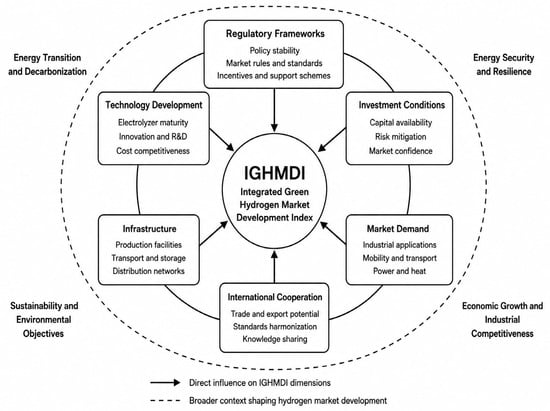
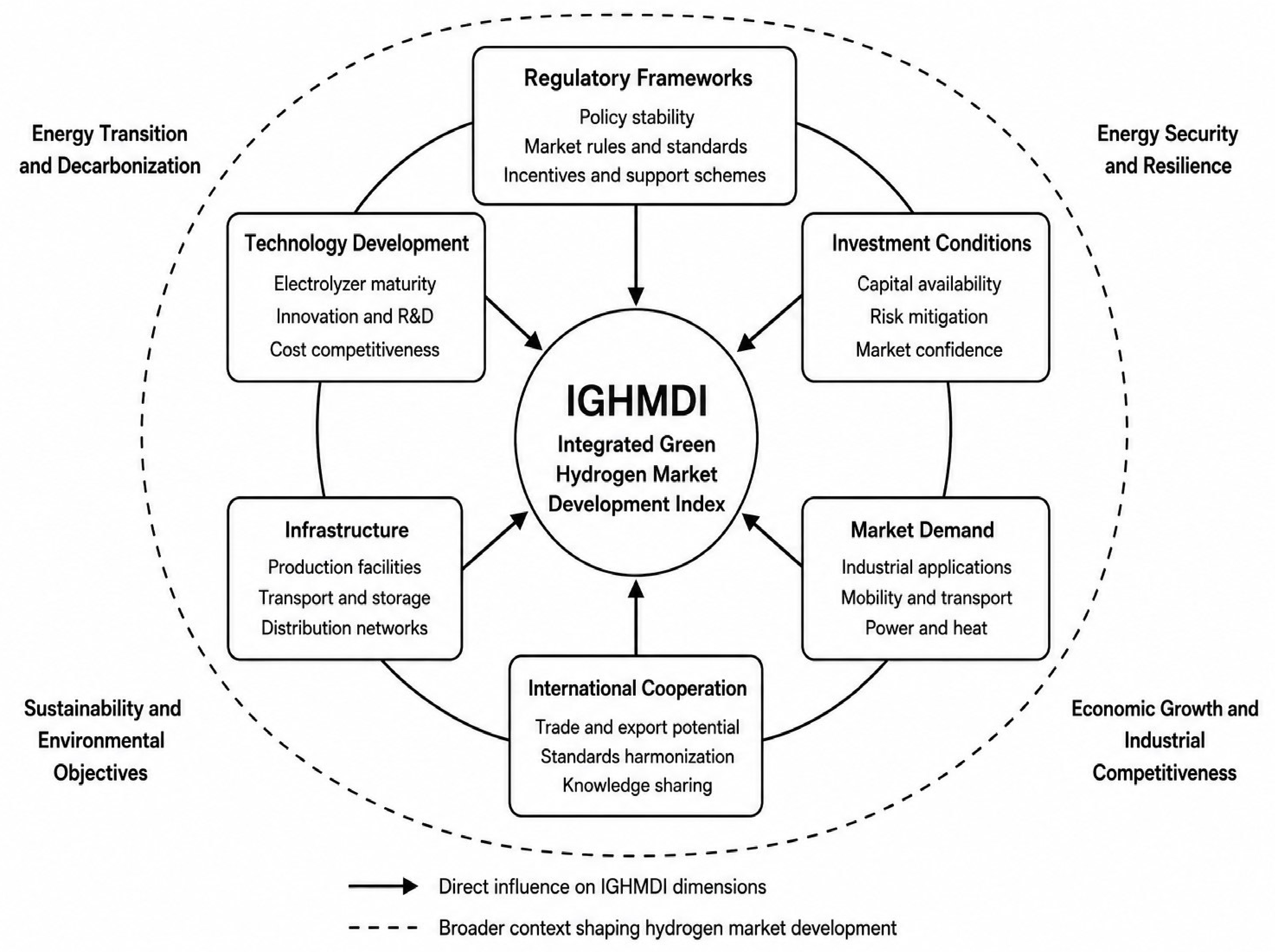
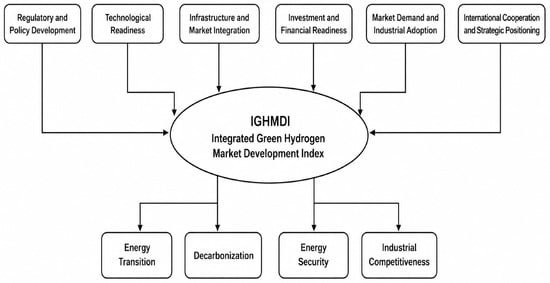
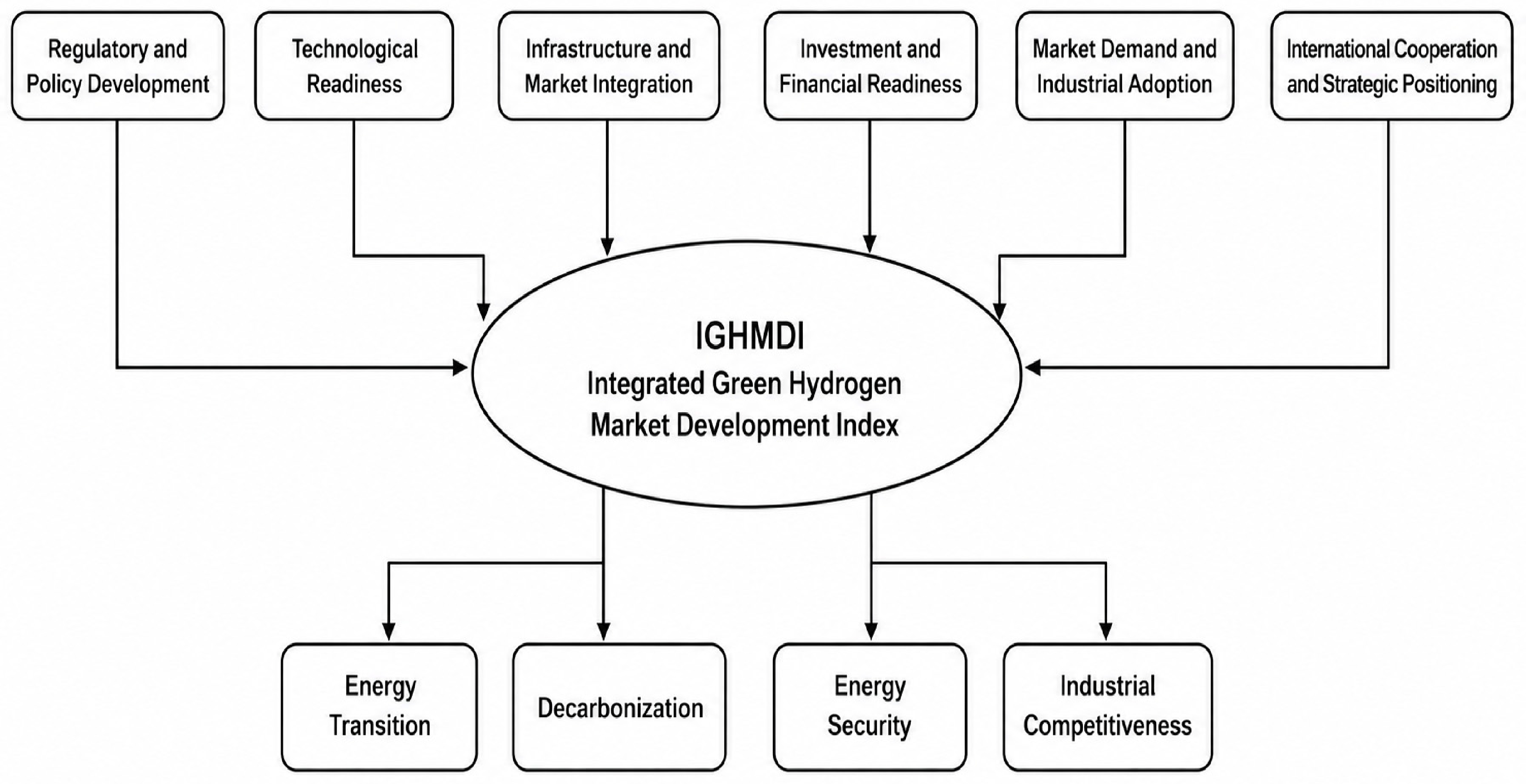


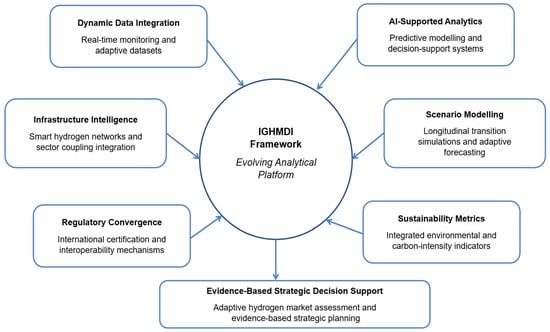
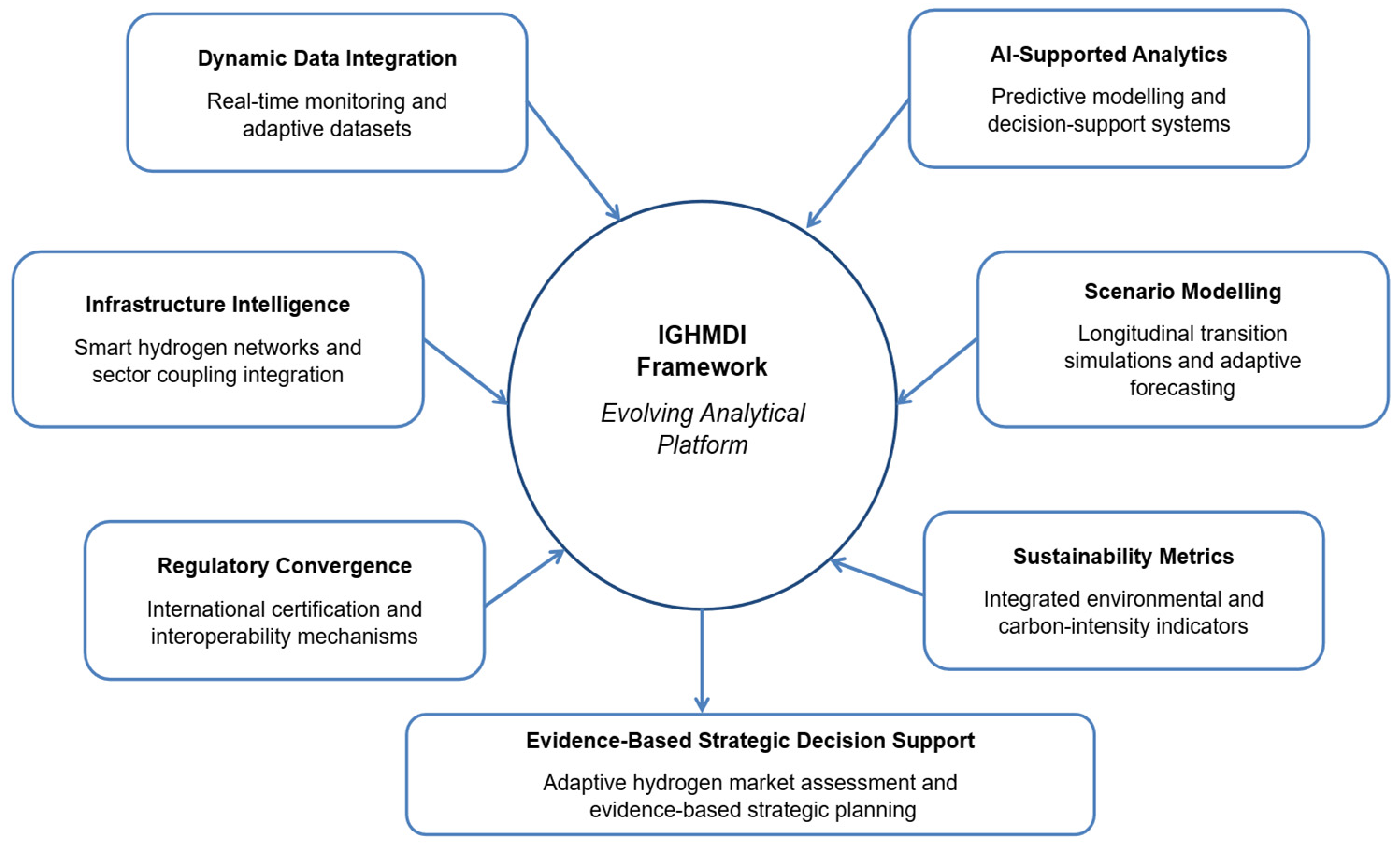

Disclaimer/Publisher’s Note: The statements, opinions and data contained in all publications are solely those of the individual author(s) and contributor(s) and not of MDPI and/or the editor(s). MDPI and/or the editor(s) disclaim responsibility for any injury to people or property resulting from any ideas, methods, instructions or products referred to in the content. |
© 2026 by the authors. Licensee MDPI, Basel, Switzerland. This article is an open access article distributed under the terms and conditions of the Creative Commons Attribution (CC BY) license.