
Mechanistic Insights and Emerging Hybrid Strategies of Magnetite Nanoparticles for Enhanced Dark Fermentative Biohydrogen Production

Abstract
1. Introduction
2. Fundamentals of Dark Fermentative Bio-H2 Production
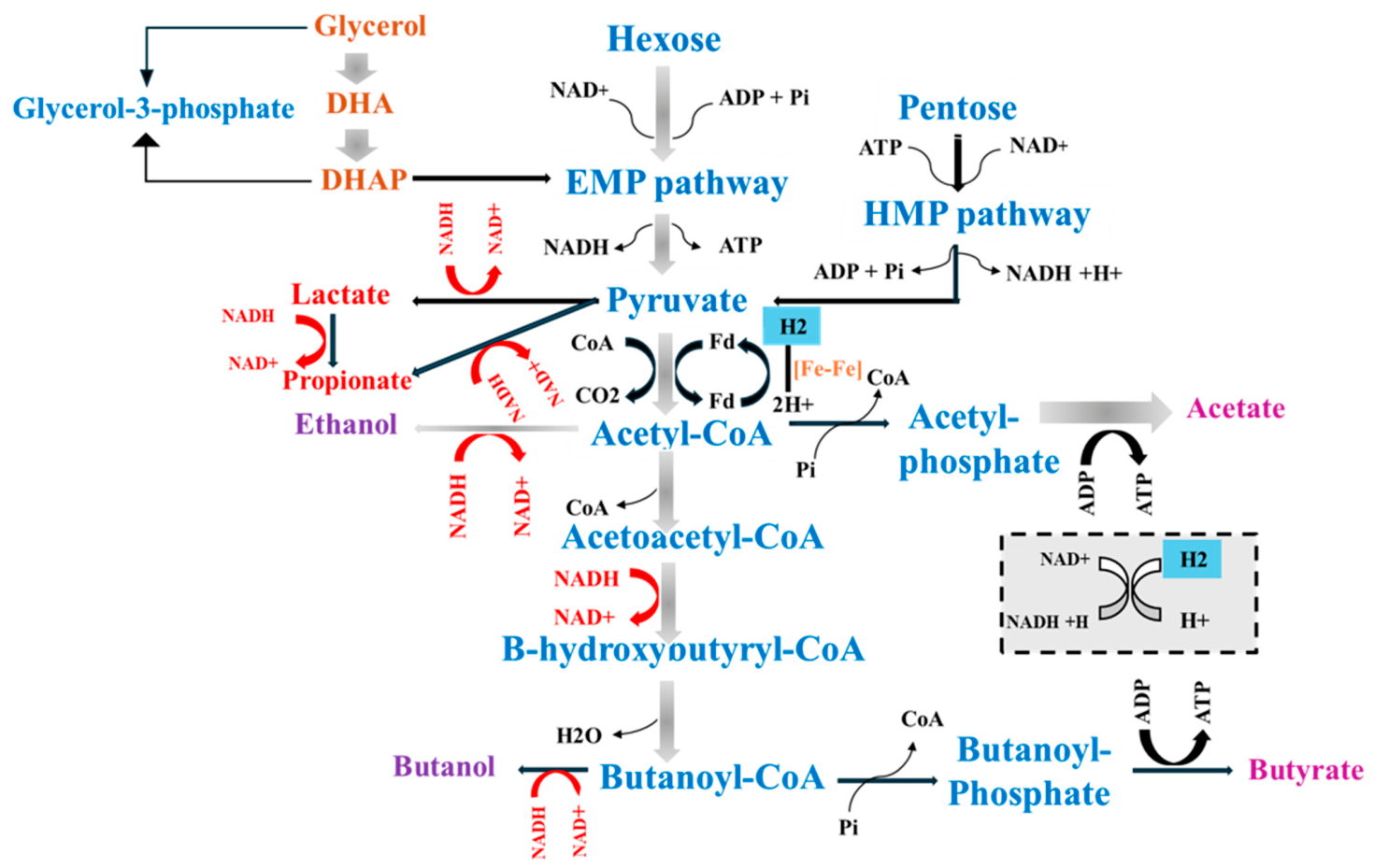
2.1. Principles and Major Metabolic Pathways of Dark Fermentation
2.2. H2-Producing Microorganisms
2.3. VFA Accumulation
2.4. H2-Consuming Microbes
2.5. Electron Loss Through Lactate Production and Its Inhibitory Accumulation
3. Physicochemical Properties of Fe3O4 Relevant to Bio-H2
3.1. Conductivity
3.2. Redox Properties (Fe2+/Fe3+ Cycling)
3.3. Particle Size and Surface Area
4. Mechanisms of Fe3O4-Enhanced Bio-H2 Production
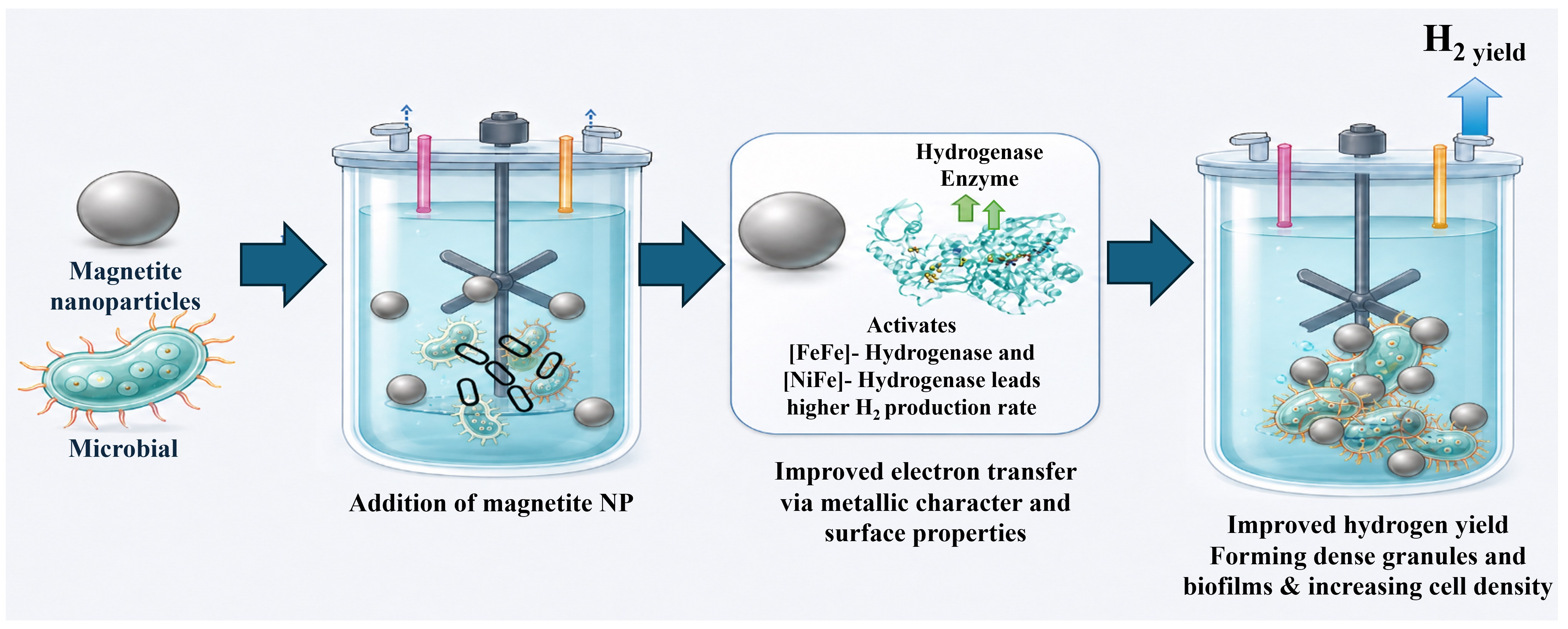
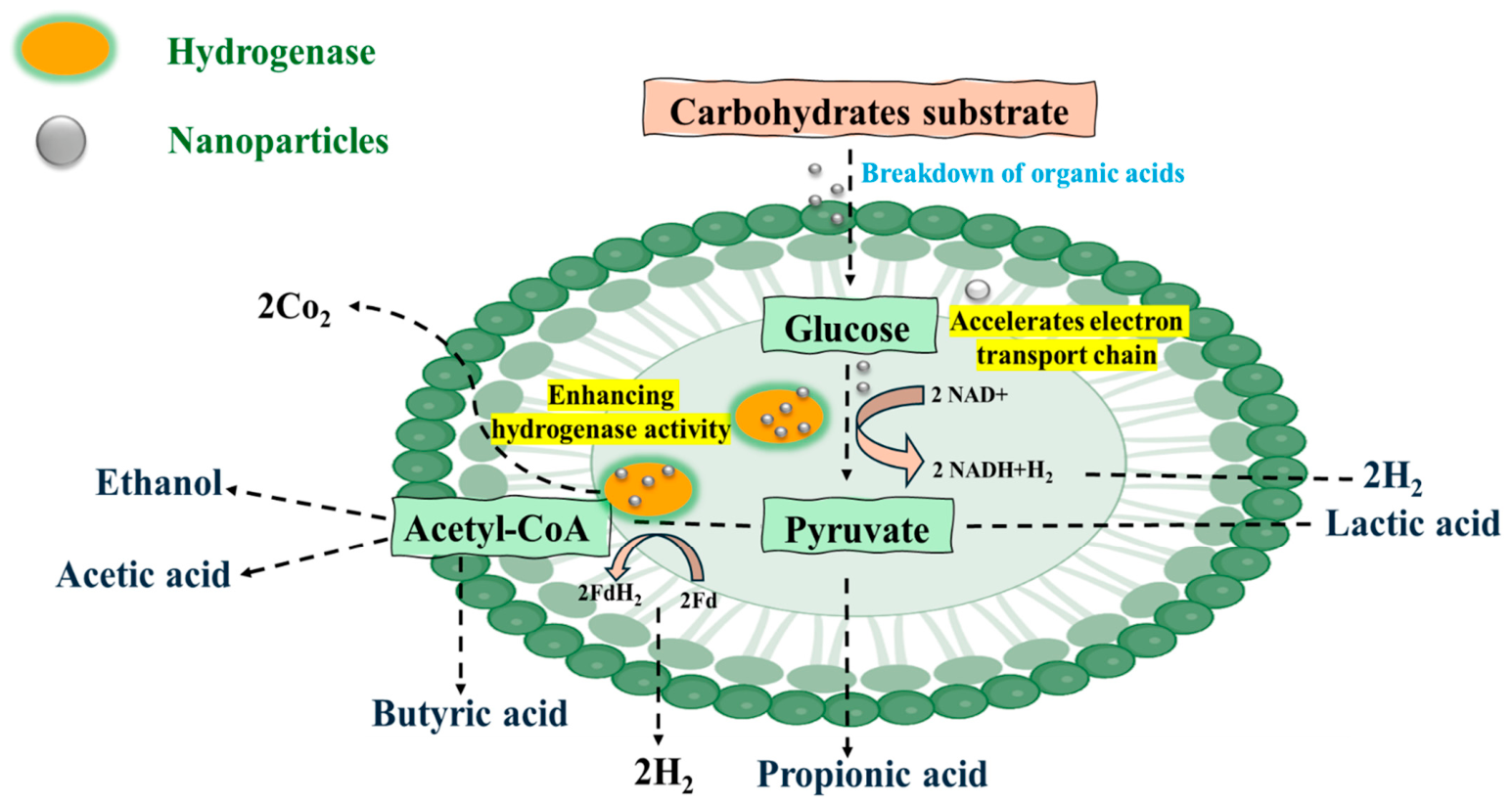
4.1. Fe3O4-Mediated Electron Transfer, Redox Regulation, and Enzyme Stimulation (Hydrogenase Activity)
4.2. Microbial Community Shift and Enrichment of H2-Producing Bacteria
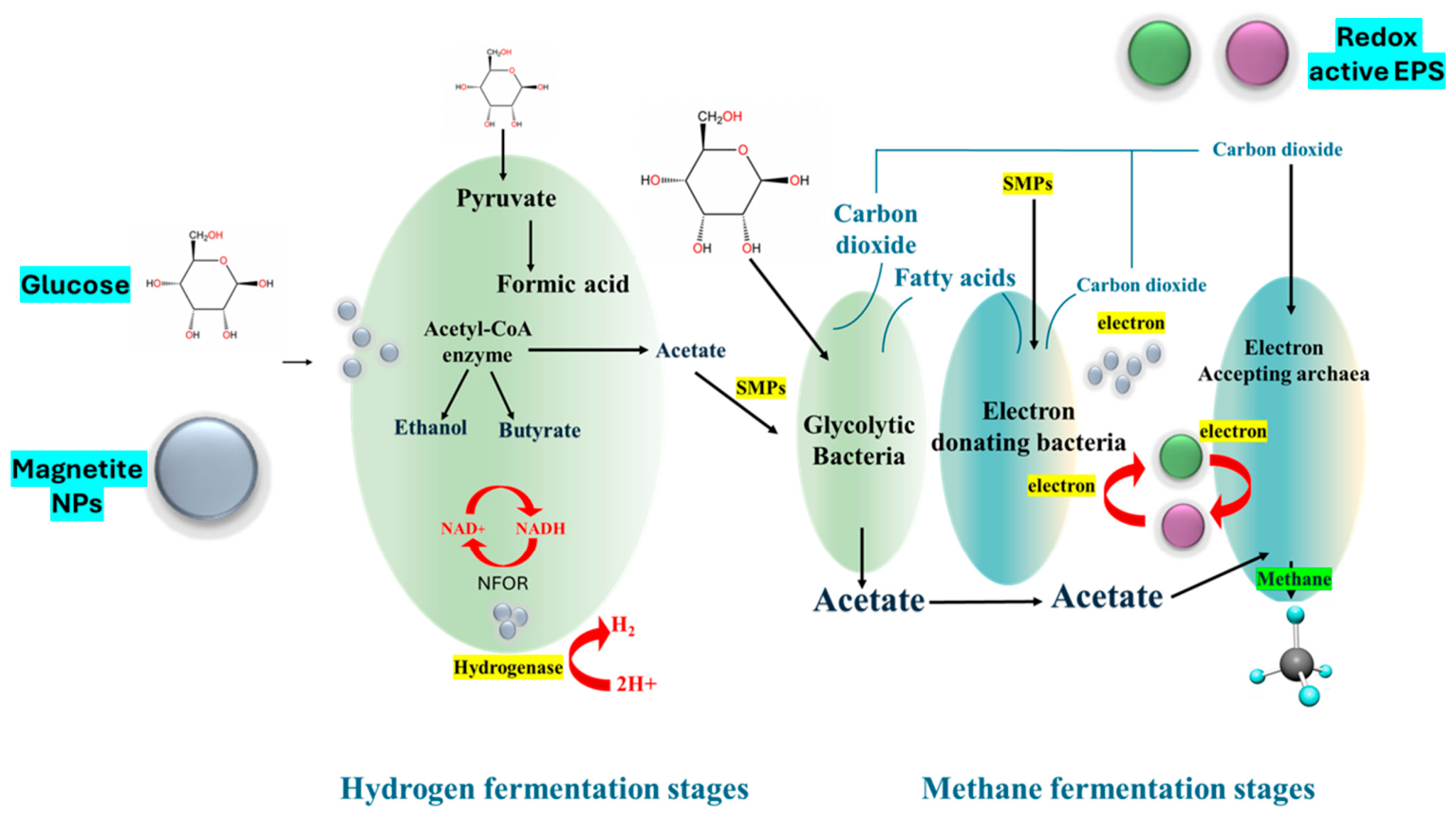
4.3. Distinction Between EET in DF and DIET in Methanogenic Systems
5. Effects of Fe3O4 on Process Performance
5.1. Production Rate and Hydrogen Yield
5.2. Lag Phase Reduction
5.3. Substrate Utilization
5.4. VFA Distribution
6. Interaction with Other Additives/Hybrid Systems
6.1. Magnetite Coupled with Carbon-Based Conductive Materials (Biochar, Activated Carbon)
6.2. Fe3O4 Integration with Other Metal Nps for H2 Enhancement
6.3. Fe3O4-Assisted Immobilization Effects
7. Future Perspectives
8. Conclusions
Author Contributions
Funding
Data Availability Statement
Conflicts of Interest
References
- Cao, L.; Yu, I.K.; Xiong, X.; Tsang, D.C.; Zhang, S.; Clark, J.H.; Hu, C.; Ng, Y.H.; Shang, J.; Ok, Y.S. Biorenewable hydrogen production through biomass gasification: A review and future prospects. Environ. Res. 2020, 186, 109547. [Google Scholar] [CrossRef] [PubMed]
- Martinez-Burgos, W.J.; Candeo, E.d.S.; Medeiros, A.B.P.; de Carvalho, J.C.; Tanobe, V.O.d.A.; Soccol, C.R.; Sydney, E.B. Hydrogen: Current advances and patented technologies of its renewable production. J. Clean. Prod. 2021, 286, 124970. [Google Scholar] [CrossRef]
- Pandey, A.K.; Kim, S.M.; Yoon, Y.H.; Sim, Y.-B.; Kim, S.-H. Influence of the permeate flux on continuous biohydrogen production, permeability, and granulation in a dynamic membrane bioreactor. Chem. Eng. J. 2023, 475, 145684. [Google Scholar] [CrossRef]
- Lee, H.-S.; Xin, W.; Katakojwala, R.; Venkata Mohan, S.; Tabish, N.M.D. Microbial electrolysis cells for the production of biohydrogen in dark fermentation—A review. Bioresour. Technol. 2022, 363, 127934. [Google Scholar] [CrossRef] [PubMed]
- Srivastava, N.; Srivastava, M.; Singh, R.; Syed, A.; Pal, D.B.; Elgorban, A.M.; Kushwaha, D.; Mishra, P.; Gupta, V.K. Co-fermentation of residual algal biomass and glucose under the influence of Fe3O4 nanoparticles to enhance biohydrogen production under dark mode. Bioresour. Technol. 2021, 342, 126034. [Google Scholar] [CrossRef] [PubMed]
- Wang, Y.; Xiao, G.; Wang, S.; Su, H. Application of nanomaterials in dark or light-assisted fermentation for enhanced biohydrogen production: A mini-review. Bioresour. Technol. Rep. 2023, 21, 101295. [Google Scholar] [CrossRef]
- Mohanraj, S.; Kodhaiyolii, S.; Rengasamy, M.; Pugalenthi, V. Phytosynthesized iron oxide nanoparticles and ferrous iron on fermentative hydrogen production using Enterobacter cloacae: Evaluation and comparison of the effects. Int. J. Hydrogen Energy 2014, 39, 11920–11929. [Google Scholar] [CrossRef]
- Thakre, A.S.; Shende, D.Z.; Wasewar, K.L. Nanotechnology approaches for enhancement in biohydrogen production. J. Environ. Nanotechnol. 2024, 13, 277–293. [Google Scholar] [CrossRef]
- Zhang, J.; Zhao, W.; Yang, J.; Li, Z.; Zhang, J.; Zang, L. Comparison of mesophilic and thermophilic dark fermentation with nickel ferrite nanoparticles supplementation for biohydrogen production. Bioresour. Technol. 2021, 329, 124853. [Google Scholar] [CrossRef] [PubMed]
- Jannat, F.T.; Aftab, K.; Kalsoom, U.; Baig, M.A. A bibliometric analysis of the role of nanotechnology in dark fermentative biohydrogen production. Environ. Sci. Pollut. Res. 2024, 31, 24815–24835. [Google Scholar] [CrossRef] [PubMed]
- Srivastava, N.; Hussain, A.; Kushwaha, D.; Haque, S.; Mishra, P.; Gupta, V.K.; Srivastava, M. Nickel ferrite nanoparticles induced improved fungal cellulase production using residual algal biomass and subsequent hydrogen production following dark fermentation. Fuel 2021, 304, 121391. [Google Scholar] [CrossRef]
- Pérez-Barragán, J.; Martínez-Fraile, C.; Muñoz, R.; Vargas-Estrada, L.; Maya-Yescas, R.; León-Becerril, E.; Castro-Muñoz, R.; García-Depraect, O. Iron (magnetite) nanoparticle-assisted dark fermentation process for continuous hydrogen production from Rice Straw Hydrolysate. Appl. Sci. 2024, 14, 9660. [Google Scholar] [CrossRef]
- Eggers, N.; Giebner, F.; Heinemann, D.; Wagner, M.; Birth-Reichert, T. Improvement of substrate turnover through integrating dark fermentation into existing biogas plants. Biofuels Bioprod. Biorefin. 2024, 18, 855–864. [Google Scholar] [CrossRef]
- Jain, R.; Panwar, N.L.; Jain, S.K.; Gupta, T.; Agarwal, C.; Meena, S.S. Bio-hydrogen production through dark fermentation: An overview. Biomass Convers. Biorefinery 2024, 14, 12699–12724. [Google Scholar] [CrossRef]
- Yin, Y.; Song, W.; Wang, J. Inhibitory effect of acetic acid on dark-fermentative hydrogen production. Bioresour. Technol. 2022, 364, 128074. [Google Scholar] [CrossRef] [PubMed]
- Castelló, E.; Ferraz-Junior, A.D.N.; Andreani, C.; Anzola-Rojas, M.d.P.; Borzacconi, L.; Buitrón, G.; Carrillo-Reyes, J.; Gomes, S.D.; Maintinguer, S.I.; Moreno-Andrade, I.; et al. Stability problems in the hydrogen production by dark fermentation: Possible causes and solutions. Renew. Sustain. Energy Rev. 2020, 119, 109602. [Google Scholar] [CrossRef]
- Benemann, J. Hydrogen biotechnology: Progress and prospects. Nat. Biotechnol. 1996, 14, 1101–1103. [Google Scholar] [CrossRef] [PubMed]
- Hawkes, F.R.; Hussy, I.; Kyazze, G.; Dinsdale, R.; Hawkes, D.L. Continuous dark fermentative hydrogen production by mesophilic microflora: Principles and progress. Int. J. Hydrogen Energy 2007, 32, 172–184. [Google Scholar] [CrossRef]
- Davoodbeygi, Y.; Sabetghadam-Isfahani, A.; Allami, S.; Oudi, A.; Eghtedari, S. A review on biohydrogen production technology: Production methods, sources, and separation. J. Renew. Sustain. Energy 2024, 16, 052701. [Google Scholar] [CrossRef]
- Angenent, L.T.; Karim, K.; Al-Dahhan, M.H.; Wrenn, B.A.; Domíguez-Espinosa, R. Production of bioenergy and biochemicals from industrial and agricultural wastewater. Trends Biotechnol. 2004, 22, 477–485. [Google Scholar] [CrossRef] [PubMed]
- Azwar, M.Y.; Hussain, M.A.; Abdul-Wahab, A.K. Development of biohydrogen production by photobiological, fermentation and electrochemical processes: A review. Renew. Sustain. Energy Rev. 2014, 31, 158–173. [Google Scholar] [CrossRef]
- Sim, X.Y.; Tan, J.P.; He, N.; Yeap, S.K.; Hui, Y.W.; Luthfi, A.A.I.; Manaf, S.F.A.; Bukhari, N.A.; Jamali, N.S. Unraveling the effect of redox potential on dark fermentative hydrogen production. Renew. Sustain. Energy Rev. 2023, 187, 113755. [Google Scholar] [CrossRef]
- Regueira-Marcos, L.; García-Depraect, O.; Munoz, R. Continuous two-stage lactate-driven dark fermentation process for enhanced biohydrogen production from food waste. J. Water Process Eng. 2024, 67, 106116. [Google Scholar] [CrossRef]
- Zhao, L.; Cao, G.-L.; Wang, A.-J.; Ren, H.-Y.; Zhang, K.; Ren, N.-Q. Consolidated bioprocessing performance of Thermoanaerobacterium thermosaccharolyticum M18 on fungal pretreated cornstalk for enhanced hydrogen production. Biotechnol. Biofuels 2014, 7, 178. [Google Scholar] [CrossRef] [PubMed]
- Wang, J.; Yin, Y. Progress in microbiology for fermentative hydrogen production from organic wastes. Crit. Rev. Environ. Sci. Technol. 2019, 49, 825–865. [Google Scholar] [CrossRef]
- Wang, Y.; Jing, Y.; Lu, C.; Kongjan, P.; Wang, J.; Awasthi, M.K.; Tahir, N.; Zhang, Q. A syntrophic co-fermentation model for bio-hydrogen production. J. Clean. Prod. 2021, 317, 128288. [Google Scholar] [CrossRef]
- Cui, P.; Wang, D.; Wang, S.; Su, H.; Wang, Y. Regulatory mechanism of antioxidant enzymes on microbial metabolism and NADH in anaerobic fermentation of food waste for hydrogen production. J. Clean. Prod. 2024, 474, 143607. [Google Scholar] [CrossRef]
- Rocamora, I.; Wagland, S.T.; Hassard, F.; Villa, R.; Peces, M.; Simpson, E.W.; Fernández, O.; Bajón-Fernández, Y. Inhibitory mechanisms on dry anaerobic digestion: Ammonia, hydrogen and propionic acid relationship. Waste Manag. 2023, 161, 29–42. [Google Scholar] [CrossRef] [PubMed]
- Basak, B.; Jeon, B.-H.; Kim, T.H.; Lee, J.-C.; Chatterjee, P.K.; Lim, H. Dark fermentative hydrogen production from pretreated lignocellulosic biomass: Effects of inhibitory byproducts and recent trends in mitigation strategies. Renew. Sustain. Energy Rev. 2020, 133, 110338. [Google Scholar] [CrossRef]
- Dzulkarnain, E.L.N.; Audu, J.O.; Wan Dagang, W.R.Z.; Abdul-Wahab, M.F. Microbiomes of biohydrogen production from dark fermentation of industrial wastes: Current trends, advanced tools and future outlook. Bioresour. Bioprocess 2022, 9, 16. [Google Scholar] [CrossRef]
- Sanghvi, A.H.; Manjoo, A.; Rajput, P.; Mahajan, N.; Rajamohan, N.; Abrar, I. Advancements in biohydrogen production–a comprehensive review of technologies, lifecycle analysis, and future scope. RSC Adv. 2024, 14, 36868–36885. [Google Scholar] [CrossRef] [PubMed]
- Saady, N.M.C. Homoacetogenesis during hydrogen production by mixed cultures dark fermentation: Unresolved challenge. Int. J. Hydrogen Energy 2013, 38, 13172–13191. [Google Scholar] [CrossRef]
- Jeong, J.; Yu, C.; Kang, R.; Kim, M.; Park, T. Application of propionate-producing bacterial consortium in ruminal methanogenesis inhibited environment with bromoethanesulfonate as a methanogen direct inhibitor. Front. Vet. Sci. 2024, 11, 1422474. [Google Scholar] [CrossRef] [PubMed]
- Mostafa, A.; Im, S.; Kim, J.; Lim, K.-H.; Kim, I.; Kim, D.-H. Electron bifurcation reactions in dark fermentation: An overview for better understanding and improvement. Bioresour. Technol. 2022, 344, 126327. [Google Scholar] [CrossRef] [PubMed]
- Ou-douaou, A.; Niya, B.; Benhida, R.; Danouche, M. Waste-to-biohydrogen production technologies: Microbial pathways, omics insights, and techno-economic assessment for a circular hydrogen economy. Results Eng. 2026, 30, 110217. [Google Scholar] [CrossRef]
- Baghchehsaraee, B.; Nakhla, G.; Karamanev, D.; Margaritis, A. Effect of extrinsic lactic acid on fermentative hydrogen production. Int. J. Hydrogen Energy 2009, 34, 2573–2579. [Google Scholar] [CrossRef]
- Noblecourt, A.; Christophe, G.; Larroche, C.; Fontanille, P. Hydrogen production by dark fermentation from pre-fermented depackaging food wastes. Bioresour. Technol. 2018, 247, 864–870. [Google Scholar] [CrossRef] [PubMed]
- Kim, T.-H.; Lee, Y.; Chang, K.-H.; Hwang, S.-J. Effects of initial lactic acid concentration, HRTs, and OLRs on bio-hydrogen production from lactate-type fermentation. Bioresour. Technol. 2012, 103, 136–141. [Google Scholar] [CrossRef] [PubMed]
- Noguer, M.C.; Escudié, R.; Bernet, N.; Eric, T. Populational and metabolic shifts induced by acetate, butyrate and lactate in dark fermentation. Int. J. Hydrogen Energy 2022, 47, 28385–28398. [Google Scholar] [CrossRef]
- Han, H.; Cui, M.; Wei, L.; Yang, H.; Shen, J. Enhancement effect of hematite nanoparticles on fermentative hydrogen production. Bioresour. Technol. 2011, 102, 7903–7909. [Google Scholar] [CrossRef] [PubMed]
- Elreedy, A.; Fujii, M.; Koyama, M.; Nakasaki, K.; Tawfik, A. Enhanced fermentative hydrogen production from industrial wastewater using mixed culture bacteria incorporated with iron, nickel, and zinc-based nanoparticles. Water Res. 2019, 151, 349–361. [Google Scholar] [CrossRef] [PubMed]
- Wimonsong, P.; Nitisoravut, R.; Llorca, J. Application of Fe–Zn–Mg–Al–O hydrotalcites supported Au as active nano-catalyst for fermentative hydrogen production. Chem. Eng. J. 2014, 253, 148–154. [Google Scholar] [CrossRef]
- Sinharoy, A.; Pakshirajan, K. A novel application of biologically synthesized nanoparticles for enhanced biohydrogen production and carbon monoxide bioconversion. Renew. Energy 2020, 147, 864–873. [Google Scholar] [CrossRef]
- Mostafa, A.; El-Dissouky, A.; Fawzy, A.; Farghaly, A.; Peu, P.; Dabert, P.; Le Roux, S.; Tawfik, A. Magnetite/graphene oxide nano-composite for enhancement of hydrogen production from gelatinaceous wastewater. Bioresour. Technol. 2016, 216, 520–528. [Google Scholar] [CrossRef] [PubMed]
- Nguyen, M.D.; Tran, H.-V.; Xu, S.; Lee, T.R. Fe3O4 nanoparticles: Structures, synthesis, magnetic properties, surface functionalization, and emerging applications. Appl. Sci. 2021, 11, 11301. [Google Scholar] [CrossRef] [PubMed]
- Ganapathe, L.S.; Mohamed, M.A.; Mohamad Yunus, R.; Berhanuddin, D.D. Magnetite (Fe3O4) nanoparticles in biomedical application: From synthesis to surface functionalisation. Magnetochemistry 2020, 6, 68. [Google Scholar] [CrossRef]
- Radoń, A.; Kądziołka-Gaweł, M.; Łukowiec, D.; Gębara, P.; Cesarz-Andraczke, K.; Kolano-Burian, A.; Włodarczyk, P.; Polak, M.; Babilas, R. Influence of magnetite nanoparticles shape and spontaneous surface oxidation on the electron transport mechanism. Materials 2021, 14, 5241. [Google Scholar] [CrossRef] [PubMed]
- Yu, L.; Cheng, W.; Wang, Q. The enhancement on biohydrogen production by the driving forces from extracellular iron oxide respiration. Bioresour. Technol. 2022, 361, 127679. [Google Scholar] [CrossRef] [PubMed]
- Ren, Y.; Si, B.; Liu, Z.; Jiang, W.; Zhang, Y. Promoting dark fermentation for biohydrogen production: Potential roles of iron-based additives. Int. J. Hydrogen Energy 2022, 47, 1499–1515. [Google Scholar] [CrossRef]
- Maslakov, K.I.; Teterin, Y.A.; Safonov, A.V.; Yarzhemsky, V.G.; Teterin, A.Y.; Artem’ev, G.D.; Zin’Kovskaya, I.I. Structure of X-Ray Photoelectron Spectra of Magnetite. Inorg. Mater. 2024, 60, 745–754. [Google Scholar] [CrossRef]
- Minati, L.; Micheli, V.; Rossi, B.; Migliaresi, C.; Dalbosco, L.; Bao, G.; Hou, S.; Speranza, G. Application of factor analysis to XPS valence band of superparamagnetic iron oxide nanoparticles. Appl. Surf. Sci. 2011, 257, 10863–10868. [Google Scholar] [CrossRef]
- Cheng, J.; Li, H.; Ding, L.; Zhou, J.; Song, W.; Li, Y.-Y.; Lin, R. Improving hydrogen and methane co-generation in cascading dark fermentation and anaerobic digestion: The effect of magnetite nanoparticles on microbial electron transfer and syntrophism. Chem. Eng. J. 2020, 397, 125394. [Google Scholar] [CrossRef]
- Gacitúa, M.A.; González, B.; Majone, M.; Aulenta, F. Boosting the electrocatalytic activity of Desulfovibrio paquesii biocathodes with magnetite nanoparticles. Int. J. Hydrogen Energy 2014, 39, 14540–14545. [Google Scholar] [CrossRef]
- Song, X.; Liu, J.; Jiang, Q.; Zhang, P.; Shao, Y.; He, W.; Feng, Y. Enhanced electron transfer and methane production from low-strength wastewater using a new granular activated carbon modified with nano-Fe3O4. Chem. Eng. J. 2019, 374, 1344–1352. [Google Scholar] [CrossRef]
- Wu, Y.; Hao, Y.; Wei, X.; Shen, Q.; Ding, X.; Wang, L.; Zhao, H.; Lu, Y. Impairment of NADH dehydrogenase and regulation of anaerobic metabolism by the small RNA RyhB and NadE for improved biohydrogen production in Enterobacter aerogenes. Biotechnol. Biofuels 2017, 10, 248. [Google Scholar] [CrossRef] [PubMed]
- Cao, X.; Zhao, L.; Dong, W.; Mo, H.; Ba, T.; Li, T.; Guan, D.; Zhao, W.; Wang, N.; Ma, Z.; et al. Revealing the mechanisms of alkali-based magnetic nanosheets enhanced hydrogen production from dark fermentation: Comparison between mesophilic and thermophilic conditions. Bioresour. Technol. 2022, 343, 126141. [Google Scholar] [CrossRef] [PubMed]
- Li, W.; Bian, M.; Jin, C.; Zeng, X.; Jia, Y. Unlocking synergistic hydrogen-ethanol co-production from brown algae through nicotinic acid-mediated NAD pool expansion. Int. J. Hydrogen Energy 2025, 159, 150575. [Google Scholar] [CrossRef]
- Zhong, D.; Li, J.; Ma, W.; Xin, H. Magnetite nanoparticles enhanced glucose anaerobic fermentation for bio-hydrogen production using an expanded granular sludge bed (EGSB) reactor. Int. J. Hydrogen Energy 2020, 45, 10664–10672. [Google Scholar] [CrossRef]
- Lin, R.; Cheng, J.; Ding, L.; Song, W.; Liu, M.; Zhou, J.; Cen, K. Enhanced dark hydrogen fermentation by addition of ferric oxide nanoparticles using Enterobacter aerogenes. Bioresour. Technol. 2016, 207, 213–219. [Google Scholar] [CrossRef] [PubMed]
- Rambabu, K.; Bharath, G.; Banat, F.; Hai, A.; Show, P.L.; Phong Nguyen, T.H. Ferric oxide/date seed activated carbon nanocomposites mediated dark fermentation of date fruit wastes for enriched biohydrogen production. Int. J. Hydrogen Energy 2021, 46, 16631–16643. [Google Scholar] [CrossRef]
- Sompura, S.; Kim, E.; Lee, Y.; Cho, E.; Sim, Y.-B.; Kim, S.-H.; Jung, J.-H. Synergistic co-immobilization of magnetite and powdered activated carbon nanocomposites for enhanced dark fermentative biohydrogen production and reusability. Fuel 2026, 425, 139466. [Google Scholar] [CrossRef]
- Engliman, N.S.; Abdul, P.M.; Wu, S.-Y.; Jahim, J.M. Influence of iron (II) oxide nanoparticle on biohydrogen production in thermophilic mixed fermentation. Int. J. Hydrogen Energy 2017, 42, 27482–27493. [Google Scholar] [CrossRef]
- Zhang, Q.; Zhang, Y.; Li, Y.; Ding, P.; Xu, S.; Cao, J. Green synthesis of magnetite nanoparticle and its regulatory effect on fermentative hydrogen production from lignocellulosic hydrolysate by Klebsiella sp. Int. J. Hydrogen Energy 2021, 46, 20413–20424. [Google Scholar] [CrossRef]
- Mullai, P.; Yogeswari, M.K.; Sridevi, K. Optimisation and enhancement of biohydrogen production using nickel nanoparticles–A novel approach. Bioresour. Technol. 2013, 141, 212–219. [Google Scholar] [CrossRef] [PubMed]
- Kumar, G.; Mathimani, T.; Rene, E.R.; Pugazhendhi, A. Application of nanotechnology in dark fermentation for enhanced biohydrogen production using inorganic nanoparticles. Int. J. Hydrogen Energy 2019, 44, 13106–13113. [Google Scholar] [CrossRef]
- Khalid, H.; Valentin, M.; Białowiec, A. Evidence on the occurrence of direct interspecies electron transfer (DIET) during anaerobic digestion for the production of biomethane: A review. Sci. Total Environ. 2025, 1005, 180790. [Google Scholar] [CrossRef] [PubMed]
- Ali, A.; Mahar, R.B.; Soomro, R.A.; Sherazi, S.T.H. Fe3O4 nanoparticles facilitated anaerobic digestion of organic fraction of municipal solid waste for enhancement of methane production. Energy Sources Part A Recovery Util. Environ. Eff. 2017, 39, 1815–1822. [Google Scholar] [CrossRef]
- Stams, A.J.M.; Plugge, C.M. Electron transfer in syntrophic communities of anaerobic bacteria and archaea. Nat. Rev. Microbiol. 2009, 7, 568–577. [Google Scholar] [CrossRef] [PubMed]
- Liu, Z.; Tang, S.; Ren, Y.; Chen, P.; Ma, D.; Si, B.; Jiang, W.; Lu, H.; Zhang, Y. Biohydrogen production from food waste using a novel rotational drum reactor integrated with milli-magnetite. Bioresour. Technol. 2025, 434, 132822. [Google Scholar] [CrossRef] [PubMed]
- Ramprakash, B.; Incharoensakdi, A. Supplementation of magnetic nanoparticles for enhancement of dark fermentative hydrogen production from pretreated garden wastes using Enterobacter aerogenes. Fuel 2023, 342, 127857. [Google Scholar] [CrossRef]
- Wang, J.; Yin, Y. Principle and application of different pretreatment methods for enriching hydrogen-producing bacteria from mixed cultures. Int. J. Hydrogen Energy 2017, 42, 4804–4823. [Google Scholar] [CrossRef]
- Sun, Y.; Ma, Y.; Zhang, B.; Sun, H.; Wang, N.; Wang, L.; Zhang, J.; Xue, R. Comparison of magnetite/reduced graphene oxide nanocomposites and magnetite nanoparticles on enhancing hydrogen production in dark fermentation. Int. J. Hydrogen Energy 2022, 47, 22359–22370. [Google Scholar] [CrossRef]
- Gökçek, Ö.B.; Baş, F.; Muratçobanoğlu, H.; Demirel, S. Investigation of the effects of magnetite addition on biohydrogen production from apple pulp waste. Fuel 2023, 339, 127475. [Google Scholar] [CrossRef]
- Su, Y.; Feng, L.; Duan, X.; Peng, H.; Zhao, Y.; Chen, Y. Deciphering the function of Fe3O4 in alleviating propionate inhibition during high-solids anaerobic digestion: Insights of physiological response and energy conservation. Water Res. 2025, 270, 122811. [Google Scholar] [CrossRef] [PubMed]
- Li, P.; Wang, Y.; He, X.; Liang, D.; Liu, X.; He, C.; Shen, D.; Jiao, Y. Investigation into the effects of different recycled magnetic additives on anaerobic co-digestion of sludge and straw. Fuel 2024, 358, 130245. [Google Scholar] [CrossRef]
- Calbry-Muzyka, A.; Madi, H.; Rüsch-Pfund, F.; Gandiglio, M.; Biollaz, S. Biogas composition from agricultural sources and organic fraction of municipal solid waste. Renew. Energy 2022, 181, 1000–1007. [Google Scholar] [CrossRef]
- Baek, G.; Jung, H.; Kim, J.; Lee, C. A long-term study on the effect of magnetite supplementation in continuous anaerobic digestion of dairy effluent–magnetic separation and recycling of magnetite. Bioresour. Technol. 2017, 241, 830–840. [Google Scholar] [CrossRef] [PubMed]
- Cruz Viggi, C.; Rossetti, S.; Fazi, S.; Paiano, P.; Majone, M.; Aulenta, F. Magnetite particles triggering a faster and more robust syntrophic pathway of methanogenic propionate degradation. Environ. Sci. Technol. 2014, 48, 7536–7543. [Google Scholar] [CrossRef]
- Yin, Q.; Yang, S.; Wang, Z.; Xing, L.; Wu, G. Clarifying electron transfer and metagenomic analysis of microbial community in the methane production process with the addition of ferroferric oxide. Chem. Eng. J. 2018, 333, 216–225. [Google Scholar] [CrossRef]
- Cheng, J.; Ding, L.; Lin, R.; Yue, L.; Liu, J.; Zhou, J.; Cen, K. Fermentative biohydrogen and biomethane co-production from mixture of food waste and sewage sludge: Effects of physiochemical properties and mix ratios on fermentation performance. Appl. Energy 2016, 184, 1–8. [Google Scholar] [CrossRef]
- Ding, L.; Cheng, J.; Xia, A.; Jacob, A.; Voelklein, M.; Murphy, J.D. Co-generation of biohydrogen and biomethane through two-stage batch co-fermentation of macro-and micro-algal biomass. Bioresour. Technol. 2016, 218, 224–231. [Google Scholar] [CrossRef]
- Shin, H.-S.; Kim, D.-H. A Two-stage fermentation process converting waste and wastewater to hydrogen and methane. In Environmental Anaerobic Technology: Applications and New Developments; World Scientific: Singapore, 2010; pp. 345–363. [Google Scholar] [CrossRef]
- Brindhadevi, K.; Pugazhendhi, A. Enhancing biohydrogen production through microbial fermentation with the addition of nanometal ions. Renew. Sustain. Energy Rev. 2025, 215, 115552. [Google Scholar] [CrossRef]
- Luo, G.; Bao, M.-Y.; Ding, J.; Zhao, Z.-T.; Pang, J.-W.; Zhang, L.-Y.; Ren, N.-Q.; Yang, S.-S. Differential contributions of iron-based nanoparticles to dark fermentative biohydrogen production: Towards a rational selection of application. Bioresour. Technol. 2026, 449, 134351. [Google Scholar] [CrossRef] [PubMed]
- Zhao, M.; Liu, Z.; Xu, J.; Liu, H.; Dai, X.; Gu, S.; Ruan, W. Dosing effect of nano zero valent iron (NZVI) on the dark hydrogen fermentation performance via lake algae and food waste co-digestion. Energy Rep. 2020, 6, 3192–3199. [Google Scholar] [CrossRef]
- Aziz, A.H.A.; Engliman, N.S.; Mansor, M.F.; Abdul, P.M.; Arisht, S.N.; Jamali, N.S.; Tiang, M.F. Synergistic enhancement of biohydrogen production by supplementing with green synthesized magnetic iron nanoparticles using thermophilic mixed bacteria culture. Int. J. Hydrogen Energy 2022, 47, 40683–40695. [Google Scholar] [CrossRef]
- Moura, A.G.L.; Rabelo, C.A.B.S.; Okino, C.H.; Maintinguer, S.I.; Silva, E.L.; Varesche, M.B.A. Enhancement of Clostridium butyricum hydrogen production by iron and nickel nanoparticles: Effects on hydA expression. Int. J. Hydrogen Energy 2020, 45, 28447–28461. [Google Scholar] [CrossRef]
- Lakroun, S.E.; Boutemak, K.; Haddad, A.; Rambabu, K.; Hai, A.; Lemaoui, T.; Mettu, S.; Banat, F. Elevating hydrogen production efficiency in dark fermentation: The role of cobalt-doped magnetite nanoparticles with sugarcane molasses. Int. J. Hydrogen Energy 2025, 124, 8–17. [Google Scholar] [CrossRef]
- Pandey, A.K.; Pilli, S.; Bhunia, P.; Tyagi, R.; Surampalli, R.Y.; Zhang, T.C.; Kim, S.-H. Dark fermentation: Production and utilization of volatile fatty acid from different wastes—A review. Chemosphere 2022, 288, 132444. [Google Scholar] [CrossRef] [PubMed]
- Nagarajan, D.; Lee, D.-J.; Kondo, A.; Chang, J.-S. Recent insights into biohydrogen production by microalgae—From biophotolysis to dark fermentation. Bioresour. Technol. 2017, 227, 373–387. [Google Scholar] [CrossRef] [PubMed]
- Demirel, B.; Yenigun, O. Anaerobic acidogenesis of dairy wastewater: The effects of variations in hydraulic retention time with no pH control. J. Chem. Technol. Biotechnol. 2004, 79, 755–760. [Google Scholar] [CrossRef]
- Jin, Y.; Gao, M.; Li, H.; Lin, Y.; Wang, Q.; Tu, M.; Ma, H. Impact of nanoscale zerovalent iron on volatile fatty acid production from food waste: Key enzymes and microbial community. J. Chem. Technol. Biotechnol. 2019, 94, 3201–3207. [Google Scholar] [CrossRef]
- Zhang, Q.; Lu, Y.; Zhou, X.; Wang, X.; Zhu, J. Effect of different vegetable wastes on the performance of volatile fatty acids production by anaerobic fermentation. Sci. Total Environ. 2020, 748, 142390. [Google Scholar] [CrossRef] [PubMed]
- Ren, Y.; Tang, S.; Hong, F.; Jiang, W.; Liu, Z.; Lu, H.; Wang, C.; Si, B. Effects of milli-magnetite on biohydrogen production from potato peels: Insight of metabolism mechanisms. Fuel 2023, 348, 128576. [Google Scholar] [CrossRef]
- Liu, Z.; Lv, F.; Zheng, H.; Zhang, C.; Wei, F.; Xing, X.-H. Enhanced hydrogen production in a UASB reactor by retaining microbial consortium onto carbon nanotubes (CNTs). Int. J. Hydrogen Energy 2012, 37, 10619–10626. [Google Scholar] [CrossRef]
- Zhang, J.; Fan, C.; Zhang, H.; Wang, Z.; Zhang, J.; Song, M. Ferric oxide/carbon nanoparticles enhanced bio-hydrogen production from glucose. Int. J. Hydrogen Energy 2018, 43, 8729–8738. [Google Scholar] [CrossRef]
- Gu, S.; Zhao, H.; Kuang, R.; Li, X.; Gao, P.; Wei, H.; Yu, X.; Wang, S. Biochar-supported sulfidated nanoscale zero-valent iron (S-nZVI@BC): Porous structures synergizing FeS for electron transfer to enhance hydrogen2 production and long-term stability from food waste dark fermentation. Surf. Interfaces 2026, 85, 108652. [Google Scholar] [CrossRef]
- Mohd Jamaludin, N.F.; Jamali, N.S.; Abdullah, L.C.; Idrus, S.; Engliman, N.S.; Abdul, P.M. Biohydrogen production with utilisation of magnetite nanoparticles embedded in granular activated carbon from coconut shell. Int. J. Hydrogen Energy 2023, 48, 11695–11708. [Google Scholar] [CrossRef]
- Yörüklü, H.C.; Filiz, B.C.; Figen, A.K.; Özkaya, B. Screening of biohydrogen production based on dark fermentation in the presence of nano-sized Fe2O3 doped metal oxide additives. Int. J. Hydrogen Energy 2022, 47, 15383–15396. [Google Scholar] [CrossRef]
- Li, W.; Zhang, J.; Yang, J.; Zhang, J.; Li, Z.; Yang, Y.; Zang, L. Comparison of copper and aluminum doped cobalt ferrate nanoparticles for improving biohydrogen production. Bioresour. Technol. 2022, 343, 126078. [Google Scholar] [CrossRef] [PubMed]
- Hsieh, P.-H.; Lai, Y.-C.; Chen, K.-Y.; Hung, C.-H. Explore the possible effect of TiO2 and magnetic hematite nanoparticle addition on biohydrogen production by Clostridium pasteurianum based on gene expression measurements. Int. J. Hydrogen Energy 2016, 41, 21685–21691. [Google Scholar] [CrossRef]
- Liu, B.; Jin, Y.; Wang, Z.; Xing, D.; Ma, C.; Ding, J.; Ren, N. Enhanced photo-fermentative hydrogen production of Rhodopseudomonas sp. nov. strain A7 by the addition of TiO2, ZnO and SiC nanoparticles. Int. J. Hydrogen Energy 2017, 42, 18279–18287. [Google Scholar] [CrossRef]
- Shuttleworth, P.S.; De Bruyn, M.; Parker, H.L.; Hunt, A.J.; Budarin, V.L.; Matharu, A.S.; Clark, J.H. Applications of nanoparticles in biomass conversion to chemicals and fuels. Green Chem. 2014, 16, 573–584. [Google Scholar] [CrossRef]
- Seelert, T.; Ghosh, D.; Yargeau, V. Improving biohydrogen production using Clostridium beijerinckii immobilized with magnetite nanoparticles. Appl. Microbiol. Biotechnol. 2015, 99, 4107–4116. [Google Scholar] [CrossRef] [PubMed]
- Kriswantoro, J.A.; Pomdaeng, P.; Ko, T.-W.; Chu, C.-Y. Enhancing biohydrogen production with isolated Clostridium tertium IGP01 from cacao pod husk and spent coffee ground using biochar, nanoparticles, magnetic field, and immobilization technology. Biomass Bioenergy 2025, 196, 107756. [Google Scholar] [CrossRef]



| Additive | Dose | Substrate and Inoculum | Operation Conditions | H2 Yield/Productivity | Dominant Microbes | Reference |
|---|---|---|---|---|---|---|
| Fe3O4 NPs | 50 mg/L | Glucose, Mixed anaerobic sludge | Continuous EGSB reactor; mesophilic (35 ± 1 °C); working volume: 5.5 L | Maximum H2 productivity: 4.95 LH2/d at 50 mg/L Fe3O4 NPs (40–60 nm), 53.73% higher than the control (3.22 L H2/d). | Acetanaerobacterium, Ethanoligenens | [58] |
| Fe3O4 NPs | 200 mg/L | Glucose and pretreated starch, Enterobacter aerogenes ATCC 13408 | Batch, mesophilic (37 °C); working volume: 200 mL | H2 yields from glucose and pretreated starch increased by 17.0% and 63.1%, respectively, at the optimized concentration (200 mg/L) | Enterobacter aerogenes ATCC 13408 | [59] |
| Fe3O4 NPs | 150 mg/L | Date fruit waste, Enterobacter aerogenes ATCC 13408 | Batch, mesophilic (37 °C); working volume: 100 mL | Maximum H2 yield of 238.7 mL/g was achieved at 150 mg/L nanocomposites, representing a 65.7% increase over standalone Fe3O4 NPs and a threefold increase compared with the control (78.4 mL/g). | Enterobacter aerogenes ATCC 13408 | [60] |
| Fe3O4 NPs | 800 mg/L | Glucose, Anaerobic sludge | Batch, mesophilic (37 °C); working volume: 100 mL | Maximum H2 production of 273.90 ± 1.67 mL was achieved at 0.8 g/L Fe3O4 NPs, representing a 128.12% increase over the control. | Clostridium butyricum, C. tertium | [61] |
| Fe3O4 NPs | 50 mg/L | Glucose + starch, Anaerobic digestate | Batch, thermophilic (60 °C); working volume: 200 mL | H2 production rate increased by 34% at 50 mg/L Fe3O4 NPs under thermophilic conditions. | Not reported | [62] |
| Process Parameter | Effect of Fe3O4 | Mechanism/Outcome |
|---|---|---|
| H2 production rate | Increased at optimum Fe3O4 dosage | Fe3O4 promotes extracellular electron transfer (EET), provides bioavailable Fe2+/Fe3+ for hydrogenase activation, and enhances electron transport efficiency, leading to increased H2 production rates and cumulative H2 production. |
| H2 yield | Increased under optimum NP concentration | Enhanced redox balance increased reducing equivalent availability (NADH), and activation of [FeFe]-hydrogenase promotes effective substrate-to-H2 conversion, resulting in higher H2 production. |
| Lag phase | Shortened | Improved microbial acclimation, enhanced hydrogenase activity, and enrichment of H2-producing bacteria accelerate the onset of fermentation and increase the maximum H2 production rate. |
| Substrate utilization | Improved | Fe3O4 promotes metalloenzyme activity and microbial metabolism, enhancing glucose/COD utilization, substrate conversion efficiency, and fermentative performance. |
| VFA distribution | Shift toward acetate-butyrate pathway | Fe3O4 transfers metabolic flux from reduced by-products (e.g., propionate and ethanol) toward acetate- and butyrate-type fermentation, enhancing electron recovery for H2 generation and improving process efficiency. |
| High Fe3O4 dosage | Inhibitory | Excessive Fe3O4 leads to nanoparticle aggregation, oxidative stress, and mass-transfer limits, interrupting microbial metabolism and reducing H2 generation and substrate consumption. |
| Immobilization System | Microbial Culture/Inoculum | Feedstock | Condition | Key Findings | Reference |
|---|---|---|---|---|---|
| Chitosan + alginic acid layer-by-layer on magnetite NPs | Clostridium beijerinckii NCIMB8052 | Glucose | Batch DF reactor; mesophilic (35 ± 1 °C); working volume: 250 mL | Shorter lag phase, Substrate and energy conversion efficiencies of 52 ± 18% and 10 ± 3%, respectively, with H2 production comparable to literature values. | [104] |
| MNPs embedded in coconut shell GAC (Ni:Fe composite) | Thermophilic mixed sludge | Synthetic wastewater | Batch DF reactor; Thermophilic (60 °C); working volume: 200 mL | MGAC increased H2 productivity by 65.49%, achieving an optimum HPR of 20.33 ± 0.32 mL H2/L·h. | [98] |
| PVA + Sodium alginate (Fe3O4 + PAC nanocomposite) | Mixed microorganisms (anaerobic sludge) | Glucose | Batch DF reactor; Mesophilic DF (37 °C); working volume: 100 mL | H2 production increased by 115.2% compared with the control and without immobilization (Powdered form of Fe3O4 + PAC), lag phase was 60.75% shorter than that of the control. | [43] |
| Alginate (Biochar and Fe3O4 NPs) | Clostridium tertium IGP01 | Cacao Pod Husk | Batch DF reactor; Mesophilic DF (37 °C); working volume: 100 mL | Bio-H2 production increased by >2-fold and 76.4 ± 4.3% over the control, with reduced 5-HMF and enhanced carbonyl, quinone, and hydroxyl functional groups after immobilization. | [105] |
Disclaimer/Publisher’s Note: The statements, opinions and data contained in all publications are solely those of the individual author(s) and contributor(s) and not of MDPI and/or the editor(s). MDPI and/or the editor(s) disclaim responsibility for any injury to people or property resulting from any ideas, methods, instructions or products referred to in the content. |
© 2026 by the authors. Licensee MDPI, Basel, Switzerland. This article is an open access article distributed under the terms and conditions of the Creative Commons Attribution (CC BY) license.
Share and Cite
Sompura, S.; Jung, J.-H. Mechanistic Insights and Emerging Hybrid Strategies of Magnetite Nanoparticles for Enhanced Dark Fermentative Biohydrogen Production. Hydrogen 2026, 7, 100. https://doi.org/10.3390/hydrogen7030100
Sompura S, Jung J-H. Mechanistic Insights and Emerging Hybrid Strategies of Magnetite Nanoparticles for Enhanced Dark Fermentative Biohydrogen Production. Hydrogen. 2026; 7(3):100. https://doi.org/10.3390/hydrogen7030100
Chicago/Turabian StyleSompura, Sandhya, and Ju-Hyeong Jung. 2026. "Mechanistic Insights and Emerging Hybrid Strategies of Magnetite Nanoparticles for Enhanced Dark Fermentative Biohydrogen Production" Hydrogen 7, no. 3: 100. https://doi.org/10.3390/hydrogen7030100
APA StyleSompura, S., & Jung, J.-H. (2026). Mechanistic Insights and Emerging Hybrid Strategies of Magnetite Nanoparticles for Enhanced Dark Fermentative Biohydrogen Production. Hydrogen, 7(3), 100. https://doi.org/10.3390/hydrogen7030100