


Abstract
Background: Population sex ratios and age structure are fundamental demographic parameters in shorebird studies, and their accurate estimation depends on unbiased capture methods. Methods: To identify potential capture biases, we evaluated the randomness of mist-net recaptures between sex and age classes of the Western Sandpiper (Calidris mauri) in La Paz Lagoon, Baja California Sur, Mexico. Results: A total of 856 individuals were captured and banded, of which 89 (10.4%) were recaptured. Observed and expected recapture frequencies did not differ significantly between sexes (67 observed vs. 62 expected males; 22 observed vs. 26 expected females), indicating no sex-related bias in recapture probability. In contrast, significant differences were detected between age classes (20 observed vs. 42 expected adults; 69 observed vs. 46 expected juveniles), demonstrating a clear age-related bias. The elapsed time between initial capture and recapture was similar for males and females but differed significantly between age classes: adults were most frequently recaptured after 51–75 days, whereas juveniles were recaptured predominantly after 1–25 days. Conclusions: Juveniles were more likely than adults to be captured and recaptured. The higher capture probability of juveniles may be associated with their greater mobility, resulting from their limited experience and lower social status.
1. Introduction
In ornithology, studies on sex ratios and age classes are fundamental to demographic and autecological research because they provide insights into, among other aspects of the life cycle, patterns of population segregation during the non-breeding season [1] and allow the evaluation of differential habitat use according to habitat quality [2]. In shorebirds, particularly within the genus Calidris, numerous studies have examined population structure e.g., [1,3,4]. These studies typically use culmen length to determine sex and plumage characteristics (coloration and feather wear) and assign individuals to age classes [3,5,6,7,8]. However, previous studies have demonstrated that methodological biases can influence estimates of population structure. For example, sex determination based solely on culmen length has proven highly accurate for Western Sandpiper (Calidris mauri) because of its pronounced sexual size dimorphism, whereas the same method performs poorly in Least Sandpiper (Calidris minutilla), leading to biased estimates of sex ratio and morphometric parameters. Consequently, species-specific validation of indirect methods has been recommended before they are used to infer population structure [9].
Mist nets are commonly used in studies involving the capture of birds (e.g., [4,10]). In interspecific studies, the non-random nature of this capture method is well established, as capture probability is influenced by several factors, including body size, species-specific behavior, mist-net placement, and sampling period [11,12]. Capture biases have also been documented in single-species studies. For example, [13] compared the selectivity of mist nets and cannon nets and found that juveniles were overrepresented in mist-net captures. Likewise, mist nets have been shown to preferentially capture juvenile Eurasian Oystercatchers (Haematopus ostralegus) [14].
Despite this evidence of selectivity, many intraspecific studies implicitly assume that captures obtained with mist nets represent a random sample of the population and, therefore, that the method is not selective (e.g., [2,3,10]). In this context, a recent review by Furness [15] identified 21 potential sources of bias associated with mist-net captures, including the sex and age class of individuals. Accordingly, the objective of the present study was to evaluate the randomness of Western Sandpiper (Calidris mauri) recaptures obtained using mist nets with respect to sex and age class in Ensenada de La Paz, Baja California Sur, Mexico.
2. Materials and Methods
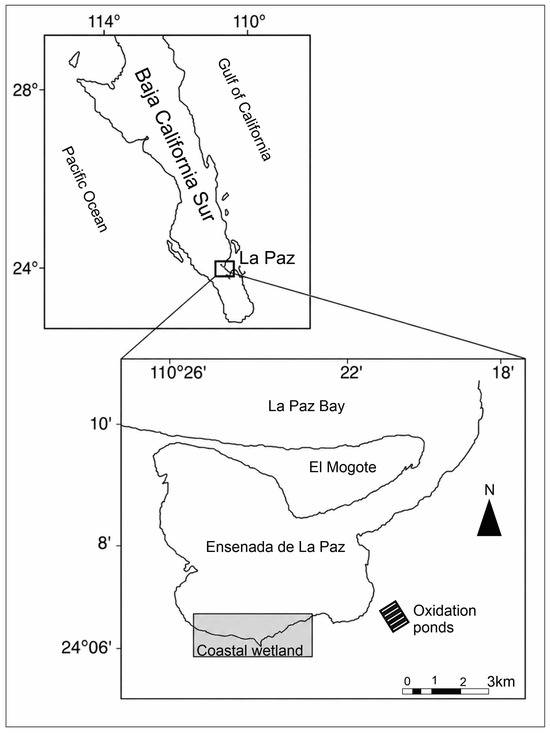
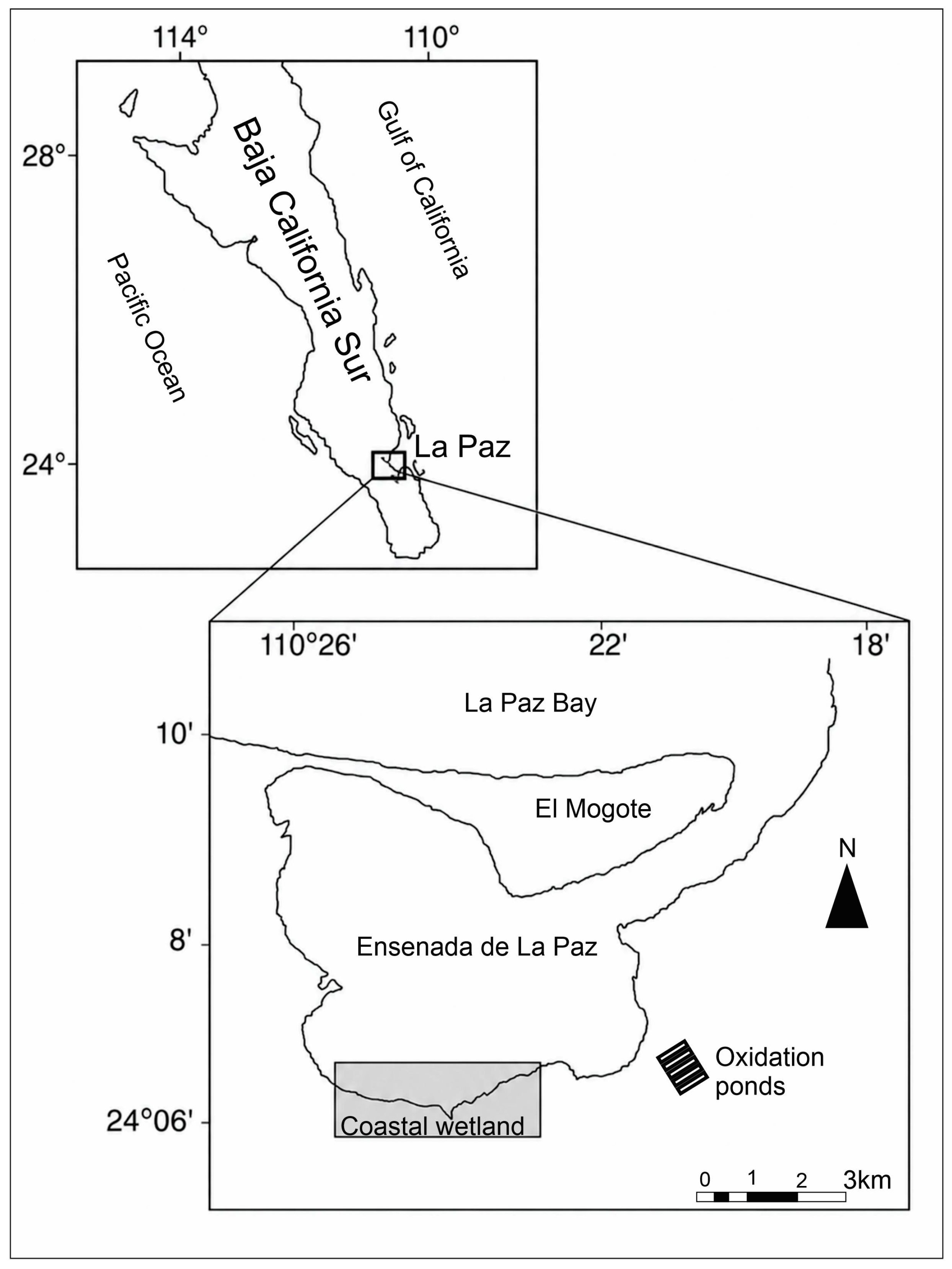
This study was conducted in the Chametla–El Centenario coastal wetland (CW), located in Ensenada de La Paz, and in five oxidation ponds (OPs) situated southeast of the city. The Chametla wetland is recognized as an important non-breeding and stopover site for shorebirds in the Gulf of California. However, this ecosystem is currently subject to multiple anthropogenic pressures, including habitat alteration and increasing human disturbance, which may negatively affect bird assemblages. Recent studies have documented declines in bird populations and changes in community structure, highlighting the conservation importance of this wetland and the need for continued ecological monitoring [16]. The two study areas are separated by approximately 2 km (Figure 1). The coastal wetland extends for approximately 5 km and is characterized by a fine-grained substrate composed of clay and mud. Its gentle slope allows low tide to expose up to 1000 m of intertidal mudflat, which is used by shorebirds as a foraging habitat. The oxidation ponds (OPs), covering an area of approximately 25 ha, represent the only artificial freshwater wetland available for shorebird foraging in the study area [17].
Figure 1.
Location of the capture and recapture sites for the Western Sandpiper (Calidris mauri) in the Chametla–El Centenario coastal wetland and the oxidation ponds (artificial wetland).
Between 2 August 2001 and 28 March 2002, 31 capture sessions were conducted at the CW and 35 at the OPs. At both sites, Western Sandpipers were captured using mist nets (12 × 2.6 m, 3.6 cm mesh size) deployed at dawn or dusk. At the coastal wetland, captures were conducted during rising spring tides. Between four and six nets were positioned along the upper intertidal zone so that the birds’ movements covering 144 and 216 m2, respectively, induced by the incoming tide, increased the likelihood of capture. At the oxidation ponds, the nets were placed on the dikes separating adjacent ponds during high tide in the coastal wetland, when Western Sandpipers are most abundant at this artificial wetland [17]. Sex was determined from culmen length [5,9], and age class was assigned based on plumage characteristics (juvenile or adult; [3,7,8]. All captured individuals were marked with unique combinations of four to six colored leg bands.
To evaluate whether differential habitat selection and migratory timing influenced recapture rates by sex and age class [2,18], a priori χ2 tests of independence were performed (α = 0.05 in all cases; [19]). Because no significant differences were detected, recaptures from both sites were pooled into a single dataset. Observed and expected frequencies by sex and age class were then compared using χ2 goodness-of-fit tests, with independence interpreted as evidence of random recaptures. The interval between initial capture and recapture was tested for normality and, because the assumptions of parametric tests were not met, differences between sexes and age classes were evaluated using Mann–Whitney U tests [19].
Finally, following the recommendations of [15], correction factors were estimated, quantified, and applied to reduce bias in population structure estimates. To this end, the ratios of observed to expected recapture frequencies (by sex and age class) were calculated as indices of recapture probability. The observed numbers of captured individuals were then divided by these ratios to estimate the minimum number of birds that would have had to be present to produce the observed captures. These estimates were subsequently converted to proportions and compared with those obtained from the original capture data. Finally, the original and bias-corrected percentage frequencies were compared using a χ2 test of independence. All statistical analyses were performed using Microsoft Excel 2019 [20].
3. Results
A total of 856 Western Sandpipers were captured and banded, of which ca. 600 (70%) were males. The proportions of adults and juveniles captured were nearly identical (0.48 and 0.52, respectively). Of all banded individuals, 89 (10.4%) were subsequently recaptured.
With respect to sampling sites, the a priori χ2 test indicated that recaptures, classified by sex and age class, were independent of site (χ29 = 13.9, p = 0.38). Similar results were obtained between seasons (χ26 = 5.9, p = 0.43). The distribution of the time interval between initial capture and recapture did not meet the assumption of normality (χ27 = 29.7, p < 0.01).
The percentage of recaptured individuals differed only slightly between sexes, with recapture rates of 11% for males and 9% for females. A comparison of the observed and expected recapture frequencies by sex (Table 1) indicated no significant deviation from independence (χ21 = 0.55, p = 0.46). In contrast, recapture rates differed markedly between age classes, with 5% of adults and 16% of juveniles being recaptured. A comparison of the observed and expected recapture frequencies between adults and juveniles (Table 1) revealed a significant departure from independence (χ21 = 12.51, p < 0.01).
Table 1.
Capture frequency (CF), observed recapture frequency (ORF), and expected recapture frequency (ERF) of Western Sandpipers (Calidris mauri) by age class and sex in Ensenada de La Paz, Baja California Sur, Mexico.
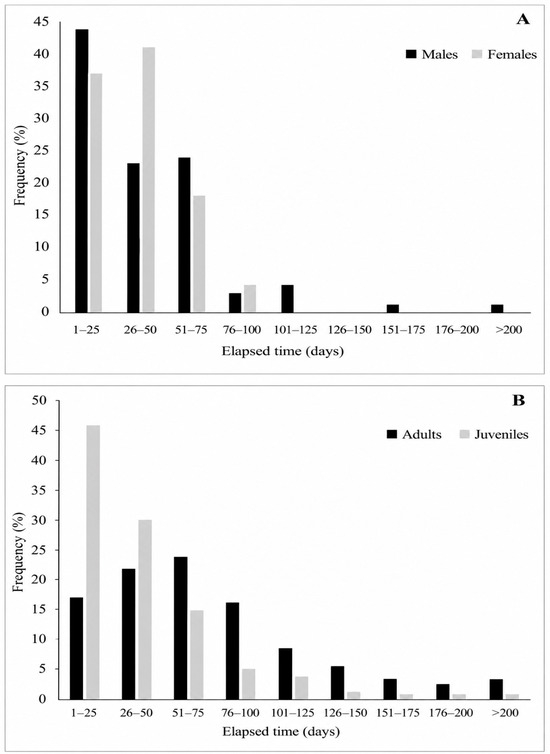
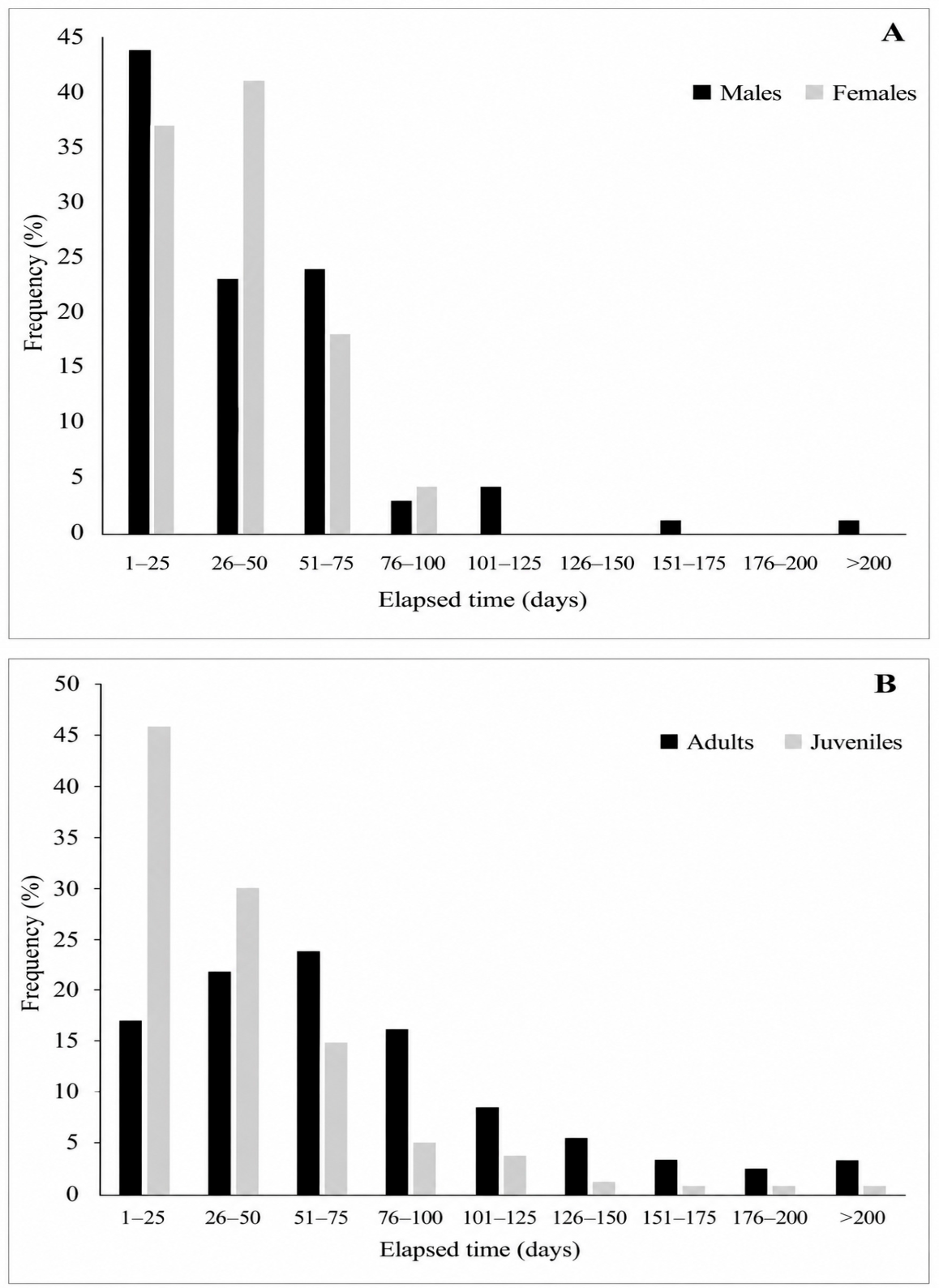
With respect to the interval between initial capture and recapture, approximately 70% of recaptures for both sexes occurred within 50 days of the initial capture (Figure 2A), indicating that sex did not influence the time elapsed between capture and recapture (Mann–Whitney U test: Z = 0.22, p = 0.83; Figure 2A). In contrast, differences were observed between age classes. Among juveniles, 76% of recaptures occurred within 50 days of the initial capture, whereas only 40% of adult recaptures occurred during the same period. Juveniles showed a modal recapture interval of 1–25 days, whereas adults exhibited a modal interval of 51–75 days (Figure 2B). This difference was statistically significant (Mann–Whitney U test: Z = 3.05, p < 0.01).
Figure 2.
Percentage distribution of the time intervals between initial capture and recapture of Western Sandpipers (Calidris mauri) in Ensenada de La Paz, Baja California Sur, Mexico. (A) By sex: statistically not significant. (B) By age class: statistically significant.
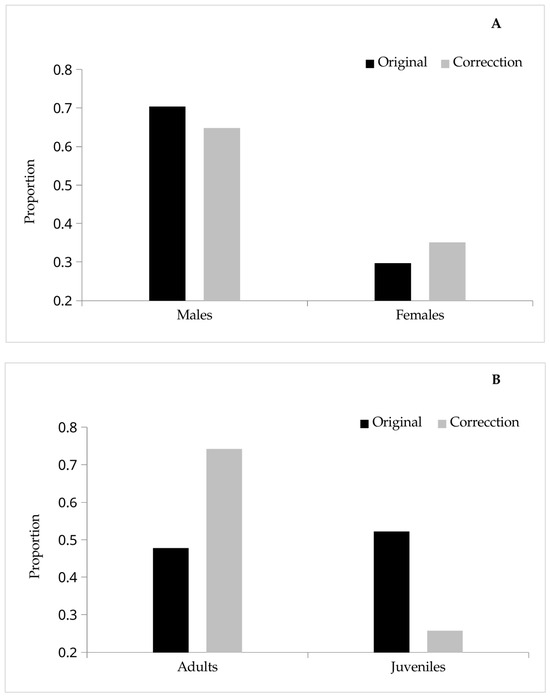
The observed-to-expected recapture frequency ratios used to derive the correction factors by sex were 1.07 for males and 0.83 for females. Dividing the observed numbers of captured individuals by these ratios yielded minimum population estimates of 562 males and 304 females required to produce the observed captures. The resulting proportions were very similar to those obtained from the original data (Figure 3), and the χ2 test indicated no significant departure from independence (χ21 = 0.68, p = 0.41).
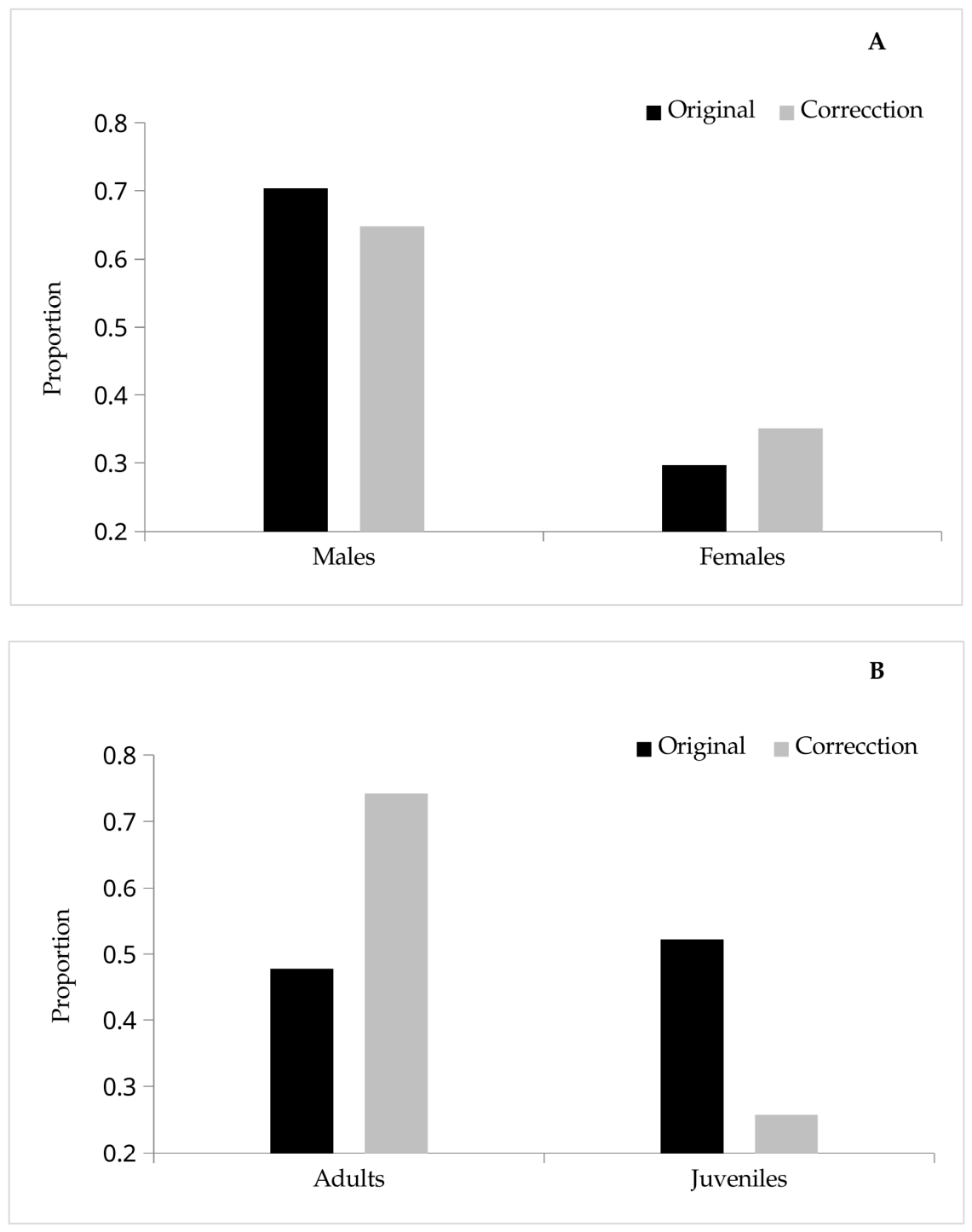
Figure 3.
Proportions of Western Sandpipers (Calidris mauri) by (A) sex: statistically not significant and (B) age class: statistically significant, based on the original data and after applying the bias correction.
In contrast, the observed-to-expected recapture frequency ratios differed markedly between age classes, with values of 0.47 for adults and 1.48 for juveniles. The estimated minimum numbers of individuals required to produce the observed captures were 869 adults and 301 juveniles. The resulting proportions differed substantially from those obtained using the original data (Figure 3), and the χ2 test confirmed a significant departure from independence (χ21 = 14.74, p < 0.01).
4. Discussion
Although McClure [21] suggested more than four decades ago that, in general, young birds are more likely to be captured in mist nets than adults, many studies of shorebirds, particularly those involving small species of the genus Calidris, have implicitly assumed that mist-net captures constitute random samples of the population (e.g., [2,4,10]).
More recently, [15] identified 21 potential sources of bias associated with mist-net captures. In studies involving single-species comparisons, the strongest evidence of capture bias was associated with the use of playback calls, the molt status of the primary feathers, and sexual dimorphism. Regarding sex-related bias, [15] concluded that the available evidence is moderate and is primarily associated with a seasonal bias toward males. In contrast, evidence for age-related bias remains limited, and its magnitude is still uncertain. Nevertheless, consistent with [16,21] suggested that mist nets are likely to be biased toward capturing juvenile birds.
It has been proposed that, whenever capture bias can be quantified, appropriate correction factors should be applied so that data obtained from mist-net captures provide more reliable population estimates, for example in capture–recapture studies [15,22,23,24].
In shorebirds, age composition has been compared using two capture methods: cannon nets and mist nets. The results of these comparisons have been inconsistent. For example, in the Common Redshank (Tringa totanus), mist nets captured a higher proportion of young birds during autumn, but no differences were detected after adults had completed their molt. This finding suggests that the age-related bias resulted from the reduced flight performance of adults during molt [25]. In contrast, [13], in a comparison involving four shorebird species (Charadrius hiaticula, Charadrius alexandrinus, Calidris alpina, and Calidris ferruginea), found similar differences in autumn that persisted throughout the winter. They proposed that the greater susceptibility of juveniles to mist-net capture might be related to age-dependent differences in experience and behavior, including a reduced ability of younger birds to detect and avoid mist nets. The data show that there are clear biases related to age and molt status in the composition of catches obtained using cannon nets and mist nets. It is unclear how the composition of samples obtained with either method relates to the actual composition of the flocks, but there is evidence that estimates derived from both methods are often biased. Mist nets appear to sample the overall population more consistently than cannon nets; however, juveniles and non-molting adults may be overrepresented in mist-net catches. Further studies on these and other potential sources of bias would be useful. Thus, these comparisons raise a fundamental conceptual question: which of the two capture methods provides a more accurate representation of the true population structure?
This question is difficult to resolve because the higher capture probability of juveniles has been demonstrated in only a few studies [14]. At least for species of the genus Calidris, this limitation largely reflects the difficulty of determining the sex and/or age of individuals through field observations alone [7,8], which precludes direct comparisons between the age and sex composition inferred from captures and the true population structure.
In the present study, it was possible to evaluate this potential source of bias because of the intensive capture effort conducted within a relatively small study area. The overall recapture rate (>10%) was high compared with those reported from other locations on the Baja California Peninsula. For example, at the Punta Banda Estuary, only 10 (<3%) of the 365 banded Western Sandpipers were recaptured [26]. In birds, capture probability has been suggested to be related to differences in maneuverability that affect an individual’s ability to avoid mist nets [14]. For the Western Sandpiper, however, it is difficult to attribute the observed pattern to this mechanism. Because males are smaller than females, they might be expected to exhibit greater maneuverability and, consequently, a higher ability to evade mist nets. Nevertheless, this potential advantage was not reflected in lower recapture rates, which were similar between sexes (11% for males and 9% for females). It is also possible that the high recapture rate is related to seasonal fidelity to foraging sites, as Western Sandpipers often return repeatedly to the same feeding areas during the non-breeding season [1,27].
If differences in maneuverability do not explain the observed variation in recapture probability, behavioral factors should be considered. Juvenile Western Sandpipers have been shown to be less experienced than adults at selecting high-quality foraging areas [2] and to occupy a lower social status [28]. In addition, [29] documented a higher frequency and greater success of aggressive interactions among males and adult birds at Punta Banda. Similarly, increases in movement rates and agonistic interactions with rising tide levels have been reported for Western Sandpipers in Ensenada de La Paz [17,30].
Because mist nets are a passive capture method whose effectiveness depends on the movements of individuals, it is plausible that juveniles are displaced from the most profitable foraging areas by dominant adults. Such displacement would force juveniles to move more frequently, thereby increasing their likelihood of encountering mist nets and, consequently, their probability of capture.
The hypothesis that juveniles are less experienced and consequently move more frequently is consistent with the results of the present study, in which the interval between initial capture and recapture was significantly shorter for juveniles than for adults. Indeed, experience has been shown to play an important role in several aspects of shorebird survival strategies, including the selection of optimal foraging areas according to resource availability and predation risk [18]. Consequently, it is plausible that the combination of limited experience in juveniles and the social dominance of adults forces younger birds to move more frequently within the study area, thereby increasing their probability of recapture, i.e., juveniles may be less experienced in detecting and avoiding mist nets, but variation in habitat use, seasonal site fidelity, and age-specific recapture probability may also contribute to the observed pattern [1,13].
With respect to the correction factors, our results indicate that no adjustment is necessary when estimating sex ratios. In contrast, because juveniles were recaptured more frequently than adults, the observed proportion of adults should be multiplied by 1.55 and that of juveniles by 0.49 to compensate for the bias detected in this study. However, these correction factors should be interpreted with caution, as they may reflect not only age-related differences in capture probability but also variation in the relative abundance of juveniles and adults using the study area, seasonal site fidelity, and age-specific recapture probability. Consequently, these factors are likely to be specific to our study area and sampling conditions and should not be extrapolated to other wetlands without prior validation. Nevertheless, this exercise demonstrates that differences in capture and recapture probabilities can substantially influence estimates of population age structure and, therefore, should be taken into account when interpreting mist-net data.
5. Conclusions
The analysis of recaptures indicates that, for the Western Sandpiper (Calidris mauri), mist-net captures are random with respect to sex but not to age. The higher capture probability of juveniles is likely associated with their greater mobility, resulting from their limited experience and lower social status. In this context, social dominance may represent one of the mechanisms underlying intraspecific capture bias, as proposed by [15]. Thus, the age-related bias detected in recaptures provides evidence that mist-net captures are not random and suggests that estimates of population age structure derived from mist-net data should be interpreted with caution, at least for this species and within our study area. Therefore, bird ringers should interpret age-specific population estimates with caution when they are based exclusively on mist-net captures. Whenever possible, sampling should be conducted over extended periods, using standardized net placement and effort, and complemented with additional survey methods (e.g., direct counts, resightings of marked individuals, or capture-mark-recapture models accounting for detection probability). Applying locally derived correction factors may also improve estimates of population age structure. Additional studies conducted in other regions are needed to determine whether these findings are consistent across a broader geographic scale.
Author Contributions
Conceptualization, R.C. and D.G.-E.; methodology, R.C. and D.G.-E.; formal analysis, R.C.; investigation, R.C. and F.O.L.-F.; writing—original draft preparation, R.C. and D.G.-E.; writing—review and editing, F.O.L.-F. and R.C.; visualization, F.O.L.-F.; supervision, R.C. and F.O.L.-F. All authors have read and agreed to the published version of the manuscript.
Funding
This research received no external funding.
Institutional Review Board Statement
Not applicable.
Informed Consent Statement
Not applicable.
Data Availability Statement
The original contributions presented in this study are included in the article.
Acknowledgments
We thank Universidad Autónoma de Baja California Sur and the Centro Interdisciplinario de Ciencias Marinas, Instituto Politécnico Nacional for their support during the project period. Secretaría de Ciencia, Humanidades, Tecnología e Innovación (SECIHTI) provided a graduate fellowship (No. 162480) to DGE. We thank the staff of the Waterbird Program at UABCS for their assistance with fieldwork, and Lourdes Martínez Estévez and Gaby Cruz for their excellent editing of the English abstract. FOLF and RC acknowledge support from the Sistema Nacional de Investigadoras e Investigadores (SNII) of the SECIHTI. The authors sincerely thank the anonymous reviewers and the Editor for their constructive comments and valuable suggestions, which greatly improved the quality and clarity of this manuscript.
Conflicts of Interest
The authors declare no conflicts of interest.
References
- Nebel, S.; Lank, D.B.; O’hara, P.D.; Fernández, G.; Haase, B.; Delgado, F.; Estela, F.A.; Mercier, F.; Ogden, L.J.E.; Harrington, B.; et al. Western Sandpipers during the non-breeding season: Spatial segregation on a hemispheric scale. Auk 2002, 119, 922–928. [Google Scholar] [CrossRef] [Scilit]
- Fernández, G.; Lank, D.B. Sex, age, and body size distributions of Western Sandpipers during the nonbreeding season with respect to local habitat. Condor 2006, 108, 547–557. [Google Scholar] [CrossRef]
- Page, G.; Fearis, B.; Jurek, R.M. Age and sex composition of Western Sandpiper on Bolinas Lagoon. Calif. Birds 1972, 3, 79–86. [Google Scholar]
- Buenrostro, M.A.; Warnock, N.; de la Cueva, H. Wintering Western Sandpipers Calidris mauri at Estero de Punta Banda, Baja California, Mexico. Wader Study Group Bull. 1999, 88, 59–63. [Google Scholar] [CrossRef] [Scilit]
- Page, G.; Fearis, B. Sexing Western Sandpipers by bill length. Bird. Band. 1971, 42, 297–298. [Google Scholar] [CrossRef] [Scilit]
- Butler, W.R.; Kaiser, G. Migration chronology, sex ratio, and body mass of Least Sandpipers in British Columbia. Wilson Bull. 1995, 107, 413–422. [Google Scholar]
- Prater, A.J.; Marchant, J.H.; Vuorinen, J. Guide to the Identification & Ageing of Holartic Waders; British Trust for Ornithology; Page Bros Norwich: Norfolk, UK, 2007; 168p. [Google Scholar]
- Pyle, P. Identification Guide to the North American Birds, Part II; Slate Creek Press: Point Reyes Station, CA, USA, 2008; 836p. [Google Scholar]
- Jiménez, A.; García-Lau, I.; Gonzalez, A.; Acosta, M.; Mugica, L. Sex determination of Least Sandpiper (Calidris minutilla) and Western Sandpiper (Calidris mauri): Comparing methodological robustness of two morphometric methods. Waterbirds 2015, 38, 10–18. [Google Scholar] [CrossRef] [Scilit]
- Carmona, R.; Sauma, L. Uso de dos ambientes, costero y dulceacuícola, por el Playerito menor (Calidris minutilla) en la Península de Baja California, México. Ornitol. Neotrop. 2010, 21, 545–554. [Google Scholar]
- Remsen, J.V.; Good, D.A. Misuse of data from mist-nets captures to assess relative abundance in bird populations. AUK 1996, 113, 381–398. [Google Scholar] [CrossRef] [Scilit]
- Dunn, E.H.; Ralph, C.J. Use of mist nets as a tool for bird population monitoring. Stud. Avian Biol. 2004, 29, 1–6. [Google Scholar]
- Pienkowski, M.W.; Dick, W.J.A. Some biases in cannon- and mist-netted samples of wader populations. Ringing Migr. 1976, 1, 105–107. [Google Scholar] [CrossRef] [Scilit]
- Goss-Custard, J.D.; Dit Durell, S.E.A.L.V.; Sitters, H.; Swinfen, R. Mist-nets catch more juvenile Oystercatchers than adults. Wader Study Group Bull. 1981, 32, 13. [Google Scholar]
- Furness, R.W. Biased sampling of birds by mist nets. Ringing Migr. 2025, 40, 20–35. [Google Scholar] [CrossRef] [Scilit]
- Brabata, G.; Battisti, C.; Carmona, R.; Sánchez-Caballero, C.A. Bird population declines in the Chametla wetland (Southern Gulf of California): Evidence of stress at the assemblage level. Isr. J. Ecol. Evol. 2019, 65, 119–129. [Google Scholar] [CrossRef] [Scilit]
- Carmona, R.; Álvarez Torres, A.M.; Brito, A.C.; Zamora-Orozco, E.M. Uso estacional de dos áreas, marina y dulceacuícola, por aves playeras en función al nivel de marea, en Baja California Sur, México. Ornitol. Neotrop. 2003, 14, 201–214. [Google Scholar]
- Warnock, S.E.; Takekawa, J.Y. Habitat preferences of wintering shorebirds in a temporally changing environment: Western Sandpiper in the San Francisco Bay Estuary. Auk 1995, 112, 920–930. [Google Scholar] [CrossRef] [Scilit]
- Zar, H.J. Biostatistical Analysis; Pearson India Education Services Pvt. Ltd.: Noida, India, 2016; 944p. [Google Scholar]
- Microsoft Corporation. Microsoft Excel, version 2019; Microsoft: Redmond, WA, USA, 2018.
- McClure, E. Bird Banding; The Boxwood Press: Pacific Grove, CA, USA, 1984; 341p. [Google Scholar]
- Pollock, K.H.; Nichols, J.D.; Brownie, C.; Hines, J.E. Statistical Inference for Capture-Recapture Experiments. Wildl. Monogr. 1990, 107, 3–97. [Google Scholar]
- Williams, B.K.; Nichols, J.D.; Conroy, M.J.; Conroy, M.J. Analysis and Management of Animal Populations; Academic Press: Cambridge, MA, USA, 2002; 817p. [Google Scholar]
- Amstrup, S.C.; McDonald, T.L.; Manly, B.F.J. (Eds.) Handbook of Capture-Recapture Analysis; Princeton University Press: Princeton, NJ, USA, 2005. [Google Scholar]
- Insley, H.Y.B.E. Catching bias in cannon and mist netted samples of Redshanks Tringa totanus on the Inner Moray Firth. Ringing Migr. 1997, 18, 70–77. [Google Scholar] [CrossRef] [Scilit]
- Buenrostro, M. Estructura de la Población y uso de Hábitat de Calidris mauri en la Temporada Invernal 1994–1995 en el Estero Punta Banda, Ensenada, Baja California, México. M.Sc. Thesis, Centro de Investigación Científica y Educación Superior de Ensenada, Ensenada, Baja California, Mexico, 1996. [Google Scholar]
- Warnock, S.E.; Takekawa, J.Y. Wintering site fidelity and movement patterns of Western Sandpipers Calidris mauri in the San Francisco Bay estuary. Ibis 1996, 138, 160–167. [Google Scholar] [CrossRef] [Scilit]
- Durell, S.E.d. Individual feeding specialization in shorebirds: Population consequences and conservations implications. Biol. Rev. 2000, 75, 503–518. [Google Scholar] [CrossRef] [Scilit] [PubMed]
- Becerril, M.F. Interacción Ecológica: Conducta de Forrajeo y Territorialidad Entre Calidris mauri y Calidris minutilla (Charadriiformes: Scolopacidae) en el Estero Punta Banda (B.C., México), en la Temporada Invernal de 1996–1997. Ms.Sc. Thesis, Centro de Investigación Científica y de Educación Superior de Ensenada, Ensenada, Mexico, 1998. [Google Scholar]
- Carmona, R.; Franco, A.; López-Greene, R. Niveles de agresión del Correlimos de Alaska Calidris mauri en un ambiente dulceacuícola de la Península de Baja California, México. Ardeola 2005, 52, 365–369. [Google Scholar]

Disclaimer/Publisher’s Note: The statements, opinions and data contained in all publications are solely those of the individual author(s) and contributor(s) and not of MDPI and/or the editor(s). MDPI and/or the editor(s) disclaim responsibility for any injury to people or property resulting from any ideas, methods, instructions or products referred to in the content. |
© 2026 by the authors. Licensee MDPI, Basel, Switzerland. This article is an open access article distributed under the terms and conditions of the Creative Commons Attribution (CC BY) license.