


Abstract
Coastal dune ecosystems of the Moroccan Atlantic coast are among the most threatened environments of the western Mediterranean basin, yet the ecological preferences of their constituent psammophilous flora remain poorly documented. Using the ecological profile method, corrected frequencies, species and descriptor entropy, mutual information and ecological barycentres were calculated for three environmental descriptors, distance to the tidal fluctuation zone, topographic position and soil organic matter content, applied to a presence–absence matrix of 53 vascular taxa across 123 plots distributed among three dune facies. Of the total taxa inventoried, 41 were retained as ecologically active. Topography and soil organic matter emerged as the most efficient descriptors, both exceeding the 5% activity threshold. Cross-referencing of ecological groups identified three phytoecological assemblages: characteristic psammophytes of embryonic dunes, species of the primary foredune and species of the enriched backdune. The dominance of intermediate ecological amplitudes and the convergence of introduced species towards organic matter-rich backdune conditions signal chronic anthropogenic disturbance. This study provides a quantitative characterisation of psammophilous species ecological preferences and phytoecological assemblages along the coast–inland gradient of the Haouzia Bay SBEI, constituting an operational reference framework for targeted conservation and restoration management of this threatened coastal site.
1. Introduction
Coastal dune ecosystems rank among the most dynamic and vulnerable environments of coastal zones. Subjected to particularly severe abiotic constraints, including sandy substrate mobility, salt spray salinity, wind desiccation and pronounced hydric variations, these environments impose strict ecological requirements and remarkable adaptation strategies on the plant species that colonise them [1,2]. Along the Moroccan Atlantic coast, psammophilous formations exhibit an original floristic composition, inherited from a long biogeographical history combining Mediterranean, Atlantic and North African endemic elements, whose spatial distribution remains intimately linked to the environmental gradients structuring these environments [3,4]. Despite their recognised ecological importance and their role in stabilising dune ridges and preserving coastal biodiversity, quantitative species–environment profiling using ecological indices remains largely absent from the Moroccan Atlantic coastline, even though regional floristic and phytosociological studies have documented the composition of Atlantic psammophilous formations [3,4].
Understanding the structuring of dune vegetation cannot be limited to floristic inventory alone. It requires a thorough ecological interpretation of the relationships between species and their environment, making it possible to identify the determining environmental factors and to characterise the behaviour of each species with respect to these factors. The ecological profile approach, developed by Godron [5] and formalised by Daget and Godron [6], addresses this objective. Based on the quantification of corrected frequencies of species occurrence within the different classes of an environmental descriptor, this method allows assessment of the degree of affinity of each species for environmental conditions, determination of its ecological optima and amplitudes, and grouping of species into coherent phytoecological groups and assemblages. It has been successfully applied to various plant formations subjected to marked gradients, including Mediterranean garrigue, wetland communities [7] and coastal dune systems [8,9]. In the Moroccan Atlantic context, phytosociological and floristic surveys have documented the composition of coastal dune vegetation [4,9], providing a taxonomic baseline upon which the present quantitative ecological profiling builds.
Haouzia Bay, classified as a Special Biological and Ecological Interest Site (SBEI) in the Province of El Jadida, provides a particularly relevant study area for this approach. This site preserves a functional dune ridge over 14 km of coastline, organised into three successive zones, namely the embryonic dune, the primary foredune and the semi-fixed backdune, which delineate a well-defined coast–inland ecological gradient. Its psammophilous flora comprises different vascular taxa including endemic taxa and several threatened or protected species, whose taxonomic composition reflects a long biogeographical history combining Mediterranean, Atlantic and North African elements. While the floristic composition of this site has been recently inventoried, the ecological preferences of its constituent species, as expressed through quantitative indices of corrected frequency, mutual information and ecological amplitude, have not yet been assessed at this site. This gap is all the more concerning given that the site is subject to increasing anthropogenic pressures, which threaten the integrity of dune ecosystems and the persistence of the most specialised species [10,11].
It is within this context that the present study is situated, which extends the inventory work conducted on the same site concerning the taxonomic composition and diversity of the site’s psammophilous flora, by addressing the ecological behaviour of the components of psammophilous flora in relation to the natural descriptors of the environment. Multiple abiotic factors influence dune vegetation structuring, including salinity, grain size, soil moisture, pH and disturbance intensity. Among these, three descriptors were selected for their dual relevance as primary structuring factors consistently identified in Atlantic and Mediterranean dune systems [1,2,8] and their feasibility of measurement across all 123 plots: distance to the tidal fluctuation zone (DTFZ), topographic position (Topo) and soil organic matter content (OM-soil).
The present study tests the following hypotheses: (i) topographic position and soil organic matter content are more efficient descriptors of psammophilous species distribution than distance to the tidal fluctuation zone, as substrate stabilisation and dune morphodynamics integrate a broader set of abiotic constraints along the coast–inland gradient than marine proximity alone; (ii) introduced species exhibit two contrasting ecological strategies, either broad euryoecious amplitudes enabling colonisation of the entire dune gradient or narrow stenoecious profiles converging towards disturbed, organic matter-rich backdune conditions, both of which confer competitive advantages over native psammophilous species; (iii) most heritage species present narrow ecological amplitudes and precise habitat optima translatable into conservation targets, although ecological plasticity may also contribute to the persistence of certain endemic taxa under anthropogenic disturbance. To test these hypotheses, the ecological profile method was applied to quantify corrected frequencies, species and descriptor entropy, mutual information and ecological barycentres for three environmental descriptors across three dune facies. The results are intended to constitute an operational phytoecological reference framework for the conservation and sustainable management of this threatened coastal site.
2. Materials and Methods
2.1. Study Area
The Haouzia Bay SBEI is an Atlantic coastal site within a temperate semi-arid bioclimate [12], located between 8°20′–8°28′ W and 33°15′–33°20′ N (Figure 1), in the Province of El Jadida (Casablanca-Settat region, Morocco). The dune ridge extends over 14 km of coastline, with a width of 150 to 1500 m and a sandy relief reaching up to 40 m, constituting one of the rare relict psammophilous ecosystems of the Moroccan Atlantic coast. Classified as an SBEI for its representative Atlantic dune formations [13], the study area corresponds to a 150 m terrestrial strip organised perpendicular to the coast, from embryonic dunes near the strandline to semi-fixed backdune flats, whose parallel banding structure directly conditions the zonation of psammophilous vegetation.
Figure 1.
Location of the study area (Haouzia Bay SBEI, Province of El Jadida, Morocco). The satellite image illustrates the spatial organisation of psammophilous vegetation along the coast–inland gradient, structured into three successive facies (embryonic dunes, primary foredune and semi-fixed backdune), as well as the extent of anthropogenic pressure.
The site is subject to increasing anthropogenic pressures that threaten dune habitat integrity: large hotel infrastructures with golf courses, summer attendance reaching 20,000 visitors per day, motorised vehicle traffic and continuous sheep grazing generate intense trampling and progressive fragmentation of native vegetation. These disturbances have favoured the establishment of introduced species, notably Mesembryanthemum edule, whose proliferation threatens dune ridge dynamics. To these anthropogenic factors are added natural processes of water and wind erosion, whose intensity is expected to increase in the current context of climate change affecting the Moroccan Atlantic coastline [14,15].
2.2. Sampling and Phytoecological Surveys
The spatial structure of the site’s psammophilous vegetation, organised in bands parallel to the shoreline along a gradient of distance from the sea, requires an approach using transects perpendicular to the coastline [16]. Based on vegetation physiognomy, floristic homogeneity and substrate characteristics, three successive zones were delineated from northwest to southeast: embryonic dunes near the strandline (facies F1), the primary foredune ridge (facies F2) and the semi-fixed backdune flat (facies F3). This three-facies delineation is consistent with the classical zonation of Atlantic Mediterranean dune systems described in the literature [8]. Sampling was conducted in April 2022, along 41 radial transects oriented NW-SE covering the entire coastal strip, for a total of 123 plots of 16 m2 each, with 41 plots per facies. The period selected for sampling corresponds to the peak of spring vegetation development in the study area. This single-season survey captures the majority of perennial and spring-flowering species but may underrepresent summer and autumn active therophytes, whose ecological profiles could differ from those presented here. The plot size (16 m2) was selected following the standard specifications for vegetation surveys in Atlantic and Mediterranean dune systems, where this size has been shown to adequately capture species composition of open, low-growing coastal dune vegetation while minimising microhabitat heterogeneity effects [8,9,17,18]. Within each transect, the three plots were systematically assigned to distinct dune facies (F1, F2 and F3), ensuring that within-transect variation reflects the environmental gradient rather than spatial proximity. Although spatial autocorrelation between plots was not formally tested, the class-aggregated nature of the ecological profile method limits the influence of spatial dependence on profile estimates. The identification and nomenclature adopted for vascular plant taxa follows the updated checklist of the vascular flora of Morocco [19,20]. Families were assigned according to the APG IV classification [21]. Life forms were determined according to the Raunkiær system [22]. For each plot, a comprehensive phytoecological survey was established following the Braun-Blanquet method [17], supplemented by the notation of environmental parameters: topographic position, substrate nature, distance to the tidal fluctuation zone, degree of visible disturbance and overall vegetation cover. The various calculations of ecological indices were performed on the binary matrix of species presence (value 1) and absence (value 0).
2.3. Environmental Descriptors
Three environmental descriptors were selected for their relevance in Atlantic dune systems and their feasibility of measurement across all 123 plots under field conditions, each subdivided into three classes reflecting the conditions observed in the study area and captured the three main gradients of the coast–inland transect, namely the following: (i) The distance to the tidal fluctuation zone (DTFZ) reflects the gradient of exposure to marine inputs. Three classes were defined according to distances measured in the field: class 1 (10 to 22 m, proximal zone), class 2 (23 to 44 m, intermediate zone) and class 3 (45 to 140 m, distal zone). (ii) Topographic position (Topo) reflects dune morphology and conditions of sand accumulation and wind exposure along the coast–inland gradient. Three classes were defined to correspond directly to the three successive dune facies delineated in the field: class 1 corresponds to the relatively flat embryonic dune (facies F1), characterised by mobile sandy substrates and maximum marine exposure; class 2 corresponds to the primary foredune (facies F2), representing the morphodynamically most active zone of the dune ridge; and class 3 corresponds to the semi-fixed backdune flat (facies F3), characterised by reduced sand mobility and increasing substrate stabilization. (iii) Soil organic matter content (OM-soil) is indicative of the degree of dune substrate stabilization estimated by the loss-on-ignition method applied to dry soil samples collected at 10 cm depth. Samples were oven-dried at 105 °C for 24 h and then ignited at 550 °C for 4 h; organic matter content was calculated as the mass loss expressed as a percentage of dry soil weight. Three classes were defined according to the measured contents in the sandy soils of the site: class 1 (OM < 1%, equivalent to 10 mg/kg), class 2 (OM between 1 and 1.2%, equivalent to 10–12 mg/kg) and class 3 (OM >1.2%, equivalent to >12 mg/kg). Sandy coastal soils at Haouzia Bay are characterised by low carbonate content, typical of Atlantic siliceous psammophilous substrates [9]. Although carbonate interference in loss-on-ignition measurements was not formally corrected, the three OM classes are based on relative differences between facies rather than absolute values, limiting the impact of any potential systematic overestimation on class assignments.
2.4. Analysis of Ecological Preferences
2.4.1. Corrected Frequency Profiles, Entropies and Mutual Information
The analysis of the ecological behaviour of species is based on the ecological profile method [5,6], which quantifies the distribution of each species within the classes of an environmental descriptor using presence–absence data. Four indices were determined using the formulas summarized in Table 1.
Table 1.
Ecological profile indices used to characterise species ecological preferences and amplitudes along environmental gradients.
Corrected Frequency (CF)
For each species E in each class k of a descriptor L, the corrected frequency weights the relative frequency of occurrence by the mean frequency of the species across all plots (Equation (1), Table 1) [23,24]. A CF value greater than 1 indicates an affinity of the species for the class considered, while a value below 1 indicates avoidance. The ecological profile of a species corresponds to the distribution of its CF values across the different classes of a descriptor and expresses the set of probabilities of species presence along the considered gradient [5]. A difference of one point or more between two CF values is considered ecologically significant in the present work.
Species Entropy H(E)
This index measures the overall ecological reactivity of a species within the sampling design, based on its presence count U and absence count V over a total number of plots NT (Equation (2), Table 1) [5]. A high H(E) value signals a strongly discriminating species within the environment. Only species presenting a species entropy greater than or equal to 0.1 were retained for the analysis of ecological preferences [5,6]. The 12 species present in a single plot (U = 1, H(E) = 0.068) were consequently excluded from the analysis. Species retained on the basis of H(E) ≥ 0.1 but with low occurrence frequencies should be interpreted with caution, as their ecological profiles are based on a limited number of presences and may not adequately represent their actual habitat preferences. For such species, corrected frequencies and barycentres are reported as indicative tendencies rather than robust ecological characterisations.
Descriptor Entropy H(L)
It measures the diversity of plot distribution among the classes of a descriptor and reflects its potential discriminating power (Equation (3), Table 1) [6,25]. A high descriptor entropy indicates that the factor is potentially strongly influential on the distribution of species in the study area.
Species–Descriptor Mutual Information I(L;E)
It quantifies the association between the distribution of a species and the distribution of plots among the classes of a descriptor, thereby expressing the indicator value of the species for that descriptor (Equation (4), Table 1) [26,27]. A high I(L;E) value indicates a strong association between the species and the states of the descriptor. Species whose I(L;E) value exceeds 0.1 with respect to at least one descriptor are considered sensitive to that descriptor. The thresholds applied in this study, CF = 1 as the indifference value, H(E) ≥ 0.1 as the activity threshold, and I(L;E) ≥ 0.1 as the sensitivity threshold, are established conventions of the ecological profile method with information-theoretic foundations [5,6,23]. They are applied here as methodological reference values consistent with published applications of this framework.
2.4.2. Ecological Barycentre and Amplitude
Ecological Barycentre (G)
It locates the ecological optimum of a species along a gradient by calculating the centre of gravity of its occurrences, weighted by the CF values in each class of the descriptor (Equation (5), Table 1) [28]. Species whose ecological barycentres are close with respect to the same descriptor are considered to share similar ecological behaviour and are grouped into ecological groups.
Ecological Amplitude (B)
For active species, this index was quantified using the Levins index [29], calculated from the corrected frequencies obtained for each descriptor (Equation (6), Table 1). Following Blondel [30] and Ramade [28], normalized corrected frequencies are used as substitutes for resource-use proportions in the Levins index, an adaptation standard in phytoecological profile analysis. For the three descriptor classes retained, B ranges between 1 and 3. The thresholds adopted in this study are as follows: B < 1.5: stenoecious species with narrow ecological amplitude; 1.5 ≤ B < 2.5: intermediate amplitude; B ≥ 2.5: euryoecious species with broad ecological amplitude. This quantification complements the qualitative approach based on CF profiles and ecological barycentres.
2.4.3. Descriptor Efficiency Diagram
The relative efficiency of the selected ecological descriptors was assessed graphically using a diagram relating descriptor entropy H(L) on the x-axis to the mean mutual information I(L;E) of active species on the y-axis, following the approach proposed by Daget and Godron [6]. In this diagram, straight lines of constant slope passing through the origin represent equivalent efficiency levels: a descriptor is more efficient as its mean mutual information is higher relative to its entropy. Descriptors positioned above the 5% slope line, retained as the criterion for significant activity in the environment [6,7], are qualified as active descriptors and considered as structuring the distribution of species. The most efficient descriptors are those positioned above the steepest diagonal lines and whose mean mutual information most clearly exceeds the activity threshold. This diagram thus allows the ranking of descriptors according to their effective discriminating power and justifies their retention or exclusion from the ecological profile analysis.
2.4.4. Ecological Behaviour of Active Species
The ecological behaviour of all active species was represented in the form of ecograms illustrating the distribution of corrected frequencies within the classes of each descriptor. These representations allow simultaneous visualisation of the ecological optimum, corresponding to the class of maximum CF, and the ecological amplitude of the species, complementing the profile results and facilitate comparison of species behaviour across descriptors and within ecological groups.
Particular attention was paid to the ecological behaviour of heritage species and introduced species. The ecological profiles of both groups were calculated using the same indices applied to all active species, independently of their conservation or introduction status; the grouping by status serves organisational and management purposes only and does not influence the ecological indices reported. For heritage species (Andryala canariensis subsp. maroccana, Pseudorlaya pumila, Ammophila arenaria, Crucianella maritima, Aeluropus littoralis and Crepis bulbosa), the CF profiles, ecological barycentres and ecological amplitudes were analysed in order to define the environmental conditions favourable to their persistence. For introduced species (Mesembryanthemum edule, Lycium intricatum, Oxalis pes-caprae, Acacia cyanophylla, Acacia cyclops and Eucalyptus gomphocephala), the same approach allowed identification of the descriptor states favouring their establishment and expansion along the coast–inland gradient. The results obtained for these two groups of species are subsequently placed in perspective with the conservation and management issues of the SBEI.
2.4.5. Determination of Phytoecological Groups and Assemblages
The identification of phytoecological groups and assemblages was based on the results of the ecological profiles obtained for all selected descriptors, following the approach proposed by Daget and Godron [6] and Long [31]. In a first step, species designated as active were grouped into ecological groups based on the proximity of their ecological barycentres with respect to each descriptor. Species whose barycentres are close for the same descriptor are considered to share similar ecological preferences with respect to that descriptor and are therefore grouped as indicators of the same environmental state. In a second step, phytoecological assemblages were identified by cross-referencing the ecological groups obtained for the three descriptors. Species exhibiting convergent ecological preferences with respect to all selected descriptors were brought together within the same phytoecological assemblage, whose designation is based on the species presenting the highest I(L;E) and CF values for the descriptor classes defining the assemblage.
This two-step approach, from ecological group to phytoecological assemblage, allows the transition from a species-by-species reading of ecological behaviour to a community-level synthesis reflecting the structuring of psammophilous vegetation in response to the site’s environmental gradients.
2.4.6. Statistical Validation of Species–Descriptor Associations and Phytoecological Assemblages
Prior to the ecological profile analysis, Spearman correlations were calculated across the 123 plots to verify the absence of perfect redundancy between the three selected descriptors, ensuring that each descriptor provides complementary and non-redundant information on species distribution and supporting the ecological interpretation of the groups and assemblages obtained.
The significance of the associations between species and descriptor classes revealed by the corrected frequency profiles was tested using a Chi-square independence test applied to each species–descriptor pair. The test compares the observed distribution of species presences among descriptor classes to a theoretical distribution expected under the hypothesis of independence. This test allows distinction between genuine ecological affinities and associations that may result solely from the distribution of plots among classes. Furthermore, the relevance of the number of phytoecological assemblages retained was assessed using the Silhouette index [32] and the Caliński and Harabasz index [33], calculated for partitions ranging from k = 2 to k = 5 based on Euclidean distances between ecological barycentres of sensitive species in the two-dimensional space (Topo and OM). The assemblages were defined a priori on biological grounds following Daget and Godron [6], and the indices (Silhouette [32] and Caliński and Harabasz [33]) provide an a posteriori assessment of their statistical coherence.
A canonical correspondence analysis (CCA) was also performed using the presence–absence matrix of active taxa and the values of the three selected environmental descriptors (DTFZ, topographic position and organic matter content), in order to simultaneously visualise the distribution of plots, the position of species and the direction of environmental gradients in a constrained ordination space. The significance of the canonical axes and of the overall vegetation–environment relationship was tested by Monte-Carlo simulation (999 permutations) [34]. Chi-square tests applied to species descriptor associations were computed with Monte-Carlo simulation to ensure validity for sparse contingency tables where expected counts per class may be low.
All calculations were performed using Excel spreadsheet software (Microsoft Office) and R statistical software (version 4.2.3) [34,35], using the various predefined formulas. The packages we used were mainly vegan, cluster, ggplot2, gridExtra, ggforce, RColorBrewer, ggrepel, grid, dplyr and tidyr [36,37]. Figures and diagrams were produced using R software.
3. Results
3.1. Species Entropy H(E) and Ecological Reactivity of Species
The psammophilous flora of the Haouzia Bay SBEI comprises 53 vascular taxa distributed across three successive dune facies, namely the embryonic dunes (F1), the primary foredune (F2) and the semi-fixed backdune (F3). This floristic assemblage, which includes six heritage species (endemic, threatened or protected taxa) and six introduced species, constitutes the biological material on which the ecological preference analysis presented hereafter is based. Of the total vascular taxa inventoried in the study area, 41 species present a species entropy H(E) greater than or equal to the retained activity threshold of 0.1 and are therefore considered active in the environment. The 12 excluded species, all present in a single plot out of the 123 surveys (U = 1), display a uniform value of H(E) = 0.068, insufficient for their ecological behaviour to be statistically interpretable. These are Euphorbia helioscopia, Ipomoea stolonifera, Atriplex halimus, Crepis vesicaria, Thapsia garganica, Stellaria media, Mercurialis annua, Onopordon dissectum, Geranium rotundifolium, Chenopodium album, Calendula algeriensis and Juniperus phoenicea.
The 41 active species present H(E) values ranging from 0.120 to 0.986, with a mean value of 0.452 (Supplementary Material Table S1; Figure 2). This mean level reflects a globally heterogeneous distribution of species among plots, consistent with the high variability of abiotic conditions characterising disturbed Atlantic dune environments.
Figure 2.
Ranking of the 41 active species by decreasing species entropy H(E) of psammophilous flora of the Haouzia Bay SBEI. Species with H€ ≥ 0.1 were retained for ecological preference analysis. Dashed line indicates the activity threshold€(E) = 0.1). Colour coding reflects species status: green = native species, blue = heritage species (threatened, protected or endemic), and red = introduced species.
The ranking of active species in decreasing order of H(E) revealed four levels of ecological reactivity. Eight species present very high reactivity (H(E) ≥ 0.70): Andryala canariensis subsp. maroccana (H(E) = 0.986), Mesembryanthemum edule (H(E) = 0.960), Euphorbia paralias (H(E) = 0.918), Polygonum maritimum (H(E) = 0.872), Crepis bulbosa and Centaurea calcitrapa (H(E) = 0.827), Lycium intricatum (H(E) = 0.774) and Agropyrum junceum (H(E) = 0.712). Ten species fall within the high reactivity class (0.50 ≤ H(E) < 0.70), ten within the moderate class (0.30 ≤ H(E) < 0.50) and thirteen within the low class (0.10 ≤ H(E) < 0.30).
Among the six introduced species present in the inventory, all are active and display notable H(E) values. Mesembryanthemum edule, with the highest value in the sampling design after Andryala canariensis subsp. maroccana, is distinguished by high ecological reactivity (H(E) = 0.960, U = 76 presences out of 123 plots), confirming its structuring role in the dune vegetation of the site. Lycium intricatum, Acacia cyanophylla and Oxalis pes-caprae also present high reactivity values (respectively (0.774, 0.640, 0.535), reflecting their broad distribution within the sampling design.
The six heritage species are all active. Andryala canariensis, a Moroccan–Algerian endemic taxon, presents the highest reactivity in the entire sampling design (0.986), making it the most discriminating species of the site’s psammophilous flora. Crepis bulbosa (protected species, 0.827), Ammophila arenaria (threatened species, 0.558) and Pseudorlaya pumila (Mediterranean endemic taxon, 0.535) present very high and high reactivity, respectively. Aeluropus littoralis (0.461) and Crucianella maritima (0.315), both threatened, display moderate reactivity, consistent with their more restricted occurrence frequencies within the sampling design (U = 12 and U = 7, respectively).
Analysis by life form showed that hemicryptophytes (0.605) and geophytes (0.508) present the highest reactivity values, while therophytes, despite their numerical dominance in the site’s flora, display the lowest mean reactivity (0.349), related to their generally lower occurrence frequencies.
3.2. Efficiency of Ecological Descriptors
The complementarity of the three selected descriptors was verified using Spearman correlations calculated across the 123 plots. The coefficients obtained indicate a strong correlation between DTFZ and topography (rho = 0.837; p < 0.001), expected given the natural covariation of these two gradients along the coast–inland transect, and moderate correlations between topography and organic matter (rho = 0.684; p < 0.001) and between DTFZ and organic matter (rho = 0.549; p < 0.001). Although the DTFZ–topography correlation is high, the non-shared variance between these two descriptors (1 − rho2 = 30%) justifies their simultaneous retention in the analysis, each providing partially independent information on the distribution of psammophilous species along the dune gradient.
The analysis of the efficiency of the three selected descriptors is based on the comparison of descriptor entropy H(L) and mean mutual information I(L;E) calculated across the 41 active species. Ecological preference analyses and calculations of ecological profile indices with respect to the three selected descriptors were thus performed. Descriptor entropy values indicate a globally balanced distribution of plots among classes for topography and distance to the tidal fluctuation zone, with values of 1.585 and 1.579, respectively, compared to a more unbalanced distribution for organic matter (1.353), whose class 1 alone groups 75 plots out of 123 (Table 2).
Table 2.
Efficiency of environmental descriptors retained for the ecological profile analysis of psammophilous flora at the Haouzia SBEI.
Examination of the efficiency diagram (Figure 3) showed that two descriptors are positioned above the 5% slope line, the threshold retained to qualify a descriptor as active in the environment, topography and soil organic matter, both with slopes of approximately 5.33%. The DTFZ descriptor, with a slope of 3.51%, showed relatively lower discriminating efficiency at the scale of the overall sampling design, though this result depends on the conventional threshold applied and the three-class discretisation adopted, and seven species remain sensitive to it with I(L;E) ≥ 0.1.
Figure 3.
Efficiency diagram of the three ecological descriptors retained for the analysis of psammophilous flora ecological preferences (Haouzia Bay SBEI). Diagonal dashed lines represent iso-efficiency lines of constant slope.
The number of active species for each descriptor (with I(L;E) ≥ 0.1) confirms this hierarchy: 14 species are sensitive to topography, 9 to soil organic matter and 7 to distance to the tidal fluctuation zone (Table S1). Among the species most strongly associated with the descriptors, Euphorbia paralias presents the highest mutual information values for topography (0.287) and organic matter (0.312), making it the most indicative species in the sampling design. Asparagus acutifolius stands out for the DTFZ descriptor (0.168), followed by Euphorbia paralias (0.163) and Acacia cyanophylla (0.137).
The canonical correspondence analysis confirms and extends the results from the ecological profiles. The overall relationship between the floristic composition of the 123 plots and the three environmental descriptors is highly significant (Monte-Carlo permutation test, p < 0.001), with a constrained inertia of 11.3% of total inertia, a proportion consistent with presence–absence data in dune environments. The first two canonical axes together explain 86.1% of the constrained variance (CCA1 = 64.8%; CCA2 = 21.3%). The biplot (Figure 4) revealed a clear separation of the three dune facies along the first canonical axis, opposing embryonic dune plots (F1, negative CCA1) to semi-fixed backdune plots (F3, positive CCA1), with primary foredune plots (F2) occupying an intermediate position. The three environmental vectors, jointly oriented along CCA1, confirm their common contribution to the structuring of the coast–inland gradient, while CCA2 captures local heterogeneities within facies, particularly pronounced in F2.
Figure 4.
Canonical correspondence analysis of psammophilous vegetation (Haouzia Bay SBEI). Ellipses represent 95% confidence intervals by facies. Permutation test: p < 0.001.
Taken together, these results indicate that the structuring of psammophilous flora in the Haouzia SBEI is primarily determined by the coast–inland topographic gradient and by soil organic matter content, two descriptors closely linked to the conditions of progressive sand stabilisation and organic matter accumulation from the embryonic dunes towards the backdune. The DTFZ descriptor, although less discriminating at the overall scale of the sampling design, retains an indicator value for the most specialised species of nearshore zones. Accordingly, all three descriptors are retained for the subsequent ecological preference analysis.
3.3. Ecological Preferences of Active Species
3.3.1. Preferences with Respect to Distance to the Tidal Fluctuation Zone
The DTFZ descriptor revealed seven sensitive species with I(L;E) ≥ 0.1 (Table S1, Figure 5). The corrected frequency profiles allow distinction of two ecological groups according to barycentre position. The first group, comprising a single species, is characterised by a marked affinity for the proximal zone (class 1: 10–22 m). Euphorbia paralias presents the most clearly orientated profile towards the plots nearest to the shoreline (CF1 = 1.733; CF2 = 1.000; CF3 = 0.214; G = 1.485; I = 0.163), confirming its role as a typical species of Atlantic embryonic dunes. Its intermediate amplitude (B = 2.145) nevertheless reflects a capacity to colonise the first two classes. The second group, formed by four species with barycentre in class 3 (G ≥ 2.5), reflects an affinity for the zones most distant from the shoreline (45–140 m). Asparagus acutifolius constitutes the most indicative species of this group with the highest I(L;E) value of the descriptor (I = 0.168; CF1 = 0; CF3 = 2.584; G = 2.865) and a stenoecious amplitude (B = 1.304), reflecting its affinity for backdune environments. Urtica dioica presents a similar profile (CF1 = 0; CF3 = 2.510; G = 2.837; B = 1.375). Acacia cyanophylla (G = 2.667) and Lycium intricatum (G = 2.515) complete this group with intermediate amplitudes. Two species, Leontodon saxatilis (G = 2.353) and Polygonum maritimum (G = 1.543), occupy a transitional position between classes 2 and 3, without a clear affinity for either end of the gradient.
Figure 5.
Ecograms of the 41 active species showing corrected frequency (CF) distributions across classes of the three environmental descriptors (Haouzia Bay SBEI).
3.3.2. Preferences with Respect to Topographic Position
Topography is the most discriminating descriptor with fourteen sensitive species, distributed among three ecological groups (Table S1; Figure 5). The first group, comprising four species with barycentre in class 1 (G < 1.5), brings together species characteristic of embryonic dunes and the primary foredune. Euphorbia paralias presents the highest I(L;E) value in the entire sampling design (0.287; CF1 = 1.902; CF3 = 0; G = 1.366), confirming its role as a structuring species of facies F1. Polygonum maritimum (CF1 = 2.000; G = 1.361; I = 0.211) and Otanthus maritimus (CF1 = 2.087; G = 1.304; I = 0.154) present comparable affinities for the foredune, their total absence in class 3 (CF3 = 0) underlining their intolerance to backdune conditions. Agropyrum junceum (CF1 = 1.875; G = 1.375; I = 0.143) completes this group with an intermediate amplitude. The second group, formed by five species with barycentre in class 2 (1.5 ≤ G < 2.5), is associated with the primary foredune (dune crest). Pseudorlaya pumila, a Mediterranean endemic, presents a remarkably concentrated profile on class 2 (CF2 = 2.600; CF1 = CF3 = 0.200; G = 2.000; B = 1.316), reflecting a marked stenoecious character for this habitat. Ammophila arenaria (CF2 = 2.250; G = 1.750; I = 0.113) and Crepis bulbosa (CF2 = 1.781; G = 2.281; I = 0.122) also showed a preference for the primary foredune. Centaurea calcitrapa (G = 2.312) and Leontodon saxatilis (G = 2.333) occupy the fringe between the primary foredune and the backdune. The third group, comprising six species with barycentre in class 3 (G ≥ 2.5), brings together species characteristic of the semi-fixed backdune. Asparagus acutifolius and Eucalyptus gomphocephala present the most extreme profile with zero corrected frequencies in classes 1 and 2 (CF1 = CF2 = 0; CF3 = 3.000; G = 3.000; B = 1.000), representing the maximum possible stenoecious values for three classes. Urtica dioica (CF3 = 2.786; G = 2.929; B = 1.153) and Acacia cyanophylla (CF3 = 2.550; G = 2.850; B = 1.342) confirm their confinement to the backdune, as do Lycium intricatum (G = 2.714), Tamarix gallica (G = 2.750) and Oxalis pes-caprae (G = 2.667).
3.3.3. Preferences with Respect to Soil Organic Matter Content
Nine species are sensitive to the OM-soil descriptor, distributed among two ecological groups (Table S1; Figure 5). The first group, with affinity for organic matter-poor soils (class 1), comprises three species. Euphorbia paralias presents here the most clear-cut profile across all analyses, with corrected frequencies concentrated in class 1 (CF1 = 1.662; CF2 = CF3 = 0; G = 1.000; B = 1.000), an absolute stenoecious value reflecting its strong association with organic matter-poor sandy substrates. Agropyrum junceum (CF1 = 1.593; CF3 = 0; G = 1.123; B = 1.274) and Polygonum maritimum (CF1 = 1.524; G = 1.287) confirm their association with the most organic matter-poor dune soils. The second group, with affinity for the most organic matter-rich soils, is the largest with six species (class 3 for five species and Cl2 for one species). Eucalyptus gomphocephala presents the most extreme profile (CF3 = 4.731; CF1 = CF2 = 0; G = 3.000; B = 1.000), followed by Urtica dioica (CF3 = 4.393; G = 2.948; B = 1.053), two indicative species of substrates enriched in organic matter under the influence of pastoral pressure and waste deposits characterising the backdunes of the site. Asparagus acutifolius (CF3 = 3.061; G = 2.619), Lycium intricatum (CF3 = 2.703; G = 2.552) and Acacia cyanophylla (CF3 = 2.602; G = 2.528) confirm the association of introduced woody backdune species with the most organic matter-rich substrates. Oxalis pes-caprae completes the species of this group, although presenting a more pronounced affinity for class 2 of this descriptor.
3.3.4. Ecological Behaviour of Species of Special Status (Heritage and Introduced Species)
The six active heritage species present contrasting ecological behaviours with respect to the three selected descriptors (Table S1; Figure 5). Andryala canariensis, the most reactive species in the sampling design (H(E) = 0.986), presents no significant sensitivity for any descriptor. Its barycentres close to class 2 (G_DTFZ = 1.861; G_Topo = 1.906; G_OM = 1.715) and euryoecious amplitudes (B ≥ 2.5) indicate broad ecological tolerance across the entire coast–inland gradient. Ammophila arenaria is sensitive only to topography (I_Topo = 0.113; G_Topo = 1.750; CF2_Topo = 2.250) and presents stenoecious behaviour for organic matter (B_OM = 1.432; CF3_OM = 0), consistent with its ecology as a characteristic psammophyte of mobile sandy substrates. Crucianella maritima does not exceed the sensitivity threshold for any descriptor despite notable CF values in the proximal zone (CF1_DTFZ = 1.562; CF1_Topo = 1.714); its total absence in class 3 for both topography and DTFZ signals intolerance to backdune conditions, though its low frequency (U = 7) limits profile robustness. Crepis bulbosa is the only heritage species sensitive to topography (I_Topo = 0.122; G_Topo = 2.281; CF2_Topo = 1.781), with intermediate amplitudes (B~2.1) suggesting moderate ecological plasticity. Aeluropus littoralis presents the strongest stenoecious behaviour for organic matter (B_OM = 1.000; CF1_OM = 1.640; CF2_OM = CF3_OM = 0) and total absence from the backdune (CF3_Topo = 0), reflecting its marked affinity nearshore sandy substrates. Pseudorlaya pumila presents a remarkably concentrated profile on topographic class 2 (CF2_Topo = 2.600; CF1_Topo = CF3_Topo = 0.200; G_Topo = 2.000; B_Topo = 1.316), reflecting a marked stenoecious character for the primary foredune habitat and dependence on the morphological integrity of the primary dune ridge.
The six active introduced species showed ecological behaviours consistent with their observed distribution and expansion strategies (Table S1; Figure 5). Mesembryanthemum edule stands apart with euryoecious amplitudes for all three descriptors (B~3.0) and barycentres centred on class 2 (G_DTFZ = 1.935; G_Topo = 1.934; G_OM = 1.787), confirming its capacity to colonise the entire dune gradient without clear ecological preference, precisely the trait that makes it the most formidable invader on the site. Lycium intricatum and Acacia cyanophylla showed convergent behaviours with marked affinities for the backdune and organic matter-rich substrates, strictly absent from proximal zones. L. intricatum is sensitive to all three descriptors (I_DTFZ = 0.108; I_Topo = 0.203; I_OM = 0.218) with barycentres systematically in class 3 (G_DTFZ = 2.515; G_Topo = 2.714; G_OM = 2.545). Acacia cyanophylla displays similar values (G_DTFZ = 2.667; G_Topo = 2.850; G_OM = 2.521) with stenoecious topographic amplitude (B_Topo = 1.342; CF3_Topo = 2.550), concentrating 85% of its occurrences in facies F3 and making it, together with L. intricatum, one of the most characteristic species of the enriched backdune. Oxalis pes-caprae, a South African geophyte active in the sampling design (H(E) = 0.535; U = 15), is absent from the embryonic dune and positioned in facies F3 on moderately to highly organic substrates (G_Topo = 2.667; G_OM = 2.355; CF2_OM = 2.610), with mutual information values near the sensitivity threshold (I_Topo = 0.089; I_OM = 0.101). Eucalyptus gomphocephala presents the most extreme stenoecious profile in the entire sampling design (B = 1.000 and G = 3.000 for all three descriptors simultaneously), with specific presences in the most distant and organically enriched backdune conditions. Acacia cyclops, although not reaching the sensitivity threshold for any descriptor (I_DTFZ = 0.065; I_Topo = 0.064; I_OM = 0.042), showed barycentres consistently in class 3 (G~2.75), confirming its backdune association despite low occurrence frequency (U = 9).
3.4. Ecological Groups and Phytoecological Assemblages
3.4.1. Ecological Groups
The cross-referencing of the ecological barycentres of the 16 species sensitive to at least one descriptor allows identification, for each descriptor, of three groups of species sharing similar ecological preferences (Table 3, Figure 6). For the DTFZ descriptor (7 sensitive species), the proximal zone group (Cl1) comprises only one species, Euphorbia paralias (G = 1.485); the transitional group (Cl2) brings together Leontodon saxatilis (G = 2.353) and Polygonum maritimum (G = 1.543); and the distal zone group (Cl3) comprises four species including Lycium intricatum, Acacia cyanophylla, Urtica dioica and Asparagus acutifolius (G between 2.515 and 2.865).
Table 3.
Summary of phytoecological assemblages and member species, corrected frequencies (CF), barycentres (G), amplitudes (B) and mutual information values I(L;E) (SBEI Haouzia Bay, Province of El Jadida, Morocco).
Figure 6.
Psammophilous vegetation profile of the SBEI Haouzia Bay (for 41 active species). Bubble size reflects mean cover; number inside bubble indicates number of occurrences. Bar length represents relative frequency. Bold–italic species names indicate assemblage membership.
For the Topo descriptor (14 sensitive species, the most discriminating), the foredune group (Cl1) comprises four typically psammophilous species (Euphorbia paralias, Polygonum maritimum, Otanthus maritimus, Agropyrum junceum), the dune crest group (Cl2) brings together five species (Centaurea calcitrapa, Pseudorlaya pumila, Crepis bulbosa, Ammophila arenaria, Leontodon saxatilis) and the backdune group (Cl3, with G ≥ 2.71) counts five species of which four are introduced or woody (Asparagus acutifolius, Lycium intricatum, Acacia cyanophylla, Urtica dioica, Tamarix gallica).
For the OM-soil descriptor (9 sensitive species), the poor soil group (Cl1) comprises three characteristic psammophilous species (Euphorbia paralias, Polygonum maritimum, Agropyrum junceum), the intermediate soil group (Cl2) includes only one species (Oxalis pes-caprae) and the rich soil group (Cl3, with G between 2.521 and 3) brings together five species, of which four are introduced (Acacia cyanophylla, Lycium intricatum, Asparagus acutifolius, Urtica dioica, Eucalyptus gomphocephala).
3.4.2. Phytoecological Assemblages
The cross-referencing of the ecological groups obtained for the three descriptors allows identification of three coherent phytoecological assemblages (Table 3).
Assemblage 1, characteristic psammophytes of embryonic dunes (Topo = Cl1/OM = Cl1/DTFZ = Cl1). This assemblage comprises four species sharing a marked affinity for the most nearshore mobile sandy substrates: Euphorbia paralias, Agropyrum junceum, Polygonum maritimum and Otanthus maritimus. Their barycentres are all in class 1 for both topography and organic matter, with zero CF values in class 3 for topography, confirming their intolerance to backdune conditions. Euphorbia paralias is the most indicative species of this assemblage with the highest mutual information values for OM-soil (I = 0.312) and Topo (I = 0.287). The maximum distance between barycentres within this assemblage is 0.295, attesting to high internal cohesion.
Assemblage 2, species of the primary foredune (Topo = Cl1−Cl2/OM = Cl1−Cl2/DTFZ = Cl2). This assemblage comprises five species distributed along the primary foredune: Ammophila arenaria, Pseudorlaya pumila, Centaurea calcitrapa, Crepis bulbosa and Leontodon saxatilis. Its internal cohesion is weaker (maximum distance between barycentres of the order of 1.148), reflecting the progressive ecological transition from the front of the primary foredune to its crest. A proximal subgroup centred on Ammophila arenaria (G_Topo = 1.750) also including Pseudorlaya pumila, and a distal subgroup bringing together Centaurea calcitrapa, Crepis bulbosa and Leontodon saxatilis (G_Topo~2.3), with Pseudorlaya pumila in an intermediate position, are distinguished within this assemblage. The presence of three heritage species, Ammophila arenaria (threatened), Pseudorlaya pumila (endemic) and Crepis bulbosa (protected), confers particular conservation value upon this assemblage.
Assemblage 3, species of the semi-fixed backdune on enriched soils (Topo = Cl3/OM = Cl2−Cl3/DTFZ = Cl3). This assemblage comprises seven species restricted to the conditions of the semi-fixed backdune: Lycium intricatum, Acacia cyanophylla, Asparagus acutifolius, Urtica dioica, Tamarix gallica, Eucalyptus gomphocephala and Oxalis pes-caprae. It is the most cohesive assemblage for the Topo and DTFZ descriptors, with barycentres systematically in class 3. The dominance of introduced species (three out of seven) and the presence of Urtica dioica, an indicator of nitrophily, reflect the advanced degradation of this facies under the combined effect of ovine grazing and waste deposits linked to its high anthropogenic attendance.
The relevance of the partition into three phytoecological assemblages was assessed using two classification quality indices calculated for a number of assemblages “j” ranging from 2 to 5. The silhouette index, which simultaneously measures the internal cohesion of each assemblage and its separation from neighbouring assemblages, is maximal for j = 3 (S = 0.645) and decreases monotonically beyond this value, confirming that three assemblages constitute the optimal partition of active species in the ecological barycentre space. Furthermore, the Caliński–Harabasz index presented a significant jump between j = 2 (CH = 51.16) and j = 3 (CH = 83.00, +62%), followed by a marginal progression between j = 3 and j = 4 ( + 1.1%) with no biological significance, which supports the choice of j = 3. The silhouette values by assemblage (Gr.1 = 0.820; Gr.2 = 0.305; Gr.3 = 0.694) revealed strong internal cohesion for the embryonic dune and backdune assemblages, as well as more moderate cohesion for the primary foredune assemblage, reflecting the progressive ecological transition characterising these facies.
4. Discussions
4.1. Descriptor Efficiency and Ecological Structuring of Dune Vegetation
The descriptor hierarchy established by the efficiency diagram is as follows: topography ≥ soil organic matter > distance to the tidal fluctuation zone. It reveals that the structuring of psammophilous flora in the Haouzia SBEI is primarily determined by descriptors linked to the progressive stabilisation of the dune substrate, rather than by immediate proximity to the sea. This result is consistent with studies conducted on Atlantic and Mediterranean dune systems, which systematically identify the coast–inland topographic gradient as the primary factor structuring coastal vegetation [2,8], owing to its integrating role with respect to multiple abiotic constraints (substrate mobility, salt spray deposition, wind intensity) that vary in a coordinated manner along this gradient. This pattern diverges from findings in less disturbed Atlantic dune systems, where DTFZ typically ranks among the primary structuring factors [1,2], suggesting that in Haouzia Bay the progressive human-induced stabilisation and enrichment of the sub-strate have partially overridden the direct influence of marine proximity on species distribution.
The almost identical slope (~5.33%) of the Topo and OM-soil descriptors in the efficiency diagram does not imply equivalence of their discriminating power: topography discriminates 14 sensitive species against 9 for organic matter, and the mean mutual information is higher for topography (I(L;E) = 0.084 vs. 0.072). The convergence of slopes is explained by the correlation between the two descriptors; backdune substrates are mechanically richer in organic matter than foredune substrates owing to the accumulation of plant litter and organic inputs of anthropogenic origin (trampling, grazing). This link between topography and OM-soil constitutes in itself ecological information on the functioning of the system: topographic stabilisation of the dune substrate conditions organic matter enrichment, which in turn determines the floristic assemblages of the backdune. This edaphic–topographic coupling, well documented in Atlantic dune chronosequences [8], takes on particular significance at Haouzia where anthropogenic organic inputs accelerate the natural gradient of substrate enrichment, potentially compressing the transition zone between facies and narrowing the ecological space available to foredune specialists.
The significant but imperfect correlation between DTFZ and topography (rho = 0.837) partly explains the lesser efficiency of the former descriptor: a substantial fraction of the information carried by DTFZ is already captured by topography, a more integrating descriptor of dune abiotic constraints. Rather than treating this collinearity as a reason to exclude DTFZ, its simultaneous retention with topography is justified by three complementary lines of evidence. At the species level, seven species were sensitive to DTFZ but not to topography (I(L;E) ≥ 0.1), demonstrating that DTFZ carries ecologically distinct information not fully captured by topographic position alone. These species provide biological evidence of the ecological information captured by the non-shared variance (30%) between the two descriptors, reflecting distributions determined more directly by marine proximity than by morphodynamic position. At the multivariate level, the CCA biplot shows that all three environmental vectors contribute jointly but non-redundantly to the constrained ordination space. The Spearman correlations among the three descriptors, although significant, therefore confirm that DTFZ, Topo and OM-soil provide partially independent and complementary information on the distribution of psammophilous species at the site [6,27]. These results are presented as relative tendencies rather than strictly partitioned effects, given the collinearity inherent to the coast–inland gradient structure.
4.2. Ecological Reactivity and Amplitude: Generalist vs. Specialist Species
The distribution of the 41 active species among the three ecological amplitude categories reveals a clear dominance of species with intermediate amplitude for all three selected descriptors: 23 (56%), 24 (59%) and 24 (59%) species out of 41, respectively, for topography, DTFZ and OM-soil. In Atlantic dune systems in good conservation status, a higher proportion of ecological specialists is expected in zones subjected to the most intense marine constraints, with the selection pressure exerted by substrate instability, salinity and wind exposure favouring species with narrow tolerance at the expense of generalists [1,2]. The predominance of intermediate amplitudes observed at the Haouzia SBEI echoes patterns reported in other heavily visited Mediterranean dune systems [38,39], where chronic disturbance progressively erodes the ecological differentiation between facies by homogenising substrate conditions and reducing the intensity of environ-mental filtering that normally maintains specialist assemblages in structurally distinct habitats. Beyond this signal of disturbance, the coexistence of stenoecious and euryoecious species within the same dune system constitutes an important indicator of its residual functional state. The persistence of stenoecious species, particularly those of the embyonic dune and primary foredune such as Euphorbia paralias and Ammophila arenaria, indicates that the vegetation assemblages present at the site still retain a degree of ecological functionality, as these pioneer specialists play a key role in sandy substrate stabilisation and dune morphology maintenance. Their narrow ecological amplitudes, while conferring high sensitivity to disturbance and climate change, are precisely the trait that makes them irreplaceable as indicators of dune ecosystem health. Conversely, the broad-amplitude euryoecious species, by occupying multiple facies simultaneously, ensure a degree of spatial continuity in floristic distribution and contribute to the resilience of the vegetation cover under perturbation.
Among characteristic stenoecious species, Euphorbia paralias and Asparagus acutifolius presented the lowest Levins values in the sampling design (B = 1.000 for all three descriptors simultaneously), attesting to the strongest ecological specialization recorded in the sampling design. While the stenoecious character of Euphorbia paralias with respect to organic matter-poor soils and foredune positions is well documented in the Mediterranean and Atlantic literature [9], that of Asparagus acutifolius for the conditions of the enriched backdune warrants attention in a management context. This native species with high indicator value (I_Topo = 0.253) is associated with the same conditions as the introduced woody species of assemblage 3, suggesting that it paradoxically benefits from the organic enrichment favoured by anthropogenic disturbances.
Mesembryanthemum edule stands out by its maximum euryoecious amplitudes for all three descriptors (B_DTFZ = 2.922; B_Topo = 2.950; B_OM = 2.786), making it, together with Andryala canariensis, the most generalist species in the sampling design. This remarkable euryoecy constitutes precisely the functional trait that confers upon this succulent geophyte its formidable invasive capacity, allowing it to colonise the entire dune gradient from embryonic dunes to backdunes, in contrast to the other introduced species at the site which remain restricted to facies F3. This euryoecious behaviour has been documented in other Mediterranean dune systems where M. edule figures systematically among the species with the broadest ecological amplitude [38,39], confirming that its plasticity with respect to environmental gradients is a general characteristic of the species and not a local artefact.
4.3. Ecological Behaviour of Heritage Species and Implications for Their Conservation
The analysis of the ecological profiles of heritage species provides valuable information for defining the environmental conditions necessary for their persistence, information directly applicable to the management of the SBEI. Ammophila arenaria, a structuring species of Atlantic primary foredunes classified as threatened in Morocco, presented a significant affinity for the dune crest (CF2_Topo = 2.250; I_Topo = 0.113) and a marked stenoecious character for soils with low organic matter content (B_OM = 1.274; CF3_OM = 0). This ecological profile confirms its marked preference for mobile sandy substrates with low organic content, conditions that characterise a functional, non-degraded dune system. The observed regression of this species in Atlantic dune systems is generally attributed to excessive sand stabilisation by re-vegetation and to organic matter enrichment of the substrate under the effect of anthropogenic disturbances [40], two processes clearly identified in our analysis by the dominance of enriched OM classes in facies F2 and F3. The definition of preserved mobile dune corridors, consistent with the conditions defined by its barycentres (G_Topo = 1.750; G_OM = 1.177), constitutes a priority measure for the maintenance of this species at the Haouzia SBEI.
Andryala canariensis, a Moroccan–Algerian endemic taxon and the most reactive species in the sampling design (H(E) = 0.986), presented euryoecious behaviour for all three descriptors (B ≈ 3.0), indicating broad ecological plasticity. This result is initially surprising for an endemic species for which narrow specialisation would a priori be expected, but it may be explained by two non-exclusive mechanisms. On one hand, endemics with broad altitudinal or topographic distribution often develop high phenotypic plasticity as a survival strategy in the face of disturbances [41]. On the other hand, the high occurrence frequency of this species across all three facies (U = 53 plots) suggests that it benefits from high competitive ability in disturbed dune environments, which would explain its persistence despite the increasing anthropogenic pressures exerted on the site.
Crucianella maritima and Aeluropus littoralis, both classified as threatened, share a marked stenoecious character for organic matter-poor soils (CF3_OM = 0 for both species) and total absence from enriched backdunes. This common profile makes them particularly vulnerable to the progressive enrichment of the dune substrate under the effect of ovine grazing and organic waste deposits. The definition of pastoral exclusion zones in the sectors where these species were inventoried would constitute a conservation measure directly justified by their ecological preferences. However, given their low occurrence frequencies, these profiles should be interpreted as indicative ecological tendencies rather than robust habitat characterisations, and their conservation implications would benefit from confirmation through more extensive surveys along the Moroccan Atlantic coastline. This vulnerability is compounded by the fact that both species reach their southern Atlantic distributional limits in this region, making local populations ecologically irreplaceable and their loss potentially irreversible at the biogeographical scale [42].
Pseudorlaya pumila, a Mediterranean endemic stenoecious for topography (B_Topo = 1.316), presented an ecological optimum centred on the dune crest (G_Topo = 2.000; CF2_Topo = 2.600; CF1_Topo and cl3 = 0.200). The precision of its topographic requirements means that any morphological modification of the primary dune ridge, through heavy visitor pressure or tourist infrastructure, is likely to directly affect the populations of this species. These results argue for precise mapping of P. pumila occurrence zones cross-referenced with the site’s topographic gradients, in order to direct protection measures towards the most sensitive sectors.
Crepis bulbosa, a protected species in Morocco, presented a marked affinity for the primary foredune (G_Topo = 2.281; CF2_Topo = 1.781; I_Topo = 0.122) and moderate tolerance with respect to the organic matter gradient (B_OM = 2.467), although its near-total absence from the most enriched substrates (CF3_OM = 0.739) reflects a sensitivity to advanced edaphic degradation of the backdune. Its frequent co-occurrence with Ammophila arenaria and Pseudorlaya pumila within assemblage 2 suggests that conservation measures targeting the morphological and edaphic preservation of the primary foredune will simultaneously benefit these three taxa of special status.
4.4. Ecological Behaviour of Introduced Species and Invasion Dynamics
The analysis of the ecological profiles of the six active introduced species reveals two distinct invasion strategies within the psammophilous flora of the Haouzia SBEI. The first strategy, illustrated by Mesembryanthemum edule, is based on exceptional euryoecy that allows the species to colonise the entire dune gradient. This ecological generalist strategy is characteristic of the most formidable invaders in Mediterranean dune environments [39], as it confers upon the species the capacity to occupy very different ecological niches and to resist localised disturbances affecting one or another of the facies.
The second strategy, shared by Lycium intricatum, Acacia cyanophylla, Acacia cyclops, Eucalyptus gomphocephala and Oxalis pes-caprae, is that of the disturbed-niche specialist. These species presented barycentres converging towards the conditions of the enriched backdune (G_Topo~2.7 to 3.0; G_OM~2.5 to 3.0), defining a common invasion niche associated with soils of high organic matter content and distal gradient positions. This ecological convergence reflects the facilitating role of substrate organic matter enrichment, itself favoured by ovine grazing and waste deposits, in the establishment and development of introduced woody species [43]. The biological facilitation mechanism is particularly well illustrated here by Acacia cyanophylla, whose decomposition of nitrogen-rich litter progressively enriches the sandy substrate, creating conditions favourable to the establishment of other nitrophilous species such as Urtica dioica, itself native but indicative of degradation.
4.5. Phytoecological Assemblages and Conservation Status of the Dune System
The partition into three phytoecological assemblages validated by the silhouette index (S = 0.645; j = 3 optimal) and the Caliński–Harabasz index (jump of +62% between j = 2 and j = 3) allows an integrated reading of the conservation status of the Haouzia SBEI, by comparing the observed dune vegetation structure with the zonation expected in a functional Atlantic dune system.
Assemblage 1, formed by four characteristic psammophytes (Euphorbia paralias, Agropyrum junceum, Polygonum maritimum, Otanthus maritimus), corresponds to the classical zonation of the Atlantic embryonic dune as described by Acosta et al. [8] and Géhu and Biondi [9]. Its composition is consistent with the phytosociological associations of the Euphorbion paraliae characteristic of the Moroccan Atlantic coastline [4]. However, its reduction to only four species, whereas Atlantic embryonic dunes in good conservation status generally comprise six to eight [42], constitutes a notable indicator of floristic impoverishment suggesting advanced degradation of this facies.
Assemblage 2, associating heritage species of the primary foredune (Ammophila arenaria, Pseudorlaya pumila, Crepis bulbosa) with companion species (Centaurea calcitrapa, Leontodon saxatilis), still reflects relatively structured vegetation of the dune crest. The presence of Ammophila arenaria as an active species of this assemblage, although its frequency is modest (U = 16 plots out of 123), attests to the maintenance of a functional primary foredune in certain sectors of the site. This result converges with the finding of the persistence of heritage psammophilous vegetation patches in the least frequented zones of the SBEI coastal strip.
Assemblage 3 constitutes a concerning signal for the conservation status of the SBEI. Dominated by introduced woody species retained in reforestation works and dune fixation operations (Lycium intricatum, Acacia cyanophylla, Eucalyptus gomphocephala), herbaceous species (Oxalis pes-caprae) and nitrophilous species (Urtica dioica), it occupies the conditions of the backdune on enriched soils which should, in an undisturbed functional dune system, be colonised by native perennial species such as Retama monosperma or Ephedra fragilis [4,9]. The replacement of these native species by an introduced-dominated assemblage reflects the trajectory of regressive succession whose described across heavily anthropised Mediterranean dune systems [39,43,44,45], where organic matter enrichment acts as a biological filter selectively favouring nitrophilous and stress-tolerant exotics over native stress-adapted specialists. Critically, this trajectory may be self-reinforcing: the establishment of nitrogen-fixing species such as Acacia cyanophylla further enriches the substrate, progressively excluding the native flora and reducing the likelihood of spontaneous recovery even if disturbance pressure is reduced [43]. These results reinforce the case for early intervention through pastoral exclusion and active removal of introduced woody species before the facilitation cascade reaches irreversibility.
4.6. Methodological Contribution and Limitations
The ecological profile approach adopted provides complementary information to classical multivariate analyses. Ecological profiles allow assessment, species by species, of the indicator value with respect to each descriptor separately, providing information directly applicable to conservation: the optimal conditions of each heritage species, the invasion niches of introduced species, and the degradation thresholds defined by the profiles of indicator species. This dual reading, multivariate and species-level univariate, constitutes a complementary approach whose added value for the management of dune ecosystems has been highlighted in other studies [24].
A methodological limitation concerns the three-class discretization retained for each descriptor. While this partition ensures adequate plot counts per class (mean = 41) and follows the established framework of the ecological profile method [6], it necessarily limits the resolution of the analysis: species presenting slightly different optima within the same class are grouped into the same ecological group, which may mask finer preferences. The adoption of more classes per descriptor, as applied in certain ecological profile studies on well-documented gradients [6], would refine the barycentres estimates and better discriminate species with similar preferences, but it would require a proportionally larger sampling design to maintain adequate plot counts per class.
A more substantial limitation concerns the single-season sampling design. Conducted in April 2022, the survey captures the spring floristic window but necessarily excludes summer and autumn therophytes, which are particularly diverse in the backdune facies. For these species, presence–absence data collected in a single month may generate incomplete or misleading ecological profiles, as their actual distribution along the dune gradient could differ from what a multi-season survey would reveal. This limitation is especially relevant for the interpretation of assemblage 3 in the semi-fixed backdune facies, where annual species diversity is known to peak outside the spring period. Future studies should incorporate repeated surveys across at least two contrasting seasons to improve the robustness of ecological profiles for short-lived taxa. Similarly, incorporating a quantitative disturbance gradient as an additional descriptor in future studies would substantially strengthen the causal interpretation of species ecological preferences and assemblage structure along the coast–inland gradient.
5. Conclusions
This study provided a quantitative characterisation of psammophilous species ecological preferences at the Haouzia Bay SBEI, using the ecological profile method. Topographic position and soil organic matter content were identified as the primary structuring descriptors, with distance to the tidal fluctuation zone providing complementary information for seven nearshore-specialist species. Three phytoecological assemblages were delineated and validated, corresponding to the three functional units of the dune system. The dominance of intermediate ecological amplitudes and the convergence of introduced species towards enriched backdune conditions constituted a clear signal of continuous disturbance of this valuable ecosystem, while the coexistence of stenoecious and euryoecious species within the same dune system remains an important indicator of its residual functional state. The ecological profiles of heritage species define environmental conditions directly applicable to conservation management, within the SBEI. Alongside this, the identification of the invasion niches of introduced species, namely a generalist niche covering the entire dune gradient for Mesembryanthemum edule and a specialised enriched backdune niche for Acacia cyanophylla, Lycium intricatum and Eucalyptus gomphocephala, provides precise ecological targets for prioritising control interventions and preventing the expansion of these taxa towards the least disturbed facies. These results constitute an operational phytoecological reference framework for the conservation and restoration of this threatened Atlantic dune ecosystem, and they underscore the urgency of strengthening the protection status of this site in a context of increasing anthropogenic pressure and biological invasion.
Supplementary Materials
The following supporting information can be downloaded at: https://www.mdpi.com/article/10.3390/ecologies7030064/s1, Table S1: Ecological profile indices of the 41 active species of the psammophilous flora of the Haouzia Bay SBEI (Province of El Jadida, Morocco). IM: mutual information I(L;E); G: ecological barycentre; B: Levins amplitude index. Descriptors: DTFZ = Distance to tidal fluctuation zone; Topo = Topographic position; OM-soil = Soil organic matter content. Status: Nat = Native; End = Endemic; Prot = Protected; Int = Introduced. Bold values: I(L;E) ≥ 0.1 (sensitive species). Amplitude classes: B < 1.5 = stenoecious; 1.5 ≤ B < 2.5 = intermediate; B ≥ 2.5 = euryoecious.
Author Contributions
Conceptualization, J.T., R.T. and S.M.; Methodology, J.T., L.R., R.T. and S.M.; Software, S.L. and S.M.; Validation, S.L. and S.M.; Formal analysis, J.T., L.R., K.M., F.M., S.L., R.T. and S.M.; Investigation, J.T., L.R., A.B., I.I., K.M., F.M., M.M., R.T. and S.M.; Data curation, J.T., R.T. and S.M.; Writing—original draft, J.T., S.L., R.T. and S.M.; Writing—review and editing, J.T., L.R., A.B., I.I., K.M., F.M., M.M., S.L., R.T. and S.M.; Supervision, R.T. and S.M.; Project administration, S.M. All authors have read and agreed to the published version of the manuscript.
Funding
This research received no external funding.
Institutional Review Board Statement
Not applicable.
Informed Consent Statement
Not applicable.
Data Availability Statement
Additional resources related to this publication are openly available at Zenodo under the identifier https://doi.org/10.5281/zenodo.20617865. Raw data are available on reasonable request from the corresponding author.
Acknowledgments
The authors would like to acknowledge anonymous reviewers and editors for providing helpful comments and suggestions, and they wish to acknowledge the CEMED “Centre des Experts Mastery pour les Études et le Développement”, whose support and accompaniment throughout different analysis have been invaluable. Their engagement reflects a commendable commitment to the promotion of research and scholarly excellence. This work was supported by the BiodivRestore Program (RESPOND Project) funded by the Ministry of Higher Education, Scientific Research and Innovation of Morocco (MESRSI).
Conflicts of Interest
The authors declare no conflicts of interest.
Abbreviations
The following abbreviations are used in this manuscript:
| APG IV | Angiosperm phylogeny group IV |
| B | Levins ecological amplitude index |
| CF | Corrected frequency |
| DTFZ | Distance to the tidal fluctuation zone |
| F1 | Facies 1, embryonic dunes |
| F2 | Facies 2, primary foredune |
| F3 | Facies 3, semi-fixed backdune |
| G | Ecological barycentre |
| H(E) | Species entropy |
| H(L) | Descriptor entropy |
| I(L;E) | Species–descriptor mutual information |
| OM-soil | Soil organic matter |
| SBEI | Special biological and ecological interest site |
| Topo | Topographic position descriptor |
References
- Hesp, P. Coastal Sand Dunes: Form and Function; CDVN technical bulletin; Forest Research: Rotorua, New Zealand, 2000. [Google Scholar]
- Maun, M.A. The Biology of Coastal Sand Dunes; Oxford University Press: Oxford, UK, 2009. [Google Scholar]
- El Abbouyi, P.A.; Filali-Ansari, N.; Khyari, P.S.; Loukili, H. Inventory of Medicinal Plants Prescribed by Traditional Healers in El Jadida City and Suburbs (Morocco). Int. J. Green Pharm. 2014, 8, 242. [Google Scholar] [CrossRef] [Scilit]
- Hammada, S.; Linares, L.; Cortes, J. Biodiversité Floristique Des Dunes Littorales de l’Oued El Maleh (Martil) et Du Bas Tahaddart: Résultats Préliminaires. In Proceedings of the Fifth International Symposium on Sandy Beaches; Bayed, A., Ed.; Travaux de l’Institut Scientifique, Rabat; Université Mohammed V–Agdal Institut Scientifique: Rabat, Morocco, 2011; Volume 6, pp. 45–50. [Google Scholar]
- Godron, M. Quelques Applications de La Notion de Fréquence En Écologie Végétale:(Recouvrement, Information Mutuelle Entre Espèces et Facteurs Écologiques, Échantillonnage); Gauthier-Villars: Paris, France, 1968. [Google Scholar]
- Daget, P.; Godron, M. Analyse de l’écologie Des Espèces Dans Les Communautés; Masson: Paris, France, 1982. [Google Scholar]
- Petraglia, A.; Tomaselli, M. Ecological Profiles of Wetland Plant Species in the Northern Apennines (N. Italy). J. Limnol. 2003, 62, 71–78. [Google Scholar] [CrossRef] [Scilit]
- Acosta, A.; Ercole, S.; Stanisci, A.; Pillar, V.D.P.; Blasi, C. Coastal Vegetation Zonation and Dune Morphology in Some Mediterranean Ecosystems. J. Coast. Res. 2007, 236, 1518–1524. [Google Scholar] [CrossRef] [Scilit]
- Géhu, J.M.; Biondi, E. Apport à La Connaissance de La Végétation Du Littoral Marocain Sud-Occidental: Les Communautés Végétales Psammophiles Des Dunes et Placages Sableux Du Maroc Macaronésien. B Soc. Bot. Cent.-Ouest 1996, 27, 179–214. [Google Scholar]
- Moukrim, S.; Tellal, J.; Lahssini, S.; Boudjaj, A.; Rhazi, M.; El Madihi, M.; Ben Bammou, M.; Moukrim, M.; Saber, E.-R.; Wahby, I.; et al. Long-Time Dynamics in a North African Coastal Ramsar Site, the Sidi Boughaba Lake. Ekológia 2025, 44, 147–159. [Google Scholar] [CrossRef] [Scilit]
- Rifai, N.; Khattabi, A.; Moukrim, S.; Arahou, M.; Rhazi, L. Évaluation de La Dynamique de l’occupation Du Sol Dans La Zone Humide RAMSAR de Tahaddart (Nord-Ouest Du Maroc). Rev. d’Ecologie 2018, 73, 142–152. [Google Scholar] [CrossRef] [Scilit]
- Tellal, R.; Chiahou, B. Système de Gestion d’Information Scientifique Dans La Région de Sahel-Doukkala, Maroc (SaDIN): Rapport sur l’Ecologie; Université Chouaïb Doukkali: El Jadida, Morocco, 2005. [Google Scholar]
- M’hirit, O.; Blérot, P. Le Grand Livre de La Forêt Marocaine; Editions Mardaga: Wavre, Belgique, 1999. [Google Scholar]
- Aafi, A.; Moukrim, S. Challenges and Threats to Forest Resiliency in Morocco: Environmental Pressures, Climate Change, and Human Impacts. In Forest Vulnerability and Climate Risk Assessment; Moukrim, S., Lahssini, S., Eds.; IGI Global Scientific Publishing: Hershey, PA, USA, 2026; pp. 71–100. [Google Scholar]
- Moukrim, S.; Lahssini, S.; Menzou, K.; Benabbou, A.; Boudjaj, A.; Ben Bammou, M.; El Madihi, M.; Rhazi, L. Vulnerability and Projected Dynamics of North African Forest Ecosystems Under Climate Change. In Forest Vulnerability and Climate Risk Assessment; Moukrim, S., Lahssini, S., Eds.; IGI Global Scientific Publishing: Hershey, PA, USA, 2026; pp. 1–26. [Google Scholar]
- Atbib, M. Etude Phytoécologique de La Réserve Biologique de Mehdia. Bull. De L’institut Sci. Rabat 1979, 4, 99–188. [Google Scholar]
- Braun-Blanquet, J. Plant Sociology. The Study of Plant Communities; McGraw-Hill Publishing Co., Ltd.: London, UK, 1932. [Google Scholar]
- Daget, P.; Poissonet, J. Une Méthode d’analyse Phytologique Des Prairies: Critères d’application. Ann. Agron. 1971, 22, 5–41. Available online: https://agritrop.cirad.fr/537178/1/document_537178.pdf (accessed on 23 May 2026).
- Fennane, M.; Ibn Tattou, M.; El Oualidi, J. (Eds.) Flore pratique du Maroc. Volume 3: Dicotylédones (p.p.), Monocotylédones; Travaux de l’Institut Scientifique. Série Botanique; Institut Scientifique: Rabat, Morroco, 2014. [Google Scholar]
- Fennane, M.; Ibn Tattou, M. Statistiques et Commentaires Sur l’inventaire Actuel de La Flore Vasculaire Du Maroc. Bull. L’institut Sci. Rabat Sect. Sci. Vie 2012, 34, 1–9. [Google Scholar]
- APG IV. An Update of the Angiosperm Phylogeny Group Classification for the Orders and Families of Flowering Plants: APG IV. Bot. J. Linn. Soc. 2016, 181, 1–20. [Google Scholar] [CrossRef] [Scilit]
- Raunkiaer, C. The Life Forms of Plants and Statistical Plant Geography; Being the Collected Papers of C. Raunkiaer; Oxford University Press: London, UK, 1934. [Google Scholar]
- Guillerm, J.L. Calcul de l’information Fournie Par Un Profil Écologique et Valeur Indicatrice Des Espèces. Oecol. Plant 1971, 6, 209–225. [Google Scholar]
- Hervé, M. Aide-Mémoire de Statistique Appliquée à La Biologie. Constr. Son étude Et Anal. Les Résultats à L’aide Du Logiciel R. Version Final. 2016, 203, 214. [Google Scholar]
- Bottliková, A.; Daget, P.; Drdoš, J.; Guillerm, J.L.; Romane, F.; Ružičková, H. Quelques résultats obtenus par l’analyse factorielle et les profils écologiques sur des observations phyto-écologiques recueillies dans la vallée de Liptov (Tché-coslovaquie). Plant Ecol. 1976, 31, 79–91. [Google Scholar] [CrossRef] [Scilit]
- Daget, P.; Godron, M.; Guillerm, J.L.; Drdos, I.; Ruzickova, H.; Urvichiarova, E. Profils Écologiques et Information Mutuelle Entre Especes et Facteurs Écologiques. In Grundfragen und Methoden in der Pflanzensoziologie/Basic Problems and Methods in Phytosociology; Tüxen, R., Van Der Maarel, E., Eds.; Springer: Dordrecht, The Netherlands, 1972; pp. 121–149. [Google Scholar]
- Legendre, L.; Legendre, P. Ecologie Numerique, 1. Le Traitement Multiple Des Données Écologiques; Presses de l’Université du Québec: Montréal, QC, Canada, 1981. [Google Scholar]
- Ramade, F. Eléments D’écologie, Ecologie Fondamentale; McGraw-Hill: Paris, France, 1984. [Google Scholar]
- Levins, R. Evolution in Changing Environments: Some Theoretical Explorations; Princeton University Press: Princeton, NJ, USA, 1968. [Google Scholar]
- Blondel, J. Biogéographie et Écologie; Collection d’Ecologie; Masson: Paris, France, 1979. [Google Scholar]
- Long, G. Diagnostic Phyto-Écologique et Aménagement Du Territoire; Masson: Paris, France, 1974. [Google Scholar]
- Kaufman, L.; Rousseeuw, P.J. Finding Groups in Data: An Introduction to Cluster Analysis; John Wiley & Sons: Hoboken, NJ, USA, 2009. [Google Scholar]
- Caliński, T.; Harabasz, J. A Dendrite Method for Cluster Analysis. Commun. Stat. 1974, 3, 1–27. [Google Scholar] [CrossRef] [Scilit]
- Borcard, D.; Gillet, F.; Legendre, P. L’écologie Numérique En R; Les Presses de l’Université de Montréal: Montréal, QC, Canada, 2025. [Google Scholar]
- R-Core-Team. R: A Language and Environment for Statistical Computing; R Foundation for Statistical Computing: Vienna, Austria, 2015. [Google Scholar]
- Maechler, M. Cluster: Cluster Analysis Basics and Extensions, R package version 2.0-7-1; R Foundation for Statistical Computing: Vienna, Austria, 2018. [Google Scholar]
- Oksanen, J.; Simpson, G.L.; Blanchet, F.G.; Kindt, R.; Legendre, P.; Minchin, P.R.; O’Hara, R.B.; Solymos, P.; Stevens, M.H.H.; Szoecs, E. Vegan: Community Ecology Package (2.6-4); R Foundation for Statistical Computing: Vienna, Austria, 2022. [Google Scholar]
- Marzialetti, F.; Grosso, G.; Acosta, A.T.R.; Malavasi, M.; Cao Pinna, L.; Sternberg, M.; Gupta, S.K.; Brundu, G.; Carranza, M.L. Dunes under Attack: Untangling the Effects of Landscape Changes on Iceplant Invasion (Carpobrotus Spp., Aizoaceae) in Mediterranean Coasts. NeoBiota 2025, 98, 269–295. [Google Scholar] [CrossRef] [Scilit]
- Santoro, R.; Jucker, T.; Carranza, M.; Acosta, A. Assessing the Effects of Carpobrotus Invasion on Coastal Dune Soils. Does the Nature of the Invaded Habitat Matter? Community Ecol. 2011, 12, 234–240. [Google Scholar] [CrossRef] [Scilit]
- Demichele, D.; Belcore, E.; Piras, M.; Camporeale, C. Species-By-Species Pattern Analysis of Coastal Dune Vegetation. J. Geophys. Res. Biogeosciences 2025, 130, e2024JG008419. [Google Scholar] [CrossRef] [Scilit]
- Lavergne, S.; Thompson, J.D.; Garnier, E.; Debussche, M. The Biology and Ecology of Narrow Endemic and Widespread Plants: A Comparative Study of Trait Variation in 20 Congeneric Pairs. Oikos 2004, 107, 505–518. [Google Scholar] [CrossRef] [Scilit]
- Hzami, A.; Heggy, E.; Amrouni, O.; Mahé, G.; Maanan, M.; Abdeljaouad, S. Alarming Coastal Vulnerability of the Deltaic and Sandy Beaches of North Africa. Sci. Rep. 2021, 11, 2320. [Google Scholar] [CrossRef] [Scilit] [PubMed]
- Souza-Alonso, P.; Rodríguez, J.; González, L.; Lorenzo, P. Here to Stay. Recent Advances and Perspectives about Acacia Invasion in Mediterranean Areas. Ann. For. Sci. 2017, 74, 55. [Google Scholar] [CrossRef] [Scilit]
- Ahmed, D.A.; Shaltout, K.H.; Kamal, S.A. Mediterranean Sand Dunes in Egypt: Threatened Habitat and Endangered Flora. Life Sci. J. 2014, 11, 946–956. [Google Scholar]
- Denaro, A.; Caria, M.C.; Malavasi, M.; Stefania, P.; Rivieccio, G.; Melis, R.; Sperandii, M.G.; Bagella, S. Coastal Dunes in Motion: A Twelve-Year Resurvey of Vegetation and Habitat Shifts in a Mediterranean Archipelago. Plant Ecol. 2026, 227, 67. [Google Scholar] [CrossRef] [Scilit]
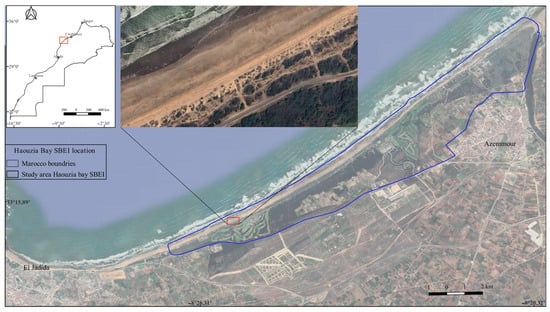
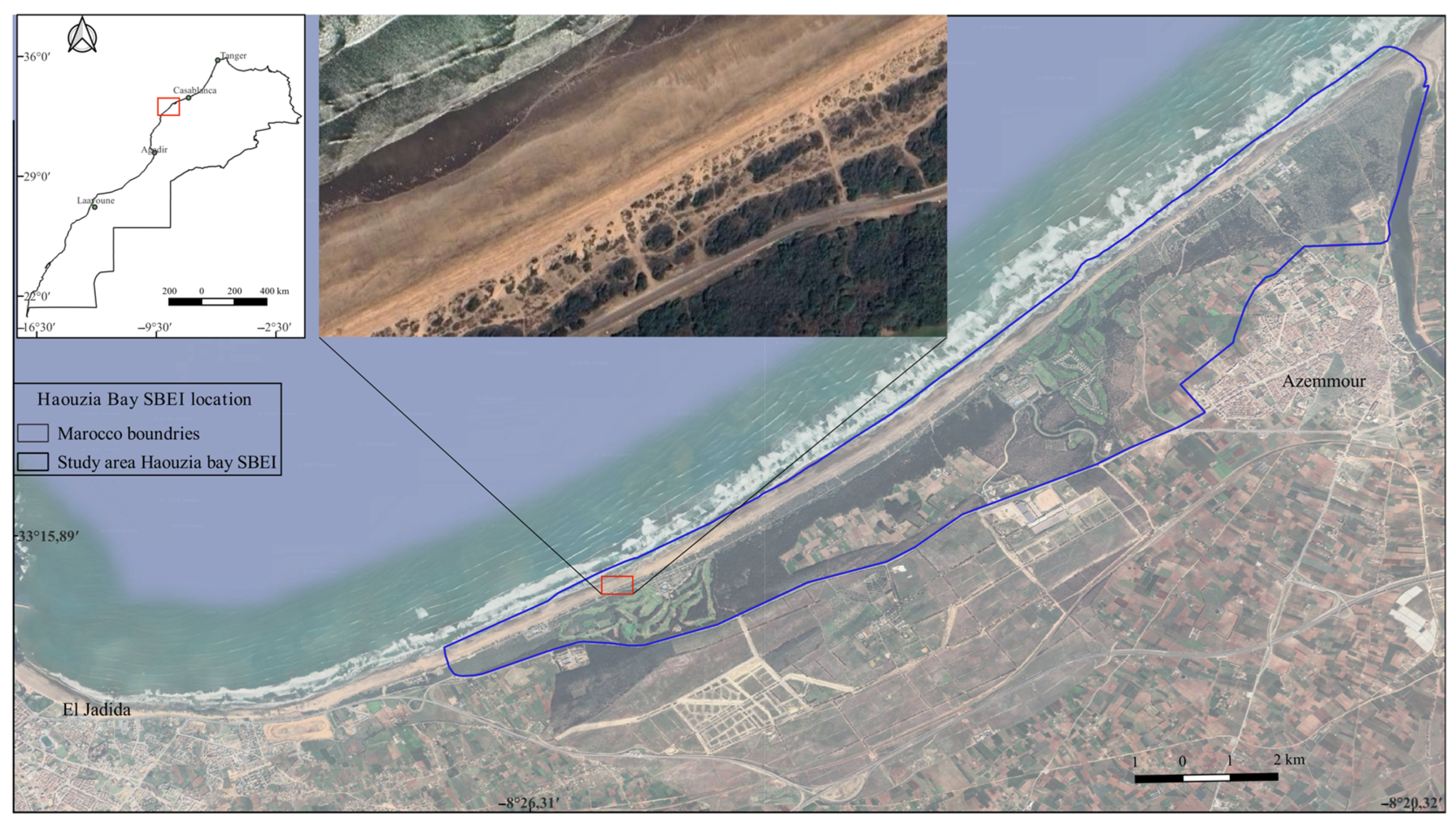
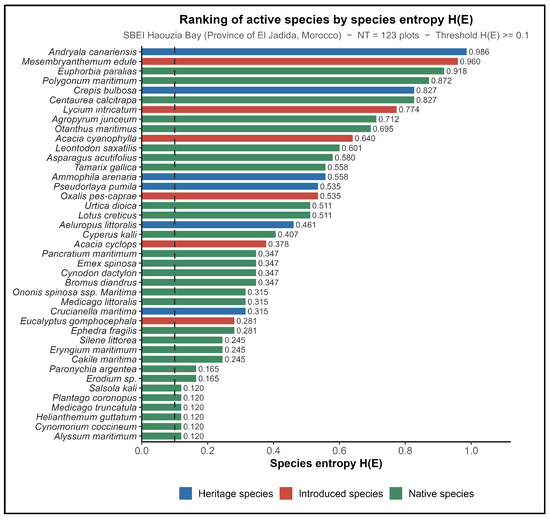
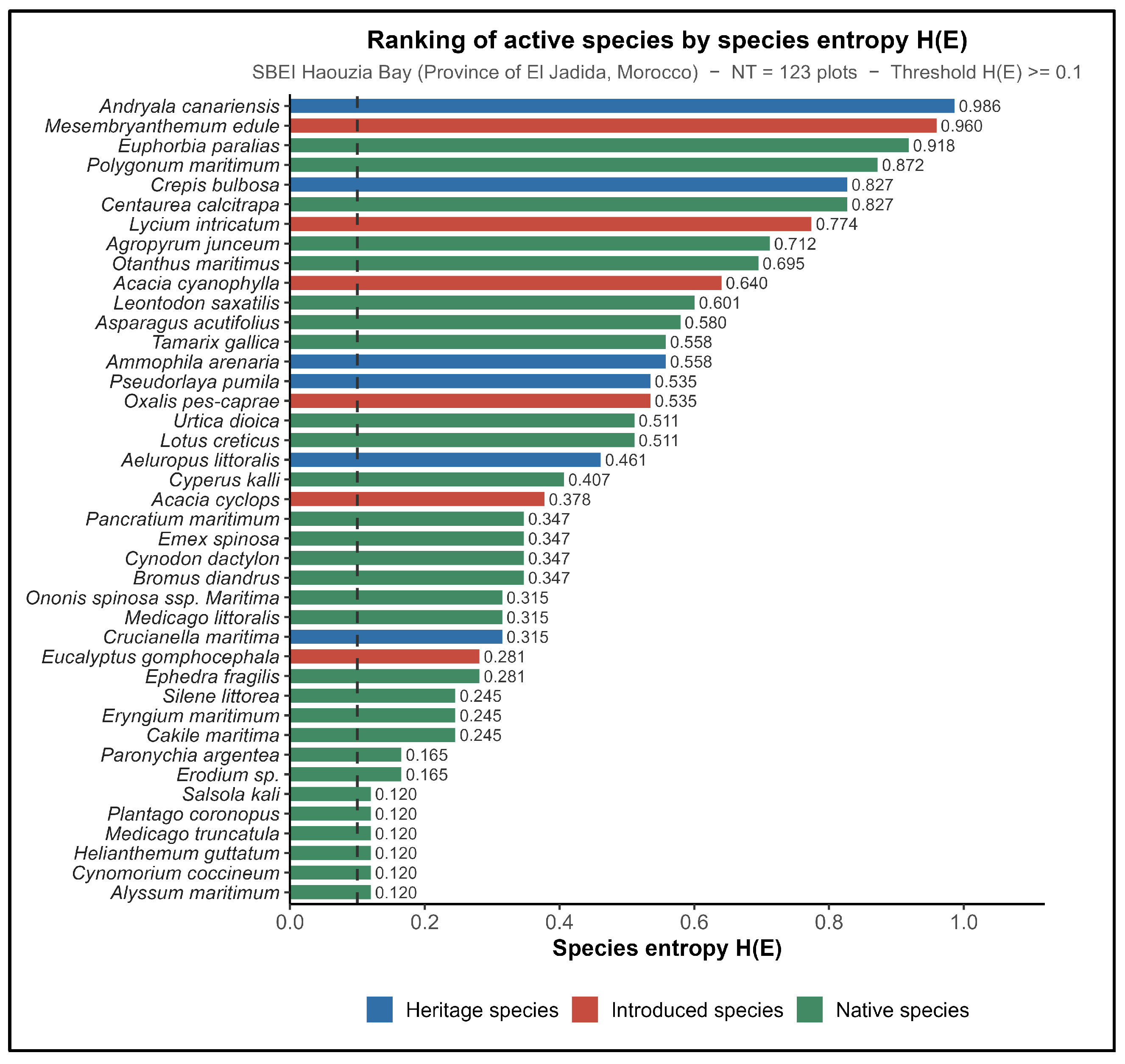
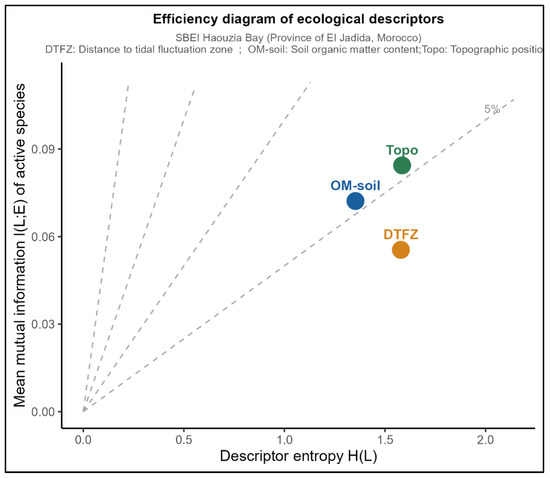
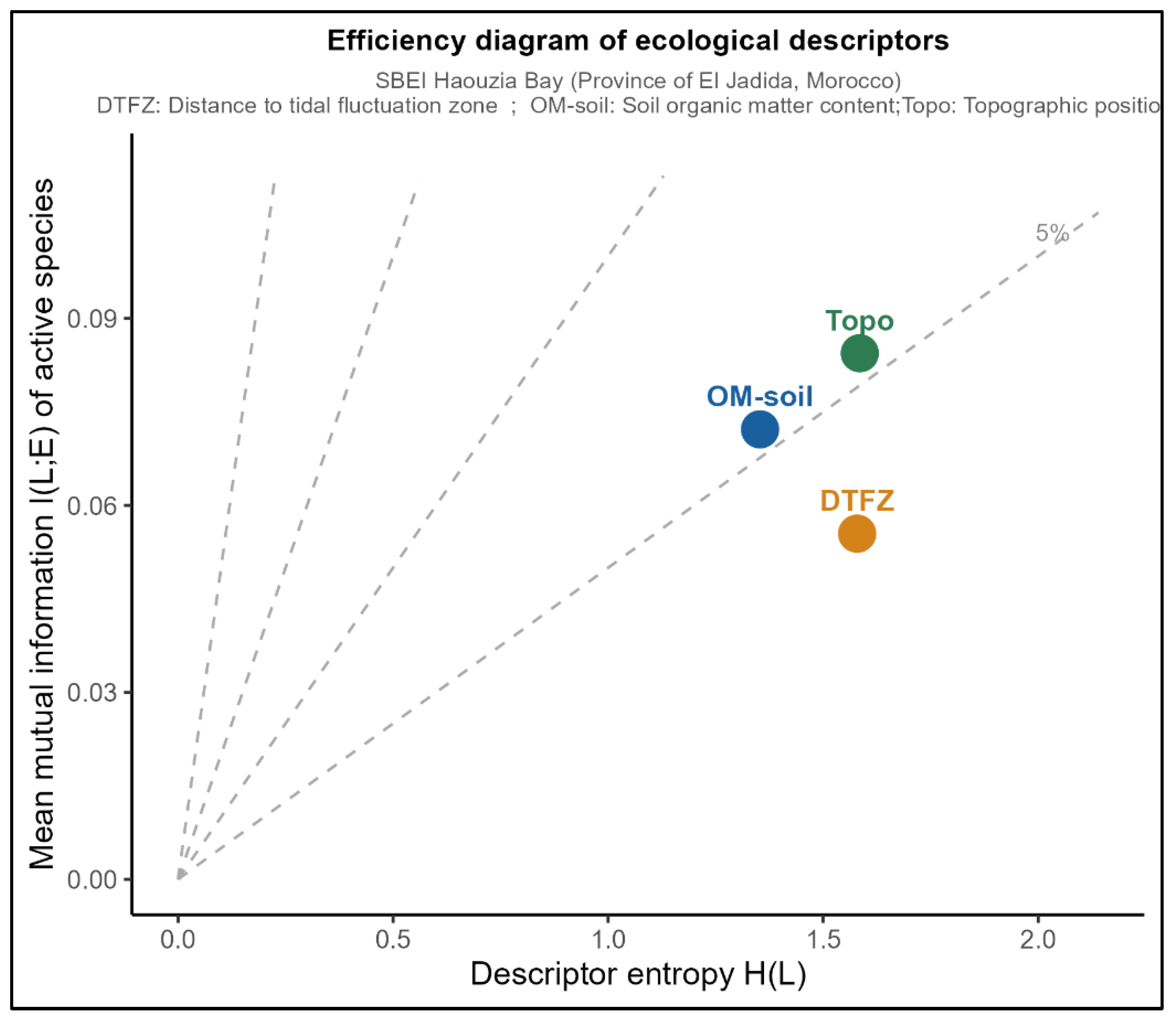
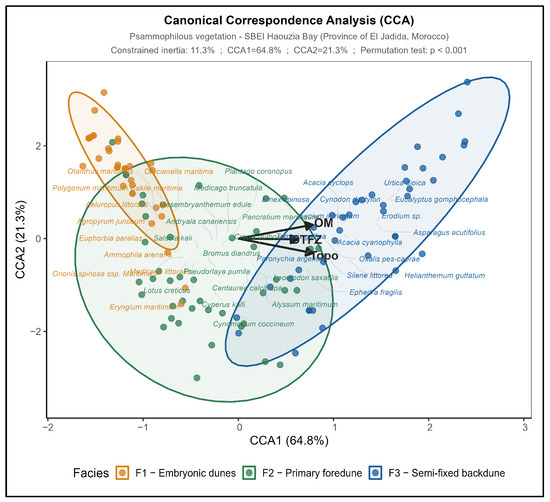
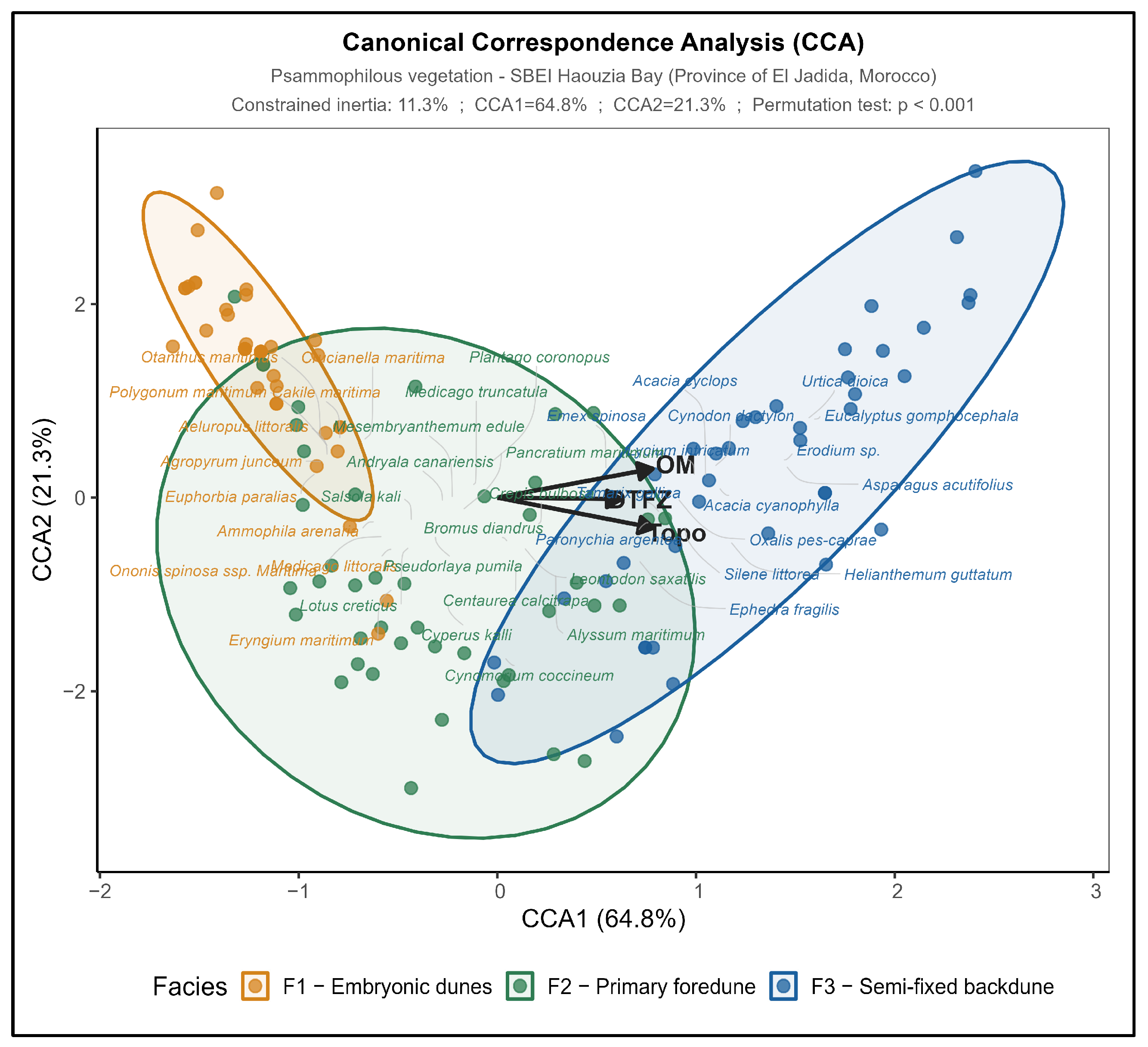
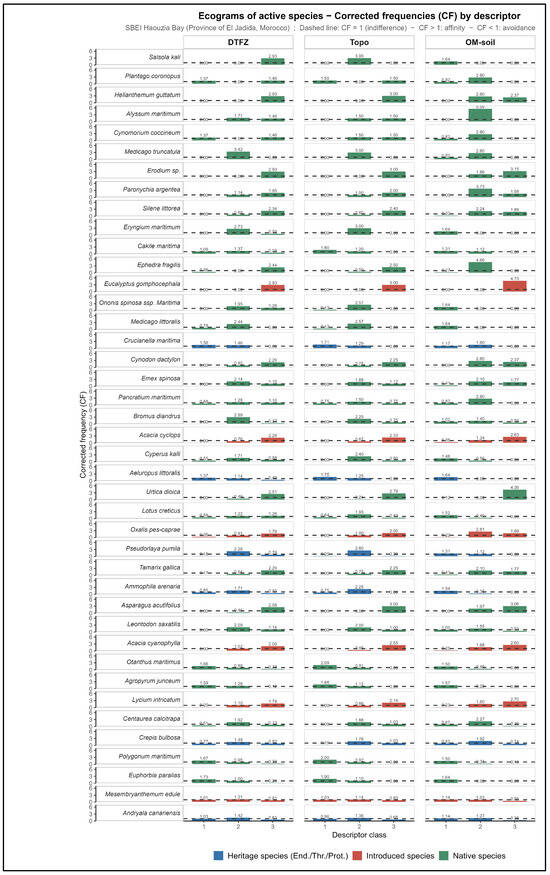
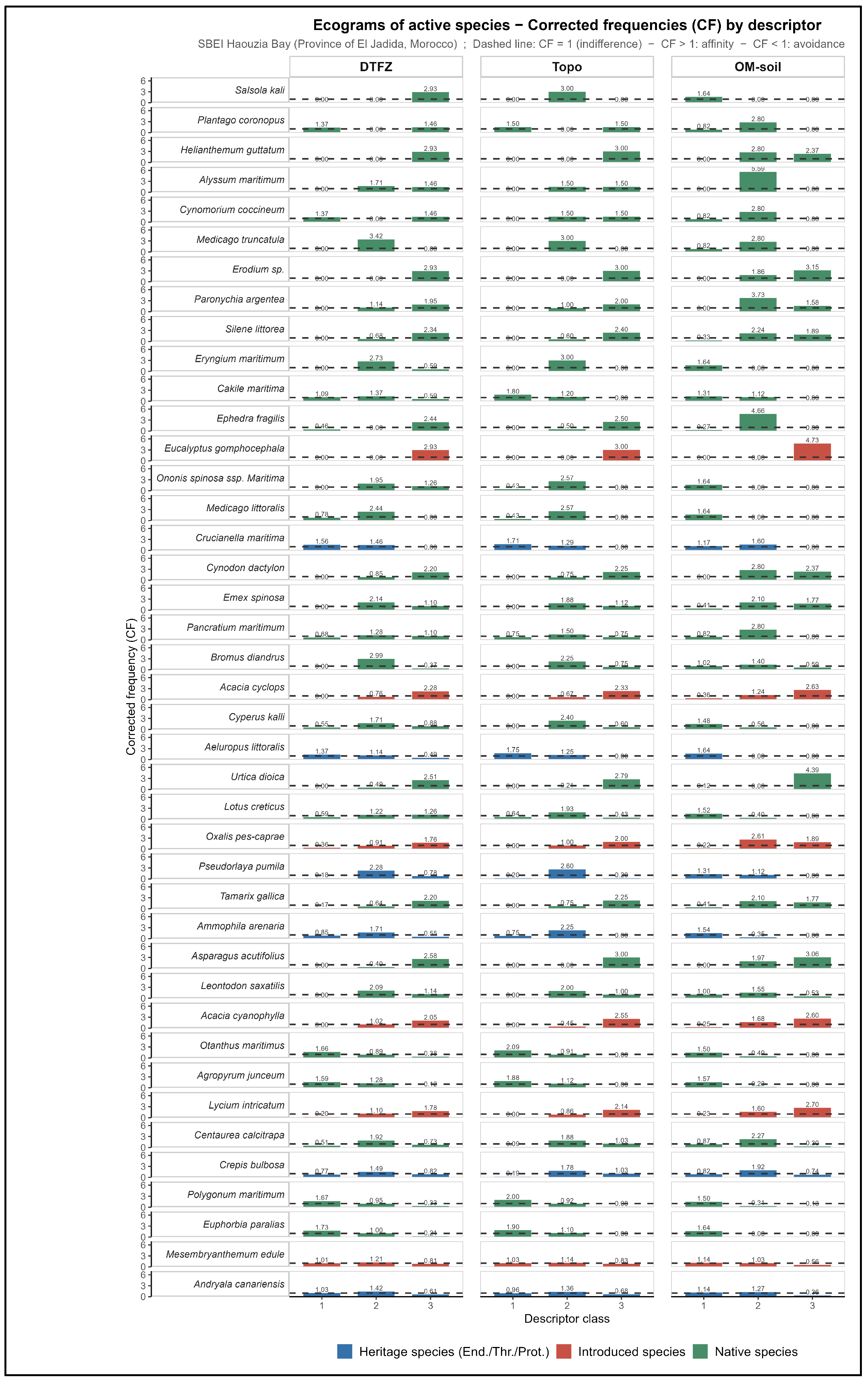
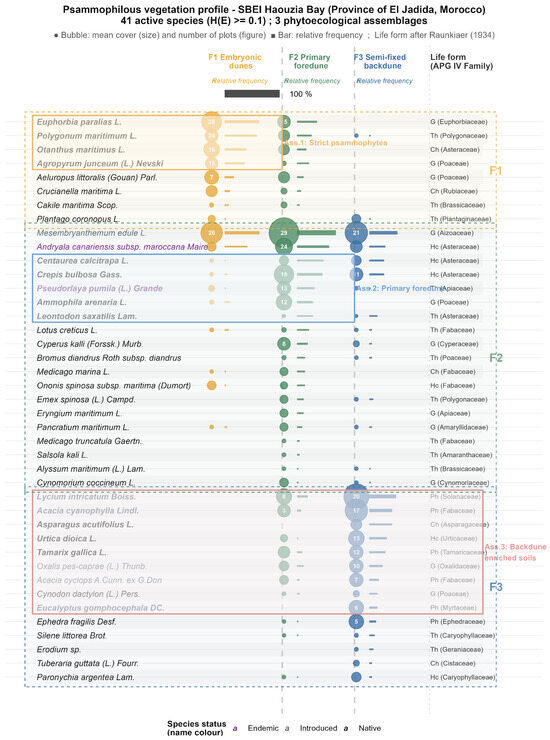
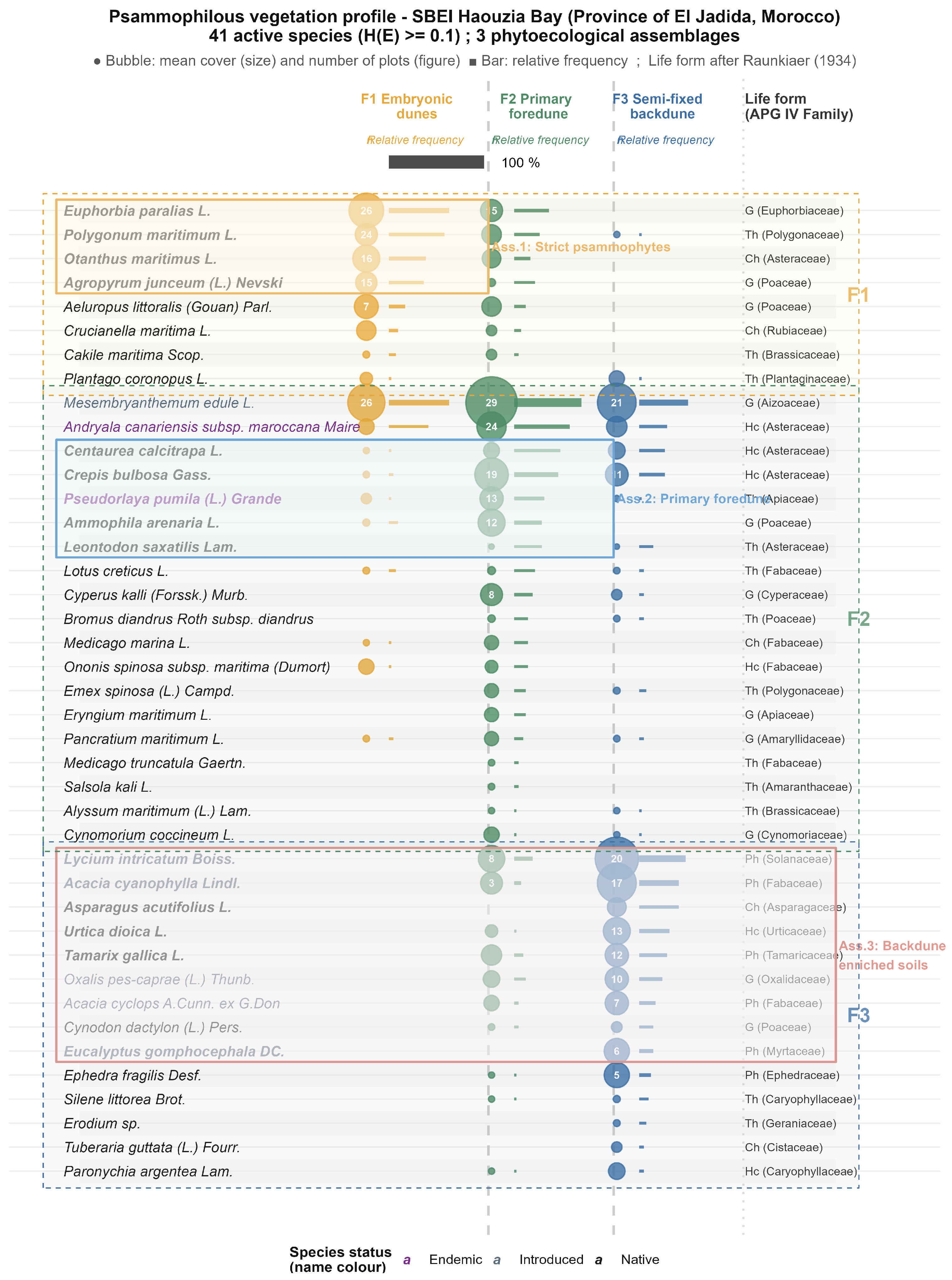

Disclaimer/Publisher’s Note: The statements, opinions and data contained in all publications are solely those of the individual author(s) and contributor(s) and not of MDPI and/or the editor(s). MDPI and/or the editor(s) disclaim responsibility for any injury to people or property resulting from any ideas, methods, instructions or products referred to in the content. |
© 2026 by the authors. Licensee MDPI, Basel, Switzerland. This article is an open access article distributed under the terms and conditions of the Creative Commons Attribution (CC BY) license.