


Abstract
Ruthenium possesses outstanding properties and is widely utilized in many fields. However, its natural scarcity makes the recovery of ruthenium from waste liquids particularly important. A dendrimer-grafted chitosan adsorbent is synthesized through Michael addition and amidation reactions on chitosan, which is then used to adsorb Ru(III) from aqueous solutions. Compared with unmodified chitosan, this adsorbent has abundant binding sites and can rapidly and efficiently adsorb Ru(III) through electrostatic attraction and complexation. Characterization techniques, including FT-IR, XPS, and SEM, confirmed successful modification. Adsorption experiments show that this adsorbent exhibits an adsorption efficiency of up to 97.79% for Ru(III) and saturated adsorption capacity of 162 mg/g. The results of competitive adsorption experiments demonstrate that the adsorbent has good selectivity for Ru(III), retaining 71.22% of adsorption efficiency after five cycles. This work offers a new possibility for the environmentally friendly and efficient recovery of Ru(III) from wastewater.
1. Introduction
Ruthenium, a platinum group metal, possesses properties such as high hardness, catalytic activity, resistance to high temperatures, and corrosion resistance. These attributes have enabled its extensive use in biomedicine, catalysis, semiconductors, alloys, and batteries [1,2,3,4,5,6]. However, ruthenium is scarce in nature and is commonly found alongside other metals, complicating its extraction and resulting in low yields and high prices. Therefore, researchers’ attention has shifted to secondary resource recovery [7], with efforts to extract ruthenium from various wastes and solutions in order to enhance the utilization rate of resources.
High content, straightforward composition, small variety of metal types, and focused range of applications are all benefits of ruthenium scrap. The recovery techniques also differ since ruthenium exists in various chemical forms under different circumstances [8,9]. Currently, oxidative distillation [10] combined with methods such as solvent extraction [11,12], ion exchange [13,14], electrochemistry [15,16] and adsorption [17,18] are the main methods used in industrial applications for ruthenium enrichment and recovery. Although the oxidative distillation method is well-established, it faces challenges such as high volatility and severe equipment corrosion, making technological upgrades urgently needed. Emerging technologies such as solvent extraction, while simple to operate, also pose problems related to organic solvent pollution. Compared to the methods stated above, adsorption has a minimal environmental impact and easy of recycling, thus it has received extensive research.
The most common adsorbents include activated carbon, zeolites, bentonite, chitosan, and biomass [19,20,21,22,23,24]. Among these, chitosan (CS) is considered one of the most promising adsorbent materials due to its biodegradability and ease of modification. However, the small specific surface area and low mechanical strength of CS limit its applications. To enhance adsorption capacity, researchers have introduced functional groups or active structures into CS [25], such as xanthate modification or crown ether doping [26,27]. However, these methods mainly introduce linear or cyclic functional groups, which implies a limited density of binding sites and thus leads to low adsorption capacities, which makes it impossible to achieve efficient recovery of ruthenium.
Polyamidoamine (PAMAM) dendrimers have attracted widespread attention due to their highly branched structure and abundant reactive groups. Their three-dimensional configuration offers ample holes for metal ions to enter [28], making PAMAM widely used in wastewater treatment. To date, no studies have been conducted on the grafting of dendrimer-based macromolecules onto chitosan for Ru(III) adsorption. In this work, drawing inspiration from PAMAM, we synthesized dendrimer-grafted chitosan CS-G1.0 via Michael addition and amidation using chitosan as the substrate. Adding more amino groups not only increases the adsorption capacity for ruthenium but also preserves the characteristics of the natural material, thereby ensuring the adsorbent is environmentally friendly. We applied this adsorbent to adsorb Ru(III) from an acidic solution. Its adsorption capacity was investigated under various experimental conditions, and meanwhile it was characterized using FT-IR, XPS, BET, and SEM to elucidate the adsorption mechanism.
2. Materials and Methods
2.1. Materials
Reagents such as chitosan (CS, 90% deacetylated), methyl acrylate (MA, 99%), ethylenediamine (EDA, 99%), methanol (CH3OH), sodium chloride (NaCl), and sodium hydroxide (NaOH) were provided by Shanghai Macklin Biochemical Technology Co., Ltd. (Shanghai, China). The reagents were used directly without further purification.
2.2. Preparation of Adsorbent
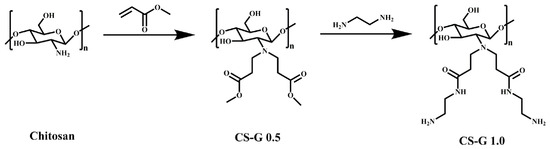
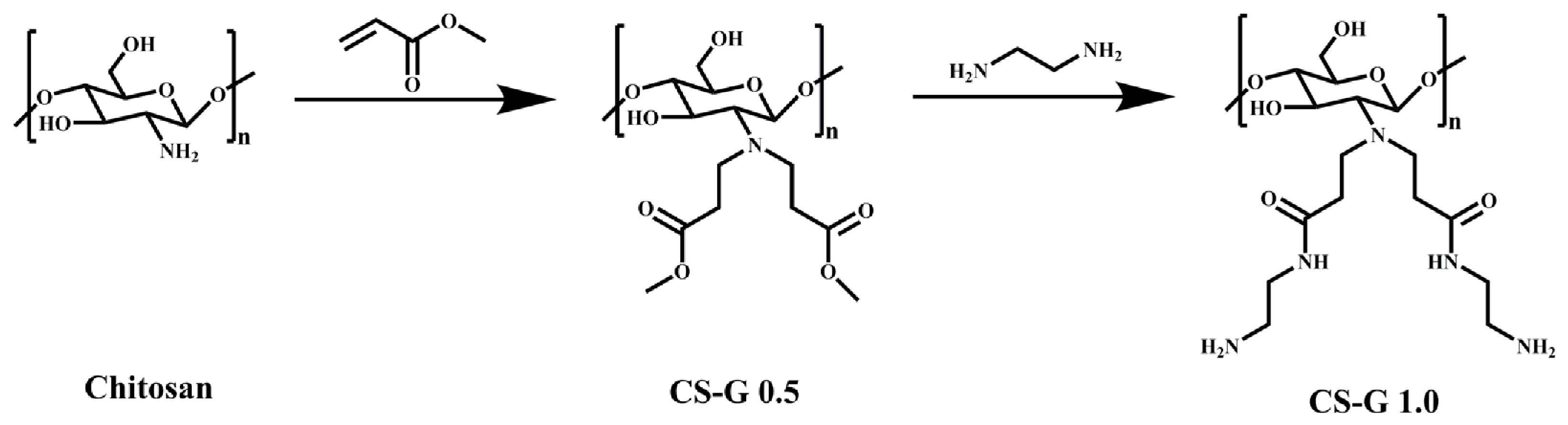
The preparation process of CS-G1.0 is shown in Scheme 1 [29,30]. A total of 1 g of CS and 50 mL of methanol was added into a 250 mL three-neck flask, and then the pH was adjusted to 10 with NaOH. The flask was sealed under an Ar atmosphere and the mixture was stirred at 50 °C for 30 min. A total of 5 mL of MA was added dropwise to the mixture and refluxed at 50 °C for 12 h. The powder was thoroughly washed with methanol after the reaction was complete, then another 50 mL of methanol was added, and the flask was sealed under an Ar atmosphere. After 30 min of stirring at 50 °C, 5 mL of EDA was then dropwise injected into the flask and allowed to react for 12 h. Once the reaction is finished, the powder was rinsed with methanol and dried.
Scheme 1.
The reaction procedure of CS-G1.0.
2.3. Characterization
The changes in functional groups of the adsorbent were analyzed using Fourier transform infrared spectrometer (FT-IR, VERTEX 70, Bruker, Ettlingen, Germany). The surface morphology of the adsorbent was analyzed using field-emission scanning electron microscope (SEM, Gemini 300, Carl Zeiss, Oberkochen, Germany). The chemical content and condition of the adsorbent was determined using an X-ray photoelectron spectrometer (XPS, Thermo Scientific ESCALAB 250Xi, Thermo Fisher Scientific, Waltham, MA, USA).
2.4. Adsorption Experiments
The effects of factors such as the amount of adsorbent, adsorption time, solution pH, NaCl concentration, temperature, coexisting cations, and recycling performance on the adsorption efficiency of Ru(III) were studied. By dissolving RuCl3·3H2O in NaCl solutions of varying concentrations and adjusting the pH to obtain the desired Ru(III) aqueous solution. Adsorption experiments were carried out at 298 K using a constant temperature oscillator at 300 rpm. After the process was complete, the solid and liquid phases are separated, and the metal content in the solution is determined using a UV-visible spectrophotometer and an inductively coupled plasma optical emission spectrometer (ICP-OES). The calculation formulas for the adsorption rate E and the adsorption amount Qt are as follows:
In the formula: C0 is the original concentration of Ru(III) (mg/L); Ce is the equilibrium concentration of Ru(III) (mg/L); V is the solution volume (mL); and m is the amount of adsorbent mass (g).
3. Results and Discussion
3.1. DFT Calculation
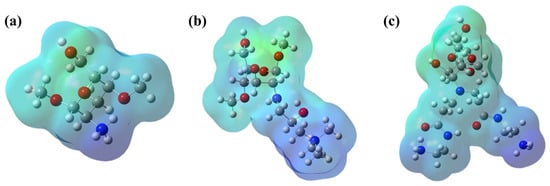
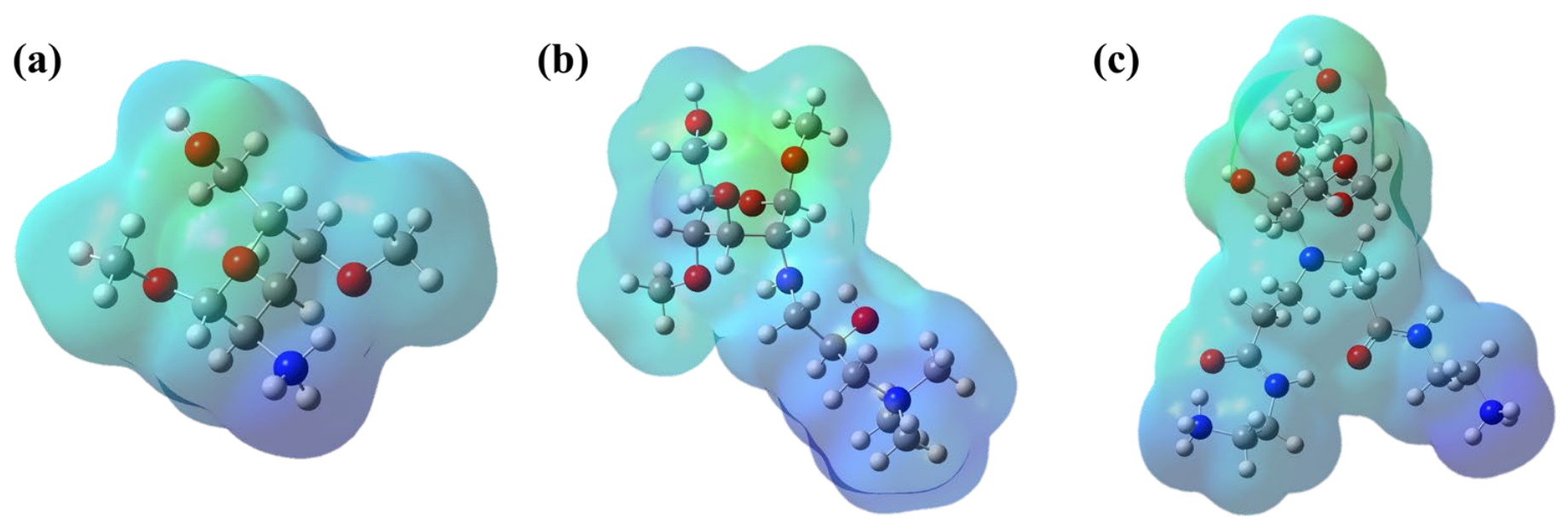
The structures of protonated chitosan (CS), quaternary ammonium-grafted chitosan (HACC), and protonated amino-modified chitosan (CS-G1.0 in this work) were determined using density functional theory (DFT), as well as their Ru(III) adsorption binding energies. The Ru atom was modeled using the large-core relativistic effective core potential set GENCP, whereas the remaining atoms (C, H, O, N, and Cl) were modeled with the 6-31+G(d) functional. The calculation results are shown in Figure 1. In comparison with the first two adsorbents, the molecular chains in CS-G1.0 extend over a wider range and thus form more empty cavities, which are capable of capturing more metal ions. The binding energies of the three structures with Ru(III) were calculated to be −15.19 eV, −17.04 eV and −32.49 eV respectively. It can be seen that the binding energy of CS-G1.0 is significantly higher than that of the other two, and is therefore more efficient for the adsorption of Ru(III).
Figure 1.
DFT calculation of (a) CS; (b) HACC and (c) CS-G1.0.
3.2. Characterization of Materials
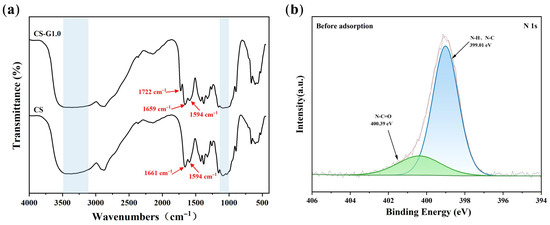
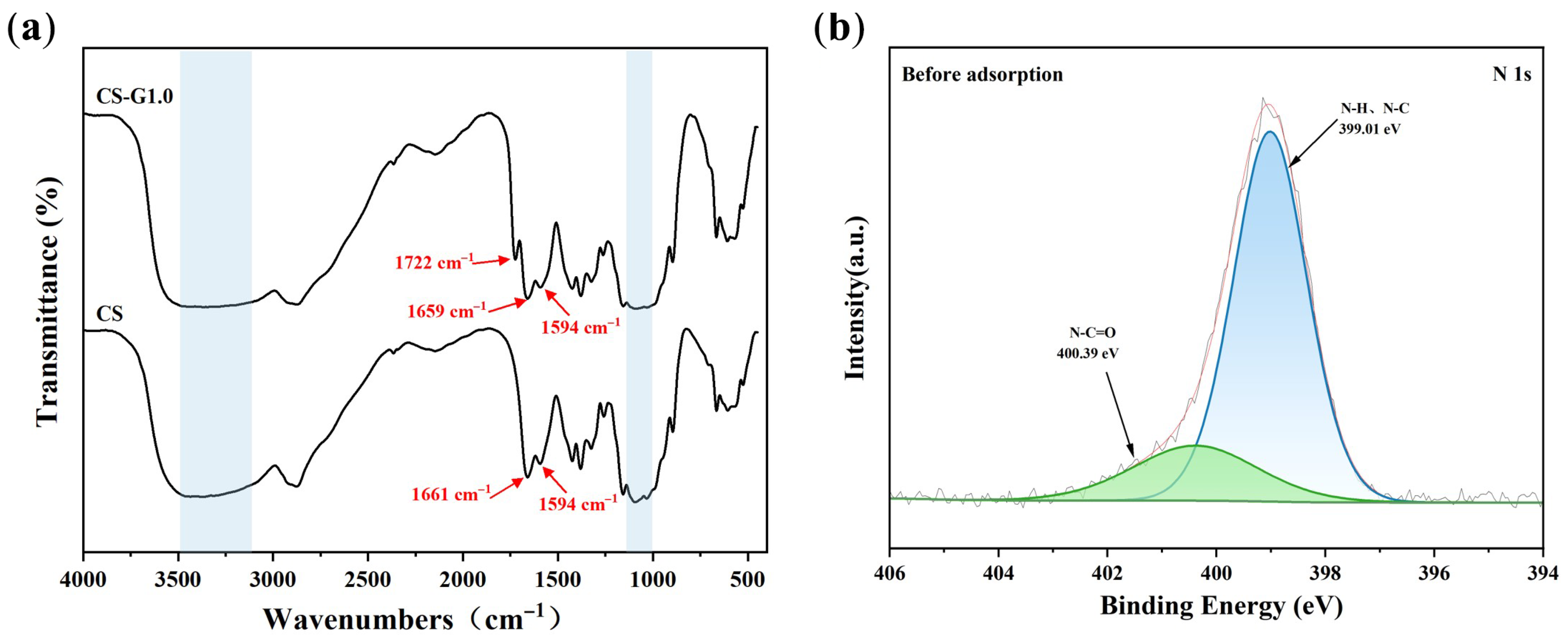
The functional group composition of the surfaces of CS and CS-G1.0 was analyzed through FT-IR, and the results are shown in Figure 2a. In the infrared spectrum of CS, the peak at 1594 cm−1 corresponds to the bending vibration of the -NH2 primary amine group [31]. Following a two-step synthesis, this peak became noticeably broader in the CS-G1.0 spectrum; this is due to the overlap of the C-N absorption peak of the amide [32] and the N-H absorption peak of the primary amine. Peak broadening in the 3300–3500 cm−1 range results from the merging of the original peak with the additional N–H bond characteristic peak [33]. The amide C=O stretching vibration at 1661 cm−1 in pristine chitosan [33] shifted to 1659 cm−1 after grafting, indicating that the newly introduced amide groups and secondary amines form strong hydrogen bonds increase the electron density on the oxygen atom and thus cause a red shift. In addition, a weak band at 1722 cm−1 corresponding to ester C=O stretching [34] was observed, suggesting that a small fraction of the CS-G0.5 intermediate was not fully converted to the final amide product during the amidation reaction. Moreover, the absorption bands in the region of 1028–1150 cm−1, assigned to C-O-C and C-OH vibrations of the chitosan backbone [35], remained essentially unchanged, confirming that the glucopyranose ring and the hydroxyl groups at C2 position were not destroyed during the modification. Collectively, these spectral features provide solid evidence that the grafting proceeded as expected via the designed two-step route.
Figure 2.
(a) FT-IR spectra of chitosan and CS-G1.0; (b) N 1s XPS spectra of CS-G1.0.
The XPS spectra data were acquired from three different regions of each sample and averaged. Figure 2b shows the N 1s spectra of CS-G1.0; the peak at 400.39 eV represents the N-C=O bond [32]. As shown in Table 1, the surface elemental compositions of CS and CS-G1.0 were determined. The nitrogen atomic percentage increased from 6.44% for CS to 12.59% for CS-G1.0. These observed changes collectively indicate that the adsorbent has been successfully synthesized.
Table 1.
Element mass percentages of CS and CS-G1.0.
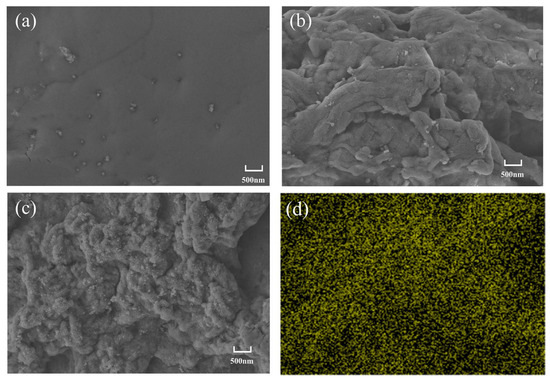
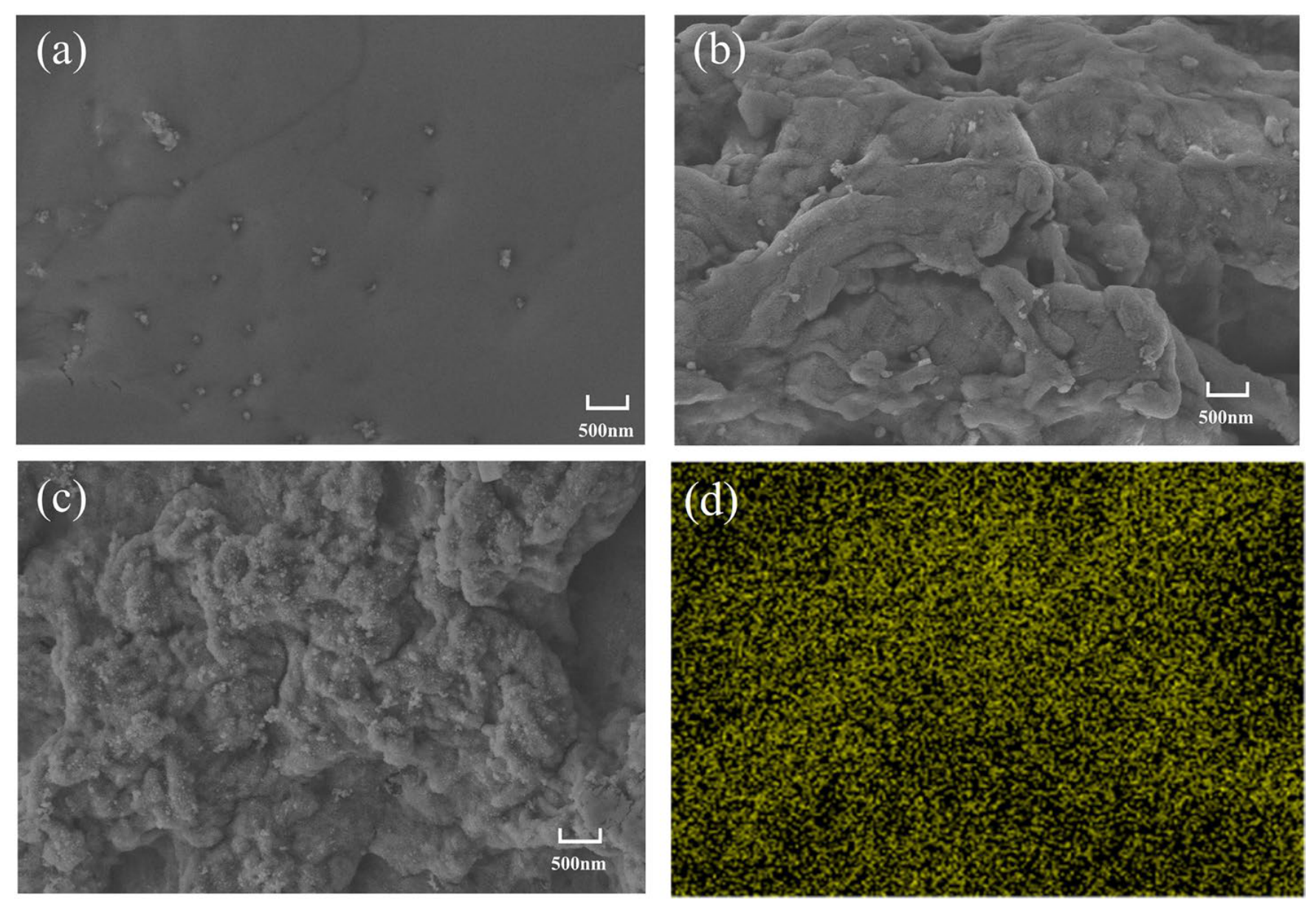
The surface morphology was characterized through field-emission scanning electron microscopy (SEM). As seen in Figure 3, the surface of CS-G1.0 (b) exhibited a rougher and more wrinkled surface than CS (a). This structural characteristic increases the specific surface area, thereby exposing more active sites, which could make it easier to trap more metal ions. After adsorption, the SEM image (c) and SEM-EDS elemental distribution map (d) revealed uniform distribution of Ru(III) on the adsorbent surface.
Figure 3.
Surface morphology of (a) CS; (b) CS-G1.0; (c) after adsorption of CS-G1.0; and (d) SEM-EDS elemental distribution map of Ru(III).
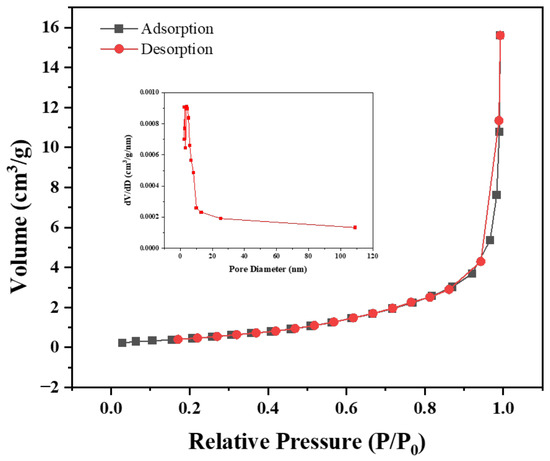
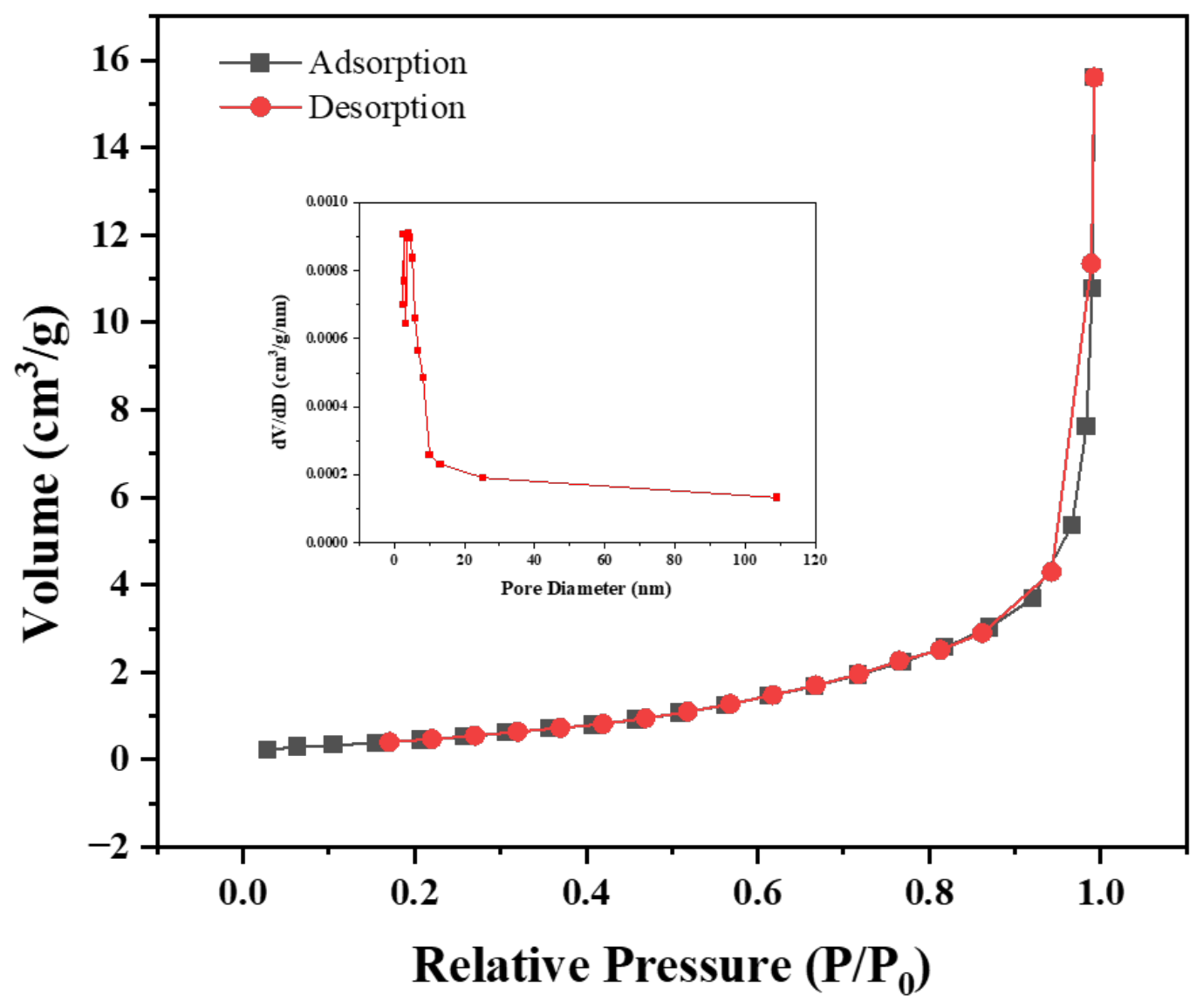
N2 adsorption–desorption tests were performed and specific surface areas were calculated using the BET method. The results are shown in Figure 4 and Table 2. The surface area of pristine CS was 0.779 m2/g, while that of CS-G1.0 increased to 1.885 m2/g. This increase is consistent with the rougher and more wrinkled surface morphology observed through SEM (Figure 3b). However, the enhanced specific surface area is still relatively low, suggesting that physical adsorption via pore filling is not the dominant mechanism. That means that the enhanced adsorption performance of CS-G1.0 for Ru(III) should be primarily attributed to the abundant amino and amide groups introduced through dendrimer grafting, which serve as strong binding sites via electrostatic attraction and complexation. The moderately increased surface area facilitates the exposure of these active sites.
Figure 4.
N2 adsorption–desorption curve and pore distribution curve of CS-G1.0.
Table 2.
Pore characteristics of CS and CS-G1.0.
3.3. Adsorption Studies
3.3.1. Effect of Adsorbent Mass
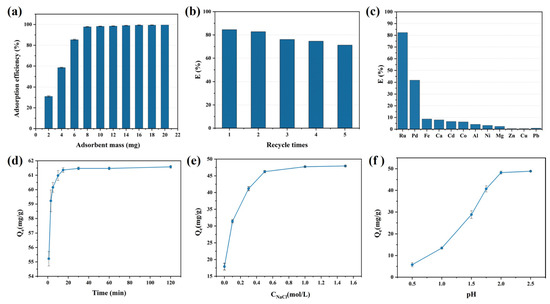
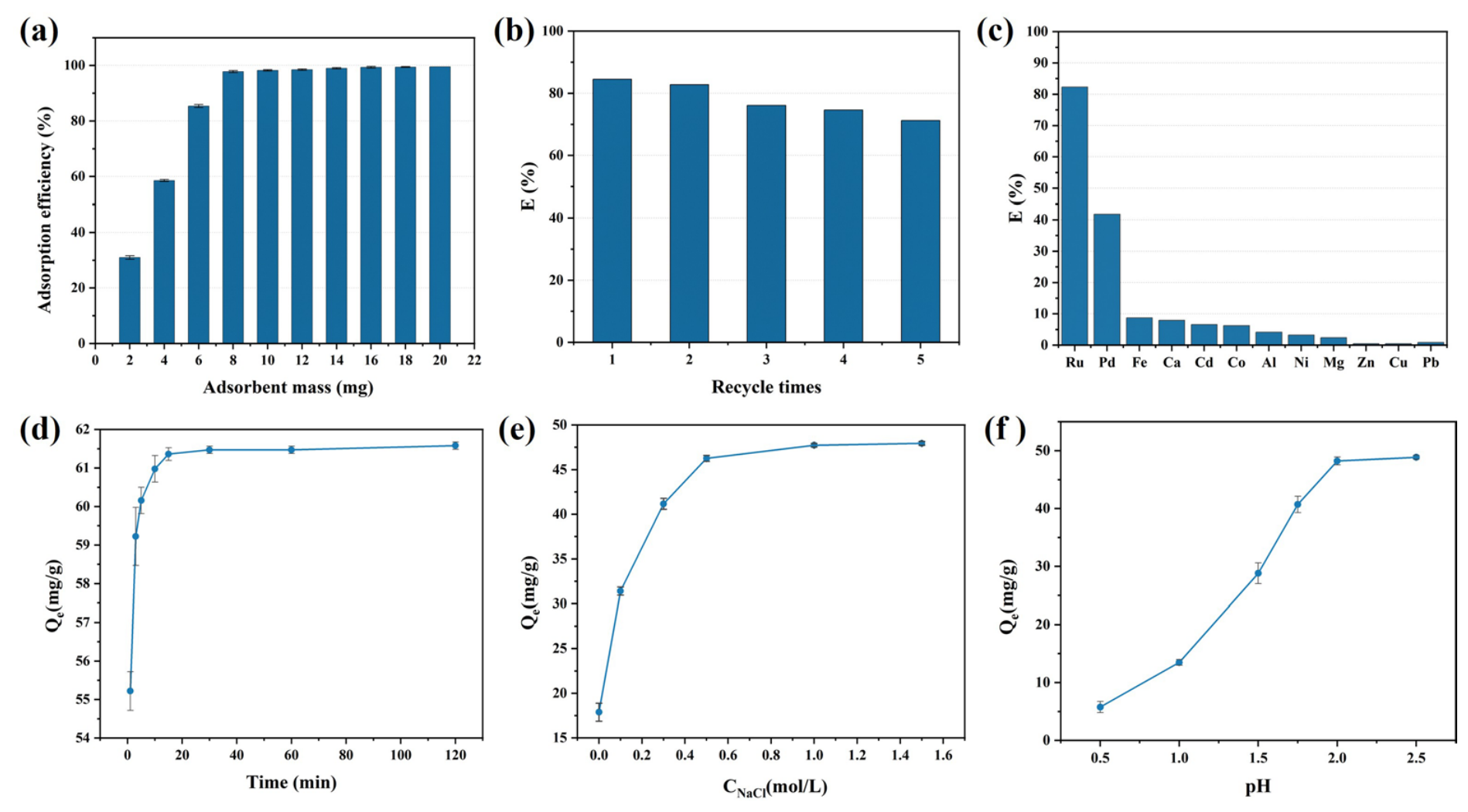
Adsorbent dosage significantly influences the adsorption rate of metals. Our goal was to maximize adsorption performance while conserving resources. As shown in Figure 5a, when the Ru(III) concentration was held constant, the adsorption rate rose from 30.94% to 97.79% as the adsorbent mass increased from 2 mg to 8 mg. This is because the number of effective adsorption sites increases with the amount of adsorbent. When the adsorbent dosage was increased from 8 mg to 20 mg, the adsorption rate remained essentially constant, indicating that the concentration of Ru(III) in the solution has already decreased to a certain level, requiring a higher capture capacity for further removal. Therefore, considering both cost and efficiency, an adsorbent dosage of 8 mg was chosen for further experiments.
Figure 5.
(a) Effect of CS-G1.0 dosage on the adsorption of Ru(III) (t = 30 min, pH = 2.5, V = 5 mL, CNaCl = 0.5 M); (b) the adsorption efficiency of 5 recycles of Ru(III) (m = 8 mg, V = 5 mL, t = 30 min); (c) adsorption selectivity in the coexistence of various metal ions (m = 8 mg, V = 5 mL, t = 30 min); (d) effect of time on the adsorption of Ru(III) (m = 10 mg, pH = 2.5, V = 5 mL, CNaCl = 0.5 M); (e) effect of NaCl concentration on the adsorption of Ru(III) (m = 8 mg, pH = 2, V = 5 mL, t = 30 min); (f) effect of pH on the adsorption of Ru(III) (m = 8 mg, CNaCl = 0.5 M, V = 5 mL, t = 30 min).
3.3.2. Effect of Adsorption Time
Adsorption time is an important metric for evaluating the adsorbent’s capability, as an excellent adsorbent must be able to rapidly remove Ru(III) from wastewater. Figure 5d describes the effects of adsorption time by CS-G1.0. The adsorption amount grew rapidly in the beginning and gradually reached the equilibrium after 15 min. This behavior is attributed to the abundance of accessible active sites at the start of adsorption; as time passed, these sites were gradually occupied and the adsorption quantities remained essentially constant, with around 61.58 mg/g of the Ru(III) adsorbed. To ensure complete adsorption, the duration of the subsequent experiment was set at 30 min.
3.3.3. Effect of NaCl
Ru(III) in aqueous solution undergoes hydrolysis and exists in various forms at different chloride ion concentrations [36]; therefore, the influence of NaCl concentration on adsorption was investigated. Figure 5e demonstrates that the adsorption amount improved with growing NaCl concentration, showing that Cl− serves to stabilize the Ru(III) species [37], thereby effectively promoting the adsorption of Ru(III). When the concentration of NaCl exceeded 0.5 M, the adsorption amount almost reached equilibrium, consequently, 0.5 M NaCl was used in subsequent experiments.
3.3.4. Effect of pH
pH influences the coordination state of Ru(III) and the degree of protonation of the adsorbent. When the pH is over 3, ruthenium rapidly oxidizes and undergoes hydrolytic polymerization [38], forming a black precipitate. Therefore, the influence of pH on the adsorption capacity of CS-G1.0 for Ru(III) was investigated in the pH range of 0.5–2.5, and the result is demonstrated in Figure 5f. In this pH range, the amino group is protonated. As the pH increases, the degree of protonation decreases [39], and the restored amide site can form a coordination bond with ruthenium. The adsorption quantities showed little change when the pH exceeded 2; all subsequent experiments were conducted at a pH of 2.
3.3.5. Reusability
The regeneration capacity of adsorbents is a crucial indicator in industrial applications, which has significant impact on sustainable development and waste reduction. To ensure that the eluted Ru(III) could be easily regenerated, we used 2 M HCl as the eluent to investigate the reusability of CS-G1.0. Figure 5b displays the results. The adsorption efficiency of CS-G1.0 for Ru(III) dropped from 84.53% to 71.22% following five adsorption–desorption cycles. The decline in adsorption capacity may be attributed to the relatively high concentration of 2 M HCl, which caused the chitosan chains to break, resulting in some loss of adsorbent activity.
3.3.6. Selectivity of Adsorbent
Secondary waste containing ruthenium also contains various competing metals [40,41,42,43], which can significantly impact the adsorption and recovery of Ru(III). Static adsorption tests were therefore conducted on some common metal ions to investigate the adsorbent’s selectivity for Ru(III). The results are shown in Figure 5c. At an ion concentration of 100 ppm, the adsorbent preferentially adsorbed Ru(III), followed by Pd, with extremely low adsorption of other ions. Even in the presence of various interfering ions, the adsorption rate for Ru(III) still reached 82.33%, indicating that this adsorbent can be used for the recovery of ruthenium from impure wastewater.
Under the experimental chloride ion concentrations, Ru(III) predominantly exists as complex anionic chlorocomplexes [18]. At pH = 2, the protonated amino groups carry a high positive charge and adsorb Ru(III) via electrostatic attraction. Furthermore, Pd(II) can also form anionic chlorocomplexes in chloride solution [44], resulting in a small amount of adsorption. However, other metal ions are largely cationic under acidic conditions and are thus electrostatically repelled. Amide groups, on the other hand, adsorb metal ions via complexation, and thus other metals are also adsorbed to a small extent. Selective adsorption experiments thus confirm that electrostatic attraction is the primary mechanism for Ru(III) uptake.
3.4. Study of Adsorption Kinetics
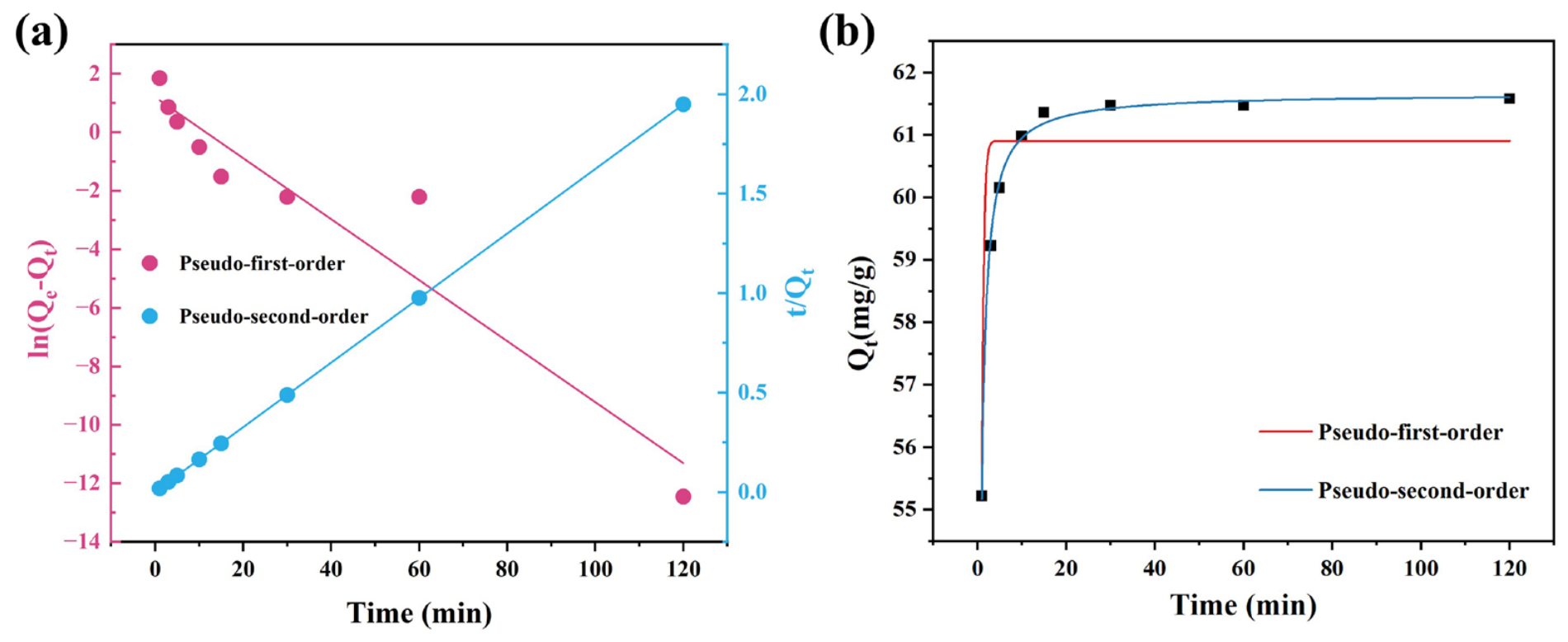
The adsorption kinetics mechanism of CS-G1.0 was analyzed by fitting the data using pseudo-first-order and pseudo-second-order kinetic models. These two kinetic models are commonly used to describe the adsorption behavior in solid–liquid systems. The linear fitting equations are given in (3) and (4) and the nonlinear ones in (5) and (6) [45].
In the equations, k1 represents the kinetic constant of the pseudo-first-order model, k2 represents the kinetic constant of the pseudo-second-order model, Qt is the mass of Ru(III) adsorbed by the adsorbent at time t (mg/g), and Qe is the amount of Ru(III) adsorbed by the adsorbent at equilibrium (mg/g).
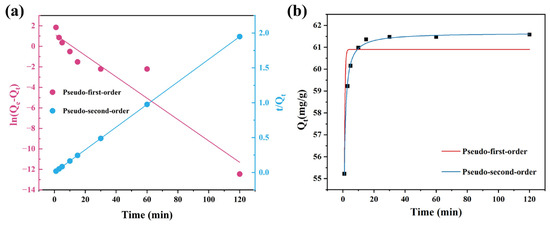
The results of the kinetic model fitting for the adsorption of Ru(III) are shown in Figure 6. The kinetic parameters and correlation coefficients are listed in Table 3. The data indicate that, regardless of whether linear or nonlinear fitting is employed, the pseudo-second-order kinetic model fits the adsorption process better, with a higher correlation coefficient than the pseudo-first-order kinetic model. Furthermore, the equilibrium adsorption capacity predicted by the pseudo-second-order kinetic model is closer to the experimental values. This shows that Ru(III) is adsorbed chemically by the adsorbent [46].
Figure 6.
Kinetic model fitting for adsorption of Ru(III) on CS-G1.0. (a) Linear fitting; (b) Nonlinear fitting.
Table 3.
Linear and nonlinear fitting of relevant parameters for the kinetic model.
3.5. Study of Adsorption Isotherm
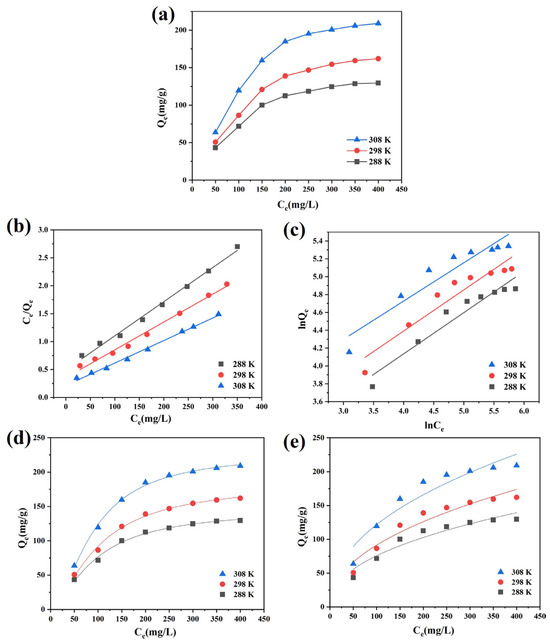
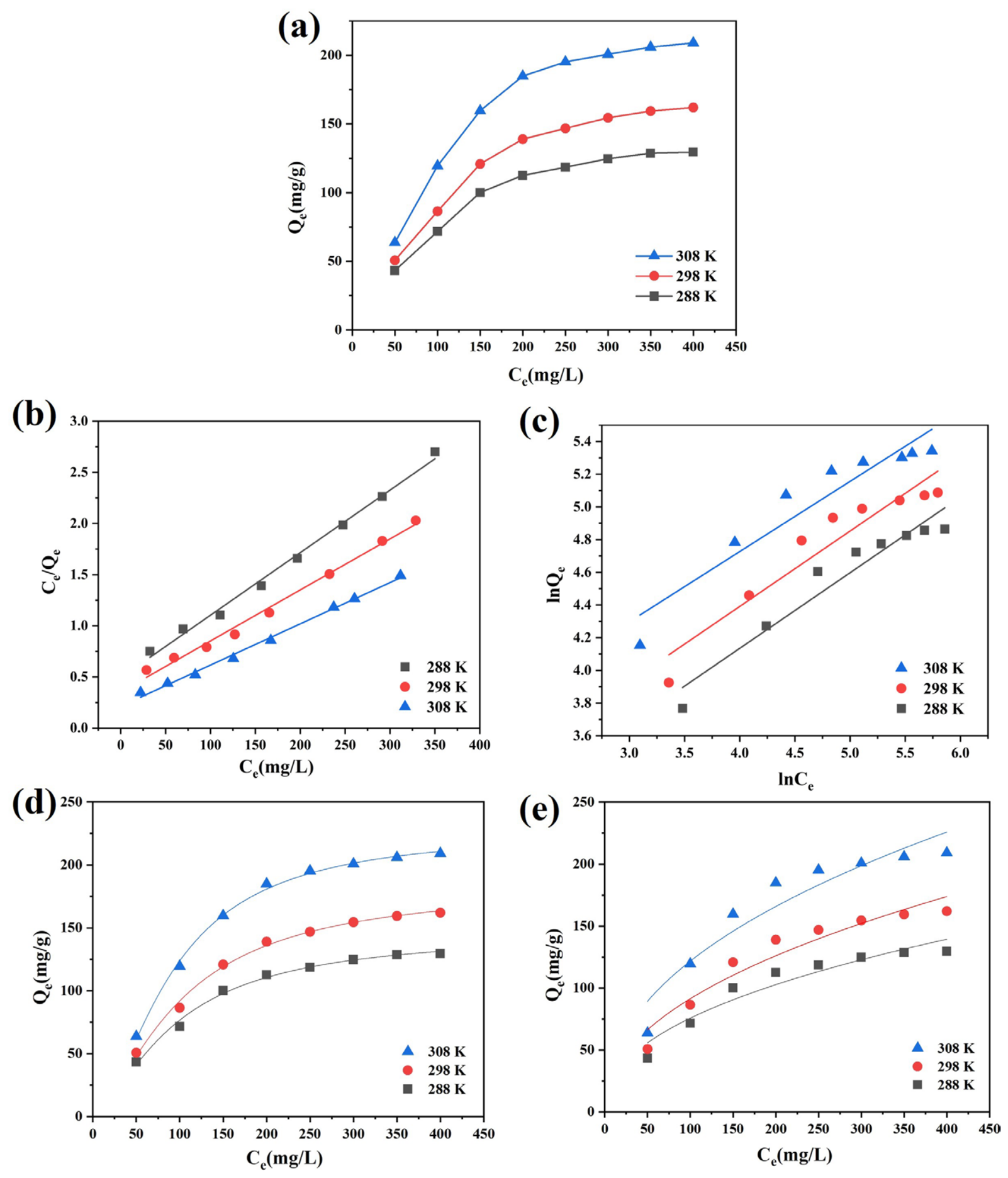
The adsorption capacity of CS-G1.0 at different temperatures and initial ion concentrations was evaluated and the results are shown in Figure 7. At the same initial ion concentration, the equilibrium adsorption amount increased gradually with increasing temperature, indicating that the adsorption of Ru(III) by CS-G1.0 is an endothermic process and that higher temperature promotes adsorption. The equilibrium adsorption quantities also increased when the ion concentration increased at a constant temperature. The maximal adsorption amount is 162 mg/g at room temperature (298 K). Table 4 lists adsorbents used for adsorbing ruthenium under acidic conditions and compares their saturated adsorption capacities and equilibrium times. It can be seen that our adsorbent has significant advantages under acidic conditions.
Figure 7.
(a) Adsorption isotherms of Ru(III) on CS-G1.0 (m = 4 mg, pH = 2, V = 10 mL, CNaCl = 0.5 M, t = 30 min); linear fitting plots for adsorption isotherms of (b) Langmuir and (c) Freundlich; nonlinear fitting plots for adsorption isotherms of (d) Langmuir and (e) Freundlich.
Table 4.
The adsorption capacities and equilibrium times of different adsorbents for ruthenium.
The Langmuir and Freundlich isotherm models were used to fit the relevant experimental data to investigate the mechanism of interaction between the adsorbent and metal ions. The Langmuir model assumes that the adsorbent surface is uniform, the adsorbate forms a single molecular layer, and there is no interaction between adsorbed molecules [49]. The Freundlich model is an empirical equation, which assumes that the adsorbent surface is heterogeneous and that the adsorbate forms a multilayer on the adsorbent surface [50]. The linear fitting equations for the Langmuir and Freundlich models are given in (7) and (8), respectively, and the nonlinear ones in (9) and (10).
where Qmax and Qe represent the maximum and equilibrium adsorption capacities of the adsorbent (mg/g); Ce represent the equilibrium ion concentrations (mg/L); KL is the Langmuir constant; KF is the Freundlich constant; and n is a constant related to the adsorption strength.
The results of the isothermal adsorption model fits are shown in Figure 7b–e. The relevant fitting parameters are listed in Table 5. As can be seen from the data in the graph, whether using linear or nonlinear fitting, the adsorption behavior is better described by the Langmuir model, indicating monolayer adsorption.
Table 5.
The fitting parameters of the Langmuir and Freundlich isothermal adsorption models.
3.6. Adsorption Mechanism
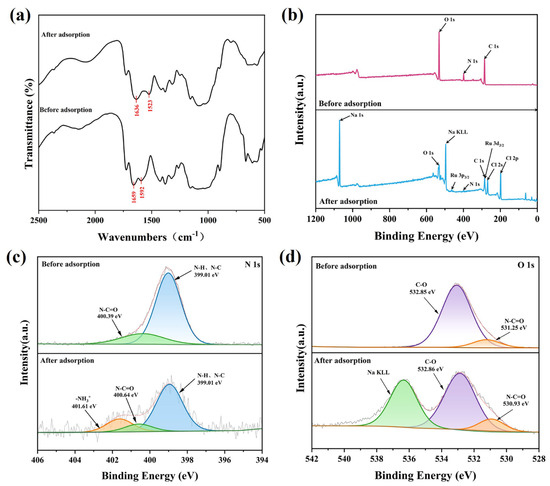
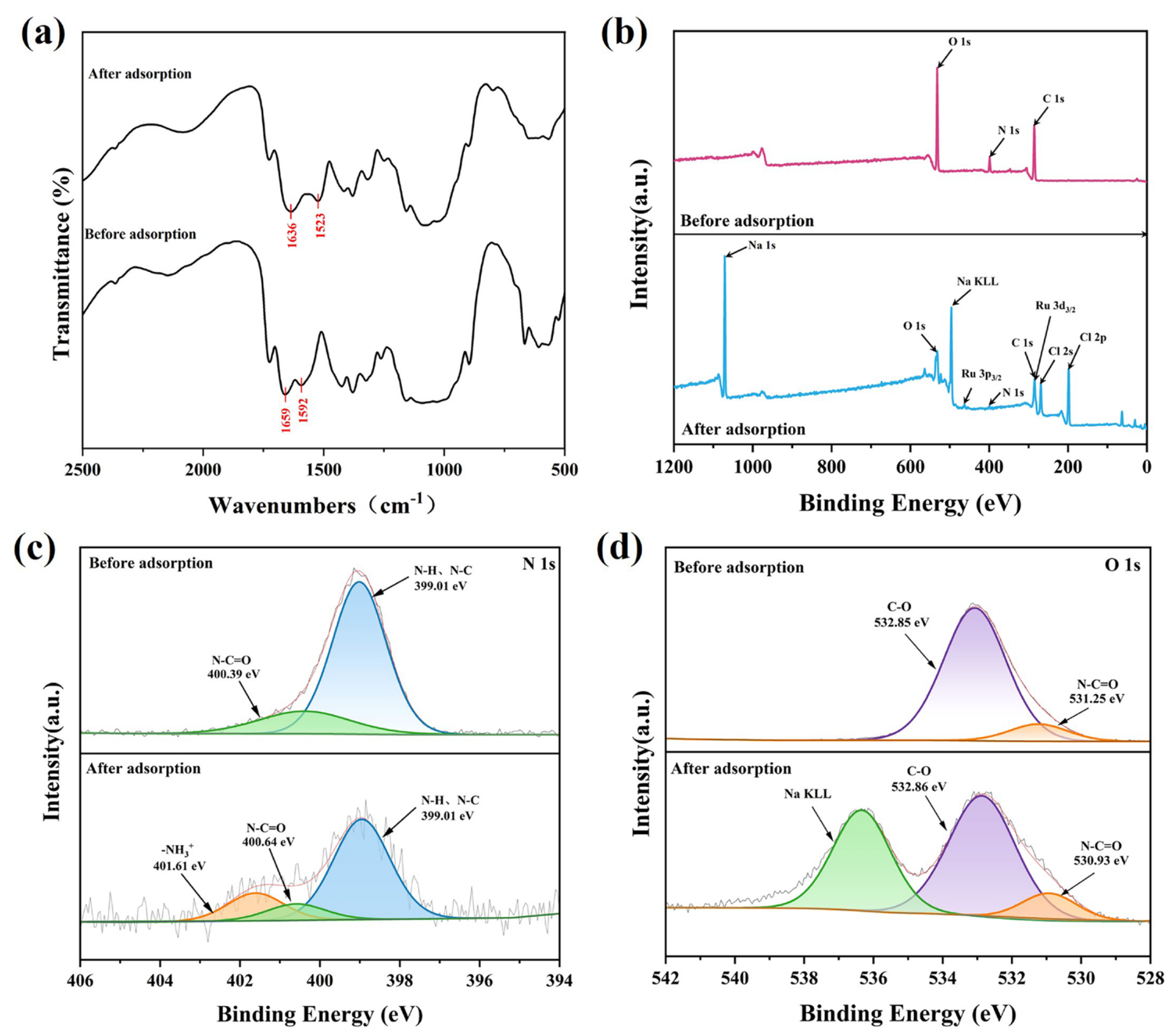
Figure 8a displays the FT-IR spectra before and after adsorption. The absorption peak for -NH2 shifted from 1592 cm−1 to 1523 cm−1, demonstrating that the amino group plays a role in adsorption. The C=O group of the amide shifted from 1659 cm−1 to 1636 cm−1, indicating its involvement in adsorption. The XPS full spectrum (Figure 8b) shows the emergence of the characteristic Ru(III) peak after adsorption, indicating that Ru(III) was successfully adsorbed onto CS-G1.0 [51]. In the N 1s spectra after adsorption (Figure 8c), a new absorption peak appears at 401.56 eV, which corresponds to the newly produced -NH3+ [52]. This indicates that the amino group is protonated at lower pH [53] and adsorbs metal ions via electrostatic attraction. The peaks at 400.39 eV correspond to the amide N-C=O bonds [32], and these characteristic peaks shifted to 400.64 eV after adsorption, which means that the amide is involved in coordination. The O 1s spectrum (Figure 8d) shows that the amide N-C=O peak [54] shifts from 531.25 eV to 530.93 eV, which further confirms the coordination role of the amide. In summary, the interaction between this adsorbent and metals primarily involves electrostatic attraction and complexation.
Figure 8.
(a) FT-IR spectra; (b) full-scale XPS spectra; (c) N 1s XPS spectra; and (d) O 1s XPS spectra of the CS-G1.0 before and after adsorbed Ru(III).
As shown in Table 1, the synthesized adsorbent’s nitrogen content increased by 4.39 mmol/g, while its saturation adsorption capacity for Ru(III) increased by 1.60 mmol/g, resulting in an N:Ru molar ratio of approximately 2.74:1. Under the experimental conditions, Ru(III) primarily exists in the form of complex anionic chlorocomplexes such as [RuCl5(H2O)]2− and [RuCl6]3− [18]. It carries an average of 2–3 negative charges, which achieve electrostatic neutralization with approximately 2.7 -NH3+ groups. Meanwhile, the remaining nitrogen atoms are available for coordination binding through amide groups. This stoichiometric consistency suggests that electrostatic attraction is the dominant driving force for Ru(III) uptake. This finding is consistent with the selective adsorption results.
4. Conclusions
In this work, a first-generation grafted chitosan-based adsorbent CS-G1.0 was prepared by modifying the amino groups of chitosan to adsorb and recover Ru(III) from wastewater. Experimental results indicate that under conditions of 298 K, pH 2, and a sodium chloride concentration of 0.5 M, the adsorption efficiency reached 97.79% with a maximum adsorption capacity of 162 mg/g. It is worth emphasizing that, among the chitosan-based ruthenium adsorbents reported to date operating under acidic conditions, CS-G1.0 achieved the highest adsorption capacity even under such challenging circumstances. Ion competition adsorption tests revealed that the adsorbent exhibits excellent adsorption selectivity for Ru(III), with the adsorption process conforming to the Langmuir model and pseudo-second-order kinetics. The adsorption mechanism primarily involves electrostatic attraction and complexation.
Despite its high adsorption capacity and selectivity, the regeneration performance of the adsorbent requires further improvement. Subsequent studies will consider cross-linking it to enhance its cycling stability. Furthermore, practical application under real wastewater conditions would require further evaluation and optimization of operational durability.
The results of this work suggest that CS-G1.0 has potential for the recovery of Ru(III) from acidic industrial effluents, including those from nuclear fuel reprocessing and electronic electroplating. The adsorbent design also offers insights for the development of future biomass-based materials with enhanced adsorption performance and selectivity. Although acidic conditions pose challenges to the corrosion resistance of industrial equipment, ongoing advancements in corrosion-resistant materials and process engineering are expected to facilitate the practical application of this adsorbent.
Author Contributions
Conceptualization, B.F. and G.S.; methodology, B.F.; software, T.L., C.X. and X.P.; validation, B.F.; formal analysis, B.F.; investigation, B.F.; resources, Y.C.; data curation, B.F.; writing—original draft preparation, B.F.; writing—review and editing, G.S. and T.L.; visualization, B.F.; supervision, X.P.; project administration, G.S.; funding acquisition, Y.C. All authors have read and agreed to the published version of the manuscript.
Funding
This work was supported by The Project of “20 Items of University” of Jinan (Grant No. 202333074).
Data Availability Statement
The authors declare that the data supporting the findings of this study are available within the paper. Should any raw data files be needed in another format, they are available from the corresponding author upon reasonable request.
Acknowledgments
Financial support from the Project of “20 Items of University” of Jinan (Grant No. 202333074) is gratefully acknowledged. We also extend our sincere thanks to our teachers, classmates, friends, and family for their constant help and moral support.
Conflicts of Interest
The authors declare no conflict of interest.
References
- Chang, J.W.; Shi, Y.Y.; Wu, H.; Yu, J.K.; Jing, W.; Wang, S.Y.; Waterhouse, G.I.N.; Tang, Z.Y.; Lu, S.Y. Oxygen Radical Coupling on Short-Range Ordered Ru Atom Arrays Enables Exceptional Activity and Stability for Acidic Water Oxidation. J. Am. Chem. Soc. 2024, 146, 12958–12968. [Google Scholar] [CrossRef] [Scilit] [PubMed]
- Chen, Y.-I.; Chu, H.-N.; Chang, L.-C.; Lee, J.-W. Internal oxidation and mechanical properties of Ru based alloy coatings. J. Vac. Sci. Technol. A 2013, 32, 02B101. [Google Scholar] [CrossRef] [Scilit]
- Vadivel, T.; Dhamodaran, M. Synthesis, characterization and antibacterial studies of ruthenium(III) complexes derived from chitosan schiff base. Int. J. Biol. Macromol. 2016, 90, 44–52. [Google Scholar] [CrossRef] [Scilit] [PubMed]
- Yang, S.X.; Qiao, Y.; He, P.; Liu, Y.J.; Cheng, Z.; Zhu, J.J.; Zhou, H.S. A reversible lithium-CO2 battery with Ru nanoparticles as a cathode catalyst. Energy Environ. Sci. 2017, 10, 972–978. [Google Scholar]
- Zeng, X.L.; Zhang, Z.W.; Huang, Y.S.; Fan, J.L.; Peng, X.J.; Wu, S.; Sun, W. Photoresponsive Ru Metalloprodrug Assemblies: Red-Light-Controlled Self-Delivery Systems for Enhanced Anticancer Phototherapy. Adv. Funct. Mater. 2024, 34, 2315885. [Google Scholar]
- Gong, S.; Dong, X.; Zhang, T.; Niu, Y.; Hou, K.; Chen, W.; An, Y.; Liu, B. Preparation and characterization of micro-spherical ruthenium particles using spray drying combined with microwave calcination of ammonium hexachlororuthenate (IV). Int. J. Refract. Met. Hard Mater. 2023, 115, 106276. [Google Scholar] [CrossRef] [Scilit]
- Yu, F.; Zhang, W.; Wang, C.; Wen, J.; Huang, G. Progress in the extraction and recycling technology of ruthenium in secondary resources. Chin. J. Rare Matals 2024, 48, 728–744. [Google Scholar]
- Swain, P.; Mallika, C.; Srinivasan, R.; Mudali, U.K.; Natarajan, R. Separation and recovery of ruthenium: A review. J. Radioanal. Nucl. Chem. 2013, 298, 781–796. [Google Scholar] [CrossRef] [Scilit]
- Bo, Z.; Peng, H.; Chen, Y.; Luo, J.; Zhang, S. Research progress on the recovery, purification and recycling of ruthenium from scrap ruthenium materials. Inorg. Chem. Ind. 2024, 56, 24–33. [Google Scholar]
- Tu, Z. Study on the Recovery and Utilization of Ru/AC Catalyst Abstract. Master’s Thesis, Fuzhou University, Fuzhou, China, 2018. [Google Scholar]
- Kono, S.; Kazama, H.; Mori, T.; Arai, T.; Takao, K. Significant Acceleration of PGMs Extraction with UCST-Type Thermomorphic Ionic Liquid at Elevated Temperature. ACS Sustain. Chem. Eng. 2018, 6, 1555–1559. [Google Scholar] [CrossRef] [Scilit]
- Panigrahi, S.; Dash, T.; Nathsarma, K.C.; Sarangi, K. Extraction of Ruthenium using Both Tertiary and Quaternary Amine from Chloride Media. Sep. Sci. Technol. 2014, 49, 545–552. [Google Scholar] [CrossRef] [Scilit]
- Verma, P.K.; Mohapatra, P.K. Ruthenium recovery from alkaline radioactive feeds using an extraction chromatography resin containing Aliquat 336. Sep. Purif. Technol. 2021, 259, 118099. [Google Scholar] [CrossRef] [Scilit]
- Verma, P.K.; Mohapatra, P.K. Highly efficient separation of ruthenium from alkaline radioactive feeds using an anion exchange resin. Radiochim. Acta 2020, 108, 603–613. [Google Scholar] [CrossRef] [Scilit]
- Keal, M.E.; Clewlow, L.; Roberts, E.; Rees, N.V. Electrochemical recovery of ruthenium via carbon black nano-impacts. Electrochim. Acta 2024, 507, 145185. [Google Scholar] [CrossRef] [Scilit]
- Swain, P.; Annapoorani, S.; Srinivasan, R.; Mallika, C.; Kamachi Mudali, U.; Natarajan, R. Separation and recovery of ruthenium from nitric acid medium by electro-oxidation. J. Radioanal. Nucl. Chem. 2015, 303, 1865–1875. [Google Scholar]
- Ning, S.; Zhang, S.; Zhang, W.; Zhou, J.; Wang, S.; Wang, X.; Wei, Y. Separation and recovery of Rh, Ru and Pd from nitrate solution with a silica-based IsoBu-BTP/SiO2-P adsorbent. Hydrometallurgy 2020, 191, 105207. [Google Scholar]
- Zhang, X.; Ou, X.; Zhang, J.; Chen, Z.; Liu, C.; Li, H.; Li, X.; Sun, Y.; Chen, Z.; Zhu, J.; et al. Smart ion imprinted polymer for selective adsorption of Ru(III) and simultaneously waste sample being transformed as a catalyst. J. Hazard. Mater. 2021, 417, 126072. [Google Scholar] [PubMed]
- Murray, C.C.; Safulko, A.; Vatankhah, H.; Liu, C.J.; Tajdini, B.; Marshall, R.E.; Bellona, C. PFAS adsorbent selection: The role of adsorbent use rate, water quality, and cost. J. Hazard. Mater. 2023, 454, 131481. [Google Scholar] [CrossRef] [Scilit] [PubMed]
- Osman, A.I.; El-Monaem, E.M.A.; Elgarahy, A.M.; Aniagor, C.O.; Hosny, M.; Farghali, M.; Rashad, E.; Ejimofor, M.I.; López-Maldonado, E.A.; Ihara, I.; et al. Methods to prepare biosorbents and magnetic sorbents for water treatment: A review. Environ. Chem. Lett. 2023, 21, 2337–2398. [Google Scholar] [CrossRef] [Scilit]
- Zhang, T.; Ju, P.; Yuan, W.; Zhou, C.; Zheng, Z.; Sun, J.; Shi, S. Adsorption of rare earth ions from highly saline media by a pyridine-modified activated carbon sorbent. J. Environ. Chem. Eng. 2024, 12, 114438. [Google Scholar] [CrossRef] [Scilit]
- Suhas; Gupta, V.K.; Carrott, P.J.M.; Singh, R.; Chaudhary, M.; Kushwaha, S. Cellulose: A review as natural, modified and activated carbon adsorbent. Bioresour. Technol. 2016, 216, 1066–1076. [Google Scholar] [CrossRef] [Scilit] [PubMed]
- Zhang, Y.; Zhao, M.; Cheng, Q.; Wang, C.; Li, H.; Han, X.; Fan, Z.; Su, G.; Pan, D.; Li, Z. Research progress of adsorption and removal of heavy metals by chitosan and its derivatives: A review. Chemosphere 2021, 279, 130927. [Google Scholar] [CrossRef] [Scilit] [PubMed]
- Bai, F.; Liu, X.; Sani, S.; Liu, Y.; Guo, W.; Sun, C. Amine functionalized mesocellular silica foam as highly efficient sorbents for CO2 capture. Sep. Purif. Technol. 2022, 299, 121539. [Google Scholar] [CrossRef] [Scilit]
- Chen, Q.; Qi, Y.; Jiang, Y.; Quan, W.; Luo, H.; Wu, K.; Li, S.; Ouyang, Q. Progress in Research of Chitosan Chemical Modification Technologies and Their Applications. Mar. Drugs 2022, 20, 536. [Google Scholar] [CrossRef] [Scilit] [PubMed]
- Ciopec, M.; Grad, O.; Negrea, A.; Duţeanu, N.; Negrea, P.; Vodă, R.; Ianăşi, C. Highly Efficient Recovery of Ruthenium from Aqueous Solutions by Adsorption Using Dibenzo-30-Crown-10 Doped Chitosan. Polymers 2022, 14, 1551. [Google Scholar] [CrossRef] [Scilit] [PubMed]
- Liu, S.; Li, Y.; Yan, J.; Zhou, Y.; Liu, C.; Zuo, Y.; Liu, D. Effective removal of ruthenium(III) ions from wastewater by xanthate-modified cross-linked chitosan. J. Environ. Chem. Eng. 2021, 9, 104818. [Google Scholar]
- Han, K.N.; Yu, B.Y.; Kwak, S.-Y. Hyperbranched poly(amidoamine)/polysulfone composite membranes for Cd(II) removal from water. J. Membr. Sci. 2012, 396, 83–91. [Google Scholar]
- Zarghami, Z.; Akbari, A.; Latifi, A.M.; Amani, M.A. Design of a new integrated chitosan-PAMAM dendrimer biosorbent for heavy metals removing and study of its adsorption kinetics and thermodynamics. Bioresour. Technol. 2016, 205, 230–238. [Google Scholar] [CrossRef] [Scilit] [PubMed]
- Zhang, X.; Qin, Y.; Zhang, G.; Zhao, Y.; Lv, C.; Liu, X.; Chen, L. Preparation of PVDF/Hyperbranched-Nano-Palygorskite Composite Membrane for Efficient Removal of Heavy Metal Ions. Polymers 2019, 11, 156. [Google Scholar] [PubMed]
- Jiang, X.; Cai, K.; Zhang, J.; Shen, Y.; Wang, S.; Tian, X. Synthesis of a novel water-soluble chitosan derivative for flocculated decolorization. J. Hazard. Mater. 2011, 185, 1482–1488. [Google Scholar] [CrossRef] [Scilit] [PubMed]
- Geng, L.; Zhou, Y.; Zhang, Y.; Han, L.; Liu, Y.; Hu, K.; Zhou, Y.; Wu, F.; Liu, T.; Yang, J.; et al. Fluoride-tolerant polyamine-amide adsorbent with multidentate O, N chelation for high-capacity U(VI) recovery. Chem. Eng. J. 2025, 526, 170797. [Google Scholar]
- Zhang, Z.; Zai, Y.; Zhang, H.; Su, K.; Zhu, N.; Li, Z.; Sun, J.; Guo, K. Synthesis of hyperbranched polyamidoamine-modified chitosan aerogel and its efficient adsorption of Cr(VI) from aqueous solution. Int. J. Biol. Macromol. 2025, 311, 143395. [Google Scholar] [PubMed]
- Sun, H.; Ji, Z.; He, Y.; Wang, L.; Zhan, J.; Chen, L.; Zhao, Y. Preparation of PAMAM modified PVDF membrane and its adsorption performance for copper ions. Environ. Res. 2022, 204, 111943. [Google Scholar] [CrossRef] [Scilit] [PubMed]
- Luo, J.; Wang, X.; Xia, B.; Wu, J. Preparation and Characterization of Quaternized Chitosan Under Microwave Irradiation. J. Macromol. Sci. Part A 2010, 47, 952–956. [Google Scholar] [CrossRef] [Scilit]
- Suzuki, T.; Ogata, T.; Tanaka, M.; Kobayashi, T.; Shiwaku, H.; Yaita, T.; Narita, H. Speciation of Ruthenium(III) Chloro Complexes in Hydrochloric Acid Solutions and Their Extraction Characteristics with an Amide-Containing Amine Compound. Metals 2018, 8, 558. [Google Scholar]
- Viljoen, K. Ruthenium(III) Aqua-Chloro Complex Chemistry: The Interconversion of the Hexachlororuthenate(III) and Aquapentachlororuthenate(III) Species. Doctoral Dissertation, University of Stellenbosch, Stellenbosch, South Africa, 2003. [Google Scholar]
- Taqui Khan, M.M.; Ramachandraiah, G.; Rao, A.P. Ruthenium(III) chloride in aqueous solution: Electrochemical and spectral studies. Inorg. Chem. 1986, 25, 665–670. [Google Scholar] [CrossRef] [Scilit]
- Liu, X.; Zhang, Y.; Liu, Y.; Zhang, T.a. Preparation of polyamidoamine dendrimer-functionalized chitosan beads for the removal of Ag(I), Cu(II), and Pb(II). Int. J. Biol. Macromol. 2023, 242, 124543. [Google Scholar] [PubMed]
- Charpagne, M.A.; Vamsi, K.V.; Eggeler, Y.M.; Murray, S.P.; Frey, C.; Kolli, S.K.; Pollock, T.M. Design of Nickel-Cobalt-Ruthenium multi-principal element alloys. Acta Mater. 2020, 194, 224–235. [Google Scholar]
- Ma, X.; Li, J.; Zhou, H.; Sun, H. Continuous ammonia synthesis using Ru nanoparticles based on Li–N2 battery. Mater. Today Energy 2022, 29, 101113. [Google Scholar] [CrossRef] [Scilit]
- Feng, Y.; Qi, H.; Zhang, Q.; Chi, Z.; Zhang, S.; Cui, Y.; Li, S.; Guo, Z.; Wang, L. Ruthenium-Modified Bimetallic Zeolitic-Imidazolate Framework Derivative as a High-Efficient Catalyst for Rechargeable Zinc-Air Batteries. Batter. Supercaps 2022, 5, e202100217. [Google Scholar]
- Liu, Z.; Gao, X.; Song, G. Synergy of ultra-low-loaded ruthenium with alumina stimulating the catalytic hydrogenation of levulinic acid into γ-valerolactone. Chem. Eng. J. 2023, 470, 143869. [Google Scholar]
- Kasaini, H.; Goto, M.; Furusaki, S. Selective Separation of Pd(II), Rh(III), and Ru(III) Ions from a Mixed Chloride Solution Using Activated Carbon Pellets. Sep. Sci. Technol. 2000, 35, 1307–1327. [Google Scholar]
- Benazouz, K.; Bouchelkia, N.; Imessaoudene, A.; Bollinger, J.-C.; Amrane, A.; Assadi, A.A.; Zeghioud, H.; Mouni, L. Efficient and Low-Cost Water Remediation for Chitosan Derived from Shrimp Waste, an Ecofriendly Material: Kinetics Modeling, Response Surface Methodology Optimization, and Mechanism. Water 2023, 15, 3728. [Google Scholar] [CrossRef] [Scilit]
- Hong, Q.; Xu, H.; Li, J.; Tong, L.; Tang, Z.; Xu, Y.; Huang, W.; Qu, Z.; Yan, N. Adsorption of Gaseous Mercury for Engineering Optimization: From Macrodynamics to Adsorption Kinetics and Thermodynamics. ACS EST Eng. 2021, 1, 865–873. [Google Scholar] [CrossRef] [Scilit]
- Trautmann, M.; Holdt, H.-J. Separation of platinum and ruthenium by a sulphoxide modified polystyrene resin in laboratory column systems. Sep. Purif. Technol. 2015, 149, 279–287. [Google Scholar] [CrossRef] [Scilit]
- Krishna, M.V.B.; Arunachalam, J.; Prabhu, D.R.; Manchanda, V.K.; Kumar, S. Removal of 106Ru from Actual Low-Level Radioactive Waste Solutions Using Polyaniline as Anion-Exchanger. Sep. Sci. Technol. 2005, 40, 1313–1332. [Google Scholar]
- Ito, T.; Kim, S.-Y.; Xu, Y.; Hitomi, K.; Ishii, K.; Nagaishi, R.; Kimura, T. Adsorption Behaviors of Platinum Group Metals in Simulated High Level Liquid Waste Using Macroporous (MOTDGA-TOA)/SiO2-P Silica-based Absorbent. Sep. Sci. Technol. 2013, 48, 2616–2625. [Google Scholar]
- Mohanty, B.N.; Yuvaraj, R.; Jena, H.; Ponraju, D. Graphene Oxide as an Adsorbent for Ruthenium from Aqueous Solution. ChemistrySelect 2022, 7, e202200078. [Google Scholar] [CrossRef] [Scilit]
- Zhang, S.-C.; Ning, S.-Y.; Zhou, J.; Wang, S.-Y.; Zhang, W.; Wang, X.-P.; Wei, Y.-Z. New insight into the adsorption of ruthenium, rhodium, and palladium from nitric acid solution by a silica-polymer adsorbent. Nucl. Sci. Tech. 2020, 31, 34. [Google Scholar] [CrossRef] [Scilit]
- Ghasempour, A.; Pajootan, E.; Bahrami, H.; Arami, M. Introduction of amine terminated dendritic structure to graphene oxide using Poly(propylene Imine) dendrimer to evaluate its organic contaminant removal. J. Taiwan Inst. Chem. Eng. 2017, 71, 285–297. [Google Scholar] [CrossRef] [Scilit]
- Sajid, M.; Nazal, M.K.; Ihsanullah; Baig, N.; Osman, A.M. Removal of heavy metals and organic pollutants from water using dendritic polymers based adsorbents: A critical review. Sep. Purif. Technol. 2018, 191, 400–423. [Google Scholar] [CrossRef] [Scilit]
- Wang, Q.; Zhu, S.; Xi, C.; Shen, Y.; Xiang, Y.; Zhang, F. The cross-linked hyperbranched polyamide-amines: The preparation and its adsorption for Pb(II). J. Appl. Polym. Sci. 2022, 139, 51866. [Google Scholar]

Disclaimer/Publisher’s Note: The statements, opinions and data contained in all publications are solely those of the individual author(s) and contributor(s) and not of MDPI and/or the editor(s). MDPI and/or the editor(s) disclaim responsibility for any injury to people or property resulting from any ideas, methods, instructions or products referred to in the content. |
© 2026 by the authors. Licensee MDPI, Basel, Switzerland. This article is an open access article distributed under the terms and conditions of the Creative Commons Attribution (CC BY) license.