


Abstract
The development of sustainable and efficient methods for carbon–carbon (C–C) bond formation remains the main objective in modern organic synthesis. In recent years, photocatalysis has developed as a suitable alternative to conventional transition-metal-catalyzed approaches, offering mild reaction conditions, high functional-group tolerance, excellent atom economy, and the ability to utilize visible light as a clean and renewable energy source. Through unique radical-mediated pathways, photocatalytic strategies allow the selective activation of traditionally unreactive substrates, including haloarenes, alkanes, alcohols, carboxylic acids, and amines, thereby providing efficient routes to complex molecular architectures. Beyond organic synthesis, photocatalysis has also demonstrated significant potential in broader areas of applied chemistry. This review summarizes the major advances in photocatalytic C–C bond coupling reported from 2023 to early 2026, with special focus on C(sp3)–C(sp3), C(sp3)–C(sp2), and C(sp2)–C(sp2) bond-forming reactions. Representative catalytic systems, substrate scope, reaction mechanisms, and synthetic applications are critically discussed, including dual photoredox/transition-metal catalysis, metal-free photocatalysis, hydrogen atom transfer (HAT), proton-coupled electron transfer (PCET), radical–radical coupling, decarboxylative and deaminative functionalization, and enantioselective transformations. Finally, current challenges, emerging trends, and future opportunities for developing more sustainable, scalable, and selective photocatalytic C–C bond-forming methodologies are highlighted, providing a comprehensive resource for researchers working in synthetic and medicinal chemistry.
1. Introduction
The Carbon–Carbon (C–C) bond constitutes the backbone of organic molecules and has been a challenging field of research to assemble carbon architecture through C–C bond formation [1]. Traditionally, reactions like Diels–Alder reaction [2], aldol condensation [3], Wittig reaction [4], Michael addition [5], and Suzuki coupling [6] are commonly used to form C–C bonds. However, most of them are associated with harsh reaction conditions, poor selectivity, low atom economy, the formation of toxic byproducts, and high cost (Figure 1). Thus, chemists are in search of innovative methods to assemble the complex architecture of organic molecules through C–C bond breaking [7], forming [8], or coupling [9] reactions. Towards this, recent years have experienced tremendous progress in developing new methods for constructing C–C bonds. Among them, catalytic C–C bond coupling reactions grabbed special attention in the last two decades [10,11]. Further, in search of a sustainable and effective method for assembling C–C bonds, photocatalysis has emerged in recent years as an exceptional solution. The field has made tremendous progress not only in organic synthesis but also in applied chemistry areas to form or to couple C–C or C–X (heteroatom) bonds [12,13,14,15,16,17].
Figure 1.
Traditional C–C bond forming reactions and their drawbacks.
Development of commonly employed photocatalysts in C–C coupling reactions have experienced significant progress in the last few years, ranging from common organic dyes to advanced materials [18,19,20,21]. On the other hand, several organic functional groups are targeted by researchers to achieve the desired outcome, ranging from inherently inert alkane or haloarenes to slightly activated organic compounds (Table 1) [22,23]. Through absorbing light energy, these photocatalytic materials generate reactive intermediates with the substrates to carry out targeted reactions. By providing scalable, atom-economical, and functional-group-tolerant pathways, photocatalysis is significantly impacting synthetic organic chemistry research [24,25]. Furthermore, photocatalytic late-stage functionalization of complex molecules and the green manufacturing of pharmaceutical intermediates/fine chemicals, highlight the industrial potential of the method [26]. Literature reports on successful application of photocatalysis in combination with dual-metal catalysis [27], electro-catalysis [28], enzyme catalysis [29], advanced materials [30,31,32], and nanocatalysis [33] are opening new avenues for the future.
Table 1.
Overview of common photocatalysts used in C–C coupling reactions.
This current review highlights recent progress in photocatalytic C–C bond coupling reactions for organic transformations, covering reports from the past two years. The unique strategies for C(sp3)–C(sp3) bond, C(sp3)–C(sp2) bond, and C(sp2)–C(sp2) bond coupling reactions are summarized, emphasizing the potential of the photocatalytic system to transform inert carbon moieties into targeted products. These reactions are highly selective and have wide applications in synthetic chemistry. Representative catalytic systems include dual photoredox/transition-metal catalysis, metal-free photocatalysis, hydrogen atom transfer (HAT), proton-coupled electron transfer (PCET), radical–radical coupling, decarboxylative and deaminative functionalization, and enantioselective transformations.
2. C(sp3)–C(sp3) Coupling Reactions
The C(sp3)–C(sp3) single bond constitutes the core of many organic compounds and biologically active compounds like terpenes, diterpenes, and alkaloids. Several protocols have been developed to form C–C single bonds in the past years, showcasing challenges and limitations arising due to the inert nature of the substrates [34,35,36]. Nevertheless, photocatalytic C–C bond formation/coupling reactions proved an effective means of exploiting inert moieties to yield useful products [37]. Some elegant literature reports on the coupling of C(sp3)–C(sp3) bonds via photocatalysis from the last two years are summarized in the following section.
Azlactones are structurally and biologically important motifs, which have been investigated for amino acid derivative synthesis. For most of the transformations, azlactones can serve as a nucleophilic partner or serve as two-electron transfer system to undergo C–H activation or cross-coupling reactions [38,39,40]. In search of a novel approach to functionalized azlactones, Lu and co-workers in 2023 investigated an elegant photocatalytic alkylation strategy for azlactones [41]. In this method, azlactone 1 was treated with redox-active ester 2 to give α,α-disubstituted unnatural amino acid derivative 3 through photocatalytic radical–radical coupling in the presence of the [Ir(dFCF3ppy)2dtbbpy]PF6 photocatalyst and 2 × 40 W LEDs (390 nm) as a light source (Scheme 1) [41]. Further, the reaction was exploited to a wide range of primary 2a–m, secondary, and tertiary 2n–y active esters, which gave respective unnatural amino acid 3a–y with moderate to good yields with high regioselectivity (Scheme 1). The thorough mechanistic studies further reveal that the high regioselectivity (r.r. > 25:1) was achieved by an energy transfer (EnT) mechanism, enabling radical–radical coupling to give the desired products. Also, DFT studies suggest the generation of persistent radical species at C-4 rather than at C-2, which further undergoes effective coupling with an alkyl radical in the mechanistic pathway.
Scheme 1.
Alkylation of azlactones with active ester through photocatalytic radical coupling.
Furthermore, this method was extended to the coupling of activated alkane 4 with azlactone 1, affording the expected product 5 with good yield (Scheme 2) [41] The mechanistic studies confirm that the transformation and high regioselectivity are controlled by synergistic photoredox single-electron transfer (SET), hydrogen atom transfer (HAT), and energy transfer (EnT) processes involving the aryl active adduct, N-hydroxyphthalimide (NHP) (Scheme 2). Unlike conventional functionalization strategies that rely on double bond isomerization or cyclization, this method provides a unique example of regioselective functionalization of unsaturated substrates via the EnT processes. The moderate yields, limited substrate diversity, and use of precious metal in catalytic methods still limit this strategy and have scope for development.
Scheme 2.
Alkylation of azlactones with activated alkane.
In 2023, another excellent report by Xu and co-workers provided a unique strategy to access β-amino borates under mild reaction conditions via dual nickel and photoredox catalysis (Scheme 3) [42]. α-amino boronic acids are important scaffolds in synthetic organic chemistry, which are conveniently accessed through C–H functionalization of the α-amino C–H bond [43]. However, the direct β-C–H functionalization of readily available amines or amides remains challenging. To address this, Xu and co-workers, with their ongoing work on synthesizing boron compounds, reported an elegant method for forming β-amino borates from readily available amides (Scheme 3) [42]. After optimization of the reaction conditions, the reaction was carried out using various amides 6 and α-bromoboronates 7 in the presence of NiI2 (10 mol%) and tetrabutylammonium decatungstate (TBADT, 10 mol%) as the photocatalyst, affording the desired boronate product 8 in good to excellent yields (Scheme 3).
Scheme 3.
β-Amino boronates synthesis with amide variation.
Further, various α-bromo-boronates 10 were treated with amine 9, affording good functional-group tolerance and delivering good-to-moderate yields of β-amino boronates 11 (Scheme 4) [42]. The control experiments in the absence of a Ni catalyst did not deliver the required product, suggesting the importance of the Ni complex in catalytic processes (Scheme 5) [42]. Further, the use of a radical-trapping agent such as TEMPO did not yield the desired product 8a, suggesting the formation of radical species in the mechanistic pathway (Scheme 5). Based on these results, a catalytic cycle was proposed, as shown in Scheme 5, suggesting the generation of amide radical species IV by the excited photocatalyst. This amide radical species was first trapped by Ni(I) complex V to afford intermediate complex VI. The resulting complex VI was further oxidized by another alkyl radical (bromoboronate) VII to form intermediate VIII. Finally, reductive elimination gives the required product along with the regeneration of Ni and the photocatalyst. The reaction worked well with a broad substrate scope under mild conditions to give targeted boronate compounds 8. Further, the late-stage functionalization of these newly synthesized compounds to access complex organic molecules was successful, highlighting the significance of the methodology. This method opens new avenues for future research, including the development of an enantioselective variant, the use of an organic dye as a photocatalyst instead of an expensive Ir complex, and the exploration of a broader substrate scope.
Scheme 4.
β-Amino boronates synthesis with bromoboronate variation.
Scheme 5.
Mechanistic studies of β-Amino boronates formation.
Later in the following year, an important report from the Rasappan research group described the alkylation of stable cycloalkanes via a photocatalytic C(sp3)–C(sp3) coupling reaction. The authors developed an innovative approach for the direct cross-coupling of cycloalkane 4i and alkyl halides 14 and 16 using a nickel catalyst via photocatalytic hydrogen atom transfer (HAT) (Scheme 6 and Scheme 7) [44]. The reaction conditions were first optimized using the model substrate, which gave the best results with NiBr2. 4,4′-di-tert-butyl-2,2′-dipyridyl (dtbpy) catalyst in 5 mol%, tetrabutylammonium decatungstate (TBADT) photocatalyst in 10 mol%, in the presence of a visible-light source of 390 nm and a 100 W light-emitting diode (LED). With the optimized conditions in hand, various substituted benzyl bromides 14 were subjected to cross-coupling with cycloalkane 4i, yielding the desired product in moderate amounts (Scheme 6) [44]; however, allyl, alkyne, nitro, and propargyl functionalities failed to afford the required product, with isolation of the starting material.
Scheme 6.
Photocatalytic cycloalkane coupling with benzyl bromides.
Scheme 7.
Photocatalytic cycloalkane coupling with unactivated alkyl iodides.
The authors further tested the reactivity of benzyl chloride instead of benzyl bromide, with poor yield—only 10% of the corresponding product. After completing the substrate scope with various benzyl bromides, the work was extended to different unactivated alkyl iodides 16, resulting in a moderate yield of the expected products 17, suggesting difficulties and challenges associated with some substrates in the undergoing reaction (Scheme 7) [44]. Furthermore, this strategy was applied to synthesize key active pharmaceutical ingredients (APIs), yielding satisfactory outcomes of 17o, 17p, and 17q and enabling sustainable, single-step synthesis (Scheme 7). Furthermore, this method was found to be effective for recycling the photocatalyst tetrabutylammonium decatungstate up to five times, emphasizing the sustainability of the reaction. Although the reaction gave an excellent example of functionalization of unactivated cycloalkanes, the unreactivity of some substrates and moderate yields are drawbacks that need to be addressed.
Later in 2024, Pemberton, in collaboration with Lopez and Ayitou, disclosed the synthesis of a recyclable thio derivative as an all-in-one organo-photo-auxiliary that acts as a coupling partner and photocatalyst due to its unique photophysical properties (Scheme 8) [45]. The series of thio-based ionic photo salts was synthesized using commercially available alkyl/benzyl and heterocyclic halides by nucleophilic substitution reaction [45]. These ionic salts, in the presence of blue to violet light, underwent symmetrical and unsymmetrical C–C coupling to deliver diaryl/alkyl-ethanes 19 in good to moderate yields (Scheme 8). The substrate scope was further extended to synthesize the biologically important compound Brittonin A and bioactive Honokiol derivatives in good yields. The authors carried out extensive mechanistic studies to understand the photochemical electronic transition of this method.
Scheme 8.
Photocatalytic cross-coupling for thio-heteroarenes.
All carbon quaternary centers are important constituents in natural products and drug molecules. However, they are difficult to achieve via traditional cross-coupling reactions due to competing β-hydride elimination. In search of a convenient photocatalytic method to access all-carbon quaternary centers, MacMillan and co-workers developed in 2024 a unique and challenging C(sp3)–C(sp3) coupling via cross-electrophile coupling that eliminates β-hydride elimination pathways (Scheme 9) [46]. The reaction was optimized with model substrates using an iron catalyst and an Ir photocatalyst under blue light at 450 nm to obtain the best outcome. Further, the optimized condition was then employed to carry out coupling between hetero-tertiary aryl/alkyl bromide 21 and various primary alkyl bromides 22, affording the corresponding coupled products 23–26 in good to excellent yields (Scheme 9) [46]. Further, mechanistic studies suggest the formation of quaternary centers via SN2-type activation followed by biomimetic SN2 bond formation.
Scheme 9.
Photocatalytic cross-coupling towards all-carbon quaternary center.
In addition, another elegant transformation reported by Qu and Chen showcased highly chemoselective decarboxylative fluoroalkylation of α-CF3 alkyl bromides and allylic or aryl carboxylic acids, catalyzed by a photoredox-neutral (neither oxidation nor reduction) metal via radical–radical cross-coupling (Scheme 10) [47]. In general, electrophilic alkyl halides undergo reductive cross-coupling reactions, whereas Ni-catalyzed fluoroalkylation reports using electrophilic α-CF3 alkyl bromides undergo oxidative addition pathway first at the complex before coupling [48]. However, the photoredox activity of these α-CF3 alkyl bromide substrates has not been explored in cross-coupling reactions. Thus, the current method is the best example of a photoredox cross-coupling reaction in which the photocatalyst returns to its original oxidation state (photoredox-neutral) without consuming redox agent in the catalytic cycle. The reaction was first optimized to give NiCl2–diglyme (10 mol%) and a bipyridine-based ligand (12 mol%) under nitrogen in the presence of a 10 W, 450 nm blue LED as the light source, with 1,2,3,5-tetra(carbazol-9-yl)-5,6-dicyanobenzene (CzIPN) as the photocatalyst, yielding the best conditions for this transformation [47]. This optimized condition was then investigated with various primary, secondary, and tertiary carboxylic acids 27 and α-CF3 alkyl bromides 28, which underwent decarboxylative C(sp3)–C(sp3) cross-coupling to give products 29 with excellent chemoselectivity.
Scheme 10.
Photocatalytic decarboxylative fluoroalkylation of carboxylic acids.
Further, the methodology was extended to aryl/alkyl α-ketoacids 30 to obtain biologically important α-CF3 ketones 32 (Scheme 11) [47]. Thus, α-CF3 alkyl bromides 27 were subjected to a coupling reaction with α-ketoacids 30, which gave corresponding α-CF3 ketones 32 in good to excellent yields (Scheme 11). The utility of this important transformation was later demonstrated in the synthesis of API intermediate.
Scheme 11.
Photocatalytic decarboxylative fluoroalkylation of α-ketoacids.
Furthermore, the beauty of the photocatalytic C–C coupling reaction was also exploited to access unexplored sulfonium salts. In May 2025, Procter and co-workers introduced α-amido sulfonium salts as radical precursors for synthesizing functionalized amides via α-amidyl sulfonium radical cross-coupling without a metal catalyst (Scheme 12) [49]. These photocatalytically generated radicals were subjected to α-alkenylation, α-alkylation, and α-arylation to deliver the corresponding products of various amides (Scheme 12 and Scheme 13) [49]. After fine-tuning the photocatalyst to 10-phenylphenothiazine (PTH) along with other reaction conditions using the newly prepared trifluoro-sulfonium salt 33a, the coupling reactions were carried out between 33a and various silyl ethers 34 to give corresponding 1,4-dicarbonyl compounds 35–38 in good to excellent yields (Scheme 12 top) [49]. The coupling of sulfonium salts 33b with trifluoroboronates 39a gave excellent yields of corresponding amides 40–42 (Scheme 12, bottom). Furthermore, the reaction was tested with various heteroaryls 43, which gave great results, delivering corresponding hetero-amides 44–46 in good yields (Scheme 13). To understand the catalytic pathway, mechanistic studies were conducted which support the generation of α-amidyl radical, followed by coupling with electron-dense nucleophiles.
Scheme 12.
Metal-free photocatalytic C–C coupling of α-amido sulfonium salts with silyl enol ethers and trifluoroboronates.
Scheme 13.
Metal-free photocatalytic C–C coupling of α-amido sulfonium salts with heteroaryls.
Another interesting report in 2025 by Vile and co-workers revealed photocatalyzed decarboxylative cross-coupling between carboxylic acids 47 and alkyl halides 22 using nickel catalyst and carbon nitride nanosheet as the photocatalyst (Scheme 14) [50]. The use of low-cost carbon nitride nanosheets instead of traditional iridium-based photocatalysts, the recyclability of the catalyst, and high tolerances with various functional groups make this approach potentially industrially applicable. The optimized reaction condition involved NiCl2–diglyme (20 mol%) as a catalyst in combination with 4,4′-dimethoxy-2,2′-bipyridine ligand (20 mol%) in the presence of purple LED (420 nm) lights. This sustainable photoredox catalytic system was employed to various sustainable amino acids 47 and different alkyl bromides 22 to obtain corresponding coupled products 48 in good to excellent yields (Scheme 14) [50]. Further, mechanistic studies and DFT calculations of this dual-catalytic system suggest the radical pathway as depicted in Scheme 14, where the excited carbon nitride photocatalyst II converts the acid partner into reactive radical IV and Ni(I) to Ni(0) complex, on which both reaction partners undergo oxidative addition to form intermediate complex VIII. Finally, reductive elimination delivers the coupled product along with regeneration of the nickel catalyst (Scheme 14 bottom).
Scheme 14.
Photocatalytic cross-coupling of carboxylic acids and alkyl halides.
In October 2025, Yang and co-workers reported the radical C(sp3)–C(sp3) decarboxylative and defomylative cross-coupling of a redox-active ester with 4-alkyl-dihydropyridines, catalyzed by nickel/photoredox dual catalysis (Scheme 15) [51]. The reaction was photocatalyzed by 1,3-dicyano-2,4,5,6-tetra (diphenylamino)–benzene (4DAIPN) photocatalyst (2 mol%) along with Ni(acac)2 (15 mol%), irradiated under a blue light-emitting LED (450–455 nm) at room temperature. Initially, N-hydroxyphthalimide-based redox-active esters (RAEs) 49 were synthesized from readily available carboxylic acids, whereas 4-alkyl-dihydropyridines (DHPs) 50 were synthesized from commercially available aldehydes. These coupling partners were then utilized to synthesize a library of cross-coupled compounds 51 from various 1° and 2° RAEs and 1°, 2°, and 3° DHPs (Scheme 15) [51]. Later, this strategy was exploited for the one-pot synthesis of the complex organic compound using an aldehyde as a coupling partner with RAEs.
Scheme 15.
Decarboxylative and deformylative coupling of active esters with dihydropyridine.
Recently, in 2026, Maruoka and co-workers reported excellent dual photoredox/nickel-catalyzed enantioselective C(sp3)–C(sp3) coupling between oxacycles 4b and alkylsilyl peroxides 52 (Scheme 16) [52]. This transformation was efficiently achieved with a nickel-based chiral catalyst, while alkyl–alkyl radical cross-coupling to obtain a library of enantioenriched oxacyclic compounds 53–55 with high yields and excellent enantioselectivities (92% ee) (Scheme 16) [52]. Various substitution patterns and electron-withdrawing and electron-donating groups were well tolerated, yielding the desired compounds in 50–70% yields with 83–92% ee. Further, the reaction performed well in the case of alkyl and heterocyclic substituted substrates to render corresponding enantioenriched oxacyclic compounds. Later, a mechanistic investigation was carried out to understand the catalytic pathway, which gave photocatalyst-induced radical generation of reactive substrates, followed by oxidative addition and reductive elimination giving a coupled product, as shown in Scheme 16.
Scheme 16.
Enantioselective C(sp3)–X(sp3) coupling of oxacycles.
Later, the Gao research group studied Suzuki–Miyaura cross-coupling and applied it to challenging alkyl bromide substrates for C(sp3)–C(sp3) cross-coupling under nickel- and Ir-based photocatalysts [53]. This cross-coupling reaction was carried out between alkyl pinacol boronic esters (APEs) 56 with alkyl, aryl, and propargyl bromides 57 via aminyl radical formation (Scheme 17) [53]. The reaction optimization gave [Ir(dtbbpy)-[dF(CF3)ppy]2]PF6 (1 mol%) as the photocatalyst, nickel bromide (5 mol%) as the catalyst, and dtbbpy (5 mol%) as the ligand under blue LED light as the best condition for the targeted transformation. Further application of the optimized conditions to various substituted coupling partners demonstrated strong functional-group tolerance, including toward free hydroxy and carboxylic acid moieties, and afforded the desired products 58 with good-to-excellent yields (Scheme 17). In addition, this novel reaction condition was also explored in continuous-flow and scale-up experiments for the synthesis of bioactive molecules and their key intermediates, which gave excellent results.
Scheme 17.
Photocatalytic Suzuki–Miyaura cross-coupling with propargyl bromides.
In 2026, He and Guan reported a distinctive transformation in which N-aryl tetrahydroisoquinolines 59 served as both reagents and substrates for coupling with unactivated alkyl halides 60 (Scheme 18) [54]. This metal-free photocatalysis catalyzed by 3DPAFIPN (2,4,6-tris(diphenylamino)-5-fluoroisophthalonitrile) in the presence of a 427 nm 40 W Kessil lamp at room temperature to obtain the desired coupled product 61 in good yields (Scheme 18) [54]. Further, the mechanistic studies reveal the utilization of a novel halogen atom transfer (XAT) reaction, in which an α-aminoalkyl radical is generated under oxidative photocatalytic conditions via single-electron transfer (SET). Due to this chemical transformation being limited to the N-aryl tetrahydroisoquinoline derivatives, as aliphatic amines were incompetent for this condition, and with a lim-ited scope of alkyl halides, leaves the scope for expanding this work with various amines and halides.
Scheme 18.
Photocatalytic heteroaromatic coupling with aryl halides.
Later in 2026, the MacMillan group, with their ongoing work in photocatalysis, reported another well-designed report on a deaminative cross-coupling of benzyl amine 62 with various alcohols 76 and carboxylic acids 64 via metallaphotoredox radical sorting (Scheme 19) [55]. The reaction was catalyzed by Fe(OEP)Cl (5 mol%) and irradiated with 450 nm LEDs, involving the in situ formation of a pyridinium salt. The various substituted benzyl amines 62 investigated with a library of tertiary carboxylic acids 64 and tertiary alcohols 76, yielded corresponding coupled compounds 65–79 in good to excellent yields (Scheme 19) [55]. This unique transformation can be used tactically to synthesize complex natural compounds and biologically active molecules.
Scheme 19.
Deaminative cross-coupling of benzyl amines with hetero amines.
Recently, in 2026, Chen and co-workers discovered a photocatalytic direct benzylation of a C(Sp3)–H bond via N-acyl carbamothioates 80 from readily available alcohols through radical–radical cross-coupling (Scheme 20) [56]. This transformation was established without any transition-metal catalyst, radical stabilizer, or external oxidant, and still delivered the desired product with good-to-moderate yield (up to 70%). This reaction has a broad substrate scope, accommodating a wide range of eterhydroquinolines 81, alkenes 84, substituted alcohols, and C(sp3)–H activated substrates with N-acyl carbamothioates 80 (Scheme 20) [56]. Further, their studies show that this transformation was enabled by two complementary mechanistic pathways: the benzylation of N-α-C(sp3)–H bonds via a photo-induced electron transfer (ConPET) process, and the hydrogen atom transfer (HAT) cycle, which provides success with more challenging substrates such as alkenes, thioethers, ethers, and toluene.
Scheme 20.
Photocatalytic benzylation of N-acyl carbamothioates.
3. C(sp3)–C(sp2) Coupling Reactions
In 2023, Olofsson and co-workers developed a transition-metal-free methodology for the stereospecific synthesis of functionalized alkenes and C-vinyl glycosides under photoredox catalytic conditions (Scheme 21) [57]. The report demonstrated that the coupling of 4-alkyl-dihydropyridines (DHPs, 91) with vinylbenziodoxolones 92 [VBX (92a), VBO (92b)] by using 4CzPN as the photocatalyst under the irradiation of 15 W blue LEDs with fan cooling, delivered the desired olefin 93a–m in moderate yield with high E/Z diastereoselectivity (up to >20:1) (Scheme 21) [57]. In this work, utilizing VBO and VBX reagents along with acyclic alkyl DHPs, a series of disubstituted olefins were synthesized. To demonstrate the synthetic utility of this method, the substituted VBO and VBX reagents were further coupled with alkyl DHPs 94 to obtain the desired substituted olefins 96a–l, again in moderate to good yield with high diastereoselectivity. This work was extended further for synthesizing C-vinyl glycosyl DHPs with Eosin-Y as the photocatalyst, and successfully delivered various classically challenging vinyl C-glycosides 97 in moderate yields with high diastereoselectivity (Scheme 21) [57]. The preliminary mechanistic study predicted that C(sp3)–C(sp2) bond formation takes place through a concerted radical coupling transition state. Although this work offers access to a library of synthetically useful olefins and vinyl-C-glycosides, the generation of a stoichiometric amount of 2-benzoic acid as a byproduct lowers the atom economy. This limitation opens additional opportunities for developing a greener approach.
Scheme 21.
Transition metal-free photocatalysis for the coupling of alkenes and C-glycosides.
In 2023, Sherwood and co-workers studied the decarboxylative cross-coupling of tertiary carboxylic acids with aryl halides via dual-nickel photoredox catalysis (Scheme 22) [58]. In the course of the work, high-throughput screening was conducted to identify the optimal reaction conditions for the transformation. The optimal conditions consisted of Ni(TMHD)2 (5 mol%), BTMG, TBACL, and 4CzIPN (1 mol%) under irradiation with 425 nm LEDs. Under this condition, various tertiary carboxylic acids 98 were coupled with aryl bromides 99, offering a copious number of coupled aryl–alkyl compounds 100 with moderate to good yield, exhibiting high functional-group tolerance. Various acyclic tertiary acids (100a–c), cyclic heterocyclic acids (100d–l) with four- to six-membered and seven-membered rings, and primary/secondary amino acids (100m–r), were tested and well tolerated under these conditions (Scheme 22) [58]. To further demonstrate the synthetic viability, the conditions were extended for the smooth synthesis of medicinally important and historically challenging synthetic intermediates. Finally, the proposed mechanism based on the DFT studies showed that, under irradiation of a 425 nm LED, the photocatalyst first undergoes excitation followed by quenching with carboxylate A, generating radical B via a single-electron transfer mechanism (Scheme 22 bottom). Further, the diketonate Ni(II) E complex undergoes reduction to generate Ni(I) F, which brings the photocatalyst into the ground state. The resulting complex F underwent oxidative addition with aryl bromide C to generate Ni(III) complex G, followed by ligand exchange with radical B that generated intermediate H, which finally underwent reductive elimination to generate the final C–C product D. Overall, this work demonstrated a valuable solution to C–C vs. C–O selectivity and offered a wide range of substrate scope. However, the use of complex additives such as BTMG/TBACl raises practical questions about the scalability of the reaction.
Scheme 22.
Decarboxylative C–C coupling of tertiary acids with aryl halides.
At the beginning of 2024, Liu and Zhou published an excellent report on photocatalytic tandem cross-coupling between benzylic and aldehydic C–H bonds (Scheme 23) [59]. The proposed transformation was metal free and worked with green and sustainable conditions with high atom economy. This cross-coupling between benzylic compounds 101 and benzaldehyde 102, catalyzed by 4CzIPN (3 mol%) as an organophotocatalyst and 2-mercaptoacetate (20 mol%) as a thiol HAT catalyst, offered a library of α-aryl ketones 103 with good yields (Scheme 23) [59]. Their control experiments and mechanistic studies showed that the transformation was initiated with the photoexcitation of PC to PC *, which is reductively quenched by thiols RSH via the SET mechanism, followed by deprotonation to generate electrophilic thiyl radical A (Scheme 23). This thiyl radical A abstracts a benzylic hydrogen to form nucleophilic benzylic radical B. In addition, aromatic aldehydes undergo proton-coupled electron transfer with PC- to generate neutral ketyl radical C. Subsequent radical–radical coupling between intermediate B and C offered the C–C coupled product D. Finally, D underwent photocatalytic dehydrogenation via an ORPC process to generate a library of ketones with good yield. Despite its high atom economy, sustainability, and broad substrate scope, the hydrogen transfer process depends largely on polarity matching between the thiyl radical and benzylic C–H bonds, which inherently limits the scope of this work towards the stronger, unactivated C(sp3–H) sites.
Scheme 23.
Photocatalytic tandem radical coupling between benzyl and aldehyde carbon.
Later in 2024, the Lu research group established an enantioselective, photoinduced dual-nickel catalytic system to access C(sp3)–C(sp2) cross-coupling between aryl bromide 99 or chloride 105 and 1,4-dihydropyridine (DHP, 104) (Scheme 24) [60]. The reaction was catalyzed by NiCl2.DME (10 mol%), chiral ligand (20 mol%), and photocatalyst [Ir(dFCF3ppy)2(dtbbpy)]Cl (2 mol%) under irradiation from 6W blue LEDs, which afforded the desired C–C coupled product 106 in excellent yield (Scheme 24). High chemoselectivity, site-selectivity, stereoselectivity, and one-pot reaction conditions make this method more efficient than those reported previously. These results have shown the relevance of their methodology by employing it for the late-stage synthesis of many commercial and active drug molecules. Further, a reaction mechanism was proposed, which revealed initially that there is photoinduced excitation of Ir (III) to Ir (III)*, which was reduced by alkyl DHPs via a single-electron transfer mechanism to generate [alkyl-DHP.+nd Ir (II) [60]. In the presence of a base, this radical cation could deliver an alkyl radical intermediate. Further, Ni (0) complex A, resulting from Ni (I) complex D, underwent oxidative addition with aryl halides (99 or 105) to generate Ni(II) complex B. This intermediate complex captured the alkyl radical to generate intermediate complex C, which finally underwent reductive elimination to obtain the desired C–C coupled product 106. While this methodology provides an excellent alternative for the C(sp3)–C(sp2) coupling, there remains a key limitation regarding scalability and atom efficiency of the reaction. The use of a high-cost iridium catalyst with a relatively high catalytic loading (2 mol%) will affect the industrial scalability of the reaction, whereas stoichiometric DHPs generate an equivalent amount of pyridine byproducts. These limitations lower the overall atom economy and also complicate the purification process. Therefore, this method requires further scope of optimization for developing cheaper and more ecofriendly catalytic system.
Scheme 24.
Csp3–Csp2 cross-coupling between the aryl halides and 1,4-dihydropyridine.
In 2024, another interesting report on the construction of a C(sp3)–C(sp2) bond was published by the Scheidt group, utilizing an Oxa-Pictet–Spengler reaction (Scheme 25) [61]. By combining a photoredox catalyst along with a Lewis acid co-catalyst, this protocol delivered the arene-fused tetrahydropyrans (THPs-108) from acyclic ethers 107 via chemoselective C–H activation [61]. Exposure of ether 107 to photocatalytic conditions (Ir as photocatalyst/(BzO)2/n-BuSH) followed by irradiation under blue LED light (456 nm), yielded a benzoate acetal intermediate, which, upon subsequent treatment with Bi(OTf)3 underwent an oxa-Pictet–Spengler cyclization to deliver the desired arene-fused tetrahydropyrans compounds 107. The reaction works well with various methoxy substitutions on the aryl ring and delivers corresponding products 108 with good yield (Scheme 25). Some heterocyclic compounds were also explored for the formation of fused THP compounds. This methodology can be used to synthesize numerous saturated oxygen-containing heterocyclic natural compounds and drug molecules.
Scheme 25.
Photocatalytic oxa-Pictet–Spengler reaction.
In the same year, Maji and co-workers reported a reaction between the unactivated aliphatic alcohol and phenols via a cross-electrophilic coupling (Scheme 26) [62]. Both starting materials (phenols and alcohols) were activated using MsCl to generate corresponding mesylates as coupling partners. These activated phenols 109 and alcohols 109′ were then subjected to a dual nickel/photoredox catalytic system under visible-light irradiation to obtain coupled product 110 (Scheme 26) [62]. Detailed mechanistic studies, such as luminescence quenching, radical quenching, cyclic voltammetry, and radical clocking, helped elucidate optimal reaction conditions for cross-coupling with high cross-selectivity for the expected product. This visible-light photoredox reaction, in combination with a nickel catalyst, shows diverse functional-group tolerance, yielding good to excellent yields with high cross-selectivity.
Scheme 26.
Photocatalytic phenol and unactivated alcohol coupling.
Furthermore, in 2024, Xiong et. al. reported a synergistic nickel/organic photoredox strategy for the deoxygenative C(sp3)–C(sp2) cross-coupling of readily available alcohols with industrially preferred aryl chlorides under visible-light irradiation (Scheme 27) [63]. This approach employed an inexpensive diaryl ketone photocatalyst to generate alkyl radicals via a HAT/β-scission pathway, providing an efficient alternative to precious-metal photocatalysts. A wide variety of electron-rich, electron-neutral, electron-deficient, and heteroaryl chlorides 105 were successfully coupled with primary, secondary, tertiary, amino, and saccharide alcohols 111, affording the corresponding alkylated products 112 with 60–95% yields that demonstrate excellent functional-group tolerance (Scheme 27). Primary, secondary, and tertiary alcohols 113 furnished the desired coupled products 114, with up to 79%, 95%, and 69% yields, respectively, while amino alcohols and saccharide alcohols afforded valuable products with up to 74% and 60% yields. Additionally, the methodology was successfully applied to the late-stage functionalization of natural products and pharmaceuticals, along with the synthesis of C-4 alkylated pdyridines, demonstrating their broad synthetic utility.
Scheme 27.
Synergetic organo-photocatalysis for C(sp3)-C(sp2) coupling.
Additionally, Martín, Tortosa, and co-workers developed the visible-light-mediated photoredox-catalyzed C(sp3)–C(sp2) cross-coupling to access important pyridine scaffolds (Scheme 28) [64]. Under the optimized conditions, the isonitriles 115 coupled with cyanopyridines 116 through a double decyanation strategy, providing direct access to valuable alkyl-substituted pyridines 117 under exceptionally mild conditions (Scheme 28) [64]. This transformation utilizes 3DPA2FBN (5 mol%) as an organic photocatalyst together with an N-adamantyl aminosilane as the silyl radical precursor under 440 nm blue LED irradiation in acetone at room temperature. Mechanistically, the photogenerated silyl radical selectively adds to the isonitrile, triggering C–N bond cleavage to generate alkyl radicals, which subsequently undergo radical–radical coupling with cyanopyridine-derived radical anions to furnish the desired C(sp3)–C(sp2) coupled products. This approach shows good substrate scope, incorporating primary, secondary, and tertiary benzylic isonitriles, affording pyridyl derivatives in 61–94% yields, while sterically hindered and polycyclic substrates were also efficiently converted (71–91%). This approach further tolerates heteroaryl-containing isonitriles, including anisyl-, alkynyl-, and heteroaryl-substituted systems, delivering products in 27–70% yields. More importantly, the strategy was successfully extended to aliphatic isonitriles, amino acid derivatives, and structurally complex bioactive molecules, producing the desired heteroarylated products in 36–96% yields.
Scheme 28.
C(sp3)–C(sp2) cross-coupling of isonitriles with cyanopyridines.
Later in September 2024, a well-designed investigation by Fañanás-Mastral and co-workers gave dual nickel/photoredox-catalyzed direct C(sp3)–C(sp2) cross-coupling of (hetero)aryl bromides 99 with gaseous alkanes 118 via decatungstate-mediated hydrogen-atom transfer (HAT) activation (Scheme 29) [65]. In this catalytic system, TBADT (3 mol%) was used as the HAT photocatalyst together with NiCl2(dtbbpy) (6 mol%) under 370 nm Kessil irradiation in acetonitrile and in the presence of K3PO4, enabling direct functionalization of otherwise inert gaseous hydrocarbons without preactivated alkylating reagents. Here, propane proved highly efficient under 5.5 bar pressure, delivering a broad range of alkylated pyridines 119a–e, quinolines 119f, benzothiazoles 119g, thiazoles, and substituted arenes 119h–p in 55–89% yields with unique branched/linear regioselectivities (up to 10:1). This approach was readily extended to n-butane (1 bar), affording secondary alkylated (hetero)arenes in 76–83% yields, while ethane (32 bar) underwent selective ethylation to furnished 119u–w in 52–77% yields (Scheme 29). Remarkably, even isobutane (1.5 bar) participated efficiently to generate isobutyl-substituted (hetero)arenes up to 55% yields, whereas methane (85 bar) could also be directly arylated, albeit in a modest 11% yield, demonstrating the feasibility of methane valorization. Moreover, this methodology exhibits exceptional chemoselectivity, broad functional-group compatibility toward nitriles, esters, ketones, sulfonamides, sulfones, halides, and heteroarenes, and avoids undesired benzylic C–H activation.
Scheme 29.
C(sp3)–C(sp2) cross-coupling of gaseous alkanes with (hetero)aryl.
Near the end of 2024, Hu et al. developed a visible-light photoredox strategy for the direct C–F/C–H cross-coupling of readily accessible gem-difluoroalkenes 120 with secondary N-alkylanilines 121, providing efficient access to valuable monofluoroalkenyl secondary allylamines 122a–h under mild reaction conditions (Scheme 30) [66]. They employed Ir(ppy)2(dtbbpy)PF6 (2 mol%) as the photocatalyst and quinuclidine (50 mol%) as the hydrogen atom transfer mediator in THF under blue LED irradiation at room temperature for 24 h. Moreover, a broad range of gem-difluoroalkenes bearing electron-donating and electron-withdrawing substituents was well tolerated, affording the desired products 112 in 42–78% yields, while good stereoselectivities (up to E/Z < 1:20) were observed for several substrates. Here, they accommodated diverse secondary N-alkylanilines 123 with 120i, delivering fluorinated allylamines 124a–i in 27–77% yields with good functional-group compatibility (Scheme 30). Importantly, late-stage functionalization of complex molecules, including an ibuprofen-derived substrate, proceeded smoothly, furnishing the corresponding product in 56% yield, highlighting the synthetic utility of the strategy.
Scheme 30.
Photocatalytic C–F/C–H cross-coupling of fluoro alkenes.
At the beginning of 2025, Xue’s research group developed a photocatalyst-free metallaphotoredox C(sp2)–C(sp3) cross-coupling strategy that enables the efficient functionalization of low-reactivity aryl bromides 99 and (hetero)aryl chlorides 105 using a single bipyridine–nickel [Ni(II)/4,4-di-tert-butyl-2,2-bipyridine (dtbbpy)] photocatalyst, under UV irradiation (365–370 nm (Scheme 31) [67]. Unlike conventional dual Ni/photoredox systems, the Ni(II) complex functions simultaneously as the light-harvesting species and organometallic catalyst, eliminating the need for an external photocatalyst. The methodology displays noteworthy versatility by accommodating six distinct C(sp3) radical precursors, including potassium organotrifluoroborates, 1,4-dihydropyridines (DHPs), Katritzky salts, redox-active esters, hydrocarbons, and cyclic ethers, providing a unified platform for C(sp3)–C(sp2) bond coupling. A broad substrate scope of more than 100 examples was demonstrated, delivering the desired products in moderate to excellent yields (up to 98%) with good tolerance toward halides, esters, ethers, amines, heterocycles, and sterically demanding substrates. Representative examples include organotrifluoroborate coupling products in 48–80% yields (125a–w), DHP-derived products in 32–92% yields (127a–g), Katritzky salt coupling in 40–74% yields (127h–r), hydrocarbon functionalization in 65–79% yields (127s–127ad), and cyclic ether-derived products in 55–85% yields (Scheme 31) [67]. The procedure was readily scalable, enabling a 25-fold scale-up to gram quantities, and was successfully applied to the late-stage modification and synthesis of pharmaceutical molecules. Despite its impressive substrate scope, the coupling of extremely hindered aryl halides remains challenging. Furthermore, the use of various radical precursors generates stoichiometric amounts of aromatic pyridine-, alkylpyridinium-, and boron salts, which can hinder downstream purification, indicating scope for further improvement in the catalytic system.
Scheme 31.
Photoredox C(sp3)–C(sp2) cross-coupling of aryl halides and aryl boronates.
In April 2025, the MacMillan research group came up with a dual nickel/photoredox-catalyzed decarbonylative cross-coupling strategy for the construction of C(sp3)–C(sp2) bonds. This strategy directly converts abundant aryl carboxylic acids and alcohols into valuable C(sp3)–C(sp2) bonds, providing an alternative to conventional aryl halide-based cross-coupling (Scheme 32) [68]. The aryl acid 128 is activated in situ with DPC/DMAP (128′), while alcohol 129 is converted into an NHC adduct (129′) before undergoing visible-light-mediated coupling to afford the product (Scheme 32). The strategy was successfully employed to generate a broad range of primary alcohols, benzylic alcohols, and secondary alcohols in moderate to good yield. The representative examples include primary alcohols in 51–55% yields (130a–d), benzylic alcohols in 50–67% (130e–g), and secondary alcohols in 44–62% (130h–k), demonstrating good tolerance toward cyclic and nitrogen-containing scaffolds (Scheme 32). Further, the expansion of the aryl acid scope furnished and related analogues from substituted and heteroaryl carboxylic acids in 40–58% yields. This approach exhibits broad functional-group compatibility, including nitriles, esters, ethers, carbamates, heteroarenes, and it proceeds under mild visible-light conditions. Moreover, in this strategy the NHC-mediated alcohol deoxygenation with nickel-catalyzed decarbonylation minimizes undesired ketone formation and supports efficient late-stage functionalization of complex molecules, drugs, and biomolecules.
Scheme 32.
Dual nickel/photoredox-catalyzed decarbonylative cross-coupling of aryl acids.
Furthermore, Tao and his team introduced a photocatalytic aminative Suzuki–Miyaura strategy to construct C(sp2)–N–C(sp3) bonds. This strategy transforms conventional C(sp3)–C(sp2) bond formation into a C(sp2)–N–C(sp3) linkage through nitrene insertion under mild visible-light conditions (Scheme 33) [69]. High-throughput experimentation (432 reaction conditions) was employed to rapidly identify the optimal catalytic system consisting of 4CzIPN, Pd(OAc)2, ligand 134, and KOH, providing an operationally simple and effective protocol. As shown in the scheme, benzyl bromides 14, aminating reagent 131, and arylboronic acids 132 undergo three-component coupling to furnish aminated products 133 in 41–90% yields (Scheme 33). Electron-donating benzyl bromides afforded 73–86%, while substituted aryl systems provided excellent yields, supporting its broad substrate applicability. This reaction tolerates alkyl, alkoxy, halogen, cyano, and heteroaryl substituents and shows good functional-group tolerance. Further mechanistic studies support a single-electron photoredox pathway, where photoexcited 4CzIPN oxidizes the Pd(0) catalyst to initiate benzyl radical generation, followed by palladium-mediated C–N bond formation and reductive elimination to afford the target products.
Scheme 33.
Suzuki–Miyaura C(sp3)–C(sp2) cross-coupling of aryl halides.
In September 2025, Liao et al. reported a photocatalytic C2-selective C–H bis(trifluoromethyl)carbinolation of quinolines through a PCET/copper-mediated radical cross-coupling Minisci-type reaction (Scheme 34) [70]. Here, by the sequence of photoredox phosphine-mediated deoxygenation with copper-promoted radical coupling, they overcome the intrinsic polarity mismatch that limits conventional Minisci reactions. As shown in the scheme, quinoline derivatives 135 react with hexafluoroacetone trihydrate 136 in the presence of PC1, Cu(acac)2, PPh3, and NBu4Br to afford C2-bis(trifluoromethyl)carbinolated quinolines 137 in 39–88% yields (Scheme 34). This reinforces its good tolerance toward alkyl-, aryl-, halogen-, and heteroaryl-substituted quinolines. This method uses readily available hexafluoroacetone hydrate 136 instead of the toxic gaseous hexafluoroacetone, thereby enabling a safer and more practical synthetic approach. However, this methodology expands the scope of Minisci chemistry, offering mild reaction conditions, excellent regioselectivity, and an operationally simple strategy for preparing polyfluoroalkylated quinoline derivatives with potential applications in medicinal and fluorine chemistry.
Scheme 34.
Copper-mediated Minisci-type cross-coupling.
Near the end of 2025, Chen and Yang’s group reported a photoredox-driven deoxygenative cross-coupling of benzylic alcohols with carbonyl compounds. This strategy directly constructs sterically hindered secondary and tertiary alcohols via PRE-directed radical–radical coupling (Scheme 35) [71]. As illustrated in the scheme, benzylic alcohols 138 react with aromatic aldehydes 139, ketones 141, or ketoesters in the presence of [Ir(dF(CF3)ppy)2(dtbbpy)]PF6, PPh3, and NBu4I to afford secondary alcohols 140 and tertiary alcohols 142. Variations across the benzylic alcohol scope provided product yields ranging from 48–82%, while for carbonyl compounds, yields range from 14–71% (Scheme 35 top) [71]. This variation in yield demonstrates compatibility with electron-rich, electron-deficient, heteroaryl, ketone, and ketoester substrates. The protocol proceeds under mild visible-light conditions without preactivation of either reaction partner and exhibits excellent chemoselectivity, functional-group tolerance, and applicability to late-stage modification of complex molecules. Further mechanistic studies, radical-trapping experiments, Stern–Volmer analysis, and DFT calculations support a single photoredox catalytic cycle. In the proposed mechanism (Scheme 35 bottom), the photoexcited Ir(III) is reductively quenched by PPh3, generating a phosphine radical cation that reacts with the benzylic alcohol to form a phosphoranyl radical, which undergoes β-scission to produce a transient benzyl radical. Simultaneously, the carbonyl compound undergoes proton-coupled electron transfer (PCET) to generate a persistent ketyl radical. Finally, PRE-directed radical–radical cross-coupling between the benzyl and ketyl radicals selectively forms the new C–C bond, affording sterically hindered secondary or tertiary alcohols with regeneration of the photocatalyst.
Scheme 35.
Photoredox C(sp3)–C(sp2) cross-coupling of alcohol and carbonyls.
Very recently in 2026, Rovis and his team came up with a photoredox-catalyzed deaminative C–N bond activation of 1,4-dihydropyridines (DHPs), readily prepared from primary benzylic amines (Scheme 36) [72]. The reaction generates tertiary benzylic radicals for the efficient construction of benzylic quaternary carbon centers. As showed in the Scheme 36, amine-derived DHPs 143 undergo visible-light-mediated C–N bond cleavage in the presence of 4CzIPN (2.5 mol%) and DBU, followed by Giese addition to electron-deficient alkenes 144 to furnish quaternary carbon products 146. The amine scope afforded products in 37–87% yields, tolerating electron-neutral, electron-rich, electron-deficient, and heterocyclic benzylic amines, while the alkene scope delivered products in 51–62% yields, including acrylates, acrylonitriles, enones, and lactones. The approach proceeds under metal-free photoredox conditions, shows minimal radical homodimerization, and provides a practical alternative to Katritzky salts and redox-active imines for deaminative functionalization. Furthermore, this methodology enhances the synthetic efficiency of primary amines by enabling selective access to medicinally important all-carbon benzylic quaternary centers via controlled generation of tertiary benzylic radicals. Later on, the mechanism indicates (Scheme 36 bottom) that 4CzIPN photooxidizes the 1,4-dihydropyridine (DHP) via single-electron transfer (SET), generating a DHP radical cation. Subsequent base-mediated deprotonation facilitates the unprecedented C–N bond cleavage, restoring aromaticity while releasing a tertiary benzylic radical and a pyridine byproduct. The transient benzylic radical undergoes Giese addition to an electron-deficient alkene, forming a stabilized carbon-centered radical, which is then reduced by the photocatalyst and protonated to afford the desired product.
Scheme 36.
Photocatalytic C–N bond activation.
4. C(sp2)–C(sp2) Coupling Reactions
Another important bond present in organic compounds is C(sp2)–C(sp2), especially in aromatic compounds and heterocycles, which include important natural products and bioactive compounds [73]. The construction of C(sp2)–C(sp2) bonds is a challenging area of research, especially when starting from inert substrates such as haloarenes. Although the reports in the literature on constructing C(sp2)–C(sp2) bond formation or cleavage via transition-metal catalysis [74], coupling reactions [75], or C–H activation [76] are increasing, in recent years, the photocatalytic approaches to assembling C(sp2)–C(sp2) bonds have been found to be superior and more convenient. The following section summarizes a few attractive strategies developed over the last two years for C(sp2)–C(sp2) bond-coupling reactions using a photocatalyst.
In 2024, You and co-workers reported a significant strategy for C(sp2)–C(sp2) bond coupling using two coordinated Au(I) complexes under visible-light irradiation via an efficient photoredox catalytic system (Scheme 37) [77]. This C–C cross-coupling reaction between N-heteroaryl 146 and aryl halides 99 or 105 proceeds through ligand-to-ligand charge transfer (LLCT) (Scheme 37). The reaction is applicable to a wide range of substrates and delivers excellent chemo- and regioselectivity, even at a low catalyst loading of 0.1%, giving corresponding coupled product 147 in good to excellent yields. Further mechanistic studies provided spectroscopic evidence for the catalytic cycle, confirming the unique electronic structure of the LLCT-active Au(I) complex.
Scheme 37.
Cross-coupling of N-heteroaryls and aryl halides using Au(I) complex.
In the same year, Prakash et al. developed an excellent cinnoline-based dual-organic photocatalytic system for the cross-coupling reaction of C(sp2)–C(sp2) carbon (Scheme 38) [78]. This newly developed cinnoline-based photocatalyst acts as an effective redox catalyst, serving as both an oxidative and a reductive cross-coupling reaction. After synthesizing and characterizing this new catalytic system, it was employed in various cross-coupling reactions, such as photo-oxidative azolation, reductive arylation, dehalogenative borylation, and hydrodehalogenation reactions, which gave excellent results, demonstrating the wide scope of this dual photoredox catalytic system [78]. The representative azolaion reaction, illustrated in Scheme 38, demonstrates a broad substrate scope, including various substituted carbon and nitrogen heterocycles 148–150, which affords products with good yields and stereoselectivity of expected products 151 (Scheme 38). Further, computational and electrochemical studies of these different catalytic reactions were carried out, which reveal the dual nature of the cinnoline complex. The work highlighted the innovative cinnoline-based catalytic system as a sustainable redox organic photocatalyst with broad potential for future synthetic applications in both academia and industry.
Scheme 38.
Photo-oxidative azolation using cinnoline-based organic photocatalyst.
Another elegant report by Patel and co-workers in 2025 highlighted the decarboxylative radical–radical cross-coupling of aryl quinoxalines under visible-light irradiation with oxime esters (Scheme 39) [79]. The report demonstrated decarboxylative C3 functionalization of aryl quinoxaline 152 via an energy-transfer pathway to give targeted cross-coupling with the activated oxime ester 153 (Scheme 39). The reaction has a broad substrate scope, affording good to excellent yields of coupled heterocycles 154. Further, detailed mechanistic studies were carried out using computational studies to understand the selectivity and efficiency of the method. In the mechanistic pathway, the energy of the triplet-excited-state photocatalyst is transferred to both reacting partners, generating reactive radical intermediates that ultimately undergo a coupling reaction. This study emphasized that C–C bond formation with a heteroaryl radical is energetically preferred over C–N bond formation
Scheme 39.
Photocatalytic EnT- enabled decarboxylative coupling with oxime ester.
Recently, photocatalysis has been employed to access challenging intermolecular (hetero)aryl halide coupling over convenient alkyl halide coupling reactions. Very recently, Mararka, Koeings, and co-workers notably demonstrated visible-light-catalyzed hybrid-radical cross-coupling to synthesize heteroaryls 157 in the presence of palladium catalyst (Scheme 40) [80]. The reaction proceeds under mild conditions, without an external photocatalyst, to generate a heteroaryl radical that undergoes cross-coupling. Further, the methodology has a broad substrate scope, efficiently affording pharmaceutically important biaryls.
Scheme 40.
Hybrid-radical cross-coupling for heteroaryls.
5. C(sp)–C(sp) Coupling Reactions
Lastly, the example of photocatalytic C(sp)–C(sp) coupling provided a superior method over the traditional terminal alkyne–alkyne coupling reactions. Roy et al. reported their notable study on terminal C–C coupling reaction using a water-soluble nanocage in 2023 [81]. This supramolecular photocatalytic strategy enabled the synthesis of 1,3-diynes 159 under visible light via homocoupling of terminal aromatic alkynes 158 (Scheme 41) [81]. Mechanistic investigation of the reaction reveals the key role of the supramolecular nanocage in generating active reaction intermediates, such as alkyne radical cation and neutral radical species. Further transient absorption spectroscopy indicates the electron- and proton-transfer steps, each with its own spectral signal. Finally, terminal alkyne radical species undergo homo-coupling to generate a dimer. This reaction gave a strategy for direct C–C coupling without a metal center and has potential for industrial application.
Scheme 41.
Photocatalytic terminal C–C coupling inside a water-soluble nanocage.
6. Conclusions
In summary, the photocatalyzed C–C bond coupling reactions have undergone a transition shift in the last two years, progressing from relying on rare-earth transition metals to more sustainable, earth-abundant catalytic systems. The literature reports highlighted here reveal three crucial advancements in this field: the effectiveness of iron, nickel, and cobalt as dual catalysts; the development of “associative” photocatalysis; and the integration of material chemistry, such as recyclable organo-photo-auxiliaries.
The enforcement of photocatalysts with abundant alternatives, such as iron and copper, has proven commercially beneficial. Studies from 2025 highlight the strategies that can achieve high yields for complex pharmaceutical intermediates under mild visible-light conditions and found effective in C(sp3)–C(sp3), C(sp3)–C(sp2), C(sp2)–C(sp2), and C(sp)–C(sp) coupling. Further, associative photocatalysis has proven effective at activating previously inert haloarenes and alkanes by focusing on transient intermolecular interactions within a mechanistic pathway. This strategy has significantly expanded the field’s future scope in applied sciences through light-driven coupling. Lastly, the development of recyclable catalytic systems using organic materials in photocatalytic systems opened a new avenue in the field towards greener alternatives. The strategies summarized in this report could serve as a guiding path for future development in the field.
Looking ahead, further advancement in the field may arise from integrating artificial intelligence into the design of catalytic systems for more challenging C–C bond coupling reactions. It will be crucial to convert these gram-scale laboratory syntheses to industrial-scale manufacturing in a sustainable manner. Nevertheless, the progress observed over the past two years has underscored photocatalysis not merely as a synthetic methodology in organic chemistry, but as a foundation for sustainable and green approaches to C–C bond coupling in basic and applied science over the next decade.
Author Contributions
Conceptualization, P.R.S.; software, A.K.J. and V.S.; investigation, P.R.S.; resources, P.R.S., S.R.C. and P.K.; writing—original draft preparation, P.K., P.R.S. and A.K.J.; writing—review and editing, P.R.S. and S.R.C.; visualization, P.R.S.; supervision, S.R.C. and P.R.S.; project administration, P.R.S. and S.R.C.; All authors have read and agreed to the published version of the manuscript.
Funding
This research received no external funding.
Data Availability Statement
No new data were created or analyzed in this study.
Acknowledgments
We thank Indira Group of Institutes, Pune, India; Babu Shivnath Agrawal (PG) College, Mathura, India; Oregon Health and Science University, Portland, USA; RGUKT, Basar, India; and Seoul National University, Seoul, South Korea for their support during the preparation of this manuscript.
Conflicts of Interest
The authors declare no conflicts of interest.
Abbreviations
The following abbreviations are used in this manuscript:
| Ao | Angstrom |
| Ar | Argon |
| Ac | Acetyl |
| Acac | Acetyl acetone |
| AIBN | Azodiisobutylnitrile |
| API | Active pharmaceutical ingredient |
| aq. | Aqueous |
| BINOL | 1,1′-Bi-2-naphthol |
| Bn | Benzyl |
| BnBr | Benzyl bromide |
| BnNH2 | Benzylamine |
| Boc | Tert-butoxycarbonyl |
| Bpy | 2,2′-dipyridyl |
| Bz | Benzoyl |
| C | Carbon |
| cat. | Catalytic |
| Cbz | Carbobenzyloxy (benzyloxycarbonyl) |
| Cod | 1,5-cyclooctadiene |
| CSA | Camphorsulfonic acid |
| CsF | Cesium fluoride |
| 4DAIPN | 1,3-dicyano-2,4,5,6-trtra(diphenylamino)-benzene |
| Dba | Dibenzylideneacetone |
| DBAD | Dibenzylazodicarboxylate |
| DBU | 1,8-diazobicyclic[5,4,0]undec-7-ene |
| DCE | Dichloroethane |
| DCM | Dichloromethane |
| DEAD | Diethyl azodicarboxylate |
| (DHQD)2PHAL | Bis[(dihydroquinidine)phthalazine] |
| DIBAL-H | Diisobutylammonium hydride |
| DHP | 1,4-dihydropyridine |
| DIPA | Diisopropylamine |
| DIPEA | N,N-Diisopropylethylamine |
| DMAP | 4-Dimethylaminopyridine |
| DMDO | Dimethyldioxirane |
| DMF | Dimethylformamide |
| DMP | Dess–Martin Periodinane |
| DMSO | Dimethyl sulfoxide |
| DMS | Dimethyl sulfide |
| Dppf | 1,1′-Bis(diphenylphosphino)ferrocene |
| Dtbbpy | 4,4-di-tert-butyl-2,2-bipyridine |
| Dtbpy | 4,4′-di-tert-butyl-2,2′-dipyridyl; |
| Et | Ethyl |
| Ee | Enantiomeric excess |
| EnT | Energy transfer |
| Fe | Iron |
| H | Hour |
| HAT | Hydrogen atom transfer |
| HMPA | Hexamethylphosphoramide |
| Hv | Light |
| HWE-salt | Horner–Wadsworth–Emmons reagent |
| Imd | Imidazol |
| LAH/LiAlH4 | Lithium aluminum hydride |
| LD | Linear dichromism |
| LDA | Lithium diisopropylamide |
| LED | Light emitting diode |
| LiHMDS/LHMDS | Lithium hexamethyldisilazide |
| LLCT | Ligand to ligand charge transfer |
| LMCT | Ligand to metal charge transfer |
| L-Pro | L-Proline |
| M | Molar |
| m-CPBA | Meta-chloroperoxybenzoic acid |
| Me | Methanol |
| MLCT | Metal to ligand charge transfer |
| MOMCl | Methoxymethyl chloride |
| MsCl | Methanesulfonyl chloride |
| MS | Mesh size |
| MW | Microwave |
| mW | Megawatt |
| NBS | N-bromo succinimide |
| n. d. | Not detected |
| Ni | Nickel |
| NHP | N-hydroxyphthalimide. |
| Nm | Nanometer |
| NMO | N-methylmorpholine N-oxide |
| Oac | Acetoxy group |
| Obn | Benzyloxy group |
| OiPr | Isopropoxide |
| OMOM | Methoxymethoxy group |
| Oms | Mesylate group (methanesulfonyl group) |
| OPiv | Pivaloyloxy group |
| OsO4 | Osmium tetraoxide |
| OTBS | Tert-butyldimethylsilyl ether |
| OTf | Trifluoromethanesulfonate |
| PC | Photocatalyst |
| Pd | Palladium |
| PF6 | Hexafluorophosphate anion |
| Ph | Phenyl |
| PhMe | Toluene |
| PivCl | Pivaloyl chloride |
| PPh3 | Triphenylphosphine |
| PPTS | Pyridinium p-toluenesulfonate |
| PTSA/p-TsOH | Para-toluenesulfonic acid |
| quant. | Quantitative |
| Rt | Room temperature |
| sat. | Saturated |
| SET | Single electron transfer |
| Sm | Samarium |
| SPh | Phenylthiol group (-S-C6H5) |
| TBADT | Tetrabutylammonium decatungstate |
| TBAF | Tetrabutylammonium fluoride |
| TBAI | Tetrabutylammonium iodide |
| TBDPSCl | Tert-butyldiphenylsilyl chloride |
| TBSCl | Tert-butyldimethylsilyl chloride |
| TBSOTf | Tert-butyldimethylsilyl trifluoromethanesulfonate |
| t-Bu | Tert-butyl group |
| t-BuLi | Tert-butyl lithium |
| t-BuOH | Tert-butyl alcohol |
| TEA | Triethylamine |
| TEMPO | (2,2,6,6-tetramethylpiperidin-1-yl)oxyl |
| TFA | Trifluoroacetic acid |
| THF | Tetrahydrofuran |
| TLA | Three-letter acronym |
| TMEDA | Tetramethylethylenediamine |
| TMS | Trimethylsilyl |
| TMSOTf | Trimethylsilyl trifluoromethanesulfonate |
| TMSCl | Trimethylsilyl chloride |
| TMSCN | Trimethylsilyl cyanide |
| TPP | Triphenylphosphine |
| W | Watt |
References
- Zhao, F.; Tan, B.; Li, Q.; Tan, Q.; Huang, H. Progress in C-C and C-heteroatom bonds construction using alcohols as acyl precursors. Molecules 2022, 27, 8977. [Google Scholar] [CrossRef] [Scilit]
- Dyan, O.T.; Borodkin, G.I.; Zaikin, P.A. The Diels–Alder reaction for the synthesis of polycyclic aromatic compounds. Eur. J. Org. Chem. 2019, 2019, 7271–7306. [Google Scholar] [CrossRef] [Scilit]
- Wang, Z. (Ed.) Aldol Reaction and Aldol Condensation. In Comprehensive Organic Name Reactions and Reagents; Wiley: Hoboken, NJ, USA, 2010. [Google Scholar] [CrossRef] [Scilit]
- Maryanoff, B.E.; Reitz, A.B. The Wittig olefination reaction and modifications involving phosphoryl-stabilized carbanions. Stereochemistry, mechanism, and selected synthetic aspects. Chem. Rev. 1989, 89, 863–927. [Google Scholar] [CrossRef] [Scilit]
- Zhang, Y.; Wang, W. Recent advances in organocatalytic asymmetric Michael reactions. Catal. Sci. Technol. 2012, 2, 42–53. [Google Scholar] [CrossRef] [Scilit]
- Kader, D.A.; Sidiq, M.K.; Taher, S.G.; Aziz, D.M. Recent advances in palladium-catalyzed Suzuki-Miyaura cross-coupling reactions: Exploration of catalytic systems, reaction parameters, and ligand influences: A review. J. Organomet. Chem. 2025, 1030, 123569. [Google Scholar] [CrossRef] [Scilit]
- Liang, Y.-F.; Bilal, M.; Tang, L.-Y.; Wang, T.-Z.; Guan, Y.-Q.; Cheng, Z.; Zhu, M.; Wei, J.; Jiao, N. Carbon–carbon bond cleavage for late-stage functionalization. Chem. Rev. 2023, 123, 12313–12370. [Google Scholar] [CrossRef] [Scilit]
- Brahmachari, G. Design for carbon–carbon bond forming reactions under ambient conditions. RSC Adv. 2016, 6, 64676–64725. [Google Scholar] [CrossRef] [Scilit]
- Salih, K.S.M.; Baqi, Y. Microwave-assisted palladium-catalyzed cross-coupling reactions: Generation of carbon–carbon bond. Catalysts 2020, 10, 4. [Google Scholar] [CrossRef] [Scilit]
- Zani, L.; Dessì, A.; Franchi, D.; Calamante, M.; Reginato, G.; Mordini, A. Transition metal-catalyzed cross-coupling methodologies for the engineering of small molecules with applications in organic electronics and photovoltaics. Coord. Chem. Rev. 2019, 392, 177–236. [Google Scholar] [CrossRef] [Scilit]
- Oi, M.; Takita, R.; Kanazawa, J.; Muranaka, A.; Wang, C.; Uchiyama, M. Organocopper cross-coupling reaction for C–C bond formation on highly sterically hindered structures. Chem. Sci. 2019, 10, 6107–6112. [Google Scholar] [CrossRef] [Scilit]
- Pham, T.T. Advances in carbon-carbon bond activation by using photocatalysts: A mini review. ChemistrySelect 2022, 7, e202202679. [Google Scholar] [CrossRef] [Scilit]
- He, H.; Ren, Y.; Peng, R.; Zhu, Y.-H.; Chen, Z.; Zhan, X.; Fei, P.; Zhou, J.; Si, Y.; Li, N. Efficient photothermal catalysis driving C–C coupling: Challenges, strategies, and prospects for CO2 reduction to C2+ products. Inorg. Chem. Front. 2026, 13, 5603–5656. [Google Scholar] [CrossRef] [Scilit]
- Fan, Y.; Li, S.; Bao, J.; Shi, L.; Yang, Y.; Yu, F.; Gao, P.; Wang, H.; Zhong, L.; Sun, Y. Hydrofunctionalization of olefins to value-added chemicals via photocatalytic coupling. Green Chem. 2018, 20, 3450–3456. [Google Scholar] [CrossRef] [Scilit]
- Yao, X.; Zhong, Q.; Zhong, W.; Yang, X.; Yin, D.; Yang, R.; Cheng, R.; Ma, Y.; Ye, J. Photoinduced transition-metal-catalyzed C(sp2)–O coupling reactions. J. Org. Chem. 2026, 91, 5447–5465. [Google Scholar] [CrossRef] [Scilit]
- Bao, X.; Cao, M.; Xu, Y.; Liu, Y.; Cheng, M. Photocatalytic synthesis of sulfur-containing compounds via C–S bond formation: A green and sustainable approach. Tetrahedron 2026, 195, 135216. [Google Scholar] [CrossRef] [Scilit]
- Patel, D.P.; Singh, S.K. Rose-bengal-photocatalyzed cross-dehydrogenative coupling reactions under visible light. Eur. J. Org. Chem. 2024, 27, e202301185. [Google Scholar] [CrossRef] [Scilit]
- Gisbertz, S.; Pieber, B. Heterogeneous photocatalysis in organic synthesis. ChemPhotoChem 2020, 4, 456. [Google Scholar] [CrossRef] [Scilit]
- Huang, N.-Y.; Zheng, Y.-T.; Chen, D.; Chen, Z.-Y.; Huang, C.-Z.; Xu, Q. Reticular framework materials for photocatalytic organic reactions. Chem. Soc. Rev. 2023, 52, 7949–8004. [Google Scholar] [CrossRef] [Scilit]
- Bhattacharjee, J.; Roy, S. A review on photocatalysis and nanocatalysts for advanced organic synthesis. Hybrid Adv. 2024, 6, 100268. [Google Scholar] [CrossRef] [Scilit]
- Wang, Y.-M.; Tao, M.-X.; Mo, K.-M.; Chen, X.; Zhong, S.-H.; Shubina, E.S.; Ning, G.-H.; Li, D. Palladium installed copper-organic framework for C–C coupling reactions. Sci. China Chem. 2025, 68, 2995–3001. [Google Scholar] [CrossRef] [Scilit]
- He, J.; Gong, X.; Li, Y.; Zhao, Q.; Zhu, C. Synthesis and Photocatalytic sp3 C-H Bond Functionalization of Salen-Ligand-Supported Uranyl(VI) Complexes. Molecules 2024, 29, 4077. [Google Scholar] [CrossRef] [Scilit]
- Chen, H.; Liu, F. Photo-Induced Aerobic Oxidation of C–H Bonds. Molecules 2024, 29, 5277. [Google Scholar] [CrossRef] [Scilit]
- East, N.; Polyzos, A.; Scott, C. Beyond flavoproteins: Toward the industrialization of photobiocatalysis. ACS Catal. 2025, 15, 20694–20716. [Google Scholar] [CrossRef] [Scilit]
- Li, Q.; Han, Y.; Pu, J.; Jia, X.; Han, L.; Hou, J.; Wei, L.; Ma, W. Research progress on the formation of C-C bonds through photoinduced cross-coupling reactions involving Katritzky salts. Mini-Rev. Org. Chem. 2025, 22, 621–637. [Google Scholar] [CrossRef] [Scilit]
- Candish, L.; Collins, K.D.; Cook, G.C.; Douglas, J.J.; Gómez-Suárez, A.; Jolit, A.; Keess, S. Photocatalysis in the life science industry. Chem. Rev. 2022, 122, 2907–2980. [Google Scholar] [CrossRef] [Scilit]
- Shen, J.-H.; Shi, M.; Wei, Y. Synergistic visible light photocatalysis with organocatalysis. Chem. Eur. J. 2023, 29, e202301157. [Google Scholar] [CrossRef] [Scilit]
- Ali, S.K.; Althikrallah, H.A.; Alluhaibi, M.S.; Hawsawi, M.B.; Hakami, O.; Shariq, M.; Hassan, D.A.; Hussain, M. Electrochemical and photocatalytic synthesis of organic compounds utilizing a greener approach. Mol. Catal. 2024, 559, 2468–8231. [Google Scholar] [CrossRef] [Scilit]
- Liu, X.; Xu, S.; Chen, H.; Yang, Y. Unnatural thiamine radical enzymes for photobiocatalytic asymmetric alkylation of benzaldehydes and α-ketoacids. ACS Catal. 2024, 14, 9144–9150. [Google Scholar] [CrossRef] [Scilit]
- Zhang, W.; Liang, Z.; Yao, X. Photocatalytic C–C bond formation and cleavage reactions based on graphitic carbon nitride semiconductor materials. Tetrahedron 2025, 179, 134651. [Google Scholar] [CrossRef] [Scilit]
- Yu, X.; Wang, L.; Cohen, S.M. Photocatalytic metal–organic frameworks for organic transformations. CrystEngComm 2017, 19, 4126–4136. [Google Scholar] [CrossRef] [Scilit]
- Zhao, Y.; Yuan, J.; Zhu, L.; Fang, Y. Photocatalytic synthesis of small-molecule drugs by porous framework materials. Chin. Chem. Lett. 2024, 35, 109065. [Google Scholar] [CrossRef] [Scilit]
- Hu, Q.; Yu, X.; Gong, S.; Chen, X. Nanomaterial catalysts for organic photoredox catalysis-mechanistic perspective. Nanoscale 2021, 13, 18044–18053. [Google Scholar] [CrossRef] [Scilit]
- Song, F.; Wang, B.; Shi, Z.J. Transition metal catalyzed C–C bond formation from C–C Activation. Acc. Chem. Res. 2023, 56, 2867–2886. [Google Scholar] [CrossRef] [Scilit]
- Fesko, K.; Gruber-Khadjawi, M. Biocatalytic methods for C-C bond formation. ChemCatChem 2013, 5, 1248–1272. [Google Scholar] [CrossRef] [Scilit]
- Docherty, J.H.; Lister, T.M.; Mcarthur, G.; Findlay, M.T.; Domingo-Legarda, P.; Kenyon, J.; Choudhary, S.; Larrosa, I. Transition-metal catalyzed C–H bond activation for the formation of C–C bonds in complex molecules. Chem. Rev. 2023, 123, 7692–7760. [Google Scholar] [CrossRef] [Scilit]
- Milligan, J.A.; Phelan, J.P.; Badir, S.O.; Molander, G.A. Alkyl carbon–carbon bond formation by nickel/photoredox cross-coupling. Angew. Chem. Int. Ed. 2019, 58, 6152. [Google Scholar] [CrossRef] [Scilit]
- Xie, L.; Dong, S.; Zhang, Q.; Feng, X.; Liu, X. Asymmetric construction of dihydrobenzofuran-2,5-dione derivatives via desymmetrization of p-quinols with azlactones. Chem. Commun. 2019, 55, 87–90. [Google Scholar] [CrossRef] [Scilit]
- Tsuji, T.; Tanaka, T.; Tanaka, T.; Yazaki, R.; Ohshima, T. Catalytic aerobic cross-dehydrogenative coupling of azlactones en route to α,α-disubstituted α-amino acids. Org. Lett. 2020, 22, 4164–4170. [Google Scholar] [CrossRef] [Scilit]
- Curto, J.M.; Kozlowski, M.C. Chemoselective activation of sp3 vs sp2 C–H bonds with Pd(II). J. Am. Chem. Soc. 2015, 137, 18–21. [Google Scholar] [CrossRef] [Scilit]
- Zhu, K.; Ma, Y.; Wu, Z.; Wu, J.; Lu, Y. Energy-transfer enabled regioconvergent alkylation of azlactones via photocatalytic radical–radical coupling. ACS Catal. 2023, 13, 4894–4902. [Google Scholar] [CrossRef] [Scilit]
- Hu, Z.; Wang, D.; Xu, T. Direct synthesis of β-amino boronates via amide α-C–H bond activation and C(sp3)–C(sp3) coupling under dual Ni/photoredox catalysis. ACS Catal. 2024, 14, 547–553. [Google Scholar] [CrossRef] [Scilit]
- Chen, L.; Yang, Y.; Liu, L.; Gao, Q.; Xu, S. Iridium-catalyzed enantioselective α-C(sp3)–H borylation of azacycles. J. Am. Chem. Soc. 2020, 142, 12062–12068. [Google Scholar] [CrossRef] [Scilit]
- Pilli, R.; Selvam, K.; Balamurugan, B.S.S.; Jose, V.; Rasappan, R. C(sp3)–C(sp3) Coupling of cycloalkanes and alkyl halides via dual photocatalytic hydrogen atom transfer and nickel catalysis. Org. Lett. 2024, 26, 2993–2998. [Google Scholar] [CrossRef] [Scilit]
- Maharjan, S.; Dakoju, R.K.; Albano, B.; Ondiek, P.A.; O’Shea, J.M.; Cosme-Hernandez, A.G.; Wink, D.; Pemberton, B.C.; Lopez, S.A.; Ayitou, A.J.-L. Recyclable all-in-one organo-photo auxiliaries enabling (sp3)C–(sp3)C coupling reactions with diverse functionalities. Adv. Synth. Catal. 2025, 367, e202400899. [Google Scholar] [CrossRef] [Scilit]
- Pace, A.L.; Xu, F.; Liu, W.; Lavagnino, M.N.; MacMillan, D.W.C. Iron-catalyzed cross-electrophile coupling for the formation of all-carbon quaternary centers. J. Am. Chem. Soc. 2024, 146, 32925–32932. [Google Scholar] [CrossRef] [Scilit]
- Wu, Y.; Wang, X.; Bao, Z.; Wang, Z.; Chen, X.; Zhang, R.; Qu, H.; Chen, C. Photoredox-neutral Ni-catalyzed decarboxylative fluoroalkylation via radical sorting cross-coupling. ACS Catal. 2025, 15, 8140–8149. [Google Scholar] [CrossRef] [Scilit]
- Min, Y.; Sheng, J.; Yu, J.-L.; Ni, S.-X.; Ma, G.; Gong, H.; Wang, X.-S. Diverse synthesis of chiral trifluoromethylated alkanes via nickel-catalyzed asymmetric reductive cross-coupling fluoroalkylation. Angew. Chem. Int. Ed. 2021, 60, 9947. [Google Scholar] [CrossRef] [Scilit]
- Dalsen, L.V.; Zhang, S.; Tian, W.; Joynson, B.W.; Romano, C.; Procter, D.J. α-Amido sulfonium salts provide a platform for photocatalytic metal-free carbon–carbon bond formation in amides. ACS Catal. 2025, 15, 8345–8352. [Google Scholar] [CrossRef] [Scilit]
- de Vries Ibáñez, M.M.; Cipriano, L.A.; Lagostina, V.; Olivati, A.; Chiesa, M.; Petrozza, A.; Di Liberto, G.; Vilé, G. Photocatalytic C(sp3)–C(sp3) cross-coupling of carboxylic acids and alkyl halides using a nickel complex and carbon nitride. Nat. Commun. 2025, 16, 7016. [Google Scholar] [CrossRef] [Scilit]
- Chen, Y.; Yang, H.; Yang, T. Decarboxylative and deformylative alkyl–alkyl cross-coupling enabled by nickel/photoredox catalysis. ACS Catal. 2025, 15, 17271–17279. [Google Scholar] [CrossRef] [Scilit]
- Xie, J.-H.; Kato, T.; Maruoka, K. Enantioselective C(sp3)–C(sp3) cross-coupling between oxacycles and alkylsilyl peroxides via a dual photoredox/nickel catalytic system. ACS Catal. 2026, 16, 5466–5473. [Google Scholar] [CrossRef] [Scilit]
- Zhang, Y.-W.; Ji, C.-L.; Chen, A.; Bi, J.-X.; Gao, D.-W. Aminyl radical-enabled photoredox/nickel-catalyzed C(sp3)–C(sp3) Suzuki–Miyaura cross-coupling via halogen-atom transfer strategy. J. Am. Chem. Soc. 2026, 148, 17824–17834. [Google Scholar] [CrossRef] [Scilit]
- You, S.-Y.; Huang, J.; He, Y.-H.; Guan, Z. N-Aryl tetrahydroisoquinolines as both reagents and substrates for coupling with alkyl halides. J. Org. Chem. 2026, 91, 5763–5772. [Google Scholar] [CrossRef] [Scilit]
- Zhao, W.Y.; Takanashi, N.; Cabré, A.; Martinelli, J.R.; MacMillan, D.W.C. Deaminative C(sp3)─C(sp3) cross-coupling of benzylamines with alcohols and carboxylic acids via radical sorting. J. Am. Chem. Soc. 2026, 148, 19453–19460. [Google Scholar] [CrossRef] [Scilit]
- Wang, L.; Li, J.; Chen, M. Photocatalytic benzylation of C(sp3)–H bonds with alcohol derivatives via radical–radical cross-couplings. Org. Lett. 2026, 28, 8042–8047. [Google Scholar] [CrossRef] [Scilit]
- Bhaskar Pal, K.; Di Tommaso, E.M.; Inge, A.K.; Olofsson, B. Stereospecific photoredox-catalyzed vinylations to functionalized alkenes and C-glycosides. Angew. Chem. Int. Ed. 2023, 62, e202301368. [Google Scholar] [CrossRef] [Scilit]
- Guo, J.; Norris, D.; Ramirez, A.; Sloane, J.L.; Simmons, E.M.; Ganley, J.M.; Oderinde, M.S.; Dhar, T.G.M.; Davies, G.H.M.; Sherwood, T.C. Unlocking tertiary acids for metallaphotoredox C(sp2)–C(sp3) decarboxylative cross-couplings. ACS Catal. 2023, 13, 11910–11918. [Google Scholar] [CrossRef] [Scilit]
- Guo, Y.; Qi, J.; Guo, H.; Liu, R.; Zhou, R. Cross-coupling of benzylic and aldehydic C–H bonds via photocatalytic tandem radical–radical coupling and acceptorless alcohol dehydrogenation. J. Org. Chem. 2024, 89, 2032–2038. [Google Scholar] [CrossRef] [Scilit]
- Li, T.; Luo, L.; Cheng, X.; Lu, Z. Enantiocovergent cross-coupling reaction with 1,4-dihydropyridine derivatives via photoinduced nickel catalysis. ACS Catal. 2024, 14, 3278–3286. [Google Scholar] [CrossRef] [Scilit]
- Tanaka, N.; Mitton-Fry, S.R.; Hwang, M.U.; Zhu, J.L.; Scheidt, K.A. Combined photocatalysis and Lewis acid catalysis strategy for the oxa-Pictet–Spengler reactions of ethers. ACS Catal. 2024, 14, 7949–7955. [Google Scholar] [CrossRef] [Scilit]
- Jana, S.K.; Bhattacharya, R.; Dey, P.; Chakraborty, S.; Maji, B. Photoredox/Nickel dual catalysis for C(sp2)–C(sp3) cross-electrophile coupling reaction of mesylates of phenols and primary alcohols. ACS Catal. 2024, 14, 14172–14182. [Google Scholar] [CrossRef] [Scilit]
- Xiong, W.; Kang, T.; Li, F.; Liao, H.; Yan, Y.; Dong, J.; Li, G.; Xue, D. Ni-Catalyzed deoxygenative cross-coupling of alcohols with aryl chlorides via an organic photoredox process. ACS Catal. 2024, 14, 14089–14097. [Google Scholar] [CrossRef] [Scilit]
- Martín, M.; Romero, R.M.; Portolani, C.; Tortosa, M. Csp3–Csp2 Coupling of isonitriles and (hetero)arenes through a photoredox-catalyzed double decyanation process. ACS Catal. 2024, 14, 17286–17292. [Google Scholar] [CrossRef] [Scilit]
- Nair, A.M.; Martínez-Balart, P.; Barbeira-Arán, S.; Fañanás-Mastral, M. Cross-coupling of gaseous alkanes with (hetero)aryl bromides via dual nickel/photoredox catalysis. Angew. Chem. Int. Ed. 2025, 64, e202416957. [Google Scholar] [CrossRef] [Scilit]
- Hu, H.; Yang, B.; Liu, Y.; Xu, W.; Xia, C.; Xu, G.; Wu, M. Photoredox Catalytic defluoroalkylation of gem-difluoroalkenes with secondary N-alkylanilines via C–F/C–H coupling. Org. Lett. 2025, 27, 386–390. [Google Scholar] [CrossRef] [Scilit]
- Li, J.; Kang, T.; Xiao, Y.; Li, Z.; Xiao, Y.; Yan, Y.; Song, G.; Li, G.; Dong, J.; Wang, C.; et al. The multiple roles of bipyridine-nickel(II) complex in versatile photoredox C(sp2)–C(sp3) cross-coupling. ACS Catal. 2025, 15, 3328–3338. [Google Scholar] [CrossRef] [Scilit]
- Lin, E.; Wang, J.Z.; Mao, E.; Tsang, S.; Carsch, K.M.; Prieto Kullmer, C.N.; McNamee, R.E.; Long, J.R.; Le, C.C.; MacMillan, D.W. Aryl acid-alcohol cross-coupling: C(sp3)–C(sp2) bond formation from nontraditional precursors. J. Am. Chem. Soc. 2025, 147, 14905–14914. [Google Scholar] [CrossRef] [Scilit]
- Li, F.; Zou, Y.; Liu, S.; Xu, Y.; Jin, Y.; Tao, S. Photocatalytic aminative Suzuki–Miyaura C(sp2)–N–C(sp3) cross-coupling. Org. Lett. 2025, 27, 8823–8828. [Google Scholar] [CrossRef] [Scilit]
- Liao, Z.-H.; Chen, X.-Q.; Chen, K.; Yang, H. Minisci-type reaction enabled by copper-mediated radical-coupling: Photocatalytic C2-selective C–H bis(trifluoromethyl)carbinolation of quinolines. Org. Lett. 2025, 27, 10929–10935. [Google Scholar] [CrossRef] [Scilit]
- Xie, Z.-Z.; Chen, P.; Huang, C.; Xiang, M.; Gao, J.; Zheng, Y.; Chen, X.-Q.; Chen, K.; Yang, H. Photoredox-driven deoxygenative cross-coupling of alcohols with carbonyl compounds. ACS Catal. 2025, 15, 20843–20852. [Google Scholar] [CrossRef] [Scilit]
- Hutchinson, H.L.; Goldschmid, S.L.; Sherwood, T.C.; Joe, C.L.; Welin, E.R.; Rovis, T. Utilizing 1,4-dihydropyridines for C–N bond activation: A photoredox-catalyzed deaminative approach toward benzylic quaternary carbon centers. ACS Catal. 2026, 16, 2588–2595. [Google Scholar] [CrossRef] [Scilit]
- Kabir, E.; Uzzaman, M. A review on biological and medicinal impact of heterocyclic compounds. Results Chem. 2022, 4, 100606. [Google Scholar] [CrossRef] [Scilit]
- Wang, Z.; Jiang, L.; Sarró, P.; Suero, M.G. Catalytic cleavage of C(sp2)–C(sp2) bonds with Rh-carbynoids. J. Am. Chem. Soc. 2019, 141, 15509–15514. [Google Scholar] [CrossRef] [Scilit]
- Chen, P.; Chen, H.-N.; Wong, H.N.C.; Peng, X.-S. Recent advances in iron-catalysed coupling reactions for the construction of the C(sp2)–C(sp2) bond. Org. Biomol. Chem. 2023, 21, 6083–6095. [Google Scholar] [CrossRef] [Scilit]
- Parmar, H.V.; Adodariya, Y.J.; Patel, U.P.; Shrivastav, P.S.; Maru, J.J. Copper-Catalyzed C(sp2)–C(sp2) Bond Formation via Single C(sp2)–H Activation. ChemistrySelect 2024, 9, e202303474. [Google Scholar] [CrossRef] [Scilit]
- Jhun, B.H.; Jang, J.; Lee, S.; Cho, E.J.; You, Y. Efficient photoredox catalysis in C–C cross-coupling reactions by two-coordinated Au(I) complex. Nat. Commun. 2024, 15, 6586. [Google Scholar] [CrossRef] [Scilit]
- Prakash, R.; Sen, P.P.; Pathania, V.; Roy, S.R. Photocatalytic proficiency of cinnoline moiety for cross-coupling reactions: A two in one photocatalyst. Org. Lett. 2024, 26, 5923–5927. [Google Scholar] [CrossRef] [Scilit]
- Mandal, R.; Ghosh, S.; Laha, S.; Panigrahi, P.; Bhattacharyya, K.; Patel, B.K. A mechanistic perspective on photocatalytic EnT-enabled C3-N-heteroarylation of aryl quinoxaline via C(sp2)–C(sp2) coupling. Org. Lett. 2025, 27, 4257–4262. [Google Scholar] [CrossRef] [Scilit]
- Senapati, S.; Chandra, S.; Kloene, L.; Poehner, C.; Empel, C.; Murarka, S.; Koenigs, R.M. Photocatalytic synthesis of (hetero)biaryls via palladium-catalyzed hybrid-radical cross-coupling of (hetero)aryl halides and C–H functionalization of heteroarenes. JACS Au 2026, 6, 1249–1255. [Google Scholar] [CrossRef] [Scilit]
- Roy, D.; Paul, S.; Dasgupta, J. Photocatalytic terminal C–C coupling reaction inside water soluble nanocages. Angew. Chem. Int. Ed. 2023, 62, e202312500. [Google Scholar] [CrossRef] [Scilit]
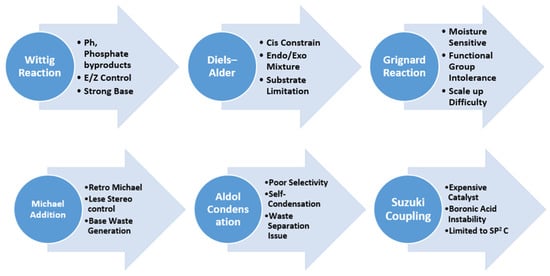
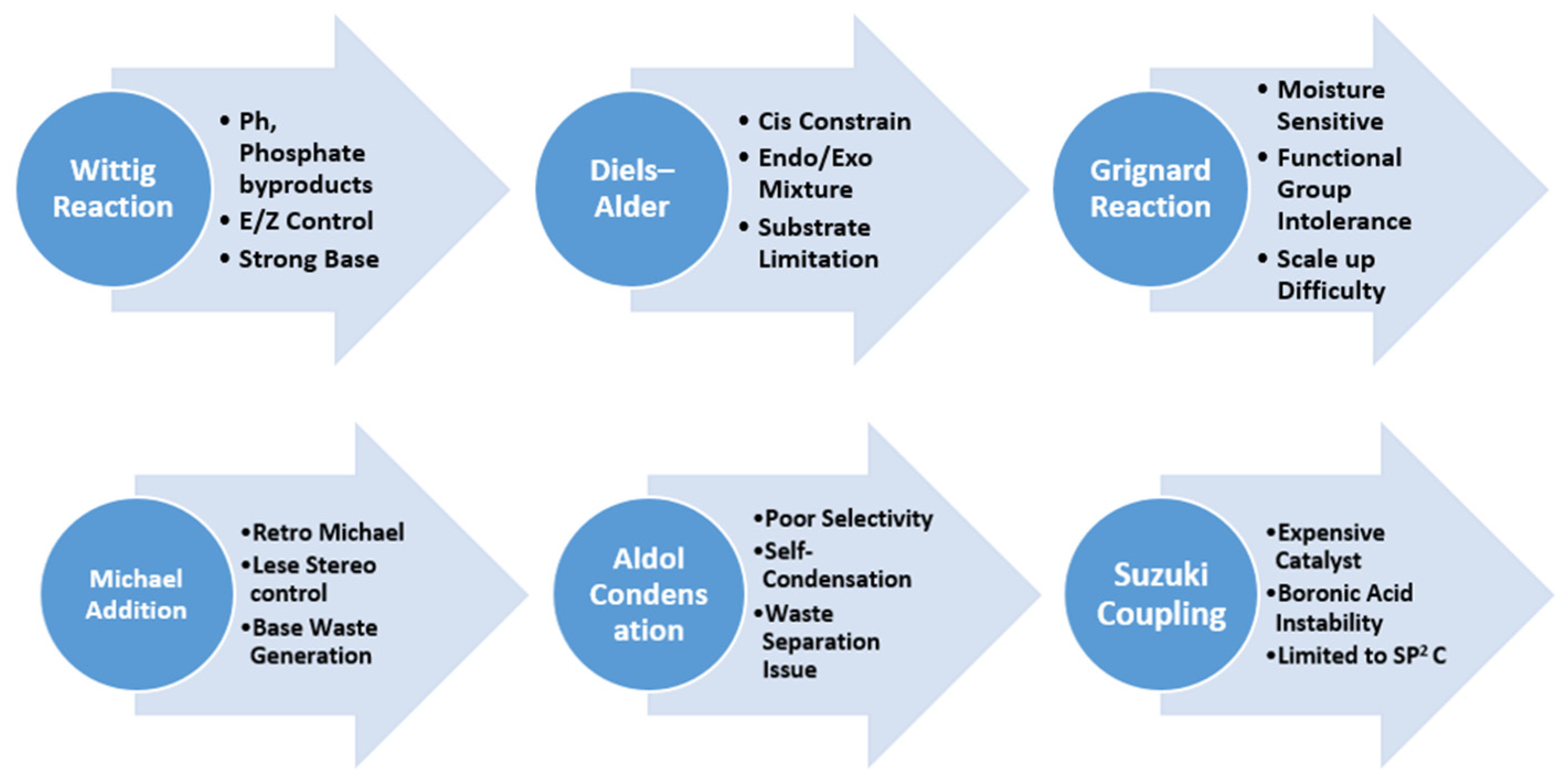
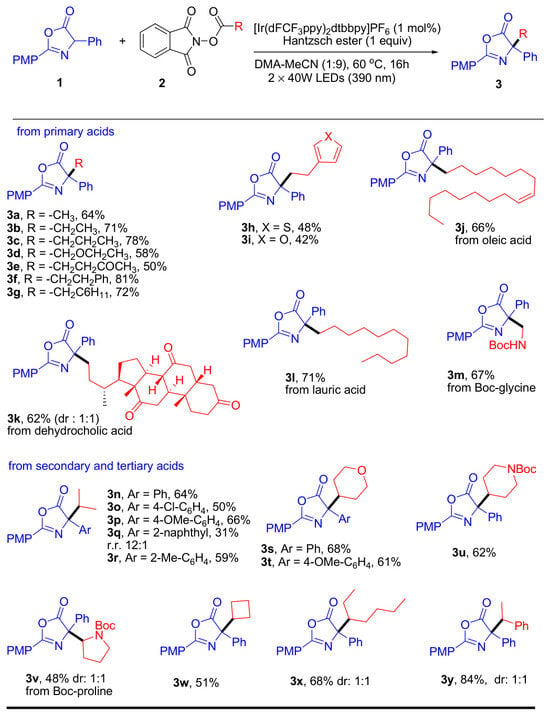
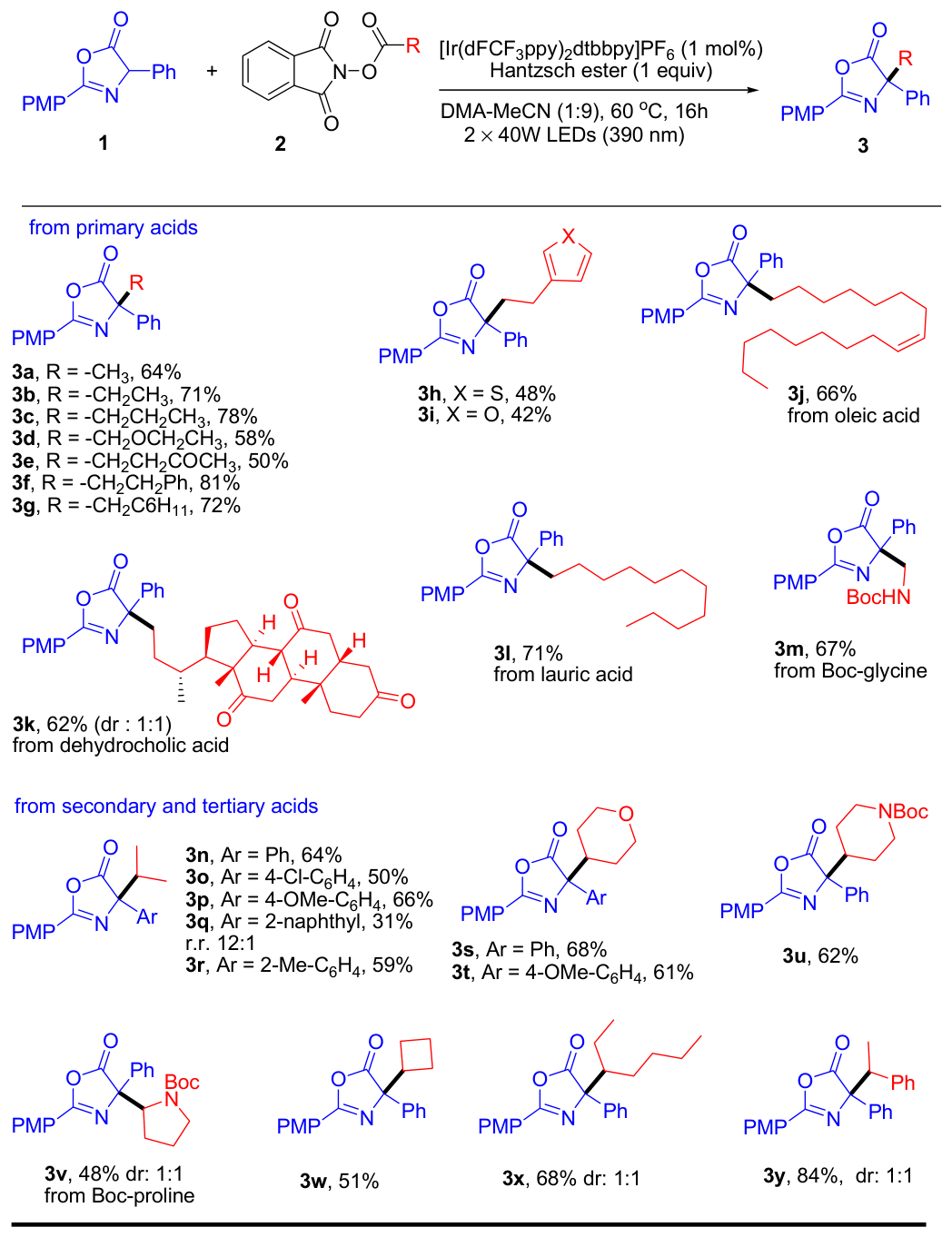
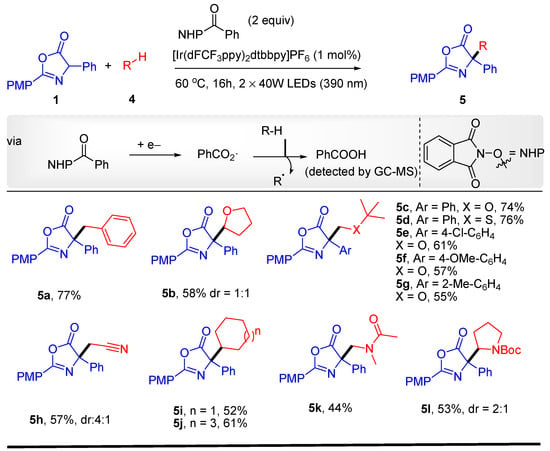
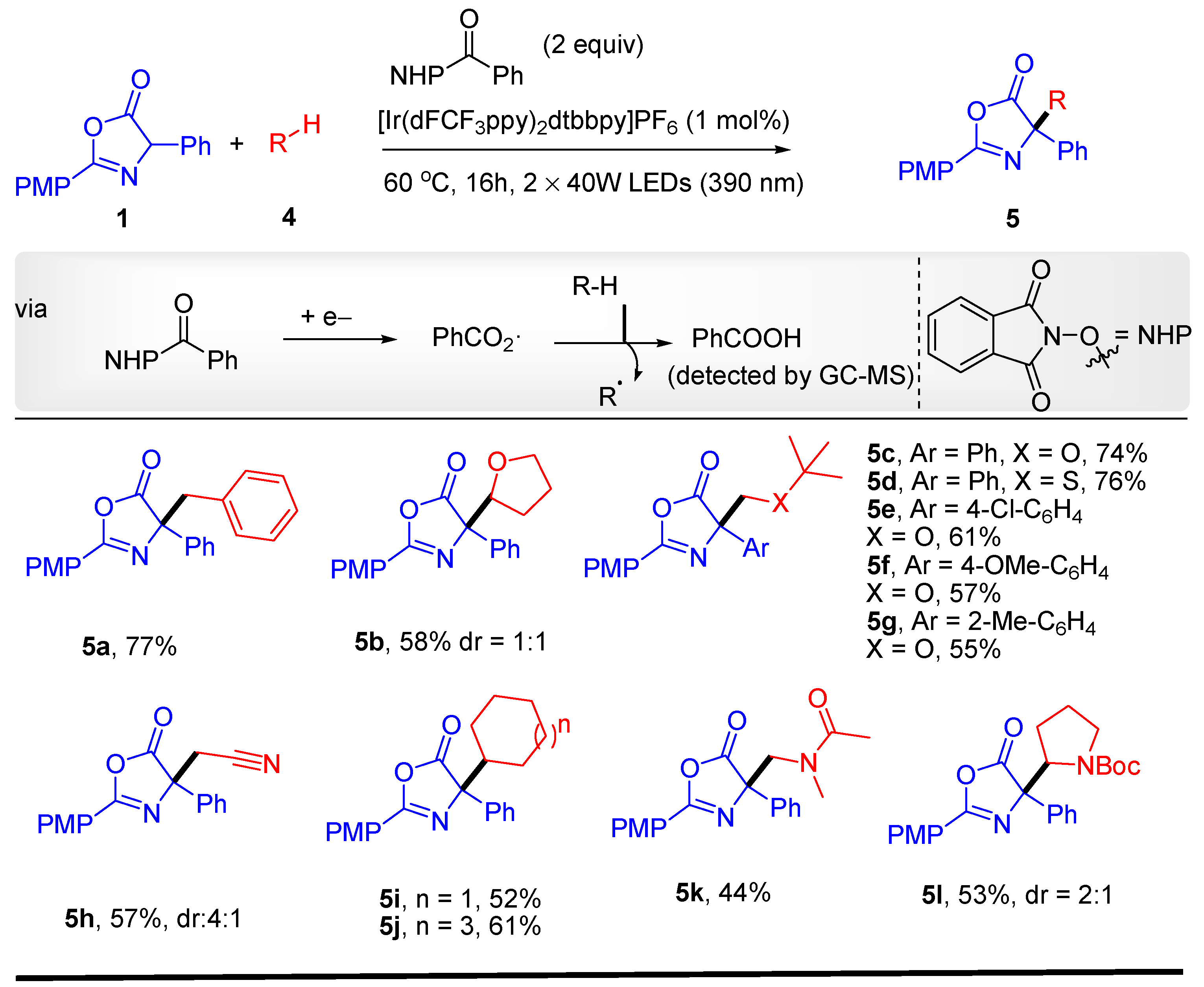
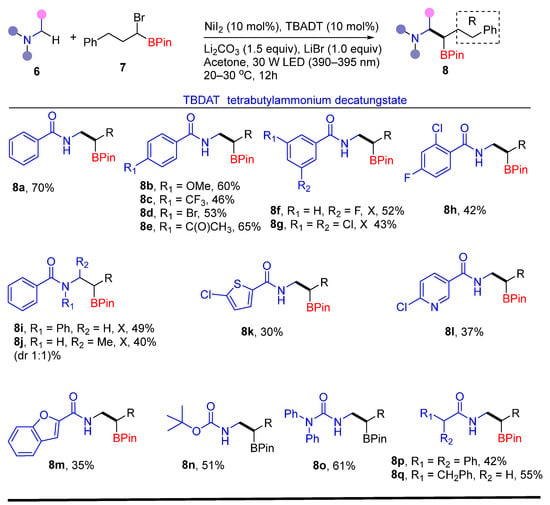
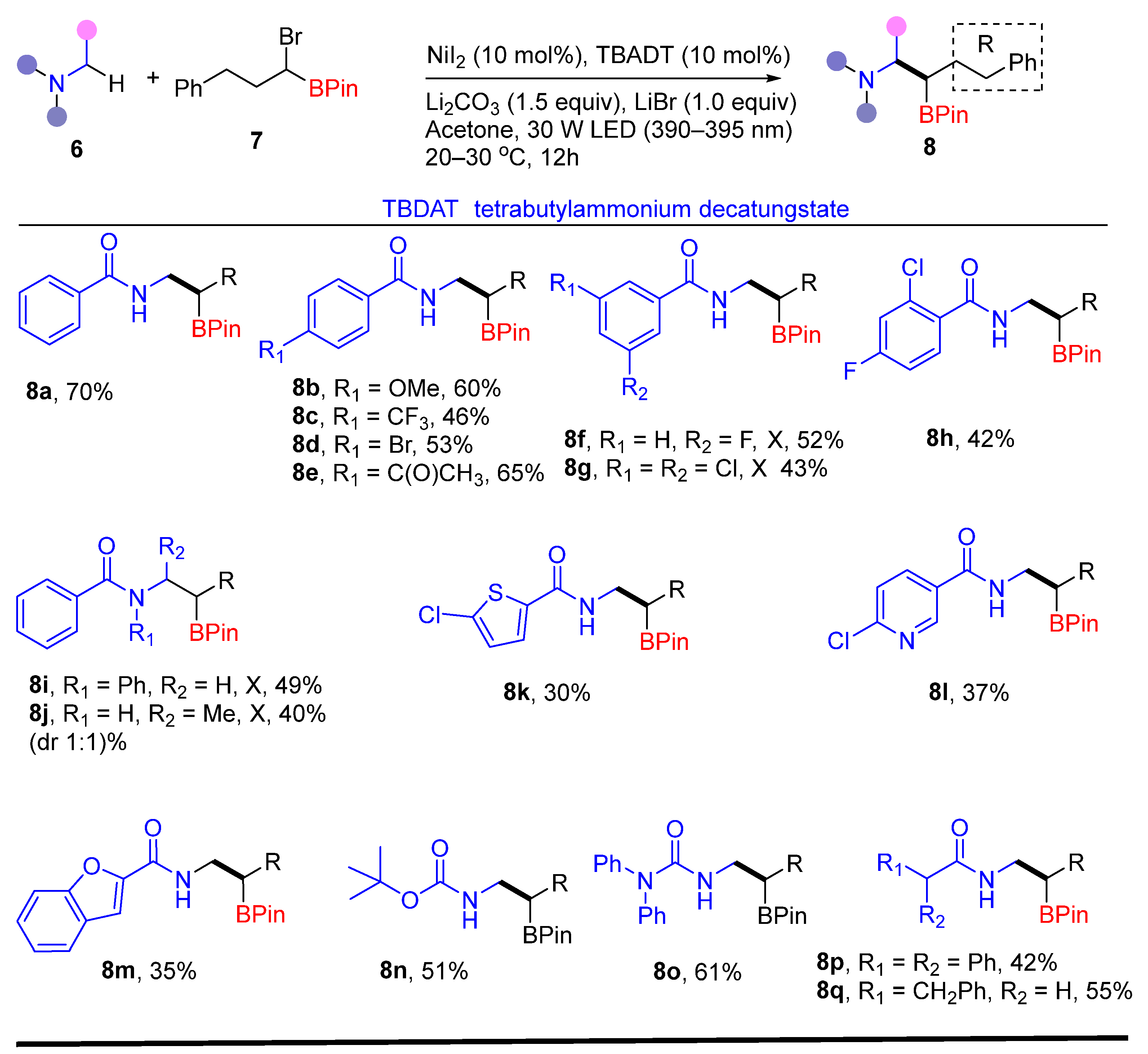
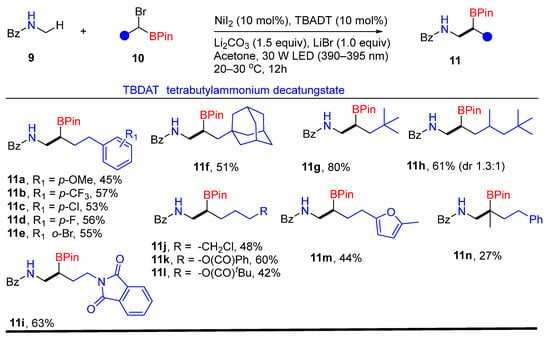
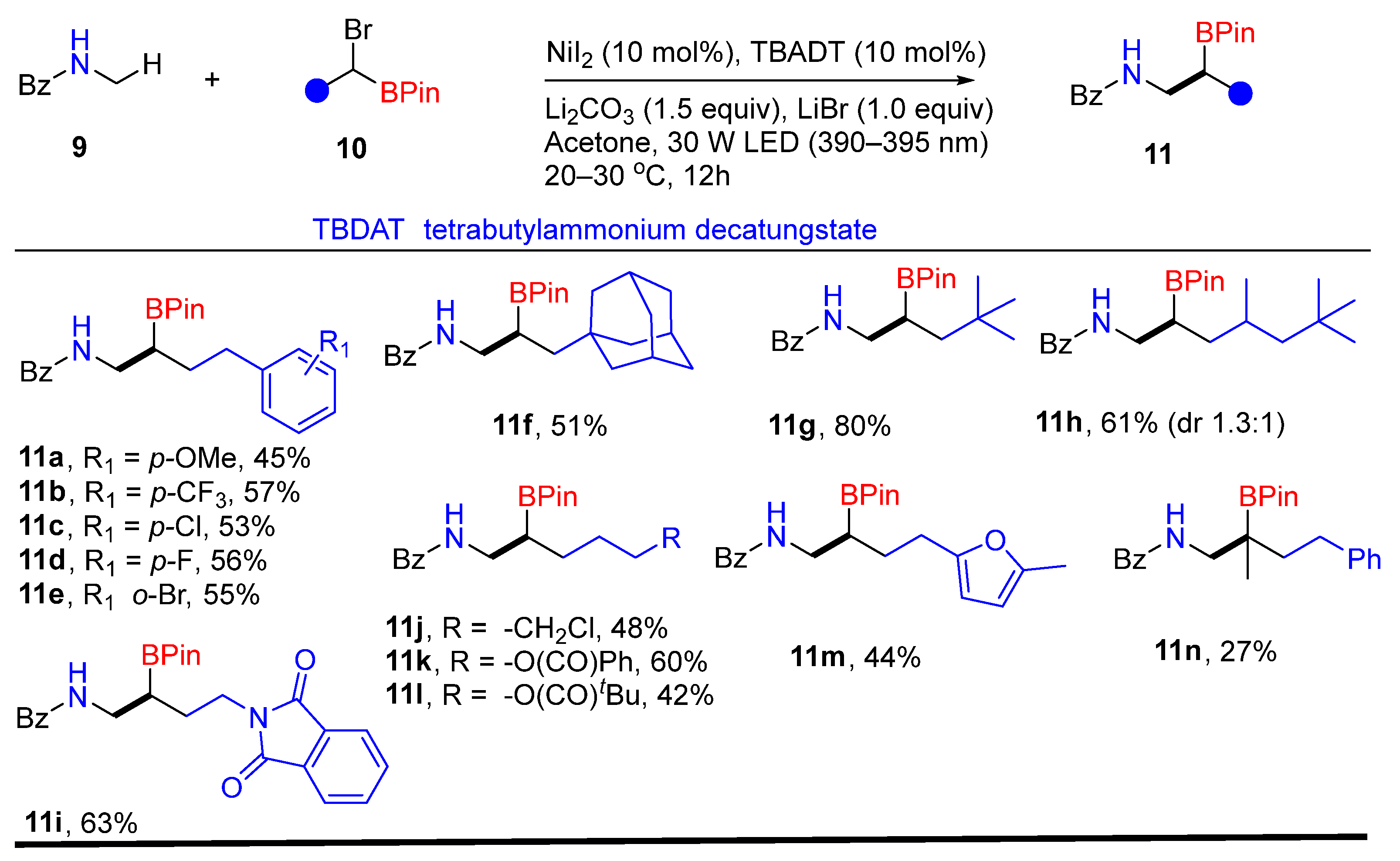
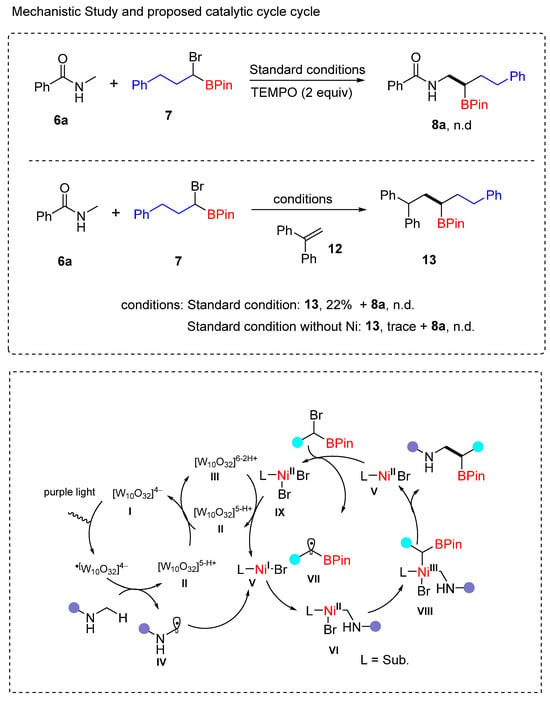
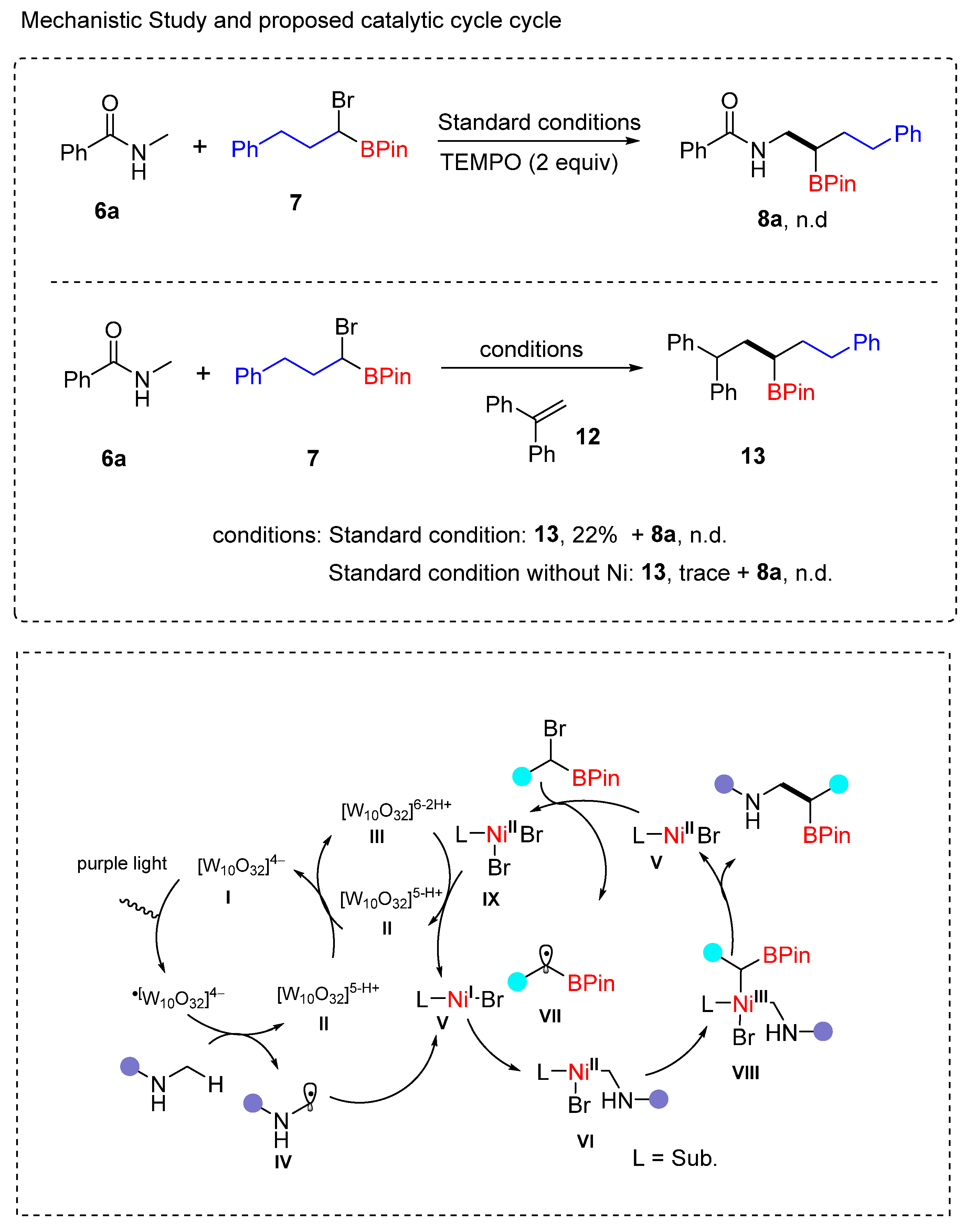
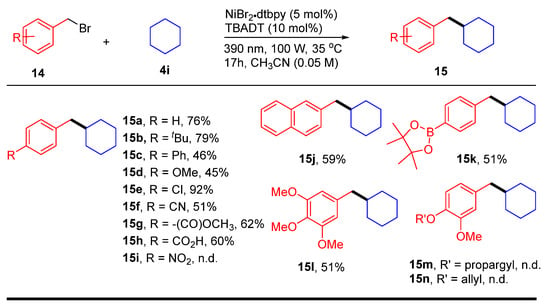
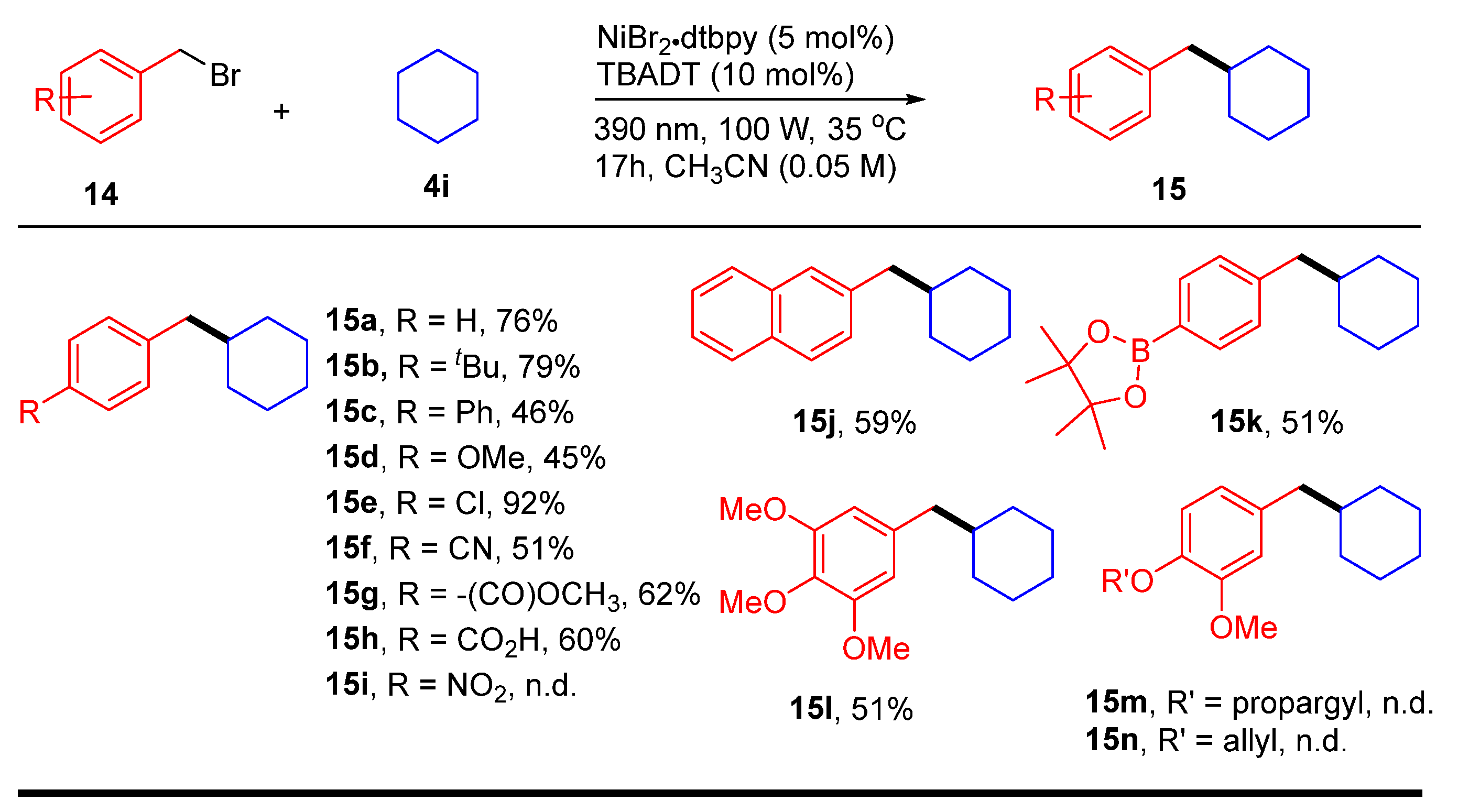
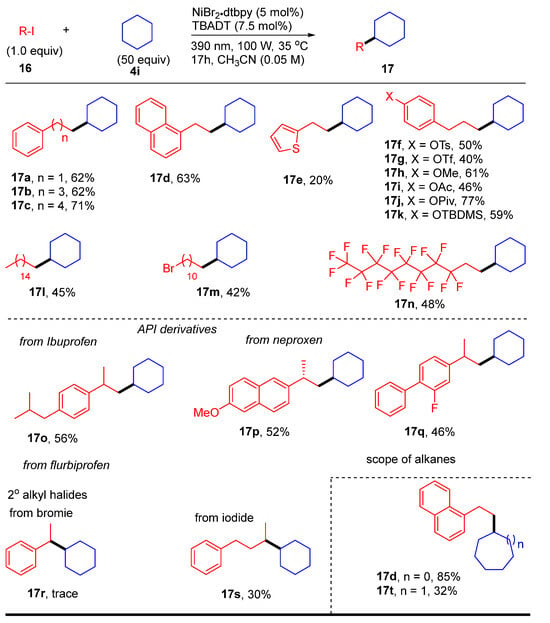
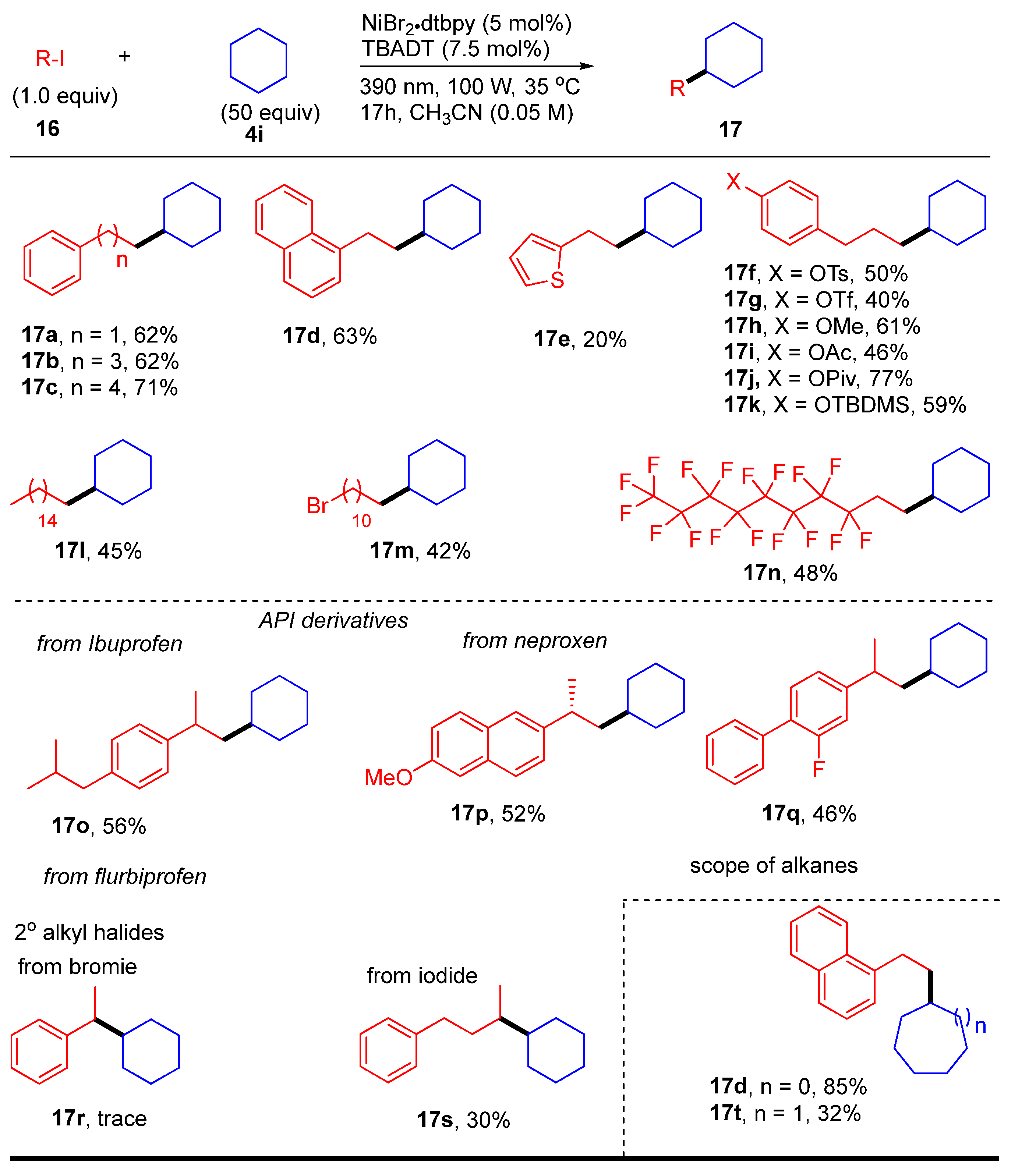
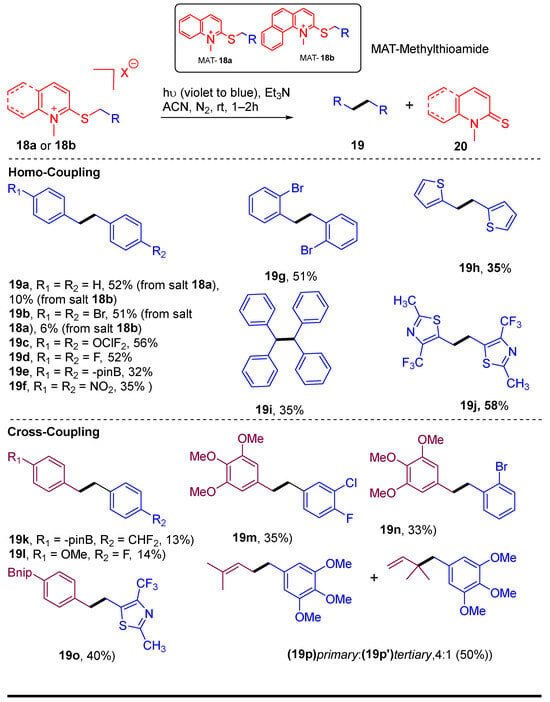
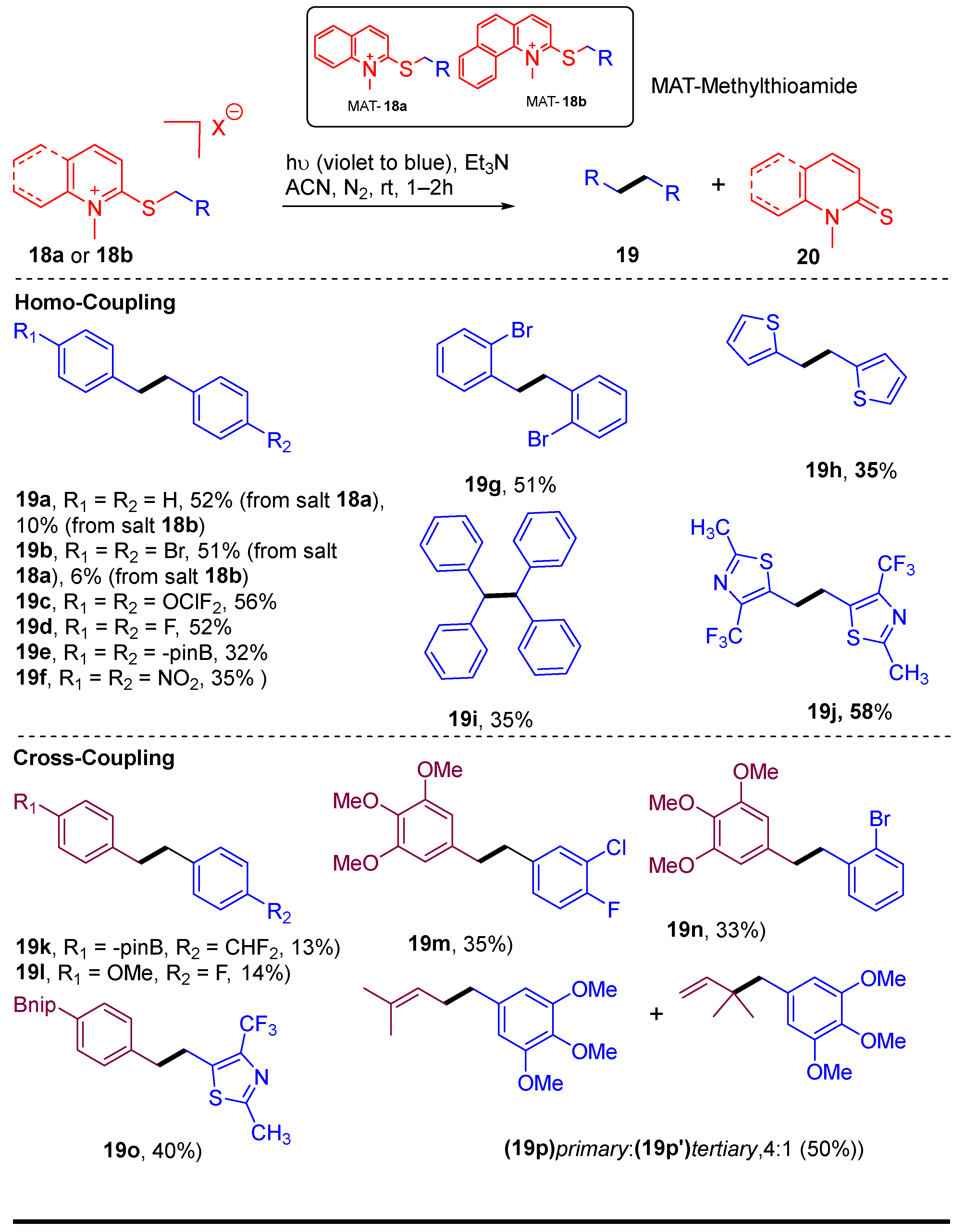
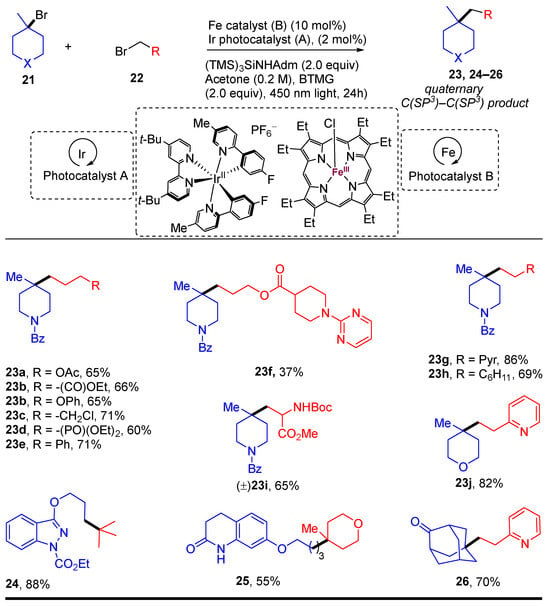
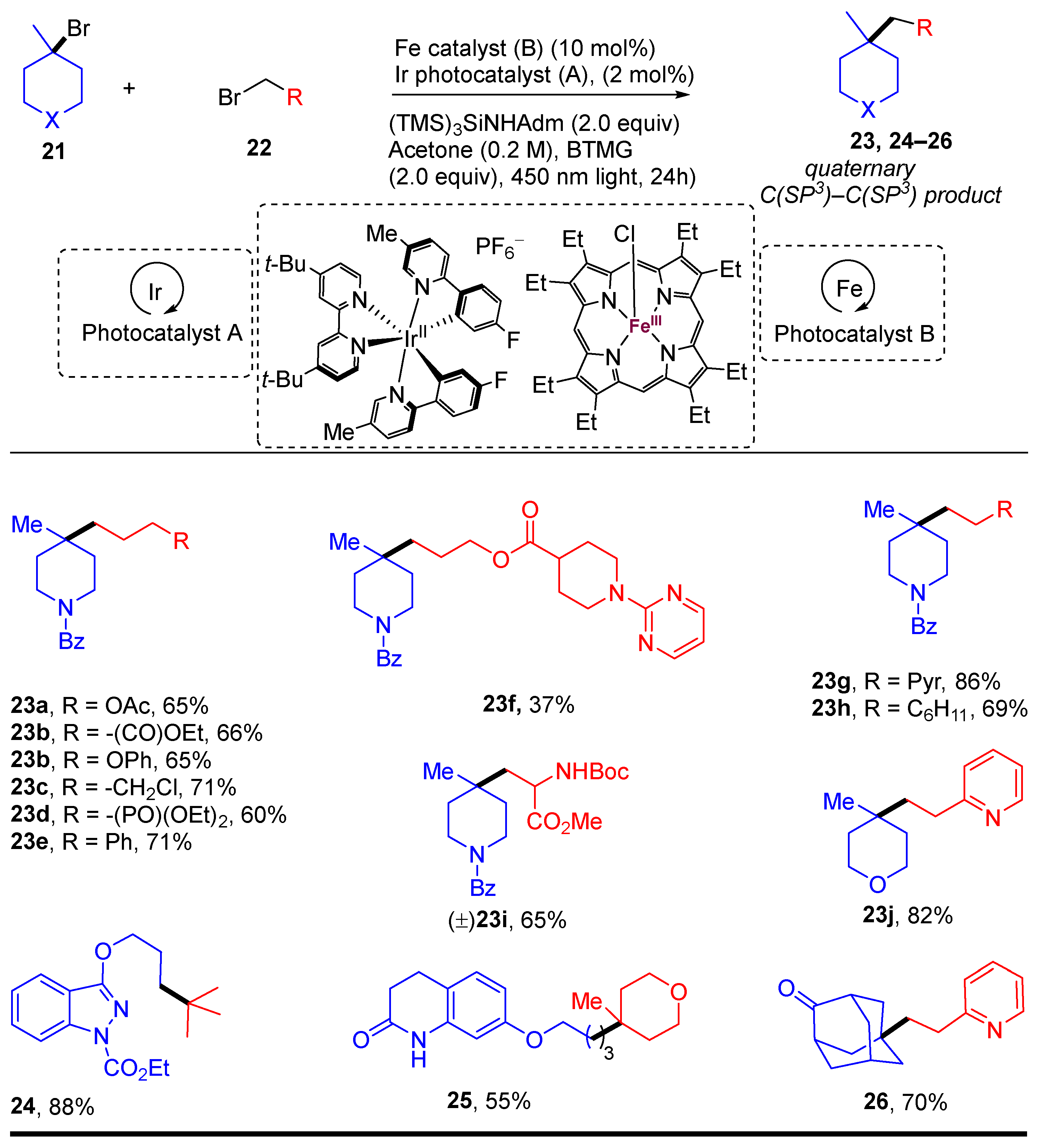
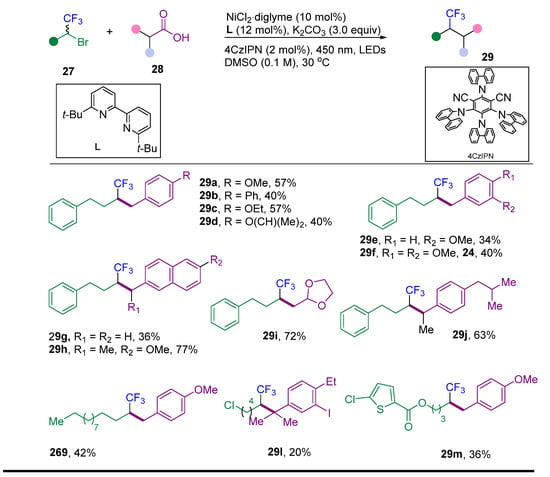
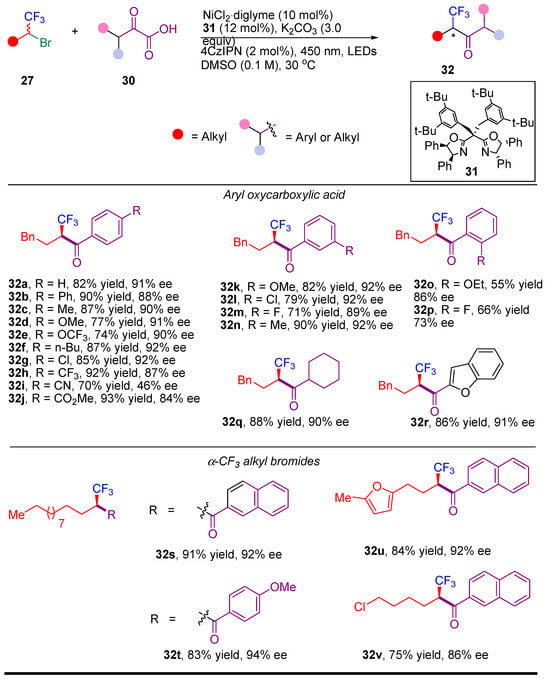
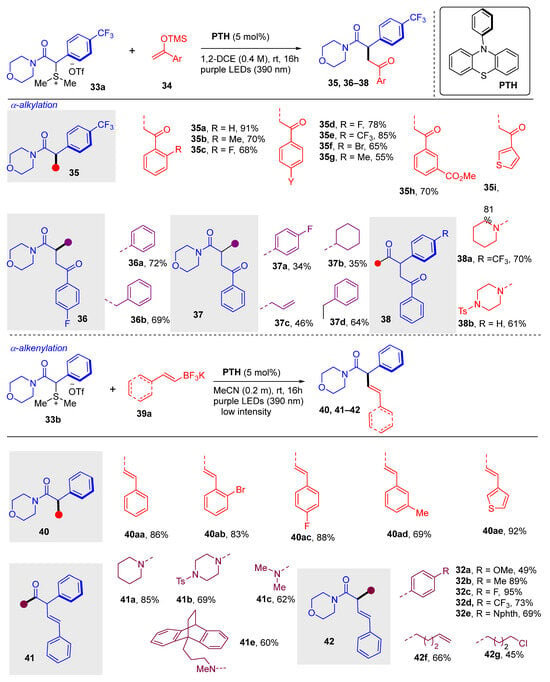
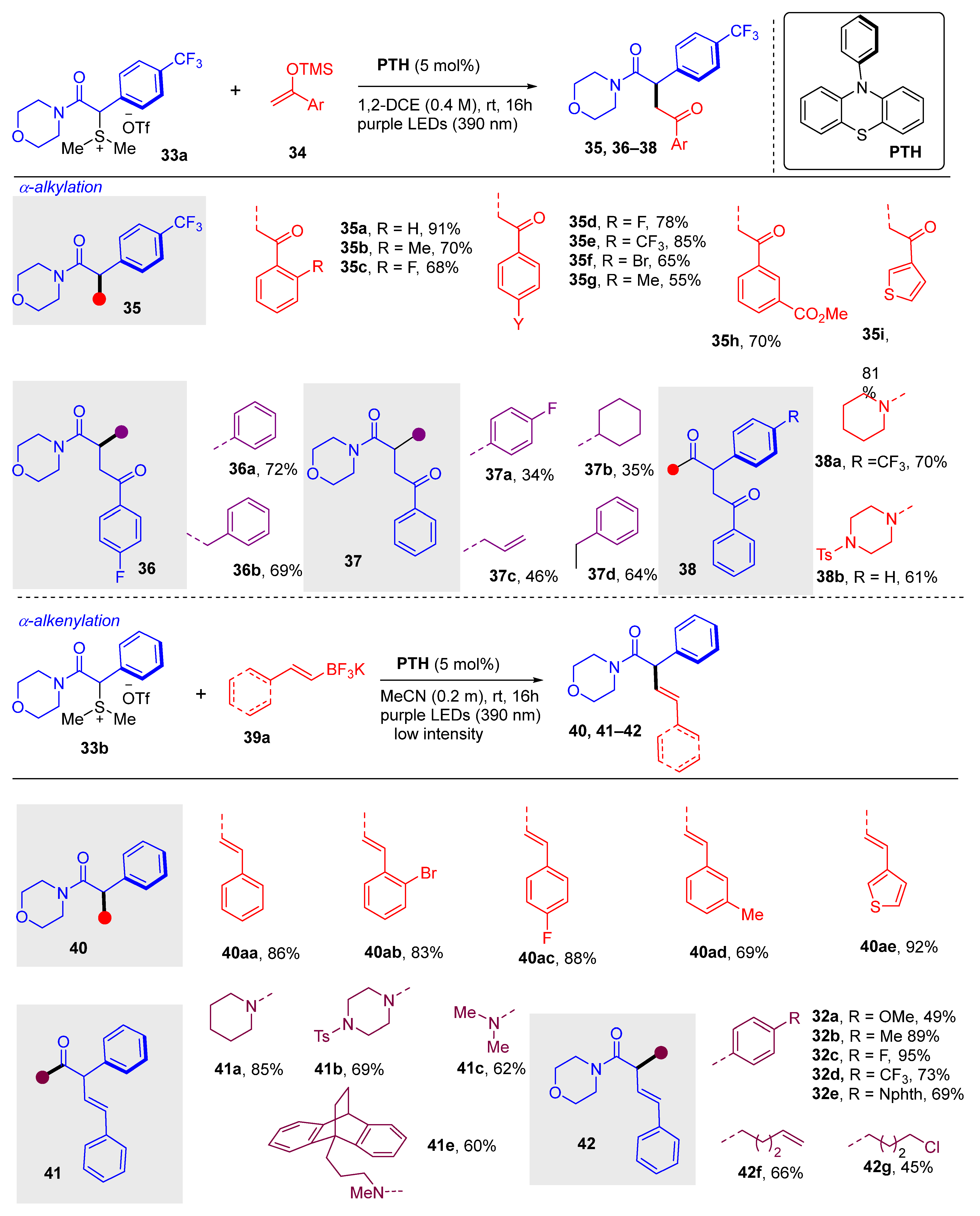
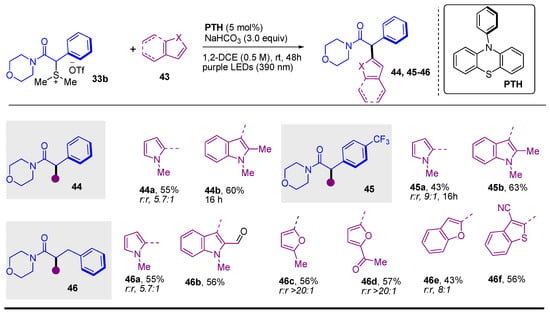
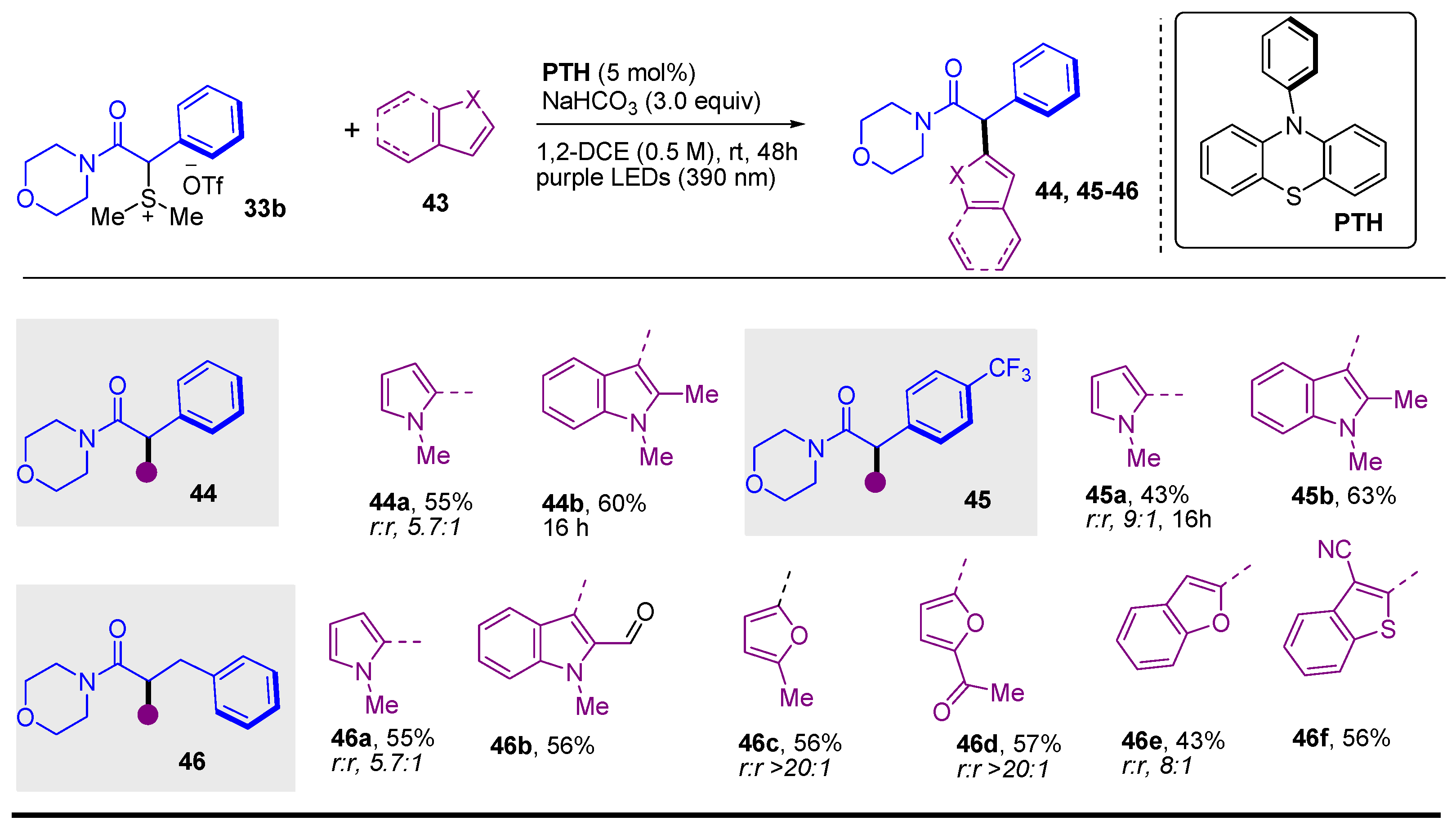
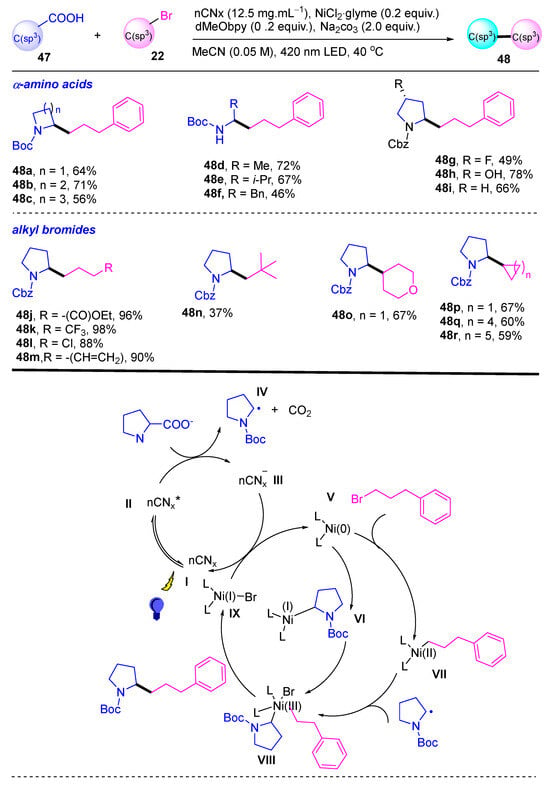
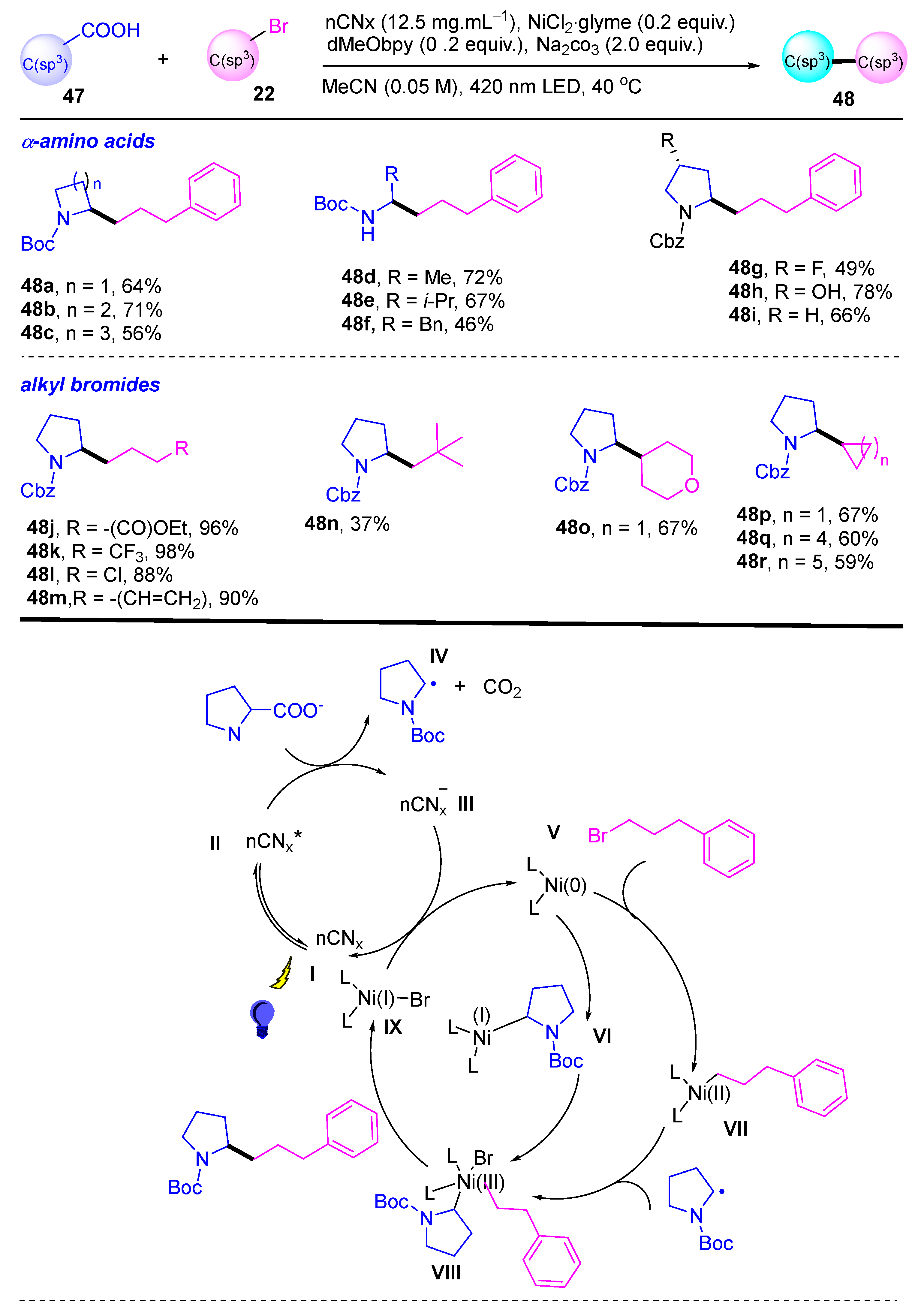
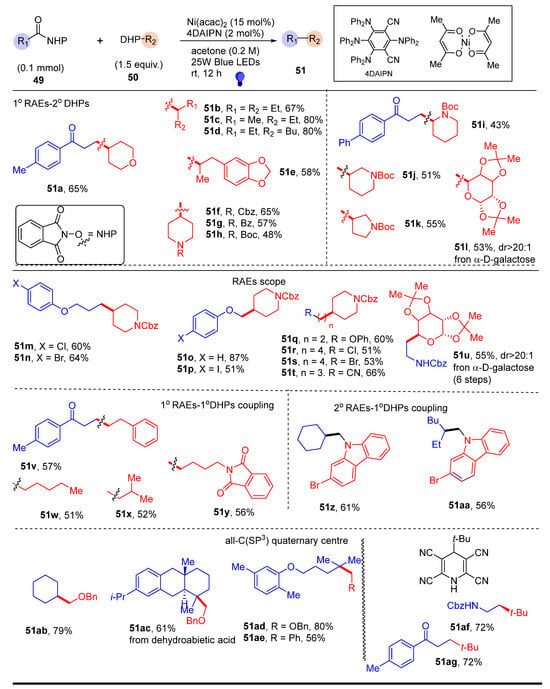
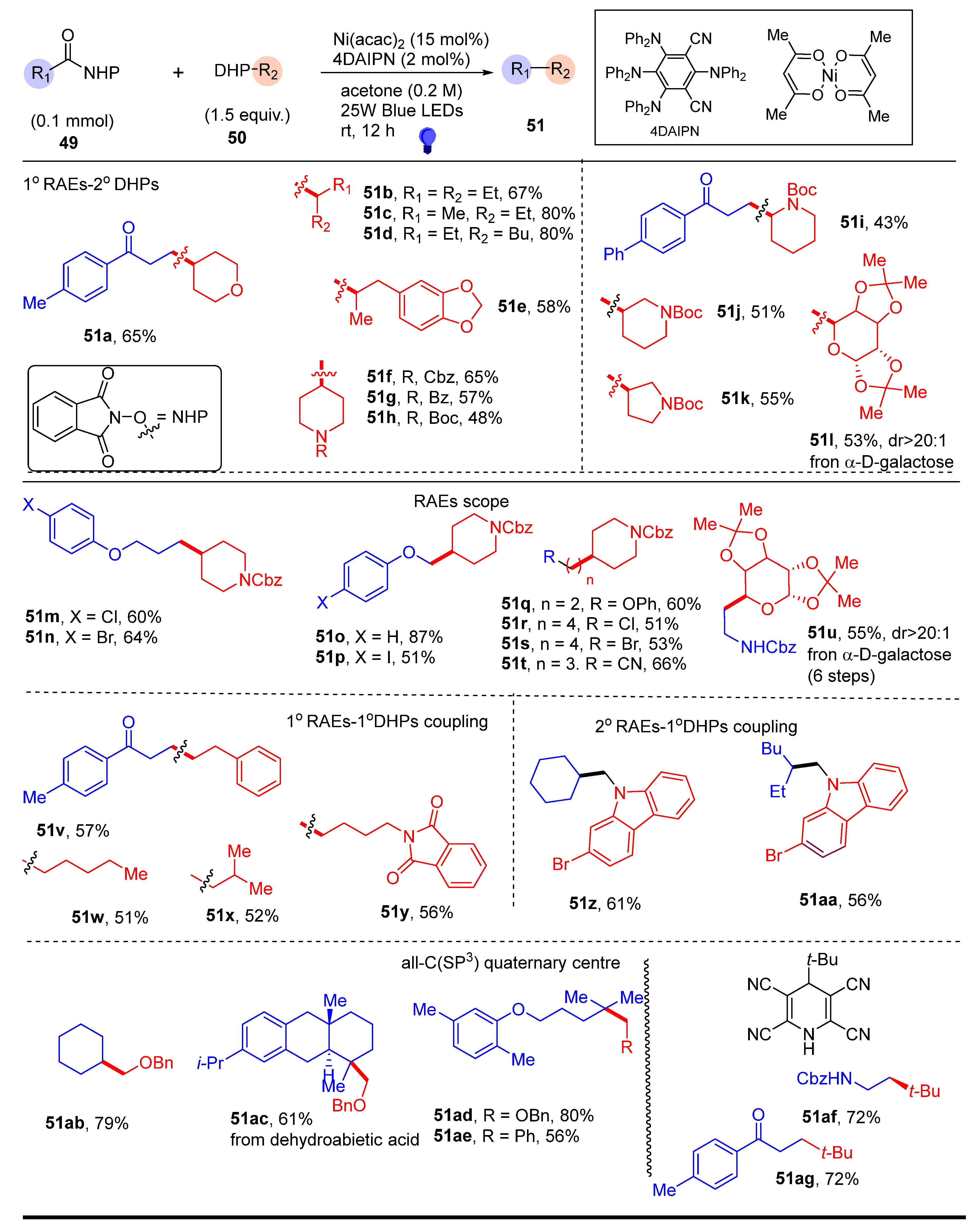
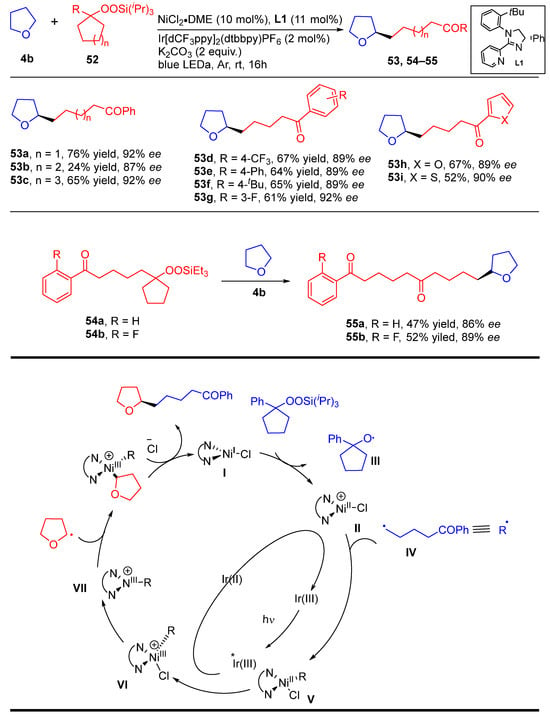
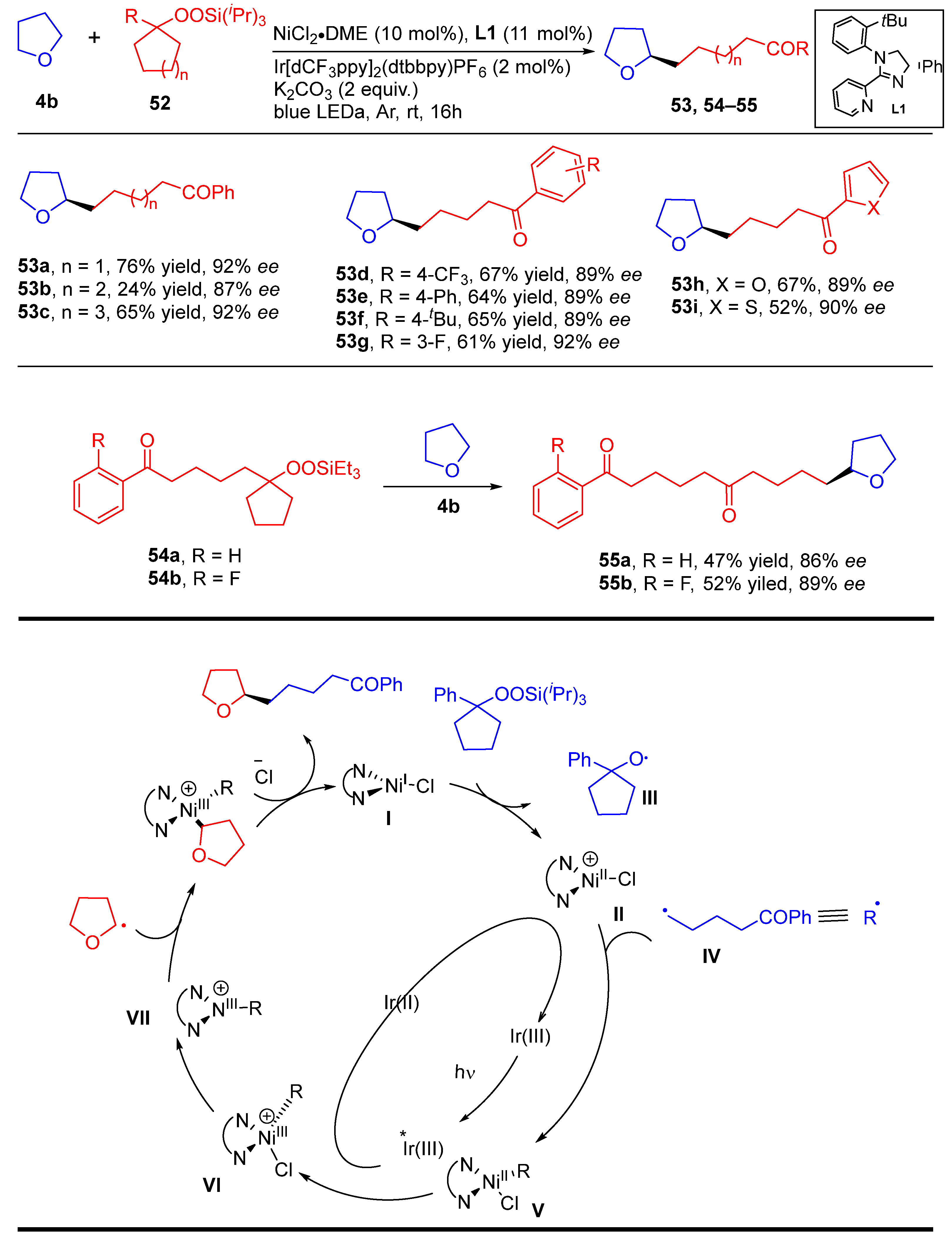
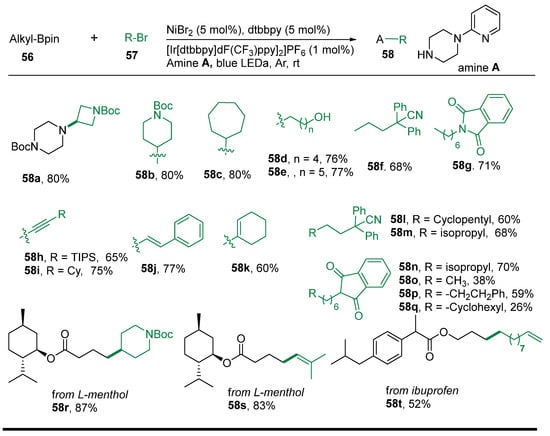
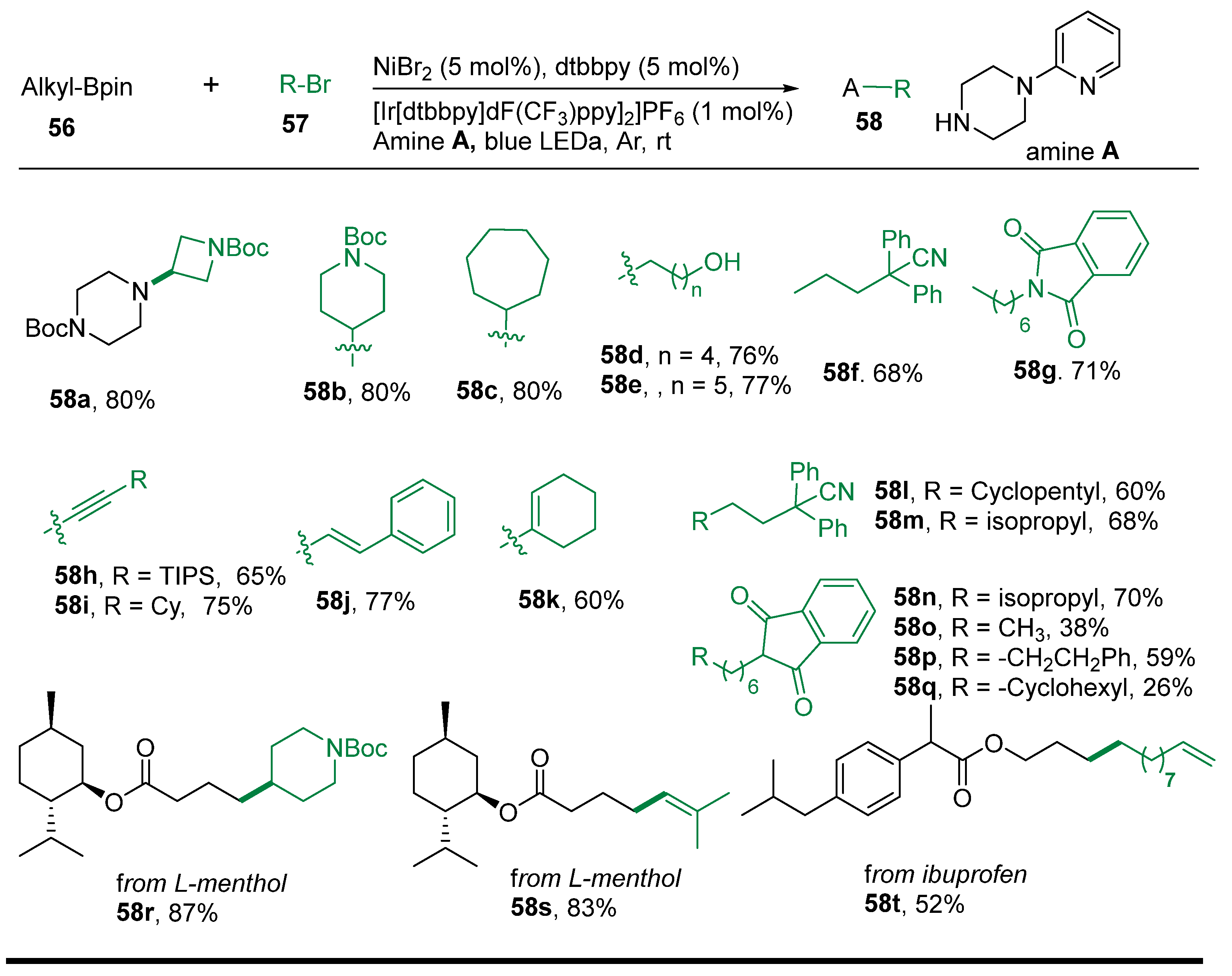
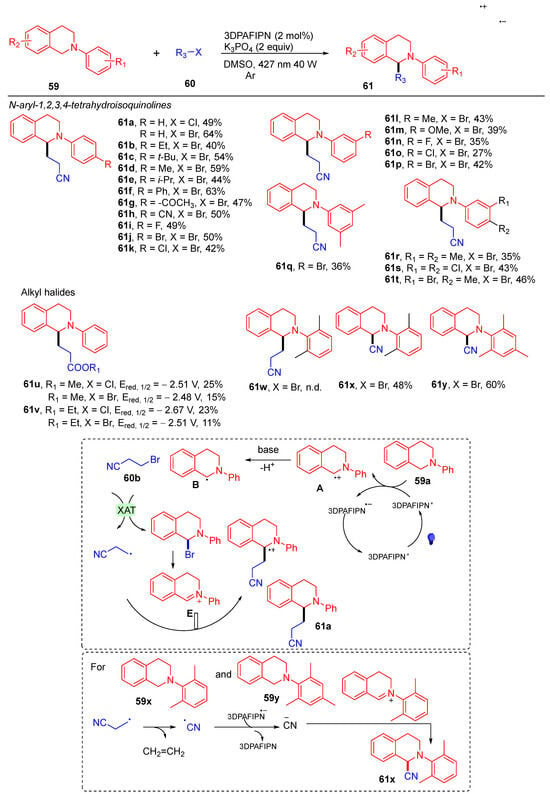
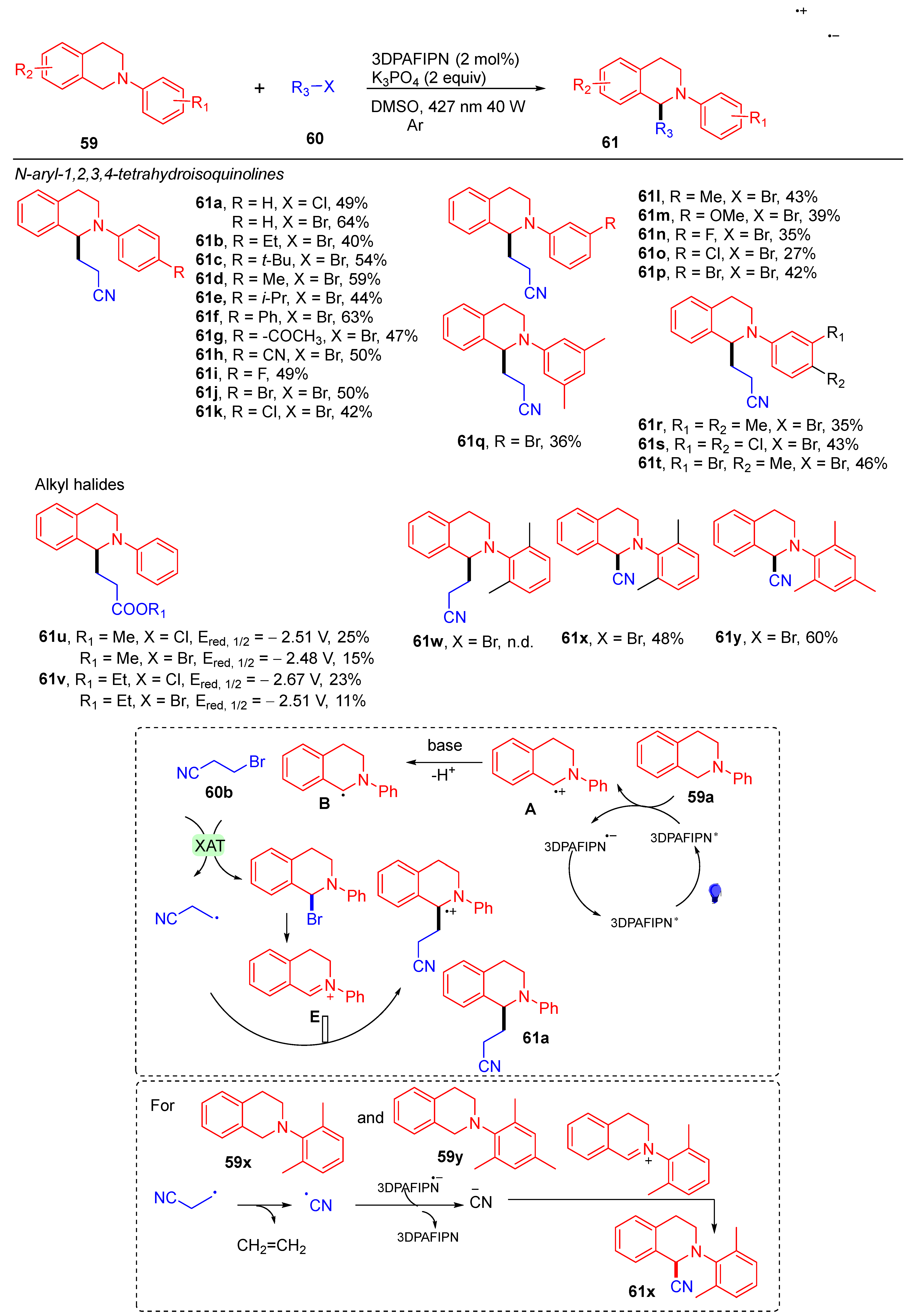
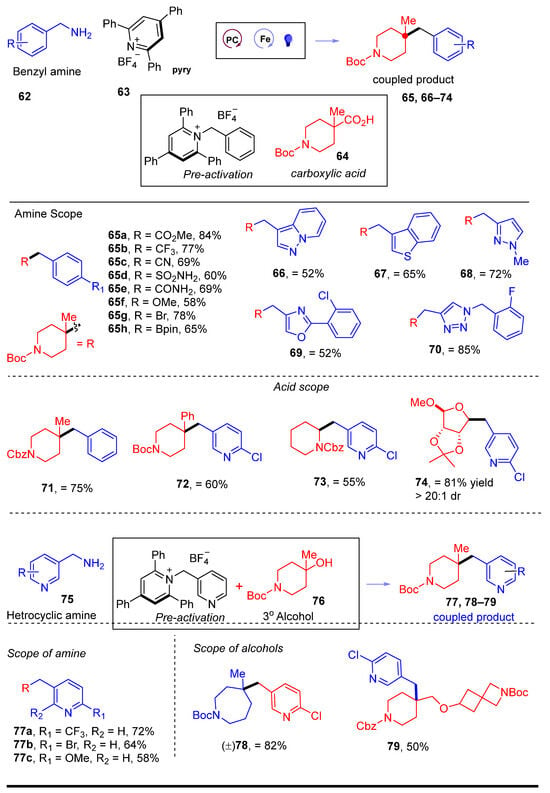
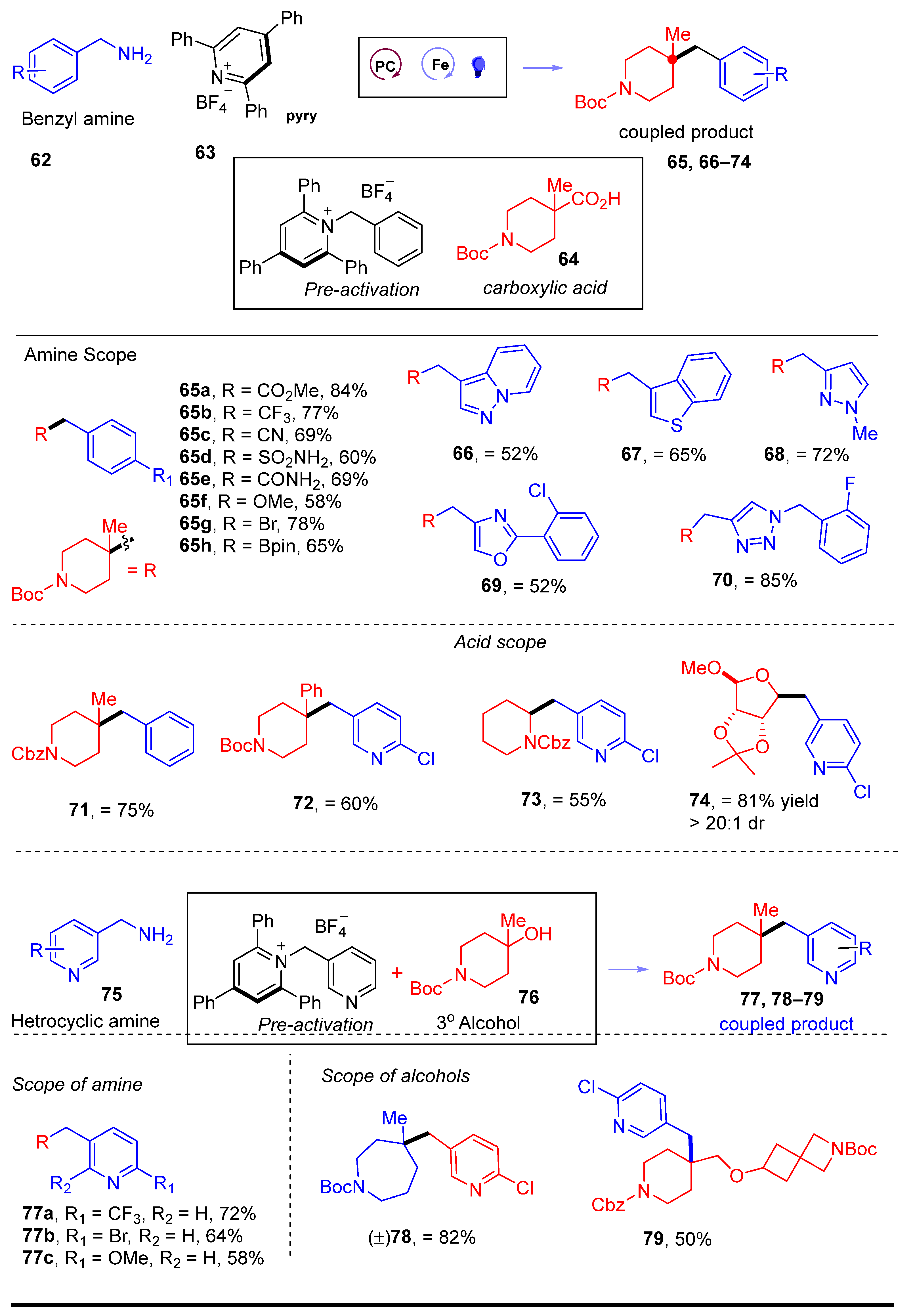
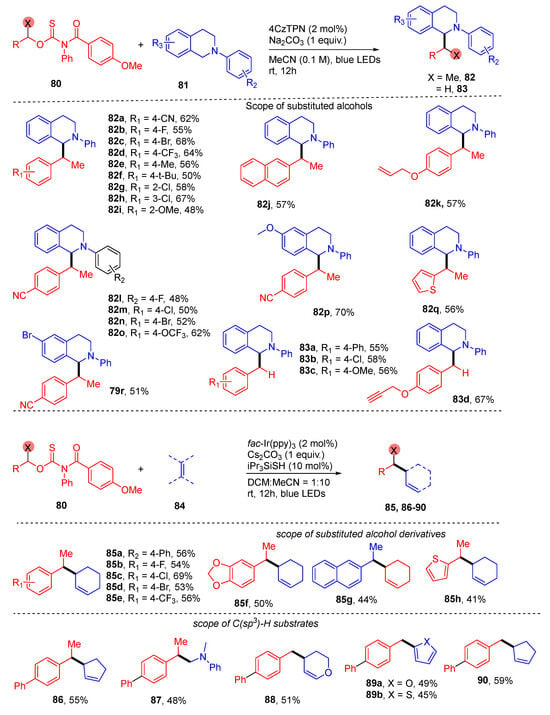
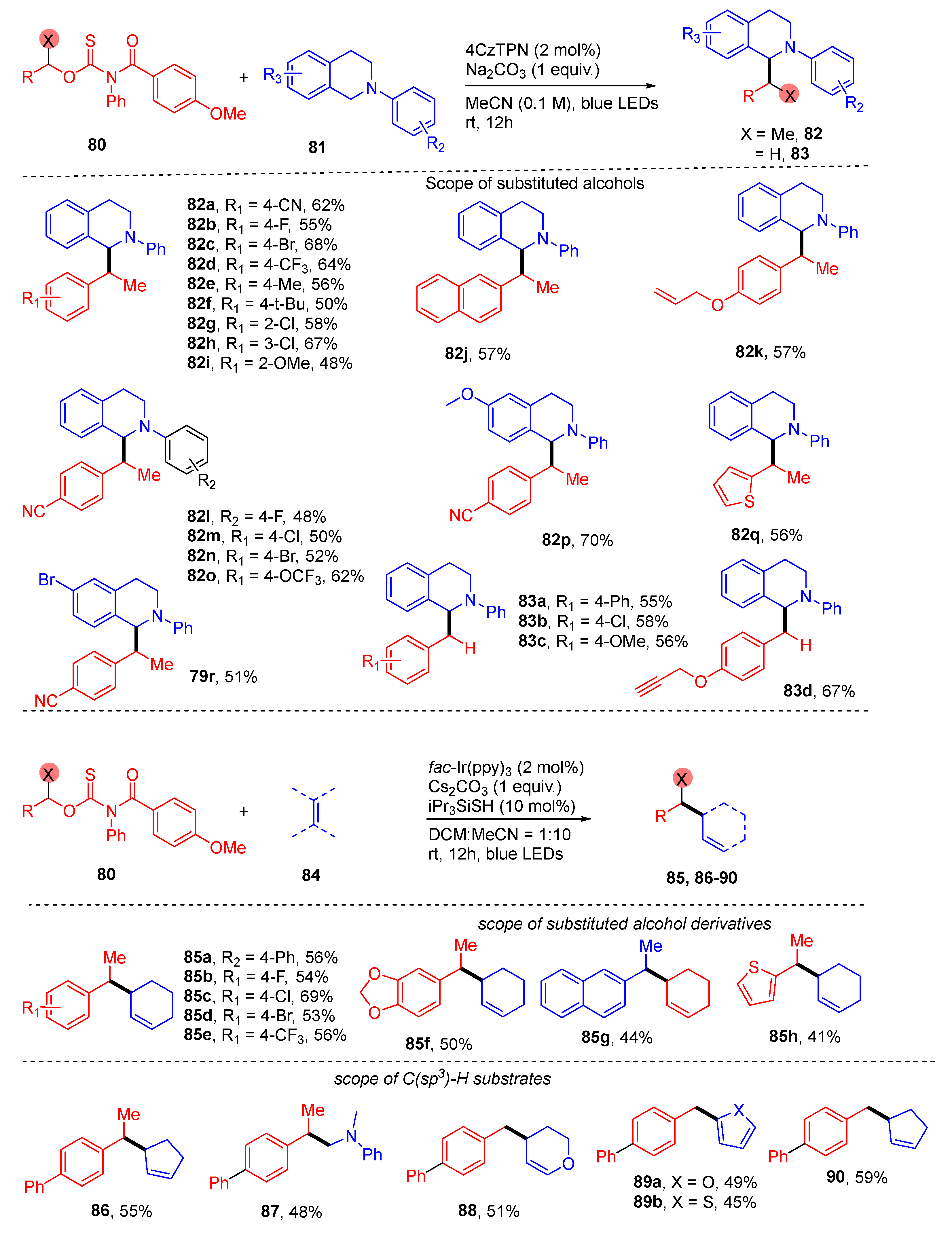
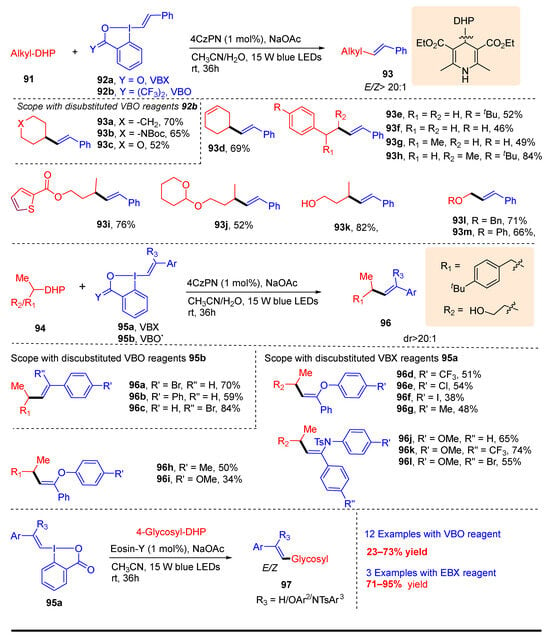
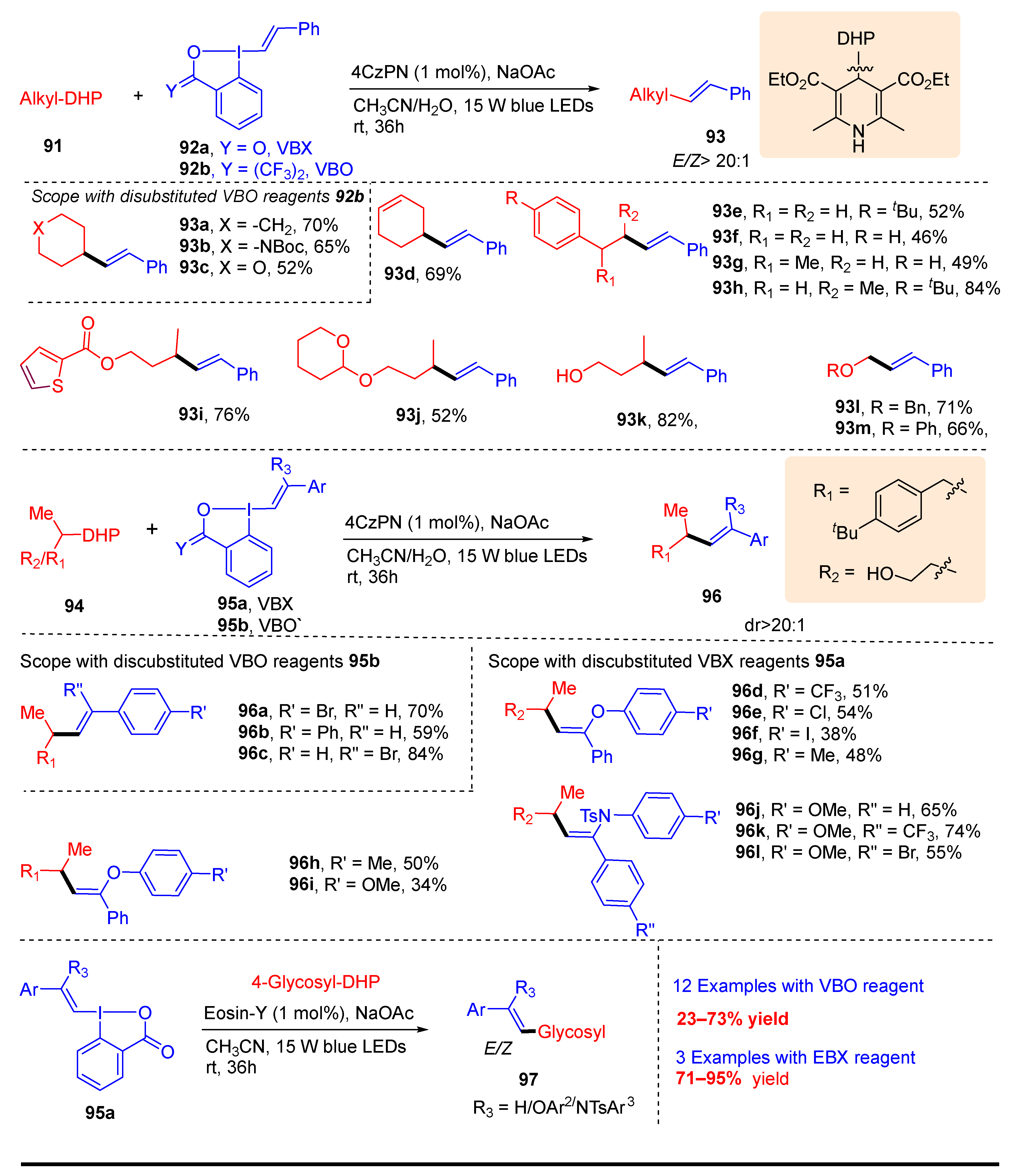
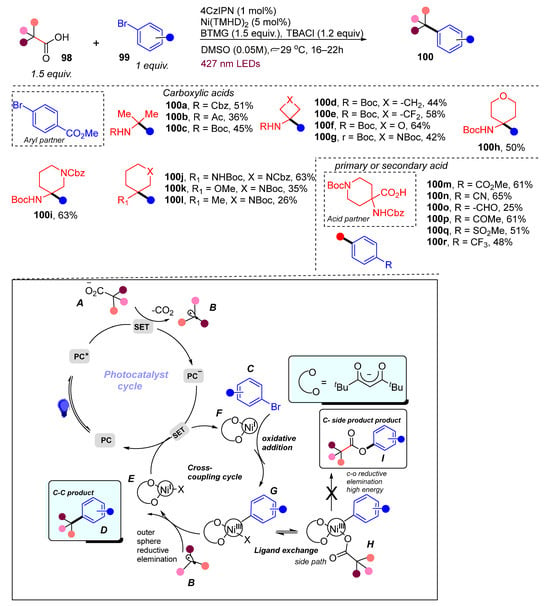
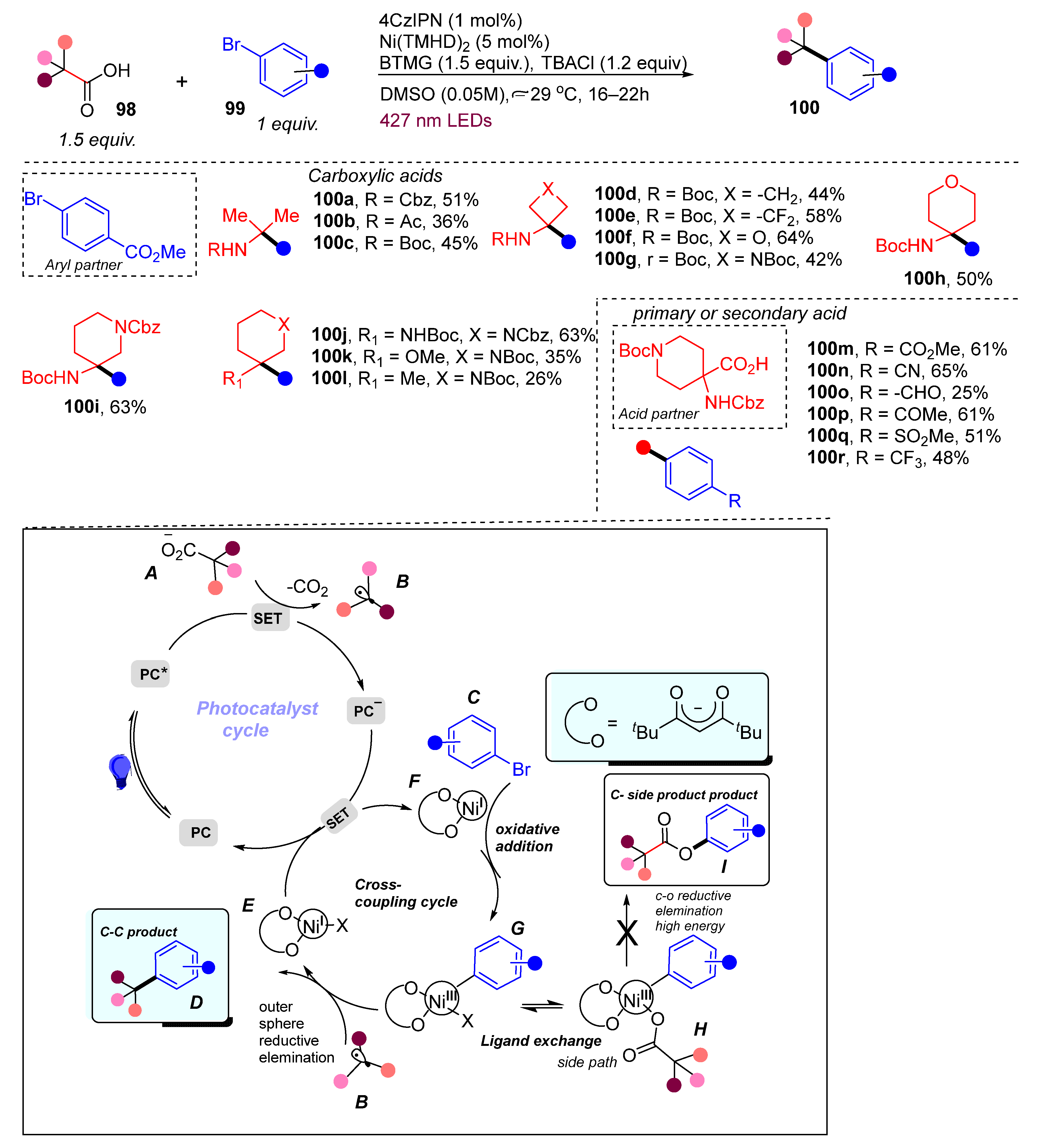
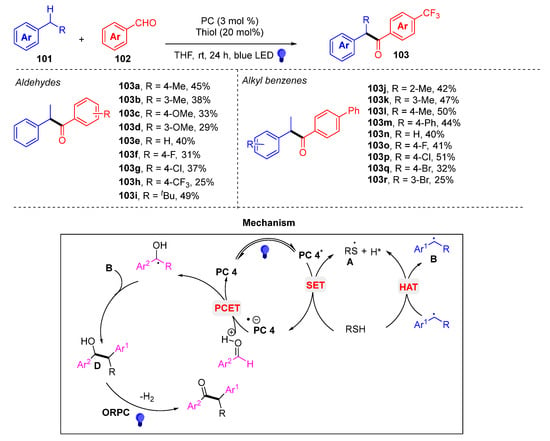
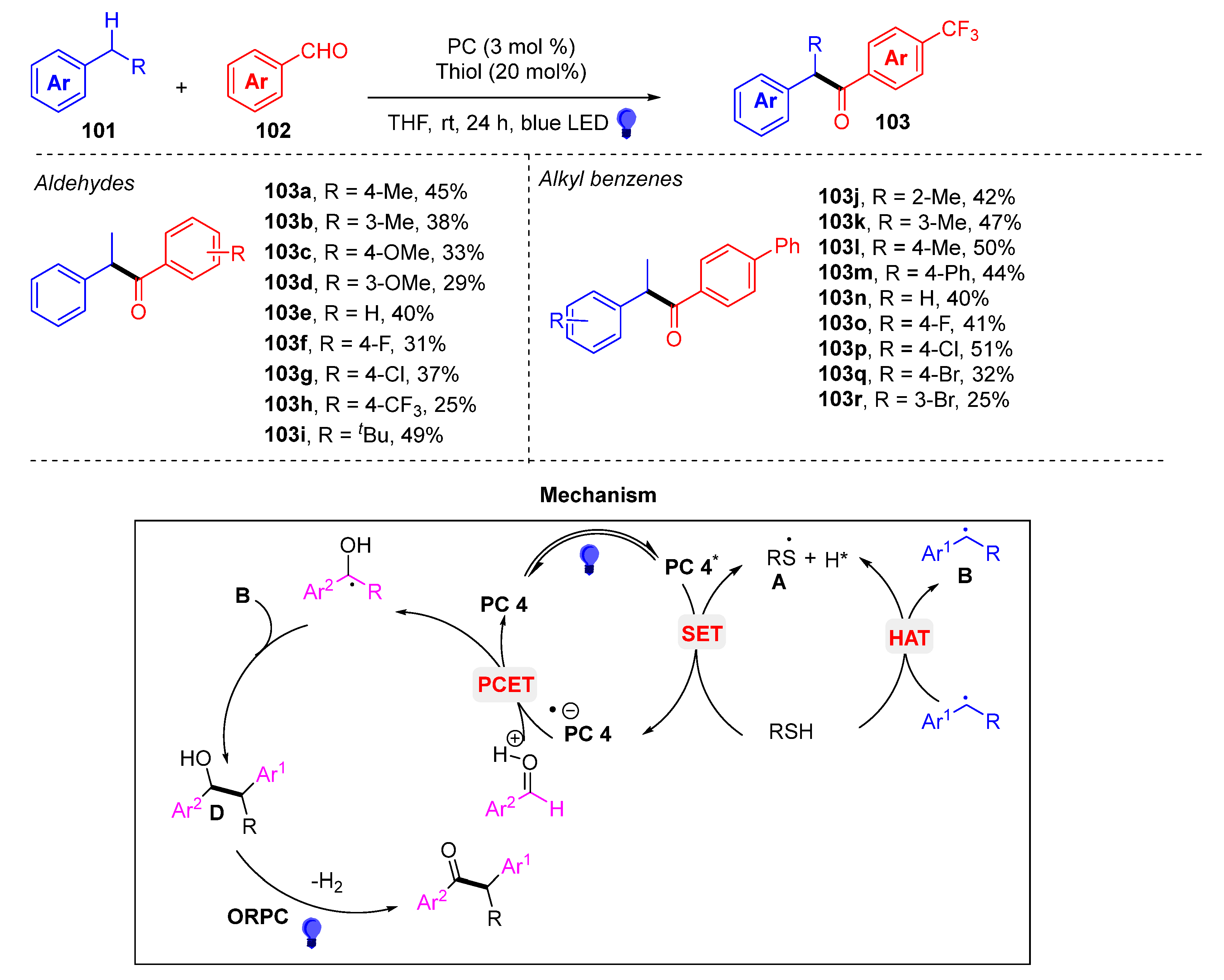
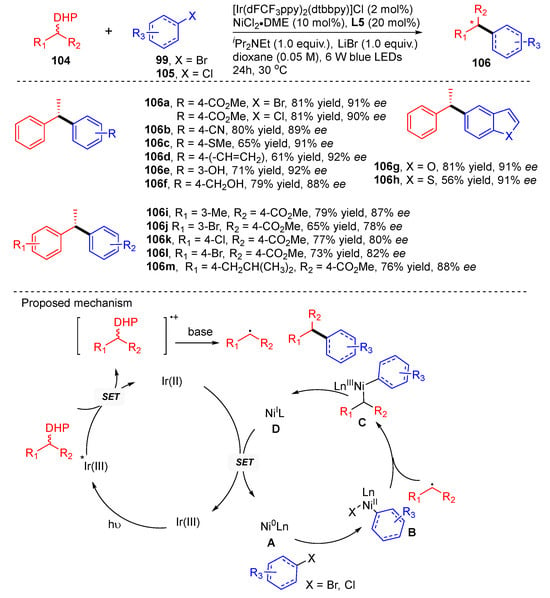
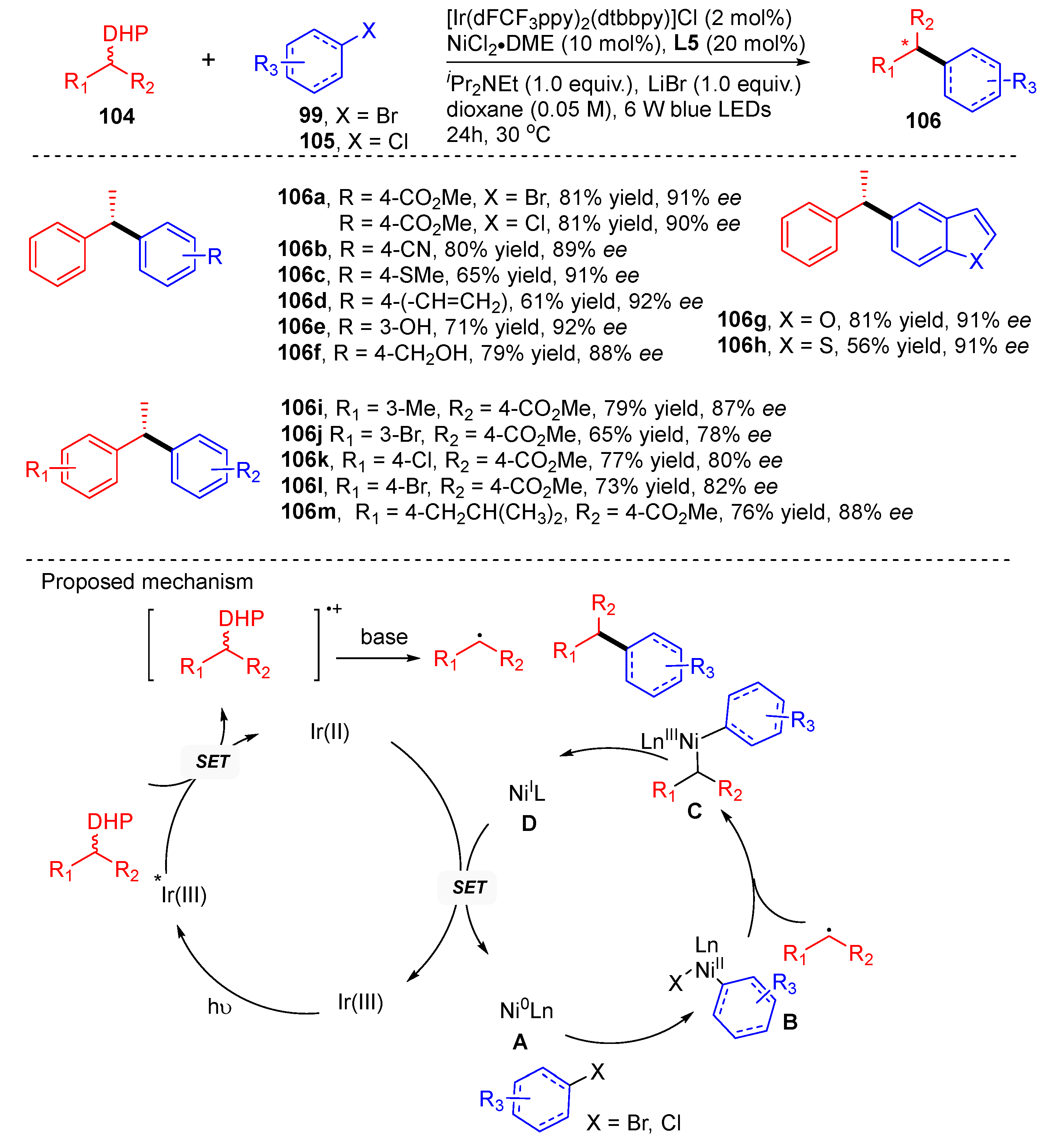
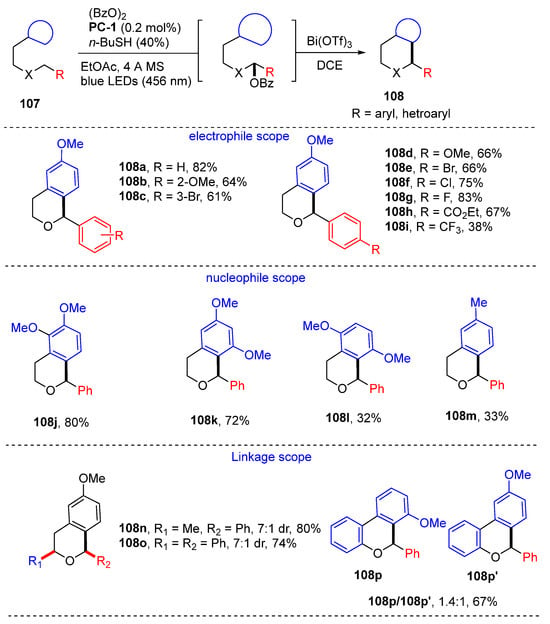
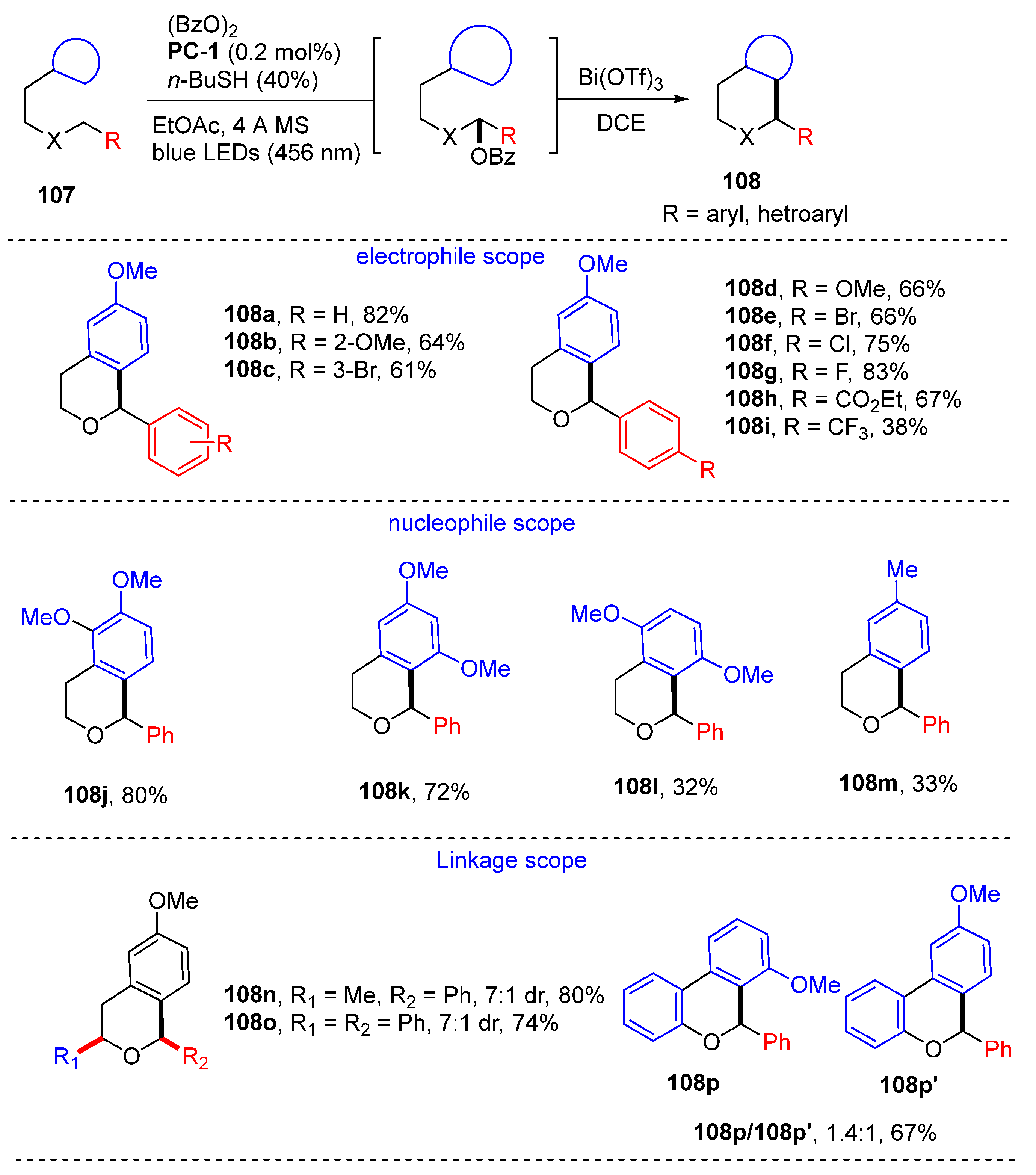
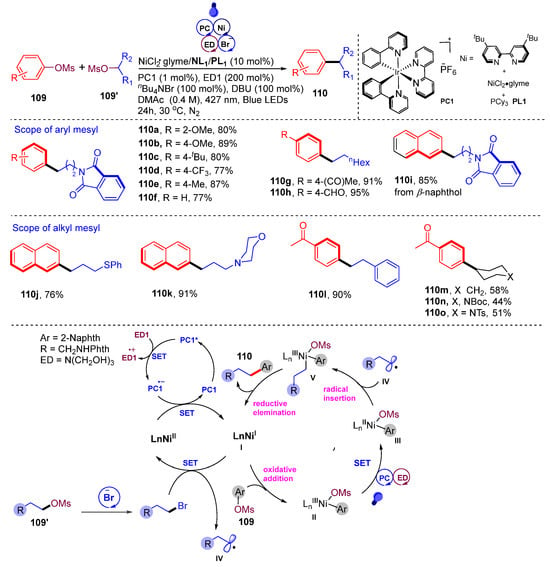
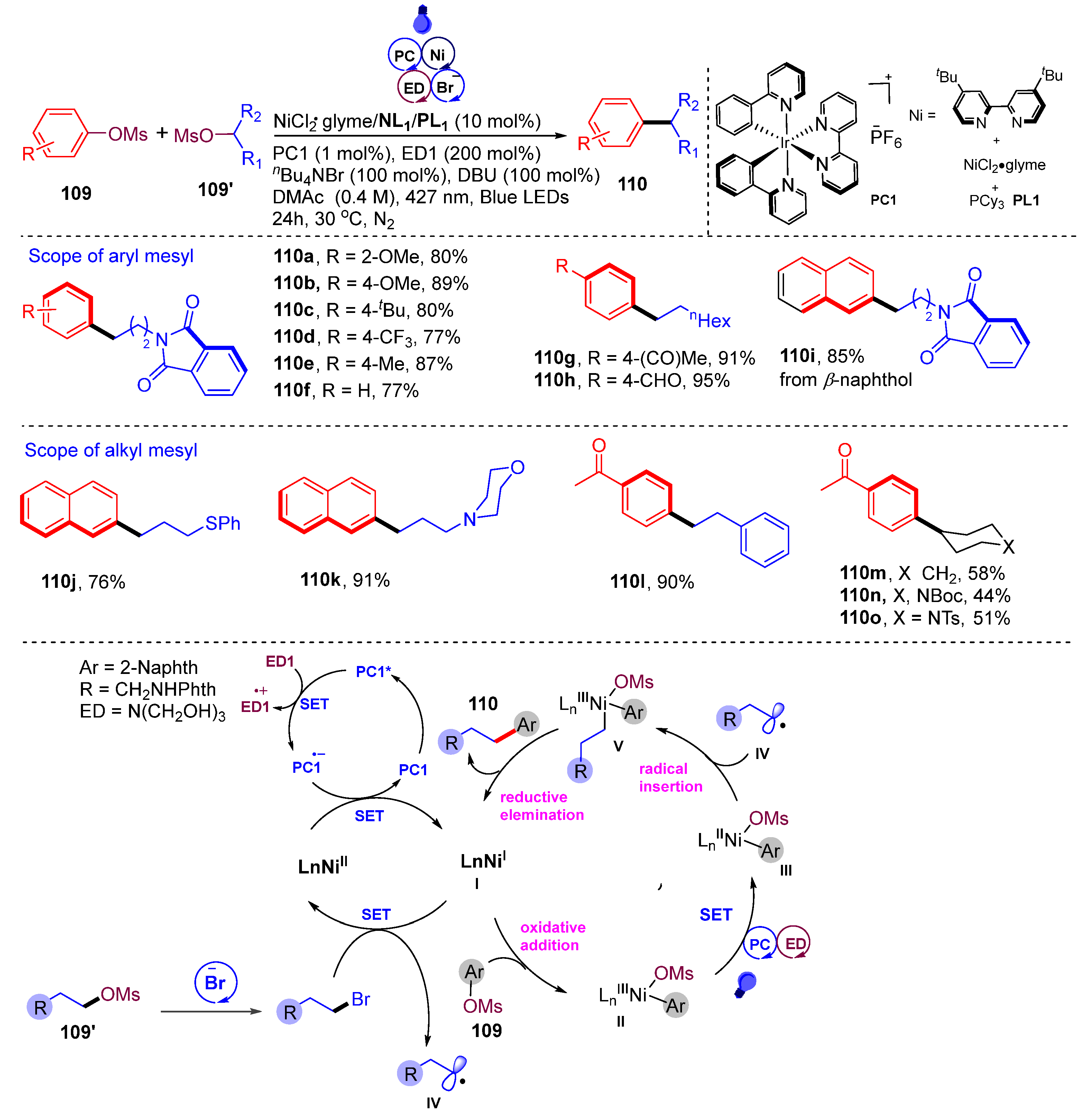
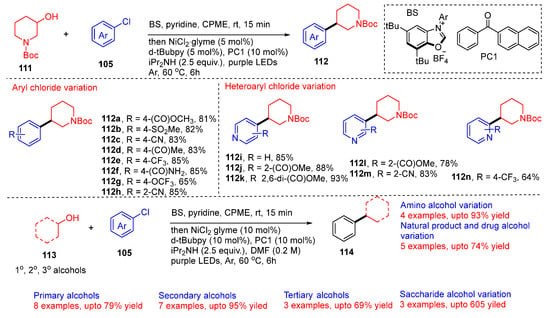
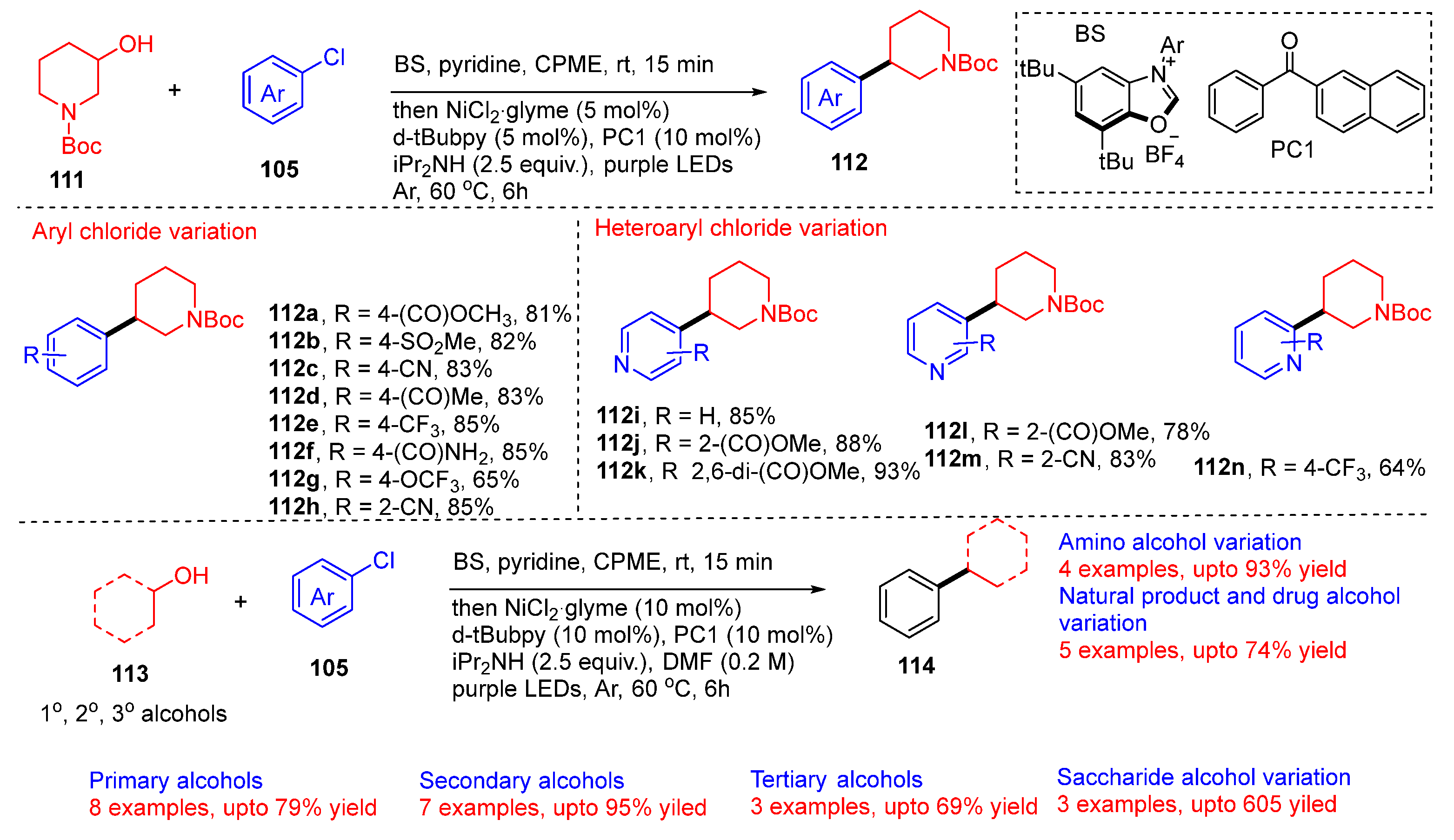
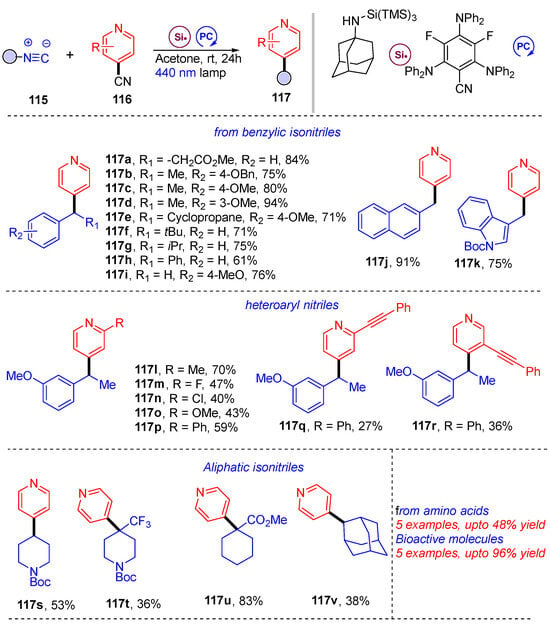
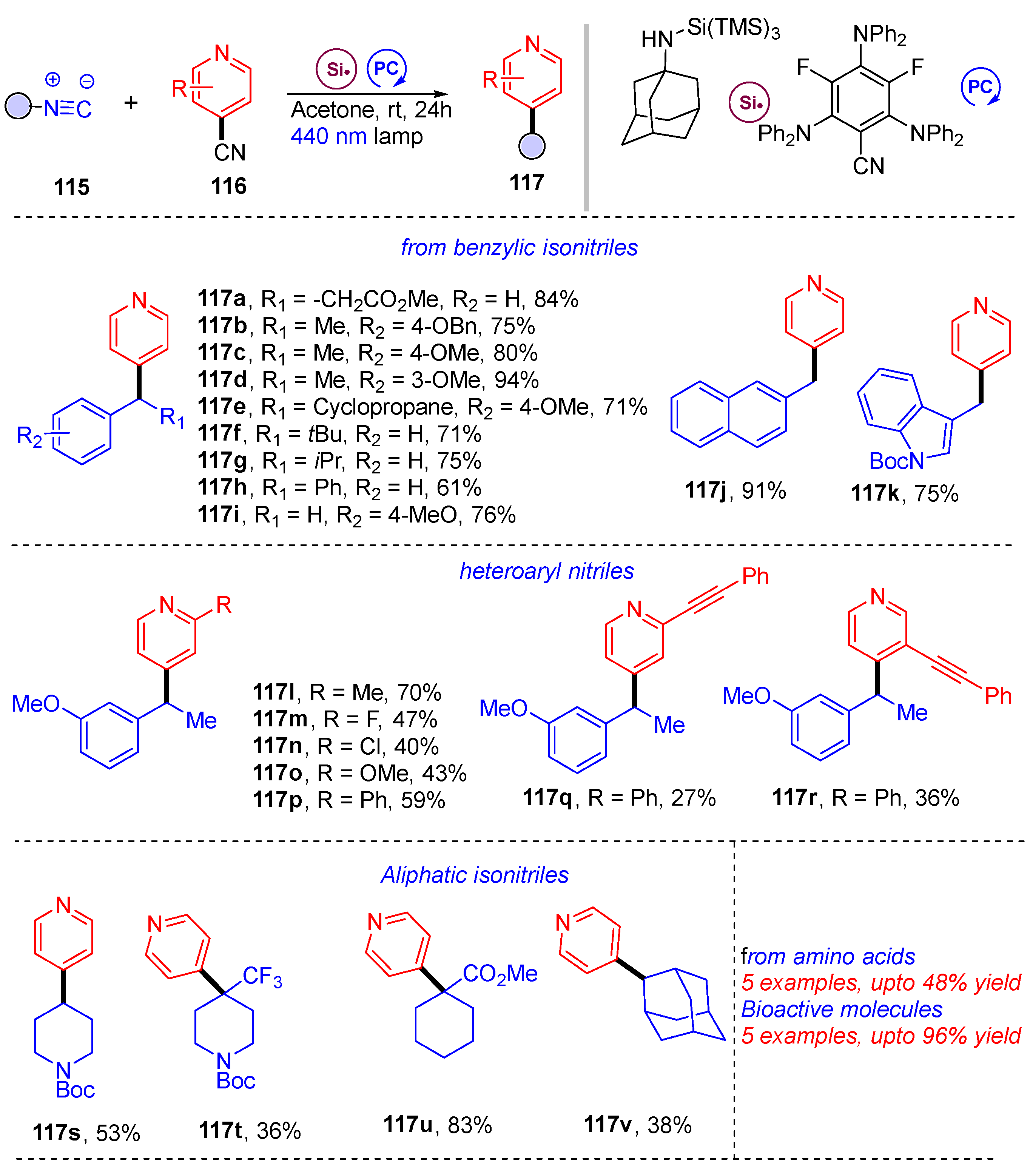
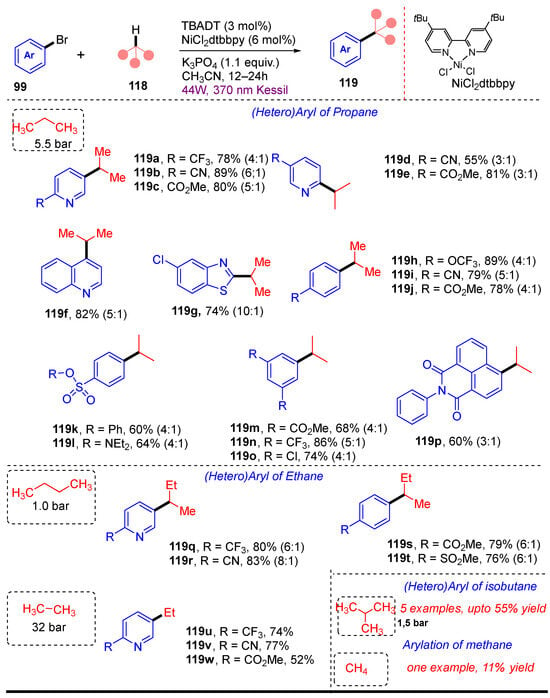
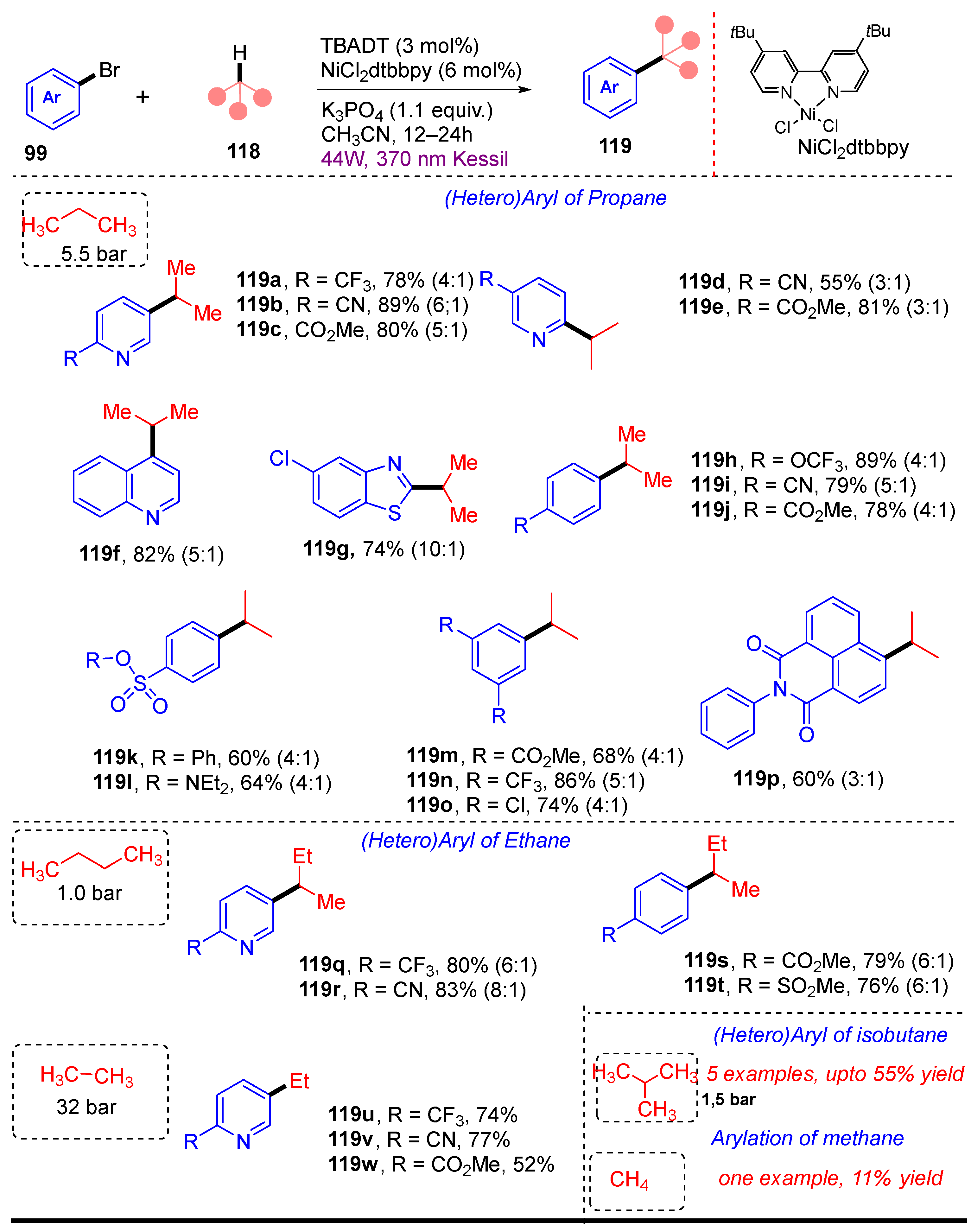
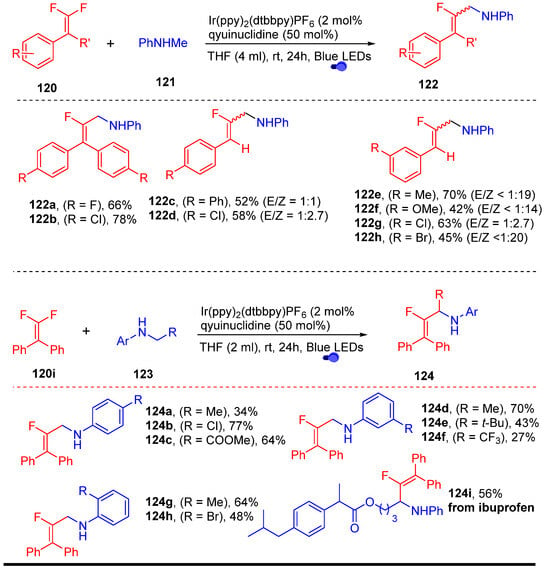
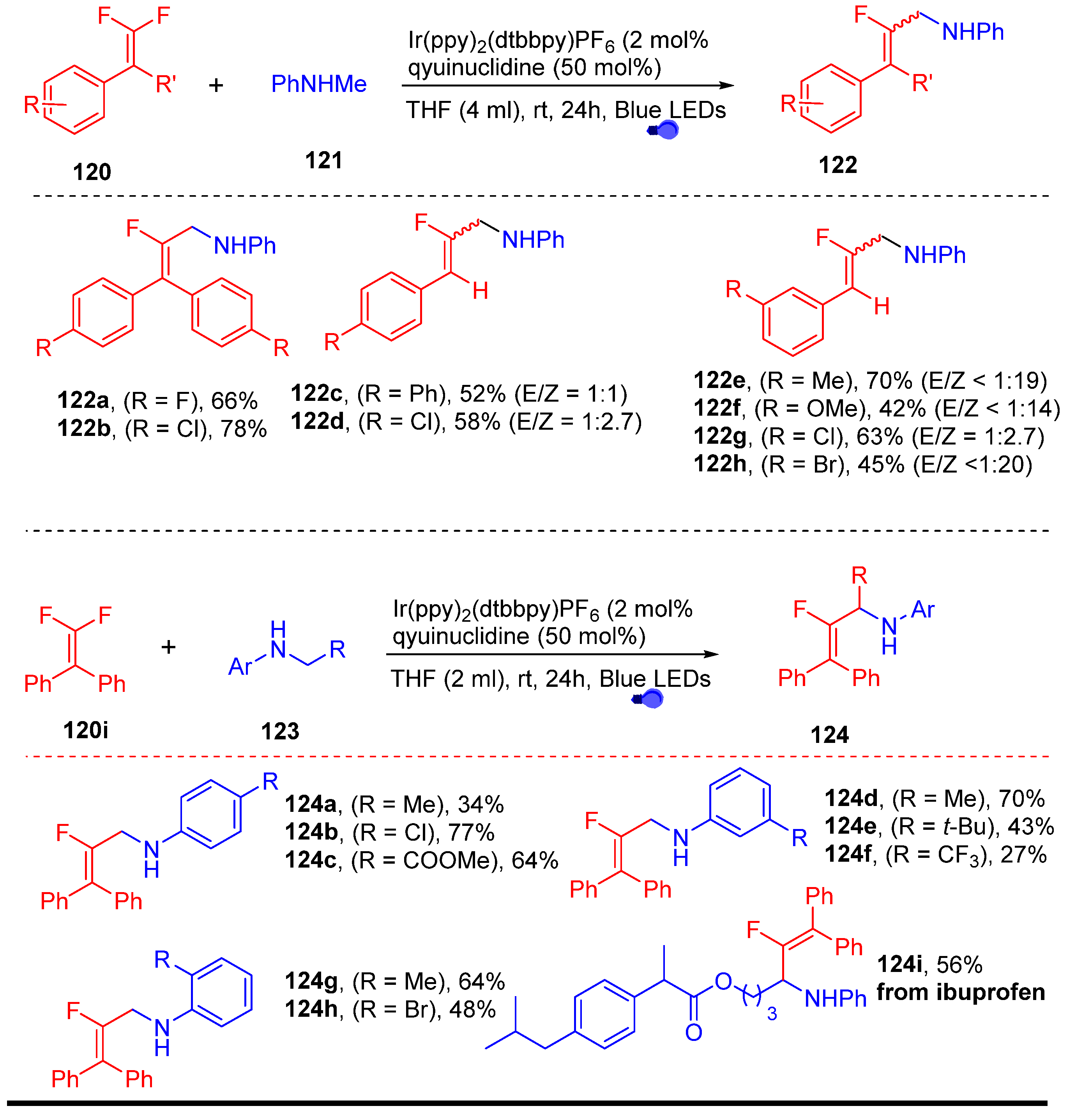
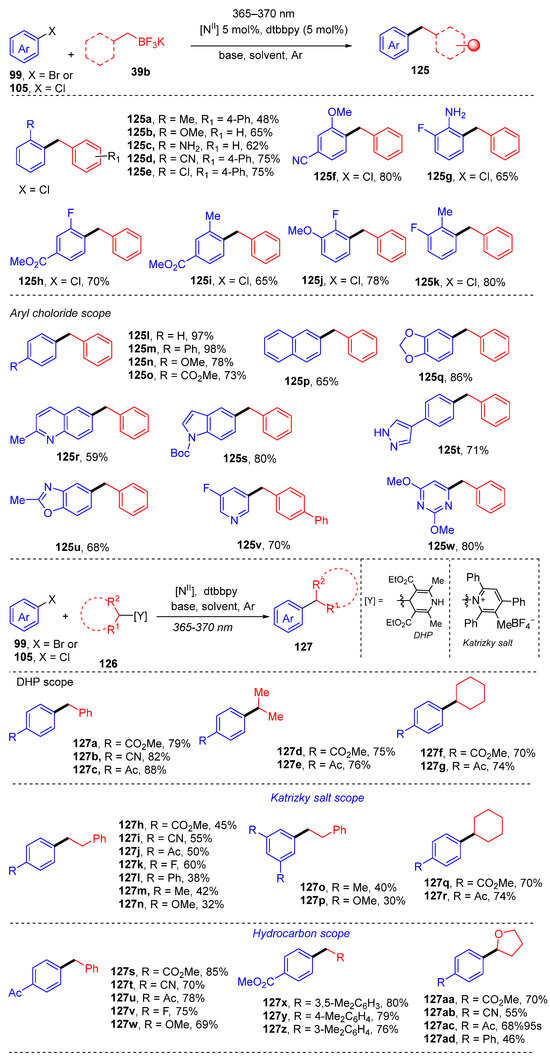
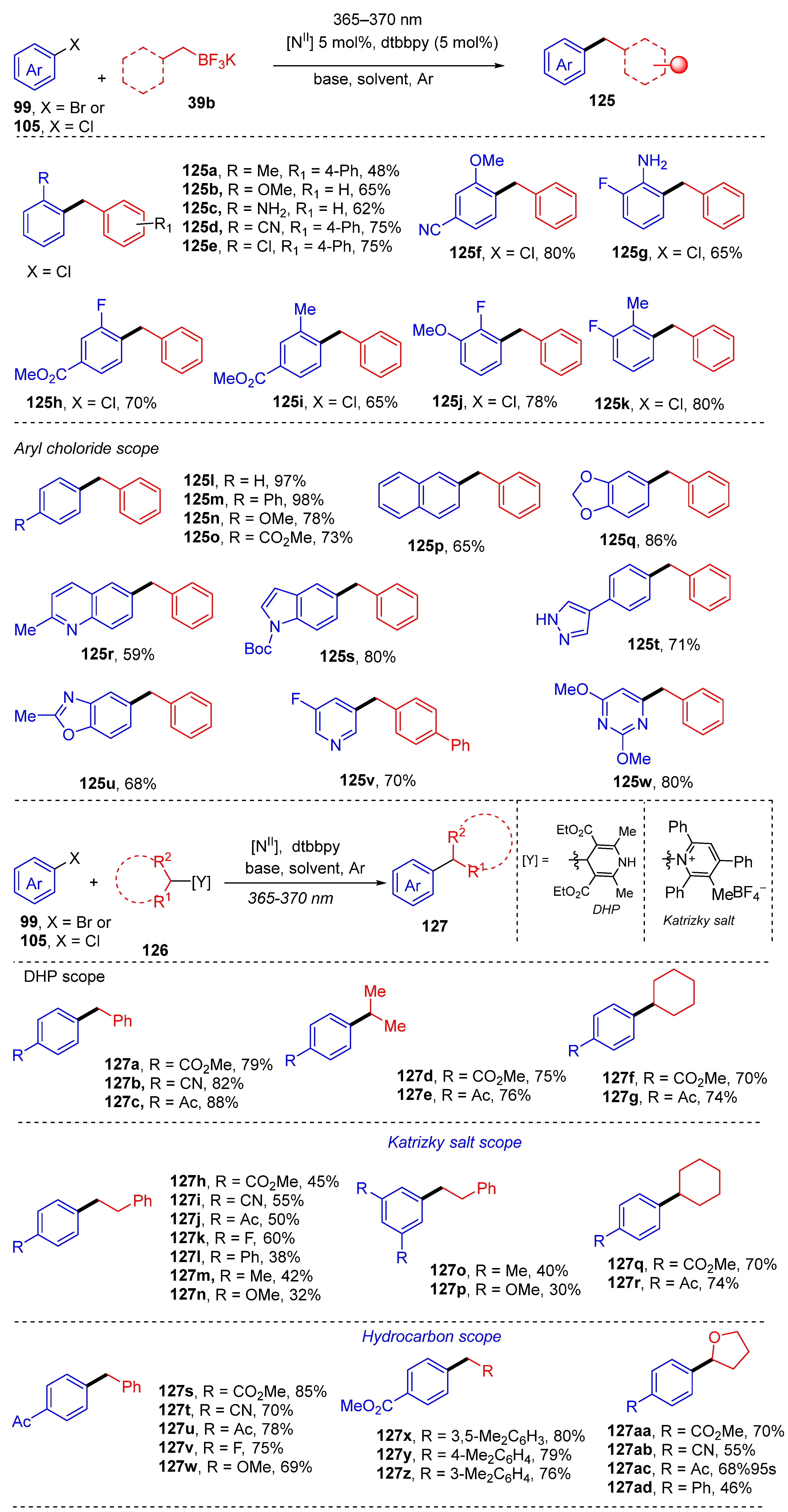
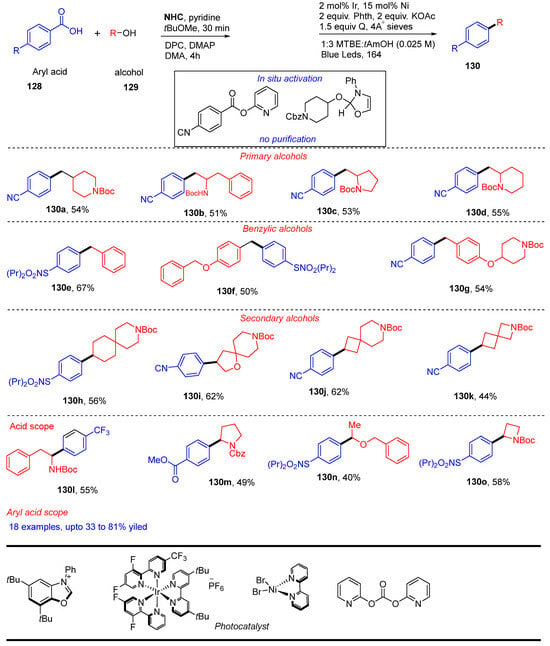
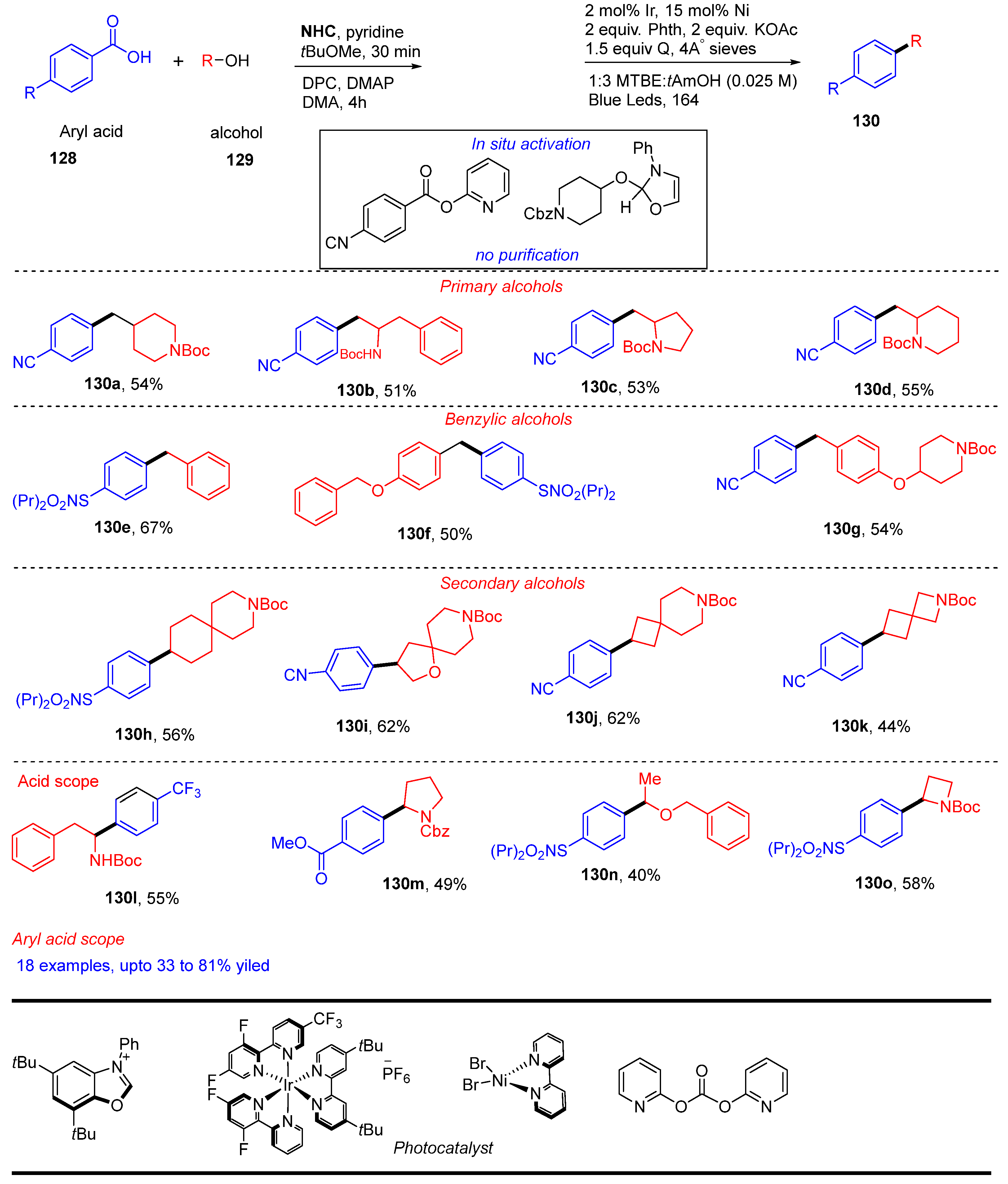
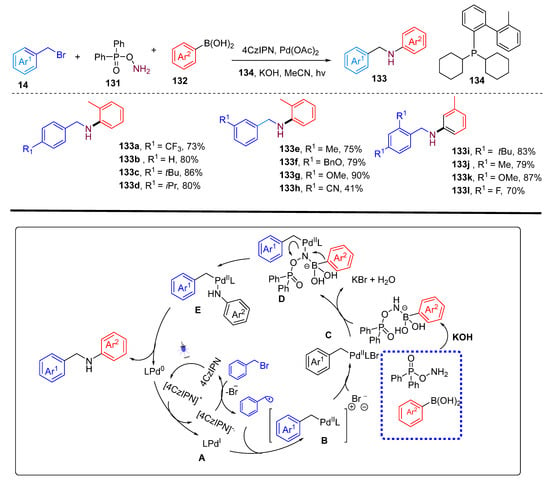
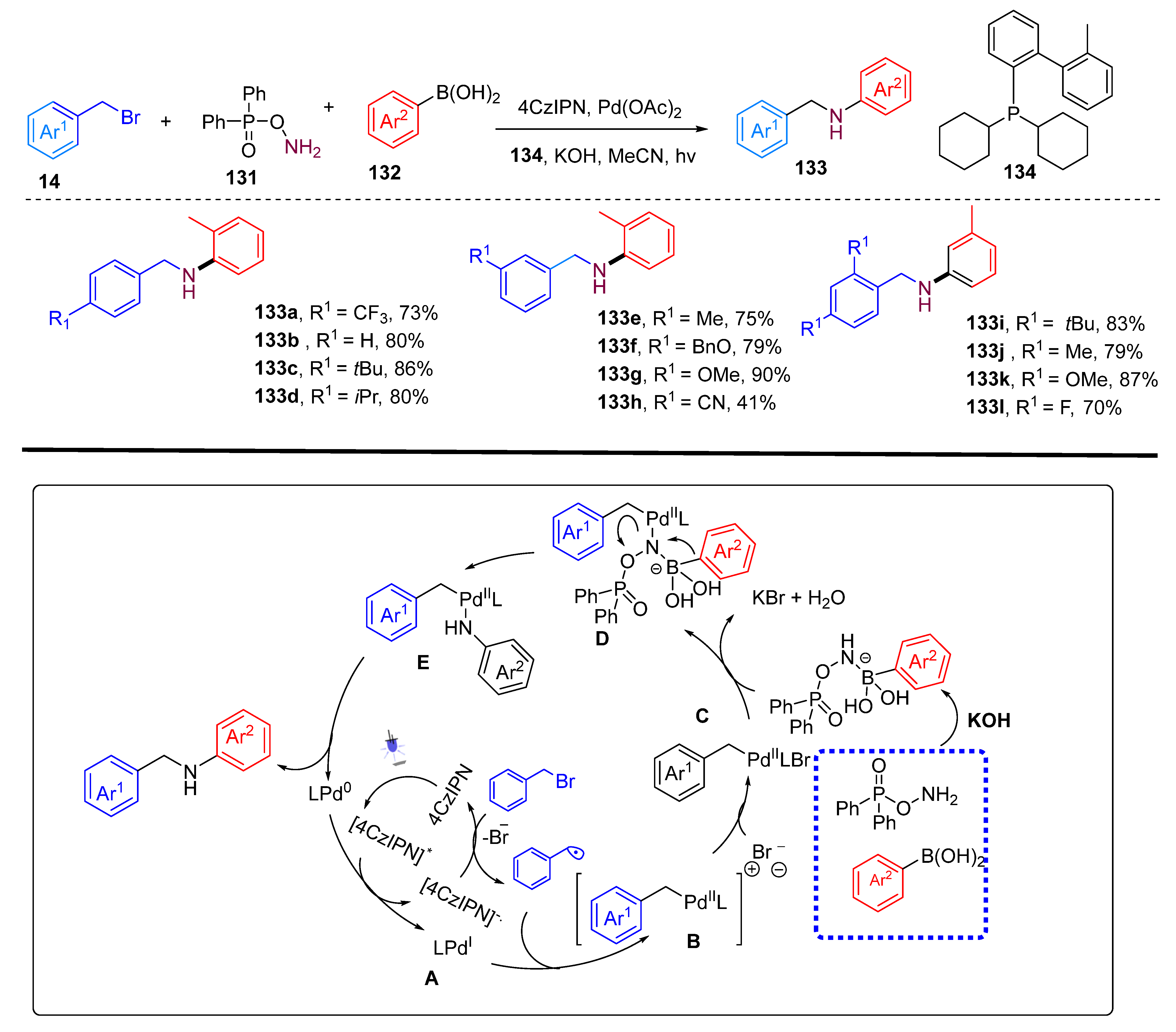
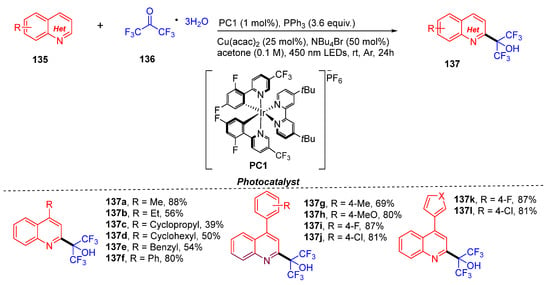
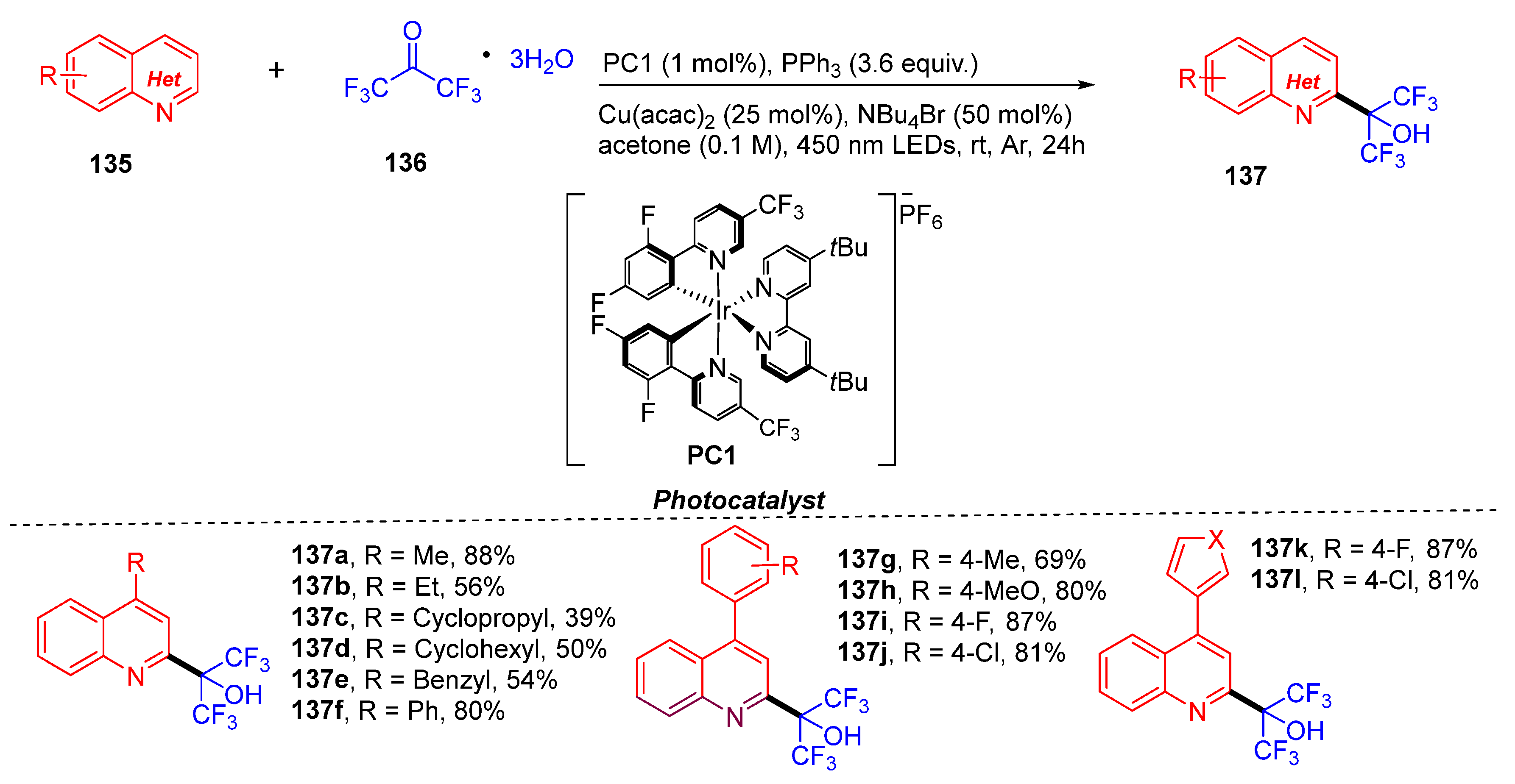
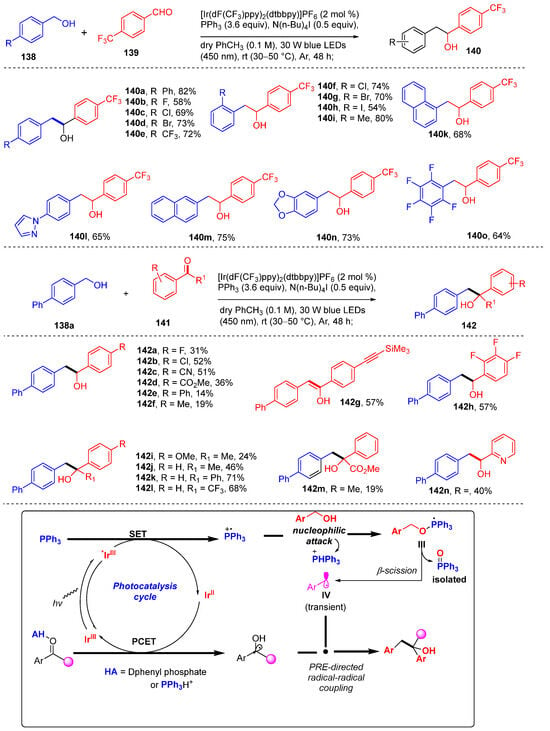
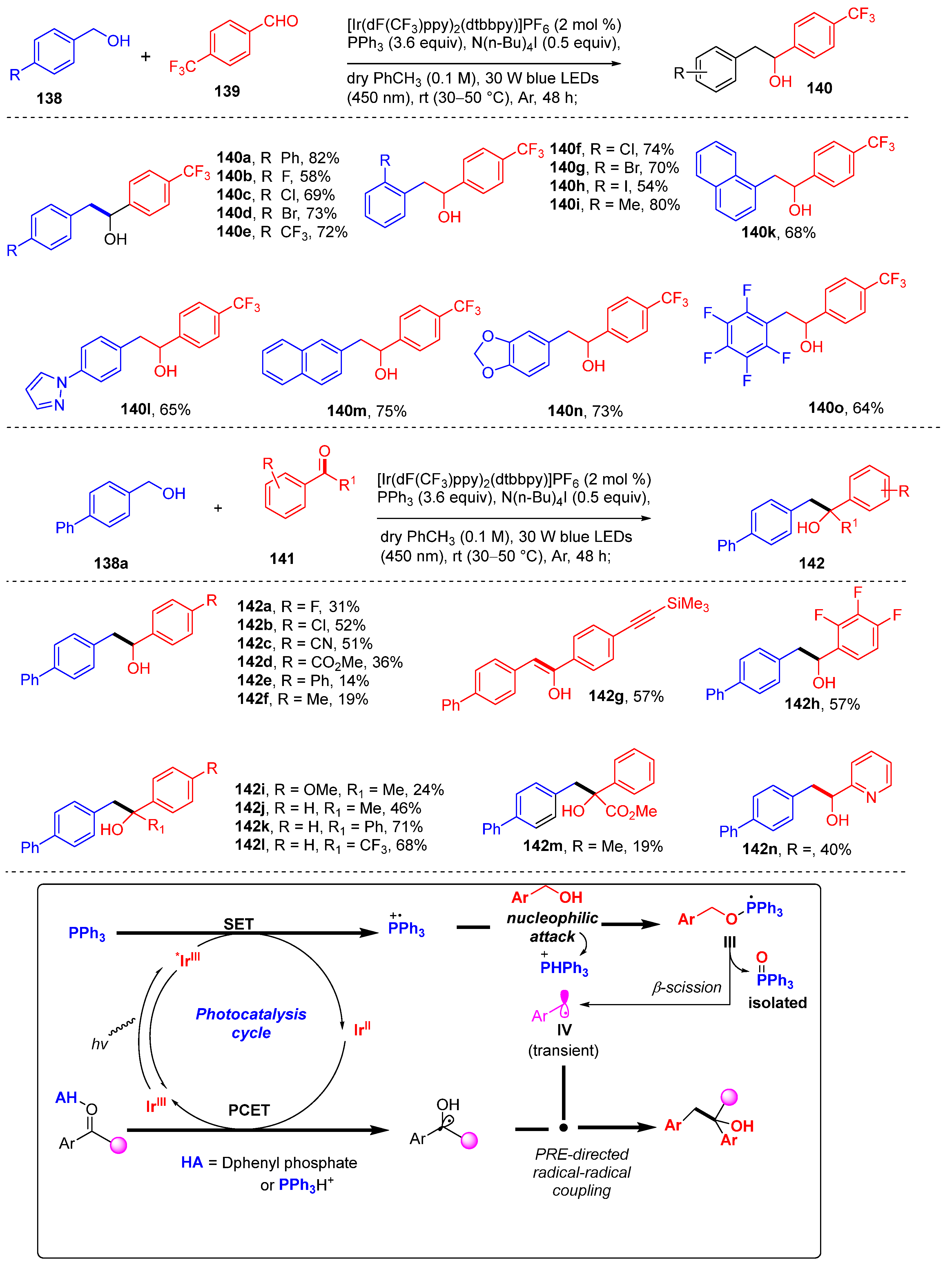
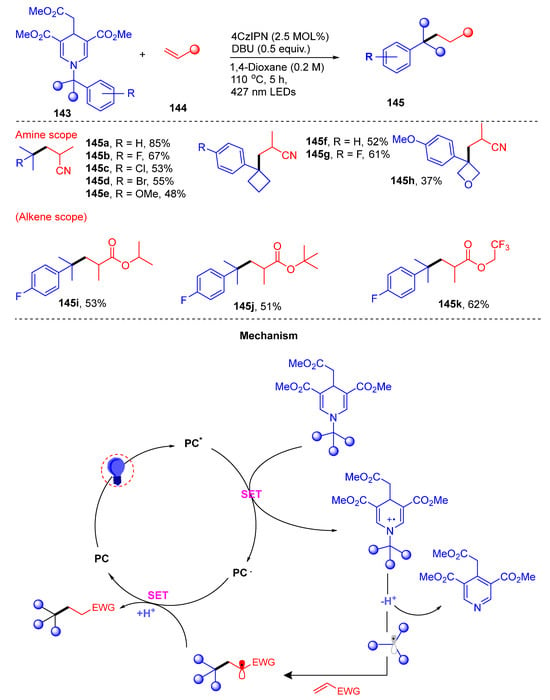
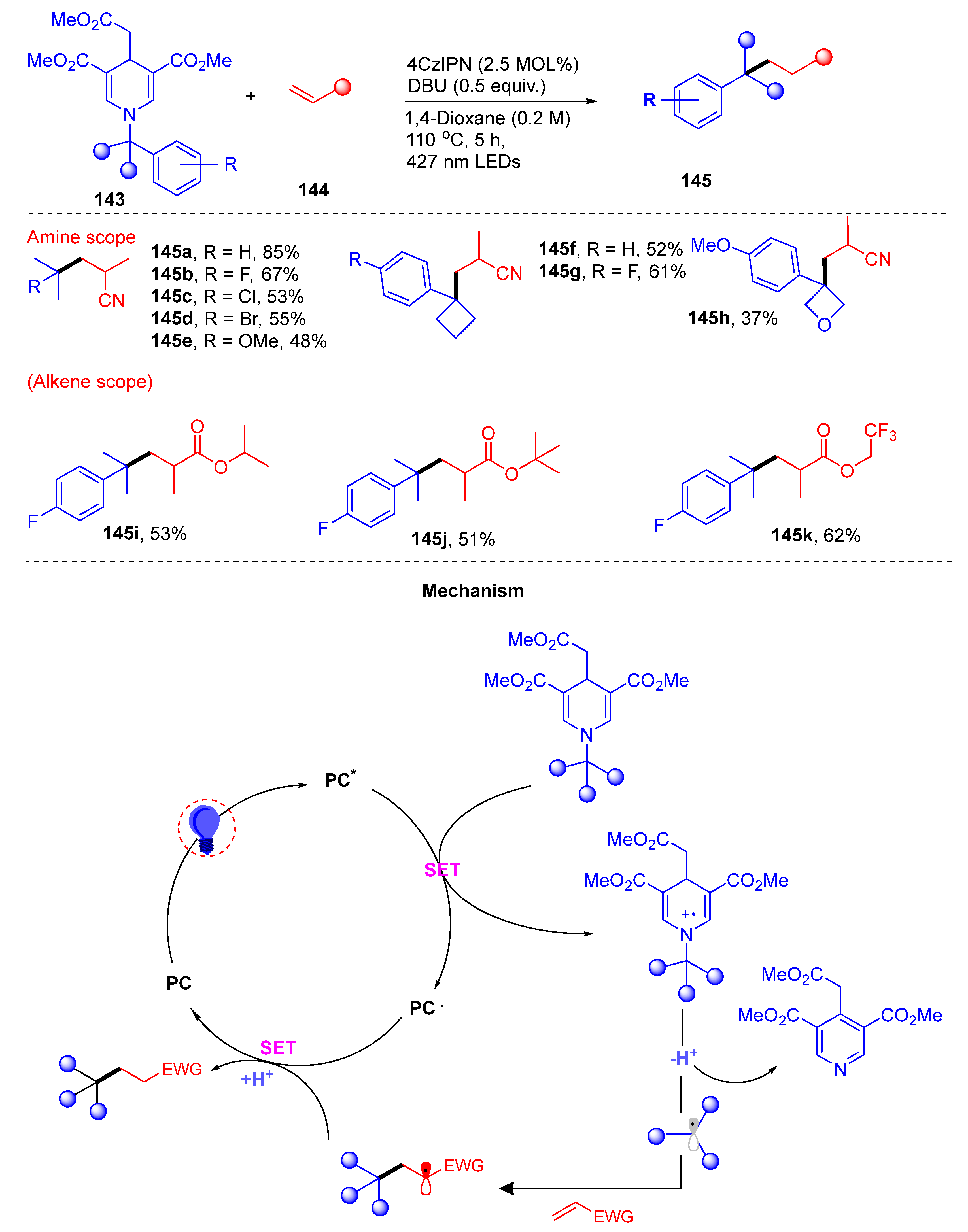
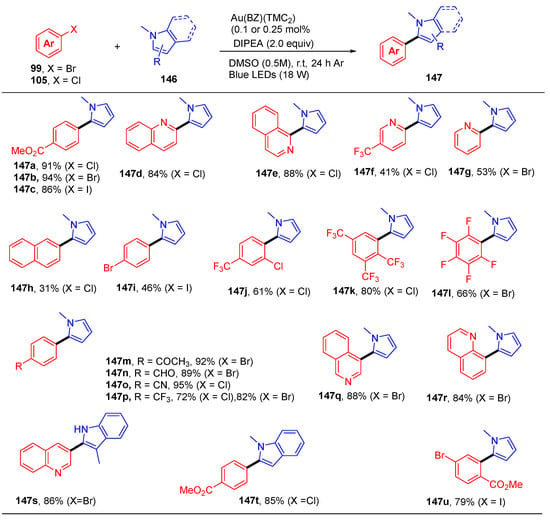
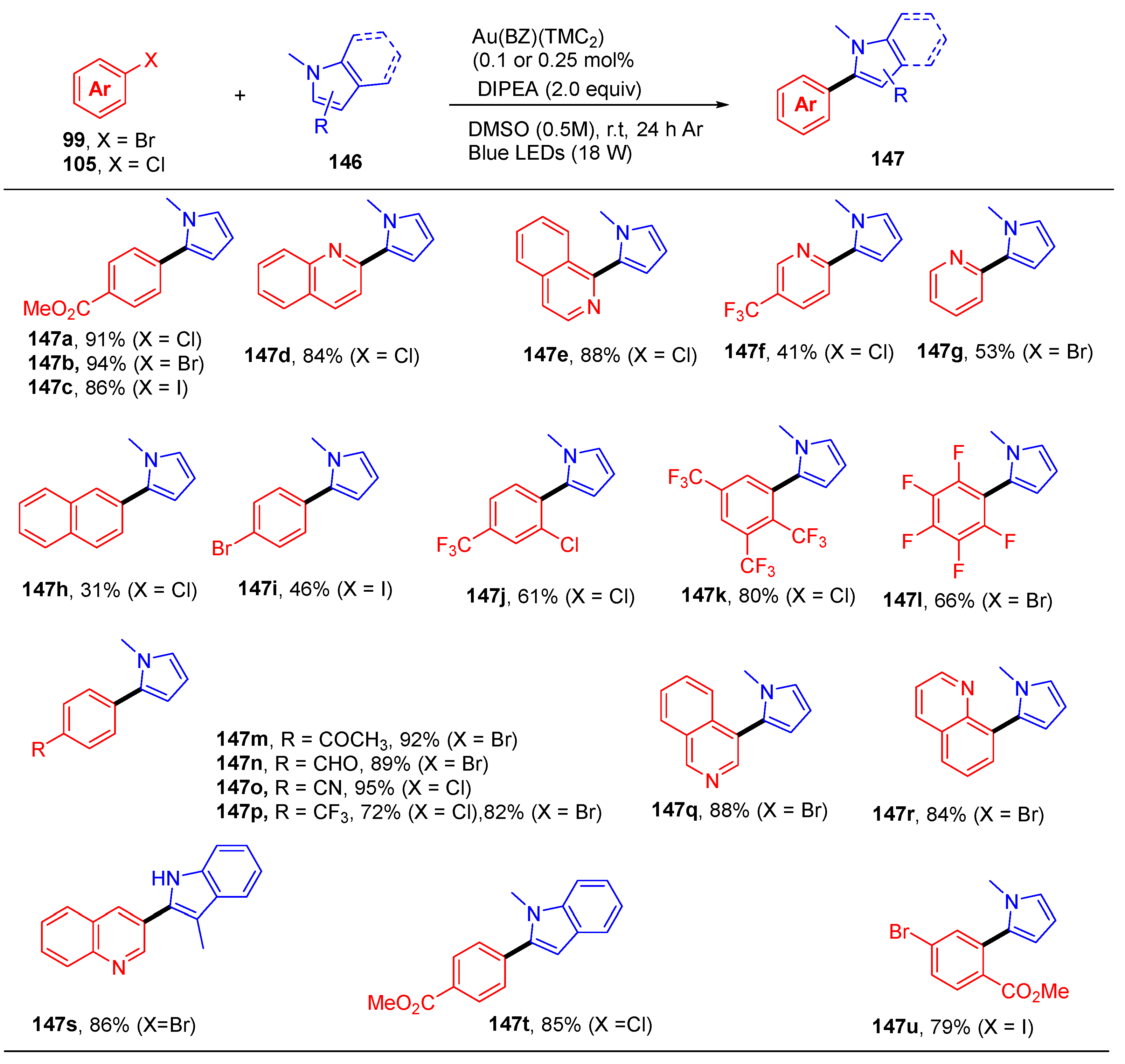
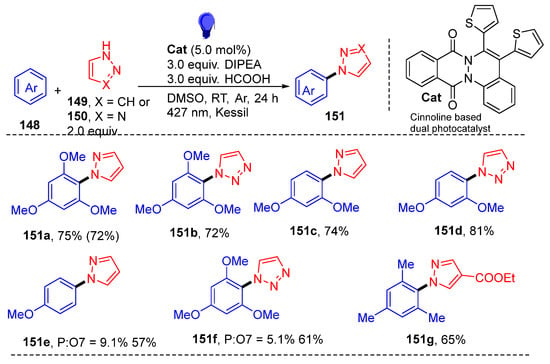
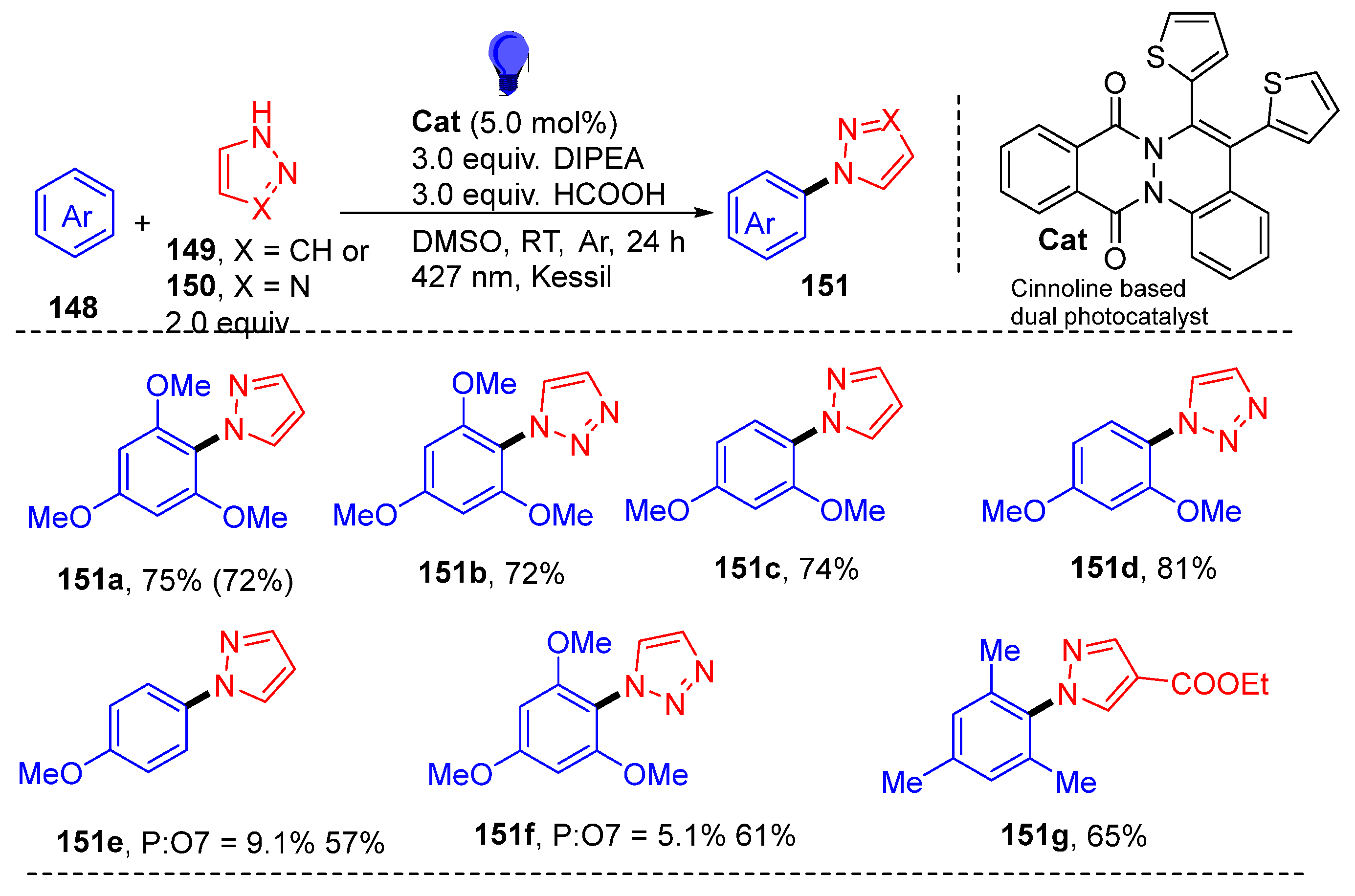
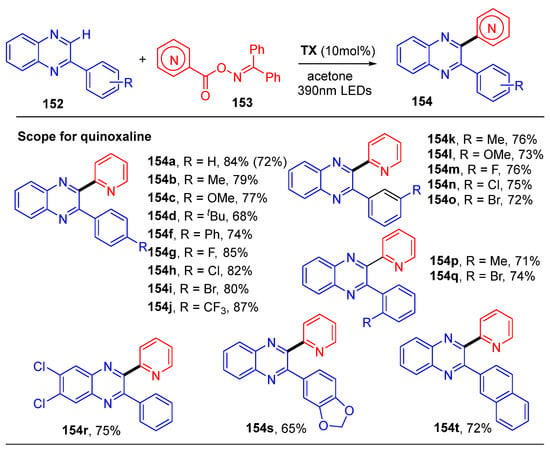
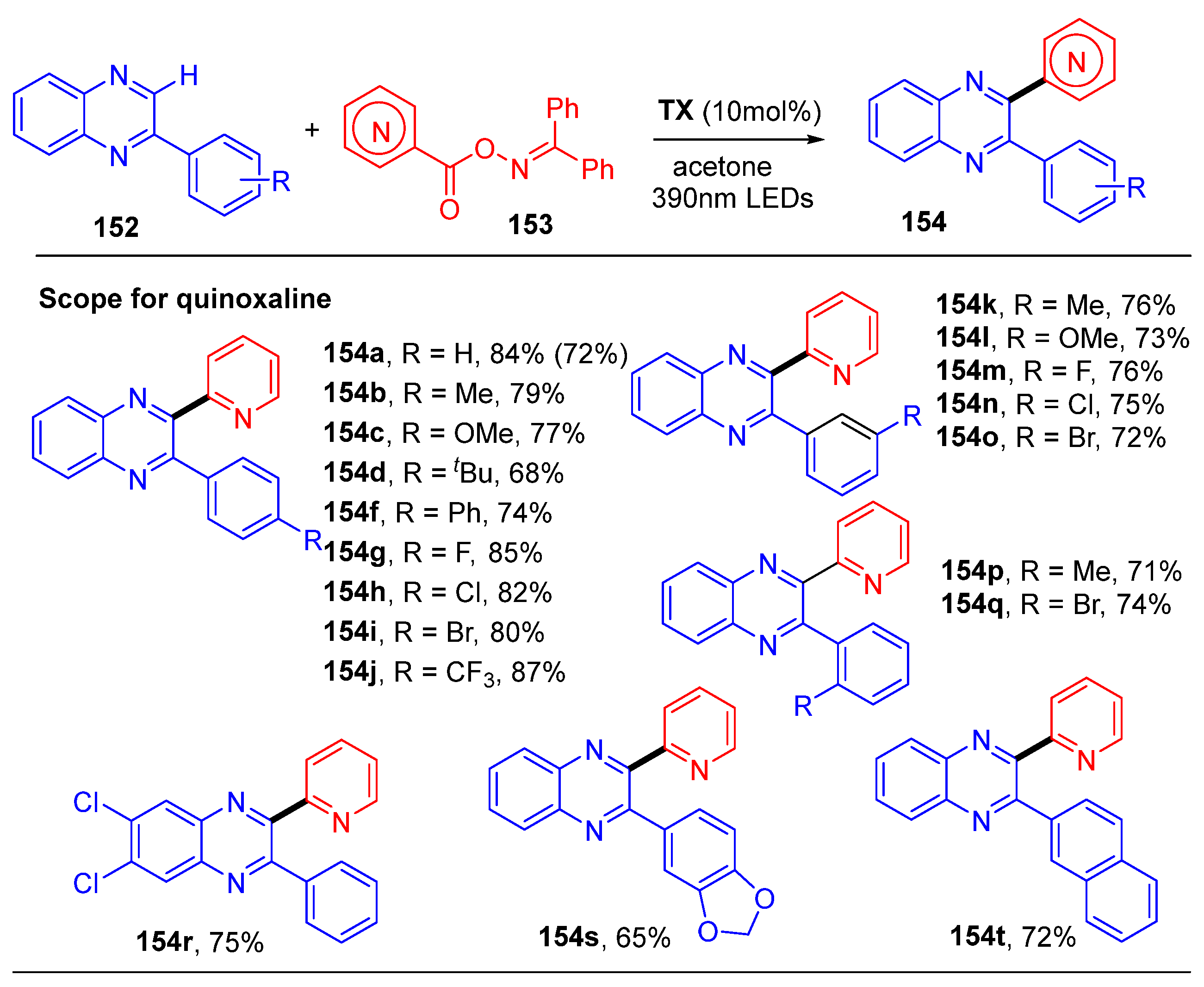
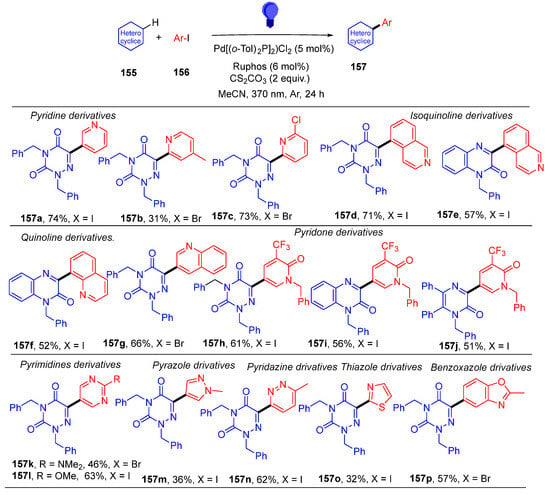
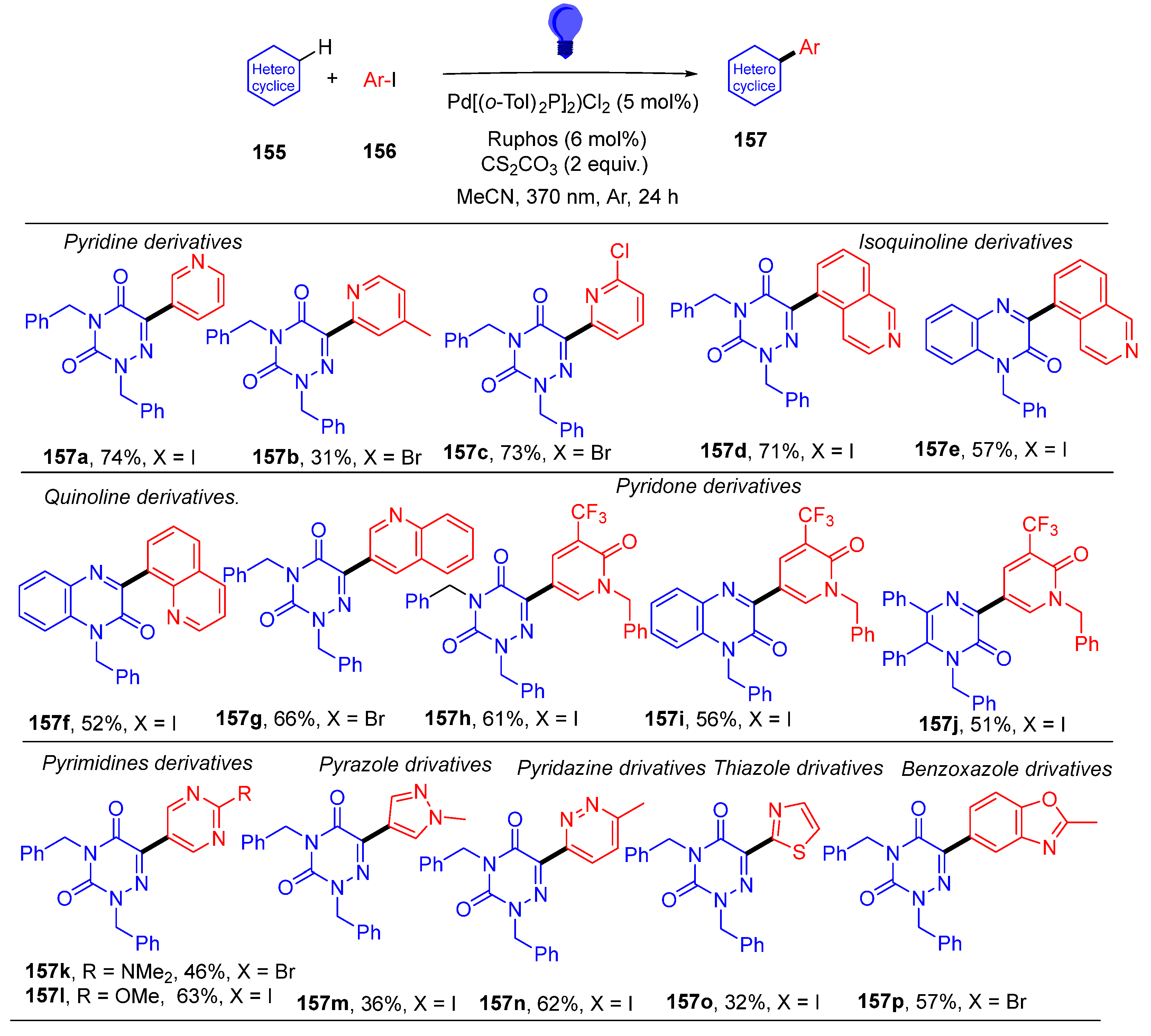
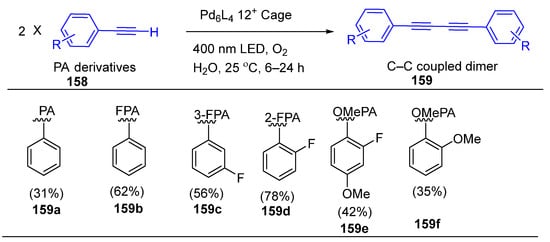
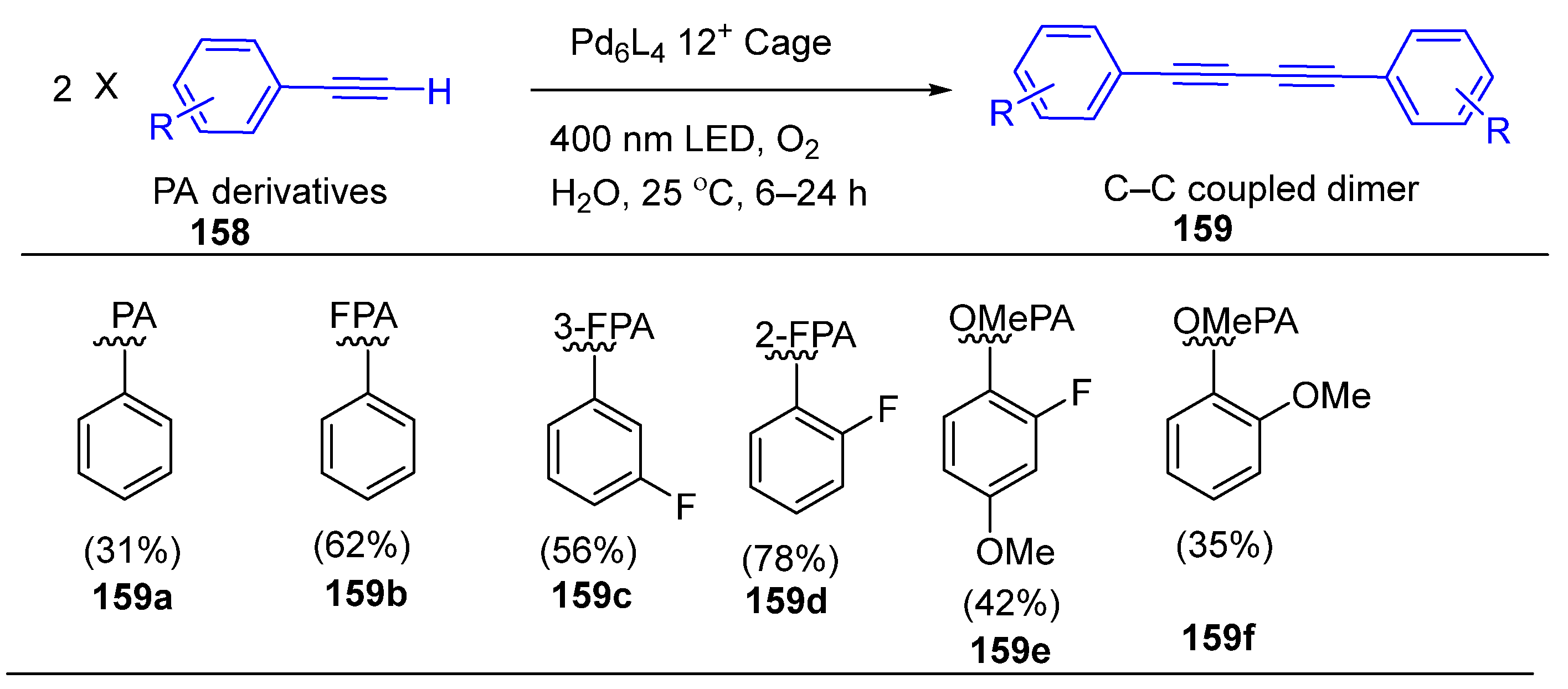

Disclaimer/Publisher’s Note: The statements, opinions and data contained in all publications are solely those of the individual author(s) and contributor(s) and not of MDPI and/or the editor(s). MDPI and/or the editor(s) disclaim responsibility for any injury to people or property resulting from any ideas, methods, instructions or products referred to in the content. |
© 2026 by the authors. Licensee MDPI, Basel, Switzerland. This article is an open access article distributed under the terms and conditions of the Creative Commons Attribution (CC BY) license.