


Abstract
The analysis of beams resting on elastic foundations has attracted significant attention in structural and mechanical engineering due to its extensive applications in different domains. Beams on elastic foundations interact continuously with deformable media. To represent this interaction mathematically, researchers have developed a variety of single-parameter, two-parameter and three-parameter models as well as continuous models. Among the structural elements employed to investigate these models, functionally graded material (FGM) beams have emerged as an attractive platform due to their continuously varying material properties and extensive use in modern engineering applications. Over the past two decades, extensive research has been conducted on the behavior of graded beams resting on elastic foundations using various beam theories, foundation models and analytical as well as numerical solution techniques. The present paper puts forward a detailed review of the existing literature concerning static bending, buckling, free and forced vibration analyses of FG beams supported by elastic foundations. Various material gradation schemes, including power law, exponential, sigmoid, porous and carbon nanotube-reinforced FGMs, are discussed. The review further examines the application of different classical foundation models, such as the Winkler, Pasternak, Kerr and Vlasov models. These classical models may be linear or nonlinear depending on the nature of the foundation medium. A comparative evaluation of the available studies is provided to identify current trends and limitations. Finally, potential future research directions involving multi-physics coupling, advanced foundation modelling, machine-learning-assisted prediction and micro/nanoscale applications are highlighted. The review aims to serve as a valuable reference for researchers and engineers working in the field of FG beams interacting with elastic foundations.
1. Introduction
Beam-like structural elements are among the most widely used components in engineering systems and are commonly encountered in civil, mechanical, aerospace, marine, railway and biomedical applications. In many practical situations, these structural members interact continuously with an underlying deformable medium rather than being supported by idealized rigid supports. Such supporting media may consist of soil, ballast, elastic pads, polymeric layers, viscoelastic substrates, biological tissues or engineered foundation systems. The interaction between the beam and the supporting medium significantly influences the structural response, including deflection, stress distribution, vibration characteristics, buckling resistance and nonlinear dynamic behavior. Consequently, accurate representation of the supporting foundation has become an essential aspect of beam analysis and, consequently, research in this domain.
Three key aspects are of vital importance while designing such structural systems and modelling the interaction between the beam and the foundation.
- (i)
- An appropriate model for the structural element must be developed.
- (ii)
- A suitable mathematical model of the foundation should be established.
- (iii)
- Finally, a comprehensive model that accounts for the interaction between the structure and its foundation should be formulated.
Depending on the applications, several elastic foundation models have been developed over the past century [1,2,3]. The simplest and most widely adopted model is the Winkler foundation [4], in which the supporting medium is represented by a set of independent linear springs. Although the Winkler model offers mathematical simplicity and computational efficiency, it neglects the shear interaction between adjacent points of the foundation. To overcome this limitation, more sophisticated models, such as the Pasternak [5] and Kerr [6] foundations, were proposed, introducing additional parameters to account for shear deformation and continuity effects within the supporting medium. While the Pasternak foundation includes one additional shear-layer parameter in the form of the Winkler parameter, the Kerr foundation includes three parameters, consisting of two spring parameters and an intermediate shear-layer parameter. Since real foundations exhibit both elastic and damping characteristics, viscoelastic elements have been incorporated into the elastic Winkler model. Different arrangements of elastic springs and viscous dampers have been proposed in the Kelvin–Voigt, Maxwell, Zener, Poynting–Thomson and Burger viscoelastic [7,8] foundation models to capture the time-dependent response of foundation materials. More recently, nonlinear [9], stochastic [10] and spatially varying foundation [11,12] models have been developed for better representation of realistic engineering conditions. In addition to the above-mentioned discrete foundation models, continuous foundation models such as the elastic half-space [13,14] and Vlasov [15] models provide more accurate representation of practical instances. The elastic half-space model treats the foundation as a semi-infinite, homogeneous and isotropic elastic continuum, and captures the nonlocal response and stress distribution beneath the structure [16]. Consequently, the Vlasov model accounts for the continuity and shear deformation of the foundation by incorporating additional parameters.
The selection of an appropriate foundation model can substantially affect the predicted structural response and therefore remains an active area of research.
Simultaneously, the emergence of advanced materials has motivated researchers to move beyond conventional homogeneous structures. FGMs represent a class of engineered composite materials in which material properties vary continuously and smoothly in one or more spatial directions. Such gradual variation eliminates the abrupt interfaces typically found in laminated composites, thereby reducing stress concentrations and improving structural integrity. Owing to their superior thermal resistance, enhanced mechanical performance and tailored material characteristics, FGMs have found applications in aerospace structures, thermal barrier systems, nuclear reactors, biomedical implants, automotive components and micro-electromechanical systems [17,18,19].
The analysis of FG beams resting on elastic foundations has consequently attracted considerable attention during the last two decades. Researchers have investigated various static, dynamic, stability, thermal and nonlinear responses of FG beams using different beam theories, homogenization techniques and computational approaches. Numerous studies have considered Winkler and Pasternak foundations, while others have explored Kerr, nonlinear, viscoelastic and variable foundation models. Furthermore, recent developments have extended the analysis to porous FG beams, carbon-nanotube-reinforced beams, bidirectionally graded beams, micro/nanoscale beams, and beams subjected to multi-physical environments involving thermal, magnetic, electrical and moisture effects.
Despite the presence of a large number of articles on FG beams, comparatively less attention has been devoted to a systematic examination of elastic foundation modelling and its influence on the response of FG beam structures. A few review studies related to this area have been reported in the literature. Dutta and Roy [20] and Wang et al. [21] provided comprehensive overviews of the historical development of beams and plates resting on elastic foundations, together with the fundamentals of soil–structure interaction. Younesian et al. [22] presented a detailed review of elastic and viscoelastic foundation models, focusing on their applications to the linear and nonlinear vibration analysis of structures. More recently, Lamprea-Pineda et al. [23] reviewed the analysis of beams on elastic foundations, with particular emphasis on railway engineering applications.
Although these review articles have significantly contributed to the understanding of foundation–structure interactions, they primarily address homogeneous structural members or specific engineering applications and do not provide a comprehensive review of FG beams resting on elastic foundations. In particular, they do not systematically examine the combined effect of material gradation and foundation characteristics on the static bending, free vibration, buckling, post-buckling and nonlinear dynamic behavior of FG beams. Moreover, the recent developments involving nonlinear, variable parameter and graded foundation models combined with porosity, CNT (carbon nanotube)/GPL (graphene platelets)-reinforcement, and micro/nano-size effects have not been collectively reviewed from the perspective of FG beam analysis. Consequently, studies currently lack a dedicated reference that summarizes the available foundation models, compares their capabilities and limitations, and identifies appropriate modeling strategies for different practical problems.
Motivated by these observations, the present review aims to fill the gap by providing a comprehensive assessment of the literature concerning FG beams resting on elastic foundations, with an emphasis on foundation modelling. Unlike previous reviews, which focus on either elastic foundation theories or specific structural application, the present work systematically examines the interaction between graded material and the foundation part. The review traces the evolution of elastic foundation theories from classical single-parameter models to advanced multi-parameter and nonlinear formulations. The effects of different foundation models on static bending, free vibration, buckling, post-buckling and nonlinear dynamic responses are critically examined. Furthermore, a comparative evaluation of different foundation models is presented to highlight their capabilities, limitations and suitability for specific engineering applications.
The remainder of this paper is organized as follows. Section 2 briefly introduces FGMs and material property estimation techniques. Section 3 presents the fundamental concepts and evolution of elastic foundation models, including Winkler, Pasternak, Kerr, Vlasov, nonlinear and spatially varying foundations. Section 4, Section 5, Section 6 and Section 7 review the static, stability, free and forced vibration analyses of FG beams resting on different foundations. Section 8 covers a review of advanced topics in FG beams resting on elastic foundations, while Section 9 discusses research gaps and future directions. Finally, concluding remarks are presented in Section 10.
2. FGM Modelling
2.1. Overview of FGMs
FGMs are advanced composite materials characterized by a continuous and smooth variation in material properties within the structure. Unlike conventional laminated composites, which consist of distinct material layers with distinct orientation, geometry, properties, etc., FGMs exhibit a gradual transition between constituent materials. This continuous variation effectively reduces stress concentrations, improves bonding strength and enhances resistance to thermal and mechanical loading [24].
The concept of FGMs was originally developed in the 1980s for thermal barrier applications in aerospace and nuclear engineering [24,25]. Typically, FGMs are composed of a ceramic-rich region and a metal-rich region. The ceramic phase provides high temperature resistance and stiffness, while the metallic phase contributes ductility and fracture toughness. By controlling the spatial distribution of the constituent materials, the designer can tailor the structural and thermal performance according to specific engineering requirements.
Due to their superior mechanical and thermal characteristics, FGMs have found widespread applications in the aerospace industry, marine engineering, the automotive sector, civil and mechanical engineering, biomedical implants and micro/nano-electro-mechanical systems (MEMS/NEMS) [26,27,28,29,30,31]. In the aerospace industry, they are employed in aircraft wings, turbine blades, space structures and thermal shielding systems to withstand severe thermal gradients. In marine engineering, FGMs are utilized in ship hulls, offshore platforms and underwater structures to improve corrosion resistance and durability in reactive environments. In the automotive sector, they are used in lightweight structural components, brake systems and suspension elements to enhance strength-to-weight performance. In civil and mechanical engineering, FGMs are used in bridges, machine components and high-temperature structural members where improved stiffness, vibration characteristics and thermal resistance are required. Moreover, biomedical engineering has increasingly adopted FGM concepts in orthopedic implants, prosthetic devices and dental restorations to better match the mechanical properties of natural tissues and improve long-term performance. Consequently, the analysis of FG beams has emerged as an important research area in structural mechanics [32,33,34,35].
In such an analysis, material properties such as the Young’s modulus, density, Poisson’s ratio, thermal conductivity, and thermal expansion coefficient are generally assumed to vary continuously. The variation may be in conjunction with one or more of the above-mentioned properties, or even individually depending on the modelling context. It should also be mentioned here that property variation can take place along the thickness direction (transversely functionally graded, TFG) or the length or axial direction (axially functionally graded, AFG), or both (bi-directionally functionally graded, BDFG), as represented in Figure 1. Figure 1 illustrates the geometry of the FG beam and the possible material gradation patterns. A cartesian coordinate system (x, y, z) is adopted, where the x-axis is aligned with the beam length L, the y-axis is along the beam width b, and the z-axis is directed through the beam thickness h. The beam is therefore represented as a three-dimensional structural member. Figure 1a,c illustrate three representative material gradation configurations. Figure 1a,b represent the beam with unidirectional material gradation, in which Figure 1a is a TFG beam with material gradation along the beam thickness, and Figure 1b is an AFG beam with axial directional material gradation. Figure 1c is a BDFG beam with material gradation simultaneously in the axial and thickness directions. The material variation may follow different mathematical distributions depending on the manufacturing process and intended application.
Figure 1.
Material property gradation of FG beam (L is beam length), (a) TFG, (b) AFG, (c) BDFG.
It should be noted that, in the subsequent sub-sections of the “FGM Modeling” section (Section 2), material gradation is assumed to occur only in the thickness direction (the z-axis), except in Section 2.6, where the material is graded in both the axial (x-axis) and transverse (z-axis) directions.
2.2. Material Property Estimation Methods
Accurate estimation of effective material properties is essential for the prediction of the mechanical behavior of FG structures. Various homogenization schemes have been proposed to determine equivalent material properties based on the volume fractions of constituent materials. The simplest and most widely used approach is the rule of mixtures (ROM) [36], expressed as
where P denotes a material property, and Pm and Pc represent the properties of the metal and ceramic constituents, respectively, which are the two most commonly used phases. Vm and Vc denote the corresponding volume fractions of the constituent phases, and they must satisfy the relation Vm + Vc = 1.
Although ROM provides reasonable estimates for many engineering applications and therefore remains popular in the literature [37,38,39,40], it does not fully account for the interaction between constituent phases and may lead to inaccuracies for complex microstructures. To overcome these limitations, several advanced homogenization schemes have been proposed.
One of the most frequently adopted alternatives is the Mori–Tanaka (M-T) method, which incorporates the influence of inclusions embedded within a matrix material. This approach generally provides more accurate predictions of elastic properties, particularly when the volume fraction of constituent phases varies significantly. In this, the effective bulk modulus K(z) and shear modulus G(z) can be calculated from the following relations [41,42]:
From this, the effective Young’s modulus E(z) and Poisson’s ratio ν(z) can be calculated as:
Similarly, the Voigt–Reuss (V-R) models establish upper and lower bounds for the effective properties of composite materials by assuming uniform strain and uniform stress distributions, respectively [43,44]. The Voigt model decides the upper bound of the effective material property (PV) using the rule of mixture relations, expressed as:
where Pr is the reinforcement property, Pm is the matrix property, Vr is the reinforcement volume fraction, and Vm is the matrix volume fraction (=1 − Vr).
Consequently, to evaluate the lower bound of the effective material property (PR), the Ruess model is used, following the relation:
The actual value of the effective material property lies between the limits PR ≤ Peff ≤ PV. Considering the 3:5 ratio, the actual value can be calculated as [45]:
For nanocomposite FG structures, such as CNT-reinforced FG beams, the Halpin–Tsai (H-T) model is often employed to evaluate the effective elastic modulus. This model incorporates the geometry and orientation of reinforcement phases and has been shown to provide improved predictions compared with classical mixture rules. In this, the effective property of a composite (Pc) is expressed as [46]:
where
Pc is the effective composite property, Pm is the matrix property, Pr is the reinforcement property, Vr is the reinforcement volume fraction, ξ is the reinforcement geometry parameter and η is the reinforcement efficiency parameter.
The selection of an appropriate homogenization model depends on the constituent materials, microstructural characteristics and desired level of accuracy. Nevertheless, the ROM and M-T schemes remain the dominant approaches in studies involving FG beams resting on elastic foundations. Most investigations reported in the literature employ these methods to determine the spatial variation in the Young’s modulus, density, thermal expansion coefficient and other material properties required for static, dynamic and stability analyses.
A proper representation of effective material properties is particularly important in foundation-supported FG beams because the interaction between material gradation and foundation stiffness significantly influences deflection, vibration frequencies, critical buckling loads and nonlinear response characteristics. Accordingly, an appropriate material gradation model is required to accurately describe the continuous variation in constituent volume fractions and the resulting effective properties.
2.3. Power Law Gradation (P-Gradation)
The power law distribution is the most extensively used material gradation model in studies of FG beams. In this approach, the ceramic volume fraction varies continuously through the beam thickness according to the relation:
and
where h denotes the beam thickness and n is the material gradient index.
0 < n < ∞
The material gradient index controls the distribution of constituent materials within the beam. A lower value of (n) corresponds to a ceramic-rich structure, whereas higher values produce metal-rich configurations. As the gradient index increases, the effective stiffness generally decreases, resulting in larger deflections and lower natural frequencies.
Substituting Equation (7) in the equation of ROM of Equation (1), the resulting expression comes out to be:
Equation (8) indicates continuous variation in material properties from metal-rich at the bottom-most surface to ceramic-rich at the top-most surface, as shown in Figure 2.
Figure 2.
Material property gradation of a rectangular section of a TFG beam.
Due to its simplicity and ability to represent a wide range of material distributions, the P-gradation model remains the dominant choice in the majority of studies involving FG beams resting on elastic foundations.
2.4. Exponential Gradation (E-Gradation)
In the exponential distribution model, the ceramic volume fraction varies continuously through the beam thickness according to the following relation [47,48]:
where β is the exponential gradation parameter.
Compared with P-gradation, E-gradation often produces smoother stiffness transitions and can better represent certain manufacturing processes. Several researchers have employed exponential models to investigate bending, buckling and vibrational characteristics of FG beams subjected to thermal and mechanical loads.
2.5. Sigmoidal Gradation (S-Gradation)
The sigmoid distribution was introduced to overcome certain limitations associated with conventional P-gradation. In this approach, the material composition changes gradually and symmetrically through the thickness. The material property P(z) variation along the thickness direction of a rectangular cross-section of an FG beam is expressed as [49]:
S-gradation generally exhibits improved stress distributions and reduced stress concentrations near the surface. Owing to these advantages, they have attracted attention in studies involving thermal loading, vibration control and structural optimization.
Although less frequently employed than P-gradation, S-gradations are increasingly being considered in advanced engineering applications.
2.6. Bi-Directional Functional Gradation (BDFG)
Most of the early investigations assumed material gradation only along the thickness direction. However, advancements in manufacturing technologies have enabled the development of BDFG materials, in which properties vary simultaneously along the thickness and axial directions (see Figure 1c).
The material property may be represented as [50]:
where f(x, z) describes the two-dimensional material distribution.
BDFG offers greater flexibility in tailoring structural performance and has been employed in recent studies involving vibration control, buckling enhancement, and optimization of beam structures [51,52,53,54,55,56,57].
For beams resting on elastic foundations, BDFG introduces additional coupling effects between foundation stiffness and material variation, leading to complex structural behavior [58,59,60,61,62].
2.7. FG Porous Beam
Porosity is an inevitable consequence of many manufacturing processes used to fabricate FGMs. The presence of pores influences the effective stiffness, density and thermal properties of the material [63].
To account for these effects, researchers have developed porous FGM models, as shown in Figure 3, in which a porosity parameter is incorporated into the material property equations. Depending on the distribution of pores, porous FGMs may be classified as [64]:
Figure 3.
Porosity distribution in a porous beam (b is beam breadth).
- (i)
- Uniform porous FGMs,
- (ii)
- Symmetric porous FGMs,
- (iii)
- Asymmetric porous FGMs.
Numerous investigations have demonstrated that increasing porosity generally reduces structural stiffness and natural frequencies while increasing deformation levels.
The combined influence of porosity and elastic foundation parameters has become an active area of research in recent years.
2.8. Functionally Graded Carbon-Nanotube-Reinforced Composite (FG-CNTRC) Beams
The incorporation of CNTs into matrices in various FG distribution patterns has led to the development of FG-CNTRCs [65].
Due to their exceptional stiffness, strength, and thermal conductivity, CNTs significantly improve the mechanical performance of composite structures. Several CNT distributions patterns have been proposed, as represented in Figure 4, including [66]:
Figure 4.
Different CNT distribution patterns in composite matrix, (a) UD, (b) FG-X, (c) FG-O, (d) FG-V.
- (i)
- Uniform distribution (UD),
- (ii)
- FG-X distribution,
- (iii)
- FG-O distribution,
- (iv)
- FG-V distribution.
Among these patterns, FG-X distributions generally provide the highest stiffness and vibration frequencies.
FG-CNTRC beams supported by elastic foundations have received considerable attention in recent years due to their potential applications in aerospace structures, smart materials and nano-engineered systems.
2.9. FG Micro/Nanobeams
With the rapid development of micro/nanoscale technologies, researchers have extended the concept of FGMs to small-scale beam structures.
At these scales, classical continuum mechanics become inadequate because size-dependent effects become significant. Consequently, various higher-order continuum theories have been employed, including:
- (i)
- Modified Coupled Stress Theory (MCST) [67],
- (ii)
- Strain Gradient Theory (SGT) [38],
- (iii)
- Nonlocal Elasticity Theory (NET) [68],
- (iv)
- Nonlocal Strain Gradient Theory (NSGT) [69].
Studies have shown that both material gradation and size-dependent effects substantially influence the static and dynamic behavior of micro/nanobeams resting on elastic foundations.
2.10. Summary
FGMs provide an effective means of tailoring structural performance through controlled spatial variation of material properties. Various gradation schemes, including P-gradation, E-gradation, S-gradation, porous, BDFG- and CNT-reinforced distributions, have been employed to model FG beams. Among these, P-gradation in FGMs remains the most widely investigated owing to its simplicity and flexibility. Recent research trends indicate increasing interest in porous FGMs, FG-CNTRCs, and micro/nanoscale structures. These developments have significantly expanded the scope of FG beam analysis and continue to motivate further investigations into their interaction with elastic foundations.
3. Elastic Foundation Models
3.1. Introduction
Many structural elements in engineering applications are supported by deformable media rather than idealized rigid supports. Examples include railway tracks resting on ballast, pipelines embedded in soil, pavements constructed on subgrade layers, bridge decks supported by elastomeric bearings and biomedical implants surrounded by living tissues. In such systems, the interaction between the structure and the supporting medium significantly influences the mechanical response of the structure.
To account for this interaction, various elastic foundation models have been developed over the past century. These models differ in complexity, accuracy and their ability to represent the physical behavior of the supporting medium. The selection of an appropriate foundation model depends on the nature of the problem, material properties of the foundation and desired level of accuracy.
For FG beams, foundation stiffness not only affects the deformation characteristics but also influences buckling resistance, vibration frequencies, dynamic stability, and nonlinear response. Consequently, a variety of foundation models have been adopted in the literature, ranging from the simple Winkler model to advanced nonlinear foundation formulations. A comprehensive review of these foundation models has been presented by Younesian et al. [22]. In the following sub-sections, brief descriptions of different foundation models are provided for ready reference for the readers.
3.2. Linear Elastic Foundation
3.2.1. Winkler Elastic Foundation (WEF)
The WEF model, proposed by Winkler in 1867, is the simplest and most widely used elastic foundation model. In this model, the supporting medium is discretized and modeled as a series of independent linear springs distributed continuously along the beam length, as shown in Figure 5. It should be noted that in Figure 5 (and similarly in other Figures), the foundation reaction (r(x)) corresponding to the applied load (q(x)) is represented by an upward dashed arrow. Although this notation is commonly used to indicate the direction of the foundation reaction, it does not accurately represent the physical system. It should be shown only after removal of the foundation/spring-shear layer arrangements in order to isolate the beam and obtain the free body diagram.
Figure 5.
WEF model.
The foundation reaction is expressed as [4,70]:
where r(x) denotes the foundation reaction force per unit length, w is the transverse displacement of the beam, and k is the Winkler foundation modulus.
The fundamental assumption of the WEF model is that each spring acts independently and does not interact with adjacent springs. Consequently, the reaction at any point depends solely on the local displacement.
3.2.2. Pasternak Elastic Foundation (PEF)
The PEF model is one of the most widely adopted two-parameter elastic foundation models. It extends the WEF model by introducing a shear layer that connects adjacent spring elements, as shown in Figure 6, thereby accounting for the continuity of the supporting medium. The model is characterized by the Winkler modulus and a shear-layer stiffness parameter.
Figure 6.
Pasternak foundation model.
The foundation reaction is expressed as [5]:
where G is the shear-layer stiffness parameter.
This foundation has gained popularity as it has the ability to realistically represent foundation interaction and yet maintain relatively simple mathematical involvement. Hence, the PEF has become the preferred foundation model in numerous studies involving FG beams, plates, and other structural elements resting on elastic foundations.
3.2.3. Kerr Elastic Foundation (KEF)
The KEF model is a three-parameter elastic foundation model comprising two layers of vertical springs connected by a shear layer, as shown in Figure 7. By independently accounting for the compressibility and shear interaction of the supporting medium, it provides a more realistic representation of foundation behavior than the WEF and PEF models. Furthermore, the WEF and PEF models can be obtained as special cases of the KEF model. The KEF reduces to a PEF by eliminating the upper spring layer and, by further reduction in the shear layer, converts the reduced system to a WEF system. The deflection response of the foundation can be achieved by solving the following equation [6]:
Figure 7.
KEF model.
The foundation reaction is further derived as:
where c and k are the constants of elastic springs, and G is the stiffness of the intermediate shear layer.
Due to its improved physical realism, the KEF model has been widely adopted in the analysis of FG beams, plates, and other structural elements resting on elastic foundations.
3.2.4. Elastic Half-Space Foundation
The elastic half-space foundation model idealizes the supporting medium as a continuous, homogeneous, isotropic and linearly elastic semi-infinite body. The medium extends infinitely in the horizontal direction and sufficiently deep in the vertical direction. This assumption allows the stress and displacement caused by external loads to spread continuously throughout the foundation. The formulation of the half-space model is based on the classical elasticity solutions developed by Boussinesq for vertical surface loading, shown in Figure 8. For the axisymmetric three-dimensional problems, the polar coordinate system (r, θ, z), where r2 = x2 + y2 and tanθ = y/x, is generally used. Based on the classical solution proposed by Boussinesq [3,16], an elastic half-space occupying z ≥ 0 and subjected to a concentrated vertical load P at its surface has the following expressions for the vertical stress (σz) and deformation (w) at radial distance r and depth z:
where νs and Es are the Poisson ratio and Young’s modulus of the foundation medium, respectively.
Figure 8.
Elastic half-space foundation model.
- Directly beneath the load at r = 0, σz is given by:
3.2.5. Vlasov Foundation
The Vlasov foundation model is a continuum-based two-parameter foundation model developed from elasticity theory. Unlike the WEF and PEF models, it considers the supporting medium a finite-depth elastic layer rather than a system of discrete springs, as shown in Figure 9. As a result, the model accounts for both compressive and shear deformations of the foundation and provides a more realistic representation of soil continuity. For the plane strain condition on the x-z plane, the displacement fields in the y- and z- directions (u and w, respectively) can be expressed as [15]:
Figure 9.
Vlasov foundation model.
The function h(z) represents the variation in vertical displacement through the depth of the elastic layer. For a linear displacement distribution, h(z) is commonly assumed to vary linearly with the foundation depth H as follows:
By combining the stress–strain relationships with Lagrange’s principle, the governing force-displacement relation of the Vlasov foundation can be expressed as:
in which
where
Es is the Young’s modulus and υs is the Poisson’s ratio of elastic media, while E0 and υ0 are the effective modulus of the elastic media.
Compared with the PEF and the other two parameter models derived from it, the Vlasov model offers a more realistic representation of soil–structure interaction while retaining a relatively tractable mathematical formulation. Consequently, it serves as an important intermediate model between simplified discrete foundations and the full elastic half-space approach.
3.3. Nonlinear Elastic Foundation
Many practical foundations exhibit nonlinear behavior, particularly under large deformation conditions. To account for these effects, nonlinear foundation models have been developed. The most common representation includes a cubic nonlinear term in addition to the linear foundation stiffness (see Figure 10), enabling the simulation of hardening or softening foundation behavior.
Figure 10.
Nonlinear PEF model.
The foundation reaction of a common nonlinear foundation is expressed as follows [9]:
For nonlinear WEF:
For nonlinear PEF:
where knl denotes the cubic nonlinear foundation stiffness coefficient.
Depending on the sign of knl, knl > 0 represents the hardening foundation and knl < 0 indicates the softening foundation.
Such models are particularly useful for analyzing large-amplitude vibrations, buckling, post-buckling and other nonlinear responses of structural members. Their ability to capture realistic support characteristics has ensured that nonlinear foundation models have been widely adopted in recent studies.
3.4. Tensionless Foundation
The tensionless foundation model represents supporting media that can sustain compressive loading but cannot resist tension. Consequently, foundation reactions develop only when the structure remains in contact with the foundation, while no reaction occurs in regions experiencing uplift or separation (see Figure 11). This feature makes the model particularly suitable for soil, ballast and other contact-type foundations.
Figure 11.
Tensionless WEF model.
For a tensionless WEF model, the reaction is defined as [71,72]:
Although the resulting contact problem is inherently nonlinear, the tensionless foundation provides a more realistic representation of foundation behavior in situations involving lift-off, large deformations and dynamic loading. As a result, it has been increasingly adopted in recent studies. However, the analysis of FG beams on tensionless foundations remains relatively limited and offers opportunities for future research.
3.5. Variable/Graded Foundation
The variable or graded foundation model extends conventional elastic foundation formulations by allowing the foundation parameters to vary spatially, as shown in Figure 12. Such models are particularly suitable for representing non-uniform soil conditions, varying ballast properties and FG supporting media. Depending on the application, the Winkler stiffness, Pasternak shear parameter, or Kerr foundation parameters may vary according to linear, exponential, power law, or other prescribed distributions [11,12].
Figure 12.
Variable/graded PEF model.
The linear variation of Winkler stiffness may be expressed as [73]:
where β represents the stiffness variation parameter.
Owing to their ability to capture realistic support conditions, variable foundation models have gained significant attention in recent studies. Variable foundations can significantly influence mode shapes, buckling loads, and nonlinear vibration characteristics.
3.6. Inertial Foundation
The inertial foundation model extends conventional elastic foundation formulations by incorporating the mass of the supporting medium into the foundation reaction. In addition to Winkler/shear-layer stiffness, the model accounts for the inertial resistance of the foundation under dynamic excitation. This feature enables a more realistic prediction of vibration characteristics, wave propagation and dynamic stability of structures resting on elastic media.
For an inertial WEF model, the reaction force is commonly expressed as [74,75]:
where mf is the foundation mass per unit length.
Consequently, inertial foundation models have gained increasing attention in the analysis of FG beams, plates, railway tracks and other dynamically loaded structural systems.
3.7. Nonlocal Model
The nonlocal foundation model extends classical foundation formulations by allowing the reaction at a given point to depend on the deformation of neighboring regions. This approach incorporates long-range interactions and size-dependent effects that are absent in local foundation models. Typically formulated using Eringen’s nonlocal theory [76], the model introduces a characteristic length parameter that governs the degree of nonlocal interaction. In the nonlocal model, the foundation reaction force is expressed as [77,78]:
where K(x − ξ) is the nonlocal kernel function, w(ξ) is displacement at the neighboring point ξ, and Ω is the foundation domain. The kernel determines how strongly neighboring points influence the response at x.
Using the differential form proposed by A. C. Eringen [76], the nonlocal foundation relation is often written as:
where μ = (e0a)2 is a nonlocal parameter, e0 is the material constant, a is the internal characteristic length, and (r(x))local is the reaction obtained from a classical foundation model. For the small nonlocal parameter (μ ≈ 0), the model reduces to the corresponding classical foundation model.
Its capability to capture small-scale phenomena means that the nonlocal foundation model has been increasingly employed in the analysis of FG micro/nanobeams, graphene structures, and MEMS/NEMS devices.
3.8. Summary
Various elastic foundation models have been proposed to simulate the interaction between beam structures and supporting media. The WEF remains the simplest and most widely used model, while the PEF provides improved accuracy through the inclusion of shear interaction effects. Advanced models such as KEF and Vlasov foundations offers enhanced realism at the expense of increased complexity. Recent developments have focused on nonlinear, viscoelastic and graded foundation models to better represent practical engineering systems. The choice of foundation model plays a crucial role in determining the static, stability, and dynamic behavior of FG beams and continues to be an active area of research. A comparison of the various foundation models are provided in Table 1.
Table 1.
Comparison of elastic foundation models used in the analysis of FG beams.
4. Static Bending Analysis of FG Beams on Elastic Foundations
Static bending analysis constitutes one of the most fundamental aspects of the study of FG beams resting on elastic foundations. The bending behavior of these structures is influenced by several parameters, including material gradation, foundation stiffness, beam geometry, boundary conditions, porosity distribution, size-dependent effects and nonlinear deformation characteristics. Over the years, numerous researchers have developed analytical, semi-analytical and numerical models to investigate the flexural response of FG beams supported by various elastic foundation models.
One of the earliest rigorous investigations was conducted by Ying et al. [94], who developed exact two-dimensional elasticity solutions for TFG beams resting on a PEF. Their results demonstrated that classical beam theories may exhibit noticeable discrepancies for thick beams, emphasizing the importance of higher-order elasticity solutions in accurately predicting stress and displacement fields.
The influence of material gradation on the static response has been extensively reported in the literature. Akbaş [79] investigated the static behavior of cracked TFG beams resting on a WEF and showed that increasing crack depth significantly increases beam flexibility and transverse deflection. The study also revealed that the material gradient index strongly affects bending stiffness, with ceramic-rich beams exhibiting higher resistance to deformation. Similar observations were reported by Hadji and Bernard [63], who considered TFG porous beams on a PEF and found that increasing the power law index generally reduces the effective stiffness of the beam and consequently increases the transverse displacement.
The stiffness characteristics of the supporting foundation play a crucial role in controlling beam deflection. Numerous studies have shown that increasing the Winkler foundation stiffness leads to a substantial reduction in transverse displacement. Akgöz and Civalek [38] demonstrated that the inclusion of a WEF significantly suppresses the deflection of TFG microbeams. Similar conclusions were reported by Chikh [95], who observed that both WEF and PEF parameters enhance the overall stiffness of the TFG beam–foundation system and reduce the maximum bending displacement.
The contribution of shear-layer interaction represented by the Pasternak foundation model has also received considerable attention. Compared with the WEF, the PEF generally provides higher resistance against deformation because of the additional shear interaction between adjacent foundation springs. Li et al. [96] reported that increasing both Winkler and Pasternak stiffness coefficients significantly decreases the bending deflection of beams with variable thickness. Likewise, Ling et al. [97] showed that variable PEF parameters can substantially alter the displacement distribution of AFG beams with non-uniform cross-sections.
The development of higher-order beam theories has enabled more accurate predictions of static responses, particularly for moderately thick and thick beams. Ait Atmane et al. [98] investigated the effect of thickness stretching on porous TFG beams rested on a PEF and demonstrated that neglecting thickness stretching may underestimate the beam stiffness. Their results indicated that higher-order and quasi-3D theories provide improved accuracy compared with classical beam formulations. Similar conclusions were reached by Merzoug et al. [186], who compared two-dimensional and quasi three-dimensional models and highlighted the significance of thickness stretching effects for thick temperature-dependent TFG beams resting on a variable PEF.
The presence of porosity has emerged as another important factor affecting bending behavior. Porosity reduces the effective material stiffness and generally increases beam deflections. Fahsi et al. [99] performed a static and dynamic analysis on a TFG porous beam resting on a PEF and showed that increasing porosity volume fraction leads to a significant reduction in bending rigidity and consequently larger transverse displacements. Similar findings were reported by Hadji et al. [100], who observed that porous FG beams are considerably more sensitive to foundation stiffness than their non-porous counterparts while performing bending and free vibration analysis on TFG porous beams on a PEF. Abdelillah et al. [147] further demonstrated that both the magnitude and distribution pattern of porosity significantly influence the flexural response of porous TFG-CNTRC beams resting on a WEF/PEF/KEF.
Recent studies have also focused on BDFG and multi-functional beam structures. Azandariani et al. [163] investigated the nonlinear static behavior of BDFG beams resting on a nonlinear PEF and reported that material variation in both the axial and thickness directions can significantly alter the load–deflection relationship. The influence of two-directional material gradation was further confirmed by Do et al. [187] while examining the nonlinear flexural behavior of BDFG beams resting on the partial support of a PEF and demonstrated that nonlinear flexural responses are strongly dependent on the combined effects of axial and transverse material distributions.
Nonlinear bending behavior has attracted increasing attention because many practical structures operate under large deflection conditions. Shen et al. [113] studied nonlinear bending of FG-GPLRC beams resting on a PEF and found that increasing foundation stiffness suppresses nonlinear deflection while enhancing structural stability. Van Long et al. [102] developed exact solutions for nonlinear static behavior of porous TFG beams on a PEF and demonstrated that geometric nonlinearity becomes increasingly important for slender beams subjected to large transverse loads. Similar observations were reported by Enayat et al. [103] while conducting his study on the mechanical behavior of TFG porous nanobeams resting on a PEF, which showed that geometric nonlinearity significantly modifies the load–deflection paths of FG beam systems.
At the microscale, size-dependent effects become increasingly important. Using strain gradient elasticity theory, Akgöz and Civalek [38] demonstrated that material length scale parameters increase the effective stiffness of TFG microbeams and reduce their bending deflections. Comparable conclusions were obtained by Nguyen et al. [104] and Gholami and Alizadeh [42], who reported that modified strain gradient formulations predict significantly smaller deflections than classical continuum models, highlighting the necessity of incorporating size effects in microscale analyses.
Several recent investigations have explored advanced computational techniques for bending analysis. Kanığ et al. [105] developed a mixed finite element formulation for TFG beams on a PEF and showed excellent agreement with benchmark solutions. Fallah and Aghdam [106] introduced a physics-informed neural network (PINN) framework for bending analysis of porous FG beams on a PEF and demonstrated that machine-learning-based approaches can accurately predict static responses while reducing computational effort. These developments indicate a growing trend toward data-driven and computationally efficient methodologies for the analysis of FG beam–foundation systems.
Studies involving sandwich and composite FG beams have also revealed important bending characteristics. Zenkour et al. [107] investigated viscoelastic sandwich FG beams resting on a PEF and reported that foundation stiffness significantly enhances flexural rigidity. Babaei et al. [80] showed that saturation and porosity effects can considerably modify the bending response of porous FG beams resting on a WEF, while Mohamed et al. [131] demonstrated that the distribution of porous layers strongly affects the stiffness and deformation characteristics of sandwich FG beams.
Overall, the existing literature consistently demonstrates that foundation stiffness reduces beam deflection and enhances structural rigidity. Material gradation, porosity, geometric nonlinearity, beam thickness and size-dependent effects significantly influence the static response. While the Winkler foundation remain the most commonly adopted model, the Pasternak and advanced foundation formulations generally provide more realistic predictions due to their ability to account for shear interaction within the supporting medium. Recent studies further indicate that BDFG, porous architectures, nonlocal theories and machine-learning-based solution techniques represent promising directions for future research in the static bending analysis of FG beams resting on elastic foundations.
5. Stability and Buckling Analysis of FG Beams on Elastic Foundations
Buckling and post-buckling analyses constitute one of the most extensively investigated research areas in the study of FG beams resting on elastic foundations. In practical applications, FG beams are often subjected to compressive mechanical, thermal, magnetic, or hygro-thermal loads that may induce instability. The presence of an elastic foundation generally enhances the structural stability by providing additional stiffness against lateral deformation. Consequently, numerous studies have been devoted to understanding the combined effects of material gradation, foundation parameters, beam geometry and environmental conditions on the buckling response of FG beams.
Early investigations primarily focused on the buckling behavior of conventional FG beams supported by Winkler and Pasternak foundations. Sahraee and Saidi [133] employed the differential quadrature method (DQM) to analyze deep TFG beam-columns mounted on a PEF and demonstrated that both material gradation and foundation stiffness significantly influence critical buckling loads. Similarly, Mohanty et al. [81] reported that the presence of a WEF improves the dynamic stability characteristics of FG sandwich beams and delays the onset of instability.
The influence of geometric nonlinearity on buckling and post-buckling behavior has received considerable attention. Fallah and Aghdam [169] derived analytical expressions for nonlinear buckling loads and highlighted the significant effects of axial loading, vibration amplitude, material inhomogeneity and foundation parameters while conducting their study on TFG beams resting on a nonlinear PEF. Subsequently, Yaghoobi and Torabi [164] investigated geometrically imperfect TFG beams resting on a nonlinear PEF and reported that imperfections substantially alter post-buckling equilibrium paths. Their results showed that increasing nonlinear foundation stiffness enhances both the post-buckling load-carrying capacity and nonlinear vibration characteristics. Similar conclusions were reported by Ghiasian et al. [43], who observed stable post-buckling paths for TFG beams supported by hardening-type nonlinear foundations.
Thermal buckling and thermal post-buckling behavior have emerged as important research topics because FGMs are frequently used in high-temperature environments. Fallah and Aghdam [170] examined nonlinear thermal buckling of TFG beams on a nonlinear PEF and showed that foundation nonlinearity, boundary conditions and material gradation significantly affect the critical buckling temperature. Esfahani et al. [171] conducted a vibration study on TFG beams resting on a WEF and demonstrated that vibration frequencies may decrease to zero at a critical temperature, indicating bifurcation-type thermal instability. Komijani et al. [44] further reported that temperature-dependent material properties, microscale effects and foundation stiffness strongly influence thermal buckling temperatures and post-buckling equilibrium paths. Sun et al. [172] showed that the foundation stiffness, slenderness ratio and material gradient index affect both thermal buckling loads and post-buckled configurations. More recently, Shen et al. [113] observed that increasing foundation stiffness enhances thermal post-buckling resistance of FG-GPL-reinforced beams, while Wang et al. [134] reported similar trends for auxetic graphene-reinforced metal matrix composite sandwich beams. Lv et al. [166] further demonstrated that nonlinear foundation parameters of PEF significantly modify critical buckling temperatures and thermal post-buckling responses of FG-GPL-reinforced beams.
The development of advanced beam theories has enabled more accurate prediction of buckling behavior in thick and moderately thick beams. Tossapanon and Wattanasakulpong [114] showed that buckling loads predicted using the M-T homogenization scheme are generally lower than those obtained from the simple rule of mixtures. Chikh [95] employed the sinusoidal shear deformation theory and reported that both the WEF and PEF considerably improve the buckling resistance of TFG beams. Similar conclusions were obtained by Mohamed et al. [128], who used quasi-3D beam theory to study porous FG sandwich beams and found that the foundation stiffness of PEF increases critical buckling loads while porosity reduces structural stability.
The emergence of nanotechnology has led to extensive research on size-dependent buckling behavior of FG micro/nanobeams. Akgöz and Civalek [70] demonstrated that MCST predicts significantly higher buckling loads than classical elasticity theory due to the inclusion of material length scale effects. Ebrahimi and Barati [129,188] showed that the nonlocal elasticity of NET introduces a stiffness softening effect, resulting in lower buckling loads, whereas strain gradient effects increase structural rigidity and improve stability. Similar observations were reported by Al-shujairi and Mollamahmutoğlu [69] and Dang and Nguyen [203], who concluded that the competition between nonlocal softening and strain gradient hardening plays a crucial role in determining the buckling response of porous TFG nanobeams resting on a PEF.
Recent studies have increasingly focused on advanced FGM configurations, including porous FGMs, FG-GPLRC, FG-CNTRCs and multilayer structures. Song et al. [39] investigated cracked GPLRC beams and found that crack length significantly reduces critical buckling loads, while the Pasternak foundation stiffness of a PEF improves stability. Similar findings were reported by Song et al. [109] for thermal buckling of cracked GPL-reinforced beams. Mohseni and Shakouri [122] showed that both CNT distribution patterns and foundation stiffness of PEF strongly affect buckling loads, with FG-X distributions generally producing superior performance. Bourada et al. [136] further demonstrated that CNT volume fraction and distribution patterns play important roles in enhancing the buckling resistance of CNT-reinforced FG beams. More recently, Babar and Sahoo [66] confirmed that FG-X CNT distributions yield higher critical buckling loads than other CNT arrangements.
Porosity has also been identified as an important factor affecting stability. Ait Atmane et al. [98] demonstrated that porosity significantly reduces beam stiffness and critical buckling loads. Similar observations were reported by Fahsi et al. [99], Babaei et al. [80] and Mellal et al. [191], who showed that increasing porosity generally decreases structural stability, while foundation stiffness partially compensates for the associated stiffness reduction. Recent investigations by Nguyen et al. [104] and Mohamed et al. [108] further highlighted the strong interaction between porosity distributions, size effects and foundation parameters in determining the buckling behavior of advanced porous TFG beams.
The influence of material gradation has been consistently observed across almost all studies. Increasing the power law index generally increases the metallic content of the beam and reduces its stiffness, resulting in lower critical buckling loads [108,114,129]. However, tailored material distributions such as bidirectional gradation, CNT reinforcement, and graphene reinforcement have been shown to significantly enhance buckling resistance [118,148].
Overall, the available literature consistently demonstrates that elastic foundations improve the buckling resistance and post-buckling stability of FG beams. Winkler and Pasternak foundation parameters generally increase critical buckling loads, while nonlinear and variable foundations can substantially modify post-buckling equilibrium paths. Material gradation, thermal environment, porosity, reinforcement distribution, geometric nonlinearity and size-dependent effects remain the dominant parameters governing the stability behavior of FG beams. Despite significant progress, further research is still required on stochastic foundations, graded foundation systems, multi-physics coupling, nonlinear forced post-buckling dynamics, and machine-learning-assisted stability prediction of advanced FG beam systems.
6. Free Vibration Analysis of FG Beams on Elastic Foundations
Free vibration analysis is one of the most extensively investigated aspects of FG beams resting on elastic foundations because the natural frequencies and mode shapes govern the dynamic performance and stability of many engineering structures. Researchers have examined the influence of material gradation, foundation characteristics, beam geometry, boundary conditions, porosity, temperature effects and size-dependent parameters on the vibration behavior of FG beams. The majority of available studies indicate that the stiffness provided by the elastic foundation generally increases the natural frequencies, while material gradation significantly alters the mass and stiffness distributions and consequently affects the dynamic response.
6.1. Linear Free Vibration Analysis
Early studies primarily focused on the linear free vibration characteristics of FG beams supported by Winkler and Pasternak foundations. The results consistently showed that increasing foundation stiffness enhances the overall structural rigidity and leads to higher natural frequencies. Yas and Samadi [37] investigated FG-CNTRC Timoshenko beams resting on a PEF and demonstrated that both foundation stiffness and CNT volume fraction significantly increase the fundamental natural frequency. They further reported that the FG-X CNT distribution provides higher frequencies than other CNT distributions because the reinforcement is concentrated near the outer surfaces of the beam.
Linear vibration analysis of FG beams resting on a variable/graded foundation are also present in the literature. Murin et al. [50] performed modal analysis on BDFG beams resting on a variable WEF with longitudinal variation in foundation stiffness, and studied the effects of axial force, foundation variation, and material gradation on modal characteristics.
The influence of foundation parameters on vibration characteristics has also been observed in sandwich and double-FG beam systems. Tossapanon and Wattanasakulpong [114] reported that both Winkler and Pasternak foundation parameters of a PEF increase the natural frequencies of FG sandwich beams, while the layer thickness ratio and material gradation index substantially affect the dynamic response. Similarly, Deng et al. [115] demonstrated that increasing foundation stiffness of a PEF enhances the vibration performance of double-FG Timoshenko beam systems and modifies the coupled vibration modes. Alnujaie et al. [204] considered a sandwich beam on an advanced viscoelastic foundation to investigate damped vibration characteristics, and showed that hard-core and soft-core FG sandwich beams display different damped vibration behavior.
Several researchers have investigated the effect of material gradation on vibration characteristics. Li et al. [47] showed that the dimensionless natural frequencies of TFG beams generally decrease as the material gradient index increases, indicating a reduction in effective stiffness due to the increasing metallic content. Similar observations were reported by Kumar [205], who found that axial material variation significantly influences the frequency characteristics of non-uniform AFG beams resting on a PEF. Pradhan and Murmu [197] investigated thermo-mechanical vibration analysis of FG sandwich beams supported by a variable elastic foundation, and showed that the power-law index of material gradation, and foundation stiffness and temperature significantly influence the modal characteristics of the beams.
The effect of beam geometry has also received considerable attention. Kumar et al. [112] analyzed FG-CNTRC Timoshenko–Ehrenfest beams on elastic foundations and reported that non-uniform foundation distributions considerably modify both frequencies and mode shapes. Likewise, Kumar [205] demonstrated that thickness variation strongly affects vibration behavior because it alters both the mass and stiffness distributions along the beam length.
The presence of defects and discontinuities can significantly influence vibration performance. Yan et al. [141] investigated edge-cracked shear deformable TFG beams on subjected to moving loads and found that increasing crack depth reduces the natural frequencies due to the loss of structural stiffness. The influence of crack location was also shown to depend on the vibration mode and boundary conditions. A study on GPLRC cracked beams resting on a PEF was carried out by Song et al. [39] considering first-order shear deformation theory, and it was found that as crack length increases natural frequency is significantly reduced. Kehli et al. [206] performed free vibration analysis on FG shear deformable cracked beams supported by a viscoelastic foundation utilizing the novel approach of quasi-3D higher-order shear deformable theory. They showed a similar type of assessment that crack depth and crack location significantly reduce natural frequencies.
Recent studies have expanded the scope of vibration analysis to include porous, piezoelectric and smart FG beam structures. Su et al. [207] examined FG porous piezoelectric curved beams supported by discrete elastic supports and demonstrated that porosity generally reduces natural frequencies, whereas discrete elastic supports increase the dynamic stiffness and vibration frequencies. Furthermore, the electromechanical coupling associated with applied voltage was found to significantly modify the vibration characteristics. Alambeigi et al. [160] considered a sandwich beam with a porous core and SMA hybrid composite face layers to investigate free and forced vibration response. A continuous elastic media-based Vlasov foundation was considered as the foundation for the beam. Recently, Zhang et al. [88] conducted an experimental and theoretical study to evaluate free vibration characteristics of FG porous polygon built-up beam structures supported by a WEF, and provided a theoretical validation for the experimental results.
At the micro/nano scale, size-dependent effects become increasingly important. Al-shujairi and Mollamahmutoğlu [69] employed NSGT to investigate FG sandwich microbeams on elastic foundations and reported that the nonlocal parameter tends to reduce natural frequencies, while the material length scale parameter increases them. Similarly, Kadioglu and Yayli [208] showed that MCST predicts higher frequencies than classical continuum models because of the additional stiffness introduced by microstructural effects. Thuy and Van [209] employed NET to study free and forced vibration responses of elastically restrained BDFG curved porous nanobeams embedded on an elastic foundation under hygro-thermal environments. They showed that the material gradation index, nonlocal parameter, porosity coefficient, moisture/temperature change, foundation stiffness, boundary stiffness and thickness ratio have a significant influence on vibration response.
Overall, the literature indicates that foundation stiffness, material gradation, beam geometry, reinforcement distribution, porosity and size-dependent parameters are among the most influential factors governing the linear vibration behavior of FG beams resting on elastic foundations.
6.2. Nonlinear Free Vibration Analysis
While linear vibration analysis is suitable for small-amplitude oscillations, many practical structures operate in regimes where geometric nonlinearities become important. Consequently, nonlinear free vibration analysis has emerged as a major research area in the study of FG beams on elastic foundations.
One of the most significant findings reported in the literature is the occurrence of amplitude-dependent natural frequencies. Lohar et al. [85] investigated the nonlinear free vibration of AFG non-uniform beams supported by a WEF and observed a hardening-type nonlinear behavior, wherein the nonlinear frequency increases with vibration amplitude. Their results further revealed that foundation stiffness significantly modifies the backbone curves and nonlinear frequency ratios. Apart from that, the authors [86] considered a PEF as well in their investigation. Liu and Li [210] presented a novel tubular beam model to study the nonlinear free vibration behavior of FGM tubes conveying fluid and resting on a PEF, and predicted that foundation stiffness, boundary conditions and flow velocity are crucial factors that significantly influence the dynamic behavior of fluid-conveying pipes.
The combined effects of material gradation and nonlinear foundation behavior have also been explored. Alimoradzadeh et al. [175] studied the nonlinear dynamic response of AFG beams resting on a nonlinear PEF and found that both the power law index and foundation stiffness coefficients substantially affect the nonlinear natural frequencies and vibration amplitudes. Their study highlighted the importance of considering the interaction between material gradation and foundation nonlinearity in dynamic design. Niknam and Aghdam [182] used a semi-analytical approach to study geometrically induced nonlinear vibration and buckling characteristics of nonlocal FG beams supported by a nonlinear PEF. The study showed that nonlocal effects decrease the buckling load and natural frequency.
Thermal effects represent another important source of nonlinearity. Komijani et al. [44] investigated the nonlinear thermal vibration behavior of microstructure-dependent TFG beams resting on a nonlinear PEF. They demonstrated that temperature, microstructural length scale parameters and foundation coefficients significantly affect the post-buckling equilibrium configuration and vibration frequencies. The study further revealed that the fundamental frequency may approach zero near thermal bifurcation points, indicating the onset of instability. Mahmoudpour et al. [87] performed nonlinear vibration analysis of FG nanobeams supported by an elastic foundation in a thermal environment using a stress-driven nonlocal integral model.
Nonlinear vibration behavior has also been extensively studied in FG-CNTRC beams. Shen et al. [124] examined thermally post-buckled FG-CNTRC beams resting on elastic foundations and observed that the nonlinear-to-linear frequency ratio decreases with increasing foundation stiffness. Their results additionally showed that CNT distribution patterns strongly influence the frequency–amplitude relationships, with FG-O distributions generally producing higher frequency–amplitude curves than FG-X distributions.
The available literature therefore demonstrates that nonlinear vibration behavior is governed by a complex interaction among geometric nonlinearity, foundation stiffness, material gradation, thermal effects, reinforcement distribution and size-dependent phenomena. Most studies report hardening-type nonlinear behavior, although the magnitude of the nonlinear frequency shift depends strongly on the beam configuration and support conditions.
6.3. General Observations
Based on the reviewed studies, several common trends can be identified, such as:
- (i)
- Increasing Winkler and Pasternak foundation stiffness generally increases the natural frequencies of FG beams.
- (ii)
- Higher material gradient indices often reduce natural frequencies because of the increased metallic content and corresponding reduction in stiffness.
- (iii)
- CNT reinforcement significantly enhances vibration performance, with FG-X distributions commonly yielding the highest frequencies.
- (iv)
- Porosity tends to reduce structural stiffness and consequently lowers natural frequencies.
- (v)
- Size-dependent theories predict vibration characteristics that differ considerably from classical continuum models for micro/nanoscale beams.
- (vi)
- Geometric nonlinearity introduces amplitude-dependent frequencies, and most studies report hardening-type vibration behavior.
- (vii)
- Thermal loading, nonlinear foundations, and microstructural effects can substantially modify both linear and nonlinear vibration characteristics.
These findings demonstrate the importance of simultaneously considering material gradation, foundation characteristics and nonlinear effects when evaluating the vibration performance of FG beams resting on elastic foundations.
7. Forced Vibration and Dynamic Response of FG Beams on Elastic Foundations
The dynamic behavior of FG beams resting on elastic foundations has attracted significant attention because in practical engineering applications such structures are frequently subjected to moving loads, harmonic excitations, impact loads and time-dependent environmental conditions. The interaction between material gradation and foundation stiffness substantially affects the dynamic characteristics, vibration amplitudes, resonance frequencies and stability of these systems. Consequently, numerous researchers have investigated the forced vibration and dynamic response of FG beams supported by various elastic foundation models.
7.1. Dynamic Response Under Moving Loads and Moving Masses
FG beams resting on an elastic foundation and subjected to moving loads and moving masses is one of the most extensively studied dynamic problems. These loading conditions are particularly relevant to railway tracks, bridge decks, conveyor systems and transportation structures.
Yan et al. [141] investigated the dynamic behavior of edge-cracked FG beams resting on elastic foundations under moving loads and demonstrated that crack severity and foundation stiffness significantly influence the dynamic response. Esen [110] analyzed the response of FG Timoshenko beams resting on two-parameter elastic foundations under variable velocity moving masses and reported that both the moving mass characteristics and foundation parameters strongly affect displacement amplitudes and dynamic stability.
Further studies by Vu et al. [190], Zhang et al. [135], Huang et al. [193], Abdelrahman et al. [65], Chen and Lin [142], Gyobe et al. [143], Zemri and Mechab [144], and Mansour et al. [145] extended the analysis to BDFG beams, sandwich beams, multi-directional FG beams subjected to moving distributed loads, accelerating masses and moving harmonic excitations. These investigations consistently demonstrated that increasing Winkler or Pasternak foundation stiffness reduces vibration amplitudes and delays resonance occurrence. The dynamic response was also found to be highly sensitive to material gradation, load velocity, beam geometry and boundary conditions. Songsuwan et al. [138] and Mutlak et al. [152] examined FG beams under moving harmonic loads and moving forces with constant and accelerating velocities. Their results showed that resonance conditions depend strongly on excitation speed and foundation stiffness, while higher foundation stiffness generally improves vibration suppression.
7.2. Forced Vibration Under Harmonic Excitation
Harmonic loading constitutes another important category of dynamic excitation encountered in rotating machinery, mechanical components and aerospace structures. Several studies have focused on the resonance behavior and steady-state response of FG beams resting on elastic foundations.
Kanani et al. [176] investigated the large-amplitude forced vibration behavior of TFG beams resting on a nonlinear PEF and subjected to harmonic excitation, and demonstrated the existence of nonlinear amplitude–frequency relationships. Barati and Zenkour [153] analyzed sinusoidal FG nanobeams resting on a KEF under dynamic concentrated and uniformly distributed transverse loads and observed significant shifts in resonance frequencies due to small-scale effects and foundation stiffness. Paul and Das [177] studied geometrically nonlinear forced vibration of higher-order TFG beams in thermal environments and reported that temperature rise and material gradation considerably modify the nonlinear frequency response. Similarly, Zenkour and El-Shahrany [154] investigated the forced vibration response of magneto-electro-elastic FG structures and highlighted the combined influence of electromagnetic fields and foundation stiffness on vibration amplitudes.
Recent studies by Hosseini and Nazari [194] and Chen et al. [168] further explored the forced vibration behavior of TFG porous and hyperelastic FG beams resting on spatially variable and nonlinear elastic foundations. Their results revealed that nonlinear foundation parameters substantially affect resonance characteristics and may either enhance or suppress vibration amplitudes depending on the excitation frequency range.
7.3. Nonlinear Forced Vibration
As vibration amplitudes increase, geometric nonlinearities become increasingly important and linear theories fail to accurately predict structural behavior. Consequently, nonlinear forced vibration of FG beams have emerged as a major research topic.
Yaghoobi and Torabi [165], investigated nonlinear vibration characteristics of FG beams on elastic foundations and reported hardening-type nonlinear behavior associated with large vibration amplitudes. Kanani et al. [176] further demonstrated that geometric nonlinearity significantly alters resonance frequencies and dynamic response curves. Alimoradzadeh et al. [175,178] analyzed nonlinear dynamic responses of FG beams subjected to moving loads and showed that nonlinear effects become increasingly significant at high excitation levels. El Khouddar et al. [179] investigated geometrically nonlinear free and forced vibration of FG beams and reported substantial deviations from linear predictions in the vicinity of resonance. Nešić et al. [211] examined a nonlocal FG beam resting on a fractional visco-Pasternak foundation under harmonic excitation and observed that fractional damping parameters effectively reduce vibration amplitudes while altering resonance characteristics.
More recently, Chen et al. [168] studied hyperelastic FG beams on nonlinear foundations and demonstrated the combined influence of material nonlinearity and foundation nonlinearity on forced vibration behavior.
Overall, the available literature indicates that nonlinear dynamic analysis is essential for accurately predicting the behavior of FG beams subjected to large-amplitude oscillations.
7.4. Dynamic Stability and Parametric Excitation
In addition to forced vibration, several researchers have investigated dynamic stability and parametric resonance phenomena in FG beams resting on elastic foundations.
Mohanty et al. [81] performed a dynamic stability analysis of FG beams subjected to periodic axial excitation and reported that foundation stiffness increases the critical instability boundaries. Ghiasian et al. [43] studied dynamic buckling behavior and demonstrated the strong interaction between material gradation and foundation parameters during instability. Pham et al. [117] investigated the dynamic instability of FG beam systems on elastic foundations and identified the significant influence of foundation stiffness on stability regions. Zhang et al. [123] extended these analyses to graphene-platelet-reinforced porous FG beams and showed that both thermal effects and elastic foundations modify the instability boundaries.
Recent studies by Du et al. [155] on rotating and axially moving porous FG microbeams further confirmed the importance of foundation support in enhancing dynamic stability under complex loading environments.
7.5. Transient Dynamic Response and Impact Loading
Transient and impulsive loadings frequently occur in engineering applications involving impact, blast, and sudden loading conditions. Therefore, transient response analysis has become another important research direction.
Calim [130] investigated the transient response of axially graded Timoshenko beams subjected to impulsive loading and reported significant effects of material gradation on vibration attenuation. Mojiri and Salami [146] analyzed the transient dynamic response of FG-GPLRC beams on elastic foundations in thermal environments and demonstrated the beneficial role of foundation stiffness in reducing transient deflections. Kiarasi et al. [40] examined impulsively loaded FG-CNT-reinforced beams resting on viscoelastic foundations and observed considerable damping enhancement due to the viscoelastic foundation layer. Similarly, Fallah et al. [174] investigated transient nonlinear vibration behavior under impulse loading and highlighted the importance of geometric nonlinearity in accurately predicting peak responses.
7.6. General Observations
The reviewed studies reveal several common observations.
- (i)
- Increasing foundation stiffness generally reduces vibration amplitudes, increases natural frequencies, and improves dynamic stability.
- (ii)
- Material gradation significantly affects resonance behavior and transient responses, with ceramic-rich configurations typically exhibiting higher stiffness and lower vibration amplitudes.
- (iii)
- Moving load velocity, excitation frequency, and boundary conditions strongly influence dynamic response characteristics.
- (iv)
- Geometric nonlinearity, nonlocal effects, viscoelastic foundations, and advanced reinforcement materials such as carbon nanotubes and graphene platelets play increasingly important roles in accurately modelling practical FG beam systems.
Despite substantial progress, research on nonlinear forced vibration of BDFG beams, stochastic dynamic loading, machine-learning-assisted dynamic prediction, and FG micro/nanobeams resting on spatially varying nonlinear foundations remains relatively limited. These topics therefore represent promising directions for future investigation.
8. Advanced Topics in FG Beams Resting on Elastic Foundations
8.1. Micro/Nanoscale FG Beams
With the rapid development of MEMS and NEMS, considerable attention has been devoted to the analysis of FG micro/nanobeams resting on elastic foundations. At these length scales, classical continuum theories become inadequate because they cannot capture size-dependent effects. Consequently, researchers have adopted various higher-order continuum theories, including the MCST, SGT, NET, and NSGT frameworks.
Akgöz and Civalek [70] investigated the thermo-mechanical buckling behavior of FG microbeams embedded in elastic media and demonstrated that both the material gradient and the foundation stiffness significantly influence the critical buckling temperature and buckling load. El-Borgi et al. [180] examined the free and forced vibration characteristics of FG nanobeams resting on nonlinear elastic foundations using the NET framework and reported that small-scale effects substantially alter the dynamic response. Similarly, Arefi and Zenkour [212] studied wave propagation in FG magneto-electro-elastic nanobeams supported by a visco-Pasternak foundation and highlighted the combined influence of foundation parameters, magnetic fields and size effects on wave characteristics.
Subsequent investigations extended these analyses to porous and magnetically embedded nanobeams. Pham et al. [117] employed strain gradient theory to study the dynamic instability of magnetically embedded porous FG nanobeams and observed that both porosity and magnetic fields strongly affect the instability regions. These studies collectively indicate that the interaction between size-dependent effects and foundation parameters becomes increasingly important as structural dimensions approach the micro/nano scale.
8.2. Porous FG Beams
Porosity is often introduced during manufacturing processes or intentionally incorporated to reduce structural weight. As a result, porous FG beams have emerged as an active research area. The presence of pores generally reduces stiffness and alters the static, stability, and dynamic characteristics of the structure.
Su et al. [207] analyzed the vibration behavior of porous FG piezoelectric curved beams resting on discrete elastic supports and demonstrated that pore distribution and foundation stiffness significantly affect the natural frequencies. Dang and Nguyen [203] investigated the buckling and nonlinear vibration behavior of porous FG microbeams on elastic foundations and reported that increasing porosity reduces structural stiffness and critical buckling loads. Furthermore, Pham et al. [117] showed that porosity considerably influences the dynamic instability boundaries of nanobeams subjected to magnetic fields.
Recent studies suggest that porosity can be strategically controlled to achieve lightweight structures while maintaining acceptable mechanical performance. However, the combined effects of nonlinear foundations, thermal environments and complex pore distributions remain relatively unexplored.
8.3. CNT-Reinforced and GPL-Reinforced FG Beams
The incorporation of nanofillers such as CNTs and GPLs has led to the development of advanced FG composite beams with superior stiffness-to-weight ratios and enhanced dynamic performance.
Yas and Samadi [37] investigated the free vibration and buckling behavior of CNTRC Timoshenko beams resting on elastic foundations and found that CNT volume fraction significantly improves both natural frequencies and critical buckling loads. Shen et al. [101,113] examined the vibration characteristics of thermally post-buckled CNTRC beams supported by elastic foundations and demonstrated that foundation stiffness enhances post-buckling stability and vibration resistance.
GPL-reinforced beams have also attracted significant attention. Song et al. [39] analyzed the free vibration and buckling behavior of edge-cracked FG multilayer GPLRC beams resting on Pasternak foundations. Their results revealed that graphene distribution patterns and foundation stiffness strongly influence the structural response. In a subsequent study, Song et al. [109] investigated the thermal buckling and post-buckling behavior of GPL-reinforced beams and showed that elastic foundations improve thermal stability. Fan et al. [45] further studied the impact response of GPL-reinforced laminated beams on viscoelastic foundations and highlighted the beneficial effects of foundation damping on impact mitigation.
More recently, Kumar et al. [112] utilized the dynamic stiffness method to investigate CNT-reinforced FG Timoshenko–Ehrenfest beams on elastic foundations and reported substantial improvements in vibration characteristics due to CNT reinforcement.
8.4. Piezoelectric and Smart FG Beams
Smart structures incorporating piezoelectric materials have emerged as a promising research direction because of their capability for sensing, actuation, and active vibration control. The integration of piezoelectric layers with FG beams enables multi-functional structural behavior.
Su et al. [207] investigated porous piezoelectric FG beams supported by elastic foundations and demonstrated the coupled influence of electro-mechanical effects and foundation stiffness on vibration characteristics. El Khouddar et al. [179] developed an analytical model for geometrically nonlinear free and forced vibration analysis of piezoelectric FG beams resting on elastic foundations under thermal environments. Their findings indicated that piezoelectric coupling can significantly modify the nonlinear dynamic response and frequency–amplitude relationship. Li et al. [75] proposed an analytical model incorporating inertial elastic foundations for FG piezoelectric beams and showed that inertial foundation effects can play an important role in dynamic performance prediction.
8.5. Magneto-Electro-Elastic and Multifield Coupled Beams
The simultaneous consideration of magnetic, electric, thermal and mechanical fields has generated increasing interest in recent years. Magneto-electro-elastic FG beams are particularly attractive for applications involving sensors, actuators and energy-harvesting devices.
Arefi and Zenkour [212] investigated wave propagation in FG magneto-electro-elastic nanobeams resting on visco-Pasternak foundations and reported that electromagnetic fields substantially influence wave dispersion characteristics. Pham et al. [117] further demonstrated that magnetic fields can significantly alter the dynamic instability response of porous FG nanobeams.
Although considerable progress has been achieved, the literature on multi-functional FG beams supported by nonlinear or graded foundations remains limited, indicating substantial opportunities for future research.
8.6. Moving Loads, Moving Masses and Dynamic Interaction Problems
Many engineering structures, including railway tracks, bridges, conveyor systems and pipelines, are subjected to moving loads or moving masses. The dynamic interaction between the moving excitation and the supporting foundation can significantly influence the structural response.
Rajasekaran and Khaniki [195] investigated the size-dependent forced vibration behavior of non-uniform BDFG beams resting on variable elastic environments and carrying moving harmonic masses. Their results demonstrated that foundation grading, material gradation and size effects strongly affect resonance conditions and vibration amplitudes.
Recent studies indicate that moving-load problems become increasingly complex when nonlinear foundations, thermal effects and size-dependent theories are simultaneously considered. Consequently, this topic remains an active area of investigation.
8.7. Rotating FG Beams
Rotating beams are commonly encountered in helicopter blades, turbine blades, robotic manipulators, and rotating machinery. The combined effects of centrifugal forces, material gradation and foundation support have motivated several recent investigations.
Van Dung et al. [121] developed a finite element model for rotating GPL-reinforced FG beams resting on elastic foundations and reported that rotational speed and foundation stiffness significantly affect vibration characteristics. Thai et al. [196] analyzed the static bending response of rotating layered FG beams supported by imperfect elastic foundations and demonstrated that rotational effects can considerably modify beam deflections. More recently, Khaleel and Al-Hadrayi [181] employed the homotopy perturbation method to investigate the free vibration behavior of rotating FG beams on elastic foundations and observed notable interactions between rotational speed, material gradation, and foundation parameters.
8.8. Future Perspectives
The reviewed studies demonstrate a clear transition from conventional FG beam analyses toward multi-functional, size-dependent and smart structural systems. Future research is expected to focus on porous FG-CNTRC beams, BDFG materials, nonlinear and graded elastic foundations, coupled thermo-electro-magneto-mechanical effects, and data-driven modelling approaches. In addition, the integration of machine learning techniques, digital twins and uncertainty quantification methods is likely to play an important role in the next generation of analyses involving FG beams resting on elastic foundations.
9. Research Gaps and Future Directions
Despite the considerable progress achieved in the analysis of FG beams resting on elastic foundations, several important challenges and research opportunities remain unresolved. Existing studies have significantly enhanced the understanding of the static, buckling, vibration and dynamic behavior of these structures; however, the majority of investigations have focused on idealized material distributions, simplified foundation models and limited loading environments. Therefore, further developments are required to bridge the gap between theoretical models and practical engineering applications.
9.1. Advanced Foundation Modelling
The WEF and PEF models remain the most widely adopted foundation representations in the literature. Numerous studies have demonstrated the significant influence of foundation stiffness on the static and dynamic response of FG beams [37,47,81]. Although these models provide computational simplicity, they often neglect important characteristics of real supporting media, such as spatial heterogeneity, nonlinear material behavior and time-dependent effects.
Several researchers have investigated nonlinear foundation behavior through the inclusion of cubic stiffness terms [43,180]. Nevertheless, studies addressing realistic nonlinear soil–structure interaction, tensionless foundations, fractional viscoelastic foundations and stochastic foundation parameters remain limited. Furthermore, only a few investigations have considered spatially varying foundation properties along the beam length [112,195]. Future research should focus on developing graded, random and multi-scale foundation models capable of representing practical engineering conditions more accurately.
9.2. BDFG and Multi-Directional FG Materials
Most published works assume that material properties vary only in the thickness direction based on power law distribution. Although this assumption simplifies the mathematical formulation, recent studies have shown that axial material gradation can substantially affect the structural response [195]. Consequently, BDFG and multi-directional FG beams deserve greater attention.
Future investigations should explore the interaction between multi-directional material gradation and foundation heterogeneity. Such studies may reveal new design possibilities for controlling vibration characteristics, buckling resistance, and dynamic stability.
9.3. Nonlinear Dynamics
A substantial portion of the existing literature has focused on linear free vibration analysis. While nonlinear free vibration and post-buckling behavior have been examined by several researchers [113,164,180], investigations involving nonlinear forced vibration remain comparatively scarce.
Practical engineering structures are often subjected to moving loads, harmonic excitations, impact forces and random disturbances. Although studies by Yan et al. [141], Esen [110], Rajasekarn and Khaniki [195] have addressed some of these aspects, comprehensive investigations of nonlinear resonance, internal resonance, bifurcation phenomena, chaotic responses and stochastic vibration are still lacking. Future research should therefore emphasize nonlinear dynamic behavior under realistic operational conditions.
9.4. Size-Dependent Analysis of Micro/Nanobeams
The development of MEMS/NEMS has stimulated significant interest in size-dependent beam models. Existing studies have employed MSCT, NET, SGT and NSGT formulations to investigate the behavior of FG microbeams on elastic foundations [38,44,70].
However, most available studies focus on linear behavior and relatively simple foundation models. Research involving nonlinear vibration, dynamic instability, thermal effects and graded foundations at micro/nanoscales remains limited. The combined effects of size dependency, material gradation and nonlinear foundation interaction represent a promising area for future investigation.
9.5. Multi-Functional and Smart FG Structures
Recent advances in material science have led to the development of GPL-reinforced, CNT-reinforced, magneto-electro-elastic and piezoelectric FG beams. Several studies have shown that reinforcement distribution patterns significantly influence stiffness, vibration characteristics and buckling resistance [37,39,45,109].
Despite these developments, active vibration control, energy harvesting, health monitoring and adaptive structural applications remain largely unexplored. Future studies should investigate smart FG beams integrated with sensors, actuators and control systems to develop intelligent foundation-supported structures capable of adapting to changing environmental and loading conditions.
9.6. Thermo-Mechanical and Multi-Physics Problems
Many practical structures operate under combined thermal, mechanical, electrical, magnetic and moisture environments. Previous investigations have examined thermal buckling and thermal post-buckling behavior of FG on elastic foundations [70,109,113]. However, coupled multi-physics analyses remain relatively limited.
Future research should consider thermo-electro-mechanical, magneto-thermo-elastic and hygro-thermal interactions in foundation-supported FG beams. Such analyses are particularly important for aerospace structures, energy systems and smart materials operating in harsh environments.
9.7. Computational and Data-Driven Approaches
Most existing studies employ analytical, semi-analytical, or conventional numerical techniques such as the finite element method, differential quadrature method and Ritz-based formulations. While these approaches provide valuable insights, they can become computationally expensive for large-scale optimization and uncertainty analyses.
Recent advances in machine learning, artificial intelligence, and scientific computing provide new opportunities for accelerating structural analysis. Data-driven surrogate models, neural network-based predictors, reduced-order models, and physics-informed neural networks (PINNs) have rarely been applied to FG beams on elastic foundations. The integration of these modern computational tools with classical mechanics-based formulations represents an important direction for future research.
9.8. Experimental Validation
A significant limitation of the existing literature is the predominance of theoretical and numerical investigations. Although analytical and numerical models have become increasingly sophisticated, experimental studies remain scarce. Consequently, the validation of many advanced theories under realistic conditions is still lacking.
Future efforts should focus on experimental characterization of FG beams resting on elastic foundations, particularly for nonlinear vibration, dynamic instability, and multi-physics applications. Such studies would improve confidence in existing theoretical models and facilitate their practical implementation.
9.9. Concluding Remarks on Future Research
The literature clearly demonstrates that foundation stiffness, material gradation, boundary conditions and size-dependent effects play crucial roles in governing the behavior of FG beams. However, future progress will require the development of more realistic foundation models, multi-directional material gradation schemes, nonlinear multi-physics formulations, smart structural systems and experimentally validated computational frameworks. The integration of advanced materials, intelligent sensing technologies and data-driven modelling approaches is expected to define the next generation of research on FG beams resting on elastic foundations.
10. Conclusions
This review has presented a comprehensive overview of the research conducted on FG beams resting on elastic foundations. The literature demonstrates that the combined effects of material gradation and foundation support play a crucial role in determining the static, stability and dynamic characteristics of beam structures. Owing to their superior thermo-mechanical properties and the flexibility offered by continuously varying material composition, FG beams have emerged as attractive alternatives to conventional homogeneous and laminated structures in numerous engineering applications.
The survey reveals that the WEF and PEF models are the most extensively employed foundation representations, while KEF, Vlasov, nonlinear, viscoelastic and variable foundations have received comparatively less attention. In general, increasing foundation stiffness reduces beam deflection and enhances both the natural frequencies and critical buckling loads. The PEF model has been shown to provide more realistic predictions than the WEF model due to the inclusion of shear interaction effects between adjacent foundation elements.
The review further indicates that the material gradient index significantly influences the structural response of FG beams. Most studies reported that increasing the gradient index reduces the overall stiffness of the beam, leading to lower natural frequencies and buckling loads, whereas ceramic-rich configurations generally exhibit improved stiffness and stability characteristics. The influence of material gradation becomes particularly pronounced when combined with thermal loading, elastic restraints and foundation support.
Various beam theories have been employed to model FG beam behavior, ranging from the classical Euler–Bernoulli beam theory to Timoshenko, higher-order shear deformation, and quasi-three-dimensional theories. While Euler–Bernoulli theory remains suitable for slender beams, higher-order theories provide more accurate predictions for thick beams, where shear deformation effects become significant. The choice of beam theory has been shown to influence the predicted static and dynamic responses, particularly for moderately thick and thick beam configurations.
A wide range of analytical, semi-analytical and numerical solution techniques has been adopted in the literature. Among these, the Rayleigh–Ritz method, differential quadrature method, finite element method, finite difference method and various approaches based on the perturbation technique are the most commonly used. These methodologies have enabled researchers to investigate diverse problems involving bending, buckling, free vibration, forced vibration, thermal effects and nonlinear responses of FG beam–foundation systems.
The review also highlights the growing interest in advanced FG structures, including porous FG beams, FG-CNTRC beams, GPL-reinforced beams, sandwich FG structures and BDFG beams. These advanced configurations generally exhibit enhanced stiffness, improved stability and superior vibration characteristics compared with conventional FG beams. Furthermore, recent developments in micro/nanoscale structures have led to the incorporation of size-dependent theories such as NET, SGT and MCST, enabling accurate modelling of scale effects in FG beam–foundation systems.
Overall, the literature confirms that the structural behavior of FG beams is governed by a complex interaction among material gradation, foundation characteristics, geometric parameters, boundary conditions and loading environments. The substantial body of work reviewed in this paper demonstrates the versatility of FG beam–foundation systems and their potential for applications requiring tailored mechanical and dynamic performance. The findings summarized herein provide a consolidated reference for researchers and engineers working in the areas of FGMs, structural mechanics and beam–foundation interaction.
Author Contributions
Conceptualization, A.M. and S.S.; methodology, A.M.; validation, H.L., A.M. and S.S.; writing—original draft preparation, H.L.; writing—review and editing, A.M. and S.S. All authors have read and agreed to the published version of the manuscript.
Funding
This research has received no external funding.
Data Availability Statement
The data presented in this study are available from the corresponding author on reasonable request due to privacy.
Conflicts of Interest
The authors declare no conflicts of interest.
References
- Filonenko-Borodich, M.M. Some approximate theories of elastic foundation. Uchenyie Zap. Mosk. Gos. Univ. Mekhanika 1940, 46, 3–18. [Google Scholar]
- Hetényi, M. Beams on Elastic Foundation; University of Michigan Press: Ann Arbor, MI, USA, 1946; Volume 16. [Google Scholar]
- Selvadurai, A.P. Elastic Analysis of Soil-Foundation Interaction; Elsevier: Amsterdam, The Netherlands, 2013. [Google Scholar]
- Winkler, E. Die Lehre von der Elasticitaet und Festigkeit Besonderer Rucksicht auf Ihre Anwendung in der Technik fur Politechniche Schulen, Bauakademien, Ingenieure; Dominicus: Prag, Austria, 1867; Volume 1. [Google Scholar]
- Pasternak, P. On a new method of analysis of an elastic foundation by means of two foundation constants. Gos. Izd. Lit. po Strait I Arkh. 1954. Available online: https://cir.nii.ac.jp/crid/1573950399307292288 (accessed on 28 June 2026). [CrossRef] [Scilit]
- Kerr, A.D. A study of a new foundation model. Acta Mech. 1965, 1, 135–147. [Google Scholar] [CrossRef] [Scilit]
- Kerr, A.D. Elastic and Viscoelastic Foundation Models. J. Appl. Mech. 1964, 31, 491–498. [Google Scholar] [CrossRef] [Scilit]
- Dey, A.; Basudhar, P.K. Applicability of Burger Model in Predicting the Response of Viscoelastic Soil Beds. In GeoFlorida 2010: Advances in Analysis, Modeling & Design; American Society of Civil Engineers: Reston, VA, USA, 2010; pp. 2611–2620. [Google Scholar] [CrossRef] [Scilit]
- Yankelevsky, D.Z.; Eisenberger, M.; Adin, M.A. Analysis of beams on nonlinear winkler foundation. Comput. Struct. 1989, 31, 287–292. [Google Scholar] [CrossRef] [Scilit]
- Hoshiya, M.; Ishii, K. Evaluation of kinematic interaction of soil-foundation systems by a stochastic model. Int. J. Soil Dyn. Earthq. Eng. 1983, 2, 128–134. [Google Scholar] [CrossRef] [Scilit]
- Eisenberger, M.; Clastornik, J. Vibrations and buckling of a beam on a variable winkler elastic foundation. J. Sound Vib. 1987, 115, 233–241. [Google Scholar] [CrossRef] [Scilit]
- Eisenberger, M.; Clastornik, J. Beams on Variable Two-Parameter Elastic Foundation. J. Eng. Mech. 1987, 113, 1454–1466. [Google Scholar] [CrossRef] [Scilit]
- Baraldi, D.; Tullini, N. Buckling of beams and coatings of finite width in bilateral frictionless contact with an elastic half-space. Int. J. Solids Struct. 2021, 228, 111104. [Google Scholar] [CrossRef] [Scilit]
- Tullini, N.; Tralli, A.; Baraldi, D. Buckling of Timoshenko Beams in Frictionless Contact with an Elastic Half-Plane. J. Eng. Mech. 2013, 139, 824–831. [Google Scholar] [CrossRef] [Scilit]
- Vlasov, V. Structural Mechanics of Thin-Walled Three Dimensional Systems; Stroizdat: Moscow, Russia, 1949. [Google Scholar]
- Johnson, K.L. Contact Mechanics; Cambridge University Press: Cambridge, UK, 1987. [Google Scholar]
- Markworth, A.J.; Ramesh, K.S.; Parks, W.P. Modelling studies applied to functionally graded materials. J. Mater. Sci. 1995, 30, 2183–2193. [Google Scholar] [CrossRef] [Scilit]
- Suresh, S.; Mortensen, A. Fundamentals of Functionally Graded Materials: Processing and Thermomechanical Behaviour of Graded Metals and Metal-Ceramic Composites; IOM Communications Ltd.: London, UK, 1998. [Google Scholar]
- Birman, V.; Byrd, L.W. Modeling and Analysis of Functionally Graded Materials and Structures. Appl. Mech. Rev. 2007, 60, 195–216. [Google Scholar] [CrossRef] [Scilit]
- Dutta, S.C.; Roy, R. A critical review on idealization and modeling for interaction among soil–foundation–structure system. Comput. Struct. 2002, 80, 1579–1594. [Google Scholar] [CrossRef] [Scilit]
- Wang, Y.H.; Tham, L.G.; Cheung, Y.K. Beams and plates on elastic foundations: A review. Prog. Struct. Eng. Mater. 2005, 7, 174–182. [Google Scholar] [CrossRef] [Scilit]
- Younesian, D.; Hosseinkhani, A.; Askari, H.; Esmailzadeh, E. Elastic and viscoelastic foundations: A review on linear and nonlinear vibration modeling and applications. Nonlinear Dyn. 2019, 97, 853–895. [Google Scholar] [CrossRef] [Scilit]
- Lamprea-Pineda, A.C.; Connolly, D.P.; Hussein, M.F.M. Beams on elastic foundations—A review of railway applications and solutions. Transp. Geotech. 2022, 33, 100696. [Google Scholar] [CrossRef] [Scilit]
- Koizumi, M.; Niino, M. Overview of FGM Research in Japan. MRS Bull. 1995, 20, 19–21. [Google Scholar] [CrossRef] [Scilit]
- Koizumi, M. FGM activities in Japan. Compos. B Eng. 1997, 28, 1–4. [Google Scholar] [CrossRef] [Scilit]
- Uemura, S. The Activities of FGM on New Application. Mater. Sci. Forum 2003, 423, 1–10. [Google Scholar] [CrossRef] [Scilit]
- Van Doan, D.; Van Minh, P.; Van Ke, T.; Nhung, N.T.C.; Van Thom, D. An Overview of Functionally Graded Materials: From Civil Applications to Defense and Aerospace Industries; Springer: Berlin/Heidelberg, Germany, 2025. [Google Scholar] [CrossRef] [Scilit]
- Xu, F.; Zhang, X.; Zhang, H. A review on functionally graded structures and materials for energy absorption. Eng. Struct. 2018, 173, 407–419. [Google Scholar] [CrossRef] [Scilit]
- Kumar, P.; Sharma, S.K.; Singh, R.K.R. Recent Trends and Future Outlooks in Manufacturing Methods and Applications of FGM: A Comprehensive Review; Taylor and Francis Ltd.: Oxfordshire, UK, 2023. [Google Scholar] [CrossRef] [Scilit]
- Alkunte, S.; Fidan, I.; Naikwadi, V.; Gudavasov, S.; Ali, M.A.; Mahmudov, M.; Hasanov, S.; Cheepu, M. Advancements and Challenges in Additively Manufactured Functionally Graded Materials: A Comprehensive Review. J. Manuf. Mater. Process. 2024, 8, 23. [Google Scholar] [CrossRef] [Scilit]
- Gayen, D.; Tiwari, R.; Chakraborty, D. Static and Dynamic Analyses of Cracked Functionally Graded Structural Components: A Review. Compos. Part B Eng. 2019, 176, 106982. [Google Scholar] [CrossRef] [Scilit]
- Reddy, J.N.; Ruocco, E.; Loya, J.A.; Neves, A.M.A. Theories and Analysis of Functionally Graded Beams. Appl. Sci. 2021, 11, 7159. [Google Scholar] [CrossRef] [Scilit]
- Lohar, H.; Mitra, A.; Sahoo, S. Nonlinear response of axially functionally graded Timoshenko beams on elastic foundation under harmonic excitation. Curved Layer. Struct. 2019, 6, 90–104. [Google Scholar] [CrossRef] [Scilit]
- Sankar, B.V. An elasticity solution for functionally graded beams. Compos. Sci. Technol. 2001, 61, 689–696. [Google Scholar] [CrossRef] [Scilit]
- Şimşek, M. Fundamental frequency analysis of functionally graded beams by using different higher-order beam theories. Nucl. Eng. Des. 2010, 240, 697–705. [Google Scholar] [CrossRef] [Scilit]
- Reddy, J.N. Thermomechanical Behavior of Functionally Graded Materials; CML Report 98-01; Computational Mechanics Laboratory: Washington, DC, USA, 1998; pp. 1–78. [Google Scholar]
- Yas, M.H.; Samadi, N. Free vibrations and buckling analysis of carbon nanotube-reinforced composite Timoshenko beams on elastic foundation. Int. J. Press. Vessel. Pip. 2012, 98, 119–128. [Google Scholar] [CrossRef] [Scilit]
- Akgöz, B.; Civalek, Ö. Bending analysis of FG microbeams resting on Winkler elastic foundation via strain gradient elasticity. Compos. Struct. 2015, 134, 294–301. [Google Scholar] [CrossRef] [Scilit]
- Song, M.; Gong, Y.; Yang, J.; Zhu, W.; Kitipornchai, S. Free vibration and buckling analyses of edge-cracked functionally graded multilayer graphene nanoplatelet-reinforced composite beams resting on an elastic foundation. J. Sound Vib. 2019, 458, 89–108. [Google Scholar] [CrossRef] [Scilit]
- Kiarasi, F.; Asadi, A.; Babaei, M.; Asemi, K.; Hosseini, M. Dynamic analysis of functionally graded carbon nanotube (FGCNT) reinforced composite beam resting on viscoelastic foundation subjected to impulsive loading. J. Comput. Appl. Mech. 2022, 53, 1–23. [Google Scholar] [CrossRef]
- Mori, T.; Tanaka, K. Average stress in matrix and average elastic energy of materials with misfitting inclusions. Acta Metall. 1973, 21, 571–574. [Google Scholar] [CrossRef] [Scilit]
- Gholami, M.; Alizadeh, M. A quasi-3D modified strain gradient formulation for static bending of functionally graded micro beams resting on Winkler-Pasternak elastic foundation. Sci. Iran. 2022, 29, 26–40. [Google Scholar] [CrossRef] [Scilit]
- Ghiasian, S.E.; Kiani, Y.; Eslami, M.R. Dynamic buckling of suddenly heated or compressed FGM beams resting on nonlinear elastic foundation. Compos. Struct. 2013, 106, 225–234. [Google Scholar] [CrossRef] [Scilit]
- Komijani, M.; Esfahani, S.E.; Reddy, J.N.; Liu, Y.P.; Eslami, M.R. Nonlinear thermal stability and vibration of pre/post-buckled temperature- and microstructure-dependent functionally graded beams resting on elastic foundation. Compos. Struct. 2014, 112, 292–307. [Google Scholar] [CrossRef] [Scilit]
- Fan, Y.; Xiang, Y.; Shen, H.S.; Wang, H. Low-velocity impact response of FG-GRC laminated beams resting on visco-elastic foundations. Int. J. Mech. Sci. 2018, 141, 117–126. [Google Scholar] [CrossRef] [Scilit]
- Liu, D. Free Vibration of Functionally Graded Graphene Platelets Reinforced Magnetic Nanocomposite Beams Resting on Elastic Foundation. Nanomaterials 2020, 10, 2193. [Google Scholar] [CrossRef] [Scilit] [PubMed]
- Li, Z.; Xu, Y.; Huang, D. Analytical solution for vibration of functionally graded beams with variable cross-sections resting on Pasternak elastic foundations. Int. J. Mech. Sci. 2021, 191, 106084. [Google Scholar] [CrossRef] [Scilit]
- Gupta, A.; Talha, M. Recent development in modeling and analysis of functionally graded materials and structures. Prog. Aerosp. Sci. 2015, 79, 1–14. [Google Scholar] [CrossRef] [Scilit]
- Chung, Y.; Chi, S. The residual stress of functionally graded materials. J. Chin. Inst. Civ. Hydraul. Eng. 2001, 13, 1–9. [Google Scholar]
- Murin, J.; Aminbaghai, M.; Kutis, V.; Hrabovsky, J. Modal analysis of the FGM beams with effect of axial force under longitudinal variable elastic Winkler foundation. Eng. Struct. 2013, 49, 234–247. [Google Scholar] [CrossRef] [Scilit]
- Kumar, S.; Roy, H.; Mitra, A.; Ganguly, K. Dynamic Analysis of Bi-directional Functionally Graded Beam with Geometric Nonlinearity. J. Vib. Eng. Technol. 2023, 12, 3051–3067. [Google Scholar] [CrossRef] [Scilit]
- Sharma, P.; Khinchi, A. Effect of free vibration on mechanical characteristics of Bi-directional functionally graded beams under hygrothermal effect. Adv. Mater. Process. Technol. 2025, 11, 4198–4220. [Google Scholar] [CrossRef] [Scilit]
- Pydah, A.; Sabale, A. Static analysis of bi-directional functionally graded curved beams. Compos. Struct. 2017, 160, 867–876. [Google Scholar] [CrossRef] [Scilit]
- Lu, Y.; Chen, X. Nonlinear Parametric Dynamics of Bidirectional Functionally Graded Beams. Shock Vib. 2020, 2020, 8840833. [Google Scholar] [CrossRef] [Scilit]
- Goupee, A.J.; Vel, S.S. Optimization of natural frequencies of bidirectional functionally graded beams. Struct. Multidiscip. Optim. 2006, 32, 473–484. [Google Scholar] [CrossRef] [Scilit]
- Abdelrahman, A.A.; Ashry, M.; Alshorbagy, A.E.; Abdallah, W.S. On the mechanical behavior of two directional symmetrical functionally graded beams under moving load. Int. J. Mech. Mater. Des. 2021, 17, 563–586. [Google Scholar] [CrossRef] [Scilit]
- Huynh, T.A.; Lieu, X.Q.; Lee, J. NURBS-based modeling of bidirectional functionally graded Timoshenko beams for free vibration problem. Compos. Struct. 2017, 160, 1178–1190. [Google Scholar] [CrossRef] [Scilit]
- Lohar, H.; Mitra, A. Comparative Study on Dynamic Behaviour of Thick Beams on Foundation: Winkler, Pasternak and Kerr Foundation. J. Mater. Eng. Struct. 2025, 12, 593–610. [Google Scholar]
- Lohar, H.; Mitra, A. Bi-Directionally Graded Microbeam on Nonlinear Elastic Foundation: A Free Vibration Analysis Under Loading. J. Vib. Eng. Technol. 2026, 14, 262. [Google Scholar] [CrossRef] [Scilit]
- Moradifard, R.; Gholami, M.; Zare, E. Nonlinear free vibration analysis of a bi-directional functionally graded microbeam on nonlinear elastic foundation using modified couple stress theory. Int. J. Comput. Mater. Sci. Eng. 2021, 10, 2150001. [Google Scholar] [CrossRef] [Scilit]
- Pham, Q.H.; Tran, V.K.; Nguyen, P.C. Hygro-thermal vibration of bidirectional functionally graded porous curved beams on variable elastic foundation using generalized finite element method. Case Stud. Therm. Eng. 2022, 40, 102478. [Google Scholar] [CrossRef] [Scilit]
- Dahmane, M.; Benadouda, M.; Bennai, R.; Saimi, A.; Atmane, H.A. Effect of crack on the dynamic response of bidirectional porous functionally graded beams on an elastic foundation based on finite element method. Acta Mech. 2024, 235, 3849–3860. [Google Scholar] [CrossRef] [Scilit]
- Hadji, L.; Bernard, F. Bending and free vibration analysis of functionally graded beams on elastic foundations with analytical validation. Adv. Mater. Res. 2020, 9, 63–98. [Google Scholar] [CrossRef]
- Avcar, M.; Hadji, L.; Akan, R. The influence of Winkler-Pasternak elastic foundations on the natural frequencies of imperfect functionally graded sandwich beams. Geomech. Eng. 2022, 31, 99–112. [Google Scholar] [CrossRef]
- Abdelrahman, A.A.; Esen, I.; Daikh, A.A.; Eltaher, M.A. Dynamic analysis of FG nanobeam reinforced by carbon nanotubes and resting on elastic foundation under moving load. Mech. Based Des. Struct. Mach. 2023, 51, 5383–5406. [Google Scholar] [CrossRef] [Scilit]
- Babar, A.B.; Sahoo, R. Static, Buckling, and Free Vibration Analysis of CNT Reinforced Composite Beams with Elastic Foundation Using IHSDT. J. Vib. Eng. Technol. 2024, 12, 8131–8150. [Google Scholar] [CrossRef] [Scilit]
- Sajadian, S.A.; Mohammadimehr, M.; Irani Rahaghi, M. Vibration Response of a Sandwich Higher-Order Micro Beam based on Shear and Normal Deformation Theory on Kerr Elastic Foundation with Thickness Stretching Effect. Mech. Adv. Compos. Struct. 2025, 12, 645–670. [Google Scholar] [CrossRef]
- Taati, E.; Sina, N. Multi-objective optimization of functionally graded materials, thickness and aspect ratio in micro-beams embedded in an elastic medium. Struct. Multidiscip. Optim. 2018, 58, 265–285. [Google Scholar] [CrossRef] [Scilit]
- Al-shujairi, M.; Mollamahmutoğlu, Ç. Buckling and free vibration analysis of functionally graded sandwich micro-beams resting on elastic foundation by using nonlocal strain gradient theory in conjunction with higher order shear theories under thermal effect. Compos. B Eng. 2018, 154, 292–312. [Google Scholar] [CrossRef] [Scilit]
- Akgöz, B.; Civalek, Ö. Thermo-mechanical buckling behavior of functionally graded microbeams embedded in elastic medium. Int. J. Eng. Sci. 2014, 85, 90–104. [Google Scholar] [CrossRef] [Scilit]
- Weitsman, Y. Onset of separation between a beam and a tensionless elastic foundation under a moving load. Int. J. Mech. Sci. 1971, 13, 707–711. [Google Scholar] [CrossRef] [Scilit]
- Choros, J.; Adams, G.G. A Steadily Moving Load on an Elastic Beam Resting on a Tensionless Winkler Foundation. J. Appl. Mech. 1979, 46, 175–180. [Google Scholar] [CrossRef] [Scilit]
- Tsiatas, G.C. A new efficient method to evaluate exact stiffness and mass matrices of non-uniform beams resting on an elastic foundation. Arch. Appl. Mech. 2014, 84, 615–623. [Google Scholar] [CrossRef] [Scilit]
- Radeş, M. Dynamic analysis of an inertial foundation model. Int. J. Solids Struct. 1972, 8, 1353–1372. [Google Scholar] [CrossRef] [Scilit]
- Li, Z.; Fan, C.Y.; Guo, M.K.; Qin, G.S.; Lu, C.; Zhao, M.H. An analytical model incorporating inertial-elastic foundations for functionally graded piezoelectric beams. Arch. Appl. Mech. 2025, 95, 259. [Google Scholar] [CrossRef] [Scilit]
- Eringen, A.C.; Wegner, J.L. Nonlocal Continuum Field Theories. Appl. Mech. Rev. 2003, 56, B20–B22. [Google Scholar] [CrossRef] [Scilit]
- Friswell, M.I.; Adhikari, S.; Lei, Y. Vibration analysis of beams with non-local foundations using the finite element method. Int. J. Numer. Methods Eng. 2007, 71, 1365–1386. [Google Scholar] [CrossRef] [Scilit]
- Zhang, P.; Schiavone, P.; Qing, H. Unified two-phase nonlocal formulation for vibration of functionally graded beams resting on nonlocal viscoelastic Winkler-Pasternak foundation. Appl. Math. Mech. 2022, 44, 89–108. [Google Scholar] [CrossRef] [Scilit]
- Akbaş, Ş.D. Static Analysis of a Functionally Graded Beam with Edge Cracks on Elastic Foundatian. In Proceedings of 9th International Fracture Conference, İstanbul, Turkey; Yıldız Teknik Üniversitesi: İstanbul, Turkey, 2011; pp. 70–80. [Google Scholar]
- Babaei, M.; Asemi, K.; Safarpour, P. Buckling and static analyses of functionally graded saturated porous thick beam resting on elastic foundation based on higher order beam theory. Iran. J. Mech. Eng. Trans. ISME 2019, 20, 94–112. [Google Scholar]
- Mohanty, S.C.; Dash, R.R.; Rout, T. Parametric instability of a functionally graded Timoshenko beam on Winkler’s elastic foundation. Nucl. Eng. Des. 2011, 241, 2698–2715. [Google Scholar] [CrossRef] [Scilit]
- Soltani, M. Finite element modeling for buckling analysis of tapered axially functionally graded timoshenko beam on elastic foundation. Mech. Adv. Compos. Struct. 2020, 7, 203–218. [Google Scholar] [CrossRef]
- Ghadiri, M.; Soltanpour, M.; Yazdi, A.; Safi, M. Studying the influence of surface effects on vibration behavior of size-dependent cracked FG Timoshenko nanobeam considering nonlocal elasticity and elastic foundation. Appl. Phys. A Mater. Sci. Process. 2016, 122, 520. [Google Scholar] [CrossRef] [Scilit]
- Lohar, H.; Mitra, A.; Sahoo, S. Free Vibration of Statically Deformed Bi-directionally Graded Timoshenko Beam on Elastic Foundation. J. Mater. Eng. Struct. 2023, 10, 377–396. [Google Scholar]
- Lohar, H.; Mitra, A.; Sahoo, S. Geometric nonlinear free vibration of axially functionally graded non-uniform beams supported on elastic foundation. Curved Layer. Struct. 2016, 3, 223–239. [Google Scholar] [CrossRef] [Scilit]
- Lohar, H.; Dutta, G.; Mitra, A. Nonlinear free vibration of statically deformed axially functionally graded beam embedded on Pasternak foundation. Mater. Today Proc. 2023. [Google Scholar] [CrossRef] [Scilit]
- Mahmoudpour, E.; Hosseini-Hashemi, S.H.; Faghidian, S.A. Nonlinear vibration analysis of FG nano-beams resting on elastic foundation in thermal environment using stress-driven nonlocal integral model. Appl. Math. Model. 2018, 57, 302–315. [Google Scholar] [CrossRef] [Scilit]
- Zhang, R.; Zhang, Q.; Gu, J.; Su, J. Experimental and theoretical study on vibration properties of functionally graded porous polygon built-up beam structures on elastic foundation. Acta Mech. 2026, 237, 3315–3332. [Google Scholar] [CrossRef] [Scilit]
- Shvartsman, B.; Majak, J. Numerical method for stability analysis of functionally graded beams on elastic foundation. Appl. Math. Model. 2016, 40, 3713–3719. [Google Scholar] [CrossRef] [Scilit]
- Nguyen Dang, D.D.; Hien, T.D. Monte Carlo Simulation of a Beam Resting on an Elastic Foundation Considering the Two-Dimensional Stochastic Properties of the Elastic Modulus. Int. J. Integr. Eng. 2025, 17, 64–76. [Google Scholar] [CrossRef] [Scilit]
- Duy, H.T.; Van, T.N.; Noh, H.C. Eigen analysis of functionally graded beams with variable cross-section resting on elastic supports and elastic foundation. Struct. Eng. Mech. 2014, 52, 1033–1049. [Google Scholar] [CrossRef] [Scilit]
- Akbaş, Ş.D. Free vibration and bending of functionally graded beams resting on elastic foundation. Res. Eng. Struct. Mater. 2015, 1, 25–37. [Google Scholar] [CrossRef] [Scilit]
- Soltani, M.; Ahanian, A. Free vibration and flexural-torsional stability analyses of axially functionally graded tapered thin-walled beam resting on elastic foundation. Amirkabir J. Mech. Eng. 2021, 53, 3587–3614. [Google Scholar] [CrossRef]
- Ying, J.; Lü, C.F.; Chen, W.Q. Two-dimensional elasticity solutions for functionally graded beams resting on elastic foundations. Compos. Struct. 2008, 84, 209–219. [Google Scholar] [CrossRef] [Scilit]
- Chikh, A. Investigations in static response and free vibration of a functionally graded beam resting on elastic foundations. Frat. Integrita Strutt. 2020, 14, 115–126. [Google Scholar] [CrossRef] [Scilit]
- Li, Z.; Xu, Y.; Huang, D. Accurate solution for functionally graded beams with arbitrarily varying thicknesses resting on a two-parameter elastic foundation. J. Strain Anal. Eng. Des. 2020, 55, 222–236. [Google Scholar] [CrossRef] [Scilit]
- Ling, T.; Wu, X.; Huang, F.; Xiao, J.; Sun, Y.; Feng, W. Variable cross sections functionally grad beams on Pasternak foundations: An enhanced interaction theory for construction applications. Arch. Appl. Mech. 2024, 94, 1005–1020. [Google Scholar] [CrossRef] [Scilit]
- Ait Atmane, H.; Tounsi, A.; Bernard, F. Effect of thickness stretching and porosity on mechanical response of a functionally graded beams resting on elastic foundations. Int. J. Mech. Mater. Des. 2017, 13, 71–84. [Google Scholar] [CrossRef] [Scilit]
- Fahsi, B.; Bouiadjra, R.B.; Mahmoudi, A.; Benyoucef, S.; Tounsi, A. Assessing the Effects of Porosity on the Bending, Buckling, and Vibrations of Functionally Graded Beams Resting on an Elastic Foundation by Using a New Refined Quasi-3D Theory. Mech. Compos. Mater. 2019, 55, 219–230. [Google Scholar] [CrossRef] [Scilit]
- Hadji, L.; Bernard, F.; Zouatnia, N. Bending and Free Vibration Analysis of Porous-Functionally-Graded (PFG) Beams Resting on Elastic Foundations. Fluid Dyn. Mater. Process. 2023, 19, 1043–1054. [Google Scholar] [CrossRef] [Scilit]
- Shen, H.S.; Lin, F.; Xiang, Y. Nonlinear vibration of functionally graded graphene-reinforced composite laminated beams resting on elastic foundations in thermal environments. Nonlinear Dyn. 2017, 90, 899–914. [Google Scholar] [CrossRef] [Scilit]
- Van Long, N.; Nguyen, V.L.; Tran, M.T.; Thai, D.K. Exact solution for nonlinear static behaviors of functionally graded beams with porosities resting on elastic foundation using neutral surface concept. Proc. Inst. Mech. Eng. C J. Mech. Eng. Sci. 2022, 236, 481–495. [Google Scholar] [CrossRef] [Scilit]
- Enayat, S.; Hashemian, M.; Toghraie, D.; Jaberzadeh, E. A comprehensive study for mechanical behavior of functionally graded porous nanobeams resting on elastic foundation. J. Braz. Soc. Mech. Sci. Eng. 2020, 42, 420. [Google Scholar] [CrossRef] [Scilit]
- Nguyen, N.D.; Bui, V.T.; Trinh, L.C.; Le, Q.C. Elastic foundation effect on the small-scale analysis of functionally graded porous microbeams using a modified strain gradient theory. Int. J. Mech. Mater. Des. 2025, 21, 231–259. [Google Scholar] [CrossRef] [Scilit]
- Kanığ, D.; Bab, Y.; Kutlu, A.; Omurtag, M.H. Mixed finite element formulation for functionally graded beams resting on elastic foundation using HSDT. In Proceedings of the 4th International Civil Engineering and Architecture Conference (ICEARC 2025); Golden Light Publishing: Trabzon, Türkiye, 2025. [Google Scholar] [CrossRef] [Scilit]
- Fallah, A.; Aghdam, M.M. Physics-informed neural network for bending and free vibration analysis of three-dimensional functionally graded porous beam resting on elastic foundation. Eng. Comput. 2024, 40, 437–454. [Google Scholar] [CrossRef] [Scilit]
- Zenkour, A.M.; Allam, M.N.M.; Sobhy, M. Bending analysis of FG viscoelastic sandwich beams with elastic cores resting on Pasternak’s elastic foundations. Acta Mech. 2010, 212, 233–252. [Google Scholar] [CrossRef] [Scilit]
- Mohamed, I.; Kahya, V.; Şimşek, S. Finite element static analysis of functionally graded sandwich beams with porous core resting on a two-parameter elastic foundation based on quasi-3D theory. Proc. Inst. Mech. Eng. C J. Mech. Eng. Sci. 2025, 239, 2129–2149. [Google Scholar] [CrossRef] [Scilit]
- Song, M.; Chen, L.; Yang, J.; Zhu, W.; Kitipornchai, S. Thermal buckling and postbuckling of edge-cracked functionally graded multilayer graphene nanocomposite beams on an elastic foundation. Int. J. Mech. Sci. 2019, 161, 105040. [Google Scholar] [CrossRef] [Scilit]
- Esen, I. Dynamic response of a functionally graded Timoshenko beam on two-parameter elastic foundations due to a variable velocity moving mass. Int. J. Mech. Sci. 2019, 153, 21–35. [Google Scholar] [CrossRef] [Scilit]
- Shen, H.S.; He, X.Q.; Yang, D.Q. Vibration of thermally postbuckled carbon nanotube-reinforced composite beams resting on elastic foundations. Int. J. Non-Linear Mech. 2017, 91, 69–75. [Google Scholar] [CrossRef] [Scilit]
- Kumar, R.; Mahato, P.K.; Jana, P.; Banerjee, J.R. Free vibration of carbon nanotubes reinforced functionally graded Timoshenko-Ehrenfest beams resting on elastic foundation by using the dynamic stiffness method. Comput. Struct. 2025, 319, 107974. [Google Scholar] [CrossRef] [Scilit]
- Shen, H.S.; Lin, F.; Xiang, Y. Nonlinear bending and thermal postbuckling of functionally graded graphene-reinforced composite laminated beams resting on elastic foundations. Eng. Struct. 2017, 140, 89–97. [Google Scholar] [CrossRef] [Scilit]
- Tossapanon, P.; Wattanasakulpong, N. Stability and free vibration of functionally graded sandwich beams resting on two-parameter elastic foundation. Compos. Struct. 2016, 142, 215–225. [Google Scholar] [CrossRef] [Scilit]
- Deng, H.; Chen, K.; Cheng, W.; Zhao, S.G. Vibration and buckling analysis of double-functionally graded Timoshenko beam system on Winkler-Pasternak elastic foundation. Compos. Struct. 2017, 160, 152–168. [Google Scholar] [CrossRef] [Scilit]
- Robinson, M.T.A.; Adali, S. Buckling of nonuniform and axially functionally graded nonlocal Timoshenko nanobeams on Winkler-Pasternak foundation. Compos. Struct. 2018, 206, 95–103. [Google Scholar] [CrossRef] [Scilit]
- Pham, Q.H.; Tran, V.K.; Tran, T.T.; Nguyen, P.C.; Malekzadeh, P. Dynamic instability of magnetically embedded functionally graded porous nanobeams using the strain gradient theory. Alex. Eng. J. 2022, 61, 10025–10044. [Google Scholar] [CrossRef] [Scilit]
- Ezzati, H.; Rastgoo, A.; Ebrahimi, F. Thermal buckling analysis of functionally graded graphene origami-enabled auxetic metamaterial beams rested on an elastic foundation. Structures 2024, 70, 107764. [Google Scholar] [CrossRef] [Scilit]
- Esen, I.; Koc, M.A.; Eroglu, M. Dynamic behaviour of functionally graded Timoshenko beams on a four parameter linear elastic foundation due to a high speed travelling mass with variable velocities. J. Smart Syst. Res. 2021, 2, 48–75. Available online: http://biyak.subu.edu.tr (accessed on 2 August 2026).
- Ebrahimi, F.; Barati, M.R. Hygrothermal buckling analysis of magnetically actuated embedded higher order functionally graded nanoscale beams considering the neutral surface position. J. Therm. Stress. 2016, 39, 1210–1229. [Google Scholar] [CrossRef] [Scilit]
- Van Dung, N.; Tho, N.C.; Ha, N.M.; Hieu, V.T. On the Finite Element Model of Rotating Functionally Graded Graphene Beams Resting on Elastic Foundation. Math. Probl. Eng. 2021, 2021, 1586388. [Google Scholar] [CrossRef] [Scilit]
- Mohseni, A.; Shakouri, M. Vibration and stability analysis of functionally graded CNT-reinforced composite beams with variable thickness on elastic foundation. Proc. Inst. Mech. Eng. Part L J. Mater. Des. Appl. 2019, 233, 2478–2489. [Google Scholar] [CrossRef] [Scilit]
- Zhang, J.; Lv, Y.; Li, L. Dynamic Instability of Functionally Graded Graphene Platelet-Reinforced Porous Beams on an Elastic Foundation in a Thermal Environment. Nanomaterials 2022, 12, 4098. [Google Scholar] [CrossRef] [Scilit] [PubMed]
- Shen, H.S.; Xiang, Y.; Fan, Y. Nonlinear Vibration of Thermally Postbuckled FG-GRC Laminated Beams Resting on Elastic Foundations. Int. J. Struct. Stab. Dyn. 2019, 19, 1950051. [Google Scholar] [CrossRef] [Scilit]
- Su, Z.; Jin, G.; Wang, Y.; Ye, X. A general Fourier formulation for vibration analysis of functionally graded sandwich beams with arbitrary boundary condition and resting on elastic foundations. Acta Mech. 2016, 227, 1493–1514. [Google Scholar] [CrossRef] [Scilit]
- Liu, B.Q.; Wang, P.; Morimoto, T.; Lv, Y.H. Electrical performance analysis of functionally graded flexoelectric nanobeams considering surface effects and an elastic foundation. Acta Mech. 2025, 237, 1057–1088. [Google Scholar] [CrossRef] [Scilit]
- Pham, Q.H.; Malekzadeh, P.; Tran, V.K.; Nguyen-Thoi, T. Free vibration analysis of functionally graded porous curved nanobeams on elastic foundation in hygro-thermo-magnetic environment. Front. Struct. Civ. Eng. 2023, 17, 584–605. [Google Scholar] [CrossRef] [Scilit]
- Mohamed, I.; Kahya, V.; Şimşek, S. Ritz-Type Quasi-3D Solution for Free Vibration and Buckling of Functionally Graded Sandwich Beams with Porous Core Resting on a Two-Parameter Elastic Foundation. Arab. J. Sci. Eng. 2025, 50, 13343–13367. [Google Scholar] [CrossRef] [Scilit]
- Ebrahimi, F.; Barati, M.R. Buckling analysis of nonlocal third-order shear deformable functionally graded piezoelectric nanobeams embedded in elastic medium. J. Braz. Soc. Mech. Sci. Eng. 2017, 39, 937–952. [Google Scholar] [CrossRef] [Scilit]
- Calim, F.F. Vibration Analysis of Functionally Graded Timoshenko Beams on Winkler–Pasternak Elastic Foundation. Iran. J. Sci. Technol. Trans. Civ. Eng. 2020, 44, 901–920. [Google Scholar] [CrossRef] [Scilit]
- Mohamed, I.; Kahya, V.; Şimşek, S. A New Higher-Order Finite Element Model for Free Vibration and Buckling of Functionally Graded Sandwich Beams with Porous Core Resting on a Two-Parameter Elastic Foundation Using Quasi-3D Theory. Iran. J. Sci. Technol. Trans. Civ. Eng. 2025, 49, 383–408. [Google Scholar] [CrossRef] [Scilit]
- Dang, V.H.; Nguyen, T.H.; Bui, G.P.; Nguyen, T.K.T.; Dong, T.T.H. Static Bending, Buckling and Free Vibration of FG-CNTRC Microbeams Resting on Elastic Foundation Using Higher-Order Shear Deformation Beam Theories. Mech. Solids 2025, 60, 5206–5257. [Google Scholar] [CrossRef] [Scilit]
- Sahraee, S.; Saidi, A.R. Free vibration and buckling analysis of functionally graded deep beam-columns on two-parameter elastic foundations using the differential quadrature method. Proc. Inst. Mech. Eng. C J. Mech. Eng. Sci. 2009, 223, 1273–1284. [Google Scholar] [CrossRef] [Scilit]
- Wang, Z.X.; Shen, H.S.; Shen, L. Thermal postbuckling analysis of sandwich beams with functionally graded auxetic GRMMC core on elastic foundations. J. Therm. Stress. 2021, 44, 1479–1494. [Google Scholar] [CrossRef] [Scilit]
- Zhang, L.H.; Lai, S.K.; Wang, C.; Yang, J. DSC regularized Dirac-delta method for dynamic analysis of FG graphene platelet-reinforced porous beams on elastic foundation under a moving load. Compos. Struct. 2021, 255, 112865. [Google Scholar] [CrossRef] [Scilit]
- Bourada, F.; Bousahla, A.A.; Tounsi, A.; Adda Bedia, E.A.; Mahmoud, S.R.; Benrahou, K.H.; Tounsi, A. Stability and dynamic analyses of SW-CNT reinforced concrete beam resting on elastic-foundation. Comput. Concr. 2020, 25, 485–495. [Google Scholar] [CrossRef]
- Ebrahimi, F.; Parsi, M. Wave propagation analysis of functionally graded graphene origami-enabled auxetic metamaterial beams resting on an elastic foundation. Acta Mech. 2023, 234, 6169–6190. [Google Scholar] [CrossRef] [Scilit]
- Songsuwan, W.; Pimsarn, M.; Wattanasakulpong, N. Dynamic responses of functionally graded sandwich beams resting on elastic foundation under harmonic moving loads. Int. J. Struct. Stab. Dyn. 2018, 18, 1850112. [Google Scholar] [CrossRef] [Scilit]
- Ebrahimi, F.; Seyfi, A.; Nouraei, M.; Haghi, P. Influence of magnetic field on the wave propagation response of functionally graded (FG) beam lying on elastic foundation in thermal environment. Waves Random Complex Media 2022, 32, 2158–2176. [Google Scholar] [CrossRef] [Scilit]
- Dadouch, M.; Mechab, I.; Elmeiche, N.; Mechab, B. Finite Element Investigation of the Free Vibration Behavior of Functionally Graded Porous Timoshenko Beams on a Two-parameter Elastic Foundation with Shear Correction Effects. Period. Polytech. Civ. Eng. 2026, 70, 371–385. [Google Scholar] [CrossRef] [Scilit]
- Yan, T.; Kitipornchai, S.; Yang, J.; He, X.Q. Dynamic behaviour of edge-cracked shear deformable functionally graded beams on an elastic foundation under a moving load. Compos. Struct. 2011, 93, 2992–3001. [Google Scholar] [CrossRef] [Scilit]
- Chen, W.R.; Lin, C.H. Dynamic response of bidirectional functionally graded beams with elastic supports and foundations under moving harmonic loads. Acta Mech. 2024, 235, 4833–4862. [Google Scholar] [CrossRef] [Scilit]
- Gyobe, A.M.; Adeloye, T.O.; Adeoye, A.S. Dynamic Response of a Non-Uniform Rayleigh Beam Under Accelerating Distributed Masses on a Bi-Parametric Elastic Foundation. Afr. J. Math. Stat. Stud. 2025, 8, 213–232. [Google Scholar] [CrossRef] [Scilit]
- Zemri, A.; Mechab, I. Forced graded beams under harmonic moving loads on elastic foundation with the finite element method. Mil. Tech. Cour. 2024, 72, 1272–1305. [Google Scholar] [CrossRef] [Scilit]
- Mansour, N.M.; Abdelrahman, A.A.; Shanab, R.A.; Alieldin, S.S.; Kabeel, A.M. Modeling the dynamic performance of multidirectional functionally graded viscoelastic beams on elastic substrates under moving loads. Int. J. Mech. Mater. Des. 2026, 22, 46. [Google Scholar] [CrossRef] [Scilit]
- Mojiri, H.R.; Salami, S.J. Free vibration and dynamic transient response of functionally graded composite beams reinforced with graphene nanoplatelets (GPLs) resting on elastic foundation in thermal environment. Mech. Based Des. Struct. Mach. 2022, 50, 1872–1892. [Google Scholar] [CrossRef] [Scilit]
- Abdelillah, B.; Zidour, M.; Zerrouki, R.; Bouazza, M. Influence of porosity variations on the flexural response of FG-CNT composite beams resting on Winkler, Pasternak, and Kerr foundations. J. Compos. Mater. 2025, 59, 3137–3153. [Google Scholar] [CrossRef] [Scilit]
- Daikh, A.A.; Aicha, R.; Bessaim, A.; Sahli, M. Coupled buckling behavior of two-directional coated functionally graded nanobeams resting on Winkler-Pasternak-Kerr foundations. Coupled Syst. Mech. 2025, 14, 595–619. [Google Scholar] [CrossRef]
- Al-Houri, S.; Al-Osta, M.A.; Gawah, Q.; Bourada, F.; Tounsi, A.; Al-Dulaijan, S.U.; Tounsi, A. Wave propagation analysis of composite beams reinforced with nonlinear FG-CNT distributions supported on Kerr elastic foundation utilizing an improved integral first-order shear deformation theory. Geomech. Eng. 2024, 39, 483–501. [Google Scholar] [CrossRef]
- Tharwan, M.Y.; Daikh, A.A.; Assie, A.E.; Alnujaie, A.; Eltaher, M.A. Refined quasi-3D shear deformation theory for buckling analysis of functionally graded curved nanobeam rested on Winkler/Pasternak/Kerr foundation. Mech. Based Des. Struct. Mach. 2024, 52, 6101–6124. [Google Scholar] [CrossRef] [Scilit]
- Wang, Z.; Cao, Y.; Chen, H.; Li, J. Vibrational Analysis of Magneto-viscoelastic Bi-directional Functionally Graded Beams Subjected to Complex Environments Based on a Novel High-Order Shear Deformation Theory. J. Vib. Eng. Technol. 2024, 12, 5759–5770. [Google Scholar] [CrossRef] [Scilit]
- Mutlak, D.A.; Muhsen, S.; Waleed, I.; Hadrawi, S.K.; Khaddour, M.H.; Ahmadi, S. Forced and free dynamic responses of functionally graded porous Rayleigh small-scale beams on Kerr foundation under moving force. Mater. Today Commun. 2022, 33, 104919. [Google Scholar] [CrossRef] [Scilit]
- Barati, M.R.; Zenkour, A. Forced vibration of sinusoidal FG nanobeams resting on hybrid Kerr foundation in hygro-thermal environments. Mech. Adv. Mater. Struct. 2018, 25, 669–680. [Google Scholar] [CrossRef] [Scilit]
- Zenkour, A.M.; El-Shahrany, H.D. Forced and free vibration of magnetostrictive laminated sandwich beams on Kerr’s foundations. Compos. Struct. 2022, 301, 116205. [Google Scholar] [CrossRef] [Scilit]
- Du, B.; Xu, F.; Fen, Z. Dynamics of functionally graded porous rotating Rayleigh microbeams with longitudinal movement in complex fields. Mech. Adv. Mater. Struct. 2024, 31, 7284–7298. [Google Scholar] [CrossRef] [Scilit]
- Nebab, M.; Dahmane, M.; Belqassim, A.; Ait Atmane, H.; Bernard, F.; Benadouda, M.; Bennai, R.; Hadji, L. Fundamental frequencies of cracked FGM beams with influence of porosity and Winkler/Pasternak/Kerr foundation support using a new quasi-3D HSDT. Mech. Adv. Mater. Struct. 2024, 31, 10639–10651. [Google Scholar] [CrossRef] [Scilit]
- Sobhy, M. Nonlinear deflection and traveling wave solution for FG-GPLs reinforced microtubes embedded in Kerr foundation and conveying magnetic fluid. Ocean Eng. 2024, 296, 117026. [Google Scholar] [CrossRef] [Scilit]
- Jankowski, P. Effect of Kerr Foundation and in-Plane Forces on Free Vibration of FGM Nanobeams with Diverse Distribution of Porosity. Acta Mech. Autom. 2020, 14, 135–143. [Google Scholar] [CrossRef] [Scilit]
- Yuan, Y.; Niu, Z.; Smitt, J. Magneto-hygro-thermal vibration analysis of the viscoelastic nanobeams reinforcedwith carbon nanotubes resting on Kerr’s elastic foundation based on NSGT. Adv. Compos. Mater. 2023, 32, 568–590. [Google Scholar] [CrossRef] [Scilit]
- Alambeigi, K.; Mohammadimehr, M.; Bamdad, M.; Rabczuk, T. Free and forced vibration analysis of a sandwich beam considering porous core and SMA hybrid composite face layers on Vlasov’s foundation. Acta Mech. 2020, 231, 3199–3218. [Google Scholar] [CrossRef] [Scilit]
- Nurgoziyeva, A.; Akhazhanov, S.; Bekov, M. A Novel Two-Parameter Elastic Foundation Model for the Bending Analysis of Functionally Graded Beams. Eng. Technol. Appl. Sci. Res. 2026, 16, 35586–35594. [Google Scholar] [CrossRef] [Scilit]
- Khorasani, M.; Elahi, H.; Eugeni, M.; Lampani, L.; Civalek, O. Vibration of FG Porous Three-Layered Beams Equipped by Agglomerated Nanocomposite Patches Resting on Vlasov’s Foundation. Transp. Porous Media 2022, 142, 157–186. [Google Scholar] [CrossRef] [Scilit]
- Gorji Azandariani, G.; Gholami, M.; Vaziri, E.; Nikzad, A. Nonlinear Static Analysis of a Bi-directional Functionally Graded Microbeam Based on a Nonlinear Elastic Foundation Using Modified Couple Stress Theory. Arab. J. Sci. Eng. 2021, 46, 12641–12651. [Google Scholar] [CrossRef] [Scilit]
- Yaghoobi, H.; Torabi, M. Post-buckling and nonlinear free vibration analysis of geometrically imperfect functionally graded beams resting on nonlinear elastic foundation. Appl. Math. Model. 2013, 37, 8324–8340. [Google Scholar] [CrossRef] [Scilit]
- Yaghoobi, H.; Torabi, M. An Analytical Approach to Large Amplitude Vibration and Post-Buckling of Functionally Graded Beams Rest on Non-Linear Elastic Foundation. J. Theor. Appl. Mech. 2013, 51, 39–52. [Google Scholar]
- Lv, Y.; Zhang, J.; Li, L. Thermal buckling and postbuckling of functionally graded multilayer GPL-reinforced composite beams on nonlinear elastic foundations. Heliyon 2023, 9, e19549. [Google Scholar] [CrossRef] [Scilit] [PubMed]
- Babaei, H.; Kiani, Y.; Eslami, M.R. Vibrational behavior of thermally pre-/post-buckled FG-CNTRC beams on a nonlinear elastic foundation: A two-step perturbation technique. Acta Mech. 2021, 232, 3897–3915. [Google Scholar] [CrossRef] [Scilit]
- Chen, J.; Qu, W.; Ye, C.; Zhao, Z.; Wang, H. The Effect of Hyperelasticity and Nonlinearity on the Dynamic Behaviors of Hyperelastic Functionally Graded Beams on Nonlinear Elastic Foundation. Int. J. Struct. Stab. Dyn. 2025, 25, 2550096. [Google Scholar] [CrossRef] [Scilit]
- Fallah, A.; Aghdam, M.M. Nonlinear free vibration and post-buckling analysis of functionally graded beams on nonlinear elastic foundation. Eur. J. Mech. A/Solids 2011, 30, 571–583. [Google Scholar] [CrossRef] [Scilit]
- Fallah, A.; Aghdam, M.M. Thermo-mechanical buckling and nonlinear free vibration analysis of functionally graded beams on nonlinear elastic foundation. Compos. B Eng. 2012, 43, 1523–1530. [Google Scholar] [CrossRef] [Scilit]
- Esfahani, S.E.; Kiani, Y.; Komijani, M.; Eslami, M.R. Vibration of a temperature-dependent thermally pre/postbuckled FGM beam over a nonlinear hardening elastic foundation. J. Appl. Mech. 2014, 81, 011004. [Google Scholar] [CrossRef] [Scilit]
- Sun, Y.; Li, S.R.; Batra, R.C. Thermal buckling and post-buckling of FGM Timoshenko beams on nonlinear elastic foundation. J. Therm. Stress. 2016, 39, 11–26. [Google Scholar] [CrossRef] [Scilit]
- Trinh, T.H.; Nguyen, D.K.; Gan, B.S.; Alexandrov, S. Post-buckling responses of elastoplastic FGM beams on nonlinear elastic foundation. Struct. Eng. Mech. 2016, 58, 515–532. [Google Scholar] [CrossRef] [Scilit]
- Fallah, A.; Dehkordi, M.B.; Beni, Y.T. Semi-exact solution for nonlinear dynamic analysis of nanobeams reinforced with functionally graded carbon nanotube located on a viscoelastic foundation. Proc. Inst. Mech. Eng. C J. Mech. Eng. Sci. 2019, 233, 6626–6639. [Google Scholar] [CrossRef] [Scilit]
- Alimoradzadeh, M.; Salehi, M.; Esfarjani, S.M. Nonlinear Dynamic Response of an Axially Functionally Graded (AFG) Beam Resting on Nonlinear Elastic Foundation Subjected to Moving Load. Nonlinear Eng. 2019, 8, 250–260. [Google Scholar] [CrossRef] [Scilit]
- Kanani, A.S.; Niknam, H.; Ohadi, A.R.; Aghdam, M.M. Effect of nonlinear elastic foundation on large amplitude free and forced vibration of functionally graded beam. Compos. Struct. 2014, 115, 60–68. [Google Scholar] [CrossRef] [Scilit]
- Paul, A.; Das, D. Non-linear forced vibration analysis of higher-order shear-deformable functionally graded material beam in thermal environment subjected to harmonic excitation and resting on non-linear elastic foundation. J. Strain Anal. Eng. Des. 2018, 53, 446–462. [Google Scholar] [CrossRef] [Scilit]
- Alimoradzadeh, M.; Salehi, M.; Esfarjani, S.M. Nonlinear vibration analysis of axially functionally graded microbeams based on nonlinear elastic foundation using modified couple stress theory. Period. Polytech. Mech. Eng. 2020, 64, 97–108. [Google Scholar] [CrossRef] [Scilit]
- El Khouddar, Y.; Adri, A.; Outassafte, O.; Rifai, S.; Benamar, R. An analytical approach to geometrically nonlinear free and forced vibration of piezoelectric functional gradient beams resting on elastic foundations in thermal environments. Mech. Adv. Mater. Struct. 2021, 30, 131–143. [Google Scholar] [CrossRef] [Scilit]
- El-Borgi, S.; Fernandes, R.; Reddy, J.N. Non-local free and forced vibrations of graded nanobeams resting on a non-linear elastic foundation. Int. J. Non-Linear Mech. 2015, 77, 348–363. [Google Scholar] [CrossRef] [Scilit]
- Khaleel, H.H.; Al-Hadrayi, Z.M.R. Free Vibration Analysis of Rotating Functionally Graded Material Beams on Elastic Foundations Using the Homotopy Perturbation Method. Math. Model. Eng. Probl. 2025, 12, 2771–2780. [Google Scholar] [CrossRef] [Scilit]
- Niknam, H.; Aghdam, M.M. A semi analytical approach for large amplitude free vibration and buckling of nonlocal FG beams resting on elastic foundation. Compos. Struct. 2014, 119, 452–462. [Google Scholar] [CrossRef] [Scilit]
- Vosough, A.R. Nonlinear free vibration of functionally graded nanobeams on nonlinear elastic foundation. Iran. J. Sci. Technol. Trans. Civ. Eng. 2016, 40, 23–32. [Google Scholar] [CrossRef] [Scilit]
- Chou, L.K.; Lin, M.X. Analysis of Bernoulli–Euler beam on nonlinear elastic foundation using the Modified Adomian Decomposition Method. Eng. Comput. 2025, 43, 746–769. [Google Scholar] [CrossRef] [Scilit]
- Zhong, J.; Fu, Y.; Chen, Y.; Li, Y. Analysis of nonlinear dynamic responses for functionally graded beams resting on tensionless elastic foundation under thermal shock. Compos. Struct. 2016, 142, 272–277. [Google Scholar] [CrossRef] [Scilit]
- Merzoug, M.; Draiche, K.; Tounsi, A.; Bedia, E.A.A.; Mahmoud, S.R.; Adda Bedia, E.A. 2d and quasi 3d computational models for thermoelastic bending of fg beams on variable elastic foundation: Effect of the micromechanical models. Geomech. Eng. 2020, 22, 361–374. [Google Scholar] [CrossRef]
- Do, N.T.; Tran, T.T.; Van Tran, T.; Pham, Q.H.; Hoang, N.T. The Nonlinear Flexural Behavior of Bi-Functionally Graded Microbeams Resting on Partially Elastic Foundations and Subjected to Elastic Boundary Conditions. Iran. J. Sci. Technol. Trans. Mech. Eng. 2025, 50, 323–342. [Google Scholar] [CrossRef] [Scilit]
- Ebrahimi, F.; Barati, M.R. Buckling analysis of nonlocal strain gradient axially functionally graded nanobeams resting on variable elastic medium. Proc. Inst. Mech. Eng. C J. Mech. Eng. Sci. 2018, 232, 2067–2078. [Google Scholar] [CrossRef] [Scilit]
- Gbadeyan, J.A.; Adeniran, P.O. Lateral Free Vibration Analysis of Axially Functionally Graded Tapered Timoshenko Pipes with Variable Cross-Section Supported by a Variable Pasternak Foundation. Fac. Nat. Appl. Sci. J. Appl. Phys. Sci. 2026, 3, 8–29. [Google Scholar] [CrossRef] [Scilit]
- Vu, A.N.T.; Le, N.A.T.; Nguyen, D.K. Dynamic behaviour of bidirectional functionally graded sandwich beams under a moving mass with partial foundation supporting effect. Acta Mech. 2021, 232, 2853–2875. [Google Scholar] [CrossRef] [Scilit]
- Mellal, F.; Bennai, R.; Avcar, M.; Nebab, M.; Atmane, H.A. On the vibration and buckling behaviors of porous FG beams resting on variable elastic foundation utilizing higher-order shear deformation theory. Acta Mech. 2023, 234, 3955–3977. [Google Scholar] [CrossRef] [Scilit]
- Daikh, A.A.; Bessaim, A.; Tounsi, A.; Houari, M.S.A.; Adda Bedia, E.A. A three-unknown refined shear beam model for the bending of randomly oriented FG-CNT/fiber-reinforced composite laminated beams rested on a new variable elastic foundation. Acta Mech. 2023, 234, 5171–5186. [Google Scholar] [CrossRef] [Scilit]
- Huang, Y.; Liu, H.; Zhao, Y. Dynamic Analysis of Non-Uniform Functionally Graded Beams on Inhomogeneous Foundations Subjected to Moving Distributed Loads. Appl. Sci. 2023, 13, 10309. [Google Scholar] [CrossRef] [Scilit]
- Hosseini, S.; Nazari, R. Free and forced vibration analysis of FG-porous beams on variable elastic foundations: A comprehensive study using higher-order beam theory and meshless collocation method. Arch. Appl. Mech. 2025, 95, 225. [Google Scholar] [CrossRef] [Scilit]
- Rajasekaran, S.; Khaniki, H.B. Size-dependent forced vibration of non-uniform bi-directional functionally graded beams embedded in variable elastic environment carrying a moving harmonic mass. Appl. Math. Model. 2019, 72, 129–154. [Google Scholar] [CrossRef] [Scilit]
- Thai, L.M.; Luat, D.T.; Van Ke, T.; Phung Van, M. Finite-Element Modeling for Static Bending Analysis of Rotating Two-Layer FGM Beams with Shear Connectors Resting on Imperfect Elastic Foundations. J. Aerosp. Eng. 2023, 36, 04023013. [Google Scholar] [CrossRef] [Scilit]
- Pradhan, S.C.; Murmu, T. Thermo-mechanical vibration of FGM sandwich beam under variable elastic foundations using differential quadrature method. J. Sound Vib. 2009, 321, 342–362. [Google Scholar] [CrossRef] [Scilit]
- Lohar, H.; Mitra, A. Nonlinear Free Vibration Analysis of Non-uniform Axially Graded Beam on Variable Elastic Foundation. FME Trans. 2022, 50, 643–654. [Google Scholar] [CrossRef] [Scilit]
- Moukhliss, A.; Rahmouni, A.; Benamar, R. A discrete model for analyzing the free vibrations of a non-uniform 2D-FGM beam under elastic foundations and different support conditions. Sci. Rep. 2026, 16, 2458. [Google Scholar] [CrossRef] [Scilit] [PubMed]
- Demir, E.; Çallioǧlu, H.; Sayer, M. Vibration analysis of sandwich beams with variable cross section on variable Winkler elastic foundation. Sci. Eng. Compos. Mater. 2013, 20, 359–370. [Google Scholar] [CrossRef] [Scilit]
- Kumar, S. Dynamic behaviour of axially functionally graded beam resting on variable elastic foundation. Arch. Mech. Eng. 2020, 67, 451–470. [Google Scholar] [CrossRef] [Scilit]
- Jena, S.K.; Chakraverty, S.; Tornabene, F. Vibration characteristics of nanobeam with exponentially varying flexural rigidity resting on linearly varying elastic foundation using differential quadrature method. Mater. Res. Express 2019, 6, 085051. [Google Scholar] [CrossRef] [Scilit]
- Dang, V.H.; Nguyen, T.H. Buckling and Nonlinear Vibration of Functionally Graded Porous Micro-beam Resting on Elastic Foundation. Mech. Adv. Compos. Struct. 2022, 9, 75–88. [Google Scholar] [CrossRef]
- Alnujaie, A.; Ghazwani, M.H.; Assie, A.E.; Eltaher, M.A.; Van Vinh, P. Damped vibration characteristics of functionally graded sandwich beams resting on an advanced viscoelastic foundation model. Acta Mech. 2025, 236, 5353–5374. [Google Scholar] [CrossRef] [Scilit]
- Kumar, S. Vibration analysis of Non-uniform axially functionally graded beam resting on Pasternak foundation. Mater. Today Proc. 2022, 62, 619–623. [Google Scholar] [CrossRef] [Scilit]
- Kehli, A.; Nebab, M.; Bennai, R.; Ait Atmane, H.; Dahmane, M. Dynamic characteristics analysis of functionally graded cracked beams resting on viscoelastic medium using a new quasi-3D HSDT. Mech. Adv. Mater. Struct. 2024, 31, 12651–12664. [Google Scholar] [CrossRef] [Scilit]
- Su, J.; Qu, Y.; Zhang, K.; Zhang, Q.; Tian, Y. Vibration analysis of functionally graded porous piezoelectric deep curved beams resting on discrete elastic supports. Thin-Walled Struct. 2021, 164, 107838. [Google Scholar] [CrossRef] [Scilit]
- Kadioglu, H.G.; Yayli, M.O. Fourier series in simulation of dynamic response of arbitrary restrained FG microbeam rested on viscoelastic foundation. Eng. Sci. Technol. Int. J. 2026, 77, 102370. [Google Scholar] [CrossRef] [Scilit]
- Thuy, T.T.T.; Van, N.T.H. Free and forced vibrations of 2D-FGP curved nanobeams resting on elastic foundation in hygro-thermal environments with elastic boundary condition. Alex. Eng. J. 2023, 73, 285–307. [Google Scholar] [CrossRef] [Scilit]
- Liu, T.; Li, Z.M. Nonlinear vibration analysis of functionally graded material tubes with conveying fluid resting on elastic foundation by a new tubular beam model. Int. J. Non-Linear Mech. 2021, 137, 103824. [Google Scholar] [CrossRef] [Scilit]
- Nešić, N.; Cajić, M.; Karličić, D.; Obradović, A.; Simonović, J. Nonlinear vibration of a nonlocal functionally graded beam on fractional visco-Pasternak foundation. Nonlinear Dyn. 2022, 107, 2003–2026. [Google Scholar] [CrossRef] [Scilit]
- Arefi, M.; Zenkour, A.M. Wave propagation analysis of a functionally graded magneto-electro-elastic nanobeam rest on Visco-Pasternak foundation. Mech. Res. Commun. 2017, 79, 51–62. [Google Scholar] [CrossRef] [Scilit]
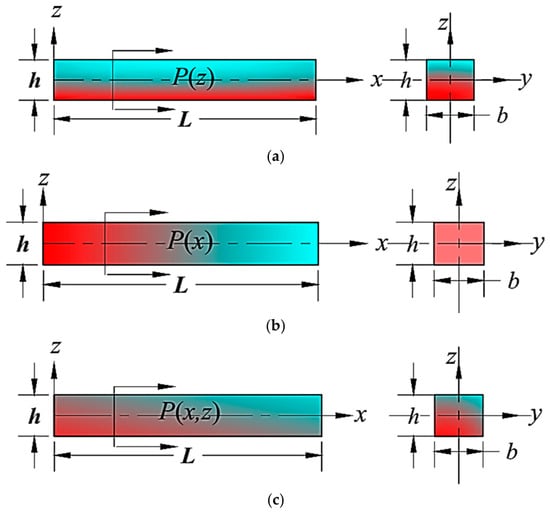
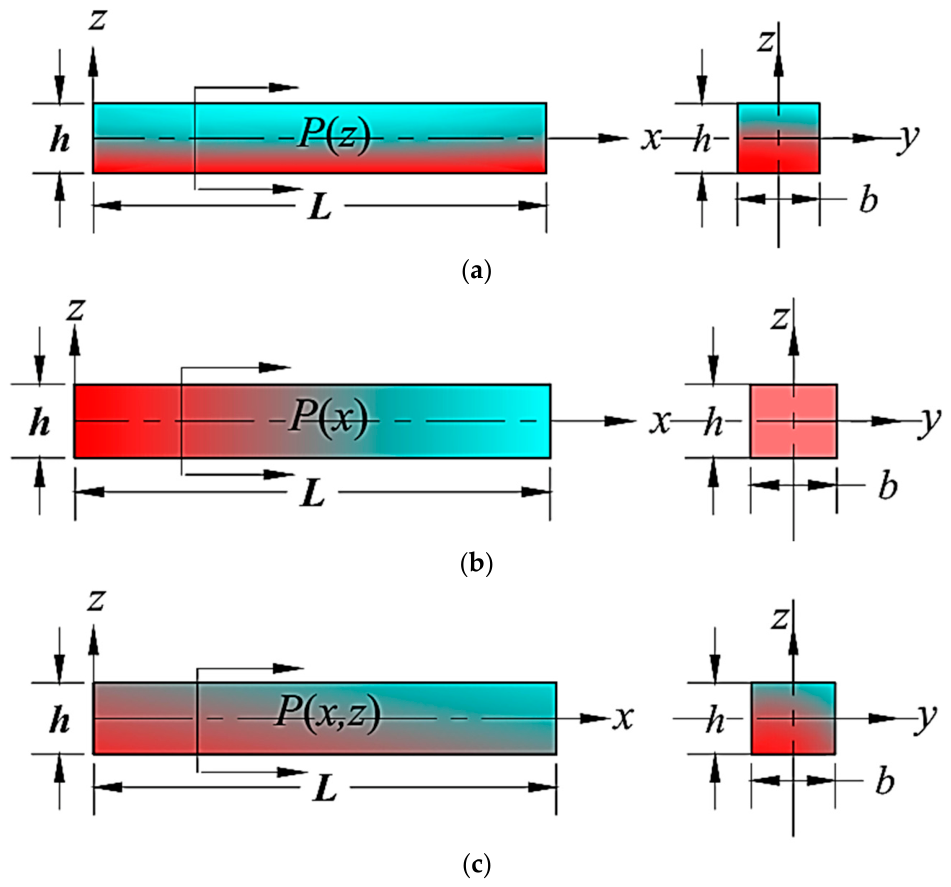
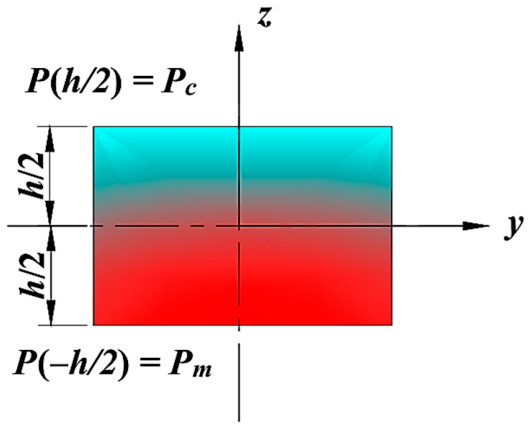
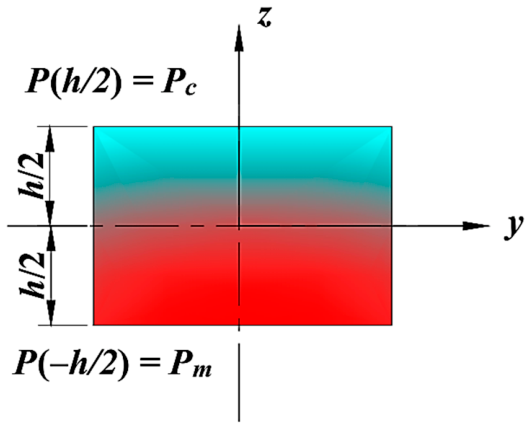
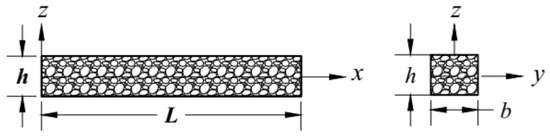
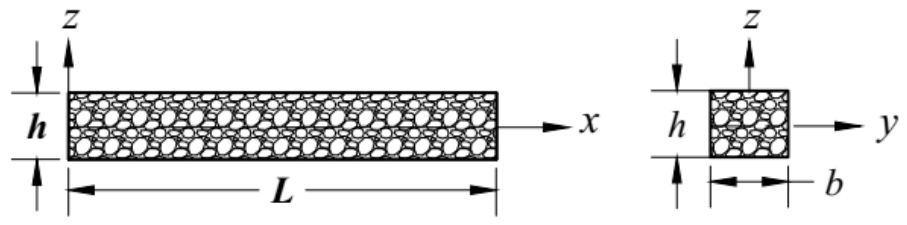
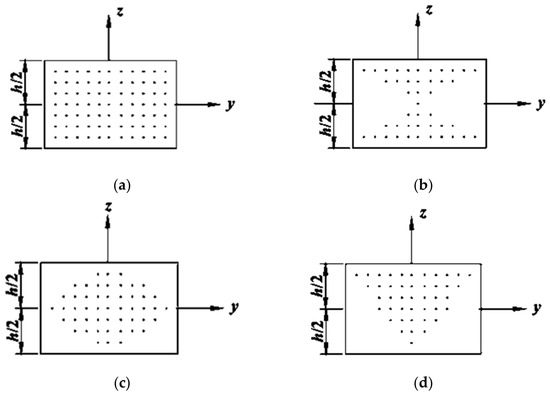
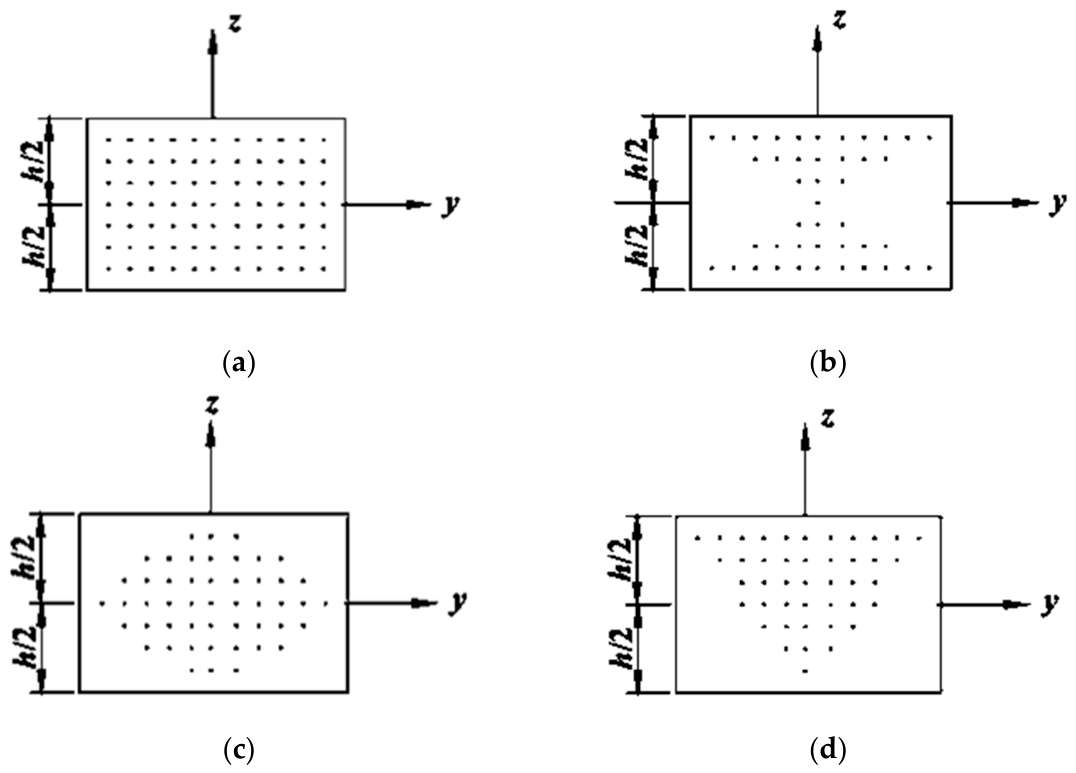
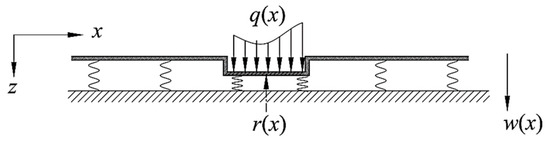
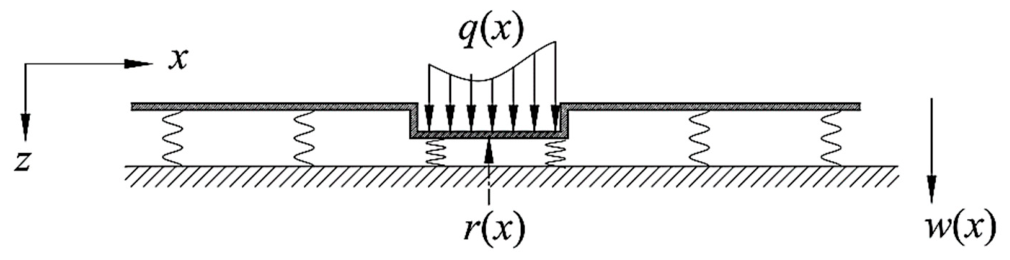
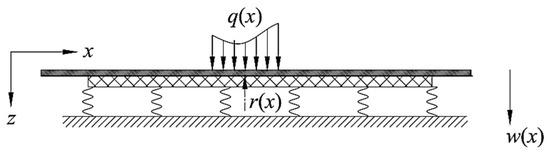
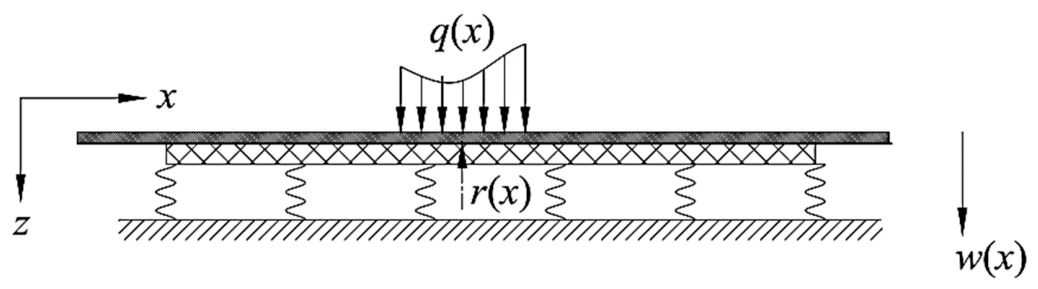
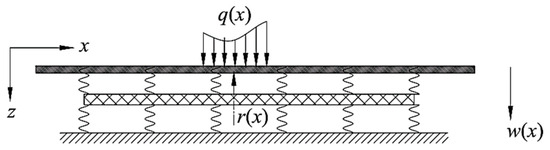
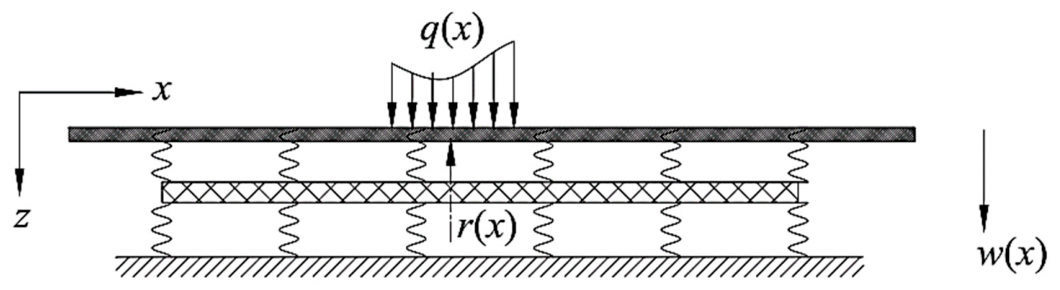
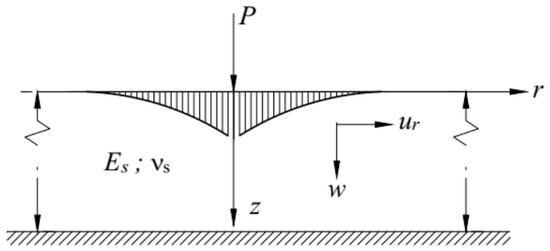
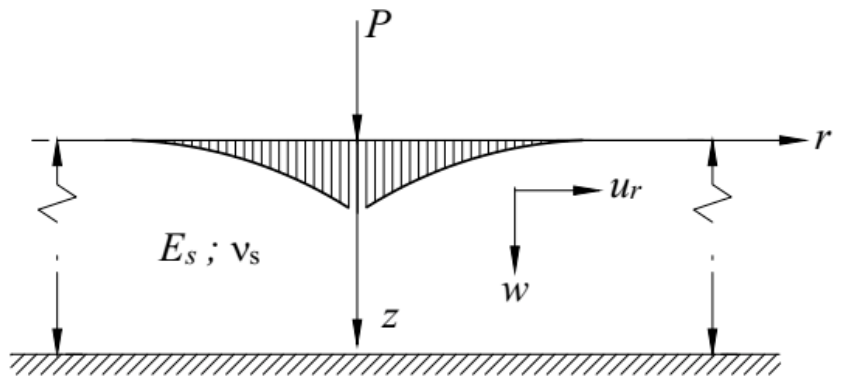
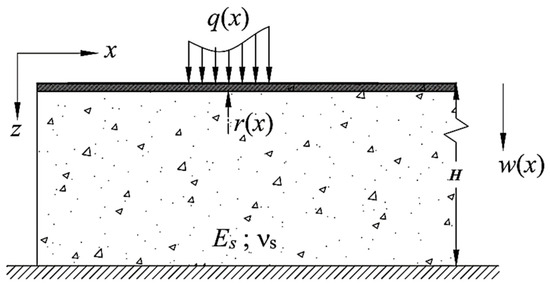
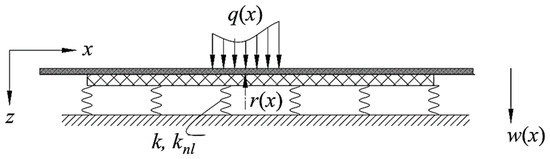
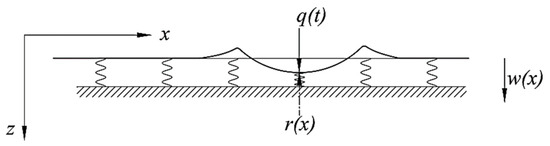
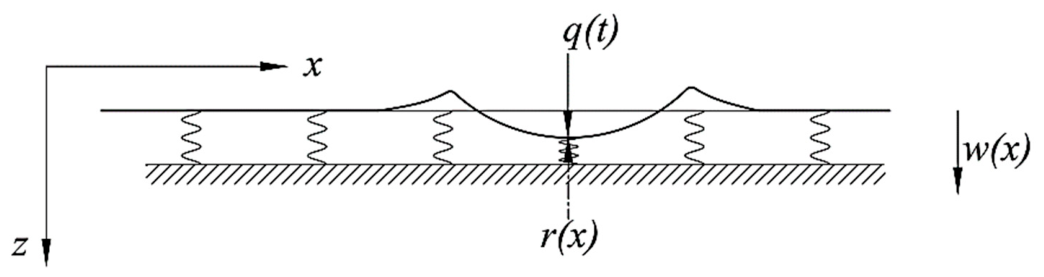
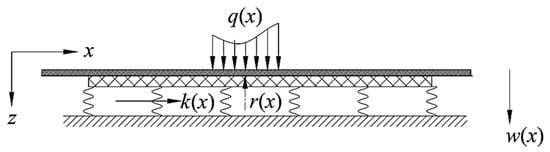
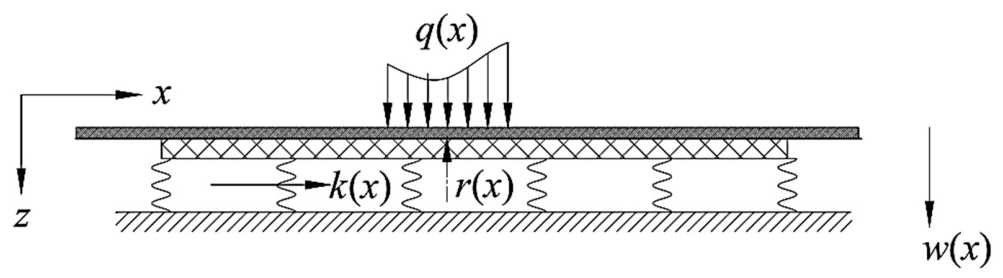

Disclaimer/Publisher’s Note: The statements, opinions and data contained in all publications are solely those of the individual author(s) and contributor(s) and not of MDPI and/or the editor(s). MDPI and/or the editor(s) disclaim responsibility for any injury to people or property resulting from any ideas, methods, instructions or products referred to in the content. |
© 2026 by the authors. Licensee MDPI, Basel, Switzerland. This article is an open access article distributed under the terms and conditions of the Creative Commons Attribution (CC BY) license.