


Abstract
Background/Objectives: High-viscosity glass hybrid restorative systems (GHRS) were developed to improve the mechanical limitations of conventional glass ionomer cements while preserving their bioactive properties. This scoping review aimed to map and synthesize the currently available evidence regarding the clinical performance of high-viscosity glass hybrid restorative systems in posterior teeth. Methods: A literature search was conducted in PubMed/MEDLINE, Web of Science and Google Scholar using MeSH terms and free-text keywords related to glass hybrid restorative systems and posterior restorations. After screening and eligibility assessment, 39 studies were included in the review. Results: The reviewed studies indicated that GHRS exhibited better wear resistance, higher fracture resistance, improved surface durability, and superior marginal integrity compared with conventional high-viscosity glass ionomer cements. Equia Forte HT (GC Corporation, Tokyo, Japan), combined with nano-filled resin coatings, was the most frequently investigated system and showed favorable short- and medium-term clinical performance in small-to-moderate posterior restorations. Discussion: Glass-hybrid restorative systems have demonstrated considerable potential in minimally invasive dentistry, atraumatic restorative treatment, and pediatric restorative applications, particularly in patients with increased caries susceptibility. Their sustained fluoride release, chemical adhesion to dental tissues, and improved moisture tolerance may contribute to favorable clinical outcomes in challenging operative conditions. Conclusions: Within the limitations of the available evidence, high-viscosity glass-hybrid restorative systems may represent a promising restorative option for selected posterior restorations. Nevertheless, the available evidence remains heterogeneous, and further high-quality long-term randomized controlled trials are required to confirm their clinical performance and indications.
1. Introduction
Conventional glass ionomer cements (CGICs) are widely used in restorative dentistry due to their ability to chemically bond to dental tissues, release fluoride, and provide favorable biocompatibility under various clinical conditions [1,2,3,4]. Their fluoride-releasing and recharge capabilities have contributed to their extensive application in preventive and minimally invasive approaches, especially in pediatric and high-caries-risk patients [2,4,5]. In clinical practice, CGICs have been utilized as restorative materials, liners, bases, luting agents, and fissure sealants.
Despite these advantages, the use of conventional GICs in posterior load-bearing restorations remains challenging because of their limited mechanical performance. Reduced fracture toughness, lower wear resistance, and susceptibility to surface degradation may negatively influence the long-term durability of these restorations [6,7,8,9,10]. These shortcomings may compromise the longevity of restorations exposed to substantial occlusal loading, especially in large posterior cavities [7,8,9].
In an attempt to improve the mechanical limitations of conventional GICs, high-viscosity glass ionomer cements (HVGICs) were developed through formulation modifications involving increased powder content, refined glass particles, and changes in the polyacid matrix [11,12,13,14,15]. Compared with conventional glass ionomer formulations, HVGICs exhibit higher compressive strength, improved wear resistance, and better handling properties, thereby broadening their clinical use in posterior restorations and atraumatic restorative treatment (ART) procedures [12,13,14,15].
More recently, glass-hybrid restorative systems (GHSs) have been introduced as the next step in HVGIC technology. These materials combine the chemistry of high-viscosity glass ionomer with reinforcing strategies, such as ultrafine reactive glass particles and protective nano-filled resin coatings, to improve fracture resistance, marginal integrity, and surface durability while maintaining fluoride release and bioactivity [16,17,18,19,20]. Commercial systems such as EQUIA Forte (GC Corporation, Tokyo, Japan) and EQUIA Forte HT (GC Corporation, Tokyo, Japan) have shown promising clinical outcomes in posterior restorations, particularly within minimally invasive restorative approaches [18,21,22,23,24].
Although several in vitro and clinical studies have reported favorable results for glass hybrid systems, questions remain regarding their long-term durability, wear resistance, marginal adaptation, and survival compared with other restorative materials used in posterior teeth [17,19,22,23]. In addition, variations in material composition and clinical protocols contribute to heterogeneity among published studies.
Although the available literature on high-viscosity glass-hybrid restorative systems has expanded considerably in recent years, the evidence remains dispersed across studies investigating different restorative materials, outcome measures, and levels of evidence. Consequently, clinicians lack a comprehensive synthesis integrating material characteristics, mechanical properties, bioactivity, wear resistance, and clinical performance of these restorative systems in posterior teeth. Owing to this heterogeneity, this scoping review aimed to critically summarize and map the existing evidence regarding the use and clinical outcomes of high-viscosity glass-hybrid restorative systems in posterior restorations.
2. Materials and Methods
2.1. Protocol and Registration
This scoping review was performed following the recommendations of the Preferred Reporting Items for Systematic Reviews and Meta-Analyses extension for Scoping Reviews (PRISMA-ScR) guidelines [24]. The corresponding PRISMA-ScR checklist is available in Supplementary Table S1: Clinical Performance of High-Viscosity Glass Hybrid Restorative Systems in Posterior Teeth: A Scoping Review.
The review protocol was prospectively submitted to the International Prospective Register of Systematic Reviews (PROSPERO; Centre for Reviews and Dissemination, University of York, York, UK) and registered under the identification number CRD420261381434.
2.2. Research Questions
The review questions were developed to comprehensively map and synthesize the available evidence regarding the material characteristics, mechanical properties, bioactive behavior, and clinical performance of high-viscosity glass-hybrid restorative systems used in posterior teeth. Comparisons with other restorative materials and clinical indications were considered secondary objectives.
The review addressed the following question: What evidence is currently available regarding the mechanical properties, bioactive behavior, and clinical performance of high-viscosity glass-hybrid restorative systems in posterior teeth?
The research question was structured according to the PCC (Population–Concept–Context) framework [25]:
- Population: Patients with primary and/or permanent posterior teeth.
- Concept: Clinical performance and bioactive properties of high-viscosity glass hybrid restorative systems.
- Context: Posterior restorative dentistry and minimally invasive restorative approaches.
2.3. Study Selection and Eligibility Criteria
2.3.1. Study Selection Process
The titles and abstracts identified through the electronic search were independently reviewed by two investigators (A.T.V. and G.I.) based on the predefined inclusion criteria. Full-text articles were subsequently assessed for eligibility when relevance was considered likely. Duplicate publications were excluded before study screening. Study selection was conducted in accordance with the PRISMA-ScR guidelines for scoping reviews.
2.3.2. Inclusion Criteria
Studies were selected according to predefined inclusion criteria related to restorative materials, study objectives, dentition type, reported outcomes, study design, and publication characteristics, as summarized in Table 1.
Table 1.
Inclusion criteria applied for the selection of studies.
2.3.3. Exclusion Criteria
Studies that did not meet the predefined methodological and publication standards were excluded according to the criteria presented in Table 2.
Table 2.
Eligibility exclusion criteria for study selection.
Studies were considered to have insufficient methodological or outcome data when they lacked a clear description of the study design, restorative material, sample characteristics, follow-up period (for clinical studies), or failed to report outcomes relevant to the objectives of the present review.
2.4. Information Sources
Studies published between January 2000 and April 2026 were considered eligible for inclusion in this review. An extensive electronic search was performed using the PubMed/MEDLINE, Web of Science (Clarivate, Philadelphia, PA, USA) and Google Scholar (Google LLC, Mountain View, CA, USA) databases.
The selected publication period was chosen to capture the development and clinical evolution of high-viscosity glass ionomer cements and glass-hybrid restorative systems used in posterior restorations.
2.5. Search Strategy
The electronic search strategy combined Medical Subject Headings (MeSH) for PubMed/MEDLINE with database-specific free-text keywords for Web of Science and Google Scholar. Boolean operators (AND, OR) and phrase searching were used to combine search terms. No truncation or wildcard operators were applied because the selected keywords were considered sufficiently specific. The search syntax was adapted according to the indexing system of each database. The complete search strategies are presented in Table 3.
Table 3.
Database-specific search strategies used for study identification.
2.6. Data Extraction
Data from the included studies were extracted and systematically organized into standardized in Table 4. Extracted variables included author and year of publication, study design, type of restorative material evaluated, sample characteristics, dentition type, follow-up period, outcome measures, and key findings pertaining to the clinical and mechanical performance of glass hybrid restorative systems.
Table 4.
Overview of included studies evaluating the clinical and mechanical performance of glass-hybrid restorative systems.
2.7. Data Synthesis
A qualitative descriptive synthesis was conducted for all eligible studies. The marked heterogeneity regarding study methodology, evaluated restorative materials, and outcome measures prevented the performance of a quantitative meta-analysis.
Accordingly, findings were synthesized using a narrative approach and structured into predefined thematic domains, encompassing mechanical properties, bioactive behavior, clinical performance, restorative longevity, and minimally invasive clinical applications.
2.8. Quality Assessment
Randomized controlled trials were assessed using the Joanna Briggs Institute (JBI) Critical Appraisal Checklist for Randomized Controlled Trials, whereas observational clinical studies were evaluated using the Newcastle–Ottawa Scale (NOS).
3. Results
3.1. Selection Process
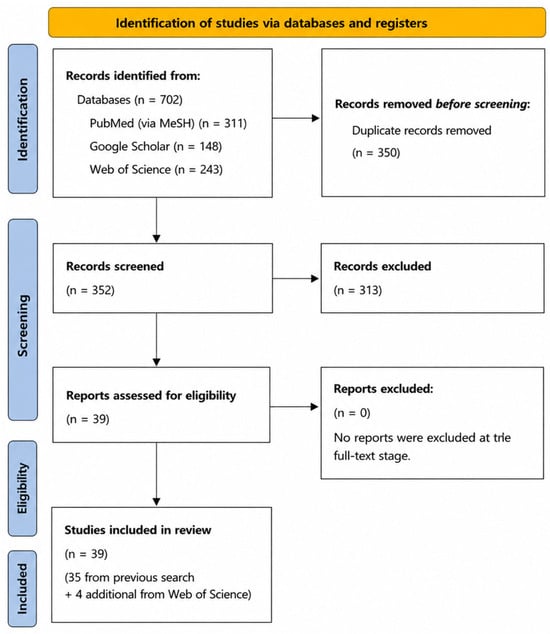
Figure 1 illustrates the PRISMA flow diagram describing the study selection process applied in this scoping review. A total of 702 records were identified through the electronic database search, including 311 records from PubMed/MEDLINE, 148 records from Google Scholar, and 243 records from the Web of Science database. After duplicate records were removed, the remaining records underwent title and abstract screening.
Figure 1.
PRISMA flow diagram.
During the screening process, studies that did not meet the predefined eligibility criteria were excluded, including those unrelated to posterior restorations, studies not evaluating glass-hybrid restorative materials, and publications lacking clinically or mechanically relevant outcomes. The remaining articles were assessed for full-text eligibility, resulting in the inclusion of 39 studies in the final qualitative synthesis.
3.2. Overview of Included Studies
The principal characteristics of the selected studies are presented in Table 4. The selected articles included in vitro studies [18,26,27,29,30,32,33,34,35,38,39,40,41,42,47,48,50,51,52], randomized clinical trials [19,28,44,45,46], clinical studies [43,49,55], review articles [3,6,15,37,54], and systematic reviews [36,53]. Most investigations evaluated glass-hybrid restorative systems (GHRS), high-viscosity glass ionomer cements (HVGICs), and modified glass ionomer restorative materials used in posterior restorations.
The most frequently assessed outcomes included mechanical properties, wear resistance, fracture resistance, fluoride release, marginal integrity, microleakage, and clinical performance. Several studies reported improved mechanical behavior and enhanced fluoride-related properties for glass-hybrid restorative systems compared with conventional glass ionomer cements [26,27,29,39,41]. In addition, nano-filled coatings were associated with increased wear resistance and improved surface protection [27,39,41,43].
Clinical investigations demonstrated generally acceptable survival rates and favorable outcomes for glass-hybrid restorations in posterior teeth and primary molars [19,28,44,45,46]. However, some studies emphasized that the long-term clinical performance of these restorative materials may still depend on cavity design, occlusal loading conditions, and restorative indication [6,36,55].
Recent studies further supported the favorable clinical performance and wear resistance of glass-hybrid restorative systems in posterior restorations [56,57,58,59].
3.3. Methodological Quality Assessment of the Included Clinical Studies
A brief methodological quality assessment was performed for the included clinical studies to provide an overview of the strength of the available evidence. Randomized controlled trials were evaluated using the Joanna Briggs Institute (JBI) Critical Appraisal Checklist for Randomized Controlled Trials, whereas observational clinical studies were assessed using the Newcastle–Ottawa Scale (NOS).
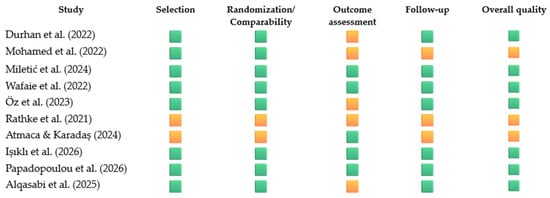
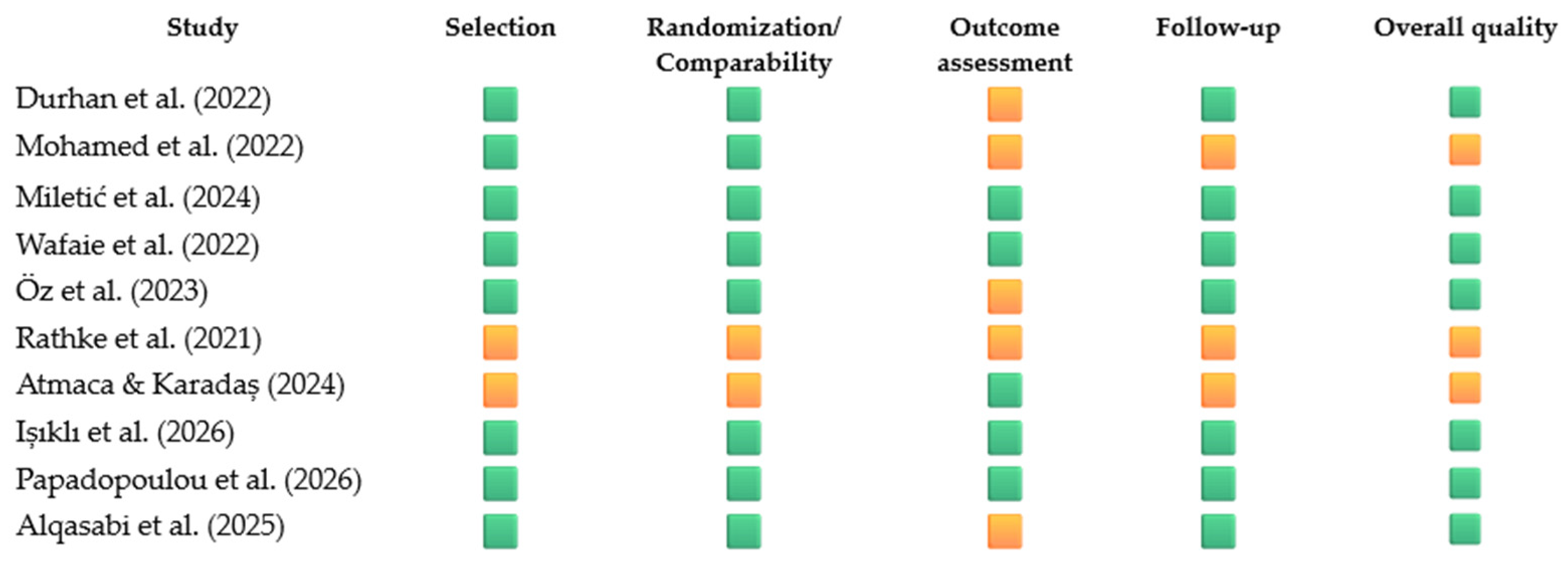
As shown in Table 5, most randomized clinical trials were rated as high methodological quality, whereas the observational clinical studies were classified as moderate quality. The methodological quality assessment is further summarized in the heat map presented in Figure 2.
Table 5.
Methodological quality ratings of the included clinical studies according to the JBI Checklist and the Newcastle–Ottawa Scale (NOS).
Figure 2.
Heat map summarizing the methodological quality assessment of the included clinical studies according to the Newcastle–Ottawa Scale (NOS). Green squares  indicate high methodological quality, whereas orange squares
 indicate moderate methodological quality. The heat map includes the studies by Durhan et al. (2022) [19], Mohamed et al. (2022) [28], Miletić et al. (2024) [44], Wafaie et al. (2022) [45], Öz et al. (2023) [46], Rathke et al. (2021) [49], Atmaca and Karadaş (2024) [55], Işıklı et al. (2026) [56], Papadopoulou et al. (2026) [57], and Alqasabi et al. (2025) [58].
indicate high methodological quality, whereas orange squares indicate moderate methodological quality. The heat map includes the studies by Durhan et al. (2022) [19], Mohamed et al. (2022) [28], Miletić et al. (2024) [44], Wafaie et al. (2022) [45], Öz et al. (2023) [46], Rathke et al. (2021) [49], Atmaca and Karadaş (2024) [55], Işıklı et al. (2026) [56], Papadopoulou et al. (2026) [57], and Alqasabi et al. (2025) [58].
The heat map provides an overview of the methodological quality of the included clinical studies. Most studies showed a low risk of bias across the evaluated domains, although moderate concerns were identified mainly in the observational clinical studies because of their non-randomized design and limited follow-up.
3.4. Composition and Characteristics of High-Viscosity Glass Hybrid Restorative Systems
These restorative systems are based on a high-viscosity glass-ionomer matrix reinforced with ultrafine reactive glass particles, ceramic fillers, and zirconia particles, coated with a nano-filled resin, to enhance their mechanical and clinical performance, particularly fracture resistance, wear resistance, surface hardness, and marginal adaptation [3,15,18,26,27,28,29] (Table 6).
Table 6.
Summary of studies investigating the properties and clinical performance of glass-hybrid restorative systems.
The glass ionomer phase is responsible for fluoride release and recharge, chemical adhesion to enamel and dentin, and a clinically relevant tolerance to moisture during placement. The reinforcing phase contributes to improved mechanical performance and helps maintain surface integrity over time. Among the most extensively investigated systems, Equia Forte (GC Corporation, Tokyo, Japan) consists of a high-viscosity glass ionomer restorative material combined with a nano-filled resin coating intended to seal surface porosities and enhance wear resistance during maturation and under functional loading [30,31,32] (Table 6).
Other commercially investigated systems include zirconia-reinforced materials such as Zirconomer (Shofu Inc., Kyoto, Japan) and hybrid formulations such as GC Gold Label Hybrid (GC Corporation, Tokyo, Japan), which were developed to improve fracture resistance and clinical longevity while preserving the bioactive properties associated with glass ionomer materials [33,34] (Table 6).
Available evidence suggests that glass hybrid restorative systems are intended to balance bioactivity with mechanical reinforcement. Clinical outcomes vary between materials and are influenced by differences in filler composition, coating systems, and clinical application protocols [15,26,35,36,37] (Table 6).
3.5. Mechanical Properties Relevant to Posterior Restorations
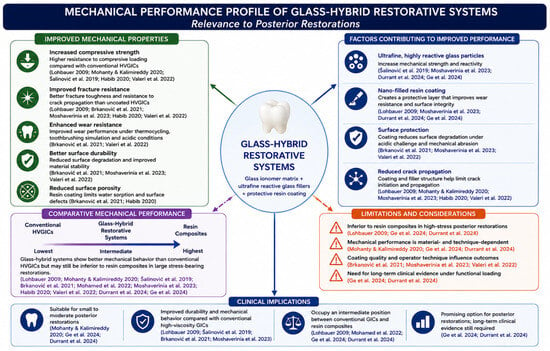
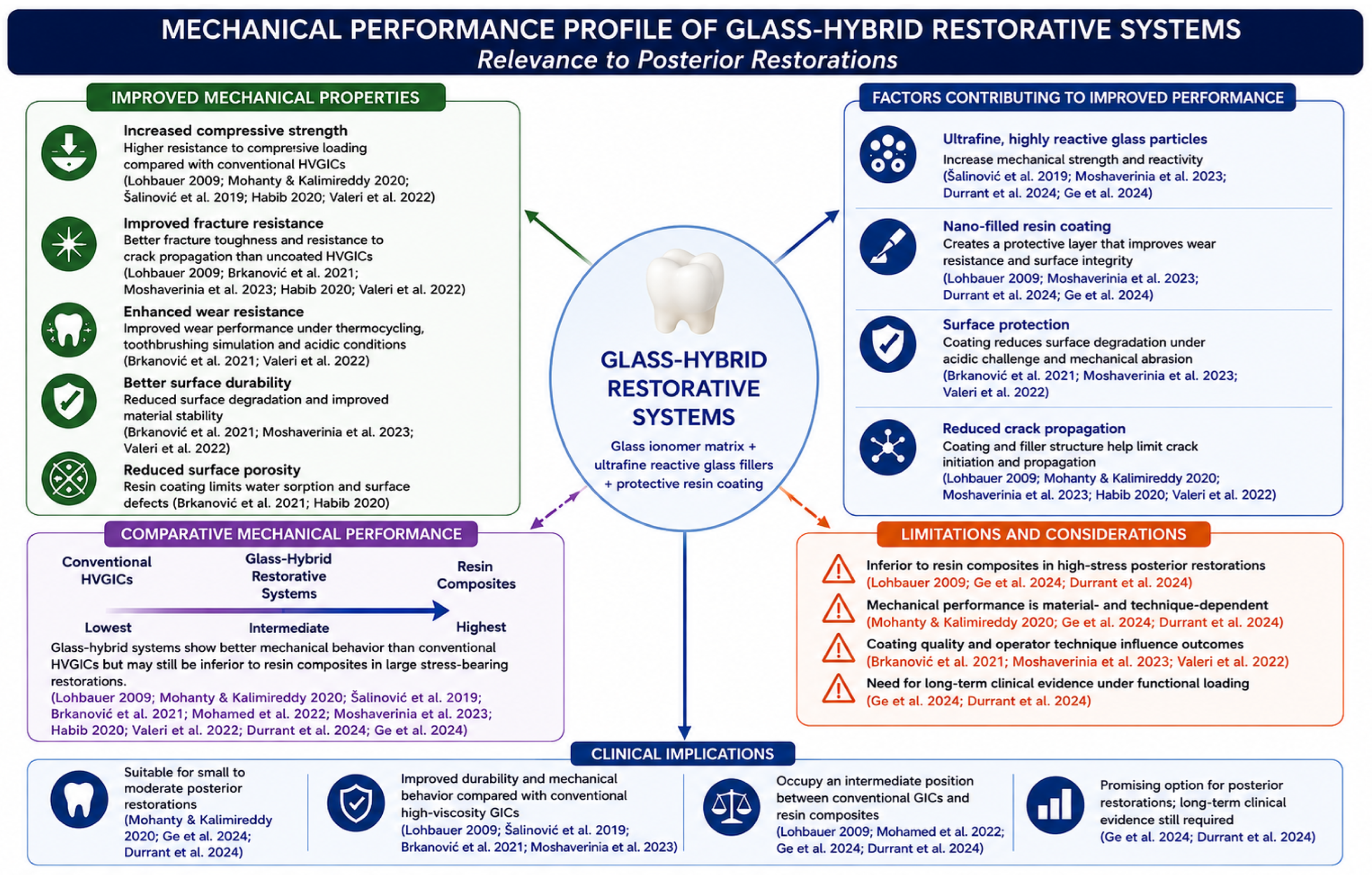
Available evidence indicates that glass hybrid restorative systems generally exhibit enhanced mechanical properties compared with conventional high-viscosity glass ionomer cements, particularly in terms of compressive strength, fracture resistance, wear resistance, and surface durability [27,38] (Figure 3, Table 7).
Figure 3.
Mechanical performance profile of glass-hybrid restorative systems and their relevance to posterior restorations. Green panels summarize the improved mechanical properties of glass-hybrid restorative systems; dark blue panels present the factors contributing to the improved mechanical performance; purple panels illustrate the comparative mechanical performance relative to conventional high-viscosity glass ionomer cements (HVGICs) and resin composites; orange panels highlight the main limitations and clinical considerations; and the light blue panel summarizes the principal clinical implications. Icons: ↓ increased compressive strength; ✳ improved fracture resistance;  enhanced wear resistance; ✔ improved surface durability; ⊗ reduced surface porosity; ● reactive glass particles;
 nano-filled resin coating;
 surface protection; network symbol reduced crack propagation;
 limitations and considerations;
 comparative position among restorative materials;
 overall clinical potential; and the central tooth icon represents the glass-hybrid restorative system. The figure is based on the findings reported by Najeeb et al. (2016) [3], Lohbauer (2009) [6], Mohanty and Kalimireddy (2020) [15], Šalinović et al. (2019) [26], Brkanović et al. (2021) [27], Mohamed et al. (2022) [28], Moshaverinia et al. (2023) [29], Habib (2020) [30], Valeri et al. (2022) [34], Durrant et al. (2024) [36], Ge et al. (2024) [37], Setiawan et al. (2022) [39], Yeo et al. (2021) [40], and Elshawadfy et al. (2022) [41].
enhanced wear resistance; ✔ improved surface durability; ⊗ reduced surface porosity; ● reactive glass particles; nano-filled resin coating; surface protection; network symbol reduced crack propagation; limitations and considerations; comparative position among restorative materials; overall clinical potential; and the central tooth icon represents the glass-hybrid restorative system. The figure is based on the findings reported by Najeeb et al. (2016) [3], Lohbauer (2009) [6], Mohanty and Kalimireddy (2020) [15], Šalinović et al. (2019) [26], Brkanović et al. (2021) [27], Mohamed et al. (2022) [28], Moshaverinia et al. (2023) [29], Habib (2020) [30], Valeri et al. (2022) [34], Durrant et al. (2024) [36], Ge et al. (2024) [37], Setiawan et al. (2022) [39], Yeo et al. (2021) [40], and Elshawadfy et al. (2022) [41].
Table 7.
Main mechanical findings reported for glass-hybrid restorative systems.
Among the most extensively investigated materials, Equia Forte HT (GC Corporation, Tokyo, Japan), in combination with Equia Forte Coat (GC Corporation, Tokyo, Japan), has shown increased resistance to compressive loading, reduced surface degradation, and improved wear resistance under thermocycling, toothbrushing simulation, and acidic conditions. These improvements are mainly associated with the incorporation of ultrafine reactive glass particles and the use of nano-filled resin coatings, which contribute to reduced surface porosity and decreased crack propagation [39,40,41].
Flexural strength and fracture resistance findings indicate that glass-hybrid systems generally perform better than uncoated HVGICs but may still be inferior to resin composites in large stress-bearing posterior restorations. Nevertheless, coated-glass hybrid materials appear to occupy an intermediate position between conventional glass ionomers and resin-based restoratives with respect to mechanical behavior and load-bearing capacity [6,15,26,27,29] (Figure 3, Table 7).
The reported mechanical performance remains material- and technique-dependent, and further long-term clinical evidence is necessary to confirm the durability of these materials under functional posterior loading [27,38]. Recent studies have further strengthened the available evidence by demonstrating improved wear resistance with resin-coated glass-hybrid restorative systems and favorable short-term clinical performance comparable to resin composites [56,59].
3.6. Wear Resistance and Surface Protection
The reviewed literature suggests that glass hybrid restorative systems generally demonstrate improved wear resistance and surface stability compared with conventional high-viscosity glass ionomer cements, particularly when used with nano-filled resin coatings such as Equia Forte Coat (GC Corporation, Tokyo, Japan) [27,29,41].
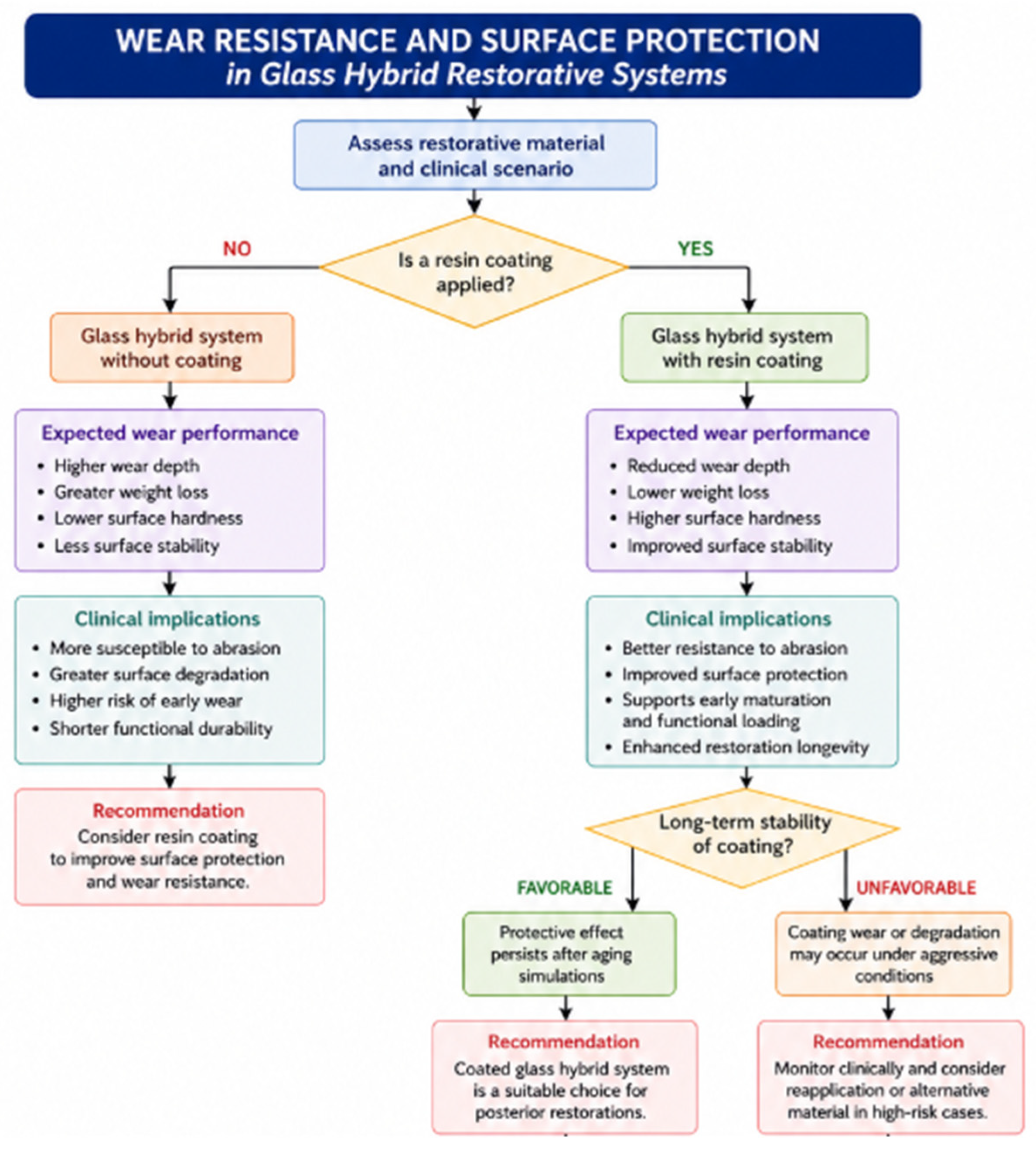
The resin coating improves surface durability by sealing porosities and microcracks, thereby reducing abrasive wear and protecting the underlying glass ionomer matrix during maturation and functional loading. Several studies have reported higher surface hardness, reduced wear depth, and reduced surface degradation in coated-glass hybrid systems compared with uncoated materials [34,39].
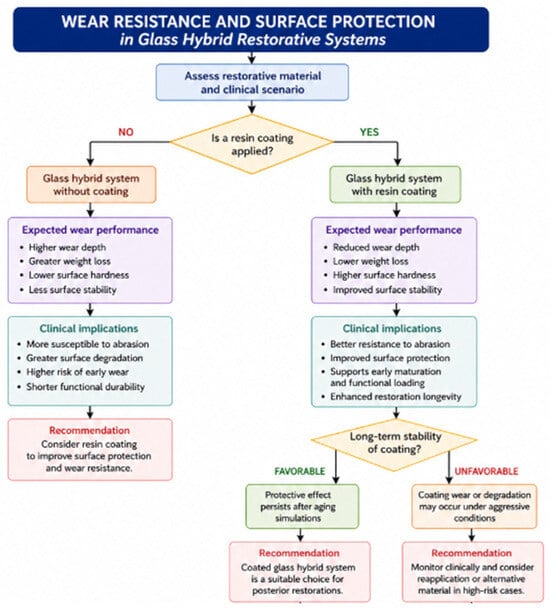
The protective effect of the coating appears to be influenced by material composition, coating integrity, aging conditions, pH exposure, and clinical technique. Although some laboratory studies have demonstrated favorable wear behavior comparable to that of certain resin composites, available evidence suggests that resin-based materials may exhibit better performance under high-load and long-term wear simulations [42,43]. As illustrated in Figure 4, the application of nano-filled resin coatings appears to improve the wear resistance and surface stability of glass hybrid restorative systems, potentially enhancing clinical durability in posterior restorations.
Figure 4.
Schematic overview of wear resistance and surface protection in coated and uncoated glass-hybrid restorative systems. Blue boxes indicate the initial assessment and expected material performance; orange boxes/diamonds represent decision points and potential limitations; green boxes indicate favorable outcomes or recommended clinical pathways; red boxes present clinical recommendations. Green arrows indicate favorable decision pathways, whereas red arrows indicate unfavorable pathways or the absence of resin coating.
3.7. Clinical Performance and Survival in Posterior Teeth
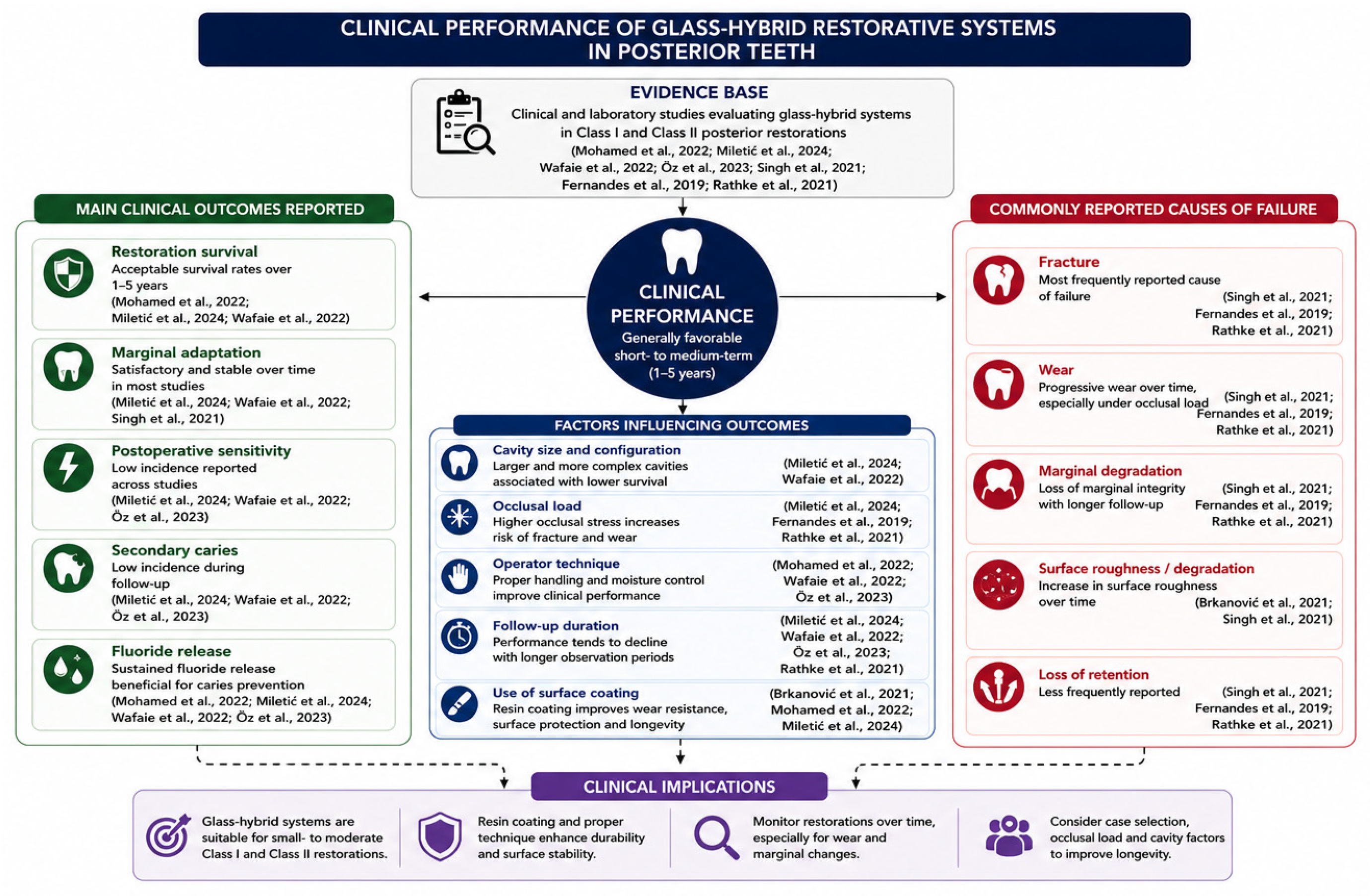
Clinical studies generally report favorable short- to medium-term outcomes for glass hybrid restorative systems in posterior teeth, particularly for small- to moderate-sized Class I and Class II restorations. Equia Forte HT (GC Corporation, Tokyo, Japan), in combination with Equia Forte Coat (GC Corporation, Tokyo, Japan), is the most frequently investigated system and has demonstrated acceptable survival rates, satisfactory marginal adaptation, and a low incidence of postoperative sensitivity and secondary caries over follow-up periods of 1–5 years [28,44,45,46] (Figure 5). Survival outcomes appear to be influenced by cavity size, occlusal load, dentition type, operator technique, and follow-up duration. Fracture, wear, and marginal degradation were the most commonly reported causes of failure [47,48,49].
Figure 5.
Clinical performance profile of glass-hybrid restorative systems in posterior restorations. Green panels summarize the main favorable clinical outcomes, blue panels present factors influencing clinical performance, red panels indicate the most commonly reported causes of failure, purple panels summarize the main clinical implications, and the central blue circle represents the overall clinical performance of glass-hybrid restorative systems. Icons: shield = restoration survival; tooth = marginal adaptation; lightning bolt = postoperative sensitivity; tooth with lesion = secondary caries; droplet = fluoride release; tooth = cavity size and configuration; occlusal surface = occlusal load; hand = operator technique; clock = follow-up duration; brush = use of surface coating; broken tooth = fracture; worn tooth = wear; damaged margin = marginal degradation; rough surface = surface roughness/degradation; detached restoration = loss of retention. The figure is based on the findings reported by Brkanović et al. (2021) [27], Mohamed et al. (2022) [28], Miletić et al. (2024) [44], Wafaie et al. (2022) [45], Öz et al. (2023) [46], Singh et al. (2021) [47], Fernandes et al. (2019) [48], and Rathke et al. (2021) [49].
3.8. Clinical Indications and Limitations
Glass hybrid restorative systems are primarily indicated for posterior restorations when fluoride release, chemical adhesion, and improved moisture tolerance are clinically relevant. The literature supports their use especially in small-to-moderate Class I and Class II posterior cavities, atraumatic restorative treatment, pediatric dentistry, mixed dentition, and high-caries-risk patients [44,45,46,47,49].
In posterior Class II restorations, glass hybrid systems such as Equia Forte HT (GC Corporation, Tokyo, Japan) with Equia Forte Coat (GC Corporation, Tokyo, Japan) have shown favorable clinical outcomes, particularly in small to moderate two-surface lesions. Clinical studies and systematic reviews report survival rates comparable to those of resin-based composites in selected indications, although outcomes vary with cavity size, occlusal load, use of the surface coating, and clinical technique [28,44,47,48].
High-caries-risk patients represent an important clinical indication. Owing to their sustained fluoride release and recharge potential, glass hybrid systems may support remineralization and reduce the risk of secondary caries at restoration margins. These characteristics make them particularly useful for pediatric patients, individuals with poor oral hygiene, xerostomia, recurrent caries, or situations in which moisture control is compromised [50,51,52,53].
3.9. Gaps in the Literature on the Use of Glass-Hybrid Restorative Systems (GHRS) in Posterior Teeth
Current evidence regarding glass-hybrid restorative systems in posterior teeth remains limited by the lack of long-term randomized clinical trials, particularly for large Class I, Class II, and multi-surface restorations [13,44,54]. Existing studies also demonstrate substantial heterogeneity in outcome measures, follow-up periods, and reporting of failure modes, making direct comparisons between studies difficult.
Available findings are highly material- and coating-dependent, with limited standardized comparisons between different glass-hybrid formulations and resin composites [6,55].
Further limitations include the scarcity of stratified data by cavity configuration, patient age, and dentition type, as well as the limited translation of wear data into real-world clinical outcomes [19,56].
4. Discussion
4.1. Summary of Principal Findings
This scoping review synthesized the available evidence regarding the composition, mechanical behavior, wear resistance, clinical performance, and clinical applicability of glass-hybrid restorative systems (GHRS) in posterior teeth. Overall, the reviewed literature suggests that GHRS were developed to combine the bioactive advantages of conventional glass ionomer cements with improved mechanical performance by incorporating ultrafine reactive glass particles, resin coatings, and hybrid reinforcing technologies.
GHRS demonstrated improved mechanical properties compared with conventional high-viscosity glass ionomer cements, particularly regarding compressive strength, fracture resistance, wear resistance, and marginal integrity. These improvements were mainly associated with nano-filled resin coatings and modified filler technologies capable of reducing porosity and crack propagation [27,29,39].
Wear resistance and surface protection are considered major advantages of coated glass hybrid systems. Laboratory studies have reported reduced surface degradation, decreased wear depth, and increased surface hardness following application of resin coatings such as Equia Forte Coat (GC Corporation, Tokyo, Japan) [34,41,43].
Clinical studies generally reported favorable short- and medium-term outcomes for small-to-moderate posterior Class I and Class II restorations. Equia Forte HT (GC Corporation, Tokyo, Japan), combined with Equia Forte Coat (GC Corporation, Tokyo, Japan), was the most frequently investigated system and demonstrated acceptable survival rates, satisfactory marginal adaptation, and low incidence of secondary caries during follow-up periods of up to 5 years [44,45].
The evidence suggested that GHRS may be particularly useful in minimally invasive dentistry, atraumatic restorative treatment, pediatric dentistry, and high-caries-risk patients because of their fluoride release, chemical adhesion, and relative moisture tolerance. Nevertheless, important limitations remain regarding long-term durability of large stress-bearing posterior restorations, and current evidence remains characterized by methodological heterogeneity and limited long-term randomized clinical trials [13,54].
4.2. Clinical Implications
The findings of this scoping review suggest that glass-hybrid restorative systems may serve as a clinically acceptable alternative to conventional high-viscosity glass ionomer cements for selected posterior indications. Their enhanced wear and fracture resistance, together with improved marginal integrity, fluoride release, and relative moisture tolerance, support their application in minimally invasive dentistry, atraumatic restorative treatment (ART), pediatric dentistry, and in patients with high caries risk [44,45,46].
Among the available materials, Equia Forte HT (GC Corporation, Tokyo, Japan), in combination with nano-filled resin coatings, has demonstrated favorable short- to medium-term clinical outcomes in small- to moderate- Class I and Class II restorations. The evidence further indicates that the application of a surface coating is relevant for enhancing surface protection and limiting wear-related degradation under functional loading [27,41].
Nevertheless, the use of glass hybrid restorative systems in large stress-bearing posterior restorations and extensive multi-surface cavities should be approached with caution, as resin-based composites may still improve clinical performance. Consequently, material selection should be determined on a case-by-case basis, considering cavity extent, occlusal loading, moisture control, caries risk, and patient-related factors such as cooperation [13,54].
The findings of this review should be interpreted with caution because of the considerable methodological heterogeneity of the included studies. Although laboratory studies generally reported favorable mechanical properties, these findings cannot be directly extrapolated to long-term clinical performance. Furthermore, some studies highlighted limitations in extensive posterior restorations and under high occlusal loading conditions, emphasizing the need for additional high-quality long-term randomized clinical trials.
4.3. Limitations
Several limitations of this scoping review should be acknowledged:
- Considerable heterogeneity was identified among the included studies regarding study design, restorative materials, evaluation criteria, follow-up periods, and reported outcomes, which limited direct comparisons between studies.
- Only studies published in the English language were included, which may have introduced language bias by excluding potentially relevant evidence published in other languages.
- Although the literature search was expanded to include PubMed/MEDLINE, Web of Science, and Google Scholar, potentially relevant studies indexed exclusively in other databases or unpublished grey literature may not have been identified, introducing a potential selection bias.
- Both in vitro and clinical studies were included in this scoping review. Consequently, some laboratory findings may not fully reflect long-term clinical behavior under functional intraoral conditions.
- Most available clinical evidence was limited to short- and medium-term follow-up periods, whereas long-term data for large posterior restorations remain scarce.
- The majority of the included studies focused on specific commercial systems, particularly Equia Forte (GC Corporation, Tokyo, Japan) and Equia Forte HT (GC Corporation, Tokyo, Japan), which may limit the generalizability of the findings to other glass-hybrid restorative materials.
- Differences in coating application protocols, cavity configuration, operator technique, and patient-related factors may have influenced the reported outcomes across studies.
- A formal risk-of-bias assessment and quantitative meta-analysis were not performed because the primary objective of this scoping review was to map and summarize the available evidence rather than evaluate treatment effectiveness quantitatively.
4.4. Comparison with Previous Literature
The results of the present scoping review are in agreement with previously published narrative and systematic reviews indicating that glass-hybrid restorative systems may provide improved clinical performance compared with conventional high-viscosity glass ionomer cements, especially in small- to moderate-sized posterior restorations [6,13].
This review extends the current evidence base by consolidating data on material composition, wear resistance, coating systems, and clinical indications into a coherent and structured synthesis.
4.5. Future Research Directions
Future investigations should prioritise multicentre, well-designed randomised clinical trials employing standardised outcome measures and extended follow-up periods exceeding five years. Additional research is warranted on large multi-surface posterior restorations, the long-term behaviour of resin-based surface coatings, and the influence of cavity configuration on restoration survival and failure patterns.
The current evidence is constrained by methodological heterogeneity and a paucity of long-term clinical data. Accordingly, further standardised randomised clinical trials are required to substantiate long-term durability and to better delineate the clinical indications of these materials in posterior teeth.
5. Conclusions
Current evidence suggests that high-viscosity glass-hybrid restorative systems may represent a promising restorative option for selected posterior restorations because of their favorable mechanical properties and short- to medium-term clinical performance. However, the available evidence remains heterogeneous and is predominantly based on studies evaluating specific commercial products. Therefore, further high-quality, long-term randomized clinical trials are required to strengthen the current evidence and better define their clinical indications.
Supplementary Materials
The following supporting information can be downloaded at: https://www.mdpi.com/article/10.3390/prosthesis8070071/s1, Table S1: Clinical Performance of High-Viscosity Glass Hybrid Restorative Systems in Posterior Teeth: A Scoping Review.
Author Contributions
Conceptualization: A.T.V., T.P., B.R.D., S.S., A.G., I.N., A.M., S.A. and G.I.; Methodology: A.T.V., T.P., B.R.D., S.S., A.G., I.N., A.M., S.A. and G.I.; Investigation: A.T.V., T.P., B.R.D. and I.N.; Data curation: A.T.V., T.P. and A.G.; Formal analysis: B.R.D., S.S. and G.I.; Writing—original draft preparation: A.T.V. and T.P.; Writing—review and editing: B.R.D., S.S., A.M., S.A. and G.I.; Supervision: S.A. and G.I.; Validation: S.S., A.M. and S.A. All authors have read and agreed to the published version of the manuscript.
Funding
This research received no external funding.
Institutional Review Board Statement
Not applicable.
Informed Consent Statement
Not applicable.
Data Availability Statement
The original contributions presented in this study are included in the article/Supplementary Material.
Acknowledgments
During the preparation of this manuscript, the authors used ChatGPT (OpenAI, San Francisco, CA, USA; GPT-5.5), a generative artificial intelligence (GenAI) tool, for the creation of schematic figures and graphical illustrations. The authors reviewed, edited, and validated all generated content and take full responsibility for the final content of the manuscript.
Conflicts of Interest
The authors declare no conflicts of interest.
Abbreviations
The following abbreviations are used in this manuscript:
| ART | Atraumatic Restorative Treatment |
| CGICs | Conventional Glass Ionomer Cements |
| GHRS | Glass Hybrid Restorative System |
| GICs | Glass Ionomer Cements |
| HVGIC | High-Viscosity Glass Ionomer Cement |
| PCC | Population, Concept, Context |
| PRISMA-ScR | Preferred Reporting Items for Systematic Reviews and Meta-Analyses Extension for Scoping Reviews |
References
- Sidhu, S. Glass-ionomer cement restorative materials: A sticky subject? Aust. Dent. J. 2011, 56, 23–30. [Google Scholar] [PubMed]
- Almuhaiza, M. Glass-ionomer cements in restorative dentistry: A critical appraisal. J. Contemp. Dent. Pract. 2016, 17, 331–336. [Google Scholar] [CrossRef] [Scilit] [PubMed]
- Najeeb, S.; Khurshid, Z.; Zafar, M.S.; Khan, A.S.; Zohaib, S.; Martí, J.M.N.; Sauro, S.; Matinlinna, J.; Rehman, I.U. Modifications in glass ionomer cements: Nano-sized fillers and bioactive nanoceramics. Int. J. Mol. Sci. 2016, 17, 1134. [Google Scholar] [CrossRef] [Scilit] [PubMed]
- Padmaja, S.; Somasundaram, J.; Sivaswamy, V. Nano glass ionomers—A review. Indian J. Forensic Med. Toxicol. 2020, 14, 4560–4566. [Google Scholar]
- Rizzante, F.A.P.; Cunali, R.S.; Bombonatti, J.F.S.; Correr, G.M.; Gonzaga, C.C.; Furuse, A.Y. Indications and restorative techniques for glass ionomer cement. RSBO (Online) 2016, 12, 79–87. [Google Scholar] [CrossRef] [Scilit]
- Lohbauer, U. Dental glass ionomer cements as permanent filling materials?—Properties, limitations and future trends. Materials 2009, 3, 76–96. [Google Scholar]
- Oliveira, G.L.; Carvalho, C.N.; Carvalho, E.M.; Bauer, J.; Leal, A. The influence of mixing methods on the compressive strength and fluoride release of conventional and resin-modified glass ionomer cements. Int. J. Dent. 2019, 2019, 6834931. [Google Scholar] [CrossRef] [Scilit] [PubMed]
- Attia, R.; Sabry, R.; Elafefy, A.; Essa, M. Clinical performance of alkasite dental material and high viscosity glass ionomer restorations in Class I cavities: Comparative study for one-year follow-up. Egypt. Dent. J. 2022, 68, 3881–3894. [Google Scholar]
- Amend, S.; Seremidi, K.; Kloukos, D.; Bekes, K.; Frankenberger, R.; Gizani, S.; Krämer, N. Clinical effectiveness of restorative materials for the restoration of carious primary teeth: An umbrella review. J. Clin. Med. 2022, 11, 3490. [Google Scholar] [CrossRef] [Scilit] [PubMed]
- Özmen, B.; Mutlu, B.; Elgörmüş, A.M. Evaluation of the effect of different bonding systems and restorative materials on shear bond strength in the repair of high-viscosity glass ionomer cement. NEU Dent. J. 2024, 6, 13–21. [Google Scholar]
- Weldon, J.C.; Yengopal, V.; Siegfried, N.; Göstemeyer, G.; Schwendicke, F.; Worthington, H.V. Dental filling materials for managing carious lesions in the primary dentition. Cochrane Database Syst. Rev. 2016, 2016, CD012338. [Google Scholar] [CrossRef] [Scilit]
- Dorri, M.; Martínez-Zapata, M.J.; Walsh, T.; Marinho, V.C.; Zaror, C. Atraumatic restorative treatment versus conventional restorative treatment for managing dental caries. Cochrane Database Syst. Rev. 2017, 12, CD008072. [Google Scholar] [CrossRef] [Scilit] [PubMed]
- Panetta, A.; Lopes, P.C.; Novaes, T.F.; Rio, R.; Fernandes, G.V.O.; Mello-Moura, A.C.V. Evaluating glass ionomer cement longevity in the primary and permanent teeth—An umbrella review. J. Funct. Biomater. 2024, 15, 48. [Google Scholar] [CrossRef] [Scilit] [PubMed]
- Uzel, İ.; Aykut-Yetkiner, A.; Ersın, N.; Ertuğrul, F.; Atila, E.; Özcan, M. Evaluation of glass-ionomer versus bulk-fill resin composite: A two-year randomized clinical study. Materials 2022, 15, 7271. [Google Scholar] [PubMed]
- Mohanty, S.; Kalimireddy, P.L. Evolution of modified glass ionomer cements: A review. Indian J. Forensic Med. Toxicol. 2020, 14, 8762–8764. [Google Scholar]
- Baba, M.G.; Kırzıoğlu, Z.; Ceyhan, D. One-year clinical evaluation of two high-viscosity glass-ionomer cements in Class II restorations of primary molars. Aust. Dent. J. 2020, 66, 32–40. [Google Scholar]
- Rêgo, H.M.C.; Butler, S.; Santos, M.J.M.C. Evaluation of the mechanical properties of three resin-modified glass-ionomer materials. BioMed Res. Int. 2022, 2022, 4690656. [Google Scholar] [PubMed]
- Cabello, I.; Hernández, B.C.; Hernández, E.M.; Muñoz, C.S.; Pérez-Silva, A.; Ruiz, A.J.O. Analysis of the porosity and microhardness of glass ionomer cements. Mater. Sci. 2022, 28, 113–119. [Google Scholar] [CrossRef] [Scilit]
- Durhan, M.; Giray, F.E.; İnce, E.B.T.; Tüzüner, T.; Yetkıner, A.A.; Ersın, N.; Kargül, B. Randomized clinical trial of heated high viscosity glass ionomer Class II restorations in deciduous molars: 12 months follow-up. Clin. Exp. Health Sci. 2022, 12, 514–520. [Google Scholar] [CrossRef] [Scilit]
- Shirazi, M.; Sadeghi, M. The evaluation of shear bond strength of resin-modified glass ionomer cement with the addition of 45S5 bioactive glass using two conventional methods. J. Oral Res. 2020, 9, 250–258. [Google Scholar] [CrossRef] [Scilit]
- Kaynar, Z.B.; Dönmez, N.; Siso, Ş.H. Marginal microleakage of glass ionomer-based restorations after conventional cavity preparation and Er:YAG laser irradiation. J. Basic Clin. Health Sci. 2022, 6, 703–711. [Google Scholar]
- Santos, M.J.M.C.; Leon, L.; Siddique, I.; Butler, S. Retrospective clinical evaluation of RMGIC/GIC Class V restorations. Dent. J. 2023, 11, 225. [Google Scholar] [CrossRef] [Scilit]
- El-Gaaly, A.; Hassan, R.; Shaalan, O. Clinical evaluation of new bioactive restorative material versus resin modified glass ionomer in restoration of cervical carious lesions: Randomized clinical trial. Adv. Dent. J. 2024, 6, 339–349. [Google Scholar] [CrossRef] [Scilit]
- Tricco, A.C.; Lillie, E.; Zarin, W.; O’Brien, K.K.; Colquhoun, H.; Levac, D.; Moher, D.; Peters, M.D.J.; Horsley, T.; Weeks, L.; et al. PRISMA extension for scoping reviews (PRISMA-ScR): Checklist and explanation. Ann. Intern. Med. 2018, 169, 467–473. [Google Scholar] [CrossRef] [Scilit] [PubMed]
- Peters, M.D.J.; Marnie, C.; Tricco, A.C.; Pollock, D.; Munn, Z.; Alexander, L.; McInerney, P.; Godfrey, C.M.; Khalil, H. Updated methodological guidance for the conduct of scoping reviews. JBI Evid. Synth. 2020, 18, 2119–2126. [Google Scholar] [CrossRef] [Scilit] [PubMed]
- Šalinović, I.; Stunja, M.; Schauperl, Z.; Verzak, Ž.; Malčić, A.I.; Rajić, V.B. Mechanical properties of high viscosity glass ionomer and glass hybrid restorative materials. Acta Stomatol. Croat. 2019, 53, 125–131. [Google Scholar] [CrossRef] [Scilit] [PubMed]
- Brkanović, S.; Malčić, A.I.; Miletić, I.; Mezdić, D.; Krmek, S.J. Effect of nano-filled protective coating and different pH environment on wear resistance of new glass hybrid restorative material. Materials 2021, 14, 755. [Google Scholar] [CrossRef] [Scilit] [PubMed]
- Mohamed, B.; Elsafy, R.; Elezz, A.A.; Fahmy, O. Assessment of functional properties of zirconia reinforced glass ionomer versus glass ionomer with glass hybrid technology in Class II cavities: Randomized controlled clinical trial. Dent. Sci. Updat. 2022, 3, 181–189. [Google Scholar] [CrossRef] [Scilit]
- Moshaverinia, M.; Ferreira, L.A.Q.; Smidt, G.; Shah, K.C.; Ansari, S.; Moshaverinia, A. Evaluation of mechanical, optical, and fluoride-releasing properties of a translucent bulk fill glass hybrid restorative dental material. J. Esthet. Restor. Dent. 2023, 36, 503–510. [Google Scholar] [PubMed]
- Habib, S.I. Fluoride releasing/recharging ability of bulk-fill and resin modified glass ionomer cements after the application of different surface coating agents: An in vitro study. Adv. Dent. J. 2020, 2, 80–92. [Google Scholar]
- Chen, T.; Kazerooni, D.; Ju, L.; Okonski, D.; Baird, D.G. Development of recyclable and high-performance in situ hybrid TLCP/glass fiber composites. J. Compos. Sci. 2020, 4, 125. [Google Scholar] [CrossRef] [Scilit]
- Komandla, D.R.; Acharya, S.R.; Pentapati, K.C. Comparative evaluation of surface roughness of resin-modified glass ionomer and glass hybrid restorative materials simulated by tooth brushing: An in-vitro study. Pesqui. Bras. Odontopediatria Clin. Integr. 2021, 21, e0259. [Google Scholar]
- Ismail, H.S.; Azees, P.A.A.; Wang, H.; Ali, A.I.; Mehesen, R.; Mahmoud, S.H.; Chen, X.; Yeh, C.; García-Godoy, F. Periodontopathic bacterial adhesion to different restorative materials used to elevate proximal subgingival margins. Eur. J. Oral Sci. 2022, 131, e12909. [Google Scholar] [CrossRef] [Scilit] [PubMed]
- Valeri, A.; Sulaiman, T.; Wright, J.; Donovan, T.E. In vitro wear of glass-ionomer containing restorative materials. Oper. Dent. 2022, 47, 678–685. [Google Scholar] [CrossRef] [Scilit] [PubMed]
- Alkhawaja, H.A.A.; Haidar, A.H.M.J.A. Effect of a novel coating material on the microleakage of glass hybrid restoration in primary teeth—An in vitro study. J. Baghdad Coll. Dent. 2023, 35, 20–26. [Google Scholar]
- Durrant, L.; Mutahar, M.; Daghrery, A.; Albar, N.H.; Alwadai, G.S.; Alqahtani, S.A.; Dehailan, L.A.A.; Abogazalah, N.; Alamoudi, N.A.; Moaleem, M.M.A. Clinical performance of glass ionomer cement in load-bearing restorations: A systematic review. Med. Sci. Monit. 2024, 30, e943489-1–e943489-20. [Google Scholar] [CrossRef] [Scilit]
- Ge, K.X.; Lam, W.Y.H.; Chu, C.H.; Yu, O.Y. Updates on the clinical application of glass ionomer cement in restorative and preventive dentistry. J. Dent. Sci. 2024, 19, S1–S9. [Google Scholar] [CrossRef] [Scilit] [PubMed]
- Nezir, M.; Özcan, S. In-vitro evaluation of fracture resistance of teeth restored with different high-viscosity glass ionomer restorative materials and bulk-fill composite resins. Clin. Oral Investig. 2024, 28, 345. [Google Scholar] [PubMed]
- Setiawan, A.; Gunawan, J.A.; Wulansari, S.; Nugroho, D. Effect of nanofilled resin-based coating on the compressive strength of glass ionomer cement—In vitro. Maj. Kedokt. Gigi Indones. 2022, 7, 102. [Google Scholar]
- Yeo, H.W.; Loo, M.Y.; Alkhabaz, M.; Li, K.C.; Choi, J.J.E.; Barazanchi, A. Bulk-fill direct restorative materials: An in vitro assessment of their physio-mechanical properties. Oral 2021, 1, 75–87. [Google Scholar]
- Elshawadfy, G.M.; Wahba, N.; El-Din, M.M.S.; Habashy, L.E. The effect of a nanofilled coat on the surface wear and fracture resistance of a glass hybrid in Class II restorations in permanent teeth: In vitro study. Alex. Dent. J. 2022, 47, 162–167. [Google Scholar] [CrossRef] [Scilit]
- Snehi; Pathivada, L.; Garg, N.; Karthik, K.P.; Bhyri, P.; Koyande, A.P. Comparative evaluation of marginal microleakage of different forms of glass ionomer cements in primary molars: An in vitro study. Int. J. Clin. Pediatr. Dent. 2025, 18, 544–547. [Google Scholar] [CrossRef] [Scilit] [PubMed]
- Mansour, M.; Farag, M.; Mahfouz, S. Glass ionomer coating with nano-filled resin versus resin reinforced glass ionomer as restorative materials for primary molars. Dent. Sci. Updat. 2024, 5, 215–230. [Google Scholar] [CrossRef] [Scilit]
- Miletić, I.; Baraba, A.; Krmek, S.J.; Perić, T.; Marković, D.; Basso, M.; Özkaya, Ç.A.; Kemaloğlu, H.; Türkün, M. Clinical performance of a glass-hybrid system in comparison with a resin composite in two-surface Class II restorations: A 5-year randomised multi-centre study. Clin. Oral Investig. 2024, 28, 104. [Google Scholar] [PubMed]
- Wafaie, R.A.; Ali, A.I.; El-Negoly, S.A.; Mahmoud, S.H. Five-year randomized clinical trial to evaluate the clinical performance of high-viscosity glass ionomer restorative systems in small Class II restorations. J. Esthet. Restor. Dent. 2022, 35, 538–555. [Google Scholar] [PubMed]
- Öz, E.; Kırzıoğlu, Z.; Kale, C. The clinical success of ART restorations and Hall technique in primary molars: A randomized 18-month follow-up study. Restor. Dent. Endod. 2023, 48, e19. [Google Scholar] [CrossRef] [Scilit] [PubMed]
- Singh, S.; Goel, D.; Awasthi, N.; Khandelwal, D.; Sharma, A.; Patil, S. Comparative evaluation of marginal integrity of three esthetic restorative materials—An in-vitro study. Contemp. Clin. Dent. 2021, 12, 241–246. [Google Scholar] [PubMed]
- Fernandes, É.S.; Freitas, M.C.; Oltramani-Navarro, P.; Navarro, R.S.; Menezes-Silva, R.; Wang, L.; Lauris, J.R.P.; Navarro, M.F.L. Proximal retention grooves may increase early fracture strength of ART restorations. Braz. Dent. Sci. 2019, 22, 111–117. [Google Scholar] [CrossRef] [Scilit]
- Rathke, A.; Pfefferkorn, F.E.; McGuire, S.; Heard, R.; Seemann, R. One-year clinical results of restorations using a novel self-adhesive resin-based bulk-fill restorative. Sci. Rep. 2022, 12, 3934. [Google Scholar] [CrossRef] [Scilit] [PubMed]
- Vidal, L.S.B.; Veček, N.N.; Šalinović, I.; Miletić, I.; Klarić, E.; Krmek, S.J. Short-term fluoride release from ion-releasing dental materials. Acta Stomatol. Croat. 2023, 57, 229–237. [Google Scholar]
- Choi, M.; Park, H.; Lee, S.Y.; Kim, H.; Lee, J. Comparative evaluation of the fluoride releasing ability and microbial attachment of glass-hybrid restorative material. J. Korean Acad. Pediatr. Dent. 2024, 51, 132–139. [Google Scholar] [CrossRef] [Scilit]
- Şirinoğlu-Çapan, B.; Akyüz, S.; Alev, B.; Tacal-Aslan, B.; Kadir, T.; Yarat, A. In vitro fluoride-release/recharge pattern and antimicrobial effects of current restorative materials used in pediatric dentistry. Experimed 2020, 10, 7–15. [Google Scholar]
- Pinto, N.S.; Jorge, G.R.; Vasconcelos, J.; Probst, L.F.; De-Carli, A.D.; Freire, A. Clinical efficacy of bioactive restorative materials in controlling secondary caries: A systematic review and network meta-analysis. BMC Oral Health 2023, 23, 394. [Google Scholar] [CrossRef] [Scilit] [PubMed]
- Margvelashvili-Malament, M.; Thompson, V.P.; Malament, K.A. Minimally invasive fixed prosthodontics: A narrative review. J. Esthet. Restor. Dent. 2025, 37, 1248–1254. [Google Scholar] [CrossRef] [Scilit] [PubMed]
- Atmaca, Y.; Karadaş, M. Clinical comparison of high-viscosity glass-hybrid systems with a sculptable bulk-fill composite resin in different cavity types. J. Esthet. Restor. Dent. 2024, 36, 1138–1152. [Google Scholar] [PubMed]
- Işıklı, K.; Koc Vural, U.; Yalcin Cakir, F. Clinical performance of alkasite and glass-hybrid restorations compared with resin composite in class II cavities: A randomized clinical trial. Clin. Oral Investig. 2026, 30, 211. [Google Scholar] [CrossRef] [Scilit] [PubMed]
- Papadopoulou, P.; Siokis, V.; Kotsanos, I.; Boka, V.; Arhakis, A.; Kotsanos, N. Glass hybrid versus resin-modified glass ionomer cement in class II restorations of primary molars: A 24 months randomised clinical trial. Eur. Arch. Paediatr. Dent. 2026. [Google Scholar] [CrossRef] [Scilit] [PubMed]
- Alqasabi, S.Y.; Sonbol, S.F.; Alzahrani, M.S.; Bawazir, O.A. Comparison of High-Viscosity Glass Ionomer with Nanohybrid Composite as a Restorative Material for Class II Lesions in Primary Molars. Pediatr. Dent. 2025, 47, 233–239. [Google Scholar]
- Kielbassa, A.M.; Oehme, E.P.; Shakavets, N.; Wolgin, M. In vitro wear of (resin-coated) high-viscosity glass ionomer cements and glass hybrid restorative systems. J. Dent. 2021, 105, 103564. [Google Scholar]

Disclaimer/Publisher’s Note: The statements, opinions and data contained in all publications are solely those of the individual author(s) and contributor(s) and not of MDPI and/or the editor(s). MDPI and/or the editor(s) disclaim responsibility for any injury to people or property resulting from any ideas, methods, instructions or products referred to in the content. |
© 2026 by the authors. Licensee MDPI, Basel, Switzerland. This article is an open access article distributed under the terms and conditions of the Creative Commons Attribution (CC BY) license.