


Abstract
The main objective of this study was to reduce the dwell time of wagons at stations and to improve the efficiency of shunting locomotive utilization. This is a combinatorial problem, since an increase in the number of loading and unloading fronts leads to a sharp growth in the number of feasible service variants. During the research, a mathematical model describing the servicing process of industrial sidings was developed. This study addressed the problem of determining the optimal sequence of wagon deliveries and the optimal distribution of workload among shunting locomotives. For conditions under which two or more shunting locomotives are used, an optimization method based on the indicator of wagon-hour reduction (σ) was proposed for allocating loading and unloading fronts. Using combinatorial properties, it was shown that many possible allocation variants are symmetric, which allowed for the development of a mathematical solution that simplifies the search for an optimal solution. Computational results demonstrated that, at the hypothetical railway station “N-1”, applying the optimal service sequence reduces wagon dwell time by 21% compared with an arbitrary sequence. At the hypothetical station “N-2”, distributing wagon groups between two shunting locomotives improves the efficiency of the servicing process by 26% compared with using a single locomotive. The results based on real data from the “B-2” railway station show that the proposed method provides an improvement of approximately 31.3% compared to the current operational practice, while Smith’s rule achieves an improvement of 14.9%. Based on the proposed model and algorithm, a software tool was developed to automatically determine servicing sequences for loading and unloading fronts, analyze alternatives, and evaluate shunting locomotive efficiency.
1. Introduction
At present, railway transport is a key link in the freight transportation chain and plays an important role in ensuring the stable development of the national economy, as well as the continuous operation of the industry, agriculture, and logistics sectors. At the same time, due to increasing economic activity, the growing number of industrial enterprises, and the rise in freight flows, the volume of rail transportation has been increasing year by year. This trend leads to a significant increase in workload at railway stations, particularly due to the increase in operations associated with local wagons.
Practical analyses show that prolonged dwell times of local wagons are often caused not by technical deficiencies but by insufficiently regulated processes of servicing industrial sidings. At many stations, the sequence of local operations is not planned in advance or is not adjusted to actual freight flows. As a result, wagons are subjected to repeated shunting movements.
This situation leads to excessive shunting of locomotives and prolongs the time spent loading and unloading. Such conditions not only increase the turnaround time of wagons but also significantly reduce the efficiency of rolling stock utilization. Excessive locomotive shunting trips result in higher fuel and energy consumption, which in turn increase operating costs and the load on railway infrastructure. Consequently, the processing capacity of the station decreases.
Therefore, selecting an optimal servicing process for loading and unloading facilities is particularly important. Implementing local operations according to a clearly defined and scientifically justified sequence makes it possible to significantly reduce the dwell time of wagons arriving at stations. This contributes to faster wagon turnover, ensures the continuity of freight transportation processes, and improves the overall efficiency of railway transport. Moreover, introducing an optimal servicing order helps prevent unnecessary shunting movements at stations and industrial sidings, promotes the rational use of rolling stock, reduces fuel and energy consumption, and lowers operating costs. This issue is especially critical for stations handling large freight flows and numerous industrial sidings, where determining the optimal process plays an important role in ensuring the stable functioning of the railway network.
2. Analysis of Railway Station Infrastructure and Wagon Flow Patterns: The Case of JSC Uzbekistan Railways
At railway stations operated by JSC Uzbekistan Railways, the efficiency of handling local freight largely depends on the infrastructure of industrial sidings adjacent to the stations and their operational capabilities, including the number of shunting locomotives available. According to data provided by the employees of the “Statistics and Accounting Department” of JSC Uzbekistan Railways, at present, the organization of local operations at stations is directly influenced by these factors. Therefore, analyzing stations according to the number of sidings they serve makes it possible to assess the current state of local operations management.
From the analysis of statistical data, presented in Figure 1, it can be observed that the majority of stations have a relatively small number of industrial sidings. In particular, stations with five or fewer sidings account for 68% of the total number of stations, representing the largest share. In contrast, large stations with more than twenty sidings are relatively few in number (Figure 1). This indicates that the technical structure of stations across the railway network is heterogeneous and that local operations are performed under varying conditions.
Figure 1.
Distribution of railway stations operated by JSC Uzbekistan railways according to the number of industrial sidings served.
The statistical data presented in Figure 2 indicate a significant disparity between the number of stations and the volume of freight operations they perform. In particular, despite their relatively small number, large stations with numerous industrial sidings handle the majority of daily loading and unloading operations. Conversely, although stations with a small number of sidings are more numerous, their share of freight operations remains comparatively low.
Figure 2.
Distribution of JSC Uzbekistan railways stations by their share in average daily freight loading and unloading.
A comparison of the results of the two diagrams reveals a clear imbalance between the number of stations and the volume of loading and unloading operations they perform. For example, a relatively small number of stations with 50 or more industrial sidings account for 18.3% of the total daily volume of handled wagons. Similarly, stations with 31–35, 26–30, and 21–25 sidings also have a substantial share, accounting for 11.3%, 11.4%, and 12.5% of the total local wagon turnover, respectively.
At the same time, the numerous stations with five or fewer industrial sidings handle only about 5% of the total freight volume. This indicates that small stations, despite their numerical predominance, have a relatively low operational workload. Therefore, large stations with a greater number of sidings bear the main burden of handling local wagons.
The limited availability of shunting locomotive resources further increases the relevance of this issue. According to the data, 66% of stations are equipped with only one shunting locomotive. The share of stations with two and three shunting locomotives amounts to 16% and 14%, respectively, while stations with four or more shunting locomotives account for only 4%.
Under these conditions, determining the optimal servicing process through the digitalization of locomotive utilization processes, as well as developing methods for organizing local operations based on this sequence, acquires significant scientific and practical importance. This approach makes it possible to reduce wagon dwell time, decrease unnecessary shunting trips, improve the efficiency of locomotive and rolling stock utilization, and achieve savings in fuel and energy resources.
3. Literature Review
The existing scientific literature related to the selection of servicing processes for industrial sidings adjacent to railway stations was analyzed. The review showed that the studies in this field can be divided into four main groups, namely,
- –
- Traffic organization and control;
- –
- Rolling stock allocation;
- –
- Wagon delivery and removal operations;
- –
- Organization of loading and unloading processes.
This study primarily focuses on optimizing methods for solving problems related to wagon delivery to and removal from industrial sidings.
Traffic organization and control. The problem of traffic organization and control constitutes a key component of the wagon delivery and removal process at industrial sidings and has been extensively studied over recent decades. Numerous variants with different characteristics have been proposed in this area, and a variety of mathematical models, heuristic approaches, and intelligent computational methods have been developed to address them.
In particular, the study by Jintang Sh. et al. [1] models the joint optimization of sorting operations and shunting processes at railway stations using a time–space network framework, where integer linear programming and the ADMM algorithm were applied to solve the problem. The results demonstrated a reduction in train dwell time and the number of shunting movements. In the work of P. Knops [2], shunting processes at a large classification yard were modeled based on real infrastructure and optimized using the Simulated Annealing algorithm, which showed improved wagon dispatching efficiency. Bing L. et al. [3] modeled the simultaneous delivery and removal of wagons at a railway terminal based on a hybrid siding infrastructure and applied a two-stage TSHOP algorithm. The results indicated a reduction in shunting locomotive working time and operating costs. In a study by Peiran H. et al. [4], the problem of train formation and resource planning was solved using mixed-integer linear programming, while the Logic-based Benders Decomposition algorithm enabled a reduction in the duration of shunting operations. The study by Nikola V. et al. [5] developed a real-time decision-support system based on operational data for managing disturbances in classification yards, enabling faster decision-making in shunting operations. Hongxiang Z. et al. [6] modeled wagon movements using a Markov decision process and applied a deep reinforcement learning approach based on graph neural networks, which significantly reduced wagon dwell time at stations. In the research of Nazhenov D. et al. [7], the influence of the number of shunting locomotives on a working fleet of freight wagons and performance indicators of the transportation process was analyzed. The results showed that selecting the optimal number of locomotives contributes to reducing wagon turnaround time and improving operational efficiency. The work of G. Chuijiang and L. Shengdong [8] optimized wagon delivery and removal processes at stations with industrial sidings using a mathematical model, where an improved Simulated Annealing algorithm reduced the servicing time. Samuel D. et al. [9] systematically formalized shunting processes at stations, identified the practical limitations of existing models and algorithms, and emphasized the lack of integrated approaches as a scientific challenge. Finally, the study by I.M. Vorobyev et al. [10] modeled freight service organization and route formation across the railway network using information systems and presented a mechanism based on strictly scheduled operations.
In summary, although optimization of traffic organization and control processes has been widely addressed in studies within this field, in most cases, the servicing of industrial sidings has not been fully integrated with the actual technological sequence of operations. In particular, the combinatorial complexity of servicing processes arising from a large number of sidings has not been sufficiently considered. This situation justifies treating the servicing process of industrial sidings as a separate optimization object in the present study.
Rolling stock allocation: The allocation of rolling stock, including wagons and locomotives, to industrial sidings is one of the key factors determining the efficiency of freight transportation in railway systems. In recent years, research in this field has focused particularly on optimal resource allocation, locomotive scheduling, and the management of wagon flows. Various studies have proposed effective solutions based on mathematical models, heuristic and metaheuristic algorithms, and intelligent approaches.
In particular, the study by Tommaso B. et al. [11] models the allocation of rolling stock and the management of shunting processes at classification yards based on the “Shunt-In and Shunt-Out” (SISO) concept. The problem was solved using a mixed-integer nonlinear programming model, and the results demonstrated the potential to reduce both shunting duration and operating costs. The research by Bing L. et al. [12] examined the organization of wagon delivery and removal processes within a siding network. A freight station model with a branch-shaped infrastructure was developed, and shunting processes were analyzed using simulation modeling. The results showed that comparing alternative servicing strategies can improve operational efficiency. Sh. Suyunbayev et al. [13] investigated the issue of improving the efficiency of shunting locomotive utilization through station infrastructure enhancement. The impact of implementing electric interlocking on shunting operation duration was analyzed using technological schedules. The calculations showed that infrastructure modernization significantly reduces locomotive occupation time. The study by T.B. Suleimenov, T.T. Sultanov, G.M. Tlepiyeva, and Z.K. Sansyzbayeva [14] addressed the development of dry port logistics services within the Eurasian international transport corridors of the Republic of Kazakhstan. In the work of H. Falsafain and M. Tamannaei [15], the problem of minimizing the number of sorting tracks during train re-marshaling at railway stations was studied. The problem was formulated as the Train Marshaling Problem, and a dynamic programming-based algorithmic approach was proposed, demonstrating improved computational efficiency. The article by Y. Kim et al. [16] considered the locomotive allocation problem in railway networks. An integer optimization model based on a time–space network was developed for locomotive scheduling, and the results showed improved efficiency in locomotive fleet utilization. R. Zhao, J. Geunes, and X. Nie [17] investigated the optimization of shunting movements during outbound train formation. Wagon positioning and relocation were modeled using integer programming combined with a dynamic programming approach. Computational results indicated that the proposed method reduces shunting time and associated costs. In the research of S.N. Zhuravlev [18], the problem of automatic control of shunting locomotive speed during pushing operations on a classification hump was studied. An automatic control algorithm was developed to maintain stable locomotive speed, and experimental results demonstrated improved accuracy and stability of the pushing process. Finally, reports from the European Commission [19,20] analyzed the state and development challenges of the single wagonload (SWL) freight system. The findings showed that shunting and sorting operations constitute a significant portion of total costs, and their optimization is a key factor in improving SWL system efficiency.
The reviewed studies confirm that the allocation of rolling stock at railway stations directly affects the efficiency of freight transportation. Various mathematical and algorithmic approaches aimed at optimizing shunting processes, ensuring rational resource utilization, and reducing operating costs have been proposed in this field. However, in many existing studies, the processes are considered separately, while their interdependence within the station’s technological system is not sufficiently taken into account. This indicates the need to develop integrated approaches in this area.
Wagon delivery and removal operations: The processes of delivering wagons to and removing them from industrial sidings directly affect both the utilization of shunting locomotives and the dwell time of wagons at stations. Inefficient organization of these processes leads to an increase in the volume of shunting operations and higher operating costs. In recent years, research in this area has focused on determining optimal servicing processes and optimizing shunting processes.
In particular, the study by S.B. Sattorov et al. [21] examined the problem of standardizing train dwell time on industrial sidings. The delivery and removal of wagons were modeled based on the sequence of technological operations, and the proposed approach demonstrated the potential to reduce excessive wagon dwell time on sidings. V.A. Tepikin, A.G. Kotenko, and I.A. Rolle [22] attempted to improve the distribution process of train consists containing wagons not permitted for hump release. Various technological methods of shunting were developed, and their implementation was shown to increase the processing capacity of classification humps. The article by Sh.B. Jumayev et al. [23] addressed the improvement of local wagon flow organization. An optimization model aimed at reducing wagon dwell time was developed, and computational results indicated a reduction in total dwell time and an increase in station processing capacity. In the work of A.A. Ananyeva [24], the legal regulation of empty wagon supply processes was analyzed, and the study demonstrated the expediency of formalizing such operations through special contractual arrangements. Y.V. Dotsenko, A.I. Shekhovtsov, and Y.A. Shekhovtsova [25] modeled the interaction between stations and industrial sidings using Petri nets. The proposed models enable the formalization of wagon delivery and removal processes. In the article by V.A. Groshev [26], the issue of digitalizing real-time operational management at railway stations was considered. An information architecture and model-based approach enabling real-time control of station technological processes were proposed. The study by S.P. Vakulenko et al. [27] examined the placement of railway infrastructure within logistics centers. The results showed that coordinated functioning of sidings and station elements improves the efficiency of wagon delivery and removal operations. Finally, the research of A.V. Bauer and A.A. Harina [28] focused on improving interactions between freight stations and industrial sidings. The study demonstrated that optimizing technical and technological parameters can enhance the efficiency of wagon delivery and removal processes.
The analyzed studies confirm that the processes of delivering wagons to and removing them from industrial sidings directly affect the operational efficiency of railway stations. In existing works, the optimization of these processes has been addressed through technological, organizational, informational, and legal approaches. The obtained results demonstrate the potential to reduce both wagon dwell time at stations and the utilization time of shunting locomotives. However, the issue of comprehensively determining servicing processes has not been sufficiently explored in the literature, which indicates the need to develop integrated approaches in this area.
Organization of loading and unloading processes: Loading and unloading operations are among the key stages of freight transportation in railway systems, and their efficient organization directly affects wagon turnaround speed, the utilization level of loading fronts, and the overall efficiency of freight transportation. In recent years, research in this area has focused on planning loading and unloading processes, optimizing the use of equipment and handling machinery, and reducing servicing times.
In particular, the study by H. Chen et al. [29] investigated the planning of loading and unloading processes in automated container terminals. The results showed that a synchronized loading–unloading regime reduces working time and improves equipment utilization efficiency. J. Wang et al. [30] addressed the optimization of loading and unloading operations at railway freight terminals. The interaction between loading fronts and technical equipment was analyzed using a mathematical model, demonstrating that their proposed approach can shorten the duration of handling operations. B. Sarsembekov et al. [31] noted that, similar to the technological solution proposed in the present study, the development of combinatorial optimization models for shunting services should jointly consider operational and environmental criteria. Regulatory documents from the International Union of Railways (UIC) [32] define technical requirements for loading and securing freight in wagons. These guidelines aim to ensure safe transportation and prevent failures during loading and unloading processes. The article by X. Li, A. Otto, and E. Pesch [33] examined the planning of loading and unloading operations at railway freight terminals with a single crane. Their study showed that optimizing crane operations can minimize train dwell time at the terminal. In the research of S. Wang et al. [34], the planning of handling processes under limited loading–unloading resources at railway freight terminals was investigated. The results indicated that optimizing the cargo-processing sequence reduces the duration of handling operations. A study by A. Sewagegn and M. Dorda [35] modeled shunting processes at classification yards using queueing theory. A single-channel model with limited capacity was proposed, where secondary shunting movements were treated as system disturbances. Service and recovery times were represented using a hypoexponential distribution. The results enabled the evaluation of station load, wagon queues, and system stability. Finally, D. Zhang et al. [36] examined the problem of improving traffic safety and energy efficiency during cargo placement in wagons. The combined center-of-gravity (CCOG) position of the load was optimized according to model wagon tilt and energy consumption, demonstrating that proper CCOG positioning can reduce energy use and enhance safety.
The reviewed studies demonstrate that loading and unloading operations directly influence the efficiency of freight transportation. In existing works, optimization of these processes has mainly been achieved through planning the operation of loading fronts and improving the utilization of technical equipment, while the issue of comprehensively integrating loading and unloading processes with station operations and shunting activities has not been sufficiently addressed.
Thus, despite the importance of integrating loading and unloading processes with station operations, the combinatorial complexity associated with determining the optimal servicing process under real infrastructure conditions has not been sufficiently addressed.
In recent years, increasing attention has been given to AI-based and train-centric autonomous control systems in railway operations. These approaches primarily focus on real-time train movement control, safety, and communication optimization.
In contrast, the present study addresses the combinatorial optimization of servicing processes in industrial sidings, focusing on determining optimal servicing sequences under real infrastructural and operational constraints.
Therefore, while train-centric control systems deal with real-time operational control, the proposed approach focuses on planning-level optimization. This distinction highlights the specific contribution of the study and justifies the need to develop the proposed methodology.
4. Research Methodology
The results of the literature review indicate that most existing studies on improving freight transportation at railway stations primarily focus on developing technical infrastructure, increasing station capacity, and optimizing freight flows. However, the problem of optimizing the servicing process of industrial sidings and loading–unloading facilities adjacent to railway stations under conditions of limited shunting locomotive resources has not been sufficiently studied.
Currently, inefficient organization of operations involving local wagons leads to prolonged dwell times at stations. To address these problems, this study proposes a methodological approach aimed at determining the optimal servicing process for industrial sidings and loading–unloading facilities adjacent to railway stations. The proposed method is based on a comprehensive consideration of operational indicators of local wagons, the number of loading fronts served within a single network, and the availability of shunting locomotives.
4.1. Servicing Technology for Industrial Sidings
In this section, servicing technology for industrial sidings is considered using the example of a hypothetical railway station, “N”, and its infrastructure. Station “N” has several industrial sidings through which local wagon delivery and removal operations are performed (Figure 3). At the station, local operations are organized using a shunting locomotive.
Figure 3.
Routing scheme for shunting operations in an industrial siding network.
The interconnection scheme between industrial sidings and station tracks, their spatial arrangement, and the general directions of shunting movements play a crucial role in shaping the servicing technology. Therefore, the process of servicing industrial sidings at station “N” is described based on the technological scheme shown in Figure 3 [37,38].
In this scheme, routes for delivering wagons to industrial sidings are shown in blue, while removal routes are indicated in red. Figure 3 illustrates the routing of shunting operations using the example of the upper network of sidings 1–3. In this context, the servicing technology and the logical sequence of shunting movements are taken as the basis.
It should be noted that the same technological sequence is applied to the delivery and removal of wagons for the second network (sidings 4–7) and the third network (sidings 8–9). Although the routing of shunting operations in these networks differs in spatial configuration, the execution logic and servicing process remain identical.
Describing the process of servicing industrial sidings solely on the basis of their spatial layout is insufficient, since the operation of a shunting locomotive is closely related to the time factor. Therefore, a technological schedule is used to determine the sequence of servicing operations, the duration of shunting tasks, and their interrelations. The technological schedule reflects the operations performed by the shunting locomotive along the sidings in a time-ordered manner and makes it possible to identify the overall logical sequence of the servicing process (Figure 4).
Figure 4.
Technological schedule for servicing industrial sidings.
Based on the technological schedule shown in Figure 4, it is possible to determine the total servicing time of an industrial siding by considering the sequence of shunting locomotive movements, including entry and exit operations, as well as the coupling and uncoupling of wagons, while reflecting their interdependence [39,40]:
This technological schedule is adopted as the basis for determining the logical sequence of the servicing process and serves as the initial framework for subsequent calculations.
4.2. Problem Statement
This study considers the problem of optimally organizing the servicing process of industrial sidings located at the hypothetical small station “N-1” and large station “N-2” within the railway network.
The process of servicing industrial sidings can be organized in various ways, and an increase in the number of sidings leads to a rapid increase in the number of feasible variants. As a result, the problem is combinatorial, making it difficult in practice to determine the optimal servicing order using conventional methods.
This situation necessitates the mathematical modeling of the servicing process and the development of a dedicated algorithm aimed at optimizing the movement sequence of the shunting locomotive. Therefore, in this study, the servicing process is modeled based on the technological schedule, and minimizing the total wagon-hour indicator associated with excessive dwell time of local wagons at stations is considered the primary objective of the research.
4.3. Proposed Solution Method
This study is aimed at optimizing the servicing process of industrial sidings, where the combinatorial complexity associated with determining the servicing process is considered the key factor shaping the problem. The servicing process and the order of operations directly depend on the spatial arrangement of sidings and the number of loading and unloading fronts.
In this study, the process of servicing industrial sidings is considered using the example of a hypothetical “N-1” freight station (Figure 5). This station is modeled to reflect real operational conditions and is based on the infrastructure and freight flow characteristics of the Nurota station within the Bukhara regional railway hub.
Figure 5.
Scheme of the “N-1” railway station and its adjacent industrial siding network.
The station infrastructure, the arrangement of loading and unloading fronts and the network connecting them to the station tracks determine the technological characteristics of the servicing process. Under these infrastructure conditions, the selection of the sequence for delivering wagons to the loading and unloading fronts directly affects the efficiency of the servicing process.
The large number of industrial sidings and their network-based arrangement lead to a rapid increase in the number of possible servicing processes. Therefore, this process is combinatorial, requiring the identification and evaluation of all feasible servicing processes. The total number of possible servicing variants is determined using a combinatorial approach, and each variant is treated as a separate technological solution.
In this context, the servicing process has a discrete nature and can be represented as a system of binary decisions, where each loading–unloading front is either selected or not selected at a given stage of the sequence formation. This property allows the servicing process to be mathematically formalized and enables the systematic generation of all feasible variants based on a combinatorial approach.
The number of possible sequences for delivering wagons to the loading and unloading fronts of industrial sidings adjacent to a railway station can be determined using a combinatorial approach according to the following formula [41,42]:
where n—number of serviced loading–unloading fronts.
Taking into account the spatial arrangement of industrial sidings and the network connecting them to the station, additional constraints were introduced into Formula (2) based on sequential selection, allowing the number of variants to be expressed more precisely, as follows:
where f—number of tracks connecting the station to loading and unloading locations.
In turn, each element kn of Formula (3) can be expressed as follows:
where p—number of loading and unloading fronts that can be selected within each network connected to the station.
m—number of facilities to which wagon delivery can be performed
For the infrastructural configuration of the considered station “N-1”, the number of possible variants for delivering wagons to loading and unloading locations can be expressed according to Formula (5) as follows:
For the infrastructural configuration and spatial arrangement of industrial sidings at the studied station “N-1”, the number of possible variants for delivering wagons to loading and unloading fronts amounts to 24:
Thus, since the five loading and unloading fronts are connected to the station by two linking tracks, the total number of feasible variants amounts to 24. Within these possible variants, the sequence of delivering wagons to the loading and unloading fronts is considered.
According to the scheduling rule proposed by Smith [43], the servicing process is primarily determined based on the time parameter. This approach is effective in minimizing total time-related indicators.
However, under real railway station conditions, the organization of shunting operations and servicing of loading–unloading fronts is a complex process influenced not only by time parameters but also by station infrastructure, the spatial arrangement of fronts, and the number of wagons. Therefore, approaches based solely on time parameters cannot fully represent real operational processes.
The identified variants are evaluated using the wagon-hour indicator, which accounts for locomotive occupation time, wagon waiting times, and total servicing duration and serves as the main criterion for efficiency assessment.
Based on the obtained results, all servicing variants are compared, and the variant with the minimum wagon-hour indicator is selected as the optimal solution.
In the process of servicing industrial sidings, the main objective is to organize the delivery and removal of wagons to and from all loading and unloading locations in a sequence that maintains the wagon-hour indicator at its minimum value.
To determine the servicing process, the following binary decision variable is introduced:
where i—loading–unloading fronts to be serviced (i = 1, 2, 3, …, n);
j—loading–unloading fronts (j = 1, 2, 3, …, n).
If loading–unloading location is serviced in the -th order, it is 1; otherwise, it is 0.
Decision variables are represented in the following matrix:
In this matrix, each row represents a specific service order, and each column represents a particular loading–unloading front.
Table 1.
Fragment representing a servicing variant for industrial sidings.
The technological time parameter ti is calculated, where ti is the technological time required to service loading–unloading location j (hours), including shunting movements, coupling and uncoupling of wagons, and their delivery to the front.
Due to the servicing process, the start time for servicing at position i is determined as follows:
That is, servicing of front i begins only after all preceding operations have been completed.
The wagon-hour indicator is taken as the objective function and expressed as follows, taking into account the cumulative effect of the servicing process:
Thus, this function is aimed at minimizing the wagon-hour indicator associated with the total waiting time of wagons at the station.
The application of this function is subject to the following constraints:
1. Each loading–unloading location is serviced only once:
2. At each service step, only one loading–unloading location is serviced:
3. The number of wagons that can be delivered to each loading–unloading location is as follows:
4. The time required to deliver wagons to each loading–unloading front is as follows:
where maximum number of wagons that can be delivered to loading–unloading fronts in a single transfer.
minimum and maximum time for delivering wagons to the loading–unloading front, respectively, in hours.
5. Variable domain:
With the given constraints, the final optimization model can be expressed as follows:
The proposed model solves the problem of selecting the servicing process for industrial sidings by reducing it to the minimization of the cumulative waiting time (Table 2). The model accounts for the fact that as the servicing process is delayed, the number of waiting wagons increases, which corresponds fully to the technological logic of real shunting processes.
Table 2.
Representation of a servicing variant for the industrial sidings of station “N-1”.
For this servicing process, the wagon-hour indicator for delivering wagons to the loading–unloading locations is calculated as follows:
By substituting the parameter values, the value of B is calculated as follows:
This procedure is sufficient only for calculating the wagon-hour indicator for the sequence 1 → 2 → 3 → 4 → 5 For comparison purposes, it is necessary to determine the servicing process and calculate the wagon-hour indicator for the remaining 23 variants as well.
First, all possible servicing processes are identified (Table 3).
Table 3.
Servicing variants for the industrial sidings of station “N-1”.
All values of the wagon-hour indicator for these variants can be observed and compared in Figure 6.
Figure 6.
Wagon-hour dwell indicators for servicing variants of the industrial sidings at station “N-1”.
The calculation results showed that among the 24 possible servicing variants, variant 13 corresponding to the sequence 4 → 5 → 2 → 1 → 3 was selected as optimal. This order ensures the minimum value of the wagon-hour indicator.
In this sequence, priority is given to loading–unloading fronts with more wagons, which slows the growth of cumulative waiting time. As a result, the objective function reaches its minimum, and this variant is selected as optimal. The proposed mathematical model captures the combinatorial complexity of increasing industrial sidings and provides a basis for further algorithmic development.
4.4. Algorithmic Approach and Software Development
For each servicing variant, it is necessary to calculate the movement time of the shunting locomotive and other related operations. When the servicing process changes, these parameters must be recalculated, increasing computational complexity.
Manual evaluation of all variants is impractical; therefore, an algorithmic approach is required to determine the optimal servicing process. This approach enables systematic evaluation and the selection of the optimal solution.
The logical sequence of the algorithm is illustrated in Figure 7.
Figure 7.
Algorithm for determining the servicing process of industrial sidings.
The proposed algorithm represents the computational mechanism for solving the optimization problem formulated in the mathematical model. The algorithm generates all possible servicing processes based on permutations and calculates the wagon-hour indicator of the objective function for each variant. In this way, the algorithm translates the optimization problem defined in the mathematical model into a direct computational procedure, ensuring a close link between the theoretical model and the practical calculation process.
The algorithm consists of the following main stages:
- Input of initial data parameters.
- Generation of all possible servicing processes.
- Calculation of the objective function for each sequence.
- Comparison of the obtained values and identification of the optimal solution with the minimum wagon-hour value.
The algorithm begins with the input of initial parameters. Based on these parameters, all possible servicing process sequences are generated. For each sequence, the duration of the servicing process and the wagon waiting time are taken into account, and the total wagon-hour indicator is calculated [Supplementary Materials].
Since the software interface was developed in Russian, its functionality and operational capabilities are explained in the manuscript using a schematic model representing the interface (Figure 8).
Figure 8.
Program interface for entering initial parameters (software view).
During the computation process, the value of the objective function obtained for each sequence is compared with the previously recorded minimum value. If the current value is smaller than the minimum, it is accepted as the new optimal solution. This procedure continues until all possible variants have been evaluated.
As a result, the servicing process that minimizes the wagon-hour indicator is identified as the optimal solution.
Based on the proposed algorithm, software was developed to automate the servicing process. The program allows the user to enter initial parameters through a user-friendly interface, automatically perform the calculations, and obtain the results in a visual form.
The software was developed to fully reflect the logical sequence of the algorithm, thereby reducing the influence of the human factor in calculations and improving the reliability of the results. The program’s initial data input interface is shown in Figure 9.
Figure 9.
Program interface for entering initial parameters (model view).
The developed software enables efficient determination of the optimal sequence for delivering wagons to loading–unloading locations (Figure 9). This minimizes the total wagon-hour indicator, reducing both dwell time and the number of shunting operations. The program results (Figure 10) are consistent with the calculations shown in Figure 6, confirming the reliability of the proposed method.
Figure 10.
Program interface for displaying calculation results.
The developed software provides the following:
- –
- Interactive input of the initial parameters required for the servicing process;
- –
- Flexible configuration of parameters related to loading–unloading fronts;
- –
- Automatic analysis of all possible servicing variants;
- –
- Determination of the optimal servicing process;
Calculation of the total process time, wagon-hours, and other operational indicators.
The developed software can be used as a decision-support tool for planning loading and unloading operations.
In addition, the developed software considers key infrastructure parameters of the railway station, including the number of tracks, the loading and unloading fronts, the number of wagons, and time parameters related to distances. The calculation algorithm evaluates all possible servicing processes for small- and medium-sized problems. When the number of combinations exceeds 100,000,000, the program automatically switches to a heuristic approach based on priority rules to ensure computational efficiency. This allows the model to remain efficient and applicable for large-scale problems.
Thus, the practical infeasibility of manually determining the servicing process justifies the need for an algorithmic approach. The proposed algorithm makes it possible to determine the optimal solution on a scientific basis. The software developed on the basis of the algorithm automates the computational process and improves the efficiency of decision-making. As a result, a practically convenient tool for planning loading and unloading operations has been created. The developed method is specialized for conditions where industrial sidings are served by a single locomotive; therefore, further refinement of the method is required for situations involving multiple locomotives.
4.5. Selecting the Optimal Servicing Process Under Multiple Shunting Locomotive Conditions
If, in the single-locomotive case, the servicing process played a key role, then under the conditions of using two or more shunting locomotives, the allocation of wagon groups among locomotives becomes decisive.
In practice, large railway stations often use multiple shunting locomotives to service loading and unloading locations, which increases processing capacity and reduces wagon dwell time. However, the parallel operation of multiple locomotives significantly increases the complexity of the servicing process.
Since two shunting locomotives share the same station throat and track sections, their operations must be coordinated, requiring consideration of their interdependencies. Therefore, compared to the single-locomotive case, an extended model and algorithm are needed.
In this context, the servicing plan involves both allocating wagon groups between locomotives and determining their execution order, with the wagon-hour indicator used as the main performance criterion.
The objective of the problem is to minimize the total number of wagon-hours under conditions where two shunting locomotives are used.
The following parameters are adopted in the model. In particular, ti denotes the technological time required to service group i, and n denotes the number of industrial sidings to be serviced.
The following binary variables are introduced to represent the allocation of wagons among locomotives:
where xil—indicator of assignment of group i to locomotive l;
i—front index to be serviced (i = 1, 2, 3, …, n);
l—number of shunting locomotives.
If loading–unloading location i is serviced in the l-th order, the assignment group is 1; otherwise, it is 0. This variable determines to which locomotive each wagon group is assigned.
If loading–unloading location is assigned to locomotive , the start time of its servicing depends on the technological times of the groups previously handled by that locomotive:
where Pl(i)—l is the set of groups processed by locomotive l before group i.
Since the main indicator for evaluating wagon waiting time is the minimization of the hours of wagon-dwelling time, the objective function is expressed as follows:
where qi—number of wagons in group i;
til—service completion time of group i.
To evaluate the reduction in wagon-hours resulting from the allocation of loading–unloading fronts between different shunting locomotives, the total wagon-hours are compared for the single-locomotive and two-locomotive scenarios.
In the single-locomotive case, the servicing process is performed sequentially, and the total wagon-hours accumulated due to wagon waiting are summed across all groups. In the two-locomotive case, some of the operations can be performed in parallel, which leads to a reduction in the total wagon-hours associated with wagon waiting.
Based on this principle, the reduction in wagon-hours resulting from assigning loading–unloading location 1 to shunting locomotive 2 can be expressed as follows:
The reduction in the wagon-hour waiting indicator resulting from assigning loading–unloading location 2 to shunting locomotive 2 can be expressed as follows:
The reduction in the wagon-hour waiting indicator resulting from assigning loading–unloading location 3 to shunting locomotive 2 can be expressed as follows:
The reduction in the wagon-hour waiting indicator resulting from assigning an arbitrary loading–unloading location k to shunting locomotive 2 can be expressed as follows:
Here, the first term represents the gain in the wagon-hour indicator from servicing loading–unloading location k, while the second term represents the gain from servicing the subsequent loading–unloading locations.
If any two loading–unloading locations i and j (i < j) at the station are assigned to the second locomotive, the reduction in wagon-hours is
where σi and σj—the gain in the wagon-hour indicator obtained by allocating each loading–unloading location to the second shunting locomotive;
qi tj + qj ti—the wagon-hour contribution of waiting in the overlapping part of the two loading–unloading locations.
If any three loading–unloading locations i, j, and k (i < k < k) at the station are assigned to the second locomotive, the reduction in wagon-hours is
These formulas represent classical recurrence relations and are calculated based on Table 5.
If any g loading–unloading locations at the station are assigned to the second locomotive, the reduction in wagon-hours is
In this case, the total reduction for the variables in Formula (27) is
In the case of two shunting locomotives, the allocation of loading–unloading fronts exhibits symmetry: distributions such as 1/17 and 17/1 or 2/16 and 16/2 yield identical total wagon-hours. Therefore, for 18 fronts, it is sufficient to consider only nine asymmetric cases from 1/17 to 9/9, which reduces computational complexity.
The problem thus reduces to determining the optimal distribution of fronts between two locomotives (e.g., 8/10, 6/12, 9/9) that minimizes total wagon-hours. For each case, the reduction σ(G) is evaluated, and the maximum value determines the optimal allocation.
The number of ways to assign n loading–unloading locations between two shunting locomotives is 2n; excluding the trivial cases 0/n and n/0, 2n − 2 feasible variants remain.
Taking into account that all existing variants are symmetric, i.e., each allocation has an equivalent counterpart,
For the case considered in this study, there are 131.071 possible variants for servicing the 18 loading–unloading locations.
The efficiency achieved when two shunting locomotives are used is determined as follows:
The objective of the problem is to maximize the reduction in wagon-hours, i.e.,
It is appropriate to impose the following constraints on the objective function:
1. Each wagon group must be serviced by only one shunting locomotive:
2. Nature of the variables: the decision variables are binary:
3. Constraint on locomotive movements within the station throat.
4. Two shunting locomotives are not allowed to operate simultaneously within the same station throat. If servicing two groups requires the use of the throat, then a time gap of at least must be maintained between their servicing times.
where G—set of groups requiring the use of the station throat for servicing.
Thus, when two or more shunting locomotives are used, the servicing plan is reduced to the following optimization problem:
The mathematical model presented formalizes the process of servicing loading–unloading fronts using two or more shunting locomotives. The model is based on evaluation through the wagon waiting indicator (B) and the saved wagon-hour criterion (σ), making it suitable for optimizing the servicing order and for subsequent algorithmic and software implementation.
This process was formalized using a mathematical model. The model incorporates the allocation of wagon groups among locomotives, the servicing process, and constraint conditions reflecting the impossibility of simultaneous operation within the station throat. The objective function is defined as the minimization of the total wagon-hours (B), or equivalently, the maximization of the efficiency (σ) obtained from using two locomotives.
To apply the developed mathematical model in practical calculations, it was transformed into an algorithmic form. The proposed algorithm is based on examining all possible servicing variants, calculating the wagon-hours for each variant, verifying compliance with technological constraints, and identifying the optimal option. The overall logical structure and main stages of the algorithm are presented in Figure 11.
Figure 11.
Algorithm for selecting the servicing process for industrial sidings under multiple-shunting-locomotive operation.
In this section, an algorithm for the operation of two shunting locomotives within a single station infrastructure is presented, and its logical structure is illustrated in the form of a flowchart. The algorithm fully corresponds to the decision variables, constraint conditions, and objective function introduced in the mathematical model and takes into account all major technological characteristics of the servicing process. Thus, the developed algorithm can be analogously applied under conditions where industrial sidings at a railway station are serviced by multiple shunting locomotives.
To evaluate the practical efficiency of the proposed algorithm, it was applied to a computational problem similar to real station conditions. The initial parameters were defined based on the number of loading–unloading fronts, wagon group composition, technological times, and station throat constraints.
The algorithm examines possible servicing variants, calculates wagon-hours for each, and determines the optimal servicing process. Its applicability under real conditions was demonstrated through this practical example, and the results are presented below.
To analyze the simultaneous operation of two shunting locomotives, a scheme reflecting the spatial structure of the station is used (Figure 12). This scheme is developed based on the infrastructure of the Yangi Zarafshon station and illustrates the main tracks, arrival–departure tracks, classification tracks, and loading–unloading tracks, as well as the shunting movements carried out through the station throats. This representation enables the coordination of shunting locomotive movements and ensures the technologically sound organization of the servicing process.
Figure 12.
Layout of the “N-2” railway station and its adjacent industrial siding network.
This scheme serves as a basis for identifying technological constraints associated with the use of common track sections by two locomotives, coordinating their movements, and evaluating the most efficient servicing process.
As initial parameters for the loading–unloading fronts available at the station, the number of wagons qi for each front and the servicing time ti for that front are specified. These data are presented in tabular form for loading fronts numbered 1–18 and serve as the basis for subsequent calculations.
To perform calculations for the case of using two shunting locomotives, the developed software allows the user to input station parameters, the number of connecting tracks, the number of shunting locomotives, and the initial data for each loading–unloading front (Figure 13). This demonstrates the universality of the program compared with the single-locomotive case, as the number of shunting locomotives can be freely adjusted. Based on these data, calculations for optimizing the servicing process are carried out.
Figure 13.
Software interface for entering initial parameters when using multiple locomotives.
Using these initial parameters, the optimal servicing process for the loading–unloading fronts under the single shunting locomotive condition is presented in Table 5. Table 5 plays a key role in calculating the wagon-hours for the base case and in determining the σ values required for evaluating the efficiency of using multiple shunting locomotives in subsequent analysis.
Thus, the values qi and ti provide the initial information for constructing Table 5 (Table 4) and form the mathematical basis of the entire optimization process.
Table 4.
Data on the number of wagons delivered to industrial sidings and the servicing time at railway station “N-2”.
For the loading–unloading fronts of railway station “N-2”, the values of the number of wagons qi and the servicing time ti for each front are presented in the table. By entering these initial parameters into the program, optimization was achieved for the case of using a single shunting locomotive.
During the calculation process, all possible servicing processes were examined, and the minimum wagon-hour value and the optimal servicing order were determined. The obtained results are presented in Figure 14.
Figure 14.
Program interface showing the calculation results and optimal servicing process for station “N-2” under the single-locomotive case.
These results serve as the basis for analyzing the case of using two shunting locomotives. The minimum wagon-hour value determined for the single-locomotive scenario is taken as the reference criterion for comparison in the next stage. On this basis, the possibilities for reducing the total wagon-hours by distributing loading–unloading fronts between locomotives are investigated. Considering the increase in the number of combinatorial variants in the two-locomotive case, the proposed mathematical model and algorithm are applied to determine the optimal allocation. As a result, an improvement in the efficiency of the servicing process and in the overall productivity of station operations is expected.
Based on the optimal sequence identified in Figure 14, the total wagon-hour indicator for delivering wagons to the loading–unloading locations is calculated. In this formula, the number of wagons qi for each front and their cumulative servicing times are taken into account sequentially. By substituting the parameter values presented in the table into the variables of Formula (36), the total value is obtained. The obtained result makes it possible to quantitatively evaluate the efficiency of the selected servicing process and serves as a basis for comparison with multi-locomotive scenarios in the subsequent stage. Thus, the calculated indicator is accepted as an important criterion for determining the practical effectiveness of the optimal sequence. For this servicing order, the wagon-hour indicator for delivering wagons to the loading–unloading locations is calculated as follows:
By substituting the parameter values into the variables of Formula (36), the value of B is determined as follows:
For the case of using a single shunting locomotive, the optimal servicing variant for the loading–unloading fronts was determined. According to the fronts, this order formed the sequence 15 → 14 → 4 → 6 → 5 → 7 → 2 → 1 → 3 → 12 → 13 → 10 → 11 → 16 → 17 → 18 → 9 → 8 This sequence ensures the minimum wagon-hour value for the single-locomotive case and serves as a reference for subsequent comparisons. The problem then proceeds to distributing the servicing of the fronts between two shunting locomotives. In this stage, the loading–unloading fronts are divided into two groups using a combinatorial approach, and a separate servicing process is formed for each locomotive. The evaluation results of the two-locomotive allocation variants are presented in Table 5.
Table 5.
Matrix of the optimal servicing process for the single-locomotive case at railway station “N-2”.
After determining the total wagon-hours for the case of using a single shunting locomotive, the next step is to calculate the values of , which characterize the reduction in wagon-hours resulting from distributing the loading–unloading fronts between two locomotives (Table 6). The values obtained for each possible allocation variant are compared, and the case with the maximum is accepted as optimal. This is because in this variant, the total wagon-hours reach their minimum value.
Table 6.
Matrix of σ values describing the distribution of loading–unloading fronts between two locomotives at railway station “N-2”.
This approach makes it possible to balance the workload of each locomotive, reduce excessive waiting times, and shorten the overall duration of the servicing process. Thus, it is substantiated that the two-locomotive servicing mode is technologically superior to the single-locomotive case.
Based on the initial data presented in Table 4 and the performed calculations, the developed algorithm was implemented in a software environment. Using the program, the optimal allocation of loading–unloading fronts between two shunting locomotives was determined, and the results are presented in Figure 15. The matrix in Table 5, formed using the values of qi and ti given in Table 6, together with the calculated σ values, was analyzed by the algorithm, and the optimal allocation minimizing the total wagon-hours was selected.
Figure 15.
Program interface showing calculation results for the multi-locomotive case at railway station “N-2”.
As a result of these calculations, the optimal allocation of loading–unloading fronts between two shunting locomotives was determined. The calculations showed that when nine loading–unloading fronts are assigned to each locomotive, the total wagon-hours reach their minimum value. In this case, the wagon-hours amount to 324.9 for the first locomotive and 233.5 for the second locomotive.
As a result, when two shunting locomotives are used, the total wagon-hours amount to 558.4 wagon-hours. Compared with the single-locomotive case, this represents a saving of 191.5 wagon-hours. The obtained results confirm that the proposed mathematical model and algorithm enable the efficient organization of shunting operations at large freight stations.
5. Results and Discussion
To evaluate the effectiveness of the proposed mathematical model, algorithm, and software approach, computational experiments were conducted. During the study, various servicing variants for loading–unloading fronts were examined, and their impact on the total wagon-hours was analyzed. The calculations were performed separately for the cases of using one locomotive and two or more shunting locomotives, and the obtained results were compared. The results demonstrated that optimizing the servicing process and properly allocating fronts between locomotives significantly improves the overall efficiency of station operations.
In practical railway operations, servicing processes are often determined using simplified rules, such as prioritizing the loading–unloading front with the longest processing time. While such approaches are easy to implement, they do not guarantee optimal solutions, as they ignore the combined effect of wagon distribution and infrastructure-related constraints.
Similarly, according to Smith’s rule, the servicing process is determined solely based on time parameters, which can be effective under simplified assumptions. However, this approach does not account for the spatial structure of the station, the number and arrangement of loading–unloading fronts, or the distribution of wagons.
In contrast, the approach proposed in this study is based on a combinatorial evaluation of all feasible servicing processes and considers both temporal and infrastructure-related parameters. This enables a more accurate minimization of wagon-hours and provides solutions that better reflect real operational conditions.
5.1. Results
To evaluate the effectiveness of the proposed mathematical model and algorithmic approach, computational experiments were carried out using the data of the hypothetical railway station “N-1”. In the study, a real technological scenario with five loading–unloading fronts was first considered. For each front, the servicing duration and the number of wagons to be handled were taken as initial parameters.
First, the case of using a single shunting locomotive was analyzed. Under this condition, the servicing process for all loading–unloading fronts was determined based on the mathematical model, and the total wagon-hours representing the cumulative waiting time of wagons were calculated. The results showed that when only one locomotive is used, the overall duration of the servicing process is relatively long and the time wagons spend idle at the station increases significantly.
In particular, Table 7 shows that the optimal servicing process 3–2–1–5–4 for the loading–unloading locations performs 21% better than the arbitrarily selected sequence 1–2–3–4–5. At the same time, the optimal servicing order reduces the average wagon idle time by up to 20%.
Table 7.
Comparative analysis of calculation results for servicing loading–unloading fronts.
In the next stage, the servicing process was analyzed under the condition of using two or more shunting locomotives. In this case, different allocation ratios of loading–unloading fronts between locomotives were examined. The theoretical analysis showed that the allocation variants possess a symmetric property. Therefore, instead of considering all possible variants for 18 fronts, it was sufficient to analyze only the asymmetric distributions, i.e., those ranging from 1/17 to 9/9. This approach significantly reduced the computational complexity.
The optimal sequence determined for the single-locomotive case 15 → 14 → 4 → 6 → 5 → 7 → 2 → 3 → 12 → 13 → 10 → 11 → 16 → 17 → 18 → 9 → 8 was divided into two optimal subsequences for two shunting locomotives as follows: 9 → 2 → 12 → 13 → 6 → 1 → 15 → 3 → 14 and 16 → 4 → 8 → 17 → 18 → 10 → 11 → 5 → 7. Under this allocation, the wagon-hours for each locomotive amounted to 324.9 and 233.5 wagon-hours, respectively.
For each allocation variant, the indicator σ(G), representing the reduction in wagon-hours, was calculated. The results showed that a relatively balanced distribution of loading–unloading fronts between locomotives leads to higher servicing efficiency. In particular, for the 9/9 allocation variant, the value of σ(G) was maximal, and the total wagon-hours reached their minimum value.
The obtained results showed that the use of multiple shunting locomotives increases the overall efficiency of the servicing process and reduces the wagon-hour waiting indicator by up to 26%. According to the calculations, engaging a second locomotive resulted in a saving of 191.5 wagon-hours in total waiting time. This makes it possible to reduce wagon idle time at the station, decrease the number of shunting operations, and improve the efficiency of locomotive utilization.
Next, the results of the developed software was considered under real infrastructure conditions using the example of a railway station with more than 50 industrial sidings. This analysis made it possible to evaluate the performance of the model and to identify differences between various servicing strategies.
The study was conducted using the example of the “B-2” (Bukhara-2) railway station. The station’s infrastructure layout was obtained from the open-source Open Railway Map [44] platform and used in the analysis. This approach enables the assessment of the practical applicability of the model based on real data.
At the “B-2” (Bukhara-2) railway station, the loading and unloading sidings are connected to the station via eight branches (A, B, C, D, E, F, G, H) (Figure 16). The loading and unloading points connected to the station are serviced by two shunting locomotives. The first shunting locomotive serves sidings A, B, C, and H, while the second locomotive serves sidings D, E, F, and G.
Figure 16.
Layout of the “B-2” railway station and its adjacent industrial siding network (A–H).
For the purpose of analysis, the loading and unloading fronts were denoted according to their corresponding branches. Specifically, for branch A the fronts were labeled as A1, A2, A3, …, for branch B as B1, B2, B3, …, and the remaining branches up to H were labeled similarly (H1, H2, H3, …). This notation facilitates a structured representation of servicing sequences and simplifies the analysis.
Based on the presented station layout and the distribution of industrial sidings, a comparative analysis of different servicing approaches was conducted. The servicing sequences for loading fronts were determined according to the current operational practice, Smith’s rule, and the proposed method.
Current practice method: The servicing sequence is determined according to processing time in descending order. In this approach, priority is given to fronts requiring longer processing times. If processing times are equal, priority is assigned to the front with a larger number of wagons.
Smith’s rule: The servicing sequence is determined based on the ratio of the number of wagons to the processing time (w/t). This indicator defines the priority of each front, and the sequence is arranged in descending order of this ratio, giving precedence to higher values.
Proposed method: The servicing process is determined using combinatorial optimization. All possible servicing sequences are evaluated, and the most efficient sequence is selected based on an objective function that minimizes the total wagon-hour indicator. The corresponding results of this comparison are summarized in Table 8.
Table 8.
Comparison of servicing performances for different methods.
Table 8 presents the results of a comparative analysis of servicing performance based on real station data for three approaches: the current operational practice, Smith’s rule, and the proposed method. It can be observed that the servicing sequences differ significantly across these approaches. These differences directly affect the resulting wagon-hour indicators and overall operational efficiency.
According to the results, the total wagon idle time under the current operational practice amounts to 8718.8 wagon-hours. When Smith’s rule is applied, this indicator is reduced to 7423.6 wagon-hours, corresponding to an improvement of approximately 14.9%.
The proposed method demonstrates the highest performance among all considered approaches. In particular, the total wagon idle time is reduced to 5987.4 wagon-hours, which represents a reduction of approximately 31.3% compared to the current operational practice and about 19.3% compared to Smith’s rule.
These results confirm that the proposed method enables a more efficient organization of the servicing process and significantly improves the utilization of station resources under real operating conditions.
At the “B-2” railway station, the servicing process was reorganized by removing the rigid assignment of two shunting locomotives to specific groups of loading fronts while taking into account the constraints of the station throat. As a result, optimized servicing sequences were introduced, which prevented both idle time of locomotives and their overload during operation, ensuring a more balanced distribution of workload between them. The implementation of the proposed servicing sequences led to a significant reduction in total wagon idle time at the station, providing an additional saving of approximately 460 wagon-hours.
5.2. Discussion
A sensitivity analysis was conducted to assess the robustness of the proposed model and the influence of its parameters. Variations in servicing times, the number of wagons, and locomotives significantly affected the total wagon-hour indicator (B) and the optimal servicing process.
The analysis demonstrated that the model remains stable under different operating conditions, while the optimal solution is preserved within certain ranges of parameter variation. This confirms the high practical applicability of the proposed approach.
Two types of parameters were considered in the sensitivity analysis:
- The servicing time (ti) varied within a range of ±50%;
- The number of wagons (qi) varied within a range of ±5 units.
In each experiment, only one parameter was varied while the others were kept constant. The main objective of the analysis was to determine the stability of the optimal sequence and to identify the threshold values at which a change in the servicing order occurs.
First, it is necessary to evaluate the effect of parameter variations related to the servicing time (ti) at the industrial sidings. Table 9 presents the results of increasing the servicing time from 0% to +50%. The results show that the total wagon-hour indicator increases proportionally with changes in servicing time. The value of ΔB(%) is equal to Δt(%), indicating that the system exhibits a linear behavior and that the elasticity coefficient is approximately equal to 1.
Table 9.
Results of increasing the servicing time at industrial sidings from 0% to +50%.
Table 10 presents the results of reducing the servicing time by up to −50%. The results indicate that the total wagon-hour indicator decreases proportionally with the reduction in servicing time. The system exhibits a symmetric response to both positive and negative changes. For all considered values, the optimal sequence remained unchanged. This demonstrates that the model is stable over a wide range of variations in the servicing time parameter.
Table 10.
Results of Reducing the servicing time at industrial sidings from 0% to −50%.
Moreover, for all increases of up to +50%, the optimal servicing process (4 → 5 → 1 → 3 → 2) remained unchanged. This confirms that the model is structurally stable with respect to increases in servicing time.
Next, the effect of parameter variations related to the number of wagons (qi) in the servicing process is evaluated. Table 11 presents the results of the stepwise increase in the number of wagons. According to the results, each additional wagon leads to a noticeable increase in the total wagon-hour indicator. However, unlike servicing time, an increase in the number of wagons affects the structural stability of the model.
Table 11.
Results of increasing the number of wagons from 1 to 5 when servicing industrial sidings.
It was found that when the number of wagons increases by three units, the optimal servicing process changes. This indicates the presence of a threshold value in the model and shows that priorities are redistributed as the freight volume increases.
Table 12 presents the results of decreasing the number of wagons. The analysis shows that when the number of wagons decreases by two units, the optimal sequence changes. This indicates that the system is more sensitive to reductions in freight volume. Thus, a decrease in freight volume produces an asymmetric response in the model, and the decision structure is reorganized more rapidly. This confirms the sensitivity of the system to changes in wagon volume.
Table 12.
Results of decreasing the number of wagons by 1 to 5 units in when servicing industrial sidings.
The conducted sensitivity analysis allows the following conclusions to be drawn:
- The model is highly stable with respect to the servicing time parameter, and the optimal sequence remains unchanged within a ±50% range.
- The system is more sensitive to the number of wagons parameter, with structural changes observed when it varies by +3 or −3 units.
Overall, the proposed optimization model is stable with respect to variations in servicing time but moderately sensitive to changes in the number of wagons. These results confirm the applicability of the model under practical conditions and indicate that the parameter representing the number of wagons to be serviced requires particular attention in the decision-making process.
The research results showed that when optimizing the servicing process, it is essential to take into account the technological time parameters of the loading–unloading fronts and the number of wagons. If the servicing process is established based on these parameters, the cumulative waiting time of wagons decreases and the overall efficiency of station operations improves.
The proposed algorithm made it possible to systematically analyze all feasible servicing variants. The software developed on the basis of the algorithm enables automation of the calculation process, rapid results, and determination of the optimal servicing process. This significantly simplifies the decision-making process under practical operating conditions.
The obtained results indicate that the developed mathematical model, algorithm, and software can be effectively applied in planning the servicing of loading–unloading fronts. The proposed approach contributes to improving the efficiency of shunting locomotive utilization at large freight stations and to reducing wagon idle time.
6. Conclusions
In this study, the problem of optimizing the servicing of loading–unloading fronts was investigated, and a mathematical model was developed to ensure the efficient organization of this process. During the research, a method for determining the servicing process under the condition of a single shunting locomotive and for minimizing the total wagon-hours was substantiated. It was shown that, due to the rapid increase in the number of combinatorial variants, manual evaluation of all variants is practically infeasible, so an algorithmic approach was proposed to solve this problem.
Unlike the simplified rules commonly used in practice and time-based scheduling approaches, such as Smith’s rule, the proposed approach simultaneously considers time, the number of wagons, and infrastructure-related factors. This enables a more accurate and efficient determination of the optimal servicing process.
Under the condition of using multiple shunting locomotives, the problem of optimal allocation of loading–unloading fronts was analyzed based on the σ indicator. Taking into account the symmetry of allocation variants made it possible to simplify the computational process and quickly identify the optimal solution. Computational experiments were carried out using the example of a station with 18 loading–unloading fronts. According to the results, in the single-locomotive case, the total wagon-hours amounted to 749.9. When two shunting locomotives were used, the optimal allocation reduced this indicator to 558.4 wagon-hours.
As a result, a saving of 191.5 wagon-hours, or an approximately 26% increase in efficiency, was achieved in the servicing process. The obtained results demonstrate that a balanced distribution of loading–unloading fronts between locomotives significantly improves the overall efficiency of station operations.
This study addressed the problem of optimizing the servicing process of loading and unloading fronts at railway stations using combinatorial optimization methods. Based on the developed mathematical model and algorithm, an effective approach for determining optimal servicing sequences was proposed.
The results obtained from real station data demonstrate that the proposed method significantly outperforms both the current operational practice and Smith’s rule. In particular, the total wagon idle time was reduced by 31.3% compared to the current practice and by 19.3% compared to Smith’s rule, confirming the effectiveness of the proposed approach.
In addition, reorganization of the servicing process through flexible allocation of two shunting locomotives, without rigid assignment to specific groups of loading fronts, enabled a more balanced workload distribution and reduced locomotive idle time. This resulted in an additional reduction of approximately 460 wagon-hours.
Overall, the obtained results confirm that the proposed method is not only theoretically sound but also practically applicable, providing a significant improvement in operational efficiency under real-railway-station conditions.
The conducted sensitivity analysis showed that the model is highly stable with respect to the servicing time parameter, since the optimal sequence remained unchanged for variations in the servicing time (ti) within ±50%. At the same time, it was found that changes in the number of wagons by certain units led to a redistribution of the servicing process. This indicates that the system is sensitive to the number of wagons.
A mathematical model based on the criterion of minimizing the total waiting time of wagons was developed to optimize the servicing process of loading–unloading fronts. This model makes it possible to comprehensively account for the servicing time of fronts and the number of wagons when determining the servicing process, and it provides a theoretical basis for identifying the optimal servicing order under the condition of a single shunting locomotive.
For the case of using two or more shunting locomotives, an optimization approach based on the σ indicator, which characterizes the reduction in wagon-hours, was proposed to solve the problem of allocating loading–unloading fronts. This approach revealed the symmetry of allocation variants between locomotives. As a result, the number of variants to be examined in the search for the optimal solution is significantly reduced. The approach enables an assessment of servicing efficiency and the identification of the optimal allocation; unlike existing methods, it takes into account the balance of workload between locomotives.
Based on the proposed mathematical model and algorithm, software was developed that enables automation of the servicing process for loading–unloading fronts. The program can be used to determine the optimal servicing process, rapidly analyze alternative variants, evaluate the efficiency of shunting locomotive utilization, and support decision-making.
The research results confirm that the optimized technology for servicing industrial sidings, based on the developed mathematical model, algorithm, and software approach, can be effectively applied in planning and managing shunting operations at railway stations.
7. Patents
- “Selection of the sequence for delivering wagons to loading and unloading fronts using a single locomotive” Certificate of official registration of a computer program, Ministry of Justice of the Republic of Uzbekistan, No. DGU 52271, 2025. Authors: Ogabek Tohirov, Alisher Baqoyev, Boburjon Rustamjonov, Munira Polatova.
- “Program for selecting the sequence of wagon delivery using several shunting locomotives at a railway station” Certificate of official registration of a computer program, Ministry of Justice of the Republic of Uzbekistan, No. DGU 55519, 2025. Authors: Ogabek Tohirov, Alisher Baqoyev, Boburjon Rustamjonov, Mafratkhon Tokhtakhodjayeva.
- “Program for evaluating the influence of the number of shunting locomotives on the working fleet of freight wagons and other performance indicators of railway transport operation” Certificate of official registration of a computer program, Ministry of Justice of the Republic of Uzbekistan, No. DGU 42742, 2024. Authors: Alisher Baqoyev, Dautbay Najenov, Shinpolat Suyunbayev.
- “Program for optimizing the process of servicing local wagons at railway stations and determining time standards” Certificate of official registration of a computer program, Ministry of Justice of the Republic of Uzbekistan, No. DGU 55517, 2025. Authors: Alisher Baqoyev, Ogabek Tohirov, Boburjon Rustamjonov, Munira Polatova.
Supplementary Materials
The following supporting information can be downloaded at: https://www.mdpi.com/article/10.3390/vehicles8050107/s1.
Author Contributions
Conceptualization, A.B. and A.Y.; methodology, A.B., A.Y. and U.K.; software, A.B., A.Y., B.S. and S.K. (Sakijan Khudayberganov); validation, A.B., A.Y., A.S. and M.A.; formal analysis, A.B., A.Y., U.K. and S.K. (Sakijan Khudayberganov); investigation, A.B. and A.Y.; resources, A.B., A.Y., A.S. and S.K. (Shokhrukh Kayumov); data curation, A.B. and A.Y.; writing—original draft preparation, A.B. and A.Y.; writing—review and editing, A.B. and A.Y.; visualization, A.B., A.Y., B.S., S.K. (Shokhrukh Kayumov), M.A. and M.T.; supervision, A.B.; project administration, A.B.; funding acquisition, A.B., A.Y., M.A. and M.T. All authors have read and agreed to the published version of the manuscript.
Funding
This research received no external funding.
Data Availability Statement
The data are contained within this article.
Acknowledgments
The authors would like to express their sincere appreciation to the Management of JSC Uzbekistan Railways for enabling the conduct of this research under contractual research agreements.
Conflicts of Interest
The authors declare no conflicts of interest.
References
- Shi, J.; Li, H.; Vansteenwegen, P. Joint optimization of train platforming and shunting with service scheduling at a railway hub. Comput. Ind. Eng. 2024, 197, 110544. [Google Scholar] [CrossRef] [Scilit]
- Knops, P. Optimizing Train Shunting Operations at Kijfhoek. Bachelor’s Thesis, Department of Mathematics, Utrecht University, Utrecht, The Netherlands, June 2020. Available online: https://studenttheses.uu.nl/bitstream/handle/20.500.12932/36393/OptimisingTrainShuntingOperationsatKijfhoek-UU-PieterKnops-FinalVersion.pdf (accessed on 3 February 2026).
- Li, B.; Yun, C.; Xu, G.; Zhou, X.; Xuan, H. Optimization of simultaneous delivery and pickup wagon scheme on hybrid siding network of railway terminal. Discret. Dyn. Nat. Soc. 2022, 2022, 6713617. [Google Scholar] [CrossRef] [Scilit]
- Han, P.; Meng, L.; Luan, X.; Bešinović, N.; Miao, J.; Wang, Y.; Liao, Z. Integrated optimization of train makeup problem and resource scheduling in railway shunting yards: A hybrid MILP-CP approach with logic-based Benders decomposition. SSRN 2024. Available online: https://ssrn.com/abstract=5018458 (accessed on 12 February 2026).
- Vitković, N.; Marinković, D.; Stan, S.-D.; Simonović, M.; Miltenović, A.; Tomić, M.; Barać, M. Decision support system for managing marshalling yard deviations. Acta Polytech. Hung. 2024, 21, 121–134. [Google Scholar] [CrossRef] [Scilit]
- Zhang, H.; Lu, G.; Zhang, Y.; D’aRiano, A.; Wu, Y. Wagon itinerary optimization in railway marshalling yards: A graph neural network based deep reinforcement learning method. Transp. Res. Part C Emerg. Technol. 2025, 171, 104970. [Google Scholar] [CrossRef] [Scilit]
- Nazhenov, D.; Khusenov, U.; Yusupov, A.; Suyunbaev, S. Substantiation of the influence of the number of shunting locomotives on the working fleet of freight cars and other qualitative indices of railway transportation operations. AIP Conf. Proc. 2025, 3331, 040002. [Google Scholar] [CrossRef] [Scilit]
- Guo, C.; Li, S. Optimizing operation of delivering and fetching wagons at a railway station with mixed-shaped goods operation sites. PLoS ONE 2022, 17, e0263029. [Google Scholar] [CrossRef] [Scilit]
- Deleplanque, S.; Hosteins, P.; Pellegrini, P.; Rodriguez, J. Train management in freight shunting yards: Formalisation and literature review. IET Intell. Transp. Syst. 2022, 16, 1286–1305. [Google Scholar] [CrossRef] [Scilit]
- Vorobiev, I.M.; Novichikhin, A.V.; Kovalev, K.E. Constructor to form services of railway freight on Russian Railway Ltd. network. Transp. Autom. Res. 2022, 8, 367–376. [Google Scholar] [CrossRef] [Scilit]
- Bosi, T.; Bigi, F.; D’ARiano, A.; Viti, F.; Pineda-Jaramillo, J. Optimal management of full train load services in the shunting yard: A comprehensive study on Shunt-In Shunt-Out policies. Comput. Ind. Eng. 2024, 188, 109865. [Google Scholar] [CrossRef] [Scilit]
- Li, B.; Qu, W.; Xuan, H.; Xu, C.; Wang, X.; Geng, Y. Shunting strategy for placing-in and taking-out wagons on branch-shaped freight operation network with simulation method. J. Adv. Transp. 2020, 2020, 3410481. [Google Scholar] [CrossRef] [Scilit]
- Suyunbayev, S.; Khusenov, U.; Khudayberganov, S.; Jumayev, S.; Kayumov, S. Improving use of shunting locomotives based on changes in infrastructure of railway station. E3S Web Conf. 2023, 365, 05011. [Google Scholar] [CrossRef] [Scilit]
- Suleimenov, T.B.; Sultanov, T.T.; Tlepiyeva, G.M.; Sansyzbajeva, Z.K. Development of logistics services for dry ports in the Eurasian international transport corridors of the Republic of Kazakhstan. AIP Conf. Proc. 2023, 2624, 040003. [Google Scholar] [CrossRef] [Scilit]
- Falsafain, H.; Tamannaei, M. A novel dynamic programming approach to the train marshalling problem. IEEE Trans. Intell. Transp. Syst. 2020, 21, 3954–3967. [Google Scholar] [CrossRef] [Scilit]
- Kim, Y.; Hijazi, A.; Dalmeijer, K.; Van Hentenryck, P. Practice-based optimization for the strategic locomotive assignment problem. arXiv 2025, arXiv:2507.22235. Available online: https://arxiv.org/abs/2507.22235 (accessed on 8 February 2026).
- Zhao, R.; Geunes, J.; Nie, X. Optimizing wagon movements to create outbound trains in a freight railyard. arXiv 2025, arXiv:2505.06510. Available online: https://arxiv.org/abs/2505.06510 (accessed on 12 February 2026).
- Zhuravlev, S.N. Specified speed control system of a shunting locomotive. Tr. Rostov. Gos. Univ. Putej Soobs. 2023, 4, 17–22. [Google Scholar]
- European Commission. Study on Single Wagonload Traffic in Europe—Challenges, Prospects and Policy Options; Final Report; Directorate-General for Mobility and Transport: Brussels, Belgium, 2015; Available online: https://transport.ec.europa.eu/system/files/2017-02/2015-07-swl-final-report.pdf (accessed on 11 February 2026).
- Rail Regions Project Consortium. Single Wagon Load Transport (D.2.1.2), Work Paper, Version 1, Interreg CENTRAL EUROPE Programme, January 2024. Available online: http://interreg-central.eu/wp-content/uploads/2024/06/D-2.1.2-Workpaper-Single-wagon-load-transport.pdf (accessed on 14 February 2026).
- Sattarov, S.B.; Bozorov, A.S.; Bozorov, R.S. The time spent by wagons on the access road. Izv. Transsiba 2025, 1, 77–87. [Google Scholar]
- Tepikin, V.A.; Kotenko, A.G.; Rolle, I.A. Improving techniques of breaking-up trains of cars unauthorized for splitting out. Proc. Petersburg Transp. Univ. 2018, 1, 90–99. [Google Scholar]
- Jumayev, S.; Kamaletdinov, S.; Svetashev, A.; Svetasheva, N.; Kosimov, S. Optimization-based method for effective organization of local wagon-flows. Vibroengineering Procedia 2025, 60, 690–696. [Google Scholar] [CrossRef] [Scilit]
- Ananyeva, A.A. Delivery of empty wagons: Choice of the proper contract design. In Proceedings of Kazan University; Humanities Series; Kazan Federal University: Kazan, Russia, 2017; Volume 159, pp. 459–471. [Google Scholar]
- Dotsenko, Y.V.; Shekhovtsov, A.I.; Shekhovtsova, Y.A. Development of models for interaction between junction stations and non-public railway tracks based on Petri nets. Collect. Sci. Works Doneck. Inst. Zhelezn. Transp. 2023, 71. Available online: https://cyberleninka.ru/article/n/razrabotka-modeley-vzaimodeystviya-stantsiy-primykaniya-i-zheleznodorozhnyh-putey-neobschego-polzovaniya-na-osnove-setey-petri (accessed on 9 February 2026).
- Groshev, V.A. Organizing information structure for a digital station control system. Transp. Autom. Res. 2023, 9, 162–177. [Google Scholar] [CrossRef] [Scilit]
- Vakulenko, S.; Kurenkov, P.; Romenskiy, D.; Kalinin, S.; Romenskaya, M. Arrangement of railway economics of promising freight villages. Proc. Petersburg Transp. Univ. 2022, 19, 763–774. [Google Scholar] [CrossRef] [Scilit]
- Bauer, A.V.; Harina, A.A. Improvement of technical and technological parameters of freight stations as an opportunity to improve the efficiency of their work when interacting with access roads. Proc. Doneck. Inst. Zhelezn. Transp. 2019, 53, 20–27. [Google Scholar]
- Chen, H.; Liu, W.; Oldache, M.; Pervez, A. Research on train loading and unloading mode and scheduling optimization in automated container terminals. J. Mar. Sci. Eng. 2024, 12, 1415. [Google Scholar] [CrossRef] [Scilit]
- Zhang, Q.; Kwabla, A.C.; Zhuang, Y.; Ling, M.; Wei, Y.; Yang, H. Research on loading and unloading resource scheduling and optimization of rail–road transportation in container terminal based on ‘Internet +’—For Ghana Container Port Development Planning. J. Adv. Transp. 2020, 2020, 6972123. [Google Scholar] [CrossRef] [Scilit]
- Sarsembekov, B.; Issabayev, M.; Zharkenov, N.; Kaukarov, A.; Utebayev, I.; Murzagaliyev, A.; Zhamanbayev, B. Ultrasonic–Laser Hybrid Treatment for Cleaning Gasoline Engine Exhaust: An Experimental Study. Vehicles 2026, 8, 22. [Google Scholar] [CrossRef] [Scilit]
- International Union of Railways (UIC). Loading Guidelines—Code of Practice for the Loading and Securing of Goods on Railway Wagons. Volume 1: Principles, 9th ed., Version 01/04/2025, Paris, 2025. Available online: https://uic.org/freight/loading-guidelines (accessed on 13 February 2026).
- Li, X.; Otto, A.; Pesch, E. Solving the single crane scheduling problem at rail transshipment yards. Discret. Appl. Math. 2019, 264, 134–147. [Google Scholar] [CrossRef] [Scilit]
- Wang, H.; Villa, F.; Vallada, E.; Ruiz, R. Solving the yard crane scheduling problem with dynamic assignment of input/output points. Comput. Oper. Res. 2025, 173, 106853. [Google Scholar] [CrossRef] [Scilit]
- Sewagegn, A.; Dorda, M. Modeling marshaling yard processes with M/HypoK/1/m queuing model under failure conditions. Appl. Sci. 2025, 15, 8873. [Google Scholar] [CrossRef] [Scilit]
- Zhang, D.; Zhou, F.-R.; Tang, Y.-Y.; Tao, Z.-Y.; Peng, Q.-Y. Optimization of the loading plan for a railway wagon from the perspectives of running safety and energy conservation. Energy 2023, 280, 128229. [Google Scholar] [CrossRef] [Scilit]
- Cabinet of Ministers of the Republic of Uzbekistan. Rules for the Carriage of Goods by Rail Transport, 2023-yil, Toshkent. Available online: https://lex.uz/docs/-6615163?query=temir%20yo%CA%BBl%20yuk%20tashish%20qoidalari#sr-1 (accessed on 8 February 2026).
- Turpak. Development of Mathematical Models for Setting the Standards of Duration of Shunting Operations. Science and Transport Progress, 2016. Available online: https://pdfs.semanticscholar.org/50db/dd5e8a8299e5f058f46e81a157e7e000263f.pdf (accessed on 15 February 2026).
- Instruction for the Calculation of Technological Standards for the Operation of Freight Railway Stations; Mintrans of Russia: Moscow, Russia, 2020.
- Australian Rail Track Corporation. Code of Practice for the Defined Interstate Rail Network: Section 12—Shunting, ARTC, Australia, 2020. Available online: https://www.artc.com.au/uploads/TA20-Section-12.pdf (accessed on 16 February 2026).
- Kudryavtsev, N.N. Combinatorial Optimization Methods; Nauka: Moscow, Russia, 1989; Available online: https://search.rsl.ru/ru/record/01001429374 (accessed on 5 March 2026).
- Pinedo, M. Scheduling: Theory, Algorithms, and Systems, 4th ed.; Springer: Berlin/Heidelberg, Germany, 2016. [Google Scholar] [CrossRef] [Scilit]
- Smith, W.E. Various optimizers for single-stage production. Nav. Res. Logist. Q. 1956, 3, 59–66. [Google Scholar] [CrossRef] [Scilit]
- Open Railway Map. B-2 (Bukhara-2) Railway Station, Bukhara, Uzbekistan. Available online: https://www.openrailwaymap.org/?style=standard&lang=en&lat=39.74362625960105&lon=64.47161436080933&zoom=15 (accessed on 12 February 2026).
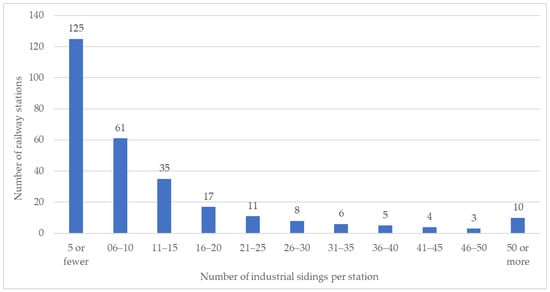
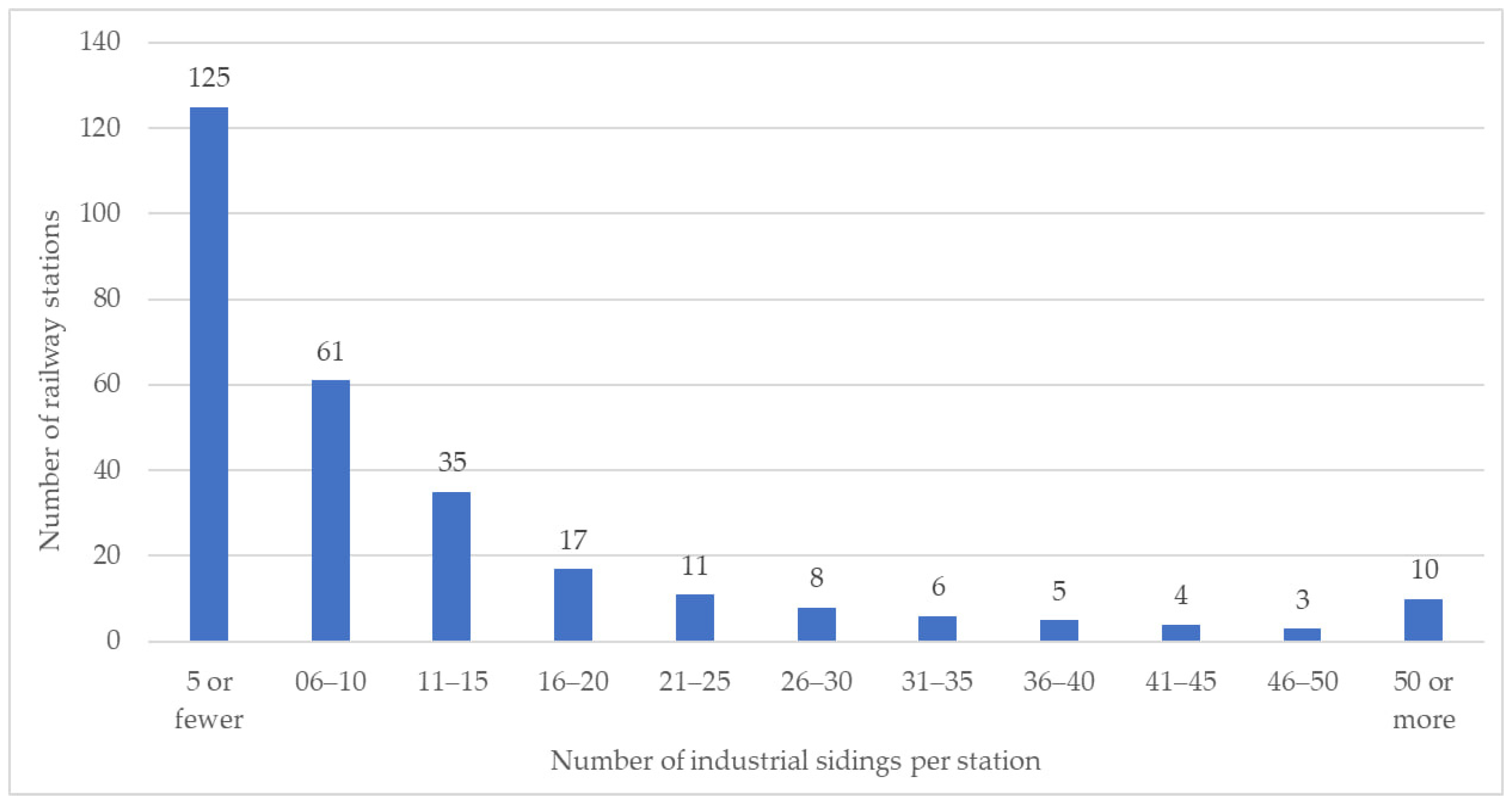
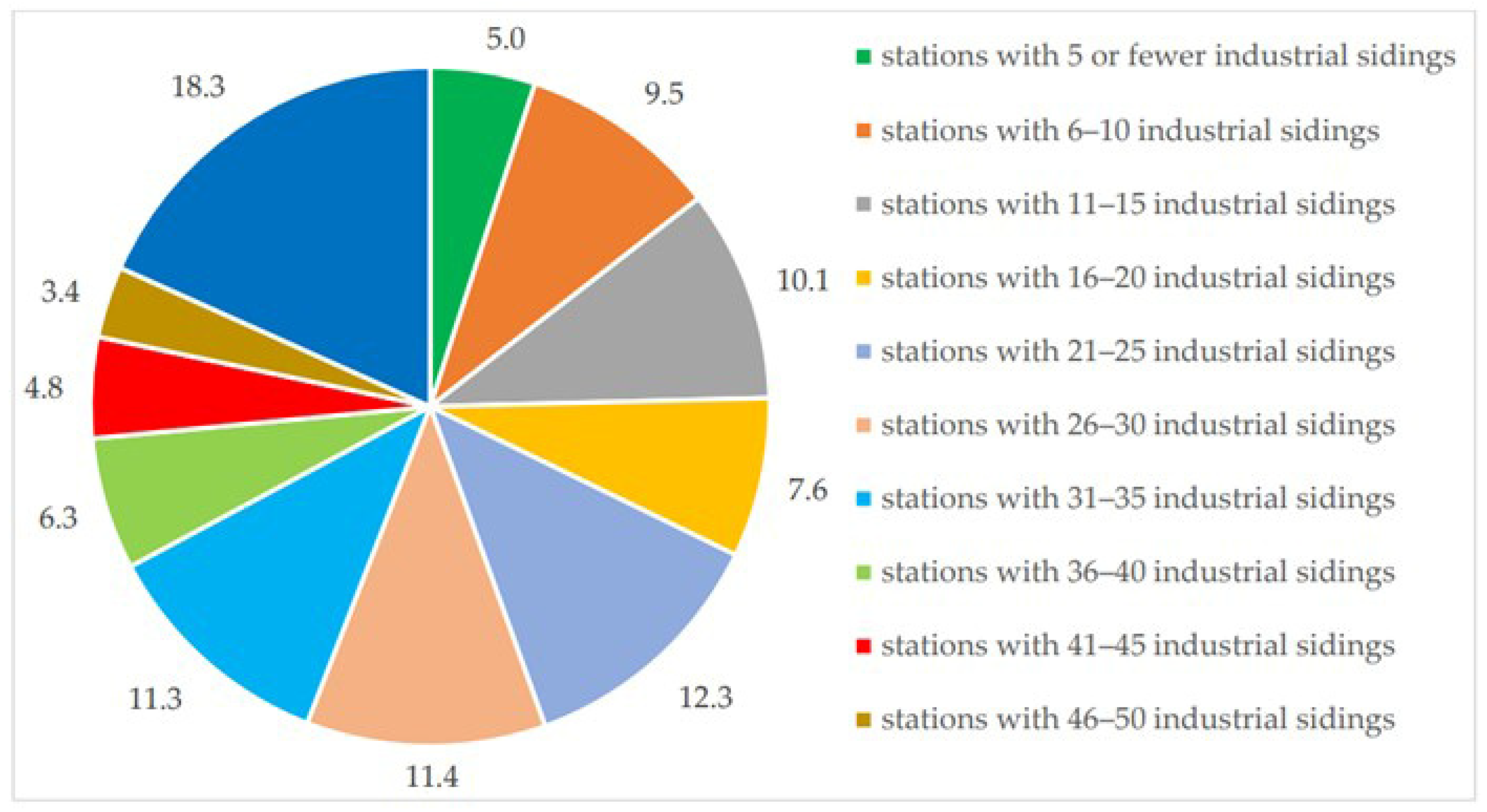
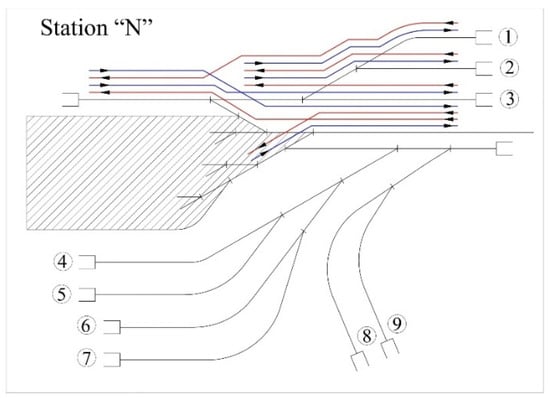
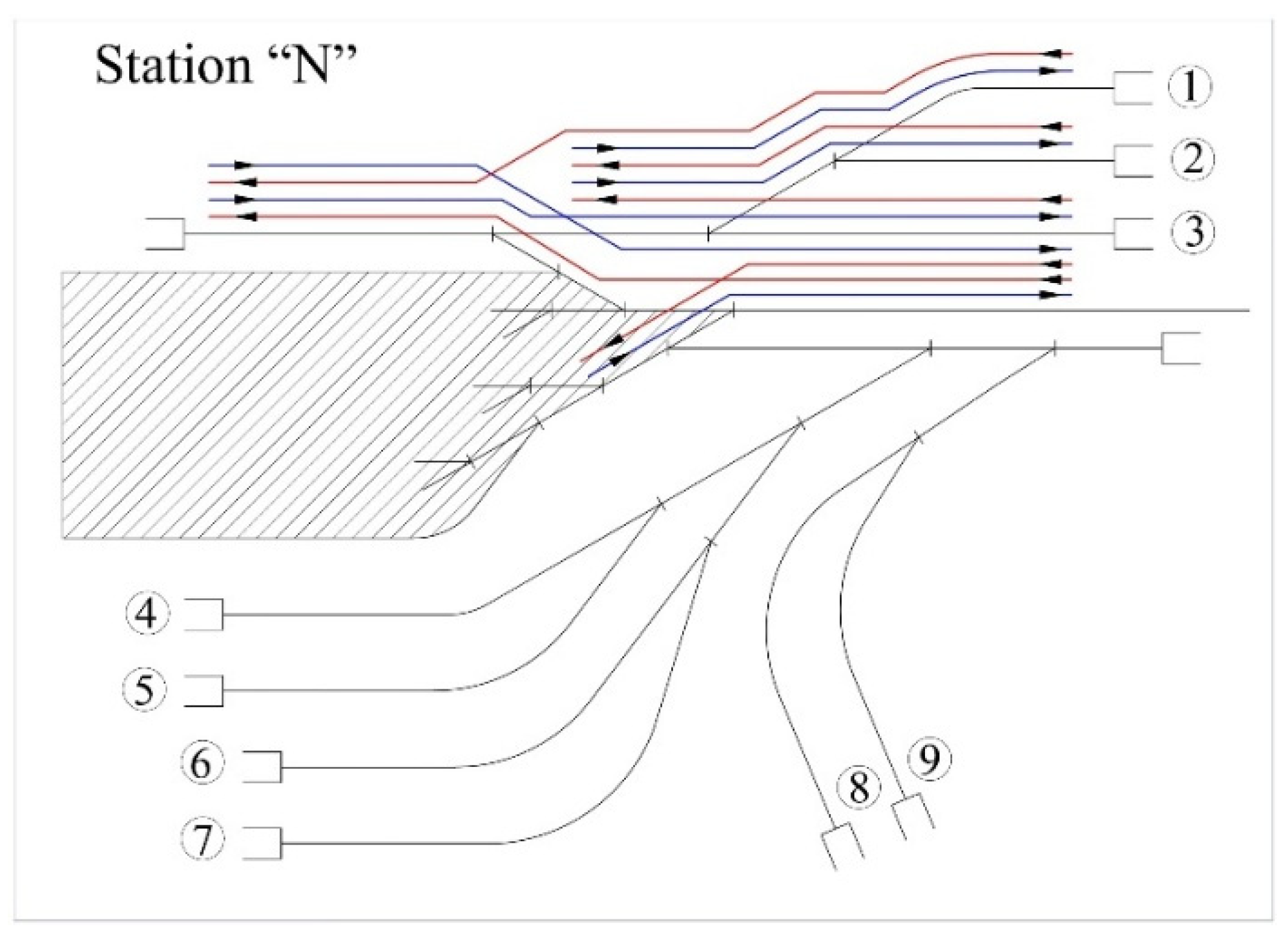
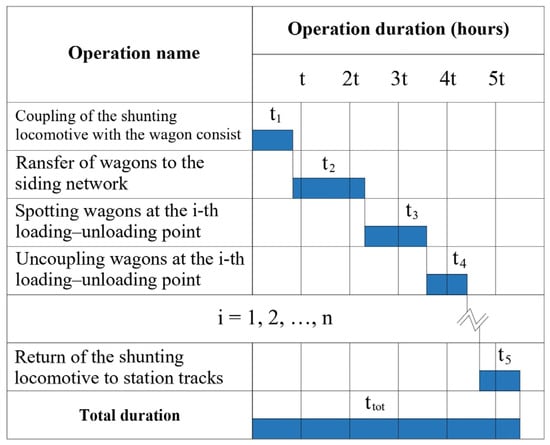
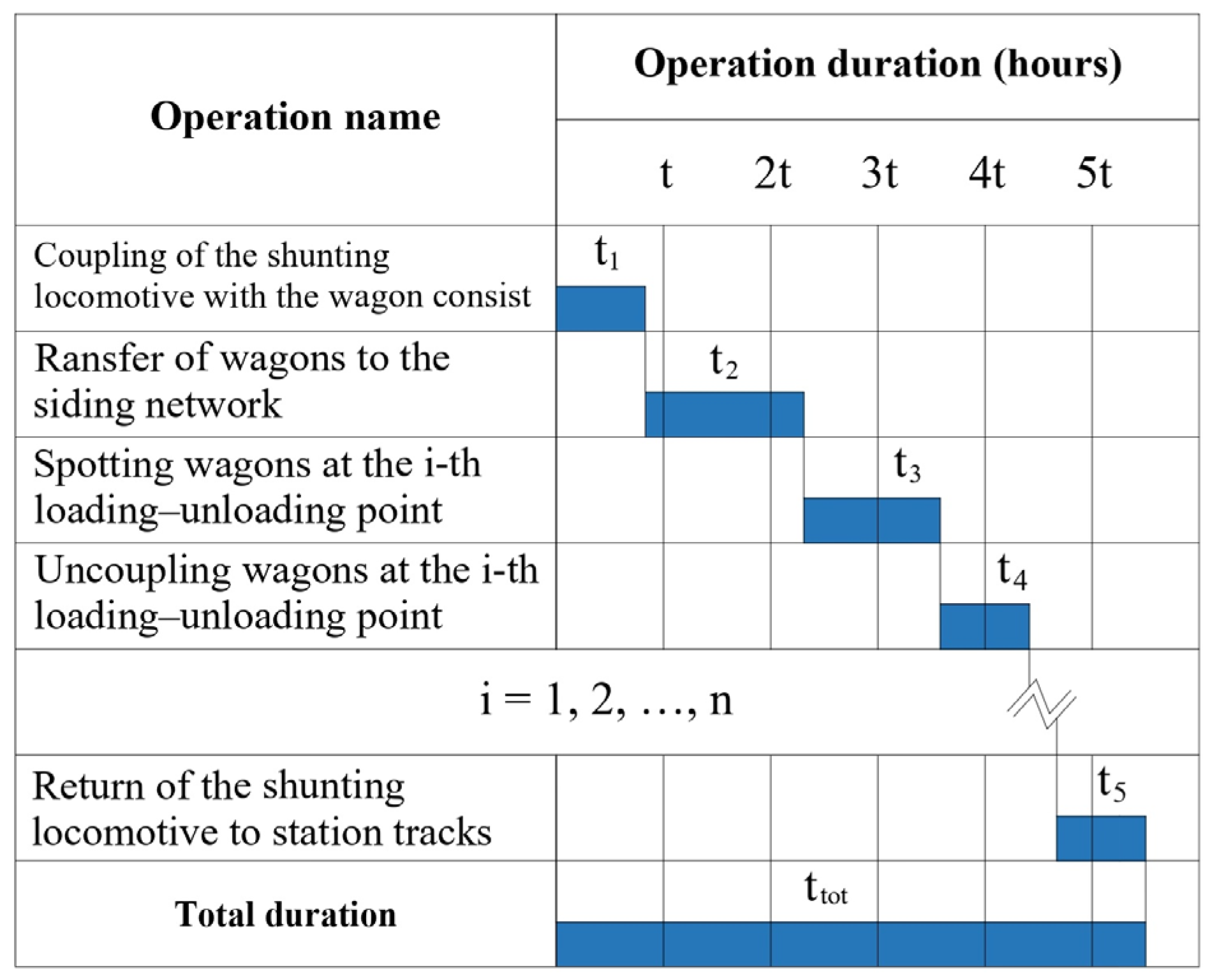
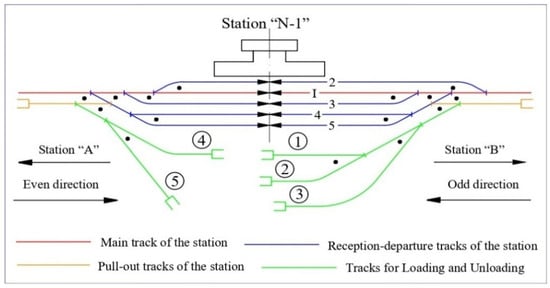
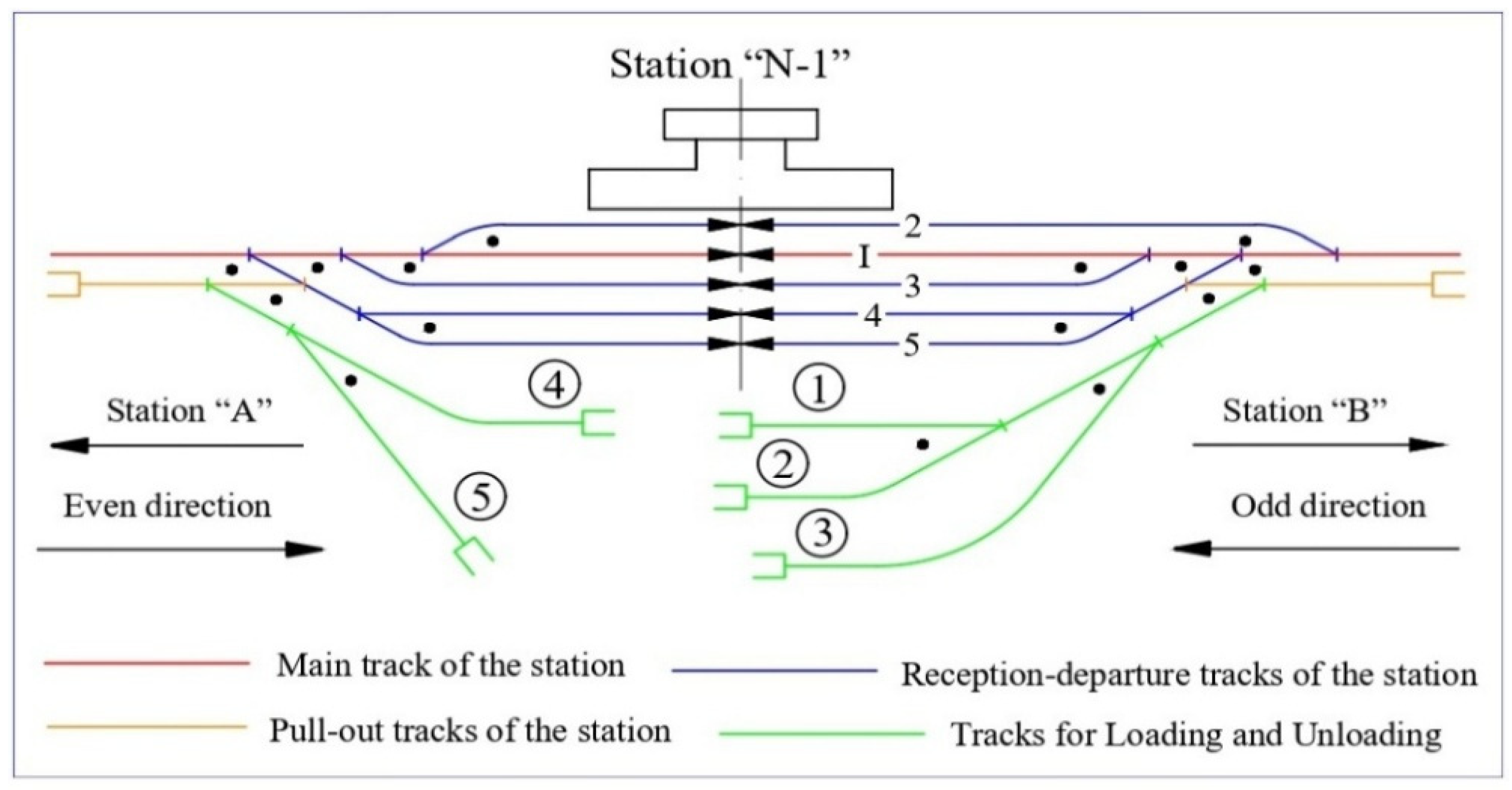
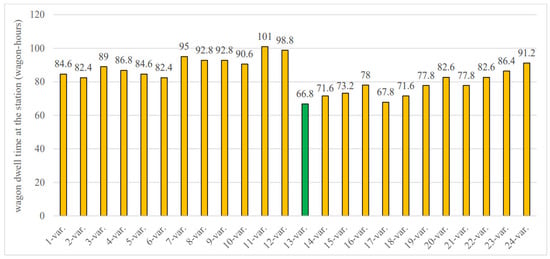
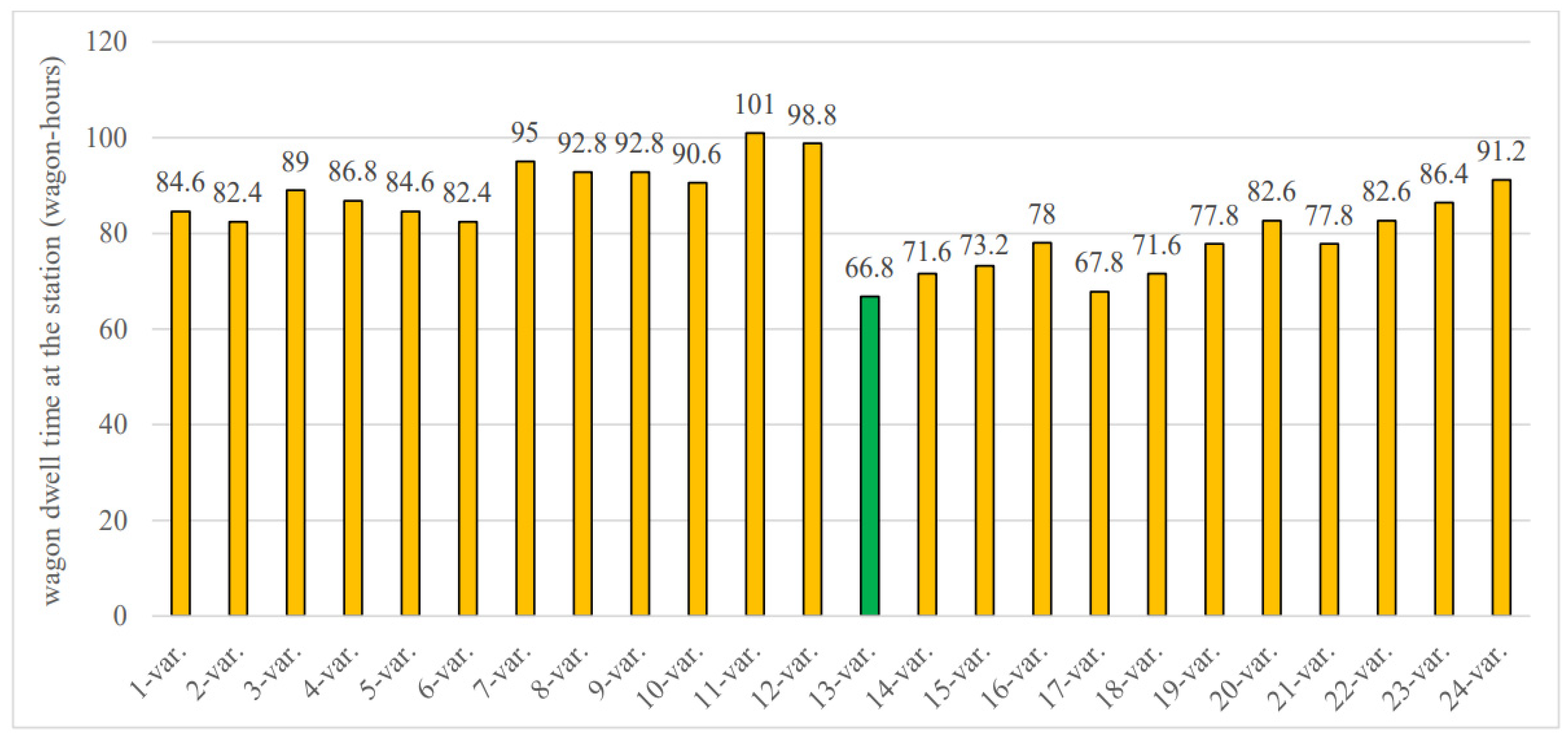
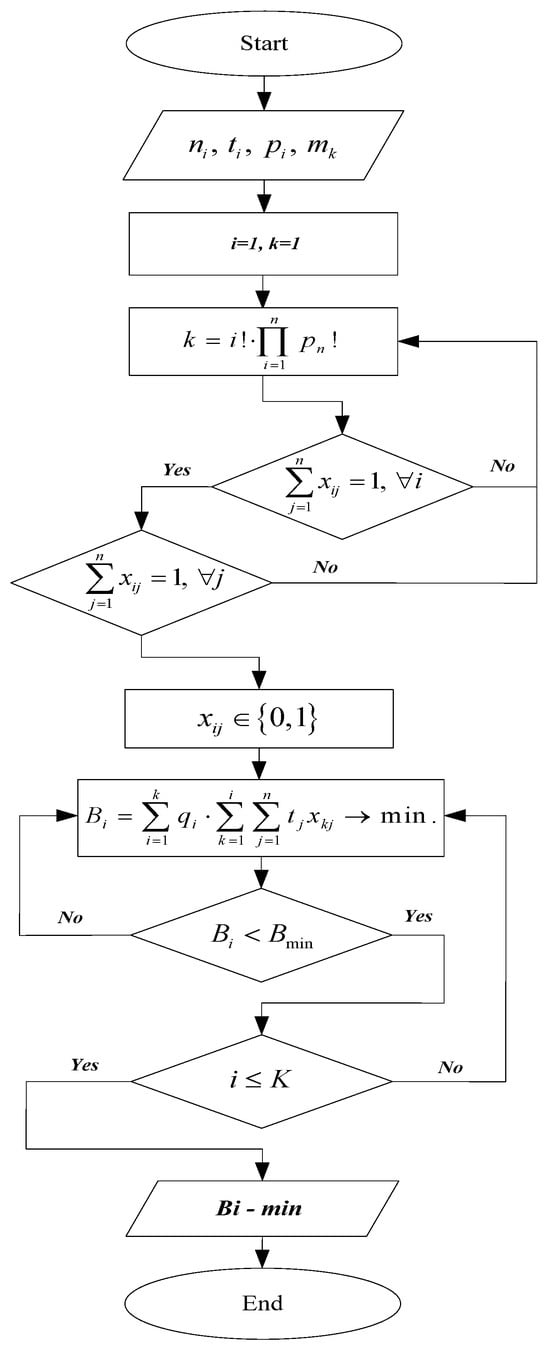
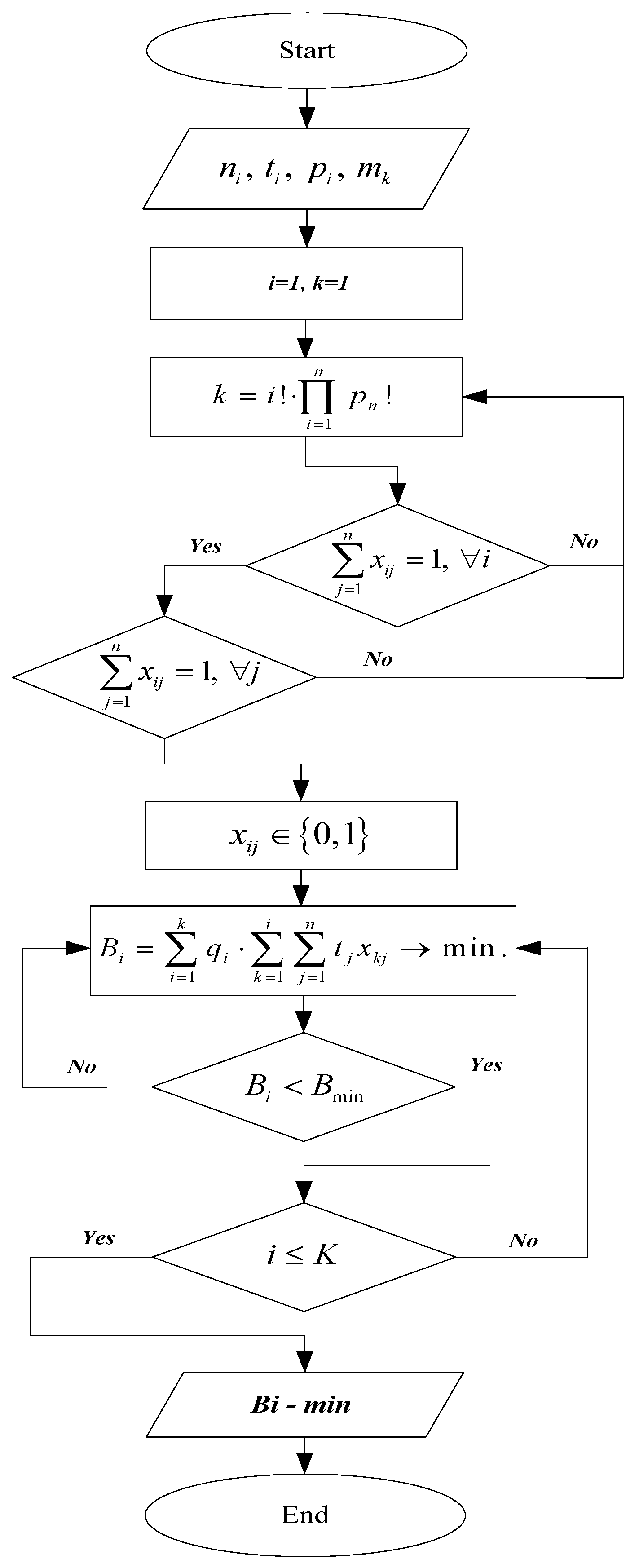
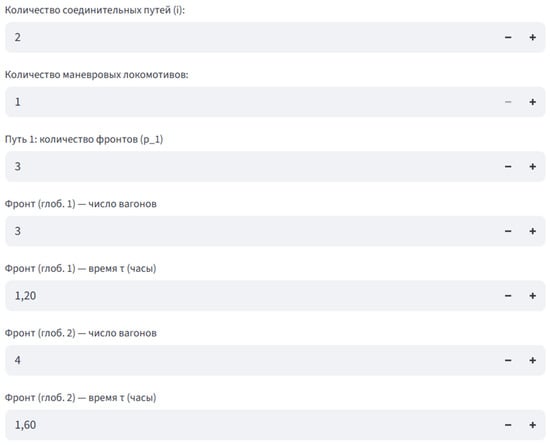
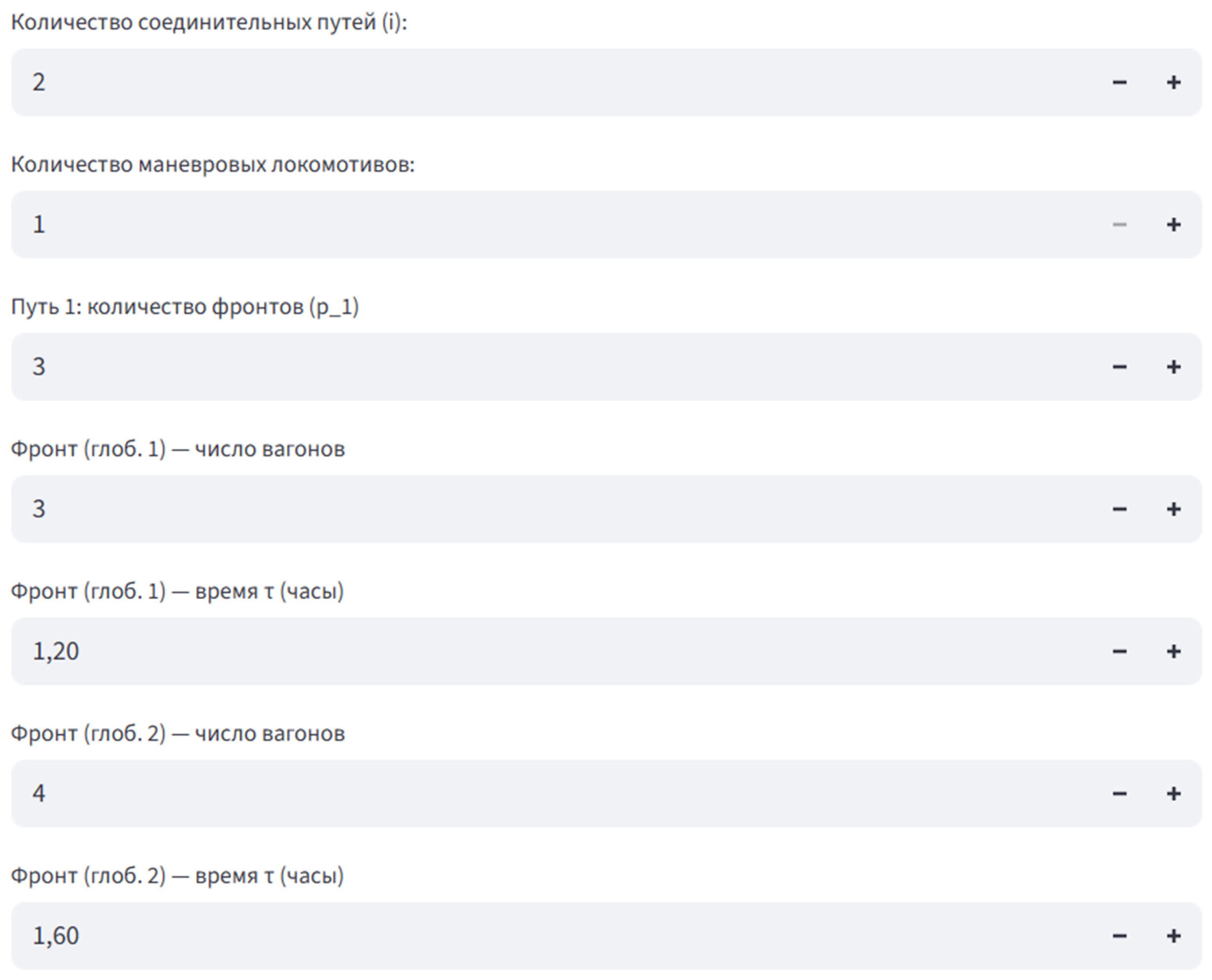
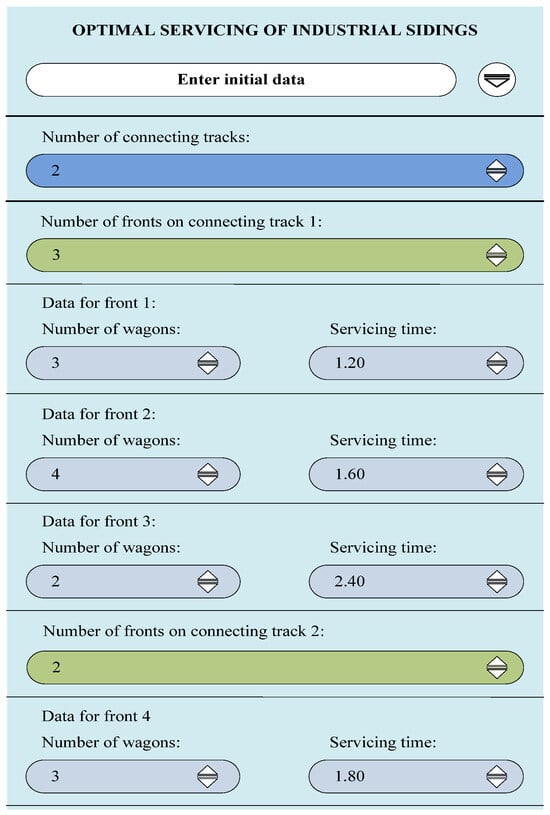
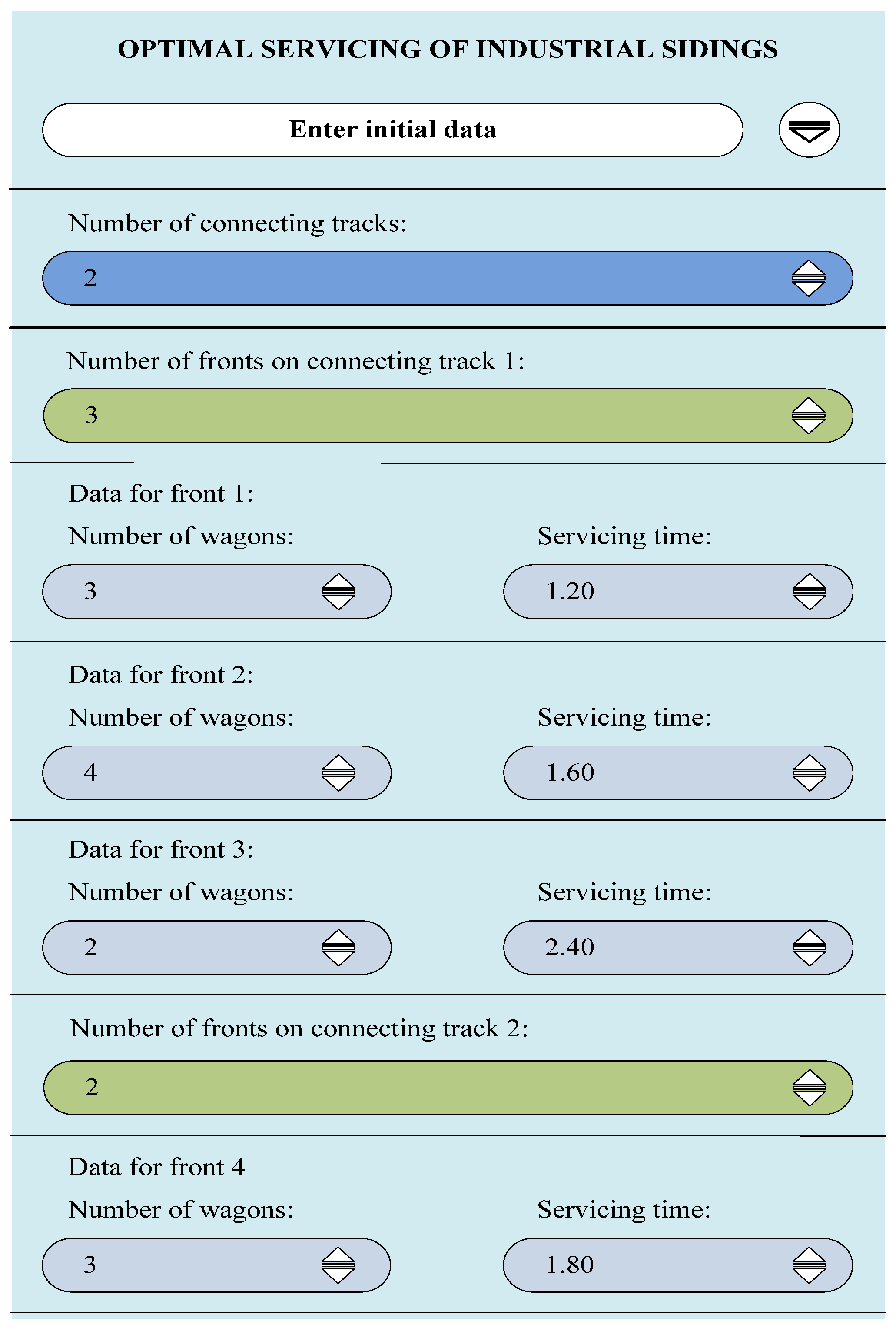
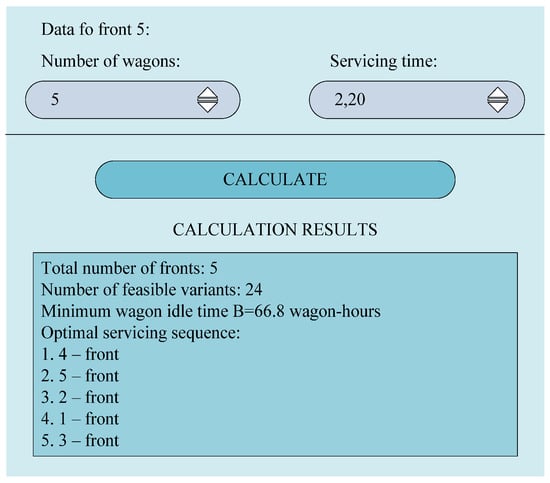
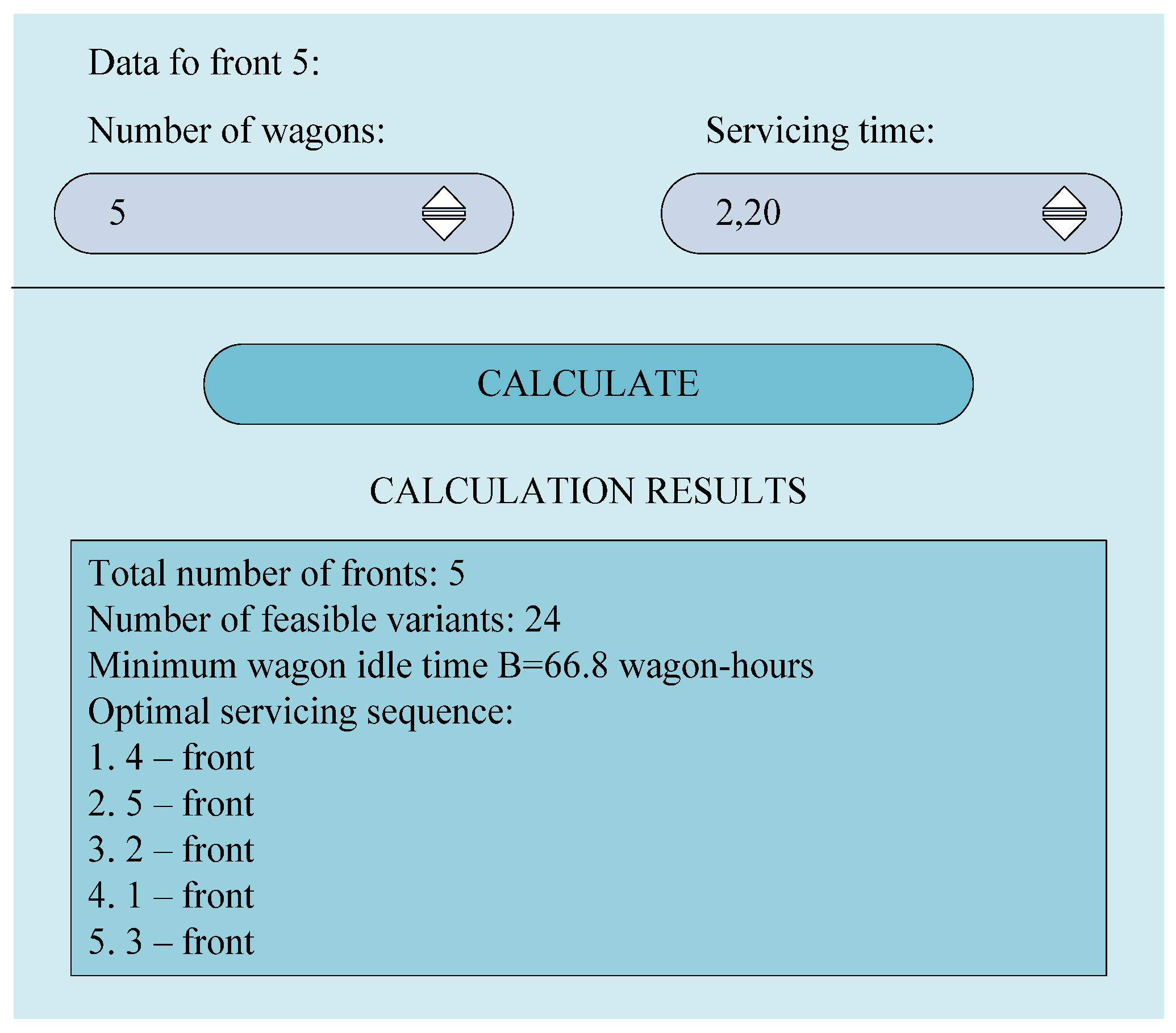
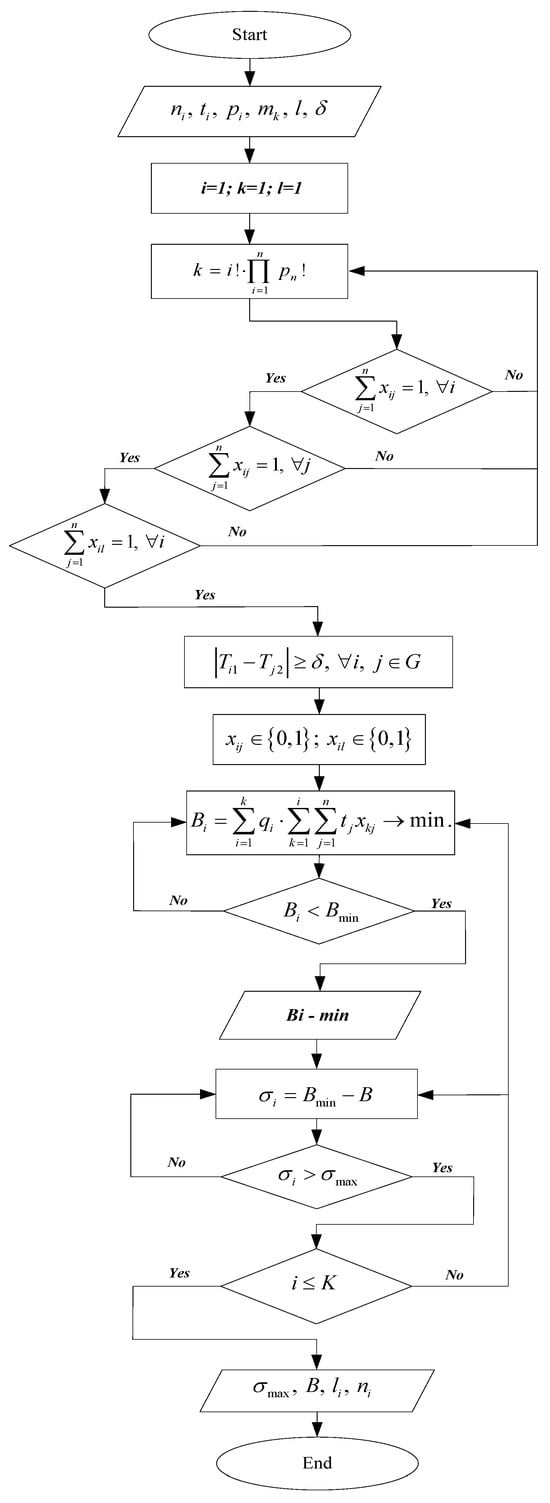
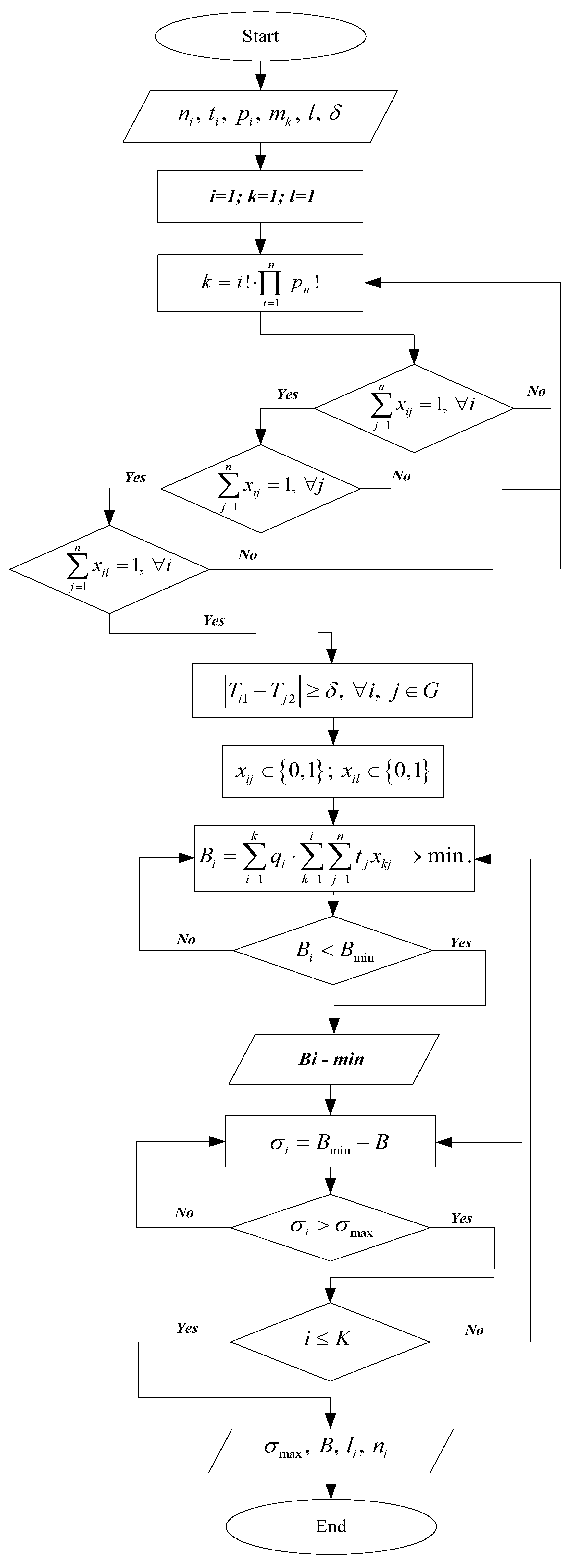
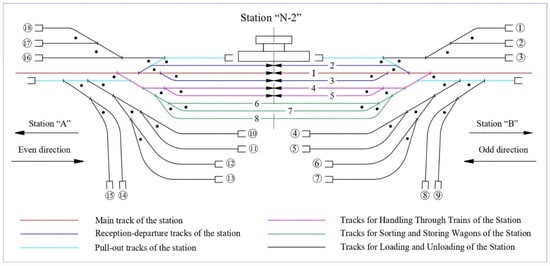
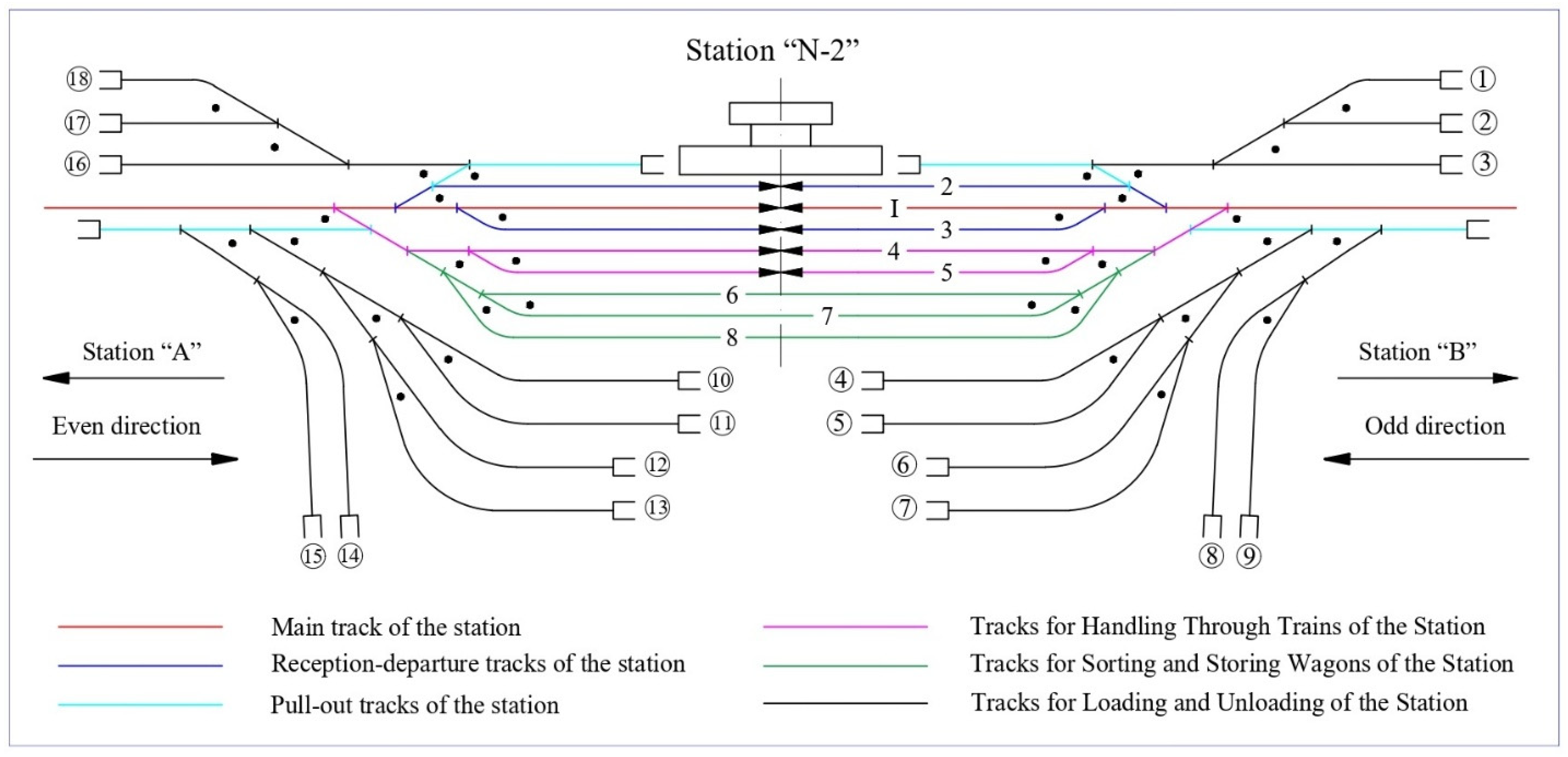
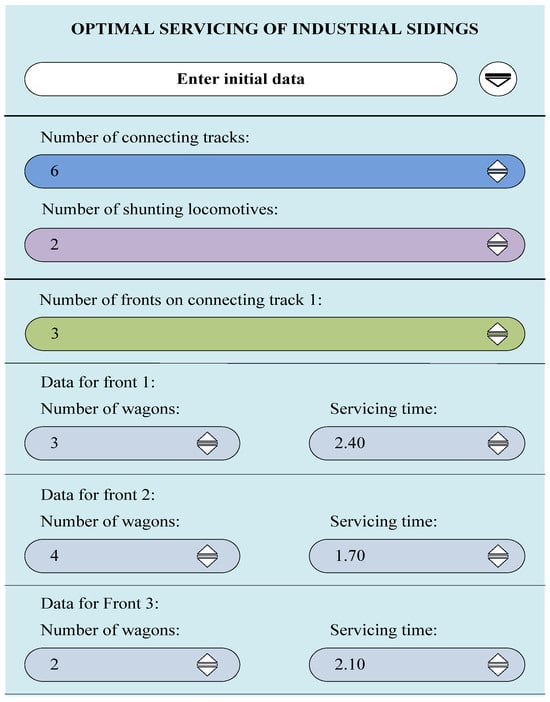
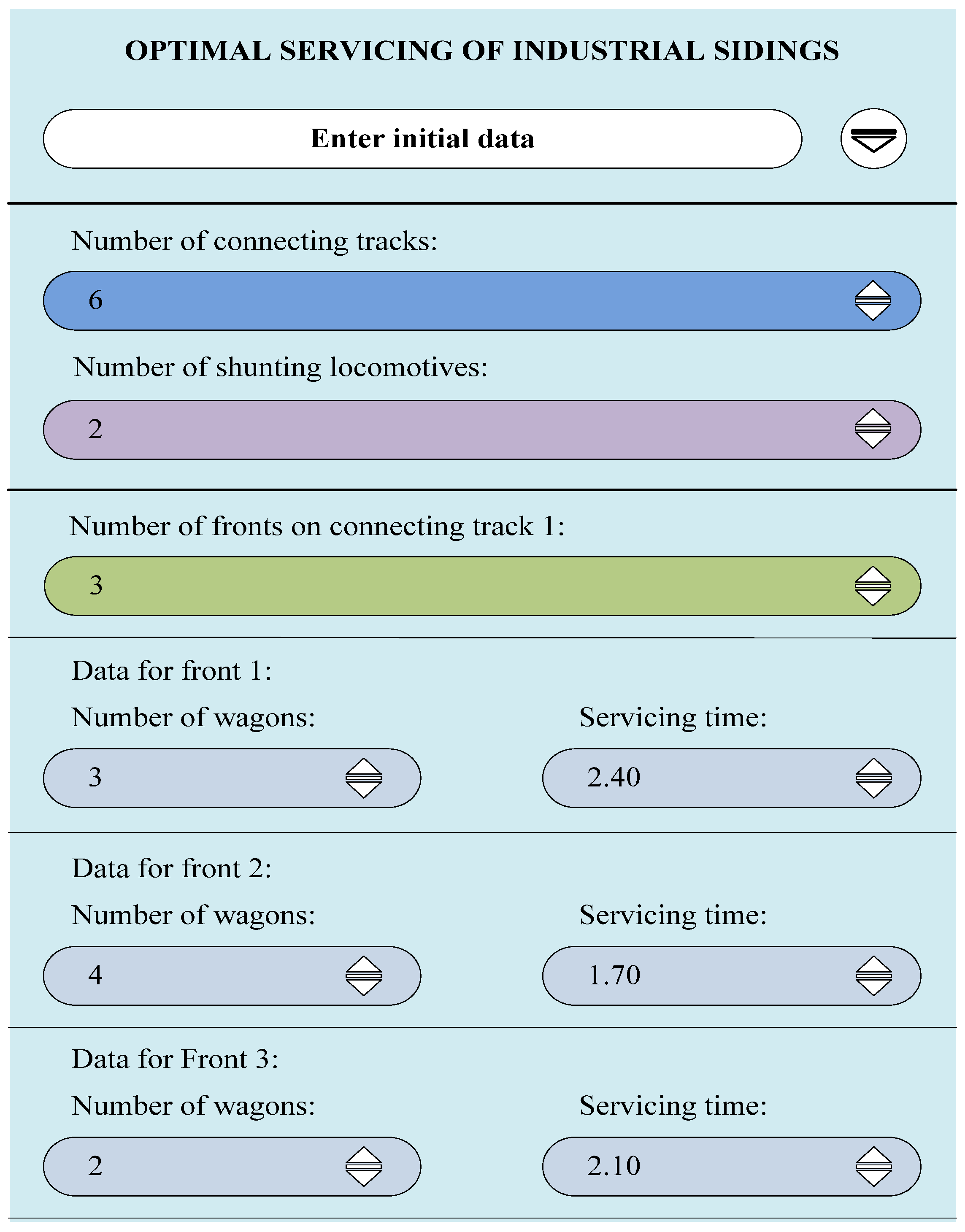
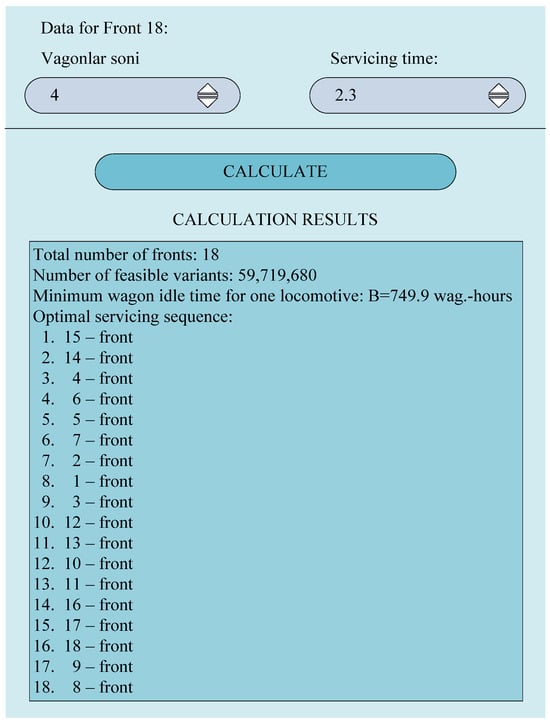
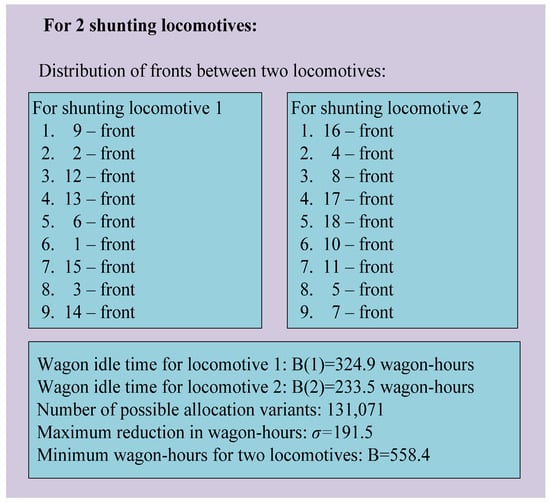
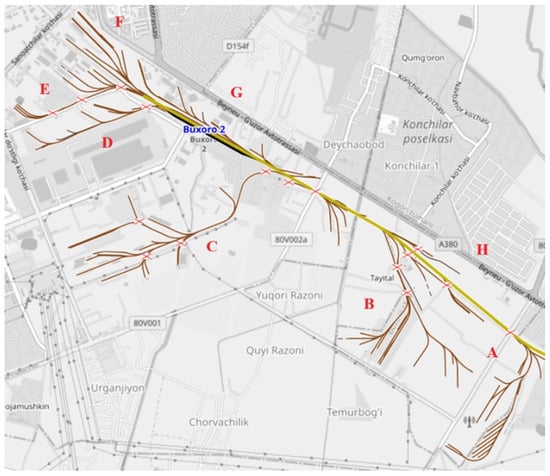

Disclaimer/Publisher’s Note: The statements, opinions and data contained in all publications are solely those of the individual author(s) and contributor(s) and not of MDPI and/or the editor(s). MDPI and/or the editor(s) disclaim responsibility for any injury to people or property resulting from any ideas, methods, instructions or products referred to in the content. |
© 2026 by the authors. Licensee MDPI, Basel, Switzerland. This article is an open access article distributed under the terms and conditions of the Creative Commons Attribution (CC BY) license.