


Abstract
Milk adulteration is a common fraud practiced by milk producers. In Malawi, information about its extent is limited. A cross-sectional study was conducted across three major milk- producing districts in Malawi to assess the prevalence and levels of predominant adulterants. Adulterant testing was performed using semi-quantitative milk test strips, except for water, which involved a combination of flow/drop and organoleptic observations followed by lactometry. Data were analyzed in R. The most prevalent adulterant was water (91%, n = 350), followed by neutralizer (59%, n = 225) and urea (4%, n = 14). Samples from vendors and Thyolo District had the highest prevalence of neutralizers (90%, n = 64). In comparison, water adulteration was highest (100%, n = 78) in Lilongwe. Compared with farmers, vendors had higher odds of water (aOR = 8.12) and neutralizer (aOR = 2.19) adulteration. With reference to Thyolo, the odds of water adulteration (aOR = 4.06) were higher in Lilongwe, while for neutralizer, Lilongwe (aOR = 0.20) and Karonga (aOR = 0.11). Co-occurrence of urea, neutralizers, and water was associated with vendors and Thyolo. Samples from vendors and farmers in Lilongwe and Karonga had similar neutralizer levels (p > 0.05). These findings underscore the need to apply interventions to address milk adulteration in Malawi with the hope of scaling them to other countries.
1. Introduction
The production and consumption of milk are widely practiced across Sub-Saharan Africa (SSA). Still, per capita consumption remains low despite increasing demand driven by population growth, urbanization, and changes in dietary practices [1,2,3]. It is consumed in various forms, such as raw, pasteurized, fermented, boiled, or in combination with staple foods [1,4,5]. In this region, the majority of the population is under-resourced and lacks robust food safety testing systems, including routine milk testing. This renders milk prone to economically motivated adulteration, predisposing people to chemicals with potential adverse health effects [6,7,8]. Due to limited enforcement of milk regulation in the formal and informal markets, inadequate coverage of testing services, and a lack of surveillance and routine testing for milk adulteration, the presence of adulterants such as urea, starch, detergents, and antibiotics goes unnoticed in the dairy chain in several SSA countries, including Malawi [9,10,11]. On the other hand, there is a potential risk that adulterated raw cow milk in Malawi may be passed on to subsistence consumers, as milk is subjected to uncontrolled heat, mostly underboiling, and consumed in its raw state by others, or after spontaneous fermentation [5,12]. Boiling may reduce microbiological hazards but may not necessarily eliminate chemical adulterants, necessitating quantification of the burden of consumer exposure to these harmful chemicals to inform targeted public health interventions [13,14].
In Malawi, it is very challenging to ensure milk safety during production, processing, transportation, and consumption [15]. Due to inefficiencies in milk regulation in the informal markets and a surge in demand for milk products in Malawi, some vendors and small-scale farmers practice fraud for financial gain [16]. Milk processors perform adulterant testing, though not routinely, depending on basic tests performed by some bulking groups [17]. Bulking groups test for adulterants using a lactometer and alcohol test for water and acidity, respectively; others rely on visual inspections, which are not entirely reliable and are characterized by poor precision [17]. In cases where qualitative tests are performed, the adulterated milk is rejected by commercial processors and bulking groups; less often, they purchase it at a low price [15]. This forces milk producers to sell the rejected and uncertified milk in informal markets that do not adhere to food safety standards, at a higher price [11,18]. The informal markets provide relief to small-scale milk producers because they receive instant payments and prices are higher than the low rates by commercial processors, who usually pay after several weeks or months.
Although many Sub-Saharan African countries have food regulatory bodies, numerous reports have been made concerning inefficiencies in the regulation and surveillance of raw milk adulteration [9,10]. Milk adulterant detection is not included as part of the routine milk safety assessment in safety and quality standards guidelines, exposing consumers to chemical hazards. To respond to safety challenges, Malawi made significant efforts to establish the Malawi Bureau of Standards (MBS) with a mandate to enforce food safety regulations. Substantial advancements have been made in enforcing regulations and regulatory monitoring of various products, including milk. However, ensuring quality control of milk from farmers and vendors is complex due to a larger number of farmers and vendors selling small volumes and a lack of traceability of production chains.
In Malawi, it is not mandatory to test raw milk for the presence of adulterants such as neutralizers, hydrogen peroxide, and urea, among others, except for visual inspection of organoleptic characteristics and raw milk physical attribute measurements such as specific gravity. Additionally, the primary producers (small-scale farmers) and sellers (vendors) of raw milk are not certified. As such, consumers purchase milk without safety and quality testing services except for visual inspection, and the purchase is centered on loyalty and trust in the milk suppliers [11]. Coupled with the predominant sale of milk in informal markets and an untraceable dairy supply chain, this exacerbates exposure of Malawians to chemical hazards, especially milk adulterants.
Several effects of these chemical hazards have been reported, including dairy processing and public health [6,7,8,16,19]. Adulterants are associated with disruption of physicochemical properties, fermentation kinetics, and sensory attributes of milk products [20,21]. Besides these, adulterants such as urea, neutralizers (bicarbonates), hydrogen peroxide, and melamine are linked to adverse health outcomes such as kidney damage, reproductive or growth hormone disruption, gastrointestinal distress, and death, respectively [16,22,23,24]. Extraneous water dilutes the essential nutrients that are inherently present in the milk, negating its nutritional benefits, and may cause illnesses if the water is contaminated. There have been cases of melamine poisoning globally. In China, it caused severe illnesses and deaths in infants [24]. Some of these public health problems, including kidney damage, have been reported in Malawi [25,26,27]. Milk adulterants could be a contributing factor, as unknown causes of non-communicable diseases have been reported [25,26,27]. The primary objective of this study was therefore to determine the prevalence and levels of predominant adulterants in raw cow milk in Malawi. Further aims were to (1) determine the associations between milk adulterants and district and selling point, (2) quantify the risk of adulteration across locations and market channels, (3) explore and identify hidden patterns and associations among selected milk adulterants and independent variables (selling point and district) using multiple correspondence and cluster analysis.
2. Materials and Methods
2.1. Study Design and Sites
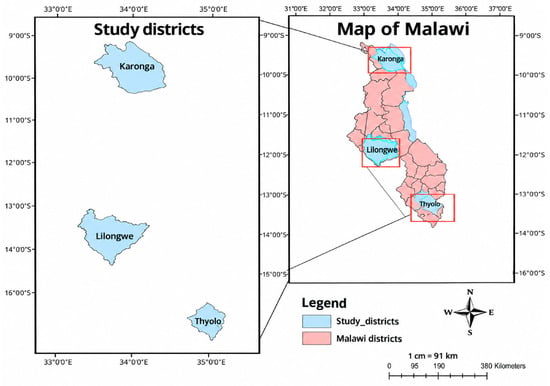
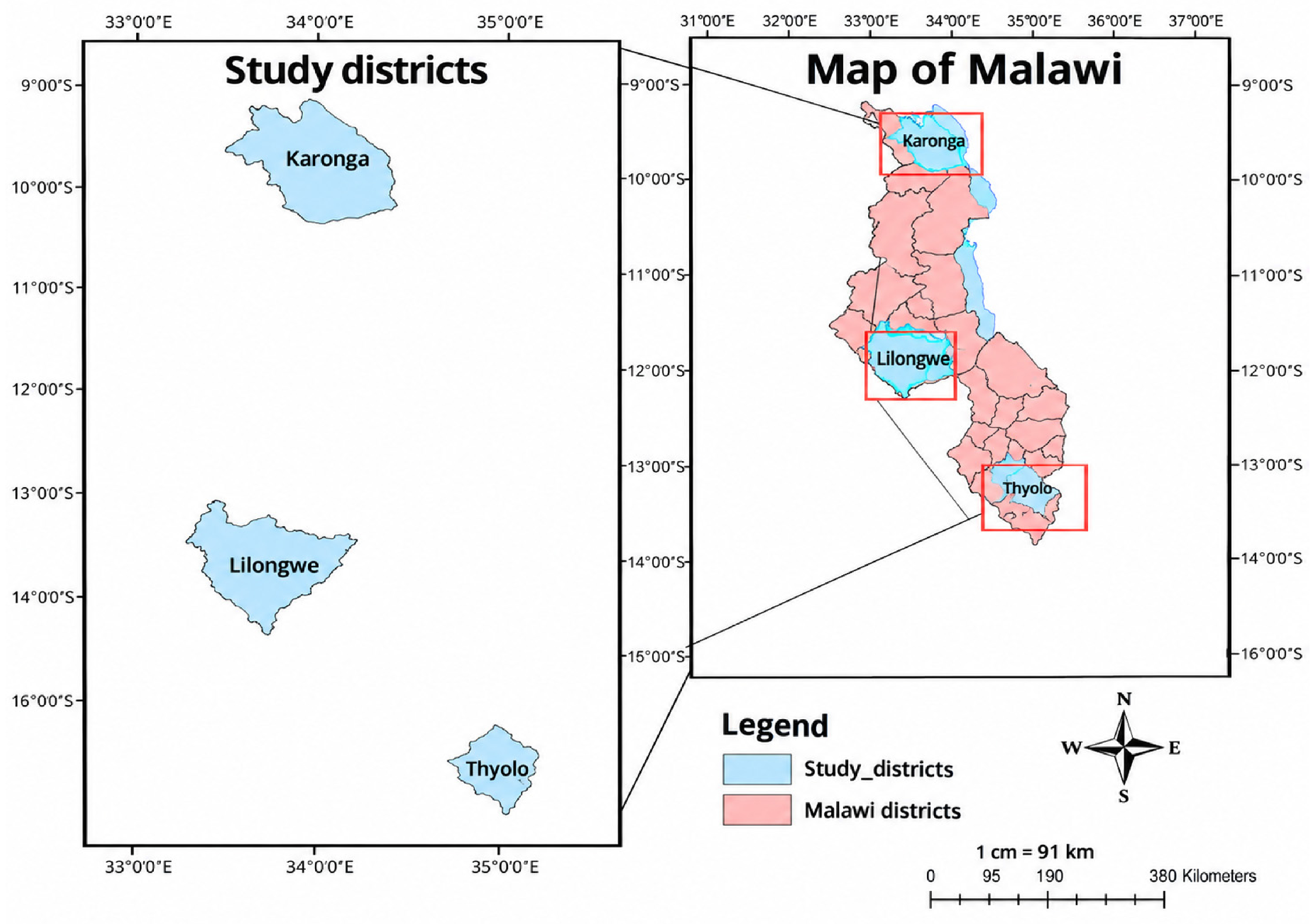
The study used a cross-sectional design, involving raw milk collection from three regions of Malawi: Southern, Central, and Northern (Figure 1). One district from each region was randomly selected. In the Southern region, Thyolo district was selected. This district is one of the major milk producers and has a large number of dairy farmers [28,29]. A large number of dairy farmers in this district, predominantly women, are concentrated in Bvumbwe, Makande, and Thyolo Boma, which were the study sites. Thyolo is approximately 40 km east of Blantyre City. In the Central Region, Lilongwe District, the capital city of Malawi, was selected. Lilongwe has many small-scale dairy farmers [30]. Milk samples were collected from Mpingu EPA and from other selling points within the main city. In the Northern region, Karonga District was selected. It is one of the major producers of cow’s milk and has one of the highest cattle ownership rates in the region [30]. Cattle farming is part of the culture of most societies, and cattle are used as the bridal price, locally known as Lobola. This district borders Tanzania in the north and is approximately 221 km from Mzuzu City. In Karonga, milk samples were collected from the Lupembe Extension Planning Area (EPA), Mlare area, and various selling points in Karonga town.
Figure 1.
Map of Malawi showing sampling districts developed with ArcGIS Version 15 Software (Esri, Redlands, CA, USA).
2.2. Study Period
The study was conducted between October and December 2025. During this period, the Southern, Central, and Northern regions of Malawi experienced hot and dry weather conditions, according to the Department of Climate Change and Meteorological Services [31]. In Malawi, this season is commonly characterized by a dry spell, scarce animal feed, and reduced milk production.
2.3. Sample Size Determination
Sample size was determined using the following Cochrane formula:
where Z = Z-score of 1.96, n = sample size, p = expected prevalence of milk adulterants of 50% [to obtain the largest (conservative) sample because the plausible value of p was unknown], and d = absolute precision at 0.05 [32,33]. A total of 384 milk samples were collected.
[n = Z2Pexp (1 − Pexp)/d2
2.4. Sampling Process
Milk sampling was performed according to Gandhi et al. and Draaiyer et al., with slight modifications [34,35]. Stratified random sampling was conducted at each site; stratification was based on selling point (vendor or farmer) and the study site. The sampling frame comprised all farmers in the selected Extension Planning Areas (EPAs). Farmers who provided verbal consent were randomly selected. Vendors were sampled differently from predefined streets and informal markets because a sampling frame for informal vendors was not available. Those who were encountered during field visits and provided verbal consent were recruited into the study. There was no vendor or farmer who declined to provide milk samples; hence, no replacement was undertaken. Milk samples were randomly collected from both farmers and vendors. Each farmer and vendor contributed only one milk sample.
The majority of farmers and vendors used plastic bottles, 5, 10, or 20 L plastic buckets, and stainless-steel containers. The milk was thoroughly mixed by shaking, inverting, stirring, or plunging the containers for at least 5 min to ensure homogeneity of the sample and a true representation of the bulk. Then, a standard volume of 500 mL consistent with the Codex Alimentarius sampling guidance for whole liquid milk (CAC/GL 71-2009) was transferred into sterile, clean, and dry non-transparent sample collection bottles while preventing contamination and adulteration [36]. In cases where vendors or farmers had 500 mL of milk, the entire volume was mixed and transferred into sample collection bottles. After transferring milk into sample collection bottles, the bottles were tightly sealed to prevent spillage or leakage. The bottles were then labeled with sample ID and other identifiers, placed in a dark area for transportation, and analyzed within 1 h of collection.
2.5. Determination of Milk Adulteration
Milk samples were tested for the presence of hydrogen peroxide, neutralizers, and urea using semi-quantitative milk test strips (Milkotronic Limited—Narodni Buditeli Str. 8900, Nova Zagora, Bulgaria). Neutralizers assessed were sodium carbonate (Na2CO3), sodium bicarbonate (NaHCO3), and sodium hydroxide (NaOH). The test strips were impregnated with enzymes and chromogens for selective detection of the adulterants. The testing was done according to the manufacturer’s instructions. The strips were dipped into the milk samples for about 3 s. Then, excess milk was removed from the test strips by tapping the strip on the edge of the cup, and results were read by two independent assessors between 80 and 120 s. The primary assessor was blinded to the sample source and other important details. The results for the presence and levels of the adulterants were indicated by color change on the strips and read visually by comparing them with the manufacturer’s color scales for neutralizers, hydrogen peroxide, and urea. For quality assurance, 10 positive and 10 negative samples were retested on an alternative chemical method to confirm the results. There was 100% agreement between the test strip and confirmatory test results. However, this was not analytical validation; rather, confirmatory testing, because 20 samples are insufficient for full analytical validation. Determination of extraneous water in milk samples was done by using repeated multiple simple, reliable techniques, including flow or drop test (observing flow speed and trail of milk on a polished glass slide) and visual inspection for organoleptic attributes [37,38]. The results from these techniques were confirmed by repeating the measurements using the lactometric method, by recording the specific gravity of the positive samples according to Garg, Mulla, and Malawi Bureau of Standards, where specific gravity less than 1.028 g/mL was considered suspected evidence of added water [35,38,39].
2.6. Data Analysis
The data obtained from this study were analyzed using R version 4.4.3 (R Foundation for Statistical Computing, Vienna, Austria). The data were summarized using descriptive statistics, including median, percentages, and frequencies. The association between milk adulterants and location and selling points (channel) was analyzed using the Chi-square test, and the effect size was estimated using Phi (φ) and Cramer’s V measures of the strength of association. Fourfold point (Phi/φ) was used for a 2 × 2 contingency, and Cramer’s V for a 3 × 2 contingency table of any dimensionality [40,41]. Phi and Cramer’s coefficients of 0.10, 0.30, and 0.50 were interpreted as small, medium, and large effect sizes [42]. Firth logistic regression analysis was used to quantify the risk of adulteration across locations and market channels. In the models, neutralizer, urea, and water were entered as dependent binary variables (present/absent), while predictors were selling points and districts for all three models. Multiple correspondence analysis was performed to visualize the structure and pattern of associations, while cluster analysis was used to identify homogeneous groups with similar adulteration profiles. The choice of the number of clusters was determined by silhouette analysis. The cluster stability was assessed by Bootstrap resampling and the mean Jaccard similarities.
Comparisons of neutralizer levels across three locations were done using the Kruskal–Wallis test. Post hoc multiple comparisons were performed using Dunn’s post hoc test. To control the family-wise error rate, three pairwise comparisons were adjusted using the Holm adjustment. Kruskal–Wallis effect size was calculated using eta-squared based on H (η2[H]). Comparisons of neutralizer levels between vendors and farmers within a district were done by the Wilcoxon rank-sum test. In all analyses, Alpha was set at ≤0.05; any p-value of equal to or less than 0.05 was considered significant.
3. Results
3.1. Prevalence of Selected Milk Adulterants
3.1.1. Overall Prevalence
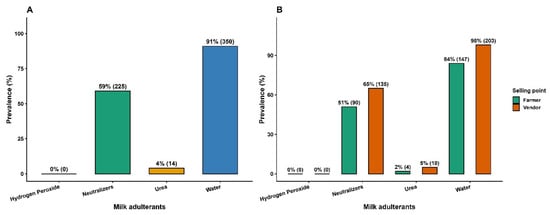
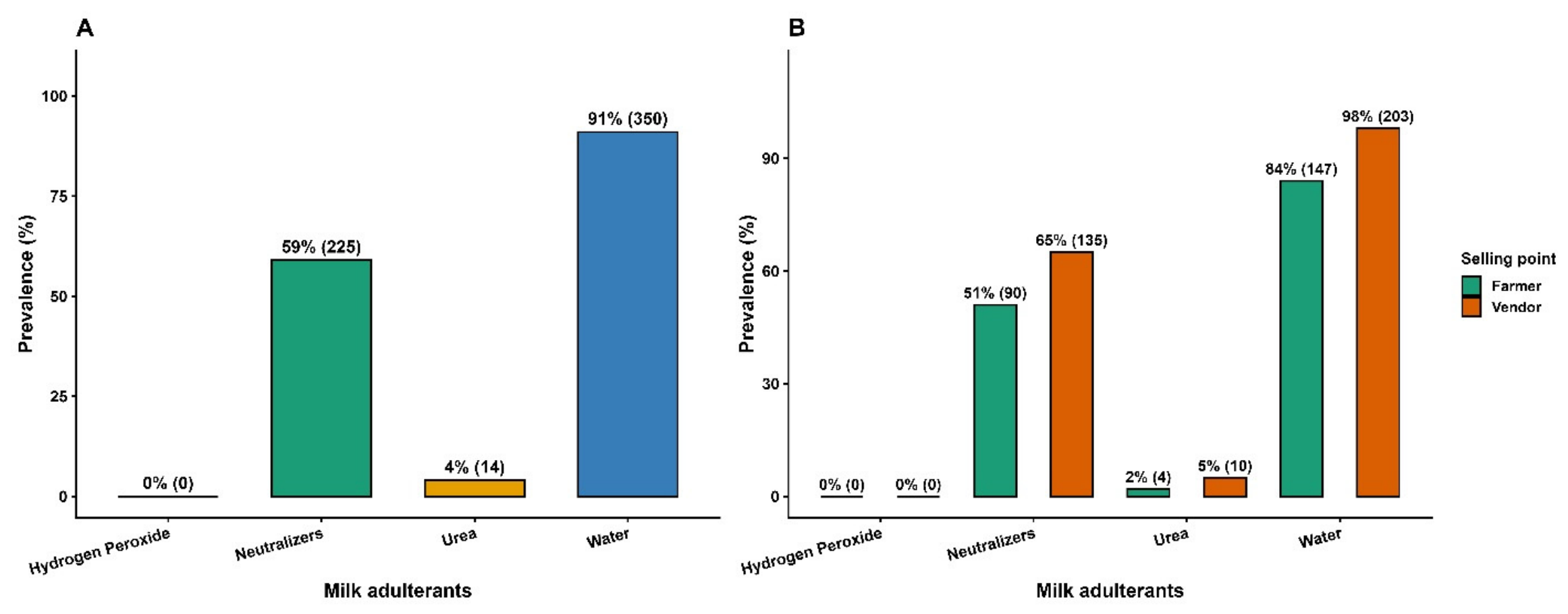
Three hundred and eighty-four samples were tested for hydrogen peroxide, neutralizers, urea, and exogenous water. Except for hydrogen peroxide, all samples contained at least urea, neutralizers, or exogenous water (Figure 2). Other samples contained multiple adulterants. As shown in Figure 2, water was the most prevalent adulterant (91%, n = 350), followed by neutralizers (59%, n = 225). The occurrence of adulterants ranged from 2% (n = 4) for urea to 84% (n = 147) for water among samples collected from farmers. In samples collected from vendors, the occurrence of adulterants ranged from 5% (n = 10) for urea to 98% (n = 203) for water.
Figure 2.
Prevalence of selected milk adulterants: (A) Overall prevalence. (B) Prevalence by selling point. Data labels: Percent (counts).
3.1.2. Prevalence by Location and Selling Points
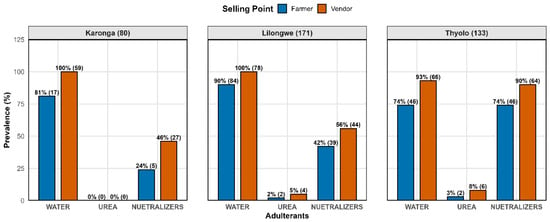
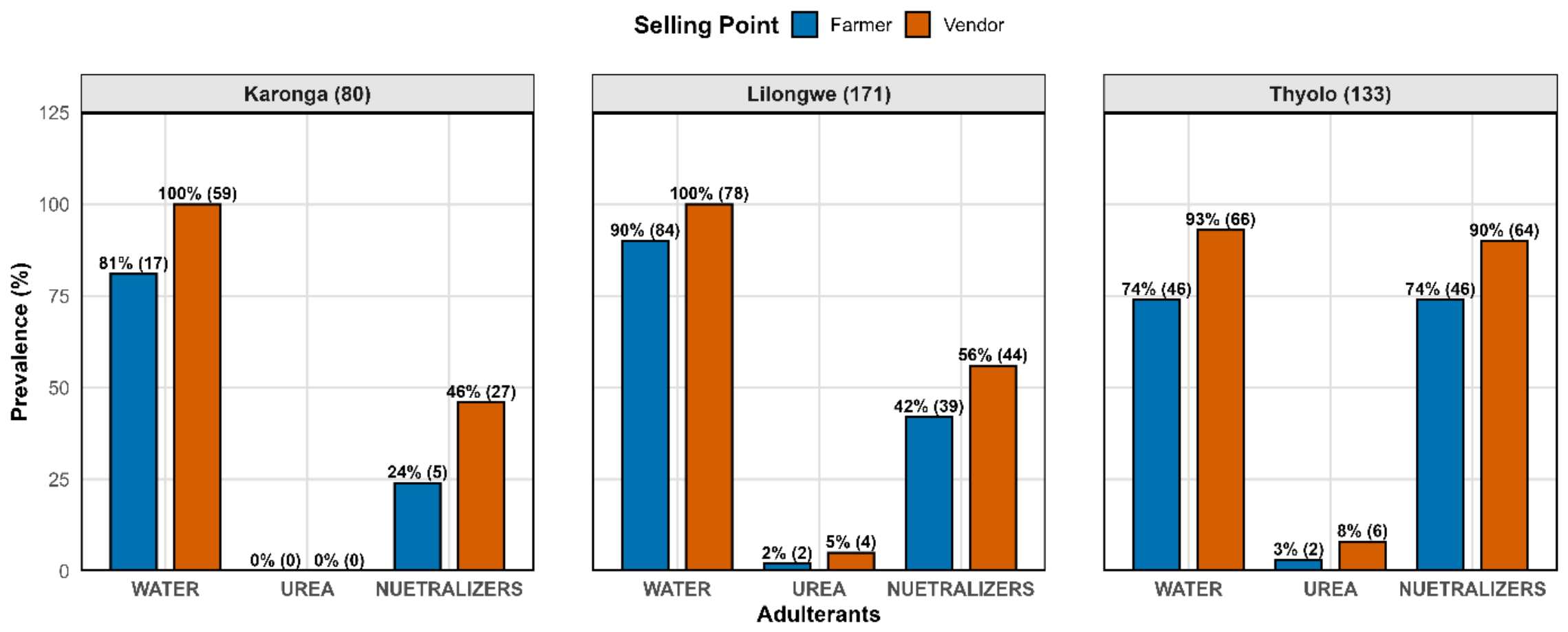
Except for one location (Karonga District), all the districts in this survey recorded all three types of adulterants (Figure 3). The prevalence of water adulteration was higher in samples collected from vendors, ranging from 93% (n = 66) in Thyolo to 100% in Karonga (n = 59) and Lilongwe (n = 78). Similarly, a high prevalence of neutralizers was observed in samples from vendors, ranging from 46% (n = 27) in Karonga to 90% (n = 64) in Thyolo. For Urea, the prevalence was low in samples collected from both vendors and farmers, ranging from 2% (n = 2) in Lilongwe to 8% (n = 6) in Thyolo. No sample from Karonga contained Urea. Although the occurrence of adulteration was comparatively lower in samples from farmers than from vendors, the prevalence was equally high. For instance, the prevalence of water adulteration ranged from 74% (n = 46) in Thyolo to 90% (n = 84) in Lilongwe, urea adulteration ranged from 2% (n = 2) in Lilongwe to 3% (n = 2) in Thyolo, and neutralizer adulteration ranged from 24% (n = 5) in Karonga to 74% (n = 46) in Thyolo.
Figure 3.
Prevalence (%) of milk adulterants by location and selling point in Malawi. Data labels: Percent (counts).
3.2. Factors Associated with Milk Adulteration
The results of the association between milk adulterants and location and selling points are presented in Table 1. Water adulteration was significantly associated with location and selling point (p ˂ 0.05). Similarly, neutralizers portrayed a moderate association with location (p < 0.001, Cramer’s V = 0.362) and had a weak association with selling point (p = 0.009, φ = 0.139). In contrast, the prevalence of urea did not differ significantly by location (p = 0.07, Cramer’s V = 0.116) and selling point (p = 0.19, φ = 0.067), indicating a lack of spatial and selling point pattern variation for this adulterant.
Table 1.
Association between milk adulterants and the location and selling points.
3.3. Risk of Milk Adulteration
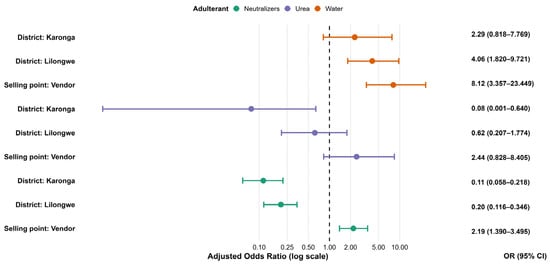
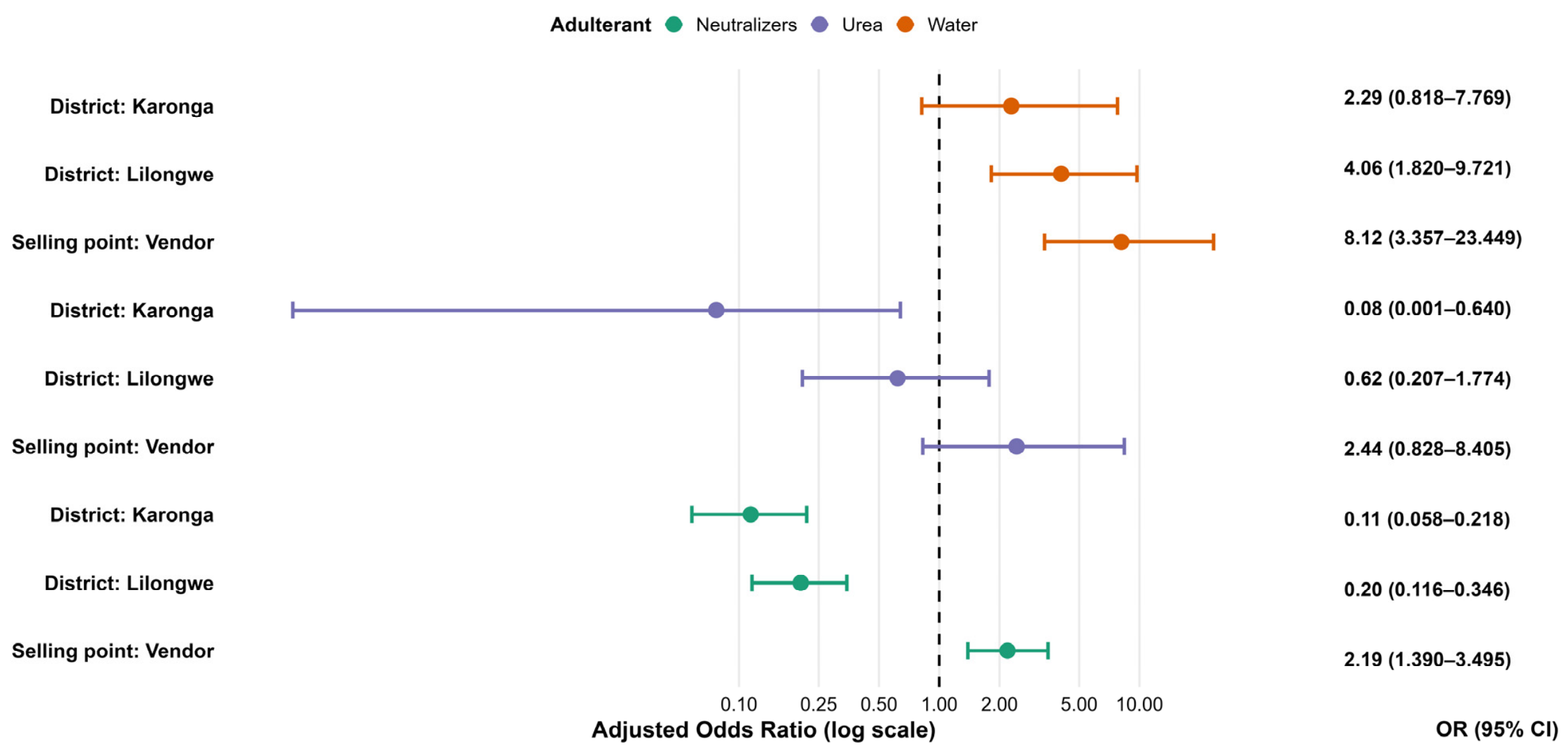
The results of Firth Logistic Regression Analysis are presented in Figure 4. The reference category for the factor selling-point was farmer, and the factor location (district) was Thyolo district. Significant associations were identified between selling point, location, and the presence of milk adulterants. Compared with farmers, milk samples collected from vendors had significantly higher odds of water (aOR = 8.12; 95% CI: 3.357–23.449) and neutralizers (aOR = 2.19; 95% CI: 1.390–3.495) adulteration. Although the vendors were more than twice as likely to provide milk adulterated with urea (aOR:2.44), the association was not statistically significant (95% CI: 0.828–8.405). Compared with the reference location (Thyolo district), both Karonga (aOR = 2.29) and Lilongwe (aOR = 4.06) had higher odds of water adulteration, but only Lilongwe exhibited a significant association (95% CI: 1.82–9.72). Samples from the Karonga district had significantly lower odds of both urea (aOR = 0.08; 95% CI: 0.001–0.640) and neutralizers (aOR = 0.11; 95% CI: 0.058–0.218). Similarly, samples from Lilongwe exhibited lower odds for both urea and neutralizer adulteration.
Figure 4.
Firth logistic regression analysis forest plot for the quantification of the risk of milk adulteration.
3.4. Multivariate Patterns of Milk Adulteration
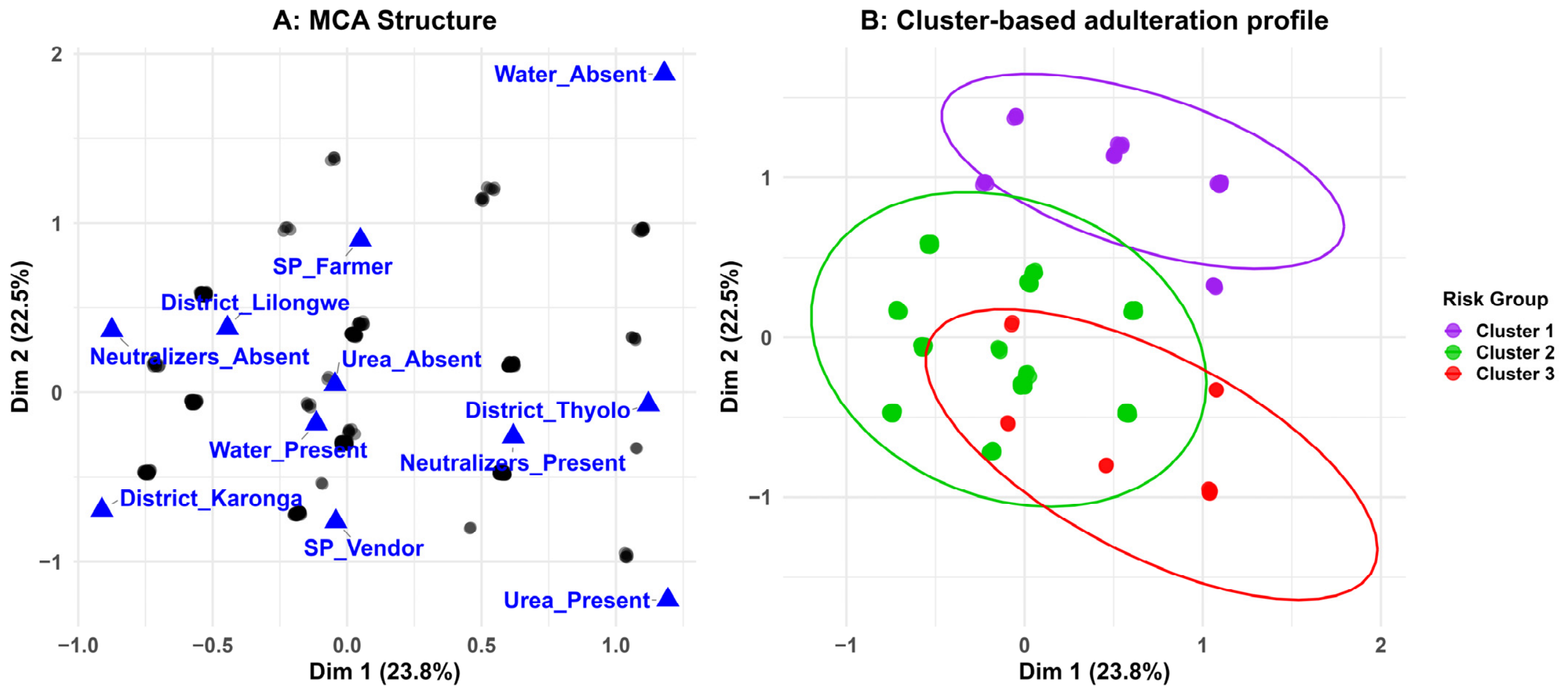
The results for the exploration and identification of hidden patterns and associations among selected milk adulteration practices and the independent variables are presented in Figure 5A,B. The MCA biplot explained a cumulative 46.3% of the variability in the categorical dataset; as such, distances in the two-dimensional space should be interpreted with caution. The visualization portrayed distinct patterns of association between the dependent variables (milk adulterants) and the independent variables (selling point and district). In dimension 1, the presence of neutralizers and urea clustered with Thyolo District on the positive side, while the absence of neutralizers clustered with Lilongwe and Karonga districts on the negative side, suggesting a distinct variation in neutralizer occurrence across districts. In the lower left quadrant of the plot, Karonga district, vendor, and the presence of water are closely positioned, reflecting a similar multivariate configuration. The selling point farmer was positioned proximal to the absence of water, indicating a relatively limited occurrence of water adulteration in milk obtained from farmers.
Figure 5.
Spatial and actor-based multiple correspondence. (A) Multiple correspondence analysis results. (B) Cluster analysis results. SP = Selling point; ▲ = Categorical variable; ● = Individual observations.
Complementary cluster analysis-based adulteration profiles provided three stable and distinct hierarchical clusters, indicating the multidimensionality of fraud (Figure 5B; Tables S1 and S2). The clusters were (1) Cluster 1—low/limited adulteration profile, (2) Cluster 2—moderate adulteration profile, and (3) Cluster 3—co-occurrence of adulteration profile. Samples were pooled towards water absence, and the farmer indicated limited adulteration, while the moderate adulteration cluster contained samples that occupied the central space. However, these samples showed a gateway effect, as visualization indicates that the samples adulterated with water are positioned within the multivariate space in the co-occurrence adulteration profile. The samples with multiple adulterations, particularly urea, neutralizers, and water, are classified in the co-occurrence profile associated with the vendor selling point and the Thyolo district.
3.5. Effect of Location on Neutralizer Levels
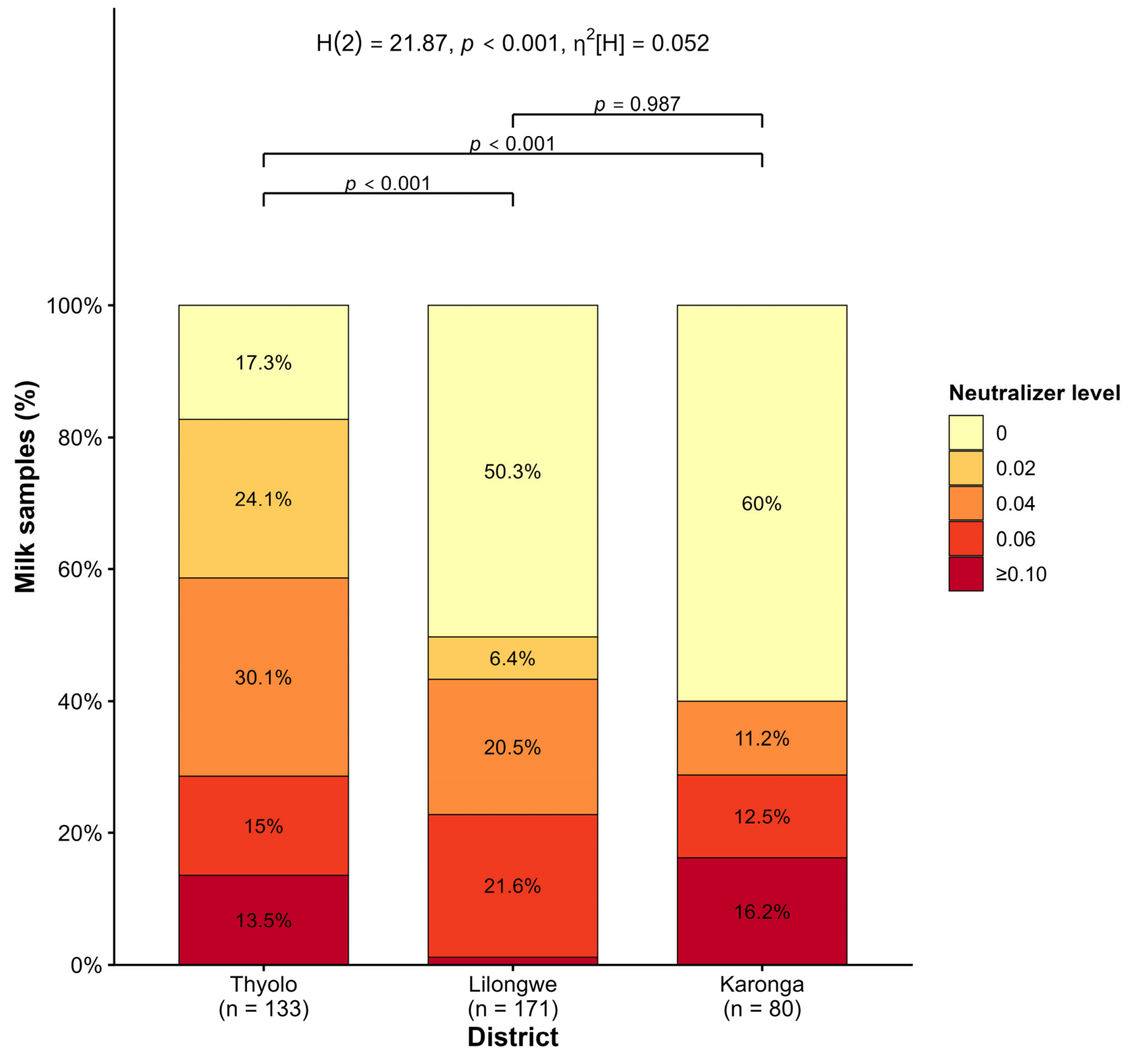
In the present survey, the neutralizer levels differed significantly across sampled districts (H(2) = 21.87, p < 0.001) with an overall small district effect of η2[H] = 0.052 (Figure 6). Neutralizer levels in samples from Thyolo differed significantly (Holm-adjusted p < 0.001) from those in milk samples from Lilongwe and Karonga Districts. There was no statistically significant difference in neutralizer levels between Lilongwe and Karonga (Holm-adjusted p = 0.987).
Figure 6.
Differences in mean neutralizer levels across districts. p ˂ 0.05 indicates statistically different values.
3.6. Comparison of Neutralizer Levels Between Two Selling Points
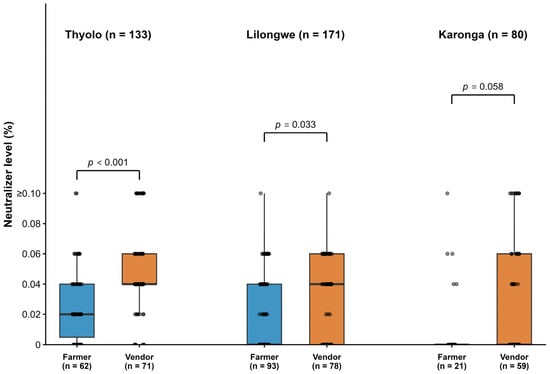
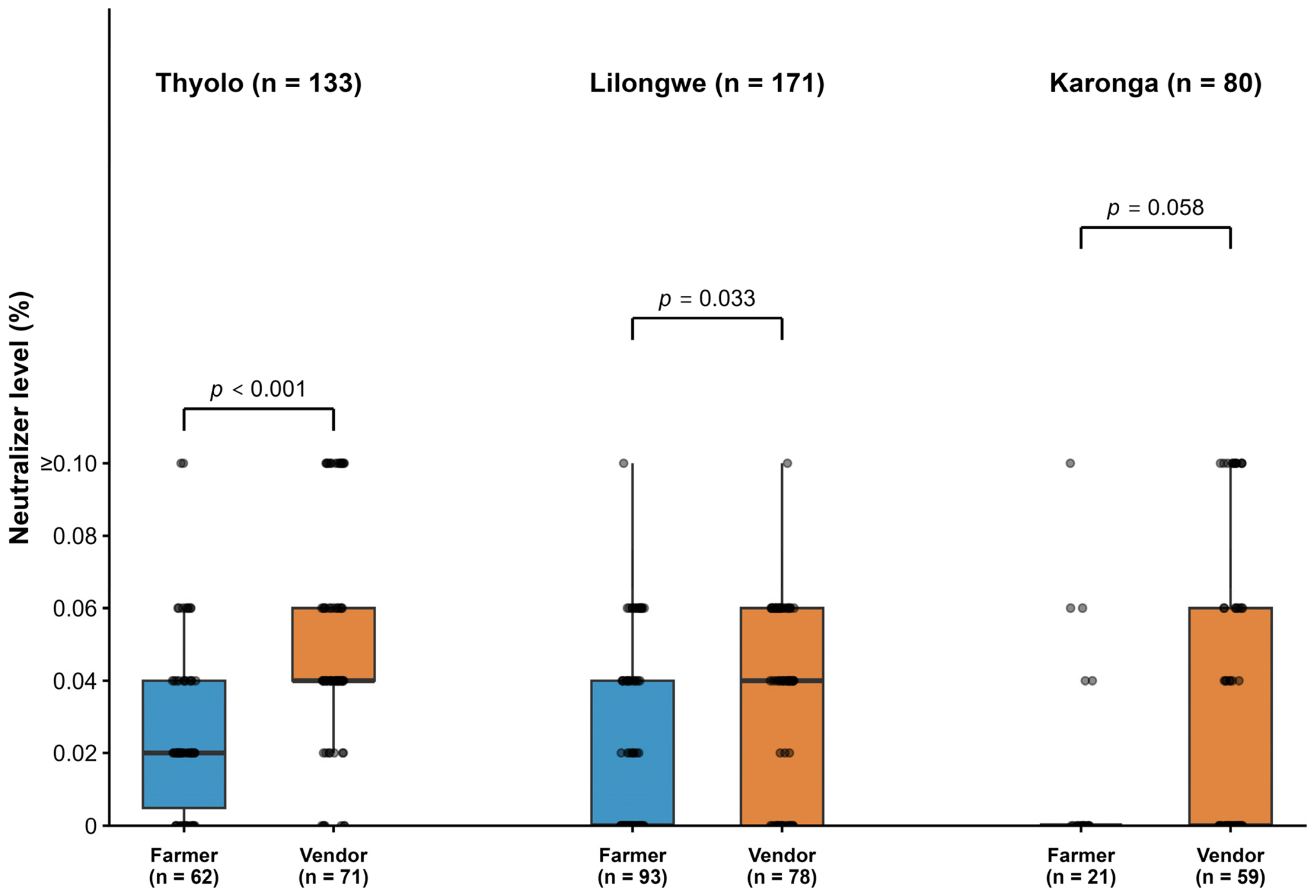
Neutralizer adulteration levels were compared between samples purchased from vendors and farmers from the three locations (Figure 7). In samples purchased from Thyolo and Lilongwe Districts, mean neutralizer levels in vendor samples were significantly higher than in farmers’ samples (p < 0.05). In Karonga District, neutralizer adulteration levels in vendor samples were not statistically different (p = 0.058) from those in farmers’ samples.
Figure 7.
Differences in mean neutralizer levels between two selling points across the districts.
4. Discussion
The present field adulterant screening survey assessed the safety of raw cow’s milk in informal market channels with regard to the selected milk adulterants commonly used in Sub-Saharan African (SSA) countries, specifically neutralizers, hydrogen peroxide, urea, and extraneous water. The present findings show that there is high milk fraud in the dairy supply chain in the informal market channels, practiced by both producers (small-scale farmers) and middlemen (vendors) in Malawi, threatening the safety and quality of dairy products. These findings contradict the theory that postulates that farmers are not involved in milk fraud, as the milk is adulterated by middlemen and vendors after leaving the primary producers. However, the sheer fact that samples collected from the farmers were also adulterated suggests that efforts to restructure and regulate the informal markets must be from farm to fork. This study has, however, revealed that milk adulteration has a distinct pattern.
Different milk adulterants play various roles in raw milk, especially during milk processing and in human health. During milk processing, exogenous water also interferes with the milk fermentation process due to changes in physicochemical properties [21]. A high prevalence of water adulteration of 91% is a clear indication that milk is diluted along the dairy chain by both farmers and vendors. The addition of extraneous water is a common practice in Africa [43,44,45]. This form of adulteration is very concerning because it has nutritional, public health, food safety, dairy value chain, and technological implications. Dilution reduces the concentration of important nutrients in raw milk, a raw material for various milk-based products [1,4]. In SSA countries like Malawi, milk is an important, sustainable, and affordable source of nutrients, and diluting it reduces nutrient intake, especially among communities that rely on it as the sole source of valuable nutrients [15,46]. Additionally, the quality of water in most communities is not satisfactory, as reported in the literature; as such, the addition of water to milk may not only threaten the quality aspect but also safety [44,46,47]. Contaminated water has the potential to introduce pathogens into raw milk, consequently infecting consumers, such as cowherds and vulnerable populations. It is a common practice for cowherds to drink raw cow’s milk with added water. During sample collection, some farmers mentioned that they like consuming locally made products such as chambiko (fermented milk), which is made by fermenting unpasteurized milk. When contaminated diluted milk is used in the production of chambiko under unstandardized conditions, it increases the risk of exposure to pathogens, thereby contributing to high levels of infections among vulnerable consumers, such as children, the elderly, and immunocompromised individuals [47,48]. Other studies in Ethiopia, India, Pakistan, among others, have reported similar occurrences of water adulteration, signifying a global problem that requires strict intercontinental regulatory actions [49,50,51].
The data from this study indicate substantial levels of neutralizer adulteration of raw milk in Malawi. Although the present study detected several neutralizing compounds such as sodium carbonate, sodium bicarbonate, and sodium hydroxide, it did not comprehensively identify specific compounds used by farmers and vendors. As such, conclusions about which chemical was intentionally added should remain limited. Neutralizers are added to raw milk to mask spoilage and microbial contamination by raising the pH of the milk [52,53]. This delays the visible identification of spoilage and pathogenic contamination, yet exposes consumers to avoidable foodborne illnesses. Neutralizers not only affect microbiological safety but also chemical safety, as they are associated with various diseases [6,7,8,16]. Similar patterns of adulteration have been reported in raw milk in Lower Middle-Income Countries (LMIC) [38,54,55,56,57,58]. Similarity among the rising occurrence of neutralizers in raw milk in LMICs is therefore not surprising, as most countries have weak regulatory bodies that lack regulatory frameworks for informal markets [9,59,60]. It is therefore imperative that regulatory bodies strengthen enforcement or develop regulatory frameworks for raw milk in informal markets. Furthermore, design policies that build awareness about health risks associated with neutralizers and other adulterants, not only in milk but also in other food products. Additionally, enforce available regulations to ensure a safe and compliant dairy chain.
Contrary to the high prevalence of neutralizers, hydrogen peroxide was not detected in any of the samples tested, while a few samples exhibited the presence of urea. This raises a serious food safety question of why these two are not frequently used in the Malawian dairy chain, bearing in mind that these are some of the most frequently used adulterants in other countries like Kenya, South Africa, Ethiopia, Pakistan, and India, among others [22,49,54,56,57,61,62,63]. For instance, hydrogen peroxide is added to milk as a preservative, while urea is added to improve whiteness, thickness, and protein content [20]. The possible explanation could be that in Malawi, informal markets are not regulated, and the composition of raw milk may not be a problem among the farmers and vendors who sell their raw milk directly to consumers or companies. As such, they do not see the need to improve the aforementioned quality characteristics through adulteration because testing these does not occur in the formal and informal markets at the point of milk collection. The current findings, therefore, highlight that adulteration in Malawi mostly focuses on sensory cues rather than composition parameters, emphasizing the need for regulatory frameworks governing informal markets. Consumers can no longer rely on physical tests that target sensory cues because the targeted physical parameters are masked by these adulterants, necessitating the need for simple, convenient, and low-cost screening tools for milk adulterants at collection points. Contamination of raw milk with urea has been reported in several countries, including Pakistan, India, South Africa, and Egypt, to mention a few, symbolizing a global problem that needs global coordination to curb these practices [49,56,57,62,63,64].
Based on spatial location, samples from Thyolo District showed a higher prevalence of neutralizers and urea compared to other regions. It is more likely that the high prevalence of adulteration in Thyolo resulted from the gap between milking and the sale of milk. Farmers in Thyolo indicated that they collect milk from cattle in the evening and sell it the next morning or later to the vendors, consumers, or processors. These farmers lack refrigeration services, and those with refrigerators encounter persistent disruption in the supply of electricity. It is not surprising that the majority are tempted to mask the effects of spoilage and pathogenic organisms through adulteration. In contrast, the farmers from Lilongwe indicated that they milk cows in the morning and sell the milk the same day. By observation, it was noted that the majority of the farmers milk their cattle while the sun has risen, and buyers most often purchase the milk after several hours, in some cases, in the afternoon. It is noteworthy that the samples from Thyolo and Lilongwe were collected in the morning; by the time of collection, they were already adulterated, signifying the magnitude and reliance of farmers and vendors on fraud. The practices in Karonga were different; farmers milk their cattle in the afternoon and sell the milk the same day, in the afternoon or evening. Considering the meteorological conditions of this district, characterized by hot and dry weather, it is evident that adulteration was more common, although the extent of the practice was lower than that observed in other districts [65,66]. The spatial variations in the prevalence of adulteration among these three locations were therefore not surprising, considering variations in the production factors, farming systems, agro-ecological conditions, and market quality [44]. Variation in the prevalence of adulterants by spatial location and selling point was not universal in this study, as it was associated with a specific type of adulterant. For instance, according to Chi-square tests of independence, water and neutralizers were weakly associated with spatial location and selling point, while urea was not significantly associated with either, reflecting a spatial association based on adulterant type. This implies that adulterants follow different market drivers and behaviors, including contextual, economic, and logistical factors, requiring adulterant-specific regulatory and intervention strategies. A similar pattern of spatial heterogeneity has been reported by others in SSA, reflecting regional patterns [44,50,58].
In this study, it was concerning to notice that although farmers were involved in adulteration, the higher odds of water, urea, and neutralizer adulteration were associated with vendors, and geographically, higher odds of both urea and neutralizers were associated with Thyolo District, while water was associated with Karonga and Lilongwe Districts. Furthermore, the study has provided much-needed proof that milk adulteration in sub-Saharan African countries is not a binary (“present” or “absent”) issue, but a spectrum of risk. Most locations were simultaneously adulterated by multiple adulterants, signifying a co-occurrence profile. For instance, multiple correspondence and cluster analysis revealed Thyolo District as having a co-occurrence profile with urea, water, and neutralizer adulteration. This adulteration profile requires a multi-layered regulatory response targeting multiple adulterants and routine screening of raw milk. During field visits, it was noted that some processors screened raw milk for selected adulterants before purchasing, giving room for farmers to add low levels of different adulterants to bypass the system. Similarly, screening for selected adulterants could drive farmers and vendors to use adulterants that are not routinely tested.
It was not surprising that vendors who usually lack refrigeration, proper transportation, and packaging were clustered in a co-occurrence profile due to proximity to urea, water, and neutralizers in the dairy industry, based on the cluster analysis findings. The presence of these multiple adulterants is hard to detect through traditional sensory evaluation, creating a hidden risk in the dairy value chain, and can contribute to the accumulation of adverse health risks for consumers. Due to visual inspection failures, we would like to propose a mandatory introduction of rapid testing kits (like Lactometers or pH strips) at the vendor level, targeting strategic hubs. Although most studies in this field do not perform adulteration pattern and cluster profile analysis, there are notable studies that reported multiple adulterants in some locations and associated them with specific market channels, particularly vendors and informal markets [43,58,67]. This defines the role of selling channels (points) in milk adulteration and the effects of location, which require careful mapping to tackle this fraud.
The present study also compared neutralizer adulteration in the samples collected from the three regions. As is very often the case with milk adulteration globally, the values recorded in this study were highly variable and included high values that could be considered outliers, but were kept in the analysis because they are a natural occurrence of adulteration [58,63,64]. The findings indicated that regions (locations) had a significant influence on the levels of neutralizers. The findings concur with the prevalence of adulterants reported earlier, as levels of adulterants were higher in samples collected from Thyolo District than in other locations, with 82.7% of samples having neutralizer concentrations of 0.02% and above. This raises serious concerns about neutralizer within the sampled dairy chain. In comparison, neutralizer concentrations of ≥0.10% were more common in Karonga’s samples than in other locations. Such high levels could be influenced by ambient temperatures, extended holding times before sale, and limited access to refrigeration, accelerating high levels of neutralizer usage. According to the Department of Climate Change and Meteorological Services, Karonga, on average, records temperatures over 30 degrees Celsius in October and November [31]. These temperatures generally explain the reasons for using high neutralizer levels in the Karonga dairy chain compared to Thyolo and Lilongwe, which experience relatively mild temperatures. The overall similarity between Lilongwe and Karonga neutralizer levels suggests indistinguishable milk handling practices and market dynamics in these districts. Nevertheless, the study did not assess the factors associated with neutralizer levels; these require further exploration.
Comparatively higher neutralizer levels were observed in samples from vendors in Thyolo and Lilongwe Districts than those purchased from farmers. In Karonga, the selling point did not matter, as levels of neutralizers were statistically similar between vendors and farmers. Although the study comprehensively assessed the levels of neutralizers in the raw milk, there is no acceptable or safe level of such adulterants according to Codex Alimentarius (Standard CXS 206-1999 and CXS 192-1995) and European Commission (EU) No. 605/2010 [68,69,70]. As such, the presence of these adulterants does not meet international standards for raw milk requirements and specifications. The most concerning part of this is that most of these samples came from formal markets, where they were rejected by commercial processors [18]. One of the farmers mentioned that the milk she was selling had been rejected by the processors, and our sensory inspection revealed the presence of detergents such as washing soap, while chemical analysis revealed the presence of neutralizers, indicating a double burden of adulteration. This implies that rejected milk from processors is even more dangerous than adulterated milk that was not initially sent for sale to processors. This is a clear food safety vicious cycle between formal and informal markets in Malawi, as adulterated milk moves from formal to the informal market and vice versa [18,71].
The findings from the present study confirm the common practice of selling rejected milk in formal markets to the informal markets [18]. Players take advantage of the lack of regulatory frameworks, testing systems, and traceability systems for non-conformities or milk that does not comply with the standards [15,18]. It is concerning that the lack of proper ways of treating non-conformities in formal markets has become a burden on informal markets, as no testing occurs in informal markets, especially in SSA countries [15]. The milk processors send back non-conforming milk due to a lack of regulatory mandates, risking the lives of consumers in informal markets [72]. We cannot deny the significant role of informal markets in poor communities in Malawi as a source of cheap nutrient alternatives and income, among others, but they still need to be restructured by incorporating regulatory frameworks [15]. To successfully restructure informal markets, coordinated efforts are required among players in the formal and informal market channels, as both vendors and farmers are involved in this malpractice.
One of the limitations of the present study is that researchers did not comprehensively assess all types of milk adulterants. It is possible that negative samples were not truly negative, as farmers or vendors could have used adulterants not assessed in this study. The study did not assess seasonal variability because samples were not collected repeatedly or at different time points; the burden of adulteration may vary by season, as was established in the study where variation in weather conditions influenced levels of neutralizers. Additionally, the study did not assess consumer exposure; as such, public health impacts mentioned herein should be interpreted with caution. The study also used conventional methods as confirmatory tests because advanced techniques with high sensitivity and specificity, such as high-performance liquid chromatography, gas chromatography, spectroscopic techniques, and biosensors, were not available [73,74]. However, the present study has several strengths, including bridging methodological gaps in the statistical analysis of adulterants in the African region. To our knowledge, evidence of adulteration exists in this region, but previous studies were primarily descriptive and focused on a single analysis of adulterants. The present study integrated multivariate, multiple-correspondence, and cluster analyses with risk quantification and adulteration stratification, providing adulteration profiles within the dairy value chain.
5. Conclusions
This study provides valuable insights into milk fraud activities practiced by farmers and vendors in the informal market channels in the three regions of Malawi. The findings clearly demonstrate the high prevalence of water and neutralizers, which vary by location and selling points, with vendors and Thyolo District exhibiting co-occurrence. The adulterants reported herein are of great concern, reflecting a lack of compliance with food standards. It is therefore recommended that regulatory measures, if any, should be enforced in the informal market and dairy supply chain to reduce adulteration practices. This will subsequently enhance conformity of raw milk with food standards even outside formal markets. Additionally, policies should be put in place to integrate various stakeholders and agencies to provide coordinated efforts that could help improve the safety of raw milk. For instance, in urban and rural areas of Malawi, extension workers are strategically deployed in various Extension Planning Areas (EPAs) to assist small-scale farmers in different aspects of agriculture. Empowering such grassroots government workers with regulatory and routine testing mandates can significantly improve food safety. Policies should also target farmer and vendor education, since the findings demonstrated a high prevalence of adulterants in both farmer and vendor samples, and comparable adulterant levels, particularly neutralizers. More importantly, there is a need to provide access to improved milk handling infrastructure such as cooling facilities.
Supplementary Materials
The following supporting information can be downloaded at https://www.mdpi.com/article/10.3390/dairy7050082/s1. Table S1. Determination of number of clusters. Table S2. Cluster stability assessment results.
Author Contributions
Conceptualization, Methodology, and Writing: M.H.K., C.M., K.M. and B.M.; Writing—original draft preparation: M.H.K.; Writing—review and editing: M.H.K., C.M., K.M. and B.M.; Visualization: M.H.K.; Supervision: C.M., K.M. and B.M. All authors have read and agreed to the published version of the manuscript.
Funding
This research was funded by the Center of Excellence in Agri-Food Systems and Nutrition (CE-AFSN), Universidade Eduardo Mondlane (UEM), grant number E089-MZ, and the APC was funded by CE-AFSN, UEM.
Institutional Review Board Statement
Approval to conduct this study was provided by the (1) Faculty of Engineering, Eduardo Mondlane University, Maputo, Mozambique (approval date: 4 February 2025), (2) Thyolo District Council, Malawi (approval date: 5 December 2025, Ref: TDC/GEN/20), (3) Ministry of Agriculture- Karonga District Agriculture Office, Malawi, (approval date: 5 November 2025) and (4) Director of Agriculture, Lilongwe Environment and Natural Resources, Lilongwe District Council, Malawi (approval date: 28 October 2025).
Informed Consent Statement
Oral informed consent was obtained from the vendors and farmers before purchasing the milk. Oral consent was appropriate because the milk was purchased as a commercial commodity without collecting personally identifiable information, questionnaires, or conducting formal interviews. However, the farmers and vendors were informed that the milk was intended for research purposes.
Data Availability Statement
Data supporting the findings are presented within the article, and raw data will be made available upon request after meeting the requirements.
Acknowledgments
We thank farmers, vendors, Thyolo, Lilongwe, and Karonga District Councils for their trust and engagement.
Conflicts of Interest
The authors declare no conflicts of interest. The funders had no role in the design of the study; in the collection, analysis, or interpretation of data; in the writing of the manuscript; or in the decision to publish the results.
References
- Chirwa-Moonga, T.; Talsma, E.F.; Moonga, H.B.; Zwaan, B.J.; Schoustra, S.E.; Dolfsma, W. Past and Present Foodscapes of a Traditional Fermented Milk, Mabisi, in Three Zambian Regions. PLoS ONE 2024, 19, e0310507. [Google Scholar] [CrossRef] [Scilit] [PubMed]
- Merem, E.C.; Twumasi, Y.; Wesley, J.; Olagbegi, D.; Crisler, M.; Romorno, C.; Alsarari, M.; Isokpehi, P.; Hines, A.; Hirse, G.; et al. The Analysis of Dairy Production and Milk Use in Africa Using GIS. Food Public Health 2022, 12, 14–28. [Google Scholar] [CrossRef] [Scilit]
- FAO. Milk and Milk Products. Available online: https://www.fao.org/dairy-production-products/products/en/ (accessed on 14 June 2026).
- Mpatswenumugabo, J.P.; Mukasafari, M.A.; Ndahetuye, J.B.; Wredle, E.; Båge, R. A Systematic Literature Review of Milk Consumption and Associated Bacterial Zoonoses in East Africa. J. Appl. Microbiol. 2023, 134, lxad080. [Google Scholar] [CrossRef] [Scilit] [PubMed]
- Akaichi, F.; Chalmers, N.; Revoredo-Giha, C. Consumers’ Attitudes and Willingness to Pay for Safer Milk in Malawi. In Proceedings of the Transforming Smallholder Agriculture in Africa: The Role of Policy and Governance, Addis Ababa, Ethiopia, 23–26 September 2016. [Google Scholar]
- Azad, T.; Ahmed, S. Common Milk Adulteration and Their Detection Techniques. Int. J. Food Contam. 2016, 3, 22. [Google Scholar] [CrossRef] [Scilit]
- Haji, A.; Desalegn, K.; Hassen, H. Selected Food Items Adulteration, Their Impacts on Public Health, and Detection Methods: A Review. Food Sci. Nutr. 2023, 11, 7534–7545. [Google Scholar] [CrossRef] [Scilit] [PubMed]
- Porwal, G.; Jain, K.; Mohapatra, S.; Dhayal, V.; Chopra, I. A Comprehensive Analysis and Detection Methodology Using Near-Infrared (NIR) Spectroscopy to Unveil the Deceptive Practice of Milk Adulteration. In Proceedings of the RAiSE-2023, New Delhi, India, 22 January 2024; MDPI: Basel, Switzerland, 2024; p. 196. [Google Scholar]
- Blackmore, E.; Guarin, A.; Kinyua, C.; Vorley, W.; Grace, D.; Alonso, S. The Governance of Quality and Safety in Tanzania’s Informal Milk Markets. Front. Sustain. Food Syst. 2022, 6, 971961. [Google Scholar] [CrossRef] [Scilit]
- Blackmore, E.; Guarin, A.; Vorley, W.; Alonso, S.; Grace, D. Kenya’s Informal Milk Markets and the Regulation–Reality Gap. Dev. Policy Rev. 2022, 40, e12581. [Google Scholar] [CrossRef] [Scilit] [PubMed]
- Revoredo-Giha, C.; Zavala-Nacul, H. An Analysis of the Contribution of the Informal Milk Market to Nutrition in Kenya. Agric. Food Secur. 2024, 13, 40. [Google Scholar] [CrossRef] [Scilit]
- Kumwembe, E.C. Milk Processing Requirements for Satisfying the Demand for Milk in Malawi. Available online: https://www.fao.org/4/X5661E/x5661e0n.htm?utm_source=chatgpt.com (accessed on 17 June 2026).
- Aparnathi, K.; Agnihotri, A.; Chauhan, M.; Shaikh, A.; Patel, S. Application of Qualitative Tests for Detection of Adulterants in Pasteurized Milk and during Its Subsequent Storage. Indian J. Dairy Sci. 2019, 72, 273–284. [Google Scholar] [CrossRef] [Scilit]
- Zavala Nacul, H.; Revoredo-Giha, C. Food Safety and the Informal Milk Supply Chain in Kenya. Agric. Food Secur. 2022, 11, 8. [Google Scholar] [CrossRef] [Scilit]
- Revoredo-Giha, C.; Renwick, A. Market Structure and Coherence of International Cooperation: The Case of the Dairy Sector in Malawi. Agric. Food Econ. 2016, 4, 8. [Google Scholar] [CrossRef] [Scilit]
- Patil, G.B.; Wani, S.P.; Bafna, P.S.; Bagul, V.S.; Kalaskar, M.G.; Mutha, R.E. Milk Adulteration: From Detection to Health Impact. Food Humanit. 2024, 3, 100339. [Google Scholar] [CrossRef] [Scilit]
- Revoredo-Giha, C.; Arakelyan, I.; Chalmers, N. Processors Pricing and Smallholders’ Milk Supply Response in Malawi: An Application of the Nonlinear Autoregressive Distributed Lag Model. In Proceedings of the 2015 Conference of the International Association of Agricultural Economists, Milan, Italy, 9–14 August 2015. [Google Scholar] [CrossRef]
- CYE Consult. Value Chain Analysis of Selected Commodities: Institutional Development across the Agri-Food Sector (IDAF)—9 ACP MAI 19; CYE Consult: Brussels, Belgium, 2009. [Google Scholar]
- Khomane, V.; Kamble, D.; Lokhande, A.; Patil, B.; Lashkare, S.; Kubade, K.; Khobragade, S. A Comprehensive Review on Adulteration of Milk. Int. J. Adv. Biochem. Res. 2024, 8, 316–324. [Google Scholar] [CrossRef] [Scilit]
- Ionescu, A.-D.; Cîrîc, A.I.; Begea, M. A Review of Milk Frauds and Adulterations from a Technological Perspective. Appl. Sci. 2023, 13, 9821. [Google Scholar] [CrossRef] [Scilit]
- Sakaridis, I.; Ioannidou, M.; Maggira, M.; Samouris, G. Detection of Water Dilution Masked by Sucrose Addition in Goat and Sheep Milk Using Physicochemical and Enzymatic Analysis. Dairy 2026, 7, 37. [Google Scholar] [CrossRef] [Scilit]
- Ibrahim, T.; Wattoo, F.H.; Sarwar Wattoo, M.H.; Mustafa, G. Adulteration: Supply of Raw Milk and Prevalence of Adulterated/Prepared Milk: Adulteration of Milk. Pak. J. Health Sci. 2023, 4, 104–108. [Google Scholar] [CrossRef] [Scilit]
- Moon, J.M.; Chun, B.J.; Min, Y.I. Hemorrhagic Gastritis and Gas Emboli after Ingesting 3% Hydrogen Peroxide. J. Emerg. Med. 2006, 30, 403–406. [Google Scholar] [CrossRef] [Scilit] [PubMed]
- Wen, J.G.; Liu, X.J.; Wang, Z.M.; Li, T.F.; Wahlqvist, M.L. Melamine-Contaminated Milk Formula and Its Impact on Children. Asia Pac. J. Clin. Nutr. 2016, 25, 697–705. [Google Scholar] [CrossRef] [Scilit] [PubMed]
- Hamilton, S.A.; Nakanga, W.P.; Prynn, J.E.; Crampin, A.C.; Fecht, D.; Vineis, P.; Caplin, B.; Pearce, N.; Nyirenda, M.J. Correction: Prevalence and Risk Factors for Chronic Kidney Disease of Unknown Cause in Malawi: A Cross-Sectional Analysis in a Rural and Urban Population. BMC Nephrol. 2024, 25, 251. [Google Scholar] [CrossRef] [Scilit] [PubMed]
- Olds, P.; Kachimanga, C.; Talama, G.; Mailosi, B.; Ndarama, E.; Totten, J.; Musinguzi, N.; Hangiwa, D.; Bukhman, G.; Wroe, E.B. Non-Communicable Disease Burden among Inpatients at a Rural District Hospital in Malawi. Glob. Health Res. Policy 2023, 8, 4. [Google Scholar] [CrossRef] [Scilit] [PubMed]
- Nakanga, W.P.; Prynn, J.E.; Banda, L.; Kalyesubula, R.; Tomlinson, L.A.; Nyirenda, M.; Crampin, A.C. Prevalence of Impaired Renal Function among Rural and Urban Populations: Findings of a Cross-Sectional Study in Malawi. Wellcome Open Res. 2019, 4, 92. [Google Scholar] [CrossRef] [Scilit] [PubMed]
- Kothowa, J.P.; Mfune, R.L.; Godfroid, J.; Hang’Ombe, B.M.; Simuunza, M.; Muma, J.B. Documenting the Absence of Bovine Brucellosis in Dairy Cattle Herds in the Southern Region of Malawi and the Associated Knowledge, Attitudes and Practices of Farmers. J. S. Afr. Vet. Assoc. 2021, 92, 7. [Google Scholar] [CrossRef] [Scilit] [PubMed]
- Agyemang, K.; Nkhonjera, L.P. Analyses of Smallholder Dairy Records. In Evaluation of the Productivity of Crossbred Dairy Cattle on Smallholder and Government Farms in the Republic of Malawi; Food and Agriculture Organization of the United Nations (FAO): Rome, Italy, 1990; Volume 2. [Google Scholar]
- Aberman, N.; Meerman, J.; Benson, T. Mapping the Linkages Between Agriculture, Food Security and Nutrition in Malawi; International Food Policy Research Institute (IFPRI): Lilongwe, Malawi; Washington, DC, USA, 2015. [Google Scholar]
- Department of Climate Change and Meteorological Services. 10-Day Weather and Agrometeorological Bulletin (October–December 2025); Department of Climate Change and Meteorological Services (DCCMS): Lilongwe, Malawi, 2025.
- Macfarlane, S.B. Conducting a Descriptive Survey: 2. Choosing a Sampling Strategy. Trop. Doct. 1997, 27, 14–21. [Google Scholar] [CrossRef] [Scilit] [PubMed]
- Cochran, W.G. Sampling Techniques, 3rd ed.; Wiley Series in Probability and Mathematical Statistics; J. Wiley & Sons: New York, NY, USA, 1977. [Google Scholar]
- Gandhi, K.; Sharma, R.; Gautam, P.B.; Mann, B. Sampling Plan for Milk and Milk Products. In Chemical Quality Assurance of Milk and Milk Products; Springer: Singapore, 2020; pp. 17–32. [Google Scholar]
- Draaiyer, J.; Dugdill, B.; Bennett, A.; Mounsey, J. Milk Testing and Payment Systems; Resource Book, a Practical Guide to Assist Milk Producer Groups; FAO: Rome, Italy, 2009. [Google Scholar]
- CAC/GL 71-2009; Guidelines for the Design and Implementation of National Regulatory Food Safety Assurance Programme Associated with the Use of Veterinary Drugs in Food-Producing Animals. Codex Alimentarius Commission: Rome, Italy, 2009.
- Saud, Z.A.H.; Wahid, A.T.A.; Majeed, B.A. Detection of Adulteration Raw Buffalo’s Milk and Milk Products in North of Basrah. J. Surv. Fish. Sci. 2023, 10, 1572–1578. [Google Scholar]
- Garg, L.; Mulla, S. Qualitative Assessment for Milk Adulteration: Extent, Common Adulterants, and Utility of Rapid Tests. Indian J. Community Med. 2024, 49, 747–751. [Google Scholar] [CrossRef] [Scilit] [PubMed]
- MS 73:2014; Raw Cow’s Milk—Specification, 2nd ed. Malawi Bureau of Standards: Lilongwe, Malawi, 2014.
- Field, A. Discovering Statistics Using IBM SPSS Statistics, 6th ed.; Sage: London, UK, 2024. [Google Scholar]
- Agresti, A. An Introduction to Categorical Data Analysis, 3rd ed.; Wiley Series in Probability and Statistics; John Wiley & Sons: Hoboken, NJ, USA, 2019. [Google Scholar]
- Cohen, J. Statistical Power Analysis for the Behavioral Sciences, 2nd ed.; Psychology Press: New York, NY, USA, 2009. [Google Scholar]
- Ondieki, G.K.; Ombui, J.N.; Obonyo, M.; Gura, Z.; Githuku, J.; Orinde, A.B.; Gikunju, J.K. Antimicrobial Residues and Compositional Quality of Informally Marketed Raw Cow Milk, Lamu West Sub-County, Kenya, 2015. Pan Afr. Med. J. 2017, 28, 5. [Google Scholar] [CrossRef] [Scilit] [PubMed]
- Nyokabi, S.N.; De Boer, I.J.M.; Luning, P.A.; Korir, L.; Lindahl, J.; Bett, B.; Oosting, S.J. Milk Quality along Dairy Farming Systems and Associated Value Chains in Kenya: An Analysis of Composition, Contamination and Adulteration. Food Control 2021, 119, 107482. [Google Scholar] [CrossRef] [Scilit]
- Zebib, H.; Abate, D.; Woldegiorgis, A.Z. Nutritional Quality and Adulterants of Cow Raw Milk, Pasteurized and Cottage Cheese Collected along Value Chain from Three Regions of Ethiopia. Heliyon 2023, 9, e15922. [Google Scholar] [CrossRef] [Scilit] [PubMed]
- Joy, E.J.M.; Kumssa, D.B.; Broadley, M.R.; Watts, M.J.; Young, S.D.; Chilimba, A.D.C.; Ander, E.L. Dietary Mineral Supplies in Malawi: Spatial and Socioeconomic Assessment. BMC Nutr. 2015, 1, 42. [Google Scholar] [CrossRef] [Scilit]
- Owusu-Kwarteng, J.; Akabanda, F.; Agyei, D.; Jespersen, L. Microbial Safety of Milk Production and Fermented Dairy Products in Africa. Microorganisms 2020, 8, 752. [Google Scholar] [CrossRef] [Scilit] [PubMed]
- Kumwenda, P.; Adukwu, E.C.; Tabe, E.S.; Ujor, V.C.; Kamudumuli, P.S.; Ngwira, M.; Wu, J.T.S.; Chisale, M.R.O. Prevalence, Distribution and Antimicrobial Susceptibility Pattern of Bacterial Isolates from a Tertiary Hospital in Malawi. BMC Infect. Dis. 2021, 21, 34. [Google Scholar] [CrossRef] [Scilit] [PubMed]
- Nasir, A.; Iqbal, M.U.; Ullah, H.; Kashif, M.; Farooq, M.Z.; Sikandar, A.; Adil, M.; Khan, I.; Khan, S.U.; Nadeem, A. Impact of Adulteration on Physico-Chemical Characteristics of Marketed Raw Milk. Pak-Euro J. Med. Life Sci. 2022, 5, 511–518. [Google Scholar] [CrossRef] [Scilit]
- Teshome, G.; Assefa, Z. Evaluation of Adulterants in Raw Cow Milk from Selale and around Addis Ababa City, Ethiopia. J. Nat. Sci. Res. 2022, 13, 28–30. [Google Scholar] [CrossRef] [Scilit]
- Azhar, S.; Jamil, W.; Ali, A.H.; Iftikhar, B.; Orakzai, M.; Afaq, Y.; Arshad, A.; Azhar, A.; Ali, W. Analysis of Physicochemical and Nutritional Parameters of Raw Milk from Commercial Dairy Farms—Implications of Adulteration for Public Health. J. Med. Sci. 2024, 32, 65–70. [Google Scholar] [CrossRef] [Scilit]
- Silva, L.C.C.D.; Tamanini, R.; Pereira, J.R.; Rios, E.A.; Ribeiro Junior, J.C.; Beloti, V. Preservatives and Neutralizing Substances in Milk: Analytical Sensitivity of Official Specific and Nonspecific Tests, Microbial Inhibition Effect, and Residue Persistence in Milk. Ciênc. Rural 2015, 45, 1613–1618. [Google Scholar] [CrossRef] [Scilit]
- Gondima, C.; Palhares, M.; Santos, P.; Sousa, R.; Junqueira, R.; Souza, S. Detection of Acid Neutralizers in Fraudulent Milk: Full Validation of a Classical Qualitative Method. Quím. Nova 2021, 44, 625–635. [Google Scholar] [CrossRef] [Scilit]
- Desye, B.; Bitew, B.D.; Amare, D.E.; Adane Birhan, T.; Getaneh, A.; Gufue, Z.H. Quality Assessment of Raw and Pasteurized Milk in Gondar City, Northwest Ethiopia: A Laboratory-Based Cross-Sectional Study. Heliyon 2023, 9, e14202. [Google Scholar] [CrossRef] [Scilit] [PubMed]
- Ara, T.; Uddin, M.N.; Bithi, U.H.; Mitra, K. A Study on Nutritional Assessment and Adulteration of Raw and Pasteurized Milk Collected from Local Markets in Dhaka City. N. Am. Acad. Res. 2021, 4, 100–111. [Google Scholar] [CrossRef] [Scilit]
- Sharma, M.; Dogra, A.; Sharma, A.; Thakur, P.; Chandel, S.; Choudhary, S.; Kumari, S.; Mane, B.G. Adulteration and Assessment of Raw Milk Quality in and Nearby Areas of Palampur Himachal Pradesh, India. Asian J. Biol. 2024, 20, 34–39. [Google Scholar] [CrossRef] [Scilit]
- Sukumaran, M.K.; Singuluri, H. Milk Adulteration in Hyderabad, India—A Comparative Study on the Levels of Different Adulterants Present in Milk. J. Chromatogr. Sep. Tech. 2014, 5, 1–3. [Google Scholar] [CrossRef]
- Nawaz, T.; Ur Rehman, Z.; Ullah, R.; Ahmed, N.; Mahmoud Sayed, S. Physicochemical and Adulteration Study of Fresh Milk Collected from Different Locations in Pakistan. Saudi J. Biol. Sci. 2022, 29, 103449. [Google Scholar] [CrossRef] [Scilit] [PubMed]
- Kanire, E.; Msuya, E.; Alphonce, R. Drivers of Dairy Farmers’ Engagement in Informal Milk Markets: Policy Implications for Developing Countries. J. Agric. Food Res. 2024, 16, 101128. [Google Scholar] [CrossRef] [Scilit]
- Nicolini, G.; Guarin, A.; Deka, R.P.; Vorley, B.; Alonso, S.; Blackmore, E.; Grace, D. Milk Quality and Safety in the Informal Sector in Assam, India: Governance, Perceptions, and Practices. Cogent Food Agric. 2022, 8, 2137897. [Google Scholar] [CrossRef] [Scilit]
- Ongarora, D.; Karwimbo, B. Quality of Dairy Milk Obtained from Automated Dispensing Machines in Nairobi County, Kenya. East Cent. Afr. J. Pharm. Sci. 2019, 22, 71–76. [Google Scholar]
- Xulu, N.H.; Jamal-Ally, S.; Naidoo, K.D. Microbial and Chemical Adulterants Assessment of Raw Cow Milk Collected from Dairy Farms of Hlabisa Villages, KwaZulu-Natal Province, South Africa. J. Food Qual. Hazards Control 2019, 6, 162–167. [Google Scholar] [CrossRef] [Scilit]
- Wanjala, G.W.; Mathooko, F.M.; Kutima, P.M.; Mathara, J.M. Prevalence of Adulteration and Inhibitory Substances in Raw and Pasteurized Milk Marketed in Nairobi Region. Asian Food Sci. J. 2018, 3, 1–8. [Google Scholar] [CrossRef] [Scilit]
- Maher, E.; Abdelkhalek, A. Detection of Adulteration in Raw Milk and Its Impact on Quality. Egypt. J. Food Saf. 2018, 5, 43–53. [Google Scholar] [CrossRef] [Scilit]
- National Statistical Office. Malawi Statistical Yearbook 2023. Zomba: National Statistical Office. Available online: https://nsomalawi.mw/publications/population/statistical-yearbook-2023 (accessed on 11 August 2026).
- StatsClimat. Comprehensive Climate Report: Karonga (Malawi). Available online: https://statsclimat.com/Africa/Malawi/report_Karonga (accessed on 11 August 2026).
- Sharma, S.; Sharma, V.; Mathur, M.; Singh, N.; Pandey, A. Monitoring of Common Adulterants in Raw Milk in Different Agro- Climatic Zones of Rajasthan. Indian J. Anim. Prod. Mgmt. 2017, 33, 67–71. [Google Scholar]
- CXS 192-1995; General Standard for Food Additives. Codex Alimentarius Commission: Rome, Italy, 2025.
- CXS 206-1999; General Standard for the Use of Dairy Terms. Codex Alimentarius Commission: Rome, Italy, 2024.
- European Union. Commission Regulation (EU) No. 605/2010 on Hygiene Requirements for Raw Milk and Dairy Products; Publications Office of the European Union: Luxembourg, 2021. [Google Scholar]
- Revoredo-Giha, C.; Toma, L.; Akaichi, F. An Analysis of the Tax Incidence of VAT to Milk in Malawi. Sustainability 2020, 12, 8003. [Google Scholar] [CrossRef] [Scilit]
- Chitika, R.J. Marketing Channel Choice: Its Determinants and Evaluation of Transaction Costs in Smallholder Dairy Farming in Lilongwe Milkshed Area, Malawi. Master’s Thesis, Makerere University, Kampala, Uganda, 2008. [Google Scholar]
- Nascimento, C.F.; Santos, P.M.; Pereira-Filho, E.R.; Rocha, F.R.P. Recent Advances on Determination of Milk Adulterants. Food Chem. 2017, 221, 1232–1244. [Google Scholar] [CrossRef] [Scilit] [PubMed]
- Nagraik, R.; Sharma, A.; Kumar, D.; Chawla, P.; Kumar, A.P. Milk Adulterant Detection: Conventional and Biosensor Based Approaches: A Review. Sens. Bio-Sens. Res. 2021, 33, 100433. [Google Scholar] [CrossRef] [Scilit]

Disclaimer/Publisher’s Note: The statements, opinions and data contained in all publications are solely those of the individual author(s) and contributor(s) and not of MDPI and/or the editor(s). MDPI and/or the editor(s) disclaim responsibility for any injury to people or property resulting from any ideas, methods, instructions or products referred to in the content. |
© 2026 by the authors. Licensee MDPI, Basel, Switzerland. This article is an open access article distributed under the terms and conditions of the Creative Commons Attribution (CC BY) license.