


Abstract
Fluorinated fatty acids occupy a distinctive position at the intersection of natural-product chemistry, lipid metabolism, and synthetic organofluorine chemistry. This mini-review examines their natural occurrence, structural characterization, proposed biosynthetic origins, selected synthetic approaches, and biological effects, with particular emphasis on plant-derived ω-fluorinated fatty acids. Fluorinated constituents of Dichapetalum toxicarium seed oil illustrate variation in chain length and unsaturation, while historical assignments highlight the importance of analytical confirmation. A biosynthetic model involving fluoroacetyl-CoA as a starter unit offers an explanation for terminal fluorination, although precursor transport, enzyme specificity, and individual transformations require distinction between direct evidence and inference. Biological consequences are considered in relation to compound structure and metabolic fate, including experimental evidence for conversion of a terminally fluorinated fatty acid to fluorocitrate. Selected synthetic examples encompass terminal radiofluorination, fluorinated coriolic-acid analogues, and 22-[18F]fluorodocosahexaenoic acid, a tracer evaluated preclinically for brain fatty-acid uptake. Nonradioactive analogues and radioactive tracers are discussed separately, and activities of parent lipids are distinguished from those demonstrated for fluorinated derivatives. The available evidence supports compound-specific interpretation rather than universal claims concerning toxicity, metabolic stability, or therapeutic potential. Priorities include verification of historical structures, characterization of plant biosynthetic pathways, quantitative comparative bioassays, and identification of metabolic products.
1. Introduction
Fluorinated fatty acids connect natural-product chemistry, lipid metabolism, and synthetic organofluorine chemistry. Naturally occurring examples include terminally fluorinated constituents of plant seed oils, whereas synthetic analogues provide additional fluorination patterns and compounds for investigating biological processes [1,2,3,4,5]. Fluorine-18-labelled fatty acids extend these applications to positron emission tomography (PET), where radioactive labelling permits measurements of tissue uptake and kinetic behaviour [6,7].
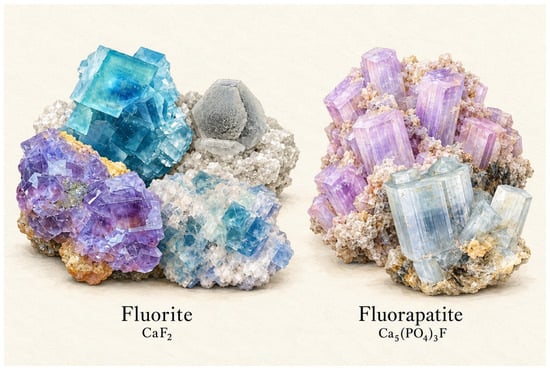
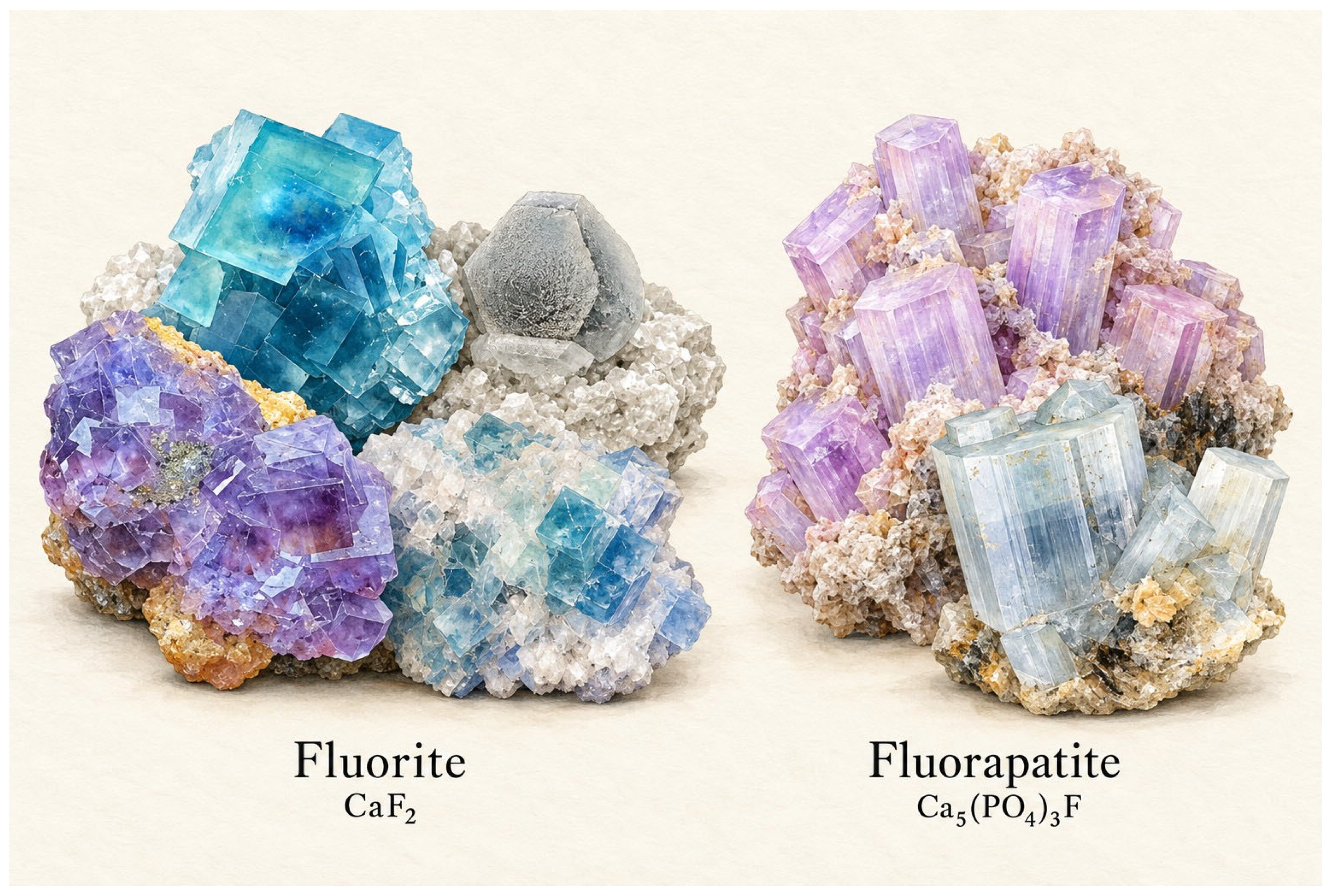
Fluorine occurs in geological environments predominantly as inorganic fluoride. Representative mineral reservoirs include fluorite (CaF2) [8,9] and fluorapatite [Ca5(PO4)3F] [10,11], illustrated in Figure 1. Mineral–water interactions influence dissolved fluoride availability; for example, fluorite solubility can control fluoride activity in geothermal waters [12]. However, environmental availability and biological uptake of fluoride must be distinguished from its incorporation into carbon–fluorine bonds.
Figure 1.
Artistic representations of fluorite (CaF2, left) and fluorapatite [Ca5(PO4)3F, right], illustrating their characteristic crystal forms and colour variation. These minerals are inorganic reservoirs of fluorine in geological environments. AI-generated illustration based on reference images; specimens are not shown to scale.
Naturally occurring organofluorine metabolites are uncommon. One chemical constraint is the strong hydration of fluoride in aqueous environments, which limits its nucleophilic reactivity [13]. Biological C–F bond formation nevertheless occurs through specialized enzymatic chemistry. In Streptomyces cattleya, a fluorinase catalyzes the reaction of fluoride with S-adenosyl-L-methionine to form 5′-fluoro-5′-deoxyadenosine [13,14]. This demonstrated microbial reaction provides a useful comparison for investigating plant fluorometabolites, but it does not establish an equivalent pathway in plants producing fluorinated fatty acids.
The seed oil of Dichapetalum toxicarium provides a particularly informative natural example. GC–MS investigations identified saturated and unsaturated ω-fluorinated homologues, while subsequent analysis of picolinyl ester derivatives localized double bonds and supported terminal fluorination [1,2,3]. These studies also illustrate analytical limitations: rearrangement of 4,4-dimethyloxazoline derivatives complicated interpretation of fluorine position [3,5]. Structural identification therefore needs to be evaluated according to the analytical evidence for each compound, separately from proposals concerning its biosynthesis.
In this review, “fluorinated fatty acids” refers to fatty acids containing one or more carbon-bound fluorine atoms within their carbon skeletons. Esterified forms and selected fatty-acid-derived cyclic products are considered where relevant to occurrence, synthesis, or metabolism. Fluoroacetate and related fluorometabolites provide biochemical context. Fluorinated sugars, peptides, and structurally distinct delivery lipids fall outside the principal scope. Radioactive tracers are discussed separately from nonradioactive analogues because their experimental purposes and measured endpoints differ.
This focused narrative mini-review examines natural occurrence and structural identification, proposed biosynthetic origins, selected synthetic approaches, and experimentally investigated biological effects. Synthetic examples illustrate different routes to fluorine incorporation and applications to fatty-acid analogues or tracers. Direct findings are distinguished from mechanistic interpretations and prospective applications, with the aim of connecting defined structures to experimental evidence and identifying unresolved questions.
2. Naturally Occurring Fluorometabolites Relevant to Fluorinated Fatty Acids
2.1. Fluoroacetate and Its Metabolic Significance
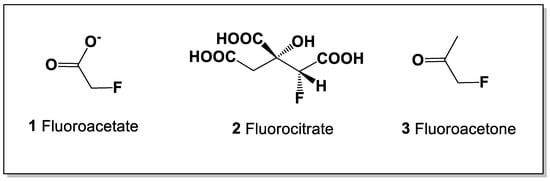
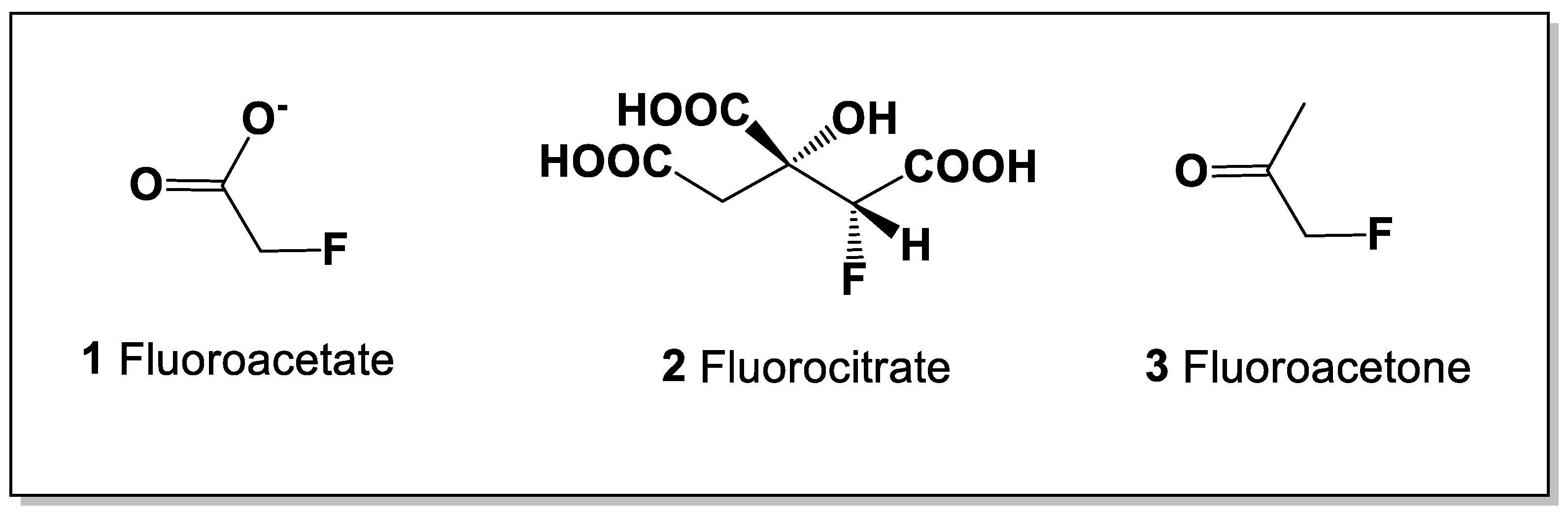
Fluoroacetate (1, Figure 2) provides a biochemical link between naturally occurring organofluorine compounds and the metabolism of ω-fluorinated fatty acids. Marais isolated the toxic principle of the South African shrub Dichapetalum cymosum in 1943, initially naming it “potassium cymonate,” and subsequently identified it as monofluoroacetic acid in 1944 [15,16]. Fluoroacetate was later identified in other plants, including the Australian species Acacia georginae, from whose seeds it was isolated and characterized by chromatographic and spectroscopic methods [17]. These investigations established that plant-associated fluorine toxicity can arise from a discrete organic metabolite rather than inorganic fluoride alone.
Figure 2.
Chemical structures of fluoroacetate (1), fluorocitrate (2), and fluoroacetone (3). Fluorocitrate is associated with the metabolic activation of fluoroacetate through “lethal synthesis.” The historical identification of fluoroacetone in plant homogenates remains tentative, as discussed in the text.
The toxicity of fluoroacetate is closely associated with its metabolic activation, historically termed “lethal synthesis” [18]. Following activation to fluoroacetyl-CoA, condensation with oxaloacetate produces fluorocitrate (2). The biologically important inhibitory form, (−)-erythro-2-fluorocitrate, undergoes further reaction at aconitase. Biochemical and crystallographic evidence supports its conversion through fluoro-cis-aconitate to 4-hydroxy-trans-aconitate, with fluoride release. The resulting inhibitor binds tightly, but noncovalently, to the enzyme [19]. This mechanism explains how metabolism of a small fluorinated precursor can impair citrate utilization and disrupt citric acid cycle function.
Stereochemistry is therefore important when depicting fluorocitrate: its stereoisomers should not be treated as biologically interchangeable. Likewise, aconitase inhibition should be distinguished from a nonspecific effect attributed simply to the presence of a C–F bond [20,21]. The relevant sequence is metabolic activation followed by stereochemically dependent enzyme processing.
Fluoroacetyl-CoA [22,23] also occupies a proposed position in the biosynthesis of longer-chain ω-fluorinated fatty acids. In the starter-unit model, successive chain-extension reactions retain fluorine at the terminal carbon of the growing fatty-acyl chain. However, the established role of fluoroacetyl-CoA in lethal synthesis does not independently demonstrate its incorporation into plant fatty acids. Toxicological activation and anabolic incorporation represent distinct metabolic questions and require separate evidence. The occurrence and structural characterization of fluorinated seed-oil fatty acids [1,2,3] provide the basis for evaluating the biosynthetic model discussed in Section 3.
2.2. Historical Reports of Fluoroacetone
Fluoroacetone (3, Figure 2) was tentatively identified in experiments with homogenates of Acacia georginae. Volatile carbonyl products were trapped as 2,4-dinitrophenylhydrazone derivatives, and the chromatographic behaviour of the recovered material was compared with that of a fluoroacetone derivative [24,25]. This approach provided evidence for a volatile carbonyl product but offered less structural discrimination than direct characterization by complementary spectroscopic methods.
The assignment remains uncertain because the reported derivatization and chromatographic procedure did not conclusively distinguish fluoroacetone from fluoroacetaldehyde. Accordingly, fluoroacetone is retained here as a historical, tentative identification rather than an unequivocally established plant metabolite. A proposed origin through fluoroacetyl-CoA-derived intermediates likewise remains a biochemical interpretation of the experimental observations.
Fluoroacetaldehyde is relevant to microbial fluoroacetate biosynthesis [26,27], but its participation in a microbial pathway does not resolve the identity of the product recovered from Acacia georginae [28]. Confirmation would require direct analysis of the plant-derived volatile, comparison with authentic standards of both candidate compounds, and independent evidence for the proposed structure.
2.3. ω-Fluorinated Fatty Acids from Plants
The seed oil of the West African shrub Dichapetalum toxicarium is a documented source of naturally occurring ω-fluorinated fatty acids (Figure 3). Early isolation studies identified ω-fluorooleic acid as a principal fluorinated constituent, together with ω-fluoropalmitic acid [29,30,31]. Subsequent GC–MS investigations expanded the reported series to include saturated and unsaturated C16, C18, and C20 homologues [1,2]. These compounds retain fluorine at the terminal carbon while differing in chain length and the number and positions of double bonds.
Figure 3.
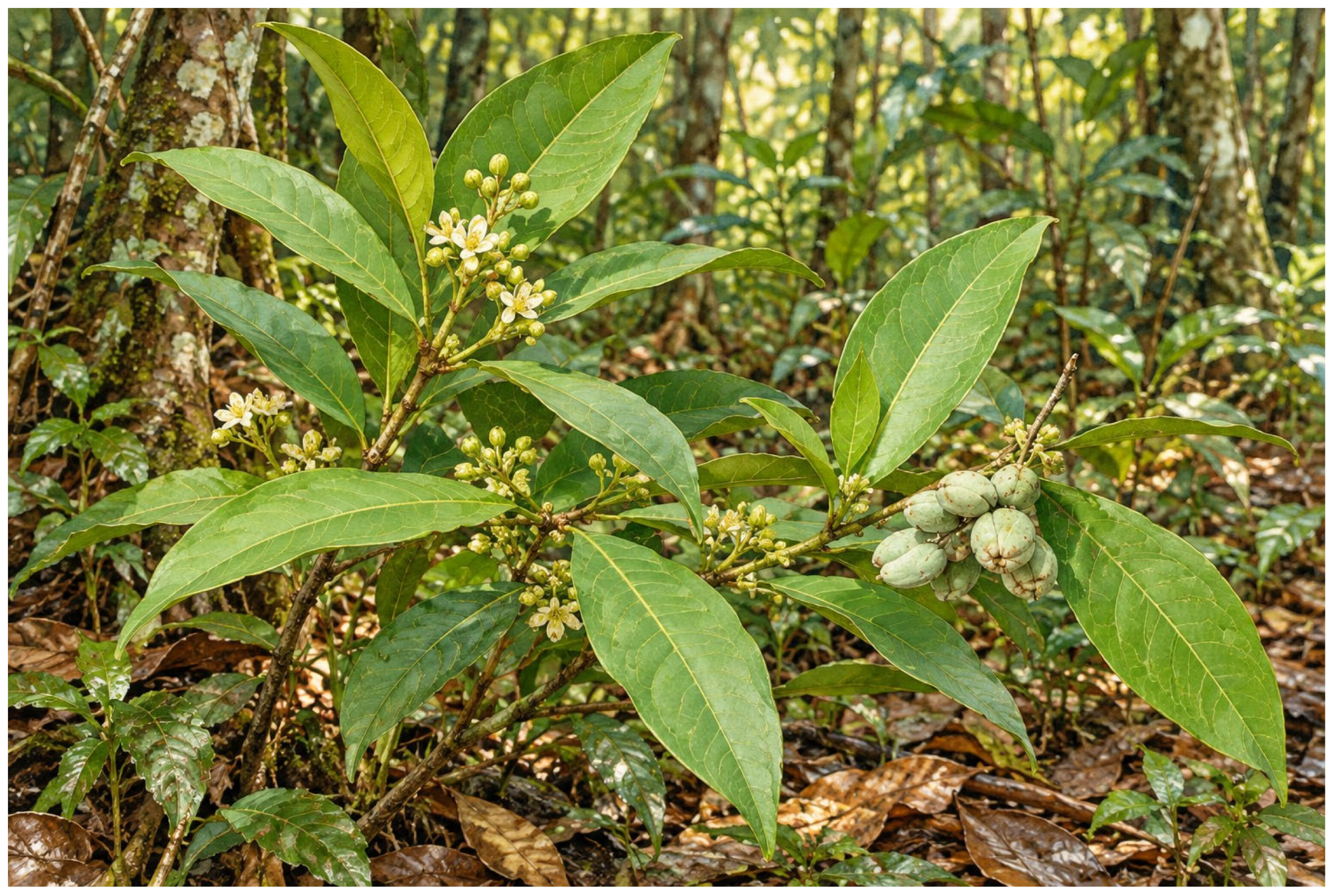
Artistic representation of Dichapetalum toxicarium (West African rat’s bane) in a tropical forest setting, showing its foliage, flowers, and fruits. This evergreen shrub or small tree is native to tropical West Africa. Its seed oil contains naturally occurring ω-fluorinated fatty acids, including ω-fluorooleic acid, associated with its toxicity. AI-generated botanical illustration based on reference images.
Structural information was obtained progressively. GC–MS analysis of methyl esters established the occurrence of several fluorinated homologues (Table 1), whereas subsequent analysis of picolinyl ester derivatives enabled double-bond localization and supported terminal fluorination [1,2]. The C16:1 series included Δ7 and Δ9 positional isomers, and the C20:1 series included Δ9 and Δ11 isomers [2]. Thus, a single representative structure does not encompass all the unsaturated components reported within each chain-length class.
Table 1.
Selected ω-fluorinated fatty acids reported from Dichapetalum toxicarium seed oil.
The choice of derivative affected the reliability of structural interpretation. Picolinyl ester spectra were informative for double-bond and fluorine localization, whereas rearrangements of 4,4-dimethyloxazoline derivatives complicated assignment of the fluorinated terminus [2]. These findings emphasize the importance of distinguishing detection of a fluorinated fatty acid from determination of its complete structure.
Oxygenated members of the series have also been reported. A GC–MS investigation provided strong evidence for 18-fluoro-9,10-epoxystearic acid, while a separate study reported the isolation and identification of threo-18-fluoro-9,10-dihydroxystearic acid. Their occurrence does not establish an epoxide-to-diol biosynthetic sequence: precursor–product relationships, carrier-bound intermediates, and the enzymes responsible require separate experimental evidence.
The similarity between the carbon skeletons of fluorinated and nonfluorinated seed-oil fatty acids is consistent with the participation of related chain-elongation and desaturation processes. Nevertheless, this correspondence alone does not establish the precursor, enzyme specificity, or sequence of individual reactions. The proposed biosynthetic pathway and the evidence supporting each step are considered in the following section.
3. Biosynthetic Origins of Fluorinated Fatty Acids
3.1. Proposed Incorporation of Fluoroacetate into Plant Fatty Acids
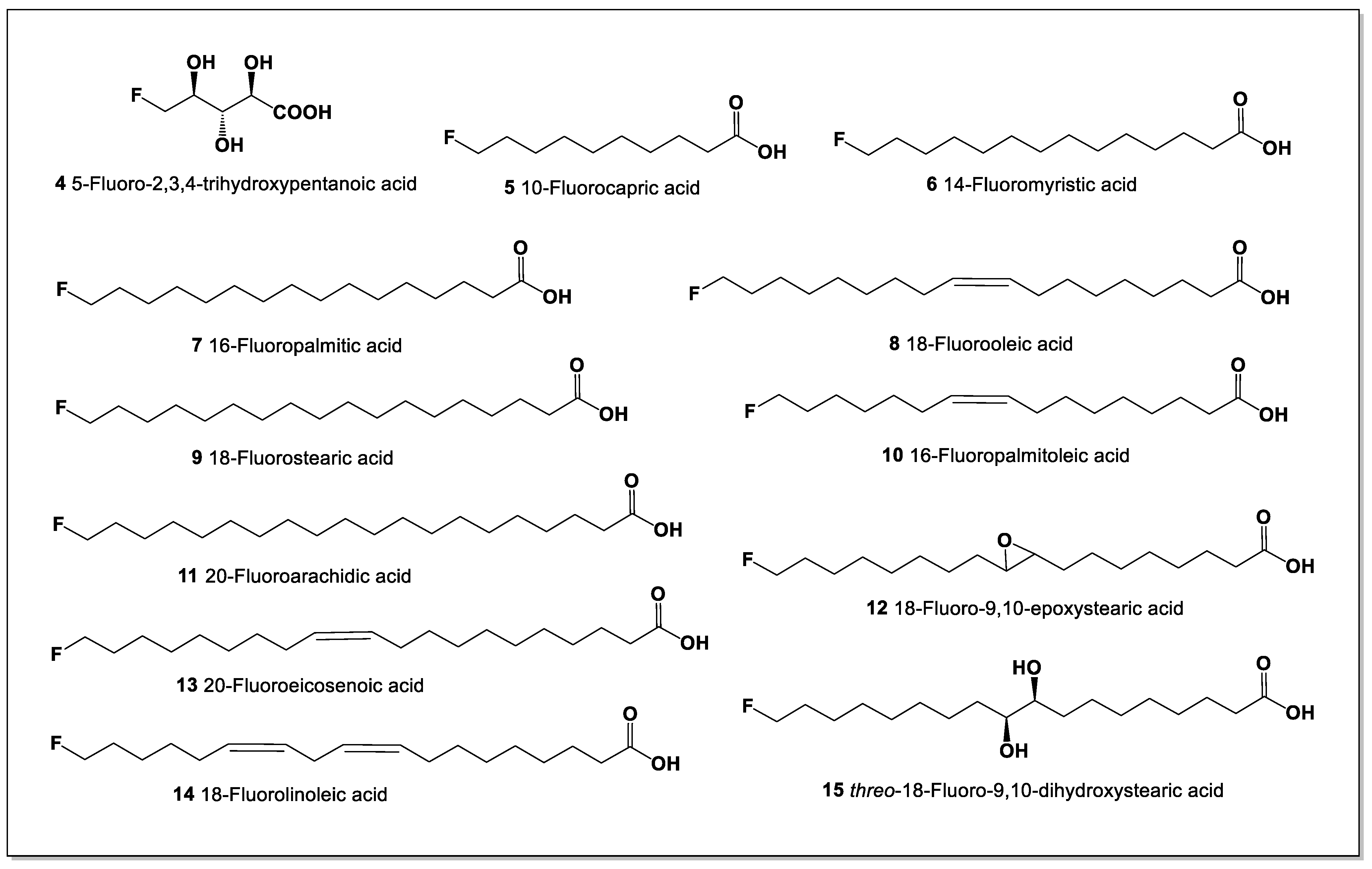
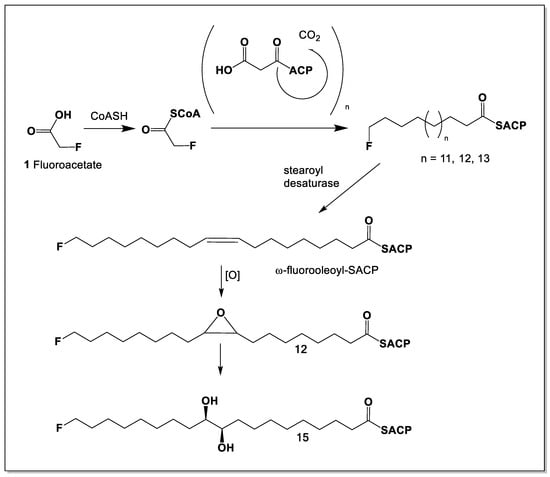
The terminal fluorination pattern of fatty acids from Dichapetalum toxicarium is consistent with a biosynthetic model in which fluoroacetate is activated to fluoroacetyl-CoA and used as a starter unit for fatty-acid synthesis. Successive two-carbon extensions would lengthen the chain while retaining fluorine at the terminal carbon. Historical investigations of fluoride metabolism and subsequent characterization of fluorinated seed-oil constituents provide the context for this proposal [1,2,32] (Figure 4).
Figure 4.
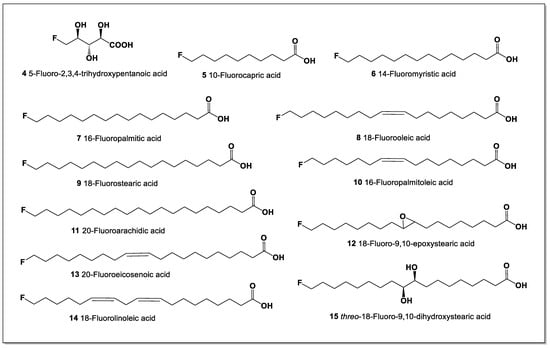
ω-Fluorofatty acids derived from natural sources. These compounds have been isolated from a limited number of plant species and are characterized by the presence of a terminal fluorine atom on the fatty acid chain.
The occurrence of corresponding fluorinated and nonfluorinated homologues supports the participation of related lipid-biosynthetic processes. However, structural correspondence alone does not identify the initiating substrate or establish the substrate specificity of the enzymes involved. The fluoroacetyl-CoA starter model therefore provides an organizing hypothesis rather than a complete, experimentally reconstituted pathway.
Terminal fluorination also distinguishes starter-unit incorporation from possible use of fluorinated extender units. The reported product pattern is compatible with the former, but does not establish why internally fluorinated homologues have not been identified. Precursor availability, enzymatic discrimination, and analytical detection limits remain possible contributing factors.
3.2. Desaturation and Formation of Oxygenated Derivatives
The identification of unsaturated ω-fluorinated fatty acids demonstrates that terminal fluorination is compatible with the occurrence of several double-bond patterns in plant lipids. Picolinyl ester GC–MS established Δ7 and Δ9 C16:1 homologues, a Δ9 C18:1 homologue, and Δ9 and Δ11 C20:1 homologues [2]. These findings define the products but do not establish which desaturases act on the fluorinated substrates or whether desaturation occurs before or after particular elongation steps.
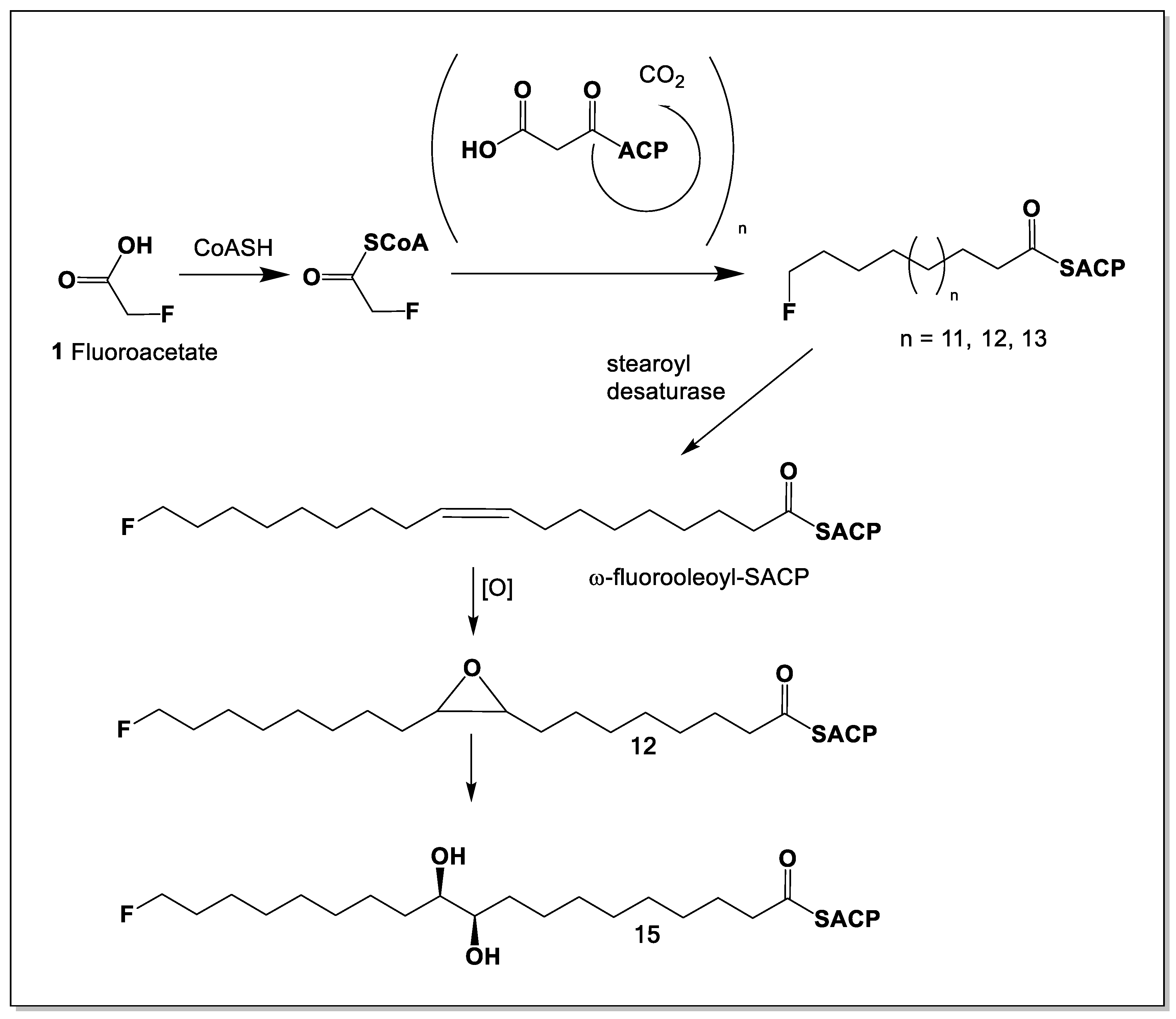
Oxygenated derivatives provide a further connection to lipid modification. Strong analytical evidence was reported for 18-fluoro-9,10-epoxystearic acid [1], and threo-18-fluoro-9,10-dihydroxystearic acid was isolated and identified from the seeds [33]. Epoxide formation followed by hydrolytic ring opening offers a possible relationship between these compounds. Nevertheless, their identification does not independently demonstrate a precursor–product sequence or identify the responsible enzymes.
Figure 5 summarizes these proposed relationships. The distinction between free fatty acids and carrier-bound intermediates is important: identification of an isolated acid does not, by itself, establish the occurrence of its corresponding acyl-ACP intermediate. The stereochemical outcome of the proposed oxygenation sequence likewise requires evidence beyond the presence of the final diol.
Figure 5.
Proposed pathway connecting fluoroacetate (1) with ω-fluorinated fatty-acyl intermediates in Dichapetalum toxicarium. The model includes activation to fluoroacetyl-CoA, successive chain elongation, and desaturation. A possible oxygenation branch involves epoxide formation followed by hydrolytic ring opening to a vicinal diol. Individual intermediates and enzymatic transformations are proposed unless supported by direct experimental evidence. ACP, acyl carrier protein; CoA, coenzyme A; [O], oxidation.
3.3. Tissue Distribution and Precursor Transport
Vickery and Vickery investigated fluoride metabolism in D. toxicarium and proposed that fluoroacetate formed in young leaves supplies developing seeds, where it is converted into longer-chain fluorinated fatty acids [32]. This historical interpretation links the distribution of a small fluorometabolite with the accumulation of fluorinated seed lipids.
Three processes must nevertheless be distinguished: fluoroacetate formation, movement between tissues, and incorporation into fatty-acid products. Differences in tissue concentrations do not alone establish transport direction or metabolic flux. Similarly, a low steady-state concentration in a developing seed can reflect rapid utilization rather than absence of the precursor.
The transport model is therefore best evaluated through experiments that trace an intact fluorinated precursor from its site of formation into chemically identified seed lipids. Such measurements would distinguish precursor movement from local synthesis and subsequent turnover.
3.4. Comparison with Established Microbial Fluorination
Microbial fluorination provides a useful contrast because the initial C–F bond-forming reaction has been directly characterized. In Streptomyces cattleya, fluorinase catalyzes the reaction of fluoride with S-adenosyl-L-methionine to produce 5′-fluoro-5′-deoxyadenosine and L-methionine [13,14,26,27]. Structural studies support a nucleophilic substitution mechanism in which the enzyme provides an environment favourable for fluoride reactivity [13].
This established microbial reaction should not be assumed to operate in D. toxicarium. The plant fatty-acid starter model concerns incorporation of an already fluorinated precursor, whereas fluorinase chemistry explains how a C–F bond can initially be formed [20,21]. Resolving the plant pathway therefore requires separate identification of the fluorination reaction and the downstream processes that incorporate fluorinated carbon into lipids.
3.5. Remaining Biosynthetic Questions
The principal unresolved steps concern the origin of the plant C–F bond, activation and incorporation of the fluorinated starter, tissue-specific precursor supply, and processing of fluorinated acyl intermediates [20,21]. Complementary isotope-tracing experiments, metabolite identification, and enzyme assays are needed to connect these steps.
A useful experimental distinction is between evidence for a compound, evidence for its conversion into another compound, and characterization of the enzyme responsible. Applying this distinction to each transformation would allow the proposed pathway to be refined without treating either structural similarity or metabolite co-occurrence as proof of enzymatic mechanism.
4. Selected Synthetic Approaches to Fluorinated Fatty Acids
Synthetic studies provide access to defined fluorination patterns and compounds for investigating lipid metabolism and biological activity. The examples discussed here illustrate terminal nucleophilic radiofluorination, preparation of a polyunsaturated fatty-acid PET tracer, and synthesis of fluorinated oxygenated fatty-acid analogues and related cyclic derivatives. These selected approaches differ in substrate requirements, fluorination position, and intended application; they do not constitute a comprehensive survey.
4.1. Terminal Radiofluorination of Fatty-Acid Precursors
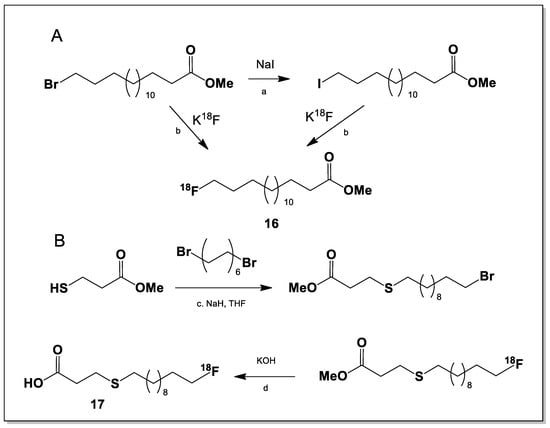
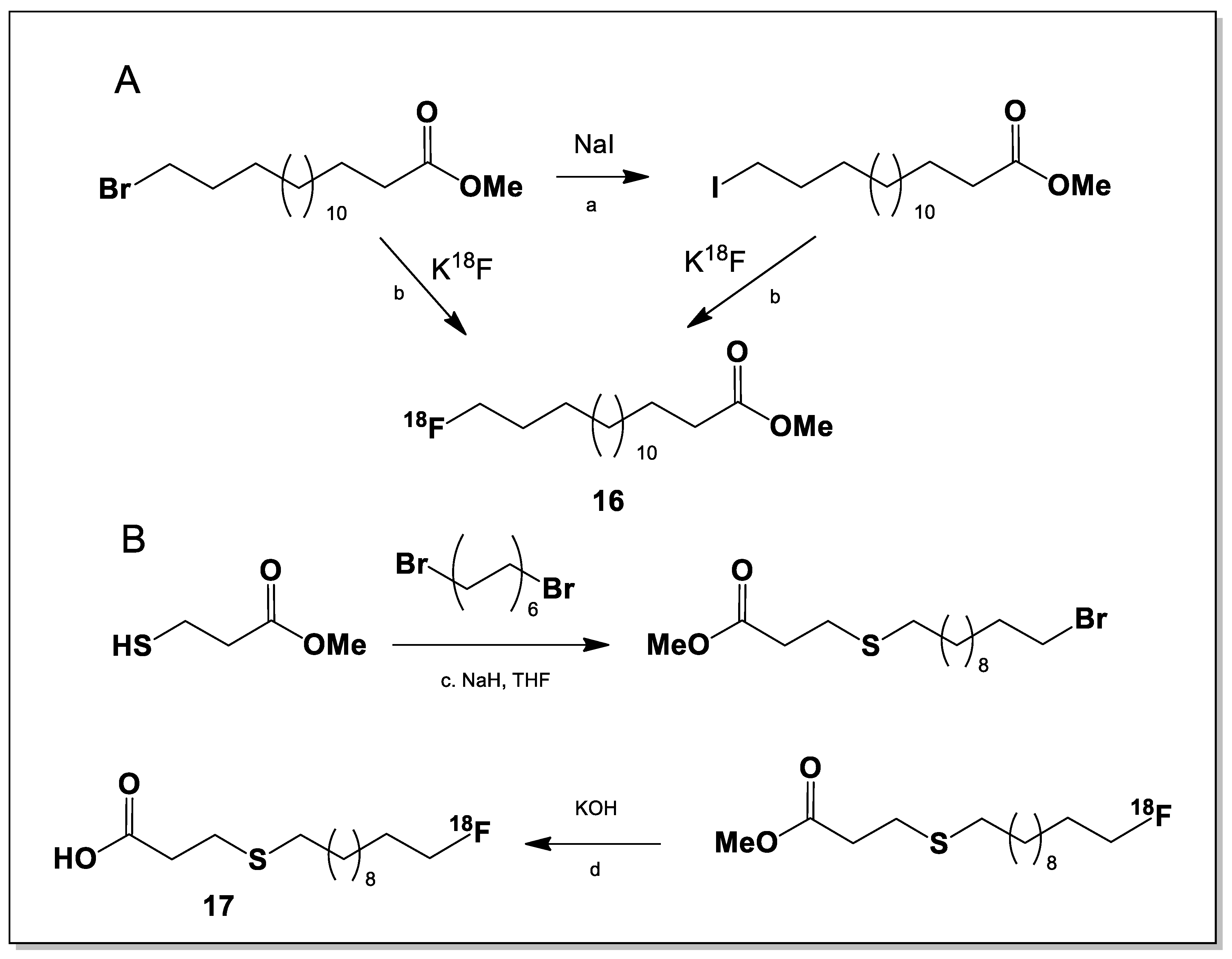
Bélanger and co-workers compared microwave-assisted and conventional heating for nucleophilic [18F]fluorination of terminally substituted fatty-acid ester precursors [6]. The substrates included methyl 16-bromohexadecanoate, methyl 16-iodohexadecanoate, and a terminally brominated thia-fatty-acid analogue. Fluoride substitution was performed in acetonitrile using potassium [18F]fluoride, potassium carbonate, and cryptand 2.2.2 (Scheme 1).
Scheme 1.
Synthesis and [18F]fluorination of [18F]fatty acid precursors. (A) (a) NaI, acetone, r.t. (b) K18F, K[2.2.2], K2CO3, MeCN (heating method, temperature and time were varied as described in results). (B) (c) NaH, THF, 0 °C 12 h. (d) (1) 0.2 M KOH 75 °C (2 min using MW; 5 min using CH) (2); 0.2 M AcOH.
Under selected conditions, microwave heating increased [18F]fluoride incorporation to above 95% and permitted reaction times as short as 2 min or temperatures of 55–60 °C. In the purified thia-fatty-acid preparation, overall decay-corrected radiochemical yields were 49.0 ± 4.5% with microwave heating and 23.6 ± 3.5% with conventional heating (p < 0.05) [6]. Microwave-assisted preparations also produced fewer side products.
These findings demonstrate improved performance for the substrates and protocols examined. Fluoride incorporation describes labelling within the reaction mixture, whereas isolated radiochemical yield additionally reflects subsequent processing and purification. The two measurements are therefore not interchangeable. The sulfur-containing product should also be distinguished from an unmodified fluorinated alkanoic acid when comparing synthetic scope and metabolic applications.
4.2. Radiosynthesis and Preclinical Evaluation of 22-[18F]Fluorodocosahexaenoic Acid
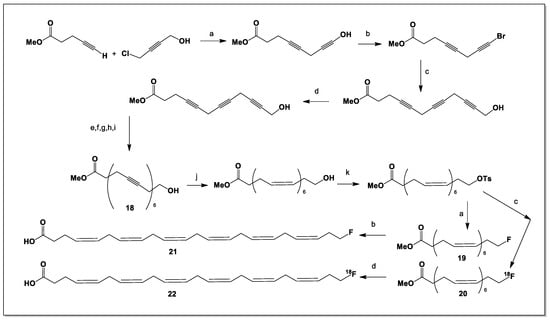
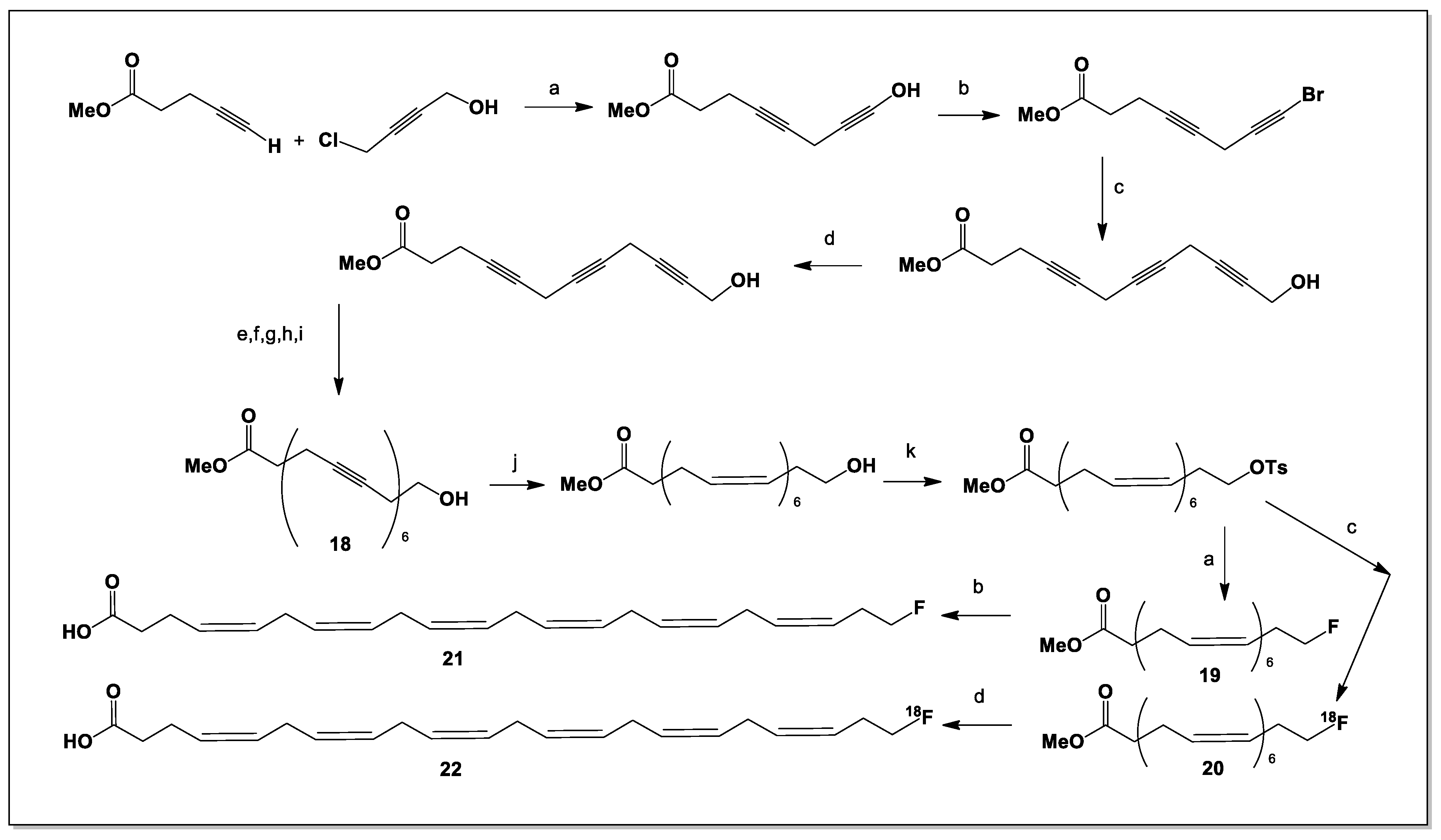
Duro and co-workers prepared 22-[18F]fluorodocosahexaenoic acid (22-[18F]FDHA) by terminal tosylate substitution followed by ester hydrolysis [7]. Fluorination required 20 min at 85 °C, followed by hydrolysis for 15 min at the same temperature. Decay-corrected radiochemical yields were 1.06–6.37%, purity exceeded 99%, and total preparation time was approximately 180 min.
The nonradioactive analogue was evaluated against DHA in BV-2 microglia (Table 2, Scheme 2). Both compounds reduced LPS-induced COX-2 expression at 15 μM, without a significant difference between treatments [7]. This supports similarity for that endpoint rather than general biological equivalence.
Table 2.
Selected findings for nonradioactive and radiolabeled 22-FDHA.
Scheme 2.
Synthesis of fluorination precursor and the nonradiolabeled and radiolabeled fluorinated DHAs: (a) CuI, NaI, Cs2CO3, DMF, rt, 83% yield; (b) CBr4, PPh3, DCM, 0 °C, 80% yield; (c) propargyl alcohol, CuI, NaI, Cs2CO3, DMF, rt, 65% yield; (d) CBr4, PPh3, DCM, 0 °C, 61% yield; (e) CuI, NaI, Cs2CO3, DMF, rt, 94% yield; (f) Ts2O, pyridine, DCM, rt, 60% yield; (g) 3-butyn-1-ol, CuI, NaI, Cs2CO3, DMF, rt, 48% yield; (h) TBAF, acetic acid, THF, 0 °C, 84% yield; (i) CuI, NaI, Cs2CO3, DMF, rt, 41% yield; (j) H2 (1 atm), Lindlar’s catalyst, 4:2:2:1 (v/v) 2-methyl-2-butene/EtOAc/methanol/pyridine, rt; (k) TsCl, Et3N, DMAP, DCM, 0 °C to rt, 13% total yield over two steps from compound 18. Synthesis of the nonradiolabeled and radiolabeled fluorinated DHAs, with 22-FDHA (21) and 22-[18F]FDHA (22) obtained from 19 and 20 respectively. (a) TBAF, THF, 0 °C to rt, 29% yield; (b) LiOH, THF/water, rt, 94% yield; (c) [18F]TBAF, MeCN, 85 °C, 20 min; (d) KOH, water/MeCN, 85 °C, 15 min.
Mouse PET–MRI experiments demonstrated brain-associated radioactivity. Arecoline increased the modelled incorporation coefficient, although final brain uptake did not differ significantly. Radiometabolites and limitations of input-function correction complicate interpretation. Applications to human neurodegenerative disease remain prospective.
4.3. Fluorinated Analogues of Coriolic Acid
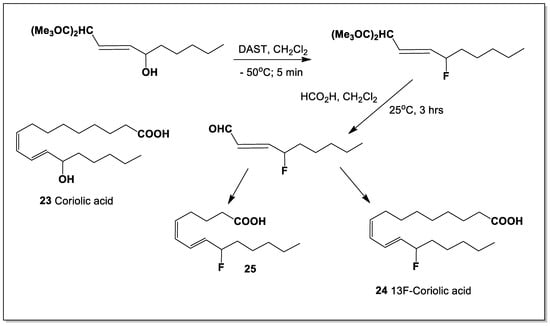
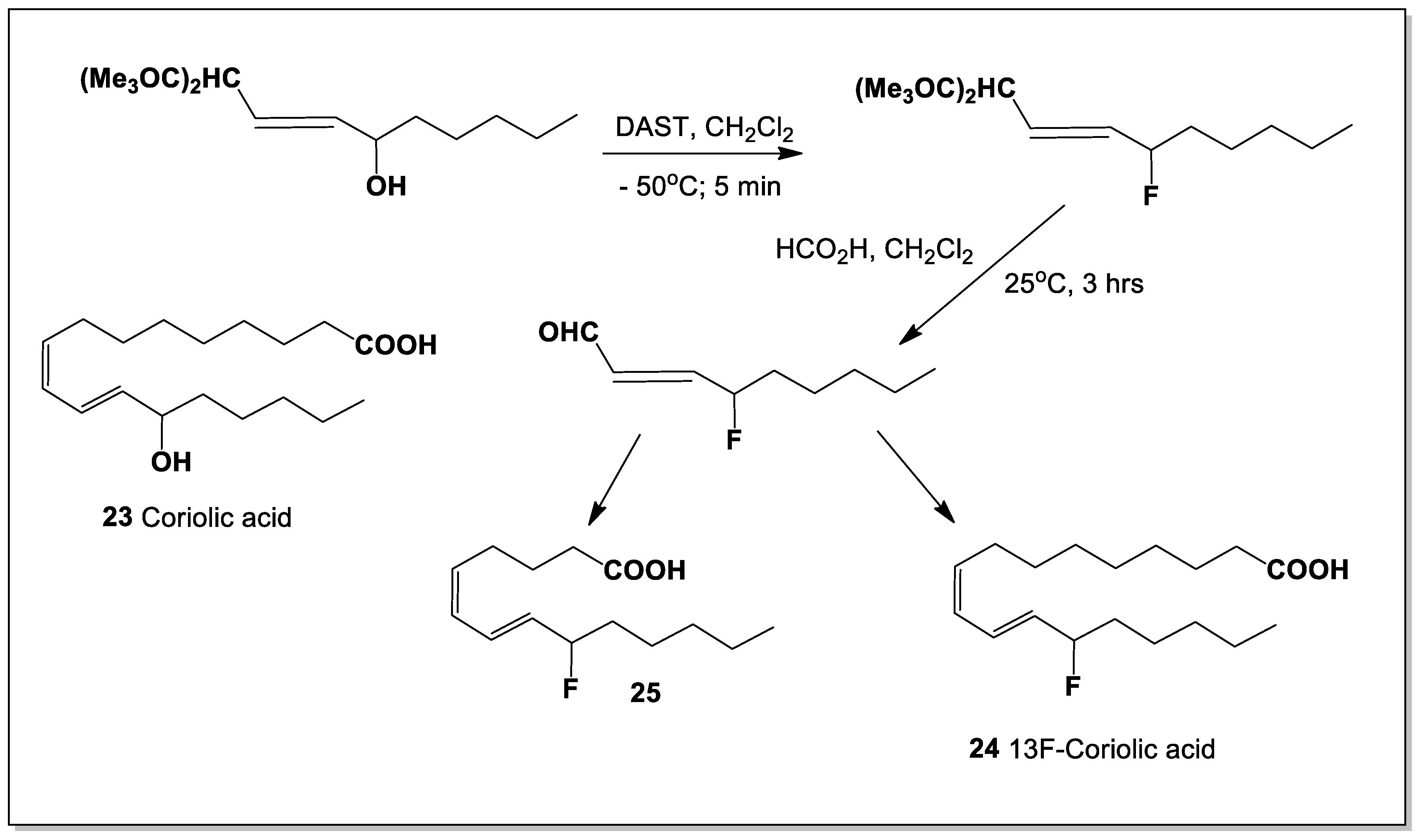
Coriolic acid, (9Z,11E)-13-hydroxyoctadeca-9,11-dienoic acid, provides an oxygenated unsaturated fatty-acid scaffold for investigating selective fluorine incorporation. Grée and co-workers reported the synthesis of fluorinated analogues through a route featuring regioselective fluorination of an allylic alcohol bearing an acetal-protected aldehyde [34]. In the sequence illustrated in Scheme 3, treatment with diethylaminosulfur trifluoride (DAST) introduces fluorine, while subsequent deprotection and carbon-chain construction provide the fatty-acid derivatives.
Scheme 3.
Synthesis of novel 13-fluoro coriolic-acid analogue (24) and (5Z,7E)-9-fluoro-5,7-tetradecandienoic acid (25) was achieved [35].
This approach illustrates the distinction between installing fluorine in a functionalized intermediate and directly fluorinating an intact polyunsaturated fatty acid. The synthetic sequence must preserve the required carbon skeleton and alkene geometry while controlling fluorination position.
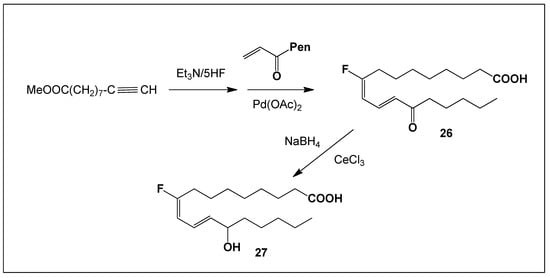
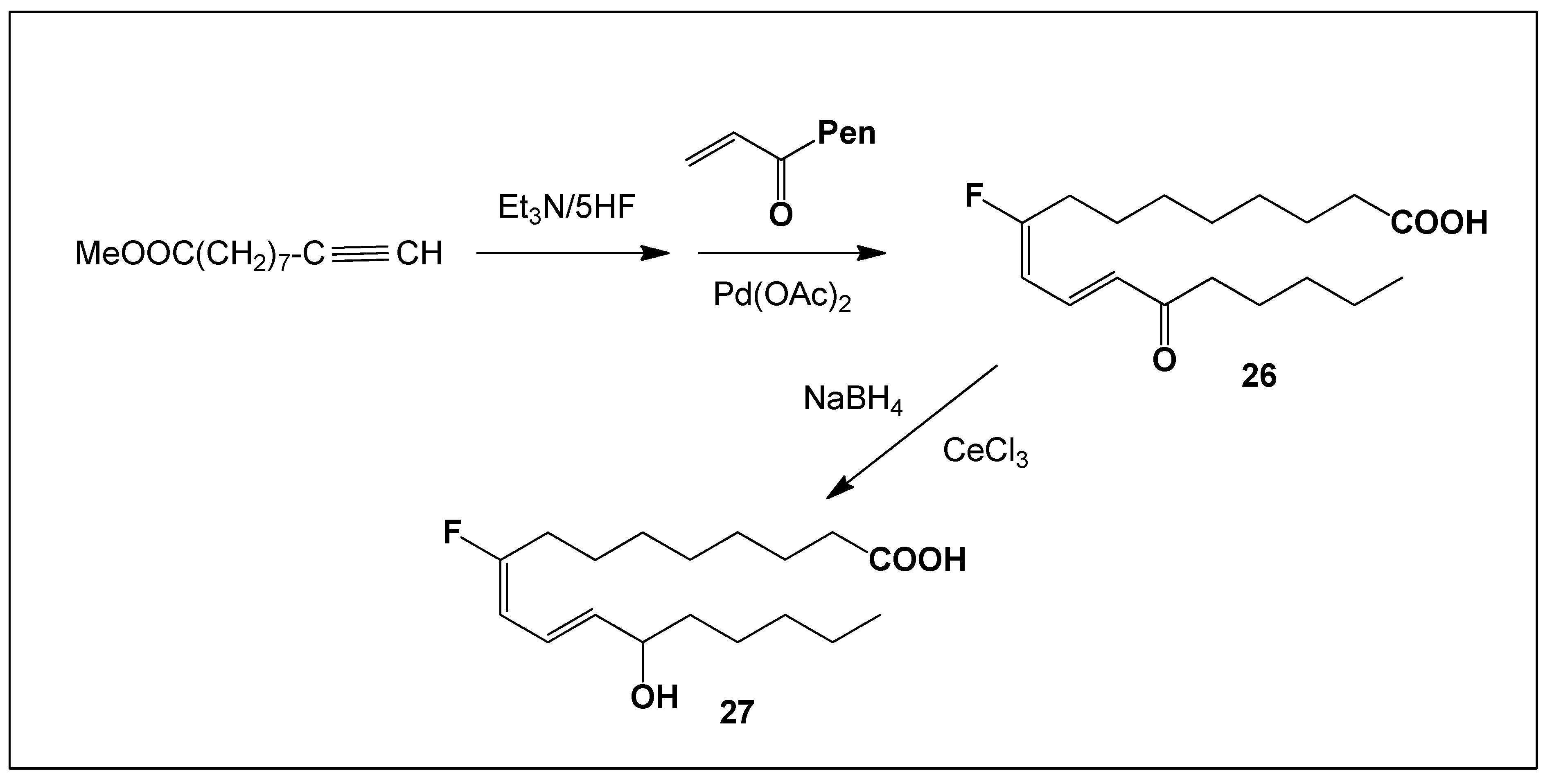
A complementary strategy uses fluoroalkenyliodonium salts in Heck-type reactions to construct fluorinated conjugated carbonyl systems [35]. This chemistry provides a methodological context for the derivatives illustrated in Scheme 4. The correspondence between the published substrates and the structures shown should be verified before assigning detailed conditions or yields.
Scheme 4.
Synthesis of (9E,11E)-9-fluoro-13-oxo-9,11-octadecadienoic (26) and (9E,11E)-9-fluoro-13-hydroxy-9,11-octadecadienoic (27) acids was achieved [35].
These studies establish synthetic access rather than biological improvement. Increased potency, metabolic persistence, or selectivity requires direct comparison with the nonfluorinated parent compound. Activities reported for coriolic acid therefore provide a rationale for analogue evaluation but cannot be attributed to its fluorinated derivatives without experimental measurements.
4.4. Related Fluorinated Fatty-Acid Derivatives
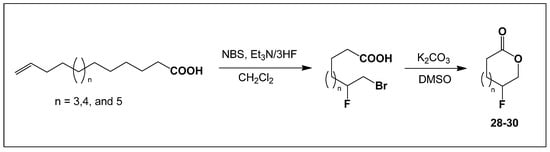
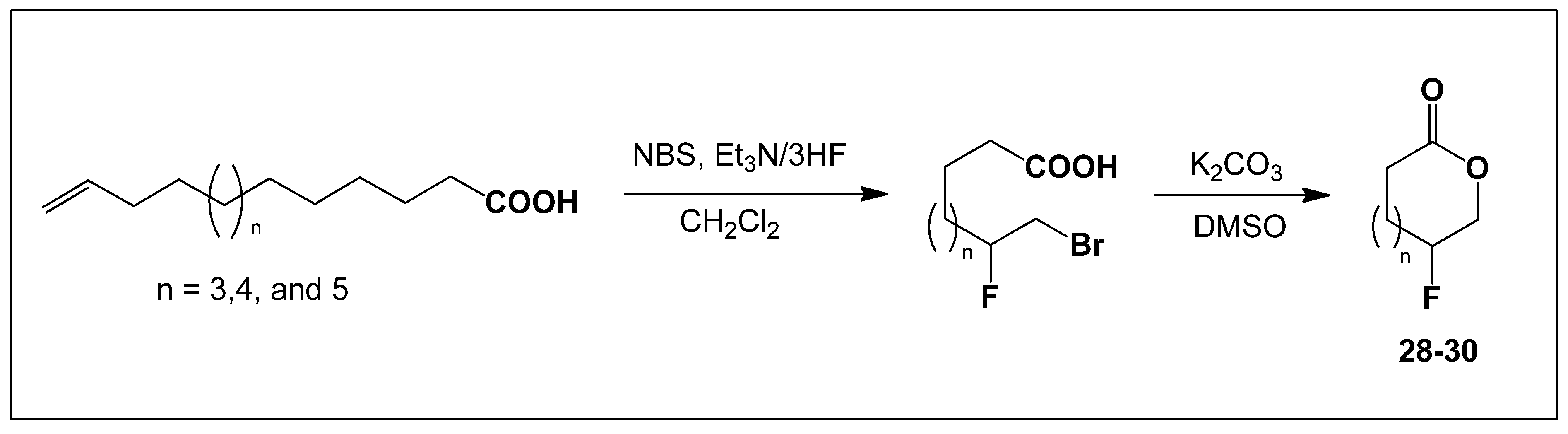
Sattler and Haufe reported a two-step preparation of fluorinated lactones from terminally unsaturated fatty acids [36]. Bromofluorination with N-bromosuccinimide and triethylamine trihydrofluoride affords ω-bromo-(ω − 1)-fluoroalkanoic-acid intermediates. Subsequent treatment with potassium carbonate in dimethyl sulfoxide promotes intramolecular substitution and lactone formation (Scheme 5). The resulting cyclic esters are fatty-acid-derived compounds rather than free fluorinated fatty acids.
Scheme 5.
The 11–13-membered (ω-1)-fluoroalkan-ω-olides (28–30) were synthesized in a facile two-step procedure [36].
This sequence illustrates the combination of fluorine incorporation with ring construction. Fluorination and cyclization constitute distinct transformations, and the efficiency of the overall route depends on both. Product formation alone does not establish biological activity or improved metabolic stability; these properties require independent evaluation.
Taken together, the selected synthetic examples demonstrate complementary approaches to controlling fluorination position and constructing different fatty-acid frameworks. Comparisons must account for substrate structure, stereochemical outcome, reaction conditions, and isolated yield. For fluorine-18 preparations, reaction duration, purification losses, and radioactive decay introduce additional considerations. Chemical yields, fluoride incorporation, and isolated radiochemical yields therefore describe different aspects of synthetic performance and should be reported separately.
5. Biological Effects and Metabolic Consequences of Fluorinated Fatty Acids
Fluorinated fatty acids exhibit different biological effects depending on fluorination position, chain structure, exposure, and metabolic processing. The available evidence encompasses metabolic activation, toxicity of natural extracts, cellular responses to synthetic analogues, and uptake of radiolabeled tracers. These endpoints provide complementary information but should not be interpreted as measurements of a single biological property.
5.1. Metabolic Activation and Toxicity
Metabolic activation explains an important component of the toxicity associated with certain terminally fluorinated fatty acids. As described in Section 2.1, fluoroacetate is activated to fluoroacetyl-CoA and converted to fluorocitrate, leading to aconitase inhibition [18,19]. A longer-chain fluorinated substrate can enter this pathway if its catabolism produces a suitable fluorinated precursor.
Direct evidence was obtained by Prestwich and co-workers using synthetic (E)-16-fluoro [16-3H]hexadec-9-enoic acid in third-instar larvae of the tobacco hornworm, Manduca sexta [37]. Following peroral administration, labelled erythro-2-fluorocitrate was isolated through successive chromatographic and derivatization procedures. The reported conversion was 0.93%, averaged over duplicate assays. This finding establishes formation of fluorocitrate from the tested fatty-acid substrate in vivo.
The experiment supports metabolic activation but does not define a universal conversion efficiency or toxicity threshold. Its substrate was a synthetic terminally fluorinated C16 monoene, which must be distinguished from the naturally occurring C18 fluorooleic acid. The extent of activation can depend on substrate processing and the experimental organism.
5.2. Natural Fluorinated Fatty Acids and Ecological Interpretation
The toxicity of Dichapetalum toxicarium seed material has been investigated experimentally. Tosaki and Hearse administered a fluorooleic-acid-containing seed extract to rats at intraperitoneal doses estimated to correspond to 10 or 20 mg fluorooleic acid/kg body weight [38]. All animals died in both groups (n = 6 per group), with mean times to death of 36.4 ± 4 and 21.0 ± 2 h, respectively. Progressive severe bradycardia accompanied the toxic response.
These results provide quantitative evidence of extract-associated cardiovascular toxicity. However, the administered material was an extract, and its doses were expressed as estimated fluorooleic-acid equivalents. The findings therefore do not constitute an LD50 determination for a purified compound or establish the contribution of every fluorinated constituent. The intraperitoneal route also differs from exposure through feeding.
An ecological role in chemical defence is plausible, but experimental toxicity and ecological function remain distinct. Establishing a defensive function requires evidence that relevant organisms encounter the compounds at effective concentrations and that exposure affects feeding, survival, or reproduction under ecologically relevant conditions.
5.3. Synthetic Analogues and Measured Biological Responses
Synthetic positional isomers provide informative comparisons because fluorine placement can change the direction of a cellular response. Ducep and co-workers examined 5- and 6-fluoroarachidonic acids in mouse peritoneal macrophages stimulated with zymosan [39]. At 20 μM, 6-fluoroarachidonic acid reduced leukotriene C4 release by approximately 30–35%, whereas 5-fluoroarachidonic acid increased release to 1.5–1.8 times the control value. Thus, adjacent fluorination positions produced contrasting effects within the same experimental system.
A separate comparison involved nonradioactive 22-fluorodocosahexaenoic acid and DHA in BV-2 microglia [7]. Both compounds reduced LPS-induced COX-2 expression at 15 μM after 6 h, without a significant difference between treatments. This supports retention of the measured response, although absence of a statistically significant difference does not establish equivalence across other biological functions.
For fluorinated coriolic-acid analogues, synthetic preparation provides compounds for subsequent evaluation [34]. Activities of the nonfluorinated parent cannot be assigned to these derivatives without direct measurements.
5.4. Lipid Handling and Enzyme Recognition
The arachidonic-acid study also identified differences in cellular lipid handling. In competition experiments with radiolabeled arachidonic acid, 6-fluoroarachidonic acid promoted greater redistribution of label toward neutral lipids at the expense of phospholipids than either arachidonic acid or its 5-fluoro analogue [39]. This observation links fluorination position with altered lipid partitioning in cells.
Such redistribution is not equivalent to a direct measurement of membrane permeability, bilayer packing, or binding to a particular enzyme. Likewise, tracer accumulation measures radioactive uptake and retention rather than receptor activity. Mechanistic interpretation therefore requires distinguishing transport, esterification, intracellular distribution, and subsequent metabolism [40].
Evidence from heavily fluorinated delivery lipids or polymers should be considered separately because their structures and biological functions differ substantially from those of monofluorinated fatty acids.
5.5. Structure–Activity Interpretation
The available examples support specific relationships between structure and biological outcome. A terminally fluorinated C16 substrate yielded fluorocitrate in insects; fluorinated seed extract produced cardiovascular toxicity in rats; and arachidonic-acid positional isomers generated opposite macrophage responses. These findings establish experimentally testable relationships without defining a universal activity pattern.
Broader structure–activity conclusions require matched compounds evaluated under comparable conditions, with measurements of exposure and metabolic products. Fluorination position should be assessed together with chain length, unsaturation, stereochemistry, and biological model. This approach can distinguish altered intrinsic activity from differences in uptake, lipid incorporation, or metabolic activation.
6. Conclusions
Fluorinated fatty acids provide a connection between natural-product chemistry, lipid metabolism, and synthetic organofluorine chemistry. Investigations of Dichapetalum toxicarium seed oil have established a series of saturated, unsaturated, and oxygenated ω-fluorinated constituents. Their characterization demonstrates structural diversity, while the proposed incorporation of fluoroacetyl-CoA as a starter unit offers a framework for explaining terminal fluorination. Identification of these products, however, remains distinct from characterization of the complete plant biosynthetic pathway.
The biological findings reviewed demonstrate several consequences of fluorination. Formation of fluorocitrate from a labelled C16 substrate establishes metabolic activation in an insect model. Experiments with D. toxicarium seed extract document cardiovascular toxicity in rats, whereas synthetic fluoroarachidonic-acid positional isomers produce contrasting responses in macrophages. These observations show that fluorination position, substrate structure, and metabolic context influence biological outcome.
Synthetic approaches expand the accessible structures and enable comparisons between fluorinated and nonfluorinated compounds. Fluorine-18-labelled fatty acids additionally provide tools for studying lipid uptake, although radiometabolites and kinetic-model assumptions constrain interpretation. Overall, the evidence supports compound-specific conclusions rather than a common toxicological or therapeutic profile for fluorinated fatty acids.
7. Future Perspectives
The first priority is to identify the C–F bond-forming reaction in plants producing ω-fluorinated fatty acids. This question must be distinguished from the subsequent activation and incorporation of an already fluorinated precursor. Combining isotope tracing, metabolite analysis, and enzyme characterization could establish the relationship between fluoroacetate formation, precursor transport, and fatty-acid biosynthesis.
A second priority is to resolve structural uncertainty in minor and historically reported metabolites. Complementary NMR and mass-spectrometric measurements, supported by authentic standards where feasible, could strengthen assignments of fluorination position, double-bond location, and stereochemistry. Analytical workflows should account for rearrangements introduced during derivatization and distinguish free acids from esterified or carrier-bound forms.
Comparative biological studies should examine matched compounds while measuring exposure and metabolic products alongside activity. Particular attention should be given to whether fluorination changes uptake, lipid incorporation, enzyme processing, or production of toxic intermediates. Persistence of a C–F bond does not necessarily imply metabolic stability of the complete molecule. Ecological investigations should likewise connect measured tissue concentrations with effects on naturally interacting organisms.
For fluorine-18-labelled tracers, priorities include radiometabolite correction, validation of input functions and kinetic models, and reproducibility across experimental conditions. Clinical applications require appropriate safety assessment and human validation. Together, these approaches would connect chemical structure more directly with biosynthetic origin, metabolic fate, and biological function.
Author Contributions
Conceptualization, V.M.D.; methodology, V.M.D.; software, A.O.T.; investigation, V.M.D.; resources, V.M.D.; writing—original draft preparation, A.O.T. and V.M.D.; writing—review and editing, A.O.T. and V.M.D. All authors have read and agreed to the published version of the manuscript.
Funding
This research received no funding.
Institutional Review Board Statement
Not applicable.
Informed Consent Statement
Not applicable.
Data Availability Statement
No new data were created or analyzed in this study. Data sharing is not applicable to this article.
Conflicts of Interest
The authors declare that the research was conducted in the absence of any commercial or financial relationships that could be construed as a potential conflict of interest.
References
- Hamilton, J.T.G.; Harper, D.B. Fluoro fatty acids in seed oil of Dichapetalum toxicarium. Phytochemistry 1997, 44, 1129–1132. [Google Scholar] [CrossRef] [Scilit]
- Christie, W.W.; Hamilton, J.T.G.; Harper, D.B. Mass spectrometry of fluorinated fatty acids in the seed oil of Dichapetalum toxicarium. Chem. Phys. Lipids 1998, 97, 41–47. [Google Scholar] [CrossRef] [Scilit]
- Ward, P.F.V.; Hall, R.J.; Peters, R.A. Fluoro-fatty acids in the seeds of Dichapetalum toxicarium. Nature 1964, 201, 611–612. [Google Scholar] [CrossRef] [Scilit]
- Hall, R.J. The distribution of organic fluorine in some toxic tropical plants. New Phytol. 1972, 71, 855–871. [Google Scholar] [CrossRef] [Scilit]
- Peters, R.A.; Wakelin, R.W.; Martin, A.J.P.; Webb, J.; Birks, F.T. Observations upon the toxic principle in the seeds of Dichapetalum toxicarium. Separation of a long-chain fatty acid containing fluorine. Biochem. J. 1959, 71, 245–248. [Google Scholar] [CrossRef] [Scilit]
- Belanger, A.P.; Pandey, M.K.; DeGrado, T.R. Microwave-assisted radiosynthesis of [18F]fluorinated fatty acid analogs. Nucl. Med. Biol. 2011, 38, 435–441. [Google Scholar] [CrossRef] [Scilit][Green Version]
- Duro, M.V.V.; Van Valkenburgh, J.; Ingles, D.E.; Tran, J.; Cai, Z.; Ebright, B.; Wang, S.; Kerman, B.E.; Galvan, J.; Hwang, S.H.; et al. Synthesis and preclinical evaluation of 22-[18F]fluorodocosahexaenoic acid as a positron emission tomography probe for monitoring brain docosahexaenoic acid uptake kinetics. ACS Chem. Neurosci. 2023, 14, 4409–4418. [Google Scholar] [CrossRef] [Scilit]
- Gao, P.; Wang, X.; Yuan, S.; Tao, Y.; He, J.; Tian, P. Mineral processing technology of fluorite: A review. JOM 2025, 77, 5151–5181. [Google Scholar] [CrossRef] [Scilit]
- Han, B.-B.; Shang, P.-Q.; Gao, Y.-Z.; Jiao, S.; Yao, C.-M.; Zou, H.; Li, M.; Wang, L.; Zheng, H.-Y. Fluorite deposits in China: Geological features, metallogenic regularity, and research progress. China Geol. 2020, 3, 473–489. [Google Scholar] [CrossRef] [Scilit]
- Leroy, N.; Bres, E. Structure and substitutions in fluorapatite. Eur. Cell. Mater. 2001, 2, 36–48. [Google Scholar] [CrossRef] [Scilit]
- Becker, P.; Libowitzky, E.; Kleinschrodt, R.; Bohatý, L. Linear optical properties and Raman spectroscopy of natural fluorapatite. Cryst. Res. Technol. 2016, 51, 282–289. [Google Scholar] [CrossRef] [Scilit]
- Nordstrom, D.K.; Jenne, E.A. Fluorite solubility equilibria in selected geothermal waters. Geochim. Cosmochim. Acta 1977, 41, 175–188. [Google Scholar] [CrossRef] [Scilit]
- Dong, C.; Huang, F.; Deng, H.; Schaffrath, C.; Spencer, J.B.; O’Hagan, D.; Naismith, J.H. Crystal structure and mechanism of a bacterial fluorinating enzyme. Nature 2004, 427, 561–565. [Google Scholar] [CrossRef] [Scilit]
- O’Hagan, D.; Schaffrath, C.; Cobb, S.L.; Hamilton, J.T.G.; Murphy, C.D. Biosynthesis of an organofluorine molecule. Nature 2002, 416, 279. [Google Scholar] [CrossRef] [Scilit]
- Marais, J.S.C. The isolation of the toxic principle “potassium cymonate” from “Gifblaar”, Dichapetalum cymosum (Hook) Engl. Onderstepoort J. Vet. Sci. Anim. Ind. 1943, 18, 203–206. [Google Scholar]
- Marais, J.S.C. Monofluoroacetic acid, the toxic principle of “gifblaar”, Dichapetalum cymosum (Hook) Engl. Onderstepoort J. Vet. Sci. Anim. Ind. 1944, 20, 67–73. [Google Scholar]
- Oelrichs, P.B.; McEwan, T. The toxic principle of Acacia georginae. Qld. J. Agric. Sci. 1962, 19, 1–16. [Google Scholar]
- Peters, R.A. Lethal synthesis. Proc. R. Soc. Lond. B 1952, 139, 143–170. [Google Scholar] [CrossRef] [Scilit]
- Lauble, H.; Kennedy, M.C.; Emptage, M.H.; Beinert, H.; Stout, C.D. The reaction of fluorocitrate with aconitase and the crystal structure of the enzyme-inhibitor complex. Proc. Natl. Acad. Sci. USA 1996, 93, 13699–13703. [Google Scholar] [CrossRef] [Scilit]
- O’Hagan, D. Understanding organofluorine chemistry. An introduction to the C–F bond. Chem. Soc. Rev. 2008, 37, 308–319. [Google Scholar] [CrossRef] [Scilit]
- Amii, H.; Uneyama, K. C–F bond activation in organic synthesis. Chem. Rev. 2009, 109, 2119–2183. [Google Scholar] [CrossRef] [Scilit]
- Weeks, A.M.; Coyle, S.M.; Jinek, M.; Doudna, J.A.; Chang, M.C.Y. Structural and biochemical studies of a fluoroacetyl-CoA-specific thioesterase reveal a molecular basis for fluorine selectivity. Biochemistry 2010, 49, 9269–9279. [Google Scholar] [CrossRef] [Scilit]
- Jansen, S.C.; van Beers, P.; Mayer, C. Engineering fluoroacetate dehalogenase by growth-based selections on non-natural organofluorides. Angew. Chem. Int. Ed. 2026, 65, e24234. [Google Scholar] [CrossRef] [Scilit]
- Shapiro, B.L.; Tseng, C.K.; Johnston, M.D., Jr. NMR studies and rotational isomerism in fluoroacetones. II. Fluoroacetone and 1,1-difluoroacetone. J. Magn. Reson. 1973, 10, 65–73. [Google Scholar] [CrossRef] [Scilit]
- Carvalho, M.F.; Oliveira, R.S. Natural production of fluorinated compounds and biotechnological prospects of the fluorinase enzyme. Crit. Rev. Biotechnol. 2017, 37, 880–897. [Google Scholar] [CrossRef] [Scilit]
- Reid, K.A.; Bowden, R.D.; Dasaradhi, L.; Amin, M.R.; Harper, D.B. Biosynthesis of fluorinated secondary metabolites by Streptomyces cattleya. Microbiology 1995, 141, 1385–1393. [Google Scholar] [CrossRef] [Scilit]
- Deng, H.; O’Hagan, D.; Schaffrath, C. Fluorometabolite biosynthesis and the fluorinase from Streptomyces cattleya. Nat. Prod. Rep. 2004, 21, 773–784. [Google Scholar] [CrossRef] [Scilit]
- Peters, R.A.; Murray, L.R.; Shorthouse, M. Fluoride metabolism in Acacia georginae Gidyea. Biochem. J. 1965, 95, 724–730. [Google Scholar] [CrossRef] [Scilit]
- Peters, R.A.; Hall, R.J. Further observations upon the toxic principle of Dichapetalum toxicarium. Biochem. Pharmacol. 1959, 2, 25–36. [Google Scholar] [CrossRef] [Scilit]
- Lee, Y.J.; Hwang, H.J.; Lee, J.; Park, H.S.; Son, J.; Seyedsayamdost, M.; Kwon, Y. Natural products with atypical atoms: Unveiling structures, biosynthetic pathways, and bioactivities. Nat. Prod. Rep. 2026, 43, 1817–1841. [Google Scholar] [CrossRef] [Scilit]
- Dembitsky, V.M.; Srebnik, M. Natural halogenated fatty acids: Their analogues and derivatives. Prog. Lipid Res. 2002, 41, 315–367. [Google Scholar] [CrossRef] [Scilit]
- Vickery, B.; Vickery, M.L. Fluoride metabolism in Dichapetalum toxicarium. Phytochemistry 1972, 11, 1905–1909. [Google Scholar] [CrossRef] [Scilit]
- Harper, D.B.; Hamilton, J.T.G.; O’Hagan, D. Identification of threo-18-fluoro-9,10-dihydroxystearic acid: A novel ω-fluorinated fatty acid from Dichapetalum toxicarium seeds. Tetrahedron Lett. 1990, 31, 7661–7662. [Google Scholar] [CrossRef] [Scilit]
- Grée, D.; Grée, R.; Boukerb, A.; Laabassi, M. Synthesis of fluorinated analogs of polyunsaturated fatty acid metabolites (4 HNE, 13 HODE). Tetrahedron Lett. 1997, 38, 6209–6212. [Google Scholar] [CrossRef] [Scilit]
- Yoshida, M.; Hara, S.; Fukuhara, T.; Yoneda, N. Stereo- and regioselective synthesis of (E,E)-δ-fluoro-α,β,γ,δ-unsaturated carbonyl compounds by Heck-type reaction of fluoroalkenyliodonium salts. Tetrahedron Lett. 2000, 41, 3887–3890. [Google Scholar] [CrossRef] [Scilit]
- Sattler, A.; Haufe, G. A facile two-step synthesis of (ω−1)-fluoroalkan-ω-olides: Influence of a vicinal fluorine substituent in nucleophilic substitutions. Tetrahedron 1996, 52, 5469–5474. [Google Scholar] [CrossRef] [Scilit]
- Prestwich, G.D.; Yamaoka, R.; Phirwa, S.; DePalma, A. Isolation of 2-fluorocitrate produced by in vivo dealkylation of 29-fluorostigmasterol in an insect. J. Biol. Chem. 1984, 259, 11022–11026. [Google Scholar] [CrossRef] [Scilit]
- Tosaki, A.; Hearse, D.J. Fluoro-fatty acids and the impairment of cardiac function in the rat in vivo and in vitro. Basic Res. Cardiol. 1988, 83, 158–166. [Google Scholar] [CrossRef] [Scilit]
- Ducep, J.B.; Nave, J.F.; Zimmermann, P.R. Synthesis of 5- and 6-fluoro derivatives of 5,8,14-eicosatrienoic and 5,8,11,14-eicosatetraenoic acids. Effects of fluorinated arachidonic acids on leukotriene C4 production by macrophages. Bioorg. Med. Chem. 1994, 2, 213–233. [Google Scholar] [CrossRef] [Scilit]
- Dolbier, W.R., Jr. Fluorine chemistry at the millennium. J. Fluor. Chem. 2005, 126, 157–163. [Google Scholar] [CrossRef] [Scilit]

Disclaimer/Publisher’s Note: The statements, opinions and data contained in all publications are solely those of the individual author(s) and contributor(s) and not of MDPI and/or the editor(s). MDPI and/or the editor(s) disclaim responsibility for any injury to people or property resulting from any ideas, methods, instructions or products referred to in the content. |
© 2026 by the authors. Licensee MDPI, Basel, Switzerland. This article is an open access article distributed under the terms and conditions of the Creative Commons Attribution (CC BY) license.