


Abstract
The Social Internet of Things (SIoT) has emerged as a promising paradigm for addressing interoperability, adaptability, and intelligent collaboration challenges in smart city environments. However, existing solutions often provide only partial support for semantic interoperability, dynamic social relationships, and context-aware service coordination across heterogeneous IoT ecosystems. This paper presents SEMIWARE, a semantic social network-oriented middleware designed to support collaborative, interoperable, and context-aware SIoT applications. SEMIWARE adopts a layered architecture that combines a FIWARE-based middleware backbone with modular services for context management, semantic annotation, semantic reasoning, service discovery, social relationship management, profiling, security, and ontology alignment. Its semantic backbone is provided by an OWL2 ontology that models IoT entities, users, services, contextual information, and trust-aware social relationships. The middleware is validated through two representative applications in distinct domains: smart mobility, where semantic reasoning supports adaptive eco-friendly route computation, and healthcare, where semantically integrated wearable and environmental data support health-event detection for people with dementia. Experimental evaluation further examines the performance of semantic annotation, semantic reasoning, and context management services under increasing workloads. The results provide prototype-level evidence that SEMIWARE supports semantic interoperability, cross-domain adaptability, and graph-based processing under controlled workloads, indicating its potential suitability for complex, data-intensive SIoT applications.
1. Introduction
The Internet of Things (IoT) has increasingly reshaped the interaction between physical and digital environments by enabling pervasive connectivity and enhanced intelligence across devices and systems, particularly in smart city applications [1]. Despite these advances, conventional IoT architectures present notable limitations in terms of intelligence, context awareness, and interoperability, which constrain their ability to provide sustained value to both organizations and end users [2,3]. To address these limitations, the Social Internet of Things (SIoT) paradigm has been proposed, integrating concepts from social networking into IoT infrastructures in order to support more collaborative, adaptive, and efficient ecosystems [4,5].
The SIoT enables enhanced collaboration among devices and applications, allowing heterogeneous components to coordinate effectively toward shared objectives [6,7,8]. This collaborative behavior contributes to more efficient operational processes and supports scalable deployments involving large numbers of devices and data streams, thereby enabling complex and distributed network structures [9]. In addition, SIoT improves navigability in highly dynamic environments by exploiting social relationships among devices, which reduces discovery and access times [4,10]. Through localized knowledge of neighboring nodes and socially driven link selection, SIoT facilitates efficient routing and adaptive navigation across large-scale IoT ecosystems [11].
Another advantage of SIoT is its flexibility, which derives from the adoption of social network principles that enable objects to discover and interact through friend-based relationships [6,11]. By maintaining localized knowledge of trusted peers and neighboring nodes, SIoT supports efficient and decentralized discovery without reliance on centralized control, thereby enhancing scalability. Moreover, trust-aware decision-making mechanisms direct interactions toward reliable peers, improving system reliability and supporting dynamic service discovery, increased data accessibility, and timely and efficient decision making in large-scale and dynamic environments [12].
Despite its potential, the SIoT presents several challenges that need to be addressed for its effective adoption [13]. The inherently dynamic nature of social relationships among IoT devices requires adaptive relationship selection mechanisms that can respond to evolving social contexts, as static approaches often lead to inefficient or suboptimal interactions [14]. Dynamic friendship selection techniques, including ontology-based reasoning, are therefore needed to support context-aware and effective social interactions among devices [15]. At the same time, privacy and security remain significant challenges in SIoT environments, as IoT devices may collect and exchange sensitive user and interaction data [16]. Addressing these concerns requires robust mechanisms that support data protection and trustworthy interactions, with ontology-based privacy and security policies providing fine-grained, policy-driven control over data access and social relationships [17].
Furthermore, semantic interoperability and standardization represent major challenges in SIoT environments [4,18,19,20]. The heterogeneity of IoT devices, together with the absence of unified protocols and interfaces, often hinders seamless social interaction among devices originating from different vendors or platforms. Addressing these challenges requires interoperable and standardized solutions that support consistent and efficient social interactions across heterogeneous systems. Ontologies have a central role by providing a shared semantic framework for modeling devices, relationships, and social interactions [21,22,23], while standardization initiatives, such as common APIs and communication protocols, further support interoperability across diverse SIoT ecosystems [20].
The emergence of novel social relationships extending beyond traditional human-to-human interactions introduces important challenges in SIoT environments [13,15]. Interactions among humans, devices, and hybrid social entities are becoming increasingly complex, creating the need for robust mechanisms to manage and coordinate these interactions effectively in order to fully exploit the potential of the SIoT paradigm [24]. At the same time, efficient service discovery is essential for supporting seamless integration and resource allocation across heterogeneous SIoT ecosystems, as the ability to discover and access services among diverse entities and applications is critical for system operation and benefit maximization [25]. Addressing these challenges requires generic, scalable, and interoperable solutions that can be readily adapted to multiple application domains, thereby supporting reusability and cross-domain interoperability [26]. Finally, rigorous evaluation through representative use case scenarios is indispensable for validating the effectiveness and practical applicability of SIoT solutions [4,9].
Consequently, realizing the full potential of SIoT in smart city environments requires more than isolated mechanisms for social interaction, trust management, or semantic modeling. Instead, there is a clear need for an integrated software infrastructure capable of orchestrating social relationships, semantic interoperability, context awareness, and trust management in a unified and scalable manner. Such an infrastructure should abstract device heterogeneity, support dynamic and trust-aware interactions among diverse entities, and enable reusable, cross-domain solutions that can be systematically evaluated in realistic application scenarios.
In this context, middleware emerges as a critical enabler within smart city architectures, acting as an intermediary software layer between low-level IoT infrastructures and high-level applications [27]. By encapsulating core SIoT functionalities and providing standardized interfaces, middleware solutions can support the development, deployment, and management of intelligent and socially aware IoT applications, while also enabling interoperability across heterogeneous devices, platforms, and domains.
Motivated by these requirements, this paper introduces SEMIWARE, a semantic social network-oriented middleware designed to support collaborative, interoperable, and context-aware SIoT applications in smart city environments. SEMIWARE builds on the authors’ previous S2NetM [28] and SEDIA [29] work, but extends them in both scope and integration: whereas S2NetM introduced the initial semantic SIoT middleware and ontology for social relationships, and SEDIA focused on semantically enriched geospatial IoT/open-data integration, SEMIWARE unifies these directions within a FIWARE-based architecture (FIWARE Foundation e.V., Berlin, Germany) that incorporates ontology alignment, graph-based Cypher reasoning, configurable SIoT relationship inference, trust-aware management, and cross-domain service orchestration. Its novelty therefore lies in the coordinated realization and validation of these mechanisms across smart mobility and healthcare scenarios, rather than in a standalone semantic annotation, ontology, or smart-city data-integration component.
In particular, this paper makes the following key contributions to the field of SIoT and smart city systems:
- Semantic SIoT middleware design: SEMIWARE is introduced as a semantic, social network-oriented middleware that integrates core SIoT functionalities, including context management, owner control, user profiling, service discovery, trustworthiness management, social relationship management, and semantic reasoning. SEMIWARE enables intelligent interaction and interoperability among heterogeneous IoT devices, while its underlying ontology provides a unified semantic model for representing IoT entities, social relationships, and contextual information, supporting semantic annotation and reasoning in SIoT environments.
- Cross-domain validation through representative use cases: The proposed middleware is validated through two prototype applications in distinct domains. A smart mobility application demonstrates adaptive and sustainable urban routing based on semantic reasoning and real-time contextual data, while a healthcare application for dementia monitoring exploits wearable sensor data and rule-based reasoning to detect health-related events and support timely interventions.
- Experimental performance evaluation: An experimental evaluation of SEMIWARE is reported, providing empirical evidence of its efficiency and baseline performance under controlled workloads and demonstrating its suitability for complex, data-intensive SIoT applications.
2. Materials and Methods
2.1. Fundamental Requirements of SEMIWARE
The design of SEMIWARE is grounded in a systematic requirements analysis derived from the challenges identified in semantic interoperability, social interaction, and scalability within SIoT-enabled smart city environments. These requirements are categorized into functional and non-functional requirements to clearly delineate system capabilities from quality attributes.
The functional requirements of SEMIWARE (summarized in Table 1) define the core middleware services necessary to support semantic and social interactions among heterogeneous IoT entities. These include mechanisms for heterogeneous data collection and storage, context management, profiling, dynamic service discovery, and social relationship management. Particular emphasis is placed on semantic mechanisms—such as ontology-based modeling, semantic annotation, reasoning, and ontology alignment—which enable interoperability and intelligent behavior across diverse SIoT domains. In addition, support for the full application lifecycle facilitates the efficient development, deployment, and management of SIoT applications.
Table 1.
Functional Requirements (FR) of SEMIWARE.
Complementing these capabilities, the non-functional requirements (outlined in Table 2) specify the quality properties that support the robustness and applicability of SEMIWARE in real-world smart city settings. These requirements address scalability in the presence of large-scale data streams and device populations, semantic interoperability across heterogeneous systems, and comprehensive security and privacy safeguards, including access control and identity management. Furthermore, adaptability is required to support dynamic and context-aware operation, while systematic evaluation and validation are essential to demonstrate effectiveness under representative use-case scenarios.
Table 2.
Non-Functional Requirements (NFR) of SEMIWARE.
2.2. SEMIWARE Architecture and Component Integration
SEMIWARE adopts a layered architectural model consisting of a data acquisition layer, a FIWARE-enhanced middleware layer, and an application layer (Figure 1). The data acquisition layer aggregates heterogeneous inputs from IoT devices, open data repositories, web services, and distributed networks, providing unified mechanisms for data ingestion. The middleware layer integrates core FIWARE components [30] to support context management, real-time event processing, and trustworthiness support, forming the operational backbone of the system. Building on this baseline, SEMIWARE implements modular services for profiling, relationship management, security, service discovery, semantic annotation, and semantic reasoning, designed to support socially driven interactions and semantic interoperability across heterogeneous entities. Ontology alignment is achieved through the integration of the AML framework [31], which supports schema matching and cross-domain semantic harmonization. The application layer interfaces with the middleware through standardized APIs, enabling the deployment of domain-independent and socially aware IoT applications, while preserving scalability, modularity, and interoperability across diverse environments.
Figure 1.
Layered architecture of SEMIWARE illustrating data acquisition, FIWARE-enhanced middleware services, semantic processing components, and application-layer integration. Adapted and extended from [28].
2.2.1. Data Collection
Data are collected from heterogeneous, distributed infrastructures and digital information ecosystems that encompass physical sensing systems, interoperable data services, and user-generated inputs. These sources continuously produce real-time contextual measurements across diverse operational domains, supporting comprehensive situational awareness within the middleware environment.
The Data Collection layer feeds directly into the Context Management Service, which serves as the semantic gateway to the middleware infrastructure. Once ingested and normalized within the FIWARE-based context management backbone (Section 2.2.2), context entities are propagated to the SEMIWARE service layer (Section 2.2.3), where semantic annotation, reasoning, relationship management, profiling, and security mechanisms operate in a coordinated manner. In this respect, the Data Collection layer functions as a tightly integrated upstream subsystem that continuously supplies and activates both the FIWARE baseline components and the higher-level SEMIWARE services. This integration ensures that the overall architecture operates on real-time, heterogeneous, and semantically harmonized contextual information, thereby supporting scalable, interoperable, and socially aware smart city applications.
2.2.2. FIWARE Baseline Integration Within SEMIWARE
SEMIWARE leverages a FIWARE-based baseline to provide standardized context management, interoperability, security, and scalable data processing capabilities across heterogeneous SIoT environments. At the data ingestion level, FIWARE IoT Agents mediate between device-specific communication protocols and NGSI-compliant interfaces, enabling uniform data representation and seamless integration of heterogeneous IoT devices. Open datasets and external data sources are federated and harmonized through the Idra platform, which standardizes dataset representation and exposes RESTful APIs for unified access. Centralized context management is realized through the Orion-LD Context Broker, which adopts the NGSI-LD standard [32] to support linked-data-based context representation, structured storage, and subscription-based context dissemination. This semantic context backbone enables consistent interaction among middleware services and applications.
Service-level interoperability is further supported through the IoT Discovery Generic Enabler, facilitating dynamic registration and discovery of IoT entities using linked-data principles. Security and trust management are reinforced through the integration of Keyrock Identity Management and associated authorization mechanisms, enabling OAuth2-based authentication and fine-grained access control. Event-driven and relationship-aware behaviors are enabled via Perseo Complex Event Processing (CEP), which supports real-time detection of complex patterns and triggers socially driven mechanisms such as friendship selection. Finally, scalable analytics and large-scale context processing are supported through the Cosmos Big Data enabler, allowing efficient handling of high-volume contextual and profiling data. Collectively, this FIWARE baseline establishes a standardized, scalable, and interoperable operational foundation that enhances SEMIWARE’s ability to manage context-rich, socially aware IoT ecosystems.
The core FIWARE components integrated within SEMIWARE and their respective roles are summarized in Table 3.
Table 3.
FIWARE Baseline Components Integrated in SEMIWARE.
2.2.3. SEMIWARE Service Layer
Building upon the FIWARE baseline, SEMIWARE introduces a modular service layer that operationalizes semantic interoperability, social relationship management, trustworthiness, and intelligent decision support. Rather than functioning as isolated services, these components collectively form a semantically coordinated processing pipeline that transforms heterogeneous data into context-aware knowledge and socially driven actions. The service layer follows a layered internal logic: (i) context ingestion and harmonization, (ii) semantic enrichment and reasoning, (iii) social interaction management, (iv) profiling and analytics, and (v) security and governance enforcement. The core services comprising the SEMIWARE layer, along with their principal responsibilities, architectural dependencies, and interaction patterns, are summarized in Table 4.
Table 4.
SEMIWARE Service Layer Overview.
At its core, the Context Management Service interfaces with the Orion-LD broker to normalize incoming data into NGSI-LD-compliant context representations. The Semantic Annotation Service then aligns these representations with the SEMIWARE ontology and persists enriched entities in a Neo4j graph database (Neo4j, Inc., San Mateo, CA, USA). The semantic processing workflow at the service layer is illustrated in Figure 2 and focuses specifically on (a) the annotation–validation–persistence path and (b) the execution of Cypher-based reasoning queries over the graph store. The Semantic Reasoning Service performs inference over the enriched graph model to identify patterns, relationships, and higher-level knowledge constructs. These inferred relationships may subsequently activate the Relationships Service, which, through event-driven mechanisms supported by Perseo, manages friendship selection and dynamic social interactions among IoT entities.
Figure 2.
Sequence diagram illustrating the semantic processing workflow within the SEMIWARE service layer: semantic annotation, validation, and Neo4j persistence (first POST service call), followed by a Cypher-based semantic reasoning request executed via the Cypher Query Manager over the Neo4j graph store (second POST service call).
In parallel to this semantic-social pipeline, the User Profiling Service leverages Cosmos Big Data capabilities to derive behavioral insights and contextual preferences, while the Security Service enforces identity management, trustworthiness scoring, and policy-driven access control through integration with Keyrock. Finally, the Ontology Alignment Service, supported by AgreementMakerLight (AML) (LASIGE, Universidade de Lisboa, Lisbon, Portugal), enables cross-domain semantic harmonization when heterogeneous ontologies are involved, thereby supporting interoperability beyond the native SEMIWARE model. The Service Discovery Service complements this architecture by enabling the dynamic identification and registration of IoT resources and middleware services.
In particular, trustworthiness management operates as a cross-cutting mechanism over the graph-based knowledge backbone. The mechanism relies on trust-related ontological properties and relationships to represent both the current reliability level of IoT entities and the trusted sources or entities against which this reliability is assessed. In the current prototype, trust scores are updated through a rule-based mechanism that combines evidence from measurement validity, expected value ranges, temporal stability, calibration status, and consistency with observations produced by co-located or semantically related entities. When a new observation is ingested, the Semantic Reasoning Service compares it with contextual evidence from trusted neighboring nodes and relevant open-data services. Consistent observations gradually reinforce the trust score of the source entity, whereas repeated anomalies or deviations decrease it. Trust scores are therefore not used as static annotations only, but as dynamic graph attributes that influence relationship management, service selection, and application-level reasoning.
At the implementation level, the SEMIWARE services are coordinated through API-based service invocations and graph operations over the shared Neo4j knowledge store. The Semantic Annotation Service receives validated NGSI-LD context entities from the context-management layer, maps entity types and attributes to the SEMIWARE ontology, and persists them as labeled graph nodes and typed relationships. The Semantic Reasoning Service executes parameterized Cypher query templates through a query manager, using configuration-defined thresholds to infer relationships such as CO_LOCATED, CO_WORK, and CO_SEMANTICS. The Ontology Alignment Service invokes AML when a new ontology or schema is introduced or updated, while accepted mappings and similarity scores are cached and reused during annotation and reasoning. Trust management is implemented through rule-based updates of ontology-defined trust-score attributes, using evidence such as measurement validity, expected value ranges, temporal stability, calibration status, and consistency with trusted co-located or semantically related entities. Friendship selection is triggered by context changes and event-driven rules, filtering candidate entities according to proximity, shared service participation, semantic similarity, and trust constraints before storing selected social relationships in the graph.
From an architectural perspective, SEMIWARE organizes its service layer around a graph-centric knowledge backbone, in which context entities, social relationships, and inferred knowledge are persistently represented and continuously updated. Rather than simply chaining services sequentially, the architecture establishes a coordinated semantic environment in which annotation, reasoning, and relationship management operate over a shared contextual model, thereby enabling consistent knowledge propagation across application domains.
Orthogonal to this semantic backbone, cross-cutting control mechanisms govern system-wide behavior. Event-driven coordination supports reactive adaptation to contextual changes, while identity management and policy-based access control enforce authentication, authorization, and trust constraints across all services. Scalability is supported through distributed big data processing and graph-based inference mechanisms, whereas interoperability is maintained through compliance with NGSI-LD standards, ontology alignment strategies, and standardized service interfaces, allowing seamless interaction among heterogeneous devices, platforms, and domains.
2.2.4. Application Layer
The Application Layer constitutes the external interaction boundary of SEMIWARE and exposes middleware capabilities to developers and end-user applications through a unified and standardized API framework. Applications interact with the system through RESTful endpoints that encapsulate the orchestration of SEMIWARE services, thereby enabling access to semantically enriched and context-aware functionality without direct coupling to internal components.
The exposed APIs follow a consistent NGSI-LD-compliant interaction model, enabling all requests and responses to adhere to linked-data principles and semantic interoperability constraints. Through this unified interface, applications can retrieve contextual entities, invoke semantic annotation and reasoning processes, access dynamically generated user profiles, enforce access control policies, discover services, and manage semantic relationships among IoT objects. Internally, these requests are translated into coordinated service invocations spanning context management, semantic processing, analytics, and security mechanisms, with responses returned in a standardized format.
From an architectural perspective, this API-centric design decouples application logic from middleware internals while preserving modularity and interoperability. By exposing a stable interaction contract, the middleware can evolve its reasoning models, data management mechanisms, and orchestration strategies without affecting external integrations. This design supports scalability, reusability, and cross-domain adaptability, positioning SEMIWARE as an extensible platform for SIoT-enabled applications.
To illustrate the external interaction model, Figure 3 presents a representative API request/response pattern. In this case, the application submits NGSI-LD-compliant context payloads and structured reasoning requests to the API façade, which orchestrates internal calls to context management and, when required, to semantic enrichment and reasoning services, returning results in NGSI-LD format. This abstracted example reflects the general interaction logic underlying profiling, security, service discovery, and relationship management endpoints.
Figure 3.
Illustrative SEMIWARE API interaction pattern. The listing demonstrates representative context retrieval and semantic reasoning requests submitted through the API façade. Internal service orchestration remains abstracted, while responses are returned in NGSI-LD-compliant format to preserve semantic interoperability.
2.3. SEMIWARE Ontology
The SEMIWARE ontology constitutes the semantic backbone of the middleware and provides a lightweight yet extensible knowledge model for representing heterogeneous IoT entities, users, services, platforms, and their interrelations. Implemented in OWL2, the ontology follows a standards-based and modular design, thereby enabling semantic annotation, reasoning, and interoperability across domains. Its scope includes IoT devices, open data entities, crowdsensing sources, geospatial information, service participation, confidentiality attributes, and social relationships, thus supporting the semantic requirements of context-aware and socially driven IoT applications.
At a structural level (Figure 4a), the ontology organizes core concepts around the abstract class Entity, from which specialized entities such as devices, open data resources, and virtual entities are derived. Complementary classes include User, Service, ServiceProperty, Location, and Platform, enabling the modeling of user-service dependencies, infrastructure associations, and quality-related attributes. The ontology defines object properties to capture both functional relationships, such as service participation, and semantic dependencies, thereby facilitating consistent graph-based persistence and Cypher-based reasoning within the SEMIWARE service layer.
Figure 4.
SEMIWARE Ontology based on [28]: (a) Overall ontology structure (core classes and main object properties); (b) User–Service relationships and dependency modeling; (c) Social and trust relationships among entities.
A distinctive feature of the SEMIWARE ontology is the explicit modeling of social and trust relationships among entities. As illustrated in Figure 4b,c, the ontology defines the object property hasRelationshipWith and its sub-properties, such as co-work, co-location, and co-semantics, to represent collaborative, spatial, and contextual associations. In addition, the trustBy property models trust dependencies among IoT entities, thereby supporting reliability assessment and security-aware interactions. These constructs enable the representation of dynamic and context-sensitive social structures within SIoT environments and directly support the relationship management and trustworthiness services of the middleware.
To support interoperability and semantic alignment with widely adopted standards, the SEMIWARE ontology reuses established vocabularies, including SSN/SOSA [33] for sensor and observation modeling, IoT-lite [34] for lightweight IoT resource description, FOAF [35] for user and social network representation, the W3C Time Ontology [36] for temporal modeling, and geospatial vocabularies such as Geo [37] and GeoSPARQL [38] for spatial representation. This reuse strategy supports modularity, extensibility, and cross-domain interoperability, enabling SEMIWARE to operate consistently across smart city, smart health, and other IoT-enabled environments.
3. Results
3.1. Applications
3.1.1. Smart Mobility Use Case
The smart mobility application validates SEMIWARE in a smart city context by demonstrating how heterogeneous environmental sensing infrastructures, open data services, and citizen preferences can be semantically unified and operationalized through the middleware. As illustrated in Figure 5, the application visualizes an eco-friendly route computed through the semantic integration of IoT air-quality nodes, federated open data platforms (e.g., weather and Air Quality Index services), and crowdsourced inputs into a coherent knowledge graph constructed over the SEMIWARE ontology.
Figure 5.
User interface of the smart mobility application.
Through the Context Management and Service Discovery services, real-time environmental observations (PM2.5, PM10, O3, NO2, SO2, etc.) are normalized into NGSI-LD representations and semantically annotated prior to graph persistence. This workflow illustrates the middleware’s ability to transform heterogeneous sensor streams and web services into interoperable semantic entities suitable for reasoning and socially aware collaboration.
A central validation dimension concerns graph-based semantic reasoning through Cypher queries over Neo4j. The RDF Knowledge Graph generated for the scenario represents IoT entities, open data entities, services, users, and route resources, together with explicit social relationships such as co-location, co-work, and co-semantics.
Cypher-based inference mechanisms dynamically construct and evaluate these relationships by computing spatial proximity for co-location, shared service participation for co-work, and ontology-derived semantic similarity for co-semantics. As illustrated in Figure 6, the revised reasoning rules are parameterized rather than tied to hard-coded numerical values. Spatial reasoning leverages Neo4j geospatial functions to establish CO_LOCATED relationships using the configurable $coLocationMaxDistanceMeters threshold, while service-level reasoning identifies collaborating entities through shared COMPUTES_BY dependencies and creates CO_WORK associations when the number of shared services satisfies $coWorkMinSharedServices. In addition, ontology-aware similarity evaluation enables the dynamic formation of CO_SEMANTICS relationships across heterogeneous sensor entities when the semantic similarity score satisfies $coSemanticMinSimilarity. These parameters are centrally defined in the Semantic Reasoning Service configuration and can be adjusted according to deployment characteristics, including sensor density, spatial granularity, application requirements, and the desired confidence level of ontology-alignment results. In the current prototype, this calibration is statically configurable, allowing threshold values to be updated without modifying the Cypher reasoning logic. These inferred graph relationships directly influence route optimization by prioritizing sensor clusters with reliable, contextually relevant, and semantically harmonized environmental data. In this way, SEMIWARE operationalizes semantic reasoning beyond static annotation, enabling adaptive and context-aware route calculation grounded in graph-based analytics.
Figure 6.
Graph-based semantic reasoning using parameterized Cypher queries within SEMIWARE: dynamic construction of (a) CO_LOCATED relationships through configurable spatial proximity thresholds, (b) CO_WORK relationships through configurable shared-service participation thresholds, and (c) CO_SEMANTICS relationships through ontology-aware semantic similarity evaluation using a configurable minimum similarity threshold.
Equally important is the validation of ontology alignment as a mechanism for cross-domain interoperability. In the smart mobility scenario, environmental and traffic sensors may rely on different ontological schemas, such as the SEMIWARE ontology and external domain ontologies such as SSN. SEMIWARE employs ontology alignment techniques to identify structurally, lexically, and semantically equivalent concepts, computing combined similarity scores in order to establish approved co-semantics relationships. In the Cypher example shown in Figure 6, hasSemanticSimilarity denotes the ontology-derived semantic similarity score assigned during the alignment process to the evaluated candidate sensor pair, while $coSemanticMinSimilarity denotes the configurable minimum confidence threshold required for establishing a CO_SEMANTICS relationship. When this threshold is satisfied, entities are mapped to a shared conceptual layer, thereby enabling interoperable reasoning across heterogeneous models. This alignment process is not only descriptive, but also directly affects the graph structure by enabling CO_SEMANTICS relationships and harmonized data integration prior to Cypher-based inference. The result is a unified knowledge representation that allows traffic and environmental indicators to be jointly considered in route optimization, despite originating from semantically distinct sources.
In the smart mobility prototype, AML-based ontology alignment is not performed for every incoming environmental observation or route-computation request. Instead, the alignment between the SEMIWARE ontology and external schemas, such as SSN/SOSA-based sensor descriptions, is performed when a new ontology or schema is introduced or updated. The resulting mappings and similarity scores are cached and reused by the Semantic Annotation and Semantic Reasoning services, meaning that real-time route computation operates over precomputed alignment results rather than repeatedly invoking AML. Therefore, AML does not directly affect real-time response times through repeated on-the-fly alignment; its computational cost is limited to ontology onboarding or update time, while real-time reasoning uses the cached mappings and similarity scores.
The smart mobility scenario also illustrates how trustworthiness affects semantic reasoning. Consider an air-quality sensor that becomes uncalibrated and repeatedly reports PM2.5 or AQI values that deviate substantially from nearby co-located sensors and from semantically related open-data sources. In such a case, SEMIWARE compares the incoming observations against trusted contextual evidence and updates the value of the hasTrustValue property for the corresponding sensor entity in the knowledge graph. If the deviation persists, the node is progressively penalized by reducing this trust score, while the trustBy relationship records the trusted entities or services against which its reliability was assessed. Once the trust score falls below a configurable reliability threshold, the sensor is not necessarily deleted from the graph, but its contribution to route optimization is reduced or excluded. As a result, unreliable or erroneous measurements have limited influence on the calculation of eco-friendly routes, while trusted and semantically consistent data sources are prioritized.
Operationally, a route request is handled as a semantic ranking workflow rather than as a simple shortest-path calculation. After the user submits the origin, destination, and preferences, candidate route alternatives are associated with nearby environmental observations and open-data indicators represented as NGSI-LD entities. The Semantic Annotation Service maps these inputs to the SEMIWARE ontology and stores them in Neo4j, while the Semantic Reasoning Service executes parameterized Cypher rules to infer CO_LOCATED, CO_WORK, and CO_SEMANTICS relationships among route-relevant sensors, services, and contextual entities. Candidate routes are then evaluated using the environmental values attached to their segments, the trust scores of the contributing data sources, and the availability of semantically aligned contextual evidence. Routes supported by trusted, co-located, and semantically consistent data sources are prioritized, whereas routes affected by unreliable or inconsistent sources receive lower preference. Thus, SEMIWARE contributes the semantic filtering, relationship inference, and trust-aware ranking layer that guides eco-friendly route selection.
3.1.2. Healthcare Use Case
The second application validates the middleware in a healthcare domain by demonstrating how heterogeneous wearable devices, ambient IoT sensors, and external healthcare services can be semantically integrated to support the early detection of health-related events in individuals with dementia. The application operationalizes core SEMIWARE components, including Context Management, Semantic Engines, Relationship Management, Trustworthiness Management, and Service Discovery, within a safety-critical environment. Real-time physiological measurements, such as heart rate, body temperature, ECG, and oxygen saturation, together with environmental parameters, medication events, and location data, are normalized, semantically annotated, and stored in a graph-based persistence layer, thereby enabling structured analysis beyond simple threshold-based monitoring.
A central validation dimension is the construction of the scenario RDF Knowledge Graph, which serves as the semantic backbone of the healthcare use case. The RDF Graph (Figure 7) models Andreas as the central user entity connected to wearable IoT devices, medication dispensers, environmental sensors, and external web services, such as health analysis and navigation assistance services. Social relationships, including co-location, co-work, and co-semantics, are explicitly represented as first-class graph relationships. This modeling approach transforms raw health signals into semantically contextualized entities embedded within an SIoT ecosystem. For example, IoTEntity1 (health monitor) and OpenDataEntity1 (health analysis service) are connected through a co-semantics relationship, while medication devices and navigation services form co-work dependencies. By structuring the scenario as a graph aligned with the SEMIWARE ontology, the middleware enables unified reasoning across physiological, environmental, and service-layer data streams.
Figure 7.
RDF Knowledge Graph in the healthcare scenario.
Operationally, healthcare event detection follows a rule-based graph reasoning workflow over semantically enriched observations. Wearable, ambient, medication-related, and location data are first ingested as NGSI-LD context entities, semantically annotated, and linked in Neo4j to the relevant user, device, service, timestamp, and location information. The Semantic Reasoning Service then evaluates Cypher-based rules that combine physiological indicators with contextual relationships, such as elevated heart rate and temperature, medication-related events, environmental stress, or changes in proximity and service participation. Inferred CO_LOCATED, CO_WORK, and CO_SEMANTICS relationships determine which devices and services are considered jointly during reasoning. When rule conditions are satisfied by observations from trusted and semantically compatible sources, the system produces a candidate health-event indication for the application layer, whereas isolated or low-trust observations are given reduced weight. Therefore, event detection is based on contextual correlation over graph-enriched evidence rather than on a single raw sensor threshold.
As shown in Figure 8, the number of dynamically inferred co-work and co-semantics relationships evolves over time, reflecting the adaptive behavior of the reasoning service as contextual conditions and device interactions change. The abrupt decrease observed between 24 September 2025 and 25 September 2025 corresponds to a simulated contextual change in which the monitored user moved away from the home environment and several ambient sensors and medication-related services were no longer co-located or functionally active in the same service context. As a result, fewer co-work and co-semantics relationships were inferred for that interval.
Figure 8.
Temporal evolution of social relationships in the healthcare scenario. The figure illustrates the dynamic counts of co-work and co-semantics relationships among wearable IoT devices and web services within a selected timeframe, reflecting graph-based reasoning outcomes over the RDF Knowledge Graph.
More generally, the temporal variation shown in Figure 8 illustrates how SEMIWARE continuously recalculates social relationships based on service dependencies, semantic similarity, and contextual proximity. For instance, a temporary increase in heart rate combined with elevated temperature may strengthen the co-work dependency between wearable sensors and the health analysis service, while changes in device proximity may modify co-location relationships. As another example, a co-semantics relationship is established between the health monitoring wearable and the external health analysis service when their respective ontological representations of measurements (e.g., Sensor_Property in the SEMIWARE ontology and Measurement in an external eHealth ontology [39]) exceed the predefined semantic similarity threshold. This alignment enables interoperable interpretation of physiological data across heterogeneous models and directly supports context-aware health-event detection. This temporal analysis indicates that social relationships are continuously recalculated based on semantic similarity, service dependencies, and contextual proximity.
3.2. Evaluation
3.2.1. Verification of Fundamental Requirements
This subsection evaluates the extent to which SEMIWARE satisfies the fundamental functional and non-functional requirements defined in Section 2.1. The verification is conducted through architectural analysis and operational evidence drawn from the applications described in the previous section.
Functional Requirements
Semantic Data Acquisition and Context Management (FR1; FR3; FR5)
SEMIWARE fulfills the data acquisition and context management requirements through the integration of FIWARE-based components and its semantic processing pipeline. Heterogeneous data streams originating from IoT devices, open data platforms, and crowdsensing infrastructures are normalized via IoT Agents and federated connectors into NGSI-LD-compliant context entities. The Context Management service, built upon Orion-LD, enables structured context representation and subscription-based dissemination.
In both representative applications, this mechanism enables the seamless transformation of raw measurements into semantically enriched context entities. In the smart mobility scenario, environmental sensing nodes and open air-quality services are unified into a coherent contextual model. In the healthcare scenario, wearable physiological measurements, environmental conditions, and medication events are harmonized within a shared semantic layer. These features confirm that SEMIWARE satisfies the requirement for coherent, real-time context handling across heterogeneous data sources.
Semantic Storage, Knowledge Construction, and Reasoning (FR2; FR7)
The requirement for robust data storage and semantically meaningful retrieval is addressed through the integration of Neo4j graph persistence and Cypher-based reasoning. SEMIWARE stores contextually enriched entities as nodes and relationships in a knowledge graph aligned with its ontology-driven model. This graph-centric approach preserves semantic relationships among entities and supports expressive querying and inference.
In the smart mobility application, Cypher queries dynamically construct co-location, co-work, and co-semantics relationships, enabling adaptive route optimization based on environmental proximity, service collaboration, and ontology-aware similarity. In the healthcare scenario, the RDF Knowledge Graph models wearable devices, healthcare services, medication systems, and environmental sensors as interconnected entities. Reasoning over this graph supports the detection of correlated health events beyond simple threshold-based monitoring.
These results demonstrate that SEMIWARE does not merely store data but transforms it into actionable knowledge through graph-based semantic reasoning, thereby fulfilling the core requirement for intelligent data interpretation and retrieval.
Social Relationship Management and Profiling (FR4; FR6)
SEMIWARE explicitly operationalizes the SIoT paradigm by modeling and dynamically managing social relationships among devices, services, and users. Through the Relationships Service and event-driven evaluation mechanisms, friendships and dependencies are continuously recalculated based on contextual proximity, shared service participation, and semantic similarity. Temporal analysis in both applications confirms that these relationships evolve dynamically rather than remaining static constructs.
Profiling capabilities further enhance adaptive behavior by capturing user preferences, device capabilities, and contextual patterns. In the smart mobility application, profiling influences environmentally optimized route suggestions, while in the healthcare domain it supports personalized intervention strategies. Collectively, these mechanisms confirm the fulfillment of requirements related to socially aware interaction, personalization, and intelligent service orchestration.
Application Lifecycle Support (FR8)
SEMIWARE satisfies the application lifecycle requirement through a unified API façade that exposes standardized NGSI-LD-compliant endpoints. This abstraction decouples application logic from middleware internals while enabling controlled access to context management, semantic annotation, reasoning, profiling, security, and relationship services. The successful deployment of two cross-domain prototypes—without architectural modification—demonstrates the middleware’s ability to support rapid development, supervision, and evolution of Semantic SIoT applications.
Non-Functional Requirements
Scalability (NFR1)
Scalability is achieved through a modular, distributed architecture leveraging FIWARE components and graph-based persistence. The decoupling of ingestion, context management, semantic processing, and reasoning enables horizontal expansion as the number of devices and services increases. Both prototype applications demonstrate the middleware’s capacity to accommodate heterogeneous data streams and dynamically evolving relationship graphs.
Semantic Interoperability (NFR2)
Semantic interoperability constitutes a central design objective of SEMIWARE. The reuse of established ontologies, adherence to NGSI-LD standards, and incorporation of ontology alignment mechanisms collectively enable cross-domain semantic harmonization. In both applications, heterogeneous schemas—environmental, mobility, and healthcare—are reconciled into a unified RDF Knowledge Graph, allowing reasoning and service orchestration across previously isolated data silos. This confirms that semantic interoperability is operationally realized.
Security, Trustworthiness, and Privacy (NFR3)
Security, trustworthiness, and privacy requirements are addressed through identity management, trust modeling, and policy-driven access control. Integration with Keyrock-based authentication mechanisms supports secure entity interactions, while trust relationships embedded in the knowledge graph contribute to reliable service coordination. Trustworthiness is represented through the trust-related ontology constructs, including the hasTrustValue property and the trustBy relationship, and is operationalized through rule-based updates over the graph.
Adaptability (NFR4)
Adaptability is realized through automatic semantic annotation, dynamic friendship selection, and ontology alignment. The middleware continuously recalculates relationships and semantic mappings in response to contextual changes. The ability to deploy SEMIWARE in both smart mobility and healthcare domains without architectural restructuring substantiates its cross-domain adaptability and generality.
Evaluation and Cross-Domain Validation (NFR5)
Evaluation and validation are ensured through the deployment of SEMIWARE in two representative real-world scenarios—smart mobility and healthcare. The successful operation of both applications demonstrates the middleware’s effectiveness, cross-domain applicability, and architectural soundness under realistic conditions, thereby confirming its practical viability as a Semantic SIoT middleware.
3.2.2. Performance Evaluation
Experimental Environment
To assess the performance and scalability of SEMIWARE, three computational experiments were conducted in a controlled virtualized environment. The evaluation focused on key middleware functionalities, namely semantic annotation, semantic reasoning, and context management, while also examining the retrieval of semantic data from the graph database under concurrent request conditions. Collectively, these experiments were designed to capture the behavior of the middleware under realistic processing workloads and to identify potential performance bottlenecks.
The experimental environment was deployed on a VMware-based virtual machine running on a server equipped with an AMD EPYC 7543 32-Core Processor (Advanced Micro Devices, Inc., Santa Clara, CA, USA). Eight CPU cores were allocated to the virtual machine, supported by a hierarchical cache architecture including L1, L2, and L3 caches, and 32 GB of RAM configured within a single NUMA node in order to optimize memory access. This configuration provided a stable and sufficiently provisioned infrastructure for evaluating the execution of graph-based and semantic processing tasks.
Within the virtual machine, the evaluation setup was organized into two Docker containers (Docker, Inc., Palo Alto, CA, USA). The first container hosted the prototype applications used in the validation process, namely the Smart Mobility and Healthcare applications, while the second container hosted the SEMIWARE services and the Neo4j graph database. Network communication between containers was enabled through an isolated virtual network, allowing controlled inter-service interaction while preserving deployment modularity and execution isolation. This configuration represents a controlled single-node experimental testbed rather than a production-grade distributed deployment, since all components were executed within the same virtual machine and communicated through a local Docker network. Therefore, the results should be interpreted as baseline measurements of SEMIWARE under local containerized execution, not as evidence of performance in a multi-node cluster environment with orchestration, replication, and horizontal scaling.
The three experiments targeted distinct but complementary middleware services. The first experiment, conducted in the context of the Smart Mobility application, evaluated the Semantic Annotation Service with respect to its ability to process incoming data streams, annotate them according to the SEMIWARE ontology, and persist the enriched entities in Neo4j. The second experiment examined the Semantic Reasoning Service, with emphasis on the execution efficiency and scalability of Cypher-based reasoning tasks over semantically enriched graph data. The third experiment focused on the Context Management Service, assessing its effectiveness in transforming heterogeneous raw inputs, particularly from open data sources, into structured information suitable for downstream semantic processing. Together, these experiments provide the basis for the performance evaluation presented in the following subsections.
Evaluation Protocol
The evaluation was designed as a controlled prototype-level performance study based on the two validation scenarios rather than on a separate public benchmark dataset. Smart mobility workloads emulated environmental observations and open-data requests, while healthcare workloads supported graph-based reasoning over semantically connected wearable, environmental, and service entities. Apache JMeter (Apache Software Foundation, Wilmington, DE, USA) was used to generate increasing request and concurrent-user loads, while Eclipse Mosquitto (Eclipse Foundation AISBL, Brussels, Belgium) was used for MQTT-based device communication where required. The evaluated operations included semantic annotation and graph persistence, parameterized Cypher reasoning queries for CO_LOCATED, CO_WORK, and CO_SEMANTICS relationship inference, and context-management requests for transforming heterogeneous inputs into structured contextual entities. Performance was reported using descriptive indicators, including minimum, maximum, average, and standard deviation of response or processing time, as well as throughput and error rate where applicable. The experiments were intended to characterize prototype behavior under controlled workloads; they do not constitute a full baseline comparison with alternative middleware platforms or a systematic graph-cardinality scalability benchmark.
Semantic Annotation under Streaming Workloads
The first experiment evaluated the scalability of the Semantic Annotation Service within the Smart Mobility application, focusing on its ability to process IoT-style message streams, enrich them according to the SEMIWARE ontology, and persist the resulting entities in Neo4j. The workload reproduced the end-to-end annotation workflow under progressively increasing load conditions, from message ingestion through semantic enrichment and graph persistence.
Performance was assessed using message count and four timing indicators, namely minimum, maximum, average, and standard deviation of processing time. As shown in Table 5, the service was evaluated under workloads ranging from 1000 to 60,000 messages. The results indicate that the service maintained stable average processing times across all workloads, increasing only marginally from 6.7 ms at 1000 messages to 7.5 ms at 60,000 messages. Similarly, minimum processing times remained consistently low, varying from 3.8 to 4.3 ms, suggesting that the annotation mechanism itself introduces limited overhead even at higher volumes.
Table 5.
Response Time Statistics of the Semantic Annotation Service.
The maximum processing time and standard deviation increased more noticeably as the workload intensified, particularly beyond 10,000 messages, where occasional peaks above 2 s were observed. This behavior is expected under sustained high-throughput conditions and reflects transient queuing, scheduling, or persistence-related delays rather than systematic degradation of service performance. Importantly, these peaks did not substantially affect the average processing time, which remained low and stable throughout the experiment. The increase in standard deviation from 4.1 ms to 29.1 ms further indicates greater variability under heavier workloads, yet without compromising the overall responsiveness of the service.
This experiment shows that the Semantic Annotation Service scales effectively under high-volume streaming conditions and remains capable of supporting continuous semantic enrichment of IoT data in real time. The combination of low average latency and stable minimum response times confirms that semantic annotation can be incorporated into the SEMIWARE processing pipeline without becoming a bottleneck, thereby supporting its applicability in data-intensive smart city scenarios.
Concurrency and Throughput Analysis of Semantic Reasoning Operations
The second experiment evaluated the performance and scalability of the Semantic Reasoning Service within the Healthcare application, with emphasis on its ability to execute Cypher-based reasoning queries over semantically enriched graph data under increasing levels of concurrent user activity. The experiment simulates realistic access patterns by progressively increasing the number of concurrent users, thereby assessing the responsiveness, processing capacity, and robustness of the reasoning service in multi-user scenarios.
Performance was analyzed using response time, throughput, and error rate metrics across user loads ranging from 10 to 3000 concurrent users (Table 6). The results indicate that the service maintained stable and low response times for moderate workloads, with average latency remaining below 250 ms up to 1000 concurrent users. Within this range, throughput scaled proportionally, reaching approximately 104.8 queries per second without observable errors, demonstrating efficient parallel query handling and effective utilization of graph-based reasoning mechanisms.
Table 6.
Response Time, Throughput, and Error Rate of the Semantic Reasoning Service.
As concurrency increased beyond 1000 users, response times began to rise more substantially, reflecting the computational complexity of Cypher-based inference over large graph structures. At 2000 users, average latency increased to approximately 2.9 s, while throughput continued to grow, indicating that the system prioritized sustained processing capacity over individual request latency. At the highest load, namely 3000 users, response times increased substantially and throughput declined, accompanied by a modest increase in error rate (1.8%). This behavior suggests the emergence of resource saturation effects, likely associated with CPU, memory, and graph query execution constraints in a single-node deployment.
Despite these limitations under high-load conditions, the Semantic Reasoning Service demonstrates strong performance within realistic operational ranges. The combination of low latency, increasing throughput, and negligible error rates up to 1000 concurrent users confirms its suitability for real-time and near-real-time semantic processing in IoT-enabled environments. The degradation observed at 2000 and 3000 concurrent users should therefore be interpreted as a baseline result of the controlled single-node testbed rather than as a definitive limitation of the SEMIWARE architecture.
In a production-oriented deployment, services such as the Semantic Reasoning Service, Neo4j, Orion-LD, and other middleware components could be distributed across multiple nodes to support horizontal scaling, load balancing, and replication. However, such distribution would also introduce inter-service communication overhead, including network latency, request serialization, remote graph-database access, and context-synchronization costs. Future evaluations should therefore examine these trade-offs in a multi-node cluster environment, such as a Kubernetes-based deployment.
Throughput Stability of Context Management under Open-Data Workloads
The third experiment evaluated the performance of the Context Management Service within the Smart Mobility application, focusing on its ability to transform heterogeneous raw inputs from open data sources into structured contextual information that can be consumed by downstream semantic services. As the entry point of the semantic processing pipeline, this service is responsible for normalizing incoming data and integrating it with the Orion-LD-based context management backbone. To approximate realistic smart city usage conditions, a set of workload-generation tests was conducted using Apache JMeter, which issued progressively increasing volumes of requests to the Context Management Service, simulating data ingestion from external open data providers.
The evaluation considered request count together with minimum, maximum, average, and standard deviation of response time (Table 7). Across workloads ranging from 1000 to 60,000 requests, the service exhibited stable behavior, with average response times remaining within a relatively narrow range. More specifically, mean response time increased only moderately from 25.5 ms at 1000 requests to 31.7 ms at 60,000 requests, indicating that the service scales efficiently under sustained demand. Minimum response times also remained low, increasing from 22.1 ms to 28.6 ms, suggesting that the transformation overhead associated with context normalization remains limited even at high request volumes.
Table 7.
Response Time Statistics of the Context Management Service.
Maximum response times remained comparatively high but stable across all workloads, fluctuating around 2.17–2.24 s. These peaks likely reflect transient delays associated with request scheduling, external data transformation, or interaction with the context management infrastructure, rather than systematic performance degradation. Notably, the standard deviation decreased as request volume increased, from 58.1 ms at 1000 requests to 14.6 ms at 60,000 requests. This pattern indicates improved consistency of service behavior under larger workloads, suggesting that the processing pipeline becomes more predictable once the workload reaches a steady operational state.
The results demonstrate that the Context Management Service provides robust and stable performance in handling large volumes of contextual data requests. Although its average response times are higher than those observed for the Semantic Annotation Service, this difference is expected given its broader responsibility for data normalization and integration with the external context management backbone. Therefore, the experiment confirms that the Context Management Service can reliably support the ingestion and transformation demands of SEMIWARE in data-intensive smart city scenarios.
4. Discussion
4.1. Insights
The findings of this study reinforce the view that SIoT should be understood not merely as an extension of conventional IoT, but as a paradigm in which social relationships play a central role in shaping system behavior [40]. The analysis highlighted that the transition from traditional IoT to SIoT is particularly relevant in smart city settings, where heterogeneity, scale, and dynamic interactions challenge conventional integration approaches. In this context, social relationships among devices emerge as more than a conceptual abstraction, as they provide a mechanism for organizing interaction, enabling collaboration, and supporting adaptive behavior in complex environments [4,9,14].
From a broader perspective, the study also supports the central role of semantics in making such socially aware IoT ecosystems operational [19,20]. Semantic models and alignment mechanisms appear essential for overcoming fragmentation across devices, platforms, and application domains [41], while also enabling richer forms of reasoning and coordination [19]. The identification of fundamental requirements for semantic SIoT solutions further suggests that middleware design must balance interoperability, contextual awareness, and social interaction management within a unified framework. Taken together, these observations support the argument that effective SIoT solutions require not only connectivity and data exchange, but also semantically grounded architectural approaches capable of sustaining scalable and cross-domain intelligent behavior.
The findings further suggest that the proposed framework moves beyond conceptual analysis by providing a concrete middleware realization in the form of SEMIWARE and its associated ontology for the development of IoT-enabled smart applications. SEMIWARE was designed to address the requirements identified through the earlier analysis, and its FIWARE-based foundation appears to provide a practical and extensible basis for integrating key middleware capabilities within a unified architecture. In particular, the framework brings together context management, owner control, user profiling, service discovery, trustworthiness management, friendship selection and relationship management, and semantic engines, thereby supporting a broad range of functions required for semantically enriched and socially aware IoT environments.
An important implication of this architectural composition is that SEMIWARE does not treat these capabilities as isolated services, but as interdependent mechanisms that collectively sustain advanced SIoT behavior. In parallel, the SEMIWARE ontology functions as a shared semantic layer and knowledge graph, providing a standardized vocabulary for representing IoT entities and their relationships. This semantic layer is central to context awareness, data enrichment, and the interpretation of heterogeneous information streams, suggesting that the ontology is not simply an auxiliary modeling artifact, but a core enabler of intelligent and data-driven middleware operation.
The practical relevance of the proposed framework becomes more evident through its realization in two proof-of-concept applications from distinct domains, namely smart mobility and healthcare for people with dementia. These applications illustrate how the proposed tools can be translated into functioning solutions within realistic IoT-enabled smart city settings, thereby extending the contribution beyond architectural design toward demonstrable applicability. Their deployment in different domains also suggests that the framework is sufficiently flexible to accommodate heterogeneous requirements, contextual conditions, and interaction patterns, which is a critical consideration for semantic SIoT middleware.
From an evaluation perspective, the assessment of the Semantic Annotation, Semantic Reasoning, and Context Management services provides useful evidence regarding the operational maturity of SEMIWARE. Rather than merely confirming the feasibility of the individual components, the evaluation indicates that the middleware can sustain the levels of data processing, graph-based storage, and query execution required by semantically enriched and context-aware SIoT applications. This is particularly significant because it suggests that the architectural choices underpinning SEMIWARE are not only conceptually coherent, but also compatible with the practical demands of prototype-level deployment and requiring further validation under distributed, city-scale conditions.
4.2. Related Work
Recent research has proposed a variety of middleware platforms and software frameworks to support interoperability, scalability, and intelligent service management in IoT and smart city environments. These solutions address different aspects of IoT system design, including context management, semantic interoperability, service discovery, and large-scale data integration. The emergence of the SIoT has introduced socially inspired interaction models that aim to improve collaboration, adaptability, and navigability among heterogeneous devices. This section reviews representative middleware and platform solutions relevant to smart city and SIoT ecosystems, focusing on their architectural characteristics, semantic and social support, interoperability mechanisms, and evaluation approaches. A comparative analysis is provided to highlight existing limitations and to position SEMIWARE with respect to current state-of-the-art solutions.
CityPulse is a distributed analytics and reasoning platform for cross-domain smart city applications that integrates heterogeneous IoT and social media streams [42]. It supports semantic discovery, real-time processing, event detection, quality assessment, and decision support using lightweight ontologies, stream processing, data federation, adaptive reasoning, and open APIs. It was validated through an adaptive travel planner combining traffic, parking, and environmental data. However, CityPulse does not explicitly address SIoT social relationship modeling or trust-based interactions among devices or services.
SmartCityWare is a service-oriented middleware for smart city applications that integrates Cloud of Things and Fog Computing concepts [43]. It abstracts heterogeneous resources, including IoT devices, fog nodes, and cloud services, as dynamically registered, discovered, and invoked services. Its distributed architecture includes service brokers, invocation, location-based, and security services, supported by a multi-agent runtime for deployment and resource scheduling. Although experimentally validated and effective for scalable service-oriented integration, SmartCityWare does not incorporate semantic modeling, ontology-based reasoning, or SIoT concepts such as social relationship modeling and trust-aware interaction.
The Automated Complex Event Implementation System (ACEIS) is a semantic middleware for automated discovery, integration, and processing of heterogeneous urban IoT data streams [44]. It models sensor streams and complex events as semantic services using a Complex Event Service ontology aligned with SSN, and supports semantic service discovery, event composition, RDF Stream Processing, and QoS-aware execution. ACEIS was evaluated through a smart travel planner and concurrent-query performance tests. Although it provides strong semantic interoperability and stream reasoning, it does not incorporate SIoT concepts such as social relationship modeling or trust-based device interaction.
Caballero et al. propose a middleware-agnostic semantic approach for modeling and executing heterogeneous IoT device behavior using ontology-based finite-state machines [45]. Built on RDF, SPARQL, and HTTP/S, the approach represents physical devices through Virtual Objects that execute reusable behavior templates independent of hardware or protocols. It supports interoperability and reuse across domains such as smart cities, healthcare, Industry 4.0, and smart grids. However, it does not provide an integrated middleware stack or native support for dynamic social relationship management and trust-aware SIoT interactions.
InterSCity is an open-source smart city middleware focused on scalability, modularity, and maintainability for large-scale cyber–physical applications [46]. It adopts a cloud-native microservices architecture, using REST APIs, asynchronous messaging, Docker, Kubernetes, and RabbitMQ to support resource registration, data collection, context-aware discovery, and actuation. Its scalability was rigorously evaluated through simulation-driven experiments with realistic workloads, demonstrating dynamic autoscaling and low response times. However, InterSCity does not provide semantic interoperability, ontology-based reasoning, or SIoT constructs such as social relationship modeling and trust-aware interaction.
Berrani et al. present a context-aware semantic middleware for IoT service management, covering service description, discovery, selection, and composition in heterogeneous IoT environments [47]. The approach uses a modular ontology and RDF annotations to support context-aware resource discovery, semantic service selection, and lightweight rule-based service composition. Its scalability is supported through a hierarchical resource model and loosely coupled request resolution, and it is validated in an assistive smart mobility scenario with performance comparisons against related approaches. However, it focuses on semantic service management rather than SIoT constructs such as social relationship modeling, trust-aware interaction, or socially driven service discovery.
Ali et al. propose Generic Middleware for Smart City Applications (GMSCA), a service-oriented IoT middleware for smart city applications addressing data acquisition, heterogeneity, scalability, security, and analytics [48]. It uses a layered architecture, RESTful APIs, service registration and discovery, and integrates big data and machine-learning components for predictive analytics. Implemented with technologies such as Python, Flask, Spark ML, and MongoDB, it is validated through three prototype applications and load-balancing/throughput experiments. However, GMSCA does not incorporate Social IoT concepts or semantic social reasoning mechanisms.
SEDIA is a semantic smart city platform for integrating, enriching, and analyzing heterogeneous IoT and open data sources, with emphasis on geospatial information and semantic querying [29]. It uses a layered architecture, lightweight RDF/OWL/SPARQL ontologies, and established vocabularies such as SSN, IoT-Lite, and GeoSPARQL, storing semantically annotated data in Neo4j for relationship-centric querying. Its proof-of-concept application supports air quality monitoring and route suggestions, with performance and scalability evaluation. However, SEDIA focuses on semantic enrichment and geospatial analytics rather than SIoT concepts such as social relationship modeling, trust management, or socially driven service interaction.
Table 8 provides a comparative analysis of the IoT and smart city middleware platforms discussed. SEMIWARE differs from related work in that it does not treat semantic interoperability, context awareness, service discovery, trust, and social interaction as isolated capabilities, but integrates them within a single Semantic SIoT middleware framework. Existing semantic platforms such as CityPulse, ACEIS, the semantic IoT service management middleware, and SEDIA mainly emphasize ontology-based interoperability and reasoning, whereas service-oriented platforms such as SmartCityWare, InterSCity, and GMSCA focus more on scalability and infrastructure integration than on semantic and socially aware intelligence. In addition, the ontology-defined middleware for IoT provides semantic abstraction across domains but not a complete middleware stack with coordinated support for trust and social relationship management. By contrast, SEMIWARE combines NGSI-LD-based interoperability, ontology alignment, graph-based semantic reasoning, dynamic SIoT relationships, configurable trust-aware mechanisms, and context-aware service orchestration, and validates these capabilities through cross-domain use cases and experimental performance evaluation.
Table 8.
Comparative analysis of representative IoT and smart city middleware platforms.
The trust-management entry for SEMIWARE should be interpreted as functional and architectural support rather than as a separate quantitative trust-performance benchmark. This support is illustrated in the revised smart mobility scenario through the example of an uncalibrated air-quality sensor whose influence on route optimization is reduced when its observations repeatedly deviate from trusted co-located sensors and semantically related open-data sources.
4.3. Limitations
Despite the contributions of this study, specific limitations should be acknowledged. First, although SEMIWARE provides a coherent middleware foundation for semantic interoperability, context management, reasoning, and social relationship handling, its support for the full application lifecycle remains partial. In particular, the current framework does not yet provide integrated mechanisms for deployment orchestration, runtime execution management, resource monitoring, or automated update handling. These capabilities are important for the long-term operation and maintainability of large-scale SIoT systems, but they were beyond the scope of the present work.
A second limitation concerns the scope and infrastructure of the evaluation. While the conducted experiments demonstrated that SEMIWARE can sustain substantial processing workloads and concurrent requests, the evaluation was performed in a controlled prototype environment and under constrained computational resources relative to those typically required in full-scale smart city deployments. Moreover, SEMIWARE has not yet been evaluated through a large-scale real-world smart city deployment or through extended public smart city datasets. As a result, the reported findings should be interpreted as indicative of the middleware’s behavior under controlled conditions rather than as definitive evidence of city-scale operational capacity. Future validation should therefore include larger FIWARE-compatible smart city datasets and, where possible, live or semi-live deployments to assess data ingestion, semantic reasoning, trust updating, and SIoT relationship formation under more realistic levels of volume, heterogeneity, noise, and longitudinal variability.
4.4. Future Work
Several directions emerge for extending SEMIWARE beyond its current scope. A first priority concerns the completion and maturation of architectural components that are only partially realized in the present implementation, most notably the Profiling Service and the extended integration of the Security Service with FIWARE Keyrock Identity Management. Advancing these components would strengthen support for personalization, authentication, authorization, and policy-driven access control. In addition, tighter integration between identity management and the existing graph-based trustworthiness mechanisms would further improve end-to-end security governance and trust-aware service coordination.
A second direction involves the development of complementary tooling to facilitate the operation and supervision of SEMIWARE deployments. In this regard, a dedicated visualization dashboard is expected to improve the monitoring and management of applications built on top of the middleware, with particular emphasis on the exploration of temporal data and the analysis of patterns, trends, and anomalies in evolving SIoT environments. Such capabilities are especially relevant for applications in which time-dependent behavior is central to decision support.
Another priority concerns broader empirical validation under more realistic smart city conditions. Future work will evaluate SEMIWARE using larger public or FIWARE-compatible smart city datasets, including environmental, mobility, and contextual data streams, in order to assess the robustness of semantic annotation, graph-based reasoning, trust updates, and SIoT relationship formation under higher data variability. Future evaluations will also include baseline comparisons against representative FIWARE-based or semantic smart city middleware configurations, repeated benchmark runs with statistical significance testing, and graph-size scalability tests using progressively larger knowledge graphs.
Further work is also needed to strengthen the adaptive intelligence of the framework. In particular, friendship selection and relationship management mechanisms remain relatively basic and would benefit from more dynamic and context-sensitive approaches. Future research may therefore investigate the incorporation of learning-based methods to improve relationship formation, adaptation to changing contexts, and user-centered control over social interactions among devices and services. In parallel, more advanced ontology alignment techniques should be explored to improve interoperability across heterogeneous domains, potentially through the use of machine learning, natural language processing, and automated concept-matching strategies. Collectively, these directions would improve the scalability, adaptability, and cross-domain robustness of SEMIWARE.
A specific future direction concerns the dynamic calibration of Semantic Reasoning Service thresholds for CO_LOCATED, CO_WORK, and CO_SEMANTICS relationships. Statistical adaptation, online learning, and machine learning techniques will be explored to adjust these thresholds automatically using sensor density, temporal context, historical graph evolution, service performance, and application-level feedback.
A further future direction concerns graph-size scalability. The current evaluation focused on concurrent requests, not reasoning performance over very large Neo4j graphs, such as deployments with more than 10,000 entities. At that scale, performance would depend on graph density, indexing, query selectivity, relationship cardinality, and optimized Cypher patterns.
5. Conclusions
This paper presented SEMIWARE, a semantic social network-oriented middleware designed to support interoperability, context awareness, and socially driven collaboration in smart city SIoT environments. By combining a FIWARE-based middleware backbone with ontology-based semantic annotation, graph-based reasoning, service discovery, and social relationship management, SEMIWARE provides an integrated framework for the development of intelligent IoT applications across heterogeneous domains. Its validation through smart mobility and healthcare use cases demonstrated the cross-domain applicability of the middleware and its ability to transform heterogeneous contextual data into semantically enriched and actionable knowledge. In addition, the experimental evaluation of semantic annotation, semantic reasoning, and context management services provided evidence of the efficiency and scalability of the middleware under increasing workloads. The findings indicate that SEMIWARE constitutes a promising and extensible foundation for the realization of semantically interoperable and socially aware IoT systems, while also highlighting the importance of further work on deployment maturity, adaptive intelligence, and large-scale operational evaluation.
Author Contributions
Conceptualization, C.G. and A.P.; methodology, C.G.; software, A.P.; validation, C.G. and A.P.; formal analysis, C.G.; investigation, C.G. and A.P.; resources, C.G. and A.P.; data curation, C.G.; writing—original draft preparation, C.G.; writing—review and editing, C.G. and A.P.; visualization, C.G. and A.P.; supervision, C.G.; project administration, C.G.; funding acquisition, C.G. All authors have read and agreed to the published version of the manuscript.
Funding
This research was partially funded by the “Research e-Infrastructure [e-Aegean R&D Network] Action 1.2 e-Aegean Geospatial data services” project, Code Number MIS 5046494, which is implemented within the framework of the “Regional Excellence” Action of the Operational Program “Competitiveness, Entrepreneurship and Innovation”. The action was cofunded by the European Regional Development Fund (ERDF) and the Greek State [Partnership and Cooperation Agreement 2014–2020].
Data Availability Statement
The original contributions presented in this study are included in the article. Further inquiries can be directed to the corresponding author.
Acknowledgments
We express our gratitude to our colleagues who have been involved in the “Research e-Infrastructure [e-Aegean R&D Network] Action 1.2 e-Aegean Geospatial data services” project for their valuable support throughout the research and development activities presented in this study. ChatGPT GPT-5.4 (OpenAI, San Francisco, CA, USA) was used exclusively for language editing, including grammar, wording, and conciseness refinement. It was not used for scientific content, data analysis, interpretation, or figure creation. All scientific content was produced, validated, and approved by the authors.
Conflicts of Interest
The authors declare no conflicts of interest.
References
- Zaman, M.; Puryear, N.; Abdelwahed, S.; Zohrabi, N. A Review of IoT-Based Smart City Development and Management. Smart Cities 2024, 7, 1462–1501. [Google Scholar] [CrossRef] [Scilit]
- Vila, M.; Sancho, M.R.; Teniente, E.; Vilajosana, X. Critical Infrastructure Awareness Based on IoT Context Data. Internet Things 2023, 23, 100855. [Google Scholar] [CrossRef] [Scilit]
- Choudhary, A. Internet of Things: A Comprehensive Overview, Architectures, Applications, Simulation Tools, Challenges and Future Directions. Discov. Internet Things 2024, 4, 31. [Google Scholar] [CrossRef] [Scilit]
- Atzori, L.; Iera, A.; Morabito, G.; Nitti, M. The Social Internet of Things (SIoT)—When Social Networks Meet the Internet of Things: Concept, Architecture and Network Characterization. Comput. Netw. 2012, 56, 3594–3608. [Google Scholar] [CrossRef] [Scilit]
- Amin, F.; Asghar, I.; Ali, A.; Hwang, S.-O. Recent Advances in Internet of Things and Emerging Social Internet of Things: Vision, Challenges and Trends. Electronics 2022, 11, 2033. [Google Scholar] [CrossRef] [Scilit]
- Atzori, L.; Iera, A.; Morabito, G. SIoT: Giving a Social Structure to the Internet of Things. IEEE Commun. Lett. 2011, 15, 1193–1195. [Google Scholar] [CrossRef] [Scilit]
- Zannou, A.; Boulaalam, A.; Nfaoui, E.H. SIoT: A New Strategy to Improve the Network Lifetime with an Efficient Search Process. Future Internet 2021, 13, 4. [Google Scholar] [CrossRef] [Scilit]
- Amin, F.; Majeed, A.; Mateen, A.; Abbasi, R.; Hwang, S.-O. A Systematic Survey on the Recent Advancements in the Social Internet of Things. IEEE Access 2022, 10, 63867–63884. [Google Scholar] [CrossRef] [Scilit]
- Roopa, M.S.; Pattar, S.; Buyya, R.; Venugopal, K.R.; Iyengar, S.S.; Patnaik, L.M. Social Internet of Things (SIoT): Foundations, Thrust Areas, Systematic Review and Future Directions. Comput. Commun. 2019, 139, 32–57. [Google Scholar] [CrossRef] [Scilit]
- Marche, C.; Atzori, L.; Iera, A.; Militano, L.; Nitti, M. Navigability in Social Networks of Objects: The Importance of Friendship Type and Nodes’ Distance. In Proceedings of the 2017 IEEE GLOBECOM Workshops (GC Wkshps); IEEE: Singapore, 2017; pp. 1–6. [Google Scholar] [CrossRef] [Scilit]
- Farhadi, B.; Rahmani, A.M.; Asghari, P.; Hosseinzadeh, M. Friendship Selection and Management in Social Internet of Things: A Systematic Review. Comput. Netw. 2021, 201, 108568. [Google Scholar] [CrossRef] [Scilit]
- Chahal, R.K.; Kumar, N.; Batra, S. Trust Management in Social Internet of Things: A Taxonomy, Open Issues, and Challenges. Comput. Commun. 2020, 150, 13–46. [Google Scholar] [CrossRef] [Scilit]
- Khan, W.Z.; Aalsalem, M.Y.; Khan, M.K.; Arshad, Q. When Social Objects Collaborate: Concepts, Processing Elements, Attacks and Challenges. Comput. Electr. Eng. 2017, 58, 397–411. [Google Scholar] [CrossRef] [Scilit]
- Nitti, M.; Atzori, L.; Cvijikj, I.P. Friendship Selection in the Social Internet of Things: Challenges and Possible Strategies. IEEE Internet Things J. 2015, 2, 240–247. [Google Scholar] [CrossRef] [Scilit]
- Ali, S.; Kibria, M.G.; Jarwar, M.A.; Lee, H.K.; Chong, I. A Model of Socially Connected Web Objects for IoT Applications. Wirel. Commun. Mob. Comput. 2018, 2018, 6309509. [Google Scholar] [CrossRef] [Scilit]
- Um, T.W.; Lee, E.; Lee, G.M.; Yoon, Y. Design and Implementation of a Trust Information Management Platform for Social Internet of Things Environments. Sensors 2019, 19, 4707. [Google Scholar] [CrossRef] [Scilit] [PubMed]
- Farahbakhsh, B.; Fanian, A.; Manshaei, M.H. TGSM: Towards Trustworthy Group-Based Service Management for Social IoT. Internet Things 2021, 13, 100312. [Google Scholar] [CrossRef] [Scilit]
- Venceslau, A.D.P.; Andrade, R.M.; Vidal, V.M.P.; Nogueira, T.P.; Pequeno, V.M. IoT Semantic Interoperability: A Systematic Mapping Study. In Proceedings of the 21st International Conference on Enterprise Information Systems (ICEIS), Heraklion, Greece, 3–5 May 2019; Volume 1, pp. 535–544. [Google Scholar] [CrossRef] [Scilit]
- Novo, O.; Di Francesco, M. Semantic Interoperability in the IoT: Extending the Web of Things Architecture. ACM Trans. Internet Things 2020, 1, 1–25. [Google Scholar] [CrossRef] [Scilit]
- Pliatsios, A.; Kotis, K.; Goumopoulos, C. A Systematic Review on Semantic Interoperability in the IoE-Enabled Smart Cities. Internet Things 2023, 22, 100754. [Google Scholar] [CrossRef] [Scilit]
- Gyrard, A.; Bonnet, C.; Boudaoud, K.; Serrano, M. Assisting IoT Projects and Developers in Designing Interoperable Semantic Web of Things Applications. In Proceedings of the IEEE International Conference on Data Science and Data Intensive Systems (DSDIS), Sydney, Australia, 11–13 December 2015; pp. 659–666. [Google Scholar] [CrossRef] [Scilit]
- Lee, I. The Internet of Things for Enterprises: An Ecosystem, Architecture, and IoT Service Business Model. Internet Things 2019, 7, 100078. [Google Scholar] [CrossRef] [Scilit]
- Pliatsios, A. An Ontology-Based Middleware for Enhancing Semantic Interoperability in IoT-Enabled Smart City Applications. Ph.D. Thesis, University of the Aegean, Samos, Greece, 2023. [Google Scholar] [CrossRef] [Scilit]
- Dhelim, S.; Ning, H.; Farha, F.; Chen, L.; Atzori, L.; Daneshmand, M. IoT-Enabled Social Relationships Meet Artificial Social Intelligence. IEEE Internet Things J. 2021, 8, 17817–17828. [Google Scholar] [CrossRef] [Scilit]
- Hussein, D.; Han, S.N.; Lee, G.M.; Crespi, N.; Bertin, E. Towards a Dynamic Discovery of Smart Services in the Social Internet of Things. Comput. Electr. Eng. 2017, 58, 429–443. [Google Scholar] [CrossRef] [Scilit]
- Desai, P.; Sheth, A.; Anantharam, P. Semantic Gateway as a Service Architecture for IoT Interoperability. In Proceedings of the 2015 IEEE International Conference on Mobile Services; IEEE: New York, NY, USA, 2015; pp. 313–319. [Google Scholar] [CrossRef] [Scilit]
- Goumopoulos, C. Smart City Middleware: A Survey and a Conceptual Framework. IEEE Access 2024, 12, 4015–4047. [Google Scholar] [CrossRef] [Scilit]
- Pliatsios, A.; Lymperis, D.; Goumopoulos, C. S2NetM: A Semantic Social Network of Things Middleware for Developing Smart and Collaborative IoT-Based Solutions. Future Internet 2023, 15, 207. [Google Scholar] [CrossRef] [Scilit]
- Lymperis, D.; Goumopoulos, C. SEDIA: A Platform for Semantically Enriched IoT Data Integration and Development of Smart City Applications. Future Internet 2023, 15, 276. [Google Scholar] [CrossRef] [Scilit]
- Cirillo, F.; Solmaz, G.; Berz, E.L.; Bauer, M.; Cheng, B.; Kovacs, E. A Standard-Based Open Source IoT Platform: FIWARE. IEEE Internet Things Mag. 2019, 2, 12–18. [Google Scholar] [CrossRef] [Scilit]
- Faria, D.; Pesquita, C.; Santos, E.; Palmonari, M.; Cruz, I.F.; Couto, F.M. The AgreementMakerLight Ontology Matching System. In On the Move to Meaningful Internet Systems: OTM 2013 Conferences; Meersman, R., Panetto, H., Dillon, T., Eder, J., Bellahsene, Z., Ritter, N., De Leenheer, P., Dou, D., Eds.; Lecture Notes in Computer Science; Springer: Berlin/Heidelberg, Germany, 2013; Volume 8185, pp. 527–541. [Google Scholar] [CrossRef] [Scilit]
- Privat, G.; Medvedev, A. Guidelines for Modelling with NGSI-LD; ETSI White Paper No. 42; European Telecommunications Standards Institute (ETSI): Sophia Antipolis, France, 2021; Available online: https://www.etsi.org/images/files/ETSIWhitePapers/etsi_wp_42_NGSI_LD.pdf (accessed on 21 February 2026).
- Haller, A.; Janowicz, K.; Cox, S.; Le Phuoc, D.; Taylor, K.; Lefrançois, M. Semantic Sensor Network Ontology; W3C Recommendation, 19 October 2017; World Wide Web Consortium (W3C): Cambridge, MA, USA, 2017; Available online: https://www.w3.org/TR/vocab-ssn/ (accessed on 21 February 2026).
- Bermudez-Edo, M.; Elsaleh, T.; Barnaghi, P.; Taylor, K. IoT-Lite Ontology; W3C Member Submission, 26 November 2015; World Wide Web Consortium (W3C): Cambridge, MA, USA, 2015; Available online: https://www.w3.org/submissions/iot-lite/ (accessed on 21 February 2026).
- Brickley, D.; Miller, L. FOAF Vocabulary Specification 0.99: Namespace Document 14 January 2014—Paddington Edition; FOAF Project. 2014. Available online: http://xmlns.com/foaf/spec/ (accessed on 21 February 2026).
- Cox, S.; Little, C. Time Ontology in OWL; W3C Candidate Recommendation Draft, 15 November 2022; World Wide Web Consortium (W3C): Cambridge, MA, USA, 2022; Available online: https://www.w3.org/TR/owl-time/ (accessed on 21 February 2026).
- Brickley, D. WGS84 Geo Positioning: An RDF Vocabulary; W3C Semantic Web Interest Group (SWIG): Wakefield, MA, USA, 2003; Available online: https://www.w3.org/2003/01/geo/ (accessed on 21 February 2026).
- Open Geospatial Consortium (OGC). OGC GeoSPARQL—A Geographic Query Language for RDF Data; OGC Implementation Standard OGC 11-052r4; Open Geospatial Consortium: Wayland, MA, USA, 2012; Available online: https://www.ogc.org/standards/geosparql (accessed on 21 February 2026).
- Pliatsios, A.; Stavropoulos, T.G.; Strantsalis, D.; Kassiano, V.; Nikolopoulos, S.; Kompatsiaris, I. Detection of Health-Related Problems of People with Dementia from Lifestyle Wearables: A Rule-Based Approach. In Proceedings of the 12th International Conference on eHealth, Telemedicine, and Social Medicine (eTELEMED 2020); IARIA: Wilmington, DE, USA, 2020; pp. 21–25. [Google Scholar]
- Hosseinzadeh, M.; Mohammadi, V.; Lansky, J.; Nulicek, V. Advancing the Social Internet of Things (SIoT): Challenges, Innovations, and Future Perspectives. Mathematics 2024, 12, 715. [Google Scholar] [CrossRef] [Scilit]
- Kanzouai, C.; Bouarourou, S.; Zannou, A.; Boulaalam, A.; Nfaoui, E.H. Enhancing IoT Scalability and Interoperability through Ontology Alignment and FedProx. Future Internet 2025, 17, 140. [Google Scholar] [CrossRef] [Scilit]
- Puiu, D.; Barnaghi, P.; Tönjes, R.; Kümper, D.; Ali, M.I.; Mileo, A.; Parreira, J.X.; Fischer, M.; Kolozali, S.; Farajidavar, N.; et al. CityPulse: Large-Scale Data Analytics Framework for Smart Cities. IEEE Access 2016, 4, 1086–1108. [Google Scholar] [CrossRef] [Scilit]
- Mohamed, N.; Al-Jaroodi, J.; Jawhar, I.; Lazarova-Molnar, S.; Mahmoud, S. SmartCityWare: A Service-Oriented Middleware for Cloud- and Fog-Enabled Smart City Services. IEEE Access 2017, 5, 17576–17588. [Google Scholar] [CrossRef] [Scilit]
- Gao, F.; Ali, M.I.; Curry, E.; Mileo, A. Automated Discovery and Integration of Semantic Urban Data Streams: The ACEIS Middleware. Future Gener. Comput. Syst. 2017, 76, 561–581. [Google Scholar] [CrossRef] [Scilit]
- Caballero, V.; Valbuena, S.; Vernet, D.; Zaballos, A. Ontology-Defined Middleware for Internet of Things Architectures. Sensors 2019, 19, 1163. [Google Scholar] [CrossRef] [Scilit] [PubMed]
- Del Esposte, A.D.M.; Santana, E.F.; Kanashiro, L.; Costa, F.M.; Braghetto, K.R.; Lago, N.; Kon, F. Design and Evaluation of a Scalable Smart City Software Platform with Large-Scale Simulations. Future Gener. Comput. Syst. 2019, 93, 427–441. [Google Scholar] [CrossRef] [Scilit]
- Berrani, S.; Yachir, A.; Djamaa, B.; Mahmoudi, S.; Aissani, M. Towards a New Semantic Middleware for Service Description, Discovery, Selection, and Composition in the Internet of Things. Trans. Emerg. Telecommun. Technol. 2022, 33, e4544. [Google Scholar] [CrossRef] [Scilit]
- Ali, Z.; Mahmood, A.; Khatoon, S.; Alhakami, W.; Ullah, S.S.; Iqbal, J.; Hussain, S. A Generic Internet of Things (IoT) Middleware for Smart City Applications. Sustainability 2023, 15, 743. [Google Scholar] [CrossRef] [Scilit]
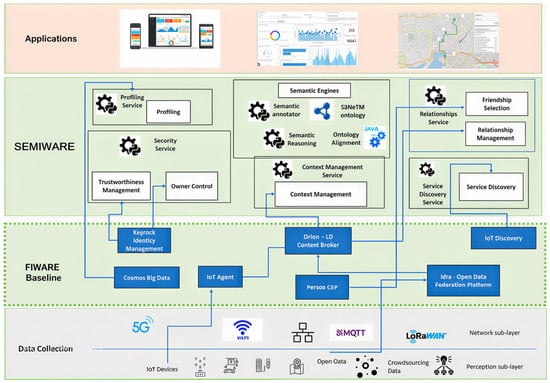
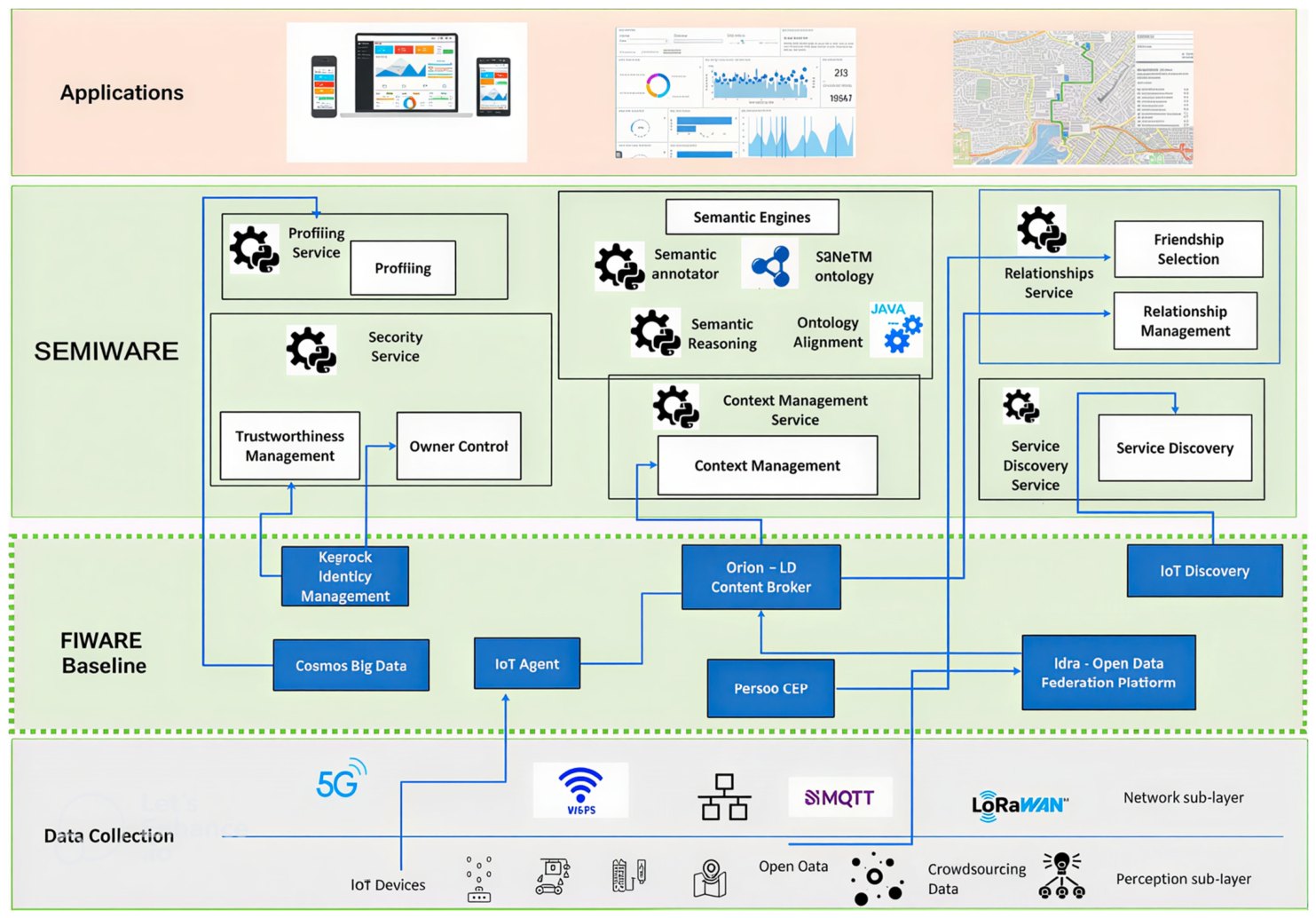
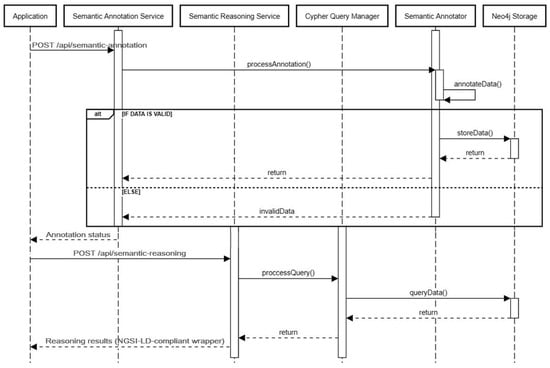
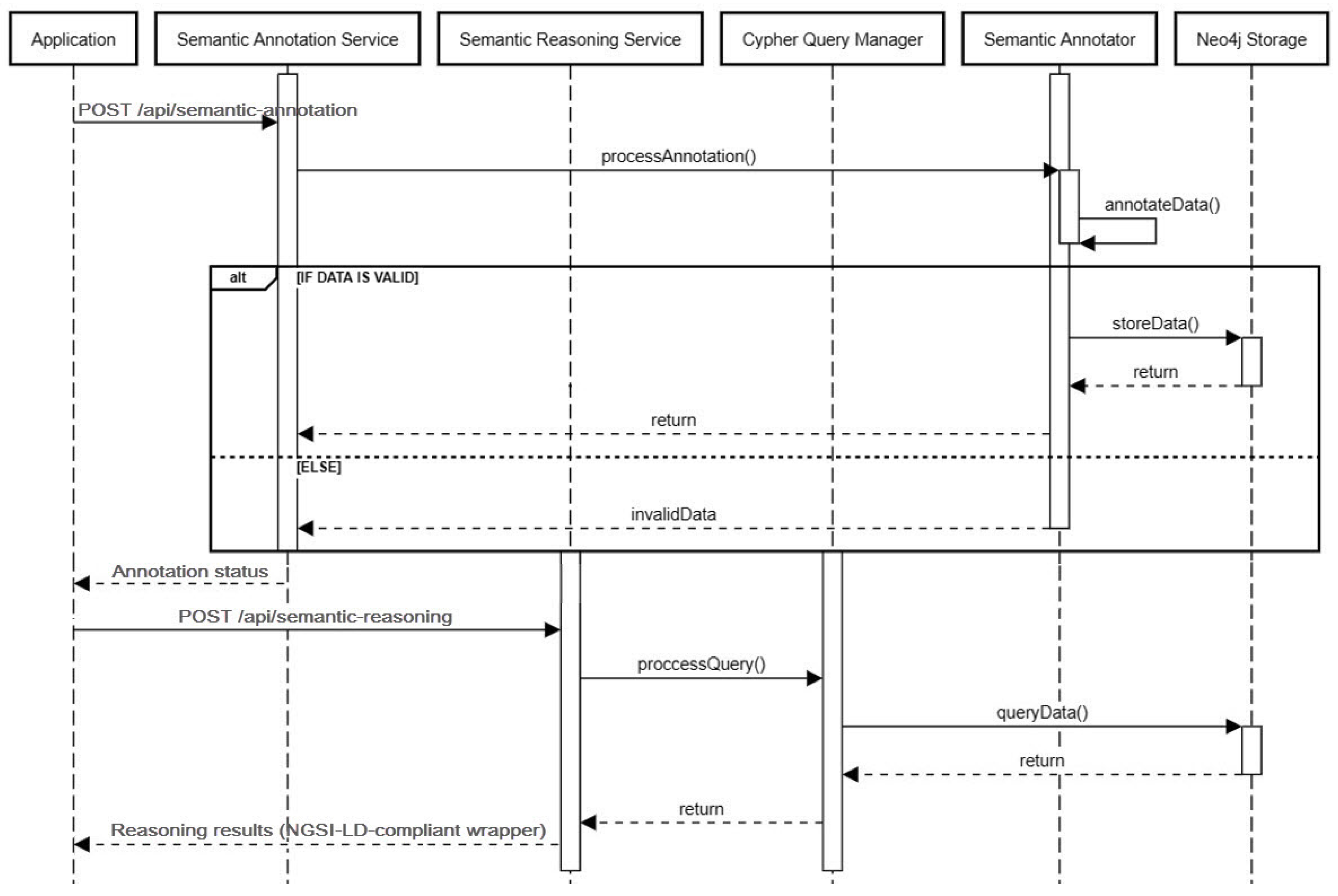
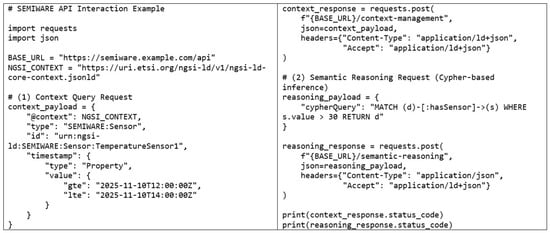
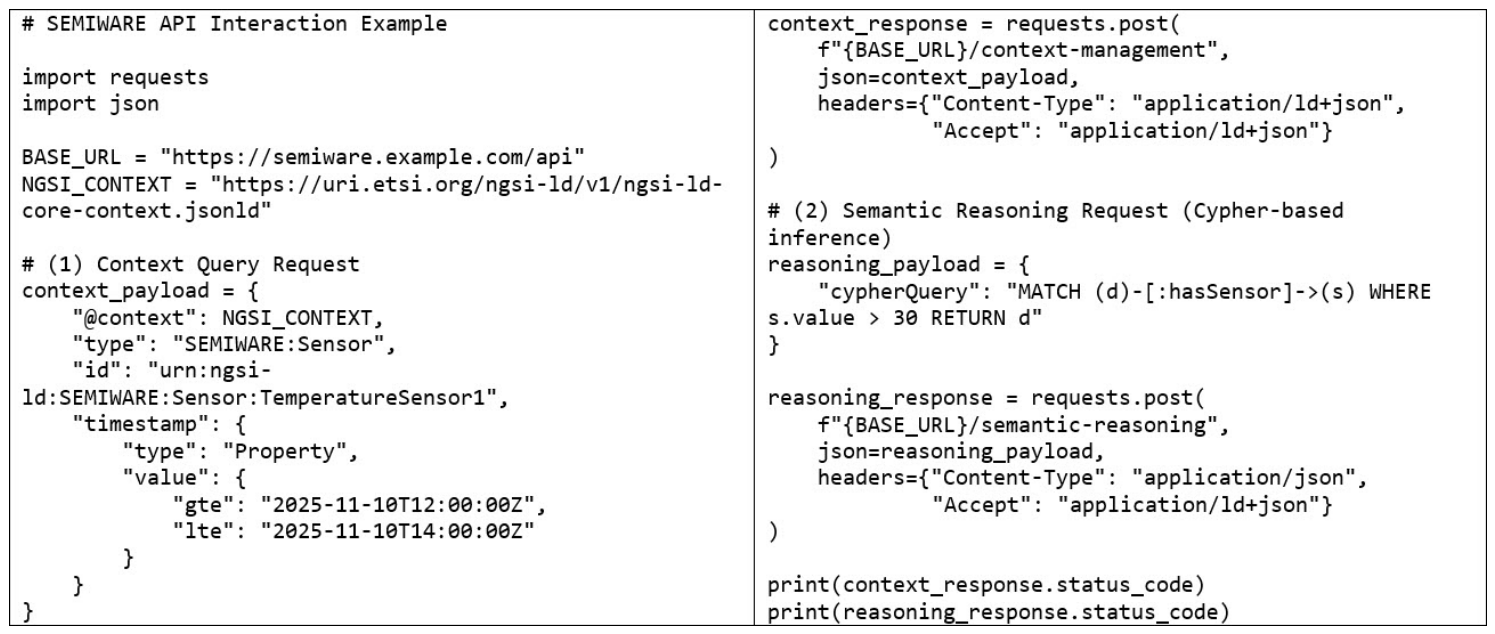
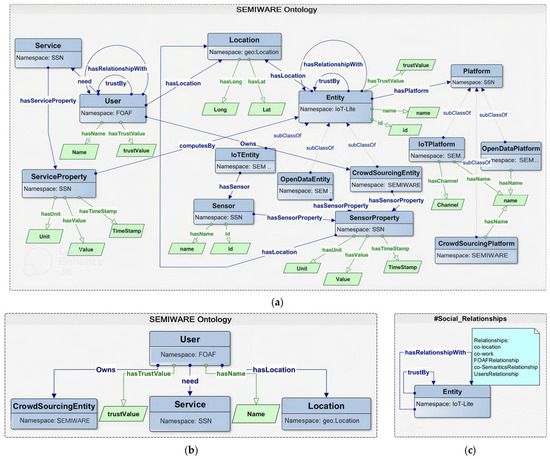
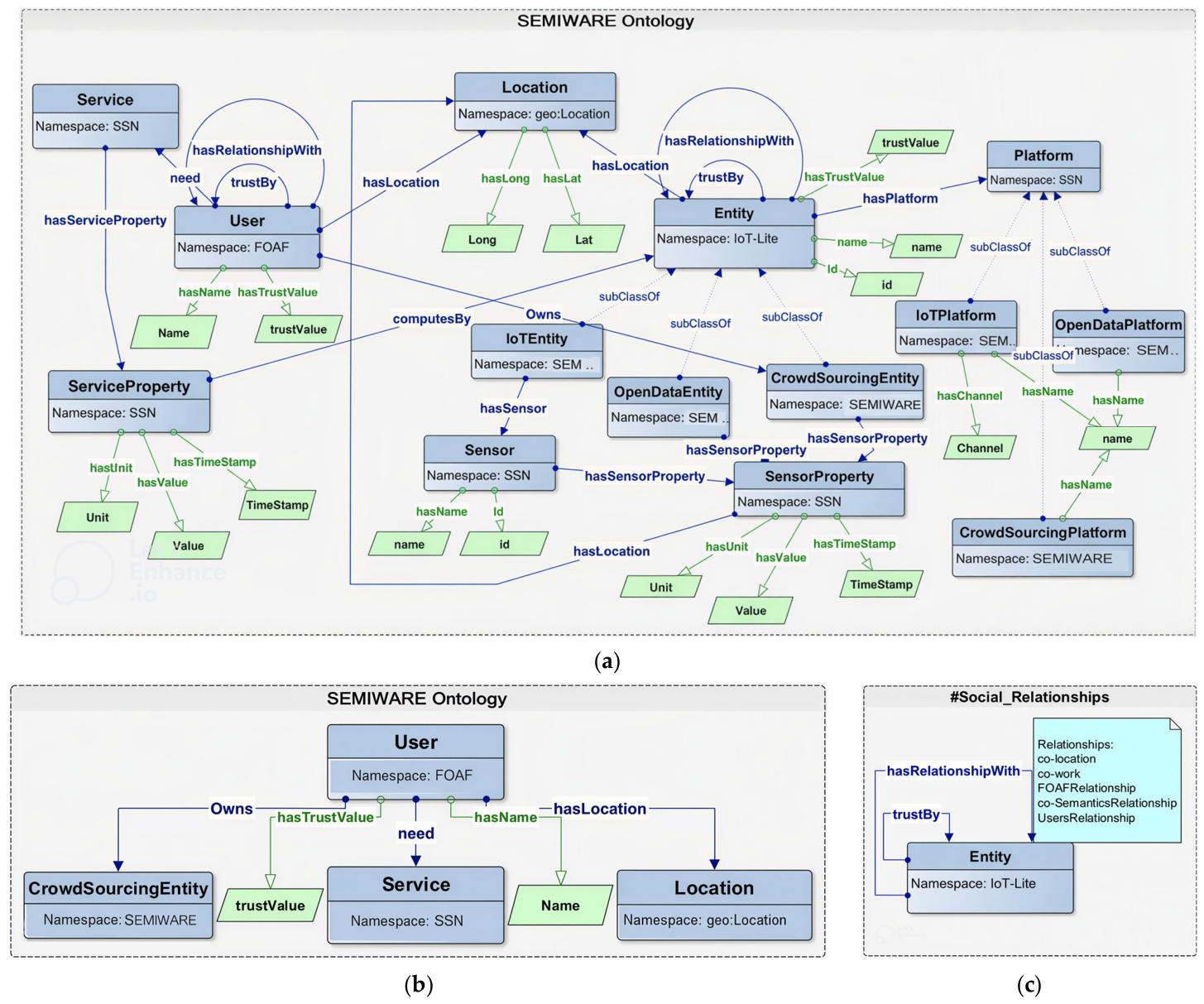
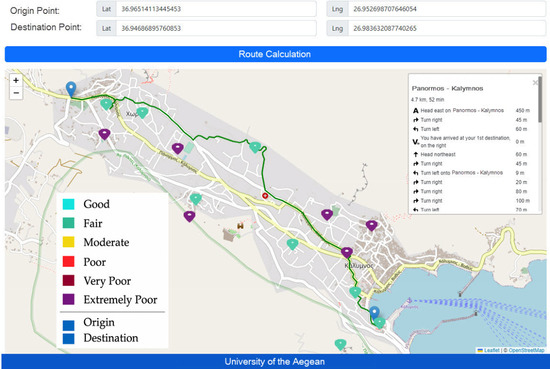
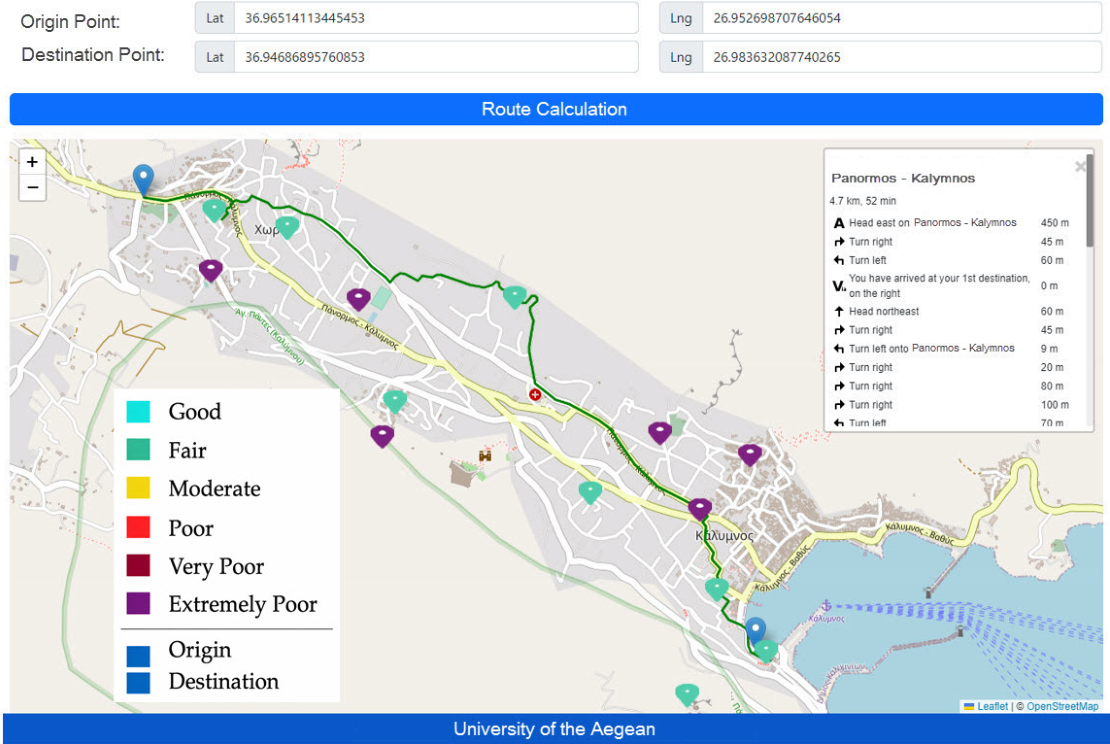
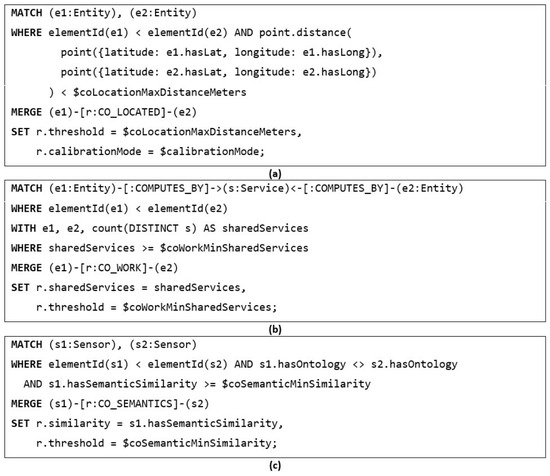
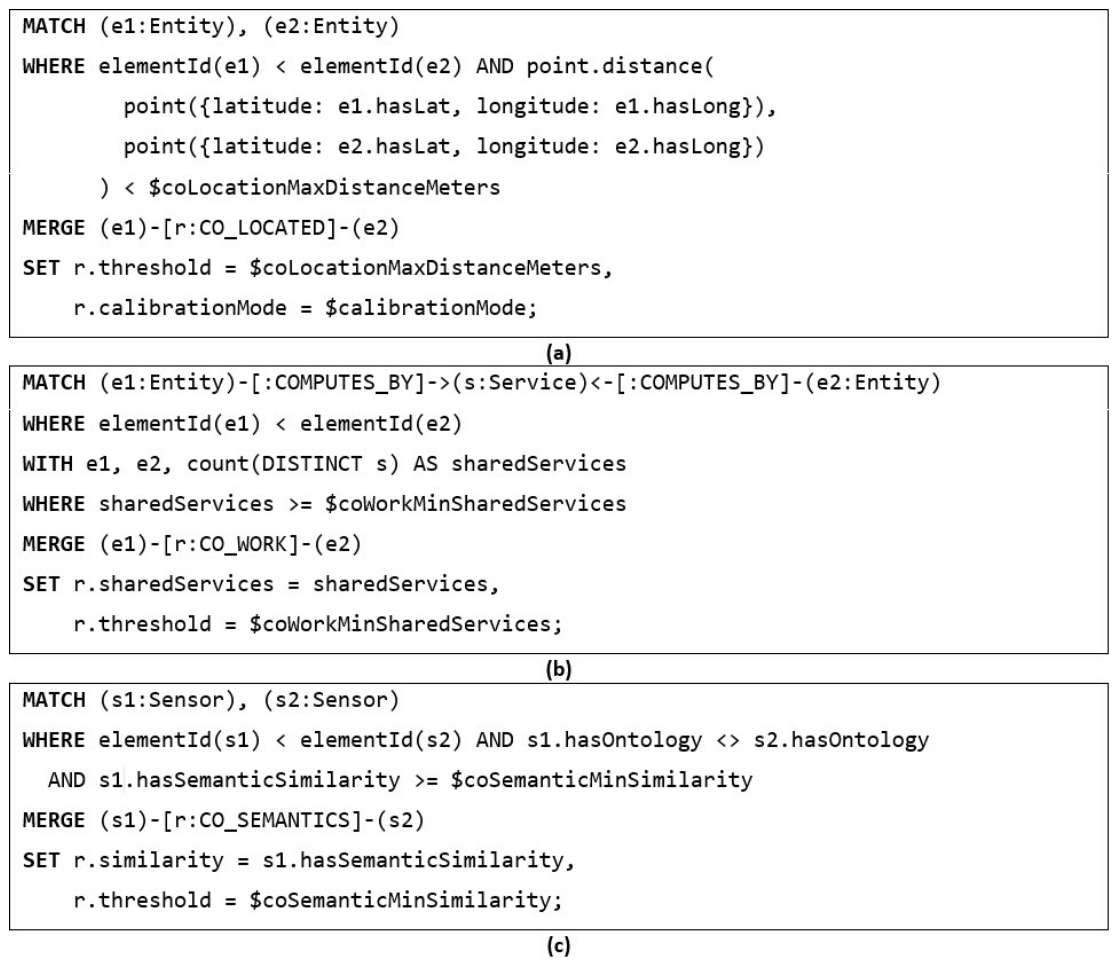
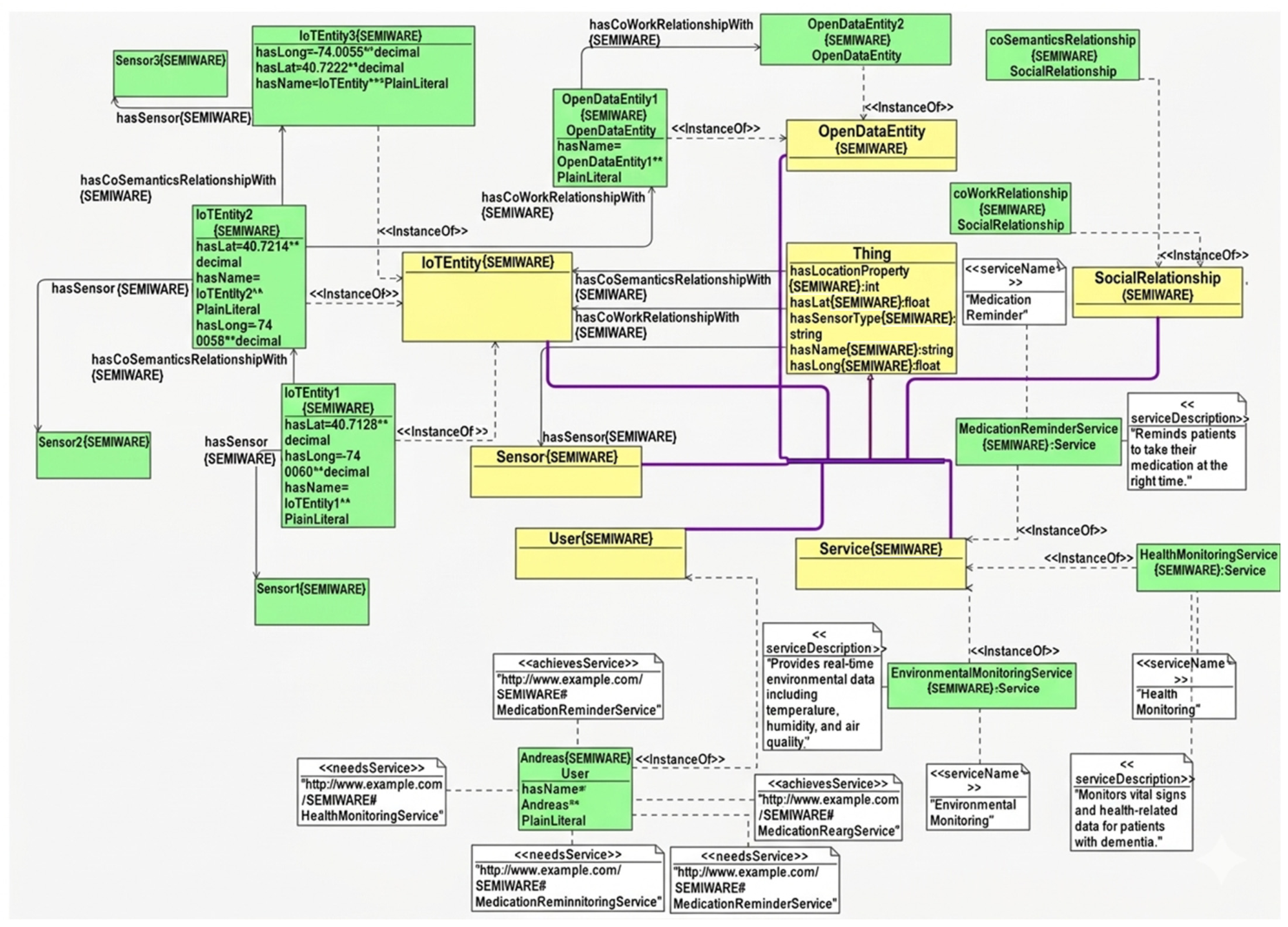
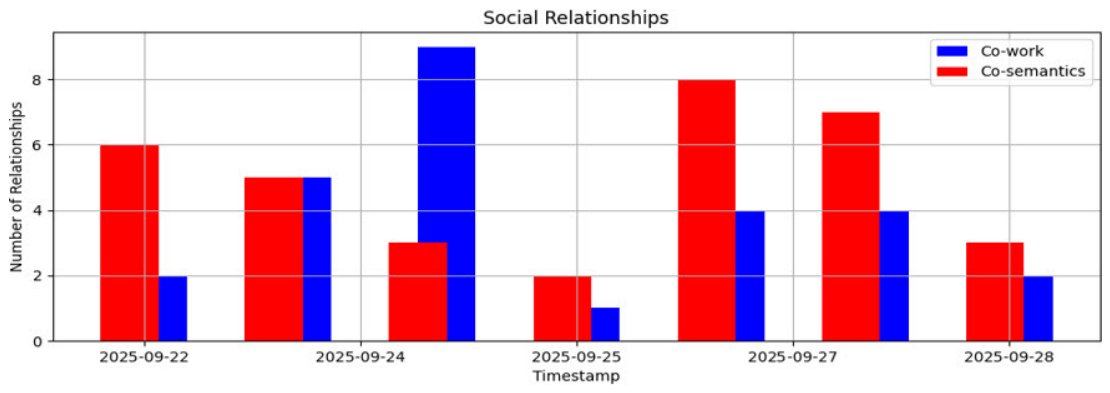

Disclaimer/Publisher’s Note: The statements, opinions and data contained in all publications are solely those of the individual author(s) and contributor(s) and not of MDPI and/or the editor(s). MDPI and/or the editor(s) disclaim responsibility for any injury to people or property resulting from any ideas, methods, instructions or products referred to in the content. |
© 2026 by the authors. Licensee MDPI, Basel, Switzerland. This article is an open access article distributed under the terms and conditions of the Creative Commons Attribution (CC BY) license.