


Abstract
With the expansion of seismic exploration targets to deeper and more complex geological structures, traditional fault interpretation methods face significant challenges in terms of efficiency and accuracy. The extensive application of artificial intelligence (AI) technologies is driving the evolution of fault recognition techniques toward automation and intelligence. This paper systematically reviews the development of AI technologies in fault recognition, from traditional machine learning-based seismic attribute fusion analysis to deep learning-based end-to-end recognition and semantic segmentation. It provides a detailed discussion of key technological advancements, such as sample set construction, weak signal enhancement, and noise suppression. To address the current challenges, including the insufficient authenticity of synthetic data, poor model interpretability, and weak quantitative representation capabilities, this study proposes three future research directions: the development of benchmark datasets based on real geological evolution, the construction of interpretable model architectures that incorporate geological prior information, and the realization of multi-parameter collaborative intelligent fault system analysis. These directions aim to provide theoretical support for advancing the practical and industrial applications of intelligent fault recognition technology.
1. Introduction
When rocks are subjected to external forces, and as the applied force gradually increases to exceed the rock strength limit, the rock fractures, forming a fault structure. As one of the most common geological phenomena, fractures can be classified into two main types: joints and faults. Compared to joints, the primary difference between faults is that during the fracturing process under stress, relative displacement occurs along the fracture plane. Fault structures directly influence the burial conditions of underground coal seams, oil, and gas reservoirs, making the early exploration of their distribution a fundamental task for energy development. As resource exploration continues to extend to deeper and more complex structural areas, the interpretation of fault distribution through geophysical information faces increasingly complex issues with multiple solutions and uncertainties.
Seismic exploration, the most commonly used method for fault recognition, traditionally involves the manual interpretation of vertical profiles and horizontal slices of pre-stack or post-stack data obtained after collection and processing. The biggest drawback of this method is its time-consuming nature, and the interpretation results are directly influenced by the interpreters’ expertise. To accurately describe fault systems and interpret fault distributions, researchers in the field of geology have conducted a series of studies. Initially, conventional fault interpretation techniques were developed into more refined fault slice techniques [1,2]. Subsequently, various seismic attributes highlighting lateral discontinuities, such as similarity [3], coherence [4], variance [5], and curvature [6], were developed. However, individual seismic attributes often reflect only one aspect of seismic wave reflection characteristics, which presents clear limitations. Moreover, this fault detection method overlooks the local seismic patterns contained within the seismic data [7]. Therefore, researchers have further advanced seismic multi-attribute interpretation techniques [8,9,10,11], systematically extracting and analyzing multiple seismic attributes while exploring the relationship between these attributes and subsurface geological features. Despite these advancements, owing to the wide variety of seismic attributes (e.g., amplitude, frequency, phase, and coherence), selecting the most effective combination of attributes still relies on human experience, lacking systematization and scientific rigor. If the chosen attributes are not suitable for a particular region, misclassification can be highly problematic [12,13,14]. With the continuous advancement of artificial intelligence (AI) technologies, seismic fault recognition methods are undergoing a transformation, rapidly progressing toward automation, high precision, and intelligence. Traditional seismic interpretation relies heavily on human experience, which is not only time-consuming and labor-intensive but also susceptible to subjective factors, leading to inconsistent interpretation results. In contrast, fault recognition methods based on machine learning and deep learning can automatically extract fault features by training on large amounts of seismic data, significantly improving the efficiency and accuracy of fault recognition. In particular, the application of deep learning models such as Convolutional Neural Networks (CNN) and U-net, to seismic data in recent years has enabled fault recognition to handle complex nonlinear relationships and effectively cope with noise interference, further enhancing recognition robustness.
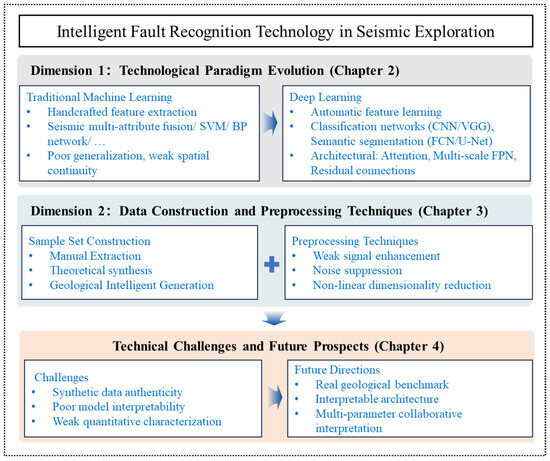
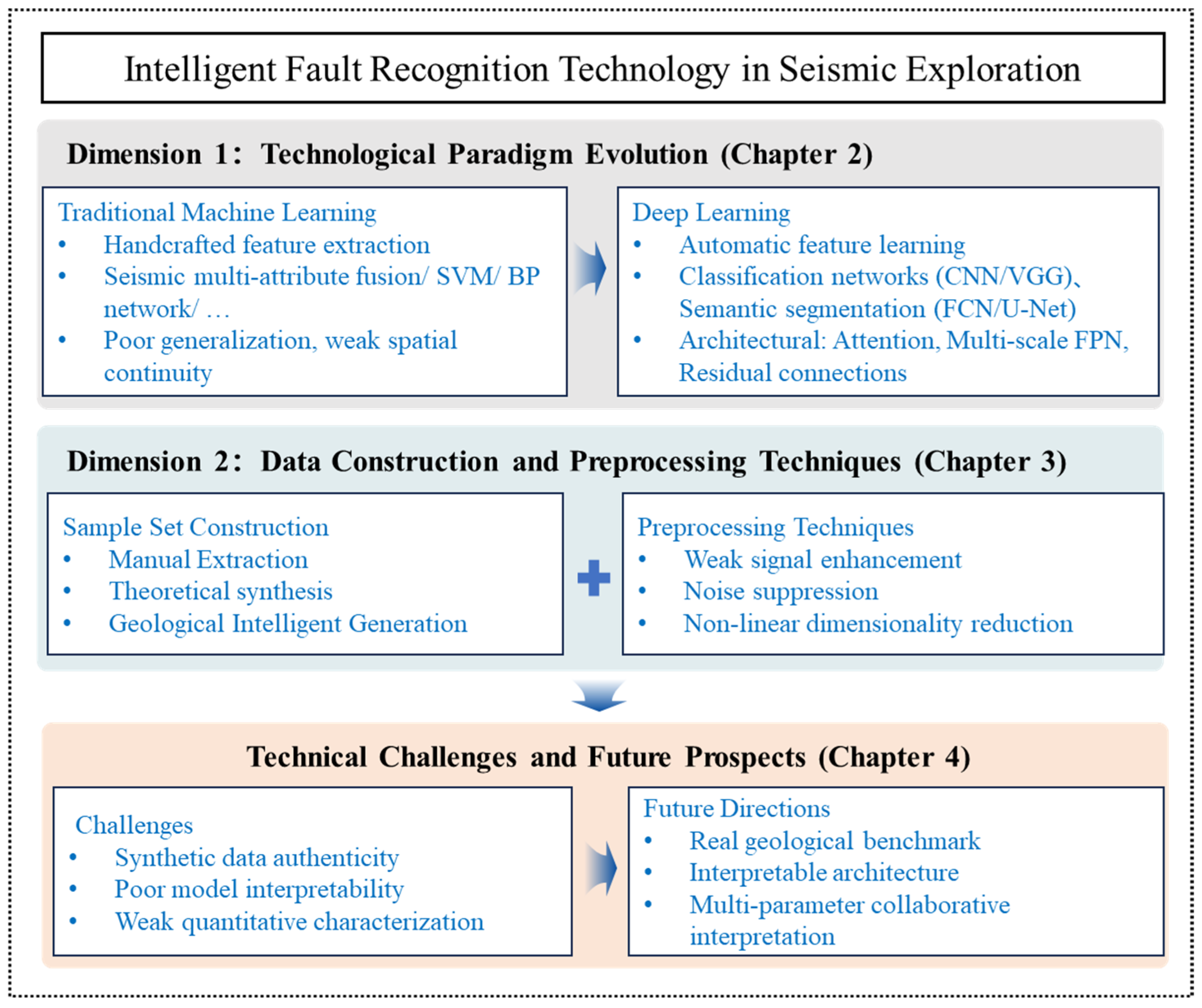
Several scholars have recently reviewed this field. Yang et al. systematically reviewed intelligent fault identification from the perspective of deep learning network architectures [15], whereas Zhang et al. summarized fault identification technologies by their developmental stages [16]. This review adopts a systematic literature retrieval method, searching databases such as CNKI and Web of Science for publications from 1995 to 2025 using keywords including “fault identification,” “deep learning,” and “seismic attributes.” Through a three-stage screening process (title, abstract, and full text), over 60 representative papers were included. In contrast to existing reviews, this study categorizes intelligent fault identification methods into two paradigms (traditional machine learning and deep learning) based on technological evolution. It systematically reviews data construction strategies (sample set construction and preprocessing techniques) and model innovations, while discussing interpretability methods. Focusing on three core challenges—insufficient synthetic data authenticity, poor model interpretability, and weak quantitative characterization—this study proposes future directions to support the practical and industrial application of intelligent fault recognition technology. Figure 1 illustrates this conceptual framework.
Figure 1.
Conceptual framework of the review. The framework consists of three dimensions corresponding to Chapters 2–4. Dimension 1 traces the technological evolution from traditional machine learning to deep learning, including representative network architectures and innovations. Dimension 2 summarizes the data construction strategies (three generations) and preprocessing techniques. Dimension 3 identifies three core challenges and maps them to corresponding future research directions.
2. The Development of AI Driving Progress in Fault Recognition Technology
2.1. Traditional Machine Learning Methods Based on Seismic Attributes
As an interdisciplinary field combining geophysics and computer science, the development of intelligent fault interpretation technology is closely linked to the evolution of AI technology. In 1986, Rumelhart and McClelland, among others, systematically presented the BP neural network algorithm in their book Parallel Distributed Processing [17,18], which triggered the third wave of development in artificial neural network research and laid the foundation for seismic multi-attribute fault interpretation based on artificial neural networks. Traditional machine learning methods were subsequently applied to analyze the multi-dimensional attributes extracted from seismic data and to classify the presence or absence of faults. Early pioneering studies have verified the feasibility of this approach. For example, Dong et al. used a BP neural network to integrate multiple parameters for small fault identification [19], while Tingdahl et al. proposed a semi-automatic fault detection framework, establishing a mapping relationship between subsurface structural features and network outputs and effectively reducing human subjectivity in seismic multi-attribute analyses [20,21]. This approach has several advantages: strong interpretability, as seismic attributes have clear physical or geometric meanings that allow geoscientists to understand and optimize feature combinations; relatively low data requirements, as satisfactory performance can be achieved with limited labeled samples through careful feature engineering; and high computational efficiency owing to the lightweight nature of the models. Consequently, subsequent studies have focused on attribute optimization and classifier improvement [22,23,24]. For instance, Zheng et al. combined multi-layer perceptron neural networks with an ant colony algorithm, demonstrating that the generated fault probability attributes could suppress surrounding noise and highlight fault locations, with tracking results outperforming single-attribute interpretation [25]. Sun et al. integrated support vector machines (SVM) with particle swarm optimization, fully leveraging the strengths of SVM in handling small-sample, nonlinear, and high-dimensional pattern recognition problems and significantly improving fault interpretation accuracy [26]. Recently, Ren et al. compared the effects of various parameter optimization methods—including particle swarm optimization [27,28], genetic algorithms [29], and hybrid genetic–particle swarm approaches—on the construction and performance of SVM models [30].
However, this paradigm has some inherent limitations. First, its performance heavily depends on the quality of the feature engineering. Attribute extraction requires extensive expert knowledge, and the optimal combination of attributes varies with the geological conditions of different study areas, resulting in poor generalizability [31,32,33]. Second, traditional machine learning models (such as SVM) typically perform classification at the pixel level or on small local patches, and lack the ability to model long-range spatial contextual relationships in seismic data, such as fault continuity and fault surface geometry. More importantly, while seismic attributes enhance fault responses, they also tend to amplify noise and the signatures of non-fault linear features, such as unconformities and channel boundaries, leading to relatively high false-positive rates [34,35,36]. Essentially, methods at this stage have not fully moved beyond manually designed features; they rely on machines to perform statistical classification on human-engineered attributes, resulting in a limited level of intelligence. As exploration targets shift toward deeper and more structurally complex regions—where the seismic signal-to-noise ratio is lower and fault expressions become more subtle—methods based on manually extracted features become increasingly inadequate, thereby driving the need for a deeper transformation in the next stage of development.
2.2. End-to-End Recognition Based on Deep Learning
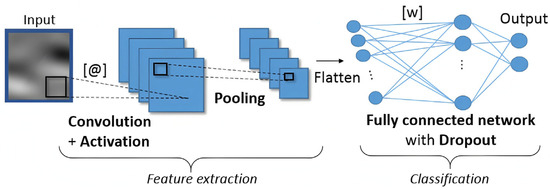
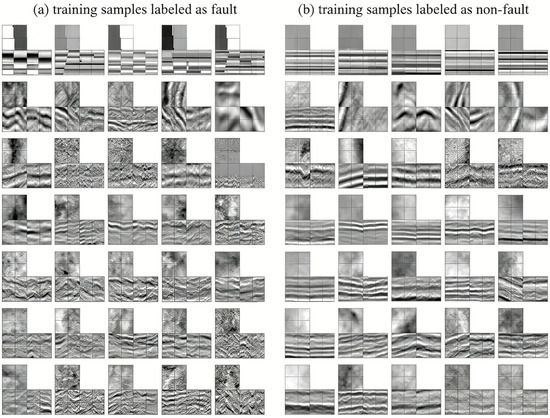
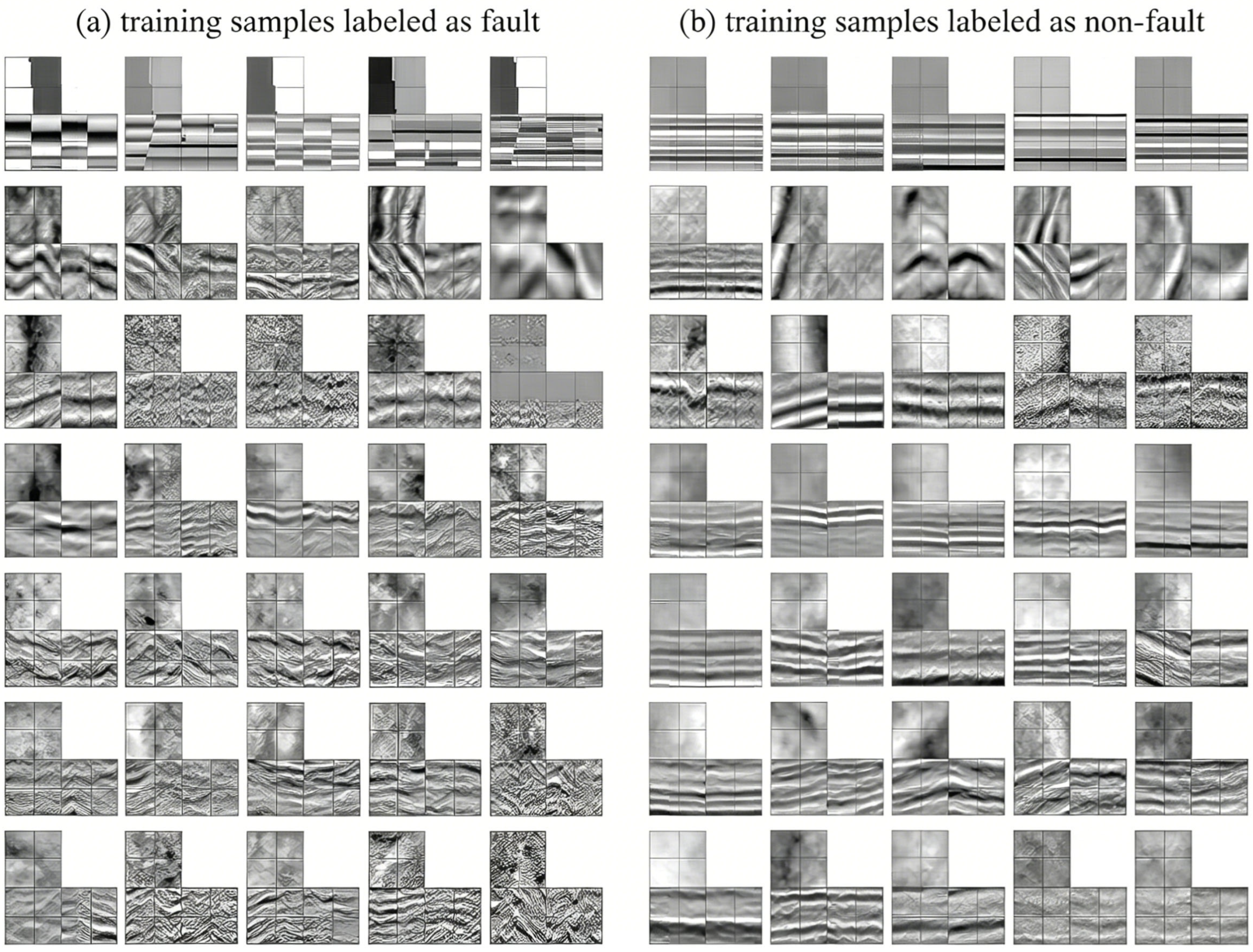
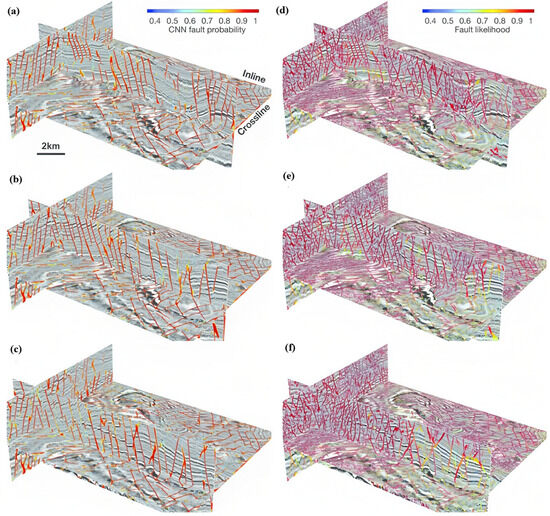
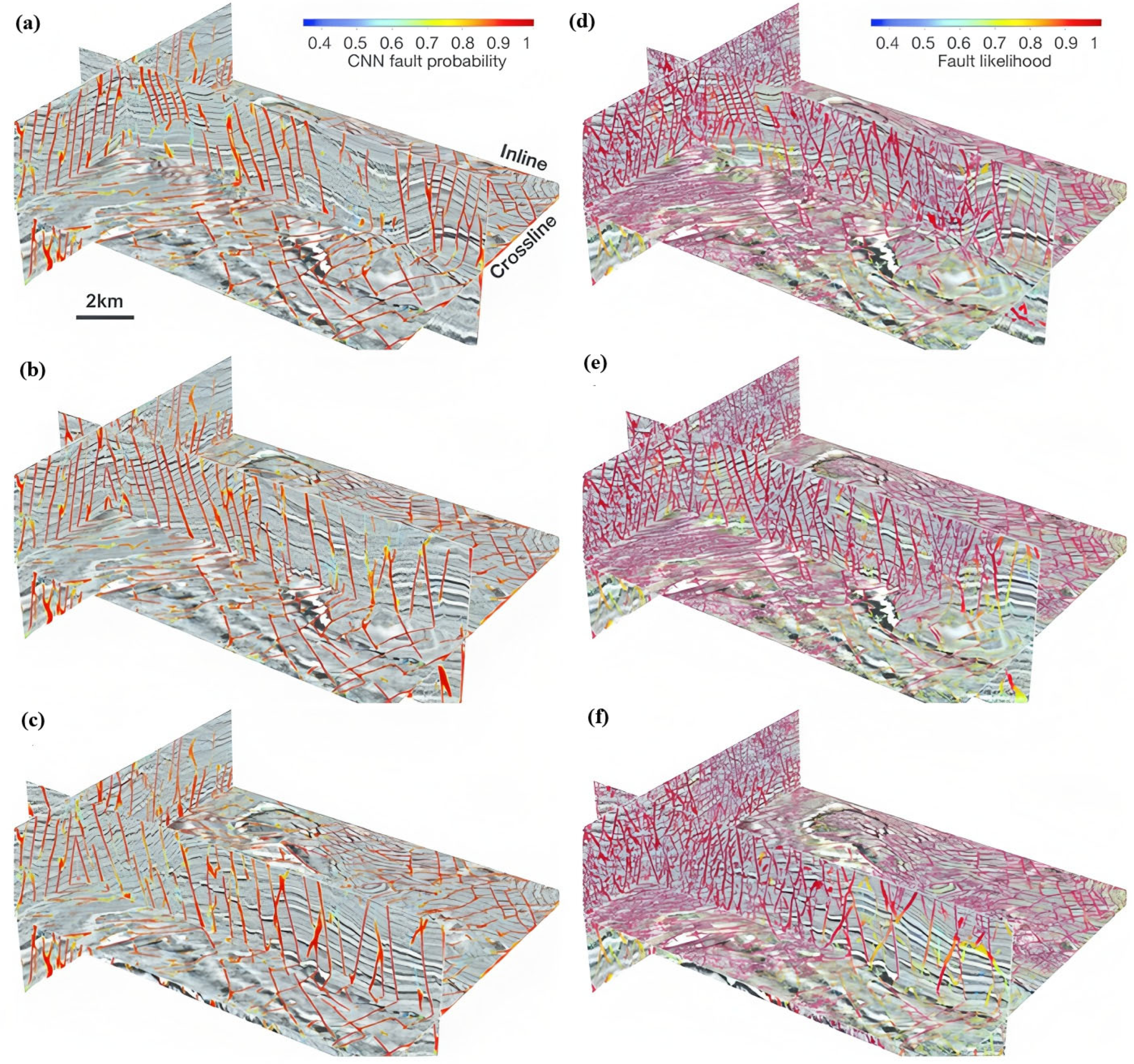
Deep learning classification networks represented by CNNs and deep residual networks began to emerge around 2017. These approaches abandoned the traditional reliance on manually defined features and instead enabled models to automatically learn the most essential representations of faults directly from raw seismic data [37,38,39,40,41,42,43]. Figure 2 illustrates a typical CNN architecture for fault detection, showing how the convolutional and pooling layers progressively extract hierarchical features. This shift provides new possibilities for fault identification in structurally complex regions. Early attempts directly applied CNN-based classification networks from computer vision to seismic data patches. For example, Xiong et al. combined inline, crossline, and time slices into a three-channel input, successfully achieving fault versus non-fault classification [44]. Figure 3 illustrates how seismic data are organized into multi-channel inputs for CNN-based classification, with panels (a) and (b) showing fault and non-fault samples respectively. The key message is that the output remains discrete labels rather than continuous fault surfaces. A further breakthrough was achieved when fault detection was reformulated as an image semantic segmentation problem. The Fully Convolutional Network (FCN) proposed by Long et al. and the U-Net architecture proposed by Ronneberger et al. adopted an encoder–decoder structure to achieve a one-to-one correspondence between the input and output sizes, enabling the generation of pixel-level fault probability volumes [45,46,47]. The FaultSeg3D model developed by Wu et al. represents a landmark study in this direction [48,49]. It uses large-scale synthetic data to train a 3D U-Net variant, directly taking seismic volumes as input and producing fault probability volumes of the same size, thereby achieving a true three-dimensional end-to-end fault segmentation. Figure 4 shows the fault probability volumes predicted by the 3D U-Net for a complex seismic volume. It is worth noting the distinction between 2D and 3D approaches here: early deep learning studies primarily operated on 2D seismic slices, which are computationally efficient but do not fully capture fault continuity along the third dimension, while the extension to 3D volumes using architectures such as 3D U-Net achieves better spatial consistency at the cost of higher computational demands.
Figure 2.
CNN network structure diagram (after Pochet et al., 2018 [42]).
Figure 3.
Samples labeled as (a) fault and (b) non-fault. Each sample consists of front, side, and top panels, representing inline, cross-line, and time slices, respectively (after Xiong et al., 2018 [44]).
Figure 4.
Faults are detected in a complicated 3D example using the trained CNN model (a–c) and thinned fault likelihoods (d–f) (after Wu et al., 2019 [48]).
Subsequently, efforts to optimize model architectures have focused on improving the feature extraction and fusion capabilities. To address the characteristics of seismic faults, researchers have incorporated various advanced modules into deep learning frameworks. Attention mechanisms (such as SE-Net and CBAM) have been introduced to emphasize the key channels and spatial locations related to faults [50]. Multi-scale feature fusion structures, such as Feature Pyramid Networks (FPN), have been designed to simultaneously capture the large-scale geometry of major faults and subtle signatures of small faults [51]. In addition, residual and dense connections have been widely adopted to alleviate the gradient vanishing problem in deep networks and promote feature reuse [37]. These improvements significantly enhanced the model performance, particularly in identifying of small faults, densely fractured zones, and regions with low signal-to-noise ratios.
This paradigm shift has brought unprecedented advantages. Deep learning models can generate continuous fault probability volumes, which are intuitive and convenient for subsequent three-dimensional analyses and modeling. Moreover, these models can adaptively learn complex feature combinations beyond human-designed attributes, demonstrating stronger robustness to noise and stratigraphic variations. In most public datasets and real-field cases, deep learning models represented by U-Net and its variants have generally outperformed traditional attribute-based methods in terms of interpretation accuracy. However, this shift has moved the field from the “bottleneck of feature engineering” into a deeper set of challenges characterized by strong data dependency, limited model interpretability, and separation of geological knowledge from data-driven models. Therefore, future breakthroughs may not lie in designing deeper or more complex network architectures, but in deeply integrating physical principles, geological priors, and data-driven approaches to develop a new generation of intelligent interpretation tools that combine high accuracy, interpretability, and geological consistency.
To provide a systematic comparison of the different intelligent fault recognition methods discussed above, Table 1 summarizes their representative models, core assumptions, advantages, limitations, data requirements, computational complexity, output types, and application scenarios. As shown in Table 1, each method exhibits distinct characteristics and trade-offs. Traditional machine learning methods (SVM/MLP) offer strong interpretability, low data requirements, and low computational cost, but suffer from weak generalization owing to their reliance on handcrafted features. Classification networks (CNN/VGG) achieve automatic feature extraction and higher accuracy; however, their discrete output limits spatial continuity. Semantic segmentation networks (FCN/U-Net) generate continuous fault probability volumes and excel in detecting low-order faults, albeit with substantial data and computational requirements. GAN-based augmentation serves as an effective auxiliary strategy for mitigating sample scarcity, whereas GNN-based modeling represents an emerging direction for multi-parameter collaborative fault system analysis.
Table 1.
Comprehensive comparison of different intelligent fault recognition methods.
Furthermore, to provide a concise overview of representative studies in this field, Table 2 summarizes each study’s method, dataset type, label source, and main outputs in chronological order, illustrating the evolution from traditional machine learning to deep learning-based approaches. As shown in Table 2, the field has evolved from early semi-automatic methods to deep learning-based approaches that automatically learn fault features. Notably, synthetic data have been widely adopted for model training, which addresses the scarcity of labeled real data but raises concerns about generalization to field data. Recent studies, such as those by Li et al. and Chen et al., have introduced multi-scale feature fusion and foundation model transfer learning, representing the latest trends in the field [51,52]. Furthermore, the evaluation metrics employed across studies vary considerably, reflecting a lack of standardized benchmarks in this field. Early studies primarily relied on visual comparisons with conventional methods, such as coherence cubes. Although visual inspection provides an intuitive quality assessment, it is inherently subjective and non-reproducible. Subsequent studies have adopted quantitative classification metrics. For example, Xiong et al. reported accuracy and recall for patch-based fault classification [44], whereas Wu et al. employed accuracy and AUC for pixel-level fault segmentation [48]. More recent studies have adopted more rigorous metrics: Li et al. reported the precision, recall, F1-score, and mIoU, and Chen et al. adopted the OIS and ODS metrics on the Thebe public dataset [51,52].
Table 2.
Summary of representative studies on intelligent fault recognition.
However, several critical issues require attention. First, accuracy alone is insufficient, especially under severe class imbalance—a common situation in fault recognition, where fault pixels typically account for only 1–5% of the total seismic volume. A model that predicts all pixels as “non-fault” would achieve 95–99% accuracy but would be practically useless for fault detection. Therefore, metrics such as precision, recall, F1-score, and AUC are more informative because they separately account for false positives and false negatives. Second, fault continuity—a geometrically meaningful metric for assessing the connectivity of detected fault surfaces—has been adopted in only a few studies (e.g., Liu et al., 2021 [46]), despite its practical importance for structural interpretation. Third, interpretability-related measures remain largely unexplored; although techniques such as Grad-CAM have been proposed to visualize model decisions, the quantitative evaluation of interpretability remains an open challenge.
3. Data Construction and Preprocessing Techniques
Deep learning, especially within the supervised learning paradigm, places higher demands on the scale, quality, and representativeness of the data. This requirement has driven seismic data construction and preprocessing techniques from exploratory efforts to systematic research. The objective is no longer limited to improving the signal-to-noise ratio but extends to actively shaping the data so that it is better suited to the requirements of subsequent model training and generalization.
3.1. Sample Set Construction: From Manual Extraction to Theoretical Synthesis and Geological Intelligent Generation
Traditional machine learning methods (such as SVM and MLP) typically rely on manually extracted features or pre-processed data, followed by classification or regression using specific algorithms. Therefore, in the early stages of intelligent seismic fault recognition, extensive research has focused on extracting stratigraphic discontinuity features from raw seismic data. Tingdahl et al. were among the first to extract multiple seismic attributes, such as dip variance and coherence, to characterize stratigraphic discontinuities and construct feature sets for fault identification [18]. In 2014, Zheng et al. further developed this approach by integrating multiple attributes to generate a new fault-sensitive attribute, which was then used with neural networks for automatic fault detection [23]. Di et al. applied an SVM classifier to analyze fused multi-attribute data, further improving the fault detection accuracy [54].
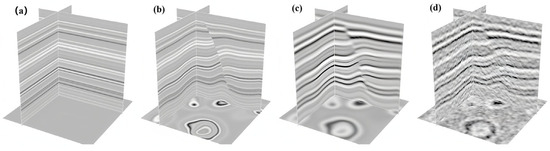
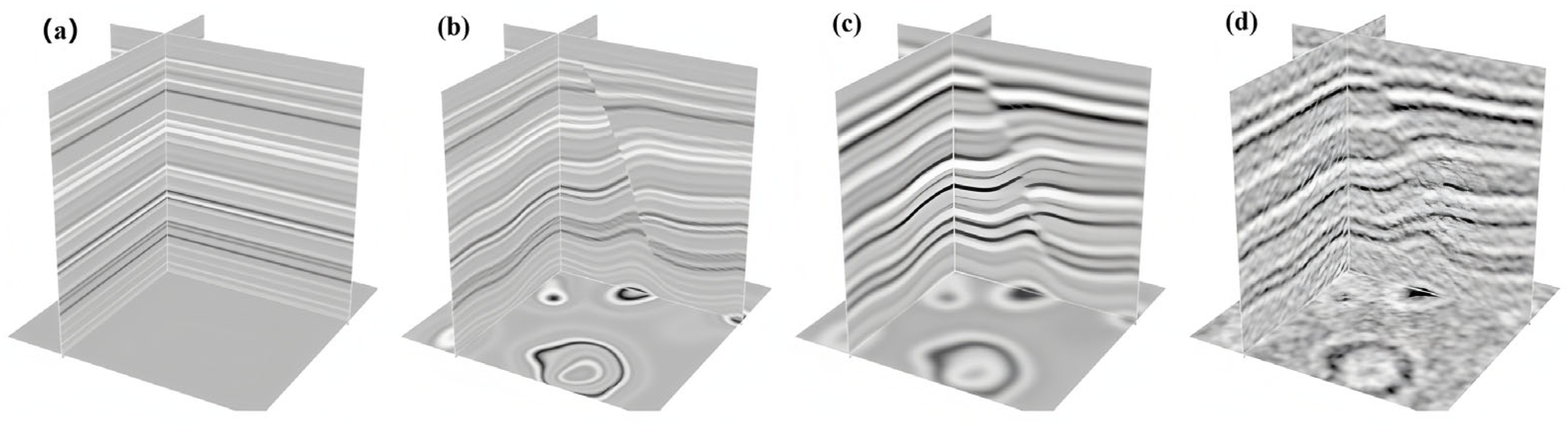
Subsequently, traditional feature extraction approaches were gradually replaced by deep neural networks (DNNs) [40]. Deep learning can automatically learn complex features directly from data; however, it also requires large amounts of accurate data–label pairs. However, only a limited number of samples are often available, and the labels themselves may contain uncertainties. To address this contradiction, early solutions relied mainly on theoretical synthesis based on geometric and kinematic modeling. The typical workflow includes: (1) designing geometric velocity models containing faults and folds with different scales and orientations; (2) performing forward modeling by convolving the model with a theoretical wavelet (e.g., a Ricker wavelet) to generate synthetic seismic records; and (3) directly extracting fault surfaces from the velocity model as labels. The workflow proposed by Wu et al. [55] is representative of this stage (Figure 5). Through parameterized control, they generated large batches of models with diverse folds and fault patterns, providing scalable training datasets for end-to-end networks [55]. The advantages of this method include accurate labels, unlimited data generation, and systematic coverage of predefined fault types. However, its limitation lies in the fact that the simulated seismic responses lack the complexity of real data, such as realistic noise, wavelet dispersion, multiples, and uneven illumination effects, resulting in a relatively limited generalization performance when applied to field data.
Figure 5.
Workflow of folding and faulting (after Wu et al., 2020 [55]). (a) Initial 3D flat reflectivity mode; (b) folded and faulted model; (c) synthetic seismic image; (d) addition of random noise to create a more realistic seismic image.
To bridge the gap between synthetic and real data, researchers have introduced style transfer and data augmentation techniques in computer vision. Generative Adversarial Networks (GANs) and their variants have become key tools [56]. The core idea is to decouple the structural geometry from the style characteristics in seismic data, where the structure refers to geological patterns and the style includes texture, noise, and wavelet features. For example, Lu et al. used a GAN to fuse the structural characteristics of synthetic data with the texture style of real data, generating datasets that are both geologically reasonable and visually realistic [53]. Wang et al. proposed the SeismoGen framework, which directly learns the distribution of real seismic data and generates new, realistic seismic traces or sections [57]. These approaches significantly enhance the realism of synthetic datasets. Targeted data augmentation techniques tailored to seismic characteristics have also been developed. These include dip-guided elastic deformation based on stratigraphic orientation, local perturbations along fault lines, and simulations of data variations caused by different acquisition geometries or processing parameters. These strategies effectively increase the data diversity and help alleviate overfitting.
However, despite these advances, the domain shift between synthetic and real seismic data remains a fundamental bottleneck. Models trained primarily on synthetic data often exhibit significant performance degradation when applied to field data. This discrepancy arises from several sources. First, synthetic data typically assume idealized seismic wavelets (e.g., Ricker wavelets) and simple noise models, whereas real data contain complex, nonstationary noise from acquisition, processing, and environmental factors. Second, synthetic models simplify geological complexity; real faults often exhibit irregular geometries, variable displacement, and intricate interactions with the surrounding stratigraphy that are difficult to parameterize. Third, acquisition-related factors, such as acquisition footprint, limited resolution, and processing artifacts, are rarely incorporated into synthetic models.
Several strategies have been proposed to mitigate these domain shifts. Domain adaptation techniques, including adversarial domain adaptation and feature alignment methods, aim to learn domain-invariant feature representation. Transfer learning, particularly fine-tuning a model pre-trained on synthetic data with a small amount of field data, has proven to be effective in many seismic interpretation tasks. Recently, physics-informed approaches that incorporate wave equation-based constraints or geological consistency losses into the training process have shown promise in improving generalization. A promising practical strategy is the progressive training pipeline: pre-training on large-scale synthetic data, fine-tuning on a small set of field data with manual labels, and adapting online as new data become available. Future research should focus on developing standardized benchmarks for domain shift evaluation and establishing the best practices for combining synthetic and real data in training.
3.2. Data Preprocessing Techniques: Weak Signal Enhancement and Noise Suppression
During seismic wave propagation, faults with small folds and displacements generate weak anomalous seismic responses that are easily overwhelmed by noise. This makes it difficult for machine learning methods to train effective mappings between faults and non-faults. To address this issue, researchers often preprocess seismic data preprocessing before training fault recognition models. The signal-to-noise ratio (SNR) of the seismic data is improved by using various techniques to enhance the weak signal characteristics at fault locations and suppress noise. This, in turn, provides a higher-quality data foundation for subsequent fault recognition model training, ultimately enhancing the accuracy and robustness of the models. Common preprocessing methods include denoising filters, signal enhancement, and time-frequency analysis [58]. Chehrazi et al. calculated the tilt angle information for each seismic record point based on the sliding three-dimensional Fourier analysis technique and further applied tilt-guided filtering to eliminate random noise [59]. The noise-reduced seismic data were then used to extract multiple seismic attribute features for the fault recognition. Zou et al. amplified weak signal responses generated at small faults by calculating the second-order derivatives of variance attributes and then used multi-attribute fusion methods to effectively suppress the noise information [60]. Zhang et al. enhanced fault interpretability by applying a combination of dip scanning, structure-oriented filtering, edge-preserving filtering, and frequency-divided filtering, and on this basis conducted fault identification research using AI algorithms and transfer learning techniques [61].
In addition, when multi-attribute fusion strategies are adopted, dozens or even hundreds of seismic attributes form an ultra-high-dimensional feature space characterized by strong correlations, redundancy, and noise. Directly feeding such data into a model not only increases the computational burden but may also lead to the “curse of dimensionality.” Traditional linear methods such as Principal Component Analysis (PCA) are not well suited for capturing the nonlinear relationships among seismic attributes. Therefore, nonlinear dimensionality reduction and feature selection have become important research topics. Jahan et al. were among the early researchers to apply PCA for attribute dimensionality reduction [62]. Zou et al. compared manifold learning methods such as Locally Linear Embedding (LLE), and found that they better preserve the nonlinear structure of the original high-dimensional space [63]. Ren et al. proposed a more systematic workflow: first selecting an initial attribute set based on geological sensitivity, then applying Kernel Principal Component Analysis for nonlinear dimensionality reduction, and finally feeding the optimized features into an improved SVM model, achieving favorable results [25]. Essentially, this process performs a data-driven “pre-feature learning” step prior to model training, reducing the burden on subsequent deep models and providing better guidance for learning. With continued technological development, data construction and preprocessing have evolved from auxiliary steps into core competitive components of intelligent fault interpretation technology stacks. The future trend is the co-evolution of data and models: on the one hand, geological intelligent generation and refined preprocessing will provide data with stronger geological significance and better suitability for model training; on the other hand, model architectures themselves should develop stronger capabilities for autonomous learning and feature disentanglement from raw, complex data, thereby reducing reliance on costly preprocessing and ideal synthetic datasets. The integration of these two directions will be key to building the next generation of robust and practical intelligent interpretation systems.
4. Technical Challenges and Future Prospects
Although deep learning-based intelligent fault recognition techniques have achieved promising results on some idealized datasets, the “last mile” toward industrial, large-scale, and routine applications still faces significant challenges. Current technological achievements are not yet reliable production tools for geoscientists, as they encounter a series of critical technical issues that require urgent resolution. The future development of intelligent fault recognition methods is likely to focus on several key areas.
4.1. Constructing Benchmark Datasets for Real Geological Evolution
Model training requires large amounts of high-quality data; however, in actual exploration (especially in specific fields such as coal mining), it is extremely difficult to obtain a balanced dataset that fully represents all the fault characteristics of the study area. Although techniques such as seismic wave propagation theory-based simulation modeling and GANs can effectively expand the dataset, synthetic data still exhibit noticeable differences from real subsurface responses in terms of waveform characteristics, noise structure, and complexity of geological contact relationships. These discrepancies may lead to models that perform excellently on synthetic data but show significantly reduced generalization capabilities when applied to actual seismic data. The future development of data generation technologies should not be limited to simulating geometric shapes but should integrate rock physics, seismic wave propagation dynamics, and geological mechanics processes to construct numerical models that more closely resemble real geological evolution. High-fidelity forward modeling techniques should be adopted to generate synthetic seismic records that closely match real data in terms of amplitude, frequency, phase, and noise patterns.
Furthermore, in real 2D seismic profiles or 3D seismic volumes, the sample sizes of faults and non-faults are often highly imbalanced, with fault pixels accounting for only a small fraction of the total data volume. To address this issue, future research should move beyond simple geometric transformations and develop data augmentation techniques tailored to the characteristics of seismic data. For example, style transfer-based methods can combine the structural features of synthetic data with the texture and noise styles of real data, whereas local augmentation can be specifically applied to regions near faults. At the algorithmic level, strategies such as weighted loss functions and ensemble learning should be widely adopted to force models to focus on rare fault samples. Moreover, the development of big data will drive the establishment of benchmark datasets for fault recognition, enabling systematic research into transfer learning, such that models pre-trained on one work area can quickly adapt to a target area with only a small number of samples.
A benchmark dataset for seismic fault recognition should possess the following properties. First, it should include diverse geological settings (e.g., extensional, compressional, and strike-slip regimes) to ensure its broad applicability. Second, it must provide high-quality labels validated by multiple interpreters or constrained by well data, with uncertainty estimates for ambiguous fault interpretation. Third, it should cover multiple fault scales, from large basin-bounding faults to small-displacement faults (down to the seismic resolution limit), enabling the evaluation of low-order fault detection. Fourth, both 2D seismic profiles and 3D seismic volumes should be included, with standardized training-validation-test splits to ensure fair comparisons across different methods. Fifth, the dataset should incorporate realistic noise and acquisition variations (e.g., different signal-to-noise ratios and survey geometries) to challenge the model robustness. Sixth, evaluation metrics should be predefined and standardized, including both pixel-wise metrics (precision, recall, F1-score, and mIoU) and structure-aware metrics (fault continuity and connectivity). Establishing such a benchmark would significantly accelerate progress in intelligent fault recognition by enabling fair and reproducible comparisons among different methods.
4.2. Developing Interpretable Model Architectures Incorporating Geological Prior Knowledge
Current research has explored various network architectures; however, most of these models directly apply established models from the computer vision field (such as U-Net and ResNet). Although these approaches have yielded certain results, they do not fully leverage the inherent physical principles of seismic signals. Faults are geological structures controlled by regional stress fields that exhibit specific combinatory patterns. Existing models, which are typically locally perceptive, lack an understanding of the broader geological context and development features of regional structures. This limitation leads to geological errors in predictions, particularly in the presence of noise interference or ambiguous features. To address this gap, future model architecture innovations should focus on integrating prior geological knowledge into the model design. Several specific strategies have been proposed in the recent literature, which can be summarized into three categories. First, geometry-aware constraints can be incorporated into the loss function or network structure, including structural continuity constraints to encourage spatially coherent fault surfaces, dip-consistency losses to align the predicted faults with local seismic structures, and smoothness or connectivity constraints to remove spurious fault segments. Second, physics-guided regularization adds wave equation-based constraints or rock mechanics principles to guide the learning process toward physically plausible solutions, thereby reducing the risk of geologically unrealistic predictions. Third, the multi-task learning of fault attributes—simultaneously predicting fault probability, dip, strike, and displacement—forces the network to learn the inherent correlations among these parameters, thereby improving both the accuracy and geological consistency. These strategies represent promising directions for bridging the gap between data-driven deep learning and geology-grounded interpretation.
Another important reason hindering the widespread adoption of intelligent fault interpretation is the lack of transparency in the decision-making process, making it difficult for geologists to understand and trust the model’s predictions. Uncertainty quantification and explainable AI technologies are crucial for overcoming this barrier. Regarding explainable AI, methods in geoscience can be classified into post hoc explanations (e.g., Grad-CAM, LRP, perturbation-based methods) and intrinsic interpretability (e.g., physically constrained architectures). For seismic fault interpretation, these techniques can be adapted by incorporating geological priors—for example, weighting relevance scores by fault continuity or aligning heatmaps with structural dips. Three types of uncertainty quantification should be distinguished: epistemic uncertainty (model uncertainty, reducible with more data), aleatoric uncertainty (data uncertainty, inherent to seismic noise), and practical confidence measures (e.g., prediction entropy and max softmax probability). Fault recognition models will evolve toward outputs that include prediction uncertainty, with results presented as probabilistic and uncertainty volumes, allowing interpreters to focus on high-confidence regions while reviewing uncertain areas with additional geological constraints. Simultaneously, further development of visualization techniques such as Grad-CAM and LRP will help geologists understand the basis of model decisions, thereby enhancing trust and accelerating industrial adoption.
4.3. Achieving Multi-Parameter Collaborative Fault System Interpretation
Current intelligent fault recognition methods primarily focus on predicting fault locations, treating them as pixel-level binary classification problems. However, they often fail to provide quantitative parameters, such as fault displacement, dip angle, and strike, which greatly limits their geological application value. Quantitative parameters are crucial for assessing fault sealing capacity, activity, and control over oil and gas migration, coal seam gas occurrence, and geostress distribution. The joint prediction of fault parameters under a multi-task learning framework will be an important development direction. By constructing end-to-end deep learning models, seismic data can be used as inputs to simultaneously perform fault recognition, displacement estimation, and fault plane orientation calculation tasks, ultimately outputting a fault attribute volume containing multi-parameter quantitative information. Furthermore, the development of interaction mechanisms among model parameters is essential, as it allows these parameters to be mutually constrained and validated under the guidance of geological principles. For example, using Graph Neural Networks (GNNs) to model fault segments and their spatial relationships can explicitly learn the correlations between fault strike, dip angle, and other parameters, thereby enhancing the geological consistency of the overall parameter results.
Additionally, the results of intelligent fault recognition should be directly imported into mainstream 3D seismic inversion or 3D geological modeling software, allowing fault interpretation outcomes to directly serve the next stage of tasks, thereby improving the standardization and practical utility of intelligent fault interpretation. Ultimately, the model output should no longer be isolated images or attribute volumes but should evolve into a fault information database that encompasses spatial geometry, topological relationships, quantitative parameters, and confidence level results.
5. Conclusions
Artificial intelligence technology has revolutionized fault recognition. The development of intelligent fault recognition technology will undoubtedly be a process of deep interdisciplinary integration, requiring close collaboration among scholars from fields such as geophysics, geology, computer science, and mathematics. By constructing more geologically realistic datasets, designing smarter and more interpretable models, and establishing more systematic multi-parameter collaborative interpretation mechanisms, intelligent fault recognition technology is expected to play an increasingly crucial role in the future in areas such as energy resource exploration, unconventional oil and gas reservoir development, deep geological surveys, and geological disaster prevention and control.
Author Contributions
Conceptualization, K.R. and N.L.; methodology, K.R. and N.L.; investigation, K.R.; writing—original draft preparation, K.R.; writing—review and editing, X.W., Z.W. and Y.L.; supervision, C.S. All authors have read and agreed to the published version of the manuscript.
Funding
This research was funded by Young Talent of Lifting engineering for Science and Technology in Shandong, China, grant number SDAST2025QTB018 and Shandong Provincial Higher Education Youth Innovation Team Program, grant number 2024KJH130.
Data Availability Statement
No new data were created or analyzed in this study.
Conflicts of Interest
Author Yanhai Liu was employed by the CHN Energy Shendong Coal Group Co., Ltd. The remaining authors declare that the research was conducted in the absence of any commercial or financial relationships that could be construed as a potential conflict of interest.
Abbreviations
The following abbreviations are used in this manuscript:
| CNN | Convolutional Neural Networks |
| SVM | Support Vector Machines |
| FCN | Fully Convolutional Network |
| FPN | Feature Pyramid Network |
| MLP | Multilayer Perceptron |
| DNN | Deep Neural Network |
| GAN | Generative Adversarial Network |
| SNR | Signal-to-Noise Ratio |
| PCA | Principal Component Analysis |
| LLE | Locally Linear Embedding |
| GNN | Graph Neural Network |
References
- Brown, A.R.; Edwards, G.S.; Howard, R.E. Fault slicing—A new approach to the interpretation of fault detail. Geophysics 1987, 52, 1319–1327. [Google Scholar] [CrossRef] [Scilit]
- Zeng, H.; Backus, M.M.; Barrow, K.T.; Tyler, N. Stratal slicing; Part 1, Realistic 3-D seismic model. Geophysics 1998, 63, 502–513. [Google Scholar] [CrossRef] [Scilit]
- Marfurt, K.J.; Kirlin, R.L.; Farmer, S.L.; Bahorich, M.S. 3-D seismic attributes using a semblance-based coherency algorithm. Geophysics 1998, 63, 1150–1165. [Google Scholar] [CrossRef] [Scilit]
- Marfurt, K.J.; Sudhaker, V.; Gersztenkorn, A.; Crawford, K.D.; Nissen, S.E. Coherency calculations in the presence of structural dip. Geophysics 1999, 64, 104–111. [Google Scholar] [CrossRef] [Scilit]
- Van Bemmel, P.P.; Pepper, R.E. Seismic Signal Processing Method and Apparatus for Generating a Cube of Variance Values. U.S. Patent 6,151,555, 21 November 2000. [Google Scholar]
- Boe, T.H.; Daber, R. Seismic features and the human eye: RGB blending of azimuthal curvatures for enhancement of fault and fracture interpretation. In SEG Technical Program Expanded Abstracts; Society of Exploration Geophysicists: Tulsa, OK, USA, 2010; pp. 1535–1539. [Google Scholar] [CrossRef] [Scilit]
- Wei, X.; Zhang, C.; Kim, S.; Jing, K.; Wang, Y.; Xu, S.; Xie, Z. Seismic fault detection using convolutional neural networks with focal loss. Comput. Geosci. 2022, 158, 104968. [Google Scholar] [CrossRef] [Scilit]
- Shi, Y.; Wang, Y.; Lu, J. Application of seismic multi-attribute analysis technique in coalfield. J. China Coal Soc. 2008, 33, 1397–1402. [Google Scholar] [CrossRef]
- Li, Y.F.; Cheng, J.Y.; Zhu, S.J.; Wang, C. Seismic multi-attribute analysis based on RGB color blending technology. J. China Coal Soc. 2009, 34, 1512–1516. [Google Scholar] [CrossRef]
- Neves, F.A.; Triebwasser, H. Multi-attribute seismic volume facies classification for predicting fractures in carbonate reservoirs. Lead. Edge 2006, 25, 698–700. [Google Scholar] [CrossRef] [Scilit]
- Neves, F.A.; Zahrani, M.S.; Bremkamp, S.W. Detection of potential fractures and small faults using seismic attributes. Lead. Edge 2004, 23, 903–906. [Google Scholar] [CrossRef] [Scilit]
- Randen, T.; Pedersen, S.I.; Sønneland, L. Automatic extraction of fault surfaces from three-dimensional seismic data. In Proceedings of the SEG International Exposition and Annual Meeting, San Antonio, TX, USA, 9–14 September 2001; Volume 551. [Google Scholar] [CrossRef] [Scilit]
- Admasu, F.; Back, S.; Toennies, K. Autotracking of faults on 3D seismic data. Geophysics 2006, 71, A49–A53. [Google Scholar] [CrossRef] [Scilit]
- Hale, D. Methods to compute fault images, extract fault surfaces, and estimate fault throws from 3D seismic images. Geophysics 2013, 78, O33–O43. [Google Scholar] [CrossRef] [Scilit]
- Yang, J.; Ding, R.; Lin, N.; Zhao, L.; Zhao, S.; Zhang, Y.; Zhang, J. Research progress of intelligent identification of seismic faults based on deep learning. Prog. Geophys. 2022, 37, 298–311. (In Chinese) [Google Scholar] [CrossRef]
- Zhang, L.; Meng, Y.; Qi, L.; Alimujiang, A.; Dai, J.; Li, A.; Zhang, L. Research progress of fault identification technology based on seismic data. Prog. Geophys. 2025, 40, 208–219. (In Chinese) [Google Scholar] [CrossRef]
- Rumelhart, D.E.; McClelland, J.L.; PDP Research Group. Parallel Distributed Processing, Volume 1: Explorations in the Microstructure of Cognition: Foundations; The MIT Press: Cambridge, MA, USA, 1986. [Google Scholar]
- Rumelhart, D.E.; Hinton, G.E.; Williams, R.J. Learning internal representation by back-propagation errors. Nature 1986, 323, 533–536. [Google Scholar] [CrossRef] [Scilit]
- Dong, S.; Shi, Y.; Wang, Y. Automatic recognition of small fault by BP artificial nervous network from multiple seismic parameters. J. China Univ. Min. Technol. 1997, 26, 16–20. [Google Scholar]
- Tingdahl, K.M.; Steen, Ø.; Meldahl, P.; Ligtenberg, J.H. Semi-automatic detection of faults in 3-D seismic signals. In SEG Technical Program Expanded Abstracts 2001; Society of Exploration Geophysicists: Tulsa, OK, USA, 2001; pp. 1953–1956. [Google Scholar] [CrossRef] [Scilit]
- Tingdahl, K.M.; De Rooij, M. Semi-automatic detection of faults in 3D seismic data. Geophys. Prospect. 2005, 53, 533–542. [Google Scholar] [CrossRef] [Scilit]
- Di, H.; Shafiq, M.; AlRegib, G. Patch-level MLP classification for improved fault detection. In SEG Technical Program Expanded Abstracts 2018; Society of Exploration Geophysicists: Tulsa, OK, USA, 2018; pp. 2211–2215. [Google Scholar] [CrossRef] [Scilit]
- Di, H.; Shafiq, M.A.; AlRegib, G. Seismic-fault detection based on multiattribute support vector machine analysis. In Proceedings of the SEG International Exposition and Annual Meeting, Houston, TX, USA, 24–29 September 2017. [Google Scholar] [CrossRef] [Scilit]
- Tan, X.; Shi, L.; Qiu, M.; Xu, D.; Ji, X.; Wang, J. Forecast of small fault based on SVM in Zhaoguan mine. Coal Geol. Explor. 2015, 43, 11–14. [Google Scholar] [CrossRef]
- Zheng, Z.H.; Kavousi, P.; Di, H.B. Multi-attributes and neural network-based fault detection in 3D seismic interpretation. Adv. Mater. Res. 2014, 838, 1497–1502. [Google Scholar] [CrossRef] [Scilit]
- Sun, Z.; Peng, S.; Zou, G. Automatic identification of small faults based on SVM and seismic data. J. China Coal Soc. 2017, 42, 2945–2952. [Google Scholar] [CrossRef]
- Zheng, Q.; Chen, G.; Jiao, A. Chatter detection in milling process based on the combination of wavelet packet transform and PSO-SVM. Int. J. Adv. Manuf. Technol. 2022, 120, 1237–1251. [Google Scholar] [CrossRef] [Scilit]
- Jiao, B.; Xu, Z.X. Nonlinear inertia weigh particle swarm optimization combines simulated annealing algorithm and application in function and SVM optimization. Appl. Mech. Mater. 2012, 130–134, 3467–3471. [Google Scholar] [CrossRef] [Scilit]
- Katoch, S.; Chauhan, S.S.; Kumar, V. A review on genetic algorithm: Past, present, and future. Multimed. Tools Appl. 2021, 80, 8091–8126. [Google Scholar] [CrossRef] [Scilit]
- Ren, K.; Zou, G.; Peng, S.; Yeh, H.G.; Deng, B.; Ji, Y. Fault identification based on the kernel principal component analysis-genetic particle swarm optimization-support vector machine algorithm for seismic attributes in the Sihe Coal Mine, Qinshui Basin, China. Interpretation 2023, 11, 59–73. [Google Scholar] [CrossRef] [Scilit]
- Ren, K.; Zou, G.; Zhang, S.; Peng, S.; Gong, F.; Liu, Y. Fault identification and reliability evaluation using an SVM model based on 3-D seismic data volume. Geophys. J. Int. 2023, 234, 755–768. [Google Scholar] [CrossRef] [Scilit]
- Chen, L.; Xiao, C.; Li, X.; Wang, Z.; Huo, S. A seismic fault recognition method based on ant colony optimization. J. Appl. Geophys. 2018, 152, 1–8. [Google Scholar] [CrossRef] [Scilit]
- Zhao, T.; Jayaram, V.; Roy, A.; Marfurt, K. A comparison of classification techniques for seismic facies recognition. Interpretation 2015, 3, SAE29–SAE58. [Google Scholar] [CrossRef] [Scilit]
- Lou, Y.; Zhang, B.; Wang, R.; Lin, T.; Cao, D. Seismic fault attribute estimation using a local fault model. Geophysics 2019, 84, O73–O80. [Google Scholar] [CrossRef] [Scilit]
- Wang, X.; Cui, R.; Chen, T. Method to predict coal seam thickness and small fault using RS and NN. Coal Geol. Explor. 2010, 38, 66–68+72. [Google Scholar] [CrossRef]
- Esmaeili, H.; Bagheri, M.; Esmaeili, S. Integrating multiple seismic attributes for fault detection using a new hybrid machine learning. Sci. Rep. 2025, 15, 42744. [Google Scholar] [CrossRef] [Scilit]
- AlRegib, G.; Deriche, M.; Long, Z.; Di, H.; Wang, Z.; Alaudah, Y.; Shafiq, M.A.; Alfarraj, M. Subsurface structure analysis using computational interpretation and learning: A visual signal processing perspective. IEEE Signal Process. Mag. 2018, 35, 82–98. [Google Scholar] [CrossRef] [Scilit]
- Duan, Y.; Zheng, X.; Hu, L.; Wu, C. Fault detection based on 3D semi-dense convolutional neural network. Prog. Geophys. 2019, 34, 2256–2261. (In Chinese) [Google Scholar] [CrossRef]
- Li, S.; Yang, C.; Sun, H.; Zhang, H. Seismic fault detection using an encoder-decoder convolutional neural network with a small training set. J. Geophys. Eng. 2019, 16, 175–189. [Google Scholar] [CrossRef] [Scilit]
- Araya-Polo, M.; Dahlke, T.; Frogner, C.; Zhang, C.; Poggio, T.; Hohl, D. Automated fault detection without seismic processing. Lead. Edge 2017, 36, 208–214. [Google Scholar] [CrossRef] [Scilit]
- Huang, L.; Dong, X.; Clee, T.E. A scalable deep learning platform for identifying geologic features from seismic attributes. Lead. Edge 2017, 36, 249–256. [Google Scholar] [CrossRef] [Scilit]
- Pochet, A.; Diniz, P.H.B.; Lopes, H.; Gattass, M. Seismic fault detection using convolutional neural networks trained on synthetic poststacked amplitude maps. IEEE Geosci. Remote Sens. Lett. 2018, 16, 352–356. [Google Scholar] [CrossRef] [Scilit]
- Guo, B.; Li, L.; Luo, Y. A new method for automatic seismic fault detection using convolutional neural network. In Proceedings of the SEG International Exposition and Annual Meeting, Anaheim, CA, USA, 14–19 October 2018. [Google Scholar] [CrossRef] [Scilit]
- Xiong, W.; Ji, X.; Ma, Y.; Wang, Y.; AlBinHassan, N.M.; Ali, M.N.; Luo, Y. Seismic fault detection with convolutional neural network. Geophysics 2018, 83, O97–O103. [Google Scholar] [CrossRef] [Scilit]
- Long, J.; Shelhamer, E.; Darrell, T. Fully convolutional networks for semantic segmentation. In Proceedings of the IEEE Conference on Computer Vision and Pattern Recognition, Boston, MA, USA, 7–12 June 2015; pp. 3431–3440. [Google Scholar] [CrossRef] [Scilit]
- Liu, Z.J.; He, X.L.; Zhang, Z.H.; Zhou, Y.Q.; Zhang, S. Low-order fault identification technique based on 3D U-Net full convolutional neural network (CNN). Prog. Geophys. 2021, 36, 2519–2530. (In Chinese) [Google Scholar] [CrossRef]
- Ronneberger, O.; Fischer, P.; Brox, T. U-net: Convolutional networks for biomedical image segmentation. In Proceedings of the Medical Image Computing and Computer-Assisted Intervention—MICCAI 2015, Munich, Germany, 5–9 October 2015; Springer: Cham, Switzerland, 2015; pp. 234–241. [Google Scholar] [CrossRef] [Scilit]
- Wu, X.; Liang, L.; Shi, Y.; Fomel, S. FaultSeg3D: Using synthetic data sets to train an end-to-end convolutional neural network for 3D seismic fault segmentation. Geophysics 2019, 84, IM35–IM45. [Google Scholar] [CrossRef] [Scilit]
- Wu, X.; Shi, Y.; Fomel, S.; Liang, L.; Zhang, Q.; Yusifov, A.Z. FaultNet3D: Predicting fault probabilities, strikes, and dips with a single convolutional neural network. IEEE Trans. Geosci. Remote Sens. 2019, 57, 9138–9155. [Google Scholar] [CrossRef] [Scilit]
- Wu, J.; Shi, Y.; Wang, K.; Yang, C.; Yang, Q. Automatic seismic fault identification based on an improved U-Net network. Acta Geophys. 2024, 72, 2377–2389. [Google Scholar] [CrossRef] [Scilit]
- Li, X.; Li, K.; Xu, Z.; Huang, Z.; Dou, Y. Fault-Seg-Net: A method for seismic fault segmentation based on multi-scale feature fusion with imbalanced classification. Comput. Geotech. 2023, 158, 105412. [Google Scholar] [CrossRef] [Scilit]
- Chen, R.; Zhang, Z.; Ma, J. Seismic Fault SAM: Adapting SAM with lightweight modules and 2.5D strategy for fault detection. arXiv 2024, arXiv:2407.14121. [Google Scholar] [CrossRef] [Scilit]
- Lu, P.; Morris, M.; Brazell, S.; Comiskey, C.; Xiao, Y. Using generative adversarial networks to improve deep-learning fault interpretation networks. Lead. Edge 2018, 37, 578–583. [Google Scholar] [CrossRef] [Scilit]
- Di, H.; Shafiq, M.A.; Wang, Z.; AlRegib, G. Improving seismic fault detection by super-attribute-based classification. Interpretation 2019, 7, SE251–SE267. [Google Scholar] [CrossRef] [Scilit]
- Wu, X.; Geng, Z.; Shi, Y.; Pham, N.; Fomel, S.; Caumon, G. Building realistic structure models to train convolutional neural networks for seismic structural interpretation. Geophysics 2020, 85, WA27–WA39. [Google Scholar] [CrossRef] [Scilit]
- Li, Y.; Ku, B.; Zhang, S.; Ahn, J.K.; Ko, H. Seismic data augmentation based on conditional generative adversarial networks. Sensors 2020, 20, 6850. [Google Scholar] [CrossRef] [Scilit]
- Wang, T.; Trugman, D.; Lin, Y. SeismoGen: Seismic waveform synthesis using GAN with application to seismic data augmentation. J. Geophys. Res. Solid Earth 2021, 126, e2020JB020077. [Google Scholar] [CrossRef] [Scilit]
- Wang, P.; Gao, J.; Wang, Z. Time-frequency analysis of seismic data using synchrosqueezing transform. IEEE Geosci. Remote Sens. Lett. 2014, 11, 2042–2044. [Google Scholar] [CrossRef] [Scilit]
- Chehrazi, A.; Rahimpour-Bonab, H.; Rezaee, M.R. Seismic data conditioning and neural network-based attribute selection for enhanced fault detection. Pet. Geosci. 2013, 19, 169–183. [Google Scholar] [CrossRef] [Scilit]
- Zou, G.; Ren, K.; Sun, Z.; Peng, S.; Tang, Y. Fault interpretation using a support vector machine: A study based on 3D seismic mapping of the Zhaozhuang coal mine in the Qinshui Basin, China. J. Appl. Geophys. 2019, 171, 103870. [Google Scholar] [CrossRef] [Scilit]
- Zhang, S.; Sun, D.; Luo, X.; Cai, Y.; Wang, J.; Wang, X.; Yan, Z.; Li, J. Artificial intelligence low grade fault identification technology and its application in BD1 Area. In Proceedings of the International Field Exploration and Development Conference, Wuhan, China, 20–22 September 2023; pp. 901–908. [Google Scholar]
- Jahan, I.; Castagna, J.; Murphy, M.; Kayali, M.A. Fault detection using principal component analysis of seismic attributes in the Bakken Formation, Williston Basin, North Dakota, USA. Interpretation 2017, 5, 361–372. [Google Scholar] [CrossRef] [Scilit]
- Zou, G.; Ding, J.; Ren, K.; Yin, C.; Dong, Q. Automatic identification method of seismic fault based on LLE and SVM. J. China Coal Soc. 2023, 48, 1634–1644. [Google Scholar] [CrossRef]

Disclaimer/Publisher’s Note: The statements, opinions and data contained in all publications are solely those of the individual author(s) and contributor(s) and not of MDPI and/or the editor(s). MDPI and/or the editor(s) disclaim responsibility for any injury to people or property resulting from any ideas, methods, instructions or products referred to in the content. |
© 2026 by the authors. Licensee MDPI, Basel, Switzerland. This article is an open access article distributed under the terms and conditions of the Creative Commons Attribution (CC BY) license.