


Abstract
The valorization of agricultural and food-processing waste offers a promising pathway to develop cost-effective heterogeneous catalysts for biodiesel production. Herein, calcium-based catalysts were prepared by pyrolyzing mixtures of rice husk (RH) and eggshell (ES) at different RH:ES mass ratios. Structural, compositional, and catalytic properties of the resulting materials were investigated for soybean oil transesterification. This was conducted under mild conditions: 65 °C, 4 h, methanol-to-oil ratio of 7:1, and 1 wt.% of catalyst. In this sense, mixed RH-ES catalysts outperformed those synthesized from the individual components (P_RH and P_ES), achieving FAME yields of 81.2% and 71.2% for P_RH:ES_1:2 and P_RH:ES_1:1, respectively. Characterization by FTIR, XRD, SEM-EDS, and BET revealed that RH can act as a carbonaceous structural modifier, promoting the transformation of CaCO3 into catalytically active species. It improves calcium dispersion and increases surface area from 0.73 to 49.56 m2 g−1. The P_RH:ES_1:1 material was selected for further evaluation to prioritize biomass loading while maintaining high catalytic performance and demonstrated good reusability with minimal activity loss. Moreover, GC-MS analysis of the resulting biodiesel confirmed that it resembles the FAME profile of conventional KOH-derived biodiesel. These results demonstrate that biomass-assisted calcium phase engineering enables efficient biodiesel production while promoting waste valorization.
1. Introduction
The accelerated exploitation of global petroleum reserves and the increasing environmental degradation associated with the unsustainable reliance on fossil fuels have intensified the search for alternative, eco-friendly, and renewable energy sources [1]. Projections indicate that by 2030, the contribution of renewable energy could rise from 24% to nearly 77%, with the transportation sector expected to exhibit the greatest demand, particularly for diesel-type fuels [2,3]. Among the various alternatives to fossil-derived diesel, biodiesel has gained remarkable attention as a promising, low-cost, biodegradable, and environmentally benign fuel [4].
Biodiesel consists mainly of fatty acid monoalkyl esters (FAMEs) with hydrocarbon chains ranging from C14 to C24, exhibiting physical and chemical properties comparable to those of conventional diesel, such as cetane number, viscosity, specific gravity, and flash point [5]. Additionally, biodiesel provides 66% greater lubricity than petroleum diesel and can significantly reduce harmful emissions when blended with diesel fuel, achieving reductions of 46.7% in CO and CO2 emissions and 66.7% in particulate matter [3,6]. Because its CO2 emissions are offset by CO2 uptake during biomass growth, biodiesel is considered carbon-neutral [7], and its rapid biodegradability (21–28 days under aerobic or anaerobic conditions) enhances its environmental appeal [8].
Biodiesel is typically produced by transesterifying renewable triglyceride-rich feedstocks, such as vegetable oils or animal fats, with short-chain alcohols (e.g., methanol or ethanol), a reaction that requires catalysis to achieve high conversion efficiency [3,9]. Homogeneous catalysts like NaOH, KOH, and H2SO4 are widely used because they are inexpensive and highly active under mild conditions [10]. However, these catalysts are unrecoverable after reaction and require extensive downstream processing (including neutralization, washing, and purification), which increases overall production costs and process complexity [11]. This has driven research toward heterogeneous catalysts and biocatalysts as more sustainable and economically attractive alternatives [12,13]. Heterogeneous catalysts reduce post-reaction purification steps, can be reused, and are compatible with continuous fixed-bed operation, achieving biodiesel yields above 95% under mild conditions with oxides such as MgO, CaO, and TiO2 [14].
Among metal oxides, CaO stands out due to its strong basicity, thermal stability, non-toxicity, and low cost [15]. Despite the high activity of CaO-based catalysts, several challenges remain regarding their long-term application. CaO particles are susceptible to surface hydration and carbonation upon exposure to atmospheric moisture and CO2, leading to the formation of Ca(OH)2 and CaCO3 phases with altered catalytic properties [16,17]. Moreover, calcium leaching during transesterification may contribute to homogeneous catalytic pathways and decrease catalyst recyclability [18]. Different strategies, including the incorporation of oxide supports [19], biomass-derived carbonaceous matrices [20], and silica-rich materials [21], have been explored to enhance calcium dispersion, structural stability, and active phase accessibility.
Several studies have shown that incorporating biopolymer modifiers such as pectin improves CaO catalytic performance [22,23,24]. Our research group has also demonstrated that pectin plays a key role during CaO synthesis, acting as a binder through interactions between carboxylic groups and Ca2+ ions and contributing amorphous carbon that enhances surface area, pore structure, and active site accessibility [15,25,26]. Nevertheless, the potential of other biopolymers and biomass-derived precursors to tune the catalytic properties of Ca-based materials remains underexplored.
In this context, the use of residual biomass and eggshell waste as calcium-rich precursors has become increasingly relevant, especially when processed by thermochemical conversion methods such as pyrolysis and calcination. CaO derived from eggshells has demonstrated high basicity and catalytic activity in biodiesel production, serving as a low-cost, abundant alternative to commercial CaO [27,28]. Similarly, ashes obtained from agricultural residues, such as rice husk, or fruit by-products, such as cocoa pod husk, contain significant amounts of alkali and alkaline-earth metals, which can act as active catalytic species or modify textural properties by forming mixed oxides and carbonaceous surface layers [29]. For instance, cocoa pod husk ash, rich in potassium, calcium, and magnesium, has been successfully used as a green solid base catalyst, achieving competitive biodiesel yields without complex pretreatment steps. Moreover, valorizing biowastes as catalyst precursors aligns strongly with circular bioeconomy principles and enhances the sustainability of the biodiesel production chain [29].
Rice husk is an attractive precursor due to its high availability and its intrinsic silica/carbon content. Previous studies have mainly explored rice husk as support for CaO or eggshell-derived CaO independently [30,31]. However, the simultaneous valorization of rice husk and eggshell residues to produce Ca-based catalysts with controlled composition remains less explored. In this context, this work investigates RH-ES-derived catalysts, focusing not only on maximizing FAME yield but also on understanding the balance between catalytic performance and biomass waste incorporation.
Therefore, this study evaluates the effect of biomass-derived precursors, specifically rice husk and eggshell waste subjected to pyrolysis, on the preparation, structural evolution, and catalytic performance of Ca-based heterogeneous catalysts for biodiesel production. The materials were characterized using Fourier transform infrared spectroscopy (FTIR), X-ray diffraction (XRD), scanning electron microscopy (SEM), energy-dispersive X-ray spectroscopy (EDS), and Brunauer–Emmett–Teller (BET) surface area analysis. These analyses provide essential insight into how biomass composition and thermal treatment influence structural, textural, and basic properties, ultimately determining catalytic activity in transesterification reactions.
2. Materials and Methods
2.1. Materials
Rice husk (RH) was supplied by a local producer and stored in the laboratory under as-received conditions before further processing. Discarded eggshell (ES) was also stored in the laboratory as received. Before use, ES residues were thoroughly washed with distilled water to remove impurities. The inner organic membrane was manually removed, and the cleaned shells were dried overnight at 105 °C. Then, RH and ES were milled with a GR-PV20B grinder (Grondoy, Peru) and sieved through a #100 mesh sieve (150 µm). Methanol (reagent grade, ACS, ISO, 99.9%) was purchased from Scharlau. Chloroform (for analysis, ACS, ISO) was purchased from Merck.
2.2. Preparation and Characterization of Catalysts
Different mixtures were prepared with the following RH:ES mass ratios: 1:0, 2:1, 1:1, 1:2, and 0:1 (Table 1 lists the labels assigned to each sample). In a typical experimental run, 1 g of each mixture was placed in graphite containers and underwent pyrolysis in a tubular furnace under a nitrogen atmosphere (60 mL min−1) at 700 °C for 60 min, with a heating rate of 10 °C min−1. After that, the resulting catalysts were stored in microcentrifuge tubes and placed in a desiccator for their characterization and subsequent catalytic evaluation.
Table 1.
Nomenclature for the pyrolyzed samples according to the initial RH:ES mass ratios.
Identification of the materials’ functional groups was carried out using FTIR on a Nicolet IS10 spectrometer (Thermo Fischer, Waltham, MA, USA) over the wavenumber range of 4000–650 cm−1. The crystalline structure was studied by XRD using a D/Max-RB diffractometer (Rigaku, Tokyo, Japan) operating in a θ-2θ configuration with a Cu/Kα source (λ = 0.15406 nm) at 35 kV and 40 mA. XRD patterns were collected over a 2θ range of 5° to 100° with a step size of 0.01°, and a scan rate of 2°/min. A morphological study was also conducted using SEM on a Mira 3 microscope (Tescan, Brno, Czech Republic), equipped with a Schottky Field Emission Gun (FEG-SEM). Samples were prepared before SEM imaging with a Quorum Q150R ES sputter coater. To this end, samples were mounted onto SEM stubs and then coated with a 20 nm gold conductive layer (99.99%). Elemental analysis of the retained SEM images was performed using EDS at 25 kV with a Bruker X-Flash 6|30 detector. Single-point BET surface area was measured using an Auto Chem II analyzer (Micromeritics, Norcross, GA, USA).
The accessible basic sites were evaluated by a modified Hammett-indicator titration [32]. Approximately 0.500 g of each solid (ES, RH, RH:ES and CaO) was contacted with 3 mL of a solution of phenolphthalein at 0.325 mg mL−1 in toluene, and 20 mL of toluene was added. CaO was used as a positive control. The colored suspension was titrated with a solution of 0.005 mol/L of benzoic acid until the phenolphthalein coloration disappeared at the operational endpoint. Initial and final burette readings were recorded. The blank consumed 0.00 mL of titrant and was therefore used as a zero-volume blank; then the V (mL) = Vfinal − Vinitial. The basicity (B) was estimated by Equation (1):
The result represents an operational amount of accessible basic equivalents associated with sites strong enough to generate the colored form of the indicator (commonly reported around H- ≥ 9.3), rather than the total chemical purity or total CaO content.
2.3. Biodiesel Production and Characterization
The transesterification assays were conducted following the optimal reaction parameters previously established by Acosta et al. [26]. For each experiment, 7.4 mg of catalyst (equivalent to 1 wt.% relative to oil), 250 μL of methanol, and 0.74 g of soybean oil were introduced into a batch reactor, maintaining a methanol-to-oil molar ratio of 7:1. The mixture was stirred at 1200 rpm and heated to 65 °C for 4 h. These fixed conditions were selected to enable a comparative evaluation of the catalytic performance of the RH-ES materials rather than to optimize the transesterification process.
At the end of each run, the suspension was centrifuged at 4000 rpm for 5 min to efficiently separate the solid catalyst from the reaction products. The resulting supernatant was directly subjected to thin-layer chromatography (TLC) and refractive index (RI) measurements to assess the extent of biodiesel (FAME) formation. Also, conventional biodiesel was prepared as a positive control for the analysis, following the methodology reported in the literature [26]. Regarding the catalyst, TLC analyses were performed using a mobile phase composed of petroleum ether, diethyl ether, and acetic acid in an 8:1.9:0.1 (v/v/v) ratio, as described by Acosta et al. [26]. Silica gel 60 F254 plates served as the stationary phase. Developed plates were visualized in an iodine chamber, where a spot exhibiting a retention factor (Rf) of approximately 0.8 was taken as confirmation of FAME production.
FAME conversion was quantified using refractive index (RI) measurements with a Thermo Fisher Scientific refractometer (model 334,610). A calibration curve was generated from mixtures of known oil/FAME weight compositions (as shown in Figure A1a in Appendix A). The RI methodology employed herein was previously validated against H1 NMR measurements by Acosta et al. [26], with both techniques yielding very similar FAME conversion values throughout the transesterification process (Figure A1b in Appendix A). Therefore, RI was considered a reliable method for comparative catalyst evaluation and estimation of FAME content.
Before analysis, samples were dissolved in chloroform to facilitate phase separation, washed repeatedly with water, and allowed to dry completely to remove residual solvent. The purified FAME/oil mixture was then analyzed using the refractometer.
Gas chromatography-mass spectrometry (GC-MS) was employed to verify the chemical identity and composition of the FAME products. Analyses were carried out on a Thermo Scientific TRACE 1310 GC coupled to an ISQ 7000 MS, equipped with a TG-WaxMS capillary column (30 m × 0.25 mm, 0.25 μm film thickness). Samples dissolved in hexane were injected using a 50 mL min−1 split flow. The oven temperature program consisted of an initial temperature of 150 °C, followed by heating at 4 °C min−1 to 200 °C, then at 15 °C min−1 to a final temperature of 240 °C. Helium was used as the carrier gas at a linear velocity of 10 mL min−1.
3. Results and Discussion
3.1. Catalytic Performance on Biodiesel Production
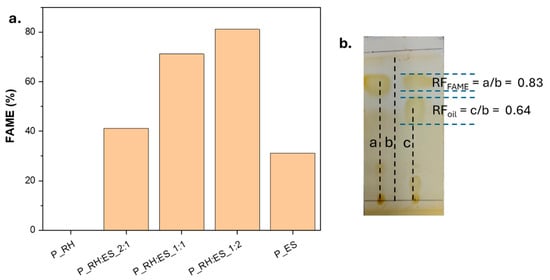
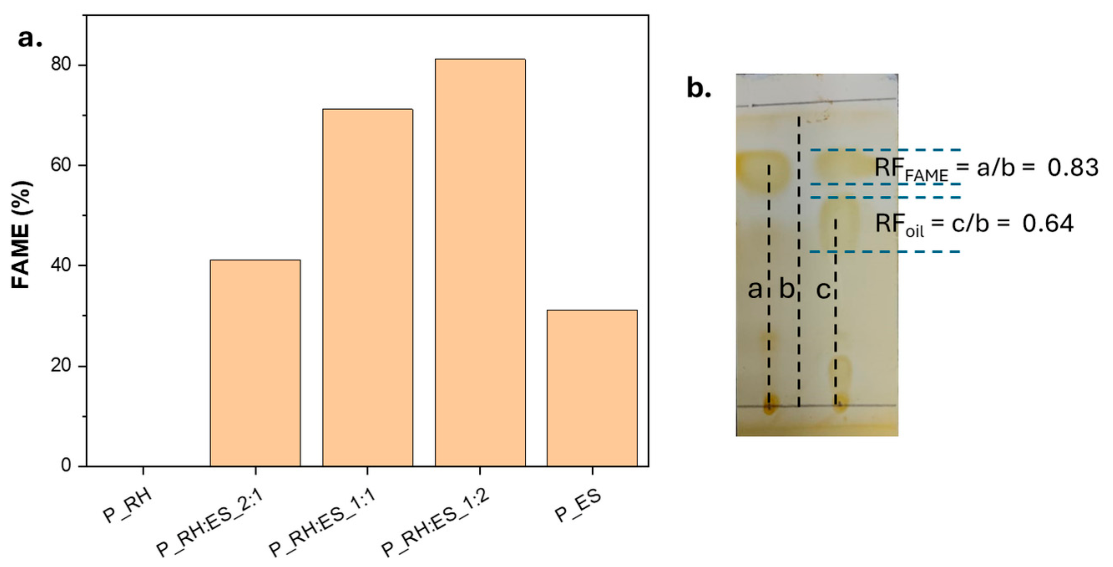
Figure 1a depicts the influence of the RH:ES ratio on FAME yield during soybean oil transesterification, where catalysts derived from individual constituents (i.e., P_RH or P_ES) showed limited activity, whereas mixed RH-ES catalysts enabled significant enhancement in biodiesel yields. The maximum values were achieved using the P_RH:ES_1:1 and P_RH:ES_1:2 materials, with 71.2% and 81.2%, respectively. It reflects a strong synergistic effect between rice husk-derived carbonaceous species and eggshell-derived calcium phases.
Figure 1.
(a) FAME yields obtained by RI analysis from soybean oil transesterification using the studied catalysts (reaction conditions: 65 °C, 4 h, methanol-to-oil molar ratio = 7:1, 1 wt.% catalyst loading). All replicates exhibited < 1% standard deviation. (b) TLC for the case of biodiesel obtained with the material P_RH:ES_1:1, showing the spot corresponding to the oil and FAME at RF 0.64 and 0.83, respectively.
The above results are consistent with previous studies indicating that biomass or biopolymer additions can promote the production and stabilization of catalytically active calcium species, such as CaO or Ca(OH)2, while impeding the persistence of inactive CaCO3 phases. In fact, this behavior was observed, especially in the P_RH:ES_1:1 and P_RH:ES_1:2 catalysts, which were the most active materials. This aspect will be further discussed in the catalyst characterization section, where the calcium phases are discussed over all the catalysts studied. For instance, a previous study reported that the presence of citrus pectin during catalyst synthesis with a calcium precursor significantly improved catalytic performance in biodiesel production by enhancing calcium dispersion and modifying the accessibility of catalytically active calcium phases [26]. Similarly, another study demonstrated that biomass-modified catalysts (e.g., cellulose, chitosan, chitin, starch, and shrimp exoskeleton) can exhibit superior activity when the calcium active phase is favored over calcite retention [33].
In the present work, rice husk serves as a structural modifier, facilitating a partial transformation of eggshell-derived CaCO3 into calcium-active species during pyrolysis. At the same time, inactive carbonate phases remain with excessive eggshell loading. Therefore, the catalytic performance is maximized at optimized RH:ES ratios, confirming that biodiesel synthesis can be governed by calcium phase chemistry rather than total calcium content. In other words, the observed catalytic activity arises from biomass-assisted calcium phase transformation rather than from the individual constituents. Regarding the TLC analysis in Figure 1b, the spot with a retention factor (RF) of 0.83 suggests the presence of fatty acid methyl esters. Meanwhile, the small spot with an RF of 0.64 suggests a small quantity of oil with no reaction, in correspondence with the FAME% values depicted in Figure 1a (refer to Table A1 in Appendix A for further TLC results). Notice that TLC analysis was employed solely for qualitative monitoring of reaction progress, whereas the FAME yields reported herein were determined using the calibrated RI methodology described in Section 2.3.
Despite the P_RH:ES_1:2 material achieving a higher FAME yield (81.2% vs. 71.2%), the P_RH:ES_1:1 catalyst was selected for the reusability study based on the following criteria: First, from a biomass valorization standpoint, P_RH:ES_1:1 incorporates a higher relative proportion of rice husk (an abundant and underutilized agricultural residue) aligning with the study’s main objective of maximizing RH valorization within a circular bioeconomy framework. Also, from a performance trade-off perspective, the 10% difference in FAME yield between the two catalysts (71.2% vs. 81.2%) does not represent a critical loss in catalytic efficiency; both materials substantially outperform the individual components (P_RH: negligible, P_ES: 31.2%), confirming that the performance of P_RH:ES_1:1 remains highly competitive. Finally, from a catalyst composition standpoint, the higher RH content in P_RH:ES_1:1 translates into a richer carbonaceous matrix, which, as confirmed by BET and SEM analysis, promotes superior calcium dispersion and greater surface area (49.56 m2 g−1). This structural feature is particularly relevant for reusability, as the carbon matrix is expected to limit calcium leaching and active-site sintering over consecutive reaction cycles. Taken together, P_RH:ES_1:1 represents the most balanced material for reusability evaluation, offering a favorable compromise between catalytic activity, resource efficiency, and long-term stability.
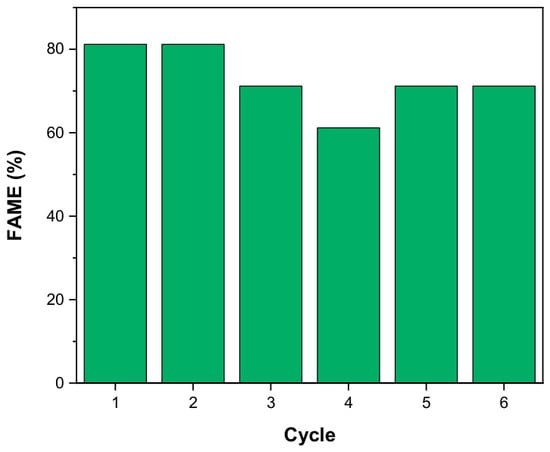
The reusability performance of the P_RH:ES_1:1 catalyst demonstrates that the material maintains high catalytic activity over multiple reaction cycles, with a gradual decrease in FAME yield (as shown in Figure 2). The initial stability shows that most of the active calcium phases remained accessible during early runs. At the same time, the subsequent decline can be associated with partial carbonation and hydration of the calcium active phase [34], and adsorption of reaction by-products on active sites [18]. Remarkably, the persistence of catalytic activity reflects the stabilizing role of the RH-derived carbon matrix, which could limit calcium leaching and catalyst deactivation in transesterification reactions [35]. These results thus indicate that the P_RH:ES_1:1 catalyst could be recovered and reused over multiple reaction cycles while maintaining significant catalytic activity. It indicates that the proposed materials in this study can be effectively reused for biodiesel production.
Figure 2.
FAME yields in consecutive transesterification cycles using the P_RH:ES_1:1 catalyst (reaction conditions: 65 °C, 4h, methanol-to-oil molar ratio = 7:1, 1 wt.% catalyst loading). All replicates exhibited < 1% standard deviation.
The slight increase observed from the fourth to the fifth cycle is within the expected experimental variability associated with catalyst recovery and reuse experiments and should not be interpreted as catalyst reactivation. The overall trend indicates progressive loss of activity, likely associated with partial deactivation of accessible calcium species.
3.2. Characterization of the Obtained Biodiesel
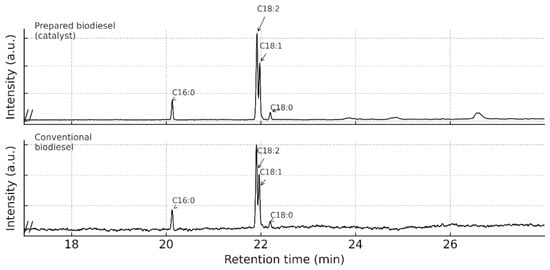
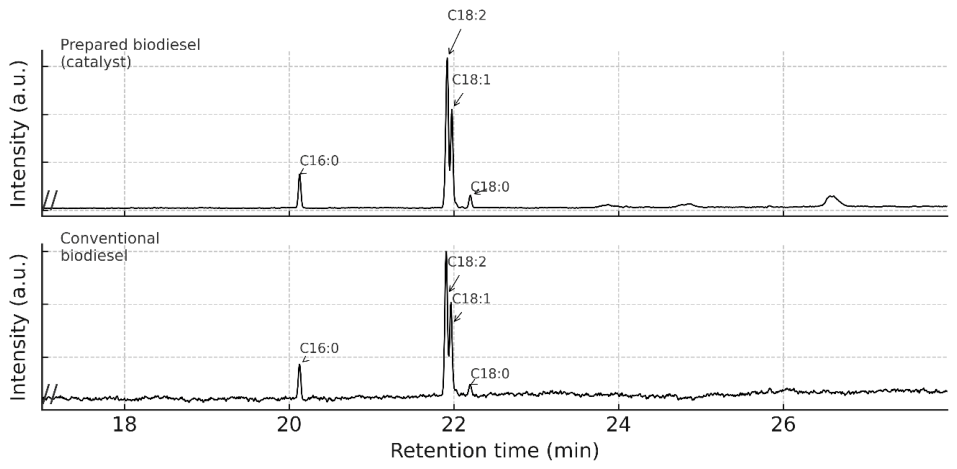
The results for GC-MS analysis of the obtained biodiesel using the P_RH:ES_1:1 catalyst and the corresponding comparison with conventional biodiesel (i.e., prepared in the presence of KOH) are illustrated in Figure 3. In this case, both samples exhibited identical chromatographic profiles, confirming that the catalytic route conducted in this study does not involve molecular rearrangements or undesired side reactions. Four dominant peaks from characteristic fatty acid methyl esters were observed such as methyl palmitate (C16:0), methyl stearate (C18:0), methyl oleate (C18:1), and methyl linoleate (C18:2). The evidenced close agreement in peaks’ shape, retention times, and relative intensity between two chromatograms denotes that the P_RH:ES_1:1 material allows resembling, in terms of FAME composition, to conventional biodiesel obtained using a homogeneous alkaline catalyst.
Figure 3.
GC-MS chromatograms of the prepared biodiesel in the presence of P_RH:ES_1:1, and conventional biodiesel. The mass spectrum of each compound is presented in Figure A2.
The presence of unsaturated methyl esters, especially methyl linoleate and methyl oleate, is consistent with the literature on biodiesel production from soybean oil [36,37]. The latter thus demonstrates that Ca-based catalysts can selectively promote transesterification rather than other secondary reactions [38]. The obtained results were significant, as heterogeneous calcium catalysts were sometimes associated with partial ester degradation under strong alkaline conditions or mass transfer limitations [39]. In contrast, the GC-MS data showed that the P_RH:ES_1:1 catalyst exhibited high catalytic activity while maintaining proper chemical selectivity, comparable to the conventional KOH route. Combined with TLC, reusability test, and FAME yield results, the GC-MS analysis confirms that the enhanced catalytic performance of the pyrolyzed RH-ES materials was achieved without sacrificing product quality.
3.3. Catalyst Characterization
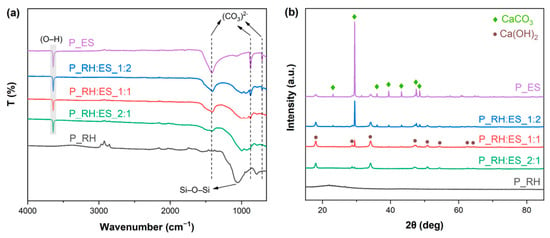
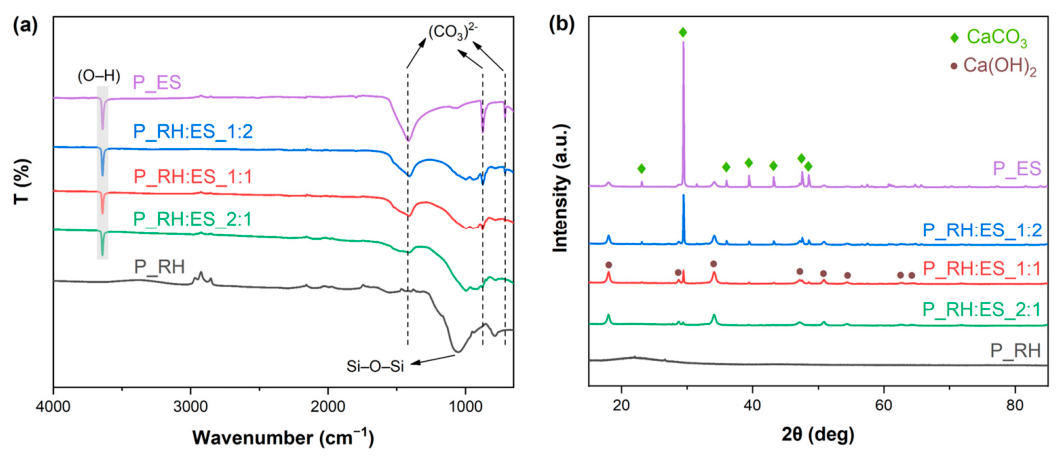
Figure 4a shows the FTIR spectra of all materials studied. Pyrolyzed eggshell (P_ES) displays the characteristic absorption bands of calcium carbonate at 711, 874, and 1420 cm−1 [40], confirming that this material largely retains its calcite phase without converting into more catalytically active calcium species. Rice husk biochar (P_RH), on the other hand, presents the typical fingerprint of carbonaceous materials, with a dominant band near 1100 cm−1 associated with the silica inherently present in rice husk.
Figure 4.
(a) FTIR spectra and (b) XRD patterns of the pyrolyzed RH-ES catalysts with different mass ratios.
When both residues are combined, the spectra reveal a clear influence of the rice husk component on the calcium phase, evidenced by a progressive decrease in the intensity of the calcite bands. This observation is, however, treated as indicative rather than conclusive, given the potential spectral overlap between the intense silica band of P_RH (~1100 cm−1) and the carbonate absorption features. A broad band around 3650 cm−1, present across all samples, may further suggest the formation of calcium hydroxide during processing [35].
The phase transformation is unambiguously confirmed by XRD analysis (Figure 4b). P_ES alone exhibits the diffraction peaks characteristic of calcite at 2θ = 23.1°, 29.4°, 36.0°, 39.4°, 43.2°, 47.5°, and 48.5° [33]. Upon mixing eggshell with rice husk, these reflections diminish markedly and new peaks emerge, assigned to Ca(OH)2, characterized by reflections at 2θ = 18.1, 28.5, 34.1, 47.1, 50.8, 54.3, 62.6, and 64.3° [41]. The concurrent loss of calcite reflections and appearance of Ca(OH)2 peaks provide unambiguous diffraction evidence of a thermally and chemically driven transformation of CaCO3 into more reactive calcium species in the mixed materials. Additionally, no distinct CaO reflections were identified, suggesting Ca(OH)2 as the predominant calcium transformation product under the pyrolysis conditions applied.
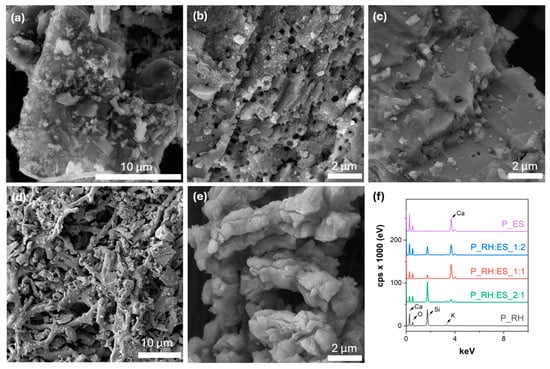
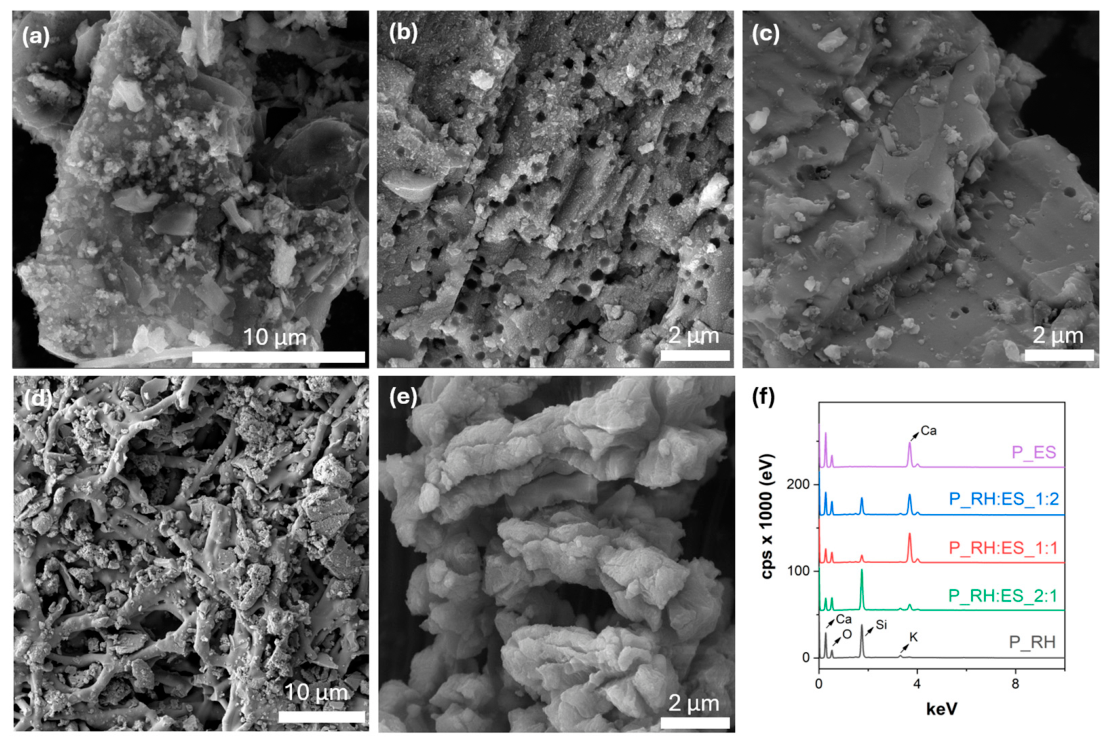
The morphological structure of the materials can be observed in the SEM images shown in Figure 5, including the EDS mapping. P_RH (Figure 5a) reveals a heterogeneous carbonaceous structure with irregular particles and limited porosity. The material surface appears partially covered with fine particles, which are attributed to inorganic residual species inherent to RH, such as silica. The absence of calcium species explains its negligible catalytic activity.
Figure 5.
SEM imaging for (a) P_RH, (b) P_RH:ES_2:1, (c) P_RH:ES_1:1, (d) P_RH:ES_1:2, (e) P_ES. (f) EDS spectra.
The RH-ES mixed materials reflect markedly different morphologies. For instance, P_RH:ES_2:1 (Figure 5b) exhibits a rough and heterogeneous surface with various cavities distributed across the carbonaceous matrix. Although RH- and ES-derived regions cannot be unambiguously distinguished based only on SEM morphology, the coexistence of RH and ES-derived phases was confirmed through EDS and XRD analyses. The small particles observed in the mixed materials should not be interpreted as a direct reduction in the original ES particle size during pyrolysis, but rather as Ca-containing domains distributed within the RH-derived carbon/silica framework. Particularly, P_RH:ES_1:1 (Figure 5c) showed a more homogeneous morphology without large calcium-rich aggregates, suggesting improved distribution of Ca species, which may favor the accessibility of active sites during transesterification. The larger number of cavities observed for P_RH:ES_2:1 compared with P_RH:ES_1:1 can be attributed to its higher RH proportion, which promotes the development of a porous material through the release of volatile compounds during pyrolysis. Increasing the ES content leads to greater incorporation of Ca-containing phases, which may partially cover these structures.
P_RH:ES_1:2 (Figure 5d) exhibited a heterogeneous and rough morphology, where abundant Ca-rich particles were deposited over the rice husk-derived matrix due to the higher eggshell content. However, the increased Ca loading promoted particle aggregation and partial coverage of the porous structure.
In contrast, P_ES (Figure 5e) shows large, plate-like, aggregated particles with relatively smooth surfaces [42]. This is characteristic of thermally treated ES-derived calcite, and such aggregation can hinder the accessibility of basic sites, consistent with the material’s moderate catalytic activity.
Finally, the EDS analysis shown in Figure 5e confirms the coexistence of C, O, Si, and Ca in the mixed RH-ES catalysts, indicating the successful incorporation of ES-derived calcium species into the carbonaceous matrix. The enhanced dispersion and decreased aggregation of calcium species in the P_RH:ES_1:1 material explain its superior catalytic performance and stability.
Additionally, the differences in catalytic performance between P_ES and the mixed RH-ES materials, specifically P_RH:ES_1:1, can also be attributed to BET surface area, which was 0.73 and 49.56 m2 g−1, respectively. This substantial increment promotes a more even distribution of calcium-active species, thus increasing the accessibility of catalytically active surface species involved in transesterification. In contrast, the low surface area in P_ES (as reported in the literature [42]) reflects significant particle aggregation and limited exposure of active species, thereby hindering catalytic efficiency. This finding highlights that catalytic activity was controlled by surface availability and textural properties rather than by total calcium content alone.
The non-aqueous benzoic-acid titration results are summarized in Table A2. The CaO positive control exhibited the highest operational basicity (0.0299 mmol g−1), supporting the expected response of a strongly basic calcium oxide surface. Among the investigated materials, P_RH:ES_1:1 showed the highest phenolphthalein-detected basicity (0.0160 mmol g−1), followed by ES (0.0060 mmol g−1). No titrant consumption was observed for P_RH, and its basicity was therefore not detected under the conditions of the assay. The value obtained for P_RH:ES_1:1 was approximately 2.67 times that of P_ES and corresponded to 53.5% of the response measured for the CaO positive control. This comparison suggests that the P_RH:ES_1:1 combination generated or exposed a larger population of phenolphthalein-responsive basic sites than P_ES alone.
4. Conclusions
This work demonstrates that the combined valorization of RH and ES waste via pyrolysis provides an effective route to develop calcium-based catalysts that can be recovered and reused for biodiesel production. The catalytic performance was strongly correlated with the RH:ES mass ratio, with mixed systems significantly outperforming single-component materials. This means a synergistic effect can be observed when combining RH and ES in the catalyst production. In this sense, structural characterization confirmed that biomass incorporation promotes partial transformation of calcite into catalytically active species (mainly Ca(OH)2), while suppressing excessive CaCO3 retention. Additionally, the presence of the carbonaceous matrix improves calcium dispersion, thus increasing the BET surface area. The latter enhances surface availability and mass transfer during the transesterification of soybean oil.
Although the P_RH:ES_1:2 catalyst yielded the highest FAME, the P_RH:ES_1:1 catalyst was selected for further evaluation to prioritize RH valorization while maintaining high catalytic efficiency. This catalyst demonstrated good reusability, with only a slight decrease in activity across consecutive transesterification cycles, likely due to partial carbonation. The persistence of catalytic activity verified the stabilizing role of the RH-derived matrix. On the other hand, GC-MS results showed that biodiesel produced with the selected catalyst (i.e., P_RH:ES_1:1) exhibited a FAME profile identical to that of conventional diesel (i.e., transesterification assisted by KOH), indicating high chemical selectivity. Although CaO and Ca(OH)2 are generally recognized as basic catalytic phases, direct basicity measurements were not performed in this work. Therefore, correlations between catalytic performance and catalyst basicity remain qualitative.
These findings highlight that catalytic efficiency is governed by calcium phase chemistry, dispersion, and surface accessibility rather than total calcium content alone. Therefore, the proposed strategy offers a circular, low-cost, and environmentally responsible pathway for biodiesel production using waste-derived heterogeneous catalysts.
Author Contributions
Investigation: J.R.M., S.P., D.A., C.L., A.D. and H.A.M.; Conceptualization: J.R.M., S.P. and H.A.M.; Methodology: J.R.M., S.P. and H.A.M.; Funding acquisition: H.A.M.; Visualization: J.R.M. and H.A.M.; Data curation: J.R.M. and H.A.M.; Writing—Original Draft: J.R.M., S.P. and H.A.M.; Writing—review and editing: J.R.M., S.P. and H.A.M. All authors have read and agreed to the published version of the manuscript.
Funding
This research was funded by Universidad San Francisco de Quito, Grant number: Poligrant 2026.
Data Availability Statement
All data supporting this study are provided in the article. Additional details are available from the corresponding author upon request.
Conflicts of Interest
The authors declare no conflicts of interest.
Appendix A
Figure A1.
(a) Calibration curve for reference biodiesel with Refractive Index (RI) and FAME content. FAME% = −6004.1 × RI + 8848.8; R2 = 0.9992. (b) Comparison between biodiesel conversion values determined by refractive index and 1H NMR, as reported by Acosta et al. [26].). The copyright permission for the use of this figure is given as supporting material.
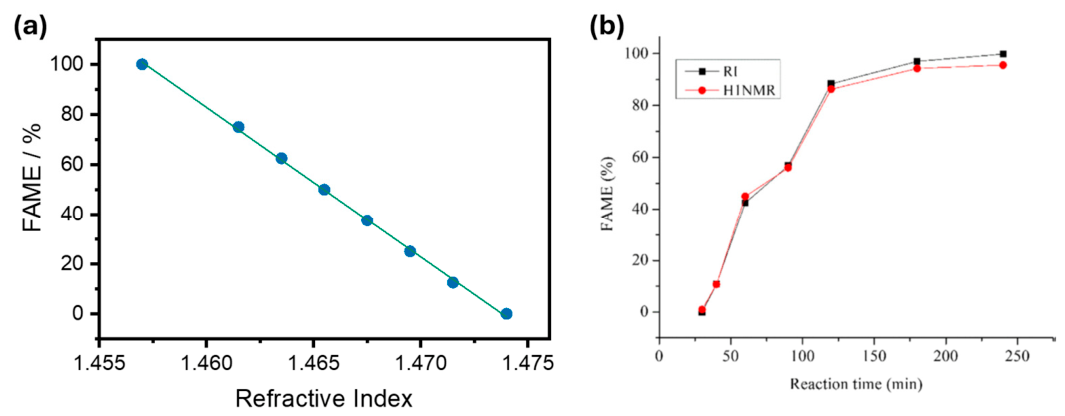
Table A1.
Thin-layer chromatography (TLC) analysis of the transesterification products obtained using the pyrolyzed RH-ES catalysts.
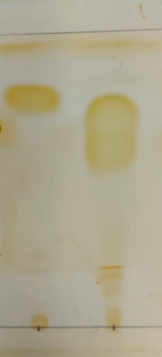
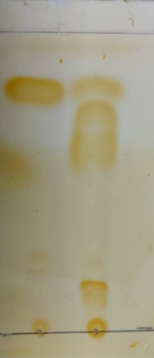
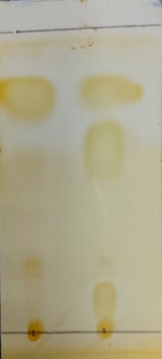
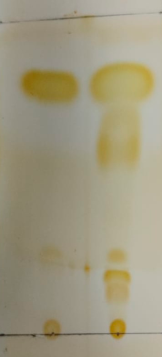
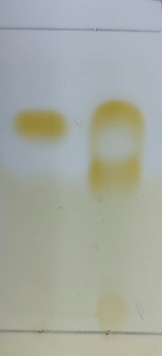
Figure A2.
Mass spectrum for the compounds identified in the GC-MS analysis.
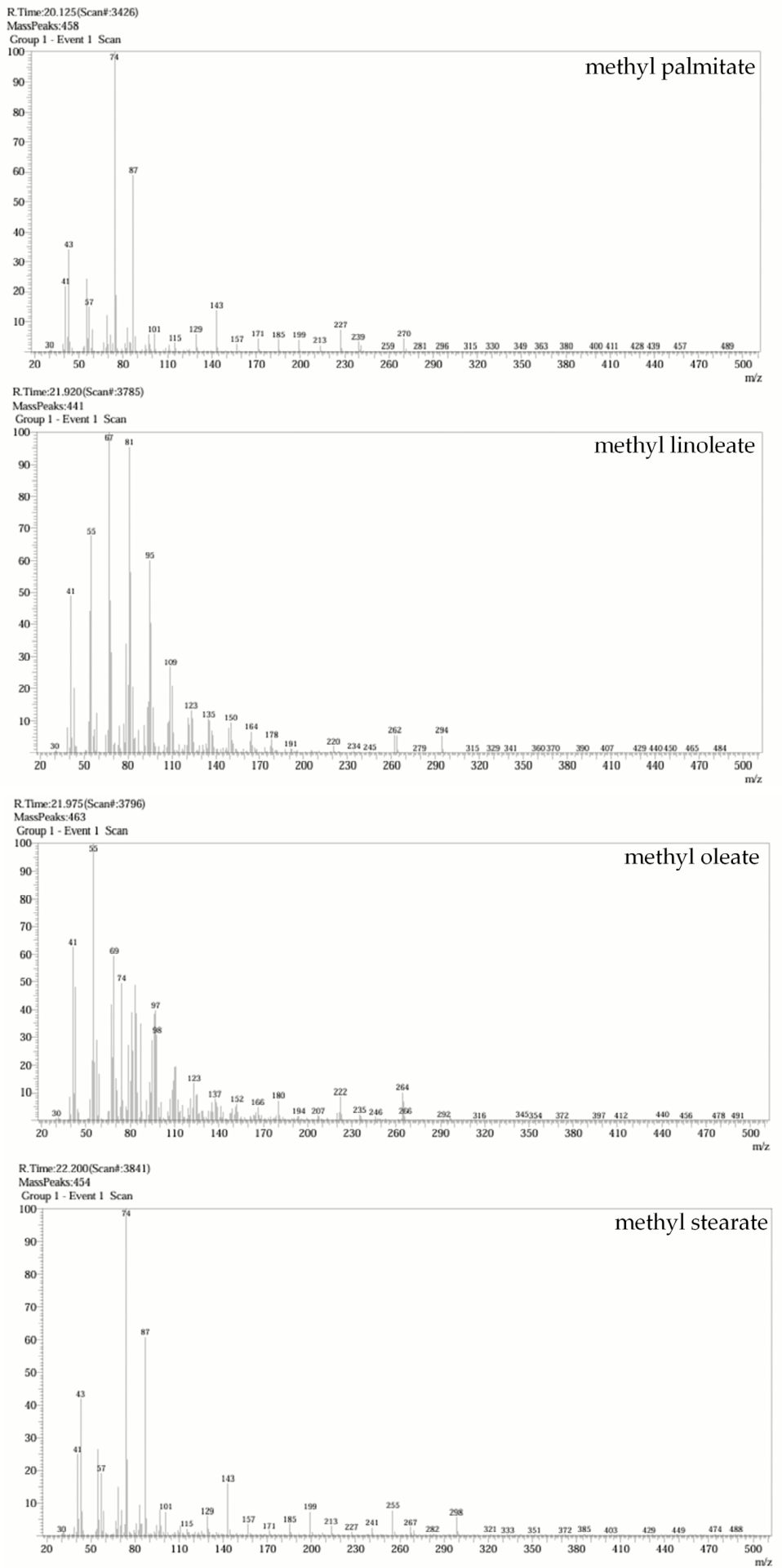
Table A2.
Raw titration data, blank-corrected volume and operational basicity calculated according to the attached protocol.
References
- Anr, R.; Saleh, A.A.; Islam, M.S.; Hamdan, S.; Maleque, M.A. Biodiesel Production from Crude Jatropha Oil using a Highly Active Heterogeneous Nanocatalyst by Optimizing Transesterification Reaction Parameters. Energy Fuels 2015, 30, 334–343. [Google Scholar] [CrossRef] [Scilit]
- Gebremariam, S.N.; Marchetti, J.M.; Gebremariam, S.N.; Marchetti, J.M. Biodiesel production technologies: Review. AIMS Energy 2017, 5, 425–457. [Google Scholar] [CrossRef] [Scilit]
- Amini, Z.; Ilham, Z.; Ong, H.C.; Mazaheri, H.; Chen, W.H. State of the art and prospective of lipase-catalyzed transesterification reaction for biodiesel production. Energy Convers. Manag. 2017, 141, 339–353. [Google Scholar] [CrossRef] [Scilit]
- Csernica, S.N.; Hsu, J.T. The Phase Behavior Effect on the Kinetics of Transesterification Reactions for Biodiesel Production. Ind. Eng. Chem. Res. 2012, 51, 6340–6349. [Google Scholar] [CrossRef] [Scilit]
- Mofijur, M.; Siddiki, S.Y.A.; Shuvho, M.B.A.; Djavanroodi, F.; Fattah, I.M.R.; Ong, H.C.; Chowdhury, M.A.; Mahlia, T.M.I. Effect of nanocatalysts on the transesterification reaction of first, second and third generation biodiesel sources- A mini-review. Chemosphere 2021, 270, 128642. [Google Scholar] [CrossRef] [Scilit] [PubMed]
- Santiago-Torres, N.; Romero-Ibarra, I.C.; Pfeiffer, H. Sodium zirconate (Na2ZrO3) as a catalyst in a soybean oil transesterification reaction for biodiesel production. Fuel Process. Technol. 2014, 120, 34–39. [Google Scholar] [CrossRef] [Scilit]
- Ferella, F.; Di Celso, G.M.; De Michelis, I.; Stanisci, V.; Vegliò, F. Optimization of the transesterification reaction in biodiesel production. Fuel 2010, 89, 36–42. [Google Scholar] [CrossRef] [Scilit]
- Mumtaz, M.W.; Adnan, A.; Mukhtar, H.; Rashid, U.; Danish, M. Biodiesel Production Through Chemical and Biochemical Transesterification: Trends, Technicalities, and Future Perspectives. In Clean Energy for Sustainable Development: Comparisons and Contrasts of New Approaches; Academic Press: Cambridge, MA, USA, 2017; pp. 465–485. [Google Scholar] [CrossRef] [Scilit]
- Ding, H.; Ye, W.; Wang, Y.; Wang, X.; Li, L.; Liu, D.; Gui, J.; Song, C.; Ji, N. Process intensification of transesterification for biodiesel production from palm oil: Microwave irradiation on transesterification reaction catalyzed by acidic imidazolium ionic liquids. Energy 2018, 144, 957–967. [Google Scholar] [CrossRef] [Scilit]
- Ejikeme, P.M.; Anyaogu, I.D.; Ejikeme, C.L.; Nwafor, N.P.; Egbuonu, C.A.C.; Ukogu, K.; Ibemesi, J.A. Catalysis in Biodiesel Production by Transesterification Processes-An Insight. J. Chem. 2010, 7, 1120–1132. [Google Scholar] [CrossRef] [Scilit]
- Borges, M.E.; Díaz, L. Recent developments on heterogeneous catalysts for biodiesel production by oil esterification and transesterification reactions: A review. Renew. Sustain. Energy Rev. 2012, 16, 2839–2849. [Google Scholar] [CrossRef] [Scilit]
- Bajaj, A.; Lohan, P.; Jha, P.N.; Mehrotra, R. Biodiesel production through lipase catalyzed transesterification: An overview. J. Mol. Catal. B Enzym. 2010, 62, 9–14. [Google Scholar] [CrossRef] [Scilit]
- Ramachandran, K.; Suganya, T.; Nagendra Gandhi, N.; Renganathan, S. Recent developments for biodiesel production by ultrasonic assist transesterification using different heterogeneous catalyst: A review. Renew. Sustain. Energy Rev. 2013, 22, 410–418. [Google Scholar] [CrossRef] [Scilit]
- Abbaszaadeh, A.; Ghobadian, B.; Omidkhah, M.R.; Najafi, G. Current biodiesel production technologies: A comparative review. Energy Convers. Manag. 2012, 63, 138–148. [Google Scholar] [CrossRef] [Scilit]
- Carrera, S.A.; Villarreal, J.S.; Acosta, P.I.; Noboa, J.F.; Gallo-Cordova, A.; Mora, J.R. Designing an efficient and recoverable magnetic nanocatalyst based on Ca, Fe and pectin for biodiesel production. Fuel 2022, 310, 122456. [Google Scholar] [CrossRef] [Scilit]
- Dias, A.P.S.; Ramos, M. On the storage stability of CaO biodiesel catalyst. Hydration and carbonation poisoning. J. Environ. Chem. Eng. 2021, 9, 104917. [Google Scholar] [CrossRef] [Scilit]
- Morales-Flórez, V.; Santos, A.; Romero-Hermida, I.; Esquivias, L. Hydration and carbonation reactions of calcium oxide by weathering: Kinetics and changes in the nanostructure. Chem. Eng. J. 2015, 265, 194–200. [Google Scholar] [CrossRef] [Scilit]
- Tavizón-Pozos, J.A.; Cervantes-Cuevas, H.; Garcia-Camacho, G.G.; Chavez-Esquivel, G.; Acosta-Najarro, D.R. Biodiesel Production Using K–Sr/CaO and CaO Catalysts Derived from Eggshells by Canola Oil Transesterification. ACS Omega 2025, 10, 6827–6838. [Google Scholar] [CrossRef] [Scilit] [PubMed]
- Mierczynski, P.; Ciesielski, R.; Kedziora, A.; Maniukiewicz, W.; Shtyka, O.; Kubicki, J.; Albinska, J.; Maniecki, T.P. Biodiesel Production on MgO, CaO, SrO and BaO Oxides Supported on (SrO)(Al2O3) Mixed Oxide. Catal. Lett. 2015, 145, 1196–1205. [Google Scholar] [CrossRef] [Scilit]
- Ghanei, R.; Khalili Dermani, R.; Salehi, Y.; Mohammadi, M. Waste Animal Bone as Support for CaO Impregnation in Catalytic Biodiesel Production from Vegetable Oil. Waste Biomass Valorization 2016, 7, 527–532. [Google Scholar] [CrossRef] [Scilit]
- Manique, M.C.; Lacerda, L.V.; Alves, A.K.; Bergmann, C.P. Biodiesel production using coal fly ash-derived sodalite as a heterogeneous catalyst. Fuel 2017, 190, 268–273. [Google Scholar] [CrossRef] [Scilit]
- Colombo, K.; Ender, L.; Barros, A.A.C. The study of biodiesel production using CaO as a heterogeneous catalytic reaction. Egypt. J. Pet. 2017, 26, 341–349. [Google Scholar] [CrossRef] [Scilit]
- MacLeod, C.S.; Harvey, A.P.; Lee, A.F.; Wilson, K. Evaluation of the activity and stability of alkali-doped metal oxide catalysts for application to an intensified method of biodiesel production. Chem. Eng. J. 2008, 135, 63–70. [Google Scholar] [CrossRef] [Scilit]
- Zabeti, M.; Daud, W.M.A.W.; Aroua, M.K. Biodiesel production using alumina-supported calcium oxide: An optimization study. Fuel Process. Technol. 2010, 91, 243–248. [Google Scholar] [CrossRef] [Scilit]
- Gangotena, P.A.; Ponce, S.; Gallo-Córdova, Á.; Streitwieser, D.A.; Mora, J.R. Highly Active MgP Catalyst for Biodiesel Production and Polyethylene Terephthalate Depolymerization. ChemistrySelect 2022, 7, e202103765. [Google Scholar] [CrossRef] [Scilit]
- Acosta, P.I.; Campedelli, R.R.; Correa, E.L.; Bazani, H.A.G.; Nishida, E.N.; Souza, B.S.; Mora, J.R. Efficient production of biodiesel by using a highly active calcium oxide prepared in presence of pectin as heterogeneous catalyst. Fuel 2020, 271, 117651. [Google Scholar] [CrossRef] [Scilit]
- Ali, N.A.; Khairuddin, N.; Tengku Azmi, T.S.M.; Siddique, M.B.M. The Preparation of CaO Catalyst from Eggshells and Its Application in Biodiesel Production from Waste Cooking Oil. Arab. J. Sci. Eng. 2022, 48, 383–388. [Google Scholar] [CrossRef] [Scilit]
- Chung, Z.L.; Tan, Y.H.; Chan, Y.S.; Kansedo, J.; Mubarak, N.M.; Ghasemi, M.; Abdullah, M.O. Life cycle assessment of waste cooking oil for biodiesel production using waste chicken eggshell derived CaO as catalyst via transesterification. Biocatal. Agric. Biotechnol. 2019, 21, 101317. [Google Scholar] [CrossRef] [Scilit]
- Perdani, M.S.; Ariyanti, D.; Fitriana, E.L.; Putri, D.N.; Hermansyah, H. Rice husk-based catalyst for sustainable biodiesel production: A meta-analysis and systematic review. Bioresour. Technol. Rep. 2025, 31, 102264. [Google Scholar] [CrossRef] [Scilit]
- Wang, Y.; Zhang, M.; Ding, X. Biodiesel production from soybean oil using modified calcium loaded on rice husk activated carbon as a low-cost basic catalyst. Sep. Sci. Technol. 2018, 53, 807–813. [Google Scholar] [CrossRef] [Scilit]
- de Almeida Andrade, M.R.; Silva, C.B.; Costa, T.K.O.; de Barros Neto, E.L.; Lavoie, J.M. An experimental investigation on the effect of surfactant for the transesterification of soybean oil over eggshell-derived CaO catalysts. Energy Convers. Manag. X 2021, 11, 100094. [Google Scholar] [CrossRef] [Scilit]
- Védrine, J.C. Acid–base characterization of heterogeneous catalysts: An up-to-date overview. Res. Chem. Intermed. 2015, 41, 9387–9423. [Google Scholar] [CrossRef] [Scilit]
- Rodriguez, Y.; Ponce, S.; Keller, M.H.; Vizuete, K.; Debut, A.; Souza, B.S.; Mora, J.R. Calcium-based catalyst prepared in the presence of biopolymer/biomass for biodiesel production: Elucidating their influence on the catalytic efficiency. Biomass Bioenergy 2024, 186, 107268. [Google Scholar] [CrossRef] [Scilit]
- Granados, M.L.; Poves, M.D.Z.; Alonso, D.M.; Mariscal, R.; Galisteo, F.C.; Moreno-Tost, R.; Santamaría, J.; Fierro, J.L.G. Biodiesel from sunflower oil by using activated calcium oxide. Appl. Catal. B 2007, 73, 317–326. [Google Scholar] [CrossRef] [Scilit]
- Ponce, S.; Debut, A.; Mora, J.R. Highly Active Calcium-based Heterogeneous Catalysts Prepared Together with Biomass and Biochar Modifiers for the Methanolysis of Poly(lactic Acid). J. Polym. Environ. 2025, 33, 3633–3643. [Google Scholar] [CrossRef] [Scilit]
- Nunes, A.L.B.; Castilhos, F. Chemical interesterification of soybean oil and methyl acetate to FAME using CaO as catalyst. Fuel 2020, 267, 117264. [Google Scholar] [CrossRef] [Scilit]
- Kouider Elouahed, S.; Asikin-Mijan, N.; Kaddour, O.; Alsultan, A.G.; Mimoun, E.; Yusop, M.R.; Bentahar, N.; Lee, H.V.; Taufiq-Yap, Y.H. Efficient biodiesel production from soybean oil using calcium oxide supported bimetallic molybdenum-zinc catalysts. Int. J. Green Energy 2025, 22, 3670–3686. [Google Scholar] [CrossRef] [Scilit]
- Jothiramalingam, R.; Wang, M.K. Review of Recent Developments in Solid Acid, Base, and Enzyme Catalysts (Heterogeneous) for Biodiesel Production via Transesterification. Ind. Eng. Chem. Res. 2009, 48, 6162–6172. [Google Scholar] [CrossRef] [Scilit]
- Mandari, V.; Devarai, S.K. Biodiesel Production Using Homogeneous, Heterogeneous, and Enzyme Catalysts via Transesterification and Esterification Reactions: A Critical Review. BioEnergy Res. 2021, 15, 935–961. [Google Scholar] [CrossRef] [Scilit] [PubMed]
- Vagenas, N.V.; Gatsouli, A.; Kontoyannis, C.G. Quantitative analysis of synthetic calcium carbonate polymorphs using FT-IR spectroscopy. Talanta 2003, 59, 831–836. [Google Scholar] [CrossRef] [Scilit] [PubMed]
- Sahadat Hossain, M.; Jahan, S.A.; Ahmed, S. Crystallographic characterization of bio-waste material originated CaCO3, green-synthesized CaO and Ca(OH)2. Results Chem. 2023, 5, 100822. [Google Scholar] [CrossRef] [Scilit]
- Tangboriboon, N.; Unjan, W.; Sangwan, W.; Sirivat, A. Preparation of anhydrite from eggshell via pyrolysis. Green Process. Synth. 2018, 7, 139–146. [Google Scholar] [CrossRef] [Scilit]

Disclaimer/Publisher’s Note: The statements, opinions and data contained in all publications are solely those of the individual author(s) and contributor(s) and not of MDPI and/or the editor(s). MDPI and/or the editor(s) disclaim responsibility for any injury to people or property resulting from any ideas, methods, instructions or products referred to in the content. |
© 2026 by the authors. Licensee MDPI, Basel, Switzerland. This article is an open access article distributed under the terms and conditions of the Creative Commons Attribution (CC BY) license.