


Abstract
Interest in further developments of the classical Fischer–Tropsch technology has increased in recent years. The development of processes capable of producing synthetic fuels has become a highly attractive research area due to the continuous global growth in energy demand. An extensive review covering the full development chain (from laboratory-scale experiments to pilot-scale studies and plant-level implementations) is therefore of significant relevance. Consequently, this review aims to be a reference by integrating findings across different development levels of Fischer–Tropsch synthesis technologies, thereby enabling a holistic perspective of the pathway toward industrial-scale deployment. The present work thus critically reviews recent advances in catalyst development, including the role of active phases, particle size effects, supports, and promoters, as well as the growing contribution of in situ and operando characterization techniques. In parallel, progress in kinetic and mechanistic modeling is discussed, highlighting both classical approaches and emerging data-driven and optimization-based methods. Different reactor technologies, from classical to novel technologies, are also analyzed with respect to hydrodynamics, heat and mass transfer limitations, and reactor intensification strategies. At the process level, the review assesses integrated and intensified Fischer–Tropsch-based routes, with particular emphasis on CO2 utilization pathways, process integration, polygeneration schemes, and optimization frameworks. The potential of artificial intelligence and machine learning tools to accelerate catalyst discovery, reactor optimization, and process design is also addressed. Overall, this review identifies key technological advances, remaining challenges, and research gaps that must be addressed to enable economically viable and environmentally sustainable, and scalable Fischer–Tropsch processes to meet future energy demands.
1. Introduction
In the context of increasing global energy demand observed in recent years and the ongoing debates on the transition to cleaner energy matrices, Fischer–Tropsch synthesis (FTS), which is now more than 100 years old, remains a viable and promising route to produce synthetic crude oil. The reaction consists of the catalytic conversion of synthesis gas (CO and H2) into hydrocarbons and synthetic alcohols of different chain lengths through a polymerization-like mechanism. From FTS, it is possible to design processes that generate building-block compounds, such as light olefins, as well as fuels, including gasoline, diesel, and aviation fuel.
Over more than a century of research in FTS, studies can be divided into four distinct phases, according to Yohannes and Gates [1]. The first, Early Development (1920–1945), comprises the discovery of the technology by Franz Fischer and Hans Tropsch and the beginning of large-scale production in Germany. The second phase, Post-World War II Expansion (1945–1970), is characterized by the expansion of large-scale production and the technological dominance of the United States. The third phase, Maturation and Diversification (1970–2000), reflects renewed interest driven by the oil crisis, followed by a subsequent decline due to economic factors. The fourth phase, Modernization and Sustainability (2000–2024), involves the development of several catalysts and significant advances in process modeling and simulation. Despite its long research history, FTS still faces challenges regarding the large-scale commercial implementation of the technologies developed in the micro-scale.
FTS can be chemically described as the hydrogenation of CO coupled with a polymerization reaction. Initially, hydrogen reduces the CO molecule to form a monomer that initiates chain growth through successive monomer additions until hydrocarbons with a carbon number Cn are formed, as shown in Equations (1) and (2). Therefore, FTS comprises a complex of reactions, leading to the formation of a wide range of hydrocarbons with challenging product selectivity, following Anderson–Schulz–Flory (ASF) distribution [2]. In addition, parallel reactions may occur, including methanation (Equation (3)), alcohol formation (Equation (4)), water-gas shift (WGS) reaction (Equation (5)), and Boudouard reaction leading to coke formation (Equation (6)).
FTS is a surface-catalyzed and structure-sensitive reaction, which makes catalytic performance dependent on the nature and availability of active sites, crystalline phases, and textural properties. Typically, Group VIII metals such as Ru, Fe, and Co are active for syngas conversion into hydrocarbons, with Fe and Co being the most extensively studied. In recent years, the field of nanocatalysis has focused on the design of more specific and selective catalysts for FTS [3]. In addition to classical precipitated metal oxide materials (e.g., Fe2O3) and supported metals (e.g., Co/Al2O3), studies have reported the development of highly structured catalysts based on using metal–organic frameworks (MOFs) as precursors [4,5], confinement within nanotubes [6,7], and core–shell structures [8,9]. The evaluation of different promising supports, as well as the addition of metal promoters, which are fundamental for product selectivity, have also been observed [10]. However, despite the development in catalyst design, the studies on these materials often remain at the experimental stage and do not advance to kinetic modeling, which hinders their use in reactor modeling and process simulation studies.
Kinetic modeling of the FTS is a challenging task due to the complexity of the reactions involved. Basically, studies can be classified into two main approaches: the first, in which the models account for an overall consumption rate of synthesis gas and the product distribution is not described, and the second, in which the formation and composition of products are considered, based on hydrocarbon distribution coefficients. In both approaches, models can be developed using empirical, semi-empirical, or mechanistic descriptions. A series of Langmuir–Hinshelwood (LHHW) type models were developed for Fe- and Co-based catalysts between the 1980s and the early 2000s. These classical models are widely used to describe FTS kinetics, and many nonlinear parameter regression studies have been performed based on these models for different catalysts using experimental data. More recent approaches include developing empirical models and using optimization algorithms, as well as adaptations of LHHW-type models.
As in kinetic studies, reactor development in FTS can also be divided into classical reactor types and new strategies deployed in recent years. Reaction systems in FTS are designed based on the target products and on the need for efficient heat removal due to the high exothermicity of the reaction. Current industrial applications employ fixed-bed, slurry bubble column, and fluidized-bed reactors, each presenting inherent advantages and limitations regarding conversion, selectivity, heat management, and operational stability [1]. Despite this, the selection of the best reacting system and its future development depend on integrated experimental and modeling approaches to support reactor design, optimization and scale-up [11]. In addition to classical reactors, the literature also reports new process intensification strategies in reactor design, including the investigation of microreactors, microstructured systems, and compact multitubular reactors [12,13]. These configurations enable improved temperature control and, consequently, enhanced product selectivity, particularly toward C5+ hydrocarbons.
In process design, the literature presents studies of different FTS plant configurations in both the pilot and industrial scale, with operating plants found worldwide [14,15,16,17]. Process intensification is reported through polygeneration system design, process integration and the use of different optimization frameworks. Integrated process layouts combining FTS with power generation, electrolysis, reforming, or the co-production of value-added chemicals have also been reported to enhance energy efficiency, carbon utilization, and operational self-sufficiency. Furthermore, enhanced process synthesis, analysis and optimization using artificial intelligence has received growing interest, providing researchers with improved results both in experimental and computational fields. However, many of the large-scale process studies remain focused on technical performance, while economic and environmental aspects are often not found in detail.
Despite the extensive studies reported over the past century on different aspects of Fischer–Tropsch synthesis development, a significant gap remains in the integration of knowledge across scales, preventing advances achieved at smaller scales from effectively reaching reactor and process levels. At the laboratory scale, novel and advanced catalysts often remain at the experimental stage without progressing to kinetic modeling or pilot-scale validation, hindering the translation of micro-scale parameters, such as particle size effects or specific active phases, into reactor models and process simulations. Furthermore, establishing explicit scale-bridging correlations is challenging, particularly for variables addressed at the industrial reactor scale, but not often evaluated at the lab scale, such as heat and mass transfer resistances. Beyond catalyst development, FTS process scale-up still faces important challenges, highlighting the need for comprehensive techno-economic and environmental assessments that incorporate realistic scale-up parameters, energy efficiency considerations, and carbon mitigation strategies to enable sustainable and competitive industrial implementation.
Accordingly, this review addresses recent advances from fundamental studies to pilot- and industrial-scale applications. The work is organized into five sections. Section 2 addresses catalyst design, discussing active phases, particle size effects, supports, promoters, and recent advances in in situ and operando characterization techniques. Section 3 focuses on kinetic modeling, presenting the main reaction mechanisms, classical kinetic models, and the current state of the art in FTS kinetic modeling. This is followed by Section 4, which focuses on reactor modeling, covering fixed-bed, slurry bubble column, and fluidized-bed reactors, as well as emerging reactor concepts. Section 5 reviews FTS pilot plants, and Section 6 addresses industrial-scale process design, including CO2-based Fischer–Tropsch routes, integrated processes, optimization studies, and the application of artificial intelligence and machine learning.
2. Catalyst Design in Fischer–Tropsch Synthesis
FTS has been studied for more than a century, and a number of catalysts have been reported. The most studied and active catalysts for this reaction are based on cobalt (Co), iron (Fe) and ruthenium (Ru) [18]. These metals have a high ability to adsorb CO molecules, dissociate them, and favor the chain growth to produce hydrocarbons [19]. CO dissociation occurs on metals with unoccupied d-orbitals, with a lower d-band filling [20], which bind C and O more strongly, thus increasing the probability of the CHx intermediate being coupled to the formation of long-chain hydrocarbons [18]. Table 1 presents the main products obtained from CO hydrogenation over selected metals. The metals that weakly bind C and O drive the CO hydrogenation to other products, such as methane, methanol and C2-oxygenates.
Table 1.
Comparison between active metals for CO adsorption and dissociation.
To develop efficient catalysts for FTS, firstly, it is necessary to understand the active metals and their characteristics. Therefore, a brief description of materials used in FTS is provided, focusing on the active phase, particle size effects, supports, promoters, and advanced characterization techniques.
2.1. Active Phases
2.1.1. Cobalt
The cobalt crystal phase plays an important role in catalytic performance during the reaction. Liu et al. [31] compared Co activation over hexagonal close-packed (HCP) and face-centered cubic (FCC) phases using a density functional theory (DFT)-based kinetic study. They found that the Co-HCP phase exhibits a much higher intrinsic activity, with the reaction pathway favoring direct dissociation, whereas the Co-FCC phase follows an H-assisted route. These predictions were experimentally validated by Lyu et al. [32], who confirmed the superior activity of Co-HCP, with an apparent activation energy of 101 kJ mol−1 compared to 144 kJ mol−1 for Co-FCC. More recently, Sun et al. [33] compared Co-FCC and Co-HCP catalysts supported on carbon spheres (CS), and the results were consistent with the findings of Liu et al. [34] and Lyu et al. [32]. All catalysts exhibited high selectivity toward C5+ compounds, and the Co-HCP/CS catalyst showed a higher turnover frequency (TOF) than the Co-FCC/CS catalyst, with values of 2.3 × 10⁻³ s−1 and 1.5 × 10⁻³ s−1, respectively.
Lyu et al. [32] and Sun et al. [33] showed different ways to synthesize Co-FCC and Co-HCP phases, although there are some similarities when compared. In general, both authors employed organic Co precursors (Lyu et al. [32] used cobalt (III) acetylacetonate and Sun et al. [33] used cobalt (III) acetylacetonate), heated the solution at a specific temperature, and washed with ethanol. To synthesize Co-FCC, benzylamine was used as a solvent, and the duration of stirring at a specific temperature was 2 h (180 °C for the synthesis of Lyu et al. [32] and 190 °C for the synthesis of Sun et al. [33]). Co-HCP was synthesized at a higher temperature than Co-FCC: Lyu used 195 °C and Sun 220 °C for a duration of 1 h, and benzylamine was the solvent. To summarize, to synthesize the Co-HCP phase, higher temperatures are necessary, and a shorter time is required for the heating step.
In contrast to Fe-based catalysts, the carburation of the Co active phase has been reported to have a negative impact on the formation of products heavier than C2+ [35,36]. Claeys et al. [35] highlighted that cobalt carbide formation is favored at low reaction temperatures and low H2/CO ratio; as a consequence, the carbide phase decreases FT activity and increases methane selectivity. Hazemann et al. [36] investigated the effect of cobalt carbide formation and found that the extent of carburation has a proportional effect on product selectivity, leading to a decrease in olefins and heavy hydrocarbons, while methane and CO2 selectivities increase.
However, Zhong et al. [37] recently reported that Co2C nanoprisms with exposed {1 0 1} and {0 2 0} facets exhibit catalytic activity for FTS. The authors developed a Co-Mn spinel material that, under reaction conditions, segregated into Co2C and MnO phases, reaching contents of 50.6% Co2C, 27.5% MnO, and 21.9% Co-Mn spinel after 150 h of time on stream (TOS). Reaction conditions were systematically varied by changing the pressure (0.1–1.0 MPa) and the H2/CO ratio (0.5, 1.0 and 2.0) at 250 °C and a space velocity of 2000 mL g−1 h−1. The results showed that product distribution could be tuned toward C2–C4= olefins, C5+ hydrocarbons, or oxygenate compounds, although CO2 selectivity remained close to 50.0%. Regarding product selectivity, methane formation was approximately 5.0%; C2–C4= olefins were favored at lower pressures and higher H2/CO ratios; decreasing the H2/CO ratio promoted the formation of C5+ hydrocarbons; and higher pressures favored the formation of oxygenates.
In addition to Zhong et al. [37], Dai et al. [38] and Gong et al. [39] also investigated Co2C nanoprisms as active phases for FTS. Dai et al. [38] studied Na-Co/SiO2 catalysts by varying the Co content (0.5–20 wt%) while maintaining a constant Co/Na ratio of 10, as sodium was used as a promoter to enhance the formation of the prismatic Co2C phase. The authors reported TOF values ranging from 0.15 × 10⁻³ s−1 to 1.6 × 10⁻³ s−1, depending on the Co content and the H2/CO ratio, at a constant CO conversion of 2.0%. Gong et al. [39] also synthesized a Co-Mn-based catalyst, although their main objective was to evaluate the calcination temperature. Their results followed trends similar to those reported by Zhong et al. [37], with CO2 selectivity around 50.0%, low CH4 selectivity (around 3.0%), and the formation of oxygenates, with a minimum hydrocarbon selectivity of 14.9%.
In general, metallic cobalt is considered the active phase for FTS. Although carbide formation can occur, it is typically limited to small amounts (5–10%) [35], and no cobalt oxide phases have been identified under reaction conditions [35,36,40]. The formation of cobalt carbides generally leads to decreased selectivity toward olefins and heavy hydrocarbons, while CO2 and methane selectivities increase. Nevertheless, promoters such as Mn [37,39] or Na [38] can drive cobalt carburization toward a specific phase, namely Co2C nanoprisms, which have been recently reported as catalytically active for FTS.
2.1.2. Iron
Carbide compounds are the active phases in Fe-based FTS catalysts. During the reaction, oxide precursors such as hematite (Fe2O3) and magnetite (Fe3O4) are converted into carbide phases, resulting in a final catalyst composed of a mixture of phases. The iron carbide phases commonly reported include cementite (θ-Fe3C), Hägg Carbide (χ-Fe5C2), ε’-carbide (ε’-Fe2.2C), ε-carbide (ε-Fe2C), and Eckstrom–Adcock carbide (Fe7C3). In addition, iron oxides such as Fe2O3 and Fe3O4, as well as metallic iron (α-Fe), may also be present. Da Silva et al. [41] studied Fe3O4/HZSM-5 catalysts and, based on post-reaction Mössbauer spectroscopy analysis, identified the coexistence of α-Fe, χ-Fe5C2, and θ-Fe3C with Fe3O4. Cheng et al. [42] reported the formation of a different carbide phase, ε’-Fe2.2C, when reduced graphene oxide (rGO) was used as the support. In addition, Lyu et al. [43] identified ε-Fe2C as a particularly effective carbide phase for producing C5+ hydrocarbons with low CO2 selectivity. The Fe7C3 phase is commonly observed after extended reaction times at high temperatures and pressures [44].
The carburization process occurs because the activation barrier for carbon diffusion into body-centered cubic (bcc) metallic Fe is comparable to that of hydrogenation and polymerization reactions [45]. Carbon can be supplied by CO adsorbed on active sites, which dissociates into carbon and oxygen [20], or by carbon formed via the Boudouard reaction (Equation (6)) [46]. From carburization, different carbides can be obtained, in accordance with the conditions employed. The most discussed parameter is the stabilization of the phases, since the carbides are unstable and their formation is dependent on temperature [47] and carbon chemical potential (μC) [48].
The stabilization of carbide phases is influenced by several factors, including crystallite size, morphology, surface texture, and operating conditions such as gas composition and pressure [47]. However, Smit et al. [48] highlighted that the stability of iron carbide phases strongly depends on temperature and carbon chemical potential (μC). Understanding iron carbide phases is crucial for catalyst performance, since CO conversion and product selectivity depend on both the nature of the carbide phase and the coexistence of different phases. Among the carbides formed, ε-Fe2C is considered the most active and desirable phase for FTS; however, its stability is limited to temperatures below 200 °C [48], which corresponds to low FTS activity. As a strategy to stabilize ε-Fe2C under more severe reaction conditions, the introduction of a second material acting as a stabilizing agent has been explored [43,49,50]. Teng et al. [49] and Lyu et al. [43] employed carbon as a stabilizing agent, while more recently, Qin et al. [50] used Mn as both a promoter and stabilizing agent.
Teng et al. [49] synthesized Fe/HCS catalysts with ε-Fe2C as the predominant phase and reported, at 340 °C, 2.0 MPa, a space velocity of 27,000 mL g−1 h−1, and an H2/CO ratio of 1, a CO conversion of 80.3% and a C5+ hydrocarbon selectivity of 49.0%. Lyu et al. [43] developed ε-Fe2C confined within graphene layers (ε-Fe2C@graphene) and conducted FTS at 300 °C, 1.0 MPa, and H2/CO = 1, achieving a CO conversion close to 96.0% and a C5+ hydrocarbon selectivity of 65.8% over 400 h of TOS. In comparison, the ε-Fe2C@graphene catalyst exhibited a superior performance regarding Fe/HCS, with higher CO conversion and C5+ hydrocarbon selectivity, as well as lower CO2 selectivity (20.3% versus 46.4%). Qin et al. [50] investigated Mn addition and showed that there is an optimal Mn content to maximize C2+ olefin selectivity, reaching 79.7% for the ε-Fe2C-0.4Mn catalyst. However, increasing the Mn content led to a significant decrease in CO conversion, from values close to 95.0% for ε-Fe2C-0.02Mn to 41.0% for ε-Fe2C-0.4Mn at 300 °C, 2.0 MPa, a space velocity of 20,000 mL g−1 h−1, and H2/CO = 2.5. Overall, these studies demonstrate that ε-Fe2C can be stabilized at temperatures above 200 °C by using promoters or supports as stabilizing agents.
The absence of a stabilizing agent leads to the coexistence of iron carbides and Fe3O4, as shown by Zhao et al. [51]. The authors compared α-Fe, ε-Fe2C, χ-Fe5C2 and Fe7C3 catalysts at 270 °C, 3.0 MPa, a space velocity of 15,000 mL g−1 h−1, and an H2/CO ratio of 2. Post-reaction XRD analysis revealed that the initially pure phases were transformed into mixtures of iron carbides and Fe3O4, as summarized in Table 2. The synthesis of χ-Fe5C2, ε-Fe2C and Fe7C3 phases used a high μC and the specified temperature, 350 °C for Fe7C3 and χ-Fe5C2 phases, and 260 °C for ε-Fe2C. The Fe7C3 phase is in line with the work of Smit et al. [48], high μC and temperature of 350 °C. Although the χ-Fe5C2, ε-Fe2C phases have been used at high μC, as reported by Smit et al. [48], the temperature was not the same, which Smit et al. [48] specified as inferior to 200 °C for the ε-Fe2C phase, and approximately 250 °C for the χ-Fe5C2 phase. This difference shows that the synthesis environment of the materials influences the carbide phases obtained. ε-Fe2C and Fe7C3 were prepared in basic conditions, saturated with NH3, while χ-Fe5C2 was prepared in inert ambient conditions. A basic environment is an electron-rich ambient environment, and this characteristic can be a driving factor to determine or explain the amount of a specific carbide phase produced during the carburation process, since the catalyst (or more precisely, the support) can be rich in electrons.
Table 2.
Phase change in Fe catalysts in FTS, reported by Zhao et al. [51].
The χ-Fe5C2 and Fe3O4 phases were obtained in combination with α-Fe, χ-Fe5C2, and Fe7C3 catalysts. The formation of χ-Fe5C2 is consistent with Smit et al. [48], who established that the stabilization of this phase occurs at temperatures above 250 °C under high carbon chemical potential. The formation of Fe3O4 was attributed to the oxidation of α-Fe and iron carbide phases by water formed during the reaction [52].
Among the catalysts evaluated, ε-Fe2C exhibited the lowest CO conversion, close to 17.0% after 30 h of TOS, which is inconsistent with DFT predictions [53,54] and previous experimental reports [43,49,50]. This behavior is likely associated with the coexistence of ε-Fe2C and Fe3O4 phases, which results in reduced catalytic activity, since the Fe3O4 phase favors the reverse water-gas shift (RWGS) reaction (Equation (7)).
Although the χ-Fe5C2, α-Fe, and Fe7C3 catalysts showed similar CO conversions (26.0%, 24.3%, and 24.0%, respectively), their product selectivities differed significantly. The α-Fe catalyst exhibited the highest C5+ selectivity, close to 50.0%, followed by χ-Fe5C2 (36.0%) and Fe7C3 (22.0%). The C2–C4 selectivity was comparable for χ-Fe5C2 and Fe7C3 catalysts (33.0% and 32.0%, respectively), whereas α-Fe showed a lower value of 22.0%. Overall, these results indicate that Fe7C3 is less active for the production of C5+ hydrocarbons.
Zhang et al. [55] investigated the role of χ-Fe5C2 phases using a fused iron catalyst (Fe-Al-K-Si) carburized at different temperatures (300, 350, and 400 °C). They reported that the catalyst carburized at 300 °C exhibited the highest C5+ hydrocarbon selectivity, close to 67.0%, but the lowest CO conversion (30.0%) under reaction conditions of 240 °C, 2.0 MPa, a space velocity of 3000 mL g−1 h−1, and an H2/CO ratio of 2 over 1000 h of TOS. The catalysts carburized at higher temperatures showed similar performances, with a CO conversion value close to 36.0% and C5+ hydrocarbon selectivities of approximately 62.0%. The non-carburized catalyst exhibited higher CO conversion (42.0%), but lower C5+ hydrocarbon selectivity (48.0%) and higher CH4 selectivity (12.6%) compared to the carburized samples (around 7.0%). Notably, the non-carburized catalyst contained χ-Fe5C2 as the predominant phase up to 1000 h of TOS; however, after 1632 h, partial oxidation of χ-Fe5C2 to Fe3O4 was observed. All carburized catalysts initially exhibited θ-Fe3C phase as the predominant phase, which gradually transformed into χ-Fe5C2 during the reaction. This phase evolution is consistent with the findings of Smith et al. [48] under similar reaction conditions. Overall, these results indicate that θ-Fe3C and χ-Fe5C2 favor the formation of C5+ hydrocarbons, whereas the presence of Fe3O4 is associated with increased CH4 formation and limited chain growth.
The results reported by Ma et al. [8] also demonstrated that the θ-Fe3C phase exhibits high activity for FTS. The authors synthesized Fe@C catalysts via heat treatment at three different temperatures (500, 600, and 700 °C), obtaining θ-Fe3C as the dominant phase. Higher treatment temperatures led to increased θ-Fe3C formation, reaching 68.2%, 87.2%, and 95.5%, respectively. Catalytic tests were carried out at 300 °C, 2.0 MPa, a space velocity of 8000 mL g−1 h−1, and an H2/CO ratio of 1 over 184 h of TOS. Among the samples, Fe@C-600 exhibited the highest activity, achieving a CO conversion of 74.5% and a C5+ hydrocarbon selectivity of 57.9%.
In summary, the activity of iron-based catalysts depends on the iron carbide phase, which is strongly linked to temperature and carbon chemical potential (μC), the main factors controlling its stability. In general, iron-based catalysts undergo phase transformations depending on the reaction conditions, resulting in a final catalyst composed of a mixture of iron carbide phases, iron oxides, and metallic iron (α-Fe). However, the use of a stabilizing agent, such as a specific support or promoter, can preserve the desired iron phase at higher temperatures [43,49,50], thereby enabling improved catalytic performance.
2.1.3. Ruthenium
The predominant crystal structure of Ru-based catalysts is the hexagonal close-packed (HCP) phase, although the face-centered cubic (FCC) phase has been reported to exhibit superior catalytic performance. Li et al. [56] compared FCC and HCP Ru nanoparticles for FTS using DFT calculations combined with subsequent catalytic tests in the aqueous- phase FTS. The DFT results indicated that the FCC phase exposes more open facets with moderate CO dissociation barriers compared to the HCP Ru phase, suggesting higher intrinsic activity. To validate these predictions, the authors synthesized a core–shell FCC Pt@Ru catalyst and HPC Ru catalysts with two different particle sizes (1.9 nm and 6.8 nm). The FCC Pt@Ru catalyst exhibited a TOF approximately four times higher than that of HPC Ru. In addition to its high TOF, the FCC Pt@Ru catalyst showed high selectivity toward C5+ hydrocarbons, reaching values close to 82.0%. The HCP Ru catalyst also exhibited high C5+ selectivity, particularly for smaller particles, with values of 74.0% compared to 59.0% for larger particles.
2.2. Effect of Particle Size
Since FTS is a structurally sensitive reaction [18,34,57,58], variations in particle size have a significant impact on catalyst performance. Approaches commonly used to investigate particle size effects include modifications in synthesis methods [28,59,60], heat treatment [28,61] and catalyst activation procedures [62]. Additionally, particle size is also affected by other physicochemical properties, such as pore volume and pore diameter [28,59], crystallinity [62], and metallic dispersion [60]. Therefore, a comprehensive analysis is required to properly assess the combined effects of these parameters.
A tipping point for Co particle size has been discussed in the literature, at which the TOF reaches a maximum and remains nearly constant for particles larger than 6 nm [63] or 10 nm [64,65]. Despite intrinsic activity, methane selectivity increases for smaller particles [65], while C5+ selectivity is enhanced for larger particle sizes [63,65,66,67].
Recently, Yun et al. [28] evaluated two synthesis parameters for Co@SiO2 catalysts: aging/crystallization at different temperatures (140–200 °C) and pyrolysis temperature. For the catalyst crystallized at 180 °C, pyrolysis temperatures in the range of 400–700 °C were investigated. Catalytic tests were carried out at 230 °C, 2.0 MPa, 7500 mL g−1 h−1, H2/CO = 2 and 15 h of TOS. Regarding the crystallization temperature, smaller Co particle sizes were observed as the temperature increased. Correspondingly, CO conversion increased with decreasing particle size, reaching a maximum value of 77.2% for the catalyst synthesized at 180 °C. The authors attributed the subsequent decrease in activity to a reduced complexation ability between cobalt nuclei and surface Si-OH groups. Although increasing the pyrolysis temperature led to larger Co particles, a volcano-type behavior was observed, with the highest CO conversions obtained for catalysts pyrolyzed at 500 °C and 600 °C, reaching 63.6% and 77.2%, respectively. All catalysts exhibited high selectivity toward C5+ hydrocarbons.
Li et al. [68] compared the synthesis of Co/TiO2@xCN catalysts prepared by incipient wetness impregnation (IWI) and plasma-assisted decomposition (PAD), varying the urea content during the initial synthesis procedure. The catalytic performance was evaluated at 220 °C, 1.0 MPa, 3000 mL g−1 h−1, H2/CO = 2 and 20 h of TOS. Smaller Co particle sizes were obtained using the PAD method, with average diameters of 3.4 nm for Co/TiO2@1CN-P and 2.4 nm for Co/TiO2@2CN-P, whereas larger particles were observed for the IWI-prepared catalysts, measuring 12.1 nm for Co/TiO2@1CN-C and 11.3 nm for Co/TiO2@2CN-C. Increasing the urea content also led to a reduction in particle size; however, the PAD method exhibited a more pronounced effect. The highest CO conversions were obtained for smaller Co particles, reaching 19.0% for Co/TiO2@1CN-P, 16.7% for Co/TiO2@2CN-P, 13.8% for Co/TiO2@1CN-C, and 8.7% for Co/TiO2@2CN-C. Methane selectivity increased with decreasing particle size, whereas C5+ selectivity decreased. Notably, both CO conversion and CH4 selectivity were higher for smaller particles, while the selectivity toward other hydrocarbon fractions was only slightly affected, suggesting that the increase in CO conversion is primarily associated with enhanced methane formation.
Sun et al. [33] controlled the Co particle size of CoO/CS catalysts by varying the benzylamine/o-dichlorobenzene ratio during the synthesis process, observing that larger particles were formed at lower ratios. The results follow the trend reported by Bezemer et al. [63], who identified 6 nm as a particle-size tipping point, above which CH4 selectivity remains nearly constant. In the study by Sun et al. [33], the smallest particle size was 6.1 nm. Notably, the TOF remained practically constant for particle sizes ranging from 17.6 to 8.2 nm, with values close to 3.7 × 10⁻³ s−1, and decreased slightly for the smallest particle size (6.1 nm), reaching 2.1 × 10⁻³ s−1.
Torshizi et al. [69] synthesized 5Co/rGO, 15Co/rGO, and 30Co/rGO catalysts and observed smaller Co particles at higher cobalt loadings. Although higher CO conversion and CH4 selectivity are typically associated with smaller particles [65], in this case, the increased cobalt loading is likely the dominant factor governing the catalytic performance, due to the higher number of available active sites.
The effect of Co2C particle size was investigated by Dai et al. [38] and Gong et al. [39]. Dai et al. [38] reported a tipping point between 6 and 8 nm, as shown in Figure 1, which relates particle size to TOF for different feed H2/CO molar ratios (2, 1 and 0.5). This resultis consistent with the findings of Bezemer et al. [63], Prieto et al. [64], and Park et al. [65] for cobalt particle size effects. Moreover, the catalysts developed by Dai et al. [38] followed a trend commonly reported in the literature, with higher CH4 selectivity observed for smaller particles. Gong et al. [39] controlled the particle size through the calcination temperature; however, CH4 selectivity remained nearly constant, while the oxygenate selectivity increased with increasing particle size. In contrast, CO conversion decreased, which can be attributed to sintering, since all calcination temperatures investigated (300, 400, 500, and 600 °C) led to the same crystallographic phase.
Figure 1.
TOF as a function of Co2C particle size for feed H2/CO molar ratio = 2 (blue line); 1 (green line) and 0.5 (pink line) Reprinted from Dai et al. [38], ACS Catalysis, published by ACS Publications, 2019.
A behavior similar to that observed for Co-based catalysts is also reported for Fe-based catalysts. CO conversion and CH4 selectivity increase with decreasing particle size, and a tipping point around 6 nm has been identified [70]. Recently, Agwara et al. [62] modified the activation procedure of an Fe-Na/ZSM-5 catalyst using H2 and CO as activating agents at different temperatures. For both activation gases, the Fe particle size increased with increasing activation temperature. Specifically, for H2 activation, the particle size increased from 3.8 nm at 350 °C to 19.6 nm at 770 °C, whereas for CO activation, the particle size increased from 6.5 nm at 300 °C to 9.8 nm at 750 °C. Furthermore, H2 activation promoted the formation of metallic Fe and catalyst sintering at higher temperatures, in agreement with the evolution of the specific surface area, which increased from 350 °C to 450 °C and decreased at higher temperatures. In contrast, CO activation led to carburization of the catalyst and coke deposition. The catalytic tests were conducted at 300 °C, 30 MPa, 54,000 mL g−1 h−1, H2/CO = 2, and 12 h of TOS. CO conversion followed the same trend for both activation gases, increasing with decreasing particle size. Regarding product selectivity, for the H2-activated catalyst, larger particles favored C5+ selectivity and reduced CO2 selectivity, while CH4 and C2–C4 selectivities remained nearly constant. In contrast, the CO-activated catalyst exhibited a different behavior, with a maximum C5+ selectivity and minimum CO2 and CH4 selectivities at 490 °C, as well as a decrease in C2–C4 selectivity with increasing particle size. This behavior is likely related to the dominant influence of the iron carbide phase on catalytic performance, which outweighs the effect of particle size for CO-activated catalysts.
Han et al. [59] investigated the size dependence of carbon-encapsulated iron-based catalysts and synthesized four core–shell catalysts by regulating the dopamine (DA)/Fe3+ ratio. They observed a clear correlation between the DA/Fe3+ ratio and Fe particle size, with smaller particles obtained at higher DA/Fe3+ ratios. The average particle sizes were 9.1 nm for Fe@C-(2), 5.3 nm for Fe@C-(3), 4.3 nm for Fe@C-(4), and 3.0 nm for Fe@C-(10). In addition to the reduction in particle size, the iron content also decreased with increasing DA/Fe3+ ratio, with values of 8.4% wt% for Fe@C-(2), 6.6 wt% for Fe@C-(3), 6.3 wt% for Fe@C-(4), and 4.2 wt% for Fe@C-(10). Catalytic activity was evaluated at 340 °C, 20 bar, 54,000 mL g−1 h−1, and H2/CO = 1. As the DA/Fe3+ ratio increased, CO conversion decreased from 79.4% for Fe@C-(2) to 41.2% for Fe@C-(10). Although smaller particle sizes were achieved at higher DA/Fe3+ ratios, the simultaneous reduction in iron content likely played a dominant role in the decrease in activity, due to the lower number of available metallic sites. In contrast, the effect of particle size is more clearly reflected in TOF, which increased with increasing particle size, in agreement with the findings of Park et al. [70]. The C2–C4 selectivity followed the trend reported in the literature [70,71,72], indicating that particle size has a negligible effect on this product fraction, except for the Fe@C-(3) catalyst, which exhibited lower selectivity. The C2–C4 selectivity values were 29.8% for Fe@C-(2), 26.1% for Fe@C-(3), 28.5% for Fe@C-(4), and 32.2% for Fe@C-(10). Methane selectivity was very similar among the catalysts, with values of 14.4% for Fe@C-(2), 11.0% for Fe@C-(3), 11.6% for Fe@C-(4), and 16.0% for Fe@C-(10), in agreement with Gavis et al. [72].
Carvajal et al. [73] compared different iron precursors (nitrate, acetylacetone, and ferrocene) at two concentrations (0.1 and 0.2 mol L−1) for the synthesis of FexOy@C catalysts using the spray flame synthesis (SFS) method. Smaller particle sizes were obtained for catalysts synthesized from 0.1 mol L−1 precursor solutions, as shown in Table 3. Catalytic tests were conducted at 280 °C, 2.0 MPa, 15,000 mL g−1 h−1, H2/CO = 1, and 100 h of TOS. Catalysts synthesized from nitrate and ferrocene precursors showed lower CO conversion and CH4 selectivity with increasing particle size, which is not consistent with the findings of Agwara et al. [62] but agrees with the results reported by Han et al. [59]. C2–C4 selectivities for the catalyst synthesized from ferrocene and acetylacetone were similar, in agreement with literature reports [70,71,72].
Table 3.
Particle size and catalytic performance of FeₓOy@C catalysts [73].
Rasehd et al. [60] evaluated the effect of particle size in Fe-MOF-derived catalysts using two agents for terephthalic acid deprotonation: triethylamine (TEA), yielding Fe-MIL-88B-T, and sodium hydroxide, yielding Fe-MIL-88B-S. The use of TEA favored the formation of smaller particles and higher metallic dispersion. Transmission Electron Microscopy (TEM) analysis showed an average particle size of 5.8 nm for Fe-MIL-88B-T and 35.0 nm for Fe-MIL-88B-S. In addition, H2 consumption measured by H2-temperature-programmed reduction (H2-TPR) was higher for Fe-MIL-88B-T (10 mmol g−1) than for Fe-MIL-88B-S (6 mmol g−1), indicating better metallic dispersion and lower particle agglomeration for the Fe-MIL-88B-T catalyst. The catalytic tests were conducted at 20 MPa, 4200 mL g−1 h−1, H2/CO = 1, and temperatures ranging from 260 to 340 °C. Particle size and metallic dispersion had a significant impact on FTS activity at 260 and 280 °C. Under these conditions, the Fe-MIL-88B-T catalyst exhibited higher CO conversion than Fe-MIL-88B-S, reaching 33.0% compared to 26.0% at 260 °C and 94.0% compared to 78.0% at 280 °C. Concerning product selectivity, only minor differences were observed. C2–C4 selectivity was nearly identical for both catalysts, which is consistent with trends reported in the literature [26,70,71,72]. Methane selectivity was higher for the catalyst with a smaller particle size (Fe-MIL-88B-T), reaching 17.0% compared to 13.0%, in agreement with previous reports [71]. At higher temperatures (300 and 340 °C), CO conversion and product selectivity were very similar for both catalysts. Although product selectivity at a given temperature was nearly identical for each catalyst, increasing the reaction temperature led to higher CO2 and CH4 selectivities and lower C5+ selectivity, while C2–C4 selectivity remained almost constant, in the range of 40.0–42.0%.
Few studies have investigated the influence of Ru particle size on FTS. Kang et al. [74] and Carballo et al. [75] demonstrated that FTS performance is influenced by Ru particle size within a range similar to that reported for Fe- and Co-based catalysts. Kang et al. [74] reported a maximum TOF at particle sizes around 6 nm for Ru supported on carbon nanotubes (CNTs), whereas Carballo et al. [75], working with Ru/γ-Al2O3, showed that TOF becomes nearly constant for particle sizes larger than 10 nm. Both studies highlighted that metallic dispersion increases with decreasing particle size.
More recent studies have focused on evaluating catalysts with Ru particle sizes below 10 nm, corresponding to the structurally sensitive regime [75]. In this range, since particle size itself may exert a limited influence, other factors such as metallic dispersion [76], metal-support interaction (MSI) [77], pore volume [77], and metal loading [78] become dominant in determining catalytic performance. Zhao et al. [79] developed Ru/TiO2 catalysts with particle sizes around 2.5 nm by varying the reduction time (4, 6, and 10 h) and observed a volcano-type relationship between TOF and CO conversion. The most active catalyst, Ru/TiO2-6h, exhibited a TOF of 0.1 s−1 and a CO conversion of 54.4%.
Li et al. [76] synthesized a series of Ru/TiO2@N-doped carbon (NdC) catalysts varying the pyrolysis temperature (500, 600, 700, and 800 °C). Although TOF values were similar among the catalysts, CO conversion and C5+ hydrocarbon selectivity showed a strong dependence on metallic dispersion, which increased with increasing pyrolysis temperatures up to 700 °C. The highest CO conversion (83.3%) and C5+ selectivity were obtained with a catalyst with a metallic dispersion of 44.5%. The increase in dispersion was attributed to carbon loss in the 400–700 °C range, as indicated by H2-TPR analysis, and to strong metal-support interaction (SMSI), which inhibits metal agglomeration. At 800 °C, particle coalescence led to agglomeration and sintering.
Using a different approach, Liu et al. [80] prepared a similar Ru/TiO2-based catalyst and reported comparable physicochemical properties and catalytic performance. The catalyst exhibited a particle size of approximately 2.1 nm, metallic dispersion of 44.5%, CO conversion of 85.8%, C5+ selectivity of 85.5%, and a TOF of 0.189 s−1. The results reported by Lyu et al. [77] are also consistent with those of Li et al. [76]. By varying the calcination temperature of Ru/TiO2 catalysts, they showed that the most active catalyst was the one with the highest metallic dispersion (45.7%) and pore volume (0.16 cm3 g−1).
MSI is an important phenomenon, and three factors have been appointed as the main influencers: support, metal nanoparticles, and temperature. The composition, morphology, doping, and oxygen vacancies are relevant aspects of the support, and temperature plays an important role by controlling the process of formation of MSI [81]. In the case of TiO2 materials, which are the most studied supports for Ru particles to FTS, a strong interaction between Ru and Ti particles occurs via oxygen vacancies (Ru-O-Ti). Zhang et al. [82] studied the evolution of the SMSI effect by varying the calcination temperature for Ru/TiO2 catalyst and concluded that high-temperature calcination (400–700 °C) favors the formation of Ru-O-Ti bonding. The strengthening of Ru-O-Ti avoids coalescence and consequent agglomeration, which favors another phenomenon of catalysts, the dispersion, as present in the work of Li et al. [76]. The MSI is also linked to particle size. Du et al. [83] reported that smaller-sized particles of Au over TiO2 (3–7 nm) are less prone to encapsulation than larger particles, in the case of Li et al. [76] and Liu et al. [80]; in which the particles have a size of around 2 nm.
In general, FTS is a structure-sensitive reaction for Co-, Fe-, and Ru-based catalysts. There is no clear consensus regarding a limiting particle size, and other catalyst properties must be evaluated simultaneously to fully understand their combined effects on catalytic performance.
2.3. Effect of Catalyst Supports in FTS
In heterogeneous catalysis, and particularly in supported catalysts for FTS, the catalytic support must be carefully selected, as its properties directly influence catalyst performance. The support imparts a number of desirable characteristics to the catalytic system, such as increased surface area, improved dispersion of the active phase, enhanced heat transfer, reduced sintering of the active phase, increased thermal stability, besides the generation of new active or functional sites in the vicinity of the metallic sites, which can influence the reaction mechanism [1,84,85,86]. Catalytic supports are also employed due to the electronic interaction established between the active phase and the support material, which significantly affects catalytic activity in FTS and WGS reactions, as well as product selectivity. This interaction is generally accompanied by the formation of mixed phases [10]. In the case of FTS, the nature of the support plays a crucial role in determining metal dispersion, reducibility, carbide formation (for Fe-based catalysts), and hydrocarbon selectivity. Therefore, the selection of the support should be based not only on literature reports but also on its intrinsic properties, such as acidity/basicity, metal-support interaction, pore structure, and thermal stability, which directly impact catalytic performance.
Catalysts based on Ru and Co used in FTS are generally employed in supported form, with metal loadings of up to 30 wt%, albeit for different reasons. In the case of Ru, the use of supports is mainly associated with its high cost, aiming to maximize metal dispersion and reduce the amount of noble metal required. In addition, low Ru loadings are used to promote high metal dispersion. For Co-based catalysts, the primary role of the support is to increase the surface area of the reduced metal, enhancing the dispersion of metallic particles and, consequently, the catalytic activity. In contrast, Fe-based catalysts can be used either in supported or bulk form, owing to their greater versatility and lower cost [1,10].
According to Safari Yazd et al. [87], the choice of the catalyst support influences several phenomena during the FTS process, such as metal–support interactions, syngas chemisorption, and, consequently, the occurrence of spillover of intermediate species. Zhao et al. [88] report that supports with high surface area favor the dispersion of active components; however, they may impair catalytic activity due to strong metal–support interactions (the SMSI phenomenon). In contrast, supports with low surface area tend to be less effective at preventing sintering of the active components during the reaction. This effect has been widely demonstrated for cobalt-based catalysts supported on high-surface-area oxides, such as TiO2, Al2O3, and SiO2. As regards cobalt catalysts applied to FTS, the metal-support interaction directly influences reducibility, stability, and catalytic performance. This behavior is mainly associated with the interaction between CoO and the support, since the initially present Co3O4 is readily reduced to CoO, whereas the subsequent reduction of CoO to metallic Co0 is significantly hindered due to the strong interaction with the support material [89].
To analyze temporal trends in the use of different catalyst supports, a systematic search was carried out using the Scopus database, considering articles published between 1980 and 2025. Searches were conducted in the title, abstract, and keywords fields, using the terms “Fischer-Tropsch” or “FTS” combined with different catalyst supports (Al2O3, TiO2, SiO2, CeO2, ZrO2, carbonaceous materials, and zeolites). The annual number of publications was extracted and used to assess the temporal evolution of the use of each support in the literature. Only works published as scientific articles and written in English were considered. Figure 2 shows the temporal evolution of the number of articles published over the years.
Figure 2.
Temporal evolution of the number of articles published on catalysts for the Fischer–Tropsch reaction, classified according to the type of catalytic support, over the period analyzed (1980–2025).
According to Figure 2, an increase in the number of published articles is observed for all support types over the years, yet with different growth rates. The traditional supports (SiO2 and Al2O3) stand out as the most extensively investigated, especially from the 2000s onward, reflecting their well-established use in both industrial and academic FTS catalysts. For both supports, a maximum in the number of published articles is observed in the period between 2015 and 2020, possibly associated with the maturity of these catalytic platforms and the consolidation of knowledge regarding their structural and catalytic properties.
In contrast, the supports TiO2, CeO2, and ZrO2 exhibit a significantly lower volume of publications compared to silica and alumina. However, unlike the latter, they do not show a saturation behavior, as the number of articles increases steadily over time. This trend suggests a growing interest in reducible oxides, mainly driven by their ability to modulate metal-support interactions, the reducibility of active phases, and product selectivity in FTS.
Zeolites began to gain greater prominence from around 2010 onward and, in more recent years, have reached publication numbers comparable to those observed for SiO2 and Al2O3. This growth is strongly associated with the development of bifunctional catalytic systems, in which the combination of metal sites active for FTS and the acidic sites of zeolites enables more refined control over the product distribution, with particular emphasis on the selective formation of hydrocarbons in the liquid fuel range.
Finally, carbon-based supports stand out as some of the major highlights in the literature, showing a pronounced increase in the number of publications since approximately 2005. This trend reflects the growing interest in carbonaceous materials, such as activated carbon, carbon nanotubes, and graphene, which offer high surface area, weaker metal-support interactions, and enhanced reducibility of the metallic phase, features that are particularly attractive for FTS catalysts, especially those based on Fe and Co.
Silica (SiO2) is traditionally one of the most widely used supports in FTS. However, modifications to its properties have been proposed to enhance its catalytic performance. Okoye-Chine et al. [90] investigated the effect of SiO2 hydrophobization on Fe/SiO2 catalysts and observed that this modification improved the reducibility of the iron oxide and inhibited water readsorption on the catalyst surface. The latter effect resulted in the suppression of the WGS reaction, leading to a reduction in CO2 formation. In addition, SiO2 hydrophobization led to a decrease in CH4 and C2–C4 selectivity, while increasing the selectivity toward C5+ hydrocarbons, thereby promoting the growth of longer hydrocarbon chains.
Alumina (Al2O3), particularly in its γ phase, is another of the most extensively studied supports in FTS. Nevertheless, other Al2O3 phases have also been explored. This support is widely used in industrial processes due to its high surface area, thermal and mechanical stability, and strong interaction with the active metallic phase. Despite these advantages, alumina presents some drawbacks, such as sensitivity to water in both liquid and vapor forms, since the presence of water can induce changes in the crystallinity of alumina, directly affecting its catalytic performance. Moreover, during FTS, the strong interaction with the active phase may lead to the formation of hardly reducible species, such as CoAl2O4 when cobalt is the active phase, resulting in a decrease in the density of active sites on the catalyst surface [10,84,85,91]. Conversely, when compared to SiO2 and TiO2 supports, Al2O3 favors the formation of smaller cobalt oxide and metallic cobalt nanoparticles, reflecting a higher dispersion of the active metal [92].
Zhao et al. [88] evaluated the effect of alumina calcination temperature, prior to coating with iron, zinc, and the sodium promoter (5 wt% Fe, Zn/Fe molar ratio = 1, and Na/Fe molar ratio = 0.5), on the catalytic performance in the FTS. Four support calcination temperatures were investigated: 800, 1000, 1200, and 1400 °C. The authors observed that the best performance was achieved with alumina calcined at 1200 °C, reaching a CO conversion of 93.5%, a CO2 selectivity of 24.7%, and a yield of 24.0% for C2–C4= olefins. This catalyst also exhibited the lowest selectivities toward methane and C2–C4 paraffins, in addition to showing the highest selectivity toward C5+ hydrocarbons and the highest C2–C4 olefin/paraffin ratio under reaction conditions of 340 °C, 2 MPa, and a space velocity of 3000 h−1. According to the authors, catalysts prepared with alumina calcined at 800 and 1000 °C exhibited higher surface areas and smaller particle sizes; however, their catalytic activity was limited by strong metal-support interactions. In addition, the high surface acidity of these materials favored the secondary hydrogenation of light olefins to paraffins. When the calcination temperature was increased to 1200 °C, both the surface area and the acidity of the support were reduced, resulting in a more appropriate balance between dispersion, activity, and selectivity. In contrast, when alumina was calcined at 1400 °C, the catalytic performance decreased significantly due to the excessively low surface area, which compromised catalyst stability.
TiO2 is a widely investigated oxide as a catalytic support in FTS. However, in recent years, structural modifications have been proposed in order to tailor its behavior during the reaction. In this context, Caballero et al. [93] studied the effect of TiO2 functionalization through sulfation on bimetallic FeCo/TiO2 catalysts applied to FTS. The work aimed to obtain a bifunctional material, combining bimetallic sites and acidic sites, capable of promoting both carbon chain growth and secondary hydrocracking and isomerization reactions throughout the process. According to the authors, this is the first study to systematically explore the bifunctionality between acidic and bimetallic sites in FTS. The results indicated that acidic functionalization of TiO2, followed by calcination at 300 °C, induces structural and surface chemistry changes in the support, favoring the formation of hydrocarbons in the C2–C4 range. Under these conditions, a CO conversion of 29.0% was achieved, with a CH4 selectivity of only 3.03%, at 250 °C and 300 psig. According to the authors, the increase in Brønsted acidity in the functionalized TiO2 intensifies hydrocracking reactions, significantly influencing the product distribution.
Hong et al. [92] adopted an alternative strategy to modulate the properties of TiO2 as a support in cobalt-based catalysts and, consequently, their catalytic performance in FTS. The authors modified TiO2 by depositing a carbon nitride layer on its surface, which led to a significant increase in the dispersion of cobalt species, although it rendered cobalt reduction slightly more difficult. The unmodified catalysts exhibited pronounced deactivation during FTS, attributed to the progressive encapsulation of the active cobalt phase by TiO2 species. In contrast, the use of the carbon nitride-modified support resulted in enhanced stabilization of metallic cobalt nanoparticles and inhibited their encapsulation by titania, ultimately yielding catalysts that were substantially more stable under reaction conditions.
Ceria (CeO2) has been widely employed as a support or promoter in cobalt-based catalysts for FTS. Its addition is associated with a decrease in the selectivity toward CO2, methane, and light hydrocarbons (C2–C4), concomitant with an increase in the selectivity toward long-chain hydrocarbons (C5+). The presence of CeO2 enhances the dispersion of cobalt species and promotes CO dissociation. Moreover, owing to its excellent redox properties and oxygen storage/release capacity, ceria imparts high thermal resistance to the catalytic system, contributing to the stabilization of the active metal, improved metal dispersion, and reduced coke formation on the catalyst surface [87,94].
García Blanco et al. [95] analyzed the influence of CeO2 deposition by atomic layer deposition (ALD) on Co/γ-Al2O3 catalysts and its impact on FTS performance at 10 bar and 230 °C. The results showed that the introduction of CeO2 led to an increase in catalytic activity compared to the unmodified material. The sequence of promoter incorporation was also observed to play a decisive role in catalytic behavior. When CeO2 was deposited by ALD onto previously impregnated Co/γ-Al2O3, an enhancement in selectivity toward C5+ hydrocarbons was observed. In contrast, systems in which cobalt was impregnated onto supports pre-decorated with CeO2 exhibited higher initial activity, accompanied by catalyst deactivation and a shift in product distribution toward light gases (C1–C4) and gasoline-range fractions. These findings highlight the potential of ALD as a precise tool for tuning oxide promoter effects in cobalt-based FTS catalysts.
Zirconia (ZrO2) is widely employed as a support in catalysts for FTS, standing out for its high chemical stability under harsh reaction conditions as well as its excellent thermal resistance [87]. ZrO2 also exhibits other characteristics that make it an attractive support for FTS catalysts: it has a high surface area and intrinsic acidity; as a Lewis acid, it promotes CO dissociation, increasing the CO/H adsorption ratio on the catalyst surface and enhancing the reaction [96].
Safari Yazd et al. [87] investigated the influence of MO2 oxides (M = Ce, Zr, and Ti) on the performance of Co@C@Void-SiO2@MO2 catalysts. To synthesize these materials, the authors employed metal–organic framework (MOF)-derived structures. Initially, cobalt nanoparticles were immobilized within the framework of zeolitic imidazolate framework ZIF-67. Subsequently, the ZIF-67 crystals were coated with a SiO2 layer, which was then further covered with a MO2 oxide layer (CeO2, ZrO2, or TiO2). Pyrolysis and calcination procedures were then applied to form the carbon layer encapsulating the Co nanoparticles, followed by a chemical treatment with NaOH to partially remove the SiO2, resulting in multilayer structures with an internal void. Using a combination of experimental studies and molecular dynamics simulations, several parameters were evaluated, including reducibility, oxygen vacancy formation, metal-support interactions, H2 and CO chemisorption, surface charge distribution, and the formation of reaction intermediates. The results indicated that the CeO2-supported catalyst exhibited superior performance under long-term operation, mainly due to its higher reducibility, favorable surface charge distribution, and enhanced CO activation capability.
The use of bifunctional catalysts containing metallic and acidic functions is widely adopted in FTS. While the metallic sites are responsible for the adsorption and dissociation of syngas, as well as for surface polymerization leading to the formation of C5+ hydrocarbons, the acidic sites promote the cracking of heavier hydrocarbons, generating lighter fractions [97]. Zeolites are generally employed to provide this acidic function. Moreover, owing to their ability to catalyze isomerization reactions, zeolites favor the formation of branched-chain hydrocarbons, thereby contributing to an improvement in the quality of the produced gasoline fraction [98,99]. Zeolites are also known for their shape-based selectivity, which prevents the formation of products, intermediates, or transition states larger than the cavities or pores in their structure. This property enables the targeted production of specific products, but it can also restrict chain growth, resulting in the formation of lighter hydrocarbons [1].
Li et al. [98] demonstrated that the catalytic performance of bifunctional cobalt-zeolite systems strongly depends on both the distance between metallic and acidic sites and the reaction temperature. In this context, the authors systematically investigated the influence of these parameters on catalysts composed of cobalt nanoparticles combined with zeolites for FTS. The results showed that the best-performing catalyst exhibited a micrometer-scale separation between the active Co0 sites and the acidic sites, achieving high selectivity toward the gasoline fraction (C5–C11), close to 90% in the liquid products, along with a high iso-paraffin to n-paraffin ratio in the C5+ fraction. This behavior was attributed to the synergistic interplay between carbon chain growth on metallic Co0 sites, hydrocracking reactions occurring on both metallic and acidic sites, and isomerization reactions catalyzed by the zeolites. In addition, increasing the reaction temperature proved to be an effective strategy to promote gasoline formation, as it intensified hydrocracking on both metallic and acidic sites as well as isomerization reactions on the acidic sites, thereby contributing to a lighter and higher-quality product distribution.
In recent years, core–shell structured catalysts, in which the core accounts for the activity in the FTS and the shell consists of an acidic zeolite, have demonstrated high performance. This architecture is particularly attractive because it enables deviation from the product distribution predicted by the ASF model, allowing higher selectivity toward specific target products. Moreover, these systems exhibit significantly superior catalytic performance compared to catalysts with equivalent compositions obtained by simple physical mixing of the components, highlighting the decisive role of the interaction between the core and shell phases [100].
Song et al. [100] compared the performance of FeMn@HZSM-5 catalysts in the FTS with that of the FeMn material without the zeolitic shell, as well as with catalysts obtained by simple physical mixing of FeMn and HZSM-5. The results showed that the core–shell catalyst exhibited the best catalytic performance, characterized by higher selectivity toward light olefins and lower CO2 formation. In contrast, the catalysts prepared by physical mixing displayed CO2 selectivity similar to that of the unmodified FeMn catalyst. According to the authors, the HZSM-5 shell acts as a diffusional barrier to water, hindering the migration of H2O molecules to the catalytically active core and, consequently, suppressing the water-gas shift (WGS) reaction. As a result, a significant reduction in CO2 formation is observed. This effect is particularly relevant in systems operating with syngas having an H2/CO ratio suitable for FTS, in which minimizing CO2 formation represents a major technological challenge.
Zhu et al. [91] evaluated the performance of a ZSM-5/Co/Al2O3/cordierite catalyst applied to the FTS, focusing on gasoline production. The authors compared catalysts containing microporous and mesoporous ZSM-5, observing superior performance for the mesoporous ZSM-5, which was attributed to enhanced mass transfer of CO and FTS products through the zeolitic layer. The effect of mesoporous ZSM-5 layer thickness was also investigated, and increasing the thickness was found to raise the gasoline yield due to the intensification of hydrocracking and isomerization reactions of long-chain linear paraffins. However, excessive thickness led to a decrease in gasoline yield as a result of overcracking of gasoline-range hydrocarbons. Regarding catalytic stability, the authors observed that the gradual loss of performance during FTS was associated with pore blockage of ZSM-5 by long-chain saturated paraffins (C13+). Nevertheless, in situ regeneration proved effective in restoring catalytic activity to levels close to those of the freshly prepared catalyst, demonstrating high stability over four successive regeneration cycles, corresponding to up to 250 h of operation. This study is particularly relevant as it explores catalysts that combine the advantages of monolithic reactors, associated with efficient mass and heat transfer, with the role of ZSM-5 as an active agent for hydrocarbon cracking and isomerization reactions.
While the use of synthetic zeolites, such as ZSM-5, in FTS processes has been widely explored in the literature, the same level of investigation has not been observed for natural zeolites. In this context, Gorimbo et al. [101] evaluated the performance of Co-based catalysts supported on clinoptilolite, a natural zeolite. According to the authors, the advantages associated with using clinoptilolite are mainly related to its acidity, which can promote reactant activation and conversion, as well as to its hydrophilicity and ion-exchange capacity. The study also examined the effect of zeolite particle size on catalytic performance in the FTS reaction, considering three granulometric ranges: −75 to +53 μm, −53 to +38 μm, and smaller than 25 μm. The results showed that decreasing the support particle size enhanced the reducibility of CoO, in addition to lowering the reduction temperature and the activation energy associated with Co3O4 conversion. In catalytic tests, the catalysts performed similarly to other widely studied supports. Experiments conducted at 220 °C and 1.085 MPa resulted in methane selectivities between 14.95 and 16.97%, C2–C4 hydrocarbon selectivities between 14.55 and 19.01%, and C5+ product selectivities between 66.04 and 70.29%.
Conventional supports employed in the FTS, such as Al2O3, SiO2, and TiO2, present the drawback of interacting too strongly with the active phase (the SMSI phenomenon), which hinders the reduction of the active species [102,103]. One strategy that has thus been increasingly adopted to modulate the active phase-support interaction is the use of carbon-based supports, including activated carbon (AC), carbon nanotubes (CNTs), carbon nanofibers (CNFs), carbon spheres (CSs), and carbonaceous materials derived from metal–organic frameworks (MOFs), among others. Using these materials as supports facilitates the reduction of metals such as Fe and Co and, in the case of Fe-based catalysts, promotes the formation of iron carbides, which constitute the active phase in FTS [6,85,86,92].
The use of carbon-based supports in catalysts for FTS offers several advantages, including enhanced reducibility of the metallic phase, good chemical resistance, structural stability in an inert atmosphere even above 750 °C, and the possibility of preparation in various physical forms. In addition, the metal can be easily recovered, making these supports a practical and economically attractive alternative compared to conventional supports such as Al2O3 and SiO2 [104].
According to Yan et al. [102], the use of carbon-coated oxides represents an effective strategy to mitigate the SMSI phenomenon, while simultaneously enabling the combination of the favorable properties of oxide supports with those typical of carbon-based materials. Yan et al. [102] synthesized a series of Co/Al2O3@C-X catalysts, where X corresponds to the carbonization temperature of glucose used as the carbon source (600, 800, 1000, and 1200 °C). The authors observed that both the crystalline structure of Al2O3 and the nature and amount of surface oxygen-containing functional groups strongly depend on the carbonization temperature. They also found that the presence of the carbon layer weakens the interaction between cobalt and Al2O3, thereby facilitating the reduction of Co species.
Among the samples evaluated, the Co/Al2O3@C-1000 catalyst exhibited the best catalytic performance, achieving 33.4% CO conversion and 62.8% selectivity toward C5+ hydrocarbons under conditions of 230 °C, H2/CO = 2, 1.0 MPa, and a space velocity of 6 SL gcat−1 h−1. According to the authors, this superior performance arises from the balance provided by carbonization at 1000 °C: lower temperatures (600 and 800 °C) are insufficient to efficiently eliminate surface oxygenated species, which interact with cobalt and impair catalytic activity, whereas carbonization at 1200 °C negatively affects textural properties and induces phase changes in Al2O3. Also note that catalysts containing carbon-coated Al2O3 exhibited lower CH4 selectivity and higher C5+ selectivity compared with the unmodified Co/Al2O3 catalyst.
Herold et al. [103] emphasize, however, that the lack of a strong interaction between cobalt and carbon-based supports can lead to pronounced metal sintering, since the anchoring of Co nanoparticles to the support is intrinsically weak. The authors therefore systematically investigated the interactions between cobalt nanoparticles and carbon surfaces with different defect densities. The results indicated that Co nanoparticle sintering occurs predominantly during the reduction step via migration and coalescence mechanisms, with additional growth under FTS conditions being practically negligible. Furthermore, increasing the defect density in the carbon structure was shown to promote more effective stabilization of cobalt nanoparticles, which, in most cases, translated into higher catalytic activity and improved overall performance in the FTS reaction. Furthermore, the industrial application of carbon-based materials is mainly limited by their low mechanical strength and by the inability to regenerate them in an air atmosphere, factors that restrict their durability and reusability in catalytic processes [92]. Chen et al. [6] reported that a strategy to overcome these limitations is the use of hybrid catalysts composed of carbon and an oxide. The deposition of a thin carbonaceous layer onto an oxide support can enhance metal dispersion and the intrinsic activity of the active phase, such as iron, for example, while maintaining the high mechanical and chemical stability of the material. According to Valero-Romero et al. [105], carbon-based supports have been employed in FTS primarily at the research level, with no established industrial application to date.
2.4. Electronic and Structural Effects of Promoters in FTS
The most commonly employed promoters in catalysts for FTS include alkali metals (such as Na and K), alkaline earth metals (such as Mg), transition metals (such as Cu, Mn, and Zn), and nonmetals (such as S and N). These promoters can be broadly classified as electronic or structural. Electronic promoters act by modifying the electronic state of the active metal, thereby influencing properties such as reactant adsorption and activation, whereas structural promoters contribute to optimizing the catalyst structure, promoting improved dispersion and a more homogeneous distribution of the active phases [85,94,106].
Alkali metals such as Na, K, and Cs are commonly employed as promoters in Fe-based catalysts for FTS due to their high electropositivity, which facilitates electron transfer from the alkali metal to Fe, thereby modifying the local electronic density of the active phase. This charge transfer leads to several changes in catalyst properties, including enhanced iron carburization, as well as modified dispersion and reducibility of the active phases. These effects directly influence FTS performance, resulting in decreased H2 adsorption, lower catalytic activity, and reduced selectivity toward CH4 and paraffins, while increasing selectivity toward olefins and C5+ hydrocarbons, additionally promoting higher activity for the WGS reaction [106,107].
Ribeiro et al. [108] investigated the effect of promoting iron catalysts with alkali elements (Li, Na, K, and Cs) in the FTS reaction. The authors observed that catalyst promotion led to higher carburization rates, increased basicity, and lower surface coverage of adsorbed hydrogen. Among the metals studied, potassium proved to be the most effective in producing hydrocarbons with a high α (chain growth probability) value, being sufficiently active to promote dissociative CO adsorption and reduce the surface coverage of hydrogen, while not causing catalyst deactivation due to the formation of a carbon layer that could block the active sites.
Wu et al. [109] evaluated the effect of lithium promotion on a bulk iron-manganese (Fe-Mn) catalyst, with Li introduced by incipient wetness impregnation to promote the decoration of Fe-Mn nanoparticles. The results indicated that the presence of Li slightly inhibits the reduction of iron oxides while increasing the surface basicity of the catalyst, leading to a decrease in selectivity toward methane and light alkanes and an increase in selectivity toward olefins and heavier hydrocarbons. Under reaction conditions of 320 °C, H2/CO = 2, 1.5 MPa, and a space velocity of 11,000 mL gcat−1 h−1, the authors achieved a light olefin selectivity of 36.7%, methane selectivity of only 14.2%, and a CO conversion of 85.6%. However, the authors also noted that excessive Li addition shifts the product distribution toward heavier fractions and reduces selectivity toward light olefins.
According to Cano et al. [110], among the alkali metals, K offers the best cost–benefit ratio. Potassium enhances CO adsorption and, by donating electrons to Fe, facilitates CO dissociation, a key step in the FTS. The increased CO adsorption consequently leads to reduced H2 adsorption and, thus, to a lower extent of secondary olefin hydrogenation.
Adeleke et al. [107] investigated the effect of sodium promotion on Fe/Al2O3 catalysts at different reaction temperatures, ranging from 250 to 310 °C. The authors observed that the impact of Na addition strongly depends on the operating temperature. At lower temperatures (250 and 270 °C), catalyst promotion resulted in lower CH4 formation rates, whereas at higher temperatures (290 and 310 °C), methane formation was favored. This behavior was attributed to competitive adsorption between dissociated CO and H2 on the Na-promoted catalyst at lower temperatures. The incorporation of Na also inhibited the selectivity toward C2–C4 paraffins and C13+ hydrocarbons, while increasing the formation of C2–C4= olefins and C5–C12 hydrocarbons, regardless of the reaction temperature. In addition, the authors found that Na addition weakened the interaction between the support and the active phase and increased CO2 selectivity, due to promoting the WGS reaction.
The most commonly employed transition metal as a promoter in FTS reactions is Mn, since it can act as both an electronic and a structural promoter. The electronic effect of Mn is similar to that observed for alkali metals and is associated with charge transfer to the active metal. In contrast, metals such as Cu, Zn, and Zr act predominantly as structural promoters, whose main function is to increase the dispersion of the active phases and promote a more homogeneous distribution of the catalytically active metal [85,111]. According to Song et al. [100], the promotion of iron-based catalysts with Mn leads to the suppression of methane formation and an increase in selectivity toward light olefins.
Copper is often employed as a promoter in iron-based catalysts to facilitate catalyst reduction and promote the formation of the active phases in FTS, thereby improving catalyst performance in the reaction. Cano et al. [110] analyzed the effect of the support (SiO2 or SBA-15) and the promoter (K or Cu) on iron-based catalysts applied to FTS, carried out at an H2/CO ratio of 2, a temperature of 270 °C, and a pressure of 1.0 MPa. The authors found that both catalytic activity and olefin selectivity followed the order: Fe/K-SBA-15 > Fe/Cu-SBA-15 ≈ Fe-SBA-15 > Fe-SiO2. The SBA-15 support exhibited superior performance compared to SiO2, characterized by lower methane formation, a more favorable product distribution in the gasoline range, and a greater tendency toward the formation of longer hydrocarbon chains. This behavior was attributed to its higher porosity and ordered mesoporous structure. Aided by density functional theory (DFT) calculations, the authors observed that in the Fe-Cu system, there is a strong interaction between the metals, with electron density concentrated on Cu, whereas in the Fe-K system, electron transfer occurs from K to iron. The presence of K led to increased catalytic activity and enhanced olefin selectivity, while the addition of Cu exerted a more pronounced effect on catalyst stability, contributing to its improvement.
Yin et al. [111] investigated the promoting effect of MnO2, in four distinct crystalline phases (α, β, γ, and δ), on the FTS using iron-based catalysts. The results indicated that the α- and δ-MnO2 phases markedly enhance selectivity toward linear α-olefins (LAOs) and higher-molecular-weight hydrocarbons. In contrast, promotion with the β- and γ- MnO2 phases led to a significant increase in catalytic activity, albeit accompanied by a reduction in the formation of olefins and long-chain hydrocarbons. According to the authors, the α- and δ-MnO2 phases exhibit a high concentration of surface oxygen vacancies, which favors Fe-O bond cleavage and CO dissociation, thereby facilitating the reduction and carburization processes of iron oxides. As a consequence, a more intense formation of iron carbides is observed after the activation step and throughout the reaction. The high selectivity toward LAOs and heavy hydrocarbons was attributed to the high density of surface carbonaceous species with long residence times. Conversely, the higher catalytic activity observed for catalysts promoted with β- and γ-MnO2, as well as the suppression of carburization and the lower selectivity toward olefins and long-chain hydrocarbons, were associated with a lower density of surface oxygen vacancies and moderately strong Mn-Fe interactions.
Noble metals (Ru, Pt, Re, Pd, and Ag) are employed to enhance the reducibility of active cobalt species; however, their use in large amounts is not economically viable [102,112]. In addition to enhancing the reducibility of Co, noble metals promote greater dispersion of cobalt species and establish a bimetallic synergistic effect, thereby boosting catalytic performance [106,113].
Kang et al. [114] investigated the effect of promoting Co catalysts supported on carbon nanotubes (Co/CNT) with the noble metals Ru, Re, and Ir. The authors observed that promotion increased CO conversion and selectivity toward C5+ hydrocarbons, while simultaneously suppressing CH4 formation, due to the stabilization of the hexagonal close-packed (HCP) phase of Co. According to the authors, the addition of low amounts of Ir leads to the formation of single-atom Ir-Co alloy nanoparticles, demonstrating that Ir modulates both the geometric structure of the crystalline phase of the particles and their electronic structure, drastically adjusting the chemisorption capacities of CO and H2, thus acting as both a structural and electronic promoter. This promotion resulted in significantly enhanced catalytic performance, achieving 95% selectivity for C5+ hydrocarbons, CH4 selectivity below 3%, and stability exceeding 1300 h of operation.
Xu et al. [113] evaluated the effect of promoting Co/Al2O3 catalysts with silver in the FTS. The authors observed that catalytic performance is strongly dependent on the Ag loading. At low loadings, the presence of Ag enhanced the dispersion of cobalt species and facilitated the reduction of CoO to metallic Co. The best catalytic performance was obtained at a Ag loading of 0.1 wt%, under which the highest CO conversion and selectivity toward C5+ hydrocarbons were observed. In contrast, Ag loadings above 0.1 wt% led to adverse effects, resulting in decreased catalytic performance. Based on these findings, the authors suggest that Ag represents a promising promoter with the potential to replace more expensive promoters, such as Pt and Re, under industrial FTS conditions.
The use of sulfur as a promoter may appear, at first glance, contradictory, since it is classically recognized as a catalyst poison. However, it has been shown that the addition of small amounts of sulfur can exert a promoting effect in iron-based FTS catalysts. Studies have reported increased reducibility and catalytic activity, as well as a shift in selectivity toward olefin formation [115]. Warringham et al. [115] investigated the effect of sulfur addition on iron-based FTS catalysts. The authors observed that sulfur incorporation delays the reduction of the initial iron oxide phase and hinders carbide formation, particularly at higher loadings. Furthermore, the presence of sulfur decreases hydrogen availability at the catalyst surface. On the other hand, Daga and Kizilkaya [116] investigated the effect of sulfur on cobalt-based FTS catalysts using density functional theory (DFT) calculations. The authors found that the presence of sulfur increases the surface H/CO ratio and inhibits the adsorption of long-chain carbonaceous species. As a consequence, methane and short-chain saturated hydrocarbons selectivity increased, whereas selectivity toward olefins and long-chain hydrocarbons decreased.
2.5. In Situ/Operando Characterization Techniques Applied to FTS
FTS is a complex catalytic process in which catalyst performance arises from a delicate interplay among composition, structure, oxidation state of the active metal, and operating conditions. During the reaction, the catalyst is subject to continuous transformations, such as reduction, carburization, surface reconstruction, and the formation of intermediate species, which may occur transiently or strongly depend on the reaction environment. Thus, understanding the underlying mechanisms and the true nature of the active sites requires tools capable of tracking these changes as the reaction progresses. In situ and operando techniques have proven particularly relevant for FTS studies, as they allow observing the catalyst under conditions close to or identical to those of industrial operation. Unlike ex situ characterizations, which often capture only “frozen” states of the material after treatment or reaction, in situ approaches enable monitoring of the structural and electronic evolution of the catalyst during key stages, such as activation, reaction onset, and steady-state operation. Operando techniques go a step further by directly correlating these changes with catalytic performance by simultaneously monitoring conversion, selectivity, and product formation [106,117].
In the specific case of FTS, these techniques have made a decisive contribution to clarifying still-debated issues, such as the role of the active metallic or carbidic phase, the influence of the support and promoters, and the dynamics of formation and consumption of surface species. Vibrational spectroscopies, X-ray-based techniques, and microscopic methods adapted to reaction conditions have enabled the identification of adsorbed intermediates, changes in the chemical state of the metal, and deactivation processes such as sintering and carbon deposition. Thus, the application of in situ/operando techniques not only deepens the fundamental understanding of the FTS but also provides important insights for the rational development of more active, selective, and stable catalysts. Although FTS is a well-established and widely used catalytic process, the structural transformations of catalysts and their impacts on activity and selectivity under industrial reaction conditions have not yet been fully characterized and remain the subject of debate [118].
Nielsen et al. [119] investigated the phase evolution of hematite (α-Fe2O3) during reduction and carburization processes by means of in situ X-ray diffraction. Hematite reduction was carried out under an H2 atmosphere, and the evolution of crystalline phases was monitored at four different reduction temperatures (300, 400, 500, and 600 °C), with quantitative analysis performed using Rietveld refinement of the diffraction patterns. The authors observed that increasing the reduction temperature significantly accelerates the kinetics of the process. At 300 °C, even after 170 h of treatment, hematite was not completely reduced to Fe0. At 400 °C, full reduction to Fe0 occurred after approximately 44 h. At both temperatures, the reduction followed the sequence hematite → magnetite → Fe0, with no detection of the intermediate wüstite (FeO) phase. In contrast, at 500 °C, the formation of FeO and Fe0 was observed after approximately 8 h of reduction. The mass fraction of wüstite reached a maximum between 5 and 10 h of treatment and then progressively decreased, resulting in a sample composed predominantly of Fe0 after 40 h. Finally, at 600 °C, the reduction of hematite and magnetite to wüstite and Fe0 occurred within the first hour of reaction, with FeO being gradually converted to Fe0 as time progressed. When comparing the temperatures of 500 and 600 °C, at which wüstite was identified as a reduction intermediate, a marked difference is observed: at 600 °C, the maximum mass fraction of FeO reached approximately 90%, whereas at 500 °C this value remained below 10%.
With in situ X-ray diffraction, the authors also investigated the carburization of Fe0 at 280 °C in the presence of H2 and CO, a condition under which reduction and carburization processes occur concomitantly. The results indicated that, during the first hours of reaction, Fe0 was completely converted into the carbides cementite (θ-Fe3C) and Hägg carbide (χ-Fe5C2), with a marked predominance of the latter. In addition, the influence of the H2/CO ratio on carburization was evaluated, showing that an increase in this ratio promotes higher carbide formation rates. Furthermore, the carburization of hematite in a CO atmosphere was studied under two different conditions: (i) at 400 °C and 1.4 kPa of CO and (ii) at 280 °C and 2.0 kPa of CO. Under condition (i), the iron oxides hematite and magnetite were progressively reduced to wüstite and cementite, with wüstite identified as an intermediate of the process. After approximately 15 h, cementite became virtually the only phase present. Under condition (ii), hematite and magnetite evolved into the intermediate FeO and into the carbides θ-Fe3C and χ-Fe5C2. Owing to the lower carburization rate at this temperature, even after 36 h of reaction, a significant amount of magnetite was still observed, coexisting with the carbides formed, with χ-Fe5C2 being the predominant phase. Finally, the authors evaluated the carburization of hematite in a synthesis gas atmosphere with an H2/CO ratio of 2 at 280 °C. A qualitatively similar behavior to that observed for carburization in pure CO at the same temperature was noted; however, in the presence of synthesis gas, the iron oxide was completely converted into carbides after 36 h of reaction. In addition, the formation of the FeO intermediate was less pronounced compared to the experiment conducted in pure CO.
The study by Nielsen et al. [119] is particularly relevant to improving the FTS process, as it provides a detailed and quantitative understanding of the evolution of the active phases of iron-based catalysts under reduction and carburization conditions, which are critical steps for catalytic performance. By employing in situ X-ray diffraction, the authors elucidate how temperature and gas composition govern reduction kinetics, the formation of intermediates such as wüstite, and the generation of carbidic phases, especially χ-Fe5C2, which is widely associated with catalytic activity in FTS. These results highlight the strong dependence of the catalyst active state on activation and reaction conditions, providing important insights for the rational tuning of pretreatment and operating protocols to favor the formation of the most active and stable phases, minimize undesirable intermediates, and ultimately optimize catalyst activity, selectivity, and stability in the FTS process.
Bertella et al. [120] evaluated the effect of promoting a Co/TiO2 catalyst with different Ru loadings (0.1, 0.2, 0.7, and 1.2 wt%), while keeping the Co content constant at 12%, using in situ spectroscopic techniques, including X-ray absorption spectroscopy (XAS), Fourier transform infrared spectroscopy (FTIR), and X-ray photoelectron spectroscopy (XPS)–Auger, applied to the FTS reaction. The authors observed that the best catalytic performances, in terms of metal-time yield (MTY) and initial turnover rates, were obtained for the catalysts promoted with 0.1 and 0.2 wt% Ru under reaction conditions of 220 °C, 2.0 MPa, and an H2/CO ratio of 2.
From in situ FTIR analysis, the presence of Ru was concluded to promote the formation of more defective Co0 sites, characterized by higher intrinsic reactivity (TOF) in FTS. In contrast, in the unpromoted catalyst, the SMSI effect was more pronounced. XPS results obtained under near-reaction conditions (220 °C and 0.9 MPa) indicated that, in catalysts containing 0.1 and 0.2 wt% Ru, cobalt remains predominantly in the metallic form, whereas higher Ru loadings lead to the formation of cobalt oxide species. According to the authors, this behavior is associated with partial electronic charge transfer from Co0 to the more electronegative Ru0, which favors the irreversible adsorption of oxygen atoms generated during CO dissociation on positively charged Co sites. Additionally, the presence of cobalt carbide (CoCx) was identified in the unpromoted catalyst, indicating a lower reducibility in the absence of Ru, which contributes to its inferior catalytic performance. For Ru loadings above 0.2 wt%, the authors further suggest that the formation of intrinsically less active Co0 nanoparticles also plays a significant role in reducing catalytic activity compared to catalysts promoted with low Ru loadings (0.1 and 0.2 wt%). In this work, the use of in situ spectroscopic techniques was crucial for elucidating the promotion mechanisms induced by Ru in Co/TiO2 catalysts, as it allowed to directly observe the structural and electronic transformations of cobalt under conditions close to those of the FTS reaction. Unlike ex situ analyses, in situ approaches enabled the identification of more reactive defective Co0 sites, as well as variations in the oxidation state of cobalt depending on the Ru content, including the emergence of oxide or carbide species only under the reaction atmosphere. These insights are intrinsically dependent on temperature, pressure, and gas-phase composition and would likely be partially or entirely lost upon cooling and exposure to air. Therefore, in situ characterization was essential to establish a consistent correlation between the nature of the active sites, the electronic effects of the promoter, and the observed catalytic performance.
Loewert et al. [118] conducted a study employing operando XRD and XAS techniques over more than 300 h of FTS at 250 °C and 3.0 MPa, using a commercial Co-Ni-Re/γ-Al2O3 catalyst. According to the authors, this was the first operando study performed at a synchrotron radiation facility under harsh FTS conditions, with continuous monitoring of product formation and detailed analysis of the liquid products generated during the reaction. During the first 8 h on stream, the CO conversion decreased from 90% to 66% without any significant structural changes being observed in the catalyst. This behavior was attributed to mass transport limitations associated with the formation of a liquid film on the catalyst particles, a regime characterized by high selectivity toward C5+ hydrocarbons and low methane selectivity. In the TOS interval between 8 and 80 h, the CO conversion further decreased from 66% to 55%. This deactivation was associated with the formation of the CoAl2O4 phase, as evidenced by XAS, as well as with the progressive filling of the catalyst pores by liquid products. This regime was accompanied by an increase in methane selectivity and a decrease in C5+ product selectivity. Finally, between 80 and 310 h on stream, the CO conversion declined from 55% to 33%, while product selectivity reached a steady state, indicating that the formation of the liquid film on the catalyst surface was completed within the first 80 h of reaction. According to the authors, the commercial catalyst attained an industrially relevant state only after this initial operating period. Overall, this operando XAS and XRD study applied to FTS represents a significant advance in bridging the gap between fundamental studies conducted at synchrotron radiation sources and industrial reaction conditions, highlighting the potential of these techniques for elucidating structure–activity relationships under realistic operating conditions.
Dembélé et al. [112] investigated the reduction of Co3O4-Pt/SiO2-Al2O3, Co3O4-Pt/SiO2, and Co3O4-Pt/Al2O3 catalysts at 430 °C and 0.1 MPa, as well as their application in the FTS under H2/CO = 2, 220 °C, and 0.1 MPa, using in situ transmission electron microscopy. The authors were able to observe morphological changes in the materials during the activation procedure, such as fragmentation of cobalt particles and loss of porous structure. During the FTS reaction, the catalyst morphology remained stable, with only a slight increase in particle size. Böller et al. [121] investigated the nature of the active sites of cobalt catalysts during FTS at 95 kPa and 227 °C using a Co(0001) model catalyst studied by operando scanning tunneling microscopy. The main conclusion drawn by the researchers was that step sites are responsible for the catalytic activity. According to the authors, the FTS reaction must proceed sufficiently fast to reduce the surface coverage at cobalt step sites, thereby preventing catalytic deactivation.
Although synchrotron-based techniques have provided unprecedented insight into FTS catalysts under working conditions, their limited accessibility has motivated efforts toward the development of dedicated laboratory-scale in situ and operando setups. Several research groups have designed and constructed custom-built installations aimed at enabling advanced characterization of FTS catalysts under realistic reaction environments. Santos et al. [122], for example, investigated the carbonization of metal–organic framework (MOF) precursors via pyrolysis using in situ Mössbauer spectroscopy. The authors observed that, after carbonization, iron was predominantly present as carbide phases and FeO. The subsequent reduction step led to the conversion of approximately 76% of the iron atoms into metallic Fe0, while FexC and Fe2+ species remained. During the FTS reaction, about 86% of the iron atoms were transformed into the active χ-Fe5C2 phase. Huve et al. [123] designed a stainless-steel cell with polyimide film windows for conducting in situ Mössbauer spectroscopy studies at pressures up to 0.2–0.3 MPa and temperatures up to 500 °C under gas flow rates of up to 100 mL min−1. To demonstrate the applicability of the setup, the authors investigated the FTS reaction over an iron-based catalyst encapsulated in silicalite-1. The study showed that encapsulation of the iron nanoparticles prevented their sintering during the reaction. However, no carburization of the iron particles was observed. Furthermore, it was found that larger iron particles were oxidized at the surface, whereas smaller ones were reduced in the bulk, leading to the formation of a core–shell morphology regardless of the initial particle size. Overall, the results demonstrated that the developed in situ cell provides a robust and suitable platform for investigating catalysts under realistic reaction conditions.
Cats and Weckhuysen [124] discuss the development and application of an operando setup integrating X-ray diffraction (XRD) and Raman spectroscopy, with simultaneous online gas chromatography (GC) analysis of the product stream. The system was applied to investigate the long-term deactivation of a 15 wt% Co/TiO2 FTS catalyst. From the operando XRD experiments, the authors concluded that neither sintering nor bulk oxidation plays a significant role in catalyst deactivation. During FTS at 1.0 MPa, the metallic Co nanoparticles were partially converted into Co2C, a phenomenon that was not observed under atmospheric pressure. Operando Raman spectroscopy was employed to monitor coke formation throughout the reaction. At atmospheric pressure, a rapid initial increase in coke formation was observed, particularly within the first 15 h of FTS, followed by a slower but continuous growth over the duration of the experiment. The authors also report that, for the reaction conducted at 1.0 MPa, the Raman experiments were compromised by strong fluorescence, which masked the Raman bands and hindered spectral analysis.
3. Kinetics and Mechanism of the Fischer–Tropsch Synthesis
This section is divided into three subsections: a brief theoretical description of the FTS reaction mechanisms, a discussion of the classical kinetic models used, and a state-of-the-art overview of FTS kinetic studies reported in recent years.
3.1. Fundamentals of FTS Reaction Mechanisms
Chemically, the FTS can be described as a CO hydrogenation followed by a polymerization reaction of chain growth. Despite being discovered in the 1930s, key aspects of its reaction mechanism remain in active debate in the literature. The principal reported mechanisms include the carbide, enol, and CO insertion routes, which differ mainly in the mode of adsorption and the chain-growth monomer nature, as presented in Figure 3.
The carbide mechanism was proposed by Franz Fischer and Hans Tropsch in 1926 and is a widely accepted pathway. In this route, both CO and H2 adsorb on the catalyst surface, followed by CO dissociation into C and O. Carbon binds to metal sites, especially on Fe catalysts, forming metal carbides, while oxygen is hydrogenated to water. The carbon atom in the carbide is hydrogenated to a CH2 specie, which acts as a chain-initiating monomer. Chain growth proceeds through successive CH2 insertions until Cn products desorb as olefins (direct desorption) or paraffins (after further hydrogenation). However, this mechanism cannot explain the formation of branched hydrocarbons or oxygenates [125,126]. Modified carbide mechanisms were developed based on isotope-labeling experiments that tracked surface carbon species. Braddy and Pettit [127] proposed the alkyl mechanism, which explains the simultaneous formation of alkanes and alkenes. In this model, CH2 species act as chain-growth monomers, but initiation occurs via alkyl CH3 species, since CH2 cannot self-polymerize. Subsequently, Maitlis [128] introduced the alkenyl mechanism, whereby coupling between CH and CH2 forms a vinyl species (CH=CH2) that acts as the chain initiator. Nevertheless, these mechanisms still cannot explain the formation of branched hydrocarbons or oxygenates.
Figure 3.
Fischer–Tropsch synthesis reaction mechanisms. (a) Carbide mechanism, (b) enol mechanism and (c) CO insertion mechanism. Reprinted from Shafer et al. [129], Catalysts, Multidisciplinary Digital Publishing Institute, 2019.
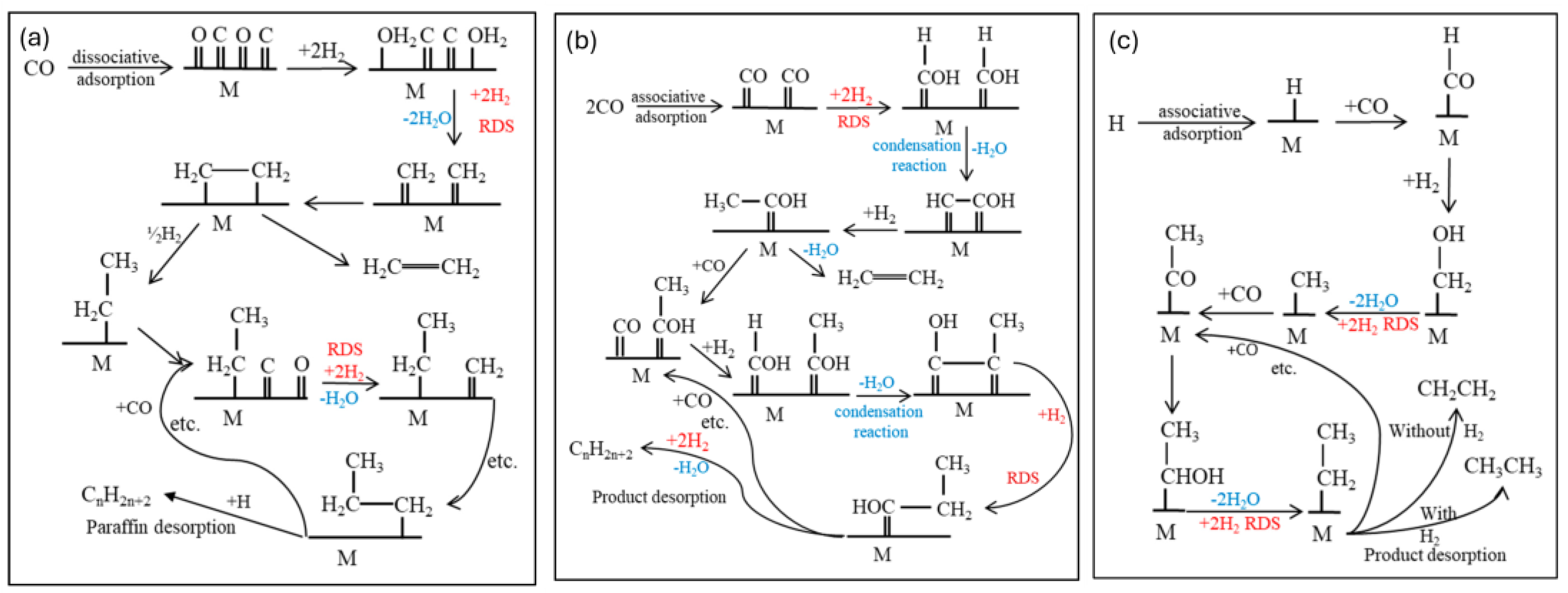
Storch et al. [130] proposed the enol mechanism as an alternative to the carbide mechanism. In this route, CO adsorbs associatively and is hydrogenated to form hydroxymethylene (=CHOH). Chain growth proceeds through condensation reactions between enolic species with simultaneous water elimination. In theory, this mechanism predominantly yields alkenes and oxygenated compounds, while paraffins are produced by the subsequent hydrogenation of the alkenes. The CO insertion mechanism, proposed by Pichler and Schulz [131], is an alternative to the enolic route and also accounts for oxygenate formation. In this mechanism, adsorbed CO is the chain-growth monomer, while CH3 species act as chain initiators. CO is first hydrogenated with oxygen removal as water, forming CH3 species. During propagation, another CO molecule is inserted into the metal–alkyl bond to form C-OR intermediates. Termination occurs either by direct desorption of oxygenated products (alcohols or aldehydes) or by further hydrogenation after oxygen removal, yielding alkanes and alkenes.
Despite the different pathways proposed over the years, the literature has not reached a consensus on which mechanism best represents the chain-growth reaction in FTS. Moreover, FTS is highly sensitive to catalyst structure, and the dominant mechanism may vary among different materials, leading to distinct selectivities toward alkanes, alkenes, and oxygenated compounds. More recently, advances in surface science and molecular modeling, particularly through computational chemistry calculations, have significantly improved the understanding of reaction mechanisms on different materials. Albeit not the focus of this work, density functional theory (DFT) studies addressing CO activation and chain-growth mechanisms on different supported catalysts [132], growth on carbide structures such as χ-Fe5C2 [133], particle size effects [134], as well as review articles in this field [135,136], can be found in the literature.
3.2. FTS Kinetic Models
The study of kinetic models for FTS reaction is still a topic of debate in the literature. As FTS comprises complex reactions in series and in parallel, and a wide product range is obtained, proposing a model that precisely describes reaction behavior in a catalyst is a challenge. The key points in developing a kinetic model for FTS are to ensure negligible mass and heat transfer limitations, to carry out extensive experimental work with variations in operating conditions (temperature, pressure, and space velocity), and to carefully evaluate mechanistic assumptions when defining the rate expression.
Typically, the models are derived from two approaches: rate models accounting only for syngas conversion, without considering product distribution, and models that consider the hydrocarbons in the rate expressions [126]. In both approaches, models can be obtained empirically or mechanistically, and currently, several kinetic model schemes for FTS can be found. Despite this, several models based on Langmuir–Hinshelwood–Hougen–Watson (LHHW) theory have been developed since the last century and are still widely used to express the CO consumption rate (r) over catalysts. Theoretically, these classical models are represented as functions of the partial pressures of the reactants and, in some cases, of formed products, as shown in Equation (8).
where p denotes the partial pressure, k and K are the kinetic and adsorption equilibrium constants of species i, and a, b, c, d, and e are coefficients that depend on the reaction mechanism, including the nature of adsorption (associative versus dissociative), the number of active sites involved in the rate-determining step (RDS), the adsorption of by-products, and the presence of vacant surface sites. In general, these models differ significantly among catalysts, particularly between Fe- and Co-based materials, since the mechanisms of CO and H2 activation are different, as is the formation of by-products such as CO2 and H2O. A comprehensive review of the kinetics of the Fischer–Tropsch reaction was carried out by Sonal et al. [137], and Table 4 summarizes some FTS classical models reported in the study.
Table 4.
Classic Langmuir–Hinshelwood–Watson (LHHW) Fischer–Tropsch kinetic models for Fe and Co-based catalysts.
As observed, the models differ, and the literature has not established the best model to represent the FTS reaction. Note that different models have been obtained for catalysts with distinct physicochemical properties and under different reaction conditions, which can influence both the reaction mechanism and the kinetic model. Sonal et al. [137] discussed the differences in mechanisms between Fe- and Co-based catalysts. On Co surfaces, CO activation tends to occur via dissociative adsorption, followed by the interaction with adsorbed hydrogen, whereas on Fe surfaces, CO adsorption is commonly assisted by H2.
An evident difference among the models presented in Table 4 is in the inhibition term. Some models consider inhibition only by CO and H2, or only by CO, whereas others propose inhibition by H2O formed during FTS and by CO2 from WGS, which occurs mainly over Fe catalysts. Early kinetic models accounted for H2O adsorption, as exemplified by the model of Huff and Satterfield in Table 4, which later became the basis for subsequent FTS kinetic studies. Nevertheless, investigations conducted by the Sasol company demonstrated that the observed inhibitory effect of water is highly dependent on the composition of the feed gas [147]. Similarly, Ledakowicz et al. [141] reported that the water formed during the reaction can be converted to CO2 in the presence of catalysts exhibiting significant WGS activity. Consequently, the reduction in reaction rate associated with competitive water chemisorption can be considered negligible.
The presence of CO2 in the denominator of kinetic models is also another topic of discussion in the literature. Especially for Fe catalysts promoted with alkali metals, such as K, the CO2 formed via the WGS reaction can be adsorbed on the surface and compete with CO for active sites, since catalysts rich in basic sites are able to activate the CO2 molecule, particularly when the iron phase is present as Fe3O4 [148]. Ledakowicz et al. [141] modified the model of Huff and Satterfield [138] by removing the influence of H2 and introducing a CO2 inhibition term. The authors concluded that the CO2 adsorption coefficient on the surface is similar to that of CO on an Fe/K catalyst. In turn, Zhou et al. [142] carried out a study on the discrimination between theoretical models for an Fe catalyst and proposed that the H2O and CO2 inhibition terms act as equivalents of vacant sites in the site balance of the models. The authors also pointed out that discrimination between models assuming dissociative or associative H- adsorption was not possible under the experimental conditions employed. Using a similar approach, Ma et al. [149] also discriminated among different theoretical models reported in the literature and proposed a generalized model for an Fe-Si-K-Cu catalyst. The results led to different kinetic models for different ranges of CO conversion. CO2 inhibition was observed to become more relevant at CO conversions above 70%, whereas water inhibition is not significant over the entire conversion range investigated.
3.3. State of the Art of FTS Kinetic Studies
As presented in the previous section, the study of kinetic models for FTS is extensive and has been studied since the 20th century. Albeit widely reported, the scientific community continues to develop new models and to improve the understanding of the reaction mechanism, as FTS is a highly complex reaction that leads to the formation of a wide range of products. Moreover, the kinetic models developed to date still show deviations from experimental observations, and there is a need for kinetic models for the newly developed catalysts. Therefore, this section provides an overview of kinetic studies reported in recent years.
A commonly reported approach is the nonlinear regression of LHHW-type models to experimental data for a given catalyst. Moshtari et al. [150] investigated the kinetics of LaFe0.7Co0.3O3 catalyst by nonlinear regression of 18 LHHW models based on the enolic mechanism. The results showed that, for this type of material, the best model (R2 = 0.97) assumes associative adsorption of CO and dissociative adsorption of H2, with the surface reaction to formyl species being the RDS, leading to an activation energy of 106.25 kJ mol−1. However, the diffusional aspects of the system were not discussed, and the mechanism was not confirmed by a second approach, such as a DFT study or an in situ characterization. A similar approach of non-linear regression was used by da Silva et al. [41] for studying the kinetics of the Fe/H-ZSM-5 catalyst. The authors ensured operation under kinetic regime, by calculating Mears and Weiz–Prater criteria of diffusional limitations in the reactor and evaluated 10 LHHW models based on different mechanistic assumptions, including associative and dissociative adsorption and the roles of CO2 and H2O in the kinetics. The results showed that CO2 formed via the WGS side reaction competes for adsorption sites, thereby reducing the CO consumption rate, whereas H2O has a minimal influence on kinetics. In addition, in situ diffuse reflectance infrared Fourier transform spectroscopy (DRIFTS) validated the proposed carbide mechanism with dissociative CO adsorption by identifying surface intermediates.
Alawi et al. [151] studied a kinetic model for a Ni/Al2O3 catalyst based on nonlinear regression of experimental data. Unlike what is commonly reported, the authors proposed associative adsorption for both CO and H2, with these species occupying a sizable proportion of the surface sites available. The reaction mechanism was not described, and the reaction between adsorbed CO and H2 was considered the RDS, leading to an activation energy of 130.2 kJ/mol. However, no statistical parameters were reported, nor was any comparison made with other models to demonstrate that the proposed pathway is indeed the most appropriate for a Ni-based catalyst, which is known to be active for CH4 formation under FTS conditions [152].
The revised studies show that classical LHHW models are still widely applied to catalysts under development, even those with distinct and complex structures, as reported in Section 2. In most cases, these models are adapted through parameter regression, rather than being reformulated to account for structural particularities. This indicates a gap in the current literature, as kinetic modeling studies of advanced catalysts are still scarce.
In addition to LHHW parameter estimation studies, investigations aimed at deriving different kinetic models that explore the reaction mechanism in a more detailed approach have also been reported. Niu et al. [153] developed a hybrid kinetic model for an industrial cobalt-based catalyst, differentiating several LHHW models for the CO consumption rate with a lump-type product distribution model focusing on C19+ selectivity. The authors assumed the carbide mechanism but focused on investigating the CO activation pathway, considering direct dissociation, H2-assisted, and adsorbed hydrogen-assisted routes. The derived model, as shown in Table 5, concluded that CO activation proceeds via direct dissociation and that H2 as well as H2O adsorption did not influence the reaction rate.
Table 5.
Kinetic models derived from specific mechanistic considerations in FTS.
Zhou et al. [154] developed a detailed kinetic model for FT synthesis on an iron catalyst using the Single Event approach. The model is based on a carbide mechanism with hydrogen-assisted CO insertion, and considers the formation of paraffins, olefins, alcohols and CO2 on the CO consumption rate, as shown in Table 5, in which “k and K” represent the kinetic constants, and α and β are chain growth factors that depend on the kinetic constants and the partial pressures of CO, H2, and H2O. A key contribution of this work is accounting for the structural properties of reactants and transition state intermediates to fundamentally explain the exponential behavior of product selectivities with increasing chain length. The model predicted deviations from the classical ASF distribution and concluded that olefin readsorption presented a negligible influence on the product distribution under the evaluated conditions.
On the other hand, Todic et al. [155] developed a detailed LHHW-based kinetic model to consider secondary reactions accounting for high methane selectivity and the hydrogenation of olefins over a cobalt catalyst. Their model, based on the CO-insertion mechanism, considers that C2+ chain growth and secondary methane formation, as well as olefin hydrogenation, occur in two distinct active sites, and two reaction rates were developed separately, as shown in Table 5. The authors concluded that more than 90% of the observed methane is from secondary formation pathways, and that the incorporation of secondary olefin hydrogenation significantly improved the prediction of the olefin/paraffin ratio.
The approaches of kinetic modeling accounting for product distribution have also been reported, despite the limited number of studies. Gray et al. [156] adjusted the kinetic model of Lox and Froment [157], which describes the formation of olefins, paraffins, and the WGS reaction, by including the α parameter as a function of syngas composition for an Fe-K/SiO2 catalyst. The model was applied to reactor simulations accounting for mass transfer effects in pellets of different sizes, resulting in errors of 28% and 13% in the prediction of CH4 and C5+, respectively. The authors attributed these deviations to the consideration of ASF deviations for CH4. A correction factor for methanation was included but was not fitted to avoid overparameterization. The model indicated that the olefin/paraffin ratio decreases with increasing temperature, pressure, and H2/CO ratio, while selectivity was not sensitive to CO conversion. Similarly, Todic et al. [158] also developed a detailed kinetic model for FTS over a Re-Co/Al2O3 catalyst to consider experimental observations. Based on the LHHW theory and on the carbide mechanism, the model considered that the 1-olefin desorption rate constant increases exponentially with carbon number, due to the weak interactions between the growing hydrocarbon chain and the catalyst surface. This chain-length dependency enabled the model to capture complex product distribution, which usually is described in classical mechanistic models. The model accurately reproduced the experimentally observed increase in chain growth probability for heavier hydrocarbons, the exponential decrease in the olefin-to-paraffin ratio with increasing carbon number, and the specific formation rates of both methane and ethylene.
Teng et al. [159] developed an FTS kinetic model for an industrial Fe–Mn catalyst using a continuous spinning basket reactor. Based on the CH2 insertion alkyl mechanism, the model-derived kinetic expressions for the formation of multiple products, including paraffins, olefins, alcohols, and acids, as well as the calculated activation energies, were consistent with values reported in the literature. Although the model could not accurately predict the olefin-to-hydrocarbon ratio, the results suggested that oxygenated compounds may readsorb on the catalyst surface, subsequently participating in chain growth and hydrocarbon formation. This behavior explains the experimentally observed decrease in alcohol/hydrocarbon and acid/hydrocarbon ratios with increasing carbon number, highlighting that kinetic models neglecting oxygenate readsorption and secondary reactions fail to reproduce the experimental product distribution.
Al-Zuhairi et al. [160] carried out a different study estimating kinetic parameters of power-law models for liquid formation in FTS over a 1Ce–10Co/SiO2 catalyst using genetic optimization algorithms. In the study, each reaction of the type nCO + 2nH2 → C2H2n+2 + nH2O was treated as an individual power-law expression with estimable parameters. The molar fractions of hydrocarbons were predicted with relative errors ranging from 2.5 to 9.9%, while the molar fraction of CO2 formed via the WGS reaction exhibited an error of 27.7%. However, the parameters were estimated under high CO conversion, and the kinetic regime was not mentioned. This approach of assuming individual power-law models for each product is not well reported and does not consider competitive adsorption between species on the catalyst surface, which is widely discussed based on the LHHW theory. However, the study provided reasonable estimates of activation energies for the formation of different compounds, and its integration into a reactor model also enabled the optimization of reaction conditions.
Davies and Möller [161] also investigated individual hydrocarbon formation reactions in FTS, but using kinetic models expressed in terms of activity and equilibrium constraints. The authors criticized previous kinetic studies that attribute deviations from the ASF distribution based only on kinetics. Accordingly, they proposed rate expressions for monomer formation, methane production, chain initiation, hydrocarbon growth, and the WGS reaction, in which the driving force is defined by differences in gas activities, expressed as functions of molar fraction, fugacity, and system pressure. The kinetic models were used to simulate a fixed-bed reactor and successfully reproduced ASF-type polymerization behavior. Product distribution was concluded to be equilibrium-controlled, and hydrocarbon yield to be kinetically controlled. The authors highlighted this approach as an alternative explanation of product distribution deviations based on diffusion limitations. Nevertheless, although thermodynamic-based kinetic models provide insights into equilibrium constraints, FTS remains highly dependent on catalyst structure, as well as on the nature and chemical state of the active sites, as discussed by van Santen et al. [162].
Kim et al. [163] proposed an innovative kinetic modeling framework to simultaneously describe FTS reaction kinetics and product distribution over an Fe-Cu-K-SiO2 catalyst. The approach combined 4 FTS and 2 WGS LHHW kinetic models from van der Laan and Beenackers [140] to estimate parameters for CO and H2 consumption and CO2 formation rates. Piecewise linear fitting was then applied to identify breakpoints in the ASF α factor, followed by surrogate modeling to determine the optimal α as a function of operating conditions. The model showed good prediction, with relative errors below 10% for CO, CO2, and H2 compositions and 15.8% for hydrocarbons. The authors highlighted that the framework allows chemical species to be divided into two groups: the hydrocarbons (including methane) and other species, enabling a comprehensive analysis of the FT reaction. Although the framework may not lead to the same conclusions for different catalysts, it can be used for developing kinetic models for a wide range of catalysts. Similarly, Turan et al. [164] combined LHHW models for FTS and WGS to study the kinetics of light olefin production over an Fe-Si-Mn-Cu-K catalyst using a hybrid optimization approach (multi-objective genetic algorithm coupled with constrained nonlinear optimization). The chain growth was assumed to follow the alkyl mechanism, and the results showed that both low temperature and low pressure increase the olefin/paraffin ratio. However, the product distribution deviated significantly from the ASF model, particularly for light hydrocarbons, due to unaccounted secondary hydrogenation pathways.
Despite the reported studies, there is still a gap in the FTS kinetics literature, particularly in works that integrate the developed kinetic models with the characteristics of the catalyst studied. Bridging the gap between kinetic modeling, reaction mechanism, and catalyst properties remains challenging, as it often requires not only kinetic studies but also complementary computational chemistry and in situ materials characterization techniques. Belleghem et al. [165] studied Single-Event MicroKinetic (SEMK) models of a Co/CNT catalyst, validated with Steady-State Isotopic Transient Kinetic Analysis (SSITKA) data to evaluate step and terrace sites activity in FTS. Terrace sites were found to promote H-assisted CO dissociation and the predominant formation of CH4, whereas step sites are responsible for chain growth. Also observed was that smaller particle sizes lead to higher selectivity toward methane and alkanes.
Pordeli et al. [166] carried out the non-linear regression of several LHHW kinetic models for an Sn-Co/γ-Al2O3 catalyst and found that the enol mechanism, with associative and dissociative adsorption of CO and H2, led to the model with the best fit. The study reported that Sn promotion on Co/γ-Al2O3 apparently reduced the activation energy (31.69 kJ/mol) of the reaction compared with the literature (78–139 kJ/mol). However, the study did not investigate the unpromoted catalyst for such a comparison, and the role of Sn in the reaction was not discussed based on catalyst characterization. In another approach, Yang et al. [167] comprehensively explained the effect of promoters (Rh, Ir, Sb, and Ga) on Co/Al2O3 catalysts using Steady-State Isotopic Transient Kinetic Analysis (SSITKA). Rh and Ir facilitated Co reduction and dispersion, directly increasing CO consumption rates and CHO* formation, whereas Sb and Ga reduced the availability of active Co sites by binding with Co. Although no kinetic model was developed, as the focus was on SSITKA, the study concluded that promoter addition alters surface CHx concentrations and, consequently, product selectivity.
Overall, although kinetic studies on FTS have been reported since the last century, this reaction is still actively investigated currently, using different approaches. In general, the models and strategies developed are specific to a given catalyst and a particular set of reaction conditions. As observed, classical kinetic models serve as guidelines and starting points for adaptation to different situations through parameter estimation. Many studies report nonlinear regression of kinetic models to describe the CO consumption rate over a catalyst; however, these models often fail to predict the product distribution, or, when they do, they exhibit significant deviations. It is also worth noting that diffusion phenomena within catalysts are still rarely addressed, which is essential to ensure that regression data are obtained under intrinsic kinetic regimes.
Other approaches include genetic algorithms and optimization techniques, which allow the kinetics representation through different empirical models. This is a promising approach, as the algorithms can be replicated for different materials once having data for the optimization. However, such strategies often provide limited mechanistic insight. In turn, microkinetic studies have been reported, and in this case, the mechanism for hydrocarbon formation can be elucidated and correlated to catalyst structure.
In summary, the choice of kinetic modeling strategy in FTS should be guided by the objective of the study. The classic LHHW-type models are a suitable approach for reactor modeling and simulation and for catalyst comparison, especially when CO consumption is evaluated as a starting point. In contrast, mechanistically detailed and single-event models are more appropriate when the discrimination between reaction pathways is important, and for correlating catalytic properties with FTS results. Recent advances have demonstrated that detailed mechanistic models can successfully capture complex product distributions and secondary reactions. Empirical and data-driven models, although promising, are still debated in the literature because they fail to represent the reaction mechanism and should be used with caution when predicting beyond the experimental conditions.
4. Chemical Reactor Engineering
The selection of the reacting system employed for FTS is primarily determined by the desired product distribution (i.e., hydrocarbon chain length and paraffins/olefins ratio) as well as by the need for adequate heat removal, given the reaction’s highly exothermic nature (−165 kJ/mol CO). These factors govern the operating conditions and the choice of reactor configuration [168]. Most of the current commercial applications involve fixed beds (FBRs), slurry bubble columns (SBCRs), or fluidized-bed reactors (FLBRs), with Sasol being the leading industry in the employment of this technology. Within this context, Table 6 summarizes the different reactors commercially deployed for FTS, the type of catalyst and feedstock used, the company and location of each reactor, and its capacity.
Table 6.
Commercial Fischer–Tropsch synthesis reactors [14,15,16,17].
An alternative reactor configuration, which is currently being explored for small-scale applications are the microchannel reactors [1]. Given the complex nature of the different reacting systems, it is imperative to utilize tools capable of adequately representing their behavior while maintaining the lowest possible degree of complexity. In this context, mathematical models represent a valuable alternative to describe such systems, as well as the potential positive or negative outcomes associated with their behavior [169]. Therefore, this section aims to provide an overview of the different reactor types employed in the Fischer–Tropsch synthesis, highlighting their main characteristics, modes of operation, and the most recent innovations associated with their development.
4.1. Fixed-Bed Reactors
Fixed-bed reactors are usually very sensitive to temperature variations, requiring efficient thermal management in order to prevent hot-spot formation and catalyst deactivation. Moreover, operation at high syngas flow velocities is often necessary to achieve turbulent conditions and improve heat transfer, but the simultaneous use of small tubes, small particles, and high flow rates may lead to excessive pressure drops, increased compression costs, and mechanical stress if fragile catalyst particles are utilized [17,170]. While larger particles help mitigate pressure drop, they also increase intraparticle mass transfer limitations, especially when the catalyst pores become filled with liquid wax produced during the FTS reaction, making the intraparticle diffusion a rate-limiting step. Catalyst activity also influences reactor geometry: iron-based catalysts, which deactivate more rapidly, can be used in larger-diameter tubes (5 cm diameter), whereas more active cobalt-based catalysts require smaller tubes (3 cm diameter) to ensure efficient heat removal and avoid excessive temperature rise. In both cases, temperature gradients must be carefully evaluated during the design step to prevent coke formation, catalyst oxidation, and loss of selectivity [170,171].
As a general matter, fixed-bed reactors are considered to be one of the most efficient technologies for FTS, as they can maximize the reaction driving force when heat transfer limitations are adequately minimized [172]. Throughout its history, the Fischer–Tropsch process has employed fixed-bed reactors with different configurations and performance levels. Early reactors were developed in Germany during the 1930s and operated either at atmospheric pressure or at medium pressure (0.5–1.5 MPa). The atmospheric-pressure reactor consisted of a fixed bed arranged in a tube-and-plate configuration within a sheet-steel box of 18.75 m3, containing 600 water-cooling tubes and 555 steel plates, with 12 m3 of catalyst pellets distributed between the plates. Reactors operating at medium pressure followed a conventional shell-and-tube design, 6.9 m in height, with a shell diameter of 2.7 m and 2100 vertical cooling tubes, each 4.5 m long. However, these systems were thermally inefficient, recovering only around 30% of the total energy input as primary products and 25% as steam. Moreover, the catalyst pellets had a maximum lifespan of approximately seven to nine months [173].
Later, in 1955, five fixed-bed reactors, each comprising 2050 internal tubes 12 m in length and 5 cm in diameter, were developed by Sasol. These reactors operated at approximately 2.5 MPa and 220 °C, with a subsequent development in 1987, which led to a reactor operated at 4.5 MPa. These systems manage the highly exothermic nature of the reaction by generating steam on the shell side [174,175]. Overall, although they offer easy maintenance and facilitate wax separation, their design is typically complex and is also associated with high capital costs. Moreover, in FTS, scale-up is mechanically challenging due to the necessity of periodic catalyst replacement to meet product specifications, which, in turn, necessitates the use of removable grids to enable catalyst exchange [17,174]. The Shell Middle Distillate Synthesis process, commissioned later in 1993 in Malaysia, also employed a multitubular fixed-bed reactor aiming at producing heavy FTS waxes from natural gas [171].
Recently, experimental studies conducted in fixed-bed reactors are required to understand the practical applicability of innovations in this reacting system, as well as to elucidate the reactor hydrodynamics, mass transfer limitations, porosity variations at different flow rates, the influence of residence time distribution and reactor geometry [176]. Hickman et al. [177] discussed several criteria associated with laboratory-scale testing of catalysts in fixed-bed reactors. Overall, their review provides references that establish criteria to evaluate the elimination of bed-scale effects (i.e., temperature and pressure gradients) and particle-scale effects (i.e., external and internal mass transfer limitations), enabling an accurate assessment of catalyst performance and its associated kinetic parameters. Based on this foundation, and supported by adequate experimental results, it is possible to propose different scale-up strategies relying on heuristics, qualitative and semi-quantitative considerations, simplified mathematical models, or more complex modeling approaches involving computational fluid dynamics (CFD) and/or the discrete element method (DEM) [178,179].
The overall performance of laboratory-scale fixed-bed reactors in comparison with fluidized-bed reactors [176] and slurry bubble column reactors [180] has been assessed in the literature. Eran et al. [176] evaluated the performance of a fixed-bed reactor against that of a fluidized-bed reactor using the same Fe-based catalysts and operating conditions in both systems (2 MPa, H2/CO molar ratio of 2, and temperatures between 275 °C and 325 °C). They observed that the overall reaction rate was slightly higher in the fixed-bed reactor than in the fluidized-bed reactor, which was attributed to poorer temperature control in the fixed-bed system. However, mass transfer limitations and reactor hydrodynamics were not directly assessed, limiting a more comprehensive comparison between the two systems.
Similarly, Nasser et al. [180] compared the performance of FBR and SBCR for olefin production using the same Fe-based catalysts. Experiments in the fixed-bed reactor were conducted at 2 MPa, H2/CO = 1, and temperatures between 300 and 320 °C, whereas the SBCR tests were carried out at 340 °C. In the fixed-bed reactor, CO conversions reached up to 87% at 300 °C (ranging from 14% to 87%) and up to 94% at 320 °C (ranging from 56% to 94%). Moreover, high olefin selectivities were obtained, with a maximum of 49%. Nevertheless, although the SBCR showed relatively high and more stable CO conversions (83–87%), its performance in terms of olefin selectivity was inferior, ranging from 14% to 21%. Overall, the diffusion-controlled regime of the SBCR limits the increase in conversion levels, suggesting that improvements in reactant mass transfer rates, such as adding baffles to its structure or increasing agitation in the slurry phase, could enhance its performance. It should be noted, however, that the differences in the observed selectivity between the two reactors were not directly addressed. The only reported trend was the apparent stability of conversion and selectivity levels in the SBCR, which has also been previously documented in the literature [181].
From the above-mentioned studies, it can be seen that there is a correlation between the reactor configuration and the overall syngas conversion. Gavrilović et al. [182] showed that FBRs are sensitive to operating conditions (H2/CO ratio, temperature, conversion level, and water partial pressure), with higher temperatures favoring conversion but also reducing higher chain hydrocarbons selectivities due to the difficulties associated with the thermal management in FBRs. Complementarily, Frilund et al. [183] demonstrated that structured FBR fabricated via additive manufacturing can enhance reactor performance by improving heat-transfer characteristics. In their design, a periodic open cellular structure (POCS) of aluminum inserts were integrated within the catalyst bed, creating a high-porosity structure. This configuration led to high CO conversions (reaching up to 85%) and limited methane selectivity to less than 10%.
Furthermore, the formation of hot spots within the narrow reactor tubes may lead to catalyst deactivation, sintering, or thermal runaway, reducing reactor performance and bringing risks to safe reactor operation [184]. Modifications to the conventional catalyst bed represent a viable option not only to prevent thermal runaway but also to enhance the overall heat-transfer capacity of the system. For instance, Shen et al. [185] experimentally analyzed the temperature distribution in a bench-scale fixed-bed reactor. The authors evaluated the effects of inlet molar composition and gas hourly space velocity (GHSV) and quantified the average temperature differences as a function of radial position. The presence of an inert gas (nitrogen) reduced the temperature gradients between the reactor wall and the tube center and enhanced the overall selectivity toward higher-chain hydrocarbons. In addition, the authors recommended evaluating the operation of such reactors with variable catalyst loading alongside the reactor length, in order to improve the reduction in catalytic activity with respect to product conversion and facilitate the temperature control.
This concept was later tested by Gholami et al. [186], who implemented a multi-layered catalytic bed with Co/Al2O3 catalyst loadings arranged in ascending order, ranging from 1% to 15%. When compared with a conventional fixed-bed reactor employing a uniform 5% loading, the multi-layered configuration exhibited less pronounced temperature rises and achieved selectivities toward C20+ hydrocarbons of up to 36%. More recently, Boymans et al. [187] employed an internally impregnated three-dimensional printed copper internal, packed with a Co-Ru/γ-Al2O3 catalyst to improve heat-transfer characteristics. While the conventional fixed-bed reactor exhibited a heat duty of 218 kW m−3, the structured internal achieved a heat duty of 1238 kW m−3, demonstrating that appropriately designed internal can effectively stabilize temperature increases even under high-conversion conditions. Furthermore, further studies combining multi-layered catalyst beds with structured internals may represent a promising strategy to achieve enhanced temperature control and improved product selectivity.
Beyond experimental investigations, computational studies are also relevant to quickly assess the impact of reactor internals on heat transfer phenomena. In this context, Barrera et al. [188] analyzed the optimal design of a cooling inert for a modular fixed-bed reactor through computational fluid dynamics (CFD). The authors employed an integrated optimization framework that restricted the maximum allowable catalyst temperature to 500 K and iteratively improved the geometry of an aluminum cooling inert via topology optimization. As a result, the model continuously optimized the internal geometry without relying on conventional trial-and-error approaches, which are often costly and inefficient. It is worth noting that CFD studies have become increasingly relevant, together with their associated advances, such as the discrete element method (DEM), which enables the simulation of each individual catalyst particle contained in the reactor tube, providing detailed insights into internal and external mass- and heat-transfer resistances [189,190].
Simpler modeling approaches are also possible, given the fact that CFD techniques, although accurate, can be computationally expensive. For instance, Terziotti Neto et al. [169] developed a detailed dynamic pseudo-homogeneous model for the Fischer–Tropsch synthesis in fixed-bed reactors. As a result, it was possible to evaluate the time required for the system to reach equilibrium (ranging from 35 s to 137 s), the carbon monoxide conversion (ranging from 26.09% to 99.73%), and the selectivity toward hydrocarbons with different chain lengths. Nonetheless, the difficulties associated with the thermal management of FBRs are briefly discussed and associated with a prolonged period to reach the steady-state condition. Méndez and Anchyeta [191] also developed a dynamic model for FBR, incorporating a velocity profile equation that accounts for variations arising from changes in mixture density, and employing a more detailed kinetic scheme consisting of eight distinct reactions. Unlike the previous study, the authors also discussed the thermal effects on the cooling side of the reactor medium, showcasing that although slight temperature variations were observed, the coolant side stabilized rapidly. This behavior was attributed to an efficient PI controller, which the authors recommend as necessary to prevent thermal runaways in the FBR.
Steady-state models are also commonly used to analyze the behavior of FT fixed-bed reactors. Kern and Jess [192] employed a two-dimensional model accounting for radial heat transfer effects and plug-flow behavior for species concentrations to assess the impact of developing a dual-zone FBR. The study considered two distinct zones in the catalytic bed with different catalyst activities, limiting the maximum allowable temperature to 240 °C. When compared with an FBR with uniform catalytic activity along the axial coordinate, the two-zone reactor achieved a conversion of 51%, whereas the former system peaked at a conversion of 38%. However, the analysis was limited to single-pass conversion, without considering a recycling stream that could potentially improve the system’s thermal behavior. Moreover, pressure drop, variations in molar flow rate due to reactant conversion, radial mass transfer effects, and comprehensive techno-economic analysis were not addressed, rendering the study suitable only for a preliminary reactor assessment.
Further improvements in the above-mentioned model hypothesis were addressed in subsequent studies, rendering the possibility of a deeper discussion into the fundamental aspects that govern fixed-bed reactor models [193,194,195,196]. In their most recent study, a comparison between 1D and 2D reactor models demonstrated that, for high Biot numbers, the use of 2D models is advisable (at least for heat transfer modeling) since 1D formulations tend to underestimate both conversion and average reactor temperature, impacting an accurate assessment of reactor performance [197]. Overall, this series of studies conducted by the authors represents, to the best of our knowledge, the most comprehensive treatment of the key aspects governing Fischer–Tropsch fixed-bed reactor operation in recent years.
Overall, the body of literature reviewed within this subsection demonstrates that the performance of Fischer–Tropsch fixed-bed reactors is governed by a complex interplay between catalytic properties, reactor configuration, operating conditions, and heat- and mass-transfer phenomena. Experimental studies remain essential to properly assess laboratory-scale performance, as well as to identify hydrodynamic and thermal limitations that cannot be captured through simplified modeling assumptions alone. Comparisons with fluidized-bed and slurry bubble column tended to favor the use of FBR, although adequate temperature management remains a challenge. In this context, recent advances involving structured internals, multi-layered catalyst beds, and additive manufacturing have proven particularly promising in mitigating hot spots and enhancing heat-transfer efficiency. Complementarily, computational approaches have provided insights into reactor design and scale-up, albeit with different levels of complexity and computational cost. Taken together, the reviewed studies indicate that further progress in fixed-bed Fischer–Tropsch reactors development is still possible and relies on the combined study of experimental and computational fields, enabling the understanding of reactor behavior and supporting the development of more efficient fixed-bed designs.
4.2. Slurry Bubble Column Reactors
In slurry bubble columns, the syngas is fed at the base of the reactor and rises through a suspension of liquid Fischer–Tropsch wax containing finely dispersed catalyst particles (≤100 µm). Temperature control is achieved by means of internal cooling coils placed within the slurry, which makes these systems more effective with respect to heat management when compared to fixed-bed units. Nevertheless, their design, scale-up, and operation are more complex, mainly due to the need for hydrodynamic control, which may influence reactor stability and performance [17,168,175]. These systems can operate in either a homogeneous regime, with small bubbles formed at low superficial gas velocities (0.035–0.095 m s−1), or a heterogeneous (churn-turbulent) regime, characterized by larger bubbles generated at higher gas velocities (up to 0.4 m s−1) or higher catalyst loadings [171]. While the heterogeneous regime is necessary to achieve high industrial throughputs, excessive bubble coalescence decreases the gas–liquid interfacial area, leading to mass transfer limitations and lower reaction rates; thus, reactor design must ensure efficient mass transfer while minimizing the formation of oversized bubbles [14,171]. At industrial scale, SBCRs utilized for FTS typically have diameters ranging from 6 to 10 m and heights of 30 to 40 m, operate at pressures up to 5.0 MPa and temperatures up to 250 °C, use superficial gas velocities between 0.2 and 0.4 m s−1, maintain catalyst volume fractions of 30–40%, and incorporate up to 8000 internal cooling tubes to provide effective heat removal [198].
Earlier tests of slurry reactors were reported during the 1950s and 1970s. The main challenge associated with the large-scale deployment of this technology was the separation of wax from the catalyst particles. The development of the SBCR concept began in the early 1980s with experiments conducted by Sasol in narrow tubes of approximately 5 cm in diameter. As the results proved promising, a pilot SBCR with a diameter of 1 m was commissioned by the company in 1990, containing a proprietary technology dedicated to wax separation [170,175]. Within this context, the gas hold-up emerged as an important design parameter, since it is used for both determining the pressure profile and the required amount of catalyst particles. Unlike two-phase fluidized systems, in which the gas hold-up can be easily predicted, slurry systems exhibit greater complexity due to the influence of liquid properties under reaction conditions. Consequently, larger pilot units were developed, aiming at a reliable scale-up strategy. Given the successful pilot performance, Sasol decided in 1991 to abandon a previously planned multitubular fixed-bed design containing 5000 tubes in favor of a large-scale SBCR. This decision resulted in the commissioning of a commercial slurry-phase reactor with a diameter of 5 m and a height of 22 m in 1993, marking a milestone in the industrial application of SBCRs for FTS [174].
Overall, the SBCR presents advantages over FBR systems. Economically, the cost of a slurry reactor train is around 25% an FBR, and the lower catalyst loading (around 70% less with respect to FBR) leads to a reduction in catalyst consumption. Operationally, slurry reactors exhibit a pressure drop approximately four times lower, which reduces gas compression requirements and associated energy costs. Moreover, the efficient heat management due to the well-mixed slurry phase improves temperature control and allows operation at higher average temperatures, which in turn enhances conversion and allows a better control of product selectivity [170,174]. These significant advances led to the commercial implementation of several SBCR units focused on the FTS, as presented in Table 6. The most recent example of commercial deployment of such technology was the Medium-Temperature Slurry-bed Fischer–Tropsch Process developed by Synfuels and commissioned in 2016 with a capacity of 100,000 bdp (~15,900 m3 day−1) of liquid products [199].
Current research on the SBCR is related to different reactor operational characteristics: hydrodynamics, transport phenomena, and catalyst mechanical properties. With respect to hydrodynamics, Shaikh et al. [200] developed a mimicked slurry bubble column reactor to evaluate the influence of operating parameters on flow behavior. The term “mimicked” refers to the use of a liquid phase maintained at room temperature with properties similar to those of Fischer–Tropsch wax under reaction conditions, compressed air as the gas phase, and glass beads as the solid phase. The authors investigated the effects of gas velocity, pressure, and solid loading on reactor hydrodynamics. Overall, increasing solid loading was found to reduce radial gas holdup due to the formation of larger bubbles, while pressure exhibited a weaker influence on overall gas holdup compared to gas velocity. It should be noted, however, that although the mimicked system reproduces key physical properties of an actual Fischer–Tropsch reactor, further investigations incorporating reaction kinetics can also be performed to fully complement the reported findings.
Hydrodynamic aspects are frequently incorporated into mathematical modeling studies of slurry bubble column reactors. For instance, Mamabolo and Nkazi [201] employed a full axial dispersion model to describe the detailed behavior of a three-phase system comprising large and small bubbles and the liquid phase. Hydrogen and carbon monoxide were considered as the main reacting species, while product selectivity was not accounted for. Moreover, the model neglected radial variations, assuming that species concentrations vary only along the axial direction. This limitation was subsequently addressed by Mokhtari and Chaouki [202], who discretized the reactor into axial and radial subcells utilizing a bubble population balance. Each cell was characterized by the correlations for hydrodynamic and the associated kinetics. In addition, their study incorporated correlations to account for catalyst loss and attrition, phenomena of particular relevance in slurry reactors. The correlation for catalyst attrition was developed by Werther and Xi [203] and accounts for specific properties of the solid particle. The model proposed by Thon et al. [204] was then adapted to assess the formation of two particle sizes, the fine and large particles, both influenced by the attrition phenomena.
Overall, both modeling studies highlight the importance of first-principles modeling approaches for capturing the behavior of industrial-scale slurry bubble column reactors and demonstrate that accurate bubble hydrodynamics descriptions are essential for predicting gas–liquid mass transfer rates and their impact on reactant conversion. A variation in conventional slurry bubble column reactors is the microbubble-enhanced slurry bubble column reactor (MSBCR), a system specifically designed to reduce bubble size and, consequently, reduce gas–liquid mass transfer limitations. Li et al. [205] demonstrated the principles associated with this technology through a CFD-based study, showing that MSBCRs can achieve interfacial areas up to nearly 20 times greater than those of conventional SBCRs.
Another intrinsic aspect of SBCR operation lies in mass transfer limitations, particularly those associated with the gas–liquid interface. To address this issue, mimicked Fischer–Tropsch reactors have been employed to analyze mass transfer behavior and to develop appropriate correlations [206,207]. In a preliminary study, Han et al. [206] investigated the effects of operating pressure, solid loading, and superficial gas velocity on the volumetric mass transfer coefficient. In addition, different modeling approaches were evaluated, leading to the conclusion that an axial dispersion model is more suitable for estimating mass transfer coefficients, whereas the assumption of perfect mixing resulted in the poorest fitting. In a subsequent study, Han et al. [207] used measurements obtained from a mimicked SBCR to develop an adapted correlation for estimating the mass transfer coefficients of the syngas components (H2 and CO). It should be noted, however, that the values assumed for those components were inferred through correlations based on the mass transfer coefficient obtained for trace gases (CH4, CO2, and Ar) employed in the experiments. This approach may introduce numerical deviations from the actual mass transfer coefficients of the reactive components under a Fischer–Tropsch process.
Øyen et al. [208] further explored different approaches to represent the mass transfer on a slurry reactor, comparing the traditional Henry’s law approach to describe gas–liquid equilibrium with approaches grounded in rigorous phase equilibrium using Peng–Robinson and the perturbed-chain statistical associating fluid theory (PC-SAFT) equations of state. The study demonstrated that both Peng–Robinson and PC-SAFT models eliminate the need to define a conceptual solvent, as required by Henry’s law approach, and can capture condensation/evaporation phenomena as well as the formation of a multiphase mixture. A sensitivity analysis showed that reactor performance is mass-transfer-limited, instead of kinetic-limited, with conversion increasing with mass-transfer coefficients. Overall, PC-SAFT and Peng–Robinson equations of state provided a broader description of the system at the expense of a higher computational cost, whereas Henry’s law was the fastest model to converge. It should be noted, however, that this high computational cost for employing advanced equations of state may hinder the deployment of large-scale simulations, since the PC-SAFT approach took up to 700 min to converge.
Furthermore, Makki et al. [209] analyzed a mimicked SBCR for Fischer–Tropsch synthesis utilizing glass beads to simulate the solids of the slurry phase. The authors intended to evaluate the heat transfer performance of the system. Overall, the presence of the tube bundle allows the flow to be semi-symmetrical alongside the diameter, which was verified by the similar results obtained for the overall heat transfer coefficients in symmetrical radial positions. Moreover, the presence of interior tubes can impact the flow patterns, leading to stagnant zones near the reactor wall, causing the overall heat transfer coefficients to be depleted and the solids concentration to be decreased, given the reduced mixing and turbulence in this region.
Catalyst design for slurry bubble column reactors is also an important research field under study. Lin et al. [210] reported the development of an iron-based catalyst with enhanced attrition resistance and long-term stability, demonstrating that the catalyst formulation and adequate management of particle strength can enhance the catalytic performance in an SBCR and industrially relevant conditions. This conclusion was drawn from the application of the catalyst in an industrial SBCR, in which the authors reported cleaner products compared with those obtained using a conventional FT catalyst. The conclusion was also further supported by the lower iron content in the resulting products.
Overall, the reviewed studies indicate that the performance of slurry bubble column reactors for Fischer–Tropsch synthesis is governed by the interplay between hydrodynamics, mass and heat transfer, and catalyst properties. Experimental investigations using mimicked systems have provided different insights into flow behavior, mass transfer, and heat removal, although their applicability remains limited by the absence of an actual reaction within the system under study. Complementary modeling efforts demonstrated that an accurate description of bubble dynamics and phase equilibria is required to predict reactor performance with accuracy, although some approaches might require high computational costs. In parallel, catalytic studies emphasize that attrition resistance is a critical factor to be considered. Taken together, these findings suggest that further progress relies on integrated experimental and modeling frameworks capable of simultaneously addressing hydrodynamics and transport phenomena under industrially relevant conditions. Moreover, the investigation of hydrodynamics and mass and heat transfer resistances in a real reactor, rather than in a mimicked system, is suggested in order to provide a broader and more representative assessment of slurry bubble column reactors for Fischer–Tropsch synthesis.
4.3. Fluidized-Bed Reactor
Fluidized-bed reactors can be divided into turbulent and circulating configurations. Turbulent fluidized beds operate as conventional systems in which syngas is introduced at the bottom of the reactor and distributed across the vessel, fluidizing the catalyst particles and forming gas bubbles within the bed. Temperature control is achieved by internally circulating saturated water [170,211]. The high heat transfer rates in these reactors can handle large syngas flow rates and achieve high conversions. In circulating fluidized-bed reactors, the catalyst particles are entrained by the syngas into the reaction zone and subsequently separated from the gaseous products in a cyclone in order to be recirculated. This configuration allows conversions of up to 90% and operation at gas velocities up to four times higher than those of turbulent beds. However, careful control of pressure drop is required to prevent excessive catalyst entrainment, which may overload the cyclone, create hot spots within the reactor, and reduce catalyst lifetime [170]. Moreover, operating conditions should be carefully controlled (i.e., low to moderate pressures and high temperatures) in order to avoid the formation of heavy hydrocarbons that could condensate and cause particle agglomeration, jeopardizing fluidization conditions and reactor performance [212].
Historically, fluidized Fischer–Tropsch reactors evolved from early fluidized-bed concepts developed to intensify heat removal and improve productivity of gasoline derived from natural gas (Hydrocol process). In the 1950s, the Kellogg Company introduced the circulating fluidized-bed reactor and incorporated it in the Synthol process, which was later commercialized by Sasol in South Africa, where circulating fluidized-bed (CFB) reactors were installed at Sasolburg and later at Secunda [171,213]. These CFB reactors operated at 2.5 MPa and 340 °C, with heat removed through steam generation. However, scale-up complexity, changes in catalytic properties due to coke formation, and hydrodynamic constraints motivated further improvements in the process, with the implementation of online catalyst renewal in order to maintain a desirable catalyst performance. Later, there was the introduction of the Sasol Advanced Synthol (SAS) reactor, a conventional fluidized-bed reactor operating at 2.0–4.0 MPa and 340 °C. The simpler cylindrical geometry allows larger diameters, enhanced thermal management, improved steam generation, lower pressure drop, and decreased catalyst attrition compared to circulating systems [171,213].
The recent literature on Fischer–Tropsch fluidized-bed reactors is comparatively scarcer than that on fixed-bed and slurry bubble column reactors. Nevertheless, an important aspect in the preliminary design of fluidized-bed reactors was investigated by Zhang et al. [214], which is the adequate design of the reactor gas distribution system. In their work, the authors analyzed the effects of employing branched pipe and circular gas distributors in a fluidized-bed reactor using a three-dimensional CFD model. Overall, the results indicated that the circular gas distributor improved gas–solid contact, leading to a higher solid-phase temperature distribution and, consequently, enhanced reaction rates. It should be noted, however, that the study considered only a limited number of lumped reaction products (CH4, C3H8, C10H22, and C22H46), which may not adequately capture the complexity of the product distribution associated with the Fischer–Tropsch reaction. Moreover, the proposed model was developed for a laboratory-scale reactor. As acknowledged by the authors, larger-scale reactors often experience reduced CO conversions due to insufficient gas–solid contact. However, this effect was not explored, as the analysis was restricted to a small-scale operation. Therefore, while the study provides valuable insights into the influence of gas distributor design, further investigations at larger scales are still required to assess the scalability and general applicability of the reported conclusions.
Complementarily, the tube bundle design was investigated by Hasan et al. [215] through an experimental study focusing on the effects of incorporating vertical heat-transfer tubes in a Fischer–Tropsch fluidized-bed reactor. The authors reported that a square-pitch tube arrangement resulted in a more uniform radial distribution of the local heat-transfer coefficient compared to a triangular-pitch configuration. Moreover, for the square-pitch arrangement, the heat-transfer coefficient was also found to increase with increasing gas flow rate. It should be noted that the study did not employ actual Fischer–Tropsch catalysts. Instead, glass beads with similar properties to the conventional catalysts were used. Moreover, as acknowledged by the authors, the presence of vertical tubes may affect the fluidization behavior by promoting bubble breakup. The study does not address whether increasing the number of cooling tubes could negatively impact reaction performance, as its primary focus was limited to heat-transfer characterization. Consequently, further investigations employing real Fischer–Tropsch catalysts are still required to evaluate whether the inclusion of vertical cooling tubes is beneficial to overall reactor performance compared to conventional designs, and to assess whether increasing tube density could jeopardize reaction rates.
A further investigation of the same fluidized-bed reactor was carried out by Sabri et al. [216], focusing on the influence of tube-end geometry on the heat-transfer coefficient by comparing conventional flat-ended tube bundles with tapered-end configurations. Experimental results indicated that the tapered design increased the local heat-transfer coefficient by approximately 20% at a superficial gas velocity of 0.4 m s−1 relative to the flat-ended arrangement. It should be noted, however, that these findings were obtained using glass beads rather than actual Fischer–Tropsch catalyst particles. Taken together, these studies provide valuable insights into improved design features for fluidized-bed reactors. Nevertheless, additional nonconventional tube arrangements and end geometries could be explored to further enhance the overall reactor performance. Moreover, these findings can be a motivation for future CFD-based models incorporating realistic Fischer–Tropsch reaction kinetics and catalyst properties to assess the impact of such design modifications.
The work developed by Sharifian et al. [217] also intended to analyze vertical heat transfer tubes and to implement a control strategy. The authors studied the effects of system pressure and superficial gas velocity, showing that while the former had a negligible effect on the heat transfer coefficient, increasing the superficial gas velocity led to higher mean heat transfer coefficients, a conclusion similar to that reported by Hasan et al. [215] for the square-pitch configuration. The results regarding the control strategy indicated that a proportional–derivative–integral controller with filter (PDIf) enabled faster cooling of the reacting medium and provided a smoother response compared to a proportional-integral (PI) controller. However, it should be noted that the study was limited to considering averaged values, and also to neglecting axial and radial temperature gradients within the reactor bed.
In a subsequent study, Sharifian et al. [218] investigated the implementation of a feedback temperature control strategy for a Fischer–Tropsch fluidized-bed reactor within a micro-GtL (gas-to-liquid) plant. The study proposed a simulation-based methodology to design a proportional–integral (PI) controller, combining reaction kinetics, hydrodynamics, and heat-transfer correlations in the Aspen Plus v12 software. Open-loop simulations were used to identify the PI controller parameters. The results showed that the proposed controller ensured stable temperature operation under the evaluated process conditions and maintained adequate reactor performance. Nonetheless, the study neglected axial and radial temperature gradients and assumed uniform bed porosity. Despite these limitations, the work provided a valuable framework for integrating control considerations in the design of Fischer–Tropsch fluidized-bed reactors and highlights the possibility of future studies analyzing the implementation of different control strategies in order to assess the most efficient one.
Overall, although fewer recent literature publications are available to assess the novelties associated with the design and study of fluidized-bed reactors for Fischer–Tropsch synthesis, it should be noted that progress is being made across different areas of reactor design. From experimental studies to comprehensive CFD simulations, factors associated with reactor design are currently under exploration, ranging from activation technologies to the assessment of optimal operating conditions and design strategies with respect to reactor geometry. To the best of our knowledge, only one study [176] assesses the performance of a fluidized-bed reactor with newly developed catalysts, and although experimental studies are more extensive than computational ones, all of them carry specific limitations. Nonetheless, the improved design strategies investigated at laboratory- or pilot-scale represent an opportunity for developing comprehensive advanced models, using tools such as CFD, to assess their predicted performance in industrial-scale reactors.
Moreover, to clarify the differences among the commercial reactors discussed in Section 4.1, Section 4.2 and Section 4.3, Table 7 provides a concise summary of each reactor technology in terms of conversion, selectivity, and associated costs.
Table 7.
Comparison between the fixed bed, fluidized-bed and slurry bubble column reactors [174,213,219,220].
4.4. Novel Reactor Concepts
Process intensification in FTS has become a central theme in recent research, especially in view of the heat and mass transfer limitations of conventional reactors (slurry bubble columns and fixed-bed reactors) when operated at high conversions and thermal loads. Intensification means enhancing heat and mass transfer, which translates into higher reactor productivity per unit volume, improved thermal control, and, consequently, the possibility of building more compact, flexible, and modular plants without sacrificing selectivity or catalyst lifetime [12,13].
Within this context, microrreactors and microstructured reactors have been proposed as one of the main platforms for Fischer–Tropsch intensification due to their high surface-area-to-volume ratio, very short heat transfer paths, and the ability to operate under nearly isothermal conditions even at high reaction rates [12,13]. These devices typically employ channels with diameters in the order of hundreds of micrometers, coated with thin catalyst films or filled with millimetric particles, which reduces both internal and external diffusion resistances while facilitating the removal of the large amount of heat generated by the highly exothermic Fischer–Tropsch reaction [221]. An example is the microrreactor composed of stainless-steel plates coated with Co/Al2O3 studied by Ying et al. [222]. The authors used a flanged microchannel reactor operating with rectangular channels coated by a washcoat, which was compared to a conventional fixed-bed reactor. The microrreactor showed higher CO conversion and C5+ selectivity, more uniform axial temperature profiles, and lower CH4 formation, clearly evidencing the direct impact of improved thermal control and heat-transfer intensification on product distribution.
In addition, strategies to modify the metallic surface of the support have been explored to enable stable coatings in microchannels. In a subsequent study, Ying et al. [223] applied an aluminizing pretreatment to stainless-steel substrates to form an Al-rich layer, onto which an Al2O3 washcoat containing Co was deposited. The wall-coated Fischer–Tropsch microreactor was evaluated at 220–230 °C and 2.03 MPa, with GHSV ranging from 10,000 to 25,000 h−1 and coating thicknesses between 79 and 143 μm. Under optimized conditions (220 °C, 2.03 MPa, 21,000 h−1, 143 μm), a C5+ productivity of 759 mg C5+·gcat−1·h−1 was achieved with 32.9% CO conversion and 70% C5+ selectivity. Increasing GHSV reduced CO conversion (43.7% to 32.9%) due to shorter residence time but enhanced C5+ selectivity, likely owing to improved removal of liquid films and mitigation of secondary hydrogenation. Higher temperature increased CO conversion but shifted selectivity toward lighter hydrocarbons and methane, reflecting the intrinsic activity–chain growth trade-off of Co catalysts. Moreover, thicker coatings intensified internal diffusion limitations, increasing CH4 selectivity and decreasing olefin/paraffin ratios, indicating that intralayer mass transfer constraints remain relevant despite microchannel intensification. Although the study demonstrates competitive catalytic performance and improved coating robustness on cost-effective substrates, the authors acknowledge persistent scale-up challenges, including a pressure drop during numbering-up, flow maldistribution among parallel channels, and catalyst regeneration difficulties, underscoring that significant engineering barriers remain for industrial deployment.
Earlier studies on Fischer–Tropsch in microchannels also report significant gains in selectivity toward long-chain hydrocarbons and in specific productivity when compared to monoliths or ceramic foams. In the work of Almeida et al. [224], microchannel reactors coated with Co/Al2O3 catalysts were evaluated against conventional structured supports, showing that intensified heat transfer and reduced intraparticle gradients favor C5+ formation under high space velocities, with low CH4 production. The catalytic layer was deposited using the same slurry formulation applied to monoliths and foams, enabling a direct comparison among structured supports. Fischer–Tropsch experiments were conducted at H2/CO = 2 and 1 MPa (microchannel block also tested at 2 MPa), with space velocities ranging from 3000 to 24,146 mL·min−1·gcat−1 for the microchannel block. Under representative conditions (220 °C, 2 MPa), the microchannel configuration achieved CO conversions between 6 and 50% while maintaining high C5+ selectivities (76.5–92.0%) and relatively low CH4 formation, outperforming monoliths and foams at comparable conversions. The study systematically demonstrated that C5+ selectivity decreases with increasing CO conversion across all geometries due to diffusion-induced increases in the effective H2/CO ratio within liquid-filled pores; however, the microchannel block consistently showed the highest C5+ selectivity in the order microchannels > micromonoliths > monoliths > foams. This superior performance was attributed primarily to enhanced heat removal and improved temperature control, which mitigated hot spots and secondary hydrogenation reactions, partially offsetting the negative impact of catalytic layer thickness. Nevertheless, the authors highlighted that internal diffusion limitations remain relevant, particularly as coating thickness increases, and that the fabrication complexity of microchannel blocks, flow distribution control, and thermal management integration pose non-trivial engineering challenges. As concluded by the authors, controlling the coating process (specific load and geometry) and the microreactor configuration are key parameters for achieving improved Fischer–Tropsch performance.
More recently, the combination of microchannels with additive manufacturing has opened new possibilities for intensification. Bepari et al. [225] developed a 3D-printed stainless-steel (SS) microrreactor containing internal microchannels, coated with a CoRu catalyst supported on KIT-6, and operated with CO2-rich syngas. The study showed that the microstructured architecture allows precise control of the temperature profile, resulting in high CO conversion combined with high C5+ selectivity under CO2-rich feed conditions, with clear potential for CO2-to-liquid fuel routes. In another study, Hassan et al. [226] used a 3D-printed stainless-steel microrreactor coated with iron catalysts supported on graphene oxide and promoted with Mn and Na for producing fuels and light olefins via FT synthesis. The intensified gas–solid contact and thermal control provided by the device led to high selectivity toward C2–C4= olefins, demonstrating that microrreactors can be tuned not only to maximize volumetric productivity but also to target specific product windows.
Further investigations using 3D-printed stainless-steel microreactors fabricated by direct metal laser sintering (DMLS) have demonstrated additional practical advantages of additive manufacturing for Fischer–Tropsch applications. The reported devices contained parallel microchannels with typical dimensions of 500 μm × 500 μm and reaction lengths of 2.7 cm, manufactured layer-by-layer directly from CAD designs without the need for multi-step lithography or deep reactive ion etching processes required for silicon-based systems. This manufacturing approach significantly reduces fabrication infrastructure, shortens prototyping time, and improves mechanical robustness, enabling leak-proof operation at elevated temperatures and pressures that are challenging for silicon microreactors [227]. In subsequent kinetic studies, the same 3D-printed stainless-steel microreactor platform, with a slightly modified channel length of 2.4 cm (500 μm × 500 μm × 2.4 cm), was employed to evaluate Co–Ru catalysts supported on different mesoporous silicas (MCM-41, SBA-15, KIT-6), revealing that the reactor enables reliable kinetic discrimination among catalyst formulations while maintaining stable operation in the low-temperature FT regime [228]. Importantly, these works emphasize that metal-printed microreactors offer easier scale-up through modular replication, improved structural integrity, and potentially lower manufacturing cost compared to microfabricated silicon devices, making them attractive candidates for distributed or small-scale GTL and CO2-to-liquids applications [227,228]. Nevertheless, despite the advantages in fabrication and mechanical stability, challenges remain regarding uniform catalyst coating, pressure drop management at higher throughputs, and long-term catalyst durability under industrial FT conditions, indicating that additive manufacturing simplifies reactor production but does not eliminate scale-up and operability constraints.
These studies reinforce that intensification at the micro-scale is not limited to improved heat transfer, but also extends to the possibility of fine engineering of the reaction environment (geometry, coating, integration with CO2 pre-activation steps), with a strong impact on selectivity and operational flexibility.
Besides individual microchannels, intensification also occurs at the level of modular arrangements of multiple small-diameter tubes. Shen et al. [229] proposed the design of a multitubular Fischer–Tropsch reactor housed in a container, aimed at small-scale applications (small-scale GTL), integrating tens to hundreds of tubes externally cooled by thermal oil. Comparative analysis showed that the volumetric productivity of C3+ in this reactor is similar to that of large industrial units, an example being the Sasol units, but in an extremely compact configuration, suitable for remote gas fields and decentralized applications. The work also discussed the industrial landscape of mini-GTL technologies based on modular reactors, citing solutions commercialized by companies such as CompactGTL, GasTechno, and INERATEC, in which intensification is directly associated with scale reduction, increased productivity per reactor volume, and the ability to transport modules in standard containers [229].
In parallel, a segment of smaller-scale plants exploiting intensification through microstructuring has been consolidating. Pfeifer et al. [13] describe the development and scale-up of microstructured FT reactors by INERATEC, based on microchannel plate reactors with heat removal via pressurized steam generation. These reactors range in size from units of 0.05 bpd up to 2 bpd (0.00033 m3/h up to 0.0133 m3/h) and are currently used in Power-to-Liquid (PtL) and biomass-to-liquid (BtL) plants with electrolysis capacities of up to 1.25 MW, already installed in industrial environments.
Results from parallel and series operation of 0.05 bpd (0.00033 m3/h) reactors show that it is possible to maintain CO conversions around 50–60% with high C5+ selectivity and low CH4 formation under high space velocities, while achieving nearly isothermal temperature profiles along the catalytic bed [13]. In this case, intensification translates into reactors up to 80 times smaller in volume than conventional slurry reactors for the same syngas throughput, enabling skid- and container-mounted units that are highly modular and compatible with intermittent operation profiles characteristic of renewable energy sources.
In the segment of coated microchannels, Todić et al. [12] reviewed the development of technologies based on microstructured plates with “superactive” Co catalysts, highlighting the Velocys technology, which at pilot scale achieved CO conversions of around 70%, with C5+ selectivity above 80% in compact units specifically designed for small and medium natural gas flow rates. The work also mentions similar concepts explored by CompactGTL, reinforcing the trend toward microchannel reactors for monetizing remote gas reserves or associated gas streams from industrial processes.
More recently, Wei et al. [221] discussed the development of pilot-scale microchannel reactors by Velocys, KOGAS, and Ajou University, with capacities between 1 and 30 bpd (0.0066 and 0.199 m3/h). These microstructured plate reactors, typically operating in cross-flow configurations, demonstrated CO conversions around 60–70% with C5+ selectivities exceeding 80%, confirming the practical intensification potential of supported Co catalysts in microchannel architectures. From a transport perspective, the small hydraulic diameters (10−2–101 mm) enable short diffusion lengths, high specific surface areas (up to 104–105 m2·m−3), narrow residence time distributions (Bo ≥ 102), and predominantly laminar flow regimes, where heat transfer by conduction becomes dominant and macro-scale axial dispersion plays a minor role. However, although heat management is significantly improved at the small scale, scale-up introduces non-trivial challenges. Sizing-up is inherently limited by the need to maintain small hydraulic diameters to prevent thermal runaway, making numbering-up the primary industrial strategy. However, numbering-up requires precise flow distribution across parallel channels, efficient cross-flow heat exchange, and careful pressure management to avoid maldistribution and hot-spot formation. Moreover, while microreactors mitigate external mass-transfer resistances, intralayer diffusion within washcoated catalysts remains critical, particularly as coating thickness increases. The authors further highlight experimental and simulation limitations, including incomplete parameterization of microstructure–geometry effects on heat and mass transfer, limited validation at long time-on-stream, and insufficient integration of hydrodynamic and kinetic modeling.
Overall, the studies analyzed converge toward the view that Fischer–Tropsch intensification through microrreactors, microstructured reactors, and compact multitubular arrangements enables: (i) operation at high conversion and high thermal load regimes with effective temperature control; (ii) a significant increase in volumetric productivity and selectivity toward C5+ fractions; (iii) the realization of modular and transportable plants suitable for decentralized applications (mini-GTL, BtL, and PtL) and integration with intermittent renewable energy sources; and (iv) greater flexibility in feedstock scope, including CO2-rich syngas and routes integrated with RWGS [12,13,221,225,229].
In this context, Velocys, CompactGTL, and INERATEC are emerging as key players in the application of intensified microchannel and microstructured reactor technologies for small- and medium-scale applications, establishing an industrial benchmark that combines high catalytic performance, modularization, and compatibility with the energy transition described in the analyzed literature.
5. Pilot-Scale Fischer–Tropsch Plants
Pilot-scale Fischer–Tropsch plants constitute an essential intermediate stage between bench-scale studies and industrial implementation, enabling the simultaneous assessment of catalytic performance, operational stability, and the feasibility of reactor concepts under conditions close to those encountered in practice. Over recent decades, interest in FT has been renewed due to the growing demand for sustainable routes to produce liquid fuels and chemicals, particularly in scenarios where direct electrification faces technical or economic limitations, such as maritime transport, aviation, and specific segments of the chemical industry [13,230,231]. Unlike laboratory-scale experiments, these units operate in regimes in which limitations related to heat and mass transfer, thermal gradients, and hydrodynamic effects become dominant, making a detailed analysis of operational parameters indispensable [174].
Operating Conditions and Thermal Constraints
In general, Fischer–Tropsch pilot plants operate in temperature ranges between 200 and 260 °C for low-temperature processes based on cobalt catalysts, whereas iron-based systems and high-temperature configurations may operate above 300 °C. Typical operating pressures range from 1 to 3 MPa, with H2/CO molar ratios usually between 1.5 and 2.2 for cobalt catalysts and values close to or below 1.0 for iron-based systems, due to their intrinsic activity in water gas shift reactions. These ranges reflect trade-offs between CO conversion, selectivity toward long-chain hydrocarbons, CH4 formation, and reactor thermal control [232].
Fixed-bed pilot plants, frequently employed for kinetic studies and for validating process intensification strategies, are particularly constrained by the high exothermicity of the Fischer–Tropsch reaction. Even with small reactor diameters and efficient heat removal systems, local temperature variations can significantly affect product distribution.
Quintana et al. [233] reported a pilot plant configuration developed in the context of sustainable fuels for maritime transport, structured into four main sections: gas feeding, reaction, product separation, and online gas analysis. The system employs independent feed lines for H2, CO, and N2, the latter used as an internal standard, with flow control via mass flow controllers and preheating in a thermal oil bath prior to the reactor. This design highlights the emphasis on reproducibility of operating conditions and metrological traceability at the pilot scale. The reactor consists of a tubular fixed-bed unit with an internal diameter of 21.2 mm and a total length of 450 mm, externally heated and cooled by thermal oil flowing counter-currently to the gas stream, and equipped with multiple temperature measurement points along the bed. This configuration is critical for detecting hot spots and anticipating thermal instabilities. A conceptually important outcome for the discussion of pilot plants is the analysis of startup and thermal stability. Even under controlled heating ramps, the authors reported the occurrence of thermal runaway for several internal configurations, with stable operation achieved only when a conductive insert, specifically a 3D-printed copper internal, was employed. This result reinforces the notion that, at pilot scale, enhanced heat transfer can be decisive for enabling safe operation, sustaining experimental campaigns, and increasing productivity. These findings underline the need for operational protocols specifically designed for pilot plants, distinct from those applied in industrial units.
In a complementary approach focused on reactor geometry and industrial representativeness, Ermolaev et al. [234] described a pilot plant designed to test Fischer–Tropsch synthesis in both single-tube and multitubular reactor configurations, representative of industrial reactors arranged in series. The unit employs pelletized cobalt catalysts and includes reactor tubes with lengths ranging from 1.5 m to 6 m, allowing the systematic evaluation of the effects of reactor geometry and operating conditions on productivity, thermal profiles, and overall performance. The authors reported productivities exceeding 300 kg of liquid hydrocarbons per cubic meter of catalyst per hour, in addition to producing sufficient material for commercial qualification tests. These results reinforce the role of pilot plants as a critical link between laboratory-scale findings and industrial performance requirements. From a process engineering perspective, the study also details a typical pilot plant layout, including syngas feed with an H2/CO molar ratio of 2, operation at 2 MPa, heat removal through heat exchangers, gas–liquid separation, and subsequent phase separation of the liquid stream into syncrude and water, with controlled gas purge and sampling for chromatographic analysis. This architecture highlights that, at pilot scale, reactor performance is strongly coupled to the design and efficiency of downstream separation and heat removal units.
Nonetheless, slurry bubble column reactors represent another class widely investigated in pilot-scale Fischer–Tropsch plants, particularly for low-temperature synthesis using iron-based catalysts. In these units, the presence of a continuous liquid phase enhances heat removal and reduces thermal gradients, enabling operation at higher volumetric productivities. However, three-phase hydrodynamics and gas–liquid–catalyst mass transfer limitations introduce additional challenges. Pilot plant studies report productivities exceeding 100 g of hydrocarbons per cubic meter of reactor per hour, with selectivities above 90%, provided that strict control of catalyst particle size and suspension conditions is maintained [235].
Zoppi et al. [236] described an automated LTFT unit based on a slurry bubble column reactor operated with a mixture of H2, CO, and N2, combined with tail gas recycle. The recycle stream is compressed to the operating pressure and preheated before entering the three-phase reactor. The unit includes a three-stage high-pressure condensation system, allowing the collection of heavy hydrocarbons between 140 and 160 °C, followed by condensation of reaction water in subsequent stages at 50–70 °C and 5–15 °C. The recycle ratio is controlled via a PLC-based system to meet a predefined recycle target. The authors report practical operating ranges for the SBCR of 1.9–2.5 MPa and 210–240 °C, along with parameters such as reactor volume of 20 L, catalyst mass of 2–3 kg, and recycle ratios between 30% and 70%. These values illustrate the typical scale of a laboratory-based pilot plant that is already sufficiently complex to capture key process phenomena while retaining experimental flexibility. In the same study, characterization of Fischer–Tropsch reaction water shows that the aqueous effluent consists predominantly of C1–C4 primary alcohols, namely methanol, ethanol, propanol, and butanol, as well as the corresponding carboxylic acids, with a total organic carbon content of approximately 4700 mg C L−1. Such data are useful for designing and comparing treatment and valorization routes in integrated pilot plants. This approach highlights that, at pilot scale, overall process performance is not limited to hydrocarbon cuts alone but also includes water management and recycle and purge strategies.
Catalyst activation and handling have also been extensively investigated at the pilot scale. Traditionally, activation of iron-based catalysts in slurry bubble column reactors involves long startup times, high energy demand, and mass transfer limitations inherent to three-phase systems. In contrast, pilot plants employing gas-phase fluidized-bed reactors for catalyst activation have demonstrated higher efficiency, with reduced activation times, improved thermal stability, and the possibility of storing the activated catalyst under an inert atmosphere for several hundred hours. Under these conditions, higher pressures and increased superficial gas velocities have been shown to be beneficial for activation quality, while also providing greater operational flexibility during Fischer–Tropsch startup [237].
Within the emerging context of power-to-FT fuels, recent analyses emphasize that pilot-scale validation must increasingly consider the integration of CO2 utilization strategies rather than conventional syngas-only operation. As discussed by Dieterich et al. [238], although Fischer–Tropsch synthesis is technologically mature for natural gas- and coal-derived syngas, large-scale implementation based on direct CO2 utilization remains limited. Current pilot concepts, therefore, investigate two main strategies: recycling CO2 to upstream reforming units, where it is shifted to CO, or directly feeding CO2 to the FT reactor under conditions that maintain an adequate CO/H2 ratio. For recycle ratios above 0.8, process analyses suggest that bypassing exclusive upstream reforming and introducing CO2 directly into the FT reactor can enhance both thermal efficiency and overall carbon efficiency at the plant level [239]. This finding has practical implications for pilot plant design, as it highlights the importance of flexible recycle management and reactor tolerance to CO2-rich feeds. In this sense, ongoing power-to-FT pilot programs illustrate a broader transition from conventional steady-state syngas processing toward integrated carbon management schemes, where efficiency is not determined solely by hydrocarbon productivity but also by carbon utilization pathways and recycle architecture. Such insights provide generic lessons for future demonstration plants, particularly regarding the coupling between synthesis loop design, reforming strategy, and overall carbon efficiency.
Within the context of Power-to-Liquid and biomass-to-liquid routes, Fischer–Tropsch pilot plants have operated at thermal capacities ranging from several tens of kilowatts to units equivalent to a few barrels per day, integrating FTS with electrolysis, gasification, and syngas conditioning steps. Simulation and experimental validation studies indicate that tail gas recycle and partial reforming strategies can increase overall process efficiency from around 50% to values exceeding 60%, depending on the selected configuration. At pilot scale, productivities of approximately 50 to 60 kg/h of liquid fractions and waxes have been demonstrated, confirming the technical feasibility of these integrated routes [240].
A growing trend observed in recent pilot plants is the adoption of microstructured reactors and modular systems. These reactors typically operate at temperature and pressure ranges similar to those of conventional fixed-bed units, but with significantly higher heat transfer coefficients, allowing operation at higher space velocities and with lower syngas dilution. Pilot units based on this concept have already validated scales equivalent to multiple barrels per day, demonstrating fast response to load variations and high thermal stability. These characteristics are particularly relevant for decentralized applications associated with intermittent renewable energy sources [13].
In summary, the incorporation of operational parameters in pilot-scale Fischer–Tropsch studies is essential for understanding the technical limits of the technology and for guiding reactor and process design at an industrial scale. Temperature, pressure, H2/CO ratio, volumetric productivity, and thermal control strategies not only govern selectivity and conversion, but also define the operational viability of the process. Pilot plants, therefore, consolidate their role as indispensable platforms for reducing technological risk, validating process intensification strategies, and enabling the deployment of FT synthesis in emerging energy systems based on the sustainable conversion of carbon.
6. Large-Scale Fischer–Tropsch Deployment
At the end of the Second World War, the technologies related to the FTS originally developed in Germany were transferred to Allied countries. Nevertheless, scientific interest in the process remained, driven by the belief that petroleum reserves would eventually be depleted. Subsequent discoveries of new oil reserves, however, contributed to a temporary decline in both scientific and industrial interest. This trend was later reversed due to two major global events: the oil crisis of the 1970s and a similar event in the late 1990s, both characterized by significant increases in oil prices. In parallel, growing concern over environmental issues, particularly greenhouse gas emissions, renewed the interest in large-scale deployment of the Fischer–Tropsch synthesis [173,175,241].
Within this context, installations were built worldwide, with most contributions being made by Sasol and Shell. These plants emerged in response to the challenge of making the Fischer–Tropsch synthesis economically viable in a scenario increasingly oriented toward sustainability, thereby addressing contemporary demands for alternative energy sources and cleaner industrial processes. Table 6, presented in Section 3, summarizes different installed plants, their locations, and selected specifications related to the type of reactor employed.
Although several companies are listed in Table 6, the technologies employed in the construction of these plants are predominantly associated with only two providers: Sasol and Shell. This dominance is not necessarily associated with a superior technology, but rather reflects the role of these companies as co-investors in the projects, offering not only proprietary technology but also the capacity to share the financial risks associated with high capital investments [242]. For instance, the Oryx GTL project was developed as a partnership between Qatar Petroleum and Sasol, with a capital cost of approximately US$1 billion. The GTL plant in Nigeria, initially a joint venture between Chevron, the Nigerian National Petroleum Company (NNPC), and Sasol, was estimated to cost US$8.4 billion; however, due to delays and higher costs than initially estimated, Sasol withdrew from the project. The unit capital cost has been estimated at approximately US$180,000 per barrel per day of capacity. One of the most capital-intensive projects listed in Table 1 is the Pearl GTL plant, developed by Shell in partnership with Qatar Petroleum, with an estimated investment cost of around US$19 billion [243].
Recently, the Medium-Temperature Slurry-bed Fischer–Tropsch Process (MTSFTP), developed by Synfuels China Technology Company, has been implemented for coal-to-liquid and gas-to-liquid applications, integrating syngas production, Fischer–Tropsch synthesis, and product upgrading into a commercial-scale platform. In this process, coal gasification or natural gas reforming generates syngas, which is purified through an absorption stage and has its composition adjusted via the water-gas shift reaction to achieve the desired H2:CO ratio. The syngas is then converted in a slurry-bed reactor using a proprietary iron-based catalyst, with an oil productivity of 1000–1500 tonnes of oil per tonne of catalyst and low methane selectivity. The demonstration has a capacity of up to 100,000 barrels per day. The process overall energy efficiencies are reported to be between 42% and 47% due to efficient heat removal and optimized slurry-bed reactor performance [199].
The highest capital expenditure associated with gas-to-liquid plants arises from syngas generation, which can account for 60–70% of the total capital investment [152]. Moreover, the main risks for large-scale GTL deployment are primarily linked to unfavorable market conditions, particularly low oil prices and high natural gas prices. The commercial attractiveness of GTL plants could be enhanced if capital costs were reduced to below US$100,000 per barrel per day of capacity (2012 data); however, current technologies from Sasol and Shell have not yet achieved this threshold [243]. Moreover, the assumptions associated with the commercial attractiveness of GTL plants were high crude oil prices and low natural gas prices. However, according to updated data from the U.S. Energy Information Administration, current oil prices have declined by approximately 35% relative to the average observed in 2012, while natural gas prices have increased by about 180% [244,245]. Based on the analysis by Wood et al. [243], it is therefore unlikely that even a unit CAPEX of US$50,000 per barrel per day would be profitable. Nonetheless, to the best of our knowledge, the GTL process proposed by Zayer Kabeh et al. [246], which evaluated a unit CAPEX of around US$75,000 per barrel per day, remains among the lowest-cost options.
From an environmental perspective, synthetic fuels are often regarded as a promising alternative, as their use and blending can reduce particulate matter and NOx emissions [247]. However, although these processes can be environmentally beneficial, this is not universally the case. Coal-to-liquid, biomass-to-liquid, and gas-to-liquid routes, each of which can employ Fischer–Tropsch synthesis, exhibit different carbon efficiencies of approximately 28–34%, 43%, and 52%, respectively [248]. Moreover, Wang and Zhu [249] reported that a coal-to-liquid plant may emit up to 31.95 tonnes of greenhouse gases (expressed as CO2 equivalents) per tonne of liquid fuel produced. Although this value is lower than that associated with conventional oil-derived fuels [250], further reductions in overall pollutant emissions are necessary to improve the feasibility of these processes from both environmental and economic perspectives.
Therefore, significant improvements are still required to make Fischer–Tropsch synthesis processes more feasible and applicable on a large scale, considering current global demands. Advances related to carbon dioxide emissions reduction or carbon abatement, cost reduction, and overall process efficiency are necessary to render future plants attractive for industrial investment. This section, therefore, aims to present the current state of the art regarding recent studies and advancements in Fischer–Tropsch synthesis, with a particular focus on CO2 utilization pathways, process integration and optimization strategies, and the application of artificial intelligence as a tool to enhance and accelerate the development and performance of Fischer-Tropsch-based processes.
6.1. CO2-Based Processes
Carbon dioxide hydrogenation processes have gained worldwide attention due to their potential to produce hydrocarbons via CO2 conversion. The Fischer–Tropsch route is particularly attractive in this regard, as it can be associated with both direct and indirect CO2 hydrogenation pathways. While the former employs a one-pot system to produce hydrocarbons directly from CO2, the latter first generates a hydrocarbon precursor (i.e., carbon monoxide via the reverse water-gas shift reaction) and subsequently feeds it to the FTS reactor [251]. In this context, Jung et al. [252] developed a combined kinetic model accounting for both direct and indirect reaction pathways over an iron-based catalyst, with the indirect route involving RWGS prior to FTS. Overall, the indirect pathway was more favorable than the direct route, which the authors attributed to the higher kinetic constants obtained for the indirect pathway. Moreover, the model indicated high heat generation, highlighting the need for adequate heat management to avoid hot-spot formation.
In the direct pathway, one additional molar equivalent of hydrogen must be supplied to promote the reaction. However, this route is considered more complex, and catalyst formulation must be carefully designed to avoid excessive methane formation, which, under typical operating conditions, is the favored product [253]. The recent publication by Marinho et al. [254] reviewed the state of the art in CO2 hydrogenation to hydrocarbons. From a kinetic perspective, Fischer–Tropsch synthesis via the conventional CO + H2 pathway exhibits higher reaction rates than direct CO2 hydrogenation, a conclusion consistent with Jung et al. [252] and supported by the findings of Yao et al. [255]. In addition, Gao et al. [256] compared the direct and indirect process configurations. In the indirect route, CO2 is first converted to CO in a reverse water-gas shift reactor, and the resulting syngas is subsequently processed via Fischer–Tropsch synthesis. In the direct pathway, the intermediate reactor is eliminated, and CO2 and H2 are fed directly to the FTS reactor. Overall, the results indicated that the direct pathway produces less syncrude while consuming more H2. However, these differences become negligible when high recycle ratios of unconverted gas are employed. The direct conversion pathway exhibited higher energy efficiency (69.1–75.6% compared with 65.1–70.4%), lower total capital investment (US$217.98–280.90 million versus US$254.69–306.69 million for the indirect route), and greater net CO2 reduction (0.329–0.346 compared with 0.306–0.319 million tonnes per year). Nevertheless, overall syncrude production remained higher for the indirect route, by approximately 14.58% at low recycle ratios and 2.35% at high recycle ratios. It is worth noting that a similar trend was also observed in a previous study by Gao et al. [257] comparing four different process configurations based on either direct or indirect pathways, with the direct process promoting a higher CO2 abatement while also achieving a higher energy efficiency.
With regard to thermodynamic limitations, the literature does not address the direct hydrogenation of CO2 to hydrocarbons in detail. In fact, it is considered the least studied route among other CO2 hydrogenation processes (i.e., methanol or DME) [258]. Different published studies have addressed the thermodynamic limitations associated with hydrocarbon production via CO2 conversion [258,259,260,261,262,263]. Overall, moderate pressures and increasing temperatures favor CO2 conversion to hydrocarbons; however, at temperatures above 400 °C, carbon monoxide formation becomes thermodynamically favored, thereby compromising hydrocarbon selectivity. In addition, higher H2/CO2 molar ratios (approximately 3–4) are thermodynamically desirable to enhance CO2 conversion and, consequently, hydrocarbon yield. Nonetheless, Jia et al. [259] evaluated the effect of the feed molar ratio on the conversion and selectivity of C2–C4 products, and their results suggest that, under constant pressure and temperature, increasing the H2/CO2 molar ratio maintained higher conversion levels, while overall selectivity remained essentially unaffected. As a complementary assessment, Liang et al. [261] concluded that the formation of higher-chain hydrocarbons (particularly those suitable for sustainable aviation fuel blends) is favored when indirect CO2 conversion proceeds via a methanol intermediate, followed by methanol upgrading to aviation fuel. This pathway was found to be thermodynamically more advantageous than either the direct hydrogenation of CO2 or the indirect production of CO followed by a FTS route.
Different processes were proposed in the literature to address carbon dioxide conversion to different hydrocarbon fuels. For instance, Kamkeng and Wang [264] and Han et al. [265] evaluated the production of gasoline and jet fuel, respectively, through direct CO2 conversion conceptual processes. Kamkeng and Wang [264] achieved gasoline yields of up to 61% by implementing a recycle stream in the process flowsheet. A similar conclusion was reported by Han et al. [265], who obtained an overall jet fuel yield of 35.6% at 85.8% CO2 conversion by recycling 90% of the tail-gas stream, with an energy intensity of 4.57 MWh per tonne of jet fuel. As a result, the minimum selling price of jet fuel was about 2.60 $/kg, with yearly costs of 331.71 M$/year. This outcome, however, is still well above the average value for conventional oil-derived jet fuel, which is around 0.75 $/kg, according to the International Air Transport Association (IATA) data of 20 February 2026 [266]. Nevertheless, both studies are limited by the assumption that laboratory-scale catalyst behavior would be the same when used in an industrial reactor. Moreover, pressure drops across unit operations (e.g., heaters and coolers) were neglected, and further environmental analyses were not reported, thereby limiting the evaluation of the environmental benefits of the proposed processes.
A direct conversion route for light olefin (C2–C4=) production was proposed by Do and Kim [267]. The flowsheet comprises a direct CO2 hydrogenation reactor, followed by membrane separation, CO2 absorption, a demethanizer, an H2 pressure-swing adsorption unit, and energy recovery from unconverted CO and CH4. The authors adopted a high recycle ratio to achieve an overall carbon efficiency of 99.2%, with net CO2-equivalent emissions of −1.85 kgCO2,eq per kg of hydrocarbons. However, substantially increasing recycle ratios is known to raise energy requirements for compression and enlarge equipment size [256], which justifies the process energy efficiency of 42%. The resulting unit production costs of light olefins were 3.58 $/kg, substantially higher than the prices obtained for olefins derived from different sources, with the main factor associated with green hydrogen costs.
The indirect route has also been addressed in the literature. Kirsch et al. [268] evaluated the integration of reverse water-gas shift (RWGS) and Fischer–Tropsch synthesis with a hydrocracking (HC) unit to enhance liquid fuel yield. Overall, the authors concluded that directly coupling the FT reactor with the HC unit could increase liquid fuel selectivity by approximately 15%. In addition, recycling unconverted wax to the HC unit was shown to further increase liquid fuel selectivity by about 6% while reducing catalyst demand by up to 50%. However, the study did not assess economic or environmental performance indicators. This gap was later addressed by Santos et al. [269], who compared two process configurations under a Brazilian context: one with and one without an HC unit. Both plants were reported to exhibit negative global warming potentials of −2.20 and −0.84 kg CO2,eq per kg of liquid product for the configurations with and without HC, respectively. Nevertheless, the plant without the HC unit performed better according to the GREENSCOPE methodology. From an economic perspective, however, both configurations were found to require substantial increases in product selling prices in order to exhibit favorable net present values, primarily driven by the high cost of green hydrogen production.
A detailed analysis of the cogeneration of methanol and light olefins through a combined CO2-to-methanol and Fischer–Tropsch synthesis pathway was conducted by Aleaziz et al. [270]. The authors proposed a complete scheme employing a hybrid renewable energy supply (i.e., wind, solar, and batteries, among others) to first convert captured CO2 and green hydrogen into methanol. Subsequently, after separating methanol and water, the remaining reactants from the first reactor (CO, CO2, and H2), together with the produced olefins, are fed to a Fischer–Tropsch reactor to enhance the overall light olefin yield. The proposed plant would abate 2.14 kg of CO2 per kg of produced light olefins. However, the average production cost of light olefins was estimated at approximately $4.05/kg of C2–C4, with nearly 80% of the total process costs associated with electricity generation and green hydrogen production. Future studies could evaluate alternative low-carbon hydrogen sources, which may reduce overall production costs and thereby improve the economic viability of renewable light olefin production.
Modi et al. [271] proposed an integrated industrial complex combining the Fischer–Tropsch synthesis, Allam power cycle, alkaline water electrolysis, and the reverse water-gas shift reaction (the FAAR complex) in order to convert natural gas and water utilizing renewable electricity into hydrocarbons (C1–C30), hydrogen, and oxygen with almost no CO2 emissions associated with the process. The captured CO2 from the Allam cycle is reused as the feedstock for the syngas production and the hydrocarbon-based fuel synthesis, with 57.1% of the electricity demand being supplied by renewable sources. The techno-economic assessment indicated an internal rate of return of 18% and a discounted payback period of 8.7 years, highlighting the potential of polygeneration systems for FT-based hydrocarbon production. However, the reactor models are simplified (i.e., the FT reactor assumed a constant chain growth probability of 0.9 and the RWGS assumed a CO2 conversion of 80%). The proposed process scheme is depicted in detail in Figure 4.
Figure 4.
Overview of the developed FAAR industrial complex. Reprinted from Modi et al. [271], Clean Technologies, Multidisciplinary Digital Publishing Institute, 2025.
Comparative assessments of alternative CO2 conversion routes beyond FTS have also been reported in the literature. Do et al. [272] developed a comprehensive superstructure-based optimization framework to determine optimal process routes for the production of methanol, Fischer–Tropsch fuels, dimethyl ether (DME), and gasoline. Their results indicated that direct CO2 catalytic hydrogenation is the most favorable option, in terms of economics and environment, for methanol, gasoline, and DME synthesis, leading to near-zero associated CO2 emissions and achieving production costs as low as 3.6 $/GGE for methanol and 3.71 $/GGE for gasoline, with net CO2 reductions of 1.01 and 1.86 kg CO2/GGE, respectively. In contrast, FT-based fuel pathways were found to be less competitive due to their high energy requirements, translated into energy usage (up to 8.14 kWh/GGE), elevated costs (around 4.46 $/GGE), and positive net CO2 emissions reaching 3.22 kg CO2eq/GGE. Consequently, the authors highlighted the need for further research focused on reducing feedstock costs and improving the overall process efficiency, particularly emphasizing the critical role of H2 price as the dominant economic-environmental factor, given its simultaneous impact on operating costs and CO2 emissions.
Overall, the studies reviewed indicate that CO2 hydrogenation via Fischer–Tropsch synthesis remains a technically feasible alternative. Both direct and indirect FT-based routes have been shown to achieve adequate conversions and fuel yields, particularly when recycle streams and downstream upgrading units are implemented. However, these gains are often accompanied by complex heat management requirements and are also dependent on simplified assumptions (i.e., fixed conversion or product selectivity). Process integration strategies, such as coupling RWGS with FT and hydrocracking or embedding FT synthesis within a polygeneration approach, can improve carbon utilization, yet economic performance is consistently limited by the cost of green hydrogen and electricity. Moreover, simplifying assumptions such as neglecting pressure losses, scale-up effects on catalyst performance, and comprehensive environmental metrics restrict the extension of some conclusions. These findings highlight the need for improved reactor modeling, realistic scale-up assumptions, and integrated economic and environmental evaluations to better define the role of FT synthesis in future CO2 utilization process design.
6.2. Integrated Processes and Optimization Case-Studies
Recent literature on Fischer–Tropsch process design has increasingly focused on integrated process architectures and optimization strategies aimed at maximizing the overall plant performance. As demonstrated by Ghorbani et al. [273], it is possible to cogenerate hydrogen and liquid fuels through an integrated system combining thermochemical and biogas treatment cycles, FTS, power generation from carbon dioxide, and solar dish collectors. The proposed configuration achieved production rates of 359.8 kmol h−1 of hydrogen and 116.8 kmol h−1 of liquid fuels, with an overall thermal efficiency of 58.03%. Through extensive heat and process integration, the energy consumption of the system was reduced compared to individualized process units. However, the analysis was limited to technical performance, as no economic evaluation was conducted to assess the profitability of the proposed flowsheet.
Amini et al. [274] evaluated an integrated biomass-to-fuel coupled with a power generation system combining pyrolysis, autothermal gasification, FTS, solar-derived heat, a Rankine cycle, and CO2 capture. The authors assessed energy and exergy performance, economic feasibility, and environmental impacts. The results show incremental gains in efficiency and net present value after optimization, with the biodiesel costing 1350 $ t−1 with 0.5 t−1 CO2 MW−1, while also identifying the carbon capture unit as having a low energy efficiency of only 33.18%. Lesak et al. [275] also evaluated the coproduction of Fischer–Tropsch liquid fuels and electrical energy through a combined-cycle power plant (CCPP) as depicted in Figure 5. Within the proposed framework, the authors could develop a self-sufficient process in terms of heat, power, and water, obtaining 29.3 t h−1 of liquid fuels. Moreover, the operability analysis presented a set of 26 inequality constraints that encompass the feasible input region of the process, being advantageous for future optimization studies. However, electrical energy production is not always the most efficient pathway and is dependent on the case under study and overall system assumptions and formulations. For instance, Li et al. [276] verified that, for their specific case, the coproduction of Fischer–Tropsch fuels and electrical power would be less efficient than combining both high and low temperature FTS in order to improve the final product quality.
Figure 5.
“Process flowsheet comprising syngas generation, FTS, and product separation sections”. Reprinted from Lesak et al. [275], Industrial & Engineering Chemistry Research, ACS Publications. The authors, ©2025. Licensed under CC BY 4.0.
An alternative to employing the RWGS reaction (as presented in Section 6.1) to convert CO2 into CO is the co-production of carbon monoxide and hydrogen via electrocatalytic routes. For example, Lin et al. [277] investigated a solar-driven solid oxide electrolysis cell (SOEC) system to produce syngas for the FTS. The proposed system achieved an overall efficiency of 12.8% and a levelized fuel cost of 2.24 US$ kg−1. However, the study assumed a fixed chain growth probability of 0.92 and an adiabatic Fischer–Tropsch reactor, despite the fact that heat release and changes in syngas composition during conversion would likely cause this parameter to vary along the reactor [278], thereby affecting product distribution and fuel costs. A subsequent optimization study by Lu et al. [279] showed that SOEC operating temperature influences system efficiency, identifying an optimal temperature of 1121.6 K and an overall system efficiency of 60.7%, with the Fischer–Tropsch reactor accounting for 19% of the total system energy losses. A further improvement to these studies would be the inclusion of an environmental analysis to quantify the overall impact of the proposed configurations.
Boilley et al. [280] also evaluated the implementation of different electrolyzers in order to produce jet fuel through FTS utilizing green hydrogen. The authors compared the Proton Exchange Membrane electrolysis (PEMEL), SOEC for hydrogen generation, and the co-generation of syngas from captured CO2 and steam (CO-SOEC). The main objective of the integrated process flowsheet was to produce both naphta and kerosene. Both SOEC technologies present the highest power-to-liquid efficiency (~57% against 45.25% for the PEMEL), with the e-kerosene produced through the CO-SOEC having the lowest carbon intensity, in the order of 8.70 gCO2,eq per MJ. With respect to economic results, the CO-SOEC process, although it had the lowest e-kerosene price of 6.08 US$ kg−1, all electrolyzer technologies had similar results.
Another possible approach reported by Bakhtiari et al. [281] involves a tri-reforming process integrated with a Fischer–Tropsch synthesis reactor, enabling the recycling of unconverted H2, CO2, CO, and the methane produced back into the tri-reforming unit. Through an optimization routine, the authors reported an overall methane conversion of 96.75% and a production rate of 35.74 t h−1 of higher-chain hydrocarbons, corresponding to an overall yield of 24.49%, which is 37.9% higher than that of a non-integrated process configuration. These results demonstrate that process integration is essential for maximizing the performance of systems based on the FTS. However, no economic or environmental assessments were conducted, preventing a further evaluation of process profitability and environmental benefits.
A promising process intensification strategy was reported by Zhang et al. [282] and Nezhad et al. [283], who developed models for a reactive distillation column in which both reaction and liquid product separation are integrated within the Fischer–Tropsch synthesis framework. Zhang et al. [282] primarily focused on the phenomenological modeling of the reactive distillation process and its optimization through a multi-objective framework aimed at minimizing undesired product fractions while maximizing target products. In contrast, Nezhad et al. [283] developed a detailed process flowsheet in Aspen HYSYS v11 and employed a surrogate-based modeling approach to maximize overall plant profitability. The proposed configuration achieved a CO conversion of 82.09% and highlighted the potential for further improvements by integrating the heat generated within the process, which could reduce external energy requirements and enhance the overall system performance.
Polygeneration has also been proposed as an alternative to highly integrated and intensified processes. Ziaei et al. [284] developed a cobalt-based Fischer–Tropsch plant fed with green hydrogen that co-produces ammonia and urea, using CO2 from the gas-to-liquid section as feedstock for urea synthesis and nitrogen from air separation for ammonia production. Optimization via response surface methodology targeted maximum carbon efficiency and wax production. The integrated configuration reduced capital investment by about $35 million compared with standalone units, avoided 52.8 t h−1 of CO2 emissions, and achieved a carbon efficiency of 81.08% in the most profitable case. A subsequent study by the same group using an iron-based Fischer–Tropsch catalyst reported an overall 5% lower profitability, with the possibility to avoid 48.2 t h−1 of CO2 emissions under integrated operation [285].
Overall, the cited literature indicates that performance improvements in Fischer–Tropsch systems can be made by process integration, polygeneration process configurations, and different optimization frameworks. Integrated architectures combining FT synthesis with power generation, electrolysis, reforming, or co-production of value-added chemicals consistently report gains in efficiency, carbon utilization, and self-sufficient operation. However, some of the contributions remain limited to technical assessments, with economic and environmental analyses either simplified or not present, restricting the broadness of the conclusions. Process intensification approaches, such as reactive distillation and polygeneration schemes, further demonstrate the potential of integrated concepts to enhance profitability and reduce emissions. Taken together, the literature highlights integration as a key enabler for improved FT process performance, while underscoring the need for comprehensive techno-economic and environmental evaluations to support a realistic future deployment [286,287].
6.3. Applications of Artificial Intelligence and Machine Learning
The high complexity of the FTS reaction system, which involves multiple elementary steps, dynamic reconstruction phenomena of the catalytic surface, and strong coupling among operational variables, imposes significant limitations on purely mechanistic approaches. In this context, methods based on artificial intelligence (AI) and machine learning (ML) have emerged as complementary tools for extracting nonlinear relationships from large volumes of experimental and computational data, thereby accelerating both the fundamental understanding and technological development of FTS [288,289,290]. The application of ML in Fischer–Tropsch naturally fits at the interface between pilot-scale studies and process intensification strategies. While pilot-scale experiments provide rich but costly datasets, ML techniques enable more efficient exploration of this multidimensional space, reducing the number of required experiments and supporting design decisions with greater statistical robustness.
One of the earliest and most established applications of ML in FT is related to the prediction of catalytic performance and product distribution as a function of operating variables. Supervised models, such as artificial neural networks, random forests, and support vector regression, have been employed to correlate temperature, pressure, H2/CO ratio, space velocity, and catalyst properties with metrics such as CO conversion, C5+ selectivity, and olefinic fractions [286,287].
Comprehensive studies demonstrate that ML models can capture nonlinear trends that are difficult to describe using simplified kinetic models. Chakkingal et al. [290] systematically evaluated Lasso, K-Nearest Neighbors (KNN), support vector regression (SVR), and artificial neural network (ANN) models using a synthetic multi-output dataset generated from a validated Single-Event MicroKinetic (SEMK) model comprising 2450 data points spanning wide operating ranges (207–377 °C, 100–1500 kPa, W/FCO = 24–68 kg·s/mol, H2/CO = 1–5). While Lasso regression exhibited relatively high prediction errors for both training and testing datasets (RMSE_train ≈ 8.9 × 10⁻² and RMSE_test ≈ 9.7 × 10⁻² for conversion), SVR and ANN achieved substantially lower and well-balanced errors between training and testing (SVR: 8.9 × 10⁻³ train and 9.5 × 10⁻³ test; ANN: 8.5 × 10⁻³ train and 9.2 × 10⁻³ test), indicating strong generalization capability. For light olefin selectivity, ANN further improved performance (4.9 × 10⁻³ train and 5.0 × 10⁻³ test), outperforming SVR and clearly surpassing Lasso. Although KNN yielded zero training error due to its memory-based structure, its higher test RMSE (3.7 × 10⁻² for conversion) indicates reduced extrapolation robustness. Importantly, contour analyses demonstrated that ANN successfully reproduced the curvature of temperature-pressure interaction maps obtained from the microkinetic benchmark, confirming its ability to capture intrinsic kinetic nonlinearity. To address model interpretability, the authors applied SHAP analysis to the ANN predictions. For CO conversion, the global feature importance followed the order: temperature > pressure > space–time > syngas ratio. For light olefin selectivity, the ranking remained temperature > pressure > syngas ratio ≈ space–time. Local SHAP analysis further indicated that increasing pressure enhances conversion but reduces light olefin selectivity, consistent with established Fischer–Tropsch kinetic trends.
Complementarily, approaches based on random forests and principal component analysis have been used to integrate structural descriptors of catalysts with operating conditions. Teimouri et al. [291] developed a structured machine learning framework to rationalize catalyst design for Fischer–Tropsch synthesis using carbon-based supports. The authors compiled a curated dataset of 210 experimental entries from 42 published studies, encompassing 27 descriptors related to catalyst formulation (active metal, loading, particle size, BET surface area, pore size, and promoters), preparation conditions (calcination and reduction parameters), and operating variables (temperature, pressure, GHSV, and H2/CO ratio). Principal component analysis was first employed to reduce dimensionality while preserving more than 80 percent of the dataset variance within the first four components. Among the evaluated models (SVR, ANN, and random forest), random forest exhibited the highest predictive performance, achieving R2 values of 0.91 for CO conversion and 0.97 for C5+ selectivity in training, with strong generalization in testing. SHAP analysis and partial dependence plots revealed that catalyst textural properties—particularly surface area, pore size distribution, and metal particle size—exert a dominant influence on heavy hydrocarbon selectivity, whereas operating variables such as reaction temperature and GHSV primarily modulate conversion. Notably, the model identified optimal performance regions for carbon supports with moderate mesoporosity and controlled metal dispersion, while excessive microporosity and very high surface area negatively impacted mass transfer and chain growth. By integrating statistical learning with mechanistic interpretation tools, this work translated dispersed experimental data into quantitative design rules for carbon-supported Fe and Co catalysts, directly addressing the challenge of tuning product distribution in intensified Fischer–Tropsch systems.
In addition to these studies, ML has been increasingly applied to analyze large experimental datasets involving conventional Fischer–Tropsch catalysts. Motaev et al. [288] applied ML to a curated collection of experimental data on cobalt-based Fischer–Tropsch catalysts. In their study, catalytic evaluation was performed in a fixed-bed reactor at 250 °C and 1.25 MPa under H2/CO = 2, with products analyzed by online gas chromatography and GC–MS for liquid fractions. Building on this framework, the authors established strict selection criteria and compiled 169 experimental examples from 31 published studies, all conducted under comparable microchannel fixed-bed conditions. The resulting database included catalyst composition, metal loading, BET surface area, promoters, and operating parameters such as temperature and pressure. Random forest models were trained to predict performance indicators and identify optimal regions for maximizing heavy hydrocarbon formation. The analysis revealed pronounced nonlinear and non-monotonic effects, particularly with respect to BET surface area, where both low and high surface areas were associated with improved combined conversion and C5+ selectivity. Temperature and pressure also emerged as dominant variables, but their interaction with support properties defined distinct performance regimes not easily captured by conventional regression approaches. Importantly, decision tree analysis extracted explicit operational windows that successfully identified experimentally validated high-performing systems, including TiO2-promoted and mesoporous silica-supported cobalt catalysts. In this case, machine learning functioned as a structured meta-analysis tool that synthesized dispersed experimental evidence into actionable catalyst design guidelines.
Related insights were reported by Shafiee et al. [292], who developed a comprehensive machine learning framework linking catalyst formulation, preparation methods, activation procedures, and operating conditions with selectivity toward the C8–C16 fraction relevant for jet fuel production. Their analysis showed that catalyst-related parameters, such as support acidity, pore size, and active metal type, primarily govern product selectivity, whereas operating conditions mainly affect CO conversion. This clear separation of catalytic and operational effects underscores the ability of ML approaches to disentangle complex structure–performance relationships in Fischer–Tropsch catalysis.
A more recent and promising frontier of AI application in Fischer–Tropsch is associated with the use of ML in combination with first-principles calculations to elucidate fundamental mechanisms. Studies based on neural network potentials and automated exploration of potential energy surfaces have enabled the investigation of millions of structural configurations of iron carbides under reaction conditions.
Without a priori assumptions, Liu et al. [289,293] employed machine learning-accelerated global potential energy surface exploration to resolve the active site and chain-growth mechanism on Fe-based Fischer–Tropsch catalysts. In their 2021 study, a quaternary Fe–C–H–O neural network potential was trained on more than 20,000 DFT structures, enabling stochastic surface walking simulations to explore millions of bulk and surface configurations of Fe carbides under reaction conditions. By constructing thermodynamic convex hulls of FeCx phases and identifying the lowest-energy reconstructed surfaces, they demonstrated that CO activation preferentially occurs at dynamically formed surface carbon vacancies on χ-Fe5C2(510), χ-Fe5C2(111), and η-Fe2C(111), with barriers around 1.1 eV. In a subsequent study, the authors extended this approach using a machine learning-based transition state exploration (ML-TS) framework to systematically screen thousands of elementary reaction pathways across reconstructed FeCx surfaces. This large-scale automated exploration revealed that long-chain growth proceeds at a specific Fe–C coordination ensemble (the so-called A-P5 site), characterized by a planar five-Fe configuration combining Fe-carbide and metallic Fe features. Microkinetic simulations based on first-principles energetics further showed that this site reproduces experimentally observed product distributions and chain-growth probabilities. Together, these works did not merely apply ML as a predictive tool but used it to globally resolve the structure–activity relationship of in situ formed Fe carbides, reconciling longstanding controversies regarding the nature of the active phase and the origin of hydrocarbon chain growth.
Complementarily, Lin et al. [294] applied ML algorithms to DFT data to construct unified descriptors capable of predicting CO activation barriers across different iron carbide phases. Using a curated dataset of adsorption energies, surface electronic properties, coordination numbers, and local geometric features extracted from Fe carbide surfaces, the authors evaluated several regression models to correlate structural and electronic descriptors with calculated CO dissociation barriers. Rather than relying on isolated parameters such as d-band center or adsorption energy alone, the study combined electronic charge distribution, Fe–C coordination environment, and surface formation energies into composite descriptors that significantly improved predictive accuracy across distinct FeCx phases. The resulting models achieved high correlation between predicted and DFT-calculated activation barriers, demonstrating that no single descriptor can universally capture reactivity trends in iron carbides. Importantly, the framework revealed that local Fe–C coordination and carbon vacancy formation energy are dominant determinants of CO activation, thereby providing a transferable screening criterion for identifying active carbide surfaces. By integrating first-principles energetics with statistical learning, this approach enables rapid evaluation of candidate Fe carbide structures without exhaustive transition state calculations, offering a scalable pathway for computational catalyst design grounded in mechanistic relevance.
Besides macroscopic performance analysis, recent advances have explored the integration of ML with detailed kinetic modeling. Hybrid strategies combining neural networks, genetic algorithms, and statistical methodologies have been proposed to address Fischer–Tropsch product distribution in a more systematic manner. Wang et al. [295] presented a framework that combines radial basis function neural networks (RBFNN), a comprehensive kinetic model optimized via genetic algorithms, and response surface methodology to address the long-standing challenge of modeling product distribution in Fischer–Tropsch synthesis. A large experimental matrix comprising 1073 datasets was first used to train the RBFNN, enabling accurate prediction of paraffin and olefin formation rates from C1 to C15 under varying temperature, pressure, GHSV, and syngas ratio. Compared with classical regression approaches, the RBF model achieved prediction uncertainties within approximately 5%, outperforming both second-order polynomial correlations and kinetic regression alone. The generated data matrix was then used to support mechanism discrimination through a genetic-algorithm-assisted Langmuir–Hinshelwood–Hougen–Watson formulation, allowing systematic evaluation of competing carbide, enolic, and CO-insertion pathways. This hybrid approach enabled the identification of statistically and physically consistent kinetic parameters while maintaining agreement with Arrhenius and adsorption constraints. Finally, response surface analysis provided multi-objective optimization capabilities, demonstrating that selectivity toward desired fractions could be maximized while simultaneously suppressing CH4 and CO2 formation by tuning temperature and pressure. The key contribution of this work lies in decoupling three traditionally conflicting objectives in kinetic studies: predictive accuracy, mechanistic interpretability, and computational feasibility. While direct genetic optimization of full kinetic schemes suffered from high computational cost and convergence limitations, the use of RBFNN to generate dense kinetic matrices significantly reduced the parameter search space. This strategy illustrates how ML can support mechanistic modeling by accelerating data expansion, improving regression stability, and enabling practical process optimization. At the same time, the study highlights persistent bottlenecks, including sensitivity to data coverage and the increasing computational burden as mechanistic complexity grows, underscoring opportunities for future hybrid digital-kinetic frameworks.
Such approaches are particularly valuable at the pilot scale, whereby data acquisition is costly, and the operational space is restricted. By acting as surrogate models, ML algorithms allow virtual exploration of untested operating scenarios, supporting decision-making in intensification strategies, such as operation within narrower thermal windows or fine-tuning of the H2/CO ratio to maximize selectivity.
Moving from prediction to optimization, ML techniques have been integrated into multiobjective optimization strategies, enabling the simultaneous balance of activity, selectivity and stability. Jafari et al. [296] demonstrated the use of advanced algorithms, such as CatBoost and evolutionary methods, to identify optimal combinations of catalyst composition and operating conditions in metal–zeolite systems aimed at liquid fuel production. This type of approach is particularly aligned with modern concepts of process intensification, in which multiple objectives must be satisfied simultaneously under economic and energy constraints.
Taken together, applications of AI and ML in Fischer–Tropsch synthesis establish a direct connection between pilot-scale experimentation, fundamental understanding, and process intensification strategies. While data-driven models expand the capability to explore the operational space, atomistic ML-based approaches provide a solid foundation for rational catalyst design. Future progress in the field will depend on the consistent integration of high-quality experimental data, interpretable models, and hybrid frameworks that reconcile physical rigor with statistical flexibility. In this sense, AI should not be viewed as a substitute for classical mechanistic modeling, but rather as a catalytic element capable of accelerating convergence between fundamental science and process engineering, opening new pathways for the efficient and sustainable implementation of Fischer–Tropsch synthesis in advanced industrial contexts.
7. Conclusions
7.1. Main Conclusions
The Fischer–Tropsch synthesis, discovered 100 years ago, remains a viable and promising route to produce synthetic crude oil. Over this century, the reaction has been extensively studied, encompassing the development of different catalysts, kinetic and mechanistic modeling, reactor development and modeling, as well as process design and process intensification. This review contributes by providing an overview of the state of the art of the FTS literature in recent years, covering developments from laboratory scale to pilot plants and addressing the challenges associated with industrial-scale implementation.
Understanding the active phases in FTS catalysts remains a central challenge for catalyst design and scale-up. For Co-based catalysts, metallic cobalt is reported as the active phase, while cobalt carbide formation is generally associated with loss of activity and increased methane selectivity, particularly for small particle sizes. In contrast, Fe-based catalysts exhibit more complex behavior, as iron carbides constitute the active phases during FTS. Multiple iron phases can coexist under reaction conditions, and different carbide species have been shown to strongly influence product selectivity.
Particle size effects further complicate catalyst design. For cobalt catalysts, smaller particles tend to favor methane formation, whereas larger particles promote chain growth toward higher hydrocarbons. For iron catalysts, particle size influences phase stability, carbide formation, and resistance to deactivation. These effects emphasize the importance of controlling catalyst structure to achieve the selectivity of a certain desired product.
A wide range of supports, including Al2O3, SiO2, TiO2, CeO2, ZrO2, carbon-based materials and zeolites, have been explored to study metal dispersion, reducibility, and metal–support interactions. Therefore, understanding the effects of supports on FTS catalysts is important, as this can lead to new materials, such as the bifunctional catalysts with enhanced catalytic performance. Promoters such as alkali metals, alkaline earth metals, transition metals, and nonmetals are commonly employed and can be classified as electronic or structural. Electronic promoters modify the electronic environment of the active metal, affecting the adsorption and activation of reactants, while structural promoters improve dispersion and stabilize the active phases.
In parallel, in situ and operando characterization techniques have become essential tools for advancing in catalyst characterization. These methods enable the direct observation of phase transformations, carburization, and surface chemistry under FTS conditions. Recent developments, particularly at synchrotron facilities, have provided unprecedented insight into structure–performance relationships. Such advances are critical to bridging the gap between laboratory-scale studies and industrial operation, supporting the rational design of more efficient and robust FTS catalysts.
Despite decades of research, the kinetic description of FTS remains an active and challenging field. Most kinetic models reported in the literature are developed for specific catalysts and operating conditions, limiting their general applicability. Classical kinetic models are useful as starting points and are often adapted through parameter estimation to describe CO consumption rates. However, these models frequently fail to accurately predict products selectivity. Alternative approaches, including genetic algorithms and optimization-based empirical models, have gained attention due to their flexibility and ability to fit experimental data. While promising, these methods often provide limited mechanistic insight into the reaction pathways.
Moreover, the analysis of the body of literature on Fischer–Tropsch reactor performance showed different phenomena involving hydrodynamics, heat and mass transfer resistances, reactor design choices, and catalyst properties, with no single reactor configuration offering an absolute superiority. Fixed-bed, slurry bubble column, and fluidized-bed reactors each present trade-offs between conversion, selectivity, thermal control, and operational stability, underscoring the continued importance of experimental studies alongside modeling. Recent advances in structured internals, catalyst bed design, additive manufacturing, and reactor intensification have demonstrated significant potential to mitigate thermal limitations and enhance productivity. In parallel, computational approaches provide valuable guidance for design and scale-up.
Regarding process design, the development of different CO2 hydrogenation routes can be technically viable, a pathway that also benefits from process integration, polygeneration schemes, and optimization strategies. Integrated configurations coupling FTS with RWGS, hydrocracking, power generation, or chemical co-production can improve conversion, carbon utilization, and system efficiency. However, their practical relevance is often constrained by simplified modeling assumptions, the high cost of green hydrogen and electricity, and the difficulty in comparing different processes given the non-uniformity of reported indicators and the absence of important analyses, such as environmental or economic. Emerging AI and ML approaches can further enhance catalyst design and operational optimization.
Overall, this review highlighted that Fischer–Tropsch synthesis remains a mature yet actively evolving technology, with continued advances across catalyst development, reaction kinetics, reactor engineering, and process integration and intensification. Collectively, progress in Fischer–Tropsch technology is expected to rely on integrated experimental and modeling frameworks, with intensified and modular reactor concepts emerging as particularly promising for efficient, flexible, and economically viable deployment in a range of scales and feedstocks. Moreover, progress in understanding active phases, particle size effects, support and promoter roles, and the use of in situ and operando techniques has significantly improved catalyst design, although challenges in scale-up and long-term stability persist. At the process level, CO2 hydrogenation via integrated and intensified FTS routes can be technically feasible and promising, but its large-scale deployment remains limited by economic constraints, modeling simplifications, and incomplete environmental and economic assessments.
7.2. Future Outlooks
Based on the current state of the art, future developments will depend on integrated design frameworks, combining both lab-scale experiments to further pilot-scale deployment and process-level modeling and simulation studies, realistic scale-up assumptions, and comprehensive techno-economic and environmental analyses with standardized metrics. This further development can also be supported by emerging AI- and data-driven tools, aiming at enabling an efficient implementation of Fischer–Tropsch technologies.
Over the next few years, catalysts for FTS are expected to evolve significantly toward more efficient, selective, and sustainable systems, driven by the growing demand for low-carbon synthetic fuels, particularly renewable diesel and sustainable aviation fuel (SAF). Advances are anticipated in the development of nano-structured Fe and Co catalysts with improved control of metal dispersion and enhanced resistance to sintering and poisoning, as well as in the incorporation of promoters and bimetallic systems capable of tuning product distribution (C5+ hydrocarbons, olefins, or specific paraffins). Advanced supports and hierarchical materials are likely to play a central role in optimizing mass transfer and thermal stability, while artificial intelligence tools and computational modeling will accelerate the discovery of new catalytic formulations.
In parallel, adapting catalysts to operate with syngas derived from biomass, waste, or recycled CO2 will be strategic for integrating the technology into the circular economy and carbon-neutral pathways, consolidating FTS as a relevant platform in the global energy transition. In this context, the evolution of in situ and operando characterization techniques will be decisive, particularly through the use of synchrotron radiation at large-scale scientific facilities, enabling real-time monitoring under reaction conditions of phase transformations, oxidation states, and the structural dynamics of active sites, thereby providing a stronger foundation for the rational design of next-generation catalysts and a deeper understanding of the underlying phenomena.
In the kinetics field, some studies have already reported the development of models that go beyond the CO consumption rate, considering complex product distributions, secondary reactions, and chain-length–dependent phenomena, as discussed. These models enable a more accurate description of hydrocarbon growth, olefin/paraffin distributions, and the formation of oxygenated products, leading to predictions closer to experimental observations. Nevertheless, important challenges remain, since such studies are still limited compared with the large number of studies in catalyst development. Therefore, future research should evaluate kinetic models across different classes of catalysts and supports, as the interaction between active phases and structural properties remains a key factor governing catalyst activity and selectivity. Advancing these studies is a critical step to bridge the current gap where novel materials remain at the experimental stage, thereby ensuring they can be reliably scaled up for pilot and industrial applications.
With respect to reactor development, conventional reactor types (fixed-bed, slurry bubble column and fluidized-bed reactors), although are already largely employed at industrial levels, can be further optimized in order to reduce the associated costs with FTS reactor implementation, which, in an industrial process such as those developed by Sasol, can impact as much as 30% with respect to the overall project’s costs. Therefore, further studies into structured reactors, enhancing heat and mass transfer mechanisms, and improving reactor hydrodynamics are necessary to overcome the obstacles associated with the high costs of implementing FTS processes.
The future large-scale deployment of Fischer–Tropsch synthesis necessitates significant advancements to ensure both environmental and economic feasibility. To render future industrial plants attractive for investment, there must be targeted improvements in overall process efficiency, cost reduction, and carbon dioxide abatement. Consequently, future developments will rely heavily on integrated design frameworks based on comprehensive process-level modeling. This feature must be coupled with realistic scale-up assumptions and rigorous techno-economic and environmental analyses utilizing standardized metrics. Ultimately, these process and reactor engineering efforts can be synergistically supported by emerging artificial intelligence and machine learning tools, which offer data-driven capabilities to accelerate catalyst design and optimize operational implementation.
Author Contributions
R.M.B.A., conception, supervision, and review; L.A.d.S., E.T.N., R.B., É.V.d.O. and A.M.L.B., data acquisition, drafting, writing, and editing. All authors have read and agreed to the published version of the manuscript.
Funding
This research was funded by the São Paulo Research Foundation FAPESP (grant numbers 2024/08859-5 and 2020/15230-5), the National Council for Scientific and Technological Development CNPq (grant number 304346/2025-0 and 307643/2025-5), and the Coordination for the Improvement of Higher Education Personnel CAPES (finance code 001).
Data Availability Statement
No new data were created in this review.
Acknowledgments
The authors gratefully acknowledge the São Paulo Research Foundation (FAPESP), the National Council for Scientific and Technological Development (CNPq), and the Coordination for the Improvement of Higher Education Personnel (CAPES).
Conflicts of Interest
The authors declare no conflicts of interest.
References
- Yohannes, A.; Gates, I. A Century of Evolution: Progress and Milestones in Fischer-Tropsch Synthesis. Coord. Chem. Rev. 2026, 547, 217096. [Google Scholar] [CrossRef] [Scilit]
- James, O.O.; Chowdhury, B.; Mesubi, M.A.; Maity, S. Reflections on the Chemistry of the Fischer–Tropsch Synthesis. RSC Adv. 2012, 2, 7347. [Google Scholar] [CrossRef] [Scilit]
- Chen, W.; Lin, T.; Dai, Y.; An, Y.; Yu, F.; Zhong, L.; Li, S.; Sun, Y. Recent Advances in the Investigation of Nanoeffects of Fischer-Tropsch Catalysts. Catal. Today 2018, 311, 8–22. [Google Scholar] [CrossRef] [Scilit]
- Poodine, M.; Mirzaei, A.A.; Mollashahi, E.; Akbari, M.; Oveisi, A.R. Enhanced Fischer-Tropsch Synthesis via Hierarchical MOF-Derived FeCo Nanocatalysts: A MOF-on-MOF Strategy. Mol. Catal. 2026, 588, 115556. [Google Scholar] [CrossRef] [Scilit]
- Sun, J.; Tao, L.; Ye, C.; Wang, Y.; Meng, G.; Lei, H.; Zheng, S.; Xing, C.; Tao, X.; Wu, P.; et al. MOF-Derived Ru1Zr1/Co Dual-Atomic-Site Catalyst with Promoted Performance for Fischer–Tropsch Synthesis. J. Am. Chem. Soc. 2023, 145, 7113–7122. [Google Scholar] [CrossRef] [Scilit]
- Chen, Y.; Wei, J.; Duyar, M.S.; Ordomsky, V.V.; Khodakov, A.Y.; Liu, J. Carbon-Based Catalysts for Fischer–Tropsch Synthesis. Chem. Soc. Rev. 2021, 50, 2337–2366. [Google Scholar] [CrossRef] [Scilit]
- Zhang, H.; Dong, A.; Liu, B.; Chen, J.; Xu, Y.; Liu, X. Hydrogen Spillover Effects in the Fischer–Tropsch Reaction over Carbon Nanotube Supported Cobalt Catalysts. Catal. Sci. Technol. 2023, 13, 1888–1904. [Google Scholar] [CrossRef] [Scilit]
- Ma, C.; Zhang, W.; Chang, Q.; Wang, X.; Wang, H.; Chen, H.; Wei, Y.; Zhang, C.; Xiang, H.; Yang, Y.; et al. θ-Fe3C Dominated Fe@C Core–Shell Catalysts for Fischer-Tropsch Synthesis: Roles of θ-Fe3C and Carbon Shell. J. Catal. 2021, 393, 238–246. [Google Scholar] [CrossRef] [Scilit]
- Agwara, J.N.; Bakas, N.J.; Neidig, M.L.; Porosoff, M.D. Challenges and Opportunities of Fe-based Core-Shell Catalysts for Fischer-Tropsch Synthesis. ChemCatChem 2022, 14, e202200289. [Google Scholar] [CrossRef] [Scilit]
- Horáček, J. Fischer–Tropsch Synthesis, the Effect of Promoters, Catalyst Support, and Reaction Conditions Selection. Monatshefte Chem.-Chem. Mon. 2020, 151, 649–675. [Google Scholar] [CrossRef] [Scilit]
- Coker, A.K. Scale-Up in Reactor Design. In Modeling of Chemical Kinetics and Reactor Design; Elsevier: Amsterdam, The Netherlands, 2001; pp. 1034–1081. [Google Scholar]
- Todić, B.; Ordomsky, V.V.; Nikačević, N.M.; Khodakov, A.Y.; Bukur, D.B. Opportunities for Intensification of Fischer–Tropsch Synthesis through Reduced Formation of Methane over Cobalt Catalysts in Microreactors. Catal. Sci. Technol. 2015, 5, 1400–1411. [Google Scholar] [CrossRef] [Scilit]
- Pfeifer, P.; Schmidt, S.; Betzner, F.; Kollmann, M.; Loewert, M.; Böltken, T.; Piermartini, P. Scale-up of Microstructured Fischer–Tropsch Reactors—Status and Perspectives. Curr. Opin. Chem. Eng. 2022, 36, 100776. [Google Scholar] [CrossRef] [Scilit]
- van de Loosdrecht, J.; Botes, F.G.; Ciobica, I.M.; Ferreira, A.; Gibson, P.; Moodley, D.J.; Saib, A.M.; Visagie, J.L.; Weststrate, C.J.; Niemantsverdriet, J.W. Fischer–Tropsch Synthesis: Catalysts and Chemistry. In Comprehensive Inorganic Chemistry II; Elsevier: Amsterdam, The Netherlands, 2013; pp. 525–557. [Google Scholar]
- Rashid, M.I.; Isah, U.A.; Athar, M.; Benhelal, E. Energy and Chemicals Production from Coal-based Technologies: A Review. ChemBioEng Rev. 2023, 10, 841–851. [Google Scholar] [CrossRef] [Scilit]
- Nawaz, Z.; Ramzan, N.; Nawaz, S.; Naveed, S.; Khan, M.B. Green Processing of Coal to Liquid Fuels: Pakistan’s Perspective. Proc. Pak. Acad. Sci. 2012, 49, 165–172. [Google Scholar]
- Martinelli, M.; Gnanamani, M.K.; LeViness, S.; Jacobs, G.; Shafer, W.D. An Overview of Fischer-Tropsch Synthesis: XtL Processes, Catalysts and Reactors. Appl. Catal. A Gen. 2020, 608, 117740. [Google Scholar] [CrossRef] [Scilit]
- Ma, W.; Dalai, A.K. Effects of Structure and Particle Size of Iron, Cobalt and Ruthenium Catalysts on Fischer–Tropsch Synthesis. Reactions 2021, 2, 62–77. [Google Scholar] [CrossRef] [Scilit]
- Filot, I.A.W.; Van Santen, R.A.; Hensen, E.J.M. Quantum Chemistry of the Fischer-Tropsch Reaction Catalysed by a Stepped Ruthenium Surface. Catal. Sci. Technol. 2014, 4, 3129–3140. [Google Scholar] [CrossRef] [Scilit]
- Chai, J.; Jiang, J.; Gong, Y.; Wu, P.; Wang, A.; Zhang, X.; Wang, T.; Meng, X.; Lin, Q.; Lv, Y.; et al. Recent Mechanistic Understanding of Fischer-Tropsch Synthesis on Fe-Carbide. Catalysts 2023, 13, 1052. [Google Scholar] [CrossRef] [Scilit]
- Li, Y.; Shen, C.; Jiang, C.; Liang, C.; Chen, B.; Ding, W.; Guo, X. Surrounded Ni@Al2O3 as a Robust Catalyst for CO Methanation: The Size Effect of Ni Nanoparticles. ACS Catal. 2025, 15, 9728–9737. [Google Scholar] [CrossRef] [Scilit]
- Saw, S.K.; Datta, S.; Gupta, P.K.; Kumar, B.; Chavan, P.D.; Kumari, S.; Sahu, G.; Dhaigude, N.D. The Significant Role of Cerium, Gallium, and Zirconium in Cu-Based Catalyst for Syngas to Methanol: A Bench Scale Experimental Approach. Polyhedron 2026, 284, 117875. [Google Scholar] [CrossRef] [Scilit]
- Lebarbier, V.M.; Dagle, R.A.; Kovarik, L.; Lizarazo-Adarme, J.A.; King, D.L.; Palo, D.R. Synthesis of Methanol and Dimethyl Ether from Syngas over Pd/ZnO/Al2O3 Catalysts. Catal. Sci. Technol. 2012, 2, 2116–2127. [Google Scholar] [CrossRef] [Scilit]
- Khatamirad, M.; Konrad, M.; Gentzen, M.; Almer, C.; Boscagli, C.; Bottke, N.; Geske, M.; Rosowski, F.; Kraehnert, R. Silica-Supported Catalyst System Rh−Mn−Ir−Li−Ti in Syngas to Ethanol Reaction: Reactivity Trends and Performance Optimization. ChemCatChem 2023, 15, e202201104. [Google Scholar] [CrossRef] [Scilit]
- Te, M.; Lowenthal, E.E.; Foley, H.C. Comparative Study of Rh/AI2O3 and Rh-Mo/AI2O3 Catalysts. Chem. Eng. Sci. 1994, 49, 4851–4859. [Google Scholar] [CrossRef]
- Han, Y.; Yu, J.; Guo, Q.; Xiao, X.; Guo, X.; Mao, H.; Mao, D. Synthesis of C2oxygenates from Syngas over UiO-66 Supported Rh-Mn Catalysts: The Effect of Functional Groups. New J. Chem. 2021, 45, 696–704. [Google Scholar] [CrossRef] [Scilit]
- Liu, W.; Du, Z.; Sheng, H.; Hu, T.; Fan, Z.; Dang, S.; Zhang, Z.; Tu, W. Understanding the Working Structure of Fe-Based Catalyst in Hydrogenation of CO and CO2 and Its Catalytic Consequences for Olefin Formation. Chem. Eng. J. 2025, 523, 168480. [Google Scholar] [CrossRef] [Scilit]
- Yun, M.; Chen, T.; Zhao, N.; Li, Z. Enhanced Fischer-Tropsch Synthesis Performance on Co@SiO2 Catalyst with Core-Shell Structure. Mol. Catal. 2025, 572, 114749. [Google Scholar] [CrossRef] [Scilit]
- Kipnis, M.A.; Samokhin, P.V.; Volnina, E.A. Carbon Monoxide Hydrogenation in the Mode of Ru/Al2O3 Catalyst Surface Ignition. Kinet. Catal. 2013, 54, 225–232. [Google Scholar] [CrossRef] [Scilit]
- Molefe, T.; Forbes, R.P.; Coville, N.J. Osmium@hollow Carbon Spheres as Fischer–Tropsch Synthesis Catalysts. Catal. Lett. 2021, 151, 875–887. [Google Scholar] [CrossRef] [Scilit]
- Liu, J.X.; Su, H.Y.; Sun, D.P.; Zhang, B.Y.; Li, W.X. Crystallographic Dependence of CO Activation on Cobalt Catalysts: HCP versus FCC. J. Am. Chem. Soc. 2013, 135, 16284–16287. [Google Scholar] [CrossRef] [Scilit]
- Lyu, S.; Wang, L.; Zhang, J.; Liu, C.; Sun, J.; Peng, B.; Wang, Y.; Rappé, K.G.; Zhang, Y.; Li, J.; et al. Role of Active Phase in Fischer-Tropsch Synthesis: Experimental Evidence of CO Activation over Single-Phase Cobalt Catalysts. ACS Catal. 2018, 8, 7787–7798. [Google Scholar] [CrossRef] [Scilit]
- Sun, W.; Kuang, T.; Wei, G.; Li, Y.; Liu, Y.; Lyu, S.; Zhang, Y.; Li, J.; Wang, L. Design and Construction of Size-Controlled CoO/CS Catalysts for Fischer-Tropsch Synthesis. Nano Res. 2024, 17, 2520–2527. [Google Scholar] [CrossRef] [Scilit]
- Liu, J.X.; Wang, P.; Xu, W.; Hensen, E.J.M. Particle Size and Crystal Phase Effects in Fischer-Tropsch Catalysts. Engineering 2017, 3, 467–476. [Google Scholar] [CrossRef] [Scilit]
- Claeys, M.; Dry, M.E.; Van Steen, E.; Du Plessis, E.; Van Berge, P.J.; Saib, A.M.; Moodley, D.J. In Situ Magnetometer Study on the Formation and Stability of Cobalt Carbide in Fischer-Tropsch Synthesis. J. Catal. 2014, 318, 193–202. [Google Scholar] [CrossRef] [Scilit]
- Hazemann, P.; Decottignies, D.; Maury, S.; Humbert, S.; Meunier, F.C.; Schuurman, Y. Selectivity Loss in Fischer-Tropsch Synthesis: The Effect of Cobalt Carbide Formation. J. Catal. 2021, 397, 1–12. [Google Scholar] [CrossRef] [Scilit]
- Zhong, L.; Yu, F.; An, Y.; Zhao, Y.; Sun, Y.; Li, Z.; Lin, T.; Lin, Y.; Qi, X.; Dai, Y.; et al. Cobalt Carbide Nanoprisms for Direct Production of Lower Olefins from Syngas. Nature 2016, 538, 84–87. [Google Scholar] [CrossRef] [Scilit]
- Dai, Y.; Zhao, Y.; Lin, T.; Li, S.; Yu, F.; An, Y.; Wang, X.; Xiao, K.; Sun, F.; Jiang, Z.; et al. Particle Size Effects of Cobalt Carbide for Fischer-Tropsch to Olefins. ACS Catal. 2019, 9, 798–809. [Google Scholar] [CrossRef] [Scilit]
- Gong, K.; Lin, T.; Yu, F.; An, Y.; Wang, X.; Zhong, L.; Sun, Y. Size Effect of the CoxMn1- XO Precursor for Fischer-Tropsch to Olefins over Co2C-Based Catalysts. Catal. Sci. Technol. 2021, 11, 5232–5241. [Google Scholar] [CrossRef] [Scilit]
- Van Ravenhorst, I.K.; Hoffman, A.S.; Vogt, C.; Boubnov, A.; Patra, N.; Oord, R.; Akatay, C.; Meirer, F.; Bare, S.R.; Weckhuysen, B.M. On the Cobalt Carbide Formation in a Co/TiO2Fischer-Tropsch Synthesis Catalyst as Studied by High-Pressure, Long-Term Operando X-Ray Absorption and Diffraction. ACS Catal. 2021, 11, 2956–2967. [Google Scholar] [CrossRef] [Scilit]
- da Silva, L.A.; Heczko, V.; Schmal, M.; Cury Camargo, P.H.; Brito Alves, R.M.; Giudici, R. Catalytic and Kinetic Evaluation of Fe/HZSM-5 Catalyst for Fischer-Tropsch Synthesis. Chem. Eng. J. 2025, 505, 159203. [Google Scholar] [CrossRef] [Scilit]
- Cheng, Y.; Lin, J.; Wu, T.; Wang, H.; Xie, S.; Pei, Y.; Yan, S.; Qiao, M.; Zong, B. Mg and K Dual-Decorated Fe-on-Reduced Graphene Oxide for Selective Catalyzing CO Hydrogenation to Light Olefins with Mitigated CO2 Emission and Enhanced Activity. Appl. Catal. B 2017, 204, 475–485. [Google Scholar] [CrossRef] [Scilit]
- Lyu, S.; Wang, L.; Li, Z.; Yin, S.; Chen, J.; Zhang, Y.; Li, J.; Wang, Y. Stabilization of ε-Iron Carbide as High-Temperature Catalyst under Realistic Fischer–Tropsch Synthesis Conditions. Nat. Commun. 2020, 11, 6219. [Google Scholar] [CrossRef] [Scilit]
- Jin, K.; Wen, C. Characterization, Performance, and Strategies for Synthesis and Stabilization of Active Iron Carbides in Fischer-Tropsch Synthesis. Fuel 2025, 402, 136005. [Google Scholar] [CrossRef] [Scilit]
- Niemantsverdriet, J.; van der Kraan, A.M. On the Time-Dependent Behavior of Iron Catalysts in Fischer-Tropsch Synthesis. J. Catal. 1981, 72, 385–388. [Google Scholar] [CrossRef] [Scilit]
- Cai, Y.; Wang, M.; Zhao, S.; Liu, X.; Xie, J.; Liu, X.-W.; Xu, Y.; Zhang, J.; Zeng, L.; Qian, F.; et al. Trace-Level Halogen Blocks CO2 Emission in Fischer-Tropsch Synthesis for Olefins Production. Science 2025, 390, 516–520. [Google Scholar] [CrossRef] [Scilit] [PubMed]
- Zhao, S.; Liu, X.W.; Huo, C.F.; Li, Y.W.; Wang, J.; Jiao, H. Determining Surface Structure and Stability of ε-Fe2C, χ-Fe5C2, θ-Fe3C and Fe4C Phases under Carburization Environment from Combined DFT and Atomistic Thermodynamic Studies. Catal. Struct. React. 2015, 1, 44–60. [Google Scholar] [CrossRef] [Scilit]
- De Smit, E.; Cinquini, F.; Beale, A.M.; Safonova, O.V.; Van Beek, W.; Sautet, P.; Weckhuysen, B.M. Stability and Reactivity of ε-Χ-θ Iron Carbide Catalyst Phases in Fischer-Tropsch Synthesis: Controlling μc. J. Am. Chem. Soc. 2010, 132, 14928–14941. [Google Scholar] [CrossRef] [Scilit] [PubMed]
- Teng, X.; Huang, S.; Wang, J.; Wang, H.; Zhao, Q.; Yuan, Y.; Ma, X. Fabrication of Fe2C Embedded in Hollow Carbon Spheres: A High-Performance and Stable Catalyst for Fischer-Tropsch Synthesis. ChemCatChem 2018, 10, 3883–3891. [Google Scholar] [CrossRef] [Scilit]
- Qian, F.; Bai, J.; Cai, Y.; Yang, H.; Cao, X.M.; Liu, X.; Liu, X.W.; Yang, Y.; Li, Y.W.; Ma, D.; et al. Stabilized ε-Fe2C Catalyst with Mn Tuning to Suppress C1 Byproduct Selectivity for High-Temperature Olefin Synthesis. Nat. Commun. 2024, 15, 5128. [Google Scholar] [CrossRef] [Scilit]
- Zhao, H.; Liu, J.X.; Yang, C.; Yao, S.; Su, H.Y.; Gao, Z.; Dong, M.; Wang, J.; Rykov, A.I.; Wang, J.; et al. Synthesis of Iron-Carbide Nanoparticles: Identification of the Active Phase and Mechanism of Fe-Based Fischer-Tropsch Synthesis. CCS Chem. 2021, 3, 2712–2724. [Google Scholar] [CrossRef] [Scilit]
- Thüne, P.; Moodley, P.; Scheijen, F.; Fredriksson, H.; Lancee, R.; Kropf, J.; Miller, J.; Niemantsverdriet, J.W.H. The Effect of Water on the Stability of Iron Oxide and Iron Carbide Nanoparticles in Hydrogen and Syngas Followed by in Situ X-Ray Absorption Spectroscopy. J. Phys. Chem. C 2012, 116, 7367–7373. [Google Scholar] [CrossRef] [Scilit]
- Chen, H.; Zheng, M.; Li, J.; Liu, J.; Zhou, G.; Feng, X. Effect of Surface Carbon of Iron Carbide on Fischer-Tropsch Synthesis: A Density Functional Theory Study. Int. J. Hydrogen Energy 2024, 86, 844–852. [Google Scholar] [CrossRef] [Scilit]
- He, F.G.; Zhang, T.; Liang, J.; Li, H.P.; He, Y.R.; Gao, X.H.; Zhang, J.L.; Zhao, T.S. Application of DFT Calculation in the Study of Iron-Based Catalyst for Fischer-Tropsch Synthesis. Ranliao Huaxue Xuebao/J. Fuel Chem. Technol. 2023, 51, 1540–1564. [Google Scholar] [CrossRef] [Scilit]
- Zhang, J.; Abbas, M.; Zhao, W.; Chen, J. Enhanced Stability of a Fused Iron Catalyst under Realistic Fischer-Tropsch Synthesis Conditions: Insights into the Role of Iron Phases (χ-Fe5C2, θ-Fe3C and α-Fe). Catal. Sci. Technol. 2022, 12, 4217–4227. [Google Scholar] [CrossRef] [Scilit]
- Li, W.Z.; Liu, J.X.; Gu, J.; Zhou, W.; Yao, S.Y.; Si, R.; Guo, Y.; Su, H.Y.; Yan, C.H.; Li, W.X.; et al. Chemical Insights into the Design and Development of Face-Centered Cubic Ruthenium Catalysts for Fischer-Tropsch Synthesis. J. Am. Chem. Soc. 2017, 139, 2267–2276. [Google Scholar] [CrossRef] [Scilit] [PubMed]
- Wu, W.; Luo, J.; Zhao, J.; Wang, M.; Luo, L.; Hu, S.; He, B.; Ma, C.; Li, H.; Zeng, J. Facet Sensitivity of Iron Carbides in Fischer-Tropsch Synthesis. Nat. Commun. 2024, 15, 6108. [Google Scholar] [CrossRef] [Scilit]
- Van Etten, M.P.C.; De Laat, M.E.; Hensen, E.J.M.; Filot, I.A.W. Unraveling the Role of Metal-Support Interactions on the Structure Sensitivity of Fischer-Tropsch Synthesis. J. Phys. Chem. C 2023, 127, 15148–15156. [Google Scholar] [CrossRef] [Scilit]
- Han, X.; Lv, J.; Huang, S.; Zhao, Q.; Wang, Y.; Li, Z.; Ma, X. Size Dependence of Carbon-Encapsulated Iron-Based Nanocatalysts for Fischer—Trposch Synthesis. Nano Res. 2023, 16, 6270–6277. [Google Scholar] [CrossRef] [Scilit]
- Rashed, A.E.; Nasser, A.; Elkady, M.F.; Matsushita, Y.; El-Moneim, A.A. Fe Nanoparticle Size Control of the Fe-MOF-Derived Catalyst Using a Solvothermal Method: Effect on FTS Activity and Olefin Production. ACS Omega 2022, 7, 8403–8419. [Google Scholar] [CrossRef] [Scilit]
- Catauro, M.; Tranquillo, E.; Dal Poggetto, G.; Pasquali, M.; Dell’Era, A.; Ciprioti, S.V. Influence of the Heat Treatment on the Particles Size and on the Crystalline Phase of TiO2 Synthesized by the Sol-Gel Method. Materials 2018, 11, 2364. [Google Scholar] [CrossRef] [Scilit]
- Agwara, J.N.; Leshchev, D.; Perera, S.M.H.D.; Bauer, A.K.; Neidig, M.L.; Porosoff, M.D. Effect of Pretreatment Conditions on Fe-ZSM-5 Properties and Performance for Fischer–Tropsch Synthesis. Catal. Sci. Technol. 2024, 15, 435–447. [Google Scholar] [CrossRef] [Scilit]
- Bezemer, G.L.; Bitter, J.H.; Kuipers, H.P.C.E.; Oosterbeek, H.; Holewijn, J.E.; Xu, X.; Kapteijn, F.; Van Diilen, A.J.; De Jong, K.P. Cobalt Particle Size Effects in the Fischer-Tropsch Reaction Studied with Carbon Nanofiber Supported Catalysts. J. Am. Chem. Soc. 2006, 128, 3956–3964. [Google Scholar] [CrossRef] [Scilit]
- Prieto, G.; Martínez, A.; Concepción, P.; Moreno-Tost, R. Cobalt Particle Size Effects in Fischer-Tropsch Synthesis: Structural and in Situ Spectroscopic Characterisation on Reverse Micelle-Synthesised Co/ITQ-2 Model Catalysts. J. Catal. 2009, 266, 129–144. [Google Scholar] [CrossRef] [Scilit]
- Park, J.Y.; Lee, Y.J.; Karandikar, P.R.; Jun, K.W.; Ha, K.S.; Park, H.G. Fischer-Tropsch Catalysts Deposited with Size-Controlled Co3O4 Nanocrystals: Effect of Co Particle Size on Catalytic Activity and Stability. Appl. Catal. A Gen. 2012, 411–412, 15–23. [Google Scholar] [CrossRef] [Scilit]
- Borg, Ø.; Dietzel, P.D.C.; Spjelkavik, A.I.; Tveten, E.Z.; Walmsley, J.C.; Diplas, S.; Eri, S.; Holmen, A.; Rytter, E. Fischer-Tropsch Synthesis: Cobalt Particle Size and Support Effects on Intrinsic Activity and Product Distribution. J. Catal. 2008, 259, 161–164. [Google Scholar] [CrossRef] [Scilit]
- Gavrilović, L.; Save, J.; Blekkan, E.A. The Effect of Potassium on Cobalt-Based Fischer-Tropsch Catalysts with Different Cobalt Particle Sizes. Catalysts 2019, 9, 351. [Google Scholar] [CrossRef] [Scilit]
- Li, N.; Hu, C.; Wang, B.; Liang, Z.; Zhang, Y.; Wang, L.; Li, J.; Hong, J. Preparation of Highly Dispersed Co/TiO2@xCN Catalysts with High Activity and Stability for Fischer-Tropsch Synthesis. Fuel 2025, 396, 135310. [Google Scholar] [CrossRef] [Scilit]
- Torshizi, H.O.; Nakhaei Pour, A.; Mohammadi, A.; Zamani, Y.; Kamali Shahri, S.M. Fischer-Tropsch Synthesis by Reduced Graphene Oxide Nanosheets Supported Cobalt Catalysts: Role of Support and Metal Nanoparticle Size on Catalyst Activity and Products Selectivity. Front. Chem. Sci. Eng. 2021, 15, 299–309. [Google Scholar] [CrossRef] [Scilit]
- Park, J.Y.; Lee, Y.J.; Khanna, P.K.; Jun, K.W.; Bae, J.W.; Kim, Y.H. Alumina-Supported Iron Oxide Nanoparticles as Fischer-Tropsch Catalysts: Effect of Particle Size of Iron Oxide. J. Mol. Catal. A Chem. 2010, 323, 84–90. [Google Scholar] [CrossRef] [Scilit]
- Liu, Y.; Chen, J.F.; Zhang, Y. The Effect of Pore Size or Iron Particle Size on the Formation of Light Olefins in Fischer-Tropsch Synthesis. RSC Adv. 2015, 5, 29002–29007. [Google Scholar] [CrossRef] [Scilit]
- Torres Galvis, H.M.; Bitter, J.H.; Davidian, T.; Ruitenbeek, M.; Dugulan, A.I.; De Jong, K.P. Iron Particle Size Effects for Direct Production of Lower Olefins from Synthesis Gas. J. Am. Chem. Soc. 2012, 134, 16207–16215. [Google Scholar] [CrossRef] [Scilit]
- Carvajal, L.; Perez, S.; Buitrago-Sierra, R.; Santamaría, A.; Moreno, A.; Wiggers, H.; Gallego, J. An Insight into the Role of the Metal Precursor and Its Concentration in the Spray Flame Synthesis (SFS) of FexOy@C Nanoparticles for Fischer–Tropsch Synthesis (FTS) Application. Materialia 2023, 28, 101778. [Google Scholar] [CrossRef] [Scilit]
- Kang, J.; Zhang, S.; Zhang, Q.; Wang, Y. Ruthenium Nanoparticles Supported on Carbon Nanotubes as Efficient Catalysts for Selective Conversion of Synthesis Gas to Diesel Fuel. Angew. Chem. 2009, 121, 2603–2606. [Google Scholar] [CrossRef] [Scilit]
- Carballo, J.M.G.; Yang, J.; Holmen, A.; García-Rodríguez, S.; Rojas, S.; Ojeda, M.; Fierro, J.L.G. Catalytic Effects of Ruthenium Particle Size on the Fischer-Tropsch Synthesis. J. Catal. 2011, 284, 102–108. [Google Scholar] [CrossRef] [Scilit]
- Li, X.; Liu, Y.; Zhao, D.; Lyu, S.; Ye, J.; Li, X.; Wu, P.; Tian, Y.; Zhang, Y.; Ding, T.; et al. Boosting Fischer–Tropsch Synthesis via Tuning of N Dopants in TiO2@CN-Supported Ru Catalysts. Trans. Tianjin Univ. 2024, 30, 90–102. [Google Scholar] [CrossRef] [Scilit]
- Lyu, S.; Cheng, Q.; Liu, Y.; Tian, Y.; Ding, T.; Jiang, Z.; Zhang, J.; Gao, F.; Dong, L.; Bao, J.; et al. Dopamine Sacrificial Coating Strategy Driving Formation of Highly Active Surface-Exposed Ru Sites on Ru/TiO2 Catalysts in Fischer–Tropsch Synthesis. Appl. Catal. B 2020, 278, 119261. [Google Scholar] [CrossRef] [Scilit]
- Yan, L.; Liu, J.; Wang, X.; Ma, C.; Zhang, C.; Wang, H.; Wei, Y.; Wen, X.; Yang, Y.; Li, Y. Ru Catalysts Supported by Si3N4 for Fischer-Tropsch Synthesis. Appl. Surf. Sci. 2020, 526, 146631. [Google Scholar] [CrossRef] [Scilit]
- Zhao, D.; Lyu, S.; Cheng, Q.; Liu, Y.; Zhao, P.; Zhang, Q.; Zhang, Y.; Pan, Y.; Li, X.; Xiong, S.; et al. Highly Efficient Assembly-Line Production of Long-Chain Hydrocarbons via Fischer-Tropsch Synthesis over Ru/TiO2 Catalysts. J. Am. Chem. Soc. 2025, 147, 20493–20503. [Google Scholar] [CrossRef] [Scilit]
- Liu, Y.; Li, X.; Cheng, Q.; Tian, Y.; Zhang, Y.; Ding, T.; Song, S.; Song, K.; Li, X. Efficient and Stable Production of Long-Chain Hydrocarbons over Hydrophobic Carbon-Encapsulated TiO2-Supported Ru Catalyst in Fischer-Tropsch Synthesis. ACS Catal. 2024, 14, 10365–10375. [Google Scholar] [CrossRef] [Scilit]
- Chen, J.; Zhang, Y.; Zhang, Z.; Hou, D.; Bai, F.; Han, Y.; Zhang, C.; Zhang, Y.; Hu, J. Metal-Support Interactions for Heterogeneous Catalysis: Mechanisms, Characterization Techniques and Applications. J. Mater. Chem. A Mater. 2023, 11, 8540–8572. [Google Scholar] [CrossRef] [Scilit]
- Zhang, Y.; Yan, W.; Qi, H.; Su, X.; Su, Y.; Liu, X.; Li, L.; Yang, X.; Huang, Y.; Zhang, T. Strong Metal-Support Interaction of Ru on TiO2 Derived from the Co-Reduction Mechanism of RuxTi1−xO2 Interphase. ACS Catal. 2022, 12, 1697–1705. [Google Scholar] [CrossRef] [Scilit]
- Du, X.; Huang, Y.; Pan, X.; Han, B.; Su, Y.; Jiang, Q.; Li, M.; Tang, H.; Li, G.; Qiao, B. Size-Dependent Strong Metal-Support Interaction in TiO2 Supported Au Nanocatalysts. Nat. Commun. 2020, 11, 5811. [Google Scholar] [CrossRef] [Scilit] [PubMed]
- Suo, Y.; Yao, Y.; Zhang, Y.; Xing, S.; Yuan, Z.Y. Recent Advances in Cobalt-Based Fischer-Tropsch Synthesis Catalysts. J. Ind. Eng. Chem. 2022, 115, 92–119. [Google Scholar] [CrossRef] [Scilit]
- Gao, Y.; Shao, L.; Yang, S.; Hu, J.; Zhao, S.; Dang, J.; Wang, W.; Yan, X.; Yang, P. Recent Advances in Iron-Based Catalysts for Fischer–Tropsch to Olefins Reaction. Catal. Commun. 2023, 181, 106720. [Google Scholar] [CrossRef] [Scilit]
- Otun, K.O.; Liu, X.; Hildebrandt, D. Metal-Organic Framework (MOF)-Derived Catalysts for Fischer-Tropsch Synthesis: Recent Progress and Future Perspectives. J. Energy Chem. 2020, 51, 230–245. [Google Scholar] [CrossRef] [Scilit]
- Safari Yazd, M.; Motahari, S.; Rahimpour, M.R.; Froud Moorjani, S.; Sobhani Bazghaleh, F. The Support Effect on the Performance of a MOF-Derived Co-Based Nano-Catalyst in Fischer Tropsch Synthesis. Nanoscale 2024, 16, 19422–19444. [Google Scholar] [CrossRef] [Scilit]
- Zhao, M.; Sun, J.; Li, X.; Zhang, Q. Synthesis of Light Olefins from Syngas Catalyzed by Supported Iron-Based Catalysts on Alumina. Catal. Today 2022, 402, 300–309. [Google Scholar] [CrossRef] [Scilit]
- Qiu, C.; Odarchenko, Y.; Meng, Q.; Cong, P.; Schoen, M.A.W.; Kleibert, A.; Forrest, T.; Beale, A.M. Direct Observation of the Evolving Metal-Support Interaction of Individual Cobalt Nanoparticles at the Titania and Silica Interface. Chem. Sci. 2020, 11, 13060–13070. [Google Scholar] [CrossRef] [Scilit]
- Okoye-Chine, C.G.; Moyo, M.; Hildebrandt, D. Fischer–Tropsch Synthesis: The Effect of Hydrophobicity on Silica-Supported Iron Catalysts. J. Ind. Eng. Chem. 2021, 97, 426–433. [Google Scholar] [CrossRef] [Scilit]
- Zhu, C.; Gamliel, D.P.; Valla, J.A.; Bollas, G.M. Fischer-Tropsch Synthesis in Monolith Catalysts Coated with Hierarchical ZSM-5. Appl. Catal. B 2021, 284, 119719. [Google Scholar] [CrossRef] [Scilit]
- Hong, J.; Wang, B.; Xiao, G.; Wang, N.; Zhang, Y.; Khodakov, A.Y.; Li, J. Tuning the Metal-Support Interaction and Enhancing the Stability of Titania-Supported Cobalt Fischer-Tropsch Catalysts via Carbon Nitride Coating. ACS Catal. 2020, 10, 5554–5566. [Google Scholar] [CrossRef] [Scilit]
- Caballero, L.C.; Perez, J.P.L.; Nigra, M.M. Design of Bifunctional Bimetallic Fischer-Tropsch Synthesis (FTS) Catalysts: Acid Functionalization of TiO2 Support for Enhanced Product Selectivity. J. Mater. Chem. A Mater. 2025, 13, 25974–25990. [Google Scholar] [CrossRef] [Scilit]
- Kord-Tamandani, H.; Mirzaei, A.A.; Ghalandarzehi, Y.; Zohdi-Fasaei, H. Effects of Surfactant and Promoters on the Catalytic Performance of Co-Catalysts Supported on Γ-Al2O3 Granules for Fischer−Tropsch Synthesis. S. Afr. J. Chem. Eng. 2024, 48, 156–166. [Google Scholar] [CrossRef] [Scilit]
- García Blanco, A.A.; Lwazzani, M.A.; Biset-Peiró, M.; Guilera, J. Efficient CeO2 Decoration of Fischer-Tropsch Catalysts through Atomic Layer Deposition. Catal. Today 2025, 459, 115400. [Google Scholar] [CrossRef] [Scilit]
- Zhang, W.; Zhang, J.; Wang, C.; Liu, M.; Liu, J.; Xiao, L.; Chen, J. Application of Fe/ZrO2 Catalysts Modified with Different Organic Acids in Fischer-Tropsch Synthesis. Ind. Eng. Chem. Res. 2025, 64, 11708–11723. [Google Scholar] [CrossRef] [Scilit]
- Liu, C.; Chen, Y.; Zhao, Y.; Lyu, S.; Wei, L.; Li, X.; Zhang, Y.; Li, J. Nano-ZSM-5-Supported Cobalt for the Production of Liquid Fuel in Fischer-Tropsch Synthesis: Effect of Preparation Method and Reaction Temperature. Fuel 2020, 263, 116619. [Google Scholar] [CrossRef] [Scilit]
- Li, X.; Chen, Y.; Liu, S.; Zhao, N.; Jiang, X.; Su, M.; Li, Z. Enhanced Gasoline Selectivity through Fischer-Tropsch Synthesis on a Bifunctional Catalyst: Effects of Active Sites Proximity and Reaction Temperature. Chem. Eng. J. 2021, 416, 129180. [Google Scholar] [CrossRef] [Scilit]
- Zhang, Q.; Yu, J.; Corma, A. Applications of Zeolites to C1 Chemistry: Recent Advances, Challenges, and Opportunities. Adv. Mater. 2020, 32, e2002927. [Google Scholar] [CrossRef] [Scilit]
- Song, F.; Yong, X.; Wu, X.; Zhang, W.; Ma, Q.; Zhao, T.; Tan, M.; Guo, Z.; Zhao, H.; Yang, G.; et al. FeMn@HZSM-5 Capsule Catalyst for Light Olefins Direct Synthesis via Fischer-Tropsch Synthesis: Studies on Depressing the CO2 Formation. Appl. Catal. B 2022, 300, 120713. [Google Scholar] [CrossRef] [Scilit]
- Gorimbo, J.; Chikati, R.; Khangale, P.; Phaahlamohlaka, T.N.; Mguni, L.L.; Beas, I.N.; Nkazi, D. Effect of Support Particle Size in Fischer-Tropsch Synthesis: The Use of Natural Clinoptilolite as Support. Ind. Eng. Chem. Res. 2024, 63, 3018–3029. [Google Scholar] [CrossRef] [Scilit]
- Yan, H.; Zhang, M.; Dai, R.; Li, H.; Zhang, Y.; Zhao, Y.; Liu, C.; Li, J. Carbon-Coated Al2O3 Supported Co3O4 Nanoparticles for Fischer-Tropsch Synthesis: Effect of Surface Carbon Properties. Chem. Eng. Sci. 2024, 299, 120451. [Google Scholar] [CrossRef] [Scilit]
- Herold, F.; Goemans, M.J.A.; Cautaerts, P.; Etzold, B.J.M.; Rønning, M. Shaping and Stabilizing the Active Phase: The Role of Carbon Surface Defects in Carbon-Supported Co Fischer–Tropsch Synthesis Catalysts. ACS Catal. 2026, 16, 446–463. [Google Scholar] [CrossRef] [Scilit]
- Ghogia, A.C.; Nzihou, A.; Serp, P.; Soulantica, K.; Pham Minh, D. Cobalt Catalysts on Carbon-Based Materials for Fischer-Tropsch Synthesis: A Review. Appl. Catal. A Gen. 2021, 609, 117906. [Google Scholar] [CrossRef] [Scilit]
- Valero-Romero, M.J.; Rodríguez-Cano, M.Á.; Palomo, J.; Rodríguez-Mirasol, J.; Cordero, T. Carbon-Based Materials as Catalyst Supports for Fischer–Tropsch Synthesis: A Review. Front. Mater. 2021, 7, 617432. [Google Scholar] [CrossRef] [Scilit]
- Bo, F.; Wang, K.; Liang, J.; Zhao, T.; Wang, J.; He, Y.; Yang, X.; Zhang, J.; Jiang, Y.; Yong, X.; et al. Recent Advances in the Application of in Situ X-Ray Diffraction Techniques to Characterize Phase Transitions in Fischer–Tropsch Synthesis Catalysts. Green Carbon 2025, 3, 22–35. [Google Scholar] [CrossRef] [Scilit]
- Adeleke, A.A.; Gnanamani, M.K.; Martinelli, M.; Davis, B.H. New Insights into the Catalytic Performance of Na-Promoted Fe/Al2O3 Catalyst in Fischer-Tropsch Synthesis. Clean. Chem. Eng. 2022, 3, 100060. [Google Scholar] [CrossRef] [Scilit]
- Ribeiro, M.Z.L.L.; Souza, J.C.; Gomes, I.F.; Gnanamani, M.K.; Martinelli, M.; Jacobs, G.; Ribeiro, M.C. Surface Chemical Effects on Fischer–Tropsch Iron Oxide Catalysts Caused by Alkali Ion (Li, Na, K, Cs) Doping. Catalysts 2024, 14, 682. [Google Scholar] [CrossRef] [Scilit]
- Wu, X.; Qian, W.; Ma, H.; Zhang, H.; Liu, D.; Sun, Q.; Ying, W. Li-Decorated Fe-Mn Nanocatalyst for High-Temperature Fischer–Tropsch Synthesis of Light Olefins. Fuel 2019, 257, 116101. [Google Scholar] [CrossRef] [Scilit]
- Cano, L.A.; Garcia Blanco, A.A.; Lener, G.; Marchetti, S.G.; Sapag, K. Effect of the Support and Promoters in Fischer-Tropsch Synthesis Using Supported Fe Catalysts. Catal. Today 2017, 282, 204–213. [Google Scholar] [CrossRef] [Scilit]
- Yin, Y.; Zhang, S.; Chen, Y.; Yakup, A.; Qing, M.; Li, J.; Liu, C.L.; Dong, W.S. The Promotion Role of Different Crystal Phase MnO2 in Iron-Based Fischer-Tropsch Catalysts. Fuel 2023, 334, 126809. [Google Scholar] [CrossRef] [Scilit]
- Dembélé, K.; Bahri, M.; Hirlimann, C.; Moldovan, S.; Berliet, A.; Maury, S.; Gay, A.S.; Ersen, O. Operando Electron Microscopy Study of Cobalt-Based Fischer-Tropsch Nanocatalysts. ChemCatChem 2021, 13, 1920–1930. [Google Scholar] [CrossRef] [Scilit]
- Xu, R.; Hou, C.; Xia, G.; Sun, X.; Li, M.; Nie, H.; Li, D. Effects of Ag Promotion for Co/Al2O3 Catalyst in Fischer-Tropsch Synthesis. Catal. Today 2020, 342, 111–114. [Google Scholar] [CrossRef] [Scilit]
- Kang, J.; Fan, Q.Y.; Zhou, W.; Zhang, Q.; He, S.; Yue, L.; Tang, Y.; Nguyen, L.; Yu, X.; You, Y.; et al. Iridium Boosts the Selectivity and Stability of Cobalt Catalysts for Syngas to Liquid Fuels. Chem 2022, 8, 1050–1066. [Google Scholar] [CrossRef] [Scilit]
- Warringham, R.; Davidson, A.L.; Webb, P.B.; Tooze, R.P.; Parker, S.F.; Lennon, D. Perspectives on the Effect of Sulfur on the Hydrocarbonaceous Overlayer on Iron Fischer-Tropsch Catalysts. Catal. Today 2020, 339, 32–39. [Google Scholar] [CrossRef] [Scilit]
- Daga, Y.; Kizilkaya, A.C. Mechanistic Insights into the Effect of Sulfur on the Selectivity of Cobalt-Catalyzed Fischer–Tropsch Synthesis: A DFT Study. Catalysts 2022, 12, 425. [Google Scholar] [CrossRef] [Scilit]
- Chen, L.; Ding, X.; Wang, Z.; Xu, S.; Jiang, Q.; Dun, C.; Urban, J.J. Advances in in Situ/Operando Techniques for Catalysis Research: Enhancing Insights and Discoveries. Surf. Sci. Technol. 2024, 2, 9. [Google Scholar] [CrossRef] [Scilit]
- Loewert, M.; Serrer, M.A.; Carambia, T.; Stehle, M.; Zimina, A.; Kalz, K.F.; Lichtenberg, H.; Saraçi, E.; Pfeifer, P.; Grunwaldt, J.D. Bridging the Gap between Industry and Synchrotron: An Operando Study at 30 Bar over 300 h during Fischer-Tropsch Synthesis. React. Chem. Eng. 2020, 5, 1071–1082. [Google Scholar] [CrossRef] [Scilit]
- Nielsen, M.R.; Moss, A.B.; Bjørnlund, A.S.; Liu, X.; Knop-Gericke, A.; Klyushin, A.Y.; Grunwaldt, J.D.; Sheppard, T.L.; Doronkin, D.E.; Zimina, A.; et al. Reduction and Carburization of Iron Oxides for Fischer–Tropsch Synthesis. J. Energy Chem. 2020, 51, 48–61. [Google Scholar] [CrossRef] [Scilit]
- Bertella, F.; Bertella, F.; Lopes, C.W.; Foucher, A.C.; Agostini, G.; Concepción, P.; Stach, E.A.; Martínez, A. Insights into the Promotion with Ru of Co/TiO2 Fischer-Tropsch Catalysts: An in Situ Spectroscopic Study. ACS Catal. 2020, 10, 6042–6057. [Google Scholar] [CrossRef] [Scilit]
- Böller, B.; Durner, K.M.; Wintterlin, J. The Active Sites of a Working Fischer–Tropsch Catalyst Revealed by Operando Scanning Tunnelling Microscopy. Nat. Catal. 2019, 2, 1027–1034. [Google Scholar] [CrossRef] [Scilit]
- Santos, V.P.; Wezendonk, T.A.; Jaén, J.J.D.; Dugulan, A.I.; Nasalevich, M.A.; Islam, H.-U.; Chojecki, A.; Sartipi, S.; Sun, X.; Hakeem, A.A.; et al. Metal Organic Framework-Mediated Synthesis of Highly Active and Stable Fischer-Tropsch Catalysts. Nat. Commun. 2015, 6, 6451. [Google Scholar] [CrossRef] [Scilit]
- Huve, J.; Bourgain, F.; Farrusseng, D.; Millet, J.M.M. Development of a Cell for in-Situ/Operando Mössbauer Spectroscopy Studies of Catalysts: Application to the Characterization of Iron Nanoparticles Used in Fischer–Tropsch Reaction. Rev. Sci. Instrum. 2023, 94, 093201. [Google Scholar] [CrossRef] [Scilit] [PubMed]
- Cats, K.H.; Weckhuysen, B.M. Combined Operando X-ray Diffraction/Raman Spectroscopy of Catalytic Solids in the Laboratory: The Co/TiO2 Fischer–Tropsch Synthesis Catalyst Showcase. ChemCatChem 2016, 8, 1531–1542. [Google Scholar] [CrossRef] [Scilit]
- Mousavi, S.; Zamaniyan, A.; Irani, M.; Rashidzadeh, M. Generalized Kinetic Model for Iron and Cobalt Based Fischer–Tropsch Synthesis Catalysts: Review and Model Evaluation. Appl. Catal. A Gen. 2015, 506, 57–66. [Google Scholar] [CrossRef] [Scilit]
- Teimouri, Z.; Abatzoglou, N.; Dalai, A.K. Kinetics and Selectivity Study of Fischer–Tropsch Synthesis to C5+ Hydrocarbons: A Review. Catalysts 2021, 11, 330. [Google Scholar] [CrossRef] [Scilit]
- Brady, R.C.; Pettit, R. Reactions of Diazomethane on Transition-Metal Surfaces and Their Relationship to the Mechanism of the Fischer-Tropsch Reaction. J. Am. Chem. Soc. 1980, 102, 6181–6182. [Google Scholar] [CrossRef] [Scilit]
- Maitlis, P.M. Fischer–Tropsch, Organometallics, and Other Friends. J. Organomet. Chem. 2004, 689, 4366–4374. [Google Scholar] [CrossRef] [Scilit]
- Shafer, W.; Gnanamani, M.; Graham, U.; Yang, J.; Masuku, C.; Jacobs, G.; Davis, B. Fischer–Tropsch: Product Selectivity–The Fingerprint of Synthetic Fuels. Catalysts 2019, 9, 259. [Google Scholar] [CrossRef] [Scilit]
- Storch, H.; Golumbic, N.G.; Anderson, R.B. The Fischer-Tropsch and Related Synthesis; Wiley: New York, NY, USA, 1951. [Google Scholar]
- Pichler, H.; Schulz, H. Neuere Erkenntnisse Auf Dem Gebiet der Synthese von Kohlenwasserstoffen Aus CO Und H2. Chem. Ing. Tech. 1970, 42, 1162–1174. [Google Scholar] [CrossRef] [Scilit]
- Hsieh, M.-C.; Kuo, Y.-A.; Huang, Y.-Y.; Chuang, Y.-W.; Chen, C.-H.; Chang, C.-C. Modulation of Fischer-Tropsch Product Selectivity via Various Substrates Supported Rhodium Nanoclusters—A DFT Study. Mol. Catal. 2025, 584, 115310. [Google Scholar] [CrossRef] [Scilit]
- Ren, J.; Ai, N.; Ou, D.; Yu, Y. Insights into the Fischer–Tropsch Mechanism on χ-Fe5C2(510) Based on the Hydrogen Coverage Effect. Mol. Catal. 2023, 538, 112990. [Google Scholar] [CrossRef] [Scilit]
- Veiskarami, S.; Nakheai Pour, A.; Saljoughi, E.; Mohammadi, A. Determining the Hydrocarbon Chain Growth Pathway in Fischer–Tropsch Synthesis through DFT Calculations: Impact of Cobalt Cluster Size. New J. Chem. 2024, 48, 9990–10001. [Google Scholar] [CrossRef] [Scilit]
- Rommens, K.T.; Saeys, M. Molecular Views on Fischer–Tropsch Synthesis. Chem. Rev. 2023, 123, 5798–5858. [Google Scholar] [CrossRef] [Scilit] [PubMed]
- Jamaati, M.; Torkashvand, M.; Sarabadani Tafreshi, S.; de Leeuw, N.H. A Review of Theoretical Studies on Carbon Monoxide Hydrogenation via Fischer–Tropsch Synthesis over Transition Metals. Molecules 2023, 28, 6525. [Google Scholar] [CrossRef] [Scilit] [PubMed]
- Sonal; Saharan, V.K.; George, S.; Bhoi, R.; Pant, K.K. Recent Advancements and Detailed Understanding of Kinetics for Synthesis Gas Conversion into Liquid Fuel. In Catalysis for Clean Energy and Environmental Sustainability; Springer International Publishing: Cham, Switzerland, 2021; pp. 459–501. [Google Scholar]
- Huff, G.A.; Satterfield, C.N. Intrinsic Kinetics of the Fischer-Tropsch Synthesis on a Reduced Fused-Magnetite Catalyst. Ind. Eng. Chem. Process Des. Dev. 1984, 23, 696–705. [Google Scholar] [CrossRef] [Scilit]
- Dry, M.E. Practical and Theoretical Aspects of the Catalytic Fischer-Tropsch Process. Appl. Catal. A Gen. 1996, 138, 319–344. [Google Scholar] [CrossRef] [Scilit]
- van der Laan, G.P.; Beenackers, A.A.C.M. Intrinsic Kinetics of the Gas–Solid Fischer–Tropsch and Water Gas Shift Reactions over a Precipitated Iron Catalyst. Appl. Catal. A Gen. 2000, 193, 39–53. [Google Scholar] [CrossRef] [Scilit]
- Ledakowicz, S.; Nettelhoff, H.; Kokuun, R.; Deckwer, W.D. Kinetics of the Fischer-Tropsch Synthesis in the Slurry Phase on a Potassium Promoted Iron Catalyst. Ind. Eng. Chem. Process Des. Dev. 1985, 24, 1043–1049. [Google Scholar] [CrossRef] [Scilit]
- Zhou, L.-P.; Hao, X.; Gao, J.-H.; Yang, Y.; Wu, B.-S.; Xu, J.; Xu, Y.-Y.; Li, Y.-W. Studies and Discriminations of the Kinetic Models for the Iron-Based Fischer−Tropsch Catalytic Reaction in a Recycle Slurry Reactor. Energy Fuels 2011, 25, 52–59. [Google Scholar] [CrossRef] [Scilit]
- Yates, I.C.; Satterfield, C.N. Intrinsic Kinetics of the Fischer-Tropsch Synthesis on a Cobalt Catalyst. Energy Fuels 1991, 5, 168–173. [Google Scholar] [CrossRef] [Scilit]
- Sarup, B.; Wojciechowski, B.W. Studies of the Fischer-tropsch Synthesis on a Cobalt Catalyst II. Kinetics of Carbon Monoxide Conversion to Methane and to Higher Hydrocarbons. Can. J. Chem. Eng. 1989, 67, 62–74. [Google Scholar] [CrossRef] [Scilit]
- Fazlollahi, F.; Sarkari, M.; Zare, A.; Mirzaei, A.A.; Atashi, H. Development of a Kinetic Model for Fischer–Tropsch Synthesis over Co/Ni/Al2O3 Catalyst. J. Ind. Eng. Chem. 2012, 18, 1223–1232. [Google Scholar] [CrossRef] [Scilit]
- Botes, F.G.; van Dyk, B.; McGregor, C. The Development of a Macro Kinetic Model for a Commercial Co/Pt/Al2O3 Fischer−Tropsch Catalyst. Ind. Eng. Chem. Res. 2009, 48, 10439–10447. [Google Scholar] [CrossRef] [Scilit]
- Botes, F.G. The Effects of Water and CO2 on the Reaction Kinetics in the Iron-Based Low-Temperature Fischer-Tropsch Synthesis: A Literature Review. Catal. Rev. 2008, 50, 471–491. [Google Scholar] [CrossRef] [Scilit]
- Wei, J.; Ge, Q.; Yao, R.; Wen, Z.; Fang, C.; Guo, L.; Xu, H.; Sun, J. Directly Converting CO2 into a Gasoline Fuel. Nat. Commun. 2017, 8, 15174. [Google Scholar] [CrossRef] [Scilit]
- Ma, W.; Jacobs, G.; Sparks, D.E.; Klettlinger, J.L.S.; Yen, C.H.; Davis, B.H. Fischer–Tropsch Synthesis and Water Gas Shift Kinetics for a Precipitated Iron Catalyst. Catal. Today 2016, 275, 49–58. [Google Scholar] [CrossRef] [Scilit]
- Moshtari, B.; Hashemabadi, S.H.; Zamani, Y. Kinetic Study of Fe & Co Perovskite Catalyst in Fischer–Tropsch Synthesis. Sci. Rep. 2024, 14, 9189. [Google Scholar] [CrossRef] [Scilit]
- Alawi, N.M.; AL-Zuhairi, F.K.; Nguyen, H.M.; Al-Mohammedawi, H.H.; Ali, J.M. Kinetic Estimation of Fischer–Tropsch Synthesis Using Biogas-Derived Feedstocks over Ni/Al2O3 Catalyst. Chem. Pap. 2023, 77, 7615–7623. [Google Scholar] [CrossRef] [Scilit]
- Alsudani, F.T.; Saeed, A.N.; Ali, N.S.; Majdi, H.S.; Salih, H.G.; Albayati, T.M.; Saady, N.M.C.; Shakor, Z.M. Fisher–Tropsch Synthesis for Conversion of Methane into Liquid Hydrocarbons through Gas-to-Liquids (GTL) Process: A Review. Methane 2023, 2, 24–43. [Google Scholar] [CrossRef] [Scilit]
- Niu, C.; Guo, S.; Xia, M.; Wang, J.; Jia, L.; Hou, B.; Wang, B.; Li, D. A Hybrid Kinetics Integrating Feed-Consumption Rate and Product Selectivity Models for Fischer-Tropsch Synthesis over an Industrial Cobalt-Based Catalyst. Chem. Eng. J. 2023, 455, 140817. [Google Scholar] [CrossRef] [Scilit]
- Zhou, L.; Froment, G.F.; Yang, Y.; Li, Y. Advanced Fundamental Modeling of the Kinetics of Fischer–Tropsch Synthesis. AIChE J. 2016, 62, 1668–1682. [Google Scholar] [CrossRef] [Scilit]
- Todic, B.; Ma, W.; Jacobs, G.; Nikacevic, N.; Davis, B.H.; Bukur, D.B. Kinetic Modeling of Secondary Methane Formation and 1-Olefin Hydrogenation in Fischer–Tropsch Synthesis over a Cobalt Catalyst. Int. J. Chem. Kinet. 2017, 49, 859–874. [Google Scholar] [CrossRef] [Scilit]
- Gray, B.; Johnson, O.; Joseph, B.; Kuhn, J.N. High-Temperature Fe-Based Fischer–Tropsch Synthesis: Experimentally Validated Kinetic Models Implemented at Pellet and Reactor Scales. Ind. Eng. Chem. Res. 2024, 63, 15061–15072. [Google Scholar] [CrossRef] [Scilit]
- Lox, E.S.; Froment, G.F. Kinetics of the Fischer-Tropsch Reaction on a Precipitated Promoted Iron Catalyst. 2. Kinetic Modeling. Ind. Eng. Chem. Res. 1993, 32, 71–82. [Google Scholar] [CrossRef] [Scilit]
- Todic, B.; Bhatelia, T.; Froment, G.F.; Ma, W.; Jacobs, G.; Davis, B.H.; Bukur, D.B. Kinetic Model of Fischer–Tropsch Synthesis in a Slurry Reactor on Co–Re/Al2O3 Catalyst. Ind. Eng. Chem. Res. 2013, 52, 669–679. [Google Scholar] [CrossRef] [Scilit]
- Teng, B.-T.; Chang, J.; Zhang, C.-H.; Cao, D.-B.; Yang, J.; Liu, Y.; Guo, X.-H.; Xiang, H.-W.; Li, Y.-W. A Comprehensive Kinetics Model of Fischer–Tropsch Synthesis over an Industrial Fe–Mn Catalyst. Appl. Catal. A Gen. 2006, 301, 39–50. [Google Scholar] [CrossRef] [Scilit]
- Al-Zuhairi, F.K.; Shakor, Z.M.; Hamawand, I. Maximizing Liquid Fuel Production from Reformed Biogas by Kinetic Studies and Optimization of Fischer–Tropsch Reactions. Energies 2023, 16, 7009. [Google Scholar] [CrossRef] [Scilit]
- Davies, I.; Möller, K.P. Development of a Kinetic Model for Low Temperature Fischer-Tropsch Synthesis. Chem. Eng. Sci. 2021, 241, 116666. [Google Scholar] [CrossRef] [Scilit]
- van Santen, R.A.; Ghouri, M.M.; Shetty, S.; Hensen, E.M.H. Structure Sensitivity of the Fischer–Tropsch Reaction; Molecular Kinetics Simulations. Catal. Sci. Technol. 2011, 1, 891. [Google Scholar] [CrossRef] [Scilit]
- Kim, J.H.; Rhim, G.B.; Choi, N.; Youn, M.H.; Chun, D.H.; Heo, S. A Hybrid Modeling Framework for Efficient Development of Fischer-Tropsch Kinetic Models. J. Ind. Eng. Chem. 2023, 118, 318–329. [Google Scholar] [CrossRef] [Scilit]
- Turan, A.Z.; Ataç, Ö.; Kurucu, O.A.; Ersöz, A.; Sarıoğlan, A.; Okutan, H. Kinetic Modeling of Fischer–Tropsch-to-olefins Process via Advanced Optimization. Int. J. Chem. Kinet. 2022, 54, 3–15. [Google Scholar] [CrossRef] [Scilit]
- Van Belleghem, J.; Yang, J.; Janssens, P.; Poissonnier, J.; Chen, D.; Marin, G.B.; Thybaut, J.W. Microkinetic Model Validation for Fischer-Tropsch Synthesis at Methanation Conditions Based on Steady State Isotopic Transient Kinetic Analysis. J. Ind. Eng. Chem. 2022, 105, 191–209. [Google Scholar] [CrossRef] [Scilit]
- Pordeli, F.; Zohdi, S.H.; Mirzaei, A.A.; Ghofran Pakdel, M. Kinetic Modeling of Fischer–Tropsch Synthesis in the Presence of Sn Promoted Co/γ-Al2O3 Catalyst. Braz. J. Chem. Eng. 2023, 42, 197–205. [Google Scholar] [CrossRef] [Scilit]
- Yang, X.; Yang, J.; Zhao, T.; Qian, W.; Wang, Y.; Holmen, A.; Jiang, W.; Chen, D.; Ben, H. Kinetic Insights into the Effect of Promoters on Co/Al2O3 for Fischer-Tropsch Synthesis. Chem. Eng. J. 2022, 445, 136655. [Google Scholar] [CrossRef] [Scilit]
- Sauerhöfer-Rodrigo, F.; Díaz, I.; Rodríguez, M.; Pérez, P. Modelling of Fixed Bed and Slurry Bubble Column Reactors for Fischer–Tropsch Synthesis. Rev. Chem. Eng. 2023, 40, 151–192. [Google Scholar] [CrossRef] [Scilit]
- Neto, E.T.; Alves, R.M.B.; Giudici, R. Modeling of the dynamic behaviour of Fischer-Tropsch fixed-bed reactors: A pseudohomogeneous approach. In Computer Aided Chemical Engineering; Manenti, F., Reklaitis, G.V., Eds.; Elsevier: Amsterdam, The Netherlands, 2024; Volume 53, pp. 1003–1008. [Google Scholar] [CrossRef] [Scilit]
- Steynberg, A.P.; Dry, M.E.; Davis, B.H.; Breman, B.B. Fischer-Tropsch Reactors. Stud. Surf. Sci. Catal. 2004, 152, 64–195. [Google Scholar]
- Sie, S.T.; Krishna, R. Fundamentals and Selection of Advanced Fischer–Tropsch Reactors. Appl. Catal. A Gen. 1999, 186, 55–70. [Google Scholar] [CrossRef] [Scilit]
- Mahmoudi, H.; Mahmoudi, M.; Doustdar, O.; Jahangiri, H.; Tsolakis, A.; Gu, S.; LechWyszynski, M. A Review of Fischer Tropsch Synthesis Process, Mechanism, Surface Chemistry and Catalyst Formulation. Biofuels Eng. 2017, 2, 11–31. [Google Scholar] [CrossRef]
- Stranges, A.N. A History of the Fischer-Tropsch Synthesis in Germany 1926–1945. In Fischer-Tropsch Synthesis, Catalyst and Catalysis; Davis, B.H., Occelli, M.L., Eds.; Elsevier: Amsterdam, The Netherlands, 2007; Volume 163, pp. 1–27. [Google Scholar] [CrossRef] [Scilit]
- Espinoza, R.L.; Steynberg, A.P.; Jager, B.; Vosloo, A.C. Low Temperature Fischer-Tropsch Synthesis from a Sasol Perspective. Appl. Catal. A Gen. 1999, 186, 13–26. [Google Scholar] [CrossRef] [Scilit]
- Dry, M.E. The Fischer-Tropsch Process: 1950–2000. Catal. Today 2002, 71, 227–241. [Google Scholar] [CrossRef] [Scilit]
- Eran, T.N.; Guyot, J.; Boffito, D.C.; Patience, G.S. Kinetics, Catalyst Design, and Hydrodynamic Analysis in Fischer–Tropsch Synthesis: Fixed Bed vs Fluidized Bed Reactors. Chem. Eng. J. 2024, 500, 156796. [Google Scholar] [CrossRef] [Scilit]
- Hickman, D.A.; Degenstein, J.C.; Ribeiro, F.H. Fundamental Principles of Laboratory Fixed Bed Reactor Design. Curr. Opin. Chem. Eng. 2016, 13, 1–9. [Google Scholar] [CrossRef] [Scilit]
- Dixon, A.G.; Nijemeisland, M. CFD as a Design Tool for Fixed-Bed Reactors. Ind. Eng. Chem. Res. 2001, 40, 5246–5254. [Google Scholar] [CrossRef] [Scilit]
- Froment, G.F.; Bischoff, K.B.; de Wilde, J. Chemical Reactor Analysis and Design, 3rd ed.; John Wiley & Sons: Hoboken, NJ, USA, 2011. [Google Scholar]
- Nasser, A.-H.; El-Bery, H.M.; ELnaggar, H.; Basha, I.K.; El-Moneim, A.A. Selective Conversion of Syngas to Olefins via Novel Cu-Promoted Fe/RGO and Fe–Mn/RGO Fischer–Tropsch Catalysts: Fixed-Bed Reactor vs Slurry-Bed Reactor. ACS Omega 2021, 6, 31099–31111. [Google Scholar] [CrossRef] [Scilit] [PubMed]
- O’Brien, R.J.; Davis, B.H. Impact of Copper on an Alkali Promoted Iron Fischer–Tropsch Catalyst. Catal. Lett. 2004, 94, 1–6. [Google Scholar] [CrossRef] [Scilit]
- Gavrilović, L.; Jørgensen, E.A.; Pandey, U.; Putta, K.R.; Rout, K.R.; Rytter, E.; Hillestad, M.; Blekkan, E.A. Fischer-Tropsch Synthesis over an Alumina-Supported Cobalt Catalyst in a Fixed Bed Reactor—Effect of Process Parameters. Catal. Today 2021, 369, 150–157. [Google Scholar] [CrossRef] [Scilit]
- Frilund, C.; Laurila, E.; Peltola, J.; Pasanen, A.; Antikainen, A.; Heikkinen, N. Assessment of a Bench-Scale Additively Manufactured Evaporation-Cooled Structured Packed Bed Reactor for FT Synthesis. Chem. Eng. Process.-Process Intensif. 2025, 218, 110550. [Google Scholar] [CrossRef] [Scilit]
- Lee, T.S.; Chung, J.N. Mathematical Modeling and Numerical Simulation of a Fischer–Tropsch Packed Bed Reactor and Its Thermal Management for Liquid Hydrocarbon Fuel Production Using Biomass Syngas. Energy Fuels 2012, 26, 1363–1379. [Google Scholar] [CrossRef] [Scilit]
- Shen, J.; Li, Y.; Ho, W.H.; Liu, X.; Hildebrandt, D. Experimental and Simulation Study of the Temperature Distribution in a bench-scale Fixed Bed Fischer–Tropsch Reactor. AIChE J. 2021, 67, e17145. [Google Scholar] [CrossRef] [Scilit]
- Gholami, Z.; Tišler, Z.; Šimek, J. Effect of Multilayered Catalytic Bed on Temperature Profiles and Catalytic Performance for Fischer–Tropsch Synthesis over Co/Al2O3 Catalyst in a Multitubular Fixed-Bed Reactor. Chem. Eng. Res. Des. 2023, 197, 274–291. [Google Scholar] [CrossRef] [Scilit]
- Boymans, E.; Ganjkhanlou, Y.; Denneman, M.; Sutens, B.; Lefevere, J.; Grootjes, S. Structured Internals for the Intensified Fischer–Tropsch Synthesis in Fixed-Bed Reactors. React. Chem. Eng. 2025, 10, 686–693. [Google Scholar] [CrossRef] [Scilit]
- Barrera, J.L.; Hartvigsen, J.J.; Hollist, M.; Pike, J.; Yarosh, A.; Fullilove, N.P.; Beck, V.A. Design Optimization of Integrated Cooling Inserts in Modular Fischer-Tropsch Reactors. Chem. Eng. Sci. 2023, 268, 118423. [Google Scholar] [CrossRef] [Scilit]
- Chandra, V.; Vogels, D.; Peters, E.A.J.F.; Kuipers, J.A.M. A Multi-Scale Model for the Fischer-Tropsch Synthesis in a Wall-Cooled Packed Bed Reactor. Chem. Eng. J. 2021, 410, 128245. [Google Scholar] [CrossRef] [Scilit]
- Teimouri, Z.; Borugadda, V.B.; Dalai, A.K.; Abatzoglou, N. Application of Computational Fluid Dynamics for Modeling of Fischer-Tropsch Synthesis as a Sustainable Energy Resource in Different Reactor Configurations: A Review. Renew. Sustain. Energy Rev. 2022, 160, 112287. [Google Scholar] [CrossRef] [Scilit]
- Méndez, C.I.; Ancheyta, J. Modeling and Control of a Fischer-Tropsch Synthesis Fixed-Bed Reactor with a Novel Mechanistic Kinetic Approach. Chem. Eng. J. 2020, 390, 124489. [Google Scholar] [CrossRef] [Scilit]
- Kern, C.; Jess, A. Performance of a Multi-Tubular Fischer–Tropsch Reactor with Two Catalytic Zones of Different Intrinsic Chemical Activity. Catal. Sci. Technol. 2023, 13, 516–527. [Google Scholar] [CrossRef] [Scilit]
- Kern, C.; Jess, A. Improvement of a Multi-Tubular Fischer–Tropsch Reactor with Gas Recycle by Appropriate Combination of Axial Activity Distribution and Gas Velocity. Catal. Sci. Technol. 2023, 13, 2212–2222. [Google Scholar] [CrossRef] [Scilit]
- Jess, A.; Kern, C. Significance of Pressure Drop, Changing Molar Flow, and Formation of Steam in the Accurate Modeling of a Multi-Tubular Fischer–Tropsch Reactor with Cobalt as Catalyst. Processes 2023, 11, 3281. [Google Scholar] [CrossRef] [Scilit]
- Kern, C.; Jess, A. Design and Technoeconomic Analysis of Fischer–Tropsch Fixed-Bed Synthesis with Cobalt-Based Catalysts. Energy Technol. 2024, 12, 2301534. [Google Scholar] [CrossRef] [Scilit]
- Kern, C.; Jess, A. On the Role of Radial Dispersion in the Behavior of a Cooled Fixed-Bed Reactor: Numerical Investigation of Fischer–Tropsch Synthesis with a Cobalt-Based Catalyst. Chem. Eng. Technol. 2024, 47, e202400201. [Google Scholar] [CrossRef] [Scilit]
- Kern, C.; Jess, A. Modeling of Radial Heat Transfer in Cooled Fixed-Bed Reactors by One- and Two-Dimensional Models: Fischer-Tropsch Synthesis as a Case Study. Chem. Eng. Sci. 2025, 314, 121817. [Google Scholar] [CrossRef] [Scilit]
- Krishna, R. A Scale-Up Strategy for a Commercial Scale Bubble Column Slurry Reactor for Fischer-Tropsch Synthesis. Oil Gas Sci. Technol. 2000, 55, 359–393. [Google Scholar] [CrossRef] [Scilit]
- Synfuels Americas Medium-Temperature Slurry-Bed Fischer-Tropsch Process. Available online: https://unece.org/fileadmin/DAM/energy/se/pp/ces/ge13_2017CEP/16_Mr_Petka.pdf (accessed on 24 February 2026).
- Shaikh, A.; Taha, M.M.; Al-Dahhan, M.H. Phase Distribution in Fischer-Tropsch Mimicked Slurry Bubble Column via Computed Tomography. Chem. Eng. Sci. 2021, 231, 116278. [Google Scholar] [CrossRef] [Scilit]
- Mamabolo, B.A.; Nkazi, D. Modeling of a Slurry Bubble Column Reactor Using a Two-Phase Two-Bubble Class Approach—A Hydrodynamics Study. Energy Fuels 2019, 33, 612–628. [Google Scholar] [CrossRef] [Scilit]
- Mokhtari, M.; Chaouki, J. A Modelling Approach to Investigate the Performance of Slurry Bubble Column Reactors Implementing Fischer–Tropsch Synthesis. Can. J. Chem. Eng. 2024, 102, 383–398. [Google Scholar] [CrossRef] [Scilit]
- Werther, J.; Xi, W. Jet Attrition of Catalyst Particles in Gas Fluidized Beds. Powder Technol. 1993, 76, 39–46. [Google Scholar] [CrossRef] [Scilit]
- Thon, A.; Püttmann, A.; Hartge, E.-U.; Heinrich, S.; Werther, J.; Patience, G.S.; Bockrath, R.E. Simulation of Catalyst Loss from an Industrial Fluidized Bed Reactor on the Basis of Labscale Attrition Tests. Powder Technol. 2011, 214, 21–30. [Google Scholar] [CrossRef] [Scilit]
- Li, Y.; Zhang, X.; Liu, S.; Li, C.; Cui, Y.; Shi, X.; Li, S.; Gao, J.; Wang, C.; Lan, X. Gas-Liquid-Solid Flow Characteristics in a Pilot-Scale Microbubble-Enhanced Slurry Bubble Column Reactor. Fuel 2026, 409, 137856. [Google Scholar] [CrossRef] [Scilit]
- Han, L.; Kamalanathan, P.; Al-Dahhan, M.H. Gas–Liquid Mass Transfer Using Advanced Optical Probe in a Mimicked FT Slurry Bubble Column. Int. J. Chem. React. Eng. 2021, 19, 31–42. [Google Scholar] [CrossRef] [Scilit]
- Han, L.; Taha, M.M.; Kamalanathan, P.; Selem, N.Y.; Al-Dahhan, M.H. Experimentation and Correlation Development of Mass Transfer in a Mimicked Fischer–Tropsch Slurry Bubble Column Reactor. Heat Mass Transf. 2022, 58, 1133–1143. [Google Scholar] [CrossRef] [Scilit]
- Øyen, S.B.; Jakobsen, H.A.; Haug-Warberg, T.; Solsvik, J. Mass Transfer Modeling and Sensitivity Study of Low-Temperature Fischer-Tropsch Synthesis. Chem. Eng. Sci. 2022, 259, 117774. [Google Scholar] [CrossRef] [Scilit]
- Makki, D.S.; Majdi, H.S.; Abdulrahman, A.A.; Sultan, A.J.; Kadhim, B.J.; Al-Dahhan, M.H. Characterizing Heat Transfer Performance in a Slurry Bubble Column Reactor Equipped with a Real Heat Exchanger. Pet. Chem. 2025, 65, 507–519. [Google Scholar] [CrossRef] [Scilit]
- Lin, Q.; Cheng, M.; Zhang, K.; Li, W.; Wu, P.; Chang, H.; Lv, Y.; Men, Z. Development of an Iron-Based Fischer—Tropsch Catalyst with High Attrition Resistance and Stability for Industrial Application. Catalysts 2021, 11, 908. [Google Scholar] [CrossRef] [Scilit]
- Fernandes, F.A.N.; Sousa, E.M.M. Fischer-Tropsch Synthesis Product Grade Optimization in a Fluidized Bed Reactor. AIChE J. 2006, 52, 2844–2850. [Google Scholar] [CrossRef] [Scilit]
- Sie, S.T. Process Development and Scale Up: IV. Case History of the Development of a Fischer-Tropsch Synthesis Process. Rev. Chem. Eng. 1998, 14, 109–157. [Google Scholar] [CrossRef] [Scilit]
- Steynberg, A.P.; Espinoza, R.L.; Jager, B.; Vosloo, A.C. High Temperature Fischer–Tropsch Synthesis in Commercial Practice. Appl. Catal. A Gen. 1999, 186, 41–54. [Google Scholar] [CrossRef] [Scilit]
- Zhang, X.; Zhai, G.; Qian, W.; Zhang, H.; Sun, Q.; Ying, W. Numerical Simulation of Effect of Gas Distributor on Fischer–Tropsch Synthesis in Fluidized-Bed Reactor. Particuology 2019, 45, 98–104. [Google Scholar] [CrossRef] [Scilit]
- Hasan, Z.W.; Sultan, A.J.; Sabri, L.S.; Ali, J.M.; Salih, H.G.; Majdi, H.S.; Al-Dahhan, M.H. Experimental Investigation on the Impact of Tube Bundle Designs on Heat Transfer Coefficient in Gas-Solid Fluidized Bed Reactor for Fischer-Tropsch Synthesis. Int. Commun. Heat Mass Transf. 2022, 136, 106169. [Google Scholar] [CrossRef] [Scilit]
- Sabri, L.S.; Sultan, A.J.; Ali, J.M.; Majdi, H.S.; Al-Dahhan, M.H. Enhancing Heat Transfer Performance in Simulated Fischer–Tropsch Fluidized Bed Reactor through Tubes Ends Modifications. ChemEngineering 2023, 7, 85. [Google Scholar] [CrossRef] [Scilit]
- Sharifian, M.; Hudon, N.; Sarpy, G.; Pahija, E.; Patience, G.S. Experimental Modeling to Design a Heat Exchanger Control Strategy for a Fischer–Tropsch Fluidized Bed. Appl. Therm. Eng. 2024, 246, 122911. [Google Scholar] [CrossRef] [Scilit]
- Sharifian, M.; Hudon, N.; Pahija, E.; Patience, G.S. Feedback Control Strategy of Fischer–Tropsch Process in a Micro-GtL Plant. Chem. Eng. Res. Des. 2024, 204, 354–370. [Google Scholar] [CrossRef] [Scilit]
- Guettel, R.; Kunz, U.; Turek, T. Reactors for Fischer-Tropsch Synthesis. Chem. Eng. Technol. 2008, 31, 746–754. [Google Scholar] [CrossRef] [Scilit]
- Dry, M.E. The Fischer-Tropsch Process—Commercial Aspects. Catal. Today 1990, 6, 183–206. [Google Scholar] [CrossRef] [Scilit]
- Wei, Y.; Thum, L.; Kunene, A.; Amkreutz, D.; Schlatmann, R.; Calnan, S. A Review on Microreactor Design for Effective Fischer–Tropsch Process Intensification. Adv. Mater. Technol. 2025, 11, e01557. [Google Scholar] [CrossRef] [Scilit]
- Ying, X.; Zhang, L.; Xu, H.; Ren, Y.; Xuan, J. An Experimental Study on a Microchannel Reactor for Fischer Tropsch Synthesis. In Proceedings of the Energy Procedia; Elsevier Ltd.: Amsterdam, The Netherlands, 2014; Volume 61, pp. 1394–1397. [Google Scholar] [CrossRef] [Scilit]
- Ying, X.; Zhang, L.; Xu, H.; Ren, Y.L.; Luo, Q.; Zhu, H.W.; Qu, H.; Xuan, J. Efficient Fischer-Tropsch Microreactor with Innovative Aluminizing Pretreatment on Stainless Steel Substrate for Co/Al2O3 Catalyst Coating. Fuel Process. Technol. 2016, 143, 51–59. [Google Scholar] [CrossRef] [Scilit]
- Almeida, L.C.; Echave, F.J.; Sanz, O.; Centeno, M.A.; Arzamendi, G.; Gandía, L.M.; Sousa-Aguiar, E.F.; Odriozola, J.A.; Montes, M. Fischer-Tropsch Synthesis in Microchannels. Chem. Eng. J. 2011, 167, 536–544. [Google Scholar] [CrossRef] [Scilit]
- Bepari, S.; Mohammad, N.; Kuila, D. Fischer-Tropsch Synthesis of CO2-Rich Syngas Using a CoRu-KIT-6 Catalyst in a 3D-Printed Stainless Steel (SS) Microchannel Microreactor. Catal. Sci. Technol. 2025, 15, 5700–5712. [Google Scholar] [CrossRef] [Scilit]
- Hassan, S.; Arslan, M.; Shajahan, J.; Bepari, S.; Vidanapathirana, P.; Kuila, D. Fischer-Tropsch Synthesis of Fuels and Olefins in 3D Printed SS Microreactor Using Iron/Graphene Oxide Catalysts with Mn- and Na-Metal Promoters. Int. J. Hydrogen Energy 2024, 67, 1248–1261. [Google Scholar] [CrossRef] [Scilit]
- Mohammad, N.; Abrokwah, R.Y.; Stevens-Boyd, R.G.; Aravamudhan, S.; Kuila, D. Fischer-Tropsch Studies in a 3D-Printed Stainless Steel Microchannel Microreactor Coated with Cobalt-Based Bimetallic-MCM-41 Catalysts. Catal. Today 2020, 358, 303–315. [Google Scholar] [CrossRef] [Scilit]
- Mohammad, N.; Bepari, S.; Aravamudhan, S.; Kuila, D. Kinetics of Fischer-Tropsch Synthesis in a 3D Printed Stainless Steel Microreactor Using Different Mesoporous Silica Supported Co-Ru Catalysts. Catalysts 2019, 9, 872. [Google Scholar] [CrossRef] [Scilit]
- Shen, J.; Ho, W.H.; Zhang, Y.; Liu, X.; Yao, Y.; Hildebrandt, D.; Abd El-Gawad, H.H.; Ali, H.M. Design of a Fischer-Tropsch Multi-Tube Reactor Fitted in a Container: A Novel Design Approach for Small Scale Applications. J. Clean. Prod. 2022, 362, 132477. [Google Scholar] [CrossRef] [Scilit]
- López-Itas, L.D.; Gómez-Ríos, D.; Ramírez-Malule, H. Sustainable Aviation Fuels: Bibliometric Trends and Latin American Opportunities from a Chemical Engineering Perspective. Biomass 2025, 5, 82. [Google Scholar] [CrossRef] [Scilit]
- Meurer, A.; Jochem, P.; Kern, J. Decentralised Production of E-Fuels for Aviation: Implications and Trade-Offs of a Targeted Small-Scale Production of Sustainable Aviation Fuel Based on Fischer-Tropsch Synthesis. Sustain. Energy Fuels 2024, 8, 752–765. [Google Scholar] [CrossRef] [Scilit]
- Apolinar-Hernández, J.E.; Bertoli, S.L.; Riella, H.G.; Soares, C.; Padoin, N. An Overview of Low-Temperature Fischer-Tropsch Synthesis: Market Conditions, Raw Materials, Reactors, Scale-Up, Process Intensification, Mechanisms, and Outlook. Energy Fuels 2024, 38, 1–28. [Google Scholar] [CrossRef] [Scilit]
- Quintana, K.; Biset-Peiró, M.; García Blanco, A.A.; Guilera, J. Avoiding Runaway Scenarios in Fischer-Tropsch Synthesis during Startup: Temperature and Pressure Influence. Process Saf. Environ. Prot. 2025, 203, 107849. [Google Scholar] [CrossRef] [Scilit]
- Ermolaev, V.S.; Gryaznov, K.O.; Mitberg, E.B.; Mordkovich, V.Z.; Tretyakov, V.F. Laboratory and Pilot Plant Fixed-Bed Reactors for Fischer-Tropsch Synthesis: Mathematical Modeling and Experimental Investigation. Chem. Eng. Sci. 2015, 138, 1–8. [Google Scholar] [CrossRef] [Scilit]
- Kulikova, M.V.; Chudakova, M.V.; Dement’eva, O.S. Effect of Operating Conditions of High-Temperature Three-Phase Fischer-Tropsh Synthesis Pilot Plant on Key Process Parameters. Chem. Technol. Fuels Oils 2020, 55, 666–674. [Google Scholar] [CrossRef] [Scilit]
- Zoppi, G.; Pipitone, G.; Gruber, H.; Weber, G.; Reichhold, A.; Pirone, R.; Bensaid, S. Aqueous Phase Reforming of Pilot-Scale Fischer-Tropsch Water Effluent for Sustainable Hydrogen Production. Catal. Today 2021, 367, 239–247. [Google Scholar] [CrossRef] [Scilit]
- Zhao, J.; Tong, R.; Bu, Y.; Men, Z.; Ma, X. From Laboratory to Demo: A Novel Activation Technology for Iron-Based Fischer-Tropsch Synthesis Catalysts. Chem. Eng. J. 2025, 505, 158815. [Google Scholar] [CrossRef] [Scilit]
- Dieterich, V.; Buttler, A.; Hanel, A.; Spliethoff, H.; Fendt, S. Power-to-Liquid via Synthesis of Methanol, DME or Fischer–Tropsch-Fuels: A Review. Energy Environ. Sci. 2020, 13, 3207–3252. [Google Scholar] [CrossRef] [Scilit]
- Zhang, C.; Jun, K.W.; Ha, K.S.; Lee, Y.J.; Kang, S.C. Efficient Utilization of Greenhouse Gases in a Gas-to-Liquids Process Combined with CO2/Steam-Mixed Reforming and Fe-Based Fischer-Tropsch Synthesis. Environ. Sci. Technol. 2014, 48, 8251–8257. [Google Scholar] [CrossRef] [Scilit]
- Pratschner, S.; Hammerschmid, M.; Müller, F.J.; Müller, S.; Winter, F. Simulation of a Pilot Scale Power-to-Liquid Plant Producing Synthetic Fuel and Wax by Combining Fischer–Tropsch Synthesis and SOEC. Energies 2022, 15, 4134. [Google Scholar] [CrossRef] [Scilit]
- Schulz, H. Short History and Present Trends of Fischer-Tropsch Synthesis. Appl. Catal. A Gen. 1999, 186, 3–12. [Google Scholar] [CrossRef] [Scilit]
- Meleloe, K.E.; Walwyn, D.R. Success Factors for the Commercialisation of Gas-to-Liquids Technology. S. Afr. J. Bus. Manag. 2016, 47, 63–72. [Google Scholar] [CrossRef] [Scilit]
- Wood, D.A.; Nwaoha, C.; Towler, B.F. Gas-to-Liquids (GTL): A Review of an Industry Offering Several Routes for Monetizing Natural Gas. J. Nat. Gas Sci. Eng. 2012, 9, 196–208. [Google Scholar] [CrossRef] [Scilit]
- U.S. Energy Information Administration (EIA). Petroleum & Other Liquids. Available online: https://www.eia.gov/dnav/pet/hist/RBRTED.htm (accessed on 25 February 2026).
- U.S. Energy Information Administration (EIA). Natural Gas. Available online: https://www.eia.gov/dnav/ng/hist/rngwhhdm.htm (accessed on 25 February 2026).
- Zayer Kabeh, K.; Teimouri, A.; Changizian, S.; Ahmadi, P. Techno-Economic Assessment of Small-Scale Gas to Liquid Technology to Reduce Waste Flare Gas in a Refinery Plant. Sustain. Energy Technol. Assess. 2023, 55, 102955. [Google Scholar] [CrossRef] [Scilit]
- Andrade Torres, F.; Doustdar, O.; Herreros, J.M.; Li, R.; Poku, R.; Tsolakis, A.; Martins, J.; Vieira de Melo, S.A.B. A Comparative Study of Biofuels and Fischer–Tropsch Diesel Blends on the Engine Combustion Performance for Reducing Exhaust Gaseous and Particulate Emissions. Energies 2021, 14, 1538. [Google Scholar] [CrossRef] [Scilit]
- Zhang, Y.; Sahir, A.H.; Tan, E.C.D.; Talmadge, M.S.; Davis, R.; Biddy, M.J.; Tao, L. Economic and Environmental Potentials for Natural Gas to Enhance Biomass-to-Liquid Fuels Technologies. Green Chem. 2018, 20, 5358–5373. [Google Scholar] [CrossRef] [Scilit]
- Wang, C.; Zhu, L. Life Cycle Assessment of Coal-to-Liquid Process. Environ. Dev. Sustain. 2021, 23, 14453–14471. [Google Scholar] [CrossRef] [Scilit]
- Energy Information Administration (EIA). Carbon Dioxide Emissions Coefficients. Available online: https://www.eia.gov/environment/emissions/co2_vol_mass.php (accessed on 14 January 2026).
- Terziotti Neto, E.; da Silva, L.A.; Bortolini, H.R.; Alves, R.M.B.; Giudici, R. Current Trends and Innovations in CO2 Hydrogenation Processes. Processes 2026, 14, 293. [Google Scholar] [CrossRef] [Scilit]
- Jung, Y.; Min, J.-E.; Park, H.-G.; Jun, K.-W.; Kim, J.-R.; Jeon, M.; Park, M.-J. CFD Modeling of a Mini-Pilot Scale CO2 Hydrogenation to Hydrocarbons Reactor Using Both Direct and Indirect Pathway-Based Kinetic Model. J. CO2 Util. 2024, 86, 102914. [Google Scholar] [CrossRef] [Scilit]
- France, L.J.; Edwards, P.P.; Kuznetsov, V.L.; Almegren, H. The Indirect and Direct Conversion of CO2 into Higher Carbon Fuels. In Carbon Dioxide Utilisation; Elsevier: Amsterdam, The Netherlands, 2015; pp. 161–182. [Google Scholar]
- Marinho, A.L.A.; Panzone, C.; Chidraoui, A.M.; Roussey, A.; Chappaz, A.; Chatelier, C.; Vachaud, J.; Faucheux, V. State-of-the-Art Direct CO2 Hydrogenation to Liquid Hydrocarbons: Analysis of Fischer–Tropsch and Methanol-Mediated Routes. J. CO2 Util. 2025, 101, 103189. [Google Scholar] [CrossRef] [Scilit]
- Yao, Y.; Liu, X.; Hildebrandt, D.; Glasser, D. Fischer–Tropsch Synthesis Using H2/CO/CO2 Syngas Mixtures over an Iron Catalyst. Ind. Eng. Chem. Res. 2011, 50, 11002–11012. [Google Scholar] [CrossRef] [Scilit]
- Gao, R.; Wang, L.; Zhang, L.; Zhang, C.; Jun, K.-W.; Ki Kim, S.; Park, H.-G.; Zhao, T.; Gao, Y.; Zhu, Y.; et al. Upcycling of CO2 into Sustainable Hydrocarbon Fuels via the Integration of Fe-Based Fischer-Tropsch Synthesis and Olefin Oligomerization: A Comparative Case Study. Fuel 2022, 325, 124855. [Google Scholar] [CrossRef] [Scilit]
- Gao, R.; Zhang, C.; Jun, K.-W.; Kim, S.K.; Park, H.-G.; Zhao, T.; Wang, L.; Wan, H.; Guan, G. Transformation of CO2 into Liquid Fuels and Synthetic Natural Gas Using Green Hydrogen: A Comparative Analysis. Fuel 2021, 291, 120111. [Google Scholar] [CrossRef] [Scilit]
- Ahmad, K.; Upadhyayula, S. Greenhouse Gas CO2 Hydrogenation to Fuels: A Thermodynamic Analysis. Environ. Prog. Sustain. Energy 2019, 38, 98–111. [Google Scholar] [CrossRef] [Scilit]
- Jia, C.; Gao, J.; Dai, Y.; Zhang, J.; Yang, Y. The Thermodynamics Analysis and Experimental Validation for Complicated Systems in CO2 Hydrogenation Process. J. Energy Chem. 2016, 25, 1027–1037. [Google Scholar] [CrossRef] [Scilit]
- Torrente-Murciano, L.; Mattia, D.; Jones, M.D.; Plucinski, P.K. Formation of Hydrocarbons via CO2 Hydrogenation—A Thermodynamic Study. J. CO2 Util. 2014, 6, 34–39. [Google Scholar] [CrossRef] [Scilit]
- Liang, B.; Zhu, Q.; Wang, Z.; Fan, X.; Yu, X.; Cui, Y.; Zhang, C.; Wei, F. Thermodynamic Insights into Sustainable Aviation Fuel Synthesis via CO/CO2 Hydrogenation. Catalysts 2023, 13, 1396. [Google Scholar] [CrossRef] [Scilit]
- Yao, B.; Ma, W.; Gonzalez-Cortes, S.; Xiao, T.; Edwards, P.P. Thermodynamic Study of Hydrocarbon Synthesis from Carbon Dioxide and Hydrogen. Greenh. Gases Sci. Technol. 2017, 7, 942–957. [Google Scholar] [CrossRef] [Scilit]
- Guo, S.; Wang, H.; Qin, Z.; Li, Z.; Wang, G.; Dong, M.; Fan, W.; Wang, J. Feasibility, Limit, and Suitable Reaction Conditions for the Production of Alcohols and Hydrocarbons from CO and CO2 through Hydrogenation, a Thermodynamic Consideration. Ind. Eng. Chem. Res. 2022, 61, 17027–17038. [Google Scholar] [CrossRef] [Scilit]
- Kamkeng, A.D.N.; Wang, M. Technical Analysis of the Modified Fischer-Tropsch Synthesis Process for Direct CO2 Conversion into Gasoline Fuel: Performance Improvement via Ex-Situ Water Removal. Chem. Eng. J. 2023, 462, 142048. [Google Scholar] [CrossRef] [Scilit]
- Han, Y.; Kamkeng, A.D.N.; Otitoju, O.; Ding, Y.; Wang, M. Techno-Economic Assessment of Modified Fischer-Tropsch Synthesis Process for Direct CO2 Conversion into Jet Fuel. Fuel 2025, 381, 133442. [Google Scholar] [CrossRef] [Scilit]
- International Air Transport Association (IATA). Jet Fuel Price Monitor. Available online: https://www.iata.org/en/publications/economics/fuel-monitor/ (accessed on 24 February 2026).
- Do, T.N.; Kim, J. Green C2–C4 Hydrocarbon Production through Direct CO2 Hydrogenation with Renewable Hydrogen: Process Development and Techno-Economic Analysis. Energy Convers. Manag. 2020, 214, 112866. [Google Scholar] [CrossRef] [Scilit]
- Kirsch, H.; Sommer, U.; Pfeifer, P.; Dittmeyer, R. Power-to-Fuel Conversion Based on Reverse Water-Gas-Shift, Fischer-Tropsch Synthesis and Hydrocracking: Mathematical Modeling and Simulation in Matlab/Simulink. Chem. Eng. Sci. 2020, 227, 115930. [Google Scholar] [CrossRef] [Scilit]
- Santos, M.F.; Bresciani, A.E.; Teixeira, A.M.; Brito Alves, R.M. Evaluation of an Alternative Process for the Production of Hydrocarbons from CO2: Techno-Economic and Environmental Analysis. J. Clean. Prod. 2024, 466, 142683. [Google Scholar] [CrossRef] [Scilit]
- Aleaziz, F.; Tahouni, N.; Panjeshahi, M.H. Design and Analysis of a CO2-to-Olefins Process, Using Renewable Energy. Energy Convers. Manag. 2025, 324, 119277. [Google Scholar] [CrossRef] [Scilit]
- Modi, V.A.; Xu, Q.; Wang, S. An Innovative Industrial Complex for Sustainable Hydrocarbon Production with Near-Zero Emissions. Clean Technol. 2025, 7, 93. [Google Scholar] [CrossRef] [Scilit]
- Do, T.N.; You, C.; Chung, H.; Kim, J. Superstructure Optimization Model for Design and Analysis of CO2-to-Fuels Strategies. Comput. Chem. Eng. 2023, 170, 108136. [Google Scholar] [CrossRef] [Scilit]
- Ghorbani, B.; Monajati Saharkhiz, M.H.; Li, J. A Novel Integrated System for Sustainable Generation of Hydrogen and Liquid Hydrocarbon Fuels Using the Five-Step ZnSI Thermochemical Cycle, Biogas Upgrading Process, and Solar Collectors. J. Clean. Prod. 2021, 312, 127715. [Google Scholar] [CrossRef] [Scilit]
- Amini, M.; Golhosseini, R.; Imandoust, M.; Kermani Alghorayshi, S.T. Techno-Economic and Environmental Assessment of a Hybrid Bioenergy System Optimized via NSGA-II: Biomass Pyrolysis, Fischer–Tropsch Synthesis, and Solar-Enhanced Power Generation. Energy Convers. Manag. X 2025, 28, 101408. [Google Scholar] [CrossRef] [Scilit]
- Lesak, G.V.G.; Corazza, M.L.; de Lima Luz, L.F.; Lima, F.V. Biomethane and CO2-Based Biorefinery: Process Concept and Operability Analysis. Ind. Eng. Chem. Res. 2025, 64, 19600–19613. [Google Scholar] [CrossRef] [Scilit]
- Li, Y.; Khurshid, A.; Khan, K. Optimization of Coal-to-Liquid Processes; A Way Forward towards Carbon Neutrality, High Economic Returns and Effective Resource Utilization. Evidences from China. Fuel 2023, 344, 128082. [Google Scholar] [CrossRef] [Scilit]
- Lin, Z.; Xia, Q.; Ma, K.; Sajid Khan, M.; Chen, C.; Liu, Q. Efficient Solar Hydrocarbon Fuel Production by Integrating Fischer-Tropsch Synthesis with High-Temperature Solid Oxide Co-Electrolysis and Electrolysis. Energy Convers. Manag. 2023, 294, 117598. [Google Scholar] [CrossRef] [Scilit]
- Vervloet, D.; Kapteijn, F.; Nijenhuis, J.; van Ommen, J.R. Fischer–Tropsch Reaction–Diffusion in a Cobalt Catalyst Particle: Aspects of Activity and Selectivity for a Variable Chain Growth Probability. Catal. Sci. Technol. 2012, 2, 1221. [Google Scholar] [CrossRef] [Scilit]
- Lu, B.; Fei, Y.; Zhang, Z.; Li, A.; Tan, Z.; Yang, J.; Yu, Y.; Ma, C.; Zhang, C.; Zhu, L.; et al. Performance Analysis and Multi-Objective Optimization with Safety Constraints for a Solid Oxide Co-Electrolysis Cell System Integrated with a Fischer-Tropsch Reactor. Int. J. Hydrogen Energy 2025, 126, 294–307. [Google Scholar] [CrossRef] [Scilit]
- Boilley, J.-H.; Behloul, C.; Shahrel, H.B.; Gürbüz, E.; Jeandaux, C.; Khamphasith, M.; Bellahcene, R.; Berrady, A.; Gallucci, F.; Olivier, P. Techno-Economic and Life Cycle Assessment of e-Kerosene Production from Captured Carbon Dioxide and Green Hydrogen. Energy Convers. Manag. 2025, 345, 120354. [Google Scholar] [CrossRef] [Scilit]
- Bakhtiari, M.; Binazadeh, M.; Farsi, M.; Mousavi, S.M.; Althomali, R.H.; Rahman, M.M. Optimization of C5+ Production by CO2 Recycle at an Integrated Tri-Reforming and Fischer-Tropsch Process. Renew. Energy 2024, 237, 121794. [Google Scholar] [CrossRef] [Scilit]
- Zhang, Y.; He, N.; Masuku, C.M.; Biegler, L.T. A Multi-Objective Reactive Distillation Optimization Model for Fischer–Tropsch Synthesis. Comput. Chem. Eng. 2020, 135, 106754. [Google Scholar] [CrossRef] [Scilit]
- Mohammad Nezhad, P.; Arjomand, A.; Panahi, M. Design and Optimization of a Reactive Divided-Wall Column for Production of Fischer–Tropsch Fuel: Unit Operation for Mini-Scale Power-to-Liquid Energy Storage Plants. J. Energy Storage 2024, 84, 110736. [Google Scholar] [CrossRef] [Scilit]
- Ziaei, M.; Panahi, M.; Fanaei, M.A.; Rafiee, A.; Khalilpour, K.R. Maximizing the Profitability of Integrated Fischer-Tropsch GTL Process with Ammonia and Urea Synthesis Using Response Surface Methodology. J. CO2 Util. 2020, 35, 14–27. [Google Scholar] [CrossRef] [Scilit]
- Ziaei, M.; Panahi, M.; Fanaei, M.A.; Rafiee, A.; Khalilpour, K. A Highly Carbon-efficient and Techno-economically Optimized Process for the Renewable-assisted Synthesis of Gas to Liquid Fuels, Ammonia, and Urea Products. Int. J. Energy Res. 2021, 45, 16362–16382. [Google Scholar] [CrossRef] [Scilit]
- Garona, H.A.; Cavalcanti, F.M.; de Abreu, T.F.; Schmal, M.; Alves, R.M.B. Evaluation of Fischer-Tropsch Synthesis to Light Olefins over Co- and Fe-Based Catalysts Using Artificial Neural Network. J. Clean. Prod. 2021, 321, 129003. [Google Scholar] [CrossRef] [Scilit]
- Chakkingal, A.; Janssens, P.; Poissonnier, J.; Barrios, A.J.; Virginie, M.; Khodakov, A.Y.; Thybaut, J.W. Machine Learning Based Interpretation of Microkinetic Data: A Fischer–Tropsch Synthesis Case Study. React. Chem. Eng. 2022, 7, 101–110. [Google Scholar] [CrossRef] [Scilit]
- Motaev, K.; Molokeev, M.; Sultanov, B.; Kharitontsev, V.; Matigorov, A.; Palianov, M.; Azarapin, N.; Elyshev, A. Application of Machine Learning to Fischer-Tropsch Synthesis for Cobalt Catalysts. Ind. Eng. Chem. Res. 2023, 62, 20658–20666. [Google Scholar] [CrossRef] [Scilit]
- Liu, Q.Y.; Shang, C.; Liu, Z.P. In Situ Active Site for CO Activation in Fe-Catalyzed Fischer-Tropsch Synthesis from Machine Learning. J. Am. Chem. Soc. 2021, 143, 11109–11120. [Google Scholar] [CrossRef] [Scilit]
- Chakkingal, A.; Janssens, P.; Poissonnier, J.; Virginie, M.; Khodakov, A.; Thybaut, J. Multi-Output Machine Learning Models for Kinetic Data Evaluation: A Fischer-Tropsch Synthesis Case Study. Chem. Eng. J. 2022, 446, 137186. [Google Scholar] [CrossRef] [Scilit]
- Teimouri, Z.; Abatzoglou, N.; Dalai, A.K. A Novel Machine Learning Framework for Designing High-Performance Catalysts for Production of Clean Liquid Fuels through Fischer-Tropsch Synthesis. Energy 2024, 289, 130061. [Google Scholar] [CrossRef] [Scilit]
- Shafiee, P.; Dorneanu, B.; Arellano-Garcia, H. Improving Catalysts and Operating Conditions Using Machine Learning in Fischer-Tropsch Synthesis of Jet Fuels (C8–C16). Chem. Eng. J. Adv. 2025, 21, 100702. [Google Scholar] [CrossRef] [Scilit]
- Liu, Q.Y.; Chen, D.; Shang, C.; Liu, Z.P. An Optimal Fe-C Coordination Ensemble for Hydrocarbon Chain Growth: A Full Fischer-Tropsch Synthesis Mechanism from Machine Learning. Chem. Sci. 2023, 14, 9461–9475. [Google Scholar] [CrossRef] [Scilit]
- Lin, Y.; Ushna; Lin, Q.; Wei, C.; Wang, Y.; Huang, S.; Chen, X.; Ma, X. Machine Learning Descriptors for CO Activation on Iron-Based Fischer—Tropsch Catalysts. J. Catal. 2025, 442, 115921. [Google Scholar] [CrossRef] [Scilit]
- Wang, Y.; Hu, J.; Zhang, X.; Yusuf, A.; Qi, B.; Jin, H.; Liu, Y.; He, J.; Wang, Y.; Yang, G.; et al. Kinetic Study of Product Distribution Using Various Data-Driven and Statistical Models for Fischer-Tropsch Synthesis. ACS Omega 2021, 6, 27183–27199. [Google Scholar] [CrossRef] [Scilit]
- Jafari, M.; Dorneanu, B.; Arellano-Garcia, H. Machine Learning–Enhanced Fischer–Tropsch Synthesis: Optimizing Catalysts and Process Conditions for Efficient Fuel Production. Chem. Ing. Tech. 2025, 97, 1085–1093. [Google Scholar] [CrossRef] [Scilit]
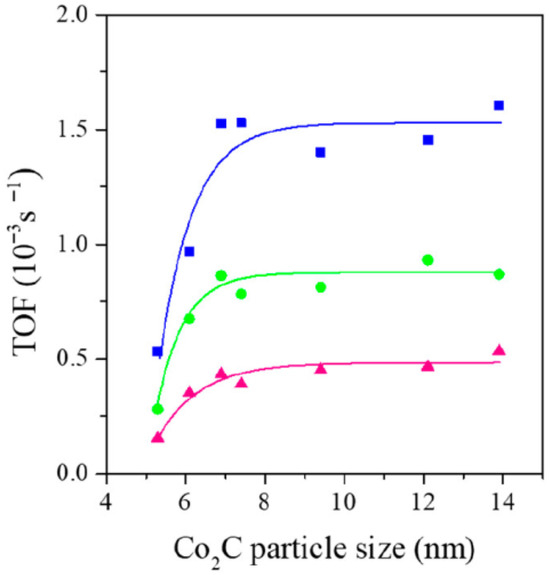
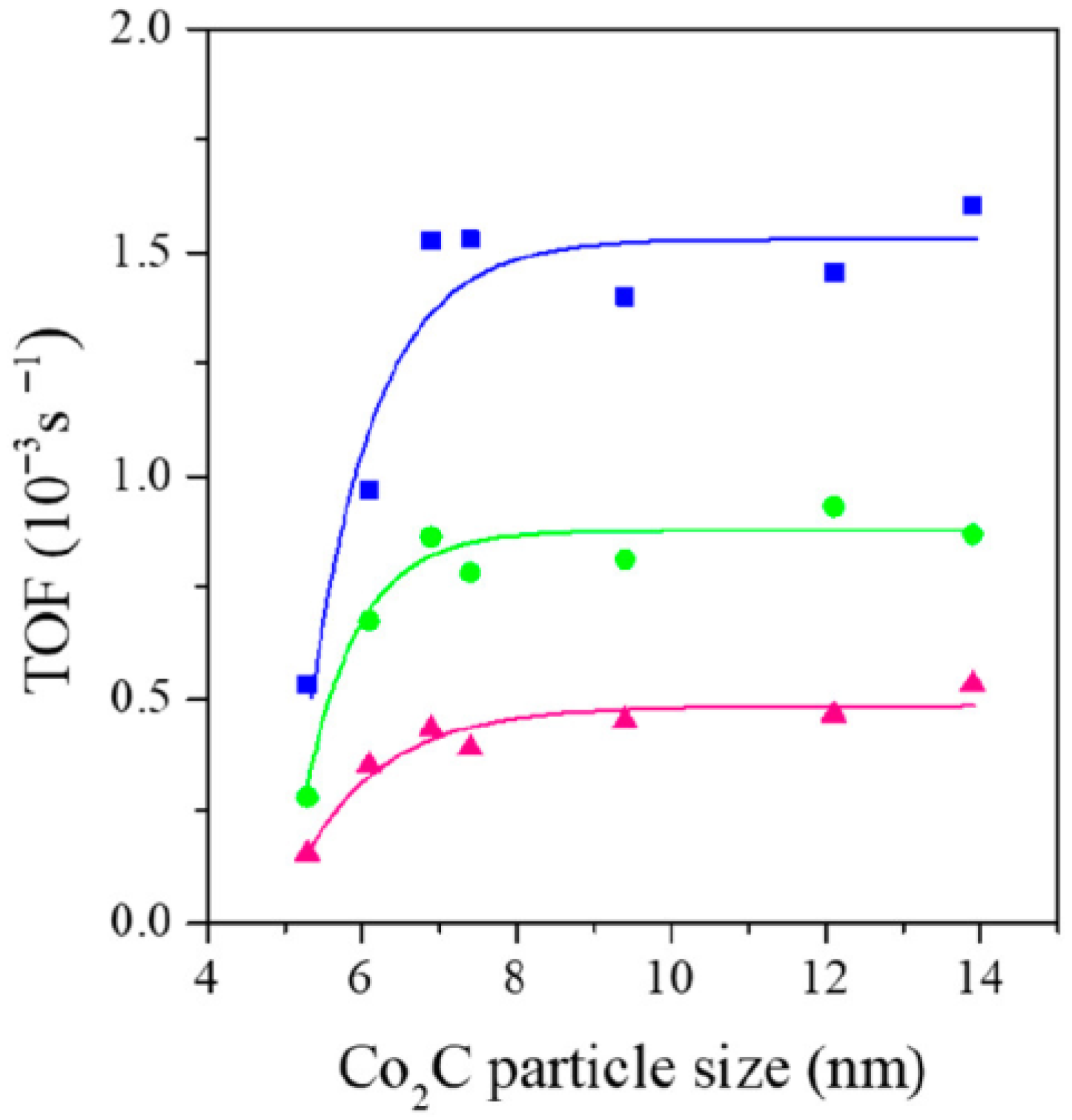
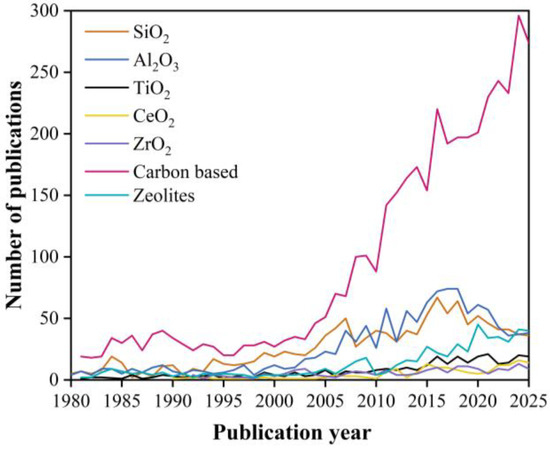
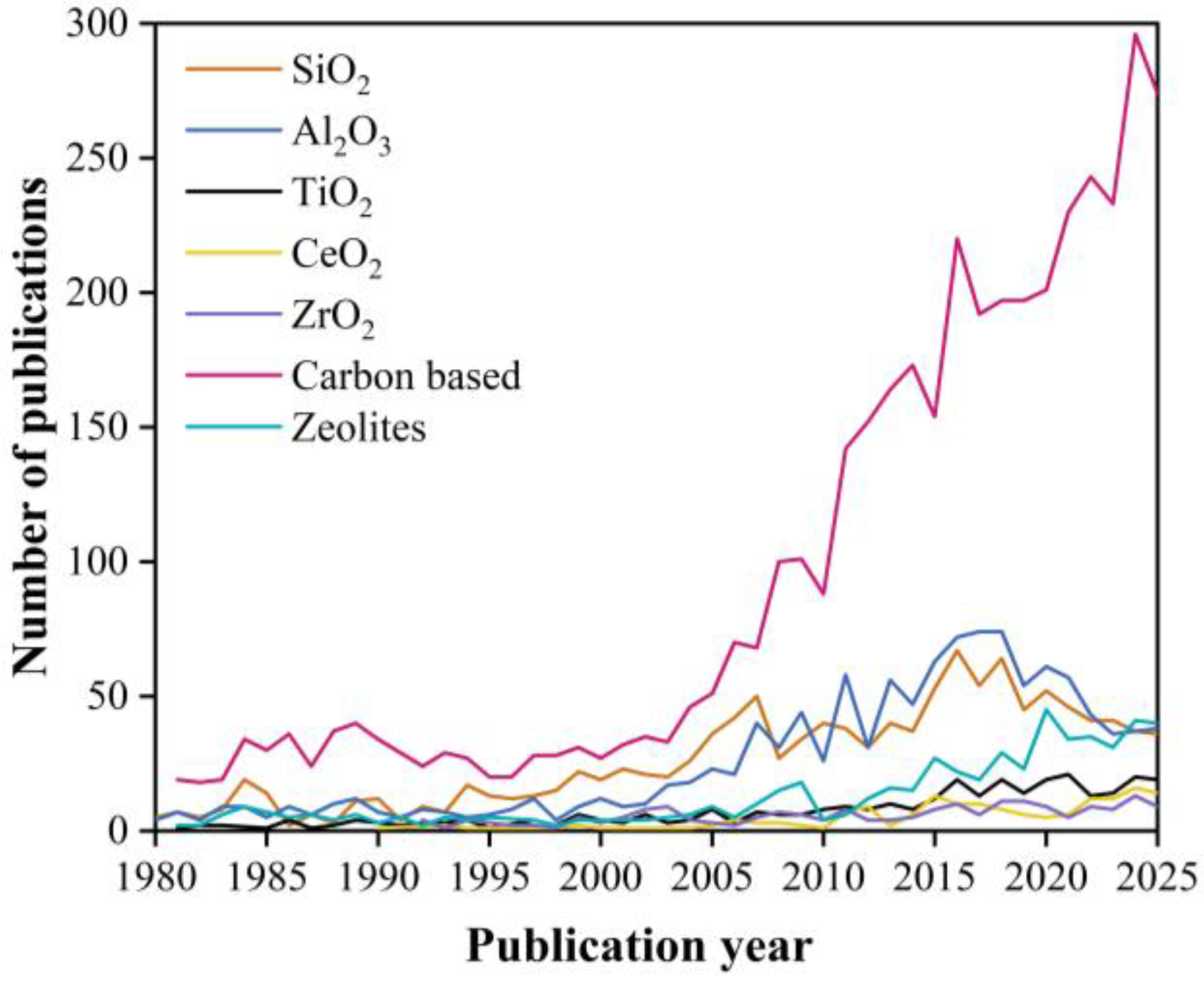
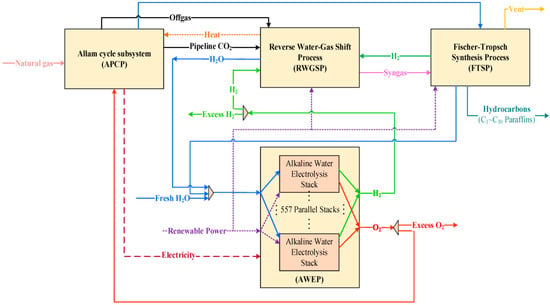
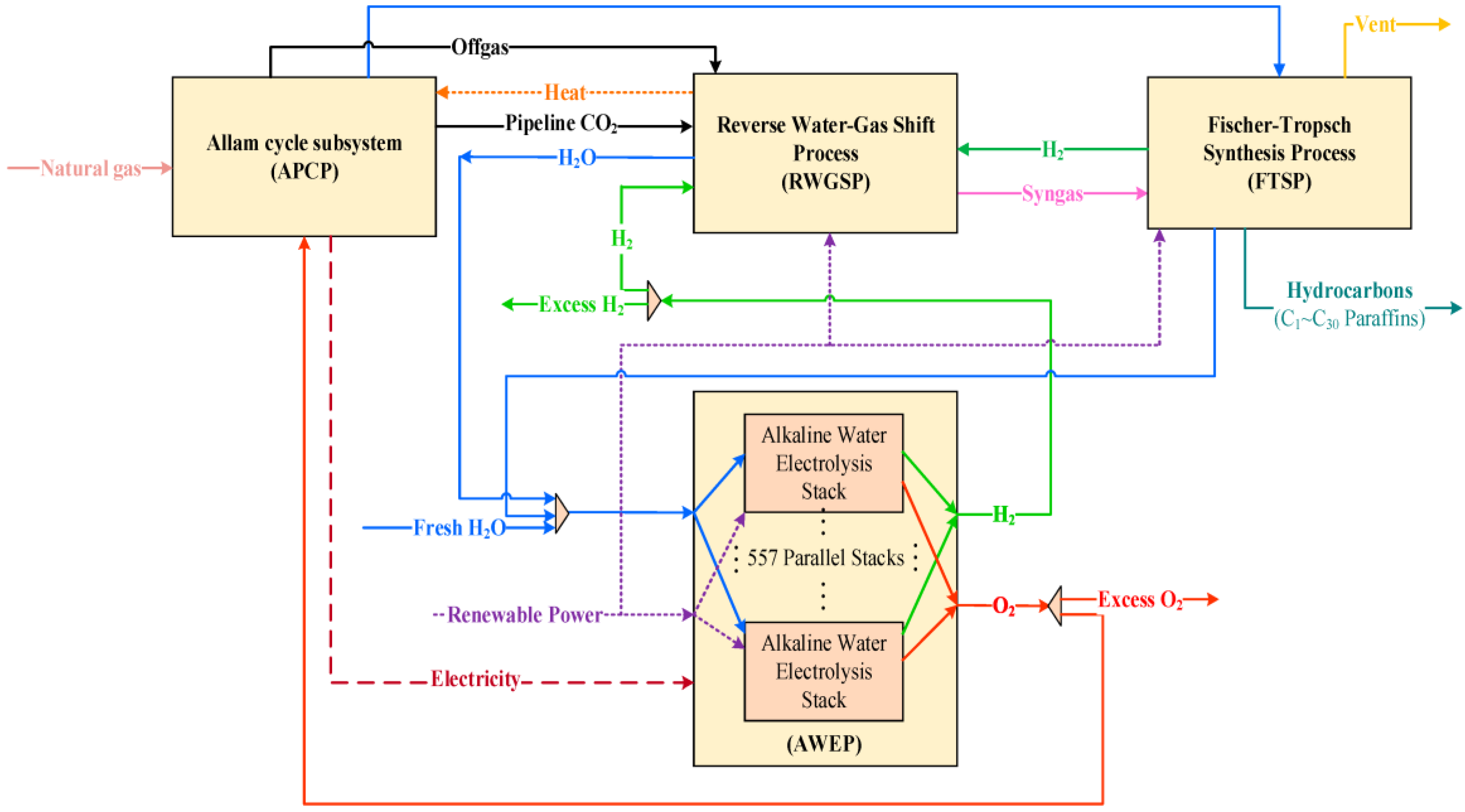
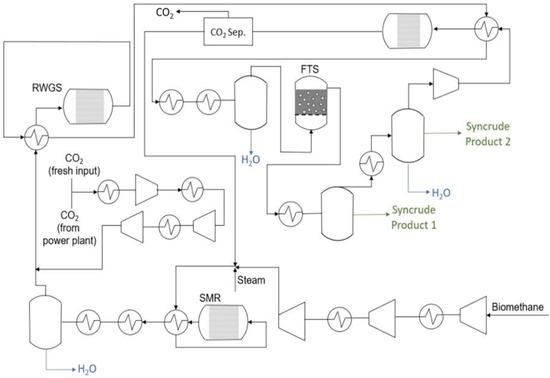
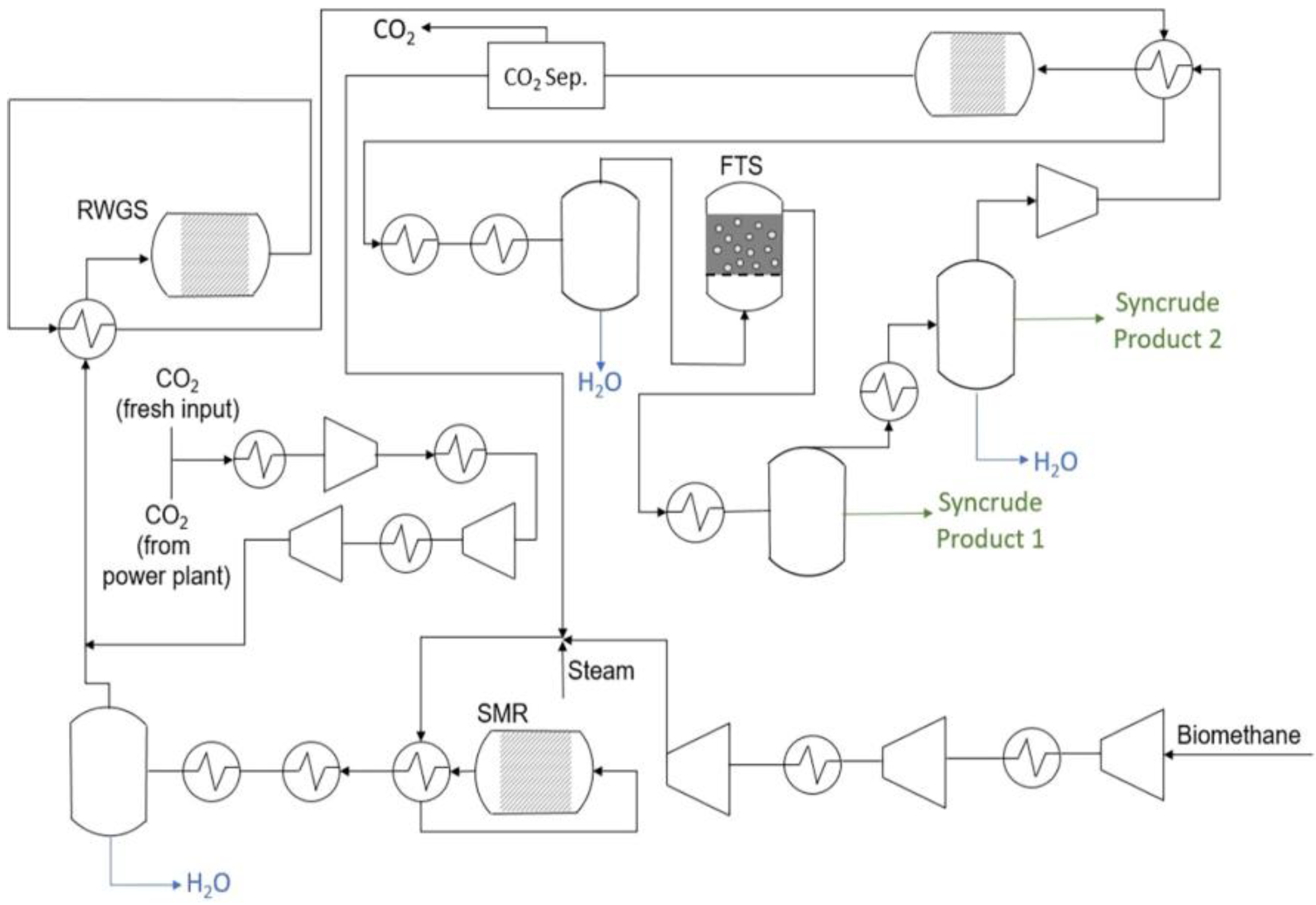

Disclaimer/Publisher’s Note: The statements, opinions and data contained in all publications are solely those of the individual author(s) and contributor(s) and not of MDPI and/or the editor(s). MDPI and/or the editor(s) disclaim responsibility for any injury to people or property resulting from any ideas, methods, instructions or products referred to in the content. |
© 2026 by the authors. Licensee MDPI, Basel, Switzerland. This article is an open access article distributed under the terms and conditions of the Creative Commons Attribution (CC BY) license.