


Abstract
Year-round production of high-quality green forage using resource-efficient technologies is an important challenge for sustainable livestock farming. This study developed and experimentally evaluated an automated multi-tier hydroponic system integrating a sapropel-based bioactive medium, recirculating irrigation, and energy-efficient LED lighting. Experimental trials were conducted using feed barley (Hordeum vulgare L.) during a 10-day cultivation cycle. Resource consumption was assessed under light in-tensities of 200, 300, and 400 μmol m−2 s−1, while biomass productivity was evaluated using sapropel extract concentrations of 1.0%, 2.0%, and 2.5%. The highest biomass productivity was obtained at a 2.5% concentration, where fresh green mass reached 44.8 kg per tray (25.45 kg m−2), representing a 1.6-fold increase compared with the control treatment, which consisted of identical hydroponic cultivation conditions without sapropel extract addition. The recirculating irrigation system reduced specific water consumption, while optimized LED lighting improved energy-use efficiency. The results demonstrate that integration of natural bioactive supplementation with automated environmental control can significantly enhance hydroponic forage productivity while reducing specific resource inputs.
1. Introduction
Ensuring sustainable livestock production under conditions of climate change, soil degradation, water scarcity, and increasing pressure on agricultural land has become a major challenge for modern agriculture [1,2]. The growing global demand for livestock products requires reliable year-round access to high-quality feed resources while simultaneously reducing dependence on arable land and freshwatr inputs [3,4]. Conventional forage production systems are strongly affected by climatic variability, seasonal limitations, and long cultivation cycles, which reduce production stability and increase vulnerability to environmental stressors [5,6,7].
Hydroponic green forage production has emerged as a promising alternative technology for controlled-environment feed cultivation [6,8,9]. Such systems enable rapid biomass production within short growth cycles, significantly reduce land requirements, and can operate independently of external climatic conditions [10,11,12]. Previous studies have shown that hydroponic fodder systems can improve feed availability and substantially reduce water use compared with conventional field cultivation [13,14,15]. However, despite these advantages, widespread implementation of hydroponic forage systems remains constrained by several technical limitations [16,17,18].
First, existing hydroponic systems are characterized by relatively high electricity consumption associated with artificial lighting, ventilation, and climate-control equipment [15,19]. Second, many installations require intensive water treatment and disinfection to prevent microbial contamination and root-zone decay, which increases operating costs and complicates system operation. Third, standard hydroponic nutrient media often rely on synthetic additives, reducing the environmental compatibility of the technology.
One promising strategy for improving the sustainability of hydroponic systems is the integration of natural bioactive growth stimulants into nutrient solutions. Sapropel, an organo-mineral freshwater sediment rich in humic and fulvic substances, amino acids, and macro- and microelements, has attracted increasing attention as a natural agricultural biostimulant [16,17,20]. Previous studies have reported positive effects of humic- and fulvic-acid-based additives on seed germination, nutrient uptake, and biomass accumulation in agricultural crops [17,20]. Nevertheless, the application of sapropel-derived bioactive media in automated hydroponic fodder systems remains insufficiently studied, particularly under integrated engineering conditions involving recirculating irrigation and energy-optimized lighting systems.
Another important limitation of multi-tier hydroponic systems is non-uniform light distribution across cultivation trays, which reduces photosynthetic efficiency and increases the specific energy demand of artificial lighting [15,19]. The use of reflective and light-concentrating optical systems may improve photon utilization efficiency and reduce electricity consumption; however, their combined effect with bioactive nutrient supplementation in fodder hydroponics has not been adequately investigated.
Therefore, the present study addresses the research gap related to the integrated optimization of biological stimulation and engineering resource efficiency in automated hydroponic forage production systems.
The hypothesis of this study is that incorporation of a sapropel-based bioactive medium into an automated hydroponic system equipped with recirculating irrigation and light-concentrating LED illumination will significantly increase green forage biomass productivity while reducing specific water and energy consumption compared with baseline hydroponic cultivation conditions.
Accordingly, the objective of this study was to develop and experimentally validate an automated multi-tier hydroponic system integrating sapropel-based bioactive medium, recirculating irrigation, and energy-efficient lighting optimization for year-round green forage production.
In addition to biomass productivity, modern hydroponic forage systems must also be evaluated from the perspective of resource efficiency, operational stability, and adaptability to different climatic zones. For arid and semi-arid regions, where irrigation water is limited and seasonal forage deficits are common, controlled-environment systems may provide an important alternative source of fresh feed biomass.
From an engineering standpoint, the integration of recirculating irrigation, automated environmental control, and optimized lighting may substantially improve system sustainability. However, the combined interaction between biological stimulation using natural sapropel extracts and technical optimization remains insufficiently investigated under practical production conditions.
Therefore, the present study contributes not only to fodder technology development, but also to the broader transition toward digitalized and resource-efficient livestock support systems.
The study was conducted within the framework of Project AR23488562, “Creation of a Combined System for the Production of Complete Feed Based on a Bioactive Environment at the Chatuiev Peasant Farm”.
Global demand for animal products continues to increase due to population growth, urbanization, and changing dietary patterns. At the same time, many agricultural regions are experiencing water scarcity, land degradation, and increasing pressure on available arable land. Under such conditions, conventional forage production systems become less reliable and more vulnerable to climatic variability.
Hydroponic fodder production has therefore attracted increasing interest as a controlled-environment technology capable of generating fresh biomass with reduced land requirements and shorter production cycles. Such systems may be particularly valuable for livestock farms located in arid and semi-arid regions, where seasonal feed shortages and unstable pasture productivity are common.
2. Materials and Methods
2.1. Experimental System Configuration
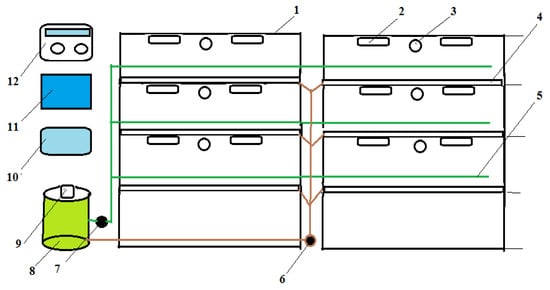
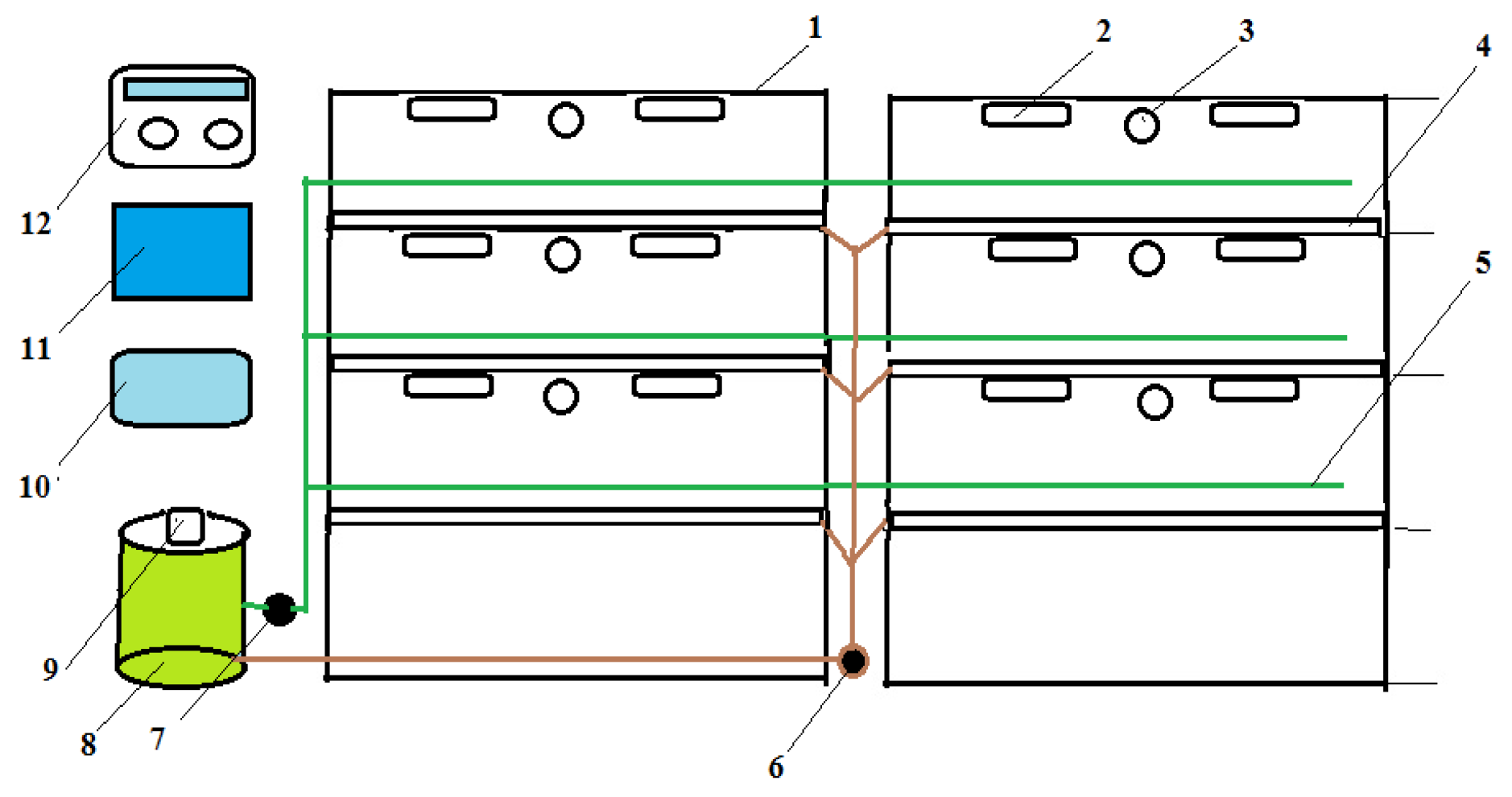
The experimental study was conducted using a prototype automated multi-tier hydroponic installation designed for year-round green forage production under controlled environmental conditions (Figure 1). The system consisted of a stainless-steel rack with cultivation trays arranged in multiple tiers, an automated irrigation circuit, LED lighting units, ventilation components, and water treatment modules. Issues of digitalisation and the introduction of container farms are actively discussed in contemporary literature [10,11]. The prototype installation was designed as a modular system suitable for practical deployment in farm buildings or container-type units. This approach improves installation flexibility, simplifies maintenance, and enables decentralized feed production close to livestock facilities.
Figure 1.
Structural and technological diagram of a prototype automated hydroponic installation for the production of green fodder: 1—rack; 2—phytolamps; 3—fans; 4—seed germination trays; 5—irrigation system; 6—water drainage pump; 7—irrigation solution supply pump; 8—irrigation water tank; 9—water ionizer; 10—irrigation control system; 11—lighting control system; 12—air conditioner with temperature and humidity control function.
Particular attention was given to hygienic safety of the recirculating irrigation loop. In dense hydroponic cultivation systems, microbial contamination may rapidly spread through reused water. Therefore, integration of filtration and disinfection technologies was considered essential for stable operation during repeated production cycles.
Water treatment and disinfection subsystem
To reduce microbiological contamination risks in the recirculating nutrient solution, the system included electrochemical water activation and ultraviolet disinfection units. The technology is based on the synthesis of a mixture of oxidants (hypochlorous acid, ozone, chlorine dioxide) directly from water and table salt. This system is intended to reduce microbiological contamination risks in the recirculating nutrient solution and improve operational hygiene during repeated cultivation cycles.
Additionally, an ultraviolet disinfection module is included in the circulation circuit. The calculated bactericidal flow FB is determined by the Formula (1):
where
Qhour is the calculated water flow rate (m3/h);
α is the absorption coefficient (cm−1);
P and P0 are the numbers of bacteria before and after irradiation, respectively;
ηp is the utilization coefficient of the bactericidal flow (taken as 0.9 for systems with a submerged radiation source);
η0—is the utilization coefficient of bactericidal radiation, which depends on the water layer thickness, its physicochemical parameters, and the installation design (taken as 0.9).
The power consumed by the UV disinfection system is approximately 40 W per lamp, providing an economically justified irradiation dose of at least 16 mJ/cm2.
Optimization of light regime and photosynthetic activity
Artificial illumination was provided by LED phytolamps installed above each cultivation tray. Light intensity was regulated according to the experimental treatment level. These diodes provide a full spectrum of radiation that mimics natural sunlight, with an emphasis on chlorophyll absorption peaks in the blue (437–450 nm) and red (660 nm) regions of the spectrum. The photosynthetic photon efficiency (PPE) of the modules used reaches 2.6–2.9 μmol/J, which is one of the highest figures in the industry [19].
To increase the light utilization coefficient, a scattered light concentration system has been implemented. The principle of operation is based on the use of reflective surfaces and Fresnel lenses, which redirect light rays that go beyond the trays back into the growth zone. This allows the light intensity to be maintained at 200–400 μmol/(s∙m2) with fewer luminaires installed, which significantly reduces capital and operating costs.
2.2. Plant Material and Cultivation Conditions
Feed barley (Hordeum vulgare L.) was used as the experimental crop. Seeds were sown on 12 March 2025. Prior to sowing, seeds were treated by bactericidal irradiation for 10 min to reduce microbial contamination.
Seeds were soaked in water for 1.5–2.0 h and uniformly distributed on cultivation trays with an effective tray area of 1.76 m2. Air temperature was maintained at 21–22 °C and relative humidity at 70–80%.
Automated irrigation was carried out 2–4 times daily, with each irrigation cycle lasting approximately 30 min.
2.3. Experimental Research Methodology
The experimental part of the study was conducted on the basis of a mock-up model of the installation (Figure 1), identical in its characteristics to the designed industrial system. Feed barley was used as the crop, which had previously undergone bactericidal irradiation with a mercury-quartz lamp for 10 min to prevent putrefactive processes on the surface of the grain.
The irrigation water supply and drainage system functions as follows. Irrigation water from the tank (8), equipped with a water ionizer (9), is fed into the irrigation system through a UV disinfection and aeration module. The pump (7) generates the required pressure in the irrigation line (5), and the automated irrigation control system (10) maintains optimal moisture levels in the root zone of the plants placed on stainless steel trays (4) installed in the rack (1). Excess irrigation water is drained into the sewage system and then returned to the storage tank for reuse by means of a pump (6). The lighting, ventilation and air conditioning system provides optimal conditions for grain germination and green mass formation. Two phytolamps (2) are installed above each tray (4) located in the rack (1), forming the required light flux. The lighting parameters are regulated by a light control system (11), which stabilizes photosynthetically active radiation by programmable control of the switch-on time and duration of operation of the lamps. Local air circulation is provided by a fan (3), while the air conditioning system maintains the overall temperature. Temperature and humidity are regulated by system (12), which maintains an optimal microclimate.
Process automation is carried out using an automatic control system to optimize processes (irrigation, lighting, etc.) and sensor technology to monitor plant conditions (temperature, light levels).
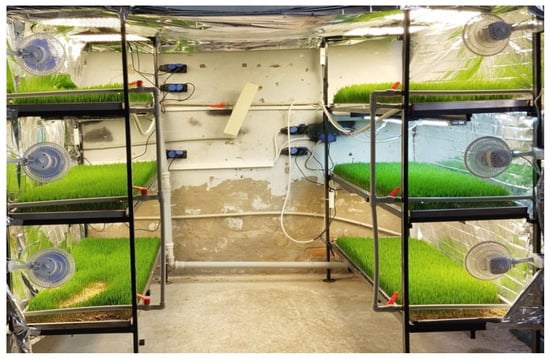
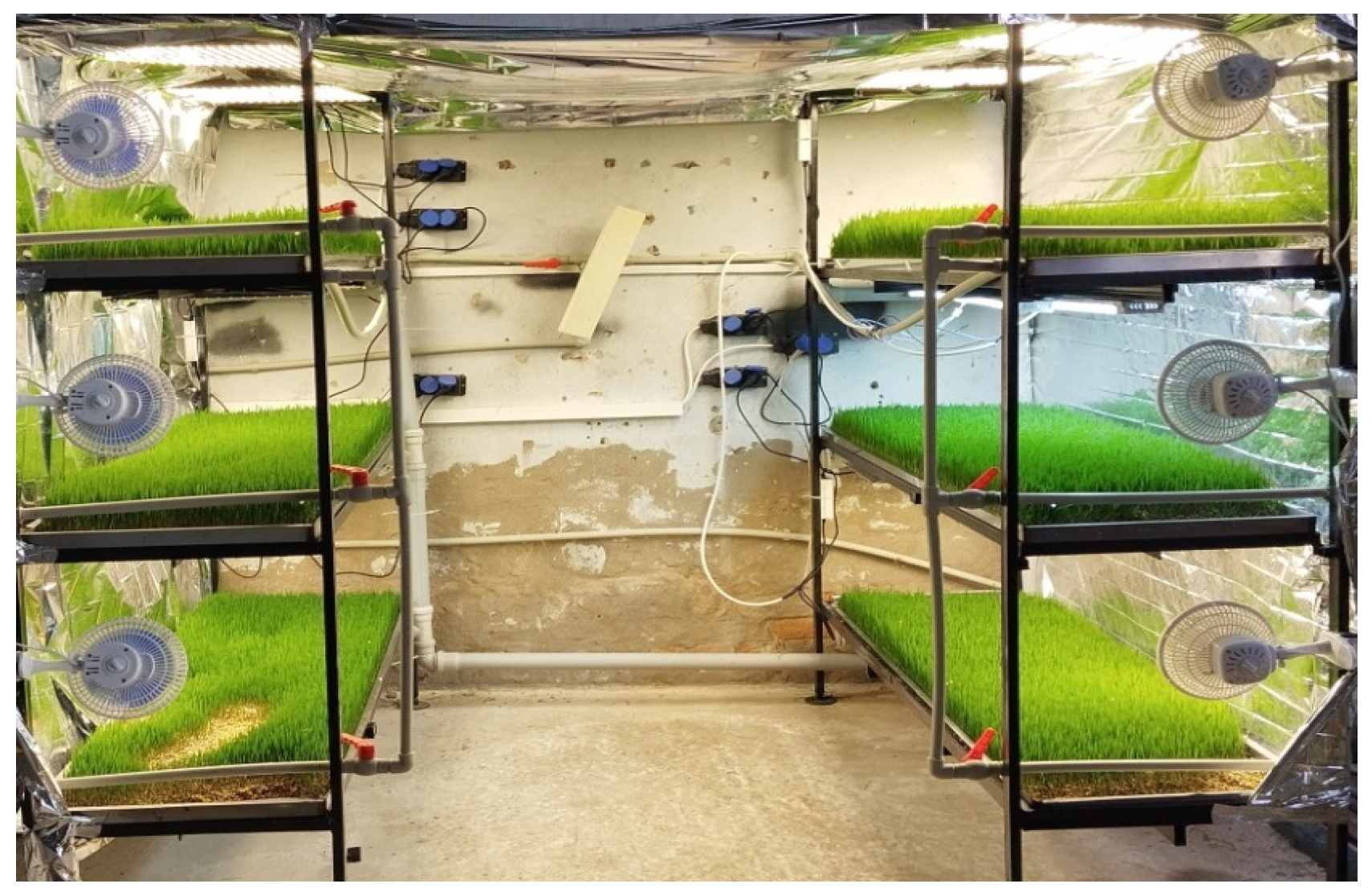
An automated system for regulating electricity and water consumption at different light intensities ensures rapid growth of green fodder (Figure 2).
Figure 2.
Installation providing the use of a combined system for collecting and concentrating scattered light and automated flow with growing green fodder.
To refine the technological parameters of the combined system of intensive technology for accelerating the process of plant production and development in a mock-up model of equipment for the production of full-ration feed, experiments were conducted to measure electricity and water consumption at different light flows (PS) in the range from 200 to 400 (μmol/s m2).
Protocol for preparation and cultivation
The grain was soaked in water for 1.5–2 h, after which it was distributed across trays with an area of 1.76 m2. The germination conditions were maintained in strict accordance with the technical regulations: air temperature 21–22 °C, relative humidity 70–80%. Watering was carried out automatically 2–4 times a day with exposure to the nutrient solution for 30 min. The bioactive medium was added to the irrigation water in the form of an aqueous sapropel extract in concentrations ranging from 1.0% to 2.5%.
Statistical data processing
All measurements were performed in quadruplicate to ensure statistical reliability. Statistical comparisons were analyzed using analysis of variance (ANOVA) at a significance level of p < 0.05. This study primarily focused on engineering performance, biomass productivity, and resource efficiency (water and electricity) during automated hydroponic cultivation. Although the system was repeatedly operated under comparable cultivation conditions, parameters such as pH, electrical conductivity (EC), dissolved oxygen, microbial stability, and heavy metal content of the sapropel-based additive were beyond the scope of the present study. These factors should be investigated in future studies before large-scale agricultural implementation.
Although the quantitative analysis presented in this manuscript is based on a representative 10-day cultivation cycle, the hydroponic installation was repeatedly operated over an extended experimental period under comparable cultivation conditions. Multiple cultivation cycles were conducted to evaluate seed germination dynamics, irrigation stability, biomass formation, and operational consistency of the automated system. The cultivation cycle presented in this manuscript was selected as a representative dataset for detailed engineering and productivity analysis.
2.4. Data Processing and Analysis Methods
Analysis of resource consumption dynamics
During the 10-day growing cycle, electricity and water consumption was continuously monitored. The data obtained allows us to track changes in the metabolic activity of plants depending on the stage of development and the intensity of the light flux.
The experimental studies determined water and electricity consumption, height growth, and changes in green fodder mass depending on germination time. At the same time, an increase in electricity consumption (E) spent on the phyto system for collecting and concentrating scattered light was observed. Therefore, this change in electrical energy can be expressed by the empirical Equation (2):
Here, the rate of change in electrical energy can be determined by differentiating this Equation (3):
In this case, due to the increase in germination time, water consumption can also be expressed by a similar equation. The increase in green fodder mass depending on germination time is expressed by the Formula (4):
The rate of change in green mass is also determined by differentiating Equation (5):
In this case, an indicator of practical importance is the value of green fodder mass per unit of cultivated area m1 (6):
where:
—maximum cultivation time, hours;
S—tray area, m2.
It should also be noted here that experimental studies will also yield similar empirical equations showing the change in green fodder mass depending on the concentration of the bioactive medium.
Energy efficiency of the lighting and automation system
Electricity consumption per square metre of tray area shows a steady increase as the height of the green mass increases and ventilation needs to be intensified to remove excess heat and moisture (Table 1).
Table 1.
Electricity consumption (kW h) depending on the day of germination and light intensity (LF).
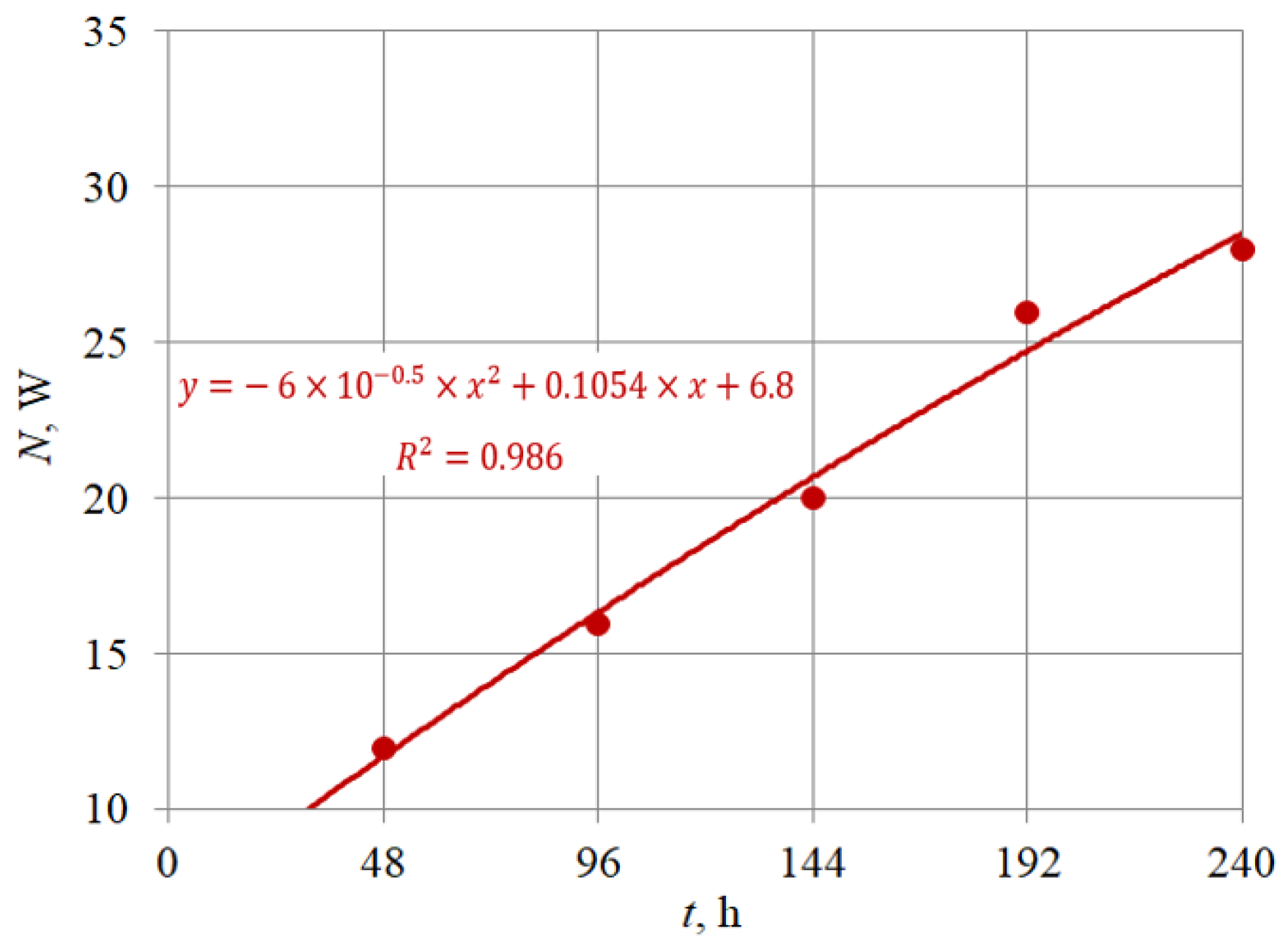
Data processing allowed us to derive an empirical equation for total energy consumption N:
The rate of change in electricity consumption dN/dT is:
The positive value of the rate throughout the entire period confirms the adequacy of the automation systems’ settings, which respond to an increase in biomass.
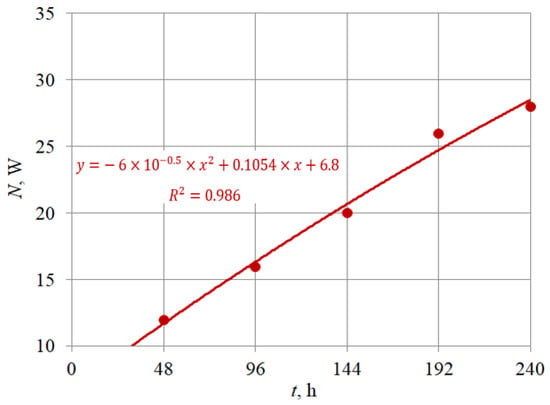
When processing the results of the experimental studies shown in Table 1, graphs of changes in electrical energy depending on the germination time of green fodder were obtained (Figure 3).
Figure 3.
Change in electricity consumption at a light flux of 400 μmol/(s m2) depending on germination time.
Water consumption and irrigation efficiency
Unlike electricity, the specific water consumption per tray decreases as the plants grow. This is due to the formation of a dense turf (root mat), which effectively retains moisture and reduces evaporation losses from the surface of the tray. This trend is quantitatively confirmed by the experimental data presented in Table 2.
Table 2.
Specific water consumption (L/h) per tray.
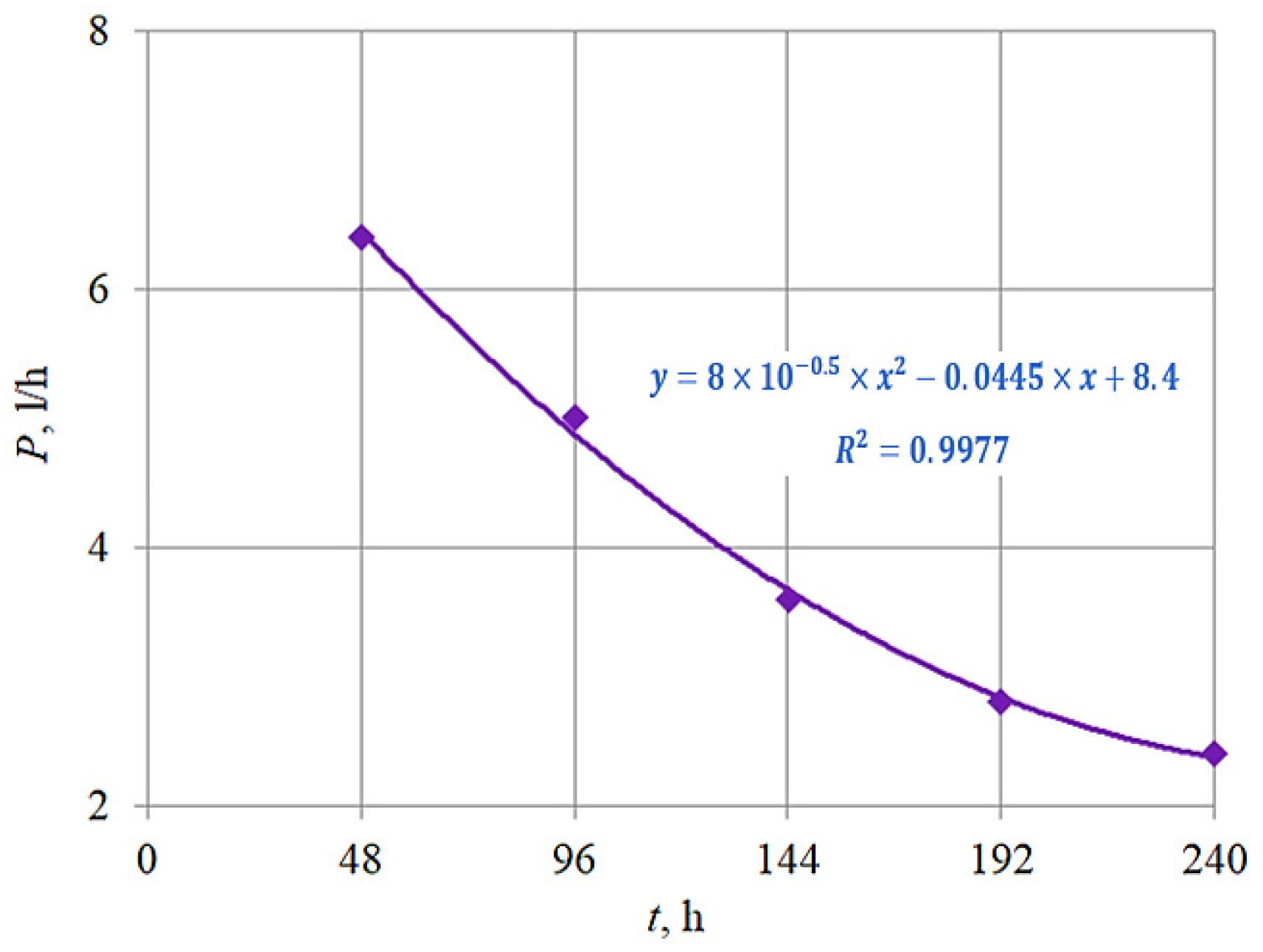
The mathematical model of water flow P is described by the expression:
The rate of change in water consumption dP/dT has a negative trend:
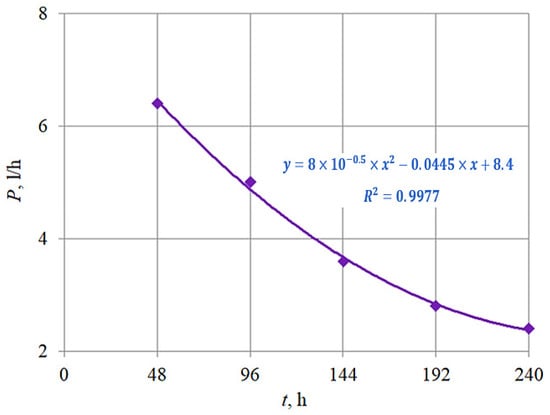
This pattern indicates high water use efficiency (WUE) achieved through cyclic irrigation and disinfection, which reduces the total volume of water consumed by 30–50% compared to traditional irrigation methods, as confirmed by the results graphs showing changes in water consumption depending on the germination time of green fodder (Figure 4).
Figure 4.
Change in water consumption at a light flux of 400 μmol/(s m2) depending on the germination time of green mass.
The effect of the bioactive environment on green mass productivity
The results of the experiment confirmed the hypothesis about the stimulating effect of sapropel extract on the rate of biomass accumulation [14]. The maximum effect was recorded when using a 2.5% concentration of the bioactive medium (CBM), which is confirmed by the data presented in Table 3.
Table 3.
Dynamics of barley growth and mass accumulation.
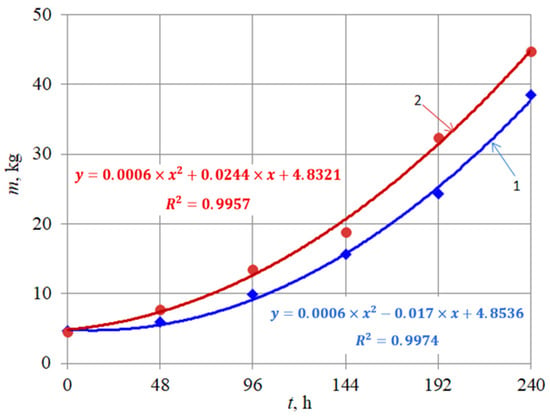
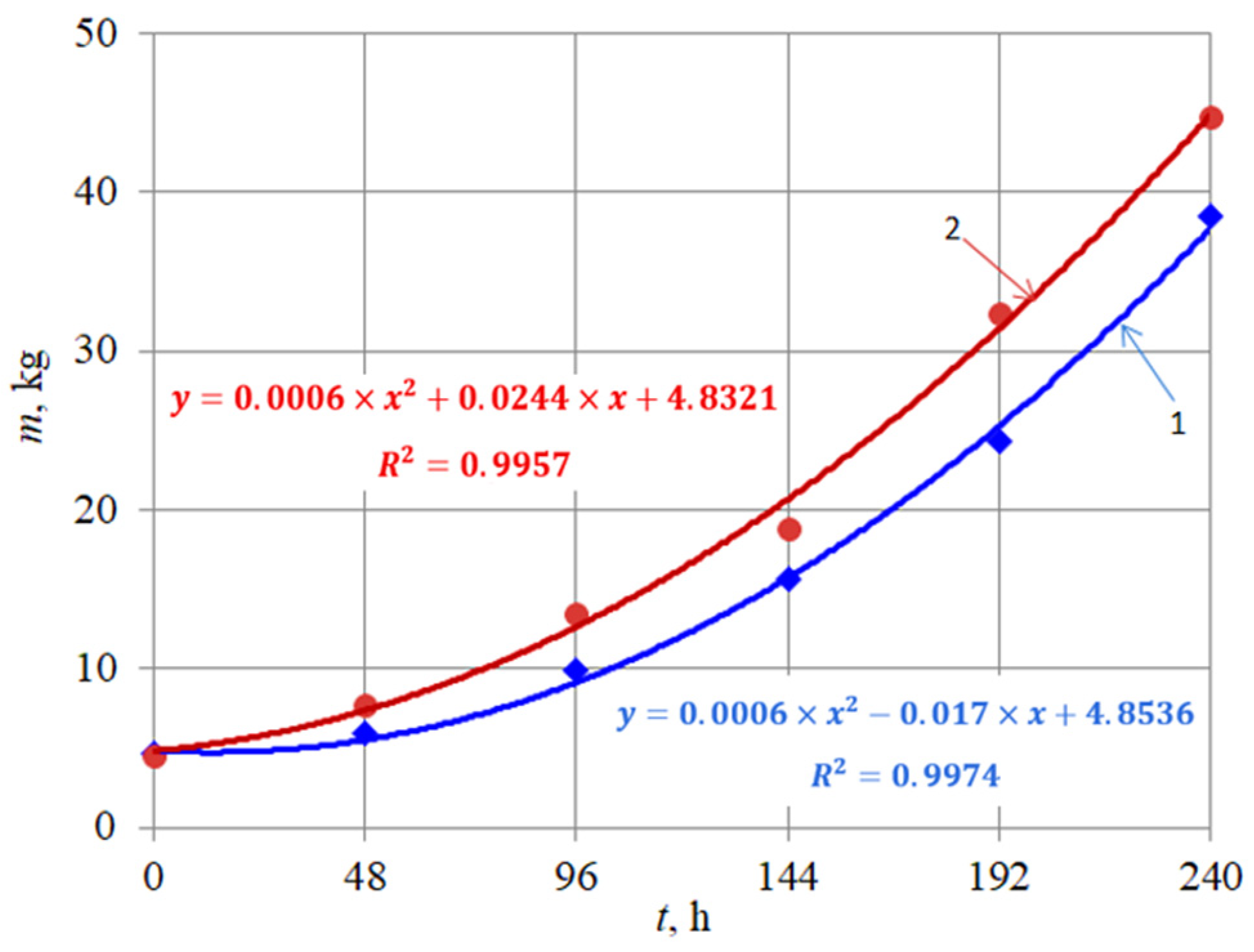
As can be seen from the data, on the tenth day, the mass of green fodder using a 2.5% concentration of bioactive medium reached 44.8 kg from an area of 1.76 m2. The yield was 25.45 kg/m2, which is 1.6 times higher than the control values (16.0 kg/m2). Figure 5 shows graphs of changes in green fodder mass at bioactive medium concentrations of 1.0% and 2.5%.
Figure 5.
Change in green fodder mass depending on germination time and bioactive medium concentration (1% and 2.5%).
The mathematical model of mass change m for the optimal concentration (2.5%) is as follows:
The rate of change in mass υm:
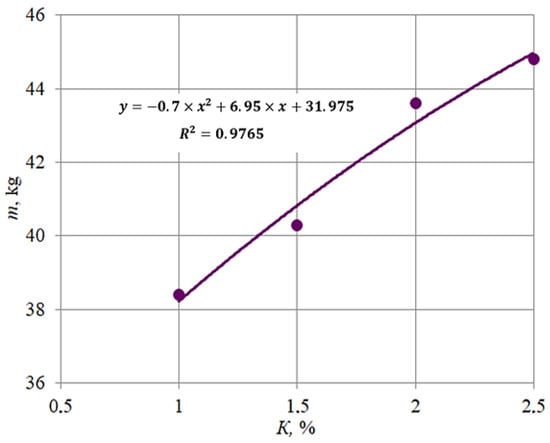
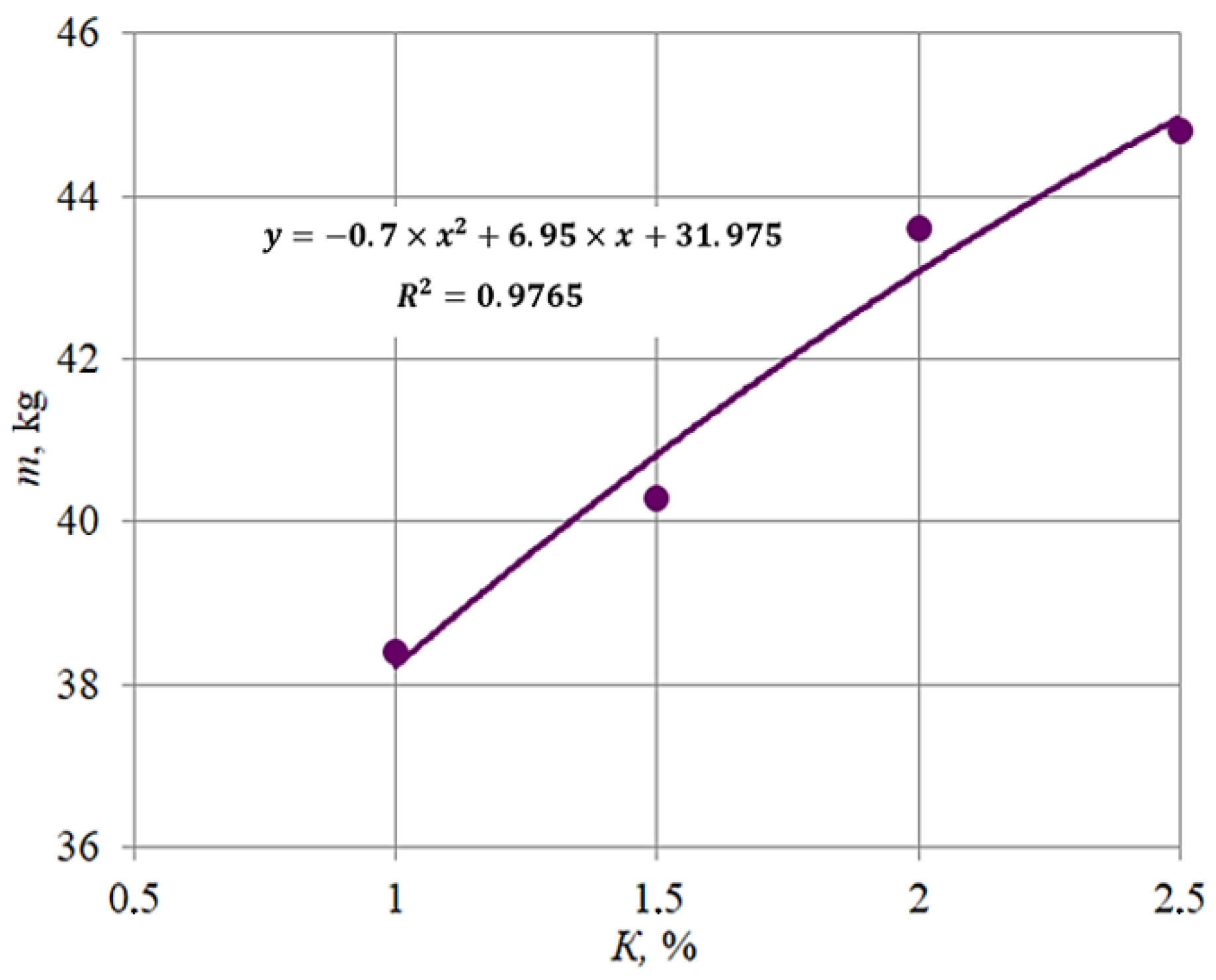
Analysis of the dependence of mass on the concentration of the bioactive medium K allowed us to derive the equation:
The rate of mass change depending on the concentration υK was obtained by differentiation and is expressed as:
As a result of processing the experimental data, an equation was obtained for the change in green fodder mass depending on the concentration of the bioactive medium, on the basis of which the graph shown in Figure 6 was constructed.
Figure 6.
Change in green fodder mass after 240 h of germination, depending on the concentration of the bioactive medium.
The obtained data indicate that low concentrations of sapropel may stimulate biomass accumulation and plant growth under the tested hydroponic conditions, although the underlying physiological mechanisms require further investigation.
To minimize random error, all measurements were performed under standardized operating conditions and repeated in quadruplicate. Recorded parameters included fresh biomass mass, plant height, irrigation water use, electricity consumption, and light intensity.
During the cultivation cycle, operational indicators were monitored daily. Biomass was measured using calibrated electronic scales, while environmental parameters were controlled through the automated system sensors. This monitoring approach allowed for continuous assessment of system performance during the experimental period.
All measurements were performed under standardized operating conditions. Before each cultivation cycle, trays, pipelines, and tanks were cleaned and disinfected. Seeds were visually inspected and manually sorted to remove damaged material and impurities.
Fresh biomass was determined using calibrated electronic scales. Plant height was measured on representative randomly selected samples. Water consumption was determined from refill volume and tank level changes, while electricity consumption was measured using a digital power metre.
3. Results and Discussion
The 1.6-fold increase in yield achieved is the result of the combined effect of technical and biological factors. It is important to understand the mechanisms underlying the observed effects for their further scaling and implementation.
The physiological role of humic acids in sapropel
Humic and fulvic acids contained in sapropel act as natural chelating agents. This is confirmed by studies of their effect on grain yields [20]. In a hydroponic environment, they bind metal ions (iron, manganese, copper) into forms that are easily absorbed by plants. This prevents micronutrient deficiencies, which are common in purely aqueous environments. In addition, fulvic acids have a low molecular weight, which allows them to penetrate plant cells and may improve physiological activity and nutrient utilization, as reported in previous studies. This explains the more intensive growth of the green part (up to 9.4 cm on the 10th day) compared to traditional methods.
Synergy of automation and bioactivation
An automated irrigation and lighting control system ensures the stability of external factors, minimizing stress on plants. In such conditions, the bioactive environment exhibits its properties most effectively. For example, ionization of water by the Emerald system may improve water quality and operational hygiene in the recirculating irrigation system. This may contribute to more stable operating conditions in the irrigation circuit, which is critical for preventing root hypoxia in high-density planting conditions.
Economic and resource efficiency
A comparison of the proposed technology with existing analogues [7,18,21] reveals significant advantages in terms of resource savings. Although electricity consumption in hydroponics is higher than in open cultivation (82 times higher according to some data), the specific yield and feed quality compensate for these costs, as confirmed by the comparative data in Table 4.
Table 4.
Comparative indicators of the efficiency of cultivation systems.
Recommendations for practical application
The proposed system allows production of 1 kg of green fodder using approximately 0.45 kWh of electricity, less than 3 L of water, and a light intensity of 300 μmol m−2 s−1. Under optimal conditions, plant height reached 9.4 cm and fresh biomass yield reached 44.8 kg per tray. These results indicate high land-use efficiency and reduced specific water consumption compared with conventional forage production systems reported in the literature. This makes the technology promising for regions with a shortage of irrigation water, such as Kazakhstan or the Middle East [13,22].
Hydroponically produced green fodder is widely recognized as a valuable fresh feed component for young and lactating animals according to previous studies [13,22]. For practical farm application, a sapropel extract concentration of 2.5% is recommended, while higher concentrations may increase salt accumulation and inhibit root development [8]. The lighting system should operate in a 16 h light and 8 h dark mode, which provides an optimal balance between growth rate and energy costs.
4. Conclusions
The development and experimental evaluation of an automated multi-tier hydroponic system integrating sapropel-based bioactive supplementation, recirculating irrigation, and energy-efficient LED lighting demonstrated promising potential for year-round green forage production. Experimental results showed that a 2.5% sapropel extract provided the highest biomass productivity, reaching 44.8 kg per tray (25.45 kg m−2), representing a 1.6-fold increase compared with the control treatment. In addition to biological stimulation, engineering optimizations such as recirculating irrigation and controlled LED illumination reduced specific water consumption and improved energy-use efficiency during the 10-day cultivation cycle.
From a practical perspective, the system offers a promising solution for improving feed supply reliability, particularly in remote areas or regions with limited land and water resources. By enabling on-site production, the system may reduce dependence on transported forage and minimize storage losses associated with conventional fodder supply chains. Furthermore, the controlled-environment approach improves operational predictability by reducing exposure to drought and seasonal climatic fluctuations, thereby supporting more stable ration planning for livestock enterprises.
Despite these advantages, large-scale implementation remains dependent on electricity tariffs, maintenance requirements, and equipment depreciation. Therefore, although the combined biological and engineering approach shows clear promise, further research should include detailed nutritional analyses and long-term economic validation under different farm scales and regional operating conditions.
The proposed system may also serve as a basis for future digital agriculture applications, including remote monitoring, predictive control, and data-driven optimization of hydroponic fodder production cycles.
Author Contributions
Conceptualization, M.A.; methodology, M.A.; software, N.O.; validation, N.O., S.S. and M.A.; formal analysis, M.A.; investigation, S.S. and M.A.; resources, M.A.; data curation, N.O. and S.S.; writing—original draft preparation, M.A.; writing—review and editing, M.A. and T.A.; visualization, N.O.; supervision, M.A.; project administration, M.A.; funding acquisition, M.A. and T.A. All authors have read and agreed to the published version of the manuscript.
Funding
This research was funded by the Science Committee of the Ministry of Science and Higher Education of the Republic of Kazakhstan (Grant No. AP23488562).
Institutional Review Board Statement
Not applicable.
Informed Consent Statement
Not applicable.
Data Availability Statement
The original contributions presented in this study are included in the article. Further inquiries can be directed to the corresponding author.
Acknowledgments
The authors would like to thank the technical staff of the Scientific Production Center of Agricultural Engineering for their support in conducting the experimental part of this study.
Conflicts of Interest
The authors declare no conflicts of interest.
References
- United Nations. World Population Prospects: The 2000 Revision—Highlights; ESA/P/WP.165; United Nations: New York, NY, USA, 2001; Available online: http://enerpedia.net/images/2/2c/Wpp2000h.pdf (accessed on 28 November 2022).
- Gorjian, S.; Calise, F.; Kant, K.; Ahamed, M.S.; Copertaro, B.; Najafi, G.; Zhang, X.; Aghaei, M.; Shamshiri, R.R. A Review on Opportunities for Implementation of Solar Energy Technologies in Agricultural Greenhouses. J. Clean. Prod. 2021, 285, 124807. [Google Scholar] [CrossRef] [Scilit]
- Food and Agriculture Organisation. The Future of Food & Agriculture: Alternative Pathways to 2050 Summary Version. Available online: https://www.fao.org/3/CA1553EN/ca1553en.pdf (accessed on 15 April 2022).
- Heilig, G. World Population Prospects: Analysing the 1996 UN Population Projections. Available online: https://pure.iiasa.ac.at/id/eprint/4882/7/WP-96-146.pdf (accessed on 18 May 2021).
- Food and Agriculture Organisation. The State of Food Security and Nutrition in the World Building Resilience for Peace and Food Security. 2017. Available online: https://www.fao.org/3/I7695e/I7695e.pdf (accessed on 17 March 2021).
- Pastorelli, G.; Serra, V.; Turin, L.; Attard, E. Hydroponic fodders for livestock production—A review. Ann. Anim. Sci. 2024, 24, 645–656. [Google Scholar] [CrossRef] [Scilit]
- Morales Sinchire, D.B.; Jiménez Álvarez, L.S.; Burneo Valdivieso, J.I.; Capa Mora, E.D. Oat and wheat forage production under hydroponic and conventional systems. Cienc. Tecnol. Agropecu. 2020, 21, e1386. [Google Scholar] [CrossRef] [Scilit]
- Frolov, V.Y. Technological schemes for feed preparation using soybeans. Achiev. Sci. Technol. Agric. 2007. Available online: https://cyberleninka.ru/article/n/tehnologicheskie-shemy-prigotovleniya-kormov-s-ispolzovaniem-soevogo-zerna (accessed on 17 March 2021). [CrossRef] [Scilit]
- Stepanova, L.I. Handbook of Dairy Production Technologist: Technology and Recipes; Vol. 2: Cow’s milk and combined milk; GIORD: St. Petersburg, Russia, 2002; Volume 3, p. 330. [Google Scholar]
- Kaminski, A.G.; Babbitt, C.W. Qualitative analysis of hydroponic container farm adoption, use, and benefits in the U.S. Environ. Res. Infrastruct. Sustain. 2024, 4, 045001. [Google Scholar] [CrossRef] [Scilit]
- Çelik, D.; Meral, M.E.; Waseem, M. Investigation and analysis of effective approaches, opportunities, bottlenecks and future potential capabilities for digitalization of energy systems and sustainable development goals. Electr. Power Syst. Res. 2022, 211, 108251. [Google Scholar] [CrossRef] [Scilit]
- Gümüş, H.; Kowalczuk-Vasilev, E. Effect of different sowing densities on biomass production and nutritive value of barley green fodder grown in a hydroponic system. Agron. Sci. 2024, 79, 65–72. [Google Scholar] [CrossRef] [Scilit]
- Gebremedhin, W.K. Nutritional benefit and economic value of feeding hydroponically grown maize and barley fodder for Konkan Kanyal goats. IOSR J. Agric. Vet. Sci. (IOSR–JAVS) 2015, 8, 24–30. Available online: https://www.researchgate.net/publication/308055213_Nutritional_benefit_and_economic_value_of_feeding_hydroponically_grown_maize_and_barley_fodder_for_Konkan_Kanyal_goats_IOSR (accessed on 17 March 2021).
- Upreti, S.; Ghimire, R.P.; Banskota, N. Comparison of different cereals for hydroponic fodder production in locally constructed polyhouse at Khumaltar, Lalitpur, Nepal. J. Agric. Nat. Resour. 2022, 15, 27–33. [Google Scholar] [CrossRef] [Scilit]
- Farvardin, M.; Taki, M.; Gorjian, S.; Shabani, E.; Sosa-Savedra, J.C. Assessing the Physical and Environmental Aspects of Greenhouse Cultivation: A Comprehensive Review of Conventional and Hydroponic Methods. Sustainability 2024, 16, 1273. [Google Scholar] [CrossRef] [Scilit]
- Szajdak, L.W.; Sakowicz, A. Sapropel in agriculture, International Peat Congress. (2012) 37. Szajdak L. W. Available online: https://peatlands.org/document/sapropel-in-agriculture/ (accessed on 17 March 2021).
- Loskutov, S.I.; Pukhalsky, Y.V.; Mityukov, A.S.; Vorobyov, N.I.; Glushakov, R.I. Effect of various fractions of an ultradispersed humate-sapropel suspension on the growth, development, and quality of basil (Ocimum basilicum L.) plants as compared to the use of chemical fertilizers. Russ. Agric. Sci. 2023, 49, 627–633. [Google Scholar] [CrossRef] [Scilit]
- Elmulthum, N.A.; Zeineldin, F.I.; Al-Khateeb, S.A.; Al-Barrak, K.M.; Mohammed, T.A.; Sattar, M.N.; Mohmand, A.S. Water Use Efficiency and Economic Evaluation of the Hydroponic versus Conventional Cultivation Systems for Green Fodder Production in Saudi Arabia. Sustainability 2023, 15, 822. [Google Scholar] [CrossRef] [Scilit]
- Abdullah, A.A.; Lee, C.-L.; Wong, S.-K.; Osman, A.F.A.; Sum, Z.-L.; Chan, K.-Y. The Effect of LED Grow Light Photoperiods on Indoor Hydroponic Lettuce Farming. J. Adv. Res. Appl. Sci. Eng. Technol. 2023, 32, 368–377. [Google Scholar] [CrossRef] [Scilit]
- Ahmad, T.; Khan, R.; Nawaz Khattak, T. Effect of humic acid and fulvic acid based liquid and foliar fertilisers on the yield of wheat crop. J. Plant Nutr. 2018, 41, 2438–2445. [Google Scholar] [CrossRef] [Scilit]
- Putnam, D.H.; Robinson, P.H.; Lin, E. Does Hydroponic Forage Production Make Sense? Alfalfa & Forage News. 2013. Available online: http://ucanr.edu/blogs/blogcore/postdetail.cfm?postnum=11721 (accessed on 4 June 2026).
- Ma, Y.; Guo, T.; Zhang, Z.; Amat, G.; Jing, Y.; Tuo, Y.; Hou, L. Effect of feeding hydroponic barley seedlings to lactating ewes on blood biochemical indexes and growth performance of lambs. Front. Vet. Sci. 2024, 10, 1280544. [Google Scholar] [CrossRef] [Scilit] [PubMed]

Disclaimer/Publisher’s Note: The statements, opinions and data contained in all publications are solely those of the individual author(s) and contributor(s) and not of MDPI and/or the editor(s). MDPI and/or the editor(s) disclaim responsibility for any injury to people or property resulting from any ideas, methods, instructions or products referred to in the content. |
© 2026 by the authors. Licensee MDPI, Basel, Switzerland. This article is an open access article distributed under the terms and conditions of the Creative Commons Attribution (CC BY) license.