Article

A Flat Plate Solar Collector with a Backup Electric Heater for Heating Greenhouses in Egypt

by
Reda Hassanien Emam Hassanien
1,2,*,
Mohamed M. Ibrahim
1,
Gang Pei
2 and
Eid N. Abd El Rahman
1
1
Agricultural Engineering Department, Faculty of Agriculture, Cairo University, Giza 12613, Egypt
2
Department of Thermal Science and Energy Engineering, University of Science and Technology of China, Hefei 230027, China
*
Author to whom correspondence should be addressed.
AgriEngineering 2026, 8(6), 225; https://doi.org/10.3390/agriengineering8060225
Submission received: 22 April 2026 / Revised: 28 May 2026 / Accepted: 29 May 2026 / Published: 4 June 2026
(This article belongs to the Special Issue Solar Energy Integration into Controlled-Environment Agriculture)

Abstract

Providing optimal temperatures in greenhouses is essential for cultivating high-temperature-demand crops in winter. Therefore, this study aimed to investigate the feasibility of utilizing a flat plate solar collector (FPC) for heating greenhouses. A field experiment was conducted, complemented by simulations using the PolySun V2023.11 software. The FPC system comprised two collectors, each with an aperture area of 2.24 m2, connected to a 300 L hot water tank. The water tank had an internal electric backup heater (2 kW) and a thermostat to regulate the hot water temperature. The experiment consisted of two greenhouses, each with an area of 50 m2. The first unheated greenhouse (UHGH) was used as the control, while the second heated greenhouse (HGH) was heated by a closed-loop system comprising copper pipes installed along the internal perimeter. Results revealed that the FPC significantly increased air temperature by 2.7 °C, and reduced relative humidity by 9.7% in the HGH compared to the UHGH. Simulated results showed that the annual generated energy of the FPC was 4830 kWh with a reduction of CO2 emission by ≈2.9 tones. The average thermal efficiency of the FPC was 44%, with a payback period of 8.5 years. In conclusion, the FPC could protect plants from low temperatures in winter.

1. Introduction

Protected cultivation within controlled-environment greenhouses can increase productivity several-fold compared to traditional open-field agriculture [1]. Consequently, it has emerged as a fundamental strategy for mitigating the impacts of global climate change while simultaneously addressing the escalating demands of a growing global population [2]. Therefore, diverse studies have been conducted to increase the solar heat gain of greenhouses and reduce the heat losses by choosing the optimum design, cover materials, orientation, location, structure [3], heat storage materials [4,5], and heating techniques, as well as using the renewable and sustainable energies for heating [6,7]. However, the high energy demand along with the increase of fossil fuels prices, food demand, and environmental pollution of burning fossil fuels are the main challenges to heat greenhouses located in cold regions [8]. It was reported that the costs for greenhouse heating and cooling systems represents about 70–85% of total operating costs [2] and the heating costs could be about 30% of the overall operational cost for the commercial greenhouses [9,10]. Furthermore, cold stress could hinder the growth [11] and development of cold-sensitive plants, reduce yield [12], quality, and overall productivity [13]. Consequently, both researchers and greenhouse engineers are directing their efforts toward the exploration of alternative clean energy sources to enable and optimize greenhouses environmental control [4,6]. Xu et al. [14] constructed an active solar water wall for the Chinese greenhouse, made of a hollow polycarbonate sheets to the north wall which was supplemented by an underground water storage tank to increase the nighttime temperature. They found that the minimum nighttime air temperature increased by 3.3 °C in Beijing. Bouadila et al. [15] studied the thermal performance of a new solar air heater using a packed bed of spherical capsules with the latent heat storage system for heating greenhouses in Tunisia. Results revealed that the solar heating could provide 31% of heating demands and temperature in the heated greenhouse exceeded the temperature inside the unheated greenhouse by 5 °C. Meanwhile, the relative humidity in heated greenhouse decreased by an average of 10–20%. Ihoume et al. [16] studied the performance of solar copper coil heating for heating a greenhouse in Rabat (Morocco) by circulating water in a closed loop imbedded on the greenhouse glass roof. Results revealed that the nighttime temperature inside the heated greenhouse increased by 4 °C and the relative humidity decreased by 14% compared to the unheated greenhouse. In addition, it sped up the harvest time of zucchini 16 days compared with the unheated greenhouse [17].
A flat plate solar collector (FPC) with a gross area of 2 m2 was found to match the heating load of a 10 kW power water–water heat pump in Tunisia for heating a 100 m2 glass greenhouse when the heat distribution system was made of a polypropylene capillary tube mat buried inside the greenhouse [18]. On the other hand, the utilization of a FPC as a thermal energy input increased the root-zone temperature by 5.5 °C, resulting in enhanced plant growth performance, increased yield, and a significant extension of the growth season for hydroponically grown tomatoes in Chinese solar greenhouses [19]. Heating the root zone of tomato plants by FPC system significantly accelerated nutrient uptake rates. This enhancement led to an average increase of 55% in total tomato yield during the winter growing period in Morocco. Furthermore, the treatment improved key fruit quality parameters, including color, size, weight, firmness, sugar content, acidity, and sensory flavor profile [20]. In addition, Bazgaou et al. [21] reported that using a combined solar heating system (rock-bed and water filled passive solar sleeves) could increase the tomato yield by 49% in greenhouses. The flat plate solar collector, biomass and an air-cooled absorption chiller were integrated to control the temperature of a tomato greenhouse in southern Spain. Results showed that the system could provide an annual energy of 26.37 kWh/m2 for heating and 61.97 kWh/m2 for cooling [22]. Wang et al. [23] installed a sheet of a solar water heating collector on the north wall of the Chinese solar greenhouse in Beijing. Results indicated that the minimum nighttime temperature increased by 3.1 °C. Meanwhile, the morphological parameters of the tomatoes were enhanced and the yield of tomatoes increased by 34%. Furthermore, in the extreme cold regions a hybrid heating system for greenhouses in Harbin consisted of loop heat pipe solar collector and ground-source heat pump, and maintained the night temperature in the greenhouse at 17–24 °C, when the ambient temperature was varied from −24 °C to −13 °C [24]. According to Mohebi and Roshandel [25], a solar collector covering 10% of the total greenhouse area can reduce fossil fuel consumption by 19.7% compared to conventional heating systems. The coupling system of the evacuated tube solar collector and electric heat pump increased the internal air temperature by 2 °C and decreased the relative humidity by 10% in the heated greenhouse compared to the unheated [6]. On the other hand, using the solar water heating system can improve the greenhouse indoor air temperature by an average of 3.2 °C [26]. It was observed that coupling the earth-to-air heat exchanger with the greenhouses could provide the necessary heating and cooling required energy to maintain the optimal growth conditions for plants, and it could also reduce the water consumption [27]. A solar heating system comprising 40 flat plate collectors (FPCs) and a 25 m3 water tank was tested on a 300 m2 greenhouse in Tunisia. The results indicated that, compared to an unheated greenhouse, the system increased the nighttime temperature by 4 °C [28]. Meanwhile, using an active solar water curtain on the north wall of Chinese solar greenhouse could reduce the nighttime temperature by 3.2 °C in extremely cold regions [29].
The flat plate solar collectors (FPCs) were recommended to be used for heating the agricultural greenhouses in regions where the climate is moderate [30]. However, few studies to date have investigated the application of flat plate solar collectors for perimeter heating in agricultural greenhouses under the Egyptian climatic conditions. This approach, which creates a warm air curtain along the walls, is particularly effective at reducing cold drafts and preventing condensation. Therefore, this study investigated the viability of using a FPC, assisted by an electric heater, for greenhouse heating.

2. Materials and Methods

The experiment was carried out at Agricultural Engineering Department, Faculty of Agriculture, Cairo University, Egypt (Latitude of 30.0° N, Longitude of 31.21° E, and Altitude of 30 m). The study was conducted during the cold months from November to March.

2.1. System Description

2.1.1. Greenhouse Constructions

Two identical Quonset-style greenhouses with the same orientation (North-South) at a floor surface area of 50 m2 (length 10 m, width 5 m, height of 3.5 m) for each. A distance of 3 m separated the structures to mitigate any mutual thermal influence. The greenhouses were clad in a 150 µm polyethylene film, characterized by a light transmission rate of 75%. Furthermore, a 5 cm layer of medium gravel was applied to the floor as a passive thermal mass, facilitating diurnal heat storage and nocturnal heat release.

2.1.2. The Flat Plat Solar Collector (FPC)

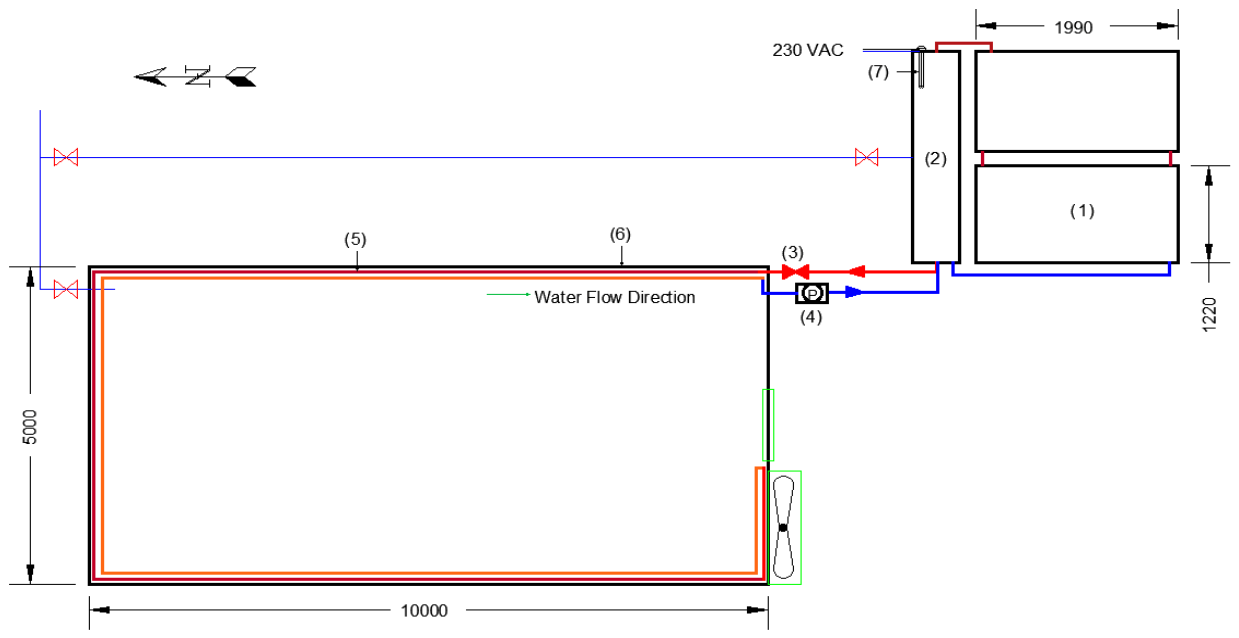
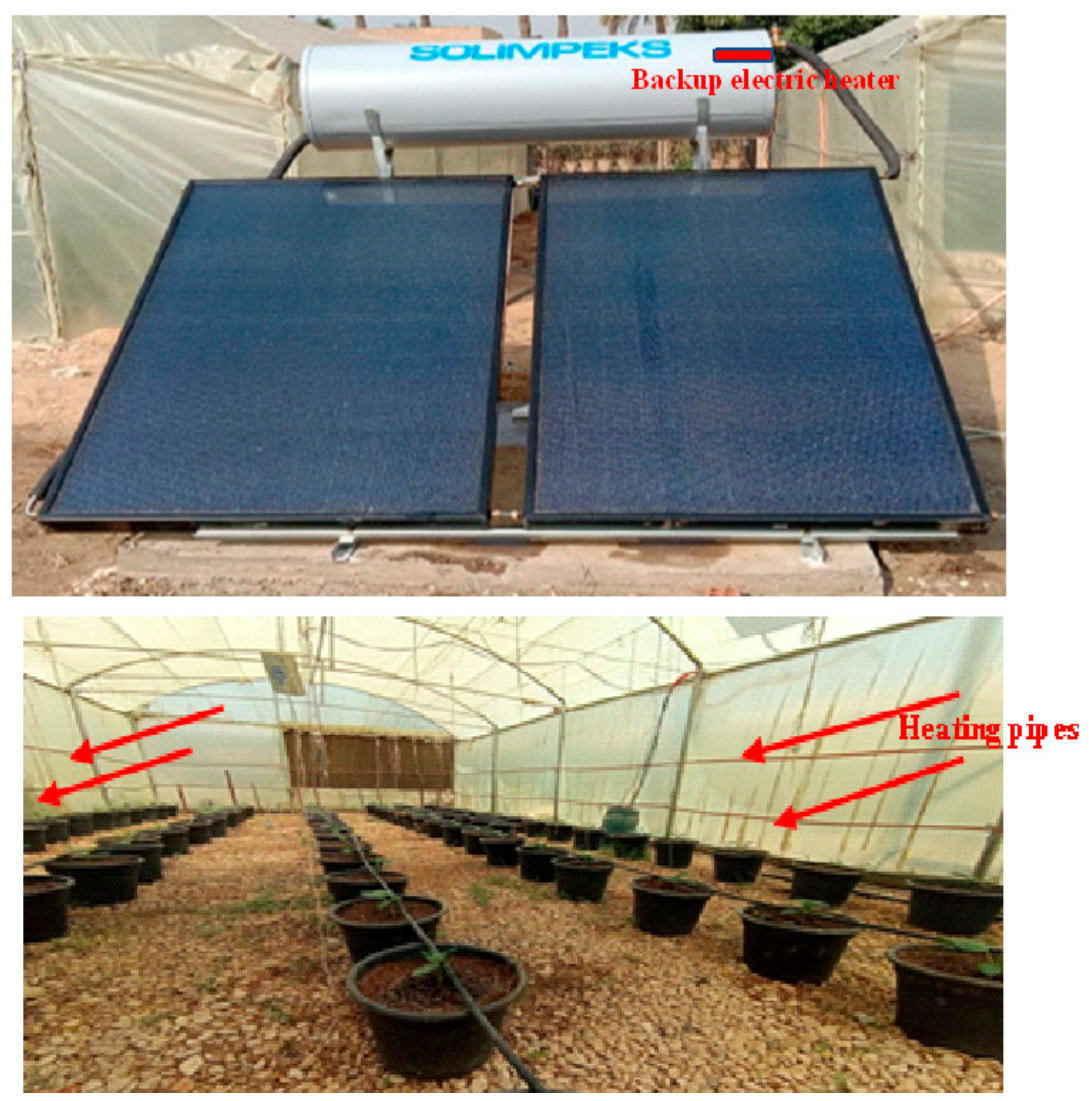
The flat plate solar collector consists of 2 individual solar thermal panels with aperture areas of 2.24 m2 for each, a gross area of 2.42 m2, and 10 tubes of copper with a selectively absorbing surface coating with 4 mm thermal clear glass. The operating fluid was a pure water flowed through parallel waterways built into each panel. A hot water storage tank (HWST) of 300 L (0.3 m3) (Solimpeks in Konya, Selçuklu Türkiye) was connected to the FPC as shown in Figure 1 and Figure 2. This water tank was cylindrical in shape and the outer surface made of a painted galvanized steel sheet. The heat exchanger inside the tank was made of 316L stainless steel and the tank was insulated by a polyurethane in order to minimize the heat losses from the storage tank (Table 1). The storage tank connected to the solar collector panels via two junctions of insulated pipes with a 25.4 mm (1.0 inch) diameter. The absorbing surface coating material on the FPC was an Almeeco-Tinox selective coating applied on an aluminum absorber surface which has an absorptance of 0.95. The hot water was circulated by a hot water circulation pump (Model: UPS 32-60 180 at a flow rate of 30 L/min, head of 6 m, and power of 60 W, made in Belgrade, Serbia). The pump was installed between the HWST and greenhouse to circulate the hot water via a closed loop of copper pipes, which was installed in the greenhouse perimeter with one inlet and one outlet. The flat plate solar collector was used to reduce energy consumption. Thus, the combination of an electric heater in the hot water tank of a solar collector has many benefits as a control strategy, which resulted in an improvement of the heating efficiency.
The first greenhouse was equipped with a closed-loop heat exchanger system designed to elevate the internal air temperature. The system consisted of copper pipes (type M, 19.05 mm in diameter) arranged along the internal perimeter of the structure in a series flow configuration. The pipes were installed with a vertical spacing of 0.5 m between lines and positioned 30 cm above the floor surface. In this configuration, the pipes functioned as heat emitters for perimeter heating, as illustrated in Figure 2.

2.2. Auxiliary Heating System

An auxiliary electric heater (EH) (Marvel heater, Mode TSM 300) of 2 kW was used for heating water at late night and installed inside the hot water storage tank as shown in Figure 1. The hot water temperature was adjusted to be within the range of 70 °C to 80 °C by a thermostat connected to the EH. Table 2 presents the properties of the electric heater, while Table 3 summarizes the average monthly climatic characteristics of Giza City, including air temperature, relative humidity, solar radiation, wind speed, and sunshine duration.

2.3. Climatic and Heating System Variables Measurements

The dry-bulb temperature, relative humidity and dew-point temperature were measured at 30-min intervals by using the Lufft OPUS20E data logger with three sensors (G. Lufft Mess-und Regeltechnik GmbH company, Kempten, Germany). It consisted of 10 channels with a measurement rate of 10 s–24 h, data storage of 16 Mb, an air temperature measurement range of −20–50 °C at an accuracy of ±0.3 °C within the range of 0–40 °C, and a relative humidity measurement range of 0–100% at an accuracy of ±2%. The sensors for air temperatures, humidity, and dew-point temperatures were distributed inside greenhouses at 1.5 m above the ground and one sensor was placed outside the greenhouse for measuring the ambient temperature and humidity. The solar radiation was measured by SMP21-V Pyranometer, KIPP &ZONEN company, serial number 200193, made in Kempten, Germany, at accuracy of 0.1 W/m2, and with analogue output range of 0–1600 W/m2. The functioning temperatures of the heating system were also measured, such as storage tank inlet and outlet water temperatures. The flow rates and water velocity of the solar collection loop and heating distribution loop were measured by an RV-100 handhold ultrasonic flow meter Ver.8.08, which can measure a pipe size of 20 mm to 6000 mm at accuracy of ±1%, and is made in Liaoning, China, as shown in Table 4. Energy released from the heating pipes was monitored independently by measuring the water flow rate and temperature decay between the inlet and the outlet of each system. On the other hand, the PolySun V2023.11 (Vela Solaris, Winterthur, Switzerland) simulation program was used to predict the monthly and the annual provided energy of the FPC in Giza. Moreover, data and results of temperatures and relative humidity obtained from both greenhouses were statistically analyzed using analysis of variance (ANOVA) and the independent two-sample Student t-test with a p-value of 0.05.
The uncertainty analysis was estimated by using the method described by Holman [32] as shown in Equation (1). The independent variables in this work were temperature, relative humidity, solar radiation, and water flow rate.
w R = ± R x 1 w 1 2 + R x 2 w 2 2 + R x 3 w 3 2 . + R x n w n 2
where WR is the uncertainty of the results; x1, x2, and xn are the independent variables; and w1,w2, and wn represent the uncertainties or accuracies of the independent variables with the same odds.

2.4. The Proposed Integrated Heating System

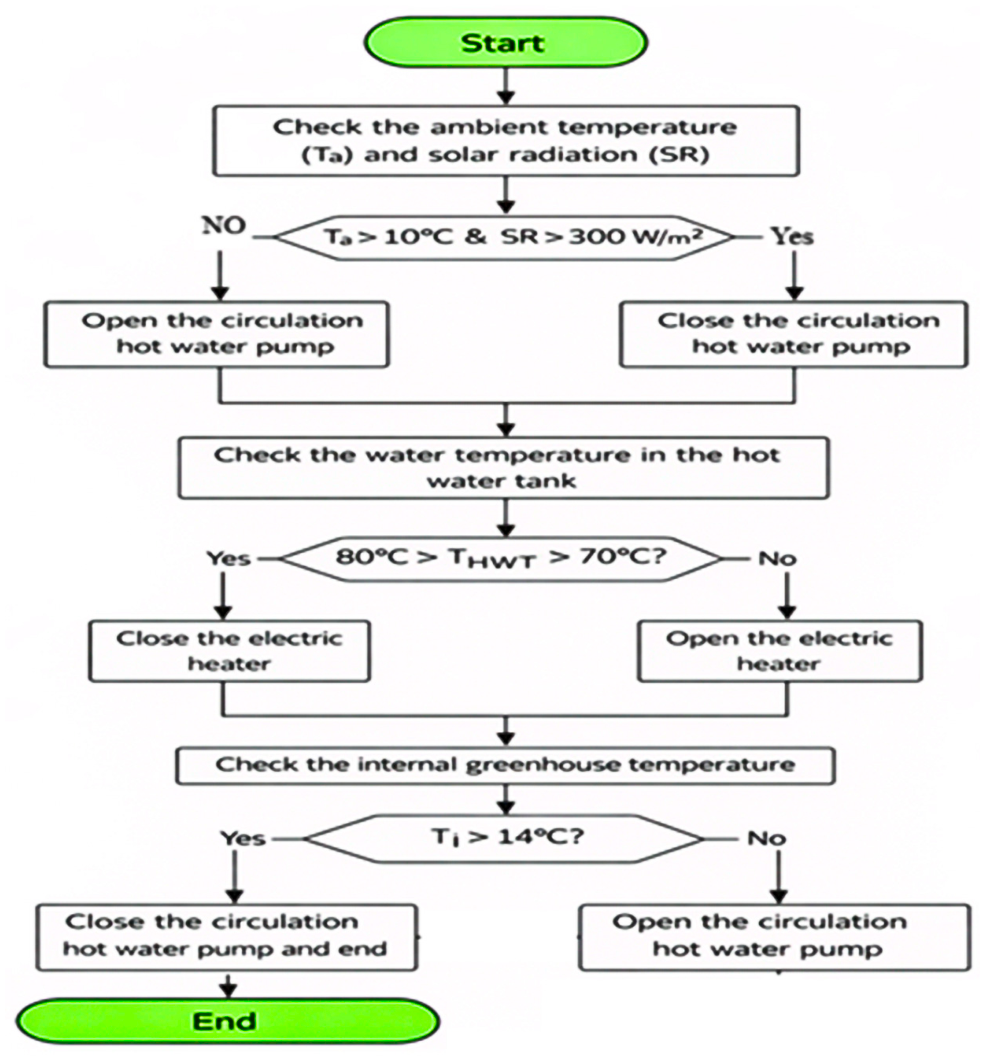
The FPC was utilized to heat the greenhouse with the assistance of a backup electric heater, which was installed inside the hot water storage tank (HWST). Therefore, during the day time the FPC heats the water on sunny days and the hot water is stored in the HWST during the daytime to be used at night, while the electric heater (EH) was turned off. Subsequently, during the nighttime the backup EH used for heating up the water to be more than 70 °C in the HWST. Meanwhile, there was a thermostat employed to regulate and maintain the hot water temperature in the HWST within the range of 70 °C to 80 °C, as illustrated in Figure 3. The electric heater (EH) was programmed via a timer to activate at 19:00 and deactivate at 05:00 to ensure adequate water heating in the HWST. Concurrently, the hot water circulation pump was also automatically controlled by a timer, operating from 18:00 to 06:00. It is noteworthy that the heating system primarily functioned during nighttime hours and was seldom required during cold or overcast daytime conditions. Consequently, as depicted in Figure 3, continuous monitoring of ambient temperature and solar radiation is critical to determine the optimal activation of the hot water circulation pump, thereby maintaining the internal air temperature of the greenhouse at the desired set point.
The energy demand for heating the greenhouse was estimated according to Canakci et al. [33] and our previous study [6]. It can be calculated by collecting the heat loss by conduction (QC) and the loss by infiltration (QI). The optimum night temperatures for many vegetables can be considered as 14 °C to 16 °C [1]. Consequently, in this experiment the set point (desired) internal air temperature was considered to be 14 °C and the minimum night ambient temperature in January was considered to be 10 °C. Meanwhile, the overall heat transfer coefficient for a single layer of polyethylene (U) was chosen to be 6.2 W/(m2·°C) as reported in Refs. [34,35]. The greenhouse heat loss by infiltration can be neglected when the greenhouses have a new plastic cover and are closed properly. Therefore, the monthly heating requirement value (kW) can be calculated as
Q m = ( A o × U × t i t o × H H d × D N m
where Qm is monthly heating requirement (W); U is the heat transfer coefficient W/m2·°C (single plastic cover 6.2 W/(m2·°C); Ao is the area of the greenhouse cover m2; ti is the inside air temperature (°C); to is the outside air temperature (°C), HHd is the daily heating hour (h/day), which was considered to be 10 h; and DNm is the number of days per month (day/month).
Greenhouse heat loss by infiltration, qi (W), can be estimated by considering that the total exchange will be the sum of the sensible and latent energy exchanges:
q i = ρ i N V [ C p a i t i t o + h f g     W i W o ]
where:
ρi is the inside air density, kg/m3; cpai is specific heat of the inside air; J/kg·°C, N is infiltration rate, s−1; V is volume of the greenhouse, m3; hfg is latent heat of vaporization of water at ti, J/kg; Wi is humidity ratio of the inside air, kgwater/kgair; and Wo is humidity ratio of the outside air, kgwater/kgair.

2.5. The FPC Thermal Efficiency (ηc)

The useful energy which collected by the FPC is given as [36]:
Q . U = m . C p T c o T c i
The FPC thermal efficiency ( η c ) can be calculated as the following [37,38]:
η = Q . U A c I = m . C p T c o T c i A c I
S F = Q U Q U + Q a u x
Ac is the aperture area of the solar collector (m2). Q.u is the thermal energy available at the outlet of the collector (W). I is the solar irradiation received on the collector surface (W/m2). Cp is the specific heat of water (J/(kg. K)). m.w is the water mass flow rate (kg/s). Tci is the water temperature at the inlet of solar collector (K). Tco is the water temperature at outlet of solar collector (K). SF is the solar fraction. Qaux is the auxiliary heating of electric heater.
The rate of heat losses from the HWST during a given period of time Lt was calculated using the tank loss coefficient-area product (UA) as given in Equation (7) [39]:
L t = U A t ( T w T a )
A is the tank total surface area (3.4 m2) and U is the overall heat transfer coefficient (≈0.8–1.2 W/(m2·k); t is time which equals to 24 h, and the temperature difference between the tank water temperature (Tw) and the surrounding ambient temperature (Ta) is used.

2.6. The Thermal Energy Transferred

The Thermal Energy Transferred to the internal air of greenhouse by hydronic heat via the copper pipes heat exchanger can be estimated according to Ihoume et al. [16] as the following:
Q = m . C p T s T a
where
Q is the heat flux released to the greenhouse (W), Cp is the specific heat of water (J/(kg·°C)), m. is the mass flow rate of water (kg/s), and Ts is the water temperatures at the inlet and outlet of heating loop (°C), respectively.

2.7. Thermal Load Leveling (TLL)

The thermal load leveling (TLL) is a clear index to show the fluctuation of temperatures inside the greenhouse. The less the fluctuations, the more ideal the environment will be inside the greenhouse under heating systems [40,41].
T L L = T i m a x T i m i n T i m a x + T i m i n
where Timin and Timax are the minimum and maximum internal air temperatures in the greenhouse.

3. Results

3.1. Effect of Solar Heating on Greenhouse Temperature

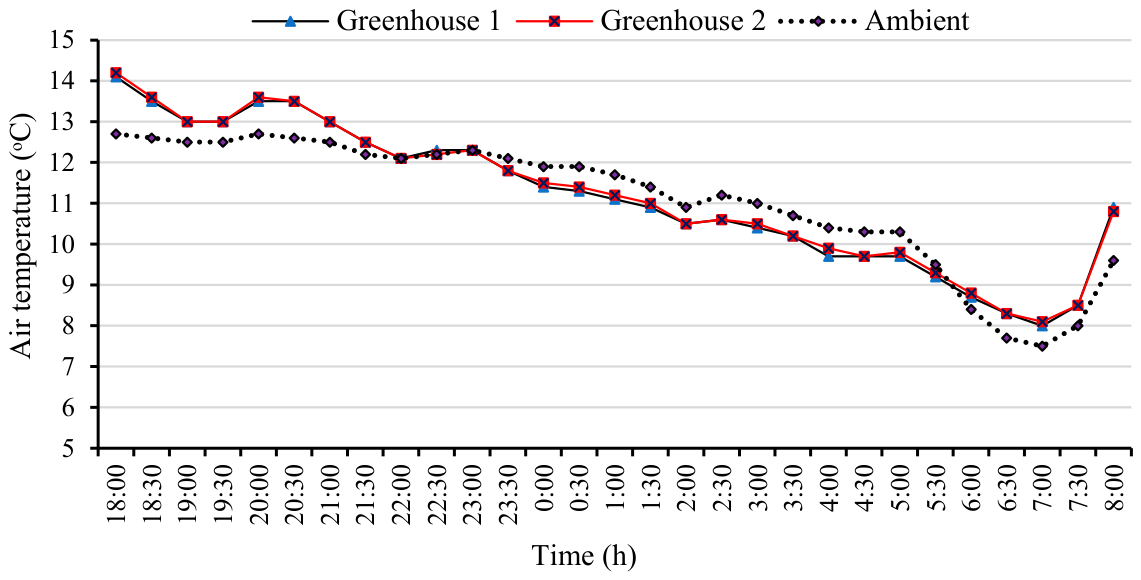
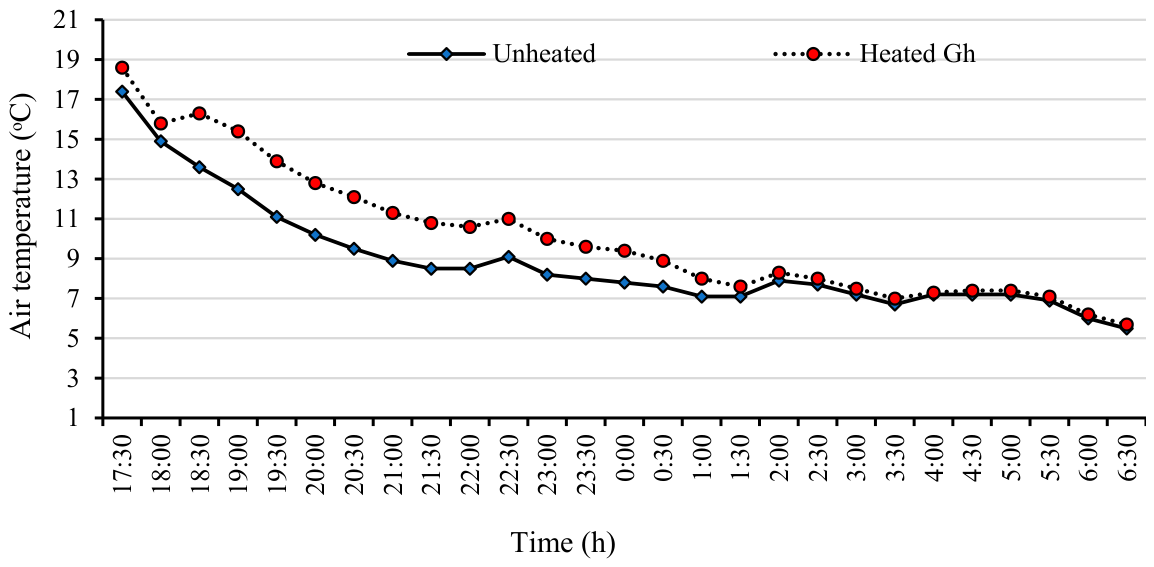
An initial measurement was implemented before the starting of solar heating to compare between the internal air temperatures of both greenhouses and the ambient temperatures as shown in Figure 4. Results revealed that the internal air temperatures in both greenhouses (without any heating) decreased gradually after sunset and then increased after sunrise. However, air temperature in greenhouses were lower than the ambient temperature from 23:30 to 5:30 due to the high losses of nighttime long-wave radiation (the infrared waves) from the greenhouse plastic cover. Therefore, a thermal screen or night curtains is recommended to reduce the loss of thermal radiation during the cold nights. Sethi and Sharma [42] mentioned that using the night curtains could save energy by 23% for heating. Figure 5 shows the internal air temperatures between the heated greenhouse (HDG) and unheated greenhouses (UHGH) solely by using the FPC. Thus, the backup electric heater was manually turned off to find out the behavior of internal air temperatures in heated greenhouse when it solely relayed on solar collector. It can be clearly seen that using the FPC without the electric heater could heat the greenhouse for 6 h only and the variation in air temperature between the heated greenhouse and the unheated greenhouse decreased with time. The variation in the internal air temperatures of both greenhouses started at 2.7°C and ends with 0.3 °C due to the hot water temperature in the hot water tank decreased gradually and it can be effective for only 6 h as shown in Figure 5. During daytime hours particularly, on sunny days, the flat plate collector (FPC) captures solar thermal energy, elevating the water temperature to a range of 55–65 °C, which is subsequently stored in the hot water tank. This stored hot water can then be circulated during nighttime hours to provide heating for the greenhouse.
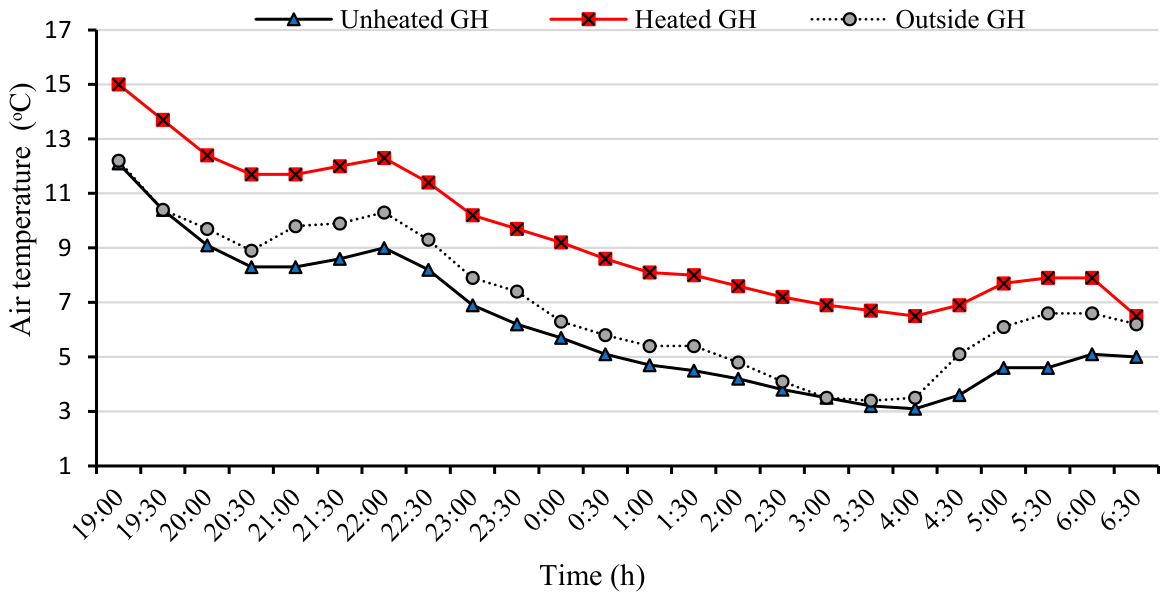
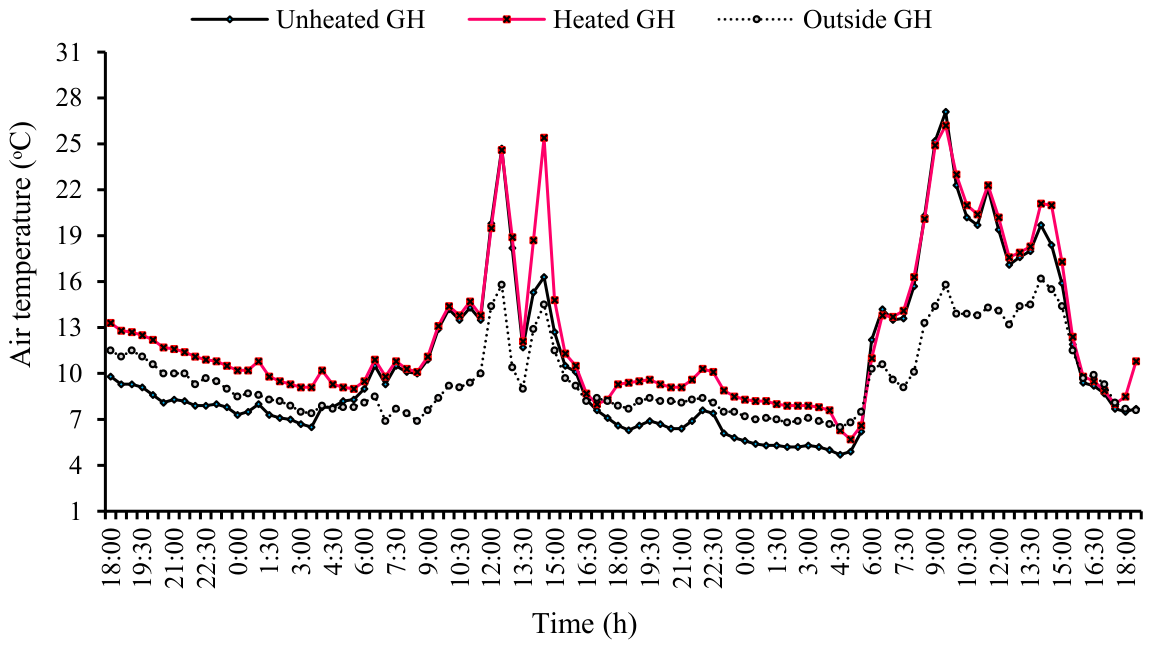
Figure 6 shows the internal air temperatures of greenhouses on a cold day of January. The average air temperatures were 6.2 °C, 9.5 °C, and 7 °C in the unheated greenhouse (UHGH), heated greenhouse (HGH) and the ambient air temperature, respectively. Thus, the heated greenhouse was higher than that of the unheated greenhouse by approximately 3.3 °C. Meanwhile, air temperature inside the heated greenhouse was higher than that of the ambient air temperature by an average of 2.5 °C. These results are consistent with our previous work [6]. On the other hand, on normal nights in January, the ambient temperatures were more than 7.5 °C and the air temperature in the HGH was higher than that of the UHGH by 2–3 °C (Figure 7).
A one-way analysis of variance (ANOVA) was conducted to compare internal air temperature (T) between HGH and UHGH for 12 days (cloudy and sunny) in January. Results revealed that air temperatures in the HGH were significantly higher than those in the UHGH, with a mean difference of 2.7 °C (p < 0.001, n = 180). The mean temperature recorded in the HGH was 10.4 °C (SD = 1.9), whereas the mean temperature in the UHGH was 7.6 °C (SD = 1.8) as shown in (Table 5).
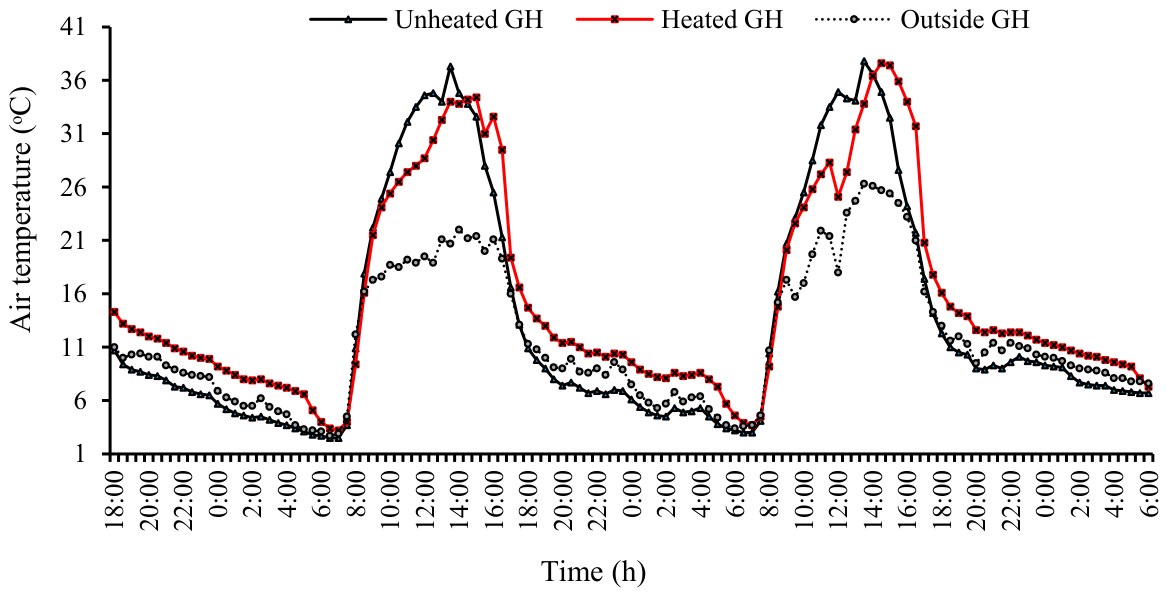
Figure 8 and Figure 9 show air temperatures on sunny and cloudy days of January, respectively. The maximum ambient temperature at daytime was 14 °C and 26 °C, respectively. Meanwhile, there was no variation in temperatures between both greenhouses during the daytimes; the maximum internal air temperature in greenhouses was 37.5 °C on sunny days and 23 °C on cloudy days. It is worth noting that the variation between day and night temperatures on sunny days was high (more than 25 °C) which is really harmful for the growth of plants. Consequently, heating was very crucial to decrease this variation.
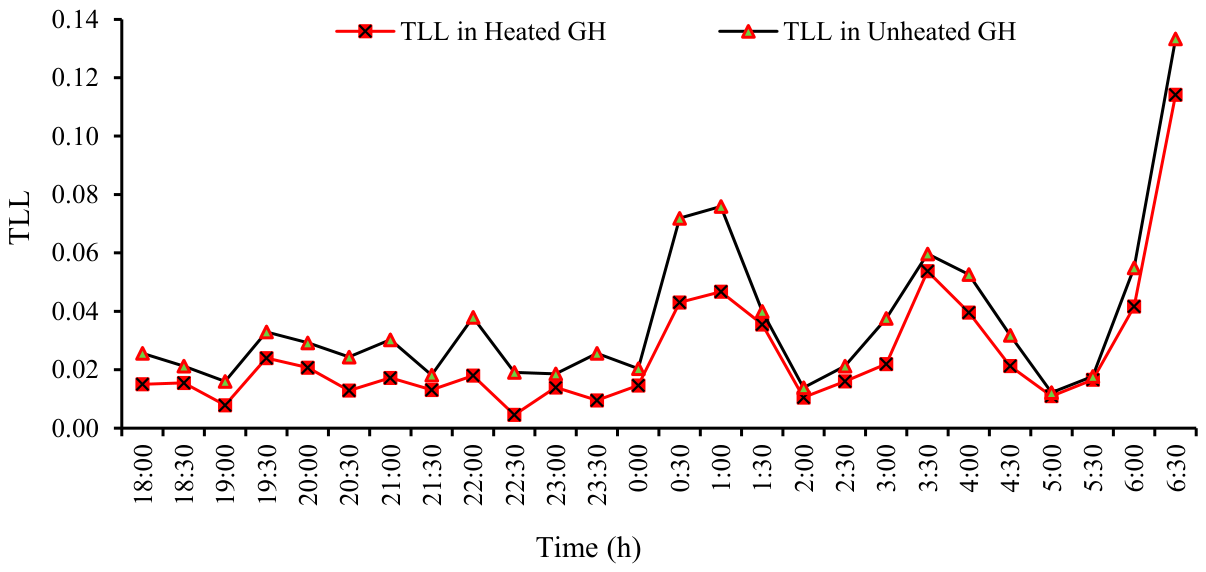
Figure 10 shows the thermal load leveling (TLL) in heated and unheated greenhouses. TLL can represent the fluctuation of air temperatures inside greenhouses. It was observed that the TLL during the heating period from 18:30 to 6:30 was lower in the HGH greenhouse than that of the UHGH, which proved the effectiveness of the heating system towards the decrease in daily fluctuation of air temperatures in the heated greenhouse due to the existence of the electric heater in the hot water tank. In addition, the thermostat of the electric heater was maintaining the hot water temperature to be more than 70 °C in the hot water tank.
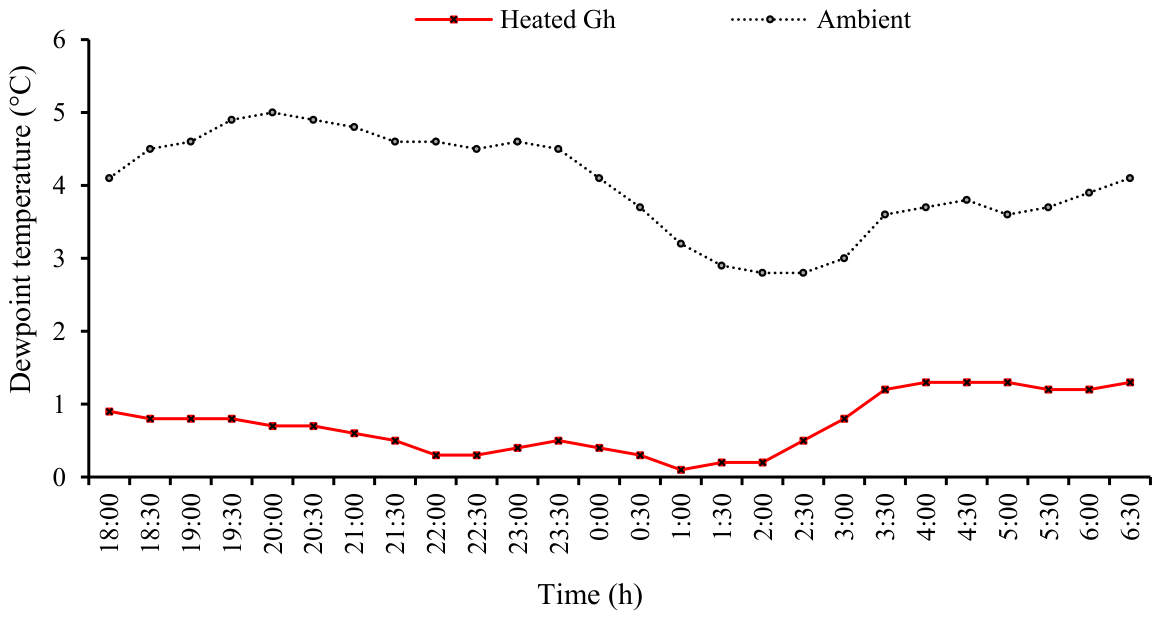
It was also observed that heating could decrease the mean dewpoint temperature at night inside the heated greenhouse. The mean dewpoint temperatures inside the HGH were lower than that of the ambient temperature by 3 °C (Figure 11). Thus, heating greenhouse could decrease the water condensation and thereby decrease fungal diseases and the application of fungicides.

3.2. Effect of Heating on Greenhouse Internal Air Relative Humidity

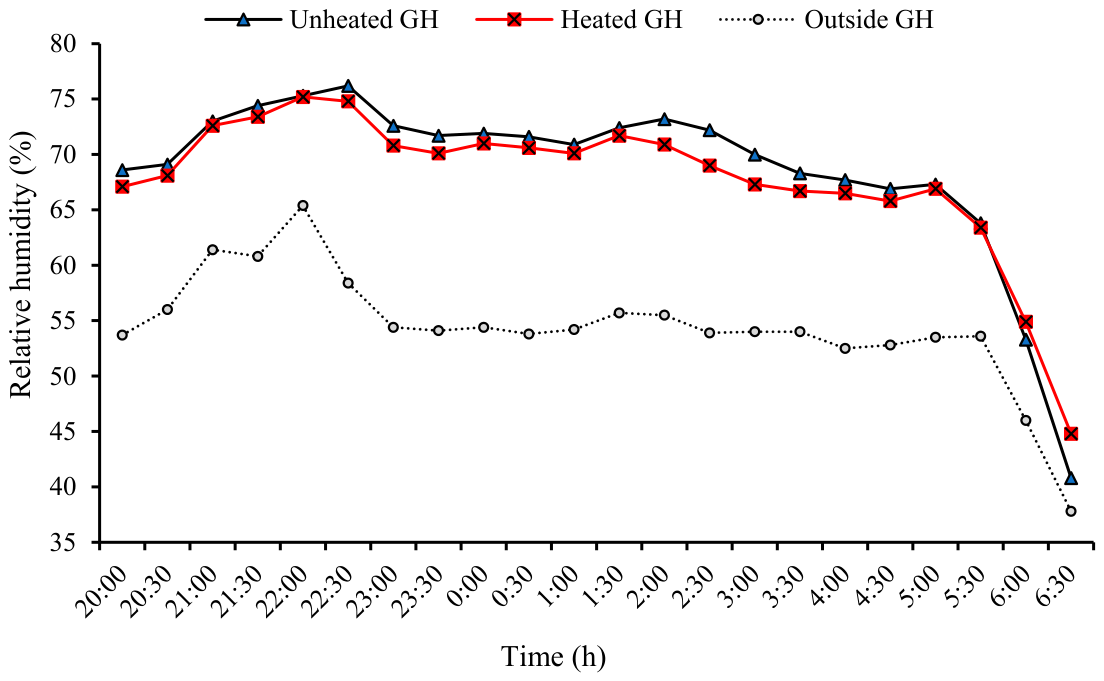
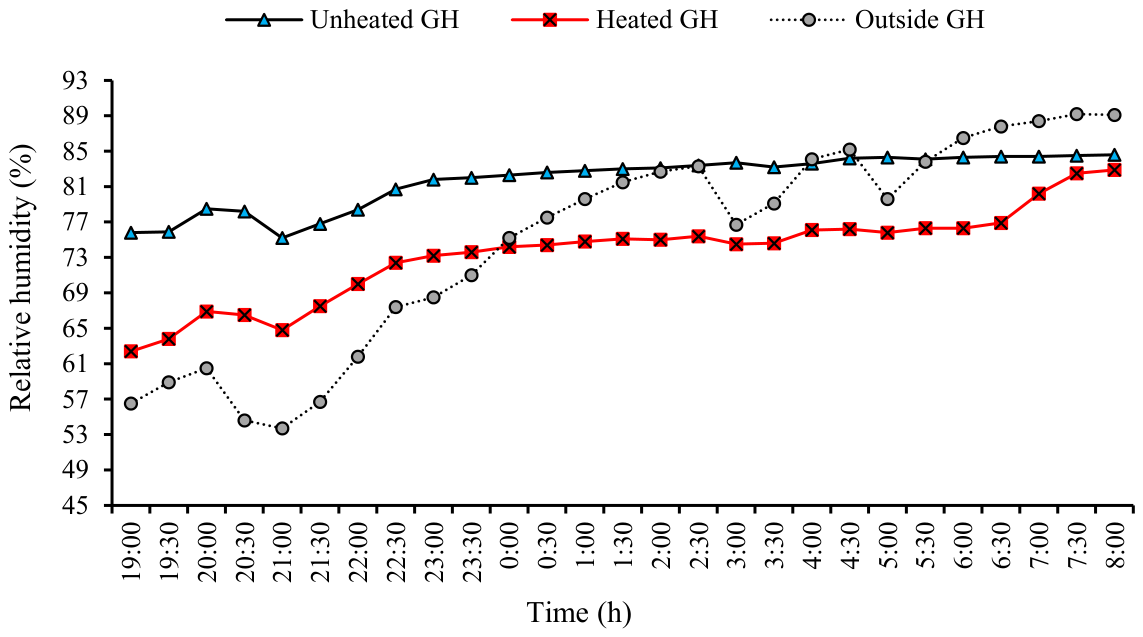
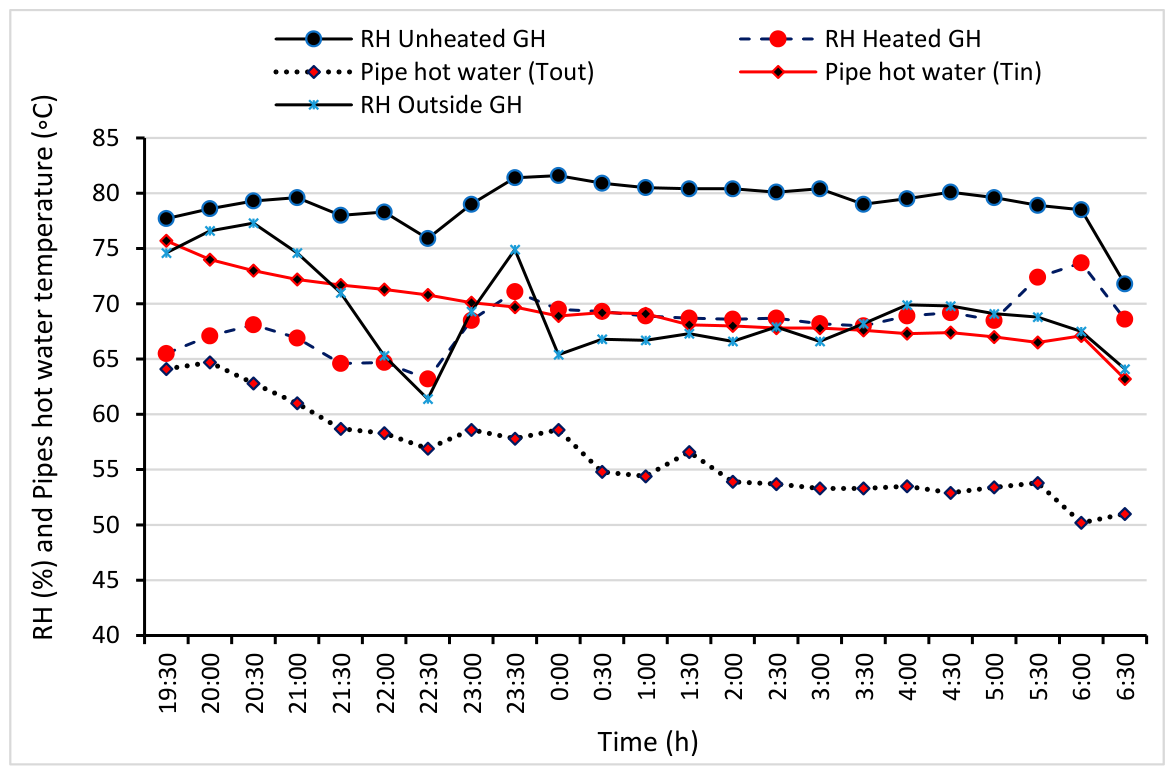
Figure 12 shows the air relative humidity (RH) inside both greenhouses (HGH and UHGH) compared to the ambient air relative humidity without the operation of any heating systems. It was observed that RH in both greenhouses was higher than that of the ambient air relative humidity by an average of 13–16%. Meanwhile, the average RH in the greenhouse which has the copper tubes was lower than RH in the control greenhouses by 1.5%. Subsequently, after the operation of solar heating by FPC, it was found that heating the greenhouse could decrease the internal air relative humidity by an average of 8–12%. The relative humidity (RH) inside heated greenhouse (HGH) was 10% lower than that in the unheated greenhouse (UHGH) from 22:00 to 6:00. The minimum RH was 64% in the HGH and 75% in the UHGH. The maximum RH was 77%, 84.6%, and 90% in the HGH, UHGH, and outside the greenhouses, respectively, as shown in Figure 13 and Figure 14. It was reported that nighttime transpiration from plants increases the RH and reduces the cover light transmission in the early morning due to the condensation on the greenhouse plastic cover [43]. Subsequently, it can increase the risk of fungal diseases such as Botrytis [44]. The optimal relative humidity for most plants ranges from 60% to 85% [45]. Therefore, heating greenhouses not only increases air temperatures but is also crucial for decreasing RH to an optimal level for plant growth and for keeping plants free from fungal diseases. These results are in agreement with previous work by Bouadila et al. [15] in Tunisia.
A one-way analysis of variance (ANOVA) was performed to evaluate the effect of greenhouse heating on relative humidity (RH) for 12 days (cloudy and sunny) in January. Results revealed that the HGH maintained significantly lower relative humidity compared to the UHGH, with a mean difference of 9.1% (p < 0.001, n = 180) as illustrated in Table 5. Descriptive statistics indicated that the HGH attained a mean RH of 66.9%, SD = 6.3, whereas the UHGH recorded a mean RH of 76.6%, SD = 6.7).

3.3. Solar Radiation

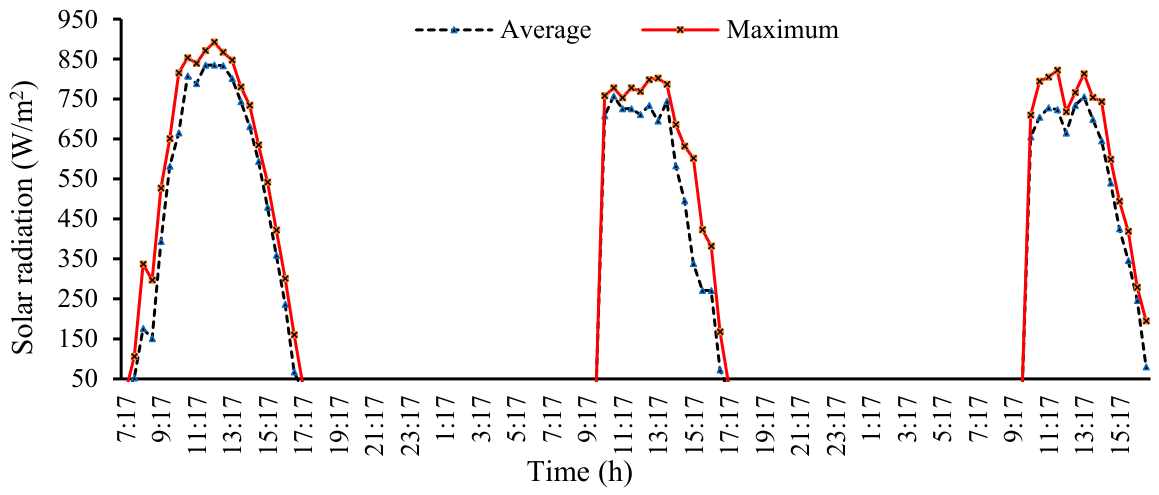
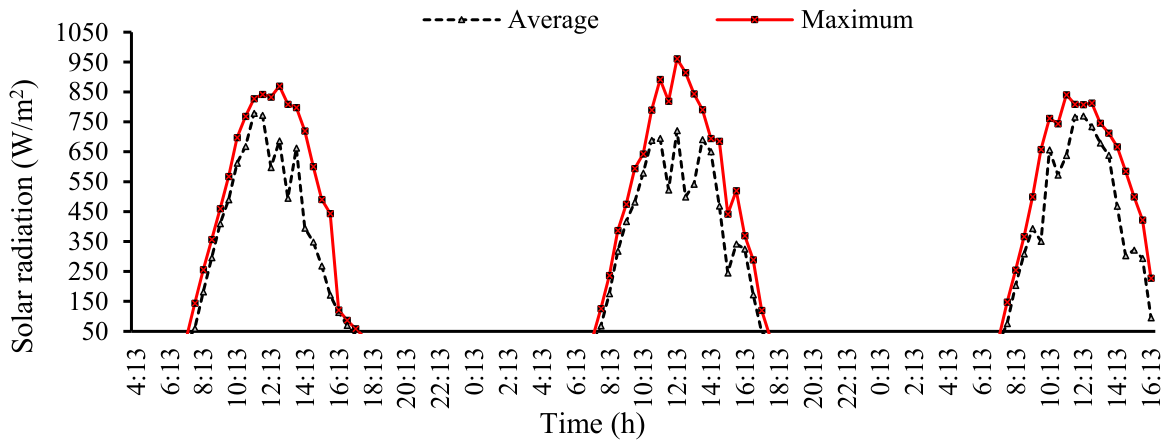
It was observed that the average solar radiation on the sunny days of 17–20 January 2022 was 460 W/m2 and the maximum was 800 W/m2. Meanwhile, the average solar radiation in 12 February 2022 was 630 W/m2 and the maximum was 960 W/m2 as depicted in Figure 15 and Figure 16. Thereby, the greenhouses’ heating demand in February is lower than that of January.

3.4. The Required Energy for Heating Greenhouse

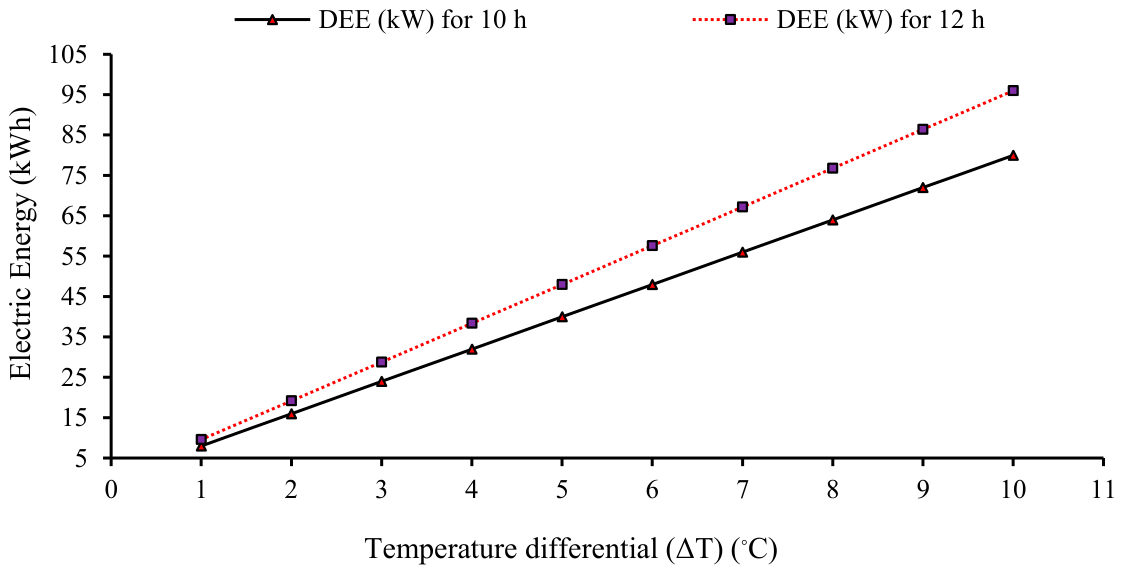
The calculated electric power required for heating the current greenhouse (50 m2) was ranged from 3.2 kWh to 8 kWh to rise the internal air temperature by 4–10 °C compared to the lowest ambient temperature, particularly in January.
The absolute minimum temperature in Giza is about 8–9 °C in January (Table 3); however, occasionally it could reach 2–5 °C on the coldest nights. Heating was not necessary during the daytime since the average solar radiation meets the heat losses of the greenhouse in Egypt. Therefore, calculations for heating were done for nighttime only. The maximum required heating capacity was determined according to our previous study [6]. The greenhouse cover area was (Ac = 122.25 m2), the overall heat transfer coefficient for a single layer of polyethylene was considered to be (U ≈ 6.2 W/(m2·°C), the heating temperature set point was 14 °C, and the heating hours per day was 10 h. The calculated results indicated that, regarding the daily electric energy (DEE) demand to heat the current greenhouse and to sustain an internal air temperature of 4 °C above the ambient level, a nightly electric energy input of 32 kWh was required. Consequently, this hybrid system is well-suited for perimeter heating and energy efficient. The auxiliary heating can be used only for three months from December to February, for 10 h a day, totaling approximately 900 h of heating during this period. However, the electric heater within the hybrid system would operate for only 600 h to maintain the internal temperature of the greenhouse at 14 °C. Additionally, covering greenhouses with double layers of polyethylene, using thermal screens, thermal blankets, and thermal curtains can reduce energy consumption for heating by an average of 30–60% [46,47]. Moreover, incorporating geothermal energy alongside the FPC solar system would further optimize the greenhouse’s internal temperature and meet the heating demand.
The daily electric energy (DEE) required for heating a greenhouse varies based on location and nighttime set point temperature. Thus, to sustain an internal air temperature of 14 °C in a greenhouse at the cold ambient temperature of 4 °C, the DEE was found to be 80 kWh and 96 kWh for daily heating durations of 10 h and 12 h, respectively, as shown in Figure 17.
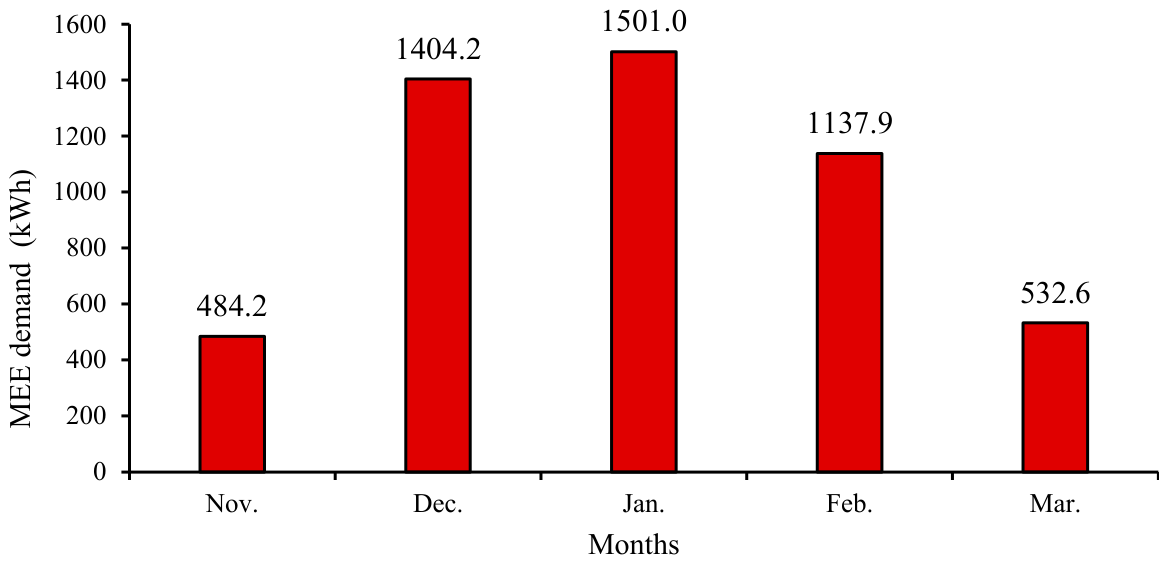
Consequently, the monthly electric energy (MEE) demand can range from 144 kWh to 2400 kWh over a 10 h heating period, depending on the temperature differential between the greenhouse’s internal air temperature and the ambient temperature, which can vary from 0.5 °C to 10 °C. Therefore, by considering the set point temperature at 14 °C during winter, the average of the MEE or the monthly required electric energy was varied from 484.2 kWh in November to 1501 kWh in January as shown in Figure 18.

3.5. The Solar Thermal Energy of the FPC

Calculated results showed that the average thermal efficiency of the FPC in winter was ranged from 42% to 46%. It is worth noting that while the manufacturer reports a peak collector efficiency of 75% under forced-flow conditions at a nominal flow rate of 240 L/h for two panels connected in parallel [48], the present system operates as a thermosiphon hot water system with a low water flow rate less than 100 L/h, consequently exhibiting lower thermal efficiency. The average of daily thermal energy losses of hot water tank was 1.8–2.6 kWh and the monthly thermal energy losses of hot water tank were ranged from 70 kWh to 81 kWh. It was high in December and January at 80.9 kWh and low in November and February (71 kWh). Due to the outdoor installation of the hot water tank, the thermal losses were elevated. Thus, the FPC system can supply a daily thermal energy of ≈8–11 kWh in winter without the backup electric heater.
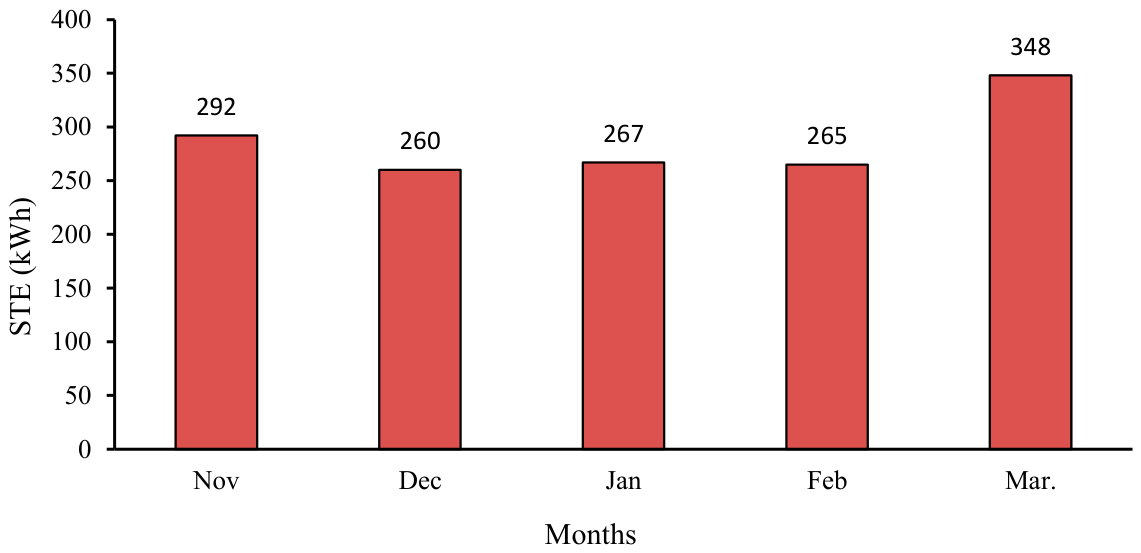
Simulation results from the PolySun program showed that the highest solar thermal energy (STE) was recorded in March at 348 kWh and November at 292 kWh, while the lowest occurred in December at 260 kWh as depicted in Figure 19.
The calculated STE values derived from experimental measurements were found to be in close agreement with the values obtained from the PolySun simulation, as quantified by the Root Mean Square Error (RMSE). During the winter months, the absolute difference between the values ranged from 6 to 46 kWh, while the RMSE percentage ranged from 2.3% to 11% as illustrated in Table 6.
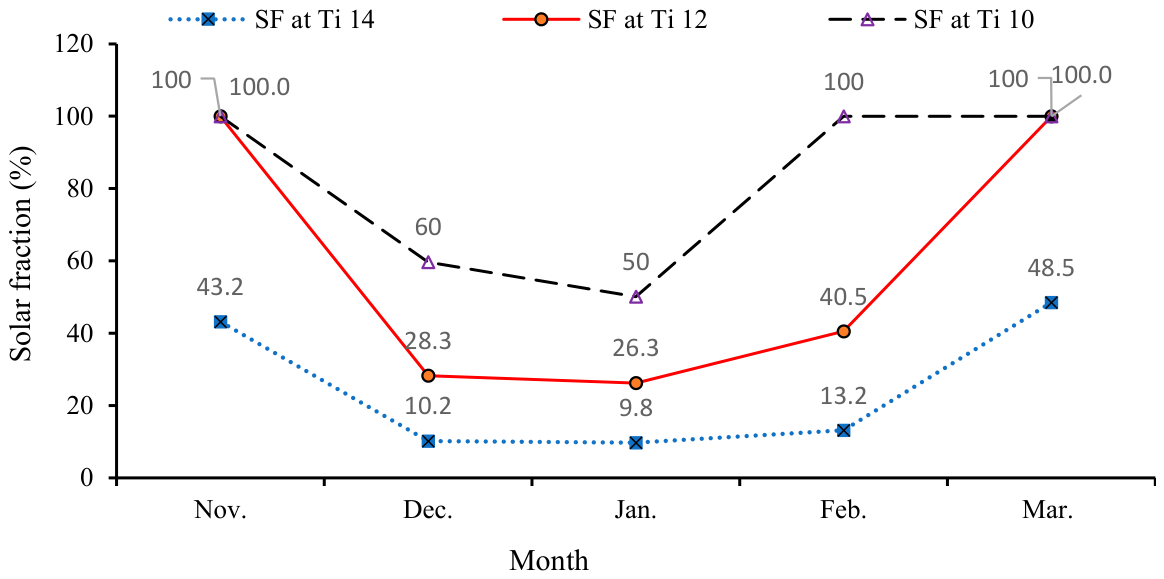
The flat plate solar collector (FPC) can contribute to maintaining plant viability in the greenhouse by supplying 60% and 50% of the monthly STE demand while maintaining the nocturnal greenhouse temperature at 10 °C in December and January, respectively. Meanwhile, surplus solar thermal energy (STE) will be available in November, February, and March. This is because the average ambient temperatures are approximately 10 °C in February and 12 °C in November and March. Consequently, no auxiliary heating is required to maintain the internal greenhouse air temperature under these conditions. In addition, the FPC can provide approximately 28.3%, 26.3%, and 40.5% of the monthly STE demand for heating in December, January, and February, respectively, enabling the nocturnal greenhouse air temperature to be maintained at 12 °C without the backup electric heater. Consequently, no auxiliary heating is required in November and March, as the ambient temperature remains close to 12 °C. However, when maintaining an internal air temperature at 14 °C, the FPC can only supply approximately 10.2%, 9.8%, and 13.2% of the monthly STE heating demand in December, January, and February, respectively. In contrast, during November and March, the FPC contribution increases to approximately 43.2% and 48.5%, respectively, as illustrated in Figure 20. Consequently, the backup electric heater will be operated when the ambient temperature decreases below 10 °C to assist the FPC heating system. Nevertheless, to further enhance the overall heating performance, it is recommended to increase the collector panel area to maximize energy capture and extend the length of the piping network to improve heat transfer within the greenhouse.
Moreover, the annual STE which produced by the FPC system was approximately 4000–4830 kWh and the annual reduction of CO2 emission was ≈2.9 tones. Therefore, using solar energy as a clean and green source of energy is crucial to reduce the negative environmental impact of fusel fuels. In addition, the surplus STE produced of FPC in hot months could be utilized in different farm activities.

3.6. The Provided Heat of Copper Pipes to Greenhouse

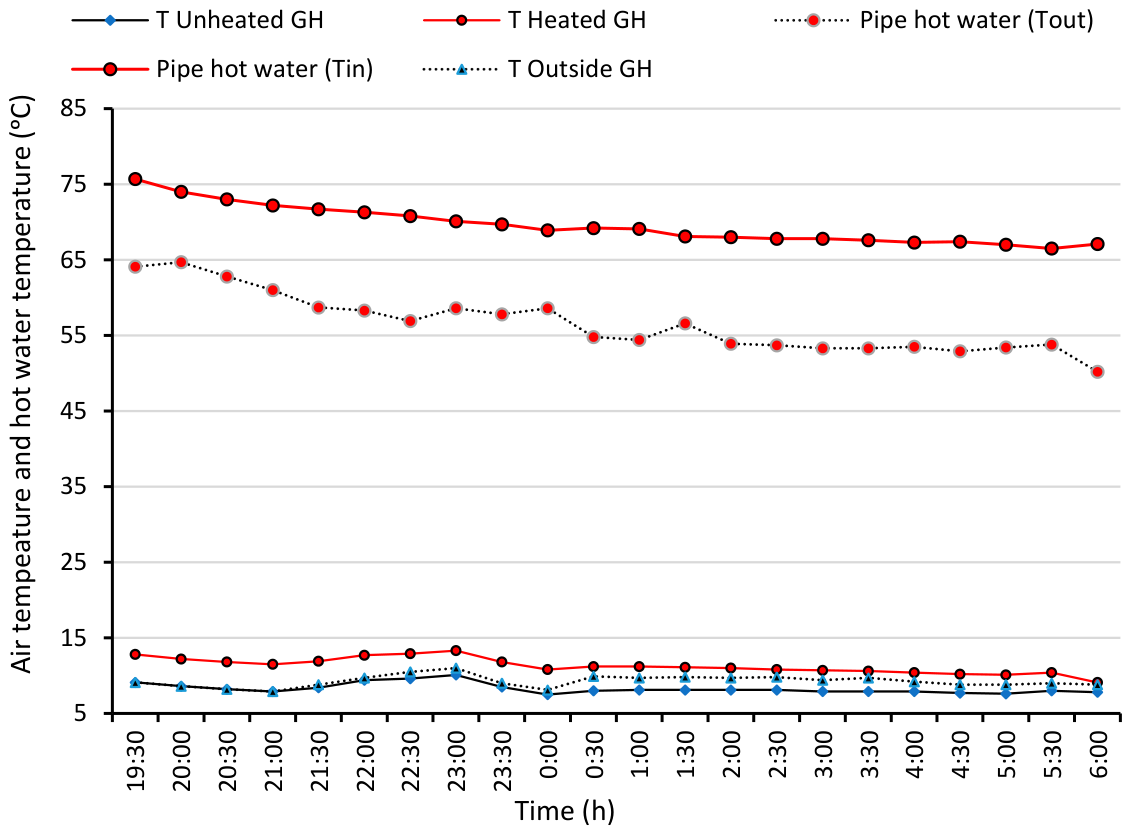
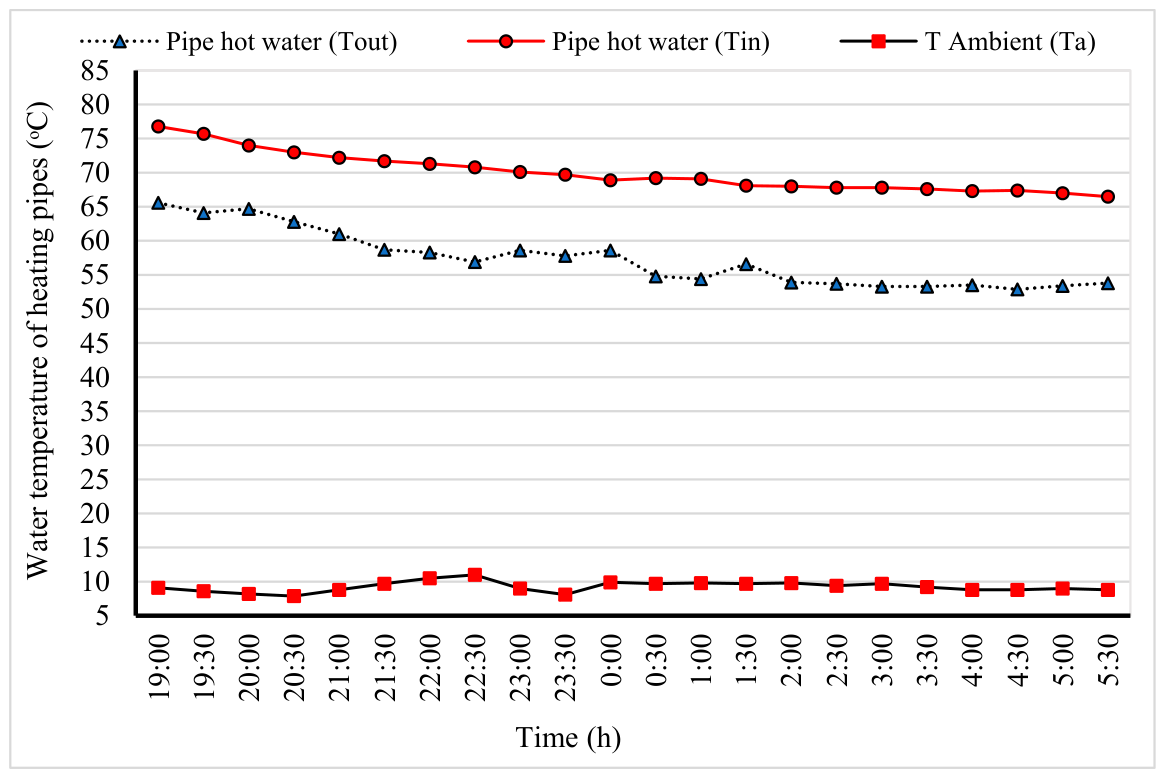
Results revealed that the average water temperature at the inlet of copper pipes was 67.6 °C and the average water temperature at the outlet was 55.3 °C during the heating period from 19:00 to 6:00 while the maximum water temperature at the inlet was 75.7 °C and the maximum temperature at the outlet was 62.6 °C as depicted in Figure 21. Therefore, the temperature differential between the outlet and inlet of heating pipes was 14 °C to 12.2 °C, the hot water circulation pump had three velocities, the average water velocity was 0.4 m/s, and the mass flow rate was 0.102 kg/s. Consequently, the provided thermal heat from the copper pipes to greenhouse was ranged from 4.5 kW to 5.5 kW.

3.7. Payback Period of the FPC Without the Backup Electric Heater

The payback period can be estimated by dividing the initial investment of the solar system to the gained energy during the life cycle [49]. Thus, the initial investment costs were the total costs of the solar collector, hot water circulation pumps, the hot water storage tank, pipes and installation. Then, the average mean life of the installation (particularly the solar collectors and the circulation pump) was estimated to be 20 years. The cost of each item of heating systems is shown in Table 7. The annual cost of maintenance was supposed to be 3% of the system cost. Electricity pricing in Egypt is tiered according to monthly consumption levels. For commercial activities exceeding 1000 kW, the rate is 2.65 EGP per Kw [50]. As a result, the payback period for the FPC system has been calculated to be approximately 8.5 years.

4. Conclusions

The utilization of a flat plate solar collector (FPC) for greenhouse heating in Egypt resulted in a statistically significant mean increase in internal air temperature of 2.7 °C, as well as a reduction in relative humidity of 9.7%, compared to an unheated greenhouse. Consequently, the reduction in relative humidity could mitigate the risk of fungal diseases and reduce the reliance on fungicide applications. Furthermore, using the FPC for perimeter heating effectively prevented condensation from forming on the internal surfaces of the greenhouse covering materials. In addition, the FPC could reduce the electric energy consumption and mitigate the CO2 emission without harming the environment. The total annual solar thermal energy generated by the FPC was approximately 4830 kWh, with an average thermal efficiency ranging from 42% to 46%. Subsequently, the simple payback period for the proposed heating system was calculated to be 8.5 years. The proposed FPC heating system could provide 30% of the whole electric energy demand in winter. Meanwhile, the provided solar thermal energy of FPC system could fulfil all the heating demand at warm nights, particularly in early November, March and late February, at an ambient temperature of 13 °C to maintain the internal greenhouse temperature at 15 °C to 16 °C. On the other hand, to further enhance system performance, it is recommended to add one more panel to increase the solar collector area, increase the length of the heating pipes, increase the hot water tank capacity, and use a small circulation pump to operate the solar collector under forced flow not as a thermosiphon during daytime. Meanwhile, the use of double-layer plastic covers, thermal screens, or night curtains is recommended to reduce nocturnal heat losses. During the warmer months (March to October), surplus thermal energy from the system can be utilized for domestic hot water needs in farm households for extending the system’s functional utility beyond greenhouse heating. However, by adding the cost of the additional plumbing and infrastructure heat for domestic heating, the payback period will be slightly increased. Future research should explore the application of FPC systems for root zone heating in hydroponic greenhouses across different regions.

Author Contributions

R.H.E.H.: Wrote the original draft of the whole manuscript, Funding acquisition, and Edited the final manuscript. M.M.I.: Performed the experiments; Drew some figures, and Analyzed, interpreted the data and revised. G.P.: Administration, Supervision, Funding acquisition. E.N.A.E.R.: Performed the experiments, Analyzed and interpreted the data. Thus, all authors provided critical discussion and have made great contributions in this manuscript. All authors have read and agreed to the published version of the manuscript.

Funding

This work was supported by Science, Technology & Innovation Funding Authority (STDF) of Egypt under grant No. (33456) and supported by the Chinese academy of sciences president’s international fellowship initiative (PIFI), grant No. (2026PVA0147).

Data Availability Statement

The raw data supporting the conclusions of this article will be made available by the authors on request.

Conflicts of Interest

All authors declare no conflicts of interest.

Abbreviations

The following abbreviations are used in this manuscript:
AoThe total area of the greenhouse cover [m2]
AcClear aperture area of the collector [m2]
CpiaSpecific heat of the inside air [J/kg·°C]
CpwSpecific heat of water [J/kg·°C]
DNmThe number of days per month [day/month]
FPCFlat plate solar collector
HHdThe daily heating hour [h/day]
hfgLatent heat of vaporization of water at ti [J/kg]
IInstantaneous solar irradiation received on the collector surface [W/m2]
NInfiltration rate [s−1]
QtThe total required heat energy for heating [W]
QSThe provided heat of FTC [W]
QrcHeat loss by radiation, conduction and convection [W]
QmMonthly heating requirement [W]
Q.uUseful thermal power available at the outlet of the collector [W]
TciCold water temperature at inlet of the collector [°C]
TcoHot water temperature at the collector outlet [°C]
ti and toGreenhouse inside and outside air temperatures [°C]
TtiWater temperature of heating pipes at the inlet [°C]
TtoWater Temperature of heating pipes at the outlet [°C]
UThe total heat transfer coefficient [W/m2·°C]
VstVolume of hot water storage tank [L]
VVolume of the greenhouse [m3]
WiHumidity ratio of the inside air [kgwater/kgair]
TLLThe thermal load leveling
WoHumidity ratio of the outside air [kgwater/kgair]
TiminThe minimum internal air temperatures in greenhouse
TimaxThe maximum internal air temperatures in greenhouse
M Water mass (kg)
T s The hot water temperature in storage tank [°C]
T a The greenhouse air temperature [°C]
STEThe solar thermal energy (W)
Greek letters
ηThermal efficiency of the solar collector
m.wMass flow rate of water [kg/s]
ρWater density [kg/m3]
ρiDensity of the inside air [kg/m3]

References

  1. Moccaldi, L.A.; Runkle, E.S. Modeling the effects of temperature and photosynthetic daily light integral on growth and flowering of Salvia splendens and Tagetes patula. J. Am. Soc. Hortic. Sci. 2007, 132, 283–288. [Google Scholar] [CrossRef] [Scilit]
  2. Ahamed, M.S.; Guo, H.; Tanino, K. Energy saving techniques for reducing the heating cost of conventional greenhouses. Biosyst. Eng. 2019, 178, 9–33. [Google Scholar] [CrossRef] [Scilit]
  3. Zhang, R.; Liu, Y.; Zhu, D.; Zhang, X.; Ge, M.; Cai, Y. Optimal design for solar greenhouses based on canopy height. J. Build. Eng. 2022, 53, 104473. [Google Scholar] [CrossRef] [Scilit]
  4. Nishad, S.; Krupa, I. Phase change materials for thermal energy storage applications in greenhouses: A review. Sustain. Energy Technol. Assess. 2022, 52, 102241. [Google Scholar] [CrossRef] [Scilit]
  5. Yan, S.; Fazilati, M.A.; Toghraie, D.; Khalili, M.; Karimipour, A. Energy cost and efficiency analysis of greenhouse heating system enhancement using phase change material: An experimental study. Renew. Energy 2021, 170, 133–140. [Google Scholar] [CrossRef] [Scilit]
  6. Hassanien, R.H.E.; Li, M.; Tang, Y. The evacuated tube solar collector assisted heat pump for heating greenhouses. Energy Build. 2018, 169, 305–318. [Google Scholar] [CrossRef] [Scilit]
  7. Cuce, E.; Harjunowibowo, D.; Cuce, P.M. Renewable and sustainable energy saving strategies for greenhouse systems: A comprehensive review. Renew. Sustain. Energy Rev. 2016, 64, 34–59. [Google Scholar] [CrossRef] [Scilit]
  8. Esen, M.; Yuksel, T. Experimental evaluation of using various renewable energy sources for heating a greenhouse. Energy Build. 2013, 65, 340–351. [Google Scholar] [CrossRef] [Scilit]
  9. Aramyan, L.H.; Lansink, A.G.J.M.O.; Verstegen, J.A.A.M. Factors underlying the investment decision in energy-saving systems in Dutch horticulture. Agric. Syst. 2007, 94, 520–527. [Google Scholar] [CrossRef] [Scilit]
  10. Heidari, M.D.; Omid, M. Energy use patterns and econometric models of major greenhouse vegetable productions in Iran. Energy 2011, 36, 220–225. [Google Scholar] [CrossRef] [Scilit]
  11. Raza, M.A.; Sohail, H.; Hassan, M.A.; Sajad, S.; Xing, Y.; Song, J. Cold stress in Brassica vegetables: Morpho-physiological and molecular responses underlying adaptive mechanism. Sci. Hortic. 2024, 329, 113002. [Google Scholar] [CrossRef] [Scilit]
  12. Thakur, P.; Kumar, S.; Malik, J.A.; Berger, J.D.; Nayyar, H. Cold stress effects on reproductive development in grain crops: An overview. Environ. Exp. Bot. 2010, 67, 429–443. [Google Scholar] [CrossRef] [Scilit]
  13. Begna, T.; Gichile, H.; Teressa, T.; Yali, W.; Asrat, Z. Crop production under abiotic stresses: Management options and crop reactions. Ecol. Genet. Genom. 2026, 38, 100454. [Google Scholar] [CrossRef] [Scilit]
  14. Xu, W.; Guo, H.; Ma, C. An active solar water wall for passive solar greenhouse heating. Appl. Energy 2021, 308, 118270. [Google Scholar] [CrossRef] [Scilit]
  15. Bouadila, S.; Lazaar, M.; Skouri, S.; Kooli, S.; Farhat, A. Assessment of the greenhouse climate with a new packed-bed solar air heater at night, in Tunisia. Renew. Sustain. Energy Rev. 2014, 35, 31–41. [Google Scholar] [CrossRef] [Scilit]
  16. Ihoume, I.; Tadili, R.; Arbaoui, N.; Bazgaou, A.; Idrissi, A.; Benchrifa, M.; Fatnassi, H. Performance study of a sustainable solar heating system based on a copper coil water to air heat exchanger for greenhouse heating. Sol. Energy 2022, 232, 128–138. [Google Scholar] [CrossRef] [Scilit]
  17. Arbaoui, N.; Tadili, R.; Ihoume, I.; Idrissi, A.; Benchrifa, M.; Krabch, H.; Essalhi, H.; Daoudi, M. Effects of a solar heating system on the microclimate of an agricultural greenhouse. Application on zucchini (Cucurbita pepo). Sol. Energy 2023, 262, 111910. [Google Scholar] [CrossRef] [Scilit]
  18. Agrebi, S.; Chargui, R.; Tashtoush, B.; Guizani, A. Comparative performance analysis of a solar assisted heat pump for greenhouse heating in Tunisia. Int. J. Refrig. 2021, 131, 547–558. [Google Scholar] [CrossRef] [Scilit]
  19. Yang, S.; Liu, S.; Liu, X.; Guo, H.; Wang, J.; Cao, Y. Hydronic root zone temperature control system for a Chinese solar greenhouse. Case Stud. Therm. Eng. 2026, 77, 107495. [Google Scholar] [CrossRef] [Scilit]
  20. Bazgaou, A.; Fatnassi, H.; Bouharroud, R.; Ezzaeri, K.; Gourdo, L.; Wifaya, A.; Demrati, H.; Elame, F.; Carreño-Ortega, Á.; Bekkaoui, A.; et al. Effect of active solar heating system on microclimate, development, yield and fruit quality in greenhouse tomato production. Renew. Energy 2021, 165, 237–250. [Google Scholar] [CrossRef] [Scilit]
  21. Bazgaou, A.; Fatnassi, H.; Bouharroud, R.; Elame, F.; Ezzaeri, K.; Gourdo, L.; Wifaya, A.; Demrati, H.; Tiskatine, R.; Bekkaoui, A.; et al. Performance assessment of combining rock-bed thermal energy storage and water filled passive solar sleeves for heating Canarian greenhouse. Sol. Energy 2020, 198, 8–24. [Google Scholar] [CrossRef] [Scilit]
  22. Prieto, J.; Ajnannadhif, R.M.; Fernández-del Olmo, P.; Coronas, A. Integration of a heating and cooling system driven by solar thermal energy and biomass for a greenhouse in Mediterranean climates. Appl. Therm. Eng. 2023, 221, 119928. [Google Scholar] [CrossRef] [Scilit]
  23. Wang, J.; Qu, M.; Zhao, S.; Ma, C.; Song, W. New insights into the scientific configuration of a sheet heating system applied in Chinese solar greenhouse. Appl. Therm. Eng. 2023, 219, 119448. [Google Scholar] [CrossRef] [Scilit]
  24. Xu, Z.; Lu, J.; Xing, S. Thermal performance of greenhouse heating with loop heat pipe solar collector and ground source heat pump. Results Eng. 2022, 15, 100626. [Google Scholar] [CrossRef] [Scilit]
  25. Mohebi, P.; Roshandel, R. Optimal design and operation of solar energy system with heat storage for agricultural greenhouse heating. Energy Convers. Manag. X 2023, 18, 100353. [Google Scholar] [CrossRef] [Scilit]
  26. Wang, J.; Luo, Q.; Cheng, J.; Qu, M.; Wang, P.; Zhao, S.; Xu, H.; Ma, C. Study on thermal property of a solar collector applied to solar greenhouse. Appl. Therm. Eng. 2024, 244, 122628. [Google Scholar] [CrossRef] [Scilit]
  27. Dhaidan, N.S.; Al-Shohani, W.A.M.; Abbas, H.H.; Rashid, F.L.; Ameen, A.; Al-Mousawi, F.N.; Homod, R.Z. Enhancing the thermal performance of an agricultural solar greenhouse by geothermal energy using an earth-air heat exchanger system: A review. Geothermics 2024, 123, 103115. [Google Scholar] [CrossRef] [Scilit]
  28. Benhmidene, A.; Mami, M.; Hidouri, K.; Anayed, N.; Khechekhouche, A.; Kabeel, A.E.; Yanru, L.; Chaouachi, B. Internal temperature stability of agricultural greenhouses through solar thermal energy storage. Energy Sources Part A Recovery Util. Environ. Eff. 2025, 47, 12112–12129. [Google Scholar] [CrossRef] [Scilit]
  29. Li, K.; Xia, T.; Lin, T.; He, M.; Liu, X.; Li, Y.; Li, T. Study on an active solar water curtain system for assembled solar greenhouse without heat-storage walls. J. Energy Storage 2026, 149, 120379. [Google Scholar] [CrossRef] [Scilit]
  30. Bargach, M.N.; Tadili, R.; Dahman, A.S.; Boukallouch, M. Comparison of the performance of two solar heating systems used to improve the microclimate of agricultural greenhouses in Morocco. Renew. Energy 2004, 29, 1073–1083. [Google Scholar] [CrossRef] [Scilit]
  31. NASA POWER. NASA Prediction of Worldwide Energy Resources (POWER). Available online: https://power.larc.nasa.gov/data-access-viewer/ (accessed on 10 March 2026).
  32. Holman, J.P. Experimental Methods for Engineers; McGraw-Hill: Boston, MA, USA, 2012; p. 739. [Google Scholar]
  33. Canakci, M.; Yasemin Emekli, N.; Bilgin, S.; Caglayan, N. Heating requirement and its costs in greenhouse structures: A case study for Mediterranean region of Turkey. Renew. Sustain. Energy Rev. 2013, 24, 483–490. [Google Scholar] [CrossRef] [Scilit]
  34. ANSI/ASAE EP406.3 MAR98; Heating, Ventilating and Cooling Greenhouses. American Society for Agricultural Engineers (ASAE): St. Joseph, MI, USA, 1998.
  35. Aldrich, R.A.; Bartok, J.W. Greenhouse Engineering; NRAES: Ithaca, NY, USA, 1994; p. 218. [Google Scholar]
  36. Ayompe, L.M.; Duffy, A. Thermal performance analysis of a solar water heating system with heat pipe evacuated tube collector using data from a field trial. Sol. Energy 2013, 90, 17–28. [Google Scholar] [CrossRef] [Scilit]
  37. Al-Salaymeh, A.; Al-Rawabdeh, I.; Emran, S. Economical investigation of an integrated boiler–solar energy saving system in Jordan. Energy Convers. Manag. 2010, 51, 1621–1628. [Google Scholar] [CrossRef] [Scilit]
  38. Mazarrón, F.R.; Porras-Prieto, C.J.; García, J.L.; Benavente, R.M. Feasibility of active solar water heating systems with evacuated tube collector at different operational water temperatures. Energy Convers. Manag. 2016, 113, 16–26. [Google Scholar] [CrossRef] [Scilit]
  39. Duffie, J.A.; Beckman, W.A. Solar Engineering of Thermal Processes; John Wiley & Sons: Hoboken, NJ, USA, 2013; p. 928. [Google Scholar]
  40. Sutar, R.F.; Tiwari, G.N. Analytical and numerical study of a controlled-environment agricultural system for hot and dry climatic conditions. Energy Build. 1995, 23, 9–18. [Google Scholar] [CrossRef] [Scilit]
  41. Ghosal, M.K.; Tiwari, G.N.; Srivastava, N.S.L. Thermal modeling of a greenhouse with an integrated earth to air heat exchanger: An experimental validation. Energy Build. 2004, 36, 219–227. [Google Scholar] [CrossRef] [Scilit]
  42. Sethi, V.P.; Sharma, S.K. Survey and evaluation of heating technologies for worldwide agricultural greenhouse applications. Sol. Energy 2008, 82, 832–859. [Google Scholar] [CrossRef] [Scilit]
  43. Piscia, D.; Montero, J.I.; Baeza, E.; Bailey, B.J. A CFD greenhouse night-time condensation model. Biosyst. Eng. 2012, 111, 141–154. [Google Scholar] [CrossRef] [Scilit]
  44. Ávalos-Sánchez, E.; Moreno-Teruel, M.Á.; López-Martínez, A.; Molina-Aiz, F.D.; Baptista, F.; Marín-Membrive, P.; Valera-Martínez, D.L. Effect of Greenhouse Film Cover on the Development of Fungal Diseases on Tomato (Solanum lycopersicum L.) and Pepper (Capsicum annuum L.) in a Mediterranean Protected Crop. Agronomy 2023, 13, 526. [Google Scholar] [CrossRef] [Scilit]
  45. Nazmabadi, R.; Hakkaki-Fard, A.; Asgari, B. Innovative ground air heat exchanger system for climate regulation in cold climate greenhouses. Energy Convers. Manag. 2026, 348, 120668. [Google Scholar] [CrossRef] [Scilit]
  46. Ghamari, A.; Baneshi, M.; Fathi, A. Advanced modeling of thermal screens: Maximizing energy and water savings in greenhouses. Energy Nexus 2025, 18, 100426. [Google Scholar] [CrossRef] [Scilit]
  47. Rabiu, A.; Adesanya, M.A.; Na, W.-H.; Ogunlowo, Q.O.; Akpenpuun, T.D.; Kim, H.T.; Lee, H.-W. Thermal performance and energy cost of Korean multispan greenhouse energy-saving screens. Energy 2023, 285, 129514. [Google Scholar] [CrossRef] [Scilit]
  48. SOLIMPEKS. Thermal Solar Energy WUNDER ANSG 2510 Solar Panel. Available online: https://solimpeks.com.tr/yenilenebilir-enerji-sistemleri/wunder-ansg-2510-gunes-paneli/?utm_source=chatgpt.com (accessed on 15 May 2026).
  49. Ardente, F.; Beccali, G.; Cellura, M.; Lo Brano, V. Life cycle assessment of a solar thermal collector. Renew. Energy 2005, 30, 1031–1054. [Google Scholar] [CrossRef] [Scilit]
  50. Egyptian Electric Utility and Consumer Protection Regulatory Agency. Electricity Tariff Starting from April 2026. Available online: https://www.egyptera.org/en/TarrifApril2026.aspx (accessed on 19 May 2026).
Figure 1. A schematic diagram of heating system using the flat plate solar collector (DIM. in mm). 1. Flat plate solar collector (FPC), 2. Hot water tank, 3. Valves, 4. Circulation pump, 5. Heating loop (copper pipes), 6. Greenhouse., 7. Backup electric heater (Boiler).
Agriengineering 08 00225 g001
Figure 2. Photo of the solar heating system (A) Thermosiphon FPC with water closed-circuit and a water tank. (B) Greenhouse with copper pipes heat exchanger.
Agriengineering 08 00225 g002
Figure 3. Flowchart of the proposed heating system.
Agriengineering 08 00225 g003
Figure 4. Air temperature in greenhouses on the 1 January 2022 (Without any heating).
Agriengineering 08 00225 g004
Figure 5. Heating greenhouse by the FPC without operating the backup electric heater on the 2 February 2022.
Agriengineering 08 00225 g005
Figure 6. Air temperatures in greenhouses under heating system at a cold night on the 25 January 2022.
Agriengineering 08 00225 g006
Figure 7. Air temperatures in greenhouses under heating system on the 30 January 2022 (Normal night).
Agriengineering 08 00225 g007
Figure 8. Air temperatures in greenhouses under heating system on sunny days 21–23 January 2022.
Agriengineering 08 00225 g008
Figure 9. Air temperature inside and outside the greenhouses on cloudy days 25–27 January 2022.
Agriengineering 08 00225 g009
Figure 10. The TLL in heated and unheated greenhouses on the 26 January 2022.
Agriengineering 08 00225 g010
Figure 11. Dew point inside and outside the heated greenhouse.
Agriengineering 08 00225 g011
Figure 12. Relative humidity inside and outside greenhouses on the 2 February 2022 (without any heating systems).
Agriengineering 08 00225 g012
Figure 13. Relative humidity in greenhouses under heating system on the 18 January 2022 (Cold night).
Agriengineering 08 00225 g013
Figure 14. Relative humidity in greenhouses under heating system on the 30 January 2022 (Normal night).
Agriengineering 08 00225 g014
Figure 15. Global solar radiation outside the greenhouses on sunny days of January 2022.
Agriengineering 08 00225 g015
Figure 16. Global solar radiation outside the greenhouses on sunny days of February 2022.
Agriengineering 08 00225 g016
Figure 17. The daily electric energy in terms of temperature differences and heating hours.
Agriengineering 08 00225 g017
Figure 18. The monthly required electric energy (MREE) at set point temperature of 14 °C.
Agriengineering 08 00225 g018
Figure 19. The average of net solar thermal energy generated solely by the FPC in cold months.
Agriengineering 08 00225 g019
Figure 20. The variation in solar fraction of FPC with respect to different internal air temperature setpoints.
Agriengineering 08 00225 g020
Figure 21. Hot water temperatures at the inlet and outlet of copper heating pipes on the 30 January 2022.
Agriengineering 08 00225 g021
Table 1. Properties of the flat plate solar collector.
ComponentSpecification and Characteristic
ModelANSG2510 (SOLIMPEKS, made in Turkey)
Insulation materials Glass wool
Dimensions (mm) 1988 × 1218 × 90
Collector tilt angle35°
Gross area (m2)2.42
Aperture area (m2)2.24
Absorber area (m2)2.23
Weight (kg)44
Absorber pipe diameter (mm)8
Number of copper tubes 10
Nominal flow rate (L/h)120
Stagnation temperature (°C)190
Water storage tank volume (l)300
Table 2. Properties of the electric heater.
ModelMarvel Heater / Boiler TSM 300
Inner cylinder
Test pressure6 bars
Operation pressure0–3 bars
Serpentine TubeAISI 316L Stainless Steel
Test pressure8 bars
Operation pressure2–5 bars
Input voltage/power230 V 50 Hz/2000 W
Table 3. Meteorological data for Giza city: monthly average of radiation, temperature, relative humidity, wind speed, and sun hours/day [31].
Parameter/Month Nov.Dec.Jan.Feb.Mar.
Radiation @ 35° tilt (kWh/m2/day)54.74.75.25.7
Avg. Temperature (°C)191413.51518
Min. Temperature (°C)128.27.89.311.8
Avg. Humidity (%)4657615850
Sun Hours/day98.58.5910
Avg. Wind speed at 10 m (m/s)2.1222.12.2
Table 4. Characteristics of instruments.
Instrument NameModel/CountryRangeAccuracyUncertainty
Lufft OPUS20E data loggerLufft OPUS20E/Kempten, Germany
Temperature sensorsTFF and PT100/Kempten, Germany −200 °C to 500 °C±0.2 °C/±0.1%±0.224 °C
Relative humidity sensorsTFF/Kempten, Germany0–100%±2%,±2%
Ultrasonic flow meterRV-100/Liaoning, China0.01–25 m/s±1% ±1 m/s
PyranometerSMP21-V/Kempten, Germany0–1600 W/m2±0.1 W/m2±0.1 W/m2
Table 5. Results of statistical analyses for air temperature and relative humidity in HGH and UHGH, (n = 165).
VariableHeated GH
(M ± SD)
Unheated GH
(M ± SD)
Mean
Difference
p-Value
Temperature (°C)10.4 ± 1.97.6 ± 1.82.7 °C<0.001
Relative Humidity (%)66.9 ± 6.376.6 ± 6.79.7%<0.001
Table 6. The monthly calculated and simulated net generated STE from the FPC.
MonthCalculated STE (kWh)Simulated STE (kWh)RMSE (kWh) (STE)RMSE (%)
Jan.26126762.3
Feb.2962653110.5
Mar.364348464.40
Nov.309292175.5
Dec.25226083.2
Table 7. The cost of FPC heating systems.
ItemCost, EGP
The FPC solar collector, water tank, pipes, and installation106,000
The annual cost of maintenance (3%)3180
The gained annual thermal energy (4830 kWh × 2.65 EGP)12,800
The estimated lifetime of the FPC20 years
Payback period8.5 years
Disclaimer/Publisher’s Note: The statements, opinions and data contained in all publications are solely those of the individual author(s) and contributor(s) and not of MDPI and/or the editor(s). MDPI and/or the editor(s) disclaim responsibility for any injury to people or property resulting from any ideas, methods, instructions or products referred to in the content.