


Abstract
Yield estimation in sugarcane systems remains a major challenge in tropical regions due to the reliance on destructive, labor-intensive, and spatially limited field measurements. Although remote sensing has been widely used for crop monitoring, its predictive performance is often constrained when spectral information is used in isolation. This study proposes a data fusion framework integrating multitemporal Sentinel-2 spectral bands with meteorological variables to improve sugarcane biomass prediction under tropical conditions. A commercial field was monitored throughout the 2022–2023 growing season, and machine learning models, including random forest (RF), support vector machine (SVM), and multiple linear regression (MLR), were developed to estimate stem, foliage, and total biomass. To reduce potential spatial data leakage caused by spatial autocorrelation within the field, model performance was evaluated using Spatial Block Cross-Validation. Results showed that integrating spectral and meteorological data consistently improved predictive performance compared to spectral-only and weather-only scenarios. Spectral bands exhibited stronger relationships with biomass than derived vegetation indices, while maximum temperature and solar radiation were identified as key drivers of biomass variability. RF combined with spectral–weather fusion achieved the highest predictive performance, reaching R2 values up to 0.95, RMSE values as low as 5296.35, and rRMSE values close to 18% for stem biomass, consistently outperforming SVM and MLR. In contrast, spectral-only scenarios produced lower predictive accuracy and higher prediction errors across all biomass variables. This study provides one of the first field-scale implementations under humid tropical conditions in southeastern Mexico, where georeferenced yield data remain scarce.
1. Introduction
Sugar cane (Saccharum officinarum) is one of the world’s most important economic crops; it is a tropical crop used for sugar extraction, especially in Mexico and Latin America [1]. Information on sugarcane yield is the starting point for applying PA strategies to the management of sugarcane fields. Achieving minimum costs to maximize crop yields with a healthy agroecosystem is the main objective of PA [2]. Knowledge of the crop cycle and plant growth and development patterns is essential for site-specific management of sugarcane. This is even more important given the changing climatic conditions and fluctuations in temperature and precipitation predicted for the near future [3,4]. In sugarcane systems, biomass accumulation is closely associated with crop growth, canopy development, and potential productivity throughout the production cycle. Monitoring biomass dynamics provides valuable information about plant vigor, physiological status, and spatial crop variability, making biomass an important agronomic indicator for precision agriculture applications. Although biomass does not directly represent final harvested yield or industrial sugar production, it can serve as an early indicator of crop performance and productivity potential under varying environmental and management conditions. In this sense, yield mapping is the most important source of data, as it is the result of all events and interventions carried out during the crop cycle.
Sugarcane biomass and yield-related spatial information provide quantitative data that can be more easily used by decision-makers for planning agronomic interventions [5]. The ability to quantify sugarcane yield variability in the field, combined with soil, climate, and crop data, and knowledge of the crop’s actual nutritional needs, allows for an understanding of the cause-and-effect relationships that occur at the field level [6,7]. Sugarcane yield maps based on image data can be inexpensive and easier to produce; however, their limited accuracy can be problematic [8]. On the other hand, current advances in machine learning (ML) methods could help obtain high-precision yield data automatically and at a lower cost [9]. The ML method involves a learning process to learn from a set of examples (training data) to perform a task and validate it on data unknown to the model (test data) to measure its performance. Typically, an individual example is described by a set of attributes, also known as features or variables [10]. In most practical cases, machine learning ultimately aims to learn or choose from a set of candidate probability models that can best predict unobserved data [11]. In other words, the method obtains a deterministic ability that relates each input attribute to its related target, bearing in mind that the ultimate goal is to limit error in future forecasts or predictions [12]. One of the most widely selected models in crop yield prediction studies is the random forest (RF) model [13]. RF techniques aim to construct multiple regression trees by repeatedly taking random subsets of data to determine the splits in the regression trees [14].
In humid tropical environments, monitoring sugarcane growth exclusively through spectral information can be challenging due to the strong influence of climatic variability on crop physiological responses. Factors such as solar radiation, temperature, humidity, and persistent cloud cover can substantially affect biomass accumulation and canopy development, while their effects may not always be fully captured through spectral reflectance alone. In addition, frequent cloudiness under tropical conditions often limits the temporal availability of cloud-free optical imagery, reducing the consistency of remote sensing observations throughout the crop cycle [15]. To address these limitations, data fusion approaches have gained increasing attention in agricultural remote sensing. Data fusion refers to the integration of heterogeneous data sources, such as spectral imagery and meteorological information, to improve the characterization of crop conditions and enhance predictive performance. By combining spectral and climatic variables, machine learning models can better capture both the spatial variability of crop canopy conditions and the temporal influence of environmental drivers associated with biomass accumulation and crop development. Precise field-scale management has direct economic relevance for commercial sugarcane production because spatial variability in biomass and crop development can substantially affect harvest planning, productivity zoning, and agronomic decision-making [16]. However, under humid tropical conditions, frequent cloud cover and persistent rainfall often limit the availability of cloud-free optical remote sensing observations throughout the crop cycle, reducing the temporal consistency of satellite-based monitoring approaches. Hence, meteorological variables can provide valuable complementary information associated with environmental drivers of crop growth, helping to improve biomass prediction when spectral observations are temporally limited.
Despite the increasing use of Sentinel-2 imagery and machine learning approaches for crop monitoring, most previous studies have primarily relied on spectral information alone. However, under humid tropical conditions, persistent cloud cover, high climatic variability, and limited availability of cloud-free optical imagery can reduce the robustness of spectral-only approaches for biomass prediction. In this context, multi-source data fusion integrating spectral and meteorological variables represents a promising alternative to improve crop monitoring and predictive performance. Despite the economic importance of sugarcane production in southeastern Mexico, studies integrating Sentinel-2 imagery, meteorological data, and machine learning for field-scale biomass prediction under humid tropical conditions remain scarce. Therefore, this study represents one of the first attempts to evaluate a spectral–meteorological data fusion framework for sugarcane biomass prediction in the humid tropical region of southeastern Mexico. The information generated by this study opens a window for initiating the application of AP in tropical conditions in southeastern Mexico. In addition, improvements in the agronomic management of sugarcane fields could be implemented once production is known, which would consequently imply a reduction in production costs, environmental improvement, and optimization in the use of agricultural inputs.
2. Materials and Methods
2.1. Study Area
The study area used to monitor and sample the parameters of dry biomass in sugarcane was located within the commercial fields of the company “Impulsora Agrícola, Ganadera y Comercial,” which is geographically located between 18.204722° north latitude and −93.533718° west latitude within the supply area of the Ingenio Presidente Benito Juárez (IPBJ) sugar mill in La Chontalpa, Tabasco, Mexico. The cycle was a resoca of the 2022/2023 harvest. The varieties under study were MEX 58-821 and MEX 79-431, with areas of 60.2 and 80.4 ha, respectively (Figure 1).
Figure 1.
Spatial location of the sugarcane fields under study. The green shaded area indicates Mexico, while the purple shaded area represents the state of Tabasco. Black rectangles indicate the successive zoom-in extents. Red outlines delineate the experimental sugarcane plots evaluated in this study. The background image corresponds to the orthomosaic of the study area.
The climate of the study area is warm subhumid with abundant rainfall in summer. The average annual precipitation is 2356 mm, with a dry season from February to May (<276 mm), and the average temperature is 25.6 °C. The predominant soils are Cambisols, Vertisols, and Gleysols [17]. Figure 2 presents a workflow diagram for conducting this study.
Figure 2.
Diagram of the scheme followed to predict yield using remote sensing and machine learning techniques in the study area.
2.2. Downloading Sentinel-2 Satellite Images
Multispectral images were acquired from the Sentinel-2 mission, which consists of two satellites: Sentinel-2A and 2B. Sentinel-2 data (level 1C) are provided with radiometric and geometric corrections, including orthorectification and spatial registration of reflectance at the top of the atmosphere (TOA). For the study region, data were downloaded from the European Space Agency (ESA) Copernicus Open Access Hub portal (https://scihub.copernicus.eu/dhus/#/home) (accessed on 15 November 2025), with cloud coverage of less than 20% [18]. Atmospheric correction and radiometric calibration were performed using the Sen2Cor processor developed by ESA [19]. Figure 3 shows an image of the study region with atmospheric corrections and radiometric calibration. Subsequently, the corrected data were resampled to a spatial resolution of 10 m using the SNAP processor and the nearest neighbor interpolation method, with the purpose of ensuring uniformity across all Sentinel-2 spectral bands [20,21].
Figure 3.
(Left) image without any processing and (right) image with atmospheric correction and radiometric calibration supported by Sen2Cor.
The dates of June, September, December 2022, and February 2023 were temporarily selected. These coincide with the crop being 3, 6, 9, and 12 months old, respectively. It should be noted that, due to adverse weather conditions and the high cloud cover characteristic of the region, it was not possible to obtain a greater number of cloud-free images. This limitation prevented a wider selection of dates, which would have allowed for a more detailed curve of the temporal behavior of vegetation indices throughout the crop cycle [22,23].
2.3. Processing of Sentinel-2 Satellite Images
The spectral images captured by the Sentinel-2 mission were processed using Quantum GIS (QGIS) software (QGIS Project, Switzerland), a geographic information system (QGIS, 2016). This processing included cropping the spectral bands to the study area, creating an RGB (red, green, and blue) image composition, and atmospheric correction. This was done to eliminate shadow pixels or incorrect data (pixels that differ significantly from their surroundings, possibly due to clouds, cloud shadows, or other atmospheric effects) in the sugarcane cultivation areas under study [24,25]. Figure 4 shows the result of a processed image of the study area. As can be seen, applying atmospheric correction produces a sharper and brighter image, and the whitish effect on the image disappears.
Figure 4.
(Left) image without atmospheric correction and (right) image with atmospheric correction, cropped to the sugarcane plots under study, with RGB composition visualization in QGIS. Image dated 25 January 2022. Red outlines indicate the boundaries of the sugarcane plots included in the analysis.
2.4. Calculation of Vegetation Indices (VIs)
The IVs were determined using the Raster calculator in Quantum Gis software (Qgis, 2016) to generate maps of the study area showing the vegetation index values for the sugarcane plots [26]. The corresponding IV algorithms are presented in Table 1.
Table 1.
Vegetation index (VI) data under study.
2.5. Sampling to Determine Dry Biomass of Stems (BT), Foliage (BF), and Total (Btot)
Samples were collected at intervals of 3, 6, 9, and 11 months of crop age using 2-m linear sections per plot. For each sampling campaign, 20 sampling points consisting of 2 linear meters were collected within each experimental plot. Total biomass was measured using a digital scale with a maximum capacity of 200 kg (Figure 5). Subsequently, leaves and stem fractions were separated for biomass determination.
Figure 5.
Details of the sampling process to determine stem, leaf, and total biomass: (a) 2 m linear plot in the field, (b) fresh weight of total biomass, (c) view of the field at 3 months of crop age, and (d) fresh weight of stems with digital scale in the study area.
A 300 g subsample was collected from both stems and leaves and placed in pre-labeled manila envelopes. Samples were dried in a forced-air oven at 65 °C for 72 h to determine moisture content and subsequently calculate stem dry biomass (BT) and foliage dry biomass (BF) [6]. Total dry biomass (Btot) was calculated as the sum of stem and foliage dry biomass components.
Three biomass components were independently modeled in this study: foliage dry biomass (BF), stem dry biomass (BT), and total dry biomass (Btot).
Although biomass sampling was conducted at 3, 6, 9, and 11 months of crop age, Sentinel-2 image acquisition dates corresponded to the closest available cloud-free observations or, when possible, the same day as field sampling campaigns. Due to logistical constraints associated with sampling all experimental plots, biomass collection occasionally extended up to two days after satellite acquisition. Considering the relatively slow structural growth dynamics of sugarcane over short time intervals, this small temporal difference was considered to have minimal influence on biomass measurements.
To establish the spatial relationship between field sampling points and satellite observations, each sampling location was georeferenced using a high-precision Garmin Etrex 22 GPS. To reduce errors associated with GPS drift and minimize subpixel heterogeneity effects, a 3 × 3 pixel spatial window centered on each georeferenced point within the Sentinel-2 imagery was used. This strategy allowed average spectral and vegetation index values to be extracted for each sampling site, improving the robustness and representativeness of comparisons between field and remote sensing data [27].
2.6. Meteorological Data
Meteorological data were obtained from the Wacht Dog 2900 ET (Spectrum Technologies, Bridgend, UK) weather station closest to each location, where data on air temperature (°C), precipitation (mm), evaporation (mm), relative humidity (%), and solar radiation (MJ m−2) were collected. All measurements were taken monthly (Figure 6). The total accumulated values for precipitation and evaporation were 2498 mm and 3143 mm, respectively, during the 2022/2023 cycle. The average temperature was 26.2 °C. Only precipitation and evaporation were represented using monthly cumulative records, whereas the remaining climatic variables were expressed as monthly averages. For example, cumulative precipitation was calculated as:
where PPcum is the cumulative precipitation associated with a specific evaluation period, (PPi) represents individual precipitation records, and (n) corresponds to the number of observations within the evaluated temporal interval.
Figure 6.
Climate variables obtained from the Watch Dog 2900 ET weather station in the study area. (a) Temperatures (°C), (b) Precipitation (mm), evapotranspiration (mm), and relative humidity (%), (c) solar radiation (MJ m−2), and (d) vapor pressure deficit (VPD) (months abbreviation in Spanish).
Average climatic variables were calculated as:
where represents the average climatic variable (e.g., temperature, relative humidity, or solar radiation), corresponds to each climatic observation within the evaluation period, and n represents the total number of observations used for averaging.
To ensure spatial compatibility with the Sentinel-2 imagery and facilitate the integration of climatic variables within the spatial analysis and modeling workflow, the meteorological data were converted into raster format through spatial interpolation. Due to the short distance between the meteorological station and the experimental plots, relatively homogeneous climatic conditions within the experimental area were assumed. The climatic variables were temporally associated with the Sentinel-2 acquisition dates and the biomass sampling periods corresponding to each evaluation stage.
2.7. Spectral–Meteorological Feature Fusion
Three different input scenarios were evaluated in this study to analyze the contribution of spectral and meteorological information to sugarcane biomass prediction: (i) spectral variables only, (ii) meteorological variables only, and (iii) spectral–meteorological data fusion. Initially, Sentinel-2 spectral variables and meteorological variables were integrated into a tabular database in which each field sampling observation was represented by its corresponding biomass measurements, spectral information, and climatic conditions. Spectral variables included Sentinel-2 bands and vegetation indices extracted from 3 × 3 pixel windows surrounding each sampling location, while meteorological variables included Tmax, Tmin, relative humidity, precipitation, solar radiation, and additional climatic variables obtained from the nearby weather station. For the fusion scenario, spectral and meteorological variables were concatenated into a single feature vector for each observation before model calibration. Under this approach, each sample was represented by a combined set of spectral and climatic predictors, allowing machine learning algorithms to simultaneously capture crop canopy variability and environmental influences associated with biomass accumulation. Machine learning models (RF, SVM, and MLR) were calibrated using the integrated tabular dataset under the Spatial Block Cross-Validation framework. Once calibrated, the trained models were spatially implemented over raster stacks generated from Sentinel-2 imagery and interpolated meteorological layers to produce field-scale biomass prediction maps. Meteorological variables were converted into raster layers through spatial interpolation in order to generate continuous spatial surfaces compatible with the Sentinel-2 spatial resolution and raster-based prediction workflow [16]. Table 2 summarizes the complete set of spectral and meteorological variables used in the machine learning models under each evaluated scenario. Spectral variables included Sentinel-2 bands and vegetation indices associated with crop vigor and canopy condition, while meteorological variables represented environmental conditions related to crop growth and biomass accumulation.
Table 2.
Input variables used in each modeling scenario.
2.8. Statistical Processing
Exploratory data analysis was performed using classical statistics for all variables under study, and measures of central tendency and dispersion were determined. Boxplots and line graphs were produced. In addition, a Pearson correlation matrix was applied between vegetation indices, spectral bands, and biomass parameters. The complete dataset used for the statistical analyses is available in the Supplementary Materials (Data Spreadsheet S1). All procedures were performed in R.
2.9. Calibration of Machine Learning Models
Machine learning algorithms were used to estimate parameters of dry biomass of stems (BT), foliage (BF), and total (BT) of sugarcane. The dataset was divided into 70% for training data and 30% for test data. The models were random forests (RF), support vector machines (SVM), and multiple linear regression (MLR) [2,8]. The RF model had to be adjusted in the number of trees (ntree) to 200, the number of random variables in each division (mtry) to 6, and the number of nodes (nodezise) to 20 in the randomForest library of R. The SVM model was adjusted for the grid search length (tuneLength) to 3 and the kernel function as radial (svmRadial) in the e1071 library of R. The MRL model was adjusted as lm in the caret library of R. The MLR model was used as a comparison model for machine learning models. For all models, a control was established to generate cross-validation using the K-Folds method with 10 blocks [13]. To analyze the performance of the regression models, regression model accuracy metrics were used. These are: root mean square error (RMSE) and coefficient of determination (R2) of cross-validation [28].
2.10. Spatial Block Cross-Validation and Data-Fusion Experiments
The overall workflow used for biomass prediction is presented in Figure 7. Due to the potential spatial autocorrelation among sampling points within the agricultural fields, a Spatial Block Cross-Validation strategy was implemented to reduce spatial data leakage and obtain a more realistic assessment of the generalization capability of the models. The analysis was developed in R using the libraries blockCV, randomForest, caret, kernlab, sf, ggplot2, and dplyr. The blockCV library was used to generate independent spatial partitions through spatial blocks, whereas randomForest, caret, and kernlab were employed for training the RF, SVM, and MLR models, respectively. A five-fold spatial cross-validation approach was implemented using 300 m spatial blocks. In each iteration, the models were trained using independent spatial subsets and subsequently evaluated on unseen spatial blocks. The spatial folds generated through the Spatial Block Cross-Validation procedure were maintained consistently across all target variables, machine learning models, and input scenarios. Consequently, observations located within the same spatial block, including repeated observations associated with the same sampling area across different crop stages (3, 6, 9, and 12 months), remained assigned to the same spatial partition during the validation process. This strategy reduced the likelihood that spatially neighboring observations from the same production area were separated between training and validation subsets, thereby minimizing potential spatial leakage effects. Furthermore, three independent experiments were conducted to evaluate the effect of different information sources on biomass prediction: (i) Sentinel-2 spectral variables only (“Spectral only”), (ii) meteorological variables only (“Weather only”), and (iii) integration of spectral and meteorological variables through data fusion (“Spectral + weather fusion”). Model performance was evaluated using R2, RMSE, MAE, and rRMSE. Additionally, Friedman statistical tests and pairwise Wilcoxon comparisons with Holm correction were applied using the absolute prediction errors to determine significant differences among models and input scenarios.
Figure 7.
Methodological workflow used for the spatial prediction of sugarcane biomass through the integration of Sentinel-2 imagery, meteorological variables, and machine learning algorithms under spatial cross-validation. Colors indicate different stages of the workflow: blue = input data, light green = preprocessing, orange = input scenarios, olive green = predictive models, gray = validation, and green = final outputs.
As a complementary analysis, prediction accuracy was additionally evaluated according to crop growth stage and sugarcane variety using the prediction outputs generated from the Spatial Block Cross-Validation procedure. The calibrated RF, SVM, and MLR models were not retrained independently for each subgroup; instead, the prediction errors obtained from the spatial validation process were summarized by phenological stage and variety to assess model robustness under different crop development conditions and genetic backgrounds. Crop growth stages were grouped into four phenological phases corresponding to the sampling campaigns: tillering, grand growth phase, maturation, and harvest. Prediction performance for each subgroup was evaluated using R2 and RMSE metrics. Statistical summaries and graphical analyses were performed in R using the packages dplyr, tidyr, ggplot2, and metrics.
3. Results
3.1. Results of the Exploratory Analysis
Table 3 presents the measures of central tendency and dispersion for the variables analyzed. Most parameters related to dry biomass of stems (BT, kg ha−1), foliage (BF, kg ha−1), and total biomass (Btot, kg ha−1) showed distributions in which the mean and median were similar. The coefficients of variation ranged between 14 and 25%, indicating relatively low variability among observations.
Table 3.
Central tendency and dispersion values of sugarcane yield parameters (kg ha−1): stem biomass (BT), foliage biomass (BF), and total biomass (Btot) under tropical conditions in southeastern Mexico.
The Shapiro–Wilk test confirmed that all variables followed a normal distribution.
Regarding varietal differences, the MEX 79-431 variety consistently showed higher biomass values than MEX-58-21 at 3, 6, 9, and 12 months of crop age.
Figure 8 shows the boxplots for dry stem biomass, foliage biomass, and total biomass for the sugarcane varieties evaluated. Dry stem biomass and total biomass increased progressively with crop age. In contrast, foliage biomass showed a decreasing tendency at 12 months of crop age (Figure 8 and Table 1).
Figure 8.
Boxplots of dry biomass parameters for stems (a), foliage (b), and total (c) for the sugarcane varieties under study.
3.2. Relationships Between Vegetation Indices (VIs), Spectral Bands, Dry Biomass Parameters of Sugarcane, and Climatological Variables
Figure 9 shows the Pearson correlation matrix between the dry biomass parameters of sugarcane stems (BT), foliage (BF), total biomass (Btot), and the climatological variables analyzed. Strong negative correlations were observed between biomass parameters and several climatic variables, including average temperature (Tprom), minimum temperature (Tmin), maximum temperature (Tmax), evaporation (Evap), temperature range (Osc), radiation (Rad), and solar brightness (Brillo), with correlation coefficients ranging from −0.61 to −0.89. In contrast, precipitation (PP) and relative humidity (RH) showed positive and moderate correlations with biomass variables, ranging from 0.34 to 0.76.
Figure 9.
Pearson correlation matrix between dry biomass parameters of sugarcane stems (BT), foliage (BF), and (Btot) and climate variables.
Figure 10 presents the temporal variation in the vegetation indices (VIs) evaluated in this study. Differences were observed between the sugarcane varieties during the crop cycle. The variety MEX 79-431 exhibited higher VI values at three months of crop age and reached its maximum peak at six months, followed by a gradual decline until harvest. In contrast, MEX 58-821 reached its maximum peak at nine months of crop age and showed a more gradual decrease toward harvest.
Figure 10.
Line graphs of the vegetation indices (VIs) under study.
Figure 11 shows the Pearson correlation matrix between sugarcane biomass parameters, vegetation indices, and Sentinel-2 spectral bands. Vegetation indices showed positive but low-to-moderate correlations with biomass parameters (0.19–0.41). Among them, EVI presented the highest correlations with biomass variables (0.36–0.41). In contrast, Sentinel-2 spectral bands exhibited negative and moderate to strong correlations with biomass parameters. The strongest correlations were observed for bands 2 (Blue), 3 (Green), 4 (Red), 5 (Red-edge), and 11 (SWIR).
Figure 11.
Pearson correlation matrix between the parameters of dry biomass of stems (BT), foliage (BF), and total (Btot) of sugarcane, vegetation indices (IVs), and spectral bands.
3.3. Temporal Analysis of Vegetation Indices During Sugarcane Growth
Multispectral Sentinel-2 imagery allowed the estimation of the vegetation indices (VIs) evaluated in this study (Figure 12 and Figure 13) at a spatial resolution of 10 m. These indices provided spatially explicit information on the variability of sugarcane canopy conditions during the crop cycle.
Figure 12.
Temporal variation in normalized difference vegetation indices (NDVI), soil-adjusted vegetation indices (SAVI), and enhanced vegetation indices (EVI) during sugarcane growth in the study area. Red outlines indicate the boundaries of the sugarcane plots included in the analysis.
Figure 13.
Temporal variation in the normalized green difference (GNDVI), green chlorophyll (GCI), and near-infrared chlorophyll (RECI) indices during sugarcane growth in the study area. Red outlines indicate the boundaries of the sugarcane plots included in the analysis.
The temporal trajectories of the VIs revealed clear differences between the sugarcane varieties analyzed. The variety MEX 79-431 reached its maximum VI values at approximately six months of crop age, whereas MEX 58-821 reached its maximum peak at nine months. After reaching their respective peaks, the indices gradually declined toward harvest.
Spatial variability was also observed within the field, with some areas maintaining higher VI values throughout different stages of crop development. These spatial patterns indicate heterogeneity in canopy vigor and growth dynamics across the field.
3.4. Yield Modeling with Machine Learning Algorithms
3.4.1. Performance of ML Models
This study explored the use of multitemporal Sentinel-2 imagery combined with machine learning (ML) techniques to estimate sugarcane dry biomass parameters, including stem biomass (BT), foliage biomass (BF), and total biomass (Btot), at the field scale. A total of 32 Sentinel-2 images were successfully integrated into the modeling framework. Spectral bands derived from Sentinel-2 and climatological variables were used as predictors in the ML models.
The ML model parameters were optimized by testing different combinations of hyperparameters. For each iteration, the model with the best performance based on the lowest root mean square error (RMSE) and highest coefficient of determination (R2) was selected. To ensure reproducibility, a random seed value of 123 was used during the model training process.
Figure 14 presents the comparison between predicted and observed values for the evaluated models: random forest (RF), support vector machine (SVM), and multiple linear regression (MLR). For stem biomass (BT), the RF model showed the best performance with an R2 of 0.96 and an RMSE of 4439 kg ha−1, while the MLR model presented the lowest performance. For foliage biomass (BF), the three models showed similar performance, although RF achieved slightly better results (R2 = 0.84; RMSE = 3000 kg ha−1). For total biomass (Btot), RF again showed the lowest RMSE (7652.7 kg ha−1), while MLR exhibited the lowest predictive performance (R2 = 0.74; RMSE = 12,134.4 kg ha−1). Overall, RF consistently outperformed the other models across the evaluated biomass parameters.
Figure 14.
Graph of predicted vs. observed values for each machine learning model of random forest (RF), support vector machine (SVM), and multiple linear regression (MLR) in the dry biomass of stems (BT), foliage (BF), and total (Btot) of sugarcane in the study area.
3.4.2. Maps of Predictions of Dry Biomass of Stalks (BT), Foliage (BF), and Total (Btot) of Sugarcane Under Tropical Conditions
Figure 15, Figure 16 and Figure 17 present the spatial prediction maps of stem dry biomass (BT), foliage biomass (BF), and total biomass (Btot) generated using the evaluated machine learning models. The predicted maps captured the temporal dynamics of sugarcane biomass throughout the crop cycle.
Figure 15.
Prediction maps of dry stem biomass (BT) using the random forest (RF) model, support vector machine (SVM), and multiple linear regression (MLR).
Figure 16.
Maps of dry foliage biomass (BF) predictions using the random forest (RF) model, support vector machine (SVM), and multiple linear regression (MLR).
Figure 17.
Maps of total dry biomass (Btot) predictions using the random forest (RF) model, support vector machine (SVM), and multiple linear regression (MLR).
For stem biomass (BT), the models detected the expected growth pattern, characterized by lower values at early growth stages followed by a progressive increase toward harvest. Among the evaluated models, the random forest (RF) model provided the most accurate predictions, producing spatial patterns consistent with the field observations reported in Table 2 and Figure 9.
Figure 16 shows the predicted maps of foliage biomass (BF). The models captured the temporal trend of BF during crop development, with values increasing until approximately nine months of crop age and subsequently declining toward the end of the cycle.
Figure 17 shows the predicted maps of total dry biomass (Btot). Similar to stem biomass, Btot exhibited a gradual increase during the crop cycle, reaching the highest values near harvest. Overall, the machine learning models successfully reproduced the spatial variability and temporal evolution of sugarcane biomass across the study field.
3.4.3. Importance of Variables in ML Modeling
Figure 18 shows the most influential variables for predicting stem dry biomass (BT). In the RF model, solar radiation (Rad; importance score = 0.31) and maximum temperature (Tmax; = 0.27) consistently exhibited the highest importance values, followed by Sentinel-2 spectral bands B2 (=0.18), B3 (=0.16), and B11 (=0.14). In contrast, MLR and SVM models showed a more distributed contribution pattern among meteorological and spectral predictors, particularly involving EVI and visible spectral bands. These results suggest that both climatic energy-related variables and spectral canopy information contributed to stem biomass prediction under humid tropical conditions.
Figure 18.
The most important variables in predicting dry stem biomass (BT) with the models of (a) random forest (RF), (b) multiple linear regression (MLR), and (c) support vector machine (SVM) during sugarcane growth.
Figure 19 presents the variable importance results for foliage dry biomass (BF). Similar to BT, RF highlighted solar radiation (Rad = 0.29) and Tmax (=0.25) among the most influential predictors, whereas MLR assigned relatively greater importance to EVI (=0.21) and spectral variables associated with canopy vigor. SVM models also showed relevant contributions from visible and SWIR bands, particularly B3 and B11. These findings indicate that foliage biomass was influenced by both climatic conditions related to energy availability and spectral responses associated with canopy structure and photosynthetic activity.
Figure 19.
The most important variables in predicting dry foliage biomass (BF) with the models of (a) random forest (RF), (b) multiple linear regression (MLR), and (c) support vector machine (SVM) during sugarcane growth.
In general, the most important variables in ML models such as RF, SVM, and ANN are satellite image reflectance, vegetation indices, and climate data [2,8]. For total dry biomass (BTot), the RF model again emphasized the importance of Rad (=0.33) and Tmax (=0.28), while spectral variables such as B2 (=0.17), B3 (=0.15), B11 (=0.13), and EVI (=0.12) also contributed substantially to model performance (Figure 20). The relative importance patterns differed among algorithms, suggesting that nonlinear models such as RF were more effective at capturing complex interactions between meteorological conditions and spectral responses during biomass accumulation.
Figure 20.
The most important variables in predicting total dry biomass (Btot) with the models of (a) random forest (RF), (b) multiple linear regression (MLR), and (c) support vector machine (SVM) during sugarcane growth.
3.4.4. Spatial Validation and Model Comparison
The implementation of Spatial Block Cross-Validation produced an overall reduction in performance metrics compared with the initial random split scheme, suggesting the presence of spatial autocorrelation within the study plots. However, the spectral–meteorological fusion models consistently maintained the best performance for the three evaluated biomass variables (Figure 21).
Figure 21.
Performance metrics of machine learning models for predicting foliage biomass (BF), stem biomass (BT), and total biomass (Btot) under Spatial Block Cross-Validation. Results for R2 (a), RMSE (b), MAE (c), and rRMSE (d) are presented for the Multiple Linear Regression (MLR), Random Forest (RF), and Support Vector Machine (SVM) models using different input scenarios: Sentinel-2 spectral variables only (“Spectral only”), spectral and meteorological data fusion (“Spectral + weather fusion”), and meteorological variables only (“Weather only”). Error bars represent the standard deviation across spatial folds.
The R2 results showed that the integration of spectral and meteorological variables (“Spectral + weather fusion”) consistently increased the predictive capability of the models, particularly for stem biomass (BT) and total biomass (BTot), where RF achieved the highest coefficients of determination. For foliage biomass (BF), RF under the fusion scenario achieved an average R2 of 0.83, slightly higher than MLR (0.82) and SVM (0.81), whereas the lowest performance corresponded to SVM under the “Spectral only” scenario, with an average R2 of 0.71. For BT, RF presented the best overall performance with an average R2 of 0.95, followed by MLR (0.94) and SVM (0.93) under the same fusion scenario. In contrast, the worst result was observed for MLR under “Spectral only”, with an average R2 of 0.72. Similarly, for BTot, RF achieved the highest average R2 (0.92), whereas MLR and SVM reached values close to 0.91 under data fusion. The lowest performance for BTot again corresponded to MLR under “Spectral only”, with an average R2 of 0.75.
Consistently, the RMSE and rRMSE analyses (Figure 21b and Figure 21d, respectively) demonstrated that the spectral–meteorological fusion models significantly reduced prediction errors compared with the “Spectral only” and “Weather only” scenarios. For BF, RF under fusion reduced the average RMSE to 3407.62 and the rRMSE to 18.37%, whereas under “Spectral only” the same model showed an RMSE of 4364.20 and an rRMSE of 23.51%. The highest error for BF was observed in SVM under “Spectral only”, with an average RMSE of 4571.05 and an rRMSE of 24.60%. For BT, RF again showed the greatest reduction in error, decreasing the RMSE from 10,727.04 (“Spectral only”) to 5296.35 under data fusion, accompanied by a reduction in rRMSE from 36.32% to 17.94%. The worst performance for BT corresponded to MLR under “Spectral only”, with an average RMSE of 13,001.36 and an rRMSE of 44.01%, followed by SVM under the same scenario. For total biomass, RF under fusion achieved the lowest average RMSE (8534.02) and the lowest rRMSE (17.75%), whereas the largest errors were again observed under the “Spectral only” scenarios, particularly for MLR and SVM, whose RMSE values exceeded 14,000 and rRMSE values were close to or greater than 30%.
The MAE results showed a trend similar to that observed for RMSE and rRMSE, once again confirming the benefit of integrating spectral and meteorological variables through data fusion (Figure 20c). For foliage biomass (BF), RF under the “Spectral + weather fusion” scenario presented the lowest average MAE (2202.96), followed by SVM (2266.10) and MLR (2461.16). In contrast, the largest absolute errors were observed under “Spectral only”, particularly for MLR (3367.84). For stem biomass (BT), RF under fusion again achieved the best performance with an average MAE of 3309.39, considerably lower than RF under “Spectral only” (6535.22). The worst performance corresponded to MLR under “Spectral only”, with an average MAE of 10,334.34, followed by SVM under the same scenario (7972.93). For total biomass (BTot), RF under fusion presented the lowest average MAE (5404.29), whereas scenarios based solely on spectral variables again produced the largest errors, particularly MLR_Spectral (12,140.94) and SVM_Spectral (9458.57). These results confirm that spectral–meteorological fusion not only improved the explanatory capability of the models but also consistently reduced the magnitude of absolute prediction errors for the three evaluated biomass variables.
The average ranking experiments (Figure 22) showed that RF combined with spectral–meteorological fusion systematically achieved the best average positions (lowest rankings) among all evaluated combinations, followed by SVM and MLR under the same data fusion scenario. In particular, RF_Fusion consistently ranked first for BT, BF, and BTot, whereas combinations based solely on spectral variables, especially MLR_Spectral and SVM_Spectral, showed the highest rankings and the least stable performances. These results suggest that nonlinear algorithms, particularly RF, were more efficient in capturing the complex relationships among spectral variables, meteorological variables, and biomass under humid tropical conditions.
Figure 22.
Average ranking of model–input combinations for predicting stem biomass (BT), foliage biomass (BF), and total biomass (BTot) under Spatial Block Cross-Validation. Lower rankings indicate better predictive performance based on RMSE across spatial folds. Multiple Linear Regression (MLR), Random Forest (RF), and Support Vector Machine (SVM) models were compared using spectral, meteorological, and spectral–meteorological fusion scenarios.
Likewise, pairwise Wilcoxon tests based on absolute errors revealed significant differences among models (Figure 23), mainly under the “Spectral only” and “Spectral + weather fusion” scenarios, particularly for stem biomass and total biomass. In contrast, under the “Weather only” scenario, differences among algorithms were considerably smaller or non-significant, suggesting that meteorological variables generated more homogeneous predictive patterns across models. These results indicate that the incorporation of spectral information increases the complexity and nonlinearity of the problem, particularly favoring the performance of nonlinear algorithms such as Random Forest.
Figure 23.
Significant differences among prediction models for stem biomass (BT), foliage biomass (BF), and total biomass (BTot) under Spatial Block Cross-Validation. Pairwise Wilcoxon tests based on absolute prediction errors with Holm-adjusted p-values were used to compare Random Forest (RF), Support Vector Machine (SVM), and Multiple Linear Regression (MLR) models under different input scenarios: spectral variables only (“Spectral only”), meteorological variables only (“Weather only”), and spectral–meteorological fusion (“Spectral + weather fusion”). Colors indicate significant and non-significant differences among models. * indicates mild statistical differences, *** indicates high statistical differences, “ns” indicates non-significant differences.
3.4.5. Prediction Performance Across Crop Growth Stages and Varieties
Complementary analyses based on the predictions obtained through Spatial Block Cross-Validation revealed important differences in predictive performance among phenological stages, biomass variables, and sugarcane varieties. In general terms, the spectral–meteorological fusion scenario consistently produced the highest predictive accuracy and the lowest prediction errors, particularly under the RF and SVM models (Figure 24).
Figure 24.
Predictive performance across crop phenological stages under different input scenarios and machine learning algorithms using Spatial Block Cross-Validation. R2 and RMSE values are presented for dry stem biomass (BT), dry foliage biomass (BF), and total dry biomass (BTot) under the RF, SVM, and MLR models within the “Spectral only”, “Weather only”, and “Spectral + weather fusion” scenarios.
For dry stem biomass (BT), the highest performance values were observed during the tillering and grand growth stages. Under the spectral–meteorological fusion scenario, RF achieved R2 values between 0.87 and 0.92 during these stages, with RMSE values ranging from 1946 to 3923 kg ha−1, whereas SVM showed similar behavior with maximum R2 values of up to 0.90. In contrast, during maturation and harvest, R2 values decreased considerably across all models, generally falling below 0.45, accompanied by substantial increases in RMSE, which reached values higher than 8000–11,000 kg ha−1. Scenarios based solely on spectral variables consistently showed the lowest performance, especially during maturation and harvest, where several models presented R2 values below 0.10.
For dry foliage biomass (BF), the models showed more stable behavior among phenological stages. Under the fusion scenario, RF and SVM achieved R2 values close to 0.88–0.90 during tillering and grand growth, with RMSE values lower than 1100 kg ha−1 in some cases. However, similarly to BT, predictive performance decreased during maturation and harvest, where R2 values were reduced to intervals between 0.08 and 0.42 depending on the evaluated model and scenario. Models based exclusively on meteorological variables consistently showed low performance for BF, particularly during tillering, where several models presented R2 values close to zero.
For total dry biomass (Btot), the best results were again observed under the spectral–meteorological fusion scenario. RF achieved maximum R2 values of up to 0.94 during tillering, whereas SVM reached values close to 0.91 during grand growth. The lowest prediction errors were recorded during the early crop stages, with RMSE values ranging between 2400 and 9800 kg ha−1 depending on the model. In contrast, during maturation and harvest, all models showed substantial increases in RMSE, reaching values higher than 12,000–20,000 kg ha−1 in some spectral scenarios. This behavior suggests that total biomass estimation becomes more complex during advanced crop stages due to spectral saturation processes, greater structural canopy heterogeneity, and variability in biomass accumulation.
Variety-based analyses showed that the models maintained relatively stable behavior between MEX 58-821 and MEX 79-431 (Figure 25). For BT, the models under the fusion scenario achieved R2 values between 0.91 and 0.97, with lower RMSE values in MEX 79-431, particularly under RF (RMSE = 5022 kg ha−1). For BF, R2 values ranged from 0.74 to 0.91 under fusion scenarios, again showing better results in MEX 79-431. Similarly, for BTot, RF and SVM under spectral–meteorological fusion achieved R2 values between 0.87 and 0.95, with RMSE values ranging from 7724 to 9944 kg ha−1.
Figure 25.
Predictive performance by sugarcane variety under different input scenarios and machine learning algorithms using Spatial Block Cross-Validation. R2 and RMSE values are presented for dry stem biomass (BT), dry foliage biomass (BF), and total dry biomass (BTot) in the MEX 58-821 and MEX 79-431 varieties under the RF, SVM, and MLR models using the “Spectral only”, “Weather only”, and “Spectral + weather fusion” scenarios.
Overall, these results confirm that the integration of spectral and meteorological variables considerably improved the predictive stability and robustness of the models across phenological stages and sugarcane varieties. Likewise, the results suggest that early and intermediate crop stages provided more favorable conditions for biomass estimation using remote sensing, whereas later stages presented greater difficulties due to physiological and structural changes in the crop under humid tropical conditions.
4. Discussion
The distribution patterns observed in biomass variables are consistent with previous studies conducted under tropical conditions in southeastern Mexico [29], where similar levels of variability have been reported in sugarcane biomass and yield measurements.
The reduction in foliage biomass observed at 12 months of crop age may be associated with the onset of the sugarcane maturation stage. During this phase, physiological changes occur in the crop, including reductions in chlorophyll content and leaf activity, which lead to leaf senescence. Similar patterns have been documented in previous studies evaluating biomass dynamics during sugarcane maturation [30].
Environmental conditions may also contribute to this behavior. Lower humidity and reduced precipitation during the late stages of crop development can accelerate leaf senescence processes, promoting the decline in foliage biomass as the crop approaches harvest [31].
The negative relationships between biomass variables and several climatic factors may be associated with the effects of abiotic stress on sugarcane growth. Environmental stress can affect several physiological processes in plants, including stomatal conductance, chlorophyll synthesis, leaf development, transpiration, photosynthetic activity, enzymatic processes, and membrane stability, ultimately reducing crop productivity [32].
In sugarcane systems, vapor pressure deficit (VPD) plays a key role in regulating gas exchange processes. Previous studies have reported that VPD values greater than 0.5 kPa negatively affect stomatal conductance [6]. Conversely, when VPD values are lower than 0.30 kPa under conditions of high relative humidity, gas exchange can also be limited because the atmosphere becomes saturated with water vapor, reducing the diffusion gradient required for transpiration [29]. These processes can limit plant growth and biomass accumulation.
The positive correlations observed between biomass and precipitation or relative humidity highlight the importance of water availability for sugarcane development, particularly during the tillering stage, when the crop has a high water demand.
Regarding the spectral information, vegetation indices showed weaker correlations with biomass compared with the spectral bands of Sentinel-2. This result suggests that raw spectral information may contain more detailed information related to canopy structure and plant physiology than derived indices. Similar findings have been reported in sugarcane yield estimation studies where indices such as NDVI showed limited predictive capacity compared with other spectral metrics [33].
The strong correlations observed for bands located in the visible, red-edge, and SWIR regions highlight their importance for monitoring sugarcane growth. Blue and green wavelengths are strongly influenced by chlorophyll absorption during photosynthesis, while SWIR bands are sensitive to vegetation and soil moisture conditions. Therefore, lower reflectance in these bands is typically associated with denser and healthier vegetation with higher water content [34,35].
The high importance of Rad and Tmax observed in the RF models suggests that, under humid tropical conditions, sugarcane biomass accumulation was more strongly associated with energy availability and photosynthetic dynamics than with direct water limitations. In the study region, annual precipitation is abundant throughout most of the crop cycle; therefore, water likely did not represent the main limiting factor for growth. In contrast, variables related to solar radiation and maximum temperature may more directly regulate photosynthetic rate, metabolic activity, and plant biomass accumulation [36]. Likewise, the frequent cloud cover conditions characteristic of humid tropical environments may significantly reduce the availability of photosynthetically active radiation (PAR), thereby affecting photosynthetic efficiency and canopy development. This behavior could explain why variables such as Rad and Sunshine showed greater relative importance than PP in the prediction models. These findings are consistent with studies indicating that, in humid tropical systems, the productivity of high-biomass crops may be more constrained by radiation availability than by water supply [37]. It is also important to consider that, because the meteorological variables were derived from a nearby weather station and spatially interpolated across a relatively homogeneous commercial field, variables such as radiation and Tmax likely functioned primarily as temporal and phenological proxies rather than as fine-scale spatial explanatory variables for within-field biomass variability. Under these conditions, meteorological variables probably contributed mainly by capturing seasonal environmental forcing, crop developmental progression, and phenological dynamics across the different sampling periods. Nevertheless, their integration with Sentinel-2 spectral information still improved biomass prediction performance by incorporating complementary temporal information associated with crop growth under humid tropical conditions.
The temporal behavior of vegetation indices observed in this study is consistent with the typical growth dynamics of sugarcane crops. Previous studies have reported that VI peaks commonly occur during the period of maximum vegetative development, usually between six and nine months of crop age, before the onset of crop maturation [38,39].
In tropical environments such as southeastern Mexico, seasonal climatic conditions strongly influence crop development. Lower temperatures during winter can slow sugarcane growth by affecting chlorophyll synthesis and nutrient uptake, particularly nitrogen and potassium. Additionally, the number of active leaves per shoot can decrease from approximately 12–15 leaves to about six leaves during the maturation phase, a process associated with natural defoliation [29,40,41].
The ability of Sentinel-2-derived vegetation indices to capture these temporal changes demonstrates their usefulness for monitoring physiological processes during sugarcane growth. Time-series analysis of vegetation indices provides valuable information for detecting crop development stages and identifying spatial variability in canopy vigor. However, interannual climatic variability can influence VI trajectories, which may limit the performance of traditional modeling approaches based solely on spectral indices [5].
The superior performance of the random forest model highlights the potential of machine learning approaches for modeling crop biomass using remote sensing data. RF models are capable of capturing nonlinear relationships between spectral variables, climatic factors, and crop growth, which are often difficult to represent using traditional statistical approaches.
In contrast, the lower performance observed for the multiple linear regression model suggests that simple linear relationships may not adequately describe the complex interactions between spectral reflectance, environmental variables, and sugarcane biomass. Similar results have been reported in previous studies where MLR showed lower predictive accuracy compared with machine learning algorithms when integrating spectral information for sugarcane yield estimation [2,5,10,42,43].
Random forest has frequently been identified as one of the most robust algorithms for crop yield prediction using remote sensing data. Its ability to handle nonlinear relationships, high-dimensional datasets, and interactions among predictors makes it particularly suitable for agricultural applications involving spectral information and environmental variables [2,28,44].
Although empirical approaches such as MLR have traditionally been used to establish relationships between remotely sensed data and crop yield, the variability in sugarcane growth caused by differences in management practices, environmental conditions, and fertilization regimes may limit the applicability of linear models. In contrast, machine learning approaches provide greater flexibility and predictive capacity for modeling crop growth dynamics under heterogeneous field conditions [10].
Based on Figure 14, Figure 15 and Figure 16 of the predictions for BT, BF, and Btot, respectively, it can be established that it is feasible to determine and map the yield of sugarcane biomass during its growth cycle, as was the case in the 2022/2023 harvest, with good accuracy and knowledge of the uncertainty of these predictions. This is the first time that outstanding results have been obtained in the performance of models for predicting yield components in tropical conditions in southeastern Mexico, using Sentinel 2 and machine learning. The results of this study support those obtained by Suwanlee et al. [45] in fields in Thailand. To estimate and map the biomass area and carbon storage of sugarcane for the years 2018 and 2021, ground measurements and time series of Sentinel-2 data and RF and SVM regression models were used. Subsequently, optimized predictive models used to generate large-scale maps were adapted. RF models demonstrated high efficiency and consistency compared to SVM models during the two years considered. Specifically, the resulting above-ground biomass maps showed remarkable accuracy, with a coefficient of determination (R2) of 0.85 and 0.86 and a root mean square error (RMSE) of 8400 and 9600 kg ha−1 for 2018 and 2021, respectively.
Large-scale mapping of sugarcane biomass area and carbon stocks showed high spatial variability within fields for both years. Furthermore, Abebe et al. [42] in Ethiopia were able to estimate the sugarcane biomass by integrating Landsat 8 images, where the Gaussian regression model showed the lowest RMSE of 2.45 kg m−2. A study conducted with spectral images derived from a drone (UAV) in Australia reported low R2 values when modeling total dry biomass, stems, and foliage. The relatively low performance of the biomass prediction models could be explained by a small sample size of observations (n = 56) and a large number of predictors (118), which required the use of principal components (PCA), potentially skewing the data and resulting in lower predictive power. The fine-scale approach of the study was also attributed to these results [46]. These results reinforce the importance of considering spatial scale, data volume, and algorithm selection in biomass estimation using remote sensing techniques. In this context, models based on machine learning and Sentinel-2 data proved to be highly effective in tropical environments, opening up new possibilities for productive zoning, cutting planning, and carbon quantification [44]. An innovative aspect of this study lies in its demonstrated ability to predict sugarcane biomass with high accuracy at different phenological stages, which has not been widely reported in tropical contexts such as southeastern Mexico. This contribution is particularly relevant, as it allows not only to anticipate yield at key moments in the production cycle, but also to integrate agronomic, spatial, and climatic variables into intelligent decision support systems. This integration represents a significant advance toward sustainable crop management by facilitating the strategic planning of practices such as fertilization, irrigation, and harvesting, optimizing resource use and increasing production efficiency.
The predictive biomass maps generated in this study have important implications for site-specific management and zoning strategies within commercial sugarcane fields. The spatial variability observed in biomass distribution suggests that different sectors of the field exhibited contrasting growth conditions and productivity potential throughout the crop cycle. Identifying low- and high-biomass zones may support precision agriculture practices such as variable-rate fertilization, targeted agronomic interventions, harvest planning, and productivity zoning.
Under commercial production conditions, these predictive maps could help producers identify areas with potential nutritional limitations, reduced crop vigor, or environmental constraints affecting biomass accumulation. Likewise, the temporal evolution of spatial biomass patterns may provide useful information for monitoring crop development and prioritizing management actions during different phenological stages. Therefore, integrating remote sensing and machine learning approaches may contribute to improving decision-making and optimizing input management under humid tropical conditions.
This study demonstrates the potential of using spectral bands as an alternative approach to the common IV-based crop yield forecasting [12]. The spatial variability of the fields was mapped according to the phenological stages during their growth. The combination of high-resolution image data such as Sentinel-2 with a resolution of 10 × 10 m and the ML technique showed satisfactory results for estimating and mapping sugarcane yield, which can be applied to support precision agriculture practices and also to provide a better understanding of spatial variability within the field throughout the crop cycle [47,48].
The analysis of time series of orbital images allowed the development of a methodology based on ML techniques to advance the understanding of the spatiotemporal variability of sugarcane fields in tropical regions of Mexico. In addition, it helps improve the decision-making process, as image data can provide relevant information on yield potential during a harvest [49,50,51]. Previously, Taravat et al. [11] developed a time series analysis with Sentinel-2 images, deriving IVs to forecast sugarcane yield based on empirical models with RMSE values ranging from 15,000 to 16,000 kg ha−1. This analysis was performed at the block level. In this study, the fact that the individual correlations between the predictor and target variables were low (Figure 10) supports the use of a multivariate input through a robust ML algorithm such as RF. It was expected that linear approaches (MLR) that predict yield based on IVs would perform worse than nonlinear ML models [28,52].
Model fine-tuning should include environmental variables and agricultural management practices because they can potentially improve the accuracy of predictive models. Furthermore, this study considered only one crop cycle at a single site, while the ideal condition for refining modeling should involve multiple seasons and several commercial fields [13]. Future research on remote sensing and ML tools for crop monitoring should also aim at near real-time diagnostics of crop status to support local interventions and optimize agricultural production [14,53]. The advantages of remote sensing and ML applications for agricultural systems include advancing the integration of different sources, depending on field conditions, which can be assessed more accurately than traditional and destructive methods for determining yield (low-scale, labor-intensive, and high-cost) [10,42,46].
The results of this study are of potential interest to multiple stakeholders across the agricultural value chain in understanding and predicting sugarcane market supply at the plot, mill area, and region levels, as our models’ cane yield predictions are feasible at a time when management decisions are still possible (Figure 13, Figure 14, Figure 15 and Figure 16) [46]. In general, field-level predictions could be used to inform fertilizer application (e.g., a mid-cycle basal application), harvest scheduling, and marketing decisions, and could well be initialized and reviewed between January and May (9 months of crop age) of each growing cycle under humid tropical conditions in Tabasco, Mexico [41,54].
From a climate change perspective, the results of this work are particularly relevant. Changes in rainfall and temperature patterns directly impact crop phenology and yield, so having predictive tools based on satellite observations and machine learning allows us to anticipate possible production scenarios under variable climatic conditions [28]. The ability to accurately estimate biomass at different stages of the cycle contributes to the development of more efficient d adaptation strategies, the planning of timely agronomic interventions, and the mitigation of production risks in highly vulnerable regions such as the Mexican humid tropics [55].
The implementation of Spatial Block Cross-Validation enabled a more rigorous and realistic assessment of the generalization capability of the models under spatial autocorrelation conditions. In agricultural remote sensing studies, sampling points located within the same field often share similar spectral, agronomic, and environmental characteristics, which may lead to overestimation of model performance when conventional random splits between training and validation are used. The observed reduction in performance metrics compared with the initial validation scheme suggests that a certain degree of spatial dependence existed among nearby observations. However, even under this stricter validation framework, the spectral–meteorological fusion models maintained robust performance, particularly Random Forest (RF), supporting the true predictive capability of the models over unseen spatial areas. The results consistently demonstrated that the integration of Sentinel-2 spectral variables and meteorological variables significantly improved model performance for the three evaluated biomass variables. This behavior was especially evident for stem biomass (BT) and total biomass (Btot), where RF under the fusion scenario achieved the highest R2 values and the lowest RMSE, MAE, and rRMSE. In contrast, scenarios based solely on spectral variables systematically presented the poorest performances, particularly under MLR and SVM. These findings suggest that spectral information alone was insufficient to fully capture the spatial and temporal variability of biomass under humid tropical conditions, and that climatic variables provided relevant complementary information to improve prediction [45]. The comparative experiments conducted in this study clearly demonstrated the gain associated with spectral–meteorological data fusion. Compared with spectral-only and weather-only scenarios, the fusion approach consistently improved predictive performance by increasing R2 values and reducing RMSE, MAE, and rRMSE across the three evaluated biomass variables. This improvement was particularly evident under RF and SVM models, indicating that the integration of complementary climatic and spectral information enhanced both predictive accuracy and model robustness under humid tropical conditions.
Although the implementation of Spatial Block Cross-Validation substantially reduced potential local spatial leakage effects and provided a more realistic assessment of model generalization within the experimental field, it is important to acknowledge that this strategy does not replace independent environmental validation across different production environments, growing seasons, or management conditions. Therefore, the relatively high predictive performance observed in this study may still partially reflect intra-field spatial continuity and the relatively homogeneous environmental and management conditions present within the evaluated commercial field. Consequently, additional multi-environment and multi-season validations are still required to fully assess the transferability and operational robustness of the proposed spectral–meteorological fusion framework under humid tropical conditions.
Nevertheless, some residual temporal dependence associated with repeated observations across crop stages may still remain. Therefore, future studies should incorporate combined spatial–temporal validation strategies to further strengthen robustness assessment under multitemporal crop monitoring conditions.
The superiority of the data fusion-based models may be explained by the complex and multifactorial nature of sugarcane growth. While spectral variables mainly reflect canopy conditions and crop vigor at specific moments, meteorological variables represent cumulative physiological processes related to photosynthesis, temperature, and energy availability. The combination of both information sources likely allowed for a more comprehensive representation of both the physiological response of the crop and its spatial variability. Likewise, the variable importance analyses showed that Rad, Sunshine, and Tmax were among the most influential variables within the RF models. This behavior suggests that, under humid tropical conditions, biomass accumulation was more strongly associated with energy availability and photosynthetic dynamics than with direct water limitations. In the study region, annual precipitation is abundant throughout most of the crop cycle; therefore, water likely did not represent the main limiting factor for growth. In contrast, variables related to solar radiation and maximum temperature may more directly regulate photosynthetic rate, metabolic activity, and plant biomass accumulation [56]. Furthermore, the frequent cloud cover conditions characteristic of humid tropical environments may considerably reduce the availability of photosynthetically active radiation (PAR), thereby affecting photosynthetic efficiency and canopy development. This behavior could explain why variables such as Rad and Sunshine showed greater relative importance than PP in the prediction models. These findings are consistent with studies indicating that, in humid tropical systems, the productivity of high-biomass crops may be more constrained by radiation availability than by water supply [36]. Overall, the results suggest that meteorological variables contributed more strongly to biomass prediction than individual spectral features under humid tropical conditions. Persistent cloud cover and frequent rainfall likely reduced the temporal consistency and sensitivity of optical spectral responses throughout the crop cycle. In contrast, meteorological variables such as solar radiation, sunshine duration, and maximum temperature provided more stable information directly associated with photosynthetic activity, energy availability, and biomass accumulation processes. Therefore, under cloudy tropical environments, climatic variables likely played a key complementary role in improving prediction robustness and compensating for limitations associated with optical remote sensing observations.
Although several individual spectral variables exhibited only moderate correlations with biomass, RF models achieved high predictive performance due to their ability to capture nonlinear relationships and complex interactions among multiple predictors simultaneously. In agricultural systems, biomass accumulation is controlled by the combined influence of spectral responses, climatic conditions, canopy structure, and environmental variability, which may not be fully represented through simple linear correlations between single variables and biomass components. Therefore, the predictive capability of RF likely emerged from the integration of complementary information provided by multiple spectral and meteorological predictors rather than from the influence of any single variable alone. The average ranking experiments showed that RF under the “Spectral + weather fusion” scenario consistently achieved the best positions among all evaluated combinations. This behavior confirms the ability of RF to model nonlinear and complex relationships among spectral variables, meteorological variables, and biomass. RF’s ability to handle complex interactions, correlations among predictors, and nonlinear patterns likely contributed to its superior performance compared with simpler models such as MLR. Likewise, pairwise Wilcoxon tests revealed significant differences among models mainly under the “Spectral only” and “Spectral + weather fusion” scenarios, particularly for BT and Btot, suggesting that the incorporation of spectral information increased the complexity of the problem and especially favored the performance of nonlinear algorithms. The integration of meteorological variables likely helped compensate for the reduced temporal availability of Sentinel-2 imagery under humid tropical conditions characterized by persistent cloud cover.
Despite the aforementioned limitations, the results demonstrate that the integration of Sentinel-2 time-series imagery with machine learning algorithms provides a robust framework for estimating and mapping sugarcane biomass under tropical conditions. The spatial prediction maps generated in this study revealed substantial within-field variability in biomass accumulation, highlighting the potential of remote sensing to support site-specific crop management.
These capabilities are particularly relevant for precision agriculture applications in commercial sugarcane production systems. Accurate spatial estimates of biomass can assist producers and industry stakeholders in identifying zones of differential productivity, optimizing harvest scheduling, improving yield forecasting, and supporting strategic management decisions during the crop cycle.
Furthermore, the ability to monitor biomass dynamics at different phenological stages provides valuable insights into crop growth processes and stress responses under tropical climatic conditions. In this context, the integration of satellite-based monitoring with machine learning models represents a promising approach for developing decision-support systems aimed at improving resource use efficiency, enhancing crop productivity, and promoting more sustainable management of sugarcane production systems [57].
Overall, this study provides new evidence that multitemporal Sentinel-2 data combined with machine learning techniques can effectively capture the spatial and temporal dynamics of sugarcane biomass at the field scale. To the best of our knowledge, this is one of the first studies demonstrating the potential of this approach for predicting sugarcane biomass components under tropical conditions in southeastern Mexico, opening new opportunities for the implementation of precision agriculture technologies in the region.
Study Limitations and Future Perspectives
Despite the promising results obtained in this study, several limitations should be acknowledged. First, model calibration and validation were conducted using data from a single ratoon crop cycle (2022/2023) and a single production field located in southeastern Mexico. Although Spatial Block Cross-Validation improved the assessment of model generalization by reducing potential spatial data leakage within the field, external validation across independent production environments is still necessary to fully evaluate model transferability. Future research should therefore evaluate the robustness of the proposed approach using multi-year datasets and multiple commercial fields to assess model stability under varying climatic and agronomic conditions.
Another limitation is related to the temporal availability of cloud-free satellite imagery. The humid tropical conditions of southeastern Mexico frequently generate persistent cloud cover, which limits the number of usable Sentinel-2 observations and reduces the temporal resolution of image time series. A denser temporal dataset could potentially improve the detection of short-term physiological changes in crop development and further enhance model performance. Although the selected acquisition dates represented key phenological stages of sugarcane development, the relatively sparse temporal sampling limits the ability to fully characterize short-term crop growth dynamics throughout the production cycle.
Additionally, the predictive models developed in this study incorporated spectral and meteorological variables but did not explicitly include soil properties, topographic variability, fertilization regimes, pest incidence, or other management-related factors that may influence sugarcane growth and biomass accumulation. Incorporating these variables into future modeling frameworks could improve predictive accuracy and better explain the spatial variability observed within commercial fields.
Another aspect that should be considered is that the target variables used in this study correspond to dry biomass parameters rather than industrial yield components such as sucrose content or recoverable sugar. Although biomass is a key agronomic indicator of crop productivity, integrating spectral data with technological quality parameters would further strengthen the applicability of remote sensing approaches for operational decision-making in sugarcane production systems.
A potential source of uncertainty in this study corresponds to the difference in spatial scale between field biomass sampling and the spatial resolution used for Sentinel-2 spectral variable extraction. While biomass measurements were conducted in linear sections of approximately 2 m, the spectral variables were extracted using a 3 × 3 pixel window (30 × 30 m). Although this difference may introduce a certain degree of spatial discrepancy, the use of multi-pixel windows in agricultural remote sensing is a common strategy to reduce spectral noise, minimize georeferencing errors, and obtain a more stable representation of the crop canopy. Furthermore, due to the relatively continuous and homogeneous coverage of sugarcane within the evaluated plots, the 3 × 3 window likely allowed for a more robust capture of the spectral signal associated with the general crop condition [58]. However, the presence of spectral mixing effects and intra-plot heterogeneity cannot be completely ruled out.
Future research should therefore focus on integrating multiyear satellite time series, high-resolution environmental datasets, and additional agronomic variables into advanced modeling frameworks. Such efforts would improve the generalization capability of predictive models and support the development of operational tools for monitoring sugarcane productivity at regional scales.
An additional challenge for the large-scale implementation of remote sensing–based yield prediction in Mexico is the limited availability of systematic yield records at the field or producer level. Unlike other major sugarcane-producing regions of the world, where georeferenced yield monitoring systems are commonly integrated into commercial production and supply chain management, in Mexico yield information is rarely recorded with spatial reference at the parcel scale. This lack of standardized and accessible yield databases restricts the calibration and validation of predictive models across broader spatial and temporal scales. In this context, the approach presented in this study may serve as a methodological baseline to encourage sugarcane companies and agro-industrial stakeholders to develop georeferenced yield monitoring systems within their production areas. The generation of spatially explicit yield databases could significantly strengthen research and innovation in the sector, particularly if such information becomes available—under appropriate data-sharing frameworks—to government agencies, research institutions, and universities. The development of open or collaborative agricultural data infrastructures would greatly enhance the capacity to implement precision agriculture, improve productivity assessments, and support climate-adaptive management strategies in Mexican sugarcane systems.
Overall, the present study integrates the four central components proposed in the title through a unified framework combining spectral–meteorological data fusion, field-scale biomass prediction, humid tropical environmental conditions, and machine learning modeling. First, the data fusion approach demonstrated that integrating Sentinel-2 spectral information with meteorological variables substantially improved predictive performance compared with spectral-only scenarios. Across the evaluated biomass variables, the fusion strategy consistently increased R2 values while reducing RMSE, MAE, and rRMSE, particularly under RF and SVM models. These results confirm that the incorporation of climatic information provided complementary environmental signals associated with photosynthetic activity, energy availability, and biomass accumulation processes that could not be fully captured through spectral reflectance alone.
Second, the study was conducted at field scale using georeferenced sampling points distributed within a commercial sugarcane production system. This allowed the generation of spatially explicit biomass prediction maps capable of identifying within-field variability in crop growth and biomass accumulation. The implementation of Spatial Block Cross-Validation further strengthened the field-scale approach by reducing the influence of spatial autocorrelation and providing a more realistic assessment of model generalization across unseen spatial regions within the field. In this context, the predictive maps generated in the present study may support precision agriculture strategies such as productivity zoning, site-specific management, targeted agronomic interventions, and harvest planning.
Third, the humid tropical conditions of southeastern Mexico represented a particularly challenging environment for remote sensing-based crop monitoring due to persistent cloud cover, high rainfall frequency, and strong climatic variability throughout the crop cycle. Under these conditions, the temporal availability of cloud-free Sentinel-2 imagery becomes limited, potentially reducing the consistency and robustness of optical remote sensing observations. The integration of meteorological variables likely helped compensate for these limitations by incorporating temporally continuous environmental information associated with crop physiological processes. The importance analyses further suggested that variables related to energy availability, including solar radiation, sunshine duration, and maximum temperature, played a dominant role in explaining biomass accumulation under humid tropical conditions.
Finally, the machine learning framework allowed the modeling of complex nonlinear relationships among spectral variables, meteorological conditions, and biomass dynamics. Among the evaluated algorithms, RF consistently achieved the best predictive performance and spatial robustness, likely due to its ability to handle nonlinear interactions, multicollinearity among predictors, and heterogeneous relationships between environmental variables and crop responses. The results also demonstrated that high predictive performance can emerge from the integration of multiple complementary predictors even when individual variables exhibit only moderate linear correlations with biomass. Overall, the proposed framework contributes to advancing field-scale crop monitoring methodologies under humid tropical environments and highlights the potential of combining remote sensing, climatic information, and machine learning techniques for operational biomass prediction in commercial sugarcane systems.
5. Conclusions
This study demonstrated the potential of a spectral–meteorological data fusion framework integrating multitemporal Sentinel-2 imagery and climatic variables with machine learning techniques to estimate and map sugarcane biomass under humid tropical conditions in southeastern Mexico. The results showed that spectral bands derived from Sentinel-2 provided stronger relationships with biomass parameters than vegetation indices, indicating that raw spectral information contains valuable signals related to crop structure and physiological status. Meteorological variables played a fundamental role in improving biomass prediction under humid tropical conditions. Variables associated with energy availability and crop physiological processes, particularly solar radiation, sunshine duration, and maximum temperature, consistently contributed to improving predictive performance, model robustness, and temporal stability across the evaluated machine learning algorithms. The integration of meteorological information also helped compensate for the limited temporal availability of cloud-free Sentinel-2 imagery caused by persistent cloud cover throughout the crop cycle. Among the evaluated algorithms, the random forest model combined with spectral–weather fusion consistently achieved the best predictive performance for stem, foliage, and total biomass, reaching R2 values up to 0.95 and rRMSE values below 18%, while also presenting the lowest RMSE and MAE values among all evaluated models. In contrast, spectral-only scenarios consistently produced lower predictive accuracy and higher prediction errors.
The spatial prediction maps generated from the machine learning models successfully captured both the temporal evolution of sugarcane biomass during the crop cycle and the spatial variability within the field. These findings demonstrate the potential of Sentinel-2 time-series data to detect crop growth dynamics and provide spatially explicit information useful for monitoring crop development under the humid tropical conditions evaluated in this study.
Beyond the methodological advances, this work highlights the potential of remote sensing–based monitoring systems to support precision agriculture in commercial sugarcane production. Accurate biomass estimation and spatial yield variability detection can contribute to improved harvest planning, productivity zoning, and decision-making during the crop cycle.
Despite the promising results obtained, this study was conducted under the specific conditions of a single commercial field and a single growing season in southeastern Mexico. Therefore, the findings should be interpreted within the environmental and management conditions evaluated in this study. Future research should focus on expanding this approach through the integration of multi-year datasets, multiple locations, additional environmental and management variables, and technological quality indicators such as sucrose content. Such efforts would improve the robustness, transferability, and operational scalability of predictive models for sugarcane monitoring under contrasting tropical production conditions.
Supplementary Materials
The following supporting information can be downloaded at https://www.mdpi.com/article/10.3390/agriengineering8060222/s1, Data Spreadsheet S1.
Author Contributions
Conceptualization, S.S.-V.; methodology, S.S.-V., L.A.A.-N., and J.A.R.-R.; software, L.A.A.-N. and J.A.R.-R.; validation, S.S.-V., L.A.A.-N., and J.A.R.-R.; formal analysis, S.S.-V., L.A.A.-N., J.A.R.-R., and D.J.P.-C.; investigation, S.S.-V.; resources, H.B.-H.; data curation, S.S.-V.; writing—original draft preparation, S.S.-V.; writing—review and editing, S.S.-V., H.B.-H., L.A.A.-N., J.A.R.-R., S.C.-S., and D.J.P.-C.; translation, D.J.P.-C.; visualization, S.S.-V.; supervision, H.B.-H.; project administration, H.B.-H.; funding acquisition, H.B.-H. All authors have read and agreed to the published version of the manuscript.
Funding
This research was supported by the National Council for Humanities, Sciences and Technologies of Mexico (CONAHCYT) through a research grant awarded to the first author.
Data Availability Statement
The data that support the findings of this study are available from the corresponding author upon reasonable request.
Acknowledgments
The authors would like to thank the company Impulsora Agrícola, Ganadera y Comercial for providing access to the experimental fields, logistical support during field sampling, and financial assistance for the development of this project. The authors also acknowledge the Colegio de Postgraduados, Campus Tabasco, for providing laboratory facilities, infrastructure, and technical support for sample processing. The authors would also like to express special appreciation to Sergio Salgado García, whose pioneering work in precision agriculture in southeastern Mexico helped inspire the development of this research and whose efforts were instrumental in establishing the collaboration with the participating agricultural company.
Conflicts of Interest
The authors declare no conflicts of interest.
Abbreviations
The following abbreviations are used in this manuscript:
| BT | Dry biomass of stems |
| BF | Dry biomass of foliage |
| Btot | Total dry biomass |
| VIs | Vegetation indices |
| RF | Random forest |
| SVM | Support vector machine |
| MLR | Multiple linear regression |
| ML | Machine learning |
| RMSE | Root mean square error |
| R2 | Coefficient of determination |
| NDVI | Normalized Difference Vegetation Index |
| EVI | Enhanced Vegetation Index |
| GCI | Green Chlorophyll Index |
| SWIR | Shortwave Infrared |
| VPD | Vapor Pressure Deficit |
| RH | Relative humidity |
| PP | Precipitation |
| Rad | Solar radiation |
References
- FAO. Food and Agriculture Organization of the United Nations. FAOSTAT 2023. Available online: http://www.fao.org/home/en (accessed on 10 January 2026).
- Canata, T.F.; Wei, M.C.F.; Maldaner, L.F.; Molin, J.P. Sugarcane yield mapping using high-resolution imagery data and machine learning technique. Remote Sens. 2021, 13, 232. [Google Scholar] [CrossRef] [Scilit]
- Aceves-Navarro, L.; Hernández, B.R.; López, J.F.J. Analysis of two climate change scenarios for 2050 in the state of Tabasco, México. Braz. J. Anim. Environ. Res. 2022, 5, 3171–3181. [Google Scholar] [CrossRef] [Scilit]
- Intergovernmental Panel on Climate Change (IPPC). Climate Change 2023: Synthesis Report. Contribution of Working Groups I, II and III to the Sixth Assessment Report of the Intergovernmental Panel on Climate Change; Core Writing Team, Lee, H., Romero, J., Eds.; IPCC: Geneva, Switzerland, 2023; Available online: https://www.ipcc.ch/report/sixth-assessment-report-cycle/ (accessed on 12 December 2025).
- Dimov, D.; Uhl, J.H.; Löw, F.; Seboka, G.N. Sugarcane Yield Estimation through Remote Sensing Time Series and Phenology Metrics. Smart Agric. Technol. 2022, 2, 100046. [Google Scholar] [CrossRef] [Scilit]
- Salgado-Velázquez, S.; Salgado-García, S.; Rincón-Ramírez, J.A.; Rodrigues, F.A., Jr.; Palma-López, D.J.; Córdova-Sánchez, S.; López-Castañeda, A. Spatial variability of soil physicochemical properties in agricultural fields cultivated with sugarcane (Saccharum officinarum L.) in Southeastern Mexico. Sugar Tech 2020, 22, 65–75. [Google Scholar] [CrossRef] [Scilit]
- López-Castañeda, A.; Zavala-Cruz, J.; Palma-López, D.J.; Rincón-Ramírez, J.A.; Bautista-Zúñiga, F. Digital Mapping of Soil Profile Properties for Precision Agriculture in Developing Countries. Agronomy 2022, 12, 353. [Google Scholar] [CrossRef] [Scilit]
- Maldaner, L.F.; de Paula Corrêdo, L.; Canata, T.F.; Molin, J.P. Predicting the sugarcane yield in real-time by harvester engine parameters and machine learning approaches. Comput. Electron. Agric. 2021, 181, 105945. [Google Scholar] [CrossRef] [Scilit]
- Das, A.; Kumar, M.; Kushwaha, A.; Dave, R.; Dakhore, K.K.; Chaudhari, K.; Bhattacharya, B.K. Machine learning model ensemble for predicting sugarcane yield through synergy of optical and SAR remote sensing. Remote Sens. Appl. Soc. Environ. 2023, 30, 100962. [Google Scholar] [CrossRef] [Scilit]
- Akbarian, S.; Jamnani, M.R.; Xu, C.; Wang, W.; Lim, S. Plot level sugarcane yield estimation by machine learning on multispectral images: A case study of Bundaberg, Australia. Inf. Process. Agric. 2024, 11, 476–487. [Google Scholar] [CrossRef] [Scilit]
- Taravat, A.; Wagner, M.P.; Bonifacio, R.; Petit, D. Advanced fully convolutional networks for agricultural field boundary detection. Int. Arch. Photogramm. Remote Sens. Spat. Inf. Sci. 2024, 48, 357–363. [Google Scholar] [CrossRef] [Scilit]
- Iftikhar, M.; Qadri, S.; Nadeem, M.; Nawaz, S.A. Remote Sensing Based Sugarcane Yield Prediction Model using Artificial Intelligence. J. Comput. Biomed. Inform. 2024, 6, 451–462. [Google Scholar]
- Zhu, L.; Liu, X.; Wang, Z.; Tian, L. High-precision sugarcane yield prediction by integrating 10-m Sentinel-1 VOD and Sentinel-2 GRVI indexes. Eur. J. Agron. 2023, 149, 126889. [Google Scholar] [CrossRef] [Scilit]
- Canata, T.F.; Júnior, M.R.B.; de Oliveira, R.P.; Furlani, C.E.A.; da Silva, R.P. AI-Driven Prediction of Sugarcane Quality Attributes Using Satellite Imagery. Sugar Tech 2024, 26, 741–751. [Google Scholar] [CrossRef] [Scilit]
- Ramírez-Jaramillo, G.; Lozano-Contreras, M.G.; Ramírez-Silva, J.H. Agroclimatic characterization of the tropical zone of Mexico. Open Access Libr. J. 2023, 10, e11034. [Google Scholar] [CrossRef]
- He, L.; Wang, R.; Mostovoy, G.; Liu, J.; Chen, J.M.; Shang, J.; Liu, J.; McNairn, H.; Powers, J. Crop biomass mapping based on ecosystem modeling at regional scale using high resolution Sentinel-2 data. Remote Sens. 2021, 13, 806. [Google Scholar] [CrossRef] [Scilit]
- Palma-López, D.J.; Jiménez-Ramírez, R.; Zavala-Cruz, J.; Bautista-Zúñiga, F.; Gavi-Reyes, F.; Palma-Cancino, D.Y. Actualización de la clasificación de suelos de Tabasco, México. AgroProductividad 2017, 10, 29–35. [Google Scholar]
- Rahman, M.M.; Robson, A. Integrating landsat-8 and sentinel-2 time series data for yield prediction of sugarcane crops at the block level. Remote Sens. 2020, 12, 1313. [Google Scholar] [CrossRef] [Scilit]
- Li, F.; Miao, Y.; Chen, X.; Sun, Z.; Stueve, K.; Yuan, F. In-season prediction of corn grain yield through PlanetScope and Sentinel-2 images. Agronomy 2022, 2, 3176. [Google Scholar] [CrossRef] [Scilit]
- Perich, G.; Turkoglu, M.O.; Graf, L.V.; Wegner, J.D.; Aasen, H.; Walter, A.; Liebisch, F. Pixel-based yield mapping and prediction from Sentinel-2 using spectral indices and neural networks. Field Crops Res. 2023, 292, 108824. [Google Scholar] [CrossRef] [Scilit]
- Yli-Heikkilä, M.; Wittke, S.; Luotamo, M.; Puttonen, E.; Sulkava, M.; Pellikka, P.; Klami, A. Scalable crop yield prediction with Sentinel-2-time series and temporal convolutional network. Remote Sens. 2022, 14, 4193. [Google Scholar] [CrossRef] [Scilit]
- Vajsová, B.; Fasbender, D.; Wirnhardt, C.; Lemajic, S.; Devos, W. Assessing spatial limits of Sentinel-2 data on arable crops in the context of checks by monitoring. Remote Sens. 2020, 12, 2195. [Google Scholar] [CrossRef] [Scilit]
- Rahimi, E.; Jung, C. Evaluating the applicability of landsat 8 data for global time series analysis. Front. Remote Sens. 2024, 5, 1492534. [Google Scholar] [CrossRef] [Scilit]
- Cardoso, L.A.S.; Farias, P.R.S.; Soares, J.A.C.; Caldeira, C.R.T.; de Oliveira, F.J. Use of a UAV for statistical-spectral analysis of vegetation indices in sugarcane plants in the Eastern Amazon. Int. J. Environ. Sci. Technol. 2024, 21, 6947–6964. [Google Scholar] [CrossRef] [Scilit]
- Paz-Pellat, F. Correcciones atmosféricas relativas de imágenes de satélite: Patrones invariantes y modelos atmosféricos. Terra Latinoam. 2018, 36, 1–12. [Google Scholar] [CrossRef] [Scilit]
- Veysi, S.; Naseri, A.A.; Hamzeh, S. Relationship between field measurement of soil moisture in the effective depth of sugarcane root zone and extracted indices from spectral reflectance of optical/thermal bands of multispectral satellite images. J. Indian Soc. Remote Sens. 2020, 48, 1035–1044. [Google Scholar] [CrossRef] [Scilit]
- Lv, T.; Zhou, X.; Tao, Z.; Sun, X.; Wang, J.; Li, R.; Xie, F. Remote sensing-guided spatial sampling strategy over heterogeneous surface ground for validation of vegetation indices products with medium and high spatial resolution. Remote Sens. 2021, 13, 2674. [Google Scholar] [CrossRef] [Scilit]
- Som-ard, J.; Immitzer, M.; Vuolo, F.; Atzberger, C. Sugarcane yield estimation in Thailand at multiple scales using the integration of UAV and Sentinel-2 imagery. Precis. Agric. 2024, 25, 1581–1608. [Google Scholar] [CrossRef] [Scilit]
- Sánchez-Jiménez, M.; Lagunes-Espinoza, L.; Palma-López, D.J.; Córdova-Sánchez, S.; Acosta-Pech, R.; Salgado-Velázquez, S. Producción de biomasa e índices fisiológicos de cultivares de caña de azúcar en diferentes subunidades de suelos. Acta Agrícola Pecu. 2024, 10, e0101007. [Google Scholar] [CrossRef] [Scilit]
- Khan, Q.; Qin, Y.; Guo, D.-J.; Zeng, X.-P.; Chen, J.-Y.; Huang, Y.-Y. Morphological, agronomical, physiological and molecular characterization of a high sugar mutant of sugarcane in comparison to mother variety. PLoS ONE 2022, 17, e0264990. [Google Scholar] [CrossRef] [Scilit]
- Narmilan, A.; Gonzalez, F.; Salgadoe, A.S.A.; Kumarasiri, U.W.L.M.; Weerasinghe, H.A.S.; Kulasekara, B.R. Predicting canopy chlorophyll content in sugarcane crops using machine learning algorithms and spectral vegetation indices derived from UAV multispectral imagery. Remote Sens. 2022, 14, 1140. [Google Scholar] [CrossRef] [Scilit]
- Kumar, R.; Sagar, V.; Verma, V.C.; Kumari, M.; Gujjar, R.S.; Goswami, S.K.; Kumar Jha, S.; Pandey, H.; Dubey, A.K.; Srivastava, S.; et al. Drought and salinity stresses induced physio-biochemical changes in sugarcane: An overview of tolerance mechanism and mitigating approaches. Front. Plant Sci. 2023, 14, 1225234. [Google Scholar] [CrossRef] [Scilit] [PubMed]
- De Oliveira, F.C.; Bufon, V.B.; Leão, T.P. Vegetation indices as a tool for mapping sugarcane management zones. Precis. Agric. 2023, 24, 213–234. [Google Scholar] [CrossRef] [Scilit]
- Khuimphukhieo, I.; Marconi, T.; Enciso, J.; da Silva, J.A. The use of UAS-based high throughput phenotyping (HTP) to assess sugarcane yield. J. Agric. Food Res. 2023, 11, 100501. [Google Scholar] [CrossRef] [Scilit]
- Tripathy, R.; Nigam, R.; Bhattacharya, B.K. Agrometeorological Approach for Sugarcane Yield Estimation at Regional Scale Using Satellite Remote Sensing. J. Indian Soc. Remote Sens. 2023, 51, 1715–1728. [Google Scholar] [CrossRef] [Scilit]
- Manzoor, M.; Khan, M.Z.; Ahmad, S.; Alqahtani, M.D.; Shabaan, M.; Sarwar, S.; Hameed, M.A.; Zulfiqar, U.; Hussain, S.; Ali, M.F.; et al. Optimizing Sugarcane Growth, Yield, and Quality in Different Ecological Zones and Irrigation Sources Amidst Environmental Stressors. Plants 2023, 12, 3526. [Google Scholar] [CrossRef] [Scilit]
- Cardenal-Rubio, Z.C.; Pinzón-Sandoval, E.H.; Linhares, P.C.A.; da Silva, A.A.; de Souza, C.R.; Assefa, M.K.; Barbosa, J.P.R.A.D.; Marchiori, P.E.R. Sugarcane Responses to Water Deficit Are Modulated by Environmental CO2 Concentration in a Genotype and Scale Dependent-Manner. Agronomy 2025, 15, 726. [Google Scholar] [CrossRef] [Scilit]
- Khuimphukhieo, I.; Bhandari, M.; Enciso, J.; da Silva, J.A. Assessing Drought Stress of Sugarcane Cultivars Using Unmanned Vehicle System (UAS)-Based Vegetation Indices and Physiological Parameters. Remote Sens. 2024, 16, 1433. [Google Scholar] [CrossRef] [Scilit]
- Martins, J.A.; Fiorio, P.R.; Silva, C.A.A.C.; Demattê, J.A.M.; Silva Barros, P.P.D. Application of vegetative indices for leaf nitrogen estimation in sugarcane using hyperspectral data. Sugar Tech 2024, 26, 160–170. [Google Scholar] [CrossRef] [Scilit]
- Salgado-García, S.; Salgado-Velázquez, S.; Palma-López, D.J.; Zavala-Cruz, J.; Cordova-Sanchez, S.; Rincon-Ramirez, J.A.; Hernández-Nataren, E. Soil fertility classification for sugarcane in supply areas of a sugar mill. AgroProductividad 2021, 14, 139–146. [Google Scholar] [CrossRef] [Scilit]
- Olvera-Rincón, F.; Salgado-Velázquez, S.; Córdova-Sánchez, S.; Palma-López, D.J.; López-Castañeda, A.; Castañeda-Ceja, R. Defoliación del cultivo de caña de azúcar (Saccharum officinarum) en la Chontalpa, Tabasco, México. Agron. Mesoam. 2024, 35, 53608. [Google Scholar] [CrossRef] [Scilit]
- Abebe, G.; Tadesse, T.; Gessesse, B. Combined Use of Landsat 8 and Sentinel 2A Imagery for Improved Sugarcane Yield Estimation in Wonji-Shoa, Ethiopia. J. Indian Soc. Remote Sens. 2022, 50, 143–157. [Google Scholar] [CrossRef] [Scilit]
- Abebe, G.; Tadesse, T.; Gessesse, B. Estimating Leaf Area Index and biomass of sugarcane based on Gaussian process regression using Landsat 8 and Sentinel 1A observations. Int. J. Image Data Fusion 2023, 14, 58–88. [Google Scholar] [CrossRef] [Scilit]
- Shendryk, Y.; Davy, R.; Thorburn, P. Integrating satellite imagery and environmental data to predict field-level cane and sugar yields in Australia using machine learning. Field Crops Res. 2021, 260, 107984. [Google Scholar] [CrossRef] [Scilit]
- Suwanlee, S.R.; Pinasu, D.; Som-ard, J.; Borgogno-Mondino, E.; Sarvia, F. Estimating Sugarcane Aboveground Biomass and Carbon Stock Using the Combined Time Series of Sentinel Data with Machine Learning Algorithms. Remote Sens. 2024, 16, 750. [Google Scholar] [CrossRef] [Scilit]
- Shendryk, Y.; Sofonia, J.; Garrard, R.; Rist, Y.; Skocaj, D.; Thorburn, P. Fine-scale prediction of biomass and leaf nitrogen content in sugarcane using UAV LiDAR and multispectral imaging. Int. J. Appl. Earth Obs. Geoinf. 2020, 92, 102177. [Google Scholar] [CrossRef] [Scilit]
- Soltanikazemi, M.; Minaei, S.; Shafizadeh-Moghadam, H.; Mahdavian, A. Field-scale estimation of sugarcane leaf nitrogen content using vegetation indices and spectral bands of Sentinel-2: Application of random forest and support vector regression. Comput. Electron. Agric. 2022, 200, 107130. [Google Scholar] [CrossRef] [Scilit]
- De França e Silva, N.R.; Chaves, M.E.D.; Luciano, A.C.D.S.; Sanches, I.D.A.; de Almeida, C.M.; Adami, M. Sugarcane Yield Estimation Using Satellite Remote Sensing Data in Empirical or Mechanistic Modeling: A Systematic Review. Remote Sens. 2024, 16, 863. [Google Scholar] [CrossRef] [Scilit]
- Sudianto, S.; Herdiyeni, Y.; Prasetyo, L.B. Early Warning for Sugarcane Growth using Phenology-Based Remote Sensing by Region. Int. J. Adv. Comput. Sci. Appl. 2023, 14, 502–510. [Google Scholar] [CrossRef] [Scilit]
- Sumesh, K.C.; Ninsawat, S.; Som-ard, J. Integration of RGB-based vegetation index, crop surface model and object-based image analysis approach for sugarcane yield estimation using unmanned aerial vehicle. Comput. Electron. Agric. 2021, 180, 105903. [Google Scholar] [CrossRef] [Scilit]
- Garde, Y.; Shinde, V.; Kolekar, S.; Thorat, V.S.; Delvadiya, J.; Shrivastava, A. Sugarcane acreage estimation using Sentinel-2A satellite data and time series approach. Environ. Conserv. J. 2025, 26, 372–381. [Google Scholar] [CrossRef] [Scilit]
- Virani, V.B.; Kumar, N.; Mote, B.M. Integration of Remote Sensing and Meteorological Data for Rapid Sugarcane Yield Estimation Using Machine Learning. J. Indian Soc. Remote Sens. 2025, 53, 1109–1124. [Google Scholar] [CrossRef] [Scilit]
- Saini, P.; Nagpal, B.; Garg, P.; Kumar, S. Evaluation of Remote Sensing and Meteorological parameters for Yield Prediction of Sugarcane (Saccharum officinarum L.) Crop. Braz. Arch. Biol. Technol. 2023, 66, e23220781. [Google Scholar] [CrossRef] [Scilit]
- Krupavathi, K.; Raghubabu, M.; Mani, A.; Parasad, P.R.K.; Edukondalu, L. Field-scale estimation and comparison of the sugarcane yield from remote sensing data: A machine learning approach. J. Indian Soc. Remote Sens. 2022, 50, 299–312. [Google Scholar] [CrossRef] [Scilit]
- Waters, E.K.; Chen, C.-M.; Rahimi Azghadi, M. Sugarcane Health Monitoring with Satellite Spectroscopy and Machine Learning: A Review. arXiv 2025, arXiv:2404.16844. [Google Scholar] [CrossRef] [Scilit]
- Habyarimana, E.; Piccard, I.; Catellani, M.; De Franceschi, P.; Dall’Agata, M. Towards predictive modeling of sorghum biomass yields using fraction of absorbed photosynthetically active radiation derived from sentinel-2 satellite imagery and supervised machine learning techniques. Agronomy 2019, 9, 203. [Google Scholar] [CrossRef] [Scilit]
- Zhang, S.; Qin, H.; Li, X.; Zhang, M.; Yao, W.; Lyu, X.; Jiang, H. Sensitive Multispectral Variable Screening Method and Yield Prediction Models for Sugarcane Based on Gray Relational Analysis and Correlation Analysis. Remote Sens. 2025, 17, 2055. [Google Scholar] [CrossRef] [Scilit]
- Zhang, X.; Guo, Y.; Tian, X.; Bai, Y. Enhancing Crop Mapping Precision through Multi-Temporal Sentinel-2 Image and Spatial-Temporal Neural Networks in Northern Slopes of Tianshan Mountain. Agronomy 2023, 13, 2800. [Google Scholar] [CrossRef] [Scilit]
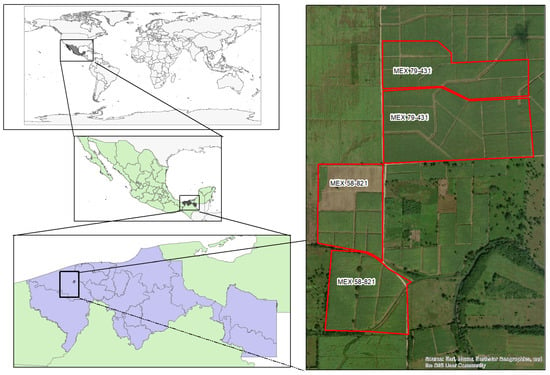
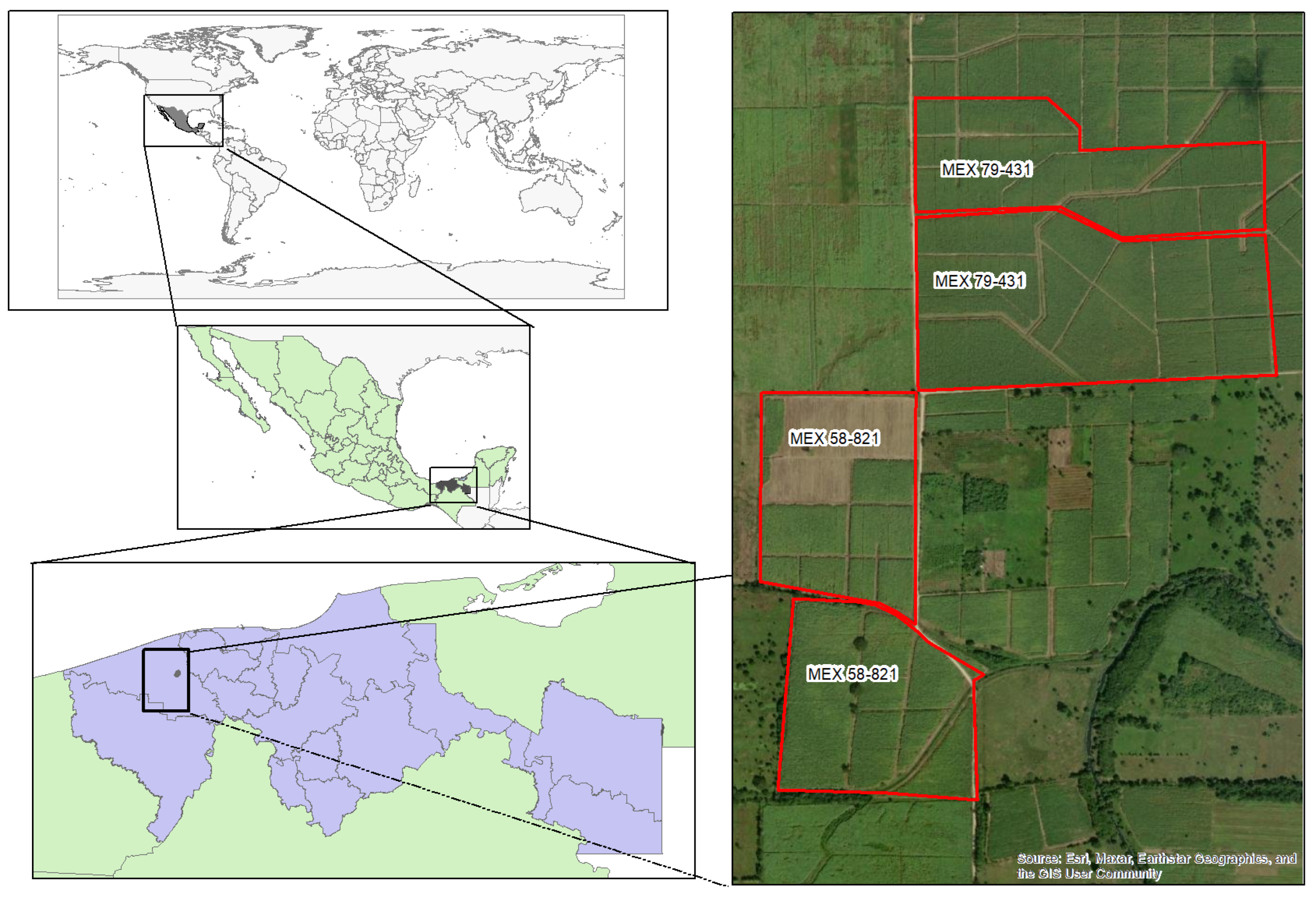
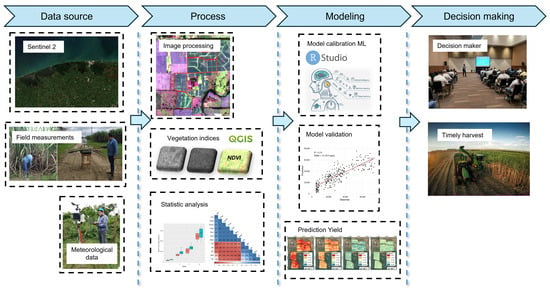
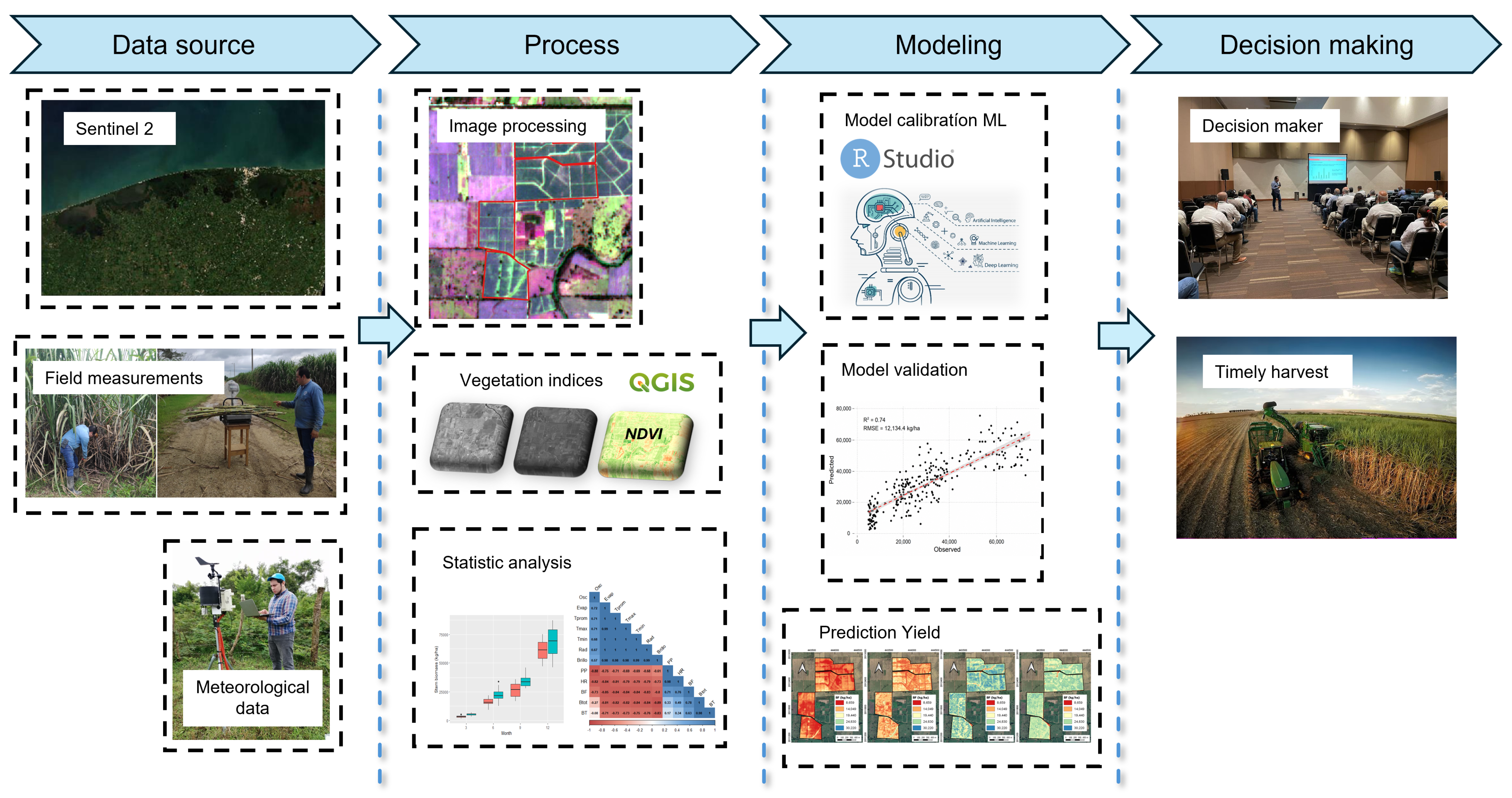
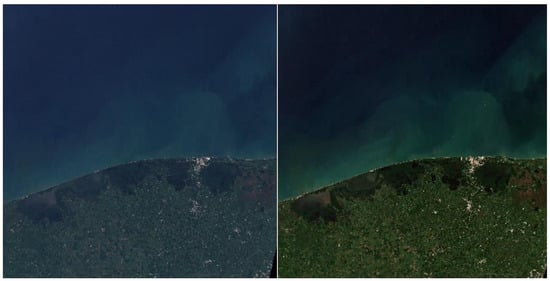
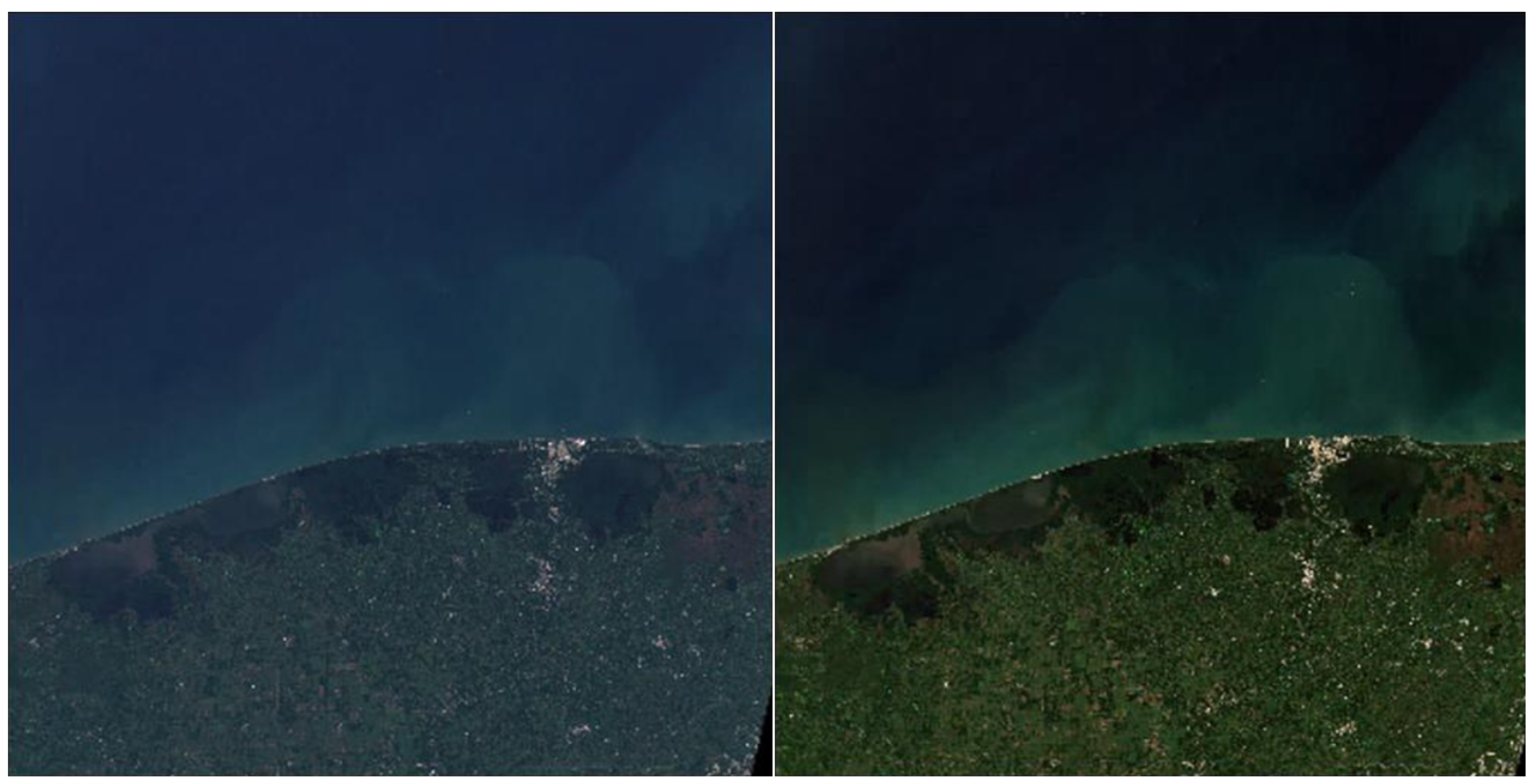
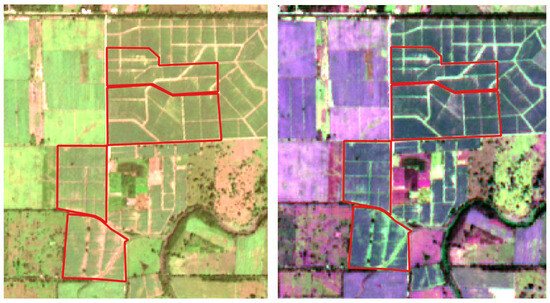
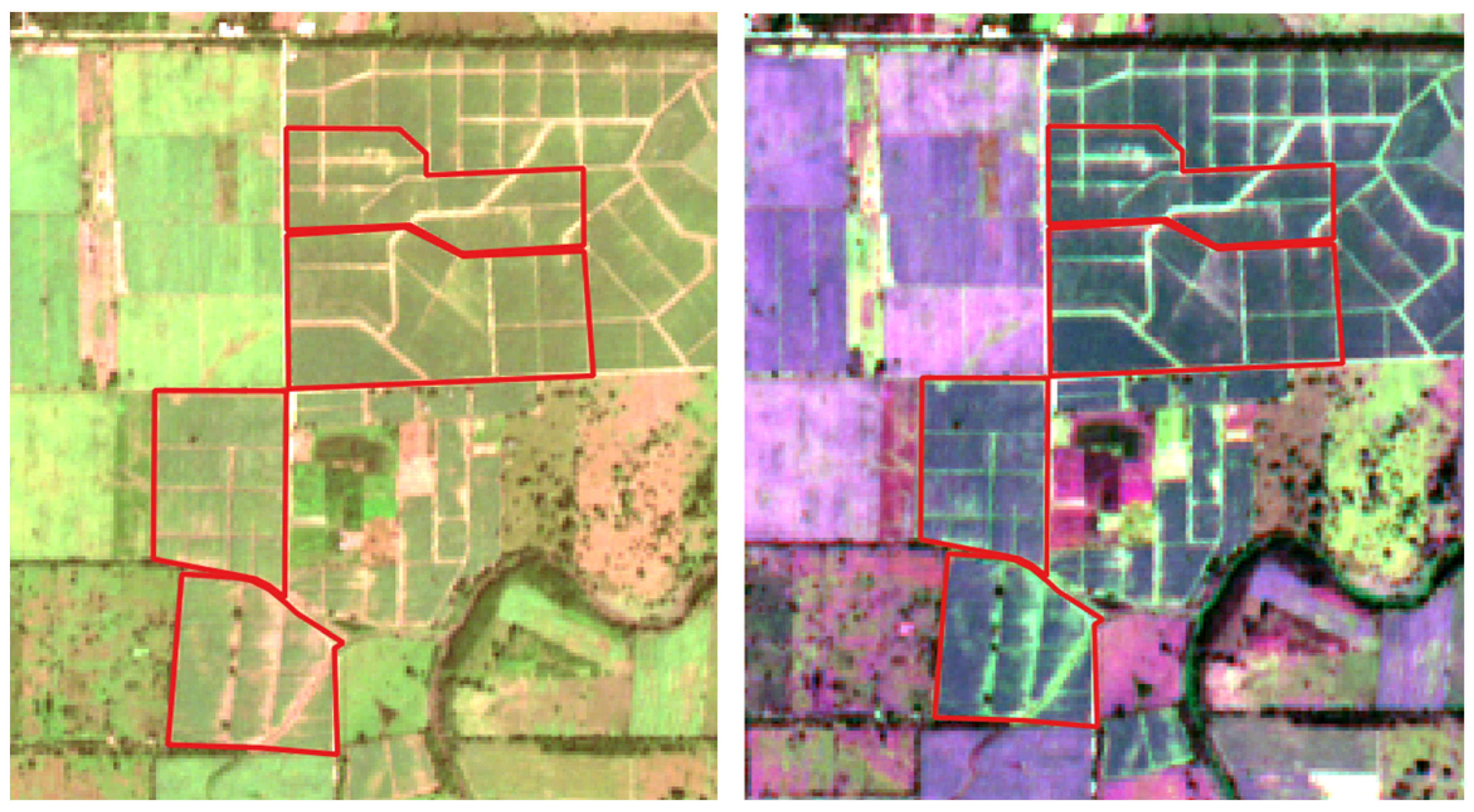
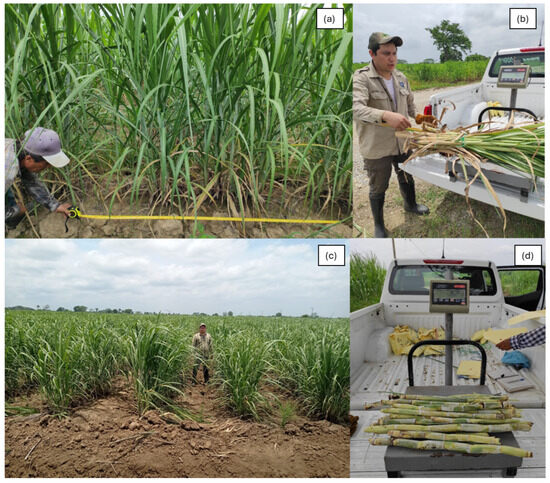
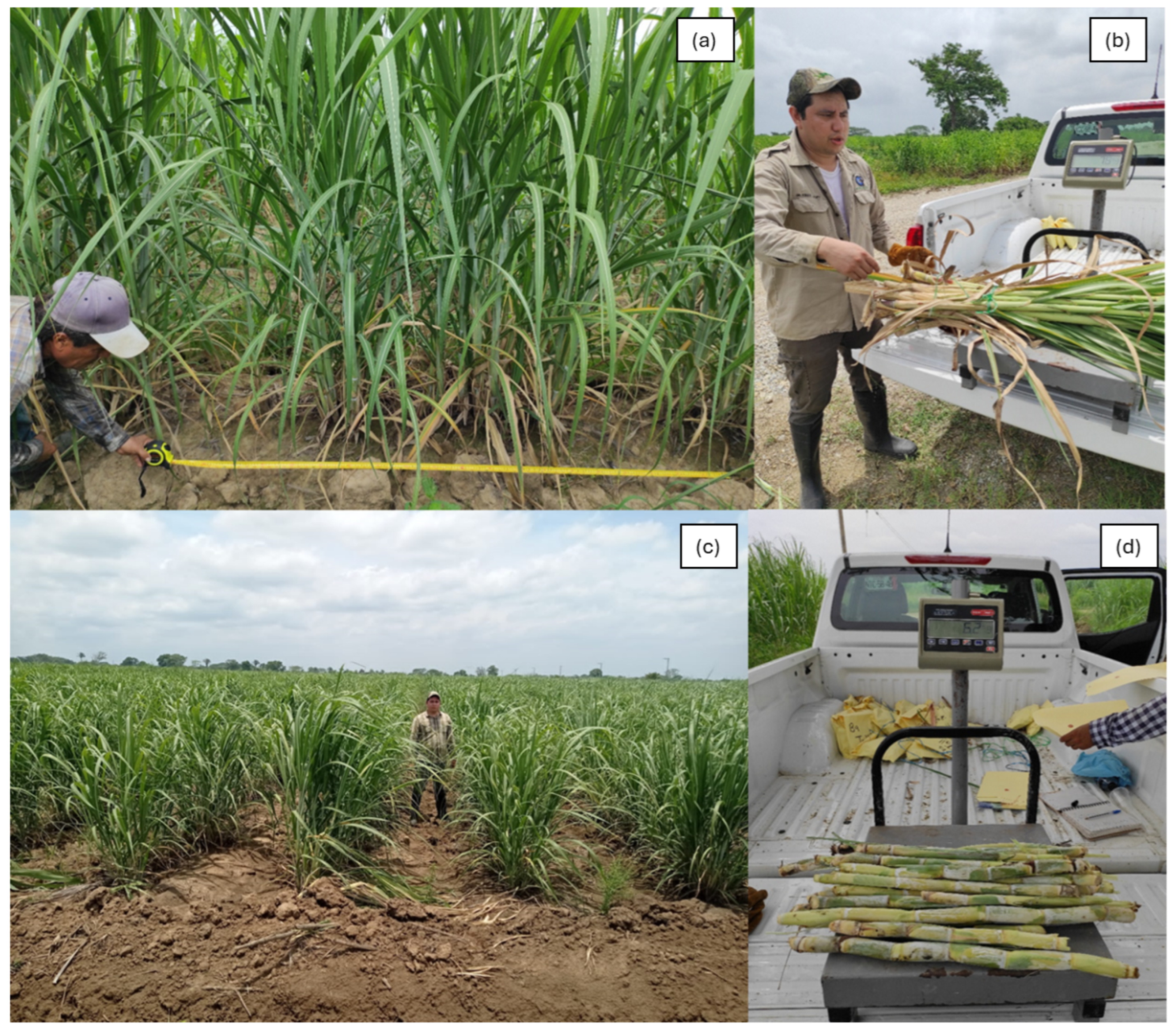
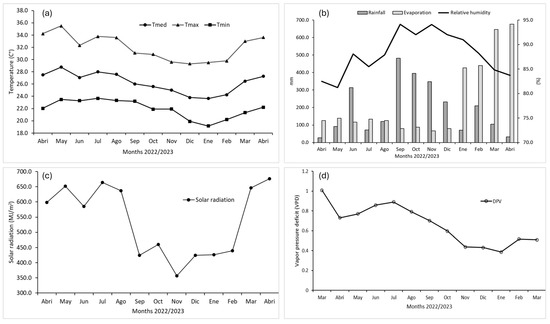
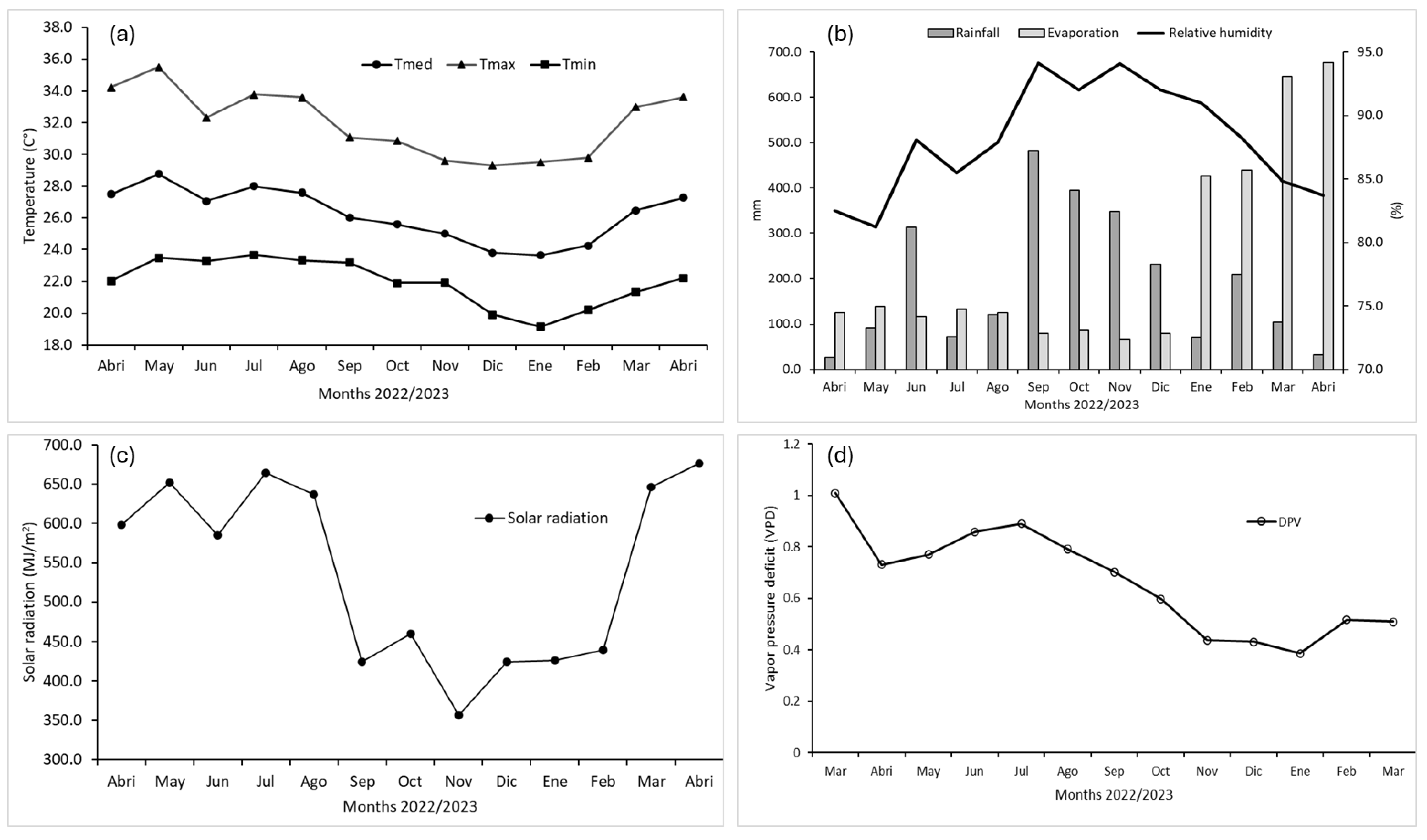
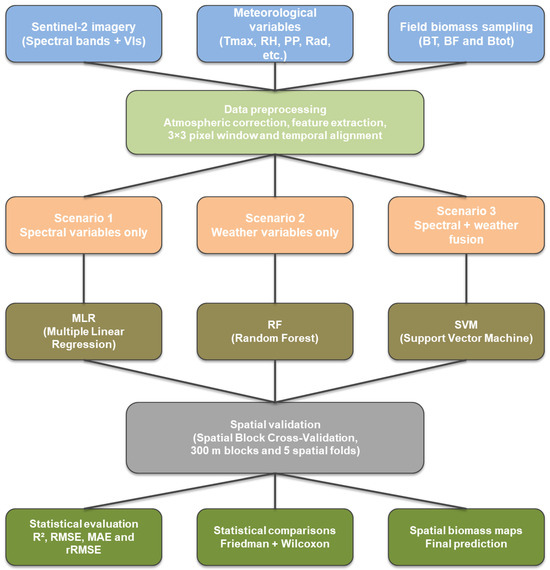
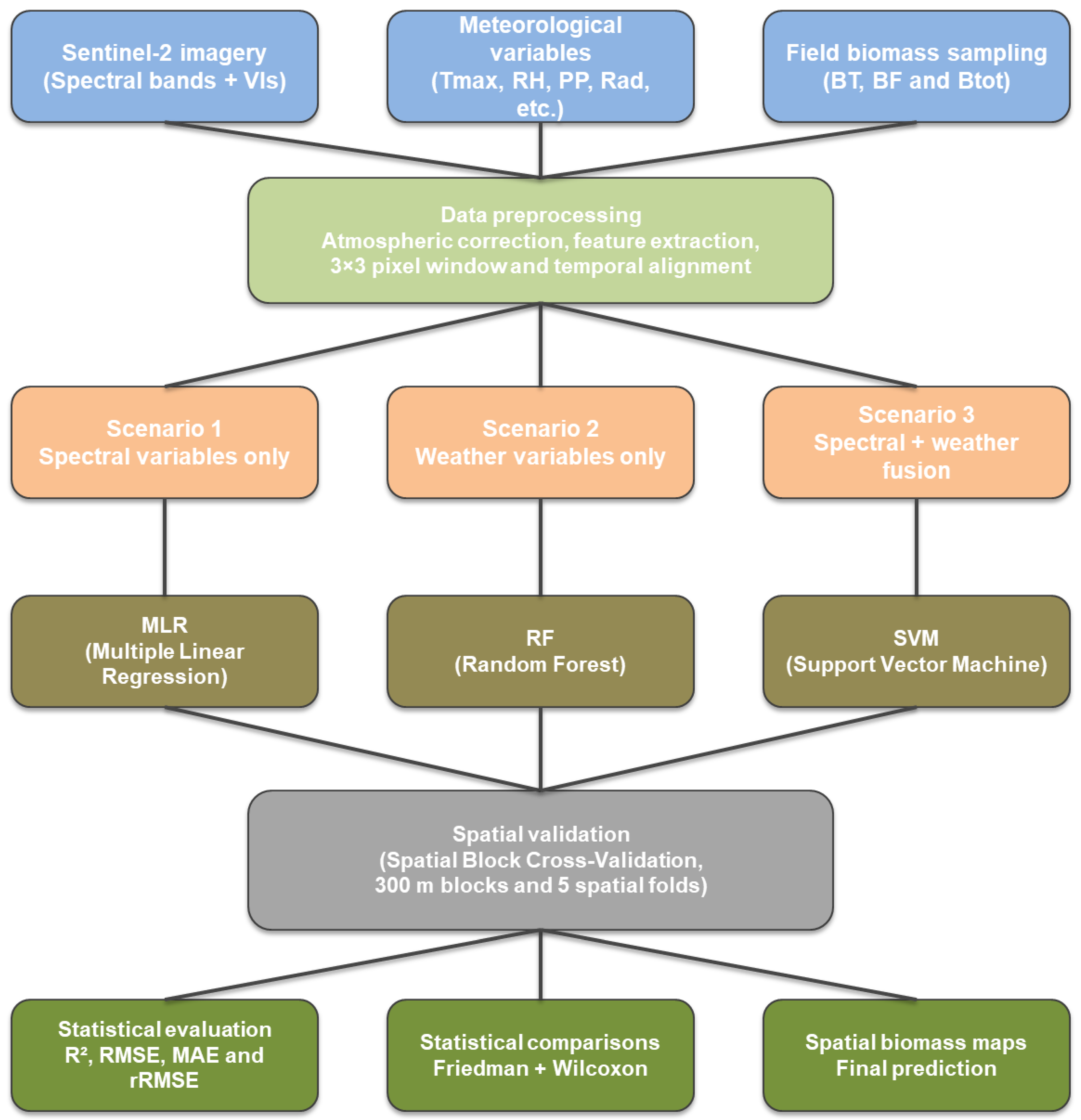
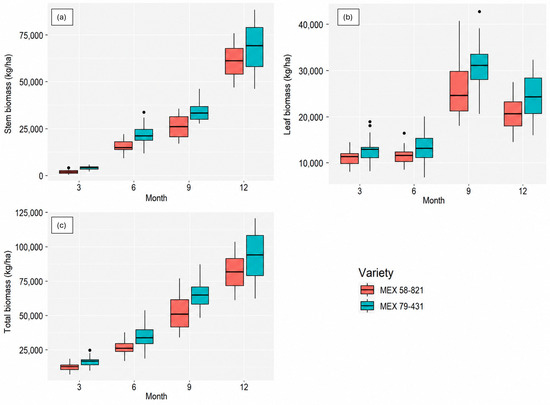
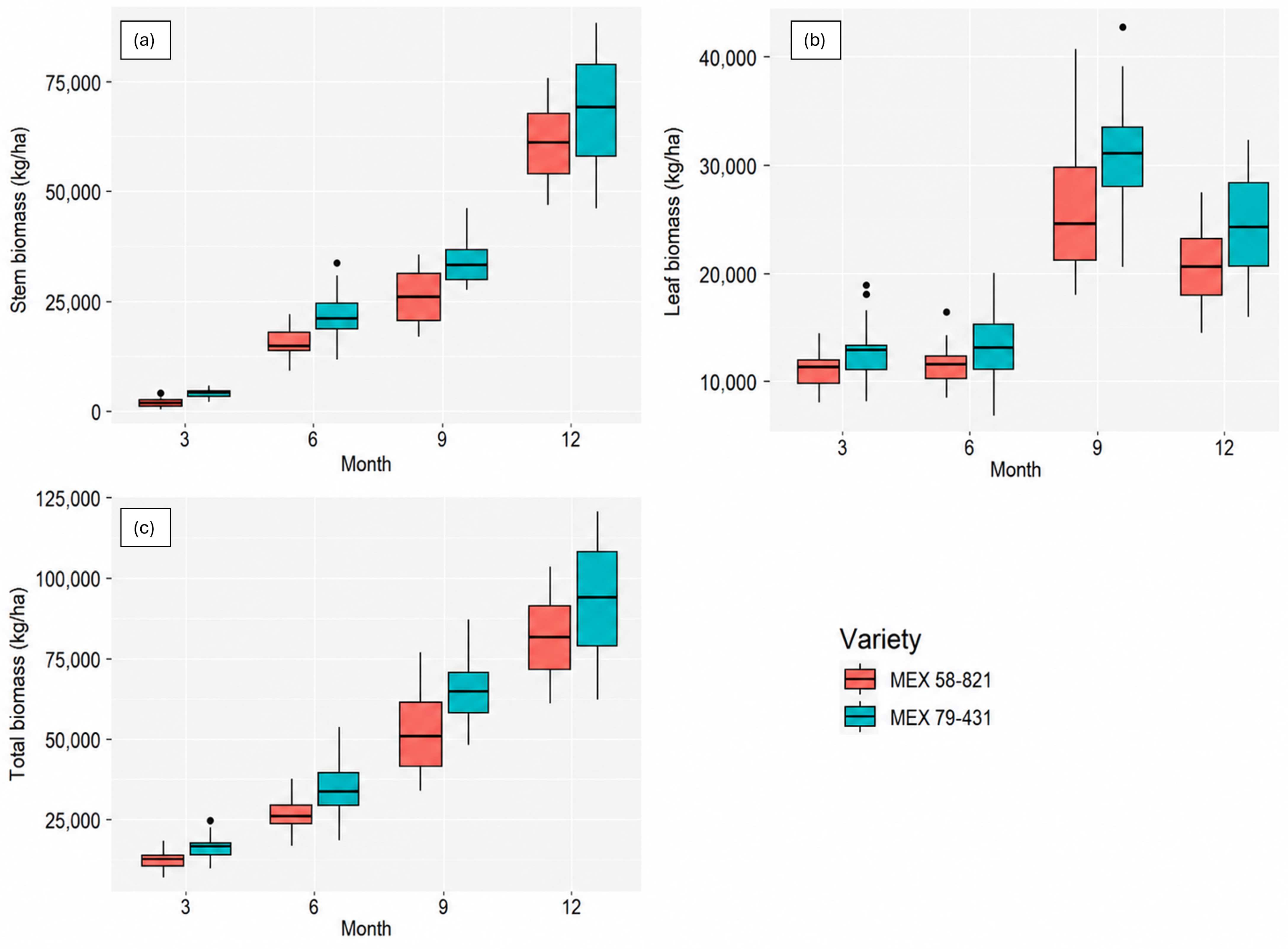
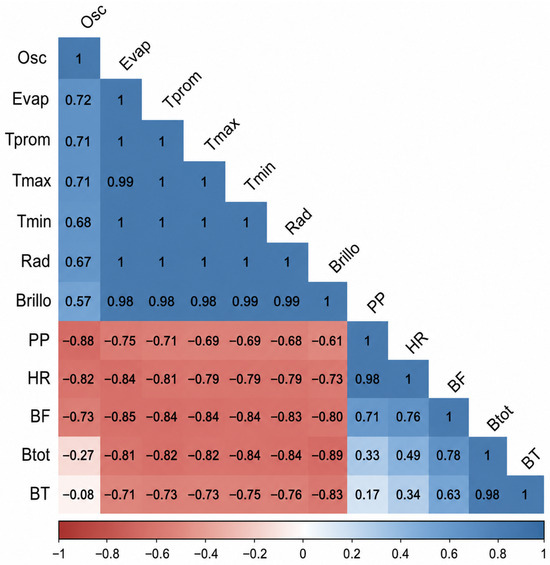
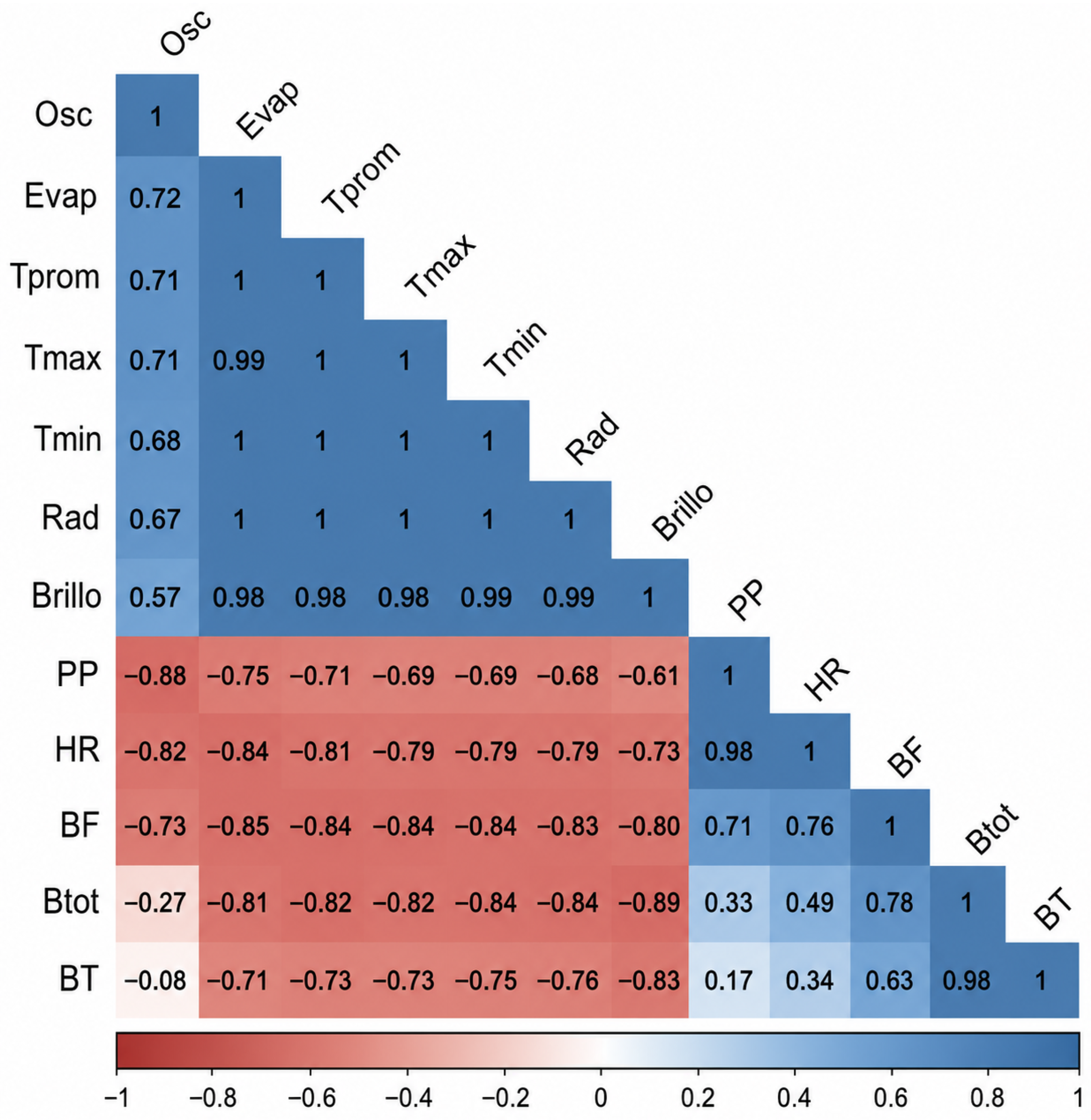
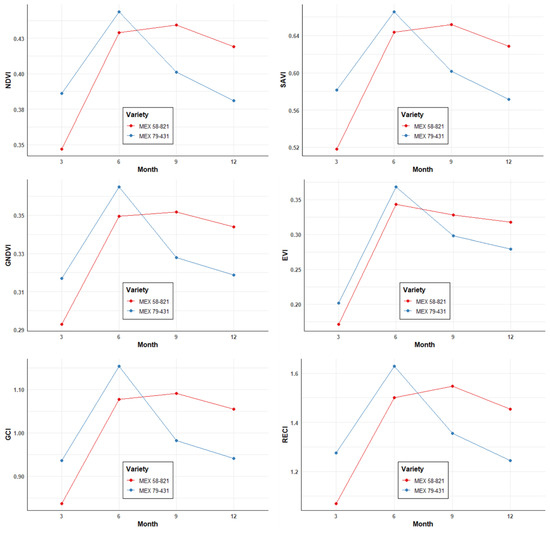
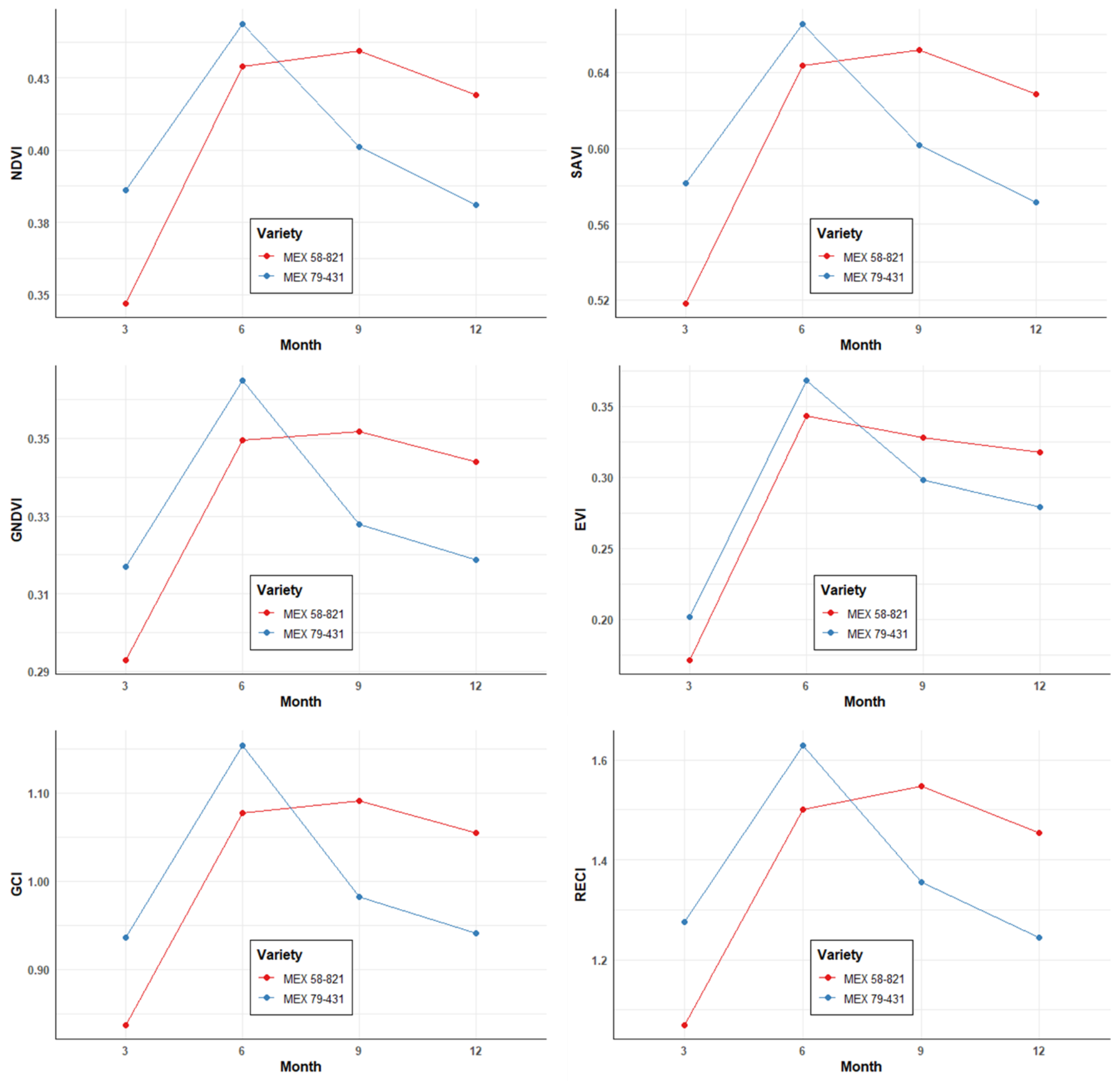
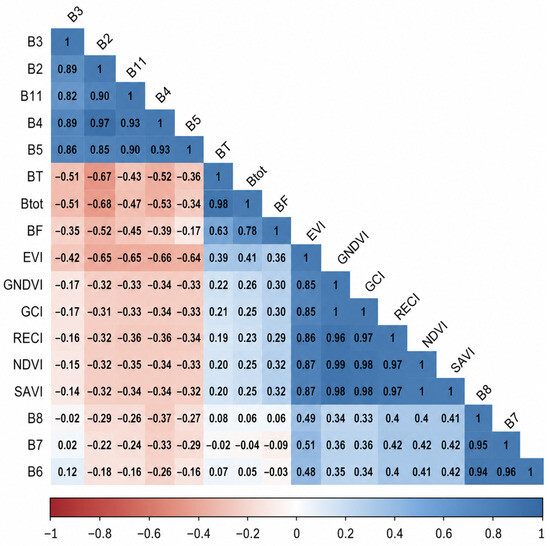
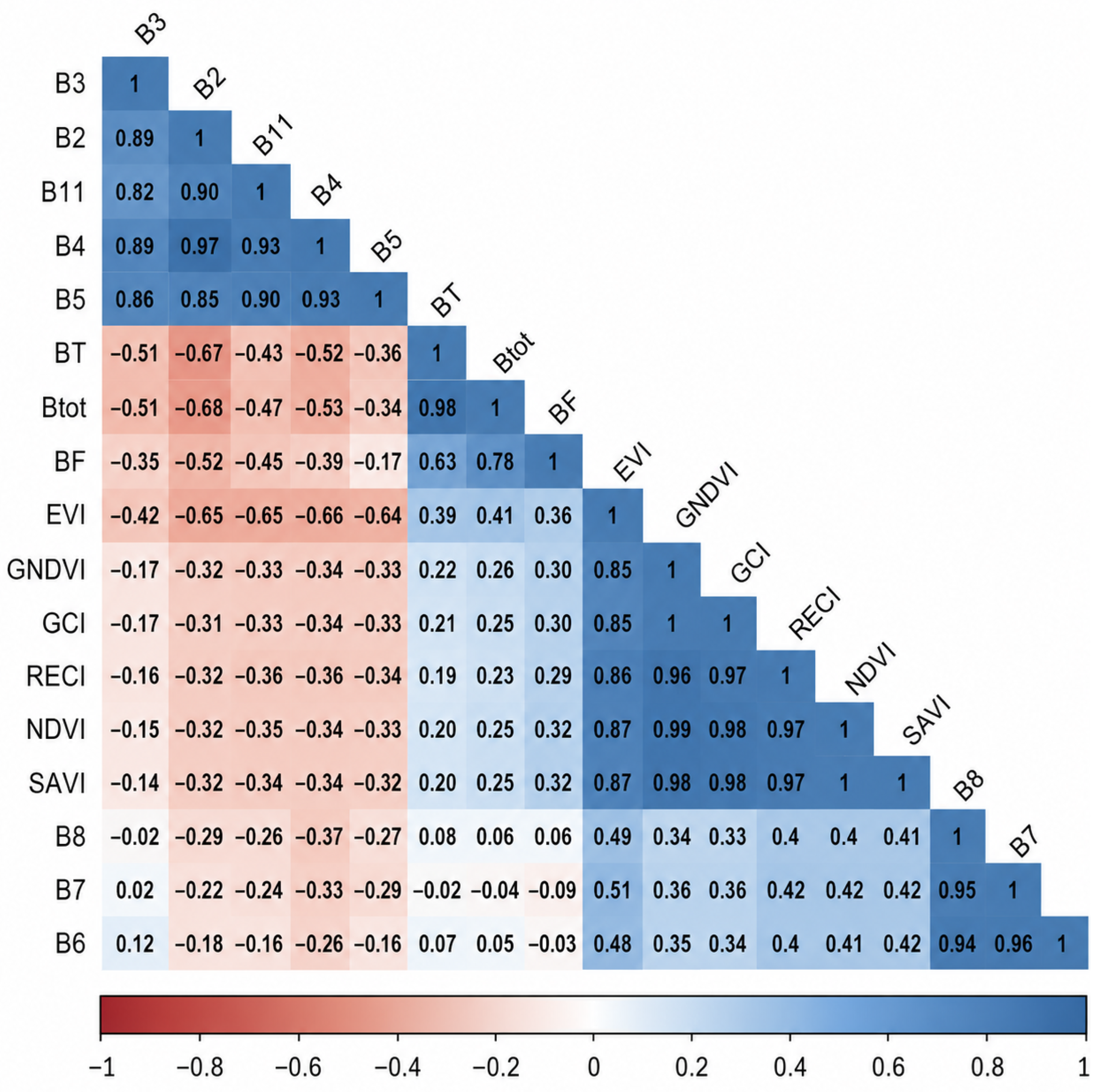
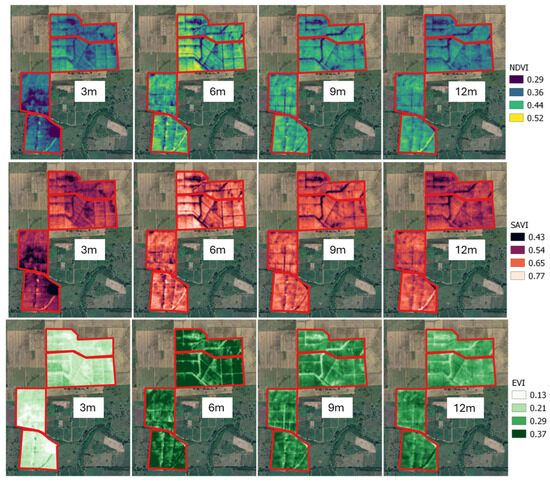
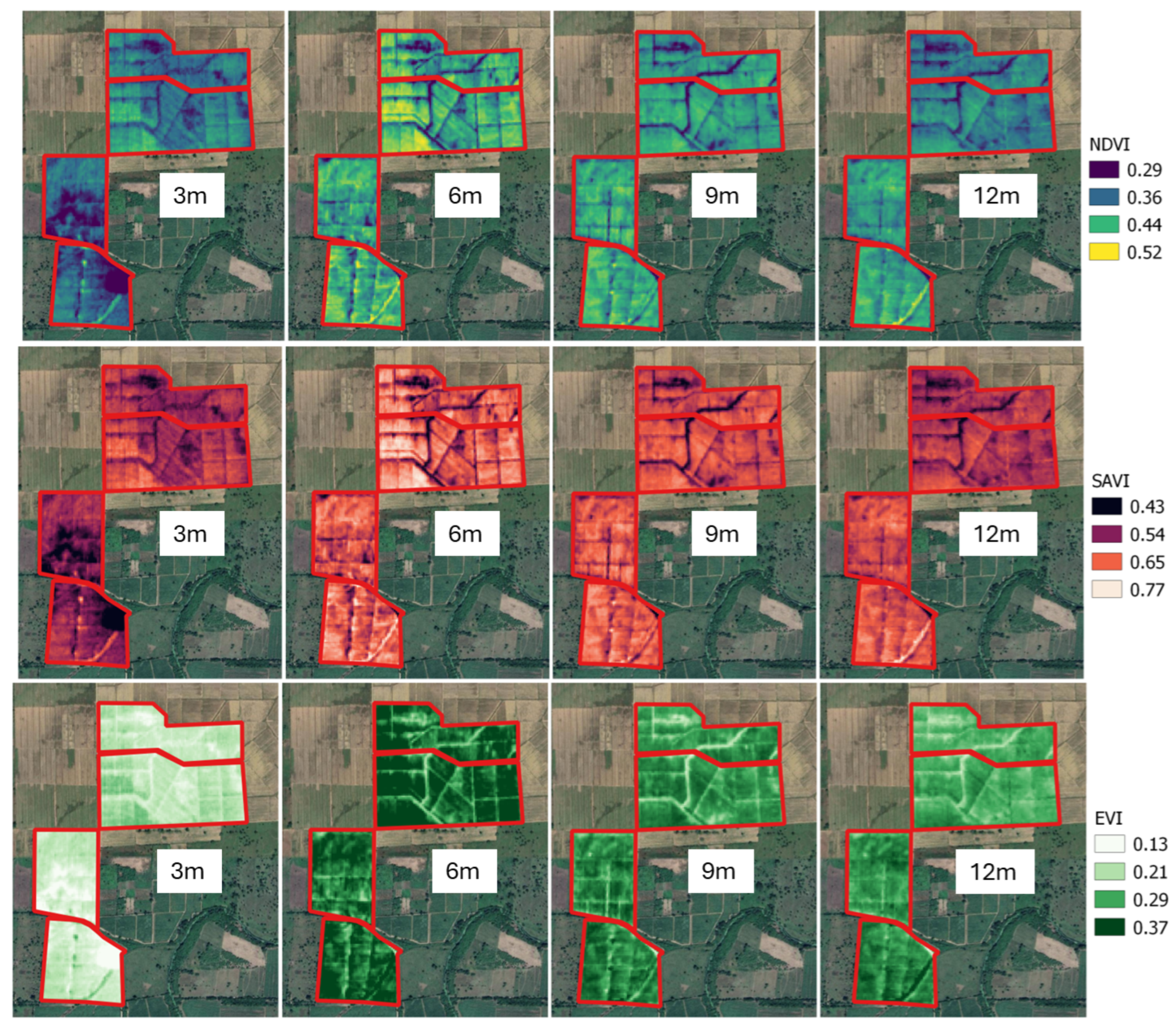
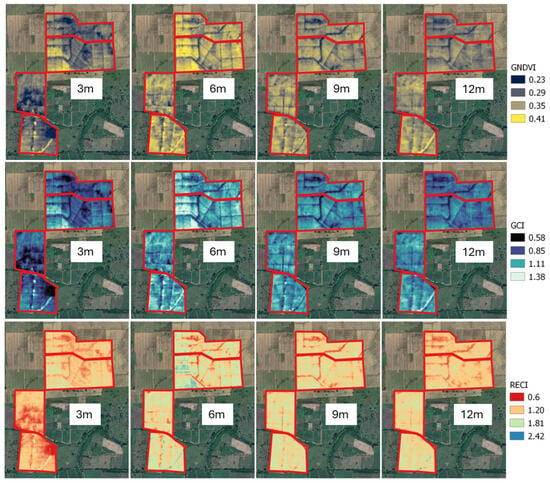
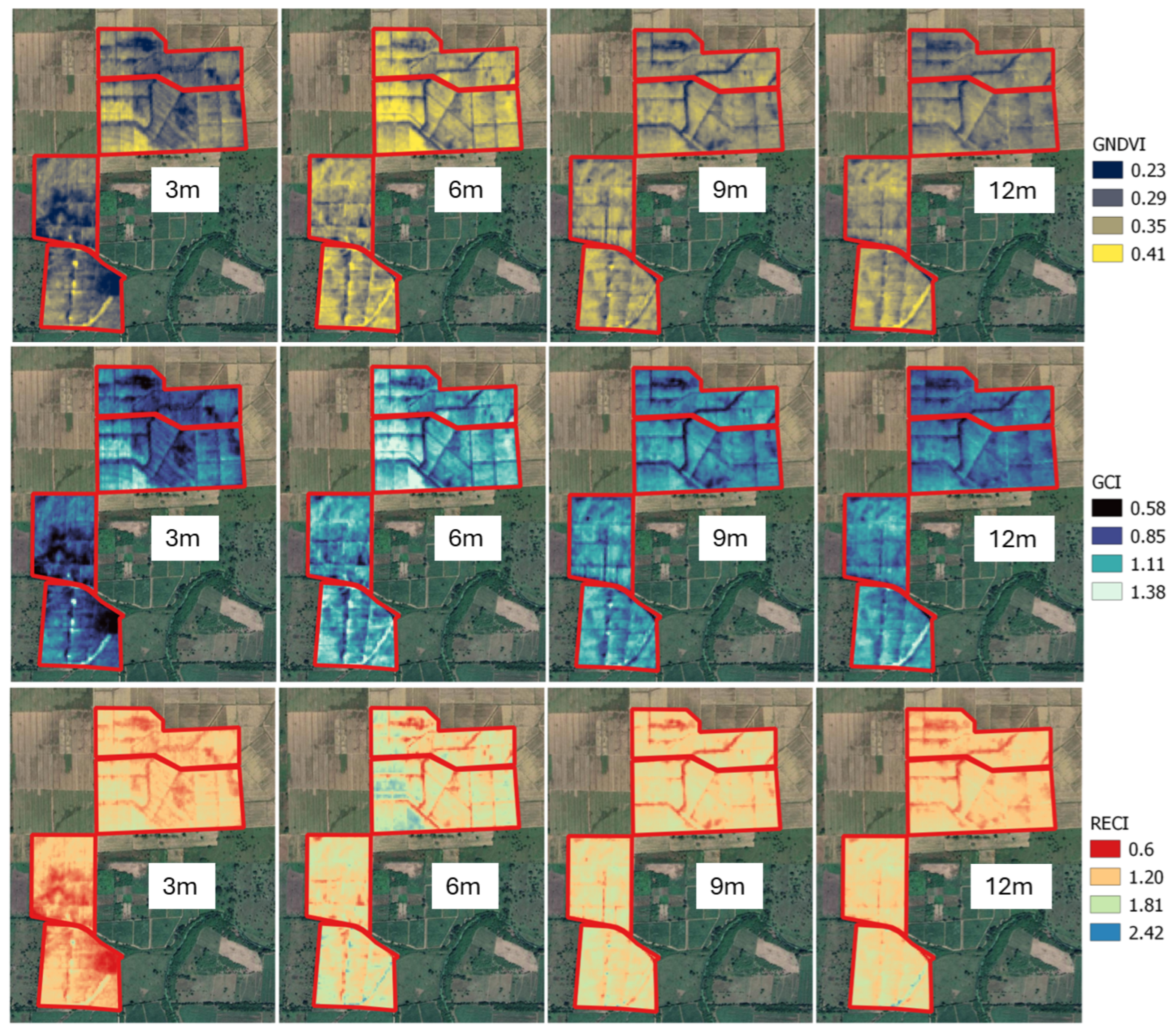
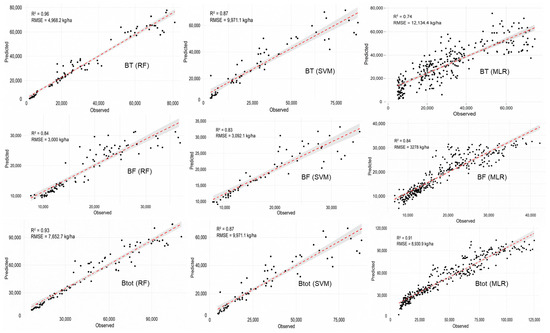
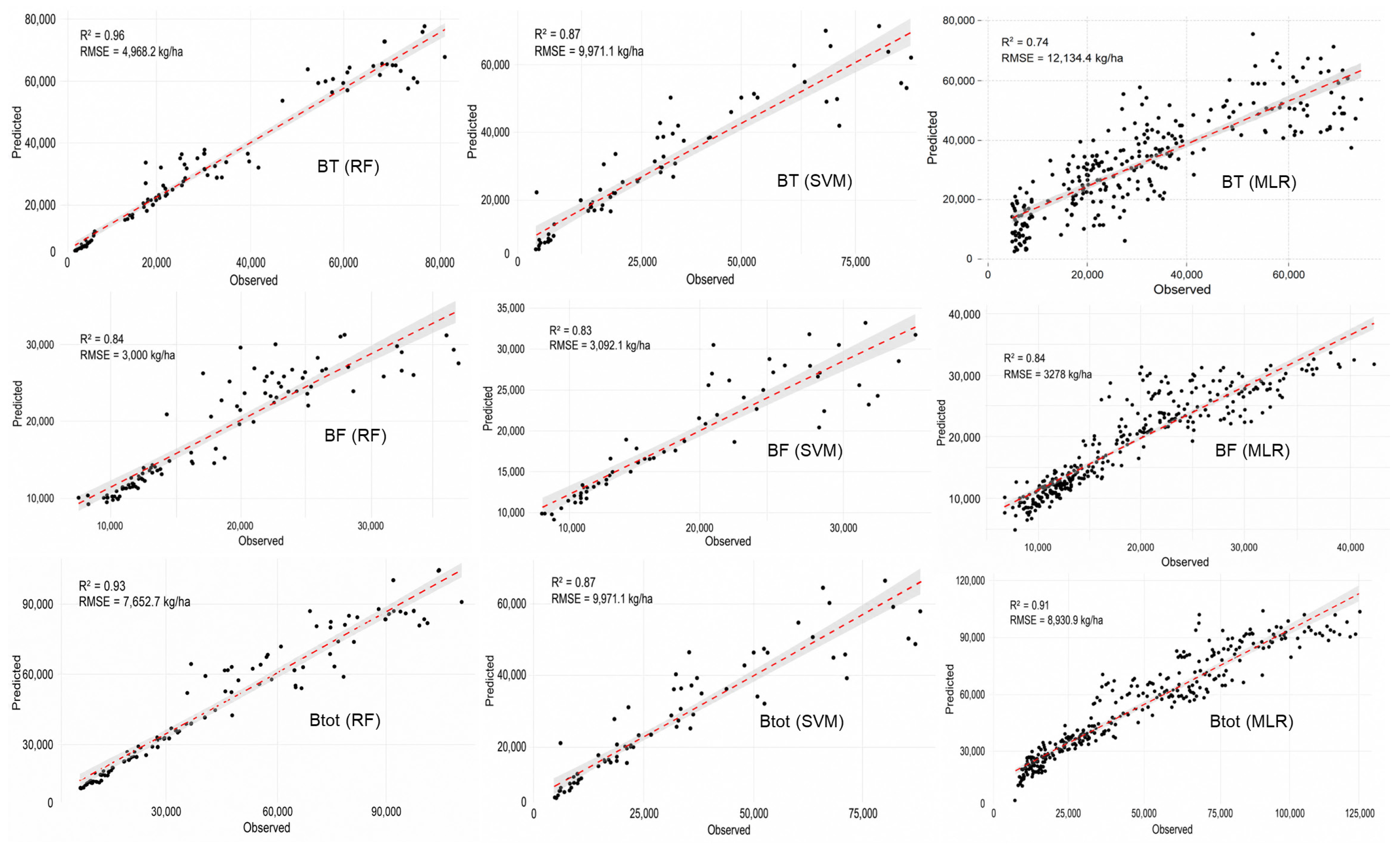
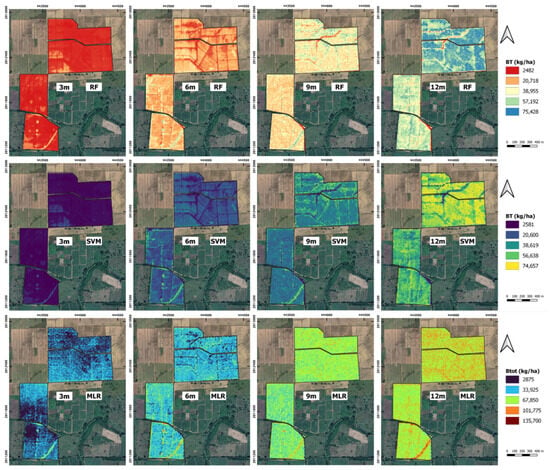
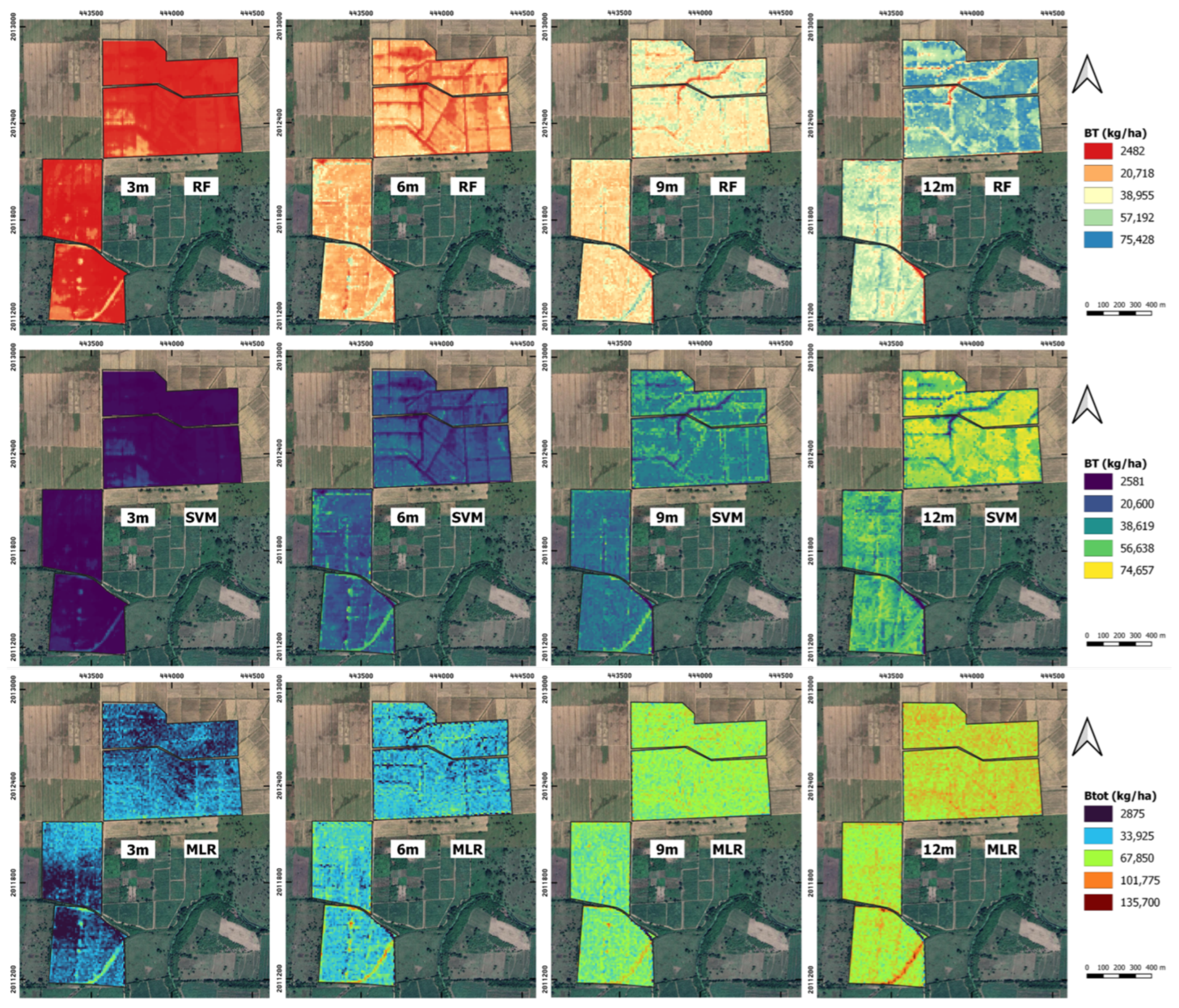
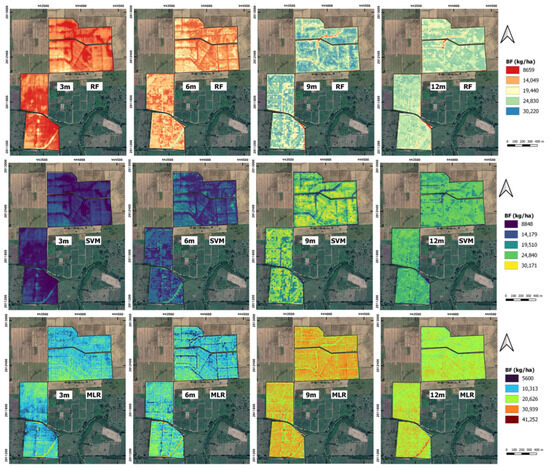
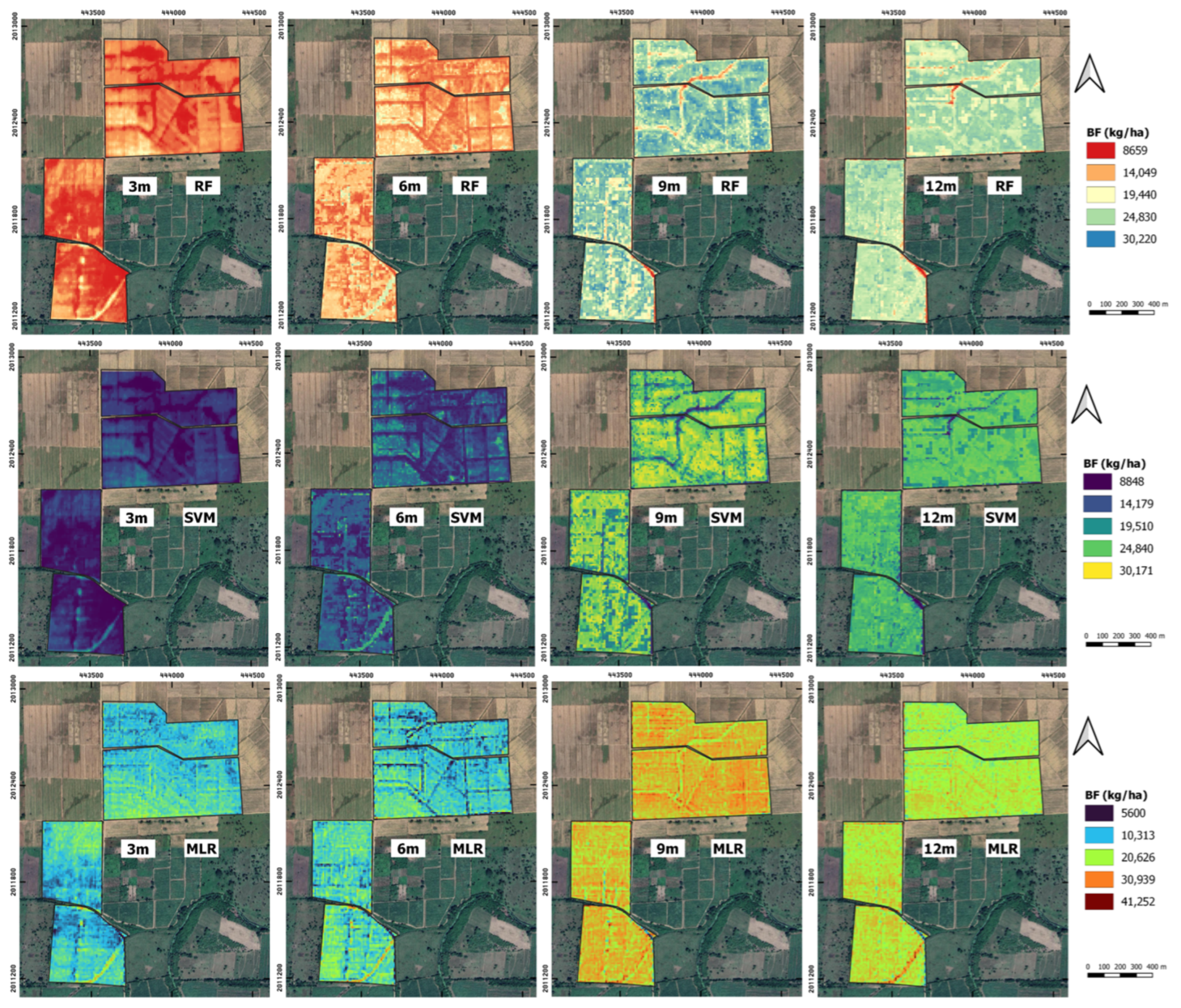
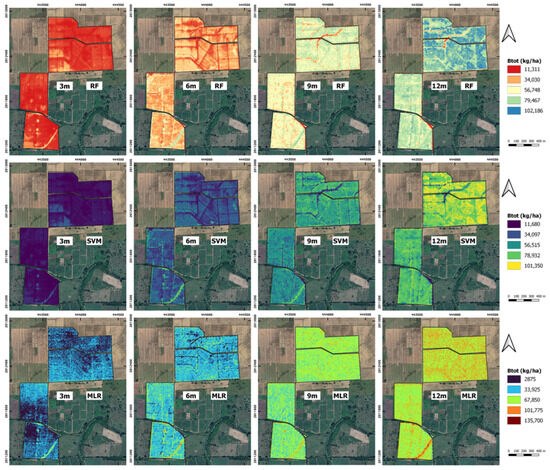
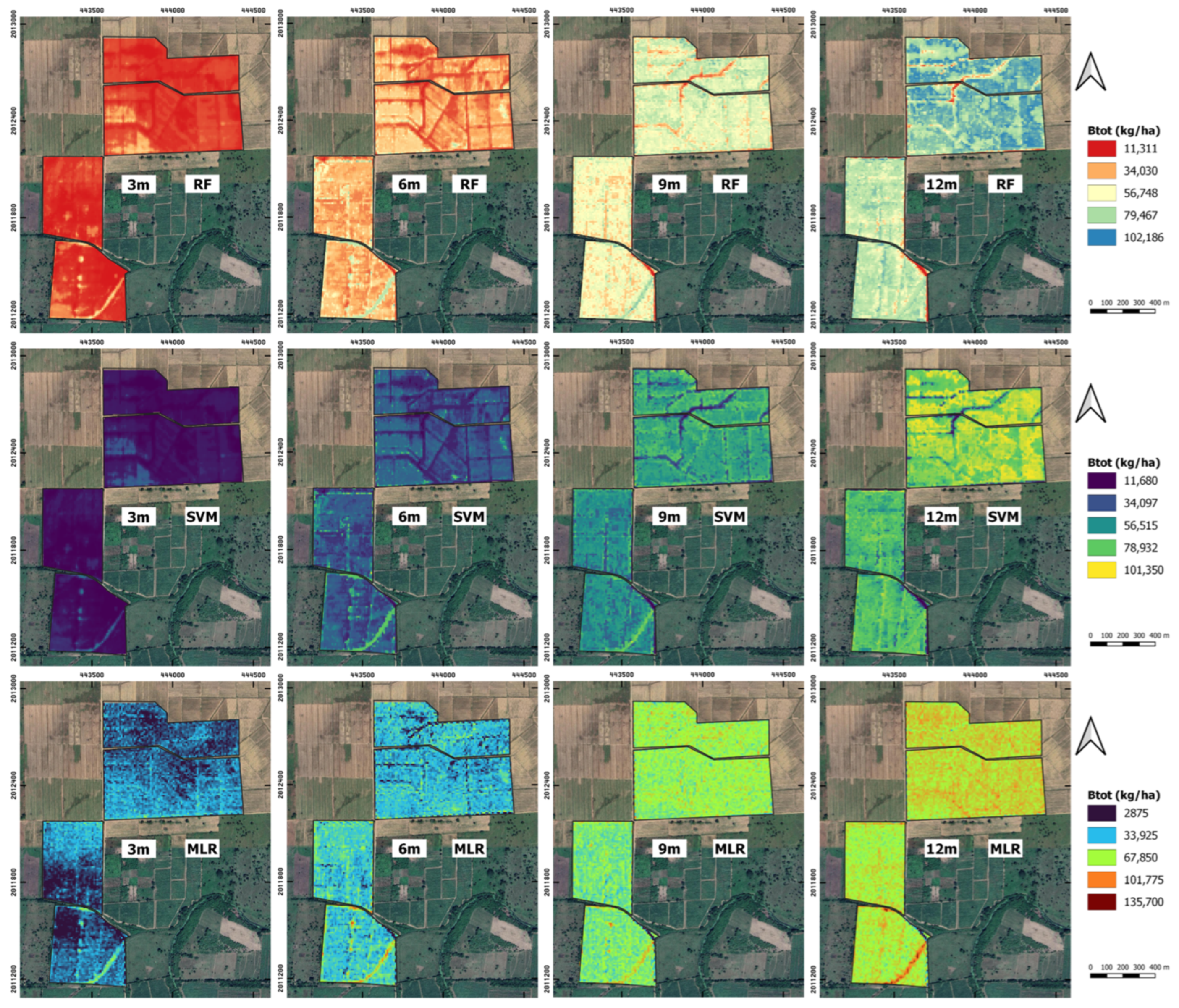
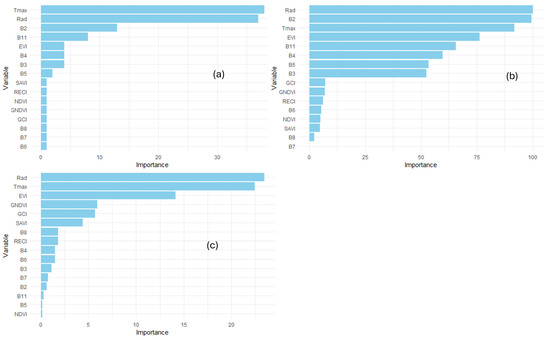
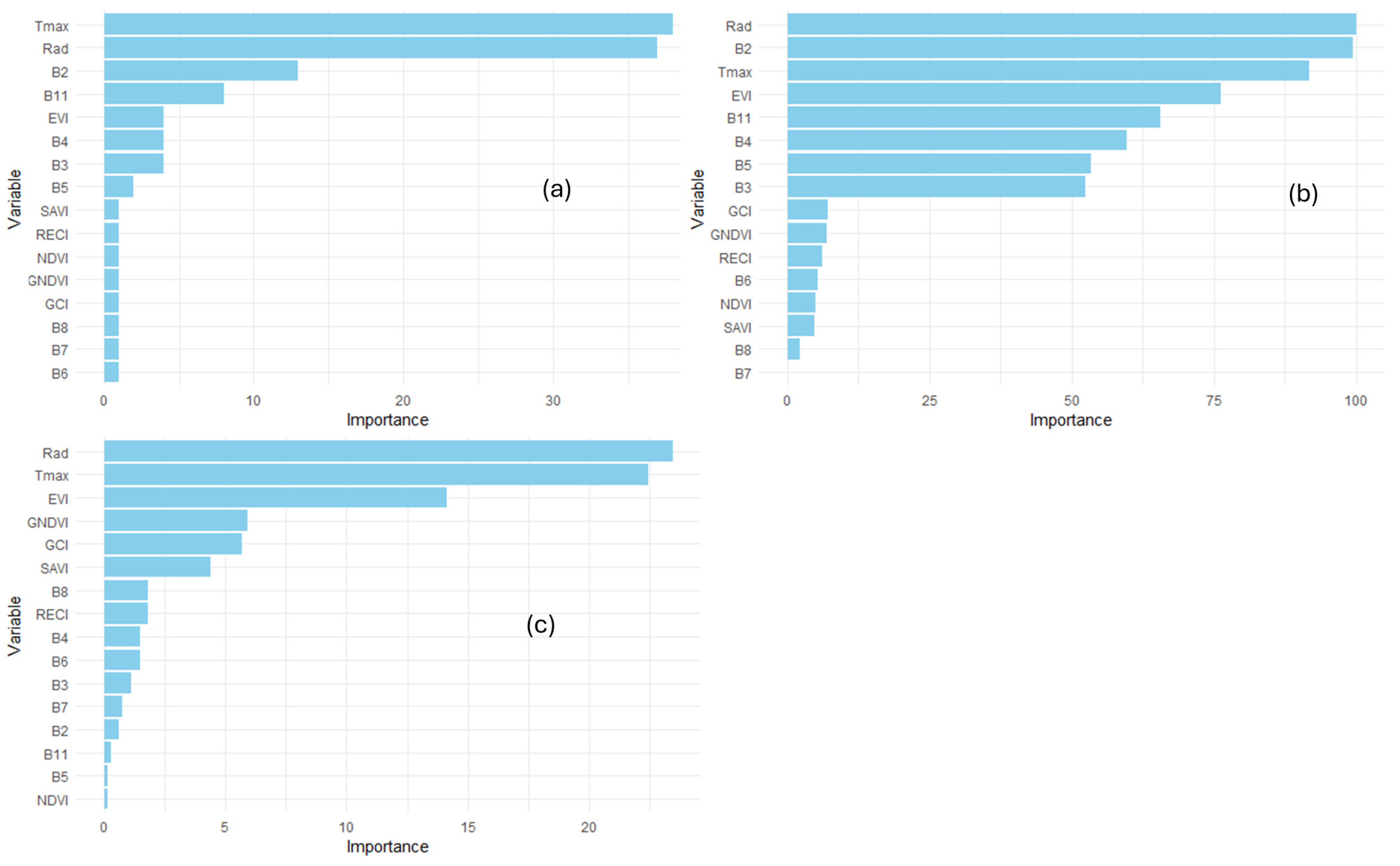
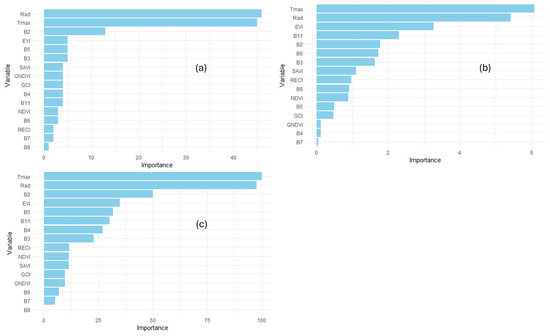
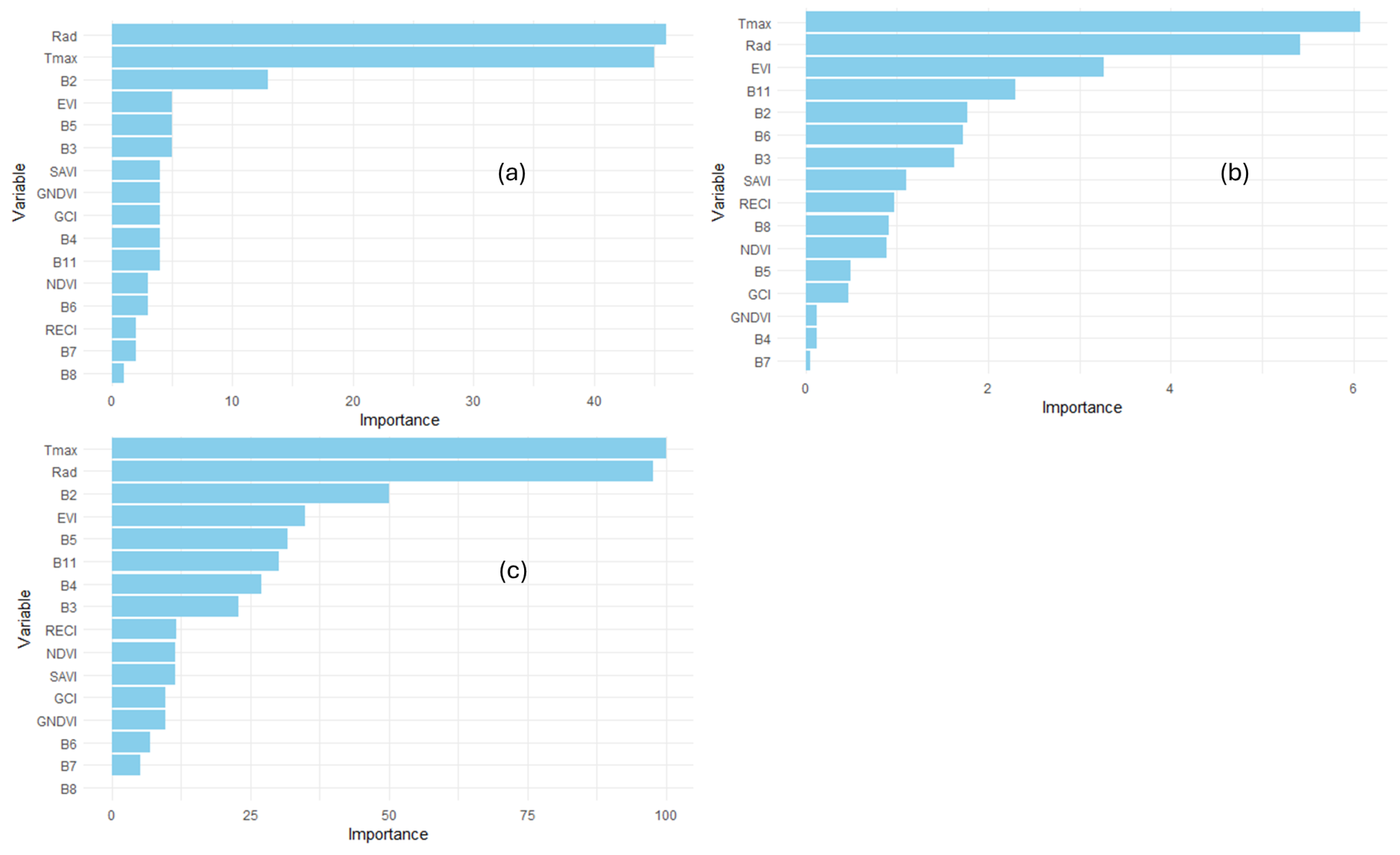
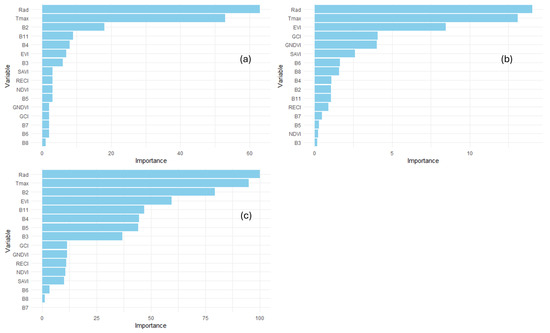
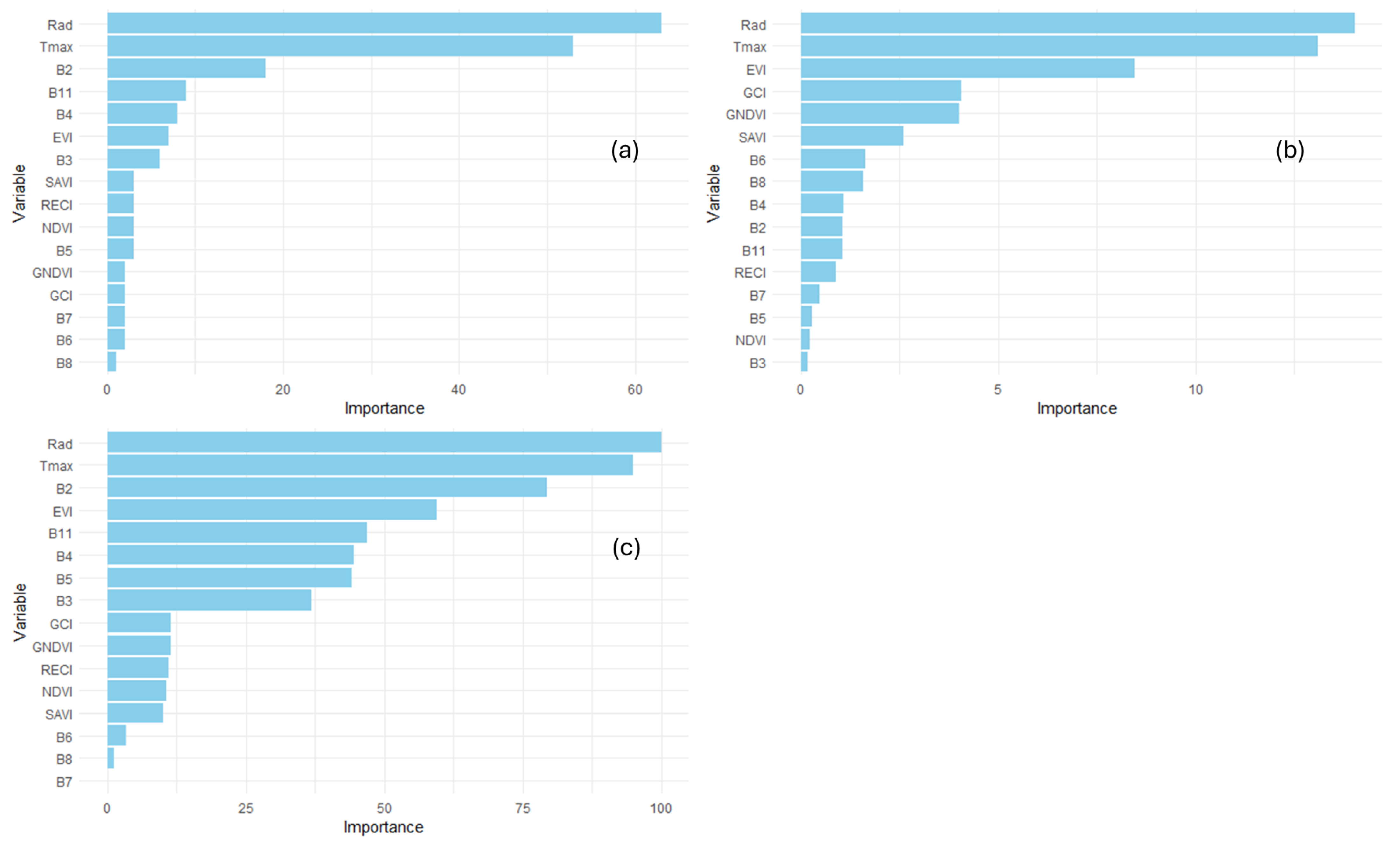
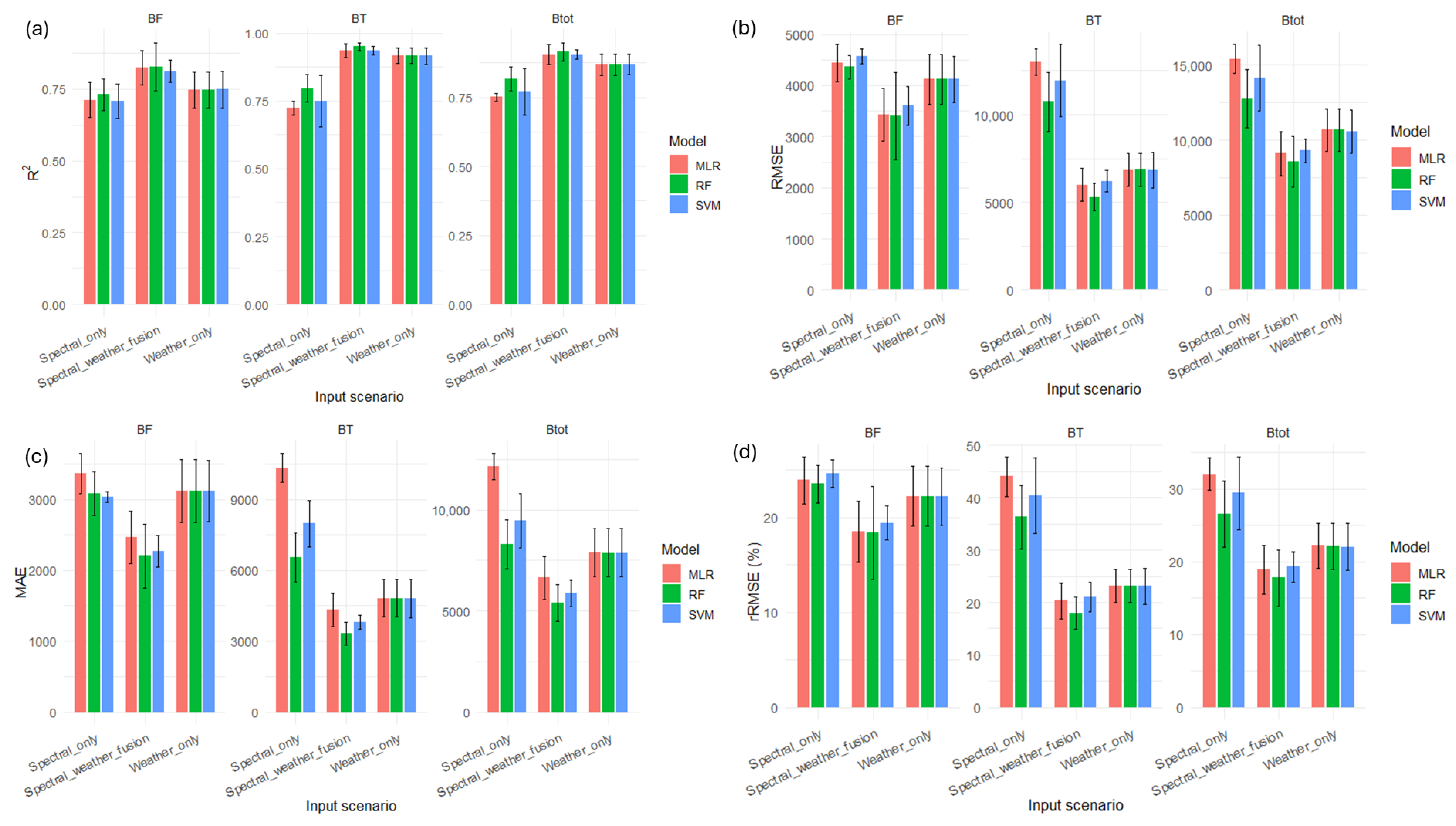
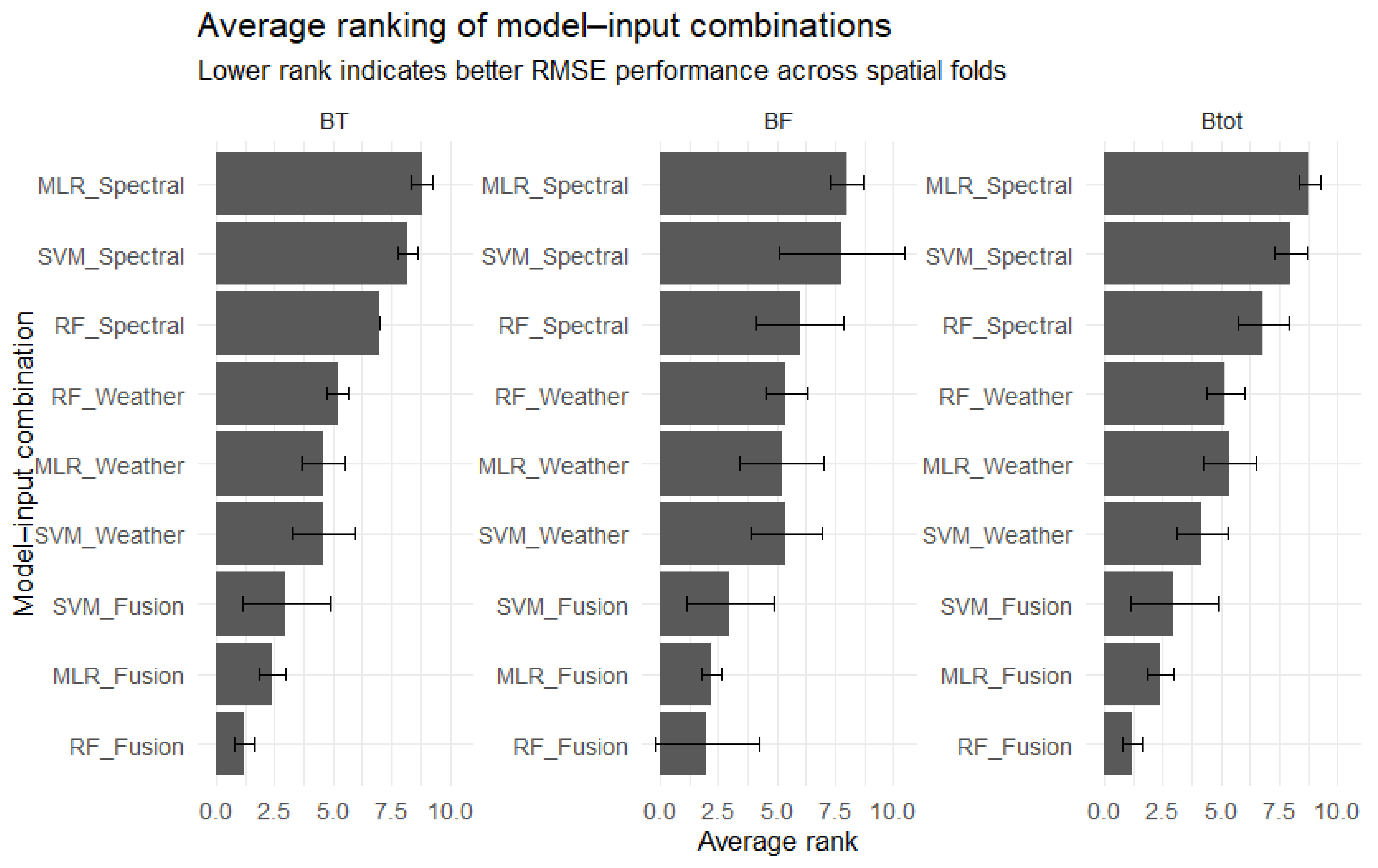
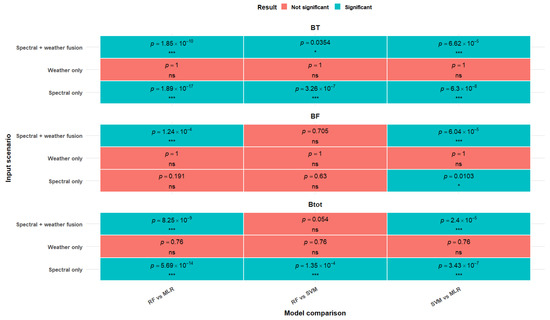
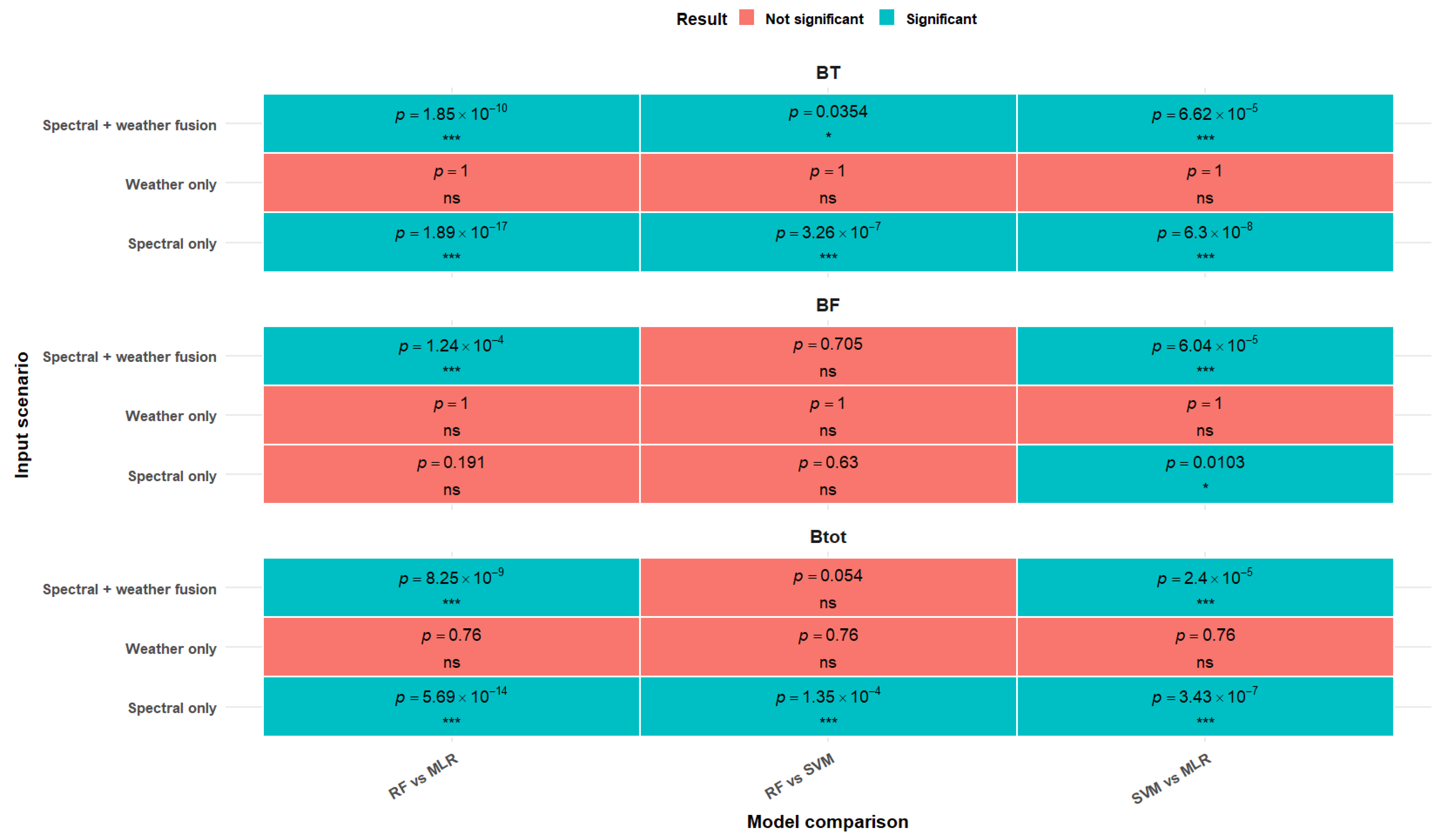
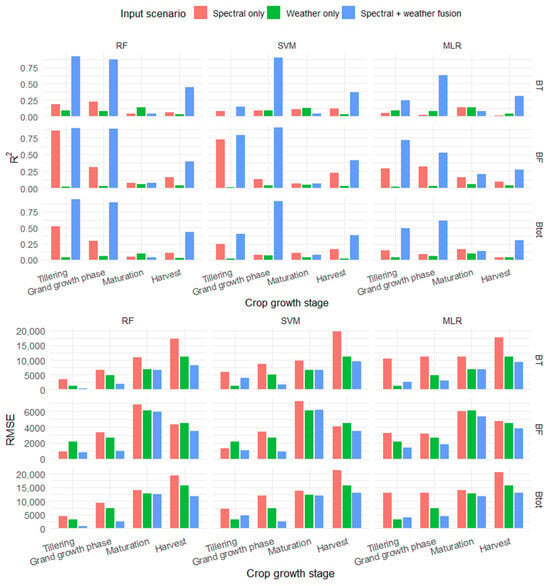
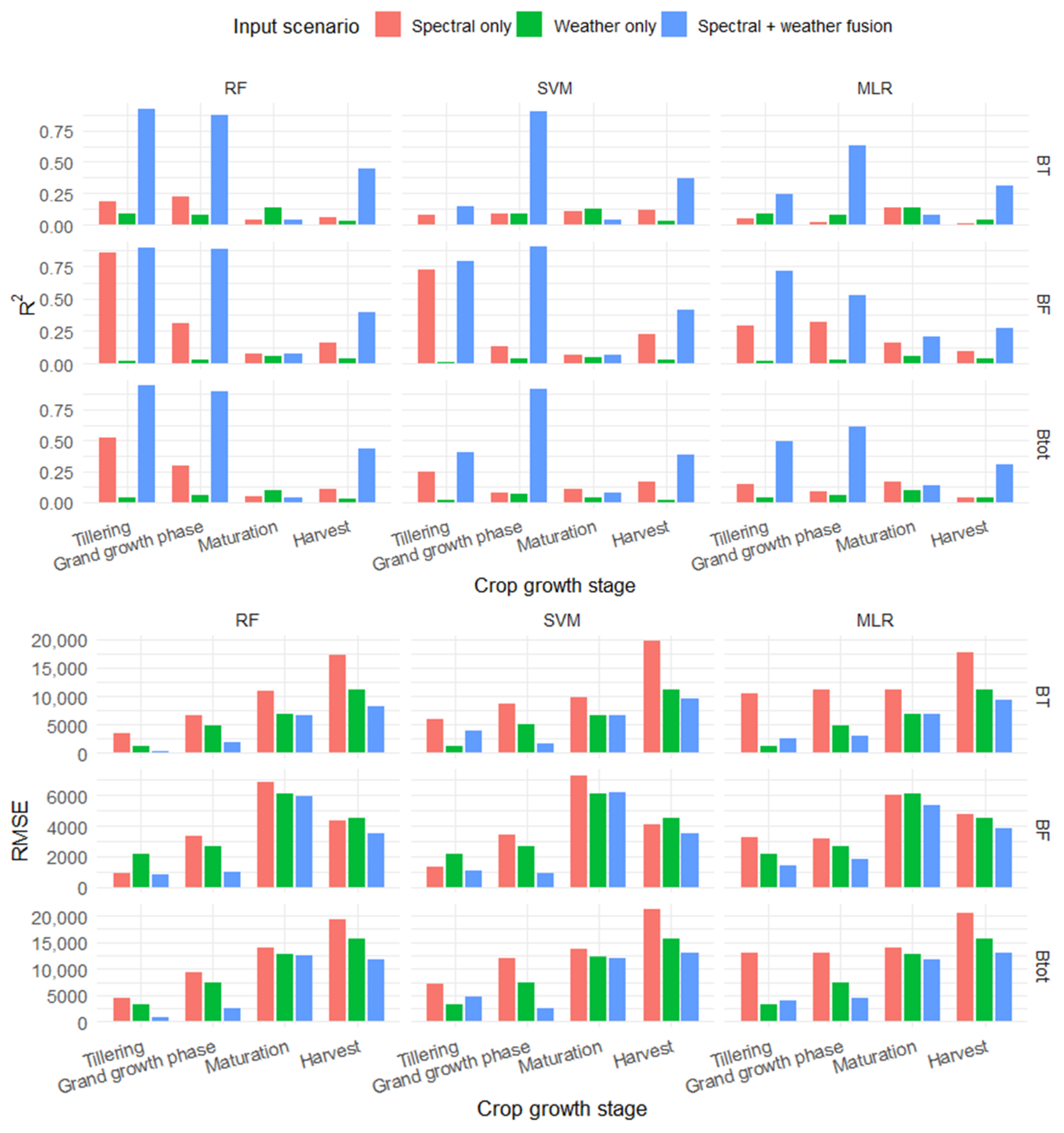
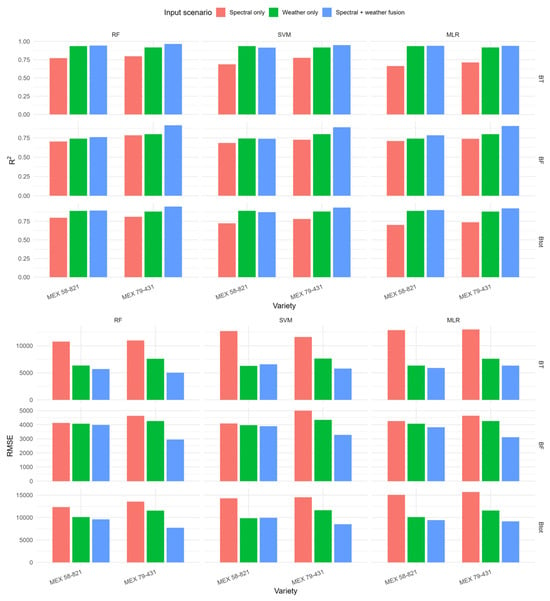
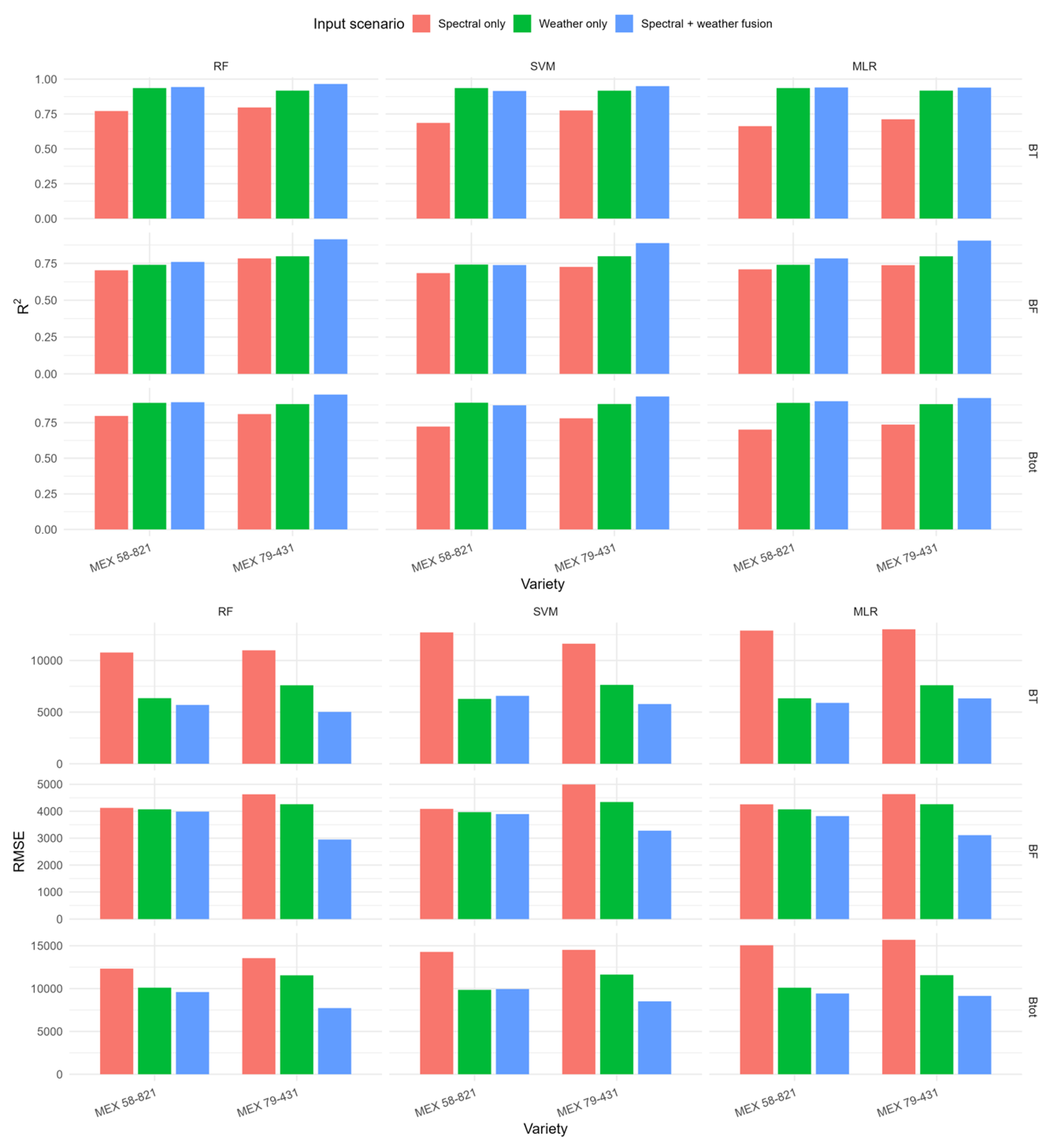

Disclaimer/Publisher’s Note: The statements, opinions and data contained in all publications are solely those of the individual author(s) and contributor(s) and not of MDPI and/or the editor(s). MDPI and/or the editor(s) disclaim responsibility for any injury to people or property resulting from any ideas, methods, instructions or products referred to in the content. |
© 2026 by the authors. Licensee MDPI, Basel, Switzerland. This article is an open access article distributed under the terms and conditions of the Creative Commons Attribution (CC BY) license.