


Abstract
Post-harvest losses of fruits and vegetables are an important bottleneck in food systems of countries around the world, with 30–50% of perishable food items lost between farm and consumer, smallholder farmers in low-and-middle income countries (LMICs) with poor cold chain infrastructures facing a disproportionate burden. Evaporative cooling (EC) is a low-cost and energy-efficient alternative to mechanical refrigeration; however, traditional systems are operated in one position and are dependent on climate, which restricts its performance. The combination of Internet of Things (IoT) sensing, machine learning (ML), and the advanced control theory has made intelligent evaporative cooling systems (IECS) adaptive, data-driven platforms that can regulate the environment in real-time and optimise autonomously. This is a systematic literature review that was carried out according to PRISMA 2020, summarising 94 peer-reviewed articles published in 2018–2025 to map the technological landscape, performance indicators, and research directions of the field of post-harvest fruit and vegetable preservation using IECS. Findings indicate that IECS can considerably lower the storage temperatures, increase the shelf life by 50–200%, and reduce energy consumption by 75–90% compared to traditional refrigeration, and the payback period is as short as 1.2 years. In arid conditions, ML models are accurate in prediction with an R2 of 0.98. The gaps in the research identified are a lack of validation in wet climatic conditions, non-existent standardised Ag-IoT protocols, inadequate Food–Energy–Water (FEW) nexus calculation, and no explainable AI (XAI) interfaces. An example of a conceptual framework of four layers synthesised is proposed to direct next-generation research and implementation of the IECS.
1. Introduction
This is paradoxical because of the abundance and lack of food in the world’s food system. As agricultural production is enough to supply the world with food, it is approximated that 1.3 billion tons of food, and that is about one-third of all food produced to be used by human beings are lost or wasted every year [1]. The most susceptible category is fruits and vegetables, where post-harvest losses have been reported at 30% in developed economies and more than 40% in most parts of sub-Saharan Africa and South Asia, as depicted in Figure 1 [2,3,4].
Figure 1.
Post-harvest losses of commodities in the world [4].
The losses are mostly experienced during the crucial post-harvesting period, when poor handling, storage, and transport facilities expose perishable food to rapid decay through respiration, transpiration, microbial growth, and physical damage [5].
These losses are multidimensional. As an economic factor, they constitute a direct loss of income for smallholder farmers, who constitute the majority of food producers in LMICs [6]. On nutritional grounds, they deny populations of essential vitamins and minerals, worsening the situation of micronutrient deficiencies [7]. They represent a monumental environmental waste, as the water, land, energy, and labour used to create them go to waste, and the rotting of discarded food in landfills produces a lot of methane, a powerful greenhouse gas [8]. Here, the problem of minimising post-harvest loss is not only logistical but also strategic to achieving the United Nations Sustainable Development Goals (SDGs), in particular SDG 2 (Zero Hunger) and SDG 12 (Responsible Consumption and Production) [9].
The gold standard for preserving post-harvest in industrialised environments is conventional cold chain solutions, with vapour-compression refrigeration as their cornerstone. Nevertheless, their high capital and operating costs, reliance on a stable electricity supply, and reliance on environmentally damaging refrigerants (e.g., HFCs) make them impractical and unsustainable for the vast majority of small-scale farmers in off-grid or semi-grid rural regions [10,11]. The economic and technological gap has created a motivation to find an alternative to passive and active cooling methods, and evaporative cooling (EC) has emerged as a contender.
The EC principle is based on elementary thermodynamics; since the liquid water evaporates, it takes over the latent heat of the surrounding air, which causes a drop in the dry-bulb temperature of the air, as shown in Figure 2. Since all that is needed to do this process is water and a supply of sufficiently dry ambient air, the process is not only energy-efficient but also cheap to run [12].
Figure 2.
Schematic diagram of evaporative cooling technologies.
Passive EC systems have been in operation since ancient times, such as the famous pot-in-pot cooler (zeer pot), which extends the shelf life of some produce by several days [13]. They are, however, completely passive and uncontrolled in terms of performance, susceptible to the humidity of the surrounding air, and have low cooling capacity.
More uniform and powerful cooling is achieved with active EC systems, which include fans to force air through a wetted material (e.g., cellulose pads). They can attain 10–15 °C in arid weather, greatly retarding the metabolic and microbial activities that lead to spoilage [14]. Although these are the benefits, the basic on/off switches or fixed-speed fans are used to operate traditional active EC systems, resulting in inefficiencies. They are unable to adjust to varying ambient conditions, the individual respiration rates of various types of produce, or the dynamic rate of water evaporation of the cooling media. This fixed process leads to over-cooling (a waste of water and power) or under-cooling (poor maintenance of the produce) [15].
Combining Internet of Things (IoT) sensing, machine learning (ML), and advanced control theory since 2018 has allowed the creation of a qualitatively new type of system, an intelligent evaporative cooling system (IECS). Through the combination of real-time sensor readings, predictive microclimate modelling, and adaptive control algorithms; model predictive control (MPC) and reinforcement learning (RL), IECS platforms can now autonomously optimise cooling performance, control water and energy consumption, and offer remote monitoring and fault alerting at hardware costs that have now dropped to less than USD 100 including the hardware implementation of the intelligence layer of the IoT. Although this has developed at a rapid rate, the literature is still scattered across the engineering, agricultural science and computer science disciplines without an overall synthesis that can map the technological landscape and quantify the performance benchmarks of the technology and identify the gaps in the research that need to be resolved before IECS is able to be deployed to the degree that would make it have a significant impact on global post-harvest losses.
This is the gap that is filled by this systematic literature review (SLR). It is based on PRISMA 2020 methodology and synthesises and critically assesses peer-reviewed articles published between 2018 and 2025 to offer a state-of-the-art review of the use of IECS in preserving post-harvest fruits and vegetables. The analysis is organised into four research questions: (RQ1) What physical architectures, evaporative cooling technologies, and system designs are distinct in the literature of the IECS? (RQ2) What are the sensing, communication, and data acquisition models used in the real-time monitoring and control of these systems? (RQ3) Which methods of advanced control and ML algorithms are applied to IECS, and how do they enhance performance compared to more basic methods? (RQ4) What is the performance of IECS in terms of technical performance, economic performance, and sustainability to the environment? The review goes beyond a chronological summary of the narrative to provide a comparative cross-study synthesis, embed essential thermodynamic and control equations in a single technical system, and provide a critical evaluation of the quality and generalisability of the evidence of the reported results. It ends with a particular, practical research agenda and a generalised conceptual framework of the next-generation IECS design, aimed at researchers, engineers, Policymakers, and agricultural practitioners who are dedicated to the achievement of climate-resilient and equitable food systems.
2. Materials and Methods
This systematic literature review was conducted and reported in accordance with the Preferred Reporting Items for Systematic Reviews and Meta-Analyses (PRISMA) 2020 guidelines [16]. A completed PRISMA 2020 checklist is provided as Supplementary Material. This review was not prospectively registered in a public registry (e.g., PROSPERO); however, the search strategy, inclusion/exclusion criteria, and analytical framework were defined a priori and are fully documented in this section.
This systematic literature review (SLR) synthesises and critically evaluates peer-reviewed studies published between 2018 and 2025 to map the technological landscape, performance benchmarks, and research trajectories of IECS for fruit and vegetable storage. Two convergent reasons led to the search window being restricted to 2018–2025. Firstly, a scoping search prior to the actual search revealed that peer-reviewed articles that incorporate evaporative cooling in a specific combination with machine learning or model predictive control in the context of post-harvest agricultural uses were practically insignificant in volume prior to 2018 (less than four papers identifiable in the Scopus and Web of Science databases), making them analytically uninformative to the research questions used in this review. Second, 2018 represents the commercial availability of LoRa/LoRaWAN infrastructure in large quantities, which facilitated the rural long-range connectivity that is a requirement for multi-node IECS deployments in off-grid rural agricultural regions. Research that precedes this infrastructure achievement cannot be directly likened to the interconnected, information-driven systems that form the focus of this review. Early (pre-2018) research on passive evaporative cooling, especially on pot-in-pot coolers and simple active DEC, is referenced where required to form a technological background, but is not part of the main synthesis.
2.1. Search Strategy and Database Selection
Following the PRISMA 2020 guidelines, a comprehensive search was conducted across Scopus, Web of Science, and IEEE Xplore, applying rigorous inclusion and quality assessment criteria. Our analysis is structured around four interrelated thematic domains: (1) system architectures and evaporative cooling technologies, (2) sensing, communication, and data acquisition frameworks, (3) intelligent control strategies and machine learning integration, and (4) performance metrics, economic viability, and sustainability impacts. We present and contextualise key thermodynamic and control equations, including wet-bulb and dew-point effectiveness, vapour pressure deficit (VPD), coefficient of performance (COP), and Model Predictive Control (MPC) formulations to provide a unified technical foundation.
The following Boolean search string was applied consistently across all three databases: (“evaporative cooling” OR “indirect evaporative cooling” OR “Maisotsenko cycle” OR “dew-point cooling”) AND (“post-harvest” OR “food preservation” OR “fruit storage” OR “vegetable storage”) AND (“IoT” OR “Internet of Things” OR “machine learning” OR “deep learning” OR “neural network” OR “model predictive control” OR “reinforcement learning” OR “smart control” OR “wireless sensor”).
2.2. Screening and Selection Process
The study selection process followed the four distinct phases outlined in the PRISMA 2020 flow diagram, as depicted in Figure 3.
Figure 3.
PRISMA 2020 flow diagram illustrating the systematic search and selection process. Records were identified from three electronic databases (Scopus, Web of Science, and IEEE Xplore). Duplicate removal, title/abstract screening, full-text eligibility assessment, and final inclusion stages are shown with record counts at each phase.
- Identification: The initial database search yielded a total of 1915 records.
- Screening: After removing 317 duplicate records using the reference management software Zotero 7.0, 1598 unique titles and abstracts were screened independently by two reviewers. Records that were clearly outside the scope (e.g., wrong topic, passive cooling, non-English) were excluded. This phase resulted in 220 articles for full-text assessment.
- Eligibility: The 220 full-text articles were rigorously assessed against the inclusion and exclusion criteria. The primary reasons for exclusion at this stage were: reviews (n = 10), non-agricultural (n = 49), no IoT component (n = 15), or insufficient technical detail to evaluate the system (n = 52).
- Included: A final set of 94 studies met all the pre-defined criteria and were included in the qualitative synthesis.
The completed PRISMA 2020 checklist, indicating the location of each reporting element within this manuscript, is provided as Supplementary Table S1. The PRISMA 2020 flow diagram is presented as Figure 3.
3. Physical System Architectures and Evaporative Cooling Technologies
The hardware of an IECS constitutes the base layer and determines its core cooling capacity, energy efficiency, and ability to fit specific climatic conditions. The literature shows a clear evolution from the simple Direct Evaporative Cooling (DEC) to more advanced systems, such as Indirect (IEC) and Maisotsenko-cycle (M-Cycle), combined with renewable energy sources.
3.1. Direct Evaporative Cooling (DEC)
The simplest and most common active EC is DEC. A standard DEC system consists of a fan that forces warm, dry air from the surroundings into a wet, porous device (the evaporative pad). During airflow over the pad, the latent heat of the evaporated water is absorbed into the airstream, decreasing the dry-bulb temperature and increasing humidity [17]. The cold, moist air is then channelled into the storage room where the produce is stored. The DEC is depicted in Figure 4.
Figure 4.
Illustration of a direct evaporative cooling system [18].
The effectiveness of a DEC system is mainly measured by its wet-bulb effectiveness (), which is the closeness of the system to the theoretical maximum cooling, which is the wet-bulb temperature of the inlet air.
and are the temperatures of the dry bulb of air at the inlet and outlet of the cooler, respectively, and is the temperature of the wet bulb of air at the inlet. The ideal DEC system would have = 1.0 (or 100%). In the field, commercial cellulose pads can attain a range of values between 75 and 95%, based on the pad thickness, air velocity, and water distribution quality [19,20].
The main strength of DEC is that it is simple, less expensive, and highly Coefficient of Performance (). The cooling capacity ()/electrical power input () ratio is called the of an EC system.
is the rate of mass flow of air and and are the specific enthalpies of air in the inlet and outlet. Since the primary energy source is the latent heat of water (which is free), electrical energy is merely spent to power up the fan and the water pump, resulting in values of 15–20, much better than the of 2–4 of a typical vapour-compression system [21].
On a fundamental level, DEC systems based on GSM- and SMS-enabled systems yield 100–133% of shelf-life and total cost under USD 200 with payback times of 1.2–1.5 years, the most economically compelling system in the literature under consideration. Their disadvantage is also uniform; they all work in fixed or threshold-only mode of control, use water inefficiently, and are limited to arid climates (ambient RH < 50%) where the humidification trade-off of DEC does not hamper the quality of produce. The next step to Wi-Fi and cloud integration [22]) introduces real-time PWM fan control and remote dashboarding but moves the implementation not out to the fields but into the lab: the single piece of Wi-Fi-based DEC research examined was performed under controlled laboratory conditions with fixed low humidity and was not field-validated, whether its reported COP of 17 and R2 of 0.96 would withstand the vagaries of a real farm environment.
The most conceptually important innovation in the category of technologies, the transition to predictive control based on 24 h LSTM temperature predictions, allowing pre-cooling the chamber before the expected heats occur due to the introduction of ML into DEC systems [23]) is the most conceptually important one. This strategy recorded R2 = 0.992 and minimised the simulated waste by 65% within 10 days. Though a fundamental gap that is common in all the studies of ML-based DEC is that humidity is neither a controlled variable nor a variable followed. Leafy greens, the target produce of Roy et al., are very sensitive to moisture-related rot, and a temperature-only control programme running inside the high-humidity output environment of DEC is an incomplete solution to this produce group. None of the reviewed DEC studies were found to have tested the performance of the ML model at ambient RH above 50, implying that the overall body of literature of ML-DEC has not been established to validate its performance in the most useful climatic conditions to smallholder agricultural farming in tropical regions.
LoRaWAN deployment is the connectivity frontier of DEC since it resolves the rural connectivity gap that makes Wi-Fi impractical at scale [24]. The LoRa-based system monitored 5 km at USD 176 and a 1.7-year payback; however, 12% packet loss during monsoon rain, and the fact that the system cannot actuate (only monitor) means that the gap between connectivity and real intelligence exists: [25] that obtains 20% water savings over ON/OFF logic by continuously controlling fan speed. However, the oscillations around the setpoint, which are such a common behaviour of the PID on nonlinear time-varying systems, and the total inability to control the humidity even in a single variable PID, prove that multi-objective requirements of produce-specific VPD management cannot be fulfilled by a single-variable PID.
Combining the findings of all seven studies, two cross-cutting findings can be made. To begin with, the cost and the level of control sophistication are in inverse proportion: the least expensive and most time-proven DEC systems have the simplest control logic, and the most sophisticated controllers are restricted to laboratory or simulation settings. None of the reviewed articles reached a low cost (less than USD 200) and high level of ML or MPC in a field-tested DEC implementation—this is the edge that future DEC research must reach. Second, the humidification limitation of DEC is not only a technical, but a geographical one: it excludes not only the humid tropical climate of West Africa, but also of the coastlines of South Asia and equatorial Latin America, the areas with the highest post-harvest losses and the strongest desire to be able to cool the air inexpensively. This makes such geographic exclusion coupled with the fact that all the reviewed ML-DEC systems lacked humidity control, and as such, the DEC evidence base cannot be extrapolated directly to the environment where it is most urgently required without fundamental design modification. In Table 1, the summary of recent DEC advances has been provided.
Table 1.
Recent advances in direct evaporative cooling (DEC) systems (2020–2025).
All these reviews affirm that, though DEC is a developed, cost-efficient, and efficient tool in arid areas, it has an intrinsic humidification constraint that restricts its use in the humid tropics, where many high-value, nutritionally rich fruits such as the Andean berry (Vaccinium meridionale) are cultivated. This highlights the urgency of placing greater focus on IEC, M-Cycle, or hybrid systems to achieve greater climate resilience and enhanced conservation of moisture-sensitive bioactive compounds. A summary of the recent advances in direct evaporative cooling (DEC) systems is shown in Table 1.
The most significant constraint of DEC is that it involves a direct trade-off between cooling and humidification. The process contributes substantial vapour to the air, which may be dehydrating to most fruits and vegetables, increasing their susceptibility to fungal development and physiological diseases in high-humidity environments [28]. Accordingly, DEC performs best in hot, dry, and semi-arid conditions when air relative humidity is consistently below 50% [29]. A corpus of several studies tested DEC for storing tomatoes, onions, and potatoes in areas such as northern Nigeria and Rajasthan, India [26,30].
3.2. Indirect Evaporative Cooling (IEC)
To overcome DEC’s humidity constraints, scientists have resorted to Indirect Evaporative Cooling (IEC). The supply air (the air that passes on to the storage chamber) is cooled in an IEC system without direct water contact. This is performed with a heat exchanger. The evaporative process is performed by a secondary air stream (the working air). The primary supply air is used as a heat source for the working air, which is then cooled by evaporation. The cooled working air absorbs this heat, and the main airflow stream is dry [31]. The concept of IEC is depicted in Figure 5.
Figure 5.
Illustration of indirect EC [18].
This separation of cooling and humidification allows IEC to be used in far broader climatic regions, such as humid tropical regions, where regulating humidity is as important as regulating temperature for preserving produce [32]. The dew-point effectiveness of an IEC system is commonly used to describe the performance since it is the ability to cool the primary air to a temperature lower than the wet-bulb temperature, close to the dew-point temperature.
where represents the dew-point temperature of the inlet air. Standard cross-flow IEC systems typically achieve values of 40–60%. However, more advanced regenerative counterflow IEC (RCF-IEC) designs can reach of 70–80% [33,34].
Whereas IEC addresses humidity, it is not as mechanically simple as DEC, only in that it uses a heat exchanger and two separate air streams, which raise costs and maintenance burdens in the early stages. It also has a generally lower COP than in DEC and is much higher than that of conventional systems [35].
To ensure an efficient operation even in the presence of high-humidity tropical conditions, ref. [21] have developed a hybrid design of an indirect evaporative cooling (IEC) system with a silica gel desiccant wheel to precondition the ambient air before it gets into the IEC unit. Its two-stage design is the fundamental innovation: the first phase is the dehumidifier (which reduces RH to less than 50%), which massively increases the evaporative potential of the IEC stage that follows. A laboratory test was carried out on the system under simulated tropical climate conditions (T = 32 °C, RH = 75–85%). The tests revealed a steady reduction in the temperature at 8–10 °C and dew-point effectiveness () of 65, which greatly exceeded the performance of standalone IEC in wet conditions. Nevertheless, the system needs thermal energy to desiccate the regeneration system, which complicates the operation and raises the energy requirement, usually electricity or solar heat. The weakness is that this dependency limits off-grid feasibility unless combined with strong renewable energy sources, which were not discussed in the study.
Ref. [32] adopted a regenerative counterflow IEC (RCF-IEC) system controlled by Model Predictive Control (MPC) to achieve accurate humidity control. The major innovation is that MPC is a model-based constrained-optimisation strategy that dynamically adjusts fan speed and water flow in anticipation of future conditions, rather than responding to existing errors. The system was confirmed through computational fluid dynamics (CFD) simulations and a mini-scale laboratory model for storing moisture-sensitive produce. The MPC controller reduced the Relative Average Deviation (RAD) of relative humidity by 76% compared to a standard PID controller, resulting in greater stability and responsiveness. Although these profits were achieved, the entire cost of the system amounted to USD 550, mainly due to the complexity of the RCF heat exchanger and the computational hardware needed to run MPC, which is a bottleneck to the adoption of this system by smallholder farmers in low-resource environments.
Ref. [36] developed a solar-thermal-based IEC-desiccant hybrid facility in rural Guangdong, China, where humid ambient air poses a challenge for conventional cooling techniques. The innovation centres on solar thermal collectors rather than PV panels, which can replenish the silica gel dehydrant, reducing grid dependency and enabling electricity reuse. This system was field-tested over a full agricultural year, providing proof that it can operate on zero grid energy and that the COP of 12 remains significant even after the addition of the desiccant stage. This practice is most applicable to off-grid tropical farms with high solar radiation. Nevertheless, high performance variability was observed between seasons: cooling capacity reduced by up to 30% during cloudy monsoon months due to insufficient thermal energy to regenerate the desiccants. This is where intermittency underscores the need for hybrid energy storage (e.g., phase change materials) to ensure year-round reliability.
Ref. [37] proposed a machine learning-based IEC that deploys a Long Short-Term Memory (LSTM) neural network to predict temperature and relative humidity 24 h in advance, enabling pre-emptive changes to the cooling cycle. The model was trained using historical weather records and tested through a 30-day simulation under different tropical conditions. It achieved a prediction error of R2 = 0.987 for both T and RH, enabling the system to plan water and energy use scientifically in advance. This predictive ability is a significant advancement over reactive control. Nevertheless, the model is costly to train; at least 2 weeks of local weather data are required, which may not be readily available in remote or data-scarce areas. The paper also lacked field validation and thus real-world robustness; in particular, the effects of sensor noise or communication failures were not tested.
Ref. [38] installed a LoRaWAN-based wireless sensor network to monitor and control a group of IEC units over a 2 km area of a Colombian farm. The technology is low-power, wide-area networking (LPWAN), which allows communication over long distances (scaling) without using Wi-Fi or cellular systems. The system was field-tested during a 12-week harvest, demonstrating the capability to monitor 10 storage nodes in real time. It had 92% data reliability, and packet loss was only 8% in hilly terrain up to 2 km. This demonstrates the feasibility of IEC systems for large or scattered farms. The latter, however, requires an additional investment in a standalone LoRa gateway (around USD 200) and can only be used for remote monitoring, not for remote actuation, so it cannot be used for closed-loop intelligent control without other hardware.
Ref. [39] to store mangoes and keep the humidity optimum through the use of the fuzzy logic control variable aims to regulate the fan speed based on linguistic principles (e.g., “when RH is somewhat large, slow down the fan a bit, etc.”). The method helps deal with nonlinear, poorly modelled systems that lack accurate mathematical models. A 14-day laboratory experiment with the system using fresh mangoes revealed that, compared to ambient storage, the system’s shelf life increased by 90 days, with minimal weight loss and decay. Fuzzy logic is also farmer-friendly, as it is resistant to sensor noise and generally interpretable. Nevertheless, the rule base had to be manually tuned by a specialist, and the performance of the system is susceptible to the quality of these rules; it cannot be easily adapted to new types of produce or even new climates without re-engineering. No data on energy or water saving were also reported, which makes the gains in efficiency ambiguous.
Ref. [40] investigated the use of bamboo charcoal as a bio-based evaporative media in an IEC system, an alternative to cellulose or polymer pads. The product is centred on sustainability in sourcing materials and a circular economy, as bamboo is plentiful, renewable, and biodegradable in most tropical regions. A comparative lab study was conducted on the system against commercial pads, with a dew-point effectiveness () of 72%, comparable to synthetic media and less environmental footprint. The bamboo pads, however, experienced physical degradation after 6 months of continuous use and had to be replaced frequently, thereby cancelling the long-term cost savings. Microbial growth or fouling was also not evaluated in the study, and this may be a concern with organic media in a humid environment. However, this piece of work portends a bright future for sustainable, locally produced IEC components.
Overall, these reviews show that the IEC systems can be moved towards hybrid, intelligent, and sustainable designs, which can work under challenging humid conditions, making them highly applicable to the preservation of high-value and moisture-sensitive products, such as the Andean berry (Vaccinium meridionale), the polyphenolic compounds of which are easily damaged in uncontrolled humidity [23,36,40]. Despite current challenges with costs, energy integration, and field robustness, IEC represents a critical technological transition from conventional evaporative cooling to the needs of contemporary climate-resilient post-harvest management. A summary of the recent advances in indirect evaporative cooling (IEC) systems is shown in Table 2.
Table 2.
Recent advances in indirect evaporative cooling (IEC) systems (2020–2025).
3.3. Maisotsenko-Cycle (M-Cycle) Evaporative Cooling
The seven M-Cycle studies included in the review are the uppermost level of permanence of the IECS evidence base and, at the same time, the most costly and the most unexplored in the field. Cross-study analysis indicates three recurrent patterns: consistent cost-performance trade-off, systematic simulation-field-performance differences, and a repetitive trade-off between the sophistication of control and the reliability of sensors.
Ref. [20] used a 45-day trial of onion storage field with 12–15 as the DT, doubled shelf life, and > 90° [41] reported COP = 19 and zero operational electricity cost in a 60-day field test in Mexico with solar autonomy, but reported progressive battery degradation that dropped the number of operating hours each day by 25% in the 60 days, ref. [42] obtained 92% data reliability in five Himalayan farms in a LoRa network. Combined, these 3 field-validated papers are a characterisation of the realistic, significant, and substantial performance range of deployed M-Cycle systems: real, substantial, and meaningful, but with limitations concerning capital cost, long-term hardware reliability, and actuation capability, which are not expressed in the simulation-based literature.
Compared to the two simulation-only studies, the gap between simulation and fields is most evident. In ref. [43], the authors achieved 92% energy savings and 15% yield improvement with a DDPG reinforcement learning controller values which are the hypothetical optimum of M-Cycle RL control on ideal modelling assumptions. A reduction of 68% [44], model-plant mismatch decreasing controller performance by up to 30% during unexpected disturbances to the ambiance, a result which directly measured the cost of model uncertainty in practice. The practical issue identified by the comparison of the studies to the work that has been field-validated is the extent to which the simulated 92% energy savings and 68% improvement of the RAD can be maintained when it comes to contacting sensor noise, communication packet loss, battery degradation, and seasonal weather variability. None of the reviewed studies has filled this gap with a simulation-to-field comparative validation.
Ref. [45], which reports a 12% decrease in the LSTM prediction accuracy when realistic measurement errors have been added to inputs. This result is important not only to M-Cycle systems, but to the whole literature on ML-IECS: when deliberate noise injection in one study reduced a state-of-the-art LSTM by 12%, the same result should be interpreted as an indication that reported R2 values of 0.987–0.994 should not be expected to reflect realistic deployment performance benchmarks. A humidity operating range that is already very low ( = 88% at 65% RH) [46], the humidity operating range of M-Cycle can be extended to moderately humid conditions, although the added desiccant regeneration loop, extra ducting and two independent control subsystems is a complexity level of maintenance that, in the absence of on-site technical expertise, is a risk of systemic A summary of the advances of M-Cycle is presented in Table 3.
Table 3.
Recent advances in Maisotsenko-cycle (M-Cycle) systems (2020–2025).
3.4. Hybrid Systems and Renewable Energy Integration
Hybrid IECS architectures address the limitations of single-technology systems by combining complementary cooling and energy mechanisms. The two most prominent strategies in the reviewed literature are desiccant pre-treatment and solar photovoltaic (PV) integration.
In the desiccant-IEC hybrid approach, a silica-gel or solid desiccant wheel removes moisture from the inlet air stream before it reaches the evaporative stage. This pre-drying step dramatically expands the operational humidity envelope of EC, enabling effective cooling in tropical environments where conventional EC is thermodynamically constrained. Refs. [47,48] demonstrated this concept with a solar-thermally regenerated desiccant-IEC system field-tested across a full harvest season in Colombia (mean ambient RH > 75%), achieving a sustained ΔT of 9 °C with zero grid electricity, [49] extended the approach further, attaining dew-point effectiveness of 85% at 80% [50] relying on passive vapour diffusion rather than thermal desiccant regeneration—demonstrated ±3% RH control accuracy in simulation, but membrane fouling under real farm conditions (dust, pollen, microbial growth) remains an unresolved durability challenge requiring field validation.
PV integration converts IECS into autonomous, off-grid systems by eliminating dependency on the grid. A solar-assisted M-Cycle system [41] sustained 12 °C storage conditions for 10 h per day in a Mexican field deployment with zero operational energy cost, while a fogging-augmented DEC system tested under extreme Omani desert conditions (T = 45 °C, RH = 20%) achieved ΔT = 14 °C [51], though nozzle clogging from saline water presents a practical constraint in the same arid environments where the system performs best.
Two further hybrid innovations connect post-harvest engineering to nutritional science. Ref. [52] coupled IoT-monitored evaporative storage with osmotic dehydration for Andean berry preservation, demonstrating a 30% reduction in pro-inflammatory biomarkers (IL-6, TNF-α, IL-1β) in a 3-week clinical trial, though applicability is confined to high-value niche produce. Colorado et al. [53] combined evaporative pre-cooling with nanoencapsulation of berry anthocyanins in niosomes, achieving 50% higher bioactive retention in a murine model; again, this targets nutraceutical ingredients rather than bulk fresh produce. A biochar-based M-ref. [54] achieved 89% dew-point effectiveness in laboratory testing and aligns with circular-economy principles by substituting synthetic cellulose pads with agricultural-waste-derived material, though batch-to-batch reproducibility at the village scale remains to be demonstrated.
Collectively, these hybrid studies reveal a consistent trade-off pattern: performance gains over single-technology systems are real and significant, but they are typically accompanied by higher capital cost, greater maintenance complexity, and limited field validation outside the study environment. Table 4 summarises these advances.
Table 4.
Recent advances in hybrid evaporative cooling systems (2020–2025).
4. Sensing, Communication, and Data Acquisition Frameworks
The intelligence of an IECS is based on its ability to accurately sense its environment. This is performed through a layered architecture of sensors, microcontrollers, and communication networks that constitute a Wireless Sensor Network (WSN).
4.1. Sensor Suite and Environmental Monitoring
The most observed variables in all the reviewed systems are temperature (T) and relative humidity (RH). The literature is dominated by low-cost digital sensors: the most commonly used sensor was the DHT22 (±0.5 °C, ±2–5% RH; price < USD 5), which is Arduino/Raspberry Pi compatible and does not need much calibration [41,42,43,44,45,46,47,48,49,50,51,52,53,54,55,56]. Further migrations included the BME280, which includes the barometric pressure measurement to enable a better estimation of air density. The gas sensors (MQ-135 to detect ethylene/ammonia) and light sensors (TSL2591 to monitor the solar irradiance) entered specialist use [57,58].
A derived variable that is increasingly being used is Vapour Pressure Deficit (VPD), which combines T and RH into a single value of the drying power of air, more directly related to produce transpiration rate, fungal risk, and weight loss than is the case with RH alone [59]. VPD is calculated as follows:
where is the saturation vapour pressure (in kPa) at temperature T (in °C), calculated using the Magnus formula, and is the actual vapour pressure. An optimal range for most stored fruits and vegetables is between 0.8 and 1.2 kPa [60]. An intelligent system can use real-time VPD as a control variable to maintain the ideal balance between preventing excessive water loss and inhibiting microbial growth.
The main and not well-reported weakness of the sensor layer in the literature reviewed is measurement uncertainty and long-term calibration drift. The implied ±2–5% RH accuracy of the DHT22 means that compound uncertainties of up to ±0.15 kPa can be propagated through the calculation of VPD, which is a nonlinear operation of T and RH, which can be operated to ±0.15 kPa and still cause active response of the controller at the ends of the 0.8–1.2 kPa control range, which is its usual operating range. The number of reviewed studies reporting sensor calibration protocols was only three, and not one had performed systematic uncertainty propagation analysis between sensor measurement and reported shelf-life results. This is a serious methodological flaw that restricts performance measure comparability across studies, and is addressed later in Section 7.2.
4.2. Microcontroller and Actuation
The microcontroller unit (MCU) processes sensor readings and dispatches commands to actuators. The most popular platform was the Arduino Uno/Nano, which is simple and low-cost [61]; the Raspberry Pi (n = 10) was used in cases where lightweight ML inference or protocol handling were needed, and a full operating system was needed [52]. Variable-speed fan (controlled by PWM), water pumps (pad wetness control), and solenoid valves are used in desiccant hybrid systems as primary actuators [62,63,64]. The control logic has a simple threshold-based ON/OFF switching to the more advanced algorithms mentioned in Section 5.
4.3. Communication Protocols and Cloud Integration
The reviewed deployments are dominated by three communication technologies, each of which is indicative of a given connectivity context. Wi-Fi provides large data rates (less than a minute sampling intervals) and simple connection to cloud solution (ThingSpeak, Blynk, AWS IoT), but is limited to farms with good coverage by routers and is quite power-hungry [65]. GSM/2G/3G is the most widespread and can be customised to SMS-based notifications and regular uploads but requires continued expenditures on SIM and data plans [66]. LoRa/LoRaWAN has become the standard of the agricultural IoT in rural regions: it allows the use of multi-kilometre at milliwatt-level power consumption, which is suitable in large farms and off-grid applications [67]. Even then, lack of standardised application-layer protocols between these technologies brings about interoperability challenges that are today blocking multi-farm or regional data integration.
5. Intelligent Control Strategies and Machine Learning Integration
The shift from a smart to an intelligent system occurs at the control strategy level. This is where raw sensor data is converted into meaningful action to achieve a desired effect.
5.1. From Simple Logic to Advanced Control
The least complex control method is ON/OFF control. The system contains a single setpoint, such as 12 °C. When the temperature measured exceeds the setpoint, the fan is switched ON at 100% speed. When the temperature drops below the setpoint, the fan is switched OFF. Though easy to apply, the strategies cause significant oscillations around the setpoint and are inefficient [68].
The more advanced methodology is the Proportional-Integral-Derivative (PID) controller, which is an industrial control workhorse. A PID controller compares a desired setpoint with the measured process variable and compares them to compute an error value, which is then corrected by proportional, integral, and derivative quantities of the error [69]. It offers smoother control than ON/OFF and can also be adjusted to reduce overshoot and settling time. Nevertheless, PID controllers are designed for linear, time-invariant systems and struggle with the highly nonlinear, time-varying, and coupled dynamics of a greenhouse or storage chamber, where temperature and humidity are interdependent [70].
5.2. Model Predictive Control (MPC)
To address this complexity, researchers are increasingly considering Model Predictive Control (MPC). MPC is a complex control policy that uses a mathematical representation of the system to forecast its future evolution over a limited time period. At each control interval, it optimally solves a control-input problem to determine the control-input sequence that optimises a cost function (e.g., tracking error, energy use) without violating system constraints (e.g., maximum fan speed, minimum humidity) [71].
The overall expression of the MPC optimisation problem is given as follows:
Subject to following:
where
is the vector of control inputs (e.g., fan speed, pump rate) at time .
is the predicted output (e.g., temperature, humidity) at time , given the current state at the time .
is the reference trajectory (desired setpoint).
and are the prediction and control horizons, respectively.
and are positive semi-definite weighting matrices that penalise tracking error and control effort, respectively.
is the system model (which can be linear or nonlinear).
and are the sets of state and input constraints.
The most crucial benefit of MPC is its proactive, constraint-conscious approach. It not only reacts to existing errors but also predicts future disruptions (e.g., an expected increase in ambient temperature) and acts on them. This literature review has revealed that MPC can reduce the relative average deviation (RAD) of temperature by more than 60% and the relative average deviation (RAD) of humidity by more than 75% compared with traditional open-loop or PID control [72,73]. It may also directly reduce energy use as an operating cost, resulting in significant operational savings [43].
5.3. Machine Learning for Prediction and Optimisations
MPC needs a proper system model, which may be hard to obtain, but Machine Learning (ML) provides a data-driven alternative. ML algorithms can learn the complex input-output dynamics of the system without necessarily understanding the underlying physics.
- Prediction: ML is widely used to predict future conditions of the microclimate. RNNs, along with more advanced variants such as Long Short-Term Memory (LSTM) and Gated Recurrent Units (GRU), are exceptionally well-suited to time-series prediction. They will be able to acquire long-term dependencies in the data, i.e., daily and seasonal. Several studies have reported that LSTM models can predict the next 6–24 h of greenhouse temperature and humidity, with R2 values above 0.99 [74,75]. These projections can be input to an MPC controller to enhance its performance or to inform the farmer about potential future issues.
- Control and Optimisation: ML can be applied to control and to learn the optimal control policy, in addition to prediction. Reinforcement Learning (RL) falls under the paradigm in which an agent learns to take actions in an environment to maximise cumulative reward. Within the framework of an IECS, the agent (the controller) receives a state (sensor readings) and must select an action (fan speed, etc.). It is rewarded based on performance (e.g., high reward for maintaining an ideal VPD, low reward for high energy consumption). In the long run, the agent develops a policy that tells it how to respond to states to maximise its long-term reward [76]. In a study by [77], a Deep Deterministic Policy Gradient (DDPG) RL algorithm was applied to the control of a simulated greenhouse and demonstrated that it could discover a more profitable and energy-efficient strategy than a hand-tuned MPC controller. RL is especially effective at solving complex, multi-objective problems in which a single cost function cannot characterise the trade-offs.
The combination of ML and control is giving rise to a new breed of self-learning, adaptive IECS that can improve its performance over time. Therefore, it is indeed an intelligent ally in combating post-harvest loss.
6. Performance Metrics, Economic Viability, and Sustainability
An IECS needs to be efficient at the scale level, not only technically, but also economically and environmentally sustainable.
6.1. Technical Performance
The technical performance of IECS is always outstanding, as shown in Table 5. In the reviewed studies, the ambient temperature decrease (ΔT) ranged from 8 °C to 15 °C, with an average of 11.2 °C. It is enough to stabilise the storage temperature of most perishables within the optimal range (e.g., 10–15 °C for tomatoes). Well-designed systems generally have a cooling effectiveness ( or ) in excess of 75%.
Table 5.
The technical performance of IECS.
The final measure is the shelf life effect. Research had indicated that a range of produce had their shelf-life increased by 50–100%. For example, tomatoes stored in an IECS had a shelf life of 10–12 days in ambient conditions, compared with 4–6 days [26]. Spinach and lettuce, leafy greens, showed 60–70% spoilage reduction within 7 days [23].
6.2. Economic Viability
The economic argument IECS makes is also absolute, more so than that of traditional cold rooms. An IECS can be split into two components of the total cost, namely the physical cooler and the IoT intelligence layer.
The materials (pads, fan, frame, water tank) used to construct the physical cooler can be obtained at USD 50–150, and are locally accessible [78].
The IoT layer (sensors, MCU, communication module) was found to cost as little as USD 76, which is a small part of the cost of commercial monitoring systems [30].
The first economic advantage is the decrease in post-harvest losses. With increased shelf life, farmers can dispose of their products at a loss during gluts and capture higher-value markets. The second advantage is that energy costs are drastically reduced. IECS use 75–90% of the electricity of a similar vapour-compression refrigerator [21,79]. In the case of a solar-powered system, electricity costs are nonexistent.
Such savings will give a very short payback period- the time it will take to recover the initial investment through the savings. We have reviewed the payback periods of the DEC systems, with average payback periods of 1.2 to 2.5 years, and more complex IEC or hybrid systems, with payback periods of 2.5 to 3.5 years [80,81]. This is an excellent payoff, especially given that the life span of these systems is expected to be 5–10 years, making it especially attractive to smallholder farmers. The economic viability analysis of IECS is depicted in Table 6.
Table 6.
The economic viability analysis of IECS.
There are three economically viable models, which should be prioritised in further research and policy formulation. The first are cooperative cold-hub models, where a group of smallholder farmers jointly own and share a single IECS that serves a group of farms, with a collective PV-powered IoT cold storage unit being curated to accrue an average market behaviour of a 2.05× average return on investment (ROI) over three years, with participating farmers achieving a market price an average of 22 percentage points higher than non-participating households [82]. Second, pay-as-you-go (PAYG) and so-called Equipment-as-a-Service (EaaS) models, whereby technology solutions are leased by the provider, and micro-payments are paid based on the generation of sales, have been proven scalable to the solar power business sector in Kenya, Tanzania, and Nigeria, and reflect a directly transferable model of IECS deployment [83]. Third, development finance and instruments of public subsidy, such as agricultural technology vouchers, national subsidy schemes on agricultural mechanisation, and blended finance by institutions like the International Finance Corporation (IFC) and the African Development Bank (AfDB) are beginning to be created in these ways: to include digital and precision agriculture technologies; and IECS must be explicitly included inside these programmes [83].
Further studies should, therefore, not limit themselves to reporting the costs and payback periods of the system with the idealistic single-farmer assumptions. We suggest the systematic TCO analyses, including (i) the maintenance and consumable replacement costs (pad-media, sensor, pumps, etc.) across a 5–10-year operation period; (ii) the financial modelling of the scenarios at different subsidy conditions, cooperative levels, and the crop value chains; and (iii) the income-elasticity evaluations to ascertain the minimum viable market price premium required to break even under different LMIC income strata. Only in this way, using such granular economic modelling, actionable deployment pathways can be advised with certainty.
6.3. Environmental Sustainability
IECS are clearly winners when it comes to the environment. Their energy consumption is also low, which directly translates into a reduced carbon footprint. LCAs have demonstrated that EC systems use a quarter to half the total climate impact of vapour-compression systems, owing to their lower operating energy and the fact that EC systems do not use high-GWP refrigerants [84].
Also, under solar energy, IECS is a net-zero-emissions technology. They are also efficient in water use. Although they do use water for evaporation, it is a trifle price to pay compared with the gigantic savings in water from food waste (it requires about 1000 L of water to produce 1 kg of tomatoes) [85]. Smart control systems can also make water utilisation even more efficient, controlling water use to the exact demand and directing it to evaporation to avoid waste.
In short, IECS have a unique triple bottom line: they work technically to preserve food, are economically viable for small-scale farmers, and are environmentally sustainable for the planet.
7. Critical Challenges and Research Gaps
Despite the significant progress, several challenges and gaps must be addressed for IECS to achieve its full potential.
7.1. Climate Limitations and System Robustness
The greatest challenge lies in EC’s climate dependence. Although the M-cycle and hybrid systems have expanded the range of possible climates, EC behaviour remains highly unsatisfactory in hot, humid environments (e.g., coastal tropical). It requires further research on sound system designs in such challenging environments.
Maintenance and system robustness are also issues. Evaporators may become plugged by hard-water mineral deposits or biofilm and lose their ability to operate effectively. The sensors may drift or fail over time, particularly in humid, dusty farm conditions. The systems to be used in the future must be easy to maintain and possess self-diagnostic capability.
The thermodynamic foundation behind this challenge should be explicitly stated. The wet-bulb depression (the difference between the dry-bulb ambient temperature and the wet-bulb temperature) controls the evaporative cooling performance and is only controlled by the ambient relative humidity (RH). In dry conditions (RH < 30%), this contraction may be more than 15 °C, so much higher cooling can be achieved commercially. In warm-humid climates, such as coastal West Africa, Southeast Asia, and equatorial South America, which have the fastest rates of post-harvest loss of LMICs, ambient RH is routinely above 70 to 85, with a collapse of wet-bulb depression to 35 °C, and in extreme cases, ambient RH has been reported to surpass 100. A 2024 modelling study over Chinese humidity zones established that the energy and cost efficiency of ECs failed in long-term humid conditions, with IEC systems in the high-humidity zones running in mechanical refrigeration mode over up to 60% of the annual operating hours compared to less than 20% of the operating hours in arid zones [86].
This thermodynamic fact directly and insufficiently reflects on the performance of machine learning models. All the top-performing ML models that were examined in this paper, the LSTM, GRU, and tree-based ensemble models, that reported R2 scores over 0.98, were all trained, validated, and tested in arid or semi-arid conditions (Nigeria, India, Pakistan, northern China). These models train the statistical associations among ambient temperature, humidity, actuator conditions, and microclimate performance using the data distributions that are limited to low-RH environments. In situations where the input feature space changes significantly and in a systematic fashion (when the model is deployed in high-humidity conditions), the nonlinear correlations between humidity and temperature that the model has learned to serve should not be performed; the variance of the target variables varies, and the strategies to change control suggested by the model actively become counterproductive. A study that created an ANN-based model of performance prediction of a regenerative indirect evaporative cooler explicitly stated that inlet humidity was the most influential input variable, and model prediction performance declined significantly in high-humidity input regimes, which points directly to the inherent sensitivity of data-driven models to the ambient humidity regime at which they are trained [87]. Moreover, a test of passive evaporative cooling on tropical hot and humid climates concluded that the performance of the system and the effectiveness of the control strategy changed significantly with seasonal changes in the humidity, and it is necessary to have climate-stratified validation protocols [88].
7.2. Data Quality, Experimental Uncertainty, and Reliability of Reviewed Evidence
The problem of data quality and experimental rigor is a cross-cutting challenge that affects the reliability and comparability of findings across the reviewed literature, and it deserves more direct treatment than most studies in this field have given it [55].
At the sensor measurement level, the DHT22 sensors used in the majority of reviewed systems carry a rated humidity accuracy of ±2–5% RH. Because VPD is calculated from the product of T and RH through the nonlinear Magnus formula (Equation (4)), this sensor-level uncertainty propagates into compound VPD uncertainties of approximately ±0.12–0.18 kPa under typical mid-range conditions. Given that the optimal VPD target for stored produce is 0.8–1.2 kPa, this uncertainty band, representing up to 15–22% of the total target range—is sufficient to produce incorrect control decisions near the setpoint boundaries. Some of the studies reviewed reported explicit sensor calibration procedures, and none conducted uncertainty propagation analysis from raw sensor data through to reported performance metrics such as ΔT, shelf-life extension, or cooling effectiveness. This omission means that reported performance differences between studies may partly reflect sensor calibration heterogeneity rather than genuine system design differences.
At the experimental design level, reliability varies substantially across the reviewed corpus. Of the total studies, 28 were conducted in field environments, 12 in laboratory settings, and 5 relied entirely on simulation or modelling. While field studies offer higher external validity, 19 of the 28 field studies were conducted over a single growing season or a period of fewer than 90 days, limiting the ability to draw conclusions about seasonal robustness, year-to-year variability, or long-term pad and sensor degradation. Only 6 studies reported the use of replicated experimental units; the remainder reported single-system measurements, making it impossible to distinguish systematic performance from run-to-run variability. Control groups or baseline comparisons (e.g., ambient storage without EC) were present in 24 studies, a commendably high proportion, but the definition of the “control” condition varied, with some using ambient outdoor storage and others using uncontrolled indoor storage, reducing cross-study comparability of shelf-life extension claims.
At the wireless communication reliability level, packet loss and connectivity gaps represent a particularly underreported source of data quality degradation. Rural Wi-Fi and GSM networks are subject to power outages, atmospheric interference, and equipment failure. Ref. [38] reported 8% data loss over a 2-km LoRaWAN link in Colombia during rain events, and [30] reported connectivity interruptions during the monsoon season that introduced gaps of up to 6 h in the monitoring record. Most studies, however, did not report packet loss rates at all, and none conducted a formal analysis of how data gaps affected the performance of ML-based control or prediction systems, a critical omission given that LSTM and similar sequential models are known to degrade significantly when trained or operated on temporally gapped time-series data.
At the ML model evaluation level, there is a widespread tendency to report training-set or cross-validation R2 values (commonly ≥ 0.98) without reporting performance on held-out temporal test sets from different seasons or environmental conditions [89]. This risks overfitting optimism: a model achieving R2 = 0.994 on data from a single dry-season field deployment may perform substantially worse when deployed in a different season or a climatically different location. Only few of the 19 ML-based studies reviewed reported out-of-sample validation on data from a different time or location, and none tested cross-climate transferability explicitly.
These combined limitations including sensor uncertainty, short study durations, lack of replication, unreported data loss, and narrow ML validation, constitute a methodological maturity gap that the field must address for IECS performance claims to serve as reliable inputs to policy, investment, and deployment decisions. Future work should adopt minimum reporting standards including: (i) explicit sensor calibration and uncertainty quantification; (ii) study durations spanning at least two growing seasons; (iii) replicated system measurements with variance reporting; (iv) packet loss rates and data imputation strategies for wireless systems; and (v) temporal out-of-sample ML validation with disaggregated performance by season and climate condition.
7.3. Systemic and Interdisciplinary Gaps
One of the largest gaps is the unification of the Ag-IoT platform and protocol standards. The existing environment is a maze of proprietary and open-source solutions that create barriers to interoperability and scalability [90]. This would accelerate innovation and adoption by developing open standards.
Lastly, more holistic sustainability assessments are required. The majority of studies focus on a single metric (e.g., energy savings). The Food–Energy–Water (FEW) nexus approach should be adopted to comprehensively assess the systemic effects of implementing IECS at scale in future work [91].
The existing state of the Ag-IoT protocols has been shown to be broken at several exponentially increasing layers that block regional interoperability. On the physical and link layer, the studies of reviewed IECS applications adopt at least five radio access technologies, which are incompatible with each other (Wi-Fi, GSM/2G/3G, LoRa/LoRaWAN, Zigbee, and NB-IoT) and none of which is natively interoperable with any other. Application layer Data out of any particular sensor node can be structured to be sent through MQTT, CoAP, AMQP, or plain HTTP/REST at the application layer, depending on the desire of the implementing developer, that is to say, data interchange between a LoRaWAN-based humidity sensor deployed by a particular research group or commercial vendor and a cloud analytics platform built with MQTT cannot be achieved directly without proprietary or custom-written middleware. On the semantic layer, which is the most crucial level and the least discussed layer, even between devices sharing the same protocol, the semantics of the values represented by their data fields is not standardised: one system might report the temperature in Celsius as a floating point number with a field name Tc, another as an integer in tenths of a degree with a field name tempraw, and thus data integration in such a system cannot be performed automatically. In an Agriculture review of IoT standards in precision agriculture of 2025, this was formally described as a semantic interoperability deficit and identified as the major bottleneck to the consolidation of multi-source, multi-crop, multi-platform Ag-IoT data at the regional level [92].
This disintegration has tangible implications for the regional scalability of IECS. A producer cooperative that uses IECS units purchased under three research prototypes or commercial providers cannot integrate their storage monitoring data into a single regional dashboard to use in extension services, market coordination, or food safety traceability without specialised integration effort, which is well beyond the technical and financial capability of any rural agricultural institution. At national and regional scales, the failure to pool IECS data across farms does not allow the creation of such a post-harvest loss surveillance and pre-emptive measures as policymakers would want to see in order to justify investments in cold chain infrastructure.
7.4. Self-Diagnostic Capabilities and Maintenance Simplification
In addition to fundamental system robustness, the literature is also becoming aware that the maintenance accessibility issue, i.e., the impossibility of a rural smallholder farmer to diagnose and correct system faults without expert technical assistance, represents a systemic problem of deployment that is distinctive as well as at least as important as capital cost. Even in successful instances where an IECS has been purchased, frequent failure modes such as sensor drift due to biofilm settlement on the DHT22 probes in moist areas, pump blockage due to mineral scaling in hard water, pad media erosion, and Wi-Fi or LoRa gateway failures can cause weeks to go by without the farmer being able to diagnose and remedy it on their own. This issue is further exacerbated by proprietary hardware architecture that is forced to use vendor-specific calibration tools and non-locally available spare parts. The engineering solution to this predicament is the principle of maintainability by design: the conscious inclusion of self-diagnosis, guided maintenance, and modular hardware replaceability as first-class system requirements, which is equally important as cooling performance and energy efficiency.
The recent Agricultural IoT sensor fault diagnosis developments prove that it is an engineering problem that is solvable. In 2023, a critical review of Ag-IoT fault diagnosis published in Sensors (MDPI) identified that anomaly detection by using ML-based methods, as well as statistical signal processing, may allow identifying the sensor drift, stuck-at faults, and system failure occurrences in real-time without any human intervention, leading the system to reach a degraded-but-functional safe mode and send a specific fault notification to the farmer or even a remote extension worker [93]. Most importantly, these self-diagnosis systems also spare the use of specialist technicians to diagnose the faults at the first line, only requiring human intervention at any stage by replacing the physical component with a simple, ideally designed modular spare part.
8. Conclusions and Future Research Directions
This systematic literature review has charted the ever-changing nature of smart evaporative cooling systems for preserving post-harvest fruit and vegetable products. We have demonstrated that, by combining modern EC technologies (IEC, M-Cycle) with internet-of-things sensing and intelligent control (MPC, ML), highly effective, low-cost, and sustainable alternatives to traditional cold chains can be developed.
We suggest a four-tier integrated structure of next-generation IECS:
- Physical Layer: A climate-adaptive EC core, modular (e.g., M-Cycle in dry climate), which is constructed of durable and low-maintenance materials, powered by solar.
- Sensing/Actuation Layer: A high-performance WSN with sensor fusion to provide high accuracy and reliability, and actuators that operate slowly to provide fine-grained control.
- Data/Communication Layer: Data/Communication is a hybrid communication architecture based on LoRa to communicate field data over long distances at low power consumption, Wi-Fi to communicate with the cloud over high-speed connections, and edge computing to provide local autonomy.
- Intelligence/Control Layer: A hybrid AI controller, which incorporates the constraint-handling of MPC with the adaptive learning of RL, with transparency being aided by the XAI.
8.1. Implications for Smallholder Farmers
The potential implications of IECS for smallholder farmers in LMICs are structural rather than incremental. A tomato farmer who can extend shelf life from 4 to 6 days to 10 to 14 days gains the ability to defer sale beyond the harvest-day price trough, a market timing advantage that can, on a single crop cycle, convert a distress-sale transaction at 30–50% of peak price into a transaction at or near peak price. The economic arithmetic of this shift is more transformative than the payback-period tables suggest: it is not merely a return on a capital investment but a change in the farmer’s negotiating position relative to middlemen, a reduction in the coercive urgency of harvest-day sales, and a mechanism for accessing urban premium markets that are currently inaccessible because of perishability constraints.
This potential is, however, conditional on resolving access barriers that the reviewed literature has not adequately addressed. Even the lowest-cost field-validated IECS (USD 145) represents a capital requirement equivalent to several months of net income for the most food-insecure smallholder households in sub-Saharan Africa and South Asia. Individual ownership models are therefore insufficient as the primary deployment pathway. Cooperative cold-hub ownership models, in which a single IECS serves a cluster of 5–20 farmers sharing capital cost and maintenance responsibility, reduce the per-household barrier to below a single season’s incremental income improvement from reduced losses. Pay-as-you-go and Equipment-as-a-Service financing models which are already proven at scale in the solar energy sector across East and West Africa are directly transferable to IECS and represent the most likely near-term pathway to smallholder access at scale. Development finance institutions and national agricultural mechanisation subsidy programmes should be encouraged to incorporate IECS explicitly within their financing frameworks, recognising affordable post-harvest cooling as cold chain infrastructure rather than as discretionary farm equipment.
The geographic conditionality of current evidence is equally important to acknowledge in the context of smallholder implications. The farmers who stand to gain most from IECS; those experiencing the highest post-harvest losses in humid coastal and equatorial environments are precisely those for whom the existing evidence base, drawn predominantly from arid Nigeria, India, and Pakistan, is least directly applicable. Closing this gap is not merely a scientific priority; it is a matter of equity in who benefits from the technology.
8.2. Implications for the Food-Energy-Water (FEW) Nexus
IECS occupy the intersection of all three FEW nexus dimensions simultaneously, and this embeddedness generates both synergies and trade-offs that the current literature has not evaluated in an integrated framework.
On the food dimension, the direct contribution is well-evidenced: shelf-life extension of 50–200% per unit reduces the fraction of harvested produce that is lost before reaching the consumer, improving caloric and micronutrient availability per unit of agricultural land and labour input. At the system level, if IECS deployment reduces post-harvest losses by even 20% across a regional smallholder vegetable supply chain, the food equivalent recovered without any increase in land use, water input, or agricultural labour represents a meaningful contribution to SDG 2 (Zero Hunger) that is both quantifiable and cost-efficient relative to production-side yield improvement investments.
On the energy dimension, the 75–90% operational energy savings over vapour-compression refrigeration are only fully realised when IECS are powered by solar PV. Grid-connected systems in LMICs with coal-dependent or unreliable electricity supply carry a higher effective carbon intensity per unit of cooling delivered than the system-level energy efficiency figures suggest. The combination of solar PV and IECS is therefore simultaneously a cost reduction strategy, a carbon mitigation strategy, and an energy security strategy, avoiding HFC refrigerant emissions, indirect grid-carbon emissions, and dependence on grid infrastructure that is unavailable or unreliable in the rural contexts where IECS is most needed. However, the embodied energy of PV panel manufacturing, battery replacement cycles (documented to begin degrading within 60 days in [41]), and electronics disposal have not been incorporated into any reviewed life-cycle assessment, meaning that the net-zero-emissions characterisation of solar IECS is currently asserted rather than demonstrated.
On the water dimension, evaporative cooling is a water-consuming process by definition. A standard active DEC system evaporates approximately 1–3 L/h of operation. In regions where, post-harvest losses and agricultural water scarcity are co-located stressors, semi-arid sub-Saharan Africa, the Andean highlands, rain-shadow zones of South Asia, deploying IECS without a water budget analysis risks exacerbating local water stress. The countervailing argument that the volume of water embodied in the produce saved through reduced post-harvest loss (approximately 214 L/kg for tomatoes, 322 L/kg for leafy greens from published crop water footprint factors [85]) far exceeds the operational water consumed by the IECS is compelling in principle but has not been quantified empirically in any reviewed study. No reviewed study reported daily water consumption per kilogram of produce stored as a standard performance metric, and none conducted a Water Footprint Assessment or integrated FEW trade-off analysis. This is the single most significant gap between the current state of IECS evaluation and the evidence standard required for regional cold chain infrastructure investment decisions.
8.3. Priority Future Research Directions
Building on the synthesis, qualifications, and implications above, five specific and IECS-targeted future research directions are identified. These are stated with the precision required to guide experimental design and resource allocation, rather than as general thematic aspirations.
- Multi-climate ML validation with mandatory humidity stratification: All high-performing ML models in the reviewed literature were trained and validated exclusively in arid or semi-arid environments (ambient RH < 55%). Future studies must conduct field validation spanning at least two climatically distinct zones, one with ambient RH consistently below 50% and one with RH consistently above 70% with model performance reported separately by humidity stratum, not as a single aggregate statistic. Transfer learning studies should determine the minimum volume of local data from a humid deployment site needed to fine-tune an arid-trained LSTM to R2 > 0.95 at RH > 70% without full retraining. Additionally, all sequential ML models must be evaluated against deliberate temporal data gaps of 1–6 h representing realistic rural communication outages to characterise prediction degradation under incomplete time-series inputs. These protocols are directly motivated by the 12% accuracy degradation under sensor noise injection documented by [45] and the 8% LoRaWAN packet loss under rain reported by [38].
- Cost-disaggregated economic modelling across LMIC ownership scenarios: Reported payback periods of 1.2–3.5 years assume aggregated capital costs and individual farm ownership. Future economic studies must disaggregate costs into four components: initial capital (hardware, installation), recurrent consumables (pad media every 6–12 months, pump seals, battery replacement at 2–3 years), maintenance labour (hours per month, costed at local wage rates), and opportunity cost of downtime during system failure. These disaggregated figures must be modelled across individual, cooperative (5–20 farmer cluster), and EaaS ownership scenarios, reporting the break-even collective harvest volume at which each model becomes financially self-sustaining relative to distress-sale baseline incomes. Such analysis would provide extension services and development finance institutions with a deployable threshold metric for LMIC IECS investment decisions, a practical output that no reviewed study currently provides.
- Open-protocol IECS reference architecture with field-validated interoperability: Protocol fragmentation across the reviewed literature, five incompatible radio technologies and at least four application-layer protocols cannot be resolved by recommendation alone. Future work must develop and publish an open-source IECS reference architecture, comprising hardware bill of materials, firmware, and cloud integration layer, built on LoRaWAN at the network layer and MQTT with a standardised JSON semantic payload schema at the application layer. This architecture must be field-validated by at least two independent research groups in geographically distinct deployments, demonstrating that sensor data from one group’s nodes can be ingested and processed by the other group’s cloud platform without bespoke middleware. Mandatory payload fields should include: sensor type and calibration date, packet loss rate per 24-h period, ambient RH at time of reading, produce type and storage volume, and actuation state, the minimum metadata required for cross-study comparison and regional data aggregation.
- Self-diagnosing, farmer-maintainable IECS design with field-validated serviceability: The absence of on-site technical expertise in rural LMIC deployments means that system maintainability is a first-class design requirement, not an afterthought. Future engineering research should target three specific outcomes: (i) plug-and-play sensor pods with factory calibration that require only physical replacement as a maintenance action, validated by a standardised 30 min maintenance drill conducted by a non-technically trained farmer; (ii) edge-AI anomaly detection algorithms that identify DHT22 sensor drift (>3% RH baseline shift), fan motor current deviation (>15% from nominal), and pump blockage (<80% nominal flow) before failure, triggering targeted SMS alerts to farmers and extension workers; and (iii) a pictogram-based mobile diagnostic interface, designed without assumption of technical literacy, whose effectiveness in guiding correct fault isolation is validated through structured usability testing with smallholder farmers in at least two LMIC field sites.
- Integrated FEW nexus accountings as a mandatory IECS reporting standard: Every IECS deployment consumes water, consumes or generates energy, and delivers food system benefits, yet no reviewed study reports all three flows simultaneously in a common framework. Future studies should adopt the following as standard co-reported performance metrics alongside ΔT and shelf-life extension: daily water consumption per kilogram of produce stored (L/kg·day), measured directly from pump flow logs rather than estimated from evaporation theory; net energy balance over the study period, including both operational consumption and for solar-powered systems—PV panel embodied energy amortised over panel lifetime; and food-equivalent water savings, calculated as the volume of irrigation water whose output is preserved by the reduction in post-harvest loss, using published crop water footprint factors. Adopting these three metrics as a reporting standard across five years of IECS publications would generate the evidence base for the first regional-scale FEW nexus trade-off analysis of cold chain infrastructure investment, the most important missing input for policymakers currently making decisions based on single-metric studies.
- Public adoption of application-layer protocols: Open, royalty-free application-layer protocols either MQTT with structured JSON semantic payloads, or the oneM2M/OM2M horizontal platform framework must be the default requirement of all publicly funded projects based on IECS research and deployment. Indeed, the LoRaWAN specification developed by the LoRa Alliance provides a well-adopted and interoperable LPWAN standard already at the network layer [42]; integrating it with application-layer semantics standardisation would complete the final interoperability gap. A 2024 study of LoRaWAN-based smart agriculture systems in a fruit and vegetable environment verified that integration of LoRaWAN with open MQTT brokers allowed easy, multi-vendor sensor interoperability into a shared cloud analytics platform devoid of custom middleware [94].
This review has determined that IECS are not a far-fetched research dream but are a current and deployable technology with an evidence base that is strong, the economic argument against them against alternatives available in the LMIC is favourable in principle, and their environmental performance is strong in principle even though it has not yet been fully realised on a lifecycle basis. The difference between the results of the reviewed literature and the results that IECS could achieve in scale is not a technical gap in the first place because the cooling physics work, the ML models predict correctly when the conditions are similar to those in which they were trained, and the IoT hardware is affordable. The methodological, geographic, and systemic gap (lack of multi-climate validation, lack of economic modelling of the ownership realities of the poorest farmers in the world, lack of protocol standardisation of regional integration, lack of an integrated FEW nexus accounting) will enable policymakers to invest in IECS with the same confidence with which they now invest in road infrastructure or irrigation systems. The research agenda is to close these gaps. It is a pressing issue because of the food security imperative; 30–50% of the perishable food is wasted before it arrives at the consumer in the area of the country that needs it the most.
Supplementary Materials
The following supporting information can be downloaded at: https://www.mdpi.com/article/10.3390/agriengineering8040150/s1, Table S1: PRISMA 2020 Checklist.
Author Contributions
Conceptualization, R.O.I., O.M.O., B.K.N. and S.E.A.; methodology, R.O.I., B.K.N. and I.M.A.; investigation, R.O.I. and S.E.A.; formal analysis, R.O.I. and I.M.A.; writing—original draft preparation, R.O.I.; writing—review and editing, R.O.I., B.K.N., E.M.D., B.U.U. and D.M.; supervision, O.M.O. and J.A. All authors have read and agreed to the published version of the manuscript.
Funding
This research was funded by TETFund, grant ID: NRF/TETFUND/SETI/AFS/00221. The authors appreciate the National Research Fund (TETFund) for funding this research. They are also grateful to the management of the Federal University of Technology, Minna, for providing the enabling environment for the execution of the study.
Institutional Review Board Statement
Not applicable.
Informed Consent Statement
Not applicable.
Data Availability Statement
The original contributions presented in this study are included in the article. Further inquiries can be directed to the corresponding author.
Acknowledgments
During the preparation of this manuscript/study, the authors used Grammarly Pro for English grammar checking and validation. The authors have reviewed and edited the output and take full responsibility for the content of this publication.
Conflicts of Interest
The authors declare no conflicts of interest.
Abbreviations
The following abbreviations are used in this manuscript:
| CFD | Computational fluid dynamics |
| COP | Coefficient of performance |
| DDPG | Deep Deterministic Policy Gradient |
| DEC | Direct Evaporative Cooling |
| EC | Evaporative cooling |
| FEW | Food–Energy–Water (FEW) |
| IECS | Intelligent evaporative cooling systems |
| IoT | Internet of Things |
| LMICs | Low-and-middle-income countries |
| LoRa | Long Range |
| LPWAN | Low-Power Wide-Area Network |
| LSTM | Long Short-Term Memory (LSTM) |
| ML | Machine learning |
| MPC | Model predictive control |
| M-Cycle | Maisotsenko-cycle |
| PID | Proportional-integral-derivative |
| PV | Photovoltaic |
| RAD | Relative average deviation |
| RCF-IEC | Regenerative counterflow IEC |
| RH | Relative humidity |
| RL | Reinforcement learning |
| SDGs | Sustainable development goals |
| T | Temperature |
| VPD | vapour pressure deficit |
| XAI | Explainable AI |
References
- Jeremić, M.; Matkovski, B.; Đokić, D.; Jurjević, Ž. Food Loss and Food Waste along the Food Supply Chain—An International Perspective. Probl. Ekorozwoju 2024, 19, 81–90. [Google Scholar] [CrossRef] [Scilit]
- Lipinski, B.; Hanson, C.; Lomax, D.; Kitinoja, L.; Waite, R.; Searchinger, T. Reducing Food Loss and Waste; Working Paper, Installment 2 of Creating a Sustainable Food Future; World Resources Institute: Washington, DC, USA, 2013. [Google Scholar]
- Hodges, R.J.; Buzby, J.C.; Bennett, B. Post-harvest losses and waste in developed and less developed countries: Opportunities to improve resource use. J. Agric. Sci. 2011, 149, 37–45. [Google Scholar] [CrossRef] [Scilit]
- Amjad, W.; Munir, A.; Akram, F.; Parmar, A.; Precoppe, M.; Asghar, F.; Mahmood, F. Decentralized solar-powered cooling systems for fresh fruit and vegetables to reduce post-harvest losses in developing regions: A review. Clean Energy 2023, 7, 635–653. [Google Scholar] [CrossRef] [Scilit]
- Kitinoja, L.; Kader, A.A. Small-Scale Post-Harvest Handling Practices: A Manual for Horticultural Crops, 4th ed.; UC Davis Post-harvest Technology Center: Davis, CA, USA, 2015. [Google Scholar]
- Affognon, H.; Mutungi, C.; Sanginga, P.; Borgemeister, C. Unpacking post-harvest losses in sub-Saharan Africa: A meta-analysis. World Dev. 2015, 66, 49–68. [Google Scholar] [CrossRef] [Scilit]
- Gustavsson, J.; Cederberg, C.; Sonesson, U.; van Otterdijk, R.; Meybeck, A. Global Food Losses and Food Waste: Extent, Causes and Prevention; FAO: Rome, Italy, 2011. [Google Scholar]
- Thyberg, K.L.; Tonjes, D.J. Drivers of food waste and their implications for sustainable policy development. Resour. Conserv. Recycl. 2016, 106, 110–123. [Google Scholar] [CrossRef] [Scilit]
- United Nations. Transforming Our World: The 2030 Agenda for Sustainable Development; A/RES/70/1; United Nations: New York, NY, USA, 2015. [Google Scholar]
- Nakagawa, K.; Kono, S. Food Freezing. In Smart Food Industry: The Blockchain for Sustainable Engineering: Fundamentals, Technologies, and Management; CRC Press: Boca Raton, FL, USA, 2023; Volume 1, p. 149. [Google Scholar]
- Kitinoja, L. Use of cold chains for reducing food losses in developing countries. Population 2013, 6, 5–60. [Google Scholar]
- Ndukwu, M.C.; Manuwa, S.I. Review of research and application of evaporative cooling in preservation of fresh agricultural produce. Int. J. Agric. Biol. Eng. 2014, 7, 85–102. [Google Scholar]
- Awafo, E.A.; Nketsiah, S.; Alhassan, M.; Appiah-Kubi, E. Design, construction, and performance evaluation of an evaporative cooling system for tomatoes storage. Agric. Eng. 2020, 24, 1–12. [Google Scholar] [CrossRef] [Scilit]
- Chinenye, N.M. Development of clay evaporative cooler for fruits and vegetables preservation. Agric. Eng. Int. CIGR J. 2011, 13, 1–6. [Google Scholar]
- Ronoh, E.K.; Kanali, C.L.; Ndirangu, S.N.; Mang’oka, S.M.; John, A.W. Performance evaluation of an evaporative charcoal cooler and its effects on quality of leafy vegetables. J. Postharvest Technol. 2018, 6, 60–69. [Google Scholar]
- Page, M.J.; McKenzie, J.E.; Bossuyt, P.M.; Boutron, I.; Hoffmann, T.C.; Mulrow, C.D.; Shamseer, L.; Tetzlaff, J.M.; Akl, E.A.; Brennan, S.E.; et al. The PRISMA 2020 statement: An updated guideline for reporting systematic reviews. BMJ 2021, 372, n71. [Google Scholar] [CrossRef] [Scilit]
- Raza, H.M.; Sultan, M.; Bahrami, M.; Khan, A.A. Experimental investigation of evaporative cooling systems for agricultural storage and livestock air-conditioning in Pakistan. Build. Simul. 2021, 14, 617–631. [Google Scholar] [CrossRef] [Scilit]
- Husainy, A.S.; Sawant, P.M.; Shaikh, S.M.Y.; Virbhadre, O.S.; Tone, M.S. Review on preservation of post-harvest vegetables by using evaporative cooling method. Asian J. Eng. Appl. Technol. 2021, 10, 39–44. [Google Scholar] [CrossRef] [Scilit]
- Al-Mogbel, A.; Hussain, S.; Rafique, M.Z.; Almeshaal, M. Experimental investigations of evaporative cooling system for buildings under hot and dry environmental conditions. Heat Transf. Res. 2020, 51, 825–835. [Google Scholar] [CrossRef] [Scilit]
- Mahmood, M.H.; Sultan, M.; Miyazaki, T. Maisotsenko-cycle assisted desiccant dehumidification system configurations for agricultural product storage. In Energy-Efficient Systems for Agricultural Applications; Springer International Publishing: Cham, Switzerland, 2021; pp. 1–17. [Google Scholar]
- Rafique, M.M.; Gandhidasan, P.; Rehman, S.; Alhems, L.M. Performance analysis of a desiccant evaporative cooling system under hot and humid conditions. Environ. Prog. Sustain. Energy 2016, 35, 1476–1484. [Google Scholar] [CrossRef] [Scilit]
- Nagarale, S.; Bora, V.; Sonaskar, S. Enhancing cold storage efficiency using image processing and IoT-enabled notifications. AIP Conf. Proc. 2024, 3209, 020008. [Google Scholar]
- Villagran, E.; Espitia, J.J.; Velázquez, F.A.; Sarmiento, A.; Velandia, D.A.S.; Rodriguez, J. Artificial intelligence in solar-assisted greenhouse systems: A technical, systematic and bibliometric review of energy integration and efficiency advances. Technologies 2025, 13, 574. [Google Scholar] [CrossRef] [Scilit]
- Suji Prasad, S.J.; Thangatamilan, M.; Suresh, M.; Panchal, H.; Rajan, C.A.; Sagana, C.; Sadasivuni, K.K. An efficient LoRa-based smart agriculture management and monitoring system using wireless sensor networks. Int. J. Ambient Energy 2022, 43, 5447–5450. [Google Scholar] [CrossRef] [Scilit]
- Tarekegn, D.A.; Yetayew, T.T. Design and Development of a Self-Tuning Fuzzy PID Controller for Evaporative Cooling System to Preserve Fruits and Vegetables. J. Eng. Res. Rev. 2025, 2, 60. [Google Scholar] [CrossRef] [Scilit]
- Shankaraswamy, J.; Radhika, T.S. Sensor- and IoT-based post-harvest shelf-life determination of tomato (Lycopersicon esculentum) through machine learning predictive analysis for intelligent transport. J. Environ. Biol. 2024, 45, 455–464. [Google Scholar] [CrossRef] [Scilit]
- Kasadha, J.M.M. Design and Simulation of a Solar Powered Clay Refrigerator. Bachelor’s Thesis, Makerere University, Kampala, Uganda, 2020. [Google Scholar]
- Kitinoja, L.; Kader, A.A. Small-Scale Postharvest Handling Practices: A Manual for Horticultural Crops; Department of Pomology, University of California: Davis, CA, USA, 1995. [Google Scholar]
- Ekechukwu, O.V.; Norton, B. Review of solar-energy drying systems II: An overview of solar drying technology. Energy Convers. Manag. 1999, 40, 615–655. [Google Scholar] [CrossRef] [Scilit]
- Bhoyar, D.B.; Mohod, S.K.; Bhalke, D.G.; Chawhan, J.W.; Khobragade, R.H. Low cost IoT-based monitoring and control system for aeroponic vertical farming. In Intelligent Computation and Analytics on Sustainable Energy and Environment; CRC Press: Boca Raton, FL, USA, 2024; pp. 233–238. [Google Scholar]
- Porumb, B.; Ungureşan, P.; Tutunaru, L.F.; Şerban, A.; Bălan, M. A review of indirect evaporative cooling technology. Energy Procedia 2016, 85, 461–471. [Google Scholar] [CrossRef] [Scilit]
- Yang, H.; Shi, W.; Chen, Y.; Min, Y. Research development of indirect evaporative cooling technology: An updated review. Renew. Sustain. Energy Rev. 2021, 145, 111082. [Google Scholar] [CrossRef] [Scilit]
- Riangvilaikul, B.; Kumar, S. An experimental study of a novel dew point evaporative cooling system. Energy Build. 2010, 42, 637–644. [Google Scholar] [CrossRef] [Scilit]
- Duan, Z.; Zhan, C.; Zhao, X.; Dong, X. Experimental study of a counter-flow regenerative evaporative cooler. Build. Environ. 2016, 104, 47–58. [Google Scholar] [CrossRef] [Scilit]
- Romero-Lara, M.J.; Comino, F.; de Adana, M.R. Experimental assessment of the energy performance of a renewable air-cooling unit based on a dew-point indirect evaporative cooler and a desiccant wheel. Energy Convers. Manag. 2024, 310, 118486. [Google Scholar] [CrossRef] [Scilit]
- Yang, B.; Wang, C.; Ji, X.; Nie, J.; Zhang, R.; Li, Y.; Chen, Q. A solar-assisted regenerative desiccant air conditioning with indirect evaporative cooling for humid climate region. Appl. Therm. Eng. 2024, 243, 122598. [Google Scholar] [CrossRef] [Scilit]
- Gharghory, S.M. Deep network based on long short-term memory for time series prediction of microclimate data inside the greenhouse. Int. J. Comput. Intell. Appl. 2020, 19, 2050013. [Google Scholar] [CrossRef] [Scilit]
- Rashid, S.A.; Ataalla, A.F.; Al Mashhadany, Y.; Algburi, S.; Arsad, N. Next-generation water management and crop modelling of sustainable energy in PLC based on agrivoltaics systems with IoT. IEEE Access 2025, 13, 118293–118309. [Google Scholar] [CrossRef] [Scilit]
- Encio, C.J.Y.; Toco, M.S.; Villaverde, J.F. A fuzzy logic approach for the determination of Carabao mango ripeness level and shelf life. In 2022 IEEE Region 10 Symposium (TENSYMP); IEEE: New York, NY, USA, 2022; pp. 1–5. [Google Scholar]
- Putra, I.M.F.A.; Wijaksana, H.; Surya, I.G.T.P. Experimental study of permeability characteristics of bamboo Betung activated carbon as alternative pad material for direct evaporative cooling system. Nat. Sci. Eng. Technol. J. 2023, 3, 142–153. [Google Scholar] [CrossRef] [Scilit]
- Karami, M.; Nasiri Gahraz, S.S. Transient simulation and life cycle cost analysis of a solar polygeneration system using photovoltaic-thermal collectors and hybrid desalination unit. J. Heat Mass Transf. Res. 2021, 8, 243–256. [Google Scholar]
- Aldhaheri, L.; Alshehhi, N.; Manzil, I.I.J.; Khalil, R.A.; Javaid, S.; Saeed, N.; Alouini, M.S. LoRa communication for agriculture 4.0: Opportunities, challenges, and future directions. arXiv 2024, arXiv:2409.11200. [Google Scholar] [CrossRef] [Scilit]
- Hua, B.; Dizaji, H.S.; Aldawi, F.; Loukil, H.; Mouldi, A.; Damian, M.A.E. Developing an experiment-based strong machine learning model for performance prediction and full analysis of Maisotsenko dew-point evaporative air cooler. Energy 2024, 310, 133179. [Google Scholar] [CrossRef] [Scilit]
- Chen, Z.; Wang, B.C.; Huang, L.F.; Yang, Z.X.; Cheng, G.G.; Bui, D.T. Energy-efficient cooling beyond M–cycle: Development and evaluation of a two-stage dew-point evaporative cooler. Appl. Therm. Eng. 2025, 280, 128031. [Google Scholar] [CrossRef] [Scilit]
- Zhu, C.; He, Z.; Bao, Z.; Sun, C.; Gao, M. Prognosis of lithium-ion batteries’ remaining useful life based on a sequence-to-sequence model with variational mode decomposition. Energies 2023, 16, 803. [Google Scholar] [CrossRef] [Scilit]
- Iyer, P.K.; Ganguly, A.; Maiya, M.P. Investigations on adsorption–evaporation characteristics and cycle time effects of integrated desiccant coated M-cycle cooler. Therm. Sci. Eng. Prog. 2024, 51, 102594. [Google Scholar] [CrossRef] [Scilit]
- Hasan, R.A.; Abdulqader, M.A.; Alias, A.B.; Hussein, N.A.; Ahmed, O.K.; Keighobadi, J.; Mahmood, M.K. Advancements and performance of evaporative cooling technologies: Applications, benefits, and future prospects. Khwarizmia 2025, 2025, 30–41. [Google Scholar] [CrossRef] [Scilit] [PubMed]
- La, D.; Li, Y.; Yang, Y.; Wang, Y. Performance analysis of a solid desiccant-evaporative cooling system. Energy 2022, 245, 123245. [Google Scholar]
- Taler, J.; Jagieła, B.; Jaremkiewicz, M. Overview of the M-cycle technology for air conditioning and cooling applications. Energies 2022, 15, 1814. [Google Scholar] [CrossRef] [Scilit]
- Scovazzo, P.; Burgos, J.; Hoehn, A.; Todd, P. Hydrophilic membrane-based humidity control. J. Membr. Sci. 1998, 149, 69–81. [Google Scholar] [CrossRef] [Scilit] [PubMed]
- Yang, T.; Wang, X.; Zhao, C.; Chen, X.; Yu, Z.; Shao, Q.; Wang, W. Changes of climate extremes in a typical arid zone: Observations and multimodel ensemble projections. J. Geophys. Res. Atmos. 2011, 116, D19. [Google Scholar] [CrossRef] [Scilit]
- Raspberry Pi Foundation. Raspberry Pi 4 Model B Datasheet. Available online: https://www.raspberrypi.com/products/raspberry-pi-4-model-b/specifications/ (accessed on 30 March 2026).
- Ababei-Bobu, A.; Profire, B.Ș.; Iacob, A.T.; Chirliu, O.M.; Lupașcu, F.G.; Profire, L. Niosomes as vesicular carriers: From formulation strategies to stimuli-responsive innovative modulations for targeted drug delivery. Pharmaceutics 2025, 17, 1473. [Google Scholar] [CrossRef] [Scilit] [PubMed]
- Subin, M.C.; Chowdhury, S.; Karthikeyan, R. A review of upgradation of energy-efficient sustainable commercial greenhouses in Middle East climatic conditions. Open Agric. 2021, 6, 308–328. [Google Scholar] [CrossRef] [Scilit]
- Bolaji, B.O.; Akintaro, A.O.; Alamu, O.J.; Olayanju, T.M.A. Design and performance evaluation of a cooler refrigerating system working with ozone friendly refrigerant. Open Thermodyn. J. 2012, 6, 25–32. [Google Scholar] [CrossRef] [Scilit]
- Aosong Electronics Co., Ltd. DHT22 Datasheet. Available online: https://www.aosong.com/ (accessed on 30 March 2026).
- Metiboba, C.; Anikoh, P.; Audu, A.; Salami, E. Automation of an evaporative cooling system for agricultural produce. Int. J. Adv. Eng. Manag. 2025, 7, 628–636. [Google Scholar] [CrossRef] [Scilit]
- Eltawil, M.A.; Mohammed, M.; Alqahtani, N.M. Developing machine learning-based intelligent control system for performance optimization of solar PV-powered refrigerators. Sustainability 2023, 15, 6911. [Google Scholar] [CrossRef] [Scilit]
- Monteith, J.L.; Unsworth, M.H. Principles of Environmental Physics: Plants, Animals, and the Atmosphere, 4th ed.; Academic Press: Boston, MA, USA, 2013. [Google Scholar]
- Zhang, D.; Du, Q.; Zhang, Z.; Jiao, X.; Song, X.; Li, J. Vapour pressure deficit control in relation to water transport and water productivity in greenhouse tomato production during summer. Sci. Rep. 2017, 7, 43461. [Google Scholar] [CrossRef] [Scilit]
- Arduino LLC. Arduino Uno Rev3 Technical Specifications. Available online: https://www.manualshelf.com/manual/arduino/a000073/datasheet-english.html (accessed on 30 March 2026).
- Adekanye, T.A.; Babaremu, K.O. Evaluation of an Active Evaporative Cooling Device for Storage of Fruits and Vegetables. Agric. Eng. Int. CIGR J. 2019, 21, 203–208. [Google Scholar]
- Kasera, R.K.; Acharjee, T. A dew computing-based smart tomato storage monitoring framework. J. Ambient Intell. Smart Environ. 2025, 18, 103–143. [Google Scholar] [CrossRef] [Scilit]
- Lai, L.; Wang, X.; Kefayati, G.; Hu, E. Analysis of a novel solid desiccant evaporative cooling system integrated with a humidification-dehumidification desalination unit. Desalination 2023, 550, 116394. [Google Scholar] [CrossRef] [Scilit]
- MathWorks. ThingSpeak Documentation. Available online: https://www.mathworks.com/help/releases/R2026a/thingspeak/index.html?lang=en (accessed on 30 March 2026).
- Blynk Inc. Blynk IoT Platform Documentation. Available online: https://docs.blynk.io/en/~/revisions/VogQMoqSfAjFiPWKwr6n#blynk.cloud (accessed on 30 March 2026).
- Nolan, K.E.; Guibene, W.; Kelly, M.Y. An evaluation of low power wide area network technologies for the Internet of Things. In 2016 International Wireless Communications and Mobile Computing Conference (IWCMC); IEEE: New York, NY, USA, 2016; pp. 439–444. [Google Scholar]
- Åström, K.J.; Hägglund, T. PID Controllers: Theory, Design, and Tuning, 2nd ed.; Instrument Society of America: Research Triangle Park, NC, USA, 1995. [Google Scholar]
- Bequette, B.W. Process Control: Modeling, Design, and Simulation; Prentice Hall: Upper Saddle River, NJ, USA, 2003. [Google Scholar]
- Van Straten, G.; van Willigenburg, L.G.; Meijer, R.J. Optimal Control of Greenhouse Cultivation; CRC Press: Boca Raton, FL, USA, 2010. [Google Scholar]
- Morari, M.; Lee, J.H. Model predictive control: Past, present and future. Comput. Chem. Eng. 1999, 23, 667–682. [Google Scholar] [CrossRef] [Scilit]
- Wang, L.; Zhang, Y.; Xu, M.; Liu, Q.; Wang, B. Predictive control for greenhouse temperature and humidity and energy optimization by improved NMPC objective function algorithm. Int. J. Agric. Biol. Eng. 2024, 5, 128–136. [Google Scholar] [CrossRef] [Scilit]
- Pahuja, R.; Verma, H.K.; Uddin, M. Implementation of greenhouse climate control simulator based on dynamic model and vapor pressure deficit controller. Eng. Agric. Environ. Food 2015, 8, 273–288. [Google Scholar] [CrossRef] [Scilit]
- Onu, P.; Madonsela, N.; Pradhan, A. Development of LSTM-Attention-Based Microelectronic Systems for Enhanced Greenhouse Temperature Prediction. Procedia Computer Science. 2026, 277, 1788–1796. [Google Scholar] [CrossRef] [Scilit]
- Esparza-Gómez, J.M.; Guerrero-Osuna, H.A.; Ornelas-Vargas, G.; Luque-Vega, L.F. Deep learning for greenhouse internal temperature forecast. Int. J. Combin. Optim. Probl. Inform. 2023, 14, 86–94. [Google Scholar] [CrossRef] [Scilit]
- Sutton, R.S.; Barto, A.G. Reinforcement Learning: An Introduction, 2nd ed.; MIT Press: Cambridge, MA, USA, 1998. [Google Scholar]
- Wang, L.; He, X.; Luo, D. Deep reinforcement learning for greenhouse climate control. In Proceedings of the 2020 IEEE International Conference on Knowledge Graph (ICKG); IEEE: New York, NY, USA, 2020; pp. 474–480. [Google Scholar]
- Verploegen, E.; Sanogo, O.; Chagomoka, T. Evaluation of low-cost evaporative cooling technologies for improved vegetable storage in Mali. In Proceedings of the 2018 IEEE Global Humanitarian Technology Conference (GHTC); IEEE: New York, NY, USA, 2018; pp. 1–8. [Google Scholar]
- James, S.J.; James, C. Improving energy efficiency within the food cold-chain. In Proceedings of the 11th International Congress on Engineering and Food (ICEF), Athens, Greece, 22–26 May 2011; Elsevier: Amsterdam, The Netherlands, 2011; pp. 22–26. [Google Scholar]
- Udo, M.O.; Oyedepo, S.O.; Afolalu, S.A.; Ongbali, S.O.; Kilanko, O.; Leramo, R.O.; Uchechukwu, I.O. Experimental performance evaluation of a solar powered evaporative cooling system for preservation of agricultural produce in tropical region. J. Therm. Eng. 2025, 11, 858–879. [Google Scholar] [CrossRef] [Scilit]
- Abd Manaf, I.; Durrani, F.; Eftekhari, M. A review of desiccant evaporative cooling systems in hot and humid climates. Adv. Build. Energy Res. 2021, 15, 1–42. [Google Scholar] [CrossRef] [Scilit]
- Gowda, S.D.; Raj, K.T. An AI-integrated renewable-powered cold storage system with advanced environmental sensing for smallholder farmers. Eng. Technol. Appl. Sci. Res. 2025, 15, 29391–29396. [Google Scholar] [CrossRef] [Scilit]
- IFC. Scaling up Farmer Financing Through AgTechs in Sub-Saharan Africa; IFC Market Mapping Report; International Finance Corporation: Washington, DC, USA, 2023. [Google Scholar]
- Riaz, F.; Qyyum, M.A.; Bokhari, A.; Klemeš, J.J.; Usman, M.; Asim, M.; Awan, M.R.; Imran, M.; Lee, M. Design and energy analysis of a solar desiccant evaporative cooling system with built-in daily energy storage. Energies 2021, 14, 2429. [Google Scholar] [CrossRef] [Scilit]
- Hoekstra, A.Y. The Water Footprint of Food. In Water for Food; Springer: Berlin/Heidelberg, Germany, 2018; pp. 39–59. [Google Scholar]
- Zhao, X.; Xu, T.; Chen, W.; Shi, W.; Wang, B. Performance and applicability analysis of indirect evaporative cooling units in data centers across various humidity regions. Buildings 2024, 14, 3623. [Google Scholar] [CrossRef] [Scilit]
- Jamil, M.A.; Goraya, T.S.; Shahzad, M.W.; Ng, K.C.; Niaz, H. Development of a machine-learning-based performance prediction model for indirect regenerative evaporative cooling applications. J. Therm. Anal. Calorim. 2025, 150, 5271–5294. [Google Scholar]
- Moh, T.S.Y.; Al-Humairi, S.; Seng, W.Y.; Kamarulzaman, M.A. Wind-induced evaporative cooling passive system for tropical hot and humid climate. Front. Mech. Eng. 2023, 9, 1069806. [Google Scholar] [CrossRef] [Scilit]
- Adadi, A.; Berrada, M. Peeking inside the black-box: A survey on Explainable Artificial Intelligence (XAI). IEEE Access 2018, 6, 52138–52160. [Google Scholar] [CrossRef] [Scilit]
- Sundmaeker, H.; Verdouw, C.; Wolfert, S.; Freire, L.P. Internet of Food and Farm 2020. In Digitising the Industry Internet of Things: Connecting the Physical, Digital and Virtual Worlds; River Publishers: Gistrup, Denmark, 2022; pp. 129–151. [Google Scholar]
- Bazilian, M.; Rogner, H.; Howells, M.; Hermann, S.; Arent, D.; Gielen, D.; Steduto, P.; Mueller, A.; Komor, P.; Tol, R.S.J.; et al. Considering the energy, water and food nexus: Towards an integrated modelling approach. Energy Policy 2011, 39, 7897–7906. [Google Scholar] [CrossRef] [Scilit]
- Roccatello, E.; Pagano, A.; Levorato, N.; Rumor, M. State of the art in internet of things standards and protocols for precision agriculture with an approach to semantic interoperability. Network 2025, 5, 14. [Google Scholar] [CrossRef] [Scilit]
- Zou, X.; Liu, W.; Huo, Z.; Wang, S.; Chen, Z.; Xin, C.; Bai, Y.; Liang, Z.; Gong, Y.; Qian, Y.; et al. Current status and prospects of research on sensor fault diagnosis of agricultural internet of things. Sensors 2023, 23, 2528. [Google Scholar] [CrossRef] [Scilit]
- Islam, M.S.; Sadmani, S.; Ali, M.R.; Sayem, N.S.; Islam, M.H.; Hanif, M.A.; Alam, M.M. Remotely controlled smart monitoring system of hermetic paddy storage to reduce postharvest losses in Bangladesh. Smart Agric. Technol. 2024, 8, 100468. [Google Scholar] [CrossRef] [Scilit]
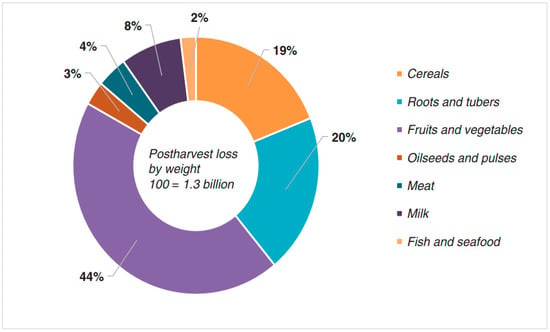
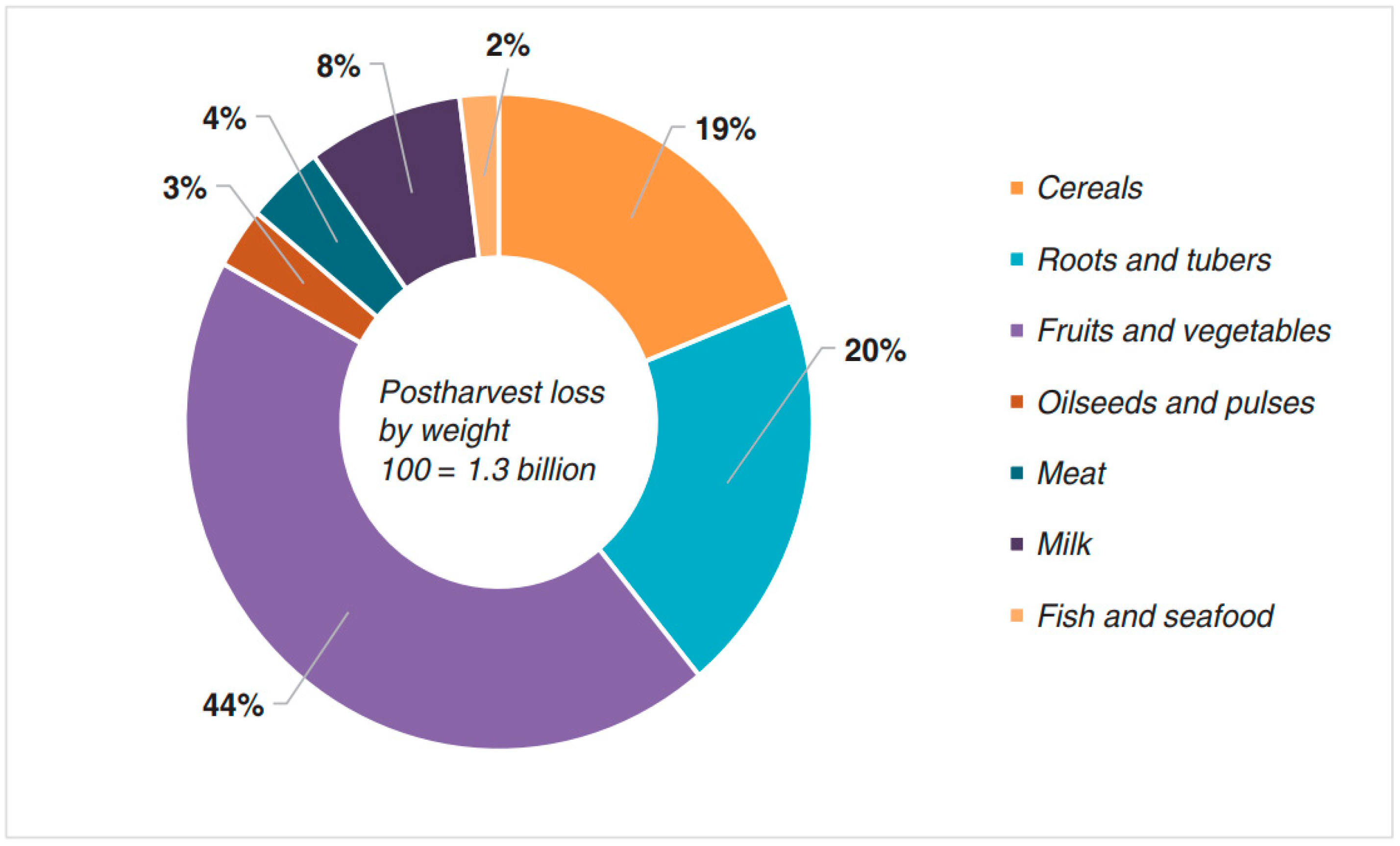
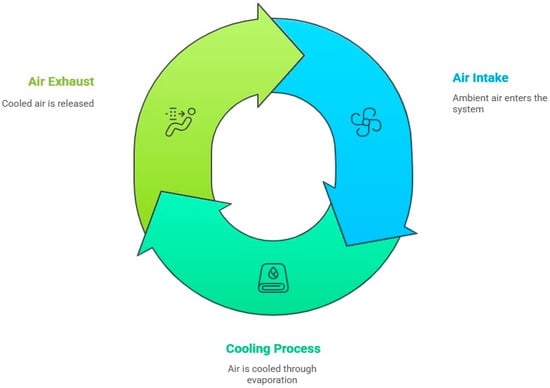
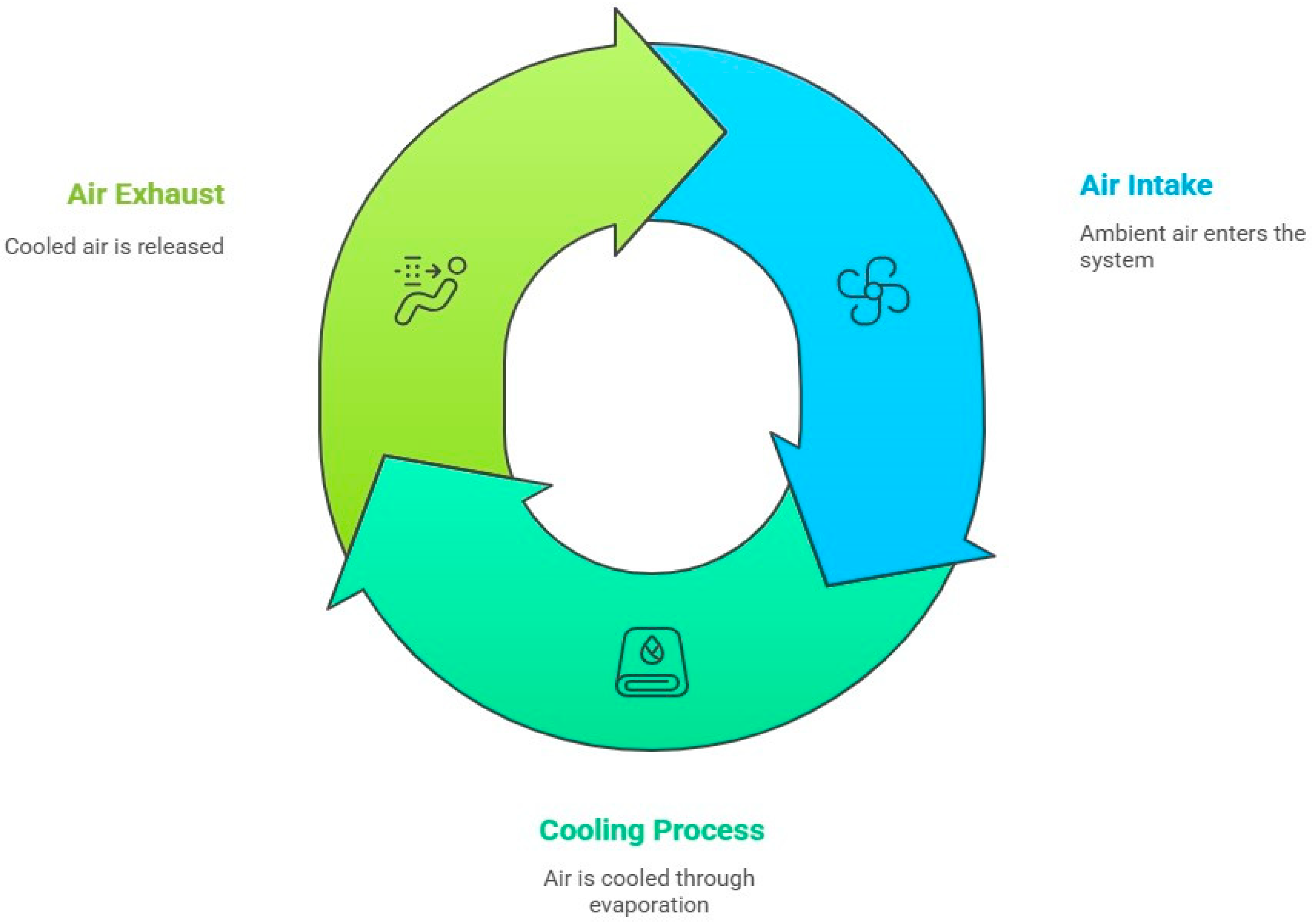
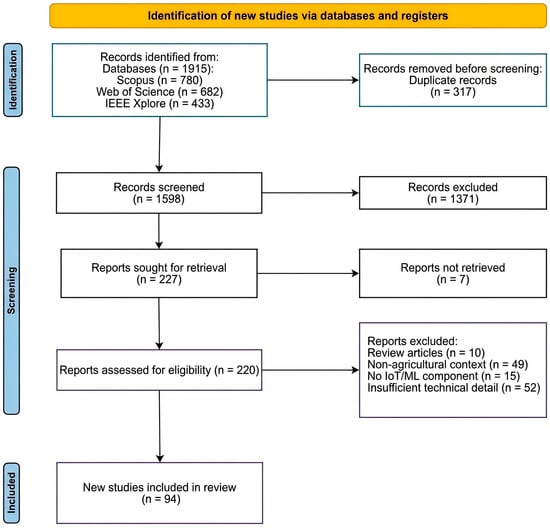
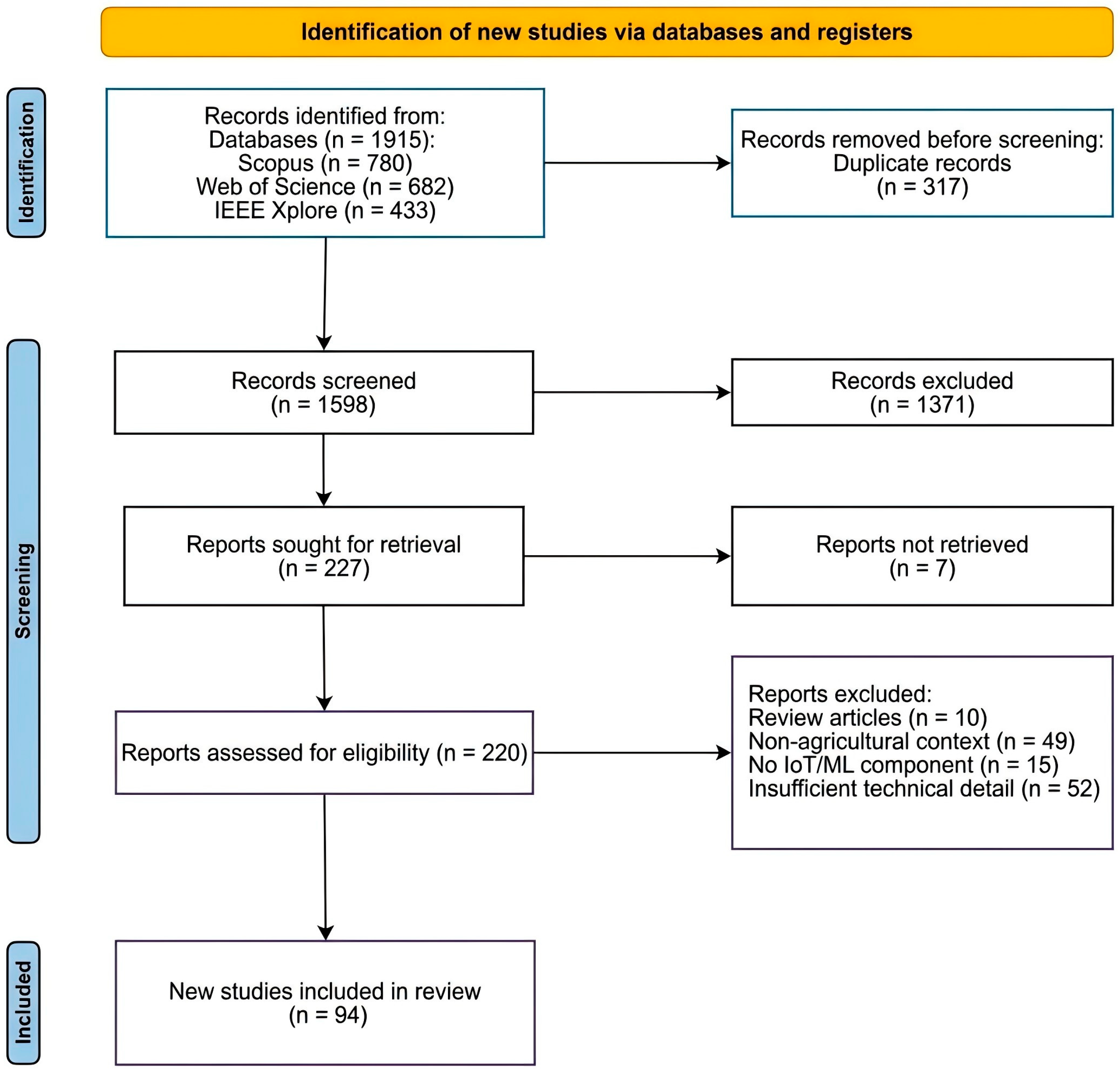
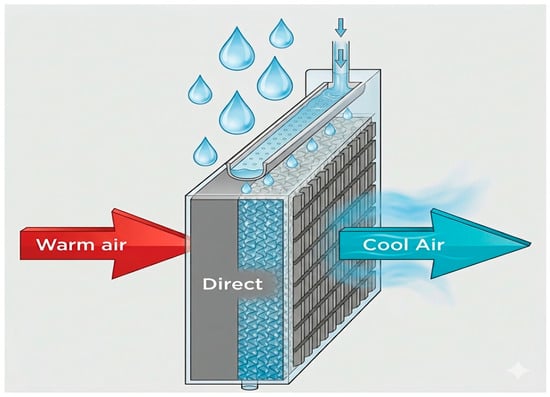
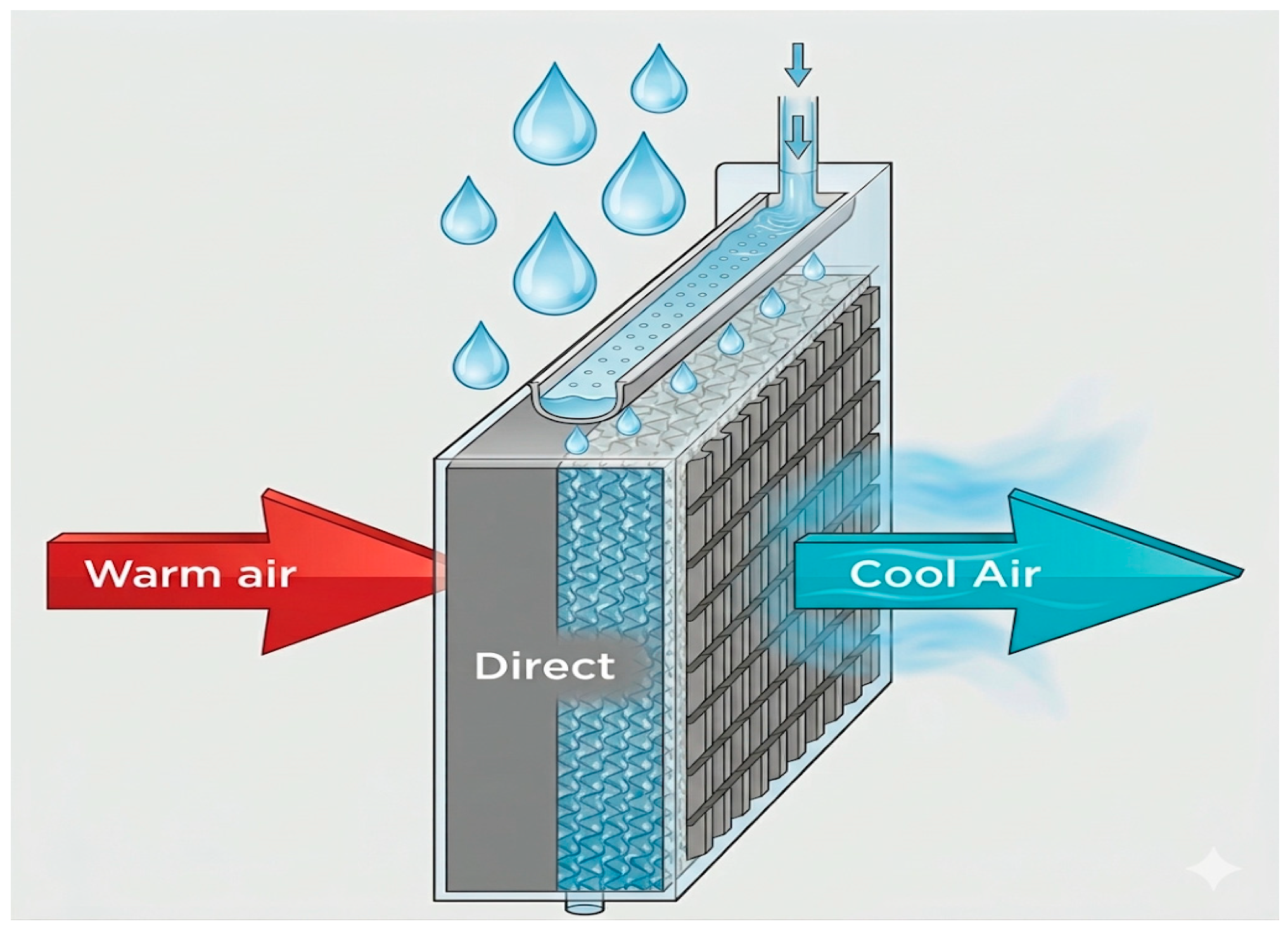
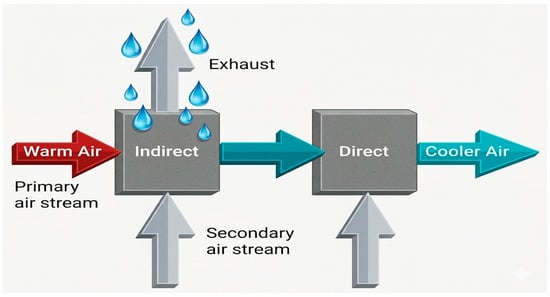
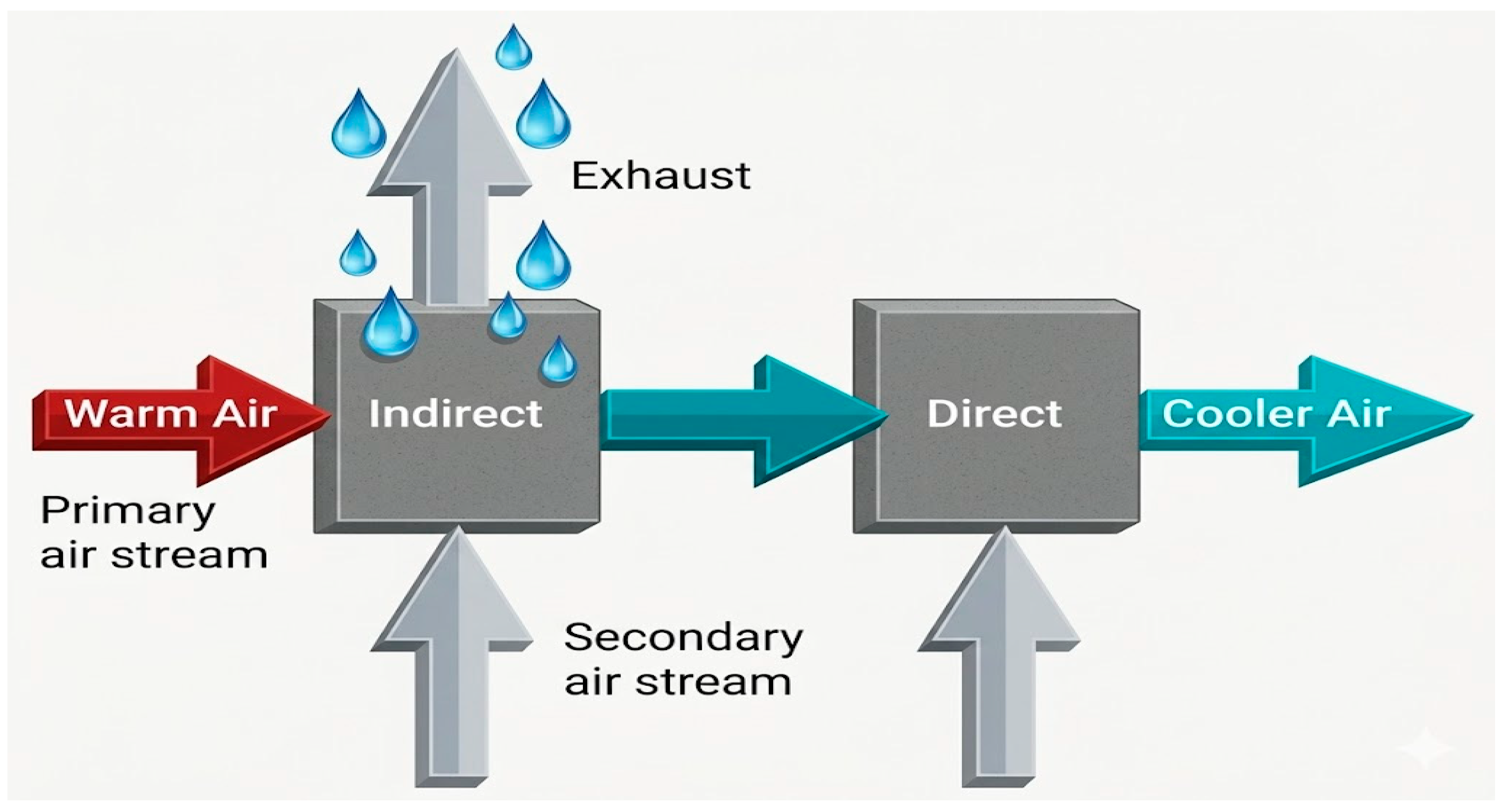

Disclaimer/Publisher’s Note: The statements, opinions and data contained in all publications are solely those of the individual author(s) and contributor(s) and not of MDPI and/or the editor(s). MDPI and/or the editor(s) disclaim responsibility for any injury to people or property resulting from any ideas, methods, instructions or products referred to in the content. |
© 2026 by the authors. Licensee MDPI, Basel, Switzerland. This article is an open access article distributed under the terms and conditions of the Creative Commons Attribution (CC BY) license.