


Abstract
Heat stress is one of the main factors limiting the efficiency and sustainability of dairy production in tropical and subtropical regions, impairing animal welfare, as well as productive and reproductive performance. Among mitigation technologies, evaporative cooling stands out as a widely adopted strategy in intensive production systems. However, there are still no consolidated metrics capable of quantifying, in a comparative and regionalized manner, the theoretical potential for using this technique under different climatic conditions. In this context, the objective of this study was to develop an innovative modeling-based metric to estimate the potential for evaporative cooling based on thermal environment indices and heat transfer principles. Sixteen-year time series of hourly meteorological data from three Brazilian municipalities located in major dairy-producing regions [Uberlândia (MG), Luziânia (GO), and Uruguaiana (RS)], encompassing representative tropical and subtropical conditions, were used to calculate the Temperature–Humidity Index (THI) and to develop the metric termed Radiant Heat Load Reduction under Evaporative Cooling (ΔRHL). Based on the results obtained, THI values were found to frequently exceed the thermal comfort thresholds between September and April, corresponding to the warmest period of the year in Brazil. However, the relationship between the intensity of heat stress and the theoretical potential for evaporative cooling varied significantly among the locations, indicating that the potential efficiency of evaporative cooling is strongly dependent on regional climatic conditions and is more consistent in subtropical environments. It is concluded that the proposed metric constitutes an innovative tool for the spatial and temporal quantification of the potential efficiency of evaporative cooling, with applicability in decision support and in the planning of thermal mitigation strategies in intensive dairy production systems.
1. Introduction
Intensive dairy production is highly sensitive to thermal conditions, with heat stress being one of the main limiting factors affecting the productive performance, reproductive efficiency, and welfare of high-yielding dairy cows, particularly in tropical and subtropical regions [1,2]. Under these conditions, the combination of high air temperatures, intense solar radiation, and elevated levels of relative humidity impairs the dissipation of metabolic heat produced by the animals, resulting in physiological and behavioral changes that include reduced dry matter intake, decreased milk production, and impaired reproductive efficiency [3,4,5,6,7]. This scenario has intensified in the context of climate change, characterized by rising global average temperatures and by the increasing frequency and intensity of extreme events, such as heat waves, which represent a growing challenge for the sustainability of intensive dairy production systems [8,9]. Moreover, when high temperatures occur simultaneously with elevated levels of relative humidity, heat dissipation through evaporative pathways becomes limited, compromising the animals’ thermoregulatory mechanisms and exacerbating the effects of heat stress [2,10].
Given the increasing occurrence of heat stress in intensive dairy systems, environmental cooling technologies have been extensively investigated to mitigate its effects [11,12]. Among these strategies, evaporative cooling, often combined with mechanical ventilation, has been shown to significantly improve physiological and productive responses in dairy cows, including reductions in respiratory rate, decreases in body temperature, and increases in milk yield [13,14,15,16,17]. However, the performance of evaporative cooling methods is directly influenced by the psychrometric characteristics of the ambient air, particularly by the difference between dry-bulb and wet-bulb air temperatures, as well as by the Radiant Heat Load incident on the animals [18].
In general, thermal environment cooling in animal housing facilities can be achieved through two complementary principles: direct body cooling of the animals and evaporative cooling of the air. Direct body cooling is based on the controlled sprinkling of water onto the animals’ body surface, promoting the transfer of latent heat from the animal’s body to the water applied to its skin and hair through the evaporation process [19,20,21]. This method is widely recognized as highly efficient when associated with mechanical ventilation, which is responsible for removing the water vapor formed and reestablishing the drying gradient necessary for the continuity of the process [22,23]. Animal wetting should be carried out only in management areas, such as the feed alley and the holding area prior to milking, in order to avoid increasing bedding moisture and/or wetting resting areas, which could consequently compromise hygienic conditions [24,25].
Evaporative cooling of the air, in turn, aims to reduce air temperature through the conversion of sensible heat into latent heat as water evaporates with the airflow [18,26]. The air-cooling process can be implemented either directly, via water misting necessarily associated with positive-pressure ventilation, or indirectly, through systems based on wetted cellulose pads coupled with negative-pressure ventilation, which are suitable for fully enclosed facilities [24,27]. In both cases, efficiency depends on the ventilation rate and on the psychrometric difference between the incoming air and saturated air, such that the lower the initial relative humidity of the air, the greater the cooling potential [22,28]. It should be noted that in hot and humid environments the cooling effect is limited, as the air is already close to saturation, thereby restricting evaporation and the performance of the cooling system [24,29].
The cooling principles described above highlight the importance of adopting engineering approaches that jointly consider local psychrometric conditions, ventilation regimes, and incident radiation in order to achieve improved outcomes [18,21]. It should be emphasized that, in all cases, the use of mechanical ventilation is mandatory, not only to promote evaporation and reduce temperature, but also to ensure adequate air quality and to improve animal thermal comfort [30].
Several studies have already described the guiding principles and efficiency of evaporative cooling systems, but decision-making regarding where and when to apply these methods, at either the farm or regional scale, still lacks practical indicators that integrate local psychrometric conditions, including air temperature, relative humidity, air movement, and solar radiation [21]. These conditions can be evaluated using consolidated thermal comfort indices, such as the Temperature–Humidity Index (THI), the Black Globe Humidity Index (BGHI), and the Radiant Heat Load (RHL), which represent the combined effects of the climatic elements with the greatest influence on thermal comfort [31,32]. Nevertheless, the direct application of these indices may not reflect the actual potential for evaporative cooling use, particularly when air psychrometric characteristics and incident solar radiation differ substantially. Therefore, there remains a lack of metrics and studies capable of quantifying, in an integrated manner, the theoretical potential for evaporative cooling use across different locations and periods of the year. It is inferred that the development of this type of metric can be achieved through modern computational tools, enabling the identification of climatic patterns and the modeling of the potential use of evaporative cooling techniques based on meteorological time series and thermal environment indices [33,34].
Despite advances in knowledge regarding cooling strategies applied to animal production, there are still no indicators capable of dynamically integrating local psychrometric conditions and incident solar radiation, factors that play a decisive role in the efficiency of evaporative cooling processes. In this context, the objective of this study was to develop and applied an new metric, termed Radiant Heat Load Reduction under Evaporative Cooling (ΔRHL), capable of quantifying the theoretical potential for reducing radiant heat load associated with the application of evaporative cooling systems under different psychrometric conditions.
The proposed metric was conceived through the integration of thermal environment variables, air psychrometric parameters, and heat transfer principles involved in evaporation processes and heat exchange between the environment and the animals. Unlike approaches based exclusively on heat stress indices (THI, BGHI, etc.), ΔRHL allows the explicit representation of the physical potential for thermal mitigation provided by evaporative cooling, estimating the magnitude of the reduction in radiant heat load incident on the animals that can be achieved as a function of prevailing environmental conditions. This approach enables an integrated assessment of both the intensity of heat stress and the capacity of the environment to favor evaporative heat dissipation processes, making it possible to identify scenarios in which high levels of heat stress occur under psychrometric conditions that are unfavorable to the efficiency of evaporative cooling. Based on this framework, the hypothesis of this study is that the integration of psychrometric parameters and thermal environment indicators through the ΔRHL metric allows the identification of spatial and temporal differences in the potential application of evaporative cooling that are not captured by the thermal indices traditionally used in the evaluation of heat stress in dairy cattle. Consequently, it is expected that the results of this study will contribute to expanding the analytical scope of the tools used in the evaluation of the thermal environment in animal production systems, providing a quantitative approach for estimating the potential efficiency of evaporative cooling strategies. In this way, the study seeks to contribute to advances in engineering applied to animal thermal comfort and to the development of adaptive and sustainable solutions for environmental management in intensive dairy production systems under different climatic contexts.
2. Materials and Methods
The methodological approach adopted in this study integrates psychrometric principles and heat transfer mechanisms to formulate a metric capable of quantifying the theoretical potential for evaporative cooling under different climatic conditions. To achieve the proposed objective, this section was organized into four subsections: thermal indices that support the formulation of the metric; the formulation of the Radiant Heat Load Reduction under Evaporative Cooling metric; the selection of locations and data sources; and computational implementation and data processing.
2.1. Thermal Indices That Support the Formulation of the Metric
The potential use of evaporative cooling methods for mitigating heat stress in intensive dairy housing facilities was analyzed under different microclimatic scenarios, based both on consolidated thermal comfort indices and on the physical principles of latent heat transfer. The Temperature–Humidity Index (THI) was used to quantify the combined effects of air temperature and relative humidity on the animal thermal balance [31]. The classical formulation proposed by Yousef [35], and widely applied in subsequent studies [36,37,38], was employed for the calculation of THI:
where the following definitions are used:
is the dry-bulb air temperature, °C;
is the relative humidity of the air, %.
According to Hahn [37], the THI ranges originally proposed for lactating cows are as follows: THI ≤ 74—normal; 75 ≤ THI ≤ 78—alert; 79 ≤ THI ≤ 83—danger; and THI ≥ 84—emergency. However, results from more recent studies have indicated that cows with high genetic potential for milk production (>30 kg·day−1), whose thermoregulatory mechanisms and energy balance are more sensitive to heat, exhibit adverse physiological and reproductive responses at THI values around 68 [39,40,41,42,43]. For this reason, and adopting a conservative approach aimed at protecting high-producing cows, a THI value of 68 was considered in this study as the threshold for the onset of heat stress, which may serve as a practical reference for the preventive activation of evaporative cooling systems.
To evaluate the effect of solar radiation on the thermal environment, black globe temperature (Tbg, in °C) was employed, a fundamental variable for representing the interaction between radiative and convective fluxes that influence the thermal balance of the environment [44,45]. As automatic weather stations do not directly measure Tbg, this variable was estimated using an empirical model described by Abreu et al. [46], which has been widely applied in subsequent studies under tropical/subtropical conditions [47,48,49].
Equation (2) was empirically calibrated for tropical climate conditions, achieving a high correlation (R2 > 0.98) between dry-bulb and black globe temperatures, which confirms its suitability for indirect estimates in locations where direct measurement of Tbg is not available [46]. Based on the estimated Tbg values, the Radiant Heat Load (RHL, in W·m−2) was calculated, a parameter used to characterize the intensity of incident radiation and its contribution to the thermal balance of the environment. For the calculation of RHL, the Mean Radiant Temperature (MRT, in K) was first determined, as described in Equation (3), followed by the calculation of RHL itself, according to Equation (4) [50]:
where the following definitions are used:
is the air velocity, m·s−1;
is the black globe temperature, K;
is the Stefan–Boltzmann constant (5.67·10−8 W·m−2·K−4).
The determination of RHL was applied to quantify the total radiative load incident on the animals, constituting an essential parameter for estimating the potential mitigation of radiant heat gain provided by evaporative cooling systems.
2.2. Formulation of the Radiant Heat Load Reduction Under Evaporative Cooling Metric
In the initial stage of formulating the proposed metric, two theoretical state points were defined, which are necessary for quantifying the theoretical capacity for RHL reduction through evaporative cooling. These state points represent the environmental conditions before and during the use of evaporative cooling, and the characteristics of and changes in the state points and animal comfort are illustrated in Figure 1.
Figure 1.
Schematic representation of the transition from an initial heat stress condition to a simulated final condition, when the evaporative cooling process is applied and enables improvement of the environment.
State point 1 represents the initial conditions, without the use of evaporative cooling methods and under heat stress conditions (Figure 1). For this state point, the Initial Radiant Heat Load (RHLIn) was calculated based on Equations (3) and (4), using Tdb, Tbg, and vair data. After calculating RHLIn, the subsequent step was to determine the RHL for state point 2, termed the Simulated Radiant Heat Load (RHLSim), which simulates the use of water sprinkling in association with forced ventilation, aiming to reduce the animal’s body temperature and/or the air temperature.
Upon reaching state point 2, that is, when the air–water vapor mixture attains the desired psychrometric characteristics, the system temperature is reduced and is then referred to as the simulated air temperature (Tdb-Sim, in °C), which, in practical terms, corresponds to the dew point temperature (Tdp, in °C). Under these conditions, the cooling process cannot be defined as isobaric, since water vapor is added to the mixture and air reaches the Tdp only under isobaric cooling. Nevertheless, although the cooling process is not isobaric, the variation in vapor pressure resulting from water addition to the system is considered infinitesimal when compared with atmospheric pressure [50]. Therefore, even though the system does not reach the Tdp, the temperature achieved is very close to the Tdp value.
The Simulated Mean Radiant Temperature (MRTSim) was calculated through an adaptation of the equation proposed by Esmay [50]. In this adaptation, T_db was replaced by T_db-Sim, and a forced ventilation condition was assumed, under which vair was kept constant and equal to 2.50 m·s−1, in accordance with recommendations for animal housing facilitie [51,52,53]. Finally, the simulated black globe temperature (Tbg-Sim, in K) was calculated using Equation (2), and subsequently, MRTSim was calculated using Equation (5):
where the following definitions are used:
is the mean simulated air temperature, K;
is the mean simulated black globe temperature, K.
With RHLIn and RHLSim determined, a variable capable of quantifying the reduction in RHL through the use of evaporative cooling methods was established. This metric was termed Radiant Heat Load Reduction under Evaporative Cooling (ΔRHL) and is defined according to Equation (6):
where the following definitions are used:
is the Initial Radiant Heat Load, W·m−2;
is the Simulated Radiant Heat Load, W·m−2.
This metric reflects the theoretical magnitude of the reduction in incident radiative load achieved through evaporative cooling under different psychrometric conditions, serving as a quantitative indicator of process effectiveness. This approach is consistent with studies that explore relationships between environmental conditions and cooling efficiency, such as those by Tejero-González and Franco-Salas [26], Foroushani and Amon [30], and Berman [45].
2.3. Selection of Locations and Data Sources
To evaluate the potential use of evaporative cooling methods for mitigating heat stress in intensive dairy production systems in Brazil, sixteen-year hourly time series (1 January 2007 to 31 December 2023) from automatic weather stations operated by the Brazilian National Institute of Meteorology (INMET) were analyzed. The extracted variables included dry-bulb air temperature (Tdb, °C), dew point temperature (Tdp, °C), relative humidity (RH, %), and air velocity (vair, m·s−1). The data were obtained from the Meteorological Database for Teaching and Research (BDMEP) of INMET [54]. It should be noted that, since the data extracted from BDMEP originate from automatic meteorological stations, they do not fully represent the microclimatic conditions inside actual livestock facilities, as they do not account for specific heat transfer processes between animals and the environment, nor for the particularities associated with different building typologies of animal housing systems. Nevertheless, their use was necessary to enable the analysis of different climatic conditions (tropical and subtropical), which was one of the objectives of the study.
The stations were selected based on two main criteria: (1) availability of continuous and consistent hourly data series over the analyzed period; (2) location in municipalities situated within the main dairy-producing regions of Brazil. Additional details regarding station selection are described in Section 3.1.
2.4. Computational Implementation and Data Processing
After extracting the files in .CSV (character-separated values) format from BDMEP, data processing and filtering were performed. In the initial processing step, a filter was applied to extract only air velocity (vair) values that represent typical indoor conditions of facilities used to house dairy cattle. According to the relevant literature, vair in the animal-occupied zone should be greater than 1.00 m·s−1 in order to ensure efficient cooling [55]. Studies on mechanical ventilation in confinement housing facilities have identified mean air velocities ranging from 0.90 to 2.50 m·s−1, depending on the configuration [51,52,53]. For this reason, a value of 2.50 m·s−1 was adopted as the upper threshold for typical indoor conditions in dairy cattle confinement facilities, and vair values exceeding this threshold obtained from external meteorological stations were discarded. The fact is that the vair data measured at automatic weather stations represent outdoor environmental conditions that do not necessarily correspond to those found inside dairy cattle housing facilities, given that automatic weather stations are equipped with meteorological shelters and are typically located in areas with little or no influence from surrounding structures [56,57].
Regarding the upper threshold of vair established in this study (2.50 m·s−1), it should be noted that it is consistent with the values recommended in the literature. Studies indicate that, in intensive systems specialized in dairy production, vair values close to 2.50 m·s−1 help ensure the removal of gases and pollutants and, depending on the prevailing Tdb and RH conditions, favor heat exchange through evaporation and convection [51,52,53,58]. However, it is important to note that MRT and, consequently, RHL, are sensitive to variations in this variable, and may present lower values under reduced vair conditions and, conversely, higher values when vair exceeds the adopted threshold. Another important aspect that should be mentioned refers to the definition of the Tdb-Sim variable, which, although conceptually distinct from Tdp, presents numerical equivalence, as supported by psychrometric principles. Therefore, in the evaporative cooling process, the minimum temperature reached does not correspond exactly to the Tdp, but rather to the wet-bulb temperature. However, the differences resulting from this approximation, in terms of variation in the total pressure of the system, are negligible and do not compromise the consistency of the analyses performed [50].
In the second processing stage, a code was developed to filter daily data corresponding only to the period from 10:00 a.m. to 6:00 p.m., from which daily and monthly mean values, along with standard deviations, were obtained for the variables Tdb, Tdp, RH, and vair, as well as calculated values for the indices of interest. This filtering was performed considering that this time interval corresponds to the period with the highest incidence of elevated Tdb values and, therefore, to the period in which animals are more susceptible to heat stress, making the use of evaporative cooling methods more likely [59,60].
Thermal environment indices (THI, BGHI, RHL, etc.) are commonly used to assess the thermal conditions to which animals are exposed, but analyses can be conducted at different temporal scales (hourly, daily, monthly, seasonal, etc.). In this study, hourly values of the extracted variables were used to calculate daily (THIDaily), monthly (THIMonthly, ΔRHLMonthly), and seasonal (THISeason, ΔRHLSeason) mean values of THI and ΔRHL. Therefore, based on the hourly data and the index values calculated for the 16-year time series, it was possible to conduct a critical analysis of the magnitudes obtained using statistical tables and temporal distribution diagrams.
All data processing procedures and calculations of indices and metrics were performed using RStudio software, version 4.5.1 [61]. The procedures included data import, filtering, temporal aggregation, and visualization, as well as the calculation of THI and ΔRHL, using the packages dplyr, version 1.2.0 [62], ggplot2, version 4.0.2 [63], lubridate, version 1.9.5 [64], psych, version 2.6.1. [65], readr, version 2.2.0 [66], and tidyr, version 1.3.2 [67].
3. Results and Discussion
In this study, the metric Radiant Heat Load Reduction under Evaporative Cooling (ΔRHL) was developed and applied to evaluate the potential use of evaporative cooling methods as a strategy for mitigating heat stress in different locations in Brazil. For the sequential presentation and discussion of the results obtained, this section was organized into four subsections: the selection and climatic characterization of locations with different thermal conditions; the assessment of thermal conditions using the Temperature–Humidity Index; the evaluation of the theoretical potential for the use of evaporative cooling systems in intensive dairy cattle housing; and limitations and perspectives for future studies.
3.1. Selection and Climatic Characterization of Locations with Different Thermal Conditions
For the application of the metric proposed in this study, three municipalities located in strategic regions for Brazilian dairy cattle production were selected, representing the Southeast, South, and Midwest regions: Uberlândia, in the state of Minas Gerais (MG); Uruguaiana, in the state of Rio Grande do Sul (RS); and Luziânia, in the state of Goiás (GO). The selection of these locations considered, in an integrated manner, the economic relevance of regional dairy production and the representativeness of different climatic regimes, allowing the evaluation of evaporative cooling potential under contrasting thermal conditions typical of intensive dairy systems in tropical and subtropical regions. Figure 2 illustrates the geographic coordinates of the automatic weather stations used for each municipality, as well as the spatial location of the studied areas and the distribution of financial revenue generated by dairy production across Brazilian states.
Figure 2.
Spatial distribution of the financial revenue generated by dairy production in each Brazilian state in 2024, and indication of the geographic coordinates of the automatic weather stations in Uberlândia (MG), Uruguaiana (RS), and Luziânia (GO). Source: Adapted from INMET [54] and IBGE [68].
The state of Minas Gerais stands out as the largest milk producer in Brazil, with a consolidated and highly technified production chain, accounting for approximately 26.63% of national milk production in 2024 and generating about BRL 24.21 billion in revenue [68,69]. In this context, the municipality of Uberlândia, located in the Triângulo Mineiro region, was selected due to its significant contribution to state-level production and for representing climatic conditions typical of Central Brazil. According to the Köppen–Geiger climate classification, Uberlândia has an Aw climate, characterized as tropical with a well-defined dry season during winter [70,71]. In 2024, the municipality generated approximately BRL 182.62 million from the dairy production chain, highlighting its productive relevance [68]. Its climatic regime is marked by high Tdb values during spring and summer, often associated with elevated RH levels, which impose additional challenges for the thermal comfort management of dairy cattle.
The Southern region of Brazil also plays a relevant role in national milk production, standing out for high levels of productivity per animal and greater adoption of management and environmental control technologies [42]. In 2024, the state of Rio Grande do Sul contributed approximately 11.63% of national milk production, generating about BRL 9.85 billion in revenue [68,69]. The municipality of Uruguaiana was selected as a regional representative due to its humid subtropical climate (Cfa), according to the Köppen–Geiger classification, characterized by the absence of a well-defined dry season and by high thermal variability throughout the year [70,71]. In Uruguaiana, the dairy production chain generated approximately BRL 1.53 million in 2024, playing a relevant role in income and employment generation at the local scale [68].
Finally, the Midwest region of Brazil has shown significant growth in dairy production in recent decades, driven by the intensification of production systems. The state of Goiás is the leading regional producer, accounting for approximately 8.43% of national milk production and generating about BRL 7.01 billion in 2024 [68,69]. The municipality of Luziânia, located in eastern Goiás, was selected for being part of one of the main dairy-producing regions in the area, with an estimated production value of BRL 156.34 million in the same year [68]. Similar to Uberlândia, Luziânia has an Aw climate, characterized by a dry winter and a hot, humid summer [71].
For the three selected municipalities, hourly meteorological data on dry-bulb air temperature (Tdb) and relative humidity (RH) were obtained from BDMEP/INMET [54], considering the period from 2007 to 2023. Thermal characterization was performed based on the mean values and standard deviations of Tdb and RH calculated for the interval between 10:00 a.m. and 6:00 p.m., a period recognized as critical for the occurrence of heat stress in dairy cattle. The seasonal mean results for these variables are listed in Table 1.
Table 1.
Seasonal mean values with standard deviations of dry-bulb air temperature (Tdb, in °C) and relative humidity (RH, in %), calculated from hourly data of these variables for the municipalities of Uberlândia (MG), Uruguaiana (RS), and Luziânia (GO).
In Uberlândia and Luziânia, the highest mean Tdb values were recorded during spring, with averages of 26.25 ± 3.27 °C and 25.00 ± 3.48 °C, respectively. In Uberlândia, elevated Tdb values were also observed during summer (25.00 ± 2.43 °C). In Uruguaiana, in turn, the highest mean Tdb values occurred in summer (26.06 ± 4.63 °C), a pattern typical of regions with a humid subtropical climate [72,73]. Considering a threshold of 24 °C as indicative of the onset of heat stress conditions for lactating dairy cows [74], it was observed that, in all three municipalities, the mean Tdb values during the warmest periods characterized environments that were potentially stressful from a thermal perspective [11,42]. Under such conditions, dairy cattle activate physiological and behavioral thermoregulatory mechanisms, such as increased respiratory rate, sweating, and reduced dry matter intake. When these conditions persist, especially in intensive systems, significant impairments in productive performance, reproductive efficiency, and animal health may occur [19,32,75].
RH is another environmental parameter of high relevance for the characterization of thermal comfort, as it directly influences the processes of sensible and latent heat dissipation between the animal and the environment [72,76,77]. In general, it is recommended that relative humidity in dairy cattle housing facilities be maintained between 30 and 80% [74]. However, several studies indicate that values above 50% are already sufficient to reduce the efficiency of evaporative heat exchange, especially in environments with high Tdb values [29,78,79]. In the municipalities of Uberlândia and Luziânia, mean RH values exceeded the 50% threshold during summer, autumn, and spring, with more critical conditions observed in summer (66.49 ± 13.59% and 73.96 ± 13.04% in Uberlândia and Luziânia, respectively). Under these conditions, although elevated Tdb values indicate a clear need for thermal cooling, high RH levels impose important constraints on the efficiency of techniques based on evaporative cooling, representing a recurring challenge in humid tropical climates [20,24,34].
In Uruguaiana, high mean RH levels were observed throughout the year, particularly during summer, when elevated Tdb (26.06 ± 4.63 °C) and RH (67.71 ± 18.23%) values occurred simultaneously, significantly limiting the potential for evaporative cooling. During autumn and winter, despite the high RH values (78.08 ± 14.42% and 80.97 ± 14.03%, respectively), it can be inferred that the lower Tdb values reduced the risk of heat stress. However, persistently high RH levels are associated with deterioration of animal hygiene and health conditions, potentially favoring increased body soiling, higher somatic cell counts, and a greater incidence of respiratory disorders, factors that require careful attention in sanitary management [12,80,81].
Overall, Uberlândia and Luziânia exhibited similar patterns of seasonal variation in Tdb and RH, which was expected given their shared climatic classification (Aw). In these locations, winter periods are characterized by milder and drier conditions, whereas summer concentrates simultaneously high temperature and relative humidity values. In contrast, Uruguaiana exhibited pattern typical of a subtropical climate, with greater annual thermal variability and relatively high RH levels throughout the year, influenced by factors such as polar air masses, frontal systems, and increased cloud cover [70,71,73].
The selection and climatic characterization of the evaluated municipalities establish a robust basis for applying the proposed metric, allowing the analysis of evaporative cooling potential under different combinations of thermal load and psychrometric constraints. This approach enables a more realistic assessment of the efficiency of cooling strategies in intensive dairy systems, particularly in tropical and subtropical regions, where the limitations imposed by RH are often overlooked.
3.2. Assessment of Thermal Conditions Using the Temperature–Humidity Index
The Tdb and RH time series were used to calculate daily mean THI values, along with their respective standard deviations (THIDaily), considering the interval between 10:00 a.m. and 6:00 p.m. This period corresponds to the time window with the highest incidence of heat stress in dairy cattle, due to the combination of elevated Tdb values, greater incident radiative load, and physiological limitations to latent heat dissipation [3,7].
The temporal evolution of THIDaily from 2007 to 2023 for the municipalities of Uberlândia (MG), Uruguaiana (RS), and Luziânia (GO) is illustrated in Figure 3. In general, a well-defined oscillatory distribution was observed, with a consistent seasonal pattern and interannual variations associated with regional climatic characteristics. This pattern is widely described in the climatological literature applied to animal production, in which THI exhibits an approximately sinusoidal distribution, reflecting the alternation between warm and cold periods throughout the year [32,82,83].
Figure 3.
Time series of the Temperature–Humidity Index (THI), with standard deviation, over the period from 2007 to 2023 in: (a) Uberlândia (MG); (b) Uruguaiana (RS); (c) Luziânia (GO). UTCL—Upper Thermal Comfort Limit.
In the municipalities of Uberlândia and Luziânia, both classified as tropical Aw climates, the annual amplitude of variation in THIDaily was relatively smaller compared to that observed in Uruguaiana. Nevertheless, maximum THIDaily values frequently approached or exceeded the range of 72–73, especially during the first and last quarters of the year (Figure 3a,c). These values characterize conditions of moderate to severe heat stress for high-producing dairy cows, particularly those with daily milk production exceeding 30 kg, whose metabolic demands substantially increase internal heat production [7,82].
Although mean THIDaily values close to 68–70 are traditionally considered initial thresholds for heat stress, recent evidence indicates that high-producing dairy cows may exhibit adverse physiological responses, such as an increased respiratory rate, elevated core body temperature, and reduced dry matter intake, at THI values around 67–68, especially when associated with high RH and low evaporative cooling capacity in the environment [32,39,40,41,42,43,82]. Therefore, in this study, a THI threshold of 68 was adopted as the onset of heat stress, representing a conservative approach aligned with recent recommendations for intensive dairy systems.
During the central months of the year, particularly between June and August, Uberlândia and Luziânia exhibited mean THIDaily values predominantly below 68, indicating conditions closer to thermal comfort. However, the analysis of standard deviations reveals the occurrence of daily THI peaks above the critical threshold, even during periods that are considered, on average, thermally favorable. This result reinforces the importance of daily-scale analyses, as monthly or seasonal averages may mask episodic heat stress events with the potential to negatively affect productive performance and animal welfare [38,82].
In Uruguaiana, a municipality classified as having a humid subtropical climate (Cfa), greater dispersion of THIDaily values was observed throughout the year, reflecting the higher seasonal thermal variability typical of this region. During summer, mean THIDaily values frequently exceeded 75, characterizing conditions of severe heat stress. In contrast, during the winter months, minimum THIDaily values reached levels below 55, representing environments that are highly favorable for thermal comfort. This large thermal amplitude distinguishes Uruguaiana from municipalities with tropical climates and has direct implications for both the frequency of heat stress occurrence and the potential efficiency of adopted mitigation strategies [73,84].
The interannual and seasonal pattern of THIDaily observed in the three municipalities is consistent with regional climate classification and with recent studies indicating an intensification of heat stress in tropical and subtropical regions, particularly during transitional periods between seasons [33,34,85]. In tropical environments, the combination of high Tdb values and elevated RH levels limits heat dissipation through evaporation, exacerbating the effects of heat stress even when absolute THI values do not reach extreme levels [3,86].
Despite its widespread use, it should be noted that THI has important limitations as a standalone indicator of the thermal environment, as it does not explicitly incorporate variables such as solar radiation, air velocity, and Radiant Heat Load [31,33,87]. Therefore, similar THI values may represent substantially different thermal conditions from the perspective of animal heat balance, especially when comparing hot and dry versus hot and humid environments [38,88]. This limitation becomes particularly relevant when the objective is to evaluate the potential use of evaporative cooling strategies, whose efficiency is strongly dependent on the psychrometric conditions of the air.
In this context, the THI analysis performed in this subsection provides the necessary basis for identifying the frequency, intensity, and seasonality of heat stress conditions across the different evaluated locations. However, as discussed in the following subsection, the occurrence of high THI values does not necessarily imply high evaporative cooling efficiency. Therefore, integrating THI with the proposed metric (ΔRHL) allows for a more comprehensive and physically consistent assessment of thermal mitigation potential in intensive dairy production systems, simultaneously considering both the need for cooling and the effective capacity of the environment to provide it.
3.3. Evaluation of the Theoretical Potential for the Use of Evaporative Cooling Systems in Intensive Dairy Cattle Housing
In intensive dairy production systems, the adoption of evaporative cooling strategies is justified when periods of heat stress coincide with environmental conditions favorable to heat dissipation through evaporation. However, this coincidence does not always occur, since the efficiency of evaporative processes strongly depends on the psychrometric state of the air, particularly RH, and not solely on the magnitude of heat stress assessed by indices such as THI [11,26,89]. In this context, the metric Radiant Heat Load Reduction under Evaporative Cooling (ΔRHL) was applied in an integrated manner with THI to evaluate the potential for evaporative cooling in Uberlândia, Luziânia, and Uruguaiana, allowing assessment not only of the need for cooling but also of its potential efficiency under different climatic conditions.
The seasonal mean values of THI and ΔRHL for Uberlândia (MG), Luziânia (GO), and Uruguaiana (RS) are listed in Table 2. Overall, the results indicate that periods of greater heat stress do not always coincide with those of higher theoretical potential for radiant heat load reduction through evaporative cooling, reinforcing the relevance of the integrated approach adopted.
Table 2.
Seasonal mean values, with standard deviations, of the Temperature–Humidity Index (THI) and Radiant Heat Load Reduction under Evaporative Cooling (ΔRHL, in W·m−2) for the municipalities of Uberlândia (MG), Luziânia (GO), and Uruguaiana (RS).
In Uberlândia, the highest seasonal mean ΔRHL value was observed during winter (94.60 ± 38.52 W·m−2; Table 2), a period in which the mean THI was 68.86 ± 3.98 (Table 2), a value close to the lower heat stress threshold adopted in this study. This pattern reflects the typical characteristics of a tropical climate with a dry winter, in which reduced RH substantially increases evaporative potential, favoring latent heat dissipation [44,90]. However, during this same period (winter), the physiological need for animal cooling is reduced, since heat stress levels were less frequent.
In contrast, during summer in Uberlândia, when the mean THI reached 73.15 ± 2.32 (Table 2), characterizing conditions of moderate to severe heat stress [39,40,41,42,43], ΔRHL exhibited its lowest seasonal value (42.12 ± 25.84 W·m−2). This discrepancy highlights a recurrent scenario in humid tropical regions, in which precisely during periods of greater cooling demand, high RH limits the efficiency of evaporative processes [85,91]. These results are consistent with experimental and modeling studies that have shown that latent heat loss is reduced in hot and humid environments, even under forced ventilation [44,92,93].
In Luziânia, a pattern similar to that observed in Uberlândia was identified, which was expected given that both locations share the same climatic classification (Aw). The highest ΔRHL value occurred during winter (88.79 ± 44.83 W·m−2; Table 2), associated with a mean THI of 67.59 ± 5.09 (Table 2), indicating a predominantly thermally comfortable environment [39,40,41,42,43]. As in Uberlândia, a high theoretical evaporative cooling capacity was observed during a period in which the physiological demand for cooling is reduced.
Summer in Luziânia presented the most critical condition from a productive standpoint, with a mean THI of 71.20 ± 2.73 (Table 2) and the lowest seasonal ΔRHL value (30.74 ± 23.35 W·m−2; Table 2). These results reinforce the limitations of evaporative cooling systems in hot and humid environments, in which the air is close to saturation, reducing the gradient required for water evaporation [18,90]. Under such conditions, complementary strategies, such as shading, increased ventilation, and management adjustments, become essential to mitigate the effects of heat stress [32,52].
The pattern observed in Uruguaiana differed substantially from that identified in the tropical-climate municipalities. Due to the greater annual thermal variability typical of a humid subtropical climate (Cfa) [71,73,85], periods of greater heat stress more consistently coincided with higher ΔRHL values (Table 2). During summer, when the mean THI reached 74.57 ± 5.46 (Table 2), the highest seasonal ΔRHL value was also observed (43.55 ± 39.20 W·m−2). This concurrence indicates a more favorable scenario for the application of evaporative cooling, in which the physiological need for animal cooling coincides with environmental conditions that are relatively conducive to evaporation.
Conversely, during winter, Uruguaiana exhibited the lowest THI values (55.69 ± 8.68; Table 2) and, simultaneously, the lowest ΔRHL (16.71 ± 20.08 W·m−2; Table 2), characterizing a period of low heat stress and low potential for the use of evaporative cooling. This pattern indicates that, in subtropical climates, critical periods of heat stress tend to coincide with a greater potential for the use of evaporative cooling, in contrast to what is observed in tropical regions.
To further deepen the analysis of evaporative cooling potential, THI and ΔRHL conditions were evaluated simultaneously throughout the year, as illustrated in Figure 4. Through the integrated monthly analysis of THI and ΔRHL (Figure 4), it was possible to simultaneously identify the occurrence of heat stress in dairy cattle and the physical feasibility of evaporative cooling as a mitigation strategy, representing the main methodological advancement of this study. This integrated approach overcomes analyses based exclusively on thermal indices by demonstrating that the physiological need for heat dissipation does not always coincide with the environment’s capacity to promote it through latent pathways [11,18].
Figure 4.
Mean distribution curves, with standard deviation, of the Temperature–Humidity Index (THI) and Radiant Heat Load Reduction under Evaporative Cooling (ΔRHL, in W·m−2), throughout the year over the period from 2007 to 2023: (a) Uberlândia (MG); (b) Uruguaiana (RS); (c) Luziânia (GO). UTCL—Upper Thermal Comfort Limit.
Although the use of evaporative cooling as an alternative for reducing heat stress is widely adopted in several tropical and subtropical regions, the hypothesis that the efficiency of this method depends on environmental conditions is confirmed by the analysis of Figure 4. In the municipalities of Uberlândia and Luziânia, although specific climatic characteristics were observed, similar patterns were identified in the behavior of the analyzed variables. As illustrated in Figure 4a,c, in both locations the THI presented higher values during the first and last quarters of the year, whereas ΔRHL tended to reach its lowest values between the second and third quarters.
Although tropical regions are characterized by a predominance of more intense heat stress between January and May and September and December, a mismatch was observed, particularly in the first and last quarters, between the periods in which high-producing dairy cattle may be subjected to heat stress (THI ≥ 68.00) and those in which there is greater potential for the efficient use of evaporative cooling (Figure 4). This occurs because, in both locations, ΔRHL reached higher values (between 100.00 and 120.00 W·m−2) only in September (Figure 4a,c). Based on these results, it can be inferred that, despite the high physiological demand for evaporative cooling, the high relative humidity (RH) typical of the tropical summer acts as a limiting factor for the efficiency of heat dissipation through evaporation [1,2]. On the other hand, between May and August, a marked increase in ΔRHL was observed, likely associated with the reduction in RH (Figure 4a,c). However, during this period, THI values remain predominantly below 68.00, characterizing a scenario of functional divergence, in which there is high environmental potential for evaporative cooling but low physiological demand for thermal cooling.
In Uruguaiana (Figure 4b), the integrated analysis of THI and ΔRHL patterns differed substantially from that observed in the tropical-climate municipalities. Between January and March, THI values remained above 68.00, characterizing heat stress conditions [39,40,41,42,43]. During this same period, ΔRHL values were moderate, configuring a favorable scenario for the use of evaporative cooling techniques in dairy cattle production [15,25]. Conversely, between April and August, mean THI values in Uruguaiana remained below 68 (Figure 4b), indicating a lower frequency of heat stress, a pattern accompanied by low ΔRHL values. This functional coherence indicates that, in Uruguaiana, periods of lower physiological demand for cooling coincide with a reduced environmental capacity for heat dissipation through evaporation. From September onward, a simultaneous increase in THI and ΔRHL was observed in Uruguaiana, with the greatest concordance recorded in December (Figure 4b). This pattern demonstrates that, unlike tropical regions, in subtropical climates periods of greater heat stress tend to coincide with higher evaporative cooling potential, making this technique more consistently applicable during summer [25,94].
The analyses described above indicates that, although thermal comfort is a prerequisite for achieving high levels of animal productivity, the use of evaporative cooling does not always represent the most efficient alternative, due to limitations imposed by environmental conditions and regional climatic diversity [25,26]. In this context, complementary strategies, such as adjustments in feeding schedules, nutritional modifications, and ventilation management, may be required to mitigate the effects of heat stress [52,95,96].
The results obtained in this study are in strong agreement with those reported by Tazzo et al. [94], who evaluated regional data from automatic weather stations in the state of Rio Grande do Sul and observed that 100% of the state territory is under heat-related thermal discomfort during summer, with up to 27% of the area experiencing extremely hot conditions in January. The findings reported by the authors corroborate the high THI values observed in Uruguaiana and the occurrence of extreme heat stress during the summer period.
Using spatial data of maximum temperature, minimum temperature, and air velocity in NetCDF format, Sousa et al. [97] zoned unfavorable climatic conditions for high-producing cattle in tropical regions. Although adopting a spatial approach, the authors of that study identified THI extremes in the North, East, and far North mesoregions of Maranhão, areas that share a tropical climatic classification with Luziânia and Uberlândia. These results corroborate the patterns observed in the present study, reinforcing the applicability of the integrated THI and ΔRHL approach across different spatial scales and climatic contexts.
3.4. Limitations and Perspectives for Future Studies
In intensive animal production, the optimization of productive indices depends on a complex set of interactions among environmental, physiological, technological, and management factors [90]. Although the adoption of thermal cooling strategies, such as evaporative cooling, represents one of the main tools for reducing the effects of heat stress in dairy cattle, the integrated assessment of their efficiency remains a scientific and technological challenge, particularly when seeking to extrapolate site-specific experimental results to different regions and production scales.
In this study, an inherent limitation refers to the use of meteorological data from external automatic weather stations, which, although widely employed in climatological studies applied to animal production, do not fully capture the microclimatic complexity existing inside confinement facilities. Factors such as building typology, orientation of structures, roofing materials, animal density, ventilation regime, and the presence of artificial shading can significantly alter the actual thermal conditions to which animals are exposed. Thus, while the use of historical INMET datasets allows for robust regional- and temporal-scale analyses, an accurate representation of the internal microenvironment of housing facilities requires the incorporation of in situ measurements, particularly in studies aimed at the operational validation of the proposed metric.
Another limitation is associated with the inherent complexity of animal heat balance. Although environmental indices and metrics based on physical principles, such as ΔRHL, allow inference of the theoretical potential for thermal mitigation, animals’ physiological responses may vary as a function of individual factors, including production level, stage of lactation, acclimation, genetics, and health status. Therefore, more detailed analyses at the production-unit level require specific approaches, involving controlled experimentation and simultaneous monitoring of environmental and physiological variables.
Despite the limitations described, the results obtained open a broad set of perspectives for future studies. A first relevant advancement consists of the experimental validation of the ΔRHL metric in real dairy cattle housing facilities, associating it with physiological responses (respiratory rate, body temperature, sweating, etc.) and productive responses (milk yield, milk composition, etc.). This type of study will allow the consolidation of the metric not only as a theoretical indicator but also as an operational decision-support tool in intensive production systems.
Additionally, the application of ΔRHL in climate zoning studies represents a promising perspective. Integrating this metric with spatial datasets and climate reanalysis products will enable regional and national-scale mapping of the potential use of evaporative cooling, identifying areas and periods of the year in which this strategy is likely to be more efficient or constrained. Such an approach can support public policies, infrastructure investment planning, and adaptation strategies for dairy production in the context of climate change.
Another high-potential line of research concerns the development of algorithms for intelligent thermal monitoring and control systems in animal housing facilities. Incorporating ΔRHL into embedded systems applied to precision livestock environmental control, combined with environmental sensors programmed for real-time data acquisition and automation techniques, will enable the dynamic and precise activation of evaporative cooling systems, avoiding their use under unfavorable psychrometric conditions and maximizing their energy and water efficiency. This perspective is directly aligned with recent advances in digital agriculture and precision livestock farming.
Finally, future studies may explore the integration of the ΔRHL metric with thermoenergetic simulation models of rural buildings and with approaches based on artificial intelligence and machine learning. These tools can contribute to predicting evaporative cooling potential under different future climatic scenarios, thereby enhancing the adaptive capacity of dairy production systems in the face of increasing frequency and intensity of heat stress events.
Taken together, these perspectives reinforce the idea that the proposed metric is not limited to a site-specific application, but rather constitutes a solid conceptual basis for advancing research in animal housing environments, engineering applied to dairy production, and the sustainability of intensive dairy production systems.
4. Conclusions
In this study, the Radiant Heat Load Reduction under Evaporative Cooling (ΔRHL) metric was proposed to quantify, in a physically consistent manner, the potential reduction in radiant heat load provided by evaporative cooling in dairy production systems. The metric integrates heat transfer principles, thermal environment indices, and long-term meteorological series, enabling the simultaneous evaluation of both the intensity of heat stress and the environmental feasibility of evaporative cooling.
The integrated analysis of THI and ΔRHL demonstrated that the occurrence of heat stress does not necessarily imply greater potential efficiency of evaporative cooling systems. In the tropical environments evaluated (Uberlândia and Luziânia), periods of greater heat stress frequently coincided with psychrometric conditions unfavorable to evaporation. In contrast, in the subtropical environment (Uruguaiana), greater correspondence was observed between the occurrence of heat stress and the potential for reducing radiant heat load.
The results also allowed the identification of seasonal windows with greater potential efficiency of evaporative cooling, highlighting that its effectiveness strongly depends on regional climatic variability and should not be inferred solely from traditional heat stress indices.
Overall, the ΔRHL metric expands the capacity to evaluate the potential use of evaporative cooling in intensive dairy production systems, constituting a promising tool for the planning and environmental management of livestock facilities under different climatic conditions.
Author Contributions
Conceptualization. T.S.M., C.E.A.O., F.J. and M.B.; methodology. T.S.M., C.E.A.O., F.J., F.C.d.S., L.B.-M. and M.B.; validation. T.S.M. and C.E.A.O.; formal analysis. T.S.M. and C.E.A.O.; investigation. T.S.M., C.E.A.O., F.J. and M.B.; resources. C.E.A.O. and I.d.F.F.T.; data curation. T.S.M. and C.E.A.O.; writing—original draft preparation. T.S.M., C.E.A.O., C.P.O., L.B.-M. and G.M.; writing—review and editing. C.E.A.O., F.J., F.C.d.S., C.P.O., I.d.F.F.T., I.d.O.C. and M.B.; visualization. T.S.M., C.E.A.O. and I.d.O.C.; supervision. C.E.A.O., F.J., I.d.F.F.T., L.B.-M. and M.B.; project administration. C.E.A.O., I.d.F.F.T. and M.B.; funding acquisition. C.E.A.O. and I.d.F.F.T. All authors have read and agreed to the published version of the manuscript.
Funding
This research was funded by the Coordination of Superior Level Staff Improvement, Brazil (CAPES)—Finance Code 001; the National Council for Scientific and Technological Development, Brazil (CNPq)—Process 151546/2024-0; and the Minas Gerais Research Support Foundation, Brazil (FAPEMIG)—Finance Code 001.
Institutional Review Board Statement
Not applicable.
Informed Consent Statement
Not applicable.
Data Availability Statement
The data presented in this study are available upon request from the corresponding author.
Acknowledgments
The authors would like to thank the Federal University of Viçosa (UFV), whose support is appreciated. This work was conducted with the support of the National Council for Scientific and Technological Development, Brazil (CNPq); the Coordination of Superior Level Staff Improvement, Brazil (CAPES); and the Research Supporting Foundation of Minas Gerais State, Brazil (FAPEMIG).
Conflicts of Interest
The authors declare no conflicts of interest.
Abbreviations
The following abbreviations are used in this manuscript:
| BDMEP | Meteorological Database for Teaching and Research |
| BGHI | Black Globe Humidity Index |
| GO | Goiás |
| INMET | Brazilian National Institute of Meteorology |
| MG | Minas Gerais |
| MRT | Mean Radiant Temperature (K) |
| MRTSim | Simulated Mean Radiant Temperature (K) |
| R2 | Coefficient of Determination |
| RH | Relative Humidity (%) |
| RHL | Radiant Heat Load (W∙m−2) |
| RHLIn | Initial Radiant Heat Load (W∙m−2) |
| RHLSim | Simulated Radiant Heat Load (W∙m−2) |
| RS | Rio Grande do Sul |
| Tbg | Black globe temperature (K) |
| Tbg-Sim | Simulated black globe temperature (K) |
| Tdb | Dry-bulb air temperature (°C) |
| Tdb-Sim | Simulated dry-bulb air temperature (K) |
| Tdp | Dew point temperature (°C) |
| THI | Temperature–Humidity Index |
| THIDaily | Daily mean Temperature–Humidity Index |
| THIMonthly | Monthly mean Temperature–Humidity Index |
| THISeason | Seasonal mean Temperature–Humidity Index |
| vair | Air velocity (m·s−1) |
| ΔRHL | Radiant Heat Load Reduction under Evaporative Cooling (W∙m−2) |
| ΔRHLMonthly | Monthly mean Radiant Heat Load Reduction under Evaporative Cooling (W∙m−2) |
| ΔRHSeason | Seasonal mean Radiant Heat Load Reduction under Evaporative Cooling (W∙m−2) |
References
- Souto, P.L.G.; Barbosa, E.A.; Edison, M.; Martins, V.M.V.; Hatamoto-Zervoudakis, L.K.; Pimentel, C.M.M.; Ramos, A.F. Influence of Season and External Morphology on Thermal Comfort and Physiological Responses in Bulls from Two Breeds Adapted to a Subtropical Climate. Rev. Bras. Saúde Produção Anim. 2021, 22, e2122022021. [Google Scholar] [CrossRef] [Scilit]
- Toledo, I.M.; Dahl, G.E.; De Vries, A. Dairy Cattle Management and Housing for Warm Environments. Livest. Sci. 2022, 255, 104802. [Google Scholar] [CrossRef] [Scilit]
- Collier, R.J.; Baumgard, L.H.; Zimbelman, R.B.; Xiao, Y. Heat Stress: Physiology of Acclimation and Adaptation. Anim. Front. 2019, 9, 12–19. [Google Scholar] [CrossRef] [Scilit] [PubMed]
- Sammad, A.; Umer, S.; Shi, R.; Zhu, H.; Zhao, X.; Wang, Y. Dairy Cow Reproduction under the Influence of Heat Stress. J. Anim. Physiol. Anim. Nutr. 2020, 104, 978–986. [Google Scholar] [CrossRef] [Scilit] [PubMed]
- Dahl, G.E.; McFadden, T.B. Symposium Review: Environmental Effects on Mammary Immunity and Health. J. Dairy Sci. 2022, 105, 8586–8589. [Google Scholar] [CrossRef] [Scilit] [PubMed]
- Davidson, B.D.; Dado-Senn, B.; Padilla, N.R.; Fabris, T.F.; Casarotto, L.T.; Ouellet, V.; Toledo, I.M.; Dahl, G.E.; Laporta, J. Late-Gestation Heat Stress Abatement in Dairy Heifers Promotes Thermoregulation and Improves Productivity. J. Dairy Sci. 2021, 104, 2357–2368. [Google Scholar] [CrossRef] [Scilit] [PubMed]
- Becker, C.A.; Collier, R.J.; Stone, A.E. Invited Review: Physiological and Behavioral Effects of Heat Stress in Dairy Cows. J. Dairy Sci. 2020, 103, 6751–6770. [Google Scholar] [CrossRef] [Scilit]
- Rosa, D.R.; Ferreira, N.C.R.; Oliveira, C.E.A.; Moreira, A.N.H.; Battisti, R.; Casaroli, D.; Barbari, M.; Bambi, G.; Andrade, R.R. Climate Change and State of the Art of the Sustainable Dairy Farming: A Systematic Review. Animals 2025, 15, 2997. [Google Scholar] [CrossRef] [Scilit]
- Silveira, R.M.F.; Façanha, D.A.E.; Vasconcelos, A.M.; Leite, S.C.B.; Leite, J.H.G.M.; Saraiva, E.P.; Fávero, L.P.; Tedeschi, L.O.; Silva, I.J.O. Physiological Adaptability of Livestock to Climate Change: A Global Model-Based Assessment for the 21st Century. Environ. Impact Assess. Rev. 2026, 116, 108061. [Google Scholar] [CrossRef] [Scilit]
- Habimana, V.; Nguluma, A.S.; Nziku, Z.C.; Ekine-Dzivenu, C.C.; Morota, G.; Mrode, R.; Chenyambuga, S.W. Heat Stress Effects on Milk Yield Traits and Metabolites and Mitigation Strategies for Dairy Cattle Breeds Reared in Tropical and Sub-Tropical Countries. Front. Vet. Sci. 2023, 10, 1121499. [Google Scholar] [CrossRef] [Scilit]
- Oliveira, C.P.; Sousa, F.C.; Silva, A.L.; Schultz, É.B.; Londoño, R.I.V.; Souza, P.A.R. Heat Stress in Dairy Cows: Impacts, Identification, and Mitigation Strategies—A Review. Animals 2025, 15, 249. [Google Scholar] [CrossRef] [Scilit]
- Oliveira, C.E.A.; Tinôco, I.F.F.; Sousa, F.C.; Baêta, F.C.; Vieira, F.M.C.; Barbari, M. Health and Thermal Comfort of Dairy Cattle in Compost-Bedded Pack Barns and Other Types of Housing: A Comparative Systematic Review. AgriEngineering 2024, 6, 1395–1416. [Google Scholar] [CrossRef] [Scilit]
- Smith, T.R.; Chapa, A.; Willard, S.; Herndon, C.; Williams, R.J.; Crouch, J.; Riley, T.; Pogue, D. Evaporative Tunnel Cooling of Dairy Cows in the Southeast. I: Effect on Body Temperature and Respiration Rate. J. Dairy Sci. 2006, 89, 3904–3914. [Google Scholar] [CrossRef] [Scilit] [PubMed]
- Berman, A. Extending the Potential of Evaporative Cooling for Heat-Stress Relief. J. Dairy Sci. 2006, 89, 3817–3825. [Google Scholar] [CrossRef] [Scilit]
- Roth, Z. Cooling Is the Predominant Strategy to Alleviate the Effects of Heat Stress on Dairy Cows. Reprod. Domest. Anim. 2022, 57, 16–22. [Google Scholar] [CrossRef] [Scilit]
- Silva, M.V.; Almeida, G.L.P.; Pandorfi, H.; Moraes, A.S.; Macêdo, G.A.P.A.; Oliveira, M.E.G.; Melo, M.V.N.; Santana, T.C. Thermal Comfort and Productive Responses of 7/8 Holstein-Gyr Cows Subjected to Cooling System. Acta Sci. Anim. Sci. 2023, 45, e61295. [Google Scholar] [CrossRef] [Scilit]
- Oliveira, C.E.A.; Tinôco, I.F.F.; Sousa, F.C.; Damasceno, F.A.; Andrade, R.R.; Maciel, F.F.; Barbari, M.; Martins, M.A. Analysis of Heat and Mass Transfer in Compost-Bedded Pack Barns for Dairy Cows Using Computational Fluid Dynamics: A Review. Appl. Sci. 2023, 13, 9331. [Google Scholar] [CrossRef] [Scilit]
- Zhou, M.; Tang, X.; Xiong, B.; Koerkamp, P.W.G.G.; Aarnink, A.J.A. Effectiveness of Cooling Interventions on Heat-Stressed Dairy Cows Based on a Mechanistic Thermoregulatory Model. Biosyst. Eng. 2024, 244, 114–121. [Google Scholar] [CrossRef] [Scilit]
- Polsky, L.; Von Keyserlingk, M.A.G. Invited Review: Effects of Heat Stress on Dairy Cattle Welfare. J. Dairy Sci. 2017, 100, 8645–8657. [Google Scholar] [CrossRef] [Scilit] [PubMed]
- Fournel, S.; Ouellet, V.; Charbonneau, É. Practices for Alleviating Heat Stress of Dairy Cows in Humid Continental Climates: A Literature Review. Animals 2017, 7, 37. [Google Scholar] [CrossRef] [Scilit] [PubMed]
- Levit, H.; Pinto, S.; Amon, T.; Gershon, E.; Kleinjan-Elazary, A.; Bloch, V.; Ben Meir, Y.A.; Portnik, Y.; Jacoby, S.; Arnin, A.; et al. Dynamic Cooling Strategy Based on Individual Animal Response Mitigated Heat Stress in Dairy Cows. Animal 2021, 15, 100093. [Google Scholar] [CrossRef] [Scilit]
- Smith, J.F.; Bradford, B.J.; Harner, J.P.; Potts, J.C.; Allen, J.D.; Overton, M.W.; Ortiz, X.A.; Collier, R.J. Short Communication: Effect of Cross Ventilation with or without Evaporative Pads on Core Body Temperature and Resting Time of Lactating Cows. J. Dairy Sci. 2016, 99, 1495–1500. [Google Scholar] [CrossRef] [Scilit]
- Mrema, G.C.; Gumbe, L.O.; Chapete, H.J.; Agullo, J.O. Rural Structures in the Tropics: Design and Development, 1st ed.; FAO: Roma, Italy, 2011; ISBN 9789251070475. [Google Scholar]
- Andrade, R.R.; Tinôco, I.F.F.; Damasceno, F.A.; Oliveira, C.E.A.; Concha, M.S.; Zacaroni, O.F.; Bambi, G.; Barbari, M. Understanding Compost-Bedded Pack Barn Systems in Regions with a Tropical Climate: A Review of the Current State of the Art. Animals 2024, 14, 1755. [Google Scholar] [CrossRef] [Scilit]
- Renaudeau, D.; Collin, A.; Yahav, S.; De Basilio, V.; Gourdine, J.L.; Collier, R.J. Adaptation to Hot Climate and Strategies to Alleviate Heat Stress in Livestock Production. Animal 2012, 6, 707–728. [Google Scholar] [CrossRef] [Scilit] [PubMed]
- Tejero-González, A.; Franco-Salas, A. Optimal Operation of Evaporative Cooling Pads: A Review. Renew. Sustain. Energy Rev. 2021, 151, 111632. [Google Scholar] [CrossRef] [Scilit]
- De Masi, R.F.; Ruggiero, S.; Tariello, F.; Vanoli, G.P. Passive Envelope Solutions to Aid Design of Sustainable Livestock Buildings in Mediterranean Climate. J. Clean. Prod. 2021, 311, 127444. [Google Scholar] [CrossRef] [Scilit]
- Ortiz, X.A.; Smith, J.F.; Bradford, B.J.; Harner, J.P.; Oddy, A. A Comparison of the Effects of 2 Cattle-Cooling Systems on Dairy Cows in a Desert Environment. J. Dairy Sci. 2010, 93, 4955–4960. [Google Scholar] [CrossRef] [Scilit] [PubMed]
- Arcidiacono, C. Engineered Solutions for Animal Heat Stress Abatement in Livestock Buildings. Agric. Eng. Int. CIGR J. 2018, 1–22. Available online: https://cigrjournal.org/index.php/Ejounral/article/view/4705 (accessed on 12 January 2026).
- Foroushani, S.; Amon, T. A Graphical Method for Assessing the Effectiveness of Evaporative Cooling in Naturally Ventilated Dairy Barns. Biosyst. Eng. 2022, 218, 23–30. [Google Scholar] [CrossRef] [Scilit]
- Ji, B.; Banhazi, T.; Perano, K.; Ghahramani, A.; Bowtell, L.; Wang, C.; Li, B. A Review of Measuring, Assessing and Mitigating Heat Stress in Dairy Cattle. Biosyst. Eng. 2020, 199, 4–26. [Google Scholar] [CrossRef] [Scilit]
- Herbut, P.; Angrecka, S.; Walczak, J. Environmental Parameters to Assessing of Heat Stress in Dairy Cattle—A Review. Int. J. Biometeorol. 2018, 62, 2089–2097. [Google Scholar] [CrossRef] [Scilit]
- Yan, G.; Li, H.; Zhao, W.; Shi, Z. Evaluation of Thermal Indices Based on Their Relationships with Some Physiological Responses of Housed Lactating Cows under Heat Stress. Int. J. Biometeorol. 2020, 64, 2077–2091. [Google Scholar] [CrossRef] [Scilit] [PubMed]
- Liu, C.; Cao, Y.; Luo, Z.; Liu, Y.; Reynolds, C.K.; Humphries, D.; Zhang, C.; Coding, E.; Chopra, K.; Amory, J.; et al. Heat Stress Monitoring, Modelling, and Mitigation in a Dairy Cattle Building in Reading, UK: Impacts of Current and Projected Heatwaves. Build. Environ. 2025, 279, 113046. [Google Scholar] [CrossRef] [Scilit]
- Yousef, M.K. Thermoneutral Zone. In Stress Physiology in Livestock. Volume I. Basic Principles; CRC Press Inc.: Boca Raton, FL, USA, 1985; pp. 67–73. ISBN 9780849356674. [Google Scholar]
- Hahn, G.L. Environmental Management for Improved Livestock Performance, Health and Well-Being. Jpn. J. Livest. Manag. 1995, 30, 113–127. [Google Scholar]
- Hahn, G.L. Dynamic Responses of Cattle to Thermal Heat Loads. J. Anim. Sci. 1999, 77, 10–20. [Google Scholar] [CrossRef] [Scilit] [PubMed]
- Mader, T.L.; Davis, M.S.; Brown-Brandl, T. Environmental Factors Influencing Heat Stress in Feedlot Cattle. J. Anim. Sci. 2006, 84, 712–719. [Google Scholar] [CrossRef] [Scilit]
- Becker, C.A.; Aghalari, A.; Marufuzzaman, M.; Stone, A.E. Predicting Dairy Cattle Heat Stress Using Machine Learning Techniques. J. Dairy Sci. 2021, 104, 501–524. [Google Scholar] [CrossRef] [Scilit]
- Zimmermann, B.; Kruber, S.; Nendel, C.; Munack, H.; Hildmann, C. Assessing the Cooling Potential of Climate Change Adaptation Measures in Rural Areas. J. Environ. Manag. 2024, 366, 121595. [Google Scholar] [CrossRef] [Scilit]
- Džermeikaitė, K.; Krištolaitytė, J.; Malašauskienė, D.; Arlauskaitė, S.; Girdauskaitė, A.; Antanaitis, R. The Impact of Heat Stress on Dairy Cattle: Effects on Milk Quality, Rumination Behaviour, and Reticulorumen PH Response Using Machine Learning Models. Biosensors 2025, 15, 608. [Google Scholar] [CrossRef] [Scilit]
- Bernabucci, U.; Biffani, S.; Buggiotti, L.; Vitali, A.; Lacetera, N.; Nardone, A. The Effects of Heat Stress in Italian Holstein Dairy Cattle. J. Dairy Sci. 2014, 97, 471–486. [Google Scholar] [CrossRef] [Scilit]
- Allen, J.D.; Hall, L.W.; Collier, R.J.; Smith, J.F. Effect of Core Body Temperature, Time of Day, and Climate Conditions on Behavioral Patterns of Lactating Dairy Cows Experiencing Mild to Moderate Heat Stress. J. Dairy Sci. 2015, 98, 118–127. [Google Scholar] [CrossRef] [Scilit]
- Zhou, M.; Groot Koerkamp, P.W.G.; Huynh, T.T.T.; Aarnink, A.J.A. Evaporative Water Loss from Dairy Cows in Climate-Controlled Respiration Chambers. J. Dairy Sci. 2023, 106, 2035–2043. [Google Scholar] [CrossRef] [Scilit]
- Berman, A. Predicted Limits for Evaporative Cooling in Heat Stress Relief of Cattle in Warm Conditions. J. Anim. Sci. 2009, 87, 3413–3417. [Google Scholar] [CrossRef] [Scilit] [PubMed]
- Abreu, P.G.; Abreu, V.M.N.; Franciscon, L.; Coldebella, A.; Amaral, A.G. Estimativa Da Temperatura de Globo Negro a Partir Da Temperatura de Bulbo Seco. Eng. Agric. 2011, 19, 557–563. [Google Scholar]
- Souza-Cácares, M.B.; Fialho, A.L.L.; Silva, W.A.L.; Cardoso, C.J.T.; Pöhland, R.; Martins, M.I.M.; Melo-Sterza, F.A. Oocyte Quality and Heat Shock Proteins in Oocytes from Bovine Breeds Adapted to the Tropics under Different Conditions of Environmental Thermal Stress. Theriogenology 2019, 130, 103–110. [Google Scholar] [CrossRef] [Scilit] [PubMed]
- Silva, T.G.F.; Santos, G.C.L.; Duarte, A.M.C.; Turco, S.H.N.; Cruz Neto, J.F.; Jardim, A.M.R.F.; Santos, T.S. Black Globe Temperature from Meteorological Data and a Bioclimatic Analysis of the Brazilian Northeast for Saanen Goats. J. Therm. Biol. 2019, 85, 102408. [Google Scholar] [CrossRef] [Scilit] [PubMed]
- Silva, W.A.L.; Silva, E.V.C.; Ferreira, M.G.C.R.; Gheller, J.M.; Poehland, R.; Melo-Sterza, F.A. Effect of Shading on the Physiological and Reproductive Parameters in Nelore Cows. Trop. Anim. Health Prod. 2023, 55, 374. [Google Scholar] [CrossRef] [Scilit]
- Esmay, M.L. Principles of Animal Environment, 2nd ed.; The AVI Publishing Company: Westport, CT, USA, 1969; ISBN 9780870552632. [Google Scholar]
- Mondaca, M.R.; Choi, C.Y.; Cook, N.B. Understanding Microenvironments within Tunnel-Ventilated Dairy Cow Freestall Facilities: Examination Using Computational Fluid Dynamics and Experimental Validation. Biosyst. Eng. 2019, 183, 70–84. [Google Scholar] [CrossRef] [Scilit]
- Oliveira, C.E.A.; Tinôco, I.F.F.; Damasceno, F.A.; Oliveira, V.C.; Rodrigues, P.H.M.; Ferraz, G.A.S.; Sousa, F.C.; Andrade, R.R.; Nascimento, J.A.C.; Silva, L.F. Air Velocity Spatial Variability in Open Compost-Bedded Pack Barn System with Positive Pressure Ventilation. An. Acad. Bras. Cienc. 2023, 95, e20220415. [Google Scholar] [CrossRef] [Scilit]
- Jung, S.; Chung, H.; Choi, C.Y. Assessment of Airflow Patterns Induced by a Retractable Baffle to Mitigate Heat Stress in a Large-Scale Mechanically Ventilated Barn. Agriculture 2023, 13, 1910. [Google Scholar] [CrossRef] [Scilit]
- Instituto Brasileiro de Meteorologia-INMET. Banco de Dados Meteorológicos Para Ensino e Pesquisa (BDMEP). Available online: https://bdmep.inmet.gov.br/ (accessed on 1 December 2025).
- Reuscher, K.J.; Cook, N.B.; Halbach, C.E.; Mondaca, M.R.; Van Os, J.M.C. Consistent Stall Air Speeds in Commercial Dairy Farms Are Associated with Less Variability in Cow Lying Times. Front. Anim. Sci. 2024, 5, 1422937. [Google Scholar] [CrossRef] [Scilit]
- Burt, S. Measurements of Natural Airflow within a Stevenson Screen and Its Influence on Air Temperature and Humidity Records. Geosci. Instrum. Methods Data Syst. 2022, 11, 263–277. [Google Scholar] [CrossRef] [Scilit]
- Głuski, T.; Patro, M.; Marczuk, A.; Misztal, W.; Szwedziak, K.; Grzywacz, Z. 24-Hour Microclimate Conditions in Livestock Building. Agric. Eng. 2019, 23, 41–49. [Google Scholar] [CrossRef] [Scilit]
- Damasceno, F.A.; Taraba, J.L.; Day, G.B.; AO Vega, F.; SO Rocha, K.; Black, R.A.; Bewley, J.M.; Oliveira, C.E.A.; Barbari, M. 3D CFD Analysis of Natural Ventilation in Reduced Scale Model of Compost Bedded Pack Barn for Dairy Cows. Appl. Sci. 2020, 10, 8112. [Google Scholar] [CrossRef] [Scilit]
- Tao, S.; Rivas, R.M.O.; Marins, T.N.; Chen, Y.C.; Gao, J.; Bernard, J.K. Impact of Heat Stress on Lactational Performance of Dairy Cows. Theriogenology 2020, 150, 437–444. [Google Scholar] [CrossRef] [Scilit]
- Mbuthia, J.M.; Eggert, A.; Reinsch, N. Cooling Temperature Humidity Index-Days as a Heat Load Indicator for Milk Production Traits. Front. Anim. Sci. 2022, 3, 946592. [Google Scholar] [CrossRef] [Scilit]
- R Core Team. R: A Language and Environment for Statistical Computing; R Foundation for Statistical Computing: Vienna, Austria, 2025. [Google Scholar]
- Wickham, H.; François, R.; Henry, L.; Müller, K.; Vaughan, D. Dplyr: A Grammar of Data Manipulation. Available online: https://cran.r-project.org/package=dplyr (accessed on 7 September 2025).
- Wickham, H. Ggplot2: Elegant Graphics for Data Analysis. In Data Analysis; Springer: Cham, Switzerland; New York, NY, USA, 2016; pp. 189–201. ISBN 978-3-319-24277-4. [Google Scholar]
- Spinu, V.; Grolemund, G.; Wickham, H. Lubridate: Make Dealing with Dates a Little Easier. Available online: https://cran.r-project.org/package=lubridate (accessed on 28 September 2025).
- Revelle, W. Psych: Procedures for Psychological, Psychometric, and Personality Research. Available online: https://cran.r-project.org/package=psych (accessed on 28 September 2025).
- Wickham, H.; Bryan, J. Readxl: Read Excel Files. Available online: https://cran.r-project.org/package=readxl (accessed on 7 September 2025).
- Wickham, H.; Vaughan, D.; Girlich, M. Tidyr: Tidy Messy Data. Available online: https://cran.r-project.org/package=tidyr (accessed on 28 September 2025).
- Instituto Brasileiro de Geografia e Estatística-IBGE. Produção de Leite No Brasil. Available online: https://www.ibge.gov.br/explica/producao-agropecuaria/leite/br (accessed on 9 November 2025).
- Empresa Brasileira de Pesquisa Agropecuária-EMBRAPA. Anuário Leite 2025: Produção de Leite e as Mudanças Climáticas. Available online: https://www.embrapa.br/busca-de-publicacoes/-/publicacao/1176413/anuario-leite-2025-producao-de-leite-e-as-mudancas-climaticas (accessed on 2 September 2025).
- Peel, M.C.; Finlayson, B.L.; McMahon, T.A. Updated World Map of the Köppen-Geiger Climate Classification. Hydrol. Earth Syst. Sci. 2007, 11, 1633–1644. [Google Scholar] [CrossRef] [Scilit]
- Beck, H.E.; Zimmermann, N.E.; Mcvicar, T.R.; Vergopolan, N.; Berg, A.; Wood, E.F. Present and Future Köppen-Geiger Climate Classification Maps at 1-Km Resolution. Sci. Data 2018, 5, 180214. [Google Scholar] [CrossRef] [Scilit] [PubMed]
- Jo, J.; Lee, H. Impact of Relative Humidity on Heat Stress Responses in Early-Lactation Holstein Cows. Animals 2025, 15, 1503. [Google Scholar] [CrossRef] [Scilit] [PubMed]
- Lima, R.F.; Aparecido, L.E.O.; Torsoni, G.B.; Rolim, G.S. Climate Change Assessment in Brazil: Utilizing the Köppen-Geiger (1936) Climate Classification. Rev. Bras. Meteorol. 2023, 38, e38230001. [Google Scholar] [CrossRef] [Scilit]
- Nääs, I.A. Princípios de Conforto Térmico Na Produção Animal, 1st ed.; Ícone: São Paulo, Brazil, 1989. [Google Scholar]
- Zhang, Q.; Yang, L.; Li, Y.; Gu, P.; Si, R.; Zhu, L.; Zhang, W. Heat Stress Affects Dairy Cow Performance via Oxidative Stress, Hypothalamic–Pituitary–Adrenal Axis, Gut Microbiota, and Multi-Dimensional Mitigation. Front. Vet. Sci. 2025, 12, 1686241. [Google Scholar] [CrossRef] [Scilit]
- Ouellet, V.; Cabrera, V.E.; Fadul-Pacheco, L.; Charbonneau, É. The Relationship between the Number of Consecutive Days with Heat Stress and Milk Production of Holstein Dairy Cows Raised in a Humid Continental Climate. J. Dairy Sci. 2019, 102, 8537–8545. [Google Scholar] [CrossRef] [Scilit] [PubMed]
- Nam, K.T.; Choi, N.; Na, Y.; Choi, Y. Effect of the Temperature–Humidity Index on the Productivity of Dairy Cows and the Correlation between the Temperature–Humidity Index and Rumen Temperature Using a Rumen Sensor. Animals 2024, 14, 2848. [Google Scholar] [CrossRef] [Scilit]
- Harner, J.P.; Smith, J.F.; Bradford, B.J.; Overton, M.W.; Dhuyvetter, K.C. In the Thermoneutral Zone: Potential Benefits of LPCV Buildings. In Proceedings of the Western Dairy Management Conference, Reno, NV, USA, 7–9 March 2009; pp. 27–41. [Google Scholar]
- Song, J.; Yu, Q.; Wang, X.; Wang, Y.; Zhang, Y.; Sun, Y. Relationship between Microclimate and Cow Behavior and Milk Yield under Low-Temperature and High-Humidity Conditions. Front. Ecol. Evol. 2023, 11, 1058147. [Google Scholar] [CrossRef] [Scilit]
- Chen, J.M.; Stull, C.L.; Ledgerwood, D.N.; Tucker, C.B. Muddy Conditions Reduce Hygiene and Lying Time in Dairy Cattle and Increase Time Spent on Concrete. J. Dairy Sci. 2017, 100, 2090–2103. [Google Scholar] [CrossRef] [Scilit]
- Witkowska, D.; Ponieważ, A. The Effect of Housing System on Disease Prevalence and Productive Sifespan of Dairy Herds: A Case Study. Animals 2022, 12, 1610. [Google Scholar] [CrossRef] [Scilit] [PubMed]
- Pinto, S.; Hoffmann, G.; Ammon, C.; Amon, T. Critical THI Thresholds Based on the Physiological Parameters of Lactating Dairy Cows. J. Therm. Biol. 2020, 88, 102523. [Google Scholar] [CrossRef] [Scilit]
- Chang, L.-L.; Niu, G.-Y.; Chang, L.-L.; Niu, G.-Y. The Impacts of Interannual Climate Variability on the Declining Trend in Terrestrial Water Storage over the Tigris–Euphrates River Basin. J. Hydrometeorol. 2023, 24, 549–560. [Google Scholar] [CrossRef] [Scilit]
- Silva, R.G.; Maia, A.S.C.; Costa, L.L.M.; Queiroz, J.P.A.F. Latent Heat Loss of Dairy Cows in an Equatorial Semi-Arid Environment. Int. J. Biometeorol. 2011, 56, 927–932. [Google Scholar] [CrossRef] [Scilit] [PubMed]
- Alvares, C.A.; Stape, J.L.; Sentelhas, P.C.; Gonçalves, J.L.M.; Sparovek, G. Köppen’s Climate Classification Map for Brazil. Meteorol. Z. 2013, 22, 711–728. [Google Scholar] [CrossRef] [Scilit]
- Țogoe, D.; Mincă, N.A. The Impact of Heat Stress on the Physiological, Productive, and Reproductive Status of Dairy Cows. Agriculture 2024, 14, 1241. [Google Scholar] [CrossRef] [Scilit]
- Gauly, M.; Ammer, S. Review: Challenges for Dairy Cow Production Systems Arising from Climate Changes. Animal 2020, 14, s196–s203. [Google Scholar] [CrossRef] [Scilit]
- Nienaber, J.A.; Hahn, G.L. Livestock Production System Management Responses to Thermal Challenges. Int. J. Biometeorol. 2007, 52, 149–157. [Google Scholar] [CrossRef] [Scilit]
- Neves, S.F.; Silva, M.C.F.; Miranda, J.M.; Stilwell, G.; Cortez, P.P. Predictive Models of Dairy Cow Thermal State: A Review from a Technological Perspective. Vet. Sci. 2022, 9, 416. [Google Scholar] [CrossRef] [Scilit]
- Zhou, M.; Aarnink, A.J.A.; Huynh, T.T.T.; van Dixhoorn, I.D.E.; Groot Koerkamp, P.W.G. Effects of Increasing Air Temperature on Physiological and Productive Responses of Dairy Cows at Different Relative Humidity and Air Velocity Levels. J. Dairy Sci. 2022, 105, 1701–1716. [Google Scholar] [CrossRef] [Scilit]
- Baêta, F.C.; Souza, C.F. Ambiência Em Edificações Rurais: Conforto Animal, 2nd ed.; Editora UFV: Viçosa, Brazil, 2010. [Google Scholar]
- Zhou, M.; Groot Koerkamp, P.W.G.; Huynh, T.T.T.; Aarnink, A.J.A. Development and Evaluation of a Thermoregulatory Model for Predicting Thermal Responses of Dairy Cows. Biosyst. Eng. 2022, 223, 295–308. [Google Scholar] [CrossRef] [Scilit]
- Fang, H.; Yan, P.; Wei, S.; Chen, D. Evaluation of Ventilation and Cooling Strategies in Cattle Sheds in the Middle and Lower Yangtze River Regions Based on Model Prediction. J. Appl. Anim. Res. 2025, 53, 2458279. [Google Scholar] [CrossRef] [Scilit]
- Tazzo, I.F.; Tarouco, A.K.; Junior, P.H.C.A.; Bremm, C.; Cardoso, L.S.; Junges, A.H. Temperature and Humidity Index (THI) during the 2021/2022 Summer and Its Impact on Dairy Cattle in Rio Grande Do Sul, Brazil. Ciênc. Anim. Bras. 2024, 25, e-77035. [Google Scholar] [CrossRef] [Scilit]
- Corazzin, M.; Romanzin, A.; Foletto, V.; Fabro, C.; Da Borso, F.; Baldini, M.; Bovolenta, S.; Piasentier, E. Heat Stress and Feeding Behaviour of Dairy Cows in Late Lactation. Ital. J. Anim. Sci. 2021, 20, 600–610. [Google Scholar] [CrossRef] [Scilit]
- Kotsampasi, B.; Karatzia, M.A.; Tsiokos, D.; Chadio, S. Nutritional Strategies to Alleviate Stress and Improve Welfare in Dairy Ruminants. Animals 2024, 14, 2573. [Google Scholar] [CrossRef] [Scilit]
- Sousa, A.C.; Sousa, A.M.; Corrêa, W.C.; Marques, J.I.; de Meneses, K.C.; Pandorfi, H.; Silva, T.G.F.; Silva, J.L.B.; Silva, M.V.; Machado, N.A.F. Bioclimatic Zoning and Climate Change Impacts on Dairy Cattle in Maranhão, Brazil. Animals 2025, 15, 1646. [Google Scholar] [CrossRef] [Scilit] [PubMed]
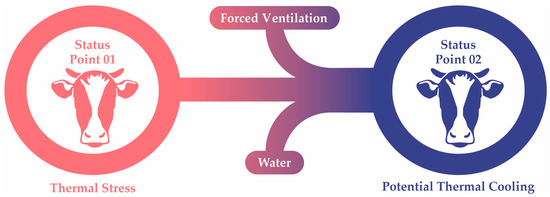
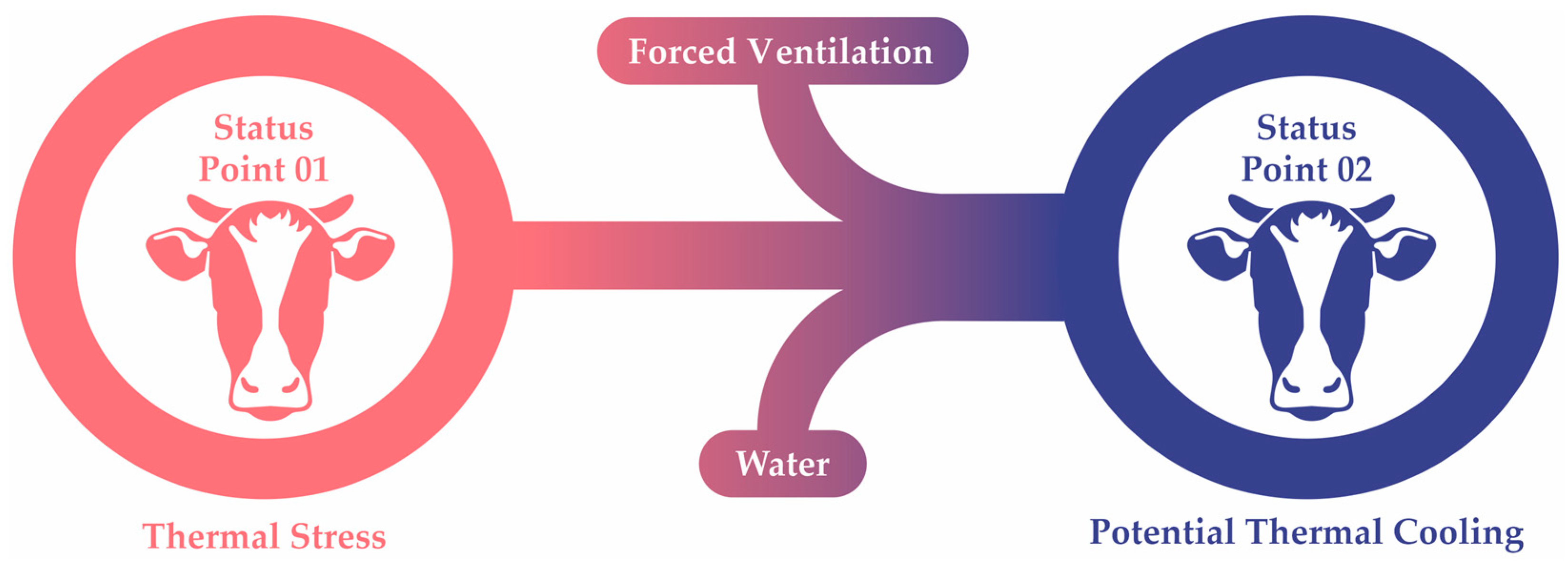
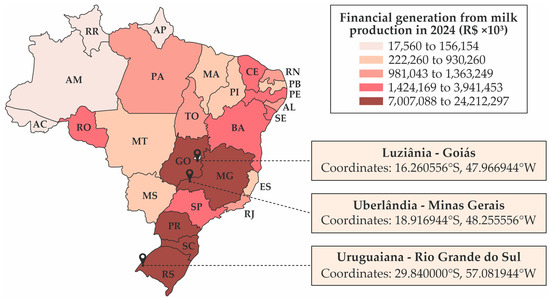
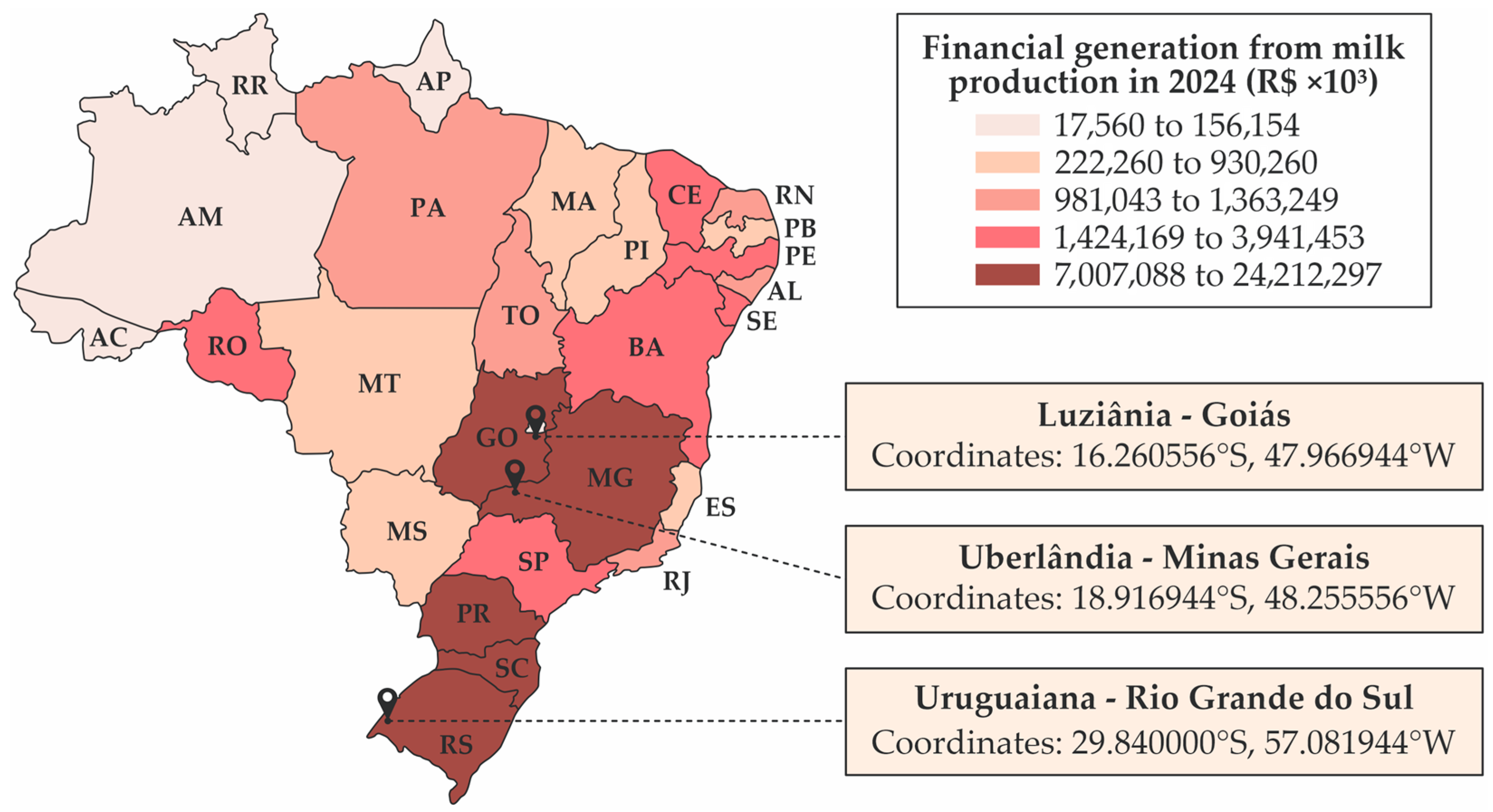
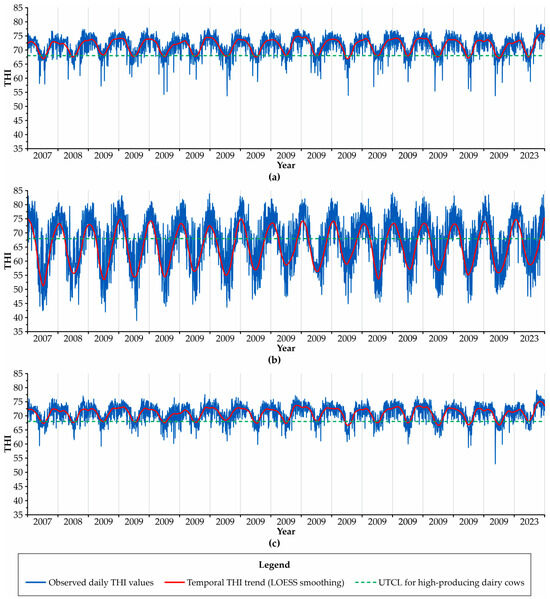
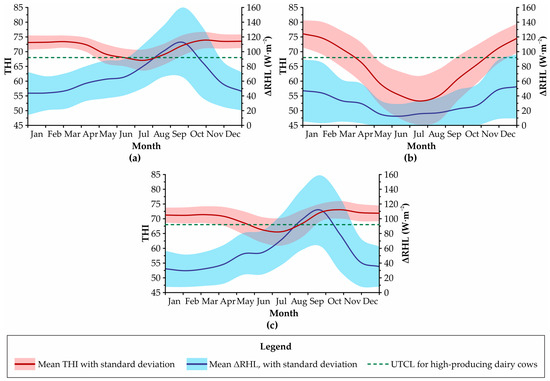

Disclaimer/Publisher’s Note: The statements, opinions and data contained in all publications are solely those of the individual author(s) and contributor(s) and not of MDPI and/or the editor(s). MDPI and/or the editor(s) disclaim responsibility for any injury to people or property resulting from any ideas, methods, instructions or products referred to in the content. |
© 2026 by the authors. Licensee MDPI, Basel, Switzerland. This article is an open access article distributed under the terms and conditions of the Creative Commons Attribution (CC BY) license.