


Abstract
Comparative studies of essential oil recovery from cold atmospheric microplasma (CAmP)-pretreated laurel (Laurus nobilis L.) leaves were performed using hydrodistillation, steam distillation, hexane extraction and subcritical CO2 extraction. CAmP-pretreated and untreated laurel leaves were analyzed in terms of microstructural changes, extraction kinetics and the chemical composition of the recovered essential oil. CAmP pretreatment intensified laurel essential oil recovery through the formation of additional microchannels (>200 μm) in the leaf tissue. The pretreated capillary-porous structure reduced the diffusion barrier and increased the oil recovery rate in CAmP-pretreated samples. The extraction rate of CAmP-pretreated laurel leaves was 19–27.2% higher, while the total extraction time was reduced by up to 50% compared with the untreated control samples to obtain equal oil yield volume. CAmP pretreatment also affected the main chemical characteristics of laurel essential oil. The total quantative composition of the identified target-component fraction in oils from untreated samples decreased in the following order: subcritical CO2 extraction (90.5%) > hexane extraction (88.2%) > steam distillation (77.4%). A similar order was observed after CAmP pretreatment: subcritical CO2 extraction (95.8%) > hydrocarbon-solvent extraction (89.9%) > steam distillation (84.5%). These results indicate that CAMP can be used as a pretreatment step to increase the essential oil recovery rate and improve essential oil quality.
1. Introduction
Laurel (Laurus nobilis L.) essential oil is obtained from laurel leaves cut from the evergreen shrub [1]. A freshly picked bay leaf contains 1–3% essential oil yield [2]. Laurel essential oil is used as an antirheumatic, antiseptic, diaphoretic, digestive and diuretic, as well as a flavoring agent in various industries [3,4]. Laurel essential oil is used as an additive for preserving meat, seafood and some agricultural products because of its antioxidant and antimicrobial activity [5,6]. Due to its biological activity, taste qualities and active aromatic componeiesnts, bay leaf extract is widely used as an additive in the food and cosmetics industry [7,8]. Several reports have stated that the biological potential, as well as the antimicrobial and antioxidant activity of laurel essential oil, strongly depends on its chemical composition, which is influenced by the extraction method and plant raw materials [5,7,9]. Therefore, the biological activity of essential oils obtained from bay leaves in different regions may vary depending on various parameters, including temperature, season, habitat and soil composition, as well as a number of others. Traditionally, essential oils are obtained by steam distillation, hydrodistillation, or extraction with hydrocarbon solvents [10]. There are also known methods for the application of subcritical and supercritical fluid extraction, which make it possible to obtain an exhaustive composition of oil components along with concretes and absolutes [11]. Several authors [12] conducted a comparative analysis of the yield, chemical composition and antioxidant activity of laurel essential oil extracted by various classical methods (hydrodistillation and steam distillation) and electrophysical methods (hydrodistillation using microwave radiation and hydrodistillation by ohmic heating). It has been shown that exposure to microwave radiation promotes the release of more oxygen-saturated monoterpenes. A review paper [13] provides an overview of traditional solvent extraction methods and auxiliary extraction methods, which include microwave extraction, ultrasound extraction, pulsed electric fields, and high-voltage electric discharges. The operating parameters of each of the described methods have a significant impact on the kinetics of extraction. However, the disadvantages of both traditional and more modern methods are the length of the process, which reduces the profitability of the production of essential oils [14]. The high duration of the process is limited by the presence of a diffusion barrier of the wax shell or membranes of essential oil globules for solvents at the extraction stage. Therefore, it is necessary to prepare the capillary-porous structure of essential oil raw materials to reduce the diffusion barrier using methods that do not reduce the quality of the resulting essential oil. One promising approach is cold atmospheric microplasma (CAmP) treatment of plant raw materials, which does not cause thermal degradation or destruction of thermolabile components [15]. The CAmP treatment exploits the effect of high voltage non-self sustained gas discharge in a gaseous medium between two metal electrodes with point-to-plate or point-to-point configurations. The distinctive feature of a non-self sustained gas discharge is the existence of an electron cloud formed by TE, which assists in creating a thermoemission current flow extending from the heat source to the point or plate geometry electrode.
Attempts by several authors to use cold atmospheric plasma treatment for preparing essential-oil-bearing raw materials, including betel leaves, mint and lemon verbena, have shown considerable promise [16,17,18]. For these types of essential oil raw materials, cold atmospheric plasma treatment increased the yield of essential oil by 2–20%. In [18], it was noted that cold atmospheric plasma pretreatment can affect not only the total essential oil content in the final extract, but also its composition. These studies mainly focus on increasing the yield of essential oil. However, some studies reported a negative effect of cold atmospheric plasma on essential oil yield. For example, Jangi et al. [19] reported a decrease in the yield of essential oil from hyssop (H. officinalis) leaves treated with cold atmospheric plasma. Similar negative results were observed by Ebadi et al. [16] for lemon verbena (Aloysia citrodora L.) extracts exposed to prolonged cold plasma treatment.
From a mass transfer mechanism point of view, an internal essential oil diffusion is limited by mass transfer resistances including oil globules, membranes and pores [20]. The etching effect of cold atmospheric plasma treatment is limited by surface modification. At the same time, most of the most oil globules in laurel leaves are located in the internal structure. Based on the literature analysis, no current studies have reported the application of cold atmospheric microplasma (CAmP) pretreatment to enhance essential oil recovery from laurel leaves by a volumetric penetrating effect. The aim of this study was therefore to investigate the effect of CAmP pretreatment on the recovery efficiency of essential oil from freshly harvested Laurus nobilis leaves using different extraction methods: steam distillation, hexane extraction and subcritical CO2 extraction.
2. Materials and Methods
2.1. Materials
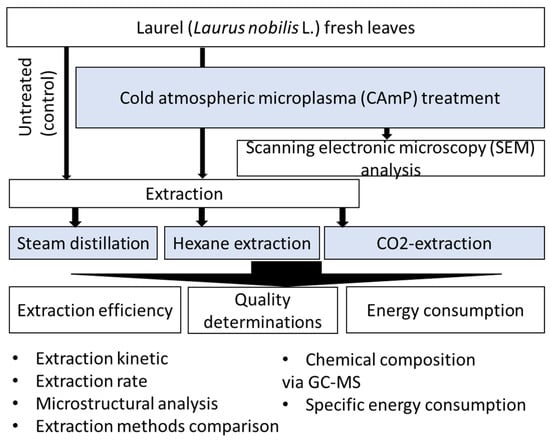
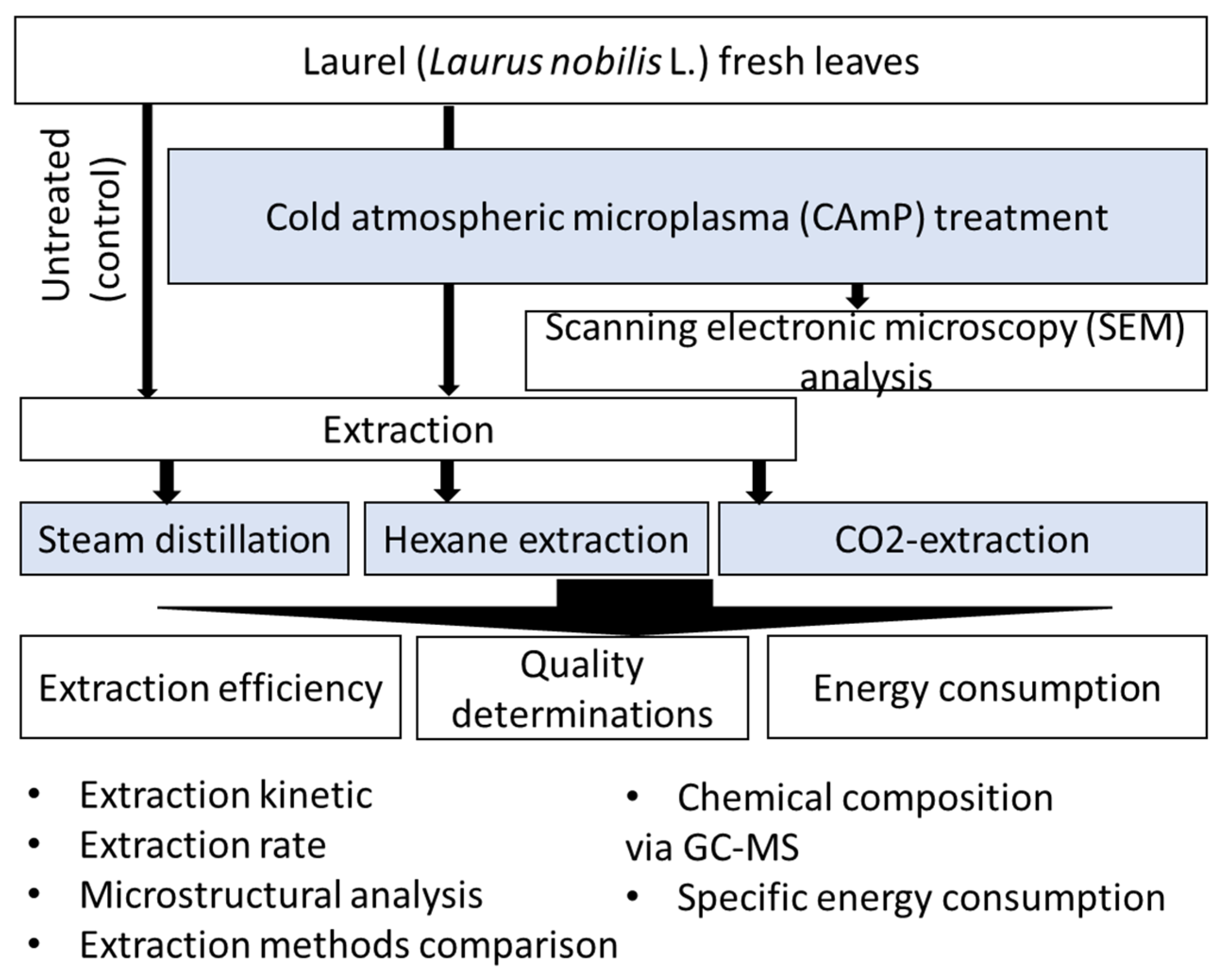
Fresh laurel leaves (Laurus nobilis L.) harvested in the subtropical zone of the Black Sea coast (Adler, Russia) in July 2025 were used in the present work. The initial moisture content of the laurel leaves was 48.2 ± 0.3%, as determined using a moisture analyzer (Evlas-2M, Sibagropribor, Krasnoobsk, Russia). A schematic flow of the experimental program is shown in Figure 1, demonstrating the main stages, including the procurement of laurel leaf samples, structural analysis, CAMP pretreatment combined with steam distillation, hydrocarbon-solvent extraction and subcritical CO2 extraction, and subsequent evaluation of extraction efficiency and oil quality. The study was designed to determine whether CAMP pretreatment combined with different extraction methods could increase essential oil recovery while preserving the quality attributes of laurel essential oil. Analytical measurements were performed in at least two independent repetitions using different samples.
Figure 1.
A schematic flow of the experimental program, demonstrating the major stages, from the procurement of the laurel leaf samples and subsequent processing, the application of cold atmospheric microplasma pretreatment combined with different extraction methods to the analytical methods, involving extraction efficiency and quality determinations.
2.2. Cold Atmospheric Microplasma Treatment
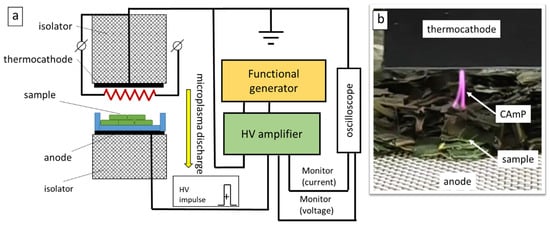
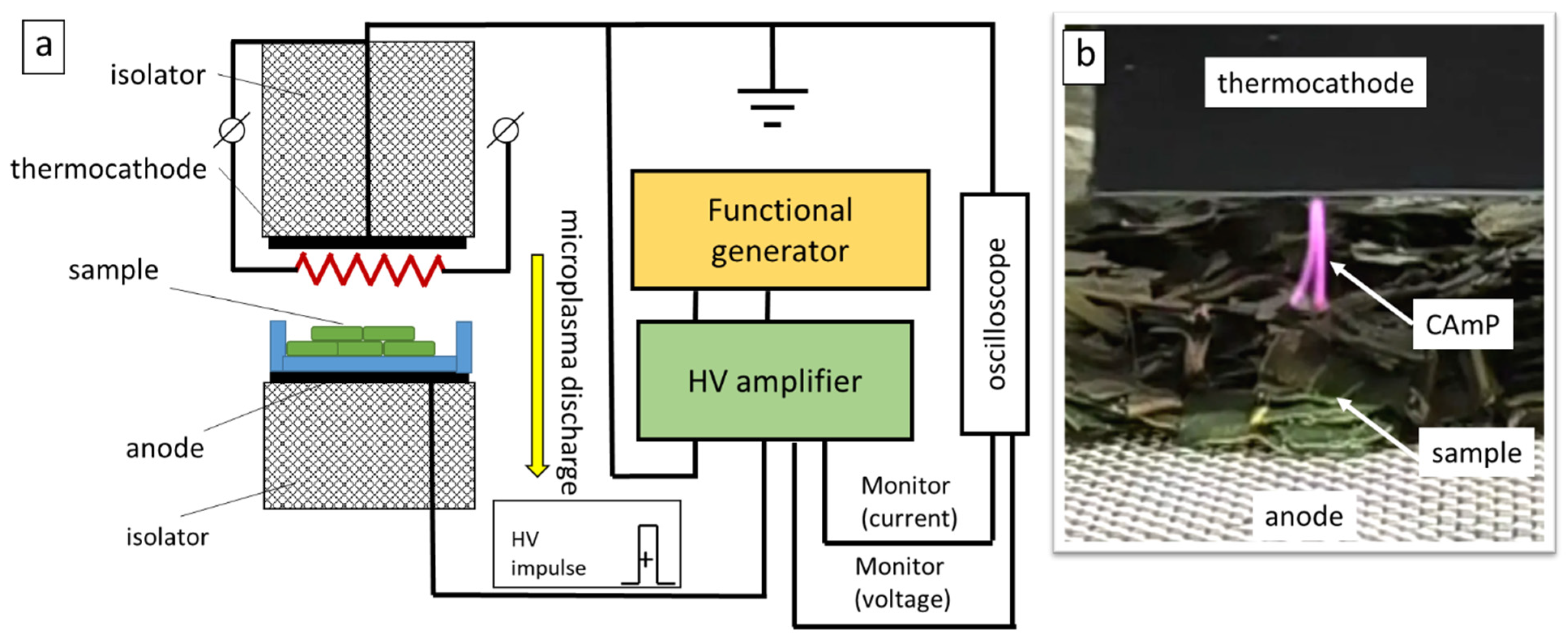
A laboratory setup for cold atmospheric microplasma (CAmP) treatment was used in the present work, as previously described [15]. The discharge current (lower than 20 mA) and voltage (up to 15 kV) were recorded using a Tektronix DPO 2004B oscilloscope (Tektronix, Inc., Beaverton, OR, USA) equipped with a high-voltage probe (P6015A ×1000). For CAmP pretreatment, 500 g of laurel leaves were pre-cut, placed on a conductive tray in a single layer not exceeding five leaves and exposed to a volumetric CAmP discharge supported by thermionic emission (Figure 2). The CAmP treatment cell was moved over the leaf layer using zigzag scanning movements. The electric-field parameters were selected to avoid thermal degradation of plant tissues. Treatment was performed at atmospheric pressure and an ambient temperature of 23 °C. The CAmP discharge penetrated through the laurel leaf structure and formed through-channels in the plant tissue, while the temperature increase of the leaves did not exceed 2–3 °C. After CAmP pretreatment, the laurel leaves were transferred for microstructural analysis and the extraction procedure.
Figure 2.
Experimental setup (a) and CAmP treatment visualization of a laurel leaves sample (b).
2.3. Laurel Essential Oil Extraction
Laurel essential oil was recovered from CAmP-pretreated and untreated laurel leaves using steam distillation, hexane extraction and subcritical CO2 extraction. The extraction efficiency depends on several factors, including the accessibility of the cellular and capillary-porous structure of the plant material.
2.3.1. Steam Distillation
Steam distillation of laurel leaves was carried out using a laboratory setup for essential oil recovery in a water-vapor stream. The experimental methodology was introduced in previous work [21]. The duration of steam distillation was set at 600 min. The kinetics of essential oil recovery during steam distillation were evaluated using a cathetometer KM-6 (Novosibirsk, Russia).
2.3.2. Hexane Extraction
Hexane extraction of laurel leaves was carried out using a laboratory extractor with a heating jacket. Heating temperature was set at 55 °C. Briefly, 100 g of laurel leaves were loaded into the extractor. Hexane was then pumped from the solvent tank through the receiver into the extractor. The solvent flow rate was set to 30.0 cm3 min−1. The miscella was collected in a receiving vessel, and the mass of extracted substances was determined at specified time intervals. Extraction with fresh solvent was continued for 120 min. After extraction, the solvent was distilled off from the spent plant material to determine the residual oil content. The residual oil content was determined as the ratio of the mass of extractive substances in the initial raw material to the mass of extractive substances remaining in the raw material after the extraction time.
2.3.3. Subcritical CO2 Extraction
Subcritical CO2 extraction was carried out in a laboratory-scale closed extraction unit operated with liquefied carbon dioxide. This extraction route was selected because liquefied/subcritical CO2 provides a low-temperature, oxygen-limited medium for recovering volatile and lipophilic plant constituents, while the solvent can be removed from the extract by depressurisation without leaving organic solvent residues [22,23].
Before extraction, untreated or CAmP-pretreated laurel leaves were loaded into the Soxhlet-type extraction chamber. The apparatus was charged with solid CO2 in an amount calculated to obtain 500 cm3 of liquid CO2 during operation. After loading, air was removed from the closed vessel using a vacuum pump in order to minimize oxidative changes in the plant matrix and to maintain a reproducible CO2 atmosphere during extraction. The unit was then sealed, the heating block was gradually heated to 40 °C, and the condenser was cooled with a circulating coolant maintained at 0 to −10 °C.
During operation, carbon dioxide evaporated from the lower part of the system, condensed on the cooled surface and returned as liquid CO2 to the extraction chamber. The liquid phase repeatedly contacted the plant material, dissolved the extractable compounds and transferred the CO2 miscella into the receiving flask through the siphon cycle. The extraction zone was maintained at 20 °C and 5.8 MPa, and the extraction time was 180 min. These parameters are below the critical point of CO2 and therefore correspond to subcritical/liquefied CO2 extraction rather than supercritical extraction. The maximum pressure of the system was limited by a safety valve rated at 7 MPa. A similar low-temperature CO2 extraction principle has been used for essential-oil-bearing plant materials in laboratory studies [24,25].
At the end of the process, heating was stopped and the system was allowed to cool before depressurisation. CO2 was slowly released through the safety valve, and the extractor was opened only after pressure equilibration with the atmosphere. The obtained CO2 extract was collected from the receiving flask, transferred into sealed glass vials and stored before further essential oil isolation and GC–MS analysis. The same protocol was applied to untreated and CAMP-pretreated samples so that differences in extraction efficiency and oil composition could be attributed to the pretreatment step rather than to variations in extraction conditions [26].
2.4. Chemical Analysis of General Essential Oil Quality Parameters
The essential oils were analysed by gas chromatography coupled to mass spectrometry (GC–MS) (gas chromatograph Khromatek-Crystall 5000 (Khromatek, Yoshkar Ola, Russia) equipped with a mass spectrometric detector) using a CR—5 ms capillary column with an inner diameter of 30 m × 0.25 mm. (film thickness 0.25 microns). GC–MS profiles were obtained using the following conditions: carrier gas He; flow rate 1 mL/min; injection temperature 250 °C; the thermostat temperature was set in the range of 75 °C to 240 °C, with a rate of increase of 4 °C/min; the ionisation mode used was electronic impact at 70 eV. Identification of the components was achieved from their linear retention indices on the column, determined with reference to a homologous series of C8–C22 n-alkanes, and by a comparison of their mass spectral fragmentation patterns with those stored in the data bank (Wiley/NBS library).
2.5. Energy Consumption of CAmP Treatment
The electrical energy required for the cold atmospheric microplasma (CAmP) pretreatment was evaluated as an additional processing input, separately from the energy demand of the subsequent extraction stages. This separation was used because CAmP was applied only as a short pretreatment step intended to modify the capillary-porous structure of laurel leaves before steam distillation, solvent extraction or subcritical CO2 extraction.
The calculation procedure was based on the direct registration of the voltage-current characteristics of the plasma discharge using an oscilloscope, as reported for CAMP-assisted valorisation of tomato processing by-products [27]. The approach is also consistent with the energy assessment of nonthermal pulsed filamentary microplasma treatment assisted by thermionic emission described by Shorstkii and Koshevoi [28].
For each treatment run, the instantaneous voltage Ut and discharge current It were recorded during the passage of the CAMP discharge through the laurel leaf layer. The energy released by a single discharge pulse was calculated as the time integral of the instantaneous electrical power over the pulse duration:
where Wp is the energy of one discharge pulse (J), Ut is the instantaneous voltage applied to the electrodes at time t (V), It is the instantaneous discharge current passing through the sample at time t (A), and τp is the pulse duration (s).
The electrical energy introduced by the plasma discharge during one complete pretreatment run was calculated by multiplying the energy of a single pulse by the total number of discharges applied to the raw material:
where WCAmP is the total discharge energy for one CAmP treatment run (J), and n is the number of discharge pulses. This calculation was preferred to the use of nominal generator power because the electrical response of plant tissues may vary during treatment as a result of local differences in moisture content, conductivity and contact conditions.
Because the CAmP system used in this work was supported by thermionic emission, the electrical input of the thermionic emission source was included in the pretreatment energy balance. When wattmeter readings are available, this contribution is obtained from the recorded power. Alternatively, it can be calculated from the stabilized voltage and current supplied to the thermionic emission element:
where WTE is the energy consumption of the thermionic emission source (J), PTE is its electrical power (W), UTE and ITE are the voltage (V) and current (A) supplied to the thermionic emission element, respectively, and tCAMP is the total duration of CAmP pretreatment (s).
The total electrical energy consumed during CAmP pretreatment was therefore calculated as the sum of the discharge energy and the thermionic emission contribution:
where Wtot is the total electrical energy used for CAMP pretreatment of one batch of laurel leaves (J).
The specific energy consumption of CAmP pretreatment with related extraction method was expressed per unit mass of fresh plant material:
where SEC is the specific energy consumption of CAmP pretreatment with related extraction method (kJ kg−1), m is the mass of treated laurel leaves in one batch (kg), is the power consumption of the extraction equipment [kW], and the factor 1000 converts joules to kilojoules. In the present study, the CAmP-treated batch mass was 0.5 kg, while the discharge voltage and current did not exceed 15 kV and 20 mA, respectively, as described in Section 2.2. The obtained SEC value was used to characterize the additional energy input introduced by the pretreatment stage and to relate this input to the observed intensification of essential oil recovery.
2.6. Microstructural Analysis
The microstructure of the internal tissues and the surface of the laurel leaves was examined using an EVO HD 15 scanning electron microscope (Zeiss, Jena, Germany). Measurement conditions were set at: electron beam energy—10 keV, and magnification—×30–×200. The sample was shock-frozen by liquid nitrogen (−196 °C) to remove residual moisture.
2.7. Statistical Analysis
Each experimental procedure was repeated three times using independent laurel leaves samples (n = 3). The results are presented as the mean ± standard deviation (SD). Statistical differences between untreated and FCP-treated samples were evaluated separately for each extraction method using a one-way analysis of variance (ANOVA), followed by Tukey’s post hoc test at a significance level of p < 0.05.
3. Results
3.1. Effect of Cold Atmospheric Plasma Treatment on the Microstructure of Laurel Leaves
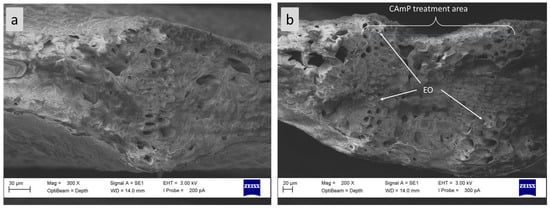
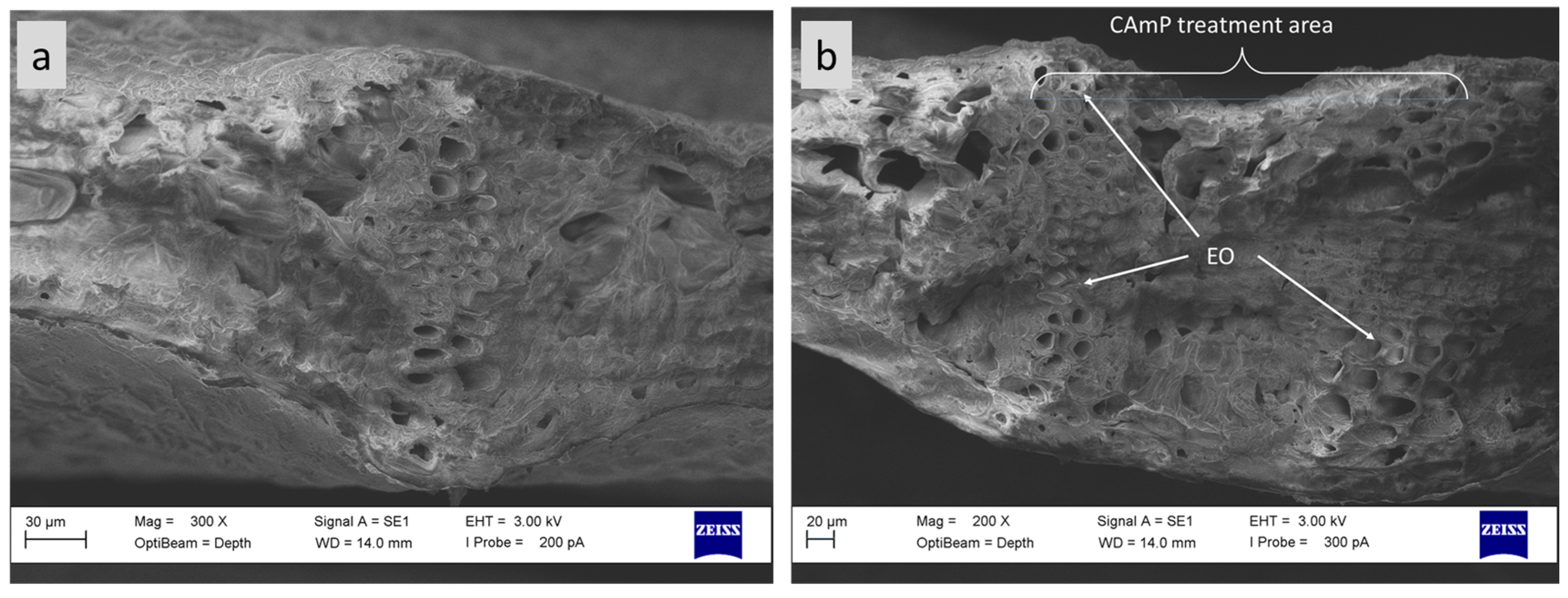
The effect of cold atmospheric microplasma (CAmP) pretreatment on morphological changes in the structure of laurel leaves was investigated by scanning electron microscopy. Figure 3 shows the morphology of a cross-sectioned laurel leaf in the region formed by the CAmP discharge channel at ×200 magnification. A localized discharge zone was observed on the upper leaf surface, with the formation of a crater approximately 320 μm in diameter. The CAmP discharge was concentrated in the region of internal essential-oil reservoirs, which can be considered the most electrically conductive zones of the leaf structure. According to [29], the electrical conductivity of essential oil is higher than that of laurel leaf tissue. Therefore, the CAMP discharge can pass through the internal reservoirs and disturb membrane integrity, thereby reducing structural resistance to essential-oil transfer.
Figure 3.
SEM image of cross-section structure of the untreated (a) and CAmP treated (b) Laurus nobilis L. with indication of a new crater formation and essential oil globules (EO) localization.
CAmP pretreatment can modify the surface and internal structure of laurel leaves by adding additional channels and promote mass transfer. Comparable effects were observed for thyme (Thymus vulgaris L.) leaves [30] by applying dielectric-barrier-discharge cold atmospheric plasma treatment. Enhanced hydrophilicity and modified surface properties were obtained for essential-oil-bearing plants [31].
The microstructure of plant surfaces after cold atmospheric plasma treatment has also been studied for betel leaves [17]. The authors reported cell damage, surface etching and increased leaf roughness after plasma exposure, which accelerated the mass-transfer process.
Other studies [17,32] on plasma-treated betel leaves and lemon peel showed the formation of cracks, fissures and cellular damage on the surface of the raw material, leading to enhanced diffusion of essential oil from oil-bearing secretory structures compared with untreated controls. In contrast, Molina et al. [33] who treated Lavandin Grosso using dielectric barrier discharge (DBD), reported no change in the surface roughness of glandular trichomes even after prolonged exposure, suggesting that surface alterations occurred mainly at the nanometer scale. These differences may be explained by the type of plasma discharge and the energy distribution in the treated material. In the present study, CAmP pretreatment was able to affect internal oil-cell membranes rather than only surface layers.
Similar effects were observed for lavender inflorescences pre-treated by CAmP technology [21]. Additional microchannels formation and facilitating the release of bound essential oil was reported as a main mechanism of CAmP treatment. Other authors also noted a tree-like structures forming in the internal structure of plant materials by applying CAmP technology [34,35], confirming the relevance of the proposed hypothesis.
3.2. Impact of CAmP Pretreatment on Essential Oil Extraction
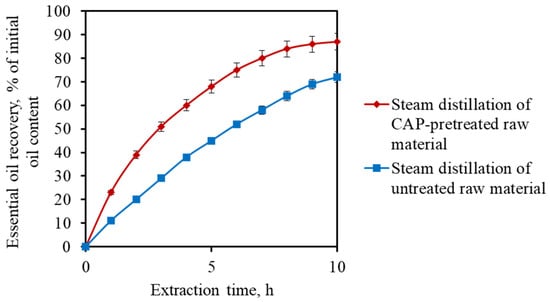
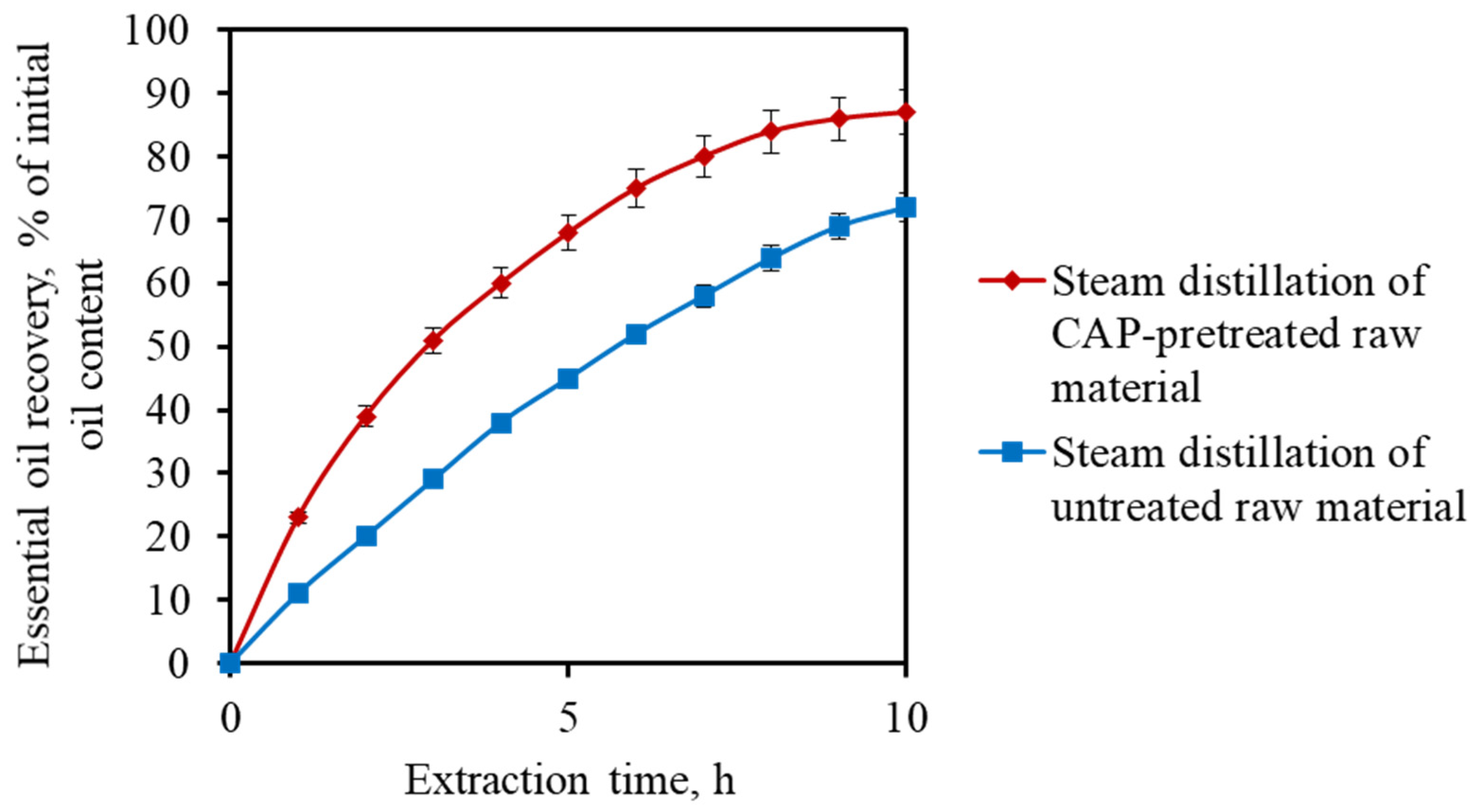
Figure 4 presents the kinetics of essential oil recovery over 600 min during steam distillation. The experimentally obtained kinetic curves for CAMP-pretreated and untreated laurel leaves demonstrate diffusion-controlled mass transfer. Comparable essential oil recovery was achieved approximately two times faster for CAmP-pretreated raw material. In particular, 70% essential oil recovery from CAmP-pretreated leaves was reached after 4.7 h, whereas untreated leaves required 9.5 h to reach the same level. An increase in the diffusion rate after CAMP pretreatment has also been reported for mint leaves extracted in an ultrasonic reactor combined with cold atmospheric plasma exposure [18].
Figure 4.
Kinetics of essential oil recovery from CAMP-pretreated laurel leaves during steam distillation.
In the current study, the essential oil yield was reported to be 155% higher than that of the control sample. Such a pronounced increase may be questionable because secondary products could have been released into the essential oil fraction. More moderate increases have been reported for peppermint. For example, dielectric-barrier-discharge plasma pretreatment of peppermint leaves increased the essential oil yield from 1.75% to 1.81% [36]. Comparable values were also obtained for lavender essential-oil-bearing raw material, where pretreatment with a low-current spark discharge increased the essential oil yield by 0.09% during steam distillation [21].
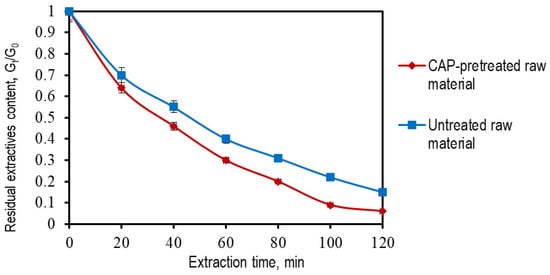
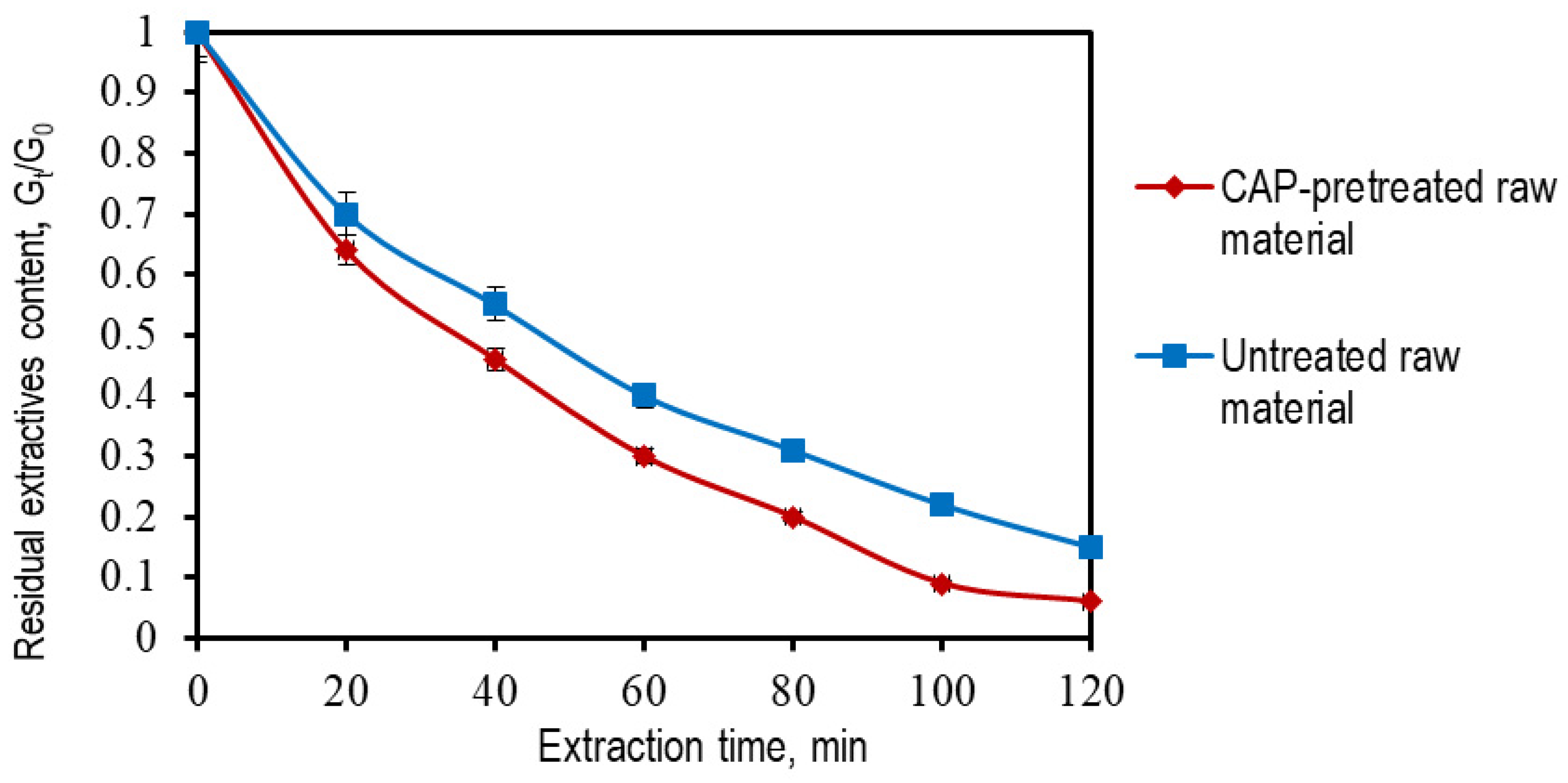
The hexane extraction results for untreated and CAmP-pretreated samples are presented as the change in the residual content of extractive substances over time (Figure 5).
Figure 5.
Hexane extraction kinetics of laurel leaves with and without CAMP pretreatment: G0 is the mass of extractive substances in the initial raw material, g; Gt is the mass of extractive substances remaining in the raw material after extraction time t, g.
A comparative analysis of the curves shows that CAmP pretreatment enabled deeper extraction by preparing the capillary-porous structure of the essential-oil-bearing raw material. After 120 min of extraction, the residual content of extractive substances in CAmP-pretreated samples was 0.08 g, compared with 0.16 in untreated samples. Similar results were obtained for cumin treated with argon cold atmospheric plasma before extraction: the yield of the main essential oil components obtained by diethyl ether extraction increased from 47.9 to 56.4% [37]. Deep extraction assisted by pulsed electric field pretreatment has also been reported for rosemary, eucalyptus and thyme samples [38], where pretreatment increased the yield of extractive substances by an average of 17%. Both steam distillation and hexane extraction kinetic curve results confirm capillary porous structure modification caused by CamP pretreatment.
3.3. Influence of CAmP Pretreatment on the Chemical Composition and Quality of Essential Oil
Table 1 presents a comparative analysis of extraction methods and CAmP pretreatment effects on the component composition of laurel essential oil. Color shading indicates changes in relative peak area greater than 0.2 percentage points: green shading indicates an increase, whereas orange shading indicates a decrease. Identification and quantification of essential oil components isolated by different extraction methods are important for scaling the technology [39]. The quality-determining components of laurel essential oil were α-terpinyl acetate (7.5%), sabinene (8.5%), linalool (10.0%) and 1,8-cineole (20.0%). These values are consistent with literature data [40,41]. CAmP pretreatment increased the relative peak areas of the main target components, including 1,8-cineole, β-pinene, α-terpinyl acetate and β-caryophyllene. This increase was observed for all extraction methods. The compound linalool, an important aroma-active component of laurel essential oil, increased after steam distillation and subcritical CO2 extraction, whereas a slight decrease was observed after hexane extraction.
Table 1.
Relative peak area (%) of selected identified volatile compounds in Laurus nobilis L. essential oils.
1,8-Cineole (CIN) has been found to be the main component of the essential oil of Laurus nobilis. CIN is one of the most valuable and important monoterpenes because its antimicrobial and antifungal effects [42]. CAmP pretreatment demonstrates a significant positive effect on the quantitative value of CIN for all extraction methods. A similar tendency was observed for α-terpineol. Its relative content increased from 4.0 to 4.9% for CO2 extraction, from 3.0 to 4.9% for hexane extraction, and from 2.0 to 4.8% for SD. The response of linalool, the second major oxygenated monoterpene, was less uniform. Its concentration increased from 10.2 to 11.0% after CAmP-assisted CO2 extraction and increased from 10.0 to 10.5% after CAmP-assisted SD, whereas hexane extraction showed a moderate decrease from 9.5 to 9.0%. A minor effect after CAmP treatment was observed for the monoterpenes group. This might be related to the oxidation process during experimental procedure caused by additional pores and surface contact area increases.
The comparison of the three isolation methods indicates that the influence of CAmP on the chemical profile was extraction-method dependent. CO2 extraction produced the highest proportion of identified compounds after plasma pretreatment (95.8%) and showed relatively moderate changes in most individual constituents.
3.4. Energy Consumption of CAmP Assisted Extraction
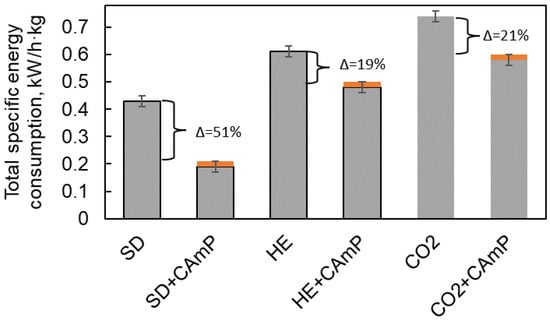
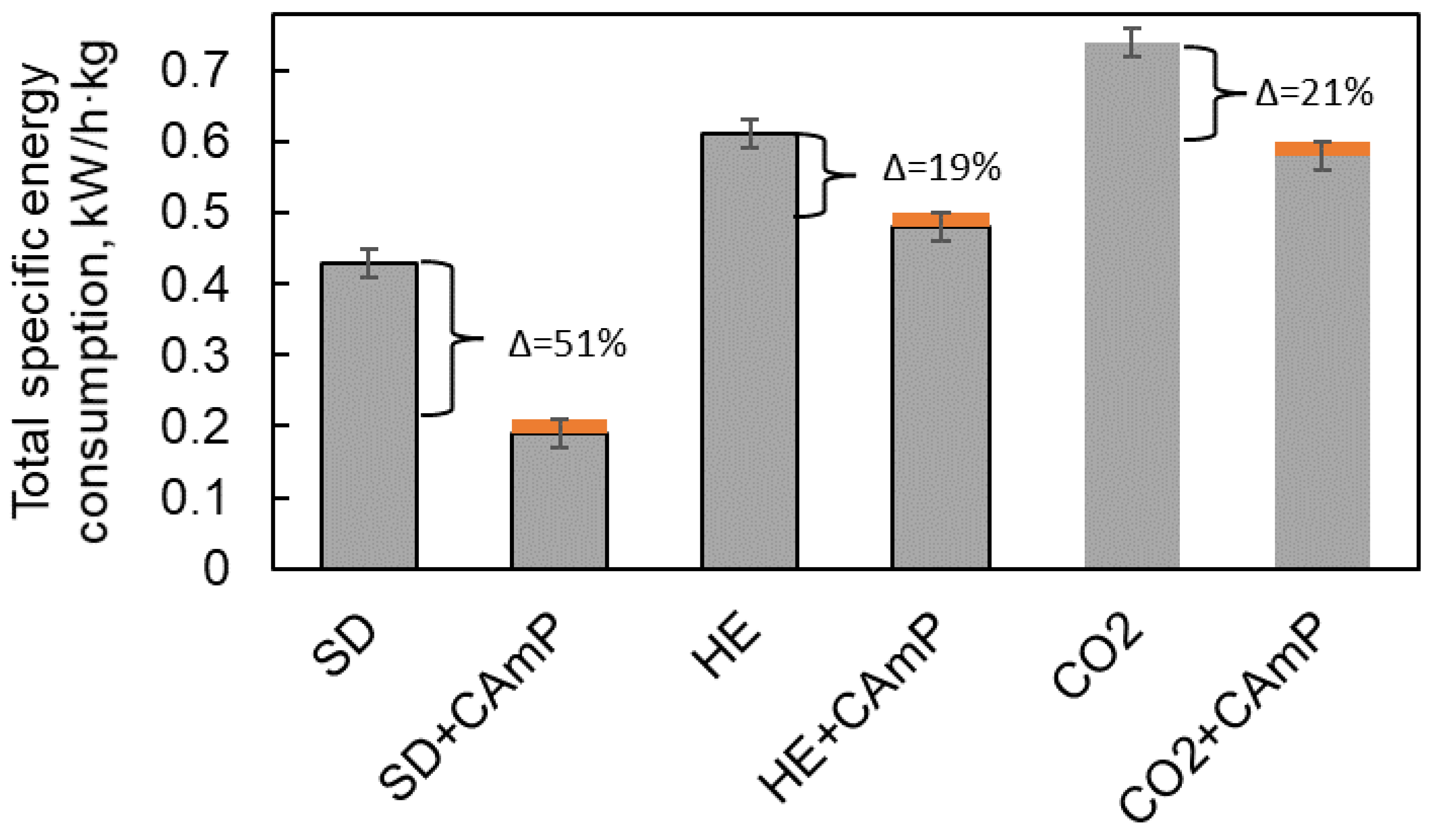
The total energy consumption for CAmP treatment and different extraction methods was calculated using Equation (5) with the related energy consumption of each extraction equipment unit (Figure 6). For CAmP + SD, the total consumed energy was 0.21 kW/hkg of essential oil, compared with 0.43 kW/hkg for the untreated control. For hexane extraction with CAmP pretreatment, the specific energy consumption was reduced by 19%. Thus, CAmP treatment enhanced both the total essential-oil yield and extraction rate while reducing specific energy consumption.
Figure 6.
Specific energy consumption comparative analysis for steam distillation, hexane extraction and CO-2 extraction with preliminary CAmP treatment.
From a process-engineering perspective, the most practically relevant outcome was obtained from the CAmP + SD configuration. The combination of a shorter extraction time, a high extraction rate and a decrease in specific energy consumption from 0.43 to 0.21 kW/hkg suggests that CAmP pretreatment may be suitable for continuous or semi-continuous industrial implementation. The same positive effect of CAmP-treatment was obtained for subcritical CO2 extraction. Specific energy consumption decreased from 0.74 to 0.58 kW/hkg. The energy-consumption values are comparable with those reported for ohmic accelerated steam distillation, while CAmP has the additional advantage of treating the raw material before distillation without requiring immersion in a conductive liquid phase.
In laurel essential oil production, processing time is a major factor because of seasonality and raw-material harvesting requirements [43]. In total, it reaches up to 10 h of essential oil recovery process time. Taking into account this general basis and according to the results presented in this study, CAmP-assisted laurel essential extraction could potentially reduce the process time by 55.3%. In a large-scale laurel essential-oil mill processing 1 tons/day of laurel leaves, cold atmospheric microplasma technology could potentially increase daily raw material throughput by approximately 2.4-fold under comparable operating conditions. This improvement may increase production efficiency and support the payback of CAmP equipment investment. Probable technical challenges during full industrial scale-up, including plasma penetration on thick material bed and conveyor type of treatment for large-batch production, require detailed study.
4. Discussion
The observed morphological changes demonstrate that CAmP pretreatment can modify both the surface and internal structure of laurel leaves, forming an enlarged diffusion surface and promoting mass transfer. Similar surface modification effects have been reported for dielectric-barrier-discharge cold atmospheric plasma treatment of thyme (Thymus vulgaris L.) leaves [30], where increased hydrophilicity, wrinkle formation and partial destruction of glandular trichomes were observed as voltage and treatment time increased. Cold atmospheric plasma has also been applied to botanical materials and essential-oil-bearing plants because of its ability to modify surface properties and increase hydrophilicity [44].
In contrast, Ref. [33], who treated Lavandin Grosso using dielectric barrier discharge (DBD), reported no change in the surface roughness of glandular trichomes even after prolonged exposure, suggesting that surface alterations occurred mainly at the nanometer scale. These differences may be explained by the type of plasma discharge and the energy distribution in the treated material. In the present study, CAmP pretreatment was able to affect internal oil-cell membranes rather than the external surface layers only.
The reported effect of CAmP treatment on laurel leaves also supports the proposed mechanism: additional microchannels were formed in internal tissues, facilitating the release of bound essential oil [21]. The formation of tree-like structures under cold plasma treatment has also been noted by other researchers [34,45], confirming the relevance of the proposed hypothesis.
The effect of CAmP pretreatment on essential oil isolation from Laurus nobilis L. was strongly dependent on the extraction method. The literature nevertheless demonstrates that cold plasma does not invariably preserve essential oil composition. Ebadi et al. [16] found that low-pressure plasma treatment of lemon verbena changed the distribution of volatile classes: monoterpene hydrocarbons and oxygenated sesquiterpenes were relatively enriched in plasma-treated samples, whereas oxygenated monoterpenes were more abundant in the untreated control sample. Prolonged plasma treatment also reduced essential oil content, which was attributed partly to enhanced loss of volatile compounds from plasma-induced fissures. In contrast, Rezaei et al. [36] observed no remarkable compositional changes in fennel and spearmint oils under optimized DBD-plasma conditions. Together, these studies demonstrate that plasma effects on EO composition depend on the plant matrix, plasma configuration, working gas, treatment intensity and exposure time [46].
A comparative analysis of SD and hexane extraction curves shows that CAmP pretreatment enabled deeper extraction by preparing the capillary-porous structure of the essential-oil-bearing raw material. The essential oil yield was increased and the extraction rate was also significant higher for CamP-treated samples. Similar results were obtained for cumin seeds after diethyl ether extraction where the essential oil yield increased from 47.9 to 56.4% [37] as well as for rosemary, eucalyptus and thyme samples [38]. Both the steam distillation and hexane extraction kinetic curves confirm capillary porous structure modification caused by CAmP-pretreatment.
The present results occupy an intermediate position between these previously reported responses. CAmP treatment did not produce a fundamentally different qualitative profile, but it caused a measurable redistribution of individual compounds, particularly when combined with SD. Importantly, because the values represent relative chromatographic abundances, an increase in the percentage of one constituent does not necessarily indicate an increase in its absolute concentration. Relative enrichment can also occur when other constituents are extracted less efficiently or decrease in abundance. Therefore, the compositional changes should primarily be interpreted as changes in the relative GC profile unless absolute compound concentrations are independently determined.
Overall, the combined results suggest that the main role of CAmP pretreatment is the modification of matrix accessibility and compound-specific mass transfer rather than extensive plasma-induced chemical transformation. Among the investigated extraction methods, CAmP-assisted CO2 extraction provided the highest proportion of identified compounds (95.8%), whereas CAmP-assisted steam distillation produced the largest improvement relative to its untreated counterpart. Thus, plasma pretreatment appears particularly promising for intensifying steam-based recovery, while CO2 extraction provides the most completely characterized volatile fraction under the investigated conditions. Further studies combining absolute quantification of major compounds with morphological analysis and extraction kinetics would be required to distinguish preferential release from possible plasma-induced chemical transformations.
5. Conclusions
The effect of cold atmospheric microplasma (CAmP) pretreatment on the efficiency of essential oil recovery from freshly harvested Laurus nobilis L. leaves was investigated using steam distillation, hexane extraction and subcritical CO2 extraction. Morphological analysis of laurel leaf cross-sections revealed electroporation-like disruption of essential-oil reservoir membranes in the plasma-discharge zone. A crater of approximately 200–300 μm was formed on the laurel leaf surface, and the discharge passed through the entire leaf thickness to the metal tray. Kinetic curves obtained by different extraction methods showed that CAmP pretreatment increased the extraction rate by 19–27.2% and reduced the extraction time by up to 50% while maintaining a comparable essential oil yield.
The prepared capillary-porous structure of laurel leaves reduced the diffusion barrier for solvent penetration into the plant matrix and increased the recovery of extractive substances. The total identified fraction of laurel essential oil components in untreated samples decreased in the following order: subcritical CO2 extraction (90.5%) > hydrocarbon-solvent extraction (88.2%) > steam distillation (77.4%). CAMP pretreatment increased the content of the main target components and produced the following order: subcritical CO2 extraction (95.8%) > hydrocarbon-solvent extraction (89.9%) > steam distillation (84.5%). The results demonstrate the potential of CAMP pretreatment for improving the extraction efficiency and quality of laurel essential oils.
Further research should focus on optimizing CAmP treatment regimes, and a scalability analysis of CAmP technology for laurel leaves to maximize essential oil recovery. The existing studies use a limited range of essential oil materials to explore the potential of cold plasma for extraction. Therefore, the range of plant materials needs to be expanded to test the technology of cold atmospheric microplasma treatment and adjust it to industrial processes and scales.
Author Contributions
Conceptualization, I.S.; methodology, V.T.; software, V.T.; validation, A.S.; formal analysis, M.S.; investigation, M.S.; resources, I.S.; data curation, V.T.; writing—original draft preparation, A.S.; writing—review and editing, A.S. and I.S.; visualization, V.T.; supervision, I.S.; project administration, I.S. All authors have read and agreed to the published version of the manuscript.
Funding
This research was supported by the Kuban Science Foundation (project No. 25-16-20114) and the Russian Science Foundation (project No. 25-16-20114), https://rscf.ru/project/25-16-20114/ URL (accessed on 1 November 2026).
Data Availability Statement
The data presented in this study are available on request from the corresponding author.
Conflicts of Interest
The authors declare no conflicts of interest. The funders had no role in the design of the study; in the collection, analyses or interpretation of data; in the writing of the manuscript; or in the decision to publish the results.
Abbreviations
The following abbreviations are used in this manuscript:
| CAmP | Cold atmospheric microplasma |
| EO | Essential oil |
| HD | Hydrodistillation |
| SD | Steam distillation |
| GC–MS | Gas chromatography–mass spectrometry |
| SEM | Scanning electron microscopy |
| CLO | Classical hydrodistillation using a Neo-Clevenger apparatus |
| SLO | Steam distillation |
References
- Franco-Vega, A.; Ramírez-Corona, N.; López-Malo, A.; Palou, E. Studying Microwave Assisted Extraction of Laurus nobilis Essential Oil: Static and Dynamic Modeling. J. Food Eng. 2019, 247, 1–8. [Google Scholar] [CrossRef] [Scilit]
- Jaradat, N.; Hawash, M.; Qaoud, M.T.; Al-Maharik, N.; Qadi, M.; Hussein, F.; Issa, L.; Saleh, A.; Saleh, L.; Jadallah, A. Biological, Phytochemical and Molecular Docking Characteristics of Laurus nobilis L. Fresh Leaves Essential Oil from Palestine. BMC Complement. Med. Ther. 2024, 24, 223. [Google Scholar] [CrossRef] [Scilit]
- Sangun, M.K.; Aydin, E.; Timur, M.; Karadeniz, H.; Caliskan, M.; Ozkan, A. Comparison of Chemical Composition of the Essential Oil of Laurus nobilis L. Leaves and Fruits from Different Regions of Hatay, Turkey. J. Environ. Biol. 2007, 28, 731–733. [Google Scholar]
- Simić, A.; Soković, M.D.; Ristić, M.; Grujić-Jovanović, S.; Vukojević, J.; Marin, P.D.; Grujić-Jovanović, S.; Vukojević, J.; Marin, P.D. The Chemical Composition of Some Lauraceae Essential Oils and Their Antifungal Activities. Phytother. Res. 2004, 18, 713–717. [Google Scholar] [CrossRef] [Scilit]
- Fernandes, F.A.N.; Maia, D.L.H.; Canuto, K.M.; de Brito, E.S. Aroma Modulation of Limonene-Rich Essential Oil Using Cold Plasma Technology. Plasma Chem. Plasma Process. 2025, 45, 1925–1944. [Google Scholar] [CrossRef] [Scilit]
- Khalid, S.; Chaudhary, K.; Amin, S.; Raana, S.; Zahid, M.; Naeem, M.; Mousavi Khaneghah, A.; Aadil, R.M. Recent Advances in the Implementation of Ultrasound Technology for the Extraction of Essential Oils from Terrestrial Plant Materials: A Comprehensive Review. Ultrason. Sonochem. 2024, 107, 106914. [Google Scholar] [CrossRef] [Scilit]
- da Silveira, S.M.; Luciano, F.B.; Fronza, N.; Cunha, A.; Scheuermann, G.N.; Vieira, C.R.W. Chemical Composition and Antibacterial Activity of Laurus nobilis Essential Oil towards Foodborne Pathogens and Its Application in Fresh Tuscan Sausage Stored at 7 °C. LWT-Food Sci. Technol. 2014, 59, 86–93. [Google Scholar] [CrossRef] [Scilit]
- Mediouni Ben Jemâa, J.; Tersim, N.; Toudert, K.T.; Khouja, M.L. Insecticidal Activities of Essential Oils from Leaves of Laurus nobilis L. from Tunisia, Algeria and Morocco, and Comparative Chemical Composition. J. Stored Prod. Res. 2012, 48, 97–104. [Google Scholar] [CrossRef] [Scilit]
- Fidan, H.; Stefanova, G.; Kostova, I.; Stankov, S.; Damyanova, S.; Stoyanova, A.; Zheljazkov, V.D. Chemical Composition and Antimicrobial Activity of Laurus nobilis L. Essential Oils from Bulgaria. Molecules 2019, 24, 804. [Google Scholar] [CrossRef] [Scilit]
- Kant, R.; Kumar, A. Review on Essential Oil Extraction from Aromatic and Medicinal Plants: Techniques, Performance and Economic Analysis; Elsevier B.V.: Amsterdam, The Netherlands, 2022; Volume 30, p. 100829. [Google Scholar]
- Yousefi, M.; Rahimi-Nasrabadi, M.; Pourmortazavi, S.M.; Wysokowski, M.; Jesionowski, T.; Ehrlich, H.; Mirsadeghi, S. Supercritical Fluid Extraction of Essential Oils. TrAC Trends Anal. Chem. 2019, 118, 182–193. [Google Scholar] [CrossRef] [Scilit]
- Taban, A.; Saharkhiz, M.J.; Niakousari, M. Sweet Bay (Laurus nobilis L.) Essential Oil and Its Chemical Composition, Antioxidant Activity and Leaf Micromorphology under Different Extraction Methods. Sustain. Chem. Pharm. 2018, 9, 12–18. [Google Scholar] [CrossRef] [Scilit]
- Chan, C.-H.; Yusoff, R.; Ngoh, G.-C. Modeling and Kinetics Study of Conventional and Assisted Batch Solvent Extraction. Chem. Eng. Res. Des. 2014, 92, 1169–1186. [Google Scholar] [CrossRef] [Scilit]
- Sherstyukov, A.; Andreeva, O.; Tarasov, V.; Shorstkii, I. Recent Advances in Cold Plasma Treatment for Essential Oil Extraction. Foods Raw Mater. 2026, 15, 344–357. [Google Scholar] [CrossRef] [Scilit]
- Shorstkii, I. Application of Cold Filamentary Microplasma Pretreatment Assisted by Thermionic Emission for Potato Drying. Innov. Food Sci. Emerg. Technol. 2020, 66, 102540. [Google Scholar] [CrossRef] [Scilit]
- Ebadi, M.; Abbasi, S.; Harouni, A.; Sefidkon, F. Effect of Cold Plasma on Essential Oil Content and Composition of Lemon Verbena. Food Sci. Nutr. 2019, 7, 1166–1171. [Google Scholar] [CrossRef] [Scilit]
- Karunanithi, S.; Guha, P.; Srivastav, P.P. Cold Plasma-Assisted Microwave Pretreatment on Essential Oil Extraction from Betel Leaves: Process Optimization and Its Quality. Food Bioprocess Technol. 2023, 16, 603–626. [Google Scholar] [CrossRef] [Scilit]
- Moradi-Sadr, J.; Ebadi, M.; Ayyari, M.; Ghomi, H. Optimization of Ultrasonic Bath and Cold Plasma Pre-treatments in the Spearmint Essential Oil Isolation Process. Food Sci. Nutr. 2023, 11, 1904–1915. [Google Scholar] [CrossRef] [Scilit]
- Jangi, F.; Ebadi, M.-T.T.; Ayyari, M. Qualitative Changes in Hyssop (Hyssopus officinalis L.) as Affected by Cold Plasma, Packaging Method and Storage Duration. J. Appl. Res. Med. Aromat. Plants 2021, 22, 100289. [Google Scholar] [CrossRef] [Scilit]
- Zanotti, A.; Baldino, L.; Scognamiglio, M.; Reverchon, E. Post-Processing of a Lavender Flowers Solvent Extract Using Supercritical CO2 Fractionation. J. Taiwan Inst. Chem. Eng. 2023, 147, 104901. [Google Scholar] [CrossRef] [Scilit]
- Sherstyukov, A.; Shorstkiy, I.; Khudyakov, D. Comparative Characterisation of Lavender Essential Oil Distillation Methods Using Low-Current Spark Discharge Pretreatment. Storage Process. Farm Prod. 2026, 33, 81. [Google Scholar] [CrossRef]
- Cao, S.; Liang, J.; Chen, M.; Xu, C.; Wang, X.; Qiu, L.; Zhao, X.; Hu, W. Comparative Analysis of Extraction Technologies for Plant Extracts and Absolutes. Front. Chem. 2025, 13, 1536590. [Google Scholar] [CrossRef] [Scilit]
- Dobreva, A.; Nedeltcheva-Antonova, D.; Gechovska, K.; Nenov, N.; Antonov, L. Subcritical Extraction of Rosa alba L. in Static and Dynamic Modes. Chemistry 2025, 7, 149. [Google Scholar] [CrossRef] [Scilit]
- Ciko, L.; Andoni, A.; Ylli, F.; Plaku, E.; Taraj, K. A Study on Oil Extraction from Albanian Chamomile and Characterization by IR Spectroscopy. J. Int. Environ. Appl. Sci. 2016, 11, 154–158. [Google Scholar]
- Taraj, K.; Delibashi, A.; Andoni, A.; Lazo, P.; Kokalari, E.; Lame, A.; Xhaxhiu, K.; Çomo, A. Extraction of Chamomile Essential Oil by Subcritical CO2 and Its Analysis by UV-VIS Spectrophotometer. Asian J. Chem. 2013, 25, 7361–7364. [Google Scholar] [CrossRef] [Scilit]
- Nabi, M.H.B.; Ahmed, M.M.; Mia, M.S.; Islam, S.; Zzaman, W. Essential Oils: Advances in Extraction Techniques, Chemical Composition, Bioactivities, and Emerging Applications. Food Chem. Adv. 2025, 8, 101048. [Google Scholar] [CrossRef] [Scilit]
- Sosnin, M.D.; Shorstkii, I.A. Cold Atmospheric Gas Plasma Processing of Apple Slices. Food Process. Tech. Technol. 2023, 53, 368–383. [Google Scholar] [CrossRef] [Scilit]
- Shorstkii, I.; Koshevoi, E. Extraction Kinetic of Sunflower Seeds Assisted by Pulsed Electric Fields. Iran. J. Sci. Technol. Trans. A Sci. 2019, 43, 813–817. [Google Scholar] [CrossRef] [Scilit]
- Parizotto, C.A.; Dall’Oglio, E.L.; de Vasconcelos, L.G.; de Sousa, P.T.; Taques Filho, E.G.R.; Kuhnen, C.A. Measuring Dielectric Properties for Microwave-Assisted Extraction of Essential Oils Using Single-Mode and Multimode Reactors. RSC Adv. 2019, 9, 5259–5269. [Google Scholar] [CrossRef] [Scilit]
- Shokoohi, F.; Ebadi, M.-T.; Ghomi, H.; Ayyari, M. Changes in Qualitative Characteristics of Garden Thyme (Thymus vulgaris L.) as Affected by Cold Plasma. J. Appl. Res. Med. Aromat. Plants 2022, 31, 100411. [Google Scholar] [CrossRef] [Scilit]
- Buonopane, G.J.; Antonacci, C.; Lopez, J.L. Effect of Cold Plasma Processing on Botanicals and Their Essential Oils. Plasma Med. 2016, 6, 315–324. [Google Scholar] [CrossRef] [Scilit]
- Kodama, S.; Thawatchaipracha, B.; Sekiguchi, H. Enhancement of Essential Oil Extraction for Steam Distillation by DBD Surface Treatment. Plasma Process. Polym. 2014, 11, 126–132. [Google Scholar] [CrossRef] [Scilit]
- Molina, R.; López-Santos, C.; Balestrasse, K.; Gómez-Ramírez, A.; Sauló, J. Enhancing Essential Oil Extraction from Lavandin Grosso Flowers via Plasma Treatment. Int. J. Mol. Sci. 2024, 25, 2383. [Google Scholar] [CrossRef] [Scilit]
- Du, Y.; Yang, F.; Yu, H.; Xie, Y.; Yao, W. Improving Food Drying Performance by Cold Plasma Pretreatment: A Systematic Review. Compr. Rev. Food Sci. Food Saf. 2022, 21, 4402–4421. [Google Scholar] [CrossRef] [Scilit]
- Khudyakov, D.A.; Shorstkii, I.A.; Ulyanenko, E.E.; Gnuchykh, E.V. Influences of Cold Atmospheric Plasma Pretreatment on Drying Kinetics, Structural, Fractional and Chemical Characteristics of Tobacco Leaves. Dry. Technol. 2022, 40, 3285–3291. [Google Scholar] [CrossRef] [Scilit]
- Rezaei, S.; Ebadi, M.-T.; Ghobadian, B.; Ghomi, H. Optimization of DBD-Plasma Assisted Hydro-Distillation for Essential Oil Extraction of Fennel (Foeniculum vulgare Mill.) Seed and Spearmint (Mentha spicata L.) Leaf. J. Appl. Res. Med. Aromat. Plants 2021, 24, 100300. [Google Scholar] [CrossRef] [Scilit]
- Shokoohi, F.; Ebadi, M.T.; Ghomi, H.; Rezaeinezhad, A.R.; Faghih Haghani, S. Increasing the Efficiency of Cumin Essential Oil Extraction Using Cold Plasma Pretreatments. J. Sci. Food Agric. 2024, 104, 5001–5009. [Google Scholar] [CrossRef] [Scilit]
- Barros, M.; Redondo, L.; Rego, D.; Serra, C.; Miloudi, K. Extraction of Essential Oils from Plants by Hydrodistillation with Pulsed Electric Fields (PEF) Pre-Treatment. Appl. Sci. 2022, 12, 8107. [Google Scholar] [CrossRef] [Scilit]
- Temerdashev, Z.A.; Milevskaya, V.V.; Ryabokon’, L.P.; Latin, N.N.; Kiseleva, N.V.; Nagalevskii, M.V. Identification and Determination of the Components of Garden Sage (Salvia officinalis L.) Essential Oil, Isolated by Different Extraction Methods. J. Anal. Chem. 2020, 75, 1451–1460. [Google Scholar] [CrossRef] [Scilit]
- Belasli, A.; Ben Miri, Y.; Aboudaou, M.; Aït Ouahioune, L.; Montañes, L.; Ariño, A.; Djenane, D. Antifungal, Antitoxigenic, and Antioxidant Activities of the Essential Oil from Laurel (Laurus nobilis L.): Potential Use as Wheat Preservative. Food Sci. Nutr. 2020, 8, 4717–4729. [Google Scholar] [CrossRef] [Scilit]
- Chatzimitakos, T.; Athanasiadis, V.; Kalompatsios, D.; Kotsou, K.; Mantiniotou, M.; Bozinou, E.; Lalas, S.I. Optimizing Extract Preparation from Laurel (Laurus nobilis L.) Leaves Using a Pulsed Electric Field. ChemEngineering 2024, 8, 26. [Google Scholar] [CrossRef] [Scilit]
- Cai, Z.M.; Peng, J.Q.; Chen, Y.; Tao, L.; Zhang, Y.Y.; Fu, L.Y.; Long, Q.D.; Shen, X.C. 1,8-Cineole: A Review of Source, Biological Activities, and Application. J. Asian Nat. Prod. Res. 2021, 23, 938–954. [Google Scholar] [CrossRef] [Scilit]
- Ilić, Z.S.; Stanojević, L.; Milenković, L.; Milenković, A.; Šunić, L.; Ilić, D.; Stanojević, J.; Cvetković, D.; Božović, D.; Kevrešan, Ž. Seasonal Variation of Essential Oil Quantity and Quality in Bay Laurel (Laurus nobilis L.) Leaves from Montenegro. Plants 2026, 15, 923. [Google Scholar] [CrossRef] [Scilit]
- Auguste, S.; Buonopane, G.J.; Tanielyan, S.; Guerrero, D.E.; Lopez, J.L. Effects of Cold Plasma Treatment on Growth Enhancement and on the Chemical Composition of Sweet Basil Plants (Ocimum basilicum). Eur. Phys. J. D 2023, 77, 64. [Google Scholar] [CrossRef] [Scilit]
- Shorstkii, I.A.; Zherlicin, A.G.; Li, P. Impact of Pulsed Electric Field and Pulsed Microwave Treatment on Morphological and Structural Characteristics of Sunflower Seed. OCL 2019, 26, 47. [Google Scholar] [CrossRef] [Scilit]
- Khudyakov, D.; Sherstyukov, A.; Shorstkii, I. Cold Plasma-Assisted Lavender Essential-Oil Pilot Production: Impact on Oil Yield, Isolation Kinetics and Chemical Parameters. AgriEngineering 2026, 8, 300. [Google Scholar] [CrossRef] [Scilit]

Disclaimer/Publisher’s Note: The statements, opinions and data contained in all publications are solely those of the individual author(s) and contributor(s) and not of MDPI and/or the editor(s). MDPI and/or the editor(s) disclaim responsibility for any injury to people or property resulting from any ideas, methods, instructions or products referred to in the content. |
© 2026 by the authors. Licensee MDPI, Basel, Switzerland. This article is an open access article distributed under the terms and conditions of the Creative Commons Attribution (CC BY) license.