


Abstract
Digestate is a byproduct of the anaerobic digestion of food waste and can be used as a fertilizer in agricultural production. Combining mineral fertilizers with food waste digestate represents a promising strategy to improve soil fertility and enhance plant nutrition and growth. Therefore, this study evaluated the effects of different proportions of food waste anaerobic digestate combined with mineral fertilization on soil fertility, growth, and the nutritional status of maize (Zea mays L.) plants. The experiment was conducted under greenhouse conditions using a completely randomized design with six treatments: unfertilized control (C0), 100% mineral fertilizer (M100), 75% mineral fertilizer + 25% digestate (M75D25), 50% mineral fertilizer + 50% digestate (M50D50), 25% mineral fertilizer + 75% digestate (M25D75), and 100% digestate (D100), with four replicates. The chemical characterization of the digestate revealed concentrations of 0.70 g kg−1 total N, 0.60 g kg−1 P, 0.60 g kg−1 K, and 1.30 g kg−1 Na. The 100% mineral treatment (M100) supplied 120 kg ha−1 urea, 80 kg ha−1 triple superphosphate, and 70 kg ha−1 potassium chloride, while digestate application rates were calculated based on total N supply, with mineral P and K adjusted proportionally. M25D75 significantly increased cation exchange capacity, base saturation, and soil pH and resulted in higher soil P and Mg concentrations; however, it also increased soil Na concentration and exchangeable sodium percentage (ESP). M25D75, M50D50, M75D25, and M100 promoted higher chlorophyll index, stem diameter, number of leaves, plant height, and shoot dry biomass, as well as higher P, K, Ca, and Mg concentrations in plant tissues. In contrast, the exclusive application of digestate (D100) increased electrical conductivity, exchangeable sodium percentage, and Na concentrations in both soil and plant tissues, resulting in reduced plant growth. Therefore, high doses of digestate may increase the risk of soil sodicity. Overall, the combined application of mineral fertilizers and food waste digestate improved soil fertility, plant nutrition, and maize growth. These findings support the recycling of food waste through its agricultural use as digestate, contributing to circular nutrient management while reducing dependence on synthetic mineral fertilizers.
1. Introduction
Mineral fertilization provides nutrients that are readily available for plant uptake. However, the continuous use of mineral fertilizers may increase production costs and cause environmental impacts, including nutrient losses, contamination of water resources, and greenhouse gas emissions associated with fertilizer production and nitrogen transformations after application [1,2,3]. Excessive fertilizer application or low nutrient-use efficiency can promote nutrient losses through leaching, surface runoff, volatilization, and denitrification, thereby reducing nutrient-use efficiency and contributing to surface and groundwater contamination and eutrophication [2,3]. Furthermore, the industrial production of fertilizers, particularly nitrogen-based ones, is energy-intensive and associated with greenhouse gas emissions. Studies indicate that combining mineral fertilizers with organic sources can improve both the physical properties and chemical attributes of the soil, including cation exchange capacity and nutrient availability [4,5].
Among organic nutrient sources, digestate derived from the anaerobic digestion of food waste has emerged as a promising alternative for agricultural use because it contains essential nutrients, such as nitrogen, phosphorus, and potassium, in addition to micronutrients and organic matter, which can improve soil health and promote plant development [6,7]. Nutrient inputs supplied through digestate may enhance plant growth parameters, including plant height, root elongation, leaf number, and, consequently, increase shoot biomass and chlorophyll content [7].
In addition to its agronomic benefits, the use of digestate reduces dependence on mineral fertilizers and promotes more sustainable agricultural practices [8]. The disposal of food waste in landfills causes social, environmental, and economic problems. Converting these residues into digestate supports circular waste management and may reduce dependence on synthetic fertilizers. However, its agronomic performance depends on digestate composition, soil properties, crop demand, and application rate, while excessive use may increase salinity and sodium accumulation. Therefore, local evidence is needed to define safe and efficient substitution rates [9,10]. Nevertheless, the application of digestate as a fertilizer must be carefully managed and properly dosed, since excessive application rates may increase soil salinity and sodium concentration, negatively affecting plant growth and development [5,10,11].
The growth and nutritional status of maize plants are directly related to soil fertility conditions, particularly in tropical regions, where natural constraints such as low nutrient availability and high soil acidity are common [1]. Maize (Zea mays L.) is one of the most widely cultivated crops worldwide and plays an important role in human nutrition, animal feed production, and several agro-industrial value chains. In addition to its economic and social importance, maize is widely used for the production of food, starch, vegetable oil, and biofuels. It is also among the crops with the highest demand for mineral fertilizers [5]. Consequently, maize is an important model crop for studies evaluating the feasibility of organic fertilizers or their combination with mineral fertilizers. In this context, appropriate soil fertility management is essential to maintain crop productivity and the quality of agricultural production systems [12,13].
The combined application of mineral and organic fertilizers has been associated with positive effects on maize growth and plant nutrition, depending on the proportions used [14,15,16,17]. Therefore, the application of digestate in combination with mineral fertilizers may represent a viable strategy to promote sustainable agricultural production [10]. Thus, combining different formulations of mineral fertilizer and food waste digestate can improve soil nutrient availability and maize vegetative growth; however, applying formulations with high amounts of digestate may cause soil salinization issues. In this context, the objective of this study was to evaluate the effects of applying mineral fertilizers combined with food waste digestate on soil fertility, as well as on the growth and nutritional status of maize plants.
2. Materials and Methods
2.1. Experimental Site and Soil Characterization
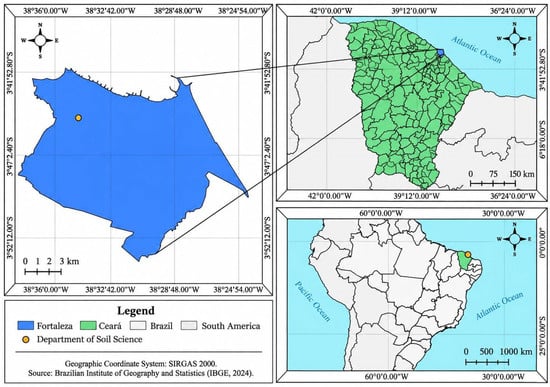
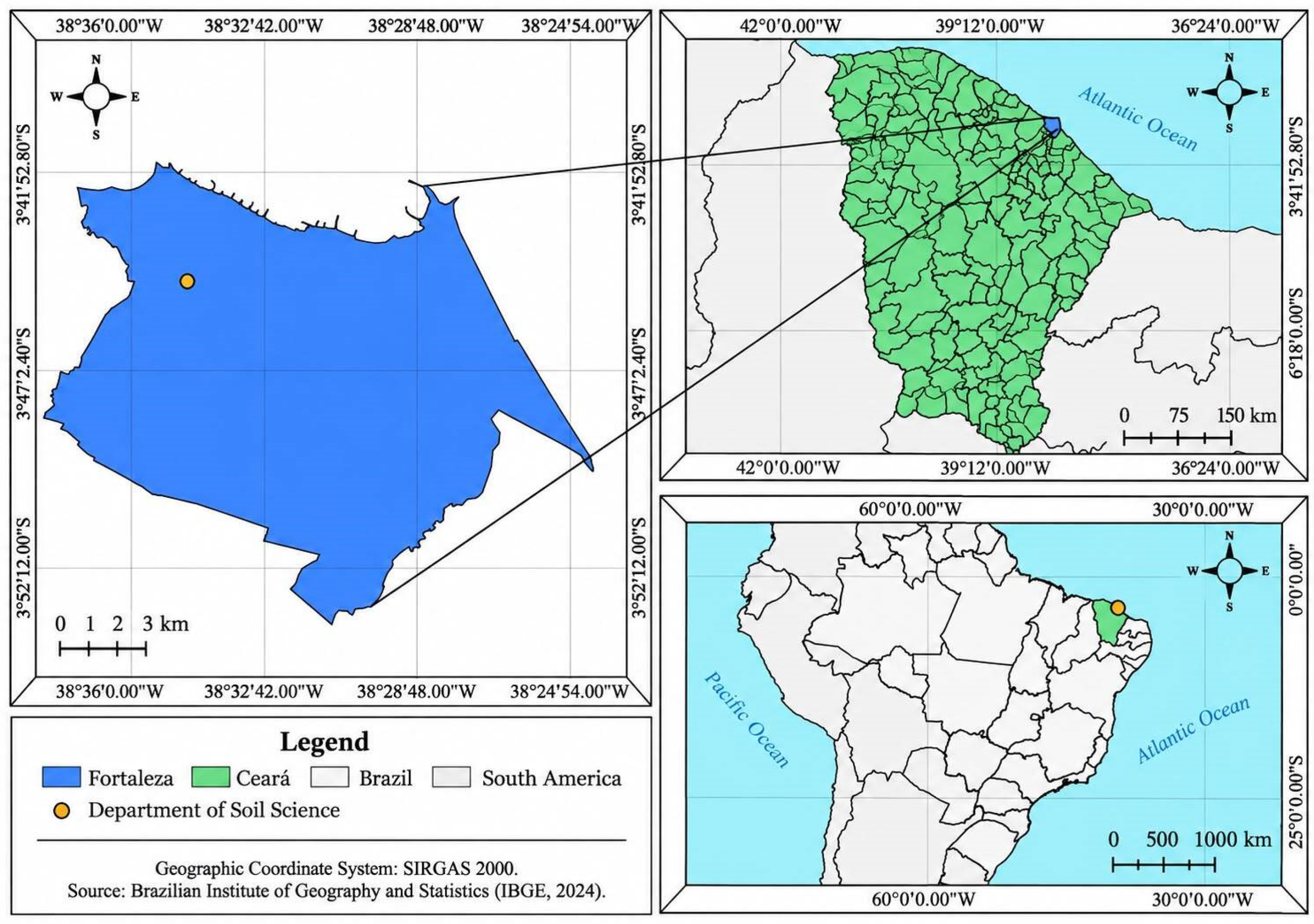
The experiment was conducted over a 48-day period, between January and March 2025, in a greenhouse located at the Department of Soil Science, Federal University of Ceará (UFC), Fortaleza, Ceará State, Brazil (3°44′34.87″ S, 38°34′31.34″ W) (Figure 1). The regional climate is classified as tropical subhumid, with average temperatures ranging from 26 to 28 °C. The experimental soil was a sandy soil, with 73% sand, 17% silt, and 10% clay in the 0–20 cm layer. The experiment comprised 24 experimental units, with one maize plant maintained per 15 L pot after thinning. Soil moisture was maintained near pot capacity using distilled water and was monitored with a WET-150 Soil Moisture Kit sensor (Delta-T, Cambridge, UK), with water supplied as needed to maintain the target moisture condition. Plants were evaluated at 48 days after sowing (DAS), corresponding to the seventh vegetative stage (V7).
Figure 1.
Geographic location of the experimental site at the Department of Soil Science, Federal University of Ceará, Fortaleza, Ceará, Brazil. The maps show the location of Brazil in South America, the state of Ceará in Brazil, and the municipality of Fortaleza. Geographic coordinate reference system: SIRGAS 2000. Source: Brazilian Institute of Geography and Statistics (IBGE) [18].
The physical and chemical characterization of the soil was performed according to the methodology described by Teixeira et al. [19]. The physical analysis of the soil was performed based on particle size distribution. In the 0–20 cm layer, the soil contained 73% sand, 17% silt, and 10% clay, and was classified as sandy. The initial chemical properties of the soil resulted in: 0.41, 1.30, 0.60, and 0.30 cmolc dm−3 of potassium (K), calcium (Ca), magnesium (Mg), and sodium (Na), respectively; and 0.01, 37.00, 9.00, 12.00, and 6.00 mg kg−1 of phosphorus (P), iron (Fe), copper (Cu), zinc (Zn), and manganese (Mn), respectively. Furthermore, the hydrogenic potential (pH in water 1:2.5), electrical conductivity (EC), potential acidity (H+Al), sum of exchangeable bases (SB), cation exchange capacity (CEC), base saturation (V%), exchangeable sodium percentage (ESP), and sodium adsorption ratio (SAR) were 5.80, 0.30 dS m−1, 1.30 cmolc dm−3, 2.61 cmolc dm−3, 3.91 cmolc dm−3, 66.75%, 6.50%, and 0.30, respectively.
2.2. Production of Food Waste Digestate
Food waste collected from the university dining halls at the Federal University of Ceará (UFC) in Fortaleza, Ceará, Brazil, served as the organic feedstock for digestate production. Prior to anaerobic digestion, the food waste was shredded and homogenized to create a mixture with suitable pumping characteristics. During this process, water was added at a ratio of 2.5 L per kg of food waste to facilitate homogenization, pumping, and the flow of the mixture through the biodigester’s piping system. Volatile total solids (VTS) concentrations of 1%, 5%, 10%, and 15% were used during the operational stages of the digestion process.
Anaerobic digestion was carried out in an upflow anaerobic sludge blanket (UASB) reactor constructed of glass-fiber reinforced plastic (GFRP), featuring a conical bottom, an internal diameter of 2.0 m, a height of 6.0 m, and an approximate working volume of 22 m3. The biodigester was equipped with three sampling and recirculation ports positioned at 1.5 m intervals along its height. The system operated within a temperature range of 30–35 °C, with a hydraulic retention time (HRT) of 10 days, an average pH of 7.0, and an organic loading rate (OLR) of 2.5 kg chemical oxygen demand (COD) m−3 day−1.
Following the digestion process, the material underwent stabilization for 90 days. Subsequently, the digestate was collected and stored in 20 L plastic buckets prior to its application in the greenhouse experiment. Before application, the digestate was homogenized to ensure the uniformity and representativeness of the material used.
The digestate had a moisture content of 94%, determined by oven-drying, corresponding to a dry matter content of 6%. Subsequently, the material was characterized regarding its physicochemical properties and nutrient composition before being used as an organic fertilizer in the maize experiment. Chemical characterization of the digestate showed concentrations of 0.70 g kg−1 total nitrogen (N), 0.60 g kg−1 phosphorus (P), 0.60 g kg−1 potassium (K), 3.75 g kg−1 calcium (Ca), 0.90 g kg−1 magnesium (Mg), and 1.30 g kg−1 sodium (Na). Micronutrient concentrations were 37.00 mg kg−1 iron (Fe), 9.00 mg kg−1 copper (Cu), 12.00 mg kg−1 zinc (Zn), and 6.00 mg kg−1 manganese (Mn). The digestate also had a sodium adsorption ratio (SAR) of 0.85. Chemical analyses were performed according to the conventional digestion procedure described in SW-846 Methods 3051A/3051B for soils, sediments, and wastes, established by the United States Environmental Protection Agency (EPA). The ammoniacal nitrogen (N-NH4+) content of the liquid digestate was determined via alkaline distillation, based on the principles of official analytical methods for nitrogen determination. Prior to analysis, digestate samples were homogenized to ensure representativeness. A sample aliquot was transferred to a Kjeldahl-type (AMT-4150; Alfa Mare, Fortaleza, Brazil) distillation system and alkalized with sodium hydroxide (NaOH) solution, promoting the conversion of the ammonium ion (NH4+) into ammonia (NH3). The released ammonia was steam-distilled and collected in a boric acid (H3BO3) solution containing an indicator. Following distillation, the solution containing the captured ammonia was titrated with a standardized acid solution until the endpoint, indicated by a color change. The N-NH4+ content was calculated based on the difference between the volume of acid solution consumed for the sample titration and that consumed for the blank, with results expressed in terms of the mass or volume of the analyzed digestate [20].
2.3. Experimental Design and Treatments
The experiment was arranged in a completely randomized design (CRD) with six treatments and four replicates, totaling 24 experimental units. The proportions of digestate and mineral fertilizers corresponded to the following treatments: unfertilized control (C0), 100% mineral fertilizer (M100), 75% mineral fertilizer + 25% liquid digestate (M75D25), 50% mineral fertilizer + 50% liquid digestate (M50D50), 25% mineral fertilizer + 75% liquid digestate (M25D75), and 100% liquid digestate (D100).
Application rates for mineral fertilizers and digestate were established according to fertilization recommendations for maize crops found in the 5th edition of the manual Recomendações para o Uso de Corretivos e Fertilizantes em Minas Gerais [21]. The quantities of digestate applied in each treatment were calculated based on their total nitrogen content. The mineral fertilizers used were urea (120 kg ha−1), triple superphosphate (TSP) (80 kg ha−1), and potassium chloride (KCl) (70 kg ha−1). TSP was applied once at sowing, whereas fertilization with urea and KCl was split into three applications: the first at sowing, the second at the V4 vegetative stage, and the third at the V6 vegetative stage.
The M100 treatment corresponded to the full dose of mineral fertilizer recommended for maize, adjusted for the soil volume in each 15 L pot, resulting in the application of 4.00 g of urea, 2.60 g of triple superphosphate (TSP), and 1.50 g of KCl per pot. In the combined treatments, the mineral fertilizer and digestate formulation was established based on the recommended N, P, and K rates for maize. Thus, nutrients supplied by the digestate were accounted for in the nitrogen, phosphorus, and potassium (NPK) balance, and mineral fertilizer rates were adjusted to supplement the amounts of N, P, and K not provided by the organic source. The M75D25 treatment received 642.86 g of digestate per pot, supplemented with 3.00 g of urea, 2.41 g of TSP, and 0.84 g of KCl. The M50D50 treatment received 1285.71 g of digestate, 2.00 g of urea, 2.21 g of TSP, and 0.18 g of KCl per pot. The M25D75 treatment received 1928.57 g of digestate, supplemented with 1.00 g of urea and 2.01 g of TSP, without KCl application, as the K supplied by the digestate was sufficient to meet the amount established for this treatment. In the D100 treatment, 2571.43 g of digestate per pot were applied, without mineral fertilizer supplementation. The Ca, Mg, and Na supplied by the digestate were considered additional nutrient inputs and were not used as criteria for adjusting the mineral fertilizer proportions.
2.4. Experimental Procedure
The experimental units consisted of 15 L plastic pots filled with soil. Soil moisture was maintained near pot capacity using distilled water and was monitored with a WET-150 Soil Moisture Kit sensor (Delta-T). Irrigation was not established as a fixed-volume or fixed-interval schedule; distilled water was supplied as needed to maintain soil moisture near pot capacity. No separate counts of fallen leaves or repeated visual vigor scores were performed during the experiment.
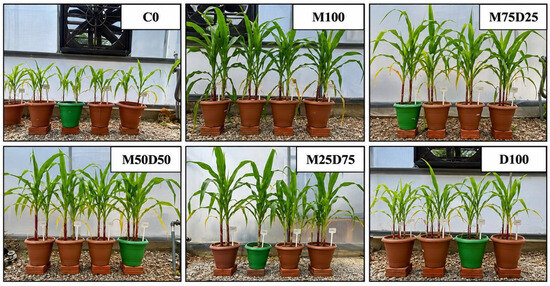
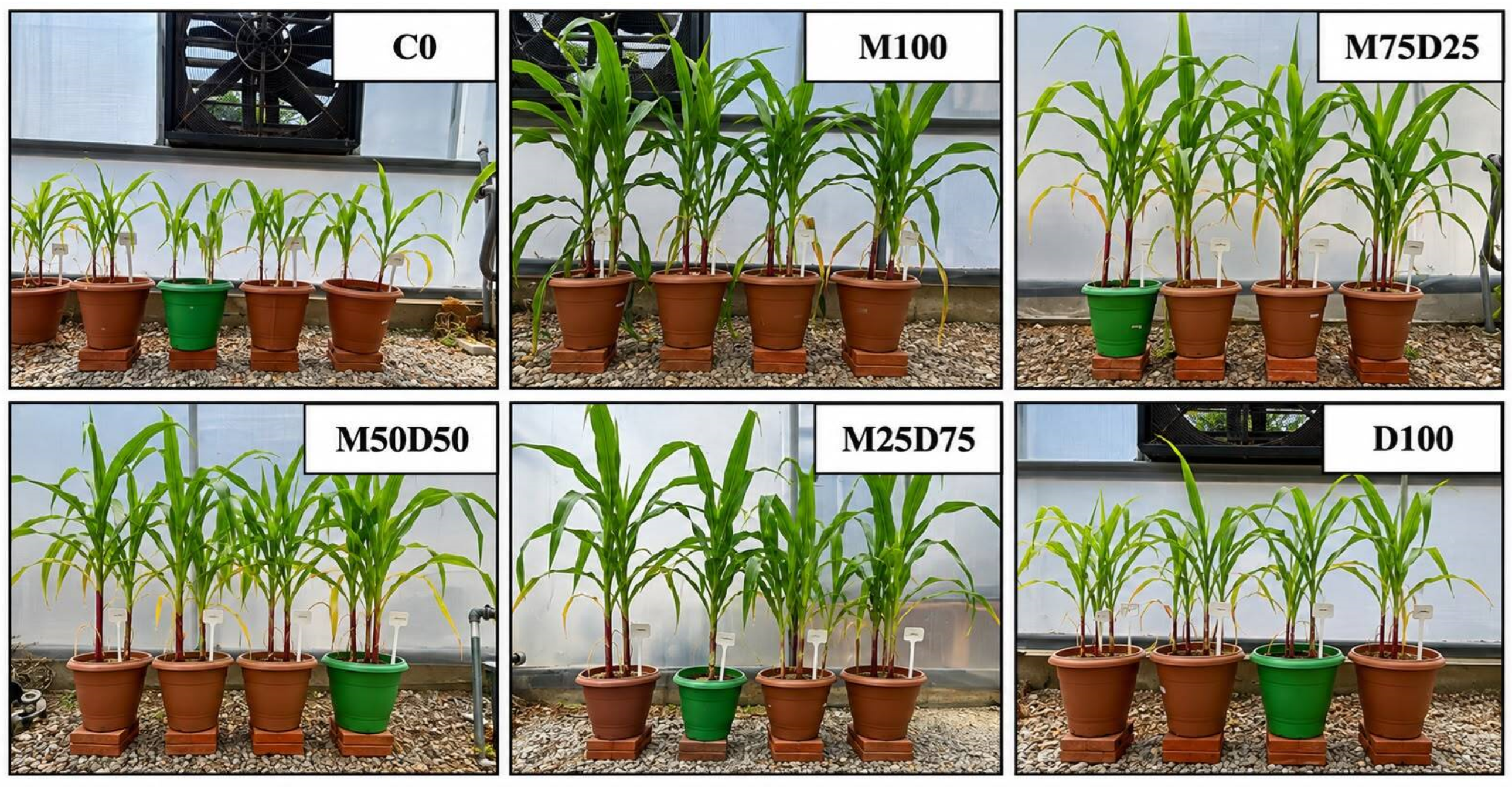
After applying the treatment mixtures (mineral fertilizer + liquid digestate), five maize seeds were sown per pot at a depth of 5 cm. Thinning was performed weekly, leaving only one plant per pot. The plants were grown until the end of the V7 vegetative growth stage, approximately 48 days after sowing (DAS) (Figure 2).
Figure 2.
Maize plants at 48 days after sowing under mineral fertilizer–digestate treatments. C0, unfertilized control; M100, 100% mineral fertilizer; M75D25, 75% mineral fertilizer + 25% liquid digestate; M50D50, 50% mineral fertilizer + 50% liquid digestate; M25D75, 25% mineral fertilizer + 75% liquid digestate; D100, 100% liquid digestate.
2.5. Experimental Evaluations
Soil samples were collected from each experimental unit at 48 DAS. The samples were air-dried in a drying facility located at the Departamento de Ciências do Solo under continuous natural ventilation, indirect light exposure, and protection from rainfall and direct solar radiation, with temperatures ranging from 28 to 35 °C. Subsequently, the samples were sent to the Laboratório de Química e Fertilidade do Solo of the UFC, where their chemical properties were determined. Electrical conductivity (EC), exchangeable sodium percentage (ESP), cation exchange capacity (CEC), base saturation (V%), pH, sodium (Na), and macronutrients (P, K, Ca, and Mg) were determined according to the methodology described by Teixeira et al. [19].
Also at 48 DAS (V7 vegetative growth stage), the following variables were evaluated: chlorophyll index (CH), measured using a chlorophyll meter (CCM-200 Plus; Opti-Sciences Inc., Hudson, NH, USA); plant height (PH), measured from the soil surface to the apical meristem using a graduated measuring tape; leaf number (LN), counted from the emergence of the first leaf at the first vegetative stage (V1) until the V7 stage; and stem diameter (SD), measured using a 300 mm digital caliper (Model 500-171-30; Mitutoyo Corp., Kawasaki, Japan). Leaf number refers to leaves present at the final evaluation; fallen leaves were not separately quantified, and no intermediate vigor assessments were conducted. After these evaluations, the aboveground plant material was harvested and transported to the Soil Chemistry Laboratory at the UFC. Leaves and stems were placed in paper bags and dried in a forced-air circulation oven (Model SL-102/216; Solab, Piracicaba, SP, Brazil) at 65 °C until constant weight was achieved. Subsequently, the samples were weighed using a precision analytical balance (Model Mark 2200; Tecnal, Piracicaba, SP, Brazil) to determine shoot dry matter (DM).
The dried leaves and stems were incinerated in a muffle furnace (Model Bio FM 16L; 7Lab, São Paulo, SP, Brazil) at temperatures ranging from 450 to 550 °C. The resulting ash was dissolved in a diluted nitric acid solution (1 N HNO3), and the concentrations of macronutrients (P, K, Ca, and Mg) and sodium (Na) in the plant tissues were determined according to the methodology described by Silva et al. [22]. Initially, the plant samples were dried, ground, and homogenized. Subsequently, approximately 0.20 g of the plant material was transferred to digestion tubes, to which 15 mL of an acid mixture containing sulfuric acid (H2SO4) and sulfates was added, using copper sulfate as a catalyst. The tubes were placed in a digestion block (Model SL-25/40R; Solab, Piracicaba, SP, Brazil) and gradually heated to approximately 335 °C, undergoing digestion for about one hour or until complete decomposition of the organic matter—indicated by the formation of a colorless or slightly greenish extract—was achieved. During digestion, the organic nitrogen present in the plant tissue was converted into ammoniacal nitrogen (N-NH4+). After cooling, the resulting extract was used to determine nitrogen content via the Kjeldahl method [20]. The N-NH4+ concentration was expressed in g kg−1 and calculated based on the difference between the volumes of HCl consumed in the sample and blank titrations, according to Equation (1), where:
N-NH4 g kg−1 = (Vb − Va) × 1.4
- Va = volume of HCl used for the blank, in mL.
- Vb = volume of HCl used for the sample, in mL.
2.6. Statistical Analysis
The assumptions of normality of the residuals (Shapiro–Wilk test) and homogeneity of variances (Levene’s test) were verified prior to statistical analysis. Subsequently, the data were subjected to analysis of variance (ANOVA). When significant, treatment means were compared using Tukey’s test at the 5% significance level (p < 0.05). Multivariate relationships among soil fertility attributes, plant growth parameters, and plant nutritional status were evaluated using Principal Component Analysis (PCA) based on the first two principal components (PC1 and PC2). All statistical analyses were performed using the R software (R version 4.5.2, 2025-10-31 ucrt).
3. Results
3.1. Soil Fertility
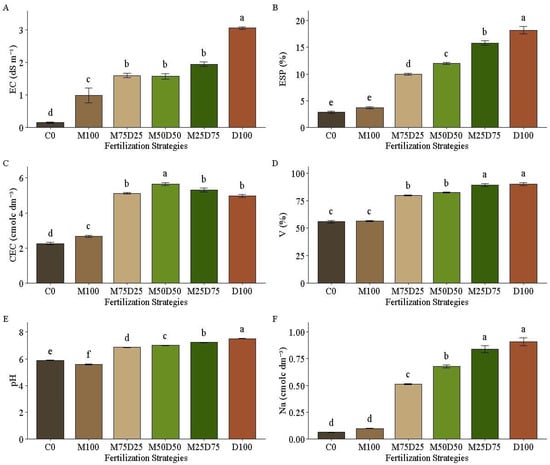
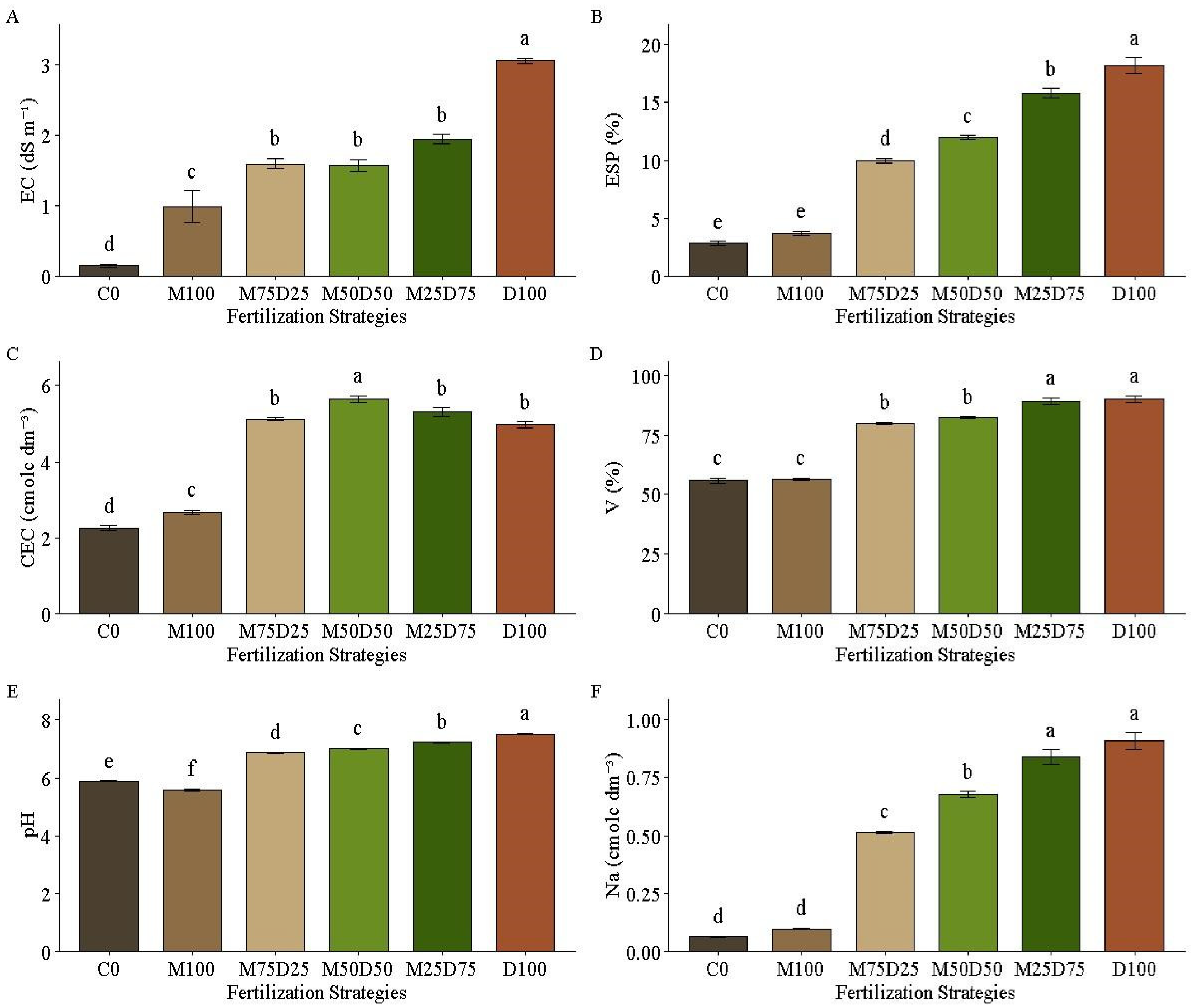
Soil fertility variables differed significantly among treatments (p < 0.05), according to analysis of variance, for electrical conductivity (EC), exchangeable sodium percentage (ESP), cation exchange capacity (CEC), base saturation (V%), soil pH, and sodium (Na) concentration following the application of fertilizer formulations (Figure 3). Soil samples were analyzed 48 days after sowing (DAS). Compared to the unfertilized control (C0), the M25D75 treatment increased CEC from 2.26 to 5.29 cmolc dm−3, base saturation from 55.86% to 90.03%, and soil pH from 5.9 to 7.2.
Figure 3.
Soil fertility and sodicity indicators under mineral fertilizer–digestate treatments. Mean values of electrical conductivity (EC) (A), exchangeable sodium percentage (ESP) (B), cation exchange capacity (CEC) (C), base saturation (V%) (D), soil pH (E), and sodium (Na) concentration (F). C0, unfertilized control; M100, 100% mineral fertilizer; M75D25, 75% mineral fertilizer + 25% liquid digestate; M50D50, 50% mineral fertilizer + 50% liquid digestate; M25D75, 25% mineral fertilizer + 75% liquid digestate; D100, 100% liquid digestate. Different letters indicate significant differences by Tukey’s test (p < 0.05); vertical lines represent the standard error of the mean.
The electrical conductivity (EC) was higher in the treatment receiving 100% liquid digestate (D100) (3.06 dS m−1) than in the treatments receiving 25% mineral fertilizer + 75% liquid digestate (M25D75), 75% mineral fertilizer + 25% liquid digestate (M75D25), 50% mineral fertilizer + 50% liquid digestate (M50D50), 100% mineral fertilizer (M100), and the unfertilized control (C0) (Figure 3A). The exchangeable sodium percentage (ESP) was lowest in the C0 and M100 treatments, with values of 2.8 and 3.5%, respectively, and increased with digestate application, reaching intermediate values in M75D25 (9.9%) and M50D50 (11.9%), and the highest values in M25D75 (15.8%) and D100 (18.2%) (Figure 3B).
The soil cation exchange capacity (CEC) was highest in the M50D50 treatment (5.65 cmolc dm−3), followed by M25D75, M75D25, and D100 (5.29, 5.12, and 4.97 cmolc dm−3, respectively), which did not differ significantly from one another but were significantly higher than M100 and C0, which presented values of 2.67 and 2.26 cmolc dm−3, respectively (Figure 3C). The base saturation (V%) was highest in the D100 and M25D75 treatments (89.17 and 90.03%, respectively), which did not differ significantly from each other, and lowest in the C0 and M100 treatments (55.86 and 57.37%, respectively) (Figure 3D).
Soil pH increased with digestate application and reached its highest value in the D100 treatment, 7.5, followed by M25D75, M50D50, M75D25, C0, and M100, with values of 7.2, 7.0, 6.9, 5.9, and 5.6, respectively (Figure 3E). Soil Na concentration was lowest in the C0 and M100 treatments, with values of 0.065 and 0.09 cmolc dm−3, respectively, and increased with digestate application, reaching intermediate values in M75D25 (0.51 cmolc dm−3) and M50D50 (0.67 cmolc dm−3), and the highest values in M25D75 (0.83 cmolc dm−3) and D100 (0.90 cmolc dm−3) (Figure 3F).
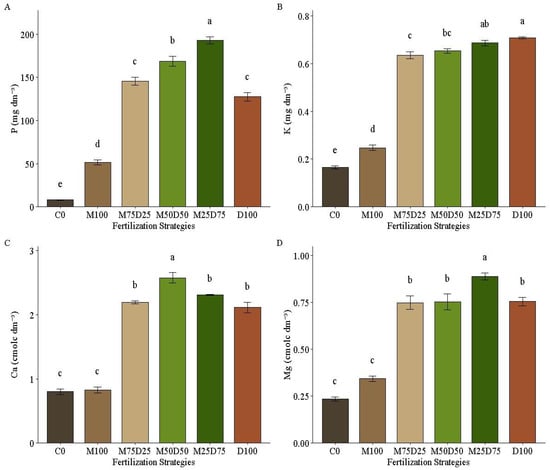
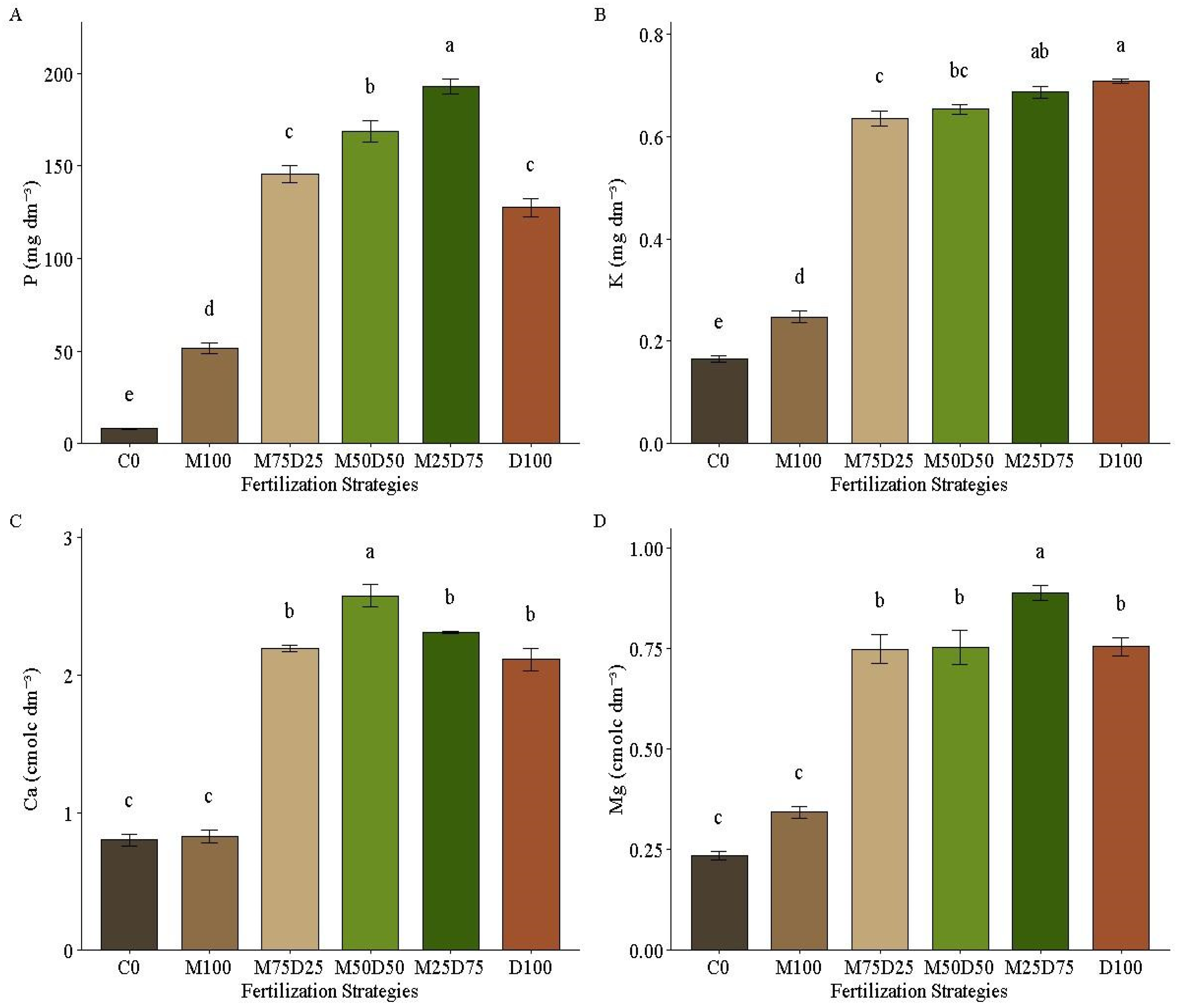
Analysis of variance revealed significant differences among treatments (p < 0.05) for soil P, K, Ca, and Mg concentrations following the application of different fertilizer formulations (Figure 4). Soil P concentration increased with the combined application of mineral fertilizer and digestate, with the highest value observed in the M25D75 treatment (191.00 mg L−1), followed by M50D50 (168.5 mg L−1) (Figure 4A). Soil K concentration increased with digestate application and was highest in the D100 and M25D75 treatments, which did not differ significantly from each other, with values of 0.70 and 0.68 cmolc dm−3, respectively, but differed from the remaining treatments. The lowest K concentration was observed in the C0 treatment (Figure 4B). Similarly, soil Ca and Mg concentrations increased with digestate application, although only up to a certain level. The highest Ca concentration was observed in the M50D50 treatment, with a value of 2.5 cmolc dm−3, whereas the highest Mg concentration occurred in the M25D75 treatment, with a value of 0.88 cmolc dm−3 (Figure 4C,D).
Figure 4.
Soil macronutrient concentrations under mineral fertilizer–digestate treatments. Mean concentrations of phosphorus (P) (A), potassium (K) (B), calcium (Ca) (C), and magnesium (Mg) (D). C0, unfertilized control; M100, 100% mineral fertilizer; M75D25, 75% mineral fertilizer + 25% liquid digestate; M50D50, 50% mineral fertilizer + 50% liquid digestate; M25D75, 25% mineral fertilizer + 75% liquid digestate; D100, 100% liquid digestate. Different letters indicate significant differences by Tukey’s test (p < 0.05); vertical lines represent the standard error of the mean.
3.2. Plant Growth and Nutrition
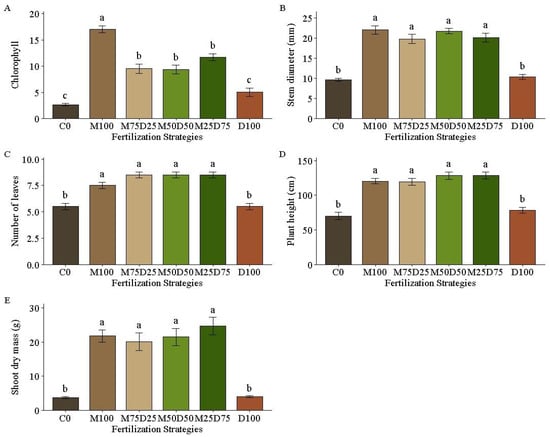
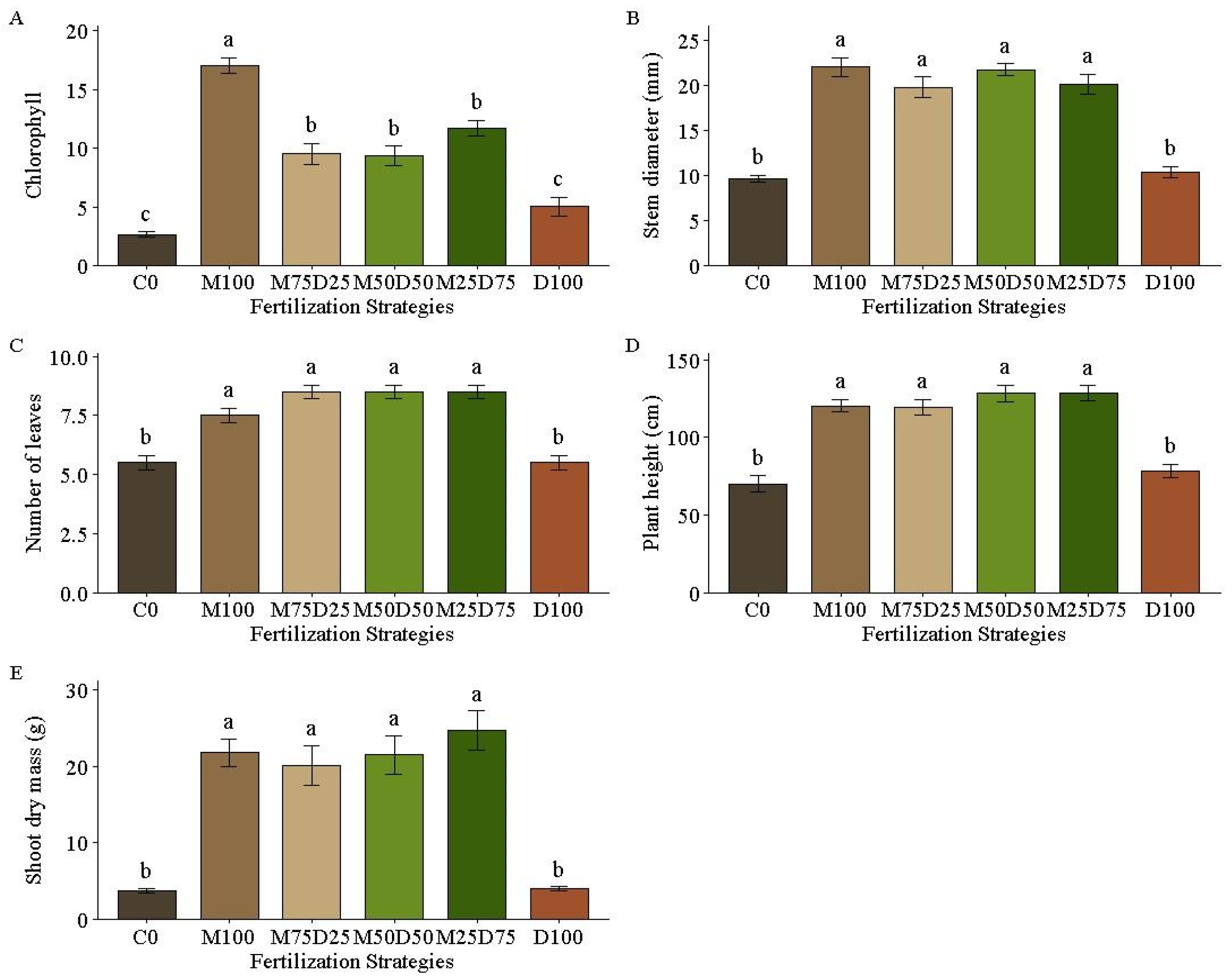
Analysis of variance revealed significant differences among treatments (p < 0.05) for chlorophyll index (CH), stem diameter (SD), leaf number (LN), plant height (PH), and shoot dry matter (DM) of maize plants following the application of the fertilizer formulations (Figure 5).
Figure 5.
Maize growth and biomass under mineral fertilizer–digestate treatments. Mean values of chlorophyll index (A), stem diameter (B), leaf number (C), plant height (D), and shoot dry matter (E). C0, unfertilized control; M100, 100% mineral fertilizer; M75D25, 75% mineral fertilizer + 25% liquid digestate; M50D50, 50% mineral fertilizer + 50% liquid digestate; M25D75, 25% mineral fertilizer + 75% liquid digestate; D100, 100% liquid digestate. Different letters indicate significant differences by Tukey’s test (p < 0.05); vertical lines represent the standard error of the mean.
Estimated chlorophyll index (CH) values increased significantly with the application of the M100 treatment, which showed the highest value (17.05) compared to the unfertilized control (C0). Stem diameter was greatest in the M100, M50D50, M25D75, and M75D25 treatments, with values of 21.97, 21.72, 20.08, and 19.74 mm, respectively. These treatments did not differ significantly from one another but exhibited significantly greater stem diameters than C0 and D100, which showed the lowest values (9.62 and 10.32 mm, respectively) (Figure 5B).
Leaf number was highest in the M75D25, M50D50, M25D75, and M100 treatments, which did not differ significantly from one another and averaged 9, 9, 9, and 8 leaves per plant, respectively. The lowest values were observed in the C0 and D100 treatments, both averaging 6 leaves per plant (Figure 5C). Plant height was greatest in the M25D75, M50D50, M100, and M75D25 treatments, with values of 128.50, 128.50, 120.50, and 119.50 cm, respectively, and these treatments did not differ significantly from one another. The lowest values were observed in the D100 and C0 treatments, with heights of 78.25 and 70.00 cm, respectively (Figure 5D).
Shoot dry matter was highest in the M25D75, M100, M50D50, and M75D25 treatments, with values of 24.62, 21.75, 21.45, and 20.07 g, respectively. These treatments did not differ significantly from one another but were significantly greater than D100 and C0, which exhibited values of 4.02 and 3.72 g, respectively (Figure 5E). Overall, biometric growth parameters (plant height, stem diameter, leaf number, and shoot dry matter) in M25D75 were statistically equivalent to those of the 100% mineral treatment (M100). The only evaluated parameter where M100 was statistically superior to M25D75 was the leaf chlorophyll index.
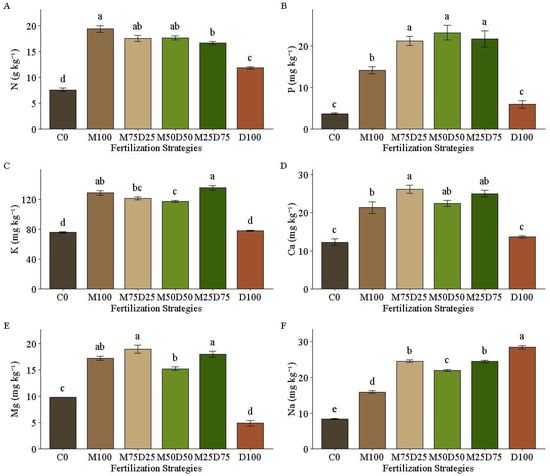
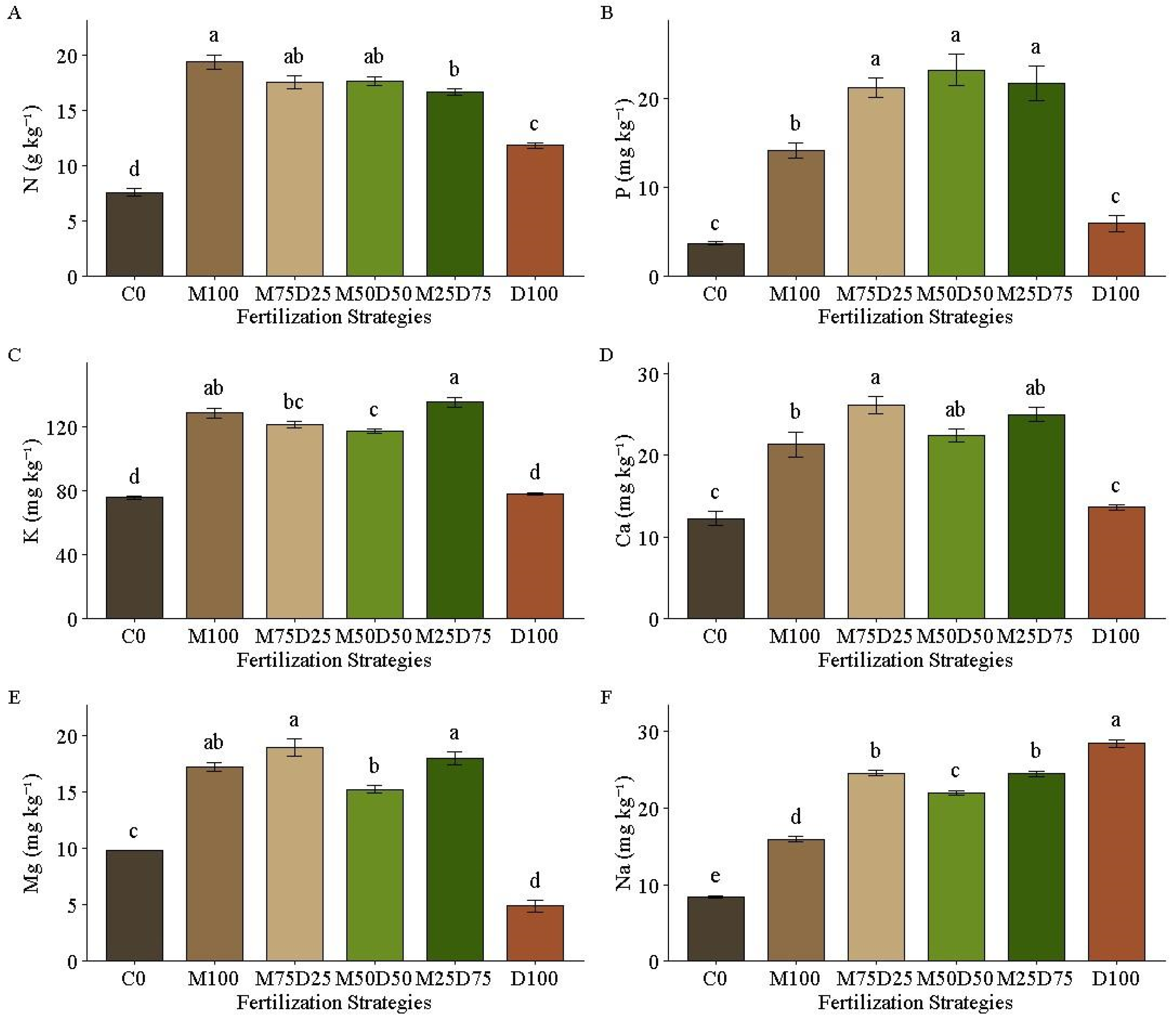
Analysis of variance revealed significant differences among treatments (p < 0.05) for the concentrations of N, P, K, Ca, Mg, and Na in maize plants (Figure 6). Nitrogen (N) concentration was highest in plants subjected to the M100 treatment (19.38 g kg−1), differing significantly from the combined treatments M75D25, M50D50, and M25D75, which exhibited lower values of 17.62, 17.52, and 17.52 g kg−1, respectively. The lowest concentrations were observed in the D100 and C0 treatments, with values of 11.81 and 7.57 g kg−1, respectively (Figure 6A). Phosphorus (P) concentration reached its maximum value in the M50D50 treatment (23.25 mg kg−1), differing significantly from all other treatments. The M75D25 and M25D75 treatments followed, with values of 21.75 and 21.27 mg kg−1, respectively, and did not differ significantly from each other. However, both treatments exceeded M100, D100, and C0, which presented mean values of 14.11, 6.00, and 3.70 mg kg−1, respectively (Figure 6B). Potassium (K) concentration was highest in plants subjected to the M25D75 treatment (135.63 mg kg−1), although it did not differ significantly from M100 (128.93 mg kg−1). Both treatments differed significantly from the remaining treatments, which exhibited lower K concentrations. The lowest mean K concentration was observed in plants grown under the C0 treatment (75.89 mg kg−1) (Figure 6C).
Figure 6.
Maize tissue nutrient concentrations under mineral fertilizer–digestate treatments. Mean concentrations of nitrogen (N) (A), phosphorus (P) (B), potassium (K) (C), calcium (Ca) (D), magnesium (Mg) (E), and sodium (Na) (F). C0, unfertilized control; M100, 100% mineral fertilizer; M75D25, 75% mineral fertilizer + 25% liquid digestate; M50D50, 50% mineral fertilizer + 50% liquid digestate; M25D75, 25% mineral fertilizer + 75% liquid digestate; D100, 100% liquid digestate. Different letters indicate significant differences by Tukey’s test (p < 0.05); vertical lines represent the standard error of the mean.
Calcium (Ca) concentration increased in response to fertilization, with the highest values observed in the M75D25, M25D75, and M50D50 treatments (26.08, 24.95, and 22.41 mg kg−1, respectively), which did not differ significantly from one another. The lowest concentrations were recorded in the D100 and C0 treatments, with values of 12.27 and 13.67 mg kg−1, respectively (Figure 6D). A similar pattern was observed for magnesium (Mg) concentration, with the highest values found in the M75D25, M25D75, and M100 treatments (18.95, 17.97, and 17.23 mg kg−1, respectively), which did not differ significantly from one another. The lowest values were observed in the C0 and D100 treatments, with concentrations of 9.82 and 4.90 mg kg−1, respectively (Figure 6E). Sodium (Na) concentration was highest in plants fertilized exclusively with digestate (D100), reaching 28.43 mg kg−1 and differing significantly from all other treatments. The lowest concentration was observed in plants that received no fertilization (C0), with a value of 8.40 mg kg−1 (Figure 6F).
3.3. Principal Component Analysis (PCA)
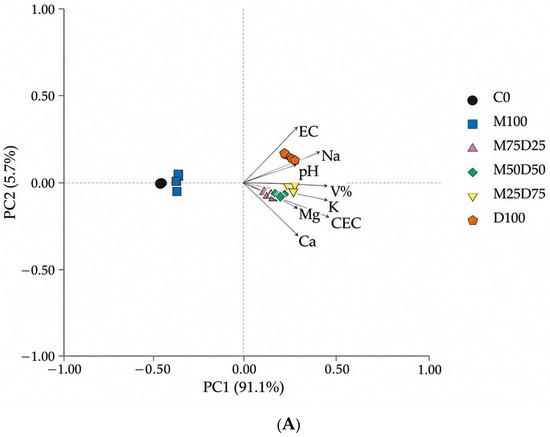
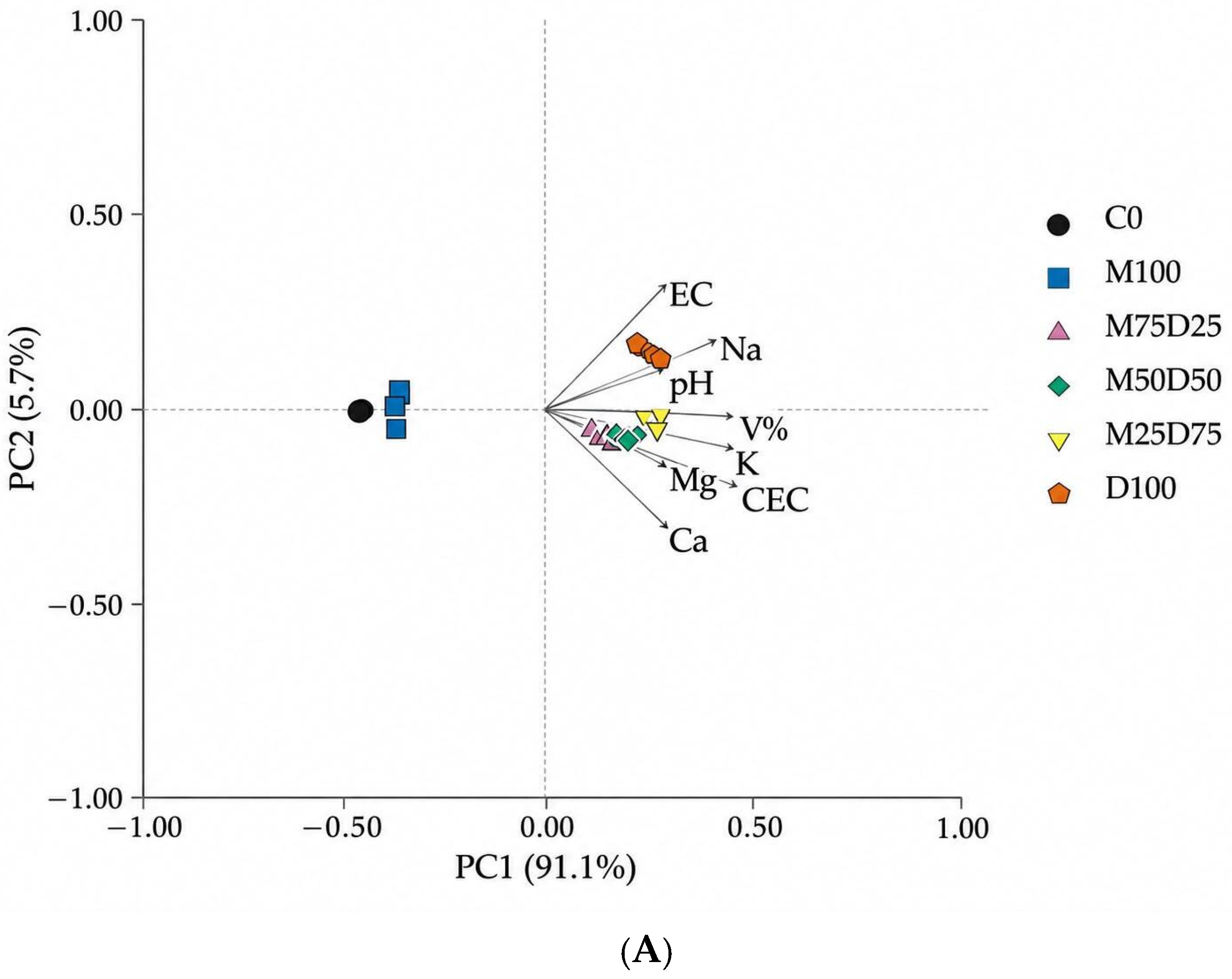
The principal component analysis (PCA) distributed the soil fertility variables across four quadrants according to their contribution to the first two principal components (PC1 and PC2). Together, these components accounted for 96.8% of the variance, indicating a high representativeness of the data, with 91.1% explained by PC1 and 5.7% by PC2 (Figure 7A).
Figure 7.
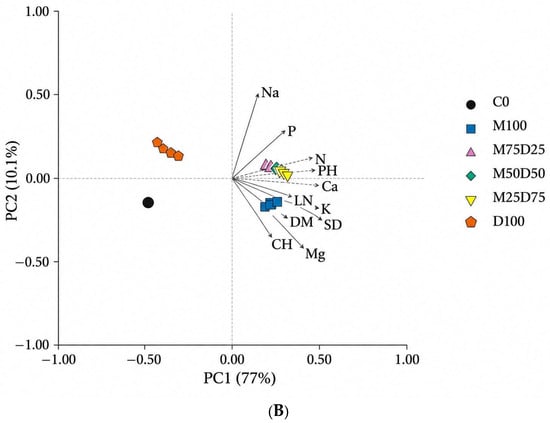
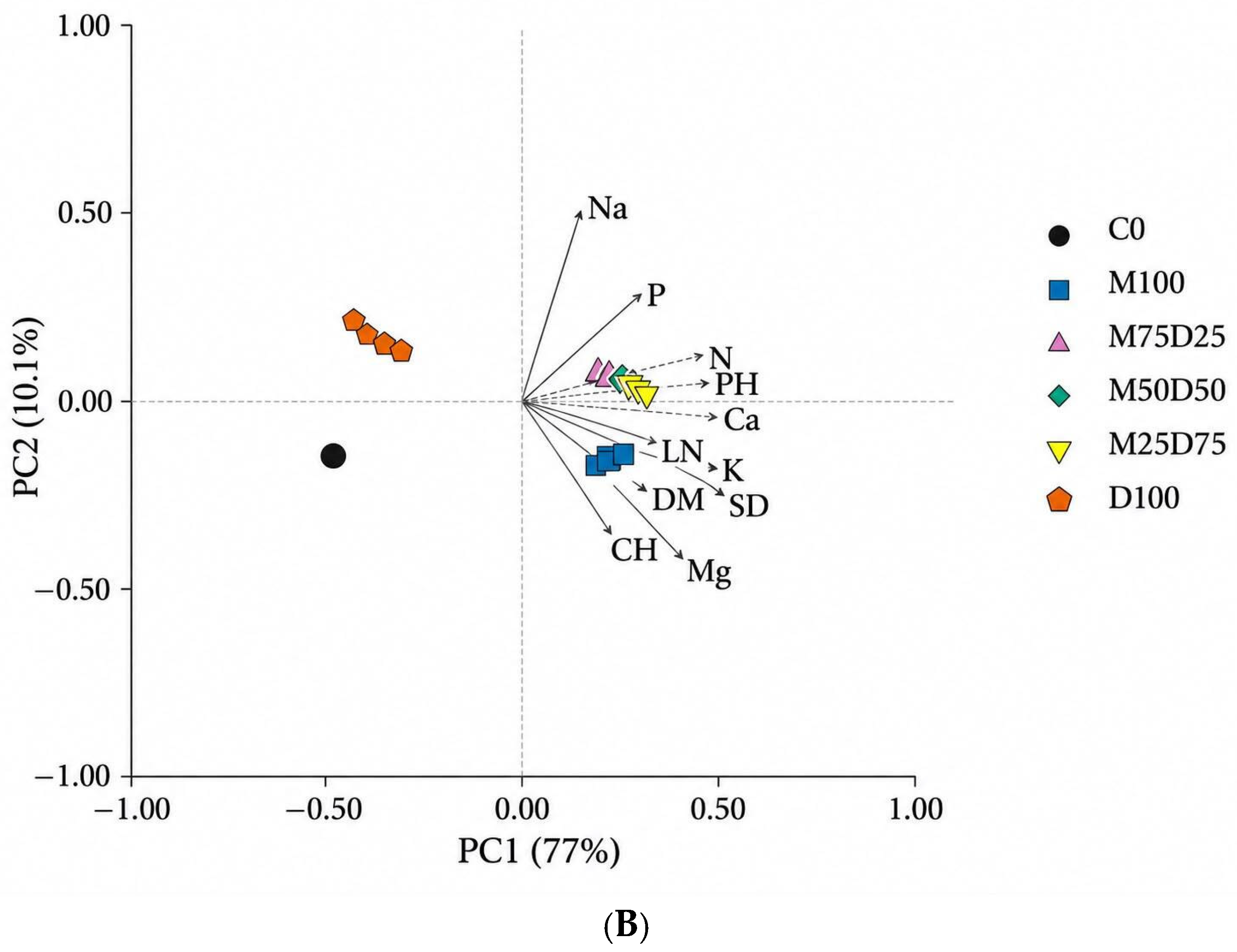
Principal component analysis of soil and maize responses to fertilization strategies. (A) Soil fertility variables (EC, ESP, CEC, pH, P, K, Ca, and Mg); (B) chlorophyll index (CH), growth variables (SD, LN, PH), shoot dry matter (DM), and plant nutrient concentrations (N, P, K, Ca, Mg, and Na). Percentages indicate the variance explained by PC1 and PC2.
PC1 was positively correlated with soil fertility variables such as cation exchange capacity (CEC), pH, macronutrients (P, K, Ca, and Mg), and sodium (Na). On the other hand, PC2 was positively correlated with EC, positioned in the upper quadrant. The unfertilized control (C0) and the 100% mineral fertilizer (M100) treatments were concentrated in quadrants II and III, respectively, positioned in the opposite direction to the fertility and salinity parameters. The 75% mineral fertilizer + 25% liquid digestate (M75D25) treatment was concentrated in quadrant I, as well as the 50% mineral fertilizer + 50% liquid digestate (M50D50) treatment, the latter being moderately associated with CEC and Ca concentrations (Figure 7A). The 25% mineral fertilizer + 75% liquid digestate (M25D75) and 100% liquid digestate (D100) treatments were concentrated in quadrant IV. The M25D75 treatment was more closely associated with pH and most soil fertility variables, such as CEC, Ca, P, Mg, and K (Figure 7A), indicating higher soil fertility and providing a more balanced and favorable chemical environment for plant growth. The D100 treatment was most strongly associated with Na and EC (Figure 7A).
The principal component analysis (PCA) of the plant parameters resulted in two principal components that accumulated 87.1% of the variance, indicating high data representativeness, with 77% explained by PC1 and 10.1% by PC2. The variables that contributed most positively to PC1 were biometric parameters related to plant growth (PH, LN, DM, and SD), as well as chlorophyll (CH) and nutrient concentrations such as N, Ca, K, P, and Mg. The variables Na and EC were positively associated with PC2. The unfertilized control (C0) and 100% liquid digestate (D100) treatments were concentrated in quadrants II and III, respectively, indicating a low correlation with the measured plant variables. The 50% mineral fertilizer + 50% liquid digestate (M50D50) and 25% mineral fertilizer + 75% liquid digestate (M25D75) treatments were concentrated in quadrant I. The M25D75 treatment was more strongly associated with most variables, including plant height (PH), leaf number (LN), stem diameter (SD), shoot dry matter (DM), chlorophyll (CH), and nutrient concentrations (N, Ca, K, P, and Mg). In addition to resulting in the highest growth increment and better plant nutritional composition, this treatment showed a low association with sodium (Na) concentration. The 100% mineral fertilizer (M100) and 75% mineral fertilizer + 25% liquid digestate (M75D25) treatments were concentrated in quadrant IV, showing a moderate association with Mg concentration and a low association with most other plant parameters, leading to lower growth compared to the other combined mineral fertilizer and digestate treatments (Figure 7B).
4. Discussion
4.1. Soil Fertility
The increase in electrical conductivity (EC) is related to the chemical composition of the digestate, which contained high concentrations of basic cations such as Ca, Mg, Na, and K, leading to an increase in the concentration of salinizing ions in the soil [23]. The high concentration of these ions is attributed to the high salt content of the food waste [24]. Similarly, other researchers have reported increases in soil pH and EC following the application of organic and mineral fertilizers [1]. This rise in soil pH is linked to the alkaline nature of the digestate, as well as its composition of elements such as Ca, Mg, K, and Na, which can alter the cationic balance in soil colloids and raise the pH [25].
The increase in cation exchange capacity (CEC) in treatments containing digestate likely resulted from the higher concentration of organic matter in the material, which raises the density of negative charges in the soil. Furthermore, the increase in soil pH resulting from digestate application promotes the dissociation of protons from soil organic matter and colloids, thereby increasing the amount of available negative charges (pH-dependent charges) and, consequently, soil cation exchange capacity (CEC) [25,26].
The high percentage of exchangeable sodium (ESP) in the soil was likely due to the direct application of digestate at high concentrations in the formulations (75% and 50%); this increased the Na concentration and, consequently, the amount of exchangeable sodium [17]. Thus, applying formulations with higher digestate concentrations may pose a risk of soil sodicity, as the high concentration of this element in exchangeable form occupies soil exchange sites [26].
The higher available P content in the M25D75 treatment may be related to the combined effect of the mineral fertilizer and the digestate, which possibly increased P input and release in the soil. Furthermore, changes in soil pH and the presence of organic compounds derived from digestate may have reduced P retention by Fe and Al oxides and hydroxides, as well as phosphate adsorption, thereby increasing P availability [4,15,16]. Although these mechanisms were not directly evaluated, similar results have been observed with the combined application of mineral and organic fertilizers [3,4,27].
The increase in soil K concentration in the D100 treatment can be attributed primarily to the high content of this nutrient in the digestate, as demonstrated by its chemical characterization. Furthermore, the K present in organic residues occurs predominantly in soluble and easily released forms, which may explain its greater accumulation in the soil as the proportion of digestate increases [3]. This result aligns with studies reporting increased available K following the application of organic fertilizers.
Regarding Ca, the higher levels observed in the combined treatments suggest a possible complementary effect between mineral and organic sources. Since the mineral fertilization used did not supply Ca directly, the digestate likely served as an additional source of this nutrient. However, the absence of the highest Ca levels in the D100 treatment indicates that its availability does not depend solely on the quantity added; it may also be influenced by cation interactions and retention processes within the soil exchange complex [28,29].
Similar behavior was observed for Mg; the higher levels found in the combined treatments may be linked to the Mg supplied by the digestate and a potentially more favorable balance among soil cations. The results suggest that partially replacing mineral fertilization with digestate may increase the availability of Ca and Mg and improve nutrient supply compared with exclusive mineral fertilization [28,29].
In contrast, the increase in Na levels in treatments with higher proportions of digestate, specifically M25D75 and D100, highlights a potential agronomic limitation of this strategy. This increase is likely related to the Na content in the digestate and the larger application volumes used in these treatments. The accumulation of Na in the exchange complex can increase the exchangeable sodium percentage (ESP) and promote sodicity, potentially leading to adverse effects on soil structure, such as clay dispersion, reduced aggregate stability, and decreased infiltration and hydraulic conductivity [27,29,30].
Therefore, while increasing the proportion of digestate raised the levels of certain soil nutrients, particularly K, applying it at high rates also increased Na levels, creating a potential trade-off between nutritional benefits and the risk of sodicity. Consequently, formulations with a high digestate content, such as D100 and M25D75, should be used with caution, especially in repeated applications, as the progressive accumulation of Na could compromise the soil’s chemical and physical quality [1,5,27,29,30].
4.2. Plant Growth and Nutrition
Growth results demonstrate that formulations combining mineral fertilizer and food waste digestate (M75D25, M50D75, M25D75) maintained plant height, stem diameter, leaf count, and shoot dry mass at levels statistically equivalent to those of complete mineral fertilization (M100). Although these treatments did not statistically outperform M100 in terms of biometric growth, their primary agronomic benefit lies in achieving comparable growth performance while simultaneously reducing exclusive reliance on synthetic fertilizers. However, it is important to highlight the salinity risks observed with the exclusive application of digestate (D100) and in formulations with high digestate concentrations (M75D25) [24,25,26,31].
The increase in the chlorophyll index observed in this study is likely related to the greater availability and assimilation of nitrogen derived from highly soluble mineral nitrogen fertilization (M100). In a study using a peat-based substrate, researchers observed that nitrogen fertilization increased chlorophyll content in maize leaves, resulting in significant improvements in soil quality, yield components, overall productivity, and maize grain quality [32].
The fertilizer mixture formulations that were statistically equal to mineral fertilizer likely promoted an increase in plant height due to improved soil chemical properties. The application of these inputs contributed to a greater availability of essential nutrients, such as nitrogen, phosphorus, and potassium (NPK) [24,29].
The increase in plant dry matter can be attributed to the improvement in soil nutrient dynamics, provided by the combined application of digestate and mineral fertilizers. This optimization allowed the plants to meet their nutritional demands, resulting in greater vegetative growth and, consequently, greater biomass accumulation. Similar results were observed in another study that applied sewage sludge (in composted and organomineral forms) to a corn crop [33].
The superiority of the M100 treatment regarding N concentration indicates that mineral fertilizer still plays an important role in the immediate supply of this nutrient. However, the combined treatments maintained adequate N levels, demonstrating that the digestate can partially contribute to its supply. Researchers have noted that nitrogen fertilization increased N assimilation, which enabled improvements in plant growth and yield [32].
Phosphorus (P) assimilation likely increased with the fertilizer formulations (M100, M75D25, M25D75) due to the greater availability of this element in the soil, resulting from the combination of organic and mineral fertilizers and the exclusive application of mineral fertilizer. Similar results were reported in another study, in which researchers observed an increase in available P in the soil and its assimilation after the combined application of organic and inorganic fertilizers [4].
The higher potassium (K) concentrations in M100, M75D25, M25D75, and M50D50 can be explained by the greater availability of this nutrient in the soil solution, since K was supplied both by KCl and, in the combined treatments, by liquid digestion. The lower K concentration in D100 possibly occurred due to the sodium concentration in the soil solution, which in turn may have reduced K absorption through ionic competition [34,35].
The higher concentrations of Ca and Mg in plants in the combined fertilization may have occurred due to the high concentration of these elements in the digestate and their availability to the plants. Possibly, the digestate contributed to the increase in these elements since no mineral fertilization with calcium and magnesium was applied in its composition. Similar results were found in another study that demonstrated that the application of 50% biofertilizer was sufficient to accumulate calcium in plant biomass compared to the unfertilized control [11].
Despite increasing the availability of some nutrients in the soil, the M50D50, M75D25, and D100 treatments also showed the highest concentrations of EC, ESP, Na in the soil, and Na in the plants. These conditions may have reduced nutrient absorption through osmotic stress, Na toxicity, and ionic antagonism, especially between Na and K, Ca, N, and Mg. Thus, the exclusive application of digestate increased nutrient inputs to the soil but also caused chemical constraints that limited plant uptake. In contrast, the combined treatments provided a more balanced nutrient supply and less saline stress, which favored plant nutrition and growth [27].
The significant increase in Na in the M50D50, M75D25, and D100 treatments confirms the risk of its accumulation in plant biomass, which can cause physiological imbalances. Toxic amounts of Na+ in cells can have subtle effects, such as inhibiting K+ absorption in root and leaf cells and, consequently, causing imbalance in cellular homeostasis, oxidative stress, interference with Ca2+ and K functions, interruption of protein synthesis, stunted growth, and even plant death [25,36]. As always, in more treatments, this assimilation did not translate into a significant reduction in the growth of corn plants, but it is important to observe the risks of Na toxicity in plants [37,38].
In this context, recycling food waste in the form of digestate represents a promising strategy for reintegrating nutrients into agricultural soils and reducing the concentrated disposal of organic waste [39]. Combining digestate with mineral fertilizers can also partially reduce reliance on mineral fertilizers, including those from imported sources, and promote more circular nutrient management within agricultural and food systems [39,40,41,42,43,44]. The results of this study reinforce this potential, as combined treatments maintained maize growth even when the proportion of mineral fertilizers was reduced [42]. Therefore, this approach can simultaneously contribute to waste valorization, nutrient recycling, and more efficient use of agricultural inputs. However, these agronomic and environmental benefits depend on using appropriate digestate application rates; excessive application can promote sodium accumulation and increase soil salinity, thereby compromising soil quality and plant development [41]. Thus, the agricultural use of digestate must be accompanied by monitoring soil chemical properties and by long-term assessments that consider nutrient balance, salt accumulation, crop productivity, and the effects of repeated applications. Such information is essential for establishing application rates that are both agronomically efficient and environmentally safe before formulating recommendations for large-scale use [39,40,41,42].
4.3. Principal Component Analysis (PCA)
Principal component analysis confirmed the superior performance resulting from combined fertilization treatments, particularly M25D75 and M50D50, which were positively associated with soil fertility and plant growth variables [11,24]. The positioning of these treatments in the quadrant associated with pH, CEC, and nutrients indicates that reducing mineral fertilization, when compensated by the use of digestate, results in a more efficient and balanced system [16,24]. These treatments simultaneously promoted improved soil fertility, greater nutrient availability, and better plant physiological performance. Conversely, caution is warranted regarding the application of high concentrations of digestate (M50D50, M25D75) or the exclusive application of D100, as these treatments were strongly associated with EC, increased ESP, and sodium levels, demonstrating that excess digestate can lead to soil salinization and compromise plant growth [25]. Thus, from both environmental and agronomic perspectives, the combined use of mineral fertilizers and food waste digestate has the potential to improve soil fertility, promote plant growth, and enhance the nutritional status of maize [4,39,40,41,42,43,44]. However, this result should not be interpreted as a definitive recommendation, as further studies evaluating the full crop cycle are required.
5. Conclusions
Combined fertilization using mineral fertilizers and digestate improved soil fertility, nutrient availability, and maize growth, indicating the potential for digestate derived from food waste to supplement and reduce the use of mineral fertilizers.
High proportions of digestate, particularly in the M25D75 and D100 treatments, increased soil Na levels, electrical conductivity (EC), and the percentage of exchangeable sodium (ESP), indicating a potential risk of salinization and sodification when digestate is applied at high rates.
The combined use of digestate and mineral fertilizers represents a promising nutrient management strategy; however, long-term studies covering the full crop cycle and repeated applications are needed to determine appropriate digestate application rates and assess the potential accumulation of salts and Na in the soil.
6. Patents
SOUSA, F.H.H.; STEFANUTTI, R.; SOUSA, B. E. L.; MOTA, J. C. A.; MAGALHAES, R. B.; COSTA, M. C. G.; MAIA, D. S. Formulação de fertilizantes organominerais oriundos de digestato de resíduos orgânicos e fertilizantes minerais para adubação de so-los. 2025, Brasil.
Patente: Privilégio de Inovação. Número do registro: BR10202502529, título: “Formulação de fertilizantes organominerais oriundos de digestato de resíduos orgânicos e fertilizantes minerais para adubação de solos”, Instituição de registro: INPI—Instituto Nacional da Propriedade Industrial. Depósito: 18/11/2025Instituição(ões) financiadora(s): INCTagris, Capes, Cnpq, Funcap.
Author Contributions
Conceptualization, M.d.A.G., J.C.D., G.G.S., I.L.S., R.S., M.C.G.C., J.C.A.M. and H.H.d.F.S.; methodology, B.E.L.S., R.B.M., F.L.E., J.R.B., T.N.d.O. and J.A.d.O.C.; software, B.E.L.S., R.B.M., F.L.E., J.R.B., T.N.d.O. and J.A.d.O.C.; formal analysis, B.E.L.S., R.B.M., F.L.E., J.R.B., T.N.d.O. and J.A.d.O.C.; investigation, B.E.L.S., R.B.M., F.L.E., J.R.B., T.N.d.O. and J.A.d.O.C.; resources, M.d.A.G., J.C.D., G.G.S., I.L.S., R.S., M.C.G.C., J.C.A.M. and H.H.d.F.S.; data curation, B.E.L.S., R.B.M., F.L.E., J.R.B., T.N.d.O. and J.A.d.O.C.; writing—original draft preparation, B.E.L.S., R.B.M., F.L.E., J.R.B., T.N.d.O. and J.A.d.O.C.; writing—review and editing, M.d.A.G., J.C.D., G.G.S., I.L.S., R.S., M.C.G.C., J.C.A.M. and H.H.d.F.S.; supervision, M.d.A.G., J.C.D., G.G.S., I.L.S., R.S., M.C.G.C., J.C.A.M. and H.H.d.F.S.; project administration, I.L.S., R.S., M.C.G.C., J.C.A.M. and H.H.d.F.S.; funding acquisition, I.L.S., R.S., M.C.G.C., J.C.A.M. and H.H.d.F.S. All authors have read and agreed to the published version of the manuscript.
Funding
Coordenação de Aperfeiçoamento de Pessoal de Nível Superior (CAPES), Conselho Nacional de Desenvolvimento Científico e Tecnológico (CNPq) and Fundação Cearense de Apoio ao Desenvolvimento Científico e Tecnológico (FUNCAP).
Institutional Review Board Statement
Not applicable.
Informed Consent Statement
Not applicable.
Data Availability Statement
The raw data supporting the conclusions of this article will be made available by the authors upon request.
Acknowledgments
We appreciate Coordenação de Aperfeiçoamento de Pessoal de Nível Superior (CAPES), Conselho Nacional de Desenvolvimento Científico e Tecnológico (CNPq) and Fundação Cearense de Apoio ao Desenvolvimento Científico e Tecnológico (FUNCAP).
Conflicts of Interest
The authors declare no conflicts of interest.
References
- Al-Sheikh, M.; Abdulrazzak, O.; Al-Khalifa, T. Effect of Adding Potassium and Organic Fertilizers on some Physical and Chemical Soil Properties and Vegetative Growth of Maize (Zea mays L.). Agric. Eng. Int. CIGR J. 2025, 27, 17–27. [Google Scholar]
- Dhillon, B.S.; Sohu, V.S. Climate change shocks and crop production: The foodgrain bowl of India as an example. Indian J. Agron. 2024, 69, 1–10. [Google Scholar] [CrossRef] [Scilit]
- Qaswar, M.; Jing, H.; Ahmed, W.; Dongchu, L.; Shujun, L.; Lu, Z.; Zhang, H.; Xu, M. Yield sustainability, soil organic carbon sequestration and nutrients balance under long-term combined application of manure and inorganic fertilizers in acidic paddy soil. Soil Tillage Res. 2020, 198, 104569. [Google Scholar] [CrossRef] [Scilit]
- Liang, C.; Liu, X.; Lv, J.; Zhao, F.; Yu, Q. The Impact of Different Phosphorus Fertilizers Varieties on Yield under Wheat-Maize Rotation Conditions. Agronomy 2024, 14, 1317. [Google Scholar] [CrossRef] [Scilit]
- Kuunya, R.; Mustafa Ahmed Osman, M.; Ragán, P. Soil, nutrient, and fertiliser requirements for maize (Zea mays L.) production: A narrative review. Acta Agrar. Debr. 2025, 1, 85–97. [Google Scholar] [CrossRef] [Scilit] [PubMed]
- Artyszak, A.; Gozdowski, D.; Jonczak, J.; Pągowski, K.; Popielec, R.; Ahmad, Z. Yield and Quality of Maize Grain in Response to Soil Fertilization with Silicon, Calcium, Magnesium, and Manganese and the Foliar Application of Silicon and Calcium: Preliminary Results. Agronomy 2025, 15, 837. [Google Scholar] [CrossRef] [Scilit]
- Zoui, O.; Baroudi, M.; Drissi, S.; Abouabdillah, A.; Abd-Elkader, O.H.; Plavan, G.; Taouda, H. Utilization of Digestate as an Organic Manure in Corn Silage Culture: An In-Depth Investigation of Its Profound Influence on Soil’s Physicochemical Properties, Crop Growth Parameters, and Agronomic Performance. Agronomy 2023, 13, 1715. [Google Scholar] [CrossRef] [Scilit]
- Szwed, M.; Koszel, M.; Przywara, A.; Kachel-Górecka, M. Impact of Digestate Fertilization on Crop Production: A Comprehensive Review. Adv. Sci. Technol. Res. J. 2024, 18, 347–353. [Google Scholar] [CrossRef] [Scilit] [PubMed]
- Sharma, P.; Bano, A.; Verma, K.; Yadav, M.; Varjani, S.; Singh, S.P.; Tong, Y.W. Food waste digestate as biofertilizer and their direct applications in agriculture. Bioresour. Technol. Rep. 2023, 23, 101515. [Google Scholar] [CrossRef] [Scilit]
- Adekiya, A.O.; Ande, O.T.; Dahunsi, S.O.; Ogunwole, J.; Ibaba, A.L. Impact of bio-digestate and fertilization on the soil chemical properties, growth and yield of maize (Zea mays L.). Res. Crops 2024, 25, 33–42. [Google Scholar] [CrossRef] [Scilit]
- Buligon, E.L.; Costa, L.A.M.; de Lucas, J.; Santos, F.T.; Goufo, P.; Costa, M.S.S.M. Fertilizer Performance of a Digestate from Swine Wastewater as Synthetic Nitrogen Substitute in Maize Cultivation: Physiological Growth and Yield Responses. Agriculture 2023, 13, 565. [Google Scholar] [CrossRef] [Scilit]
- Aljoubory, S.K.H.; Al-Yasari, M.N.H. Response of growth, yield and quality of maize to the fertilizer combination of nitrogen and potassium and spraying with potassium humate. J. Kerbala Agric. Sci. 2023, 10, 110–126. [Google Scholar] [CrossRef] [Scilit]
- Kravchenko, A. The impact of mineral fertilisers on the physicochemical properties of soil in maize cultivation. Plant Soil Sci. 2024, 15, 44–53. [Google Scholar] [CrossRef] [Scilit]
- Chen, C.; Hu, Y.; Ge, Y.; Tao, J.; Yan, B.; Cheng, Z.; Lv, X.; Cui, X.; Chen, G. Integrated learning framework for enhanced specific surface area, pore size, and pore volume prediction of biochar. Bioresour. Technol. 2025, 424, 132279. [Google Scholar] [CrossRef] [Scilit] [PubMed]
- Costa, D.B.; Freire, F.J.; Lemos, J.O.; Silva, S.R.V.; Bezerra, N.S.; Andrade, P.K.B.; de Andrade, J.J. Phosphorous availability in Argisols and sufficiency range in sugarcane in the Northeast of Brazil. Rev. Cienc. Agron. 2024, 55, e20230063. [Google Scholar] [CrossRef] [Scilit]
- Li, W.; Gu, X.; Du, Y.; Zheng, X.; Lu, S.; Cheng, Z.; Cai, W.; Chang, T. Optimizing nitrogen, phosphorus, and potassium fertilization regimes to improve maize productivity under double ridge-furrow planting with full film mulching. Agric. Water Manag. 2023, 287, 108439. [Google Scholar] [CrossRef] [Scilit]
- Taj, A.; Bibi, H.; Akbar, W.A.; Rahim, H.U.; Iqbal, M.; Ullah, S. Effect of Poultry Manure and NPK Compound Fertilizer on Soil Physicochemical Parameters, NPK Availability, and Uptake by Spring Maize (Zea mays L.) in Alkaline-calcareous Soil. Gesunde Pflanz. 2023, 75, 393–403. [Google Scholar] [CrossRef] [Scilit]
- IBGE—Instituto Brasileiro de Geografia e Estatística. Malhas Territoriais; IBGE: Rio de Janeiro, Brazil, 2024. [Google Scholar]
- Teixeira, P.C.; Donagemma, G.K.; Fontana, A.; Teixeira, W.G. Manual de Métodos de Análise de Solo, 3rd ed.; Embrapa: Brasília, Brazil, 2017; 573p. [Google Scholar]
- van Raij, B.; de Andrade, J.C.; Cantarella, H.; Quaggio, J.A. Análise Química para Avaliação da Fertilidade de Solos Tropicais; Instituto Agronômico: Campinas, Brazil, 2001; 285p. [Google Scholar]
- Ribeiro, A.C.; Guimarães, P.T.G.; Alvarez V., V.H. (Eds.) Recomendações para o uso de corretivos e fertilizantes em Minas Gerais: 5ª aproximação; Comissão de Fertilidade do Solo do Estado de Minas Gerais (CFSEMG): Viçosa, Brazil, 1999; 359p. [Google Scholar]
- da Silva, F.C. Manual de Análises Químicas de Solos, Plantas e Fertilizantes, 2nd ed.; Embrapa Informação Tecnológica: Brasília, Brazil; Embrapa Solos: Rio de Janeiro, Brazil, 2009; 627p. [Google Scholar]
- Alzamel, N.M.; Taha, E.M.M.; Bakr, A.A.A.; Loutfy, N. Effect of Organic and Inorganic Fertilizers on Soil Properties, Growth Yield, and Physiochemical Properties of Sunflower Seeds and Oils. Sustainability 2022, 14, 12928. [Google Scholar] [CrossRef] [Scilit]
- Ragályi, P.; Szécsy, O.; Uzinger, N.; Magyar, M.; Szabó, A.; Rékási, M. Factors Influencing the Impact of Anaerobic Digestates on Soil Properties. Soil Syst. 2025, 9, 78. [Google Scholar] [CrossRef] [Scilit]
- Raddatz, N.; Morales de los Ríos, L.; Lindahl, M.; Quintero, F.J.; Pardo, J.M. Coordinated Transport of Nitrate, Potassium, and Sodium. Front. Plant Sci. 2020, 11, 247. [Google Scholar] [CrossRef] [Scilit] [PubMed]
- Pinheiro, R.C.; de Lima Pereira, J.; Rezende, C.F.A. Adubação biológica associada a adubação química nos parâmetros de solo, nutricional e produtivo do milho. Rev. Bras. Agropecu. Sustent. 2019, 9, 9–20. [Google Scholar] [CrossRef] [Scilit]
- Prado, R.M. Nutrição de Plantas, 2nd ed.; Editora UNESP: São Paulo, Brazil, 2020; 416p. [Google Scholar]
- Yuan, S.; Han, Y.; Cui, C.; Chen, P.; Tu, N.; Rang, Z.; Yi, Z. Silicon-calcium fertilizer increased rice yield and quality by improving soil health. Sci. Rep. 2024, 14, 13088. [Google Scholar] [CrossRef] [Scilit] [PubMed]
- Chen, X.; Li, Z.; Zhao, H.; Li, Y.; Wei, J.; Ma, L.; Zheng, F.; Tan, D. Enhancing Maize Yield and Nutrient Utilization through Improved Soil Quality under Reduced Fertilizer Use: The Efficacy of Organic-Inorganic Compound Fertilizer. Agriculture 2024, 14, 1482. [Google Scholar] [CrossRef] [Scilit]
- Zhang, Z.; Liu, H.; Liu, X.; Chen, Y.; Lu, Y.; Shen, M.; Dang, K.; Zhao, Y.; Dong, Y.; Li, Q.; et al. Organic fertilizer enhances rice growth in severe saline-alkali soil by increasing soil bacterial diversity. Soil Use Manag. 2022, 38, 964–977. [Google Scholar] [CrossRef] [Scilit]
- Zapałowska, A.; Jarecki, W. The Impact of Using Different Types of Compost on the Growth and Yield of Corn. Sustainability 2024, 16, 511. [Google Scholar] [CrossRef] [Scilit]
- Uddin, M.K.; Yeasmin, S.; Mohiuddin, K.M.; Chowdhury, M.A.H.; Saha, B.K. Peat-Based Organo-Mineral Fertilizer Improves Nitrogen Use Efficiency, Soil Quality, and Yield of Baby Corn (Zea mays L.). Sustainability 2023, 15, 9086. [Google Scholar] [CrossRef] [Scilit]
- Brito, T.T.; Viana, R.G.; de Araújo, J.R.; do Rego, J.A.R. Eficiência do uso de fertilizantes oriundos de fontes orgânicas na cultura da soja e milho: Uma revisão sistemática. Rev. Bras. Gest. Ambient. Sustent. 2024, 11, 1543–1558. [Google Scholar]
- Taiz, L.; Zeiger, E.; Møller, I.M.; Murphy, A. Plant Physiology and Development, 6th ed.; Sinauer Associates: Sunderland, MA, USA, 2015; 761p. [Google Scholar]
- Barretti, P.B.; Souza, R.M.; Pozza, A.A.A.; Pozza, E.A.; Carvalho, J.G.; Souza, J.T. Aumento da eficiência nutricional de tomateiros inoculados com bactérias endofíticas promotoras de crescimento. Rev. Bras. Cienc. Solo 2008, 32, 1541–1548. [Google Scholar] [CrossRef] [Scilit]
- Zhao, S.; Zhang, Q.; Liu, M.; Zhou, H.; Ma, C.; Wang, P. Regulation of Plant Responses to Salt Stress. Int. J. Mol. Sci. 2021, 22, 4609. [Google Scholar] [CrossRef] [Scilit] [PubMed]
- Batista Granja, M.; Patriota Vitorino, P.J.; Sousa, V.F.O.; Rodrigues, M.H.B.S.; Diniz, G.L.; Andrade, F.H.A.; Nobre, R.G. Variedades de feijão-fava submetidas a níveis de salinidade e adubação orgânica. Colloq. Agrar. 2019, 15, 104–114. [Google Scholar] [CrossRef] [Scilit]
- Xiao, M.; Liu, G.; Jiang, S.; Guan, X.; Chen, J.; Yao, R.; Wang, X. Bio-Organic Fertilizer Combined with Different Amendments Improves Nutrient Enhancement and Salt Leaching in Saline Soil: A Soil Column Experiment. Water 2022, 14, 4084. [Google Scholar] [CrossRef] [Scilit]
- Khosravinejad, A.; Mostashari, M.M.; Golchin, A.; Babaakbari Sari, M.; Alikhani-Koupaei, M. Optimizing Olive (Olea europaea L.) Yield and Oil Quality Through Integrated Biofertilizer and Chemical Fertilizer Application: A Sustainable Approach for Calcareous Soils. Commun. Soil Sci. Plant Anal. 2026, 57, 571–591. [Google Scholar] [CrossRef] [Scilit]
- Singh, S.; Devi, N.B.; Divya, D.; Kumar, A.; Singh, S.; Tyagi, G.; Nath, A.; Kumar, A. Soil fertility management: Role of organic amendments and bio-fertilizers: A review. Int. J. Res. Agron. 2024, 7, 766–772. [Google Scholar] [CrossRef] [Scilit]
- Yu, Z.; Guo, B.; Sun, T.; Li, R.; Zhao, Z.; Yao, L. Effects of Organic Fertilizer Substitution for Mineral Fertilizer on Soil Fertility, Yield, and Quality of Muskmelons. Agronomy 2025, 15, 639. [Google Scholar] [CrossRef] [Scilit]
- Gong, H.; Li, J.; Liu, Z.; Zhang, Y.; Hou, R.; Ouyang, Z. Mitigated Greenhouse Gas Emissions in Cropping Systems by Organic Fertilizer and Tillage Management. Land 2022, 11, 1026. [Google Scholar] [CrossRef] [Scilit]
- Han, Z.; Hou, H.; Yao, X.; Qian, X.; Zhou, M. Substituting Partial Chemical Fertilizers with Bio-Organic Fertilizers to Reduce Greenhouse Gas Emissions in Water-Saving Irrigated Rice Fields. Agronomy 2024, 14, 544. [Google Scholar] [CrossRef] [Scilit]
- Hu, Y.; Li, D.; Wu, Y.; Liu, S.; Li, L.; Chen, W.; Wu, S.; Meng, Q.; Feng, H.; Siddique, K.H. Mitigating greenhouse gas emissions by replacing inorganic fertilizer with organic fertilizer in wheat-maize rotation systems in China. J. Environ. Manag. 2023, 344, 118494. [Google Scholar] [CrossRef] [Scilit] [PubMed]
Disclaimer/Publisher’s Note: The statements, opinions and data contained in all publications are solely those of the individual author(s) and contributor(s) and not of MDPI and/or the editor(s). MDPI and/or the editor(s) disclaim responsibility for any injury to people or property resulting from any ideas, methods, instructions or products referred to in the content. |
© 2026 by the authors. Licensee MDPI, Basel, Switzerland. This article is an open access article distributed under the terms and conditions of the Creative Commons Attribution (CC BY) license.