


Highlights
What are the main findings?
- This study reframes BIM–Digital Twin integration as a socio-technical system, showing that organizational readiness and governance structures now shape impact more than technological capability alone.
- Reframes BIM–Digital Twin convergence as a socio-technical governance infrastructure rather than a purely technological progression.
- Identifies six interrelated dimensions: interoperability, data integration, safety, energy performance, data-driven decision making, and stakeholder collaboration that structure BIM–DT implementation across the built environment.
What are the implications of the main findings?
- Positions BIM–DT ecosystems as strategic digital infrastructure supporting resilient, energy-efficient, and safety-oriented urban systems.
- Demonstrates that scalable digital transformation depends on organizational readiness, lifecycle governance, and institutional coordination.
Abstract
The integration of Building Information Modeling [BIM] and Digital Twins [DT] has emerged as a central driver of digital transformation in the architecture, engineering, and construction sector. Yet, its systemic impact remains constrained by conceptual fragmentation and uneven institutional adoption. This study synthesizes contemporary BIM–DT scalability and each to identify dominant technological and application dimensions, examine the governance conditions shaping scalability, and develop an analytical framework that advances understanding beyond technology-centered syntheses. A two-stage analytical design was employed, combining bibliometric keyword co-occurrence analysis of 1295 Scopus-indexed records with systematic qualitative synthesis of 56 peer-reviewed journal articles published between 2020 and 2025, following PRISMA guidelines. Six interrelated analytical dimensions characterize the current BIM–DT research landscape: BIM–DT integration advancements and applications; interoperability and visualization; safety enhancement; energy efficiency; data-driven decision making; and stakeholder collaboration. Across these dimensions, a persistent misalignment emerges between technological capability and organizational readiness, with deficiencies in standards, governance, and sociotechnical coordination constituting the principal barriers to large-scale deployment. The findings reframe BIM–DT convergence not as a discrete technological upgrade but as the emergence of a coordinated socio-technical information ecosystem spanning the full building lifecycle. By foregrounding governance conditions, data stewardship, and institutional coordination, this study extends understanding of how digital twins expand BIM from design coordination to operational governance and establishes a foundation for more systematic implementation of intelligent, resilient, and sustainable built-environment systems.
1. Introduction
Despite rapid advances in digital technologies, much of the world’s built environment continues to operate as a largely reactive system, struggling to meet rising demands for safety, efficiency, and sustainability. Buildings remain vulnerable not only to external hazards such as natural disasters but also to material degradation and structural aging caused by long-term environmental exposure and loading, which progressively undermine long-term performance [1]. In response, the architecture, engineering, and construction sector has increasingly adopted Building Information Modeling [BIM] as a foundation for digital transformation, supporting Construction 4.0 and smart cities [2], enabling interoperable building renovation workflows [3], facilitating digital twin applications [4], and supporting sustainable construction practices [5]. BIM has reshaped building practice by supporting more accurate virtual representations that allow earlier identification of design, construction, and operational challenges through digital building models [6,7]. At the same time, it has revealed persistent limitations in model updating, data uncertainty, and information management in existing buildings [8]. As a result, BIM has evolved beyond its original role in design coordination to become a data-centric environment that supports immersive technologies and artificial intelligence for enhanced project delivery and operational control [9,10].
More recently, the convergence of BIM with digital twins, the Internet of Things, and deep learning has been widely promoted as a pathway toward digital construction transformation [11], BIM–IoT–DT integration in construction [12], real-time smart-building monitoring [13], and the evolution toward digital-twin building models [14]. Digital twins extend this transformation by enabling continuously updated virtual representations of physical assets that integrate real-time data streams for monitoring, simulation, and predictive analytics across the building lifecycle [15,16]. As BIM becomes increasingly connected with sensing technologies, its integration with digital twins establishes a continuous feedback loop between physical and virtual environments that supports simulation, diagnosis, and predictive performance assessment across project stages [17]. Together, these developments signal a broader shift away from static digital representations toward data-driven digital twin frameworks [17], digital-twin decision-support systems [18], vision-based progress monitoring and control [19], and digital automation of construction delivery processes [20] throughout the building lifecycle.
Yet this technological momentum has not translated into coherent and scalable implementation. Although digitalization is reshaping construction information management and project lifecycle practices [21,22], the integration of BIM with digital twins remains constrained by standardization challenges in BIM adoption [23], limited data integration frameworks for BIM–DT systems [24], and fragmented data management in digital construction workflows [25]. At a conceptual level, the relationship between the two technologies also remains unsettled. Interpretations range from viewing BIM as a subset of digital twins to treating the two as fundamentally distinct, creating a lack of clarity that continues to hinder consistent implementation strategies [26]. In parallel, challenges related to information standardization, data governance, and cross-platform interoperability persist [27]. Mismatches in model fidelity, levels of detail, and semantic consistency between digital representations and real-world conditions further limit scalable deployment, despite advances in BIM–digital twin integration frameworks [28], computer-vision-enabled digital twin validation [29], and data-driven digital twin performance prediction workflows [30].
At the same time, the potential benefits of BIM and digital twin integration are increasingly evident. Integrated environments have been shown to enhance collaboration, improve visualization accuracy, and strengthen human-factor integration in construction settings, leading to better safety outcomes for both workers and occupants [31]. Real-time energy monitoring and predictive control further demonstrate the capacity of digital twins to support building energy efficiency and sustainability objectives [32]. Beyond individual projects, BIM–digital twin convergence has shown promise in smart-city development and infrastructure resilience, particularly in asset-intensive systems such as railway networks, where digital-twin-based lifecycle sustainability assessment [33], BIM-enabled railway maintenance and resilience management [34], and BIM–GIS integration for geospatial digital twins [35] support predictive maintenance and automated decision support. Together, these advances reinforce the potential of BIM and digital twins as a foundation for intelligent built-environment systems. Their broader impact, however, remains constrained by persistent organizational and governance barriers.
Existing reviews document the rapid growth of interest in BIM and digital twin convergence, but also reveal a continuing conceptual and practical gap. Early syntheses highlighted the potential of combining BIM, digital twins, and extended reality for smart-building maintenance, yet offered limited insight into the challenges of implementation [36]. Subsequent bibliometric and definitional studies mapped research trends without addressing how integration barriers might be overcome in real projects [12,37]. More recent analyses confirm that BIM–digital twin integration is widely recognized as a driver of digital transformation in construction, but show that much of the existing work remains focused on technical feasibility rather than on the organizational scalability and governance readiness required for widespread adoption [38,39]. Collectively, this literature suggests that the central challenge facing the field is no longer whether the technology works, but whether institutional structures, operational practices, and socio-technical conditions are prepared to support it at scale [5,24].
Several systematic reviews have examined BIM–DT integration through technological application categories, bibliometric mapping, and lifecycle taxonomies, without interrogating the institutional conditions governing adoption trajectories [12,14,37]. Such approaches foreground technical progression rather than governance readiness, leaving the organizational and socio-technical dimensions of scalability underexplored. The present study departs from these orientations by constructing a governance-oriented analytical framework grounded in the triangulation of keyword co-occurrence evidence from the full corpus of retrieved records with systematic qualitative synthesis of peer-reviewed studies. Rather than cataloging technological applications, the framework reveals how organizational readiness, data stewardship, and institutional coordination structure the scalability of BIM–DT convergence across project and urban contexts.
The analysis focuses on Scopus-indexed peer-reviewed journal studies published between 2020 and 2025, providing a structured synthesis of current research boundaries. This boundary was adopted to ensure methodological consistency and comparability across the rapidly expanding BIM–DT literature. Three research questions guide the analytical design of this study. RQ1: What are the dominant technological and application dimensions characterizing BIM–digital twin integration in the built-environment literature published between 2020 and 2025? RQ2: What governance conditions and socio-technical constraints shape the scalability and institutional adoption of BIM–DT convergence across project and urban contexts? RQ3: How do the identified dimensions interrelate within a governance-oriented analytical framework that advances understanding beyond technology-centered syntheses? These questions informed the inclusion criteria, thematic coding procedure, and framework construction described in Section 2. Section 2 outlines the methodological design and analytical procedures, Section 3 presents the results and thematic interpretation, and Section 4 discusses implications for governance, research, and future directions.
2. Materials and Methods
This study employed a two-stage analytical design to examine the integration of Building Information Modeling and Digital Twins [BIM–DT], combining large-scale bibliometric mapping with systematic literature review and thematic synthesis. The design was structured to balance breadth and depth, using bibliometric analysis to characterize the research field’s structure and qualitative synthesis to develop a robustly grounded analytical framework supported by empirical evidence. Quantitative and qualitative techniques were integrated to minimize bias, enhance transparency, and support reproducibility across all stages of analysis. The review followed the Preferred Reporting Items for Systematic Reviews and Meta-Analyses [PRISMA] guidelines to ensure methodological rigor in study identification, screening, eligibility assessment, and inclusion [40,41,42,43]. An initial search of the Scopus database was conducted using a comprehensive keyword strategy addressing digital twins, BIM, and their integration across technological, organizational, and application contexts. Scopus was selected because it provides broad multidisciplinary coverage of peer-reviewed AEC and built-environment journals and offers standardized citation and keyword metadata required for reproducible bibliometric mapping. The conceptual structure of the keyword strategy and full Boolean search string is detailed in Section 2.2, while the bibliometric mapping and keyword normalization procedures are explained in Section 2.3. This search retrieved 1295 records, which formed the basis for bibliometric mapping of the field. Records were filtered by publication type, language, and relevance, excluding conference papers, book chapters, editorials, retracted material, and non-English publications. Following title and abstract screening and subsequent full-text assessment, 56 studies met the predefined eligibility criteria and were retained for in-depth qualitative synthesis (Appendix A). The complete selection workflow is documented in the PRISMA diagram (Figure 1), ensuring transparency and reproducibility of the screening process.
Figure 1.
PRISMA flow diagram of the study selection process.
2.1. Study Selection and Eligibility
A structured, multi-stage screening procedure was applied to identify studies aligned with the objectives of this review. The selection process began with title screening to establish preliminary relevance to BIM–digital twin integration, followed by abstract assessment to evaluate conceptual alignment and methodological scope. Articles meeting these criteria proceeded to full-text review, which served as the final stage in determining eligibility for inclusion. This sequential filtering ensured that only studies demonstrating substantive relevance, methodological clarity, and contribution to the research focus were retained for analysis. To enhance procedural reliability, title, abstract, and full-text screening followed a standardized, consensus-based decision protocol. Discrepancies in eligibility assessments were resolved through iterative alignment of inclusion criteria.
The criteria guiding inclusion and exclusion decisions are summarized in Table 1. Following formal screening, the retained studies underwent detailed internal review, during which their abstracts and full texts were examined to confirm relevance to the defined analytical themes. This iterative refinement process yielded a curated corpus of studies selected for in-depth synthesis and thematic analysis, ensuring conceptual coherence and analytical consistency across the final dataset.
Table 1.
Inclusion and exclusion criteria for systematic review.
2.2. Search Strategy
A comprehensive search strategy was developed to ensure systematic coverage of the multidisciplinary literature on BIM–digital twin integration. The strategy combined three conceptual domains, digital twin technologies, Building Information Modeling, and integration mechanisms, using Boolean operators to capture terminological diversity across engineering, construction management, and digital transformation research. This approach ensured sensitivity to both the technological foundations and the organizational, semantic, and operational dimensions shaping BIM–DT convergence. The final search string comprised:
[“Digital Twin” OR “Virtual Twin” OR “Digital Replica” OR “Digital Shadow” OR “Digital Mirror” OR “Digital Thread” OR “Digital Model” OR “Digital Twin Simulation” OR “Digital Twin Implementation” OR “Real-time Data” OR “IoT and Digital Twin” OR “Physical and Digital Twin”] AND [“Building Information Modeling” OR BIM OR “BIM Technology” OR “BIM Systems” OR “BIM Application” OR “BIM Simulation” OR “BIM Implementation” OR “3D Modeling” OR “4D BIM” OR “5D BIM” OR “BIM Level 2” OR “BIM Level 3” OR “Collaborative BIM” OR “BIM and IoT” OR “Parametric Design”] AND [“Integration” OR “Synergies” OR “Interoperability” OR “Collaboration” OR “Convergence” OR “Fusion” OR “Harmonization” OR “Unified Model” OR “Data Integration” OR “Technology Integration” OR “Integrated Systems” OR “Integration Framework” OR “Cross-platform”].
This strategy ensured systematic retrieval of studies addressing both the technical foundations and the organizational, semantic, and operational conditions of BIM–digital twin integration while maximizing sensitivity to disciplinary variation in terminology.
2.3. Bibliometric Mapping and Thematic Synthesis
To characterize the conceptual structure of BIM–DT research, a bibliometric keyword co-occurrence analysis was conducted on the full corpus of 1295 retrieved records from Scopus. All keywords associated with each publication, including terms appearing in titles, abstracts, and keyword fields, were extracted and standardized using a structured normalization procedure to consolidate redundant term variants, harmonize spelling differences, and align semantically equivalent expressions. A co-occurrence matrix was then constructed to quantify how frequently keywords co-occurred across publications, enabling the identification of clusters representing dominant conceptual groupings that shape the field. Keyword co-occurrence analysis was conducted using the full corpus of 1295 retrieved records. All author keywords and indexed terms were included, yielding a total of 8144 unique keywords. A minimum co-occurrence threshold of five was applied, resulting in 616 keywords meeting the inclusion criterion for network construction. Full counting was used to weight keyword occurrences, and a minimum co-occurrence strength of five was set to ensure analytical robustness. This parameterization enabled the identification of stable thematic clusters while minimizing noise from infrequently occurring terms. These clusters provided a field-level map of thematic concentrations and evolving research trajectories.
Building on this mapping, a systematic thematic synthesis was conducted on the refined corpus of 56 selected studies. All articles were read in full to ensure familiarity with their methodological approaches and conceptual positioning. An inductive coding process was applied to identify recurring patterns related to technological enablers, interoperability challenges, governance mechanisms, organizational conditions, and application contexts of BIM–DT integration. Codes were iteratively compared, grouped, and refined into higher-order analytical categories through successive cycles of inductive synthesis, with themes consolidated into higher-level analytical dimensions based on conceptual convergence rather than frequency alone. The bibliometric clusters were subsequently triangulated with the qualitative themes generated from the systematic review, ensuring that the resulting framework was grounded in both quantitative patterns of scholarly communication and qualitative evidence from methodologically robust studies. Through repeated cycles of alignment and validation, a coherent set of analytical dimensions was established, reflecting the dominant technological, organizational, and socio-technical forces shaping BIM–DT convergence [44,45].
2.4. Analytical Logic and Reproducibility
The analytical strategy distinguishes clearly between mapping the research field and developing an analytically grounded synthesis. Bibliometric mapping draws on the full corpus of retrieved records to characterize the structure of the literature. At the same time, thematic synthesis is grounded in the rigorously screened subset of studies selected for depth of analysis. This separation ensures that conclusions are informed by the breadth of existing scholarship while anchored in a validated evidence base.
Qualitative coding and thematic refinement were conducted by multiple authors involved in the review process, with analytical decisions reached through iterative discussion and consensus-based alignment. Discrepancies in code interpretation were addressed through comparative re-reading of the source studies and refinement of category definitions to ensure analytical consistency across the synthesis.
The combined bibliometric–thematic procedure is fully reproducible and can be replicated by following six sequential steps: defining transparent inclusion and exclusion criteria; extracting and standardizing all keywords associated with each publication; constructing a keyword co-occurrence matrix and identifying conceptual clusters; conducting inductive qualitative coding of full-text articles; aligning bibliometric clusters with qualitative themes through triangulation; and refining analytical categories through iterative validation. This structured process provides a clear methodological pathway for future studies examining BIM–digital twin integration and related domains of digital transformation in the built environment.
Potential sources of bias include reliance on a single bibliographic database and restriction to English-language, peer-reviewed journal articles. While these criteria were adopted to ensure analytical consistency and quality control, they may underrepresent regional, practitioner-oriented, and non-indexed contributions. To mitigate this limitation, bibliometric mapping was used to contextualize thematic findings within the broader publication landscape, reducing the risk of over-representing dominant disciplinary perspectives.
3. Results and Discussion
3.1. BIM–Digital Twin Research Growth
Research on the integration of Building Information Modeling and Digital Twins has expanded rapidly over the past five years, reflecting the growing strategic importance of digital transformation in the built environment. The literature reviewed here shows not only a sharp rise in publication volume but also a marked diversification of methodological approaches and application domains, indicating that BIM–digital twin integration has progressed from an emerging concept to a central research theme shaping contemporary construction, infrastructure, and facility management. As illustrated in Figure 2, annual research output has increased steadily since 2020. It accelerates markedly after 2022, peaking at 418 publications in 2025, while cumulative publications rise to 1295 by the end of the study period. This sustained growth confirms the consolidation of BIM–digital twin integration as a mainstream research domain rather than a peripheral or experimental topic.
Figure 2.
Annual and cumulative publication trends on BIM–digital twin integration (2020–2025).
Beyond numerical expansion, the temporal pattern reveals a qualitative evolution in the field. Early contributions from 2020 to 2021 are predominantly exploratory, focusing on conceptual definitions and technical feasibility. The period from 2022 to 2023 marks a shift toward empirical validation and application-driven research. From 2024 onwards, the literature enters a scaling phase characterized by intensified attention to automation, real-time data integration, and lifecycle-oriented digital workflows. The exponential growth trend in Figure 2 captures this acceleration and highlights the increasingly rapid pace of scholarly engagement. Together, these dynamics indicate that BIM–digital twin integration is no longer confined to pilot implementations but is emerging as a core pillar of digital innovation in the built environment, supported by rising technological maturity and expanding institutional commitment to data-centric, resilient, and performance-driven construction systems.
3.2. Journal Distribution
The distribution of publication venues highlights both the consolidation and diversification of scholarship on BIM–digital twin integration. As shown in Figure 3, a relatively small group of journals accounts for a substantial share of the selected studies, indicating the emergence of core outlets that increasingly shape research agendas in this field.
Figure 3.
Journal distribution of selected studies on BIM–digital twin integration.
Buildings leads in publication volume, followed by Automation in Construction, Sustainability and Energy and Buildings, highlighting the central role of building science and construction informatics in advancing digital twin research. A second tier of journals, including Journal of Building Engineering, Energies, Sustainability, and Journal of Construction Engineering and Management, further reflects the convergence of engineering, sustainability, and project management perspectives that characterize the domain.
Beyond these principal venues, the remaining studies are distributed across a wide range of journals spanning smart cities, energy systems, information technology, and applied engineering. This pattern reveals a dual structure of knowledge dissemination, in which a concentrated core of leading journals provides thematic coherence, while a broad periphery of outlets enables cross-disciplinary diffusion. Together, this distribution illustrates both the maturation of BIM–digital twin research within established publication channels and its expanding relevance across diverse scientific communities, a trajectory typical of rapidly evolving technological fields.
3.3. BIM–DT Integration: A Research-Based Thematic Framework
This section presents a research-based thematic framework synthesizing six interrelated analytical dimensions that characterize BIM–digital twin integration across the built environment literature: [1] BIM–DT Integration: Advancements and Applications; [2] Interoperability: Challenges and Visualization; [3] Safety Enhancements; [4] Energy Efficiency; [5] Data-Driven Decision Making; and [6] Stakeholder Collaboration. These dimensions are interpreted as analytical lenses that reveal how governance conditions and socio-technical constraints shape BIM–DT convergence, rather than as a descriptive thematic taxonomy. Taken together, they indicate that BIM–DT integration is defined not only by technical advancement but by the interplay of data coordination requirements, organizational capacity, and governance conditions operating across the building lifecycle. Figure 4 presents the keyword co-occurrence network derived from the full corpus of 1295 records, showing the dominant conceptual clusters corresponding to the six thematic dimensions synthesized in this section.
Figure 4.
Keyword co-occurrence network of BIM–digital twin research generated using VOSviewer [version 1.6.20].
Table 2 maps each thematic dimension to the dominant bibliometric keyword clusters identified in Figure 4, establishing the analytical basis for the inter-dimensional relationships shown in Figure 5. Each row clarifies the conceptual role of a dimension within BIM–DT integration and provides the evidentiary foundation for interpreting the framework structure presented below.
Table 2.
Alignment between thematic dimensions of BIM–digital twin integration and keyword clusters identified through co-occurrence analysis.
Figure 5.
Governance-oriented thematic framework of BIM–digital twin integration across six analytical dimensions. Solid arrows indicate direct enabling relationships; the dashed arrow indicates an indirect data-generative relationship.
Figure 5 presents the governance-oriented thematic framework as a relational architecture of six interrelated dimensions grounded in the analytical correspondence between the bibliometric cluster structure and the qualitative synthesis. Solid arrows indicate direct enabling relationships between dimensions, while the single dashed arrow indicates an indirect data-generative relationship. This distinction is clarified in the discussion of the fourth dimension below.
The first dimension, BIM–DT Integration: Advancements and Applications, forms the foundational layer of the framework because expanding BIM–DT environments generates interoperability demands across heterogeneous platforms, data structures, and lifecycle functions. Interoperability: Challenges and Visualization therefore occupy the mediating layer of the framework, as semantic exchange capacity, visualization standards, and cross-platform coordination condition the operational reliability of downstream BIM–DT applications. This structural dependency is reflected in the framework’s transition to Safety Enhancements, in which reliable monitoring, sensing, and risk-management functions depend on interoperable data environments that support consistent transmission and interpretation across connected systems. Safety, in turn, links the technical layers of BIM–DT integration to performance-oriented application domains by establishing the sensing and monitoring conditions that support broader operational optimization across the building lifecycle. These dimensions are examined individually in Section 3.3.1, Section 3.3.2 and Section 3.3.3.
The fourth dimension, Energy Efficiency, represents the sustainability-oriented operational layer through which integrated BIM–DT environments translate continuous performance monitoring into operational data that supports analytical and governance processes. Its relationship with Data-Driven Decision Making is expressed as an indirect data-generative connection rather than a direct enabling pathway, reflecting that energy monitoring systems supply the real-time operational data upon which analytical and decision-support processes depend without themselves performing governance or interpretive functions. Data-Driven Decision Making then connects directly to Stakeholder Collaboration, since coordination, governance, and implementation decisions increasingly rely on analytical outputs that support shared interpretation and aligned action among multiple organizational actors. The returning relationship from Stakeholder Collaboration to BIM–DT Integration: Advancements and Applications closes the framework through a governance feedback loop in which communication structures, coordination routines, and cross-organizational alignment facilitate the further consolidation of integrated digital environments across lifecycle stages. These dimensions are examined individually in Section 3.3.4, Section 3.3.5 and Section 3.3.6.
Taken together, Table 2 and Figure 5 confirm that BIM–DT convergence is structured by mutually conditioning technical, operational, and governance dimensions, whose interdependencies define the scalability conditions for digital transformation across the built environment. This relational architecture distinguishes the framework from technology-centered taxonomies by foregrounding the governance conditions through which digital capabilities are coordinated, institutionalized, and sustained across the building lifecycle.
3.3.1. BIM–DT Integration: Advancements and Applications
Building Information Modeling [BIM] and Digital Twin [DT] technologies are widely recognized as central enablers of digital transformation in the architecture, engineering, and construction [AEC] sector [13,26,28,46,47,48,49]. Their integration follows a consistent operational logic: BIM encodes the geometric, semantic, and functional properties of built assets, whereas digital twins extend these representations into dynamic environments for real-time monitoring, simulation, and adaptive control through bidirectional feedback between physical and virtual counterparts [28,49]. This complementarity operates across the full asset lifecycle, from design and construction through operation, maintenance, and decommissioning [26].
The reviewed literature organizes BIM–DT integration into three interrelated dimensions: technological integration, data integration, and application domains. Table 3 systematizes these dimensions and their supporting evidence, while Figure 6 visualizes their structural relationships. As shown in Figure 6, technological components form the enabling infrastructure, data integration mechanisms mediate information flow and interoperability, and application domains represent the operational contexts in which these capabilities are deployed.
Table 3.
BIM–DT integration matrix: from technological advancements to application domains.
Figure 6.
Conceptual structure of BIM–digital twin integration across technological, data, and application dimensions.
Technological integration forms the basis of BIM–DT convergence. BIM platforms provide structured digital representations of the physical, geometric, and functional characteristics of built assets [5,26,28,48,49,50,51]. In contrast, digital twins extend this foundation through continuous performance monitoring, predictive simulation, and closed-loop feedback with physical assets [26,28,47,48]. This technological layer is reinforced by immersive technologies, including virtual reality, augmented reality, and metaverse-enabled platforms, which expand BIM–DT environments into interactive interfaces that support visualization, stakeholder coordination, and decision-making across project phases [26,52,53]. At the same time, IoT devices and sensor systems supply the real-time data streams required to maintain synchronization between digital twin models and the built environment [5,13,17,54]. Together, these elements establish the technological backbone of BIM–DT integration.
Building on this backbone, data integration enables BIM–DT ecosystems to function as coherent rather than isolated digital systems. Big data analytics support the processing of large-scale, multi-source building information datasets, with advanced fusion architectures yielding documented improvements in urban-scale resource optimization [47,55,56]. Semantic enrichment further strengthens cross-platform interoperability by embedding machine-readable meaning within BIM schemas, notably through ontology-based data integration methods and SensorML extensions to Industry Foundation Classes [IFC] [13,54]. In parallel, sensor network integration sustains digital twin operation by enabling continuous environmental monitoring and real-time data capture [57]. Collectively, these mechanisms ensure that building information can be captured, interpreted, and exchanged across platforms to support timely and informed decision-making.
The convergence of technological and data integration, in turn, supports four principal application domains. At the urban scale, BIM–DT integration enables smart city planning, infrastructure management, and resource allocation [47,55]. In sustainable construction, BIM–DT coupling supports whole-life-cycle and net-zero-carbon frameworks aimed at advancing decarbonization objectives [5,24,55]. In operations and maintenance, predictive analytics, automated commissioning, and continuous monitoring systems improve building performance and facility management outcomes [13,26,28,50,53,54,58], while cloud-based extended reality [XR] platforms further enhance situational awareness and stakeholder interaction in operational environments [53]. In project management, BIM–DT frameworks strengthen scheduling, cost estimation, and multi-stakeholder coordination [13,17,24,53,57,59].
Three cross-cutting patterns emerge from this synthesis that extend beyond the technological and application-focused scope of prior BIM–DT reviews. First, lean construction principles are increasingly embedded within BIM–DT workflows, coupling waste reduction and process optimization directly to digital project infrastructure rather than treating them as separate managerial concerns [5]. Second, BIM–DT integration is expanding beyond individual buildings into urban-scale and industrial contexts, including future factories and net-zero-carbon developments, where lifecycle governance depends on coordinated digital ecosystems spanning organizational boundaries [17,24,60]. Third, immersive BIM–DT environments are transitioning from prototypes toward operational cloud-based XR platforms, signaling a broader shift from proof-of-concept research to deployment-ready systems and aligning with Industry 5.0 perspectives on human-centered automation [48,52,53]. Taken together, these patterns show that BIM–DT integration now functions as an operational infrastructure rather than merely a technical pairing of tools.
3.3.2. BIM–DT Interoperability: Challenges and Visualization
Interoperability and visualization constitute mutually reinforcing dimensions of BIM–DT integration. Effective visualization depends on reliable data exchange and semantic coherence, whereas interoperability becomes operationally meaningful only when complex building information is translated into actionable insight for diverse stakeholders [26,28,61]. Table 4 systematizes key challenges, solution pathways, and emerging concepts. At the same time, Figure 7 conceptualizes their interdependencies by linking interoperability constraints and solution responses to the enabling roles of visualization and real-time monitoring within integrated BIM–DT environments.
Table 4.
BIM–DT interoperability: challenges and solution pathways.
Figure 7.
Interrelationships among dimensions enabling BIM–DT interoperability.
Persistent interoperability barriers constrain the transition from static BIM models to operational digital twins. Across the reviewed studies, data synchronization failures, semantic inconsistencies, and incompatibility with legacy AEC software emerge as the most frequently cited obstacles [26,28,61,63]. These challenges intensify at the infrastructure scale, where multi-layered architectures integrating BIM, geographic information systems, and graph-based models introduce additional concerns related to data ownership, model governance, and cross-platform exchange [63,69,70]. Consequently, recent research emphasizes the need for standardized reference architectures and lifecycle-oriented integration frameworks that treat interoperability as both a technical and organizational condition [24,60,62]. These interoperability challenges simultaneously drive the demand for real-time monitoring capabilities that enable dynamic detection of integration failures and adaptive system responses across BIM–DT environments.
In response, a convergent set of solution pathways has developed. Integrated digital platforms combining BIM, digital twins, and enterprise information systems facilitate data continuity across organizational boundaries [13,17,53,65]. Semantic enrichment through ontology-based approaches and SensorML extensions to Industry Foundation Classes strengthens interoperability by embedding machine-readable meaning within BIM schemas [54,67,68]. In parallel, coupling with Supervisory Control and Data Acquisition systems operationalizes real-time data streams for continuous monitoring and decision support [64,66]. Model-driven engineering approaches demonstrate measurable improvements in energy performance and control accuracy, although maturity remains uneven across operational domains, with lighting control notably less developed than HVAC and fire detection [58,71].
Visualization functions as the mechanism through which interoperability is realized in practice. Extended reality platforms, dynamic BIM synchronization, and interactive applications translate semantically enriched data into shared situational awareness across project phases [3,36,53,59,65,70]. Real-time monitoring capabilities, enabled by sensor networks and artificial intelligence, reinforce this process by establishing continuous feedback between physical assets and their digital representations, supporting predictive assessment and adaptive management at both building and infrastructure scales [36,46,50,54,69].
3.3.3. Safety Enhancement in BIM–Digital Twin Environments
Safety-oriented BIM–digital twin [BIM–DT] research examines how integrated digital environments support hazard visibility, operational oversight, and coordinated intervention across construction and infrastructure systems. Table 5 synthesizes this evidence across three analytical dimensions: BIM–DT integration for safety enhancement, the role of algorithmic systems in safety monitoring, and the persistent gap in operational safety methodologies. Figure 8 maps the structural relationships among these dimensions and their component mechanisms.
Table 5.
Evidence synthesis of safety mechanisms, enabling technologies, and research gaps in BIM–DT systems.
Figure 8.
Structural relationships among safety-enhancement dimensions, enabling mechanisms, and research gaps in BIM–digital twin integration.
BIM–DT integration strengthens safety performance primarily through continuous, sensor-enabled monitoring. Frameworks that combine wireless IoT sensing, digital signal processing, and structural analysis within BIM environments improve deformation detection and fault identification, addressing limitations of offline inspection and threshold-based monitoring approaches [73]. In electrical infrastructure, the integration of BIM, Supervisory Control and Data Acquisition [SCADA] systems, and digital twins supports real-time fault detection and adaptive control in medium- and low-voltage substations, directly improving operational safety management [74]. In bridge and urban infrastructure contexts, BIM–DT frameworks strengthen inspection planning, anomaly detection, and lifecycle oversight through synchronized sensing and visualization [75,77].
Algorithmic systems form an enabling layer within these BIM–DT safety environments, but the evidence supports monitoring and control more clearly than mature AI-driven prediction. IoT-integrated digital twins embedding structural-analysis knowledge into sensor data processing improve monitoring precision and early-warning capability under varying load conditions, while BIM-integrated geotechnical monitoring platforms extend this logic to subgrade safety through real-time data management and visualization [73,76]. However, the reviewed literature provides limited end-to-end validation of deep learning within deployed BIM–DT safety systems, so AI-driven prediction remains better understood as a research frontier than as an established operational capability [72,73].
Beyond sensing and algorithmic applications, safety communication and methodological standardization remain comparatively underdeveloped. BIM–DT frameworks for occupational safety decision-making indicate that embedding safety functions into digital project workflows can improve coordination and governance, yet within the reviewed corpus, no study extends to validated communication outcomes or standardized safety procedures at scale [72]. As reflected in Table 5, the current evidence base is therefore strongest for sensing, monitoring, and control, but weaker for sociotechnical implementation and protocol design. The central gap is not whether BIM–DT can support safer operations, but how these capabilities can be formalized into deployable safety methodologies with consistent validation across project settings [72,73].
3.3.4. Energy Efficiency Through BIM–Digital Twin Integration
Energy-focused BIM–digital twin [BIM–DT] research examines how integrated digital environments support lifecycle energy governance across building assessment, operational control, and net-zero transition pathways. Table 6 synthesizes this evidence across four analytical dimensions: process optimization, adaptive system and performance optimization, net-zero-carbon decision support, and smart building energy management. Figure 9 should be read in the same order as Table 6, with the legend distinguishing thematic domains from enabling mechanisms and the connections indicating evidence-based relationships among the four dimensions.
Table 6.
Frameworks and emerging concepts in BIM–digital twin-enabled energy efficiency.
Figure 9.
Energy efficiency framework for BIM–digital twin integration across process optimization, adaptive performance, net-zero decision support, and smart building energy management.
BIM–DT integration advances process optimization by linking model-based energy analysis with sensing, visualization, and diagnostic workflows for operational assessment in both retrofit and monitored-use contexts [28,53,55,65,78]. Across this evidence base, integrated workflows combine photogrammetry, thermography, dynamic BIM, and digital twin representation to identify performance deficiencies and support responsive control of building systems [53,65,78,79]. Reported outcomes indicate substantial reductions in operational energy consumption, including reductions of up to 79% in lighting-control applications and approximately 36% in façade retrofit contexts, which shows that BIM–DT environments can convert monitored building data into actionable optimization strategies [53,65].
Adaptive system and performance optimization extend this logic by connecting design-stage energy analysis with continuous operational feedback in sensor-rich digital environments [53,55]. In this strand, BIM-driven energy consumption analysis provides the analytical basis for evaluating how material properties, environmental conditions, and system behavior interact during operation, while deep learning fusion algorithms embedded in wireless sensor networks strengthen adaptive performance evaluation through real-time data integration and inference [53,55]. Together, these studies show that BIM–DT environments support system-level optimization through continuous calibration between model assumptions and monitored building conditions, rather than through static simulation alone [53,55].
Net-zero-carbon decision support is strengthened through whole-life-cycle BIM–DT frameworks that represent key performance variables across design, construction, and operation using ontology-based methods and IFC-enabled data integration [24,80,81]. BIM–IoT integration supports continuous monitoring and adaptive management in NZEB operation and maintenance, while BIM-to-DT connectivity in BIPV systems extends this capacity to predictive maintenance and distributed renewable energy performance assessment [24,80,81]. Smart building energy management consolidates these capabilities through sensor networks, XR-assisted maintenance environments, and BIM-based digital twins for central HVAC systems that support continuous monitoring, fault detection, and operational governance across interconnected building systems [24,36,81,82].
3.3.5. Data-Driven Decision Making [D3M] in BIM-DT
Data-driven decision making in BIM–Digital Twin environments concerns how live sensing, model-based representation, and analytical processing are combined to support operational and strategic decisions across buildings, projects, and infrastructure. Table 7 organizes this evidence into six analytical dimensions that structure current BIM–DT decision capabilities. Figure 10 should then visualize the relationships among these dimensions. The table is presented first to define the analytical categories that guide the synthesis below [13,17,24,54,63,83,84,85].
Table 7.
Governance mechanisms and analytical capabilities enabling data-driven decision making in BIM–digital twin environments.
Figure 10.
Data-driven governance through BIM–Digital Twin systems.
BIM–DT systems enable data-driven decision making by integrating heterogeneous data across smart city construction, structural health monitoring, energy management, and facility operations, thereby extending analytical continuity across multiple built-environment contexts [13,17,24,47,63,86]. This cross-context integration is strengthened by platforms that combine BIM with IoT sensing, robotics, LiDAR-based mapping, and semantically structured data environments, allowing physical conditions to be captured, updated, and interpreted within a common digital frame [54,85]. Within these settings, artificial intelligence and advanced analytics expand decision capacity beyond descriptive monitoring by supporting environmental performance assessment, defect detection, project-data mining, and automated transaction verification, which reposition BIM–DT as an intervention-oriented analytical infrastructure rather than a passive information model [17,55,65,87,88].
Predictive analysis is an increasingly distinctive capability of BIM–DT environments. Data-mining architectures enable predictive maintenance, resource forecasting, and anticipatory workflow monitoring, as well as continuously calibrated physical–virtual models that identify deviations before failure, delay, or performance loss becomes visible through conventional inspection regimes [13,17,83,84]. This predictive capacity gains wider value when embedded within lifecycle-oriented management frameworks, where BIM–DT systems sustain decision support from design and construction through operation, maintenance, and retrofit [13,17,24,54,63,86]. Evidence from whole-life-cycle asset and performance management further indicates that the value of BIM–DT lies not only in analytical precision, but also in preserving decision continuity across asset stages and organizational boundaries [24,53,60,86,89].
Real-time data integration provides the operational basis for this decision logic by maintaining continuous correspondence between physical assets and their digital counterparts in dynamic environments [13,24,54,63,83,84,85]. That correspondence depends on sensing-data analytics capable of transforming distributed physical inputs into semantically coherent and decision-ready information, particularly where SensorML, ontology-based integration, sensor fusion, computer vision, and mobile mapping are used to improve data consistency, spatial resolution, and interpretive reliability [36,50,54,55,65,85,88,90]. BIM–DT systems are evolving into adaptive decision infrastructures that support monitoring, inference, prioritization, and coordinated action across operational scales; however, predictive validation, cross-domain interoperability, and the embedding of analytically mediated workflows within stable governance structures remain unevenly developed across the literature [13,17,83,84,91].
3.3.6. Stakeholder Collaboration in BIM–Digital Twin Environments
Stakeholder collaboration in BIM–Digital Twin [BIM–DT] environments addresses the organizational, institutional, and technical conditions that enable multi-actor coordination to be sustained across project lifecycles. Table 8 synthesizes evidence across five analytical dimensions: BIM–DT integration systems, collaborative management, communication and information sharing, data-driven decision making, and enhanced connectivity. Figure 11 maps the structural relationships among these dimensions. The table is presented first to define the analytical categories that guide the synthesis below.
Table 8.
Components of stakeholder collaboration in BIM–digital twin environments.
Figure 11.
Structural relationships among the five dimensions of stakeholder collaboration in BIM–digital twin environments.
BIM–DT integration systems establish the infrastructural conditions for stakeholder collaboration but do not, by themselves, produce collaboration. Readiness assessments identify organizational support, technology infrastructure, and stakeholder engagement as interdependent enablers of BIM–DT adoption, with cost optimization and resource management shaping the conditions under which collaborative alignment can be operationalized [92]. Implementation evidence shows that these conditions remain uneven across project settings, as sequential activity structures, misaligned IT infrastructure, and limited organizational capacity continue to constrain sustained coordination in deployed BIM–DT environments [93]. Closed-loop construction systems integrating BIM, IoT sensing, and GIS confirm that real-time situational awareness and coordinated control are achievable when infrastructural and governance conditions are aligned. Still, transferability across projects depends on institutional alignment rather than technical capability alone [57].
Collaborative management is evidenced through shared data environments and defined decision structures rather than through platform deployment alone. BIM–GIS frameworks supporting cognitive digital twin development show that coordination across complex asset portfolios depends on centralized, spatially structured data access that replaces fragmented document-based information practices [59]. BIM–DT data-mining frameworks extend this capacity by converting heterogeneous project data into governance-relevant inputs, reducing reliance on experience-based judgment and strengthening accountability across stakeholder networks [17]. Lifecycle-oriented BIM–DT frameworks further indicate that coordination across design, construction, and operation depends on sustained data stewardship and cross-phase governance commitment rather than episodic use of digital platforms [63].
Communication and information sharing operate as the mechanism through which BIM–DT technical capability is translated into coordinated stakeholder action. Multi-user BIM–XR environments support concurrent engagement across disciplinary boundaries and create shared situational awareness in asset-intensive operational settings [53]. Real-time maintenance monitoring systems strengthen this coordination logic by grounding stakeholder communication in continuously updated performance evidence rather than periodic or anecdotal reporting [77]. Enhanced connectivity supports these processes by enabling interoperability across digital platforms and enterprise infrastructures, allowing coordination to extend across organizational and technological boundaries without requiring full system convergence [89]. Across these dimensions, the evidence indicates that BIM–DT environments support stakeholder collaboration most effectively when integration infrastructure, governance alignment, and shared data practices are developed in concert. The unresolved challenge lies less in technical integration than in the institutional definition, allocation, and maintenance of collaborative responsibilities across project lifecycles [17,92,93].
4. Conclusions
This systematic review has synthesized 56 peer-reviewed journal articles using a two-stage bibliometric and qualitative design to characterize BIM–Digital Twin integration across the built environment and to examine the governance conditions that shape its scalability. The analysis identifies six interrelated analytical dimensions, namely BIM–DT integration advancements and applications, interoperability and visualization, safety enhancement, energy efficiency, data-driven decision making, and stakeholder collaboration, that together define the current architecture of BIM–DT convergence. These dimensions are not discrete categories but mutually conditioning analytical lenses through which the technical, operational, and governance dynamics of digital transformation become visible across project and urban scales.
The central contribution of this review is to demonstrate that the principal constraints on BIM–DT scalability are institutional rather than technical. Persistent barriers, including fragmented interoperability standards, uneven organizational readiness, and inadequate data stewardship, continue to constrain large-scale adoption more significantly than the capabilities of the underlying technologies. Although advances in artificial intelligence, deep learning, and IoT sensing are rapidly expanding the functional scope of BIM–DT systems, their transformative potential depends on the industry’s capacity to embed these innovations within coherent governance structures, cross-disciplinary coordination mechanisms, and clearly defined institutional responsibilities. This finding reframes BIM–DT convergence not as a technological progression but as an emergent socio-technical governance infrastructure, a distinction with direct implications for how digital transformation is planned, resourced, and sustained across the AEC sector.
By foregrounding governance conditions rather than technological capabilities, this study extends beyond prior technology-centered reviews. It advances a more analytically grounded understanding of what is required for scalable digital transformation in the built environment. The review is subject to the inherent limitations of a single-database search strategy and restriction to English-language publications, which may underrepresent regional and practitioner-oriented contributions. Future research should address these gaps through multi-database replication, longitudinal implementation studies, and empirical validation of the governance dimensions identified here, particularly the institutional mechanisms through which interoperability, data stewardship, and stakeholder coordination can be operationalized in real project environments. When aligned with organizational strategy, regulatory frameworks, and workforce development, BIM–DT ecosystems hold the capacity to support a structural reconfiguration of professional practice and decision-making cultures across the sector, one in which governance capacity becomes as decisive as technological advancement.
Author Contributions
Conceptualization: A.A.M., M.S. and B.A.-R.; Methodology: A.A.M., M.S., L.H. and M.S.Z.; Investigation: A.A.M. and M.T.Z.; Resources: A.A.M., M.S.Z. and B.A.-R.; Data Curation: A.A.M., L.H. and M.T.Z.; Writing—Original Draft Preparation: A.A.M. and L.H.; Writing—Review and Editing: M.S., B.A.-R., M.S.Z. and M.T.Z.; Visualization: A.A.M., L.H. and M.T.Z.; Supervision: M.S., M.S.Z. and B.A.-R.; Project Administration: M.S., M.S.Z. and B.A.-R.; Funding Acquisition: M.S., M.S.Z. and B.A.-R. All authors have read and agreed to the published version of the manuscript.
Funding
The APC was funded by the Deanship of Research at King Fahd University of Petroleum & Minerals [KFUPM], Dhahran 31261, Saudi Arabia.
Data Availability Statement
All data supporting the findings of this study are contained within the manuscript. The study is based on the analysis of previously published literature, and no new primary data were generated.
Acknowledgments
The authors would like to thank the Deanship of Research, the Architecture & City Design Department, the Control & Instrumentation Engineering Department, the IRC for Smart Mobility & Logistics, the IRC for Sustainable Energy Systems, and the IRC for Construction and Building Materials at King Fahd University of Petroleum & Minerals [KFUPM], Dhahran 31261, Saudi Arabia, for their support.
Conflicts of Interest
The authors declare no conflicts of interest.
Appendix A
Table A1.
Selected studies included in the BIM–Digital Twin [BIM–DT] systematic review.
References
- Dong, Z.; Wu, G.; Zhu, H.; Wang, H.; Zeng, Y. Mechanism and control of the long-term performance evolution of structures. Front. Struct. Civ. Eng. 2020, 14, 1039–1048. [Google Scholar] [CrossRef] [Scilit]
- Chen, Y.; Huang, D.; Liu, Z.; Osmani, M.; Demian, P. Construction 4.0, Industry 4.0, and Building Information Modeling [BIM] for Sustainable Building Development within the Smart City. Sustainability 2022, 14, 10028. [Google Scholar] [CrossRef] [Scilit]
- Daniotti, B.; Masera, G.; Bolognesi, C.M.; Lupica Spagnolo, S.; Pavan, A.; Iannaccone, G.; Signorini, M.; Ciuffreda, S.; Mirarchi, C.; Lucky, M.; et al. The Development of a BIM-Based Interoperable Toolkit for Efficient Renovation in Buildings: From BIM to Digital Twin. Buildings 2022, 12, 231. [Google Scholar] [CrossRef] [Scilit]
- Khajavi, S.H.; Tetik, M.; Liu, Z.; Korhonen, P.; Holmström, J. Digital Twin for Safety and Security: Perspectives on Building Lifecycle. IEEE Access 2023, 11, 52339–52356. [Google Scholar] [CrossRef] [Scilit]
- Sepasgozar, S.M.E.; Hui, F.K.P.; Shirowzhan, S.; Foroozanfar, M.; Yang, L.; Aye, L. Lean practices using building information modeling [Bim] and digital twinning for sustainable construction. Sustainability 2021, 13, 161. [Google Scholar] [CrossRef] [Scilit]
- Kubba, S. Building Information Modeling [BIM]. In Handbook of Green Building Design and Construction; Elsevier: Amsterdam, The Netherlands, 2017; pp. 227–256. [Google Scholar] [CrossRef] [Scilit]
- Azhar, S. Building Information Modeling [BIM]: Trends, Benefits, Risks, and Challenges for the AEC Industry. Leadersh. Manag. Eng. 2011, 11, 241–252. [Google Scholar] [CrossRef] [Scilit]
- Volk, R.; Stengel, J.; Schultmann, F. Building Information Modeling [BIM] for existing buildings—Literature review and future needs. Autom. Constr. 2014, 38, 109–127. [Google Scholar] [CrossRef] [Scilit]
- Yitmen, I. BIM-Enabled Cognitive Computing for Smart Built Environment: Potential, Requirements, and Implementation; CRC Press: Boca Raton, FL, USA, 2021; p. 256. [Google Scholar] [CrossRef] [Scilit]
- Khan, A.; Sepasgozar, S.; Liu, T.; Yu, R. Integration of BIM and Immersive Technologies for AEC: A Scientometric-SWOT Analysis and Critical Content Review. Buildings 2021, 11, 126. [Google Scholar] [CrossRef] [Scilit]
- Sepasgozar, S.M.E.; Khan, A.A.; Smith, K.; Romero, J.G.; Shen, X.; Shirowzhan, S.; Li, H.; Tahmasebinia, F. BIM and Digital Twin for Developing Convergence Technologies as the Future of Digital Construction. Buildings 2023, 13, 441. [Google Scholar] [CrossRef] [Scilit]
- Baghalzadeh Shishehgarkhaneh, M.; Keivani, A.; Moehler, R.C.; Jelodari, N.; Roshdi Laleh, S. Internet of Things [IoT], Building Information Modeling [BIM], and Digital Twin [DT] in Construction Industry: A Review, Bibliometric, and Network Analysis. Buildings 2022, 12, 1503. [Google Scholar] [CrossRef] [Scilit]
- Eneyew, D.D.; Capretz, M.A.M.; Bitsuamlak, G.T. Toward Smart-Building Digital Twins: BIM and IoT Data Integration. IEEE Access 2022, 10, 130487–130506. [Google Scholar] [CrossRef] [Scilit]
- Deng, M.; Menassa, C.C.; Kamat, V.R. From BIM to digital twins: A systematic review of the evolution of intelligent building representations in the AEC-FM industry. J. Inf. Technol. Constr. 2021, 26, 58–83. [Google Scholar] [CrossRef] [Scilit]
- Madubuike, O.C.; Anumba, C.J.; Khallaf, R. A review of digital twin applications in construction. J. Inf. Technol. Constr. 2022, 27, 145–172. [Google Scholar] [CrossRef] [Scilit]
- Su, S.; Zhong, R.Y.; Jiang, Y. Digital twin and its applications in the construction industry: A state-of-the-art systematic review. Digit. Twin 2022, 2, 15. [Google Scholar] [CrossRef] [Scilit]
- Pan, Y.; Zhang, L. A BIM-data mining integrated digital twin framework for advanced project management. Autom. Constr. 2021, 124, 103564. [Google Scholar] [CrossRef] [Scilit]
- Hu, F.; Qiu, X.; Jing, G.; Tang, J.; Zhu, Y. Digital twin-based decision making paradigm of raise boring method. J. Intell. Manuf. 2023, 34, 2387–2405. [Google Scholar] [CrossRef] [Scilit]
- Pal, A.; Lin, J.J.; Hsieh, S.-H.; Golparvar-Fard, M. Automated vision-based construction progress monitoring in the built environment through digital twin. Dev. Built Environ. 2023, 16, 100247. [Google Scholar] [CrossRef] [Scilit]
- Schimanski, C.P.; Pasetti Monizza, G.; Marcher, C.; Matt, D.T. Pushing Digital Automation of Configure-to-Order Services in Small and Medium Enterprises of the Construction Equipment Industry: A Design Science Research Approach. Appl. Sci. 2019, 9, 3780. [Google Scholar] [CrossRef] [Scilit]
- Shutova, M.; Kuzheleva, V.; Minkova, A.; Sotnikov, A.; Kozhihov, A. Information modeling and life cycle management of construction projects in the city of Novocherkassk. Constr. Archit. 2023, 11, 15. [Google Scholar] [CrossRef] [Scilit]
- Nyvlt, V. BIM within current building facilities and infrastructure. IOP Conf. Ser. Mater. Sci. Eng. 2020, 972, 012040. [Google Scholar] [CrossRef] [Scilit]
- Plazza, D.; Röck, M.; Malacarne, G.; Passer, A.; Marcher, C.; Matt, D.T. BIM for public authorities: Basic research for the standardized implementation of BIM in the building permit process. IOP Conf. Ser. Earth Environ. Sci. 2019, 323, 012102. [Google Scholar] [CrossRef] [Scilit]
- Shen, K.; Ding, L.; Wang, C.C. Development of a Framework to Support Whole-Life-Cycle Net-Zero-Carbon Buildings through Integration of Building Information Modelling and Digital Twins. Buildings 2022, 12, 1747. [Google Scholar] [CrossRef] [Scilit]
- Wong, P.Y.L.; Lo, K.C.C.; Long, H.; Lai, J.H.K. Towards Digital Transformation in Building Maintenance and Renovation: Integrating BIM and AI in Practice. Appl. Sci. 2025, 15, 11389. [Google Scholar] [CrossRef] [Scilit]
- Radzi, A.R.; Azmi, N.F.; Kamaruzzaman, S.N.; Rahman, R.A.; Papadonikolaki, E. Relationship between digital twin and building information modeling: A systematic review and future directions. Constr. Innov. 2023, 24, 811–829. [Google Scholar] [CrossRef] [Scilit]
- Hosamo, H.H.; Imran, A.; Cardenas-Cartagena, J.; Svennevig, P.R.; Svidt, K.; Nielsen, H.K. A Review of the Digital Twin Technology in the AEC-FM Industry. Adv. Civ. Eng. 2022, 2022, 2185170. [Google Scholar] [CrossRef] [Scilit]
- Nguyen, T.D.; Adhikari, S. The Role of BIM in Integrating Digital Twin in Building Construction: A Literature Review. Sustainability 2023, 15, 10462. [Google Scholar] [CrossRef] [Scilit]
- Zhou, X.; Sun, K.; Wang, J.; Zhao, J.; Feng, C.; Yang, Y.; Zhou, W. Computer Vision Enabled Building Digital Twin Using a Building Information Model. IEEE Trans. Ind. Inform. 2023, 19, 2684–2692. [Google Scholar] [CrossRef] [Scilit]
- Yu, G.; Zhang, S.; Hu, M.; Wang, Y.K. Prediction of Highway Tunnel Pavement Performance Based on Digital Twin and Multiple Time Series Stacking. Adv. Civ. Eng. 2020, 2020, 8824135. [Google Scholar] [CrossRef] [Scilit]
- Lowe, C.; Hall, N. The Usage of 3D Building Information Management [BIM] and Digital Twin Models to Support the Management of Human Factors Integration Issues; AHFE International: New York, NY, USA, 2023. [Google Scholar] [CrossRef] [Scilit]
- Tahmasebinia, F.; Lin, L.; Wu, S.; Kang, Y.; Sepasgozar, S. Exploring the Benefits and Limitations of Digital Twin Technology in Building Energy. Appl. Sci. 2023, 13, 8814. [Google Scholar] [CrossRef] [Scilit]
- Kaewunruen, S.; Peng, S.; Phil-Ebosie, O. Digital Twin Aided Sustainability and Vulnerability Audit for Subway Stations. Sustainability 2020, 12, 7873. [Google Scholar] [CrossRef] [Scilit]
- Kaewunruen, S.; Sresakoolchai, J.; Lin, Y.-H. Digital twins for managing railway maintenance and resilience [version 2; peer review: 2 approved]. Open Res. Eur. 2021, 1, 91. [Google Scholar] [CrossRef] [Scilit]
- Zhu, J.; Wu, P. A common approach to geo-referencing building models in industry foundation classes for BIM/GIS integration. ISPRS Int. J. Geo-Inf. 2021, 10, 362. [Google Scholar] [CrossRef] [Scilit]
- Coupry, C.; Noblecourt, S.; Richard, P.; Baudry, D.; Bigaud, D. BIM-Based digital twin and XR devices to improve maintenance procedures in smart buildings: A literature review. Appl. Sci. 2021, 11, 6810. [Google Scholar] [CrossRef] [Scilit]
- Cruz, R.J.M.D.; Tonin, L.A. Systematic review of the literature on Digital Twin: A discussion of contributions and a framework proposal. Gest. Prod. 2022, 29, e9621. [Google Scholar] [CrossRef] [Scilit]
- Mao, Z.; Gonzalez, V.A.; Zou, Y. Exploring a Digital Twin Framework for lean management of constraints in construction: A literature review. IOP Conf. Ser. Earth Environ. Sci. 2022, 1101, 082019. [Google Scholar] [CrossRef] [Scilit]
- Chen, Z.; Huang, L. Digital Twin in Circular Economy: Remanufacturing in Construction. IOP Conf. Ser. Earth Environ. Sci. 2020, 588, 032014. [Google Scholar] [CrossRef] [Scilit]
- Jasinski, D.; Meredith, J.; Kirwan, K. A comprehensive review of full cost accounting methods and their applicability to the automotive industry. J. Clean. Prod. 2015, 108, 1123–1139. [Google Scholar] [CrossRef] [Scilit]
- Moher, D. Preferred Reporting Items for Systematic Reviews and Meta-Analyses: The PRISMA Statement. Ann. Intern. Med. 2009, 151, 264. [Google Scholar] [CrossRef] [PubMed]
- Marchenko, A.; Temeljotov-Salaj, A. A Systematic Literature Review of Non-Invasive Indoor Thermal Discomfort Detection. Appl. Sci. 2020, 10, 4085. [Google Scholar] [CrossRef] [Scilit]
- Halhoul Merabet, G.; Essaaidi, M.; Ben Haddou, M.; Qolomany, B.; Qadir, J.; Anan, M.; Al-Fuqaha, A.; Abid, M.R.; Benhaddou, D. Intelligent building control systems for thermal comfort and energy-efficiency: A systematic review of artificial intelligence-assisted techniques. Renew. Sustain. Energy Rev. 2021, 144, 110969. [Google Scholar] [CrossRef] [Scilit]
- Hindiyeh, R.I.; Ocloo, W.K.; Cross, J.A. Systematic Review of Research Trends in Engineering Team Performance. Eng. Manag. J. 2023, 35, 4–28. [Google Scholar] [CrossRef] [Scilit]
- Farouk, A.M.; Rahman, R.A.; Romali, N.S. Non-revenue water reduction strategies: A systematic review. Smart Sustain. Built Environ. 2023, 12, 181–199. [Google Scholar] [CrossRef] [Scilit]
- Rafsanjani, H.N.; Nabizadeh, A.H. Towards the digital architecture, engineering, and construction [AEC] industry through virtual design and construction [VDC] and digital twin. Energy Built Environ. 2023, 4, 169–178. [Google Scholar] [CrossRef] [Scilit]
- Lv, Z.; Chen, D.; Lv, H. Smart City Construction and Management by Digital Twins and BIM Big Data in COVID-19 Scenario. ACM Trans. Multimed. Comput. Commun. Appl. 2022, 18, 117. [Google Scholar] [CrossRef] [Scilit]
- Wang, W.; Guo, H.; Li, X.; Tang, S.; Li, Y.; Xie, L.; Lv, Z. BIM Information Integration Based VR Modeling in Digital Twins in Industry 5.0. J. Ind. Inf. Integr. 2022, 28, 100351. [Google Scholar] [CrossRef] [Scilit]
- Long, W.; Bao, Z.; Chen, K.; Thomas Ng, S.; Yahaya Wuni, I. Developing an integrative framework for digital twin applications in the building construction industry: A systematic literature review. Adv. Eng. Inform. 2024, 59, 102346. [Google Scholar] [CrossRef] [Scilit]
- Xu, J.; Shu, X.; Qiao, P.; Li, S.; Xu, J. Developing a digital twin model for monitoring building structural health by combining a building information model and a real-scene 3D model. Meas. J. Int. Meas. Confed. 2023, 217, 112955. [Google Scholar] [CrossRef] [Scilit]
- Zhao, Y.; Li, K.; Zhang, W. Digital Twin–Based Simulation and Decision-Making Framework for the Renewal Design of Urban Industrial Heritage Buildings and Environments: A Case Study of the Xi’an Old Steel Plant Industrial Park. Buildings 2025, 15, 4367. [Google Scholar] [CrossRef] [Scilit]
- Liu, Z.; Gong, S.; Tan, Z.; Demian, P. Immersive Technologies-Driven Building Information Modeling [BIM] in the Context of Metaverse. Buildings 2023, 13, 1559. [Google Scholar] [CrossRef] [Scilit]
- Banfi, F.; Brumana, R.; Salvalai, G.; Previtali, M. Digital Twin and Cloud BIM-XR Platform Development: From Scan-to-BIM-to-DT Process to a 4D Multi-User Live App to Improve Building Comfort, Efficiency and Costs. Energies 2022, 15, 4497. [Google Scholar] [CrossRef] [Scilit]
- Wang, T.; Gan, V.J.L.; Hu, D.; Liu, H. Digital twin-enabled built environment sensing and monitoring through semantic enrichment of BIM with SensorML. Autom. Constr. 2022, 144, 104625. [Google Scholar] [CrossRef] [Scilit]
- Wang, W.; Guo, H.; Li, X.; Tang, S.; Xia, J.; Lv, Z. Deep learning for assessment of environmental satisfaction using BIM big data in energy efficient building digital twins. Sustain. Energy Technol. Assess. 2022, 50, 101897. [Google Scholar] [CrossRef] [Scilit]
- Pavón, R.M.; Alberti, M.G.; Cepa, J.J.; Ripa Alonso, T.L. BIM-based digital twin for the management of a railway station. J. Civ. Eng. Manag. 2025, 31, 747–762. [Google Scholar] [CrossRef] [Scilit]
- Valinejadshoubi, M.; Sacks, R.; Valdivieso, F.; Corneau-Gauvin, C.; Kaptué, A. Digital Twin Construction in Practice: A Case Study of Closed-Loop Production Control Integrating BIM, GIS, and IoT Sensors. J. Constr. Eng. Manag. 2025, 151, 05025014. [Google Scholar] [CrossRef] [Scilit]
- Zech, P.; Hammes, S.; Goldin, E.; Geisler-Moroder, D.; Breu, R.; Pfluger, R. From BIM to Digital Twin: A transformation process through advanced control modeling and automated commissioning using daylight and artificial lighting as examples. Energy Build. 2025, 329, 115184. [Google Scholar] [CrossRef] [Scilit]
- Meschini, S.; Pellegrini, L.; Locatelli, M.; Accardo, D.; Tagliabue, L.C.; Di Giuda, G.M.; Avena, M. Toward cognitive digital twins using a BIM-GIS asset management system for a diffused university. Front. Built Environ. 2022, 8, 959475. [Google Scholar] [CrossRef] [Scilit]
- Badenko, V.L.; Bolshakov, N.S.; Tishchenko, E.B.; Fedotov, A.A.; Celani, A.C.; Yadykin, V.K. Integration of digital twin and BIM technologies within factories of the future. Mag. Civ. Eng. 2021, 101, 10114. [Google Scholar] [CrossRef]
- Rashidi, A.; Sarvari, H.; Chan, D.W.M.; Olawumi, T.O.; Edwards, D.J. A systematic taxonomic review of the application of BIM and digital twins technologies in the construction industry. Eng. Constr. Archit. Manag. 2024, 33, 1813–1835. [Google Scholar] [CrossRef] [Scilit]
- Revolti, A.; Gualtieri, L.; Pauwels, P.; Dallasega, P. From building information modeling to construction digital twin: A conceptual framework. Prod. Manuf. Res. 2024, 12, 2387679. [Google Scholar] [CrossRef] [Scilit]
- Honghong, S.; Gang, Y.; Haijiang, L.; Tian, Z.; Annan, J. Digital twin enhanced BIM to shape full life cycle digital transformation for bridge engineering. Autom. Constr. 2023, 147, 104736. [Google Scholar] [CrossRef] [Scilit]
- Piras, G.; Agostinelli, S.; Muzi, F. Digital Twin Framework for Built Environment: A Review of Key Enablers. Energies 2024, 17, 436. [Google Scholar] [CrossRef] [Scilit]
- Tan, Y.; Chen, P.; Shou, W.; Sadick, A.-M. Digital Twin-driven approach to improving energy efficiency of indoor lighting based on computer vision and dynamic BIM. Energy Build. 2022, 270, 112271. [Google Scholar] [CrossRef] [Scilit]
- Badenko, V.; Bolshakov, N.; Celani, A.; Puglisi, V. Principles for Sustainable Integration of BIM and Digital Twin Technologies in Industrial Infrastructure. Sustainability 2024, 16, 9885. [Google Scholar] [CrossRef] [Scilit]
- Azari, P.; Li, S.; Shaker, A. An Effective Approach to Geometric and Semantic BIM/GIS Data Integration for Urban Digital Twin. ISPRS Int. J. Geo-Inf. 2025, 14, 478. [Google Scholar] [CrossRef] [Scilit]
- Vittori, F.; Tan, C.F.; Pisello, A.L.; Chong, A.; Piselli, C.; Miller, C. BIM-to-BRICK: Using graph modeling for IoT/BMS and spatial semantic data interoperability within digital data models of buildings. Energy Build. 2025, 348, 116368. [Google Scholar] [CrossRef] [Scilit]
- Gao, Y.; Xiong, G.; Hu, Z.; Chai, C.; Li, H. Bridge Digital Twin for Practical Bridge Operation and Maintenance by Integrating GIS and BIM. Buildings 2024, 14, 3731. [Google Scholar] [CrossRef] [Scilit]
- Syed Abdul Rahman, S.A.F.; Abdul Maulud, K.N.; Ujang, U.; Wan Mohd Jaafar, W.S.; Shaharuddin, S.; Ab Rahman, A.A. The Digital Landscape of Smart Cities and Digital Twins: A Systematic Literature Review of Digital Terrain and 3D City Models in Enhancing Decision-Making. SAGE Open 2024, 14, 21582440231220768. [Google Scholar] [CrossRef] [Scilit]
- Hauer, M.; Hammes, S.; Zech, P.; Geisler-Moroder, D.; Plörer, D.; Miller, J.; Van Karsbergen, V.; Pfluger, R. Integrating Digital Twins with BIM for Enhanced Building Control Strategies: A Systematic Literature Review Focusing on Daylight and Artificial Lighting Systems. Buildings 2024, 14, 805. [Google Scholar] [CrossRef] [Scilit]
- Torrecilla-García, J.A.; Pardo-Ferreira, M.C.; Rubio-Romero, J.C. Aproximación inicial al enfoque basado en BIM-based Digital Twinning en la toma de decisiones sobre Seguridad y Salud Laboral en la industria de la construcción. Dir. Organ. 2022, 76, 5–12. [Google Scholar] [CrossRef] [Scilit]
- Hu, X.; Olgun, G.; Assaad, R.H. An intelligent BIM-enabled digital twin framework for real-time structural health monitoring using wireless IoT sensing, digital signal processing, and structural analysis. Expert Syst. Appl. 2024, 252, 124204. [Google Scholar] [CrossRef] [Scilit]
- Loggia, R.; Flamini, A. Electrical Safety Enhanced with BIM, SCADA and Digital Twin Integration: A Case Study of a MV-LV Substation. IEEE Trans. Ind. Appl. 2024, 60, 2725–2731. [Google Scholar] [CrossRef] [Scilit]
- Saback, V.; Popescu, C.; Blanksvärd, T.; Täljsten, B. Asset Management of Existing Concrete Bridges Using Digital Twins and BIM: A State-of-the-Art Literature Review. Nord. Concr. Res. 2022, 66, 91–111. [Google Scholar] [CrossRef] [Scilit]
- Zhu, D.; Jiang, G.; Liu, X.; Zhao, X.; Shen, Y.; Luo, J. Digital twin-enabled subgrade monitoring: A BIM-integrated data management and visualization. Eng. Res. Express 2025, 7, 025129. [Google Scholar] [CrossRef] [Scilit]
- Yang, S.-W.; Lee, Y.; Kim, S.-A. Design and Validation of a Real-Time Maintenance Monitoring System Using BIM and Digital Twin Integration. Buildings 2025, 15, 1312. [Google Scholar] [CrossRef] [Scilit]
- Rojas-Colmenares, L.S.; Rizo-Maestre, C.; Gómez-Donoso, F.; Saura-Gómez, P. Interactive Digital Twin Workflow for Energy Assessment of Buildings: Integration of Photogrammetry, BIM and Thermography. Appl. Sci. 2025, 15, 12599. [Google Scholar] [CrossRef] [Scilit]
- De Rubeis, T.; Ciccozzi, A.; Ragnoli, M.; Stornelli, V.; Brusaporci, S.; Tata, A.; Ambrosini, D. A Workflow for a Building Information Modeling-Based Thermo-Hygrometric Digital Twin: An Experimentation in an Existing Building. Sustainability 2024, 16, 10281. [Google Scholar] [CrossRef] [Scilit]
- Liu, Z.; Li, M.; Ji, W. Development and application of a digital twin model for Net zero energy building operation and maintenance utilizing BIM-IoT integration. Energy Build. 2025, 328, 115170. [Google Scholar] [CrossRef] [Scilit]
- Wang, W.; Xu, K.; Song, S.; Bao, Y.; Xiang, C. From BIM to digital twin in BIPV: A review of current knowledge. Sustain. Energy Technol. Assess. 2024, 67, 103855. [Google Scholar] [CrossRef] [Scilit]
- Ma, N.; Li, W.; Jiang, C.; Sun, X.; Zhang, J. Development of a digital twin system for central air-conditioning based on BIM. J. Build. Eng. 2025, 111, 113171. [Google Scholar] [CrossRef] [Scilit]
- Yoon, S.; Lee, J.; Li, J.; Wang, P. Virtual in-situ modeling between digital twin and BIM for advanced building operations and maintenance. Autom. Constr. 2024, 168, 105823. [Google Scholar] [CrossRef] [Scilit]
- Elghaish, F.; Mohandes, S.R.; Rahimian, F.; Abrishami, S.; Hosseini, M.R. Predictive digital monitoring of construction resources: An integrated digital twin solution. Eng. Constr. Archit. Manag. 2025, 1–25. [Google Scholar] [CrossRef] [Scilit]
- Hu, X.; Assaad, R.H. A BIM-enabled digital twin framework for real-time indoor environment monitoring and visualization by integrating autonomous robotics, LiDAR-based 3D mobile mapping, IoT sensing, and indoor positioning technologies. J. Build. Eng. 2024, 86, 108901. [Google Scholar] [CrossRef] [Scilit]
- Nguyen, T.D.H.N.; Ly, D.H.; Jang, H.; Dinh, H.N.N.; Ahn, Y. Digital twin framework to enhance facility management for relocatable modular buildings. Autom. Constr. 2025, 176, 106249. [Google Scholar] [CrossRef] [Scilit]
- Wu, Y.; Li, Z. Digital twin-enabled BIM-blockchain integration for automated and transparent construction progress payments. Dev. Built Environ. 2025, 24, 100781. [Google Scholar] [CrossRef] [Scilit]
- Zhang, J.; Zhao, B.; Yang, G.; Zhou, X.; Huang, Y.; Gao, C.; Chen, X.; Chen, B.M. AI-empowered digital twin modeling for high-precision building defect management integrating UAV and GeoBIM. Build. Simul. 2025, 18, 2531–2558. [Google Scholar] [CrossRef] [Scilit]
- Keskin, B.; Salman, B.; Koseoglu, O. Architecting a BIM-Based Digital Twin Platform for Airport Asset Management: A Model-Based System Engineering with SysML Approach. J. Constr. Eng. Manag. 2022, 148, 04022020. [Google Scholar] [CrossRef] [Scilit]
- Zhairy, A.E.; Daoud, A.O.; Mohamed, A.G. Transforming facility management with BIM, IoT, and Digital Twin: A data-driven approach to air quality monitoring. Archit. Eng. Des. Manag. 2025, 1–20. [Google Scholar] [CrossRef] [Scilit]
- Saif, W.; RazaviAlavi, S.; Kassem, M. Construction digital twin: A taxonomy and analysis of the application-technology-data triad. Autom. Constr. 2024, 167, 105715. [Google Scholar] [CrossRef] [Scilit]
- Alnaser, A.A.; Hassan Ali, A.; Elmousalami, H.H.; Elyamany, A.; Gouda Mohamed, A. Assessment Framework for BIM-Digital Twin Readiness in the Construction Industry. Buildings 2024, 14, 268. [Google Scholar] [CrossRef] [Scilit]
- Thawanapong, C.; Tachakitkachorn, T. The sequence of activities for Digital Twin implementation in building operations by industrial practitioners: A multiple case study analysis in Thailand. Int. J. Constr. Manag. 2025, 26, 825–839. [Google Scholar] [CrossRef] [Scilit]
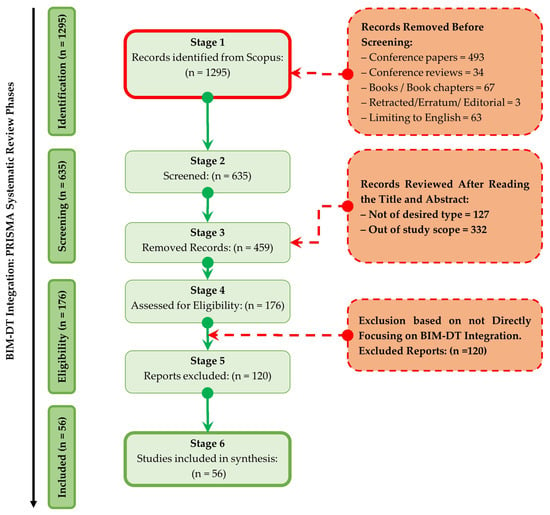
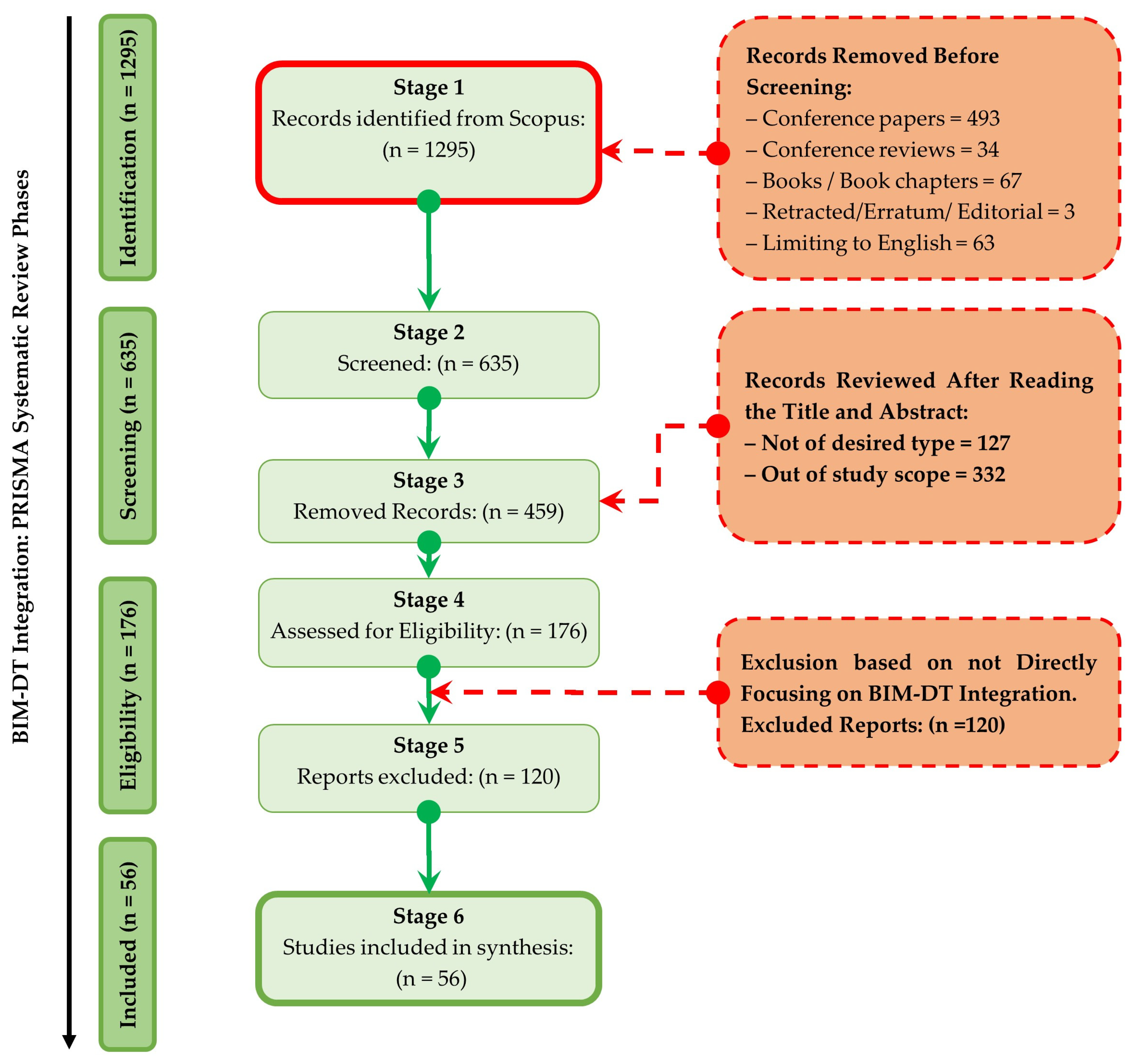
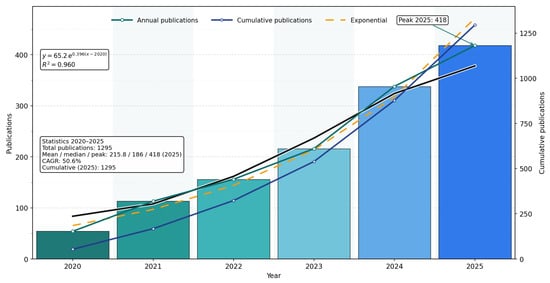
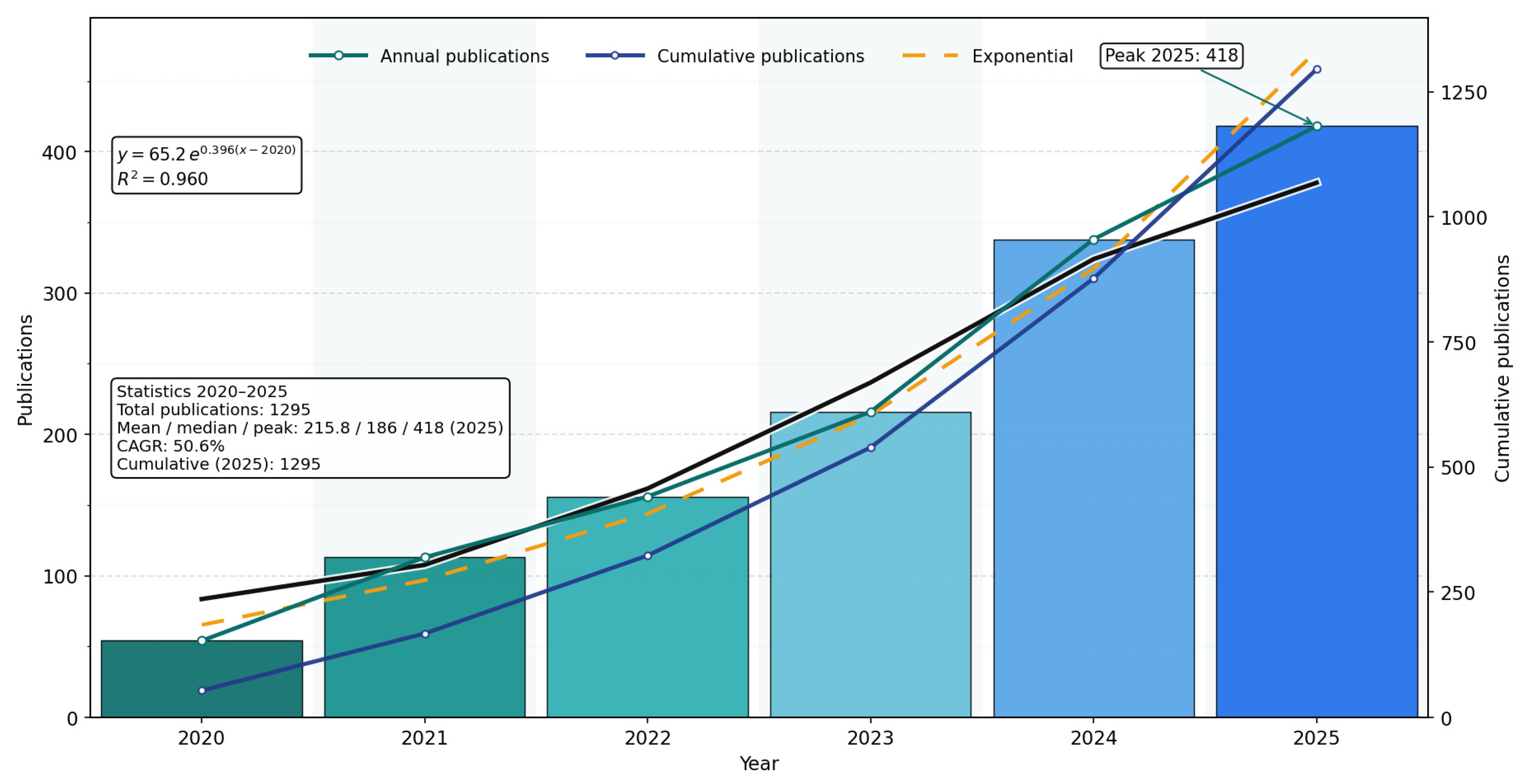
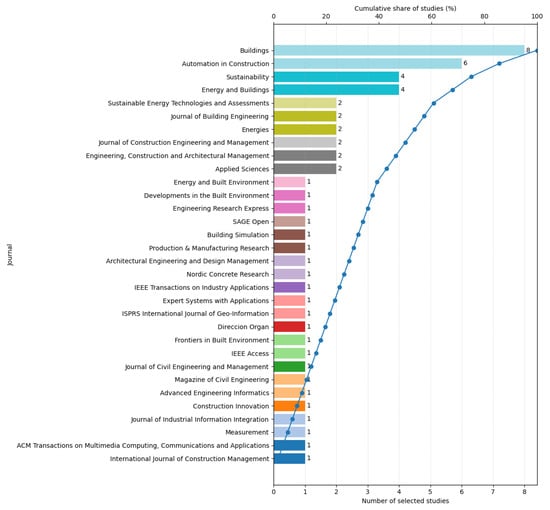
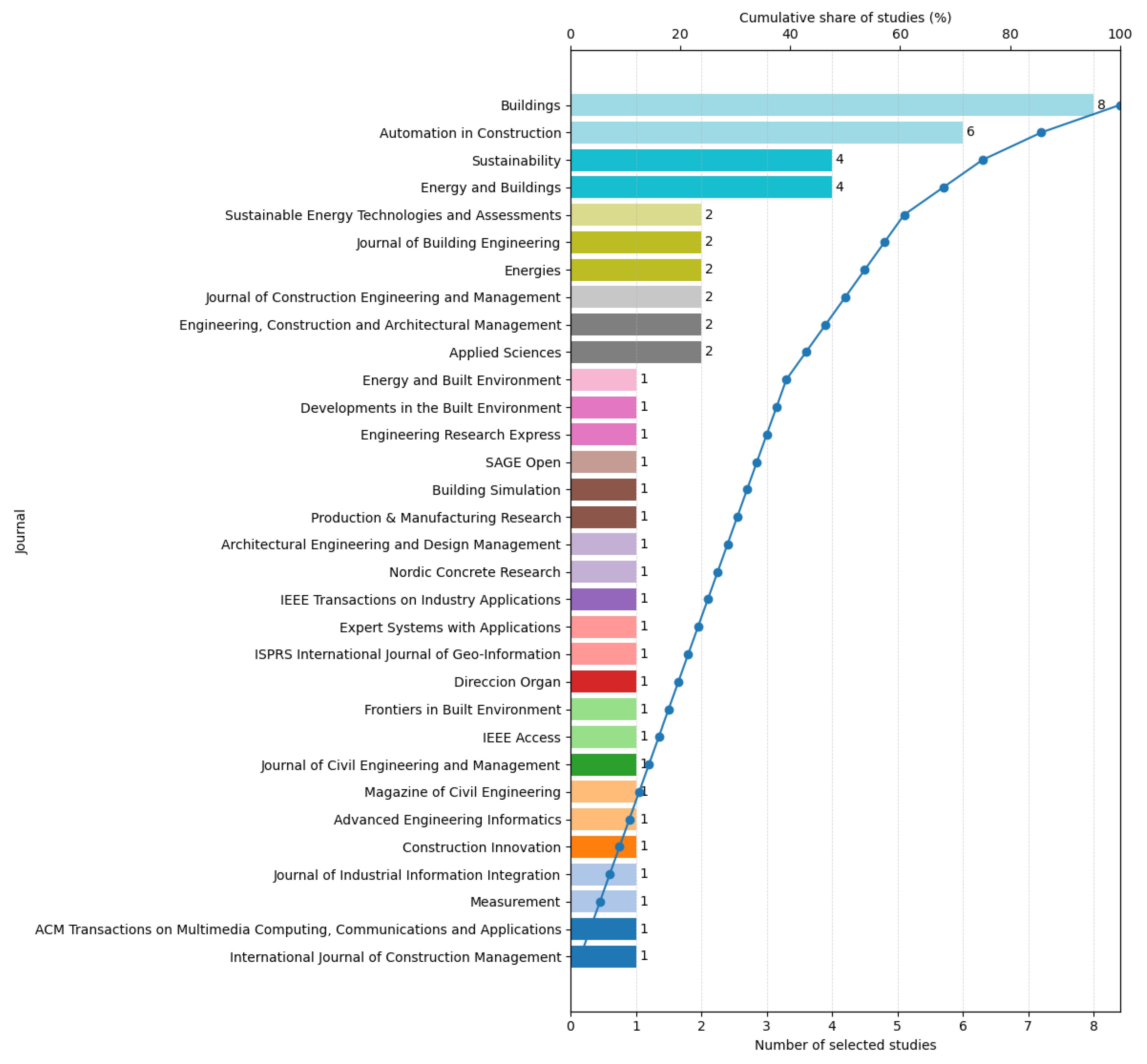
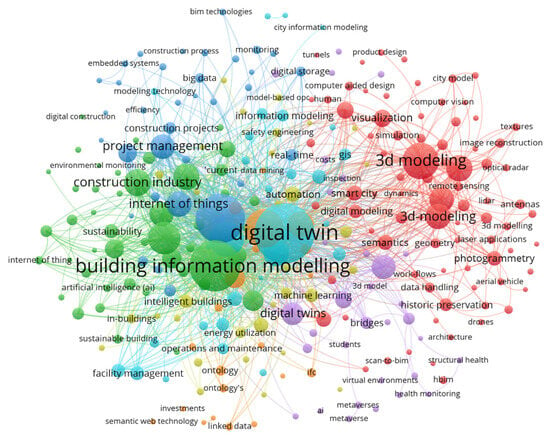
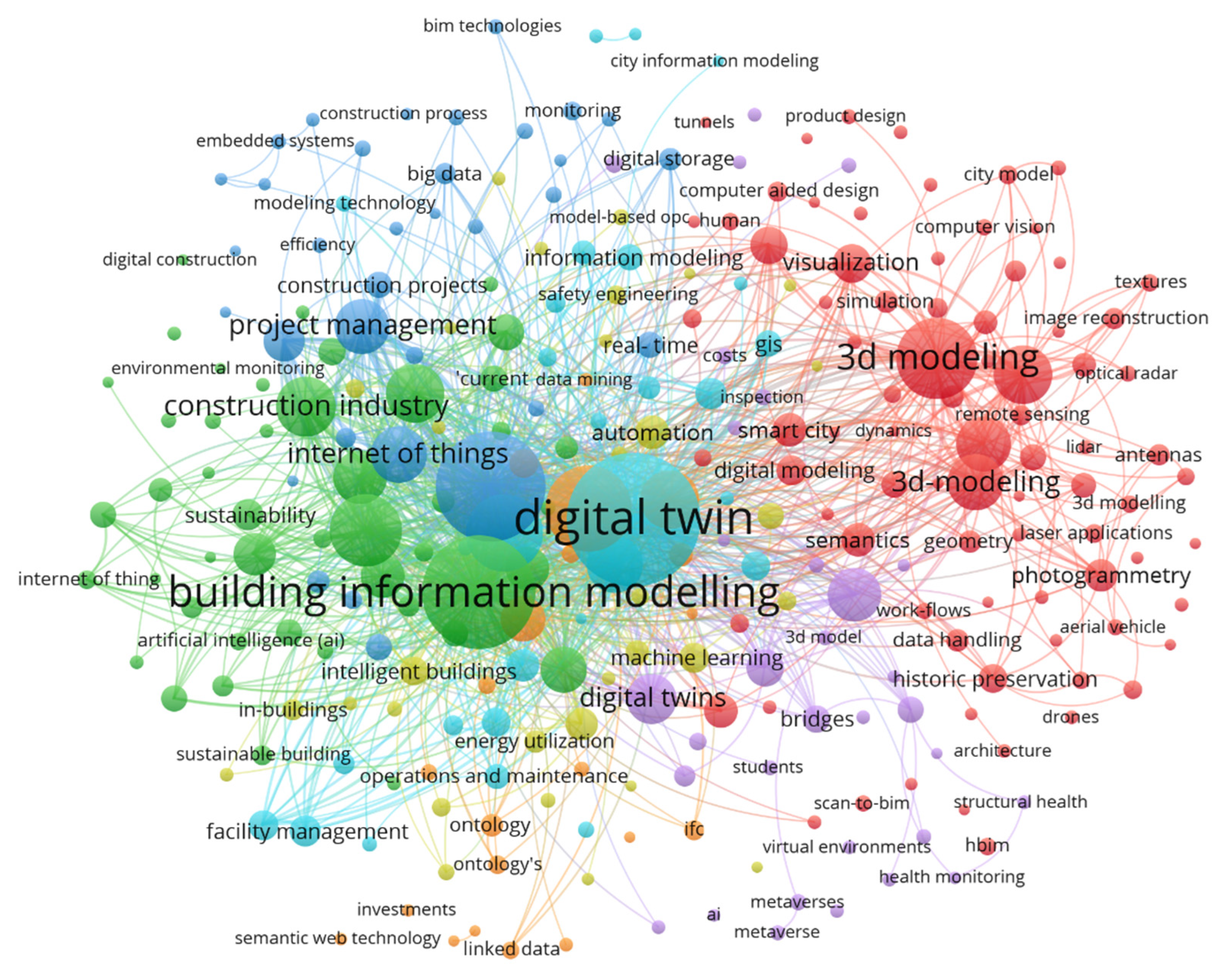
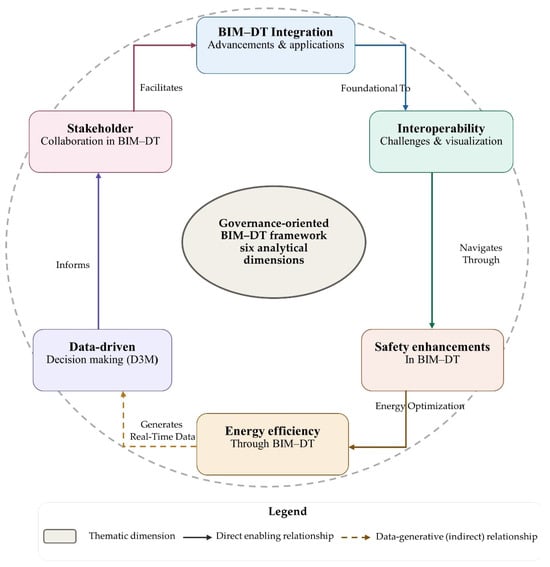
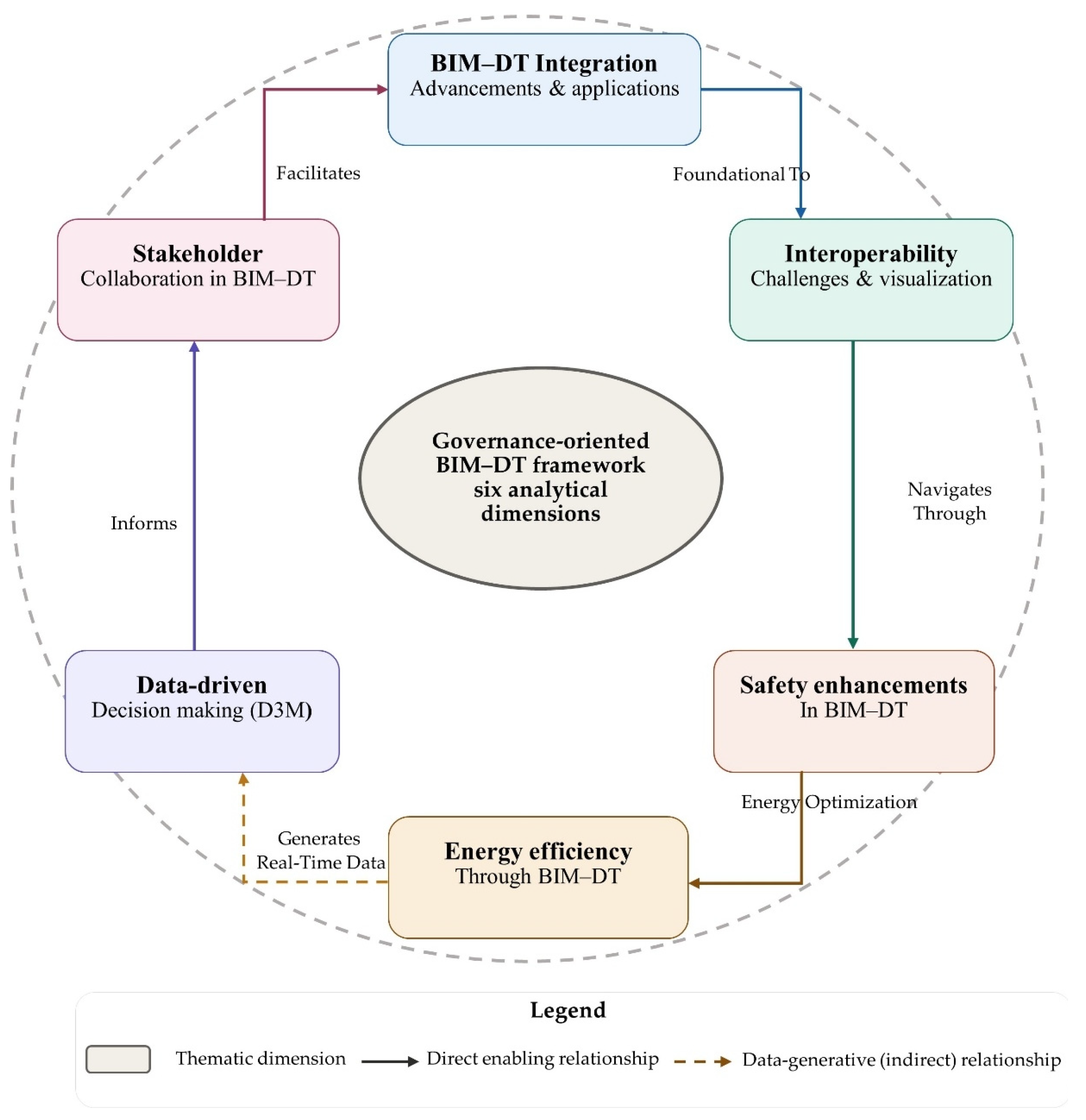
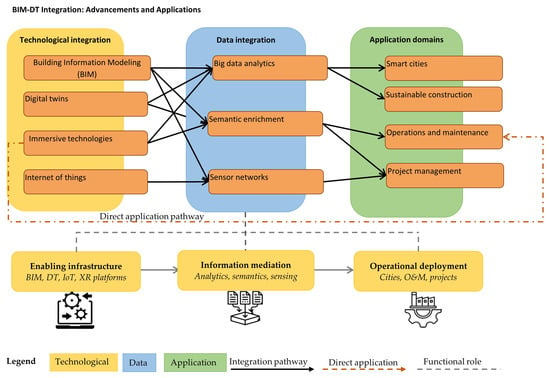
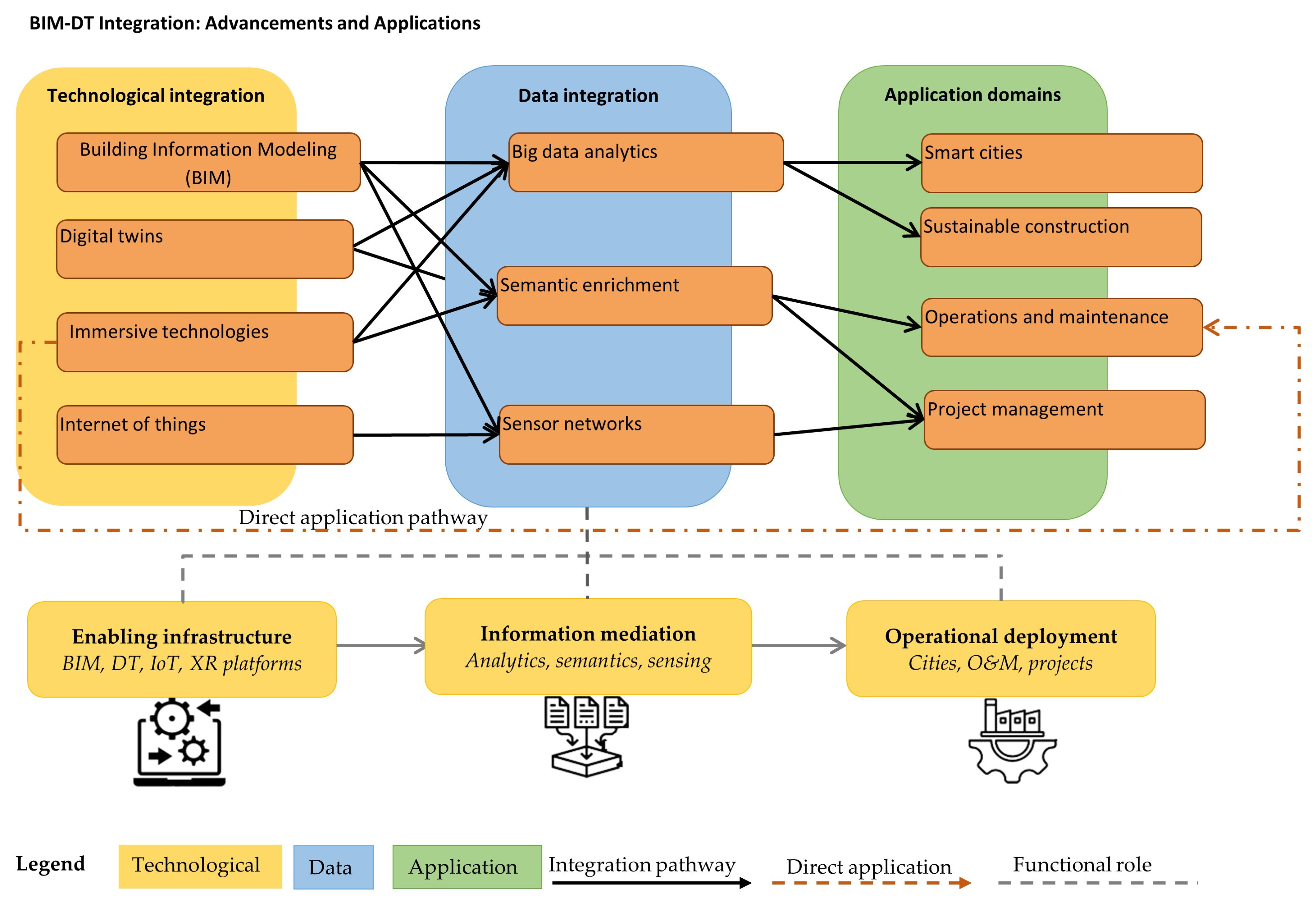
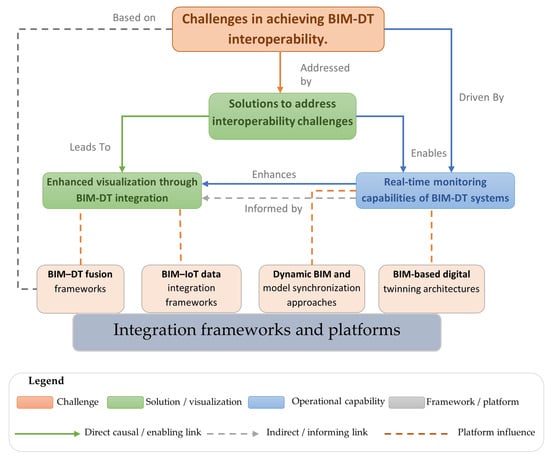
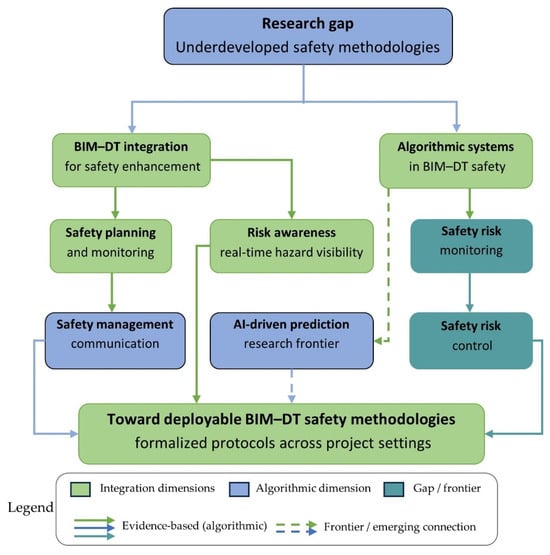
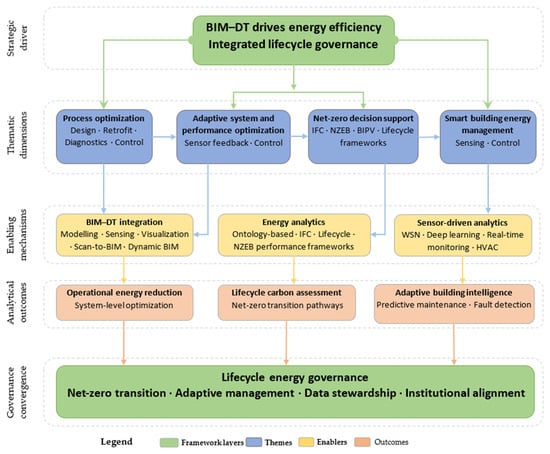
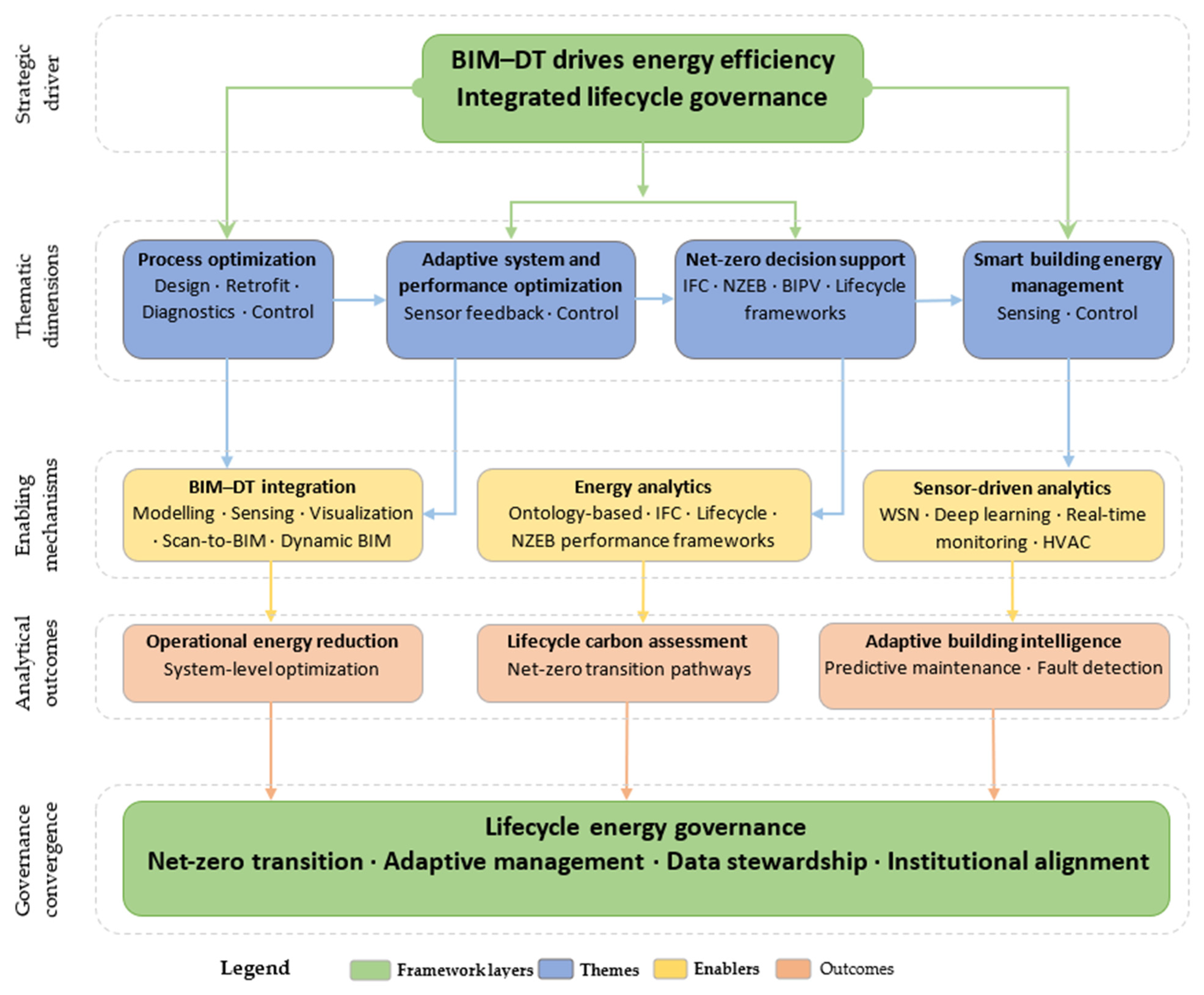
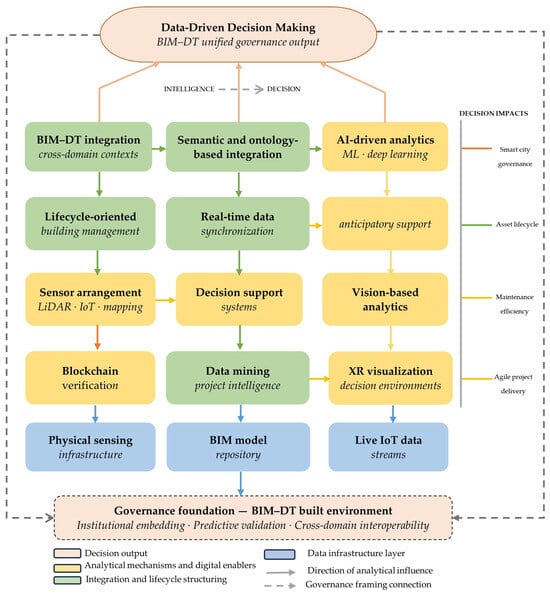
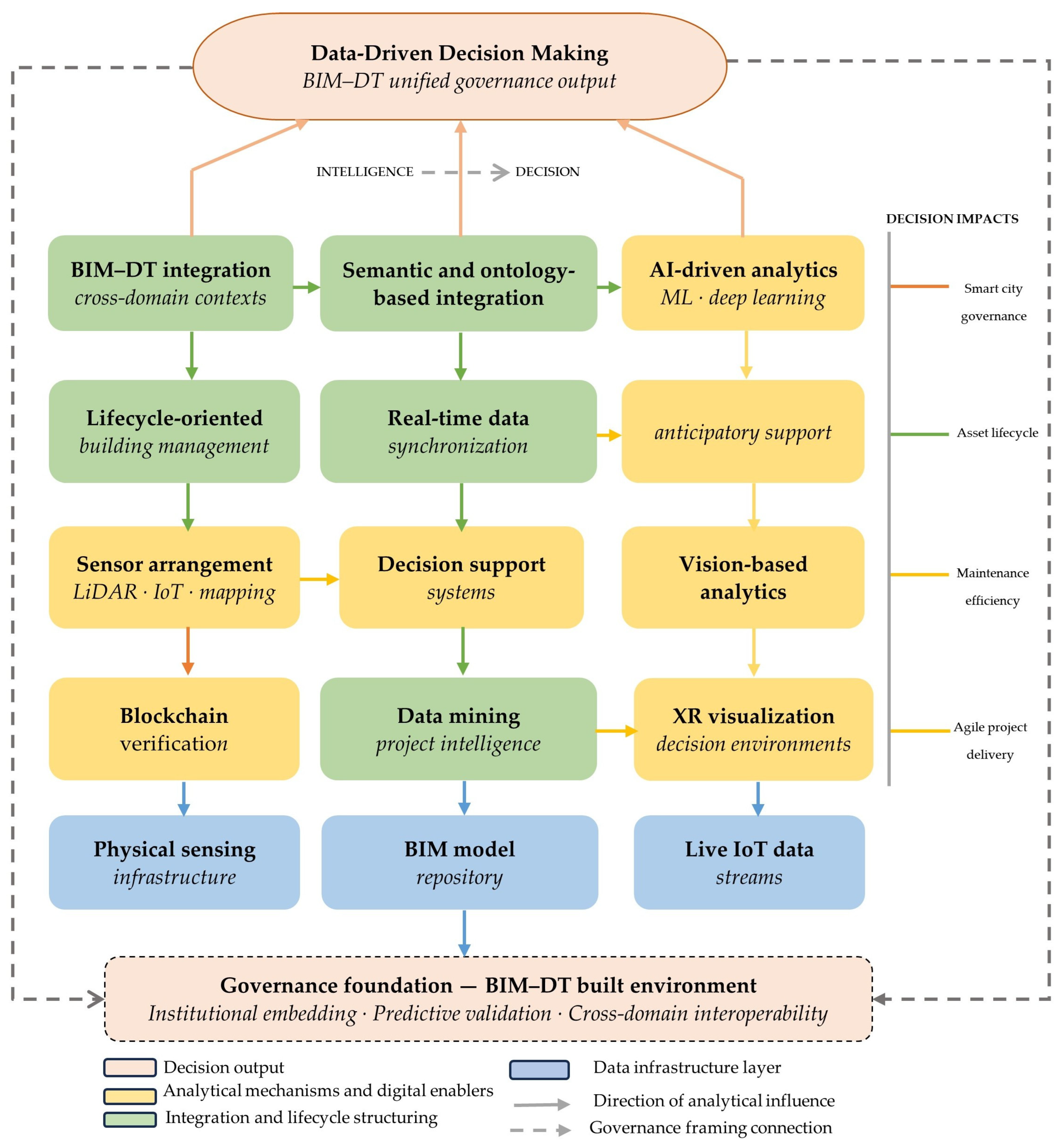
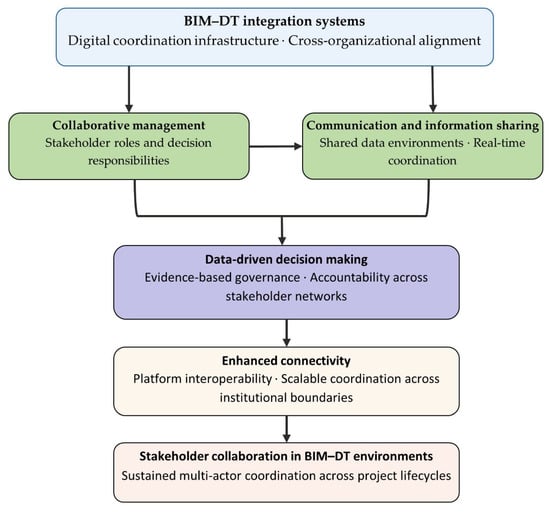
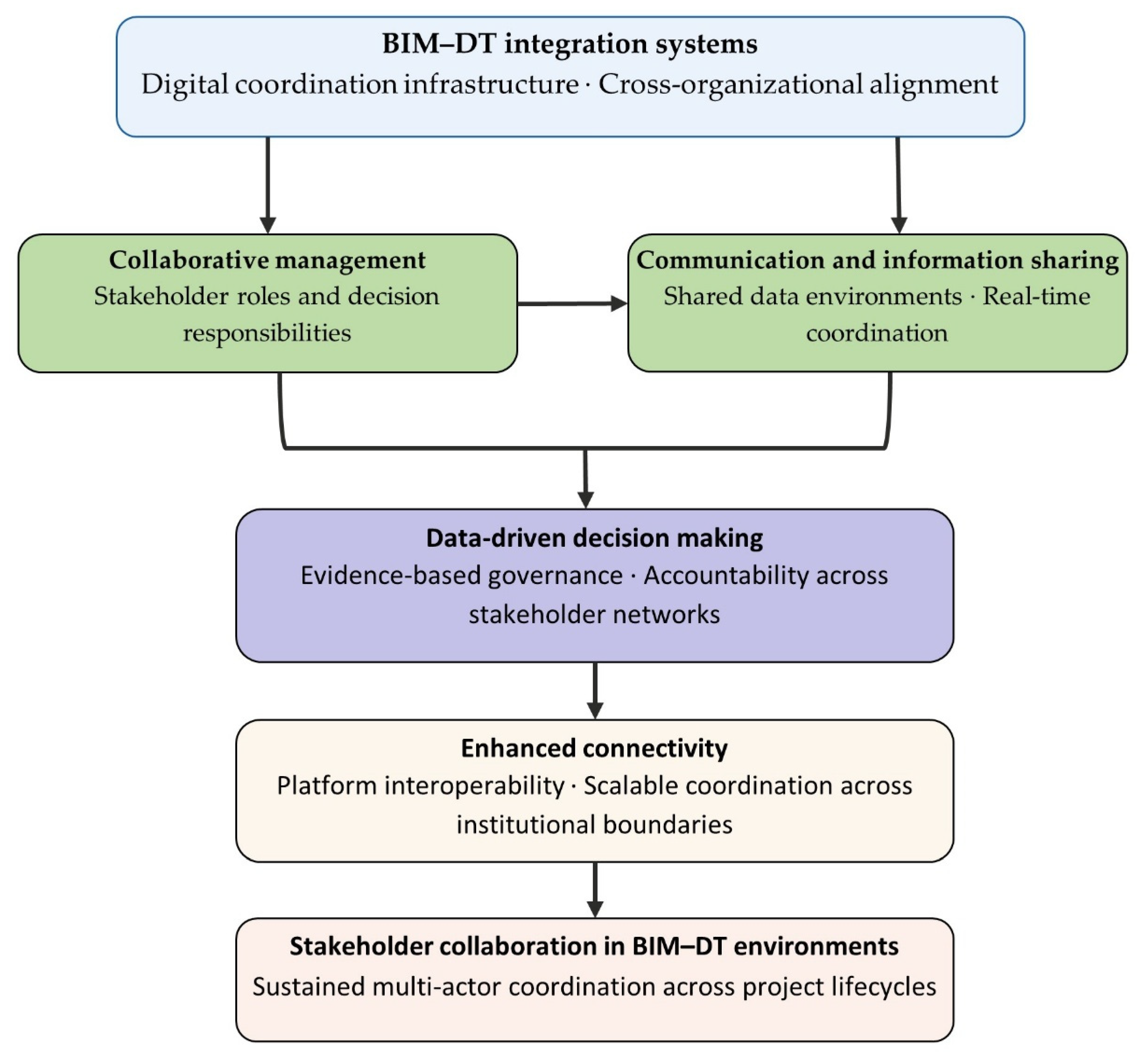

Disclaimer/Publisher’s Note: The statements, opinions and data contained in all publications are solely those of the individual author(s) and contributor(s) and not of MDPI and/or the editor(s). MDPI and/or the editor(s) disclaim responsibility for any injury to people or property resulting from any ideas, methods, instructions or products referred to in the content. |
© 2026 by the authors. Licensee MDPI, Basel, Switzerland. This article is an open access article distributed under the terms and conditions of the Creative Commons Attribution (CC BY) license.