


Abstract
Laser powder bed fusion (LPBF) produces microstructural anisotropy that influences hydrogen transport and passive film stability, yet the mechanistic relationship between build orientation, passive film chemistry, and corrosion behavior remains insufficiently understood. This study investigates how LPBF build orientation governs hydrogen-assisted passive film degradation by correlating electrochemical behavior with passive film chemistry. Additively manufactured 316L stainless steel specimens were fabricated in two build orientations, horizontal (0°) and vertical (90°), and subjected to electrochemical hydrogen charging for durations ranging from 2 to 36 h. Corrosion behavior was evaluated using open-circuit potential (OCP), electrochemical impedance spectroscopy (EIS), linear polarization resistance (LPR), and potentiodynamic polarization (PDP), while X-ray photoelectron spectroscopy (XPS) was employed to characterize hydrogen-induced changes in passive film chemistry. The electrochemical response showed that hydrogen charging progressively reduced the corrosion resistance of both build orientations. However, the degradation exhibited a non-monotonic dependence on charging duration, with intermediate charging durations suggesting transient repassivation before renewed deterioration during prolonged hydrogen exposure. EIS analysis revealed a substantial decrease in the fitted total resistance (Rtotal = Rct + Rpo), from 1.44 to 0.27 kΩ cm2 for the 0° specimens and from 4.23 to 0.55 kΩ cm2 for the 90° specimens. Potentiodynamic polarization showed that prolonged hydrogen charging increased the corrosion current density from 20.99 to 98.91 μA cm−2 for the 0° specimens and from 0.79 to 46.86 μA cm−2 for the 90° specimens. XPS analysis revealed progressive depletion of protective oxide species (Fe2O3, Cr2O3, Mo oxides, and lattice oxygen) together with enrichment of hydroxide-rich species, resulting in a lower O2−/OH− ratio and transformation of the passive film into a more porous and less protective surface layer. These chemical changes were more pronounced in the 90° build orientation and were consistent with the greater reduction in passive film stability observed from the electrochemical measurements. The combined electrochemical and XPS analyses establish that LPBF build orientation governs hydrogen-assisted corrosion through its influence on microstructural anisotropy, hydrogen transport, passive film chemistry, and the resulting electrochemical response, providing mechanistic insight into the corrosion behavior of additively manufactured 316L stainless steel in hydrogen-containing environments.
1. Introduction
For more than a century, fossil fuels have remained the primary source of global energy. However, their continued utilization has resulted in severe environmental challenges, including greenhouse gas emissions, climate change, and resource depletion, highlighting the urgent need for sustainable energy alternatives [1,2]. Among the proposed solutions, hydrogen has emerged as one of the most promising clean energy carriers because of its high energy density and carbon-free combustion. The concept of a hydrogen economy, in which hydrogen is produced, stored, transported, and utilized as a major energy vector, has therefore attracted considerable global attention as a pathway toward decarbonization [3,4,5].
Despite these advantages, the widespread implementation of hydrogen technologies is constrained by the interaction of hydrogen with structural materials used in storage, transportation, and distribution systems [6,7]. Owing to its extremely small atomic size and high mobility, hydrogen readily diffuses into metallic materials, where it progressively deteriorates their mechanical integrity through a phenomenon known as hydrogen embrittlement (HE) [8]. Hydrogen embrittlement arises from the accumulation of hydrogen within the crystal lattice and is generally accompanied by reductions in ductility, fracture toughness, and load-bearing capacity, which may ultimately result in premature or catastrophic failure during service. Several mechanisms have been proposed to explain hydrogen embrittlement [9,10]. The hydrogen-enhanced localized plasticity (HELP) mechanism suggests that dissolved hydrogen promotes dislocation mobility, leading to highly localized plastic deformation. As the hydrogen concentration increases, the hydrogen-enhanced decohesion (HEDE) mechanism becomes increasingly significant, whereby hydrogen weakens the cohesive bonding between adjacent metal atoms, thereby facilitating brittle fracture [11]. Another widely accepted mechanism is the internal pressure theory, in which atomic hydrogen diffuses into the microstructure and becomes trapped at defects such as dislocations, inclusions, and voids. At these trapping sites, hydrogen atoms recombine to form molecular hydrogen, generating internal pressure that promotes crack initiation and accelerates crack propagation [12,13].
Among the candidate structural materials for hydrogen infrastructure, 316L stainless steel has attracted considerable attention because of its excellent corrosion resistance, weldability, and good mechanical performance [14,15]. Its face-centered cubic (FCC) austenitic structure contains closely packed octahedral interstitial sites that provide relatively low hydrogen diffusivity together with high hydrogen solubility, making it a suitable material for hydrogen storage and transportation systems [16,17]. Consequently, the behavior of 316L stainless steel in hydrogen-containing environments has become an active area of research as the development of reliable hydrogen infrastructure continues to expand [18,19,20]. Previous studies have shown that hydrogen embrittlement in austenitic stainless steels is primarily associated with strain-induced martensitic transformation and deformation twinning [9,21,22,23,24,25]. Nevertheless, maintaining an optimum combination of strength, ductility, and resistance to hydrogen degradation remains a significant challenge, particularly under high-pressure hydrogen service conditions. As a result, considerable research efforts have focused on compositional optimization and microstructural engineering to enhance the reliability and long-term performance of these alloys in hydrogen environments [15,26].
The samples investigated in this study were fabricated using laser powder bed fusion (LPBF), one of the most widely adopted additive manufacturing (AM) techniques for metallic materials. By selectively melting metal powders in a layer-by-layer manner, LPBF enables the fabrication of components with complex geometries, high material utilization, and minimal post-processing requirements compared with conventional manufacturing routes [27,28]. In addition to these manufacturing advantages, LPBF produces distinctive microstructural characteristics, including fine cellular substructures, high dislocation densities, stable austenite, and a high density of low-angle grain boundaries [29,30]. These microstructural features significantly influence the mechanical, corrosion, and hydrogen-related properties of the fabricated components [31].
Previous studies have demonstrated that the microstructure and performance of LPBF materials are highly sensitive to processing parameters, alloy composition, and build orientation. Deng et al. [29] and Zhang et al. [30] highlighted the critical influence of processing conditions on densification and the resulting mechanical properties of LPBF-fabricated NiTi alloys. Similarly, Kok et al. [31] and Watring et al. [32] showed that build orientation strongly affects the microstructure and mechanical behavior of LPBF Ni-based superalloys, resulting in anisotropic properties. For LPBF 316L stainless steel, Evangelou et al. [33] demonstrated its excellent microstructural stability, mechanical integrity, and suitability for hydrogen-related applications. Subsequent investigations further established strong relationships between processing conditions, microstructural evolution, and corrosion performance. Cacace et al. [34] and Kazemipour et al. [15] reported that volumetric energy density strongly influences porosity formation, particularly keyhole and lack-of-fusion defects, thereby affecting mechanical reliability. Vallejo et al. [35] correlated thermal processing conditions with the development of cellular substructures and melt pool morphology, while Collazo et al. [36] demonstrated that optimum laser energy inputs significantly improved the pitting corrosion resistance of LPBF 316L, emphasizing that maximum densification does not necessarily correspond to the highest corrosion resistance. Furthermore, Trelewicz et al. [37] showed that the fine Mo-enriched cellular substructure produced by LPBF promotes the formation of a more stable passive film, resulting in superior corrosion resistance compared with conventionally wrought 316L stainless steel.
Electrochemical characterization provides a powerful approach for evaluating hydrogen-induced corrosion and passive film degradation in additively manufactured 316L stainless steel [38,39]. Techniques such as open-circuit potential (OCP), linear polarization resistance (LPR), potentiodynamic polarization (PDP), and electrochemical impedance spectroscopy (EIS) provide complementary information regarding the thermodynamic stability, corrosion kinetics, and integrity of the passive film [38]. OCP monitors the evolution of surface stability during exposure, LPR provides an estimate of the instantaneous corrosion rate, PDP evaluates anodic and cathodic reaction kinetics together with passive and pitting behavior, whereas EIS offers detailed information on passive film resistance, charge transfer processes, and hydrogen-induced changes in the oxide layer.
Previous electrochemical studies have consistently demonstrated the superior corrosion performance of LPBF 316L stainless steel compared with that of its conventionally manufactured counterparts. Bojinov et al. [16,18] reported that LPBF 316L exhibited higher polarization resistance and lower corrosion rates than wrought 316L in hydrogen-containing pressurized water reactor (PWR) environments, while dissolved hydrogen influenced both passive film stability and corrosion kinetics. Similar observations were reported by Guo et al. [40], who demonstrated that hydrogen dissolved in PWR environments significantly altered the characteristics of the surface oxide film. Wang et al. [41] further showed that although LPBF specimens retained better corrosion resistance than conventionally manufactured alloys after electrochemical hydrogen charging, hydrogen nevertheless increased the corrosion current density and reduced the polarization resistance. Likewise, Zhao et al. [42] demonstrated that hydrogen charging modified the passive film chemistry of selective laser-melted (SLM) 316L stainless steel by increasing oxygen vacancy concentrations and destabilizing the protective oxide layer.
The influence of LPBF microstructure on corrosion behavior has also been widely investigated. Torres et al. [43] reported that LPBF 316L exhibited more noble corrosion potentials and improved corrosion resistance than wrought material in NaCl solution while emphasizing the time-dependent evolution of passive films. Similarly, Olsson and Landolt [44] attributed the superior corrosion performance of SLM 316L in chloride-containing environments to the formation of a Cr2O3-enriched passive film. Kazemipour et al. [15] further demonstrated that SLM 316L possessed higher pitting potentials and lower metastable pitting frequencies than wrought steel, indicating enhanced resistance to localized corrosion irrespective of build orientation.
Hydrogen transport and trapping behavior have likewise been shown to depend strongly on the unique LPBF microstructure. Park et al. [45] reported that the fine cellular substructure of LPBF 316L acted as an effective hydrogen trapping network, resulting in lower hydrogen diffusivity and reduced hydrogen-induced hardening compared with wrought alloys. Khalaghifar et al. [26] observed only a modest reduction in ductility following electrochemical hydrogen charging, although hydrogen-assisted crack initiation was found to occur preferentially along melt pool boundaries. Li et al. [46] similarly demonstrated that the as-built LPBF microstructure exhibited superior resistance to hydrogen embrittlement owing to its defect-rich cellular network, whereas post-processing treatments such as hot isostatic pressing and annealing reduced the density of hydrogen trapping sites and increased susceptibility to hydrogen damage. Complementary hydrogen permeation studies by Lin et al. [47] further confirmed that LPBF 316L possesses significantly lower hydrogen diffusivity than conventionally processed material because hydrogen is preferentially trapped at dislocations, melt pool boundaries, and cellular substructures.
Increasing attention has recently focused on understanding how hydrogen modifies passive film chemistry. Kong et al. [48] reported that LPBF 316L developed a more stable passive film than wrought stainless steel, exhibiting substantially lower passive film defect densities following hydrogen charging. Zhao et al. [42] further demonstrated that prolonged hydrogen charging progressively increased passive film defect density, reduced passive film compactness, and deteriorated corrosion resistance in additively manufactured stainless steel. Collectively, these studies demonstrate that the unique LPBF microstructure plays a critical role in controlling hydrogen transport, passive film stability, and corrosion behavior. However, a comprehensive understanding of how hydrogen charging duration and build orientation jointly influence passive film evolution and electrochemical performance remains limited [49].
Despite the considerable body of research on LPBF 316L stainless steel, the mechanistic relationship between build orientation, hydrogen-assisted passive film degradation, and electrochemical corrosion behavior remains insufficiently understood [38]. Previous investigations have largely examined LPBF microstructure, hydrogen ingress, passive film chemistry, and electrochemical corrosion independently. Consequently, the complete cause-and-effect relationship linking LPBF-induced microstructural anisotropy, defect distribution, hydrogen transport, passive film chemical evolution, and electrochemical degradation has not yet been systematically established [3]. Furthermore, although XPS has been widely used to characterize passive film composition and electrochemical techniques have been extensively employed to evaluate corrosion behavior, correlations between passive film chemistry, particularly the balance between oxide and hydroxide species, and electrochemical parameters, such as passive film resistance, charge transfer resistance, and corrosion kinetics, remain limited. Therefore, the objective of the present work is to determine how LPBF build orientation governs hydrogen-induced passive film degradation by correlating electrochemical behavior with passive film chemistry characterized by XPS. By integrating complementary electrochemical techniques with surface chemical analysis, this study establishes the relationship between LPBF-induced microstructural anisotropy, passive film evolution, and electrochemical degradation, thereby providing mechanistic insight into the corrosion performance of LPBF 316L stainless steel under hydrogen charging conditions.
2. Materials and Methods
The LPBF specimens were fabricated by Immensa Technology Labs, Dubai, United Arab Emirates, using a GE Additive M2 Series 4 laser powder bed fusion system (GE Additive, Cincinnati, OH, USA). Gas-atomized 316L stainless steel powder, conforming to ASTM F3184 [50], was supplied by AP&C (Advanced Powders & Coatings Inc.), Boisbriand, QC, Canada. The nominal chemical composition of the powder is given in Table 1. Samples were prepared in two representative building orientations: horizontal (0°), where the specimen axis was parallel to the build platform, and vertical (90°), where the specimen axis was parallel to the build direction (Z), as illustrated schematically in Figure 1. Fabrication was performed using a 400 W laser under an inert gas atmosphere within a build chamber measuring 245 × 245 × 300 mm3. The laser spot diameter was approximately 75 μm, and the powder particle size ranged from 15 to 45 μm. Figure 1 also illustrates the layer-by-layer deposition sequence, laser scanning direction (R), build direction (Z), temperature gradient (G), and XZ metallographic section used for microstructural characterization.
Table 1.
Chemical composition of the AM 316L stainless steel used in this study.
Figure 1.
Schematic illustration of the LPBF fabrication process showing the (A) horizontal (0°) and (B) vertical (90°) build orientations, layer-by-layer deposition sequence, laser scanning direction (R), build direction (Z), temperature gradient (G), and XZ metallographic section used for microstructural characterization.
After fabrication, the specimens were subjected to a stress-relief heat treatment at 550 °C for 6 h, followed by furnace cooling to room temperature. Microstructural characterization was performed on the XZ section of both build orientations, as indicated in Figure 1. A JEOL JSM-5800LV scanning electron microscope (JEOL Ltd., Tokyo, Japan) was used to evaluate the surface morphology and porosity of the specimens, providing a basis for comparison between the two build orientations. The specimens were subsequently cold-mounted for metallographic examination and electrochemical testing.
The samples were ground using Silicon Carbide (SiC) papers with grits from 60 to 1200 and subsequently polished using a 0.05 µm alumina powder to achieve a mirror-like surface. The samples were cleaned with distilled water and ethanol, and an ultrasonicator was used to remove surface contaminants. For a detailed metallographic analysis of the grain boundaries, phase distribution, and melt pool structures, the samples were etched using 2% nital solution.
Electrochemical hydrogen charging was performed using a cathodic charging setup connected to a DC power supply at a fixed current density of 20 mA/cm2. A platinum mesh was used as a counter electrode (anode) because of its excellent electrical conductivity, chemical inertness, and resistance to corrosion during electrochemical testing. The electrolyte solution consisted of 0.1 M sulfuric acid (H2SO4) with the addition of 3 g/L ammonium thiocyanate (NH4SCN). The electrolyte composition and charging current density were kept constant to isolate the effects of build orientation and charging duration. NH4SCN was used as a hydrogen recombination poison to promote hydrogen uptake [51], while 20 mA cm−2 was selected based on previous studies demonstrating effective and reproducible charging [42,52]. The selected charging conditions have been widely adopted in previous studies to promote reproducible hydrogen ingress into stainless steels while minimizing excessive surface damage, thereby enabling meaningful comparisons of hydrogen-induced passive film degradation [42,51,53].
Electrochemical testing was carried out using a Gamry Reference 3000 potentiostat (Gamry Instruments, Warminster, PA, USA) in a conventional three-electrode configuration. The 316L SS specimen acted as the working electrode, (exposed surface area of 1 cm2), saturated Ag/AgCl was used as a reference electrode, and a graphite rod was used as a counter electrode in 0.1 M H2SO4 solution. The experiments were run as a sequence consisting of one hour of OCP for electrochemical stability, followed by EIS (using 10 mV AC voltage over a frequency ranging from 105 to 102 hertz) and then LPR (potential range of −0.01 V to +0.01 V vs. Vref at a scan rate of 0.1 mV/s), and, finally, PDP tests were performed in a potential range of −0.3 V to +1.5 V vs. Eref. For each hydrogen charging condition and build orientation, electrochemical measurements were performed on three independent specimens to ensure reproducibility. The reported steady-state OCP values represent the arithmetic mean of the replicate measurements, with error bars corresponding to one standard deviation. Furthermore, X-ray photoelectron spectroscopy (XPS) analysis was conducted using an Escalab 250Xi XPS system (Thermo Fisher Scientific Inc., Waltham, MA, USA) with aluminum Kα as the X-ray source at 150 W and a spot size of 400 µm under an ultra-high vacuum of 5 × 10⁻⁸ mbar.
3. Results and Discussion
3.1. Microstructure Evaluation
Figure 2 shows the characteristic layer-by-layer microstructure of the LPBF-fabricated 316L stainless steel in the two build orientations. It is clear in Figure 2b that, in the horizontal specimens (0°), the axis is parallel to the build platform and perpendicular to the build direction (Z), resulting in elongated and well-defined melt pools in the observation plane [35,37,54]. The melt tracks are continuous and uniform, with an average width of approximately 67 μm, indicating stable melt pool formation and consistent laser energy input during fabrication [34,36]. In contrast, the vertical specimens (90°), whose axis is parallel to the build direction, exhibit overlapping semicircular melt pool boundaries resulting from the successive deposition and partial remelting of adjacent layers [31,32]. The difference in melt pool morphology between the two orientations reflects the anisotropic nature of the LPBF process rather than differences in the manufacturing parameters [3,31]. Epitaxial grain growth is evident in both orientations, with columnar grains extending across successive melt pool boundaries due to directional heat flow during solidification. As illustrated schematically in Figure 1, the temperature gradient (G) is primarily aligned with the build direction, whereas the solidification rate (R) is governed by the laser scanning direction. Their combined effect (G/R) promotes directional solidification and the development of elongated grains parallel to the build direction, particularly in the vertically built specimens [33,35]. These orientation-dependent microstructural features influence defect distribution and passive film evolution and are therefore expected to affect hydrogen transport and the subsequent electrochemical behavior discussed in the following sections [26,45,47].
Figure 2.
Optical micrographs of LPBF 316L stainless steel showing the microstructure of the (a) 90° (vertical) and (b) 0° (horizontal) build orientations. Red dashed lines highlight representative melt pool boundaries and the measured average melt pool width.
Figure 3 shows the X-ray diffraction (XRD) patterns of the additively manufactured 316L SS specimens fabricated in the horizontal (0°) and vertical (90°) build orientations. Characteristic diffraction peaks of the face-centered cubic (FCC) austenitic phase (γ-Fe) at approximately 2θ of 43.5°, 50.7°, and 74.6° were observed, corresponding to (111), (200), and (220) crystallographic planes, respectively [33,37]. No other diffraction peaks were observed, suggesting that both specimens consisted of a fully austenitic microstructure, without any other phases such as ferrite, martensite, sigma phase, and/or secondary phases [33]. The similarity in peak positions further supports the notion that the build orientation did not alter the phase composition of the material. However, the slight variations in the relative peak intensities between the horizontal and vertical specimens may be attributed to differences in crystallographic texture arising from the directional solidification and thermal gradients inherent to the additive manufacturing process [55].
Figure 3.
XRD diffraction patterns of LPBF 316L stainless steel fabricated in the 0° (horizontal) and 90° (vertical) build orientations.
It is also clear in Figure 2 that there are small spherical and irregularly shaped voids/porosity dispersed along the melt pool regions. The presence of these pores is normal and can be attributed to what is called the “balling effect”; i.e., surface tension causes the molten metal to separate into droplets instead of spreading uniformly across the previous deposited layer [56,57,58]. These droplets solidify before fully coalescing with the surrounding material, thereby creating small voids in the microstructure [45]. Void fraction analysis showed surface porosity levels of 0.02% and 2.23% for the horizontal and vertical samples, respectively.
It is clear that there is a higher porosity in the 90° sample than in the 0° sample, owing to differences in the heat distribution and laser scanning patterns. At higher build angles, the area deposited in each layer is smaller, which requires more frequent starting and stopping of the laser scan, leading to unstable melting conditions, uneven melt pool formation, a lack of fusion between layers, and gas entrapment within the material [31,59]. Wang et al. [60] linked the increase in porosity at inclined orientations to non-favorable melting conditions at those angles. These pores increase the effective metal/electrolyte interfacial area and provide preferential sites for hydrogen ingress and trapping, thereby influencing passive film stability and the subsequent electrochemical response [3,26,45,47].
3.2. Electrochemical Experiments
3.2.1. Open-Circuit Potential (OCP)
Figure 4a,b show the representative OCP evolution of the hydrogen-charged specimens, including the transient OCP responses of the 0° and 90° build orientations, respectively, and the corresponding steady-state OCP values after 3600 s are shown in Figure 4c. The OCP provides insight into the thermodynamic stability of the surface and the integrity of the passive oxide film [38,53]. Following hydrogen charging, the OCP generally shifted toward more negative values, indicating surface activation and partial degradation of the protective passive layer. At intermediate charging durations, the transient OCP response exhibited gradual stabilization, suggesting partial repassivation as hydrogen diffusion approached equilibrium within the material [44,53].
As discussed previously, the 0° specimens exhibited a more stable electrochemical response owing to their well-fused melt pool boundaries, which provide a more effective barrier to hydrogen ingress and reduce the degradation of the protective oxide film [45,47]. The transient OCP curves in Figure 4a show relatively small fluctuations, and a gradual stabilization throughout the exposure period can be observed. However, after 24 h of hydrogen charging, the steady-state potential became more negative, indicating partial destabilization of the passive film following prolonged hydrogen exposure [42]. This behavior is consistent with the more homogeneous horizontal microstructure, which contains fewer preferential hydrogen diffusion pathways and therefore delays passive film breakdown [45].
In contrast, the 90° specimens (Figure 4b) initially exhibited more active behavior, characterized by lower OCP values immediately after immersion. However, the OCP recovered more rapidly with charging duration, particularly for the 12 h condition, suggesting earlier stabilization of the OCP response [53]. This response is attributed to the vertically oriented melt pool boundaries and the higher density of microstructural defects and porosity, which facilitate hydrogen ingress while simultaneously promoting rapid electrochemical interaction between the electrolyte and the passive film [31,45].
Figure 4.
Open-circuit potential (OCP) evolution of LPBF 316L stainless steel after different hydrogen charging durations for (a) 0° build orientation and (b) 90° build orientation, and (c) a comparison of the steady-state OCP values measured after 3600 s for both build orientations.
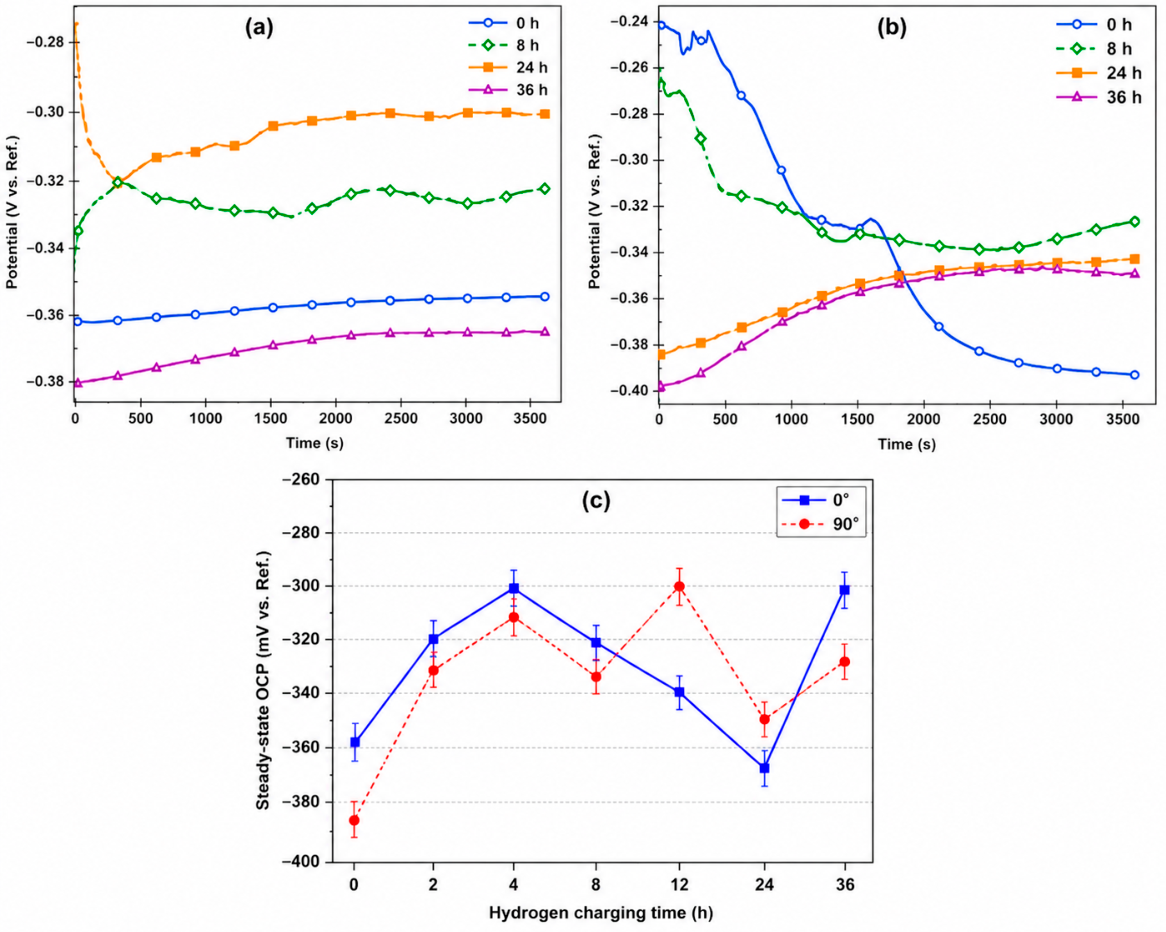
During hydrogen absorption, hydrogen modifies the passive film by promoting the formation of oxygen vacancies, cation vacancies, and hydroxyl species, thereby reducing passive film compactness and shifting the OCP toward more negative values [61,62]. Kong et al. [48] similarly reported increased donor and acceptor defect densities in hydrogen-charged LPBF 316L stainless steel, while Zhao et al. [21] observed comparable OCP shifts following electrochemical hydrogen charging. It is also reported elsewhere [59] that the anisotropic corrosion response of additively manufactured 316L stainless steel is closely associated with melt pool morphology and porosity distribution, which is in agreement with the orientation-dependent OCP behavior observed in the present study.
The steady-state OCP values summarized in Figure 4c provide a clearer comparison of the electrochemical behavior after stabilization. Both orientations exhibited a non-monotonic dependence of the steady-state OCP on the hydrogen charging duration, reflecting the dynamic evolution of the passive film during hydrogen exposure [53]. The 0° specimens maintained relatively nobler potentials than the 90° specimens at 0, 2, 4, 8, and 36 h, supporting their generally higher electrochemical stability. Conversely, the 90° specimens exhibited more positive steady-state potentials at 12 and 24 h, suggesting temporary stabilization of the passive film under these charging conditions [44]. Overall, the results suggest that although hydrogen charging alters the passive behavior of both build orientations, the electrochemical response remains strongly dependent on the LPBF-induced microstructural anisotropy, highlighting the influence of build orientation on hydrogen-assisted passive film degradation [3].
3.2.2. Electrochemical Impedance Spectroscopy (EIS)
Electrochemical impedance spectroscopy (EIS) was employed to evaluate the influence of hydrogen charging on the stability and protective characteristics of the passive film formed on LPBF 316L stainless steel. Figure 5a,b present representative Nyquist plots for the 0° and 90° build orientations after selected hydrogen charging durations. The impedance spectra were fitted using the equivalent circuit shown in Figure 5c, while the fitted total resistance, , is presented as a function of the charging duration in Figure 5d. The corresponding fitting parameters are summarized in Table 2.
Table 2.
Equivalent circuit fitting parameters obtained from EIS analysis of LPBF 316L stainless steel after different hydrogen charging durations using the REAP2CPE model.
The Nyquist plots of both build orientations exhibited depressed capacitive arcs characteristic of heterogeneous passive stainless steel surfaces [38,53]. The arc diameter varied considerably with the hydrogen charging duration, indicating continuous modification of the passive film and metal/electrolyte interface. The uncharged 90° specimen exhibited a substantially larger arc than the 0° specimen, reflecting a higher initial polarization resistance. Hydrogen charging generally reduced the arc diameter, although the response was non-monotonic, with temporary increases in impedance at intermediate charging durations. These increases may reflect transient changes in the interfacial condition or partial film reorganization, whereas the substantially smaller arcs after 24 and 36 h indicate pronounced deterioration during prolonged hydrogen exposure [42,51].
The impedance spectra were fitted using the REAP2CPE equivalent circuit shown in Figure 5c. The model consists of the solution resistance, , in series with two parallel resistance-CPE branches representing the passive film response and charge transfer process . Constant phase elements were used to account for the non-ideal capacitive behavior associated with passive film heterogeneity, surface roughness, and distributed relaxation times [38,39].
The quantitative evolution of the total resistance (Rtotal = Rct + Rpo) presented in Figure 5d further demonstrates the non-monotonic electrochemical response. The 90° specimen initially exhibited kΩ cm2, but this value decreased during the early charging period. A temporary increase was observed at 12 h, followed by pronounced reductions to 0.831 and 0.547 kΩ cm2 after 24 and 36 h, respectively. The 0° specimen exhibited a lower initial resistance of 1.438 kΩ cm2 and similarly showed intermediate increases at 8 and 12 h before decreasing to 0.152 and 0.274 kΩ cm2 after 24 and 36 h. Thus, although temporary increases in impedance occurred at intermediate durations, both orientations showed substantially lower resistance after prolonged charging, consistent with reduced passive film protectiveness.
Figure 5.
EIS analysis of LPBF 316L stainless steel after different hydrogen charging durations: (a) representative Nyquist plots for the 0° build orientation, (b) representative Nyquist plots for the 90° build orientation, (c) REAP2CPE equivalent circuit used to fit the impedance spectra, and (d) variation in the fitted total resistance (Rtotal = Rpo + R(ct)) as a function of hydrogen charging time for the 0° and 90° build orientations.
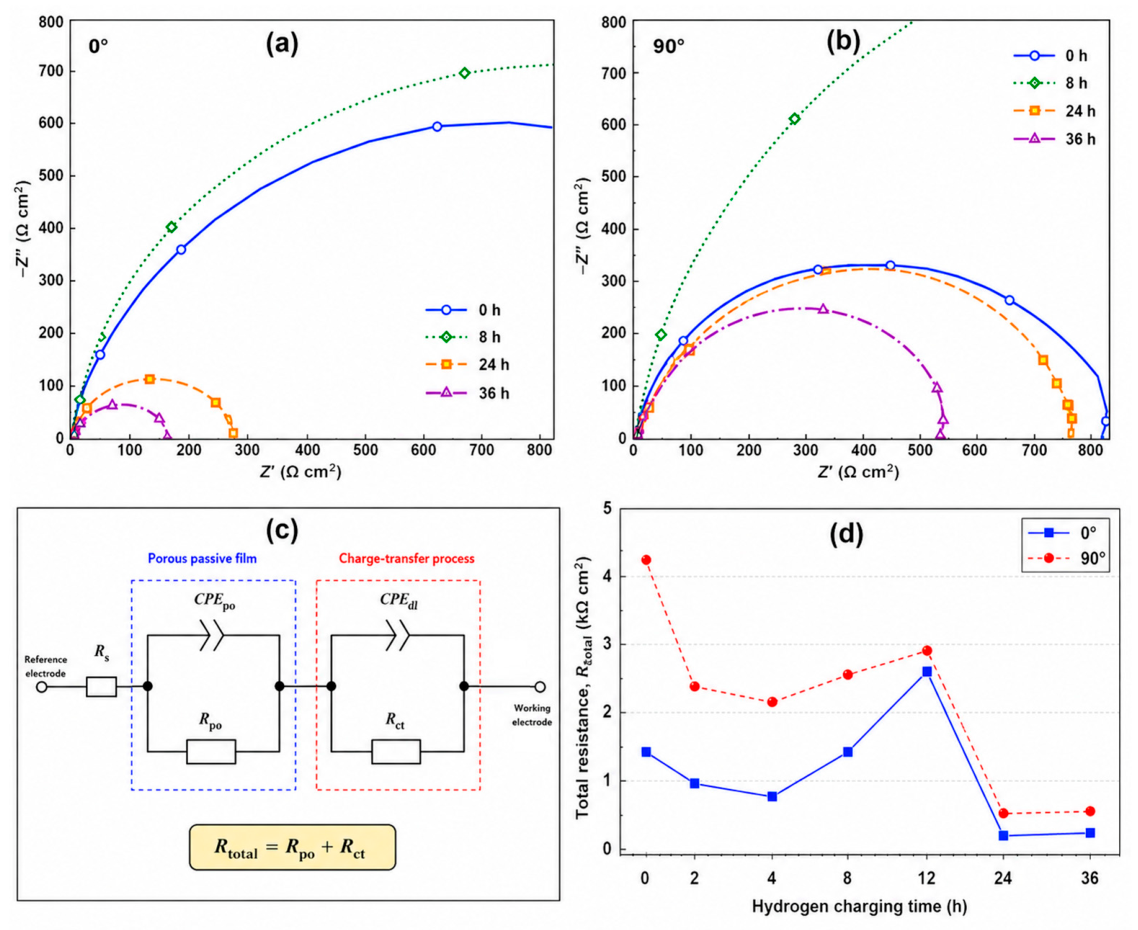
The fitted parameters listed in Table 2 reveal that the solution resistance (Rs) remained relatively constant (approximately 3–8 Ω) throughout hydrogen charging, indicating that the electrolyte resistance had a negligible influence on the measured impedance. Consequently, the electrochemical behavior was primarily governed by the evolution of the charge transfer resistance (Rct) and passive film resistance (Rpo). showed pronounced fluctuations during the early and intermediate charging stages. These changes may reflect competing effects of film modification, local dissolution, hydrogen-induced defect generation, and partial surface reorganization. After prolonged charging, decreased markedly, particularly for the 0° specimen, reaching 2.0 and 23.5 Ω cm2 after 24 and 36 h, respectively. The low values indicate severe loss of passive film barrier properties and increased ionic transport through a more defective film [42,53]. also exhibited a non-monotonic response. Its temporary increase at intermediate durations suggests that the interfacial kinetics were influenced by evolving surface chemistry and film coverage rather than the charging duration alone. The substantially lower values after 24 and 36 h compared with the intermediate maximum indicate that prolonged charging facilitated charge transfer across the metal/passive film/electrolyte interface. Therefore, the eventual reduction in both and indicates deterioration of the passive film barrier together with increased interfacial electrochemical activity. The CPE exponents and were generally lower than unity, confirming non-ideal capacitive behavior associated with heterogeneous passive films. Variations in these exponents may reflect changes in surface roughness, film composition, defect distribution, and the distribution of relaxation times [38,63].
3.2.3. Linear Polarization Resistance (LPR)
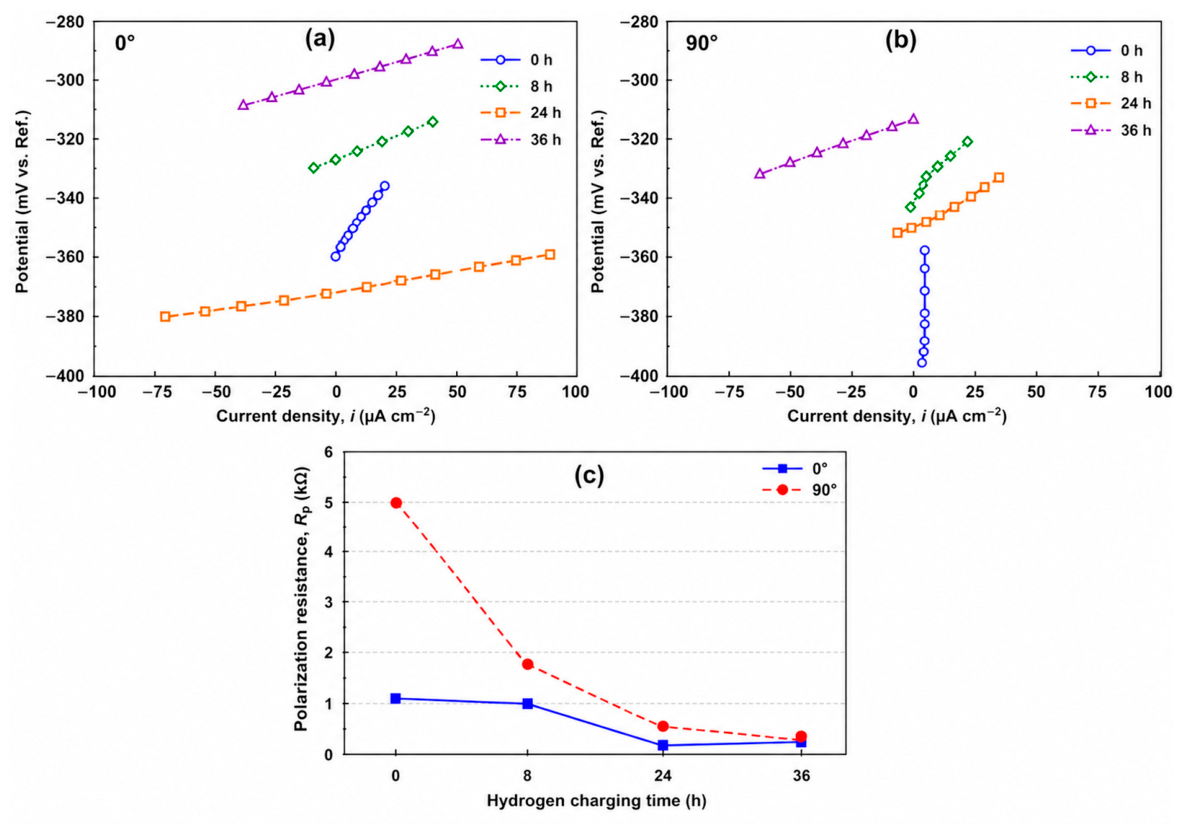
Figure 6a,b present the linear polarization resistance (LPR) response of the LPBF 316L stainless steel specimens (0° and 90° build orientations) after different hydrogen charging durations, and the corresponding polarization resistance (Rp) values extracted from the linear polarization slopes are shown in Figure 6c. The LPR provides a rapid assessment of corrosion resistance, where a higher polarization resistance corresponds to a lower corrosion rate and improved passive film stability [38,53]. The polarization curves of the 0° specimens (Figure 6a) remained relatively consistent during the initial stages of hydrogen charging, indicating that the passive film retained its protective characteristics despite hydrogen ingress. Only small shifts in the polarization behavior were observed between 0 h and 12 h, suggesting that the horizontally built microstructure was more resistant to hydrogen-induced passive film degradation. However, after prolonged charging (24 h and 36 h), the polarization slopes became less steep, reflecting a reduction in polarization resistance and increased electrochemical activity due to passive film deterioration.
The 90° specimens exhibited a more pronounced response to hydrogen charging (Figure 6b). The polarization curves progressively shifted toward more negative potentials during the early charging stages, accompanied by a gradual decrease in the polarization slope. This behavior indicates increased electrochemical activity and reduced corrosion resistance after hydrogen charging [42,53]. Although a slight recovery was observed at intermediate charging durations, the electrochemical response remained generally more active than that of the 0° specimens, reflecting the greater susceptibility of the vertically built microstructure to hydrogen-assisted passive film degradation.
The extracted polarization resistance values are summarized in Figure 6c. Prior to hydrogen charging, the 90° specimens exhibited considerably higher polarization resistance than the 0° specimens. Hydrogen charging produced a non-monotonic evolution of in both orientations, with a marked decrease during the initial charging period, partial recovery at intermediate durations (8–12 h), and substantially lower values after prolonged exposure (24–36 h). This trend closely follows that of the OCP and EIS responses, confirming that hydrogen progressively reduces the corrosion resistance of LPBF 316L stainless steel [38].
Figure 6.
Linear polarization resistance curves after different charging durations for (a) HF (0°) and (b) vertical (90°), and (c) variation in the polarization resistance () with hydrogen charging duration for both build orientations.
3.2.4. Potentiodynamic Polarization (PDP)
Potentiodynamic polarization (PDP) measurements were performed to evaluate the corrosion kinetics of LPBF 316L stainless steel after different hydrogen charging durations (Figure 7 and Table 3). While OCP measurements describe the thermodynamic tendency of corrosion and EIS/LPR results characterize passive film stability and polarization resistance, PDP provides direct information on the anodic and cathodic reaction kinetics through parameters such as the corrosion potential (Ecorr), corrosion current density (Icorr), corrosion rate, and pitting potential (Epit) [64].
Table 3.
Electrochemical parameters obtained from Tafel extrapolation of the potentiodynamic polarization curves for LPBF 316L stainless steel after different hydrogen charging durations.
The representative polarization curves (Figure 7) demonstrate that hydrogen charging modifies the electrochemical behavior of both build orientations. Compared with the uncharged condition, hydrogen charging generally resulted in increased current densities and changes in the anodic polarization response, indicating progressive activation of the metal surface [42,53]. However, the evolution was not strictly monotonic. Instead, intermediate charging durations exhibited partial recovery of the polarization behavior before significant deterioration occurred after prolonged hydrogen exposure.
For the 0° specimens (Figure 7a), the polarization curves remained relatively stable throughout the initial charging durations, with only modest shifts in the corrosion potential and anodic branch. A well-defined passive region was maintained for all charging conditions, indicating that the passive film retained considerable protective capabilities despite hydrogen ingress [64]. Although fluctuations in the anodic current density were observed at intermediate charging durations, the passive plateau remained relatively broad and stable, suggesting greater electrochemical stability of the horizontally built specimens during the early charging stages. Nevertheless, prolonged charging for 24 h and 36 h produced noticeably higher anodic current densities, reflecting increased ionic transport through a progressively defective passive layer.
In contrast, the 90° specimens (Figure 7b) exhibited a more pronounced response to hydrogen charging. The polarization curves generally shifted toward more active potentials and displayed higher anodic current densities, particularly after extended charging durations. These changes indicate that the passive film formed on the vertically built specimens became increasingly susceptible to hydrogen-induced degradation. The higher electrochemical activity is attributed to the anisotropic LPBF microstructure, where melt pool boundaries, columnar grains, and processing-induced defects provide preferential pathways for hydrogen diffusion and localized passive film destabilization [45,47].
Figure 7.
Representative potentiodynamic polarization (PDP) curves of LPBF 316L stainless steel after different hydrogen charging durations: (a) 0° build orientation and (b) 90° build orientation. The curves correspond to the uncharged condition (0 h) and representative hydrogen charging durations of 8, 24, and 36 h.
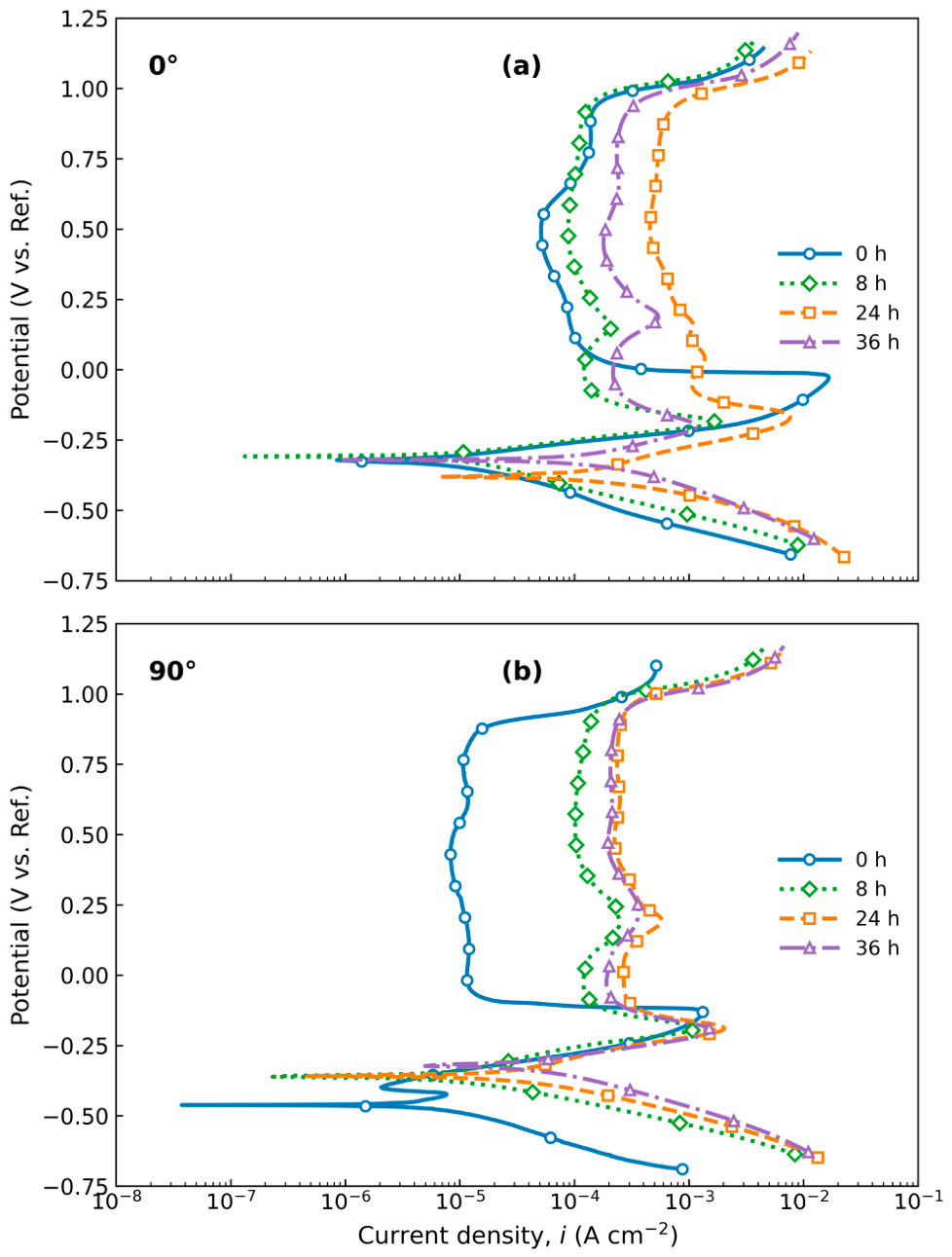
The electrochemical parameters summarized in Table 3 further quantify these observations. For the 0° specimens, Ecorr shifted from −323 mV in the uncharged condition to −379 mV after 24 h of hydrogen charging, indicating significant surface activation before partially recovering at 36 h. In contrast, the 90° specimens exhibited smaller fluctuations in Ecorr, suggesting a different evolution of the electrochemical response during hydrogen charging [42,53]. Nevertheless, the temporary recovery of Ecorr observed at intermediate charging durations, particularly after 12 h of hydrogen charging, suggests temporary stabilization of the passive film consistent with partial repassivation before continued hydrogen accumulation promoted further passive film degradation. This interpretation is supported by the corresponding reduction in Icorr to 0.24 μA cm−2 and 0.73 μA cm−2 for the 0° and 90° specimens, respectively, together with the increase in Epit to 965.96 mV and 969.04 mV, indicating the highest resistance to localized corrosion among the hydrogen-charged conditions.
The evolution of Icorr and the corresponding corrosion rate provides direct evidence of the influence of hydrogen on corrosion kinetics. For the 0° specimens, Icorr increased from 20.99 to 98.91 μA cm−2 after 36 h, whereas the corresponding value for the 90° specimens increased from 0.79 to 46.86 μA cm−2. This overall increase after prolonged hydrogen exposure suggests that hydrogen accelerates the anodic dissolution process by reducing the protective effectiveness of the passive layer [53,63]. The temporary reduction in Icorr reached a minimum after 12 h of charging, decreasing to 0.24 μA cm−2 for the 0° specimens and 0.73 μA cm−2 for the 90° specimens, corresponding to corrosion rates of only 0.04 and 0.34 mpy, respectively. Following continued hydrogen charging, Icorr increased again, reaching 98.91 μA cm−2 (45.17 mpy) for the 0° specimens and 46.86 μA cm−2 (21.38 mpy) for the 90° specimens after 36 h, indicating renewed deterioration of the protective passive film. The observed increase in Icorr and reduction in corrosion resistance following prolonged hydrogen charging are consistent with previous studies on additively manufactured 316L stainless steel, which reported hydrogen-assisted destabilization of the passive film and enhanced anodic dissolution [42,53].
The evolution of the pitting potential (Epit) provides additional insight into the resistance of LPBF 316L stainless steel to localized corrosion [62,64]. In both build orientations, Epit exhibited noticeable fluctuations with the hydrogen charging duration, with the most significant reduction occurring for the 0° specimens, where it decreased from 953 mV to 878 mV after 24 h, indicating reduced resistance to localized corrosion. A lower pitting potential indicates that localized passive film breakdown occurs more readily, suggesting that hydrogen promotes pit initiation by increasing the defect density within the passive oxide film. The highest Epit values were obtained after 12 h of charging (965.96 mV for the 0° specimens and 969.04 mV for the 90° specimens), indicating the highest resistance to localized corrosion during the hydrogen charging sequence. Thereafter, the pitting potential decreased again, reflecting renewed passive film deterioration with prolonged hydrogen exposure. The reduction in pitting resistance further suggests that hydrogen-induced passive film degradation increases the susceptibility of LPBF 316L stainless steel to localized corrosion, particularly after prolonged charging.
Overall, the PDP results complement the OCP, EIS, and LPR measurements by demonstrating that hydrogen charging progressively modifies the corrosion kinetics of LPBF 316L stainless steel. The evolution of Ecorr, Icorr, corrosion rate, and Epit indicates that prolonged hydrogen exposure reduces the resistance to both uniform and localized corrosion, while the extent of degradation remains strongly dependent on the LPBF-induced microstructural anisotropy associated with build orientation.
3.3. X-Ray Photoelectron Spectroscopy (XPS)
XPS was performed to investigate the chemical evolution of the passive film on LPBF 316L stainless steel before and after hydrogen charging. Figure 8, Figure 9 and Figure 10 present deconvoluted spectra of the principal alloying elements together with the oxygen chemistry of the passive film. The results provide direct evidence that hydrogen charging modifies both the composition and chemical state of the passive film. The relationship between these compositional changes and the electrochemical response is discussed in Section 3.3.4.
3.3.1. Principal Passivating Elements
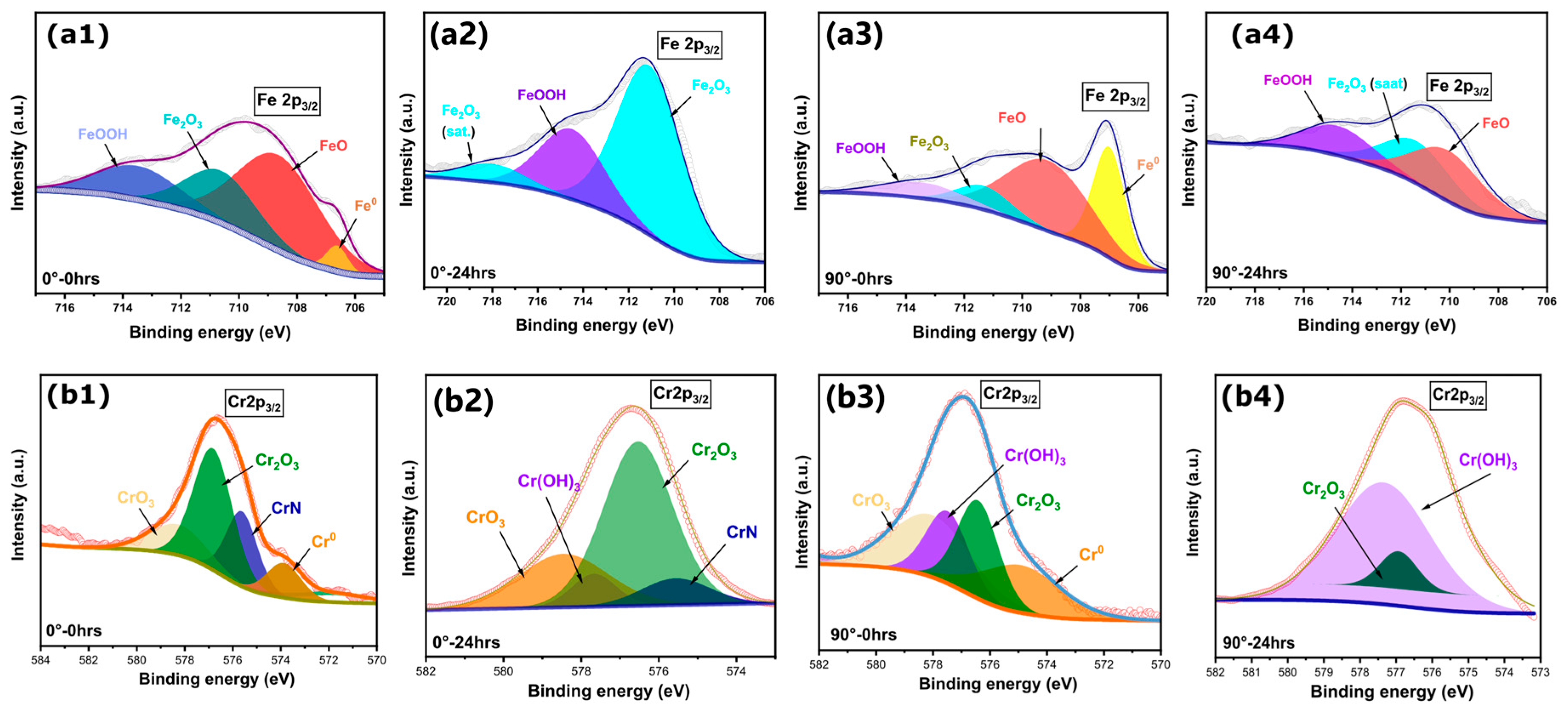
Figure 8 presents high-resolution Fe 2p3/2 and Cr 2p3/2 spectra of the 0° and 90° specimens before and after 24 h of hydrogen charging. Iron and chromium constitute the principal components of the passive film, and their chemical evolution therefore provides direct insight into hydrogen-induced passive film degradation.
The deconvoluted Fe 2p3/2 spectra (Figure 9(a1–a4)) consist of metallic iron (Fe0, ~706.7 eV), FeO (~709.6 eV), Fe2O3 (~711.5 eV), and FeOOH (~713 eV), together with a satellite component associated with Fe2O3. Before hydrogen charging, both build orientations exhibited appreciable fractions of Fe2O3, indicating the presence of a relatively stable oxide layer. Following hydrogen charging, however, the metallic Fe signal decreased substantially, while the FeOOH component became increasingly dominant. The increase in FeOOH, accompanied by the reduction in Fe2O3, indicates progressive hydroxylation of the passive film. FeOOH is generally regarded as less protective than Fe2O3 because its hydroxyl-rich structure contains a higher concentration of structural defects and vacancies that facilitate ionic transport through the passive layer [14,39,65,66]. Consequently, the observed increase in FeOOH explains the reduction in corrosion resistance measured after hydrogen charging. Moreover, the 90° specimens exhibited a larger FeOOH fraction together with a weaker Fe2O3 contribution, indicating that the passive film formed on the vertically built specimens became more susceptible to hydrogen-assisted degradation. This evolution agrees well with previous XPS studies reporting hydrogen-induced conversion of protective iron oxides into hydroxide-rich species in stainless steels [42,53].
The corresponding Cr 2p3/2 spectra (Figure 8(b1–b4)) reveal the presence of metallic chromium (~573.8 eV), CrN (~575.8 eV), Cr2O3 (~576.8 eV), Cr(OH)3 (~577.6 eV), and CrO3 (~578.4 eV). Because Cr2O3 constitutes the principal corrosion-resistant component of the passive film, its reduction together with the simultaneous increase in CrO3 and Cr(OH)3 indicates progressive destabilization of the chromium-rich passive layer. Consequently, the simultaneous reduction in CrN and Cr2O3, together with the increase in CrO3 and hydroxylated chromium species, indicates that hydrogen charging progressively destabilizes the chromium-rich passive film [63,67,68]. The effect was particularly evident in the 90° specimens, which exhibited a greater reduction in Cr2O3 after hydrogen charging, confirming their lower passive film stability. Similar reductions in Cr2O3 accompanied by increased hydroxyl species have also been reported following electrochemical hydrogen charging [48].
Figure 8.
High-resolution XPS spectra and peak deconvolution of the principal passivating elements in LPBF 316L stainless steel before and after 24 h of hydrogen charging. (a1–a4) Fe 2p3/2 spectra and (b1–b4) Cr 2p3/2 spectra for the 0° (horizontal) and 90° (vertical) build orientations before (0 h) and after hydrogen charging (24 h), respectively.
3.3.2. Secondary Alloying Elements
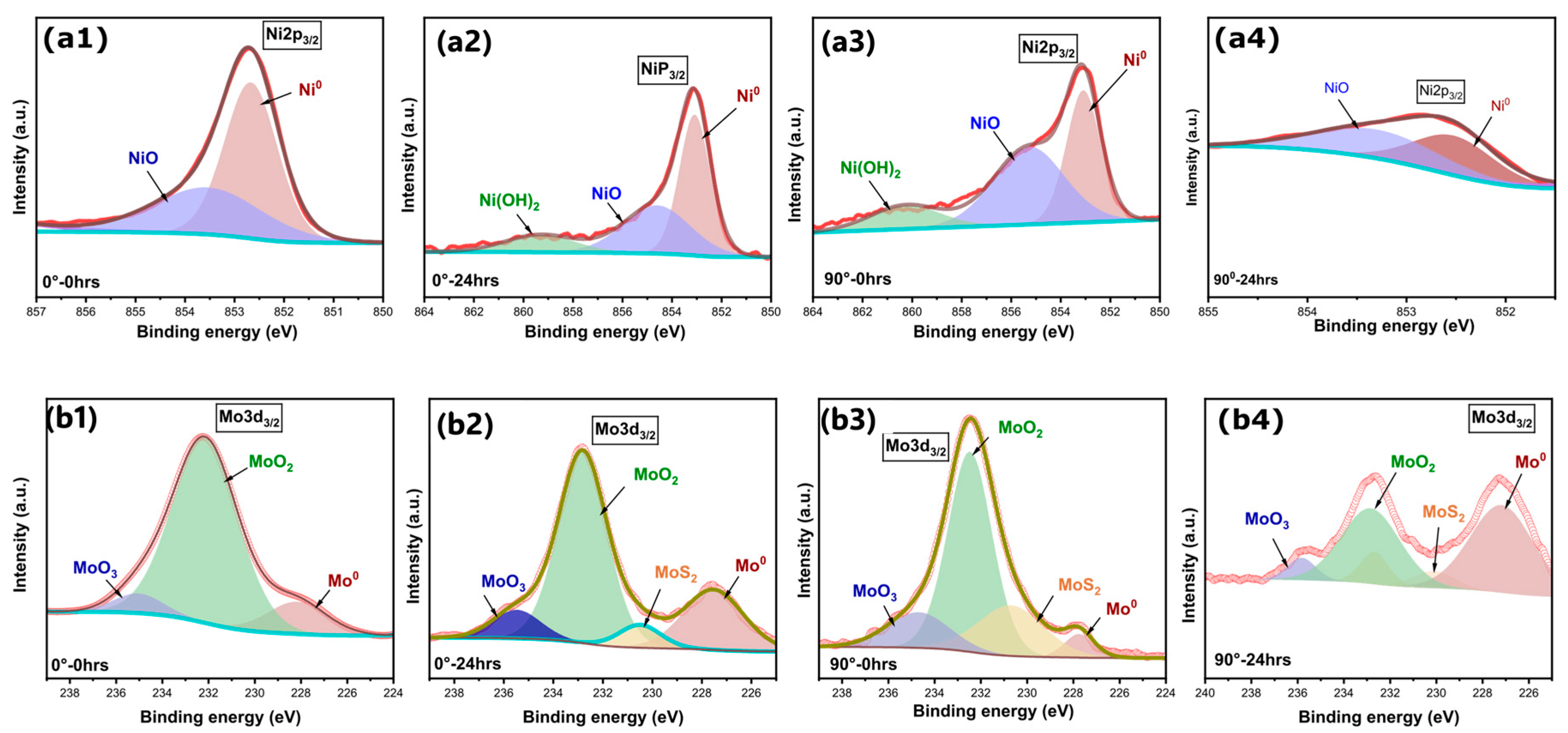
The evolution of the secondary alloying elements is presented in Figure 9. Although nickel and molybdenum are present in smaller quantities than iron and chromium, both elements play important roles in improving passive film stability and localized corrosion resistance. The Ni 2p3/2 spectra (Figure 9(a1–a4)) consist primarily of metallic Ni (~852.2 eV), NiO (~853.6 eV), and Ni(OH)2 (~855.6 eV). Before hydrogen charging, the spectra were dominated by metallic nickel, consistent with the well-established tendency of nickel to remain beneath the passive oxide layer while iron and chromium preferentially oxidize. Following hydrogen charging, the metallic Ni component decreased, whereas the oxidized nickel species became more pronounced, particularly in the 90° specimens where the metallic Ni signal was substantially diminished. The increase in NiO and Ni(OH)2 indicates enhanced surface oxidation and hydroxylation during hydrogen exposure, reflecting increased surface oxidation and hydroxylation during hydrogen exposure [14,69,70]. The greater loss of metallic nickel in the vertically built specimens further supports the higher susceptibility of the 90° orientation to hydrogen-assisted corrosion. Comparable enrichment of oxidized nickel species has been observed during hydrogen-assisted passive film modification in austenitic stainless steels [62].
The Mo 3d spectra (Figure 9(b1–b4)) demonstrate a similar evolution. Prior to hydrogen charging, both orientations contained appreciable fractions of MoO2 and MoO3, both of which are recognized for enhancing passive film stability and pitting corrosion resistance. Following hydrogen charging, however, the intensity of these protective molybdenum oxides decreased while a new MoS2 component appeared. The transformation from corrosion-resistant molybdenum oxides to sulfur-containing MoS2 indicates a significant modification of the passive film chemistry. This transformation was particularly pronounced for the 90° specimens, which exhibited the lowest fractions of MoO2 and MoO3 together with the highest MoS2 contribution. The reduction in molybdenum oxides is consistent with previous reports linking Mo depletion to lower pitting resistance [44]. These observations correlate well with the poorer electrochemical performance measured for the vertically built specimens and indicate that hydrogen suppresses the formation of corrosion-resistant molybdenum oxides while promoting less protective surface compounds.
Figure 9.
High-resolution XPS spectra and peak deconvolution of the secondary alloying elements in LPBF 316L stainless steel before and after 24 h of hydrogen charging. (a1–a4) Ni 2p3/2 spectra and (b1–b4) Mo 3d3/2 spectra for the 0° (horizontal) and 90° (vertical) build orientations before (0 h) and after hydrogen charging (24 h), respectively.
3.3.3. Oxygen Chemistry and Passive Film Evolution
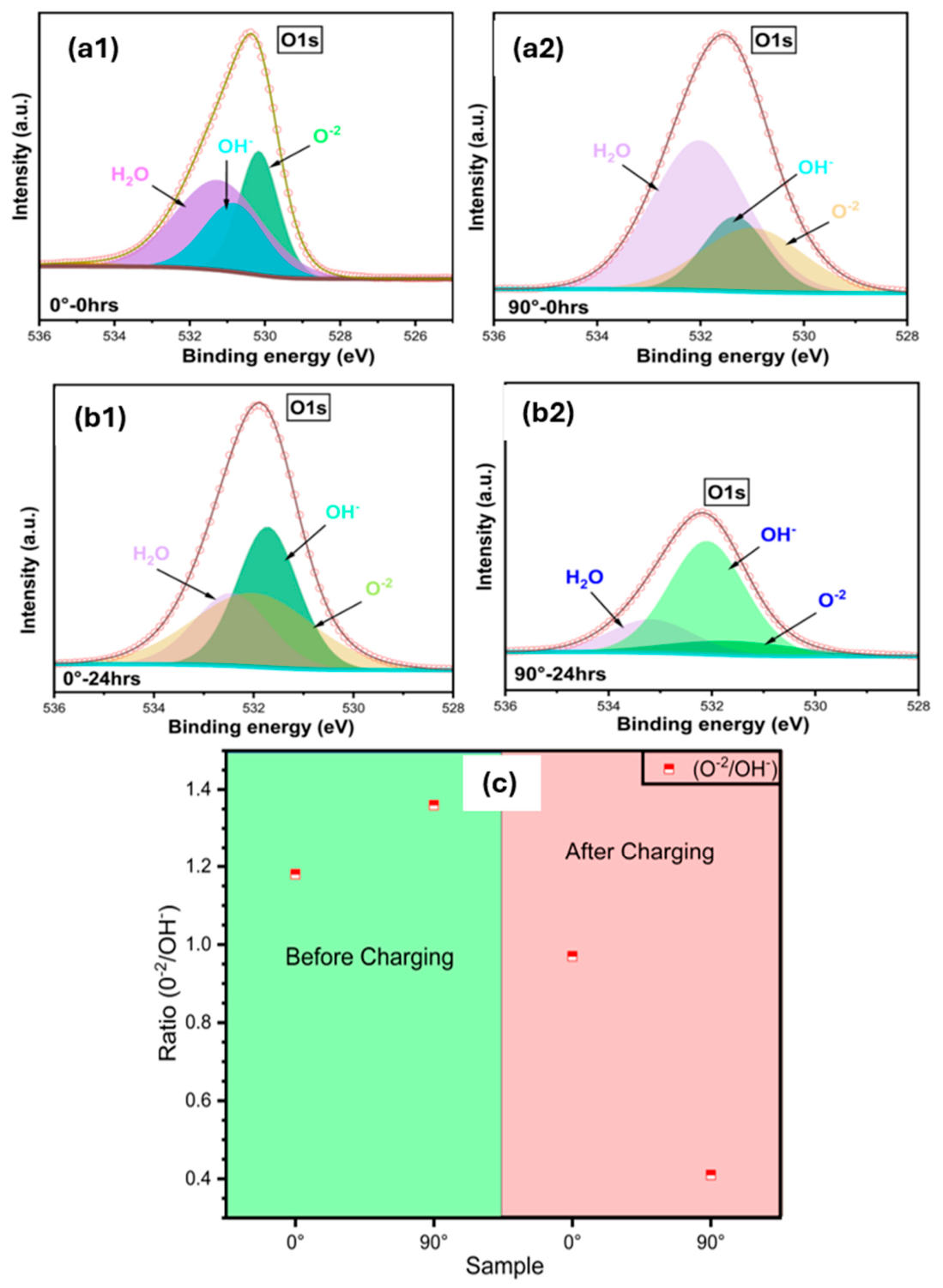
The evolution of oxygen-containing species within the passive film is presented in Figure 11. The O 1s spectra (Figure 10(a1,a2,b1,b2)) were successfully deconvoluted into lattice oxygen (O2−, ~530.1 eV), hydroxyl groups (OH−, ~531.9 eV), and adsorbed water (~533 eV). These components correspond closely to the oxide and hydroxide species identified in the Fe, Cr, Ni, and Mo spectra. Before hydrogen charging, both build orientations exhibited relatively high fractions of lattice oxygen, indicating compact oxide-rich passive films. Following hydrogen charging, the lattice oxygen component decreased, whereas the hydroxyl contribution increased, demonstrating progressive hydroxylation of the passive layer. Lattice oxygen is associated with compact metal oxides, whereas hydroxyl species are characteristic of hydrated and less protective corrosion products. Consequently, the reduction in the O2− fraction indicates that hydrogen progressively transforms the passive film into a more hydroxide-rich and permeable structure [71].
To quantify these compositional changes, the O2−/OH− ratio was calculated and is presented in Figure 10c. Before hydrogen charging, both the 0° and 90° specimens exhibited relatively high O2−/OH− ratios, confirming the formation of compact oxide-rich passive films. Although the 90° specimen initially displayed a slightly higher ratio, hydrogen charging produced a marked reduction in both orientations, with the decrease being substantially greater for the 90° specimen. The lower O2−/OH− ratio suggests that hydrogen promotes the conversion of protective oxide species into hydroxides, thereby increasing passive film porosity and reducing its barrier properties. The decrease in the O2−/OH− ratio agrees well with previous observations that hydrogen charging promotes passive film hydroxylation [48,53].
Figure 10.
High-resolution O 1s XPS spectra with peak deconvolution and the corresponding oxide-to-hydroxide ratio of the passive film for LPBF 316L stainless steel before and after 24 h of hydrogen charging. (a1) 0–0 h, (a2) 90–0 h, (b1) 0–24 h, and (b2) 90–24 h show the deconvoluted O 1s spectra, while (c) compares the corresponding O2−/OH− ratios before and after hydrogen charging for both build orientations.
3.3.4. Correlation Between Passive Film Chemistry and Electrochemical Behavior
The XPS results provide direct chemical evidence explaining the electrochemical response observed during hydrogen charging and establish a mechanistic relationship between passive film chemistry and corrosion behavior. The mechanistic relationship established from the combined electrochemical and XPS analyses is summarized schematically in Figure 11. Similar correlations between passive film chemistry determined by XPS and electrochemical behavior measured by EIS and polarization techniques have been reported for passive stainless steels, where changes in oxide composition directly influence passive film stability and corrosion resistance [72,73]. The electrochemical measurements consistently demonstrated that hydrogen charging progressively reduced the stability of the passive film, as reflected by the negative shift in open-circuit potential, the reduction in polarization resistance, the decrease in the fitted Rpo and Rct, and the increase in corrosion current density. These electrochemical changes were accompanied by systematic modifications in the passive film chemistry observed by XPS. Hydrogen charging progressively reduced the fractions of the protective oxide species, including Fe2O3, Cr2O3, MoO2, and MoO3, while increasing hydroxide-rich phases such as FeOOH, Cr(OH)3, and Ni(OH)2. These compositional changes indicate that the originally compact oxide-rich passive film gradually transformed into a more hydrated and defective surface layer. The O 1s spectra further support this interpretation through the reduction in the O2−/OH− ratio after hydrogen charging. Since lattice oxygen is associated with stable oxide formation, whereas hydroxyl species are generally indicative of hydrated and less protective passive films, the decrease in the oxide-to-hydroxide ratio suggests a reduction in passive film compactness and barrier properties [74,75]. The schematic integrates the effects of LPBF build orientation, hydrogen transport, passive film chemical evolution, and the resulting electrochemical response into a unified mechanistic framework.
As illustrated in Figure 11, hydrogen charging promotes the progressive transformation of the passive film from a compact oxide-rich structure into a hydroxide-rich and more defective surface layer. This chemical evolution is directly reflected in the EIS response: the progressive decrease in Rpo indicates that hydrogen-induced transformation of the passive film reduced its resistance to ionic transport, consistent with the increased proportion of hydroxide-rich species identified by XPS [53,76]. Likewise, the reduction in Rct suggests that degradation of the passive film facilitated charge transfer across the metal/passive film/electrolyte interface, leading to the higher corrosion current densities measured by PDP and the lower polarization resistance obtained from LPR. The simultaneous reduction in Rpo and Rct therefore reflects both deterioration of the passive film barrier and increased electrochemical activity at the interface.
The different electrochemical techniques probe complementary aspects of the hydrogen-induced degradation process. The negative shift in the OCP reflects the thermodynamic destabilization of the passive film associated with the depletion of protective oxide species. The reduction in Rpo obtained from EIS corresponds to the loss of passive film barrier properties resulting from the conversion of compact oxides into hydroxide-rich species, whereas the decrease in Rct indicates that the modified passive film facilitates interfacial charge transfer. Similarly, the reduction in polarization resistance measured by LPR and the increase in Icorr obtained from PDP demonstrate that these chemical modifications progressively accelerate corrosion kinetics.
The effect of hydrogen charging was evident in both build orientations but was more pronounced in the vertically built specimens. The upper section of Figure 11 further illustrates that the LPBF-induced microstructural anisotropy governs hydrogen transport. The well-fused melt pools and lower porosity of the 0° specimens limit hydrogen ingress, whereas the higher density of melt pool boundaries and processing defects in the 90° specimens provide preferential pathways for hydrogen diffusion, thereby accelerating passive film modification. The temporary improvement observed in several electrochemical parameters, particularly after 12 h of hydrogen charging, suggests transient stabilization of the passive film before renewed deterioration during prolonged exposure, as evident from the combined XPS and electrochemical analyses. The greater reduction in protective oxide species and the lower O2−/OH− ratio observed for the 90° specimens are consistent with the larger deterioration in passive film characteristics obtained from EIS, suggesting that the LPBF-induced microstructural anisotropy influences the susceptibility of the passive film to hydrogen-assisted degradation. As summarized in Figure 11, the electrochemical response does not follow a simple monotonic degradation pathway. Instead, hydrogen charging progresses through successive stages of initial passive film deterioration, temporary stabilization at intermediate charging durations, and renewed degradation during prolonged exposure. These results indicate that the deterioration in corrosion resistance is not a direct consequence of hydrogen itself but rather arises from hydrogen-induced modification of the passive film chemistry, which reduces its protective effectiveness and facilitates electrochemical reactions at the metal/electrolyte interface.
Although the present work does not establish a mathematical correlation between the O2−/OH− ratio and individual electrochemical parameters such as Rpo, Rct, or Icorr, the close agreement between the independent electrochemical and XPS measurements provides strong qualitative evidence for the proposed degradation mechanism. Since XPS characterization was performed after representative hydrogen charging conditions, whereas electrochemical measurements were conducted over the entire charging duration, the proposed mechanism is inferred from the complementary trends obtained using the two techniques. This interpretation is consistent with that of previous studies demonstrating that the combined application of electrochemical techniques and XPS provides a reliable approach for elucidating passive film degradation mechanisms in stainless steels exposed to hydrogen-containing environments [44,74,76].
Figure 11.
Proposed mechanism of hydrogen-assisted passive film degradation in LPBF 316L stainless steel, illustrating the influence of build orientation on hydrogen transport, passive film chemistry, electrochemical response, and the non-monotonic evolution of passive film degradation with hydrogen charging duration.
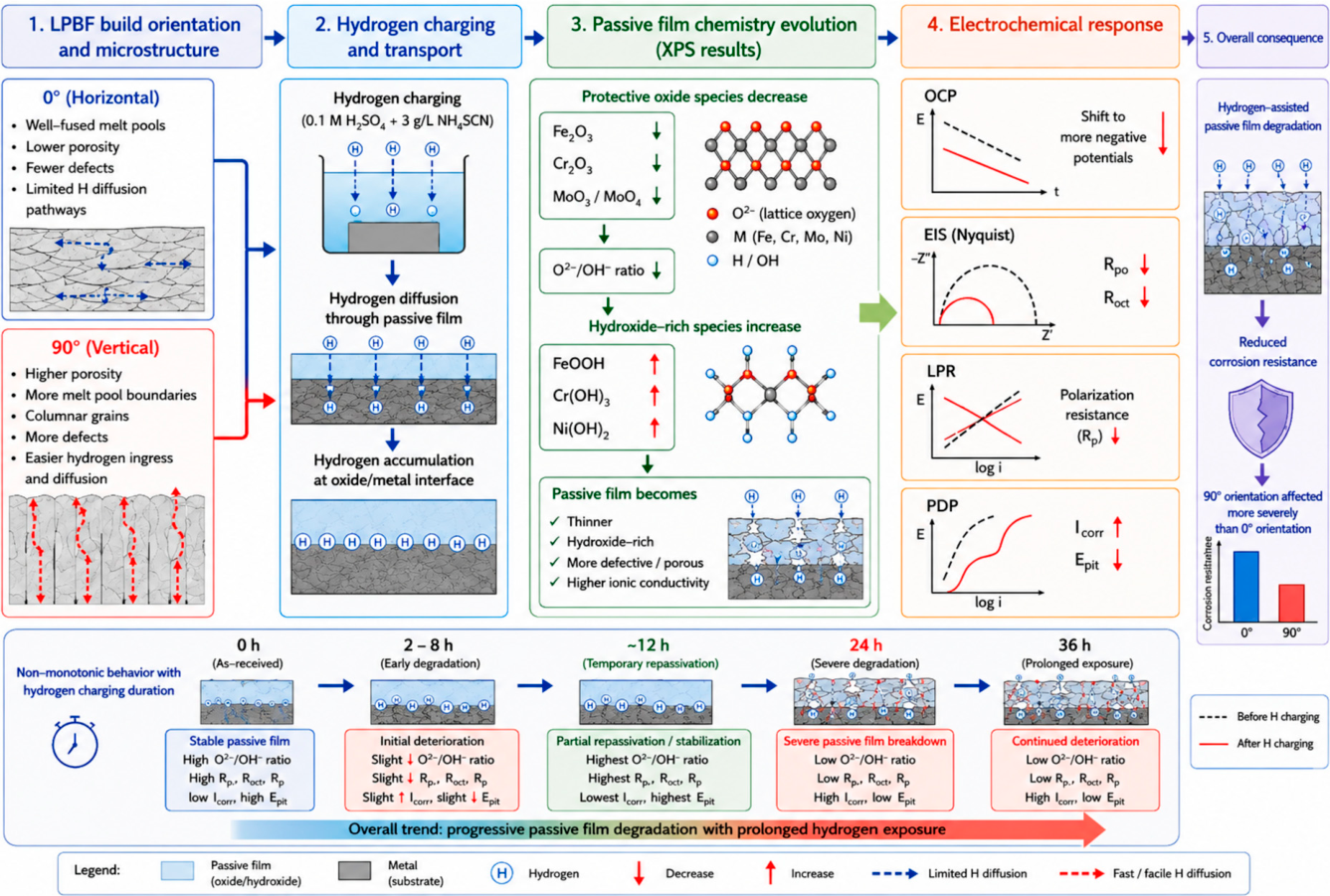
The overall degradation mechanism proposed from the combined electrochemical and XPS analyses is summarized in Figure 11. The schematic demonstrates that the LPBF build orientation governs hydrogen transport through differences in microstructural anisotropy, which subsequently controls passive film chemistry and ultimately determines the electrochemical corrosion response. Prolonged hydrogen exposure progressively transforms the initially compact oxide-rich passive film into a hydroxide-rich, less protective layer characterized by lower barrier properties, enhanced ionic transport, and accelerated interfacial charge transfer. Collectively, these findings demonstrate that LPBF-induced microstructural anisotropy governs hydrogen transport, which in turn controls passive film chemistry and ultimately determines the electrochemical corrosion behavior of LPBF 316L stainless steel under hydrogen charging conditions.
4. Conclusions
This study systematically investigated the influence of hydrogen charging on the electrochemical behavior and passive film chemistry of laser powder bed fusion (LPBF) 316L stainless steel fabricated in the 0° (horizontal) and 90° (vertical) build orientations. By integrating complementary electrochemical techniques (OCP, EIS, LPR, and PDP) with X-ray photoelectron spectroscopy (XPS), the relationship between LPBF-induced microstructural anisotropy, passive film evolution, and corrosion behavior under hydrogen charging conditions was established. The principal findings are summarized as follows:
- Hydrogen charging progressively degraded the passive film and reduced the corrosion resistance of LPBF 316L stainless steel. Electrochemical measurements consistently showed more active open-circuit potentials, lower passive film and charge transfer resistances, reduced polarization resistance, and higher corrosion current densities following hydrogen charging.
- The degradation process was not monotonic. Intermediate hydrogen charging durations exhibited temporary stabilization of several electrochemical parameters, suggesting partial repassivation or reorganization of the passive film before renewed deterioration became dominant during prolonged hydrogen exposure.
- Build orientation significantly influenced hydrogen-assisted corrosion behavior. Although the 90° specimens initially exhibited a relatively stable passive film, they experienced more pronounced degradation after hydrogen charging than the 0° specimens. The superior performance of the horizontally built specimens indicates that LPBF-induced microstructural anisotropy plays a critical role in governing hydrogen ingress and passive film stability.
- XPS analysis revealed systematic hydrogen-induced changes in passive film chemistry. Hydrogen charging depleted protective oxide species, including Fe2O3, Cr2O3, and Mo oxides, while increasing hydroxide-rich species such as FeOOH, Cr(OH)3, and Ni(OH)2, resulting in a lower O2−/OH− ratio and transformation of the passive film into a more porous and less protective surface layer. These compositional changes were considerably more pronounced in the 90° specimens.
- The combined electrochemical and XPS analyses established a mechanistic relationship between passive film chemistry and corrosion behavior. The results demonstrate that LPBF build orientation governs melt pool morphology and defect distribution, which influence hydrogen transport, passive film chemical evolution, and ultimately the electrochemical response. The proposed mechanism explains the orientation-dependent corrosion behavior observed throughout the hydrogen charging sequence.
The combined electrochemical and XPS analyses establish a mechanistic framework linking LPBF-induced microstructural anisotropy, hydrogen transport, passive film chemistry, and electrochemical corrosion behavior. These findings provide a scientific basis for optimizing build orientation during LPBF processing to improve the durability of stainless steel components intended for hydrogen-containing environments. Future work should focus on intermediate build orientations and advanced in situ surface characterization techniques to establish quantitative relationships between hydrogen transport, passive film evolution, and electrochemical degradation.
Author Contributions
A.M.: experimentation, investigation, data collection and analysis, and writing—original draft preparation; N.O.O.: methodology, formal analysis, investigation, supervision, writing—original draft preparation, and writing—review and editing; I.U.H.T.: conceptualization, supervision, project administration, funding acquisition, resources, and writing—review and editing. All authors have read and agreed to the published version of the manuscript.
Funding
This research was funded by King Fahd University of Petroleum and Minerals under project number INAM2406.
Data Availability Statement
The original contributions presented in this study are included in the article. Further inquiries can be directed to the corresponding author.
Acknowledgments
This work was supported by the Interdisciplinary Research Center for Advanced Materials (IRC-AM) at King Fahd University of Petroleum and Minerals (KFUPM), Dhahran, Saudi Arabia, under project No INAM2406.
Conflicts of Interest
The authors declare no conflicts of interest.
References
- Zhang, L.; Jia, C.; Bai, F.; Wang, W.; An, S.; Zhao, K.; Li, Z.; Li, J.; Sun, H. A comprehensive review of the promising clean energy carrier: Hydrogen production, transportation, storage, and utilization (HPTSU) technologies. Fuel 2024, 355, 129455. [Google Scholar] [CrossRef] [Scilit]
- Jeje, S.O.; Marazani, T.; Obiko, J.O.; Shongwe, M.B. Advancing the hydrogen production economy: A comprehensive review of technologies, sustainability, and future prospects. Int. J. Hydrogen Energy 2024, 78, 642–661. [Google Scholar] [CrossRef] [Scilit]
- Laleh, M.; Hughes, A.E.; Xu, W.; Gibson, I.; Tan, M.-Y. A critical review of corrosion characteristics of additively manufactured stainless steels. Int. Mater. Rev. 2021, 66, 563–599. [Google Scholar] [CrossRef] [Scilit]
- Ahmad, S.; Ullah, A.; Samreen, A.; Qasim, M.; Nawaz, K.; Ahmad, W.; Alnaser, A.; Kannan, A.M.; Egilmez, M. Hydrogen production, storage, transportation and utilization for energy sector: A current status review. J. Energy Storage 2024, 101, 113733. [Google Scholar] [CrossRef] [Scilit]
- Rampai, M.M.; Mtshali, C.B.; Seroka, N.S.; Khotseng, L. Hydrogen production, storage, and transportation: Recent advances. RSC Adv. 2024, 14, 6699–6718. [Google Scholar] [CrossRef] [Scilit] [PubMed]
- Ogunlakin, N.O.; Toor, I.U.; Sorour, A.A.; Djukic, M.B. A critical review of hydrogen-induced cracking (HIC) of API 5L pipeline steel grades in the oil and gas industry. Int. J. Hydrogen Energy 2026, 198, 152669. [Google Scholar] [CrossRef] [Scilit]
- Sobola, D.; Dallaev, R. Exploring Hydrogen Embrittlement: Mechanisms, Consequences, and Advances in Metal Science. Energies 2024, 17, 2972. [Google Scholar] [CrossRef] [Scilit]
- Behvar, A.; Haghshenas, M.; Djukic, M.B. Hydrogen embrittlement and hydrogen-induced crack initiation in additively manufactured metals: A critical review on mechanical and cyclic loading. Int. J. Hydrogen Energy 2024, 58, 1214–1239. [Google Scholar] [CrossRef] [Scilit]
- Martin, M.L.; Dadfarnia, M.; Nagao, A.; Wang, S.; Sofronis, P. Enumeration of the hydrogen-enhanced localized plasticity mechanism for hydrogen embrittlement in structural materials. Acta Mater. 2019, 165, 734–750. [Google Scholar] [CrossRef] [Scilit]
- Al-Zahrani, E.S.; Ogunlakin, N.; Toor, I.U.; Djukic, M.B. Hydrogen-induced cracking of longitudinally submerged arc welded HSLA API 5L X65 carbon steel pipeline. Eng. Fail. Anal. 2024, 163, 108561. [Google Scholar] [CrossRef] [Scilit]
- Pillot, S.; Coudreuse, L. 2-Hydrogen-induced disbonding and embrittlement of steels used in petrochemical refining. In Gaseous Hydrogen Embrittlement of Materials in Energy Technologies; Gangloff, R.P., Somerday, B.P., Eds.; Woodhead Publishing Series in Metals and Surface Engineering; Woodhead Publishing: Cambridge, UK, 2012; Volume 2, pp. 51–93. [Google Scholar]
- Djukic, M.B.; Bakic, G.M.; Sijacki Zeravcic, V.; Sedmak, A.; Rajicic, B. The synergistic action and interplay of hydrogen embrittlement mechanisms in steels and iron: Localized plasticity and decohesion. Eng. Fract. Mech. 2019, 216, 106528. [Google Scholar] [CrossRef] [Scilit]
- Lynch, S.P. Hydrogen embrittlement (HE) phenomena and mechanisms. In Stress Corrosion Cracking; Woodhead Publishing: Cambridge, UK, 2011; pp. 90–130. [Google Scholar]
- Gardin, E.; Zanna, S.; Seyeux, A.; Allion-Maurer, A.; Marcus, P. Comparative study of the surface oxide films on lean duplex and corresponding single phase stainless steels by XPS and ToF-SIMS. Corros. Sci. 2018, 143, 403–413. [Google Scholar] [CrossRef] [Scilit]
- Kazemipour, M.; Mohammadi, M.; Mfoumou, E.; Nasiri, A.M. Microstructure and Corrosion Characteristics of Selective Laser-Melted 316L Stainless Steel: The Impact of Process-Induced Porosities. JOM 2019, 71, 3230–3240. [Google Scholar] [CrossRef] [Scilit]
- Betova, I.; Bojinov, M.; Karastoyanov, V. Corrosion Mechanism of Austenitic Stainless Steel in Simulated Small Modular Reactor Primary Water Chemistry. Metals 2025, 15, 875. [Google Scholar] [CrossRef] [Scilit]
- Wang, H.; Tong, Z.; Zhou, G.; Zhang, C.; Zhou, H.; Wang, Y.; Zheng, W. Research and demonstration on hydrogen compatibility of pipelines: A review of current status and challenges. Int. J. Hydrogen Energy 2022, 47, 28585–28604. [Google Scholar] [CrossRef] [Scilit]
- Bojinov, M.; Chang, L.; Saario, T.; Que, Z. Corrosion of 316L stainless steel produced by laser powder bed fusion and powder metallurgy in pressurized water reactor primary coolant. Materialia 2024, 34, 102055. [Google Scholar] [CrossRef] [Scilit]
- Abdalla, A.M.; Hossain, S.; Nisfindy, O.B.; Azad, A.T.; Dawood, M.; Azad, A.K. Hydrogen production, storage, transportation and key challenges with applications: A review. Energy Convers. Manag. 2018, 165, 602–627. [Google Scholar] [CrossRef] [Scilit]
- Che, Z.; Liu, J.; Liu, Z.; Yang, S.; Li, C.; Liu, C.; Li, X. Mechanism of He ion irradiation on the corrosion resistance of additively manufactured 316L stainless steel. Corros. Sci. 2026, 266, 113855. [Google Scholar] [CrossRef] [Scilit]
- Chun, Y.S.; Kim, J.S.; Park, K.-T.; Lee, Y.-K.; Lee, C.S. Role of ɛ martensite in tensile properties and hydrogen degradation of high-Mn steels. Mater. Sci. Eng. A 2012, 533, 87–95. [Google Scholar] [CrossRef] [Scilit]
- Ogawa, Y.; Okazaki, S.; Takakuwa, O.; Matsunaga, H. The roles of internal and external hydrogen in the deformation and fracture processes at the fatigue crack tip zone of metastable austenitic stainless steels. Scr. Mater. 2018, 157, 95–99. [Google Scholar] [CrossRef] [Scilit]
- Koyama, M.; Akiyama, E.; Sawaguchi, T.; Ogawa, K.; Kireeva, I.V.; Chumlyakov, Y.I.; Tsuzaki, K. Hydrogen-assisted quasi-cleavage fracture in a single crystalline type 316 austenitic stainless steel. Corros. Sci. 2013, 75, 345–353. [Google Scholar] [CrossRef] [Scilit]
- Yin, Y.-J.; Sun, J.-Q.; Guo, J.; Kan, X.-F.; Yang, D.-C. Mechanism of high yield strength and yield ratio of 316 L stainless steel by additive manufacturing. Mater. Sci. Eng. A 2019, 744, 773–777. [Google Scholar] [CrossRef] [Scilit]
- Haque, E.A.; Shofiullah, S. Hydrogen Embrittlement Sensitivity of Additively Manufactured 347H Stainless Steel: Effects of Porosity and Residual Stress. Int. J. Sci. Interdiscip. Res. 2023, 4, 100–144. [Google Scholar] [CrossRef] [Scilit]
- Khaleghifar, F.; Razeghi, K.; Heidarzadeh, A.; Taherzadeh Mousavian, R. Effect of Hydrogen on the Tensile Behavior of Austenitic Stainless Steels 316L Produced by Laser-Powder Bed Fusion. Metals 2021, 11, 586. [Google Scholar] [CrossRef] [Scilit]
- Lu, B.; Li, D.; Tian, X. Development Trends in Additive Manufacturing and 3D Printing. Engineering 2015, 1, 85–89. [Google Scholar] [CrossRef] [Scilit]
- Wang, Y.-M.; Voisin, T.; McKeown, J.T.; Ye, J.; Calta, N.P.; Li, Z.; Zeng, Z.; Zhang, Y.; Chen, W.; Roehling, T.T.; et al. Additively manufactured hierarchical stainless steels with high strength and ductility. Nat. Mater. 2018, 17, 63–71. [Google Scholar] [CrossRef] [Scilit] [PubMed]
- Deng, H.; Wang, Y.; Lv, L.; Zhang, S.; Bian, Q.; Luo, J.; Wu, Z.; Liu, Z.; Chen, Z.; Tan, L.; et al. Orientation dependence of microstructure and mechanical property in selective laser-melted Inconel 718 alloy. Mater. Charact. 2025, 220, 114664. [Google Scholar] [CrossRef] [Scilit]
- Zhang, X.-L.; Wang, S.; Jiang, Y.; Huang, J.; Wang, S.-P.; Zhang, Q.-Q.; Li, Q.; Guo, Y.-Q.; Zhang, Z.-H. Influence of building directions on the impact properties of NiTi fabricated via laser powder bed fusion. J. Mater. Res. Technol. 2024, 28, 3186–3195. [Google Scholar] [CrossRef] [Scilit]
- Kok, Y.; Tan, X.P.; Wang, P.; Nai, M.L.S.; Loh, N.H.; Liu, E.; Tor, S.B. Anisotropy and heterogeneity of microstructure and mechanical properties in metal additive manufacturing: A critical review. Mater. Des. 2018, 139, 565–586. [Google Scholar] [CrossRef] [Scilit]
- Watring, D.S.; Benzing, J.T.; Hrabe, N.; Spear, A.D. Effects of laser-energy density and build orientation on the structure–property relationships in as-built Inconel 718 manufactured by laser powder bed fusion. Addit. Manuf. 2020, 36, 101425. [Google Scholar] [CrossRef] [Scilit] [PubMed]
- Evangelou, A.; Stylianou, R.; Loizou, A.; Kim, D.; Liang, A.; Reed, P.; Constantinides, G.; Kyratsi, T. Effects of process parameters and scan strategy on the microstructure and density of stainless steel 316 L produced via laser powder bed fusion. J. Alloys Met. Syst. 2023, 3, 100027. [Google Scholar] [CrossRef] [Scilit]
- Cacace, S.; Pagani, L.; Colosimo, B.M.; Semeraro, Q. The effect of energy density and porosity structure on tensile properties of 316L stainless steel produced by laser powder bed fusion. Prog. Addit. Manuf. 2022, 7, 1053–1070. [Google Scholar] [CrossRef] [Scilit]
- Diaz Vallejo, N.; Lucas, C.; Ayers, N.; Graydon, K.; Hyer, H.; Sohn, Y. Process Optimization and Microstructure Analysis to Understand Laser Powder Bed Fusion of 316L Stainless Steel. Metals 2021, 11, 832. [Google Scholar] [CrossRef] [Scilit]
- Collazo, A.; Figueroa, R.; Pérez, C.; Nóvoa, X.R. Effect of Laser Speed and Hatch Spacing on the Corrosion Behavior of 316L Stainless Steel Produced by Selective Laser Melting. Materials 2022, 15, 1353. [Google Scholar] [CrossRef] [Scilit] [PubMed]
- Trelewicz, J.R.; Halada, G.P.; Donaldson, O.K.; Manogharan, G. Microstructure and Corrosion Resistance of Laser Additively Manufactured 316L Stainless Steel. JOM 2016, 68, 850–859. [Google Scholar] [CrossRef] [Scilit]
- Revilla, R.I.; Wouters, B.; Andreatta, F.; Lanzutti, A.; Fedrizzi, L.; De Graeve, I. EIS comparative study and critical Equivalent Electrical Circuit (EEC) analysis of the native oxide layer of additive manufactured and wrought 316L stainless steel. Corros. Sci. 2020, 167, 108480. [Google Scholar] [CrossRef] [Scilit]
- Cabrera-Sierra, R.; Hallen, J.M.; Vazquez-Arenas, J.; Vázquez, G.; González, I. EIS characterization of tantalum and niobium oxide films based on a modification of the point defect model. J. Electroanal. Chem. 2010, 638, 51–58. [Google Scholar] [CrossRef] [Scilit]
- Guo, L.-Q.; Qin, S.-X.; Yang, B.-J.; Liang, D.; Qiao, L.-J. Effect of hydrogen on semiconductive properties of passive film on ferrite and austenite phases in a duplex stainless steel. Sci. Rep. 2017, 7, 3317. [Google Scholar] [CrossRef] [Scilit] [PubMed]
- Wang, M.; Tian, X.; Liu, Y.; Ding, Z.; Hou, J.; Chen, A. Unexpected pitting inhibition of additively-manufactured austenitic stainless steel by electrochemical hydrogen-charging. Corros. Sci. 2025, 243, 112598. [Google Scholar] [CrossRef] [Scilit]
- Zhao, Q.; Luo, H.; Li, C.; Yan, B.; Liang, G. Hydrogen charging-induced corrosion behavior evolution of an additive-manufactured austenitic stainless steel in sulfuric acid medium. Eng. Fail. Anal. 2025, 178, 109753. [Google Scholar] [CrossRef] [Scilit]
- Ahuir-Torres, J.I.; Burgess, A.; Sharp, M.C.; Öpöz, T.T.; Malkeson, S.P.; Falkingham, P.L.; Darlington, R.I.; Tammas-Williams, S. A Study of the Corrosion Resistance of 316L Stainless Steel Manufactured by Powder Bed Laser Additive Manufacturing. Appl. Sci. 2024, 14, 7471. [Google Scholar] [CrossRef] [Scilit]
- Olsson, C.-O.A.; Landolt, D. Passive films on stainless steels—Chemistry, structure and growth. Electrochimica Acta 2003, 48, 1093–1104. [Google Scholar] [CrossRef] [Scilit]
- Park, J.-M.; Zhao, Y.; Voisin, T.; Lee, D.-H.; Komazaki, S.; Ko, Y.; Kim, D.-I.; Suh, J.-Y.; Han, H.-N.; Wang, Y.-M.; et al. Hydrogen uptake and its influence in selective laser melted austenitic stainless steel: A nanoindentation study. Scr. Mater. 2021, 194, 113718. [Google Scholar] [CrossRef] [Scilit]
- Li, S.-H.; Lee, D.-H.; Zhao, Y.; Ramamurty, U. Hydrogen-induced softening and embrittlement in 316L stainless steel fabricated using laser-powder bed fusion. Acta Mater. 2024, 274, 119959. [Google Scholar] [CrossRef] [Scilit]
- Lin, J.; Chen, F.; Liu, F.; Xu, D.; Gao, J.; Tang, X. Hydrogen permeation behavior and hydrogen-induced defects in 316L stainless steels manufactured by additive manufacturing. Mater. Chem. Phys. 2020, 250, 123038. [Google Scholar] [CrossRef] [Scilit]
- Kong, D.; Dong, C.; Ni, X.; Zhang, L.; Luo, H.; Li, R.; Wang, L.; Man, C.; Li, X. Superior resistance to hydrogen damage for selective laser melted 316L stainless steel in a proton exchange membrane fuel cell environment. Corros. Sci. 2020, 166, 108425. [Google Scholar] [CrossRef] [Scilit]
- Che, Z.; An, H.; Liu, W.; Chen, Z.; Li, C.; Liu, Z.; Liu, C.; Li, X. Corrosion behavior of SLM 316L stainless steel with distinct microstructures in simulated pressurized water reactor primary-water conditions. J. Nucl. Mater. 2026, 632, 156860. [Google Scholar] [CrossRef] [Scilit]
- ASTM F3184-16; Standard Specification for Additive Manufacturing Stainless Steel Alloy (UNS S31603) with Powder Bed Fusion. ASTM International: West Conshohocken, PA, USA, 2024. [CrossRef] [Scilit]
- Yu, J.G.; Luo, J.L.; Norton, P.R. Electrochemical investigation of the effects of hydrogen on the stability of the passive film on iron. Electrochim. Acta 2002, 47, 1527–1536. [Google Scholar] [CrossRef] [Scilit]
- Wang, W.; Guo, J.; Zhang, J.; Li, L. Effect of Hydrogen Charging Current Density on Hydrogen Trapping Behavior in Cu6.01Ni2.7Mn Steel. Materials 2026, 19, 1521. [Google Scholar] [CrossRef] [Scilit] [PubMed]
- Ma, J.; Luo, H.; Hu, X.; Pan, Z.; Li, X. Electrochemical study on the effect of hydrogen on the passive film of selective laser melted 316L stainless steel in a proton exchange membrane water electrolyzer environment. Int. J. Hydrogen Energy 2023, 48, 19396–19410. [Google Scholar] [CrossRef] [Scilit]
- DebRoy, T.; Wei, H.L.; Zuback, J.S.; Mukherjee, T.; Elmer, J.W.; Milewski, J.O.; Beese, A.M.; Wilson-Heid, A.; De, A.; Zhang, W. Additive manufacturing of metallic components—Process, structure and properties. Prog. Mater. Sci. 2018, 92, 112–224. [Google Scholar] [CrossRef] [Scilit]
- Fonda, R.W.; Rowenhorst, D.J. Crystallographic Variability in Additive Manufacturing. IOP Conf. Ser. Mater. Sci. Eng. 2022, 1249, 012007. [Google Scholar] [CrossRef] [Scilit]
- King, W.E.; Anderson, A.T.; Ferencz, R.M.; Hodge, N.E.; Kamath, C.; Khairallah, S.A.; Rubenchik, A.M. Laser powder bed fusion additive manufacturing of metals; physics, computational, and materials challenges. Appl. Phys. Rev. 2015, 2, 041304. [Google Scholar] [CrossRef] [Scilit]
- King, W.E.; Barth, H.D.; Castillo, V.M.; Gallegos, G.F.; Gibbs, J.W.; Hahn, D.E.; Kamath, C.; Rubenchik, A.M. Observation of keyhole-mode laser melting in laser powder-bed fusion additive manufacturing. J. Mater. Process. Technol. 2014, 214, 2915–2925. [Google Scholar] [CrossRef] [Scilit]
- Yan, Z.; Liu, S.; Sun, Z.; Li, K.; Su, N.; Yang, G. In situ X-ray imaging and quantitative analysis of balling during laser powder bed fusion of 316L at high layer thickness. Mater. Des. 2024, 248, 113442. [Google Scholar] [CrossRef] [Scilit]
- Yousif, M.A.S.; Al-Deheish, I.A.; Ali, U.; Akhtar, S.S.; Al-Athel, K.S. Mechanical, tribological, and corrosion behavior of laser powder-bed fusion 316L stainless steel parts: Effect of build orientation. J. Mater. Res. Technol. 2024, 33, 1220–1233. [Google Scholar] [CrossRef] [Scilit]
- Wang, D.; Wu, S.; Fu, F.; Mai, S.; Yang, Y.; Liu, Y.; Song, C. Mechanisms and characteristics of spatter generation in SLM processing and its effect on the properties. Mater. Des. 2017, 117, 121–130, Correction in Mater. Des. 2018, 137, 33–37. [Google Scholar] [CrossRef] [Scilit]
- Yue, X.; Zhang, L.; Hua, Y.; Wang, J.; Dong, N.; Li, X.; Xu, S.; Neville, A. Revealing the superior corrosion protection of the passive film on selective laser melted 316L SS in a phosphate-buffered saline solution. Appl. Surf. Sci. 2020, 529, 147170. [Google Scholar] [CrossRef] [Scilit]
- Wang, Z.; Di-Franco, F.; Seyeux, A.; Zanna, S.; Maurice, V.; Marcus, P. Passivation-Induced Physicochemical Alterations of the Native Surface Oxide Film on 316L Austenitic Stainless Steel. J. Electrochem. Soc. 2019, 166, C3376–C3388. [Google Scholar] [CrossRef] [Scilit]
- Cheng, H.; Luo, H.; Wang, X.; Pan, Z.; Jiang, Y.; Li, X. Electrochemical corrosion and passive behavior of a new high-nitrogen austenitic stainless steel in chloride environment. Mater. Chem. Phys. 2022, 292, 126837. [Google Scholar] [CrossRef] [Scilit]
- Choudhary, S.; Cruz, V.; Pandey, A.; Thomas, S.; Birbilis, N. Element-resolved electrochemical analysis of the passivity of additively manufactured stainless steel 316L. Corros. Sci. 2021, 189, 109576. [Google Scholar] [CrossRef] [Scilit]
- Wang, M.; Zhou, Z.; Wang, Q.; Wu, L.; Wang, Z.; Zhang, X. Long term semiconducting and passive film properties of a novel dense FeCrMoCBY amorphous coating by atmospheric plasma spraying. Appl. Surf. Sci. 2019, 495, 143600. [Google Scholar] [CrossRef] [Scilit]
- Li, Y.; Cheng, Y.F. Passive film growth on carbon steel and its nanoscale features at various passivating potentials. Appl. Surf. Sci. 2017, 396, 144–153. [Google Scholar] [CrossRef] [Scilit]
- Hermas, A.A. XPS analysis of the passive film formed on austenitic stainless steel coated with conductive polymer. Corros. Sci. 2008, 50, 2498–2505. [Google Scholar] [CrossRef] [Scilit]
- Habibzadeh, S.; Li, L.; Shum-Tim, D.; Davis, E.C.; Omanovic, S. Electrochemical polishing as a 316L stainless steel surface treatment method: Towards the improvement of biocompatibility. Corros. Sci. 2014, 87, 89–100. [Google Scholar] [CrossRef] [Scilit]
- Liu, C.T.; Wu, J.K. Influence of pH on the passivation behavior of 254SMO stainless steel in 3.5% NaCl solution. Corros. Sci. 2007, 49, 2198–2209. [Google Scholar] [CrossRef] [Scilit]
- Nair, M.M.; Swaroop, S. Impact of the oxide layer and subsurface micromechanical properties of laser peened 31L stainless steel on biocorrosion resistance in simulated body fluid. Surf. Interfaces 2025, 56, 105672. [Google Scholar] [CrossRef] [Scilit]
- Örnek, C.; Zhang, F.; Larsson, A.; Mansoor, M.; Harlow, G.S.; Kroll, R.; Carla, F.; Hussain, H.; Kivisäkk, U.; Engelberg, D.L.; et al. Understanding Passive Film Degradation and its Effect on Hydrogen Embrittlement of Super Duplex Stainless Steel—Synchrotron X-Ray and Electrochemical Measurements Combined with Calphad and Ab-Initio Computational Studies. Appl. Surf. Sci. 2023, 628, 157364. [Google Scholar] [CrossRef] [Scilit]
- da Costa, A.T.; de Oliveira, M.C.L.; Antunes, R.A. Interplay between the composition of the passive film and the corrosion resistance of citric acid-passivated AISI 316L stainless steel. Surf. Interface Anal. 2021, 53, 374–384. [Google Scholar] [CrossRef] [Scilit]
- Maurice, V.; Yang, W.-P.; Marcus, P. XPS and STM Study of Passive Films Formed on Fe-22Cr(110) Single-Crystal Surfaces. J. Electrochem. Soc. 1996, 143, 1182–1200. [Google Scholar] [CrossRef] [Scilit]
- Wang, Z.; Paschalidou, E.-M.; Seyeux, A.; Zanna, S.; Maurice, V.; Marcus, P. Mechanisms of Cr and Mo Enrichments in the Passive Oxide Film on 316L Austenitic Stainless Steel. Front. Mater. 2019, 6, 232. [Google Scholar] [CrossRef] [Scilit]
- Maurice, V.; Marcus, P. Current developments of nanoscale insight into corrosion protection by passive oxide films. Curr. Opin. Solid State Mater. Sci. 2018, 22, 156–167. [Google Scholar] [CrossRef] [Scilit]
- Yue, X.; Yang, Z.; Larsson, A.; Tang, H.; Appelfeller, S.; Sefer, B.; Preobrajenski, A.; Li, J.; Zhang, L.; Pan, J. Effect of hydrogen on the passivation for ultra-thin 316 L SS foil. npj Mater. Degrad. 2023, 7, 79. [Google Scholar] [CrossRef] [Scilit]
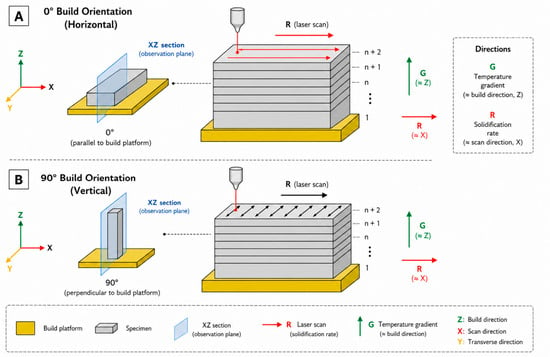
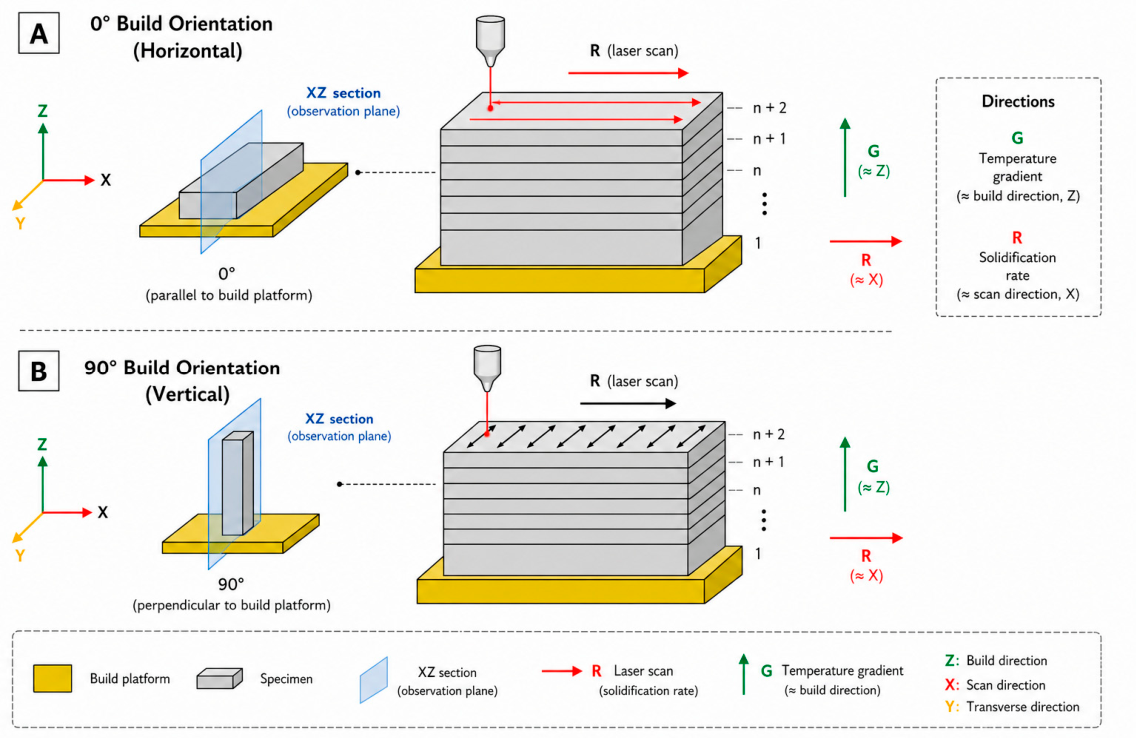
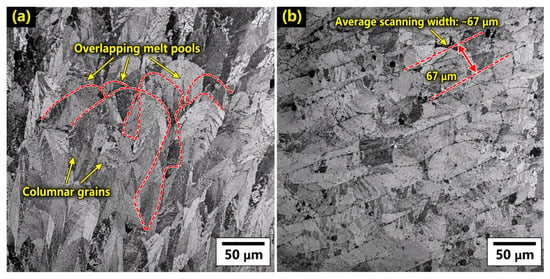
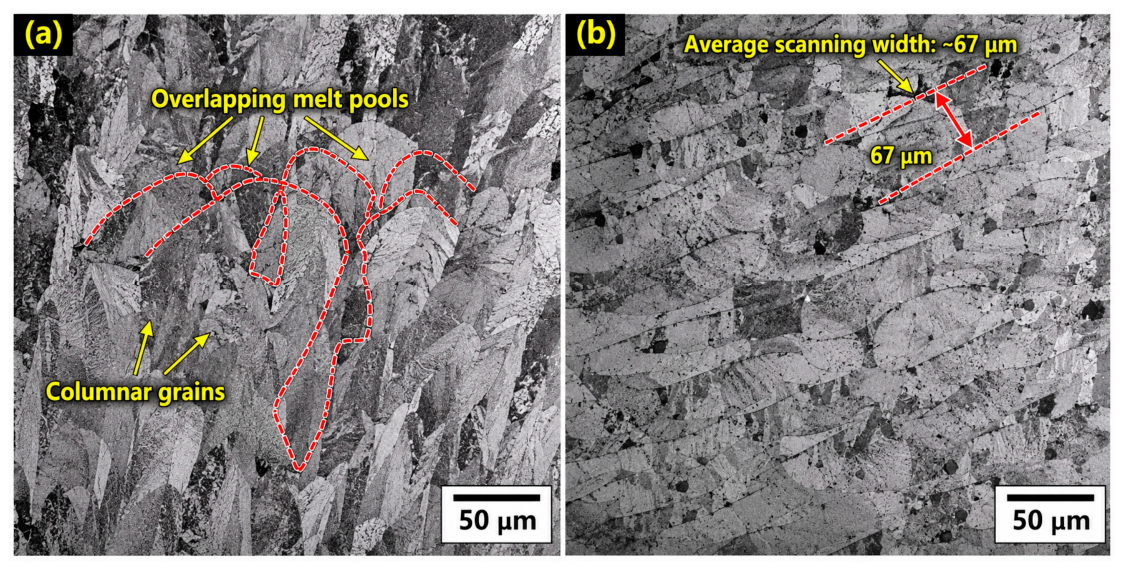
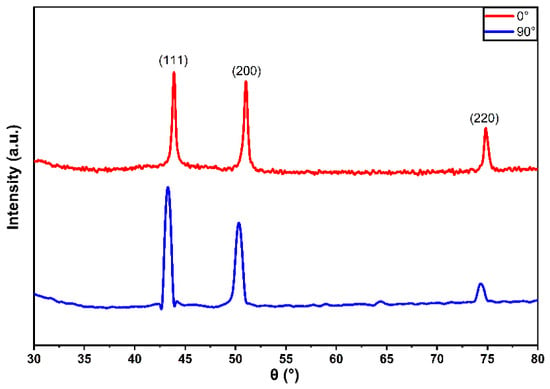
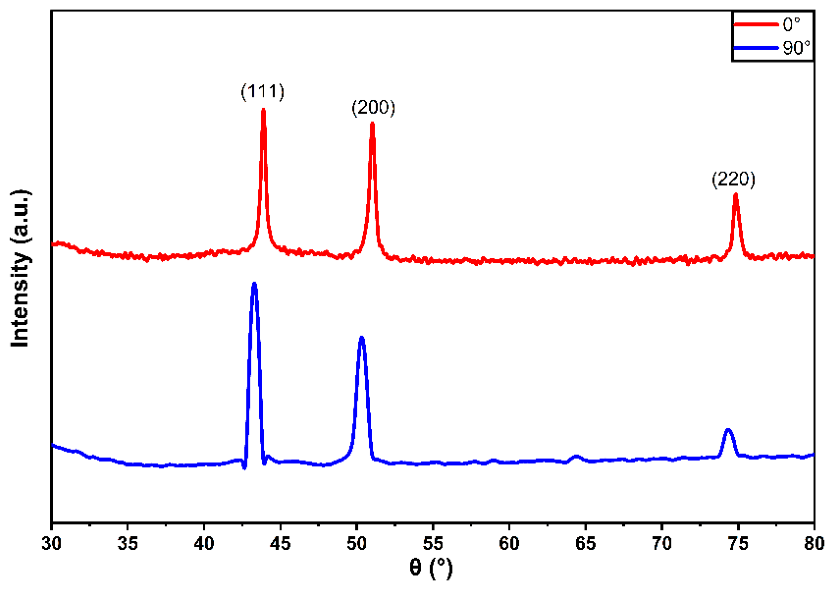

Disclaimer/Publisher’s Note: The statements, opinions and data contained in all publications are solely those of the individual author(s) and contributor(s) and not of MDPI and/or the editor(s). MDPI and/or the editor(s) disclaim responsibility for any injury to people or property resulting from any ideas, methods, instructions or products referred to in the content. |
© 2026 by the authors. Licensee MDPI, Basel, Switzerland. This article is an open access article distributed under the terms and conditions of the Creative Commons Attribution (CC BY) license.