


Abstract
Niobium-based catalysts have emerged as highly adaptable materials for reactions under heterogeneous conditions, owing to significant advances achieved in synthetic methodologies and characterization strategies. In this review, special attention was paid to analyzing the main methods used to characterize the physicochemical properties (e.g., gas adsorption/desorption, infrared spectroscopy, X-ray diffraction patterns, and temperature-programmed desorption) of solid niobium catalysts, as well as the most widely used and versatile synthesis methods (e.g., microwave-assisted solvothermal synthesis, impregnation, and mechanical milling). These insights can facilitate the rational design of Nb-based catalysts to achieve high activity and selectivity in biomass conversion processes and the valorization of biomass-derived compounds. The developments outlined here underscore the adaptability of niobium materials and provide a comprehensive basis for understanding the relationships between synthesis methodology and physicochemical properties, thereby supporting the development of more efficient Nb-based catalysts for sustainable catalytic applications.
1. Introduction
Nowadays, the use of solid and efficient catalysts has become increasingly important, either for producing biofuels or biochemicals. Aiming to make industrial applications more economically viable and environmentally sustainable, catalysts must be efficient, selective, stable under reaction conditions, and easily recoverable and reusable. This requirement depends mainly on the specific physicochemical properties of solid catalysts [1,2].
There is a series of solid acid catalysts, which includes carbonaceous materials, clays, zeolites, sulfonated compounds, and metal oxides. Nonetheless, the unique structural, acidic, and redox properties make this the most stable form of niobium oxides (niobium pentoxide (Nb2O5) or its hydrated form, niobic acid (Nb2O5·nH2O), a catalyst with operational advantages that overcome those of traditional materials used as heterogeneous catalysts [3]. It is worth noting that, unlike other solid acidic metal oxides, niobium pentoxide exhibits high tolerance to water and to deactivation caused by alkaline compounds [4].
Another remarkable property of niobium pentoxide is its acidity. Niobium oxides exhibit strong surface acidity due to the presence of Brønsted and Lewis acid sites. The first comprises hydroxyl groups bonded to niobium cations, which can donate protons and are associated with surface hydroxyl groups in hydrated forms. The second consists of coordinatively unsaturated niobium cations (Nb5+) that act as electron-pair acceptors. In its hydrated form, niobium pentoxide is classified as a strong solid acid. These properties make it an effective catalyst in several acid-catalyzed reactions [5].
Literature suggests that both Brønsted and Lewis acid sites are present, likely originating from hydroxyl groups attached to NbO6 octahedra, and highly polarized tetrahedral structures have both P–OH and Nb–OH groups (Figure 1) [6].
Figure 1.
Brønsted and Lewis acid sites in niobium phosphate catalysts [7].
Another remarkable property of niobium pentoxide is its ability to participate in redox reactions. This characteristic is assigned to niobium’s capacity to contribute to reactions involving one-electron transitions, where its oxidation states shift between Nb5+ and Nb4+, allowing it to accept or donate electrons during reactions.
Besides the niobium pentoxide-based catalysts, a wide spectrum of inorganic materials incorporating niobium species has emerged as prominent candidates, owing to their chemical versatility and their effectiveness across multiple catalytic processes [8,9,10]. These niobium catalysts have been utilized in many reactions involving biomass-derived feedstocks, such as dehydration and deoxygenation of glycerol, hydrolysis of saccharides, esterification of fatty acids, transesterification of glycerides to produce biodiesel, and olefin polymerization [11,12,13,14].
The success of niobium compounds in various processes can be attributed to their properties, such as high surface area, acidity, and good thermal stability. In particular, niobium catalysts have Lewis and Brønsted acid sites, characterized by empty d orbitals of Nb5+ cations and surface hydroxyl groups [15]. The presence of niobium in their structures can increase the thermal stability of these materials, in addition to adjusting the redox properties [15,16].
Niobium catalysts are water-tolerant Lewis acids, favoring their use in reactions that produce water as a co-product. Within the class of niobium-containing solid materials, their salts, acids, oxides, or combinations with other metals deserve attention and can be prepared using different methods (Table 1).
Table 1.
Methodologies to synthesize niobium catalysts and main reactions.
Niobium catalysts can be prepared using methods that provide specific properties, such as high surface area, porosity, and Lewis and/or Brønsted acidity, which are essential for achieving high conversion and selectivity. In addition to the methods listed in Table 1, other synthesis techniques are also known, such as solvothermal synthesis, grafting, coprecipitation, and electrospinning, which are chosen based on the desired characteristics for the catalyst [28,29,30,31]. A series of niobium compounds can be synthesized through these processes: pentoxide, phosphate, sulfated oxide, mixed oxides, and materials supported on varied solid matrices [32,33,34,35].
It is possible to control the acidity properties, driving the synthesis conditions toward the formation of niobium oxides in phases with different shapes. These oxides can present structures where Nb has distinct coordination numbers (i.e., NbO6, NbO7, and NbO8, where the coordination number of Nb5+ is 6, 7, or 8, respectively). Moreover, Nb oxides can also present a polymorphism, which provides different crystalline phases, such as monoclinic (H-Nb2O5), pseudo-hexagonal (TT-Nb2O5), orthorhombic (T-Nb2O5), and amorphous (Nb2O5.H2O) [36,37].
The structure of Nb oxides determines their catalytic activity. Aspects such as strength, number, and nature of acid sites, which are key characteristics of these materials, depend on the oxide structure. Kreissl et al. analyzed how the structure of Nb oxides impacts these parameters [38]. Those authors verified that the oxygen vacancies and the coordination numbers of Nb atoms are responsible for the nature and strength of acidic sites. Lewis acid sites can be linked to distorted structures, resulting in different degrees of accessibility to the oxygen vacancy. Studies have demonstrated that coordinatively unsaturated superficial Nb5+ cations act as Lewis-acidic sites, even in the presence of water, activating oxygen-containing functional groups of the substrates [39]. On the other hand, water molecules can generate Brønsted acid sites, which are also related to hydroxyl groups. The type of hydroxyl group determines the strength of the acid sites; bridging hydroxyls between edge-shared octahedra are strong Brønsted acid sites, and the weaker sites correspond to terminal hydroxyls [40,41].
Several techniques are useful for assessing the distinct physicochemical characteristics of each niobium compound: powder X-ray diffraction, infrared and Raman spectroscopies, nitrogen adsorption and desorption, scanning electron microscopy coupled with an energy-dispersive X-ray equipment (Bruker AXS D8 Advance diffractometer, Ettlingen, Germany), synchrotron-based X-ray absorption spectroscopy (EXAFS, XANES), and temperature-programmed desorption [42,43]. These techniques help clarify how synthesis conditions influence the catalyst’s properties and explain its performance in certain reactions.
2. Synthesis Routes of Niobium Catalysts
The choice of a solid acid catalyst often involves specific considerations that depend on the synthesis methodology. Simplicity, time, cost, and reproducibility are key factors to consider when selecting a synthesis route. Herein, the most commonly used synthesis procedures for preparing solid niobium catalysts will be briefly addressed. In comparative terms, each synthesis route has its advantages and limitations, which depend on the process in which the catalyst will be used. Materials suitable for powder-based photocatalysis require a high surface area and a controlled morphology, properties that are readily achieved using methods based on liquid solutions, such as sol–gel, hydrothermal, and solvothermal syntheses.
2.1. Sol–Gel Process
The sol–gel method is one of the most efficient routes for synthesizing solid catalysts, encompassing a wide range of materials [44]. The sol–gel process comprises two reactions: (1) the hydrolysis of a metal precursor and (2) the condensation of the hydrolyzed species. Acids or bases can catalyze both reactions.
This route uses alkoxide-type precursors and deserves highlighting because it is the most versatile method for preparing niobium-containing silica catalysts. Typically, hydrolysis of tetraalkoxysilanes yields silanol-functional particles that form a sol. This sol then condenses to form a gel. During condensation, interactions between the metal alkoxide and the hydroxyl groups formed in the previous stage weaken the O–H bonds. Long polymer chains or colloidal particles yield polymeric or particulate gels, depending on the pH of the medium. The gel is then aged, during which condensation continues until a contracted solid mass forms as the solvent is expelled from the structure [45,46].
In the drying step, two different types of gel can be obtained (i.e., xerogel or aerogel). Xerogel is the final structure formed after solvent evaporation, which is normally a mild process. It is a material composed of a well-contracted, intertwined network, generated by surface tension. Conversely, the aerogel is obtained by extracting the solvent from the gel under supercritical conditions. The chemical reactions that occur during sol, gel, and xerogel formation strongly influence the composition and properties of the final product [47].
Scheme 1 illustrates the main steps of a typical sol–gel synthesis. This route provides nanostructured materials without the need for expensive equipment.
Scheme 1.
Summarized illustration of the sol–gel methodology [46].
In the sol–gel process, acid or base catalysis governs the relative rates of hydrolysis and condensation of molecular precursors, which determine the evolving architecture of the gel network. Under acidic conditions, hydrolysis typically dominates condensation, yielding more linear, weakly branched structures and, ultimately, denser networks. In contrast, basic conditions accelerate condensation, promoting rapid cluster growth and the formation of highly branched, open, and more porous gel structures. Therefore, pH plays a central role in defining the final network geometry and its associated textural properties [48].
Przecop et al. proposed a sol–gel synthesis route that does not use acids to control the pH of the medium. They used carbon dioxide and obtained materials with different textural properties than those obtained when acetic acid was used. The differences were more noticeable when SiO2 was synthesized through these procedures; surface area, diameter, and pore volume were greater when the pH was controlled using the same atmosphere. Moreover, this approach facilitated the removal of impurities from the gel, eliminating the need for high-temperature thermal treatment to degrade the precursor materials [49].
Nb compounds have been used to dope mesoporous silica (e.g., MCM and SBA) or zeolites, materials that allow control of important catalyst properties, such as surface area, distribution, availability of acid sites, and crystallinity. For instance, Ziolek et al. prepared Nb/MCM catalysts, which were successfully used in glycerol esterification. The Nb/MCM catalysts calcined at 823–873 K achieved the best results [50].
Ziolek et al. prepared different niobium-doped solids, where the dopant was introduced into hexagonally ordered mesoporous silica through various methodologies, generating materials with different isomorphous substitution efficiency [50,51,52,53,54]. Some examples are shown in Scheme 2.
Scheme 2.
Interaction between niobium species with ordered mesoporous silica [50].
2.2. Microwave-Assisted Solvothermal Synthesis
Solvothermal synthesis is one of the most common methods for producing nanomaterials and is performed over a wide temperature range. Temperature control favors the production of a highly crystalline solid with a narrow size distribution, high purity, and low aggregation. Compared with other routes, this method combines the advantages of microwave and solvothermal methods, achieving high temperatures and pressures in a closed reaction system in a short time interval [55].
The nucleation process of the solubilized ionic species depends on the precursor used. In addition, temperature and pressure are essential factors in controlling the morphology of the desired material. Adequate selection of precursor materials, synthesis conditions, and solvent is critical to these synthesis processes. This microwave irradiation heating has the advantage of being more homogeneous due to the selective interaction of electromagnetic radiation with the electrical dipoles of the solvent, which leads to quick heating and an increase in the system pressure (Scheme 3) [47,55,56].
Scheme 3.
Microwave-assisted hydrothermal synthesis [47,55].
Niobium oxides can be synthesized through a microwave-assisted solvothermal route. A simple variation in heating time can affect the characteristics and, consequently, impact the performance of these catalysts. Recently, it was a key aspect to explain the different performances of the niobium oxide catalysts in the oxidation reactions of aniline with hydrogen peroxide in the liquid phase [57]. Using the same synthesis procedure, Nb2O5 catalysts were obtained with high acidity and surface area, achieving high conversion and selectivity in terpene alcohol oxidation reactions with hydrogen peroxide [58].
In microwave-assisted solvothermal processes, hydrogen peroxide has been widely used as an activating agent for solid catalysts, increasing the number of hydroxyl groups on the surface of these materials. The hydrogen peroxide treatment can increase the acidity strength of the catalysts and improve the generation of reactive oxygen species, which benefits oxidative processes [59,60].
2.3. Pechini Method
In this method, metal complexes with chelate ligands are formed by dissolving the metal precursor in an aqueous solution containing a di- or tricarboxylic acid, usually citric acid. The resulting metal chelate is then polymerized in the presence of ethylene glycol. After this step, excess water is removed by heating to temperatures from 363 to 373 K. The polymeric resin is heat-treated to promote the pre-pyrolysis of the organic component, and it can later be calcined to remove the organic material completely and promote the crystallization of inorganic phases [61]. Scheme 4 illustrates the synthesis of metal catalysts using the Pechini method.
Scheme 4.
Synthesis of a metal catalyst through the Pechini method [61].
The advantages of this procedure include low operating costs, the use of inexpensive commercial reactants, ease of execution, and high versatility, as well as the production of homogeneous and nanostructured materials. A perovskite catalyst (i.e., CeNb3O9) was successfully prepared through the Pechini method [62]. The catalyst’s efficiency depended on the synthesis temperature, which should not exceed the decomposition temperature of the complex.
The synthesis temperature controls key characteristics of a solid catalyst, such as surface area, porosity, acidity, crystallinity, and even structural defects, thereby influencing its performance in a reaction. Zhao et al. evaluated the influence of the calcination temperature on the phase composition of potassium and lithium niobates. They found that at lower calcination temperatures, two distinct phases were obtained (i.e., K3LiNb6O17 and LiNbO3). They also observed that increasing the calcination temperature reduced the formation of the LiNbO3 phase, suggesting a loss of lithium [63].
2.4. Coprecipitation
Coprecipitation is another widely used methodology for Nb catalyst synthesis. The most common method involves coprecipitating a metal salt from an aqueous solution by adding hydroxides. After the reaction, the precipitate is filtered, washed, dried, and thermally treated. Scheme 5 shows a typical procedure for coprecipitation synthesis.
Scheme 5.
Simplified flowchart illustrating the stages of preparation of catalysts using the coprecipitation method [46,64].
In this process, the morphology of the solid particles depends on the synthesis conditions: temperature, stirring speed, and the pH of the medium. Moreover, the concentration of the precursor metal in the solution influences the nucleation steps and the subsequent growth. After the precipitation step, the solid must be carefully washed to remove the excess organic material used as a precursor. This is a crucial step that avoids particle sintering during the calcination process, which would compromise the catalyst surface area [65]. These aspects are essential to obtain a solid catalyst with adequate physical properties. Despite being a methodology of easy planning and relatively low cost, it is possible to synthesize nanoparticulated materials with a high concentration of metal, which can exceed 70 wt.%.
Mixed oxides obtained via coprecipitation are an option to combine the catalytic properties of metal oxides, which can be less effective when used alone. For instance, pure CeO2 has oxygen atoms with high mobility and affinity for compounds containing nitrogen, oxygen, and sulfur atoms, making it potentially active in aerobic oxidations [66,67]. On the other hand, Cr2O3 is an efficient catalyst in the oxidation of volatile organic compounds [68,69]. Wan et al. decided to synthesize a mixture of these oxides (i.e., CeO2-CrOx-Nb2O5) and evaluate it in the deep oxidation of 1,2-dichloroethane [70]. Those authors have assessed three different methodologies: coprecipitation, deposition-precipitation, and mechanical mixing. They verified that, among them, the mixed oxide obtained through coprecipitation exhibited the highest catalytic activity, achieving higher selectivity for HCl and CO2. Moreover, this material was stable when exposed to dry or wet air.
The presence of niobium pentoxide can also trigger the interaction between dopants. For instance, the oxidative capacity of Nb2O5 increased the synergy between CeO2-CrOx. Due to its remarkable Lewis and Brønsted acidity strength and high thermal stability, the use of niobium oxide in catalysis has seen significant growth compared to other solid metal oxides [71,72].
2.5. Mechanical Milling
This method provides nanoparticulated materials containing well-distributed niobium powders, up to amorphous materials. During milling, reactions involving solids are initiated through repeated deformation and fracture of powder particles, which are subsequently separated through different techniques [73]. Several factors distinguish the stages of milling and directly influence the catalyst morphology. The type of milling equipment (i.e., attritor mill, planetary ball mill, vibrating mill) is one of them [73,74]. Figure 2 shows mechanical milling synthesis through a ball mill.
Figure 2.
Illustration of a ball mill in catalyst synthesis [73].
Both dry and wet milling techniques can provide small-sized particles. Particularly, in the wet milling procedure, the organic liquids act as process control agents and are added to the powder mixture, minimizing the effect of cold welding [75].
Despite its versatility and scalability, mechanical milling also presents intrinsic limitations that should be considered during catalyst design. One of the main drawbacks is the potential contamination of the final material caused by the progressive wear of the milling vial and grinding media, particularly during prolonged high-energy milling, which may introduce metallic or ceramic impurities capable of modifying the physicochemical and catalytic properties of the catalyst [76,77].
Furthermore, because mechanical milling is fundamentally a top-down processing technique, it generally offers less precise control over surface morphology, pore architecture, and particle uniformity than bottom-up chemical synthesis routes such as sol–gel, hydrothermal, or Pechini methods. The final microstructure is highly dependent on milling parameters—including milling time, rotational speed, ball-to-powder ratio, atmosphere, and process control agents—making reproducibility and fine structural tuning more challenging [78].
Consequently, although mechanical milling is highly effective for generating structural defects, reducing crystallite size, and promoting solid-state interactions, additional processing or complementary synthesis strategies may be required when precise control over surface characteristics and active-site distribution is desired. This is exemplified by Eze et al., who investigated the effect of ethyl alcohol on the crystallite size and the microstructure of niobium catalysts, prepared by wet ball milling. They verified a reduction in the particle sizes from 44 µm to an average crystallite size of 11.85 nm [79]. Nb-containing compounds synthesized by mechanical mixing techniques have already been applied in different reactions, such as H2 adsorption when combined with MgH2 [80]. The reduced phases presented a positive effect on the catalytic activity, enhancing their H2 desorption properties [81].
2.6. Impregnation
This route is widely used to synthesize solid-supported catalysts and is commonly carried out in two ways: incipient wetness and wet impregnation. The first requires knowing the pore volume of the support. Thus, the volume of the solution containing the metal precursor must be just enough to fill the pore volume of the support [82]. By contrast, in the second methodology, an excess of solution is used, resulting in a suspension. In both cases, after the impregnation step, the material is thermally treated to eliminate the organic precursor.
The impregnation route can proceed through two distinct mechanisms: the first, without chemical interaction with the support, in which the dopant is physically adsorbed on the support surface. In the second one, the dopant chemically interacts with the support through ionic or covalent bonds. Scheme 6 depicts the main steps of the impregnation synthesis.
Scheme 6.
Impregnation method and the main steps of the synthesis [83].
In the impregnation method, Nb has been used as a dopant or as a support [84,85]. Ziolek et al. synthesized two types of supports, mesoporous silica (SBA) and mesostructured cellular foam (MCF), which were doped with Nb and other transition metals using this process [50]. Those authors verified that the dopant triggered important modifications on the surface properties of the supports. They also assessed the interactions between the Nb species and the transition metals on the support surface. Scheme 7 depicts the interaction between transition metals (e.g., copper, gold, silver, and platinum) and niobium species in mesoporous and mesostructured materials.
Scheme 7.
Interaction between some transition metals and Nb-ordered mesoporous silica, where SBA-3 and MCF represent the mesoporous silica support and mesostructured cellular foams, respectively [50].
XPS analysis indicated that electron transfer from niobium to copper culminated in the formation of Cu-NbSBA-3 solid [50]. Similarly, electron transfer from Nb to Au0 led to negatively charged Au0 species (Scheme 7). This was possible due to the defective holes in the framework and the electron-donating capacity of the (Nb–O) species. Conversely, in the Ag-NbMCF catalyst, electron transfer occurs in the opposite direction. The donation of an electron by the silver to the Nb species reduces the Nb5+ to Nb4+. Likewise, in the Pt-NbMCF, the electron transfer occurs from Pt0 to Nb, leading to the formation of cationic platinum species that can receive oxide or peroxide ions from the support. Different metallic species trigger distinct effects on interactions among the niobium species, which are directly dependent on the redox properties of transition metals [50].
3. Physico-Chemical Characterization
The chemical, morphological, and structural characteristics are useful for understanding the catalytic properties of solid catalysts. A wide range of techniques describe the particularities of Nb2O5 and/or niobium-containing compounds, which were synthesized using different methodologies. Herein, some of these techniques have been briefly addressed.
Niobium pentoxide and its hydrated form, niobic acid, have gained significant attention due to their unique structural, acidic, and redox properties. In several process syntheses, niobium transforms into amorphous oxides, NbO, NbO2, and Nb2O5, depending on conditions such as the synthesis method, starting materials, and temperature [86]. This polymorphism highlights the importance of structural variations and their impacts on observed catalytic performance. Similarly, the acidic and redox properties of Nb2O5 are analyzed in relation to coordination geometry, crystallinity, and surface defects.
Niobium is a refractory metal that has a body-centered cubic crystal structure. The oxidation of Nb to Nb2+ generates niobium monoxide, a compound that exhibits unique structural and electronic characteristics. It has a face-centered cubic arrangement, like table salt sodium chloride, but with remarkable differences related to the positions of niobium cations and oxygen atoms, with a lattice parameter of 4.24 Å, belonging to the Pm3m space group [87,88]. Niobium dioxide is another stable compound generally produced by the controlled oxidation of Nb or NbO or by the reduction of pentoxide [89]. Finally, niobium pentoxide is the most thermodynamically stable phase within the niobium-oxygen system. In this case, niobium was completely oxidized [Kr] 5s1 4d4 to [Kr] 5s0 4d0; the last orbitals are responsible for receiving electrons from 2p orbitals of oxygen.
Various structural and spectroscopic techniques have helped to better understand the relation between the composition and structure of niobium-based catalysts and their performance. X-ray diffraction (XRD), transmission electron microscopy (TEM), and Brunauer–Emmett–Teller (BET) analysis are examples of key tools for evaluating phase identity, porosity, and particle dispersion, while X-ray photoelectron spectroscopy (XPS) and infrared spectroscopy (FTIR), also combined with probe molecule adsorption, solid-state NMR, and temperature programmed methods (TPR/TPD), have been useful to assess the redox characteristics, surface acidity, and metal–support interactions. Recently, the combination of in situ and operando techniques (DRIFTS, XAS, and operando XPS) has provided valuable real-time insights into the redox behavior, structural transformations, and active site evolution during catalytic turnover [90].
3.1. Physical Adsorption/Desorption of Gases
Physical adsorption/desorption of gases provides information about the surface area and porosity of the material. The BET equation applied to the adsorption/desorption isotherms of N2 is widely used to quantify the surface area of porous and finely divided materials. To characterize the porosity of mesoporous materials, the BJH method (Barrett, Joyner, and Halenda) is the most appropriate technique. Conversely, approaches based on density functional theory (DFT), particularly non-local DFT (NLDFT), provide a more rigorous description of microporous structures and materials with complex pore geometries [91]. The computational DFT method is extensively used to characterize microporous materials. Table 2 shows the pore size classification by the IUPAC.
Table 2.
Pore size classification according to the IUPAC.
Adsorption or gas desorption on a solid matrix generates an isotherm, which describes the relationship between the pressure and amount of adsorbed or desorbed gas at a constant temperature. Depending on the material type, their composition, and synthesis methods, different isotherms can be obtained, providing important information about the structure of catalysts [92,93].
Recent studies have highlighted that the interpretation of nitrogen physisorption data should extend beyond determining the BET surface area alone. The combined evaluation of adsorption isotherms, hysteresis-loop characteristics, pore-size distributions, and DFT-based pore analyses enables a more reliable description of hierarchical pore networks and pore connectivity, thereby minimizing artifacts associated with classical methods. Such an integrated analysis is particularly relevant for catalysts synthesized through hydrothermal, sol–gel, Pechini, and impregnation routes, where subtle differences in nucleation, crystallization, and precursor decomposition govern pore development, active-site accessibility, and mass-transfer properties. Consequently, nitrogen physisorption has become an essential tool for establishing synthesis-texture-performance relationships and for optimizing porous catalysts for heterogeneous catalysis and photocatalytic applications [94,95].
In Figure 3, a typical isotherm is shown, usually expressed as (cm3 g−1) × (P/P0) (relative pressure, defined as the ratio between the equilibrium pressure of the adsorbate gas (P) and its saturation vapor pressure (P0) at the measurement temperature), where the blue line represents the adsorption curve and the green line the desorption curve. According to IUPAC, the isotherms can be classified from Type I to Type VI, and they may vary in their hysteresis and slope. Depending on the isotherm, it is possible to evaluate the particularities of the pore profiles of the material. The presence of hysteresis is a consequence of the metastability and/or network effects of gas adsorption in multilayers, which modify the profile of the adsorption/desorption curves [91].
Figure 3.
Isotherm representation shows the adsorption/desorption curves with hysteresis looping.
The change in the surface area of the solid niobium catalysts is a consequence of the thermal treatment. Depending on the synthesis conditions, various properties can be affected. Composition, crystallinity, size, particle shape, pores, defects, distribution, and strength of active acid sites are only some examples. Wong et al. studied the effect of the calcination temperature on mixed CaO/Nb2O5 oxides in biodiesel production [96]. The oxide mixture was thermally treated from 573 to 1073 K. They verified that up to 873 K, increasing the treatment temperature increased surface area, thereby favoring a higher biodiesel yield. Those authors attributed it to the decomposition of CaCO3 to CaO or Ca(OH)2. At temperatures greater than 873 K, the surface area begins to decrease, reducing biodiesel yield. Those authors attributed it to a possible formation of the CaNb2O6 phase and sintering of crystals, which reduces the surface area and consequently the accessibility to the active sites [96].
3.2. Raman Spectroscopy
Raman spectroscopy is a useful tool to obtain structural information of the solid catalysts under “in situ” or “operando” conditions in reactions at high temperatures and pressures [97]. However, there are some disadvantages, such as strong background emission and low sensitivity. Raman spectroscopy can be used to identify vibration modes of bonds involving Nb catalysts. Table 3 summarizes the main bands of Niobium pentoxide across different regions of the spectrum.
Table 3.
Main absorption bands of the Raman spectrum of niobium pentoxide [97,98].
This characterization technique provides information about the structure, crystalline phase, composition, and acid sites. The Nb coordination number (NbO6 and NbO7) determines the nature of the acid sites (Lewis or Brønsted), which can be identified on unsupported or titania-supported niobium pentoxide catalysts using this technique [99,100].
Raman spectroscopy relies on the inelastic scattering of monochromatic radiation, providing vibrational information through energy shifts in the scattered light. It is predominantly sensitive to changes in molecular polarizability, favoring the characterization of nonpolar and symmetric bonds.
Recent advances have further demonstrated that operando Raman spectroscopy can monitor dynamic structural changes, surface reconstruction, and the evolution of reaction intermediates under realistic catalytic conditions. When combined with complementary techniques such as X-ray diffraction, infrared spectroscopy, and X-ray photoelectron spectroscopy, Raman analysis enables the establishment of robust structure-activity relationships by correlating local coordination environments, defect formation, and phase evolution with catalytic performance. This integrated characterization strategy has become increasingly important for the rational design of niobium-based catalysts employed in heterogeneous catalysis, photocatalysis, and advanced oxidation processes [101].
3.3. Powder X-Ray Diffraction Patterns
Besides techniques such as Raman spectroscopy, powder X-ray diffraction patterns (XRD) and FT-IR spectroscopy analyses can identify the phases belonging to a solid material, providing information about structural characteristics, such as the crystallite size (i.e., XRD), and/or help to identify the nature and the amount of Lewis and Brønsted acid sites (i.e., FT-IR spectroscopy), using ammonia or pyridine as probe molecules.
Batalha et al. have used powder XRD pattern analysis to verify the integrity of an Nb2O5 catalyst after it has been recovered and reused in terpene alcohol oxidation reactions [58]. Figure 3 displays the characteristic peaks of three different phases: hexagonal, orthorhombic, and monoclinic. The diffraction patterns were smoothed to enhance the visibility of the peaks of interest. The X-ray diffraction profile of the fresh catalyst was not included. Owing to the reaction conditions to which the material was subjected, surface hydroxyl (OH−) groups were removed, resulting in a substantial increase in crystallinity and facilitating the identification of the crystalline phases discussed above. According to Ziolek and co-workers, this behavior may be considered typical for a catalyst employed in oxidation reactions using H2O2 as the oxidizing agent [102].
The stable niobium oxides include monoxide (NbO), dioxide (NbO2), and pentoxide (Nb2O5), and some non-stoichiometric suboxides. It is known that Nb2O5 is the most widely studied form and exhibits phases such as orthorhombic (T-phase), monoclinic (M-phase), and pseudo-hexagonal forms. These structures are characteristically composed of NbO6 octahedra linked through corner- or edge-sharing networks.
The peaks in the 27.0° and 36.5° 2θ regions indicate that the material consists of the hexagonal phase. However, the splitting of these peaks indicates the formation of the orthorhombic phase characterized by the peak around 22.5° 2θ (Figure 4). Peaks related to the formation of the monoclinic phase may also be present, as suggested by the set of peaks between 23 and 26° 2θ. The presence of these three phases may be related to changes that occurred during the reaction or the recovery conditions of the catalyst [58,103].
Figure 4.
XRD diffraction of a Nb2O5 catalyst recovered after an oxidation reaction [58].
Combining XRD analysis with X-ray absorption spectroscopy (XAS) enables the evaluation of both the crystalline structure and the microcrystalline and amorphous components of the catalyst, providing details of the phases present in the material. XAS complements diffraction techniques by providing element-specific information on the oxidation state, coordination environment, and local atomic structure of niobium species, irrespective of their crystallinity. Consequently, the combined application of XRD and XAS allows a comprehensive evaluation of crystalline, nanocrystalline, and amorphous domains, facilitating the identification of structural changes that cannot be resolved by diffraction alone [103,104,105,106].
Such complementary analyses are particularly valuable for catalysts prepared by hydrothermal, sol–gel, Pechini, impregnation, mechanical milling, and coprecipitation routes, in which the degree of niobium dispersion, local coordination, and phase evolution strongly depend on the synthesis conditions [107,108].
3.4. Fourier-Transform Infrared Spectroscopy
Fourier-transform infrared (FTIR) spectroscopy is one of the most widely employed techniques for investigating the molecular structure and surface chemistry of heterogeneous catalysts. The technique provides valuable information on the vibrational modes of metal-oxygen bonds, surface hydroxyl groups, adsorbed species, and residual organic compounds. Therefore, it contributes to the identification of crystalline and amorphous structural motifs as well as chemical transformations that occur during catalyst synthesis and thermal treatment. In niobium-based materials, FTIR is particularly useful for identifying Nb–O–Nb vibrations, terminal Nb = O groups, hydroxylated surface species, and metal-support interactions, which are closely related to catalyst acidity and surface reactivity [109].
Infrared spectroscopy is a useful tool for identifying structures in the catalyst through the characteristic vibrations of the chemical bonds of the crystalline network. Figure 5 emphasizes the spectral region spanning 2400–400 cm−1, where characteristic bands near 1030 and 850 cm−1 are observed, corresponding to the asymmetric stretching vibrations of Nb–O–Nb linkages. Additionally, features within the 550–670 cm−1 range are associated with niobium–oxygen interactions. The band centered at approximately 1640 cm−1 is attributed to OH- groups coordinated to niobium [110].
Figure 5.
FTIR of a Nb2O5 catalyst synthesized from a microwave-assisted hydrothermal method [58].
Infrared spectroscopy is based on the absorption of infrared radiation, which promotes transitions between molecular vibrational states when the incident frequency matches the vibrational frequencies of chemical bonds. Since infrared absorption requires a change in dipole moment, FTIR is especially sensitive to polar functional groups and therefore complements Raman spectroscopy, which preferentially probes vibrational modes associated with changes in molecular polarizability. The combined interpretation of FTIR and Raman spectra enables a more comprehensive description of the local structure and bonding environment of niobium-containing catalysts [111].
3.5. Acidic Sites Analysis
3.5.1. Infrared Spectroscopy of Pyridine
Unlike many solid acidic metal oxides, which tend to lose their acidity in the presence of water, niobic acid retains this property, like NbO4 H2O complexes that maintain catalytic stability under these conditions, as shown in previous studies [112]. However, niobium pentoxide contains a limited number of acid sites, and its acidity significantly diminishes at temperatures above 696 K due to the transformation of amorphous niobium oxide into its γ-crystalline form.
This technique determines the presence of acidic sites using pyridine as a probe molecule. This versatile molecule strongly interacts with Brønsted or Lewis acid sites. The reaction of Brønsted sites with pyridine results in the pyridinium ions (PyH+), which produce two absorption bands between 1545 and 1638 cm−1 in the infrared spectrum. Conversely, the interaction of Lewis acid sites with pyridine occurs through coordinated bonds, resulting in absorption bands at approximately 1445 and 1610 cm−1 wavenumbers. The high activity of niobium oxides in acid-catalyzed reactions can be due to the presence of these two types of acid sites, which are commonly present in their structures, as illustrated in Figure 6 [110,111].
Figure 6.
Lewis and Brønsted acid sites in niobium pentoxide catalysts.
Pyridine and ammonia are frequently used as probe molecules to identify and/or quantify Lewis or Brønsted acid sites in niobium catalysts. However, FT-IR of pyridine is most commonly used because it allows the identification of these acid sites [113]. The extinction coefficient obtained from measurements with ammonia is lower and should be used only to compare the proportion of L/B acidic sites.
Omata and Nambu have assessed the effect of water addition on Nb2O5/H-ZSM-5 catalysts in the cracking reactions of cumene [114]. FT-IR spectra of pyridine were obtained after adsorption/desorption of water molecules on the Lewis acid sites of niobium oxide, revealing that these acid sites reversibly change to Brønsted acid sites in the presence of water (Figure 7).
Figure 7.
Reversible change between Brønsted and Lewis acid sites [114].
The surface acidity of niobium oxides is intrinsically dependent on the hydration level, resulting in a dynamic equilibrium between distinct acidic functionalities. Exposure to water promotes the coordination of H2O molecules to coordinatively unsaturated Nb5+ centers, where the strong electrophilic character of niobium induces polarization of the O–H bonds. This interaction favors proton transfer to neighboring oxygen atoms, leading to the formation of surface hydroxyl species with Brønsted acidity [115].
Consequently, the relative distribution of Lewis and Brønsted acid sites is continuously modulated by the local hydration state, which governs the extent of surface hydroxylation and the coordination environment of surface niobium species. Upon dehydration, the reverse process progressively regenerates coordinatively unsaturated niobium centers, restoring the predominance of Lewis acidity. The ability of niobium oxides to undergo this reversible rearrangement of surface acid sites has been widely recognized as one of their most distinctive features, providing exceptional flexibility under reaction conditions and contributing to their performance in acid-catalyzed processes involving oxygen-containing molecules [116,117].
3.5.2. Potentiometric Titration
There are various techniques to quantify acidic sites present in solid catalysts. Some of them are simple and inexpensive, such as potentiometric titration, while others require more expensive equipment, such as temperature-programmed desorption (TPD).
Through the potentiometric titration curves, it is possible to evaluate the strength and number of total acid sites; the first is indicated by the initial electrode potential and the second by the volume of n-butylamine consumed until the equivalence point, respectively. According to the initial electrode potential (Ei) measured, it is possible to classify the acid sites as very strong (i.e., Ei > 100 mV), strong (0 < Ei < 100 mV), weak (Ei < 0 mV), and very weak (Ei < −100 mV) [118,119].
Figure 8 displays the relationship between the catalytic activity of niobium pentoxide in oxidation reactions and two important properties of it: its acidity strength, which was determined by potentiometric titration, and the crystallite size.
Figure 8.
Relationship between the nerol conversion achieved in oxidation reactions with hydrogen peroxide over niobium oxides synthesized at different times (i.e., 2, 4, and 8 h), acidity strength, and crystallite size of these catalysts [58].
Changes in synthesis time led to distinct morphologies and varying acid strengths, which affected the catalytic performance of niobium oxides. Under the same reaction conditions, the niobium oxide synthesized for 2 h was the most active among the catalysts tested. As shown in Figure 7, this can be attributed to its highest acid strength and lowest crystallinity [58]. Lower crystallinity may increase the availability of surface Brønsted acid sites, assigned to OH- groups, which can readily react with hydrogen peroxide, generating highly reactive oxygen species [102].
3.5.3. Temperature-Programmed Desorption
Temperature-programmed desorption (TPD) is a widely used technique for investigating the surface properties of heterogeneous catalysts by controlling the desorption of previously adsorbed probe molecules. In a TPD experiment, the catalyst is first saturated with an adsorbate, then weakly bound species are removed, and the sample is heated under a controlled temperature ramp. The amount and temperature of desorbed molecules provide valuable information about the density, strength, and distribution of surface adsorption sites. Among the various probe molecules, ammonia is the most commonly used to evaluate the total acidity of solid catalysts. NH3-TPD enables determination of the overall concentration of acid sites as well as their relative strength distribution, since weakly, moderately, and strongly adsorbed ammonia desorbs over different temperature ranges [118,119].
Recent studies have demonstrated that NH3-TPD is particularly valuable for correlating synthesis methodology with the acid properties of niobium-based catalysts. Variations in synthesis route, precursor chemistry, and calcination conditions significantly affect niobium dispersion, crystallinity, surface hydroxylation, and defect concentration, leading to substantial changes in both acid-site density and acid-strength distribution [120,121].
The desorption temperature allows for classifying the strength of acidic sites; when adsorbed on the weaker acidic sites, ammonia is desorbed below 673 K, while on stronger sites it occurs at temperatures greater than 673 K [122]. Lee et al. showed the dependence on the acidity of the H4SiW12O40/Nb2O5 catalyst in the glycerol dehydration reaction. Those authors verified that an increase in dopant acid load leads to a higher glycerol conversion. After measurements of NH3-TPD, it was found that when the supported catalyst was synthesized with H4SiW12O40 loadings higher than 30%, the ammonia was preferentially desorbed at temperatures greater than 833 K, indicating an increase in acidity strength [123].
3.6. Analysis of Niobium Oxidation States on Surfaces
Initially, it is important to understand that the valence electronic configuration of niobium is an exception within the transition metal configurations; it is different from most transition metals, which follow the energy-growing order according to the Linus Pauling diagram, where they have ns2 (n − 1)dx (x = number of “d” electrons) valence configuration. Therefore, the 5s2 4d3 configuration becomes 5s1 4d4. This is a consequence of the strong repulsion between the 2 electrons in the 5s orbital. Its ability to shift its oxidation state from Nb5+ to Nb4+ allows it to accept or donate electrons during reactions. This is a crucial aspect that influences its catalytic performance in the presence of surface oxygen vacancies, which act as active sites for the adsorption and activation of oxidants (molecular oxygen, ozone, and hydrogen peroxide) and afterward generate defect-rich surfaces, which improve the catalytic ability to activate substrates and promote oxygen transfer [124,125,126]. Moreover, their Lewis acid sites can promote the formation of reactive oxygen species, which are key intermediates in radical reactions.
3.6.1. X-Ray Absorption Spectroscopy (XAS)
Understanding the oxidative process and the properties of oxidation sites present on niobium oxide surfaces is key to developing efficient heterogeneous catalysts. Several techniques enable the study and monitoring of niobium acid sites and their oxidation states. X-ray absorption spectroscopy measurements can provide information about the catalytic behavior of these sites [127]. Particularly, XAS spectra have two distinct regions, which are assessed using two distinct techniques: extended X-ray absorption fine structure (XAFS) and X-ray absorption near-edge structure (XANES).
XAS studies the variation in the linear absorption coefficient of the incident X-ray photons as a function of their energy [128]. A high-synchrotron source provides X-ray energy of 1 to 40 keV, where the absorption component dominates, and the attenuation coefficient can be approximated by the photoelectric absorption [129].
The incident X-ray beam has enough energy to promote electronic transitions due to photon absorption, resulting in a discontinuity in the neighborhood of the specific transition energy value in the absorption spectrum. The analysis of the energy distribution gives information about the innermost electronic shells of the element. Therefore, an XAS spectrum is divided into two regions [127]: XANES (X-ray Absorption Near Edge Structure) and EXAFS (Extended X-ray Absorption Fine Structure).
XANES and the pre-edge region comprise an energy range of the spectrum from a few eV before the absorption edge to 50 eV above it. The XANES analysis and pre-edge structures bring information on the geometric and electronic local configuration of the element, revealing the state of chemical bonding of different atoms in the sample and the oxidation state of the absorber atom [129,130]. Through XANES analysis, the shift in the edge position can be used to determine the valence state; in addition, the heights and positions of pre-edge peaks allow for empirically determining oxidation states and coordination chemistry.
XAFS provides insights into oxidation state and atomic neighborhood around the niobium acid sites, especially about the bond distances and coordination numbers. Using the XAFS spectra, it is possible to determine the absorption coefficient of a sample considering its energy. Structural parameters (radial distance and bond distance information to vicinal atoms) can be obtained by fitting the model function to the measured EXAFS spectra through transforming the normalized oscillatory part of the absorption coefficient to k space and further to Fourier Transform (R) space [131,132].
3.6.2. X-Ray Photoelectron Spectroscopy (XPS)
X-ray Photoelectron Spectroscopy (XPS) is a surface-sensitive test method. It uses X-rays to hit a material and measures the energy of the ejected electrons. This shows what elements there are and how they bond. This technique is also called Electron Spectroscopy for Chemical Analysis (ESCA) [133].
XPS is a technique that quantifies the kinetic energy of photoelectrons ejected from the surface of a material that was irradiated with X-rays. This energy is directly related to the photoelectron’s binding energy (BE) within the parent atom and is characteristic of the element and its chemical state.
3.6.3. A Brief Introduction to the Applications of XPS to Analyze Niobium Compounds
The oxidation state of niobium (Nb) can be determined by analysis of the spectrum obtained using X-ray photoelectron spectroscopy (XPS) of the core-level (Nb 3d) spectrum. To do this, the doublets 3d3/2 and 3d5/2 should be placed, and the peak ratios should be fixed at a 3:2 proportion, which should be separated by 2.72 to 2.80 eV.
The oxidation state can be determined by the binding energies (BEs) of the Nb 3d5/2 peak, the peak of the doublet that has the lowest energy and highest intensity. The energy of this peak depends on the oxidation number of Nb: Nb2+ (203.5 to 204.0 eV) and Nb5+ (207.0 to 207.5 eV). In general, the 3d3/2 and 3d5/2 are overlapped; thus, a deconvolution can provide the area of each peak. This area can be used to calculate its relative percentage.
Another application of XPS is to determine the coordination number of niobium. To do this, three main phenomena must be analyzed [90]. The primary method involves measuring the binding energy (BE) of the Nb5/2 from the core-level chemical shift. When niobium is highly dispersed in a matrix, forming isolated NbO4 units, the Nb 3d5/2 peak shifts to higher energy, appearing around 208.0 to 208.5 eV [133].
On the other hand, in octahedral niobium, the situation is different. As niobium loading increases and polymerizes into bulk-like crystalline niobium pentoxide frameworks containing NbO6 octahedra, the Nb 3d5/2 peak shifts to lower energy, settling around 207.0 to 207.4 eV. These changes occur because an increase in the effective positive charge localized on the niobium nucleus raises the electrostatic attraction on the remaining core electrons and increases their binding energy [133,134].
3.6.4. X-Ray Photoelectron Spectroscopy (XPS) Applied to Niobium Catalysis
Nb2O5 can be amorphous or crystalline, with many crystalline structures reported in the literature in which the main basic structural units are generally NbO6 octahedra, linked through corner- or edge-sharing. Additionally, phase mixtures and defects (e.g., atom vacancies or incorporation of additional atoms) frequently occur in niobium oxides, further contributing to the structural variety. An example of how XPS spectra can provide information about the coordination number was reported by Skrodczky et al. [134]. They synthesized niobium pentoxide acid catalysts by the reaction of NbCl5 with acetophenone (aldol condensation). This leads to highly hydroxylated ultrasmall niobium oxide nanoparticles (Nb2O5-NP), spherical assemblies of nanoparticles (Nb2O5-NS), and nanoparticles supported on holey graphene oxide (Nb2O5-hGO), depending on the composition of the reaction mixture (Scheme 8).
Scheme 8.
Nanomaterials prepared from aldol condensation of acetophenone and niobium chloride [134].
The oxides have orthorhombic structures with various levels of distortion and coordinatively unsaturated metal atoms. A strong dependence is observed between the type and strength of the acid sites and specific structural motifs. Skrodczky et al. obtained high-resolution X-ray photoelectron spectra (XPS) from 3d orbitals of the niobium oxides and niobic acid synthesized in acetophenone. The Nb 3d5/2 binding energy ranges from 207.2 eV for Nb2O5-hGO to 206.7 eV for Nb2O5·nH2O [134]. The binding energy of Nb2O5-hGO is within the range reported in the literature for Nb5+, but was slightly lower for the other materials [39,135].
Those authors verified that the binding energy range for Nb 3d5/2 of niobium elements with different valence states are as follows (the shift in binding energy with Nb2O5 is shown in brackets): 207.4 ± 0.2 eV, 203.9 ± 0.2 eV (−3.5), 202.6 ± 0.2 eV (−4.8), 202.2 ± 0.5 eV (−5.2), and 201.8 ± 0.2 eV (−5.6), which are, respectively, considered as Nb2O5, NbO, Nb2O, NbOx, and Nb [135]. Chemical compositions in the surface XPS survey spectra of the initial sample and the samples heat-treated at 298, 523, 573, 623, 673, 873, and 1073 K for 3 h are shown in Figure 9.
Figure 9.
The proportion of each oxidation state of niobium by peak fitting resulting from Nb 3d5/2 of the initial and samples thermally treated at 298 to 1073 K for 3 h [135].
XPS and XANES are useful tools for identifying the oxidation states of metals and their percentages in heterogeneous catalysts, where Nb is present as a dopant even in the presence of other metals. For instance, Stowers et al. prepared NbNiO catalysts containing small amounts of cerium and evaluated them as catalysts in the conversion of ethane to ethylene [136]. Those authors doped cerium into nickel-niobium catalysts in the following atomic percentages: 0%, 0.25%, 0.5%, and 1%. Among the various techniques used to characterize the catalysts, they used X-ray photoelectron spectroscopy (XPS) and XANES to quantify the amounts of Ce3+ and Ce4+ present in each sample and verified their effects on the oxidative dehydrogenation of ethane to ethylene (Scheme 9).
Scheme 9.
Niobium doping in the NiO lattice facilitating the redox mechanism [136].
They used the Ce LIII edge XANES data of batch 1 pre- and post-reaction samples to study the oxidation state of cerium. Ce(II) nitrate and cerium dioxide were used as references for Ce3+ and Ce4+ analyses, respectively. The XANES spectrum shows split peaks, a two-peak feature characteristic of Ce+4 species in the cerium dioxide reference at 5737 eV and 5731 eV, suggesting that 1CeNiNb and 0.25CeNiNb samples contain Ce4+ species before and after the reaction. However, compared to cerium dioxide, the rising edges of the XANES spectra of the samples redshift towards that of cerium (Ce3+) nitrate, indicating the coexistence of Ce3+ and Ce4+ species in the samples.
4. Synthesis-Structure-Property Relationships in Niobium-Based Catalysts
The synthesis route is decisive in determining the structural organization, surface chemistry, and catalytic behavior of niobium-based materials. Recent investigations have shown that methods that control precursor mixing at the molecular level, such as sol–gel and Pechini syntheses, generally promote the formation of highly homogeneous Nb-containing oxide networks, whereas coprecipitation, impregnation, and mechanical mixing tend to produce materials with distinct distributions of niobium species and varying degrees of interaction with the support. In a comparative study of SnO2, Nb2O5, and mixed Sn-Nb oxides, Martins et al. observed that catalysts prepared by the Pechini method exhibited good homogeneity and distinct acid-base properties. The authors correlated these characteristics with the intimate mixing of metallic precursors within the polymeric resin generated during Pechini synthesis, which directly influenced crystallization behavior and the accessibility of catalytic sites [137].
Coprecipitation promotes intimate contact among precursor species; however, the final physicochemical properties are strongly dependent on nucleation and growth kinetics during precipitation. Consequently, coprecipitated materials often exhibit crystallinity, particle-size distributions, and textural properties that are intermediate between the highly crystalline materials typically obtained by hydrothermal synthesis and the chemically homogeneous oxide networks generated through sol–gel and Pechini routes [138].
Likewise, recent reviews on Nb2O5-based photocatalysts have highlighted that hydrothermal and microwave-assisted hydrothermal methods allow precise control of crystal growth, morphology, and defect density, resulting in materials with improved structural uniformity and tunable photocatalytic properties. In contrast, conventional impregnation methods promote the deposition of niobium species onto support surfaces and are widely employed due to their simplicity, scalability, and versatility. However, the final dispersion of niobium species strongly depends on precursor-support interactions, metal loading, and calcination conditions. At elevated loadings, niobium oxide agglomeration may occur, resulting in the formation of bulk Nb2O5 domains and a reduction in the number of accessible active sites [139,140].
The structural consequences of different synthesis methodologies are commonly evaluated by X-ray diffraction (XRD), which remains the primary technique for phase identification, crystallinity assessment, and monitoring of structural evolution in niobium-based materials. Hydrothermal and microwave-assisted hydrothermal syntheses frequently promote the formation of more crystalline Nb2O5 phases due to enhanced control over nucleation and crystal growth, often resulting in sharper diffraction peaks and narrower full-width-at-half-maximum values than those obtained through low-temperature wet-chemical routes [109]. In contrast, sol–gel and Pechini methods commonly generate highly dispersed niobium species within homogeneous precursor matrices, leading to broad diffraction features or partially amorphous structures after mild calcination treatments [137,141].
Complementary information regarding local structural organization can be obtained through Raman spectroscopy. It enables the identification of NbO6 octahedra, NbO7 polyhedra, terminal Nb = O bonds, and polymerized Nb–O–Nb domains that are often difficult to distinguish by diffraction techniques alone. Recent studies have shown that materials synthesized through sol–gel and Pechini routes frequently exhibit Raman features indicative of lower structural ordering and higher defect concentrations than highly crystalline hydrothermally synthesized materials, reflecting differences in crystallization pathways and precursor homogeneity associated with structurally disordered niobium environments, whereas hydrothermal products display sharper vibrational features characteristic of ordered crystalline phases [141,142].
Fourier-transform infrared spectroscopy (FTIR) further contributes to understanding the influence of synthesis conditions on catalyst structure and surface chemistry. The technique provides information regarding Nb–O–Nb vibrations, terminal Nb = O groups, hydroxylated surface species, and residual organic moieties originating from precursor decomposition. In Pechini and sol–gel-derived materials, FTIR is particularly useful for monitoring citrate decomposition, polyester network degradation, and the progressive formation of oxide frameworks during calcination. In impregnated systems, FTIR can reveal the extent of interaction between niobium species and support surfaces, thereby providing insights into dispersion and anchoring mechanisms. Variations in hydroxyl-group concentration identified by FTIR are especially important because surface hydroxyls often serve as precursors of Brønsted acid sites after thermal treatment. In mechanically mixed systems, FTIR spectra often resemble the superposition of the spectral features of the individual components, indicating limited interaction between phases [114,115,143].
The influence of synthesis methodology becomes particularly evident when textural properties are evaluated by nitrogen physisorption. Specific surface area, pore volume, and pore-size distribution are strongly affected by the mechanisms of nucleation, particle growth, aggregation, and precursor decomposition associated with each preparation route. Hydrothermal synthesis frequently produces materials with relatively uniform mesoporosity and controlled pore architectures and tends to produce more crystalline structures with distinct distributions of Lewis and Brønsted acid sites; on the other hand, sol-gelsol–gel and Pechini methods often generate interconnected porous networks through the removal of organic species during calcination and generally promote homogeneous dispersion of niobium species at the molecular level, frequently leading to a higher density of accessible surface sites and hydroxylated environments after calcination [109,141].
The formation of a specific phase is strongly dependent on the synthesis conditions, especially the thermal treatment temperature, which controls phase engineering [144]. This predictable sequence of phase transitions (Amorphous → TT → T → H) constitutes a powerful synthesis tool. It allows for selecting a specific polymorph whose intrinsic properties are optimized for a given application. Impregnation routes are particularly sensitive to metal-support interactions, which can influence the formation of isolated or polymerized niobium species and consequently modify acid-site strength and accessibility [137].
Acidity characterization, commonly performed through pyridine adsorption FTIR, ammonia temperature-programmed desorption, and complementary spectroscopic techniques, enables the differentiation between Lewis and Brønsted acid sites [145]. Highly dispersed niobium species are frequently associated with Lewis acidity arising from coordinatively unsaturated Nb5+ centers, whereas hydroxylated niobium environments contribute predominantly to Brønsted acidity. For example, Garbarino et al. demonstrated that the incorporation of niobium into silica–phosphate matrices significantly altered both the density and strength of acid sites, establishing a direct relationship between catalyst composition, surface acidity, and catalytic performance [114].
Collectively, recent studies have demonstrated that synthesis conditions play a decisive role in determining the structural, textural, acidic, and catalytic properties of niobium-based materials. Variations in crystal phase, morphology, particle growth mechanisms, and metal–support interactions directly influence crystallinity, surface area, pore architecture, acidity, and active-site distribution, which can be effectively probed through complementary techniques such as XRD, Raman spectroscopy, FTIR, nitrogen physisorption, and acidity measurements. Recent investigations have further shown that modifications in crystal phase and morphology can significantly alter catalytic performance by changing surface acidity, active-site accessibility, and interfacial interactions between niobium species and supported metals. Therefore, the integrated interpretation of crystallographic, spectroscopic, textural, and acidic properties provides a robust framework for establishing synthesis–structure–property relationships and guiding the rational design of advanced niobium-based catalysts for heterogeneous catalysis, photocatalysis, and advanced oxidation processes [146,147].
5. Recent Advances in In Situ/Operando Characterization Methods
In situ/operando investigations using powerful analytical techniques can be useful to understand the mechanism of niobium-catalyzed reactions in the heterogeneous phase, as well as to improve the performance of these catalysts in several processes [148]. Several techniques allow the identification of dynamics of active sites on the surface and Brønsted/Lewis acidity sites of niobium catalysts, helping to clarify their interaction with water molecules. Advances in in situ electron microscopy allow direct visualization of catalysts at the atomic scale under reaction conditions. In situ spectroscopic techniques, like X-ray absorption spectroscopy and nuclear magnetic resonance spectroscopy, can reveal chemical states and transient intermediates. Moreover, synchrotron-based tools show capabilities for in situ studies [149]. Among the significant advanced techniques used in in situ/operando characterization methods, synchrotron-based X-ray absorption spectroscopy (XAS) deserves special attention.
XANES (X-ray Absorption Near Edge Structure) is a powerful analytical technique that uses X-rays to assess the oxidation state and local symmetry (arrangement of neighboring atoms) in materials. EXAFS (Extended X-ray Absorption Fine Structure) is a spectroscopy technique that analyzes the local atomic environment surrounding a specific element. X-rays strike the sample, ejecting core-level electrons, generating electron waves that scatter and interfere with neighboring atoms. In niobium-based catalysts, these methods can detect subtle variations in the oxidation state of niobium under reducing conditions and track changes in the local coordination environment, including variations in the relative abundance of NbO4 and NbO6 polyhedra during catalyst synthesis, activation, or redox processes [150,151].
Operando diffuse reflectance infrared Fourier transform spectroscopy (DRIFTS) has become an essential technique for investigating heterogeneous catalytic processes because it enables the direct observation of surface species under reaction conditions. By continuously monitoring the vibrational signatures of adsorbed molecules, transient intermediates, and reaction products, DRIFTS provides valuable information on adsorption pathways and elementary reaction steps while catalytic turnover is simultaneously maintained. When combined with probe molecules such as pyridine or ammonia, the technique also allows the evolution of Brønsted and Lewis acid sites to be followed during thermal treatments or catalytic operation, offering mechanistic insights into the dynamic behavior of catalyst surfaces that are not accessible through conventional ex situ analyses [108].
Operando Raman spectroscopy complements infrared-based techniques by probing changes in the local bonding environment of catalytic materials throughout the course of a reaction. The method is particularly suitable for tracking structural modifications involving metal-oxygen frameworks, the formation of lattice defects, phase transformations, and the formation of coke deposits under realistic operating conditions. Because Raman spectra respond sensitively to variations in bond polarizability, subtle rearrangements within the catalyst framework can be detected before significant changes become apparent by diffraction methods. Recent instrumental advances, including optimized optical configurations and time-resolved acquisition, have substantially improved spectral quality under reactive atmospheres, expanding the applicability of operando Raman spectroscopy to increasingly complex catalytic systems [152,153].
The growing adoption of operando methodologies reflects the increasing recognition that catalytic materials undergo continuous structural and chemical evolution during operation. Consequently, correlating catalytic performance with post-reaction characterization alone may overlook transient states that govern activity, selectivity, or deactivation. The combined application of complementary operando techniques, particularly vibrational spectroscopies together with element-specific structural probes, enables simultaneous monitoring of surface chemistry, local atomic arrangement, and catalyst performance under identical reaction environments. Such integrated approaches provide a more reliable basis for establishing structure-activity relationships and have become indispensable tools for the rational development of heterogeneous catalysts with improved efficiency, selectivity, and long-term stability [154].
6. Niobium Catalyst Deactivation
Niobium catalysts can promote reactions such as dehydration, oxidation, dehydrogenation, and esterification, among others, which in turn can exhibit distinct deactivation mechanisms. Moreover, depending on the catalytic precursor (e.g., chloride, oxalate), it can be sensitive to variations in reaction conditions.
Deactivation of niobium catalysts can occur through chemical, thermal, and mechanical mechanisms. Most of them can be summarized as follows: (i) coke formation: resulting from the deposition of carbon materials on the surface and pores of catalysts, which physically blocks active sites and restricts reactant access; (ii) poisoning: due to chemisorption of feedstock impurities or byproducts onto the active sites of the catalyst; and (iii) mechanical deactivation of the catalyst. Common poisons for catalysts include sulfur compounds, alkali and alkaline earth metals, and heavy metals. Exposure to high temperatures can cause the small catalyst particles to agglomerate, leading to a loss of active surface area and reduced catalytic activity. This is an irreversible deactivation mechanism [155].
Reduction in acidity due to alkali metals neutralizing the Brønsted and Lewis acid sites on the catalyst surface; inhibition of redox properties, which can suppress the Nb5+/Nb4+ redox cycles; blocking of active sites and pores caused by the deposition of poisons, which can physically block the pores and cover the active catalytic sites, preventing reactants from accessing them; and formation of inactive species [156].
The deactivation mechanisms of niobium catalysts depend on the reaction conditions, including reactor type and the nature of reactants. Moreover, the synthesis method was found to be a critical factor. The blockage of active sites by carbon deposits can also affect access to the oxygen vacancy, reducing the catalytic activity. Since the acidity profile of niobium catalysts changes during the reaction, practical strategies to mitigate coke formation, stabilize active sites, and control the acidity of sites have been proposed. The deactivation mechanisms of Nb2O5 catalysts in fixed-bed reactors have been systematically assessed, revealing that carbon deposition and structural phase transformations synergistically drive catalyst degradation [157].
Niobium forms oxides with high versatility, such as NbO, Nb2O3, NbO2, and Nb2O5, the latter being the most thermodynamically stable. Particularly, niobium pentoxide may adopt different crystalline structures, with pseudohexagonal, orthorhombic, and monoclinic being the most common and stable forms [158].
The water tolerance and/or interaction with protic compounds of acidic sites in niobium oxides is a crucial factor in their deactivation. In the presence of water, niobium oxides undergo a reversible transformation in which Lewis acid sites convert into catalytically active Brønsted acid sites. Water adsorption blocks Lewis acid sites, which are generally present on metal oxides or zeolites, thereby reducing catalytic activity; however, they retain their efficiency even after forming an acid-base adduct (NbO4–H2O) on the surface [159].
7. Niobium Catalysts in Reactions of Conversion of Biomass-Derived Compounds
7.1. Unsupported Catalysts
7.1.1. Niobium Oxide Nanoparticles
Recently, niobium nanoparticles (NbNPs) have been highlighted due to biomedical applications, a consequence of their high biocompatibility, corrosion resistance, and versatility, which are even more remarkable at the nanoscale [144].
Besides their use in biomedical applications and biosensing, niobium nanoparticles have also attracted attention as catalytic materials. They are versatile materials that can be used as a support, dopant, “solo”, or combined with different catalysts in various reactions. The most stable niobium oxide (Nb2O5) has emerged as a multifunctional heterogeneous catalyst due to unique properties, such as Lewis and Brønsted acidity, redox potential, thermal stability, and structural flexibility [115].
Unlike other transition metal oxides, the structure of niobium pentoxide can present the metal in varied oxidation states and oxygen vacancies that strengthen metal-support interactions. It makes the niobium oxide act effectively as a support, promoter, or dopant [160,161].
Dey et al. defined niobium (V) oxide nanoparticles (Nb2O5-NPs) as materials that have at least one dimension in the size range between 1 and 100 nm [162]. This aspect allows them to present specific properties, which are distinct from materials with greater dimensions, allowing their use in various areas such as catalysis, biological systems, and biosensors [163].
Niobium pentoxide nanoparticles have been prepared through green synthesis procedures using plant extracts and vegetable oil [164]. The sol–gel route, hydrothermal synthesis, and microwave-assisted heating are examples of procedures used to prepare niobium pentoxide nanoparticles [144].
7.1.2. Mesoporous Niobium Oxide
Mesoporous niobium oxide has been an active catalyst in various processes. Intrinsic properties such as high surface area and water tolerance can be the reason [165]. The synthesis of meso-Nb2O5 can be performed under different parameters that directly influence its structure. Structure-directing agents, crystallization time, calcination temperature, and time are only some of the particularities that could be explored for distinct reactions [166].
Da Silva et al. described specific properties with some synthesis parameters for the obtention of mesoporous niobium oxides [166]. Figure 10 presents the relationship between surface area (BET and meso) and the total acidity of the solid materials according to the structure-directing agent (urea—Nb-UR, polyvinylpyrrolidone—Nb-PVP, and Pluronic F127—Nb-F127).
Figure 10.
Relationship between the three synthesized catalysts and their results about surface area and total acidity. Meso-Nb2O5 synthesized with urea (Nb-UR); meso-Nb2O5 synthesized with polyvinylpyrrolidone (Nb-PVP); and meso-Nb2O5 synthesized with Pluronic F127 (Nb-F127) [166].
The graph above clearly illustrates the contrast between the results obtained for surface area and acidity. The material synthesized using urea exhibited superior performance in these parameters, contrasting with the observation with Pluronic F127. According to the authors, the materials obtained with polyvinylpyrrolidone and urea displayed enhanced pore connectivity and structural organization, as well as higher acidity and stronger acid sites. This is directly associated with improved textural and structural properties, which in turn facilitate access to the active sites. Accordingly, catalysts prepared using urea or polyvinylpyrrolidone may be advantageous in processes that require higher acidity, such as alkylation, hydrolysis, or catalytic cracking. Conversely, catalysts synthesized using Pluronic F127 may be useful for alcohol dehydration and certain oxidation processes [166].
7.1.3. Niobium Phosphates
In addition to niobium pentoxide, niobium phosphates have also been extensively used as catalysts. They appear as a water-tolerant bifunctional catalyst and, consequently, comprise a viable alternative to niobium oxide [160]. The bifunctionality of niobium phosphate is a consequence of surface phosphate groups, which give the Brønsted acidity, and the pentacoordinate Nb sites, which provide the Lewis acid sites [167].
Vieira et al. synthesized catalysts starting from commercial niobium phosphate (NbP-C) with different types of surfactants and methodologies [168]. NbP-1 was synthesized with hexadecylamine solution; in NbP-2, sodium dodecyl sulfate (SDS) was used. The NbP-3 synthesis was similar to NbP-1; however, the synthesis was carried out in an aqueous solution containing niobium chloride and half the mass of hexadecylamine instead of deionized water. The acidic sites were quantified through pyridine and ammonia adsorption techniques. The Lewis and Brønsted acid sites and the interactions between them and the probe molecules are depicted in Scheme 10.
Scheme 10.
Niobium phosphate and acid sites and interactions between Lewis and Brønsted acid sites with ammonia and pyridine molecules [90,169].
Two of the main advantages were producing catalysts with a higher surface area and acidity greater than commercial ones. Those authors found that the most active catalyst was NbP-2. This material achieved the highest L/B acid site ratio, as shown in Figure 11 [168].
Figure 11.
Surface area (black axis), NH3 (red axis), and pyridine (green axis) Lewis/Brønsted ratios determined through pyridine and ammonia adsorption techniques. Commercial niobium phosphate (NbP-C); niobium phosphate synthesized with hexadecylamine solution (NbP-1); niobium phosphate with sodium dodecyl sulfate (SDS) instead of hexadecylamine (NbP-2); and niobium phosphate synthesized similarly to NbP-1 but modifying the deionized water in the NbCl5 solution and half the mass of hexadecylamine (NbP-3) [168].
From the data presented in Figure 11, it is evident that the commercial catalyst and NbP-2 exhibit a higher density of Lewis acid sites, a feature particularly relevant for promoting the conversion of glucose to hydroxymethylfurfural (HMF). The elevated Lewis/Brønsted acid-site ratio of NbP-2 also correlates with its superior reaction rate in furfural formation during xylose conversion.
Zhang et al. synthesized five types of mesoporous niobium phosphate catalysts using different pH values for the synthesis solutions: NbPO-pH2 (pH = 2); NbPO-pH7 (pH = 7); NbPO-pH10 (pH = 10); mesoporous Nb2O5; Na-NbPO-pH7 (acquired from the NbPO-pH7 sample by ion-exchange with Na+) [170].
According to the findings, pH regulation played a role in determining the number of acid sites (Figure 12). Overall, adjusting the synthesis pH had an inverse effect on the acidity of the materials, progressively reducing the total number of acid sites as the pH was increased. Compared to the commercial Nb2O5, all NbPO materials showed a pronounced enrichment in Brønsted acidic sites. A similar tendency was also observed for Lewis acidity, except in the case of NbPO-pH10, which deviated from this behavior [170].
Figure 12.
Surface area and Brønsted and Lewis acid sites of the catalysts according to the pH values in each synthesis. Mesoporous niobium phosphate catalysts: NbPO-pH2 (pH = 2); NbPO-pH7 (pH = 7); NbPO-pH10 (pH = 10); mesoporous Nb2O5; Na-NbPO-pH7 (acquired from the NbPO-pH7 sample by ion-exchange with Na+) [170].
The inclusion of Na+ into the NbPO-pH7 solid resulted in a noticeable depletion of Brønsted sites. If compared with the corresponding Na+-free sample, the latter presents the most substantial Lewis acidity within the series. The authors concluded that the ion-exchange process changes the acid site distribution, converting the Brønsted sites into Lewis-type centers.
7.1.4. Sulfated Niobium Oxide
Functionalization of niobium oxides with sulfuric acid has been widely employed as a means to augment their Brønsted acidity, a modification that correlates with significant improvements in catalytic performance across numerous reaction pathways [28,90].
Ngee and colleagues applied different temperature treatments to three types of niobium oxides: mesoporous niobium oxide (MNO), niobium oxide (Nb2O5), and sulfated mesoporous niobium oxide. The materials were subject to temperatures of 373, 573, and 673 K, respectively (MNO-S-373 K, MNO-S-573 K, and MNO-S-673 K) (Figure 13) [171]. The authors demonstrated that the catalyst subjected to the lowest calcination temperature exhibited the highest efficiency for fructose dehydration to 5-HMF. The MNO-S-373 K catalyst showed increased acidity and a larger surface area, factors that likely contributed to its superior performance in this reaction. This finding suggests that, even after functionalization with sulfuric acid, variations in thermal treatment during synthesis still play a decisive role in determining the physicochemical properties of the material [171].
Figure 13.
Niobium oxide catalysts and their surface areas. Sulfated mesoporous niobium oxide calcined at 373, 573, and 673 K (MNO-S-373 K, MNO-S-573 K, and MNO-S-673 K, respectively); mesoporous niobium oxide (MNO); and niobium oxide (Nb2O5) [171].
Similarly, Sturt and colleagues have synthesized niobium oxide modified with sulfate groups and applied it for oleic acid esterification. The catalyst was thermally treated at 573 K. Although the Nb2O5/SO42− solid exhibited a lower surface area compared to the commercial oxide and to the pure oxide calcined at 573 K, it showed a higher density of Brønsted acid sites and a greater total acidity. This latter characteristic was crucial for the catalyst’s performance in the aforementioned reaction. Impregnation with sulfate groups provided a higher number of surface acid sites and increased the acid strength. The authors also reported the formation of Brønsted acid sites in proximity to Lewis sites, conferring a synergistic relationship between them. The synthesized material achieved a maximum conversion of 92% in the esterification reaction. In contrast, commercial Nb2O5 reached only 15% conversion, while the oxide treated at 573 K achieved 8% conversion [172].
7.2. Supported Catalysts
7.2.1. Niobium as a Dopant
Heterogeneous catalysts with a high surface area can be effectively obtained using appropriate support materials, enhancing the dispersion and accessibility of active centers. Niobium-based phases, in particular, have been extensively employed—both as promoters and as supporting frameworks—across a wide range of heterogeneous catalytic reactions, where they contribute to beneficial textural and electronic properties [173].
Due to the presence of electrophilic Nb5+ centers and Nb–O–M coordination linkages, Nb2O5 can control the electronic structure and surface acid-metal interactions. Furthermore, these species contribute to acid-base catalysis and redox bifunctional systems, including oxidation, epoxidation, and hydrodeoxygenation.
Mesoporous silica has been widely employed in catalysis and is particularly important as a support for niobium-based catalysts. In oxidation reactions, this class of material was evaluated by Ziolek and co-workers. Both amorphous and crystalline silica were tested during catalyst synthesis [174]. The authors also investigated the interaction of niobium catalysts with metallic gold. In liquid-phase systems, the incorporation of Nb into the catalyst improves the process due to its ability to interact with H2O2 and generate reactive oxygen species, which are essential for oxidative transformations. Moreover, introducing Nb into mesoporous silica leads to the formation of Lewis acid sites and oxidative species described as NbOᵟ−. When supported on amorphous silica, the catalyst significantly improved the selectivity of gas-phase methanol oxidation toward formaldehyde. Finally, the authors also concluded that crystalline niobium oxide interacts strongly with metallic gold, thereby optimizing the dehydrogenation step [174].
As a reference point for catalytic performance, Turco et al. examined a commercial Nb2O5 sample, which they thermally treated at 1173 K for 6 h before evaluation [175]. They prepared a series of silica-supported niobium oxides using two contrasting synthesis approaches. One method involved depositing niobium species onto the silica surface via wet impregnation, yielding the material designated Nbimp. The other employed a sol–gel route, through which two distinct solids—NbsgI and NbsgII—were obtained. In the NbsgI route, Nb(OCH2CH3)5 and tetraethoxysilane, Si(OC2H5)4 (TEOS), were used as starting materials. In the NbsgII route, NbCl5 and TEOS were used as starting materials. These catalysts were subsequently assessed in the epoxidation of methyl oleate to elucidate how the preparation method and the dispersion of niobium influence catalytic behavior [175]. Figure 14 displays the surface area of the employed catalysts.
Figure 14.
Surface area of calcined commercial Nb2O5 and silica-supported niobium oxides. Catalysts synthesized over wet impregnation (Nbimp), and two of them over the sol–gel method (NbsgI and NbsgII) [175].
Figure 14 reveals clear contrasts in the textural properties of the catalysts. The Nb2O5 sample showed the smallest surface area, consistent with the extensive sintering expected after high-temperature calcination. Remarkably, the impregnated catalyst retains a higher surface area, probably because the niobium species do not fully coat the silica framework. The two sol–gel-derived solids display even more pronounced differences, exhibiting distinct surface areas and pore architectures. These variations arise from the specific gelation pathways involved in each synthesis procedure, which ultimately dictate the development of the pore network [175].
In the epoxidation of methyl oleate, the synthesis method played a key role in catalytic performance. Differences in preparation led to variations in physicochemical features—such as crystalline phase, degree of niobium dispersion on the support, and the availability of acid sites—which collectively governed the observed reactivity [175].
Kao and co-workers also investigated Nb2O5 species dispersed on SiO2, emphasizing the central role of acidity in the acetalization of glycerol with acetone [176].
Four catalysts were prepared with varying niobium loadings—5, 10, 15, and 20 wt.%—to evaluate how Nb2O5 content influences their physicochemical properties. As illustrated in Figure 15, the sample containing 15 wt.% Nb2O5 exhibited a markedly higher total acidity than the other materials. In contrast, the catalyst with the highest niobium loading showed a sharp decline in the number of acid sites, an effect attributed to the possible occlusion of active centers by excess Nb-containing species, which may hinder catalytic performance in certain reactions. The 15 wt.% Nb2O5 catalyst proved most effective in the targeted acetalization, achieving nearly 50% glycerol conversion and close to 80% selectivity toward solketal [176].
Figure 15.
Relationship between total acidity and load of Nb2O5/SiO2 catalysts. The catalysts were represented by the niobium oxide loads (5, 10, 15, and 20 wt.%) [176].
7.2.2. Niobium as a Catalytic Support
In supported catalyst systems, it is common that defects in the solid structure, their arrangement, or oxide overlayers act as active sites for important catalytic transformations. In this context, Nb2O5 rises as a highly competent support for metal catalysis [177,178]. The pronounced surface Lewis acidity, accessible Nb5+/Nb4+ redox coupling, and highly polarizable Nb–O–M linkages can enhance metal-support interactions, facilitating charge-transfer phenomena and activating the reactant molecules, all of which are key to improved catalytic performance [179].
Niobium pentoxide-supported catalysts, or niobium-rich composite oxides, have been active and selective in several reactions. For example, Pd/10%Nb2O5/SiO2, prepared over the sol–gel method, achieved high yields (>95% for octane) from biomass compounds under relatively mild hydrodeoxygenation conditions. The authors ascribed the particle size to be crucial for good performance. A small particle size can increase the number of available NbOx species on the catalyst surface, which, in turn, could favor the C–O bond cleavage [180].
In another study, Ni-Fe bimetallic catalysts supported on Nb2O5 were synthesized through wet impregnation and evaluated in the hydrodeoxygenation processes [181]. The Fe and Ni provide better hydrogenolysis and hydrogenation, respectively. Whereas the acidic properties of the TT-Nb2O5 polymorph formed (pseudo-hexagonal crystalline phase) help to promote the cleavage of the C–O bond and the reduction of Ni and Fe [181].
Figure 16 illustrates the acidic profiles obtained from ammonia temperature-programmed desorption of six materials presented by the authors. The results reveal the greater acidity of the Nb2O5-supported catalysts. All of them have high activity in response to the proposed reaction. However, the 5Ni/1FeNb2O5 was the most active solid, possibly because of the smaller metallic crystallite size and better Ni dispersion [181].
Figure 16.
Ammonia temperature-programmed desorption of the catalysts. The numerical index written before the general formulae of each catalyst represents the amount of the respective metal (wt.%) [181].
Lee et al. prepared a series of six catalysts containing 0–50 wt.% phosphate to examine how increasing PO43− loading modifies the behavior of Nb2O5-based materials. Their strategy involved depositing phosphate species onto the surface of Nb2O5, a modification to tailor its surface properties for application in glycerol dehydration to acrolein. Through this systematic variation in phosphate content, the authors sought to elucidate the relationship between surface functionalization and catalytic performance [182].
According to the authors, increasing the PO4 content triggers a progressive rise in both the number and the strength of acid sites, as evidenced by NH3-TPD measurements. In contrast, the surface area decreases systematically with higher phosphate loading, a trend attributed to partial pore blockage caused by the deposited PO4 species (Figure 17). Despite this reduction in textural properties, the enhanced acidity proved to be the dominant factor governing catalytic behavior. Consequently, the catalyst with the highest phosphate content exhibited the best performance, achieving superior glycerol conversion and acrolein selectivity [182].
Figure 17.
PO43−/Nb2O5 catalyst surface areas according to the PO43− load (0 to 50 wt.%) [182].
The effect of dopant load in MgO/niobium phosphate catalysts has been studied by Gao et al. (Figure 18). The catalysts were applied in the glucose isomerization to fructose [183].
Figure 18.
Surface area and basic density of MgO supported on niobium phosphate according to the dopant load [183].
The increase in MgO loading induced distinct modifications in the textural properties, most notably a decrease in specific surface area. Nevertheless, this compositional change proved essential for enhancing the density of basic sites, which increased systematically with higher MgO contents. CO2-TPD measurements revealed that weak basic sites predominated in the samples containing 20 and 40 wt.% MgO, whereas progressive enrichment in intermediate and strong basic sites was observed as the MgO loading was raised to 60 wt.% [183].
Wang et al. employed a straightforward sol–gel approach to incorporate NbOPO4 into various metal oxides using CTAB (cetyltrimethylammonium bromide) as a structure-directing agent; subsequently, they assessed these materials as catalysts for the conversion of sugars to lactic acid in aqueous media. Three catalysts were selected for detailed evaluation: NbOPO4, NbOPO4-CTAB, and SnO2/NbOPO4-CTAB. The samples synthesized in the presence of CTAB exhibited markedly higher surface areas (Figure 19) and developed morphologies characterized by disordered, stacked crystalline flakes [184].
Figure 19.
BAS/LAS ratio, total acid sites, and surface area of the catalysts NbOPO4, NbOPO4-CTAB, and SnO2/NbOPO4-CTAB. BAS (Brønsted acid sites); LAS (Lewis acid sites) [184].
According to the authors, the NH3-TPD profiles revealed the presence of both weak and strong acid sites in the NbOPO4 catalyst. Incorporation of SnO2 led to an increase in the density of strong acid sites, whereas the use of CTAB as a surfactant promoted a broader distribution of acid strengths across the material [184].
The influence of both the surfactant and tin dioxide on the nature of surface acid sites is also evident in Figure 18. CTAB markedly enhanced the proportion of Brønsted acid sites (BAS), whereas the introduction of SnO2 primarily promoted the formation of Lewis acid sites. In the latter case, no reliably quantifiable amount of BAS was detected [184].
7.3. Other Solid Catalysts Containing Niobium
Niobium in Oxyhydroxide Catalysts
A broad spectrum of niobium-based materials has been deployed in numerous catalytic applications, encompassing redox-driven conversions as well as transformations governed by acid-mediated mechanisms [173,185,186,187].
Kumari et al. generated a set of titania-supported tungstophosphoric acid (TPA) in which niobium cations partially replaced the protons of H3PW12O40, yielding materials with Nb contents varying roughly 5–25 wt.%. These Nb-modified TPA solids were then investigated as catalysts for the conversion of fructose into 5-ethoxymethylfurfural (EMF). Particular attention was given to how the extent of niobium incorporation affected the textural parameters and the distribution of acid sites, as illustrated in Figure 20 [188].
Figure 20.
Surface area and acidity of the niobium-exchanged tungstophosphoric acid (NbTPA) supported on titania materials represented by the Nb loads (wt%) [188].
Increasing the Nb loading reduced the surface area and the dispersion on the external surface of the NbTPA/TiO2 catalysts, likely due to the incorporation of NbTPA species within the support pores. In contrast, the overall acidity of the catalysts increased progressively. Pyridine-FTIR analysis indicated that the final materials contained Lewis acid sites attributed to the Nb and TiO2, whereas Brønsted acid sites originated from the TPA component. Additionally, NH3-TPD analysis revealed that the overall acidity of TiO2 was enhanced upon the incorporation of NbTPA, reaching a maximum at a loading of 25 wt.% [188].
8. Conclusions
Recent advances in synthesizing niobium-based catalysts have employed methods such as sol–gel, microwave-assisted routes, and other soft-chemistry approaches, enabling better control over composition, morphology, and acidity. When coupled with modern characterization tools, including spectroscopic and diffraction techniques, and quantitative assessments of surface and acid-site properties, these strategies have clarified how niobium coordination environments govern catalytic behavior. As a result, Nb-containing materials continue to demonstrate remarkable versatility, performing effectively across a broad spectrum of transformations that rely on tailored Brønsted and Lewis acidity or redox functionality. Overall, the collective progress highlighted in this review positions niobium catalysts as highly adaptable platforms with considerable potential for further optimization in emerging catalytic technologies. Despite significant advances in the synthesis and characterization of niobium-based catalysts, important challenges continue to limit their large-scale industrial implementation. Improving catalyst stability under operating conditions, elucidating deactivation mechanisms, developing efficient regeneration strategies, and establishing cost-effective and scalable synthesis routes while maintaining high catalytic performance remain key research priorities. Progress in these areas will be critical to facilitating the broader industrial adoption of niobium-based catalysts.
Author Contributions
Authors contributing to this research include: D.C.B. (Conceptualization, formal analysis, methodology, supervision, visualization, and review and editing). M.J.d.S. (Conceptualization, methodology, formal analysis, data collection, investigation, validation, writing—original draft, and review and editing). All authors have read and agreed to the published version of the manuscript.
Funding
Coordenação de Aperfeiçoamento de Pessoal de Nível Superior—Brasil (CAPES)—Finance Code 001.
Data Availability Statement
No new data were created or analyzed in this study. Data sharing does not apply to this article.
Acknowledgments
The authors thank the Federal University of Viçosa, the PPGMQ-MG, and the development agencies CNPq and FAPEMIG. This study was financed in part by the Coordenação de Aperfeiçoamento de Pessoal de Nível Superior—Brasil (CAPES)—Finance Code 001.
Conflicts of Interest
The authors declare no conflicts of interest.
Abbreviations
The following abbreviations are used in this manuscript:
| Nbimp | Niobium oxide supported on silica synthesized through the wet impregnation method |
| Nbsg | Niobium oxide supported on silica synthesized through the sol–gel method |
| PVP | Polyvinylpyrrolidone |
| NbP | Niobium phosphate |
| HMF | Hydroxymethylfurfural |
| MNO | Mesoporous niobium oxide |
| CTAB | Cetyltrimethylammonium bromide |
| BAS | Brønsted acid sites |
| LAS | Lewis acid sites |
| TPA | Tungstophosphoric acid |
| EMF | 5-ethoxymethylfurfural |
References
- Jambhulkar, D.K.; Ugwekar, R.P.; Bhanvase, B.A.; Barai, D.P. A review on solid base heterogeneous catalysts: Preparation, characterization and applications. Chem. Eng. Commun. 2020, 209, 433–484. [Google Scholar] [CrossRef] [Scilit]
- Climent, M.J.; Corma, A.; Iborra, S. Heterogeneous Catalysts for the One-Pot Synthesis of Chemicals and Fine Chemicals. Chem. Rev. 2011, 111, 1072–1133. [Google Scholar] [CrossRef] [Scilit] [PubMed]
- Bian, X.; Zhang, P.; Li, Y.; Wu, W.; Li, W. A review of niobium resource smelting and extraction technology. Can. Metall. Q. 2025, 64, 2522–2535. [Google Scholar] [CrossRef] [Scilit]
- Touchy, A.S.; Rashed, M.N.; Huang, M.; Toyao, T.; Shimizu, K.; Siddiki, S.M.A.H. Lewis Acid Promoted Sustainable Transformation of Triglycerides to Fatty Acids Using a Water-Tolerant Nb2O5 Catalyst. ACS Sustain. Chem. Eng. 2022, 10, 11791–11799. [Google Scholar] [CrossRef] [Scilit]
- Batalha, D.C.; da Silva, M.J. Niobium-catalyzed reactions to add value to renewable raw material: A review of unsupported and supported catalysts. Transit. Met. Chem. 2026, 51, 38. [Google Scholar] [CrossRef] [Scilit]
- Lebarbier, V.; Houalla, M.; Onfroy, T. New insights into the development of Brønsted acidity of niobic acid. Catal. Today 2012, 192, 123–129. [Google Scholar] [CrossRef] [Scilit]
- Kang, S.; Miao, R.; Guo, J.; Fu, J. Sustainable production of fuels and chemicals from biomass over niobium based catalysts: A review. Catal. Today 2021, 374, 61–76. [Google Scholar] [CrossRef] [Scilit]
- Liu, Y.; Li, H.; He, J.; Zhao, W.; Yang, T.; Yang, S. Catalytic conversion of carbohydrates to levulinic acid with mesoporous niobium-containing oxides. Catal. Commun. 2017, 93, 20–24. [Google Scholar] [CrossRef] [Scilit]
- Maderuelo-Solera, R.; Torres-Olea, B.; Jiménez-Gómez, C.P.; Moreno-Tost, R.; García-Sancho, C.; Mérida-Robles, J.; Cecilia, J.A.; Maireles-Torres, P. Nb-Based Catalysts for the Valorization of Furfural into Valuable Product through in One-Pot Reaction. Int. J. Mol. Sci. 2024, 25, 2620. [Google Scholar] [CrossRef] [Scilit] [PubMed]
- Fidelis, M.Z.; Faria, J.; Santacruz, W.; Lima, T.S.; Lenzi, G.G.; Motheo, A.J. Niobium-Based Catalysts in Advanced Oxidation Processes: A Systematic Review of Mechanisms, Material Engineering, and Environmental Applications. Environments 2025, 12, 311. [Google Scholar] [CrossRef] [Scilit]
- Rathnayake, D.; Perera, I.; Shirazi-Amin, A.; Kerns, P.; Dissanayake, S.; Suib, S.L. Mesoporous Crystalline Niobium Oxide with a High Surface Area: A Solid Acid Catalyst for Alkyne Hydration. ACS Appl. Mater. Interfaces 2020, 12, 47389–47396. [Google Scholar] [CrossRef] [Scilit] [PubMed]
- Kumari, P.K.; Rao, B.S.; Dhana Lakshmi, D.; Sai Paramesh, N.R.; Sumana, C.; Lingaiah, N. Tungstophosphoric acid supported on mesoporouus niobiumoxophosphate: An efficient solid acid catalyst for etherification of 5-hydroxymethylfurfural to 5-ethoxymethylfurfural. Catal. Today 2019, 325, 53–60. [Google Scholar] [CrossRef] [Scilit]
- do Nascimento, L.G.; Dias, I.M.; Meireles de Souza, G.B.; Dancini-Pontes, I.; Fernandes, N.R.C.; de Souza, P.S.; Roberto de Oliveira, G.; Alonso, C.G. Niobium Oxides as Heterogeneous Catalysts for Biginelli Multicomponent Reaction. J. Org. Chem. 2020, 85, 11170–11180. [Google Scholar] [CrossRef] [Scilit] [PubMed]
- Costa, D.S.; Gomes, R.S.; Rodella, C.B.; da Silva, R.B.; Fréty, R.; Teixeira Neto, É.; Brandão, S.T. Study of nickel, lanthanum and niobium-based catalysts applied in the partial oxidation of methane. Catal. Today 2020, 344, 15–23. [Google Scholar] [CrossRef] [Scilit]
- Moreno, E.L.; Rajagopal, K. Desafios da acidez na catálise em estado sólido. Quim. Nova 2009, 32, 538–542. [Google Scholar] [CrossRef] [Scilit]
- Tanabe, K. Catalytic application of niobium compounds. Catal. Today 2003, 78, 65–77. [Google Scholar] [CrossRef] [Scilit]
- Mendes, F.M.T.; Perez, C.A.C.; Noronha, F.B.; Souza, C.D.D.; Cesar, D.V.; Freund, H.J.; Schmal, M. Fischer−Tropsch Synthesis on Anchored Co/Nb2O5/Al2O3 Catalysts: The Nature of the Surface and the Effect on Chain Growth. J. Phys. Chem. B 2006, 110, 9155–9163. [Google Scholar] [CrossRef] [Scilit] [PubMed]
- Din, I.U.; Shaharun, M.S.; Subbarao, D.; Naeem, A.; Hussain, F. Influence of niobium on carbon nanofibres based Cu/ZrO2 catalysts for liquid phase hydrogenation of CO2 to methanol. Catal. Today 2016, 259, 303–311. [Google Scholar] [CrossRef] [Scilit]
- Shah, S.; Tiwari, N.; Kumar, Y.; Jha, S.N.; Auroux, A.; Pandey, J.K.; Chowdhury, B. Highly Acidic, Thermal Stable NbPO4@Fullerene Catalyst for Dehydration of Cyclohexanol. ChemistrySelect 2017, 2, 5640–5645. [Google Scholar] [CrossRef] [Scilit]
- Zhu, L.; Wang, J.; Zhao, P.; Song, F.; Sun, X.; Wang, L.; Cui, H.; Yi, W. Preparation of the Nb-P/SBA-15 catalyst and its performance in the dehydration of fructose to 5-hydroxymethylfurfural. J. Fuel Chem. Technol. 2017, 45, 651–659. [Google Scholar] [CrossRef] [Scilit]
- Yang, P.; Fan, S.; Chen, Z.; Bao, G.; Zuo, S.; Qi, C. Synthesis of Nb2O5 based solid superacid materials for catalytic combustion of chlorinated VOCs. Appl. Catal. B Environ. 2018, 239, 114–124. [Google Scholar] [CrossRef] [Scilit]
- Sun, H.; Chen, G.; Sunarso, J.; Dai, J.; Zhou, W.; Shao, Z. Molybdenum and Niobium Codoped B-Site-Ordered Double Perovskite Catalyst for Efficient Oxygen Evolution Reaction. ACS Appl. Mater. Interfaces 2018, 10, 16939–16942. [Google Scholar] [CrossRef] [Scilit] [PubMed]
- AL Alves, M.; Pinheiro, N.S.; Brondani, L.N.; Celante, D.; Ketzer, F.; Castilhos, F. Assessment of niobium phosphate as heterogeneous catalyst in esterification with methyl acetate. J. Chem. Technol. Biotechnol. 2019, 94, 3172–3179. [Google Scholar] [CrossRef] [Scilit]
- Yang, J.; Mohmad, A.R.; Wang, Y.; Fullon, R.; Song, X.; Zhao, F.; Bozkurt, I.; Augustin, M.; Santos, E.J.G.; Shin, H.S.; et al. Ultrahigh-current-density niobium disulfide catalysts for hydrogen evolution. Nat. Mater. 2019, 18, 1309–1314. [Google Scholar] [CrossRef] [Scilit] [PubMed]
- Zhao, H.; Hu, X.; Hao, J.; Li, N.; Zhi, K.; He, R.; Wang, Y.; Zhou, H.; Liu, Q. An efficient bifunctional Ru-NbOPO4 catalyst for the hydrodeoxygenation of aromatic ethers, phenols and real bio-oil. Appl. Catal. A Gen. 2020, 591, 117378. [Google Scholar] [CrossRef] [Scilit]
- Damma, D.; Jampaiah, D.; Welton, A.; Boolchand, P.; Arvanitis, A.; Dong, J.; Smirniotis, P.G. Effect of Nb modification on the structural and catalytic property of Fe/Nb/M (M = Mn, Co, Ni, and Cu) catalyst for high temperature water-gas shift reaction. Catal. Today 2020, 355, 921–931. [Google Scholar] [CrossRef] [Scilit]
- Zhang, N.; Wu, X.; Lv, K.; Chu, Y.; Qin, H.; Zhang, D.; Wang, G.; Niu, J. Ultrathin Niobate Nanosheet Assembly with Au NPs and CdS QDs as a Highly Efficient Photocatalyst. Chem.—A Eur. J. 2022, 28, e202202256. [Google Scholar] [CrossRef] [Scilit] [PubMed]
- Batalha, D.C.; da Silva, M.J. Biodiesel Production over Niobium-Containing Catalysts: A Review. Energies 2021, 14, 5506. [Google Scholar] [CrossRef] [Scilit]
- Batalha, D.C.; Luz, S.C.; Taylor, J.G.; Fajardo, H.V.; Noremberg, B.S.; Cherubin, I.J.S.; Silva, R.M.; Gonçalves, M.R.F.; Bergmann, C.P.; Valentini, A.; et al. Application of Al2O3/AlNbO4 in the oxidation of aniline to azoxybenzene. Chem. Pap. 2020, 74, 543–553. [Google Scholar] [CrossRef] [Scilit]
- Kim, H.; Kosuda, K.M.; Van Duyne, R.P.; Stair, P.C. Resonance Raman and surface- and tip-enhanced Raman spectroscopy methods to study solid catalysts and heterogeneous catalytic reactions. Chem. Soc. Rev. 2010, 39, 4820–4844. [Google Scholar] [CrossRef] [Scilit] [PubMed]
- Stawicka, K.; Trejda, M.; Ziolek, M. New phospho-silicate and niobo-phospho-silicate MCF materials modified with MPTMS–Structure, surface and catalytic properties. Microporous Mesoporous Mater. 2013, 181, 88–98. [Google Scholar] [CrossRef] [Scilit]
- Kitano, T.; Shishido, T.; Teramura, K.; Tanaka, T. Acid property of Nb2O5/Al2O3 prepared by impregnation method by using niobium oxalate solution: Effect of pH on the structure and acid property. Catal. Today 2014, 226, 97–102. [Google Scholar] [CrossRef] [Scilit]
- Reis, M.C.; Barros, S.D.T.; Lachter, E.R.; San Gil, R.A.S.; Flores, J.H.; Pais da Silva, M.I.; Onfroy, T. Synthesis, characterization and catalytic activity of meso-niobium phosphate in the oxidation of benzyl alcohols. Catal. Today 2012, 192, 117–122. [Google Scholar] [CrossRef] [Scilit]
- Pholjaroen, B.; Li, N.; Wang, Z.; Wang, A.; Zhang, T. Dehydration of xylose to furfural over niobium phosphate catalyst in biphasic solvent system. J. Energy Chem. 2013, 22, 826–832. [Google Scholar] [CrossRef] [Scilit]
- Congzhong, T.; Wenjie, Z.; Fengyang, L.; Yuxin, L.; Zhijun, Z.; Zhengyao, L. A comprehensive review on recent progress in beneficiation of Nb-bearing minerals/Nb ores. Miner. Eng. 2024, 212, 108710. [Google Scholar] [CrossRef] [Scilit]
- Zhao, Y.; Zhou, X.; Ye, L.; Chi Edman Tsang, S. Nanostructured Nb2O5 catalysts. Nano Rev. 2012, 3, 17631. [Google Scholar] [CrossRef] [Scilit]
- Xiao, L.; Wang, Z.; Guan, J. 2D MOFs and their derivatives for electrocatalytic applications: Recent advances and new challenges. Coord. Chem. Rev. 2022, 472, 214777. [Google Scholar] [CrossRef] [Scilit]
- Kreissl, H.T.; Nakagawa, K.; Peng, Y.K.; Koito, Y.; Zheng, J.; Tsang, S.C.E. Niobium oxides: Correlation of acidity with structure and catalytic performance in sucrose conversion to 5-hydroxymethylfurfural. J. Catal. 2016, 338, 329–339. [Google Scholar] [CrossRef] [Scilit]
- Kreissl, H.T.; Li, M.M.J.; Peng, Y.K.; Nakagawa, K.; Hooper, T.J.N.; Hanna, J.V.; Shepherd, A.; Wu, T.S.; Soo, Y.L.; Tsang, S.C.E. Structural Studies of Bulk to Nanosize Niobium Oxides with Correlation to Their Acidity. J. Am. Chem. Soc. 2017, 139, 12670–12680. [Google Scholar] [CrossRef] [Scilit] [PubMed]
- Carniti, P.; Gervasini, A.; Marzo, M. Dispersed NbOx Catalytic Phases in Silica Matrixes: Influence of Niobium Concentration and Preparative Route. J. Phys. Chem. C 2008, 112, 14064–14074. [Google Scholar] [CrossRef] [Scilit]
- Braga, V.S.; Dias, J.A.; Dias, S.C.L.; de Macedo, J.L. Catalyst Materials Based on Nb2O5 Supported on SiO2−Al2O3: Preparation and Structural Characterization. Chem. Mater. 2005, 17, 690–695. [Google Scholar] [CrossRef] [Scilit]
- Ziolek, M.; Nowak, I. Characterization techniques employed in the study of niobium and tantalum-containing materials. Catal. Today 2003, 78, 543–553. [Google Scholar] [CrossRef] [Scilit]
- Sobczak, I.; Kozlowska, M.; Ziolek, M. Au containing mesostructured cellular foams NbMCF and ZrMCF in selective oxidation of methanol to formaldehyde. J. Mol. Catal. A Chem. 2014, 390, 114–124. [Google Scholar] [CrossRef] [Scilit]
- Parashar, M.; Shukla, V.K.; Singh, R. Metal oxides nanoparticles via sol–gel method: A review on synthesis, characterization and applications. J. Mater. Sci. Mater. Electron. 2020, 31, 3729–3749. [Google Scholar] [CrossRef] [Scilit]
- Yilmaz, E.; Soylak, M. Functionalized nanomaterials for sample preparation methods. In Handbook of Nanomaterials in Analytical Chemistry; Elsevier: Amsterdam, The Netherlands, 2020; pp. 375–413. [Google Scholar]
- Cushing, B.L.; Kolesnichenko, V.L.; O’Connor, C.J. Recent Advances in the Liquid-Phase Syntheses of Inorganic Nanoparticles. Chem. Rev. 2004, 104, 3893–3946. [Google Scholar] [CrossRef] [Scilit] [PubMed]
- Nüchter, M.; Ondruschka, B.; Bonrath, W.; Gum, A. Microwave assisted synthesis—A critical technology overview. Green Chem. 2004, 6, 128–141. [Google Scholar] [CrossRef] [Scilit]
- Deshmukh, K.; Kovářík, T.; Křenek, T.; Docheva, D.; Stich, T.; Pola, J. Recent advances and future perspectives of sol–gel derived porous bioactive glasses: A review. RSC Adv. 2020, 10, 33782–33835. [Google Scholar] [CrossRef] [Scilit] [PubMed]
- Przekop, R.E.; Sztorch, B.; Pietrowski, M.; Zieliński, M.; Martyła, A. Alumina and silica preparation via a sol–gel route with carbon dioxide as a pH regulator—A new method for green catalysis. New J. Chem. 2018, 42, 7060–7065. [Google Scholar] [CrossRef] [Scilit]
- Ziolek, M.; Sobczak, I. The role of niobium component in heterogeneous catalysts. Catal. Today 2017, 285, 211–225. [Google Scholar] [CrossRef] [Scilit]
- Kilos, B.; Aouine, M.; Nowak, I.; Ziolek, M.; Volta, J. The role of niobium in the gas- and liquid-phase oxidation on metallosilicate MCM-41-type materials. J. Catal. 2004, 224, 314–325. [Google Scholar] [CrossRef] [Scilit]
- Kilos, B.; Nowak, I.; Ziolek, M.; Tuel, A.; Volta, J.C. Transition metal containing (Nb, V, Mo) SBA-15 molecular sieves—Synthesis, characteristic and catalytic activity in gas and liquid phase oxidation. Stud. Surf. Sci. Catal. 2005, 158, 1461–1468. [Google Scholar] [CrossRef] [Scilit]
- Kilos, B.; Tuel, A.; Ziolek, M.; Volta, J. New Nb-containing SBA-3 mesoporous materials—Synthesis, characteristics, and catalytic activity in gas and liquid phase oxidation. Catal. Today 2006, 118, 416–424. [Google Scholar] [CrossRef] [Scilit]
- Trejda, M.; Tuel, A.; Kujawa, J.; Kilos, B.; Ziolek, M. Niobium rich SBA-15 materials—Preparation, characterisation and catalytic activity. Microporous Mesoporous Mater. 2008, 110, 271–278. [Google Scholar] [CrossRef] [Scilit]
- Meng, L.-Y.; Wang, B.; Ma, M.-G.; Lin, K.-L. The progress of microwave-assisted hydrothermal method in the synthesis of functional nanomaterials. Mater. Today Chem. 2016, 1–2, 63–83. [Google Scholar] [CrossRef] [Scilit]
- Macario, L.R.; Moreira, M.L.; Andrés, J.; Longo, E. An efficient microwave-assisted hydrothermal synthesis of BaZrO3 microcrystals: Growth mechanism and photoluminescence emissions. CrystEngComm 2010, 12, 3612–3619. [Google Scholar] [CrossRef] [Scilit]
- Ventura, W.M.; Batalha, D.C.; Fajardo, H.V.; Taylor, J.G.; Marins, N.H.; Noremberg, B.S.; Tański, T.; Carreño, N.L.V. Low temperature liquid phase catalytic oxidation of aniline promoted by niobium pentoxide micro and nanoparticles. Catal. Commun. 2017, 99, 135–140. [Google Scholar] [CrossRef] [Scilit]
- Batalha, D.C.; Marins, N.H.; e Silva, R.M.; Carreño, N.L.V.; Fajardo, H.V.; da Silva, M.J. Oxidation of terpenic alcohols with hydrogen peroxide promoted by Nb2O5 obtained by microwave-assisted hydrothermal method. Mol. Catal. 2020, 489, 110941. [Google Scholar] [CrossRef] [Scilit]
- Lima, A.L.D.; Batalha, D.C.; Fajardo, H.V.; Rodrigues, J.L.; Pereira, M.C.; Silva, A.C. Room temperature selective conversion of aniline to azoxybenzene over an amorphous niobium oxyhydroxide supported on δ-FeOOH. Catal. Today 2020, 344, 118–123. [Google Scholar] [CrossRef] [Scilit]
- Ziolek, M.; Sobczak, I.; Decyk, P.; Wolski, L. The ability of Nb2O5 and Ta2O5 to generate active oxygen in contact with hydrogen peroxide. Catal. Commun. 2013, 37, 85–91. [Google Scholar] [CrossRef] [Scilit]
- Neiva, L.S.; Andrade, H.M.C.; Gama, L. CuO-CeO2 catalytic systems destined for CO removal synthesized by means of the Pechini method: An evaluation of the structures obtained. J. Chem. Eng. Mater. Sci. 2011, 2, 69–75. [Google Scholar]
- Reis, J.V.; Pereira, T.C.P.; Teles, T.H.A.; França, A.B.; Bellido, J.D.A.; Naves, F.L.; Baston, E.P. Synthesis of CeNb3O9 perovskite by Pechini method. Mater. Lett. 2018, 227, 261–263. [Google Scholar] [CrossRef] [Scilit]
- Zhao, J.-P.; Quan, M.-H.; Zhang, L. Preparation of potassium lithium niobate powders with low Li content via the Pechini method. Ceram. Int. 2006, 32, 843–846. [Google Scholar] [CrossRef] [Scilit]
- Liu, Y.; Zheng, H.; Liu, J.; Zhang, T. Preparation of high surface area La1−xAxMnO3 (A=Ba, Sr or Ca) ultra-fine particles used for CH4 oxidation. Chem. Eng. J. 2002, 89, 213–221. [Google Scholar] [CrossRef] [Scilit]
- Munnik, P.; de Jongh, P.E.; de Jong, K.P. Recent Developments in the Synthesis of Supported Catalysts. Chem. Rev. 2015, 115, 6687–6718. [Google Scholar] [CrossRef] [Scilit] [PubMed]
- Damyanova, S.; Bueno, J.M. Effect of CeO2 loading on the surface and catalytic behaviors of CeO2-Al2O3-supported Pt catalysts. Appl. Catal. A Gen. 2003, 253, 135–150. [Google Scholar] [CrossRef] [Scilit]
- Montini, T.; Melchionna, M.; Monai, M.; Fornasiero, P. Fundamentals and Catalytic Applications of CeO2-Based Materials. Chem. Rev. 2016, 116, 5987–6041. [Google Scholar] [CrossRef] [Scilit] [PubMed]
- Yang, P.; Shi, Z.; Yang, S.; Zhou, R. High catalytic performances of CeO2–CrOx catalysts for chlorinated VOCs elimination. Chem. Eng. Sci. 2015, 126, 361–369. [Google Scholar] [CrossRef] [Scilit]
- Yang, P.; Yang, S.; Shi, Z.; Meng, Z.; Zhou, R. Deep oxidation of chlorinated VOCs over CeO2-based transition metal mixed oxide catalysts. Appl. Catal. B Environ. 2015, 162, 227–235. [Google Scholar] [CrossRef] [Scilit]
- Wan, J.; Yang, P.; Guo, X.; Zhou, R. Investigation on the structure-activity relationship of Nb2O5 promoting CeO2-CrOx-Nb2O5 catalysts for 1,2-dichloroethane elimination. Mol. Catal. 2019, 470, 75–81. [Google Scholar] [CrossRef] [Scilit]
- Yamashita, K.; Hirano, M.; Okumura, K.; Niwa, M. Activity and acidity of Nb2O5-MoO3 and Nb2O5-WO3 in the Friedel-Crafts alkylation. Catal. Today 2006, 118, 385–391. [Google Scholar] [CrossRef] [Scilit]
- Yan, J.; Wu, G.; Guan, N.; Li, L. Nb2O5/TiO2 heterojunctions: Synthesis strategy and photocatalytic activity. Appl. Catal. B Environ. 2014, 152–153, 280–288. [Google Scholar] [CrossRef] [Scilit]
- Calka, A.; Wexler, D. Mechanical milling assisted by electrical discharge. Nature 2002, 419, 147–151. [Google Scholar] [CrossRef] [Scilit] [PubMed]
- Zhang, D.L. Processing of advanced materials using high-energy mechanical milling. Prog. Mater. Sci. 2004, 49, 537–560. [Google Scholar] [CrossRef] [Scilit]
- Suryanarayana, C. Mechanical alloying and milling. Prog. Mater. Sci. 2001, 46, 1–184. [Google Scholar] [CrossRef] [Scilit]
- Yang, L.; Pan, Z.; Tian, Z. Mechanochemical Synthesis of Solid Catalysts and Application in Catalytic Reaction. ChemCatChem 2024, 16. [Google Scholar] [CrossRef] [Scilit]
- Vasconcelos, A.A.; Gatti, L.C.P.; de Mescouto, V.A.; Oliveira, A.d.N.d.; Melchiorre, M.; Noronha, R.C.R.; Luque, R.; Esposito, R.; do Nascimento, L.A.S. Mechanochemistry in Waste Valorization: Advances in the Synthesis of Catalysts, Polymers, and Functional Materials. Catalysts 2025, 15, 897. [Google Scholar] [CrossRef] [Scilit]
- Sandoval, S.S.; Silva, N. Review on Generation and Characterization of Copper Particles and Copper Composites Prepared by Mechanical Milling on a Lab-Scale. Int. J. Mol. Sci. 2023, 24, 7933. [Google Scholar] [CrossRef] [Scilit] [PubMed]
- Eze, A.A.; Sadiku, E.R.; Kupolati, W.K.; Snyman, J.; Ndambuki, J.M.; Jamiru, T.; Durowoju, M.O.; Ibrahim, I.D.; Shongwe, M.B.; Desai, D.A. Wet ball milling of niobium by using ethanol, determination of the crystallite size and microstructures. Sci. Rep. 2021, 11, 22422. [Google Scholar] [CrossRef] [Scilit] [PubMed]
- Kumar, S.; Kojima, Y.; Dey, G.K. Morphological effects of Nb2O5 on Mg–MgH2 system for thermal energy storage application. Int. J. Hydrogen Energy 2018, 43, 809–816. [Google Scholar] [CrossRef] [Scilit]
- Ma, T.; Isobe, S.; Wang, Y.; Hashimoto, N.; Ohnuki, S. Catalytic Effect of Nb2O5 in MgH2-Nb2O5 Ball-Milled Composites. Catalysts 2012, 2, 344–351. [Google Scholar] [CrossRef] [Scilit]
- Zhu, X.; Cho, H.R.; Pasupong, M.; Regalbuto, J.R. Charge-enhanced dry impregnation: A simple way to improve the preparation of supported metal catalysts. ACS Catal. 2013, 3, 625–630. [Google Scholar] [CrossRef] [Scilit]
- Barrios, A.M.; Teles, C.A.; de Souza, P.M.; Rabelo-Neto, R.C.; Jacobs, G.; Davis, B.H.; Borges, L.E.P.; Noronha, F.B. Hydrodeoxygenation of phenol over niobia supported Pd catalyst. Catal. Today 2018, 302, 115–124. [Google Scholar] [CrossRef] [Scilit]
- Gervasini, A.; Carniti, P.; Marzo, M.; Auroux, A. Effect of the K+, Ba2+, and Nd3+ addition to Nb2O5 on intrinsic and effective acidity in relation to biomass reactions. J. Catal. 2012, 296, 143–155. [Google Scholar] [CrossRef] [Scilit]
- Lima, D.S.; Perez-Lopez, O.W. Catalytic conversion of glycerol to olefins over Fe, Mo, and Nb catalysts supported on zeolite ZSM-5. Renew. Energy 2019, 136, 828–836. [Google Scholar] [CrossRef] [Scilit]
- Schäfer, H.; Gruehn, R.; Schulte, F. The Modifications of Niobium Pentoxide. Angew. Chem. Int. Ed. Engl. 1966, 5, 40–52. [Google Scholar] [CrossRef] [Scilit]
- Bowman, A.L.; Wallace, T.C.; Yarnell, J.L.; Wenzel, R.G. The crystal structure of niobium monoxide. Acta Crystallogr. 1966, 21, 843. [Google Scholar] [CrossRef] [Scilit]
- Liu, Z.T.Y.; Zhou, X.; Gall, D.; Khare, S.V. First-principles investigation of the structural, mechanical and electronic properties of the NbO-structured 3d, 4d and 5d transition metal nitrides. Comput. Mater. Sci. 2014, 84, 365–373. [Google Scholar] [CrossRef] [Scilit]
- Forghany, S.K.E.; Anderson, J.S. Reduction and polymorphic transformation of B-Nb2O5. J. Chem. Soc. Dalt. Trans. 1981, 10, 255–261. [Google Scholar] [CrossRef] [Scilit]
- Beg, M.B.; Ali, L.; Altarawneh, M. Investigating niobium oxide-based materials: Synthesis, characterization, and applications in heterogeneous catalysis. Catal. Rev.-Sci. Eng. 2025, 1–90. [Google Scholar] [CrossRef] [Scilit]
- Thommes, M.; Kaneko, K.; Neimark, A.V.; Olivier, J.P.; Rodriguez-Reinoso, F.; Rouquerol, J.; Sing, K.S.W. Physisorption of gases, with special reference to the evaluation of surface area and pore size distribution (IUPAC Technical Report). Pure Appl. Chem. 2015, 87, 1051–1069. [Google Scholar] [CrossRef] [Scilit]
- Teixeira, V.G.; Coutinho, F.M.B.; Gomes, A.S. Principais métodos de caracterização da porosidade de resinas à base de divinilbenzeno. Quim. Nova 2001, 24, 808–818. [Google Scholar] [CrossRef] [Scilit]
- Wang, T.C.; Bury, W.; Gómez-Gualdrón, D.A.; Vermeulen, N.A.; Mondloch, J.E.; Deria, P.; Zhang, K.; Moghadam, P.Z.; Sarjeant, A.A.; Snurr, R.Q.; et al. Ultrahigh Surface Area Zirconium MOFs and Insights into the Applicability of the BET Theory. J. Am. Chem. Soc. 2015, 137, 3585–3591. [Google Scholar] [CrossRef] [Scilit] [PubMed]
- Zelenka, T.; Horikawa, T.; Do, D.D. Artifacts and misinterpretations in gas physisorption measurements and characterization of porous solids. Adv. Colloid Interface Sci. 2023, 311, 102831. [Google Scholar] [CrossRef] [Scilit] [PubMed]
- Baldovino-Medrano, V.G.; Niño-Celis, V.; Isaacs Giraldo, R. Systematic Analysis of the Nitrogen Adsorption–Desorption Isotherms Recorded for a Series of Materials Based on Microporous–Mesoporous Amorphous Aluminosilicates Using Classical Methods. J. Chem. Eng. Data 2023, 68, 2512–2528. [Google Scholar] [CrossRef] [Scilit]
- Wong, Y.C.; Tan, Y.P.; Taufiq-Yap, Y.H.; Ramli, I. Effect of Calcination Temperatures of CaO/Nb2O5 Mixed Oxides Catalysts on Biodiesel Production. Sains Malays. 2014, 43, 783–790. [Google Scholar]
- Brayner, R.; Bozon-Verduraz, F. Niobium pentoxide prepared by soft chemical routes: Morphology, structure, defects and quantum size effect. Phys. Chem. Chem. Phys. 2003, 5, 1457–1466. [Google Scholar] [CrossRef] [Scilit]
- Lopes, O.F.; Paris, E.C.; Ribeiro, C. Synthesis of Nb2O5 nanoparticles through the oxidant peroxide method applied to organic pollutant photodegradation: A mechanistic study. Appl. Catal. B Environ. 2014, 144, 800–808. [Google Scholar] [CrossRef] [Scilit]
- Murayama, T.; Chen, J.; Hirata, J.; Matsumoto, K.; Ueda, W. Hydrothermal synthesis of octahedra-based layered niobium oxide and its catalytic activity as a solid acid. Catal. Sci. Technol. 2014, 4, 4250–4257. [Google Scholar] [CrossRef] [Scilit]
- Onfroy, T.; Manoilova, O.V.; Bukallah, S.B.; Hercules, D.M.; Clet, G.; Houalla, M. Surface structure and catalytic performance of niobium oxides supported on titania. Appl. Catal. A Gen. 2007, 316, 184–190. [Google Scholar] [CrossRef] [Scilit]
- Pang, R.; Wang, Z.; Li, J.; Chen, K. Polymorphs of Nb2O5 Compound and Their Electrical Energy Storage Applications. Materials 2023, 16, 6956. [Google Scholar] [CrossRef] [Scilit] [PubMed]
- Ziolek, M.; Sobczak, I.; Decyk, P.; Sobańska, K.; Pietrzyk, P.; Sojka, Z. Search for reactive intermediates in catalytic oxidation with hydrogen peroxide over amorphous niobium(V) and tantalum(V) oxides. Appl. Catal. B Environ. 2015, 164, 288–296. [Google Scholar] [CrossRef] [Scilit]
- Graça, M.P.F.; Meireles, A.; Nico, C.; Valente, M.A. Nb2O5 nanosize powders prepared by sol–gel—Structure, morphology and dielectric properties. J. Alloys Compd. 2013, 553, 177–182. [Google Scholar] [CrossRef] [Scilit]
- Timoshenko, J.; Roldan Cuenya, B. In Situ/Operando Electrocatalyst Characterization by X-ray Absorption Spectroscopy. Chem. Rev. 2021, 121, 882–961. [Google Scholar] [CrossRef] [Scilit] [PubMed]
- Sharapa, D.I.; Doronkin, D.E.; Studt, F.; Grunwaldt, J.; Behrens, S. Moving Frontiers in Transition Metal Catalysis: Synthesis, Characterization and Modeling. Adv. Mater. 2019, 31, 1807381. [Google Scholar] [CrossRef] [Scilit] [PubMed]
- Grunwaldt, J.; Clausen, B.S. Combining XRD and EXAFS with on-Line Catalytic Studies for in situ Characterization of Catalysts. Top. Catal. 2002, 18, 37–43. [Google Scholar] [CrossRef] [Scilit]
- Athar, T.; Hashmi, A.; Al-Hajry, A.; Ansari, Z.A.; Ansari, S.G. One-Pot Synthesis and Characterization of Nb2O5 Nanopowder. J. Nanosci. Nanotechnol. 2012, 12, 7922–7926. [Google Scholar] [CrossRef] [Scilit] [PubMed]
- Bañares, M.A.; Daturi, M. Understanding catalysts by time-/space-resolved operando methodologies. Catal. Today 2023, 423, 114255. [Google Scholar] [CrossRef] [Scilit]
- Ahmad, I.; Al-Qattan, A.; Iqbal, M.Z.; Anas, A.; Khasawneh, M.A.; Obaidullah, A.J.; Mahal, A.; Duan, M.; Al Zoubi, W.; Ghadi, Y.Y.; et al. A systematic review on Nb2O5-based photocatalysts: Crystallography, synthetic methods, design strategies, and photocatalytic mechanisms. Adv. Colloid Interface Sci. 2024, 324, 103093. [Google Scholar] [CrossRef] [Scilit] [PubMed]
- Tamura, M.; Shimizu, K.; Satsuma, A. Comprehensive IR study on acid/base properties of metal oxides. Appl. Catal. A Gen. 2012, 433–434, 135–145. [Google Scholar] [CrossRef] [Scilit]
- Groppo, E.; Rojas-Buzo, S.; Bordiga, S. The Role of In Situ/Operando IR Spectroscopy in Unraveling Adsorbate-Induced Structural Changes in Heterogeneous Catalysis. Chem. Rev. 2023, 123, 12135–12169. [Google Scholar] [CrossRef] [Scilit] [PubMed]
- Vimont, A.; Thibault-Starzyk, F.; Daturi, M. Analysing and understanding the active site by IR spectroscopy. Chem. Soc. Rev. 2010, 39, 4928–4950. [Google Scholar] [CrossRef] [Scilit] [PubMed]
- Omata, K.; Nambu, T. Catalysis of water molecules acting as Brönsted acids at Lewis acid sites on niobium oxide. Appl. Catal. A Gen. 2020, 607, 117812. [Google Scholar] [CrossRef] [Scilit]
- Garbarino, G.; Pampararo, G.; Finocchio, E.; Busca, G.; Gervasini, A.; Campisi, S.; Silvestri, B.; Imparato, C.; Aronne, A. Surface acid properties of Nb2O5–P2O5–SiO2 gel-derived catalysts. Microporous Mesoporous Mater. 2022, 343, 112190. [Google Scholar] [CrossRef] [Scilit]
- Nowak, I.; Ziolek, M. Niobium Compounds: Preparation, Characterization, and Application in Heterogeneous Catalysis. Chem. Rev. 1999, 99, 3603–3624. [Google Scholar] [CrossRef] [Scilit] [PubMed]
- Rivera, T.S.; Sosa, A.; Romanelli, G.P.; Blanco, M.N.; Pizzio, L.R. Tungstophosphoric acid/zirconia composites prepared by the sol–gel method: An efficient and recyclable green catalyst for the one-pot synthesis of 14-aryl-14H-dibenzo[a,j]xanthenes. Appl. Catal. A Gen. 2012, 443–444, 207–213. [Google Scholar] [CrossRef] [Scilit]
- Batalha, D.C.; Ferreira, S.O.; Silva, R.C.; Silva, M.J. Cesium-Exchanged Lacunar Keggin Heteropolyacid Salts: Efficient Solid Catalysts for the Green Oxidation of Terpenic Alcohols with Hydrogen Peroxide. ChemistrySelect 2020, 5, 1976–1986. [Google Scholar] [CrossRef] [Scilit]
- da Silva, C.L.T.; Camorim, V.L.L.; Zotin, J.L.; Duarte Pereira, M.L.R.; da Costa Faro, A., Jr. Surface acidic properties of alumina-supported niobia prepared by chemical vapour deposition and hydrolysis of niobium pentachloride. Catal. Today 2000, 57, 209–217. [Google Scholar] [CrossRef] [Scilit]
- Benaliouche, F.; Boucheffa, Y.; Ayrault, P.; Mignard, S.; Magnoux, P. NH3-TPD and FTIR spectroscopy of pyridine adsorption studies for characterization of Ag- and Cu-exchanged X zeolites. Microporous Mesoporous Mater. 2008, 111, 80–88. [Google Scholar] [CrossRef] [Scilit]
- Oliveira, L.; Pereira, M.; Pacheli Heitman, A.; Filho, J.; Oliveira, C.; Ziolek, M. Niobium: The Focus on Catalytic Application in the Conversion of Biomass and Biomass Derivatives. Molecules 2023, 28, 1527. [Google Scholar] [CrossRef] [Scilit] [PubMed]
- Kumar, A.; Badoni, R.P.; Singhal, S.; Agarwal, S.; Tripathi, A.R. Synthesis and characterization of zirconia-based catalyst for the isomerization of n-hexane. Chem. Eng. Commun. 2018, 205, 92–101. [Google Scholar] [CrossRef] [Scilit]
- Barthos, R.; Lónyi, F.; Onyestyák, G.; Valyon, J. An IR, FR, and TPD Study on the Acidity of H-ZSM-5, Sulfated Zirconia, and Sulfated Zirconia−Titania Using Ammonia as the Probe Molecule. J. Phys. Chem. B 2000, 104, 7311–7319. [Google Scholar] [CrossRef] [Scilit]
- Lee, Y.Y.; Ok, H.J.; Moon, D.J.; Kim, J.H.; Park, N.C.; Kim, Y.C. Dehydration of Glycerol Over Niobia-Supported Silicotungstic Acid Catalysts. J. Nanosci. Nanotechnol. 2013, 13, 339–343. [Google Scholar] [CrossRef] [Scilit] [PubMed]
- Sivaramakrishnan, K.; Alabedkhalil, A.; Ali, L.; Shittu, T.; Khaleel, A.; Altarawneh, M. Oxidation of 1,3-Butadiene over Nickel- and Copper-Based Catalysts: Exploring the Effectiveness of Ceria and Niobia Supports. Ind. Eng. Chem. Res. 2025, 64, 221–238. [Google Scholar] [CrossRef] [Scilit]
- Patle, K.L.; Pardhi, P.; Pantawane, S.; Sarve, D.T.; Ekhe, J.; Wasewar, K.L. Nb2O5 supported metal-based heterogeneous catalysts for hydrodeoxygenation (HDO) of lignin-derived molecules: A powerful tool for generating fuel-additive products including hydrocarbons. Catal. Rev. 2026, 68, 652–704. [Google Scholar] [CrossRef] [Scilit]
- Wolski, L.; Sobańska, K.; Muńko, M.; Czerniak, A.; Pietrzyk, P. Unraveling the Origin of Enhanced Activity of the Nb2O5/H2O2 System in the Elimination of Ciprofloxacin: Insights into the Role of Reactive Oxygen Species in Interface Processes. ACS Appl. Mater. Interfaces 2022, 14, 31824–31837. [Google Scholar] [CrossRef] [Scilit] [PubMed]
- Fornasini, P. Introduction to X-Ray Absorption Spectroscopy. In Synchrotron Radiation; Springer: Berlin/Heidelberg, Germany, 2015; pp. 181–211. [Google Scholar]
- Benfatto, M.; Meneghini, C. A Close Look into the Low Energy Region of the XAS Spectra: The XANES Region. In Synchrotron Radiation; Springer: Berlin/Heidelberg, Germany, 2015; pp. 213–240. [Google Scholar]
- Buffiere, J.-Y.; Baruchel, J. Hard X-Ray Synchrotron Imaging Techniques and Applications. In Synchrotron Radiation; Springer: Berlin/Heidelberg, Germany, 2015; pp. 389–408. [Google Scholar]
- Arbiol, J.; Cerdà, J.; Dezanneau, G.; Cirera, A.; Peiró, F.; Cornet, A.; Morante, J.R. Effects of Nb doping on the TiO2 anatase-to-rutile phase transition. J. Appl. Phys. 2002, 92, 853–861. [Google Scholar] [CrossRef] [Scilit]
- Ichikuni, N.; Sato, F.; Shimazu, S.; Uematsu, T. XAFS Analysis for Niobium Carbide Particle Growth on Silica Support During Preparation Process. Top. Catal. 2002, 18, 101–104. [Google Scholar] [CrossRef] [Scilit]
- Zhussupbekov, K.; Walshe, K.; Bozhko, S.I.; Ionov, A.; Fleischer, K.; Norton, E.; Zhussupbekova, A.; Semenov, V.; Shvets, I.V.; Walls, B. Oxidation of Nb(110): Atomic structure of the NbO layer and its influence on further oxidation. Sci. Rep. 2020, 10, 3794. [Google Scholar] [CrossRef] [Scilit] [PubMed]
- Daccà, A.; Gemme, G.; Mattera, L.; Parodi, R. XPS analysis of the surface composition of niobium for superconducting RF cavities. Appl. Surf. Sci. 1998, 126, 219–230. [Google Scholar] [CrossRef] [Scilit]
- Skrodczky, K.; Antunes, M.M.; Han, X.; Santangelo, S.; Scholz, G.; Valente, A.A.; Pinna, N.; Russo, P.A. Niobium pentoxide nanomaterials with distorted structures as efficient acid catalysts. Commun. Chem. 2019, 2, 129. [Google Scholar] [CrossRef] [Scilit]
- Li, M.; He, X.; Zeng, Y.; Chen, M.; Zhang, Z.; Yang, H.; Fang, P.; Lu, X.; Tong, Y. Solar-microbial hybrid device based on oxygen-deficient niobium pentoxide anodes for sustainable hydrogen production. Chem. Sci. 2015, 6, 6799–6805. [Google Scholar] [CrossRef] [Scilit] [PubMed]
- Nelson, C.J.; Park, J.L.; Smith, C.; Smith, A.; Bishop, A.; Boyack, C.; Sanders, L.; Smith, S.J.; Zheng, K.; Li, Y.; et al. Enhancement of oxidative dehydrogenation over cerium-doped nickel niobium catalysts and analysis of batch-to-batch variability. J. Catal. 2026, 454, 116577. [Google Scholar] [CrossRef] [Scilit]
- Martins, T.V.d.S.; Pryston, D.B.d.A.; Meneghetti, S.M.P.; Meneghetti, M.R. Influence of Synthesis Methodology on the Properties and Catalytic Performance of Tin, Niobium, and Tin-Niobium Oxides in Fructose Conversion. Catalysts 2023, 13, 285. [Google Scholar] [CrossRef] [Scilit]
- Dong, H.; Koenig, G.M. A review on synthesis and engineering of crystal precursors produced via coprecipitation for multicomponent lithium-ion battery cathode materials. CrystEngComm 2020, 22, 1514–1530. [Google Scholar] [CrossRef] [Scilit]
- Su, K.; Liu, H.; Gao, Z.; Fornasiero, P.; Wang, F. Nb2O5-Based Photocatalysts. Adv. Sci. 2021, 8, 2003156. [Google Scholar] [CrossRef] [Scilit] [PubMed]
- Abreu, E.; Fidelis, M.Z.; Fuziki, M.E.; Malikoski, R.M.; Mastsubara, M.C.; Imada, R.E.; Diaz de Tuesta, J.L.; Gomes, H.T.; Anziliero, M.D.; Baldykowski, B.; et al. Degradation of emerging contaminants: Effect of thermal treatment on Nb2O5 as photocatalyst. J. Photochem. Photobiol. A Chem. 2021, 419, 113484. [Google Scholar] [CrossRef] [Scilit]
- Fávaro, Y.B.; Fuziki, M.E.K.; Fidelis, M.Z.; Abreu, E.; Tusset, A.M.; Brackmann, R.; Lenzi, G.G. Sol-gel and Pechini niobium modified: Synthesis, characterization and application in the 2,4-D herbicide degradation. J. Environ. Sci. Health Part B 2024, 59, 50–61. [Google Scholar] [CrossRef] [Scilit] [PubMed]
- Jehng, J.M.; Wachs, I.E. Structural chemistry and Raman spectra of niobium oxides. Chem. Mater. 1991, 3, 100–107. [Google Scholar] [CrossRef] [Scilit]
- Wolek, A.T.Y.; Ardagh, M.A.; Pham, H.N.; Alayoglu, S.; Datye, A.K.; Notestein, J.M. Creating Brønsted acidity at the SiO2-Nb2O5 interface. J. Catal. 2021, 394, 387–396. [Google Scholar] [CrossRef] [Scilit]
- Khalid, M.U.; Rudokaite, A.; da Silva, A.M.H.; Kirsnyte-Snioke, M.; Stirke, A.; Melo, W.C.M.A. A Comprehensive Review of Niobium Nanoparticles: Synthesis, Characterization, Applications in Health Sciences, and Future Challenges. Nanomaterials 2025, 15, 106. [Google Scholar] [CrossRef] [Scilit] [PubMed]
- Emeis, C.A. Determination of Integrated Molar Extinction Coefficients for Infrared Absorption Bands of Pyridine Adsorbed on Solid Acid Catalysts. J. Catal. 1993, 141, 347–354. [Google Scholar] [CrossRef] [Scilit]
- Xu, H.; Li, H. Regulating the crystal phase of Pd/Nb2O5 for vanillin selective HDO at room temperature. J. Catal. 2023, 423, 105–117. [Google Scholar] [CrossRef] [Scilit]
- Vega, M.R.O.; Consul, V.; Cadorin, M.; Arenas, L.T.; Aguzzoli, C.; Hübler, R.; Takimi, A.; de Fraga Malfatti, C. Niobium Oxide Nanorods Obtained by Hydrothermal Synthesis—Structure, Morphology, and Electrochemical Detection of Oxygen Via Oxygen Reduction Reaction. Coatings 2023, 13, 1786. [Google Scholar] [CrossRef] [Scilit]
- Chen, L.; Ding, X.; Wang, Z.; Xu, S.; Jiang, Q.; Dun, C.; Urban, J.J. Advances in in situ/operando techniques for catalysis research: Enhancing insights and discoveries. Surf. Sci. Technol. 2024, 2, 9. [Google Scholar] [CrossRef] [Scilit]
- Burcham, L.J.; Datka, J.; Wachs, I.E. In Situ Vibrational Spectroscopy Studies of Supported Niobium Oxide Catalysts. J. Phys. Chem. B 1999, 103, 6015–6024. [Google Scholar] [CrossRef] [Scilit]
- van Oversteeg, C.H.M.; Doan, H.Q.; de Groot, F.M.F.; Cuk, T. In situ X-ray absorption spectroscopy of transition metal based water oxidation catalysts. Chem. Soc. Rev. 2017, 46, 102–125. [Google Scholar] [CrossRef] [Scilit] [PubMed]
- Ushikubo, T.; Koike, Y.; Wada, K.; Xie, L.; Wang, D.; Guo, X. Study of the structure of niobium oxide by X-ray absorption fine structure and surface science techniques. Catal. Today 1996, 28, 59–69. [Google Scholar] [CrossRef] [Scilit]
- Chen, M.; Liu, D.; Qiao, L.; Zhou, P.; Feng, J.; Ng, K.W.; Liu, Q.; Wang, S.; Pan, H. In-situ/operando Raman techniques for in-depth understanding on electrocatalysis. Chem. Eng. J. 2023, 461, 141939. [Google Scholar] [CrossRef] [Scilit]
- Vogel, R.; Prins, P.T.; Rabouw, F.T.; Weckhuysen, B.M. Operando time-gated Raman spectroscopy of solid catalysts. Catal. Sci. Technol. 2023, 13, 6366–6376. [Google Scholar] [CrossRef] [Scilit] [PubMed]
- Zhang, H.; Zhou, Z.; Lei, Q.; Lo, T.W.B. Recent advances in the operando structural and interface characterisation of electrocatalysts. Curr. Opin. Electrochem. 2023, 38, 101215. [Google Scholar] [CrossRef] [Scilit]
- Argyle, M.; Bartholomew, C. Heterogeneous Catalyst Deactivation and Regeneration: A Review. Catalysts 2015, 5, 145–269. [Google Scholar] [CrossRef] [Scilit]
- Guedes, A.P.d.M.; De Miranda, D.L.R.T.; Gondim, A.D.; Lima, C.G., Jr. Niobium Pentoxide as an Acid Catalyst: An Overview. J. Eng. Exact Sci. 2024, 10, 19766. [Google Scholar] [CrossRef] [Scilit]
- Li, M.; Li, Y.; He, B.; Han, L.; Yan, R.; Xin, J. Deactivation mechanisms of Nb2O5 catalyst for esterification of dimethyl adipate: Crystal transformation and acid site coking. RSC Sustain. 2025, 3, 2619–2631. [Google Scholar] [CrossRef] [Scilit]
- Nico, C.; Monteiro, T.; Graça, M.P.F. Niobium oxides and niobates physical properties: Review and prospects. Prog. Mater. Sci. 2016, 80, 1–37. [Google Scholar] [CrossRef] [Scilit]
- Nakajima, K.; Baba, Y.; Noma, R.; Kitano, M.; Kondo, J.N.; Hayashi, S.; Hara, M. Nb2O5·nH2O as a Heterogeneous Catalyst with Water-Tolerant Lewis Acid Sites. J. Am. Chem. Soc. 2011, 133, 4224–4227. [Google Scholar] [CrossRef] [Scilit] [PubMed]
- Carniti, P.; Gervasini, A.; Bossola, F.; Dal Santo, V. Cooperative action of Brønsted and Lewis acid sites of niobium phosphate catalysts for cellobiose conversion in water. Appl. Catal. B Environ. 2016, 193, 93–102. [Google Scholar] [CrossRef] [Scilit]
- Marin, M.L.; Hallett-Tapley, G.L.; Impellizzeri, S.; Fasciani, C.; Simoncelli, S.; Netto-Ferreira, J.C.; Scaiano, J.C. Synthesis, acid properties and catalysis by niobium oxide nanostructured materials. Catal. Sci. Technol. 2014, 4, 3044–3052. [Google Scholar] [CrossRef] [Scilit]
- Dey, S.; Ghosh, N.; Nath, S.; Gopal, G.; Paul, S.; Mukherjee, A.; Paul, S.; Kundu, R. Application of multi-metallic nanoparticles in agriculture: The more, the better? Biocatal. Agric. Biotechnol. 2024, 58, 103238. [Google Scholar] [CrossRef] [Scilit]
- Malyshev, D.; Boscá, F.; Crites, C.-O.L.; Hallett-Tapley, G.L.; Netto-Ferreira, J.C.; Alarcon, E.I.; Scaiano, J.C. Size-controlled photochemical synthesis of niobium nanoparticles. Dalt. Trans. 2013, 42, 14049. [Google Scholar] [CrossRef] [Scilit] [PubMed]
- Emmanuel, O.; Ahmad, M.; Jabeen, S.; Ahmad, S.; Ahuchaogu, A.A. Characterization of phytosynthesized niobium oxide nanoparticle for efficient conversion of Grewia asiatica L. waste seed oil into sustainable fuel. Waste Manag. Bull. 2024, 2, 288–301. [Google Scholar] [CrossRef] [Scilit]
- García-Sancho, C.; Rubio-Caballero, J.M.; Mérida-Robles, J.M.; Moreno-Tost, R.; Santamaría-González, J.; Maireles-Torres, P. Mesoporous Nb2O5 as solid acid catalyst for dehydration of d-xylose into furfural. Catal. Today 2014, 234, 119–124. [Google Scholar] [CrossRef] [Scilit]
- da Silva, H.S.T.; da Silva, D.P.d.S.; Soares, R.R. Optimized synthesis of mesoporous niobium pentoxide: Influence of structure-directing agents, crystallization time, and calcination temperature. Microporous Mesoporous Mater. 2026, 401, 113936. [Google Scholar] [CrossRef] [Scilit]
- Bernal, H.G.; Galletti, A.M.R.; Garbarino, G.; Busca, G.; Finocchio, E. NbP catalyst for furfural production: FT IR studies of surface properties. Appl. Catal. A Gen. 2015, 502, 388–398. [Google Scholar] [CrossRef] [Scilit]
- Vieira, J.L.; Paul, G.; Iga, G.D.; Cabral, N.M.; Bueno, J.M.C.; Bisio, C.; Gallo, J.M.R. Niobium phosphates as bifunctional catalysts for the conversion of biomass-derived monosaccharides. Appl. Catal. A Gen. 2021, 617, 118099. [Google Scholar] [CrossRef] [Scilit]
- Zhang, H.; Geng, T.; Zhang, H.; Cao, F. Exploration on Hydroxymethylation of Furfural to 5-Hydroxymethylfurfural Over Mesoporous Niobium Phosphate Catalyst. Catal. Lett. 2020, 150, 3505–3513. [Google Scholar] [CrossRef] [Scilit]
- Zhang, Y.; Wang, J.; Li, X.; Liu, X.; Xia, Y.; Hu, B.; Lu, G.; Wang, Y. Direct conversion of biomass-derived carbohydrates to 5-hydroxymethylfurural over water-tolerant niobium-based catalysts. Fuel 2015, 139, 301–307. [Google Scholar] [CrossRef] [Scilit]
- Ngee, E.L.S.; Gao, Y.; Chen, X.; Lee, T.M.; Hu, Z.; Zhao, D.; Yan, N. Sulfated Mesoporous Niobium Oxide Catalyzed 5-Hydroxymethylfurfural Formation from Sugars. Ind. Eng. Chem. Res. 2014, 53, 14225–14233. [Google Scholar] [CrossRef] [Scilit]
- Sturt, N.R.M.; Vieira, S.S.; Moura, F.C.C. Catalytic activity of sulfated niobium oxide for oleic acid esterification. J. Environ. Chem. Eng. 2019, 7, 102866. [Google Scholar] [CrossRef] [Scilit]
- Arpini, B.; Andrade Bartolomeu, A.; Andrade, C.; da Silva-Filho, L.; Lacerda, V. Recent Advances in Using Niobium Compounds as Catalysts in Organic Chemistry. Curr. Org. Synth. 2015, 12, 570–583. [Google Scholar] [CrossRef] [Scilit]
- Ziolek, M.; Decyk, P.; Sobczak, I.; Trejda, M.; Florek, J.; Klimas, H.G.W.; Wojtaszek, A. Catalytic performance of niobium species in crystalline and amorphous solids—Gas and liquid phase oxidation. Appl. Catal. A Gen. 2011, 391, 194–204. [Google Scholar] [CrossRef] [Scilit]
- Turco, R.; Aronne, A.; Carniti, P.; Gervasini, A.; Minieri, L.; Pernice, P.; Tesser, R.; Vitiello, R.; Di Serio, M. Influence of preparation methods and structure of niobium oxide-based catalysts in the epoxidation reaction. Catal. Today 2015, 254, 99–103. [Google Scholar] [CrossRef] [Scilit]
- Kao, L.C.; Kan, W.C.; Martin-Aranda, R.M.; Guerrero-Perez, M.O.; Bañares, M.Á.; Liou, S.Y.H. SiO2 supported niobium oxides with active acid sites for the catalytic acetalization of glycerol. Catal. Today 2020, 356, 80–87. [Google Scholar] [CrossRef] [Scilit]
- Tran, S.B.T.; Choi, H.; Oh, S.; Park, J.Y. Defective Nb2O5-supported Pt catalysts for CO oxidation: Promoting catalytic activity via oxygen vacancy engineering. J. Catal. 2019, 375, 124–134. [Google Scholar] [CrossRef] [Scilit]
- Beg, M.B.; Ali, L.; Shittu, T.; Khaleel, A.; Vermeire, F.H.; Altarawneh, M. Non-noble catalysts formulations using CuO-CeO2/Nb2O5 for low-temperature catalytic oxidation of carbon monoxide. J. Environ. Chem. Eng. 2024, 12, 113177. [Google Scholar] [CrossRef] [Scilit]
- Moreira, J.D.B.D.; De Souza, P.H.C.; Silva, I.C.D.S.; Araújo, R.C.S.; Corgozinho, C.N.C.; Rezende, D.B. de Uso de compostos de nióbio como catalisadores na produção de biocombustíveis: Uma revisão. J. Eng. Exact Sci. 2022, 8, 13417-01-30e. [Google Scholar] [CrossRef] [Scilit]
- Shao, Y.; Xia, Q.; Liu, X.; Lu, G.; Wang, Y. Pd/Nb2O5/SiO2 Catalyst for the Direct Hydrodeoxygenation of Biomass-Related Compounds to Liquid Alkanes under Mild Conditions. ChemSusChem 2015, 8, 1761–1767. [Google Scholar] [CrossRef] [Scilit] [PubMed]
- Telis, N.; Fraga, M.C.; Zevaco, T.; Raffelt, K.; Soares, R. NiFe Catalysts Supported on Nb2O5 for Enhanced Hydrodeoxygenation: A Study on Performance and Selectivity. Top. Catal. 2025, 68, 2521–2535. [Google Scholar] [CrossRef] [Scilit]
- Lee, Y.Y.; Lee, K.A.; Park, N.C.; Kim, Y.C. The effect of PO4 to Nb2O5 catalyst on the dehydration of glycerol. Catal. Today 2014, 232, 114–118. [Google Scholar] [CrossRef] [Scilit]
- Gao, D.-M.; Shen, Y.-B.; Zhao, B.; Liu, Q.; Nakanishi, K.; Chen, J.; Kanamori, K.; Wu, H.; He, Z.; Zeng, M.; et al. Macroporous Niobium Phosphate-Supported Magnesia Catalysts for Isomerization of Glucose-to-Fructose. ACS Sustain. Chem. Eng. 2019, 7, 8512–8521. [Google Scholar] [CrossRef] [Scilit]
- Wang, X.; Song, Y.; Huang, C.; Wang, B. Crystalline niobium phosphates with water-tolerant and adjustable Lewis acid sites for the production of lactic acid from triose sugars. Sustain. Energy Fuels 2018, 2, 1530–1541. [Google Scholar] [CrossRef] [Scilit]
- Chagas, P.; Oliveira, H.S.; Mambrini, R.; Le Hyaric, M.; de Almeida, M.V.; Oliveira, L.C.A. A novel hydrofobic niobium oxyhydroxide as catalyst: Selective cyclohexene oxidation to epoxide. Appl. Catal. A Gen. 2013, 454, 88–92. [Google Scholar] [CrossRef] [Scilit]
- Oliveira, L.C.A.; Ramalho, T.C.; Souza, E.F.; Gonçalves, M.; Oliveira, D.Q.L.; Pereira, M.C.; Fabris, J.D. Catalytic properties of goethite prepared in the presence of Nb on oxidation reactions in water: Computational and experimental studies. Appl. Catal. B Environ. 2008, 83, 169–176. [Google Scholar] [CrossRef] [Scilit]
- Souza, T.E.; Padula, I.D.; Teodoro, M.M.G.; Chagas, P.; Resende, J.M.; Souza, P.P.; Oliveira, L.C.A. Amphiphilic property of niobium oxyhydroxide for waste glycerol conversion to produce solketal. Catal. Today 2015, 254, 83–89. [Google Scholar] [CrossRef] [Scilit]
- Kumari, P.K.; Rao, B.S.; Mallesh, D.; Lingaiah, N. Niobium exchanged tungstophosphoric acid supported on titania catalysts for selective synthesis of 5-ethoxymethylfurfural from fructose. Mol. Catal. 2021, 508, 111607. [Google Scholar] [CrossRef] [Scilit]
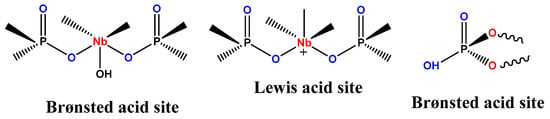
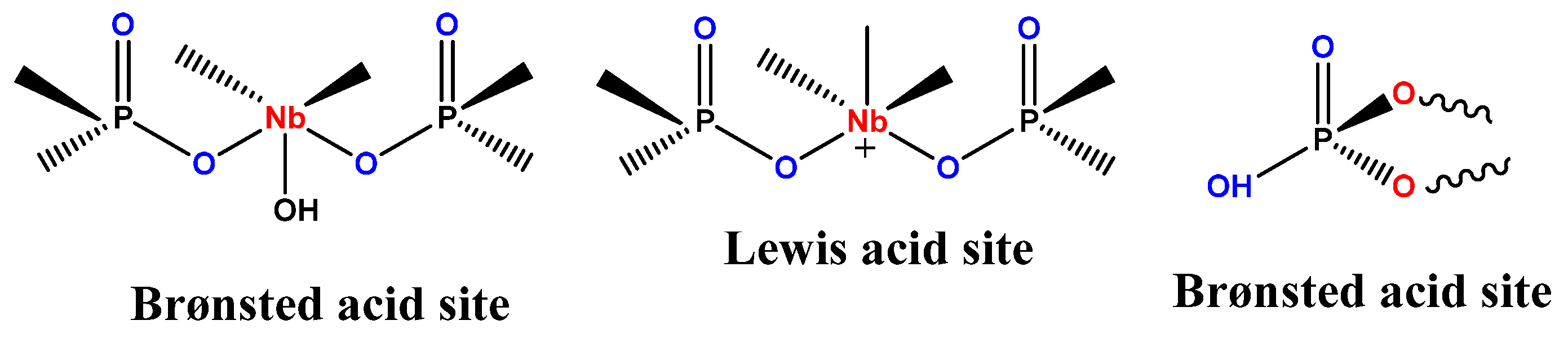
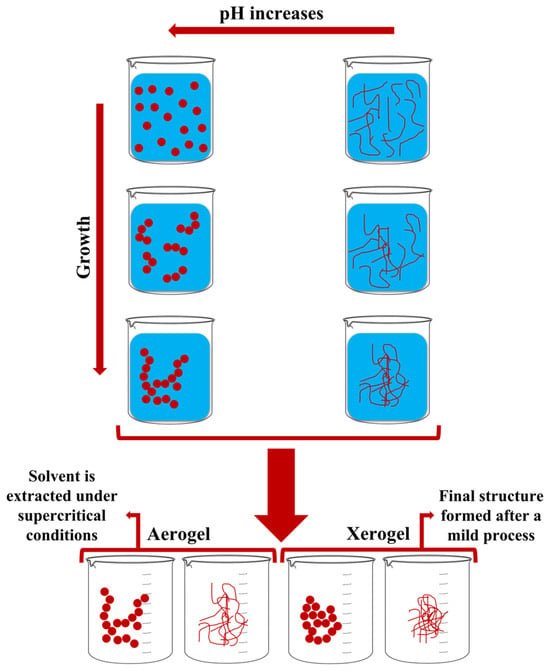
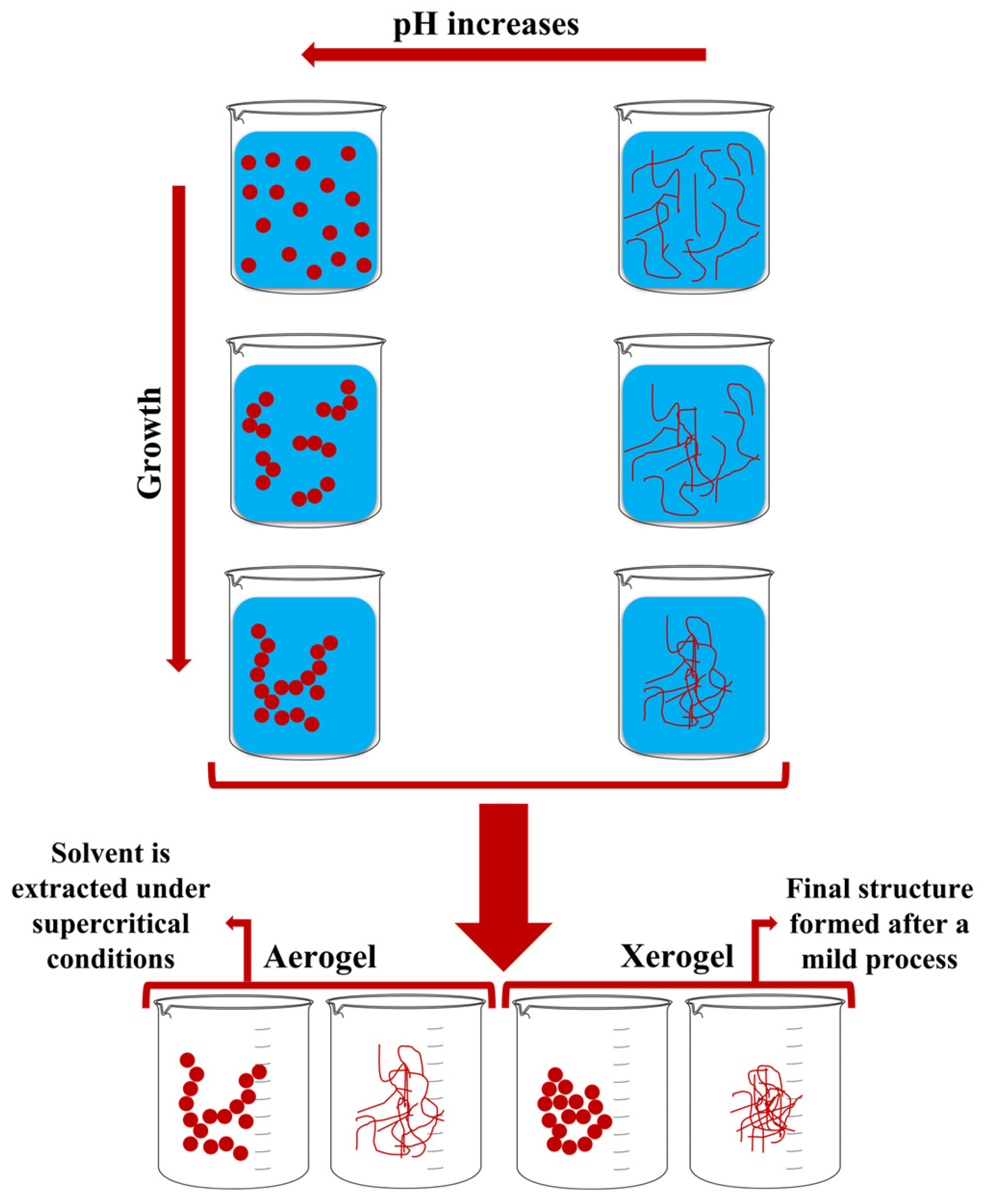
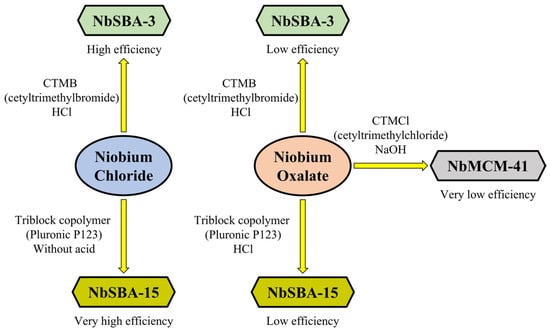
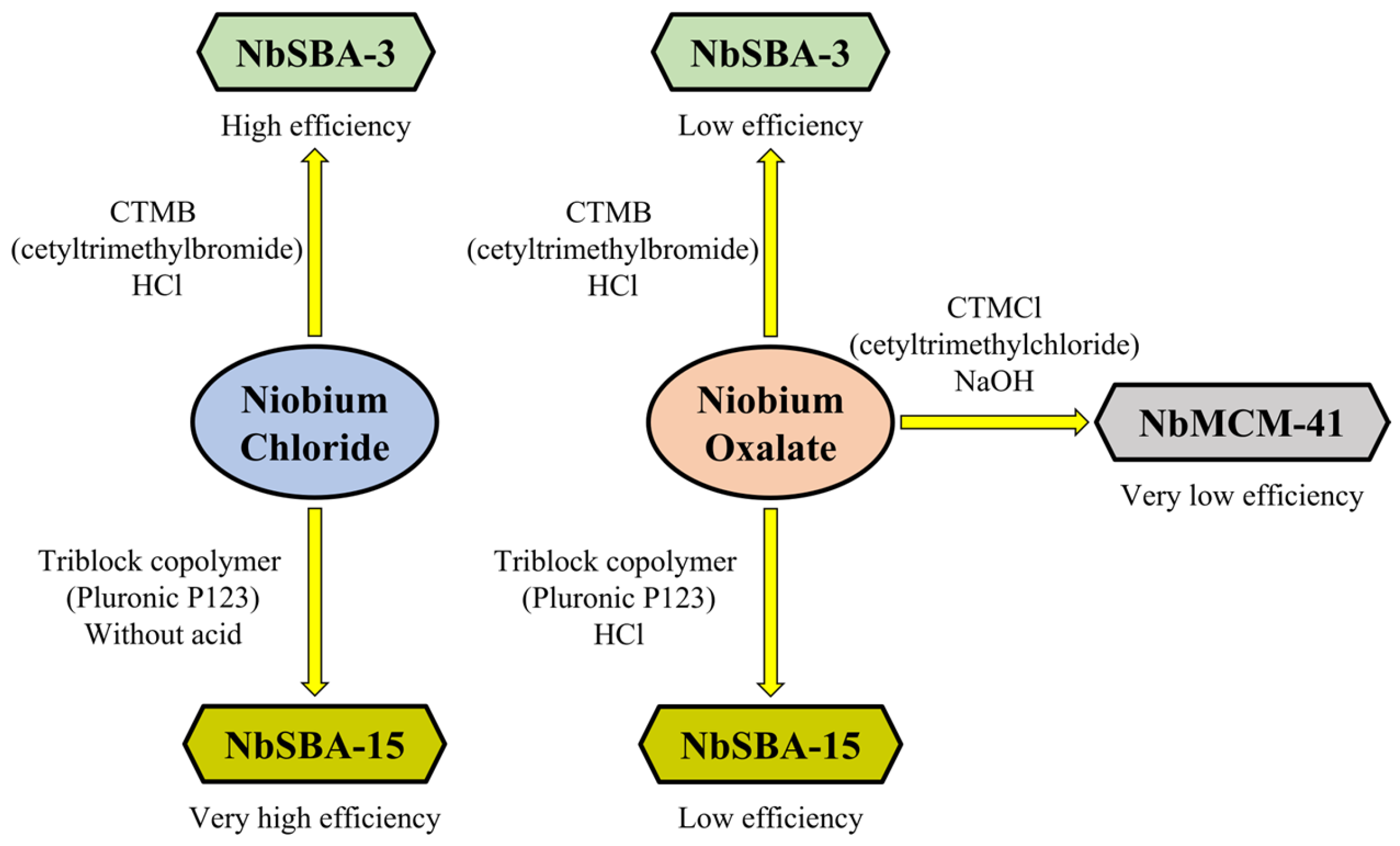
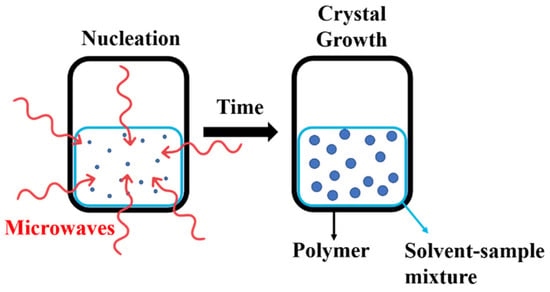
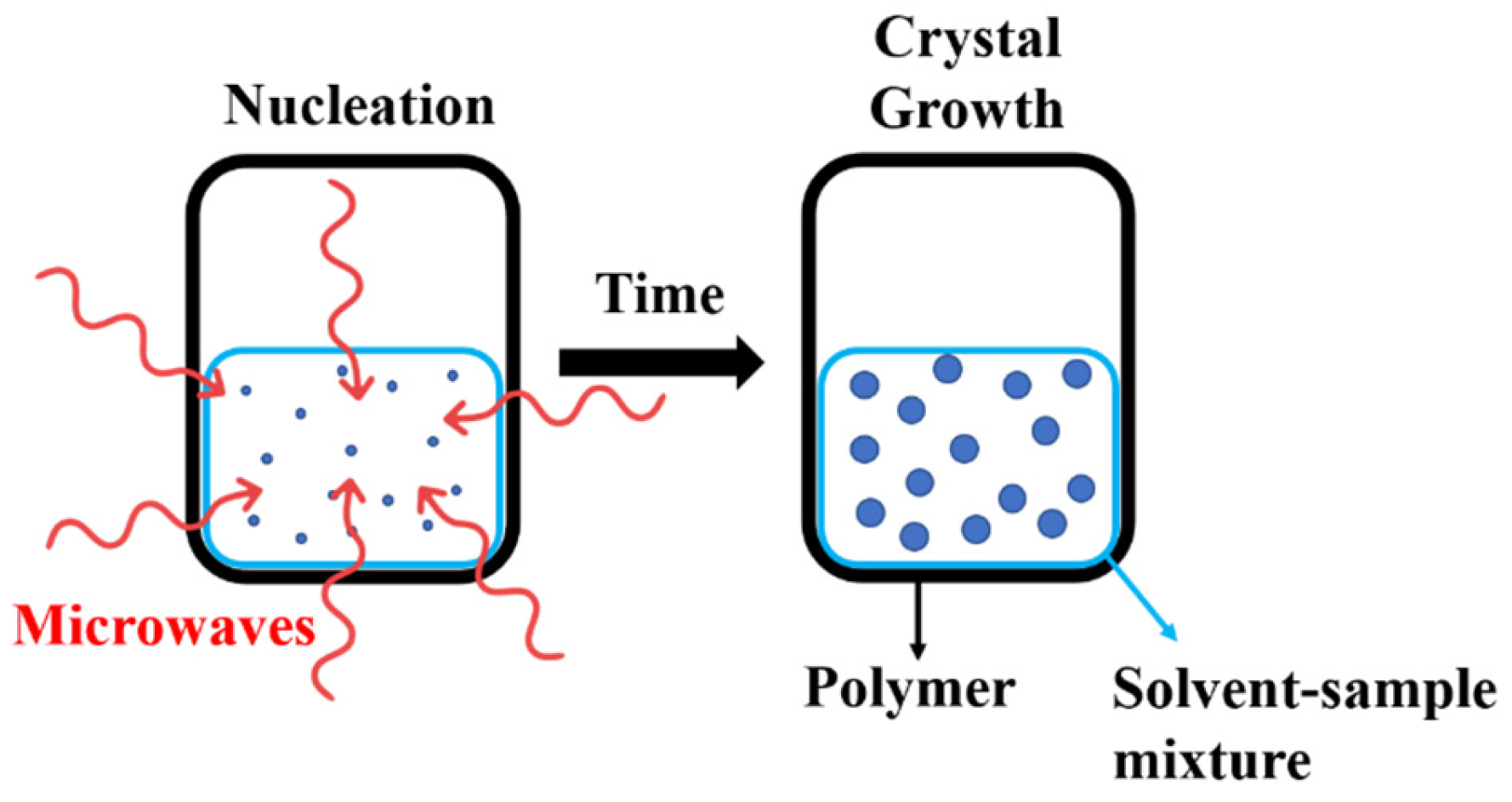


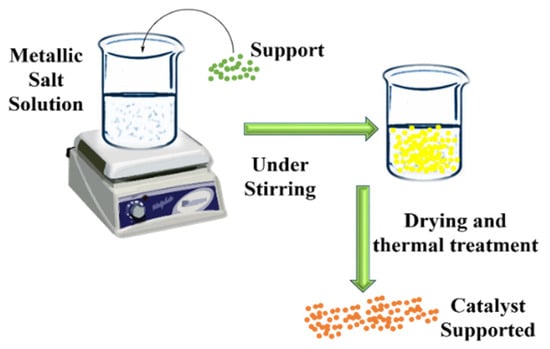
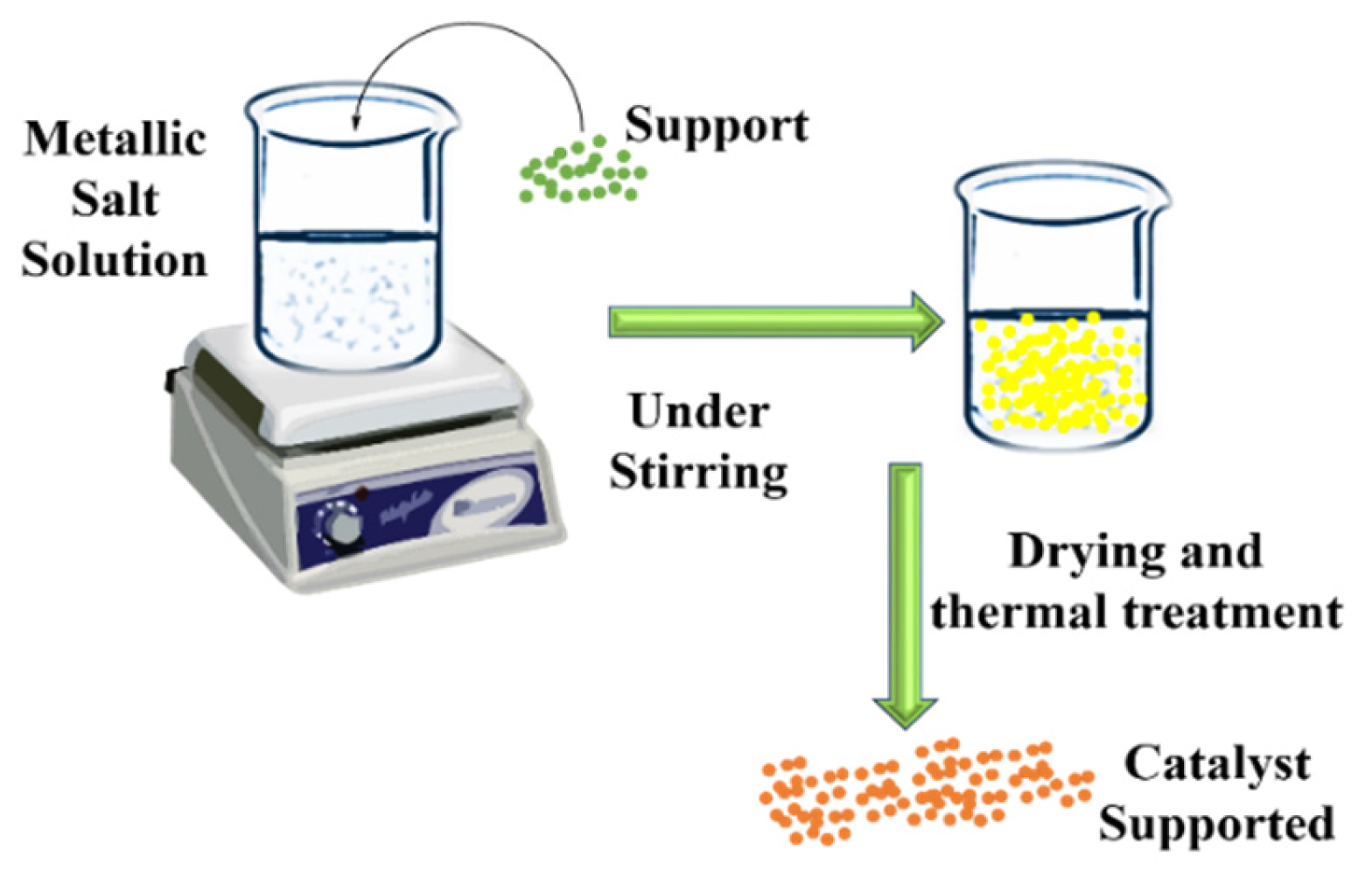
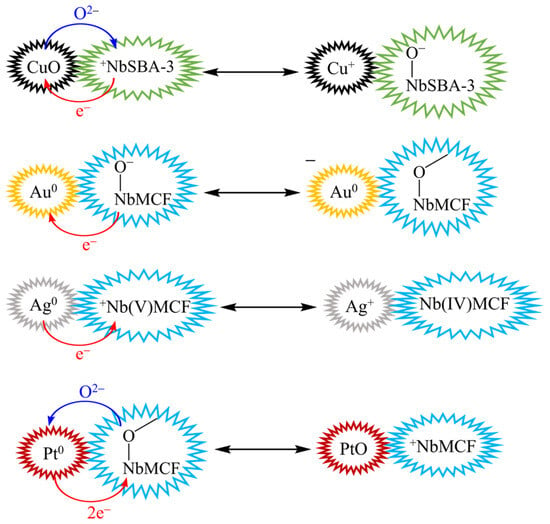
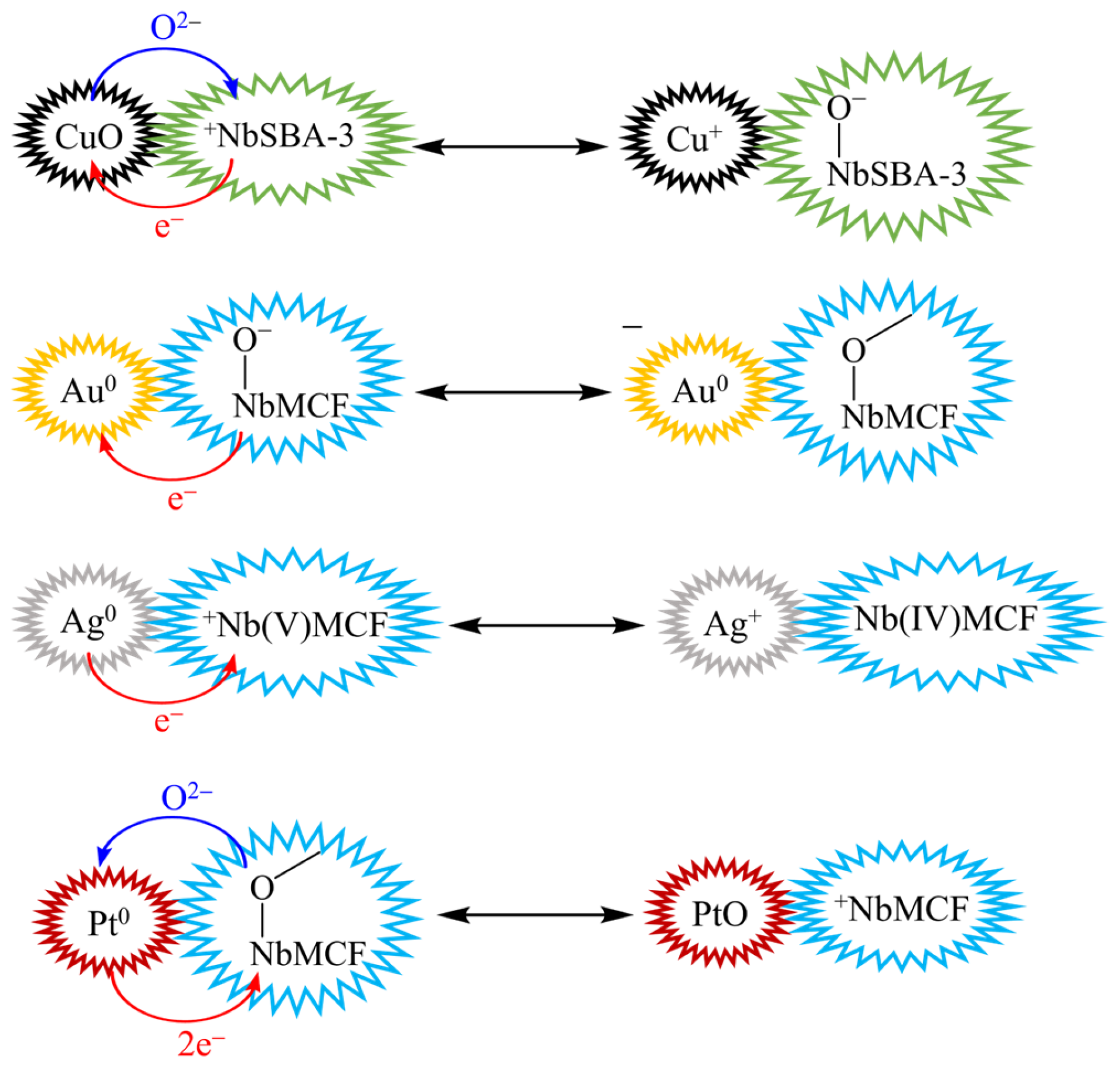
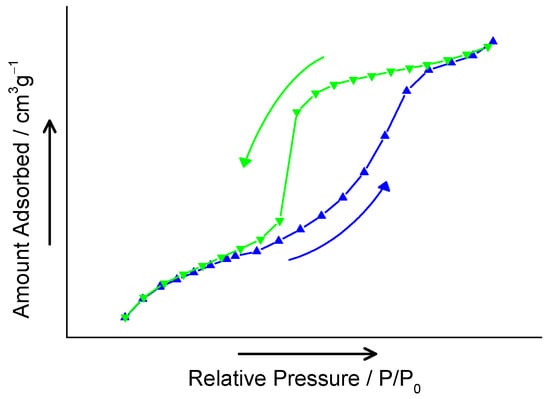
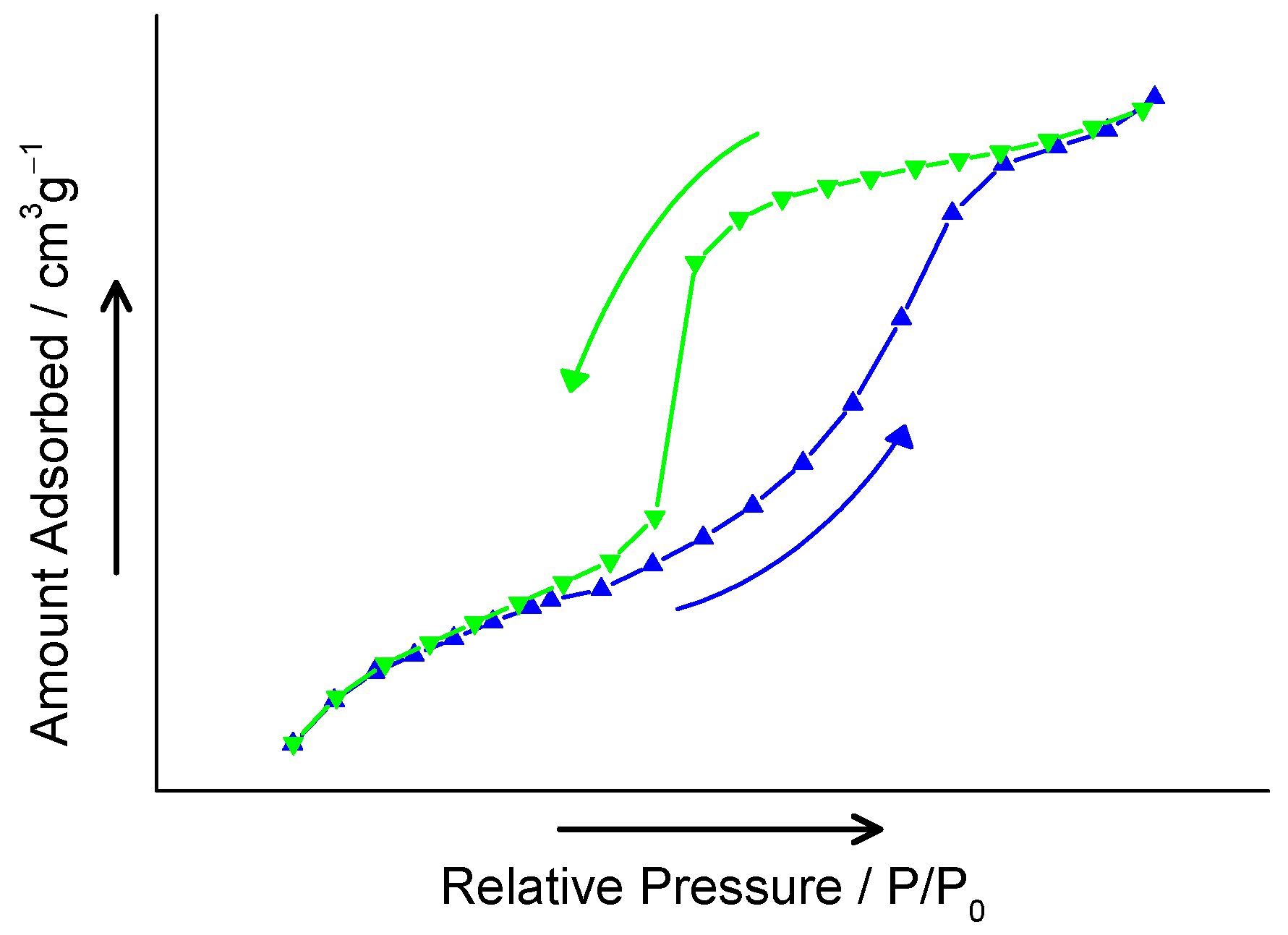
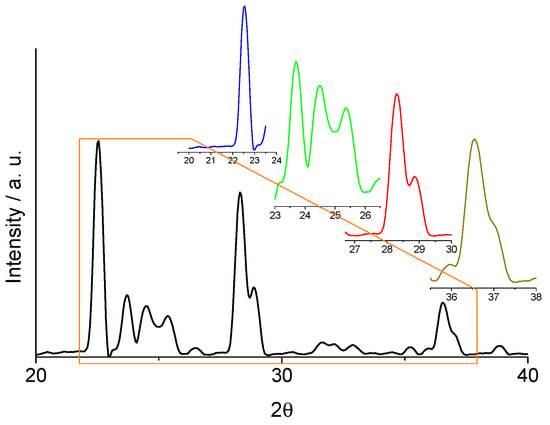
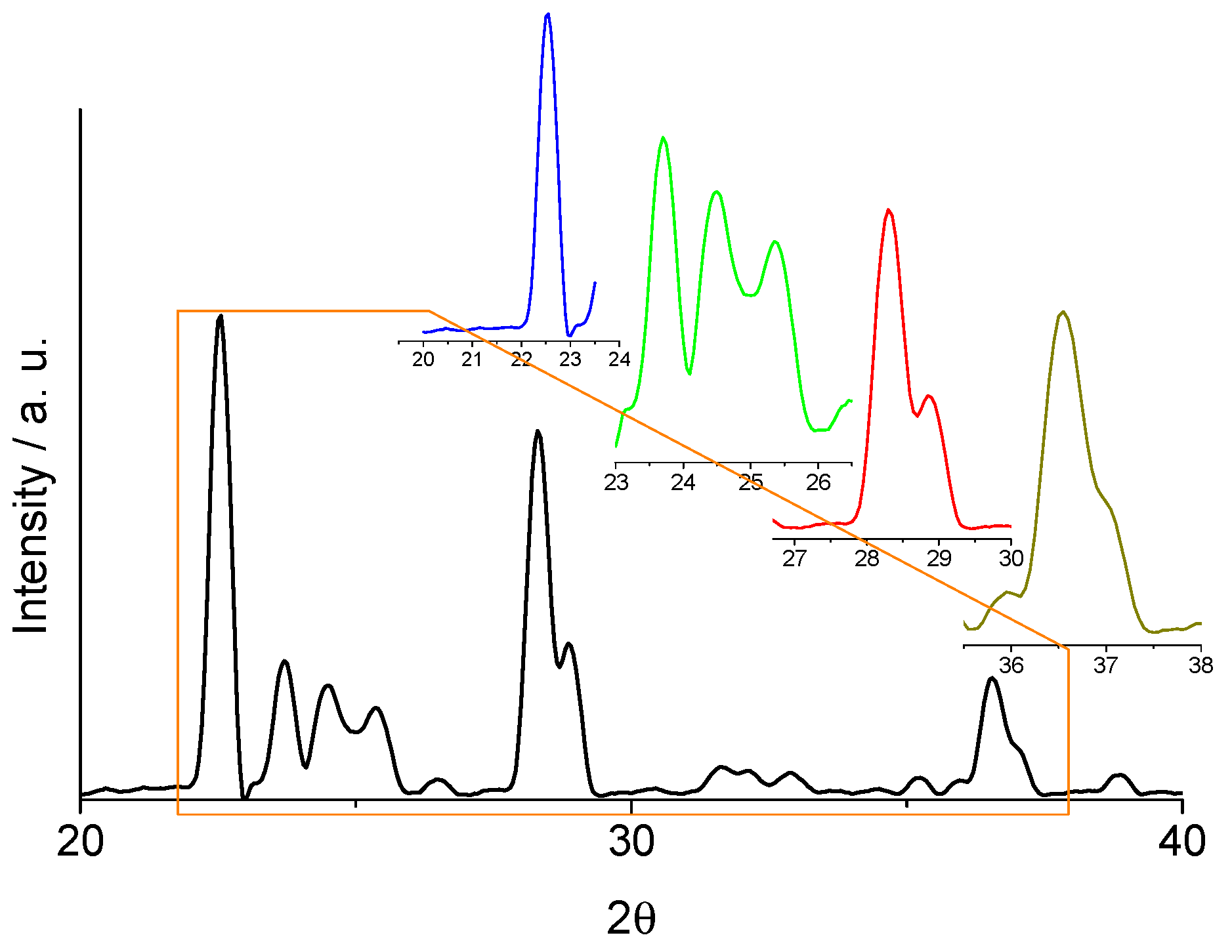
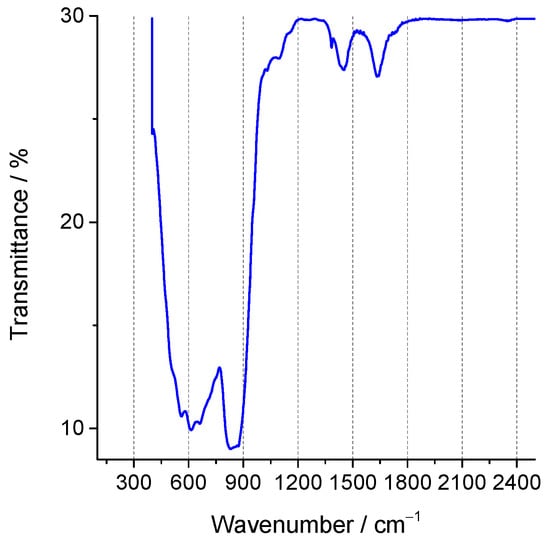
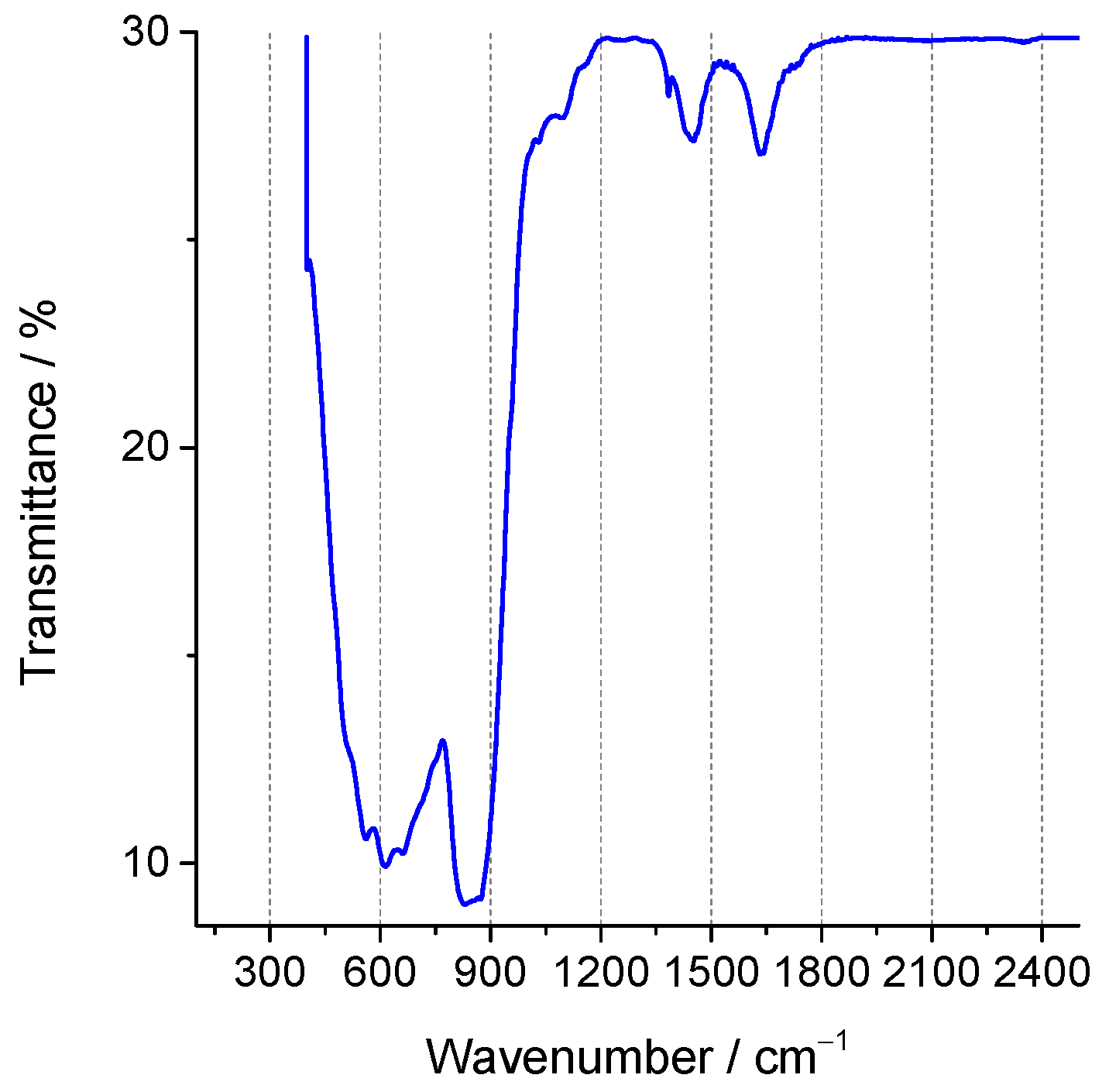
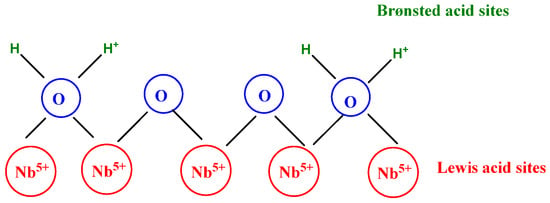
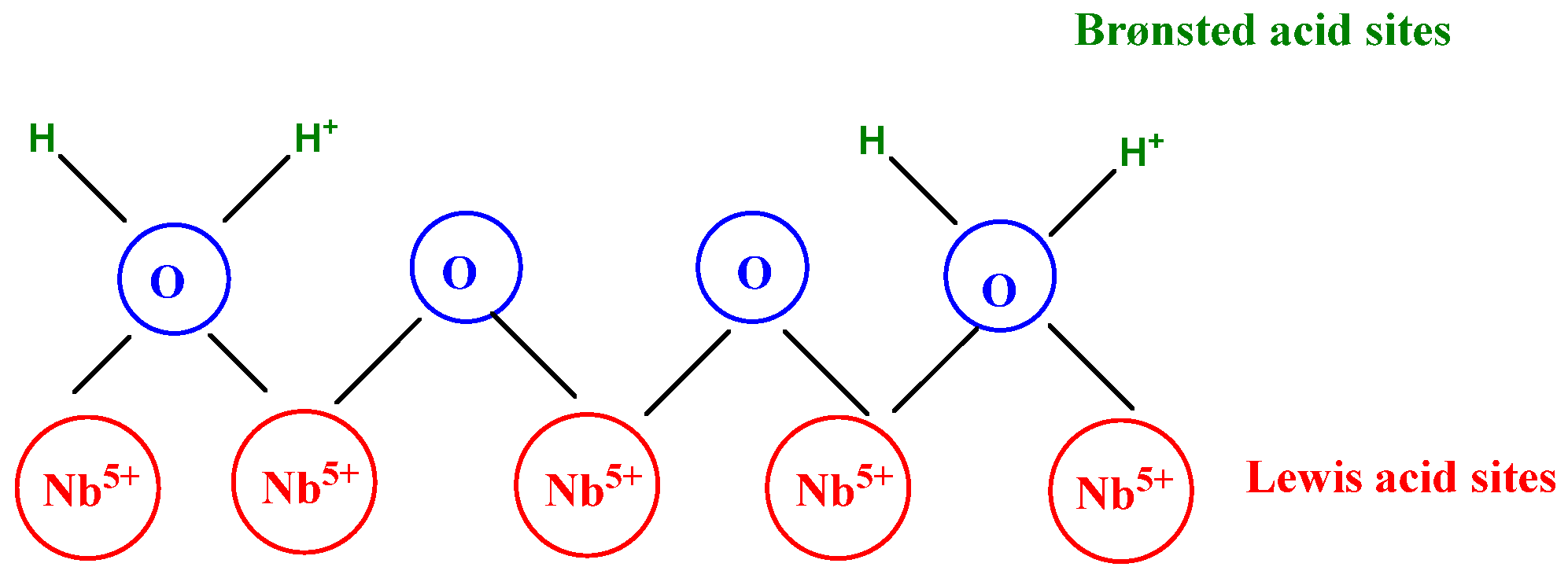
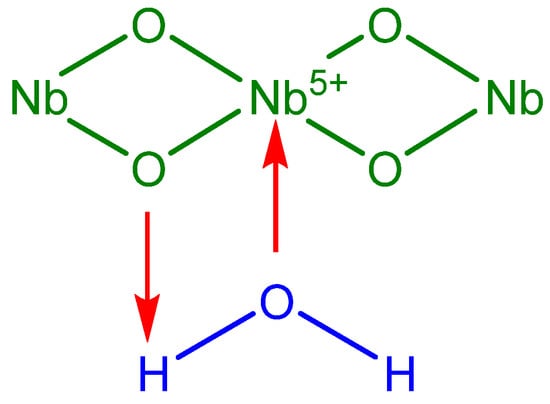
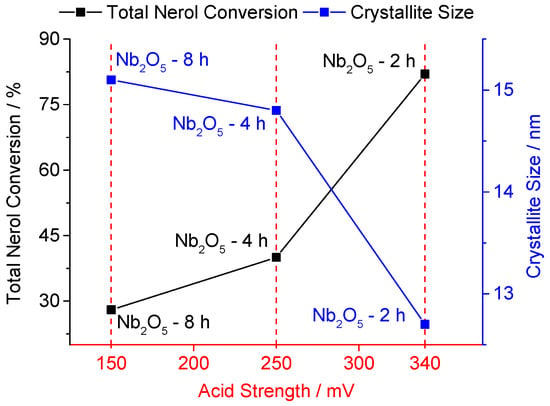
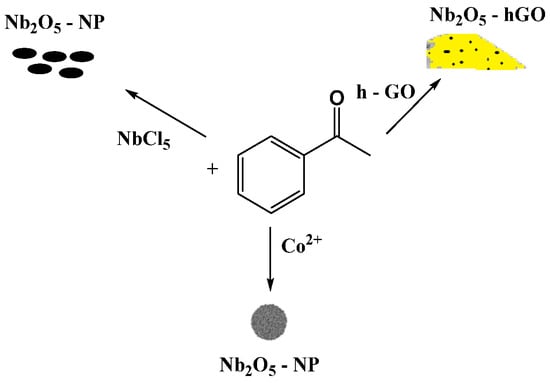
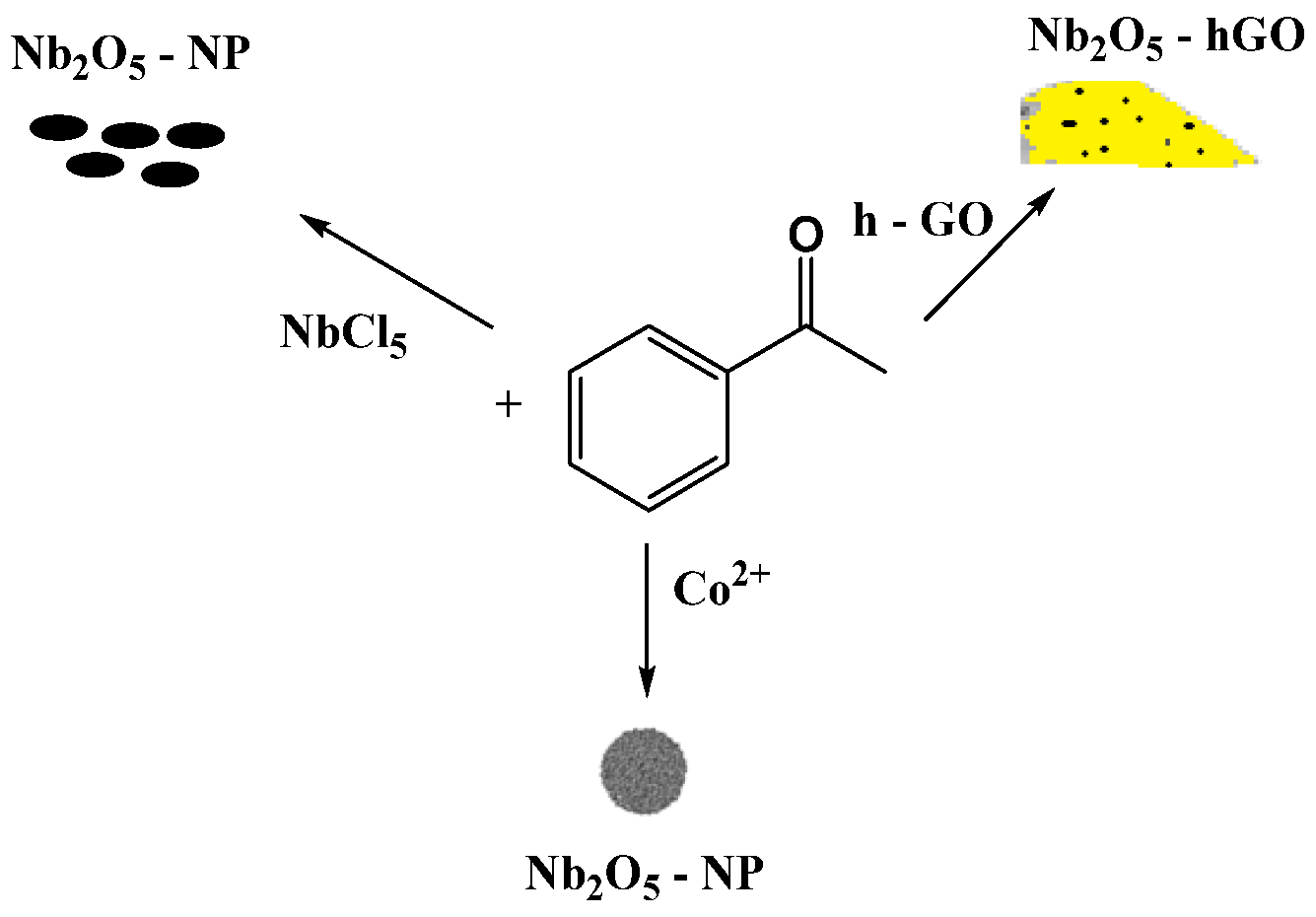
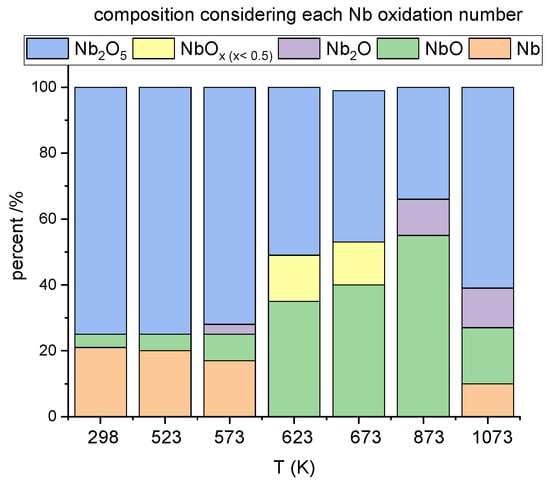
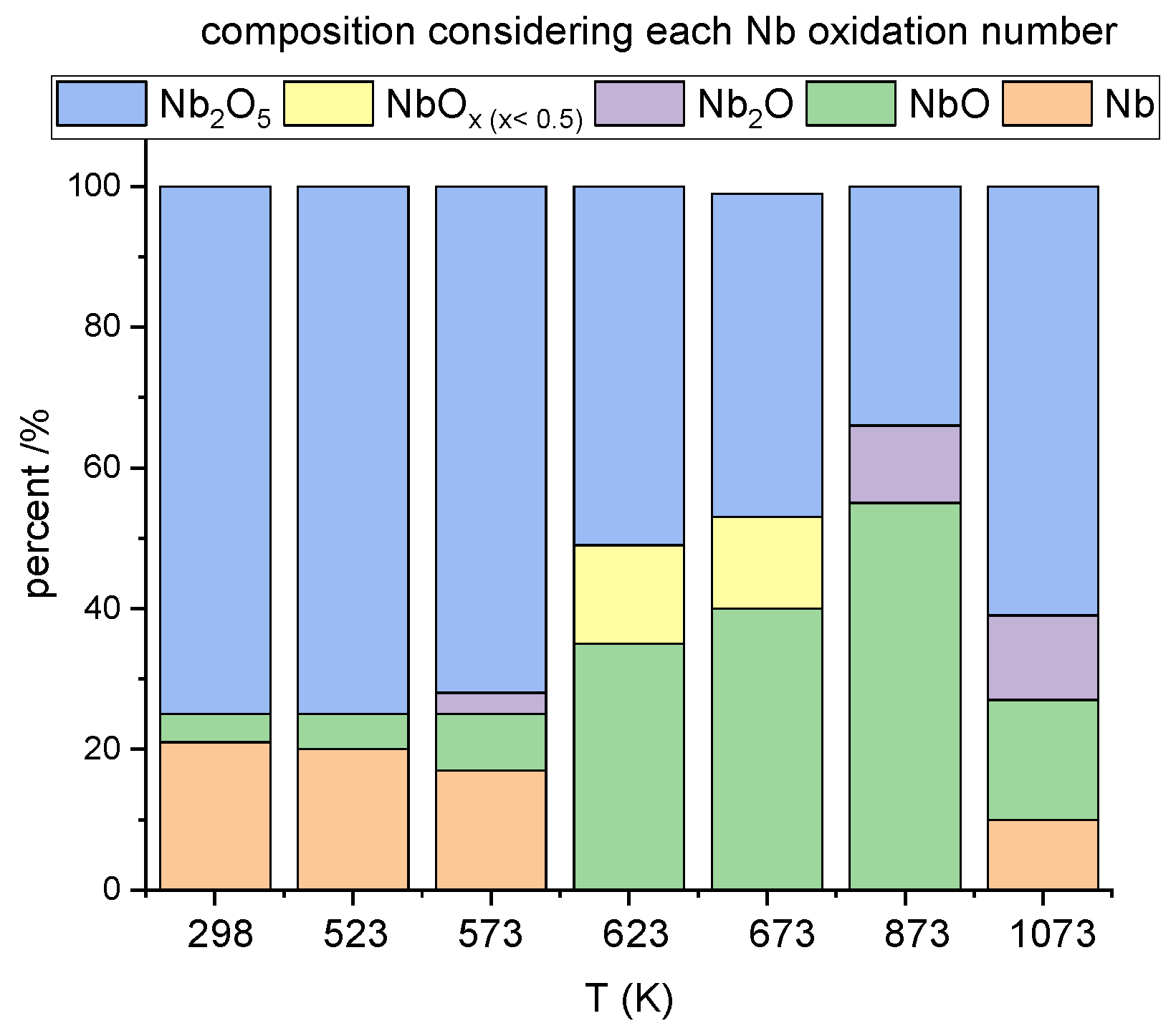
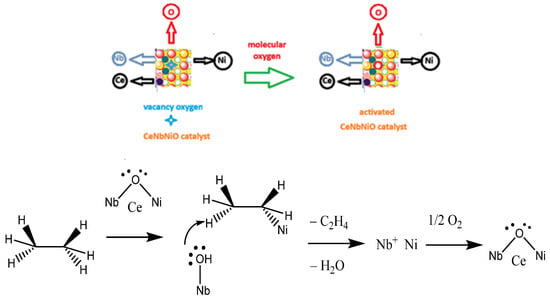
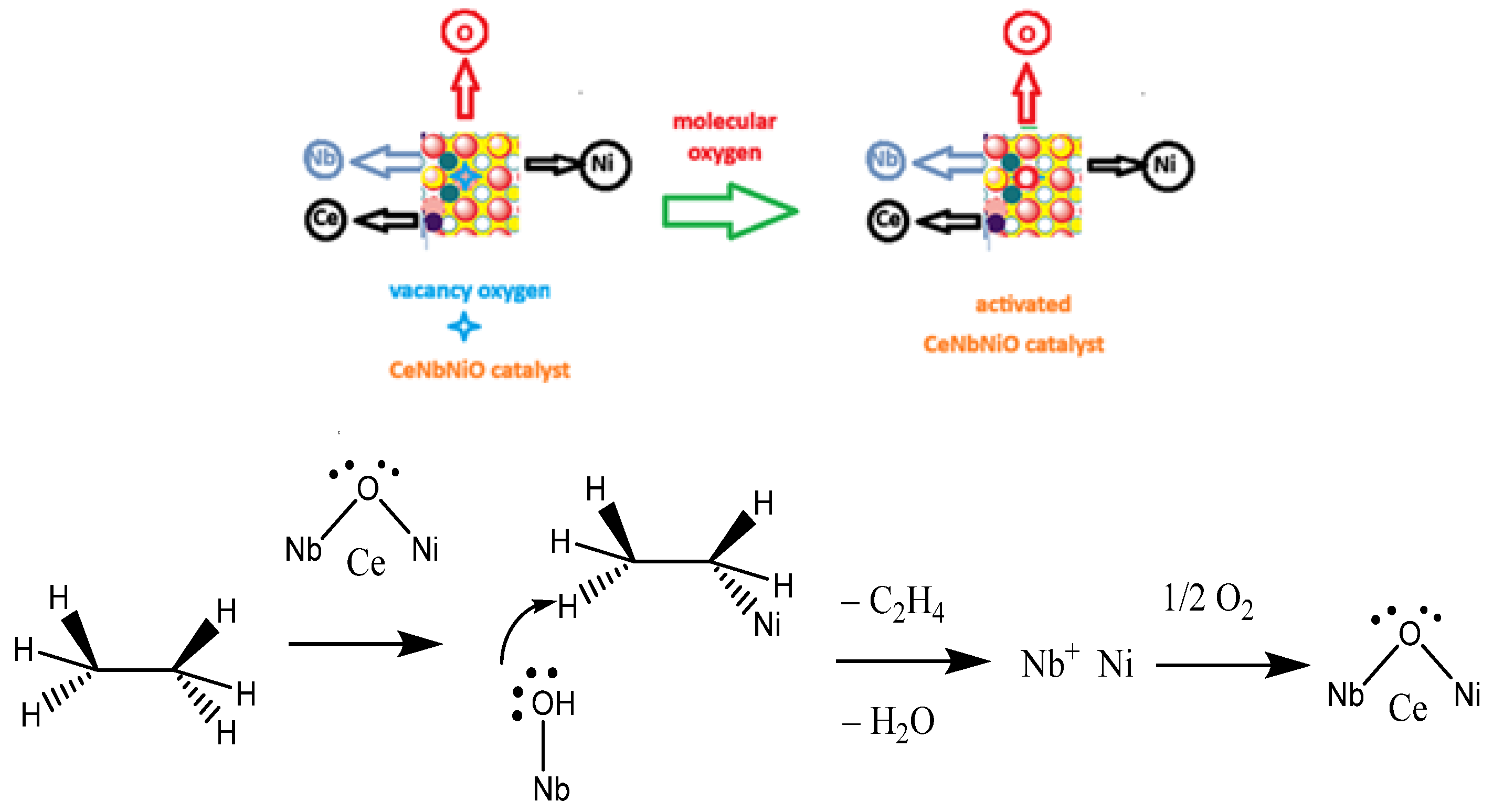
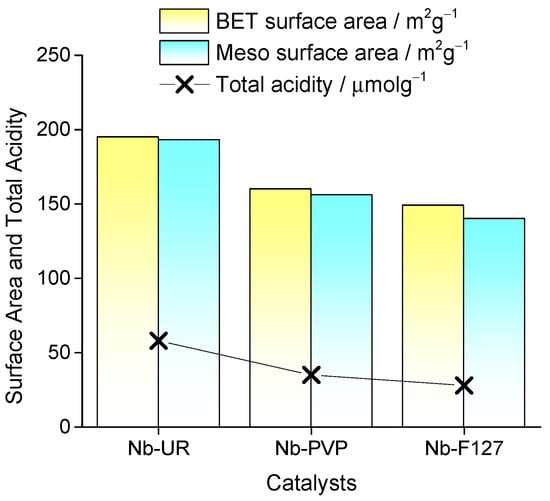
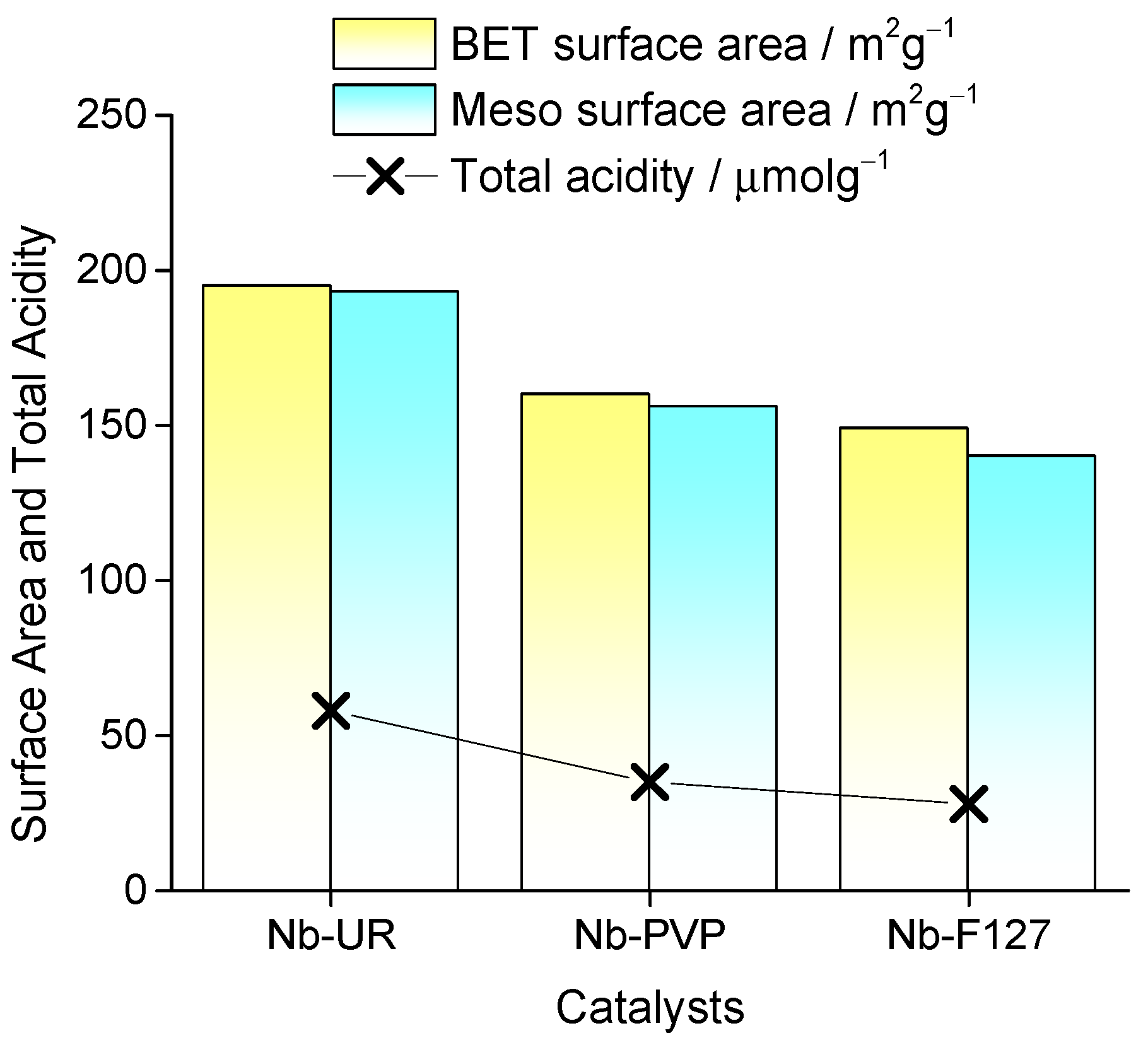
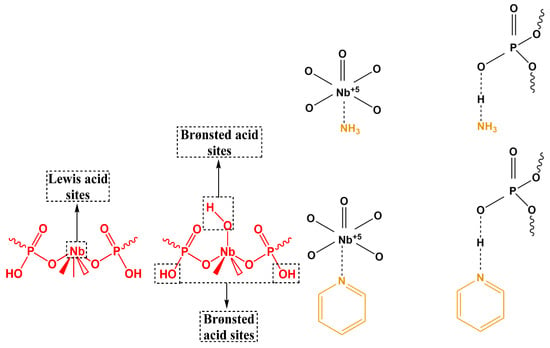
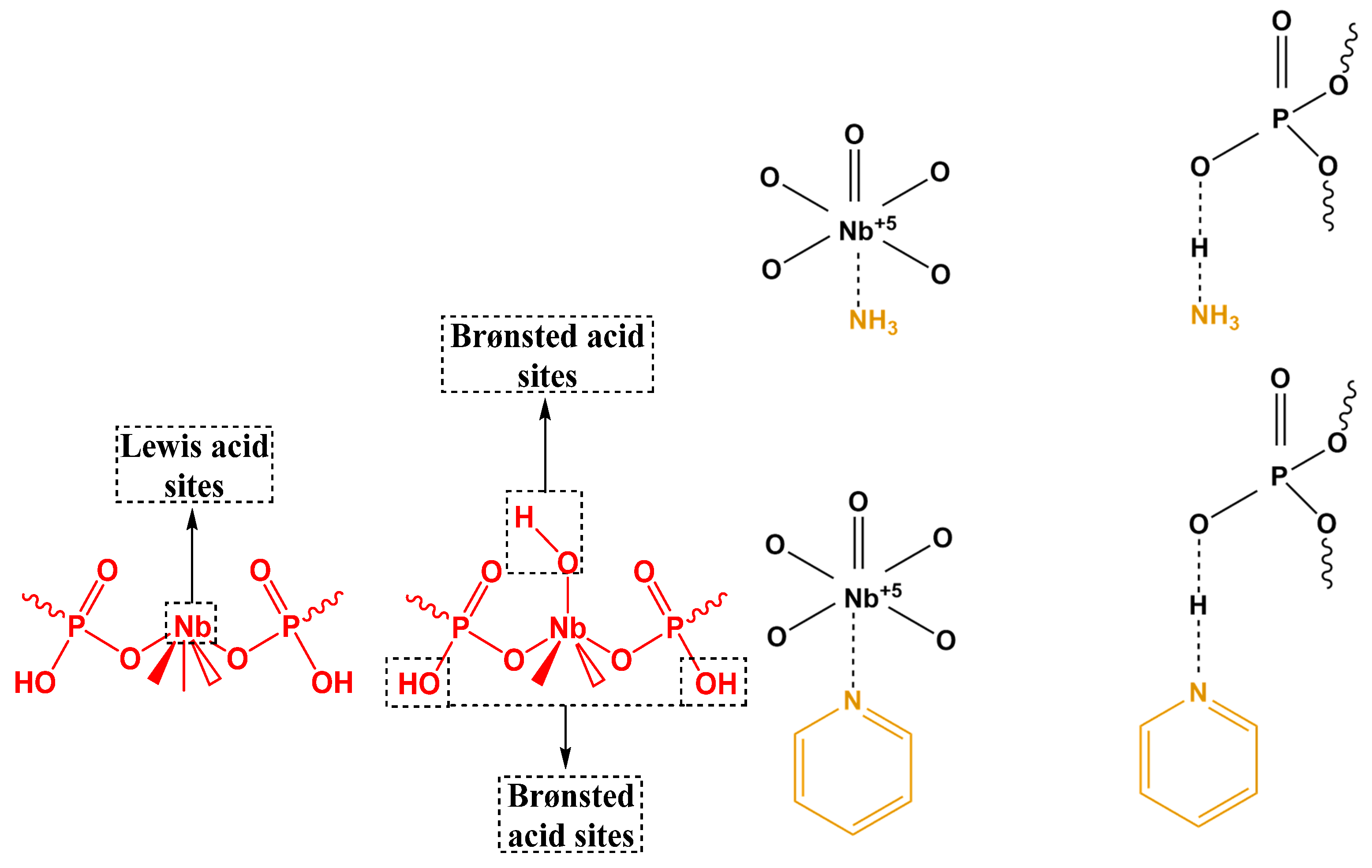
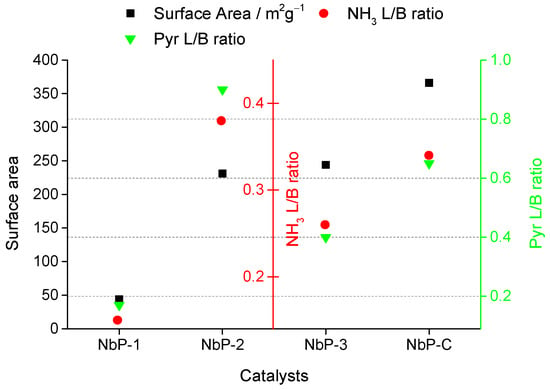
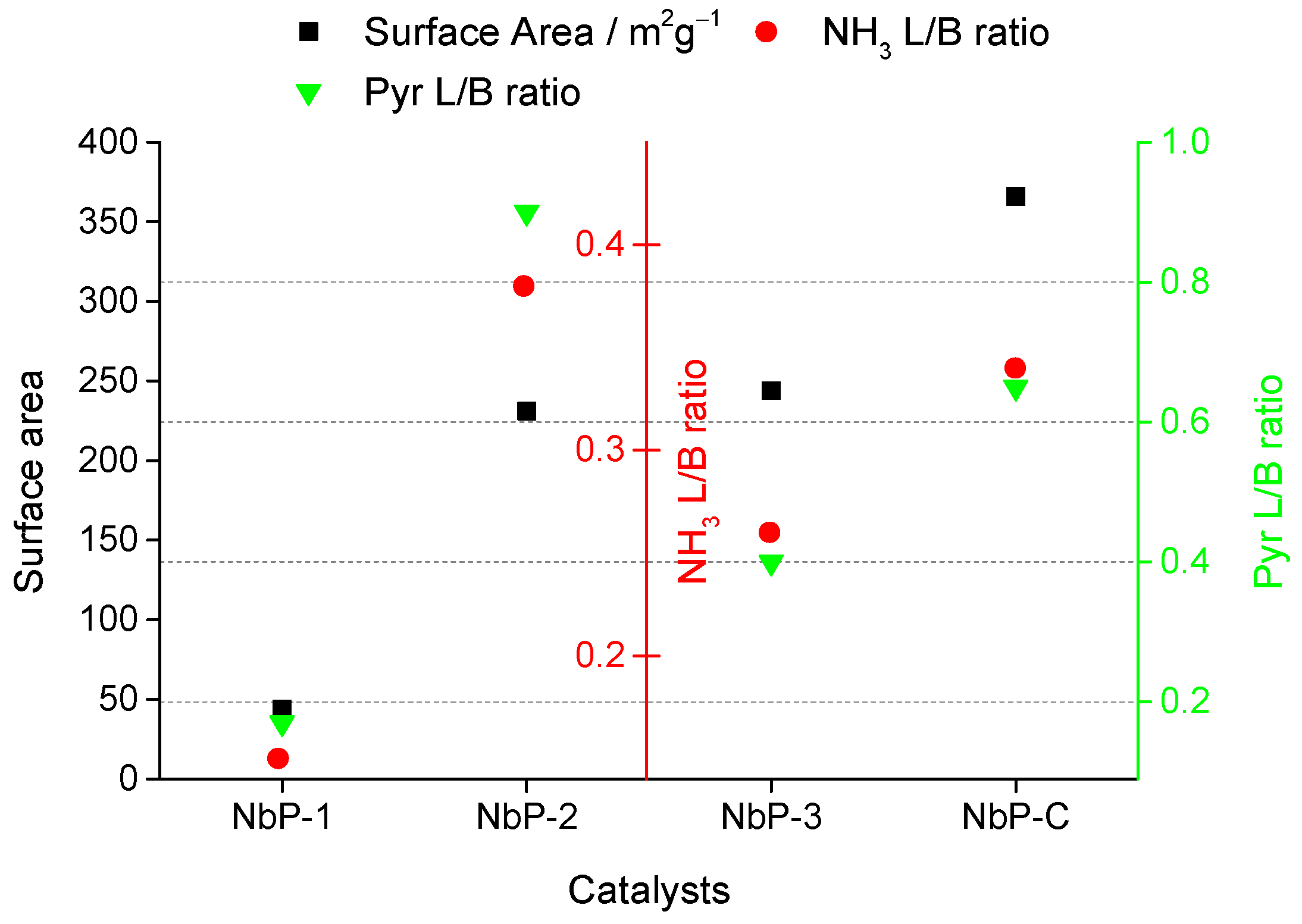
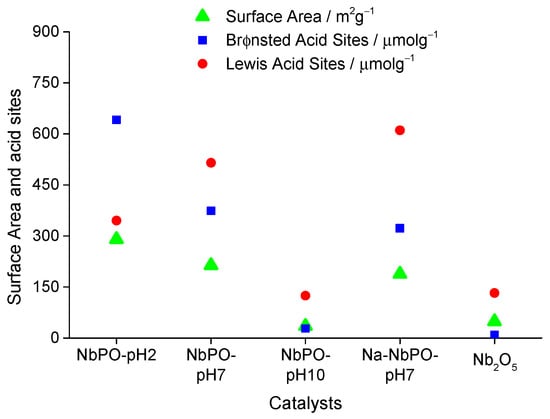
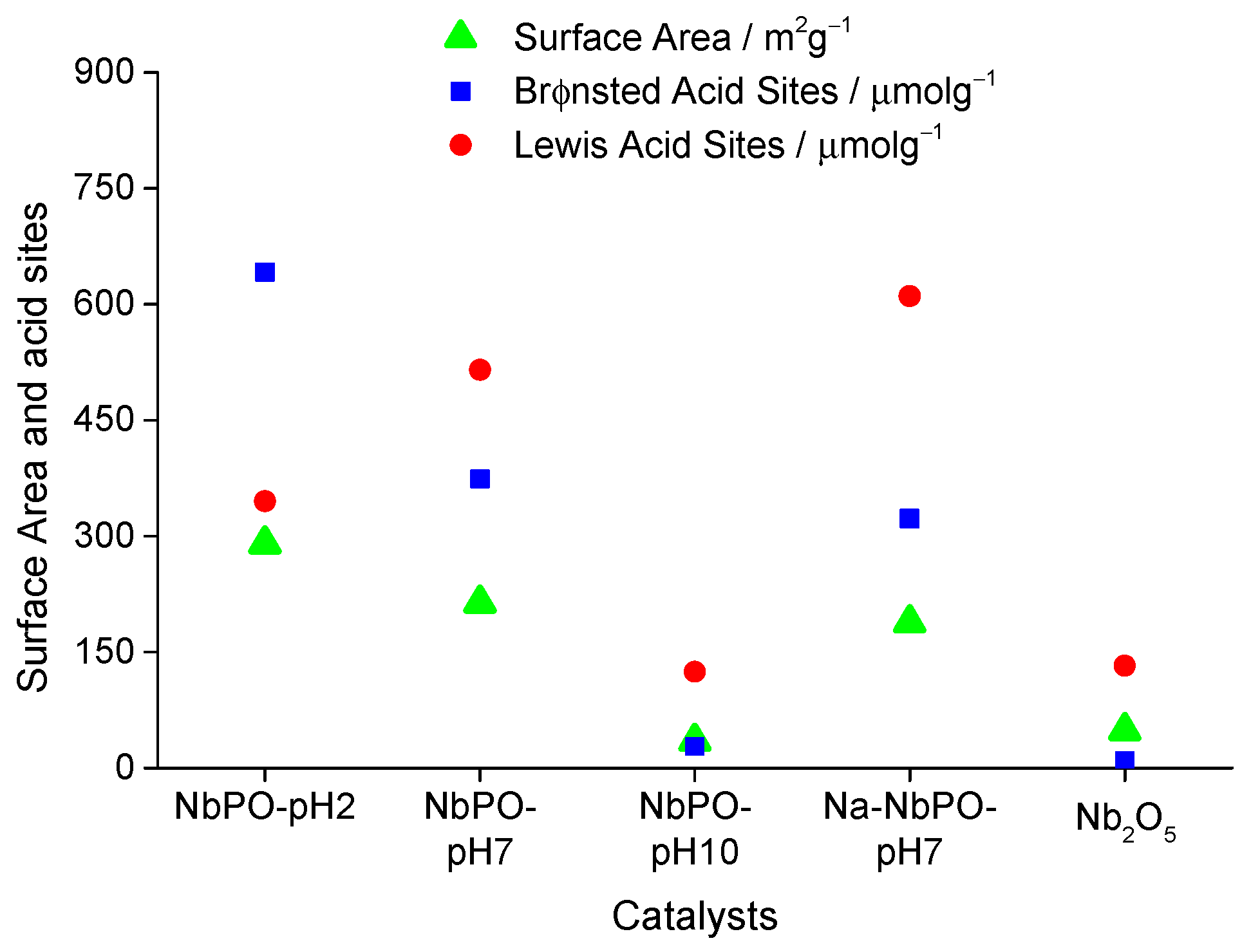
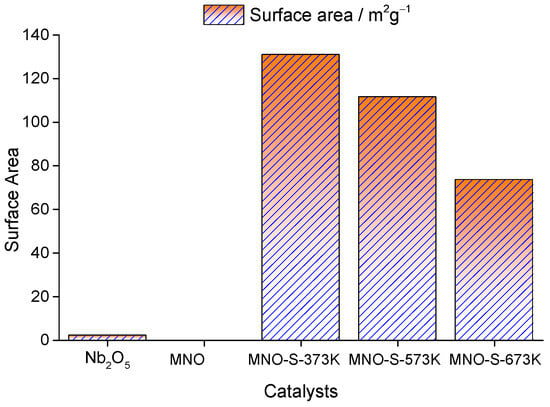
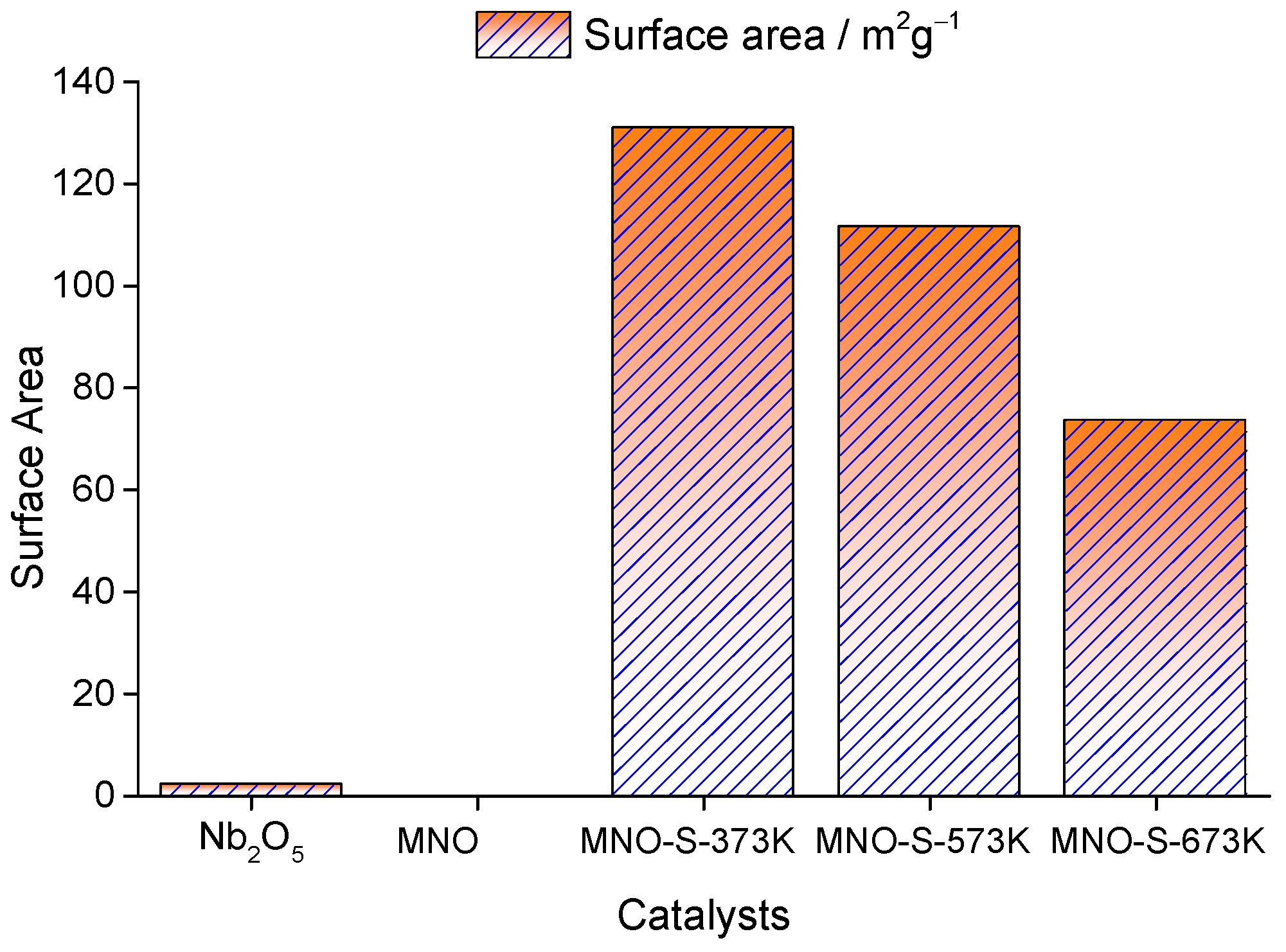
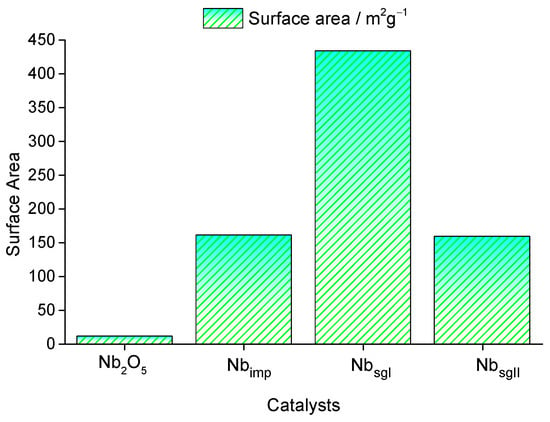
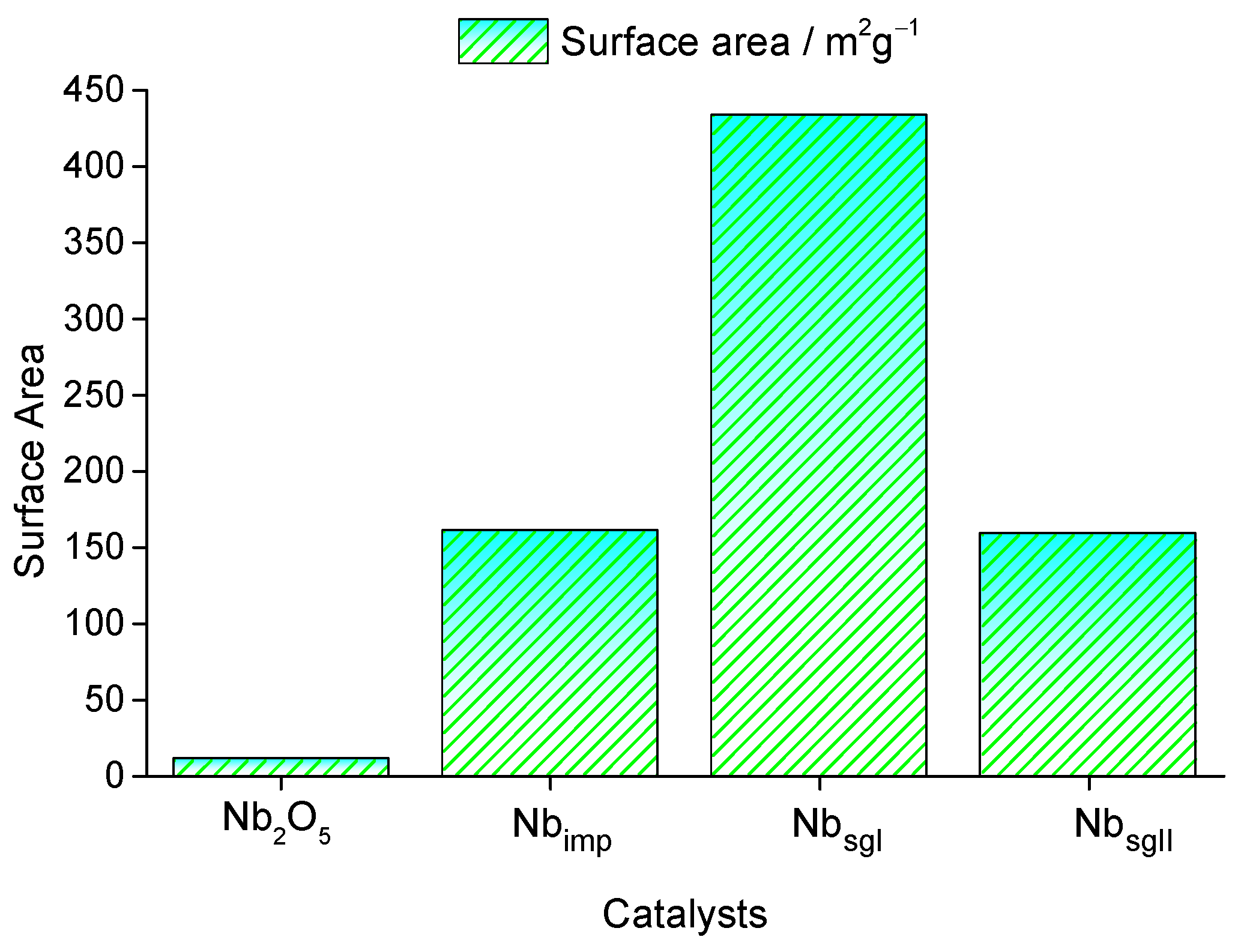
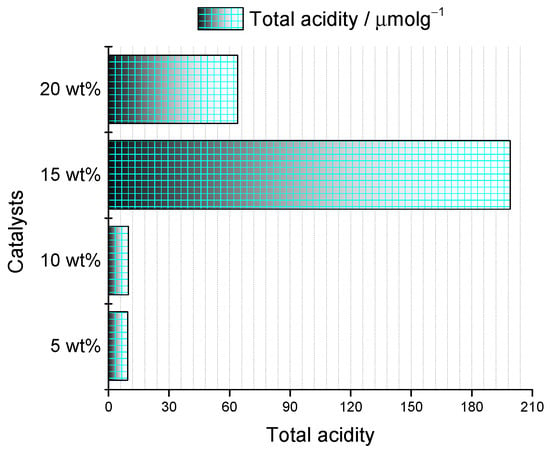
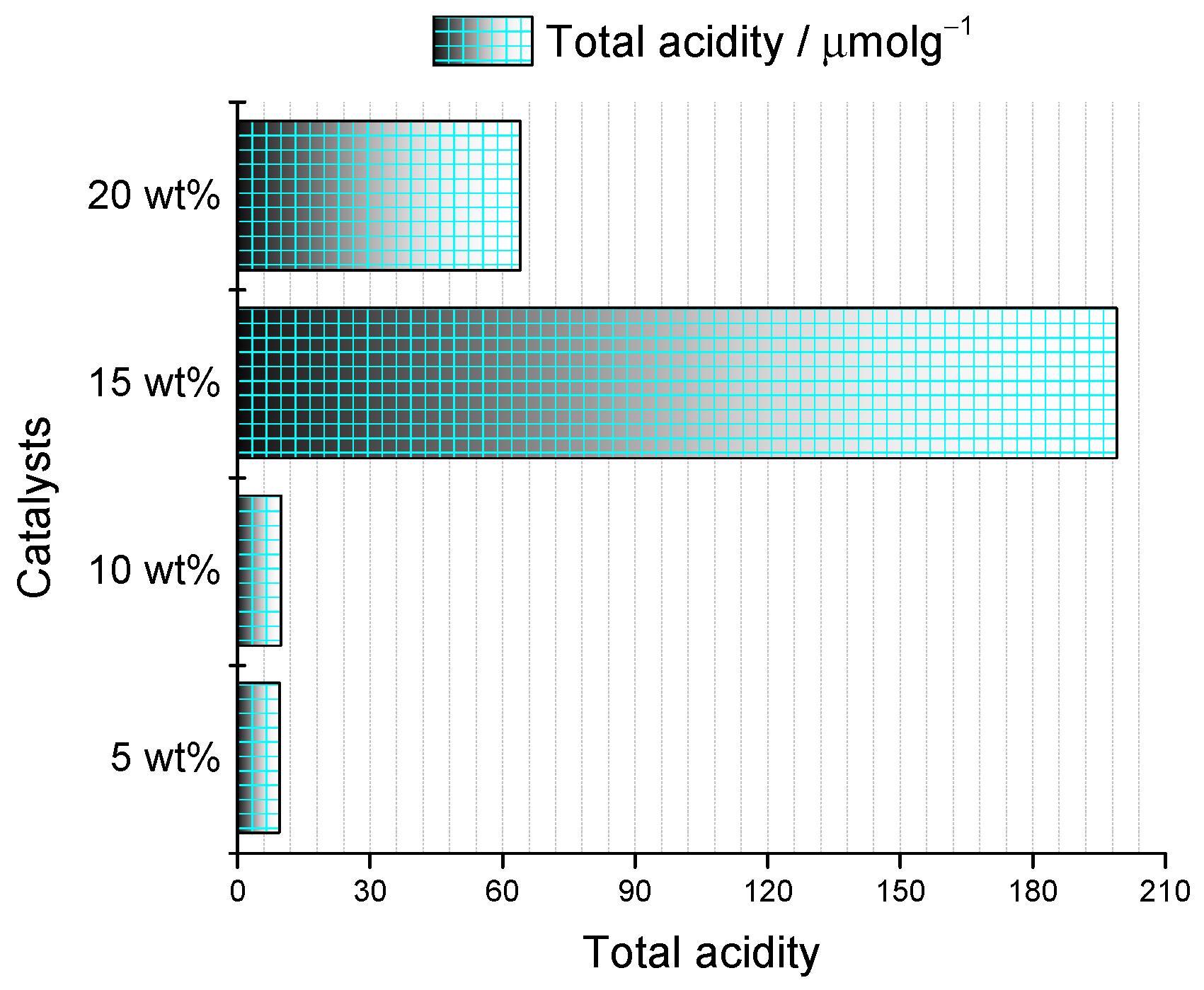
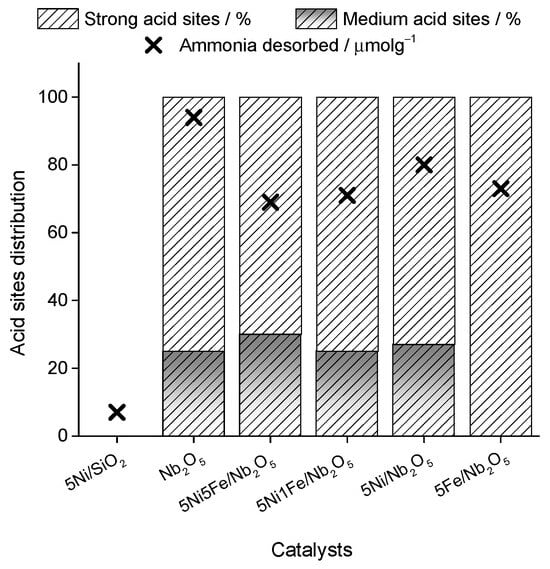
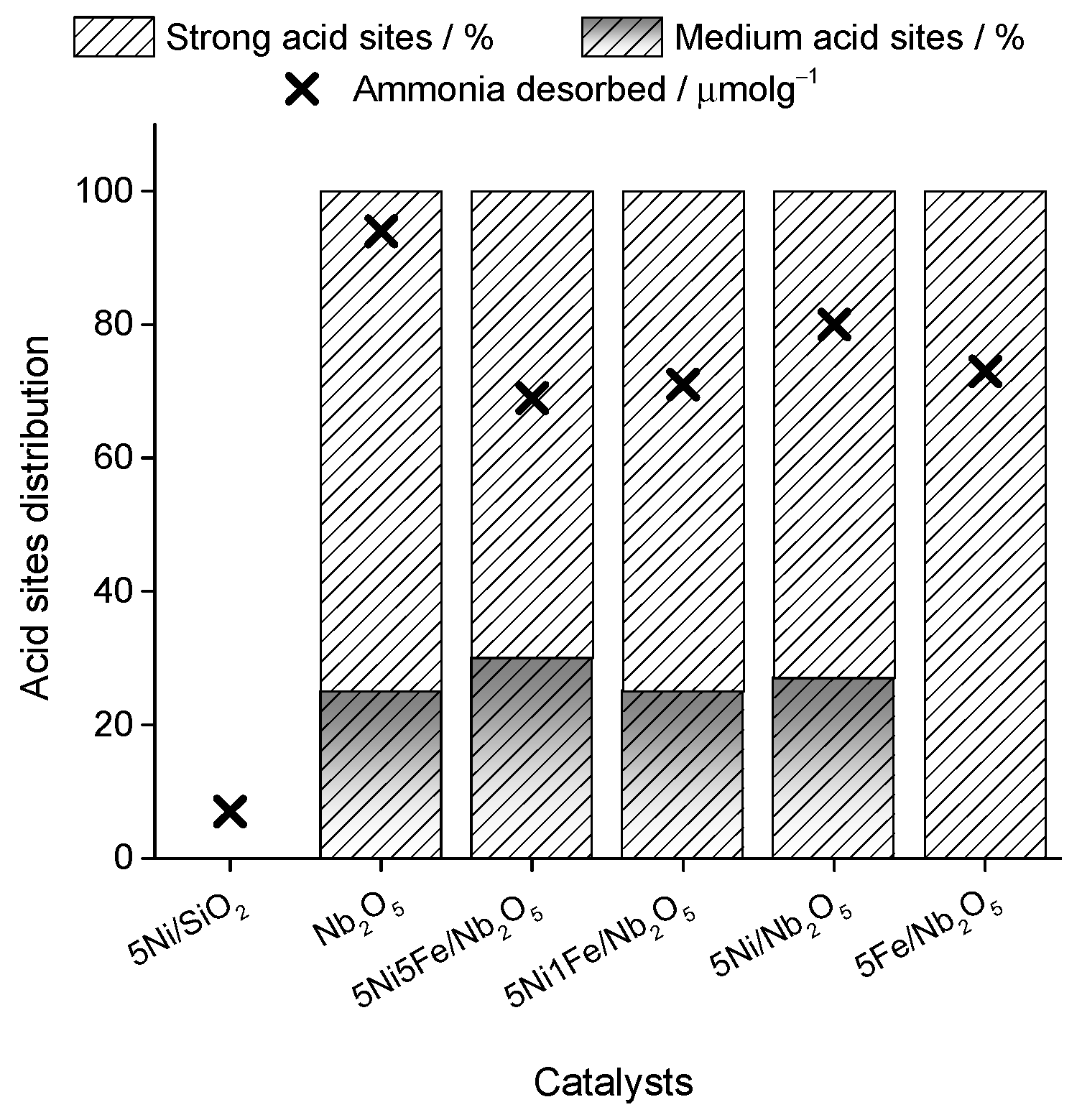
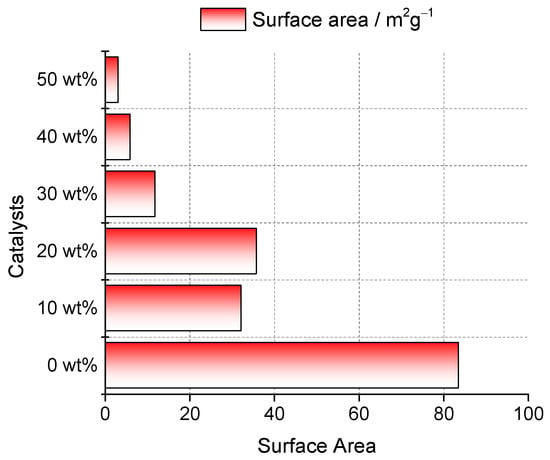
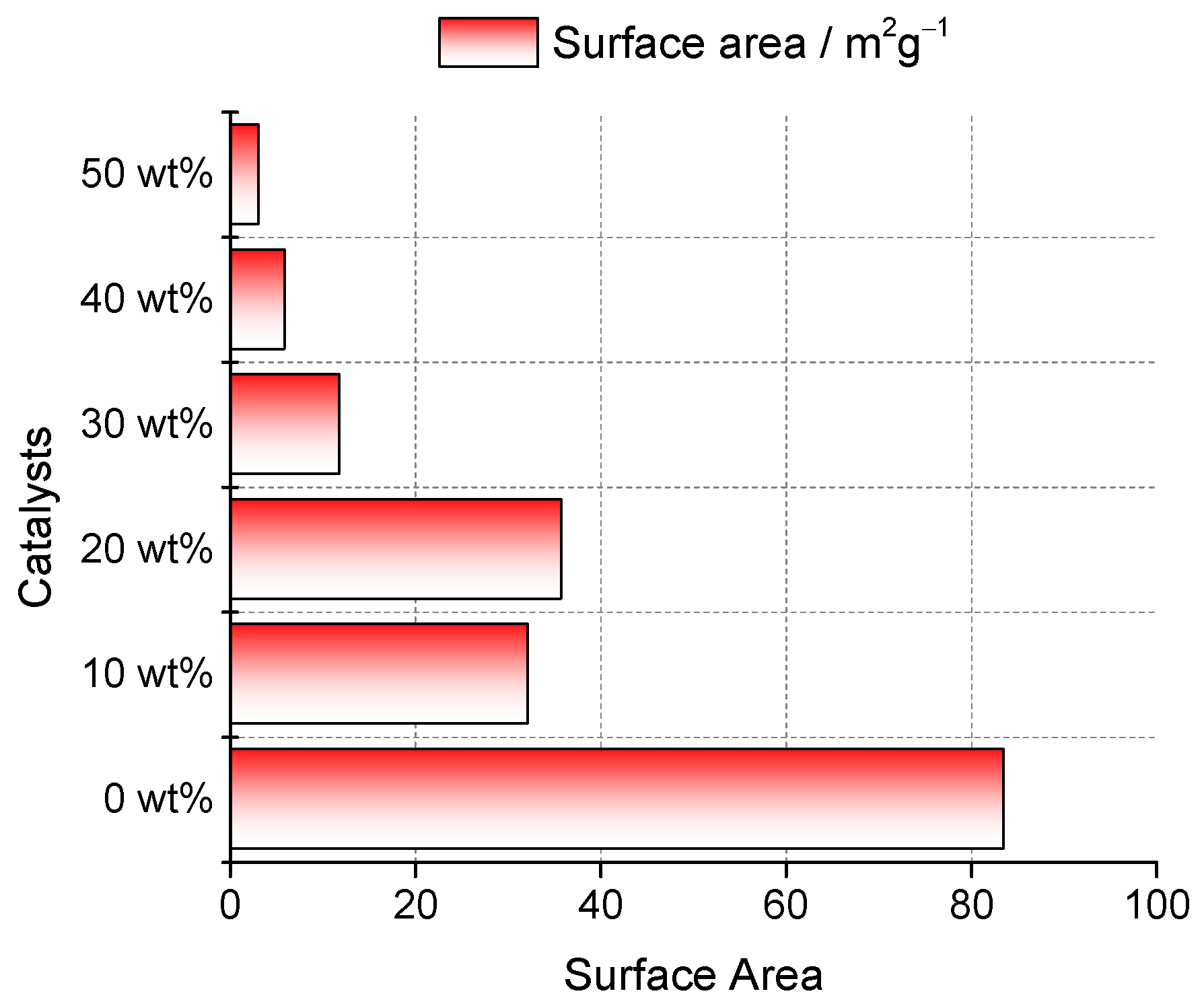
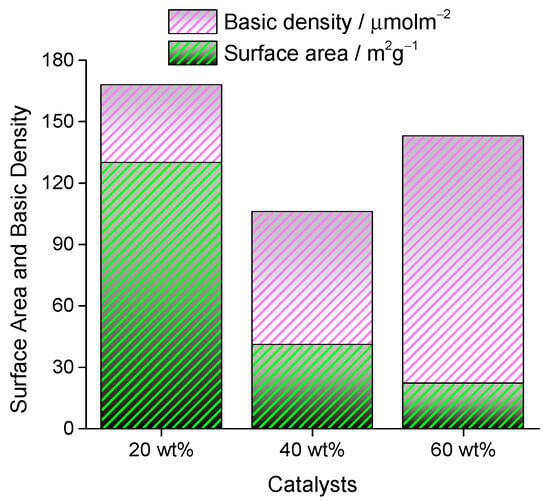
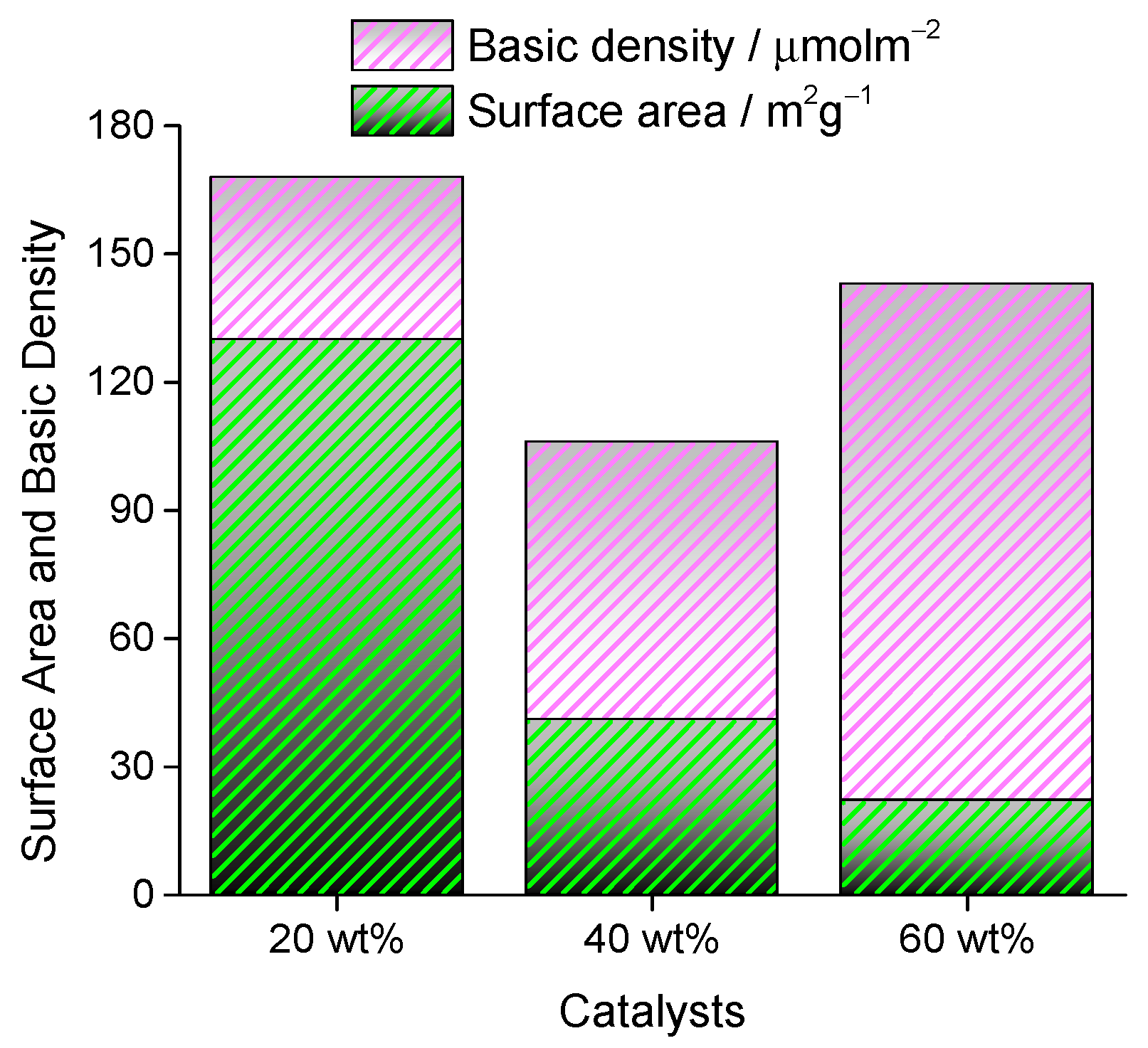
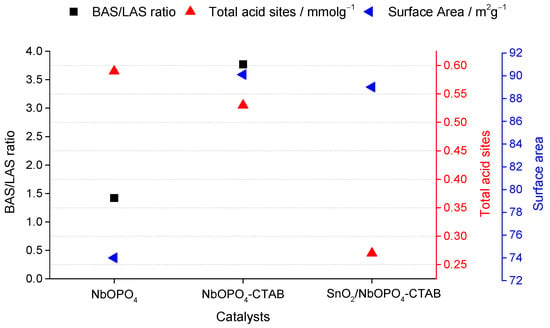
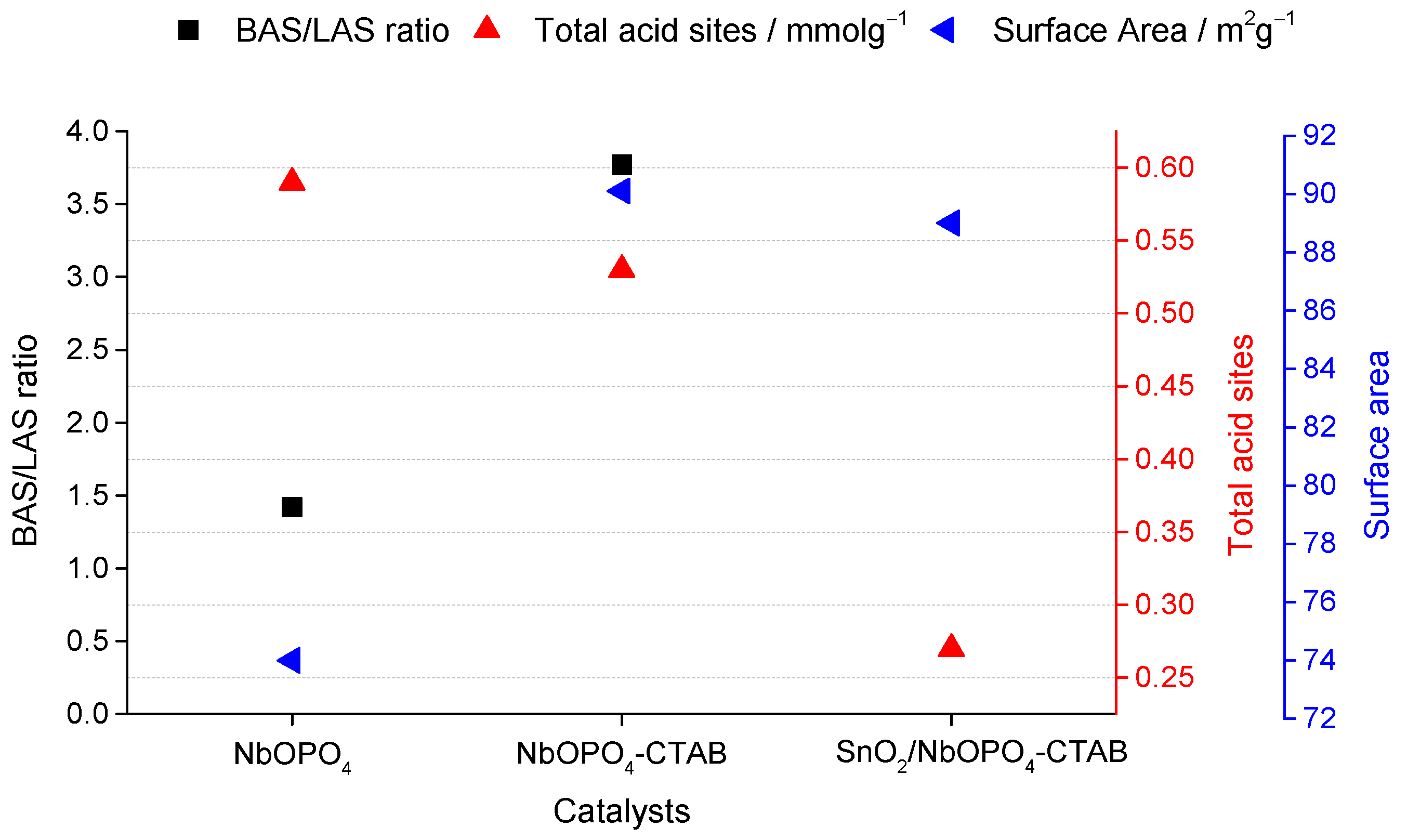
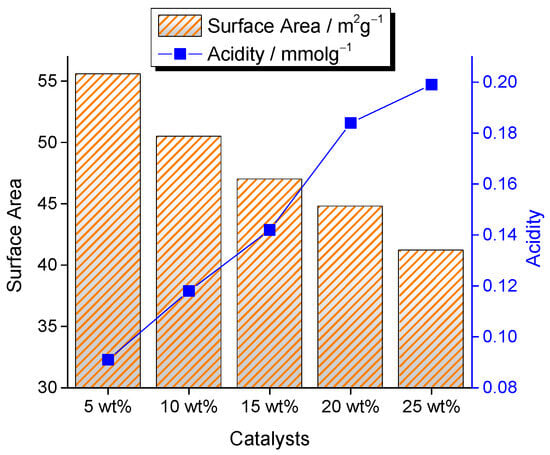
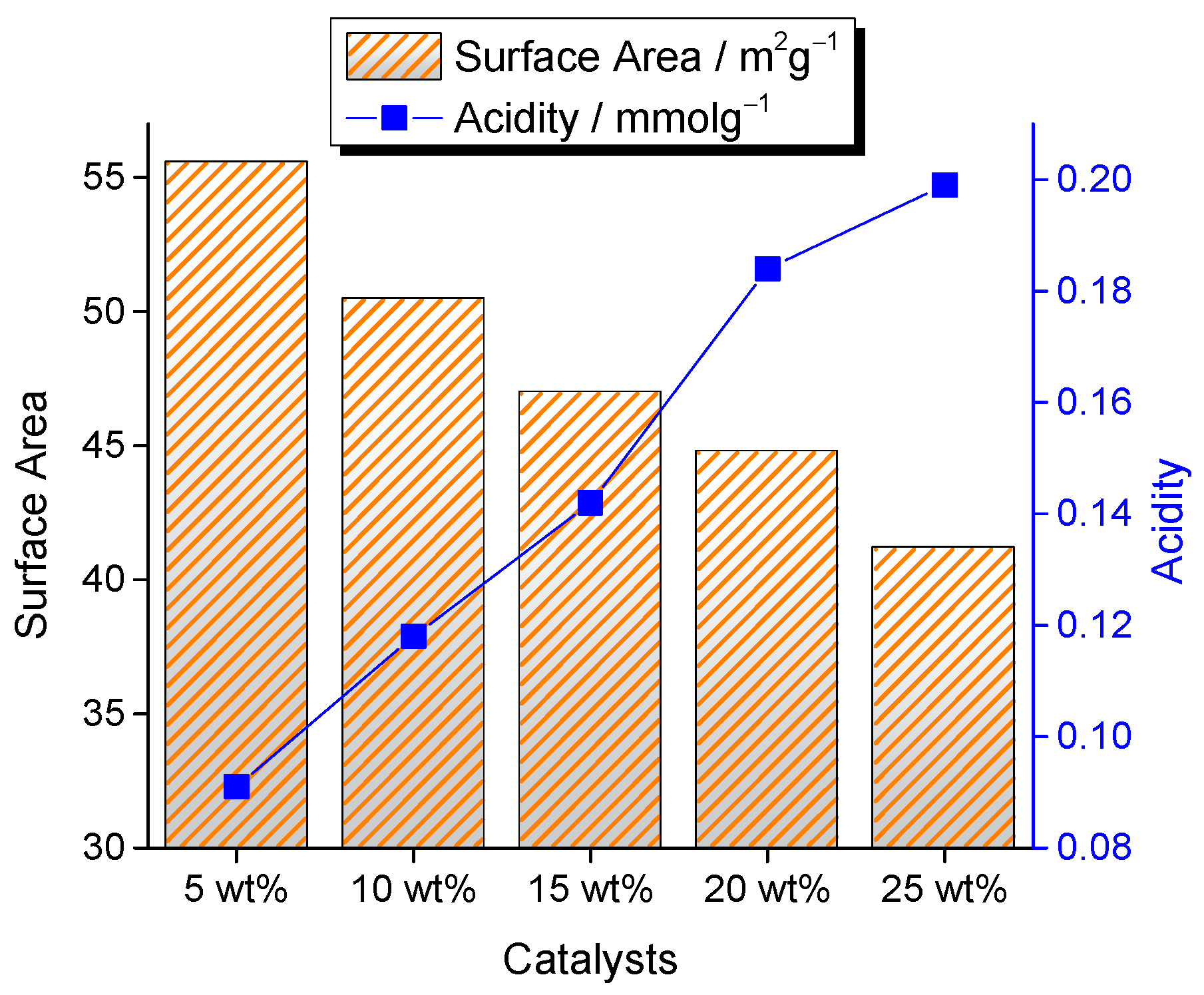

Disclaimer/Publisher’s Note: The statements, opinions and data contained in all publications are solely those of the individual author(s) and contributor(s) and not of MDPI and/or the editor(s). MDPI and/or the editor(s) disclaim responsibility for any injury to people or property resulting from any ideas, methods, instructions or products referred to in the content. |
© 2026 by the authors. Licensee MDPI, Basel, Switzerland. This article is an open access article distributed under the terms and conditions of the Creative Commons Attribution (CC BY) license.