


Abstract
In Iceland, dyed textiles carried meanings beyond aesthetics and function. Through textile production and circulation, woollen cloth, including vaðmál as one historically important example, became central to the Icelandic economy and offers a material perspective on technological practice, exchange systems, and regional connections. This paper presents a pilot methodological study exploring the combined use of fibre optic reflectance spectroscopy (FORS) and a reference corpus developed in Spectragryph for the preliminary assessment of possible dye classes in preindustrial textile case studies from Icelandic collections. The approach provides a rapid, portable, and non-invasive framework for spectral comparison prior to complementary molecular analysis, with targeted LC–MS of selected archaeological textiles planned as the next phase of the research. Following botanical and ethnographic research, a reference corpus of 351 wool samples was assembled, including undyed fleece controls, experimentally dyed fibres, and ethnographic dyed yarns preserved in museum collections. Seven case studies are presented, comprising four archaeological textiles and three early modern ecclesiastical textiles preserved in the collections of the National Museum of Iceland. The spectra show reflectance features consistent with possible indigoid and anthraquinone-related dye classes in several of the analysed textiles, whereas possible flavonoid- and tannin-related patterns generally remain non-diagnostic. At the same time, degradation, contamination, natural fleece pigmentation, and overlapping chromophoric signals frequently complicate interpretation, particularly in archaeological materials and darker tonal ranges. The study illustrates the potential of FORS combined with structured spectral comparison as a non-invasive first-stage methodology for dye analysis in Icelandic textile case studies, while highlighting the limitations of reflectance-based interpretation and the need for complementary molecular analysis for definitive compound-level identification.
1. Introduction
Icelandic society developed within a North Atlantic environment in which geography, climate, and limited agricultural resources shaped everyday life and economic organisation. From the settlement period in the late ninth century, communities were structured around dispersed farming households rather than urban centres, forming a landscape of small, interconnected units. The founding population included people of Scandinavian and British Isles origin, bringing together different cultural traditions within the emerging Icelandic society [1,2].
Within this setting, sheep husbandry and wool production became central to daily life. Wool was indispensable for clothing and insulation, and textile production formed part of the household economy, the core unit of Icelandic society. It was embedded in routine labour, seasonal rhythms, and the careful management of available resources [3,4]. Dyeing practices belonged to this same material economy, linking wool production with technical knowledge, local resources, and wider networks of exchange.
Among the various textile forms produced, vaðmál, a standardised woollen cloth, provides one historically important example of the economic role of woollen textiles in Iceland. It was not simply a functional material but a recognised measure of value used in trade, taxation, and exchange within Iceland and beyond [5,6,7]. Textile production, therefore, cannot be understood only as a domestic activity; it was deeply integrated into broader economic and social structures and remained central throughout the medieval period despite Iceland’s political incorporation into the Norwegian and later Danish crowns [2,6,7].
Textiles functioned not only as practical goods but also as media of exchange, offering a tangible perspective on technological practice, labour, economic organisation, and Iceland’s wider connections [3,5,8]. Within this context, dye analysis can contribute to understanding how colour was produced, used, and interpreted in textile materials across the wider North Atlantic and beyond [8,9,10,11].
Iceland preserves a substantial corpus of archaeological textile material spanning from the settlement period onwards. This includes more than 10,000 archaeological textiles recovered from settlement sites and burial contexts [3], as well as ecclesiastical textiles associated with medieval and early modern religious institutions [12,13]. In this context, monastic houses have been identified as important centres of religious, economic, and material activity, integrated within wider North Atlantic and European networks [14,15], through which fibres, yarns, dyestuffs, and possibly finished textiles may also have circulated. The written culture associated with these institutions has received sustained scholarly attention, particularly through studies of manuscripts and scribal practice [15,16].
Textile objects from these contexts therefore provide an important, and still underused, perspective on how materials and colour operated across settlement, burial, and ecclesiastical contexts. Recent dye analyses of Danish Viking Age textiles from Bjerringhøj, Hvilehøj, and Hedeby have identified a broad range of colourants, including woad or indigo, madder, kermes, cochineal, lichen dyes, luteolin yellow sources, and tannin-rich materials, providing an important comparative background for the Icelandic textile case studies examined here [17]. This article builds on a broader fibre optic reflectance spectroscopy (FORS) survey of 61 archaeological textile samples undertaken as part of the first author’s MA research [18]. The present study is conceived as a preliminary non-invasive survey intended to guide subsequent targeted molecular analysis, with LC–MS of selected archaeological textiles planned as the next phase of the research. It examines seven case studies: four archaeological textiles selected from that survey and three early modern ecclesiastical textiles included as a contrasting, better-preserved group. These objects are not intended to be statistically representative of the wider Icelandic textile corpus. Although vaðmál provides an important historical and economic context for Icelandic textile production, the case studies are examined here as textile objects from Icelandic collections rather than as a defined vaðmál sample.
The present study focuses on the non-invasive spectral interpretation of colour in these case studies and on testing a reference-based workflow for dye analysis. It does not provide a textile technological characterisation of the wider corpus, establish the provenance of individual fibres, yarns, dyestuffs, or finished textiles, or quantify the relative proportions of locally produced and imported materials. These limits concerning representativeness and provenance are particularly relevant for ecclesiastical textiles, which may reflect wider North Atlantic and European networks of material circulation [14,15].
Earlier work by Guðjónsson focused primarily on textile traditions and material culture [12,13], while later research expanded the discussion to include the economic role of textiles [5,8]. Research on dyes remains more limited and has largely relied on historical, ethnographic, and experimental approaches [3,18,19]. Literary-historical studies indicate that colour could carry social and symbolic meaning in Old Norse contexts, particularly in the use of red and blue [20,21,22], yet material analyses of dyes in Icelandic textiles remain relatively underdeveloped.
At the same time, there is a substantial body of Icelandic scholarship documenting jurtalitun, literally “plant dyeing,” within domestic textile production. Twentieth-century studies record dye materials and practices based on locally available resources and demonstrate the continuity of this knowledge into the modern period [23,24,25], further supported by ethnographic questionnaires (spurningarskrár) documenting domestic textile practices and early twentieth-century recollections preserved in the Sarpur collections [26]. However, this material has rarely been brought into dialogue with scientific analyses of archaeological and historical textiles, leaving a methodological gap between documentary evidence and material data.
Historical and ethnographic evidence documents the use of locally available plants and lichens in Icelandic wool dyeing, although the extent to which individual practices can be securely projected back to the medieval period remains uncertain [18,19]. Archaeological and historical evidence also indicates access to imported dyestuffs, underlining that an Icelandic find context does not in itself establish the geographic origin of a fibre, yarn, dyestuff, or finished textile [9,11]. This tension between locally documented dye resources and wider networks of material circulation is central to the reference-based approach adopted here, which compares the textile case studies with both Icelandic plant and lichen dyes and broader dye classes known from European and Scandinavian textile contexts.
Preservation conditions further complicate dye analysis in textile case studies from Icelandic collections. Preservation conditions and depositional environments can affect organic colourants, while fibre condition, uneven preservation, and the limited possibilities for destructive sampling in fragile heritage textiles restrict analytical options [27,28,29,30,31,32]. In addition, natural fleece pigmentation, particularly the melanin-rich brown and black tonalities of Icelandic wool, may obscure or overlap with dye-related reflectance features and increase uncertainty in darker textiles.
FORS has become an established method for the study of pigments and colourants in cultural heritage, including manuscripts and historical textiles [33,34,35]. Its interpretation depends on comparison with appropriate reference spectra. Published FORS spectral databases provide methodological precedents for reference-based comparison [36], while studies of textile dyes often rely on material-specific reference sets prepared or selected for the fibres, colourants, substrates, and research questions under investigation [33,35,37]. By measuring reflected light, FORS permits non-invasive acquisition of reflectance spectra from fragile materials. However, it does not provide molecular identification: spectral overlap, substrate effects, dye concentration, mordants, degradation, and natural fleece pigmentation may all affect interpretation. FORS should therefore be understood as a comparative screening approach that can support the preliminary assessment of possible dye classes and help prioritise materials for complementary molecular analysis, rather than establish definitive compound-level identifications [27,32,34,35,36,37].
Accordingly, this pilot study combines FORS with a structured reference corpus managed in Spectragryph [38] to test a reference-based workflow for dye analysis in preindustrial textile case studies from Icelandic collections. Spectragryph is used to organise the reference corpus and to generate similarity rankings between measured spectra and reference materials, while the resulting spectral correspondences are interpreted alongside diagnostic reflectance features, repeated measurements, visual colour, textile condition, and archaeological or historical context. The study examines seven case studies, four archaeological textiles and three early modern ecclesiastical textiles, to assess where non-invasive spectral comparison can support a coherent preliminary interpretation, where the evidence remains tentative or inconclusive, and which materials should be prioritised for complementary molecular analysis.
2. Materials and Methods
2.1. Reference Corpus and Wool Samples
The interpretation of FORS measurements relies on comparison with reference spectra, as reflectance features alone are rarely sufficient for unambiguous identification, particularly in the case of organic dyes [27,29,30,31]. In this study, the reference corpus provides comparative reflectance backgrounds across a range of natural fleece colours, fibre preparation states, and dyeing references. FORS measures surface reflectance rather than fibre provenance; however, natural pigmentation, fibre surface condition, and degradation may modify the reflectance background, especially in darker or mixed tonal areas, and must therefore be considered during interpretation [27,32,34,35,37].
Icelandic sheep fleece is dual-coated, comprising a longer and coarser outer coat (tog) and a finer inner coat (þel). The outer coat may include guard-hair-like fibres, and occasional kemp fibres may occur. Such morphological variation may affect surface appearance and the reflectance background, but it should be distinguished from natural fleece colour, which is primarily associated with melanin pigmentation. In the present study, these variables are treated as possible contributors to the reflectance background rather than as criteria for breed or provenance assessment. No microscopic fibre characterisation of the modern reference wool or the historical textiles was undertaken because the study focuses on non-invasive spectral interpretation of colour rather than textile technological classification; direct morphological equivalence between modern reference fibres and historical textiles is therefore not assumed [18]. Unmeasured fibre-morphological variation in the modern reference wool may therefore contribute to spectral differences independently of dye composition. The tonal range represented by the undyed controls is illustrated in Figure 1.
Figure 1.
Undyed control wool samples from the reference corpus, illustrating natural chromatic variation. Wool shown supplied by Ístex.
To account for this range of reflectance backgrounds, a reference corpus of 351 wool-based samples was assembled. Its composition is summarised in Table 1. The corpus comprises three main reference groups: wool controls and commercial references, experimentally dyed references, and ethnographic museum yarns. The first group included 65 undyed controls comprising commercially processed material supplied by Ístex, which may include imported wool within the commercial blend according to supplier information, and raw fleece obtained from Mini Mill, described by the supplier as 100% Icelandic sheep wool. These controls were included to capture natural colour variation and both processed and minimally processed fibre states, rather than to establish breed equivalence with the historical textiles. In addition to the 65 undyed controls, the first group contained two commercially dyed Icelandic wool references. These were distinguished from the undyed controls during interpretation and were treated as practical comparative materials rather than as controlled experimental standards because their dye composition and industrial processing conditions were not independently documented. The experimentally dyed references were prepared on contemporary Icelandic sheep wool using plant, lichen, and insect dye sources associated with Icelandic dyeing traditions or historically relevant trade networks (Supplementary Material S1). The ethnographic yarns are preserved in the collections of Þjóðminjasafn Íslands, Reykjavík; Menningarmiðstöð Þingeyinga, Húsavík; and Heimilisiðnaðarsafnið Textile Museum, Blönduós (Supplementary Material S2).
Table 1.
Composition of the wool-based reference corpus used for spectral comparison. The corpus includes undyed wool controls, experimentally dyed references, commercially dyed wool references, and ethnographic museum yarns. It is intended as a practical comparative corpus rather than a fully controlled chemical reference database.
The reference corpus is not intended to be exhaustive or to function as a fully controlled chemical database. The three main reference groups were retained in the subsequent spectral comparison and interpretation. Within the wool reference group, the two commercially dyed samples were distinguished from the 65 undyed controls. No formal numerical weighting was applied to the different reference categories; instead, the reference type of each match was retained and considered qualitatively during interpretation. The experimentally dyed references provide comparative spectra produced under documented conditions. The commercially dyed wool references were retained as practical comparative materials rather than as verified dye standards because their dye composition and industrial processing conditions were not independently documented. The ethnographic museum yarns incorporate material variability encountered in historical and ethnographic contexts. However, their original fibre provenance and dye recipes were not independently verified, and these materials may reflect undocumented dye mixtures, mordant systems, ageing, previous treatments, or uncertain original identifications. They are therefore treated as practical comparative references rather than verified single-dye standards. Neither the use of contemporary Icelandic sheep wool in part of the reference corpus nor the Icelandic collection provenance of historical material is taken to demonstrate that the archaeological or ecclesiastical textiles were made exclusively from Icelandic sheep wool.
The analytical workflow was designed to evaluate whether FORS measurements, interpreted through a structured reference corpus in Spectragryph [38], can support the preliminary assessment of possible dye classes in a documented and reproducible way. Similarities between spectra are therefore understood as ranked spectral correspondences rather than statistically validated probabilities or definitive identifications. These correspondences were not considered in isolation, but were evaluated alongside diagnostic reflectance features, consistency across repeated FORS measurements, visible colour, textile condition, the reference category of each match, dyeing procedures represented in the relevant references, and archaeological or historical context. This approach reflects the use of FORS as a comparative first-stage method in heritage colourant analysis and its integration, where necessary, with complementary analytical techniques [27,31,33,35,37].
2.2. Experimental Dyeing
Experimental dyeing was carried out to produce the experimentally dyed reference category described above. Contemporary Icelandic sheep wool was used as a consistent experimental substrate. This choice was not intended to reproduce the fibre provenance, morphology, or textile technology of archaeological and historical objects, but to provide comparative reflectance spectra under documented preparation conditions.
The experimentally dyed references included Betula pubescens Ehrh. leaves; Parmelia saxatilis (L.) Ach.; Rubia tinctorum L.; Rubia cordifolia L.; Indigofera tinctoria L.; Haematoxylum campechianum L.; Calendula officinalis L.; Lupinus spp.; Cosmos sp.; Morus spp.; Allium cepa L.; Maclura pomifera (Raf.) C.K. Schneid.; brazilwood (Paubrasilia echinata (Lam.) Gagnon, H.C. Lima & G.P. Lewis); and cochineal (Dactylopius coccus Costa), together with selected sequential dyeing combinations. The complete list of 31 physical experimental reference samples, including base wool colour, source material, dyeing sequence, mordanting condition, and observed colour outcome, is provided in Supplementary Material S1.
The selection was deliberately bounded and was not intended to reconstruct either a strictly local Icelandic dye palette or the full diversity of preindustrial dyeing practices. It combines locally documented Icelandic plant and lichen materials with selected imported or historically relevant dyestuffs in order to broaden the comparative spectral range. Not every historically documented dye source, tannin-rich material, mordant, modifier, or preparation method was modelled experimentally in this pilot study.
Experimental dyeing was carried out using 100 g skeins of contemporary Icelandic sheep wool. Except for the Parmelia saxatilis references, the wool was mordanted overnight before dyeing with alum at 10% w/w relative to fibre weight, equivalent to 10 g alum per 100 g wool. The wool was then transferred to the dye bath while still wet. The Parmelia saxatilis references were prepared without alum mordanting. Raw plant, lichen, wood, and insect materials were used in dried form. Where commercial natural dye extracts or concentrates were used, their form is specified in Supplementary Material S1. Fermentation was not used in the preparation of the plant, lichen, wood, or insect references. For the non-indigo reference baths, the wetted wool was dyed for 1 h, with the bath temperature raised gradually to the target range of 80–85 °C during the first 15 min.
Natural indigo extract was used at 2% w/w relative to fibre weight, equivalent to 2 g per 100 g wool. An indigo-only reference was prepared first. The remaining indigo vat was subsequently reused for exploratory sequential yellow-indigo dyeings. Dried yellow and brown outer onion skins were used at 20 g per 100 g wool. The pH of the indigo vat was not recorded. These sequential dyeings are therefore treated as incompletely documented exploratory references and are not used here as evidence for historical double-dyeing practices. They were included in the same similarity search as the other experimental references, but their incompletely documented status was retained during interpretation. Possible alteration, partial loss, or spectral modification of an earlier-applied yellow component under alkaline vat conditions cannot be excluded.
Alum was selected to hold one major experimental variable relatively constant across most of the experimentally dyed references and to facilitate comparison within the reference corpus. The protocol does not reproduce the full range of historical mordanting, modifiers, washing, ageing, tannin-based processes, plant-derived mordants, or mordant-free practices, all of which may alter colour, dye uptake, and reflectance behaviour. Accordingly, the experimentally dyed references are treated as documented comparative spectral examples, not as direct reconstructions of historical recipes or as evidence for the mordants used in archaeological or ecclesiastical textiles.
The experimentally dyed references were produced as a batch-scale hand-dyeing reference set rather than as a factorial laboratory experiment. They were designed to generate sufficiently abundant dyed wool for comparative FORS measurement under documented conditions, while preserving variation relevant to practical dyeing processes. Independent preparation replicates were not included. Anthriscus sylvestris was not included among the experimentally dyed references. It occurs only as a dye-source label in the ethnographic museum yarns described in Supplementary Material S2.
The resulting experimentally dyed fibres were measured using the same FORS configuration applied to the archaeological and historical textiles and incorporated into the reference corpus for spectral comparison. Supplementary Material S1 provides the documented preparation metadata and physical reference IDs for the experimentally dyed references.
2.3. Textile Corpus and Case Studies
The textile material examined in this study consists of seven case studies preserved in the collections of the National Museum of Iceland (Þjóðminjasafn Íslands), Reykjavík. These comprise four archaeological wool textiles recovered from Icelandic settlement and burial contexts, from Hólar í Hjaltadal (inv. no. 2004-37-3901), Snæhvammur (inv. no. 3931/1893-141), Reykholt (inv. no. 2004-25-338), and Laufásbær (inv. no. 2000-32-13), together with three preserved ecclesiastical embroidered textiles associated with religious institutions (inv. nos. 3110, 3942, and 10940).
The seven case studies were selected to encompass variation in preservation state, textile structure, and visible colour areas, allowing the proposed FORS workflow to be assessed under contrasting material and preservation conditions rather than to represent the full Icelandic textile corpus. The archaeological textiles may be affected by varying degrees of burial alteration, mineral contamination, and fibre degradation, whereas the ecclesiastical textiles preserved in museum collections retain larger and more legible colour areas and more clearly defined textile structures. All textiles were examined through non-invasive in situ analysis within the museum collections. They are presented as an exploratory application of the proposed methodology and do not, at this stage, support detailed historical reconstructions of individual dyeing practices.
2.4. FORS Measurements and Spectral Processing
FORS measurements were carried out directly on textile surfaces using a portable AvaSpec-ULS2048CL-EVO spectrometer equipped with an AvaLight-DHc deuterium–halogen light source and an FCR-7UVIR400-1-ME reflection probe (Avantes B.V., Apeldoorn, The Netherlands). Spectra were recorded in the 350–1100 nm range for the ecclesiastical textiles and in the 400–1100 nm range for the archaeological samples, with an approximate spectral resolution of 2.0–2.4 nm, using a fibre optic probe in 45°/0° geometry. Calibration was performed using a white Spectralon reference standard together with background correction. Spectra were acquired using AvaSoft 8 software. The different lower wavelength limits reflect the working intervals retained for the two datasets; interpretation of dye-related features was based primarily on the shared visible region, particularly between c. 400 and 700 nm. Figure 2 documents the portable in situ FORS measurement setup used for the examination of archaeological and ecclesiastical textiles at the National Museum of Iceland.
Figure 2.
FORS measurements carried out on ecclesiastical and archaeological textiles at the National Museum of Iceland (Þjóðminjasafn Íslands). Photographs by the authors.
FORS measurements were collected from visually distinct or representative colour areas in order to account for preserved colour variation, fibre heterogeneity, and potential surface degradation. For the archaeological fragments, approximately five to six repeated surface measurements were acquired across each selected textile where surface condition and accessible area permitted. For the ecclesiastical textiles, measurements were instead collected by visually defined colour area, generally with at least two measurements per accessible colour group, as detailed in Section 3.2.5, Section 3.2.6 and Section 3.2.7. These measurements were used to assess local spectral consistency and within-object variation and are not treated as independent preparation replicates.
After acquisition in AvaSoft, spectra were organised and processed in Spectragryph (version 1.2.15) [38]. All spectra from both the textile case studies and the reference corpus were processed following the same analytical sequence to maintain comparability. This included trimming the spectral range to the selected working intervals, smoothing using a Savitzky–Golay filter (interval 10, polynomial degree 3), adaptive baseline correction (coarseness 15, offset 0), and normalisation to maximum reflectance (set to 1.0). These preprocessing steps were applied to improve comparability and to facilitate assessment of weak or degraded spectral features, particularly in archaeological textiles and low-saturation colour areas. Further details are provided in Supplementary Material S3.
Processed spectra were compared with the reference corpus using Spectragryph’s cross-correlation similarity search function. All reference spectra were searched together within the same reference corpus, while the reference category of each high-ranking match was retained and considered during interpretation. The resulting similarity values were used to rank comparative spectral correspondences; they were not treated as probabilities of dye identity, fixed identification thresholds, statistically validated results, or definitive chemical identifications. Interpretation considered the overall shape of the reflectance curves and the presence and position of absorption features within the visible region, typically between 400 and 700 nm [32,35]. It also considered consistency across repeated FORS measurements where available and the convergence or dispersion of high-ranking reference matches towards comparable broad dye classes.
Results were classified as coherent, tentative, or inconclusive according to this decision scheme. A coherent spectral indication required agreement between a relevant absorption feature, consistency across repeated measurements where available, and convergent high-ranking reference matches. A tentative indication reflected partial agreement between these elements, such as a weak or variable absorption feature, incomplete consistency across measurements, or mixed ranked correspondences. Results were treated as inconclusive when spectra lacked diagnostic absorption features, when matches were dispersed across unrelated references, or when undyed wool controls appeared among the closest correspondences in the absence of a convergent dye-related pattern. Numerical similarity values alone did not determine the interpretative category.
Different approaches to spectral averaging were applied according to object type, visible colour structure, and preservation condition. For the small archaeological fragments, where discrete colour areas could not be separated visually and local degradation or surface heterogeneity introduced measurement-to-measurement variation, averaged spectra were used for the principal Spectragryph searches after inspection of the individual measurements. The individual measurements were retained to assess spectral consistency. This averaging was intended to summarise the dominant spectral behaviour of each fragment and does not imply homogeneous preservation or confirmed single dye composition.
For the ecclesiastical textiles, spectra were not averaged across the object because these textiles contain multiple visually defined colour areas. Measurements from each colour area were evaluated as individual spectra, and visually similar areas were compared to assess whether they showed consistent FORS behaviour. The rankings reported in Supplementary Material S5 correspond to the five highest-ranking matches obtained for the specific spectrum ID used in each search.
The value of this pilot study lies less in providing a fixed reference corpus for direct reuse than in demonstrating a reproducible workflow for building, testing, and interpreting collection-specific FORS reference data. The reference corpus used here should therefore be understood as a working comparative tool, shaped by the materials available for this study and by the questions asked of the Icelandic textile case studies. It is not intended to be exhaustive or representative of Icelandic textile dyeing as a whole. Rather, the transferable contribution of the study is the methodological approach: the integration of controlled and historical reference materials, repeated FORS measurements, Spectragryph-assisted comparison, and contextual archaeological and museum interpretation. As additional reference materials become available, this workflow can be refined and adapted to other collections, regions, and research questions.
Spectral correspondences were therefore interpreted as indicators of possible dye classes rather than definitive chemical identifications [32,34]. The interpretative workflow, from FORS acquisition to Spectragryph comparison and contextual evaluation, is summarised in Supplementary Material S4. Because no validated numerical similarity thresholds, error estimates, blind tests, or classification-performance data were available, this remains an expert-led interpretative framework for an exploratory pilot study. Within this framework, “coherent” describes internal convergence among the available spectral and comparative criteria and does not mean that a dye has been identified or confirmed at the molecular level.
3. Results
3.1. Overview of Spectral Behaviour
Across the seven selected case studies, reflectance behaviour varied according to preservation condition and visible colour area. The archaeological textiles generally produced low-contrast profiles, with few resolved visible-region features and limited separation from undyed wool backgrounds. The ecclesiastical textiles more frequently produced structured profiles with clearer absorption minima and more legible variation across the visible range. These observations relate specifically to the selected case studies and are not intended as a general distinction between all archaeological and ecclesiastical textiles.
Variability in spectral response occurred both between textiles and within individual objects. In the archaeological fragments, local variation may reflect burial alteration, surface contamination, fibre degradation, and natural fleece pigmentation. In the ecclesiastical textiles, it was more commonly associated with visually distinct colour areas or embroidery threads. These differences provide the context for the individual case studies discussed below.
The spectra were compared with a reference corpus comprising undyed wool controls, experimentally dyed wool, and dyed yarns documented in Icelandic museum collections. Within this corpus, undyed wool controls generally produced relatively smooth reflectance curves with limited internal structure and no clearly defined absorption minima. They therefore provided reference backgrounds for assessing whether textile spectra showed additional visible-region structure beyond that expected from natural fleece pigmentation alone. Brown and black wool remained particularly difficult to interpret because melanin-rich fibres may produce low-contrast reflectance profiles that reduce the visibility of dye-related features, especially where colour saturation is low or preservation is poor [32,35,37]. Pale yellow-brown and weak vegetal areas also frequently lacked sufficiently diagnostic spectral structure. These effects are treated as limitations of the non-invasive workflow rather than as evidence for a particular dye source. Representative undyed wool spectra are shown in Figure 3.
Figure 3.
FORS reflectance spectra of selected undyed Ístex wool controls: white, grey, brown, and black (top to bottom). The spectra are presented in vertically arranged panels using the same reflectance scale to facilitate comparison; no numerical offset has been applied.
Interpretation was more difficult where spectra were weak, low in contrast, or poorly resolved. In these cases, natural pigmentation, mineral staining, fibre degradation, or burial alteration may overlap with dye-related features. Similarity-based comparison was therefore used to examine ranked correspondences in terms of curve shape and visible-region behaviour, rather than to assign a dye source automatically [32,35]. Figure 4 illustrates this comparative approach by presenting an archaeological textile spectrum alongside its five highest-ranking reference matches. Convergence among references associated with a comparable broad dye class may provide supporting evidence when accompanied by a relevant absorption feature, whereas dispersed matches across unrelated references, particularly where undyed controls occur among the closest correspondences, indicate spectral ambiguity rather than a supported dye-class interpretation.
Figure 4.
Spectragryph-assisted comparison for archaeological textile 3931/1893-141. The upper panel shows the processed and normalised sample spectrum together with the five highest-ranking reference spectra used in the similarity search. The lower panel lists the corresponding reference names and similarity values. The vertical scale represents normalised reflectance from 0 to 1 and is therefore not directly comparable with the percentage reflectance scale used for the unprocessed spectra. The numerical peak labels are automatic software annotations and were not used as diagnostic features in the interpretation.
Because the reference corpus combines experimentally prepared wool with museum-documented yarns, the resulting correspondences are interpreted as comparative patterns rather than as direct chemical equivalents. The interpretative categories defined in Section 2.4, coherent, tentative, and inconclusive, are applied in the individual case studies below. The patterns summarised above establish the range of outcomes produced by the pilot workflow, from coherent preliminary dye-class indications to tentative or inconclusive results where spectra are weak, ambiguous, or poorly resolved.
3.2. Textile Case Studies
The following case studies report object-specific measurement contexts and interpretative outcomes. The acquisition, processing, and classification framework are defined in Section 2.4. The archaeological and ecclesiastical textiles were examined under different non-invasive measurement conditions because of differences in accessible surface area, preservation condition, and the distribution of visibly distinct colour zones.
In the archaeological fragments, small size, uneven preservation, and limited accessible colour areas constrained measurement placement. No cleaning or washing was undertaken before measurement. Where surface condition and accessible area permitted, approximately five to six repeated surface measurements were acquired across each selected textile, including obverse and reverse surfaces where accessible, in order to document local variation.
The ecclesiastical textiles preserved larger surfaces and more clearly delimited embroidery and ground-cloth colour areas. Measurements were therefore evaluated by visually defined chromatic zone rather than averaged across the object. Measurement locations are indicated in the relevant case-study figures.
The five highest-ranking Spectragryph matches obtained for the spectra discussed in the case studies are provided in Supplementary Material S5. The rankings correspond to the specific spectrum ID used in each search, and the reference type of each match is retained. Repeated dye-source names in Supplementary Material S5 may correspond to distinct physical reference spectra within the corpus rather than duplicate entries or independent confirmation of a dye source. Similarity values are used as comparative rankings only and are not treated as probabilities or direct chemical identifications.
3.2.1. Archaeological Textile 2004-37-3901
The analysed textile fragment derives from archaeological excavations at Hólar í Hjaltadal and is preserved in the collections of the National Museum of Iceland (inv. no. 2004-37-3901). Hólar was one of the principal ecclesiastical centres of medieval Iceland and the seat of the northern bishopric from the twelfth century onwards [13,39]. Archaeological investigations have recovered well-preserved organic remains, including textile fragments from waterlogged deposits associated with the medieval occupation of the episcopal complex [3,39].
The fragment currently presents an olive- to greenish-brown surface appearance (Figure 5). This visible colour is not treated as a direct indication of its original colour or dyeing state, because burial alteration, surface contamination, and fibre degradation may affect both colour appearance and reflectance behaviour.
Figure 5.
Archaeological wool textile fragment from Hólar í Hjaltadal (inv. no. 2004-37-3901), obverse and reverse views. Numbered circles indicate the approximate measurement areas corresponding to the individual spectra shown in Figure 6. Photograph by Ívar Brynjólfsson, National Museum of Iceland.
The individual FORS spectra are shown in Figure 6. The principal Spectragryph comparison returned five highest-ranking reference matches ranging from 81.98% to 89.67% (Supplementary Material S5). All contained an indigo component: two corresponded to Indigofera tinctoria references, two to experimental madder–indigo references, and one to an ethnographic reference carrying an Anthriscus sylvestris + indigo documentary label. The latter is a museum-record reference and does not represent an experimentally prepared double-bath sample.
Figure 6.
FORS reflectance spectra of archaeological textile 2004-37-3901 from Hólar í Hjaltadal. Upper panel: selected individual spectrum showing a broad reflectance minimum centred at approximately 660 nm. Lower panel: five individual spectra acquired from the approximate measurement areas indicated in Figure 5. All spectra show a comparably positioned broad minimum compatible with a coherent indigoid-type spectral pattern. Line colours are used only to distinguish individual spectra and do not encode dye class or textile colour.
The recurrent minimum centred at c. 660 nm is the principal spectral feature observed in the textile and is consistently represented across the measured areas. Together with the convergence of the highest-ranking matches towards indigo-containing references, this supports classification of the principal result as coherent, according to the interpretative framework defined in Section 2.4. It provides a coherent indication of an indigoid dye class.
The repeated occurrence of madder–indigo references among the highest-ranking matches does not provide evidence for madder or for a mixed dyeing sequence, because these references share the indigoid component associated with the recurrent c. 650–670 nm feature. In the absence of a resolved secondary absorption band, the result is interpreted only as a coherent indigoid indication.
3.2.2. Archaeological Textile 3931/1893-141
The analysed textile fragment derives from Snæhvammur in Breiðdalur, East Iceland, where it was recovered in 1892 during earthworks carried out on a mound in a farm field. Museum documentation describes the find as deriving from stratified soil, clay, and gravel deposits, together with other archaeological material that may have been redeposited from earlier contexts. The fragment measures approximately 12 × 8 cm and is held in the collections of the National Museum of Iceland (inv. no. 3931/1893-141). It is described as a fine wool textile resembling boldang, a fabric with a similar visual appearance on both sides, rather than as vaðmál. Museum documentation broadly dates the material to the early medieval period, c. 900–1000 CE [40].
The surviving fibres currently present a dark olive- to greenish-brown appearance (Figure 7). As with the Hólar fragment, this visible colour is not treated as a direct indication of the original colour or dyeing state, because burial alteration, surface contamination, fibre degradation, and natural fleece pigmentation may affect both visible appearance and reflectance behaviour.
Figure 7.
Archaeological wool textile fragment from Snæhvammur, Breiðdalur (inv. no. 3931/1893-141), showing obverse and reverse views. Numbered circles indicate the approximate measurement areas corresponding to the individual spectra shown in Figure 8. Photograph by Ívar Brynjólfsson, National Museum of Iceland.
Five individual spectra acquired from different areas of the fragment are shown in Figure 8. All display a broad, low-amplitude reflectance minimum, corresponding to an absorption band, within the c. 650–670 nm region, followed by a gradual increase in reflectance towards the near-infrared region. This repeated feature is compatible with an indigoid-related spectral contribution. However, compared with textile 2004-37-3901, the band is less clearly resolved and the spectra show greater variation in reflectance intensity and curve shape.
Figure 8.
FORS reflectance spectra of archaeological textile 3931/1893-141 from Snæhvammur. Upper panel: selected individual spectrum showing a broad, low-amplitude reflectance minimum within the c. 650–670 nm region. Lower panel: five individual spectra acquired from the approximate measurement areas indicated in Figure 7. The spectra show a recurrent but variable indigoid-related feature, supporting a tentative rather than coherent interpretation. Line colours are used only to distinguish individual spectra and do not encode dye class or textile colour.
The principal Spectragryph comparison for the averaged spectrum of the fragment returned five highest-ranking reference matches ranging from approximately 71% to 74% (Supplementary Material S5). Four contain an indigo component: an Indigofera tinctoria reference, two experimental madder–indigo references, and an ethnographic reference carrying an Anthriscus sylvestris + indigo documentary label. The latter is a museum-record reference and does not represent an experimentally prepared double-bath sample. A dark grey undyed Ístex wool reference also appears among the closest matches.
The occurrence of an undyed grey wool control among the closest correspondences is relevant to the interpretation. It suggests that the weak spectral structure of the archaeological textile partly overlaps with the reflectance behaviour of naturally pigmented wool. Likewise, the madder–indigo references do not demonstrate the presence of madder or another secondary colourant in the archaeological textile, because they share an indigo-related spectral component and no distinct anthraquinone-related feature is resolved in the present FORS data.
Taken together, the recurrent but low-amplitude feature at c. 650–670 nm and the predominance of indigo-containing references among the highest-ranking matches support classification of this result as tentative, according to the interpretative framework defined in Section 2.4. The textile presents a tentative indication of an indigoid dye class, but the lower spectral contrast, variation between measurements, and occurrence of an undyed grey-wool control prevent classification as coherent.
This result does not establish the original visible colour of the textile, the precise botanical source of the dye, the original dyeing procedure, mordant, or the presence of additional colourants. It instead illustrates an intermediate methodological outcome: a potentially informative indigoid-related pattern that requires complementary molecular analysis before a more specific historical interpretation can be made.
3.2.3. Archaeological Textile 2004-25-338
The analysed textile fragment derives from Reykholt in Borgarfjörður, West Iceland, and is preserved in the collections of the National Museum of Iceland (inv. no. 2004-25-338). The surviving remains are small and fragmentary and currently display reddish-brown to brown tonalities (Figure 9).
Figure 9.
Archaeological wool textile fragment from Reykholt, Borgarfjörður (inv. no. 2004-25-338), showing obverse and reverse views. Numbered circles indicate the approximate measurement areas corresponding to the individual spectra shown in Figure 10. Photograph by Ívar Brynjólfsson, National Museum of Iceland.
Five individual spectra acquired from different areas of the fragment are shown in Figure 10. Reflectance values remain low across the visible range and increase gradually towards the near-infrared region. The spectra are smooth and low in contrast, with no clearly defined absorption minima or other sufficiently resolved visible-region features. Minor variation occurs in reflectance intensity and curve shape, but no recurrent diagnostic feature is present across the measured areas.
Figure 10.
FORS reflectance spectra of archaeological textile 2004-25-338 from Reykholt. Upper panel: selected individual spectrum showing a smooth, low-contrast reflectance profile without clearly defined absorption minima across the visible range. Lower panel: five individual spectra acquired from the approximate measurement areas indicated in Figure 9. The spectra show limited and non-diagnostic variation, supporting an inconclusive interpretation. Line colours are used only to distinguish individual spectra and do not encode dye class or textile colour.
The principal Spectragryph comparison for the averaged spectrum of the fragment returned five highest-ranking reference matches ranging from 77.31% to 88.25% (Supplementary Material S5). Four correspond to Betula pubescens references, while the fifth corresponds to a light-brown undyed Ístex wool control. The repeated occurrence of Betula pubescens references indicates a recurrent comparative pattern within the present reference corpus. However, the associated similarity values do not constitute identification evidence in the absence of diagnostic spectral features, particularly where a naturally pigmented undyed wool control also occurs among the closest correspondences.
This result illustrates an interpretative difficulty for yellow- and brown-toned archaeological wool. Weak vegetal chromophores, natural fleece pigmentation, burial alteration, and fibre degradation may produce overlapping low-contrast reflectance behaviour, reducing the specificity of both direct spectral inspection and similarity-based comparison [32,35,37]. In this context, the Betula pubescens matches cannot be taken as evidence for birch dyeing or for a specific historical dyeing tradition.
According to the interpretative framework defined in Section 2.4, this result is classified as inconclusive. The absence of a diagnostic absorption feature prevents a dye-class attribution, despite the repeated Betula pubescens matches.
Rather than constituting an uninformative outcome, this textile is a useful candidate for targeted complementary molecular analysis. Four of the five highest-ranking reference matches correspond to Betula pubescens, whereas a light-brown undyed wool control also appears among the closest correspondences. Molecular analysis could therefore test whether this recurrent comparative relationship reflects a birch-related colourant, natural fleece pigmentation, burial alteration, or a combination of these factors. The case illustrates the methodological value of the present workflow: it identifies a focused analytical question that FORS alone cannot resolve.
3.2.4. Archaeological Textile 2000-32-13
The analysed object is a small wool textile fragment, catalogued as a vaðmálspjatla, recovered during archaeological investigations at the historic turf farm of Laufásbær in northern Iceland, near Akureyri. It is preserved in the collections of the National Museum of Iceland (inv. no. 2000-32-13) and measures approximately 65.2 × 66.2 mm. Museum documentation describes the textile as composed of two differently coloured yarns, one dark brown and the other lighter brown, producing subtle chromatic variation within the weave. The textile is shown in Figure 11.
Figure 11.
Archaeological wool textile fragment from Laufásbær, northern Iceland (inv. no. 2000-32-13), showing obverse and reverse views. Numbered circles indicate the approximate measurement areas corresponding to the individual spectra shown in Figure 12. Photograph by Ívar Brynjólfsson, National Museum of Iceland.
Five individual spectra acquired from different areas of the fragment are shown in Figure 12. The spectra display relatively smooth, gradually increasing reflectance profiles across the visible region, with no clearly defined absorption minima. Although minor variation occurs in reflectance intensity and curve shape, no recurrent feature is sufficiently resolved to support a dye-class attribution.
Figure 12.
FORS reflectance spectra of archaeological textile 2000-32-13 from Laufásbær. Upper panel: selected individual spectrum showing a smooth, gradually increasing reflectance profile without clearly defined absorption features. Lower panel: five individual spectra acquired from the approximate measurement areas indicated in Figure 11. The spectra show low-contrast and variable behaviour, supporting an inconclusive interpretation. Line colours are used only to distinguish individual spectra and do not encode dye class or textile colour.
The principal Spectragryph comparison for the averaged spectrum of the fragment returned five highest-ranking reference matches ranging from approximately 82% to 85% (Supplementary Material S5). They are associated with Salix phylicifolia, a Rumex longifolius + Rheum rhabarbarum reference, Dryas octopetala, Calluna vulgaris, and Cetraria islandica. These matches represent several different reference materials rather than convergence towards a single dye source or broad dye class.
This dispersed pattern is relevant to the interpretation because the textile itself has low spectral definition. Yellow- to brown-toned vegetal references, natural fleece pigmentation, post-depositional alteration, and fibre degradation may produce partially overlapping low-contrast reflectance behaviour, particularly in archaeological wool [32,35,37]. The two brown yarn colours documented in the textile further complicate the distinction between naturally pigmented wool and a weak or altered dye-related signal.
According to the interpretative framework defined in Section 2.4, this result is classified as inconclusive. The absence of a diagnostic absorption feature and the lack of convergence among the highest-ranking reference matches prevent a defensible attribution to a dye source or dye class.
Rather than being uninformative, this case illustrates an important limitation of the present workflow. Spectragryph identifies comparative similarities with several yellow-brown and vegetal reference profiles, but the FORS data alone cannot determine whether these similarities reflect an applied colourant, natural fleece pigmentation, post-depositional alteration, or a combination of these factors. The textile therefore does not support a specific dye, dye class, original colour, dyeing procedure, mordant, or historical interpretation on the basis of the present data alone.
3.2.5. Ecclesiastical Textile Embroidery 3110
Textile 3110 was donated to the National Museum of Iceland by the church of Hólar, according to the Sarpur museum records. It is an embroidered portrait of Þorlákur Skúlason, as indicated by the initials stitched into the work. Þorlákur Skúlason was bishop of Hólar from 1628 to 1656, and the object is conventionally dated to this period. The portrait was made using several materials: linen was used for the ground cloth, while the embroidery includes wool, silk, and metallic threads. Of the three ecclesiastical textiles included in this study, Textile 3110 includes the largest number of visually defined colour groups, and produced the most varied spectral responses.
In total, twenty-three non-invasive FORS measurements were collected from ten visually defined colour groups across the textile (Figure 13). The point numbers in Table 2 correspond directly to the numbered locations shown in Figure 13. The colour groups used here, light blue, dark blue, green, red, fuchsia, light pink, dark pink, yellow, tan, and very dark, are descriptive visual categories only; they do not imply a confirmed fibre composition, original colour, or dye source.
Figure 13.
Ecclesiastical embroidered portrait, inv. no. 3110. Numbered circles indicate the approximate locations of the FORS measurements discussed in Table 2. The colour key below groups the numbered points according to visual appearance only and does not indicate fibre composition, dye class, or dye source. Photograph by Ívar Brynjólfsson, National Museum of Iceland.
Table 2.
Integrated interpretation of FORS measurements from ecclesiastical textile 3110. Spectragryph values are treated as comparative rankings rather than probabilities or direct chemical identifications. Interpretations follow the coherent, tentative, and inconclusive framework defined in Section 2.4. The linen ground cloth and white ruff area are retained for contextual comparison only and were not interpreted against the wool-based reference corpus.
For each accessible colour area, at least two measurements were collected from distinct locations. The linen ground-cloth area measured at point 22 and the white ruff area measured at point 23 are included for contextual comparison. Point 22 was not interpreted against the wool-based reference corpus because it corresponds to the linen ground cloth. Point 23 was measured on the white ruff; its material was not independently characterised and it was therefore not interpreted against the wool reference corpus for dye-class interpretation.
All measurements were assessed using the interpretative procedure outlined in Section 2.4. Table 2 retains the observed FORS features, principal Spectragryph comparative matches, and similarity values. Spectragryph values are treated as comparative rankings rather than probabilities or direct chemical identifications. Where diagnostically interpretable FORS features were present, their interpretation was not overridden solely by a discordant similarity ranking. Conversely, high similarity values without sufficiently specific spectral features were retained as data but treated as tentative or inconclusive.
Beginning with the blue groups, both the light-blue and dark-blue areas show strong agreement between the observed FORS features and the Spectragryph comparative patterns. Points 1–4 display broad minima within the c. 640–670 nm region, and the highest-ranking comparative references consistently contain an indigo component. These areas are therefore classified as coherent indications of an indigoid dye class. This interpretation does not distinguish Indigofera tinctoria from another possible indigoid source, nor does it establish a specific dyeing procedure.
The green group also shows a coherent indigoid component. Points 5–7 present broad features within the c. 640–665 nm region, while the comparative reference pattern includes both indigo-containing references and mixed indigoid–flavonoid references. The indigoid contribution is therefore classified as coherent, whereas a possible additional yellow contribution remains tentative. This result does not demonstrate a double-bath process or identify a particular yellow colourant.
The red group, represented by points 8 and 9, presents features centred at c. 495–510 nm, compatible with an anthraquinone-related red signal. The closest comparative references include brazilwood for point 8 and Rubia-type references for both points. These matches are retained as comparative correspondences within the present corpus and do not establish a particular dye source. The available FORS data do not distinguish among anthraquinone-producing plants or between plant- and insect-derived anthraquinones. The result is therefore classified as tentative.
Points 10 and 11, visually designated as fuchsia, are interpreted as compatible with a possible anthraquinone-related dye class. Their Spectragryph matches include a mixed Dactylopius coccus + Rubia spp. reference and a Rubia cordifolia reference. These results are retained as comparative correspondences rather than evidence for a particular source. Because the FORS data do not support a defensible distinction between plant- and insect-derived anthraquinones, this group is classified as tentative anthraquinone-related.
Points 12 and 13, designated as light pink, are tentatively compatible with anthraquinone-related behaviour. Their closest Spectragryph correspondences include Betula pubescens and closely ranked Rubia tinctorum references, demonstrating that similarity ranking alone is not sufficiently specific for source-level interpretation. Because the present corpus includes only one insect-derived dye source (Dactylopius coccus), the result does not support a separate insect-derived category or a plant/insect distinction.
Points 14 and 15, designated as dark pink, show features at c. 525 nm and c. 560–565 nm, and at c. 530 ± 5 nm and c. 560 ± 5 nm, respectively. These positions are retained as tentative anthraquinone-related observations, but the comparative matches do not converge sufficiently to establish a particular dye source. The result is therefore classified as tentative anthraquinone-related behaviour rather than as a source-level attribution.
The yellow areas, represented by points 16 and 17, remain unresolved. Spectragryph returned very high similarity values across several references, but these values are not treated as source-specific because the matches do not converge meaningfully and the visible-region features are not sufficiently resolved. In the absence of additional graphical or molecular evidence, these points are classified as inconclusive rather than as a source-level anthraquinone interpretation.
The visually very dark areas measured at points 18 and 19 show broad spectral behaviour compatible only at a generic level with tannin-rich dye systems. Their closest comparative references are undyed brown-reddish wool controls. These results do not establish either natural fleece pigmentation or a tannin dye source. They are classified as inconclusive, while retaining a broad tannin-related interpretation as a possible direction for complementary analysis.
Points 20 and 21, corresponding to tan areas, likewise lack sufficiently resolved spectral features for source-level interpretation. Although Spectragryph returns high similarity values, these are distributed across multiple references and carry little diagnostic specificity. Points 18–21 therefore illustrate an important methodological boundary of the present workflow: broad yellow-brown and tannin-related patterns may be recognised, but specific dye identification is not possible where spectral features remain too generic.
Taken together, Textile 3110 shows how a well-preserved ecclesiastical embroidery can yield coherent indigoid indications, tentative anthraquinone-related interpretations with differing spectral morphologies, alongside unresolved or inconclusive results in other colour areas. At the same time, the very dark, tan, and yellow areas show that high numerical similarity values cannot substitute for diagnostic spectral structure. The case therefore illustrates both the value and the limits of combining FORS interpretation with reference-based spectral comparison. The more focused hypotheses identified here provide suitable targets for complementary molecular analysis. Selected spectra from Textile 3110 are shown in Figure 14.
3.2.6. Ecclesiastical Textile Embroidery 3942
Textile 3942 entered the museum collection from Borgarnes. The textile is centred on the “IHS” Christogram within a surrounding wreath and floral design executed in wool and silk embroidery. The year of creation is stitched directly onto the cloth, “Anno 1683”. An additional strip of fabric is sewn to the upper edge of the main cloth, bearing the embroidered inscription “Lofið Drottinn í hans helgidómi”, translated as “Praise the Lord in His Holy Place.”
Seven visually defined colour groups were examined in this piece: blue, light blue, green, light green, red, yellow, and tan. Each colour group was represented by two measurement points, except for the red group, which included three points. The numbered points reported in Table 3 correspond directly to the measurement locations indicated in Figure 15. The visual colour labels do not imply a confirmed fibre type, original colour, or dye source.
Table 3.
Integrated interpretation of FORS measurements from ecclesiastical textile 3942. Spectragryph values are treated as comparative rankings rather than probabilities or direct chemical identifications. Interpretations follow the coherent, tentative, and inconclusive framework defined in Section 2.4.
Figure 15.
Ecclesiastical embroidered textile, inv. no. 3942. Numbered circles indicate the approximate locations of the FORS measurements reported in Table 3. Colour-group labels identify visual appearance only and do not indicate fibre composition, dye class, or dye source. Photograph by Ívar Brynjólfsson, National Museum of Iceland.
Of the three ecclesiastical textiles, Textile 3942 produced a mixed set of results. Several blue and green areas showed more clearly resolved and recurrent spectral features, whereas the red group contained different spectral behaviours across its three measurement points. The yellow and tan areas remained non-diagnostic. The results are interpreted according to the coherent, tentative, and inconclusive framework defined in Section 2.4. Spectragryph similarity values are retained as comparative rankings; they are not treated as direct dye or source identifications.
In both the blue and light-blue groups, all measurements display broad reflectance minima within the region associated with indigoid dyes. Spectragryph likewise returned Indigofera tinctoria references as the highest-ranking comparative spectra, with similarity values between approximately 97% and 98%. The agreement between the recurrent FORS feature and the convergent comparative reference pattern supports coherent indications of an indigoid dye class. This interpretation does not establish Indigofera tinctoria as the botanical source used in the embroidery, nor does it determine a particular dyeing procedure.
The green and light-green groups also show recurrent features consistent with an indigoid component. Point 5 in the green group was most closely matched with an ethnographic Anthriscus sylvestris + indigo labelled reference at approximately 88%, whereas points 6, 7, and 8 matched Indigofera tinctoria references at approximately 96%, 92%, and 90%, respectively. Taken together, the repeated c. 650–660 nm features and the predominance of indigo-containing comparative references support a coherent indigoid interpretation across these colour areas. The Anthriscus sylvestris + indigo record is retained as a comparative reference only and does not provide evidence for a double-bath process or an additional flavonoid dye in the textile.
The red group presents three different analytical outcomes. Point 9 lacks a clearly resolved absorption feature and remains inconclusive. Point 10 shows an absorption feature at approximately 500–510 nm, compatible with an anthraquinone-related red signal. Its highest Spectragryph match is Paubrasilia echinata at approximately 95%, while a Rubia tinctorum reference appears second-ranked at approximately 90%. These matches are retained as comparative results rather than source-level identifications. The result is therefore classified as tentative anthraquinone-related. It does not support a specific source, source category, or dyeing recipe.
At point 11, a subtle double feature is visible at approximately 520 and 560 nm. This is retained as a tentative anthraquinone-related observation. Spectragryph returned a Paubrasilia echinata reference at approximately 93%, together with other brown and vegetal comparative matches. This discrepancy is retained rather than resolved selectively. The observation remains tentative, and neither the spectral feature nor the similarity ranking permits a source-level assignment. The single insect-derived dye source represented in the corpus, Dactylopius coccus, is not sufficient to support a separate insect-derived category.
The yellow and tan groups remain inconclusive in both spectral examination and Spectragryph comparison. Their spectra lack sufficiently resolved absorption features, while the resulting matches are distributed across several references without meaningful convergence. These areas therefore illustrate an important limit of the present workflow: high or repeated similarity values cannot support a dye identification when they are not accompanied by diagnostic spectral structure.
Taken together, Textile 3942 produced several coherent indigoid results alongside tentative red-area interpretations and inconclusive yellow and tan areas. The case illustrates why FORS interpretation must integrate recurrent spectral features, the pattern of comparative matches, and the material context, rather than relying on Spectragryph similarity values alone. Selected spectra from Textile 3942 are shown in Figure 16.
Figure 16.
Selected FORS spectra obtained from ecclesiastical embroidered textile 3942. Spectra correspond to the measurement points indicated in Figure 15 and summarized in Table 3. Spectral trace colors correspond approximately to the visual appearance of the measured areas and are used only as a visual guide. The figure illustrates the variability observed among the visually defined colour groups.
3.2.7. Ecclesiastical Textile 10940
Textile 10940 was donated to the National Museum of Iceland by the National Museum in Copenhagen, while museum documentation reports that it originally belonged to a church at Háls in Fnjóskadalur. The textile has been dated to the seventeenth century. It depicts the crucified Christ with Mary and John at his side, worked in woollen yarns on a linen ground.
In total, fifteen non-invasive FORS measurements were collected from six visually defined colour groups, blue, green, red, yellow, dark brown, and tan, as well as from the linen ground cloth for contextual comparison (Figure 17). The point numbers in Table 4 correspond directly to the numbered locations shown in Figure 17. The colour-group labels are descriptive visual categories only and do not imply a confirmed fibre composition, original colour, or dye source.
Figure 17.
Ecclesiastical embroidered textile (inv. no. 10940), overall view. Numbered circles indicate the approximate locations of the FORS measurements reported in Table 4. The colour key groups the numbered points according to visual appearance only and does not indicate fibre composition, dye class, or dye source. Photograph by Ívar Brynjólfsson, National Museum of Iceland.
Table 4.
Integrated interpretation of FORS measurements from ecclesiastical textile 10940. Spectragryph values are treated as comparative rankings rather than probabilities or direct chemical identifications. Interpretations follow the coherent, tentative, and inconclusive framework defined in Section 2.4. The linen ground-cloth measurements are retained for contextual comparison only and were not interpreted against the wool-based reference corpus for dye-class interpretation.
Of the three ecclesiastical textiles examined, Textile 10940 produced the least resolved results overall. The blue and green areas display recurrent spectral features compatible with an indigoid component, whereas the red, yellow, dark-brown, and tan areas remain more difficult to interpret. Points 14 and 15 were measured on the linen ground cloth and are reported for contextual comparison only; they were not interpreted against the wool-based reference corpus for dye-class interpretation.
All measurements were assessed using the framework defined in Section 2.4. Table 4 retains the observed FORS features, the principal Spectragryph comparative matches, and the similarity values. Spectragryph values are treated as comparative rankings rather than probabilities or direct chemical or source identifications. Where recurrent and interpretable FORS features were present, their interpretation was not overridden solely by a discordant similarity ranking. Conversely, high or repeated similarity values without sufficiently specific spectral features were retained as data but classified as tentative or inconclusive.
The blue group provides the most clearly resolved result. Points 1 and 2 show broad reflectance minima centred within c. 640–665 nm, and Spectragryph returns Indigofera tinctoria references at 98–99% similarity. The agreement between the recurrent FORS feature and the convergent indigo-containing reference pattern supports a coherent indication of an indigoid dye class. This interpretation does not establish Indigofera tinctoria as the botanical source or identify a particular dyeing procedure.
The green group also shows recurrent features consistent with an indigoid component. Point 3 returned an ethnographic Anthriscus sylvestris + indigo labelled reference as the closest Spectragryph match at 95%, whereas point 4 was associated with an Arctostaphylos uva-ursi reference at 82%. These matches do not converge on a single additional colourant and do not provide evidence for a specific yellow source or a double-bath process. The repeated c. 640–670 nm features nevertheless support a coherent indigoid interpretation for the green areas.
The red group presents more ambiguous results. Points 5, 6, and 7 display broad spectral behaviour within the c. 500–550 nm region, but no clearly resolved absorption minima. Within this group, point 6 shows a slight red-region feature, although it is weak and not sufficiently resolved for source-level interpretation. Spectragryph returned Betula pubescens references as the closest matches for points 5 and 6, while point 7 was associated with a Paubrasilia echinata reference and a closely ranked mixed Dactylopius coccus + Rubia spp. reference. These results do not converge towards a single dye source or broad dye class. The red group is therefore classified as inconclusive, while the weak feature at point 6 is retained as an unresolved anthraquinone-related observation for complementary molecular analysis.
The yellow and tan groups likewise remain inconclusive. Their spectra lack sufficiently resolved absorption features, and the corresponding Spectragryph matches are broadly distributed across several references. The 81% Salix phylicifolia match for point 9 is retained as a comparative result but does not provide evidence for willow dyeing in the embroidery.
The two dark-brown areas also remain inconclusive. Both points returned undyed, unwashed brown-reddish wool references as the closest comparative matches. This pattern highlights the overlap that may occur among naturally pigmented wool, altered fibres, and broadly tannin-related colour systems. The result does not establish natural fleece pigmentation, tannin dyeing, or another particular source, but identifies an area where complementary molecular analysis could be informative. Selected spectra from Textile 10940 are shown in Figure 18.
Figure 18.
Selected FORS spectra obtained from ecclesiastical embroidered textile 10940. Spectra correspond to the measurement points indicated in Figure 17 and summarised in Table 4. Spectral trace colours correspond approximately to the visual appearance of the measured areas and are used only as a visual guide. The figure illustrates the variable spectral definition observed across the analysed colour groups.
3.3. Comparative Overview of Spectral Results
The four archaeological textiles analysed in this study differ substantially in spectral definition and, consequently, in the level of interpretation supported by the FORS-based workflow.
Textile 2004-37-3901 provides the most clearly resolved archaeological result. A broad reflectance minimum centred at c. 650–670 nm recurs across the measured areas, and the highest-ranking comparative references consistently contain an indigo component. According to the framework defined in Section 2.4, this result is classified as coherent and provides an indication of an indigoid dye class.
Textile 3931/1893-141 presents a comparable broad feature within the c. 650–670 nm region, but with lower spectral contrast and greater variation between measurements. Indigo-containing references predominate among the highest-ranking matches, although an undyed grey-wool control also appears among the closest correspondences. The result is therefore classified as tentative: it supports a possible indigoid contribution, but the weaker spectral definition prevents classification as coherent.
Textile 2004-25-338 presents a smooth, low-contrast spectral profile without a resolved diagnostic absorption feature. Four of the five highest-ranking comparative references correspond to Betula pubescens, while a naturally pigmented light-brown wool control also occurs among the closest matches. This result is classified as inconclusive. The repeated birch-related comparative pattern does not demonstrate birch dyeing, but it identifies the object as a useful candidate for targeted complementary molecular analysis.
Textile 2000-32-13 likewise lacks diagnostic spectral features. Its closest comparative references are dispersed among several yellow-brown and vegetal reference materials, without convergence towards a single dye class. The result is classified as inconclusive. This case illustrates the difficulty of distinguishing weak vegetal dye signals from natural fleece pigmentation, burial alteration, and fibre degradation in brown archaeological wool. The spectral behaviour of the four archaeological textiles is compared in Figure 19.
Figure 19.
Comparison of selected FORS reflectance spectra obtained from the four archaeological textiles: 2004-37-3901 (red), 3931/1893-141 (green), 2004-25-338 (cyan), and 2000-32-13 (purple). Textile 2004-37-3901 shows a coherent indigoid-type pattern, whereas 3931/1893-141 shows a tentative indigoid-related pattern. The spectra of 2004-25-338 and 2000-32-13 lack sufficiently resolved diagnostic features and remain inconclusive. The comparison illustrates spectral behaviour within the selected case studies and is not intended as a set of dye fingerprints.
The selected ecclesiastical textiles show a different overall distribution of outcomes. Several blue and green embroidery areas yield more clearly resolved spectral features than the archaeological examples, but the results remain variable between colour zones and textile materials.
Textile 3110 contains the widest range of visually distinct areas. Its light-blue and dark-blue zones provide coherent indigoid indications, while the green areas retain a coherent indigoid component and a tentative possible additional yellow contribution. Several red, fuchsia, and pink areas produce tentative anthraquinone-related interpretations, with differing red-region spectral morphologies in selected pink areas. The yellow, very dark, and tan areas remain unresolved or inconclusive.
Textile 3942 likewise provides coherent indigoid indications in blue, light-blue, green, and light-green areas. Its red measurements illustrate the limits of comparison-based interpretation: one point remains inconclusive, while two points provide tentative anthraquinone-related interpretations without source-level attribution.
Textile 10940 produced the least resolved ecclesiastical results overall. Its blue and green areas provide coherent indigoid indications, whereas the red, yellow, dark-brown, and tan areas remain inconclusive. A weak unresolved anthraquinone-related observation is retained for one red-area measurement, but it does not support source-level attribution and remains a question for complementary molecular analysis.
3.4. Comparative Spectral Behaviour of Selected Ecclesiastical Colour Groups
To compare colour areas across the ecclesiastical corpus, selected spectra were examined together by visually defined colour group. The selected red and pink spectra are shown in Figure 20. These comparisons are intended to illustrate recurring spectral behaviour across the three textiles. They do not imply that visually similar areas share the same fibre composition, dye source, dyeing procedure, or preservation history.
Figure 20.
FORS reflectance spectra of red, pink, dark-pink, and fuchsia areas from ecclesiastical textiles (inv. nos. 3110, 3942, and 10940). Multiple spectra acquired from different measurement points are shown, illustrating the range of spectral behaviour observed across visually comparable red and pink embroidery areas. Individual traces are identified by textile inventory number and measurement point. Line colours are used only to distinguish individual spectra.
3.4.1. Pink and Red Colour Groups
Red-region profiles are treated as tentative anthraquinone-related interpretations where the visible-region features and comparative matches support that reading. Differences in the width, position, and structure of the c. 500–560 nm features are retained as descriptive spectral observations, but they are not used to distinguish plant- from insect-derived anthraquinones. Because the comparative corpus includes only one insect-derived dye reference, it cannot support a separate insect-derived analytical category.
In Textile 3110, selected red, fuchsia, and pink measurements are retained as tentative anthraquinone-related interpretations, while points 16–17 remain inconclusive. In Textile 3942, point 9 remains inconclusive and points 10–11 provide tentative anthraquinone-related observations with different red-region morphologies. In Textile 10940, the red group remains inconclusive overall, although point 6 retains a weak unresolved anthraquinone-related feature for complementary molecular analysis.
These comparisons distinguish broad tentative anthraquinone-related behaviour from inconclusive red-region results. They are not used to assign a specific dye source or to distinguish between plant- and insect-derived anthraquinones.
3.4.2. Blue Colour Groups
Across the three ecclesiastical textiles, the selected blue and light-blue areas consistently display broad reflectance minima centred between c. 640 and 670 nm. Although overall intensity and curve shape vary among the measurements, the position and general form of this feature remain stable across light-blue, dark-blue, and blue areas.
Combined with the convergent indigo-containing comparative reference patterns reported in Table 2, Table 3 and Table 4, these spectra support coherent indications of an indigoid dye class across the selected blue areas. This interpretation does not distinguish Indigofera tinctoria from other possible indigoid sources, establish a specific dyeing procedure, or demonstrate that all visually blue threads were dyed in the same way.
Figure 21 presents the broader distribution of selected blue and light-blue spectra, while Figure 22 provides a simplified comparison of selected traces. The latter is intended not to add a second set of results, but to make the recurrent c. 640–670 nm feature more legible across the ecclesiastical corpus. The comparison helps to visualise the coherent indigoid interpretation already reported at object level in Section 3.2.5, Section 3.2.6 and Section 3.2.7.
Figure 21.
FORS reflectance spectra of selected blue and light-blue embroidery areas from ecclesiastical textiles (inv. nos. 3110, 3942, and 10940). The figure presents the broader set of selected blue-area spectra in order to show both the recurrence of the principal feature and the variation in spectral intensity and curve shape among individual measurements. Each trace is identified in the legend by textile inventory number and measurement point. Line colours are used only to distinguish individual spectra.
Figure 22.
FORS reflectance spectra of a reduced selection of blue embroidery-area spectra from ecclesiastical textiles (inv. nos. 3110, 3942, and 10940). Selected traces illustrate the comparable position and general form of the indigoid-type spectral feature across different objects. Each trace is identified in the legend by textile inventory number and measurement point. Line colours are used only to distinguish individual spectra.
Green areas are not pooled into a separate comparative figure because, although their indigoid component is recurrent, possible additional yellow contributions remain object- and point-specific. Their interpretation is therefore retained in the individual case-study sections.
3.4.3. Ground and Light-Coloured Areas
The selected ground and light-coloured spectra display smooth reflectance profiles without clearly defined absorption minima in the visible region. Differences in overall intensity and curve shape are present between measurements and may reflect variation in fibre type, textile support, surface condition, conservation history, or minor staining.
No distinct spectral features are sufficiently resolved to support specific dye or source interpretation. These areas are therefore treated as non-diagnostic contextual measurements rather than as confirmed undyed fibres. Figure 23 illustrates an important limitation of the present workflow: in low-contrast light-coloured areas, the absence of diagnostic spectral structure prevents reliable distinction between undyed material, lightly coloured fibres, altered textile surfaces, or weak chromophoric signals.
Figure 23.
FORS reflectance spectra of ground and light-coloured areas from ecclesiastical textiles (inv. nos. 3110, 3942, and 10940). Spectra from multiple measurement points are shown to illustrate low-contrast profiles associated with ground cloth and visually pale areas. The figure does not assume that all measured areas share the same fibre composition or dyeing history. Line colours are used only to distinguish individual spectra.
3.4.4. Focused Comparison of Anthraquinone-Related Red and Pink FORS Patterns
Figure 24 is a focused comparison rather than a general overview of red and pink spectra. The selected Textile 3110 fuchsia point 11, Textile 3110 dark-pink point 15, and Textile 3942 red point 11 illustrate variation among tentative anthraquinone-related spectral profiles. These comparisons are used to examine differences in red-region morphology only. They do not identify a particular source, source category, dyeing recipe, or compound-level composition.
Figure 24.
Selected FORS reflectance spectra from ecclesiastical textiles 3110 and 3942, comparing Textile 3110 fuchsia point 11, Textile 3110 dark-pink point 15, and Textile 3942 red point 11. These differences are treated descriptively and are not used to distinguish plant- from insect-derived anthraquinones. Individual traces are identified by textile inventory number and measurement point. Line colours are used only to distinguish individual spectra.
Because the current corpus includes only one insect-derived dye reference, the FORS data and comparative results do not support a separate insect-derived category or a plant/insect distinction. The comparison is therefore used to illustrate variation within the broader anthraquinone-related group, not to assign a particular dye source.
Taken together, the comparative colour-group analyses illustrate both the potential and the limits of FORS-based interpretation in historical textiles. More clearly resolved chromophoric signals, particularly in indigoid areas, may support recurrent and coherent spectral behaviour across different objects. Red and pink areas can show more differentiated but still tentative patterns, whereas visually pale, dark, tan, and low-contrast areas remain substantially more difficult to interpret without complementary molecular evidence.
4. Discussion
4.1. Limitations and Value of the Reference Corpus
The pilot reference corpus, comprising 351 wool-based samples including undyed controls, experimentally dyed wool, and ethnographic museum dyed yarns, provides the comparative basis for the interpretations presented in this study. At the same time, it does not represent a fully controlled chemical reference database, and this has direct implications for the interpretation of the results. Not all potential dye sources or historical procedures are represented, and not all reference samples correspond to single-dye systems. The experimental set was deliberately bounded: with the exception of the mordant-free Parmelia saxatilis references, most experimental samples were prepared using alum as a controlled mordanting variable. The corpus therefore does not model the full range of historical mordants, modifiers, pH conditions, repeated dyeing processes, ageing, or post-depositional alteration. Ethnographic yarns may also reflect mixed dyeing practices, uncertain historical identifications, ageing, or undocumented treatments acquired during use and preservation. As a result, overlaps between dye categories are unavoidable, and some inconsistencies within the corpus are inherent to the material itself.
These limitations become particularly visible in the archaeological textiles. In Textile 2000-32-13, the highest-ranking matches cluster within a relatively narrow range but fail to converge towards a single dye source or broad dye class. In Textile 2004-25-338, repeated associations with Betula pubescens occur alongside undyed wool references, illustrating how similar spectral responses may derive from weak vegetal colourants, natural pigmentation, or altered or degraded chromophores. In particular, melanin-rich brown and black fleece colours may modify the reflectance background and obscure dye-related features. In such cases, the interpretative limits are closely tied both to the condition of the textile and to the structure and heterogeneity of the comparative corpus.
At the same time, this heterogeneity may reflect historical textile complexity more closely than a strictly standardised laboratory system. Historical dyeing could involve layered and variable processes, including sequential dyeing, overlapping chromophores, variable mordanting conditions, and later alteration through use, ageing, or burial. Archaeological textiles introduce further complexity through degradation, burial environments, mineral contamination, and fibre alteration. In this sense, a heterogeneous comparative corpus may provide a materially relevant, although less controlled, framework for interpreting historical textiles [27,29,31].
Within this context, flavonoid and other weak vegetal dye systems remain particularly difficult to interpret using FORS alone. Their visible-region signatures are often weak, broad, and overlapping, while their strongest electronic absorption may occur at or below the lower edge of the working interval, particularly for the archaeological spectra acquired from 400 nm. This limits their distinction from background fibre signals, altered vegetal compounds, and naturally pigmented wool using reflectance data alone [32,34,35,37].
4.2. Interpreting Spectra as Patterns Rather than Identifications
Rather than treating individual matches as identifications, this study approaches spectral interpretation as a process of pattern-based comparison, combining spectral features with the overall behaviour of similarity matches.
Where recurrent and interpretable spectral features are present, the resulting interpretation can be comparatively stronger. This is the case for Textiles 2004-37-3901 and 3931/1893-141, where broad reflectance minima at c. 650–670 nm support coherent and tentative indigoid-related interpretations, respectively. In these cases, Spectragryph supports what is already visible in the spectra through the convergence of indigo-containing references.
More challenging are cases where such features are absent or weak. In Textile 2004-25-338, the reflectance curve is relatively flat, yet the repeated occurrence of Betula pubescens references introduces a recurrent comparative pattern. In Textile 2000-32-13, by contrast, both spectral features and similarity matches remain dispersed, and no coherent interpretative pattern emerges.
What matters, therefore, is not the highest individual match alone, but the overall behaviour of the matches in relation to spectral morphology. Convergence may support a stable comparative pattern, whereas dispersion points towards ambiguity, weak chromophores, or limitations within the comparative corpus itself. Similarity values are meaningful only where they remain consistent with recurrent spectral features; otherwise, they must be treated cautiously.
Accordingly, results were classified as coherent, tentative, or inconclusive, following the interpretative framework defined in Section 2.4. These categories indicate the relative strength of the spectral evidence; they do not constitute molecular confirmation of a dye source, recipe, mordant, or original colour.
4.3. What Controls Interpretability?
Across the selected case studies, interpretability depends less on whether a textile is archaeological or ecclesiastical than on the internal coherence of the spectral signal.
The archaeological textiles analysed here generally produced weak and poorly resolved spectra in association with degradation, small fragment size, and surface alteration. Burial conditions, mineral contamination, and long-term environmental exposure may modify or obscure any surviving chromophoric signal. Natural fleece pigmentation, particularly melanin-rich brown and black wool, may further complicate interpretation by overlapping with weak dye-related reflectance behaviour. Comparable difficulties in detecting organic dyes in degraded or environmentally contaminated archaeological textiles have been reported in multi-analytical studies [27,31].
Yet even under these conditions, recurrent patterns can still emerge. In the two indigoid archaeological cases, agreement between spectral features and convergent indigo-containing reference matches supports coherent or tentative interpretation despite reduced signal strength. The other archaeological textiles show different forms of ambiguity: some display recurrent comparative matches without diagnostic spectral features, whereas others remain dispersed across multiple references. These patterns may reflect weak chromophores, natural pigmentation, overlapping vegetal signals, or material alteration.
The selected ecclesiastical textiles offer more favourable analytical conditions in some colour areas. Larger surfaces and more clearly delimited chromatic zones allowed more consistent measurement and comparison between spectra. However, even in these contexts, ageing, light exposure, material heterogeneity, and historical conservation conditions may alter the spectral response of organic dyes, leading to the partial loss or modification of diagnostic features [32,34].
Taken together, these observations suggest that consistency across measurements is more informative than absolute signal strength. More clearly resolved chromophoric signals, particularly indigoids and, under favourable conditions, anthraquinone-related patterns, tend to be more readily interpretable than weak yellow-brown, flavonoid-, or tannin-related signals.
4.4. Spectragryph as a Tool for Visualising Comparative Structure
In this study, Spectragryph provides a way of visualising comparative structure within complex spectral results.
When spectral features are more clearly resolved, the role of Spectragryph is mainly supportive. In the more clearly resolved indigoid cases, the clustering of similarity matches corresponds to features already visible through direct spectral observation. In weaker or more ambiguous cases, however, Spectragryph does not supply molecular information absent from the FORS data. Its contribution is instead to make recurrent comparative relationships, or their absence, more visible across the reference corpus.
In Textile 2004-25-338, repeated Betula pubescens reference matches introduce a degree of interpretative direction that is not immediately apparent from the spectra alone, even though the result remains inconclusive. This repeated pattern defines a focused question for complementary molecular analysis rather than a birch-dye identification. In Textile 2000-32-13, the absence of convergence is equally informative, indicating the instability and non-specificity of the spectral signal.
The value of similarity matching therefore lies less in individual similarity values than in the collective behaviour of the results. Clustering may support interpretation where it accords with spectral morphology, whereas dispersion indicates uncertainty and weak spectral definition.
4.5. Chromophore Detectability and Interpretative Confidence
Differences in detectability are apparent among the dye-related spectral patterns examined in this study. In the ecclesiastical textiles, red and pink areas display features within c. 500–560 nm. Some appear as broad minima, while others show more structured or slightly shifted profiles within the red region. These differences are retained as descriptive variation within a tentative anthraquinone-related group and are not used to infer a particular dye source [35,41].
The present FORS data and comparative corpus do not distinguish Rubia spp. from other anthraquinone-producing sources and do not support attribution to either plant or insect dyes [35,41]. Nor do these patterns establish a particular dyeing recipe, mixed system, or sequential process without molecular confirmation. Indigoid dyes, madder, insect reds, lichen dyes, luteolin-containing yellows, and tannin-rich materials have been identified in Danish Viking Age textiles [17]. This provides a relevant Scandinavian comparison for the broad dye classes considered here but does not establish the origin, composition, or dyeing history of the textiles examined in the present study.
The archaeological textiles illustrate the limits of interpretation. In Textile 2004-25-338, repeated associations with Betula pubescens references occur in the absence of diagnostic spectral features. Rather than indicating a secure identification, this reflects an area of overlap between weak vegetal colourants, natural wool pigmentation, and alteration or degradation processes. At the same time, the recurrence of this pattern makes the textile a useful candidate for targeted molecular analysis.
A related limitation is evident in Textile 2000-32-13, where several vegetal and lichen references occur among the closest matches without meaningful convergence. These results illustrate why brown and yellow tonalities are particularly challenging for FORS-based interpretation. Weak flavonoid-related and tannin-related signals may produce overlapping and poorly resolved spectral features [33,37]. In such cases, neither direct spectral observation nor similarity-based comparison through Spectragryph provides sufficient resolution for a defensible dye-class or source-level interpretation. Plants and lichens documented in Icelandic historical and ethnographic sources informed the construction of the reference corpus [23,24,25,26], but matches with these materials are not treated as evidence that they were used on the individual historical textiles.
4.6. From Spectral Indication to Molecular Analysis
FORS provides a valuable first step in the preliminary assessment of possible dye classes in historical textiles, particularly where more clearly resolved chromophoric signals, such as indigoid-related features, show recurrent spectral behaviour, even in archaeological materials affected by burial environments or surface alteration.
However, its limitations are more evident when dealing with weak, overlapping, or altered chromophoric signals, where the analytical boundaries of the method are more clearly defined.
Within this framework, the pilot approach developed here using Spectragryph functions as an interpretative support tool. By highlighting patterns of convergence or dispersion among the similarity matches, it supports the classification of results as coherent, tentative, or inconclusive according to the criteria defined in Section 2.4 and identifies where further analysis is needed.
This approach aligns with current practices in heritage science, where non-invasive techniques such as FORS are used as an initial analytical step and, where necessary, followed by targeted molecular analysis. Multi-analytical strategies combining spectroscopic and chromatographic techniques can improve dye identification in complex, altered, or degraded textile materials [27,30,31].
Targeted LC–MS analysis of selected archaeological textiles is scheduled for September 2026 as the next phase of this research. These analyses are intended to test focused questions generated by the present non-invasive pilot study, including recurrent comparative patterns in low-contrast archaeological materials, tentative indigoid-related indications, and tentative anthraquinone-related FORS observations in selected red and pink areas. The molecular results will be reported in a separate dedicated article. The present study does not claim to anticipate or replace those molecular results. The results presented here should therefore be understood as spectral indications rather than definitive identifications. Further validation using molecular techniques, including SERS and chromatographic approaches such as LC–MS, is necessary to confirm dye composition and refine the interpretative framework proposed in this study [27,30,32].
5. Conclusions
This pilot study indicates that fibre optic reflectance spectroscopy (FORS), combined with a structured comparative corpus and similarity-based comparison using Spectragryph, can support the preliminary assessment of possible dye classes in selected wool textile case studies from Icelandic collections under fully non-destructive conditions.
Higher-confidence results are obtained where well-defined and recurrent spectral features are present, particularly in the case of indigoid-related features, for which reflectance behaviour and comparative reference patterns converge consistently. Red and pink areas can provide differentiated but still tentative anthraquinone-related interpretations where supported by local spectral features. The observed variation in red-region morphology does not establish a distinction between plant- and insect-derived anthraquinones. In more complex cases, including brown, yellow, and altered or low-contrast archaeological fibres, the method becomes less diagnostic. Nevertheless, applying the stated decision criteria allows these results to be classified as tentative or inconclusive and helps define focused candidates for complementary molecular analysis.
The use of a heterogeneous reference corpus incorporating both experimental and ethnographic materials reflects aspects of the variability relevant to historical dyeing practices and offers a practical comparative framework for historical textiles. At the same time, this heterogeneity inevitably introduces ambiguity, which must be recognised and carefully managed during interpretation.
Within this framework, Spectragryph functions as a comparative and interpretative support tool rather than an identification system. The results presented here should therefore be understood as contextually grounded spectral indications rather than definitive identifications. The workflow can help prioritise objects and colour areas for further molecular analysis while potentially reducing unnecessary handling or sampling of fragile materials.
This study proposes a comparative framework for the non-invasive analysis of possible dye-related spectral patterns in selected textiles from Icelandic collections. It does not provide detailed historical reconstructions of individual dyeing practices, local provenance, or textile production systems. Rather, it offers a method for assessing which objects and colour areas may be most informative for subsequent analytical work. In this way, it provides a basis for future research into technological practice and material circulation in Icelandic archaeological and ecclesiastical textiles.
Future integration with molecular techniques, particularly targeted LC–MS and SERS where appropriate, remains necessary for testing dye composition and refining or revising the interpretations proposed here.
Supplementary Materials
The following supporting information can be downloaded at: https://www.mdpi.com/article/10.3390/heritage9080332/s1. Supplementary Material S1: Experimental dyeing reference corpus and preparation metadata; Table S1a: Dye-source materials represented in the experimental reference corpus; Table S1b: Physical experimental references included in the FORS comparative corpus; Supplementary Material S2: Dye-source labels documented in museum and ethnographic records represented in the ethnographic reference corpus; Supplementary Material S3: Spectragryph processing parameters and spectral comparison; Supplementary Material S4: Analytical workflow for the preliminary FORS-based assessment of possible dye classes in selected Icelandic archaeological and ecclesiastical textiles; Supplementary Material S5: Five highest-ranking Spectragryph comparative matches for the spectra discussed in the case studies.
Author Contributions
Conceptualization, N.C.M. and I.M.K.; methodology, N.C.M. and I.M.K.; investigation, N.C.M. and I.M.K.; data curation, N.C.M. and I.M.K.; formal analysis, N.C.M. and I.M.K.; writing—original draft preparation, N.C.M. and I.M.K.; writing—review and editing, N.C.M. and I.M.K. All authors have read and agreed to the published version of the manuscript.
Funding
This research received no external funding directly supporting the analyses reported in this article. Ian Matthew King’s contribution to the analysis of ecclesiastical textiles was carried out within the framework of the project Ruling Nature: Making Monastic Life in Medieval Iceland (University of Iceland). The article processing charge (APC) was waived following the presentation of this research at the Dyes in History and Archaeology 2025 conference.
Data Availability Statement
The raw and processed FORS spectra generated and analysed in this study, together with sample identifiers, reference categories, acquisition metadata, preprocessing parameters, and exported Spectragryph similarity-search outputs, are available from the corresponding author upon reasonable request. Public repository deposition was not completed before resubmission because the project-specific raw files, processed derivatives, reference-corpus metadata, and software-specific outputs still require file-level verification and harmonisation to preserve the correct links between each spectrum, object or colour-area identifier, processing record, and similarity-search result. The five highest-ranking Spectragryph comparative matches for the spectra discussed in the case studies are provided in Supplementary Material S5.
Acknowledgments
The authors gratefully acknowledge the institutions and individuals who made this research possible through access to collections, expertise, and facilities. Special thanks are due to the Department of Archaeology at the University of Iceland for providing access to analytical equipment and a supportive research environment. The authors also thank the Þjóðminjasafn Íslands (National Museum of Iceland), Heimilisiðnaðarsafnið (Textile Museum in Blönduós), and Menningarmiðstöð Þingeyinga (Húsavík Museum) for facilitating access to archaeological and historical textile materials. Appreciation is also extended to the Icelandic Institute of Natural History for botanical expertise relevant to potential dye plants and lichens. The authors would like to thank Marianne Guckelsberger, Guðrún Bjarnardóttir, Maja Siska, and Rain Adriann Mason for sharing their knowledge of natural dyes, historical textiles, and experimental reconstruction, which contributed to the interpretation of reference materials and documented and experimental dyeing practices. The authors also gratefully acknowledge Ístex for kindly providing Icelandic wool used in the experimental reference samples. The authors further wish to thank Friedrich Menges for creating and making Spectragryph freely available to the scientific community, and Maurizio Aceto for his guidance and generosity in sharing his expertise in the spectroscopic study of historical dyes.
Conflicts of Interest
Ian M. King is currently employed by SEARCH Inc.; this employment commenced after the research reported in this article had been conducted. SEARCH Inc. had no role in the research or preparation of the manuscript. The authors declare no other conflicts of interest.
References
- Karlsson, G. The History of Iceland; University of Minnesota Press: Minneapolis, MN, USA, 2000. [Google Scholar]
- Vésteinsson, O. The archaeology of landnám: Early settlement in Iceland. In Vikings: The North Atlantic Saga; Fitzhugh, W.W., Ward, E.I., Eds.; Smithsonian Institution Press: Washington, DC, USA, 2000; pp. 164–174. [Google Scholar]
- Hayeur Smith, M. The Valkyries’ Loom: The Archaeology of Cloth Production and Female Power in the North Atlantic; University Press of Florida: Gainesville, FL, USA, 2020. [Google Scholar]
- Fitzpatrick, L.E. Medieval textile production in Iceland: Warp-weighted looms and the women who wove them. In Women in Arts, Architecture and Literature: Heritage, Legacy and Digital Perspectives; Brepols: Turnhout, Belgium, 2023. [Google Scholar] [CrossRef] [Scilit]
- Gelsinger, B.E. Icelandic Enterprise: Commerce and Economy in the Middle Ages; University of South Carolina Press: Columbia, SC, USA, 1981. [Google Scholar]
- Hayeur Smith, M. Vaðmál and cloth currency in Viking and Medieval Iceland. In Silver, Butter, Cloth: Monetary and Social Economies in the Viking Age; Glørstad, H., Loftsgarden, K., Eds.; Oxford University Press: Oxford, UK, 2018; pp. 281–304. [Google Scholar] [CrossRef] [Scilit]
- Hayeur Smith, M. Rumpelstiltskin’s feat: Cloth and Hanseatic trade with Iceland. In German Trade in the North Atlantic c. 1400–1700: Interdisciplinary Studies; Mehler, N., Gardner, M., Elvestad, E., Eds.; AmS-Skrifter 27; Archaeological Museum, University of Stavanger: Stavanger, Norway, 2019; pp. 107–120. [Google Scholar]
- Øye, I. Tracing Textile Production from the Viking Age to the Middle Ages: Tools, Textiles, Texts and Contexts; Oxbow Books: Oxford, UK, 2022. [Google Scholar]
- Cardon, D. Natural Dyes: Sources, Tradition, Technology and Science; Archetype Publications: London, UK, 2007. [Google Scholar]
- Hayeur Smith, M.; Smith, K.P.; Frei, K.M. ‘Tangled up in blue’: The death, dress and identity of an early Viking-Age female settler from Ketilsstaðir, Iceland. Mediev. Archaeol. 2019, 63, 95–127. [Google Scholar] [CrossRef] [Scilit]
- King, I.M. FORS and the Palette of the Past: A Nondestructive Examination of Medieval Icelandic Textiles. Master’s Thesis, University of Iceland, Reykjavík, Iceland, 2025. Available online: https://hdl.handle.net/1946/49622 (accessed on 20 April 2026).
- Guðjónsson, E.E. Traditional Icelandic Embroidery; University of Iceland Press: Reykjavík, Iceland, 2003. [Google Scholar]
- Guðjónsson, E.E. Með Verkum Handanna: Íslenskur Refilsaumur Fyrri Alda = Creative Hands: Icelandic Laid-and-Couched Embroideries of Past Centuries; Þjóðminjasafn Íslands: Reykjavík, Iceland, 2023. [Google Scholar]
- Kristjánsdóttir, S. Medieval monasticism in Iceland and Norse Greenland. Religions 2021, 12, 374. [Google Scholar] [CrossRef] [Scilit]
- Clark, J.G. The Benedictine culture of medieval Iceland. Religions 2023, 14, 851. [Google Scholar] [CrossRef] [Scilit]
- Stegmann, B. Manuscript production in Iceland: A state of knowledge. Gripla 2025, 36, 7–32. [Google Scholar] [CrossRef] [Scilit]
- Vanden Berghe, I.; Mannering, U.; Rimstad, C. New dye analyses of Danish Viking Age textiles from Bjerringhøj, Hvilehøj and Hedeby. J. Archaeol. Sci. Rep. 2023, 49, 103965. [Google Scholar] [CrossRef] [Scilit]
- Cubas Martín, N. Raiders of the Lost Colours: Non-Invasive Spectroscopic Analysis of Dyes in Icelandic Wool Textiles from Archaeological to Contemporary Contexts. Master’s Thesis, University of Iceland, Reykjavík, Iceland, 2025. Available online: https://hdl.handle.net/1946/49607 (accessed on 20 April 2026).
- Bjarnadóttir, G. Hefðbundnar Grasnytjar á Íslandi með Samanburð við Noreg og Nágrannalönd (Traditional Uses of Native Plants in Iceland in Comparison to Norway and Neighboring Countries). Master’s Thesis, Agricultural University of Iceland, Reykjavík, Iceland, 2014. Available online: https://hdl.handle.net/1946/18632 (accessed on 20 April 2026).
- Ewing, T. ‘Í litklæðum’—Coloured clothes in medieval Scandinavian literature and archaeology. In Pre-Print Papers of the Thirteenth International Saga Conference; Centre for Medieval and Renaissance Studies, Durham University: Durham, UK, 2006. [Google Scholar]
- Sauckel, A. Die Literarische Funktion von Kleidung in den Íslendingasögur und Íslendingaþættir; De Gruyter: Berlin, Germany; Boston, MA, USA, 2014. [Google Scholar]
- Wolf, K. The color blue in Old Norse-Icelandic literature. Scr. Isl. 2006, 57, 55–78. [Google Scholar]
- Guðjónsson, E.E. Jurtalitun á 18. og 19. öld. Húsfreyjan 1974, 25, 23–25. [Google Scholar]
- Tryggvadóttir, I. Nokkur orð um jurtalitun. Hugur OG Hönd 1974, 9, 19–22. [Google Scholar]
- Sverrisdóttir, Á. Brot úr sögu litunar. Hugur OG Hönd 1981, 16, 40–43. [Google Scholar]
- National Museum of Iceland (Þjóðminjasafn Íslands). Ull og Tóvinna II. Spurningarskrá (Ethnographic Questionnaire), 1965; Sarpur Collection Database. Available online: https://sarpur.is/is/collection/item/554670/ (accessed on 20 April 2026).
- Degano, I.; Ribechini, E.; Modugno, F.; Colombini, M.P. Analytical methods for the characterization of organic dyes in artworks and in historical textiles. Appl. Spectrosc. Rev. 2009, 44, 363–410. [Google Scholar] [CrossRef] [Scilit]
- Peggie, D.A. The Development and Application of Analytical Methods for the Identification of Dyes on Historical Textiles. Ph.D. Thesis, The University of Edinburgh, Edinburgh, UK, 2006. Available online: http://hdl.handle.net/1842/15623 (accessed on 20 April 2026).
- Tamburini, D. Colour analysis: An introduction to the power of studying pigments and dyes in archaeological and historical objects. Heritage 2021, 4, 4366–4371. [Google Scholar] [CrossRef] [Scilit]
- Tamburini, D. Investigating Asian colourants in Chinese textiles from Dunhuang (7th–10th century AD) by high-performance liquid chromatography tandem mass spectrometry—Towards the creation of a mass spectra database. Dyes Pigments 2019, 163, 454–474. [Google Scholar] [CrossRef] [Scilit]
- Tamburini, D.; Dyer, J.; Cartwright, C.; Simpson, A.; Perucchetti, L.; Luk, Y.-P.; Liu, J.; Wang, S.; Long, B.; Zhao, F. The use of scientific analysis to reconstruct archaeological textiles from Dunhuang. npj Herit. Sci. 2025, 13, 177. [Google Scholar] [CrossRef] [Scilit]
- Otłowska, O.; Ślebioda, M.; Kot-Wasik, A.; Karczewski, J.; Śliwka-Kaszyńska, M. Chromatographic and spectroscopic identification and recognition of natural dyes, uncommon dyestuff components, and mordants: Case study of a 16th-century carpet with Chintamani motifs. Molecules 2018, 23, 339. [Google Scholar] [CrossRef] [Scilit]
- Gulmini, M.; Idone, A.; Diana, E.; Gastaldi, D.; Vaudan, D.; Aceto, M. Identification of dyestuffs in historical textiles: Strong and weak points of a non-invasive approach. Dyes Pigments 2013, 98, 136–145. [Google Scholar] [CrossRef] [Scilit]
- Aceto, M.; Agostino, A.; Fenoglio, G.; Idone, A.; Gulmini, M.; Picollo, M.; Ricciardi, P.; Delaney, J.K. Characterisation of colourants on illuminated manuscripts by portable fibre optic UV-visible-NIR reflectance spectrophotometry. Anal. Methods 2014, 6, 1488–1500. [Google Scholar] [CrossRef] [Scilit]
- Maynez-Rojas, M.A.; Casanova-González, E.; Ruvalcaba-Sil, J.L. Identification of natural red and purple dyes on textiles by fiber-optics reflectance spectroscopy. Spectrochim. Acta Part A Mol. Biomol. Spectrosc. 2017, 178, 239–250. [Google Scholar] [CrossRef] [Scilit]
- Cosentino, A. FORS spectral database of historical pigments in different binders. E-Conserv. J. 2014, 2, 57–68. [Google Scholar]
- Ding, L.; Gong, T.; Wang, B.; Yang, Q.; Liu, W.; Pemo, R.; Metok, T. Non-invasive study of natural dyes in textiles of the Qing Dynasty using fiber optic reflectance spectroscopy. J. Cult. Herit. 2021, 47, 69–78. [Google Scholar] [CrossRef] [Scilit]
- Menges, F. Spectragryph [Software], Version 1.2.15; Friedrich Menges Software-Entwicklung: Oberstdorf, Germany, 2020. Available online: https://www.effemm2.de/spectragryph/ (accessed on 26 March 2026).
- Traustadóttir, R.; Ebsen, J.A.; Sigurgeirsson, M.Á.; Steinberg, J.M.; Martin, S.L.; Hellqvist, M.; Bäckström, Y.; Bolender, D.J. Hólar í Hjaltadal: Uppgraftarskýrsla—Excavation Report: Hólarannsóknin 2002, Framvinduskýrsla nr. 1; Hólarannsóknin—Háskólinn á Hólum: Sauðárkrókur, Iceland, 2002. [Google Scholar]
- National Museum of Iceland (Þjóðminjasafn Íslands). Sarpur Collection Database. Available online: https://sarpur.is/ (accessed on 20 April 2026).
- Fonseca, B.; Patterson, C.S.; Ganio, M.; Delaney, J.K.; Trentelman, K. Seeing red: Towards an improved protocol for the identification of madder- and cochineal-based pigments by fiber optics reflectance spectroscopy (FORS). Herit. Sci. 2019, 7, 92. [Google Scholar] [CrossRef] [Scilit]
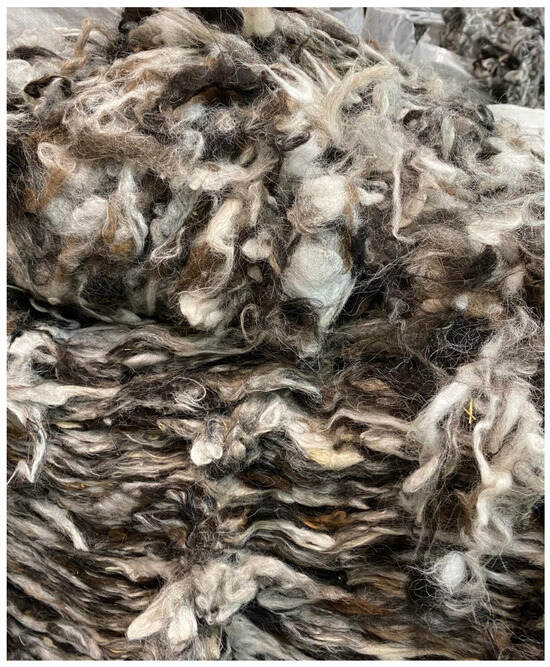
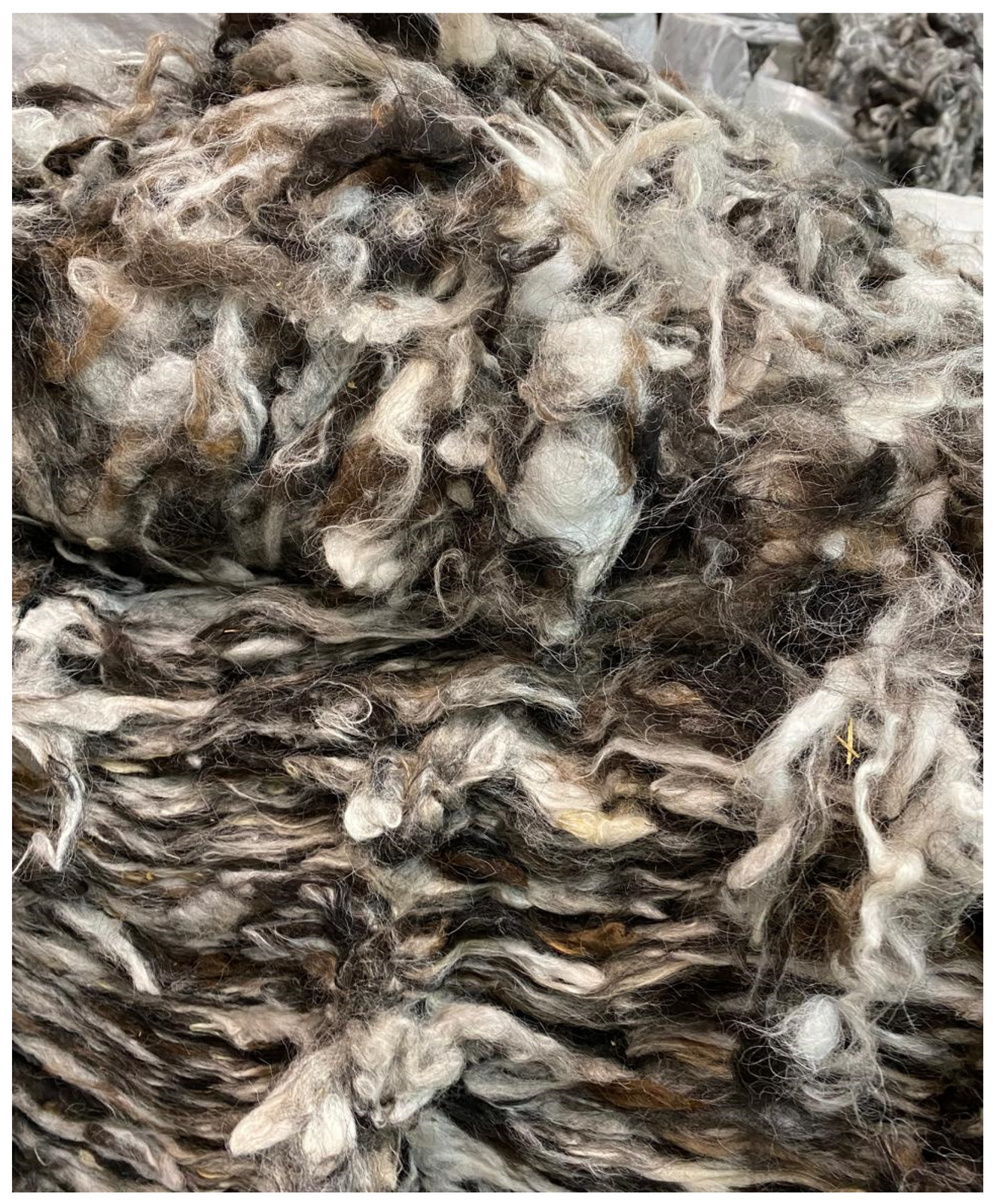
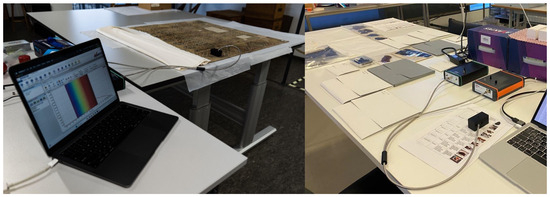
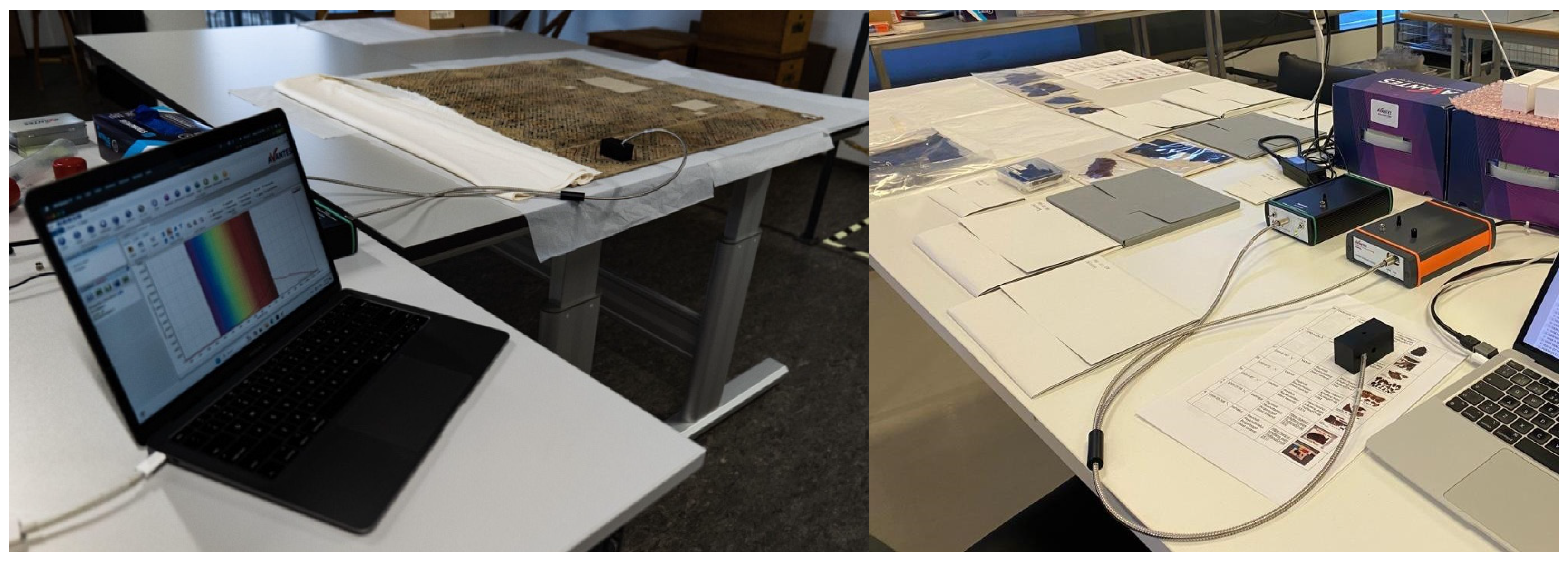
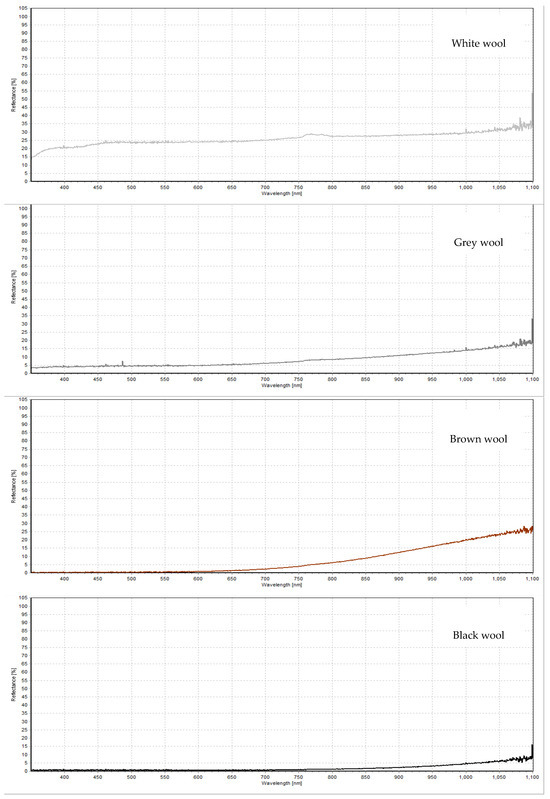
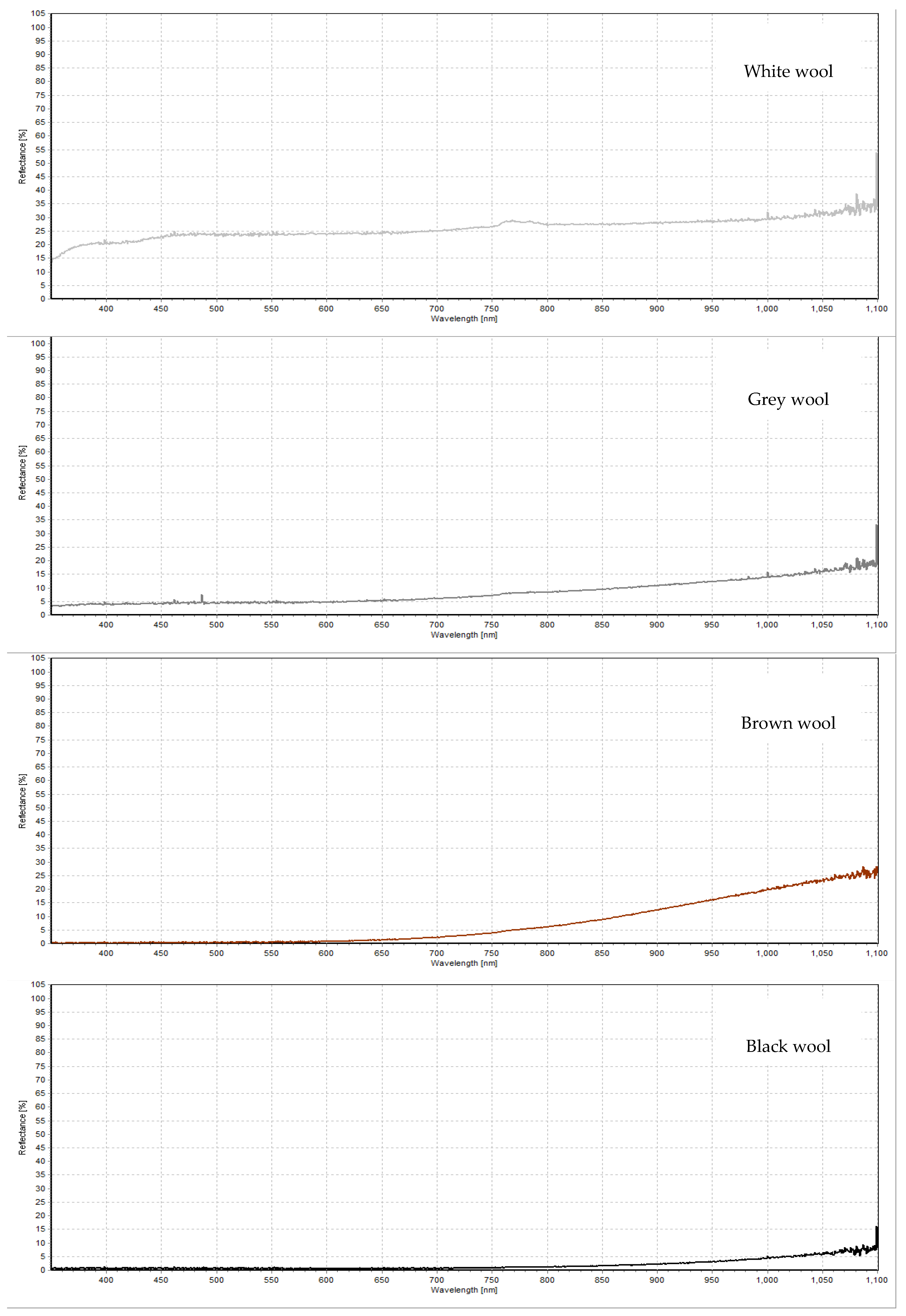
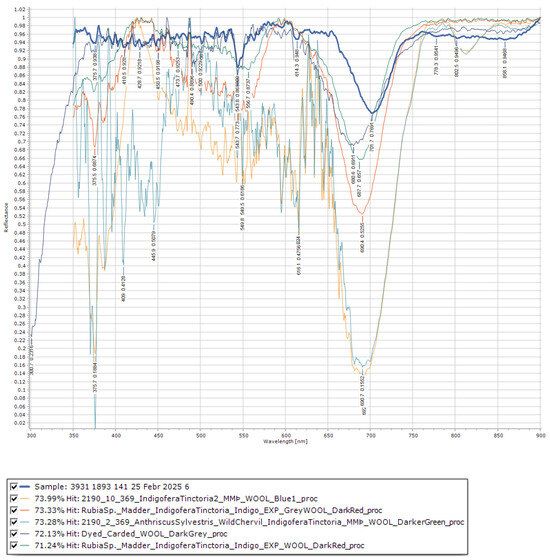
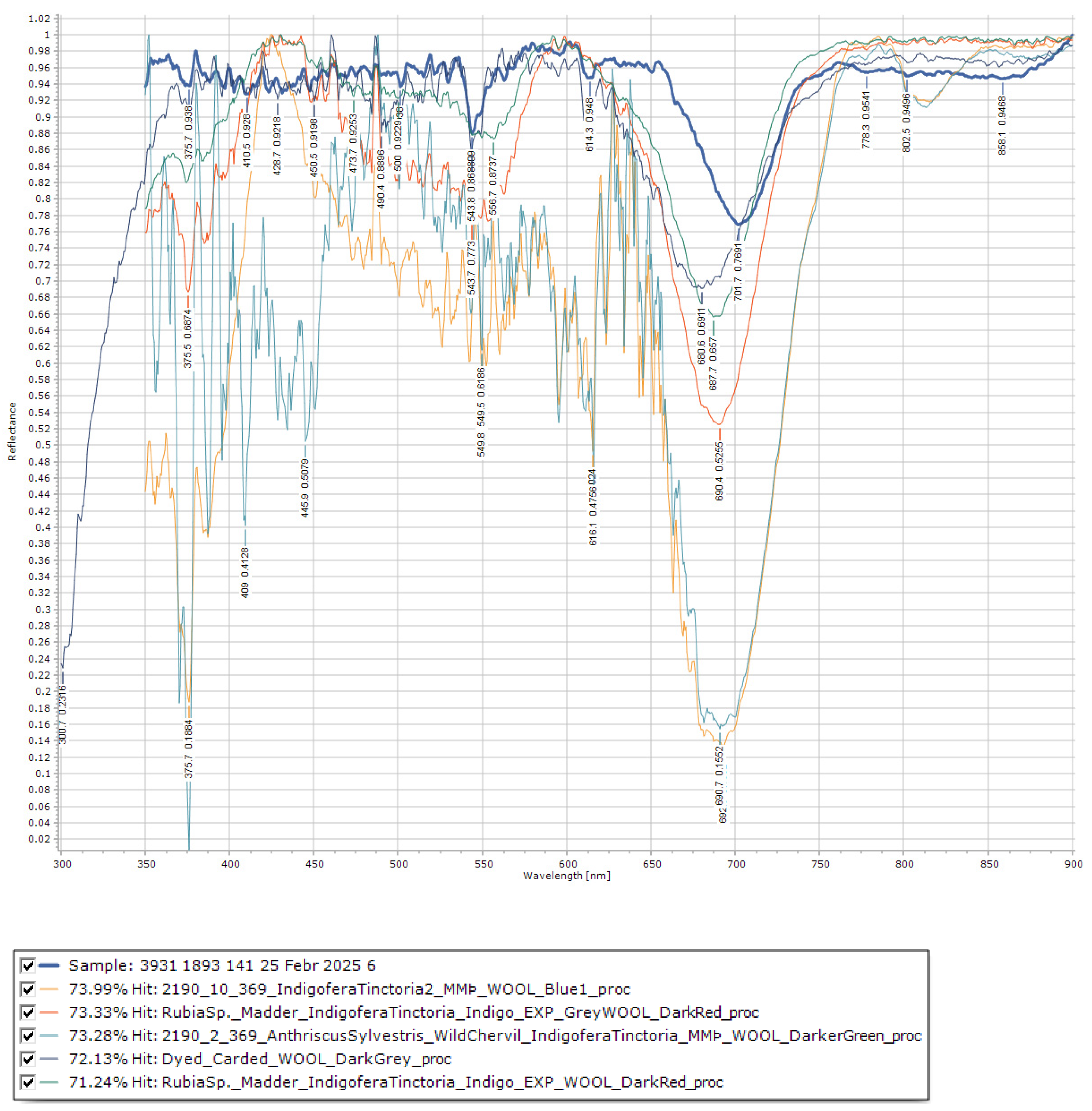
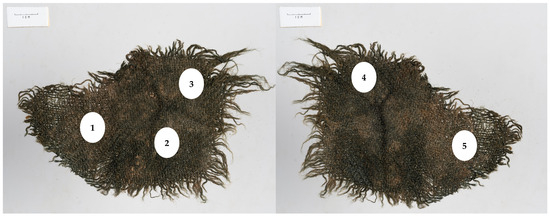
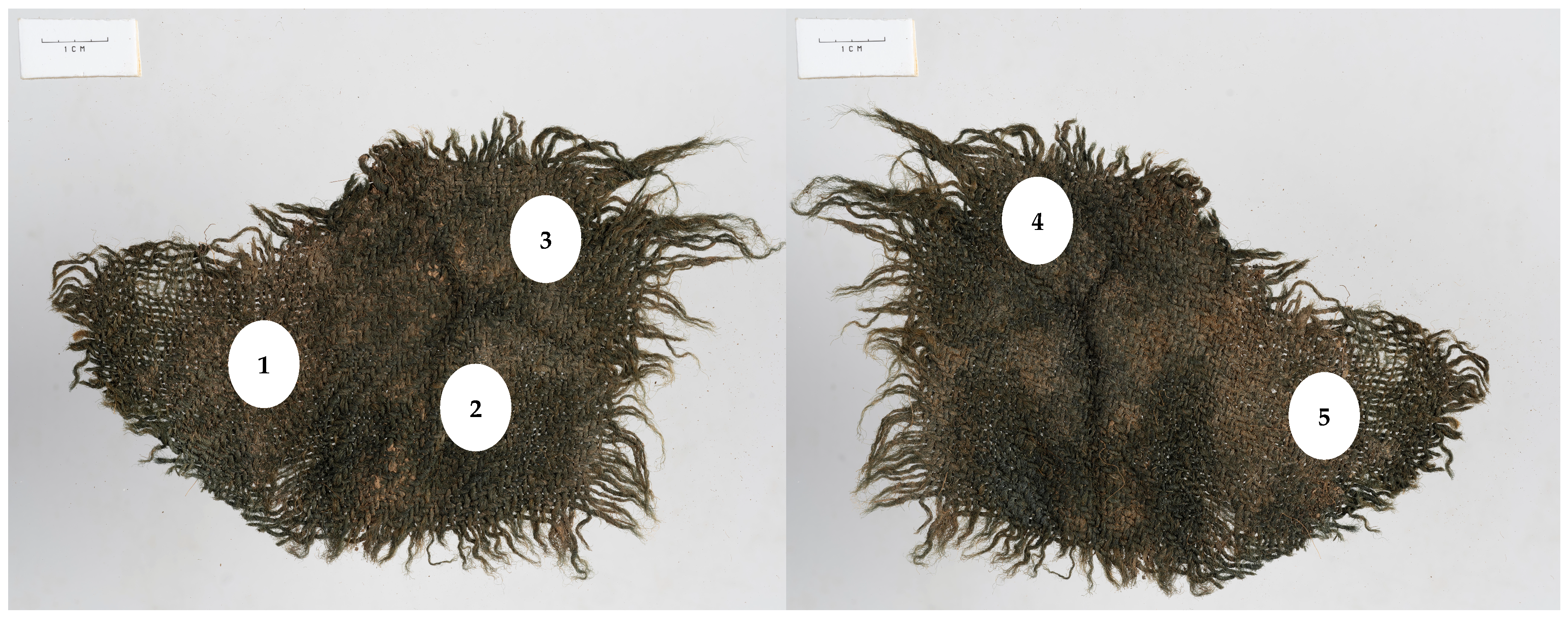
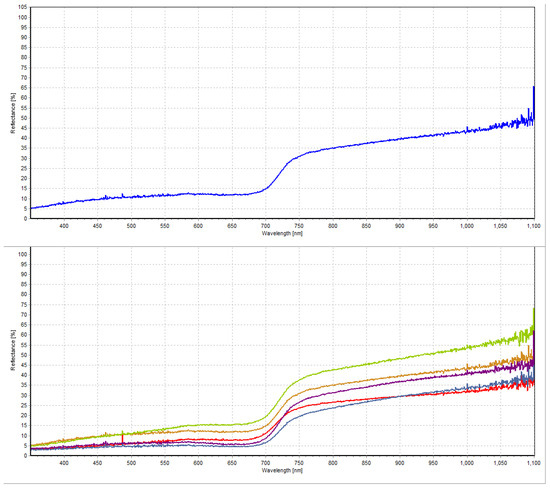
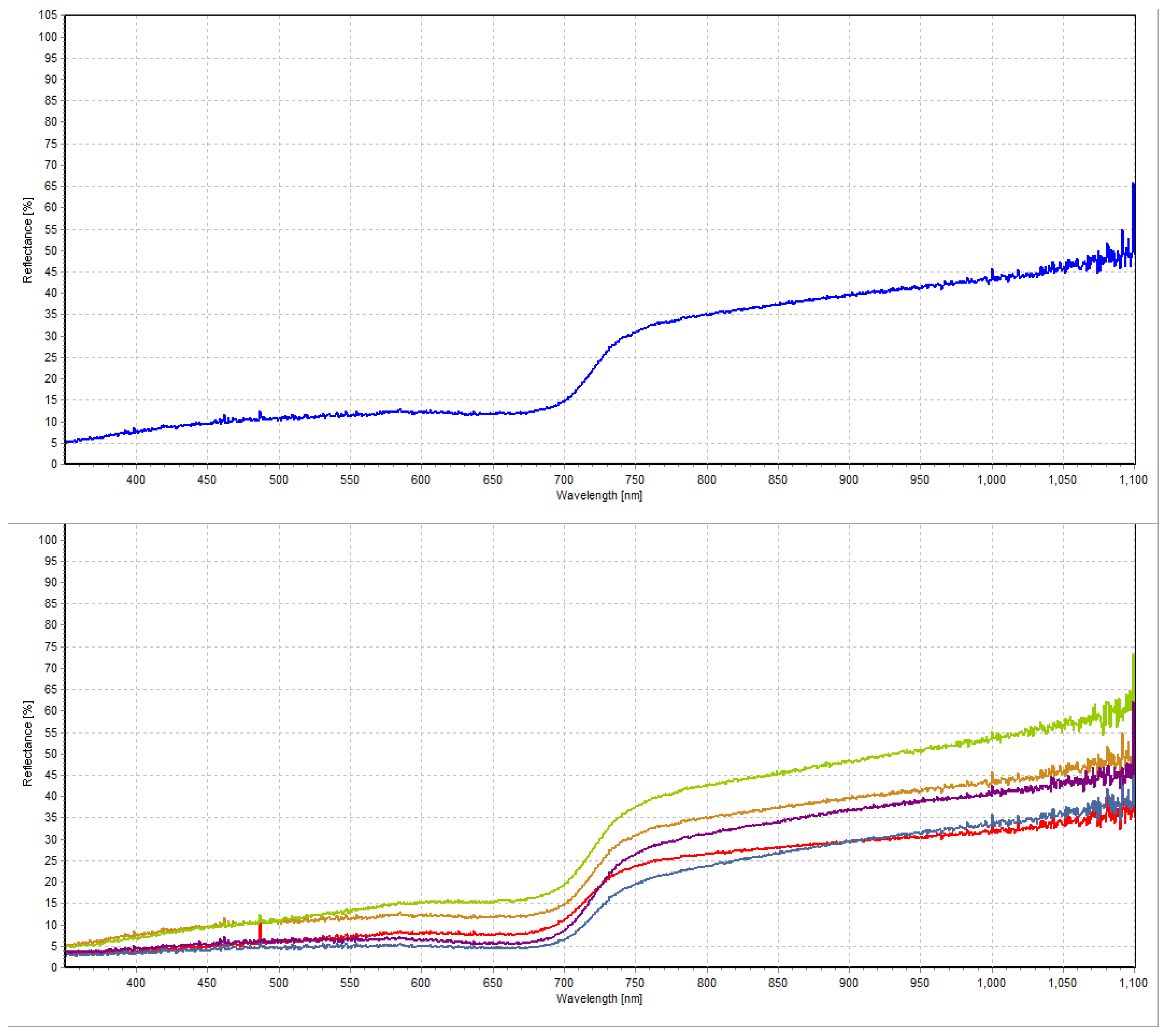
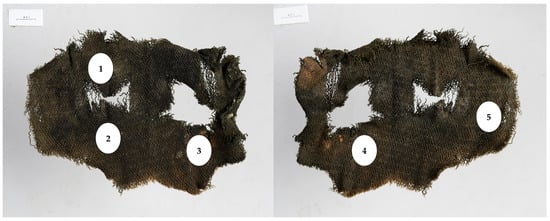
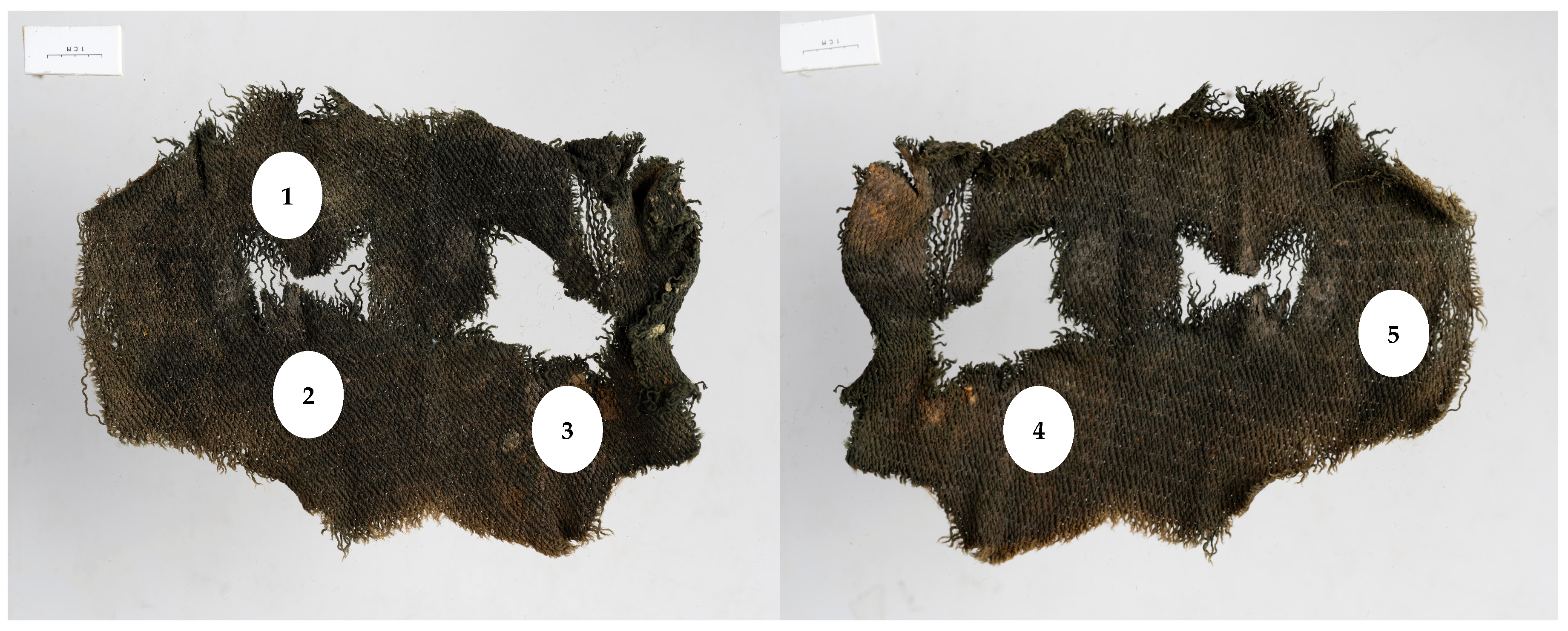
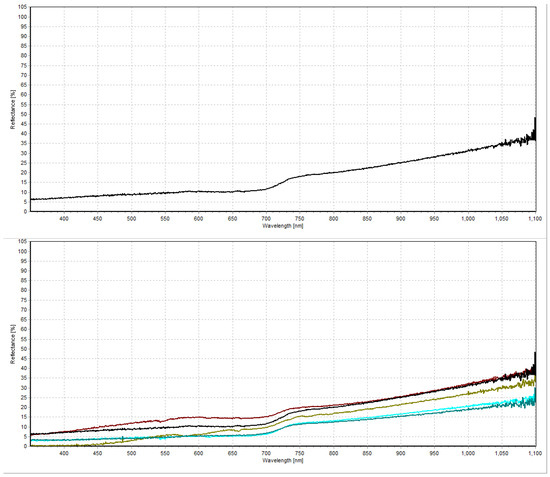
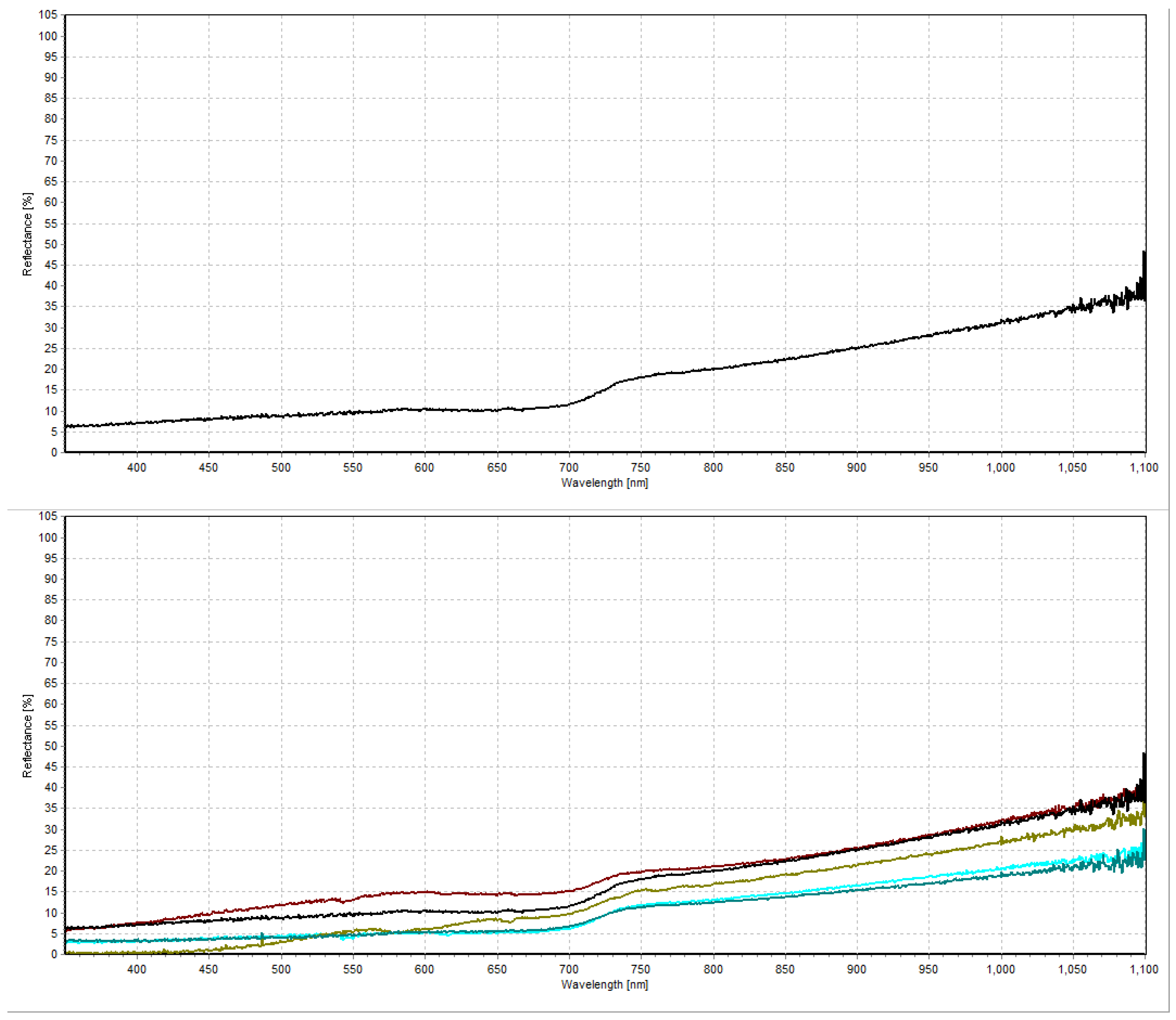
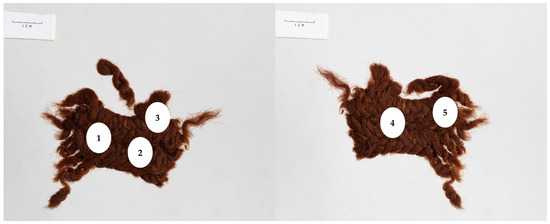
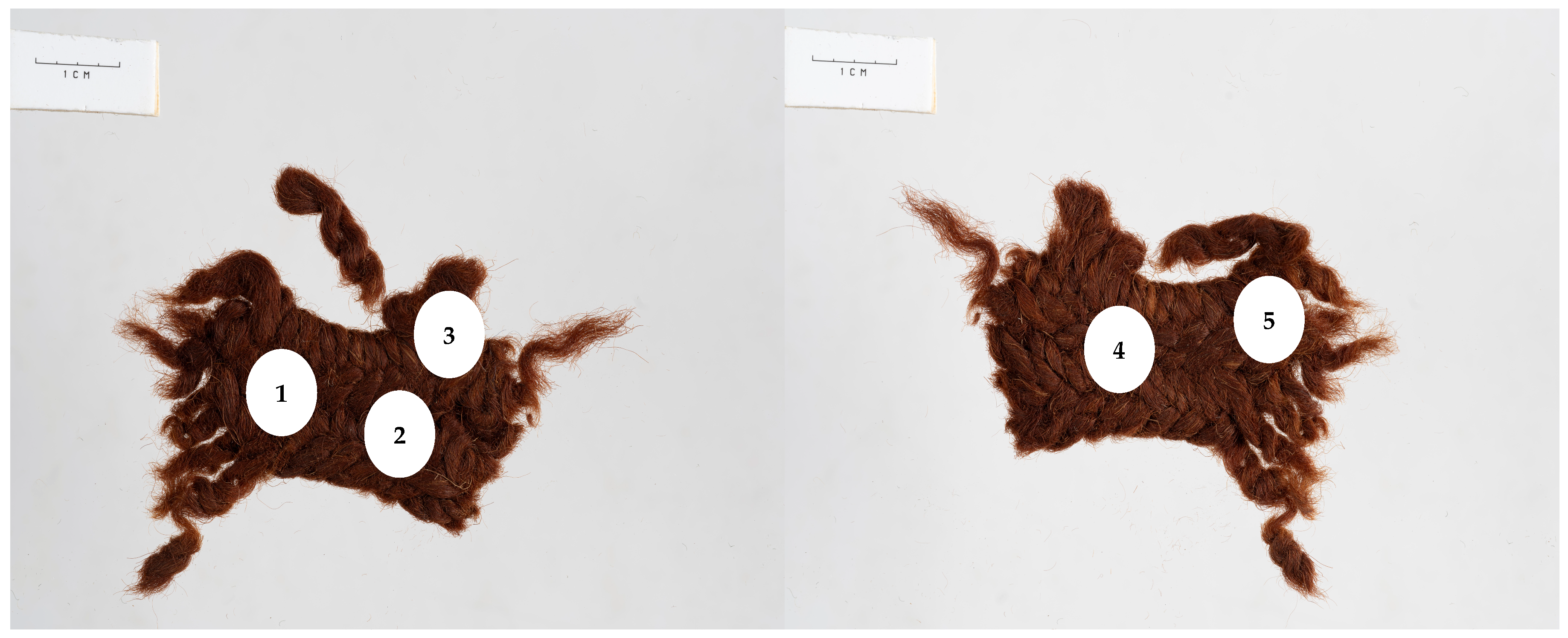
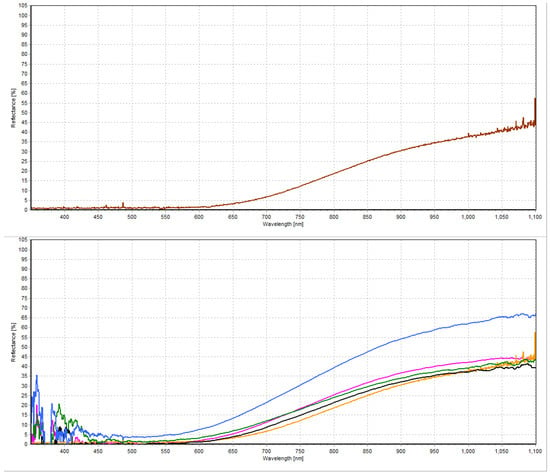
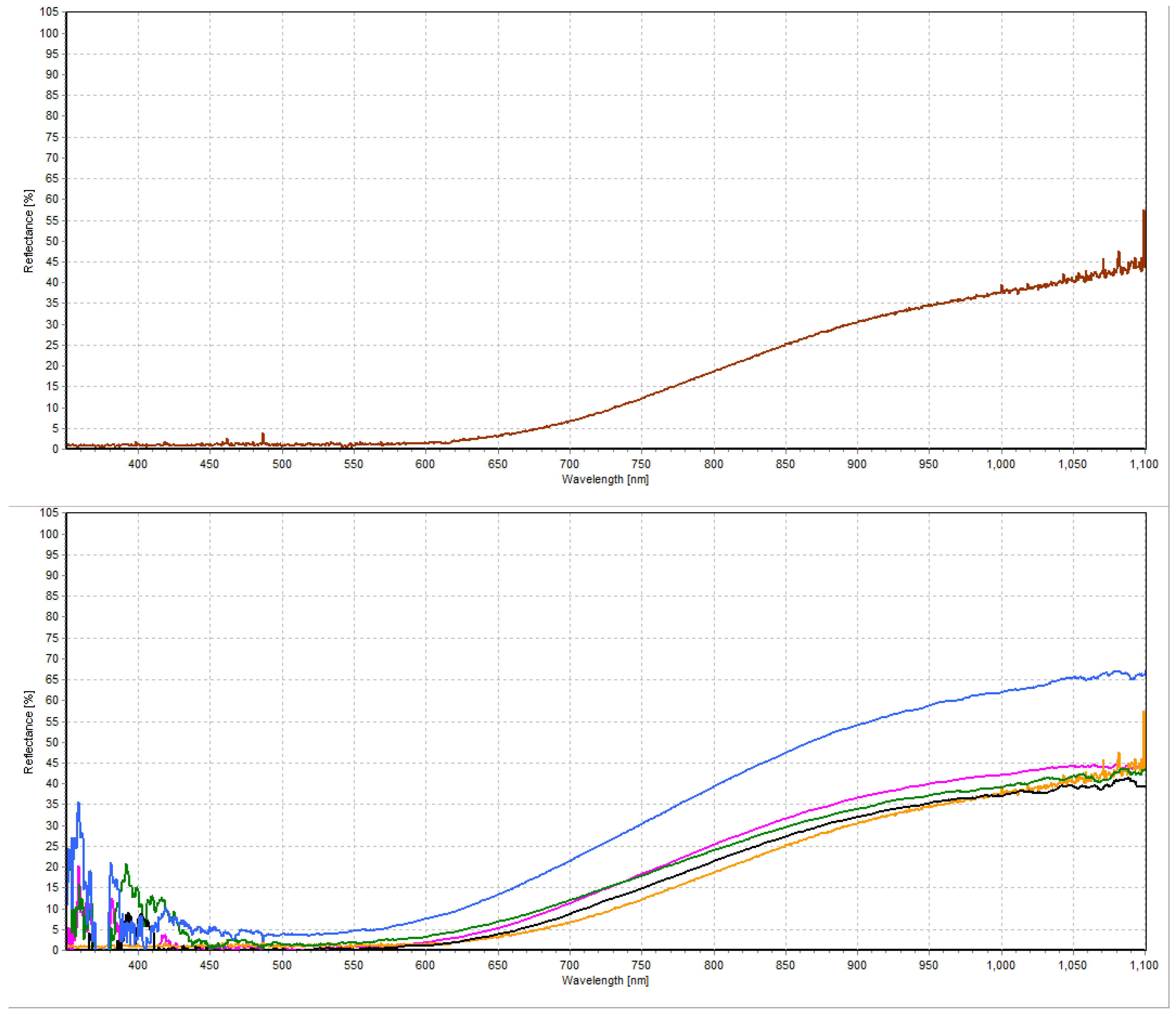
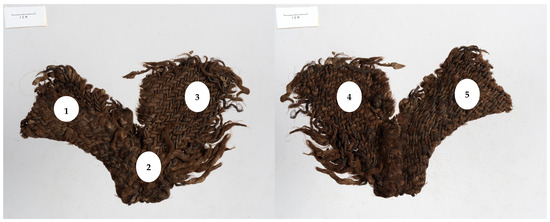
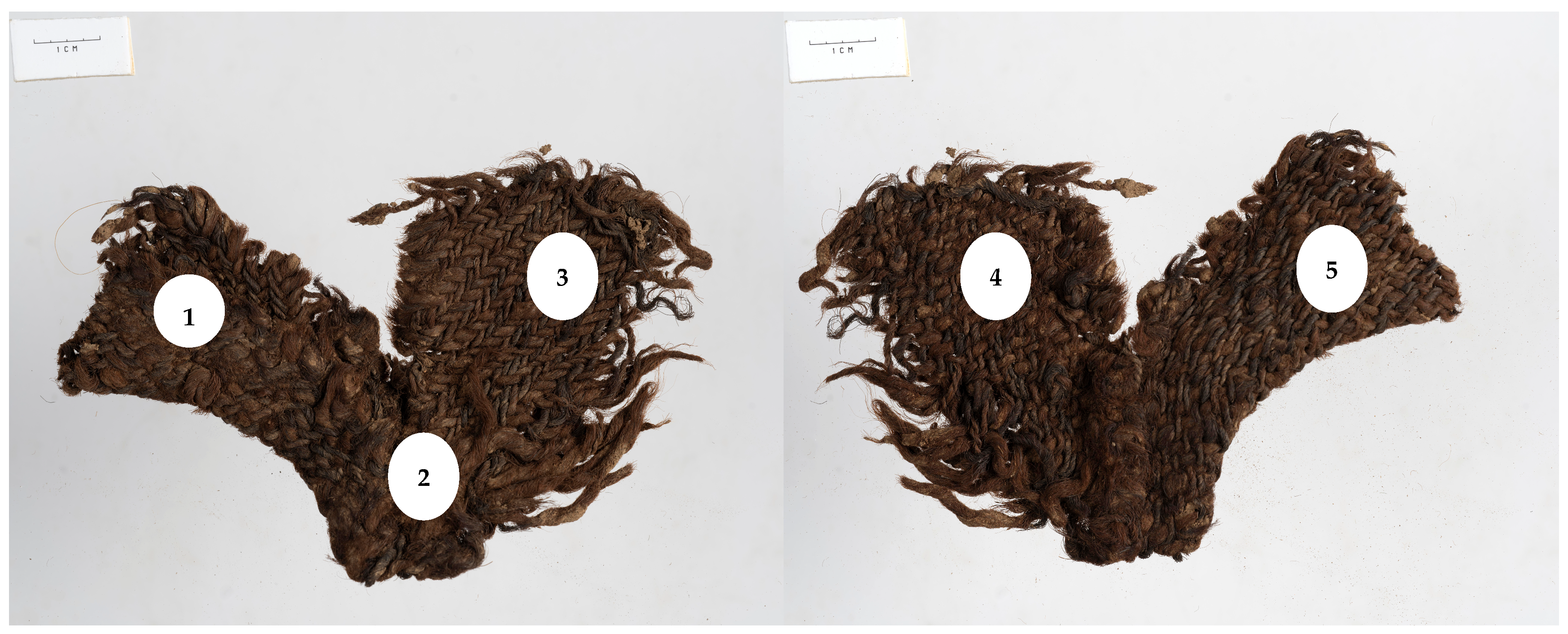
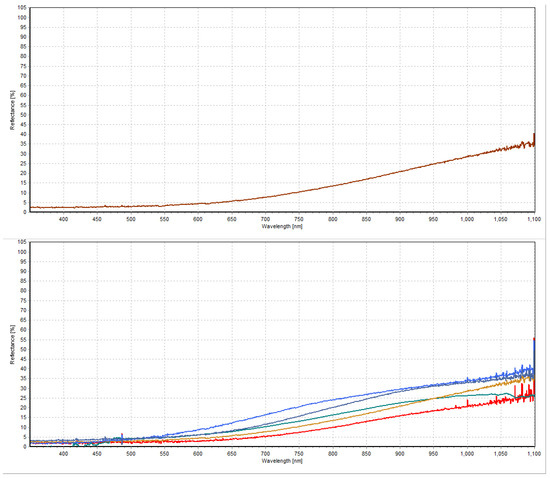
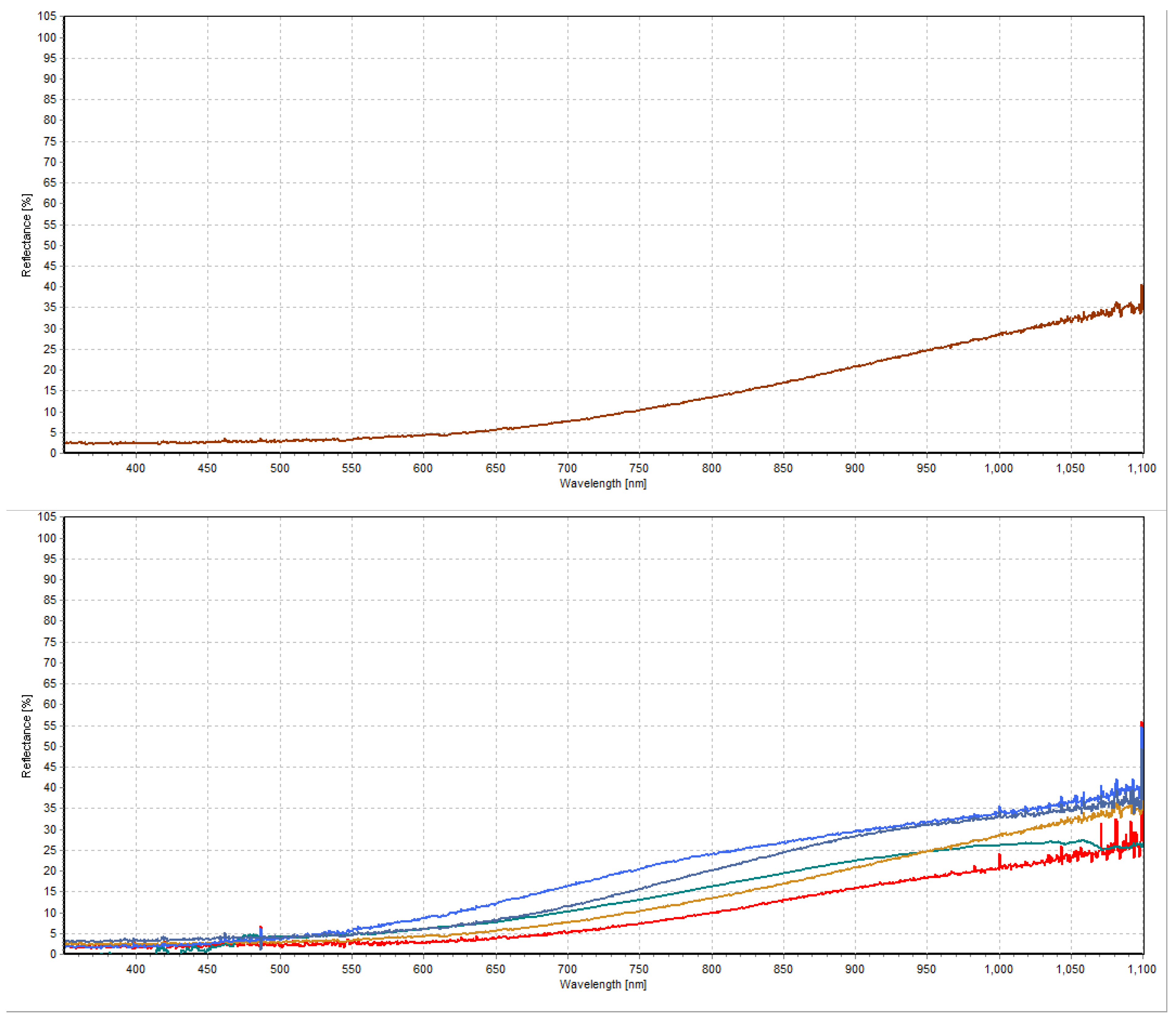
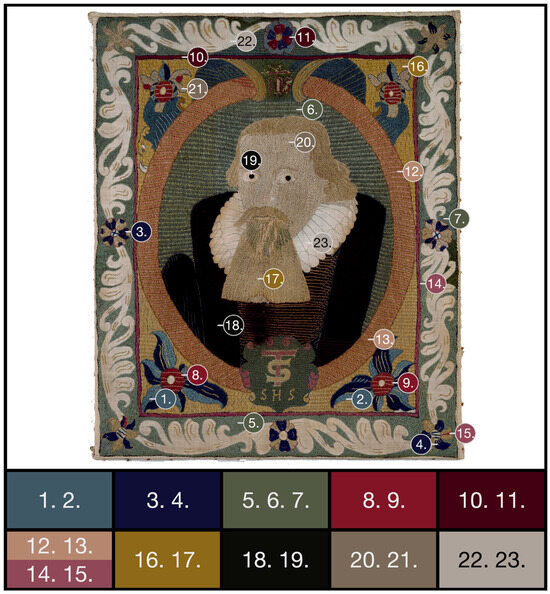
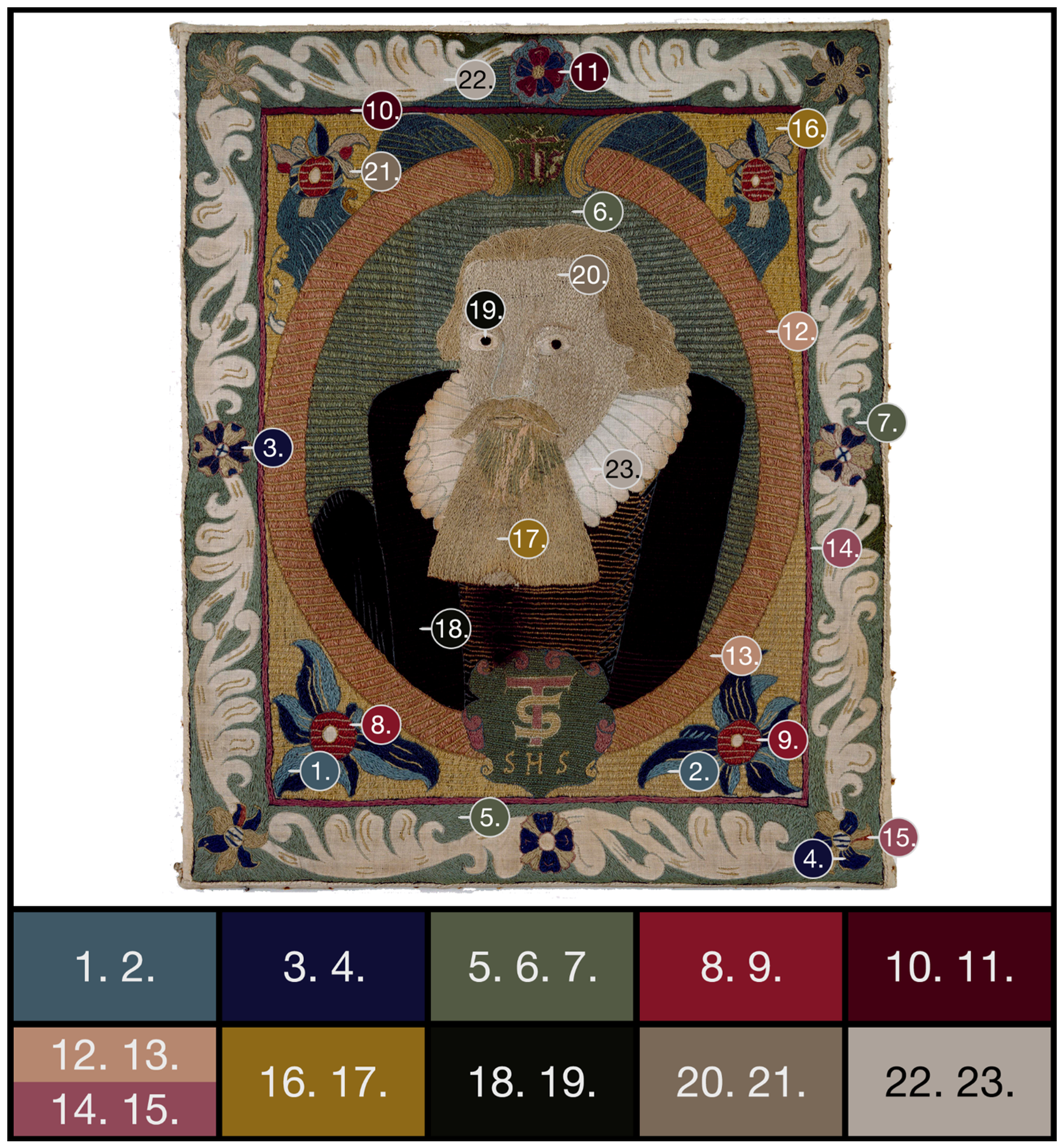
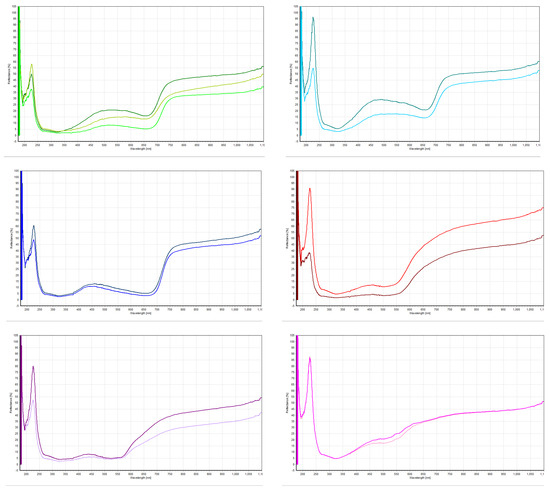
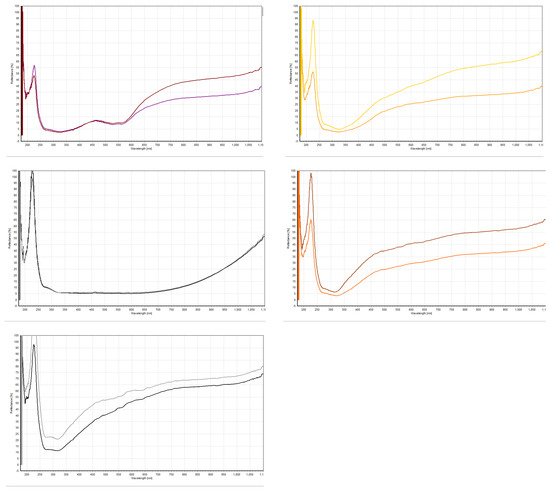
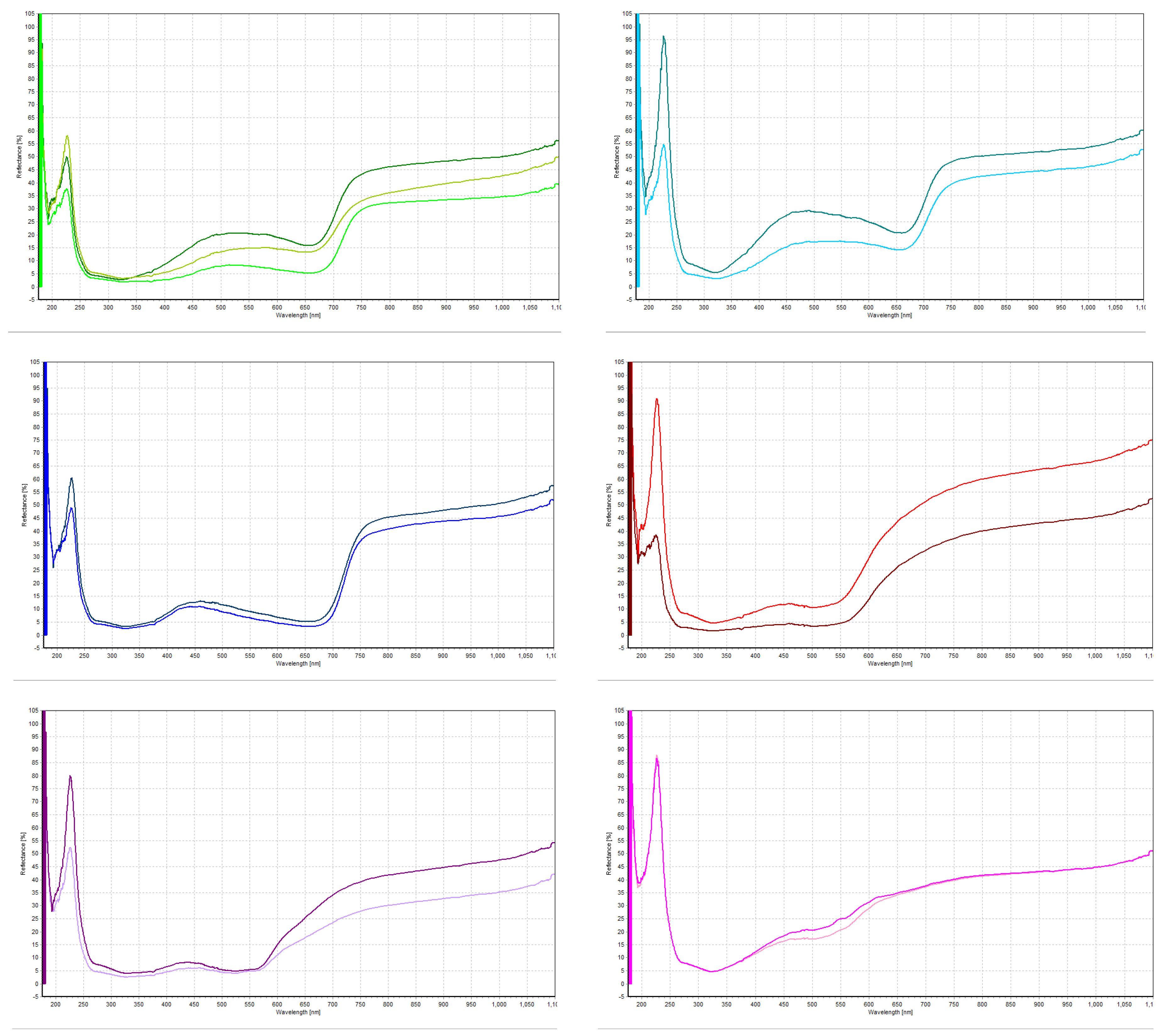
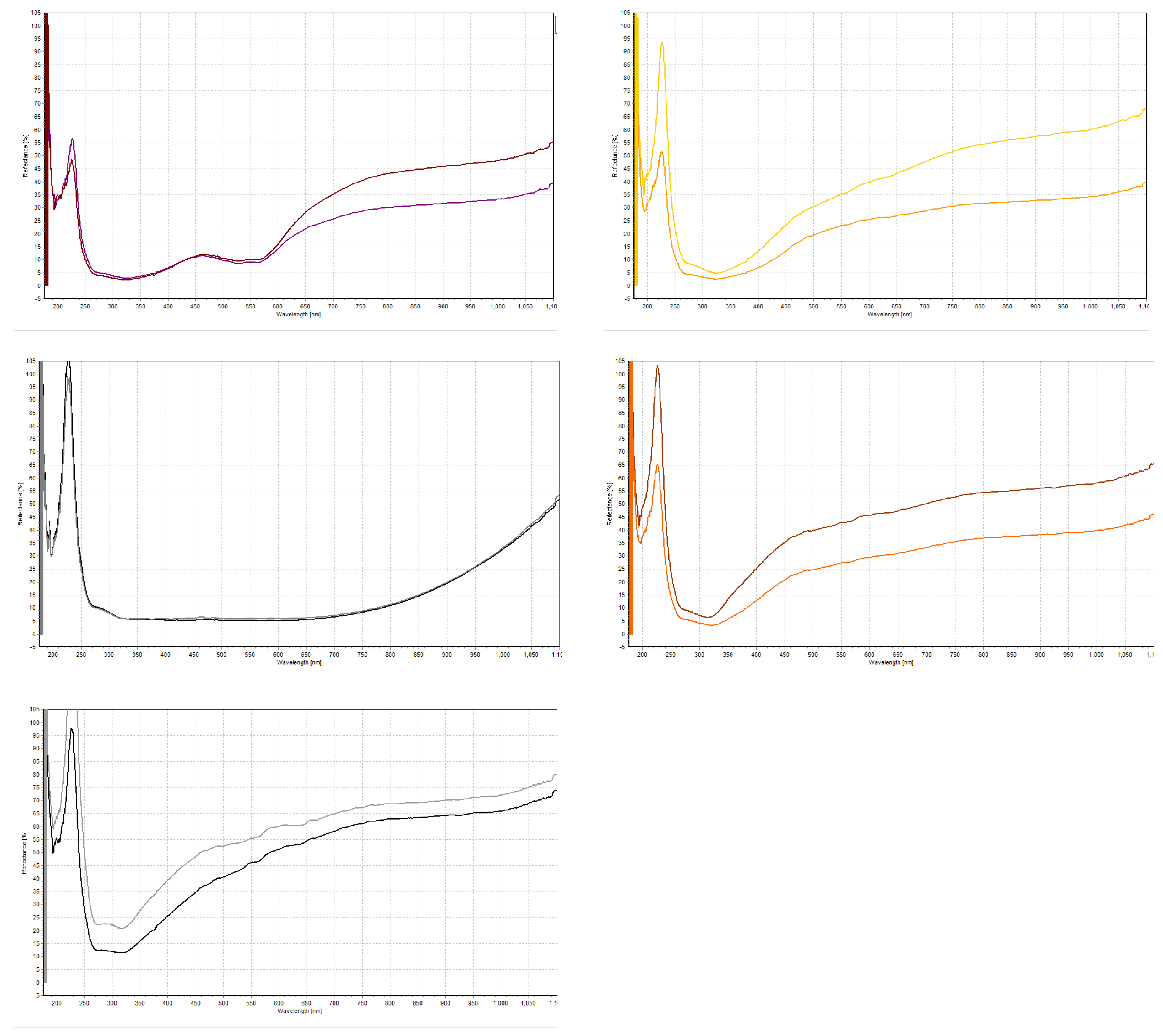
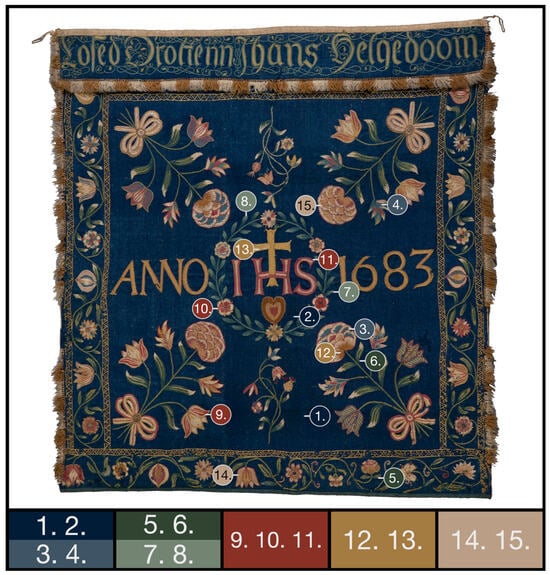
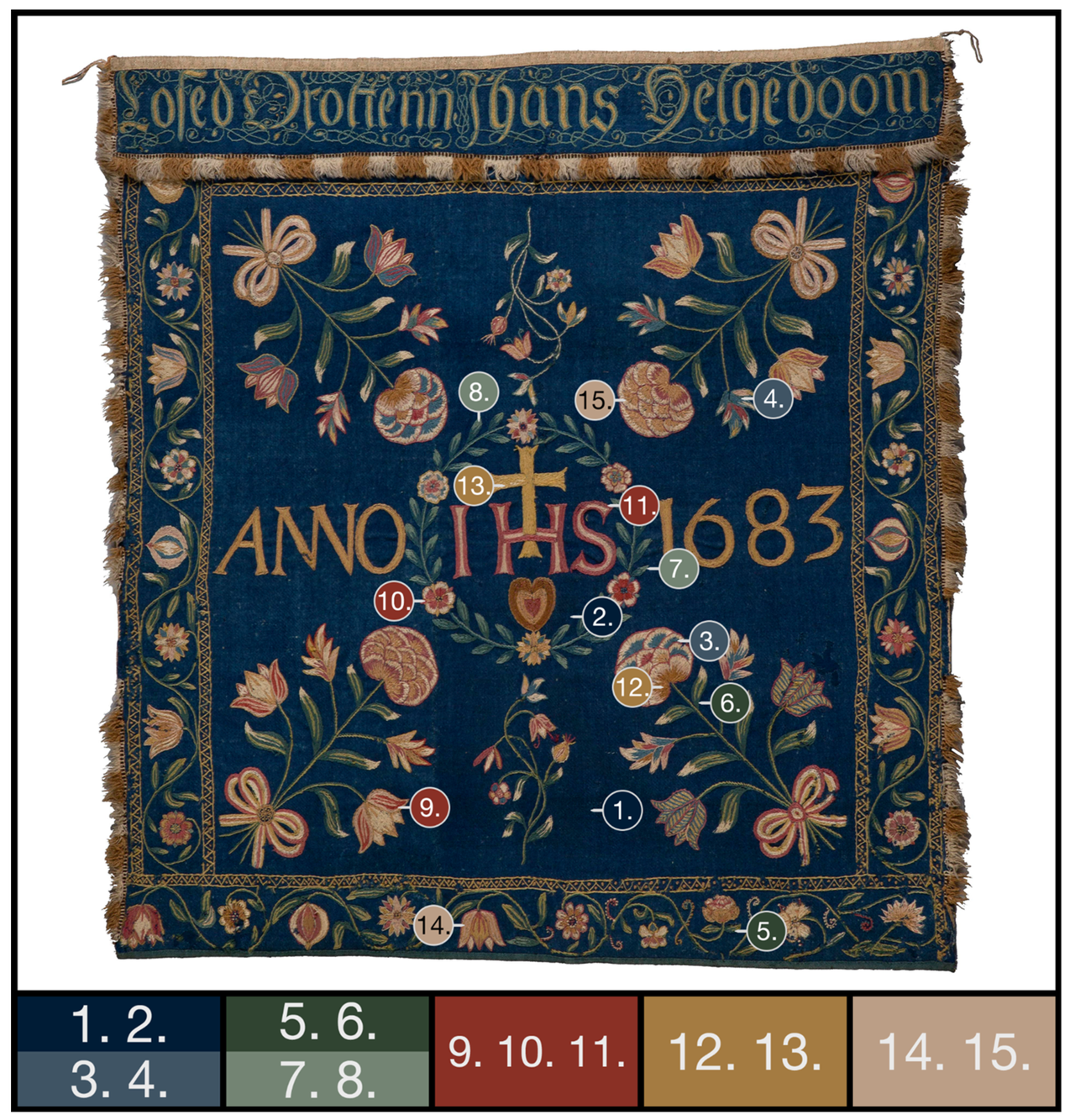
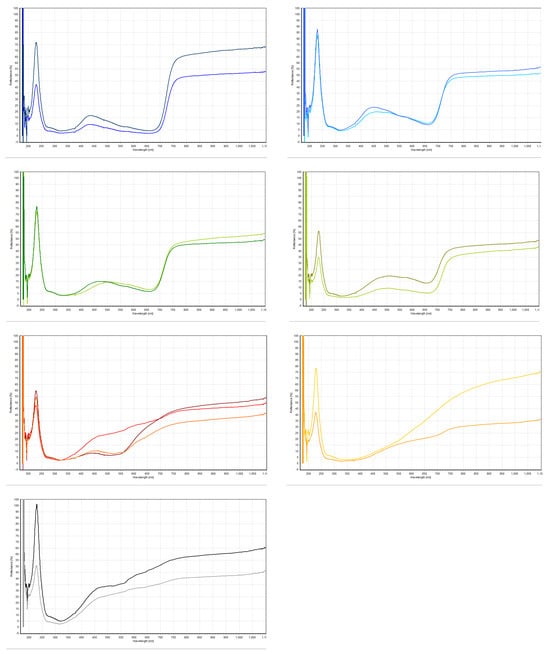
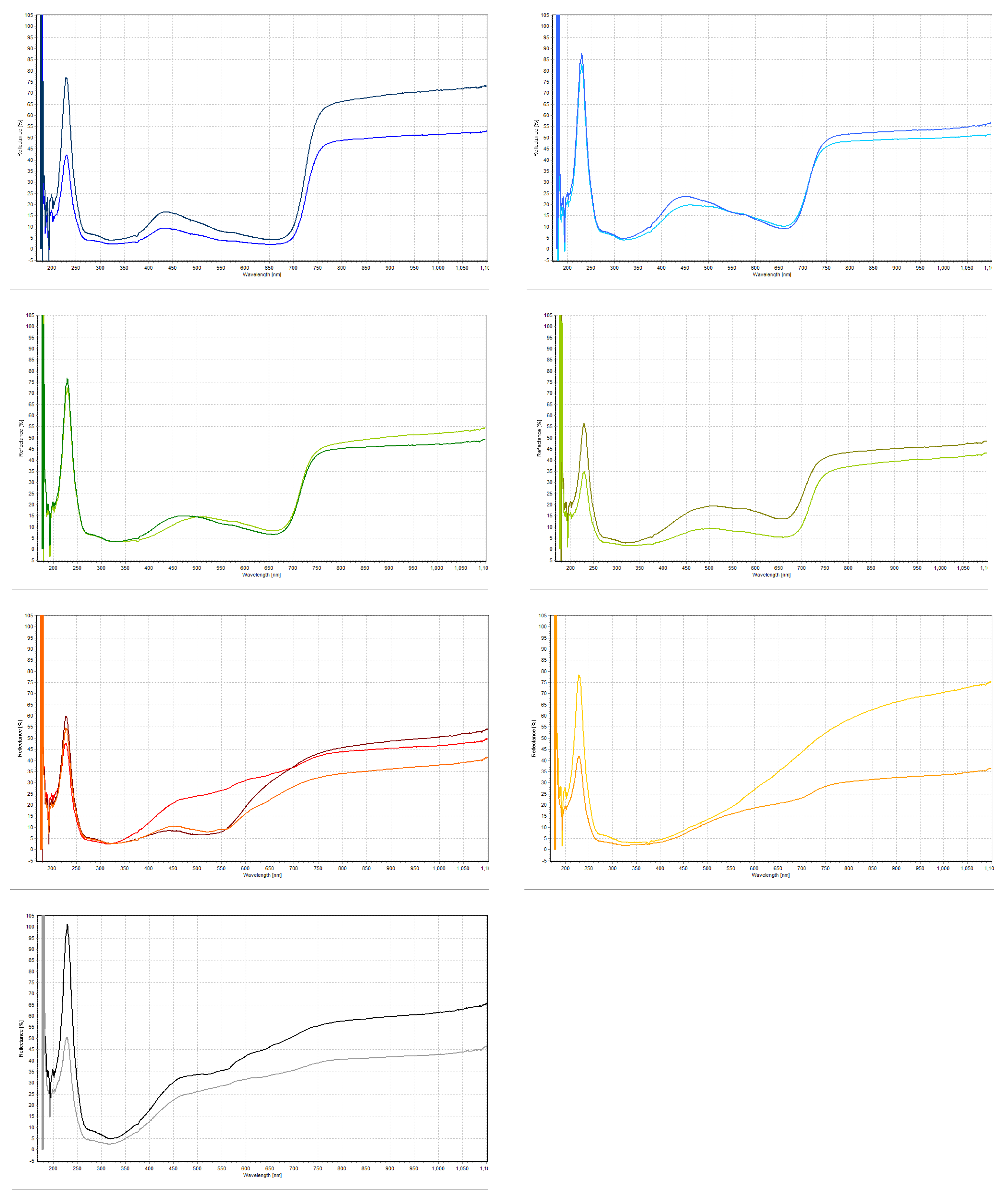
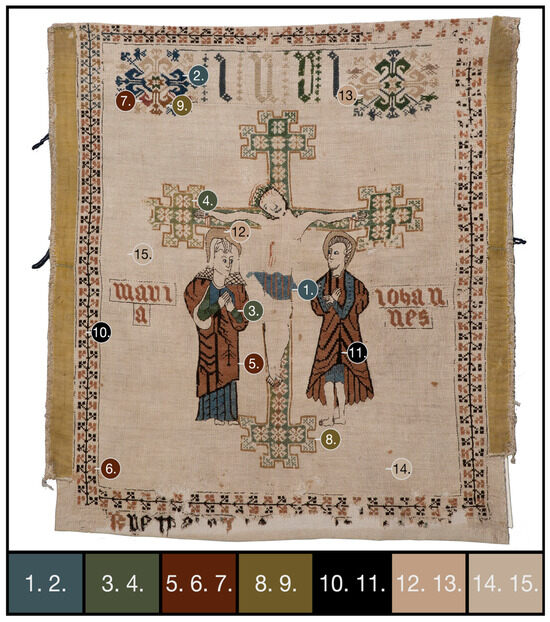
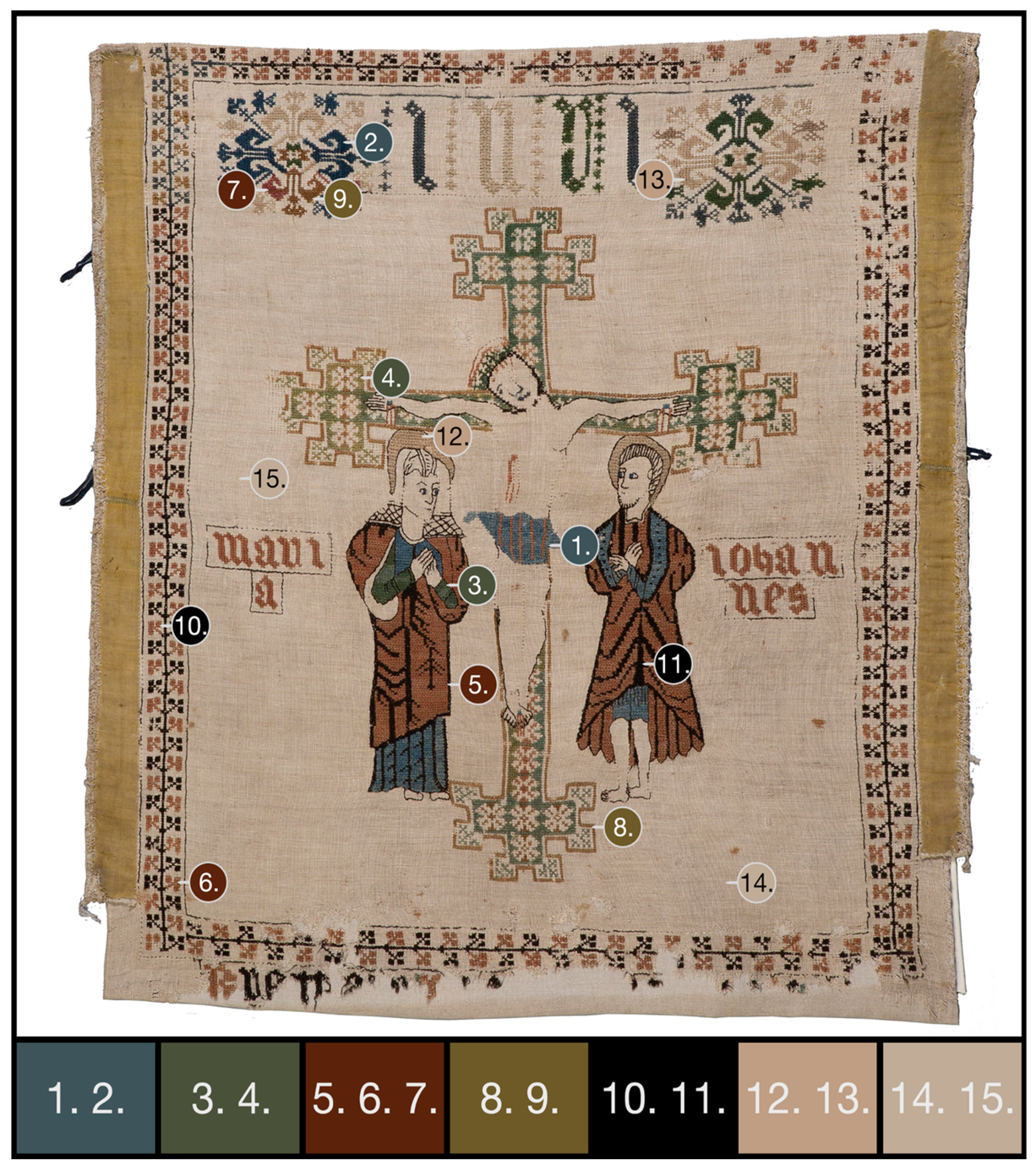
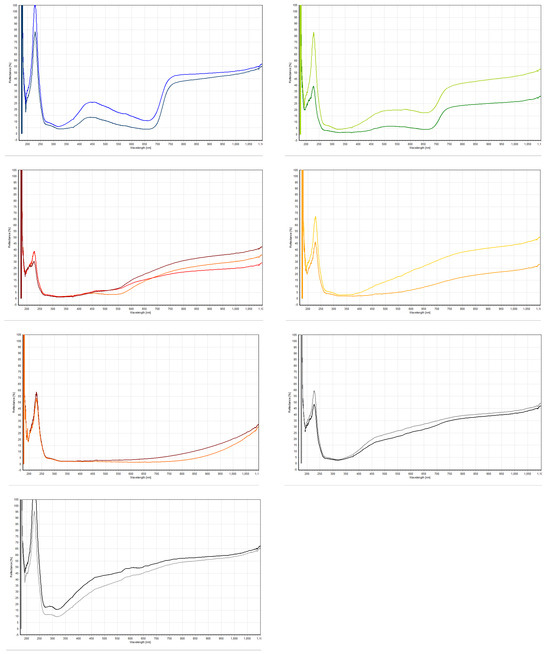
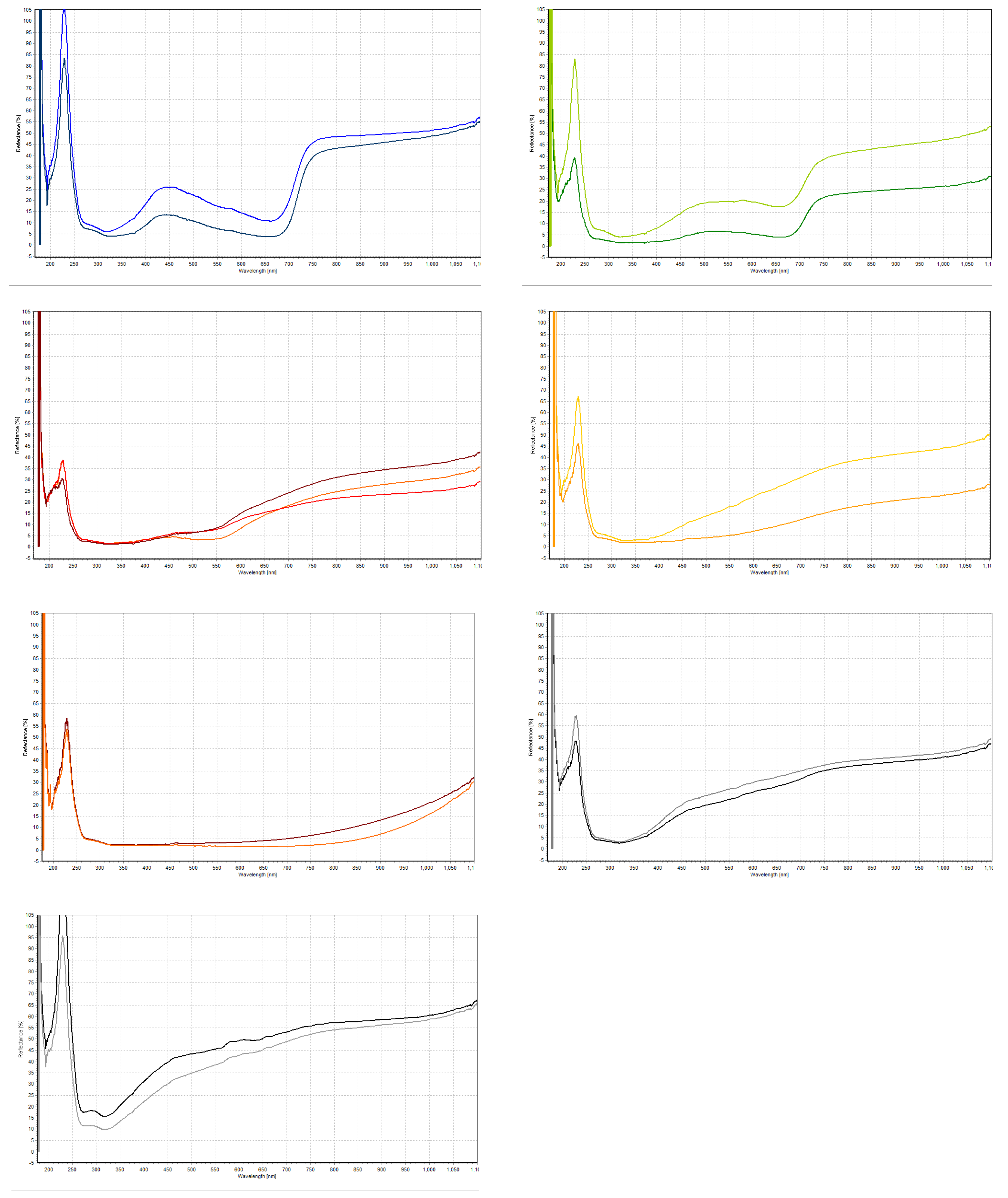
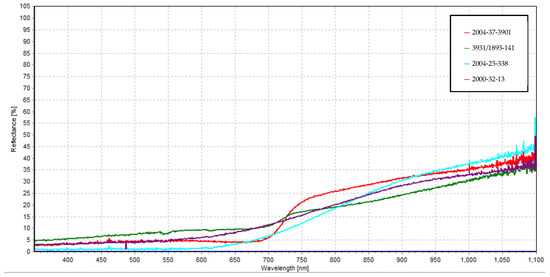
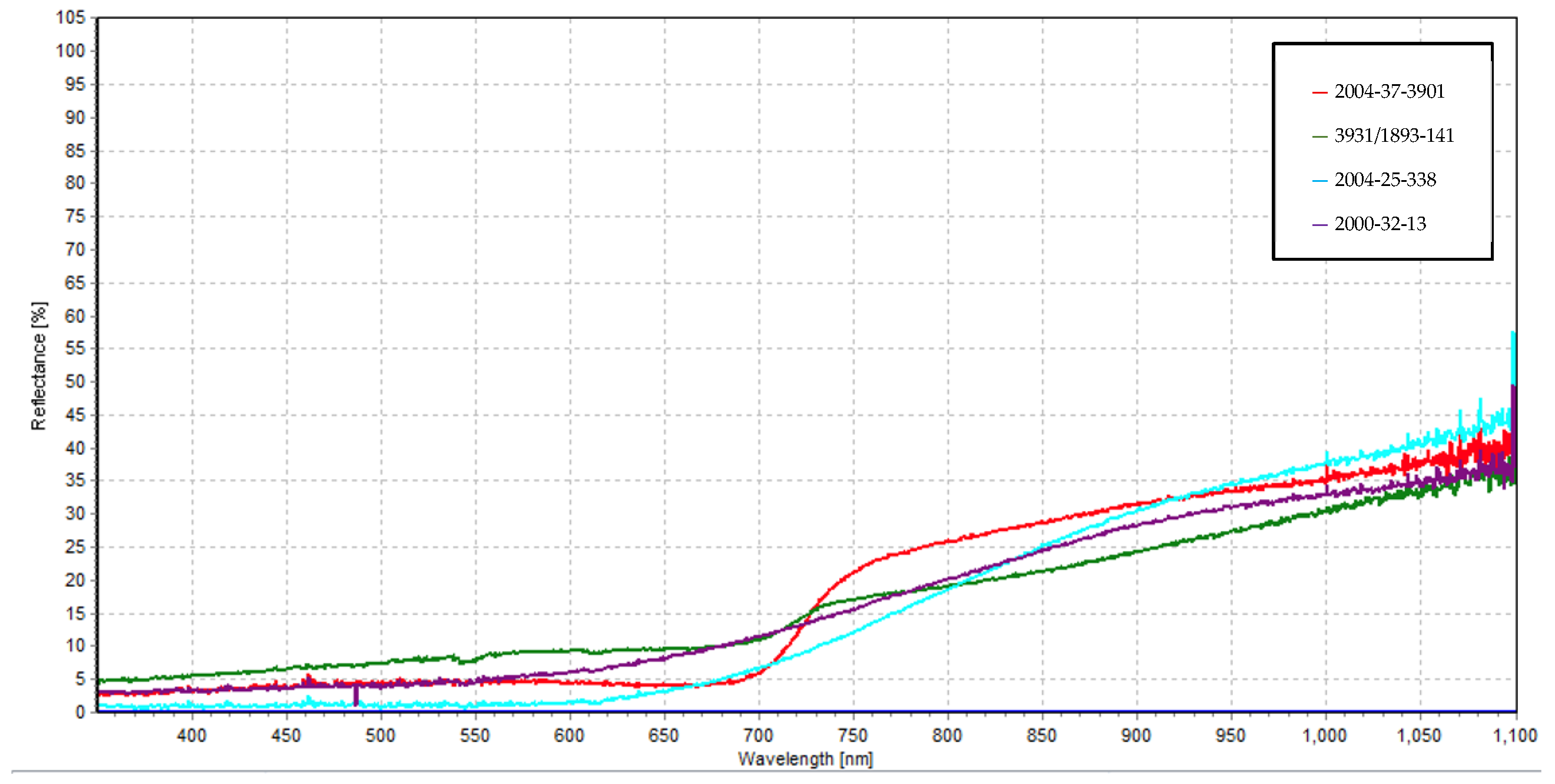
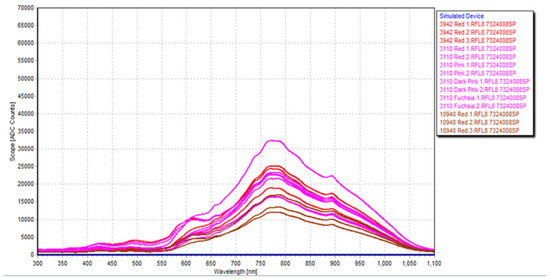
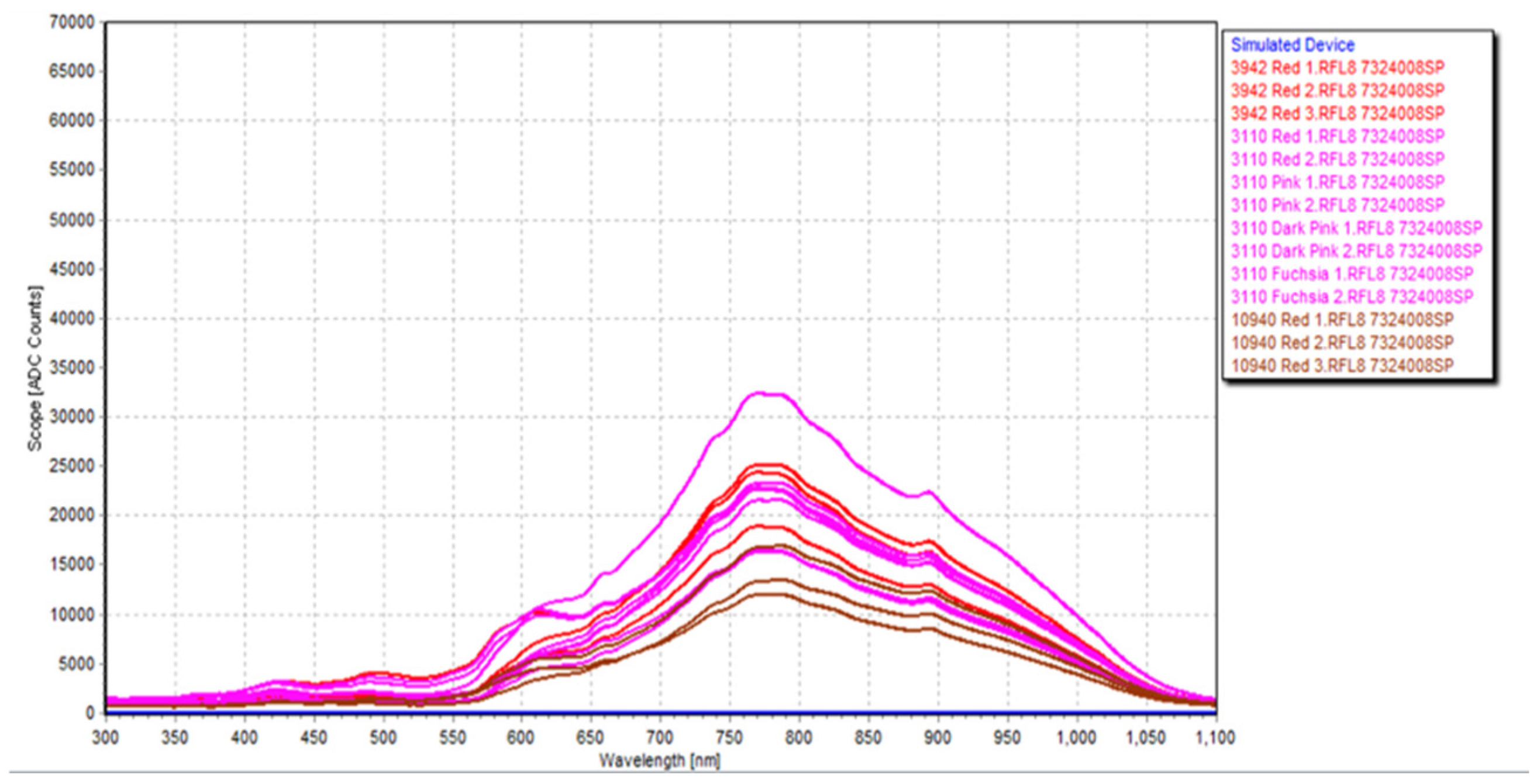
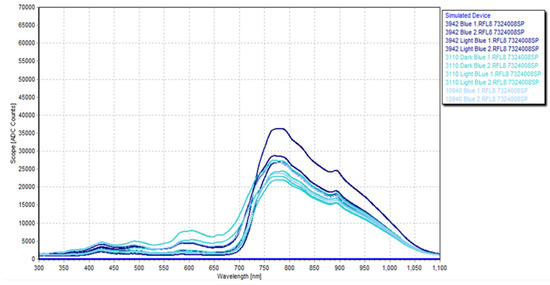
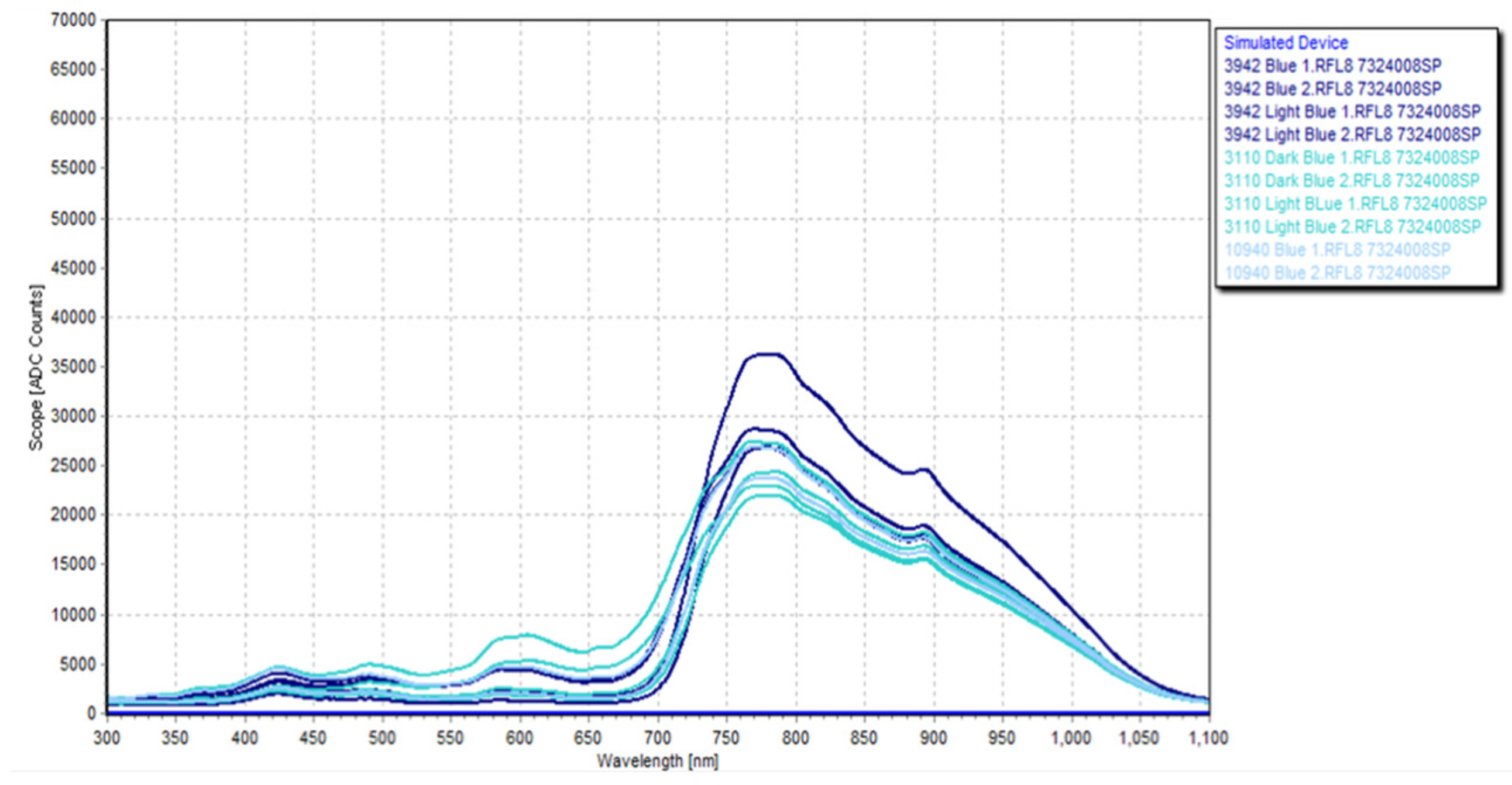
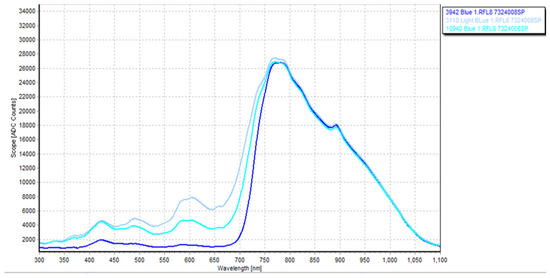
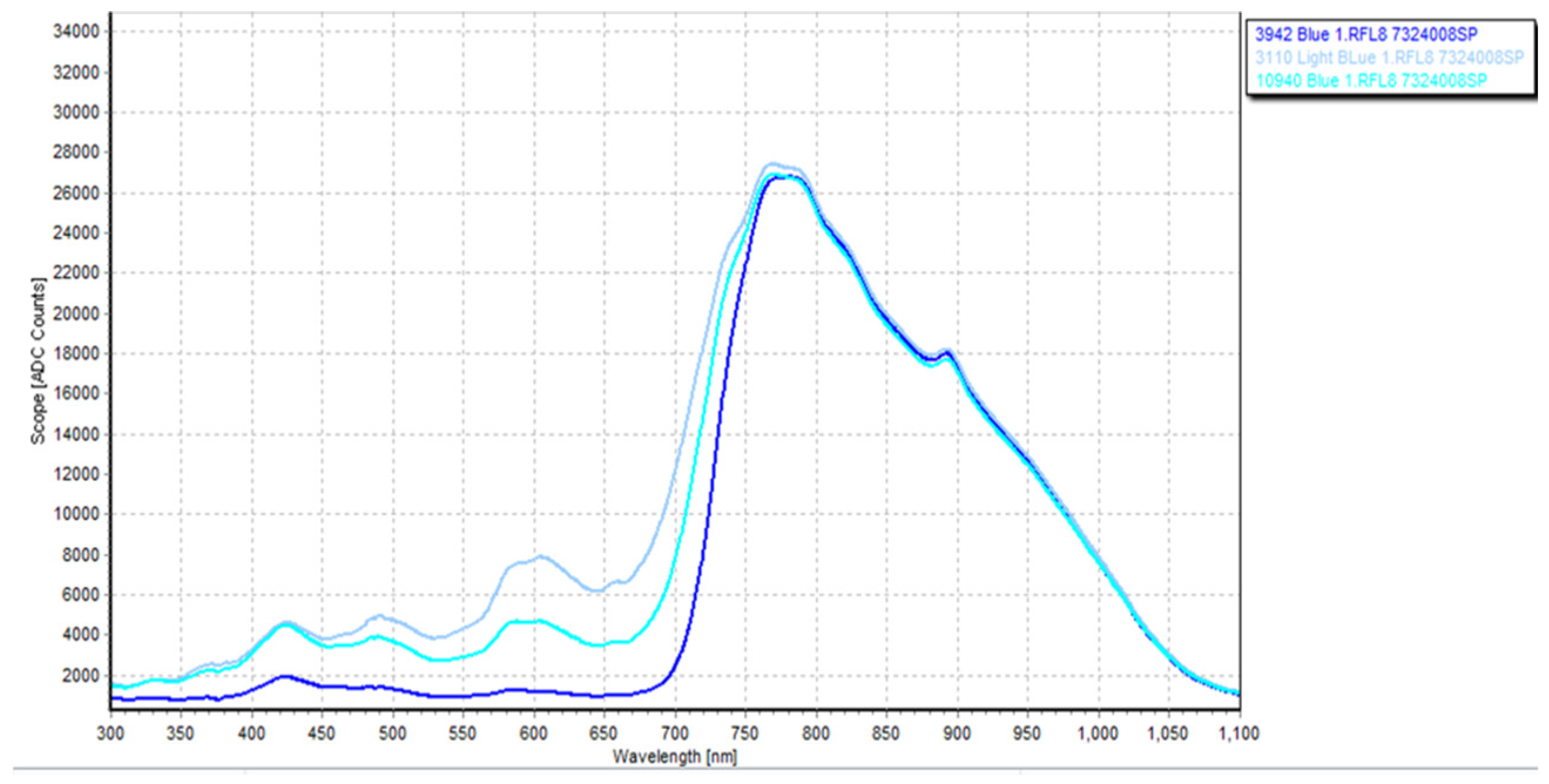
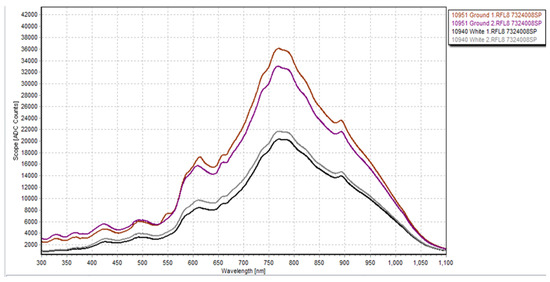
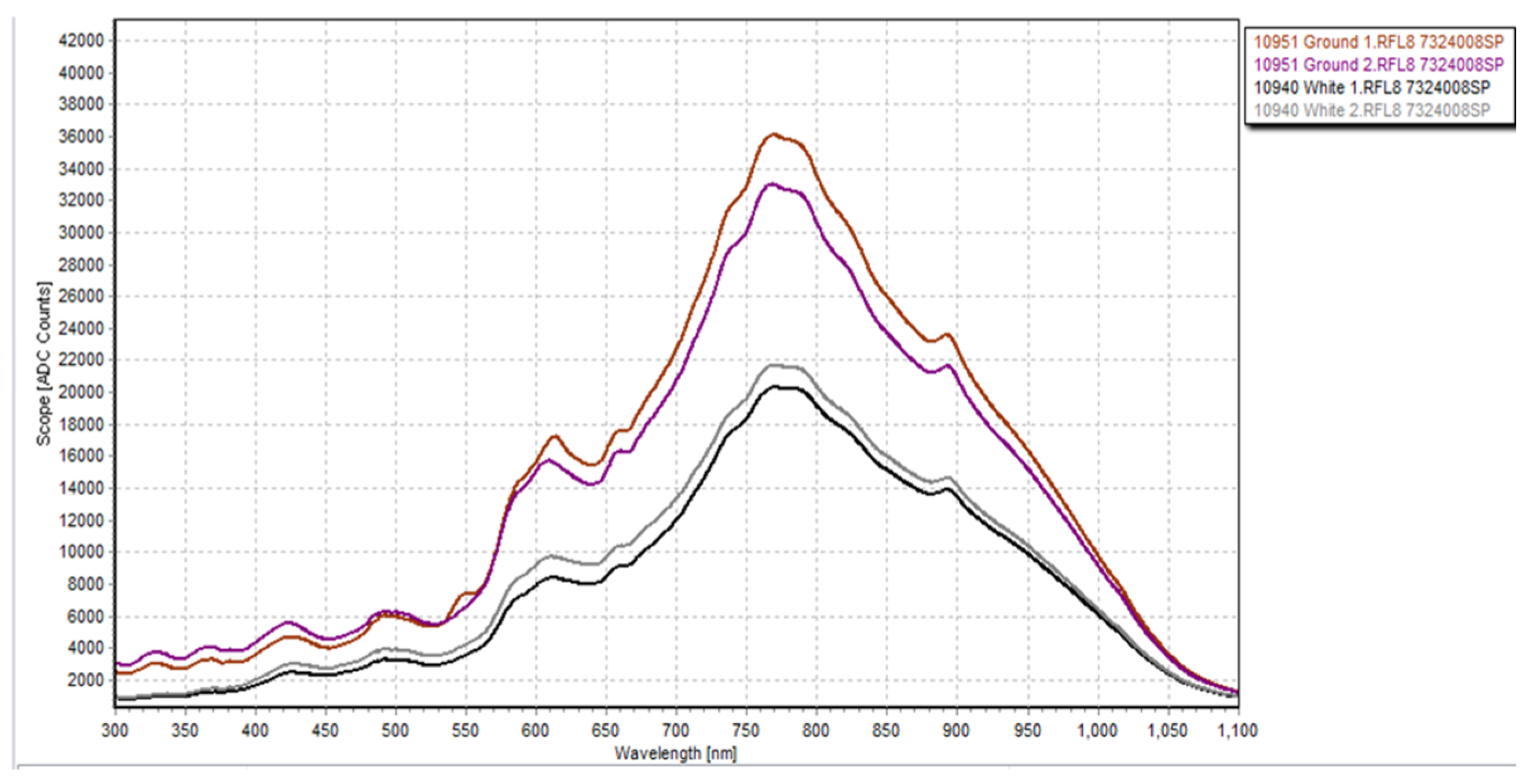
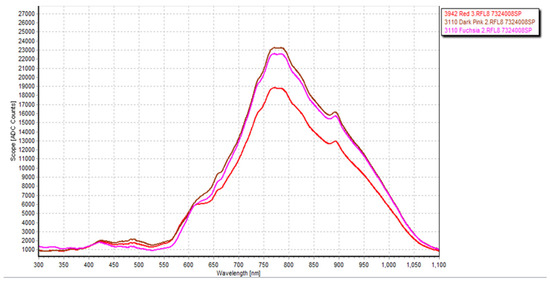
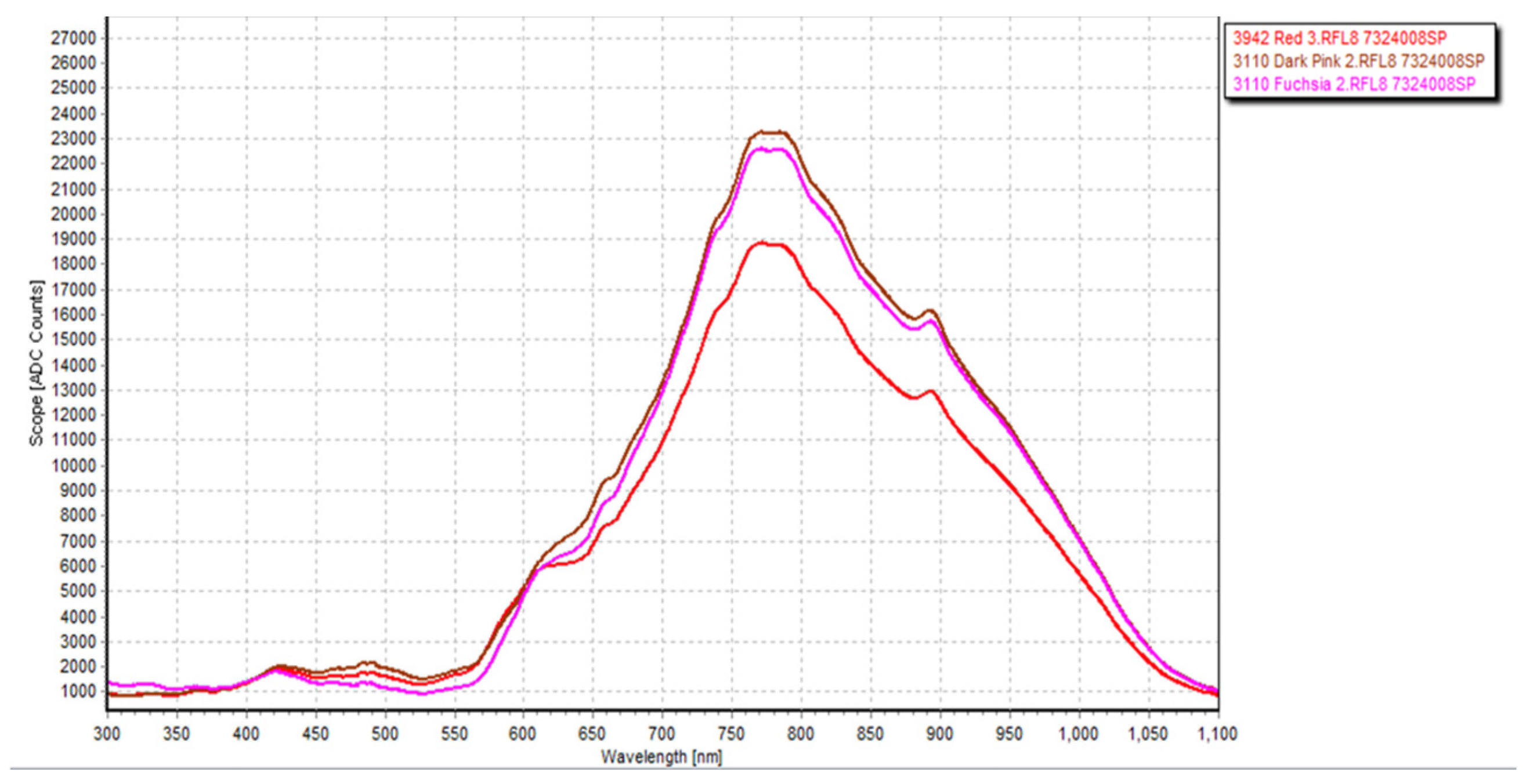

Disclaimer/Publisher’s Note: The statements, opinions and data contained in all publications are solely those of the individual author(s) and contributor(s) and not of MDPI and/or the editor(s). MDPI and/or the editor(s) disclaim responsibility for any injury to people or property resulting from any ideas, methods, instructions or products referred to in the content. |
© 2026 by the authors. Licensee MDPI, Basel, Switzerland. This article is an open access article distributed under the terms and conditions of the Creative Commons Attribution (CC BY) license.