


Abstract
Recent advances in generative Artificial Intelligence (AI) have rapidly transformed research and practice across the Cultural Heritage domain. While several studies have investigated AI applications in documentation, analysis and dissemination, a focused and critical assessment of generative AI within 3D virtual reconstruction workflows is still lacking. This paper presents a systematic review of the literature addressing the use of generative AI in 3D heritage virtual reconstructions, with particular attention to methodological implications, scientific reliability and ethical challenges. A large-scale bibliographic analysis covering publications from 2015 to 2024 was conducted using OpenAlex, complemented by targeted manual searches. From an initial corpus of over 8700 papers on 3D heritage reconstruction, only 13 directly addressed generative AI-driven reconstruction processes. The analysis highlights a significant gap between the rapid technological development of AI-based tools and their cautious, often problematic, adoption in virtual reconstruction practices. Results reveal recurring issues related to terminological ambiguity, opacity of reconstruction processes, evaluation metrics focused on visual plausibility rather than scientific transparency and the risk of interpretative bias. The paper argues that current AI-driven approaches tend to privilege speed and aesthetic outcomes over heuristic, source-based reconstruction workflows. Finally, future research directions are discussed, emphasizing the potential role of AI as an evaluative and analytical support tool rather than a fully autonomous reconstruction agent, in alignment with established charters and principles of virtual archaeology.
1. Introduction
The conceptual foundations of Artificial Intelligence (AI) date back to 1956 when John McCarthy first defined the term [1]. Although AI does not represent a recent discovery, it is only in recent decades that it has achieved widespread recognition and practical impact. In fact, the 2024 awarding of the Physics and Chemistry Nobel prizes re-institute a glimpse of the recent and widespread AI diffusion. In fact, they were awarded to foundational researchers conducted on machine learning with artificial neural networks and on the development of AI-based algorithm for protein structure prediction. The success of AI has certainly been supported by the widespread distribution of commercial and more user-oriented tools, which has led to its broad adoption well beyond the research community. Thus, today, the role of AI is increasingly pervasive within contemporary society. While its impact is already evident in everyday life through increasingly user-friendly tools, its influence on research processes and on the range of possible applications in scholarly contexts is still far from fully explored. In the Cultural Heritage sector in particular, AI is driving a genuine revolution, especially in the analysis of the vast amount of grey and legacy data that has long represented a structural weakness in the field. Yet this revolution is not limited to legacy data alone. Indeed, several literature reviews have examined the role of AI in relation to key aspects within the Cultural Heritage sector [2,3,4,5,6,7,8,9,10,11,12,13]. The emerging picture reveals a capillary diffusion of AI-based possibilities, encompassing the whole sector spanning from data acquisition and management, preservation, restoration and dissemination. Including a vast array of potential risks and limitations [14]. Among the various applications, AI-based tools oriented toward HBIM modelling processes, such as automatic point-cloud segmentation, semantic enrichment and related procedures, have been particularly successful [15,16,17]. Another highly productive and certainly longer-standing, line of research concerns AI-based feature recognition and extraction from geophysical or remote-sensing imagery [18,19]. In the field of 2D virtual restoration, several experiments have emerged involving mosaics, paintings and traditional coloured patterns [20,21]. Finally, another macro-group concerns the enhancement of the 3D recording process. This is arguably the area with the highest density of technical contributions, aimed at developing systems to automate and improve data acquisition workflows, as well as image enhancement techniques designed to increase dataset entry quality [22] or crack-damage detection using AI-based object detection algorithms [23]. These approaches are implemented through technologies such as Neural Radiance Fields (NeRF) [24,25], Gaussian Splatting [26] and Generative Adversarial Networks (GANs) [27,28]. There are also more niche applications, such as the AI-based creation of historical characters [29,30]. From the general picture emerges a fundamental gap in existing reviews: a lack of an in depth analysis on the role, limits and challenges offered by AI in the 3D Virtual Reconstruction domain. The field of 3D virtual reconstruction is as rich in contributions as it is scientifically delicate. Over the past two decades, it has been the focus of intense theoretical and methodological debates. Since the publication of the London and Seville Charters [31,32], now nearly twenty years ago, discussions have highlighted the risks and endemic criticalities of visually compelling interpretative products. While reconstructions are attractive and engaging, they can be as much the result of subjective or biased imagination as of rigorous scientific analysis. Without explicit documentation of sources and the reasoning behind the reconstruction, assessing their scientific reliability is nearly impossible [33,34,35]. Over the past twenty years, these challenges have prompted a call for transparency, leading researchers to develop a wide array of tools, workflows and web platforms to support scientifically grounded 3D reconstruction processes [36,37,38,39]. Despite the efforts made and the significant methodological and technical advances developed, the path toward widespread transparent modelling is still ongoing. The disruptive introduction of AI in recent years therefore affects the sector at an especially sensitive moment. While the promises of AI are encouraging, aimed at maximising results while substantially reducing the ‘manual’ workload of individual experts, in the domain of 3D virtual reconstruction this prospect appears particularly delicate and potentially risky. Thus, this paper delves into the topic, starting from a systematic review of the published material, directly involving generative AI in 3D Virtual Reconstruction processes, identifying possible future developments alongside alarming trends.
2. Methodology
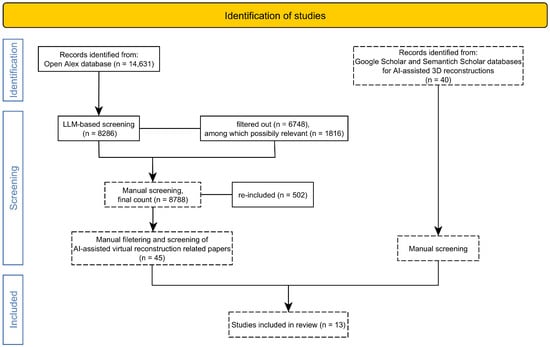
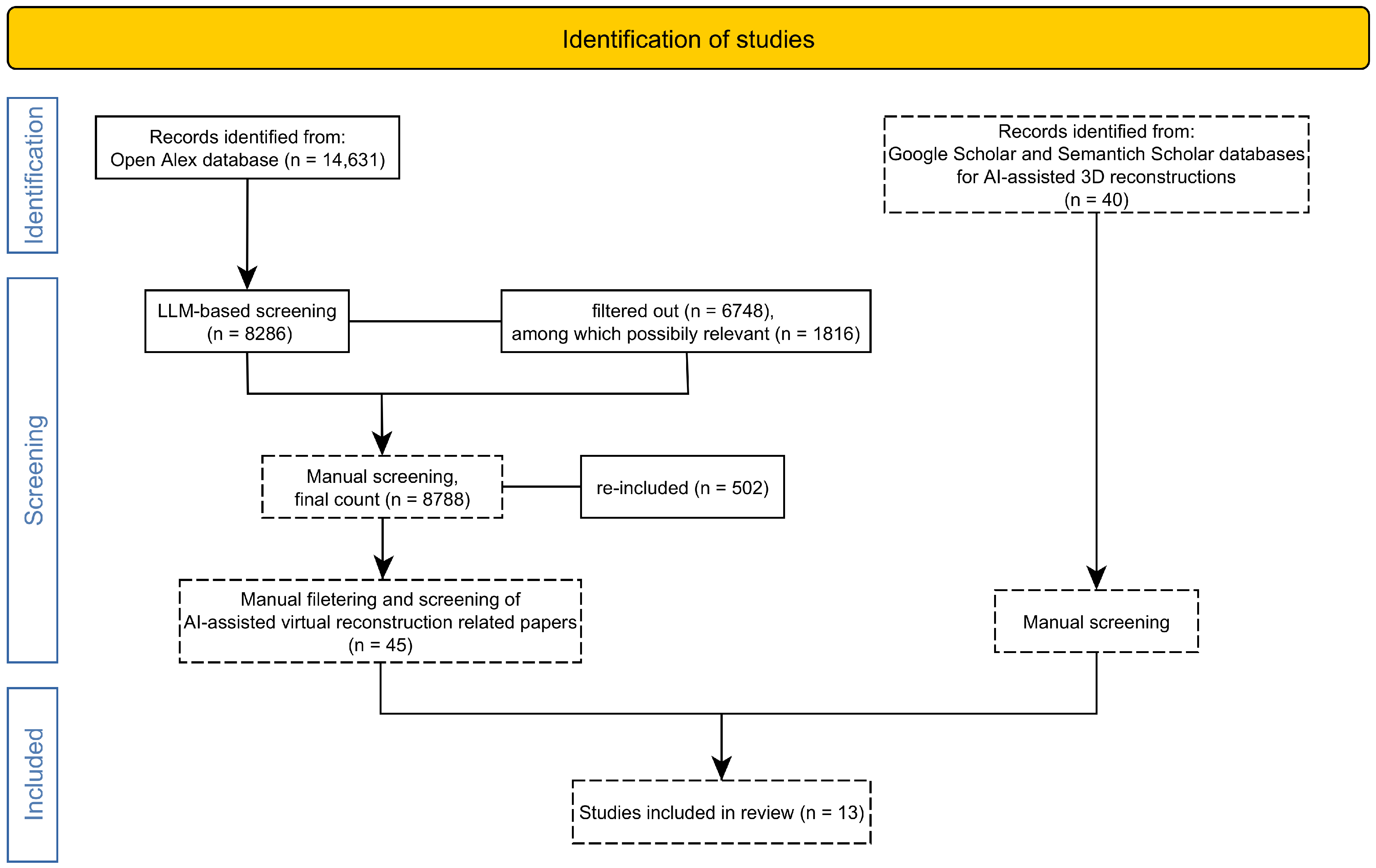
The paper approaches a thorough literature review based on published material focusing on the usage of generative AI in processes of 3D Virtual Reconstruction in the Cultural Heritage domain. The main scope of this research is analysing how AI-based tools have been directed towards this challenging sector, identifying trends, limits and capabilities in the field. The starting point is a broader data collection useful to delimit and comprehend the amplitude of the research area, encompassing all the papers published on 3D Heritage Virtual Reconstruction from 2015 to 2024 (Figure 1). It serves as a first step to contextualise the scientific trends among which AI intervenes into this specific domain. Moreover, this broader preliminary analysis is essential for understanding a complex scientific field that brings together scholars from multiple disciplines–such as architects, engineers, computer scientists and digital artists–who have not always worked within a truly interdisciplinary framework. To conduct the search the online bibliographic databaseOpenAlex1 has been used [40]. OpenAlex is an open source project run by OurResearch, a non-profit organisation. It currently hosts over than 243 million records, compared to 71 million in Web of Science (WoS) and 66 million in Scopus [41]. The database has been the subject of several evaluation studies and is now widely regarded as a powerful and inclusive tool capable of outperforming both Wos and Scopus [42]. To perform a bulk data search and download a dedicated Python v. 3.11 script has been implemented with the support of the well-known Large Language Model tool Claude.ai (Sonnet v. 4.5) [43]. The script executes a massive query and data download from the database using as search query “(“3D reconstruction” OR “virtual reconstruction” OR “3D modelling” OR “3D modeling” OR “digital reconstruction” OR “three-dimensional reconstruction”) AND (“cultural heritage” OR “archaeology” OR “archaeological site” OR “architectural heritage” OR “historical buildings” OR “monuments”)”, and English as main language. The data are downloaded as a .csv file structured in columns for Title, Author, Country, DOI and OpenAlex link for each publication identified. The script utilises the title and abstract of each paper to perform the search. The first bulk download encompassed over 14.000 papers. An in-person review of the file underlined several reduplications and false inclusions such as non relevant papers or papers in a language other than English, most likely imputable to wrongly-assigned metadata. To better refine the dataset another LLM was employed, ChatGPT (GPT-4o model). Using the prompt: “I am attaching a .csv file; could you return an .xlsx file in which, for each row, you check the ‘title’ column and format the entire row in red if the title is not related to the fields of digital cultural heritage, archaeology, 3D reconstruction, virtual heritage, photogrammetry, or laser scanning”. Subsequently, an additional validation phase was conducted, once again relying on the use of ChatGPT (GPT-4o model). This time two files were attached, the raw .csv downloaded from OpenAlex and the filtered file produced before by ChatGPT converted to .csv format. The prompt used was: “I am attaching two CSV files: one prior to filtering (_filtered), restricted to the heritage domain and one after filtering (_final). The second file also includes the abstracts. Could you check the papers that were filtered out and verify whether the filtering was applied correctly? I would like a detailed report on the filtering results, in particular highlighting any papers that were excluded but might still be relevant to the study”. ChatGPT created a .xlsx file composed of 4 sheets. The first one dedicated to the general statistics and it reports that from the 14.631 bulk-downloaded files, 6748 were filtered out, leaving the number of relevant papers to 8286, among the excluded 1816 may be relevant. The second and third sheets are for relevant and excluded papers. In the latter, the structure of the columns is the same as the previous file, with the addition of 3 new columns. Two columns are dedicated to the match between the keywords from the prompt and the file (primary_matches; secondary_matches), while a third column expresses the degree of possible relevance. The fourth sheet collects the keywords used for the analysis. At this stage a manual verification on the 1816 possibly relevant papers was performed. The identified papers were reinstituted in the main file. Afterwards a further step of cleaning was performed, using LibreOffice v.25.0 internal tools, to delete reduplicated and non-English papers. Thus, reaching the final amount of 8788 papers. In addition to the bulk download, a manual search and data collection were carried out, focusing exclusively on AI-assisted 3D reconstructions (using the relevant keywords: “ai heritage reconstruction” or “ai heritage 3D virtual reconstruction”) through Google Scholar and Semantic Scholar. The papers gathered through this process were then cross-checked against and integrated with, those retrieved through a dedicated filter in the main file.
Figure 1.
Flowchart showing the methodology used in the review process.
At this stage, a manual filtering process was conducted to retain only those studies that explicitly addressed virtual reconstruction challenges related to the use of Artificial Intelligence within the domain of 3D Cultural Heritage (3D CH). The selection process involved an initial screening of titles and abstracts, followed, when necessary, by a full-text review. This process initially identified 45 potentially relevant papers, which were subsequently narrowed down to 13 articles meeting the inclusion criteria (Figure 1). Studies were included when they met at least one of the following criteria: (i) they applied generative AI to produce, complete, restore, evaluate or support 3D heritage reconstruction outputs; (ii) they explicitly addressed methodological, ethical or epistemological issues directly relevant to generative AI in 3D heritage reconstruction; or (iii) they used AI-generated visual or geometric outputs as part of an interpretative reconstruction workflow. Studies were excluded when AI was used only for documentation, classification, segmentation, object detection, photogrammetric enhancement, HBIM enrichment or general cultural-heritage dissemination without a direct reconstructive, restorative or hypothesis-oriented component. This procedure required addressing several types of borderline cases. The first category comprised studies that did not present specific case studies but instead approached the topic from a theoretical or conceptual perspective. The second category included studies employing 3D data and AI-based methods without directly focusing on 3D reconstruction processes. Regarding the first category, only those contributions that engaged with key issues within the generative AI debate were retained. Although not involving actual 3D content generation, some of these studies addressed topics highly relevant to Gen AI and heritage reconstruction practices, including the representation of the third dimension, transparency, interpretative uncertainty and algorithmic bias. The second category encompassed a heterogeneous set of applications, such as AI-based segmentation and classification of 3D datasets (e.g., point clouds) and the generation of 2D outputs from 3D models. Studies belonging to the former group were excluded, as they did not directly address reconstructive challenges but focuses mostly on object recognition from point cloud data. Conversely, studies in the latter group were included whenever the generation process could be associated with interpretative or reconstructive activities. This criterion led to the inclusion of some research employing GANs and related approaches aimed at the structural completion or integration of missing components within 3D heritage models.
3. Results
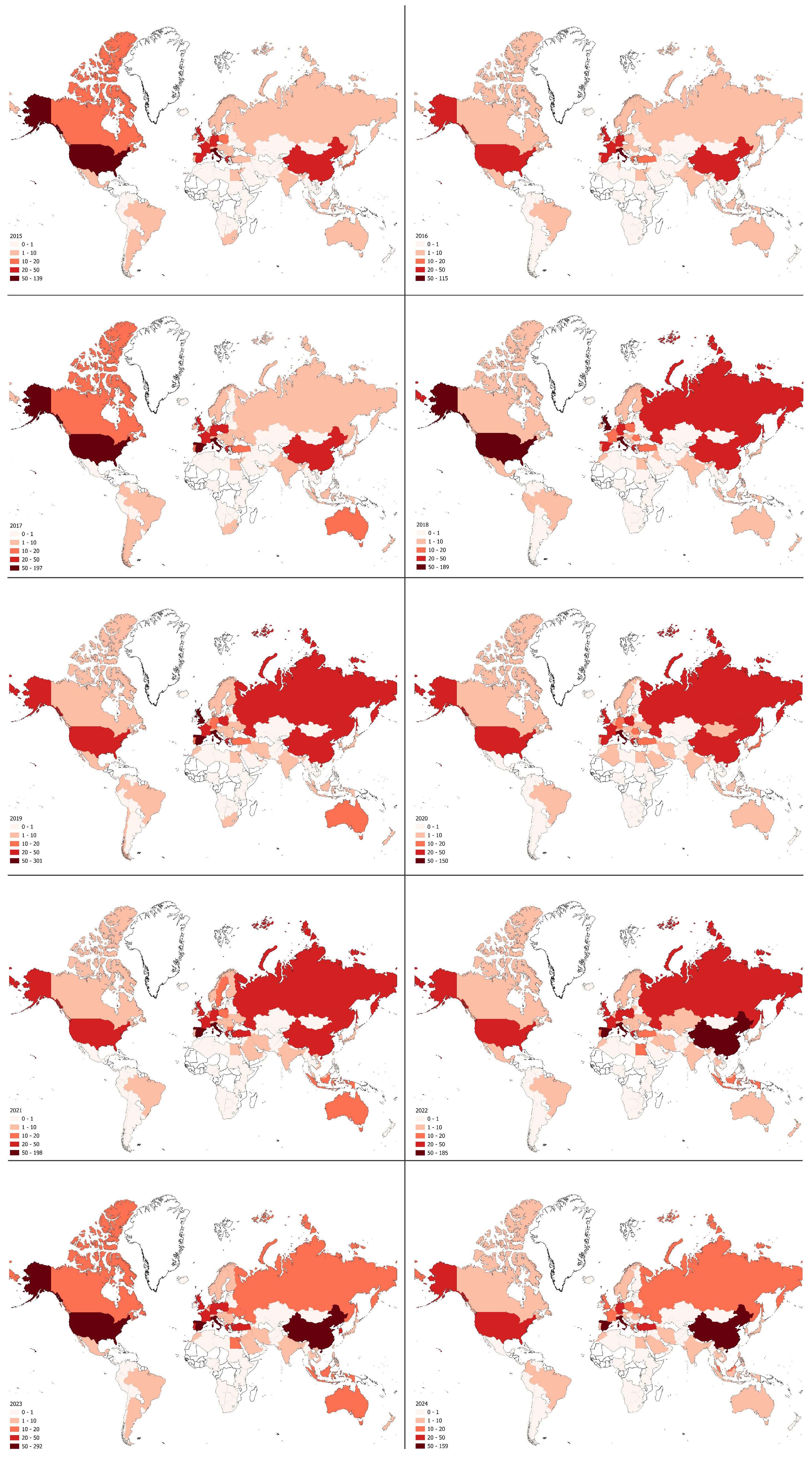
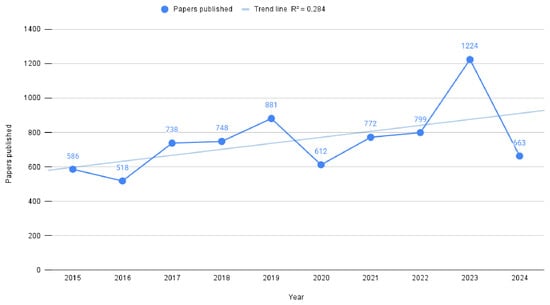
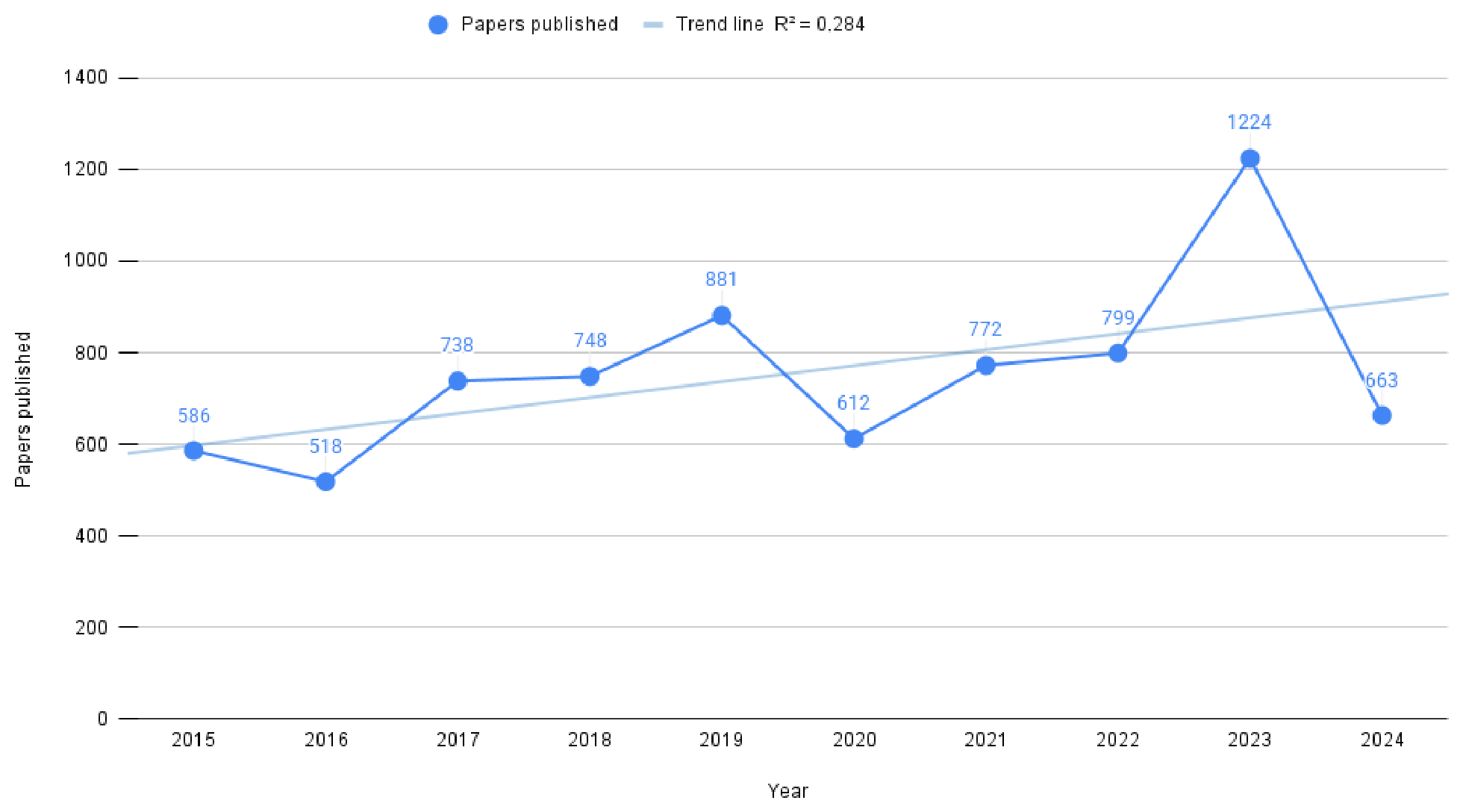
The extensive initial data collection makes it possible to frame and visualise phenomena and trends within the broader scientific field. The first of these concerns the diachronic evolution of the geographical distribution of publications addressing 3D reconstruction in the Cultural Heritage domain. By using the “Country” column of the CSV file as a key, the textual dataset can be linked to vector geometries and directly visualised in QGIS v.3.34, allowing the geographical distribution of publications to be mapped on a year-by-year basis (Figure 2). It is noteworthy that the geographical distribution of authors remains relatively stable over time. At the international level, the United States and Europe play a leading role; within Europe, Italy, Spain, France and the United Kingdom emerge as some of the most prolific countries. Canada and Russia also show sustained levels of publication across the period examined, albeit with significant year-to-year fluctuations. At a macro-scale, a clear upward trend can be observed from 2015 onwards, reaching an initial quantitative peak in 2019, followed by a slight setback. This is then followed by an absolute peak in 2023, before a sharp decline in 2024 (Figure 3).
Figure 2.
The geographic distribution of international publication on the topic of 3D Heritage Virtual Reconstruction from 2015 to 2024.
Figure 3.
The evolution of international publication on the topic of 3D Heritage Virtual Reconstruction from 2015 to 2024.
In the specific context of this study, the large corpus of collected papers was substantially reduced once filters related to the use of generative AI in 3D virtual reconstruction processes were applied. From the bulk-downloaded dataset, 45 papers were initially selected. The parallel manual search conducted through Google Scholar and Semantic Scholar identified an additional 40 scientific papers. Following cross-comparison between the two groups and the removal of duplicates and off-topic contributions, the final dataset consisted of 13 papers.
This reduction—from 8788 to 13, representing 0.15% of the broader corpus—is itself a significant finding. It quantifies the gap between the vast production on AI applications in the heritage sector and the actual adoption of generative AI specifically within the epistemically demanding context of virtual reconstruction. The disproportion is not merely a reflection of the novelty of generative AI tools; it also reflects a still cautious disciplinary adoption, whose causes are explored in the Discussion. The 13 selected papers span the period 2023–2025, confirming that this is an emerging rather than an established research area. The papers cover highly heterogeneous themes and methodological approaches. To move beyond a descriptive enumeration, the following section introduces a structured taxonomy.
3.1. A Taxonomic Classification of Gen-AI in the Virtual Reconstruction Domain
The 13 papers can be classified into six functional categories based on the role that generative AI plays within the reconstruction or restoration workflow. This taxonomy moves beyond a case-by-case description to identify structural patterns in how generative AI is currently operationalised in the field.
- Category A—Text to image and prompt-based 2D reconstruction
One of the most controversial contributions is the text-to-AI approach. These works use large generative AI models driven by textual prompts to produce 2D rendered hypotheses of missing or destroyed architectural structures. The representative case is Arzomand et al. [44]. Although the paper offers extensive theoretical and methodological premises that emphasise the importance of validation, the results presented fall well below acceptable scientific standards. The reconstructions–2D renders depicting Pompeii, the Buddhas of Bamiyan and monuments from Palmyra and Chichen Itza–are highly unrealistic, if not outright fantastical. For example, the Pompeian case includes imaginary geometric decorations on columns and paved streets running inside private buildings. Only for the Buddhas of Bamiyan did the authors perform an evaluation using the Structural Similarity Index Measure (SSIM), comparing generated images with originals. The SSIM values, which range from 0 (no similarity) to 1 (identical), remain extremely low, with a maximum of 0.12. Although the authors acknowledge several limitations–such as the need for precise prompts and the absence of original photographs that would enable similarity metrics–they considered the 0.12 SSIM evaluation as a very positive result and overall seem unaware of the actual qualitative shortcomings of their results, which remain far from any historically reliable reconstruction. This case exemplifies a recurring pattern in this category: methodologically optimistic framing that is not supported by the quality of outputs.
- Category B—Generative AI for 3D model generation from reduced inputs
Balloni et al. experiment with TRELLIS [45], a Generative AI Large Reconstruction Model (LRM) [46] capable of producing radiance fields, 3D Gaussians and meshes. Their goal is to test generative-AI training for the production of 3D heritage models from minimal inputs (multi-view or even single-view images). Outputs are assessed through both 2D and 3D metrics, including Chamfer Distance and F-score. The workflow is solidly articulated; however, it highlights critical issues concerning how the drastic reduction of input data compromises the precision expected of heritage 3D documentation.
- Category C—Survey-integrated AI reconstruction
This category combines traditional 3D survey methodologies with the prompt-based approach used in Category A. García et al. [47] conducted a topographic and photogrammetric survey of the ruins of a cathedral and use multiple generative AI systems to generate reconstruction proposals, employing an innovative prompting strategy derived from LLM-generated descriptions of historical imagery. The methodology is the most epistemically grounded among the applied papers: it acknowledges the primacy of survey data and positions AI as a hypothesis-generation tool rather than a replacement for source-based reasoning. As acknowledged by the authors, however, the limitations are evident: “In general, it was very easy and fast to obtain aesthetically appealing images; however, they also contain many extraneous features; therefore, they should be used with reservations.” While visually acceptable for general dissemination, the results suffer from both methodological opacity and insufficient scientific robustness. Similarly, Kutlu and Şimşek combine traditional 3D survey methods with AI-based tools, including LLM-supported prompts and AI-powered fill-corrective tools in Adobe Photoshop [10]. Despite several inaccuracies, the results are visually appealing. The selected case studies—materially homogeneous, structurally coherent despite architectural lacunae and lacking in decorative elements—are well suited to this approach. This represents another example of applying AI-based tools to enhance rendered outputs. However, given its constraints, the workflow raises questions about the actual usefulness of applying “mimetic” 2D corrections within what could have been a 3D reconstruction pipeline.
- Category D—AI-assisted digital restoration
These works apply generative AI to the targeted restoration of degraded or incomplete artefacts and structures, operating on existing data rather than generating entirely new reconstructions. Jaramillo and Sipiran use diffusion models for point-cloud completion, their work concerns the reconstruction of fragmented objects represented as point clouds [48]. It does not address more complex issues such as texturing or intricate decorative elements, focusing instead exclusively on digital restoration of point-cloud data. A thematically related study is that of [25], which employs image annotation, stable diffusion and neural radiance fields (NeRF) to digitally restore degraded artefacts. Although only marginally relevant to the aims of this analysis, these papers were included because of the explicitly generative nature of their machine-learning workflows for reconstructing missing 3D elements—an approach that can be characterised as 3D virtual restoration. Another notable line of inquiry explores the use of GANs for the virtual restoration of Greek temples [28]. The study, based on a simplified 3D model virtually degraded into a ruin state, offers promising insights into the potential for training deep neural networks to detect the presence or absence of specific architectural components. While these works represent legitimate and potentially productive applications of generative AI, they raise questions about the boundary between digital restoration (a conservation-adjacent process) and scientific reconstruction (an heuristic and epistemically accountable interpretative process). Thus, they were retained because they involve generative completion of missing or degraded 3D heritage data and therefore illuminate a boundary area directly relevant to reconstruction workflows.
- Category E—AI as evaluative or analytical support tool
The category comprises works that resist the standard use of generative AI tools to perform the reconstruction tasks. Instead, AI was implemented as a supporting analytical and evaluative instrument at the end of the reconstructive process. Özkuyumcu and Kalaycı Önaç propose an interesting workflow in which a traditional 3D virtual reconstruction–produced through conventional manual modelling–is independently compared with outputs generated by several generative-AI tools [49]. This line of research appears particularly promising, suggesting the possibility of using AI to evaluate the consistency of virtual reconstructions against the diverse and heterogeneous sources from which they originate. A related case is that of Yurtsever [50], although in this instance the author uses ChatGPT solely to generate a report summarising the historical sources used for reconstruction, rather than producing the reconstruction itself. These cases represent the most defensible and epistemically sound path for the integration of generative AI tools in the field.
- Category F—Ethical and theoretical frameworks
A final group of papers addresses the ethical implications of the widespread adoption of AI tools. Although generally theoretical and not always directly linked to 3D virtual reconstruction, they address fundamental issues for understanding the broader impact of generative AI. These topics are currently strictly monitored also by the Council of Europe2. Central themes include the risk—currently nearly unavoidable—of biased interpretation resulting from unbalanced or insufficient training data [51]. As noted elsewhere, AI-generated products may “unintentionally strengthen existing power structures and become a monocultural value carrier” [52]. The well-known issue of transparency–the so-called black-box effect, already problematic in reconstructive workflows–may be exacerbated by the opacity not only of the reconstruction hypotheses but also of the datasets underpinning AI-generated content [8,53]. Despite their theoretical orientation, these papers are included because they provide the normative scaffolding against which applied work must be evaluated. Their inclusion also signals a disciplinary concern: the growing awareness, particularly within Archaeology and the Humanities, that the rapid deployment of AI tools in interpretative processes requires urgent ethical scrutiny.
3.2. Keyword Co-Occurrence and Disciplinary Framing
With regard to the selected papers, further considerations can be drawn from data such as the geographical and disciplinary background of the authors (Table 1). Compared to the previously identified trends, it is noteworthy that the geographical distribution of authors appears more heterogeneous (the analysis is based solely on the affiliation of the first author). Moreover, the disciplinary background highlights how this topic is of central interest across a wide range of fields, spanning both scientific and humanities-oriented disciplines. A predominant focus emerges in areas such as Engineering and Computer Science (5 out of 13), while Architecture contributes three papers and Archaeology only two. This disciplinary distribution has direct consequences: the papers most oriented toward technical performance metrics are precisely those least attentive to the standards of transparency and source-based reasoning that the field has developed over two decades.
Table 1.
Summary table with the identified papers.
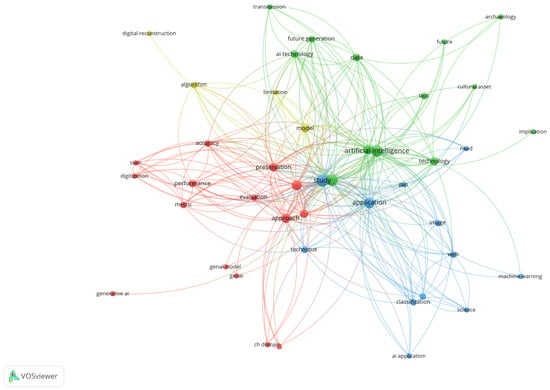
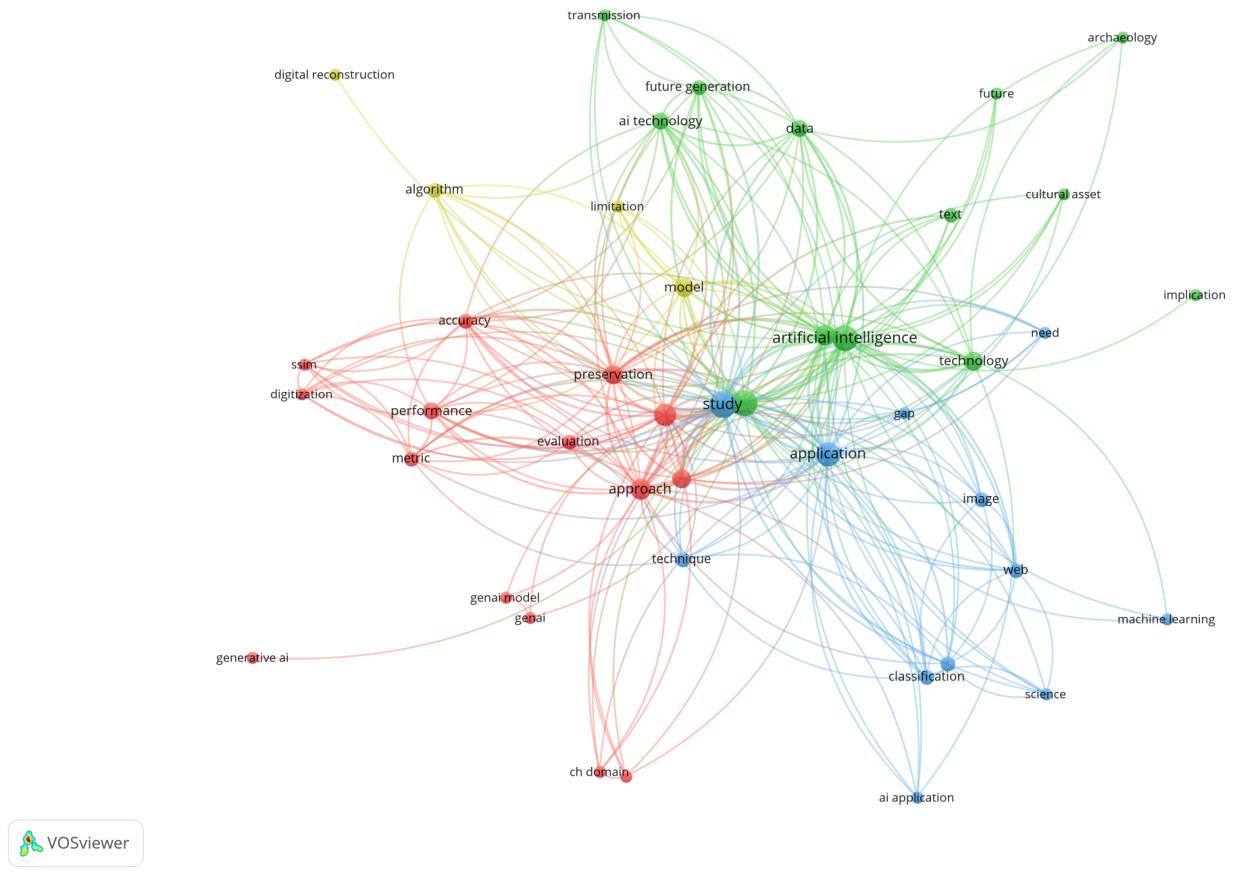
Moreover, through the use of VOSviewer v. 1.6.20 [54], it is possible to identify the relationships among the terms used in the selected papers and abstracts. The analyses were performed starting from a RIS database, produced within Zotero, consisting of the 13 selected paper. For each paper all the standard bibliographic data plus the abstract were collected. Then the db was imported in VosViewer, where maps were created from text data, using the title and abstract fields as keywords entry points. The dataset was imported setting 2 as a minimal value for term’s occurrence and manually removing unnecessary words (i.e., “need”, “latter”, “paper”).
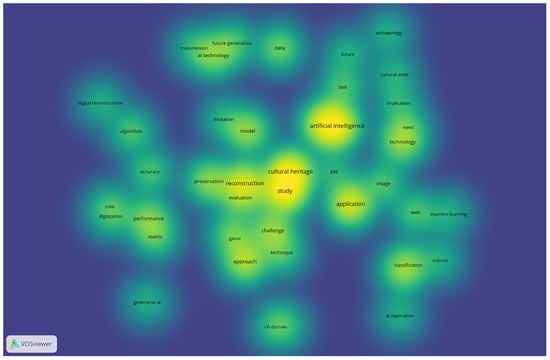
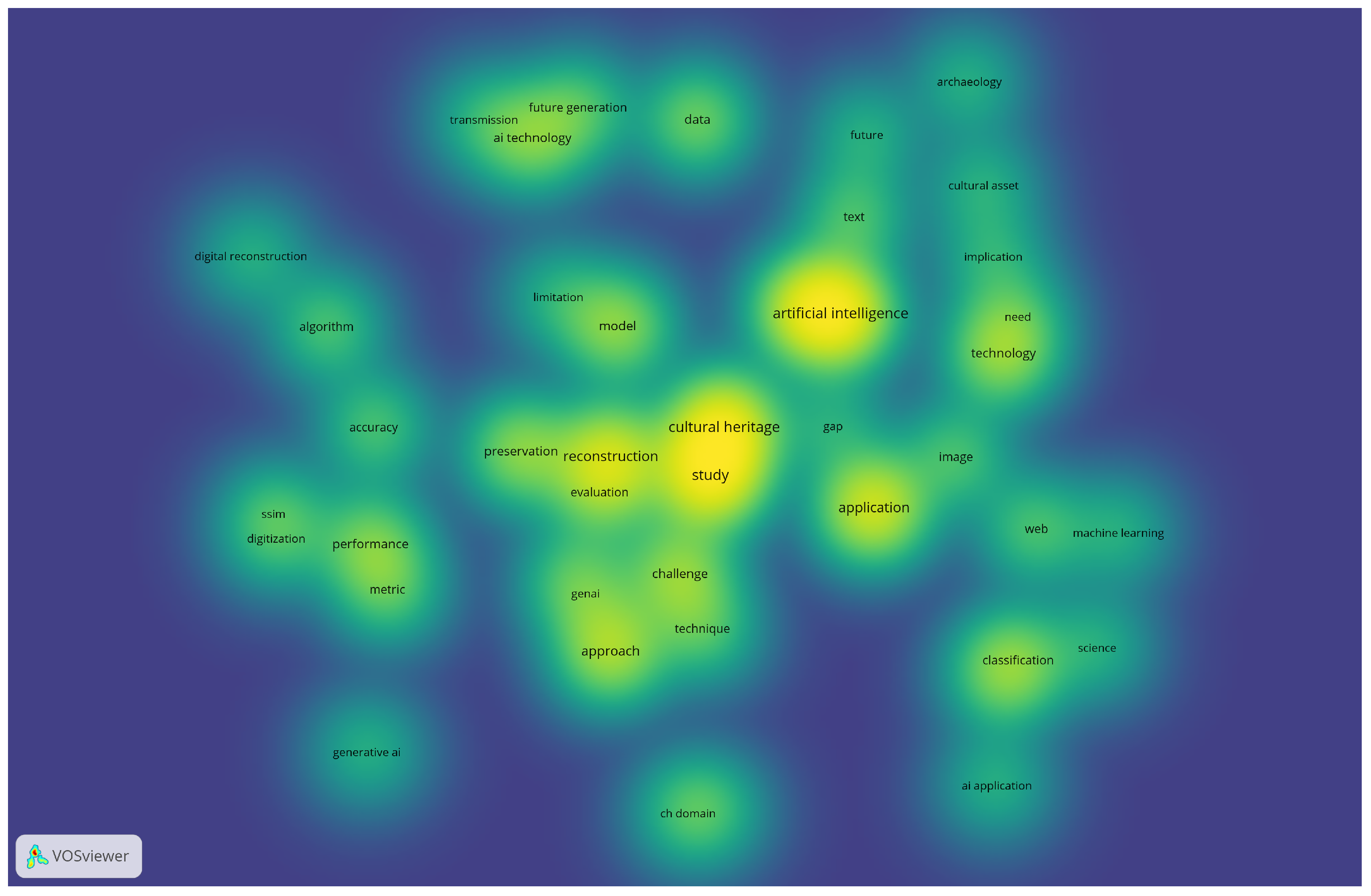
The VOSviewer keyword co-occurrence analysis of the 13 selected papers reveals a network structure in which “Artificial Intelligence”, “study” and “application” occupy the most central nodes, while “digital reconstruction” and “generative AI” are relegated to peripheral positions (Figure 4 and Figure 5).
Figure 4.
Keywords network visualisation based on the fractionalisation method.
Figure 5.
Keywordsnetwork visualisation based on the density method.
4. Discussion
The findings from the taxonomic and critical analysis of the selected papers reveal five intertwining structural problems that define the current state of generative AI adoption in 3D heritage virtual reconstruction. These are not independent issues; they form a system of mutually reinforcing challenges that must be understood as such.
4.1. Terminological Collapse: Documentation vs. Reconstruction
The most pervasive and structurally worrying problem identified in this review is the persistent conflation between 3D documentation and 3D virtual reconstruction. These are epistemically distinct processes with different aims, methodological requirements, validation standards and ethical responsibilities. Yet, they are widely conflated in paper titles, abstracts and keywords, creating direct consequences for the detectability and evaluation of AI-driven reconstruction work, as demonstrated by the dramatic corpus reduction from 8788 papers to 13 once reconstruction-specific filters were applied. 3D documentation is a metrological process oriented toward the recording of existing assets. It could be considered as a “passive” process of recording that relies on specific hardware, calibrated (i.e., terrestrial laser scanner, LiDAR) or non-calibrated (i.e., camera) and it necessitates of rigorous standards to ensure high-quality results at metrological, photometric and geometric levels. 3D virtual reconstruction is by contrast an active interpretative process. It involves the creative construction of shapes and spatial configurations for which direct empirical evidence may not exist in complete form. Its outcomes are shaped by the researcher’s interpretative choices, which are in turn conditioned by the availability of sources (historical, archaeological, iconographic and so on), as well as by discipline-specific conventions, aesthetic sensibilities and the capabilities of the 3D artist themselves. The analysis of publication trends revealed a frequent misuse of the term virtual reconstruction, reflecting a broader tendency towards an ontological flattening that obscures the fundamental distinction between raw data and interpreted data. This issue also affects the application of AI in the sector, as indirectly highlighted by the scientometric analysis on current AI-agent applications in Cultural Heritage processes conducted by Gîrbacia [7]. This is not just a terminological inconvenience but a semantic misinterpretation that is not neutral: it allows reconstruction work with limited methodological transparency to be presented as technical innovation and it obscures the epistemic gap between what is known and what is imagined.
4.2. The Black-Box Problem
The transparency problem in 3D virtual reconstruction has been at the center of the discipline for more than two decades. Since the publication of the London Charter [31] and the Seville Principles [32], the field has recognised that a reconstruction without explicit documentation of its sources and the reasoning that connects them to the final model does not offer anything to advance a scholarly rigorous scientific debate. Without accessing the reasoning and sources behind a reconstructions, such 3D models are compelling as much as potentially misleading. Over the past two decades, a range of tools and frameworks have been developed to address this issue: from the Extended Matrix Framework [37] to IDOVIR [39] and the Pure3D platform [38], the range of requested scientific standards and technical possibilities is rapidly increasing. Yet transparent practice remains still the exception rather than the norm. In this scenario Generative AI introduces a new and qualitatively distinct layer of opacity that compounds this pre-existing problem.The risk extends beyond AI-generated reconstructions proper, applying equally to other AI-based implementations such as dataset enhancement. In fact, Generative AI models produce outputs through processes that are opaque even to their users. The internal logic by which a diffusion model integrates a ruined arch or a large reconstruction model fills in a missing facade is largely not accessible, interpretable, or documentable. This is the black-box problem and it operates at two levels simultaneously: the opacity of the reconstruction hypothesis (what was decided and why) and the opacity of the generative process (how the AI arrived at the output). This dual opacity creates a serious tension with the transparency requirements of scientific reconstruction practice. Some cases presented by Balloni et al., such as the Nefertiti bust [45], conceal significant criticalities. The multi-view-generated 3D model of the bust displays substantial discrepancies compared to the original: both the necklace and the headdress ornaments resemble the original but are not identical. This highlights a fundamental limitation, as such a process cannot yet be considered reliable for scientific documentation purposes.
4.3. Evaluation Metrics and the Visual Plausibility Fallacy
The evaluation of generative AI outputs in the reviewed papers reveals a systematic privileging of visual and geometric similarity over historical scientific reliability. The dominant metrics—SSIM, PSNR, Chamfer Distance, F-score—measure the degree to which an AI-generated output resembles a reference image or model. This is a legitimate measure of technical performance, but it is categorically insufficient as a measure of scientific validity in a heritage reconstruction context, as clearly demonstrated by the case presented by Arzomand et al. [44]. This aspect is not simply a disciplinary fastidiousness, it reflects a deeper conceptual confusion between visual plausibility (does this look like something that could have existed?) and historical accuracy (is there any kind of documented or interpreted evidence that allows us to infer that this is what existed?). A generated image of Pompeii that looks visually coherent but contains historically impossible elements does not become more scientifically valid by achieving a higher SSIM score against a photographic reference.
This issue underlines the pressing need to further develop tools and frameworks that shift the focus toward making the reconstructive process itself intelligible. This would be a fundamental step toward a dual evaluation framework that assesses AI-generated reconstructions along two independent axes: technical quality (geometric precision, visual fidelity) and scientific validity (source correspondence, interpretative accountability, transparency of reasoning). Without the second axis, technically impressive outputs can be—and are—mistaken for scientifically authoritative reconstructions. The phase dominated by the Sturm und Drang effect of digital content aimed at passive consumption is now largely surpassed. The focus is increasingly shifting towards interaction between active audiences and intelligible digital content.
4.4. Interpretative Bias and the Decolonisation Imperative
The adoption of generative AI in heritage reconstruction hypotheses intersects with one of the most profound methodological shifts in the field in recent decades: the progressive acknowledgment of the need to decolonise interpretative paradigms. This shift involves a critical reassessment of the assumptions, visual conventions and interpretative frameworks that have historically shaped how the past is reconstructed—frameworks that often reflect the cultural, political and aesthetic priorities of the scholars and institutions that produced them, rather than the communities whose heritage is being represented. Attention is progressively shifting towards questioning assumptions once considered untouchable pillars, established in historical contexts where external factors often prevailed over scientific rigour, such as individual authority and political, cultural or social trends. This is compounded by political and cultural pressures that, in every historical period, influence not only research agendas but also, at times, the framing of results. Consequently, the recent widespread decolonisation process has generated renewed attention towards reassessing the principles and embedded biases that have historically shaped reconstructive practices. Under this new perspective, formulating new and independent 3D-based hypotheses becomes essential, not only to advance research through novel tools and methods, but also to critically reassess fragile assumptions by testing them against renewed hypotheses. As highlighted by Menotti [51], AI-based tools risk being particularly problematic from this perspective. Generative AI tools are not epistemically neutral. They reproduce and amplify the patterns present in their training data, which are themselves shaped by the distribution of digitised visual and spatial information available on the internet and in institutional repositories. Thus, AI-generated heritage products risk functioning as a negative reinforcement of accumulated prejudices that resembles surpassed dominant visual cultures. This is not a theoretical risk; it is a structural property of generative AI systems trained on unbalanced corpora.
4.5. Speed, Aesthetics and Heuristic Value
Most of the analysed cases reveal an application of generative AI primarily aimed at producing more or less altered 2D renders. This raises critical questions regarding the actual utility of such processes. The longevity of the research field–demonstrated by the wide temporal range of the initial data capture–shows that the value of virtual reconstruction lies today less in the visually appealing final product than in the three-dimensional heuristic process that leads to reconstruction. The analysis suggests that this new trend risks to be pushing backwards, shifting the focus towards speed and approximation in order to obtain a product, rather than towards the analytical work underpinning it. In doing so, a three-dimensional heuristic process is reduced to a two-dimensional graphic illustration. Treating 3D reconstruction merely as a visualisation tool not only diminishes its potential but also creates a perceived need for shortcuts to reduce time and production costs. In this context, AI risks becoming an easy instrument for problematic reuse or appropriation. On the matter, two examples stand out. The first is the policies introduced by web-based platform dedicated to 3D artists: such as the AI-models filtering option by Art Station3 or the tag NoAI and CreatedWithAI on Sketchfab4. These policies enable users to recognise and filter out AI-generated content. Another example is the online controversy sparked by 3D Digital Heritage Specialists, Pablo Aparicio Resco, showing on his X account how some of his published illustrations were improperly used by others as a prompt to generate copied content via AI-based tools5.
5. Future Research Directions
Despite the significant critical issues identified in the current state of generative AI application within the virtual reconstruction domain, this review points to several concrete research directions. These could contribute to a more epistemically responsible integration of these tools in the field. In particular, the identified research pathways are:
- The most urgent need emerged from this review is the development of a dual evaluation framework capable of assessing AI-generated heritage content along both technical and scientific axes. It is therefore essential to acknowledge that current AI agents do not yet rely on training datasets that are sufficiently adequate or representative to support such tasks in a comprehensive and scientifically reliable manner, particularly in light of the ethical issues discussed above.
- The most epistemically promising application of generative AI identified in this review is not the generation of reconstruction hypotheses but the evaluation and analysis of hypotheses produced by human experts through traditional source-based processes. This inverted paradigm positions AI not as a replacement for expert interpretative work but as a consistency-checking and hypothesis-stress-testing tool. The integration of such a paradigm within existing framework could drastically increase the efforts towards transparency of interpretations and sources. For instance, AI tools could be integrated in existing workflow by directly accessing sources, data and hypotheses—through systems such as the Extended Matrix [37]—and thereby operate within a comprehensive analytical framework. This would allow evaluation to move beyond graphic aesthetics or visual similarity to existing images of analogous cases, focusing instead on raw data and the interpretative process underpinning the virtual representation.
- The terminological collapse documented in this review—the conflation of documentation, restoration and reconstruction—requires a concerted standardisation effort. This is not merely a semantic concern: it is a prerequisite for the scientific community to be able to identify, evaluate and build upon work in this area. Without clear and consistently applied terminology, the literature will continue to be obscured by false inclusions and misleading framings. This would also hinder the development of field-specific evaluation standards. We recommend that future publications in this area explicitly declare, in abstract and keywords, the process type being performed (documentation, digital restoration, virtual reconstruction, or hybrid). Moreover, that journals and conference proceedings adopt these distinctions as minimum reporting requirements.
- Finally, a research avenue that has yet to be substantially explored in the literature concerns the use of tools and web-based platforms for 3D geometries generation. Through dedicated plugins linking these tools to major 3D modelling software, they could be meaningfully integrated into workflows to accelerate specific modelling tasks: such as generating a proxy low-poly model of a Corinthian capital starting from a real-case picture. However, alongside the evident advantages, the drawbacks must also be considered—particularly issues of transparency and data storage, which often relies on proprietary servers owned by multinational corporations based abroad. There are already several promising web-based tools (i.e., Meshy.ai) whose products could be actually be of great help in such specific tasks.
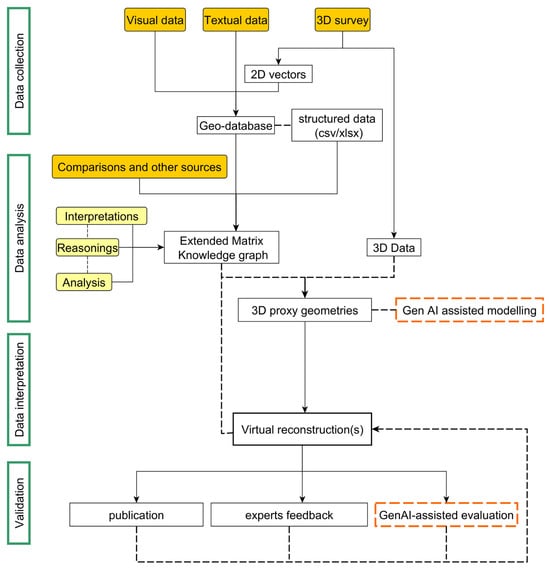
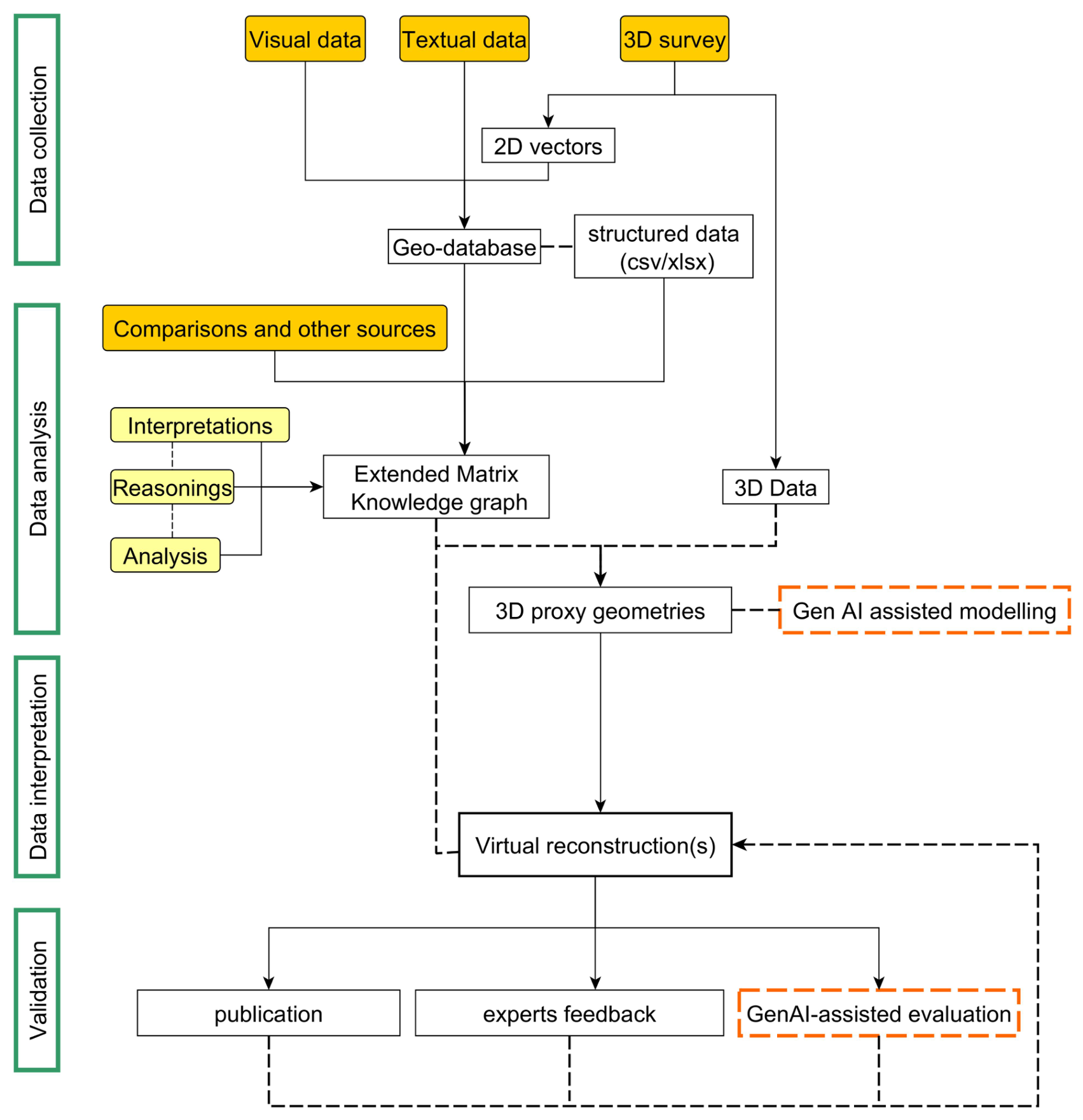
Starting from these reflections a prototypical workflow could be structured as follows (Figure 6). The process would begin with data acquisition, including both 2D and 3D documentation activities, followed by data organisation within a dedicated (geo-)database. Subsequently, an analytical phase would collect and structure sources, comparisons and hypotheses within the Extended Matrix knowledge graph. Then such information would be linked to simplified (or proxy) geometries directly within the 3D modelling software Blender, thus associating each information to a geometrical representation/counterpart. An interpretative phase would follow, leading to the generation of one—or multiple—virtual reconstruction hypotheses. Within this workflow, generative AI could contribute in two distinct ways. First, it could support the production of simplified proxy geometries, automating repetitive modelling operations and reducing the manual workload associated with the preliminary stages of draft-shapes creation. Similar forms of automation are already employed through AI-assisted recognition and segmentation tools operating on orthomosaics and other 2D-based survey products [55]. Emerging text-to-3D systems could further streamline this process by generating basic geometric representations from structured prompts while remaining under direct expert supervision. Second, and potentially more significantly, AI could function as an evaluative and analytical support tool. By accessing the sources, comparisons, assumptions and interpretative links recorded within the knowledge graph, an AI system could assess the internal coherence of a reconstruction hypothesis, identify unsupported assumptions, highlight inconsistencies and propose alternative configurations requiring further expert validation. In this scenario, AI would not replace the interpretative role of the researcher but would operate as a mechanism for hypothesis testing and critical assessment. Such an approach is particularly consistent with the nature of scientific virtual reconstruction, which should be inherently iterative and recursive. Reconstruction hypotheses, in fact, should be continuously revised as new evidence emerges or previously accepted interpretations are reassessed. Generative AI could therefore contribute not by autonomously producing reconstructions, but by supporting the ongoing process of evaluation, discussion and refinement that characterises transparent and scientifically grounded virtual archaeology.
Figure 6.
Hypothetical 3D virtual reconstruction workflow supported by Gen AI contributions.
6. Conclusions
Unlike previously published studies, this review focuses specifically on the applied use of AI tools in virtual reconstruction processes.
Overall, the analysis reveals a limited number of concrete use cases, suggesting a moment of stagnation poised between real possibilities and structural limitations. While a technological revolution may indeed be approaching, for it to be transformative it must be both profound and functional. In fact the potential of AI agents to support source analysis and raw data interpretation is evident, although their effective and intelligent integration into interpretative processes remains distant.
The principal empirical finding—that only 13 papers in a corpus of 8788 directly address generative AI-driven reconstruction processes—is significant in itself and emphasizes the current scenario. In fact, it has been interpreted not merely as a measure of novelty but as a quantitative indicator of the structural tensions underlying the relationship between generative AI and scientific reconstruction practices. The field appears to be suspended in a moment of stasis between imaginable yet non-existent possibilities and currently operative practices. The taxonomic analysis of the 13 papers reveals five functional categories of generative AI application, ranging from text-to-image prompt-based approaches (Category A) to AI as evaluative support tool (Category E). This classification exposes a concerning pattern: the majority of current applications prioritise visual output and technical performance over scientific accountability. Thus, Gen AI agents risk operating in tension with the transparency standards that the virtual heritage community has developed over two decades. Moreover, the analysis has highlighted a number of notable emerging phenomena. A critical one, is the terminological collapse that is leading to the ontological flattening between 3D documentation and 3D virtual reconstruction. Another key aspect relates to the diffusion of AI-based tools within the Digital Heritage sector. There has been a rapid instrumental proliferation in the field of software and algorithm development (e.g., GANs, NeRFs, Gaussian Splatting and related approaches). This contrasts with a more cautious and limited adoption of such tools within the more narrowly defined domain of virtual reconstruction. In this context, AI usage remains tentative, often largely theoretical and still characterised by significant room for development. Major critical issues also emerge, particularly with regard to interpretative biases and the lack of transparency in both processes and reasoning. The critical analysis of these intertwined problems provided the analytical grounding for a set of concrete future research directions. These concretely target the conditions that currently prevent generative AI from making a legitimate scientific contribution to 3D heritage reconstruction. The central argument of this paper is that the current trajectory of generative AI adoption in heritage reconstruction raises significant methodological concerns. Many current approaches prioritise speed, aesthetic outcomes and technical performance. As a result, they risk emphasizing some of the transparency and accountability problems that the field has spent the last two decades attempting to address. Workflows, such as the one proposed by Özkuyumcu and Kalaycı Önaç, the source-documentation approach of Yurtsever combined with the one by Balloni et al., all point toward suggesting a different model — one in which AI functions as a tool that revises and supports, rather than supplants, the expert interpretative work that defines scientific reconstruction. Realising this alternative model will require sustained interdisciplinary collaboration, the development of field-specific evaluation standards, the upstream curation of culturally representative training data and the engagement of the heritage AI research community with the emerging legal and ethical governance frameworks being developed at international level.
Supplementary Materials
The following supporting information can be downloaded at: https://www.mdpi.com/article/10.3390/heritage9070246/s1.
Author Contributions
Conceptualization, M.L. and N.A.; Methodology M.L.; Data Curation, M.L.; Writing—Original paragraphs, M.L.; Writing—Review & Editing, M.L. and N.A.; Project Administration, N.M. All authors have read and agreed to the published version of the manuscript.
Funding
This work is supported by PNRR Project PE000020 ‘Cultural Heritage Active Innovation for Sustainable Society’ CHANGES, Spoke 5—Mission 4 Component 2, from research to enterprise; Investment Line 1.3—Extended partnerships extended to universities, research centres, enterprises and basic research project funding’; funded by the European Union—NextGenerationEU, National Recovery and Resilience Plan—CUP B53C22003890006.
Data Availability Statement
The original contributions presented in this study are included in the article/Supplementary Material. Further inquiries can be directed to the corresponding author.
Acknowledgments
The authors declare the use of AI as an integral tool in a step of the methodology, as described in Section 2 (Methodology).
Conflicts of Interest
The authors declare no conflicts of interest.
Notes
| 1 | https://openalex.org/ (accessed on 5 October 2025). |
| 2 | Council of Europe. Artificial Intelligence—Council of Europe’s Work in Progress. Available online: https://www.coe.int/en/web/artificial-intelligence/work-in-progress (accessed on 7 January 2026). |
| 3 | https://help.artstation.com/s/article/11451085663501-Use-of-AI-Software-on-ArtStation?language=en_US (accessed on 6 January 2026). |
| 4 | https://sketchfab.com/blogs/community/introducing-the-noai-createdwithai-tags/ (accessed on 6 January 2026). |
| 5 | https://x.com/par_virtual/status/1975497756425986377 (accessed on 6 January 2026). |
References
- Benko, A.; Sik Lányi, C. History of Artificial Intelligence. In Encyclopedia of Information Science and Technology, 2nd ed.; Khosrow-Pour, D.B.A., Ed.; IGI Global: Hershey, PA, USA, 2009; pp. 1759–1762. [Google Scholar] [CrossRef] [Scilit]
- Mantovan, L.; Nanni, L. The Computerization of Archaeology: Survey on Artificial Intelligence Techniques. SN Comput. Sci. 2020, 1, 267. [Google Scholar] [CrossRef] [Scilit]
- Stojanović, Z.; Čajić, E. Application of Artificial Intelligence in Cultural Heritage. In The Fourth International Scientific Conference the Importance of Media Interpretation for the Promotion of Cultural Heritage; Sančanin, B., Ed.; University of Belgrade: Belgrade, Serbia, 2023; Volume 4, pp. 333–352. [Google Scholar] [CrossRef] [Scilit]
- Wen, H. Research on Intelligent Experience and Living Inheritance of Cultural Heritage Against the Background of Artificial Intelligence. Lect. Notes Educ. Psychol. Public Media 2023, 10, 78–90. [Google Scholar] [CrossRef] [Scilit]
- Spennemann, D.H.R. Generative Artificial Intelligence, Human Agency and the Future of Cultural Heritage. Heritage 2024, 7, 3597–3609. [Google Scholar] [CrossRef] [Scilit]
- Münster, S.; Maiwald, F.; Di Lenardo, I.; Henriksson, J.; Isaac, A.; Graf, M.M.; Beck, C.; Oomen, J. Artificial Intelligence for Digital Heritage Innovation: Setting up a R&D Agenda for Europe. Heritage 2024, 7, 794–816. [Google Scholar] [CrossRef] [Scilit]
- Gîrbacia, F. An Analysis of Research Trends for Using Artificial Intelligence in Cultural Heritage. Electronics 2024, 13, 3738. [Google Scholar] [CrossRef] [Scilit]
- Silva, C.; Oliveira, L. Artificial Intelligence at the Interface between Cultural Heritage and Photography: A Systematic Literature Review. Heritage 2024, 7, 3799–3820. [Google Scholar] [CrossRef] [Scilit]
- Colace, F.; Gaeta, R.; Lorusso, A.; Pellegrino, M.; Santaniello, D. New AI challenges for cultural heritage protection: A general overview. J. Cult. Herit. 2025, 75, 168–193. [Google Scholar] [CrossRef] [Scilit]
- Kutlu, İ.; Şimşek, D. Artificial intelligence (AI) assisted digital reconstruction of historical buildings. In Proceedings of the 4th International Civil Engineering & Architecture Conference Volume 2: Architecture; Golden Light Publishing: Trabzon, Turkey, 2025. [Google Scholar] [CrossRef] [Scilit]
- Sharma, H. Applications of Artificial Intelligence and Machine Learning in the Preservation and Analysis of Heritage Structures: A Comprehensive Review. Arch. Comput. Methods Eng. 2026, 33, 3001–3033. [Google Scholar] [CrossRef] [Scilit]
- Gattiglia, G. Managing artificial intelligence in archeology. An overview. J. Cult. Herit. 2025, 71, 225–233. [Google Scholar]
- Foka, A.; Griffin, G. AI, cultural heritage, and bias: Some key queries that arise from the use of GenAI. Heritage 2024, 7, 6125–6136. [Google Scholar] [CrossRef] [Scilit]
- Spennemann, D.H. Will artificial intelligence affect how cultural heritage will be managed in the future? Responses generated by Four genAI Models. Heritage 2024, 7, 1453–1471. [Google Scholar] [CrossRef] [Scilit]
- Croce, V.; Bevilacqua, M.G.; Caroti, G.; Piemonte, A. Connecting Geometry and Semantics via Artificial Intelligence: From 3D Classification of Heritage Data to H-BIM Representations. Int. Arch. Photogramm. Remote Sens. Spat. Inf. Sci. 2021, 43, 145–152. [Google Scholar] [CrossRef] [Scilit]
- Zhang, Z.; Zou, Y. Research hotspots and trends in heritage building information modeling: A review based on CiteSpace analysis. Humanit. Soc. Sci. Commun. 2022, 9, 394. [Google Scholar] [CrossRef] [Scilit]
- Maher, B.; Delgado, A.G.; Soriano, P.D.G.; Rayane, N. (H-BIM IA) Historic Building Information Modelling and Artificial Intelligence as a methodology for the conservation of architectural heritage on land, the case of Khenguet Sidi Nadji city. Stud. Eng. Exact Sci. 2024, 5, 2999–3021. [Google Scholar] [CrossRef] [Scilit]
- Danese, M.; Sogliani, F.; Sileo, M.; Abate, N.; Biscione, M.; Pepe, L.; Lasaponara, R.; Masini, N. AI methods for enhancing and recognizing archaeological features in heterogeneous geophysical datasets. Sci. Rep. 2025, 15, 32742. [Google Scholar] [CrossRef] [Scilit] [PubMed]
- Abate, N.; Roubis, D.; Aggeli, A.; Sileo, M.; Amodio, A.M.; Vitale, V.; Frisetti, A.; Danese, M.; Arzu, P.; Sogliani, F.; et al. An Open-Source Machine Learning–Based Methodological Approach for Processing High-Resolution UAS LiDAR Data in Archaeological Contexts: A Case Study from Epirus, Greece. J. Archaeol. Method Theory 2025, 32, 38. [Google Scholar] [CrossRef] [Scilit]
- Moral-Andrés, F.; Merino-Gómez, E.; Reviriego, P.; Lombardi, F. Can Artificial Intelligence Reconstruct Ancient Mosaics? Stud. Conserv. 2024, 69, 313–326. [Google Scholar] [CrossRef] [Scilit]
- Wang, Y.; Zhou, Y. Artificial Intelligence-Driven Interactive Experience for Intangible Cultural Heritage: Sustainable Innovation of Blue Clamp-Resist Dyeing. Sustainability 2025, 17, 898. [Google Scholar] [CrossRef] [Scilit]
- Condorelli, F.; Rinaudo, F. Processing Historical Film Footage with Photogrammetry and Machine Learning for Cultural Heritage Documentation. In Proceedings of the 1st Workshop on Structuring and Understanding of Multimedia heritage Contents, Nice France; Association for Computing Machinery: New York, NY, USA, 2019; pp. 39–46. [Google Scholar] [CrossRef] [Scilit]
- Mishra, M.; Barman, T.; Ramana, G. Artificial intelligence-based visual inspection system for structural health monitoring of cultural heritage. J. Civ. Struct. Health Monit. 2024, 14, 103–120. [Google Scholar]
- Mazzacca, G.; Karami, A.; Rigon, S.; Farella, E.; Trybala, P.; Remondino, F. NeRF for heritage 3D reconstruction. Int. Arch. Photogramm. Remote Sens. Spat. Inf. Sci. 2023, 48, 1051–1058. [Google Scholar] [CrossRef] [Scilit]
- Stoean, R.; Bacanin, N.; Stoean, C.; Ionescu, L. Bridging the past and present: AI-driven 3D restoration of degraded artefacts for museum digital display. J. Cult. Herit. 2024, 69, 18–26. [Google Scholar] [CrossRef] [Scilit]
- Dahaghin, M.; Castillo, M.; Riahidehkordi, K.; Toso, M.; Bue, A.D. Gaussian Heritage: 3D Digitization of Cultural Heritage with Integrated Object Segmentation. arXiv 2024, arXiv:2409.19039. [Google Scholar] [CrossRef] [Scilit]
- Bharamnaikar, A.; Gani, P.; Kinagi, S.M.; Sooji, S.; Muttagi, V.; Kulkarni, P. Text-to-Image Synthesis for Heritage Monuments Using Generative Adversarial Networks: A Survey. In 2024 IEEE Conference on Engineering Informatics (ICEI), Melbourne, Australia; IEEE: Piscataway, NJ, USA, 2024; pp. 1–8. [Google Scholar] [CrossRef] [Scilit]
- Maitin, A.M.; Nogales, A.; Delgado-Martos, E.; Intra Sidola, G.; Pesqueira-Calvo, C.; Furnieles, G.; García-Tejedor, Á.J. Evaluating Activation Functions in GAN Models for Virtual Inpainting: A Path to Architectural Heritage Restoration. Appl. Sci. 2024, 14, 6854. [Google Scholar] [CrossRef] [Scilit]
- Shih, N.J. AI- and AR-Assisted 3D Reactivation of Characters in Paintings. Heritage 2025, 8, 207. [Google Scholar] [CrossRef] [Scilit]
- DaCosta, B. Speaking with the Past: Constructing AI-Generated Historical Characters for Cultural Heritage and Learning. Heritage 2025, 8, 387. [Google Scholar] [CrossRef] [Scilit]
- Beacham, R.; Denard, H.; Niccolucci, F. An introduction to the London charter. In Joint Event CIPA/VAST/EG/EuroMed; Citeseer: University Park, PA, USA, 2006; Volume 1, pp. 1–6. [Google Scholar]
- Bendicho, V.M.L.M. International Guidelines for Virtual Archaeology: The Seville Principles. In Good Practice in Archaeological Diagnostics; Corsi, C., Slapšak, B., Vermeulen, F., Eds.; Natural Science in Archaeology; Springer International Publishing: Cham, Switzerland, 2013; pp. 269–283. [Google Scholar] [CrossRef] [Scilit]
- Frischer, B.; Niccolucci, F.; Ryan, N.S.; Barceló, J.A. From CVR to CVRO: The past, present, and future of cultural virtual reality. In BAR International Series; Tempus Reparatum: Oxford, UK, 2002; Volume 1075, pp. 7–18. [Google Scholar]
- Hermon, S.; Niccolucci, F.; D’Andrea, A. Some evaluations on the potential impact of virtual reality on the archaeological scientific research. In Proceedings of the VSMM2005. Proceedings of the Eleventh International Conference on Virtual Systems and Multimedia. Virtual Reality at Work in the 21st Century. Impact on Society; Thwaites, H., Ed.; Archaeolingua: Budapest, Hungary, 2005; Volume 5, Issue 2. [Google Scholar]
- Lombardi, M. Sustainability of 3D Heritage data: Life-cycle and impact. Archeol. Calc. 2023, 34, 339–356. [Google Scholar]
- Aparicio-Resco, P.; Figueiredo, C. El Grado De Evidencia Historico-Arqueologica De Las Reconstrucciones Virtuales: Hacia Una Escala De Representacion GraFica—The Level of Historical-Archaeological Evidence of Virtual Reconstructions: Towards a Scale of Graphical Representation. Rev. Otarq Otras Arqueol. 2017, 1, 235–247. [Google Scholar]
- Demetrescu, E.; Ferdani, D. From field archaeology to virtual reconstruction: A five steps method using the extended matrix. Appl. Sci. 2021, 11, 5206. [Google Scholar] [CrossRef] [Scilit]
- Fung, N.; Schoueri, K.; Scheibler, C.; Papadopoulos, C.; Schreibman, S. PURE3D Technical Report. PURE3D Project, Maastricht University. 2021. Available online: https://pure3d.eu/wp-content/uploads/2021/09/Pure3D_Technical-Report.pdf (accessed on 18 September 2025).
- Grellert, M.; Wacker, M.; Bruschke, J.; Beck, D.; Stille, W. IDOVIR—A New Infrastructure for Documenting Paradata and Metadata of Virtual Reconstructions. In 3D Research Challenges in Cultural Heritage V: Paradata, Metadata and Data in Digitisation; Springer: Cham, Switzerland, 2024; pp. 103–114. [Google Scholar]
- Priem, J.; Piwowar, H.; Orr, R. OpenAlex: A fully-open index of scholarly works, authors, venues, institutions, and concepts. arXiv 2022, arXiv:2205.01833. [Google Scholar] [CrossRef] [Scilit]
- Culbert, J.H.; Hobert, A.; Jahn, N.; Haupka, N.; Schmidt, M.; Donner, P.; Mayr, P. Reference coverage analysis of OpenAlex compared to Web of Science and Scopus. Scientometrics 2025, 130, 2475–2492. [Google Scholar] [CrossRef] [Scilit]
- Alperin, J.P.; Portenoy, J.; Demes, K.; Larivière, V.; Haustein, S. An analysis of the suitability of OpenAlex for bibliometric analyses. arXiv 2024, arXiv:2404.17663. [Google Scholar] [CrossRef] [Scilit]
- Barros, G.; Martins, M.O. Comparative of Source Code Generated by Principal LLM Generators for Python and Lua Languages. Bachelor’s Thesis, Universidade Franciscana (UFN), Santa Maria, RS, Brazil, 2024. [Google Scholar]
- Arzomand, K.; Rustell, M.; Kalganova, T. From ruins to reconstruction: Harnessing text-to-image AI for restoring historical architectures. Chall. J. Struct. Mech. 2024, 10, 69. [Google Scholar] [CrossRef] [Scilit]
- Balloni, E.; Paolanti, M.; Uggeri, J.; Zingaretti, P.; Pierdicca, R. Enhancing Cultural Heritage with Generative AI: A Comparative Framework for the Evaluation of 3D Model Accuracy and Visual Fidelity. In Proceedings of the Digital Heritage 2025; Campana, S., Ferdani, D., Graf, H., Hegarty, Z., Pescarin, S., Remondino, F., Eds.; Eurographics Association: Goslar, Germany, 2025. [Google Scholar]
- Xiang, J.; Lv, Z.; Xu, S.; Deng, Y.; Wang, R.; Zhang, B.; Chen, D.; Tong, X.; Yang, J. Structured 3D Latents for Scalable and Versatile 3D Generation. arXiv 2025, arXiv:2412.01506. [Google Scholar] [CrossRef] [Scilit]
- García, B.; Rodríguez-Miranda, Á.; Valle-Melón, J.M.; Iñañez, J.G. Geodesy, Surveying, 3D Modelling, and AI Virtual Reconstruction in the Archaeological Sites and Monuments of the Former Settlement of Ribeira Grande in Cidade Velha (Santiago Island, Cape Verde). Int. Arch. Photogramm. Remote Sens. Spat. Inf. Sci. 2025, 48, 519–524. [Google Scholar] [CrossRef] [Scilit]
- Jaramillo, P.; Sipiran, I. Cultural Heritage 3D Reconstruction with Diffusion Networks. arXiv 2024, arXiv:2410.10927. [Google Scholar] [CrossRef] [Scilit]
- Özkuyumcu, S.A.; Önaç, A.K. Performance Analysis of Artificial Intelligence Tools in Digitization of Lost Cultural Heritage: Saray-I Amire. Turk. J. For. Sci. 2025, 9, 12–24. [Google Scholar] [CrossRef] [Scilit]
- Yurtsever, A. Documentation of cultural heritage with technology: Evaluation through some architectural documentation examples and brief looking at AI (Artificial Intelligence). Cult. Herit. Sci. 2023, 4, 31–39. [Google Scholar] [CrossRef] [Scilit]
- Menotti, G. The model is the museum: Generative AI and the expropriation of cultural heritage. AI Soc. 2025, 40, 5593–5597. [Google Scholar] [CrossRef] [Scilit]
- Pansoni, S.; Tiribelli, S.; Paolanti, M.; Di Stefano, F.; Frontoni, E.; Malinverni, E.S.; Giovanola, B. Artificial Intelligence and Cultural Heritage: Design and Assessment of an Ethical Framework. Int. Arch. Photogramm. Remote Sens. Spat. Inf. Sci. 2023, 48, 1149–1155. [Google Scholar] [CrossRef] [Scilit]
- Tenzer, M.; Pistilli, G.; Bransden, A.; Shenfield, A. Debating AI in Archaeology: Applications, implications, and ethical considerations. Internet Archaeol. 2024, 67, 8. [Google Scholar] [CrossRef] [Scilit]
- Van Eck, N.; Waltman, L. Software survey: VOSviewer, a computer program for bibliometric mapping. Scientometrics 2010, 84, 523–538. [Google Scholar] [PubMed]
- Ronchi, D.; Di Virgilio, E.; Mele, S.; Lombardi, M.; Ferdani, D.; Dininno, D. Outside the wall: Some applications of TagLab for semantic segmentation in archaeological practice. In Digital Heritage 2025; Campana, S., Ferdani, D., Graf, H., Hegarty, Z., Pescarin, S., Remondino, F., Eds.; Number Track 05—Analysis and Interpretation; Eurographics-The European Association for Computer Graphics: Lucca, Italy, 2025. [Google Scholar]

Disclaimer/Publisher’s Note: The statements, opinions and data contained in all publications are solely those of the individual author(s) and contributor(s) and not of MDPI and/or the editor(s). MDPI and/or the editor(s) disclaim responsibility for any injury to people or property resulting from any ideas, methods, instructions or products referred to in the content. |
© 2026 by the authors. Licensee MDPI, Basel, Switzerland. This article is an open access article distributed under the terms and conditions of the Creative Commons Attribution (CC BY) license.