


Abstract
Illyrian helmets represent a key element of Iron Age martial culture in the western Balkans, reflecting technological knowledge, workshop traditions, and long-distance cultural exchange. Based on the currently available archaeological record, Illyrian helmets are first attested in contexts dating to the 8th–7th centuries BC, with finds concentrated in Greece and the central and western Balkans, including Macedonia, Albania, Dalmatia, and the wider interior. Over time, the form developed into several variants (Types I–IIIB). This study presents the elemental characterization of the total set of 27 Illyrian helmets excavated in Albania and currently preserved in local museum collections, a region where the later types are particularly well attested. As the helmets are intact and exhibited in museums, portable in situ XRF analysis was employed. The main research questions addressed how the alloy composition, including minor and trace elements, reflects local metallurgical practices and distinguishes Illyrian helmets from similar helmets in neighboring regions. The results indicate the consistent use of bronze alloys dominated by copper (89–95%) with low- to medium-tin contents (3.5–9.9%), consistent with established alloying practices for durable protective equipment. Minor and trace elements, including iron (up to 1.5%), lead (up to 0.76%), arsenic (up to 0.09%), zinc (up to 1.17%), and antimony (up to 2.36%), likely reflect metallurgical choices, recycling practices, or impurities linked to regional copper deposits. Principal Component Analysis of four retained components, collectively accounting for 88.5% of the total variance, confirms a broadly standardized bronze tradition, with compositional outliers suggesting locally variable ore sources or recycling rather than systematic typological change. These elemental signatures, particularly the association of arsenic, antimony, zinc, and iron, suggest regional metallurgical characteristics consistent with Albanian sulphide ore deposits, while the overall compositional homogeneity supports the hypothesis of centralized production at workshops such as Epidamnus and Apollonia.
1. Introduction
Illyrian helmets are a distinctive type of ancient headgear, recognizable by their rectangular face opening, the triangular or elongated cheek guards, and a protective neck guard. They often feature two parallel ridges across the crown for attaching a crest. These helmets have drawn much scholarly attention because of their wide geographical spread across the Balkans and beyond, their numerous stylistic variations, and the fact that new examples continue to appear, sometimes in unexpected regions or with unusual details. Although commonly referred to as “Illyrian,” the helmet form is traditionally associated with Greek contexts of the 8th–7th centuries BC, particularly in the Peloponnese, based on the distribution of surviving examples. Its development is usually divided into three major stages. The earliest form (Type I), with a low crown and no neck guard, appears mainly in Greece, with one notable find in Albania. The middle form (Type II), dating from the late 7th to the mid-6th century BC, became especially prominent in Macedonia, particularly around Thessaloniki and Kozani. This type is considered the most impressive in appearance, with elaborate cheek pieces, ribbed decoration, and ornamental borders. The final stage (Type III), widespread from the second half of the 6th century until the 4th century BC, is the most common and diversified. Its subtypes include helmets with studded edges (IIIA1), those with more freely executed decoration (IIIA2), and simpler smooth-edged versions (IIIA3). Variants sometimes incorporated motifs from other Greek helmet styles, such as the Corinthian or Chalcidian, and a number were richly decorated with precious metals, animal motifs, or floral designs. Type IIIB, with cut-outs for the ears, represents the latest development [1,2].
Illyrian helmets were used for nearly five centuries by Greeks, Macedonians, and Illyrians alike. Their significant presence along the Adriatic coast and in the surrounding area suggests a strong regional demand, probably supplied by workshops in centres like Epidamnus and Apollonia. However, production may also have extended to other regions, including Sicily. Their distribution demonstrates the cultural- and military connections across the Balkans and the Mediterranean. The archaeological records confirm that the Illyrian helmet was most prevalent in Greece, where the greatest variety of finds were discovered, spanning the entire typological spectrum. The wide variety of helmets from Olympia, representing all types, highlights the site’s importance as a place of worship. [3,4,5] Meanwhile, the extraordinary abundance of specimens, including pieces with exceptional decorations, such as lion iconography or ram’s-head cheekpieces, found at sites like Sindos, Archontiko, and Trebenište, confirms Macedonia’s role as a leading centre for production and artistic innovation. The helmet’s prevalence across Greece, from the Peloponnese to Dodona and Lindos, is further evidenced by its widespread discovery [6].
Numerous helmets have been recovered in Dalmatia, Herzegovina, and along the Cetina river valley, often associated with burials. Many belong to Types IIIA1 and IIIA2, with a smaller number of earlier Type II examples. Sites such as Budva, Kaptol, Donja Dolina, and Grude produced multiple finds. Ohrid yielded several, including a unique example with ram’s head cheek pieces. Other finds come from Kosovo, Bosnia’s Glasinac necropolises, and sites in Serbia (Ražana, Pećka Banja, Sremska Mitrovica). These show that Illyrian helmets were widely adopted inland, not only along the coast. Several helmets have been found to the north of the Danube, for example at Gavojdia, Gostavaț, Ocna Mureșului, and Jidovin. Most of them belong to the later types (IIIA and IIIB), and some are richly decorated, including one featuring a figural ornament. These finds suggest strong cultural and trade connections between the Balkans and the lower Danube region [7,8]. Italy has produced a handful of finds, mostly of Type IIIB, including examples in Abruzzo. Sicily has yielded a helmet with distinctive wing-like forehead decorations, likely influenced by Corinthian styles. These discoveries suggest the occasional export of helmets across the Adriatic, possibly connected to mercenary service or direct trade. A single remodelled helmet was reported from Kerch, demonstrating how far these helmets could travel, probably via contacts in the Black Sea region [9].
Albania has produced a rich variety of helmets, particularly of the later variants (Types IIIA and IIIB). Finds come from sites such as Skadar (Shkodra), Tirana, Draj-Rec, Drac, Kukës, and Apollonia [10,11]. While a few early- or transitional pieces exist, such as those of Borove (Type I) and Ungrej (Type II), most of the helmets date to the 5th–4th centuries BC, showing that the Adriatic coast was an important trade region. It is thought that workshops in Epidamnus (modern-day Durrës) and Apollonia produced them locally to supply the demand in the “Illyrian” hinterland [12,13,14].
Our study examines the technological features of ancient copper artefacts and alloys that were excavated in Albania, situating them within the broader metallurgical tradition of the Balkans and the Mediterranean. Copper ores exploited in antiquity derive primarily from sulphide and carbonate deposits, with the Mirdita, Rubik (north), and Korçë (southeast) regions of Albania representing key sources. These deposits are often associated with zinc and trace elements such as Ag, Au, Cd, Sb, Sn, Te, As, and Bi, highlighting the complexity of local ore mineralization and its potential role in shaping alloy composition [15,16,17,18,19]. Other comparable early mining centres in the Balkans, such as Rudna Glava (Serbia) and Ai Bunar (Bulgaria), containing mainly carbonate ores, while Cypriot and Greek deposits provided both carbonates and sulphides, which contributed to long-distance trade and technological exchange [20,21,22,23].
The 27 helmets included in this study constitute all known Illyrian helmets excavated in Albania [10,11,24,25]. By studying their chemical composition, archaeologists can gain an understanding of ancient production techniques, including alloying practices, ore sources, and metalworking traditions. It also provides insight into trade networks, resource availability, and possible recycling practices, shedding light on the technological and economic aspects of Iron Age societies in the western Balkans. Additionally, chemical analyses inform restoration and conservation strategies by identifying the materials used, thereby ensuring that preservation methods are compatible with the original metal. Finally, our aim is to shed light on the possible copper ores used to produce these helmets and to explore whether their trace element signatures are consistent with regional Albania deposits. Table 1 shows the list of the Illyrian helmets included in this study, along with their excavation site, condition, inventory number, place of exhibition, dimensions, masses, dating, typology, and front and side photographs.
Table 1.
The Illyrian helmets examined in this study, along with their excavation site and condition, inventory number, dimensions, masses, dating, typology and place of exhibition [10,11,24,25,26]. Table code: Institute of Archaeology, Tiranë → IA, T; Archaeological Museum of Korça → AMK, The Historical Museum of Shkodra → HMSh; Historical Museum of Peshkopia → HMP; Museum of Weapons in Gjirokastër → MWGj; “Gjergj Kastrioti Skanderbeg” National Historical Museum Kruja → “GjKS” NHMK; National Historical Museum in Tirana → NHMT; Archaeological Museum of Pogradec → AMP; Archaeological Museum of Apolonia → AMA; Sizes → height × length × width; Type combinative → com.
2. Materials and Methods
Portable XRF analysis of archaeological metal objects provides rapid, non-destructive elemental characterization, though its quantitative accuracy is subject to constraints inherent to in situ measurement conditions. These include limited X-ray penetration depth (typically 10–100 µm), which restricts analysis to surface layers that may not fully represent bulk composition, surface irregularities that cause unpredictable X-ray scattering, the presence of corrosion products introducing oxygen and hydrogen into the measured volume, and instrument sensitivity to environmental conditions such as humidity and temperature. Matrix-related effects, including self-absorption and inter-element enhancement, are partially accounted for by the Fundamental Parameters (FP) method applied in this study, though residual uncertainties remain, particularly for trace elements in complex multi-component alloys such as bronze [27,28]. Although portable XRF is a valuable, non-destructive tool for rapid elemental analysis and comparative studies, with the advantage of allowing multiple spots to be analyzed and either selected individually or averaged, its results often require validation with complementary techniques such as micro-XRF, SEM-EDS, or Raman spectroscopy to achieve precise quantification [29]. However, since sample removal was not permitted for this study as the helmets are intact museum objects, none of these complementary validation techniques could be applied.
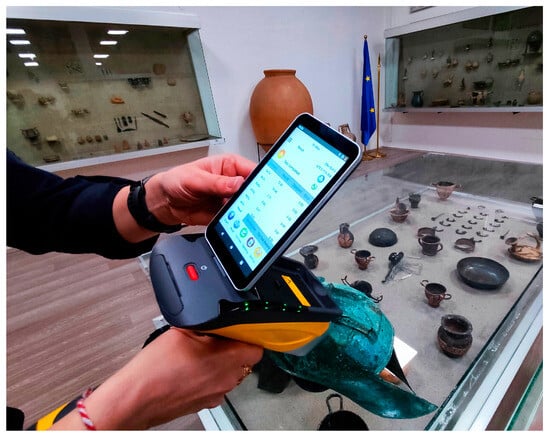
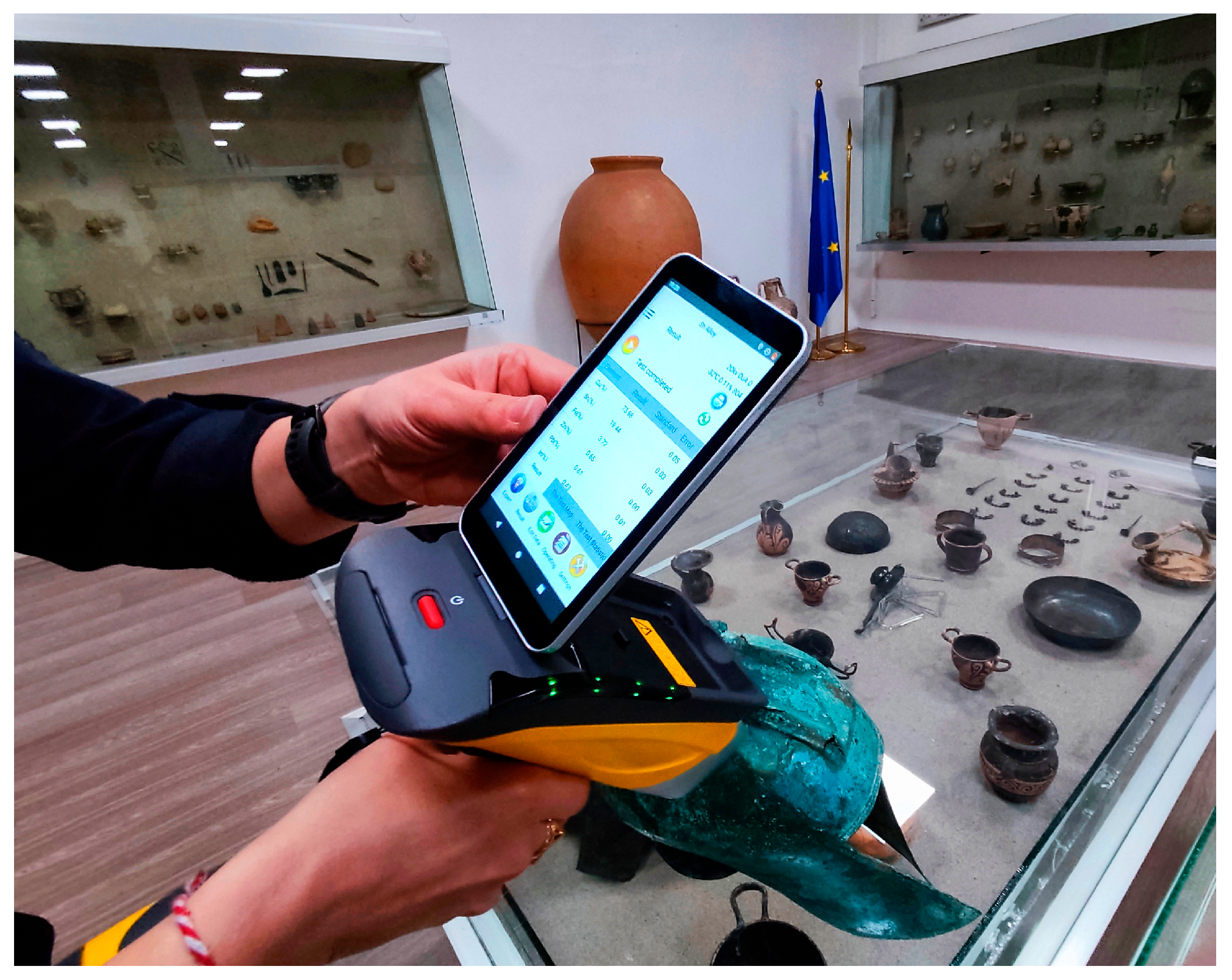
Measurements of the Illyrian helmets with the portable Explorer 5000 XRF (Figure 1) were conducted using a voltage of 45 kV, a current of 30 µA, a testing time of 20 s and analytical area 12.56 mm2 (2 mm spot diameter). The device used in this study was calibrated using factory-defined parameters based on the Fundamental Parameters (FP) method, which converts measured X-ray fluorescence intensities into elemental concentrations. Calibration accuracy was verified by measuring certified steel reference samples (SS-304 and SS-316) before each measurement session, ensuring instrument stability and correct energy calibration. The Explorer 5000 XRF user manual (Jiangsu Skyray Instrument Co., Ltd. (Kunshan City, Jiangsu Province, China), 2014) specifies a general detection limit down to the ppm level, with a concentration range of 1 ppm to 99.99%, but does not provide element-specific MDL values for a bronze matrix. Consequently, reported concentrations at or near 0.01% (100 ppm) in Table 2 should be considered close to the instrumental detection threshold and interpreted with caution rather than as precise quantitative values. The standard deviations reported in Table 2 reflect spatial variation between measurement points on the same helmet surface, and do not represent instrumental measurement error. The absence of bronze-certified reference materials and the use of steel-based CRMs for instrument verification only means that major element compositions (Cu, Sn) should be treated as semi-quantitative, while trace element data (As, Sb, Zn, Fe below 1%) carry additional unquantified uncertainty. Residual systematic errors arising from surface roughness, corrosion layer removal, and matrix effects in a complex bronze alloy cannot be fully quantified without complementary validation techniques. Conclusions drawn from trace element patterns are therefore proposed as indicative of broader metallurgical tendencies rather than as precise quantitative fingerprints [30]. Future studies should prioritize the use of matrix-matched bronze certified reference materials measured under field conditions, alongside full spectral evaluation, to establish element-specific method detection limits and improve the quantitative accuracy of portable XRF data for archaeological bronze objects.
Figure 1.
Explorer 5000 handheld XRF device (Skyray Instruments, Inc., Kunshan City, Jiangsu Province, China) while conducting measurements at the Institute of Archaeology (please see Supplementary Materials) (photo taken by the authors).
Table 2.
Percentages of the chemical elements along with their standard deviations for the XRF analysis performed on the Illyrian helmets (the absence of the standard deviation in some cases indicates that it is lower than 0.01).
All helmets were manufactured from a single piece. For each of them, two to four measurement points were analysed, as permitted by the archaeologists and museum conservators. Prior to XRF analysis, corrosion layers were mechanically removed using a scalpel until the metal surface became visible, resulting in localized destructive sampling. However, all measurement points were deliberately selected on pre-damaged surfaces or on inner areas of the 27 helmets examined, so that the intervention did not affect the visual integrity of the objects. The assurance that corrosion products were removed relied only on visual confirmation, without further analytical control.
Elemental concentration data obtained from XRF analysis were subsequently processed using Principal Component Analysis (PCA) to identify compositional groupings and trends across the helmet dataset. PCA was performed on standardized concentrations of seven elements (Cu, Sn, Pb, Fe, Zn, Sb, As) using GNU Octave. Standardization (zero mean, unit variance) was applied prior to analysis to prevent elements with higher absolute concentrations from dominating the variance structure. The first four principal components were retained, jointly accounting for 88.4% of the total variance.
To assess whether concentrations approaching the instrumental detection threshold (0.01%) introduced bias into the PCA, a sensitivity analysis was performed. The nine affected values, As in seven helmets (H7, H9, H10, H13, H16, H18, H24) and Pb in two helmets (H10, H23), were substituted with half the detection limit (LOD/2 = 0.005%), following standard practice for left-censored compositional data, and the PCA was repeated [31]. The variance explained by the four retained components changed by less than 0.5% points (PC1: 38.6% → 38.2%; PC2: 26.9% → 27.0%; PC3 and PC4 unchanged at 13.5% and 9.4%). The PC3 vs. PC4 plot shows a sign reversal of the PC4 eigenvector, a known mathematical indeterminacy of PCA that carries no interpretive consequence. No helmet changed its compositional grouping in either plot. The original reported values (0.01%) were therefore retained in the final analysis, as the LOD/2 substitution produced no meaningful difference in the multivariate results.
3. Results
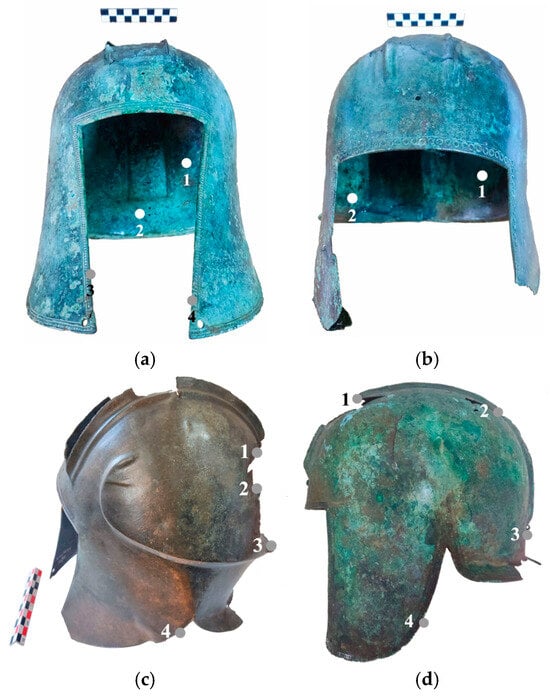
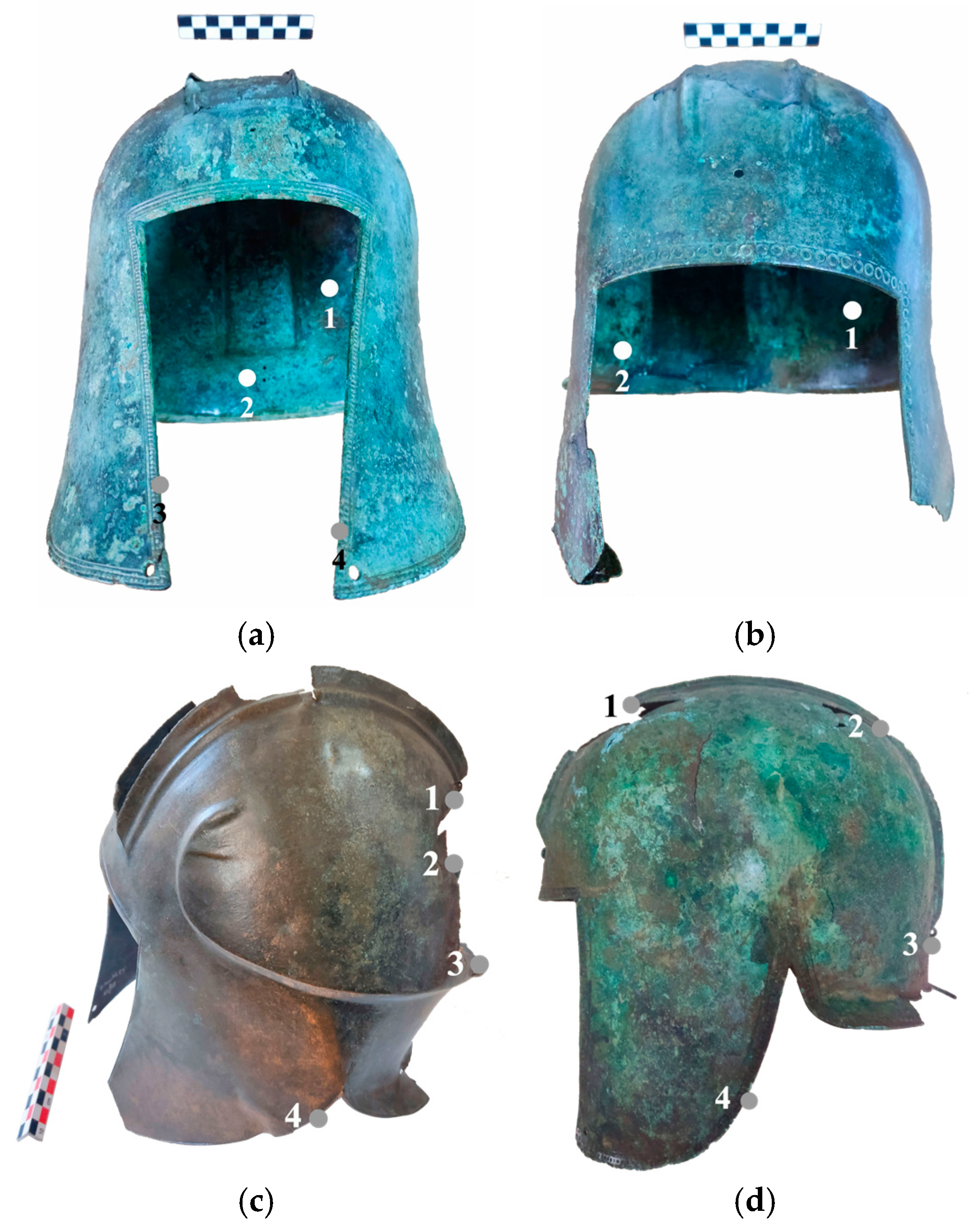
The mean value of elemental composition was calculated from analyzed points on each helmet (the variation between points on the same helmet was within the standard deviation range). The results of the measurements performed on these helmets are shown in Table 2, including the detected chemical elements along with the respective standard deviations (for nonzero concentrations, a standard deviation of 0 means the value is below 0.01%). Figure 2 shows four of the 27 helmets along with the examined points selected on damaged surfaces or inner areas.
Figure 2.
Helmets excavated from: (a) Mborje (inv. no. 17,124), (b) Belsh (inv. no. 11,717), (c) Bitinckë (inv. no. 714), and (d) Maliq (inv. no. 3727), along with the examined points selected on damaged surfaces or inner areas. The same procedure was applied to all 27 helmets included in this study. (photos taken by the authors).
4. Discussion
In antiquity, the most widespread copper alloys were tin bronzes (Cu-Sn). Alloys with moderate tin contents (up to ~12–14% Sn) were commonly employed for functional tools and weapons due to their favorable balance of hardness and ductility, while tin-rich bronzes (~20–30% Sn) were harder but more brittle, typically associated with mirrors and decorative objects. Arsenical bronzes (Cu-As) were widespread in the Early and Middle Bronze Age but declined in favor of tin bronzes during the Late Bronze Age, partly due to arsenic’s toxicity. Leaded bronzes (Cu-Sn-Pb) reflect small Pb additions to enhance castability, though higher lead contents reduced workability, with lead segregating as discrete globules within the copper matrix. Iron, usually present at low levels, exhibits limited solid solubility in copper; excess iron separates as iron-rich globules or dendrites, and at higher contents produces a heterogeneous microstructure that impairs ductility. Brass (Cu-Zn), produced by co-smelting rather than metallic zinc extraction, appears mainly in later Roman contexts. Manufacturing typically involved casting into stone, clay, or bronze molds, with subsequent annealing to modify mechanical properties [32,33,34,35,36].
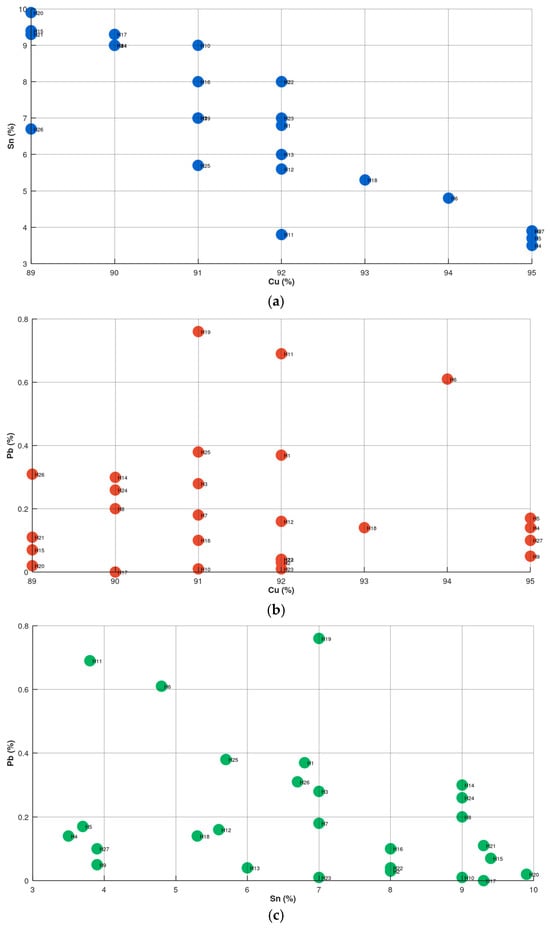
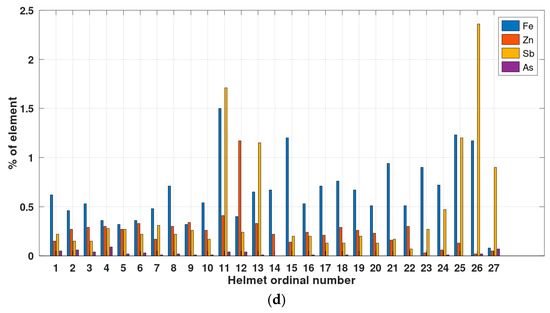
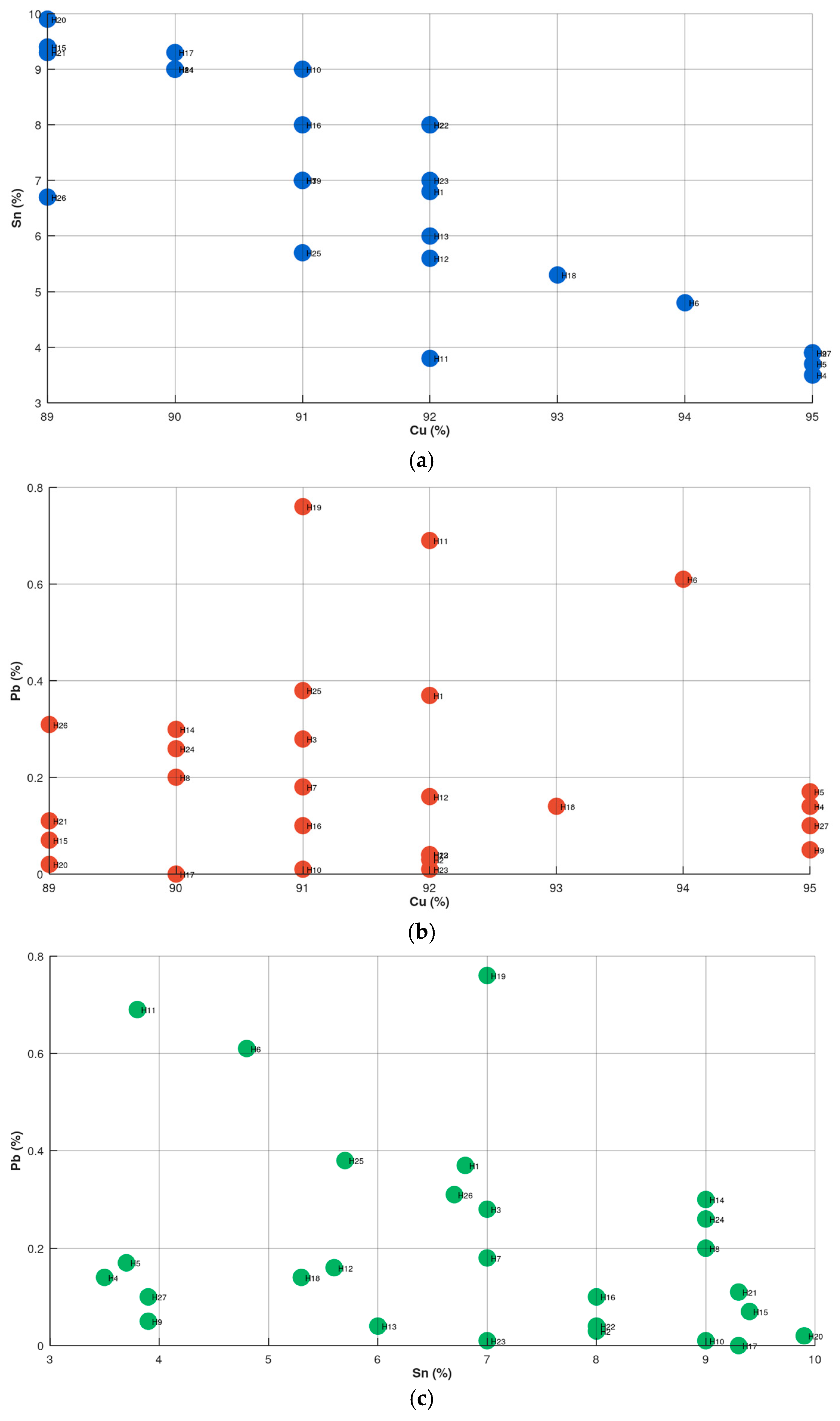
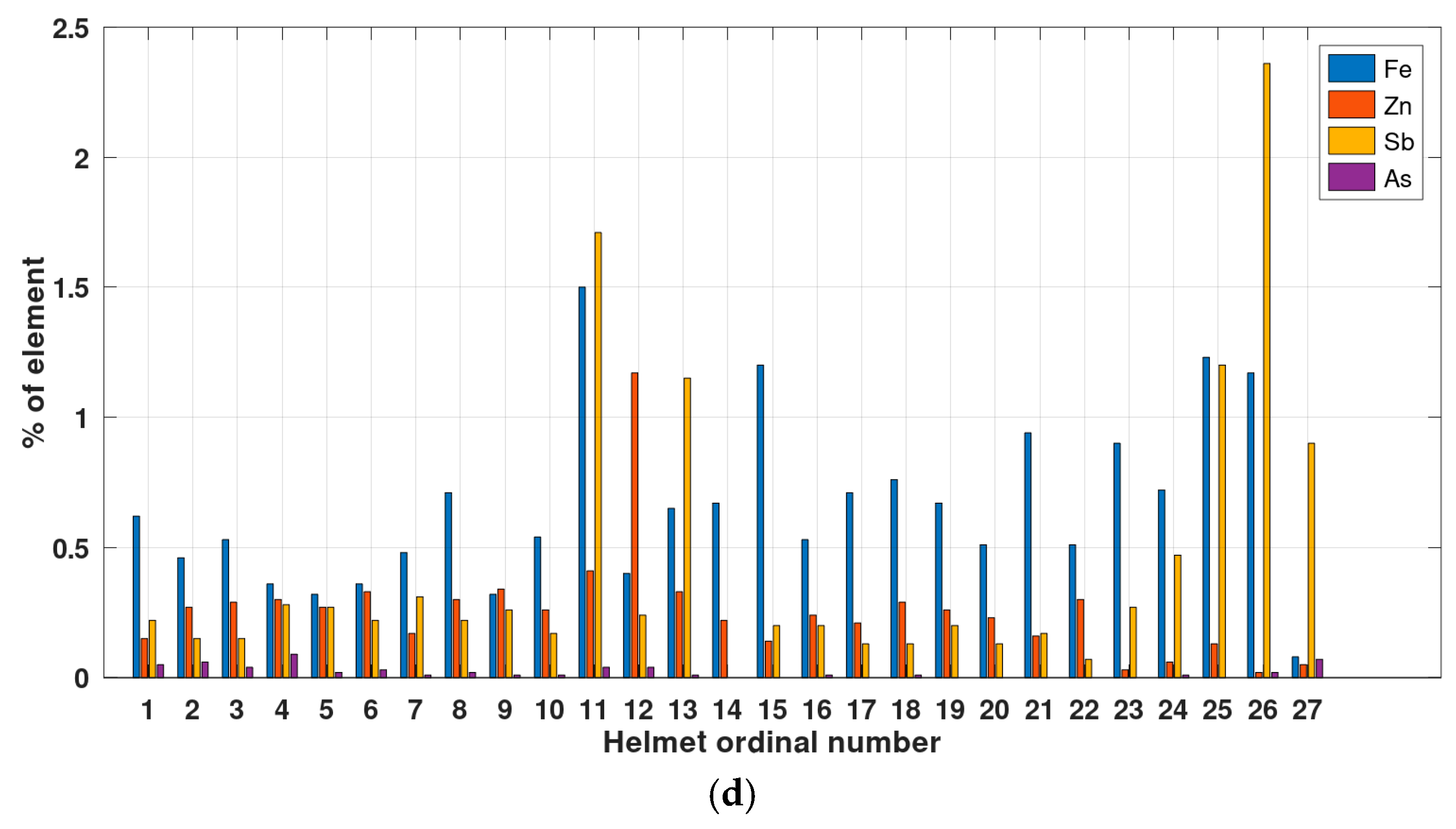
The chemical composition of the helmets shows consistently copper-rich alloys, with percentages ranging from 89% to 95.3%, confirming the use of bronze across all pieces. Tin varies from about 3.5% to 9.9%, consistent with functional bronze alloys used for durable protective equipment, spanning low- to medium-tin compositions within the range commonly documented for Iron Age weaponry and armor (Figure 3a). Small amounts of lead (<0.76%) are present in Cu-Sn alloys, likely as an unintentional impurity rather than an alloying component (Figure 3b,c). Even these low levels, as seen in Belsh (0.61%), Sofraçan nr. 2 (0.69%), and Nënshat nr. 1 (0.76%), can slightly reduce ductility. Iron, zinc, antimony, and arsenic mostly appear in low concentrations (generally below 1%), though several helmets show notable peaks, such as iron values above 1% in Sofraçan no. 2 (1.5%), Starova (1.2%), Draj-Reç (1.23%) and Kariçë (Mat) (1.17%), and antimony values exceeding 1% in Sofraçan no. 2 (1.71%), Apolloni (1.15%), Draj-Reç (1.2%), and Kariçë (Mat) (2.36%). Zinc and arsenic remain very low (<0.41%) throughout the dataset, except in the helmet of Dushk, containing 1.17% Zn (Figure 3d). Similar chemical element concentrations were observed in both undamaged and damaged or fragmented helmets, suggesting that the preservation state does not affect the elemental composition. Overall, the results demonstrate a predominantly homogeneous bronze technology, with the occasional chemical outlier reflecting variations in alloying or raw material sources.
Figure 3.
Variations in the elemental percentages of: (a) Cu-Sn, (b) Cu-Pb, (c) Sn-Pb, and (d) Fe-Zn-Sb-As in the various helmets investigated via XRF.
Nevertheless, several helmets in the dataset show chemical patterns that might be consistent with the exploitation of sulphide copper ores, abundant in Albania and the Balkan region. Elements typical of polymetallic sulphides, such as Sb, As, Fe, and Zn are visible in specific examples: Sofraçan no. 2 contains 1.5% Fe and 1.71% Sb, Starova is composed of 1.2% Fe, Draj-Reç has 1.23% Fe and 1.20% Sb, Apolloni shows 1.15% Sb, Dushk contains 1.17% Zn and Kariçë (Mat) reaches 1.17% Fe and 2.36% Sb (Figure 3d). These values might reflect the geochemistry of regional sulphide ores, where antimony, arsenic, iron, and zinc-bearing minerals often accompany copper. Elevated Pb and Fe, as observed in Sofraçan nr. 2, Draj-Reç, and Kariçë Mat, may additionally indicate limited refining control or the use of recycled copper from older bronze objects of mixed provenance, resulting in a less homogeneous alloy with reduced mechanical performance. Other helmets show lower trace-element levels, suggesting the use of purer ores, more refined copper extraction techniques, or more selective metal processing. Alongside these assumptions, consideration should be given to the unvalidated accuracy of trace element quantification by portable XRF in this study.
The broadly consistent tin content across the dataset, ranging from low to medium values within the functional bronze range for protective equipment, suggests that Illyrian helmet producers in Albania operated within a shared alloying tradition rather than experimenting freely with composition. Lower tin alloys, such as those of Rajçë (3.5% Sn) and Qukës (3.7% Sn), would have offered greater ductility and ease of cold-working and repair, while medium-tin compositions, such as those of Sofraçan nr. 1 (9% Sn), Bastar nr. 1 (9% Sn), and Starova (9.4% Sn), provide a harder, more wear-resistant surface better suited to combat use (Figure 3a). The absence of high-tin bronzes (above 12%) across the entire dataset is consistent with a deliberate functional choice, distinguishing these helmets from decorative or mirror bronzes of the same period.
The overall compositional homogeneity of the 27 helmets, despite their diverse geographic origins across Albania, is itself a significant finding. It suggests that production was likely concentrated in a limited number of workshops with access to consistent raw material sources, supporting the hypothesis that centres such as Epidamnus and Apollonia served as primary production hubs supplying the wider Illyrian hinterland. The outliers identified in the PCA, particularly Sofraçan nr. 2, Draj-Reç, Kariçë Mat, and Dushk, may represent either helmets produced at secondary workshops with access to different ore sources, or pieces incorporating recycled metal of mixed provenance.
Notably, Bastar nr. 2 is classified typologically as a Corinthian import, yet its chemical composition (95% Cu, 3.9% Sn, with trace Pb and Sb) falls within the range of the Albanian dataset rather than showing the distinctly different alloy signature that might be expected of a Greek import. While the portable XRF data are semi-quantitative and cannot definitively resolve provenance, this compositional overlap raises the possibility that the helmet was locally produced in a Corinthian style rather than imported, or that Albanian and Greek workshops shared similar raw material sources for this period.
The absence of clear compositional clustering by typological group in the PCA is also archaeologically meaningful. It suggests that the transition from earlier to later helmet types in Albania was not accompanied by changes in raw material procurement, alloy recipes, or workshop traditions, pointing instead to stylistic evolution within a continuous and stable metallurgical practice. This contrasts with patterns observed in some other Bronze Age and Iron Age metalworking traditions where typological change correlates with shifts in alloy composition and underscores the conservative nature of Illyrian bronze production in this region.
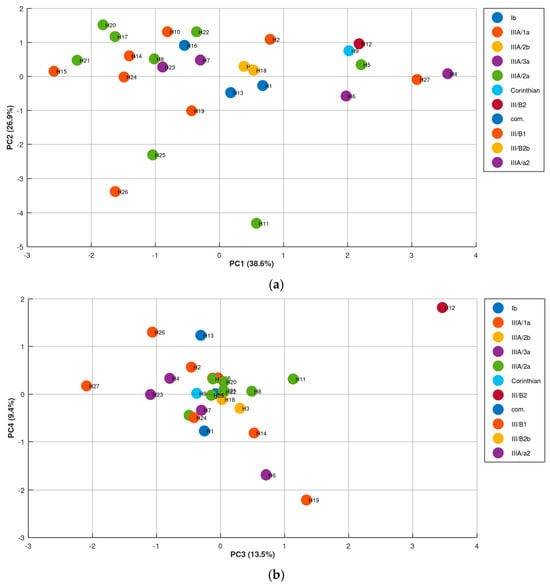
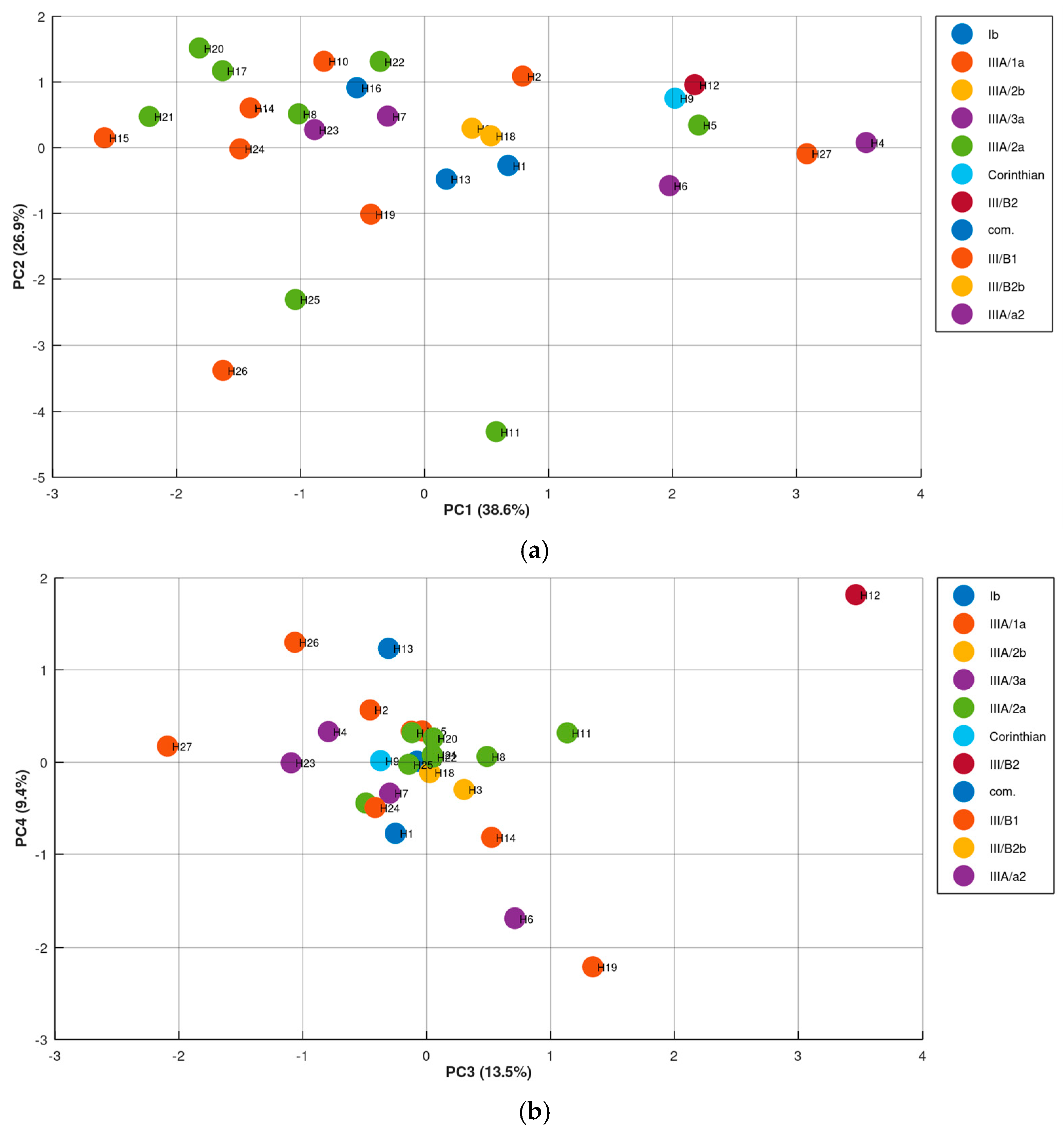
Principal Component Analysis (PCA) was performed on the standardized concentrations of seven chemical elements (Cu, Sn, Pb, Fe, Zn, Sb, As) measured across the 27 helmets. Four principal components were retained, collectively accounting for 88.4% of the total variance (PC1: 38.6%; PC2: 26.9%; PC3: 13.5%; PC4: 9.4%; Table 3 & Figure 4a,b), providing a substantially more complete representation of the compositional variability than the two-component solution alone.
Table 3.
Eigenvalues, percentage of variance, and cumulative variance explained by the principal components.
Figure 4.
PCA plots of the analyzed helmets based on the concentrations of Cu, Sn, Fe, Pb, Zn, Sb, and As. (a) The first two principal components explain 65.5% of the total variance (PC1: 38.6%; PC2: 26.9%), (b) while the other two explain 22.9% (PC3: 13.5%; PC4: 9.4%). Colors represent the different helmet typologies (comb. stands for combinative).
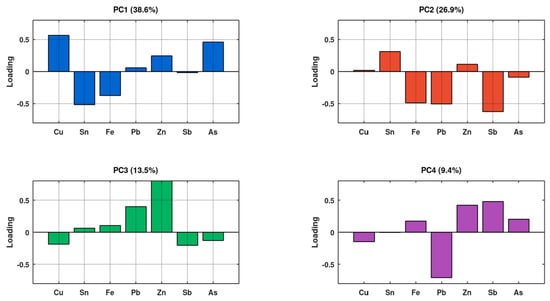
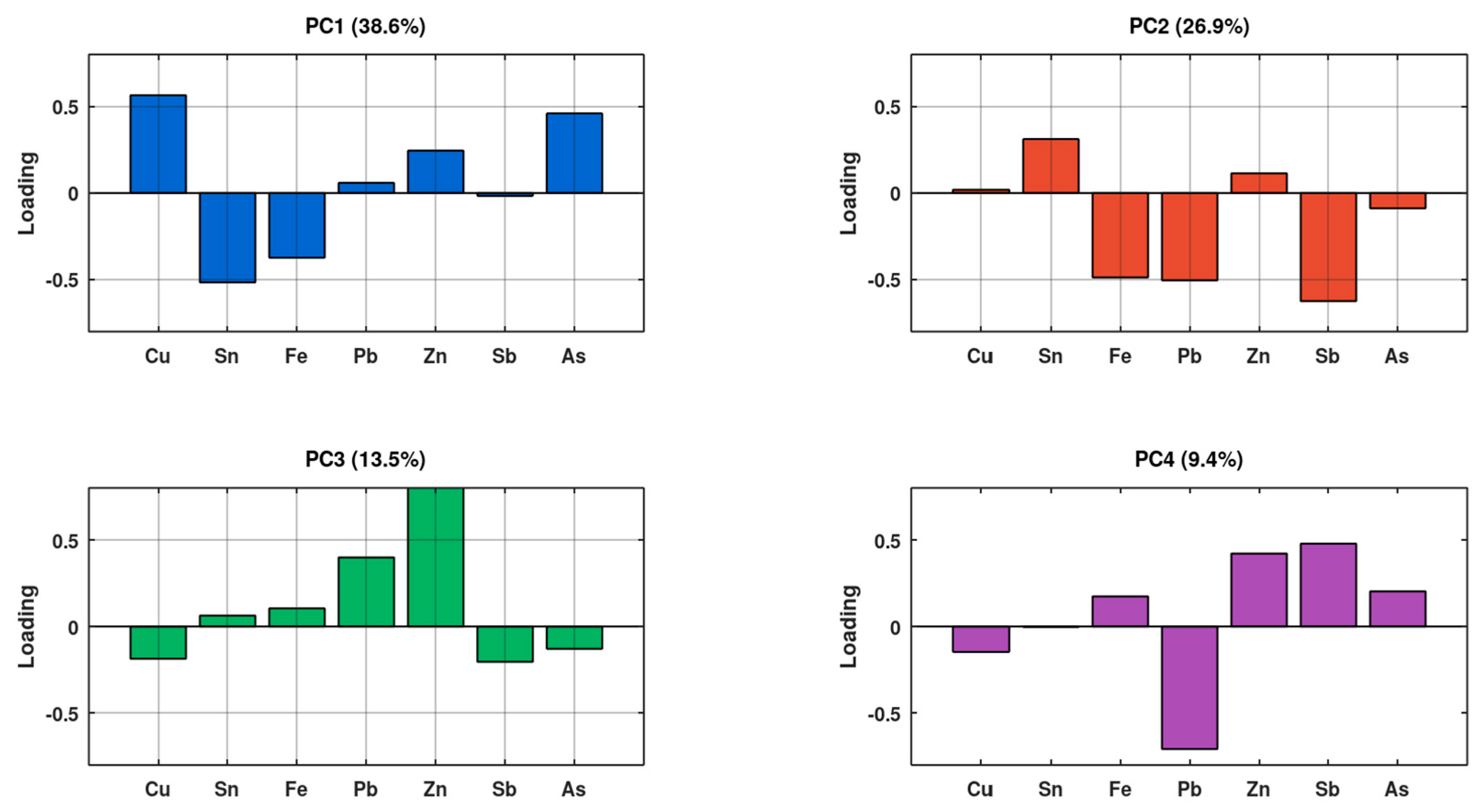
The loading plots (Figure 5) illustrate the contribution of each element to the principal components. PC1 is primarily driven by opposing contributions of Cu and As on the positive side against Sn and Fe on the negative side, reflecting the fundamental Cu–Sn alloy balance and distinguishing copper-richer compositions from more tin- and iron-enriched bronzes. PC2 is dominated by negative loadings for Sb, Pb, and Fe, contrasting against positive contributions from Sn and Zn, highlighting differences in minor and impurity element content among the samples. PC3 captures additional variance associated with Zn and As, possibly reflecting differences in ore provenance or recycling inputs, while PC4 is mainly influenced by Pb and Fe, suggesting residual variation in refining practices or raw material heterogeneity.
Figure 5.
Loading plots of the four retained principal components (PC1-PC4) derived from the XRF elemental composition data of the 27 Illyrian helmets analyzed in this study.
In the PC1-PC2 score plot (Figure 4a), the helmets show a broadly dispersed distribution without tight clustering by typology. Helmets H25 (Draj-Reç, IIIA/1a) and H26 (Kariçë Mat, IIIA/1a) are strongly displaced along the negative PC2 axis, consistent with their elevated Sb and Fe contents noted in Table 2. H11 (Sofraçan nr. 2, IIIA/2a) is an outlier along the negative PC2 direction as well, reflecting its anomalously high Sb (1.71%) and Fe (1.5%). H4 and H27, both with high copper and low tin contents, project positively along PC1. The Corinthian import (H9, Bastar nr. 2) and the Ib type (H1, Borovë) occupy intermediate positions, suggesting broadly comparable alloy compositions to the majority of the dataset despite their typological distinctiveness.
In the PC3-PC4 score plot (Figure 4b), H12 (Dushk, III/B2) emerges as a clear outlier along the positive PC4 axis, consistent with its unusually high Zn content (1.17%), which is unique in the dataset. H27 (Kosovë, Lushnje, IIIA/1a) is displaced strongly along the negative PC3 axis, while H19 (Zgërdhesh nr. 1, IIIA/2a) shows the most negative PC4 score, suggesting distinct minor element profiles for these helmets. The majority of helmets cluster near the origin in PC3–PC4 space, indicating that the variance captured by these higher components is driven by a small number of compositional outliers rather than systematic typological trends. Together, the four-component solution confirms that Illyrian bronze production in Albania followed a broadly standardized tradition, with compositional outliers most plausibly reflecting the use of locally variable sulphide ores, selective recycling, or episodic procurement from different sources, rather than a strict typological or chronological progression.
When placed within the broader Balkan context, the Albanian helmets show compositional characteristics that are broadly consistent with, but also partially distinguishable from, helmets produced in neighboring regions. The standardized Cu-Sn alloy base (88–95% Cu, 3.5–9.9% Sn) is comparable to compositions reported for Greek and Macedonian helmets, including those from Olympia and the rich burial assemblages of Sindos and Trebenište, where similar functional bronze ranges have been documented [3,6], confirming participation in a shared broader Balkan and Mediterranean metallurgical tradition for defensive bronze equipment. More specifically, Albanian samples from Nënshat and Krumë previously analyzed by complementary techniques contain approximately 88.5–92 wt.% Cu and 7.1–11.1 wt.% Sn, with minor Fe (0.3–0.7 wt.%) and As (0.09–0.13 wt.%), likely derived from copper sulphide ores [37], which is consistent with the present dataset. Comparable data from the Harvard open-faced Illyrian helmet similarly indicate approximately 90.7–91.6 wt.% Cu and 7.9–8.0 wt.% Sn, with very low Pb and traces of Fe, Ni, As, Sb, and Ag, confirming a consistent metallurgical tradition across different collections and regions [38]. However, the trace element signatures of the Albanian helmets, particularly the recurring association of Sb, Fe, and occasionally Zn, differ from the generally cleaner alloys associated with the major Macedonian production centers, where higher-purity copper sources and more refined smelting practices appear to have been employed. The Albanian trace element profile is instead more consistent with the exploitation of polymetallic sulphide ores of the type documented in the Mirdita and Rubik deposits of northern Albania [15,16,17,18,19], suggesting a degree of regional ore sourcing that partially distinguishes Albanian production from its Macedonian and Greek counterparts. Dalmatian helmets of comparable typology have not yet been systematically characterized by XRF or similar techniques in sufficient numbers to allow direct comparison, representing an important gap in the regional dataset that future studies should address.
5. Conclusions
The 27 helmets included in this study constitute the full collection of Illyrian helmets that have been excavated in Albania to date. Their elemental analysis confirms the consistent use of copper-rich alloys, with low- to medium-tin content and only minor concentrations of other elements such as lead, zinc, and antimony that may have influenced casting and working properties. In most samples, trace elements such as iron, antimony, zinc, and arsenic reflect the possible geochemistry of regional sulphide copper ores or recycling of older bronze objects. Overall, the chemical composition is homogeneous, indicating a broadly standardized bronze-working tradition, with occasional outliers which may indicate variations in raw material sources or metallurgical choices.
The PCA confirms a broadly standardized bronze tradition, with compositional outliers reflecting locally variable ore sources or recycling rather than typological or chronological progression. Together, these results suggest that Illyrian bronze production in Albania combined the exploitation of regional sulphide ores, selective alloying, and occasional recycling within a largely consistent metallurgical practice, while the absence of compositional clustering by typology points to stylistic evolution within a stable workshop tradition. Formal validation of trace element accuracy remains beyond the scope of this in situ study and represents a priority for future research.
Supplementary Materials
The following supporting information can be downloaded at: https://www.mdpi.com/article/10.3390/heritage9040154/s1.
Author Contributions
O.Ç. performed the measurements, wrote the main manuscript, and prepared the figures and tables. T.S. prepared the XRF spectra and reviewed the manuscript. E.D. and E.G. contributed to the measurement process and reviewed the manuscript. All authors have read and agreed to the published version of the manuscript.
Funding
This research was funded by the Albanian-American Development Foundation (AADF), through the READ (Research Expertise from the Academic Diaspora) program. The funding supported the implementation of the study and the spectral analysis process.
Data Availability Statement
The datasets generated and/or analyzed during the current study are available from the corresponding author upon request.
Acknowledgments
The authors would like to express their sincere gratitude to the Albanian-American Development Foundation (AADF) for supporting this study and the spectral analysis process through the READ (Research Expertise from the Academic Diaspora) program funding. Special thanks are also extended to the Institute of Archaeology, under the Academy of Sciences of Albania, for facilitating the study of these objects. Finally, we would like to thank the developers of GNU Octave and IrfanView, the open-source software package used to create the plots and to process the images in this study.
Conflicts of Interest
The authors of this study declare that they have no competing interests, or other interests that could be perceived to influence the results and/or discussion reported in this paper.
Abbreviations
The following abbreviations are used in this manuscript:
| XRF | X ray fluorescence |
| Cu | copper |
| Sn | tin |
| Pb | lead |
| Fe | iron |
| Sb | antimony |
| As | arsenic |
| Zn | zinc |
References
- Vasić, R. Reflecting on Illyrian helmets. Starinar 2010, 60, 37–55. [Google Scholar] [CrossRef] [Scilit]
- Pflug, H. Illyrische Helme. In Antike Helme: Sammlung Lipperheide und andere Bestände des Antikenmuseums Berlin; Römisch-Germanisches Zentralmuseum: Mainz, Germany, 1988; pp. 42–64. [Google Scholar]
- Prag, A.J.N.W.; Garner, R.; Pantos, E.; Bennett, S.L.; Mosselmans, J.F.W.; Tobin, M.J.; Kockelmann, W.; Chapon, L.C.; Salvado, N.; Pradell, T. How the Greeks Got Ahead: Technological Aspects of Manufacture of a Corinthian Type Hoplite Bronze Helmet from Olympia. In Science and Technology in Homeric Epics; History of Mechanism and Machine Science; Paipetis, S.A., Ed.; Springer: Dordrecht, The Netherlands, 2008; pp. 205–220. [Google Scholar] [CrossRef] [Scilit]
- Kunze, E. Der Sogenannte Illyrische Helm. VI. Bericht über die Ausgrabungen in Olympia; Walter de Gruyter: Berlin, Germany, 1958; pp. 125–155. [Google Scholar]
- Kunze, E. Der Sogenannte Illyrische Helm. VIII. Bericht über die Ausgrabungen in Olympia; Walter de Gruyter: Berlin, Germany, 1967; pp. 116–133. [Google Scholar]
- Manti, P.; Watkinson, D. From Homer to Hoplite: Scientific Investigations of Greek Copper Alloy Helmets. In Science and Technology in Homeric Epics; History of Mechanism and Machine Science; Paipetis, S.A., Ed.; Springer: Dordrecht, The Netherlands, 2008; Volume 6, pp. 167–179. [Google Scholar] [CrossRef] [Scilit]
- Hockey, M.; Johnston, A.; La Niece, S.; Middleton, A.; Swaddling, J. An Illyrian helmet in the British Museum. Annu. Br. Sch. Athens 1992, 87, 281–291. [Google Scholar] [CrossRef] [Scilit]
- Hudiakov, Y.; Erdene-Ochir, N. Bronze helmet recently discovered in Mongolia. Archaeol. Ethnol. Anthropol. Eurasia 2010, 38, 53–60. [Google Scholar] [CrossRef] [Scilit]
- Pantos, E.; Kockelmann, W.; Chapon, L.C.; Lutterotti, L.; Bennet, S.L.; Tobin, M.J.; Mosselmans, J.F.W.; Pradell, T.; Salvado, N.; Butí, S.; et al. Neutron and X-ray characterisation of the metallurgical properties of a 7th century BC Corinthian-type bronze helmet. Nucl. Instrum. Methods Phys. Res. Sect. B Beam Interact. Mater. At. 2005, 239, 16–26. [Google Scholar] [CrossRef] [Scilit]
- Bunguri, A. The Illyrian helmets from Sofraçan (Dibër). Ilir. Rev. Arkeol. 2018, XLII, 82. [Google Scholar]
- Bunguri, A.; Gashi, S. The Illyrian Helmets in Albania and Kosovo; Institute of Archeology of Albania and the Archaeological Institute of Kosovo: Prishtinë, Kosovë, 2021; pp. 1–44, 63–97. [Google Scholar]
- Wilkes, J. The Illyrians (the Peoples of Europe); Wiley-Blackwell: Oxford, UK, 1992. [Google Scholar]
- Vickers, M. The Albanians—An Ethnic History from Prehistoric Times to the Present; McFarland Publisher: London, UK, 2001. [Google Scholar]
- Shukriu, E. Studime për Dardaninë: Kulti i Diellit, Përkrenarja Ilire, Monumentet Epigrafike, Shandanet Paleo-Kristiane dhe Aspekte të Zhvillimeve Etnolitike, Arkeologjike, Letrare dhe të Antropologjisë Fizike; Akademia e Shkencave dhe e Arteve e Kosovës, SSHSH: Prishtinë, Kosovë, 2016. [Google Scholar]
- Çina, A. Gërshetimet ndërmjet mineraleve dhe shkalla e çlirimit të tyre në xeheroret sulfurore të baker-zinkut të disa vendburimeve të vendit tonë. Përmbledhje Stud. 1975, 2, 107–120. [Google Scholar]
- Çina, A. Mbi zonalitetin vertical të pjesës veriore të vendburimit kolçedan të bakrit në Rubik. Përmbledhje Stud. 1976, 3, 107–116. [Google Scholar]
- Koçi, M. Ndryshimet anësore përreth trupave xeherorë të bakrit në bazë të studimeve mineralogo-petrografike. Përmbledhje Stud. 1977, 2, 37–47. [Google Scholar]
- Osmanlliu, A.; Thanashi, D. Antique Culture in Albanian Mines; Geologischen Bundesanstalt: Wien, Austria, 1997; Volume 41. [Google Scholar]
- Hoxha, L. Compiling of lithologo stratigraphic-tectonic sections, increase substantially resources of Cu-Fe, Cu-Fe, Zn, Au, Ag sulphides hosted by volcanogenic massive sulphide deposits (VMS). Albanian ophiolites. In Proceedings of the Geological Society of America, Lancaster, PA, USA; New York, NY, USA, 23–25 March 2014. [Google Scholar]
- Economou-Eliopoulos, M.; Eliopoulos, D.G.; Chryssoulis, S. A comparison of high Au massive sulfide ores hosted in ophiolite complexes of the Balkan Peninsula with modern analogues: Genetic significance. Ore Geol. Rev. 2008, 33, 81–100. [Google Scholar] [CrossRef] [Scilit]
- Schlagintweit, F.; Gawlick, H.J. The occurrence and role of microencruster frameworks in Late Jurassic to Early Cretaceous platform margin deposits of the Northern Calcareous Alps (Austria). Facies 2008, 54, 207–231. [Google Scholar] [CrossRef] [Scilit]
- Jovanović, B. The oldest copper metallurgy in the Balkans. Expedition 1978, 21, 9–17. [Google Scholar]
- Charalambous, A.; Kassianidou, V.; Papasavvas, G. A compositional study of Cypriot bronzes dating to the Early Iron Age using portable X-ray fluorescence spectrometry (pXRF). J. Archaeol. Sci. 2014, 46, 205–216. [Google Scholar] [CrossRef] [Scilit]
- Prendi, F. Chapter 5: The prehistory of Albania. In The Cambridge Ancient History Vol. III, Part 1: The Prehistory of the Balkans; the Middle East and the Aegean World, X to VIII Centuries B.C.; Boardman, J., Edwards, I.E.S., Hammond, N.G.L., Sollberger, E., Eds.; Cambridge University Press: Cambridge, UK, 2008; pp. 187–237. [Google Scholar]
- Prendi, F. Materiale të kulturës ilire të zbulueme në Shqipërinë e veriut; BUSHT: Tirana, Albania, 2008. [Google Scholar]
- Bunguri, A. Përkrenare Ilire nga Shqipëria dhe Kosova—Album; Akademia e Shkencave e Shqipërisë: Tiranë, Albania, 2025. [Google Scholar]
- Lakowicz, J.R. Principles of Fluorescence Spectroscopy; Springer: New York, NY, USA, 2006. [Google Scholar]
- Potts, P.J.; West, M. Portable X-Ray Fluorescence Spectrometry: Capabilities for In Situ Analysis; Royal Society of Chemistry: Cambridge, UK, 2008. [Google Scholar]
- Artioli, G. Scientific Methods and Cultural Heritage: An Introduction to the Application of Materials Science to Archaeometry and Conservation Science; Oxford University Press: Oxford, UK, 2010. [Google Scholar]
- Jiangsu Skyray Instrument Co., Ltd. Instruction User Manual, Explorer 5000 Alloy Analyser Handheld XRF; Jiangsu Skyray Instrument Co., Ltd.: Kunshan, China, 2014. [Google Scholar]
- Helsel, D.R. Statistics for Censored Environmental Data Using Minitab and R, 2nd ed.; Wiley: Hoboken, NJ, USA, 2012. [Google Scholar]
- Scott, D.A. Metallography and Microstructure in Ancient and Historic Metals; Getty Conservation Institute in Association with Archetype Books: Marina del Rey, CA, USA, 1992. [Google Scholar]
- Hauptmann, A. The Archaeometallurgy of Copper: Evidence from Faynan, Jordan; Springer: Berlin, Germany, 2007. [Google Scholar]
- Scott, D.A. Ancient Metals: Microstructure and Metallurgy, 2nd ed.; Conservation Science Press: Los Angeles, CA, USA, 2012; Volume I, pp. 137–280. [Google Scholar]
- Davis, J.R. Copper and Copper Alloys; ASM International: Materials Park, OH, USA, 2001. [Google Scholar]
- Campbell, F.C. Elements of Metallurgy and Engineering Alloys; ASM International: Materials Park, OH, USA, 2008. [Google Scholar]
- Çakaj, O.; Nikolla, C.; Gert, S. Preliminary Study of Two Antique Illyrian Helmets (V-IV B.C.) Excavated in Northwest and Northeast of Albania. Metall. Mater. Eng. 2023, 29, 1–15. [Google Scholar] [CrossRef] [Scilit]
- McNamara, M. Technical Studies of Four Ancient Greek Helmets at the Harvard University Art Museums. In I Bronzi Antichi: Produzione e Tecnologia; Giumlia-Mair, A., Ed.; Monographies Instrumentum 21; Éditions Monique Mergoil: Montagnac, France, 2002; pp. 281–283. [Google Scholar]

Disclaimer/Publisher’s Note: The statements, opinions and data contained in all publications are solely those of the individual author(s) and contributor(s) and not of MDPI and/or the editor(s). MDPI and/or the editor(s) disclaim responsibility for any injury to people or property resulting from any ideas, methods, instructions or products referred to in the content. |
© 2026 by the authors. Licensee MDPI, Basel, Switzerland. This article is an open access article distributed under the terms and conditions of the Creative Commons Attribution (CC BY) license.