


Abstract
This paper investigates how hybrid temples are created and transformed into tourist attractions, focusing on Wat Phothikyan Phutthathum—a Thai–Chinese temple located in Kelantan, close to Malaysia’s border with Thailand. This study aims to understand how both the local Thai minority and Chinese majority contribute to temple hybridisation, examine the influence of such temples on community identity, and explore their growing importance as tourist attractions. It highlights the negotiation and cultural exchange that shape new heritage spaces for borderland communities. Using visual analysis and interviews, the research shows that, since there are no Chinese temples nearby, Chinese Buddhists and Taoists adapt Thai temples by incorporating their own rituals and art. This results in blended iconography and practices, guided by an open-minded Thai monk. Features like large Buddha statues, staircases featuring naga-dragon designs, and murals combining different traditions reveal this fusion. The temple’s unique artwork and spiritual environment attract visitors from Muslim-majority areas and various countries like Thailand, Taiwan, and Singapore. As tourism becomes central to the temple’s role, the local authorities emphasise its religious significance and multicultural symbolism, aligning with economic interests and daily interactions among minority groups. This study offers valuable empirical and theoretical perspectives on the blending of religious heritage sites in border regions.
1. Introduction
Religious heritage—tangible and intangible—provides many kinds of resources for tourism. Of these, the most prominent are places of worship, such as temples, churches, mosques, gurudwaras, and many other forms [1,2]. A considerable scholarship has documented and explained how such structures exist at various scales, ranging from everyday shrines to monumental buildings, from the local level to national and international levels [3,4,5,6]. The monumental ones often attract large numbers of followers and non-followers who might be drawn to the grandeur of such temples. Many studies have focused on such grand structures that occupy a central place in geography and cognition of a followership; some notable examples are Madina Mosque in Mecca (for Muslims), Mahabodhi temple in Bodhgaya (for Buddhists), Temple Mount in Jerusalem (for Jews), Saint Peter’s Basilica in Vatican City (for Christians), Kashi Vishwanath temple in Varanasi (for Hindus), the Akshardham complex, and so on. Such temples are repositories of what can be called heritage that is authentic in the sense that it was created by a homogenous group of people who were great patrons of that faith, had a large following and congregation that supported such a creation, and were intended to mark the presence of their faith as far and as wide as possible [5,7]. Likewise, they also harboured elaborate rituals and performances that formed the core of their intangible heritage; these grand products of their times continue to be major attractions [8,9,10,11,12,13]. The smaller shrines, on the other hand, have reasonably contained catchments—they serve a functional need of the local populace [14,15,16]. They are often humble in appearance due to the limited availability of resources.
This spectrum of everyday to monumental is also prevalent in Buddhism. However, it shows more complexity and diversity in Southeast Asia because of the ways in which Buddhism spread in this region [17,18,19,20,21]. Over centuries, Buddhist monks travelled across the region and generated very localised forms of Buddhism that assimilated local practices and were more acceptable to the local community. In countries with a large Buddhist population, Buddhism was supported as a state religion, while in other countries it became a minority religion after political boundaries were drawn in the region. Thus, while Thailand continues to enjoy royal patronage and mass acceptance, the influence of Buddhism has waned in the neighbouring country of Malaysia, largely due to the domination of Islam.
Although the political and administrative borders of countries are often hard, the cultural boundaries are more porous and allow for the transmission of religious–cultural spills across the borders for historical reasons. The borderlands—the settlements near the borders—often generate a social mix that is a hybrid, not only in its demographic composition but also in terms of ways of life and the production of culture. Research on such communities is increasingly coming to the fore [22,23,24,25,26].
The aim of this paper is to make an empirical and theoretical contribution to an emerging scholarship around the hybridisation of temples in borderlands. It is based on a case study of a Thai–Chinese temple in a village along the Malaysia–Thailand border, which is representative of many temples in Southeast Asia. This paper has three objectives: (1) to examine the process of hybridisation in a temple built by a Thai minority community in a border village largely inhabited by a Chinese population; (2) to investigate how such a hybrid temple contributes to reproducing the identity of its patron community; and (3) to explore the role of a hybrid temple as a tourist attraction. This study does not dwell on describing what the design of a “hybrid temple” should look like or define architectural styles or compositions of hybrid temples. Instead, it focuses on explaining the process of negotiation and mediation that goes on in the making of a “hybrid temple” and how it evolves into a new kind of heritage for the local communities in borderlands.
In Section 2, we refer to the relevant literature on the borderland and religious heritage that has helped to conceptualise and frame this study. Section 3 introduces the site of this study: Wat Phothikyan Phutthathum, a Thai temple located in Balai Village near the Thai border in the Kelantan State of Malaysia. In Section 4, we present a detailed analysis of the Thai temple for its construction, architecture, art, and functionality. This is followed by a discussion of acculturation and layering of Chinese and Thai aesthetics, and how that contributes to the hybridisation of heritage. Section 6 outlines how such hybrid heritage has now become a significant part of religious and cultural tourism in the region.
2. Borderlands and Religious Heritage in Southeast Asia
In this paper, we follow the term “borderland” in its broader context as suggested by Horstmann and Wadley [22] in their fascinating work on the anthropology of borderlands in Southeast Asia. They conceptualise borderland as an active space produced by local agents rather than a fixed geopolitical boundedness. Although boundaries “are powerful markers of nationhood”, borderlands are “ambiguous and blurred geopolitical space which allow for easy transcendence” [27] (p. 7). In such a space, communities are always navigating their history and identity while interacting across several spheres of religious, cultural, and economic activities [23,28]. The Malaysia–Thailand frontier is a fascinating example of such borderlands.
In many places where Buddhist communities are in a minority, “Theravāda Buddhists have to constantly negotiate and adjust their strategy of engagements and interactions based on the specific local conditions” [26] (p. 216). This is most clear in the northern province of Kelantan in Malaysia, as it has several settlements along the border with Thailand. For centuries, the Thai ethnic communities in Kelantan have practised Theravāda Buddhism. Ismail outlines two noteworthy features of Theravada Buddhism in Kelantan:
One, it is basically a rural phenomenon because nearly all Buddhist temples in Kelantan are in rural areas. Second, since temples are normally located in Siamese settlements, or in villages where the Siamese form the bulk of the population, Theravada Buddhism tends to assume Siamese characteristics and forms, not only in the ritual contents but also in the architectural style of the buildings [29] (p. 4).
In this Malaysia–Thailand borderland, some studies focused on understanding the unique processes related to the identity creation of communities and their built environment. Their religious practice is centred around a temple (Wat). Rashid et al. [30] explain the significance of temple building by Chinese and Siamese communities in Kelantan. Based on their study in Pasir Mas, they argue that such temples not only function as worship spaces and community centres but also help maintain traditions, support cultural activities, and strengthen social ties among devotees, and thus help to preserve their religious and cultural identities. Tohsan [25] argues that Thai-ness among Thai–Siamese communities in Kelantan is produced through Dhamma practice and Mahāchāti preaching. While their argument of cultivating through the “building of people” is correct, it must be noted that this process is taking place within a Thai temple, and hence, temples become the centrepiece of the religious heritage of such communities. Johnson is correct in asserting that “Buildings [particularly religious buildings] are visual markers of identity, and their significance as symbols of cultural identity rests on this visibility.”
Some studies offer more tangible interpretations to illustrate how architecture, spatial practice, and the monumental form of Thai temples contribute to the creation of Thai Buddhist identity in such a marginal place—both in terms of social and political distance from the centre of the nation-states. Most notable in this regard is Johnson’s [28,31] analyses of temples in Kelantan’s northernmost administrative region of Tumpat. Johnson refers to these as “Kelantanese-Thai” which were “built according to a distinct local aesthetic found only in Kelantan and in the Thai villages just across the Tak Bai River” and observes that “this genre of Southern Thai religious architecture was heavily influenced by Malay and, to a lesser extent, Chinese and European artistic elements” [28] (p. 247). Built with simple stucco, wood, and clay tiles, these were minimalist in their appearance with limited decorative elements and yet imposing. However, a big shift occurred in the stylistic transformations of such religious architecture around the 1990s, as Johnson illustrates, using the case of Wat Nai in Baan Phra Suung (Village of the Tall Buddha).
The restoration of Wat Nai began around 2001. In the first stage, the abbot improved amenities in the kitchen, added a new residence for visiting monks, and a structure to house funerary urns. And then came the ordination hall, which marked the shift. At that time, Johnson observed the following:
“… newer temple buildings were inspired by Thailand’s national traditional architectural prototype seen throughout the neighboring country. They were built of cement and marble and laced with colored mirror mosaics and gold painted stucco reliefs. Windows and doors were intricately carved from top to bottom often on a background of mirror glass and capped with tapering displays of classical Central Thai design.”[28] (p. 249)
Following this cross-border trend, the new ordination hall was built in the new Central Thai style with a “layered roof design and liberal use of gilding and red paint” [28] (p. 251). Johnson further noted that the “building’s Kelantanese Thai architectural accents have almost all been replaced by Central Thai stylistic forms” [28] (p. 260). Temples such as Wat Nai have emerged as “colorful monuments to Buddhism and Thai cultural identity” [28] (p. 244).
The example of Wat Nai shows that for the local community “restoration meant keeping elements of the old and embellishing the old with the new—new mosaics on old walls” and in the process they created “a new form that was neither Central Thai nor fully local” [28] (p. 270). Thus, a new layer was added to religious heritage that already had a history of mixed culture: the central Thai style on an indigenous Kelantanese Thai style.
Creating religious heritage is also dependent on another significant process: who builds and how? The Thai minority has put in significant efforts for the continuance of its monastic institutions, and they continue to survive and assert their Siamese ethnicity. One of the key survival strategies has been to accommodate the religious needs of the Chinese communities by providing space for installing Chinese deities. Although a definitive structure of governance exists for Thai temples in Malaysia (see [29]), many adapt themselves to the Chinese patronage; they rely on Chinese support to “maintain temple expenses and to defray the cost of construction of temple buildings” [29] (p. 6) and “because their participation in temple rituals brings material and other social benefits” [29] (p. 9). Chinese also function as benefactors because
“The majority of the ‘rural’ Chinese have adopted much of the local Malay culture… They have their own system of worship as typified by beliefs in the guardian gods of the village and patron deities of the house. Apart from the worship of their respective deities, the rural Chinese also patronize Thai temples and take part in Buddhist rites and ceremonies. It is in this sense that Thai Buddhism has also become the basis of identity for the rural Chinese vis-à-vis the larger, mainstream group. Most significantly, their participation in temple rituals makes them members of the same religious and social community as the Siamese.”[29] (p. 9)
The increasing Chinese patronage is also asserting its need for representation in the Thai temples. While installing Chinese deities within Thai temples was acceptable, they were often outside of the prominent locations. However, this is fast changing as “Chinese elements and architectural forms have become even more widespread” and “more Chinese-type architectural styles are expected to be incorporated into physical design of the temple buildings and other structures in addition to existing Siamese ones” [29] (p. 10).
The incorporation of Chinese elements is most visible in the massive statues of Chinese deities in Thai temple compounds. Building such statues is almost an extension of what was already being practised in relation to large Buddha statues that were installed by Thai abbots in their temples—these were “powerful indicators of a minority Thai Buddhist presence” [31] (p. 116). By installing Chinese-type statues of Taoist and Mahayanist deities, the Thai abbots were trying to “symbolically link with Malaysia’s minority Chinese population” [31] (p. 117). Johnson explains this patronage:
“Many of Malaysia’s urban Chinese donate generously to Thai temple-building projects in Kelantan, often with the belief that the larger the sum donated the greater one’s accumulation of merit. The more merit one builds up, the greater one’s chances of a better future existence. Within a this-worldly frame, large donations increase the public personae of contributors, making them well-known figures in Thai villages. Many of these Chinese are in fact disciples of Kelantanese Thai abbots and mark this intimate ritual association with their impressive financial contributions.”[31] (p. 120)
Temple architecture includes several attributes that facilitate religious functions, social gatherings, and cultural expressions [32]. In their analysis of Chinese temples in Penang in Malaysia, Koh and Lim [32] focus on two attributes: spatial configuration and the architectural language that corresponds with cultural and religious meanings. They found that architectural components of “façade design, timber frame structure, and ornamentations” reflected and signified “specific geographical origins, particularly from southern Fujian and Guangdong” [32] (p. 56). Thus, a specific materiality of religious structures appears alongside architectural elements.
Identity and patronage are driving factors in creating the religious heritage of temples. Clearly, Buddhist communities in the borderlands are engaged in “a never-ending cycle of constructing, renovating, and demolishing—symbolic perhaps of the Buddhist concern with impermanence (anicca)” and hence “building projects figure in their quest for ethnic and cultural identification in a non-Thai, non-Buddhist Malaysia” [28] (p. 245). Would a Thai–Chinese temple be the new hybrid form? What does it look like? What does it mean? How will that define what religious heritage is produced? This is the question that we try to answer using our study of Wat Phothikyan Phutthathum—a Thai–Chinese temple in Malaysia.
How do we understand a Thai–Chinese temple? At the outset, we note that our use of this term is different from how Zhu et al. [33] have used it to refer to “Chinese temples in Thailand”. However, their identification of attributes of such a temple is instructive for the purpose of this paper. Through a qualitative survey involving 54 visitors at Chinese temples in Thailand, they arrived at three clusters of attributes that contribute to the evolution of a Thai–Chinese temple into a cultural tourism attraction. These are folk art, landscape architecture, and Behaviour Activity. Folk Art includes five attributes: the presentation of Chinese traditional folk arts and crafts; traditional cultural meanings of deity statues; the integration of local folk art; religious and cultural handicrafts; and the construction of temple sound scene atmosphere. Landscape architecture includes the traditional temple roof, the traditional Chinese colour scheme, Chinese-style courtyard landscaping, and public rest spaces. And finally, Behaviour Activity involves taking part in religious activities, communicating Chinese religious doctrines, and tasting local vegetarian meals. Examining these attributes in a temple can show its significance for cultural tourism.
Having understood the role of temple building in identity creation for marginal Thai communities, we now extend our line of inquiry to visualising the emergence of a hybrid Thai–Chinese temple as a tourist attraction and what it means for the borderland communities.
3. Study Site and Research Methodology
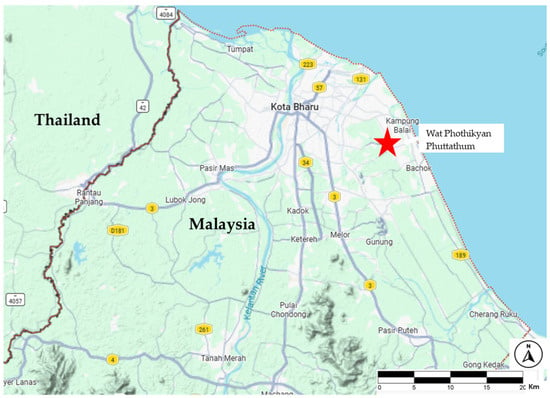
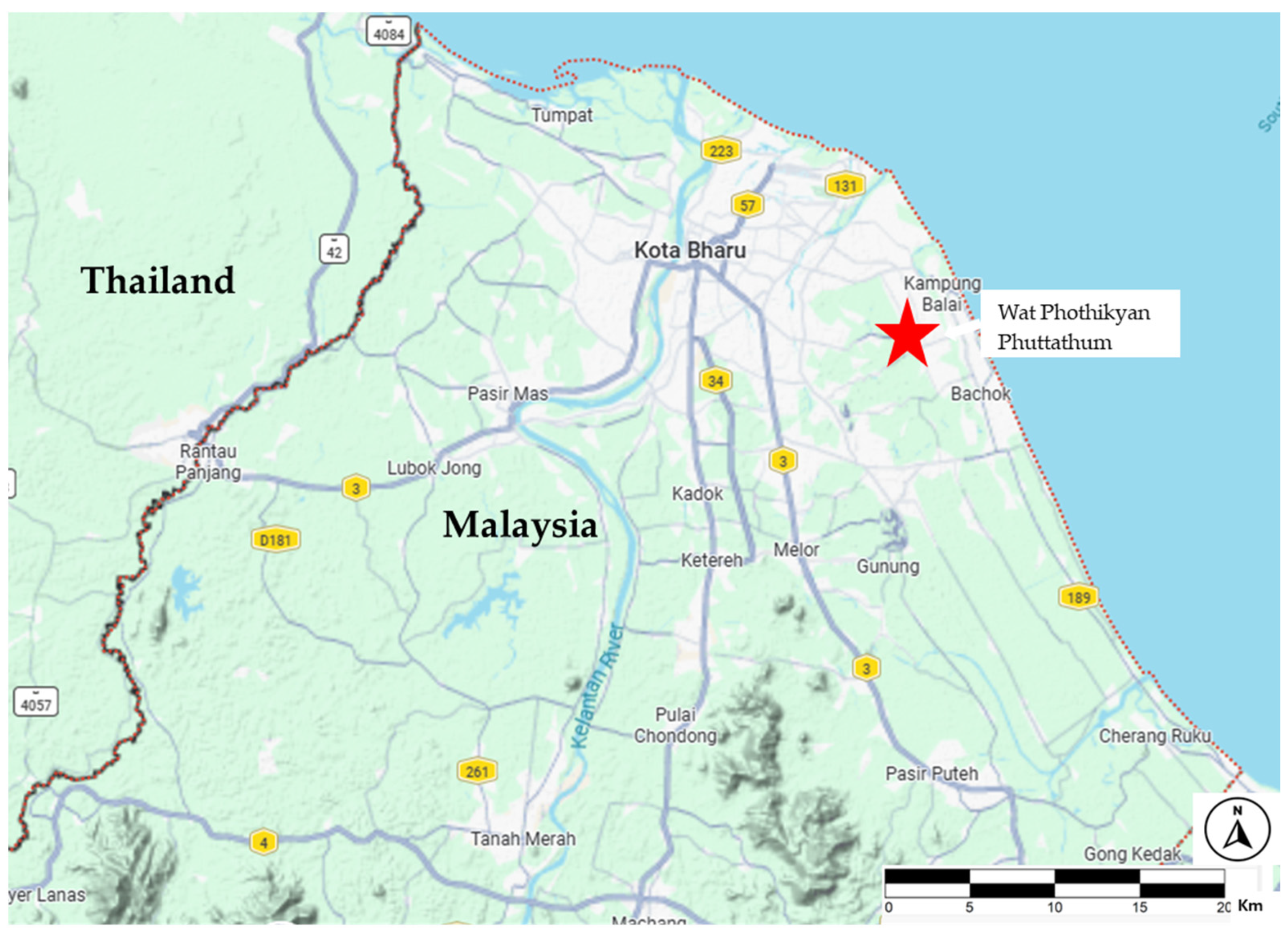
The temple selected for this study is Wat Phothikyan Phutthathum, a Thai temple located in Balai Village of Kelantan State along the northeastern border of Malaysia (Refer to Figure 1). Ismail notes that “Kelantan is also known for pockets of Thai settlements in the rural areas… and there exists at least twenty Buddhist temples and numerous Buddhist places of worship known as samnaksong” [29] (p. 2). At present, the region is home to a diverse community consisting primarily of Malaysian Siamese (of Thai descent), ethnic Chinese, and Malay Muslims. Livelihood in the region is centred on fishing, alongside small-scale livestock rearing (chickens, cattle) and limited small businesses (small farms and grocery shops).
Figure 1.
Location of Wat Phothikyan Phutthathum, Balai. Base map sourced from Google Maps (https//maps.google.com).
Kelantan is an overwhelming Malay-majority state, and Bachok likewise has a strongly Malay-majority demographic profile. According to the Department of Statistics Malaysia (DOSM), Kelantan had a population of about 1.888 million in 2024, of whom around 1.758 million (93.1%) were classified as Bumi Malay, while Chinese residents accounted for about 44,200 (2.34%). At the district level, Bachok had a population of about 165,500, of whom around 161,900 (97.8%) were Bumi Malay and about 1300 (0.8%) were Chinese. This broader setting places both Thai and Chinese Buddhists in a minority position and helps explain why temple space may become an important institutional site of minority religious continuity. Background information from the Royal Thai Consulate-General in Kota Bharu further describes the Thai community in Kelantan as a long-established minority that continues to keep the Thai language, Buddhist practice, temple-centred community life, and cultural traditions while adapting to the wider Islamic social environment of the state.
According to the oral histories of the Siamese (Thai) community, Wat Phothikyan temple was first constructed about 200 years ago. The temple, over time, has evolved through significant Chinese influence in terms of patronage and active engagement, and thus is a site of complex cultural interactions between the two communities. It presents a fascinating case study of cultural diffusion, acculturation, and hybridisation.
This case study draws on multiple phases of qualitative fieldwork rather than a single moment of data collection. The first phase was conducted in 2011, when the first author conducted the main set of in-depth interviews with purposively selected temple actors, including monks, temple committee members, and liaisons. These interviews form the core historical dataset used in this article to reconstruct the temple’s transformation, leadership, governance, donor relations, and the earlier stages of Thai–Chinese hybridisation. A second phase of field-based documentation was undertaken in 2024, when the site was revisited to record the temple’s current material condition, visual configuration, and spatial organisation through renewed observation and photographic documentation. (The original fieldwork was conducted in 2011 under a research project funded by the Ministry of Culture of Thailand. At that time, the research and funding framework governing this study did not require formal ethics committee approval for this type of humanities and social science research, and no ethics approval certificate was issued. Nevertheless, this study followed standard qualitative research ethics. Participants were informed of the purpose of the research, the intended academic use of the interview materials, and the voluntary nature of their participation. Verbal informed consent was obtained before interviews were conducted. In the presentation of findings, personal identifiers have been removed where appropriate, respondent codes are used in a non-traceable manner, and digital interview files are stored in protected and encrypted form. This article therefore relies on anonymised and non-traceable respondent references rather than identifiable personal data.)
Following the advice of reviewers on an earlier version of this manuscript, we conducted a follow-up field verification in March 2026. This follow-up was to clarify continuity and change from the earlier documentation and interviews. During this visit, we identified relevant people at the temple for focused conversations, which included the current abbot, committee members of the Kelantan Siamese Association, members of the Kelantan Tourism, Art and Culture Association, and visitors attending the temple during Qing Ming whose families had long-standing ritual and financial ties to the temple through ancestral rites, merit-making, donations, and payments related to ash placement and funerary space. This follow-up material broadens the evidentiary base beyond temple-side interpretation and allows the analysis to consider Chinese engagement not only as externally observed patronage, but also as a form of participant-articulated religious, ritual, and financial involvement. The material collected in this visit is used to triangulate the earlier interview evidence, verify which features of the temple’s hybrid form remain central in the present, and reassess current issues such as ritual use, visitor patterns, community participation, and the temple’s contemporary cultural and tourism profile. The interview base was diverse in role, age, gender, and community background, although it was not intended to be statistically representative. The original 2011 interviews involved 10 temple- and community-related participants. These included three Siamese monks aged 42, 47, and 61; two male Siamese temple committee members aged 58 and 80; one male Chinese temple liaison aged 62; and four lay participants, including three Siamese community members aged 28, 54, and 60 and one Chinese participant aged 57. The follow-up fieldwork conducted in March 2026 further broadened the evidentiary base by incorporating three Chinese-associated visitors/donors (two women aged 46 and 58, and one man aged 66), one Muslim female visitor aged 29, and other community and cultural stakeholders. Because the temple community is relatively small and some participants are potentially identifiable, this article does not disclose all personal details for every respondent. Pseudonyms are used while using quotations from interviewees. This study does not claim full stakeholder coverage across all relevant constituencies, such as every donor group, local government actor, or neighbouring religious community. However, the revised dataset moves beyond the earlier temple-centred interview base and allows for a more differentiated account of participation, interpretation, and institutional change.
Observation was conducted in both participant and non-participant forms. Participant observation involved joining temple-related ritual activities during important annual occasions, such as pha pa merit-making events, to understand how pilgrims, devotees, and temple actors engaged with the site from within ritual practice. Non-participant observation was used for activities seen from a distance, such as Qing Ming rituals performed by Chinese families and ancestor-related chanting in ash-storage spaces. Observation was conducted over repeated visits, typically lasting two to three days at a time, with particular attention given to periods when the temple attracted larger numbers of visitors and pilgrims, including Qing Ming, Songkran, and Visakha Bucha.
The observational framework was structured around three main domains. First, architectural observation focuses on the form of buildings, walls, shrines, other structures, interior and exterior decoration, use of colour, and patterns of spatial use. Second, ritual observation focuses on materials and objects used in rituals, ritual sequence, participants, and timing. Third, visitor behaviour observation focuses on how people begin their activities in the temple, the size and composition of visiting groups, social ties among those attending together, modes of travel, and the duration of their stay at the site. Field notes were used to connect these observations with the interview materials and the visual documentation. In this way, the observational data is described in a more structured part of the broader qualitative design.
The photographs taken in 2024 (and updated in 2026) serve an analytical rather than merely illustrative function. They were used to document the temple’s current material condition, the spatial prominence of major structures, the continued coexistence of Thai and Chinese visual forms, and the ongoing use of ritual and funerary spaces. In this sense, the photographic materials were treated as visual field evidence that could be read alongside the earlier interview data. They helped verify which features described in the historical interviews remained central to the temple’s present identity, and which aspects had changed over time. The visual materials were therefore used to triangulate interview-based interpretations of architectural transformation, iconographic layering, ritual practice, and visitor-oriented spatial arrangements. Rather than functioning as a simple visual appendix, the photographs were used to support this study’s distinction between historical reconstruction and present-day verification.
We distinguish between two temporal layers of data in our analysis: first, the historical reconstruction of temple transformation based primarily on the 2011 interviews; and second, the verification of continuity and change based on the 2024 site revisit and the March 2026 follow-up fieldwork.
4. Analysis of the Thai Chinese Temple
The story of Wat Phothikyan Phutthathum begins in the late 18th century in Balai Village in Kelantan, when Thai and Chinese residents of Kampung Balai jointly donated land to build a Buddhist Temple, which was named Wat Malaiwanaram. Following that donation, essential buildings such as sermon halls, monks’ quarters, and the kitchen were constructed that reflected rudimentary monastic architecture. Over many years, successive abbots (many came from the local community) led the development of Wat Malaiwanaram through cycles of growth and periods of abandonment and decline that were caused by the death or disrobing of an abbot. Using interview data, a timeline of this development was created and is presented in Table 1.
Table 1.
Timeline for Wat Phothikyan Phutthathum.
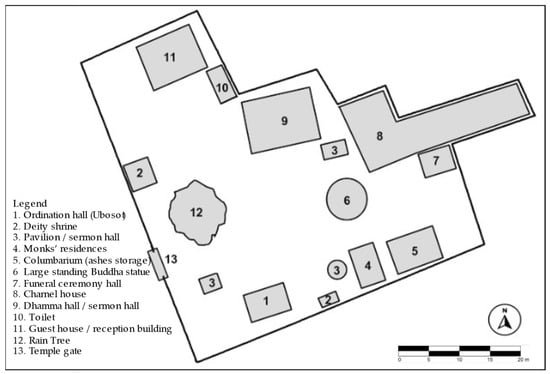
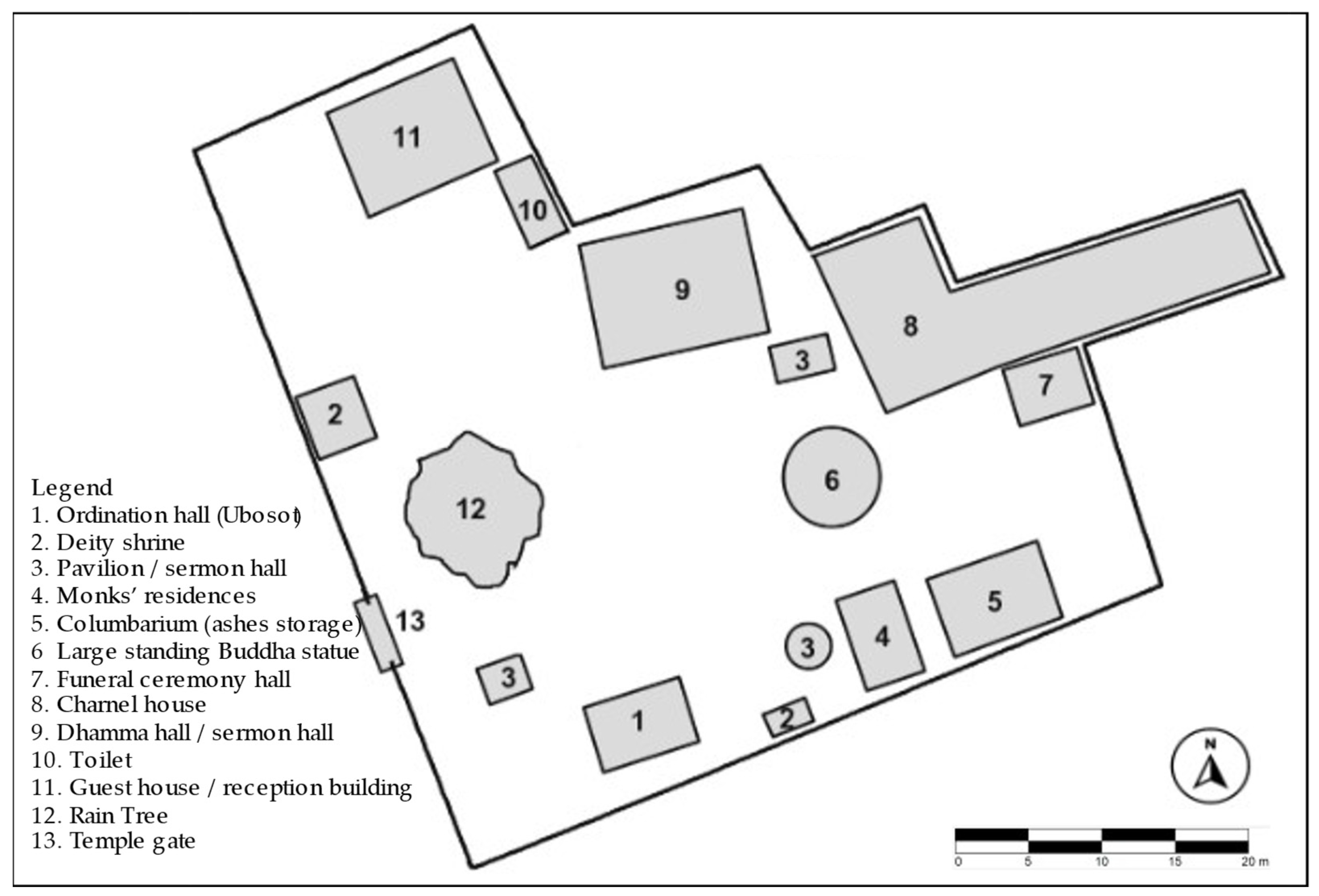
The massive restoration work of 1993 transformed Wat Malaiwanaram into a contemporary place of worship and broader cultural destination that is rapidly integrating as a major attraction into the region’s tourism itinerary. Figure 2 is a schematic layout of the restored complex of Wat Phothikyan Phutthathum.
Figure 2.
Layout of Wat Phothikyan Phutthathum. Drawn by the first author.
Full credit for the transformation of Wat Phothikyan Phutthathum goes to Phra Photichai Thanathinno and his charisma. He was fluent in Chinese and English and was well-travelled. He actively engaged Chinese patrons and overseas networks to secure funding.
“Monks like him are rare. He once went on a walking pilgrimage from Kelantan to Singapore—wherever night fell, that’s where he slept. People offered him food along the way. He walked barefoot until his feet turned red. It took two months to go, and two to return, walking 30–40 km a day. During the journey, people learned about the temple. Once they knew it, asking for donations wasn’t difficult.”(Phra Maha Somsak, 2011: interview)
By this time, the Chinese community began to dominate in the region. Aware of their dominance, Phra Photichai asked for their financial support to rebuild the temple. The Chinese donors contributed to the rebuilding of the temple’s infrastructure, including the acquisition of more land for a Chinese-style cemetery. It was natural that the Chinese donors also held considerable influence on how the temple was to be redeveloped.
“Everything built at the temple was started by Phra Photichai. He travelled widely—to Taiwan, China—and brought back ideas to develop the temple. The giant Buddha statue came from him; the architectural plans were his. The Chinese donors funded the construction, but they let him design it. If you want their support, you must build in the Chinese style.”(Nun, 2011: interview)
The governance of Wat Phothikyan Phutthathum plays a key role in shaping its current cultural form. Leadership is primarily managed by a temple committee that includes monks, liaisons, and lay donors, with considerable influence from Chinese contributors. The temple committee typically includes around ten members from Siamese and Chinese backgrounds, with Malaysian Chinese members making up the clear majority. While the temple runs under Theravāda Buddhist norms, the inclusion of Chinese aesthetics and practices reflects both negotiation and strategic adaptation within its leadership structure.
“There were no Chinese temples in Kelantan, so they had to rely on Thai temples. We Thai people who live here also support the Thai temples—we entrust our lives to them.”(Lai, 2011: interview)
The temple also maintains informal transnational ties with Thai monastic institutions, occasionally inviting monks from Thailand to take part in festivals and ceremonies, reinforcing both spiritual continuity and cultural legitimacy.
4.1. Chinese Influence Within the Temple
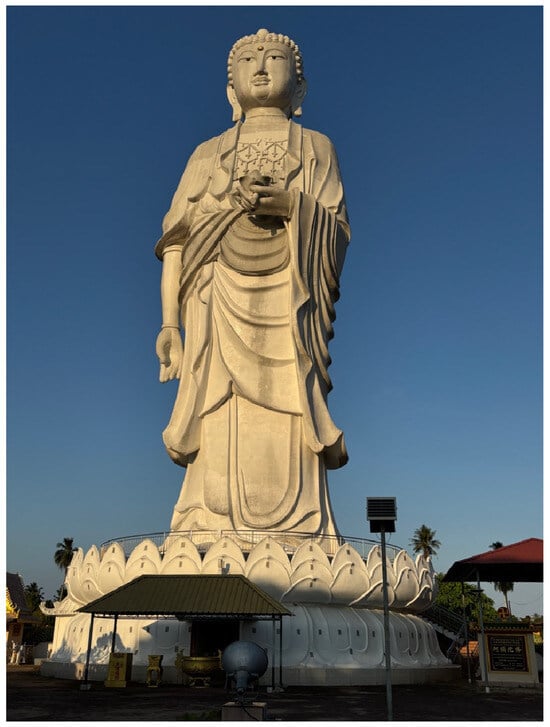
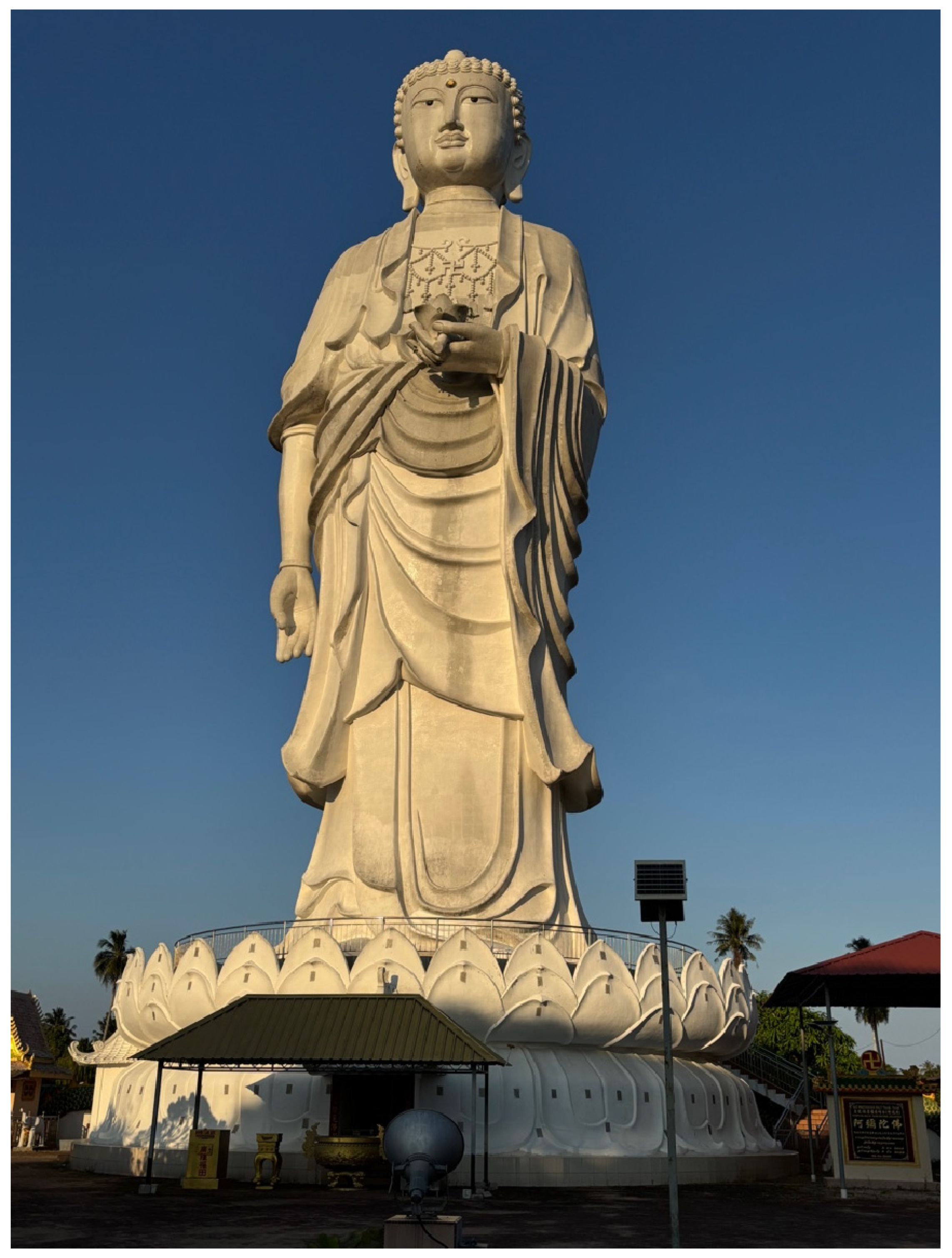
While Wat Phothikyan began as a Thai temple, one can clearly see how Chinese aesthetics have become an integral part of the temple complex. Most notable is the towering presence of a large statue of Amitābha Buddha on a lotus base at the centre of the temple (see Figure 3). Phra Amitabha, a central figure in Chinese Buddhism, means “immeasurable light,” symbolising boundless wisdom and compassion.
Figure 3.
Statue of Chinese style Buddha on a lotus base at the centre of the temple.
The Chinese community’s contribution to the temple’s development was not only religious but also economic. As one villager noted,
“Those with money are mostly Chinese—the wealthy ‘siá’ class. They fund the projects, but they expect things to be built their way. If it’s in Thai style, they won’t give. They only fund what reflects their aesthetic. Even Buddha statues follow their preference. That gives them pride.”(Ruai, 2011: interview)
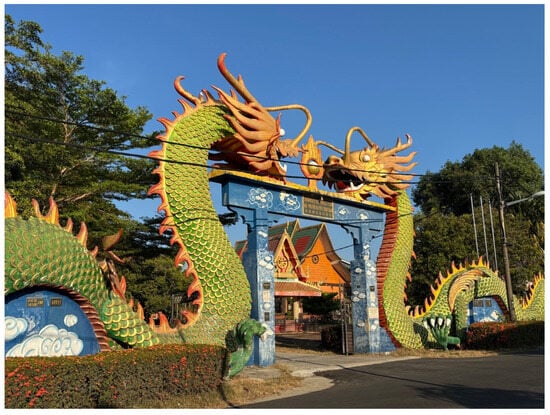
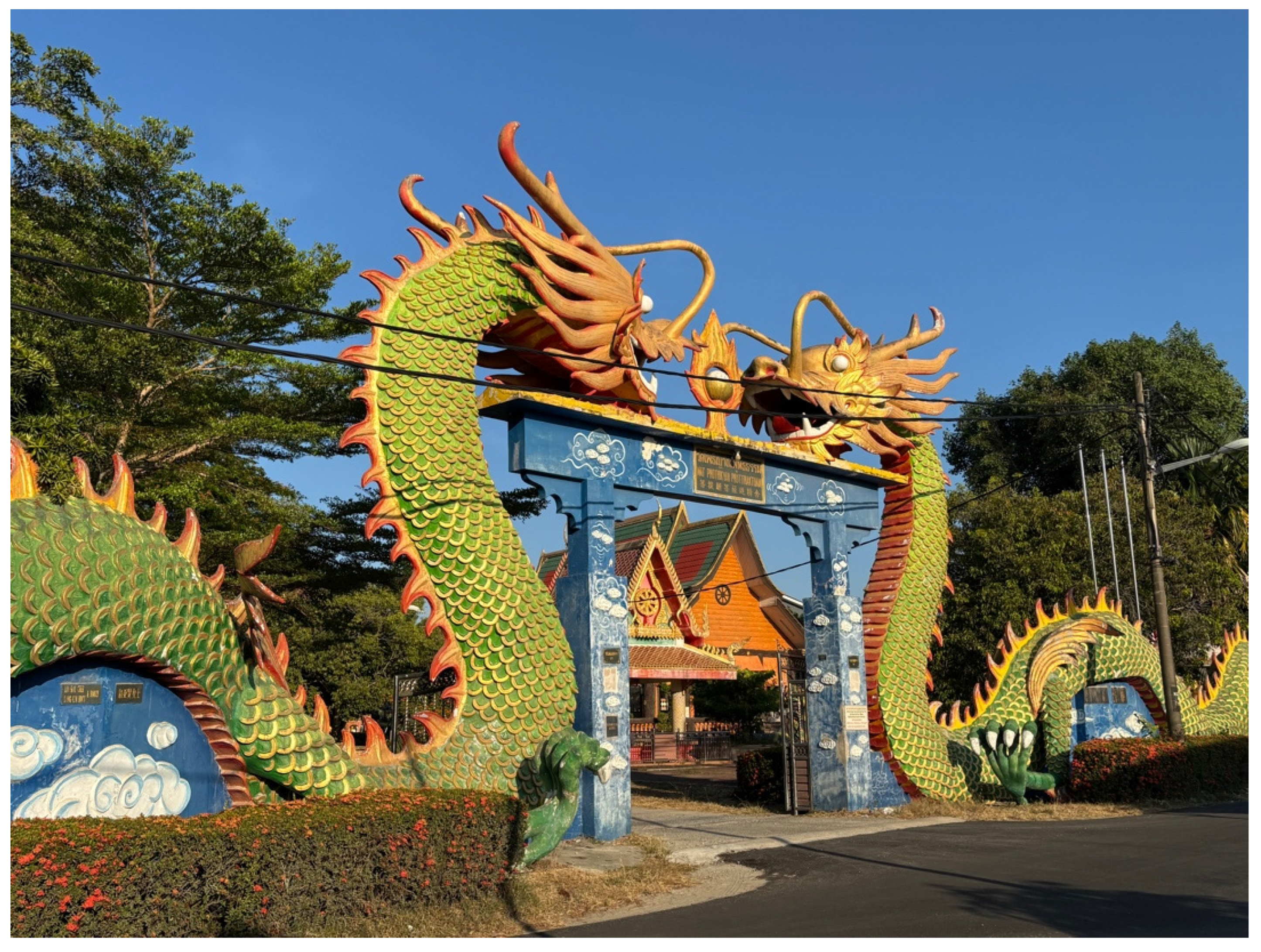
While the Siamese sought financial support from Chinese donors to restore the temple, the Chinese saw the opportunity to earn merit and preserve their own spiritual traditions. This resulted in a shared space shaped by both cultures. However, most visible parts of the temple have Chinese iconography. For instance, the entrance arch is designed as twin dragon heads facing a flaming pearl, a motif popular in Chinese decorative tradition (Figure 4). The temple wall takes the form of a green dragon with red scales, winding around the sacred compound in dynamic motion. It is almost 600 m long.
Figure 4.
The Chinese-Thai mixed style of design of the temple entrance.
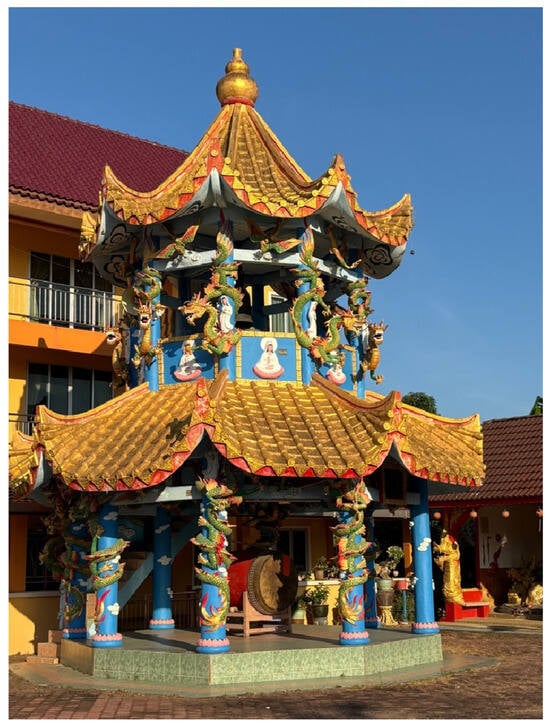
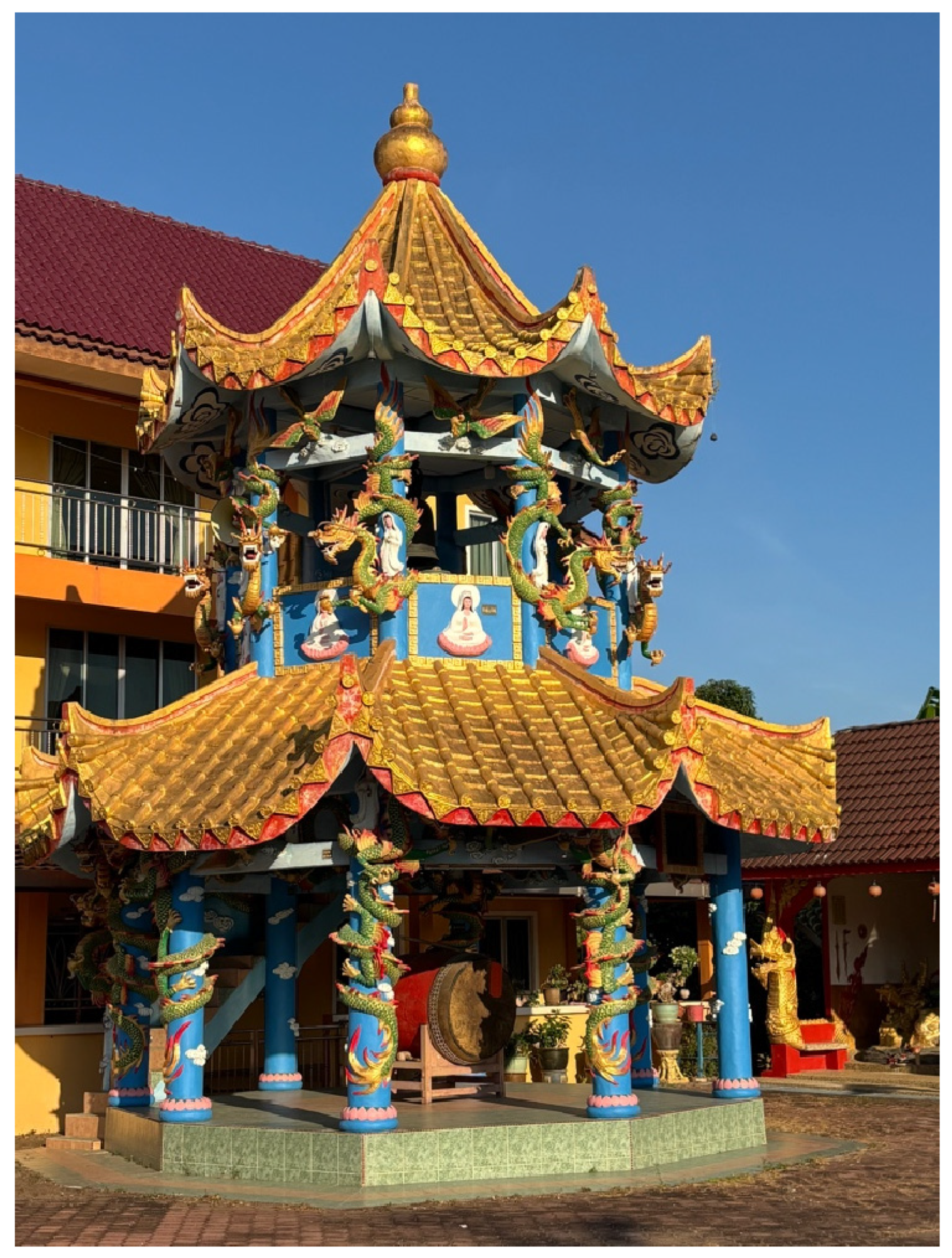
The Chinese architectural style is also clear in the inclusion of a bell tower, which is built in two tiers (see Figure 5). Each level of the tower is decorated with dragon motifs, while the upper tier is surrounded by images of Guanyin.
Figure 5.
The bell tower.
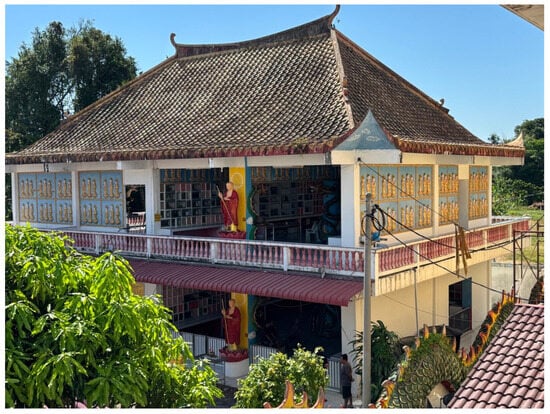
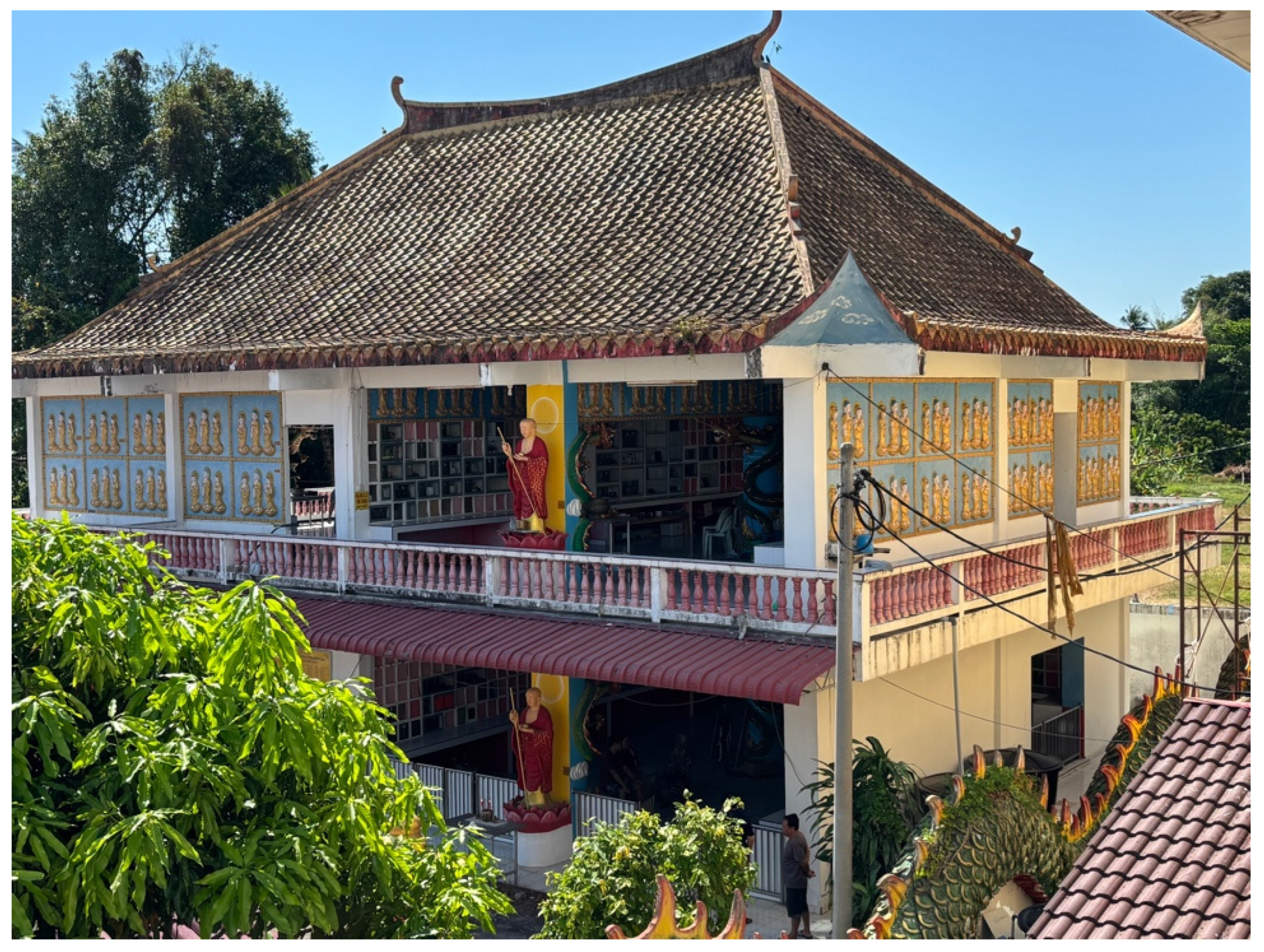
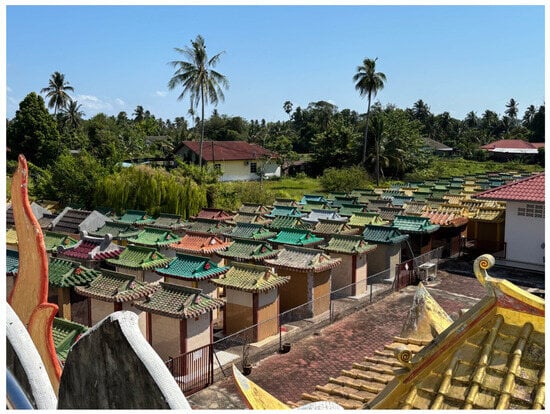
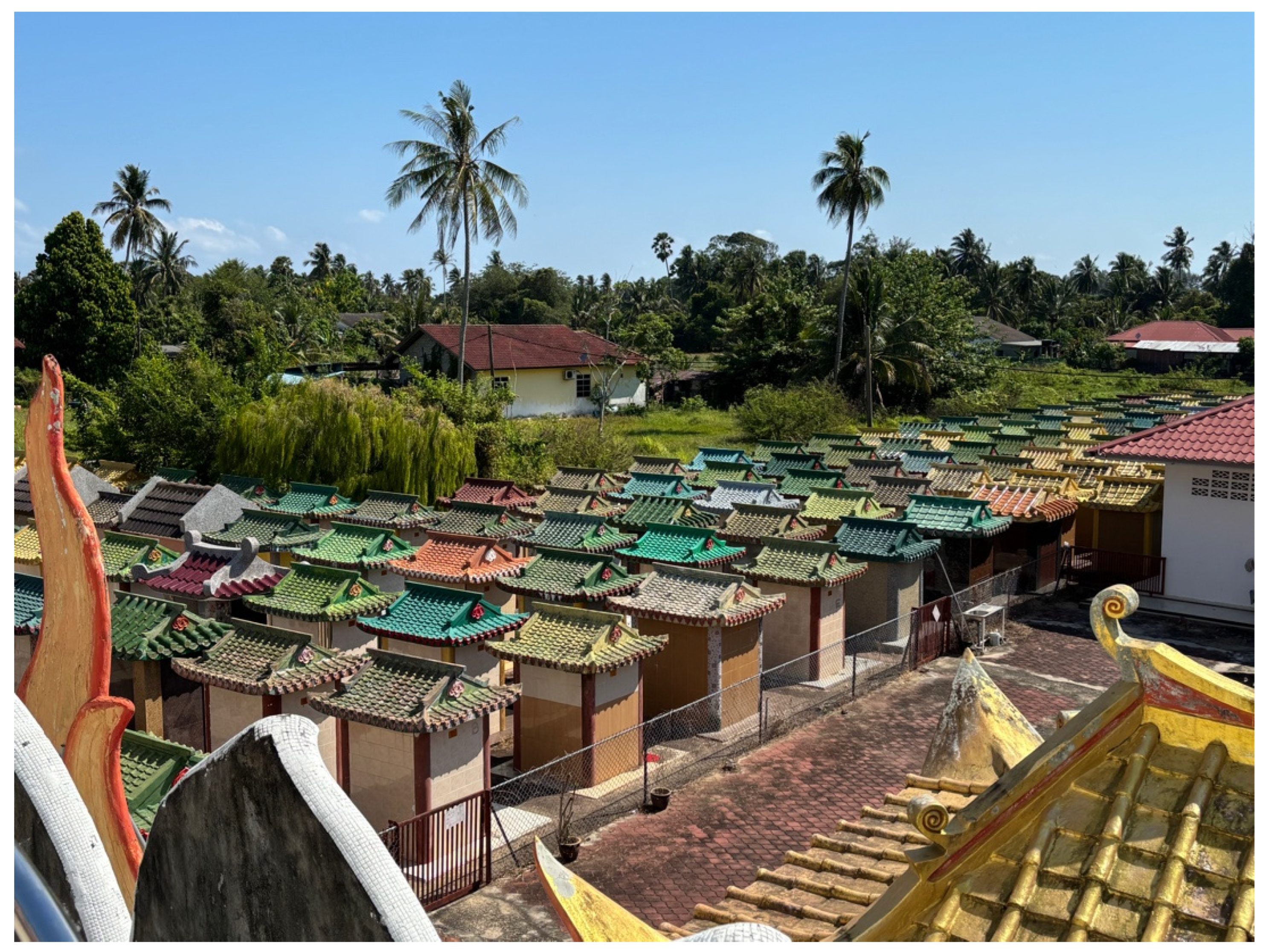
The Chinese influence on patronising the temple is most visible in the construction of a cemetery (Figure 6). The Chinese cemetery is in a section behind the temple and consists of small, house-like tombs arranged in rows, resembling dwellings for departed souls (Figure 7). This arrangement exists because Malaysian Chinese are not allowed to buy new land for burial, so they rely on Thai temple grounds in exchange for making maintenance donations to the temple.
Figure 6.
Building designated for funerary ceremonies and the enshrinement of cremation urns, each bearing inscriptions in Chinese.
Figure 7.
Chinese cemetery.
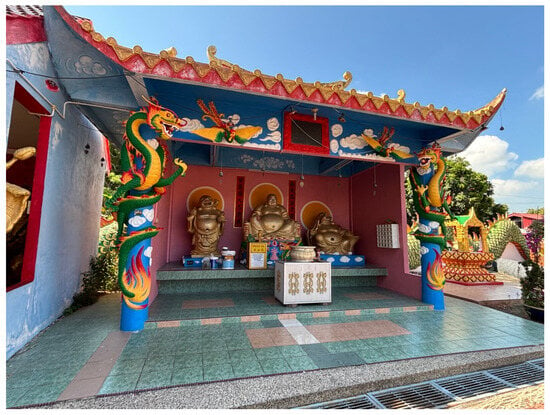
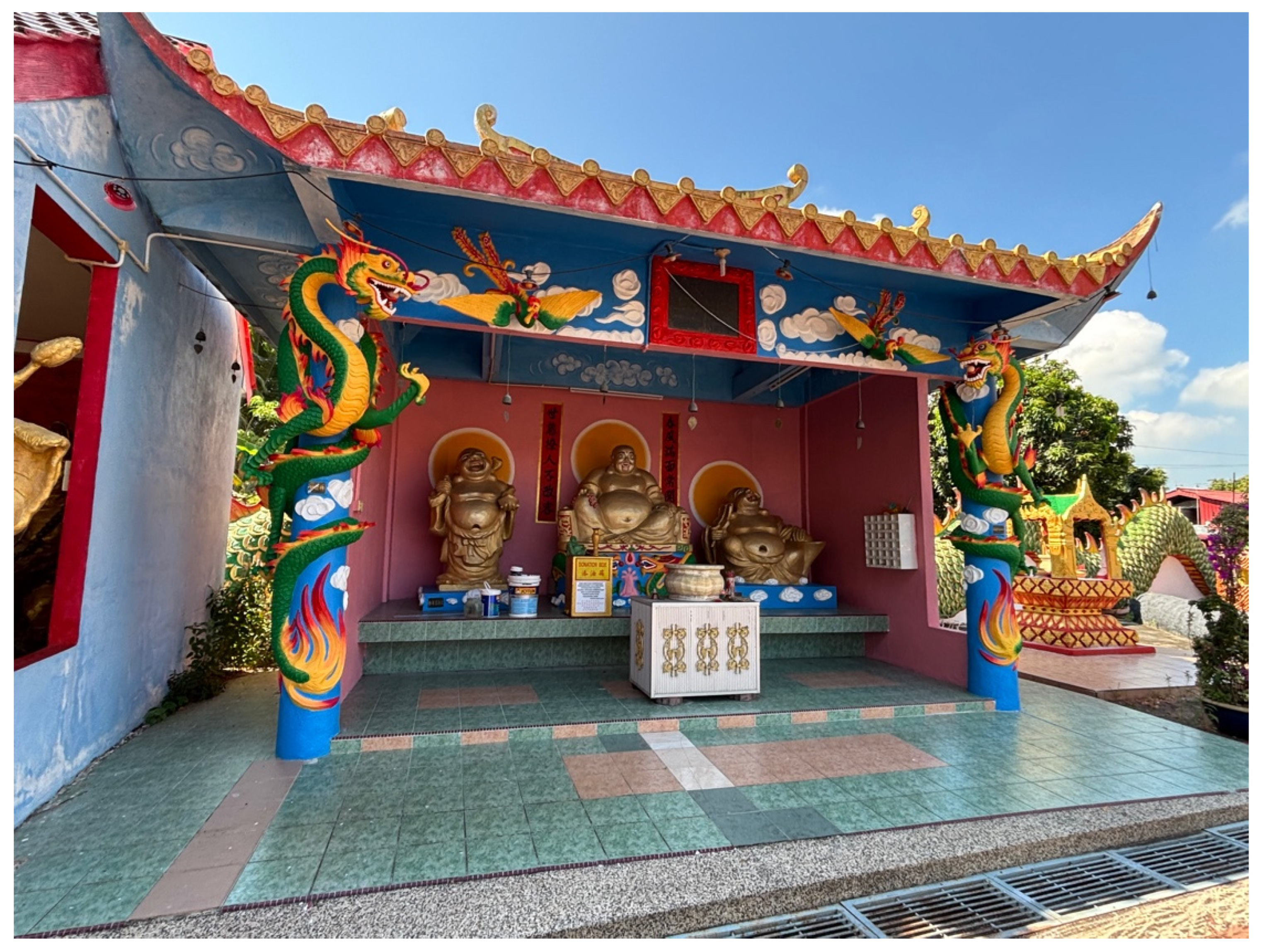
Another significant Chinese structure in the temple is a shrine of the Three Deities, with an incense burner placed at the centre, following the traditional beliefs of the Chinese community (Figure 8). The Three Deities include Maitreya, a Bodhisattva figure characterised by a plump body, round belly, and cheerful expression, which symbolises abundance, happiness, and compassion, and two Arhats—where people worship for blessings.
Figure 8.
Shrine of the Three Deities.
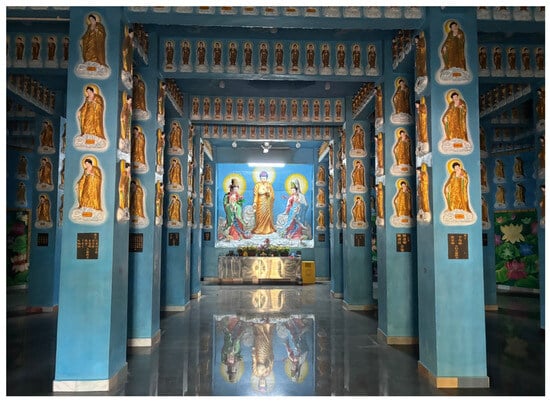
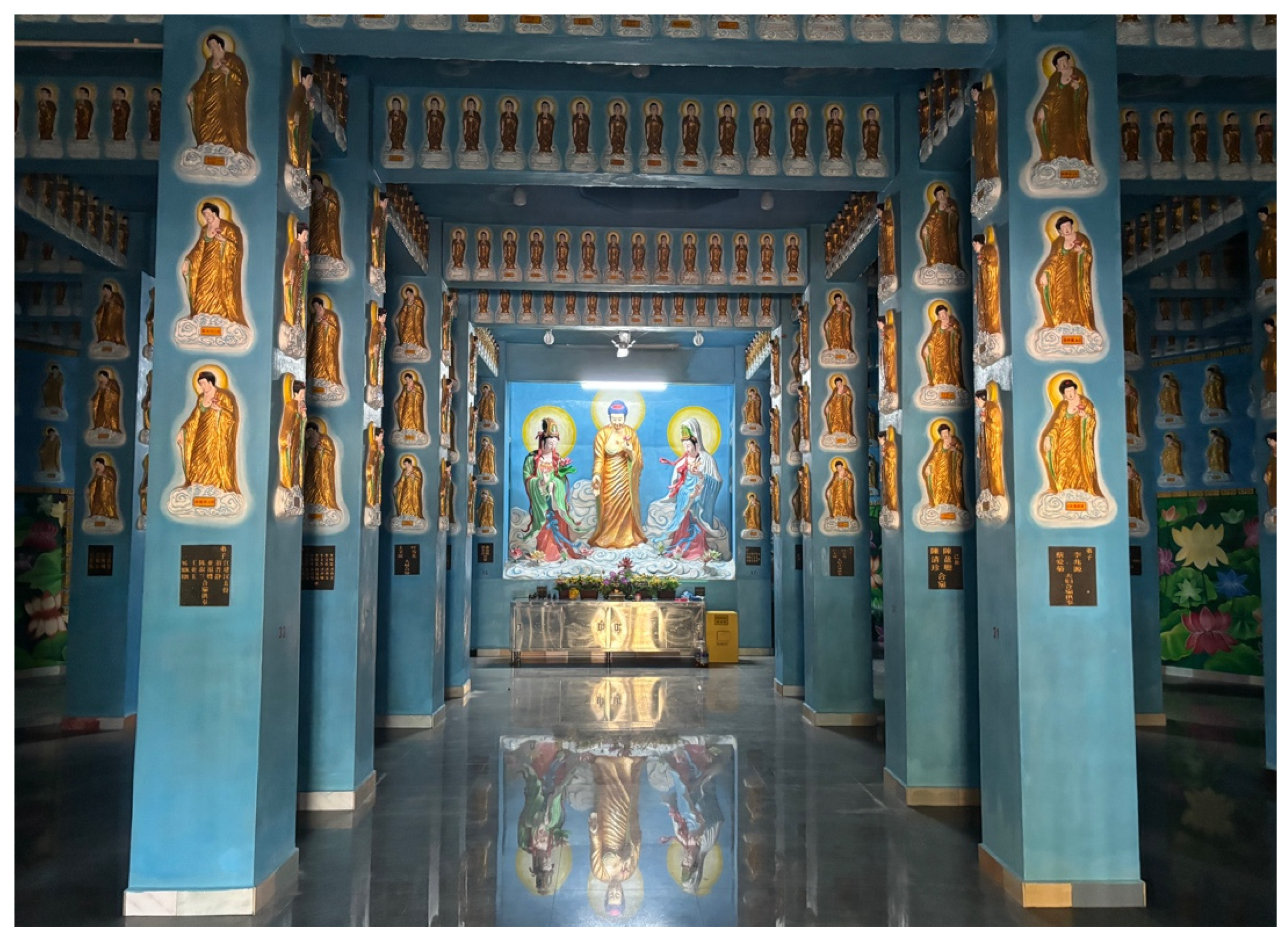
The use of Chinese art and design elements is pronounced within the interiors as well. These include motifs and sculptures that are common in Chinese traditions. For instance, the columns and beams of the vihāra are decorated with numerous Chinese-style paintings of the Buddha, each with a radiant halo behind the head, signifying enlightenment and wisdom (Figure 9).
Figure 9.
Chinese-style paintings on the columns and beams of the vihāra hall.
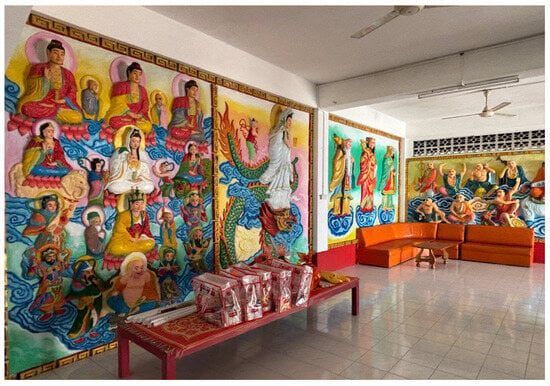
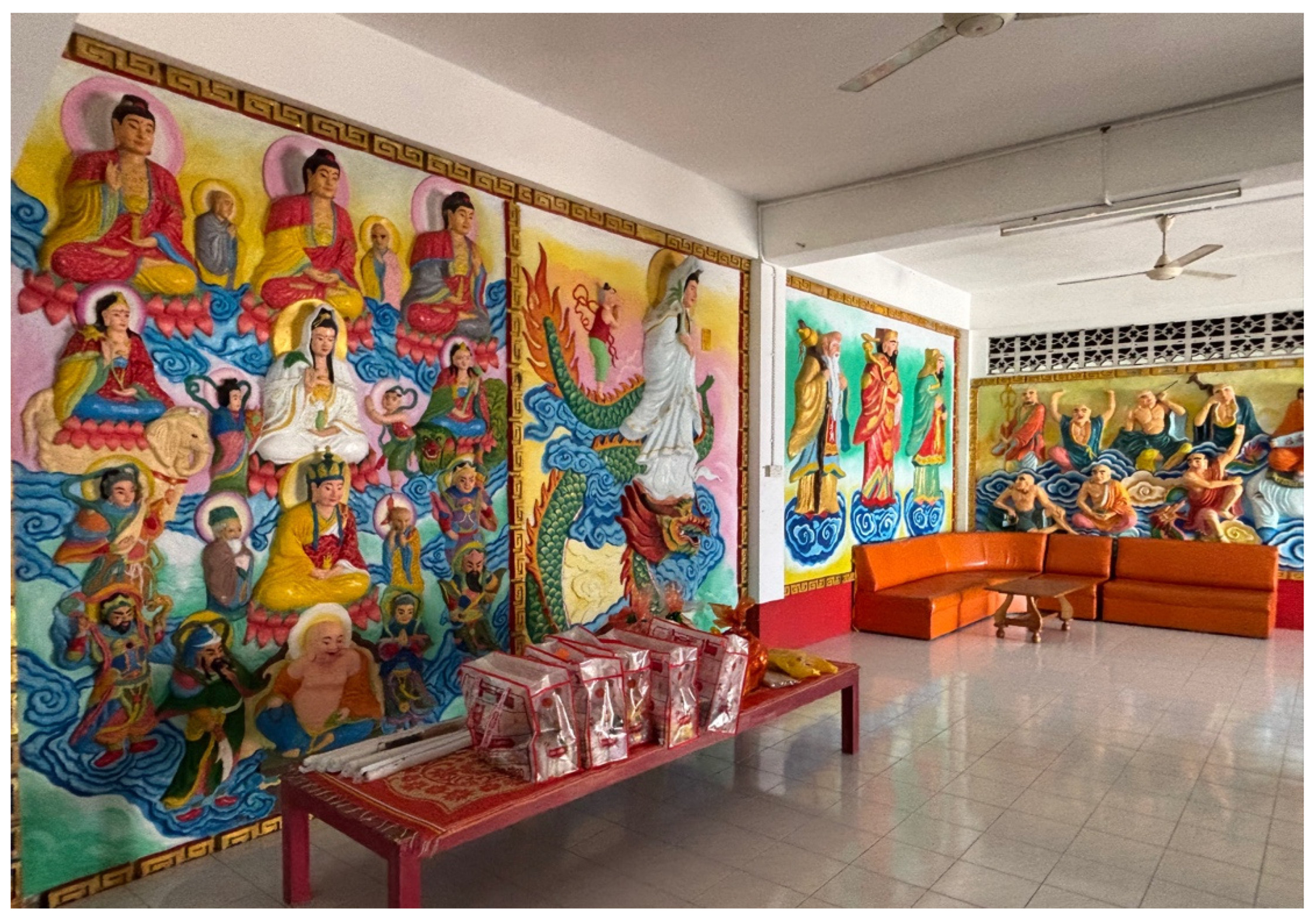
As shown in Figure 10, on one side of the vihāra, high-relief sculptures depict the Buddha, deities, Maitreya, Guanyin, the Four Heavenly Kings, and Taoist immortals, covering the entire wall and combined with brightly coloured painted backgrounds.
Figure 10.
Wall reliefs depicting Chinese iconography and stories.
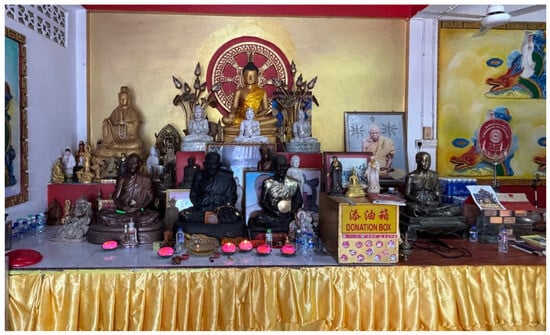
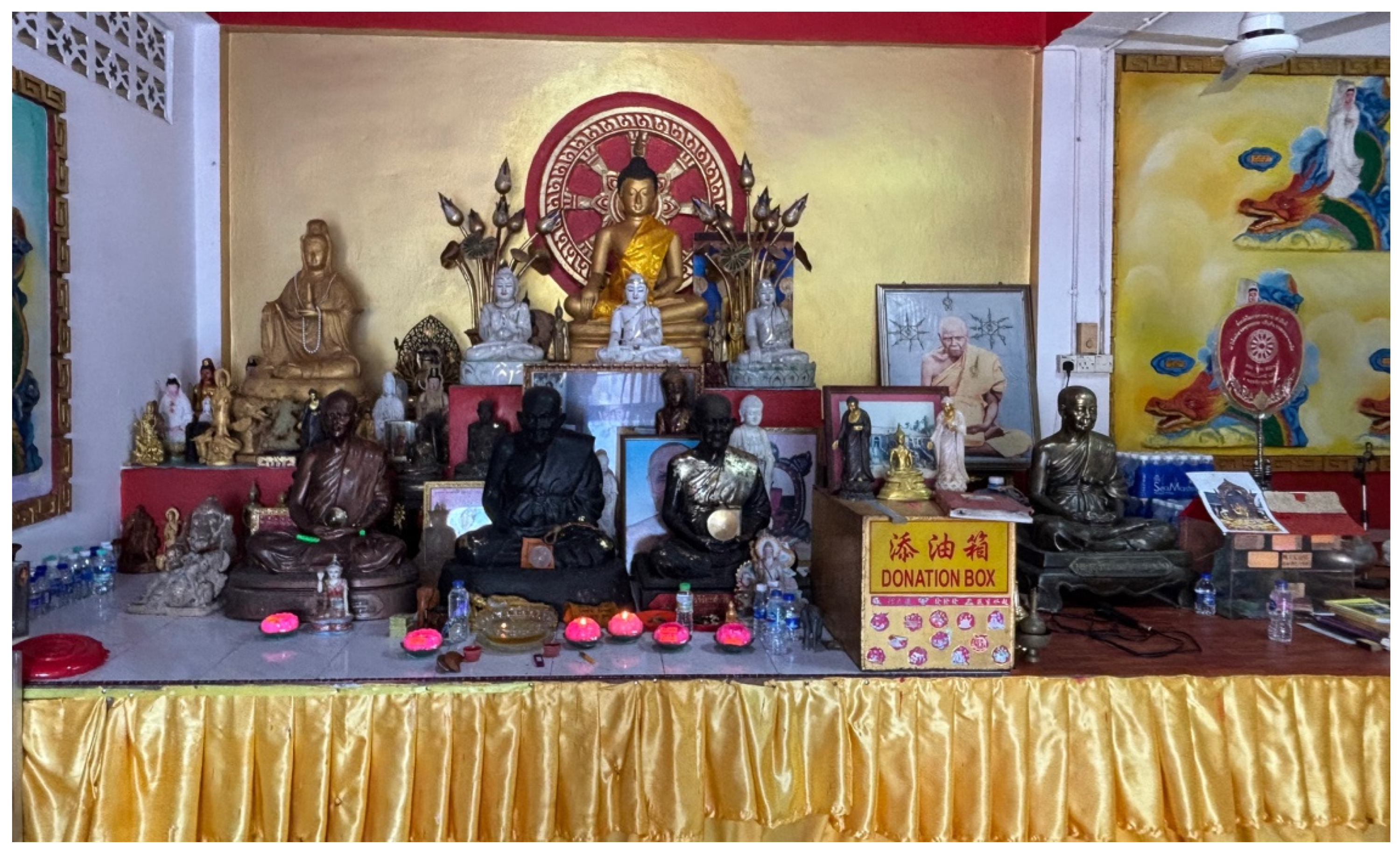
Even the space of the altar is hybrid. As seen in Figure 11, in one corner of the vihāra stands a Thai-style Buddha image, while on the opposite side is the Bodhisattva Avalokiteshvara, or Guanyin. At the front are statues of revered monks or eminent teachers who have passed away.
Figure 11.
The altar space inside the vihāra hall.
4.2. What Has Remained Thai?
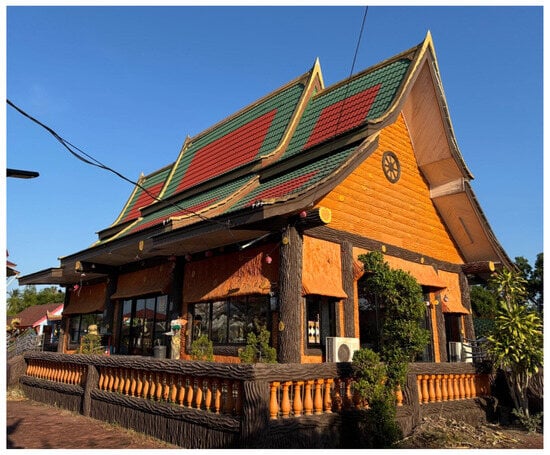
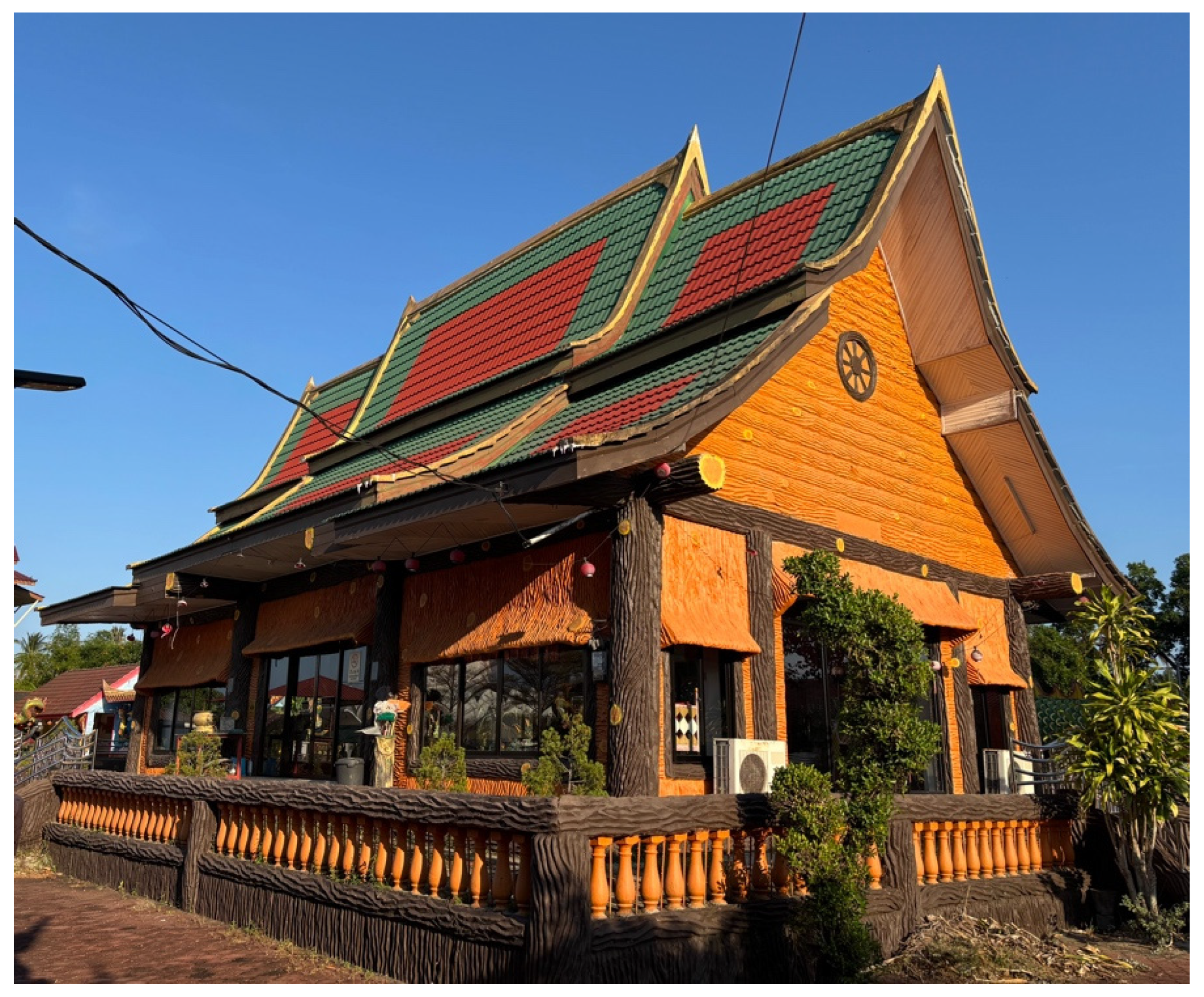
The core of the temple—the ordination hall—has essentially remained Thai in appearance and function. The hall shows a fusion of Thai form and local stylistic innovation: a raised platform with double-tiered curved roofs, a central Dhammacakra wheel on the gable, and distinctive sema (boundary posts around the perimeter) (see Figure 12). Similarly, the sermon hall is in traditional Thai form with a gable wheel of Dhamma.
Figure 12.
Ordination hall (Ubosot).
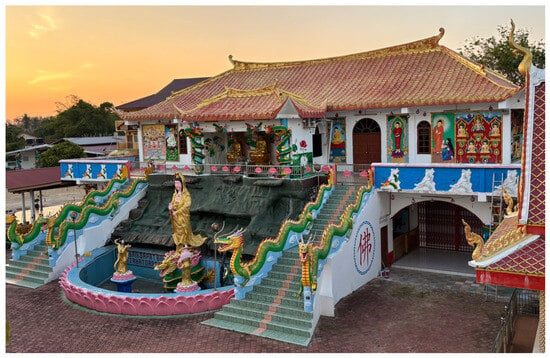
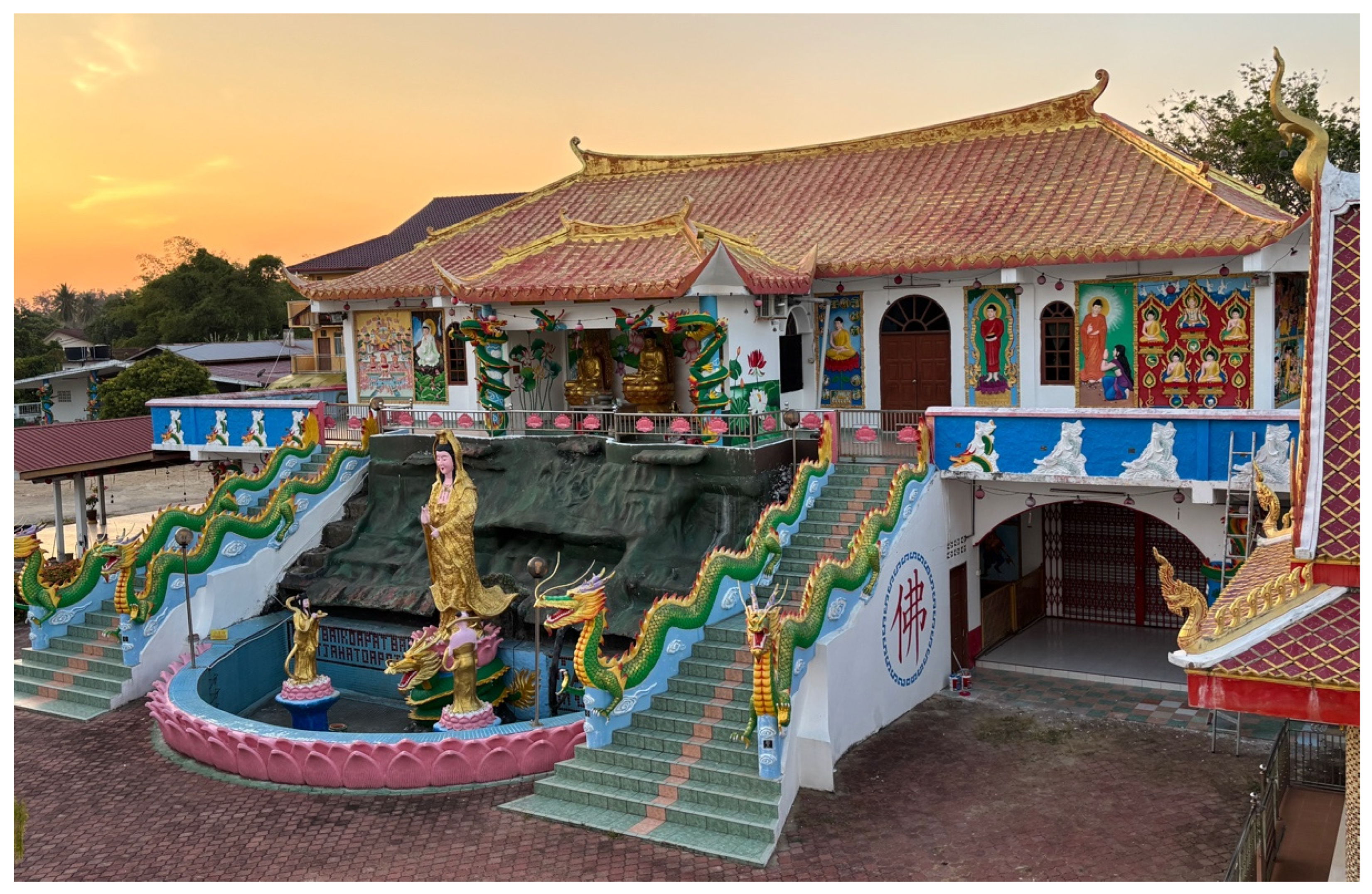
The other key structure—that of the vihāra—also keeps a strong Thai character in its form. It is constructed along a symmetrical axis. It is the place for conducting religious practices of the Thai Theravāda tradition. It is important to note that a distinct Chinese architectural style of dragon stairways provides access to the hall (Figure 13). In front stands a statue of Guanyin, the Bodhisattva of Compassion, poised gracefully in a lotus-decorated pond. This shows a fusion of Thai and Chinese styles of art and architecture.
Figure 13.
The vihāra hall.
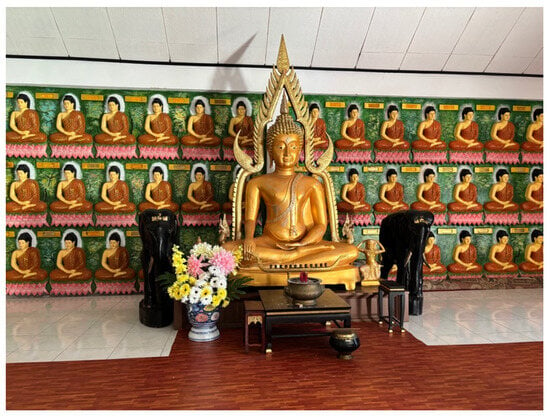
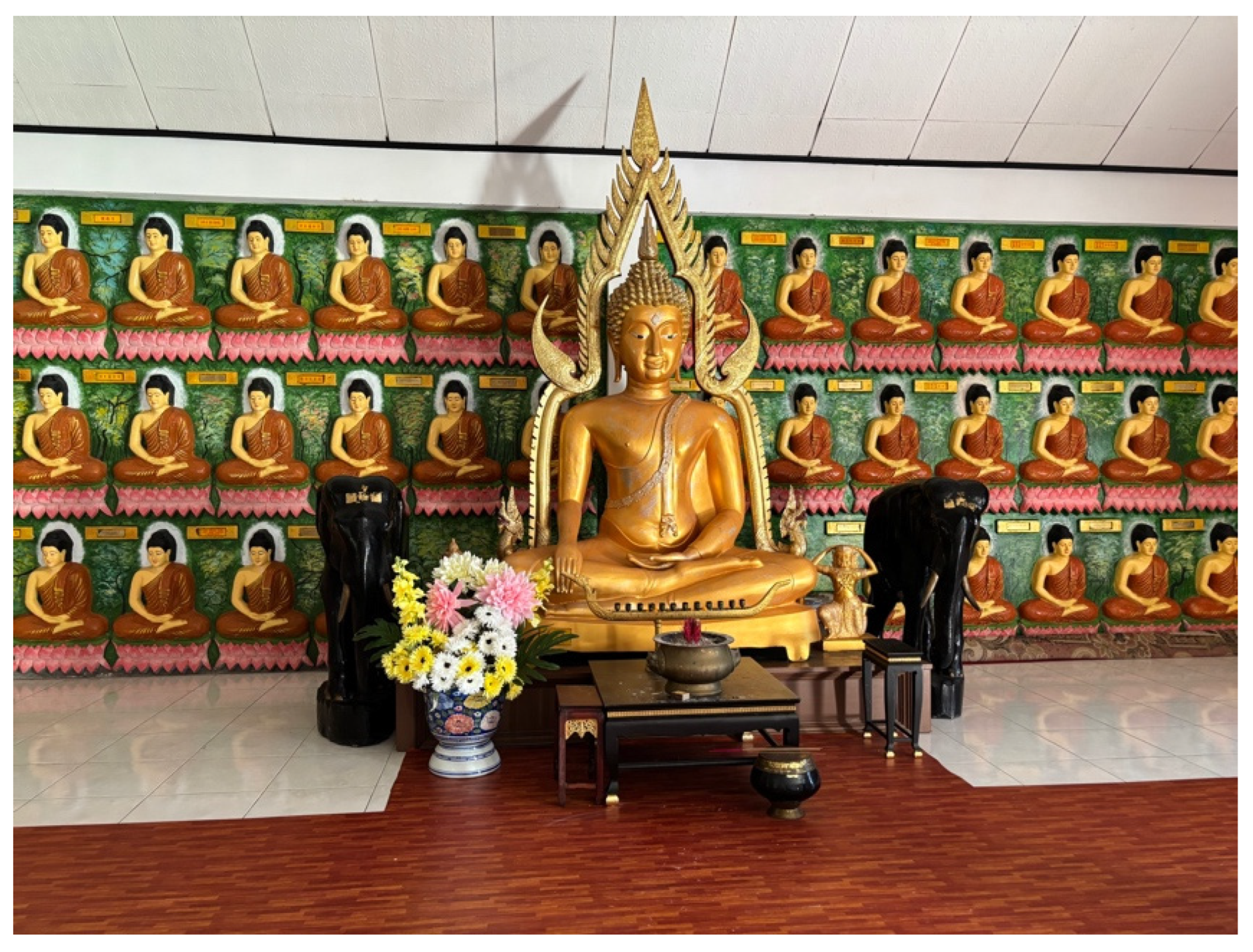
Inside the vihāra, a bronze Buddha image sits in a Thai-style crystal shrine (Figure 14). The rear wall repeats multiple Buddha figures in Mahāyāna style, symbolising the innumerable Buddhas revered by Chinese devotees.
Figure 14.
The interior of the vihāra hall.
An analysis of key architectural elements illustrates how the temple’s design reflects a harmonious blend of Chinese and Thai architectural styles. Thus, historical ties between the Thai and Chinese populations, shaped by shared marginality and spiritual needs, have fostered a form of cohabitation and negotiated identity. However, it appears that Chinese cultural elements are given greater prominence than Thai or Siamese ones. For example, donation boxes, candles, and joss stick pots all reinforce the Chinese influence. Even subtle details such as the placement of a Thai-style Buddha head at a lower level than the Chinese Buddha and the decorations (such as dragons and cloud paintings), suggest that Chinese cultural symbols dominate the visual landscape. A local villager mentioned, “The Chinese donated the money, so they are allowed to decide what the temple looks like.” This statement highlights a deeper power dynamic in which economic capital shapes religious space and cultural representation. Such domination can unintentionally make Thai art seem secondary or even marginalised.
The Chinese visitors that we interviewed were not merely casual visitors, but temple users with long-term ritual and financial ties to the site through Qing Ming observance, ancestral rites, merit-making, donations, and payments for ash placement and funerary space. Their accounts suggest that Chinese engagement with Wat Phothikyan Phutthathum cannot be reduced to a simple desire for symbolic visibility or cultural display. Rather, the temple is also valued as a site of ritual trust, ancestral continuity, and Buddhist practice. At the same time, this does not negate the role of economic influence. Instead, it shows that religious attachment and financial contribution are intertwined, allowing Chinese-associated participation to shape what is built, maintained, and visually emphasised within the temple compound.
5. Discussion
Based on the detailed visual analysis of Wat Phothikyan Phutthathum, two broad themes can be identified: the hybridisation of heritage and the temple as a tourist attraction.
5.1. Hybridisation of Heritage
In the earlier section, we showed the layering of Chinese and Thai aesthetics that contributes to the hybridisation of heritage. Our findings suggest three interrelated processes explaining how the hybridisation of heritage is taking place: cultural adaptation, spatial negotiation, and co-creation of identity. Cultural adaptation is clear from how Thai Theravāda Buddhist practices and spatial configurations selectively accommodated and incorporated Chinese Buddhist rituals, aesthetics, and beliefs based on the needs of donors, the requirements of ritual performance, and the limitations of resources. Spatial negotiation is defined as the way that various religious groups define, redefine, and distribute the physical space of a temple through their daily activities. In the case of Wat Phothikyan Phutthathum, these were clear in the placement of Chinese shrines, Thai Buddha statues, funeral structures, and ritual spaces within a shared area. As such, space is not a passive medium for the expression of religion, but rather it is a dynamic space that is continually being changed through funding, ritual performance, and the hierarchical representation of symbols. Conceptually, identity is viewed as a construction of an individual that is expressed and contested through artefacts (objects), architectural forms, and ritual practices. At Wat Phothikyan, while on the one hand some objects and architectural elements belonging to Thai culture have become redundant, monks are actively keeping the Thai-ness through their sermons and activities. Thus, both the Thai and Chinese identities are retained within the same temple complex.
Such hybridisation is reflected in both tangible structures and the intangible heritage of faiths and beliefs, and together it has played a significant role in shaping the identity of Wat Phothikyan. For example, the Chinese community’s focus on Phra Amitabha aligns with their belief in the afterlife and the importance of reaching heaven, and hence, installing a large statue within the temple compound seems to be a seamless integration. The Chinese-style murals depict the Buddha and other influential figures, reflecting the Chinese community’s desire to preserve their own religious identity. However, that does not dwarf the worship of Phrasrisakayamuni—the deity that the Thai community traditionally worships. This blend of beliefs ensures the temple serves as a spiritual centre for both the Thai and Chinese communities, despite their differing religious doctrines.
The coexistence of Thai and Chinese religious beliefs is demonstrated by the simultaneous performance of various forms of ritual at the temple. The daily rituals and activities typical of the Theravada Buddhism practised in Thailand, such as recitation of sacred texts, periods of personal meditation, and making merit by contributing to the welfare of others, are routinely performed in the temple. A local Thai patron confirmed that “The temple’s annual festivals include Magha Bucha, Visakha Bucha, Khao Phansa, Kathin, pha pa merit-making, Songkran ceremonies, ordinations, ancestor-related chanting, and the vegetarian festival." The temple has incorporated into its program Chinese- and Mahayana-influenced rituals that occur in the same area. For instance, the two major Buddhist holidays celebrated in Thailand, Wesak and Kathina, which involve making communal offerings to the Buddha, reciting the Pali Canon, and a candlelight procession around the ordination hall, are conducted according to the principles of the Theravada tradition. Similarly, devotional practices related to Kuan Yin include prayers on specific lunar dates, the avoidance of eating meat, burning incense, and making offerings to ancestors, which are also performed in the temple precinct. A regular Chinese visitor to the temple remarked:
“I also come here for Qing Ming. My husband’s mother’s ashes are kept at this temple, so I came with my husband to perform the ritual for my mother-in-law. My own mother’s ashes are kept at Wat Pathumviharn, which is next to Wat Phothikyan Phutthathum. I do not come to the temple often, because younger generations may not be interested in coming. What brings me here is Qing Ming. Most Chinese people choose this temple because it provides convenient ash-placement services, and Chinese people in Kota Bharu know well about this convenience.”(Julia, 2026: interview)
Ritual practices do not occur separately in different institutional frameworks but simultaneously in an overlapping use of the physical space of the temple. Similarly, as seen in other Thai and Siamese temples in Kelantan, the shared performance of ritual shows practical accommodation rather than a synthesis of doctrine, thus allowing members of different religions to see their respective faiths while still honouring the existing traditions of Theravada Buddhism. The strong presence of Chinese artistic and cultural forms in the temple was not simply the passive result of visual mixture, nor does it mean that the Thai temple side made no effort to preserve its Thai identity. Rather, the process involved ongoing negotiation under conditions of unequal financial capacity. Thai/Siamese actors continued to value the temple’s Thai identity, but they also faced practical constraints in sustaining and restoring the temple. Chinese-associated support often came with expectations that certain forms valued by Chinese devotees would be incorporated into the temple’s sacred and visual environment. In this sense, the resulting architecture was not a neutral blend, but a donor-shaped transformation. At the same time, this accommodation was not only a short-term response to immediate need. Temple actors also looked toward a longer future in which continued Chinese support was seen as important for keeping the temple active, attractive, and financially workable. Financial support comes in different forms from Chinese visitors, as explained by one interviewee:
“For me, the temple is important as a place for performing Qing Ming in the way our ancestors have passed down. My donations do not follow a fixed pattern. There are two ways I usually donate. One is by putting money into the donation box, and the other is through merit-sharing networks, when friends or relatives circulate a request for donations and the money is then directed to a particular temple depending on that merit network.”(Melissa, 2026: interview)
At the same time, these compromises did not necessarily provoke strong collective resistance, because many Siamese actors distinguished between visual transformation and ritual continuity. Even when the temple became more visibly Chinese in some of its monumental forms, local actors still understood it as a functioning Buddhist site in which Theravāda practice could continue. This helps explain why compromise became possible: they compared the alternative of leaving the temple in disrepair with the possibility of restoring and beautifying it through external support, even if that support redirected the temple’s aesthetic orientation toward Chinese patron preferences. The acceptance of Chinese cemeteries or Chinese-influenced architectural forms on temple land was therefore not always interpreted as a violation of Buddhism, but as part of a practical strategy for sustaining the temple and ensuring its future development. The result was not a balanced cultural synthesis, but an uneven accommodation made workable through practical reasoning, local persuasion, and the perceived need to ensure the temple’s survival. It also must be noted that the temple has its own economy, as explained by a local monk:
“The temple’s income comes from several sources. It earns money from the sale of ritual items such as incense, candles, lotus flowers, and other offerings, with lotus flowers costing 10 ringgit each. It also receives income from pha pa, Kathin, and offerings of monks’ robe sets, and each of these events brings in no less than 10,000 ringgits. Other income comes from ritual services requested by visitors, such as holy-water blessing, misfortune-removal rites, and consecration, as well as from rental fees for beverage stalls. When buildings or artworks are damaged, Chinese patrons donate money and often arrange for craftsmen to repair them directly.”(Suea, 2026: interview)
Follow-up fieldwork conducted during the revision stage further complicates any interpretation that reduces Chinese participation to a purely external or strategic force. Chinese-associated participants interviewed at the temple described their engagement in terms of Qing Ming observance, ancestral continuity, merit-making, and ritual trust. Their families had kept financial and ritual ties to the temple through recurring donations, ritual offerings, and payments related to ash placement and funerary space. This suggests that Chinese involvement in the temple is not only representational, but also devotional and ritually grounded. At the same time, these forms of participation remain materially consequential, since those who contribute resources can also shape what is built, maintained, and visually emphasised within the temple compound. The annual return of Chinese descendants for ancestral observance also reinforces the temple’s role as a site of ritual remembrance and brings periodic financial support into the local religious economy.
The unequal accommodation seen at Wat Phothikyan Phutthathum should also be situated within the wider demographic and socioeconomic context of Kelantan and Bachok. According to DOSM, in 2022, Bachok had a mean monthly household income of RM 4811 and a median monthly household income of RM 3625, while absolute poverty stood at 12.1% and relative poverty at 10.4%. The district’s labour force participation rate was 54.4%, and 45.6% of the population was outside the labour force. These figures do not by themselves prove village-level income differentials between Siamese and Chinese communities, but they do provide an important sociological backdrop for understanding why access to financial resources matters so much in shaping temple development. This point becomes more intelligible when read alongside broader descriptive accounts of Kelantanese society, which portray the Thai community as historically rooted, temple-centred, and largely associated with agrarian and local livelihoods, while the Chinese community is more strongly associated with trade, business networks, and local economic leadership. In such a minority setting, where local economic constraints are significant, those actors able to mobilise more resources can exercise greater influence over what is built, restored, and visually emphasised within religious space.
The hybridisation is explained in tangible ways by emphasising the changes in the physical appearance that have both Thai and Chinese elements. Rather than following a designated approach to design, composition, and proportion of cultural elements, this phenomenon reflects more a process of evolution that is driven by broader socioeconomic and cultural contexts in which minority communities function and retain patronage relationships to maintain the temple as a working institution that serves religious–cultural– social aspirations. In the process, such a hybrid temple is embraced by all communities and becomes a part of the living heritage of the wider society.
Such hybridisation has a significant impact. On the one hand, the unique blending of Thai and Chinese traditions of spirituality has made the temple a site of cross-cultural learning as its intangible heritage. The temple also plays a subtle yet significant role in grassroots cultural diplomacy. Through temple activities, bilingual signage, and regular visits by monks and devotees from Thailand, the temple strengthens cross-border Buddhist relations and reinforces a sense of shared heritage. In a state like Kelantan—where Buddhism is a minority faith—such transnational religious and cultural linkages help maintain symbolic connections with Thailand while highlighting Buddhist cultural identity in a pluralistic Malaysian setting.
5.2. Temple as a Tourist Attraction
The significance of Wat Phothikyan Phutthathum should be considered in terms of heritage, pilgrimage, and cultural distinctiveness rather than the number of visitors or volume of tourism. The coexistence of Thai and Chinese visual elements within the same sacred compound creates a distinctive environment that appeals to pilgrims, architecture enthusiasts, and culturally curious visitors. At a tangible level, visitors are attracted to the blend of Thai and Chinese architectural and artistic features. As one interviewee remarked, “The Buddha of Amitabha is not just for faith; it is also a tourist attraction.” The temple’s appeal is further enhanced by its monumental features, including the standing Buddha and the dragon wall, which contribute to its visual distinctiveness within the wider Kelantan setting.
“Now the temple is one of the state’s top tourist attractions. Visitors come from Taiwan, Japan, Western countries, and Singapore—they come to take photos. There’s the longest dragon, a giant Buddha, and a beautiful, unusual ordination hall. The dragon wraps around the temple—about 1973 feet long, it’s written on the entrance gate.”(Pan, 2011: interview)
A statement from a 2011 interview described the temple in highly enthusiastic terms as an important attraction in the state. However, more recent field verification suggests that such statements should be read as reflecting a period of stronger local optimism rather than as a precise measure of present-day tourism scale. The temple does not appear to maintain formal visitor records. The temple’s visitor profile also supports this interpretation. Many visitors are Malaysian Chinese travelling from other states, often in connection with broader temple visits, ancestral rites, merit-making, or devotional practice, rather than as conventional leisure tourists. Thai visitors are also present, though many are connected through kinship and friendship networks with Siamese communities in Kelantan. In this sense, the importance of Wat Phothikyan Phutthathum lies more in its symbolic, aesthetic, and religious prominence as a hybrid temple site within a minority borderland setting rather than the volume of visitors.
According to Suea, the temple was considerably busier in earlier years, when it could receive three to four busloads of visitors a day, but current visitation is much more modest, at roughly 40 visitors per day. While these figures should be understood as informal field-based estimates rather than official statistics, they nevertheless show that the temple’s present scale of visitation is lower than earlier descriptions might suggest. Wat Phothikyan Phutthathum is therefore better understood as a small-scale heritage and pilgrimage destination, or as a recognised stop within a wider Thai temple circuit in Kelantan, rather than as a major mass-tourism site.
Although visitor volume may appear small, it is because of the temple’s location away from the primary tourist circuit in Kelantan rather than a lack of interest in the temple. In recent times, small-scale services have been set up to support pilgrims and visitors to the site, which include a bakery/café, owned by members of the local Siamese community. Food establishments currently running in the area were present prior to the increasing awareness of the temple’s significance within regional tourism itineraries. Accommodation is offered by the temple through the provision of simple guest rooms for pilgrims; visitors are encouraged to make voluntary donations toward the use of utilities such as water and electricity. The absence of private accommodation (hotels) near Wat Phothikyan Phutthathum is indicative that tourism at the temple has occurred because of pilgrimage/heritage visitation that is embedded within local religious/community life, rather than the result of major commercial investment.
A sizable proportion of visitors are mainly Malaysian Chinese who travel from other Malaysian states, including Perak, Johor, and Kuala Lumpur. They often treat the trip as a wider “Kelantanese–Thai temple circuit,” which includes Wat Phothivihan (noted for its large reclining Buddha), Wat Machimmaram (large, seated Buddha), and Wat Uttamaram, plus an urban stop in Kota Bharu (market visit and overnight stay). Thai visitors are present but tend to be kinship- and friendship-linked (relatives/friends of Siamese in Kelantan) rather than “general tourists”. Their purpose is often merit-making and devotional practice: lighting incense/candles, praying for wellbeing, and seeking prosperity in trade and household life. It must be noted that international visitors (Western/China) are rare, partly because of the belief of the Kelantan region as a socially conservative, strongly Islamic state by outsiders.
Tepsing [34] has also noted how many Muslims visit the temple out of curiosity, seeking to understand the diverse concepts of Buddhism and the cultural fusion it represents. This multicultural interaction has further cemented the temple’s role as a space for cultural exchange.
“The Muslims come to check on the temple. They’re curious—they wonder where we get our money from. Since we’re seen as poor, they’re suspicious. They want to understand what Buddhism is.”(Nun, 2011: interview)
Wat Phothikyan is no longer seen solely as a religious site but also as a gateway to understanding multicultural coexistence. It now features as a cultural heritage destination in Kelantan’s broader cultural tourism strategy. Thus, its hybrid aesthetics reflect both the lived negotiations of minority communities and the economic imperatives of tourism.
It must also be noted that hybridisation may lead to unintended consequences. There seems to be underlying tension between some Siamese and Chinese groups. While some Siamese committee members wish to preserve Thai temple architecture and oppose tourism-focused development, Chinese donors often have a stronger influence due to their financial power. They may not share the same priorities about cultural preservation and may be more focused on visibility and legacy. In this dynamic, the Chinese are portrayed as economically dominant, while the Siamese struggle to keep cultural autonomy. This is not unfounded. Ismail noted something similar in the case of another temple, Wat Rang, which was abandoned but redeveloped in 1993, and since then has the name Wat Dua Naga because of an empathic inclusion of Chinese features:
“What is really notable in the process of the reopening of the abandoned temple is that a standing statue of the goddess Kuan Yin occupies a prominent place in the front yard of the sermon hall. Another pavilion was erected to house a statue of another deity, Ni Le, the Chinese god of prosperity. Not only that, but the wall also surrounding the temple ground bears the green dragon motive designed in typical Chinese fashion. Because of the flowing motive of two dragons, with their heads facing each other at the main entrance and tails meeting at the back, the temple is now known among the villagers and outsiders as wat nag (dragon temple) or Wat Dua Naga in Malay (temple of two dragons). The temple now becomes the main attraction for Chinese visitors from other places both within and outside Kelantan. Because of the exceptional features, the temple has been accredited as a place of interest by the formerly known Ministry of Culture, Arts and Tourism (which has since been separated in 2004 into two Ministries: The Ministry of Arts, Culture and Heritage, and the Ministry of Tourism). To signify this accreditation, the ministry erected a marble plaque, thereby putting the temple on tourist map. However, despite its outward appearance as a Chinese place of worship, the ritual organization of the temple remains Theravada in nature because the resident monks are all Siamese.”[29] p. 13
While hybridisation allows for a more fluid narrative to progress, it needs to have a balanced representation of both Thai and Chinese to continue as a more widely accepted tourist attraction. Any more polarisation towards one or the other may function as a threat to the sustainability of both tourism and identity.
6. Conclusions
This study of Wat Phothikyan Phutthathum contributes empirical evidence to the negotiation of religious and cultural identities among Buddhist minorities in Kelantan, reflecting broader borderland trends. As Rashid et al. [30] noted for Pasir Mas temples, hybrid temples like Wat Phothikyan Phutthathum reinforce multifaceted identities through functions such as Dhamma practice and Mahāchāti preaching, which Tohsan [25] identifies as Thai temple survival strategies in Malaysia. The concept of “Thai-ness” is fluid. Johnson’s research on “Kelantanese-Thai” architecture highlights how Thai and local elements blend in temple construction, shaped by available materials and technologies. Wat Phothikyan Phutthathum also reflects the broader patterns found by Ismail [29] about how Thai temples adapt to the needs of the Chinese communities that dominate in the hinterlands of Malaysia. Following the line of argument by Ismail [29] and Johnson [28], this case shows ongoing negotiation of Thai identity amid shifting patronage and cultural influences. The ways in which religious buildings of minority communities respond to evolving religious, cultural, and economic contexts contribute to their process of hybridisation [23,28].
The conclusion of this study needs to be read in relation to Kelantan’s wider political and economic environment. In demographic terms, Kelantan is a strongly Malay-majority and Islamic state, and this places both Thai and Chinese Buddhists in a minority position. This broader setting helps explain why the unequal sharing of temple space may be better understood as a pragmatic survival strategy rather than aiming for a stable cultural balance. Thai temples, especially those with land, ritual legitimacy, and proven local presence, can become important institutional sites through which minority religious life is supported. At the same time, those with greater financial capacity may exercise stronger influence over what is built, displayed, and sustained within these spaces. The result is therefore not simply coexistence, but an uneven accommodation shaped by resource dependency, ritual demand, and the practical need to preserve minority religious institutions. The hybrid form of the temple should therefore be understood not simply as a visual expression of coexistence, but as the outcome of a socially negotiated and materially uneven process in which religious pragmatism, donor influence, ritual continuity, and institutional survival become closely intertwined. In this case, what appears architecturally as Thai–Chinese hybridity was sustained not by equal balance, but by a workable accommodation through which Siamese actors accepted visual transformation to preserve the temple’s continued life as a Buddhist institution.
This study also proves the significant role that religious leaders can play in mediating these forms of transformation. For example, the abbot’s willingness to accept Chinese patronage helped the temple’s growth, modern-day presence, and the reconfiguration of the temple’s cultural boundaries. Therefore, the current appearance of the temple can be seen as the results of both collective negotiations by the community, as well as the actions of religious leaders acting between the limits of spiritual authority, financial necessity, and ethnic relations. These religious leaders enable the temple to function as a flexible institution with the capacity to accommodate several types of religious perspectives without formally integrating them into its doctrines.
In addition to illustrating how religious institutions may use hybridised forms of expression to attract tourists and pilgrims, Wat Phothikyan Phutthathum also shows how minority religious sites are becoming increasingly integrated into local and international heritage and tourism economies. The existing research on hybrid temples has largely concentrated on issues around identities and stylistic features of religious buildings as they go through transformation [28,29], with some attention to their emergence as attractive places for tourism. This study goes a step further and analyses how the tangible appearance of the temple and its intangible culture of rituals and performances add to its appeal as an attraction for devout pilgrims, religious tourists, and tourists.
The temple’s hybridised artistic expression (monumental art, layered iconography), as well as the hybridised nature of the shared ritual space(s) of the temple, have become significant attractions for visitors and pilgrims from outside of the immediate area where the temple is located. As tourism continues to become more embedded in the temple’s current identity, the temple’s religious practices, heritage making, and economic sustainability will continue to intersect. This raises larger questions about how minority cultures support their viability and visibility when the ability to do so depends upon aesthetic appeal, patronage, and external recognition. Using the example of Wat Phothikyan Phutthathum, this paper has tried to address issues related to religious hybridity, heritage making, and tourism in border regions by focusing on material culture, ritual practice, and spatial negotiation. By emphasising the continuous production of hybrid temples through unequal relationships, pragmatic decision making, and everyday negotiations, this study moves away from viewing hybrid temples as static symbols of multicultural harmony.
Author Contributions
This paper is authored by all three authors with the following contributions. K.S., P.T. and T.S.B.: conceptualisation; P.T.: fieldwork and data collection; T.S.B.: data analysis; K.S., P.T. and T.S.B.: manuscript writing and editing. All authors wrote, reviewed, and commented on the manuscript. All authors have read and agreed to the published version of the manuscript.
Funding
This research received no external funding.
Data Availability Statement
The data supporting this study consists of interview materials, field notes, and visual documentation relating to a small and potentially identifiable religious community. Full public release of these materials is restricted due to confidentiality and ethical considerations. The article relies on anonymised and non-traceable respondent references rather than identifiable personal data.
Conflicts of Interest
The authors declare no conflicts of interest.
References
- Shinde, K.A. The spatial practice of religious tourism in India: A destinations perspective. Tour. Geogr. 2020, 24, 901–922. [Google Scholar] [CrossRef] [Scilit]
- Timothy, D.J.; Olsen, D.H. Tourism, Religion and Spiritual Journeys; Routledge: New York, NY, USA, 2006. [Google Scholar]
- Timothy, D.J.; Boyd, S.W. Heritage Tourism; Prentice Hall: Hoboken, NJ, USA, 2003. [Google Scholar]
- Uriely, N.; Israeli, A.; Reichel, A. Religious Identity And Residents’ Attitudes Toward Heritage Tourism Development: The Case of Nazareth. J. Hosp. Tour. Res. 2003, 27, 69–84. [Google Scholar] [CrossRef] [Scilit]
- Olsen, D.H.; Esplin, S.C. The role of religious leaders in religious heritage tourism development: The case of The Church of Jesus Christ of Latter-day Saints. Religions 2020, 11, 256. [Google Scholar] [CrossRef] [Scilit]
- Olsen, D.H. Management issues for religious heritage attractions. In Tourism, Religion and Spiritual Journeys; Timothy, D.J., Olsen, D.H., Eds.; Routledge: New York, NY, USA, 2006; pp. 120–134. [Google Scholar]
- Shinde, K.A. Place-making and environmental change in a Hindu pilgrimage site in India. GeoForum 2012, 43, 116–127. [Google Scholar] [CrossRef] [Scilit]
- Rinehart, R. Contemporary Hinduism: Ritual, Culture, and Practice; ABC-CLIO; Bloomsbury Publishing: New York, NY, USA, 2004. [Google Scholar]
- Raj, R. Case Study 1: Pilgrimage Experience and Consumption of Travel to the City of Makkah for the Hajj Ritual. In Religious Tourism and Pilgrimage Management: An International Perspective; CABI: Wallingford, UK, 2015; p. 173. [Google Scholar]
- Klein, A.C. Revisiting Ritual. Tricycle 2016, 68–73. [Google Scholar]
- Timothy, D.; Olsen, D. Religious routes, pilgrim trails: Spiritual pathways as tourism resources. In Tourism and Religion: Issues and Implications; Butler, R., Suntikul, W., Eds.; Channel View Publications: Bristol, UK, 2018; pp. 220–235. [Google Scholar]
- Olsen, D.H.; Timothy, D.J. The Routledge Handbook of Religious and Spiritual Tourism; Routledge: New York, NY, USA, 2021. [Google Scholar]
- Shinde, K.A. Sacred Sites, Rituals, and Performances in the Ecosystem of Religious Tourism. Religions 2021, 12, 523. [Google Scholar] [CrossRef] [Scilit]
- Mills, L.-K. Lay Buddhist Practice: The Shrine Room, Uposatha Day, Rains Residence; Buddhist Publication Society: Kandy, Sri Lanka, 1982. [Google Scholar]
- Bellamy, C. Person in place: Possession and power at an Indian Islamic saint shrine. J. Fem. Stud. Relig. 2008, 24, 31–44. [Google Scholar] [CrossRef] [Scilit]
- Henn, A. Crossroads of Religions: Shrines, Mobility and Urban Space in Goa. Int. J. Urban Reg. Res. 2008, 32, 658–670. [Google Scholar] [CrossRef] [Scilit]
- Cummings, J.; White, D. Buddhist Temples of Thailand: A Visual Journey Through Thailand’s 42 Most Historic Wats; Marshall Cavendish Editions: Singapore, 2014. [Google Scholar]
- Deeg, M. Buddhist Pilgrimage–An Introduction. In Searching for the Dharma, Finding Salvation–Buddhist Pilgrimage in Time and Space; Cueppers, C., Deeg, M., Eds.; Lumbini International Research Institute: Lumbini Sanskritik, Nepal, 2014; pp. 1–21. [Google Scholar]
- Maud, J. Buddhist relics and pilgrimage. In The Oxford Handbook of Contemporary Buddhism; Jerryson, M., Ed.; Oxford University Press: Oxford, UK, 2017; pp. 421–435. [Google Scholar]
- World Tourism Organization. Buddhist Tourism in Asia: Towards Sustainable Development; UNWTO [United Nations World Tourism Organisation]: Madrid, Spain, 2020. [Google Scholar] [CrossRef] [Scilit]
- Schedneck, B. Religious Tourism in Northern Thailand: Encounters with Buddhist Monks; University of Washington Press: Seattle, WA, USA, 2021. [Google Scholar]
- Horstmann, A.; Wadley, R.L. Centering the Margin: Agency and Narrative in Southeast Asian Borderlands; Berghahn Books: Oxford, UK, 2006. [Google Scholar]
- Horstmann, A.; Saxer, M.; Rippa, A. Routledge Handbook of Asian Borderlands; Routledge: New York, NY, USA, 2018. [Google Scholar]
- Kataoka, T. Religion as Non-religion: The Place of Chinese Temples in Phuket, Southern Thailand (<Special Issue> De-institutionalizing Religion in Southeast Asia). Southeast Asian Stud. 2012, 1, 461–485. [Google Scholar] [CrossRef] [Scilit]
- Tohsan, S. The Creation of “Thainess” through “Dhamma” and “Preaching” of Thai-Siamese People in Semerak, Kelantan State, Malaysia. J. Arts Humanit. 2020, 9, 98–107. [Google Scholar]
- Chia, J.M.-T. The Road Less Travelled: From Landways to Seaways in the Study of Theravāda Buddhism. J. Glob. Buddhism 2021, 22, 211–218. [Google Scholar]
- Johnson, I. Movement and Identity Construction Amongst Kelantan’s Thai Community. In Proceedings of the First Inter-Dialogue Conference on Southern Thailand, Hat Yai, Thailand, 13–15 June 2002; pp. 13–15. [Google Scholar]
- Johnson, I. New mosaics on old walls: Intimacy and architecture along the Malaysian-Thai frontier. Anthropol. Q. 2010, 83, 239–277. [Google Scholar] [CrossRef] [Scilit]
- Ismail, M.Y. Buddhism in a Muslim state: Theravada practices and religious life in Kelantan. J. E-Bangi 2006, 1, 321–336. [Google Scholar]
- Rashid, Z.B.M.; Salam, A.; bin Muhamad Shukri, Z. Exploring Minority Communities: A Study of Chinese and Siamese Temples in Pasir Mas, Kelantan. AL-ITQAN J. Islam. Sci. Comp. Stud. 2025, 10, 134–156. [Google Scholar]
- Johnson, I.C. Size matters: History, marginality, and the politics of building big in a small community. J. R. Anthropol. Inst. 2011, 17, 116–134. [Google Scholar] [CrossRef] [Scilit]
- Koh, J.H.; Lim, C.M. Religion, Society, and Architecture: A Study of Traditional Chinese Religious Temples in Nineteenth-Century George Town, Penang. J. Eng. Sci. Technol. 2024, 7, 48–65. [Google Scholar]
- Zhu, B.-W.; Huang, Z.; Xiong, L. Application of the Kano model and DEMATEL technique to explore sustainable promotion strategies for Thai-Chinese temples as tourist attractions. Religions 2020, 11, 199. [Google Scholar] [CrossRef] [Scilit]
- Tepsing, P. Chinese art within Thai temples in Malaysia: The disappearance of Thai art. Asian Soc. Sci. 2015, 11, 43–51. [Google Scholar] [CrossRef] [Scilit]

Disclaimer/Publisher’s Note: The statements, opinions and data contained in all publications are solely those of the individual author(s) and contributor(s) and not of MDPI and/or the editor(s). MDPI and/or the editor(s) disclaim responsibility for any injury to people or property resulting from any ideas, methods, instructions or products referred to in the content. |
© 2026 by the authors. Licensee MDPI, Basel, Switzerland. This article is an open access article distributed under the terms and conditions of the Creative Commons Attribution (CC BY) license.