1. Introduction
The use of video games in educational contexts as a tool for didactic innovation has been widely discussed and examined in the academic literature [
1,
2,
3], with the ultimate aim of revitalising teaching and learning processes and transforming them into experiences that naturally engage students [
4]. Like many other pedagogical resources, these tools are intended to operate holistically within formal and regulated learning environments, integrating into classroom planning and seeking to foster not only curricular knowledge but also the development of essential basic competences that enable students to become citizens of the twenty-first century.
However, the use of video games in classrooms entails both benefits and potential drawbacks, as well as external and inherent challenges associated with the tool itself [
5]. When considering commercial video games produced by major companies and marketed under well-known titles, their selection must be undertaken with particular care. It is essential to clearly identify which games are most suitable for students’ educational level, the curricular content to be addressed, and the ways in which students will interact with them, considering factors such as gender, age, prior gaming experience, and familiarity with specific interface conventions [
6].
Previous research and industry reports indicate that gaming habits are not homogeneous across demographic groups. For example, male players are more frequently associated with action-oriented and three-dimensional genres, whereas gameplay preferences among younger players are diverse and shaped by exposure patterns and platform ecosystems, with gender and age affecting preferences for game elements and platforms [
7,
8]. Differences in prior familiarity with graphical formats (such as 2D tile-based environments with an orthogonal or top-down perspective) may therefore influence engagement and performance independently of the educational content itself.
Moreover, research in spatial cognition suggests that males and females may, under certain conditions, employ different navigation strategies, with allocentric tasks sometimes favouring male participants when not accounting for experience [
9]. However, educational game environments integrate navigation with narrative engagement, task goals, and contextual meaning-making, which may moderate such differences.
Consequently, without accounting for prior gaming exposure and navigation style, gender-based comparisons in game-based learning contexts should be interpreted cautiously. Teachers’ competence in the pedagogical use of digital games and their awareness of these learner-related variables are therefore decisive [
10], as they influence both the appropriateness of game selection and the interpretation of students’ responses to the intervention.
In this context, serious games emerge as fundamental allies for teachers. In contrast to the recreational purpose and artistic-commercial intent of mainstream video games, this category is characterised by a clear educational vocation [
11], placing emphasis on teaching–learning processes, with gameplay serving as a means to that end. Their interfaces, mechanics, tutorials, game modes, and objectives [
12], when implemented in classrooms, are situated within formal educational contexts, thereby strengthening the set of tools available to teaching teams.
In this way, serious games facilitate learning processes and reduce the effort required of educational institutions. According to Laamarti et al. [
13], functioning as a convergence of experience, entertainment, and multimedia interfaces, this medium is employed across a wide range of disciplines, from science [
14] and mathematics [
15] to geography [
16] and even foreign languages [
17], yielding promising results and numerous benefits derived from their implementation and subsequent evaluation [
18]. Among these positive aspects are students’ active engagement and the development of skills in a multi-competence manner. Nevertheless, there are also limitations and challenges, such as difficulties in integrating serious games and video games into classrooms due to curricular or material constraints, limited opportunities for interactivity beyond the tool itself, or issues related to addiction and violence stemming from the content of certain video games [
19,
20].
Considering both their potential and their risks, it is necessary to address the effective role of digital serious games in preparing and educating students. Although the foundations of learning depend on the subject area, discipline, and specific topic addressed in each teaching unit or classroom session, the core upon which this structure is currently based is the instruction and education in twenty-first-century skills [
21,
22]. These skills include, as central pillars, ethical and civic competences, creativity, critical thinking, digital and media literacy, and entrepreneurial capacity. Collectively, they aim to foster adults who can analyse their environment, resolving problems peacefully, and communicating effectively [
23].
In this regard, Gürbüz and Çelik [
24] observe that serious games, through their design, objectives, and interactivity, promote the acquisition of these skills, with a focus on future integration into the digital labour market. Checa-Romero and Giménez-Lozano [
25] point in a similar direction, identifying that certain genres and mechanical aspects of commercial video games support the metacognitive development of these skills through active decision-making and collaborative problem-solving—key elements of meaningful learning methodologies [
26]. McGowan et al. [
27] reinforce these findings; through a gamified video game, they demonstrated that confronting the challenges posed by serious games enhanced soft skills related to twenty-first-century competences, such as creative problem-solving, teamwork, stress management, and effective communication.
Parallel to the acquisition of these competences, the motivational potential of these tools is also noteworthy. Beyond their playful dimension, Horban and Maletska [
28] found that video games, when used in a planned and structured manner, can enhance various psychological factors that increase student motivation (curiosity, belonging, empowerment, and affiliation) through basic interactivity and gameplay. This idea is reinforced by the studies of Moradi and Noor [
29] and Vahlo et al. [
30], who confirmed not only the positive effect of educational video games on intrinsic motivation related to problem-solving, but also the extension of this motivation beyond the classroom among autonomous learners.
Nevertheless, such outcomes require teachers to identify digital and interactive products that are well suited to their classroom contexts, including the potential educational needs of their students, while also considering the resources available to the institution and the expectations of parents and learners [
31]. Indeed, when teachers’ technological knowledge is limited, video games—whether serious or commercial—are likely to generate resistance and disinterest among educational staff, preventing them from realising their full potential [
32].
One of the most effective ways to overcome technological challenges and to integrate general and global resources into the specific reality of a classroom is through the creation of original video games tailored to that context. This task, however, requires an understanding that developing a digital game necessitates a minimum level of technical knowledge and technological proficiency, artistic ability, and basic programming skills [
33]. Teachers must therefore decide whether it is more beneficial to undertake training in this area, to search for suitable existing serious games, or to forgo the integration of such tools altogether. The first option—training in video game creation, even at an educational level—can itself function as a learning experience for educators [
34].
It should be noted, however, that such training requires an investment of time and material resources. In this regard, a range of intuitive tools for video game creation is currently available, such as Scratch or Genially, both of which are free and flexible options for adapting curricular (or other) content to students’ needs, including assessment features [
35,
36]. These tools provide teachers with sufficient means to design learning sessions in which serious games are aligned with instructional objectives and used to support student engagement, both in remote and face-to-face classroom settings [
37,
38,
39].
Beyond these platforms, other software programmes—such as the video game creation engine RPG Maker MV (Role-Playing Game Maker Mobile Version) [
40] and its earlier versions—enable teachers to develop reusable scenarios, situations, and narrative-driven activities supported by extensive resource libraries for content adaptation [
41]. Dewi and Sujana [
42] demonstrated its applicability in mathematics education through concrete classroom implementations, while Rasyid et al. [
43] reported improved learning outcomes in groups that used RPG Maker compared with those that did not.
In addition to its methodological contribution, this type of creative work can also support students’ understanding of their immediate environment through its cultural and contextual dimensions [
44]. Accordingly, RPG Maker can function as a tool for collecting and digitally storing diverse forms of knowledge and texts, as well as for representing maps, images, and interactive worlds that students explore through game-based learning [
45], including content related to heritage and history [
46,
47,
48,
49]. Such experiences have a well-established trajectory using this tool, as evidenced by projects documented by Gufhron and Usman [
50] at the North Sumatra State Museum, or by Xue et al. [
51] in relation to geography learning connected to local culture. These projects and experiences articulate the essential pedagogical foundations of creating educational video games with RPG Maker for the educational dissemination [
52] of cultural heritage and its appropriate communication [
53,
54].
Accordingly, considering the state of the art and the projects reviewed, as well as the potential of RPG Maker as a tool for adapting both curricular content and sociocultural elements, this research developed, between August 2024 and April 2025, a digital serious game using RPG Maker MV. This game compiled information and curiosities about the municipality of Olivenza (Extremadura, Spain), including geographical, historical, and cultural data.
Olivenza’s cultural heritage is distinguished by an eclecticism that is unparalleled in the Iberian Peninsula. This Luso-Spanish singularity is the result of centuries of Portuguese sovereignty (Treaty of Alcanices, 1297), followed by its definitive incorporation into Spain in 1801. Consequently, its historical and artistic legacy serves as a living testament to this cultural hybridization.
The historic centre, which holds the highest heritage protection status (Asset of Cultural Interest), is characterized by the preeminence of the Castle and its Keep, next to the Church of Santa María del Castillo, which houses the remarkable altarpiece of the Tree of Jesse. However, the synthesis of Portuguese and Spanish influences is most evident in the Manueline style. This variant of late Gothic art was developed during the reign of Manuel I (1495–1521). It is distinguished by its exuberant decorative motifs inspired by the era of the Great Maritime Expeditions, which served as a symbol of royal power. The church of La Magdalena and the ornate door of the current Town Hall are exceptional examples of this artistic style.
As a border town, its bastioned walls and historic gates enclose a civic centre where traditional Portuguese tiles coexist harmoniously with the vernacular architectural traditions of Extremadura.
The educational video game incorporated visual references to emblematic heritage sites (churches, fountains, façades, etc.), as well as guidance to inform players where to go and what actions to undertake at each stage, to support teachers, and even to provide access to solutions for the riddles and questions posed.
In this context, the following main objective is proposed:
MO. To evaluate the effects of using teacher-created serious games for the teaching of Social Sciences and heritage.
To assess and analyse these effects, the main objective has been subdivided into three secondary objectives that specifically articulate each of the variables under examination:
SO1. To analyse the gameplay experience and performance demonstrated by students during the gaming session, according to gender and age.
SO2. To examine the motivation generated by the video game, considering reported levels of satisfaction and enjoyment, according to gender and age.
SO3. To evaluate students’ self-perception of the knowledge acquired through the gaming experience, according to gender and age.
The focus on age and gender within each category will not only enable a more precise understanding of the effects but also provide a comprehensive view of the actors and variables that influence knowledge acquisition through video games.
2. Materials and Methods
The present study involved 86 students aged between 10 and 13 years from educational centres in the city of Badajoz (Spain). This sample of primary education students was selected through intentional non-probabilistic sampling, owing to the convenience it offered to the research team.
The participants were divided into three groups comprising 24, 30, and 32 students, corresponding respectively to two sixth-grade classes and one fifth-grade class of Primary Education. From a sociodemographic perspective, the sample consisted of 60.5% male students, 38.4% female students, and one student who identified as “other” (1.2%). In terms of age distribution, seventeen students were 10 years old, forty-four were 11 years old, twenty-four were 12 years old, and one student was 13 years old.
Table 1 summarises the main demographic characteristics of the sample.
The participating students travelled to the Faculty of Education and Psychology at the University of Extremadura to take part in the two-hour gameplay with
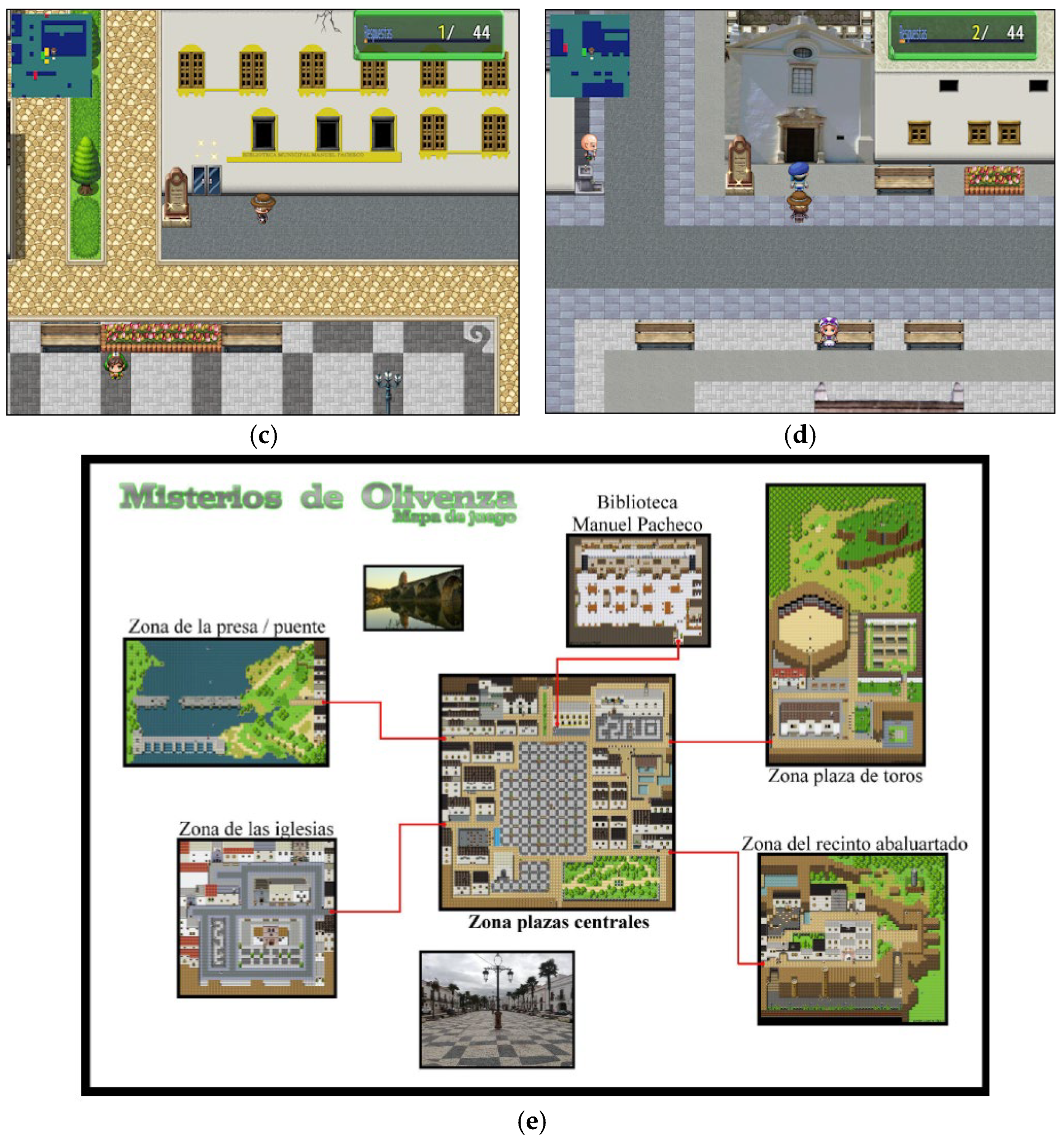
Misterios de Olivenza (Mysteries of Olivenza) (
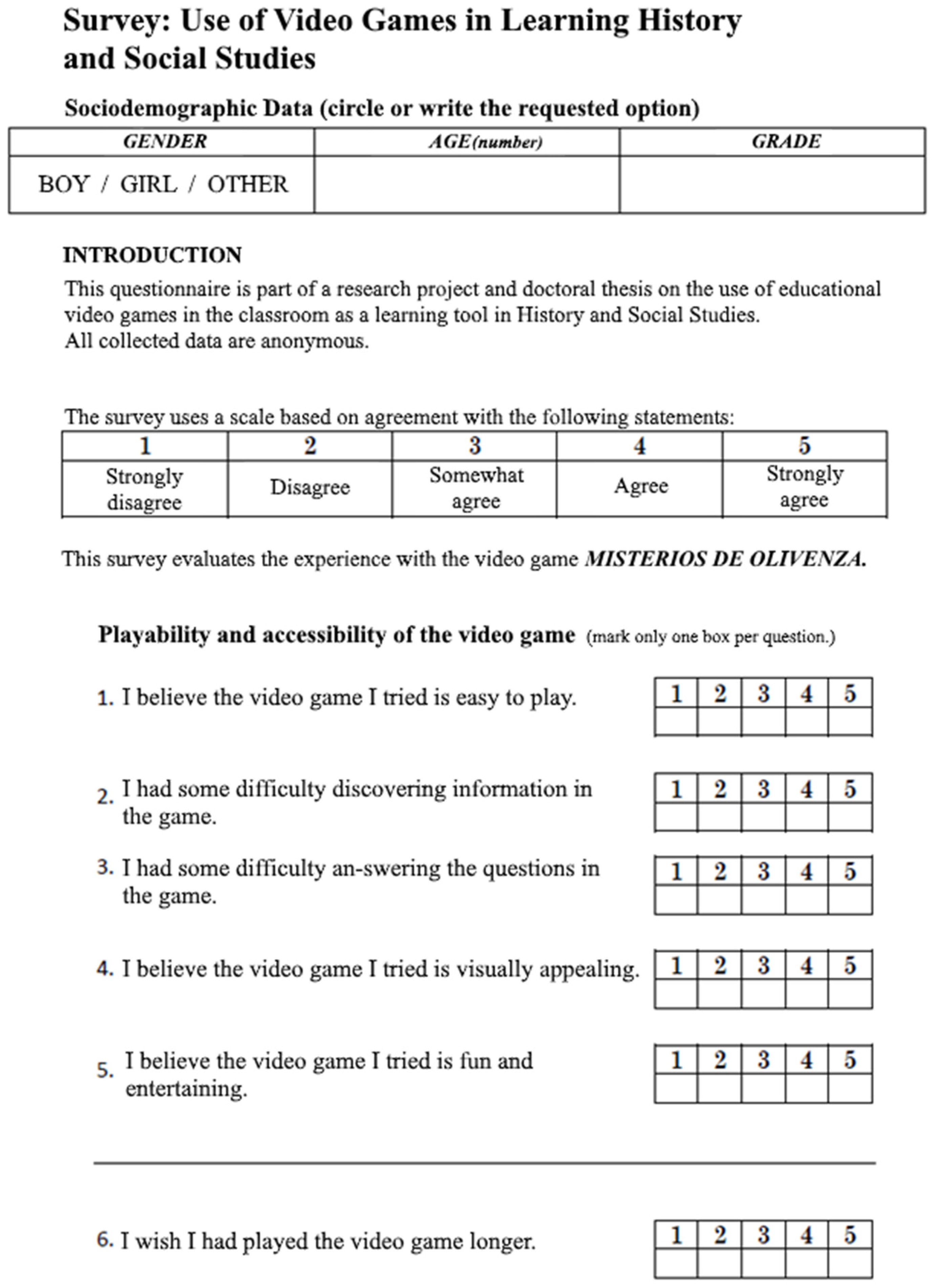
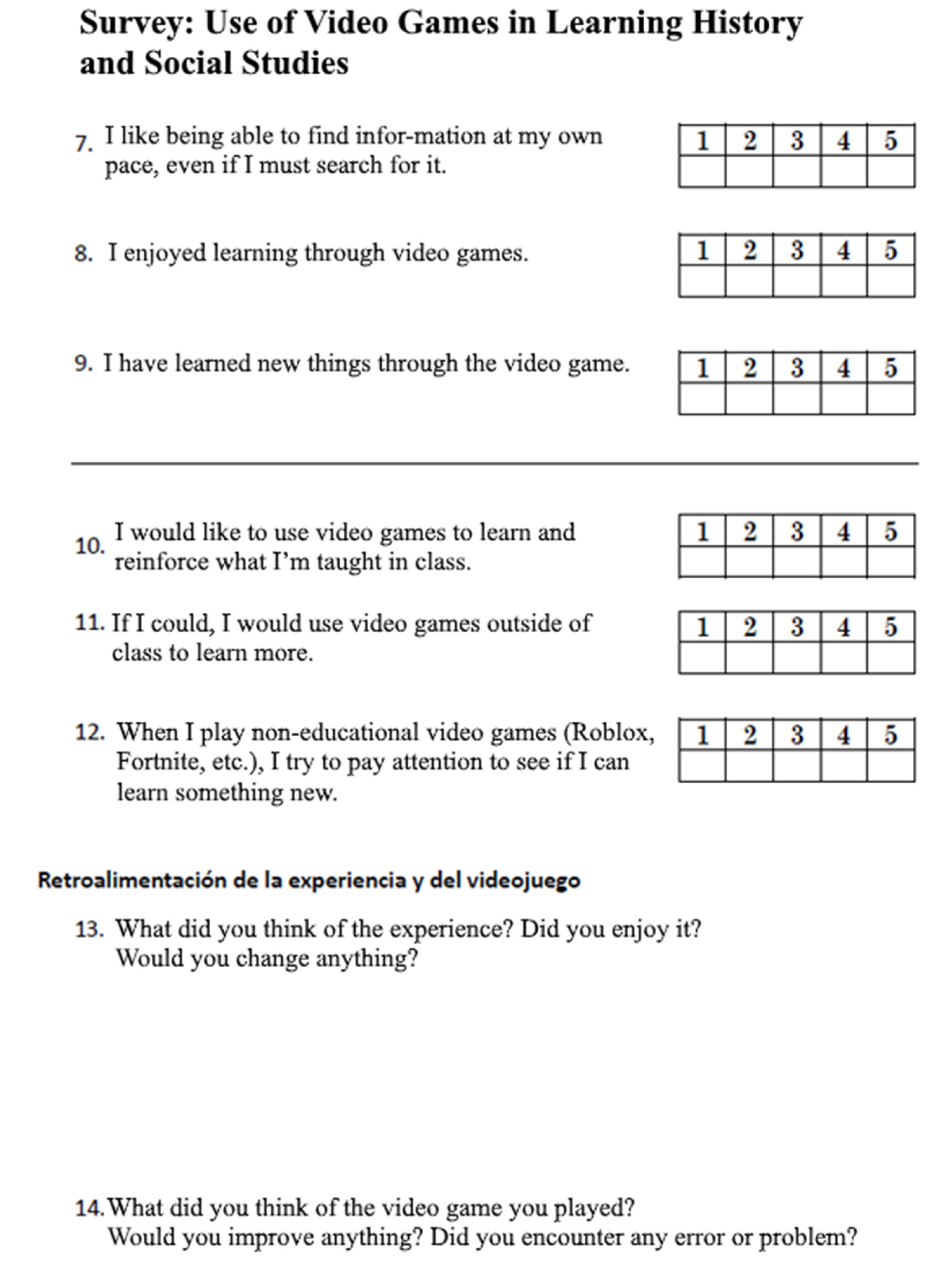
Figure 1) and, afterwards, completed the data collection instrument: a previously validated Likert scale questionnaire (final Cronbach’s α = 0.638,
Appendix A Figure A1) divided into three categories: gameplay and accessibility of the video game, perceived enjoyment and motivation during play, and perceived learning acquired through video games as an educational tool. This internal consistency value is considered acceptable according to the criteria of Hair et al. [
55], given that this is an exploratory study. Likewise, the research and observations of Hulin et al. [
56] and Ursachi et al. [
57] support the functionality of this measurement model due to the influence of the low number of items and sociodemographic factors as justifications for its Cronbach’s α. At the end of the questionnaire, students were able to respond openly to two questions:
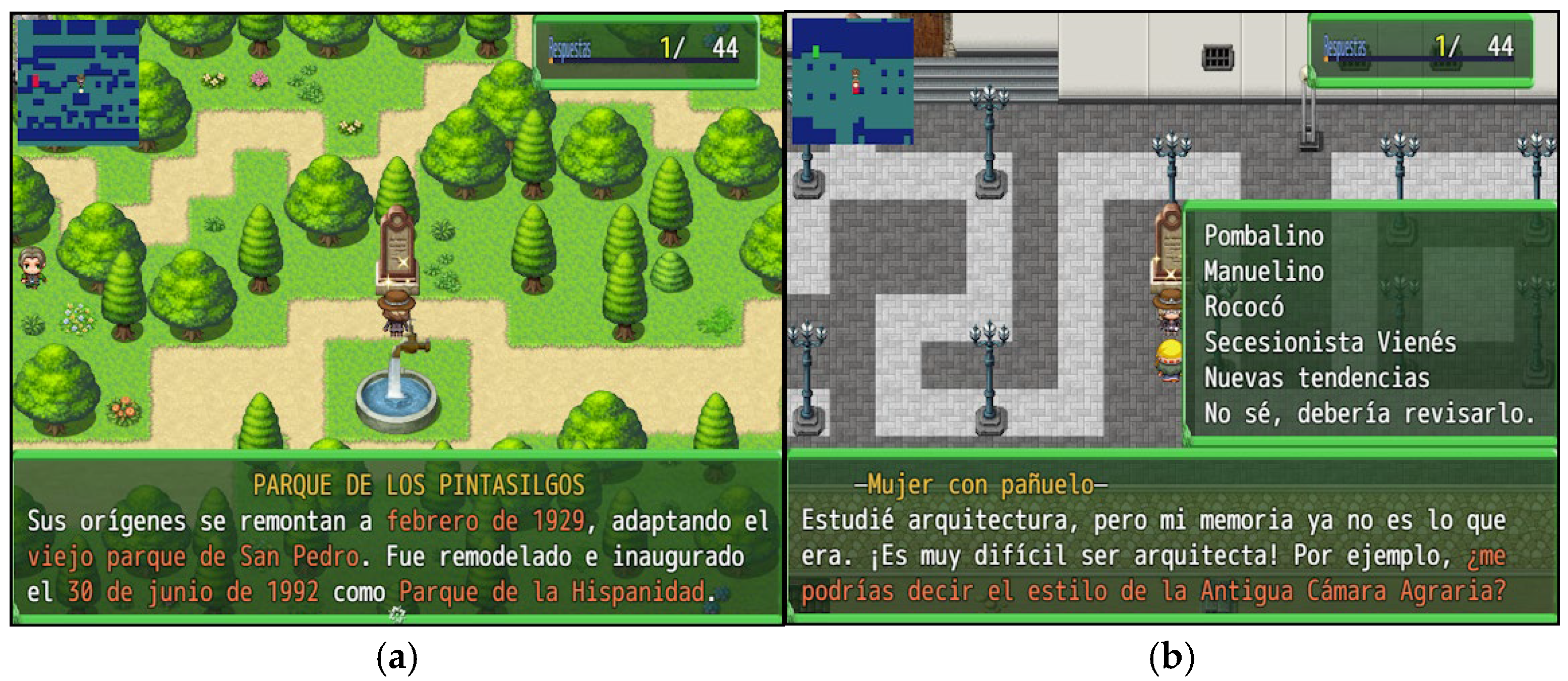
The serious game Misterios de Olivenza was developed between August 2024 and April 2025 using the RPG Maker MV engine. It is a 2D top-down, tile-based serious game structured around narrative progression and location-based quests. The design and its contents are based on El Juego de las Torres (The Towers Game), originally created by the “González Santana” Ethnographic Museum, and focuses on the tangible and natural cultural heritage of Olivenza.
The game comprises seven interconnected maps containing forty-four questions that combine multiple-choice and short-answer formats. Each question is paired with an informational panel positioned virtually next to the referenced monument or landmark, integrating spatial exploration with contextualized heritage learning (
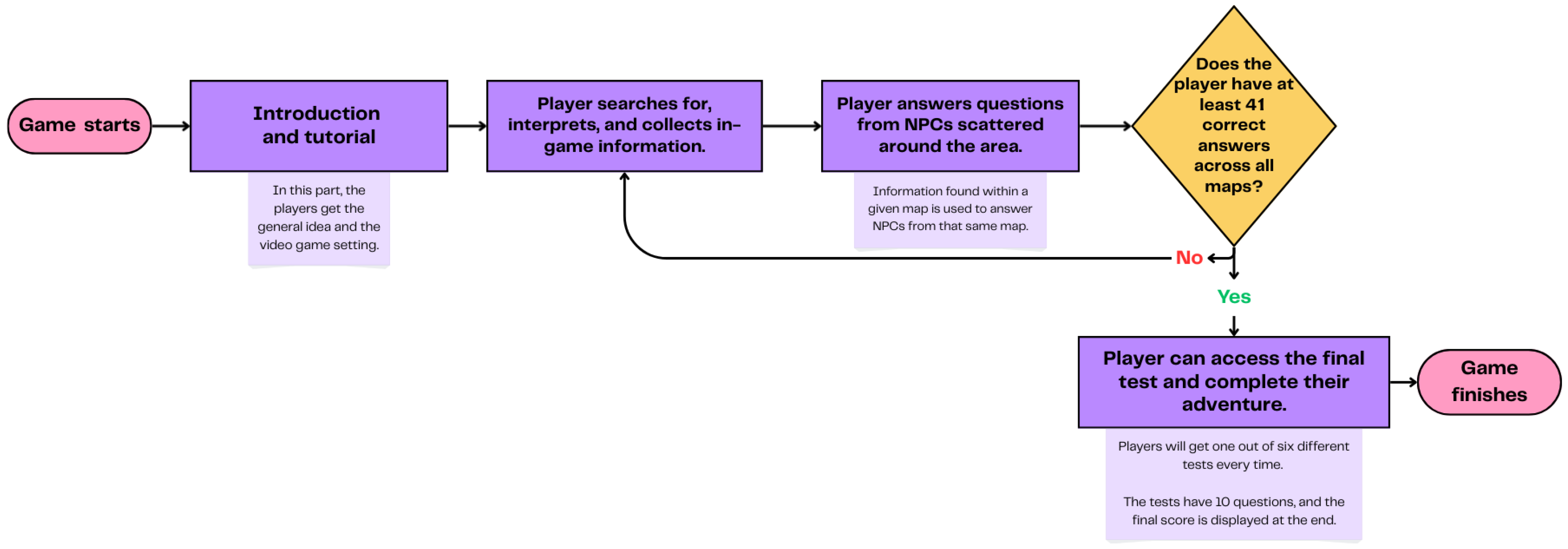
Figure 1). Core mechanics include guided navigation through a simplified multicolour minimap, an introductory tutorial, character-driven narrative prompts, a real-time correct-answer counter, and digital recreations of representative monuments. Upon completing the distributed tasks, players unlock a final assessment consisting of ten multiple-choice questions randomly drawn from six equivalent versions (
Figure 2).
The use of an accessible 2D development engine such as RPG Maker MV facilitates teacher-led design by enabling narrative structure, simplified spatial representation, and task sequencing without advanced programming expertise. Its relatively low technical threshold also enhances replicability, allowing educators to adapt, modify, or reproduce similar heritage-based learning environments within realistic time constraints. In contrast to more technically demanding and time-intensive development frameworks, like Unity-based environments, lightweight 2D engines reduce production complexity while preserving essential pedagogical mechanics. Recent research highlights that teacher-generated digital games developed with user-friendly platforms can strengthen curricular alignment and contextual adaptation in primary education settings, reinforcing the pedagogical coherence and practical sustainability of such interventions [
58].
Quantitative data were analysed using SPSS version 25 for Windows, conducting the relevant tests to demonstrate the reliability of the questionnaire and descriptive analyses of the collected results.
Firstly, continuous variables for each of the questions posed to the participating students were evaluated through descriptive statistics. These are presented as means (), standard deviations (SD), and maximum and minimum values where necessary. Frequencies and percentage values were calculated for nominal and ordinal variables.
To explore differences across each of the relevant categories and questions, Student’s t tests, and Mann–Whitney U tests were conducted, aiming to identify potential differences associated with participants’ gender. Meanwhile, the three major age groups were compared using the Kruskal–Wallis’ test. To avoid over representation in the results, cases of students aged 13 and those self-identifying as “other” genders were excluded from both analyses. Finally, Spearman’s correlation coefficients (r) were calculated to assess possible associations between continuous and ordinal variables. Nonparametric tests were selected because the sample did not meet statistical normality criteria, as verified through the Kolmogorov–Smirnov test, which yielded asymptotic significance values of 0.049 for the first dimension and 0.00 for the second and third; normality was therefore rejected, as the asymptotic significance was below 0.05.
Lastly, frequency analyses were conducted for the open-ended questions, which, through qualitative examination, serve to reinforce the quantitative analysis of the participating sample and to identify recurring structures and words in participants’ discourse using ATLAS.ti version 24.
3. Results
The first analysis conducted concerns the participating students’ perceptions regarding the game’s playability, their performance while using it, and any problems encountered in relation to SO1. To this end, three questionnaire items related to difficulty and potential issues identified were considered. The descriptive results are presented in
Table 2, with means compared using Student’s
t test, assuming equal variances following Levene’s test and, in all cases, revealing no statistically significant differences.
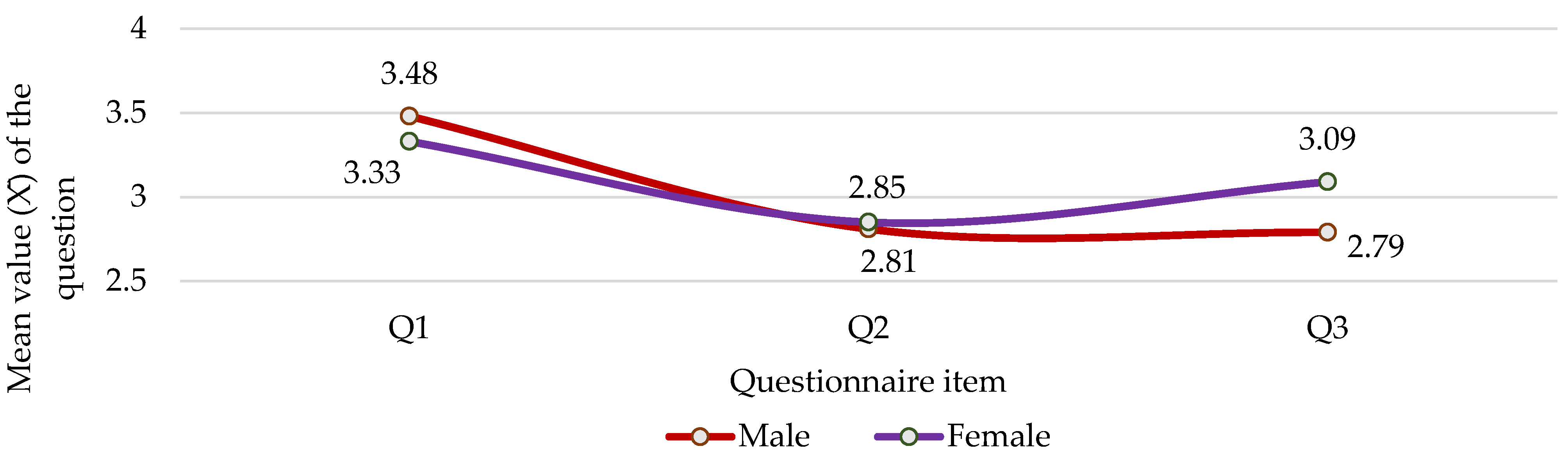
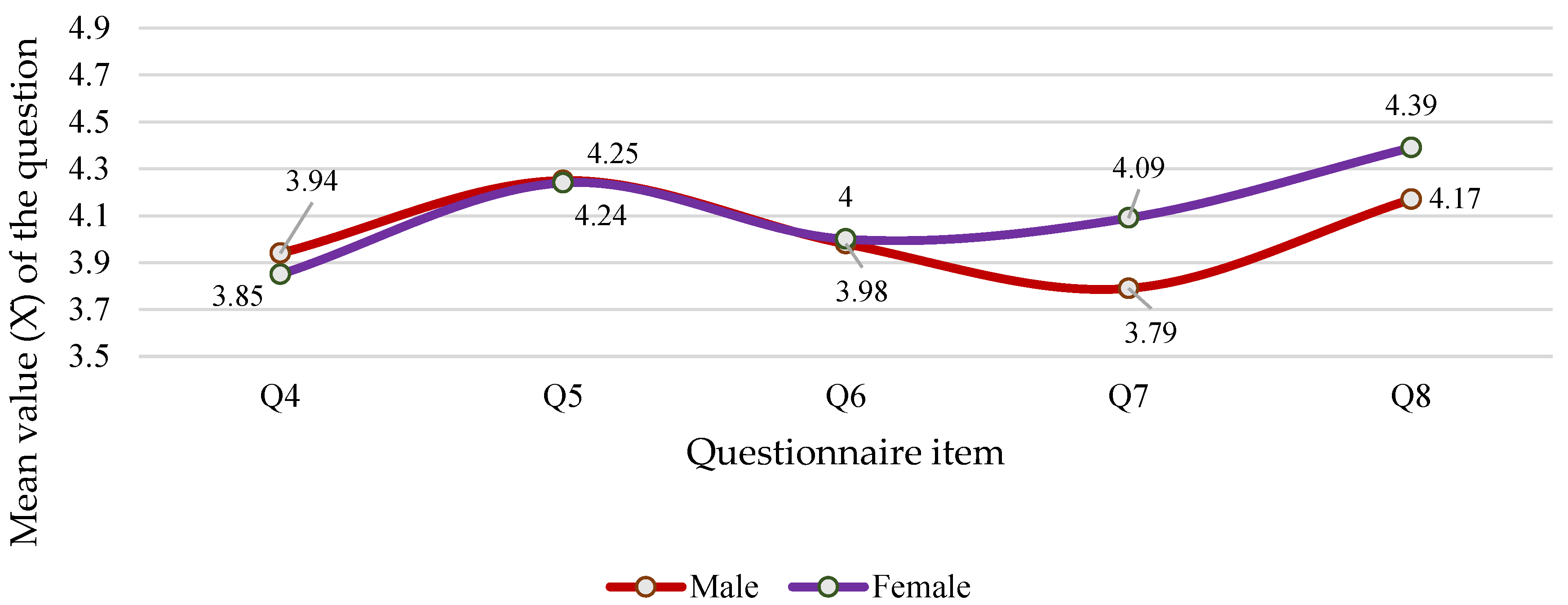
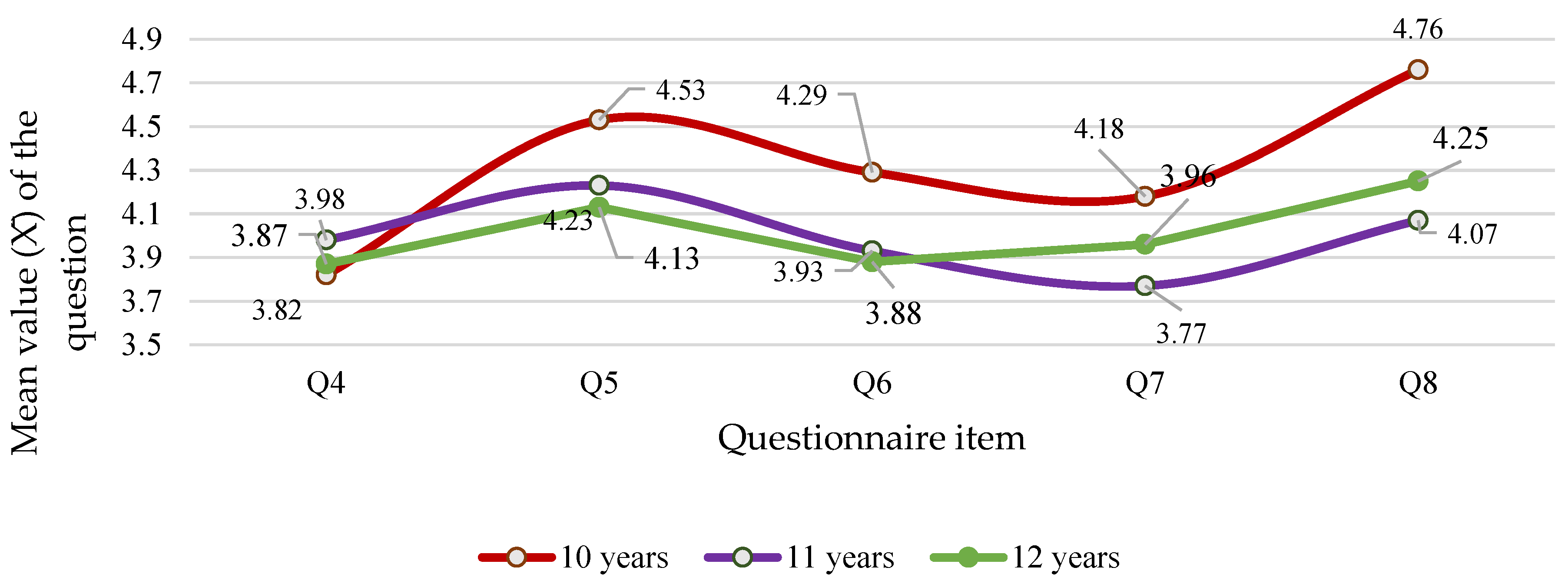
As can be observed, the students did not report any significant difficulties in using the tool, rating it as easy to use. This can be seen, by gender, in
Figure 3, where the female group rated all aspects related to the tool slightly lower. A clear common trend between genders is also evident, with the female group indicating that they had experienced problems when responding to the questions posed by the video game.
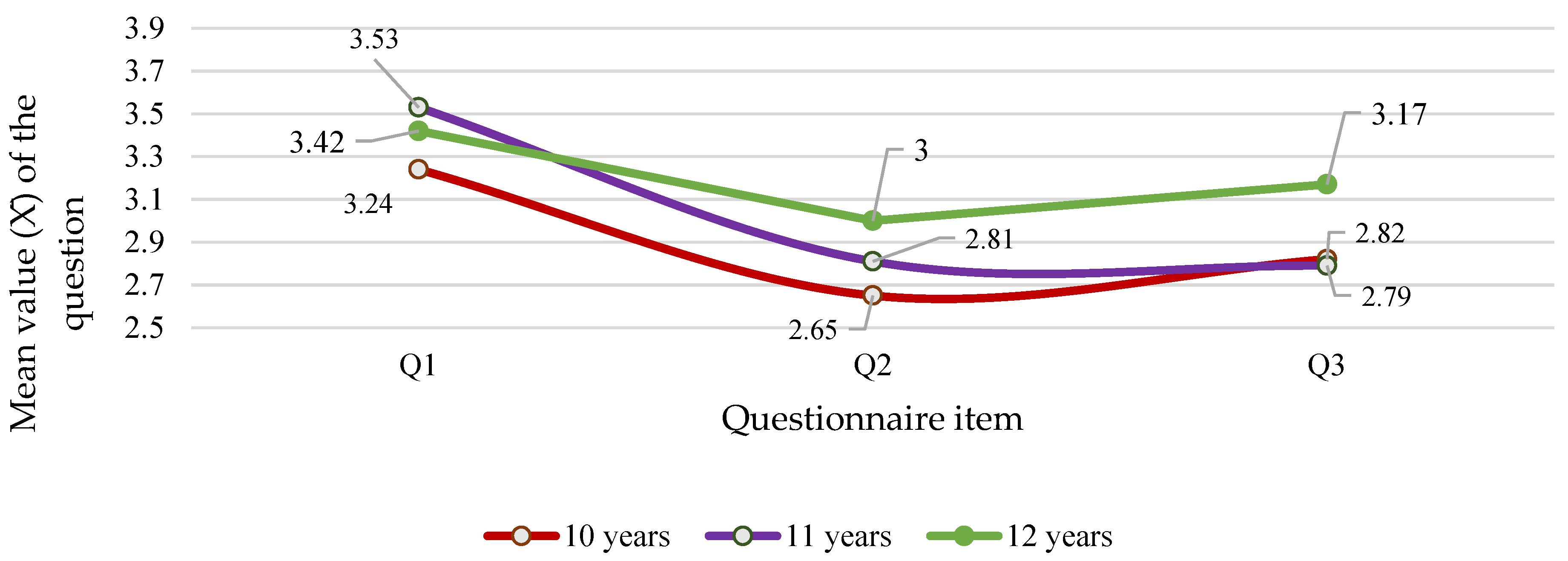
Figure 4 illustrates how this perception varies by age, showing that older students encountered fewer problems or difficulties in the game.
To compare and analyse the influence of these factors, the Mann–Whitney U test (
Table 3) was applied to the questions within this dimension, using gender as the grouping variable, and the Kruskal–Wallis test was used to compare the effect of each age group on the results. In both cases, non-parametric tests were employed.
The results indicate that no statistically significant differences exist for these groups, suggesting that neither gender nor age are variables that determined perception, playability, or the difficulties experienced when using the video game. Similarly, no statistically significant correlations were observed when applying Spearman’s r test to the results of the first dimension and the variable of age (
Table 4).
Although no statistically significant differences or correlations were found, the descriptive results relating to performance and playability do appear to be consistent when analysed alongside the responses to the second qualitative question, in which participants were asked about the video game and whether they had encountered any errors or problems. Most indicated that the video game was “very good”, that it “teaches a lot to people who know nothing about Olivenza”, and that it is “a very complete video game in terms of information. Very educational […]”. Moreover, almost all participants reported having found no errors, aside from occasional difficulties in knowing the correct answer to certain questions.
To examine the motivation generated by the video game within SO2, participants were asked how they perceived the video game as a tool, whether they would have liked to continue playing after the session ended, and whether the requirement to find information within the game at their own pace was mechanically and pedagogically satisfactory.
Table 5 presents the items in this section, as well as their means by gender and overall, including the comparison of means and the necessary prior homoscedasticity test.
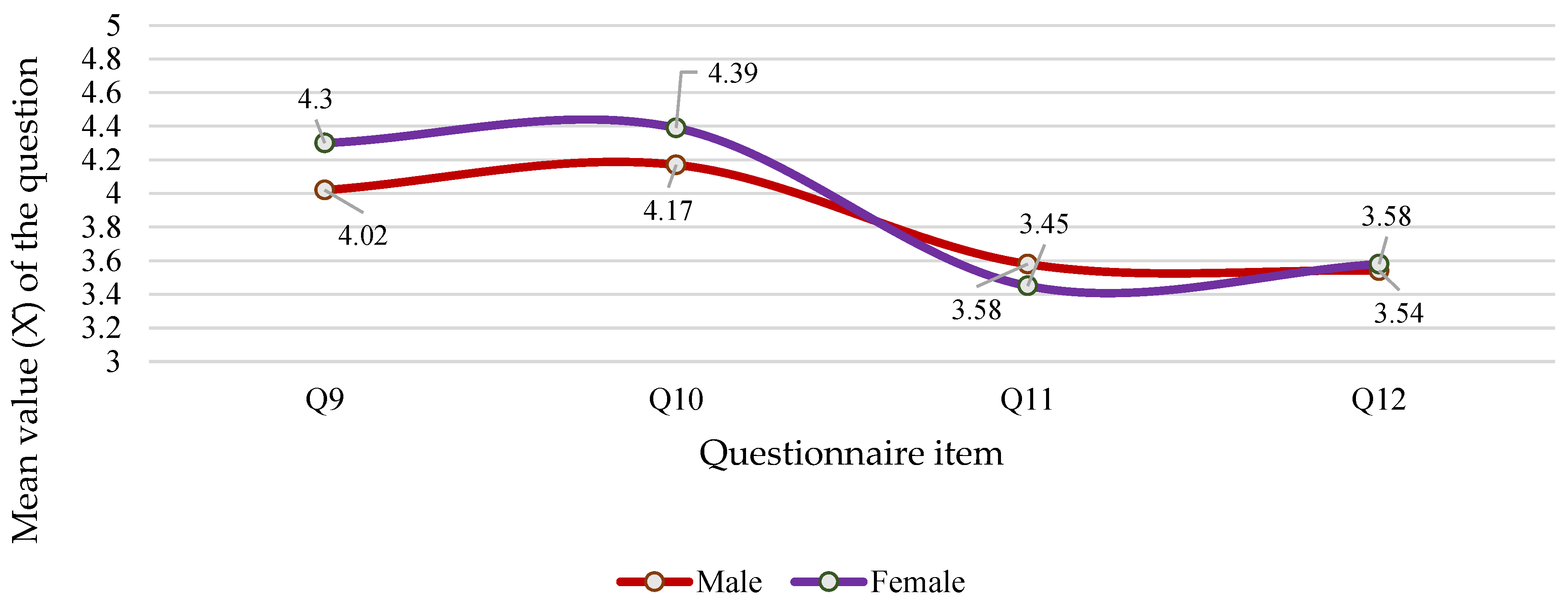
As can be seen, the generally high scores point not only to a positive interaction with the video game as a didactic tool but also to a tendency among students to enjoy problem-based learning and to apply constructivist principles to their own knowledge acquisition strategies.
Figure 5 and
Figure 6 illustrate both trends, separated by gender and age respectively.
Regarding the results by gender and age, which show a very positive perception of the video game—highlighting its visual design, playability, and learning mechanics, and generating interest in continuing to use it and to learn through video games—it is necessary to analyse whether differences exist between age or gender in the overall perception of the tool, either across age groups or between genders.
Table 6 presents the results of the non-parametric tests.
Given the lack of statistically significant differences, as indicated by the high bilateral significance values, neither gender nor age appear to be indicators that affect or generate variation in how motivating, engaging, or conducive to learning the video game is perceived to be. Since no differences were found, the next step was to examine whether these same variables show any correlation with the high scores obtained in this category (
Table 7).
Although no statistically significant correlation was found, the qualitative results again reinforce the high descriptive scores. A high proportion of adjectives used to describe the video game were positive, with terms such as “fun”, “good”, and “cool” standing out, alongside requests for more time to play the game.
The third dimension and category of the questionnaire, corresponding to SO3, concerns students’ perceptions of the learning acquired through the video game and their views of such tools as didactic resources. Accordingly, students were asked about their own perception of the knowledge gained and how they relate, or would like to relate, to video games within the context of education and learning.
Table 8 presents both the descriptive statistics and the comparison of means by gender.
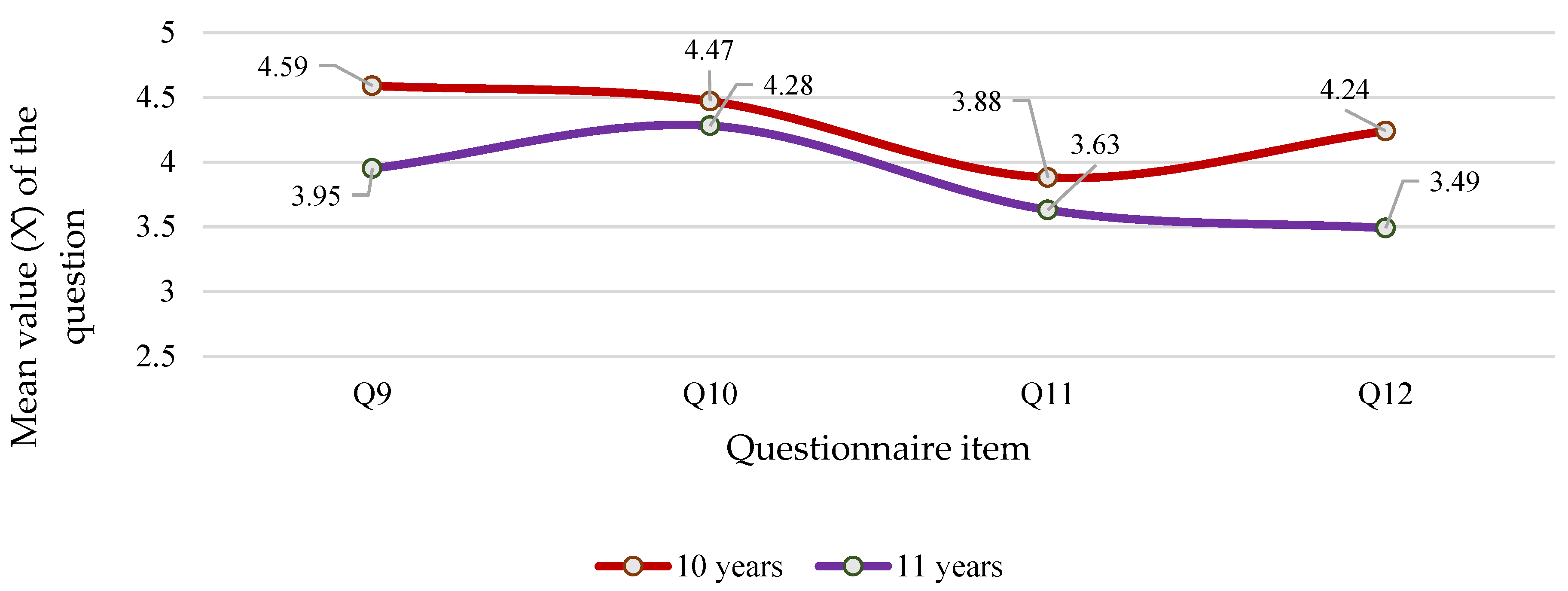
Although equal variances are assumed for item 10, which relates to the desire to use video games regularly to reinforce curricular content, the difference in means does not, in fact, reveal statistically significant differences between the gender groups analysed. These means, both by gender and by age, are represented for this dimension in
Figure 7 and
Figure 8, respectively.
As can be observed, no major descriptive differences between genders are apparent at first glance, although a noticeable gap of nearly one point can be seen between the scores given by ten-year-old students and those aged twelve. To analyse these data more precisely, non-parametric tests were conducted to determine whether statistical differences exist between groups, as shown in
Table 9.
Based on these results, statistically significant differences appear to exist between age groups for item 12, which refers to the interest in learning when playing other non-educational video games. To explore this further, pairwise comparisons with Bonferroni correction were carried out within the Kruskal–Wallis’ test for item 12, as shown in
Table 10, along with a representation of average rank nodes by age in
Figure 9.
A statistically significant difference is thus observed between the ten-year-old and twelve-year-old groups regarding the use of non-educational video games outside the classroom as potential sources of knowledge, with older students being less interested in this. To determine whether an observable correlation exists in the data, Spearman’s r test was applied within this same category (
Table 11).
As shown, there appears to be a weak but significant negative correlation between age and both the use of video games outside the classroom to learn more and the interest in acquiring new knowledge when playing non-educational games. As age increases, this interest seems to decrease in a non-random manner, suggesting that video games may be more effective as tools for informal learning (outside the classroom) among younger students.
Next, potential correlations are explored between accessibility, its effect on motivation and self-perceived learning, and, on the other hand, motivation as an influential element in the perception of knowledge acquisition through
Misterios de Olivenza. To examine this, total mean scores for each dimension per participant were cross analysed using Spearman’s r (
Table 12).
A moderate positive correlation can be observed, with a ρ value of 0.441, between students’ motivation and enjoyment of the video game and their greater self-perception of learning through video games, as well as their desire to use them for educational reinforcement. Conversely, based on the sample presented, no statistically significant results were found to support the idea that accessibility or the difficulties encountered constitute an impediment to the use of video games, or to students’ enjoyment of the tool or interest in it and the knowledge it aims to convey.
Regarding items 13 and 14, which refer to students’ opinions about the experience of testing the video game and about the use of the video game itself, a frequency analysis was conducted. For the former, most participating students evaluated the experience positively, with the most common words used to describe it being “good” (15.12%), “fun” and “funny” (10.47%), “cool” (9.30%), as well as various forms of “like” (5.81%) and “love” (4.65%) (
Table 13). Reflections or suggestions for improvement regarding the session focused on the need for more time to play the game, the large amount of text they encountered and needed to copy, or formal aspects related to the video game (such as increasing visual interface guides).
Item 14, meanwhile, addresses opinions relating to the video game as a recreational tool, asking students to express what they thought of it, potential issues to improve, and points for enhancement. Students highlighted the need to improve the graphical aspect which, although praised and considered attractive, they felt could resemble commercial video games with larger budgets. Within this analysis, the adverb “
very” stands out as an intensifier, along with “good”, “well” and their derivatives (10.75%), “fun” and its conjugations (9.68%), “cool” (8.60%), “great” (7.53%), and “entertaining” and its conjugations (4.30%) as descriptors of the game (
Table 14). With a small group describing it as boring, students emphasised improvements related to movement, map accessibility for orientation, and customisation of the playable character to make the experience more satisfying.
Taken together, the results related to the three secondary objectives allow the main objective of the study to be properly met, indicating that the use of a teacher-created serious game produces positive effects on students’ gameplay experience, motivation, and self-perceived learning.
4. Discussion
As previously stated, the study and analysis of these data, in relation to the three secondary objectives (examining playability and experienced performance, analyzing the motivation generated through satisfaction and enjoyment, and analyzing self-perception of the knowledge acquired during the gameplay session), which complement the main objective, have been performed in detail based on the previously presented results, first within each relevant dimension and subsequently as a whole.
Regarding students’ playability and performance with
Misterios de Olivenza (SO1), participants described it as easy to play (
= 3.42) and reported no notable problems or difficulties in locating content or answering the questions (
= 3.82 and
= 3.91, respectively). These assessments appear consistent with the classical position in the literature on the use of video games in education as tools capable of energizing learning and fostering student engagement [
1,
2,
3], as well as their use across multiple curricular subjects [
13,
14,
18], such as, in this case, Social Sciences. Serious games created by teachers to adapt curricular content to their classrooms therefore seem to have a place among young learners interested in learning or reinforcing knowledge through such tools. Nevertheless, the lack of statistical significance must be acknowledged and considered, as this is a fundamental requirement for drawing conclusions applicable to a larger population.
This interpretation is reinforced by the second dimension (SO2), which examined motivation and satisfaction with the video game. Although no statistically significant values were found, the descriptive results are high, highlighting
Misterios de Olivenza as a fun and entertaining tool (
= 4.25) and indicating that learning through video games is perceived positively (
= 4.26). The high indicators for enjoyment and desire to continue playing (all with means close to 4) suggest that such experiences activate students’ engagement with the learning process, enabling them to relate to content—formal or informal—in a playful manner and fostering deeper involvement [
4,
37]. Clear evidence of this is the students’ explicit desire to continue playing, stating that the two-hour session was insufficient given the extensive content of
Misterios de Olivenza.
In the third dimension (SO3), related to the knowledge acquired and the use of educational video games for learning, and despite the limited timeframe, students reported having learned new things (
= 4.13) and expressed a strong desire to use video games to reinforce classroom content (
= 4.26). As shown by McGowan et al. [
27], students’ participation in gamified challenges generates ideas and strengthens soft skills and 21st-century competencies [
21,
23], including learning-to-learn, problem-solving, adaptability, critical thinking, and positive attitudes—all of which are necessary to tackle the questions and challenges presented in
Misterios de Olivenza.
Statistically significant differences were observed between ten-year-old students and those aged twelve regarding their proactivity in seeking information and knowledge through non-educational video games during leisure time. The correlational analysis supports this result, revealing a slight but significant negative relationship: as age increases, interest in using commercial video games as informal learning tools decreases. This decline may reflect developmental and motivational shifts during early adolescence. Research indicates that gamification and game-based environments are not equally effective across ages and require age-sensitive design principles that address differing motivational and cognitive needs [
59]. Meta-analytic evidence further shows that although game-based learning enhances motivation and engagement, the magnitude of these effects varies depending on implementation quality and learner characteristics, including age [
60,
61]. Reviews of playful activities suggest that younger children experience greater enjoyment and intrinsic engagement than older adolescents, possibly because traditional game mechanics align more closely with earlier developmental stages. These patterns provide a plausible explanation for the negative correlation observed between age and proactive knowledge-seeking in commercial gaming contexts in this study.
To verify and examine the real effects that teacher-created serious games have on students—the main objective of this research—the effects observed in each dimension and objective were compared with one another. A clear, moderately strong positive correlation (ρ = 0.441) was found between students’ motivation and their self-perceived learning. This finding is consistent with previous research highlighting the central role of engagement in game-based learning environments. Moradi and Noor [
29] demonstrated that problem-based serious games significantly enhance intrinsic motivation, which positively influences students’ engagement with learning tasks. Similarly, Vahlo et al. [
30] argue that gameful motivation extends beyond immediate enjoyment and is closely linked to sustained cognitive involvement.
In parallel, McGowan et al. [
27] observed that engagement in serious games strengthens perceived competence and soft skill development, while Horban and Maletska [
28] emphasized the importance of psychological factors such as curiosity and empowerment in shaping motivational outcomes. The present results reinforce these perspectives, suggesting that in teacher-created serious games, motivation appears to function as a facilitating factor associated with higher self-perceived learning. This pattern may also relate to teachers’ direct involvement in game design: recent work on user-generated microgames found that teachers adapted game-based activities to reflect instructional goals and classroom needs, suggesting that teacher-led game design can improve pedagogical alignment and student engagement, further reinforcing the observed usefulness of the created videogame [
62].
Moreover, as indicated by Wong et al. [
26], meaningful decision-making and active participation within game structures contribute to deeper cognitive processing. In the case of
Misterios de Olivenza, exploratory navigation and problem-based tasks may have supported this mechanism, helping to explain the observed association between enjoyment and perceived knowledge acquisition.
Using local heritage as a didactic resource also fosters engagement, as integrating this type of heritage into primary education provides students with comprehensive benefits. At the cognitive and motivational levels, combining active methodologies and technology [
63]—such as using video games—with local heritage close to students facilitates meaningful learning and increases participation [
64,
65,
66]. In terms of identity, it fosters a sense of belonging and emotional attachment to the place, encouraging environmental stewardship. This translates into critical citizenship committed to sustainability [
63,
64,
65]. Experiences with local heritage are fundamental to teaching values such as responsibility, respect, and cooperation [
63,
65,
66].
No significant differences were found, however, in relation to gender concerning difficulty, motivation, or perceived learning. Within the present sample, this variable does not appear to be a determining factor, a finding that contrasts with the age-related results bur aligns with the observations of Manero et al. [
6], corroborating their conclusions regarding younger students.
Thus, it is possible to conclude that
Misterios de Olivenza, as a teacher-created serious game designed to teach Social Sciences and local heritage, functions effectively provided that students are given sufficient time to adapt to the tool (in relation to its difficulty or content), and that detailed guidance, a user-friendly interface, and all necessary material and digital supports [
12]—such as maps and in-game indications—are supplied, along with clear, well-defined objectives that do not pressure the learner. This enables students to construct and develop their own strategies for acquiring knowledge autonomously. Interest in the cultural heritage of Olivenza, cultivated through the experience and the didactic tool, was confirmed through the qualitative analysis, where a high proportion of the words used carried a positive connotation, often accompanied by intensifying adverbs and, when responses were elaborated, emphasizing the need for more time or reduced content. The few responses referring to errors or problems during the gameplay session serve as a reminder that the creation of educational video games by teaching staff is an ongoing process, requiring continuous refinement and adaptation for classroom use, gradually improving the medium through which cultural heritage is preserved, disseminated, and studied in digital form.
5. Conclusions, Implications, and Limitations
Based on the results and discussion presented, the educational implications of this study, considering the use of teacher-created educational serious games as effective and valid, center on the need to first understand the classroom requirements, the object of study, and to ensure that teachers possess both the willingness to use video games for learning and the technical capacity to develop them. However, their use should not be random or generalized; the video game must be integrated into a curricular framework that allocates sufficient time for it to become effective, efficient, and satisfactory for students. Learners must have enough time to construct their own learning and problem-solving strategies (scaffolding) and must always have support available to prevent confusion or disengagement when using the new tool. Support, both material and human, should be universal, although it is highly advisable to reinforce it for older students, who may feel less enthusiastic about using video games in formal educational contexts. Regarding enjoyment and motivation, it is important to highlight the clear relevance of these emotions in shaping students’ perception of the experience as useful, reinforcing their desire to use educational video games in their free time and to maintain a proactive learning mindset when playing commercial games not designed for teaching.
There are, however, notable limitations that invite further investigation. First, the study relied on an intentional convenience sample (n = 86) within a narrow age range and a specific geographical context, which limits the generalisability of the findings. Second, the research design did not include a control group or a pre–post knowledge assessment due to Cronbach’s Alpha reliability analyses yielding results that, while within acceptable standards for this area and in this type of study, were not optimal. As a result, it is not possible to establish causal relationships between gameplay and learning outcomes, nor to compare the intervention with alternative instructional approaches. Third, further research must add testable hypotheses to strengthen the results and conclusions through confirmatory analysis.
Given the exploratory nature of the study, the evaluation focused on students’ self-perception. This approach provided valuable insight into their subjective educational experience, motivation, and perceived learning. Although perceived learning does not necessarily correspond to objectively measured knowledge acquisition, it represents a meaningful metacognitive and affective indicator in early-stage research on teacher-created serious games. The findings should therefore be interpreted primarily as reflecting students’ educational experience.
These methodological choices are consistent with the study’s exploratory design, while naturally delimiting the scope of inference. Future research could build on this foundation by incorporating objective performance assessments and experimental or quasi-experimental designs to examine measurable learning gains. The measurement instrument demonstrated adequate reliability for this analytical phase. Nevertheless, minor refinements—particularly within the accessibility dimension—and the inclusion of explicit testable hypotheses could further strengthen the robustness of future applications.
Future research should therefore focus on the real learning effects of teacher-created video games that incorporate heritage-related content within Social Sciences. To achieve this, different methodologies could be compared and results measured between groups instructed through different approaches, or knowledge retention could be evaluated after playing Misterios de Olivenza (or similar tools) for a sufficient period in longitudinal studies. Likewise, expanding the sample and replicating the experience across different educational levels or socio-economic contexts would allow for a deeper comparison of such effects, improving the generalizability of the findings.
Finally, qualitative analysis could be strengthened to better understand students’ emotions, and, in parallel, the level of teacher training, interest, and feasibility studies could be examined to assess the current and realistic potential for teacher-created educational video games to be developed and used in classrooms.