


Abstract
Mountainous linear cultural heritage corridors include both formal-access and restricted-access sections, but recreation perceptions across these settings remain insufficiently understood. Using 17,034 online reviews from 18 Ming Great Wall sections in the Beijing–Tianjin–Hebei region, China, this study compared perception-element prominence, sentiment orientations, and textual co-occurrence through an integrated analytical framework, LLM-assisted labelling, statistical comparisons, section-level sensitivity analyses, and co-occurrence networks. Embodied recreation was prominent in both settings. Section-level comparisons showed greater attention to management and services, particularly entry costs and infrastructure, in formal-access sections, whereas mountain environments and risk and use impacts were more prominent in restricted-access sections, particularly naturalness and heritage preservation. Although sentiment profiles differed descriptively, no section-level sentiment comparisons remained significant after multiple-testing correction. Co-occurrence analysis revealed associations between infrastructure and embodied recreation in formal-access reviews, while restricted-access reviews linked heritage preservation, mountain environments, bodily activity, and safety concerns. By extending recreation-perception analysis beyond formally managed attractions, this study provides comparative evidence of shared recreational interests and differentiated management concerns within a continuous heritage corridor. The findings inform access-sensitive management and corridor-scale heritage conservation, subject to limitations associated with platform coverage and reviewer self-selection.
1. Introduction
Outdoor recreation in mountain settings has grown steadily over the past decade [1], intensifying pressure on the management and conservation of cultural heritage sites, particularly World Heritage properties [2,3]. Linear cultural heritage, extending across administrative and geographical boundaries [4], presents a distinctive challenge: access conditions and management arrangements often vary between sections of the same heritage corridor [5], requiring reconciliation of recreational use with conservation requirements [6]. The Great Wall illustrates this situation. Some sections are formally open to tourism and recreation, while others remain subject to access restrictions for conservation and safety reasons; nevertheless, informal recreational activities continue in some restricted-access sections, creating challenges for heritage conservation and visitor management.
Online reviews have been used to examine how visitors perceive and evaluate cultural heritage environments [7,8], including formally accessible Great Wall attractions [9]. Research on mountain outdoor recreation offers complementary perspectives on landscape engagement, physical activity, and risk-related concerns [10]. However, how these recreation-related concerns are expressed across online reviews of formal-access and restricted-access sections within the same mountainous cultural linear heritage corridor remains insufficiently understood.
To address this gap, this study examines recreation perceptions across 18 sections of the Ming Great Wall under formal-access and restricted-access conditions in the Beijing–Tianjin–Hebei region, drawing on 17,034 online reviews. Integrating heritage tourism and mountain outdoor recreation research, we develop a common analytical framework to compare recreation perceptions across the two access settings. Three research questions guide the analysis. (1) Which perception elements are shared across formal-access and restricted-access sections, and how does their relative prominence differ? (2) How do sentiment orientations toward these perception elements compare across the two settings? (3) How do perception elements co-occur within online review narratives in each setting?
Using a common analytical framework to examine perception-element salience, sentiment orientations, and textual co-occurrence, this study provides comparative evidence of shared and contrasting recreation perceptions across formal-access and restricted-access sections within the same mountainous linear heritage corridor. It extends empirical understanding beyond formally managed heritage sites by examining online accounts of informal recreational visits to restricted-access sections. The findings inform differentiated visitor management, the management of informal recreational visits, and heritage conservation across mountainous linear heritage corridors. The overall research framework is presented in Figure 1.
Figure 1.
Research framework for comparing recreation perceptions across formal-access and restricted-access sections of the Ming Great Wall. Source: Authors’ own work.
2. Literature Review
2.1. Recreation Perceptions at Formally Accessible Heritage Sites
Research on visitor perceptions at mountainous cultural heritage sites has addressed heritage attributes, natural environments, recreational experiences, and management conditions. At formally accessible sites, visitors express perceptions of heritage resources, surrounding landscapes, and on-site services [11]. Studies of mountain landscapes have also highlighted the roles of natural and cultural features in visual perception [12], while analyses of online reviews of Huangshan have identified mountain scenery, cloud formations, and seasonal changes as prominent themes in visitor evaluations [13].
Heritage-related perceptions encompass both the physical attributes of heritage resources and their historical and cultural significance [14]. Research on Great Wall heritage sites in Shanxi Province links perceptions of cultural landscapes and heritage atmosphere to visitor satisfaction [15]. Beyond perceptions of heritage attributes, recreational experiences at World Heritage sites also involve bodily engagement. Studies of hiking at Huangshan highlight bodily sensations, social interactions, and emotional experiences [16], while studies of the Inca Trail emphasize walking and physical effort as integral components of heritage experience [17]. Research on the Camino de Santiago further identifies long-distance walking, physical challenges, natural environments, and engagement with art, history, and culture as meaningful aspects of pilgrimage experiences [18]. At formally accessible Great Wall sections, steep terrain and crowding also feature in visitor perceptions [19]. Management and service conditions also feature in visitor evaluations. Online reviews of mountainous heritage sites discuss transportation, accessibility, guiding services, and visitor facilities [13]. Together, these studies show that recreation perceptions at formally accessible heritage sites encompass not only heritage appreciation but also natural environments, embodied recreation, and management and service conditions.
2.2. Recreation Perceptions in Restricted-Access and Informal Mountain Settings
Informal recreational visits to restricted-access mountain heritage sections may involve activities similar to mountain hiking and adventure recreation. Research on these activities offers relevant perspectives for understanding recreation-related perceptions in restricted-access settings. Studies of mountain hiking and nature-based recreation highlight natural environments and landscape conditions as important aspects of recreational experiences [20], while scenic beauty, awe, challenge, and solitude are recurring themes in outdoor recreation narratives [21].
Bodily movement and physical challenge are important aspects of mountain recreation. Mountaineering research highlights perceived risk, competence, and active engagement in participants’ experiences [22], while studies of heritage routes emphasize that sustained walking and physical effort can be meaningful experiences in themselves, rather than merely means of reaching a destination [17]. Research on the Kumano Kodo illustrates how walking brings together natural and cultural heritage experiences [23]. A recent field experiment on the same route found increased feelings of awe during walking, with guided participants showing additional increases at specific sites [24].
Risk perception and safety concerns are also important aspects of mountain recreation research. Risk is understood both as a potential negative consequence of outdoor activities and as a component of recreational experience [25]. Hiking research examines how participants perceive risks along recreational routes [26], while studies in national parks associate visitors’ safety assessments with environmental hazards and management measures [27]. Research on off-trail behavior further links departures from designated routes to the desire for closer contact with nature and adventure-related experiences [28].
Research on formally accessible heritage sites has examined heritage appreciation, visitor experiences, and service conditions, while mountain outdoor recreation research places greater emphasis on landscape engagement, physical challenge, risk, and route choice. These perspectives are complementary for understanding recreation in mountainous linear heritage corridors, where spatially connected heritage sections are subject to different access conditions. The cultural routes literature emphasizes the spatial continuity and interconnectedness of heritage elements [4,29], while GPS-based research on Great Wall hiking has documented the spatial distribution of hiking activities [30]. However, how these different aspects of recreation are expressed and associated in online reviews of formal-access and restricted-access sections within the same heritage corridor remains insufficiently understood. Integrating heritage tourism and mountain outdoor recreation research therefore provides a basis for comparing recreation perceptions across the two access settings.
3. Materials and Methods
3.1. Study Area
The study area covers the Ming Great Wall in the mountainous Beijing–Tianjin–Hebei region, where walls, passes, garrison forts, watchtowers, and beacon platforms form a historically interconnected defensive system closely integrated with mountain terrain [31]. Together, these remains and their surroundings constitute a cultural landscape in which built heritage and mountainous environments are closely intertwined [32,33]. Eighteen Great Wall sections were selected for comparison with reference to the first batch of nationally designated key Great Wall sections published by the National Cultural Heritage Administration [34]. Sections were classified according to their tourism-opening status and applicable management requirements. The Regulations on the Protection of the Great Wall specify conditions for opening Wall sections to visitors and prohibit organized activities in sections not designated as visitor areas [5]. The sample comprises 10 formal-access sections and 8 restricted-access sections. Formal-access sections, such as Badaling and Mutianyu, are open to the public under established tourism management arrangements [35]. Restricted-access sections are not designated as visitor areas and are subject to locally applicable access restrictions and conservation measures. Figure 2 shows the locations and access settings of the selected sections, while Supplementary Table S2 provides their names, administrative locations, and access types. These sections share a common Ming Great Wall historical and cultural background and mountainous setting, providing a basis for comparing recreation perceptions across access settings within the same heritage corridor.
Figure 2.
Locations of formal-access and restricted-access Great Wall sections in the Beijing–Tianjin–Hebei region, China. Source: Authors’ own analysis. Note: This map was produced based on the standard map with Review No. GS(2023)2767, issued by the Ministry of Natural Resources of China. The base map boundaries have not been modified.
The study period (2015–2026) spans the years before, during, and after the COVID-19 pandemic, when Great Wall tourism and recreational activities underwent substantial changes. Badaling received 10.35 million visitors in 2019 and 10.52 million in 2023. Mutianyu received approximately 2.11 million visitors in 2024, including more than 350,000 inbound visitors during the first nine months, with the United States, Germany, and the United Kingdom among the leading source countries. Recreational offerings at formal-access sections also expanded to include heritage education, family-oriented activities, and nighttime tourism. At restricted-access sections such as Jiankou, documented informal hiking activities and rescue incidents indicate continuing recreational use and associated safety concerns. These developments characterize the changing tourism and recreation context of the Great Wall heritage corridor [36,37,38,39,40,41,42,43].
3.2. Data Source
User-generated content (UGC), such as online reviews, records recreational users’ spontaneous expressions about heritage environments and the recreational process, offering a non-intrusive, passively crowdsourced source for identifying what they attend to and how they evaluate it [44]. Previous research has drawn on Great Wall online reviews to analyse hiking recreation experiences, providing a reference point for the data selection and analysis adopted here [9]. Public reviews were collected from Ctrip and Baidu Maps. Ctrip attraction pages aggregate visitor evaluations of tourism experiences; online review data from similar platforms have been used in sentiment-based analyses of tourist satisfaction [45]. Baidu Maps organizes location information and user reviews around points of interest (POIs). The two platforms differ in their coverage: Ctrip provides most reviews of formal-access sections, whereas Baidu Maps provides the main coverage of restricted-access sections. The review records do not systematically contain demographic characteristics, geographical origins, or travel motivations. Accordingly, the analysis focuses on recreation-related perceptions expressed in online reviews, using the access setting of each Great Wall section as the basis for comparison.
Reviews were collected using the names and common name variants of the 18 selected Great Wall sections. Corresponding Ctrip attraction pages and Baidu Maps POIs were identified, and publicly available review texts and posting dates were retrieved. Reviews were assigned to sections according to their source pages, and records with ambiguous section attribution were excluded. Only Chinese-language reviews concerning recreational experiences at the selected sections were retained. Advertisements, promotional or system-generated content, irrelevant reviews, and duplicate records were removed. The resulting dataset comprises 17,034 valid reviews posted between 8 October 2015 and 20 April 2026, including 15,325 from formal-access sections and 1709 from restricted-access sections (Figure 3).
Figure 3.
Temporal distribution and text length distribution of online reviews: (a) annual number of reviews for formal-access and restricted-access sections; (b) text length distribution of all reviews. Here, “≤2018” denotes reviews posted in or before 2018; Note: * indicates that data for 2026 cover only the period up to 20 April 2026. Source: Authors’ own analysis.
Given the unequal corpus sizes, perception-element mentions were compared using standardized frequencies per 100 semantic segments, with statistical significance interpreted alongside Cramér’s V. A balanced-subsample sensitivity analysis is reported in Supplementary Material S3.3. Access setting and platform are strongly associated: 85.4% of formal-access reviews originated from Ctrip, whereas 94.2% of restricted-access reviews came from Baidu Maps (Supplementary Table S3). Within-platform comparisons were conducted at the section level using Mann–Whitney U tests with BH-FDR correction for the 16 second-order perception indicators. The direction of the full-sample difference was consistent for 10 of 16 indicators on Ctrip and 12 of 16 on Baidu Maps. After FDR adjustment, only G2 remained significant on Ctrip, while no indicator was significant on Baidu Maps (Supplementary Material S3.4). Additional section-level sensitivity analyses are reported in Supplementary Material S3.5.
3.3. Methods
The analytical procedure was organized around the three research questions. Perception-element labelling and statistical comparisons of mention frequencies were used to identify shared perception elements and differences in their relative prominence across access settings (RQ1). Sentiment polarity labelling and comparisons of sentiment distributions were used to examine how these elements were evaluated in each setting (RQ2). Co-occurrence network analysis was used to characterize textual associations among perception elements within each setting (RQ3).
3.3.1. An Analytical Framework for Recreation Perceptions in Mountainous Linear Cultural Heritage
Recreation in mountainous linear cultural heritage combines the attributes of mountain outdoor activity and cultural heritage experiences; recreational users’ perceptions emerge through their contact with natural and heritage environments, bodily activities, and on-site management and service conditions. Existing research offers conceptual reference points for identifying these contents. The Recreation Opportunity Spectrum (ROS) treats resource, social, and managerial conditions as the constitutive basis of recreation opportunities and provides an overall perspective for understanding the setting in which recreation takes place [46]. Heritage tourism research emphasizes visitors’ perceptions of the heritage attributes of a place and their linkage to personal meaning [14]; embodied recreation research addresses bodily engagement and interaction between people and natural environments [47]. Studies of risk in nature-based recreation and of recreation ecology, respectively, take participants’ understanding of hazards and the environmental consequences of recreational use as starting points, providing bases for identifying activity risk and conservation pressure [48]. Visitor management research further incorporates service facilities, interpretation, and access management into the recreational use of heritage and natural resources, offering a reference for identifying evaluations related to management and services [10].
Drawing on these perspectives, we developed a coding framework combining concept-led guidance with corpus-based induction. Review texts underwent Chinese word segmentation and stop-word removal, followed by the identification of recurring themes from high-frequency terms. These empirical themes were compared and integrated with concepts from the literature. After two rounds of refinement, five first-order perception domains were established: Mountain environment (M), Heritage substance and meaning (H), Embodied recreation (E), Risk and use impact (R), and Management and services (G), comprising 16 second-order indicators (Table 1). Coding boundaries, multiple-coding rules, and examples are provided in Supplementary Materials S1.
Table 1.
Coding framework for recreation perceptions in mountainous linear cultural heritage.
Three researchers specializing in cultural heritage tourism jointly developed operational definitions, inclusion and exclusion criteria, and examples for each candidate indicator, followed by independent pilot coding. Disagreements were resolved through discussion to clarify category boundaries and refine the definitions, with conceptually overlapping or infrequently observed indicators merged or reassigned where appropriate. Overlap between adjacent indicators was addressed in two ways. First, indicators were distinguished by their primary objects of perception; for example, M1 (Mountain visual terrain) refers to visual landform features, whereas M2 (Naturalness and ecological setting) concerns ecosystem attributes. Second, multiple coding was permitted when a semantic segment addressed more than one indicator. Classification consistency was supported by the finalized coding manual (Supplementary Materials S1) and structured LLM prompts incorporating the same operational definitions during full-corpus labelling.
3.3.2. LLM-Assisted Perception Element and Sentiment Polarity Labelling
- Labelling of Perception Elements
Large language models (LLMs) have been applied to text classification and topic identification in social science research by combining contextual information with task-specific instructions [49,50]. Prompt design and explicit category definitions are important for reliable domain-specific text coding [51]. In heritage and recreation research, Zhou et al. combined a fine-tuned LLM with aspect-based sentiment analysis to examine public perceptions of the ancient town of Lijiang. [52] Bai et al. used an LLM to segment social media texts concerning recreational spaces in Hangzhou, identify multidimensional perceptions, and classify sentiment, providing a methodological reference for semantic-segment-level labelling [53,54].
Building on these approaches, we developed an LLM-assisted procedure to transform online reviews into structured perception-element data at the semantic-segment level. The procedure comprised four steps: (1) specifying operational definitions, category boundaries, and multiple-coding rules based on Table 1; (2) developing and iteratively refining structured prompts; (3) evaluating model outputs against manually annotated semantic segments; and (4) labelling the full corpus with checks on output format and review coverage.
Each Chinese review was first divided into semantic segments expressing relatively complete meanings. Perception codes were then assigned according to the content explicitly expressed in each segment. Multiple coding was permitted when a segment contained more than one distinct perception element, while general evaluations without an identifiable perception object were retained without a perception code. Full-corpus labelling was conducted through the DeepSeek API using deepseek-v4-flash. The model generated structured JSON records containing review IDs, segment IDs, segment texts, and assigned perception codes. Outputs that failed JSON parsing were retried, and links between semantic segments and their original reviews were maintained throughout the procedure. For human validation, 500 semantic segments were selected through stratified random sampling, comprising 250 from formal-access sections and 250 from restricted-access sections. Three researchers specializing in cultural heritage tourism independently coded the segments using the finalized coding manual. The mean pairwise Cohen’s κ among the three coders was 0.813. Disagreements were resolved through discussion, producing adjudicated reference labels for evaluating model performance.
Against these reference labels, deepseek-v4-flash achieved a Macro-F1 of 0.844 across the 16 second-order perception indicators. Indicator-level Precision, Recall, and F1 scores are reported in Supplementary Table S6. F1 scores ranged from 0.66 for H2 (State of preservation and traces of history) to 0.96 for M3 (Climate, season, and environmental atmosphere). Four indicators had F1 scores below 0.80: H2 (0.66), E2 (0.75), R1 (0.78), and G3 (0.79). Errors for these indicators were concentrated around boundaries between conceptually adjacent categories requiring contextual interpretation. Supplementary Table S6 also reports true positives, false positives, false negatives, and true negatives for each indicator under a one-vs-rest evaluation framework. Stratified validation by review platform and access setting yielded Macro-F1 scores ranging from 0.810 to 0.876, indicating broadly consistent classification performance across subgroups (Supplementary Table S7).
- 2.
- Sentiment Polarity Labelling
Sentiment analysis is used to identify evaluative orientations in text. Methods based on pre-trained language models such as RoBERTa have been applied to tourism online reviews and adapted to specific tasks through supervised training or domain-specific fine-tuning [55,56]. Large language models further provide an approach in which sentiment classification is carried out through prompt instructions. Prior work reports that LLMs are able to identify positive, neutral, and negative sentiment under zero-shot conditions, with performance varying across models and sentiment categories [57].
Sentiment was labelled at the level of the semantic segment using three categories—positive, neutral, and negative—corresponding to affirmation or appreciation, factual description or unclear evaluative orientation, and dissatisfaction or concern, respectively. Under a common set of category definitions and adjudication rules, four LLMs supporting Chinese-language processing were compared on a manually labelled test set. Precision, Recall, and F1 were computed for each sentiment category, and macro-averaged F1 (Macro-F1) was used to assess overall performance across the three categories [58]. On this 500-segment test set, DeepSeek-V4-Flash reached the highest Macro-F1 (0.832) and was therefore used for sentiment labelling of the full corpus of semantic segments. Model versions, parameter settings, and prompts are reported in Supplementary Materials S2. To describe sentiment orientations across access settings and perception elements, positive, neutral, and negative labels were assigned values of 1, 0.5, and 0, respectively, and mean sentiment scores were then computed. The overall score for a given section was obtained by averaging the assigned values of all its semantic segments. At the perception-element level, values were first aggregated within each review: where the same element was mentioned more than once in a review, the assigned values of the relevant segments were averaged to produce that element’s sentiment score in that review. This scoring served to summarize evaluative orientations expressed in the text.
3.3.3. Statistical Comparison
To compare recreation perceptions between the formal-access and restricted-access settings, we used the semantic segment as the analytical unit and computed mention proportions for each perception domain and second-order indicator. Because multiple coding was permitted within a single segment, a 2 × 2 contingency table of “mentioned or not × access setting” was constructed for each indicator, and Pearson’s chi-squared test was applied to compare the two groups [59]. The Benjamini–Hochberg procedure was used to control the false discovery rate (FDR) in multiple testing [60], and the direction and magnitude of differences were described using the difference in mention proportions and Cramér’s V [61]. Semantic segments are nested within reviews and sections, whereas access setting is a section-level attribute. The pooled chi-squared comparisons were therefore treated as descriptive of the observed segment-level corpus, with statistical inference based on the section-level sensitivity analysis described below. Temporal variation in perception indicators was examined descriptively using period-specific mention proportions. No inferential tests of temporal trends were conducted, and the 2026 data cover only the period up to 20 April.
To assess the sensitivity of the pooled results to within-section clustering, we conducted a section-level analysis using the 18 Great Wall sections (10 formal-access and 8 restricted-access) as units of analysis. For each section and indicator, mention frequency was standardized per 100 semantic segments. Between-group differences in the 16 second-order indicators and 5 first-order domains were tested using two-sided Mann–Whitney U tests with permutation p-values obtained from 10,000 permutations. Between-group sentiment comparisons used two-sided Mann–Whitney U tests with asymptotic p-values across six comparisons (five domains and the overall sentiment measure). Benjamini–Hochberg FDR correction was applied separately within the three test families (16 indicators, 5 domains, and 6 sentiment comparisons). Rank-biserial correlation was reported as the effect-size measure, with positive values indicating higher values in restricted-access sections. Full results are provided in Supplementary Material S3.5 (Tables S13 and S14).
3.3.4. Co-Occurrence Network Analysis
To examine how different perception elements combined in recreational narratives, we constructed a co-occurrence network of perception elements for each access setting, using the 16 second-order indicators across the five perception domains as nodes. A co-occurrence link was established when two indicators appeared together in the same semantic segment, capturing their textual association within specific expressions [62,63,64]. Given the different corpus sizes of the two groups, the number of co-occurring segments was divided by the total number of semantic segments in each group and expressed as a co-occurrence frequency per 100 segments, which served as the edge weight. Node size indicates the mention proportion of each indicator, and edge thickness indicates the co-occurrence frequency. All 120 pairwise combinations among the 16 indicators were computed; edges below 0.5 per 100 segments were omitted from the visualization. Co-occurrence captures textual association within the same semantic segment and does not imply a causal or sequential relationship, and the two networks were then compared in terms of the prominence of the main indicator combinations they display.
4. Results
4.1. Differences in Perception Elements Across Access Settings
4.1.1. Differences in Perception-Element Mention Frequencies
Pearson’s chi-squared tests identified statistically significant differences in mention frequency for four of the five first-order perception domains after FDR adjustment. Mountain environment (M), Heritage substance and meaning (H), and Risk and use impact (R) are mentioned more frequently in the restricted-access texts, whereas Management and services (G) is more prominent in the formal-access texts, at 36.18 versus 11.38 mentions per 100 semantic segments. Embodied recreation (E) shows similar frequencies (32.04 vs. 31.50 per 100 semantic segments) with no significant difference (FDR-adjusted p = 0.524, Cramér’s V = 0.003). Comparisons at the second-order indicator level further reveal differences in the specific contents of attention (Figure 4). Of the 16 indicators, all except Rules, boundaries, and access control (G4) reach statistical significance after FDR adjustment. Among these, State of preservation and traces of history (H2), Naturalness and ecological setting (M2), and Mountain visual terrain (M1) show the largest between-group effect sizes, with Cramér’s V values of 0.172, 0.157, and 0.113, respectively, all with higher mention frequencies in the restricted-access texts. Material heritage substance (H1) and Safety conditions and protective perception (R2) are also mentioned more frequently in the restricted-access texts, and Historical symbolism and cultural meaning (H3) shows a difference in the same direction, though of smaller magnitude (Cramér’s V = 0.037). The formal-access texts, in turn, more frequently mention Entry costs and access thresholds (G1), Service and interpretation provision (G2), and Infrastructure and path engineering (G3). Rules, boundaries, and access control (G4) shows similar frequencies in the two groups and no significant difference (FDR-adjusted p = 0.253). Although the overall mention frequency for Embodied recreation is similar between the groups, the indicators within it differ in direction. Physical exertion and walking difficulty (E1) and Activity practice and mode of movement (E2) are somewhat more frequent in the restricted-access texts, with small effect sizes (Cramér’s V = 0.017 and 0.024, respectively), while Social density and encounter conditions (E3) is more frequent in the formal-access texts (Cramér’s V = 0.052). Full statistical results are provided in Supplementary Table S9. At the section level, 4 of the 16 second-order indicators remained significant after BH-FDR correction: M2 (Naturalness and ecological setting) and H2 (State of preservation and traces of history) were more prevalent in restricted-access sections (rank-biserial = 0.75 and 0.70), and G1 (Entry costs and access thresholds) and G3 (Infrastructure and path engineering) were more prevalent in formal-access sections (rank-biserial = −0.875 for both). Among the 5 domains, M and R remained more prevalent in restricted-access sections and G in formal-access sections. The Cramér’s V values for the pooled comparisons were small. Other between-group differences did not reach section-level significance and are reported as descriptive patterns.
Figure 4.
Standardized mention frequencies of second-order perception indicators under formal-access and restricted-access settings (per 100 semantic segments). Source: Authors’ own analysis.
4.1.2. Temporal Variation in Perception Elements
The temporal analysis examines how the thematic composition of the review corpus varies across years within each access setting. The analysis is descriptive, as annual review volumes and site coverage vary across years, and the 2026 data cover only the period up to 20 April. The first-order perception domains show different temporal patterns across the two access settings (Figure 5). Broadly, in the formal-access texts, Management and services declines from an initially higher level, while Mountain environment and Heritage substance and meaning strengthen in the later years; in the restricted-access texts, Heritage substance and meaning remains consistently high, attention to Mountain environment intensifies further in the later period, and Risk and use impact declines overall relative to earlier years. More specifically, in the formal-access texts, Management and services (G) maintains higher mention frequencies from 2020 to 2023 and then declines gradually; Mountain environment (M) and Heritage substance and meaning (H) strengthen in the later part of the study period, most visibly in 2025–2026. Embodied recreation (E) remains relatively stable overall, while Risk and use impact (R) stays at a low level throughout. Year-on-year variation is more pronounced in the restricted-access texts: Mountain environment (M) rises overall after 2022, and Heritage substance and meaning (H) stays at a higher level in most years; Risk and use impact (R) is more frequently mentioned in some earlier years and then declines overall, with a modest rebound in 2026. Embodied recreation (E) shows no clear unidirectional trend, and Management and services (G) remains lower than in the formal-access texts throughout.
Figure 5.
Temporal changes in mention frequencies of perception domains under different access settings: (a) formal-access sections; (b) restricted-access sections. Note: * indicates that data for 2026 cover only the period up to 20 April 2026. Source: Authors’ own analysis.
The second-order indicators reveal more specific temporal patterns (Figure 6). In the formal-access texts, Entry costs and access thresholds (G1) peaks around 2021 and declines steadily thereafter; Service and interpretation provision (G2) is relatively high between 2020 and 2023 and then decreases; Infrastructure and path engineering (G3) varies comparatively little over time. In the later years, Mountain visual terrain (M1), Naturalness and ecological setting (M2), Material heritage substance (H1), and State of preservation and traces of history (H2) all rise in mention frequency. In the restricted-access texts, M1, M2, H1, and H2 are mentioned more frequently in most years, with M1 rising markedly between 2023 and 2025; Safety conditions and protective perception (R2) is higher in some earlier years and then declines overall. The remaining indicators show year-to-year fluctuations of varying magnitude, without a consistent directional trend. Changes in review volume, platform coverage, and the representation of individual sections over time may contribute to the observed variation.
Figure 6.
Temporal changes in mention frequencies of second-order perception indicators under different access settings: (a) formal-access sections; (b) restricted-access sections. Note: * indicates that data for 2026 cover only the period up to 20 April 2026. Source: Authors’ own analysis.
4.2. Sentiment Orientations Toward Perception Elements
4.2.1. Sentiment Orientations Across Access Settings
Online reviews of the Great Wall sections in the study area are dominated by positive sentiment. Of the 46,659 valid sentiment-bearing segments, 67.75% are positive, 21.92% neutral, and 10.33% negative, giving a mean sentiment score of 0.787. In the pooled semantic-segment corpus, sentiment distributions differed between formal-access and restricted-access reviews (χ2 = 108.91, df = 2, p < 0.001), although the effect size was small (Cramér’s V = 0.048). This pooled comparison is interpreted descriptively because semantic segments are clustered within reviews and heritage sections. Specifically, positive, neutral, and negative shares in the formal-access texts are 67.26%, 22.03%, and 10.70%, respectively, with a mean sentiment score of 0.783; the corresponding figures for the restricted-access texts are 74.11%, 20.48%, and 5.41%, with a mean sentiment score of 0.84. Compared with the formal-access texts, the restricted-access texts show a higher share of positive sentiment and a lower share of negative sentiment.
Broken down by perception domain, the sentiment profiles of the two access settings share broadly similar overall features, while diverging in certain domains (Figure 7). Mountain environment (M) and Heritage substance and meaning (H) are dominated by positive sentiment in both text groups; the positive share for Mountain environment is higher in the restricted-access texts than in the formal-access texts, whereas the sentiment composition of Heritage substance and meaning is comparable between the two groups. Embodied recreation (E) is likewise dominated by positive sentiment, but with a higher positive share and a lower negative share in the restricted-access texts. Risk and use impact (R) stands out from the other domains in both groups, with a substantially higher negative share; in the formal-access texts, the negative share exceeds 50%. For Management and services (G), positive and neutral sentiment dominate in both groups, and the positive share is higher in the formal-access texts than in the restricted-access texts. Overall, Heritage substance and meaning and Mountain environment constitute the more consistently positive evaluative contents across the two access settings, whereas the sentiment compositions of Embodied recreation, Risk and use impact, and Management and services show more pronounced differences between the access settings. At the section level, none of the 6 sentiment comparisons (5 first-order domains plus the overall distribution) reached significance after BH-FDR correction. The between-group sentiment differences above are therefore reported as descriptive patterns in the pooled corpus.
Figure 7.
Sentiment composition of perception domains under formal-access and restricted-access settings. Source: Authors’ own analysis.
4.2.2. Temporal Variation in Sentiment Orientations
The temporal sentiment patterns are likewise descriptive. Sentiment orientations across perception domains show different temporal patterns between the two access settings (Figure 8). Sentiment in the formal-access texts remains broadly stable: Mountain environment (M) and Heritage substance and meaning (H) maintain higher mean sentiment scores across all years, Embodied recreation (E) and Management and services (G) fluctuate somewhat without a sustained shift, and Risk and use impact (R) stays at a comparatively low level throughout. Year-on-year variation is more pronounced in the restricted-access texts, with mean sentiment scores rising in several perception domains in the later part of the study period. Mountain environment (M) stays at a higher level in most years; Heritage substance and meaning (H) and Embodied recreation (E) rise overall after 2022 and reach higher levels by 2024–2025; the mean sentiment score for Management and services (G) also increases in the later years. Risk and use impact (R), while consistently lower than the other perception domains, likewise rebounds after 2022. Overall, compared with the relatively stable sentiment profile of the formal-access texts, the restricted-access texts show more positive sentiment expression in the later years across Mountain environment, Heritage substance and meaning, and Embodied recreation.
Figure 8.
Temporal changes in mean sentiment scores of perception domains under different access settings: (a) formal-access sections; (b) restricted-access sections. Note: * indicates that data for 2026 cover only the period up to 20 April 2026. Source: Authors’ own analysis.
The second-order indicators further reveal the specific contents of sentiment change across the two access settings (Figure 9). In the formal-access texts, Mountain visual terrain (M1), Naturalness and ecological setting (M2), Material heritage substance (H1), and Historical symbolism and cultural meaning (H3) sustain higher mean sentiment scores over time, and the mean sentiment score for State of preservation and traces of history (H2) increases after 2024. Within Embodied recreation, Activity practice and mode of movement (E2) is maintained at a higher level throughout; within Management and services, Service and interpretation provision (G2) has sustained higher sentiment scores since 2020, while Entry costs and access thresholds (G1) declines after 2022. Indicators under Risk and use impact record lower scores overall, though Route legibility and access conditions (R1) and Safety conditions and protective perception (R2) rebound in 2026. In the restricted-access texts, positive sentiment in the later years is concentrated more clearly on natural environment, heritage objects, and activity practice. Between 2023 and 2025, mean sentiment scores for Climate, season, and environmental atmosphere (M3), Material heritage substance (H1), State of preservation and traces of history (H2), and Historical symbolism and cultural meaning (H3) rise overall, while Naturalness and ecological setting (M2) remains at a consistently high level; Activity practice and mode of movement (E2) likewise records higher sentiment scores. At the same time, Route legibility and access conditions (R1) and Safety conditions and protective perception (R2) remain at relatively low levels. Overall, sentiment change in the formal-access texts is concentrated in certain heritage-related and management-service contents, while the restricted-access texts in the later period show strengthened evaluations of the natural environment, heritage substance, and activity practice, alongside evaluations of route and safety that remain relatively low.
Figure 9.
Temporal changes in mean sentiment scores of second-order perception indicators under different access settings: (a) formal-access sections; (b) restricted-access sections. Note: * indicates that data for 2026 cover only the period up to 20 April 2026. Source: Authors’ own analysis.
4.3. Co-Occurrence Relationships Among Perception Elements
Figure 10 presents the co-occurrence relationships among the 16 second-order perception indicators in the formal-access and restricted-access settings. Both text groups form co-occurrence networks that cross perception domains, but they differ in node strength and in the distribution of the most prominent co-occurrence links. In the formal-access texts, indicators with higher node strength are concentrated in Management and services, Embodied recreation, and Heritage substance and meaning. Infrastructure and path engineering (G3), Activity practice and mode of movement (E2), Entry costs and access thresholds (G1), and Physical exertion and walking difficulty (E1) stand out in particular. The stronger co-occurrence links appear not only within the same domain but also between Management and services and Embodied recreation, as well as between Management and services and Heritage substance and meaning. Infrastructure and path engineering (G3), for instance, is strongly linked with Activity practice and mode of movement (E2) and with Physical exertion and walking difficulty (E1). Management-and-services contents in the formal-access texts thus display a co-occurrence pattern of textual association with specific recreational activities and the process of movement.
Figure 10.
Co-occurrence networks of second-order perception indicators under different access settings: (a) formal-access sections; (b) restricted-access sections. Edge weights are standardized as co-occurrence counts per 100 semantic segments to enhance between-group comparability. Source: Authors’ own analysis.
The restricted-access texts display a different co-occurrence structure. Material heritage substance (H1), State of preservation and traces of history (H2), the Mountain environment indicators, and several Embodied recreation and Risk indicators show higher node strength. Material heritage substance (H1) and State of preservation and traces of history (H2) form the most prominent co-occurrence pair, indicating that the physical heritage and its preservation state are closely linked in the restricted-access texts. Naturalness and ecological setting (M2) and Climate, season, and environmental atmosphere (M3) also show a strong co-occurrence link. Within Embodied recreation, Physical exertion and walking difficulty (E1) is closely linked with Activity practice and mode of movement (E2), and content on bodily activity also co-occurs noticeably with Safety conditions and protective perception (R2). Overall, the formal-access texts more often display associations between management and services and embodied recreation, while the restricted-access texts more prominently display links between heritage preservation, mountain environment, and the joint occurrence of bodily activity and safety conditions.
5. Discussion and Implications
5.1. Discussion
The analysis of perception elements indicates that embodied recreation forms a common basis for Great Wall experiences across the two access settings, while the accompanying perceptual emphases differ. Walking, climbing, and movement along the Wall are prominent in reviews of both groups. Section-level comparisons show that Management and services (G) receives greater attention in formal-access sections, whereas Mountain environment (M) and Risk and use impact (R) are more prominent in restricted-access sections. At the indicator level, Naturalness and ecological setting (M2) and State of preservation and traces of history (H2) are more frequently mentioned in restricted-access sections, while Entry costs and access thresholds (G1) and Infrastructure and path engineering (G3) are more prominent in formal-access sections. Previous research has identified facilities and services as important components of experiences at formally managed heritage sites [13], while studies of mountain hiking and heritage routes have emphasized the connections among natural environments, landscape conditions, and bodily movement [16,20,23]. Within the same mountainous linear heritage corridor, these findings highlight shared interests in embodied recreation alongside different emphases on mountain environments, heritage conditions, and management infrastructure. Differences in review-platform coverage and visitor composition may also contribute to the observed patterns.
The temporal distribution of perception elements provides further insight into changes in the thematic composition of online recreation narratives. In formal-access reviews, Management and services receives relatively greater attention between 2020 and 2023, followed by a decline in subsequent years. In restricted-access reviews, Heritage substance and meaning remains prominent, while references to Mountain environment become more frequent after 2022. Previous research has suggested that digital platforms can facilitate the circulation of information about informal outdoor routes and sensitive heritage environments [65]. These temporal patterns provide supplementary information on recurring recreational interests and management concerns, although changes in review volume, platform coverage, and section representation may also contribute to the observed variation. Changes in visitor management during the study period provide additional context for interpreting these patterns, particularly in formal-access sections.
At Badaling, reopening arrangements in March 2020 included real-name online reservations, a daily visitor limit of 19,500, timed entry slots, and one-way circulation routes [66,67]. In 2023, a 1245 m southern extension was made accessible through small-scale, reservation-based group visits, supported by protective barriers, interpretive and conservation signage, and monitoring facilities [68]. Night-time visitation was also offered regularly from 2023, subject to seasonal arrangements [69]. These initiatives provide a concrete management context for several themes identified in formal-access reviews. Reservation and circulation arrangements relate to access management, while expanded visiting opportunities and improvements in interpretation and ticketing correspond to embodied recreation and management-service themes. Evaluating the effects of these initiatives on visitor experiences, safety, and heritage conservation would require additional field observations and management records.
Reviews of restricted-access sections combine concerns about access difficulty and safety with positive evaluations of heritage landscapes, natural environments, and bodily activity. This coexistence is consistent with research highlighting both perceived risks and experiential benefits in outdoor recreation [70]. Risk has been discussed not only as a potential negative consequence of outdoor activities but also as a meaningful dimension of recreational experience [25]. The sentiment patterns observed here similarly show that positive evaluations of mountain and heritage environments coexist with safety-related concerns in restricted-access narratives. These intertwined perceptions highlight a management tension between the recreational appeal expressed in online reviews and the requirements of heritage conservation, access regulation, and personal safety.
The co-occurrence networks further reveal how perception elements are thematically associated within each access setting. In formal-access reviews, Infrastructure and path engineering (G3) frequently co-occurs with Activity practice and mode of movement (E2) and Physical exertion and walking difficulty (E1), forming a prominent textual association between management infrastructure and embodied recreation. This pattern is consistent with the Recreation Opportunity Spectrum perspective, which recognizes managerial conditions as an integral component of recreation opportunities [46]. In restricted-access reviews, associations among heritage preservation, mountain environments, bodily activity, and safety concerns reveal a contrasting pattern in which mountain and heritage experiences are discussed alongside risk-related issues. These findings point to differentiated management priorities across the heritage corridor: formal-access sections require coordination of recreational facilities, visitor activities, and heritage interpretation, whereas restricted-access sections call for integrated attention to access communication, heritage conservation, and safety.
5.2. Management Implications
For formal-access sections, the greater prominence of Management and services (G), particularly Entry costs and access thresholds (G1) and Infrastructure and path engineering (G3), highlights visitor information, route organization, and facility provision as key management priorities. The observed co-occurrence between infrastructure and embodied recreation further suggests the value of coordinating facilities with the physical demands and movement patterns of recreational activities. Clearer information on entry requirements, permitted routes, walking difficulty, and safety conditions can be provided at entrances, junctions, and potentially hazardous locations. Facility provision and route organization can be adapted to the terrain and recreational characteristics of individual sections, while visitor-flow management and patrols can be prioritized according to observed visitor pressure. Heritage interpretation concerning material remains and historical meaning can be integrated into major routes and key stopping points, supporting a more coherent mountain–heritage recreation experience within formally accessible areas.
For restricted-access sections, the greater prominence of Mountain environment (M) and Risk and use impact (R), together with attention to heritage preservation (H2), highlights the need to coordinate access communication, heritage conservation, and personal safety. At known approach routes and path junctions, clearer notices can communicate access restrictions, conservation requirements, and potential hazards. Online reviews and other publicly available digital information can help identify locations requiring further field assessment. Combined with on-site inspections and management records, these sources can inform the prioritization of patrols and protective measures around vulnerable heritage remains. Access and risk communication should also extend to digital maps and outdoor-activity platforms, including the correction of inaccurate route information where identified and the provision of clear guidance on access restrictions and conservation requirements during route searches and trip planning.
At the corridor scale, the differentiated perception patterns highlight the value of coordinating recreation opportunities and heritage conservation across formal-access and restricted-access sections. Within permitted areas, walking routes of varying difficulty and length, designated viewpoints, and heritage interpretation opportunities could be developed according to terrain conditions, conservation requirements, and carrying capacity to accommodate diverse recreational interests and physical capacities. For vulnerable heritage remains unsuitable for direct access, alternative experiences could be provided through distant viewpoints, digital reconstruction, and thematic interpretation at formally accessible locations. Digital traces, including online reviews, can complement on-site monitoring by identifying recurring concerns about routes, safety, facilities, recreational activities, and heritage conservation. Integrating these observations with field inspections and management records can support the prioritization of patrols, refinement of risk communication, and adjustment of recreational provision within permitted areas. Together, these recommendations outline a corridor-scale governance approach that coordinates differentiated access management, visitor experience, risk communication, and heritage conservation across mountainous linear cultural heritage. Figure 11 summarizes the proposed management framework for coordinating recreation and heritage conservation across formal-access and restricted-access sections.
Figure 11.
Management implications framework for mountainous linear cultural heritage under differentiated access settings. Source: Authors’ own work.
5.3. Limitations and Future Directions
Several limitations should be considered when interpreting the findings. First, online reviews are subject to platform coverage and user self-selection biases. The dataset comprises 15,325 reviews from 10 formal-access sections and 1709 from 8 restricted-access sections, with substantially different distributions across Ctrip and Baidu Maps. These differences may affect the representation of recreational experiences and perception elements. Future research could integrate platform-stratified analyses with questionnaires, field observations, and management records to better characterize recreational users and platform-specific expressions.
Second, the selected sections vary in heritage preservation, terrain, accessibility, recreational infrastructure, and visitor characteristics, which may contribute to the observed differences across access settings. Future comparative studies could incorporate more closely matched sections and detailed site-level data to distinguish access-related patterns from other environmental and management conditions.
Third, the hierarchical structure of the corpus introduces statistical dependence, as semantic segments are nested within reviews and reviews are associated with heritage sections. Unequal review volumes across sections may further affect the comparisons. Although section-level sensitivity analyses provide complementary evidence, future studies with larger numbers of heritage sections could employ multilevel models or cluster-aware methods to better account for within-section and between-section variation.
Finally, temporal variation and automated classification require further consideration. The representation of individual sections, review platforms, and visitor groups may change across years, influencing the thematic composition of the collected reviews. In particular, the 2026 data cover only the period through 20 April and therefore represent a partial observation year. LLM-assisted classification also involves uncertainty in interpreting context-dependent Chinese expressions and distinguishing overlapping perception indicators. Lower classification performance was observed for state of preservation and traces of history (H2, F1 = 0.66), activity practice and mode of movement (E2, F1 = 0.75), route legibility and access conditions (R1, F1 = 0.78), and infrastructure and path engineering (G3, F1 = 0.79). These errors may affect the estimated prominence of individual perception indicators. Future research could combine temporally stratified analyses, expanded manual validation, and cross-model comparisons to improve the reliability and comparability of digital-trace evidence.
6. Conclusions
Drawing on 17,034 online reviews from 18 sections of the Ming Great Wall in the Beijing–Tianjin–Hebei region, this study examined recreation perceptions across formal-access and restricted-access settings in mountainous linear cultural heritage. The findings reveal a shared emphasis on embodied recreation, accompanied by distinct patterns of attention to heritage environments, recreational conditions, and management services. Section-level comparisons show that Management and services (G), particularly Entry costs and access thresholds (G1) and Infrastructure and path engineering (G3), are more prominent in formal-access sections. In contrast, Mountain environment (M) and Risk and use impact (R) receive greater attention in restricted-access sections, with Naturalness and ecological setting (M2) and State of preservation and traces of history (H2) showing particularly pronounced differences. Although the two settings exhibit different sentiment profiles in the review corpus, these differences were not statistically significant at the section level after multiple-testing correction.
Beyond differences in the prominence of individual perception elements, the co-occurrence analysis reveals contrasting patterns of thematic association. Formal-access narratives more frequently connect management infrastructure with embodied recreation, whereas restricted-access narratives bring together mountain environments, heritage preservation, bodily activity, and safety-related concerns. These findings extend the examination of recreation perceptions beyond formally managed heritage attractions to include online accounts of informal recreational visits to restricted-access sections. They highlight the importance of examining recreational interests, conservation concerns, and management conditions together within a continuous heritage corridor, rather than treating its sections as isolated destinations.
The findings provide an empirical basis for differentiated management priorities. Formal-access sections would benefit from improved visitor information, route organization, facility provision, and heritage interpretation, while restricted-access sections require particular attention to access-boundary communication, risk information, and protection of vulnerable heritage remains. At the corridor scale, alternative recreation opportunities within permitted areas, supported by digital-trace evidence and field-based monitoring, could help coordinate visitor experience with heritage conservation. Future research should combine broader section-level comparisons with on-site observations and management records to examine the effectiveness of these interventions and better distinguish access-related patterns from differences in site characteristics and platform representation.
Supplementary Materials
The following supporting information can be downloaded at https://www.mdpi.com/article/10.3390/heritage9110486/s1, Text S1: Coding Manual; Text S2: LLM-Assisted Annotation, Human Validation, and Model Evaluation; Text S3: Statistical Analysis; Table S1: Coding rules for recreation-perception elements in mountainous linear cultural heritage; Table S2: Basic information of the 18 sample Great Wall sections in the Beijing–Tianjin–Hebei region; Table S3: Review sample composition by platform and access setting (N = 17,034 reviews); Table S4: Coding boundaries and multiple-coding rules illustrated with representative segments; Table S5: Parameter settings for LLM-assisted segmentation and perception-element labelling; Table S6: Indicator-level confusion matrix counts and classification performance of DeepSeek-V4-Flash on the human-validation sample; Table S7: Stratified validation performance of DeepSeek-V4-Flash across review subgroups; Table S8: Parameter settings and sentiment-classification performance of the four candidate large language models on the 500-segment human-validation sample; Table S9: Mention frequencies of perception elements in the formal-access and restricted-access texts, and between-group tests; Table S10: Sentiment distribution in the formal-access and restricted-access texts, and between-group tests; Table S11: Comparison of chi-squared test results between the main analysis (N = 17,034 reviews) and the balanced subsample analysis (N = 3418 reviews); Table S12: Within-platform between-group comparisons of the 16 second-order perception indicators; Table S13: Section-level Mann–Whitney U tests for the 16 second-order perception indicators; Table S14: Section-level Mann–Whitney U tests for the first-order perception domains (Part A) and between-group sentiment comparisons (Part B).
Author Contributions
Conceptualization, M.L. and S.Z.; methodology, M.L.; software, M.L.; validation, M.L. and S.S.; formal analysis, M.L.; investigation, M.L.; resources, S.Z.; data curation, M.L. and S.S.; writing—original draft preparation, M.L.; writing—review and editing, S.Z.; visualization, M.L.; supervision, S.Z.; project administration, S.Z. All authors have read and agreed to the published version of the manuscript.
Funding
This research was funded by the Hebei Province Social Science Fund, grant number HB24WH048; the Scientific Research Project of the Education Department of Hebei Province, grant number QN2025451; the Hebei Province Cultural and Art Science Planning and Tourism Research Project, grant number HB24-QN056; and the Foundation of President of Hebei University, grant number 2026HXZ002.
Data Availability Statement
The original online review texts analyzed in this study were collected from publicly accessible pages on Ctrip and Baidu Maps. As these data consist of user-generated content from third-party platforms and are subject to the platforms’ terms of service, the original review texts cannot be publicly redistributed by the authors. Aggregated and de-identified analytical data supporting the findings of this study are available from the corresponding author upon reasonable request.
Acknowledgments
During the preparation of this study, the authors used DeepSeek-V4-Flash (via the DeepSeek API) for the purposes of semantic segmentation, perception-element labelling, and sentiment polarity labelling of online review texts. The authors also used large language model tools for the purposes of language polishing and editing of the English manuscript. The authors have reviewed and edited all outputs and take full responsibility for the content of this publication.
Conflicts of Interest
The authors declare no conflicts of interest. The funders had no role in the design of this study; in the collection, analyses, or interpretation of data; in the writing of the manuscript; or in the decision to publish the results.
References
- Apollo, M.; Wengel, Y. (Eds.) Mountaineering Tourism: A Critical Perspective; Routledge: London, UK, 2022. [Google Scholar] [CrossRef] [Scilit]
- García-Hernández, M.; de la Calle-Vaquero, M.; Chamorro-Martínez, V. Can overtourism at heritage attractions really be sustainably managed? Lights and shadows of the experience at the site of the Alhambra and Generalife (Spain). Heritage 2023, 6, 6494–6509. [Google Scholar] [CrossRef] [Scilit]
- IUCN. IUCN World Heritage Outlook 4: A Conservation Assessment of All Natural World Heritage Sites; IUCN: Gland, Switzerland, 2025. [Google Scholar] [CrossRef] [Scilit]
- ICOMOS. The ICOMOS Charter on Cultural Routes. Available online: https://www.icomos.org/images/DOCUMENTS/Charters/culturalroutes_e.pdf (accessed on 8 November 2026).
- State Council of the People’s Republic of China. Regulations on the Protection of the Great Wall. Available online: https://www.gov.cn/zhengce/content/2008-03/28/content_5894.htm (accessed on 8 November 2026).
- UNESCO World Heritage Centre. World Heritage Sustainable Tourism Toolkit: Guide 8—Managing Visitor Behaviour. Available online: https://whc.unesco.org/document/198420 (accessed on 8 November 2026).
- Wilkins, E.J.; Wood, S.A.; Smith, J.W. Uses and limitations of social media to inform visitor use management in parks and protected areas: A systematic review. Environ. Manag. 2021, 67, 120–132. [Google Scholar] [CrossRef] [Scilit] [PubMed]
- Wei, H.; Zhang, W.; Sang, X.; Zhou, M.; Kang, S. Disjunction between official narrative and digital gaze: The evolution of sense of place in Kulangsu World Heritage Site. Sustainability 2025, 17, 9191. [Google Scholar] [CrossRef] [Scilit]
- Shang, Z.; Luo, J.M. Topic modeling for hiking trail online reviews: Analysis of the Mutianyu Great Wall. Sustainability 2022, 14, 3246. [Google Scholar] [CrossRef] [Scilit]
- Leung, Y.-F.; Spenceley, A.; Hvenegaard, G.; Buckley, R. (Eds.) Tourism and Visitor Management in Protected Areas: Guidelines for Sustainability; IUCN: Gland, Switzerland, 2018. [Google Scholar] [CrossRef] [Scilit]
- Huang, K.; Pearce, P. Visitors’ perceptions of religious tourism destinations. J. Destin. Mark. Manag. 2019, 14, 100371. [Google Scholar] [CrossRef] [Scilit]
- Guo, S.; Sun, W.; Chen, W.; Zhang, J.; Liu, P. Impact of artificial elements on mountain landscape perception: An eye-tracking study. Land. 2021, 10, 1102. [Google Scholar] [CrossRef] [Scilit]
- Chai, C.; Song, Y.; Qin, Z. A thousand words express a common idea? Understanding international tourists’ reviews of Mt. Huangshan, China, through a deep learning approach. Land. 2021, 10, 549. [Google Scholar] [CrossRef] [Scilit]
- Poria, Y.; Butler, R.; Airey, D. The core of heritage tourism. Ann. Tour. Res. 2003, 30, 238–254. [Google Scholar] [CrossRef] [Scilit]
- Hou, X.; Paidi, Z.B. Environmental perception and tourist satisfaction in the activation and utilization of the Great Wall cultural heritage in Shanxi province under the context of cultural and tourism integration. Environ. Soc. Psychol. 2025, 10, ESP-3541. [Google Scholar] [CrossRef] [Scilit]
- Wang, Y.; Zhou, L.; Chen, H.; Wang, L.; Wu, X. Framing memorable hiking tourism experiences through embodiment: The case of Mount Huangshan, China. J. Outdoor Recreat. Tour. 2024, 45, 100710. [Google Scholar] [CrossRef] [Scilit]
- Cutler, S.Q.; Carmichael, B.; Doherty, S. The Inca Trail experience: Does the journey matter? Ann. Tour. Res. 2014, 45, 152–166. [Google Scholar] [CrossRef] [Scilit]
- Johnmeyer, C.; Xu, S.; Stanis, S.W.; Morgan, M. The meaningful elements of the Camino: Toward understanding pilgrims’ transformative experience. Ann. Tour. Res. Empir. Insights 2025, 6, 100201. [Google Scholar] [CrossRef] [Scilit]
- Ling, J.; Sorokina, N. Visualizing and comparing online travel reviews of the Great Walls: A data mining approach. In Information and Communication Technologies in Tourism 2022; Stienmetz, J.L., Ferrer-Rosell, B., Massimo, D., Eds.; Springer: Cham, Switzerland, 2022; pp. 423–427. [Google Scholar] [CrossRef] [Scilit]
- Chhetri, P.; Arrowsmith, C.; Jackson, M. Determining hiking experiences in nature-based tourist destinations. Tour. Manag. 2004, 25, 31–43. [Google Scholar] [CrossRef] [Scilit]
- Derrien, M.M.; Winder, S.G.; Wood, S.A.; Miller, L.; Lia, E.H.; Cerveny, L.K.; Lange, S.; Kolstoe, S.H.; McGrady, G.; Roth, A. Where wilderness is found: Evidence from 70,000 trip reports. People Nat. 2024, 6, 202–219. [Google Scholar] [CrossRef] [Scilit]
- Pomfret, G. Mountaineering adventure tourists: A conceptual framework for research. Tour. Manag. 2006, 27, 113–123. [Google Scholar] [CrossRef] [Scilit]
- Gou, S.; Shibata, S. Using visitor-employed photography to study the visitor experience on a pilgrimage route: A case study of the Nakahechi Route on the Kumano Kodo pilgrimage network in Japan. J. Outdoor Recreat. Tour. 2017, 18, 22–33. [Google Scholar] [CrossRef] [Scilit]
- Ito, E.; Kono, S.; Tanisho, K.; Kawanishi, T. Awe experiences on Kumano Kodo with a kataribe. J. Outdoor Recreat. Tour. 2025, 52, 100966. [Google Scholar] [CrossRef] [Scilit]
- Gstaettner, A.M.; Lee, D.; Rodger, K. The concept of risk in nature-based tourism and recreation: A systematic literature review. Curr. Issues Tour. 2018, 21, 1784–1809. [Google Scholar] [CrossRef] [Scilit]
- She, S.; Tian, Y.; Lu, L.; Eimontaite, I.; Xie, T.; Sun, Y. An exploration of hiking risk perception: Dimensions and antecedent factors. Int. J. Environ. Res. Public Health 2019, 16, 1986. [Google Scholar] [CrossRef] [Scilit] [PubMed]
- Gstaettner, A.M.; Rodger, K.; Lee, D. Managing the safety of nature? Park visitor perceptions on risk and risk management. J. Ecotour 2022, 21, 246–265. [Google Scholar] [CrossRef] [Scilit]
- Goh, E. Breaking the rules to venture off-trail at national parks: Exploring salient beliefs through a planned behaviour approach. Tour. Recreat. Res. 2020, 45, 277–283. [Google Scholar] [CrossRef] [Scilit]
- Lin, X.; Shen, Z.; Teng, X.; Mao, Q. Cultural routes as cultural tourism products for heritage conservation and regional development: A systematic review. Heritage 2024, 7, 2399–2425. [Google Scholar] [CrossRef] [Scilit]
- Li, Z.; Wang, T.; Zhang, M. Spatial-temporal distribution characteristics of linear heritage hiking tourism based on GPS data analysis: A case study of the Great Wall in Beijing, China. Int. J. Tour. Res. 2024, 26, e2784. [Google Scholar] [CrossRef] [Scilit]
- Cao, Y.; Zhang, Y. Efficient space and resource planning strategies: Treelike fractal traffic networks of the Ming Great Wall Military Defence System. Ann. GIS 2018, 24, 47–58. [Google Scholar] [CrossRef] [Scilit]
- Ministry of Culture and Tourism of the People’s Republic of China; National Cultural Heritage Administration. Master Plan for the Protection of the Great Wall. Available online: https://www.gov.cn/zhengce/zhengceku/2019-12/09/content_5459721.htm (accessed on 8 November 2026).
- He, D.; Chen, W.; Zhang, J. Integrating heritage and environment: Characterization of cultural landscape in Beijing Great Wall Heritage Area. Land 2024, 13, 536. [Google Scholar] [CrossRef] [Scilit]
- National Cultural Heritage Administration. Notice on Issuing the First Batch of Nationally Designated Key Great Wall Sections. Available online: http://www.ncha.gov.cn/art/2020/11/26/art_2318_44254.html (accessed on 8 November 2026).
- Su, M.M.; Wall, G. Global–local relationships and governance issues at the Great Wall World Heritage Site, China. J. Sustain. Tour. 2012, 20, 1067–1086. [Google Scholar] [CrossRef] [Scilit]
- Yanqing Daily. A Majestic Pass Welcomes Visitors [Xiongguan Kaihuai]. 2024. Available online: https://bj.wenming.cn/yq/yw/202407/t20240716_6799728.shtml (accessed on 8 November 2026). (In Chinese)
- Standing Committee of the Beijing Municipal People’s Congress. Second Press Conference of the Third Session of the 16th Beijing Municipal People’s Congress. 2025. Available online: https://www.bjrd.gov.cn/zyfb/zt/16j3crdh2025/dhyw/202501/t20250118_3992200.html (accessed on 8 November 2026). (In Chinese)
- Bohai Township People’s Government; Huairou District. 2024 Government Work Report of Bohai Township, Huairou District, Beijing. 2025. Available online: https://www.bjhr.gov.cn/zwgk/zfxxgkjg/zxjddh/bhz/bhzdgz/202501/t20250126_3999687.html (accessed on 8 November 2026). (In Chinese)
- Huairou District Bureau of Culture and Tourism. Inbound Tourism at Mutianyu Great Wall Continued to Grow in the First Three Quarters of 2024. Available online: https://www.bjhr.gov.cn/zjhr/hrly/lyhd/202411/t20241112_3939890.html (accessed on 8 November 2026). (In Chinese)
- China Tourism Association; Great Wall Branch. Development Report on Great Wall-Themed Tourist Attractions (July 2022–June 2023); China Tourism Association: Beijing, China, 2024; Available online: https://www.ctagws.com/h-nd-947.html (accessed on 8 November 2026).
- Wang, T.; Li, Z.; Zhang, M.; Li, Y. Research on the Hiking Tourism Utilization Model and Trails Optimization of the Great Wall Landscape Resources: A Case Study of the Great Wall National Cultural Park (Beijing Section). Chin. Landsc. Archit. 2025, 41, 52–59. [Google Scholar] [CrossRef]
- Supreme People’s Procuratorate of the People’s Republic of China. Beijing: Coordinated Governance to Address Emerging Challenges in Great Wall Protection. 2024. Available online: https://www.spp.gov.cn/spp/zdgz/202412/t20241226_677516.shtml (accessed on 8 November 2026).
- Zhang, Y. Three University Students Struck by Lightning While Camping Overnight at Jiankou Wild Great Wall; One Seriously Injured. Beijing Daily, 20 May 2024. Available online: https://xinwen.bjd.com.cn/content/s664b4c18e4b00fc26b9e0b80.html (accessed on 8 November 2026).
- Ghermandi, A.; Sinclair, M. Passive crowdsourcing of social media in environmental research: A systematic map. Glob. Environ. Change 2019, 55, 36–47. [Google Scholar] [CrossRef] [Scilit]
- Wang, Q.; Shuib, A.; Sthapit, E.; Garrod, B. Towards a better understanding of tourist satisfaction in ethnic-minority villages: A sentiment analysis approach. Tour. Hosp. Res. 2025. [Google Scholar] [CrossRef] [Scilit]
- Clark, R.N.; Stankey, G.H. The Recreation Opportunity Spectrum: A Framework for Planning, Management, and Research; General Technical Report PNW-98; U.S. Department of Agriculture, Forest Service, Pacific Northwest Forest and Range Experiment Station: Portland, OR, USA, 1979. [Google Scholar]
- Humberstone, B. Embodiment and social and environmental action in nature-based sport: Spiritual spaces. Leis. Stud. 2011, 30, 495–512. [Google Scholar] [CrossRef] [Scilit]
- Monz, C.A.; Cole, D.N.; Leung, Y.-F.; Marion, J.L. Sustaining visitor use in protected areas: Future opportunities in recreation ecology research based on the USA experience. Environ. Manag. 2010, 45, 551–562. [Google Scholar] [CrossRef] [Scilit] [PubMed]
- Gilardi, F.; Alizadeh, M.; Kubli, M. ChatGPT outperforms crowd workers for text-annotation tasks. Proc. Natl. Acad. Sci. USA 2023, 120, e2305016120. [Google Scholar] [CrossRef] [Scilit] [PubMed]
- Alizadeh, M.; Kubli, M.; Samei, Z.; Dehghani, S.; Zahedivafa, M.; Bermeo, J.D.; Korobeynikova, M.; Gilardi, F. Open-source LLMs for text annotation: A practical guide for model setting and fine-tuning. J. Comput. Soc. Sci. 2025, 8, 17. [Google Scholar] [CrossRef] [Scilit] [PubMed]
- Abraham, L.; Arnal, C.; Marie, A. Prompt selection matters: Enhancing text annotations for social sciences with large language models. J. Comput. Soc. Sci. 2025, 8, 73. [Google Scholar] [CrossRef] [Scilit]
- Zhou, K.; Chen, W.; Sheng, W.; Hu, B.; Yang, Y.; Lu, H.; Yang, L. Explainable AI with fine-tuned large language models for sustainable cultural heritage management. Sci. Rep. 2025, 15, 41370. [Google Scholar] [CrossRef] [Scilit] [PubMed]
- Bai, Z.; Wu, Y.; Kang, X.; Kong, X.; Zhang, J. Using LLMs for the multidimensional perception assessment of recreation and leisure spaces: A case study of Hangzhou, China. Comput. Urban. Sci. 2026, 6, 9. [Google Scholar] [CrossRef] [Scilit]
- Ma, C.X.; Peng, F.L.; Li, Z.J.; Zhang, T.Z.; Qiao, Y.K. Investigating user perception of underground public space from a temporal perspective: A framework using social media data, LLM and BERT models. Tunn. Undergr. Space Technol. 2026, 170, 107390. [Google Scholar] [CrossRef] [Scilit]
- Srianan, S.; Nanthaamornphong, A.; Phucharoen, C. Advancing tourism sentiment analysis: A comparative evaluation of traditional machine learning, deep learning, and transformer models on imbalanced datasets. Inf. Technol. Tour. 2025, 27, 1011–1045. [Google Scholar] [CrossRef] [Scilit]
- Yang, T.; Hsu, C.H.C. An AI-driven framework for continuous tourist sentiment scoring using longitudinal and group-level insights with pre-trained language models (RoBERTa-CSS). Tour. Rev. 2026, 81, 167–187. [Google Scholar] [CrossRef] [Scilit]
- Nasution, A.H.; Onan, A.; Murakami, Y.; Monika, W.; Hanafiah, A. Benchmarking open-source large language models for sentiment and emotion classification in Indonesian tweets. IEEE Access 2025, 13, 94009–94025. [Google Scholar] [CrossRef] [Scilit]
- Sokolova, M.; Lapalme, G. A systematic analysis of performance measures for classification tasks. Inf. Process. Manag. 2009, 45, 427–437. [Google Scholar] [CrossRef] [Scilit]
- Agresti, A. Categorical Data Analysis, 3rd ed.; Wiley: Hoboken, NJ, USA, 2013. [Google Scholar]
- Benjamini, Y.; Hochberg, Y. Controlling the false discovery rate: A practical and powerful approach to multiple testing. J. R. Stat. Soc. Ser. B Methodol. 1995, 57, 289–300. [Google Scholar] [CrossRef] [Scilit]
- McHugh, M.L. The chi-square test of independence. Biochem. Med. 2013, 23, 143–149. [Google Scholar] [CrossRef] [Scilit] [PubMed]
- Zhang, J.Y.; Luo, Y.; Cao, H.J.; Su, S.L. Scrutinizing the cultural ecosystem services of Chinese classical gardens: A novel deep learning approach based on multi-sensory online reviews. Appl. Geogr. 2024, 172, 103404. [Google Scholar] [CrossRef] [Scilit]
- Armborst, A. Thematic proximity in content analysis. SAGE Open 2017, 7, 2158244017707797. [Google Scholar] [CrossRef] [Scilit]
- Cottica, A.; Davidov, V.; Góralska, M.; Kubik, J.; Melançon, G.; Mole, R.; Pinaud, B.; Szymański, W. Operationalizing anthropological theory: Four techniques to simplify networks of co-occurring ethnographic codes. Appl. Netw. Sci. 2023, 8, 22. [Google Scholar] [CrossRef] [Scilit] [PubMed]
- Mangold, M.; Schwietering, A.; Zink, J.; Steinbauer, M.J.; Heurich, M. The digitalization of outdoor recreation: Global perspectives on the opportunities and challenges for protected area management. J. Environ. Manag. 2024, 352, 120108. [Google Scholar] [CrossRef] [Scilit] [PubMed]
- Beijing Daily. Badaling Great Wall Reopens on 24 March. Beijing Daily, 23 March 2020. Available online: https://news.cctv.com/2020/03/23/ARTIJV1H9LUSYfmndHPdqX5h200323.shtml (accessed on 8 November 2026).
- CCTV News. Badaling Great Wall Scenic Area to Partially Reopen on 24 March with Visitor Flow Controls. CCTV News, 22 March 2020. Available online: https://m.news.cctv.com/2020/03/22/ARTIEUjHShlOLCf1afNFwYFJ200322.shtml (accessed on 8 November 2026).
- Beijing Daily. Badaling Great Wall Opens an Additional 1245 Metres with Small-Scale, Reservation-Based Group Visits While Preserving the Existing Ruined State. Beijing Daily; 5 December 2023. Available online: https://www.beijing.gov.cn/ywdt/gzdt/202312/t20231205_3490100.html (accessed on 8 November 2026).
- Beijing Evening News. Badaling Night Great Wall to Open During the Spring Festival. Beijing Evening News; 4 December 2023. Available online: https://www.beijing.gov.cn/renwen/cshd/202312/t20231204_3488984.html (accessed on 8 November 2026).
- Gstaettner, A.M.; Rodger, K.; Lee, D. Visitor perspectives of risk management in a natural tourism setting: An application of the Theory of Planned Behaviour. J. Outdoor Recreat. Tour. 2017, 19, 1–10. [Google Scholar] [CrossRef] [Scilit]
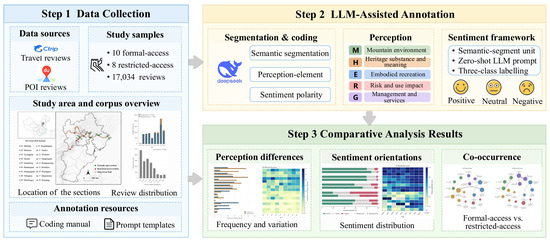
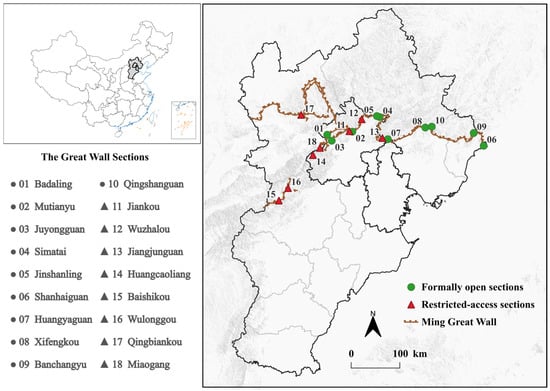
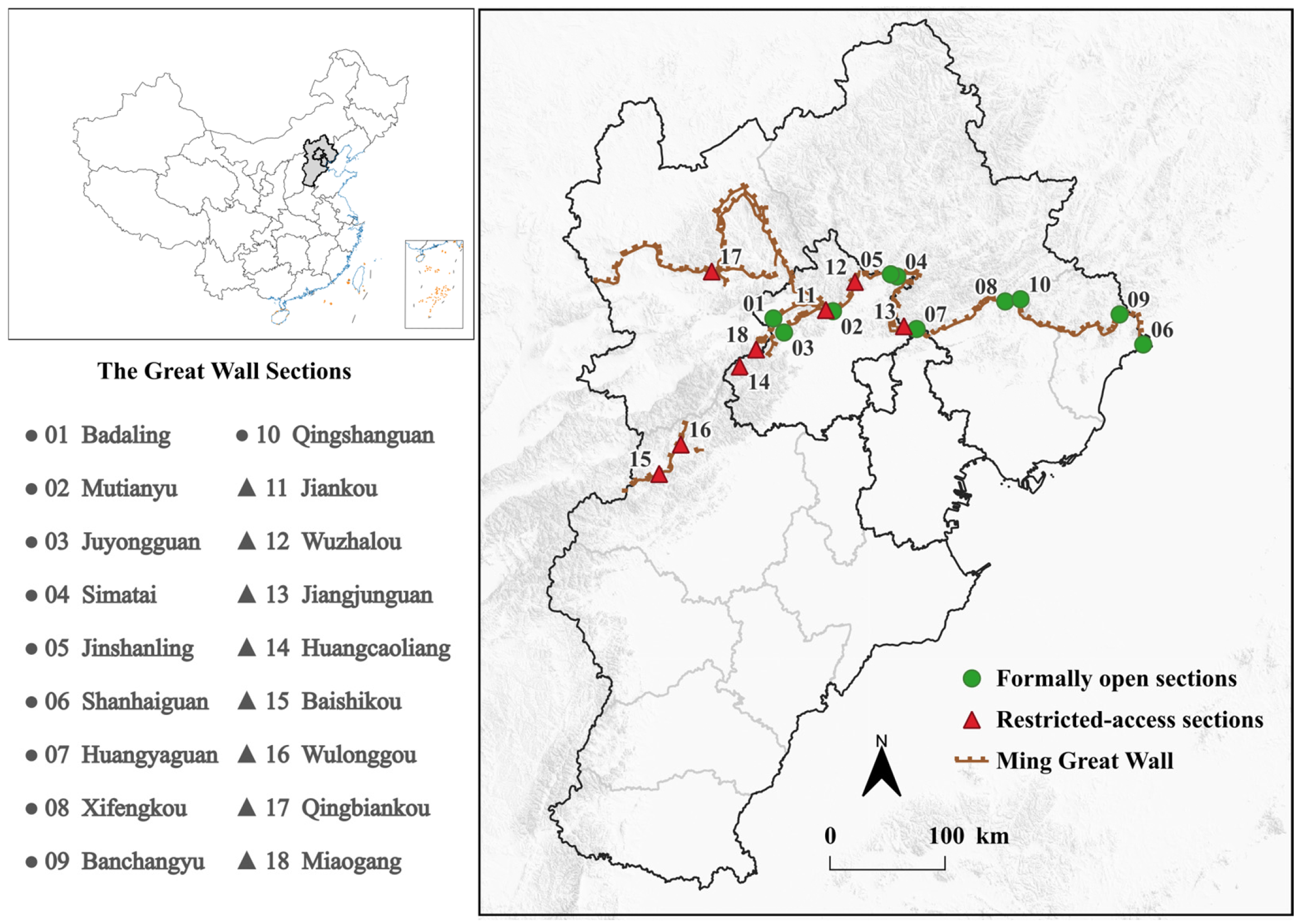
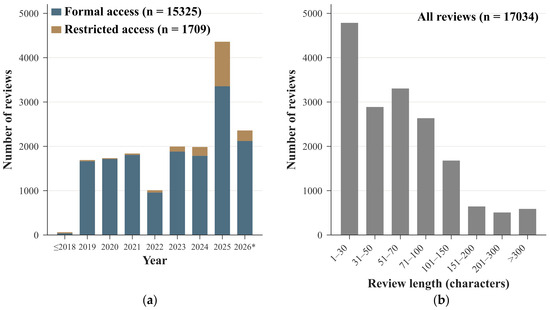
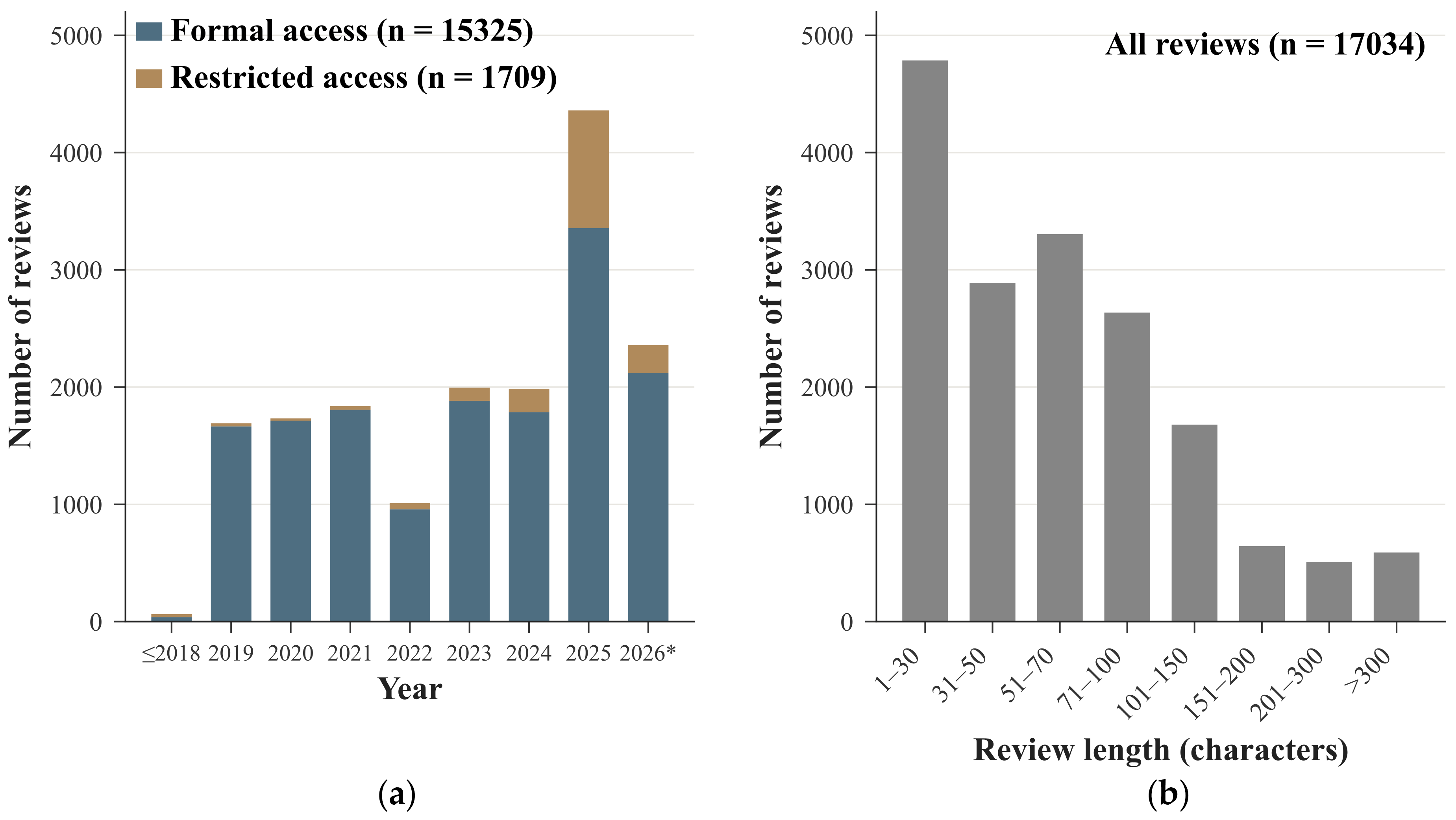
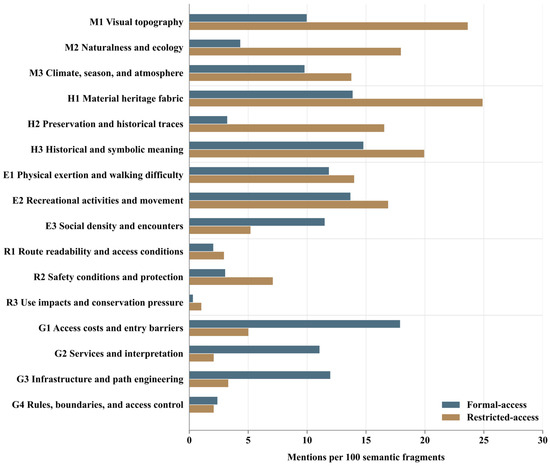
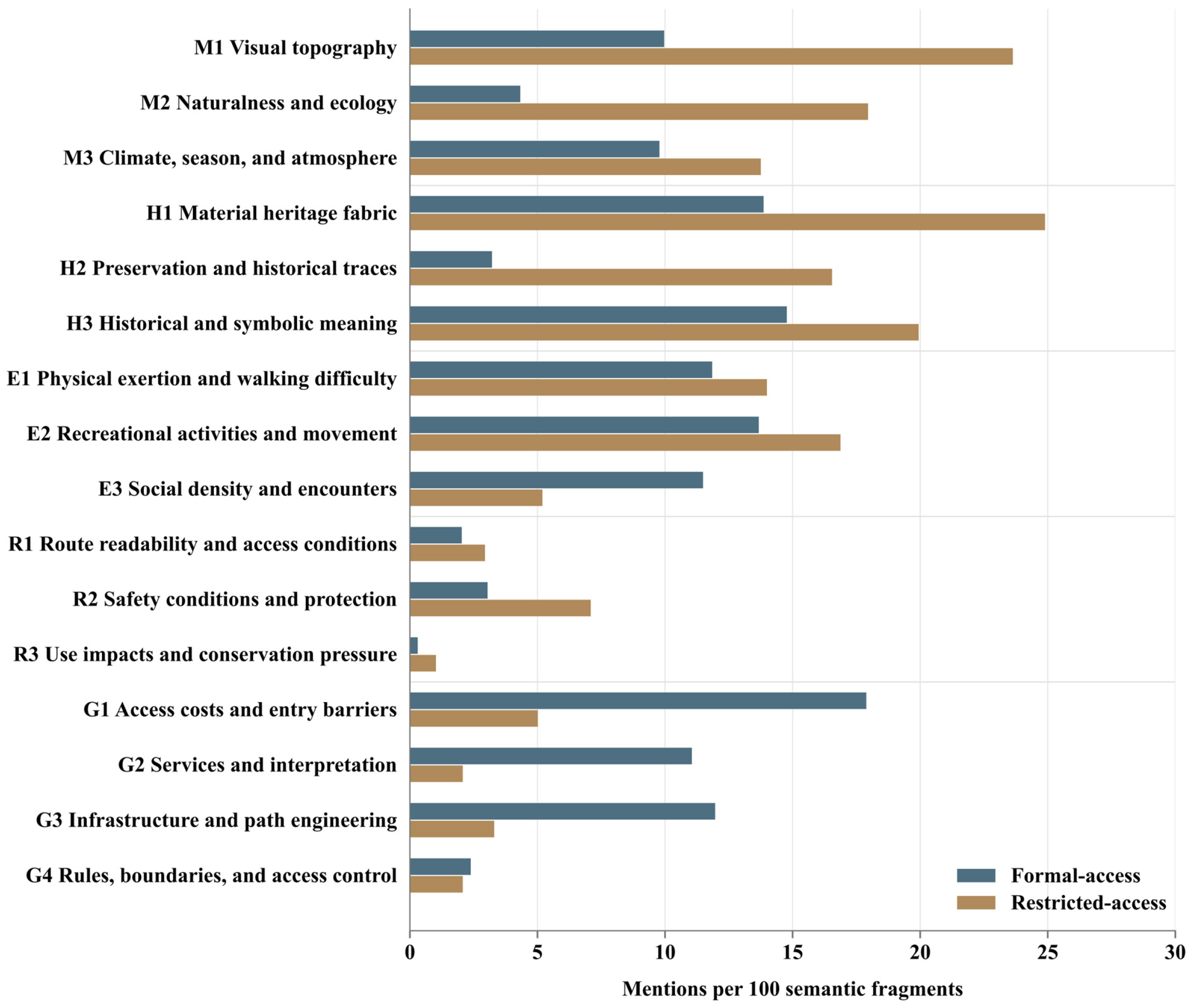
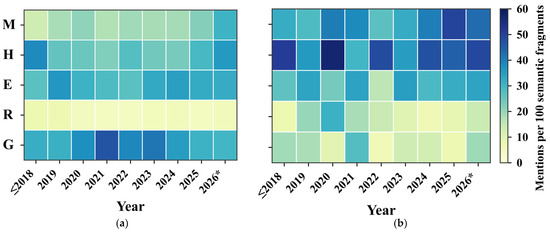
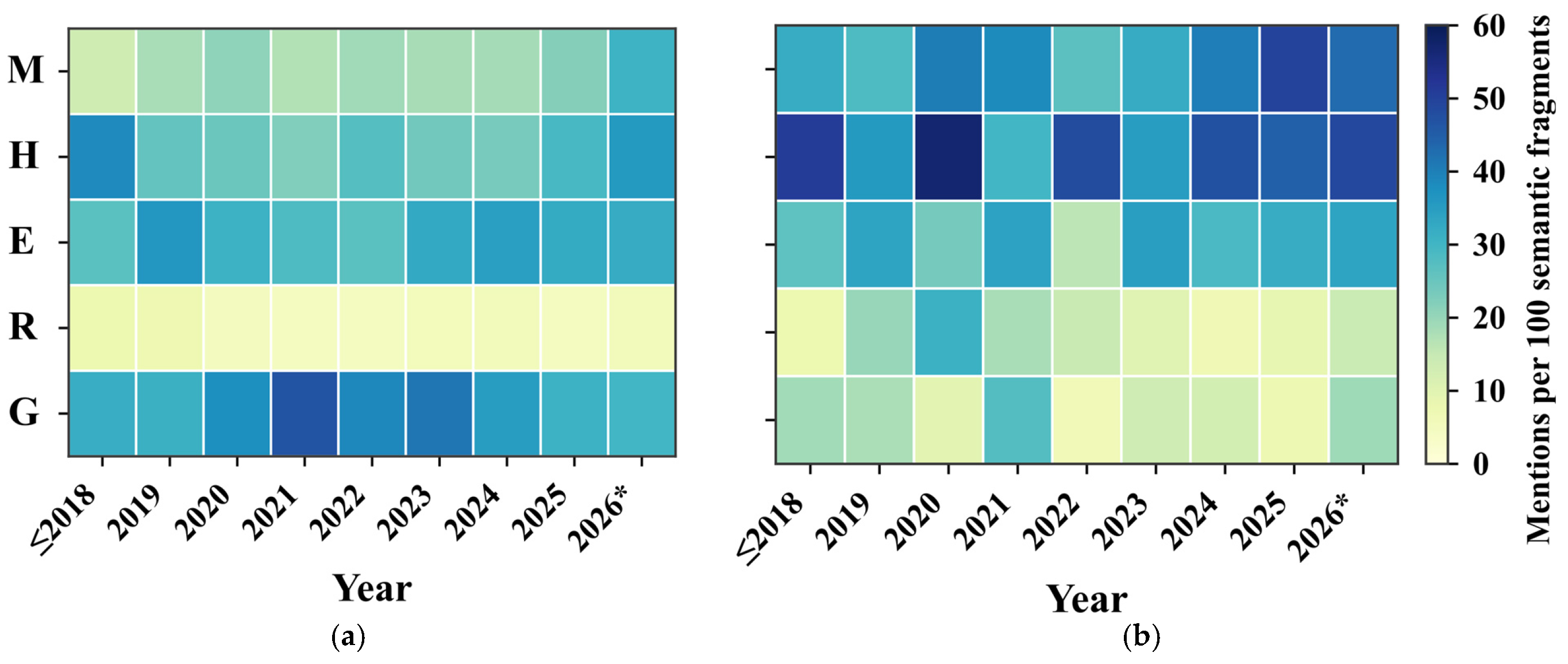
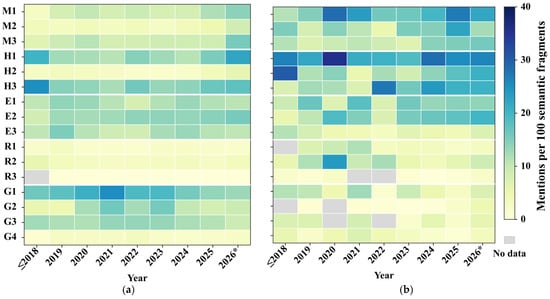
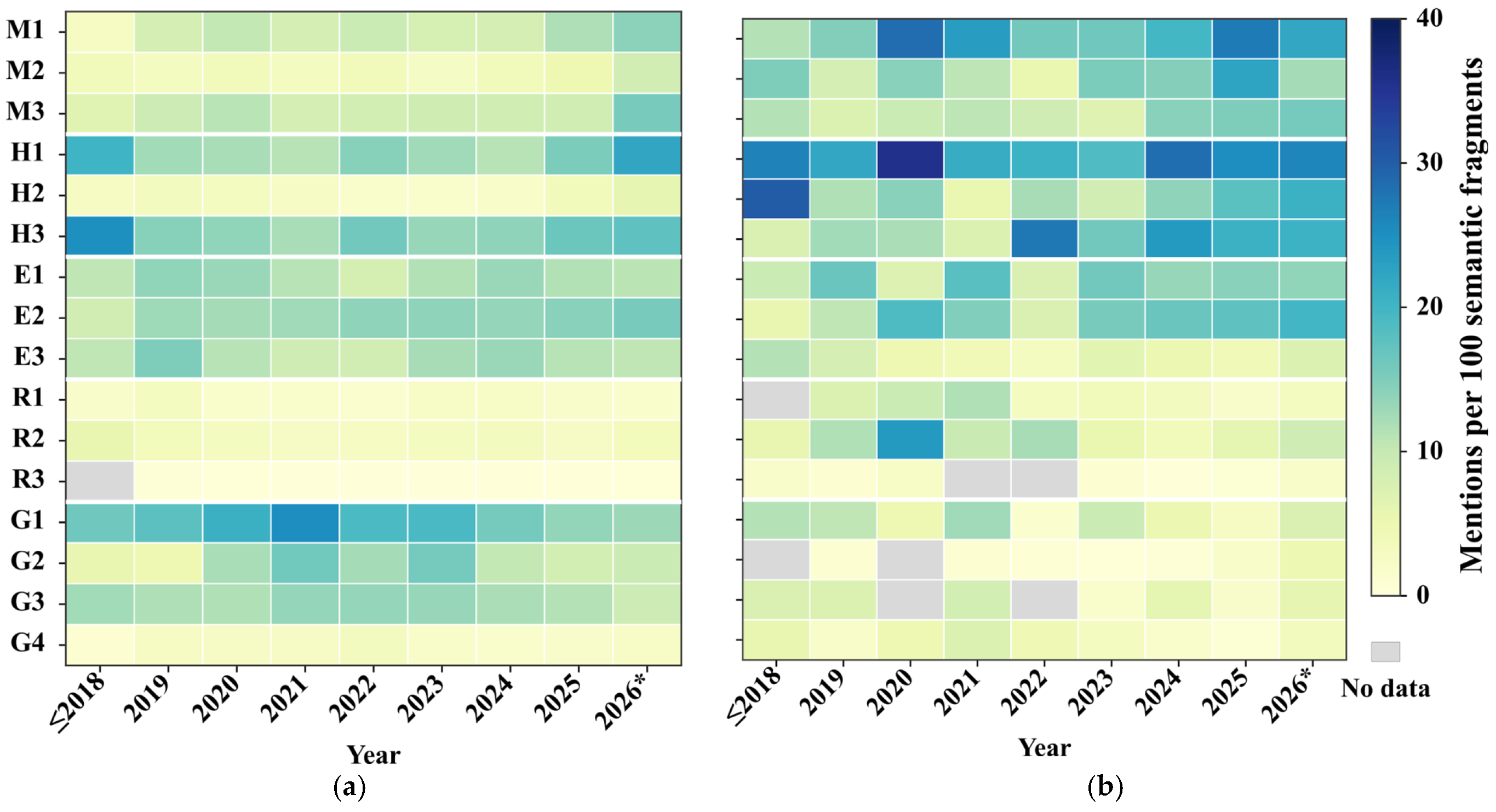
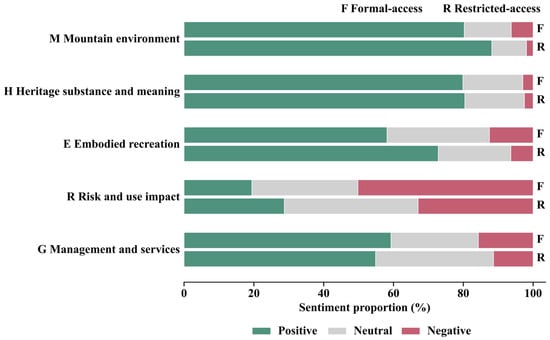
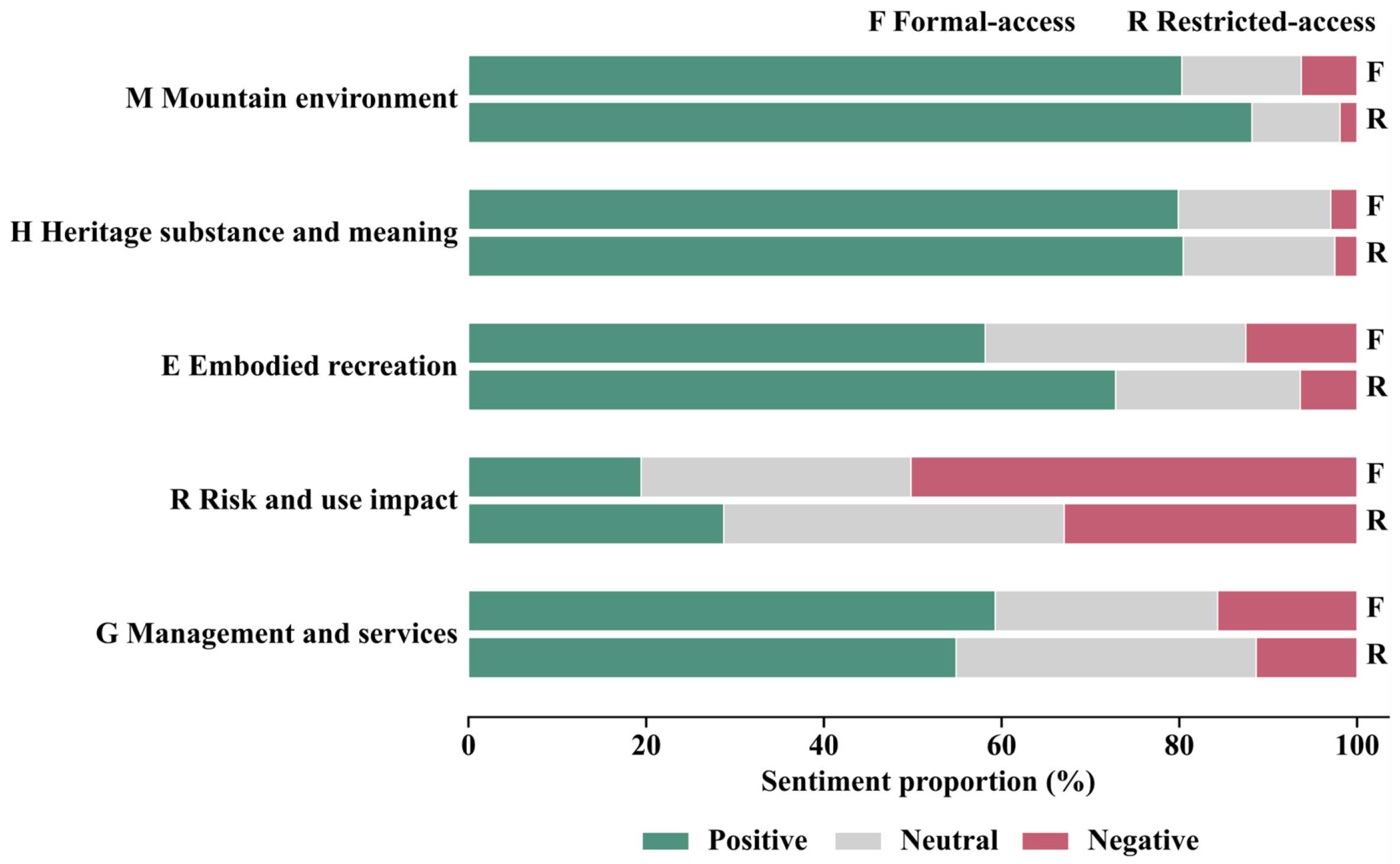
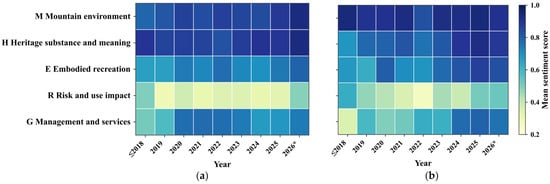
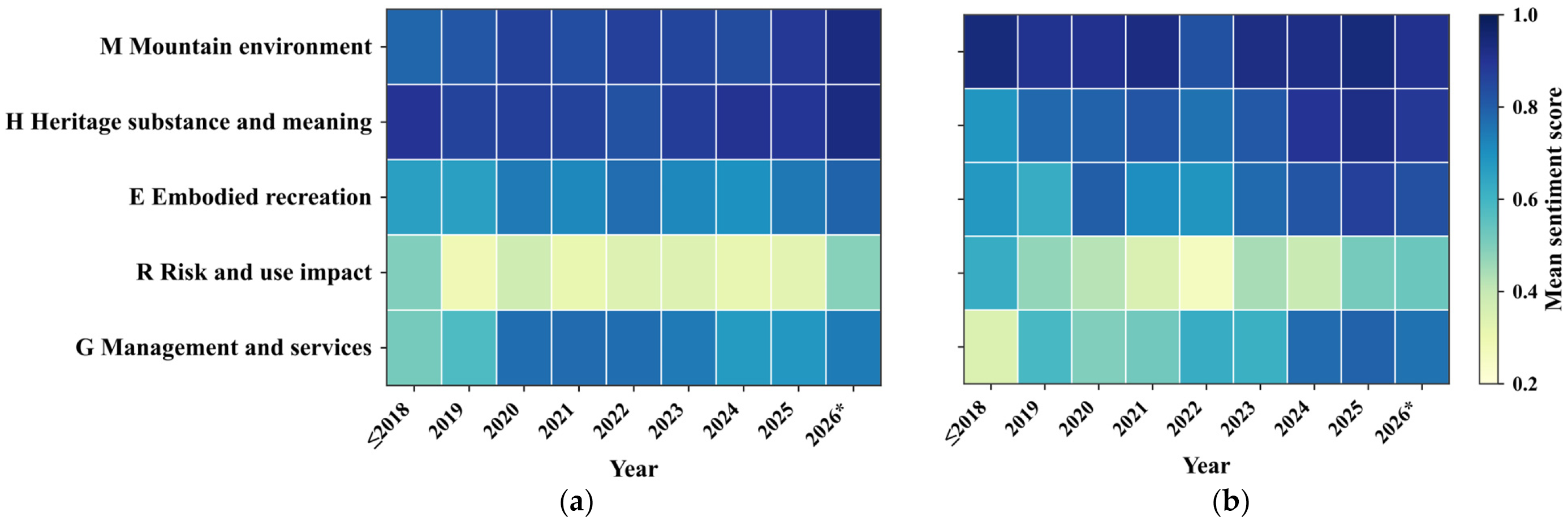
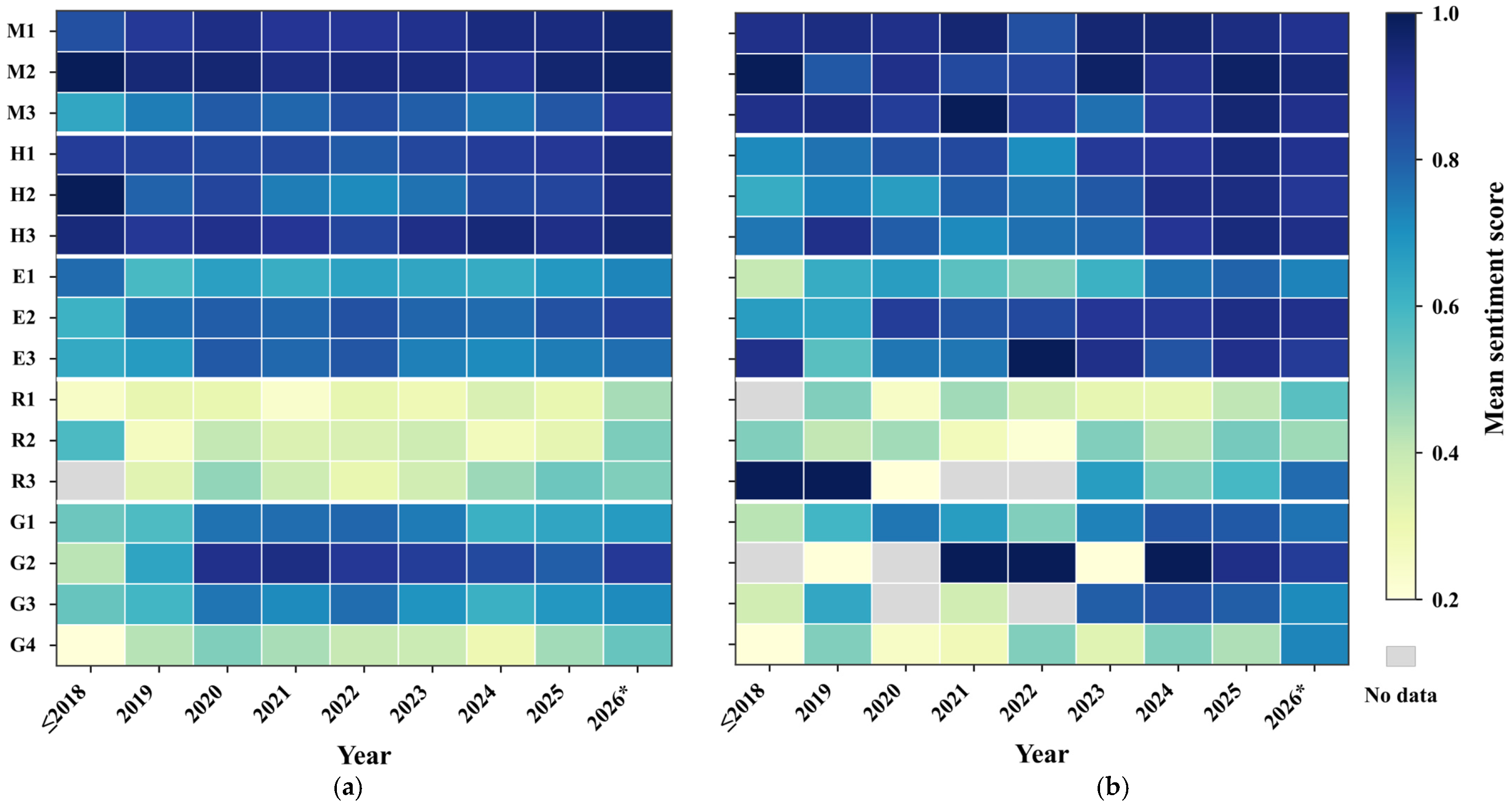
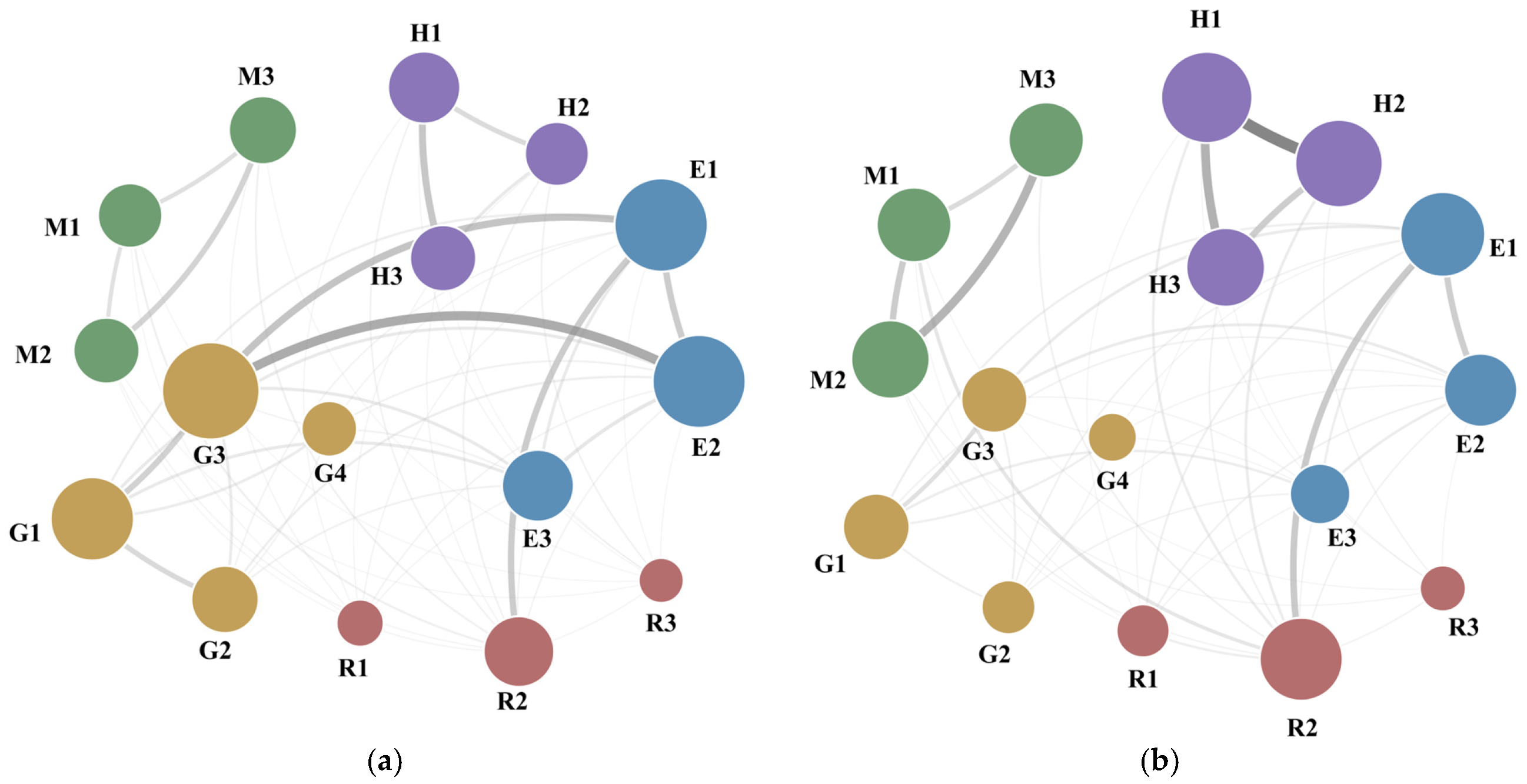
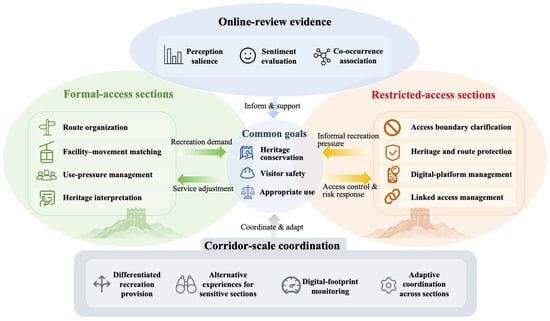
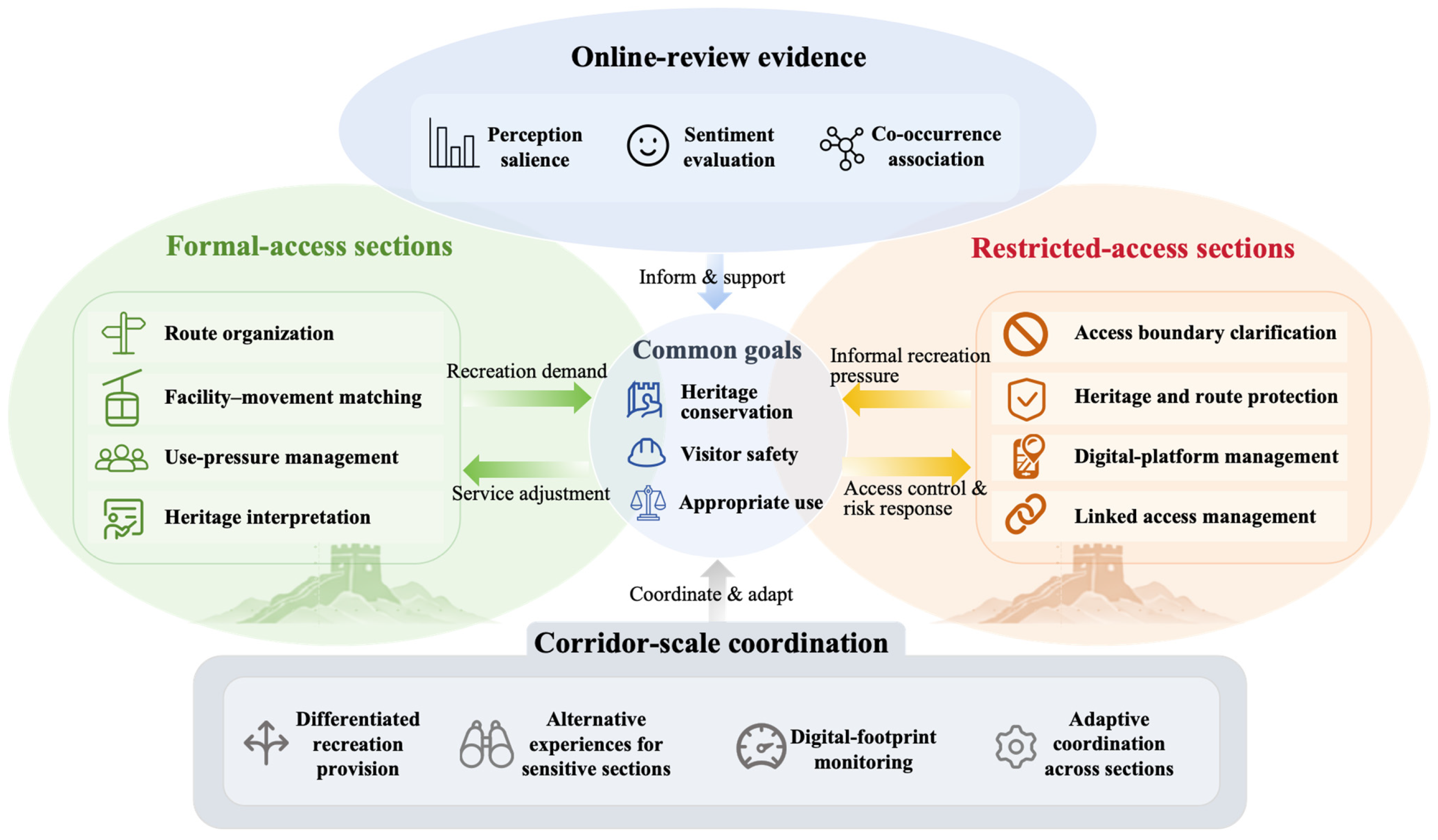

Disclaimer/Publisher’s Note: The statements, opinions and data contained in all publications are solely those of the individual author(s) and contributor(s) and not of MDPI and/or the editor(s). MDPI and/or the editor(s) disclaim responsibility for any injury to people or property resulting from any ideas, methods, instructions or products referred to in the content. |
© 2026 by the authors. Licensee MDPI, Basel, Switzerland. This article is an open access article distributed under the terms and conditions of the Creative Commons Attribution (CC BY) license.