


Abstract
Culinary heritage is often safeguarded and promoted through commercial reproduction, yet a food icon’s value may depend on limiting replication beyond its place of origin. This article examines Lord Stow’s Bakery, widely credited with creating the Macau egg tart, as place-bound culinary heritage. Drawing on heritage-making, authenticity, socioemotional wealth and organisational memory, it conceptualises selective scaling as expanding a heritage-bearing business in some directions while deliberately limiting its replication in others. The study combines interviews with the founder’s sister and co-owner, a multilingual media archive spanning more than three decades, 127 online posts and comments, and field observation, analysed abductively. In the co-owner’s account, the family regards further franchising and flavour diversification as threats to quality, founder legacy and ties to Macau, even as local outlets, production capacity and a few long-standing overseas partnerships continued. Recipes, hand-centred production, stable packaging, the minimally altered Coloane shop and a curated new outlet form a living memory infrastructure, while family, media and visitor practices turn queuing, photographing, eating and sharing into heritage-making. Selective scaling thus helps sustain the bakery’s place-bound value, although safeguarding Macau’s wider egg tart tradition depends on a broader community of practice.
1. Introduction
Food practices increasingly enter heritage fields not simply as inherited recipes or finished objects, but as living, contested and relational processes involving making, transmission, consumption, memory and attachment to place [1,2,3,4,5]. Culinary heritage may be safeguarded through recognition, documentation and destination promotion, but it is also continually remade in the routines of producers, communities and visitors. This article examines a more neglected dimension of that process: how a family enterprise can preserve the heritage value of a food icon by declining forms of commercial expansion that would detach it from the place, people and practices through which its significance is made.
Creative-industries research has examined the contractual conditions under which cultural work is produced and commercialised and the policy environments through which cultural industries are organised [6,7]. Food and tourism scholarship, meanwhile, documents how cuisines, tastes and restaurant forms circulate across social and national boundaries [8,9]. These studies establish mobility and wider circulation as important features of cultural production, but they do not imply that every heritage-bearing enterprise should maximise territorial replication. Some recognisable culinary concepts remain deliberately bounded because part of their cultural and economic value rests on encountering them in a particular place.
This article examines one such case: Lord Stow’s Bakery in Macau, widely credited with creating the now-iconic Macau egg tart (Figure 1), but still operating essentially as a small, family-owned chain concentrated in Macau. At first glance, Lord Stow’s appears to be exactly the kind of micro-enterprise that creative-industries and tourism policy might imagine scaling up: a distinctive product derived from individual creativity and craft, protected by a recognisable brand and situated in a postcolonial tourist city whose economy depends heavily on visitors’ desire for place-specific experiences. The concept is easily imitated, and Portuguese-style egg tarts are now sold widely across East Asia. However, rather than franchising widely or licensing the brand abroad, the founding family has chosen to keep the business predominantly local, concentrating the brand in a small number of shops in Macau and retaining only a few long-standing partnerships elsewhere.
Figure 1.
Lord Stow’s Macau egg tart, the signature product that underpins the brand’s international recognition while remaining tightly controlled and largely place-bound in Macau. Photograph by Gonçalo Lobo Pinheiro, 2025.
We therefore treat Lord Stow’s not only as a business puzzle, but as a heritage question: why does a culinary icon that attracted international franchise interest remain largely place-bound? How do affective, familial and heritage considerations shape what counts as an appropriate form of safeguarding once a food product becomes part of a city’s cultural identity? These questions are especially pertinent in Macau, where culinary forms embody intertwined Portuguese, Chinese and British histories and are actively mobilised in tourism, heritage and destination narratives.
To address this puzzle, we connect three strands of scholarship. First, we draw on research on family firms and socioemotional wealth (SEW), which argues that family owners evaluate strategic options not only in financial terms but also in terms of their effects on non-financial endowments such as identity, emotional attachment and family legacy [10,11,12].
Second, we engage heritage studies, heritage branding and authenticity studies. Heritage brands derive value from continuity, provenance and adherence to inherited standards rather than constant novelty [13,14]. For a place-anchored food icon such as Lord Stow’s egg tart, taste, texture, appearance, service rituals and spatial cues combine to produce what customers recognise as the real thing, while visitor practices help anchor that authenticity to Macau.
Third, we connect these insights to organisational-memory and succession research in family firms. Research on organisational memory explains how knowledge is collected, stored and retrieved through routines, roles, artefacts and other retention structures [15,16], while family-business succession research examines how knowledge and capabilities are transferred across generations [17]. In the case examined here, the sudden death of the founder Andrew Stow in October 2006 foregrounded the need to build a memory infrastructure—documentation, training practices, artefact stewardship and narrative curation—that protects technical know-how while making the business a vehicle for living remembrance.
We argue that the interaction of emotional attachment, heritage value and memory infrastructure can underpin a strategy of selective scaling: an intentional and reflexively justified choice to limit some forms of territorial replication, while accepting others, to safeguard affective, material and place-based value. In Lord Stow’s case, the co-owner frames large-scale franchising, overseas replication and extensive flavour diversification as threats to the founder’s legacy, the integrity of the product and the bakery’s relationship with Macau. At the same time, media and customer narratives often construct the true egg tart as inseparable from Macau, making original-only-in-Macau a powerful heritage claim that sustains value without global roll-out, even though a few long-standing partners outside Macau continue to sell the branded tart.
Empirically, the article is based on a single revelatory case study of Lord Stow’s, combining two in-depth interviews with the founder’s sister and current co-owner, media and archival materials, customer-facing narratives retrieved from reviews and travel writing, and field observation of key outlets. Analytically, we use an interpretive, abductive and Gioia-informed coding strategy and a longitudinal reconstruction across key periods—founder era, succession, tourism boom, COVID-19 shock and recovery—to show how selective scaling is produced and justified over time. Rather than treating the limits on global expansion as a default or capacity constraint, we interpret them, as the co-owner explains them, as a heritage-oriented choice that aligns with the family’s preferred identity for the brand and with wider authenticity discourses surrounding Macau’s culinary heritage.
The article makes three contributions. First, it introduces selective scaling as a concept for heritage studies, describing how small family enterprises may actively limit some forms of replication, while accepting others, to safeguard emotional, material and place-based value. Second, it extends socioemotional wealth theory into culinary heritage by showing how a family owner invokes emotional attachment and identification to explain decisions about franchising, intellectual property and product diversification once a food product becomes a cultural icon. Third, it foregrounds organisational memory as a practical infrastructure of heritage stewardship: recipes, routines, artefacts and curated spaces allow a founder’s signature to be reproduced across time, crises and new outlets without being detached from place. We address these issues through three interrelated research questions: How does the co-owner explain the role of emotional attachment in decisions about which forms of growth to pursue? How do family, media and customer narratives construct the tart as a heritage practice bound to Macau, and where do they diverge? And which memory mechanisms preserve the founder’s signature in daily operations after his death?
2. Conceptual Framework: Culinary Heritage, Place-Bound Value and Memory
Culinary heritage is especially useful for examining a food product whose significance cannot be reduced to a recipe, trademark or commodity. It concerns sensory knowledge, embodied skills, narratives of origin, social relations, material settings and acts of recognition that connect the product to a community and place. From this perspective, heritage is not merely possessed by a firm and then communicated to consumers; it is made through ongoing processes of selection, performance and transmission [4,18,19]. On 14 October 2025, the Cultural Affairs Bureau announced the inscription of the “Confection of Egg Tarts” on Macau’s List of Intangible Cultural Heritage. The associated Inventory record describes a Portuguese pastry that has been locally reinterpreted through diverse recipes [20,21]. This recognition matters not as proof of a single immutable original, but as institutional acknowledgement of a living and diverse culinary practice. We therefore distinguish the stewardship of one brand’s heritage, which is the focus of this article, from the safeguarding of the wider tradition, which depends on a broader community of practice [22].
The present case makes visible a tension at the centre of heritage management. Recognition and tourism can increase visibility, economic opportunity and local pride, while commercial replication can also risk severing a product from the settings, relationships and craft practices through which its authenticity is recognised. We use the term place-bound value to describe the value generated when taste, provenance, memory and the experience of being in a particular location remain mutually reinforcing. This does not imply that culinary heritage is pure, static or exclusively local; on the contrary, Lord Stow’s egg tart is visibly transcultural. It does, however, suggest that mobility and expansion are not automatically compatible with safeguarding.
The importance of territorial scale is stated unusually directly by Ellis et al. [23]: “Food is intangible heritage but produced and consumed within a geographic boundary. Multi-stakeholder’s involvement is essential, and the scale also matters” (p. 261). We use this as a conceptual prompt rather than a literal rule that food heritage cannot circulate: the analytical issue is how scale alters the relationships through which heritage is produced. In family-owned heritage businesses, understanding these decisions requires attention to commitments that cannot be reduced to financial return.
The socioemotional wealth (SEW) perspective conceptualises family firms as organisations in which non-financial endowments, such as family control, identity, emotional bonds and the desire for dynastic continuity, are central to decision-making [10,11,12]. When a family business is also a bearer of culinary heritage, these endowments can encompass the founder’s story, ties to staff and local publics, and a responsibility to preserve the sensory and symbolic integrity of a place-associated product.
SEW research shows that family principals may accept financial risk or forgo profitable opportunities when they perceive a threatened loss of family control, identity or other non-financial endowments [12,24]. Evidence from distinct decision domains, including R&D investment and entrepreneurial orientation, also indicates that family firms’ risk preferences vary with the type of decision and the endowments at stake [25,26]. Because SEW is broad and can be difficult to measure, scholars caution against treating it as a uniform explanation for all family-firm behaviour [27,28]. We therefore use a mixed-gamble logic narrowly: a growth proposal may be financially attractive yet unacceptable when owners believe it threatens specific affective, relational or identity-based endowments. In a culinary-heritage setting, the question is not only whether growth is profitable, but whether it changes the practices, relationships and place attachments through which the product has acquired cultural value.
Growth can also take several forms, and the concept used here must be distinguished from related ideas. Research on small firms separates owners’ growth motivation from realized growth [29], and tourism research on lifestyle entrepreneurship shows that small operators may subordinate business expansion to non-economic motives [30]. Replication research shows that reproducing a business model across outlets requires decisions about which features of the template are essential [31]. De-internationalisation, in turn, refers to voluntary or forced reductions in a firm’s cross-border engagement, which may be partial and may coexist with continuing foreign activity [32,33]. We use selective scaling for a narrower configuration, in which a firm expands capacity and replicates its branded offering along some dimensions, such as local outlets and production volume, while limiting it along others, such as franchising, governance by distant partners and changes to the core product. Unlike selective growth in general, the concept concerns the replication of one branded offering; unlike de-internationalisation, it treats retrenchment abroad as one possible component rather than as the defining feature. Finally, franchise enquiries or exploratory meetings show interest in expansion but do not establish that a proposal was financially or operationally viable. Our analysis therefore concerns how owners explain their limits, not whether they rejected a superior alternative.
Berrone et al. [10] summarise SEW through the FIBER dimensions: family control and influence, identification of family members with the firm, binding social ties, emotional attachment and renewal of family bonds through succession. In the case of Lord Stow’s, we focus on three of them: emotional attachment, identification and binding social ties. Emotional attachment captures the feelings family members associate with the business as a living expression of the founder’s memory and shared history. Identification refers to the extent to which the family’s self-concept is entwined with the brand; research on family-firm reputation and social identity provides an adjacent basis for this connection [34]. Binding social ties point to relationships with staff, suppliers and local publics that become part of what the family seeks to protect. Together, these dimensions illuminate why keeping the brand rooted in Macau can be understood as heritage stewardship as well as a commercial decision. We use these dimensions to sensitise the analysis to how the co-owner explains the family’s motivation to protect the business and its inherited identity, not as measured variables or as proof that emotion caused particular decisions. Understanding how that identity is communicated, experienced and recognised as authentic beyond the family, however, requires engagement with research on heritage brands and authenticity.
Brand research shows how provenance, continuity and inherited standards can function as authenticity cues [35,36,37,38]. Such brands may foreground origin stories, founding figures and stable core values rather than compete only through novelty. Yet critical heritage scholarship cautions that authenticity is never simply inherited; it is continually made through social selection, interpretation and performance [4,19]. This insight is central to Lord Stow’s, where the founder narrative, the sensory character of the tart, the village shop and visitor rituals jointly sustain the claim to authenticity.
This negotiated approach also accommodates the possibility that newer cultural forms acquire heritage status over time. Cohen [39] writes: “In principle it is possible for any new-fangled gimmick, which at one point appeared to be nothing but a staged ‘tourist trap,’ to become over time, and under appropriate conditions, widely recognized as an ‘authentic’ manifestation of local culture” (p. 380). The formulation is especially pertinent to a tart created at the turn of the 1990s and subsequently recognized as part of local culture.
For food brands, authenticity is frequently tied to place as well as technique: tastes, textures, smells and visual markers may come to stand for a city or region, and eating them can become a way of experiencing that place [40,41,42]. In the present case, the more specific pattern of pilgrimage consumption—travelling to one shop, queuing in a particular street and eating a product fresh at its reputed birthplace—emerges from the empirical materials rather than from the food-tourism literature as a pre-existing construct. Widespread replication or heavy modification may therefore change not only a brand, but also the heritage relationship among the product, its makers and the place where it is encountered.
Lord Stow’s fits this pattern as a culinary heritage brand in Macau. The egg tart’s sensory attributes (e.g., flaky shell, specific custard texture and characteristic caramelisation), the founder narrative and the spatial experience of visiting the original Coloane shop combine to produce a recognisable authenticity configuration. Section 4 examines how far media and visitor narratives reinforce the family’s internal emphasis on doing the original. Selective scaling is consequently analysed here not as the absence of heritage management, but as one of the ways a brand’s heritage value is actively protected. Sustaining the foundations of authenticity over time is not simply a branding task; it depends on how knowledge, routines, values and material traces are retained and transmitted across generations.
This temporal and intergenerational dimension brings organisational memory and succession into the framework. Organisational-memory research directly examines how knowledge and experience are collected, stored and accessed through routines, roles, artefacts, culture and information systems [15,16,43]. In family businesses where the founder plays a central symbolic and technical role, these processes can also serve heritage safeguarding by maintaining the embodied and material conditions through which a living culinary practice is recognised and transmitted.
Family firms may therefore build what we call memory infrastructure: codified recipes and procedures, training regimes, artefact stewardship, such as preserving original logos, equipment and photographs, and curated narratives that together allow a founder’s signature to be reproduced in day-to-day operations. Such infrastructure can support controlled replication as well as restraint: research on long-lived family firms shows how historical identity statements can be elaborated or recovered to legitimate strategic change while preserving a sense of continuity [44]. The infrastructure is not purely technical: it carries symbolic weight, shaping how the founder is remembered, how staff understand quality and how visitors encounter the business as a site of continuity.
At the same time, this literature highlights the dual nature of founder myths. They can be functional, providing cohesion and clarity of purpose, or dysfunctional if the founder’s idealised image becomes so dominant that successors struggle to innovate or establish their own legitimacy [45]. Families therefore engage in ongoing myth management, selectively emphasising episodes, traits or values in ways that support continuity while allowing the business to function in the present. In a heritage context, this process makes visible the negotiation between safeguarding and change.
Such curated founder practices extend organizational memory beyond technical know-how into embodied remembrance and public heritage-making, and they help explain why a family may regard territorial expansion as risky when it threatens to uncouple the product from the memory infrastructure that gives it meaning.
The perspectives outlined above frame our analysis of Lord Stow’s decision to limit replication beyond Macau. We examine how the co-owner, media actors and customers have built a narrative in which keeping the original in Macau is at once an emotional commitment, a heritage promise and a strategy for creating place-bound value. The sections that follow trace the development of this narrative through product invention, franchising, tourism, succession and material memory work.
3. Materials and Methods
This study adopts a single revelatory case study design, suitable when a case provides access and theoretical insight and can be treated as a paradigmatic instance [46,47,48]. The case is revelatory because it offers longitudinal narratives on product invention, franchising, conflict, succession and post-succession strategy in a family-owned firm in a tourism-driven city. It also permits analysis of culinary heritage as a living process, constituted through recipes, spatial settings, material artefacts, family narratives, public recognition and visitor practice.
3.1. Empirical Materials
Our materials combine in-depth interviews, media and archival sources, customer-facing narratives from travel writing and platforms, and observation of organisational artefacts and spatial design. At the core of the dataset are two in-depth, semi-structured interviews with Eileen Stow, Andrew Stow’s sister and current co-owner of Lord Stow’s Bakery. The participant, with whom the author had no prior relationship, was contacted directly and informed of the aims of the research project. She agreed to take part under her real name and to the verbatim quotation of her statements. The first interview took place in January 2024 and lasted 2 h and 38 min; the second took place in October 2025 and lasted 2 h and 4 min. Both interviews were conducted by the author in English at the bakery’s Garden Café in Coloane, which provided seating, during non-peak hours, and both were audio-recorded with consent and fully transcribed.
The conversations reconstruct Andrew’s personal and professional trajectory; the creation and reformulation of the egg tart; the early years of the Coloane shop; franchising ventures and the egg tart wars; the decision to withdraw from most international franchises; succession after Andrew’s death; the development of new outlets, including shoppes at integrated resorts; and current strategic priorities. These interviews provide detailed, reflective accounts of both operational decisions and the emotional investments through which the family interprets the bakery’s heritage role. Because both interviews were conducted with one participant, they deepen a single retrospective account rather than providing independent perspectives; views attributed to Andrew and Audrey Stow (Andrew’s daughter and co-owner) based on this account are identified as such. As the principal authors share a surname, they are referred to by first name after first mention.
To situate these narratives historically, an archive of English-, Chinese- and Portuguese-language media coverage and trade press spanning more than three decades was assembled. It comprises 116 items, mainly newspaper and magazine articles, trade press and online articles, of which 68 are in English, 36 in Chinese and 12 in Portuguese. Items published from 1989 up to Andrew’s death in October 2006 come from Eileen Stow’s personal collection, which she kindly lent for the project. Later coverage was located by searching the websites of local and regional media outlets, including Macau Daily Times, Ponto Final and South China Morning Post, for the terms “Lord Stow’s”, “egg tarts”, “pastel de nata”, 葡撻 and 安德魯餅店, from the earliest date available on each site until October 2025, when data collection was closed. All items mentioning Lord Stow’s or the Macau egg tart were treated as relevant, and all 116 were catalogued, coded and analysed. Duplicates between the two sources were counted once. Chinese- and Portuguese-language items were translated into English by the author and a research assistant. The source register records publication, date, article title and page where available, and the author retained the issue, clipping or stable web record used in the analysis.
The corpus includes early travel and feature stories that present Lord Stow’s as an improbable business run by a British expatriate in a Chinese fishing village; local coverage of Andrew’s accomplishments and sudden death; discourses that frame the tart as an edible icon of Macau; and regional reporting on the egg-tart craze in Hong Kong, Taiwan and beyond. Magazine profiles and interviews further emphasise Andrew’s background as a pharmacist and his reformulation of the Portuguese pastel de nata. Because journalistic accounts sometimes use promotional or sensational language, they are analysed as contemporaneous, attributed representations of key moments, including the franchising boom, disputes over authenticity and credit, and the response to Andrew’s death, rather than as independent proof of every event they describe.
Customer-facing narratives were collected from two types of sources. First, guidebooks, online travel guides and travel blogs that narrate Lord Stow’s as a must-visit site, emphasise queues and frame the tarts as a way of experiencing Macau were examined. These 24 items, in English and Chinese, include print guidebooks such as Lonely Planet and 異國滋味獨家風情Easy GO!—澳門, online guides such as BBC Travel and the Michelin Guide, and independent travel blogs.
Second, a purposive corpus of 127 public posts about Lord Stow’s was compiled from TripAdvisor, Trip.com/Ctrip, OpenRice, RedNote (Xiaohongshu) and Dianping, covering posts published between January 2023 and September 2025 and captured in October 2025. Posts were retrieved with the search terms “egg tarts Macau”, 蛋撻, 葡撻 and 澳門蛋撻, and then classified by the business they referred to; of the 298 posts retrieved, the 127 referring explicitly to Lord Stow’s were retained. The corpus comprises 41 posts from OpenRice, 31 from RedNote, 25 from Trip.com/Ctrip, 17 from TripAdvisor and 13 from Dianping. By language, 109 posts are in Chinese, 15 in English, and 1 each in Japanese, Korean, and French; non-English posts were translated into English by research assistants. Of the retained posts, 118 are broadly positive and 9 are critical. The sample was assembled to capture variation in language, outlet, travel context and evaluations of authenticity; it is illustrative and is not treated as representative of all customers. A structured source register records the platform, post-date, outlet, original-language excerpt, English translation where applicable, capture date and research-record identifier. The cited examples below use these record-level identifiers; RedNote posts informed the broader coding corpus but are not quoted individually.
Finally, the physical and visual elements of the brand’s memory infrastructure were documented, with particular attention to the outlet opened in 2024 at The Londoner, which Eileen Stow explicitly describes as “a love letter to Andrew”. Twenty-six field visits were conducted between January 2023 and December 2025, amounting 756 min of observation: eight to the original Coloane shop, seven to The Londoner, six to the Garden Café, three to Taipa and two to the Venetian. Visits followed the ordinary sequence of a customer’s encounter with the business: queuing to order egg tarts, noting how customers behaved and what they said while waiting, observing production through the open kitchen window, and taking a seat in the dining area for a meal while observing how customers interacted with the staff and their food. Observation was conducted openly in publicly accessible retail space, and photographs were taken so as not to show customers or staff. Brief notes were taken on site, usually on a mobile phone, and expanded into full field-note entries on the same day. Each entry records the date, outlet, duration and what was observed, and is filed with the photographs taken during that visit. The notes were read alongside the interview transcripts and documentary material and coded in the same way. The visits to The Londoner outlet captured pharmaceutical instruments from Andrew’s early career, memorabilia associated with his previous hospitality work, favourite vinyl records, typewriters and family photographs, as well as the continuing use of Andrew’s hand-drawn logo and long-standing packaging.
When observation closed in December 2025, the brand operated seven outlets in Macau, mainly in Taipa, Cotai and Coloane. Together, these artefacts and sites materialise the founder’s story in both a contemporary resort and the village shop, allowing analysis of how organisational memory is curated in situ and embedded in the sensory and spatial experience of the business.
Table 1 summarises these materials, their analytical uses and the inferences they cannot support.
Table 1.
Empirical materials, analytical uses and limits.
3.2. Analytical Strategy
Our analysis followed an abductive, interpretive approach, moving iteratively between the empirical materials and the three lenses introduced in Section 2 rather than proceeding from theory-free induction [49]. First, we organised all empirical materials into a longitudinal case file structured around key periods repeatedly referenced in interviews and media coverage: (1) founder era and product invention; (2) emergence as a local icon; (3) franchising expansion and egg tart wars; (4) Andrew’s death and succession; (5) tourism boom and resort integration; and (6) COVID-19 shock and recovery. This temporal bracketing facilitated a longitudinal reconstruction of how narratives, heritage claims and strategic choices evolved over time [50]. Because the evidence is uneven across periods and does not permit formal tests of causal mechanisms, we do not present this reconstruction as process tracing.
Second, we employed a Gioia-informed coding strategy [51]. In a first-order phase, we generated codes that remained close to informants’ and journalists’ language, including “we could have been Dunkin Donuts”, “keeping the original in Macau”, “bastardised the traditional recipe”, “human energy”, “food made with love”, “boneheaded”, “egg tart wars” and “love letter to Andrew.” We applied these codes across interview transcripts and media articles to retain the narratives’ richness and to identify how actors attributed heritage significance. Because the analysis also used temporal bracketing and process tracing and did not reproduce every procedural element of a canonical Gioia study, we describe it as Gioia-informed rather than as a full application of the Gioia methodology.
All materials were coded by the author with the support of NVivo. Interview transcripts, media items, platform posts and field notes were imported in a single project file and coded in the same scheme, with the coding unit being the passage expressing a single idea, ranging from a phrase to a paragraph. Translated excerpts were coded in their English version, with the original-language text retained in the source register. Codes were revised as the analysis proceeded. As a single researcher conducted the coding, no inter-coder reliability test was performed.
In a second-order phase, we grouped these codes into more abstract themes linked to the conceptual framework, including emotional attachment to founder, identification with being part of Macau, binding social ties with staff and locals, defence of heritage-based authenticity, memory infrastructure and codification, and ambivalence about franchising and scale. Throughout, we iteratively moved between data and theory, refining the themes and examining disconfirming evidence.
Third, we linked these themes into aggregate dimensions corresponding to our three main theoretical lenses—socioemotional wealth, heritage branding/authenticity, and organisational memory—and considered how they jointly shaped strategic decisions about scaling. Process diagrams were developed to trace how specific episodes (e.g., the Los Angeles meeting about a global franchise, the Singapore photo incident, the Londoner outlet design) contributed to what we call selective scaling.
To enhance credibility, we compared interview accounts with media, trade, official and observational materials, cross-checking dates, labels and interpretations where the sources were permitted [48]. Interview testimony was treated as evidence of what the participant recalled or valued, dated documents as evidence of what an identifiable author or institution represented at a particular time, and observation as evidence of visible arrangements in the observed settings. Because many of these sources reproduce an established narrative of Lord Stow’s as an authentic Macau icon, agreement among them was not treated as independent confirmation [52]. We therefore gave explicit attention to contrasting accounts and to evidence that does not fit the interpretation (Section 4.6).
3.3. Ethics and Consent
The interview participant provided consent to audio-recording and to the use of the interview material for scholarly research. Documentary sources and public platform posts were analysed as texts already accessible without joining a restricted group. In reporting platform material, we used only the minimum excerpt needed for the analysis, omitted usernames and assigned research-record identifiers.
4. Results: Making, Safeguarding and Mobilising a Place-Bound Culinary Heritage
This section draws together the media archive, field observations, customer-facing texts and in-depth interviews with Eileen Stow to show how Lord Stow’s Bakery evolved from a small village shop into what a local newspaper described as “an edible icon of Macau” [53], while resisting the kinds of aggressive scaling that characterised the regional Portuguese-tart boom. The findings trace five intertwined heritage processes: (1) the emergence of the bakery as a locally embedded icon; (2) the making and naming of Andrew’s egg tart; (3) franchising, imitation and the decision to limit global expansion; (4) the construction of Macau as the only true place for the original; and (5) the role of memory and succession in holding these claims together. A final subsection considers evidence that qualifies these findings.
4.1. From Village Bakery to a Lived Heritage Destination
When Andrew Stow opened his bakery in Coloane in September 1989, Macau was in the final decade of more than four centuries of Portuguese administration and already preparing for the negotiated handover to the People’s Republic of China in December 1999, under the 1987 Sino-Portuguese Joint Declaration. At that time, the territory’s economy was still dominated by a long-standing casino monopoly and low-tech manufacturing, with tourism present but far from the mass-market, casino-resort model that would emerge after gaming liberalisation in the early 2000s.
Coloane itself was widely perceived as Macau’s rural fringe: a low-density fishing and farming island with a small resident population and limited commercial infrastructure, in marked contrast to the dense urban fabric and gaming economy concentrated on the peninsula and Taipa [54]. Village life revolved around modest waterfront settlements, small temples and local eateries rather than tourist-oriented businesses. Historical and census sources underscore this marginality: the 1991 census series reports 3146 inhabitants in Coloane, 0.9% of Macau’s total population of 403,038, while Amaro records 2889 residents in the late nineteenth century [55,56]. These figures are used to characterise the island’s relative demographic scale, not to imply that population alone determined its later tourism trajectory.
Against this backdrop, an archived 1991 travel feature described Lord Stow’s as an improbable Western-style bakery in a semi-rural Chinese village and portrayed local customers arriving by bicycle or waiting outside for British baked goods [57]. The article’s principal subject was culinary exchange in Hong Kong, and its brief Macau detour focused more on bacalhau, hotel baking and products such as Eccles cakes, currant buns and tomato jam than on egg tarts. According to the archived copy retained by the author, the bakery was then producing about one hundred tarts a day, while a tomato jam flavoured with vodka infused with vanilla beans had sold more than four hundredweight. Read in context, the account does not yet construct the egg tart as an international icon; it documents an early, locally oriented phase in which the bakery’s wider assortment attracted attention.
Eileen Stow recalls that her brother Andrew’s first business plan for the Coloane premises did not centre on having an actual walk-in bakery, nor on egg tarts at all. The idea was to use the space primarily as a small production facility supplying breads, buns and cakes by delivery to restaurants and other clients, with pastéis de nata (the Portuguese name for such tarts) mentioned further down in the loan application form, mainly to please the Portuguese bank manager who would approve the loan. The front door and ovens were nevertheless visible from the street, and the smell of baking began to attract the curiosity of villagers, who started to come in and buy directly. Over time, this unplanned retail interaction helped turn the “factory” into a neighbourhood shop. The choice of Coloane itself was a pragmatic response to previous failed ventures and high urban rents: “He decided also that if he took this premises in Coloane, it’s low rent, because he knew from his previous business that rent will kill you.”
Several factors contributed to the gradual popularisation of his venture. In his last interview before his sudden death, Andrew himself linked the bakery’s early success to shifting patterns of mobility and consumption in Macau, recalling that “I started the business in 1989. It coincided with the economic boom. The banks were starting to lend money for cars, and people were starting to buy them. It helped. The bakery was on the island of Coloane, and people started to drive out to us on the weekend” [58]. What began as a low-rent production site on the urban fringe thus slowly became a weekend destination for city residents, anticipating broader changes in how Coloane would be folded into Macau’s leisure geographies. From the early 2000s, large-scale reclamation between the islands of Taipa and Coloane created Cotai, an artificial strip that became the main site for integrated resort complexes such as The Venetian/Parisian and Londoner Macau and Galaxy [59,60,61].
In parallel, public authorities sought to spread tourism beyond the most visited districts. The Macau Government Tourism Office’s community route for Coloane invites visitors to explore the village’s waterfront, historic sites and slower-paced environment. The official itinerary shows how tourism planning intersects with everyday village life and small businesses, and it positions Coloane as a relatively tranquil, heritage-rich counterpoint to casino-led urban development.
Interview material from Eileen Stow makes this transformation visible at the level of everyday practice. She recalls that in the early years most customers were villagers, restaurant clients and “local Chinese… taking pastries to friends in Hong Kong,” but that, over time, these informal circuits of gifting and recommendation drew in visitors from across the Pearl River Delta, who began to “always have in their to-do list, I have to go to Coloane to try the authentic egg tart.” In her words, “that little shop round there was the birthplace of it, end of,” yet it “naturally gestated into a tourist destination as well as a local destination” as tour groups and independent travellers started treating a visit to the bakery as part of “doing” Macau. She likens the trip and the queue to “almost like a pilgrimage,” describing tourists who buy a box, pose for photos in front of the façade, “have a small bite and then give it to their partner,” using the photo as proof of having reached the original site.
Although the brand now operates several outlets in Taipa, Cotai and Coloane, Eileen stresses that the Coloane shop (Figure 2) has become a must-visit attraction precisely because little has been modernised inside and it “still looks pretty much like it did in Andrew’s time,” retaining its cramped interior and humble fittings in stark contrast to the polished environments of the integrated resorts. During several field visits, we observed how this symbolic status is enacted in practice: in a single hour during an afternoon in November 2025 (non-peak season), around 200 customers queued, browsed, bought egg tarts and took photographs in and around the tiny shop. The figure is a tally of customers who joined the queue during one hour of continuous observation, recorded in the field notes for that visit (Figure 3). In a weekday in the village, it is now common to be stuck in traffic around the roundabout as coaches and minibuses bring excursion groups to the island, with the bakery as their first stop. Once visitors obtain the characteristic cardboard box of six egg tarts, which are often recommended in user-generated posts as both the ‘right’ quantity to buy and a souvenir worth keeping, the box itself becomes a prop in front-of-shop photographs, functioning as an “authentic” proof of having made the pilgrimage to the original site.
Figure 2.
Façade of the original Lord Stow’s Bakery in Coloane, largely unchanged since its opening in 1989 and now functioning as a site of living culinary heritage for visitors. Photograph by Gonçalo Lobo Pinheiro, 2026.
Figure 3.
Queue outside the Coloane shop on a regular Sunday, illustrating how waiting, photographing and purchasing boxes of tarts enact the bakery as a pilgrimage site and heritage destination. Photograph by Gonçalo Lobo Pinheiro, 2025.
By the time local newspapers began referring to Lord Stow’s egg tart as “an edible icon of Macau,” this slow, spatially grounded shift—from low-rent production bakery on the urban fringe to a popular stop on tourist itineraries—was already well underway.
4.2. Making a Transcultural Pastry and Negotiating Heritage Claims
The more technical and symbolic dimensions of the tart’s reformulation emerge from both press accounts and Eileen’s testimony. After the pharmaceutical company that had brought Andrew to Macau relocated overseas, he chose to stay, and a chance encounter at the old Hyatt hotel pulled him into nightlife and hospitality: he was hired to manage the Green Parrot disco and later became maître d’ of Afonso, a Portuguese restaurant that “was the restaurant to go to in those days” for Macau’s Portuguese community. Portuguese patrons, amused to see a Brit running a Portuguese establishment, began calling him “Lord Stow,” a nickname that would later be folded into the bakery brand. In this milieu he befriended hotel bakers, observed a Portuguese pastry chef preparing pastéis de nata and, recalling the pastéis de Belém he had tasted on his honeymoon a few years before in Lisbon, began to experiment. He drew on his training as a pharmacist to adjust the recipe and production method [58], even acquiring fifty traditional metal tins from friends returning from Lisbon so he could work with the “genuine” moulds.
As Eileen explains, these experiments unfolded alongside the early Coloane venture described above, where Western breads, cakes and Chelsea buns did not initially perform as strongly as anticipated. This commercial underperformance prompted Andrew to focus more seriously on the tart. Technically, the decisive move was to shift away from the flour-and-water thickened custard used in traditional recipes, where the filling is cooked before being added to the pastry case, to “my mother’s custard recipe, like a traditional English custard,” which could be poured directly into the raw pastry shell and thus simplified scaling up production. According to Eileen, “He told me that it took him five experiments. The fifth one, he was happy with it… to do an industrial recipe, not make 12… He was a scientist, so all that helped.”
Press coverage [62] echoes this account, attributing to Andrew the substitution of cream for milk, removal of pork fat and preservatives, and creation of a less-sweet, more mobile custard, while also recording his deliberately provocative description of having radically altered the traditional recipe. Eileen likewise distinguishes the result from both Portuguese pastéis de nata and Chinese daahn tāat. In the present analysis, the product is therefore treated as a transcultural object: visually anchored in Portuguese pastry, technically re-engineered through British custard knowledge and stabilised through a pharmacist’s attention to process control.
The naming of the product reflects both everyday cultural translation and Andrew’s resistance to being labelled a Portuguese bakery. Eileen notes that “the Chinese patrons were the ones that described it as a Portuguese egg tart.” Because Cantonese dim sum culture already included a daahn tāat (蛋撻), “to call it a Portuguese egg tart, they got it,” whereas the literal Cantonese term for “custard” sounded unappealing. The label “Portuguese egg tart” (葡撻, read as poùh tāat) thus made pragmatic sense to local customers, even as Andrew insisted internally that “it’s an Andrew’s.” He could be openly irritated when Portuguese customers compared his version unfavourably to canonical pastéis de nata—remarking that it was “not a real pastel de nata”—and took such reactions as confirmation that he had created something distinct rather than a flawed imitation. For the family, “That’s his creation… he was boneheaded, as we call him.”
Over time, external actors qualified and institutionalised this proprietary creation in ways that went beyond Andrew’s preferred naming. News reports describe him as the creator of a distinct Macau-style egg tart and as a contributor to one of Macau’s recognised tourism products and record his receipt of the Medal of Merit for Tourism in 2005 [63,64,65,66,67]. Other reports call the tart an edible icon or symbol of Macau and portray ferry passengers carrying boxes back to Hong Kong [53,68,69,70]. Treated as attributed media framings rather than neutral proof of origin, these accounts show how Andrew’s reformulated tart was progressively stabilised in public discourse as a distinctive Macau style and part of the territory’s tourism portfolio.
Analytically, this trajectory highlights a persistent tension between external labelling and internal authorship. Customers, journalists and officials naturalise the term Portuguese egg tart and fold the product into wider imaginaries of Portuguese heritage and Macau tourism, while the family insists on Andrew’s egg tart as a proprietary, transcultural creation that deliberately departs from Lisbon tradition. The official inventory record for the confection of custard tarts, discussed in Section 2, likewise describes a Portuguese pastry locally reinterpreted through diverse recipes and recognised within Macau’s food culture [21] The present analysis therefore treats the Macau egg tart as a transcultural object shaped in a postcolonial contact zone rather than as a simple copy of a Portuguese or Chinese original. This tension foregrounds questions about how products are named, attributed and authenticated, and how actors negotiate heritage and innovation to secure market appeal and creative ownership [2,71,72].
4.3. Franchising, Egg Tart Wars and the Choice to Safeguard Place-Bound Value
By the late 1990s, the Portuguese egg tart had become a regional craze, especially in Hong Kong and Taiwan. Contemporary regional coverage used invasion and fever metaphors, reported rising demand for eggs, and described queues, rapid imitation and occasional alleged disorder around tart shops [73,74,75,76,77,78,79]. Fast-food chains also entered the market: KFC introduced an egg tart in Hong Kong in 1998, and later reporting linked a recipe acquired from a Macau bakery to sales on a mass scale in mainland China [80,81]. Across the archive, the boom was narrated as a commercial and cultural spectacle in which queues, new outlets, claims of authenticity and novelty flavours proliferated rapidly.
Amid this boom, Andrew experimented with franchising. Jackson’s [82] contemporary profile reports that enquiries followed the first Mong Kok franchise from prospective operators in cities including London, Manila and Singapore. The profile presents Andrew as pleased by the response but ambivalent about how large the network should become, contrasting the prospect of hundreds of outlets with his satisfaction in Coloane. Eileen’s interview account confirms both the excitement and the turmoil of this phase: while she was on an extended visit to the United Kingdom, Andrew quickly accepted a prospective partner, a decision she remembers greeting with apprehension. The press account is used here as a dated representation of the opportunity, while the interpretation of the decision’s emotional meaning rests on Eileen’s testimony.
This initiated what Eileen and contemporary reporting [73,74,75,76,77,78,79,82] later called the egg tart wars: a period of rapid expansion into Taiwan, Japan, Manila, Seoul, Singapore and Thailand, imitation, and legal or reputational conflict. Eileen’s interview provides more detailed experiential evidence. She recalls egg-tart flags on street corners, a Singapore shop displaying Andrew’s photograph without authorisation, and a competitor promoting an egg-white tart as cholesterol free. She also distinguishes among master franchisees according to how closely they attended to the brand and links that difference to the survival of the Japan and Philippines relationships. These episodes are presented as her situated account of a contested franchising period, not as independently adjudicated facts.
The feud with Andrew’s former partner Margaret Wong crystallised broader tensions around authenticity, credit and commercialisation. Contemporary coverage attributes to Andrew the position that he did not invent the egg tart but created the caramelised, less-sweet style associated with Macau; it attributes to Wong the counterclaim that she popularised the tart through her centrally located shop and later sale of a recipe to KFC [73,80]. Following their divorce, Wong retained Margaret’s Café e Nata on the Macau peninsula and continued selling a different version of the tart. In the press archive, the dispute is staged through royal metaphors, legal threats and comparisons of queues, locations and prices. We use those reports to analyse a public struggle over authorship and authenticity, not to determine conclusively which party deserves sole credit.
In retrospect, Eileen frames large-scale franchising as emotionally exhausting and misaligned with the family’s preferred way of doing business. She describes a 2001 trip to Los Angeles to explore a worldwide franchise with a major operator seeking a concept that could be replicated easily. According to her account, mechanisation could not reproduce the pastry’s characteristic lip without hand finishing, but the deeper issue was affective: in her words, the family “could have been Dunkin’ Donuts”, yet personal involvement made franchise conflict emotionally draining. The meeting is known only through her retrospective account; it shows that wider replication was discussed, not than an independently appraised or financeable opportunity existed. Jackson’s [82] earlier profile independently documents Andrew’s ambivalence about how large the network should become, but the Los Angeles episode and ingredient comparisons derive from Eileen’s interview. She explains, for example, that yolk-colour preferences and dairy-market restrictions required adaptations in the Philippines and Japan.
Over time, Lord Stow’s withdrew from most international ventures while retaining two legacy franchise partnerships. The company’s official pages identify Japan’s Ken’s Pass Co., opened in April 1999, and the Philippines’ Just Simple Bake House Ltd., a franchise since December 1999 [83,84]. Eileen describes both as family-run operations that protect copyright and respect the core product. Even there, the use of the Lord Stow’s name is delimited: according to her account, flavoured tarts are sold under separate branding rather than as Lord Stow’s egg tarts. These arrangements show selective, bounded internationalisation rather than the complete absence of overseas activity.
The company has also pursued a more tightly controlled international presence through prestige partnerships in Hong Kong. Eileen recalls an exclusive arrangement at the Excelsior Hotel, initiated around Chinese New Year 2006, in which pastry shells were made in Macau and shipped to Hong Kong for filling and baking. A later partnership with Mandarin Oriental Hong Kong began in 2019. During the study period, company materials described the hotel as selling the tarts daily in limited quantities; the official page checked on 30 August 2026 still describes pastry shells as handmade in Macau, shipped to Hong Kong and baked fresh each day, at HKD25 per tart [85].
This recalibrated stance is codified on the company’s website, which states that Lord Stow’s is not seeking new franchises and prefers to support the operations established by Andrew [86]. Rather than pursuing an unrestricted global roll-out, the family prioritises legacy franchisees and a small number of controlled partnerships while retaining the symbolic linkage between the product and Macau. In interview, Eileen is unequivocal about further franchising: “There’ll be no more franchises. It’s too much of a drain on yourself… why does everyone have to get bigger? Why can’t you be happy with what you’ve got?” Across interviews, press accounts and company materials, the consistent pattern is not zero international activity but a turn away from further outward scaling after a turbulent period of franchising. Table 2 summarises this sequence and the limits.
Table 2.
Reconstructed sequence of growth and restraint.
4.4. Keeping the Original in Macau: Queues, Pilgrimage and Place
If the company has pulled back from further global franchising, it has instead deepened its presence within Macau’s tourism and hospitality infrastructure while controlling local production. The Coloane shop remains the symbolic birthplace. The family expanded capacity through additional ovens, nearby outlets and sites in integrated resorts such as the Venetian and the Londoner. For its Macau outlets, the company emphasises local preparation and visible freshness; its limited external arrangements are described separately above. Shortly after Andrew’s death, Bruning [87] framed him as a Macau institution and his tart as a local product that contributed to the city’s multifaceted tourism identity. We use that editorial as evidence of public commemoration, not as independent proof of invention.
Within this place-based strategy, a consistent theme in both interviews and media accounts is the importance of the queue and the act of travelling to specific sites. Eileen directly likens visiting Lord Stow’s to a pilgrimage: “The tourists want the experience. It’s almost like a pilgrimage to go into the original bakery.” Some, she recalls, make the journey even if they have already eaten other brands in the city. She compares queuing for tarts to her own experience queuing 50 min for a cronut in New York: “I can still remember sinking my teeth into that cronut… it was worth queuing for.” Visitors’ behaviour reinforces this ritualised character: “When they buy the egg tarts, they don’t eat them right away. They take photos, many photos, and then they will eat.” For Eileen, this is part of a broader phenomenon where the product functions as proof of having “done” Macau: “It’s more than the egg tart by itself… this aura… they want to prove, ‘I was in Macau’.”
Regional food writing amplifies the tart as craving and souvenir. Templer [70] uses an addiction metaphor and depicts ferry passengers carrying Lord Stow’s boxes to Hong Kong, including one passenger eating a third tart before departure and guarding the remaining box. A feature in Revista Macau plays with a Portuguese greeting asking whether the reader has eaten a Portuguese tart that day and compares it with the Cantonese phatic convention 你食咗飯未呀? (Néih sihk jó faahn meih a?, literally asking whether someone has eaten rice) [88]. The comparison treats the tart as a new signal of sociability and fashion. Read as media rhetoric rather than behavioural measurement, such accounts show how writers made the tart stand simultaneously for indulgence, tourist proof-of-presence and Macau’s Portuguese-Chinese culinary mix.
User-generated posts on travel and food platforms echo and extend this language of pilgrimage. English-language TripAdvisor reviews describe Lord Stow’s as a must-try that is worth waiting for, while noting visible queues at Taipa and Coloane. A French-language reviewer similarly remarks that the bakery’s reputation is so widely known that visitors following tourist guides reliably create a queue in front of the shop. A Hong Kong-based OpenRice review describes a queue bending around the corner at the Taipa shop but notes that it moves quickly because customers are primarily buying boxes of egg tarts to take away. These records are illustrative examples from the purposive corpus, not prevalence estimates.
Chinese-language posts place particular emphasis on travelling to the original Coloane shop. Reviewers distinguish it from branches in Taipa and Cotai, describe a special trip to Coloane for the reputedly most authentic tart, and recount a Sunday wait of approximately 25 min in the sun. Other posts contrast outlet conditions: one Dianping record describes arriving at the Coloane bakery during a hike without a queue while reporting much longer queues at the Venetian. A Trip.com record presents the Venetian branch as a convenient alternative for visitors without time to reach the main Coloane shop, while still identifying Coloane as the birthplace. Eileen nevertheless stresses that the outlets draw on centralised production and bake locally for service, so the visitor distinction between authentic sites is a meaning attributed to place rather than evidence of a different recipe.
The village setting also becomes part of the attraction. Dianping and Trip.com records describe carrying a warm box from the small shop, eating nearby and combining the pastry with Coloane’s seaside scenery and slower pace. A long-time OpenRice reviewer recalls being taken to the single Coloane shop on an early visit and continuing to rank Lord Stow’s as Macau’s leading tart decades later. Across these posts, the journey, queue, limited seating and improvised harbour-side consumption configure the bakery as more than a retail outlet: they form a ritualised route through which reviewers narrate having experienced Macau and encountered the original egg tart.
At the same time, Eileen insists on protecting the brand’s link to Macau by minimising further overseas outlets and keeping the original recipe unchanged. She summarises the company’s stance succinctly: “Andrew’s Egg Tart will always be Andrew’s Egg Tart.” Across our interviews, she stressed that the aim is not to make “Macau egg tarts” available everywhere, but to ensure that those who want the original must come to Macau to taste it at its source “Our heart is in Macau, and it belongs only here.” Read against the Hong Kong partnership and the legacy franchises, the statement expresses an orientation rather than a literal description of where the branded tart is sold. In relation to flavoured versions now found virtually everywhere in Macau (e.g., coconut, bird’s nest, mango, bubble tea, matcha), she comments, “Why mess with perfection?… It just shows desperation by the business owner.” There is, in her words and actions, no intention to diversify the egg tart offering. Andrew had already articulated a similar position in his last interview: “I’ve tried to invent other foods. I’m really upset about it. I can’t get anything that approaches that volume of egg tarts. The Chinese appreciate a specialty product. They’ll go miles to have that one famous congee…. Why worry? I have a product that’s doing very well” [58]. Eileen explicitly maintains this mindset, insisting that “The only thing that can go in a Lord Stow box is the pure egg tart.” This insistence on purity, together with visible hand-made production, differentiates Lord Stow’s from the “little heating things at the front” used by other bakeries in major tourist areas around Macau: “We will always… let people know that they’re freshly baked and they can see them coming out.”
This place-based strategy intersects with formal heritage processes. Eileen notes that confection of custard tarts was inscribed on Macau’s List of Intangible Cultural Heritage without direct contact from the authorities: “Basically nobody contacted us or even congratulated us.” She nevertheless reads the recognition as validation of Andrew’s contribution: “I’ve always thought that Andrew created an icon for Macau, an edible icon… that little shop was the birthplace of it.” The official action recognises a wider, diverse local practice rather than designating Lord Stow’s as its sole owner: the Inventory record notes that each pastry shop has its own recipe, proportions and techniques [20,21]. Eileen’s reading of the listing is therefore a family response to a broader institutional act rather than its official meaning. Media discourse and visitor practice, in parallel, connect Andrew, the Coloane shop, ferry passengers carrying boxes and Macau’s broader tourism imaginary.
4.5. Memory, Succession and Everyday Heritage Work
Andrew’s death in 2006 was a major turning point for the business and for the family’s relationship to the brand. Media tributes and open letters from friends described him as part of Macau and as an institution, emphasising that he had built a life rather than simply pursued profit [87,89]. One remembrance reports a local joke that electricity failures in Coloane might be caused by Andrew trying new bakery ovens [89]. Treated as commemorative testimony, these accounts show how tightly the baker, his experiments and the village’s everyday life had become intertwined.
For Eileen, Andrew’s sudden death also created an emotional and operational challenge: “Talking about the biggest challenge of my life… nothing upsets me now because I’ve got through that.” She recalls sensing that outsiders expected the brand to fail without its founder: “I could feel people almost saying, do you feel the air around you going, ‘oh well, they’re finished, it won’t succeed without him’.” Her response was to double down on codification and control: “For me, it’s like… quality control, quality control, quality control… you break it up so that people have to be responsible for what part of it they’re doing.”
This work of control and continuity is most visible in Coloane. The flagship store, opened more than 35 years ago, has undergone necessary maintenance but little renovation. Keeping the façade, layout and interior fittings close to their appearance before Andrew died preserves the atmosphere associated with his presence and stabilises customers’ sensory memories of what Lord Stow’s should feel like. Production practices are likewise framed as heritage work. The pastry remains handmade: dough is rolled and formed into cylinders, sliced, and hand-pressed into tins so that every shell has the correct lip. An egg-cracking and separating machine was introduced when volumes increased, but Andrew’s original recipe is preserved by weighing yolks and adding a precise quantity of egg white to reproduce the texture once achieved by cracking eggs by hand. Quality control extends from checking flour-sack dates to tracing a batch after a customer complaint. Eileen links this insistence on handwork to a belief in “human energy” in food: “that’s why our mother’s food tastes so good: it’s made with love… the longer we keep everything handmade, the better.”
These routines are supported by stories of continuity. Eileen recalls a Beijing customer returning ten years after the 1999 handover: “He said, ‘I came here ten years ago at the handover… I’m telling you, this tastes exactly the same.’ That was just the biggest compliment.” Such comments are framed as evidence that Andrew’s “signature” has been preserved through both technical discipline and affective commitment.
The new shop at The Londoner (Figure 4), opened in May 2024 and fully operational from December 2024, further materialises Andrew’s story in a themed environment. Eileen calls it “a love letter to Andrew.” In its published design statement, MAO Architects [90] describes the concept as combining four biographical strands: Andrew’s English roots, arrival in Macau in the 1970s, early pharmaceutical career and later identity as a baker. The firm explains the use of traditional English detailing, a 1970s palette, industrial metals, laboratory-like glass fixtures and culinary testing-ground motifs as expressions of that intent. Field observations confirm the presence of these materials and references, but the interpretation of them as a complete biographical narrative is presented here as the designers’ and Eileen’s stated intention rather than as an effect presumed for every visitor.
Figure 4.
Façade of Lord Stow’s outlet at The Londoner Macau, a carefully curated resort-based shop that extends the brand’s Macau presence while materialising founder memory. Photograph by Gonçalo Lobo Pinheiro, 2025.
The store occupies a back corner of a shopping-mall corridor rather than a main circulation route; customers follow signs and arrows announcing that the space is open, making a visit more intentional than a casual pass-by. Inside, the shop is organised into a takeaway counter, a bar facing the kitchen and a dining area. Across field observations from May 2024 to December 2025, egg tarts appeared on nearly every occupied table, ordered with a main dish or as dessert.
The décor is densely referential, turning biographical fragments into a collage of objects (Figure 5). In the shop window, pharmaceutical instruments allude to Andrew’s original training as a pharmacist. Ceramic green parrots recall the Green Parrot disco, where he worked as a doorman. Inside, a large communal table faces a wall covered in family photographs: Andrew in his graduation gown, at his wedding with Margaret, holding their young daughter, and in early bakery scenes. Glass fixtures with vinyl records are used as partitions; a display case holds British patterned fabrics; the ceiling is hung with old records; and other corners of the room feature objects from the 1980s, such as black-and-white televisions and radios. Eileen notes that it “took a long time to find the right typewriter”—the kind she remembers her brother using—and that assembling these elements required her to “travel to [her] past,” rummaging through family boxes and albums, a time-consuming process she both resents and values.
Figure 5.
Detail of the Londoner shop décor, showing memory objects that materialise Andrew Stow’s biography: pharmaceutical bottle, green parrots, English fabrics, vinyl records, family photographs and a typewriter with an unfinished letter to Mum about the bakery’s opening. Photograph by Gonçalo Lobo Pinheiro, 2025.
In terms of visual identity, Eileen is explicit that the logo itself is part of this work of remembering Andrew (Figure 6). As she puts it, “the Lord Stow logo that you see here was actually hand-drawn by Andrew. That’s why it’s got a typeface that you would never recognise anywhere else. So when we’ve had people come by and say, ‘you should upgrade your branding,’ no—that was done by him. You can still see the little dots of ballpoint pen.” She recalls that, once the tarts started selling by the box rather than individually, “they had to quickly get a box design, find a printer and get that onto the box,” and that basic design has remained essentially unchanged. The logo and box thus function not only as brand markers but as everyday traces of Andrew’s hand, reinforcing the family’s reluctance to modernise the visual identity or to treat it as a separable, upgradable asset.
Figure 6.
Hand-drawn Lord Stow’s logo on the six-tart box, preserved as an everyday trace of Andrew’s authorship and a key element of the brand’s visual heritage. Photograph by Gonçalo Lobo Pinheiro, 2025.
Even the table setting participates in this narrative work. The paper placemat, titled “An Englishman’s Journey,” shows a world map tracing a route from London, through the Middle East, to Macau, with a QR code leading to the brand’s website. In this way, diners literally place their plates and cups on top of a cartography of Andrew’s movements, situating their own consumption within the founder’s biographical trajectory. For some visitors, Eileen concedes, these elements may be “just a bit of decoration,” but for the family they represent “a massive amount of heart”—a way of making a commercial outlet into a site of remembrance: “he’d be so proud to have that footprint.”
Customer practices at The Londoner also participate in this memory infrastructure. During field observations, diners frequently ordered a tart with coffee or tea, photographed it with the memorabilia and posted or prepared images before eating. A window beside the takeaway cashier allowed customers to see trays entering and leaving the oven, and hot tarts were boxed in a steady flow. We also observed queue management intended to keep neighbouring doorways clear during busy periods. Separate operational details derive from Eileen’s interview testimony: she reported that the Venetian shop expanded from approximately 1000 to more than 3000 square feet to reduce queues that could reach 45 min and to improve the customer experience.
Souvenirs at The Londoner (Figure 7) are also curated as extensions of memory rather than generic merchandise. Eileen asks, “what should we do that really relates to us?” She reports that teddy bears are handmade in Thailand rather than mass-produced in China and that staff uniforms are designed and made in Macau by a local tailor to support creative jobs locally. She is more relaxed about the wider proliferation of egg-tart imagery—ceramic tarts, tart-shaped cushions and souvenir branding—seeing it as evidence of local creative and cultural businesses developing around Andrew’s edible icon.
Figure 7.
Selected souvenirs at the Londoner outlet (a Lord Stow’s teddy bear and miniature delivery truck) curated as extensions of family memory and local craft rather than generic merchandise. Photograph by Gonçalo Lobo Pinheiro, 2025.
Succession planning is explicit and long term. Eileen states that “my succession planning started probably ten years ago,” and that the answer to the legacy question is straightforward: “Well, that’s Audrey.” Andrew’s daughter has trained in cookery and hospitality and has gradually taken over operations; since early 2024, Eileen is “semi-retired,” present as “her springboard for ideas and her bridge to legends—you know, what happened back then,” while Audrey handles day-to-day decisions and navigates between the island outlets and her mother’s café in Macau peninsula. Audrey is described as more pragmatic in product decisions (“less emotion” about discontinuing items that no longer sell) but aligned with her father and auntie on core principles: in Eileen words, “You don’t need to be big. We’ve got a comfortable life.” Both emphasise a cautious approach to further expansion and a strong focus on internal culture: “The biggest thing once you open one area of new business is making sure your staff are really trained and following your brand standards,” especially when moving staff from counter service to table service in places like the Londoner. These comments are Eileen’s account of succession rather than Audrey’s own testimony.
Viewed as a whole, the minimally altered Coloane flagship, the carefully staged Londoner shop, the insistence on hand-centred production, the selectively crafted souvenirs, the family stories and the succession arrangements all function as a shared memory infrastructure. They keep Andrew present as both village character and global brand founder, underpin the company’s choice to remain largely local in scope, and turn ordinary practices of baking, decorating, queuing, photographing, eating and posting into ongoing acts of culinary heritage-making.
4.6. Contrary Evidence and Limits of the Interpretation
Several strands of evidence qualify the findings above. First, the business has grown within Macau and remains represented abroad through two legacy franchises and a Hong Kong partnership, so its restraint concerns selected forms of replication rather than growth as such [83,84,85]. Second, hand finishing coexists with mechanized egg separation, centralized production and new retail settings, so continuity has been maintained through adaptation rather than technical stasis. Third, visitor accounts do not uniformly privilege the original shop: some present the Venetian outlet as a convenient alternative, and the length of queues varies between sites. Fourth, the official Coloane tourism route does not list the bakery [91], so its framing as a pilgrimage site is sustained mainly by the family, the press and visitors rather than by destination promotion. Fifth, the family’s claim to authorship remains contested in press coverage of the dispute with Margaret Wong [73,80]. Finally, the explanation of these choices rests largely on one family member’s retrospective account, which leaves managerial, financial and contractual explanations open. Nine of the 127 posts are critical, objecting that the wait is disproportionate to the product, that egg tarts are available in more locations without a queue and at a lower price, and others finding the taste unremarkable, the price high or the service wanting. These accounts indicate that the journey and the queue are not universally experienced as part of the value of the original, and that some visitors treat the tart as a commodity available on comparable terms elsewhere.
5. Discussion: Selective Scaling as Heritage Safeguarding
Drawing together socioemotional wealth, heritage-making and authenticity, and organisational memory, this case shows how a family-owned enterprise that attracted international franchise interest adopted a pattern of selective scaling. We define selective scaling as an intentionally adopted and reflexively justified choice to keep expansion bounded rather than absent: owners decline further or less controllable territorial replication despite viable opportunities to protect affective, heritage and place-based value, while permitting selected local growth and tightly governed external arrangements. Lord Stow’s trajectory is therefore not an absence of expansion; it is a selective approach in which SEW protection, continuity-oriented branding and deliberate memory work shape which forms of scale are considered acceptable. Table 3 summarises this configuration across four dimensions.
Table 3.
Selective scaling across four dimensions.
First, this case illustrates the centrality of emotional attachment and identification in the stewardship of family-owned culinary heritage [10,12]. In Eileen’s interviews, the bakery is described less as a profit-generating venture than an extension of her and her brother’s lives and identities in Macau. These narratives resonate with core SEW dimensions, particularly identification with the firm, emotional attachment and binding social ties. In this account, decisions about franchising, mechanisation and product innovation are assessed less in financial terms than in terms of the risk of losing the original recipe, diluting the aura of the Coloane shop or overstretching the family’s emotional capacity to manage a dispersed network.
The franchising episode of the late 1990s and early 2000s is particularly revealing. Global expansion appeared to offer economic potential: media coverage reported enquiries from several cities abroad, while later reporting showed that KFC could sell egg tarts at mass-market scale in China [81], although neither establishes that expansion under the Lord Stow’s brand would have been viable. Yet Eileen’s retrospective account foregrounds anxiety, conflict and emotional depletion. Her remark that franchising requires emotional distance captures the mismatch she perceived between a worldwide roll-out and the family’s socioemotional priorities. The subsequent configuration—two legacy franchise partners in Japan and the Philippines, a separate controlled Hong Kong partnership, and refusal of new franchise proposals—is consistent with a mixed gamble in which perceived SEW losses are presented as outweighing the upside of further scaling [83,84,85,86]. Socioemotional considerations may also help explain what was retained: family chief executives have been found to be less likely to divest foreign subsidiaries that carry larger affective endowments [92], and the company’s stated preference for supporting the franchises established by Andrew is consistent with such attachment. For heritage studies, the case suggests that spatial scale itself can become an object of heritage stewardship: selective limits protect family control and maintain the connection among product, founder legacy and Macau.
Second, the case shows how heritage value and authenticity are co-produced by the family, media and visitors in ways that reinforce place-bound value [4,35,36]. Media narratives, visitor reviews and Eileen’s own account converge on the language of the edible icon and the pilgrimage to Coloane, although some visitors treat resort outlets as convenient substitutes and official destination promotion does not single out the bakery. Her insistence on the founder’s original hand-drawn logo, handmade process and unchanged recipe positions continuity as a moral and heritage-oriented stance rather than merely a branding tactic.
Authenticity here is not tied straightforwardly to Portuguese heritage. Andrew and Eileen emphasise that he never claimed to make a traditional Portuguese tart and resisted direct equivalence. Chinese consumers and media used Portuguese egg tart because the label mapped conveniently onto existing daahn tāat categories and local linguistic conventions. The product is thus a transcultural object: visually anchored in Portuguese pastry, technically re-engineered through British custard knowledge and stabilised in a Chinese-speaking market. The 2025 inscription of the “Confection of Custard Tarts” on Macau’s List of Intangible Cultural Heritage reinforces the local-diversity point: official recognition concerns a locally reinterpreted practice, not a singular or culturally pure origin.
Third, the case highlights how organisational memory and material infrastructure sustain a founder-centric heritage practice after succession [15,16,17]. We conceptualise the codification and quality-control efforts that, in Eileen’s account, followed Andrew’s sudden death as memory infrastructure: recipes, routines, retention structures, artefacts and curated stories that allow the founder’s signature to be reproduced in day-to-day practice. The minimally altered Coloane shop, hand-pressed pastry and stable packaging are components of this infrastructure.
The Londoner outlet, designed as a love letter to Andrew, extends this memory work into spatial and material forms. The emotional labour behind this curation—Eileen travelling to her past through boxes and albums—illustrates how heritage is enacted as ongoing remembrance rather than a purely commercial exercise. Memory infrastructure operates as a conduit between SEW concerns, preserving the founder and family identity, and heritage practices, curating spaces, artefacts and narratives that make continuity publicly encounterable. The case thus specifies how founder myth, spatial design and routine can together form a deliberately built infrastructure of heritage stewardship. The same infrastructure also made controlled replication possible: codified routines supported new outlets, and the founder’s story was carried into a resort rather than confined to the village shop [44].
Fourth, these dynamics culminate in selective scaling. As Table 3 shows, growth has been channelled primarily inward, into local outlets, production volume, resort sites and the customer experience within Macau, while outward replication has been limited to a few controlled arrangements and the core product has been unchanged under the brand. In the language of replication research, the family defines a narrow set of essential template features, namely the recipe, the hand-finished shell and the founder-drawn packaging and restricts who may reproduce them [31]. Its reasoning echoes the non-economic motives documented among tourism lifestyle entrepreneurs [30] but differs from them in accommodating resort-based expansion. This approach reflects an alternative ambition, to anchor the brand’s principal value in Macau rather than pursue unrestricted replication. Eileen’s questions (“Why does everyone have to get bigger? Why can’t you be happy with what you’ve got?”) and her statement that the company’s heart is in Macau make this logic explicit. Selective scaling emerges not from inertia or total immobility, but from selective limits intended to sustain founder legacy, family well-being and the integrity of the brand’s place in Macau’s culinary heritage.
Finally, the case has broader implications for heritage management, creative industries and place branding. It suggests, rather than demonstrates universally, that a small family enterprise may contribute disproportionately to a city’s tourism appeal by preserving specificity. Lord Stow’s symbolic strength lies in a distinctive configuration: a pharmacist-turned-baker in a colonial enclave, a village shop, queues, ferry journeys, interpersonal disputes, a regional craze and a later decision to limit expansion. Attempts to turn the tart into generic spectacle may clash with this situated heritage. Eileen’s discomfort with what she calls tacky installations and her preference for peaceful village spaces reveal a tension between top-down spectacle and bottom-up claims to authenticity. More generally, scale, branding and place in family-owned culinary enterprises cannot be understood without attending to emotion, memory and the situated processes through which heritage is made. At the same time, the stewardship of one brand should not be equated with the safeguarding of Macau’s wider custard-tart tradition, which the official Inventory recognises as a practice shared by producers with their own recipes [20,21]; UNESCO’S emphasis on the participation of communities, groups and individuals cautions against treating one prominent enterprise as the custodian of a collective practice [22].
Selective scaling emerges here as an active, affectively charged and culturally productive choice through which, in the co-owner’s account, the family preserves socioemotional wealth, defends authenticity and sustains the brand’s place in Macau’s culinary identity.
6. Limitations and Future Research
Our access was primarily to one side of contested stories, including disputes with former franchise partners; we therefore treat these accounts and press reports as situated narratives rather than neutral facts. Both interviews were conducted with one family member, so the analysis examines how the family, through its co-owner, currently interprets and explains past decisions. Interviews with the successor, long-serving employees, franchise partners, other bakers and heritage officials were not conducted. Two contemporaneous sources, a 1998 press profile [88] and Andrew’s own 2006 interview [58], only partly offset this reliance on retrospection. The 127-post platform corpus is purposive and illustrative, not statistically representative, and the cited posts should be read as examples of visitor meaning-making rather than estimates of customer opinion. The argument accordingly focuses on how documented narratives support understandings of heritage, emotion and scale. It cannot establish that emotional attachment caused particular decisions, or that the family’s choices safeguarded Macau’s wider culinary tradition.
The single-case design necessarily raises questions of generalisability. Our aim is not statistical generalisation but analytical generalisation: we use this case to elaborate the concept of selective scaling and to illustrate how SEW, heritage branding and memory infrastructure can align in creative industries contexts.
Future research could compare similar cases of place-locked culinary or cultural icons, test the prevalence of selective scaling across different heritage sectors, and examine how policy instruments around intangible heritage and creative tourism interact with family firms’ safeguarding priorities.
7. Conclusions
Lord Stow’s Bakery demonstrates that the heritage value of a culinary icon can be sustained not only through formal listing, inventorying, conservation or interpretation, but also through commercially consequential acts of restraint. In the co-owner’s account, these acts express attachment to the founder, to the family’s way of working and to Macau; family, media and visitor narratives bind the tart to Macau, although not uniformly; and recipes, routines, artefacts and curated spaces keep the founder’s signature present after his death. The case shows how recipes, handwork, built settings, founder stories, packaging, family, succession and visitor rituals mutually sustain a place-bound form of value. Its cultural significance does not reside solely in a tart or a brand; it is continually produced through the relationships among the tart, the people who make it, the spaces in which it is encountered and the city to which it has become attached.
The concept of selective scaling clarifies why not all heritage-bearing enterprises should be evaluated through the standard expectation of growth and territorial expansion. In this case, limits on franchising and diversification help preserve an ecosystem of authenticity, memory and local attachment. For heritage scholars and practitioners, the implication is that supporting living culinary heritage may sometimes involve respecting the capacity of local enterprises to remain locally embedded, rather than encouraging the unrestricted mobility of a successful cultural product, while recognising that one brand’s stewardship does not substitute for safeguarding a practice shared across a wider community.
Funding
This project received funding from the Macao Polytechnic University (Research Project Code: RP/CPCLP-01/2022).
Data Availability Statement
The interview transcripts and associated field notes are not publicly available because they contain potentially identifiable business information. De-identified extracts may be made available by the corresponding author upon reasonable request, subject to participant consent. The media and platform source register records the publication or platform, date, outlet where applicable, language, research-record identifier and the excerpt used in the analysis. Archived materials may be shared for scholarly verification where they were retained and where sharing is consistent with platform terms, copyright and privacy obligations. The 127-post platform corpus is not a publicly deposited representative dataset.
Acknowledgments
Appreciation is extended to Mok Man Sam (Gabriel) for his work translating Chinese materials, providing language interpretation, and performing cultural verifications. Acknowledgement is also given to Eileen Stow, who contributed data and engaged in interviews. During the preparation of this manuscript, the author used generative AI tools (ChatGPT-6 and DeepSeek V4-Flash) to assist with language editing, and AI-assisted translation of non-English platform posts, which was checked by research assistants. The author has reviewed and edited the output and takes full responsibility for the content of this publication.
Conflicts of Interest
The author declares no conflicts of interest.
References
- Bessière, J. Local development and heritage: Traditional food and cuisine as tourist attractions in rural areas. Sociol. Rural. 1998, 38, 21–34. [Google Scholar] [CrossRef] [Scilit]
- Kirshenblatt-Gimblett, B. Destination Culture: Tourism, Museums, and Heritage; University of California Press: Oakland, CA, USA, 1998. [Google Scholar]
- Long, L.M. (Ed.) Culinary Tourism; The University Press of Kentucky: Lexington, KY, USA, 2004. [Google Scholar]
- Smith, L. Uses of Heritage; Routledge: Abingdon, UK, 2006. [Google Scholar]
- UNESCO. Convention for the Safeguarding of the Intangible Cultural Heritage; UNESCO: Paris, France, 2003; Available online: https://ich.unesco.org/en/convention (accessed on 27 August 2026).
- Caves, R.E. Creative Industries: Contracts Between Art and Commerce; Harvard University Press: London, UK, 2000. [Google Scholar]
- Hesmondhalgh, D.; Pratt, A.C. Cultural industries and cultural policy. Int. J. Cult. Policy 2005, 11, 1–13. [Google Scholar] [CrossRef] [Scilit]
- Johnston, J.; Baumann, S. Foodies: Democracy and Distinction in the Gourmet Foodscape, 2nd ed.; Routledge: London, UK, 2014. [Google Scholar] [CrossRef] [Scilit]
- Ray, K. The Ethnic Restaurateur; Bloomsbury Academic: London, UK, 2016. [Google Scholar]
- Berrone, P.; Cruz, C.; Gómez-Mejía, L.R. Socioemotional wealth in family firms: Theoretical dimensions, assessment approaches, and agenda for future research. Fam. Bus. Rev. 2012, 25, 258–279. [Google Scholar] [CrossRef] [Scilit]
- Gómez-Mejía, L.R.; Cruz, C.; Berrone, P.; De Castro, J. The bind that ties: Socioemotional wealth preservation in family firms. Acad. Manag. Ann. 2011, 5, 653–707. [Google Scholar] [CrossRef]
- Gómez-Mejía, L.R.; Haynes, K.T.; Núñez-Nickel, M.; Jacobson, K.J.L.; Moyano-Fuentes, J. Socioemotional wealth and business risks in family-controlled firms: Evidence from Spanish olive oil mills. Adm. Sci. Q. 2007, 52, 106–137. [Google Scholar] [CrossRef] [Scilit]
- Beverland, M. Crafting brand authenticity: The case of luxury wines. J. Manag. Stud. 2005, 42, 1003–1029. [Google Scholar] [CrossRef] [Scilit]
- Gilmore, J.H.; Pine, B.J. Authenticity: What Consumers Really Want; Harvard Business School Press: London, UK, 2007. [Google Scholar]
- Olivera, F. Memory systems in organizations: An empirical investigation of mechanisms for knowledge collection, storage and access. J. Manag. Stud. 2000, 37, 811–832. [Google Scholar] [CrossRef] [Scilit]
- Walsh, J.P.; Ungson, G.R. Organizational memory. Acad. Manag. Rev. 1991, 16, 57–91. [Google Scholar] [CrossRef] [Scilit] [PubMed]
- Cabrera-Suárez, K.; De Saá-Pérez, P.; García-Almeida, D. The succession process from a resource- and knowledge-based view of the family firm. Fam. Bus. Rev. 2001, 14, 37–46. [Google Scholar] [CrossRef] [Scilit]
- Bortolotto, C. From objects to processes: UNESCO’s intangible cultural heritage. J. Mus. Ethnogr. 2007, 19, 21–33. [Google Scholar]
- Harrison, R. Heritage: Critical Approaches; Routledge: London, UK, 2013. [Google Scholar]
- Cultural Affairs Bureau of the Macau SAR. Doze Novos Itens Inscritos na Lista do Património Cultural Intangível [Twelve New Items Inscribed on the List of Intangible Cultural Heritage; Press Release]. 2025. Available online: https://www.gov.mo/pt/noticias/790626/ (accessed on 12 December 2025).
- Cultural Affairs Bureau of the Macau SAR. Confection of custard tarts. In Inventory of Intangible Cultural Heritage; Cultural Affairs Bureau of the Macau SAR: Macau, China, 2025; Available online: https://www.culturalheritage.mo/en/detail/102289 (accessed on 12 December 2025).
- UNESCO. Involvement of Communities, Groups and Individuals; UNESCO: Paris, France; Available online: https://ich.unesco.org/en/involvement-of-communities-00033 (accessed on 15 September 2026).
- Ellis, A.; Park, E.; Kim, S.; Yeoman, I. What is food tourism? Tour. Manag. 2018, 68, 250–263. [Google Scholar] [CrossRef] [Scilit]
- Zellweger, T.M.; Nason, R.S.; Nordqvist, M.; Brush, C.G. Why do family firms strive for nonfinancial goals? An organizational identity perspective. Entrep. Theory Pract. 2013, 37, 229–248. [Google Scholar] [CrossRef] [Scilit]
- Chrisman, J.J.; Patel, P.C. Variations in R&D investments of family and nonfamily firms: Behavioral agency and myopic loss aversion perspectives. Acad. Manag. J. 2012, 55, 976–997. [Google Scholar] [CrossRef] [Scilit]
- Naldi, L.; Nordqvist, M.; Sjöberg, K.; Wiklund, J. Entrepreneurial orientation, risk taking, and performance in family firms. Fam. Bus. Rev. 2007, 20, 33–47. [Google Scholar] [CrossRef] [Scilit]
- Brigham, K.H.; Payne, G.T. Socioemotional wealth (SEW): Questions on construct validity. Fam. Bus. Rev. 2019, 32, 326–329. [Google Scholar] [CrossRef] [Scilit]
- Miller, D.; Le Breton–Miller, I. Deconstructing socioemotional wealth. Entrep. Theory Pract. 2014, 38, 713–720. [Google Scholar] [CrossRef] [Scilit]
- Delmar, F.; Wiklund, J. The effect of small business managers’ growth motivation on firm growth: A longitudinal study. Entrep. Theory Pract. 2008, 32, 437–457. [Google Scholar] [CrossRef] [Scilit]
- Ateljevic, I.; Doorne, S. “Staying Within the Fence”: Lifestyle Entrepreneurship in Tourism. J. Sustain. Tour. 2000, 8, 378–392. [Google Scholar] [CrossRef] [Scilit]
- Winter, S.G.; Szulanski, G. Replication as strategy. Organ. Sci. 2001, 12, 730–743. [Google Scholar] [CrossRef] [Scilit]
- Benito, G.R.G. Does de-globalization imply de-internationalization? In The changing Global Power Balance: Challenges for European Firms; van Tulder, R., Crespo, N.F., Simões, V.C., Crespo, C.F., Eds.; Progress in International Business Research; Emerald Publishing: Leeds, UK, 2025; Volume 19. [Google Scholar] [CrossRef] [Scilit]
- Benito, G.R.G.; Welch, L.S. De-internationalization. Manag. Int. Rev. 1997, 37, 7–25. [Google Scholar]
- Deephouse, D.L.; Jaskiewicz, P. Do family firms have better reputations than non-family firms? An integration of socioemotional wealth and social identity theories. J. Manag. Stud. 2013, 50, 337–360. [Google Scholar] [CrossRef] [Scilit]
- Urde, M.; Greyser, S.A.; Balmer, J.M.T. Corporate brands with a heritage. J. Brand Manag. 2007, 15, 4–19. [Google Scholar] [CrossRef] [Scilit]
- Beverland, M. The ‘real thing’: Branding authenticity in the luxury wine trade. J. Bus. Res. 2006, 59, 251–258. [Google Scholar] [CrossRef] [Scilit]
- Grayson, K.; Martinec, R. Consumer perceptions of iconicity and indexicality and their influence on assessments of authentic market offerings. J. Consum. Res. 2004, 31, 296–312. [Google Scholar] [CrossRef] [Scilit]
- Morhart, F.; Malär, L.; Guèvremont, A.; Girardin, F.; Grohmann, B. Brand authenticity: An integrative framework and measurement scale. J. Consum. Psychol. 2015, 25, 200–218. [Google Scholar] [CrossRef] [Scilit]
- Cohen, E. Authenticity and commoditization in tourism. Ann. Tour. Res. 1988, 15, 371–386. [Google Scholar] [CrossRef] [Scilit]
- Bell, D.; Valentine, G. Consuming Geographies: We Are Where We Eat; Routledge: London, UK, 1997. [Google Scholar]
- Everett, S.; Aitchison, C. The role of food tourism in sustaining regional identity: A case study of Cornwall, South West England. J. Sustain. Tour. 2008, 16, 150–167. [Google Scholar] [CrossRef] [Scilit]
- Sims, R. Food, place and authenticity: Local food and the sustainable tourism experience. J. Sustain. Tour. 2009, 17, 321–336. [Google Scholar] [CrossRef] [Scilit]
- Stein, E.W.; Zwass, V. Actualizing organizational memory with information systems. Inf. Syst. Res. 1995, 6, 85–117. [Google Scholar] [CrossRef] [Scilit]
- Sasaki, I.; Kotlar, J.; Ravasi, D.; Vaara, E. Dealing with revered past: Historical identity statements and strategic change in Japanese family firms. Strateg. Manag. J. 2020, 41, 590–623. [Google Scholar] [CrossRef] [Scilit]
- Pereira, A.C.S.; Vieira, A.; Garcia, F.C.; Roscoe, M.T.A. Deconstruction of founder myths and succession in family businesses. Rev. Adm. Contemp. 2013, 17, 518–535. [Google Scholar] [CrossRef] [Scilit]
- Eisenhardt, K.M.; Graebner, M.E. Theory building from cases: Opportunities and challenges. Acad. Manag. J. 2007, 50, 25–32. [Google Scholar] [CrossRef] [Scilit]
- Flyvbjerg, B. Five misunderstandings about case-study research. Qual. Inq. 2006, 12, 219–245. [Google Scholar] [CrossRef] [Scilit]
- Yin, R.K. Case Study Research: Design and Methods; Sage: Atlanta, GE, USA, 2014. [Google Scholar]
- Timmermans, S.; Tavory, I. Theory construction in qualitative research: From grounded theory to abductive analysis. Sociol. Theory 2012, 30, 167–186. [Google Scholar] [CrossRef] [Scilit]
- Langley, A. Strategies for theorizing from process data. Acad. Manag. Rev. 1999, 24, 691–710. [Google Scholar] [CrossRef] [Scilit] [PubMed]
- Gioia, D.A.; Corley, K.G.; Hamilton, A.L. Seeking qualitative rigor in inductive research: Notes on the Gioia methodology. Organ. Res. Methods 2013, 16, 15–31. [Google Scholar] [CrossRef] [Scilit]
- Mathison, S. Why triangulate? Educ. Res. 1988, 17, 13–17. [Google Scholar] [CrossRef]
- Alberti, J. An Edible Icon of Macau. Macau Daily Times, 4 April 2012; pp. 18–19.
- Gunn, G.C. Encountering Macau: A Portuguese City-State on the Periphery of China, 1557–1999; Westview Press: Bouder, CO, USA, 1996. [Google Scholar]
- Amaro, A.M. Das Cabanas de Palha às Torres de Betão: Assim Cresceu Macau; Livros Do Oriente: Lisboa, Portugal, 1998. [Google Scholar]
- Statistics and Census Service. Population Census 1991; Government of Macau: Macau, China, 1991. Available online: https://www.dsec.gov.mo/en-US/Statistic?id=103 (accessed on 26 February 2024).
- Christian, G. A Heavenly Marriage Made in Hong Kong. The Sunday Telegraph, 21 April 1991.
- HK Magazine. First Person: Andrew Stow. HK Magazine, 21 September 2006. Available online: https://www.scmp.com/magazines/hk-magazine/article/2031976/andrew-stow (accessed on 12 September 2024).
- McCartney, G. Securing Chinese mass market visitation to Cotai’s integrated resorts (IRs): Determinants of gaming and non-gaming attributes that influence IR selection. Tour. Hosp. Res. 2019, 20, 317–330. [Google Scholar] [CrossRef] [Scilit]
- Sun, Z. Producing the post-postmodern flâneur: An assemblage analysis of Macau’s Cotai Strip. Asia Pac. Viewp. 2024, 65, 156–170. [Google Scholar] [CrossRef] [Scilit]
- Tong, C.K. Macau on location: Cinematic and sociospatial analysis of a postcolonial city. JCMS J. Cine. Media Stud. 2025, 64, 115–135. [Google Scholar] [CrossRef] [Scilit]
- Babao-Guballa, C. Lord of Tarts. Philippine Daily Inquirer, 3 August 2000; pp. C1–C7.
- Cohen, E.; Avieli, N. Food in tourism: Attraction and impediment. Ann. Tour. Res. 2004, 31, 755–778. [Google Scholar] [CrossRef] [Scilit]
- Duffin, A. A Family Affair. Macau Business, August 2009; pp. 54–55.
- Jackson, A. The Spice Trade/Off. Condé Nast Traveller, October 1999; p. 99.
- Rolnick, H. Lord of the Bakers. South China Morning Post, 31 May 1995; p. 12.
- Russell, H. Taste of Success. Macau Tatler, August 2007; pp. 37–38.
- Menezes, J.P. Trinta Anos a Fabricar Pastéis de Nata: Um Símbolo de Macau. Ponto Final, 20 September 2019.
- Silva, S.S. Baking Macau’s edible icon for over three decades. Macau Magazine, January 2023; pp. 42–46.
- Templer, R. Food for Thought: Beyond Macau’s Egg Tart—As It Exits Colony, Portugal Will Leave a Legacy to Savor. The Asian Wall Street Journal, 4 June 1999; p. 8.
- DeSoucey, M. Gastronationalism: Food traditions and authenticity politics in the European Union. Am. Sociol. Rev. 2010, 75, 432–455. [Google Scholar] [CrossRef] [Scilit]
- Hobsbawm, E.; Ranger, T. (Eds.) The Invention of Tradition; Cambridge University Press: Cambridge, UK, 2012. [Google Scholar]
- Baird, D. King and Queen of Tarts at War. South China Morning Post, 26 September 1998; p. 40.
- Jung, S. Oh that Luscious Tart. South China Morning Post, 31 July 1998.
- Nelson, N. Nosh. Post Magazine, South China Morning Post, 2 August 1998.
- Reuters. Tart Fever No Yoke in Taipei. South China Morning Post, 5 September 1998; p. 9.
- Tan, D. Invasion of Portuguese Tarts. The Straits Times, 19 December 1998; pp. C2–C3.
- Tse, S. Taste for Tarts Has Cake Shop on the Hop. The Standard, 20 February 1998.
- Vittachi, N. Killing for right Kind of Tart. South China Morning Post, 13 September 1998; p. 48.
- Jamshed, Z. ‘Like the Tart, I Never Change’: The Secret Behind Macau’s Most Famous Dessert. CNN Travel, 22 October 2019.
- Jargon, J.; Burkitt, L. KFC’s Recipe for Love in China: The Egg Tart. The Wall Street Journal, 13 February 2011. Available online: https://www.wsj.com/articles/SB10001424052748703515504576142441854731176 (accessed on 14 May 2024).
- Jackson, A. The ‘Lord’ and His Tart. South China Morning Post, 8 May 1998; p. 76.
- Lord Stow’s Bakery. Japan. Available online: https://www.lordstow.com/franchises-asia/japan/ (accessed on 30 August 2026).
- Lord Stow’s Bakery. Philippines. Available online: https://www.lordstow.com/franchises-asia/philippines/ (accessed on 30 August 2026).
- Lord Stow’s Bakery. Hong Kong. Available online: https://www.lordstow.com/franchises-asia/hong-kong/ (accessed on 30 August 2026).
- Lord Stow’s Bakery. An Important Notice Regarding Franchises. Available online: https://www.lordstow.com/franchises-asia/an-important/ (accessed on 30 August 2026).
- Bruning, H. Editorial: Andrew—A Nice Guy. The Macau Post Daily, 26 October 2006; p. 2.
- Jorge, C. O Triunfo do Pastel de Nata. Revista Macau, 60 July 1998; pp. 88–97.
- De Pablos, A.M. Tribute: Andrew Stow. Macau Talk, December 2006–January 2007. p. 10.
- MAO Architects. Lord Stow’s Bakery & Café at The Londoner Macau. 2025. Available online: https://mao-architects.com/f-and-b/lord-stow-bakery-cafe-at-the-londoner/ (accessed on 17 March 2025).
- Macau Government Tourism Office. Tranquility Tour in Coloane Village. Available online: https://www.macaotourism.gov.mo/en/step-out-macao/coloane (accessed on 30 August 2026).
- Kim, H.; Hoskisson, R.E.; Zyung, J.D. Socioemotional favoritism: Evidence from foreign divestitures in family multinationals. Organ. Stud. 2019, 40, 917–940. [Google Scholar] [CrossRef] [Scilit]
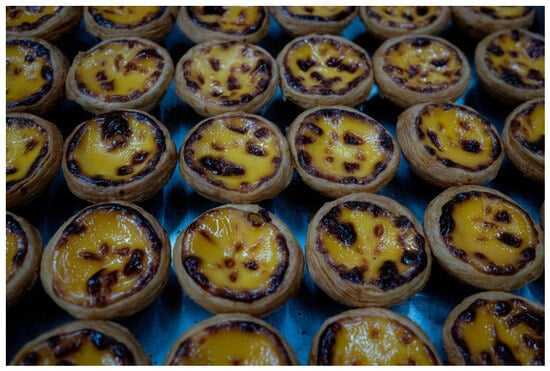
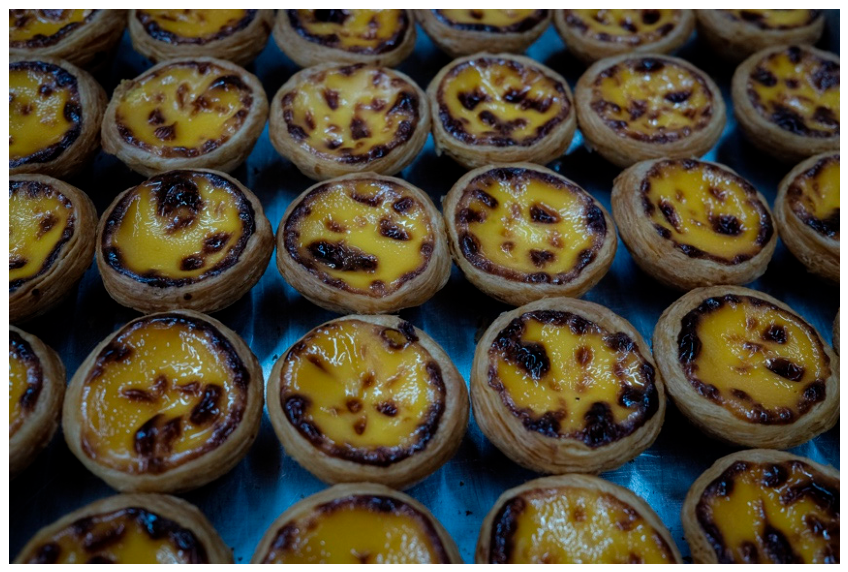
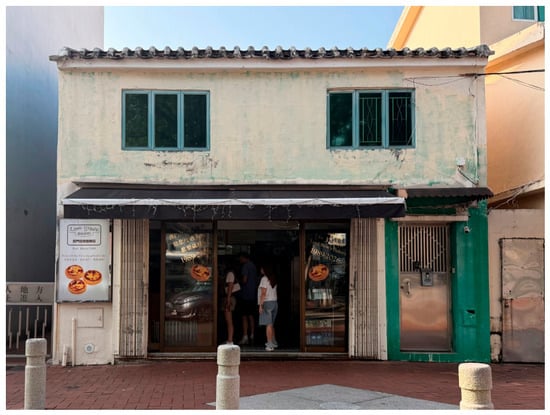
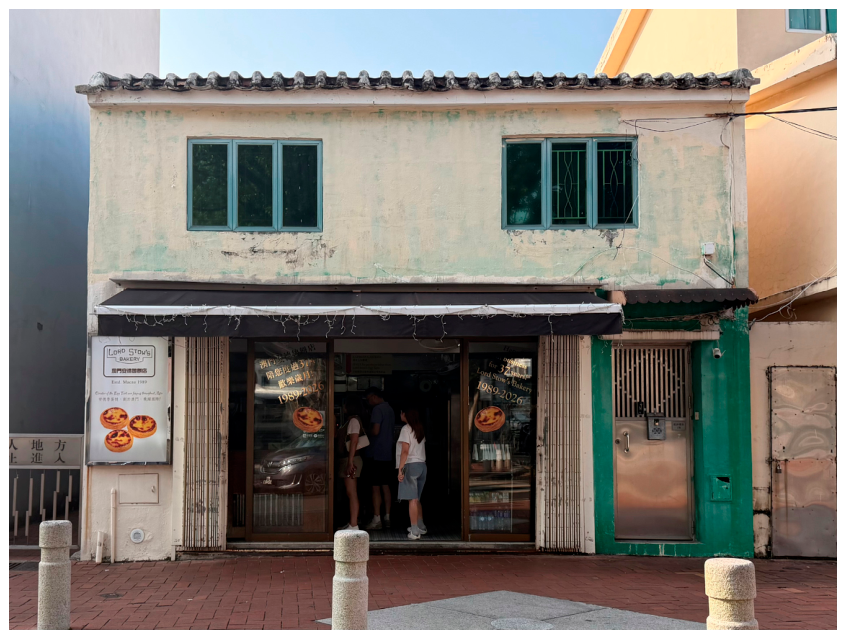
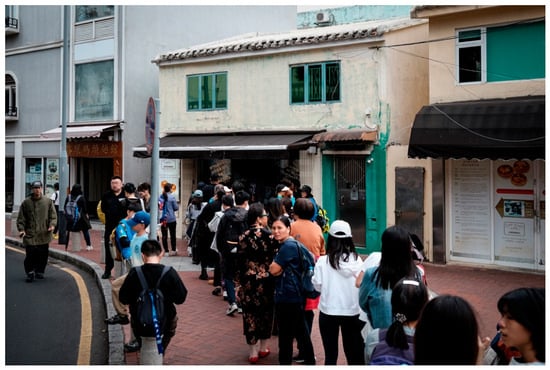
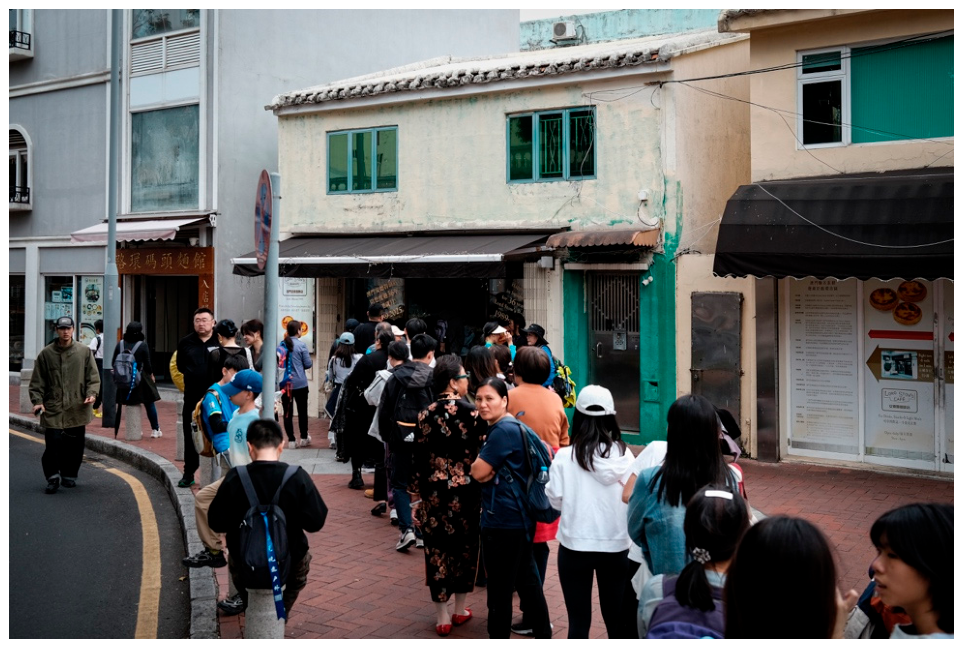
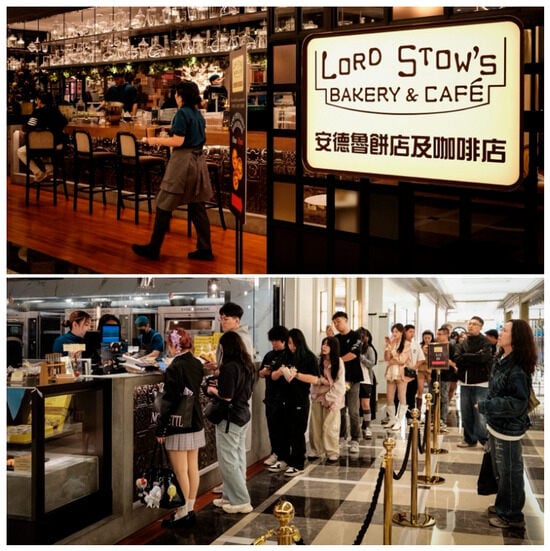
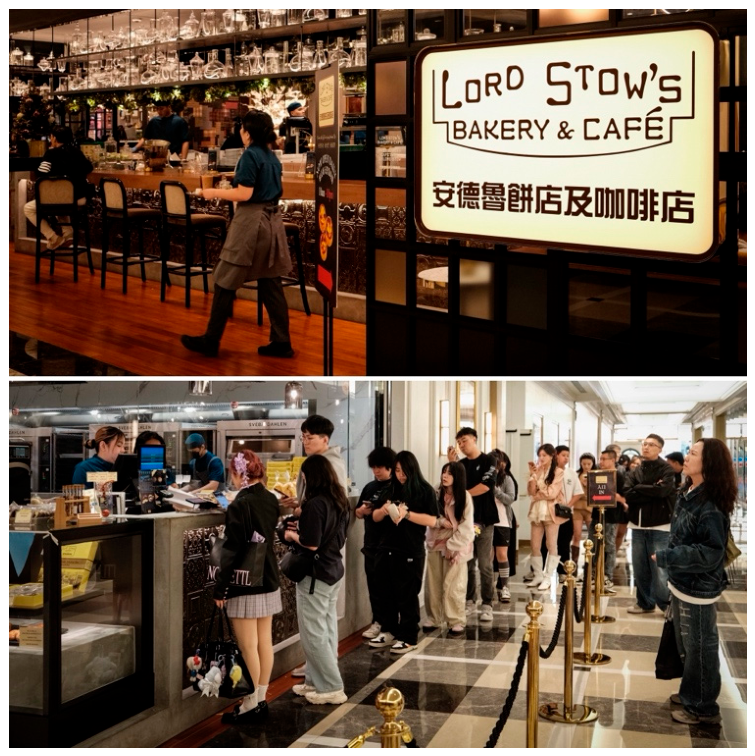
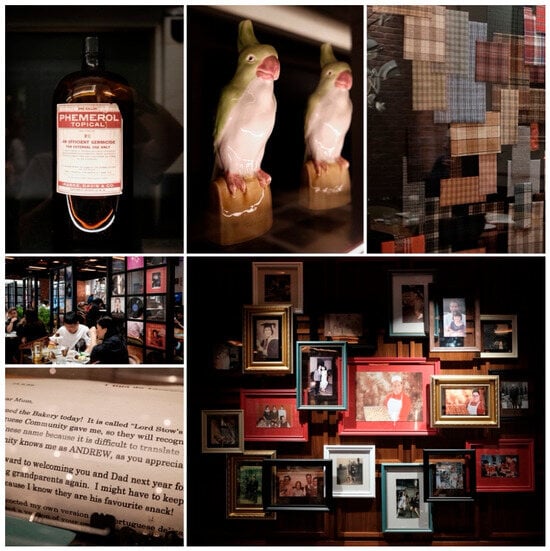
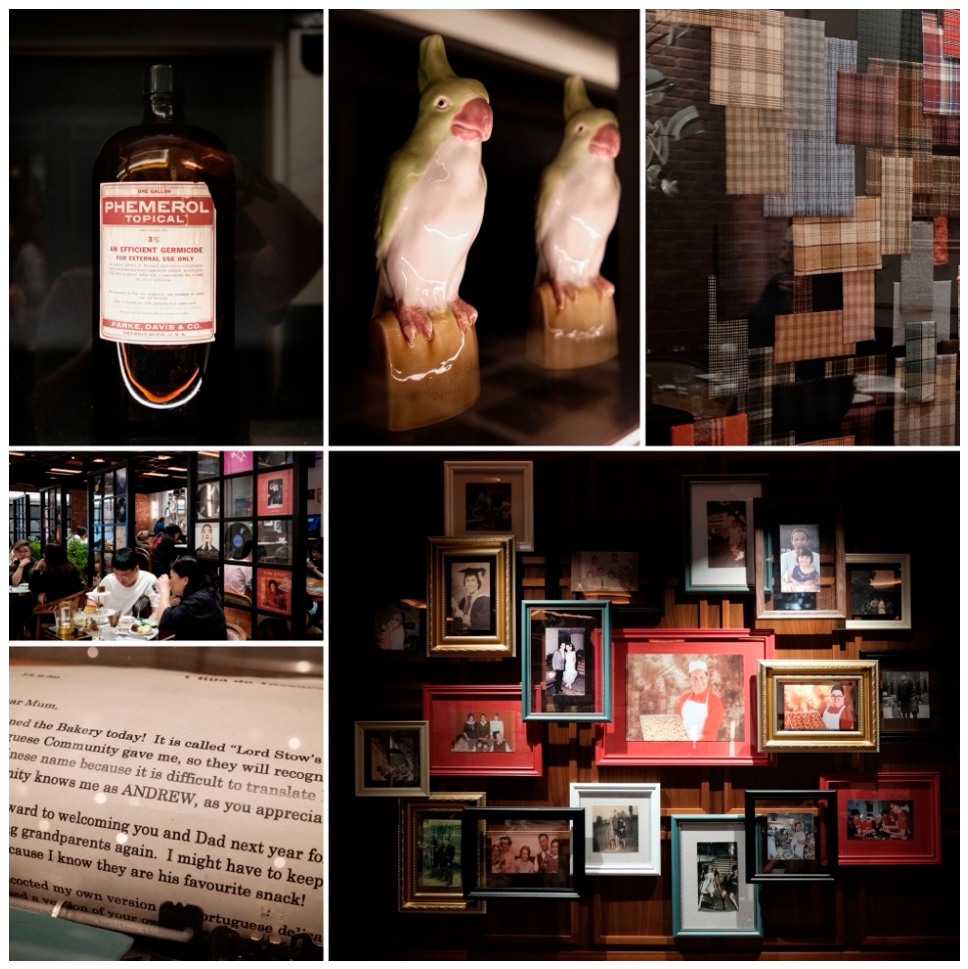
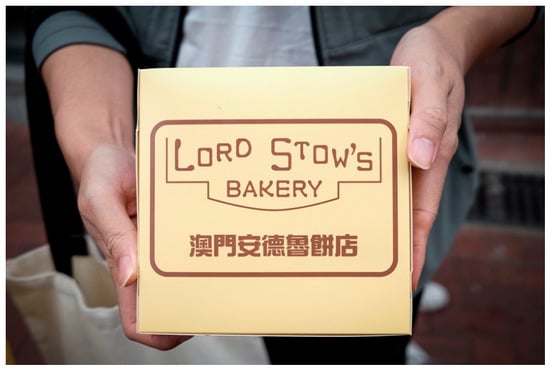
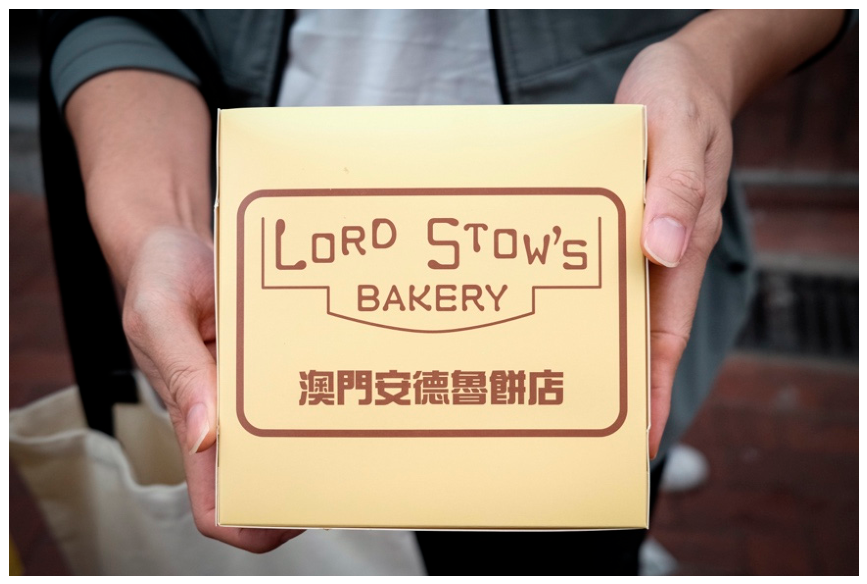
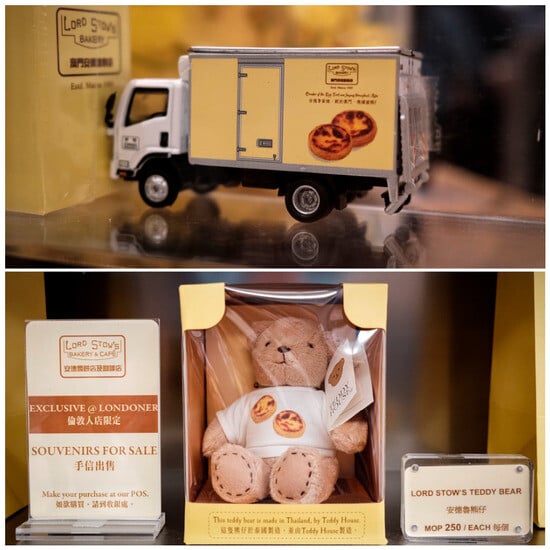
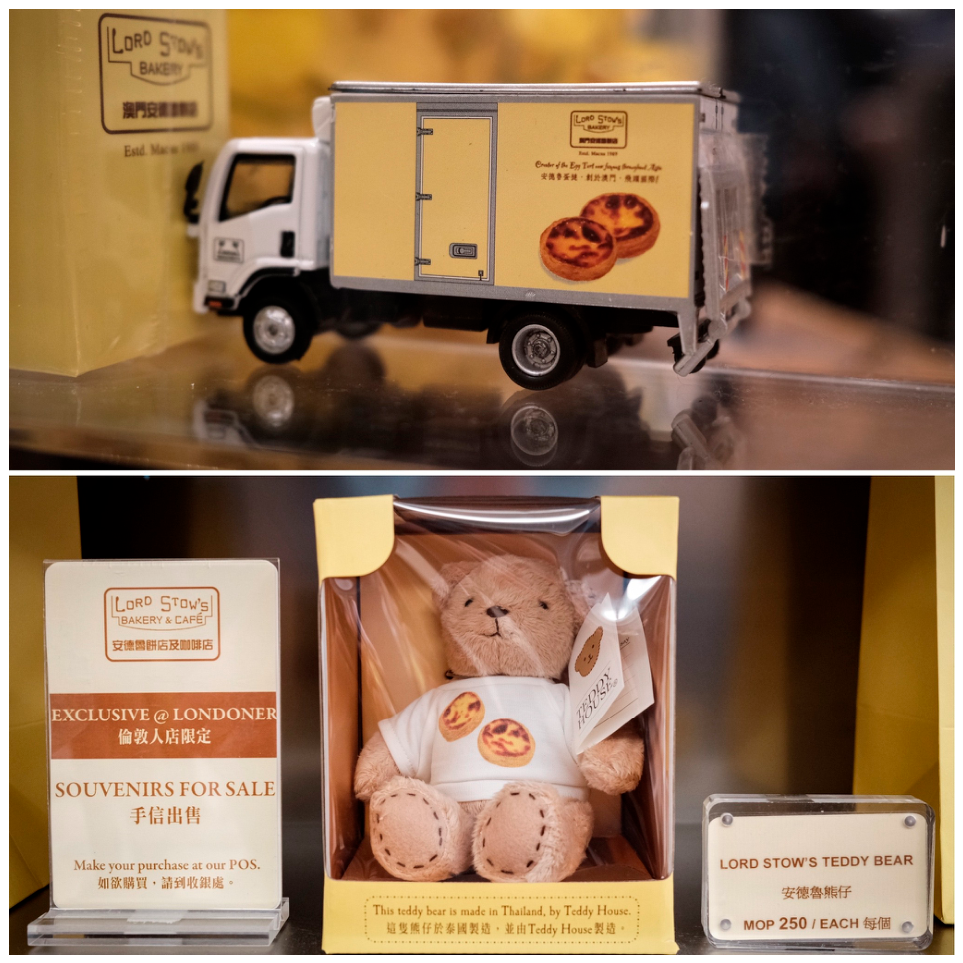

Disclaimer/Publisher’s Note: The statements, opinions and data contained in all publications are solely those of the individual author(s) and contributor(s) and not of MDPI and/or the editor(s). MDPI and/or the editor(s) disclaim responsibility for any injury to people or property resulting from any ideas, methods, instructions or products referred to in the content. |
© 2026 by the author. Licensee MDPI, Basel, Switzerland. This article is an open access article distributed under the terms and conditions of the Creative Commons Attribution (CC BY) license.