


Abstract
Sacred space is commonly associated with formal places of worship and ritual settings. However, within the Islamic tradition, certain meanings and practices associated with the sacred can also be experienced and sustained within domestic life. This study aims to explain how sacredness is manifested in the Iranian–Islamic home and to examine its relationship with intangible cultural heritage. Using a qualitative, interpretive–historical approach, the study analyzes 18 historical Iranian houses based on theoretical and religious texts, historical sources, written documents, inscribed intangible cultural heritage elements, and architectural plans. The findings demonstrate that the manifestation of sacredness in the home differs from that in formal places of worship and, within domestic space, depends on the continuity of meanings, practices, and behaviors grounded in religious beliefs. Two overlapping analytical pathways were also identified: “behavioral–experiential sacredness,” in which meanings associated with the sacred are sustained through rituals, customs, and lived experience; and “behavioral–spatial sacredness,” in which spatial organization, together with behavior and experience, enables the manifestation and continuity of certain religious practices and meanings. The results further indicate that the continuity of this experience, through intergenerational transmission, continuous re-creation, self-identification, and the safeguarding of authenticity, can be analyzed within the framework of intangible cultural heritage.
1. Introduction
According to the 2003 UNESCO Convention, intangible cultural heritage encompasses practices, rituals, knowledge, skills, and representations that are sustained within communities, transmitted from generation to generation, and contribute to shaping identity and a sense of cultural continuity [1]. From this perspective, cultural heritage is not limited to objects, buildings, and material works, but also persists in behaviors, experiences, social relations, and ways of life [2,3,4]. The home, as one of the enduring contexts of life, can play a role in the transmission of cultural, religious, and moral values [4,5]. In Islamic societies, in addition to its residential function, the home also serves as a setting for religious education, the performance of certain practices and rituals, and the transmission of values within everyday life [5,6]. Therefore, examining the historical home from the perspective of intangible cultural heritage can reveal the relationship between physical heritage, ways of life, and the continuity of cultural and religious meanings.
In prevailing theories of sacredness, the sacred has often been conceptualized through the binaries of “sacred–profane” and “religious–secular.” Mircea Eliade [7] regards the distinction between the sacred and the profane as fundamental to religious experience and explains sacred space in relation to the manifestation of the transcendent; Rudolf Otto [8] emphasizes the distinctive quality of the experience of the sacred, while Émile Durkheim [9] likewise considers the distinction between the sacred and the profane fundamental to the structure of religious life. These binaries are important analytical tools for understanding the sacred; however, their application as universal categories is subject to limitations. Drawing on Talal Asad, Georg Glasze and Thomas M. Schmitt show that the categories of the religious and the secular emerged within the particular historical context of Western European societies and that their extension to other cultural contexts requires reconsideration [10] (p. 288). Abdel Nasser Sultan Mohsen and Ibrahim Mohamed Zain similarly demonstrate that extending the sacred–profane binary to the Islamic context entails limitations, since in Islamic thought the worldly or material character of a place does not necessarily place it in opposition to the sacred [11] (pp. 125–128, 153, 156). This issue becomes particularly significant in examining the Iranian–Islamic home. In this study, sacredness has a specific religious basis and is understood in relation to the Divine, the Qur’an, the Islamic tradition, and religious practices; however, the experience of the sacred is not necessarily confined to formal places of worship. The home can also provide a setting for the continuity of certain religious meanings and practices in everyday life. Therefore, the Iranian–Islamic home cannot be placed a priori within the domain of the “secular” or the “profane.” In such a context, the boundary between the sacred and everyday life can remain fluid at the level of practice and experience without eliminating the conceptual distinction between the sacred and the profane [5,12].
Several elements of intangible cultural heritage associated with Iran also demonstrate the significance of the home in this context. Iftar and Shiʿa religious rituals, such as Rawda Khwani and Taʿziyeh, have a direct religious connection and, in some cases, are performed and transmitted within the home. Nowruz and Yalda, although cultural traditions with different historical backgrounds, are also connected to domestic life through family gatherings, hospitality, visiting relatives and friends, and intergenerational transmission [13,14,15,16]. The presence of these traditions in the home is not in itself an indication of sacredness; their relationship with the sacred becomes relevant when a discernible connection exists between a meaning or practice with a religious basis and the way in which it is sustained within domestic experience. The literature also shows that studies of intangible cultural heritage have largely focused on rituals, cultural traditions, and mechanisms of transmission and re-creation [3,4,17], whereas studies of sacred space have primarily addressed the theoretical foundations of sacredness, places of worship, the symbolic characteristics of space, and ritual practices [7,18]. The relationship between these two fields, particularly at the scale of the home and in connection with lived experience and spatial organization, has received less integrated attention. The central research question emerges from this gap: how is sacredness manifested and sustained in the Iranian–Islamic home in relation to lived experience and spatial organization, and how can this process be analyzed in relation to intangible cultural heritage?
Accordingly, this study does not regard physical elements, family relationships, or everyday activities as indications of sacredness in themselves; rather, the analysis focuses on their relationship with meanings and practices that have a religious basis and on how these are manifested and sustained within the domestic space. The analysis of the case studies subsequently reveals two overlapping pathways: “behavioral–experiential sacredness,” in which meanings associated with the sacred are sustained through beliefs, rituals, customs, and the lived experience of residents; and “behavioral–spatial sacredness,” in which the spatial organization of the home, together with behavior and experience, plays a role in the manifestation and continuity of certain religious practices and meanings. These two pathways are used to explain the relationship between lived sacredness, way of life, and the spatial organization of the home.
The article first examines the theoretical foundations of sacredness, sacred space in the home, and its relationship with intangible cultural heritage. It then develops the analytical framework of the study through an examination of selected elements of intangible cultural heritage associated with Iran. The framework is subsequently applied to the analysis of 18 historical houses from different regions of Iran in order to examine the relationship between lived experience, religious and cultural practices, and spatial organization. Finally, the study explains how lived sacredness is sustained in the Iranian–Islamic home and how this process can be analyzed in relation to intangible cultural heritage.
2. Literature Review and Theoretical Foundations
2.1. The Home, Intangible Cultural Heritage, and Lived Experience
To explain the relationship between “sacredness in the home” and intangible cultural heritage, it is first necessary to consider studies that examine the home not merely as a material structure, but as a cultural setting for the transmission of knowledge, rituals, skills, and collective memory. Within this approach, the home is understood as a lived space in which cultural experiences, family relationships, and processes of intergenerational transmission of meanings and values are sustained. From this perspective, the home can establish a connection between the physical fabric of dwelling, ways of life, and the continuity of intangible cultural heritage.
Documents and studies related to intangible cultural heritage emphasize the importance of lived spaces and their role in the continuity and transmission of heritage [19] (pp. 4, 6, 12). In this regard, a publication by the French Center for Intangible Cultural Heritage (CFPCI) also presents the home as a living setting for the intergenerational transmission of knowledge, rituals, and cultural emotions and, in some cases, considers the relationship between domestic space and religious and sacred experiences within everyday life [20] (pp. 24–25, 48–50). Accordingly, the home can constitute an important context for examining the relationship between intangible cultural heritage, lived experience, and the continuity of cultural and religious meanings.
2.2. Sacred Space, Spatial Organization, and the Limitations of Physical Approaches
Distinguishing the religious from the secular and the sacred from the profane makes it possible to identify conceptual differences; however, these distinctions do not necessarily represent fixed and entirely separate domains. Georg Glasze and Thomas M. Schmitt argue that the religious and the secular are not natural or predetermined categories, but are context-dependent, and that the boundary between them is defined and reconfigured under different social and cultural conditions [10] (pp. 288, 296). From an Islamic perspective, the sacred–profane binary likewise does not imply that the worldly or material character of a place necessarily renders it profane; a worldly environment can also provide a setting for the experience of the sacred [11] (pp. 153, 156). Accordingly, the present study does not abandon these binaries, but uses them to examine how the boundary of the sacred is formed and transformed within the cultural and spatial context of the home.
A significant body of literature on the home and sacred space focuses on signs, physical elements, and spatial organization. In The Living Islamic City: Fez and Its Preservation, Titus Burckhardt regards Fez as a living example of an Islamic city whose structure and architecture reflect Islamic culture and spiritual principles. In his view, the spatial and physical order of the city is rooted in Islamic tradition and way of life, and the preservation of the historic city is not limited to conserving its physical fabric but also requires the continuity of its culture, customs, and ways of life [21] (pp. 3, 34, 220). However, Burckhardt’s primary focus is on the overall structure of the city, and he does not systematically examine sacred space in the home as an independent subject. In Lessons from the Qur’an about the Home, Spahic Omer presents the home as the first and most influential educational center, as well as a place of worship. He regards the mosque as the center of community development and the home as the center of family development, presenting the two as complementary institutions [22] (pp. 59–93). In his view, within the built environment, worldly space cannot be regarded as inherently opposed to the sacred, and the home can likewise provide a setting for worship and religious experience [22] (p. 83). This perspective makes it possible to examine sacredness in the home without treating the home and the mosque as equivalent in terms of how sacredness is manifested.
Murat Dündar, in his study The Concept of Sacred Space in Traditional Turkish Architecture, examines how residents’ ways of life and religious beliefs are reflected in the formation of sacred space in residential buildings. By posing the question “what makes a space sacred?”, he begins his discussion of sacred space with the concept of “living space.” His findings indicate that sacredness does not necessarily have a specific physical marker; rather, it becomes associated with space through customs, residents’ beliefs, and ritual activities [23] (pp. 99–103). He also emphasizes that sacred space in the home is not equivalent to the sacredness of religious buildings, such as the mosque [23] (p. 102). Chantanee Chiranthanut examines sacred space in relation to intangible cultural heritage and living heritage, establishing a relationship between sacred space and the spatial organization of the home. According to this study, systems of thought and ritual transmitted across generations are reflected through rituals, ceremonies, and the position of family members within the spatial order of the home [18] (pp. 19–21). The primary focus of this study is the spatial hierarchy of vernacular houses of Tai-speaking ethnic groups. Samsu Hendra Siwi, Yandi Andri Yatmo, and Paramita Atmodiwirjo also examine the formation of sacred-space boundaries in Muslim homes. According to their findings, these boundaries can be permanent, transitional, or temporary and may be formed through the designation of a room for prayer, the laying out of a prayer mat, and practices involving wearing, changing, or removing footwear. Thus, the boundary of sacred space is not confined to a fixed part of the building but can be formed in relation to activity, time, and the ways in which residents use space [24] (pp. 133–143).
A review of these studies indicates that the relationship between sacred space and the home cannot be explained solely on the basis of fixed physical elements or boundaries; rather, spatial organization, religious beliefs, ritual practices, and ways of life also play a role in this relationship. In the present study, physical elements and family relationships are not regarded as indicators of sacredness in themselves; instead, the analysis focuses on components whose relationship with religious beliefs, ritual practices, and the ways in which space is used can be traced. Accordingly, the reflection of ways of life in spatial organization is examined on the basis of architectural plans, historical documents, architectural reports, and research sources.
2.3. The Concept of Sacredness: Theoretical Foundations and Experiential Manifestations
To explain the concept of sacredness, it is necessary to distinguish between sacredness as a theoretical concept and its manifestations in experience and practice. The present study examines sacredness at two levels: at the theoretical level, the origin and meaning of the sacred are considered; at the experiential level, manifestations and sacred practices are examined within specific religious and cultural contexts. Sacredness is perceived at the level of human experience, while its meaning and significance are shaped in light of religious beliefs and teachings. Mircea Eliade regards the sacred as one of the fundamental elements of religious experience and explains it in distinction from the profane. In his view, the sacred is revealed through its manifestation in objects, times, and places without being limited to their material characteristics [7]. In monotheistic religions, the source of sacredness is divine, and in the Islamic tradition, sacredness is fundamentally attributed to God [25]. Sacred texts, places of worship, sacred times, and religious practices likewise acquire meaning in relation to this source [6,7].
The sacred is a broad concept, but it has been theorized and interpreted in different ways across various intellectual and cultural contexts. Rudolf Otto and Eliade associate the sacred with the divine and the transcendent [7,8], whereas other approaches allow for theological, metaphysical, ritual, religious, or even non-religious forms of the sacred. Talal Asad also shows that the use of the sacred is not always confined to the domain of theology and may also be present in social and cultural contexts [26]. Stewart Elliott Guthrie relates the broad application of the concept of the “sacred” to its semantic ambiguity and emphasizes the need to restrict the use of this concept to specific cultural and historical contexts [27] (pp. 124–125). Veikko Anttonen likewise examines the sacred as a categorical boundary through which places, values, and behavioral norms are distinguished from other things, without this distinction necessarily being grounded in the presence of a metaphysical entity [28] (pp. 185–201). This diversity demonstrates the need to precisely define the intended meaning of the sacred within each research framework.
Differences in perspectives on the source of sacredness can also be observed in the relationship between the transcendent and the immanent. Émile Durkheim locates the source of the sacred in collective experience, social interactions, and shared cultural values [9], whereas in the Islamic tradition, the source of sacredness is divine and transcendent [25]. Regarding the relationship between the religious and the secular, Zahavit Gross shows that equating religious behavior with religiosity, and its absence with secularity, is insufficient to explain the different conditions of societies [29]. Charles Taylor [30] and Talal Asad [26] (p. 45) likewise emphasize that the boundary between the religious and the secular depends on historical and cultural conditions, and that religious elements may be present in contexts that are simply described as “secular.” Accordingly, in the analysis of the Iranian–Islamic home, the source of sacredness is understood on the basis of the Islamic tradition, while the ways in which it is manifested and experienced in everyday life may take diverse forms.
Alongside these theoretical discussions, a number of scholars have emphasized the role of experience in understanding the sacred. Eliade considers the sacred to be perceptible through its manifestation in religious experience [7]. Friedrich Schleiermacher and Rudolf Otto likewise emphasize the direct and irreducible character of the experience of the sacred [31] (pp. 11–12), [32] (p. 200). Carsten Colpe also argues that linguistic analysis alone is insufficient for a complete understanding of the sacred and emphasizes the need to examine it in relation to human experience [33] (p. 511). On this basis, a distinction can be made between the “experience of the sacred” and the “empirical examination of sacred manifestations and practices”: the former concerns how the sacred is perceived, whereas the latter concerns the identification and analysis of its manifestations within specific cultural and spatial contexts.
Within the framework of the present study, the experience of the sacred is interpreted in light of Islamic beliefs and teachings [6,34]. Accordingly, the analysis of sacredness in the home is based on the relationship between the religious source of sacredness, its experience, and its practical manifestations in everyday life. This framework provides the theoretical basis for examining sacred space in the home and its relationship with behavior, spatial organization, and intangible cultural heritage in the following sections.
3. Epistemology of Sacredness in the Iranian Home and the Analytical Framework
3.1. Sacred Space in the Home: Foundations and Conceptual Boundaries
Etymologically, the Arabic term bayt derives from the root b-y-t and is related to the verb bāta, meaning to spend the night in a place. Al-Rāghib al-Iṣfahānī defines the original meaning of bayt as a person’s shelter at night, whose usage was subsequently extended to denote a dwelling regardless of the time of night [35] (p. 151). In the Qur’an, the term is also used to refer to the Kaʿba, the most prominent sacred place in Islam. In various verses, the Kaʿba is referred to by expressions such as al-bayt, baytī, al-bayt al-ḥarām, baytika al-muḥarram, and al-bayt al-ʿatīq [25] (al-Baqarah 2:125; Āl ʿImrān 3:96; al-Māʾidah 5:97; Ibrāhīm 14:37; al-Ḥajj 22:26, 29). These verses emphasize the sanctity, blessing, and devotional status of the bayt. In addition, the home is described in the Qur’an as a place of tranquility and, in some verses, is associated with the establishment of prayer and the recitation of divine verses [25] (al-Naḥl 16:80; Yūnus 10:87; al-Aḥzāb 33:34). These usages provide a basis for examining the relationship between the home, religious practices, and the experience of sacred space. Some studies of Islamic housing have likewise identified facilitating human spiritual development as one of the aims of housing [36] (p. 8) and have described the Muslim home as an environment for teaching Islamic values and ethics and fostering individual and social development [37] (p. 25).
To examine this religious and educational role in relation to the concept of sacred space, it is necessary to identify the factors that influence the formation and experience of such space. In the relevant literature, “sacred space” generally refers to a place that is recognized as sacred and treated with reverence [38]. Such spaces can embody symbolic meanings and provide a setting for the manifestation of the sacred [39]. However, the formation and experience of sacred space do not depend solely on the physical characteristics of a place; rituals, ceremonies, and behavioral practices also play a role in how it is recognized, perceived, and used. In some cases, the continuity of ritual practices and religious behaviors associated with a place can contribute to the formation of its sacred meaning [40,41]. Therefore, understanding sacred space requires simultaneous attention to place, religious beliefs, ritual practices, and patterns of behavior.
Sacred space and behavior also have a reciprocal relationship. Sacred places retain symbolic significance even in the absence of ritual activity and can guide behavior and strengthen a sense of connection with the transcendent [42]. Behaviors are also influenced by beliefs, customs, and norms associated with space, acquire meaning within the context of sacred space, and can contribute to the continuity of its meaning [43,44]. On this basis, the analytical framework of the study focuses on behaviors and practices whose relationship with religious beliefs and spatial organization can be traced through the available sources and evidence.
3.2. Derivation of Analytical Categories of Sacred Space in the Home
In studies of the Islamic home, the relationship between the home and religious space has been examined in terms of the connections among spatial organization, religious identity, and the Muslim way of life [45,46]. Accordingly, the analysis of sacred space in the home requires identifying the religious, behavioral, and spatial factors that contribute to its formation and experience, as well as how these factors are reflected in the spatial organization of the home.
For this purpose, evidence and theoretical propositions related to sacred space in the home were extracted from the literature and organized into five analytical categories in Table 1. These categories are used to structure the analysis of the relationship among religious beliefs, behavior, lived experience, and spatial organization, and provide the basis for examining the case studies in the subsequent sections.
Table 1.
Analytical Categories of Sacred Space in the Home Based on the Literature.
The studies presented in Table 1 indicate that the relationship between sacred space and the home can be examined through the connection between the home and the mosque in the Islamic tradition, religious beliefs, ritual practices, behaviors grounded in religious values, and the ways in which space is used. At the same time, the concept and rules of sacred space in the home are not equivalent to those of religious buildings. Accordingly, the categories derived for the analysis of the case studies are applied on the basis of evidence related to religious beliefs and teachings, ritual practices, and the ways in which space is used.
3.3. Conceptual Distinction Between Sacred Space in the Home and the Mosque
The concepts and rules associated with sacred space in the home do not necessarily follow the structural model of the mosque or other religious buildings [48]. Murat Dündar likewise does not regard sacred space in the home as equivalent to sacred space in religious buildings, particularly the mosque, and relates the formation of sacred meaning in the home to the residents’ ritual and religious activities [23] (p. 102). Based on the categories derived in Table 1, the differences in how sacredness is manifested in the home and the mosque are examined along two dimensions: “the fixed or conditional nature of the sacredness of space” and “the relationship between sacred space and behavior.”
3.3.1. Fixed or Conditional Nature of the Sacredness of Space
In the mosque, the sacredness of space is established through its religious status, devotional function, and cultural recognition, while ritual practices and religious behaviors contribute to the continuity of this status. In the home, sacredness is not a fixed characteristic of the entire dwelling space; rather, its manifestation and continuity are associated with religious and cultural contexts, ritual practices, and the continuity of behaviors grounded in religious values. Therefore, the sacredness of space in the home is conditional upon the way of life and the continuity of these practices and behaviors [23] (pp. 99–103).
3.3.2. Relationship Between Sacred Space and Behavior
Sacred space and behavior have a reciprocal relationship, but the predominant direction of this relationship differs between the mosque and the home. In the mosque, the established sacredness of the space and the religious norms associated with it guide behavior [42,43]. In the home, by contrast, ritual practices and behaviors grounded in religious beliefs contribute to the formation and continuity of the sacred meaning of space [23] (pp. 99–103), [44].
3.4. Lived Sacredness in Domestic Space and Intangible Cultural Heritage
Based on the preceding discussion, sacredness at the experiential level is examined through sacred manifestations and practices within domestic space. These manifestations can persist in the context of everyday life and be transmitted across generations; therefore, examining their relationship with intangible cultural heritage is important. UNESCO documents likewise understand culture as extending beyond arts and literature to include ways of life, value systems, traditions, and beliefs [2]. The Recommendation on the Safeguarding of Traditional Culture and Folklore also identifies tradition-based creations as expressions of cultural and social identity that are sustained through oral transmission, imitation, or other means and are associated with family, religious, and social groups [49]. This approach was consolidated in the 2003 UNESCO Convention, which defines intangible cultural heritage as practices, representations, expressions, knowledge, and skills, together with the instruments, objects, artefacts, and cultural spaces associated with them [1,4]. Accordingly, in the present study, the physical fabric of the home is not itself regarded as intangible cultural heritage; rather, the analysis focuses on the practices, meanings, and ways of life associated with sacredness and on how they are sustained within domestic space.
According to Article 2.1 of the 2003 Convention, intangible cultural heritage is recognized by communities, groups, and, in some cases, individuals as part of their cultural heritage; it is transmitted from generation to generation, continuously recreated in response to their environment, their interaction with nature, and their history, and provides them with a sense of identity and continuity [1]. Based on this definition, the present study adopts four identification criteria: living presence and continuity in contemporary life, intergenerational transmission, recognition and acceptance by the bearer community, and connection with cultural identity and continuity. These criteria are used to assess the extent to which the manifestations examined correspond to the characteristics of intangible cultural heritage.
Alongside these criteria, the study employs a set of analytical indicators to explain how heritage continuity is sustained. According to Lenzerini, self-identification, continuous recreation, and authenticity are important for explaining the dynamics of intangible cultural heritage [4]. In this study, “self-identification” refers to the reflection of sacredness in the identity and cultural recognition of the bearer community; “continuous recreation” refers to the continuity of meaning and practice in the context of everyday life; and “authenticity” refers to maintaining the living relationship between sacred experience, the bearer community, and cultural values. These indicators are used to analyze how lived sacredness is sustained within domestic space. The relationship between the identification criteria and the analytical indicators is shown in Figure 1 and forms the basis for the analysis in the subsequent sections of the article.
Figure 1.
Relationship between the identification criteria for intangible cultural heritage and the analytical indicators of the study in examining lived sacredness in domestic space. Source: Authors, based on the theoretical framework of the study.
3.4.1. Sacred Space in the Home: Recognition by the Bearer Community and the Reinforcement of Cultural–Social Identity
“Recognition by the bearer community” (self-identification) is an important component of intangible cultural heritage. According to the 2003 UNESCO Convention, practices, representations, knowledge, and skills fall within the domain of intangible cultural heritage when communities, groups, or individuals recognize them as part of their cultural heritage [1] (Art. 2). Therefore, the value of intangible heritage is not determined solely by the judgment of external observers; the way in which it is recognized and given meaning by the bearer community is also important [4] (p. 108). In studies of sacred space in the home, self-recognition has been examined primarily at the level of individual experience. Stewart regards sacred space in the home as a setting for self-reflection and the formation of personal identity, relating it to everyday experiences and individuals’ recognition of themselves [5] (pp. 15–21). This individual meaning differs from “recognition by the bearer community” in the literature on intangible cultural heritage: the former concerns personal experience, whereas the latter concerns the acceptance of a practice, meaning, or tradition as part of a community’s heritage and cultural identity. The experience of the sacred in the home can persist not only at the individual level but also at the collective level. Sociological perspectives, including Émile Durkheim’s approach, emphasize the relationship between the experience of the sacred, collective life, and shared values [9]. Within the Islamic framework of the present study, the source of sacredness is divine, while family and social relationships can provide a context for the experience, recognition, transmission, and continuity of the meanings and practices associated with it.
Accordingly, the recognition of lived sacredness in domestic space can be examined at two levels: its recognition in the residents’ experience and the recognition of the practices and meanings associated with it as part of the cultural identity of the bearer community. In the analysis of the case studies, this indicator is examined through evidence related to religious beliefs, ritual practices, historical and cultural documents, the continuity of behaviors, and the transmission of meanings across generations. In this way, the continuity of practices and meanings associated with sacredness in domestic space can contribute to reinforcing the cultural and social identity of the bearer community.
3.4.2. Continuous Recreation and Intergenerational Transmission
According to the 2003 UNESCO Convention, intangible cultural heritage is not a fixed set of traditions; rather, it is transmitted from generation to generation and continuously recreated in interaction with the environment, history, and social conditions [1] (Art. 2). Therefore, continuous recreation and intergenerational transmission are two interconnected processes that enable the continuity of intangible cultural heritage while maintaining its dynamic character. Transmission can contribute to the continuity of knowledge, meanings, and practices within collective memory, and concepts such as transmission, collective memory, shared experience, community identity, and historical continuity are important for understanding this process [50] (p. 5).
Within domestic space, some meanings and practices associated with sacredness can also be sustained through the transmission of beliefs, rituals, and behavioral practices across generations [23] (pp. 99–103). Periodic rituals, despite being performed at specific times, are not detached from domestic life, because their repetition within the family life cycle, the preparation and participation of family members, and the transmission of the practices and meanings associated with them form part of the process of cultural continuity. Therefore, the relationship of these rituals with domestic life is examined on the basis of their repetition, participation, and intergenerational transmission, rather than solely on the frequency of their performance. Continuous recreation also reveals the relationship between cultural dynamism and the safeguarding of intangible cultural heritage. The forms through which a cultural phenomenon is manifested may change in response to social and environmental conditions, while some of its meanings or functions may continue. In the case examined by Chantanee Chiranthanut, sacred space previously played a role in transmitting wisdom and patterns of ways of life, whereas some of its manifestations have become more decorative under contemporary conditions [18] (pp. 19–20). This example demonstrates that the ways in which sacredness is represented and experienced in the home can change over time.
Cultural dynamism can enable the adaptation and continuity of heritage while simultaneously transforming some of its roles and meanings [50]. Lenzerini understands safeguarding not as fixing heritage in a historical form, but as providing the conditions for its continued viability in relation to the needs and expectations of the bearer community [4] (pp. 109–110). In the present study, recreation refers to changes and continuities in the forms through which meanings and practices associated with sacredness are manifested and experienced, while the religious basis of sacredness remains constant. This indicator is examined through the continuity and transmission of practices and meanings, as well as changes or continuities in their behavioral and spatial manifestations within the home.
3.4.3. Safeguarding the Authenticity of Intangible Cultural Heritage Based on Lived Experience
In intangible cultural heritage, “authenticity,” rather than being limited to the preservation of a fixed form or to historical authenticity, concerns the continuity of the living relationship between heritage and the communities, groups, and individuals who create, bear, and recreate it. From this perspective, the safeguarding value of a ritual or tradition lies in the continuity of its meaning and function in the lives of its bearers and in its connection with their cultural identity—a connection that can be strengthened or weakened by policies and official interventions [1] (Art. 2); [4] (p. 113). Within this framework, the participation of the bearer community is one of the principal mechanisms of safeguarding. The 2003 UNESCO Convention emphasizes the broad and active participation of communities, groups, and, where appropriate, individuals in the identification, definition, and safeguarding of intangible cultural heritage [1] (Arts. 11(b) and 15). Studies have also shown that limiting participation to a symbolic presence in inscription and management processes can create a gap between formal safeguarding and the ways in which heritage continues in the lives of its bearers [4] (pp. 111–115), [51,52]. Therefore, participation becomes meaningful when heritage bearers play an active role in its continuity, transmission, and recreation, and when its values and meanings continue within their lived experience.
If authenticity concerns the continuity of this living relationship, then, with regard to sacredness in the home, the central issue is likewise how meanings and practices grounded in religion are sustained within the lived experience of their bearers. Some studies have examined the presence of the sacred in the home in relation to the privatization of religion and the relocation of part of religious experience to the private sphere [53,54]. In the Islamic tradition, the mosque has a distinct place in the formation and experience of the sacred; at the same time, some meanings, practices, and behavioral patterns associated with religious tradition also continue within everyday life and domestic space. Research on dwelling, cultural memory, and the spatial situatedness of the sacred also indicates that lived experiences, emotions, recurrent practices, and everyday rituals can contribute to the continuity of religious meanings and practices within residential space [55] (pp. 58–61), [6,56]. Van der Tol and Gorski likewise emphasize the diversity of forms through which the sacred is experienced across social and cultural contexts [12] (p. 500).
Accordingly, the relationship between sacredness and intangible cultural heritage can be examined through the ways in which meanings and practices associated with the sacred are sustained and transmitted in the lives of their bearers. Family participation, recurrent practices, and intergenerational transmission enable the continuity and recreation of these meanings and practices within this process. The home can also serve as one of the contexts for this continuity, particularly where rituals, values, and religious practices are integrated into the family’s way of life. From this perspective, safeguarding authenticity is not limited to preserving a fixed form of space or ritual; rather, it concerns the continuity of the living relationship between sacred experience, its bearers, and cultural values [1,3,4].
Based on these discussions, the role of the home in the continuity and transmission of certain elements of intangible cultural heritage can also be examined through examples inscribed on UNESCO lists and Iran’s national heritage lists. Some of these rituals have a direct religious basis, while others, such as Nowruz and Yalda, are cultural rituals in which family gatherings, hospitality, visiting relatives and friends, and intergenerational transmission play a central role. These practices overlap with values such as maintaining family relationships and hospitality, which are also emphasized in the Islamic tradition, and studies of the Muslim home have associated them with the ways in which domestic space is used and organized [57]. Accordingly, Table 2 presents examples in which the home plays a role in the continuity of rituals, the transmission of values and cultural memory, and, in cases with a direct religious basis, the continuity of the experience of the sacred within domestic life.
Table 2.
Selected Elements of Intangible Cultural Heritage Related to Iran and Their Relationship with Family Life, Intergenerational Transmission, and the Continuity of Cultural and Religious Values in the Home.
Table 2 shows that the relationship between the home and intangible cultural heritage is not limited to the home serving as a setting for the performance of rituals, but also concerns its role in the continuity, transmission, and recreation of cultural and religious practices, values, and memories. In examples such as Iftar, Rowzeh Khani, and Ta’ziye, this relationship has a distinct religious dimension and is sustained through family or collective participation and intergenerational transmission. In Nawrouz and Yaldā, the home likewise provides a setting for family gatherings, hospitality, and the transmission of traditions across generations. The periodic nature of these rituals does not preclude their connection with domestic life; their recurrence within the family life cycle and the transmission of associated practices, narratives, and values enable their cultural continuity. Within this framework, the relationship between sacredness and these elements is examined on the basis of the connection between meanings and practices with a religious basis and the ways in which they are sustained within domestic experience; accordingly, family relationships, hospitality, everyday practices, and intergenerational transmission are considered contexts for the transmission and continuity of these meanings and practices.
To synthesize this relationship, Figure 2 presents the analytical framework of the study, in which the continuity of lived sacredness in the home is examined through the interrelationships among religious meanings and values, lived experience, family relationships, rituals, and intergenerational transmission. The role of the home in sustaining this experience is also assessed across four dimensions: self-identification, continuous recreation, intergenerational transmission, and safeguarding authenticity.
Figure 2.
Analytical framework for assessing the continuity of lived sacredness in the home based on four assessment dimensions. Source: Authors, based on the theoretical framework of the study.
Figure 2 shows that the continuity of lived sacredness in the home is examined in relation to religious meanings and values, behaviors and rituals, lived experience, and modes of everyday life within the context of Islamic culture. Within this framework, family relationships, ritual practices, and intergenerational transmission provide contexts for the experience, transmission, and continuity of meanings and values associated with the sacred. Accordingly, the role of the home in sustaining this experience is assessed across four dimensions: self-identification, continuous recreation, intergenerational transmission, and safeguarding authenticity.
4. Research Methodology
This study adopts a qualitative approach based on the interpretive–historical method and employs a comparative case study as its primary analytical strategy. Given the conceptual and interpretive nature of the subject, the study aims to explain how meanings and practices associated with the sacred are manifested and sustained within the Iranian–Islamic home and to examine their relationship with lived experience, rituals, and intangible cultural heritage. The research data were collected through the study and analysis of theoretical and religious texts, historical sources, written documents, recorded information on intangible cultural heritage, documented sources concerning historical houses, as well as images, maps, and architectural plans. The data were analyzed inductively and interpretively: the conceptual foundations of sacredness were elucidated through theoretical and religious sources, while evidence related to its behavioral, ritual, and spatial manifestations was identified and compared across the case studies. The framework developed in the preceding section was then used to organize and interpret this evidence and to examine the continuity of lived sacredness within the home.
In the first step, the theoretical literature related to the concepts of sacredness and sacred space, studies of spirituality in residential space, the Iranian–Islamic home, and intangible cultural heritage was critically reviewed. Alongside consideration of the religious and conceptual foundations of the sacred in the Islamic tradition, the characteristics of intangible cultural heritage were also examined based on the 2003 UNESCO Convention. The aim of this stage was to establish a conceptual basis for identifying meanings, practices, rituals, and patterns of living associated with the sacred and the ways in which they are experienced, transmitted, or sustained in domestic life. In the second step, selected elements of intangible cultural heritage associated with Iran and related to domestic space and family life were examined. The analysis of these elements, together with the theoretical discussions, established four dimensions—self-identification, continuous recreation, intergenerational transmission, and safeguarding authenticity—for assessing the continuity of lived sacredness in the home and provided the basis for the analysis of the case studies.
In the third step, 18 historical houses dating from the Qajar and Pahlavi periods and located in different cities across Iran were selected as case studies. The cases were selected based on three criteria: (1) geographical and cultural diversity; (2) the possibility of examining the research dimensions across different spatial and lived contexts; and (3) access to reliable documentation, particularly maps, architectural plans, images, and architectural reports. Most of these houses are listed on Iran’s National Heritage List, allowing the simultaneous examination of physical, behavioral, and cultural evidence. The number of cases was expanded until recurring analytical patterns became established and the examination of additional cases no longer produced meaningful changes in the resulting classifications.
During the analytical stage, the plans and spatial organization of each case were examined in relation to historical, behavioral, ritual, and cultural evidence. The relationships between interior and exterior spaces, levels of privacy, the position of collective and family spaces, and evidence concerning behaviors and rituals associated with everyday life and family rituals were among the aspects considered. The plans were analyzed in conjunction with documented sources to identify the relationship between space, behavior, and lived experience in each case. Spatial characteristics were also interpreted on the basis of evidence demonstrating their relationship with meanings or practices grounded in religious principles. Accordingly, the cases were analyzed in terms of how they provided a spatial context for the experience and continuity of certain meanings and practices associated with the sacred in family life.
Finally, the findings from the case studies were compared, and recurring patterns were classified into four analytical categories. These categories provided the basis for explaining the relationship between the spatial organization of the home, lived experience, intangible cultural heritage, and the continuity of meanings and practices associated with the sacred. The geographical distribution of the 18 selected cases is shown in Figure 3 and reflects the diversity of the spatial and cultural contexts of the cases studied.
Figure 3.
Geographical distribution of the 18 selected historical houses and the list of case studies in Iran. The shaded provinces indicate the geographical areas of the selected case studies, and the red dots indicate the cities in which the selected houses are located. Source: Authors, based on the administrative boundary base map of Iran from Ref. [62].
5. Findings and Discussion
5.1. Sacred Practices in the Context of Iranian Domestic Life
To examine the analytical framework proposed in Figure 2 at the level of historical cases, 18 historical houses from different cities across Iran and diverse spatial and cultural contexts were analyzed. In examining the cases, the spatial organization of the home was considered in relation to ways of life, family relationships, rituals, and residents’ behaviors, and as one of the contexts in which meanings and practices associated with the sacred are manifested and sustained. The plans were also analyzed in relation to lived experience, the intergenerational transmission of values, and the continuity of cultural and ritual practices in each case.
The analysis focused on components that could be examined on the basis of three main considerations: (1) their observability or traceability in the spatial organization of the case studies; (2) their relationship with lived experience, behaviors, rituals, and cultural and intergenerational transmission; and (3) the availability of historical, architectural, or documentary evidence for interpreting these relationships. Accordingly, recurring patterns were classified into four analytical dimensions: “House–Orientation toward the Qibla,” “House–Kinship Life,” “House–Ritual of Spatial Purification: Kafsh-kan,” and “House–Ritual Space: Performance of Religious Rituals.” These dimensions were selected in accordance with the research problem, scope, and available evidence, and demonstrate the relationship between spatial organization, lived experience, and meanings and practices with religious or ritual significance in the cases examined.
The patterns within each dimension were identified based on recurring features across the case studies and documented evidence related to the function and lived experience of space. Figure 4 and Figure 5 illustrate examples of how these patterns are reflected in the spatial organization of historical Iranian houses. In the following sections, each of the four dimensions is analyzed separately, and the resulting findings are comparatively summarized in Table 3.
Figure 4.
Analysis of the spatial organization of historical Iranian houses in relation to evidence associated with sacredness. Red arrows indicate the entrances to the houses. Source: Redrawn and analyzed by the authors based on the architectural plans provided in the corresponding sources listed in the References Section.
Figure 5.
Analysis of the spatial organization of historical houses in Iran in relation to concepts related to sacredness. Source: Base maps taken from [61]; redrawing, classification, and spatial analysis: the authors. Note: “Andaruni” refers to the private and family section of the house; “Biruni” refers to the section associated with receiving guests and social interactions; and “Husayniyya” is a space for gatherings and the performance of Shiʿa religious rituals.
Table 3.
Relationship between the four analytical dimensions of the spatial organization of historical Iranian houses and the indicators of intangible cultural heritage. Source: Authors, based on the analysis of 18 selected historical houses and base plans derived from the Ganjnameh collection [61], under the supervision of Kambiz Haji Ghassemi.
A comparative examination of the cases presented in Figure 4 and Figure 5 identifies four main dimensions for analyzing the relationship between the spatial organization of the home and meanings and practices associated with the sacred: orientation toward the Qibla, kinship life, the ritual of spatial purification and Kafsh-kan, and spaces associated with the performance of religious rituals. In the following sections, the relationship of each of these dimensions to sacredness is examined on the basis of spatial, historical, behavioral, and religious evidence from the case studies.
5.1.1. The House and Orientation Toward the Qibla
In the Islamic tradition, the Qibla, in addition to determining the direction of prayer, serves as a ritual and spatial reference that is connected to Muslims’ everyday experience through recurring religious practices. Ari Michael Gordon [63] shows that orientation toward the Qibla in early Islam was not limited to prayer but was also present in certain other ritual practices and became a marker of belonging and collective Islamic identity. From this perspective, the Qibla forms part of Islamic sacred geography, linking religious practices performed in different places to the Kaaba as the center of orientation [63]. This spatial relationship has also received attention in studies of Islamic housing. Hanieh Akhavat [64], examining Quranic verses and hadiths related to the physical form of housing, discusses verse 87 of Surah Yunus—“…and make your houses [facing the] Qibla and establish prayer…”—in relation to the orientation of the house, while also emphasizing simultaneous consideration of environmental conditions [64]. Rime El Harrouni, Iman M. Benkirane, and Vincent Becue [65] likewise describe the orientation of certain spaces within the house toward the Qibla in the context of Islamic housing as having symbolic meaning and being associated with spiritual focus [65].
In the literature on Iranian architecture, Mohammad Karim Pirnia’s theory of “Roon” also demonstrates the importance of building orientation. Hatef Jafari Sharami’s study [66] of 40 Qajar-period houses in Yazd showed that most of the cases were aligned along the “Roon-e Rasteh” and were oriented close to the southwest direction. The study examined a range of factors, including climate, topography, qanats, the urban network, privacy, landscape, and religion, and also considered the role of religious factors in explaining this orientation [66].
The analysis of the cases in the present study likewise shows that the main axis of spatial organization in the Golshan, Ardakanian, and Arab houses in Yazd and the Borujerdi House in Kashan is, to varying degrees, close to the Qibla direction (Figure 4). This finding, together with religious evidence and previous studies, suggests that the Qibla may have been one of the considerations influencing the orientation and spatial perception of some historical houses. Michael E. Bonine [67], in his study of Islamic cities, also shows that physical orientation, alongside the Qibla, was influenced by factors such as topography, pre-existing urban structures, qanats, and the slope of the terrain [67]. Accordingly, the significance of Qibla orientation in relation to sacredness is explained through the convergence of its ritual significance in Islamic culture, previous studies, and spatial evidence from the case studies.
5.1.2. The House and Kinship Life
In this study, the relationship between kinship life and sacredness is examined through the role of the family as one of the contexts for the intergenerational transmission of values, beliefs, and ways of life. David Voas and Ingrid Storm [68] show that the family plays an important role in transmitting religious identity, beliefs, and behaviors across generations, and that the religious activity of parents and previous generations can influence the continuity of religious participation among children. From this perspective, the continuity of kinship life can provide a context for the transmission of religious and cultural meanings, values, and practices in the course of everyday life.
In the architecture of traditional houses, the flexibility and multifunctionality of spaces enabled the house to adapt to changes in household structure and size. Hanieh Akhavat [64], drawing on studies of traditional housing, identifies spatial diversity, adaptability, and transformability as characteristics that enable the house to respond to changing household needs, allow spaces to be separated or combined, and accommodate the expansion of the house at different stages of life. This characteristic is also consistent with the principle of “avoiding superfluity” in Mohammad Karim Pirnia’s architectural thought, a principle that emphasizes avoiding unnecessary elements and spaces and making purposeful use of architectural capacities [69]. Rime El Harrouni, Iman M. Benkirane, and Vincent Becue [65] also show that the spatial organization of traditional houses can accommodate extended family members and support the continuity of family ties through horizontal or vertical expansion and the formation of semi-independent units.
In the cases examined in the present study, the relationship between kinship residence and spatial organization was observed in three main patterns: (a) physical continuity between independent kinship residential units; (b) separation of households within a shared Andaruni–Biruni organization; and (c) the formation of a shared spatial core in extended-family houses. These patterns demonstrate varying degrees of spatial independence and sharing, enabling proximity and interaction among extended family members while maintaining the relative independence of individual households. Accordingly, through flexibility, shared spaces, and adaptation to changes in household structure, the spatial organization of the house provided a context for the continuity of kinship life and interaction across generations. The significance of this characteristic in relation to sacredness lies in the family’s capacity for the intergenerational transmission of religious and cultural values, beliefs, and practices, thereby linking spatial organization, lived experience, and the continuity of meanings in everyday life.
5.1.3. The House and the Ritual of Spatial Purification: Kafsh-Kan
Purity in the Islamic tradition is associated with worship and the spaces related to it. Verse 125 of Surah Al-Baqarah emphasizes the purification of the House of the Kaaba for those who circumambulate it and those who engage in worship, bowing, and prostration [25]. This relationship between purity and worship is also manifested in the spatial organization and practices of places of worship; accordingly, separating the area for shoes from the clean prayer space and providing an appropriate place for removing and storing shoes are considered part of the functional requirements of Muslim worship spaces [70]. This behavioral pattern in the house has also received scholarly attention. Samsu Hendra Siwi, Yandi Andri Yatmo, and Paramita Atmodiwirjo [24], in their study of six Muslim houses, show that the ways in which shoes are worn, removed, and moved within the house contribute to the formation of boundaries between clean and unclean zones, and that this boundary-making is linked to requirements of purity associated with religious practices. They further show that the boundary of sacred space in the house can be formed through residents’ behavior and rules governing the use of space in permanent, transitional, or temporary forms [24].
In the cases examined in the present study, Kafsh-kan, in addition to its function related to cleanliness, serves in some houses as a transitional space between the entrance zone and the domestic living space. In the Aghazadeh House in Abarkuh, two Kafsh-kans on either side of the iwan help maintain privacy and reduce direct circulation into the living spaces of the house; in the Abtahi House in Shiraz, the placement of Kafsh-kans among the main spaces makes them a distinct element of the spatial organization. In the Azizi House in Dezful and the Imam Jom’eh House in Tehran, Kafsh-kan is likewise positioned in relation to the iwan and the main spaces and plays a role in regulating the entrance threshold and connections between spaces (Figure 5). This transitional role is also related to the importance of privacy in the Islamic tradition. Verses 27 and 28 of Surah An-Nur emphasize seeking permission before entering the homes of others and respect for the entrance threshold [25], while verse 53 of Surah Al-Ahzab also addresses respect for the privacy of the home and the manner of entering and remaining within it [25]. From this perspective, the position of Kafsh-kan at the threshold or between spaces of the house can be examined in relation to two behavioral patterns: maintaining the cleanliness of the interior space and respecting the privacy of the entrance.
Accordingly, the significance of Kafsh-kan in relation to sacredness becomes evident in the behaviors that develop around it. Removing shoes, distinguishing between clean and unclean zones, regulating entry, and maintaining privacy are among the everyday practices that, through repetition, become part of residents’ lived experience. From this perspective, Kafsh-kan exemplifies the relationship between the spatial organization of the house and behavioral patterns associated with purity and respect for boundaries, demonstrating the continuity of certain religious meanings in everyday domestic practices.
5.1.4. The House and Ritual Space: Performance of Religious Rituals
In the Islamic tradition, the house, in addition to being a place of residence, can provide a context for learning and transmitting religious teachings. Verse 34 of Surah Al-Ahzab refers to remembering what is recited in the houses of God’s verses and wisdom [25]. This relationship between the house, learning, and the transmission of religious knowledge has also continued in everyday life, with the family serving as one of the contexts for the intergenerational transmission of religious beliefs and practices [68]. In Iran, the house also has a documented history as a setting for religious gatherings and rituals. Zahra Kamalkhani [59] identifies women’s rowzeh gatherings, Quranic sessions, and religious commemorative ceremonies among the activities held in private houses or religious buildings. Kamran Scot Aghaie [60] likewise reports examples of rowzeh-khani and ta’ziyeh being performed in private houses during the Qajar period. This evidence indicates that domestic space, alongside public religious spaces, has historically provided a setting for the performance and continuity of certain Shiʿi rituals in Iran.
The analysis of the cases in the present study also demonstrates this relationship between domestic life and ritual in the spatial organization of several houses (Figure 5). In the Sheikh al-Islam House in Isfahan, the courtyard served as a venue for religious ceremonies, while the adjacent deep columned hall provided space for sitting and watching ta’ziyeh performances and mourning rituals. In the Amini Husayniyya House in Qazvin, the Husayniyya space developed in connection with the house; in the Molla Aghajan House in Babol, the Husayniyya is a separate space with an independent courtyard located alongside the living area; and in the Al-Yasin House in Kashan, the Howzkhaneh was used for Sayyid Mohammad Taqi’s teaching sessions and for holding religious ceremonies. These cases demonstrate different forms of relationship between ritual space and the house, ranging from integration with living spaces to the formation of independent or semi-independent spaces.
In these cases, ritual sacredness emerges from the relationship between space, practice, and the repetition of rituals. Religious gatherings, religious education, narration, and collective participation enable certain spaces within the home to acquire a ritual function at specific times, while the continuity of these practices contributes to the intergenerational transmission of narratives, beliefs, and ways of performing rituals. From this perspective, the home provides a context for linking lived experience, ritual practice, and the intergenerational transmission of religious culture, allowing this relationship to be examined within the framework of intangible cultural heritage.
Overall, the analysis of the four dimensions shows that the relationship between sacredness and domestic space takes different forms across the cases examined. In ritual spaces, this relationship is more explicit through the performance of religious rituals and religious education; whereas in orientation toward the Qibla, the ritual of spatial purification, and kinship life, spatial organization primarily provides a context for the continuity of certain practices and behaviors and for the transmission of religious and cultural meanings. Table 3 summarizes the findings from the examination of the 18 historical houses across these four dimensions and shows the relationship between the indicators of intangible cultural heritage, semantic–cultural dimensions, and the spatial organization of the home. In terms of its focus on spatial organization, this table complements Table 2, which examines the relationship between selected elements of intangible cultural heritage and family life, whereas Table 3 shows how some of these meanings and practices are reflected and sustained in relation to the spatial organization of the historical cases.
Table 3 shows that the relationship between the spatial organization of the house and sacredness is not the same across the four analytical dimensions examined. In ritual spaces, this relationship is more direct and can be observed through the performance of religious rituals, religious education, and the ritual use of space; whereas in kinship life, orientation toward the Qibla, and the ritual of spatial purification, spatial organization primarily provides a context for the continuity of behaviors, relationships, and religious and cultural meanings. From this perspective, the relationship between the house and intangible cultural heritage can be examined through the connection of lived experience with self-identification, continuous recreation, intergenerational transmission, and safeguarding authenticity. The differences among these four dimensions also show that sacredness in the house does not depend on a single physical pattern; rather, the way space is linked with practice, meaning, and lived experience differs in each case.
These findings show that the sacred/profane distinction remains important for distinguishing the sacred, but in domestic experience it does not necessarily correspond to a fixed physical boundary. Mircea Eliade [7] considers the distinction between sacred space and homogeneous, profane space to be one of the foundations of religious experience; in the cases examined in the present study, some practices and meanings associated with the sacred are experienced within the same spaces in which everyday life takes place. Thus, the distinction between the sacred and the profane is maintained at the conceptual level, while the way it manifests within domestic space may vary according to time, behavior, and patterns of spatial use. This finding is also consistent with critiques of the universal application of religious/secular and sacred/profane binaries, since the Iranian–Islamic house cannot be assumed a priori to be a secular space.
In the present study, this interpretation is grounded in the principles of the Islamic tradition. Qibla orientation, purity, respect for privacy, the performance of religious rituals, and religious education demonstrate that certain religious meanings and practices can also continue within domestic life. This does not imply that the house and the mosque are equivalent; rather, certain principles and practices associated with religious tradition and spaces of worship are also reflected in the everyday life of the house. Examples such as Kafsh-kan, house–Husayniyya configurations, and spaces used for ta’ziyeh and religious education demonstrate, at the historical level, this relationship between religious tradition, ritual practice, and the spatial organization of the house.
Based on these findings, two overlapping analytical pathways can be identified for understanding sacredness in the house. In the “behavioral–experiential sacredness” pathway, meanings associated with the sacred are sustained through residents’ beliefs, rituals, customs, and lived experiences and are not necessarily dependent on a specific spatial organization. In the “behavioral–spatial sacredness” pathway, the spatial organization of the house, together with behavior and experience, plays a role in the enactment, repetition, or continuity of certain religious practices and meanings. These two pathways demonstrate different forms of the relationship between meaning, behavior, experience, and space in domestic life.
This formulation also enables lived sacredness to be analyzed in relation to intangible cultural heritage. The 2003 UNESCO Convention emphasizes the continuity, recreation, and transmission of heritage within the lived context of bearer communities [1]. In this study, self-identification, continuous recreation, intergenerational transmission, and safeguarding authenticity were employed as analytical dimensions for examining the continuity of lived sacredness within the space of the house. Within this framework, authenticity refers to the continuity of the living relationship between sacred experience, the bearer community, and cultural values. Accordingly, the analytical contribution of this study lies in explaining the relationship between the religious foundations of sacredness, lived experience, and the spatial organization of the house within the framework of intangible cultural heritage—a relationship that, across the cases examined, takes different forms, ranging from a direct connection between space and religious rituals to the contextual role of spatial organization in sustaining practices and transmitting meanings.
6. Conclusions
This study aimed to explain sacredness in the Iranian–Islamic house and examine its relationship with lived experience, spatial organization, and intangible cultural heritage. The findings of the study can be summarized in four main points:
- The concept of sacredness in this study has a specific religious foundation and is understood in relation to the divine, the Qur’an, Islamic tradition, and religious practices. The experience of the sacred is not limited to formal places of worship and can also continue within the context of everyday life. From this perspective, the house in the Iranian–Islamic tradition can provide a context for experiencing meanings and practices associated with the sacred, which become present in everyday life through ways of living, rituals, and behaviors grounded in religious beliefs.
- The way sacredness is realized in the house differs from that in religious sacred places, and this difference was identified in two respects. First, the fixed versus conditional nature of sacredness: in religious sacred places, the sacredness of space is established through their cultural and religious status, whereas in the house, sacredness is conditional upon patterns of behavior and their continuity. Second, the relationship between sacred space and behavior: in religious sacred places, the sacredness of space guides behavior, whereas in the house, behaviors grounded in religious beliefs contribute to the formation and continuity of the sacredness of space.
- The analysis of the case studies revealed two overlapping pathways through which sacredness is realized in the house. In the “behavioral–experiential sacredness” pathway, meanings associated with the sacred are sustained through residents’ beliefs, rituals, customs, and lived experiences and are not necessarily dependent on a specific spatial organization. In the “behavioral–spatial sacredness” pathway, the spatial organization of the house, together with behavior and experience, enables the realization, repetition, and continuity of certain religious practices and meanings. These two pathways demonstrate different forms of the relationship between meaning, behavior, experience, and space in domestic life.
- Examining sacredness in relation to intangible cultural heritage showed that when meanings and practices associated with the sacred are sustained through repetition, intergenerational transmission, continuous recreation, and their connection with the cultural identity of their bearers, they can be analyzed within the framework of intangible cultural heritage. In this study, self-identification, continuous recreation, intergenerational transmission, and safeguarding authenticity were employed as dimensions for evaluating the continuity of lived sacredness. From this perspective, the house can serve as one of the living contexts for the transmission and continuity of this heritage in everyday life.
Accordingly, the present study demonstrates that sacredness in the Iranian–Islamic house depends not on a fixed physical pattern, but on the ways in which religious foundations, behavior, lived experience, and spatial organization are interconnected. It can therefore be analyzed within the framework of intangible cultural heritage in terms of the continuity, transmission, and recreation of meanings and practices associated with the sacred. Given the qualitative and interpretive–historical nature of the study and its focus on selected examples of historical Iranian houses, the findings provide an analytical framework for understanding the relationship between the house, sacredness, and intangible cultural heritage. Examining this relationship in other religious and cultural contexts could provide a basis for future comparative studies.
Author Contributions
Conceptualization, M.K., F.G., E.S. and H.P.; methodology, F.G.; validation, M.K., E.S. and H.P.; formal analysis, F.G.; investigation, F.G; resources, F.G.; data curation, F.G.; writing—original draft, F.G.; writing—review and editing, M.K., F.G., E.S. and H.P.; visualization, M.K., E.S. and H.P.; supervision, M.K., E.S. and H.P.; project administration, M.K., F.G., E.S. and H.P. All authors have read and agreed to the published version of the manuscript.
Funding
This research received no external funding.
Institutional Review Board Statement
Not applicable, as this study did not involve human subjects, human data, human tissue, or interventions.
Informed Consent Statement
Not applicable, as this study did not involve human participants or identifiable personal data.
Data Availability Statement
The data supporting the findings of this study are included in the article. The historical, documentary, architectural, and bibliographic sources used in the analysis are cited in the reference list. Further inquiries can be directed to the corresponding author.
Acknowledgments
This article is derived from the first author’s doctoral dissertation entitled “An Investigation of the Concept of Home in the Contemporary Muslim City in Iran and Its Comparison with the Foundations of Spiritual–Spatial Unity Derived from the Islamic Tradition,” conducted under the supervision of the second and third authors and with the advisement of the fourth author. The authors would like to express their sincere gratitude to Seyyed Hossein Nasr for his valuable intellectual guidance and advice, which contributed to the formulation of the research topic.
Conflicts of Interest
The authors declare no conflicts of interest.
References
- UNESCO. Convention for the Safeguarding of the Intangible Cultural Heritage; UNESCO: Paris, France, 2003; Available online: https://ich.unesco.org/en/convention (accessed on 2 July 2026).
- UNESCO. Mexico City Declaration on Cultural Policies; UNESCO: Paris, France, 1982; Available online: https://unesdoc.unesco.org/ark:/48223/pf0000050419 (accessed on 2 July 2026).
- Kurin, R. Safeguarding intangible cultural heritage in the 2003 UNESCO Convention: A critical appraisal. Mus. Int. 2004, 56, 66–77. [Google Scholar] [CrossRef] [Scilit]
- Lenzerini, F. Intangible cultural heritage: The living culture of peoples. Eur. J. Int. Law 2011, 22, 101–120. [Google Scholar] [CrossRef] [Scilit]
- Stewart, K. Sacred spaces: Places to call home? Antistasis 2020, 10, 15–22. [Google Scholar]
- Nasr, S.H. Islamic Science: An Illustrated Study; World of Islam Festival Publishing Co.: London, UK, 1976. [Google Scholar]
- Eliade, M. The Sacred and the Profane: The Nature of Religion; Trask, W.R., Translator; Harcourt: New York, NY, USA, 1959. [Google Scholar]
- Otto, R. The Idea of the Holy: An Inquiry into the Non-Rational Factor in the Idea of the Divine and Its Relation to the Rational; Harvey, J.W., Translator; Oxford University Press: New York, NY, USA, 1958. [Google Scholar]
- Durkheim, E. The Elementary Forms of Religious Life; Fields, K.E., Translator; Free Press: New York, NY, USA, 1995. [Google Scholar]
- Glasze, G.; Schmitt, T.M. Understanding the geographies of religion and secularity: On the potentials of a broader exchange between geography and the (post-)secularity debate. Geogr. Helv. 2018, 73, 285–300. [Google Scholar] [CrossRef] [Scilit]
- Mohsen, A.N.S.; Zain, I.M. Mircea Eliade’s Concept of the Sacred and the Profane: Critical-Analytical and Comparative Study. Islam. Al-Ma‘rifah/J. Contemp. Islam. Thought 2015, 20, 125–158. (In Arabic) [Google Scholar] [CrossRef] [Scilit]
- Van der Tol, M.D.C.; Gorski, P.S. Secularisation as the fragmentation of the sacred and of sacred space. Relig. State Soc. 2022, 50, 495–512. [Google Scholar] [CrossRef] [Scilit]
- UNESCO. Ritual Dramatic Art of Ta‘zīye. Representative List of the Intangible Cultural Heritage of Humanity. 2010. Available online: https://ich.unesco.org/en/RL/ritual-dramatic-art-of-tazye-00377 (accessed on 2 July 2026).
- UNESCO. Nawrouz, Novruz, Nowrouz, Nowrouz, Nawrouz, Nauryz, Nooruz, Nowruz, Navruz, Nevruz, Nowruz, Navruz. Representative List of the Intangible Cultural Heritage of Humanity. 2016. Available online: https://ich.unesco.org/en/RL/nawrouz-novruz-nowrouz-nowrouz-nawrouz-nauryz-nooruz-nowruz-navruz-nevruz-nowruz-navruz-02097 (accessed on 2 July 2026).
- UNESCO. Yaldā/Chella. Representative List of the Intangible Cultural Heritage of Humanity. 2022. Available online: https://ich.unesco.org/en/RL/yald-chella-01877 (accessed on 2 July 2026).
- UNESCO. Iftar/Eftari/Iftar/Iftor and Its Socio-Cultural Traditions. Representative List of the Intangible Cultural Heritage of Humanity. 2023. Available online: https://ich.unesco.org/en/RL/iftar-eftari-iftar-iftor-and-its-socio-cultural-traditions-01984 (accessed on 2 July 2026).
- Hafstein, V.T. Intangible heritage as a list: From masterpieces to representation. In Intangible Heritage; Smith, L., Akagawa, N., Eds.; Routledge: London, UK, 2009; pp. 93–111. [Google Scholar] [CrossRef] [Scilit]
- Chiranthanut, C. Inherent wisdoms and the roles of sacred spaces in spatial organization of vernacular houses. Int. Arch. Photogramm. Remote Sens. Spat. Inf. Sci. 2020, XLIV-M-1-2020, 19–23. [Google Scholar] [CrossRef] [Scilit]
- UNESCO. Al-Qatt Al-Asiri, Female Traditional Interior Wall Decoration in Asir, Saudi Arabia. Representative List of the Intangible Cultural Heritage of Humanity. 2017. Available online: https://ich.unesco.org/en/RL/al-qatt-al-asiri-female-traditional-interior-wall-decoration-in-asir-saudi-arabia-01261 (accessed on 2 July 2026).
- Maison des Cultures du Monde–Centre Français du Patrimoine Culturel Immatériel (CFPCI). PCI et Musées: Vers un «Tiers-Lieu»? Actes du 8e Colloque International du CFPCI. Cahiers du CFPCI 2024, 10. Available online: https://www.maisondesculturesdumonde.org/patrimoine-culturel-immateriel/les-cahiers-du-cfpci/cahiers-du-cfpci-10 (accessed on 2 July 2026).
- Burckhardt, T. A Living Islamic City: Fez and Its Preservation; Michon, J.-L., Fitzgerald, J.A., Eds.; Casewit, J., Translator; World Wisdom: Bloomington, IN, USA, 2020. [Google Scholar]
- Omer, S. Some Lessons from the Holy Qur’an on Housing. Al-Shajarah 2009, 14, 59–93. [Google Scholar]
- Dündar, M. Concept of ‘sacred space’ in traditional Turkish architecture. In Proceedings of Archi-Cultural Translations Through the Silk Road, Mukogawa Women’s University,, Nishinomiya, Japan, 14 July 2012; Mukogawa Women’s University Press: Nishinomiya, Japan, 2012; pp. 99–104. [Google Scholar]
- Siwi, S.H.; Yatmo, Y.A.; Atmodiwirjo, P. Maintaining social sustainability through the boundary formation of sacred spaces in Moslem dwellings. Int. J. Technol. 2020, 11, 133–143. [Google Scholar] [CrossRef] [Scilit]
- Abdel Haleem, M.A.S., Translator; The Qur’an: A New Translation; Oxford University Press: Oxford, UK, 2004. [Google Scholar]
- Asad, T. Genealogies of Religion: Discipline and Reasons of Power in Christianity and Islam; Johns Hopkins University Press: Baltimore, MD, USA, 1993. [Google Scholar]
- Guthrie, S. The sacred: A sceptical view. In The Sacred and Its Scholars: Comparative Methodologies for the Study of Primary Religious Data; Idinopulos, T.A., Yonan, E.A., Eds.; Brill: Leiden, The Netherlands, 1996; pp. 124–138. [Google Scholar]
- Anttonen, V. Space, body, and the notion of boundary: A category-theoretical approach to religion. Temenos 2005, 41, 185–201. [Google Scholar] [CrossRef] [Scilit]
- Gross, Z. Spirituality, contemporary approaches to defining. In Encyclopedia of Religious and Spiritual Development; Dowling, E.M., Scarlett, W.G., Eds.; SAGE Publications: Thousand Oaks, CA, USA, 2006; pp. 424–426. [Google Scholar]
- Taylor, C. A Secular Age; Belknap Press of Harvard University Press: Cambridge, MA, USA; London, UK, 2007. [Google Scholar]
- Paden, W.E. Religious Worlds: The Comparative Study of Religion, 2nd ed.; Beacon Press: Boston, MA, USA, 1994. [Google Scholar]
- Preus, J.S. Explaining Religion: Criticism and Theory from Bodin to Freud; Yale University Press: New Haven, CT, USA, 1987. [Google Scholar]
- Colpe, C. The sacred and the profane. In The Encyclopedia of Religion; Eliade, M., Ed.; Stockman, R.M., Translator; Macmillan Publishing Co.: New York, NY, USA, 1987; Volume 12, pp. 511–526. [Google Scholar]
- Chittick, W.C. Sufism: A Short Introduction; Oneworld Publications: Oxford, UK, 2000. [Google Scholar]
- Al-Rāghib al-Iṣfahānī, A.Q.H. Al-Mufradāt fī Gharīb al-Qurʾān; Al-Dāwūdī, S.A., Ed.; Dār al-Qalam: Damascus, Syria; Al-Dār al-Shāmiyyah: Beirut, Lebanon, 1992. (In Arabic) [Google Scholar]
- Pourmand, H.A.; Tabatabaei Malazi, F. The Latent Pattern of Spatial Arrangement in Iranian-Islamic Houses (Case Study of Rasoulian House, Yazd). J. Res. Islam. Archit. 2016, 3, 3–17. (In Persian) [Google Scholar]
- Hamzehnejad, M.; Dashti, M. Investigation of Traditional Iranian Houses from the Perspective of Phenomenologists and Spiritual Traditionalists. Naqsh-e Jahan 2016, 6, 24–35. (In Persian) [Google Scholar]
- Mazumdar, S.; Mazumdar, S. Religion and place attachment: A study of sacred places. J. Environ. Psychol. 2004, 24, 385–397. [Google Scholar] [CrossRef] [Scilit]
- Turner, V. The Ritual Process: Structure and Anti-Structure; Aldine Publishing Company: Chicago, IL, USA, 1969. [Google Scholar]
- Kong, L. Mapping ‘new’ geographies of religion: Politics and poetics in modernity. Prog. Hum. Geogr. 2001, 25, 211–233. [Google Scholar] [CrossRef] [Scilit]
- Binte Abdullah Sani, H. Corporeal poetics of sacred space: An ethnography of Jum‘ah in a chapel. Space Cult. 2015, 18, 298–310. [Google Scholar] [CrossRef] [Scilit]
- Silberman, I. Religion as a meaning system: Implications for the new millennium. J. Soc. Issues 2005, 61, 641–663. [Google Scholar] [CrossRef] [Scilit]
- Bhardwaj, S.M. Hindu Places of Pilgrimage in India: A Study in Cultural Geography; University of California Press: Berkeley, CA, USA, 1973. [Google Scholar]
- Chidester, D.; Linenthal, E.T. (Eds.) American Sacred Space; Indiana University Press: Bloomington, IN, USA, 1995. [Google Scholar]
- Hakim, B.S. Arabic-Islamic Cities: Building and Planning Principles; Kegan Paul International: London, UK, 1986. [Google Scholar]
- El Guindi, F. Veil: Modesty, Privacy and Resistance; Berg Publishers: Oxford, UK, 1999. [Google Scholar]
- Nasr, S.H. Traditional Islam in the Modern World; Salehi, M., Translator; Sohravardi Research and Publication Office: Tehran, Iran, 2007. (In Persian) [Google Scholar]
- Thielmann, J. Competing spaces, contested places: Muslim struggles for place, space and recognition at a German university. In Prayer in the City: The Making of Muslim Sacred Places and Urban Life; Desplat, P.A., Schulz, D.E., Eds.; Transaction Publishers: New Brunswick, NJ, USA, 2012; pp. 171–184. [Google Scholar]
- UNESCO. Recommendation on the Safeguarding of Traditional Culture and Folklore; UNESCO: Paris, France, 1989; Available online: https://www.unesco.org/en/legal-affairs/recommendation-safeguarding-traditional-culture-and-folklore (accessed on 2 July 2026).
- UNESCO. Report of the Expert Meeting on Criteria for Inscription on the Lists Established by the 2003 Convention for the Safeguarding of the Intangible Cultural Heritage; UNESCO: Paris, France, 2005; Available online: https://ich.unesco.org/doc/src/00035-EN.pdf (accessed on 1 July 2026).
- Sousa, F. The Participation in the Safeguarding of the Intangible Cultural Heritage: The Role of Communities, Groups and Individuals; Memória Imaterial CRL: Alenquer, Portugal, 2018. [Google Scholar]
- Eichler, J. Intangible cultural heritage, inequalities and participation: Who decides on heritage? Int. J. Hum. Rights 2021, 25, 793–814. [Google Scholar] [CrossRef] [Scilit]
- Luckmann, T. The Invisible Religion: The Problem of Religion in Modern Society; Macmillan: New York, NY, USA, 1967. [Google Scholar]
- Bowen, J.R. Why the French Don’t Like Headscarves: Islam, the State, and Public Space; Princeton University Press: Princeton, NJ, USA, 2007. [Google Scholar]
- Mozaffari, A.; Westbrook, N. Reclaiming heritage through the image of traditional habitat. In The Making of Islamic Heritage: Muslim Pasts and Heritage Presents; Rico, T., Ed.; Palgrave Macmillan: Singapore, 2017; pp. 47–65. [Google Scholar] [CrossRef] [Scilit]
- Mazumdar, S.; Mazumdar, S. Sacred space and place attachment. J. Environ. Psychol. 1993, 13, 231–242. [Google Scholar] [CrossRef] [Scilit]
- Othman, Z.; Aird, R.; Buys, L. Privacy, Modesty, Hospitality, and the Design of Muslim Homes: A Literature Review. Front. Archit. Res. 2015, 4, 12–23. [Google Scholar] [CrossRef] [Scilit]
- Cultural Heritage, Tourism and Handicrafts News Agency (CHTN). Rozeh Khaneghi-ye Seyyed al-Shuhada Registered on Iran’s National Intangible Cultural Heritage List. 2023. (In Persian) Available online: https://www.chtn.ir/news/1402042802349/ (accessed on 2 July 2026).
- Kamalkhani, Z. Women’s Islam: Religious Practice among Women in Today’s Iran; Kegan Paul International: London, UK, 1998. [Google Scholar]
- Aghaie, K.S. The Martyrs of Karbala: Shi‘i Symbols and Rituals in Modern Iran; University of Washington Press: Seattle, WA, USA, 2004. [Google Scholar]
- Haji-Qassemi, K. (Ed.) Ganjnameh: Cyclopaedia of Iranian Islamic Architecture, Vols. 1, 4, 14, 15, 16: Houses of Kashan, Houses of Isfahan, Houses of Yazd, Houses Part I, Houses Part II, 2nd ed.; Shahid Beheshti University Press: Tehran, Iran, 2015; (In Persian/English). [Google Scholar]
- CleanPNG. Map of Iran. Contributor: Freena. Available online: https://www.cleanpng.com/png-counties-of-iran-blank-map-geography-68utg7/ (accessed on 26 June 2026).
- Gordon, A.M. Sacred Orientation: The Qibla as Ritual, Metaphor, and Identity-Marker in Early Islam. Ph.D. Thesis, University of Pennsylvania, Philadelphia, PA, USA, 2018. [Google Scholar]
- Akhavat, H. The Role of Qur’anic Verses and Shi‘a Hadiths in the Formation of the Physical Structure of Traditional Housing. Shi’a Stud. 2015, 13, 191–224. (In Persian) [Google Scholar]
- El Harrouni, R.; Benkirane, I.M.; Becue, V. A Historical and Social Overview of the Traditional Houses: Riad in Fez Medina and Hanok in Seoul. AMJAU 2022, 4, 14–36. [Google Scholar]
- Jafari Sharami, H. Investigation of Pirnia’s Orientation Theory (Roon) in Yazd Qajar Houses. Front. Archit. Res. 2023, 12, 906–922. [Google Scholar] [CrossRef] [Scilit]
- Bonine, M.E. Romans, Astronomy and the Qibla: Urban Form and Orientation of Islamic Cities of Tunisia. In African Cultural Astronomy: Current Archaeoastronomy and Ethnoastronomy Research in Africa; Holbrook, J.C., Medupe, R.T., Urama, J.O., Eds.; Springer: Dordrecht, The Netherlands, 2008; pp. 145–178. [Google Scholar]
- Voas, D.; Storm, I. The Intergenerational Transmission of Churchgoing in England and Australia. Rev. Relig. Res. 2012, 53, 377–395. [Google Scholar] [CrossRef] [Scilit]
- Pirnia, M.K. Stylistics of Iranian Architecture; Memarian, G.H., Ed.; Soroush-e Danesh: Tehran, Iran, 2010. (In Persian) [Google Scholar]
- Mokhtar, A. Design standards for Muslim prayer facilities within public buildings. In Proceedings of the ARCC 2009—Leadership in Architectural Research: Between Academia and the Profession, San Antonio, TX, USA, 15–18 April 2009; pp. 163–169. [Google Scholar]
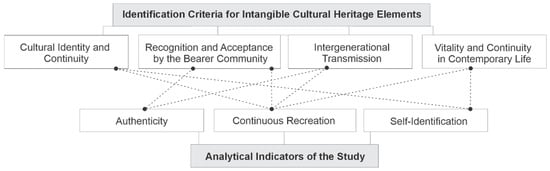
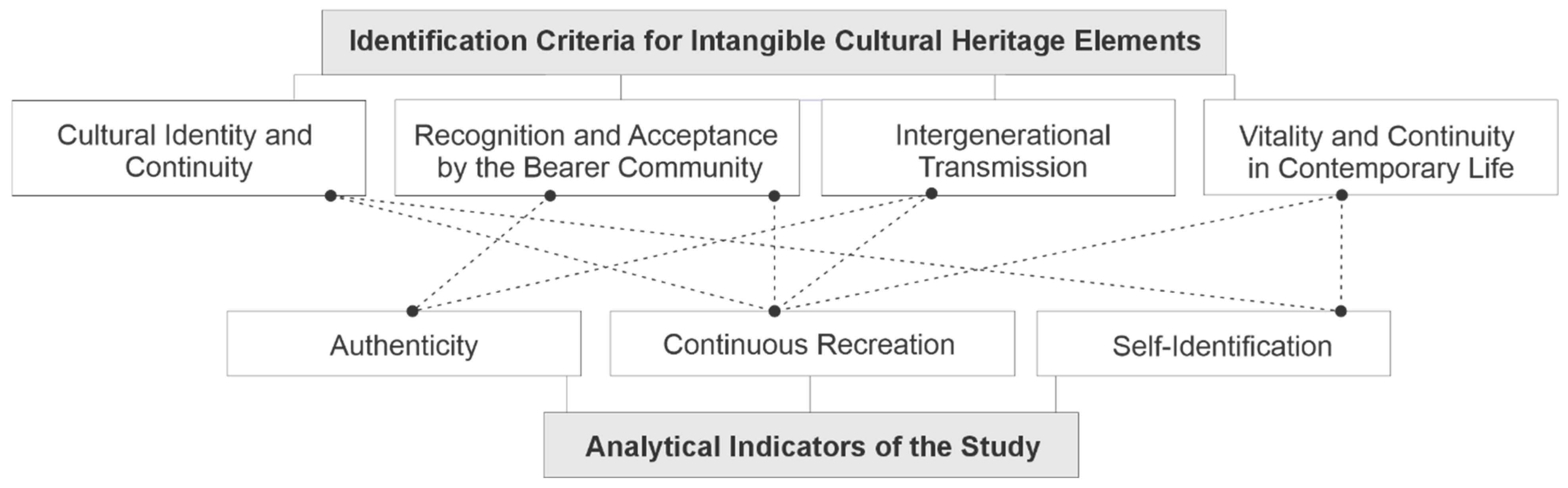
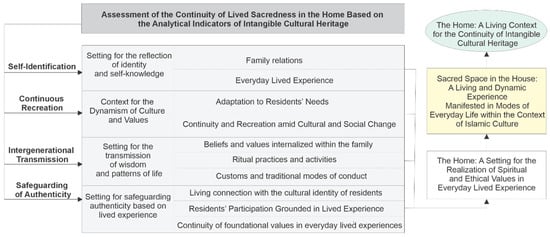
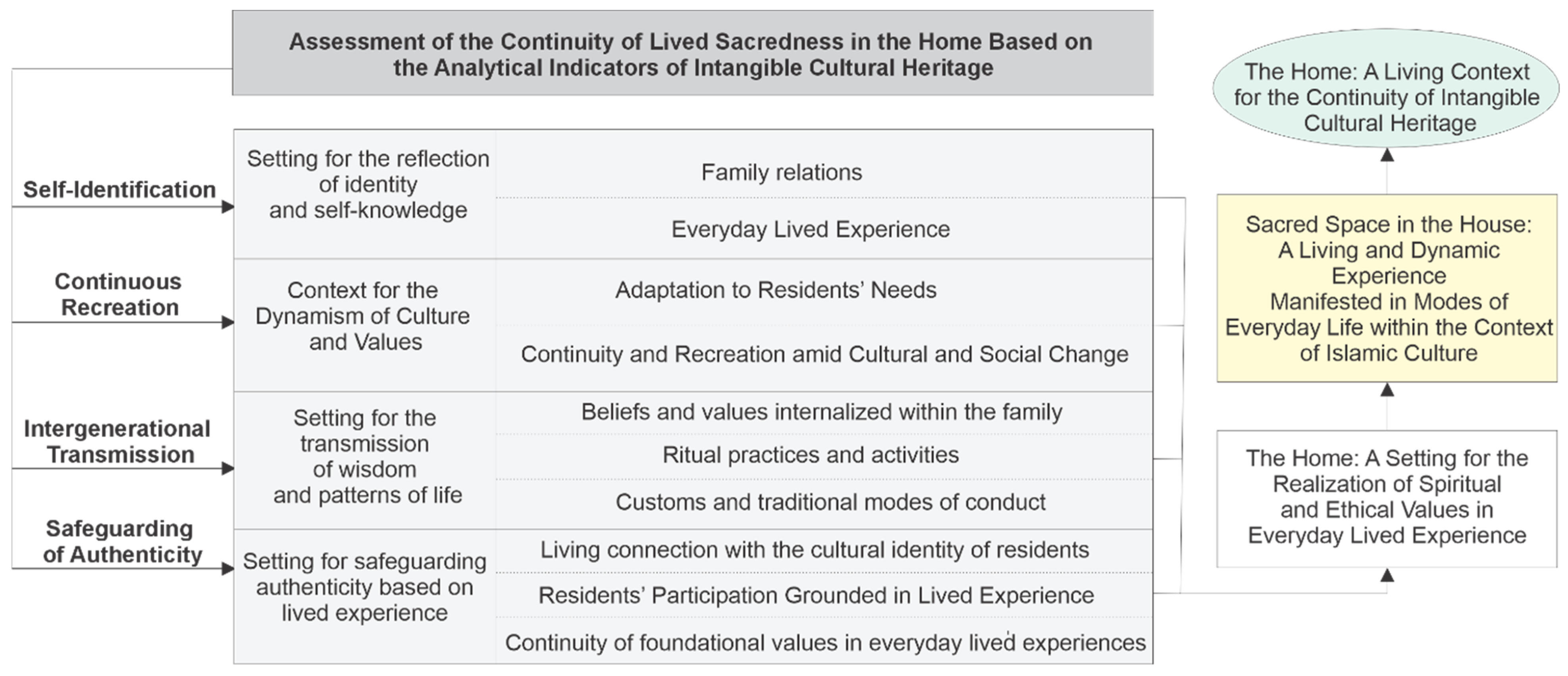
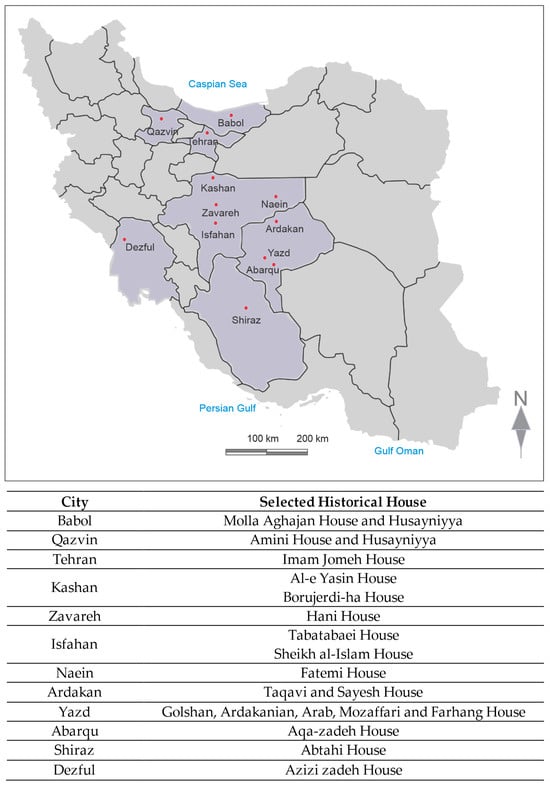
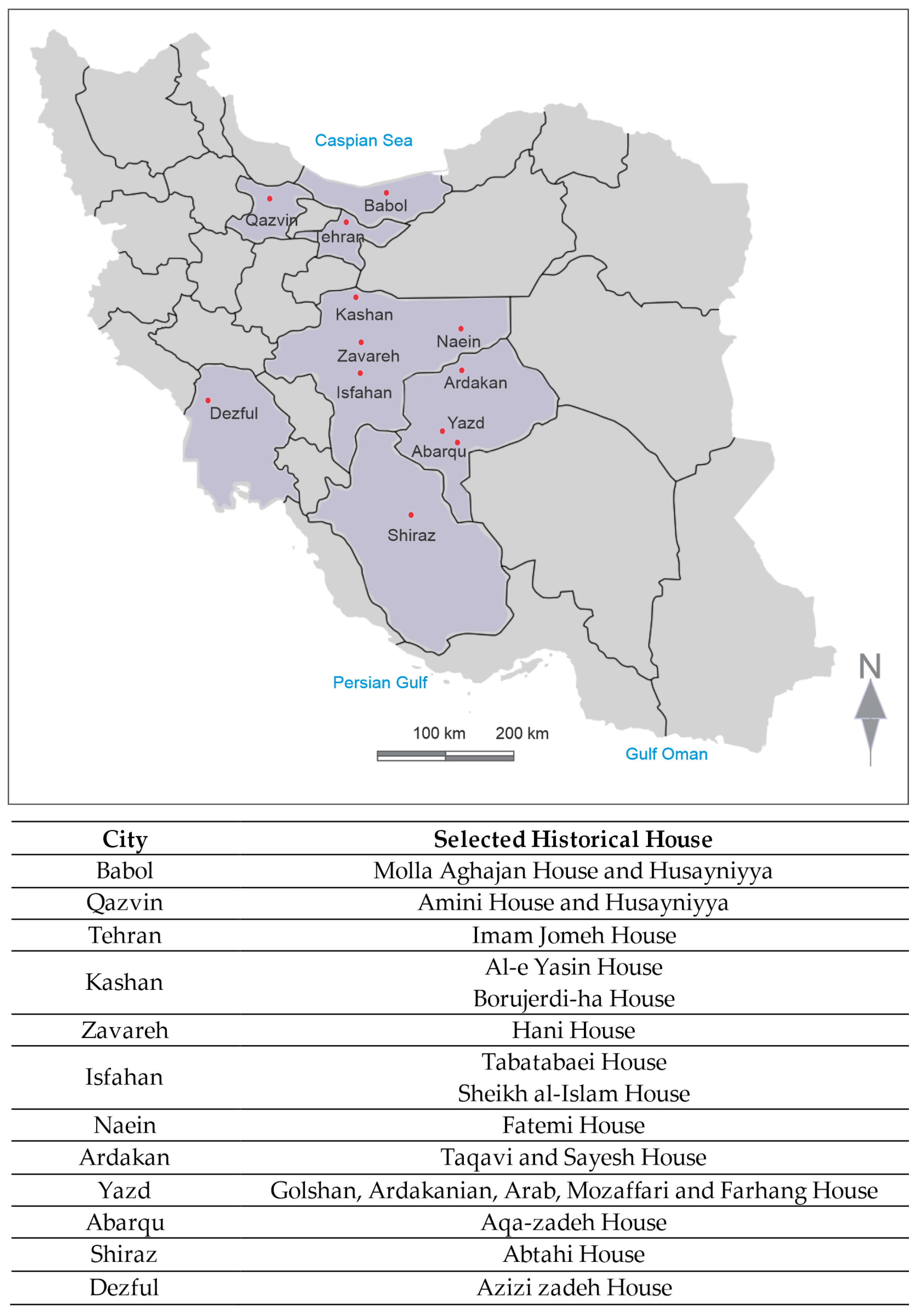
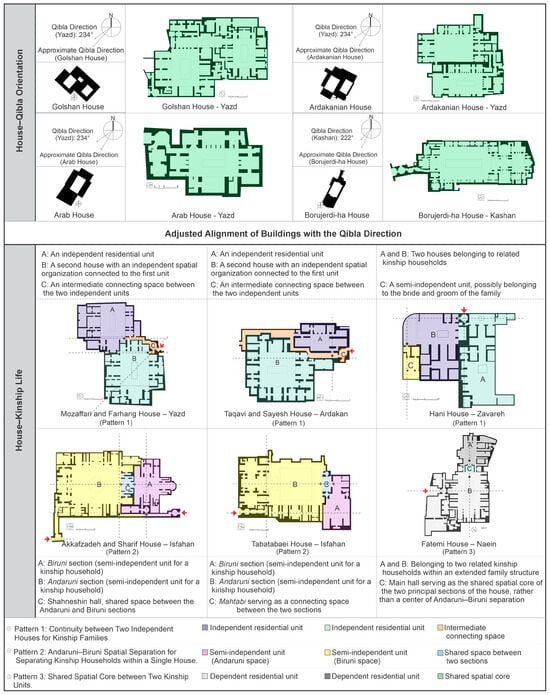
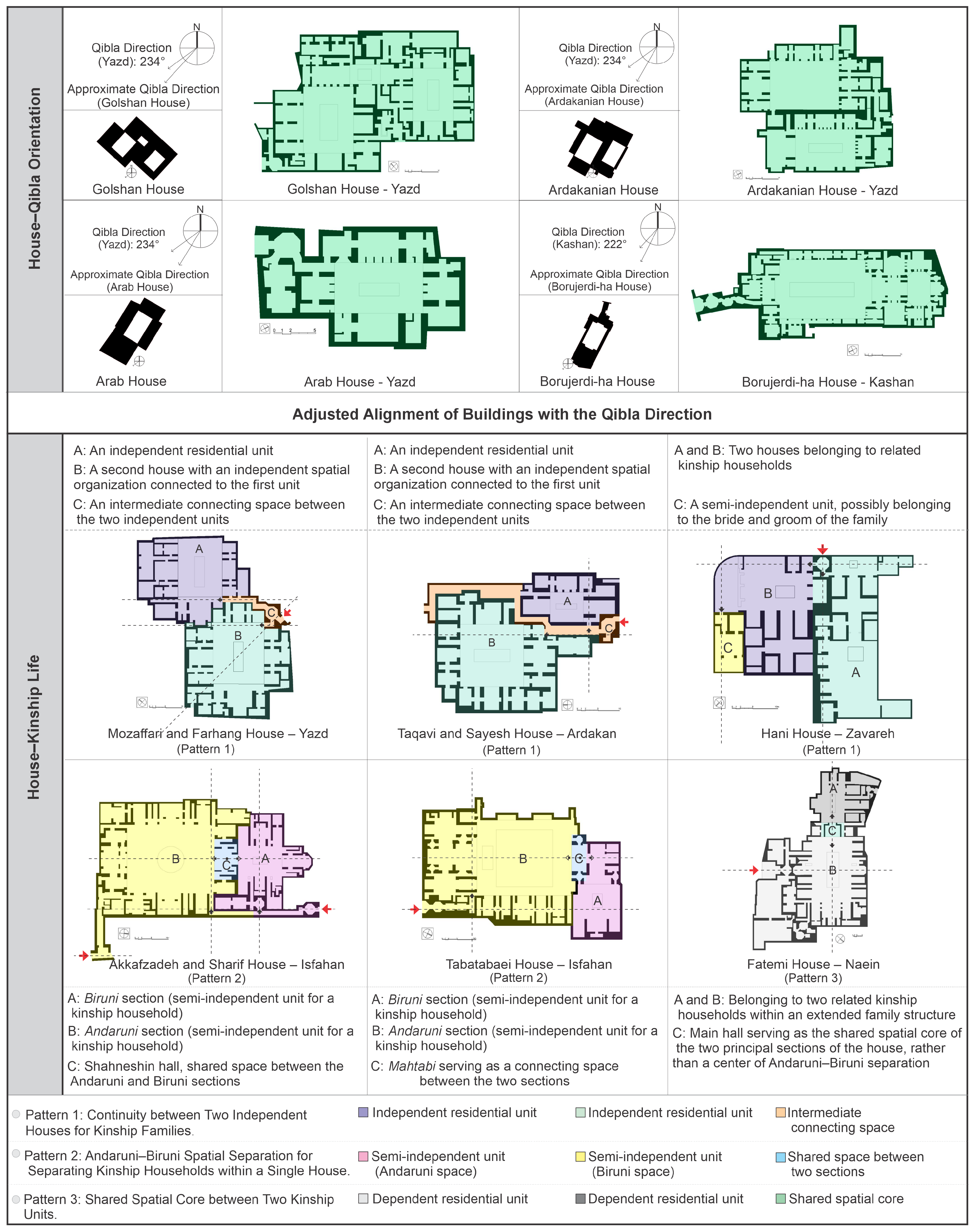
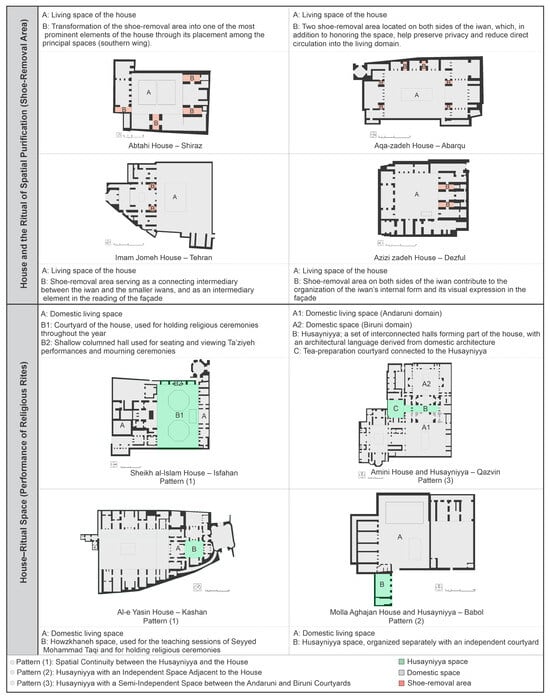
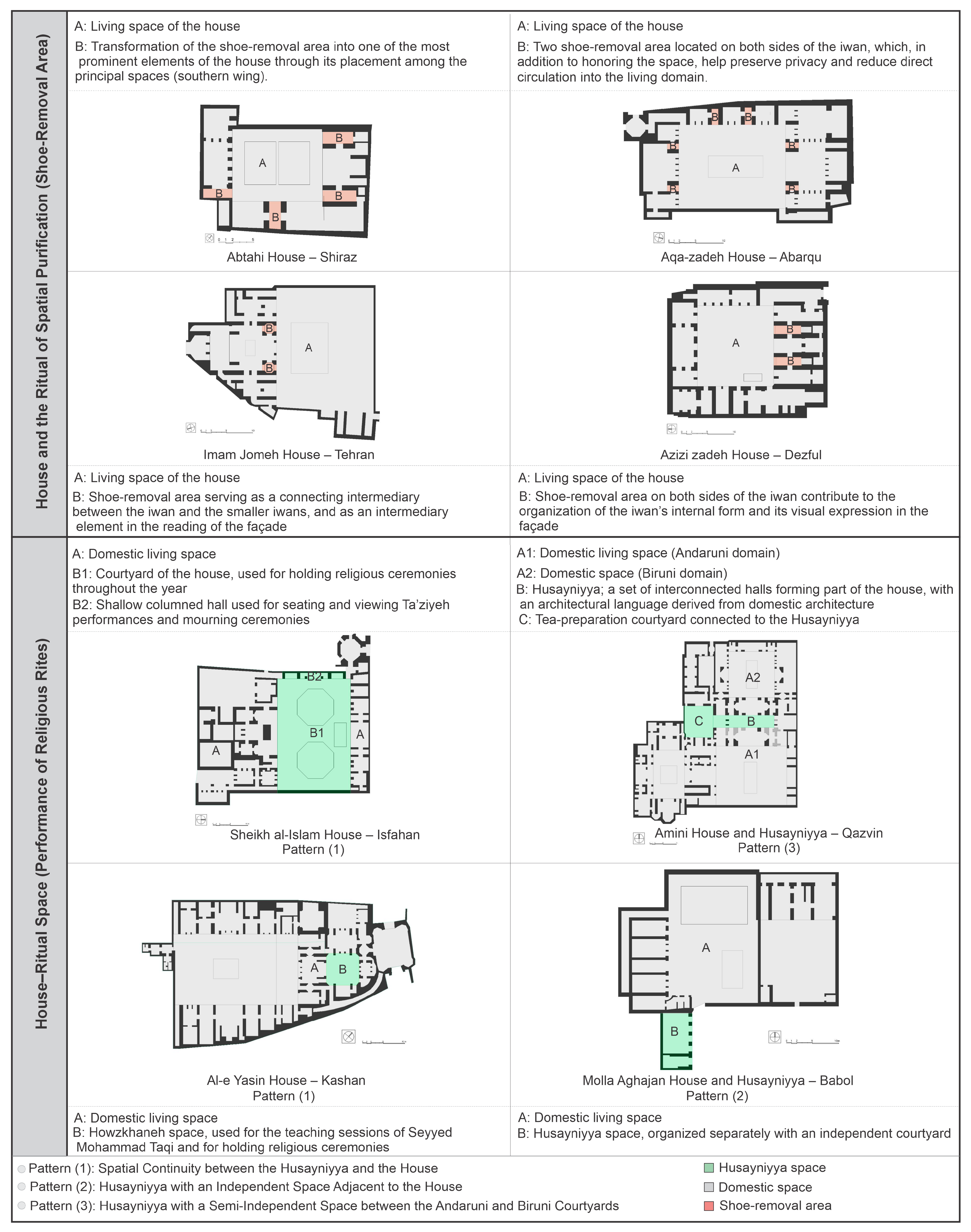

Disclaimer/Publisher’s Note: The statements, opinions and data contained in all publications are solely those of the individual author(s) and contributor(s) and not of MDPI and/or the editor(s). MDPI and/or the editor(s) disclaim responsibility for any injury to people or property resulting from any ideas, methods, instructions or products referred to in the content. |
© 2026 by the authors. Licensee MDPI, Basel, Switzerland. This article is an open access article distributed under the terms and conditions of the Creative Commons Attribution (CC BY) license.