
Review

Machine Learning for Heatwave Prediction: A Global Scoping Review of Environmental Predictors and Modelling Practices

1
School of Computing, Engineering and Physical Sciences, University of the West of Scotland, Paisley PA1 2BE, UK
2
School of Agriculture and Science, University of KwaZulu-Natal, Durban 4000, South Africa
3
School of Electrical and Mechanical Engineering, University of Portsmouth, Portsmouth PO1 3DJ, UK
4
School of Health and Life Sciences, University of the West of Scotland, Scotland PA1 2BE, UK
5
Faculty of Nursing and Midwifery, Royal College of Surgeons in Ireland, University of Medicine and Health Sciences, D02 YN77 Dublin, Ireland
6
Discipline of Public Health, School of Medicine, University of KwaZulu-Natal, Durban 4000, South Africa
*
Author to whom correspondence should be addressed.
Forecasting 2026, 8(4), 63; https://doi.org/10.3390/forecast8040063

Submission received: 19 May 2026 / Revised: 10 July 2026 / Accepted: 14 July 2026 / Published: 24 July 2026

Abstract

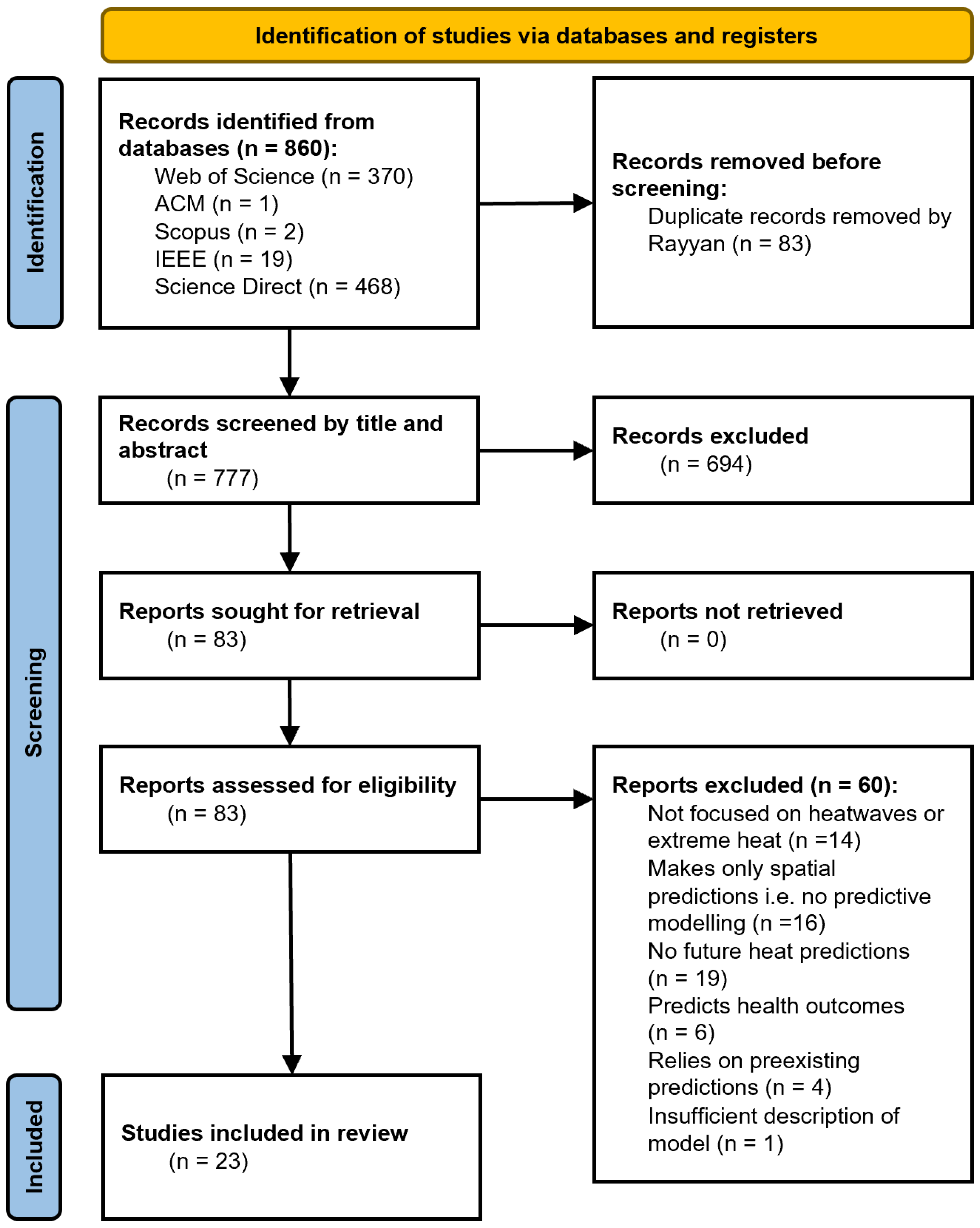
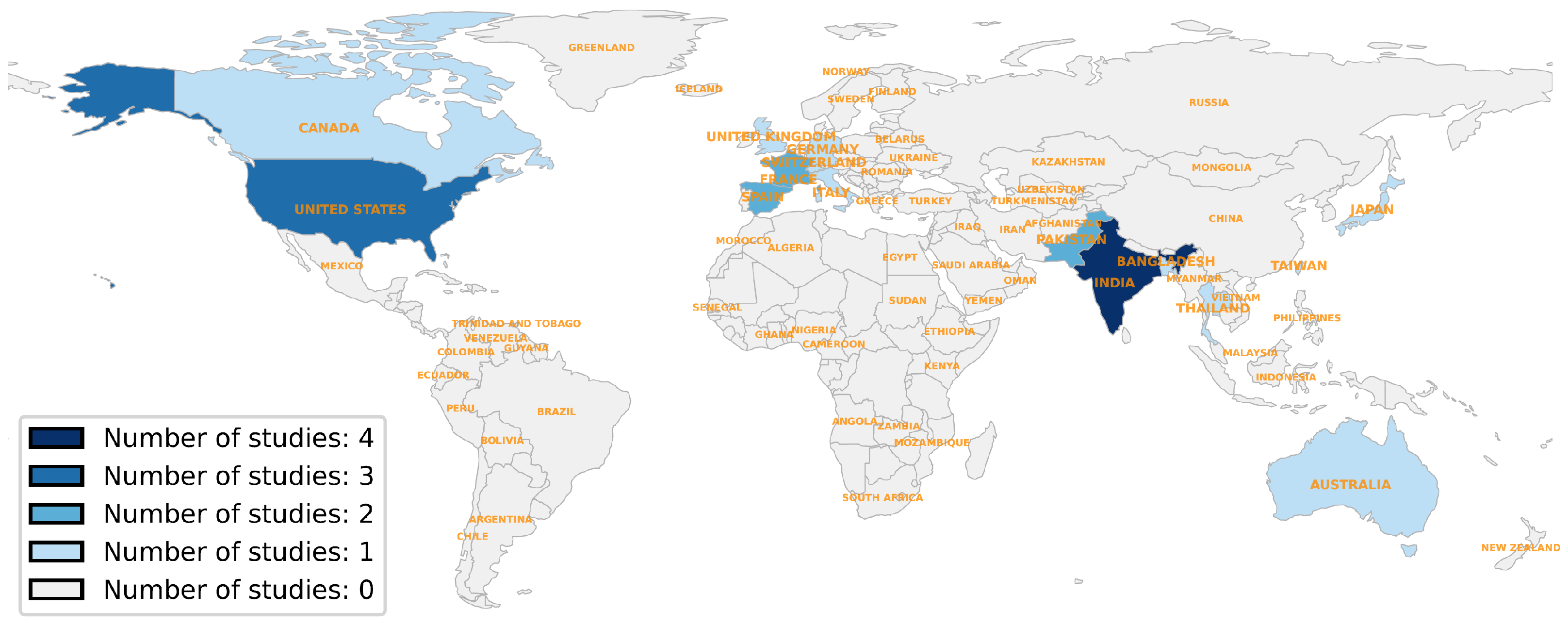
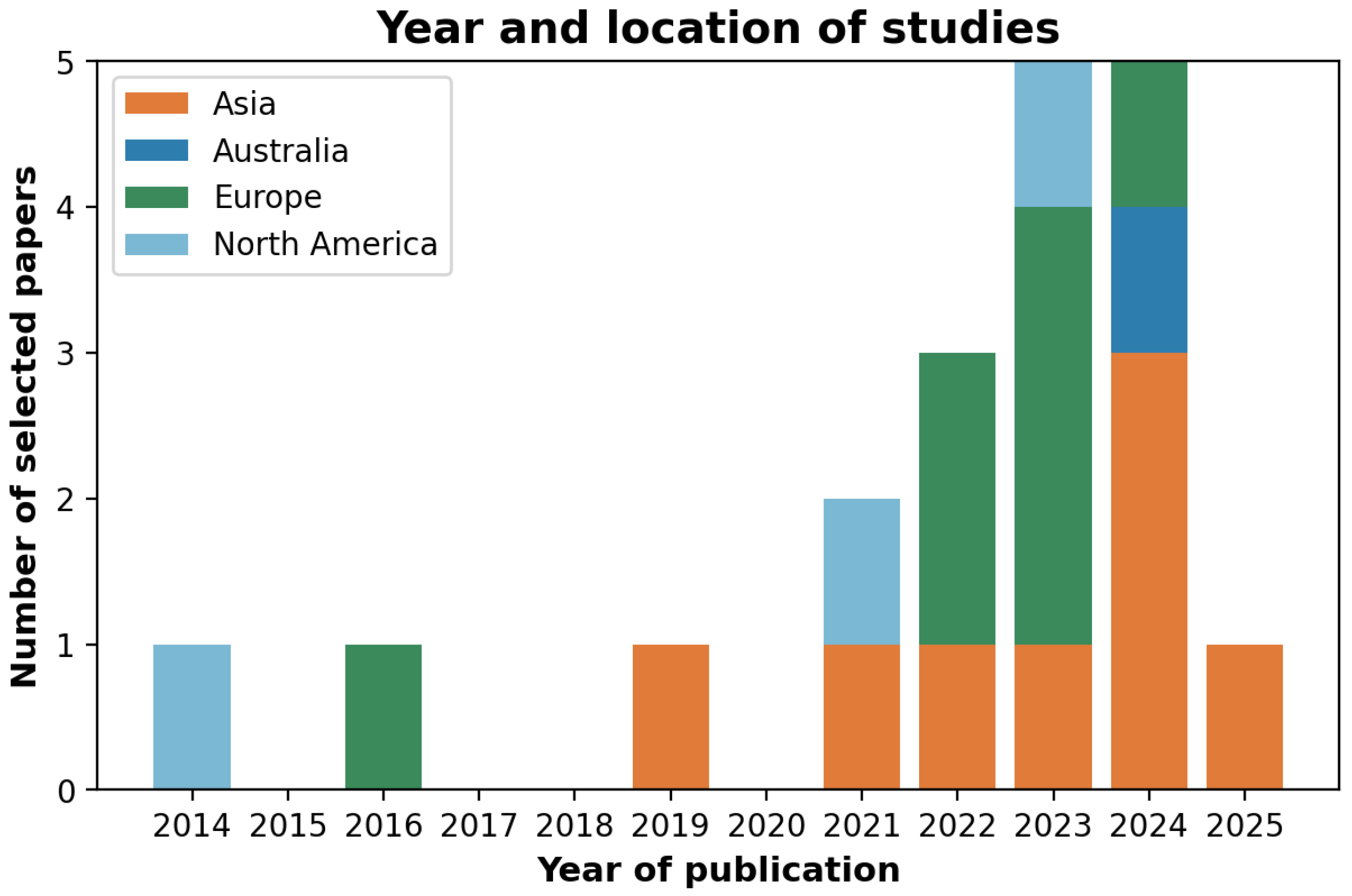
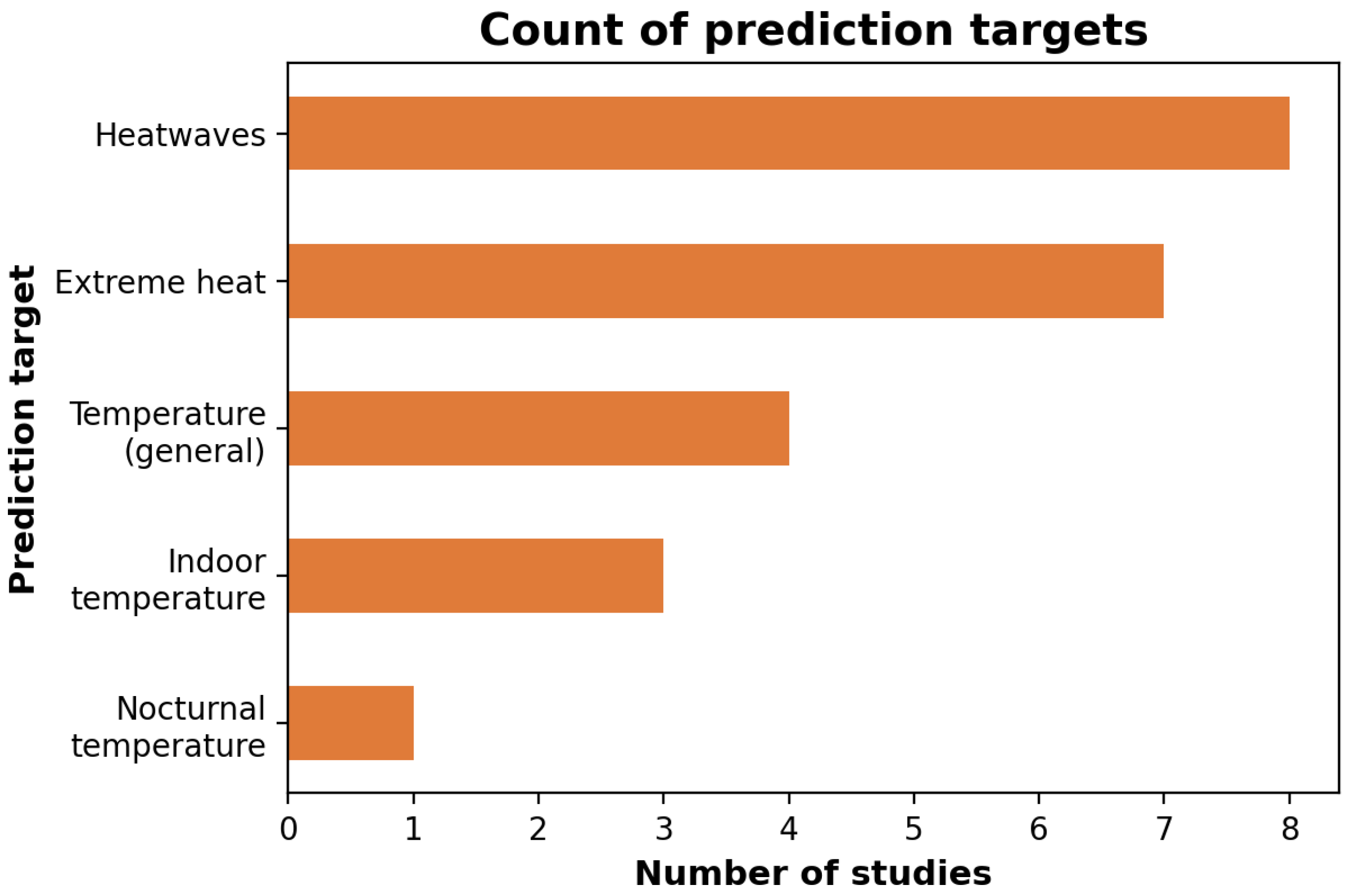
As extreme heat events increase in frequency, intensity, and duration due to climate change, forecasting these events has become vital for early warning systems, public health preparedness, and climate adaptation strategies, especially in parts of the world that are already subject to extreme heat, such as tropical regions. In recent years, machine learning (ML) has increasingly been applied to environmental and meteorological data to improve the prediction of heatwaves and extreme heat events. This scoping review examines global peer-reviewed literature on the application of ML techniques for extreme heat prediction using environmental variables. This includes heatwave prediction, environmental and meteorological predictors used in these models, and the geographical distribution of existing research. A total of 23 peer-reviewed studies meeting the inclusion criteria were included in the review, following the PRISMA-ScR guidelines. The findings indicate that artificial neural networks and random forest models were most frequently reported as high performing within individual studies. However, direct comparisons across studies are limited by heterogeneity in prediction targets, validation strategies, lead times, heatwave definitions, and performance metrics. Temperature-related variables, especially maximum temperature, were consistently identified as the most influential predictors across studies. Furthermore, the evidence base was heavily concentrated in Europe, Asia, and North America, with comparatively limited representation from low- and middle-income countries respective to population, despite these regions often experiencing disproportionate impacts of climate change and extreme heat exposure. By synthesising current evidence on ML-based heatwave prediction, associated environmental predictors, and geographical research trends, this review provides insights to support the development of more robust, context-aware, and globally representative heatwave forecasting frameworks.
Keywords: artificial intelligence; machine learning; heatwave prediction; environmental exposure; climate change; scoping review artificial intelligence; machine learning; heatwave prediction; environmental exposure; climate change; scoping review