


Abstract
Air pollution, water contamination, soil degradation, solid waste accumulation, and carbon emissions are increasingly interconnected, posing common challenges to environmental engineering, including diverse monitoring targets, heterogeneous data sources, competing control objectives, and delayed management responses. This review examines the application progress of artificial intelligence in environmental fields through a three-level framework encompassing monitoring, control, and management. It systematically summarizes the roles of machine learning, deep learning, reinforcement learning, transfer learning, digital twins, and the Internet of Things in addressing multi-media environmental challenges. Current studies indicate that artificial intelligence has developed a relatively mature application basis in environmental monitoring as well as showing considerable potential for pollution-control processes. At the management level, the integration of machine learning with LCA, digital twins, and multi-objective optimization is gradually transforming environmental impact assessment from static accounting toward dynamic prediction, feedback, and decision-making. Despite these advances, key bottlenecks remain in data quality, model interpretability, field-scale validation, and the lack of cross-medium collaborative frameworks. Future research should therefore improve the reliability, generalizability, and interpretability of AI models while advancing AI from a task-specific modeling tool to a system-level decision-support technology for integrated environmental governance.
1. Introduction
Current global environmental governance is facing intersecting pressures arising from pollution exposure, resource consumption, waste accumulation, and climate change [1]. These pressures span multiple environmental domains, including air, water, soil, solid-waste management, and carbon emissions, and are becoming increasingly coupled through industrialization and urbanization. The World Health Organization estimates that approximately 99% of the global population lives in areas where air quality exceeds its guideline levels [2], while the 2024 State of Global Air report further indicates that air pollution causes about 8.1 million premature deaths each year [3]. Water environments are likewise under substantial pressure. Monitoring data reported by the United Nations Environment Programme in 2024 show that nearly half of the world’s rivers and lakes are in poor or moderate condition [4], while wastewater collection and treatment coverage in low-income countries remains below 30% [5]. Rapid urbanization has further accelerated solid-waste generation, with global municipal solid-waste output reaching approximately 2 billion tonnes per year and projected to rise to 3.4 billion tonnes by 2050 [6]. A recent UNEP assessment warns that, if current management patterns continue, the annual cost of solid-waste management will increase from USD 252 billion in 2020 to USD 640 billion in 2050 [7]. Meanwhile, climate change has intensified the pressure to reduce carbon emissions. Global fossil-fuel and industrial carbon dioxide emissions reached a record 36.8 billion tonnes in 2023, while current mitigation efforts remain insufficient to meet the objectives of the Paris Agreement [8,9]. Importantly, these environmental pressures do not occur independently but interact across environmental media and processes. For example, electricity consumption during wastewater treatment generates indirect carbon emissions, landfilled organic waste releases methane and contributes to climate forcing, and atmospheric deposition of pollutants can alter the quality of water and soil environments [10]. Therefore, environmental governance increasingly exhibits cross-media and cross-process characteristics, making approaches centered on individual elements insufficient to capture the complexity of contemporary environmental systems.
Against such situations, the limitations of conventional monitoring and control approaches are becoming increasingly apparent. Air-quality monitoring has long relied on fixed stations, whose spatial coverage is insufficient to capture intra-urban pollution gradients [11]. Water-quality monitoring still depends largely on manual sampling and laboratory analysis. Although these approaches can provide reliable measurements, their relatively low temporal frequency and spatial coverage can delay the detection of rapidly evolving pollution events, while discontinuities often remain between data acquisition, analysis, and decision-making [12]. Soil contamination is even more difficult to monitor continuously because real-time online sensing remains limited; country-scale investigations may contain only several hundred sampling locations, making high-resolution and dynamic assessment challenging [13]. Similar limitations are also evident in environmental process control. Aeration and chemical dosing in wastewater treatment still depend heavily on operator experience, while fine-grained management across the full solid-waste chain from generation statistics to disposal emissions remains difficult to achieve [7,14]. Greenhouse-gas accounting relies on annual statistics and fixed emission factors, which may not provide sufficiently timely information for operational adjustment [9]. These conventional approaches are constrained by the temporal and spatial limitations of discrete sampling and offline analysis, as well as by the uncertainties associated with experience-based adjustment and static accounting. Consequently, they remain inadequate for establishing continuous sensing, dynamic prediction, and adaptive response capabilities across multi-media and whole-process environmental management. AI provides new possibilities to address these limitations by enabling environmental systems to extract information from large-scale, heterogeneous, and continuously generated data and to translate such information into prediction and decision support. AI has demonstrated a practical capacity across multiple industries. In medical imaging diagnosis, for example, conventional interpretation relies on radiologists reviewing images frame by frame, whereas the introduction of deep learning models has reduced the time required for a single screening from minutes to seconds while substantially lowering the missed-detection rate [15]. In industrial manufacturing, equipment maintenance has long followed a scheduled inspection model, but machine-learning-driven predictive maintenance has significantly reduced unplanned downtime [16]. These cross-industry applications indicate that the core advantage of AI lies in identifying patterns that are difficult for humans to capture from large-scale operational data and in moving decision-making from post-event analysis toward advance prediction.
Building upon these advances, ML and deep learning have gradually been introduced into environmental issues in recent years [17]. Convolutional neural networks have substantially improved the accuracy and cross-water applicability of spatial inversion from remote-sensing imagery [18]. LSTM networks have shifted the management response window in time-series prediction from post-event response to pre-event warning [19], while reinforcement learning enables automatic optimization in multi-objective decision-making [20]. Advances in automated environmental sensing technologies [21] and autonomous environmental monitoring systems [22] have further provided AI with continuous data inputs. Meanwhile, digital twins integrate sensor networks, mechanistic models, and data-driven models on a common platform, allowing operators to compare the environmental impacts of different control strategies in a virtual system before making adjustments [23,24]. These developments suggest that AI is gradually evolving from a tool for environmental prediction toward a broader technological framework for monitoring, process optimization, and adaptive environmental management.
Nevertheless, existing reviews have primarily examined AI applications within individual environmental media or specific technical domains, such as air-quality prediction [25,26], wastewater treatment [27], soil-contamination abatement [28], solid-waste management [29,30], and carbon-emission assessment [31]. These studies have generated valuable methodological insights and application-specific syntheses, but their scopes have generally remained confined to particular environmental media, pollutants, or technological processes. A comprehensive synthesis that connects multiple environmental domains—including air, water, soil, solid waste, and carbon emissions—remains limited. More importantly, the different roles of AI across the environmental decision-making chain, from monitoring and prediction to process control and integrated low-carbon management, have rarely been examined within a unified framework. Unlike these single-medium reviews, this paper addresses both gaps simultaneously. First, it synthesizes AI applications across all five environmental domains—air, water, soil, solid waste, and carbon emissions—rather than within a single medium. Second, it organizes these applications along a unified three-level framework of monitoring, pollution control, and low-carbon management, which links each AI capability to the decision context it serves. Figure 1 presents the conceptual framework adopted in this review. The framework links multi-source environmental data, AI methodologies, three decision levels, representative application domains, and corresponding governance outcomes, thereby providing a unified analytical basis for the subsequent discussion. This review aims not only to summarize existing applications but also to identify common methodological bottlenecks, cross-media knowledge gaps, and opportunities for moving AI from task-specific environmental modeling toward integrated, adaptive, and system-level environmental decision support.
Figure 1.
Framework for AI-enabled environmental governance.
2. Methodology and Overview of Common AI Approaches
2.1. Methodology
This review adopted a structured literature-search and synthesis approach. Relevant publications were identified through a combination of bibliographic databases and publisher platforms, including Web of Science, ScienceDirect, Springer, IEEE Xplore, and MDPI, covering the period from 2001 to 2026, with the majority of the included studies published between 2016 and 2026. The search combined two groups of keywords. The first group described AI techniques, including “artificial intelligence”, “machine learning”, “deep learning”, “reinforcement learning”, “transfer learning”, “digital twin”, and “Internet of Things”. The second group described environmental application domains, including “environmental monitoring”, “pollution control”, “air quality”, “water quality”, “soil contamination”, “solid waste”, “carbon emission”, “wastewater treatment”, and “life-cycle assessment”. These keyword groups were combined using the Boolean operator “AND”.
Publications were included if they (i) appeared in peer-reviewed journals, (ii) reported the application of AI techniques to at least one environmental domain, and (iii) provided sufficient methodological or quantitative detail for synthesis. Editorials and conference abstracts were generally excluded. Authoritative assessment reports (e.g., from the IPCC, UNEP, and WHO) and a small number of foundational methodology textbooks were additionally incorporated to support the background and methodological descriptions. After screening the retrieved records by title and abstract, the full texts of potentially relevant studies were assessed against the inclusion criteria. A total of 139 publications were retained for synthesis and were organized by environmental medium—air, water, soil, solid waste, and carbon emissions—and by decision level—monitoring, pollution control, and low-carbon management. Figure 2 presents the literature-selection workflow.
Figure 2.
Literature screening flowchart.
Having described the procedure used to select and organize the reviewed literature, this section now turns to the AI approaches themselves. The approaches commonly applied in environmental engineering can be organized into three modeling families: nonlinear learning methods, including neural networks and deep learning [32,33], ensemble-learning methods, including random forests and extreme gradient boosting [34], and search-optimization methods, including genetic algorithms and reinforcement learning [35,36]. In addition to these modeling approaches, transfer learning and digital twins [37,38] are treated as cross-cutting enabling frameworks, while the Internet of Things provides the sensing and data infrastructure that connects these approaches to real-world environmental systems.
2.2. Neural Networks and Deep Learning
2.2.1. Feedforward Networks and Convolutional Neural Networks
Feedforward neural networks are the most basic neural-network architecture and consist of an input layer, several hidden layers, and an output layer connected by adjustable weights [39]. As shown in Figure 3a, input variables pass through fully connected hidden layers with nonlinear activation functions such as sigmoid, tanh, and ReLU. Training relies on backpropagation, which propagates loss gradients layer by layer to update the weights. With more than two hidden layers, the network gains hierarchical feature-extraction capability: lower layers learn simple patterns, while higher layers combine them into complex representations [40].
Figure 3.
Schematic architectures of feedforward (a), recurrent (b), and convolutional neural networks (c).
Convolutional neural networks replace matrix multiplication in fully connected layers with convolution operations, in which learnable kernels slide over the input data to extract local features [41]. Parameter sharing and local perception are the two main advantages of convolutional structures. The same convolution kernel is reused across the entire input, greatly reducing the number of parameters, while each neuron responds only to information within its receptive field, preserving spatial structure [40]. As shown in Figure 3c, the input passes through successive convolutional and pooling layers to extract hierarchical features, which are then flattened and passed to fully connected layers for classification. In environmental concerns, convolutional neural networks have been applied to remote-sensing inversion of river turbidity [42], waste-image classification [43], and LIBS spectral analysis [44].
2.2.2. Recurrent Neural Networks and Long Short-Term Memory Networks
RNNs process time-series data by transmitting information through hidden states along the sequence dimension [45]. As shown in Figure 3b, the current input x(t) is combined with the hidden state h(t − 1) to update h(t), which generates y(t) and is then transmitted to the next time step. However, traditional recurrent neural networks face the vanishing-gradient problem when handling long sequences, so the influence of early inputs weakens over time.
LSTM networks address this problem by introducing three gating units: the forget gate, input gate, and output gate [45]. The forget gate determines which old information should be discarded, the input gate determines which new information should be stored, and the output gate determines how much of the current state should be passed to the next time step. Together, these gates allow the network to dynamically retain or discard information and effectively capture long-range temporal dependencies. In environmental applications, LSTM networks have been widely used for algal bloom prediction [46], effluent-quality early warning [47], and air-pollutant concentration forecasting [48], and they have also achieved practical results in industrial scenarios such as fault detection in desulfurization systems [49].
2.2.3. Graph Neural Networks and Attention Mechanisms
Graph neural networks extend deep learning from regular Euclidean space to graph-structured data [50]. A graph consists of nodes and edges and can represent data relationships with arbitrary topology. In each layer, nodes update their own representations by aggregating features from neighboring nodes; after multiple stacked layers, each node contains both topological and attribute information from its local neighborhood. Graph convolutional networks are among the earliest variants in this field and achieve efficient semi-supervised node classification through a first-order approximation of spectral graph convolution [51]. Graph neural networks are suitable for modeling non-Euclidean structures such as irregularly distributed monitoring stations and complex pipe-network topologies and can also be used for spatial mapping of soil heavy metals based on mobile LIBS data [52].
The attention mechanism is another technique that breaks through the constraints of traditional architectures. The Transformer model is built entirely on attention and does not rely on recurrence or convolution [53]. Its core operation is self-attention, which associates each position in an input sequence with all other positions and extracts global dependencies in parallel through scaled dot-product attention. Compared with traditional recurrent networks, self-attention does not need to unfold step by step when processing long sequences, and training is therefore more efficient. Multimodal Transformers embedded in digital-twin platforms can be used for water-demand prediction and leakage detection [54].
2.3. Ensemble Learning and Statistical Models
Random forest is an ensemble-learning method. It constructs multiple subsets through bootstrap sampling of the original dataset, trains a decision tree independently on each subset, and finally uses the vote or mean across all trees as the prediction result [55]. Its randomization strategy provides strong robustness to outliers and missing data, while also producing rankings of input-variable importance. In environmental applications, random forests have been widely used for spatial mapping of soil heavy metals [56], prediction of solid-waste generation [57], and assessment of desulfurization performance [58]. Support vector machines map data into a high-dimensional feature space through kernel functions and identify the optimal separating hyperplane [55]. They perform robustly in small-sample, high-dimensional settings. They have been used as benchmark methods for predicting effluent ammonia nitrogen in anaerobic digestion [59] and inverting wastewater-treatment-plant water-quality parameters [60]. Extreme gradient boosting is based on the gradient-boosting framework. It sequentially trains weak learners so that each new learner fits the residuals from the previous round, thereby reducing the overall error [61]. XGBoost extends gradient boosting with regularization terms and second-order loss optimization, making it efficient for structured tabular data. It has been applied to municipal solid-waste generation prediction [57] and water-quality indicator estimation [62].
2.4. Search Optimization and Reinforcement Learning
Genetic algorithms simulate natural selection and genetic variation, iteratively searching for the optimal solution through selection, crossover, and mutation [63]. In each generation, individuals are evaluated according to a fitness function; individuals with higher fitness are more likely to be selected for reproduction, while crossover exchanges gene segments and mutation introduces random perturbations to generate new solutions. Genetic algorithms do not require gradient information and are suitable for non-convex, multimodal, and discrete-combinatorial optimization problems. Particle swarm optimization simulates the foraging behavior of bird flocks, with each particle updating its movement according to its own historical best position and the global best position of the swarm. For environmental concerns, genetic algorithms and particle swarm optimization have been used for feature selection in anaerobic digestion [64], composting-process parameter optimization [65], and aeration adjustment [66].
Reinforcement learning follows a different optimization path. Instead of directly searching the solution space, it allows an agent to learn an optimal policy through repeated trial and error in an environment. The agent observes the environment state, performs actions, and receives reward signals, adjusting its behavior to maximize cumulative long-term reward. Deep reinforcement learning uses deep networks as policy or value function approximators, scaling reinforcement learning to high-dimensional state spaces [67]. In wastewater treatment, multi-agent deep deterministic policy gradient algorithms have been used to jointly optimize dissolved oxygen and chemical dosage [68]. Multi-agent reinforcement learning further introduces multiple agents that cooperate or compete with one another, making it suitable for distributed decision-making scenarios such as energy dispatch in industrial parks [69] and dynamic ammonia-injection control in SCR systems [70].
2.5. Transfer Learning, Digital Twins, and the Internet of Things
Transfer learning addresses the problem of insufficient labeled data for a target task. In a transfer-learning framework, a model is first pretrained on a large general dataset, after which the pretrained feature-extraction layers are transferred to the target task; only a small amount of target data is then needed to fine-tune the higher layers and obtain good performance [38]. This strategy substantially reduces the dependence of deep learning on massive labeled datasets. In environmental fields, transfer learning has been applied to the quantitative analysis of soil heavy metals using LIBS spectra [44] and to cross-dataset generalization in waste-classification models [43].
Transfer learning does not always improve performance. When the source and target domains differ substantially—in data distribution, sensor characteristics, or the governing physicochemical processes—knowledge transferred from the source task can interfere with learning on the target task, a phenomenon known as negative transfer [71]. Common mitigation strategies include measuring domain similarity before transfer, fine-tuning only a subset of layers, and reweighting or discarding source samples dissimilar to the target domain [44]. The implications of negative transfer for cross-domain environmental applications are discussed further in Section 5.
A digital twin is a technical framework that constructs a high-fidelity virtual representation of a physical entity, connects it to real-time sensor data, and uses simulation models to monitor, predict, and optimize the entity’s state. A complete digital-twin system includes physical, data, model, and application layers, spanning sensor interfaces for data acquisition, heterogeneous data management, and the integration of mechanistic and data-driven models [23]. In water treatment, digital-twin systems have achieved online state monitoring for membrane bioreactors [72] and multi-node water-demand prediction for water-supply networks [54]. The Internet of Things serves as the data-entry channel for digital twins by deploying sensor nodes in the environment for real-time acquisition and remote transmission [73]. Together, digital twins and IoT provide the technical basis for system-level state perception and optimization scheduling across links and scales. Real-time monitoring of smart-bin filling status [74] and intelligent combustion control in incineration facilities [75] are typical examples of IoT-AI coordination. Table 1 provides a summary of the AI methods introduced in this chapter, organized by their functional categories, representative models, and the types of environmental tasks to which they are commonly applied. The table also highlights the key strengths and limitations that influence method selection in practice.
Table 1.
Common AI methods in environmental monitoring, pollution control, and low-carbon management.
3. Advances in the Application of AI to Environmental Monitoring
3.1. Air Pollution Monitoring
3.1.1. Spatiotemporal Prediction of Conventional Pollutants and Air-Quality Early Warning
In the application of AI to environmental monitoring, air-pollution monitoring is a key step for obtaining basic data on pollutant concentrations, meteorological conditions, and emission changes. Air pollutants show pronounced temporal fluctuations and spatial differences. Their concentrations are jointly affected by meteorological conditions, traffic intensity, industrial emissions, and urban spatial form, so fixed monitoring stations alone cannot fully represent complex intra-urban pollution gradients [77]. Conventional air-quality stations usually use fixed deployment, standardized instruments, and continuous online sampling to obtain PM2.5, PM10, NO2, O3, and other pollutant data. Such data are accurate and comparable, but they remain limited in spatial coverage, real-time responsiveness, and multi-source data fusion. In recent years, to compensate for the insufficient spatial coverage of fixed stations, Wei et al. [48] used Moderate Resolution Imaging Spectroradiometer Multi-Angle Implementation of Atmospheric Correction data and a Space-Time Extra-Trees model to reconstruct a 1 km-resolution PM2.5 dataset for China from 2000 to 2018, demonstrating that the combination of AI and remote-sensing data can generate continuous, high-resolution information on pollutant spatial distributions.
Existing reviews show that AI models have been widely used for spatiotemporal prediction of conventional air pollutants and for air-quality early warning. Agbehadji and Obagbuwa [25] systematically summarized the use of ML and deep learning in spatiotemporal air-quality prediction and divided the technical pathways into two main branches. Earlier work mainly used traditional machine-learning models such as random forests, gradient boosting, and support vector machines for air-quality-index estimation and small- to medium-scale concentration prediction. Since around 2020, deep-learning models have increasingly been used to model the spatiotemporal coupled evolution of pollutants because of their stronger feature-extraction capacity for spatiotemporal sequence data. A broad consensus has emerged that hybrid and ensemble models generally outperform single models in both accuracy and stability. From the perspective of sustainable urban management, Essamlali et al. [26] also noted that ML, deep learning, and hybrid models can not only improve the accuracy of pollutant-concentration prediction but also support traffic regulation, pollution control, and urban spatial planning. Building on this direction, Gasan et al. [78] studied multi-station particulate-matter prediction and spatial estimation in the CityAirQ urban monitoring network, showing that AI is moving from method reviews and model comparisons toward deployment in sparse urban monitoring networks. AI can also support traffic management, industrial scheduling, and urban planning by identifying pollution patterns and trends in air-quality data, thereby extending air monitoring from data acquisition alone to pollution warning and governance response [79]. Thus, the role of AI in air-pollution monitoring is not limited to improving computational performance. By integrating multi-source environmental data, it provides a continuous, dynamic, and interpretable information base for urban air-quality management.
On this basis, research has further examined how different pollutant types influence model selection. Different pollutants usually correspond to different monitoring objectives and optimal methodological pathways. For concentration prediction, PM2.5, PM10, NO2, O3, and other conventional pollutants are often used as model outputs, while temperature, humidity, wind speed, wind direction, precipitation, traffic flow, and land-use variables serve as inputs to explain temporal variation and spatial distribution. In a review of prediction for highly spatially variable pollutants, Vachon et al. [80] found that machine-learning methods generally show good spatial characterization ability for NO2, ultrafine particles, and black carbon, especially in scenarios strongly affected by traffic emissions and urban microenvironments. However, they also noted that when the amount of training data decreases, the performance of the same model varies markedly across datasets, and differences in monitoring-station density and sampling strategies make model performance difficult to compare directly across studies. This indicates that, for pollutants with complex spatial distributions and multiple influencing factors, ML captures nonlinear relationships between concentrations and environmental variables better than traditional statistical methods. Yet model performance remains highly dependent on the quantity, coverage density, and regional representativeness of training data; therefore, no single model should be treated as a universal solution for all cities or pollutants.
3.1.2. Multi-Source Sensing Networks and Dynamic Regulation of Industrial Emissions
As monitoring data sources continue to expand, researchers have begun to combine AI with low-cost sensors, video imagery, IoT, and CEMS to improve the spatial coverage and real-time responsiveness of air-pollution monitoring. Ahmed et al. [81] proposed a low-cost video-based method for estimating air quality, using a structured deep-learning model to estimate PM2.5, PM10, and the air-quality index. This provides a supplementary observation approach for areas lacking standard monitoring equipment. Beyond individual low-cost sensors, the introduction of IoT sensor networks enables multi-node collaborative acquisition and remote transmission. Gupta et al. [82] constructed an IoT-based air-quality monitoring system, showing the potential of multi-node sensor networks for real-time data acquisition and transmission. Once sensor networks reach a certain density, Wang et al. [83] further integrated air-quality monitoring systems with smart-city infrastructure, using wireless nodes, real-time alarms, and cloud-platform interfaces to enhance urban environmental sensing capacity. These studies show that the data-entry points for air monitoring are expanding from fixed stations to multi-source sensing networks. In this process, AI is no longer limited to concentration prediction based on standard station data; it also extends to low-cost sensor calibration, collaborative processing of multi-node data, and automatic detection of abnormal states.
For industrial-emission monitoring, the integration of AI with continuous CEMS provides a new technical pathway for refined regulation of pollution sources. Based on CEMS data, Chen et al. [84] analyzed carbon emissions and air-pollutant emissions from small-scale industrial sectors and found that CO2, SO2, NOx, and CO concentrations fluctuate markedly during actual operation. This indicates that industrial emissions are not static and stable but vary dynamically with fuel type, production load, and operating conditions. At a broader spatial scale, Alnaim et al. [85] combined Sentinel-5 satellite observations, ground emission inventories, meteorological reanalysis data, and RNN/LSTM neural networks to directly predict NO2 emission rates from coal-fired power plants, verifying the feasibility of using satellite remote sensing and ML to monitor emissions from large point sources. Ground-based CEMS and satellite remote sensing are therefore complementary technical routes: the former provides high-temporal-resolution data for individual sources, while the latter covers wide areas and sources where ground monitoring is difficult to deploy. Together, these studies show that when monitoring frequency increases from annual averages to hourly data, industrial emissions appear as dynamic sequences that continuously vary with fuel, load, and operating status. AI extracts patterns from these high-frequency data, making both the timing and magnitude of emission changes visible.
In addition, developments in edge and fog computing create new possibilities for real-time deployment of air-pollution monitoring systems. Unlike the preceding methods, whose core objective is to improve model-prediction accuracy, edge computing enables low-latency and autonomous inference. For example, Pazhanivel et al. [86] designed an intelligent fog-environment gateway system that combines IoT, low-power wide-area networks, and lightweight deep-learning models for air-quality monitoring and prediction. Such systems move part of the computing workload from the cloud to the network edge, reducing round-trip data latency and allowing front-end devices to perform real-time inference even under disconnected or weak-network conditions. This means that, as monitoring networks expand from centralized to distributed architectures, the deployment location of AI must also move from back-end servers toward front-end monitoring devices.
3.2. Water Pollution Monitoring
3.2.1. Water-Quality State Prediction and Spatial Inversion
Traditional mechanistic water-quality models, such as WASP and EFDC, have clear physical-process foundations, but they rely on detailed boundary conditions and pollution-source inventories and impose a substantial operational and maintenance burden on grassroots environmental management. After reviewing more than 170 water-quality prediction studies from the past five years, Yan et al. [60] noted that deep-learning models have generally achieved high accuracy across multiple water-quality indicators. However, disagreements in model choice and validation strategy are also clear. Hae-Ran Kim et al. [87] compared seven algorithms and found that the combination of extreme gradient boosting and support vector regression (SVR) outperformed the other six approaches. By contrast, Diego Gómez et al. [88], comparing four algorithms, found that random forests outperformed deep neural networks when the number of input factors increased. Jie Niu et al. [89] reported that Gaussian process regression was superior to deep learning in both stability and robustness for chlorophyll-a prediction. Such divergent conclusions, caused by differences in study scenarios, data scale, and validation strategy, have made it difficult to establish a unified cross-study benchmark for model evaluation in water-quality prediction.
Using the Jiangdong Reservoir in the Beixi River section of the Jiulong River as the study area, Ren Shushun et al. [46] compared seasonal SARIMA, Prophet, and LSTM for 7-day prediction of total chlorophyll-a concentration. The LSTM model achieved a RMSE of 6–7 μg/L, significantly outperforming SARIMA (7.3 μg/L) and Prophet (12.8 μg/L), and it reached stable prediction accuracy using only seven days of historical data. This suggests that deep learning has a clear advantage in capturing the nonlinear temporal characteristics of algal growth and can provide a reliable early-warning lead time for emergency response in drinking-water source areas.
The introduction of automated ML further lowers the technical threshold for model construction. Experiments using Malaysia’s Water Quality Index as the prediction target show that ensemble models automatically constructed by the AutoGluon framework achieved an average R2 of 0.76 while requiring significantly fewer input parameters than traditional methods [62]. AutoML automates the tedious tuning process, enabling water-environment managers without a computer-science background to independently build stable predictive models. This has important practical significance for moving water-quality prediction from academic research into grassroots operations. However, these methods still presuppose the continuous supply of data from ground monitoring stations.
For vast water areas without monitoring stations, remote-sensing inversion provides the only feasible means of synchronous observation. Yet the relationship between satellite spectral signals and water-quality parameters is affected by water composition, suspended-matter type, and optical properties, and it differs substantially across lakes and river reaches. Using 34 years of data from lakes in the northeastern United States, Rubin et al. [90] compared random forests with 13 published traditional empirical algorithms in terms of cross-lake transferability. They found that traditional empirical models suffered clear performance degradation across water bodies, whereas random forests maintained more stable inversion accuracy in cross-lake validation. This indicates that AI methods do not depend on predefined band-ratio relationships; instead, they directly learn nonlinear responses of water-quality parameters from spectral data and are therefore more applicable than semi-empirical models under complex optical conditions.
This advantage has been verified across different water-body types and multiple water-quality parameters. Li Mingxuan et al. [91] found through systematic comparison that machine-learning inversion improved the accuracy of chlorophyll-a and suspended-matter estimation by 20–35% relative to traditional semi-empirical methods, with significantly enhanced cross-water transferability. In urban rivers, Li Aimin et al. [42] developed a CNN turbidity-inversion model for the Dongfeng Canal and Xionger River in Zhengzhou. The model achieved an R2 of 0.91 and an RMSE of only 0.41 Nephelometric Turbidity Units, improving by more than 50% over the SVR R2 of 0.60 on the same dataset. In estuarine and coastal waters, Gaussian process regression using MODIS images from waters near the Yellow River estuary achieved an R2 of 0.62 and an RMSE of 0.21 mg/m3 for chlorophyll-a inversion, while maintaining good stability across seasons [92]. More importantly, for non-optically active parameters such as DIN and DIP, which do not directly interact with spectra, an interpretable deep-learning framework for the Pearl River Estuary introduced kernel-density-estimation spatial features and sample-reweighting strategies, reducing DIN and DIP RMSE values by 45% and 29%, respectively. This provides a methodological basis for moving remote-sensing inversion from black-box output toward process interpretability [93].
These cases cover urban rivers, large estuaries, and coastal waters, and they involve parameters with different properties, including turbidity, chlorophyll-a, and nutrients. They show that AI-based remote-sensing inversion is advancing toward multi-parameter coordination and cross-water generalization.
Remote-sensing inversion, however, provides the spatial distribution of pollutant concentrations rather than the sources of pollution. It can answer which river reach exceeds the standard and how large the affected area is, but it cannot determine whether the problem is caused by upstream industrial discharge, agricultural non-point-source runoff, or tributary inflow. After the spatial distribution has been clarified, the next task is therefore to trace the source of pollution.
3.2.2. Pollution Source Tracing and Intelligent Sensing Support
Traditional source tracing relies on riverine inspection or isotope fingerprinting, often taking several weeks. In the Liuyang River Basin, Zhu et al. [94] developed a three-stage framework combining a SWAT hydrological model, random-forest classification, and metagenomic indicator species. SWAT was first used to divide 53 sub-basins into pollution-dominated, composite-impact, and natural-background zones. Sediment microbial community information was then used to train a classifier that identified six nitrogen-pollution sources, including industrial point sources and agricultural runoff, with an accuracy of 0.84. This compressed the source-tracing cycle from several months to several days.
However, source-tracing accuracy depends on the coverage density of input data, which is precisely the weakest part of traditional monitoring networks. Increasing coverage density requires more sensors, and large-scale deployment can only rely on low-cost devices; yet data quality is the main weakness of such sensors. In field measurements using commercial multi-parameter water-quality sensors, Khatri et al. [95] found that probes exhibited clear drift over time when uncompensated, and data bias accumulated rapidly once the calibration period expired. After ML was used to model and compensate for drift, the effective calibration lifetime of the sensors was significantly extended. Li et al. [96] further confirmed in drinking-water distribution systems that, regardless of the algorithmic architecture selected, the quality of sensor input data is always a prerequisite for practical model usability.
Once prediction, inversion, source tracing, and sensor calibration have each matured, digital twins integrate these dispersed capabilities in a single platform. Syed et al. [54] combined digital twins with a multimodal Transformer. On the water-demand prediction side, an Informer long-sequence model achieved high-accuracy multi-node forecasting (R2 = 0.9995); on the leakage-detection side, pressure, flow, and thermal-imaging data were fused to achieve 98.4% identification accuracy with a false-alarm rate of only 0.19%. This framework means that, after AI is embedded in a digital twin, it no longer performs prediction or detection as isolated tasks; rather, the system can complete multiple tasks simultaneously on a unified database. This model has already been validated in urban settings such as water-supply networks. At the basin scale, however, constructing a digital twin imposes higher requirements on data density. It requires integration of in situ monitoring, remote-sensing inversion, model simulation, and other multi-source data into a unified base [97], which is precisely what natural basins with sparse monitoring stations currently lack.
3.3. Soil and Solid-Waste Monitoring
3.3.1. Soil Pollution
Unlike air and water quality, soil cannot be monitored continuously online through fixed stations. Heavy-metal concentrations depend on field sampling and laboratory analysis, and a county-scale survey often contains only several hundred samples. The core role of AI in this field is to convert these discrete sampling points into continuous spatial distribution maps [28]. Spatial prediction of soil heavy metals initially relied on geostatistical methods such as ordinary kriging and geographically weighted regression. These methods assume stationary spatial autocorrelation and are less accurate in fragmented terrain and concentrated-source areas such as mining regions. Han et al. [56] confirmed this through field comparison in the Shimen realgar mining area of Hunan, where traditional kriging produced substantially larger prediction bias than machine-learning models. Ensemble-learning methods such as random forests do not presuppose a spatial autocorrelation structure; instead, they directly integrate terrain, land use, remote-sensing spectra, distance to pollution sources, and other multi-source covariates to build prediction models [28].
After accuracy validation, the same study further coupled random forest with regression kriging, increasing R2 to 0.78 and reducing RMSE to 23.46 mg/kg. Recursive feature elimination was then used to quantify the contribution ranking of environmental factors, revealing a spatial pattern in which arsenic diffused outward from the smelter center [56]. This indicates that, once model accuracy reaches a certain level, the more valuable engineering questions are no longer simply whether the model can predict more accurately, but which environmental factors drive the pollution distribution and how large the uncertainty in the prediction results is.
Li et al. [98] subsequently introduced the temporal dimension into soil mapping. In the Poyang Lake Basin, they produced 12.5 m resolution cadmium-concentration maps for 1983 (R2 = 0.94) and 2010 (R2 = 0.97). A Shapley additive explanations interpretability module showed that the driving forces shifted from early human-terrain dominance to joint human-land-climate influence. Bi et al. [99] further coupled spatial prediction with ecological risk assessment. Using 577 soil samples from cultivated land in Yangxin County, Hubei, they used an RF model to identify sources and conduct spatial clustering of ecological risk for five heavy metals, identifying Cd and Hg as the main threat elements.
The above advances are still built on a paradigm in which samples are collected, returned to the laboratory for analysis, and then used for spatial inference. In the past two years, the combination of portable LIBS and deep learning has begun to move soil monitoring toward real-time field sensing. Li et al. [44] introduced TrAdaBoost transfer learning into LIBS quantitative analysis, transferring a model trained on pressed samples to granular samples. The coefficients of determination for Cu and Cr reached 0.99 and 0.95, respectively, showing that transfer learning can mitigate the failure of laboratory-calibrated models on granular matrices for the tested elements in the field. Another obstacle to field detection is soil moisture. Moisture fluctuations often interfere with spectra strongly enough to obscure differences in elemental concentrations, and field conditions cannot require drying every sample. The multi-task convolutional attention network further addressed the problem of direct detection in wet soil without drying: by simultaneously predicting moisture and multi-element concentrations, it controlled the quantitative error after moisture correction within 8% [100]. Once the two long-standing barriers limiting LIBS outside the laboratory, namely matrix effects and moisture interference, had corresponding solutions, LIBS devices could realistically be moved into the field and used to collect data point by point. Gu et al. [52] further combined mobile LIBS with a GraphSAGE semi-supervised graph-learning framework and achieved simultaneous spatial mapping of five heavy metals in a smelting area, with a minimum mean absolute percentage error of 2.73%. Together, these studies have addressed three obstacles that previously limited portable detection—laboratory-to-field model transfer, moisture interference, and field-scale spatial mapping—although the reported solutions were demonstrated on a limited set of elements and at specific sites. However, field comparison by Jha et al. [101] in farmland in New Mexico found no simple linear relationship between total heavy-metal concentrations measured by portable XRF and bioavailable arsenic measured from the same samples by sequential chemical extraction. In other words, knowing the total concentration is not equivalent to knowing actual ecological risk. Current portable detection has not yet fully captured bioavailability or the soil–crop–human exposure chain.
3.3.2. Solid-Waste Monitoring
The object of solid-waste monitoring is not pollutant concentration in a natural medium but a material flow driven by human consumption activities. The monitoring objectives are to understand the amount generated, compositional categories, collection and accumulation status, and environmental emissions during disposal. AI enters this field sequentially along the material-flow chain through four nodes [29].
Generation monitoring is the earliest node at which AI entered solid-waste research. Traditional prediction mainly relies on a small number of macroeconomic variables, such as GDP and per-capita material consumption, and is essentially a linear extrapolation of historical trends [57]. It is therefore unable to reflect nonlinear fluctuations caused by economic-structure transformation and changing consumption patterns. Machine learning first appeared in the solid-waste field in 2002 [30], and since 2006 the field has shown a clear shift from traditional statistical methods toward AI techniques [102]. As research has deepened, ensemble-learning methods such as random forests, gradient-boosting regression trees, and XGBoost have gradually entered waste-generation prediction. Using panel data from EU-27 countries from 2010 to 2020, Chen et al. [57] used XGBoost to predict per-capita municipal solid-waste generation and achieved an out-of-sample R2 of 0.75. SHAP analysis revealed that recycling rate and circular material use rate are key factors inhibiting solid-waste generation. A comparison across 212 Indian cities by Sharma et al. [103] offers another perspective: when only urban area and population were available as input variables, multiple linear regression achieved an R2 of 0.85 and outperformed more complex machine-learning models. For small and medium-sized cities with weak monitoring infrastructure, simpler methods may sometimes be more reliable. Once the total quantity has been addressed, the next problem is to identify waste composition.
Composition identification is the second node. Traditionally, composition data depend on source separation by residents and periodic manual sampling at terminal sorting lines, resulting in narrow coverage and poor timeliness [102]. With the development of computer vision and CNNs, deep-learning object-detection frameworks have begun to be applied to waste-image recognition. Kumar et al. [104] used YOLOv3 to automatically identify six categories of waste: cardboard, glass, metal, plastic, paper, and organic waste. This moves composition monitoring from sample-based inspection toward full-volume automated recognition. Building on this direction, Islam et al. [105] proposed ECCDN-Net, which integrates the feature-extraction capabilities of Densenet201 and Resnet18 and raises binary classification accuracy for organic and recyclable waste to 96.10%. This suggests that solid-waste composition monitoring is approaching the accuracy threshold required for practical deployment. However, composition recognition determines the waste category only; it does not answer collection-side questions, such as when bins reach the collection threshold or whether vehicles need to be dispatched.
The third node, the monitoring of collection-side filling status, addresses precisely this need. Hussain et al. [74], for example, deployed smart bins integrating gas and ultrasonic sensors. A k-nearest neighbors model achieved a recall rate of 83% for filling status, and the time from acquisition to alarm was only four seconds. Bin-overflow monitoring can therefore shift from manual inspection toward an automated relay between sensors and models.
Disposal-emission monitoring is the latest node reached by AI. After waste enters landfills, it continues to degrade and produces both leachate and landfill gas. The former migrates in liquid form, while the latter escapes as gas; neither their spatial distributions nor their emission rates can be obtained directly from surface observation, making data acquisition far more difficult than at the first three nodes. On the liquid side, De Donno et al. [106] combined K-means hard clustering with fuzzy C-means soft clustering at a landfill in central Italy and applied the method to electrical resistivity imaging and induced-polarization data. The hard clusters delineated a leachate zone occupying about 11% of the investigated area, while the soft clustering identified leachate in monitoring wells with more than 90% accuracy. On the gas side, Dey et al. [107] addressed the dependence of the traditional LandGEM model on default parameters by proposing a trustworthy ANN pathway. SHAP values were used to quantify the contribution of each input factor to methane-emission prediction, and R2 values across data from seven countries reached 0.95–0.999. Improved accuracy means that landfills can generate site-specific estimates according to their own waste composition, moisture content, and temperature conditions. Together, these two studies show, from liquid and gas perspectives, that data-driven modeling methods are replacing fixed-parameter emission estimation and making the internal degradation state of landfills perceptible.
Overall, AI applications in solid-waste monitoring advance along four nodes: generation, composition, collection status, and disposal emissions. The breakthrough sequence at each node closely matches the difficulty of data acquisition. Generation data can be obtained from statistical yearbooks and were therefore penetrated earliest by AI, while disposal-end data require geophysical exploration and long-term field monitoring and therefore emerged latest. The strength of this field is that each node already has technical solutions validated by field deployment or measured data [30]. The relationship between data accessibility and AI applications is also evident in the air, water, and soil cases summarized in Table 2, suggesting that the best monitoring tasks for AI deployment are those that already have structured, machine-readable data.
Table 2.
Representative applications of AI in environmental monitoring.
4. Applications of AI in Pollution Control
4.1. Air Pollution Control
Industrial flue-gas treatment is the core engineering scenario for air-pollution control, and desulfurization, denitrification, and dust removal constitute the three main end-treatment links. Taking wet flue-gas desulfurization as an example, flue-gas flow and SO2 concentration fluctuate simultaneously during load cycling in coal-fired units. If the slurry-circulation-pump flow is not adjusted accordingly, the plant auxiliary power rate of the desulfurization system will rise significantly [108]. Traditional operational adjustment relies on design conditions and operator experience, making it difficult to determine optimal parameters under frequent load fluctuations [109]. Liu et al. [110] attempted to replace empirical adjustment with an ANN. Using the spray-dispersion desulfurization tower of an industrial coal-fired boiler as the object, they predicted desulfurization efficiency and optimized operating parameters. While maintaining outlet SO2 below 15 mg/m3, a single tower could save approximately 335 kW of energy and RMB 380,000 in annual operating costs. This result shows that AI for desulfurization can move from efficiency prediction to operational optimization rather than merely serving as a substitute for empirical models. Naderi et al. [58] subsequently used calcium silicate as the absorbent and predicted desulfurization performance in a sand-bed reactor using random forest and XGBoost. R2 exceeded 0.95, and inlet SO2 concentration and reaction temperature were identified as key control variables that can directly guide process-parameter tuning. Pang et al. [49], from the perspective of fault warning, integrated LSTM networks with attention mechanisms and the sequential probability ratio test for early fault detection in the forced-oxidation system of wet desulfurization. The method issued warnings before actual faults occurred, moving maintenance strategy one step closer from scheduled shutdown inspection to predictive maintenance. These studies show that ML in wet desulfurization systems now covers three directions: operational optimization, performance prediction, and fault warning. Its outputs can serve process decision-making directly or indirectly.
Compared with desulfurization, AI applications in denitrification and dust removal started later, but research has increased in recent years. For denitrification, Zhu et al. [111] used ML with experimental verification to optimize the NH3-SCR catalytic performance of Ce/Co-modified MnNi catalysts, which remains at the catalyst-screening stage. Building on this, Wu et al. [112] combined knowledge-driven and data-driven approaches to predict SCR outlet NOx concentration from coal-fired power-plant operating data, moving the model from catalyst evaluation under steady design conditions to emission prediction under variable operating conditions. Zhao and Quan [70] further introduced deep reinforcement learning into SCR control strategy, dynamically adjusting ammonia injection according to flue-gas conditions and moving denitrification research from open-loop prediction toward closed-loop control. These desulfurization and denitrification cases share a progression from efficiency prediction to operational optimization and, ultimately, toward dynamic control. Table 3, which appears later in this chapter, consolidates this pattern across multiple pollution-control domains—including wastewater aeration, anaerobic digestion, and solid-waste treatment—showing that AI tends to enter each control link first through prediction and gradually advancing to optimization and closed-loop adjustment. For dust removal, current research focuses on efficiency prediction. Choi et al. [113] used ensemble models such as gradient boosting to predict the removal efficiency of wet electrostatic precipitators for PM2.5 and total particulate matter, representing one of the few ML applications in this direction. Unlike desulfurization and denitrification, which have advanced through multiple layers, dust removal remains at the efficiency-prediction stage and has not yet moved deeply into operating-parameter adjustment. Overall, AI applications in air-pollution control are progressing unevenly across the three links. Desulfurization has already covered efficiency prediction, operational optimization, and fault warning; denitrification is moving from catalyst screening through emission prediction toward online control; and dust removal remains mainly prediction-oriented, with closed-loop control yet to be realized.
4.2. Water-Pollution Control
AI applications in water-pollution control cover the full treatment chain, from influent prediction to effluent compliance and from aeration adjustment to sludge digestion. Effluent-quality prediction is one of the earliest links entered by AI. Many studies have used influent water-quality parameters, such as COD, pH, dissolved oxygen, flow rate, and temperature, as model inputs to predict effluent quality [27]. Inbar et al. [47] further explored AI prediction capability under different data conditions. Using 11 years of operating data containing 43 parameters from an Israeli wastewater treatment plant, they compared multiple models for predicting exceedance of effluent total phosphorus concentration. XGBoost reached an accuracy of 87%, and random forest reached a recall of 90%. This indicates that, when a wastewater treatment plant has complete online monitoring data, AI can provide warnings before effluent exceedance occurs. The same study further tested prediction of effluent total phosphorus using only influent parameters and a two-day retrospective LSTM under conditions without intermediate process monitoring data, achieving 77% accuracy. This means that even wastewater treatment plants with incomplete monitoring conditions can still obtain a degree of warning support for effluent compliance. In addition to effluent prediction, Bellamoli et al. [114] applied gradient boosting to identify abnormal states in nitrification–denitrification cycles under intermittent aeration. Using the aeration cycle as the data aggregation window, the study improved abnormal-condition classification accuracy by optimizing feature definitions and normalization strategies. Once a model learns to distinguish normal from abnormal states, the next step is to adjust process parameters according to the classification results.
Among wastewater-treatment units, operation of the aeration system is directly linked to nitrification performance and effluent ammonia-nitrogen compliance, and it accounts for a large share of operating costs. Aeration optimization is therefore essentially a trade-off between energy consumption and water quality [66,68]. To address this trade-off, Chen et al. [68] applied the multi-agent deep deterministic policy gradient algorithm to jointly optimize dissolved oxygen and chemical dosage and designed the reward function from an LCA perspective so that the optimization objective extended from a single effluent indicator to environmental impacts. Mao et al. [66] used a data-driven model to predict first and adjust parameters afterward, coupling backpropagation time-series prediction with particle swarm optimization and Gaussian classification to guide aeration adjustment by predicting effluent total nitrogen. The experimental results showed close agreement between predicted and measured values. These studies indicate that ML can simultaneously handle the conflicting objectives of energy consumption and water quality in aeration optimization, rather than regulating each objective separately as in traditional control.
Anaerobic digestion is an important process that undertakes the dual tasks of sludge reduction and energy recovery. However, it is highly sensitive to temperature, pH, organic loading, and ammonia-nitrogen concentration. Volatile fatty acid accumulation or a sharp pH decline often occurs before gas production decreases, and traditional manual sampling cannot provide advance response. For this reason, ML in this link focuses on biogas-production prediction and process-stability assessment [115]. Several studies have addressed these questions. Beltramo et al. [64] first used genetic algorithms and ant-colony optimization to select input features for artificial neural networks and then predicted biogas production, outperforming models without feature selection. Alejo et al. [59] compared support vector machines and artificial neural networks for predicting total ammonia nitrogen in effluent; across 37 samples, the support vector machine achieved a mean absolute error of 0.152, better than the ANN value of 0.269. Tan et al. [116] used an adaptive neuro-fuzzy inference system to replace the traditional mechanistic Anaerobic Digestion Model No. 1 for predicting thermophilic anaerobic-digestion performance, achieving comparable results at lower computational cost. Liang et al. [117] applied ML to predict the performance of zero-valent-iron-enhanced anaerobic digestion reactors, providing a data-driven reference for reactor design and operating-parameter optimization. Overall, in both gas-production prediction and stability assessment, data-driven methods have replaced traditional empirical formulas or mechanistic models and achieved higher accuracy on their respective datasets. The combination of genetic algorithms or particle swarm optimization with machine-learning models is particularly effective for feature selection and parameter optimization, while adaptive neuro-fuzzy inference systems reduce computational cost while preserving predictive performance. In other words, key indicators of this complex biochemical process can be accurately estimated using data-driven methods.
Beyond water-quality objectives, AI has also been applied to the energy consumption of wastewater treatment plants. Deep-learning models predict plant energy consumption from operational variables, with data augmentation compensating for limited training data [118]; machine-learning energy-consumption prediction similarly supports energy management in these facilities [119]. In computational modeling of wastewater treatment, hybrid approaches that couple physics- and biology-based mechanistic equations with data-driven algorithms have drawn attention because they balance interpretability with predictive accuracy [120]. IncDualPathNet, a hybrid architecture for predicting energy production in wastewater treatment plants, embeds domain knowledge into a deep network for energy-related modeling [121]. These efforts extend AI’s role in wastewater treatment from water-quality objectives toward whole-plant energy management.
4.3. Solid-Waste Treatment and Disposal
Solid-waste treatment mainly achieves reduction and resource recovery through sorting, thermochemical conversion, and biodegradation, and classification and sorting are the first link in the treatment chain.
After reviewing more than twenty waste-detection datasets, Abdu and Noor [122] found that object-detection frameworks such as CNN, region-based convolutional neural network, and single shot multibox detector have been applied by different scholars to image-recognition tasks for common waste categories, including plastics, metals, glass, and paper, although model generalization across datasets remains inconsistent. Malik et al. [123] achieved high accuracy on a self-built dataset using a deep convolutional neural network but encountered the same generalization problem. Zhang et al. [43] addressed this limitation through transfer learning by pretraining DenseNet169 on ImageNet and fine-tuning it on the NWNU-TRASH dataset, achieving 82.8% accuracy for five waste categories, clearly outperforming AlexNet, GoogLeNet, and Visual Geometry Group without transfer learning. Panwar et al. [124] extended this approach to waste detection in water bodies. Using RetinaNet as the framework and ResNet50 as the backbone network, they achieved a mean average precision of 0.8148 with only 369 training images, and single-detection confidence reached 88.1%. Transfer learning can therefore effectively reduce the dependence on large-scale labeled datasets in solid-waste classification and detection, which is especially important in waste-sorting scenarios.
After classification, combustible components enter the thermochemical-treatment stage. Incineration and pyrolysis/gasification are the two main pathways, and AI intervenes at different points in each. During incineration, real-time fluctuations in composition and calorific value require continuous adjustment of feeding speed and air distribution according to combustion state; here, AI plays a role in online regulation. Shin et al. [75], for example, deployed an intelligent combustion-control system combining AI and IoT in an incineration facility. By collecting furnace temperature, oxygen content, and steam flow in real time, the system automatically adjusted feeding and air distribution, maintaining combustion stability while reducing flue-gas pollutant concentrations. Pyrolysis and gasification depend more heavily on product prediction before treatment, so AI performs an offline prediction function. Cheng et al. [125] used elemental analysis and reaction conditions for waste plastics as inputs and applied a decision-tree model to predict the three-phase distribution of pyrolysis products. Li et al. [126] used gradient-boosting regression to predict syngas composition from the hydrothermal gasification of wet organic waste based on feedstock composition and operating conditions. Allowing the model to directly estimate products from given feedstocks and reaction conditions greatly reduces the need to repeat pyrolysis or gasification experiments for every new feedstock or operating condition.
For biological treatment, composting is an important route for organic-waste resource recovery. Gupta et al. [127] noted that neural networks, random forests, XGBoost, and other models have been used for product prediction and parameter optimization in composting. Dogan et al. [65] went further by using a deep neural network to predict sludge-compost maturity and then applying a genetic algorithm to reverse-search for optimal process parameters, moving the model from passive prediction toward active identification of optimal conditions.
At this point, deployable technical solutions have appeared along all three pathways of solid-waste treatment. Classification and sorting have progressed fastest because they benefit from mature computer vision. Incineration and pyrolysis/gasification are moving from combustion control toward product prediction, while biological treatment represented by composting has begun to move from passive prediction toward active optimization.
Table 3.
Representative applications of AI in pollution-control processes.
4.4. Carbon Reduction and Sustainable Decision-Making
Traditional management of pollution-carbon reduction is based on emission inventories and emission factors. Taking wastewater treatment plants as an example, greenhouse-gas emissions are summarized by categories such as energy consumption, chemical use, and direct process emissions, with empirical values substituted for emission factors when measured data are lacking [128,129]. This framework is clear, but it depends on annual statistics and typical operating conditions and therefore cannot reflect real-time changes in equipment load and operating parameters. Recent research on intelligent wastewater treatment plants has pointed out that traditional control methods have clear limitations when dealing with load fluctuations and multi-objective trade-offs [69]. Low-temperature sludge drying faces similar problems: operating parameters are usually set by experience, and drying efficiency is strongly affected by sludge properties and environmental conditions [130].
The first entry point for AI is not operational control, but carbon-emission prediction. Zhao et al. [31] classified machine-learning applications in carbon-emission estimation into three types: trend prediction, identification of influencing factors, and support for reduction strategies. These tasks depend on different data types. Trend prediction is based on emission inventories; identifying influencing factors requires energy-structure and socioeconomic data; and reduction strategies involve policy-scenario parameters. Therefore, macro-level carbon-trend judgment cannot be directly equated with process-adjustment guidance for a specific facility. Hong et al. [131] proposed customized emission-reduction pathways based on carbon-emission characteristics across 30 Chinese provinces, and Begum et al. [132] established medium- and long-term predictions for major emitting countries, further confirming this distinction.
Water-treatment facilities are a leading scenario in the transition from prediction to control. The combination of ML and multi-objective optimization allows effluent quality, energy consumption, and carbon emissions to be compared and optimized within the same framework [69]. The digital-twin framework summarized by Wang et al. [24] integrates sensors, mechanistic models, and data-driven models on a single platform, enabling operators to compare the environmental impacts of different control strategies in a virtual system before deciding whether to adjust field parameters. Management decisions therefore no longer rely on retrospective reports but on real-time data-driven anticipation.
However, optimization at the operational end has a blind spot. In their study of machine-learning-integrated life-cycle assessment, Akrami et al. [133] noted that the core of LCA is to compare environmental impacts of products, processes, or systems across all life-cycle stages within a common boundary. This means that a reduction in energy consumption in one unit process is not equivalent to an improvement in the environmental burden of the whole system. Whether reduced aeration synchronously reduces plant-wide carbon emissions, or whether electricity saved in sludge drying is offset by chemical consumption and transport emissions, cannot be answered by equipment-level instruments alone. Different links must be placed in the same framework before they can be compared. Albelwi [134] observed in a digital-twin-enabled LCA framework that traditional LCA is constrained by static databases and delayed feedback, so operating conditions may already have changed by the time evaluation results become available. Ding et al. [135] used ML to predict chemical-toxicity data and fill gaps in LCA inventories. Ma et al. [72] constructed a machine-learning-supported digital twin for membrane-bioreactor water-treatment facilities, allowing environmental-impact indicators to be continuously updated with operational data. The former fills inventory gaps, while the latter moves assessment from one-time accounting toward continuous feedback.
Once the speed of assessment improves, the bottleneck shifts to the decision end. In traditional practice, evaluation reports are submitted to engineering teams for review, comparison, and adjustment, a process that takes weeks or months; by the time decisions are implemented, operating conditions have often changed. Paraschos et al. [136] placed reinforcement learning on top of a digital twin, allowing the system to autonomously adjust material input and maintenance plans according to production and environmental states. The results showed reduced material consumption and extended product life cycles, compressing the time gap between decision and evaluation for the first time. Yet, shortening the decision chain also introduces new risks. Grunwald [137] cautioned in soil-carbon modeling that AI models are highly sensitive to data distribution; when prediction scenarios move beyond the coverage of the training data, outputs may become systematically biased. Once operating conditions depart from historical patterns, optimization instructions may point in the wrong direction. Computation can accelerate the process, but judgment cannot be outsourced. How system boundaries are defined and whether weights are placed on carbon emissions or water consumption ultimately depend on engineering objectives rather than model convergence. Table 4 summarizes the approaches discussed in this section, organized by the decision task they serve. Taken together, the above applications form a general closed-loop pathway: operational data are transformed into AI-enabled prediction and decision optimization, translated into feasible control actions, and then fed back to update subsequent decisions (Figure 4).
Table 4.
AI-supported approaches for carbon reduction and sustainable decision-making.
Figure 4.
Closed-loop workflow for AI-enabled pollution control and sustainable decision-making.
5. Challenges and Prospects
The preceding sections show that AI has produced deployable technical solutions in air monitoring, water-quality inversion, soil mapping, solid-waste management, pollution control, and low-carbon decision-making. Nevertheless, several bottlenecks must still be addressed before success in individual tasks can become cross-medium and cross-level system coordination.
Although AI models show high predictive accuracy in environmental issues, they are essentially data-driven black-box mappings and cannot directly reveal the mechanisms behind pollutant migration, transformation, or process operation [138]. This issue is especially prominent in fields involving causal inference, such as water treatment, atmospheric dispersion, and environmental health. If the range of operating conditions covered by training data is insufficient, purely data-driven predictions may produce unreasonable outputs in unseen scenarios. Integrating known physicochemical mechanisms with data-driven models through hybrid modeling is therefore a frequently discussed direction for balancing accuracy and interpretability [139]. Some studies have attempted to embed LandGEM gas-generation mechanisms into neural-network training or to integrate Monte Carlo simulation with machine learning in LCA. However, such practices remain case-specific and have not yet formed a generalizable methodology.
Among the hybrid-modeling directions, physics-informed neural networks (PINNs) are particularly promising for resolving the tension between predictive accuracy and causal interpretability. A PINN embeds the governing physical laws—such as mass and energy conservation or pollutant-transport equations—directly into the loss function of a neural network, so that the model is constrained to satisfy known mechanisms even where training data are scarce [139]. This formulation mitigates the black-box problem in two ways: predictions remain physically consistent outside the range of observed conditions, and the learned residuals can be inspected to identify where data deviate from the assumed physics. In water and wastewater systems, PINNs have been applied to reconstruct flow fields and to estimate parameters that are difficult to measure directly, and recent work demonstrates their feasibility for environmental monitoring and process modeling [139]. Nevertheless, PINNs remain computationally demanding and sensitive to hyperparameter choices, and their application to full-scale environmental facilities is still at an early stage. Their combination with the data-driven methods reviewed in Section 2 and Section 3 therefore represents a concrete direction for building interpretable yet accurate models for environmental decision support.
Data-level barriers are equally important. Although low-cost sensors expand monitoring density, their drift and cross-sensitivity mean that raw data cannot meet the input-quality requirements for model training without calibration [53]. More fundamentally, monitoring systems for air, water, and soil each follow different sampling standards and quality-control procedures. When cross-medium data must be incorporated into a unified analytical framework, mismatches in data definitions and spatiotemporal resolution make results difficult to compare. Solving this problem depends not only on more advanced sensor-calibration algorithms but also on establishing standardized systems for multi-medium coordination from the data-acquisition stage onward.
Addressing these data-level barriers also requires standardization and interoperability at the infrastructure level. Emerging open standards offer a practical starting point. The Open Geospatial Consortium (OGC) SensorThings API provides a unified interface for connecting IoT sensors and streaming observation data, and its WaterML and Observations & Measurements standards define interoperable formats for environmental observations; at the semantic level, the W3C Sensor, Observation, Sample, and Actuator (SSN/SOSA) ontology supports machine-readable sensor descriptions and automated cross-media reasoning. Adopting such open standards—rather than vendor-specific interfaces—would give a future platform integrating air, water, soil, and waste data the common data architecture needed to bring the five data streams into a unified framework. These standards are not yet widely adopted in the environmental-AI studies reviewed here, which partly explains why the field still relies on fragmented, project-specific data pipelines.
Cross-domain model reuse faces a related but distinct challenge: when source and target domains differ in data distribution or underlying physicochemical processes, transferred features can degrade rather than improve target performance, a failure known as negative transfer (Section 2.5). The reviewed literature provides few quantitative reports of such degradation, and most successful cases involve relatively similar domains. Recording domain-divergence metrics, documenting failed transfer attempts, and detecting negative transfer before deployment would strengthen the reliability of cross-domain reuse, which is otherwise easy to overstate.
In many directions, the closed loop from prediction to control has not yet been completed. The desulfurization fault-warning and aeration reinforcement-learning optimization cases reviewed in this paper are among the few successful closed-loop examples, while most applications still stop at offline analysis after prediction output. Digital-twin technology has demonstrated the feasibility of closed-loop decision-making in urban scenarios such as water-supply networks. However, when extended to natural basins with complex hydrological processes and sparse monitoring stations, the challenge is not only algorithmic; it also lies in constructing a data layer capable of driving models under substantial hydrological-data gaps [48].
Even in the few applications that have reached closed-loop control [68,70], however, safety questions remain largely unaddressed. Because control actions directly affect mechanical equipment and chemical dosing, an anomalous AI command caused by sensor drift, out-of-distribution inputs, or data corruption could over-dose reagents, destabilize biological treatment, or damage equipment. Robust deployment therefore requires fault-tolerance protocols and explicit mechanical and chemical safety boundaries, including output limits within validated operating ranges, process-knowledge rules that override unrealistic commands, and human operators as the final authority in abnormal states. Such safeguards are rarely reported, and their absence is a key obstacle to the acceptance of autonomous AI control in critical treatment infrastructure.
Safety concerns extend beyond the control layer to the communication infrastructure. The IoT sensor networks and digital twins that enable real-time monitoring and remote control of water and waste facilities expand the attack surface: a compromised sensor reading can corrupt model inputs, while an unauthorized control command could directly manipulate process actuators. For infrastructure supplying drinking water or treating hazardous waste, cyber-security measures—encrypted communication, data-integrity verification, and strict access control on remote commands—must be designed into the system rather than treated as an afterthought. These vulnerabilities remain largely unexplored in the environmental-AI literature.
Beyond technical and safety limitations, economic factors shape adoption. First, training deep models consumes substantial electricity and generates carbon emissions, in tension with the low-carbon objectives of Section 4.4; although the models reviewed here are far smaller than frontier networks, the combined footprint of dense sensing, edge computing, and repeated retraining is non-negligible and rarely reported. Second, the initial capital expenditure for sensor networks, data platforms, and model development can exceed the budgets of smaller facilities despite long-term savings. Whole-life cost comparisons between AI-enabled and conventional approaches are therefore needed to support adoption decisions.
Economic barriers are accompanied by institutional gaps. Environmental data increasingly include sensitive information about industrial operations, raising data-leakage concerns without corresponding data-sharing protocols. In addition, no accepted standards exist for validating AI models used in environmental decisions, nor for allocating accountability when an AI-assisted assessment or action is later found to be wrong. Because public agencies are accountable for enforcement and permitting, this lack of regulation and algorithmic accountability makes them hesitant to rely on model outputs. Validation benchmarks, transparent data governance, and clear accountability—with humans responsible for final decisions—would help build institutional trust.
More importantly, most existing studies focus on a single medium and a single task. The progress reviewed in this paper shows that the five data streams of air, water, soil, solid waste, and carbon emissions have each developed independent technical solutions, but no study has connected all five into an integrated intelligent framework for environmental management. Filling this gap requires not only algorithmic innovation, but also mutual recognition of monitoring standards, unification of data interfaces, and construction of indicators for multi-medium coordination. Upgrading AI from a single-domain optimization tool to an enabling technology for cross-domain system decision-making is the direction that deserves the greatest investment in the next stage of this field.
6. Conclusions
Following the three-level logic of monitoring, control, and management, this paper systematically reviewed research progress on AI in five domains: air, water, soil, solid waste, and carbon emissions. The main findings are as follows.
AI applications in environmental domains show a maturity gradient that closely corresponds to the difficulty of data acquisition. Directions with stronger data foundations, such as the prediction of conventional air pollutants and water-quality image recognition, have entered the deployment-verification stage. Directions with higher data-acquisition costs, such as spatial mapping of soil heavy metals and landfill-leachate monitoring, remain between methodological exploration and case validation. Cross-medium collaborative modeling and full-chain closed-loop control, which require integration of multi-source data, have only just begun. This gradient suggests that the current bottleneck for AI in environmental applications lies more in data supply than in the upper limits of algorithms.
Within the broader data-driven trend, the depth of AI intervention varies across directions. At the monitoring end, the paradigm shift from discrete sampling to continuous sensing has largely been completed, and the combination of remote-sensing inversion, portable spectroscopy, and IoT sensor networks has substantially improved sensing frequency and spatial density across four environmental media. At the control end, however, clear divergence remains. Desulfurization and aeration optimization have achieved closed-loop adjustment, whereas anaerobic digestion and dust removal still rely mainly on prediction. The transition from prediction to control requires deep coupling between process knowledge and data models; it cannot be achieved by improving accuracy alone.
Across the progress reviewed in this paper, an unresolved structural gap remains between single-device optimization and whole-system environmental improvement. Reductions in aeration, drying energy consumption, and catalyst-formulation optimization all show positive effects within their own evaluation systems, but few studies translate such local technical gains into changes in overall environmental burden across links and media. Dynamic LCA and full-process coverage by digital twins are tool directions oriented toward this gap, but their integration remains at the case-study stage.
Taken together, this review has largely addressed the objectives stated in the Introduction. First, it synthesized AI applications across the five environmental domains—air, water, soil, solid waste, and carbon emissions—under a unified three-level framework of monitoring, pollution control, and low-carbon management, offering a cross-media perspective that single-medium reviews cannot provide. Second, it identified recurring methodological bottlenecks and cross-media knowledge gaps across these domains, particularly data quality and interoperability, model interpretability, and field-scale validation. Third, it outlined concrete directions for advancing AI toward integrated, system-level environmental decision support.
Several limitations should be acknowledged. First, this review is descriptive and qualitative rather than quantitative: no meta-analysis was performed, and, because the reviewed studies differ considerably in data definitions, evaluation metrics, and reporting practices, quantitative comparison across environmental media was not feasible. Second, although the search covered Web of Science and five major publisher platforms, it may not have captured all relevant studies, particularly those published outside these channels. The findings should therefore be read as an analytical synthesis of current trends rather than a quantitative benchmark.
Future research should continue to improve single-task accuracy, but it should place greater emphasis on upgrading AI from a single-domain optimization tool to an enabling technology for cross-domain system decision-making. Achieving this upgrade requires not only larger datasets and deeper network architectures but also the integration of monitoring standards, accounting boundaries, and decision logic, which currently remain isolated in separate silos, so that the five data streams can work together within a unified framework.
Author Contributions
Conceptualization, J.T. and Y.Y.; methodology, J.T.; software, Y.L.; validation, G.L., Z.X. and H.J.; formal analysis, Z.L.; investigation, Z.L.; resources, H.C. and F.Y.; data curation, H.J.; writing—original draft preparation, J.T.; writing—review and editing, H.C., S.H. and J.T.; visualization, F.Y.; supervision, S.H.; project administration, S.H.; funding acquisition, H.C. All authors have read and agreed to the published version of the manuscript.
Funding
This research was supported by the Testing Fund Project of the Analytical and Testing Center of Foshan University, grant number: FD20260018.
Data Availability Statement
No new data were created or analyzed in this study. Data sharing is not applicable to this article.
Acknowledgments
The authors sincerely thank the reviewers for their constructive comments toward improving the manuscript.
Conflicts of Interest
Fang Yu is employed by the company Guangdong Calibration Environmental Science Co., Ltd. The remaining authors declare that the research was conducted in the absence of any commercial or financial relationships that could be construed as a potential conflict of interest.
Abbreviations
The following abbreviations are used in this manuscript:
| AI | Artificial intelligence |
| ML | Machine learning |
| LCA | Life-cycle assessment |
| UNEP | United Nations Environment Programme |
| USD | United States dollar |
| CNN | Convolutional neural network |
| LSTM | Long short-term memory |
| ReLU | Rectified linear unit |
| LIBS | Laser-induced breakdown spectroscopy |
| FFNN | Feedforward neural network |
| RNN | Recurrent neural network |
| XGBoost | Extreme gradient boosting |
| SCR | Selective catalytic reduction |
| IoT | Internet of Things |
| GNN | Graph neural network |
| RF | Random forest |
| SVM | Support vector machine |
| GA | Genetic algorithm |
| PSO | Particle swarm optimization |
| RL | Reinforcement learning |
| MODIS | Moderate Resolution Imaging Spectroradiometer |
| MAIAC | Multi-Angle Implementation of Atmospheric Correction |
| CEMS | Continuous emission monitoring system |
| WASP | Water Quality Analysis Simulation Program |
| EFDC | Environmental Fluid Dynamics Code |
| SVR | Support vector regression |
| SARIMA | Seasonal autoregressive integrated moving average |
| RMSE | Root mean square error |
| AutoML | Automated machine learning |
| DIN | Dissolved inorganic nitrogen |
| DIP | Dissolved inorganic phosphorus |
| SWAT | Soil and Water Assessment Tool |
| SHAP | Shapley additive explanations |
| XRF | X-ray fluorescence |
| MT-CAN | Multi-task convolutional attention network |
| ANN | Artificial neural network |
| COD | Chemical oxygen demand |
| pH | Measure of hydrogen-ion activity |
| ACO | Ant colony optimization |
| ANFIS | Adaptive neuro-fuzzy inference system |
| ADM1 | Anaerobic Digestion Model No. 1 |
| MADDPG | Multi-agent deep deterministic policy gradient |
| BP | Backpropagation |
| DNN | Deep neural network |
References
- United Nations Environment Programme. Global Environment Outlook 7: A Future We Choose—Why Investing in Earth Now Can Lead to a Trillion-Dollar Benefit for All; 9789280742466; United Nations Environment Programme: Nairobi, Kenya, 2025. [Google Scholar]
- World Health Organization. Ambient Air Pollution: A Global Assessment of Exposure and Burden of Disease; WHO: Geneva, Switzerland, 2016. [Google Scholar]
- Health Effects Institute. State of Global Air 2024; Health Effects Institute: Boston, MA, USA, 2024. [Google Scholar]
- United Nations Environment Programme. Progress on Ambient Water Quality Mid-Term Status of SDG Indicator 6.3.2 and Acceleration Needs, with a Special Focus on Health; 9789280741728; United Nations Environment Programme: Nairobi, Kenya, 2024. [Google Scholar]
- United Nations. Progress on Wastewater Treatment (SDG 6.3.1); UN-Water: Geneva, Switzerland, 2024. [Google Scholar]
- Kaza, S.; Yao, L.; Bhada-Tata, P.; Van Woerden, F. What a Waste 2.0: A Global Snapshot of Solid Waste Management to 2050; World Bank Publications: Washington, DC, USA, 2018. [Google Scholar]
- United Nations Environment Programme; International Solid Waste Association. Global Waste Management Outlook 2024—Beyond an Age of Waste: Turning Rubbish into a Resource; 9789280741292; United Nations Environment Programme: Nairobi, Kenya, 2024. [Google Scholar]
- Friedlingstein, P.; O’Sullivan, M.; Jones, M.W.; Andrew, R.M.; Hauck, J.; Landschützer, P.; Le Quéré, C.; Li, H.; Luijkx, I.T.; Olsen, A.; et al. Global Carbon Budget 2024. Earth Syst. Sci. Data 2025, 17, 965–1039. [Google Scholar] [CrossRef] [Scilit]
- Calvin, K.; Dasgupta, D.; Krinner, G.; Mukherji, A.; Thorne, P.W.; Trisos, C.; Romero, J.; Aldunce, P.; Barrett, K.; Blanco, G.; et al. IPCC, 2023: Climate Change 2023: Synthesis Report. Contribution of Working Groups I, II and III to the Sixth Assessment Report of the Intergovernmental Panel on Climate Change; Intergovernmental Panel on Climate Change (IPCC): Geneva, Switzerland, 2023. [Google Scholar]
- Fuller, R.; Landrigan, P.J.; Balakrishnan, K.; Bathan, G.; Bose-O’Reilly, S.; Brauer, M.; Caravanos, J.; Chiles, T.; Cohen, A.; Corra, L. Pollution and health: A progress update. Lancet Planet. Health 2022, 6, e535–e547. [Google Scholar] [CrossRef] [Scilit]
- Idrees, Z.; Zheng, L. Low cost air pollution monitoring systems: A review of protocols and enabling technologies. J. Ind. Inf. Integr. 2020, 17, 100123. [Google Scholar] [CrossRef] [Scilit]
- Therrien, J.-D.; Nicolaï, N.; Vanrolleghem, P.A. A critical review of the data pipeline: How wastewater system operation flows from data to intelligence. Water Sci. Technol. 2020, 82, 2613–2634. [Google Scholar] [CrossRef] [Scilit]
- Fan, Y.; Wang, X.; Funk, T.; Rashid, I.; Herman, B.; Bompoti, N.; Mahmud, M.S.; Chrysochoou, M.; Yang, M.; Vadas, T.M. A critical review for real-time continuous soil monitoring: Advantages, challenges, and perspectives. Environ. Sci. Technol. 2022, 56, 13546–13564. [Google Scholar] [CrossRef] [Scilit]
- Newhart, K.B.; Holloway, R.W.; Hering, A.S.; Cath, T.Y. Data-driven performance analyses of wastewater treatment plants: A review. Water Res. 2019, 157, 498–513. [Google Scholar] [CrossRef] [Scilit]
- Topol, E.J. High-performance medicine: The convergence of human and artificial intelligence. Nat. Med. 2019, 25, 44–56. [Google Scholar] [CrossRef] [Scilit]
- Zonta, T.; da Costa, C.A.; da Rosa Righi, R.; de Lima, M.J.; da Trindade, E.S.; Li, G.P. Predictive maintenance in the Industry 4.0: A systematic literature review. Comput. Ind. Eng. 2020, 150, 106889. [Google Scholar] [CrossRef] [Scilit]
- Popescu, S.M.; Mansoor, S.; Wani, O.A.; Kumar, S.S.; Sharma, V.; Sharma, A.; Arya, V.M.; Kirkham, M.B.; Hou, D.; Bolan, N.; et al. Artificial intelligence and IoT driven technologies for environmental pollution monitoring and management. Front. Environ. Sci. 2024, 12, 1336088. [Google Scholar] [CrossRef] [Scilit]
- Li, Z.; Liu, F.; Yang, W.; Peng, S.; Zhou, J. A Survey of Convolutional Neural Networks: Analysis, Applications, and Prospects. IEEE Trans. Neural Netw. Learn. Syst. 2022, 33, 6999–7019. [Google Scholar] [CrossRef] [Scilit]
- Lim, B.; Zohren, S. Time-series forecasting with deep learning: A survey. Philos. Trans. R. Soc. A Math. Phys. Eng. Sci. 2021, 379, 20200209. [Google Scholar] [CrossRef] [Scilit]
- Dhiman, R.; Miteff, S.; Wang, Y.; Ma, S.-C.; Amirikas, R.; Fabian, B. Artificial Intelligence and Sustainability—A Review. Analytics 2024, 3, 140–164. [Google Scholar] [CrossRef] [Scilit]
- Borah, S.; Khanal, A.; Sundaravadivel, P. Emerging technologies for automation in environmental sensing: Review. Appl. Sci. 2024, 14, 3531. [Google Scholar] [CrossRef] [Scilit]
- Mansfield, D.; Montazeri, A. A survey on autonomous environmental monitoring approaches: Towards unifying active sensing and reinforcement learning. Front. Robot. AI 2024, 11, 1336612. [Google Scholar] [CrossRef] [Scilit]
- Tao, F.; Zhang, H.; Liu, A.; Nee, A.Y.C. Digital Twin in Industry: State-of-the-Art. IEEE Trans. Ind. Inform. 2019, 15, 2405–2415. [Google Scholar] [CrossRef] [Scilit]
- Wang, A.-J.; Li, H.; He, Z.; Tao, Y.; Wang, H.; Yang, M.; Savic, D.; Daigger, G.T.; Ren, N. Digital Twins for Wastewater Treatment: A Technical Review. Engineering 2024, 36, 21–35. [Google Scholar] [CrossRef] [Scilit]
- Agbehadji, I.E.; Obagbuwa, I.C. Systematic Review of Machine Learning and Deep Learning Techniques for Spatiotemporal Air Quality Prediction. Atmosphere 2024, 15, 1352. [Google Scholar] [CrossRef] [Scilit]
- Essamlali, I.; Nhaila, H.; El Khaili, M. Supervised Machine Learning Approaches for Predicting Key Pollutants and for the Sustainable Enhancement of Urban Air Quality: A Systematic Review. Sustainability 2024, 16, 976. [Google Scholar] [CrossRef] [Scilit]
- Wang, Y.; Cheng, Y.; Liu, H.; Guo, Q.; Dai, C.; Zhao, M.; Liu, D. A Review on Applications of Artificial Intelligence in Wastewater Treatment. Sustainability 2023, 15, 13557. [Google Scholar] [CrossRef] [Scilit]
- Gautam, K.; Sharma, P.; Dwivedi, S.; Singh, A.; Gaur, V.K.; Varjani, S.; Srivastava, J.K.; Pandey, A.; Chang, J.-S.; Ngo, H.H. A review on control and abatement of soil pollution by heavy metals: Emphasis on artificial intelligence in recovery of contaminated soil. Environ. Res. 2023, 225, 115592. [Google Scholar] [CrossRef] [Scilit]
- Namoun, A.; Tufail, A.; Khan, M.Y.; Alrehaili, A.; Syed, T.A.; BenRhouma, O. Solid Waste Generation and Disposal Using Machine Learning Approaches: A Survey of Solutions and Challenges. Sustainability 2022, 14, 13578. [Google Scholar] [CrossRef] [Scilit]
- Zou, Q.; Duan, H.; Yang, Z.; Wang, X.; Tian, Y.; Hou, H.; Yang, J. Machine learning-assisted solid waste life-cycle management: Applications, constrains, and future opportunities. Resour. Conserv. Recycl. 2025, 219, 108320. [Google Scholar] [CrossRef] [Scilit]
- Zhao, C.; Zhang, M.; Bai, J.; Wu, J.; Chang, I.S. A review of the application of machine learning in carbon emission assessment studies: Prediction optimization and driving factor selection. Sci. Total Environ. 2025, 987, 179678. [Google Scholar] [CrossRef] [Scilit]
- Bengio, Y.; Lecun, Y.; Hinton, G. Deep learning for AI. Commun. ACM 2021, 64, 58–65. [Google Scholar] [CrossRef] [Scilit]
- Alzubaidi, L.; Zhang, J.; Humaidi, A.; Al-Dujaili, A.; Duan, Y.; Al-Shamma, O.; Santamaría, J.; Fadhel, M.; Al-Amidie, M.; Farhan, L. Review of deep learning: Concepts, CNN architectures, challenges, applications, future directions. J. Big Data 2021, 8, 53. [Google Scholar] [CrossRef] [Scilit]
- Mienye, I.D.; Sun, Y. A Survey of Ensemble Learning: Concepts, Algorithms, Applications, and Prospects. IEEE Access 2022, 10, 99129–99149. [Google Scholar] [CrossRef] [Scilit]
- Telikani, A.; Tahmassebi, A.; Banzhaf, W.; Gandomi, A.H. Evolutionary machine learning: A survey. ACM Comput. Surv. (CSUR) 2021, 54, 161. [Google Scholar] [CrossRef] [Scilit]
- Padakandla, S. A survey of reinforcement learning algorithms for dynamically varying environments. ACM Comput. Surv. (CSUR) 2021, 54, 127. [Google Scholar] [CrossRef] [Scilit]
- Fuller, A.; Fan, Z.; Day, C.; Barlow, C. Digital Twin: Enabling Technologies, Challenges and Open Research. IEEE Access 2020, 8, 108952–108971. [Google Scholar] [CrossRef] [Scilit]
- Zhuang, F.; Qi, Z.; Duan, K.; Xi, D.; Zhu, Y.; Zhu, H.; Xiong, H.; He, Q. A comprehensive survey on transfer learning. arXiv 2019. [Google Scholar] [CrossRef] [Scilit]
- Goodfellow, I.; Bengio, Y.; Courville, A. Deep Learning; MIT Press: Cambridge, MA, USA, 2016. [Google Scholar]
- LeCun, Y.; Bengio, Y.; Hinton, G. Deep learning. Nature 2015, 521, 436–444. [Google Scholar] [CrossRef] [Scilit]
- Krizhevsky, A.; Sutskever, I.; Hinton, G.E. ImageNet classification with deep convolutional neural networks. Commun. ACM 2017, 60, 84–90. [Google Scholar] [CrossRef] [Scilit]
- Li, A.; Yuan, Z.; Guo, Z.; Cheng, Z. A Remote Sensing Retrieval Method for River Water Turbidity Based on a Convolutional Neural Network. J. Geo-Inf. Sci. 2025, 27, 1305–1316. [Google Scholar] [CrossRef]
- Zhang, Q.; Yang, Q.; Zhang, X.; Bao, Q.; Su, J.; Liu, X. Waste image classification based on transfer learning and convolutional neural network. Waste Manag. 2021, 135, 150–157. [Google Scholar] [CrossRef] [Scilit]
- Li, M.; Zhou, K.; Zhang, M.; Chen, X.; Yan, C.; Zhang, T.; Li, H. LIBS combined with TrAdaBoost based transfer learning for quantitative analysis of heavy metals in soil particles. J. Anal. At. Spectrom. 2025, 40, 2338–2351. [Google Scholar] [CrossRef] [Scilit]
- Sherstinsky, A. Fundamentals of Recurrent Neural Network (RNN) and Long Short-Term Memory (LSTM) network. Phys. D Nonlinear Phenom. 2020, 404, 132306. [Google Scholar] [CrossRef] [Scilit]
- Ren, S.S.; Gao, M.; Wang, X.W.; Yu, Y.Q.; Chen, J.X.; Chen, N.W. Algal bloom prediction in the Jiulong River Reservoir based on three types of time series models. J. Environ. Sci. 2022, 41, 172–183. [Google Scholar] [CrossRef]
- Inbar, O.; Avisar, D. Enhancing wastewater treatment through artificial intelligence: A comprehensive study on nutrient removal and effluent quality prediction. J. Water Process Eng. 2024, 61, 105212. [Google Scholar] [CrossRef] [Scilit]
- Wei, J.; Li, Z.; Lyapustin, A.; Sun, L.; Peng, Y.; Xue, W.; Su, T.; Cribb, M. Reconstructing 1-km-resolution high-quality PM2.5 data records from 2000 to 2018 in China: Spatiotemporal variations and policy implications. Remote Sens. Environ. 2021, 252, 112136. [Google Scholar] [CrossRef] [Scilit]
- Pang, C.; Duan, D.; Zhou, Z.; Han, S.; Yao, L.; Zheng, C.; Yang, J.; Gao, X. An integrated LSTM-AM and SPRT method for fault early detection of forced-oxidation system in wet flue gas desulfurization. Process Saf. Environ. Prot. 2022, 160, 242–254. [Google Scholar] [CrossRef] [Scilit]
- Wu, Z.; Pan, S.; Chen, F.; Long, G.; Zhang, C.; Yu, P.S. A Comprehensive Survey on Graph Neural Networks. IEEE Trans. Neural Netw. Learn. Syst. 2021, 32, 4–24. [Google Scholar] [CrossRef] [Scilit]
- Kipf, T.N.; Welling, M. Semi-Supervised Classification with Graph Convolutional Networks. In Proceedings of the 5th International Conference on Learning Representations, Toulon, France, 24–26 April 2017. [Google Scholar]
- Gu, Y.; Li, Z.; Jin, S.; Cheng, Z.; Nian, F. Semi-supervised graph learning for spatial mapping of heavy metal concentrations in smelter-adjacent soils using a mobile LIBS device. J. Anal. At. Spectrom. 2025, 40, 3280–3293. [Google Scholar] [CrossRef] [Scilit]
- Vaswani, A.; Shazeer, N.; Parmar, N.; Uszkoreit, J.; Jones, L.; Gomez, A.N.; Kaiser, L.; Polosukhin, I. Attention Is All You Need. In Proceedings of the 31st Conference on Neural Information Processing Systems (NIPS 2017), Long Beach, CA, USA, 4–9 December 2017. [Google Scholar]
- Syed, T.A.; Muhammad, M.A.; AlShahrani, A.A.; Hammad, M.; Naqash, M.T. Smart Water Management with Digital Twins and Multimodal Transformers: A Predictive Approach to Usage and Leakage Detection. Water 2024, 16, 3410. [Google Scholar] [CrossRef] [Scilit]
- Alpaydin, E. Introduction to Machine Learning; MIT Press: Cambridge, MA, USA, 2020. [Google Scholar]
- Han, Z.; Wang, J.; Liao, X.; Yang, J. Accurate prediction of spatial distribution of soil heavy metal in complex mining terrain using an improved machine learning method. J. Hazard. Mater. 2025, 491, 137994. [Google Scholar] [CrossRef] [Scilit]
- Chen, C.-C.; Chang, Y.-S. Leveraging Circular Economy Metrics for Data-Driven Forecasting of Solid Waste Production in Europe. Sustainability 2024, 16, 1017. [Google Scholar] [CrossRef] [Scilit]
- Naderi, K.; Kalami Yazdi, M.S.; Jafarabadi, H.; Bahmanzadegan, F.; Ghaemi, A.; Mosavi, M.R. Modeling based on machine learning to investigate flue gas desulfurization performance by calcium silicate absorbent in a sand bed reactor. Sci. Rep. 2024, 14, 954. [Google Scholar] [CrossRef] [Scilit]
- Alejo, L.; Atkinson, J.; Guzmán-Fierro, V.; Roeckel, M. Effluent composition prediction of a two-stage anaerobic digestion process: Machine learning and stoichiometry techniques. Environ. Sci. Pollut. Res. 2018, 25, 21149–21163. [Google Scholar] [CrossRef] [Scilit]
- Yan, X.; Zhang, T.; Du, W.; Meng, Q.; Xu, X.; Zhao, X. A Comprehensive Review of Machine Learning for Water Quality Prediction over the Past Five Years. J. Mar. Sci. Eng. 2024, 12, 159. [Google Scholar] [CrossRef] [Scilit]
- Chen, T.; Guestrin, C. XGBoost. In Proceedings of the 22nd ACM SIGKDD International Conference on Knowledge Discovery and Data Mining, San Francisco, CA, USA, 13–17 August 2016; pp. 785–794. [Google Scholar] [CrossRef] [Scilit]
- Campos, D.; Galvão, V.; de Rezende, M.L.; Braga, A.; Bodini, M.; Aires, U.R.V.; Yonaba, R.; Goliatt, L. Automated machine learning achieves accurate water quality prediction with reduced parameter requirements. Sci. Rep. 2026, 16, 4431. [Google Scholar] [CrossRef] [Scilit]
- Yang, X.-S. Nature-Inspired Optimization Algorithms; Academic Press: Cambridge, MA, USA, 2020. [Google Scholar]
- Beltramo, T.; Klocke, M.; Hitzmann, B. Prediction of the biogas production using GA and ACO input features selection method for ANN model. Inf. Process. Agric. 2019, 6, 349–356. [Google Scholar] [CrossRef] [Scilit]
- Dogan, H.; Aydın Temel, F.; Cagcag Yolcu, O.; Turan, N.G. Modelling and optimization of sewage sludge composting using biomass ash via deep neural network and genetic algorithm. Bioresour. Technol. 2023, 370, 128541. [Google Scholar] [CrossRef] [Scilit]
- Mao, Z.; Li, X.; Zhang, X.; Li, D.; Lu, J.; Li, J.; Zheng, F. Optimization of effluent quality and energy consumption of aeration process in wastewater treatment plants using artificial intelligence. J. Water Process Eng. 2024, 63, 105384. [Google Scholar] [CrossRef] [Scilit]
- Arulkumaran, K.; Deisenroth, M.P.; Brundage, M.; Bharath, A.A. Deep Reinforcement Learning: A Brief Survey. IEEE Signal Process. Mag. 2017, 34, 26–38. [Google Scholar] [CrossRef] [Scilit]
- Chen, K.; Wang, H.; Valverde-Pérez, B.; Zhai, S.; Vezzaro, L.; Wang, A. Optimal control towards sustainable wastewater treatment plants based on multi-agent reinforcement learning. Chemosphere 2021, 279, 130498. [Google Scholar] [CrossRef] [Scilit]
- Yiting, L.; Hongpeng, Z.; Peng, Z.; Yin, W.; Yiming, H.; Xinran, W.; Wenxuan, G. AI for smart wastewater treatment plants: A review of physics-informed water quality modeling, optimization, and advanced control. J. Environ. Manag. 2026, 401, 128949. [Google Scholar] [CrossRef] [Scilit]
- Zhao, Z.; Quan, J. Research on SCR denitrification control strategy based on deep reinforcement learning. Fuel 2026, 411, 137998. [Google Scholar] [CrossRef] [Scilit]
- Pan, S.J.; Yang, Q. A Survey on Transfer Learning. IEEE Trans. Knowl. Data Eng. 2010, 22, 1345–1359. [Google Scholar] [CrossRef] [Scilit]
- Ma, Z.; Zhu, Y.; Chen, C.; Li, T.; Li, Y.; Li, X.; Wang, Y.; Waite, T.D.; Guan, J. Towards the digitalization of water treatment facilities: A case study on machine learning-enabled digital twins. J. Water Process Eng. 2025, 77, 108316. [Google Scholar] [CrossRef] [Scilit]
- Atzori, L.; Iera, A.; Morabito, G. The Internet of Things: A survey. Comput. Netw. 2010, 54, 2787–2805. [Google Scholar] [CrossRef] [Scilit]
- Hussain, A.; Draz, U.; Ali, T.; Tariq, S.; Irfan, M.; Glowacz, A.; Antonino Daviu, J.A.; Yasin, S.; Rahman, S. Waste Management and Prediction of Air Pollutants Using IoT and Machine Learning Approach. Energies 2020, 13, 3930. [Google Scholar] [CrossRef] [Scilit]
- Shin, D.; Lee, J.; Son, J.; Yun, Y.; Song, Y.; Song, J. Intelligent Combustion Control in Waste-to-Energy Facilities: Enhancing Efficiency and Reducing Emissions Using AI and IoT. Energies 2024, 17, 4634. [Google Scholar] [CrossRef] [Scilit]
- Breiman, L. Random Forests. Mach. Learn. 2001, 45, 5–32. [Google Scholar] [CrossRef] [Scilit]
- Zhang, Y.-L.; Cao, F. Fine particulate matter (PM2.5) in China at a city level. Sci. Rep. 2015, 5, 14884. [Google Scholar] [CrossRef] [Scilit]
- Gasan, C.-L.; Tudose, D.; Ruse, L. AI-Driven Particulate Matter Forecasting and Spatial Estimation in the CityAirQ Urban Monitoring Network. Sustainability 2026, 18, 5985. [Google Scholar] [CrossRef] [Scilit]
- Olawade, D.B.; Wada, O.Z.; Ige, A.O.; Egbewole, B.I.; Olojo, A.; Oladapo, B.I. Artificial intelligence in environmental monitoring: Advancements, challenges, and future directions. Hyg. Environ. Health Adv. 2024, 12, 100114. [Google Scholar] [CrossRef] [Scilit]
- Vachon, J.; Kerckhoffs, J.; Buteau, S.; Smargiassi, A. Do machine learning methods improve prediction of ambient air pollutants with high spatial contrast? A systematic review. Environ. Res. 2024, 262, 119751. [Google Scholar] [CrossRef] [Scilit]
- Ahmed, M.; Zhang, X.; Shen, Y.; Ahmed, T.; Ali, S.; Ali, A.; Gulakhmadov, A.; Nam, W.-H.; Chen, N. Low-cost video-based air quality estimation system using structured deep learning with selective state space modeling. Environ. Int. 2025, 199, 109496. [Google Scholar] [CrossRef] [Scilit]
- Gupta, N.; Vashist, S.; Vivek; Manjhi, D. Development of Air Quality Monitoring System Using IoT. In Advances in Intelligent Systems and Computing; Springer: Singapore, 2024; pp. 509–518. [Google Scholar] [CrossRef] [Scilit]
- Wang, L. Design industrial 5.1 air quality monitoring system and develop smart city infrastructure. Meas. Sens. 2024, 35, 101292. [Google Scholar] [CrossRef] [Scilit]
- Chen, S.; Chen, Y.; Jiang, Y.; Li, Y.; Gu, C.; Ding, N.; Zhou, W.; Zhang, L.; Yu, Q.; Zhao, Y. Carbon and air pollutant emission dynamics of small-scale industrial sectors based on CEMS: A case of tobacco curing industry. Environ. Pollut. 2025, 376, 126427. [Google Scholar] [CrossRef] [Scilit]
- Alnaim, A.; Sun, Z.; Tong, D. Evaluating Machine Learning and Remote Sensing in Monitoring NO2 Emission of Power Plants. Remote Sens. 2022, 14, 729. [Google Scholar] [CrossRef] [Scilit]
- Pazhanivel, D.B.; Velu, A.N.; Palaniappan, B.S. Design and Enhancement of a Fog-Enabled Air Quality Monitoring and Prediction System: An Optimized Lightweight Deep Learning Model for a Smart Fog Environmental Gateway. Sensors 2024, 24, 5069. [Google Scholar] [CrossRef] [Scilit]
- Kim, H.-R.; Soh, H.Y.; Kwak, M.-T.; Han, S.-H. Machine Learning and Multiple Imputation Approach to Predict Chlorophyll-a Concentration in the Coastal Zone of Korea. Water 2022, 14, 1862. [Google Scholar] [CrossRef] [Scilit]
- Gómez, D.; Salvador, P.; Sanz, J.; Casanova, J.L. A new approach to monitor water quality in the Menor sea (Spain) using satellite data and machine learning methods. Environ. Pollut. 2021, 286, 117489. [Google Scholar] [CrossRef] [Scilit]
- Niu, J.; Feng, Z.; He, M.; Xie, M.; Lv, Y.; Zhang, J.; Sun, L.; Liu, Q.; Hu, B.X. Incorporating marine particulate carbon into machine learning for accurate estimation of coastal chlorophyll-a. Mar. Pollut. Bull. 2023, 192, 115089. [Google Scholar] [CrossRef] [Scilit]
- Rubin, H.J.; Lutz, D.A.; Steele, B.G.; Cottingham, K.L.; Weathers, K.C.; Ducey, M.J.; Palace, M.; Johnson, K.M.; Chipman, J.W. Remote Sensing of Lake Water Clarity: Performance and Transferability of Both Historical Algorithms and Machine Learning. Remote Sens. 2021, 13, 1434. [Google Scholar] [CrossRef] [Scilit]
- Li, M.; Li, L. Application of machine learning in remote sensing inversion of typical water quality parameters in water environment. Water Purif. Technol. 2024, 43, 45–53. [Google Scholar]
- Hao, J.W.; Liu, H.H.; Gao, Z.Q.; Wang, D.; Wang, Q. Machine learning-based remote sensing retrieval model for MODIS chlorophyll a concentration in adjacent waters of the Huanghe River Estuary. Haiyang Xuebao 2025, 47, 109. [Google Scholar] [CrossRef]
- Hu, Y.; Zhan, W.; He, Q.; Liu, Y.; Zhan, H. A spatially-informed interpretable deep learning framework for high-resolution nutrient monitoring in complex coastal waters. Int. J. Appl. Earth Obs. Geoinf. 2026, 146, 105025. [Google Scholar] [CrossRef] [Scilit]
- Zhu, Z.; Ding, J.; Du, R.; Zhang, Z.; Guo, J.; Li, X.; Jiang, L.; Chen, G.; Bu, Q.; Tang, N.; et al. Systematic tracking of nitrogen sources in complex river catchments: Machine learning approach based on microbial metagenomics. Water Res. 2024, 253, 121255. [Google Scholar] [CrossRef] [Scilit]
- Khatri, P.; Gupta, K.K.; Gupta, R.K. Drift compensation of commercial water quality sensors using machine learning to extend the calibration lifetime. J. Ambient. Intell. Humaniz. Comput. 2021, 12, 3091–3099. [Google Scholar] [CrossRef] [Scilit]
- Li, Z.; Ma, W.; Zhong, D.; Ma, J.; Zhang, Q.; Yuan, Y.; Liu, X.; Wang, X.; Zou, K. Applications of machine learning in drinking water quality management: A critical review on water distribution system. J. Clean. Prod. 2024, 481, 144171. [Google Scholar] [CrossRef] [Scilit]
- Rouhani, A.; Mate Marin, A.; Moya Diez, A.; Gómez-Hernández, J.J.; Rode, M.; Jomaa, S. Transforming water resources management at river basin scale with digital twin technology. In Proceedings of the European Geosciences Union General Assembly 2025 (EGU25), Vienna, Austria, 27 April–2 May 2025. [Google Scholar] [CrossRef] [Scilit]
- Li, W.; Jiang, Y.; Ye, Y.; Guo, X.; Shi, Z. Spatiotemporal interpretable mapping framework for soil heavy metals. J. Clean. Prod. 2024, 468, 143101. [Google Scholar] [CrossRef] [Scilit]
- Bi, Z.; Sun, J.; Xie, Y.; Gu, Y.; Zhang, H.; Zheng, B.; Ou, R.; Liu, G.; Li, L.; Peng, X.; et al. Machine learning-driven source identification and ecological risk prediction of heavy metal pollution in cultivated soils. J. Hazard. Mater. 2024, 476, 135109. [Google Scholar] [CrossRef] [Scilit]
- Gu, M.; Huang, H.; Jiao, Q.; Ma, D.; Xu, Y.; Liu, C.; Li, J.; Zhang, X.; Yang, M.; Xu, L.; et al. In situ multi-element soil analysis using laser-induced breakdown spectroscopy (LIBS). J. Anal. At. Spectrom. 2026, 41, 416–425. [Google Scholar] [CrossRef] [Scilit]
- Jha, G.; Ulery, A.L.; Lombard, K.; VanLeeuwen, D.; Brungard, C.; Dari, B.; Sihi, D. Portable X-ray Fluorescence (PXRF) Analysis of Total Metal(loid)s and Sequential Extraction of Bioavailable Arsenic in Agricultural Soils of Animas Watershed. Water Air Soil Pollut. 2021, 232, 308. [Google Scholar] [CrossRef] [Scilit]
- El Jaouhari, A.; Samadhiya, A.; Kumar, A.; Mulat-Weldemeskel, E.; Luthra, S.; Kumar, R. Turning trash into treasure: Exploring the potential of AI in municipal waste management—An in-depth review and future prospects. J. Environ. Manag. 2025, 373, 123658. [Google Scholar] [CrossRef] [Scilit]
- Sharma, R.K.; Jailia, M. Garbage prediction using regression analysis for municipal corporations of Indian cities. Cogn. Comput. Syst. 2024, 6, 74–85. [Google Scholar] [CrossRef] [Scilit]
- Kumar, S.; Yadav, D.; Gupta, H.; Verma, O.P.; Ansari, I.A.; Ahn, C.W. A Novel YOLOv3 Algorithm-Based Deep Learning Approach for Waste Segregation: Towards Smart Waste Management. Electronics 2020, 10, 14. [Google Scholar] [CrossRef] [Scilit]
- Islam, M.S.B.; Sumon, M.S.I.; Majid, M.E.; Abul Kashem, S.B.; Nashbat, M.; Ashraf, A.; Khandakar, A.; Kunju, A.K.A.; Hasan-Zia, M.; Chowdhury, M.E.H. ECCDN-Net: A deep learning-based technique for efficient organic and recyclable waste classification. Waste Manag. 2025, 193, 363–375. [Google Scholar] [CrossRef] [Scilit]
- Donno, G.D.; Melegari, D.; Paoletti, V.; Piegari, E. An integrated study of hard and soft cluster analyses for detecting leachate in a MSW landfill site using geoelectrical data. Waste Manag. 2025, 195, 22–31. [Google Scholar] [CrossRef] [Scilit]
- Amrita, D.; Denis Ashok, S. Trustworthy and Human Centric neural network approaches for prediction of landfill methane emission and sustainable waste management practices. Waste Manag. 2025, 195, 44–54. [Google Scholar] [CrossRef] [Scilit]
- Gao, W.; Liu, M.; Xin, H.; Zhao, Y.; Wang, C.; Yan, J. Control strategy optimization for wet flue gas desulfurization system during load cycling dynamic processes: Energy saving and environmental impact. Energy 2024, 303, 131909. [Google Scholar] [CrossRef] [Scilit]
- Liu, S.; Sun, L.; Zhu, S.; Li, J.; Chen, X.; Zhong, W. Operation strategy optimization of desulfurization system based on data mining. Appl. Math. Model. 2020, 81, 144–158. [Google Scholar] [CrossRef] [Scilit]
- Liu, J.; Liu, T.; Su, C.; Zhou, S. Operation analysis and its performance optimizations of the spray dispersion desulfurization tower for the industrial coal-fired boiler. Case Stud. Therm. Eng. 2023, 49, 103210. [Google Scholar] [CrossRef] [Scilit]
- Zhu, Y.; Gao, F.; Niu, Y.; Xiong, T.; Xu, X.; Yi, H.; Zhao, S.; Zhou, Y.; Wang, Y.; Tang, X. Based on machine learning prediction and experimental verification: The optimization of NH3-SCR performance on Ce/Co-modified MnNi catalysts. J. Hazard. Mater. 2026, 502, 140926. [Google Scholar] [CrossRef] [Scilit]
- Wu, Z.; Zhang, Y.; Dong, Z. Prediction of NOx emission concentration from coal-fired power plant based on joint knowledge and data driven. Energy 2023, 271, 127044. [Google Scholar] [CrossRef] [Scilit]
- Choi, S.; Kim, S.; Jung, H. Ensemble Prediction Model for Dust Collection Efficiency of Wet Electrostatic Precipitator. Electronics 2023, 12, 2579. [Google Scholar] [CrossRef] [Scilit]
- Bellamoli, F.; Di Iorio, M.; Vian, M.; Melgani, F. Machine learning methods for anomaly classification in wastewater treatment plants. J. Environ. Manag. 2023, 344, 118594. [Google Scholar] [CrossRef] [Scilit]
- Andrade Cruz, I.; Chuenchart, W.; Long, F.; Surendra, K.C.; Renata Santos Andrade, L.; Bilal, M.; Liu, H.; Tavares Figueiredo, R.; Khanal, S.K.; Fernando Romanholo Ferreira, L. Application of machine learning in anaerobic digestion: Perspectives and challenges. Bioresour. Technol. 2022, 345, 126433. [Google Scholar] [CrossRef] [Scilit]
- Tan, H.M.; Gouwanda, D.; Poh, P.E. Adaptive neural-fuzzy inference system vs. anaerobic digestion model No.1 for performance prediction of thermophilic anaerobic digestion of palm oil mill effluent. Process Saf. Environ. Prot. 2018, 117, 92–99. [Google Scholar] [CrossRef] [Scilit]
- Xu, W.; Long, F.; Zhao, H.; Zhang, Y.; Liang, D.; Wang, L.; Lesnik, K.L.; Cao, H.; Zhang, Y.; Liu, H. Performance prediction of ZVI-based anaerobic digestion reactor using machine learning algorithms. Waste Manag. 2021, 121, 59–66. [Google Scholar] [CrossRef] [Scilit]
- Harrou, F.; Dairi, A.; Dorbane, A.; Sun, Y. Energy consumption prediction in water treatment plants using deep learning with data augmentation. Results Eng. 2023, 20, 101428. [Google Scholar] [CrossRef] [Scilit]
- Alali, Y.; Harrou, F.; Sun, Y. Unlocking the Potential of Wastewater Treatment: Machine Learning Based Energy Consumption Prediction. Water 2023, 15, 2349. [Google Scholar] [CrossRef] [Scilit]
- Duarte, M.S.; Martins, G.; Oliveira, P.; Fernandes, B.; Ferreira, E.n.C.; Alves, M.M.; Lopes, F.; Pereira, M.A.; Novais, P. A Review of Computational Modeling in Wastewater Treatment Processes. ACS ES&T Water 2023, 4, 784–804. [Google Scholar] [CrossRef] [Scilit]
- Oliveira, P.; Marcondes, F.S.; Duarte, M.S.; Durães, D.; Gonçalves, C.; Martins, G.; Novais, P. Incdualpathnet: A hybrid architecture proposal for predicting energy production in a wastewater treatment plants. Neural Comput. Appl. 2025, 37, 25805–25833. [Google Scholar] [CrossRef] [Scilit]
- Abdu, H.; Mohd Noor, M.H. A Survey on Waste Detection and Classification Using Deep Learning. IEEE Access 2022, 10, 128151–128165. [Google Scholar] [CrossRef] [Scilit]
- Malik, M.; Sharma, S.; Uddin, M.; Chen, C.-L.; Wu, C.-M.; Soni, P.; Chaudhary, S. Waste Classification for Sustainable Development Using Image Recognition with Deep Learning Neural Network Models. Sustainability 2022, 14, 7222. [Google Scholar] [CrossRef] [Scilit]
- Panwar, H.; Gupta, P.K.; Siddiqui, M.K.; Morales-Menendez, R.; Bhardwaj, P.; Sharma, S.; Sarker, I.H. AquaVision: Automating the detection of waste in water bodies using deep transfer learning. Case Stud. Chem. Environ. Eng. 2020, 2, 100026. [Google Scholar] [CrossRef] [Scilit]
- Cheng, Y.; Ekici, E.; Yildiz, G.; Yang, Y.; Coward, B.; Wang, J. Applied machine learning for prediction of waste plastic pyrolysis towards valuable fuel and chemicals production. J. Anal. Appl. Pyrolysis 2023, 169, 105857. [Google Scholar] [CrossRef] [Scilit]
- Li, J.; Pan, L.; Suvarna, M.; Tong, Y.; Wang, X. Machine Learning Prediction of Syngas Composition of Hydrothermal Gasification from Wet Organic Wastes. In Proceedings of the International Conference on Applied Energy, Bangkok, Thailand, 1–10 December 2020. [Google Scholar] [CrossRef] [Scilit]
- Gupta, R.; Ouderji, Z.H.; Uzma; Yu, Z.; Sloan, W.T.; You, S. Machine learning for sustainable organic waste treatment: A critical review. npj Mater. Sustain. 2024, 2, 5. [Google Scholar] [CrossRef] [Scilit]
- Xinyue, H.; Haiyan, L.; Juanjuan, C.; Huang, W.; Lu, L. Quantification of greenhouse gas emission from wastewater treatment plants. Greenh. Gases Sci. Technol. 2022, 12, 587–601. [Google Scholar] [CrossRef] [Scilit]
- Yang, H.; Wang, Z.; Zhang, X.; Lu, H. Assessing Greenhouse Gas Emission Factors in Wastewater Treatment. Sustainability 2025, 17, 1488. [Google Scholar] [CrossRef] [Scilit]
- Zhang, H.-Y. The Simulation Research on Low Temperature Drying of Sludge. DEStech Trans. Environ. Energy Earth Sci. 2017. [Google Scholar] [CrossRef] [Scilit]
- Hong, S.; Fu, T.; Dai, M. Machine Learning-Based Carbon Emission Predictions and Customized Reduction Strategies for 30 Chinese Provinces. Sustainability 2025, 17, 1786. [Google Scholar] [CrossRef] [Scilit]
- Begum, A.M.; Mobin, M.A. A machine learning approach to carbon emissions prediction of the top eleven emitters by 2030 and their prospects for meeting Paris agreement targets. Sci. Rep. 2025, 15, 19469. [Google Scholar] [CrossRef] [Scilit]
- Akrami, M.; Porter, M.D.; Colosi, L.M. Addressing uncertainty in machine learning-integrated life cycle assessment (ML+LCA). J. Environ. Manag. 2025, 389, 126225. [Google Scholar] [CrossRef] [Scilit]
- Albelwi, N. DT-LCAF: Digital Twin-Enabled Life Cycle Assessment Framework for Real-Time Embodied Carbon Optimization in Smart Building Construction. Sustainability 2026, 18, 2321. [Google Scholar] [CrossRef] [Scilit]
- Ding, T.; Larrea-Gallegos, G.; Busio, F.; Marvuglia, A.; Schaubroeck, T. Characterizing chemical toxicity for life cycle assessment using machine learning and deep learning models based on environmental footprint-methodological comparison & textile case study. RSC Sustain. 2026, 4, 3426–3438. [Google Scholar] [CrossRef] [Scilit]
- Paraschos, P.D.; Koulinas, G.K.; Koulouriotis, D.E. Reinforcement Learning-Based Optimization for Sustainable and Lean Production within the Context of Industry 4.0. Algorithms 2024, 17, 98. [Google Scholar] [CrossRef] [Scilit]
- Grunwald, S. Artificial intelligence and soil carbon modeling demystified: Power, potentials, and perils. Carbon Footpr. 2022, 1, 6. [Google Scholar] [CrossRef] [Scilit]
- Arashpour, M. AI explainability framework for environmental management research. J. Environ. Manag. 2023, 342, 118149. [Google Scholar] [CrossRef] [Scilit]
- Bella, A.D.; Raissi, M.; Santoro, D.; Roccaro, P. Physics-informed neural networks in water and wastewater systems: A critical review. Water Res. 2026, 293, 125449. [Google Scholar] [CrossRef] [Scilit]
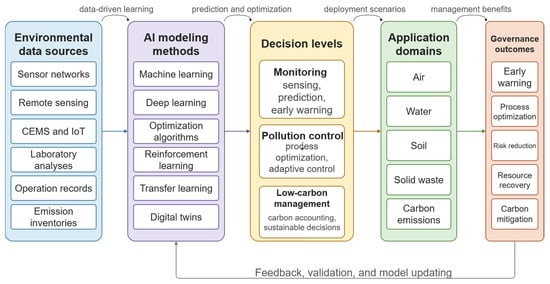
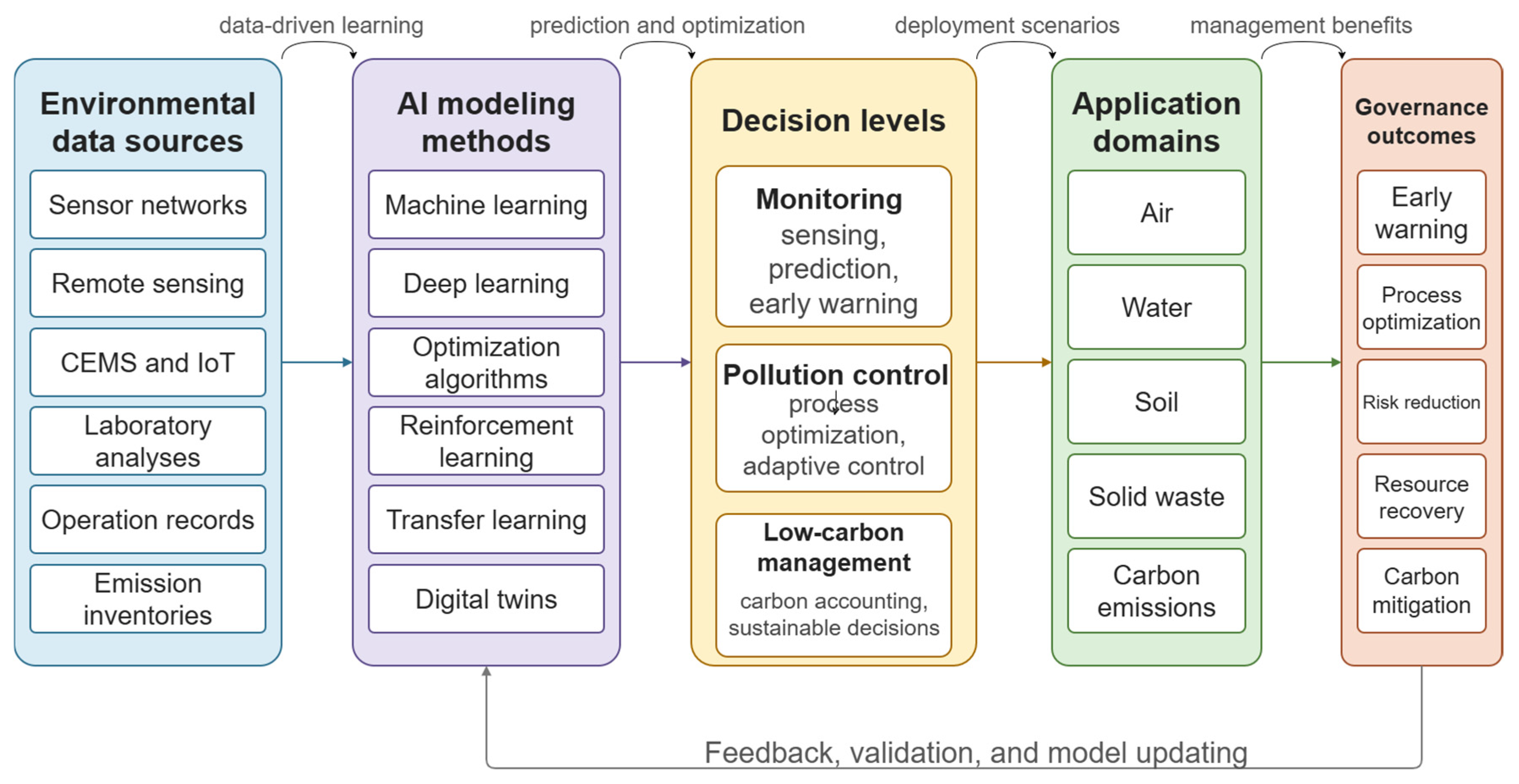
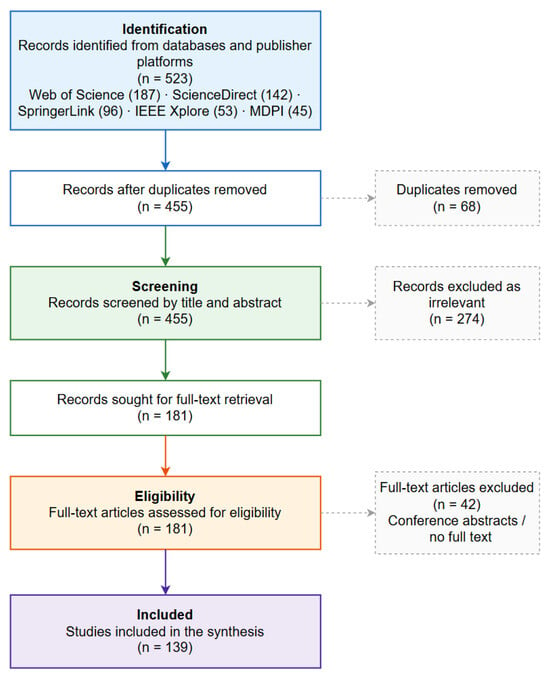
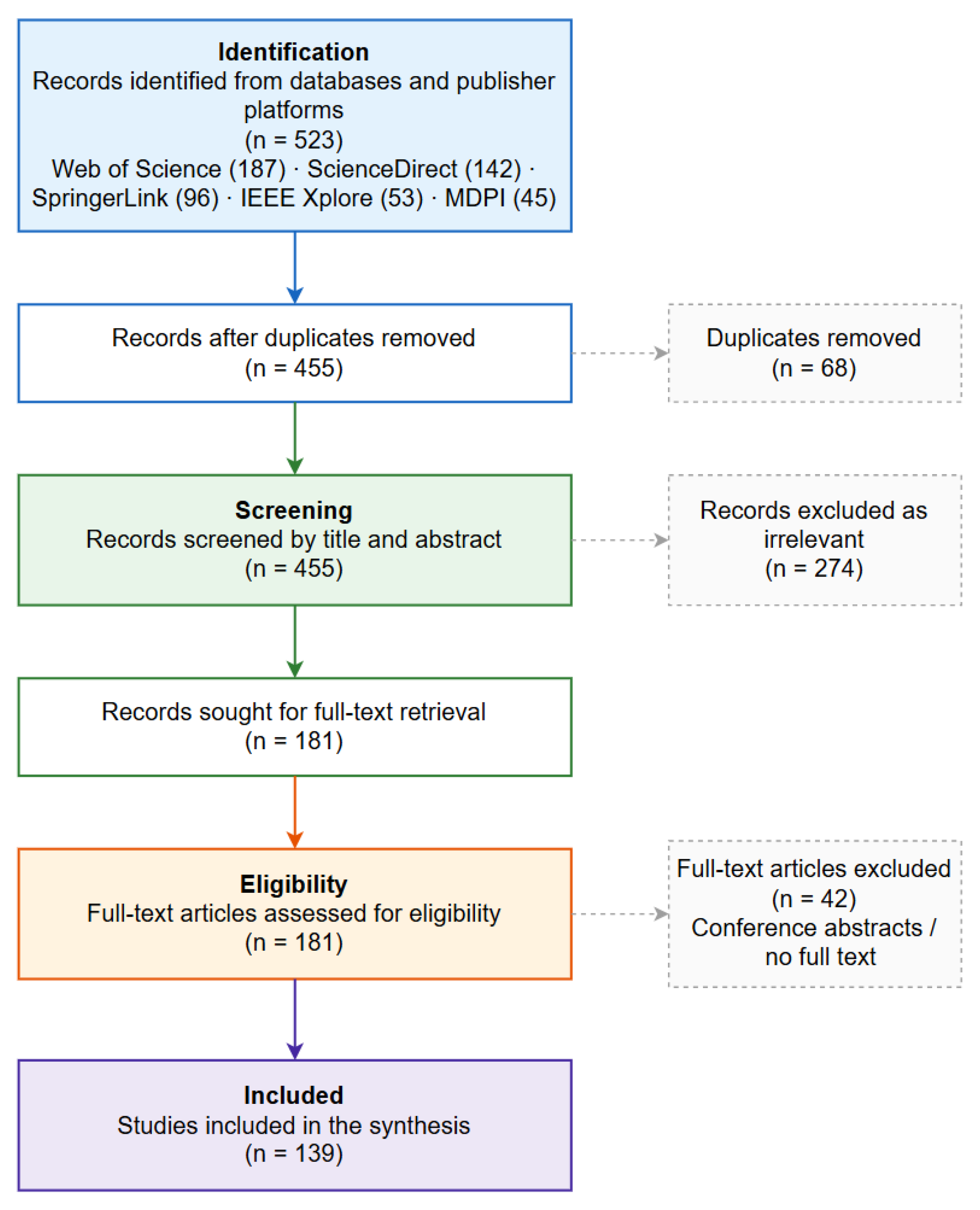
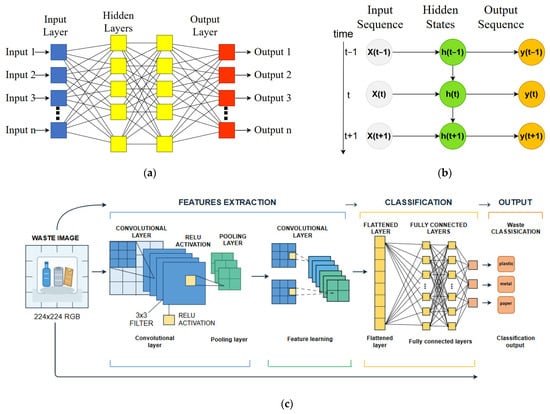
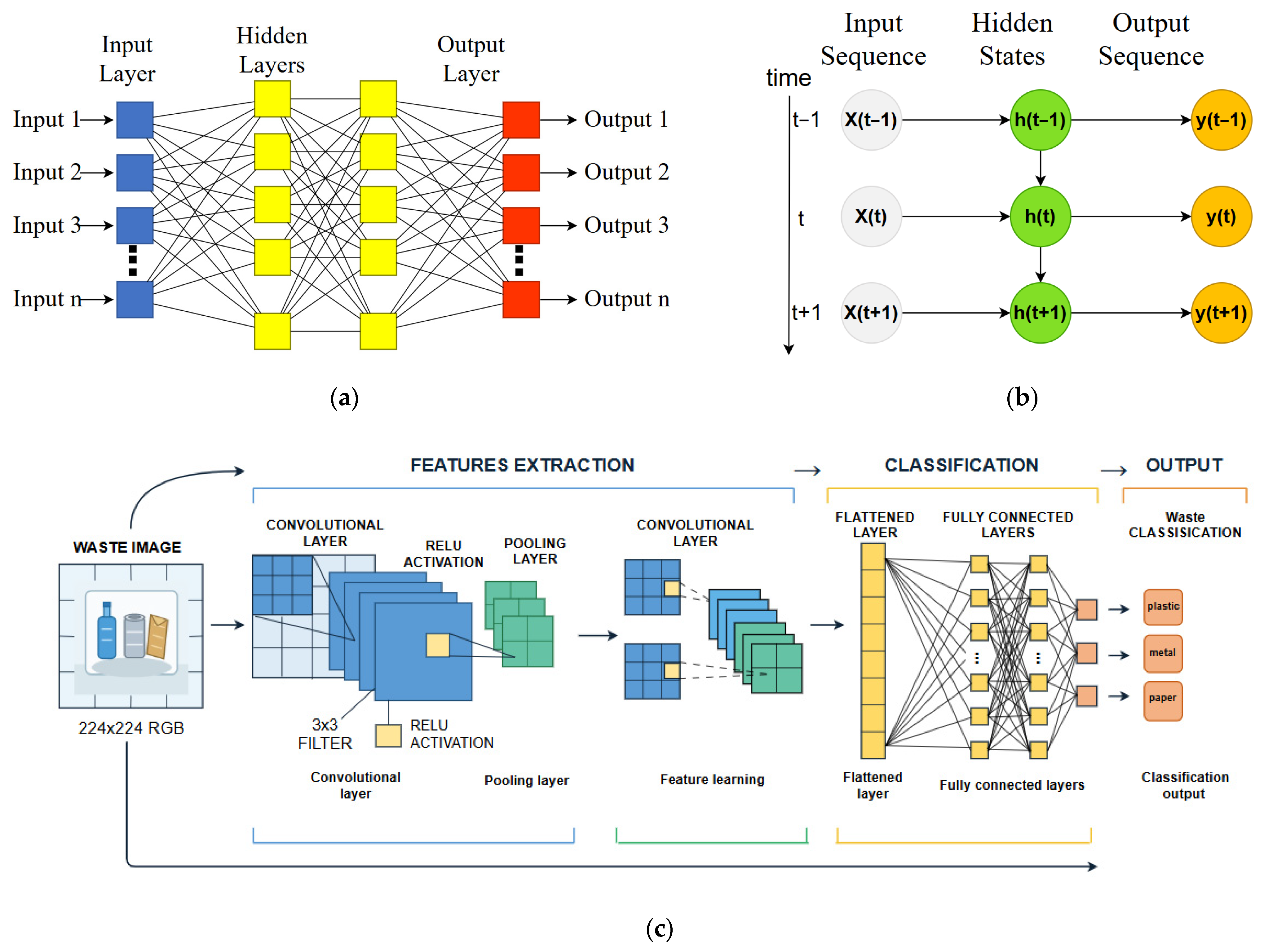
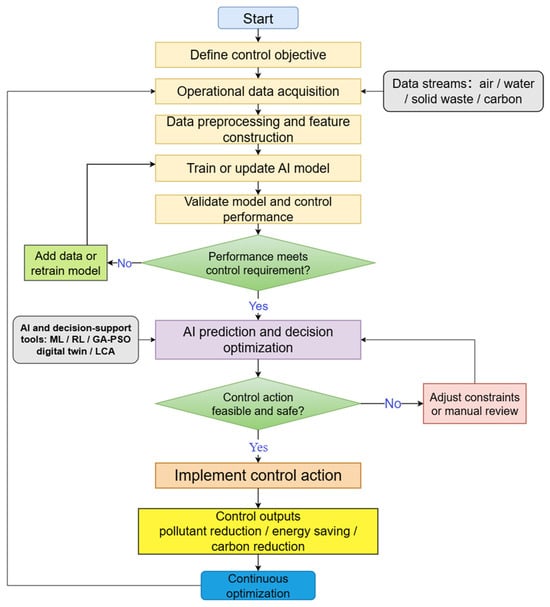
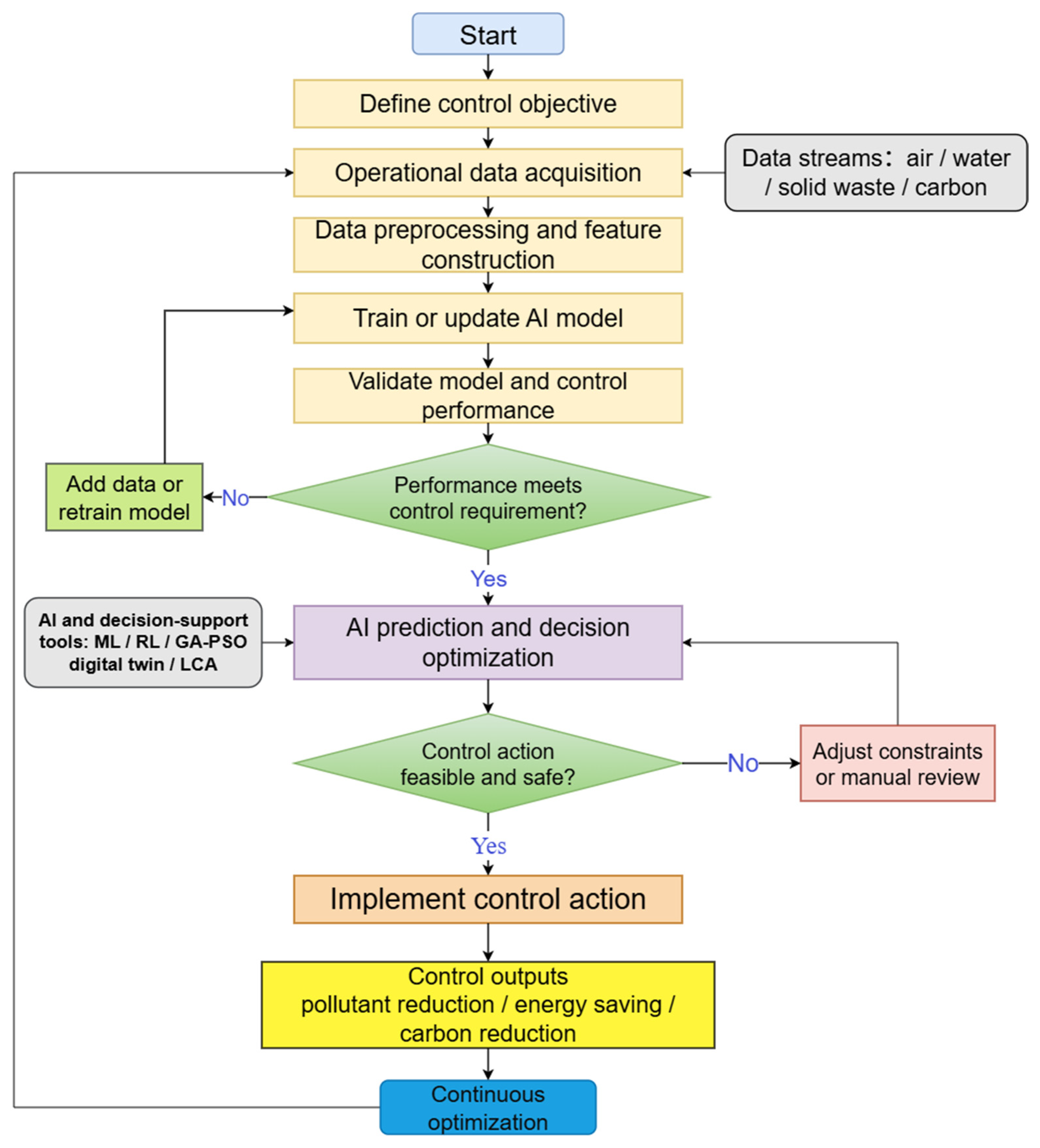

Disclaimer/Publisher’s Note: The statements, opinions and data contained in all publications are solely those of the individual author(s) and contributor(s) and not of MDPI and/or the editor(s). MDPI and/or the editor(s) disclaim responsibility for any injury to people or property resulting from any ideas, methods, instructions or products referred to in the content. |
© 2026 by the authors. Licensee MDPI, Basel, Switzerland. This article is an open access article distributed under the terms and conditions of the Creative Commons Attribution (CC BY) license.