


Abstract
Water scarcity, rising energy costs, and limited technology adoption challenge Mediterranean greenhouse horticulture. Although irrigation automation and digital decision-support tools have been widely studied, adoption barriers and integrated water–energy decision support are often addressed separately, particularly under farmers’ real operational constraints. This study combines a survey of greenhouse farmers in Almería, southeastern Spain, with an interpretable Mamdani fuzzy logic model to assess irrigation automation and support water–energy management. Survey results show that 61% of farms use basic irrigation systems, 33% use semi-automated systems, and only 6% use fully automated irrigation; 87% rely exclusively on grid electricity. The main barriers were high initial investment, reliability and configuration concerns, and limited willingness to undertake specialized training. Automation was positively associated with cultivated area and educational attainment, but not with age or crop type. The fuzzy model integrates reservoir level, irrigation demand, irrigation mode, tariff period, and energy-supply configuration to estimate irrigation cost and feasible operating time. Scenario-based validation differentiated grid-connected, hybrid photovoltaic, and off-grid configurations and highlighted the potential of renewable integration and time-sensitive irrigation management to reduce dependence on conventional energy. By linking farmer adoption constraints with interpretable operational decision support, the framework provides a practical basis for gradual irrigation modernization and supports water–energy–food nexus management in Mediterranean greenhouse horticulture.
1. Introduction
Water scarcity is one of the most pressing constraints on agricultural sustainability, particularly in Mediterranean-climate regions where rising temperatures, shifting precipitation patterns, and more frequent drought episodes are expected to increase irrigation requirements and intensify competition for limited water resources [1]. Therefore, improving irrigation efficiency is repeatedly identified as a key adaptation lever, not only to stabilize yields but also to reduce environmental pressures and the energy footprint linked to water supply and pumping [2,3]. This efficiency is inherently linked to energy consumption, creating a water-energy nexus that complicates farm management under fluctuating electricity tariffs.
Greenhouse horticulture has expanded as a strategy to improve productivity and market stability, but its long-term viability in semi-arid areas depends on the ability to manage water and nutrients with high precision [4,5,6]. Southern Spain, particularly the province of Almería represents a paradigmatic case, a highly specialized, export-oriented greenhouse sector has achieved remarkable yields, supported by progressive technological upgrades and the widespread implementation of localized irrigation and fertigation systems [5,6]. Despite these advances, water security remains a structural challenge in Almería. Groundwater overexploitation, salinization risks, and the increasing reliance on alternative sources such as desalinated and reclaimed water have been widely documented, together with the need for integrated management approaches at district and farm scales [7,8]. In parallel, Mediterranean greenhouse districts face additional constraints related to irrigation adequacy and operational performance, reinforcing the importance of objective assessment tools and improved scheduling strategies [9].
From an agronomic perspective, drip irrigation and fertigation have enabled major gains in water and nutrient use efficiency, but optimal performance depends on accurate estimation of crop water requirements and careful control of irrigation frequency, duration, and nutrient delivery [4,10]. For greenhouse crops, irrigation scheduling often combines simplified versions of reference evapotranspiration approaches with greenhouse-adapted models and sensor-based feedback, acknowledging the distinctive microclimatic conditions under protected cultivation [4,10,11]. In addition, the quality of irrigation water (notably salinity) and the adoption of desalinated or blended sources introduce further complexity, affecting both crop response and the economic feasibility of management decisions [12,13,14]. Similarly, recent research highlights how “intelligent” fertigation strategies can reduce water and fertilizer inputs without compromising yield and quality, especially when supported by real-time sensing and control [15,16].
At the same time, irrigation is increasingly framed as a digital decision problem. IoT architectures, smart sensing, and data-driven analytics now enable near real-time monitoring of soil–plant–atmosphere variables, providing actionable recommendations and closing the loop between diagnosis and actuation [17,18]. Decision support systems (DSS) for precision irrigation have demonstrated their potential to identify inefficiencies and im-prove water use efficiency in both open-field and greenhouse crops, by integrating water metering, sensors, and standardized assessment frameworks [19,20]. However, the operational value of these solutions depends on robustness, interpretability, and their capacity to incorporate practical constraints including labour, infrastructure limitations, and energy costs. Technology diffusion remains a major bottleneck. Across contexts, adoption studies consistently report that high upfront investment, limited digital skills, infrastructure gaps, perceived complexity, and reliability concerns slow down the uptake of digital agriculture and precision irrigation tools [21,22]. These barriers become particularly relevant in greenhouse farming, where day-to-day decisions are time-sensitive and risk-averse. Mediterranean living-lab evidence also suggests that bridging the gap between research prototypes and “farm-ready” solutions requires co-design, training, and clearer value propositions tailored to growers’ constraints [23]. In the specific case of Almería, re-cent survey-based research shows that farmers often favor incremental, low-risk automation pathways over high-end solutions, even when the latter promise higher technical capabilities [24]. The selection of fuzzy logic is motivated by the practical context and objectives of this study. Reinforcement learning generally requires substantial training data and interaction, while mixed-integer programming depends on clearly defined quantitative objectives and constraints. Physics-based models can provide detailed representations but typically require extensive calibration and reliable agronomic and sensor data. In contrast, a Mamdani fuzzy system can incorporate expert knowledge through transparent IF–THEN rules, handle uncertainty and incomplete information, and operate without large historical datasets. To address this, fuzzy logic has gained renewed attention as an robust interpretable way to model irrigation decisions under uncertainty. It allows modelling complex irrigation decisions by translating expert linguistic knowledge into computable algorithms, effectively handling the inherent uncertainty of greenhouse environments. Since the foundational formulation of fuzzy sets and fuzzy inference control [25,26], fuzzy systems have been widely applied to agricultural control problems because they can encode expert knowledge in linguistic rules while remaining computationally efficient and robust to noisy or incomplete sensor data [27,28]. Recent implementations illustrate how fuzzy controllers can reduce water use compared to conventional on/off strategies, and how fuzzy-IoT architectures (often using LoRa communications) can support precision scheduling and monitoring in real conditions [29].
Motivated by the need to accelerate irrigation modernization in semi-arid greenhouse systems, this study pursues two complementary objectives: (i) to characterize the current state of irrigation and fertigation automation and identify perceived adoption barriers through a structured survey of farmers in Almería; and (ii) to develop a fuzzy-logic decision support model with a rule-based structure that supports irrigation management under real operational constraints by explicitly integrating water availability and energy-related conditions. By combining empirical evidence on adoption with a transparent decision-support approach, the work aims to contribute actionable insights for scalable irrigation automation pathways in Mediterranean greenhouse agriculture.
2. Materials and Methods
2.1. Description of the Study Area
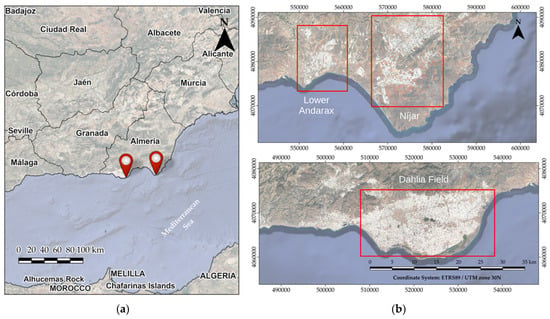
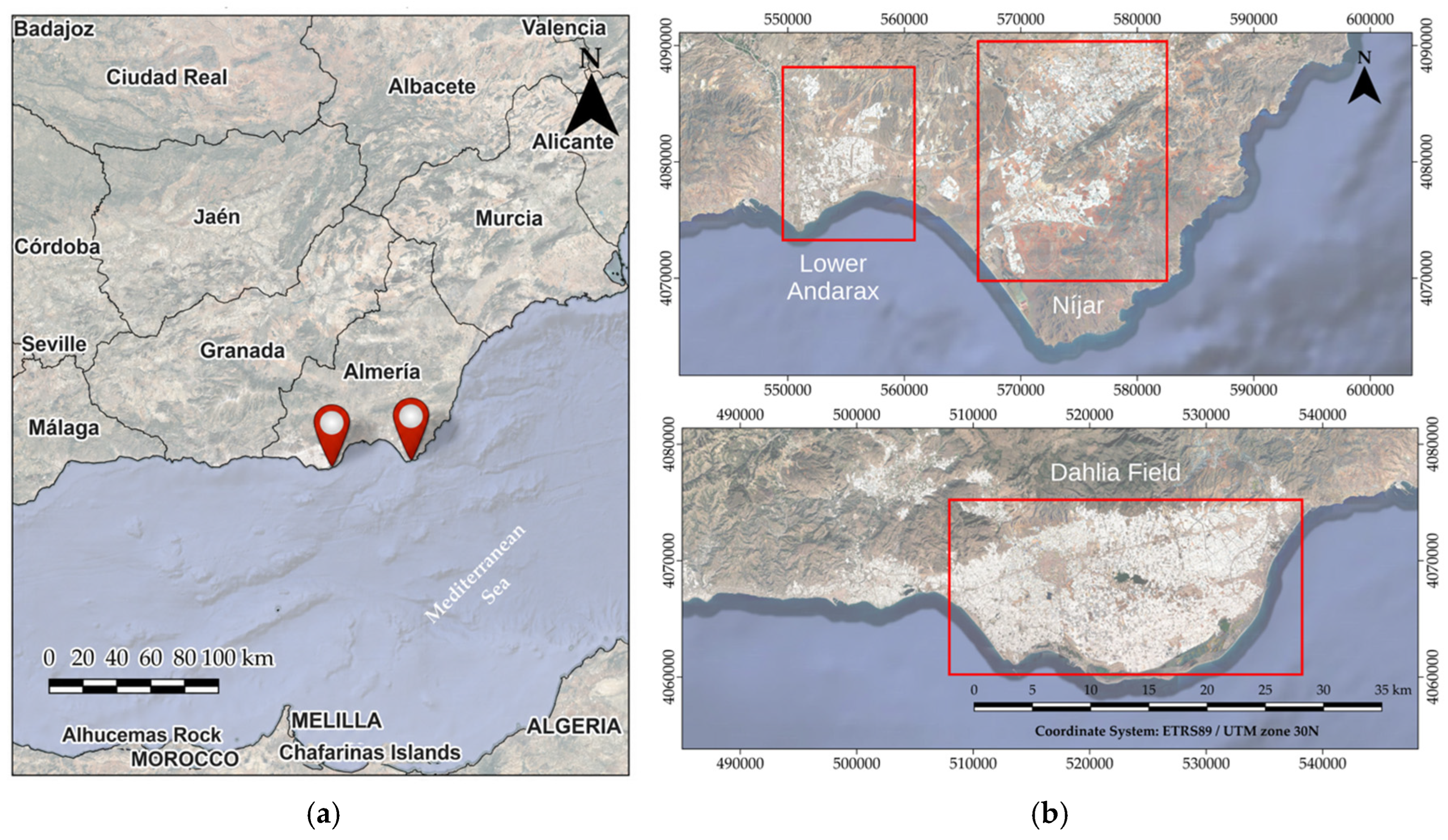
This study utilizes a structured questionnaire administered to greenhouse farmers in the province of Almería (Spain) to assess the current status of irrigation systems, including current irrigation practices and automation levels. Therefore, the survey applied includes key questions addressing respondents’ demographic characteristics, the irrigation configuration currently in place, and perceived barriers to the adoption of fully automated irrigation. Data were collected through face-to-face interviews conducted in three areas representative of Almería’s intensive agricultural model: Campo de Dalías, Bajo Andarax, and the Níjar region. A total of 170 farmers were interviewed through agricultural cooperatives and irrigation communities located in the three study areas (Campo de Dalías, Bajo Andarax, and Níjar). Within these recruitment sites, eligible participants were randomly selected and invited to participate in face-to-face interviews. To be included in the study, respondents were required to be either the owner or the person directly responsible for the management of a greenhouse holding located in one of the selected areas. Farmers who did not meet these eligibility criteria were excluded from the survey. Participation was voluntary. Figure 1 illustrates the geographical distribution of the participating farms.
Figure 1.
Geographic areas of the farmers surveyed in the region of Almeria. (a) Location of the zones in Almeria. (b) Detail on the three representative areas of the intensive agricultural model in Almería.
To ensure the results are statistically representative of the greenhouse-farm population in Almería, the minimum required sample size was estimated using the finite population sample-size formula [30]. Based on official figures from the Spanish Ministry of Agriculture, the target population consists of 16,256 greenhouse holdings in Almería [31]. The calculation assumed a 95% confidence level and a 7.5% margin of error. The expression applied is:
In this expression, n denotes the required sample size, i.e., the minimum number of questionnaires that must be administered for the results to be statistically representative of the target population. N corresponds to the population size, which in this study is 16,256 greenhouse holdings in the province of Almería, according to official data from the Spanish Ministry of Agriculture. Z is the critical value associated with the selected confidence level; for a 95% confidence level, Z = 1.96, derived from the standard normal distribution. p represents the expected proportion of individuals exhibiting the characteristic of interest in the population. Finally, e is the tolerated margin of error, set to 0.075 (7.5%) in this study. Under these assumptions, the minimum number of surveys required to achieve statistically representative results is 170.
2.2. Study Variables and Data Analysis
For the development of this study, a structured questionnaire was created to gather information on the characteristics of the farms and irrigation systems used by the surveyed farmers. The questionnaire consisted of three predefined sections, established prior to data collection to organize the variables of interest. These sections should not be interpreted as themes derived from qualitative thematic analysis, since no qualitative coding or inductive theme-generation procedure was performed. The items considered in the present analysis were structured and closed-ended, and respondents selected among predefined response categories. The instrument was organized into three thematic sections:
- Section 1: Sociodemographic and Production Characteristics, which included variables such as the farmer’s age and education level, the predominant crop, and the farm’s area or size.
- Section 2: Irrigation System and Degree of Automation, where the level of automation of the irrigation system was recorded, in addition to the energy source used for its operation.
- Section 3: Barriers to Complete Irrigation Automation, focused on identifying the main perceived factors that hinder the implementation of a fully automated irrigation system.
The data obtained were processed using statistical techniques to further diagnose the state of irrigation systems in greenhouses in Almería. The analyses were carried out using IBM SPSS Statistics (version 29.0.2). First, a descriptive analysis of categorical variables (crop type, age, farm size, and educational level) was performed, calculating absolute and relative frequencies to characterize the sample. For scalar variables, measures of central tendency and measures of dispersion were estimated. Subsequently, a multiple linear regression model was applied to assess the extent to which sociodemographic and production characteristics explain the level of automation in irrigation systems. Multiple linear regression analysis was performed on the 170 observations, using the irrigation automation score as the dependent variable and crop type, age group, cultivated area, and educational level as categorical predictors entered through dummy coding. Model performance was assessed using adjusted R2, and the T-student statistic, 95% confidence intervals, and p-values, with statistical significance set at p < 0.05. Finally, the associations between the degree of automation and variables such as crop type, age, educational level, and farm size were examined to compare potential differences in the current development of irrigation automation within the sector.
2.3. Fuzzy Logic System for Greenhouse Irrigation Management
As part of the methodological approach, a fuzzy logic system was developed to model and validate drip irrigation management in Almería greenhouses, integrating both technical/operational criteria and economic and energy constraints [32,33]. The fuzzy inference system was implemented in MATLAB R2024a using the Fuzzy Logic Toolbox (The MathWorks, Inc., Natick, MA, USA). The toolbox was used to define the input and output membership functions, construct the Mamdani rule base, perform centroid defuzzification, and generate the response surfaces used for model analysis and validation. This tool enables a structured representation of human reasoning under uncertainty, which is particularly useful in scenarios where key variables such as the real cost of irrigation, the availability of stored water in the reservoir, the available energy capacity, or the required irrigation time cannot be quantified precisely or depend on changing conditions. The fuzzy system follows a Mamdani-type architecture, incorporating five input variables: Tank Level (reservoir level), Irrigation Sectors (number of sectors to be irrigated), Irrigation Mode (irrigation strategy), Time (time-of-day slot), and Energy (available electrical supply). These inputs were selected because they represent the most influential factors in farmers’ decision-making and in the real operation of the irrigation system. Tank Level reflects stored water availability. When the level is high, irrigation is mainly supplied from the reservoir, reducing costs; when it is mid, it typically involves a combination of reservoir water and contributions from the irrigation community, resulting in intermediate cost; and when it is low, reliance on external supply increases, raising the overall cost. Irrigation Sectors represent the operational water demand: irrigating 1 sector requires less volume and shorter time than irrigating 2 sectors or all sectors, which increases both the water- and energy-related costs and the total irrigation duration. Irrigation Mode distinguishes between application strategies: Short Irrigation is associated with shorter runtimes and lower consumption, whereas Irrigation and fertilization implies higher complexity and, in general, longer duration and higher cost due to fertilizer use and the need to ensure uniform application. Time reflects the influence of electricity costs dependent on the time of day and the operational scheduling of irrigation. For modeling purposes, the daily cycle was simplified into four continuous operating periods: Night 1 (0–6 h), Morning (6–12 h), Afternoon (12–18 h), and Night 2 (18–24 h). This division represents the temporal variation in electricity costs associated with the time-of-use pricing structure established by Spanish regulations [34,35]. In particular, access tariff 2.0TD, applicable to low-voltage supplies with a contracted power of up to 15 kW, establishes three distinct energy periods (peak, shoulder, and off-peak), associated with different cost levels throughout the day. This structure is especially relevant in agricultural installations with electric pumping, where shifting irrigation operations to periods with more favorable tariff conditions can help reduce energy costs. Finally, Energy represents the type of electrical supply: Electric grid (full dependence on the grid), mixed grid (combination of grid supply with support from on-site renewable generation), and isolated grid (off-grid supply, typically renewable). The latter case reduces direct energy costs but may limit the feasibility of long irrigation events when demand is high (irrigating all sectors or applying fertigation). The fuzzy system includes two output variables: Cost (irrigation cost) and Irrigation Time (irrigation duration). Cost synthesizes the economic burden of irrigation under a given combination of water availability, energy supply, and operational conditions, while Irrigation Time represents the recommended or feasible irrigation runtime as a function of demand (sectors and mode) and, when applicable, energy-related limitations.
Each input variable was defined using fuzzy membership functions (MFs): Tank Level with three MFs (low, mid, high), Irrigation Sectors with three MFs (1 sector, 2 sectors, all sectors), Irrigation Mode with three MFs (Short Irrigation, Irrigation, Irrigation + fertilization), Energy with three MFs (Electric grid, mixed grid, isolated grid), and Time with four MFs (night1, morning, afternoon, night2). The output variables were also defined using linguistic levels (low/mid/high for Cost and short/mid/long for Irrigation Time). The rule base was constructed following agronomic and operational irrigation logic: penalizing scenarios with low reservoir level, many sectors, and fertigation mode (higher demand), increasing cost when energy depends on the grid during unfavorable tariff periods (afternoon), and favouring conditions with high reservoir level and nighttime irrigation when the energy supply is not isolated. In addition, the condition that Time does not affect Cost when Energy = isolated grid was incorporated, since in that case the electricity cost does not depend on time-of-use tariffs. Finally, crisp outputs were obtained using centroid defuzzification, providing final numerical values for both irrigation cost and irrigation duration, interpretable within their respective ranges and associated with the linguistic levels low–mid–high.
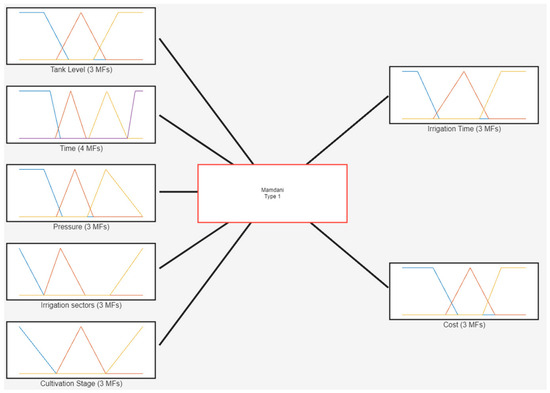
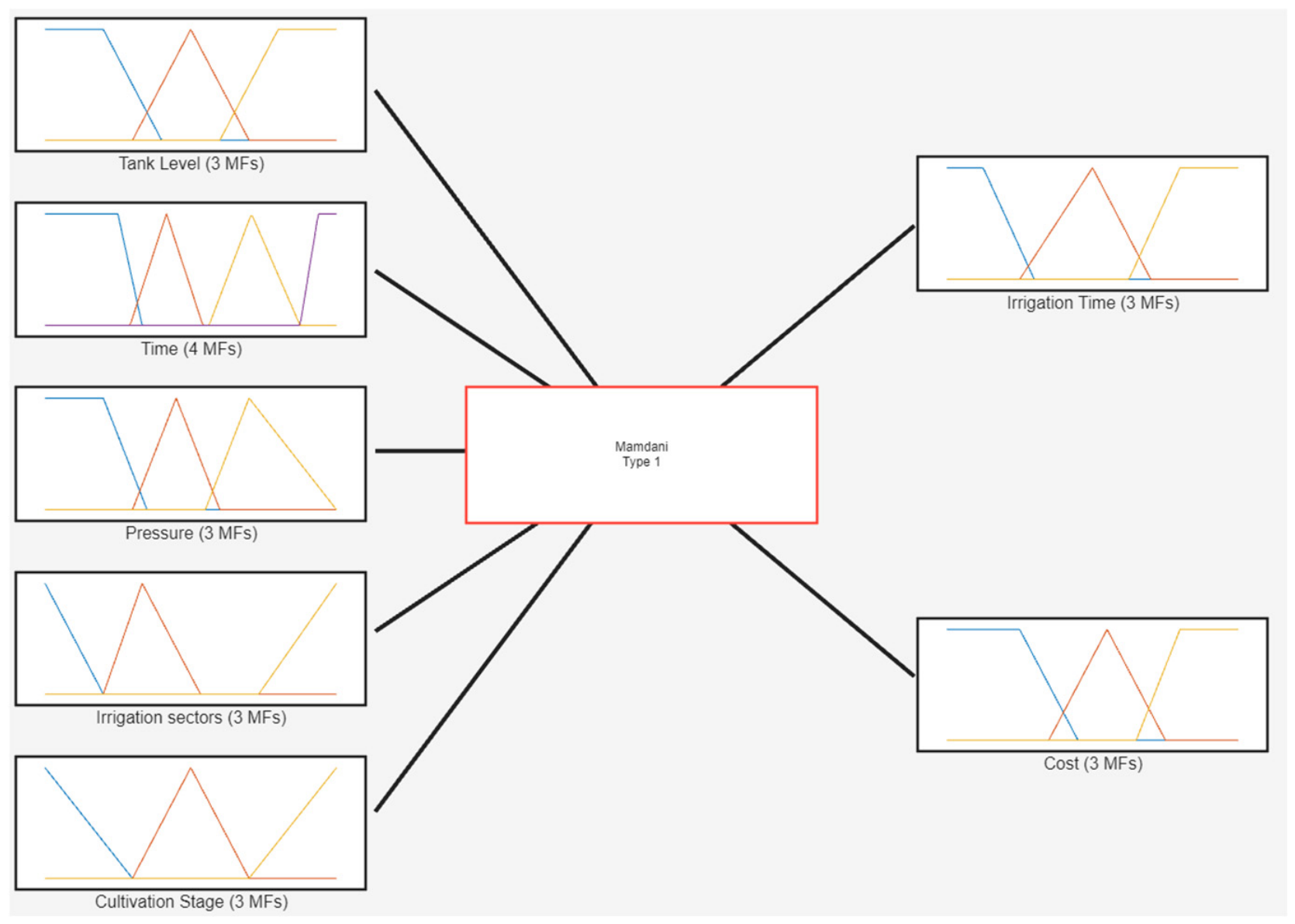
Figure 2 shows the architecture of the fuzzy inference system, including input variables, output variables, and the internal rule engine used to compute the resulting cost and duration. Triangular and trapezoidal membership functions were employed, depending on the required fit, to ensure gradual transitions between states and to better represent intermediate values.
Figure 2.
Structure of the fuzzy inference system for irrigation management.
All input and output variables were defined over normalized universes of discourse and represented using triangular and trapezoidal membership functions to ensure smooth transitions between linguistic states. Tank Level was defined within the range [0–100%], representing the percentage of water stored in the reservoir. Three triangular membership functions were used: Low (0, 0, 40), Mid (30, 50, 70), and High (60, 100, 100). Irrigation Sectors was defined over a discrete range [1–3], corresponding to the number of sectors irrigated simultaneously. Three singleton-type membership functions were defined: 1 sector, 2 sectors, and All sectors. Irrigation Mode was defined over a normalized range [0–1], with three linguistic values represented by triangular functions: Short Irrigation (0, 0, 0.4), Normal Irrigation (0.3, 0.5, 0.7), and Irrigation + Fertilization (0.6, 1, 1). Time was defined over a normalized daily interval [0–24 h], divided into four trapezoidal membership functions representing tariff periods: Night1 (0–6 h), Morning (6–12 h), Afternoon (12–18 h), and Night2 (18–24 h). Energy was defined as a discrete variable with three singleton membership functions: Electric Grid (1), Mixed Grid (2), and Isolated Grid (3).
Regarding output variables, Cost was defined over the range [0–100], representing a normalized economic index, where 0 corresponds to minimum irrigation cost and 100 to maximum cost. Three triangular membership functions were used: Low (0, 0, 40), Medium (30, 50, 70), and High (60, 100, 100). Irrigation Time was defined over the range [0–60 min], representing the irrigation duration. The variable “Irrigation Mode” represents the operational irrigation strategy applied in the greenhouse and was defined to simplify the wide diversity of real irrigation practices into three generalized categories. Short Irrigation corresponds to low-intensity irrigation events that require a smaller volume of water and shorter application times. These are typically used for maintenance or minor water adjustments. Normal Irrigation represents standard irrigation conditions, corresponding to typical crop water requirements. In practical terms, this mode is associated with average irrigation durations of approximately 30–35 min under conventional greenhouse operation. Irrigation + Fertilization (fertigation) corresponds to more complex irrigation events where water and nutrients are applied simultaneously. These scenarios generally require longer irrigation durations, higher water volumes, and increased operational costs due to the addition of fertilizers and the need for uniform distribution. In practical terms, farmers usually apply normal irrigation during planting stages or when the crop requires standard water supply. Short irrigation is typically used during harvesting periods to maintain crop conditions with reduced water input. In contrast, irrigation combined with fertilization is applied during growth and flowering stages, when both water and nutrient demands are higher. Three triangular membership functions were used: Short (0, 0, 20), Medium (15, 30, 45), and Long (40, 60, 60). Irrigation time represents the duration of a single irrigation event, expressed in minutes. It is defined within a range of 0 to 60 min, corresponding to the typical operating interval for drip irrigation cycles under greenhouse conditions, as reported by farmers. This variable does not represent the cumulative irrigation over the entire growing season, but rather the recommended duration for an individual irrigation cycle under specific operating conditions.
The rule base was constructed based on expert knowledge of irrigation management and operational constraints in greenhouse systems. A total of 81 rules were defined by combining the different input variables and their linguistic values (Table 1).
Table 1.
Complete fuzzy rule base (81 rules) of the Mamdani-type inference system, defining the relationship between input variables and output.
This fuzzy system not only allows the analysis of current irrigation configurations under different hydraulic and energy conditions, but also enables the simulation of scenarios, functioning as a decision support tool to improve irrigation planning in the context of Almería’s greenhouses, combining an interpretable model with technical and operational criteria.
3. Results
3.1. Sociodemographic and Productive Profile of the Surveyed Farmers
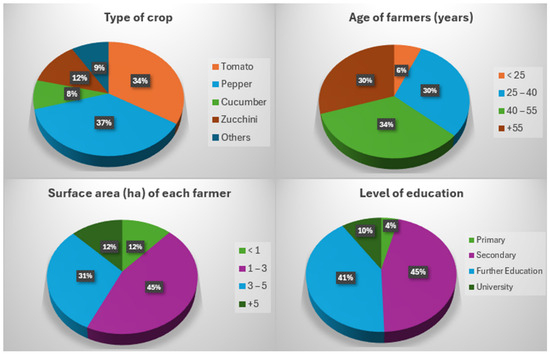
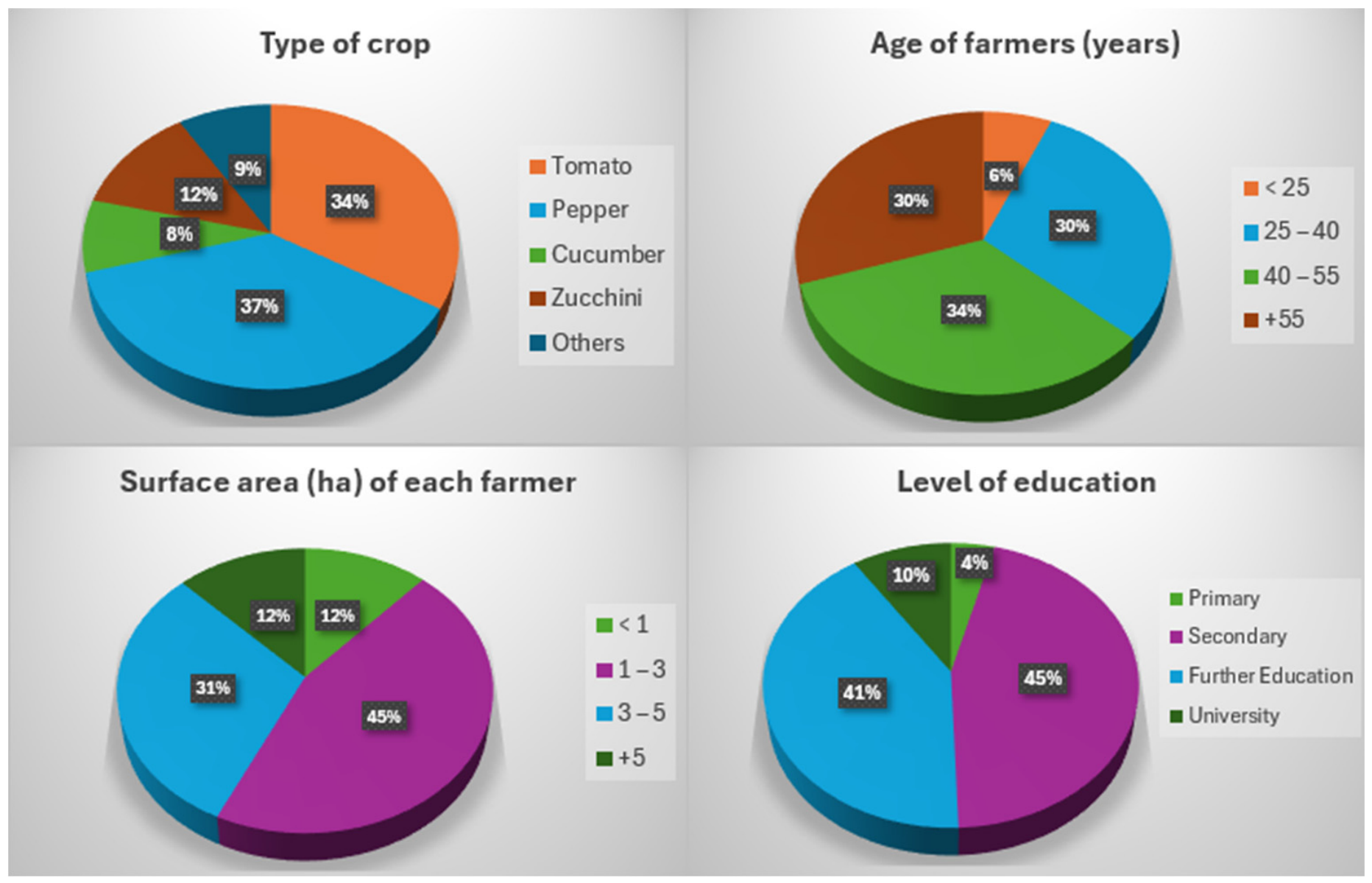
The sociodemographic profile and productive structure of the surveyed farmers reveal a sector largely specialized in a few key crops and dominated by medium-sized holdings. Figure 3 summarizes these characteristics. In terms of crop distribution, production is strongly dominated by pepper and tomato, which account for 37% and 34% of responses, respectively. Combined, these two crops represent more than 70% of the sample, evidencing a marked specialization. The remaining share is split among zucchini (12%), cucumber (8%), and a set of other crops (9%). With respect to age, the largest segment corresponds to farmers aged 40–55 years (34%). The 25–40 group and those older than 55 show very similar weights, each representing 30%, whereas participants under 25 are scarce (6%), pointing to limited generational renewal. Regarding the size of holdings, nearly half of the respondents operate farms between 1 and 3 hectares (45%), followed by those managing 3 to 5 hectares (31%). The extremes are less common: farms below 1 hectare and those exceeding 5 hectares each account for 12%, indicating that the sample is largely concentrated in medium-sized operations. Finally, the educational profile is predominantly mid. Secondary education is the most frequent level (45%), closely followed by post-secondary training such as vocational or technical programmes (41%). Only a small fraction report university education (4%), while primary education accounts for 10% of cases. Overall, the results suggest a strong presence of secondary and technical training, alongside a relatively low proportion of university graduates.
Figure 3.
Sociodemographic and productive characteristics, including crop type, farmer age, farm size (area), and educational attainment.
3.2. Results of the Level of Irrigation Automation and the Energy Source Powering the System
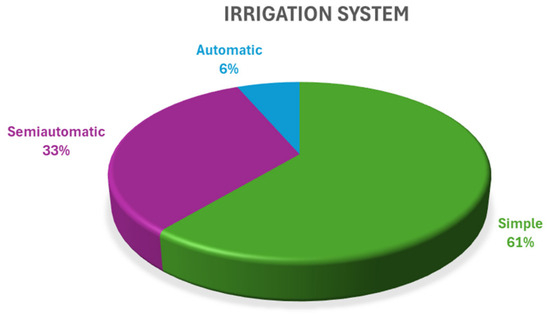
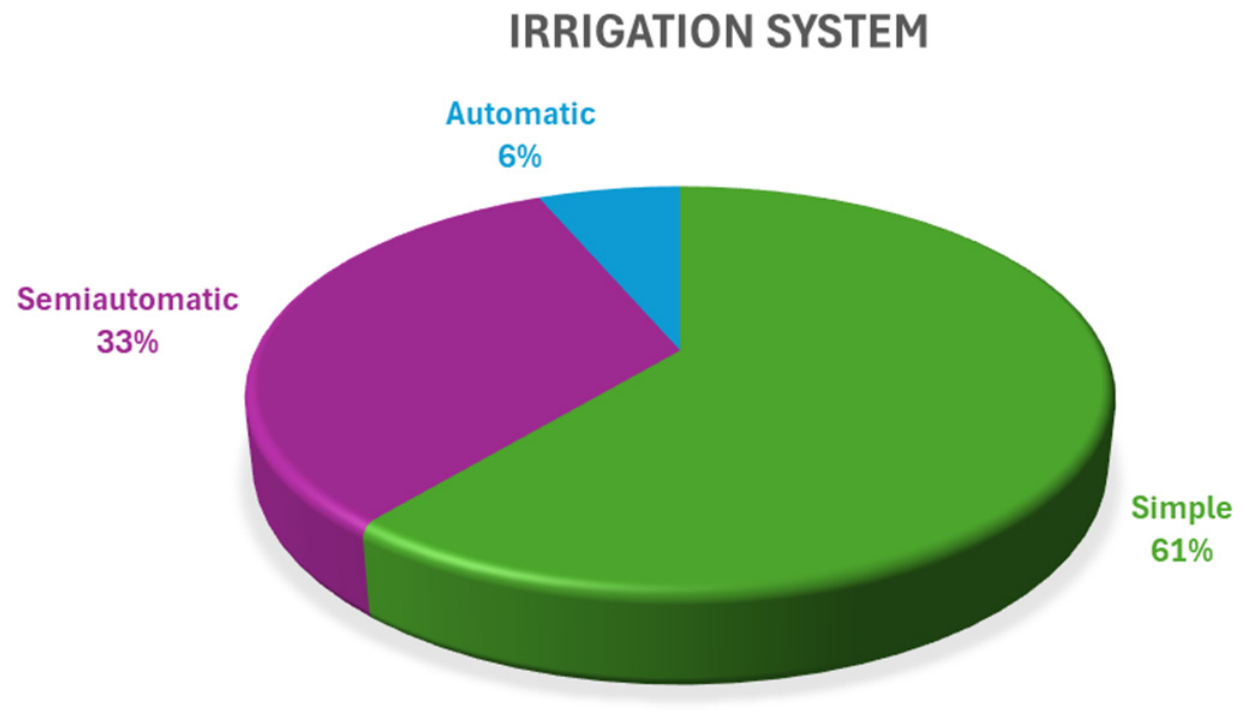
Regarding the level of technology used in the irrigation systems of the farms analyzed, Figure 4 shows a clear predominance of simple or manual irrigation systems, present in 61% of the farmers surveyed, where management is carried out by opening and closing valves. Secondly, 33% have a semi-automatic system, based on a simple controller that allows irrigation to be started or stopped using buttons, while the farmer maintains direct control over fertilization. Finally, only 6% have fully automatic irrigation, characterized by fully automated management with irrigation and fertigation programs, and the ability to adjust water supply according to crop needs. Overall, these results demonstrate that the adoption of advanced automation solutions remains limited, with most farms focusing on approaches with low technological complexity, suggesting significant room for modernization in irrigation and fertigation management.
Figure 4.
Current status of irrigation systems’ automation level.
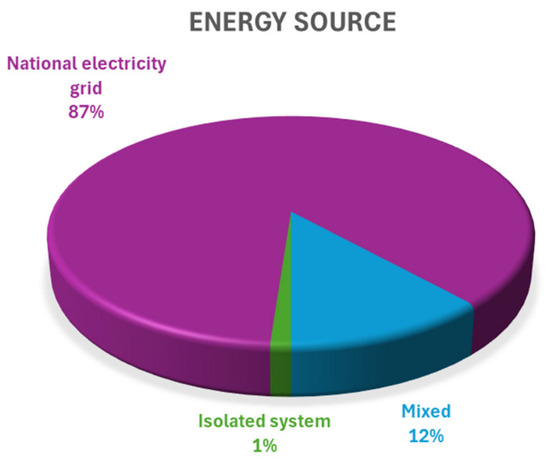
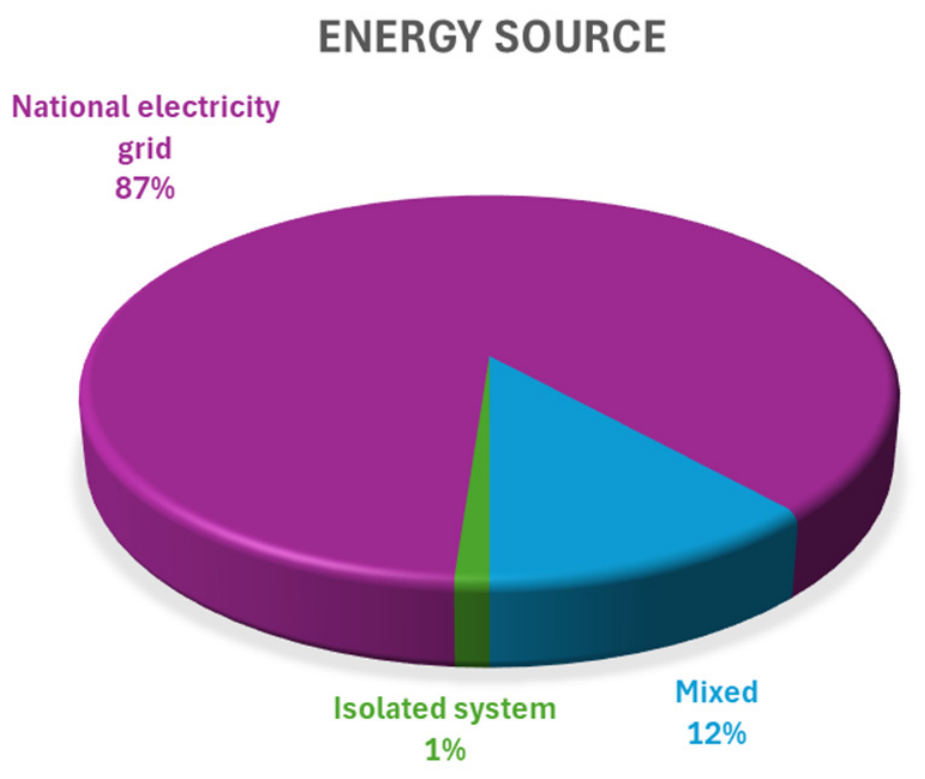
The energy infrastructure available on the surveyed farms shows that the predominant energy source is connection to the national electricity grid, present in 87% of cases (Figure 5). To a lesser extent, 12% have a hybrid system, in which the installation combines grid supply with self-generation using photovoltaic panels, suggesting an incipient move towards self-consumption strategies and energy diversification. Finally, only 1% operate with an isolated system, that is, an electrical installation completely independent of the grid. Overall, these results demonstrate a high dependence on the conventional grid, while the integration of renewable energies, although still a minority practice, is beginning to consolidate as a complementary alternative on some farms.
Figure 5.
Distribution of energy sources utilized by the surveyed greenhouse holdings in Almería.
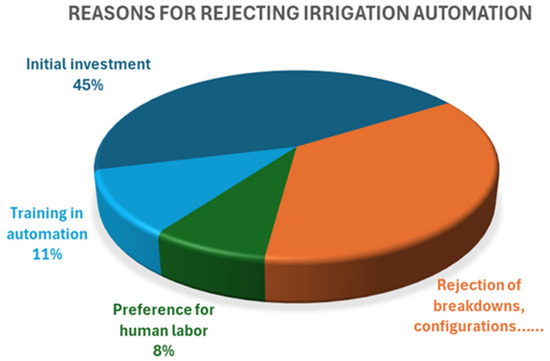
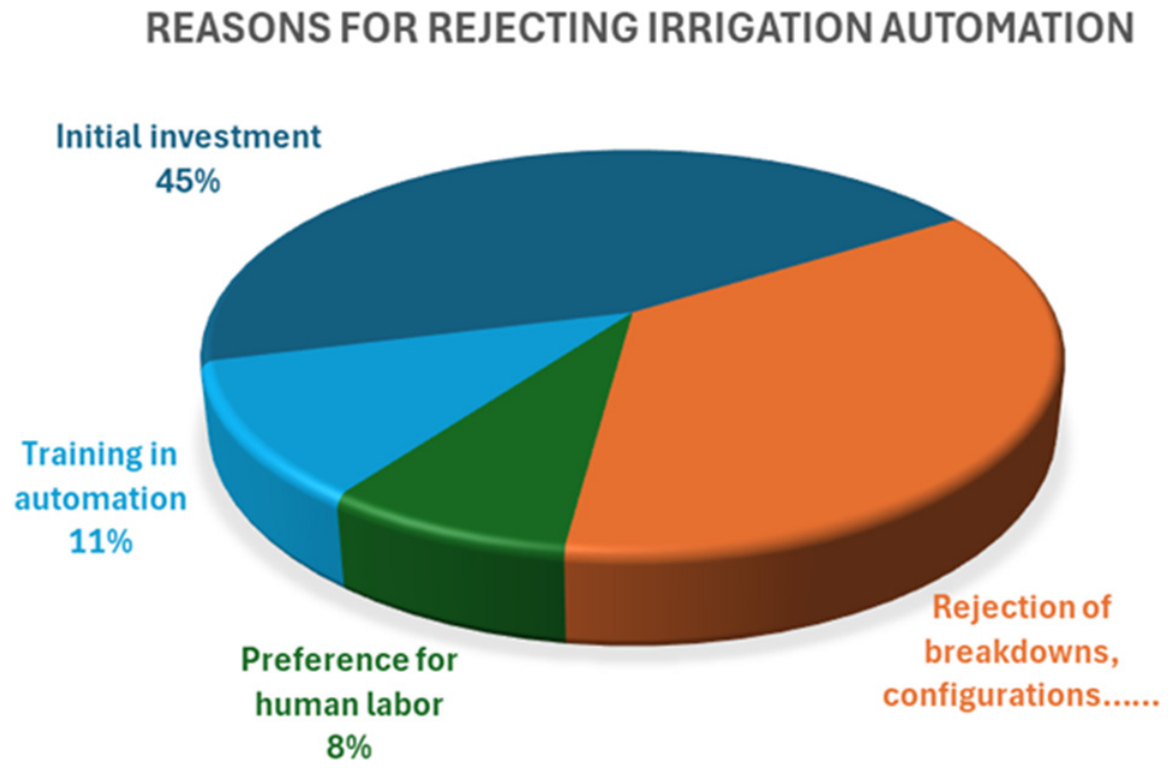
According to the surveyed farmers, the main barriers to irrigation automation in greenhouses are primarily economic and operational. The high initial investment is the most frequently reported constraint (45%), representing a major financial hurdle, particularly for small and medium-sized farms. The second most cited barrier relates to concerns about potential breakdowns and configuration issues, which undermines trust in the reliability and continuity of automated systems. In addition, a smaller proportion of respondents indicate a preference for human labour (8%), arguing that manual work remains more effective in tasks requiring adaptability and real-time decision-making. Finally, limited willingness to undertake training in automation (11%) also emerges as a relevant obstacle, largely associated with time constraints and low familiarity with new technologies. These barriers, which highlight the technical and economic challenges faced by the sector, are summarized in Figure 6.
Figure 6.
Main barriers and reasons for rejecting the adoption of irrigation automation.
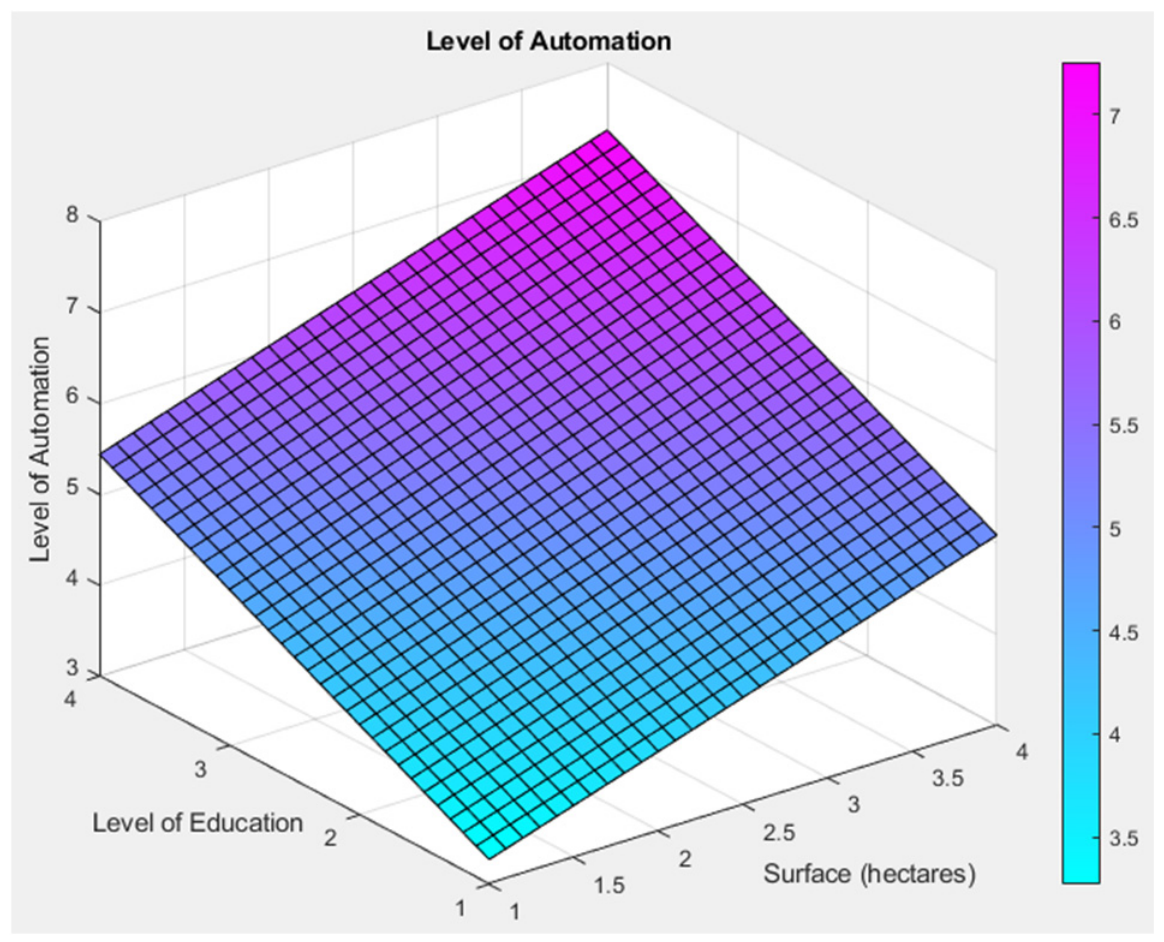
A multivariate regression analysis was performed to assess how farmers’ categorical characteristics are associated with the level of irrigation-system automation (Figure 7). The findings show that crop type and age were not significantly related to irrigation automation, as Student’s t statistics were below 1.96 and the corresponding p-values were greater than 0.05. By contrast, cultivated area and educational level were positively and significantly associated with irrigation automation. Overall, these results suggest that larger holdings and farms managed by more highly educated farmers tend to implement more advanced irrigation automation.
Figure 7.
Multivariate regression analysis results for irrigation automation level as a function of cultivated area and farmers’ educational level.
Taken together, the survey findings do not only describe the current state of irrigation automation in Almería, but also help define the practical requirements that any support tool should meet in this context. The predominance of basic irrigation systems, the strong dependence on grid electricity, and the barriers associated with investment, reliability, and operational complexity suggest that more advanced irrigation management solutions must be not only technically effective, but also interpretable, robust, and adapted to farmers’ real decision-making conditions. In this context, the fuzzy logic system proposed in this study was conceived as a transparent decision-support approach capable of incorporating key operational and energy-related constraints while remaining consistent with the incremental modernization pathways observed in the surveyed farms. The following section therefore presents the results obtained with the developed fuzzy model.
3.3. Results of the Fuzzy Logic System
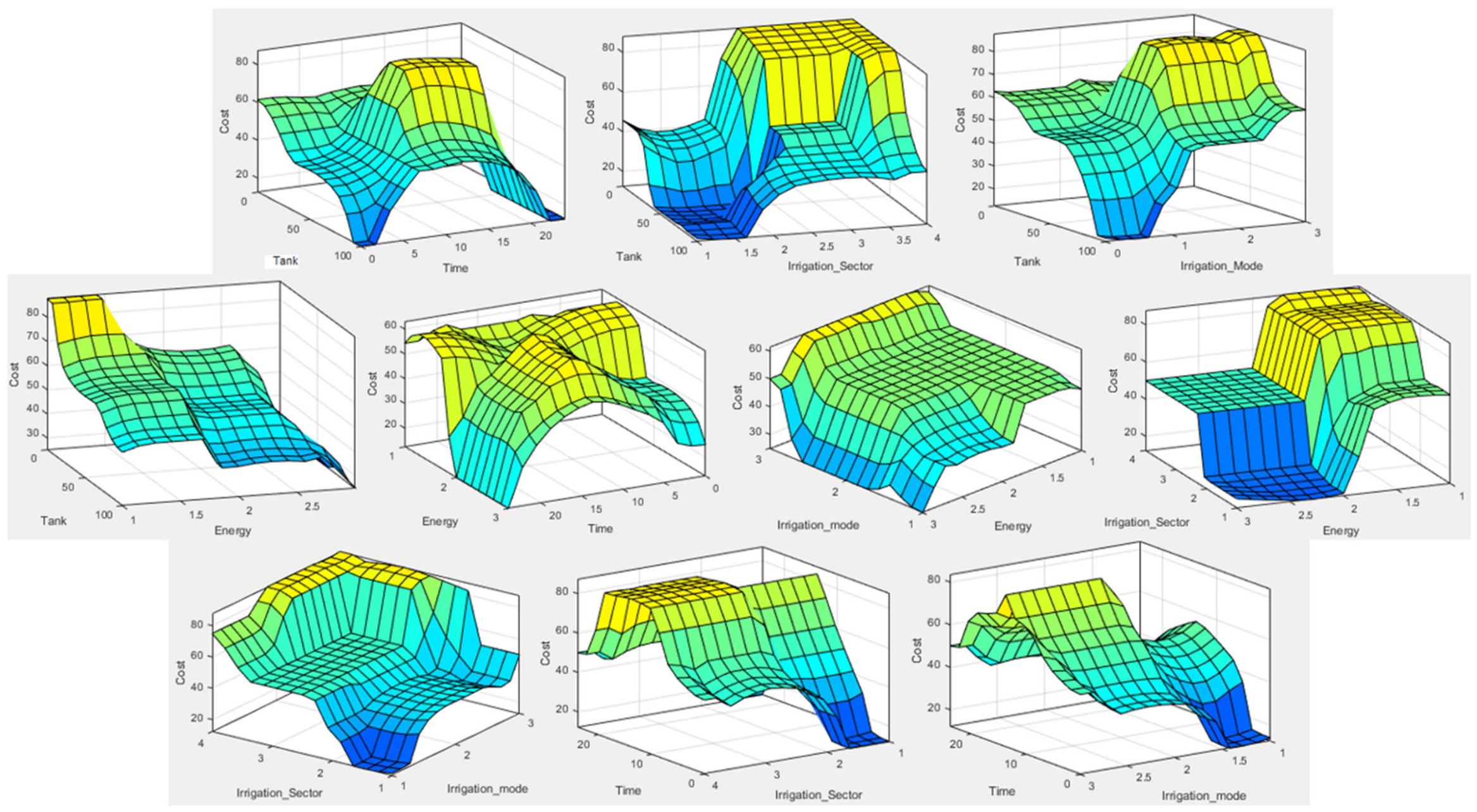
The response surfaces presented in Figure 8 confirm the consistency of the inference strategy implemented within the fuzzy system, coherently demonstrating how each input variable influences irrigation costs across various operational scenarios. Specifically, these surfaces illustrate that the contribution of each variable is non-uniform; rather, it depends on its interaction with other inputs, accurately reflecting the logic established in the rule base. Furthermore, it is observed that certain variables exert a more pronounced influence on the system output than others, reflecting implicit weightings associated with the economic impact of each operating condition. Collectively, these results highlight that the fuzzy model not only responds stably but also provides an interpretable representation of the relationship between resource availability, energy conditions, and irrigation decisions.
Figure 8.
Fuzzy logic response surfaces illustrating the interaction between input variables (Tank level, Time, Energy, Sectors, and Mode) and the resulting irrigation cost.
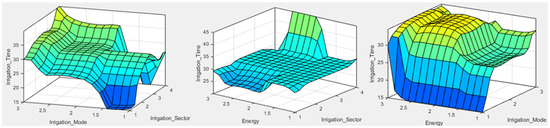
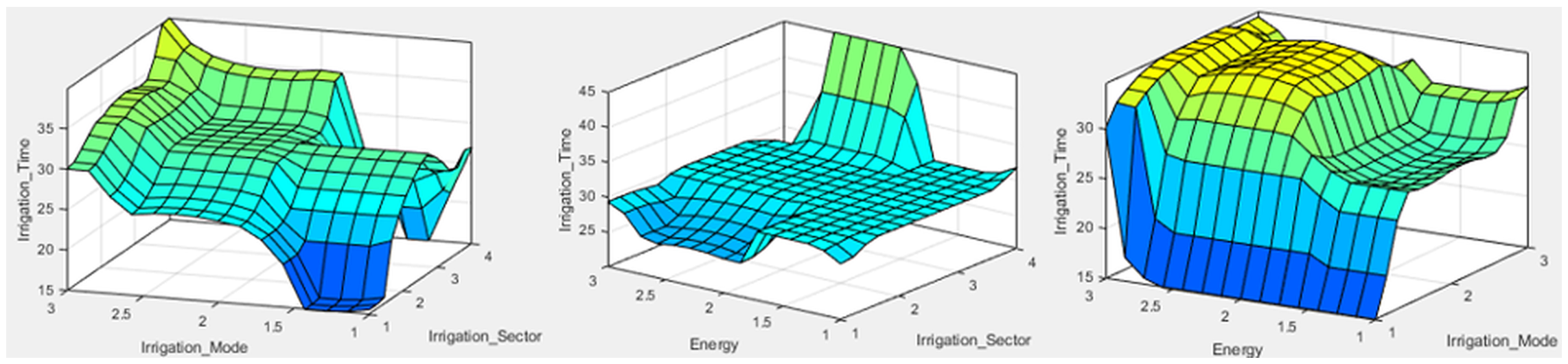
The surface results corresponding to irrigation time similarly demonstrate the coherence of the implemented fuzzy inference system, clearly identifying how different input variables condition the required irrigation duration for each analysed scenario. Figure 9 reveals that irrigation time does not depend on a single factor but emerges from the interaction between variables such as the number of sectors, irrigation mode, and energy availability, leading to differentiated responses based on operating conditions. Additionally, some variables show a more marked influence on this output, particularly those directly related to water demand and operational complexity, confirming that the model consistently assigns different implicit relevance to each input. Altogether, these surfaces evidence that the fuzzy system reproduces the decision logic associated with calculating required irrigation time in an interpretable and consistent manner.
Figure 9.
Fuzzy logic response surfaces for estimated irrigation time, illustrating the interactions between Irrigation Sector, Irrigation Mode, and Energy availability.
3.4. Fuzzy Logic System Scenario Test
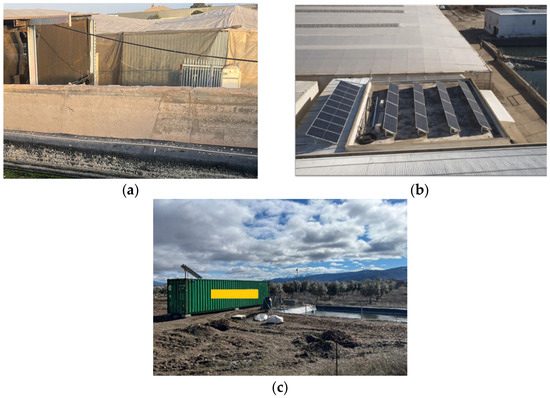
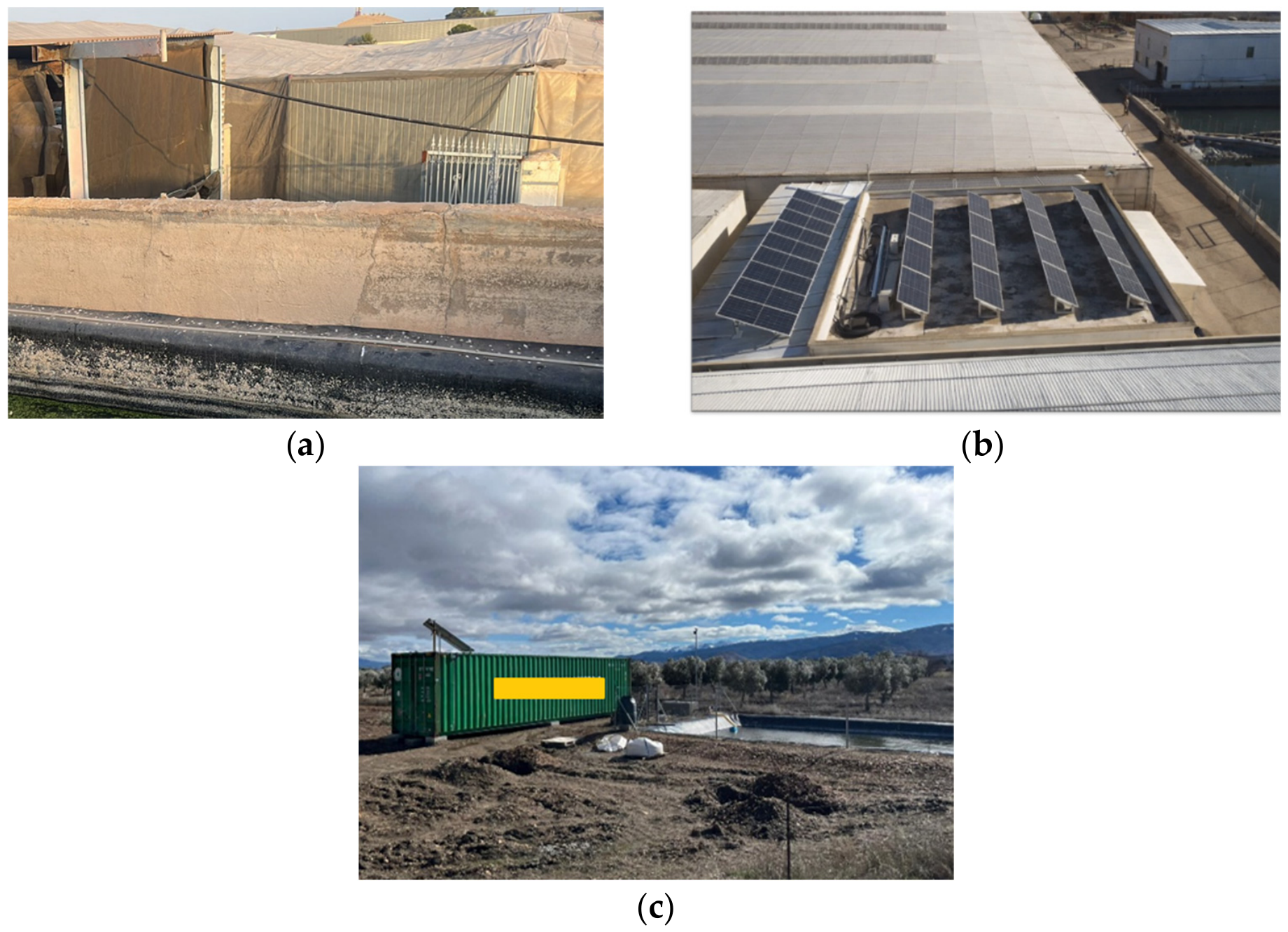
To evaluate the practical applicability of the fuzzy logic system developed in this study, a set of irrigation installations was analyzed using the fuzzy model. Each setup is characterized by its typical irrigation configuration. These scenarios were selected to reflect a range of irrigation management approaches across different farms. Figure 10 illustrates the three irrigation system configurations evaluated through the fuzzy logic system, each representing a different technological approach to greenhouse irrigation: (a) Traditional setup relying on grid-connected pumping; (b) Mixed setup featuring rooftop photovoltaic integration for self-consumption; and (c) Isolated setup using a containerized battery storage system and standalone solar generation [36].
Figure 10.
Evaluated irrigation systems: (a) Traditional (grid − only), (b) Mixed (grid + solar), and (c) Isolated (standalone solar + storage).
The traditional installation represents a holding connected exclusively to the national electricity grid with a basic irrigation setup. In this scenario, water is supplied from the farm’s reservoir with standard external support when necessary, while the energy supply depends entirely on the grid. This configuration reflects a widespread situation in Almería’s greenhouses, where farmers operate functional infrastructure but have limited energy autonomy and higher exposure to costs associated with specific electricity tariff time slots.
The mixed installation corresponds to a farm that combines grid supply with a complementary contribution from photovoltaic (PV) energy. Operationally, it maintains an irrigation capacity similar to the traditional setup but incorporates greater energy flexibility, partially reducing grid dependence. This scenario represents an intermediate modernization phase, where the farm integrates renewable solutions without completely abandoning the conventional infrastructure.
The isolated installation represents a configuration with an energy supply independent of the grid, typically based on PV generation and energy storage. In this case, irrigation viability depends heavily on real-time energy availability, which may constrain high-demand events, such as simultaneous irrigation of multiple sectors or fertigation. This model reflects a high degree of energy self-sufficiency, although it is more sensitive to operational restrictions linked to instantaneous energy availability.
Under these three configurations, the fuzzy system simulated equivalent operating conditions to estimate the resulting irrigation cost and duration. Consequently, this comparison provides a robust baseline for analyzing how the type of installation influences both operational efficiency and the economic viability of irrigation.
To visualize the internal reasoning of the fuzzy logic system and complement the scores reported in Table 2, individual simulations were conducted for each of the three irrigation configurations. These simulations show how the model processes the assigned input values, aggregating the contribution of the activated fuzzy rules into two outputs. Figure 11 presents the inference outputs for the three evaluated systems, showing the aggregated activation patterns and the resulting output values in each case. The final output value, shown in the right column of each panel, reflects the combined influence of all activated rules for the given input scenario. These graphical results reinforce the interpretability of the fuzzy model, illustrating how variations in input levels, particularly the water reservoir level, the number of irrigation sectors, the irrigation mode, the time of irrigation, and the type of electrical connection, affect the cost score and the required irrigation time. System A (Traditional setup) was simulated using input values of medium water reservoir level (50%), irrigation time (2:00 PM), normal irrigation mode (50%), 2 irrigation sectors, and grid connection (1). The unfavorable time slot for irrigation, combined with the medium-high irrigation quantities and areas proposed to the system, causes the model to establish a medium-high irrigation cost with a score of 60.2 (relative cost) and a medium irrigation time with a score of 24.2 (min). System B (Mixed installation) received input values of medium water reservoir level (50%), irrigation time (2:00 PM), normal irrigation mode (50%), 2 irrigation sectors, and mixed grid connection (2). The unfavourable time slot does not significantly affect the irrigation cost because, at that time, self-generation is high due to sunlight. These factors, along with the medium irrigation quantities and areas proposed, result in a medium-low cost with a score of 30.9 and a medium irrigation time with a score of 24.2. Finally, System C (Isolated installation) received input values of medium water reservoir level (50%), irrigation time (2:00 PM), normal irrigation mode (50%), 2 irrigation sectors, and off-grid connection (3); in this case, the unfavorable time slot does not affect the irrigation cost since the electricity generation is self-owned, leading the system to show a medium-low cost with a score of 24.7 and a medium irrigation time with a score of 24.2.
Table 2.
Evaluated configurations using the designed fuzzy logic.
Figure 11.
Fuzzy simulation results for the evaluated systems.
4. Discussion
The survey results evidence that, despite the high technical level achieved by intensive greenhouse horticulture in Almería, irrigation and fertigation automation remains largely basic. Complete automation is still residual, confirming significant potential for improving irrigation scheduling through decision support approaches. This situation suggests that modernization is not limited by the availability of localized irrigation techniques which are already widely implemented but by the adoption of additional layers of control, sensing, and decision logic. such systems would allow for a more systematic adjustment of water and nutrient delivery, reducing the continuous need for manual intervention [37]. The observed energy structure reinforces this need for water-energy integration. The heavy reliance on the national electricity grid and the still-minority presence of hybrid schemes with photovoltaics indicate that energy cost and availability continue to condition irrigation operations. This is particularly evident when farms face decisions regarding operating times and sector distribution. In this context, the explicit consideration of time slots and energy supply types acquires practical relevance; it allows the decision model to incorporate a real-world management factor that directly impacts final costs and the feasibility of specific irrigation scenarios, especially during high-demand periods or combined fertigation events.
The barriers perceived by farmers are primarily concentrated in economic and operational dimensions. Initial investment appears as the most frequent deterrent, while concerns regarding breakdowns and configuration point to a perceived risk associated with service continuity and the potential loss of control over a critical operation. Furthermore, the lower willingness to undergo training, combined with a preference for manual labour in some cases, suggests that adoption depends not only on the promise of savings but also on ease of use, robustness, and technical support. These barriers are consistent with recent literature on technology diffusion in digital agriculture, where cost, usability, and training needs significantly influence adoption rates [38]. In line with these findings, the statistical analysis shows that automation is positively associated with cultivated area and educational level, while age and crop type show no significant relationship. This result suggests that adoption responds more to structural factors and management capacity than to generational issues. It further implies that larger holdings have a greater margin to amortize investment and absorb maintenance costs, while higher education facilitates system configuration, output interpretation, and troubleshooting. From a knowledge transfer perspective, these findings support strategies for phased implementation and practical training programs focused on operation and maintenance, particularly for small and medium-sized farms.
Within this framework, the developed fuzzy logic system provides a decision support pathway that is especially relevant due to its interpretable nature and tolerance for uncertainty. The Mamdani design allows for the representation of operational reasoning through linguistic rules, combining technical and contextual variables (such as reservoir water availability, sector demand, irrigation mode, time slot, and energy supply) to produce outputs related to cost and irrigation time. The implemented system behaves consistently with the operational expectations defined in the rule base, establishing a solid foundation for evolving toward a “farm-ready” DSS. This approach is consistent with recent applications of fuzzy control in greenhouse environments aimed at automating irrigation management through fuzzy sets and rules [39]. The natural next phase involves calibrating membership functions and rules with real farm data, integrating sensors, and benchmarking performance against conventional strategies by incorporating economic metrics and, where possible, agronomic indicators.
In addition, the results obtained in this study are aligned with previous research on fuzzy logic-based irrigation systems in Mediterranean environments, where these approaches have demonstrated their ability to improve decision-making under uncertainty and optimize water use compared to conventional scheduling strategies. However, unlike most existing models, which primarily focus on agronomic and environmental variables such as soil moisture, evapotranspiration, or climatic conditions, the proposed system explicitly integrates energy-related constraints, including electricity tariff periods and energy supply types. This represents a relevant advancement, as irrigation decisions in real greenhouse systems are strongly influenced not only by crop requirements but also by operational and economic factors associated with energy availability and cost. In this sense, the model contributes to bridging the gap between theoretical irrigation optimization and real-world farm management.
From a practical perspective, these findings suggest that the adoption of advanced irrigation management tools should not rely exclusively on technological performance but must also address the economic and operational constraints perceived by farmers. The integration of energy-aware decision-making may support more efficient irrigation scheduling, particularly in contexts where electricity costs vary significantly throughout the day. From a policy standpoint, the results highlight the need for integrated strategies to promote irrigation modernization, including financial incentives to reduce initial investment costs, targeted training programs, and support for the integration of renewable energy systems. Decision support systems such as the one proposed in this study may therefore play a key role in facilitating the transition toward more sustainable and resource-efficient agricultural practices in water-scarce Mediterranean regions.
Although the model has been developed and evaluated in the specific context of Almería’s greenhouse systems, its structure is inherently adaptable to other agricultural environments with similar climatic and operational characteristics. The use of a Mamdani-type fuzzy inference system allows for the modification of membership functions and rule bases according to local conditions, making it a flexible tool for irrigation management in other Mediterranean or semi-arid regions. Nevertheless, such adaptation requires careful calibration to ensure consistency with local agronomic practices, water availability, and energy infrastructures.
Despite these contributions, several limitations of the study should be acknowledged. First, the validation of the fuzzy logic system is based on simulated scenarios rather than real field data, which limits the ability to quantitatively assess its impact on water savings, energy efficiency, and crop performance under actual operating conditions. Second, the membership functions and rule base were defined based on expert knowledge and general operational criteria, without calibration using real-time sensor data or historical irrigation records, which may reduce the precision of the model under specific conditions. Third, the model does not explicitly incorporate agronomic variables such as soil moisture, crop growth stage, or evapotranspiration, which are commonly used in advanced irrigation scheduling systems. Finally, although the approach is transferable, its direct application to other regions requires adaptation to local environmental, technical, and economic conditions. Although the current fuzzy logic system has been conceived primarily as an operational decision-support tool focused on resource efficiency and irrigation cost optimization, its structure is scalable toward more comprehensive frameworks that explicitly incorporate agronomic and economic performance variables. Future extensions of the model may integrate crop yield estimations, water productivity indicators, and economic return functions, enabling the evaluation of trade-offs between irrigation reduction, operational costs, and production losses. This would allow the system to evolve from a cost-oriented management tool toward a broader profit-efficiency decision-support framework, where irrigation strategies could be assessed not only in terms of water and energy savings, but also according to their impact on crop productivity and overall farm profitability. Such scalability is particularly relevant under scenarios of high energy prices or water scarcity, where deficit irrigation strategies may reduce yields while still improving overall economic efficiency.
5. Conclusions
This study confirms that advanced irrigation automation in Almería’s greenhouses remains limited, with a predominance of low-complexity strategies, despite a production system and increasing water scarcity that demand more precise and reproducible decision-making. The energy infrastructure, largely dependent on the national grid, and the identified barriers centered on initial investment, reliability, and training largely explain why the transition toward full automation is occurring slowly and gradually. Furthermore, the positive association between automation, cultivated area, and educational level suggests that modernization requires not only technology but also favourable amortization conditions and training support tailored to the sector’s profile. As a practical contribution, the proposed fuzzy logic system offers an interpretable approach to support irrigation decision-making under real-world constraints, simultaneously integrating water availability, operational demand, and energy-related time slots. The model showed consistent behaviour with the defined rule base and provides a useful framework for recommendation and scenario analysis, with the potential for future integration into IoT-based control architectures. The main strengths of the proposed approach are its interpretability, its ability to integrate water, operational, and energy-related variables within a single decision-support framework, and its flexibility to represent different irrigation and energy-supply scenarios through transparent linguistic rules. Furthermore, linking the modelling approach with the technological and adoption conditions identified through the farmer survey provides a practical basis for gradual irrigation modernization.
However, several limitations should be acknowledged. The fuzzy model has been evaluated through scenario-based analysis and consistency with the predefined rule base, but it has not yet been calibrated or experimentally validated using continuous operational data from commercial greenhouses. Consequently, the present study does not quantify actual water and energy savings, long-term operational robustness, or farmer acceptance following real-world implementation. Future work should therefore focus on calibrating the membership functions and rule base with field data, integrating real-time sensor information, benchmarking the model against conventional irrigation strategies, and evaluating its performance under real operating conditions.
Author Contributions
Conceptualization, A.G.-C. and R.M.C.M.; methodology, A.G.-C.; software, A.G.-C.; validation, R.M.C.M., C.A.R.G. and A.V.-V.; formal analysis, A.G.-C. and A.M.R.-P.; investigation, A.G.-C.; resources, R.M.C.M.; data curation, A.G.-C.; writing—original draft preparation, A.G.-C.; writing—review and editing, A.G.-C.; visualization, C.A.R.G.; supervision, A.V.-V. and A.M.R.-P.; project administration, A.V.-V.; funding acquisition, R.M.C.M. All authors have read and agreed to the published version of the manuscript.
Funding
This research received no external funding.
Institutional Review Board Statement
Not applicable.
Informed Consent Statement
Not applicable.
Data Availability Statement
Data are contained within the article. The tool files used for this study are available upon request from the corresponding author.
Acknowledgments
This research was greatly facilitated by the Department of Building Technology at the Universidad Politécnica de Madrid, whose support made this research stay possible. The Department also provided valuable institutional support throughout the entire period, and the assistance received, together with the facilities made available, was essential for the successful completion of the activities carried out during the stay.
Conflicts of Interest
The authors declare no conflicts of interest.
References
- Ali, E.; Cramer, W.; Carnicer, J.; Georgopoulou, E.; Hilmi, N.J.M.; Le Cozannet, G.; Lionello, P. Cross-Chapter Paper 4: Mediterranean Region. In Climate Change 2022: Impacts, Adaptation and Vulnerability; Pörtner, H.-O., Roberts, D.C., Tignor, M., Poloczanska, E.S., Mintenbeck, K., Alegría, A., Craig, M., Langsdorf, S., Löschke, S., Möller, V., et al., Eds.; Contribution of Working Group II to the Sixth Assessment Report of the Intergovernmental Panel on Climate Change; Cambridge University Press: Cambridge, UK; New York, NY, USA, 2022; pp. 2233–2272. [Google Scholar] [CrossRef] [Scilit]
- Fader, M.; Shi, S.; von Bloh, W.; Bondeau, A.; Cramer, W. Mediterranean irrigation under climate change: More efficient irrigation needed to compensate for increases in irrigation water requirements. Hydrol. Earth Syst. Sci. 2016, 20, 953–973. [Google Scholar] [CrossRef] [Scilit]
- Evans, R.G.; Sadler, E.J. Methods and technologies to improve efficiency of water use. Water Resour. Res. 2008, 44, 1–15. [Google Scholar] [CrossRef] [Scilit]
- Incrocci, L.; Thompson, R.B.; Fernandez-Fernandez, M.D.; De Pascale, S.; Pardossi, A.; Stanghellini, C.; Rouphael, Y.; Gallardo, M. Irrigation management of European greenhouse vegetable crops. Agric. Water Manag. 2020, 242, 106393. [Google Scholar] [CrossRef] [Scilit]
- Mendoza-Fernández, A.J.; Peña-Fernández, A.; Molina, L.; Aguilera, P.A. The Role of Technology in Greenhouse Agriculture: Towards a Sustainable Intensification in Campo de Dalías (Almería, Spain). Agronomy 2021, 11, 101. [Google Scholar] [CrossRef] [Scilit]
- Valera, D.L.; Belmonte, L.J.; Molina-Aiz, F.D.; López, A.; Camacho, F. The greenhouses of Almería, Spain: Technological analysis and profitability. Acta Hortic. 2017, 1170, 219–226. [Google Scholar] [CrossRef] [Scilit]
- Garcia-Caparros, P.; Contreras, J.I.; Baeza, R.; Segura, M.L.; Lao, M.T. Integral Management of Irrigation Water in Intensive Horticultural Systems of Almería. Sustainability 2017, 9, 2271. [Google Scholar] [CrossRef] [Scilit]
- Caparrós-Martínez, J.L.; Rueda-López, N.; Milán-García, J.; de Pablo Valenciano, J. Public policies for sustainability and water security: The case of Almeria (Spain). Glob. Ecol. Conserv. 2020, 23, e01037. [Google Scholar] [CrossRef] [Scilit]
- Sánchez, J.A.; Reca, J.; Martínez, J. Irrigation Water Management in a Mediterranean Greenhouse District: Irrigation Adequacy Assessment. Irrig. Drain. 2015, 64, 299–313. [Google Scholar] [CrossRef] [Scilit]
- Allen, R.G.; Pereira, L.S.; Raes, D.; Smith, M. Crop Evapotranspiration—Guidelines for Computing Crop Water Requirements (FAO Irrigation and Drainage Paper 56); FAO: Rome, Italy, 1998. [Google Scholar]
- López-Gálvez, J.; Castilla, N.; Orgaz, F.; Fereres, E. Drip irrigation technology transfer for the greenhouse industry in Almería (Spain). Acta Hortic. 1993, 335, 563–568. [Google Scholar] [CrossRef] [Scilit]
- Bonachela, S.; Fernández, M.D.; Cabrera-Corral, F.J.; Granados, M.R. Salt and irrigation management of soil-grown Mediterranean greenhouse tomato crops drip-irrigated with moderately saline water. Agric. Water Manag. 2022, 262, 107433. [Google Scholar] [CrossRef] [Scilit]
- Reca, J.; Trillo, C.; Sánchez, J.A.; Martínez, J.; Valera, D. Optimization model for on-farm irrigation management of Mediterranean greenhouse crops using desalinated and saline water from different sources. Agric. Syst. 2018, 166, 173–183. [Google Scholar] [CrossRef] [Scilit]
- Gil, J.D.; González, R.A.; Sánchez-Molina, J.A.; Berenguel, M.; Rodríguez, F. Reverse osmosis desalination for greenhouse irrigation: Experimental characterization and economic evaluation based on energy hubs. Desalination 2024, 574, 117281. [Google Scholar] [CrossRef] [Scilit]
- Chtouki, M.; Naciri, R.; Oukarroum, A. A review on phosphorus drip fertigation in the Mediterranean region: Fundamentals, current situation, challenges, and perspectives. Heliyon 2024, 10, e25543. [Google Scholar] [CrossRef] [Scilit] [PubMed]
- Bao, L.; Zhang, S.; Liang, X.; Wang, P.; Guo, Y.; Sun, Q.; Zhou, J.; Chen, Z. Intelligent drip fertigation increases water and nutrient use efficiency of watermelon in greenhouse without compromising the yield. Agric. Water Manag. 2023, 282, 108278. [Google Scholar] [CrossRef] [Scilit]
- Nsoh, B.; Katimbo, A.; Guo, H.; Heeren, D.M.; Nakabuye, H.N.; Qiao, X.; Ge, Y.; Rudnick, D.R.; Wanyama, J.; Bwambale, E.; et al. Internet of Things-Based Automated Solutions Utilizing Machine Learning for Smart and Real-Time Irrigation Management: A Review. Sensors 2024, 24, 7480. [Google Scholar] [CrossRef] [Scilit] [PubMed]
- Dantas, R.A.S.; Togneri, R.M.; Prati, R.C.; Kamienski, C.A. A review of Smart Irrigation. Biosyst. Eng. 2025, 257, 104220. [Google Scholar] [CrossRef] [Scilit]
- Flores Cayuela, C.M.; González Perea, R.; Camacho Poyato, E.; Montesinos, P. An ICT-based decision support system for precision irrigation management in outdoor orange and greenhouse tomato crops. Agric. Water Manag. 2022, 269, 107686. [Google Scholar] [CrossRef] [Scilit]
- Gallardo, M.; Peña-Fleitas, M.T.; Giménez, C.; Padilla, F.M.; Thompson, R.B. Adaptation of VegSyst-DSS for macronutrient recommendations of fertigated, soil-grown, greenhouse vegetable crops. Agric. Water Manag. 2023, 278, 107973. [Google Scholar] [CrossRef] [Scilit]
- Dibbern, T.; Romani, L.A.S.; Massruhá, S.M.F.S. Main drivers and barriers to the adoption of Digital Agriculture technologies. Smart Agric. Technol. 2024, 8, 100459. [Google Scholar] [CrossRef] [Scilit]
- Kakkavou, K.; Gemtou, M.; Fountas, S. Drivers and barriers to the adoption of precision irrigation technologies in olive and cotton farming—Lessons from Messenia and Thessaly regions in Greece. Smart Agric. Technol. 2024, 7, 100401. [Google Scholar] [CrossRef] [Scilit]
- Gava, O.; Sturiale, S.; Gallardo, M.; Buendía Guerrero, D.; Buyuktas, D.; Ece Aslan, G.; Laarif, A.; Bouslama, T.; Navarro, A.; Incrocci, L.; et al. Addressing needs for the diffusion of digital greenhouse farming. Insights from Living Labs in the Mediterranean basin. Bio-Based Appl. Econ. 2025, 15, 33–43. [Google Scholar] [CrossRef] [Scilit]
- García-Chica, A.; Chica, R.M.; Caparros-Mancera, J.J.; Giménez-Fernández, A.; Torres-Moreno, J.L. Future of smart greenhouses in Almería: Farmers’ perspectives and fuzzy logic-based evaluation. Smart Agric. Technol. 2025, 12, 101515. [Google Scholar] [CrossRef] [Scilit]
- Zadeh, L.A. Fuzzy sets. Inf. Control 1965, 8, 338–353. [Google Scholar] [CrossRef] [Scilit]
- Mamdani, E.H.; Assilian, S. An experiment in linguistic synthesis with a fuzzy logic controller. Int. J. Man-Mach. Stud. 1975, 7, 1–13. [Google Scholar] [CrossRef] [Scilit]
- Neugebauer, M.; Akdeniz, C.; Demir, V.; Yurdem, H. Fuzzy logic control for watering system. Sci. Rep. 2023, 13, 18485. [Google Scholar] [CrossRef] [Scilit] [PubMed]
- Benzaouia, M.; Hajji, B.; Mellit, A.; Rabhi, A. Fuzzy-IoT smart irrigation system for precision scheduling and monitoring. Comput. Electron. Agric. 2023, 215, 108407. [Google Scholar] [CrossRef] [Scilit]
- Artetxe, E.; Barambones, O.; Martín Toral, I.; Uralde, J.; Calvo, I.; del Rio, A. Smart IoT Irrigation System Based on Fuzzy Logic, LoRa, and Cloud Integration. Electronics 2024, 13, 1949. [Google Scholar] [CrossRef] [Scilit]
- Uakarn, C.; Chaokromthong, K.; Sintao, N. Sample Size Estimation using Yamane and Cochran and Krejcie and Morgan and Green Formulas and Cohen Statistical Power Analysis by G*Power and Comparisions. APHEIT Int. J. Interdiscip. Soc. Sci. Technol. 2021, 10, 76–86. [Google Scholar]
- Ministerio de Agricultura Pesca y Alimentación. Una Visión Global de la Agricultura Española a Través del Análisis del Censo Agrario 2020. Available online: https://www.mapa.gob.es/ (accessed on 22 December 2025).
- Trillas, E.; Eciolaza, L. Fuzzy Logic: An Introductory Course for Engineering Students; Springer International Publishing: Cham, Switzerland, 2015. [Google Scholar] [CrossRef] [Scilit]
- Sivanandam, S.N.; Sumathi, S.; Deepa, S.N. Introduction to Fuzzy Logic Using MATLAB; Springer: Berlin/Heidelberg, Germany, 2007. [Google Scholar]
- Real Decreto 1164/2001, de 26 de octubre, por el que se establecen tarifas de acceso a las redes de transporte y distribución de energía eléctrica. Bol. Of. Estado 2001, 268. Available online: https://www.boe.es/buscar/doc.php?id=BOE-A-2001-20850 (accessed on 25 August 2026).
- Orden TED/1524/2025, de 23 de diciembre, por la que se establecen los precios de los cargos del sistema eléctrico y se establecen diversos costes regulados del sistema eléctrico para el ejercicio 2026 y por la que se aprueba el reparto de las cantidades a financiar relativas al bono social y al coste del suministro de electricidad de los consumidores a que hacen referencia los artículos 52.4.j) y 52.4.k) de la Ley 24/2013, de 26 de diciembre, del Sector Eléctrico, correspondiente al año 2026. Bol. Of. Estado 2025, 312, 176250–176260. Available online: https://www.boe.es/buscar/doc.php?id=BOE-A-2025-26705 (accessed on 25 August 2026).
- García-Chica, A.; Rodríguez-Pérez, A.M.; Chica, R.M.; Caparros Mancera, J.J.; Rodríguez González, C.A. Portable solar-powered irrigation control station into a container for sustainable agriculture. J. Agric. Eng. 2025, 57, 1780. [Google Scholar] [CrossRef] [Scilit]
- García, L.; Parra, L.; Jimenez, J.M.; Lloret, J.; Lorenz, P. IoT-based smart irrigation systems: An overview on the recent trends on sensors and IoT systems for irrigation in precision agriculture. Sensors 2020, 20, 1042. [Google Scholar] [CrossRef] [Scilit] [PubMed]
- Pandeya, S.; Gyawali, B.R.; Upadhaya, S. Factors influencing precision agriculture technology adoption among small-scale farmers in Kentucky and their implications for policy and practice. Agriculture 2025, 15, 177. [Google Scholar] [CrossRef] [Scilit]
- Maya Olalla, E.; Lopez Flores, A.; Zambrano, M.; Domínguez Limaico, M.; Diaz Iza, H.; Vasquez Ayala, C. Fuzzy control application to an irrigation system of hydroponic crops under greenhouse: Case cultivation of strawberries (Fragaria vesca). Sensors 2023, 23, 4088. [Google Scholar] [CrossRef] [Scilit] [PubMed]



Disclaimer/Publisher’s Note: The statements, opinions and data contained in all publications are solely those of the individual author(s) and contributor(s) and not of MDPI and/or the editor(s). MDPI and/or the editor(s) disclaim responsibility for any injury to people or property resulting from any ideas, methods, instructions or products referred to in the content. |
© 2026 by the authors. Licensee MDPI, Basel, Switzerland. This article is an open access article distributed under the terms and conditions of the Creative Commons Attribution (CC BY) license.