1. Introduction
Humanity is facing the global challenge of environmental pollution from greenhouse gas (GHG) emissions of human origin. Among these gases, CO
2 and CH
4 stand out for their high relative abundance, although their global warming potentials differ in orders of magnitude [
1]. Although CO
2 predominates in absolute mass, CH
4 has a greater impact on warming per unit mass and becomes particularly relevant when emissions are expressed in CO
2 equivalents (CO
2e) for carbon footprint reports. The current progress in reducing GHG emissions and controlling the global temperature is not encouraging. The limit of a temperature increase in relation to pre-industrial levels of no more than 2 °C has not been reached and could be unattainable if the commitments to reduce, mitigate, and control GHGs, such as those established in the revised Kyoto agreements at COP16, are maintained [
2]. International climate governance has also reinforced methane mitigation and reporting commitments, increasing the need for robust and comparable CH
4 accounting in the waste sector.
In this context, methane (CH
4) emissions from municipal waste management facilities, especially landfills and open dumps, are of particular concern. Institutional inventories and technical assessments highlight the importance of non-CO
2 emissions and the need to improve quantification and mitigation strategies in the waste sector [
3]. The Intergovernmental Panel on Climate Change (IPCC) Guidelines provide a standardized framework for national inventories, thus allowing for comparable calculations across contexts [
4]. Furthermore, institutional reporting frameworks in the waste sector are based on standardized inventory procedures, which reinforces the need for transparent and comparable CH
4-to-CO
2e estimates. Reported CH
4 estimates may differ depending on the selected quantification approach and assumptions, which motivates a structured synthesis of methods and evidence across the literature. Therefore, this study focuses on how landfill CH
4 translates into carbon footprint (CO
2e) and on the methodological factors that explain the variability between studies.
In addition, the policy context increasingly links methane mitigation to waste sector measures. Internationally, the Paris agreement establishes national reporting and mitigation commitments, while the global methane pledge emphasizes near-term methane reductions [
5]. In Colombia, the Integrated Solid Waste Management Plan PGIRS framework [
6,
7] defines official municipal solid waste planning requirements and supports systematic reporting and intervention design in the sector.
Solid waste management is considered a global problem, especially in large cities. The increase in waste generation is due to factors such as population concentration in urban areas, improved living conditions and changes in consumer habits, limited or inefficient development of the industrial and business sectors, and population growth, among others [
8,
9,
10]. Solid waste management comprises the following stages: generation, storage, collection, transportation, transfer, treatment, and final disposal [
8]. Due to the changes in the living habits and consumption modes of the populations of the most developed territories, the amount of municipal solid waste (MSW) being generated far exceeds its treatment and disposal capacity [
9]. Consequently, final disposal in landfills and open dumps can become a dominant source of CH
4 and, therefore, of CO
2e in waste-sector carbon footprint estimates. In addition, the World Bank states that 2010 million tons of MSW are generated worldwide per year, and at least 33% is not properly managed [
10]. This gap increases uncontrolled emissions and justifies harmonized CH
4 and CO
2e interpretation across studies.
The methods for measuring and verifying GHG emissions and their atmospheric concentrations have been strengthened, implying continuous review of the specific emission factors for each gas. The carbon footprint, in this context, estimates the effect of a specific human activity on the planet’s climate, providing a valuable tool for measuring climate impact [
1,
11,
12]. Here, “carbon footprint” is defined as total GHG emissions expressed in CO
2 equivalents (CO
2e) within explicitly set limits; therefore, the choice of limits (direct only or broader life cycle scopes) is crucial for interpretation and comparability [
2,
11].
Meanwhile, it is important to have a clear understanding of the underlying emission factors used to estimate a carbon footprint, as this may refer strictly to direct emissions in CO
2 equivalents produced by an activity or system, or include indirect emissions associated with an activity. When a system or organization exceeds its physical or traditional boundaries, the carbon footprint responds to an extended or broader scope boundary, which is characteristic of the life cycle analysis (LCA) method [
13], which gives the calculated figure. The value footprint is a characteristic of environmental management tools and is a recognized and widely used indicator, as it facilitates the development of strategies for reducing and offsetting greenhouse gas emissions in the supply chain or life cycle of an assessment system. In this manuscript, “carbon footprint” is reported as CO
2 equivalents (CO
2e); when reviewed studies use different boundaries (direct emissions only vs. LCA–SCOPES), the boundary definition is explicitly stated to ensure consistent interpretation and comparability.
The carbon footprint approach is a simplified or selective life cycle assessment of a single indicator [
12,
14], its main niche being the field of sustainable construction [
15] and comparison of agricultural production methods [
16], and global urban impact indicators. However, in the solid waste sector, the coexistence of LCA-based approaches and inventories often produces heterogeneous and non-comparable CH
4 expressed as CO
2e results, reinforcing the need for a structured synthesis [
13,
17].
In general, there are several methods for making inventories of greenhouse gases emitted by different human activities [
18], but the basis is the emission factors [
15,
19], which are understood as the emissions into the environmental atmosphere. The relationships between the amount of greenhouse gases in a product and the production units or functional units (LCA method) [
20] are dynamic and change over time. This is due to methodological reasons related to studies that conceptualize and recommend nominal adjustments to emission factors for specific activities or sectors [
21], or practical reasons, such as the fact that technology can fundamentally alter emissions produced or emitted, permeating the practice of all LCA-based approaches [
22]. Therefore, improving transparency regarding boundaries, inputs, and assumptions is essential for interpreting carbon footprint results derived from CH
4 from landfills and dumps.
Based on these general considerations, this article presents a systematic literature review aimed at synthesizing (i) CH4 emission quantification approaches for landfills and dumpsites, (ii) the implications for carbon footprint assessment (CO2e and boundary definitions), and (iii) links to mitigation options, waste-to-energy potential, and circular economy strategies.
2. Materials and Methods
Based on the above generalities, a systematic literature review related to the quantification of CH
4 emissions, the processes of treatment and final disposal of solid waste at different levels, as well as emissions from sanitary landfills, and the different technologies for MSW utilization was conducted. This study aimed to identify and detail the different techniques and processes for the management and use of these in different contexts. The search and screening followed a PRISMA 2020 [
23] screening logic (
Figure 1), see the
Supplementary Materials. Specifically, this study was designed to evaluate how the CH
4 estimates of health and safety factors are translated into carbon dioxide values expressed in CO
2 equivalents (CO
2e), as well as how the methodological options and system limitations influence the informed results.
2.1. Type of Study
This study followed a PRISMA 2020-guided systematic literature review approach to ensure transparency, reproducibility, and minimization of selection bias [
16,
24].
2.2. Research Questions
For this study, five questions were developed based on the topics to be addressed, as presented in
Table 1.
2.3. Databases
The Scopus and Science Direct databases were used to search for articles, as they are considered robust and intuitive bases for scientific and academic production. These databases were selected to prioritize peer-reviewed international literature and ensure the traceability of index records.
2.4. Inclusion and Exclusion Criteria
The inclusion and exclusion criteria ensure that the studies selected for research are relevant, high-quality, and aligned with the study objectives. These criteria help filter the information, ensuring that only sources that offer current, reliable, and directly related data to the topic are used. The inclusion and exclusion criteria applied are shown in
Table 2. The 2019–2024 criterion refers to the publication year of the retrieved studies.
Peer-reviewed journal articles were the default inclusion unit. Conference papers, theses, and non-peer-reviewed documents were excluded. Institutional inventory reports were included only when they provided standardized CH4 estimates or methodological definitions directly required for interpreting carbon footprint calculations and were explicitly labeled as institutional sources.
2.5. Search Strategy
The strategy was based on the application of search equations using Boolean operators such as AND and OR to include the terms most related to the research in the titles, abstracts, and keywords. The following equation was applied for this research:
Greenhouse gases AND climate change AND landfill OR landfill site.
Additional keyword combinations were used to increase the specificity of this review’s scope, including (“methane” OR “CH4”) AND (“landfill” OR “landfill” OR “open landfill”) AND (“carbon footprint” OR “CO2e” OR “life cycle analysis” OR “emission factor”).
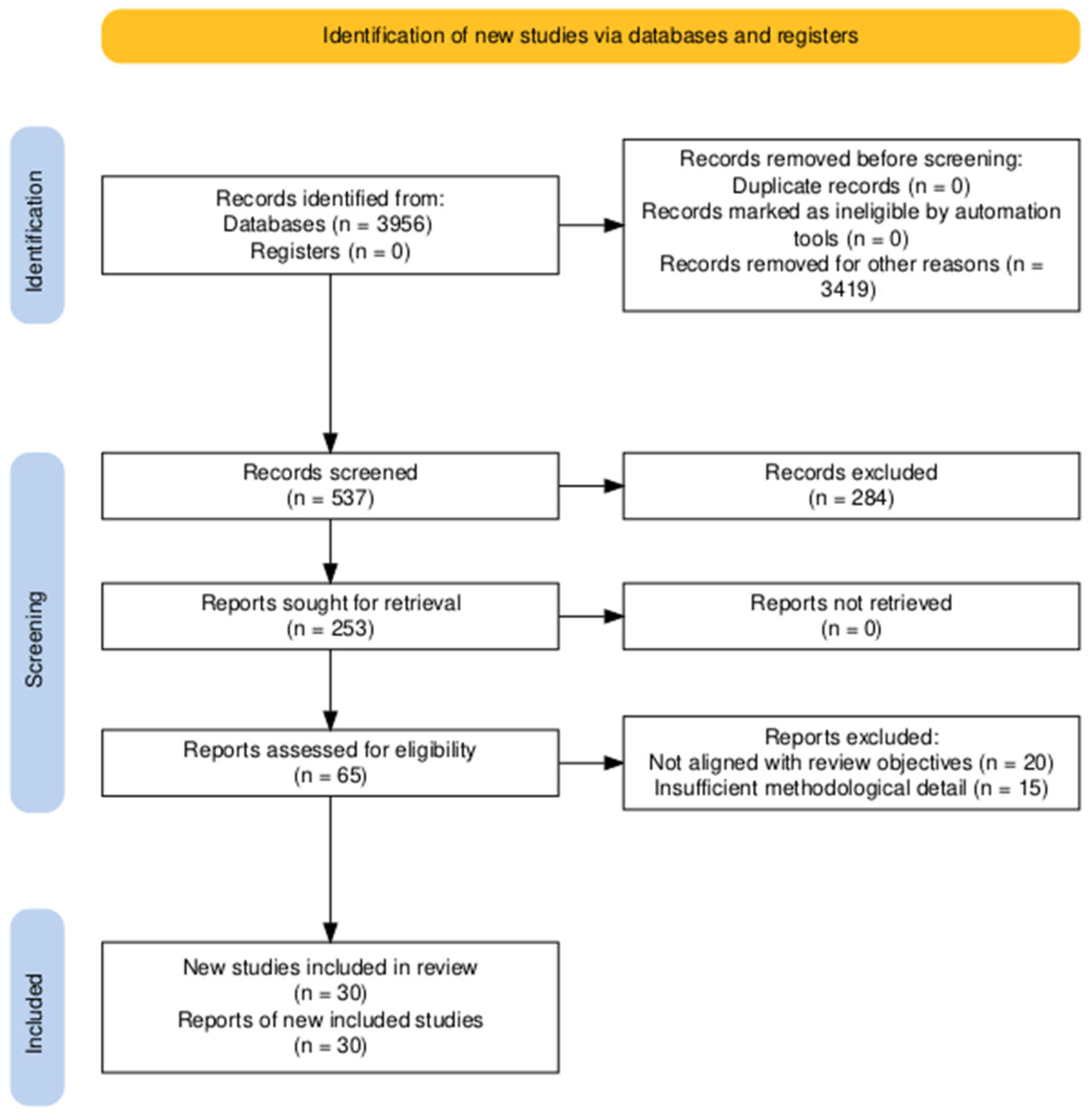
Figure 1 illustrates the procedure for this systematic literature review. Initially, a general search was conducted using the term “greenhouse gases,” obtaining a total of 3956 articles. After this, the search equation was applied with the specific criteria, thus obtaining 537 documents that met the requirements and discarding 3419. The inclusion criteria established in
Table 2 were then applied, obtaining 253 articles. Subsequently, the title and abstract of each document were verified to be related to the object of study. Texts that did not offer relevant information for this review were discarded. As a result, 65 documents were initially selected, which entailed the exclusion of 284 articles, either because they were duplicates or because they did not answer any of the questions asked. Finally, a detailed analysis was conducted to delve deeper into each of these questions, leading to the elimination of 35 additional documents. Thus, 30 articles were selected and used to support this review (see
Figure 1).
2.6. Information Analysis
The classification procedure for the scientific articles was carried out in different phases, following a systematic process that ensured the validity and methodological consistency of this review. Once the inclusion and exclusion criteria were implemented, the collected references were filtered to exclude duplicates and inappropriate articles.
The authors then independently reviewed the titles, abstracts, and full texts to determine their relevance to the research objectives and the quality of the methodological design. Differences were resolved via consent. This process helped gradually narrow the number of studies until the publications that constituted the final consolidation were obtained.
Figure 1 shows the sequence of the procedure for characterizing, filtering, and assessing the relevance of the selected publications. The selection process was based on the Prisma 2020 methodology shown in the figure. A total of 3956 peer-reviewed articles were identified; of these, 65 were reviewed, and only 30 met the defined criteria and were included in the analysis.
To ensure analytical rigor, each article was assessed for intrinsic consistency among its objectives, theoretical foundations, methodology, and results. The selected studies were systematically organized and analyzed, allowing for the comparison of relevant analytical categories and a critical integration of the findings. This process facilitated the identification of models, similarities, shortcomings, and predominant methodological approaches in the research area. In the synthesis stage, studies were coded into thematic clusters to support structured content analysis (see
Table 3) and identify research gaps and reporting needs.
3. Results and Discussion
The management of municipal solid waste (MSW) represents a critical situation in the field of sustainable environmental development. In this regard, the systematic literature review facilitated the identification of various theoretical frameworks, technologies, and methodologies relevant to the treatment and utilization of MSW, along with their associated impacts. The results obtained from the literature review, as well as their analysis and contributions to this research article, are shown below. This section presents a descriptive characterization of the final evidence base (n = 30) and its thematic organization to support a transparent synthesis before discussing CH4 → CO2e implications.
To strengthen scientific rigor, the synthesis is structured around (i) a bibliometric, thematic organization of the evidence and (ii) a results narrative explicitly linked to the review questions, emphasizing how landfill and dumpsite CH4 estimates translate into carbon footprint outcomes (CO2e) and why different methods yield different results.
3.1. Bibliometric Overview and Thematic Groups
The final sample (n = 30; 2019–2024) was categorized into five thematic groups (CH4 quantification, carbon footprint/LCA, landfill determinants and mitigation, waste-to-energy recovery, and circular economy/policy) to provide a structured synthesis of the reviewed evidence. Although the initial search retrieved 3956 records, only 30 studies met the predefined eligibility criteria and full-text relevance checks; this reflects a rigor-oriented screening strategy rather than an under-representation of the topic.
Table 3 summarizes the temporal distribution of studies among the groups, using the main thematic focus assigned to each article. Overall, this overview highlights the evolution of the research emphasis over time and, therefore, underpins the organization of the Results and Discussion Sections below, which are structured according to prevailing methodological and practical trends.
In addition, bibliometric descriptors (year of publication and source/journal) were extracted for the final sample and used to support this thematic grouping and interpretation of the research emphasis over time. In this way, the bibliometric profile complements the thematic analysis and strengthens the longitudinal interpretation of the evidence base.
These clusters also reflect the methodological diversity in the field, such as inventory FOD approaches. Model-based tools and LCA-based assessments can lead to non-identical (CO2e) estimates, even when addressing similar systems, which helps explain inconsistencies across the reported results.
Table 3 indicates that the studies on the energy valorization of waste (C4; 10/30 (33.3%)) constitute the main evidence base for the period of 2019–2024, followed by the representative studies on carbon/Life Cycle Assessment-LCA (C2; 5/30 (16.7%)), which provide the main quantitative basis for CO
2e/ Global Warming Potential (GWP) comparisons between different management scenarios. In recent years, the determinants and mitigation measures related to landfills (C3) have increased in importance, thereby highlighting the role of site-specific factors (for example, composition, operational performance, and gas capture) in explaining the variability and limitation of the comparability between the contexts. The direct quantification documents of CH
4 (C1) frequently appear as a priority axis, generally privileged by the largest systematic evaluations. In contrast, the circular economy and associated polices (C5) remain relatively under-represented, which suggests a persistent gap between the technical options and the governance instruments necessary for their implementation. Finally, this distribution also supports the methodological narrative of this review: clusters differ by topic as well as the estimation logic used to translate CH
4 into CO
2e (inventory/FOD vs. model tools vs. LCA boundaries and offsets).
3.2. Municipal Solid Waste and Its Emissions
In this section, different authors were identified in relation to the emissions resulting from the process of treatment and final disposal of solid waste and its impact on the carbon footprint in the national and international context. It is well known that planet Earth suffers from global warming, caused by the Earth’s absorption of solar energy. The product of pollutant emissions from MSW landfills is shown in
Table 4.
Table 4 presents a comparison of estimates of methane (CH
4) emissions associated with landfills reported by studies from different countries, highlighting the significant participation of research in China, with values ranging from 1.48 to 3.157 Mt, which represent between 6.9% and 8.2% of the total reported emissions. Meanwhile, studies carried out in Japan, the United States, and Italy reflect a trend toward decreasing emissions over time, attributed to the implementation of environmental policies more focused on this field, precise estimation methodologies, and better management and control strategies. Italy displayed a reduction in emissions of 0.18684 Mt between 1990 and 2014; Japan’s emissions were reduced by a total of 0.1692 Mt between 1990 and 2018; and emissions in the United States showed a cumulative reduction of 71.8 Mt between 1990 and 2017.
Finally, these values must be interpreted considering that the publication window (2019–2024) does not imply uniformity in the underlying inventory years; for instance, several studies report historical periods (e.g., 1990–2017), so that cross-country contrasts reflect heterogeneous reporting windows rather than a single synchronized timeframe. Moreover, cross-study variability is also driven by methodological assumptions (e.g., DOC/DOCf, decay constant k, methane correction factors, gas collection, and oxidation efficiencies) and by site, system, and characteristics such as waste composition, landfill age and type, and climatic conditions, particularly moisture and precipitation, which can materially alter CH4 generation and its conversion to CO2e.
When interpreting cross-country differences in
Table 4, it is important to consider that reported estimates are influenced by the quantification method (e.g., MB vs. FOD) as well as site and system-specific drivers. Key drivers include landfill age, waste composition and the amount of biodegradable fraction deposited, gas capture/utilization rates, and operational practices. At a broader scale, climatic conditions, especially precipitation and temperature, can affect biodegradation processes and biogas generation, contributing to variability in CH
4 emissions across regions.
In addition, a small subset of institutional inventories was retained only when providing standardized CH4 estimates directly relevant to the review scope. These sources were interpreted cautiously and mainly used for contextual comparison.
The percentages of emissions were classified by countries with representative amounts to further contextualize the impact of such emissions. The USA and China, some of the most economically powerful countries in the global sphere, according to [
3], produced approximately 3.73 and 1.48 million tons of CH
4 from landfills from 1248 to 1955 in 2012, respectively. The authors of [
32,
33,
34] showed that domestic GHG emissions from MSW treatment increased from 39.24 Mt of CO
2e in 2006 to 128.81 Mt of CO
2e in 2019, of which 63.41% to 88.95% were CH
4 emissions accounting for 8.13% to 10.22% of China’s total CH
4 emissions. Another study carried out in China by [
35] reported that the annual amounts of solid waste disposed of in landfills were 98.8, 101.9, 68.2, and 44.8 tons. The increase in landfill diversion rates via incineration, recycling, and composting proposals improves the environmental performance of a waste management system, in addition to significantly reducing the amount of solid waste disposed of [
36].
However, solid waste management represents a major challenge for countries with limited resources, leading to environmental degradation such as pollution and pressure on land use, financial difficulties associated with high operating costs, and public health problems caused by poor sanitation. These conditions directly impact the increased carbon footprint associated with this type of activity [
37]. The authors of [
38] presented research aiming to quantify the carbon footprint, as well as the analysis of four scenarios for the final disposal of urban pruning waste in the city of João Pessoa, located in the northwest of Brazil [
39]. The results showed that the landfill with methane collection generated 113.43 kg of CO
2/ton of waste disposed of; municipal incineration released 71.31 kg of CO
2/ton; simple disposal emitted 136.34 kg of CO
2/ton of urban pruning waste, representing the largest carbon footprint; and the reuse of woody waste generated 27.82 kg of CO
2/ton, which was the scenario with the lowest carbon footprint. The research showed that biomass reuse is an environmentally viable strategy and also has the potential to contribute to urban environmental quality, which includes the possibility of being used to obtain carbon credits [
38]. The research is of particular interest to this study because it performed a more complete LCA, quantifying the carbon footprint from MSW disposal activities and processes.
In Colombia, there are few studies that allow us to understand the environmental impact generated by the collection, transportation, treatment, and processing of urban solid waste. Therefore, the authors of [
40] conducted a study in the southwestern region of the Norte de Santander department, aiming to evaluate the environmental impact of GIRS via a life cycle assessment (LCA). The results showed that approximately 27% of the waste corresponded to inorganic materials, including metal, rubber, glass, and leather. Meanwhile, organic waste represented 72%, of which 40% corresponded to organic matter. When comparing waste management in the three proposed scenarios based on global warming, the optimistic scenario yielded the greenest result, since it presented better recycling and use of MSW, given that it avoided the generation of 460 kg of CO
2.
3.3. Methods for Quantifying MSW Emissions
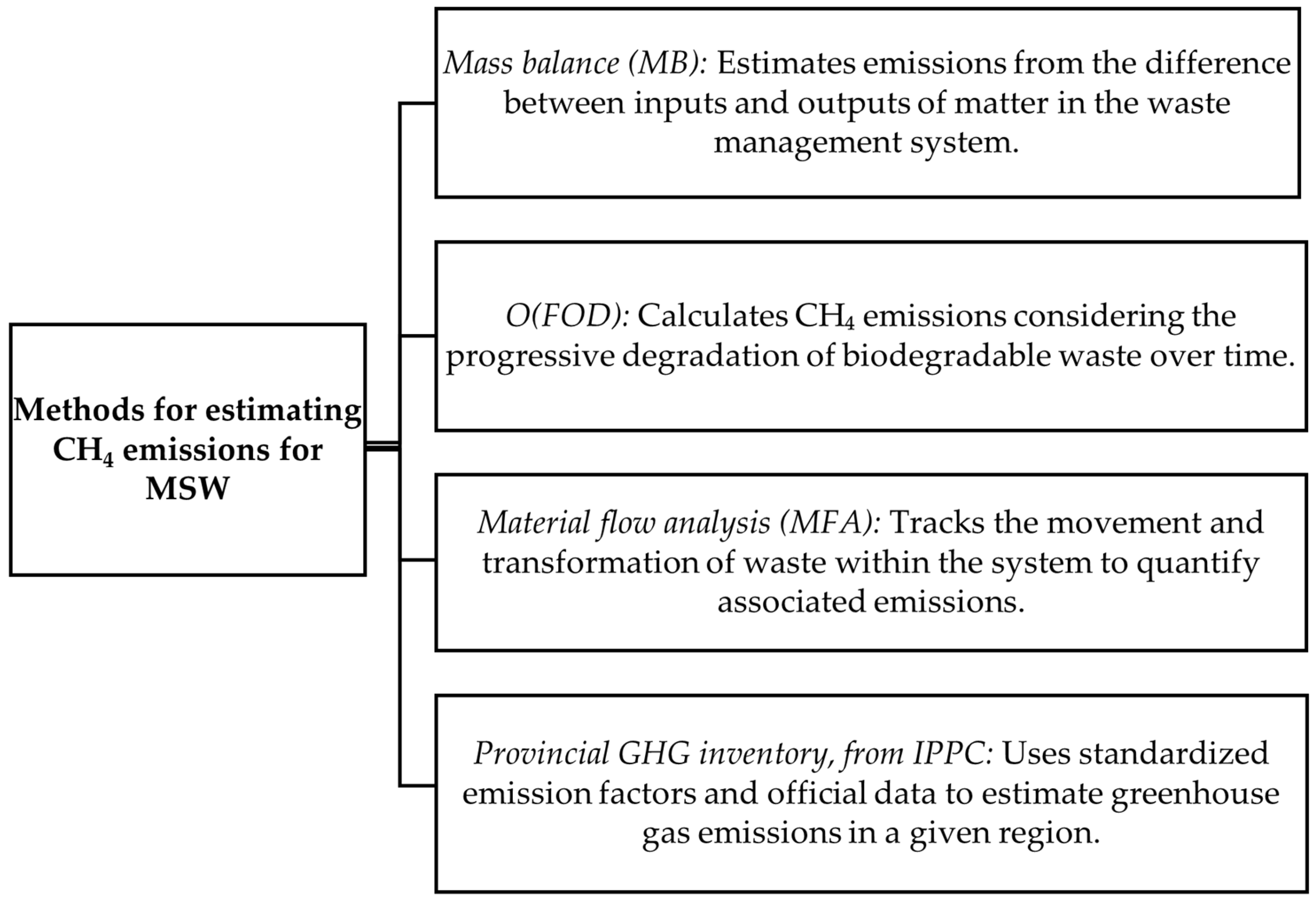
As shown in
Figure 2, different methods and processes are used to quantify CH
4 emissions and, thus, determine the carbon footprint percentages of landfills and their impact on the environment. With the current challenges in cities of waste siege and climate change, it is necessary to explore how to reduce greenhouse gas (GHG) emissions from MSW treatment and the determinants of change in these emissions. However, a proper assessment and quantitative analysis related to this issue are needed, making it difficult to formulate tailor-made policies.
The authors of [
44] designed the “zero-landfill” strategy, which contributed to the good management of solid waste after the year 2020. The study’s objective was to evaluate the potential for reducing GHG emissions in Chengdu using the LCA methodology. The results showed that the net GHG emissions in the currently implemented MSW management system were estimated at 1,775,000 metric tons of CO
2 equivalents. The authors of [
35] presented research aimed at waste management planning in an urban green area located in Bangkok, Thailand. The research was based on the life cycle assessment (LCA) methodology and material flow analysis (MFA). They evaluated the global warming potential (GWP), considering samples of different proportions in terms of waste recycling, incineration, composting, and landfill. They found that the GWP was lower with the proposed alternative systems than with the existing management strategy. The authors of [
45] showed the provincial GHG inventory production method recommended by [
32], where carbon emissions from waste were accounted for, and the yearly changing trend of carbon emissions was observed.
In the final sample (
n = 30; 2019–2024), four studies (13.3%) focused primarily on CH
4 quantification (C1). Among the explicit quantification sources compiled in
Table 4 (
n = 7), the FOD/IPCC method was prevalent (4/7 (57.1%)) compared with mass balance (MB) (3/7 (42.9%)). The FOD method’s predominance is explained by its standardization for inventories, its suitability for comparable and reportable parameters (e.g., k, DOC/DOCf, MFC, and capture/oxidation efficiencies), and its applicability in heterogeneous data contexts, which facilitates cross-jurisdictional comparisons. In contrast, MB generally requires more specific operational information and, therefore, tends to focus on applications for which local data are available.
System Boundaries and Functional Units: Implications for CO2e Comparability
In the reviewed literature, the CO2e results were determined via the approach to CH4 quantification (e.g., FOD/IPCC, mass balance, or tool-based models) and, often decisively, by the system boundary and functional unit adopted. Under a narrow, site-only boundary, estimates typically reflect disposal-stage processes (CH4 generation, recovery, and oxidation), whereas LCA-based boundaries can expand to include collection/transport, upstream and downstream processes, and energy/material recovery substitution credits-choices that can materially change the absolute results and, in some cases, the comparative ranking of management options. Similarly, the functional units vary (per ton landfilled, per ton treated, per kWh generated, and per capita-year), so the reported footprints are not directly comparable without explicit normalization. Consequently, moving from a “landfill without recovery” framework to a boundary that accounts for methane capture can substantially reduce the CO2e load per ton, underscoring the transparency of boundaries as a minimum requirement for sound interpretation across studies.
3.4. Landfill and Sanitary Landfill Problems
Worldwide, landfills contribute to global warming due to the presence of GHGs, mainly CH
4 and CO
2. The authors of [
46] showed the estimation of CH
4 in a controlled MSW landfill located in Mohammedia-Benslimane (MB), Morocco. The emissions calculation was performed using the LandGEM methodology, where the climatic conditions in the region, the landfill conditions, and the amount of waste deposited were evaluated. In Pakistan, [
4,
37] presented more in-depth studies of emissions according to MSW landfilling practices. They showed accounting procedures to obtain a donor-based or nature-based perspective for the environmental footprint. Similarly, the authors of [
47] stated that the waste management methods currently implemented in Pakistan or other developing countries do not meet the standards established in any adequate waste management system that has been used in developed countries. Inadequate waste management generates serious environmental challenges worldwide. The research sought to investigate CH
4 emissions from landfills in Karachi, Pakistan, and proposed an effective method for environmental sustainability. A simulation-based methodology was evaluated to estimate CH
4 emissions, showing that an anaerobic convection landfill with methane capture facilities and post-aeration operation represents the most environmentally sustainable method, controlling 65% of residual CH
4 emissions. When developing new landfills, it is recommended that bioreactor landfills with methane recovery and aftercare, which involves on-site aeration, be implemented.
The impact of implementing advanced technologies for waste treatment in landfills is a relevant factor in reducing GHG emissions. The authors of [
48] demonstrated in their study the importance of the recovery and thermal utilization of 60% of the gas generated in landfills. It represents a crucial strategy in reducing the environmental impact, which decreases the total GHG emissions from the sector by three times higher proportions compared with scenarios where biogas is not used. This leads to the following question: which MSW management activity and process, in the landfill area, contributes the most to reducing the carbon footprint, and what is the net benefit of implementing this type of solution?
Finally, the authors of [
49] presented a study focused on identifying the technical processes for improving open-pit landfills by restructuring them and, thus, contributing to solving the problem of emissions from landfills. The results showed that existing landfills lack the capacity to process waste daily and have, therefore, been unable to meet the increase in MSW generation, necessitating the restructuring of facilities. To this end, it is important to evaluate the technical processes implemented at each landfill. A 60.7% expansion compared with the previous scale was carried out at the Jiaozishan landfill in 2015. This restructuring reduced the leachate generation rate by 5.84%. Furthermore, CO
2 emissions were reduced by 55,000 to 86,000 tons/year, with biogas replacing fossil fuels, representing a rate of avoided emissions of 45,000 to 60,000 tons. In addition, a photovoltaic power generation system was implemented on the land surface. This generated ongoing income through electricity sales while also reducing emissions by 26,000 to 30,000 tons/year. The funds are essential for developing countries such as China, which lack long-term financial support for post-closure landfill management [
50]. Meanwhile, [
51] carried out a study in Rwanda using a mixed method with a social approach. Their main result showed that attitude and personal perception are essential when participating in waste management practices. These studies focused on the reduction in CO
2 emissions, the benefits this GHG reduction brings to communities, and its contribution to a carbon-neutral society.
3.5. Energy Production from Municipal Solid Waste (MSW)
Solid waste, which contributes to energy production, is used in countless processes that allow for its energy use. The authors of [
52] conducted a study based on the application of advanced sustainable gasification technology, aiming to optimize the management of this waste. For this purpose, a classified process was designed that would allow the collection, transportation, and treatment of MSW. Likewise, the methodology was designed based on a multi-objective mathematical model to control GHG emissions and optimize income from electricity production. Moreover, an objective evaluation was carried out to understand the greenhouse effect caused by this technology in quantitative terms via life cycle analysis. Regarding the sensitivity analysis of the gasification rate (GT), it was evident that GHG emissions would be reduced and economic benefits would increase if the GT increased. Therefore, a practical and effective management method for MSW gasification was proposed based on life cycle analysis, which can contribute to the design of precise strategies aimed at reducing emissions in the gasification process of these residues. The purpose was to generate a practical guide that can be implemented in this field, as well as to reduce the environmental impact it generates. As the results of the study show, an economic analysis was obtained from the LCA to reduce GHG emissions and contribute to the construction of policies to regulate emissions; meanwhile, it is necessary to derive the carbon footprint generated from this gasification process, which will ultimately determine the viability of this MSW management process.
Some studies have aimed to implement an efficient waste management system to reduce the number of landfills and improve the energy recovery rate (ERE) from the treatment of MSW, considering the environmental, energy, economic, and political effects. Authors such as [
46,
53,
54] presented similar studies based on a methodological framework for calculating waste from facilities planned in regional waste management plans and the potential for their use for energy recovery. Once the waste energy assessment was completed, the feasibility of producing renewable natural gas and generating electricity with dry anaerobic digestion AD was determined. The assessment was conducted via an LCA, utilizing data analysis and alternative management strategies for municipal organic solid waste, including (AD), landfill, and composting, yielding a detailed emissions characterization. The results showed that up to 270 GWh of electricity per year could be generated via thermal treatment of recycled waste. This approach, in turn, allows for adequate waste management within the framework of the circular economy and recycling targets to be met. A methodological approach was proposed to support the evaluation of regional waste management plans, which directly influence national recycling and circular economy targets proposed by the European Union’s environmental policy, and also support decision-making processes. These types of studies present relevant information regarding the generation of GHGs in MSW landfills, which allows us to determine their potential use; however, it is necessary to estimate the carbon footprint from this energy generation process based on its LCA. The LCA results found that landfills are the dominant source of greenhouse gas (GHG) loads, while waste recycling was found to result in GHG reduction. The results highlight that the use of MFA and LCA as a combined tool to assess the environmental performance of solid waste management systems provides valuable information for policy and decision makers [
55]. Although the research showed an LCA where the main source of GHGs was evident, it is still necessary to evaluate and quantify the carbon footprint emitted by these GHGs and, thus, complement this assessment for the creation of policies closer to the reality of the environment studied.
Table 5 presents some studies that employed different technological strategies to generate energy from MSW, primarily mentioning methodological strategies focused on energy recovery and gasification processes. The results demonstrate the potential of each technology in reducing GHG emissions and generating energy.
Once an emissions analysis is available, the carbon footprint is defined as the total amount of GHGs generated by human practices, both daily and economic. The authors of [
38] presented a study that aimed to quantify the carbon footprint using the SimaPro software (8.2.0.0). The end-of-life treatments considered included landfill (with and without methane collection), simple municipal incineration, and wood reuse (transformation into briquettes). It was shown that biomass reuse, in addition to being environmentally viable, has the potential to contribute to the environmental quality of the city, including the possibility of being used to obtain carbon credits [
38]. Meanwhile, [
57] aimed to show the potential for energy production from waste management in Thailand between 2017 and 2050. These two authors complemented their studies, initially quantifying the carbon footprint generated and, in the second case, showing the energy use. A full LCA model was also proposed, extending the objective to energy generation and the analysis of the carbon footprint generated from these MSW treatment processes.
3.6. Solid Waste and Economic Activity
The large amount of waste generated daily is a product of activities linked to economic growth in urban centers. Much of this waste is not included in adequate collection, transportation, utilization, or final disposal systems, significantly impacting the environment and the economy. In the case of Brazil, in 2019, approximately 30 million tons of waste were not collected, and the total collected, almost 44 million tons, was disposed of in landfills, where little or nothing was used to generate energy. Therefore, waste generation provides a great opportunity for economic exploitation, since it reduces GHG emissions and takes advantage of the energy contained in this waste, while also reducing the population’s level of exposure to landfills [
58]. The authors of [
59] studied the conditions and challenges currently presented by energy utilization technologies based on biomass obtained from MSW to find a possibility of inserting mini thermal power plants connected to distributed generation, which contributes to regional economic development and generates employment.
MSW management faces significant environmental challenges, especially in regions where uncontrolled disposal practices, such as open dumps, prevail. In places such as Kigali City, these landfills generate large amounts of CH
4 emissions and other polluting gases, affecting air quality and contributing to climate change [
51]. Sustainable alternatives, such as anaerobic digestion, allow the conversion of organic waste into biogas, which can significantly reduce greenhouse gas emissions compared with landfills, where emissions have been estimated to reach up to 400 kg of CO
2 per ton of organic waste [
60]. Furthermore, material recovery and energy recovery of MSW could contribute to a circular economy; however, a strengthening of governance mechanisms and a change in social perception are required to implement effective, large-scale separation and recycling. Contrarily, effective communication is necessary to put aside unsustainable practices and public indifference. In addition to a broad public understanding of the requirements for managing MSW, active stakeholder participation is also needed [
61].
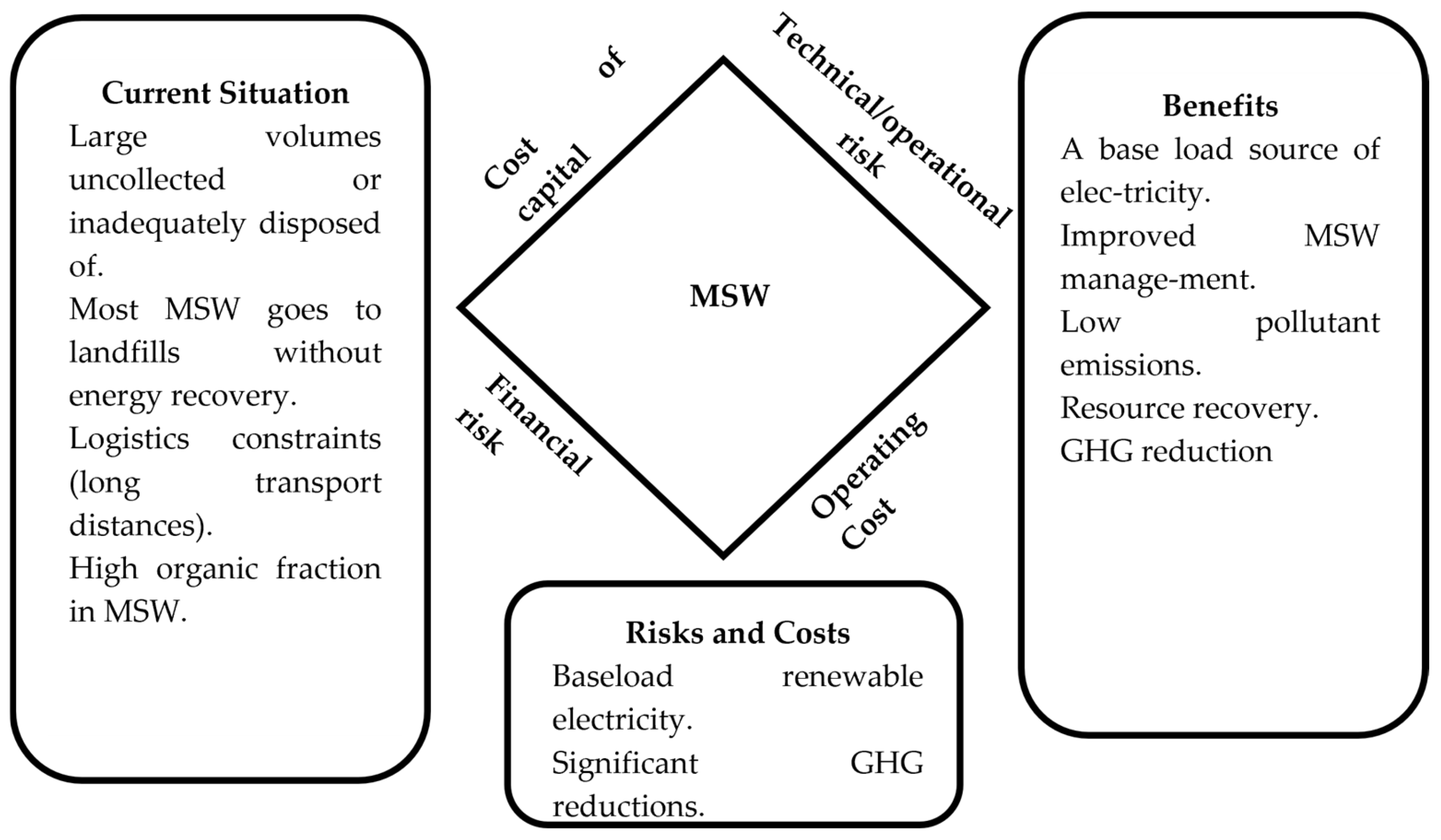
The authors of [
62] conducted a study to highlight the economic benefits and environmental impacts of a community composting project targeting key stakeholders within the community, such as residents, oil palm plantation owners, and palm oil mill operators. The study compared three different scenarios throughout a life cycle, considering the cost–benefit analysis and GHG emissions. It was obtained that GHG emissions were potentially reduced by 71.64% with the use of generated compost and the economic income from its sale, and the diversion of food waste from the landfill. This provides a better understanding of the convenience and feasibility of implementing a centralized composting plant on a pilot scale, located in a suburban area of Malaysia, with the purpose of moving toward an economically and environmentally self-sustaining society, as well as reducing its carbon emissions. The study is important because it includes elements such as MSW management systems, MSW life cycle analysis, and GHG emissions analysis (see
Figure 3).
In
Section 3.3,
Section 3.4 and
Section 3.5, the mitigation and waste-to-energy (WtE) pathways are assessed primarily via (i) direct CH
4 control at disposal sites (capture, burning/utilization, oxidation enhancement, and operational improvements) and (ii) diversion and valorization pathways (incineration with energy recovery, anaerobic digestion/biogas enhancement, thermal/ Refuse-Derived Fuel (RDF) recovery, and increased recycling/composting within integrated scenarios).
Reported climate benefits are communicated using two dominant accounting logics: direct reductions (lower CH4 generation/emissions under improved landfill/dump configurations, often linked to assumed capture/oxidation efficiencies) and net CO2e impacts (LCA-style balances that add avoided loads through energy/material substitution and subtract aggregate emissions from collection, transport, and processing). As a result, the “benefit” can be expressed as CH4 reduction (emission reduction relative to baseline) or as CO2e avoided/net savings (system-level mitigation relative to alternative management). Comparability depends on whether studies report both the direct CH4 term and net CO2e balance under clearly established limits and functional units.
3.7. Novelty and Limitations
3.7.1. Novelty
This review integrates CH4 quantification approaches, carbon footprint implications (CO2 and system boundaries), and mitigation/valorization pathways (waste-to-energy and circular economy) within a single framework.
The evidence is organized using bibliometric statistics and thematic clusters (
Table 3) to improve interpretability and highlight research gaps.
3.7.2. Limitations
This review is limited to peer-reviewed studies indexed in Scopus and ScienceDirect; therefore, relevant evidence from non-indexed sources or grey literature may not have been included.
The inclusion criterion (2019–2024) refers to publication year; however, several sources report historical inventory periods (
Table 4). Therefore, cross-country comparisons rely on heterogeneous reporting windows rather than a uniform timeframe.
Reported CH4 estimates may differ due to methodological choices and local drivers (waste composition, landfill age, operational conditions, and climate), which limit direct comparability across contexts.
Accordingly, to operationalize the limitations identified above and strengthen cross-study interpretability, we explicitly summarize the main reporting gaps and propose a minimum mandatory reporting set. Across the reviewed studies, cross-study comparability is primarily limited by (i) inconsistent system boundaries (site-only vs. LCA with transport/substitution credits), (ii) heterogeneous functional units (t MSW, t OFMSW, kWh, and capita year), (iii) incomplete disclosure of key model parameters (e.g., DOC/DOCf, k, MCF, oxidation, and capture/collection efficiency), (iv) insufficient description of waste composition and activity data (mass disposed and biodegradable fraction), (v) weak reporting of site context (landfill age/type, operation status, and climate/precipitation regime), and (vi) limited uncertainty/sensitivity treatment and data provenance (default vs. measured). To improve reproducibility and interpretability, a minimum mandatory reporting set should include the following: boundary and scope definition, functional units, inventory/activity data (annual mass disposed and period covered), waste composition (biodegradable fraction or DOC), model choice (FOD/IPCC, MB, or tool/LCA) with parameter values and sources (DOC/DOCf, k, MFC, oxidation, snf capture/utilization), landfill descriptors (type, age/phase, and management practices), climatic descriptors (at least precipitation/temperature class), and uncertainty outputs (ranges or sensitivity to dominant parameters).
4. Conclusions
The proper use and management of municipal solid waste are crucial aspects to promote environmental sustainability and quality of life in communities. Adequate separation of waste at the source is essential to facilitate its subsequent recycling and treatment. Public awareness and education are essential to encourage this habit among citizens; thus, fostering a culture of recycling is crucial to reducing the amount of waste that ends up in landfills. Recycling programs must be accessible and efficient, involving both the community and businesses. Moreover, investment in advanced waste treatment technologies, such as controlled incineration and anaerobic digestion, can help reduce the amount of waste sent to landfills, thus reducing the environmental impact quantified, in this case, with CH4 emissions. In this study, the “carbon footprint” is used as the total greenhouse gas load expressed in CO2 equivalents within defined system boundaries (according to inventory/LCA, or according to the study), and methane from disposal sites is a dominant contributor when gas capture is limited. Consistent with the review objective, this work highlights that carbon footprint outcomes are highly sensitive to the methodological choice used to estimate CH4 and convert it to CO2e (e.g., inventory-based vs. FOD/model-based vs. LCA-based approaches), which can lead to different results even in comparable waste management contexts.
Adopting a circular economy approach involves maximizing the value of products, materials, and resources and minimizing waste generation. This requires a shift from a “use and dispose” mentality toward reuse and recycling. This leads to the implementation of Extended Producer Responsibility policies that oblige manufacturers to assume responsibility for the proper management of their products at the end of their useful life, thus encouraging the design of more sustainable products and waste reduction. Active community participation is essential to the success of any waste management program. Collaboration between local governments, businesses, and citizens is key to achieving sustainable and efficient practices. In the included studies, energy recovery schemes (e.g., landfill gas collection and utilization and thermal pathways) combined with increased material transfer and recycling were key levers for reducing net climate impact. However, the effectiveness of these options depends on site-specific conditions (e.g., capture efficiency, operational performance, and waste characteristics) and should be evaluated with clearly reported system boundaries to avoid over- or underestimating net benefits.
Inadequate management of municipal solid waste can have negative consequences for the environment and public health. Soil, water, and air pollution, as well as the spread of diseases, are risks associated with poor waste management; hence, effective implementation and enforcement of environmental laws and policies are crucial to ensure sustainable waste management practices. In addition, these policies need to be constantly adjusted and improved to adapt to changes in production and consumption. Emissions magnitude and mitigation performance are strongly conditioned by landfill age, waste quantity/composition (biodegradable fraction), and climatic drivers (especially precipitation and moisture), which should be explicitly reported and accounted for when comparing carbon footprint outcomes. Drivers of increasing GHG burdens reported in the literature are consistent with rapid urbanization, higher waste generation, high organic fractions, and insufficient engineered controls in disposal sites. Therefore, cross-study comparisons should be interpreted as indicative patterns rather than direct equivalences when underlying reporting windows, site conditions, and estimation assumptions differ.
In summary, the proper management of municipal solid waste requires a comprehensive approach that involves community participation, the implementation of advanced technologies, the promotion of recycling, and effective government policies. The transition to more sustainable waste management is essential to preserve the environment and ensure a healthier and more equitable future. The final sample (n = 30) reflects high-relevance, peer-reviewed evidence under strict inclusion criteria; heterogeneity in study periods; system boundaries; and local context limits directing comparability. Therefore, the results should be interpreted as an evidence map of dominant methods, themes, and gaps rather than a global quantification. Future research should prioritize harmonized boundaries, explicit uncertainty statistical treatment, and context-specific reporting to strengthen decision support for CH4 mitigation, energy recovery, and circular economy planning. In this sense, this review provides an original contribution by (i) organizing the evidence into thematic clusters, (ii) showing where method-driven variability constrains comparability clusters, and (iii) pointing to concrete reporting elements (boundaries, assumptions, site drivers, and uncertainty) that should guide future CH4 carbon footprint research and improve its policy usefulness.